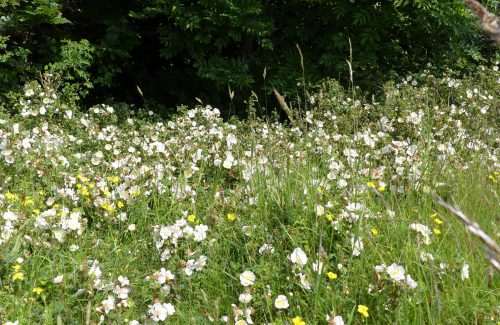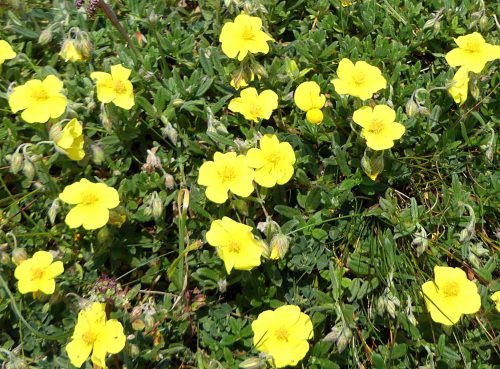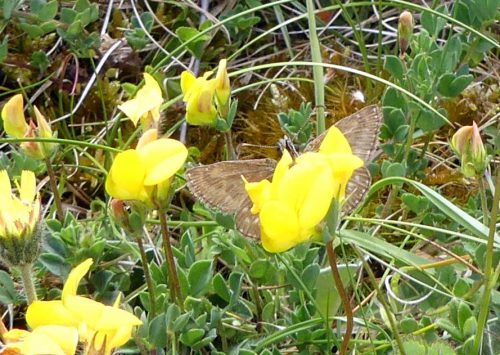
• Home
  • about
  • about the photographs
  • Local Nature Reserves
    • Bryn Euryn Local Nature Reserve
    • Mynydd Marian
  • Wales Coast Path
    • Grey Seals in North Wales
    • St.Trillo’s Chapel
    • Wildflowers of North Wales Coastal Paths, Cliffs and Dunes

everyday nature trails

everyday nature trails

Category Archives: Local Nature Reserves

Summer Orchids

16 Saturday Jul 2016

Posted by theresagreen in Bryn Euryn Nature Reserve, calcareous grassland, Nature, Nature of Wales, nature photography, wildflowers, Wildflowers of Wales, wildflowers on limestone

≈ 4 Comments

Tags

anacamptis pyramidalis, British Orchids, common spotted orchid, dactylorhiza fuchsii, Pyramidal Orchid, summer orchids, Teigeiren Brych, Teigeirian bera

June 23rd-Bryn Euryn

160605-BEFL-First Pyramidal Orchid 1

5/6/16 – Pyramidal Orchid – first sighting of 2016

I photographed my first sighting of a Pyramidal Orchid on June 5th, where it was growing through a complimentary patch of Common Rockroses. Since then they have come on apace and there are many more showing their beautiful heads amongst the long grass that fringes the summit of the Bryn.

July 3rd

Ten days later the rush of blooms had slowed and whilst there were still a good number to be found, they are more scattered and most significantly smaller than the earlier ones were.

160623-Bryn Euryn-Orchids in long grass

23/6/16-Bryn Euryn-Pyramidal Orchids in long grass

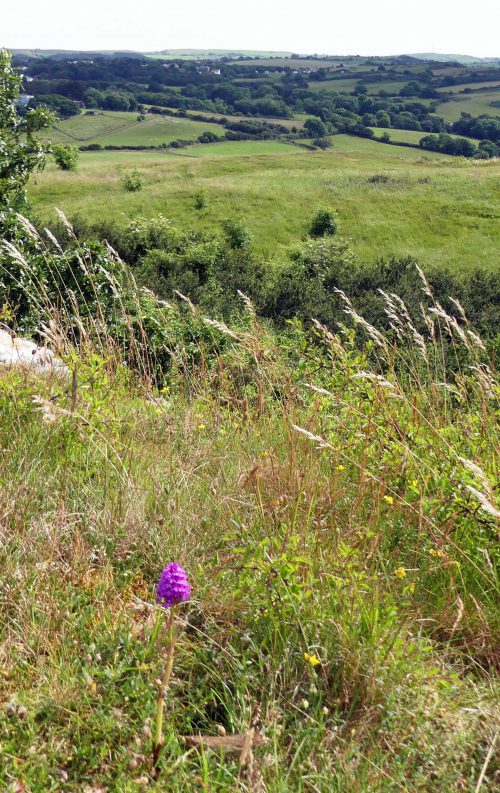
160623-Bryn Euryn-46-Pyramidal Orchid in landscape

23/6/16-Bryn Euryn-Pyramidal Orchid in the wider landscape

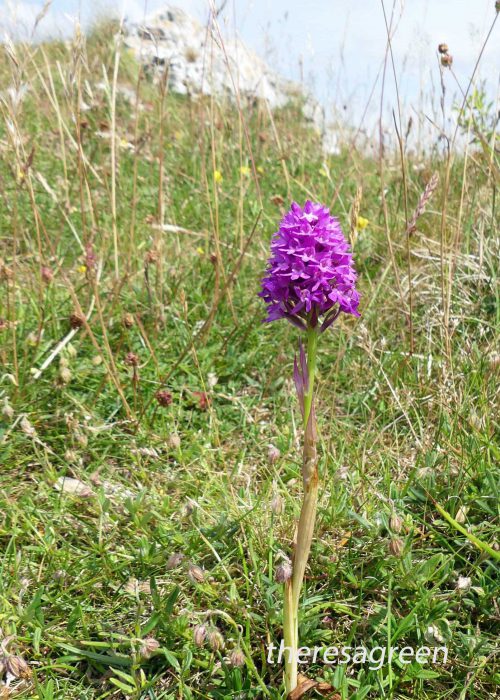
Pyramidal Orchid– Anacampsis pyramidalis; Welsh – Teigeirian bera

This orchid may be found flowering from early June through to early August, but here it is definitely at its peak now and flowering abundantly.

In general, the Pyramidal Orchid is found on grassland, usually on lime or chalk, but also on dunes. It is locally common in most of Britain, but rare in Scotland.


23/6/16-Pyramidal Orchid-Bryn Euryn

23/6/16-Pyramidal Orchid-Bryn Euryn

160623-Bryn Euryn-55-Pyramidal Orchid

Pyramidal Orchid

The plant is so-named for the shape of the flowerhead: a workaday name for such an exotic-looking bloom I think, although it does help to distinguish it from the Fragrant Orchid, with which it may be confused.

The plant’s success and abundance may be due to its relationship with insects. Each flower has a long thread-like spur that holds a generous supply of nectar that attracts day and night flying butterflies and moths. When the nectar is accessed, modified stamens stick to the tongue of the insect that straighten during the insect’s flight and are then pushed directly onto the stigma of the next flower visited. This results in viable seeds being produced in 95% of the flowers.

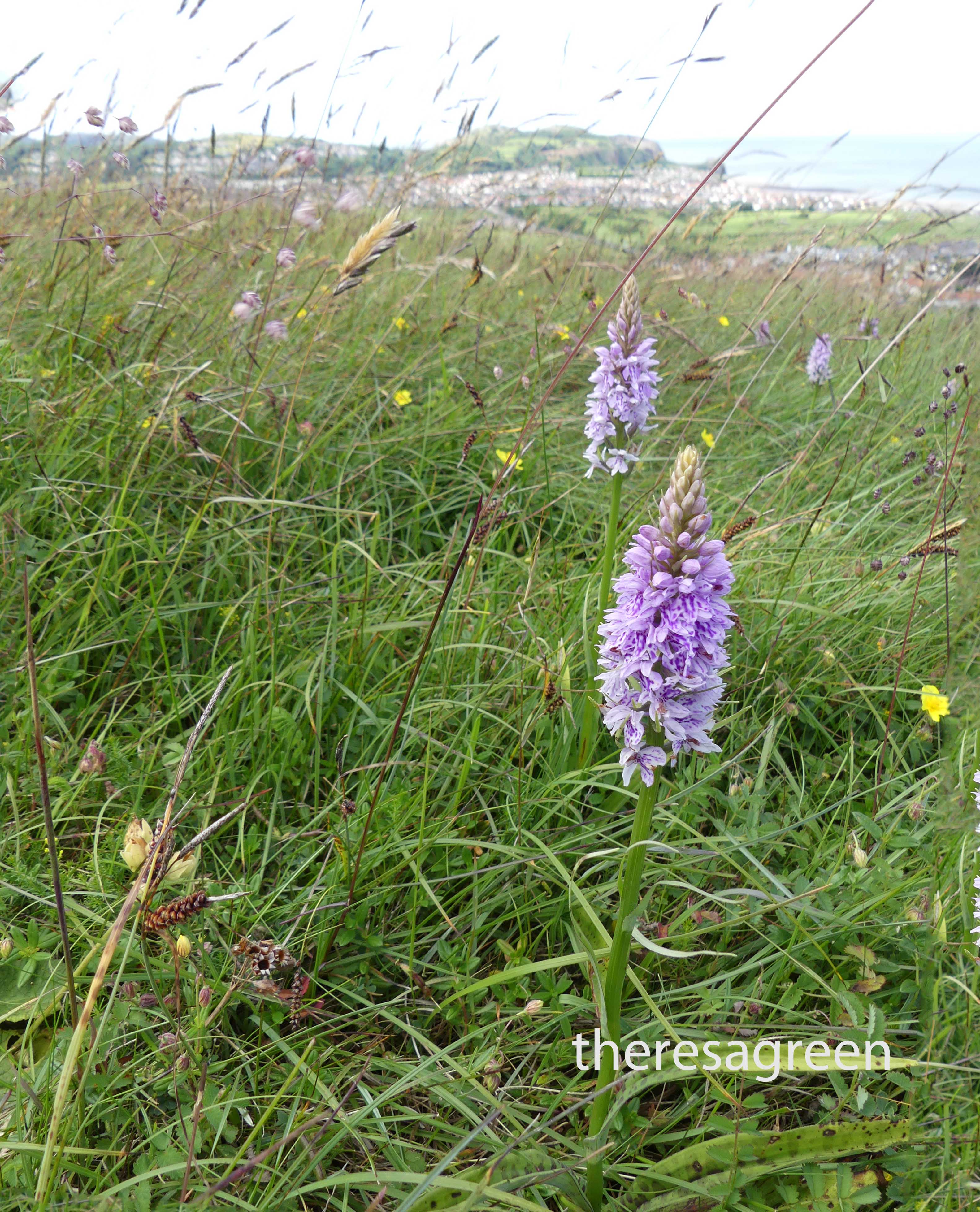
Crossing the hill’s summit and walking through the ‘downland’ area, more Orchids are blooming prolifically, these being Common Spotted Orchids.

160623-46-Orchids in long grass among young trees

Common Spotted Orchids -Bryn Euryn-Little Orme in background

Common Spotted Orchids -Bryn Euryn-Little Orme in background

160623-55-Common Spotted Orchid 1

Flower spikes of plants on Bryn Euryn vary in colour. Most are this lilac-purple colour, others are white with a few in shades between.

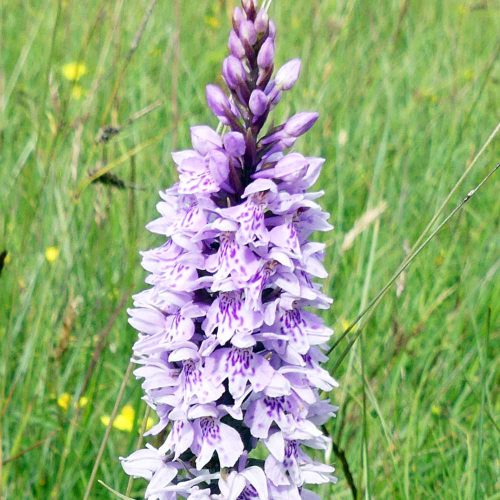
Common Spotted Orchid Dactylorhiza fuchsii; Welsh Teigeiren Brych

The flowers vary from white to pale or dark purple and are patterned with dots or small blotches of a darker purple.

The leaves are narrow and usually dark-spotted.


160703-Bryn Euryn-Common Spotted Orchid

3/7/16-Bryn Euryn-Common Spotted Orchid in long grass amidst Common Rockrose


Share this:

  • Share on Facebook (Opens in new window) Facebook
  • Share on Pinterest (Opens in new window) Pinterest
  • Share on X (Opens in new window) X
Like Loading...

Brambles, Bumbles and Butterflies

10 Sunday Jul 2016

Posted by theresagreen in British hoverflies, Bryn Euryn Nature Reserve, bumblebees, Butterflies of Wales, Insects, Nature of Wales, nature of woodlands, nature photography, plants important to wilflife

≈ 9 Comments

Tags

bombus hypnorum, bombus pratorum, coenonympha pamphilus, Early Bumblebee, grayling, Great Pied hoverfly, hipparchia semele, importance of bramble flowers to insects, Large Skipper, Meadow Brown, myathropa florea, pararge aegeria, Pellucid fly, Red Admiral, small heath, speckled wood, syrphus species of hoverfly, tree bumblebee, Volucella pellucans

June 23rd- Bryn Euryn

Bramble flowers are an important source of nectar and pollen for many species of insects and today, a large tangled patch of blackberry brambles in a sunny spot on the sheltered Woodland Trail was alive with an array of bumblebees and hoverflies.

23/6/16-Bryn Euryn on bramble

23/6/16-Pellucid fly-Volucella pellucens on bramble flower

Hoverflies

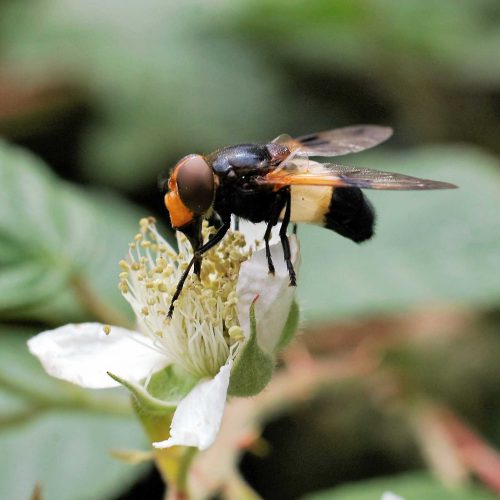
Since living here I have begun to recognise the most obvious and more commonly-occurring species of hoverflies, and they don’t come much bigger or more obvious than the handsome Pellucid Fly (Volucella pellucens), aka the Great Pied Hoverfly. This is one of the largest most obvious and recognisable of our British hoverflies.

myathropa florea

Myathropa florea

Yellow-and-black stripes are the well-used livery of many hoverfly species and sorting out the different species accurately, especially the small ones, requires more skill and knowledge than I have at the moment, or at least some crystal clear images of certain parts of them.

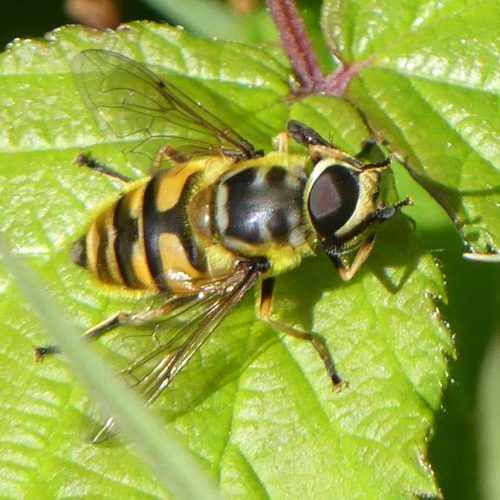
Bigger yellow and black species are a little easier, especially if they have good clear markings, such as sported by this new-to-me, or at least newly identified  Myathropa florea (no common name). I was aided and amused in this ID by a tip from the author of my Hoverfly bible¹, who suggests that the lower marking on the thoracic dorsum (part behind the head) resembles the Batman logo. Well, in a nice fresh clearly marked individual it does!

160703-Bryn Euryn-55-Hoverfly in dog rose flower

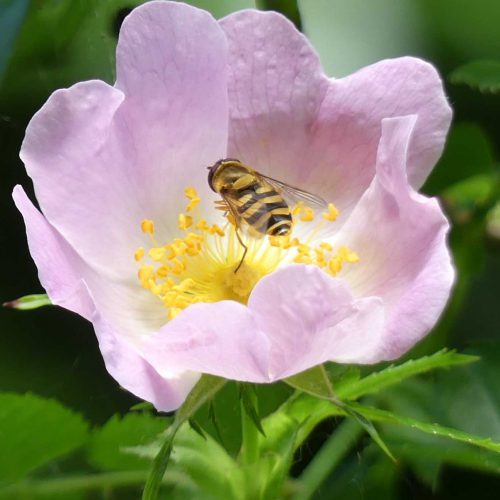
Syrphus sp hoverfly in a Dog Rose

160623-Bryn Euryn-55-Hoverfly hovering

One of the only small hoverflies that is unique and distinctive in its markings and has earned a common name is the  Marmalade Fly Episyrphus Baltaetus. This one was hovering at just about my head height, darting hither and thither in a patch of sunlight in defence of his territory. The image of him in the photograph is still bigger than he was.

Bumblebees 

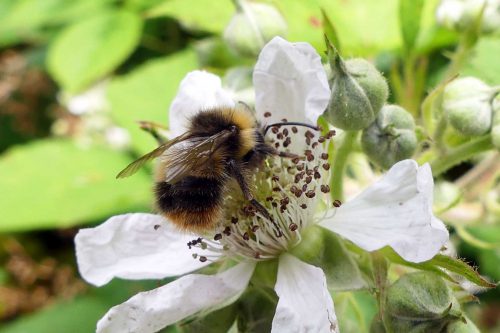
There were bumblebees aplenty, mostly Red-tailed, White tailed and Common Carders, but also Tree Bumblebees and a few little Early Bumblebee workers.

Tree bumblebee

Tree bumblebee-Bombus hypnorum

The number of Tree Bumblebees here has increased greatly over the last few years. I used to see them mainly in early Spring in the Quarry field on Green Alkanet flowers, and maybe the odd one or two further afield. Now they are present in all parts of the site and can be spotted on an array of flowers through to the end of the summer.


160623-Bryn Euryn-Early Bumblebee workers

Early Bumblebee- Bombus pratorum (worker)

Butterflies

160623-Bryn Euryn-55-Meadow Brown

Meadow Brown-Maniola jurtina

160623-Bryn Euryn-55-Speckled Wood 1

Speckled Wood-Pararge aegeria 

Large Skipper (male)

Large Skipper-Ochlodes venatus (male)

3/7/16-Bryn Euryn-Large Skipper (f)

Bryn Euryn-Large Skipper (female)

Not bramble related, but a special treat was a very brief encounter with a Grayling. On the track up to the summit it literally landed in front of me, sat on a small rock for a few seconds then took off into the breeze.

Grayling

Grayling-Hipparchia semele

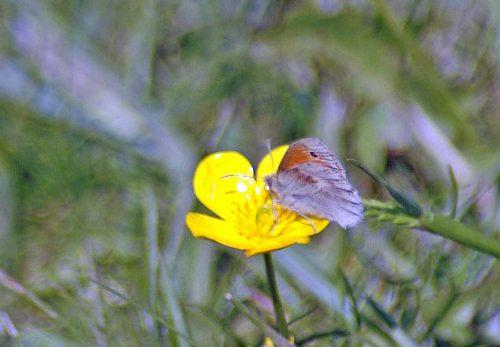
The same strong breeze that carried away the Grayling was keeping the Small Heaths tucked down in the grass, but I finally managed to get an almost-clear view of one feeding on Wild Thyme.

Small Heath-Coenonympha pamphilus

Small Heath-Coenonympha pamphilus

Walking back down through the woods on the way home, a Red Admiral startled me when it flew up from a bramble at the side of the track. It settled back down when I stopped, then flew out again – the feisty thing was deliberately warning me to get out of his space! He sat brazenly on a leaf at about my eye level and reared up defiantly as I approached with the camera, not giving an inch and I’m sure trying to stare me down! Loved his attitude.

Red Admiral-Vanessa atalanta

Red Admiral-Vanessa atalanta

160623-Bryn Euryn-55-Red Admiral 5

____________________________________________________________________________________

References: ¹ Britain’s Hoverflies  – Stuart Ball and Roger Morris


Share this:

  • Share on Facebook (Opens in new window) Facebook
  • Share on Pinterest (Opens in new window) Pinterest
  • Share on X (Opens in new window) X
Like Loading...

Butterflies and more rare treats

29 Wednesday Jun 2016

Posted by theresagreen in Bryn Euryn Nature Reserve, bumblebees, Butterflies of Wales, calcareous grassland, day-flying moths, Insects, nationally scarce wildflowers, Nature of Wales, Wildflowers of Wales

≈ 15 Comments

Tags

Adscita geryon, Cistus Forester moth, common blue, common rockrose, Cryptocephalus hypochaeridis, Dingy Skipper, Jewel beetles, Nottingham Catchfly, Pyramidal Orchid, salad burnet, Silene nutans, small heath, small shiny metallic green beetle, speckled wood

June 5th

One of the most fascinating, and sometimes a little frustrating thing about observing wildlife is that no two days, even in the same location are ever the same. I know that, but I had to retrace yesterday’s steps in the hope of further sightings of a Dingy Skipper or two didn’t I?

Along the Woodland Trail, Speckled Woods seemed  even more numerous than yesterday, and a little more willing to bask with open or partially open wings.

Speckled Wood

Speckled Wood and shadow

Leaving the shelter of the trees and entering the open meadow there was a fairly strong, cool breeze blowing – not the best of conditions for photographing butterflies that tend to stay low in the grass on such days, despite today’s sunshine. That didn’t deter me from stubbornly attempting to get some images of a lovely fresh male Common Blue. It was highly mobile, but during their frantic circuiting, these butterflies frequently return to the same spot to settle for a breather and luckily this was the case with this beauty; he favoured this particular grass stem or a nearby head of clover, so I waited there and eventually caught him during moments when the breeze briefly stilled. Not as sharp an image as I’d like, but a record.

Common Blue male upperside

Common Blue male upperside

Common Blue male underside

Common Blue male underside

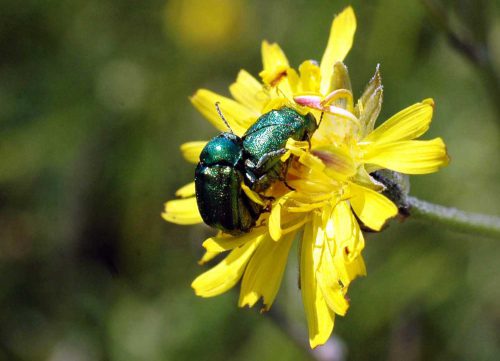
I wondered if I might see the little green jewel beetle again. Last night, looking for information about this species I read they favour yellow compositeae flowers and remembered there were a few hawkweed plants close to where I found it yesterday. Lo and behold, I found not just one there, but a mating pair. I’ve put in two images of them, one to show their real size and another enlarged one to show how beautiful they are.

160605-BE26-Green metallic beetles-mating pair

Mating pair of Cryptocephalus aureolus

160605-BE33a-Green metallic beetles-mating pair

After a few minutes of photographing the obligingly oblivious pair I noticed a female Swollen-thighed Beetle -Oedemera nobilis (females don’t have the swollen thighs of the male) that had landed on a nearby flowerhead.

160605-BE31-Green metallic beetles-mating pair

She decided to take a closer look at what the mating pair were up to. (Sorry about blurry image-swaying flower stem!)

160605-BE39-Green metallic beetles-mating pair

Mating pair of Cryptocephalus aureolus observed by a female Oedemera nobilis

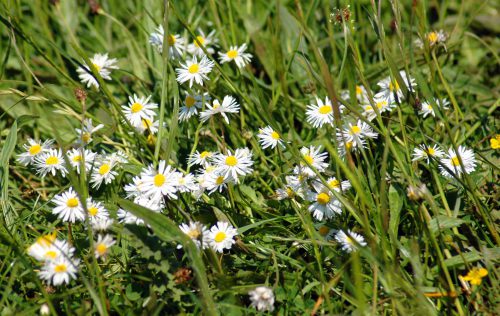
I couldn’t resist this patch of pretty Common Daisies in the long grass.

160605-BE-Daisies

A slight variation on yesterdays route took me up the track that comes out the other side of the hill. It was even breezier up there, but there were insects about taking advantage of the nectar and pollen on offer from the abundant wildflowers, mainly Rock-roses and clovers.

A Carder bumblebee in action on red and then white clover:

160605-BE42-Bee approaching clover160605-BE43-Bee on clover160605-BE44-Bee on clover160605-BE46-Bee on clover160605-BE45-Bee on clover

This side of the hill’s summit was looking beautiful, carpeted with sunshine yellow Rock-rose and Bird’s-foot Trefoil.

160605-BE1305-Rock-roses on summit

Summit carpeted with the sunshine yellow blooms of Rockroses and Bird’s-foot Trefoil (click on image to enlarge)

I stood still for a few minutes scanning the flowers for butterflies. Small Heaths  were most numerous, but I did spot a single Dingy Skipper. Living up to its name, it was skipping around randomly at speed, too fast and mobile for a photograph, but at least I’d seen it. I had more luck with a lovely little iridescent green Forester Moth that landed on a Salad Burnet flowerhead and stayed there.

160605-BEMTH-Forester moth on Salad Burnet 3a160605-BEMTH-Forester moth on Salad Burnet 1

There are three similar species of Forester Moth in Britain that can be difficult to tell apart, but I think this one is a Cistus Forester-Adscita geryon. According to the Butterfly Conservation info: “This species is generally smaller than the Forester or Scarce Forester and the presence of good quantities of the Cistus Forester’s foodplant, Common Rock-rose, can be a useful indication of this species.”

Now for the ‘rare treat’! Since I came  to live here, I have been looking out for a ‘Nationally Scarce’ plant that is recorded as growing here, the fascinating Nottingham Catchfly-Silene nutans. I’d only seen pictures and read about it, imagining I would find it in a rocky place on the cliffs or in bare ground. But, much to my amazement and delight, I found it today well-hidden amongst lush long grasses near the edge of a track. Getting my eye in, I saw there were several smaller clumps of the plant further back from the track edge, so clearly a good year for it. Difficult to photograph in the strong breeze, I’ve edited and sharpened my images a little so the plant is more visible than it was on the day!

160605-BE1256-Nottingham Catchfly (5)

Nottingham Catchfly amongst swaying long grasses

The plant is so-named because it was first found on the walls of Nottingham Castle. It no longer grows there as the site was destroyed during work done on the site in the 19th century. The flower remains the County Flower for Nottinghamshire though.

160605-BE1256-Nottingham Catchfly (4)

The plant is vespertine like many of the catchflies. This means that the flowers tend to stay closed in the daytime and open in the evening or at night, when they release a heavy scent into the evening air in order to attract night-flying insects and moths.

160605-BE1256-Nottingham Catchfly (3)

Flowers are drooping, in very open clusters and all usually pointing one way. Petals white above, greenish or pinkish beneath.

Each flower opens over three successive nights revealing one whorl of stamens on the first night and another on the second and the styles on the third. This is thought to prevent self fertilisation.

160605-BE1256-Nottingham Catchfly (2)

Moving on up to the summit I found my first Pyramidal Orchid of the year, still tightly in bud.

First Pyramidal Orchid

First Pyramidal Orchid-Anacamptis pyramidalis amongst Common Rock-rose

Back in the same spot as yesterday I got another brief glimpse of a Dingy Skipper nectaring on Bird’s-foot Trefoil.

160605-BEBFY-Dingy Skipper 1b

Dingy Skipper on Birds-foot Trefoil

At the bottom of the ‘downland’ slope I finally caught up with a Small Heath on a buttercup.

160605-BEBFLY-Small Heath on buttercup 1a

And to finish, a female Common Blue.

160605-BEBFLY-Common Blue (f) upperside 1 160605-BEBFY-Common Blue (f) 1


Share this:

  • Share on Facebook (Opens in new window) Facebook
  • Share on Pinterest (Opens in new window) Pinterest
  • Share on X (Opens in new window) X
Like Loading...

Beautiful blooms and some rare treats (1)

26 Sunday Jun 2016

Posted by theresagreen in Beetles, Bryn Euryn Nature Reserve, Butterflies of Wales, calcareous grassland, grasses, Insects, Nature, Nature of Wales, nature photography, North Wales, Wildflowers of Wales

≈ 12 Comments

Tags

brachypodium sylvaticum, burnet rose, common rockrose, Cryptocephalus hypochaeridis, Dingy Skipper, Erynnis tages, false brome, foxglove, hoary rockrose, Jewel beetles, small shiny metallic green beetle, speckled wood

160604-BE6-View across field

160604-BE15-Foxgloves

Foxglove-Digitalis

The first week of June was full of the promise of a glorious summer to come. A  run of warm sunny days had brought forth perfect and prolific blooms and began to coax out the butterflies.

June 4th

Along the woodland trail that circuits the lower slopes of the Bryn Euryn Nature Reserve, the early summer wildflowers are peaking. Foxgloves are at their perfect best, with stems full of open blooms graduating upwards to buds. There are not many plants on this site, but they seem to be gradually increasing in number year on year.

Honeysuckle is blooming prolifically, the best I have ever seen it and it smells heavenly.

160604-BE19-Honeysuckle


The wild strawberry patch is also full of flowers, promising a bumper crop to come,although it is in danger of becoming overwhelmed by encroaching ivy and other vegetation.

160604-BE23-Wild strawberry flowers

Wild Strawberry


Birds were heard but not seen, concealed by the dense foliage of the tree canopy; Chiffchaff, Wren, and Blackbirds were all still singing between nesting duties.
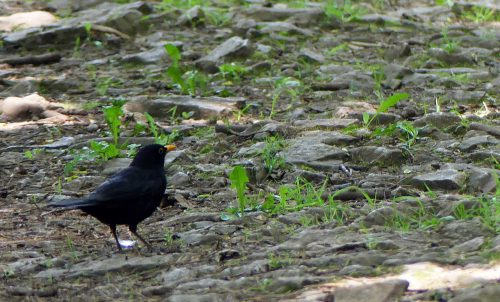
 

160604-BE20-Blackbird

A Blackbird male paused from singing to hunt  on the woodland track
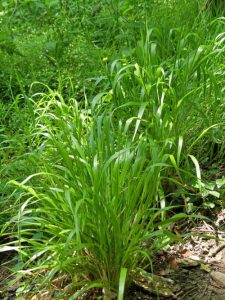
False Brome-Brachypodium sylvaticum

False Brome-Brachypodium sylvaticum


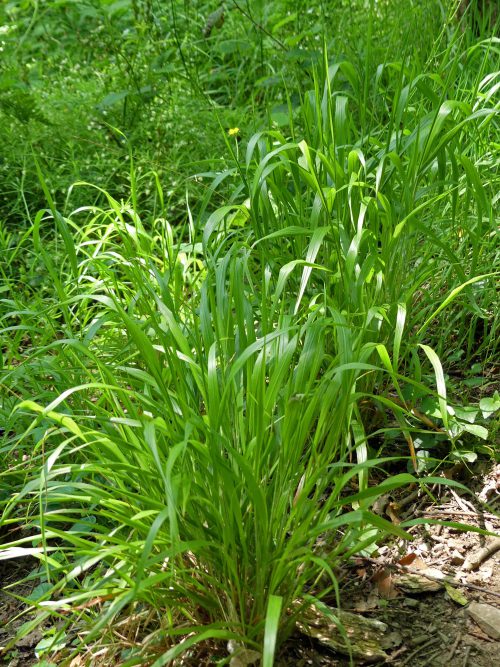
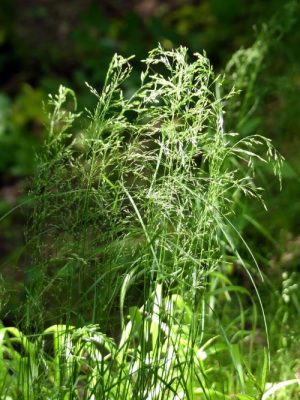
Some of the clumps of grass that grow along the woodland tracks are flowering now. This is False Brome-Brachypodium sylvaticum, a perennial grass common in woodlands where it prefers the shade of the canopy.


160604-BE3-Sunlit False Brome

Flowering False Brome

Oak leaves are already being eaten

Oak leaves are already being eaten

One of the more severe winter storms brought down three Scots Pines. Two have been sawn up and cleared away but the largest has been left where it fell and poignantly continues to live, now producing new cones.

New cones on fallen Scots Pine

New cones on fallen Scots Pine

New leaves on Yew tree

New leaves on Yew tree

Beautiful fresh Speckled Wood butterflies were out in number and busy patrolling territories or sitting on leaves, wings closed in wait for intruders or potential mates.
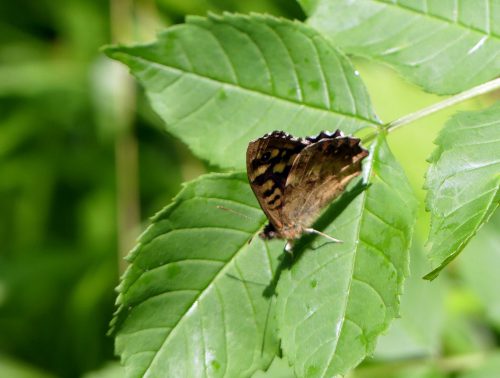
160604-BE22-Speckled wood on ash

Speckled Wood on Ash leaf

Up the steps and into the small open meadow the first impression was of lush greenery. The grass is growing long and closer inspection reveals it is studded with purple and white clovers, yellow Common Rock-rose and buttercups and the curiously flowered salad burnet.

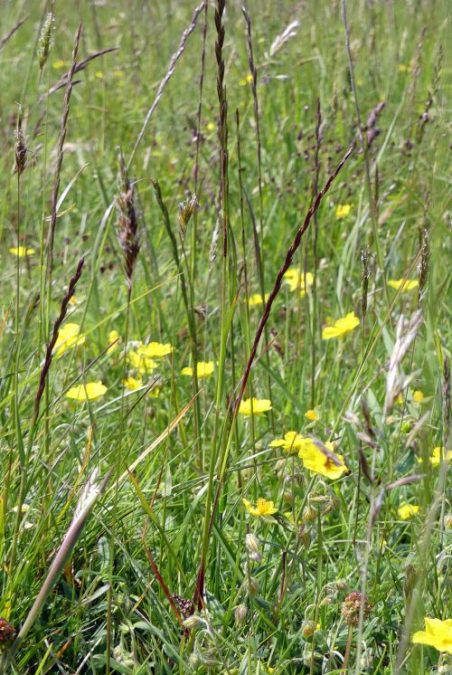
160604-BE24-Adder's field

160604-BE30-Grasses

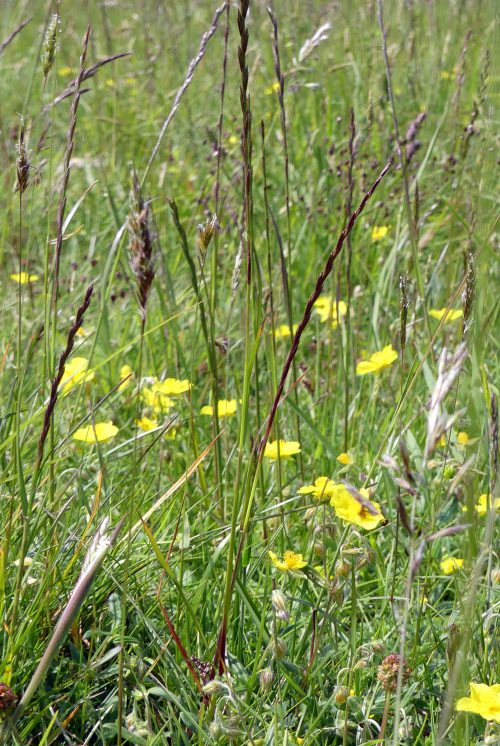
A variety of meadow grasses with Common rockrose and Salad burnet

Along the edge of the tree-line another burnet, the beautiful Burnet Rose (visible centre left of the photograph above) is also in full flower. It too smells divine and was absolutely buzzing with a variety of bumblebee species revelling in the pollen and nectar bounty on offer.

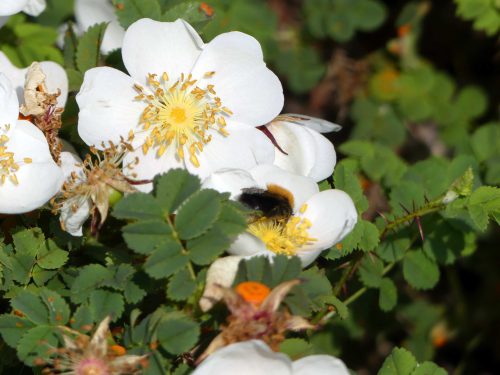
160604-BE27-Burnet rose patch

Burnet rose with Tree bumblebee

Burnet rose with Tree bumblebee

In previous years I have noted that the Burnet roses have played host to a bright orange fungus, this is Rust fungus Phragmidium rosa-pimpinellifoliae. It doesn’t appear to harm the plants, but this year the fungus is almost as prolific as the blooms themselves.

160604-BE26a-Burnet rose with fungus

Burnet roses with Rust fungus

On the small rocky outcrop at the top end of the field there are pretty clumps of Common Rock-rose-Helianthemum nummularium.

160604-BE37-Hoary rockrose

160604-BE31-Shiny emerald beetle

Cryptocephalus aureolus

A glint of emerald green drew my attention to a tiny shiny beetle in the centre of a Rock-rose flower. This little Jewel beetle doesn’t appear to have a Common name, so is known by its Scientific name of Cryptocephalus aureolus. The generic name of the beetle and its relatives refers to the insects’ heads being hidden under the pronotum. This is a new species recording for me here on the Bryn, which is not to say they haven’t always been here, just that I hadn’t seen one till now

I saw some little butterflies from here, a couple of Common Blues and Small Heaths, but all flying low in the long grass and in no mood to settle to pose for portraits.

Onwards and upwards along the Summit Trail, taking the track that comes out at the bottom of the steep ‘downland’ slope. This is often a good place to find Common Blue and Brown Argus butterflies, but not today, although there were a good number of Small Heaths to be seen, again not settling for me.

160604-BE38a-Summit Trail woodland

Summit Trail

I progressed fairly slowly up the steep slope and near the summit was  attracted to a sheltered corner backed by trees, bordered by raspberry brambles and where the ground was covered by Common Rock-rose and Bird’s-foot Trefoil flowers. I was drawn there by the sight of a small brown butterfly, which I hoped may be a Brown Argus, but which turned out to be a female Common Blue.

160604-BE42c-Dingy skipper on bramble

Then I noticed a slightly larger brown flutterer that I thought at first was a moth. A closer view changed my mind, this was a butterfly and although it was rather faded and a bit tattered round the wing-edges, was the right size and shape for a Skipper. Old records for the site indicate the presence of the Dingy Skipper-Erynnis tages, whose common name may not inspire much excitement, but this is a fairly uncommon butterfly in the UK, with recorded sightings at sites in North Wales not exceeding low single figures. I hope now my ID is right – if anyone knows better, please let me know!

Dingy Skipper

Dingy Skipper from a distance

I’m sure I’m not alone here, but I get nervous when I’m confronted by a new-to-me species of anything; especially when I’m aware this may be my one and only chance to record a sighting. So, I find I hold my breath, begin to panic slightly that I won’t get a photograph that will help me confirm its identity back at home and pray no-one will pass close by and disturb my target. My ‘technique’ thereafter is quite basic – to start from a distance and gradually move in closer, capturing as many images as I can before my subject takes off!
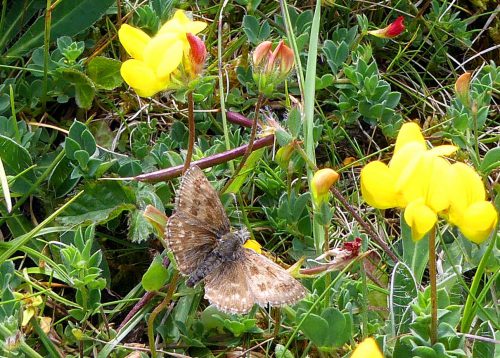
160604-BE44-Dingy skipper

Dingy Skipper-Erynnis tages

This particular butterfly was not making things easy and was restlessly flitting about amongst the flowers, staying low to the ground and frequently hidden amongst the plants. I felt quite dizzy staying focussed and following it around, probably down to lack of oxygen intake from the not-breathing. As ever, I would have liked more opportunities for photographs, but did manage to get a couple of fairly clear images that at least have given me my sighting record.

160604-BE45b-Dingy skipper underside

Dingy Skipper underside

After a few moments the butterfly took off away down the hill and I lost track of it. The camera battery also chose that moment to expire and as this had been a spur of the moment, travel light walk, I had no spare with me!

I have written detailed posts about many of the subjects mentioned in this one, so rather than repeat myself, I have added links to click onto if you would like to see more about any of them. For more about the Dingy Skipper, go to http://butterfly-conservation.org/679-1101/dingy-skipper.html


Share this:

  • Share on Facebook (Opens in new window) Facebook
  • Share on Pinterest (Opens in new window) Pinterest
  • Share on X (Opens in new window) X
Like Loading...

Fairy Moths & Sainted Flies

10 Tuesday May 2016

Posted by theresagreen in Bryn Euryn Nature Reserve, day-flying moths, Insects, Nature, Nature of Wales, nature photography

≈ 8 Comments

Tags

Adela reaumurella, bibio marci, black fly with long dangling legs, fairy long-horn moth, green long-horn moth, St Mark's fly, swarm of black flies in Spring

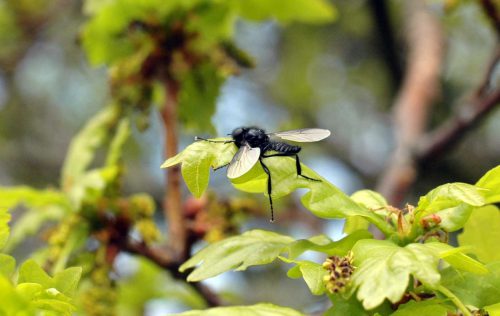
I first saw the delightfully strange little Green Longhorn moths on Bryn Euryn on the 13th May last year, where a fairly large number of them were dancing around an oak tree in the sunshine. Initially I thought they may be St Mark’s flies, but as I got closer I could see these insects were much tinier, had ridiculously long white antennae and wings that had a metallic greeny-bronze sheen to them.  It took me a while after that to discover their identity, but finally learnt that they were Long-horn moths, also known as Fairy Long-horn moths and this particular species was the Green Long-horn moth, Adela reaumurella.

150513TGBE-Bryn Euryn woodland path 23-Longhorn Moths

Finding them in the exact same location yesterday (May 9th), was a surprise and a treat, more so as this time they were mixed in with a largish number of St Mark’s flies and were behaving differently. No group dancing today, the combined species, all male, were travelling along rather erratically in a wide ribbon, staying within the cover of the oak leaves and making frequent individual brief stops on leaves. They were maintaining a consistent height above the ground at about my head height (I’m 5′ 3″), and progressing along the band of trees and shrubs that border one side of the meadow. I’d love to know what was happening.
160509-Bryn Euryn-Green longhorn moth (m) 3

GREEN (FAIRY) LONG-HORN MOTH-Adela reaumurella 

DESCRIPTION

Wingspan: 14-18mm; both sexes have rough black hair on their heads and thorax, giving them a furry appearance when seen close-up. Upperwings are a metallic green-bronze and underwings are metallic bronze. Males have extremely long, whitish antennae; the females’ antennae are shorter.

150513TGBE-Bryn Euryn woodland path 24-Longhorn Moths (8)

HABITAT

Open areas such as heathland, moorland, country gardens, parks and wherever the larval foodplant is found.

160509-Bryn Euryn-Green longhorn moth (m) 2

The moths fly in the daytime during May and June, sometimes occurring in swarms and often around the tops of trees and bushes.
160509-Bryn Euryn-Green longhorn moth & St Mark's fly

LIFE HISTORY

The larvae feed on leaf litter of Oak and Birch and make themselves portable cases with leaf fragments. The larvae have no prolegs and pupate in their larval cases.

ST MARK’S FLY – Bibio marci

160509-Bryn Euryn-St Mark's fly 1

The St. Mark’s Fly is a species of true fly, also known as Hawthorn flies and belongs to the family Bibionidae.

160509-Bryn Euryn-St Mark's fly

This jet-black fly is so-named as it frequently appears on or around the feast day of St Mark, which falls on April 25th and is seen in flight in May.  They are found around woodland edges, hedges, rough grassland and wetlands and can be seen throughout the UK in spring. The males are  often encountered in a swarm drifting slowly up and down at about a person’s head height, long legs dangling, trying to attract females. The swarms can be annoying, especially if you have to walk through one, and the insects are not averse to landing on people. However, they are harmless and as insects that feed on nectar, they are important pollinators, particularly of fruit trees and crops.

160509-Bryn Euryn-St Mark's fly 4

DESCRIPTION

Length: The male is about 12 mm and the female 14 mm long. Although appearing black and shiny, this is quite a hairy black insect. Wings: The wings have a black front edge. The compound eyes are large and bulbous and they have a rather tubular segmented body and black legs. The front legs have a stout spine at the tip of the tibia.

The females are larger,  have smoky wings and much a smaller head and eyes.

160509-Bryn Euryn-St Mark's fly 6

LIFE HISTORY

The St. Mark’s Fly has a very short adult life cycle, being in flight for approximately only one week. The majority of their time is spent as larva in the soil. During autumn and winter, larvae feed on rotting vegetation which they chew with their strong mouthparts. In springtime the males emerge first and the females a few days later. After mating, females lay their eggs in the soil and die soon afterwards.


Share this:

  • Share on Facebook (Opens in new window) Facebook
  • Share on Pinterest (Opens in new window) Pinterest
  • Share on X (Opens in new window) X
Like Loading...

The Goats of the Great Orme

09 Saturday Apr 2016

Posted by theresagreen in coastal walks, Great Orme, Llandudno, Nature, Nature of Wales, nature photography, North Wales

≈ 17 Comments

Tags

cashmere, Conservation issues, goat mascot of Royal Welsh Fusiliers, goats of the Great Orme, Kashmiri goats

The herd of goats that roam Llandudno’s Great Orme is famous far and wide and for many visitors a sighting of them is a highlight of their trip. Sightings are often  distant and to an extent dependent on the time of year, but they do wander as they browse and graze and can appear almost anywhere. I like to see them browsing on the steep limestone cliffs and watch them negotiate the narrow ledges with amazing and sometimes breath-taking agility. Up there they remind me that although their home is in a public Country Park, they are still wild animals within it.

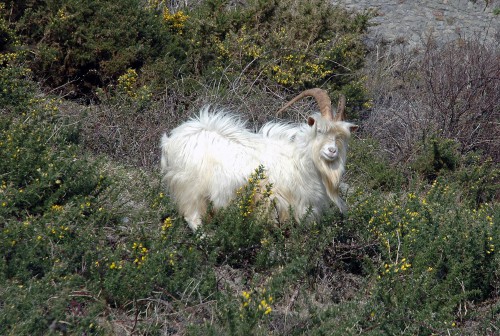
These are Kashmiri goats, whose ancestors once roamed the mountains of Northern India. Their soft undercoats are the material that cashmere wool is spun from. The word cashmere is an old spelling of the Kashmir region in northern India and Pakistan.

160328-Llandudno6-Goats on west side of Gt Orme

Kashmiri nanny goat

The origin of the Great Orme goats and their arrival in Britain is attributed to Squire Christopher Tower, from Brentwood in Essex, who discovered a large herd which had recently been imported from Kashmir into France in the early part of the last century. His idea was to create a profitable woollen industry, so he purchased a pair of the goats, and took them to Weald Park in Brentwood. The goats flourished, and soon produced kids, from which the Squire was, eventually, able to manufacture a cashmere shawl. George IV was highly impressed by this article, and was happy to accept a pair of the goats presented to him by Squire Tower. So began the Windsor herd, which increased rapidly, and in the reign of Queen Victoria, cashmere shawls became extremely fashionable. It is often said that Queen Victoria was presented with the goats by the Shah of Persia, and it may be that these were added to the already existing herd.

160328-Llandudno7-2 Goats on west side of Gt Orme

Later in the Century, Major General Sir Savage Mostyn acquired two of the Windsor goats, and took them to the grounds of Gloddaeth Hall. It is possible that they were found to be unsuitable as park animals and the goats were transferred to the Great Orme. Over a period of almost a hundred years, these animals have existed virtually in isolation, and have evolved into the unique breed they now are. They have reverted to a wild state, and are now regarded as wild animals.

The size of the herd is said to be maintained at about 60, which is based on the optimum number of animals for the size of the territory available to them. The  herd is made up of full grown billies, juvenile billies, nannies and kids. For most of the year, the nannies browse on the side of the mountain with their youngest offspring while the mature and immature billies roam in small groups away from them. They don’t mix until the Autumn rut.

160328-Llandudno11-2 Goats in gorse on west side of Gt Orme

A mature billy has enormous horns that curve backwards, almost touching the nape of his neck. A shaggy fringe covers the forehead and he sports a long beard. The horns are crenulated, with large ridges unevenly spaced along their length. It is possible to estimate the age of a billy by the ridges on its horns as each section represents one year’s growth. The horns of the young billies and the nannies are slim and delicate, curving gently backwards. In the nannies, the ridges are less obvious and ageing them is not so easy. Barring accidents, the goats will live for about nine years.

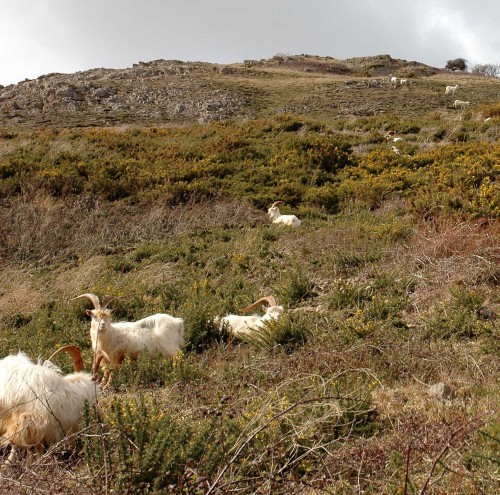
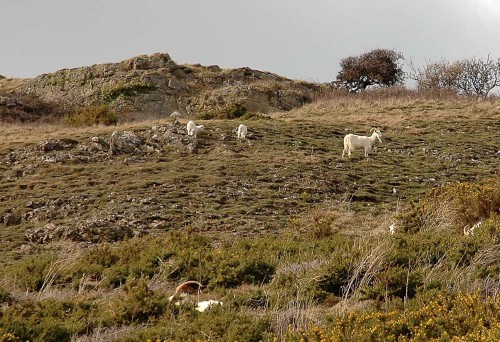
I believe the group I came across were nannies with a couple of new kids visible in the distance near the summit.

160328-Llandudno8-Goat flock on west side of Gt Orme

Goats will reputedly eat anything, but given choice, which these privileged individuals have, they can afford to be a bit choosier. Their vegetation species of choice are gorse, hawthorn, elder, bracken, bramble, ivy, stinging nettles and privet, according to the season. In the Autumn, they will browse on the grass, moving to the slopes where they can find a plentiful supply.

160328-Llandudno10-Goat & kids on west side of Gt Orme

The most distant goats may well be this year’s kids

Although technically an alien, or introduced species to Great Britain, the goats are considered by many to be an integral part of the Great Orme environment and nowadays their grazing plays a part in maintaing the flora for which the headland is renowned. Not everyone appreciates them however, particularly when they wander into the garden areas on the lower slopes, or even into the town itself.

Their population has to be kept in check to ensure that competition for resources is not too great. This involves administering contraception to nannies to control the number of kids born each year, which appears to be working. Relocation of small groups to assist conservation in other areas of the country is carried out when the opportunity arises. In recent years 6 animals were relocated to Bristol’s Avon Gorge and 2 to a SSI on Anglesey.

Mascot of the Royal Welsh Fusiliers

A select few billy goats from the Great Orme herd have acheived fame as they have been chosen as the mascot of the Royal Welsh Fusiliers. Records suggest that The Royal Welch Fusiliers were parading a goat as early as 1777. Whenever possible the goats are selected from the royal herd which was started at Windsor in the time of Queen Victoria, who gave 23rd Foot their first ‘royal’ goat in 1844. This herd is now located at Whipsnade Animal Park. In recent times, when no goat was available from the royal herd, the Queen has been pleased to present a wild goat from the mountains of North Wales, where a herd still exists on the Great Orme at Llandudno. This herd is known to have some Windsor blood in its ancestry.

taffy-4

Royal Welsh regimental goat Lance Corporal Gwillam Jenkins

Lance Corporal Gwillam ‘Taffy VI’ Jenkins, died in May 2015 after nine years of dedicated service. Following his passing, Her Majesty the Queen was informed and her permission sought to select and recruit a new Regimental goat. Permission was kindly granted and the selection process started. His replacement, Llywelyn was recruited from the Great Orme in Llandudno, North Wales on the 23 November 2015. Only the most prominent and impressive young billy kid goat is considered for selection. Following an arduous survey of the wild herd, one particular Goat stood out and demonstrated more promise than the others – this was Llywelyn.

_87825995_llywelyngoat

Llywelyn will lead the 1st Battalion The Royal Welsh on all ceremonial duties, leading parades through Welsh towns and cities during Freedom Parades, Medals parades and Armed Forces Day events. He has already been invited to parade in London as part of the Queen’s 90th Birthday celebrations and will also be detached to B (Rorke’s Drift) Company for the summer as part of the guard at Buckingham Palace.

  • Information in this post is from various sources, but mostly derives from the booklet, Aliens on the Great Orme by Eve Parry.

Share this:

  • Share on Facebook (Opens in new window) Facebook
  • Share on Pinterest (Opens in new window) Pinterest
  • Share on X (Opens in new window) X
Like Loading...

Welcome back to the Mistle Thrush

05 Friday Feb 2016

Posted by theresagreen in birds of Wales, Bryn Euryn Nature Reserve, Nature, Nature of Wales, nature of woodlands

≈ 8 Comments

Tags

birds of conservation concern, Conservation issues, mistle thrush, turdus viscivorus

At 7.10 am it was barely light, but from high in a cherry tree, easily piercing the double glazing of my living room window, a Mistle thrush exuberantly proclaimed his return. He sang long and loud for at least the next hour before crossing the building to announce his presence from the woodland edge behind us. I was out for most of the day, but arriving home at 5 pm, again in the fading light, he was back in the same place reinforcing his presence.

Mistle thrush singing from ash tree

Mistle thrush singing from ash tree 

I could barely see him, so much to dark to photograph him, so the photograph is one from last year that I took of a bird in the neighbouring tree that arrived here on a similar date and behaved in a very similar way. I would like to believe it was the same bird returning to reclaim his breeding territory, especially as the Mistle thrush has moved from the amber list to red-listed status as a bird of conservation concern, with 170,000 breeding territories recorded.

Mistle thrushes are early nesters and many nests are built in late February. typically they favour sites in woodland as high as 30ft up on the top of a snapped-off tree. Each pair raises two or occasionally three broods and they may sometimes use the same nest. To my knowledge at least one pair bred successfully here on Bryn Euryn last year and similarly the previous year, so this is clearly a well-established breeding site – fingers crossed for this year too.

Read more about the Mistle thrush here.


Share this:

  • Share on Facebook (Opens in new window) Facebook
  • Share on Pinterest (Opens in new window) Pinterest
  • Share on X (Opens in new window) X
Like Loading...

Wildflowers in Winter

28 Thursday Jan 2016

Posted by theresagreen in Bryn Euryn Nature Reserve, Nature, Nature of Wales, nature of woodlands, nature photography, wildflowers, Wildflowers of Wales

≈ 8 Comments

Tags

daisy, gorse, hart's tongue fern, hazel catkins, lesser celandine, male fern, wildflowers blooming in January, winter heliotrope, winter wildflowers

Daisies look delicate, but they’re tough little plants and flower more-or-less continuously from December to January. I love them so am happy they can decorate grassy areas in peace before the lawn-mowers emerge from hibernation.

160128-TGFLR 1 (8)

Daisy-Bellis perennis

Celandines are one of the first heralds of Spring, but I was taken by surprise to find some this early in the year.

Celandines

Lesser Celandine-Ficaria verna

Herb Robert was also a surprise, its flowering season is more April-November, so this is probably a plant that has not died down and carried on growing.

Herb Robert

Herb Robert

Another survivor is this Nipplewort which is growing in a sheltered corner against a wall on the roadside.

Nipplewort

Nipplewort

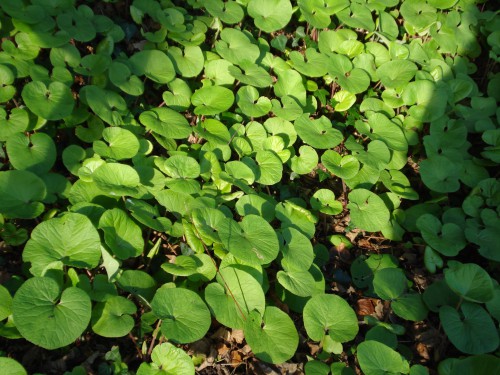
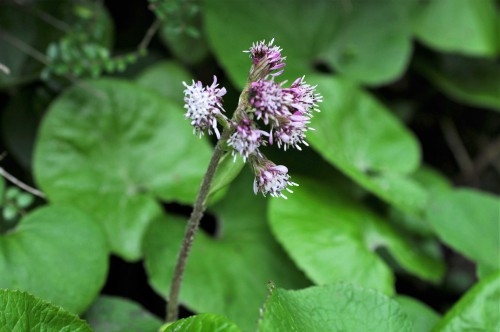
There are some wildflowers that are truly winter flowering. The bright green leaves of Winter heliotrope are present here throughout the year and the lilac flowers, which have a fragrant, vanilla-like scent appear from November to March.

Leaves of Winter heliotrope

Leaves of Winter heliotrope

Winter heliotrope

Winter heliotrope – Petasites fragrans

January 26th was a mild sunny day, warm enough to coax out this little Red-tailed bumblebee, but it seemed to be struggling to take off from the flower, so maybe it wasn’t quite warm enough.

A red-tailed bumblebee on a heliotrope flower

A red-tailed bumblebee on a heliotrope flower

Three-cornered Garlic is named for the shape of its flower stems, which are triangular. It is also known as White bluebell and does resemble one, until you smell it. It’s flowering season is February- June but has been in flower here since last December.

Three-cornered Garlic

Three-cornered Garlic-Allium triquetrum

Flowers resemble those of the bluebell

Flowers resemble those of the bluebell

“When gorse is out of bloom, kissing is out of season“. In other words, gorse pretty much flowers all year round to some extent. Now, at the end of this mild January many bushes are well-covered with the lusciously coconut-scented blossom.

Gorse

Gorse

Hazel catkins have also been present on some trees since last month.

Hazel catkins

Hazel catkins

Sycamore buds are greening

Sycamore buds are greening

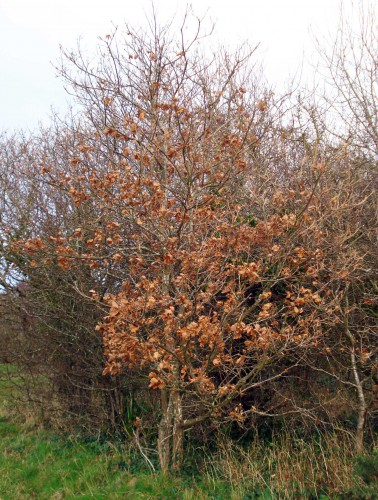
A few trees have retained their dried leaves for some reason, this is a small oak.

A small oak tree has kept its dried leaves

A small tree has kept its dried leaves

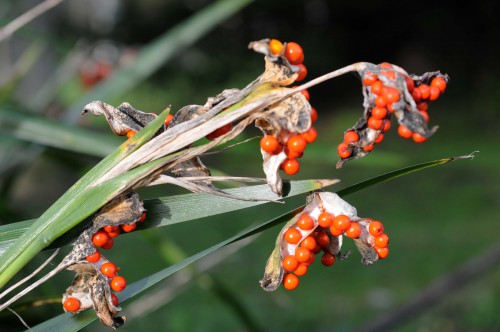
Some plants characteristically hang on to their berries well into the winter, one such is the unfortunately-named Stinking iris that has bright orange berries

Berries of Stinking Iris-Iris foetidissima

Berries of Stinking Iris-Iris foetidissima

and another is Black bryony, whose bright scarlet berries garland shrubs like strings of shiny beads.

Black bryony berries

Black bryony berries

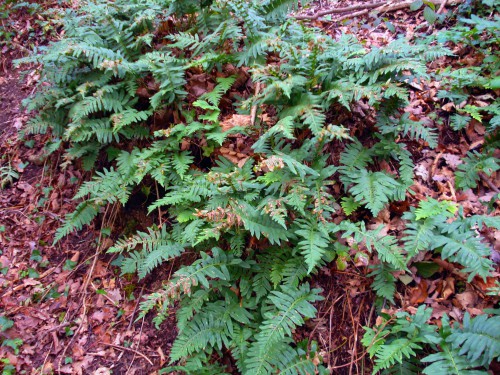
A surprising number of ferns are still green

Polypody fern

Polypody fern

Spores or sori still in place on the back of the fern fronds

Spores or sori still in place on the back of the Polypody fern fronds

Both the Male fern and the Hart’s Tongue fern are semi-evergreen, but this group shows no sign of dying down at all.

Male fern and Harts tongue ferns

Male fern and Harts tongue ferns

Winter is a good time to appreciate mosses. Looking closely at this one it has fern-like leaves.

A cushion of moss tucked against rocks

A cushion of moss tucked against rocks

Close-up of moss

Close-up of moss

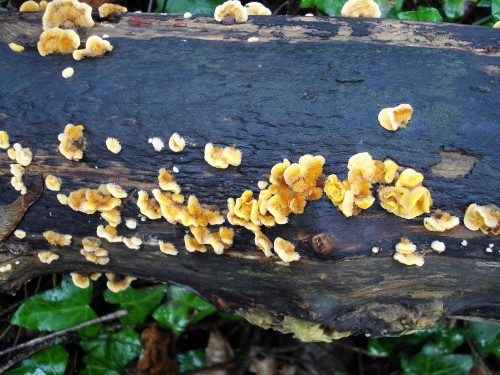
On a fallen Scots pine a colony of tiny bright yellow coloured fungi has established itself; it seems to be a bracket fungi, maybe a turkeytail?

Bright yellow bracket fungus-maybe a small turkeytail

Bright yellow bracket fungus-maybe a turkeytail


Share this:

  • Share on Facebook (Opens in new window) Facebook
  • Share on Pinterest (Opens in new window) Pinterest
  • Share on X (Opens in new window) X
Like Loading...

Autumn

27 Tuesday Oct 2015

Posted by theresagreen in Bryn Euryn Nature Reserve, Bryn Pydew, Nature, Nature of Wales, nature of woodlands, nature photography, North Wales, Wildflowers of Wales, woodland walks in Wales

≈ 7 Comments

Tags

ash leaves, autumn colour, autumn leaves, eristalis pertinax, fallen leaves, goldenrod, hazel leaves, North Wales Wildlife Trust, oak leaves, puffball fungus

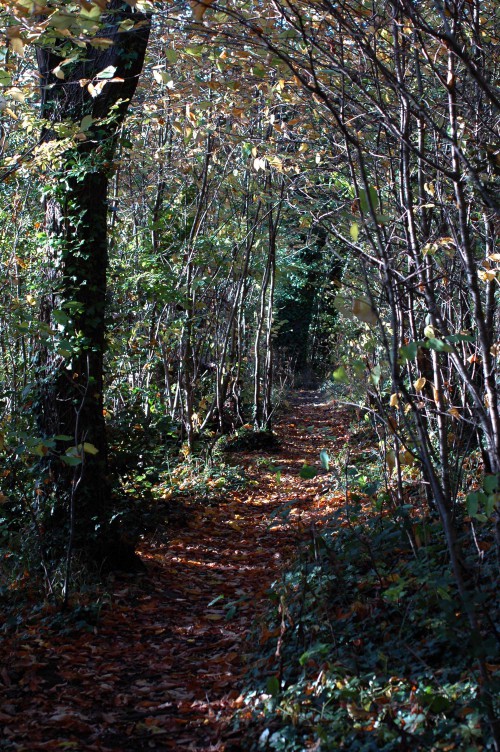
Autumn in North Wales is glorious this year thanks to a prolonged sunny and mild spell of weather, as yet broken only occasionally by rain. Walking between the trees in the dappled shade of the woodland along sun-striped paths thickly carpeted with fallen leaves in all the shades of the season, has been truly joyful. As October draws to an end, here are some of my views of the month.

151021-Bryn Euryn Woods 4a-Path sun-striped 151021-Bryn Euryn Woods 5a-Path leaf-strewn

Ivy is flowering now providing vital supplies of pollen and nectar to late-flying insects.

151021-Bryn Euryn Woods 2a- Ivy flower

Ivy is flowering

151021-Bryn Euryn Woods 8a-Woodland Trail

Ash trees leaves have mostly turned to a bright yellow.

151021-Bryn Euryn Woods 7a-Ash tree canopy

Ash tree canopy

Many have already fallen.

151021-Bryn Euryn Woods 10a-Woodland Trail-Ash leaves

Strings of Black bryony berries are strung between stems of lower-storey vegetation

151008-Bryn Pydew (29)

Black Bryony berries

151021-Bryn Euryn Woods 9a-Woodland Trail

151021-Bryn Euryn Woods 6a-Hazel leaves

Hazel leaves fallen

Oak trees are in varying shades, some still retaining a lot of green where they are in shade while those exposed to more sunlight have turned golden.

151008-Bryn Pydew (6a)-Oak leaves turned yellow & blue sky

Last year there was a national shortage of acorns and here at least it doesn’t look as though this year is going to be any more productive.

Sessile Oak and acorns

Sessile Oak and acorns

151008-Bryn Pydew (37a)-Cherry gall under oak leaf

Cherry gall under an oak leaf

Female Yew trees have ripening pink-red berries

151008-Bryn Pydew (53a)-Yew berry

On the woodland edges and in clearings there is still plenty to see.

151008-Bryn Pydew (2a)-Blackberries & clematis

Late blackberries and Old Mans Beard

In a sunny spot I watched a gathering of a dozen or so hoverflies. Some were hovering and darting around, others were attempting to bask in the sunshine but were deliberately disturbed by their dive-bombing peers.

151008-Bryn Pydew (11a)-Eristalis hoverfly

Bryn Pydew-Eristalis pertinax

On limestone pavement I found Herb Robert leaves that have turned beautiful shades of red

151008-Bryn Pydew (43a)-Herb Robert leaves turned red

Goldenrod is a favourite late flowering plant

151008-Bryn Pydew (30a)-Goldenrod flower stem

Goldenrod

although most plants have set seed by now.

Goldenrod seedheads

Goldenrod seedheads

Tucked into a damp sheltered corner where two quarried limestone walls meet, a maidenhair spleenwort fern remains fresh and green.

151008-Bryn Pydew (35a)-Maidenhair Spleenwort

And of course there are fungi, this is one of the few that I recognise!

151008-Bryn Pydew (48a)-Puffball

Puffball

And to finish, a corvid feather, just because I liked it.

151008-Bryn Pydew (59a)-Corvid feather


Share this:

  • Share on Facebook (Opens in new window) Facebook
  • Share on Pinterest (Opens in new window) Pinterest
  • Share on X (Opens in new window) X
Like Loading...

Late Summer Specials

17 Monday Aug 2015

Posted by theresagreen in British hoverflies, Bryn Euryn Nature Reserve, butterflies, Butterflies of Wales, calcareous grassland, day-flying moths, Nature of Wales, nature photography, plants important to wilflife, Rhos-on-Sea, Wildflowers of Wales

≈ 2 Comments

Tags

ash keys, bee mimic hoverfly, cheilosa illustrata, common ragwort, ferdinandea cuprea, green-veined white, hawthorn berries, mating gatekeeper butterflies, Nature in August, purple hairstreak

August so far has brought mixed weather, days have been mostly warm, but many have been cloudy or overcast and occasionally there’s been some sunshine.

Looking across to Conwy Estuary

Looking across to Conwy Estuary from Bryn Euryn

It’s only been a week or two since my last visit to Bryn Euryn, but now rapidly approaching late summer, much has already changed. Many plants are setting seed, there are ripe wild raspberries, a few ripe blackberries and sloes, still as hard as bullets.

Purple sloes are swelling on Blackthorn

Purple sloes are swelling on Blackthorn

Last year there were sparse crops of acorns and sloes, this year may be more bountiful.

3/8/15-Wood avens seedhead

3/8/15-Wood avens seedhead

Large fruit capsules of the Stinking Iris

Large fruit capsules of the Stinking Iris

On a last hogweed flowerhead, a new-to-me, furry little hoverfly; it  is one of a number of species referred to as a bee mimic, but it  doesn’t really look like one.

Hoverfly-cheilosa illustrata- a bee mimic

Hoverfly-cheilosa illustrata- a bee mimic

Another hoverfly caught my eye, it was basking on a bramble leaf and as the sun caught it, the insect shone a bright metallic golden bronze colour.

Hoverfly-ferdinandea cuprea

Hoverfly-ferdinandea cuprea

About to enter the meadow, I caught sight of a Speckled wood butterfly basking on an Oak leaf. I moved in to take a photograph as I haven’t had many good opportunities with this species so far this year, then caught sight of another butterfly sitting on a leaf slightly higher up.

7/8/15 - Purple Hairstreak

7/8/15 – Purple Hairstreak

I moved in a little closer and realised this was a butterfly I had never seen before other than in pictures, a Purple Hairstreak. A species that spends most of its time in and around the tops of Oak trees, I was surprised and delighted to see it and tried not  to alarm it as I focussed the camera. It moved a little to reveal two small orange eyespots on its hindwing, but just as I had it back in focus the Speckled wood flew up and chased it away. I waited a while to see if it would return, but no luck. At least I know to look out for them here again!

The colours of the landscape are changing subtly. Hay has been cut and in many places baled and put safely under cover. Meadows of seeding long grass left standing have taken on a golden hue and on our limestone hill, the wildflowers typical of late summer are at the peak of their flowering. Most are ‘tough’ plants, Knapweed, Hemp agrimony & Ragwort, which are all imortant nectar sources for insects.

Late summer long grass and wildflowers

Late summer long grass and wildflowers, mostly hedge parsley and harebells

7/8/15-Knapweed with a view

It’s been a while since I had a good opportunity to photograph a Green-veined White, so I was pleased to see this fresh one on a Knapweed flowerhead.

3/8/15-Bryn Euryn

3/8/15-Bryn Euryn

Knapweed and Hemp Agrmony

Knapweed and Hemp Agrmony

Burnet moth on knapweed

Burnet moth on knapweed- wings faded and almost transparent

Also clinging to a knapweed plant was a pair of mating Gatekeepers; a perfect opportunity to see the difference between the male and female of the species, as helpfully, the female opened her wings to show the plainer upperside to her wings.

Mating Gatekeeper butterflies - female above male

Mating Gatekeeper butterflies – female above male

A good opportnity to show the upperside of the female

A good opportunity to show the upperside of the female

As anticipated by the abundance of flowers back in the spring, Ash trees are bearing thick bunches of ‘keys’.

Ash trees have heavy bunches of 'keys'

Ash trees have heavy bunches of ‘keys’

Acorns forming on Pedunculate Oak

Acorns forming on Pedunculate Oak

Haws are ripening and leaves beginning to take on colour

Haws are ripening and leaves beginning to take on colour

Walking close to gorse bushes the air is filled with the gentle sound of pods crackling as they open to release seeds.

Gorse pods crackle as they open to release seeds

Gorse pods crackle as they open to release seeds

Higher up on the steep slope near to the summit there is a stand of Ragwort growing with thistles.

Ragwort and thistles

Ragwort and thistles

And further round more Ragwort, this time interspersed with tall spikes of velvety Mullein.

Ragwort and Mullein

Ragwort and Mullein

The seedpods of Bird's-foot Trefoil are from where it takes it name

The seedpods of Bird’s-foot Trefoil are from where it takes it name

And a final shot of a Speckled Wood next to hypericum berries sums up the season, I think.

Speckled Wood & hypericum berries

Speckled Wood & hypericum berries

Share this:

  • Share on Facebook (Opens in new window) Facebook
  • Share on Pinterest (Opens in new window) Pinterest
  • Share on X (Opens in new window) X
Like Loading...
← Older posts
Newer posts →
Follow everyday nature trails on WordPress.com

Enter your email address to follow this blog and receive notifications of new posts by email.

‘But it is the common species that keep the living world ticking over and provide most of our experiences of wildlife, and I would argue that maintaining the abundance of these is as important a conservation priority as maintaining the existence of rarities’. Richard Mabey

MOST RECENT POSTS

  • A Glimpse of Spring to Come January 22, 2025
  • Hunting the Wren December 28, 2024
  • Oh, Christmas Tree December 18, 2024
  • In and Out of the Ivy February 15, 2024
  • Nature’s Fireworks November 30, 2023
  • Wild Autumn along the Coast Path November 3, 2023

OLDER POSTS

LOOKING FOR SOMETHING IN PARTICULAR?

  • Sights and Sounds from the Little Orme 1
    Sights and Sounds from the Little Orme 1
  • The Foxglove - of Fairytales, Myths & Medicine
    The Foxglove - of Fairytales, Myths & Medicine
  • Following a river to a Fairy Glen
    Following a river to a Fairy Glen
  • Butterflies and more rare treats
    Butterflies and more rare treats
  • May Bee Appearing on Ivy near You
    May Bee Appearing on Ivy near You
  • Shades, Sounds and Scents of the Woods
    Shades, Sounds and Scents of the Woods
  • A Windy Wildflower Trail - completion
    A Windy Wildflower Trail - completion
  • Fine Dining for Crows
    Fine Dining for Crows
  • Everyday Birds - The Blue Tit
    Everyday Birds - The Blue Tit
  • Pretty prickly Thistles
    Pretty prickly Thistles

nightingale trails

The Walk of the Monarch Butterfly-Sendero de la Mariposa Monarca

The Walk of the Monarch Butterfly-Sendero de la Mariposa Monarca

MY WILDFLOWER BLOG: where the wildflowers are

Snowdrop

Snowdrop

most recent posts

Follow everyday nature trails on WordPress.com

Social

  • View teresamaygreen’s profile on Twitter

Enter your email address to follow this blog and receive notifications of new posts by email.

Website Built with WordPress.com.

  • Subscribe Subscribed
    • everyday nature trails
    • Join 358 other subscribers
    • Already have a WordPress.com account? Log in now.
    • everyday nature trails
    • Subscribe Subscribed
    • Sign up
    • Log in
    • Report this content
    • View site in Reader
    • Manage subscriptions
    • Collapse this bar
 

Loading Comments...
 

    %d