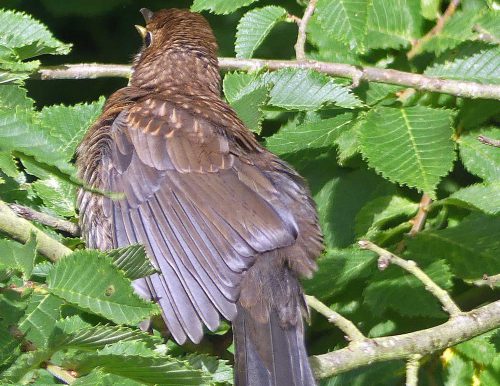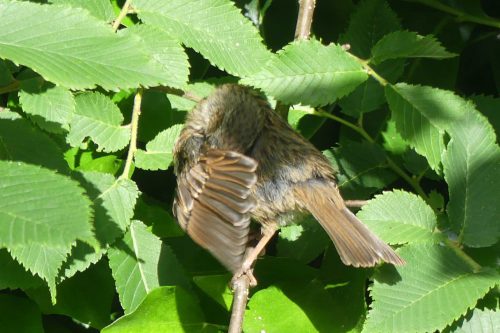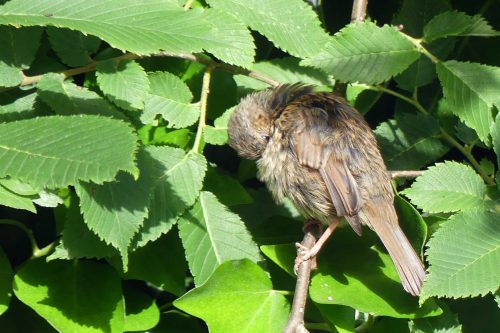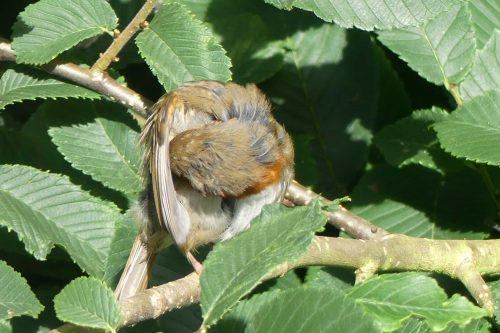
• Home
  • about
  • about the photographs
  • Local Nature Reserves
    • Bryn Euryn Local Nature Reserve
    • Mynydd Marian
  • Wales Coast Path
    • Grey Seals in North Wales
    • St.Trillo’s Chapel
    • Wildflowers of North Wales Coastal Paths, Cliffs and Dunes

everyday nature trails

everyday nature trails

Category Archives: North Wales

Grey Seals on the rocks

07 Wednesday Sep 2016

Posted by theresagreen in coastal walks, Little Orme, Nature, Nature of Wales, nature photography, North Wales, Rhiwledyn Nature Reserve, Seals, Wales Coast Path

≈ 14 Comments

Tags

grey seals, grey seals in Angel Bay, North Wales Wildlife Trust

In UK waters Grey Seals breed during the autumn. Although the entire breeding season spans approximately 8 weeks, individual females will spend 18-20 days ashore, during which time they each bear and suckle one pup. Towards the end of lactation they come into oestrus, as soon as 16 days after giving birth, and are mated.

August 28th

Another windy day on the headland of the Little Orme, but sunny too and the tide was out. Perfect conditions for seeing Grey Seals hauled out on the small pebbly beach of Angel Bay.

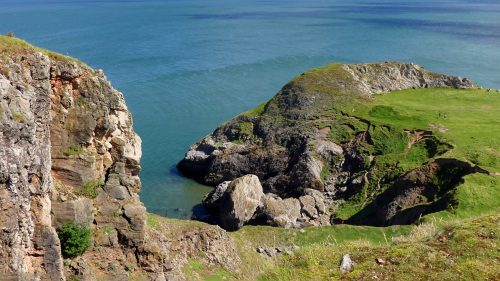
160826-LORC57-Looking onto Angel Bay

Angel Bay is an inlet on the Little Orme’s Headland on the North Wales Coast. Known locally as Angel Bay, on Ordnance Survey maps it is named in Welsh as Porth Dyniewaid.

Spotting one a short distance offshore in Penrhyn Bay was encouraging. The seal was suspended in the water with just it head above the surface facing towards the shore. They do this often and I’m sure they are ‘people watching’, as curious about us as we are about them.

160826-LORC32-Grey seal floating head above water

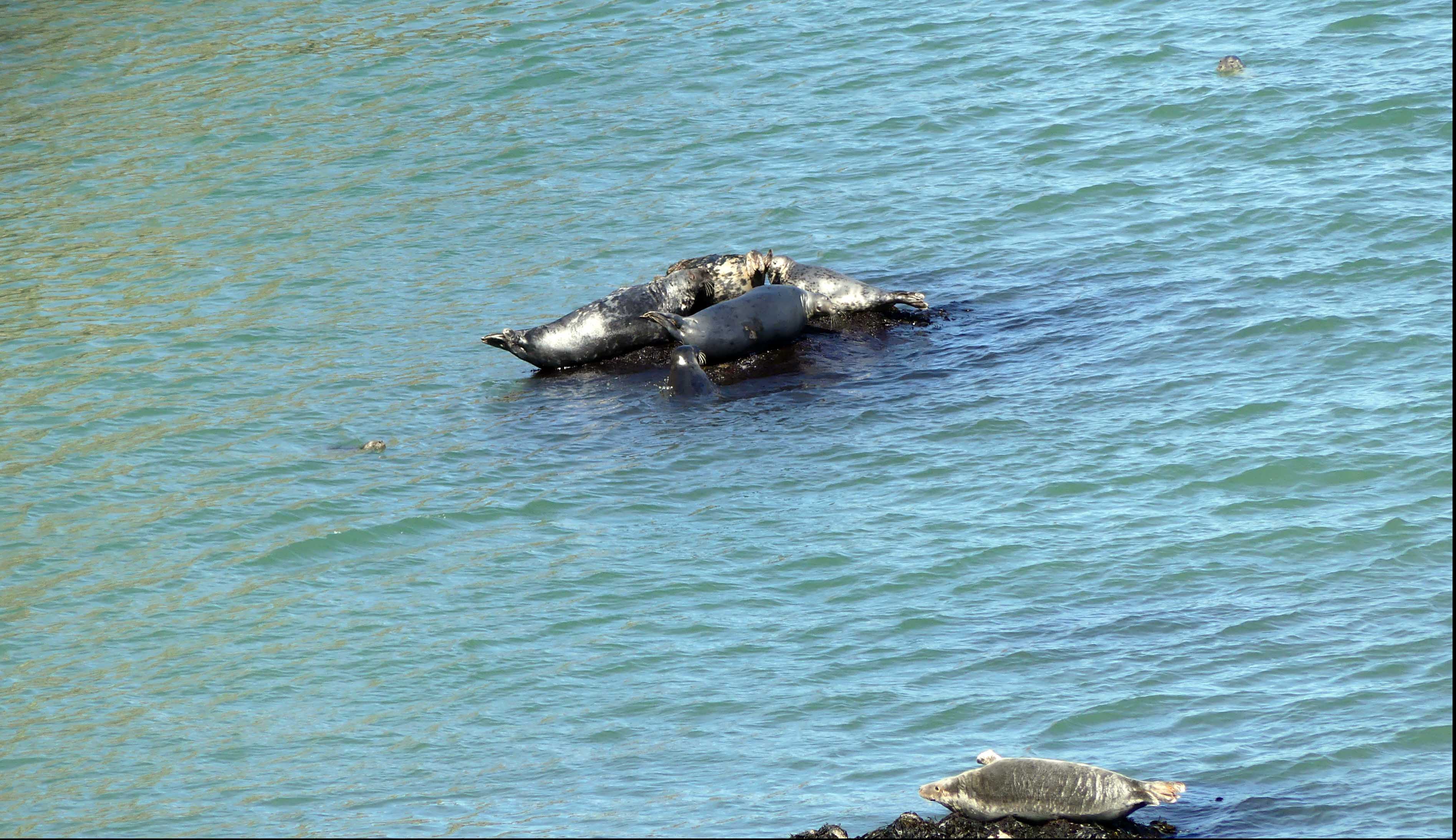
There were boys in the bay, enjoying themselves greatly by jumping off rocks into the calm sea. I’m sure they were unaware of the seals not far away from them, hidden from their view as they were by an outcrop of rock . Unwilling to risk venturing ashore as they would normally have done, some were making the best of small islands of rock uncovered by the low tide, hauling out their bulky bodies to enjoy the warmth of the sun. Unfortunately there wasn’t room for all of them and some were left to drift around keeping a watchful eye out for a space to become available. Grey Seals are the largest breeding seals we have in the UK and those on view were definitely large, quite possibly pregnant females as they do congregate at traditional pupping sites in the autumn.

160826-LORC30-Grey seals basking on small rocks

One had secured a rock of her own. She was rather beautiful, wearing a mantle of silvery grey velvet.

160826-LORC27-Grey seal basking on small rocks

These three were more sociable and had left room for another.

160826-LORC31a-Grey seasl basking on small rocks

After a bit of heaving and hauling the smaller one squeezed in, but there was no room left for more boarders.

160826-LORC38-5 Grey seals

There are nine seals in this picture – 6 on rocks and three swimming around hopefully.

160826-LORC37-7 Grey seals

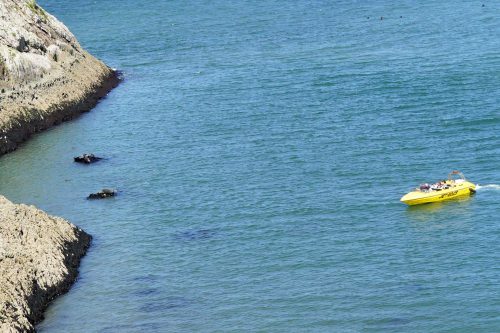
The driver of one of the jet boats that take out sightseers from Llandudno pier spotted the seals and pulled in so people could have a closer look and take photographs of the seals. He must have passed the info on to other drivers as another boatload arrived a few minutes later. Then another who was a bit more intrusive and that got too close.

160826-LORC41-Boat approaching seals

As the boat was leaving I took a short video as it is unusual to see the seals awake and moving, although they still weren’t doing much. Perhaps because they were rather put out about their lack of space the seals were quite vocal too, although most of the noise here was made by the departing boat & the wind!

An hour or so later the smaller rock had been taken over by a much larger seal; poor thing looks like she’s about to burst!

160826-LORC43-One large (pregnant) seal left

Share this:

  • Share on Facebook (Opens in new window) Facebook
  • Share on Pinterest (Opens in new window) Pinterest
  • Share on X (Opens in new window) X
Like Loading...

A Secluded Spot for Sunbathers

20 Saturday Aug 2016

Posted by theresagreen in bird behaviour, Birds, birds of Wales, Nature, nature photography, North Wales, woodland birds

≈ 10 Comments

Tags

bird parasites, birds preening, birds sunbathing, birds sunning, blackbird, dunnock, garden birds, Robin, why do birds sunbathe, Wren

“The perfect spot for sunbathing, in a peaceful woodland edge location, offers privacy and safety in which to relax or indulge in some leisurely grooming  preening. No charge for use of facilities”. 

160718-KW (3)-Blackbird sunning

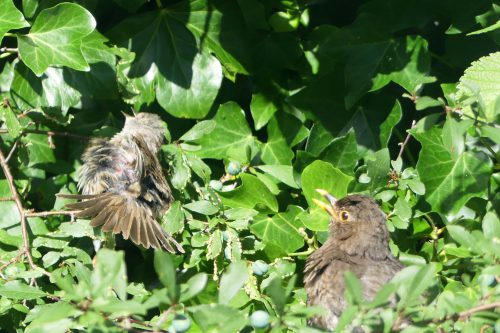
This summer this ideal location, set conveniently for me just a few metres from my kitchen and bedroom windows, has been a popular spot with some of the local birds, particularly some of the younger ones.They come to make the most of this sheltered sun-trap to sunbathe, also known as ‘sunning’ in application to birds. Sunning birds may become so absorbed in the activity that they are easily approached, which can make them vulnerable to predators. They are safer here; there is no easy access to this spot from any angle, although a savvy Sparrowhawk may possibly be able to make a strike if it got its timing right so as not to cast a shadow.

160803-KW (3)-Blackbird & dunnock sunning

Dunnock and Blackbird sunning together

Most commonly we see Blackbirds and sometimes Robins sunning in gardens , but other species indulge too in slightly different ways.

160617-KW (17)-Blackbird 'sunning'

Sunbathing Blackbirds are a fairly common sight in parks and gardens

To begin sunning, birds orient themselves to expose the maximum amount of their plumage to the sun. The classic sunning posture is thus: head and body feathers are fluffed up and out and depending on available space and/or sense of security felt, one or both wings are held out from the body with feathers spread; the tail is sometimes fanned out too. The bird may keep the same position throughout a sunning session, or it may change positions to expose different parts of its body to the sun.

160718-KW (6)-Blackbird wing feathers

Sunning is often a precursor to preening, vital to a bird’s feather maintenance, and in this instance it is thought this has two effects; one is that the sun’s heat helps to spread preening oil across the feathers. The other is that it drives out parasites from within the plumage that can then be more easily dislodged as the bird preens.

Sunning and Preening demonstrated by a Dunnock

I’m fairly sure this session was more concerned with pest control than anything else.

Firstly, adopt the sunning pose: fluff out feathers and spread tail and wing feathers. Well, alright just the tail feathers will do for now.

160701-KW (4)-Dunnock sunning

Secondly, begin preening with any particularly itchy spots caused by unwelcome hitchhikers.

160701-KW (9)-Dunnock preening

Pay attention to armpits

160701-KW (5)-Dunnock preening

Some areas such as the head and around the eyes and bill can only be serviced by extending and lifting the leg and having a good old scratch.

160701-KW (13)-Dunnock scratching

It helps to have a flexible neck.

160701-KW (15)-Dunnock preening

That will have to do for now, it’s getting a bit shady here.Time to go.

160701-KW (28)-Young dunnock

The young Robin in the following sequence of images seems to be similarly afflicted with ‘lumps’ apparent on its neck.

160713-KW (7)-Young robin sunning

160713-KW (19)-Robin preening

160713-KW (29)-robin preening

The head and neck are areas birds are unable to reach with their bills and have to scratch with a foot.

160713-KW (10)-Robin preening-with ticks

The other side needs attention too.

160713-KW (34)-robin preening

160713-KW (33)-robin preening

It looks as though the bird’s frantic scratching has created a bald spot. And is that another lump under its eye?

160713-KW (22)-Robin preening

During sunning sessions birds often have their bills open. This is because the warmth of the sun raises their body temperature and as they can’t release heat by perspiration, they have to regulate it some other way, so will gape and sometimes pant in order to lose heat.

160617-KW (1)-Robin 'sunning'

To sum up, no-one knows for certain the reasons birds sunbathe, although several theories have been proposed.

  • To maintain the bird’s feathers in good condition. Exactly how sunning assists with this is not known, despite being widely studied. All birds have a gland on the rump, called an oil gland. The ‘preen-oil’ that this gland produces helps to keep the feathers flexible and hygienic. As preening usually occurs directly after sunning, it has been suggested that the sun affects the preen-oil in the feathers in some beneficial manner, or that it helps to synthesize the Vitamin D  and helping to regulate it’s temperature.
  • The heat from the sun may stimulate activity in parasites within the feathers, making them more accessible when the bird starts to preen.
  • Birds also make use of the sun’s heat to increase their body temperature or prevent heat loss. This form of ‘sunning’ is also used when the bird dries itself after bathing.
  • They do it simply because they enjoy it.
160803-KW (12)-Wren sunbathing 2

A tiny Wren enjoying a quick sunbathe on a laurel leaf


Share this:

  • Share on Facebook (Opens in new window) Facebook
  • Share on Pinterest (Opens in new window) Pinterest
  • Share on X (Opens in new window) X
Like Loading...

More Signs of Summer Passing

14 Sunday Aug 2016

Posted by theresagreen in British hoverflies, Bryn Euryn Nature Reserve, Butterflies of Wales, calcareous grassland, Nature of Wales, North Wales, plants important to wilflife, Wildflowers of Wales

≈ 7 Comments

Tags

Gatekeeper, Leucozona glaucia, Leucozona laternaria, lords & ladies berries, Meadow Brown, myathropa florea, Nature in August, Red bartsia, views from Bryn Euryn, views of Colwyn Bay

August 3rd

Did I mention the strong west wind that was pushing the rain clouds across the mountains towards us? Only once I’d left the shelter of the trees to continue upwards did I realise how strong it was, with sustained gusts forcing the long grasses and wildflowers to bend to its will.

160805-Bryn Euryn (78a)-View

The grassy edges of the lower summit are full of wildflowers. On the exposed side there is mostly Knapweed, with touches of Ragwort and a white umbellifer I think is Upright Hedge Parsley. There was more Red Bartsia, just one plant as far as I could see, but a better one to see properly than the one lower down. On the other side, sheltered by a belt of Blackthorn, the red berries of Lords and Ladies, Cuckoo Pint if you prefer or plain old Wild Arum.

Red Bartsia
Red Bartsia
Berries of Lords & Ladies

I didn’t take this exposed path to the summit today, but ‘turned left’ to continue into the sheltered hollow where I thought there may be more insect activity.

160805-Bryn Euryn (84a)-Summit Trail

A  wasp clung on to a lone Hogweed flowerhead swaying in the wind amidst a sea of waving long grass.

160805-Bryn Euryn (103)-Hogweed in a sea of grass

There was a sizeable patch of  the umbellifer that may be Upright Hedge Parsley amongst dry  long grass, but as I photographed the flower it was visited only by a single, quite faded Sun Fly hoverfly.

Upright Hedge Parsley
Sun fly-Helophilus pendulus (f)

There were a few Meadow Brown butterflies doing what they do – suddenly flying up in front of you from where they had been basking on the warm earth of the track and heading into the safety of the grass. There were a couple of Gatekeepers too, sheltering from the wind to bask low in the brambles. The one  I photographed had a wing-tip missing; maybe a narrow escape from a predator, but such damage can be one of the hazards of territorial scraps and of frequenting thorny brambles.

Meadow Brown
Meadow Brown
Gatekeeper amongst brambles

And just for some colour, Rosebay willowherb, which I always think is quite out of context here, even if it does look pretty. Today at least it was giving nectar to a few little bumblebees.

160805-Bryn Euryn (94)-Rosebay willowherb flower

From the summit the views are always spectacular and today you could clearly see the low clouds skimming the tops of the higher Carneddau mountains to the west and heading our way.

160805-Bryn Euryn (101)-Incoming weather

The effect on the seascape was strangely beautiful too. Looking to what is roughly the south-east across Colwyn Bay, the  distant hills were obscured by a mist hazeand although the sea appears to be flat calm; the wind was rippling back the surface, giving it texture, while the moving clouds created dynamic areas of light and shade. Mesmerising.

160805-Bryn Euryn (99)-View-Colwyn Bay

160805-Bryn Euryn (102)-Shaded sea

Back to earth I headed across the hilltop to make my way back down the other side. Mushrooms continue to pop up from the short turf and are still being nibbled. I’ve done a bit of research and from their shape I think they are a species of Boletus. This one was encircled by another of my favourite wildflowers of late summer, the lovely and semi-parasitic Eyebright. There are two variations here – plants with flowers blotched wih purple and others the more usual white with yellow centres.

160805-Bryn Euryn (110a)-Mushroom with Eyebright-Euphrasia micrantha

Further down the slope where Knapweed grows in the longer grass, there were a few nectaring insects. A Common Carder bumblebee, a male Red-tailed Bumblebee and a few hoverflies. There was also a badly-damaged Burnet moth that had somehow managed to haul itself up a flower stem to feed, despite having lost at least half of all of its wings.

Red-tailed bumblebee (male)
160805-Bryn Euryn (113)-Helophilus (f) on knapweed
Syrphus sp hoverfly
Syrphus sp hoverfly
Syrphus sp hoverfly
Syrphus sp hoverfly
Common Carder bumblebee
Burnet moth badly damaged

As I reached the bottom of the hill I stopped by a patch of Hogweed growing right on the edge of the woodland. The clouds finally cleared the way for some sun to shine through, which encouraged out a little flush of hoverflies. There was a lovely fresh female Myathropa florea – mentioned in a previous post as having the memorable and distinguishing ‘batman logo’ marking on its thorax. It was extremely mobile, but clearly hungry and from a distance I managed to get some images showing it from several angles.

Myathropa florea face-on view
Myathropa florea from the side

Then a treat to end the walk – a petite and dainty hoverfly with black and white markings, another new-to-me species.

160805-Bryn Euryn (184)-Leucozona on Hogweed

This insect was tiny, highly mobile and flying frequently between adjacent flowerheads, so my photo opportunities were few and some of the images I did get were a bit blurry. I’m not sure if its a Leucozona glaucia or similar looking Leucozona laternaria. My book tells me the former are ‘abundant’ in this part of the country and the latter more so here than further east.

160805-Bryn Euryn (189)-hfly Leucozona
160805-Bryn Euryn (183)-hfly Leucozona
160805-Bryn Euryn (187)-hfly Leucozona sp
160805-Bryn Euryn (188)-hfly Leucozona sp

If you are interested in finding out more about Eyebright, I have posted more info and pictures of it in my new blog which will be dedicated mostly to wild flora in their habitats, called, funnily enough ‘where the wildflowers are’.


Share this:

  • Share on Facebook (Opens in new window) Facebook
  • Share on Pinterest (Opens in new window) Pinterest
  • Share on X (Opens in new window) X
Like Loading...

Signs of Summer Passing

12 Friday Aug 2016

Posted by theresagreen in Bryn Euryn Nature Reserve, bumblebees, Butterflies of Wales, calcareous grassland, Nature of Wales, North Wales, plants important to wilflife, spiders, Wildflowers of Wales

≈ 15 Comments

Tags

gatekeeper butterfly, hazelnuts, hemp agrimony, male bumblebees, Nature in August, Nursery Web spider, Odontites vernus, Red Admiral, Red bartsia, tree bumblebee, white-tailed bumblebee

Historically August can be quite a wet month and is statistically less likely to have long spells of sunny holiday weather than July. This August of 2016 is certainly following the trend.

August is the traditional month for the harvest in the British Isles, which is the reason it became the main school holiday month. In the past village children were recruited to help with the then labour-intensive process and the first general Education Acts drawn up in Victorian times, providing general primary education for all, took this into account. Even the youngest child could play a useful role in keeping the pigeons and crows away from the gleanings (spilt grains). 

060712-Cornfield & Poppies

August 5th

Finally, this mid-afternoon, having waited patiently all day for an interval of more than half-an-hour without signs of imminent rain, I seized my moment and headed for the hill. Not confident the break in the rain would last long, I didn’t linger on the pathway up through the woods, only stopping to photograph a Sycamore leaf afflicted with Tar-Spot fungus …..

160805-Bryn Euryn (1)-Sycamore leaf with tar fungus

…. and those of a shrubby plant I don’t recognise, well-patterned by leaf mines.

160805-Bryn Euryn (10)-leaves with leaf mines

A quick look over the fence on the wood’s edge didn’t look too promising; the Carneddau mountains to the west were veiled heavily by approaching rain clouds.

160805-Bryn Euryn (7)

Incoming rain

I reached the Woodland Trail in record time for me,  again stopping only briefly by the big bramble to note any activity on the late flush of newly-opening flowers. Just a male Tree bumblebee and a Meadow Brown butterfly. (It’s fairly easy to spot male bumblebees as they have no pollen baskets and no real purpose other than to eat to stay alive for as long as possible, so they don’t rush about like workers).

Tree Bumblebee (male)
Meadow Brown butterfly

I had reached the line of used-to-be-coppiced Hazels when the rain arrived. Fortunately the foliage of the tree canopy is so dense there that hardly a drop got through, so I was kept dry even minus a waterproof. The Hazels here produce few nuts; perhaps because they know their efforts will be squandered by Grey Squirrels; they take them while still green, have a quick nibble to reach the soft kernel inside, then cast them to the ground when they are done.

160805-Bryn Euryn-Hazelnuts (not ripe)

160805-Bryn Euryn (18)-ground littered with hazelnuts

I waited until I could no longer hear rain on the tree leaves and carried on walking, noting how surprisingly green and fresh-looking the greenery was for this time of year.

160805-Bryn Euryn (23)-steps up to field

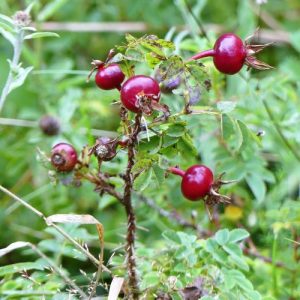
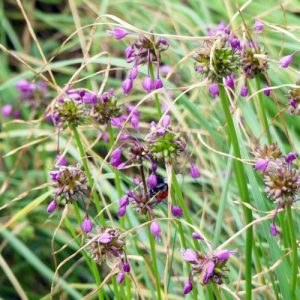
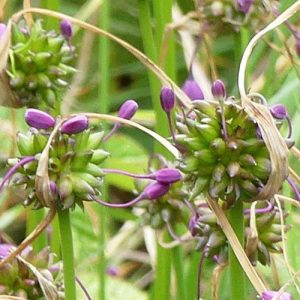
However, despite the greenery there are sure signs that this summer is past its peak. In Adder’s Field the Burnet roses are bearing fruits; the hips already dark red although not yet as dark as they will become. The Wild onion flowers are coming to an end and they too are producing fruits;  tiny bulbils which will sprout in situ, then drop to the ground and produce roots ready to grow into a new plant.

Hips of Burnet Rose
Flowers of Wild Onion
Fruits of Wild Onion are tiny bulbils

Stretched vertically between the rose stems was the tightly woven web-tent of a Nursery-web Spider. Peering down to its base I tracked down the weaver to where she was hiding, only some of her legs properly visible. These spiders are quite big and clumsy-looking yet produce such surprisingly fine web fabric; it’s like a piece of silk organza. (Arachnaphobes maybe scroll down quickly now!)

160805-Bryn Euryn (40b)-Nursery web spider160805-Bryn Euryn (40a)-Nursery web spider on web

The Wild clematis, or Old-man’s Beard as it will become, is in flower too, another signaller of the slide into Autumn.

160805-Bryn Euryn (34)-Wild clematis flowers

On the opposite side of the field the swathe of Hemp Agrimony is in full flower and after the rain, the warming sunshine was drawing out a crowd of insects, literally buzzing with excitement at the abundance of nectar and pollen on offer.

160805-Bryn Euryn (60)-stand of Hemp Agrimony

Again, takers were mostly male bumblebees with a few hoverflies and butterflies.

Bumblebee dusted with pollen
Eristalis sp hoverfly
Helophilus sp. hoverfly

160805-Bryn Euryn (62a)-Gatekeeper

Sightings of Gatekeeper butterflies were top of my wish-list for today. I had already seen a few flying about in the last few days, but was pleased to find my first photographable one of this year. Its tiny size was emphasized by  the proximity of a large Red Admiral on a neighbouring flower.

160805-Bryn Euryn (61)-Red Admiral front view

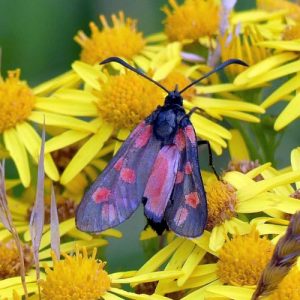
Nearby, ragwort was also working to attract pollinators. A damaged 6-spot Burnet had taken respite on a flowerhead and was still there hours later when I passed it on my way home. There were more male bumblebees, hoverflies and a tiny black-and-white striped bee.

Damaged 6-spot Burnet
Male bombus praetorum
Small striped flower bee

At the top end of the field a patch of umbellifers – tall Hogweed amongst  shorter Upright Hedge Parsley.

160805-Bryn Euryn-Umbellifers

In previous years I have found a few stems of Red bartsia in flower amongst the long grass at this end of the field; this year there is a significantly larger patch of this interesting semi-parasitic plant.

160805-Bryn Euryn (73)-Red Bartsia-Odontites vernus

Given a week or two to finish ripening, a good crop of berries on the Rowan tree should keep the blackbirds going for a while.

160805-Bryn Euryn (74)-Rowan tree

Break here to sit on my favourite rock (still slightly damp), have a drink of water, eat a peach and scribble down notes before heading up towards the summit.

Click for more info within this blog about:  Nursery Web Spider : Gatekeeper butterfly


Share this:

  • Share on Facebook (Opens in new window) Facebook
  • Share on Pinterest (Opens in new window) Pinterest
  • Share on X (Opens in new window) X
Like Loading...

Birds by the sea

02 Saturday Jul 2016

Posted by theresagreen in birds of the seashore, Birdwatching on North Wales coast, mussel beds, Nature of Wales, Rhos Point, wading birds

≈ 7 Comments

Tags

Curlew, European Herring Gull, mussel beds, Oystercatcher, Rhos Point, sandwich tern

June 20th-Rhos Point

13.34- A sunny day with a strong breeze made it feel cold, but I was in need of some quick-fix fresh air and for that, Rhos Point is the perfect spot. It’s also one of my favourite spots for watching wading birds, although I don’t visit it much during the breeding season as it is almost deserted by birds and becomes uncannily quiet. Today I arrived as the tide was coming in and I spotted a small group of Oystercatchers waiting patiently for today’s incoming lunch, so I waited too to see if they would be joined by others.

As I made my way down nearer to the shore I heard some lively chirruping emanating from a shrub that has taken hold on the promenade edge, then a few House Sparrows flew out and headed for the shore below to forage amongst the exposed rocks.

160620-Rhos Point 1334-House Sparrow

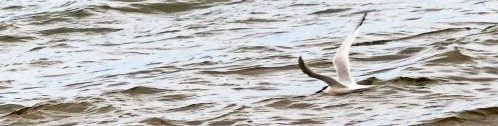
Two elegant Sandwich Terns flew low over the sea, close to its edge.

160620-Rhos Point 1335-Sandwich Terns flying

13.37 pm – Oystercatchers on the sea edge use the waiting time to rest or preen.

160620-Rhos Point 1337-Oystercatchers 160620-Rhos Point 1337b-Oystercatchers

Oystercatchers are high on the list of my most favourite birds, they have great character and charisma and the more I learn more about them the more fascinating they become. They are large wading birds and when not resting are noisy. They sport large long orange or red bills, which they use for smashing or prying open molluscs.

The diet of coastal oystercatchers is varied, although dependent upon coast type; on this rocky shore with its extensive mussel beds, they will prey upon mussels of course, and also on limpets and gastropods. They also take advantage of whatever the tides bring in such as small fish and crabs.

160620-Rhos Point 1339b-Oystercatcher with blunt beak

The shape of this bird’s bill shows it to be a ‘hammerer’

The bill shape varies according to the diet. ‘Stabbers’ feed by jabbing their laterally compressed bill tips in between the valves of a mussel’s shell, while ‘hammerers’ crack open mussel shells by pounding on them. Those birds with blade-like bill tips pry open or smash mollusc shells, and those with pointed bill tips tend to probe for worms.

13.40 – The Oystercatchers were joined by a beautiful Sandwich Tern.

160620-Rhos Point 1342-Oystercatchers & Sandwich Tern 2

The Sandwich tern is a summer breeding visitor, returning to north-west Wales & Anglesey from late March to September. In the UK, many of the important colonies survive because they are on nature reserves.

This is a very white tern, which in summer breeding plumage had a full black cap on its head. The bill is long and black with a diagnostic yellow tip. The legs are short and black and the tail short and forked. In flight it shows grey wedges on its wings tips.

160620-Rhos Point 1340a-Sandwich Tern

13.44- A small number of Curlews flew in to land on the rocky sea edge, where their cryptic plumage allows them to all but disappear.

I took this short video as the Curlews arrived – coudn’t avoid the wind noise!

160620-Rhos Point 1344-Curlews foraging

160620-Rhos Point 1347-Curlews foraging on sea edge

The curlew is the largest European wading bird, instantly recognisable on winter estuaries or summer moors by its long, downcurved bill, brown upperparts, long legs and evocative call.

160620-Rhos Point 1349-Curlew

160620-Rhos Point 1346-Oystercatchers & Curlews

13.47- The mysterious moment that suddenly galvanises waiting wading birds into action arrived and triggered most, though not all of the Oystercatchers to begin foraging in earnest.

160620-Rhos Point 1347-Oystercatcher (2)

160620-Rhos Point 1346-Oystercatcher bathing

13.48- A Herring gull arrived to join the party.

160620-Rhos Point 1348-Oystercatchers, Curlews & Herring Gull

13.52- A second Sandwich Tern flew in, closely followed by a third.

160620-Rhos Point 1352-Sandwich Terns

The terns also settled down to preen.

160620-Rhos Point 1352-SandwichTerns preening & Curlew

13.59- A Cormorant flew past at speed.

160620-Rhos Point 1359-Cormorant flying

14.04- A Herring gull- it’s good to see them down here, where away from the rooftops, rubbish tips and promenades they are not upsetting anyone!

160620-Rhos Point 1404-Herring Gull 1

160620-Rhos Point 1404-Herring Gull

160620-Rhos Point 1410-Herring Gull 2


Share this:

  • Share on Facebook (Opens in new window) Facebook
  • Share on Pinterest (Opens in new window) Pinterest
  • Share on X (Opens in new window) X
Like Loading...

Beautiful blooms and some rare treats (1)

26 Sunday Jun 2016

Posted by theresagreen in Beetles, Bryn Euryn Nature Reserve, Butterflies of Wales, calcareous grassland, grasses, Insects, Nature, Nature of Wales, nature photography, North Wales, Wildflowers of Wales

≈ 12 Comments

Tags

brachypodium sylvaticum, burnet rose, common rockrose, Cryptocephalus hypochaeridis, Dingy Skipper, Erynnis tages, false brome, foxglove, hoary rockrose, Jewel beetles, small shiny metallic green beetle, speckled wood

160604-BE6-View across field

160604-BE15-Foxgloves

Foxglove-Digitalis

The first week of June was full of the promise of a glorious summer to come. A  run of warm sunny days had brought forth perfect and prolific blooms and began to coax out the butterflies.

June 4th

Along the woodland trail that circuits the lower slopes of the Bryn Euryn Nature Reserve, the early summer wildflowers are peaking. Foxgloves are at their perfect best, with stems full of open blooms graduating upwards to buds. There are not many plants on this site, but they seem to be gradually increasing in number year on year.

Honeysuckle is blooming prolifically, the best I have ever seen it and it smells heavenly.

160604-BE19-Honeysuckle


The wild strawberry patch is also full of flowers, promising a bumper crop to come,although it is in danger of becoming overwhelmed by encroaching ivy and other vegetation.

160604-BE23-Wild strawberry flowers

Wild Strawberry


Birds were heard but not seen, concealed by the dense foliage of the tree canopy; Chiffchaff, Wren, and Blackbirds were all still singing between nesting duties.
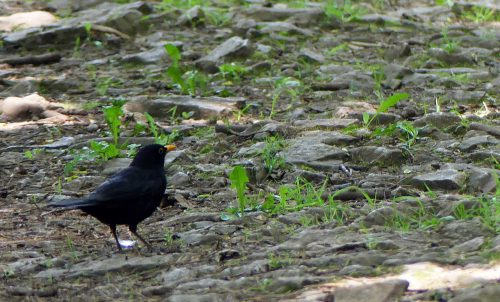
 

160604-BE20-Blackbird

A Blackbird male paused from singing to hunt  on the woodland track
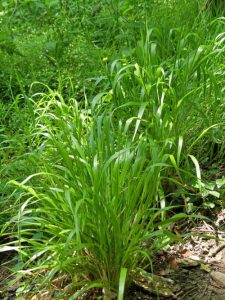
False Brome-Brachypodium sylvaticum

False Brome-Brachypodium sylvaticum


Some of the clumps of grass that grow along the woodland tracks are flowering now. This is False Brome-Brachypodium sylvaticum, a perennial grass common in woodlands where it prefers the shade of the canopy.


160604-BE3-Sunlit False Brome

Flowering False Brome

Oak leaves are already being eaten

Oak leaves are already being eaten

One of the more severe winter storms brought down three Scots Pines. Two have been sawn up and cleared away but the largest has been left where it fell and poignantly continues to live, now producing new cones.

New cones on fallen Scots Pine

New cones on fallen Scots Pine

New leaves on Yew tree

New leaves on Yew tree

Beautiful fresh Speckled Wood butterflies were out in number and busy patrolling territories or sitting on leaves, wings closed in wait for intruders or potential mates.
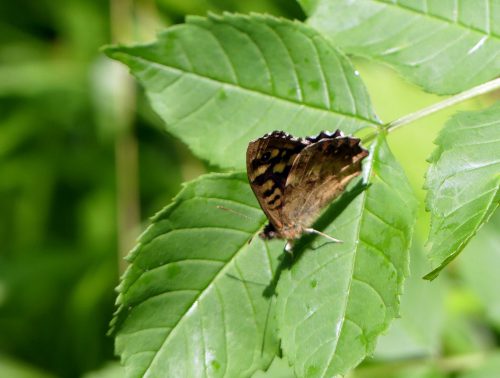
160604-BE22-Speckled wood on ash

Speckled Wood on Ash leaf

Up the steps and into the small open meadow the first impression was of lush greenery. The grass is growing long and closer inspection reveals it is studded with purple and white clovers, yellow Common Rock-rose and buttercups and the curiously flowered salad burnet.

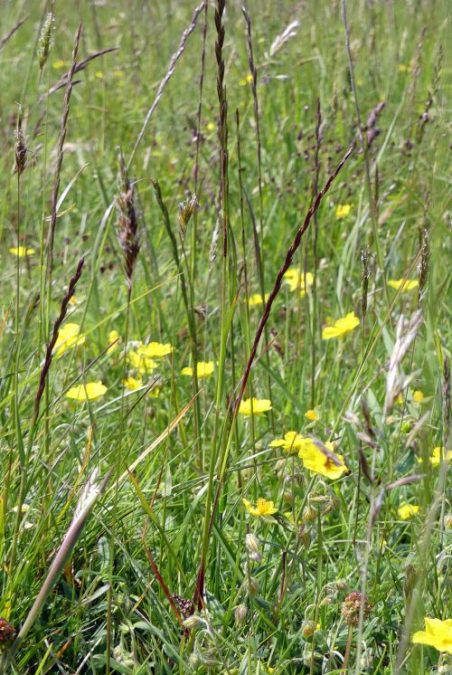
160604-BE24-Adder's field

160604-BE30-Grasses

A variety of meadow grasses with Common rockrose and Salad burnet

Along the edge of the tree-line another burnet, the beautiful Burnet Rose (visible centre left of the photograph above) is also in full flower. It too smells divine and was absolutely buzzing with a variety of bumblebee species revelling in the pollen and nectar bounty on offer.

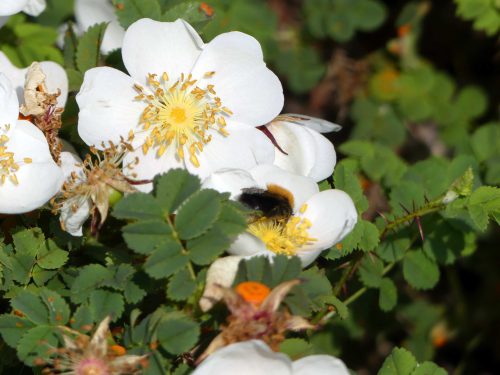
160604-BE27-Burnet rose patch

Burnet rose with Tree bumblebee

Burnet rose with Tree bumblebee

In previous years I have noted that the Burnet roses have played host to a bright orange fungus, this is Rust fungus Phragmidium rosa-pimpinellifoliae. It doesn’t appear to harm the plants, but this year the fungus is almost as prolific as the blooms themselves.

160604-BE26a-Burnet rose with fungus

Burnet roses with Rust fungus

On the small rocky outcrop at the top end of the field there are pretty clumps of Common Rock-rose-Helianthemum nummularium.

160604-BE37-Hoary rockrose

160604-BE31-Shiny emerald beetle

Cryptocephalus aureolus

A glint of emerald green drew my attention to a tiny shiny beetle in the centre of a Rock-rose flower. This little Jewel beetle doesn’t appear to have a Common name, so is known by its Scientific name of Cryptocephalus aureolus. The generic name of the beetle and its relatives refers to the insects’ heads being hidden under the pronotum. This is a new species recording for me here on the Bryn, which is not to say they haven’t always been here, just that I hadn’t seen one till now

I saw some little butterflies from here, a couple of Common Blues and Small Heaths, but all flying low in the long grass and in no mood to settle to pose for portraits.

Onwards and upwards along the Summit Trail, taking the track that comes out at the bottom of the steep ‘downland’ slope. This is often a good place to find Common Blue and Brown Argus butterflies, but not today, although there were a good number of Small Heaths to be seen, again not settling for me.

160604-BE38a-Summit Trail woodland

Summit Trail

I progressed fairly slowly up the steep slope and near the summit was  attracted to a sheltered corner backed by trees, bordered by raspberry brambles and where the ground was covered by Common Rock-rose and Bird’s-foot Trefoil flowers. I was drawn there by the sight of a small brown butterfly, which I hoped may be a Brown Argus, but which turned out to be a female Common Blue.

160604-BE42c-Dingy skipper on bramble

Then I noticed a slightly larger brown flutterer that I thought at first was a moth. A closer view changed my mind, this was a butterfly and although it was rather faded and a bit tattered round the wing-edges, was the right size and shape for a Skipper. Old records for the site indicate the presence of the Dingy Skipper-Erynnis tages, whose common name may not inspire much excitement, but this is a fairly uncommon butterfly in the UK, with recorded sightings at sites in North Wales not exceeding low single figures. I hope now my ID is right – if anyone knows better, please let me know!

Dingy Skipper

Dingy Skipper from a distance

I’m sure I’m not alone here, but I get nervous when I’m confronted by a new-to-me species of anything; especially when I’m aware this may be my one and only chance to record a sighting. So, I find I hold my breath, begin to panic slightly that I won’t get a photograph that will help me confirm its identity back at home and pray no-one will pass close by and disturb my target. My ‘technique’ thereafter is quite basic – to start from a distance and gradually move in closer, capturing as many images as I can before my subject takes off!
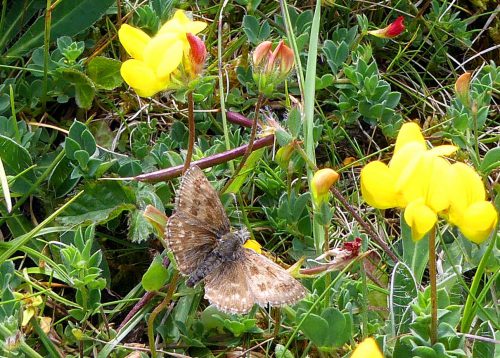
160604-BE44-Dingy skipper

Dingy Skipper-Erynnis tages

This particular butterfly was not making things easy and was restlessly flitting about amongst the flowers, staying low to the ground and frequently hidden amongst the plants. I felt quite dizzy staying focussed and following it around, probably down to lack of oxygen intake from the not-breathing. As ever, I would have liked more opportunities for photographs, but did manage to get a couple of fairly clear images that at least have given me my sighting record.

160604-BE45b-Dingy skipper underside

Dingy Skipper underside

After a few moments the butterfly took off away down the hill and I lost track of it. The camera battery also chose that moment to expire and as this had been a spur of the moment, travel light walk, I had no spare with me!

I have written detailed posts about many of the subjects mentioned in this one, so rather than repeat myself, I have added links to click onto if you would like to see more about any of them. For more about the Dingy Skipper, go to http://butterfly-conservation.org/679-1101/dingy-skipper.html


Share this:

  • Share on Facebook (Opens in new window) Facebook
  • Share on Pinterest (Opens in new window) Pinterest
  • Share on X (Opens in new window) X
Like Loading...

House sparrows & Starlings at home

19 Tuesday Apr 2016

Posted by theresagreen in bird behaviour, birds of Wales, garden wildlife, Nature, Nature of Wales, nature photography, Rhos-on-Sea

≈ 17 Comments

Tags

birds of conservation concern, garden birds, house sparrow, house sparrows taking pampas grass, passer domesticus, starling

I was pleased to see House sparrows once again topped this year’s list of the RSPB Big Garden Bird Watch in England, Wales and Scotland, but we shouldn’t get complacent, they’re still on the ‘Red List’ of birds requiring the highest conservation priority, along with other species needing urgent action.

Over the past couple of weeks I have spent some afternoons dog-sitting for my daughter, which has given me the opportunity to catch up with the little flock that regard her garden, together with those of the immediate neighbours’ as their territory.

160222-Nat's garden-House sparrow after bathing

House sparrows love to bathe and sit on the fence to dry out

I don’t blame them for settling here, they have everything they need to live as easy and productive life as it is possible for birds to enjoy. Throughout the year they come and go throughout the day, enjoying the bounty of well-stocked bird feeders, a pond in which to bathe and hedges to provide cover and perching places. Every evening the whole community returns to roost safely within the prickly pyracantha hedge. Now they are well into the throws of nesting. Earlier on they began refurbishing last year’s nests or rebuilding any lost through winter pruning. There are perhaps 4-5 nests, sited close together, although the level of noise that emanates from within sounds like there should be more. A couple more pairs prefer the loftier location of the eaves above the third floor at the front of the house.
160222-Nat's garden-House sparrow after bathing 1

In the breeding season the dominant birds leave the safety of the hedges and perch prominently on the highest points of shrubs to proclaim their territory, although the individual territory of the male House Sparrow really only consists of the nesting hole and a very small area around it, which is defended vigorously.

160403-Nat's garden-House sparrow male

Dominant males have larger, darker feather ‘bib’ patches

Females judge males on the vigor of his behaviour and also by his plumage. The black bib and how it is displayed is hugely important for him and size matters. Apparently males with small bibs can be induced to behave more boldly if they have bigger and blacker bibs painted on them!

160403-Nat's garden-House sparrow male 1

160403-Nat's garden-House sparrow on elder

A younger male with only a semblance of a bib

160222-Nat's garden-House sparrow female perched

Dominant females join their partners, but tend to stay slightly lower down and prefer a little more cover

160222-Nat's garden-House sparrows eating greens

Female House sparrows eating fresh greenery

Every year, when the nests are built or refurbished, the sparrows systematically strip the soft fluffy seed heads of the pampas grass that grows in a neighbouring garden. I spent ages one afternoon watching them as they returned repeatedly to strip the stems and carry off the fronds. I assume they use the fluffy parts to line their nests, but wonder if there are seeds to eat too? I find this behaviour fascinating and have witnessed it in South Wales where pampas was growing and also in our garden in Spain. In each location they begin working on the plant on the same day, arriving sometimes in numbers, males and females and set to, detaching the fronds and carrying them off a beakful at time. The harvest continues over a few days until the stems are left bare.

160403-Nat's garden-House sparrows collecting pampas grass

160403-Nat's garden 2-House sparrows collecting pampas grass

160403-Nat's garden3-House sparrow female with beak full of pampas

A Starling pair are nesting in one of the chimney pots and they too enjoy the feeding and bathing facilities, also pausing to dry out on perched on the fence or at the top of the hedge. Still one of our commonest garden birds, its decline elsewhere makes it too a Red List species.

The bird in the photographs below is the male of the pair, identified by the blue colouration at the base of his bill; the female has a similar patch that is coloured pink.

160403-Nat's garden-Starling male in privet hedge

160403-Nat's garden-Starling male in privet hedge 1

160222-Nat's garden-Starling taking off

The male sings beautifully, sometimes from up on the roof but also from the fence and the top of the hedge. His mate doesn’t get out much at the moment, so must be sitting on eggs.

The starling was singing, hence the fluffed out throat feathers

The starling was singing, hence the fluffed out throat feathers

STARLING (f)-Sturnus Vulgaris

Starling female has a pink patch at the base of her bill

PS: The pampas grass is now just a collection of bare dry stems!


Share this:

  • Share on Facebook (Opens in new window) Facebook
  • Share on Pinterest (Opens in new window) Pinterest
  • Share on X (Opens in new window) X
Like Loading...

The Goats of the Great Orme

09 Saturday Apr 2016

Posted by theresagreen in coastal walks, Great Orme, Llandudno, Nature, Nature of Wales, nature photography, North Wales

≈ 17 Comments

Tags

cashmere, Conservation issues, goat mascot of Royal Welsh Fusiliers, goats of the Great Orme, Kashmiri goats

The herd of goats that roam Llandudno’s Great Orme is famous far and wide and for many visitors a sighting of them is a highlight of their trip. Sightings are often  distant and to an extent dependent on the time of year, but they do wander as they browse and graze and can appear almost anywhere. I like to see them browsing on the steep limestone cliffs and watch them negotiate the narrow ledges with amazing and sometimes breath-taking agility. Up there they remind me that although their home is in a public Country Park, they are still wild animals within it.

These are Kashmiri goats, whose ancestors once roamed the mountains of Northern India. Their soft undercoats are the material that cashmere wool is spun from. The word cashmere is an old spelling of the Kashmir region in northern India and Pakistan.

160328-Llandudno6-Goats on west side of Gt Orme

Kashmiri nanny goat

The origin of the Great Orme goats and their arrival in Britain is attributed to Squire Christopher Tower, from Brentwood in Essex, who discovered a large herd which had recently been imported from Kashmir into France in the early part of the last century. His idea was to create a profitable woollen industry, so he purchased a pair of the goats, and took them to Weald Park in Brentwood. The goats flourished, and soon produced kids, from which the Squire was, eventually, able to manufacture a cashmere shawl. George IV was highly impressed by this article, and was happy to accept a pair of the goats presented to him by Squire Tower. So began the Windsor herd, which increased rapidly, and in the reign of Queen Victoria, cashmere shawls became extremely fashionable. It is often said that Queen Victoria was presented with the goats by the Shah of Persia, and it may be that these were added to the already existing herd.

160328-Llandudno7-2 Goats on west side of Gt Orme

Later in the Century, Major General Sir Savage Mostyn acquired two of the Windsor goats, and took them to the grounds of Gloddaeth Hall. It is possible that they were found to be unsuitable as park animals and the goats were transferred to the Great Orme. Over a period of almost a hundred years, these animals have existed virtually in isolation, and have evolved into the unique breed they now are. They have reverted to a wild state, and are now regarded as wild animals.

The size of the herd is said to be maintained at about 60, which is based on the optimum number of animals for the size of the territory available to them. The  herd is made up of full grown billies, juvenile billies, nannies and kids. For most of the year, the nannies browse on the side of the mountain with their youngest offspring while the mature and immature billies roam in small groups away from them. They don’t mix until the Autumn rut.

160328-Llandudno11-2 Goats in gorse on west side of Gt Orme

A mature billy has enormous horns that curve backwards, almost touching the nape of his neck. A shaggy fringe covers the forehead and he sports a long beard. The horns are crenulated, with large ridges unevenly spaced along their length. It is possible to estimate the age of a billy by the ridges on its horns as each section represents one year’s growth. The horns of the young billies and the nannies are slim and delicate, curving gently backwards. In the nannies, the ridges are less obvious and ageing them is not so easy. Barring accidents, the goats will live for about nine years.

I believe the group I came across were nannies with a couple of new kids visible in the distance near the summit.

160328-Llandudno8-Goat flock on west side of Gt Orme

Goats will reputedly eat anything, but given choice, which these privileged individuals have, they can afford to be a bit choosier. Their vegetation species of choice are gorse, hawthorn, elder, bracken, bramble, ivy, stinging nettles and privet, according to the season. In the Autumn, they will browse on the grass, moving to the slopes where they can find a plentiful supply.

160328-Llandudno10-Goat & kids on west side of Gt Orme

The most distant goats may well be this year’s kids

Although technically an alien, or introduced species to Great Britain, the goats are considered by many to be an integral part of the Great Orme environment and nowadays their grazing plays a part in maintaing the flora for which the headland is renowned. Not everyone appreciates them however, particularly when they wander into the garden areas on the lower slopes, or even into the town itself.

Their population has to be kept in check to ensure that competition for resources is not too great. This involves administering contraception to nannies to control the number of kids born each year, which appears to be working. Relocation of small groups to assist conservation in other areas of the country is carried out when the opportunity arises. In recent years 6 animals were relocated to Bristol’s Avon Gorge and 2 to a SSI on Anglesey.

Mascot of the Royal Welsh Fusiliers

A select few billy goats from the Great Orme herd have acheived fame as they have been chosen as the mascot of the Royal Welsh Fusiliers. Records suggest that The Royal Welch Fusiliers were parading a goat as early as 1777. Whenever possible the goats are selected from the royal herd which was started at Windsor in the time of Queen Victoria, who gave 23rd Foot their first ‘royal’ goat in 1844. This herd is now located at Whipsnade Animal Park. In recent times, when no goat was available from the royal herd, the Queen has been pleased to present a wild goat from the mountains of North Wales, where a herd still exists on the Great Orme at Llandudno. This herd is known to have some Windsor blood in its ancestry.

taffy-4

Royal Welsh regimental goat Lance Corporal Gwillam Jenkins

Lance Corporal Gwillam ‘Taffy VI’ Jenkins, died in May 2015 after nine years of dedicated service. Following his passing, Her Majesty the Queen was informed and her permission sought to select and recruit a new Regimental goat. Permission was kindly granted and the selection process started. His replacement, Llywelyn was recruited from the Great Orme in Llandudno, North Wales on the 23 November 2015. Only the most prominent and impressive young billy kid goat is considered for selection. Following an arduous survey of the wild herd, one particular Goat stood out and demonstrated more promise than the others – this was Llywelyn.

_87825995_llywelyngoat

Llywelyn will lead the 1st Battalion The Royal Welsh on all ceremonial duties, leading parades through Welsh towns and cities during Freedom Parades, Medals parades and Armed Forces Day events. He has already been invited to parade in London as part of the Queen’s 90th Birthday celebrations and will also be detached to B (Rorke’s Drift) Company for the summer as part of the guard at Buckingham Palace.

  • Information in this post is from various sources, but mostly derives from the booklet, Aliens on the Great Orme by Eve Parry.

Share this:

  • Share on Facebook (Opens in new window) Facebook
  • Share on Pinterest (Opens in new window) Pinterest
  • Share on X (Opens in new window) X
Like Loading...

Sleeping Seals and Stonechats

02 Saturday Apr 2016

Posted by theresagreen in coastal habitat, Little Orme, Nature, Nature of Wales, nature photography, Rhiwledyn Nature Reserve, Rhos-on-Sea, Seals, The Wales Coast Path, Wildflowers of Wales

≈ 14 Comments

Tags

alexanders, dunnock, grey seals, grey seals in Angel Bay, jackdaw, jackdaws on cliff, stonechat

A brightly sunny day, too good to miss, so I headed for the Little Orme which offers reliable sightings of a wide variety of wildlife in a relatively compact area with little effort required. Well-used by local people and visitors to the area and part of the route of both the Wales Coast Path and the North Wales Path, the pathways of the lower part of the reserve particularly are often very busy. Opportunities for uninterrupted attempts to photograph the more wary small woodland birds may be limited, but despite close human proximity the birds carry on regardless and largely unnoticed.

I use the entrance to the reserve sited at the back end of a residential area. Today the lawns of the unfenced front gardens were providing foraging for jackdaws and a few Pied wagtails. Outside the breeding season wagtails gather here in the evenings before setting off to roost comunally for the night. On the roofs were perched gulls, Wood pigeons and Magpies and a singing Greenfinch. There’s a thriving House sparrow population here too and cheerful chirruping greeted me as I  climbed the steps up to the reserve, where they frequent the tangle of brambles and shrubs there.

160310-1-Little Orme

The Fulmars have returned to their nest sites high on the cliffs. Although a small colony of just 10 or so pairs they draw attention to themselves by noisily proclaiming their territories and can be heard as soon as you enter the site. I looked out for Ravens that have used the same nest site up on the cliff for many years, but I didn’t see or hear them today.

I was pleased to see a pair of Stonechat though, one of my favourite little birds. They were in the same area within which a pair successfully raised a family last year, so I like to think this may be the same pair. I couldn’t get close enough to them to get good photographs, but I prefer to use ‘real time’ images whenever possible, so these were today’s best record shots.

Stonechat male

Stonechat -Saxicola rubicans -male

Stonechat female

Stonechat female

The biggest draw to the reserve are the Grey Seals that at this time of year can be fairly reliably seen, when the tide is out, hauled up on the stony beach of Angel Bay. Today there were about 20 females and their rapidly growing pups, a few in the water, the rest sleeping blending perfectly into the background of stones and rocks.

Grey Seals in Angel Bay, Little Orme

Grey Seals in Angel Bay, Little Orme

160310-9-Little Orme-Grey Seals on edge of sea

160310-11-Little Orme-Grey Seal sleeping on rock pillow

160310-7-Little Orme-Grey Seals on edge of sea

160310-12-Little Orme-Grey Seal sleeping on rock pillow

160310-4-Little Orme-Grey Seal on edge of sea

Jackdaws are without doubt the most numerous birds here and a great number gather here to breed, nesting on the rocky cliff faces. They spread throughout the site to feed and also separate into small flocks that venture back and forth to forage in a wide variety of places locally, arriving back noisily to land on the cliffs where they site their nests. It is good to see them foraging and nesting in their natural cliff habitat rather than in villages roosting on roofs and nesting in chimneypots.

Jackdaw

Jackdaw

Jackdaws in their natural habitat

Jackdaws in their natural breeding habitat

160310-23a-Little Orme-Jackdaws on cliff

Blackbirds are another numerous bird here as are Robins and Dunnocks, with males singing from shrubs throughout the site. Close to the backs of houses trees and shrubs are frequented by good numbers of birds. The House sparrows are nesting close to a busy path here and a chorus of chirrupings emanated loudly from within the shrubs, but despite being audible from some distance away, they stayed well hidden. Also seen and heard singing here were Chaffinch, Greenfinch, Wren, Great Tit and Blue Tit.

Dunnock male

Dunnock male singing from a wild rose stem with numerous Robins pincushion galls

Wildflowers appear a little later on this windswept clifftop than in more sheltered areas, but there’s plenty of the early flowering Alexanders on show.

Alexanders

Alexanders

Elder leaves are well grown too.

160310-26a-Little Orme-Magpie in Elder tree

Magpie well concealed in an Elder tree

Share this:

  • Share on Facebook (Opens in new window) Facebook
  • Share on Pinterest (Opens in new window) Pinterest
  • Share on X (Opens in new window) X
Like Loading...

Pines and Primroses

27 Saturday Feb 2016

Posted by theresagreen in Colwyn Bay, Nature of Wales, Trees, Wales Coast Path, Wildlife of the Wales Coast Path

≈ 18 Comments

Tags

Colwyn Bay embankment, early spring flowers, King Alfred's Cakes fungus, pine trees by the sea, Porth Eirias, primrose

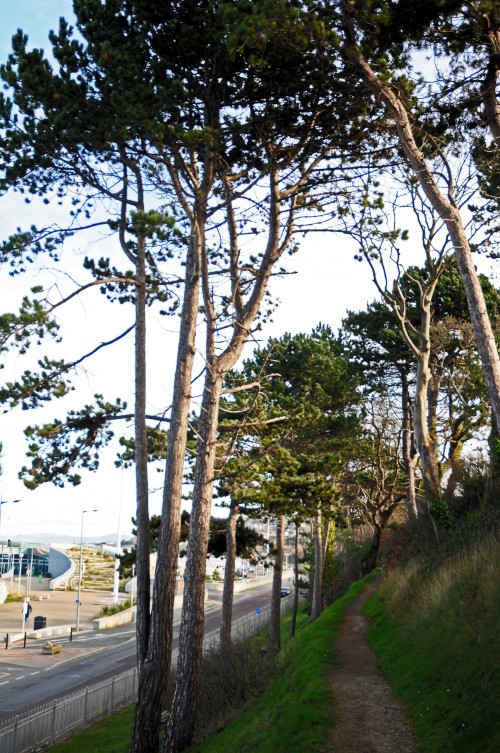
Pine trees are well-used as feature plantings in many parts of Colwyn Bay, but those with the greatest impact are those elegantly lining the road into Rhos-on-Sea set on the steep sea-facing railway embankment.

Pine trees along Colwyn Bay embankment

Pine trees along Colwyn Bay embankment

Where the trees thin out primroses smother the grassy embankment. They began flowering early this year but look as though they will continue for some time to come.

Pine tree and primroses

Pine tree and primroses

A lovely clump of fragrant primroses

A lovely clump of fragrant primroses

The back of Colwyn Bay railway station

The back of Colwyn Bay railway station

The grassy embankment is a favourite spot for Herring gulls to paddle for worms.

Herring gulls paddling for worms

Herring gulls paddling for worms

I walked along the promenade then crossed the road at the point where there’s access to the elevated pathway near the top of the embankment.

View to Rhos-on-Sea

View to Rhos-on-Sea

Daisy growing from embankment wall

Daisy growing from embankment wall

Fallen pine cones on embankment wall

Fallen pine cones on embankment wall

The pathway high up on the embankment leads through the pines and offers some protection on cold windy days such as this one was as well as an elevated view. I’ve always been curious about where this gated tunnel leads, but assume it comes out somewhere close to the railway station. It looks like it would be a good place for bats to roost or hibernate; I wonder if they do?

Iron gate closing off a tunnel under the railway line

Iron gate closing off a tunnel under the railway line

Pathway along the embankment

Pathway along the embankment

Ivy clambering high into a pine tree

Ivy clambering high into a pine tree

This can be a good place to see a number of bird species amongst the trees, but today there was just a solitary crow.

Crow enjoying the view out to sea

Crow enjoying the view out to sea

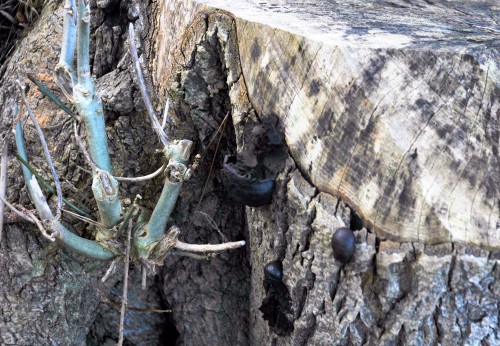
There are other species of tree along the path and I came across the stump of a felled ash tree that is regenerating from its base. It also had a mature patch of the curious brittle black King Alfred’s Cakes Daldinia concentrica  fungus.

Cut ash tree regenerating with King Alfred's Cakes fungus

Cut ash tree regenerating with King Alfred’s Cakes fungus

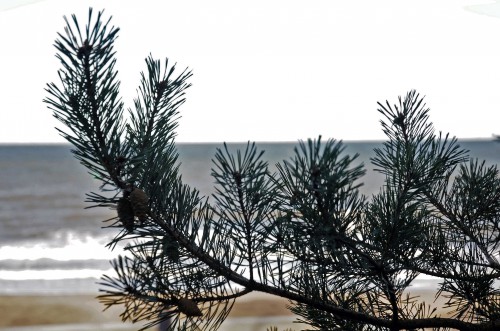
Scots Pine branch with cones

Scots Pine branch with cones

Approaching the end of the path

Approaching the end of the path

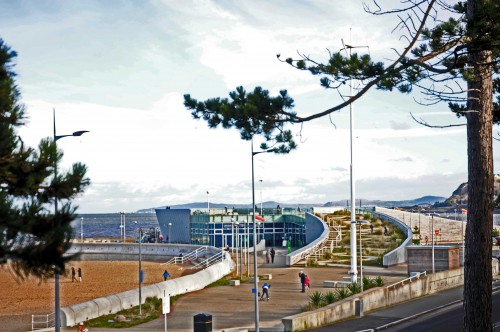
The elevated pathway offers a good view of the Porth Eirias Watersports centre

The elevated pathway offers a good view of the Porth Eirias Watersports centre

The pathway ends by the railway bridge opposite Porth Eirias where these beautiful Hellebores were growing.

Hellebores (Lenten Roses) with green flowers

Hellebores (Lenten Roses) with green flowers

It’s good to see that the traditional planting of pines is being continued. There are several young trees in beds at the front of Porth Eirias.

A newly-planted pine tree at Porth Eirias

A newly-planted pine tree at Porth Eirias

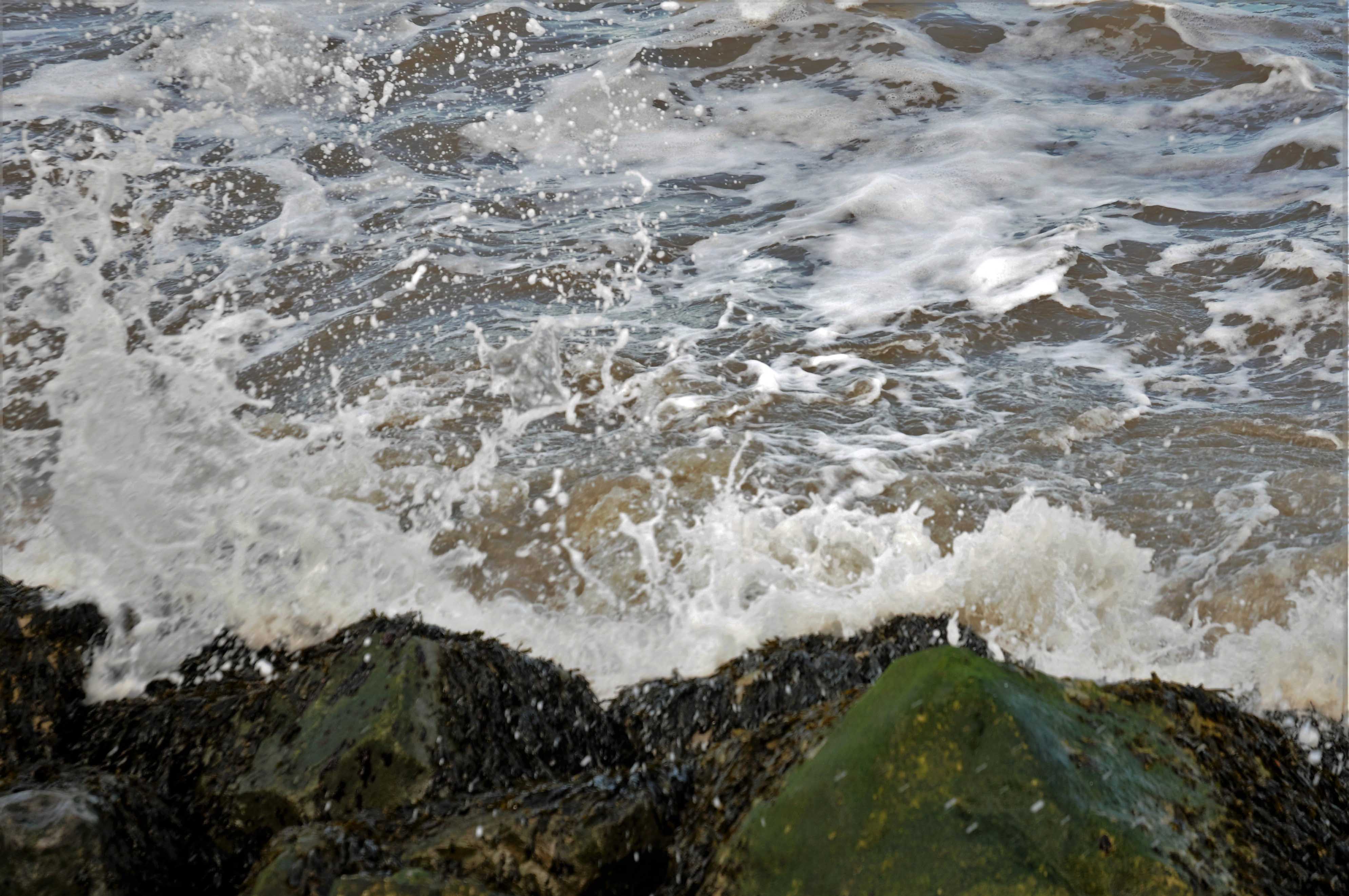
A last look at the sea splashing up onto the rocks at the base of the sea wall before gratefully retreating into the shelter of my car.

160214-Sea splashing on rocks

Share this:

  • Share on Facebook (Opens in new window) Facebook
  • Share on Pinterest (Opens in new window) Pinterest
  • Share on X (Opens in new window) X
Like Loading...
← Older posts
Newer posts →
Follow everyday nature trails on WordPress.com

Enter your email address to follow this blog and receive notifications of new posts by email.

‘But it is the common species that keep the living world ticking over and provide most of our experiences of wildlife, and I would argue that maintaining the abundance of these is as important a conservation priority as maintaining the existence of rarities’. Richard Mabey

MOST RECENT POSTS

  • A Glimpse of Spring to Come January 22, 2025
  • Hunting the Wren December 28, 2024
  • Oh, Christmas Tree December 18, 2024
  • In and Out of the Ivy February 15, 2024
  • Nature’s Fireworks November 30, 2023
  • Wild Autumn along the Coast Path November 3, 2023

OLDER POSTS

LOOKING FOR SOMETHING IN PARTICULAR?

  • Sights and Sounds from the Little Orme 1
    Sights and Sounds from the Little Orme 1
  • Things Bright and Beautiful
    Things Bright and Beautiful
  • Catchers, a Duck and Divers
    Catchers, a Duck and Divers
  • Following a river to a Fairy Glen
    Following a river to a Fairy Glen
  • May Bee Appearing on Ivy near You
    May Bee Appearing on Ivy near You
  • Shades, Sounds and Scents of the Woods
    Shades, Sounds and Scents of the Woods
  • Fine Dining for Crows
    Fine Dining for Crows
  • Butterflies and more rare treats
    Butterflies and more rare treats
  • The Windhover
    The Windhover
  • A Windy Wildflower Trail
    A Windy Wildflower Trail

nightingale trails

The Walk of the Monarch Butterfly-Sendero de la Mariposa Monarca

The Walk of the Monarch Butterfly-Sendero de la Mariposa Monarca

MY WILDFLOWER BLOG: where the wildflowers are

Snowdrop

Snowdrop

most recent posts

Follow everyday nature trails on WordPress.com

Social

  • View teresamaygreen’s profile on Twitter

Enter your email address to follow this blog and receive notifications of new posts by email.

Website Built with WordPress.com.

  • Subscribe Subscribed
    • everyday nature trails
    • Join 359 other subscribers
    • Already have a WordPress.com account? Log in now.
    • everyday nature trails
    • Subscribe Subscribed
    • Sign up
    • Log in
    • Report this content
    • View site in Reader
    • Manage subscriptions
    • Collapse this bar
 

Loading Comments...
 

    %d