Seven days later…

Tags

, , , , , , , ,

It would seem Mother Nature has finally reached the point at which she is fed up holding back until we get a decent spell of warmer weather to declare it really is Spring, and decided to go for it regardless. In just seven days the progress of new growth bursting forth has been almost unbelievable and in Fairy Glen, the energy output is almost tangible.

I never cease to be amazed by the sheer number of shades of green, the beautiful shapes and textures of leaves.

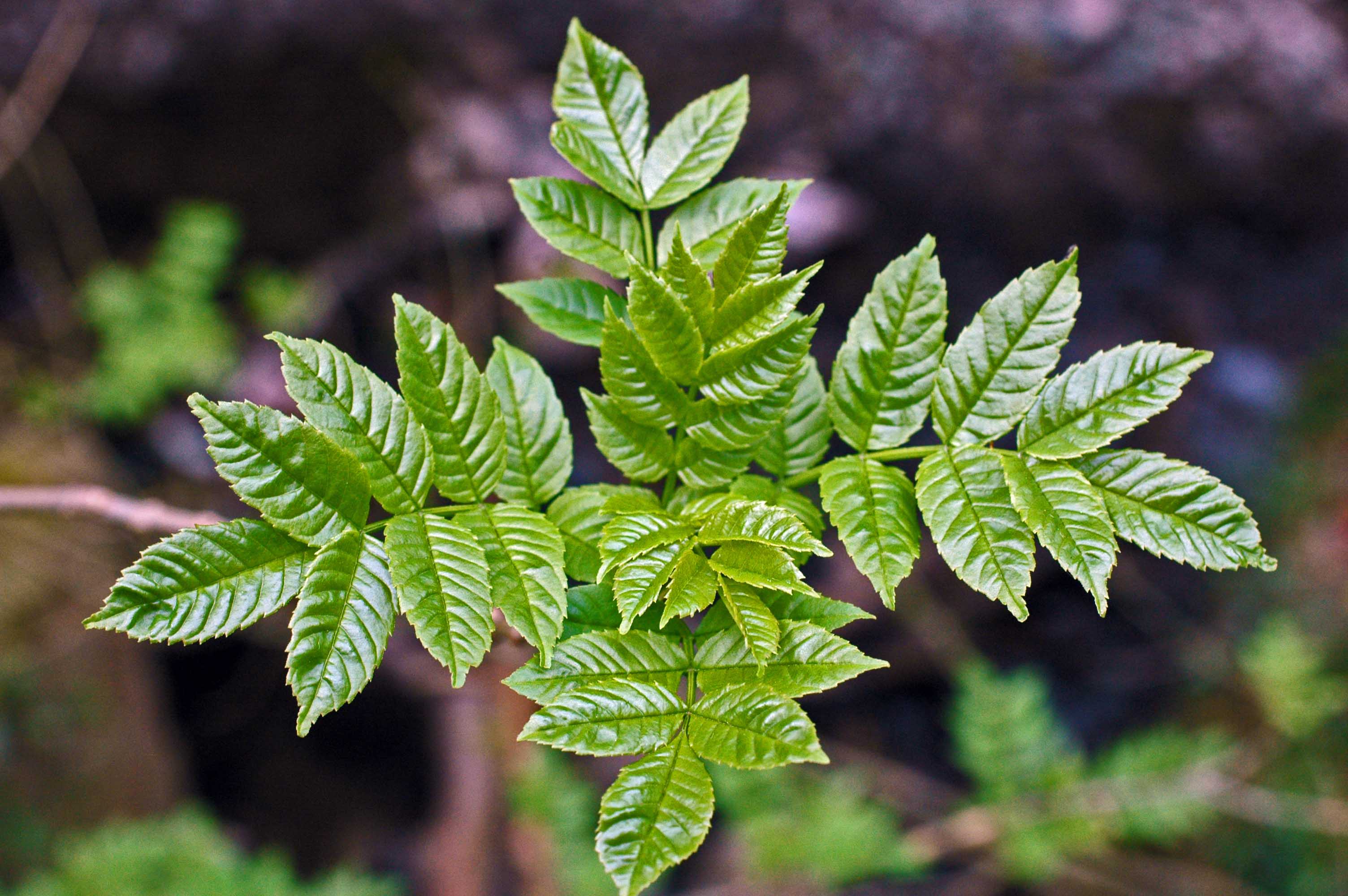
Shiny new ash leaves

Shiny new ash leaves

soft new beech leaves shaking out the wrinkles

soft new beech leaves shaking out the wrinkles

Sycamores already have flowers

Sycamores already have flowers

holly leaves

holly leaves

blackthorn blossom is almost over now

blackthorn blossom is almost over now

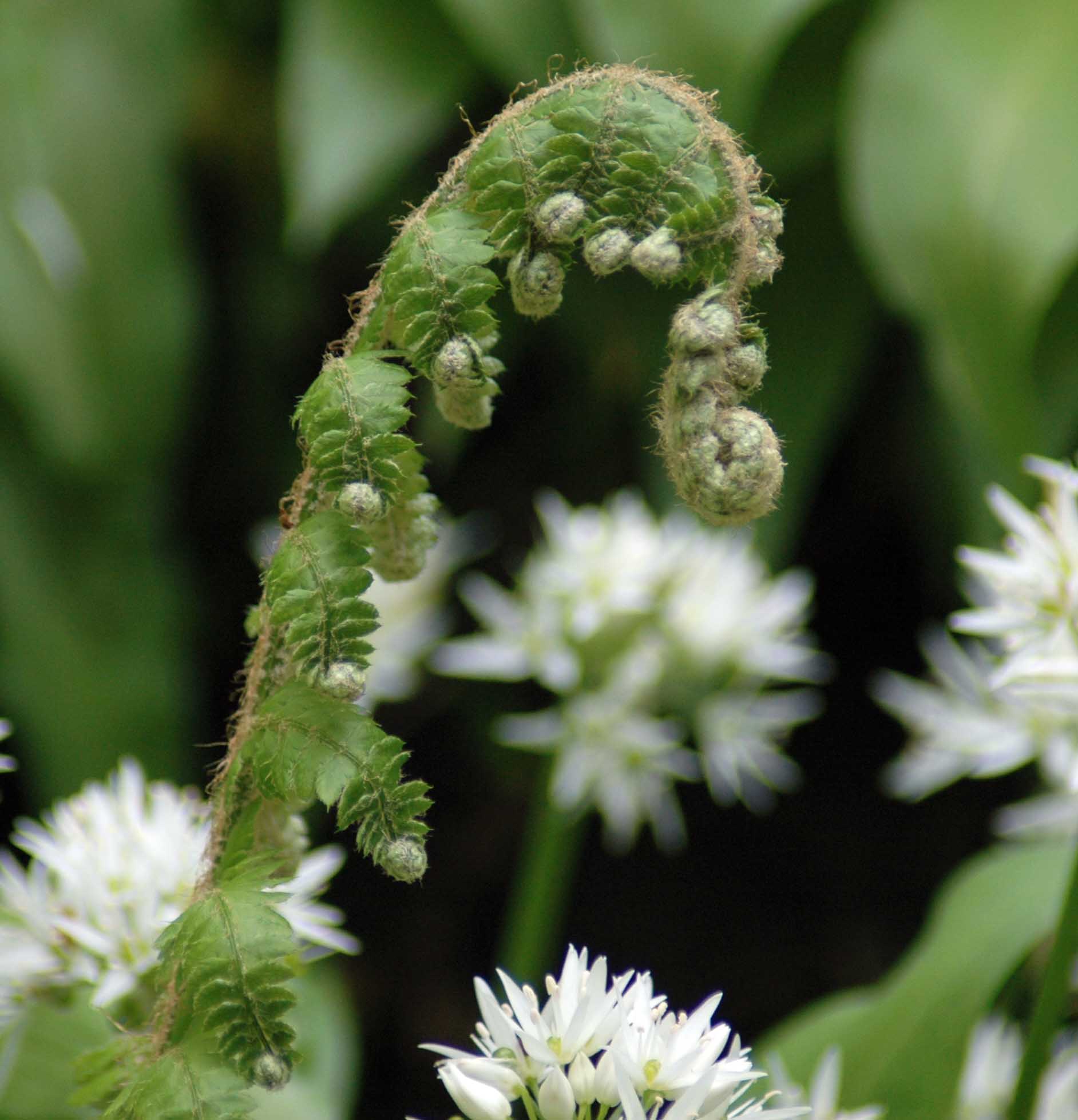
Ferns are stretching upwards and unfurling cautiously, reluctant to unclench their delicate tips until they’re sure its warm enough.

fern fronds are almost unfurled

fern fronds are tall and almost unfurled

Plants on the woodland floor know their days in the sunlight are numbered and are rushing to flower; some such as the dog’s mercury are almost done already.

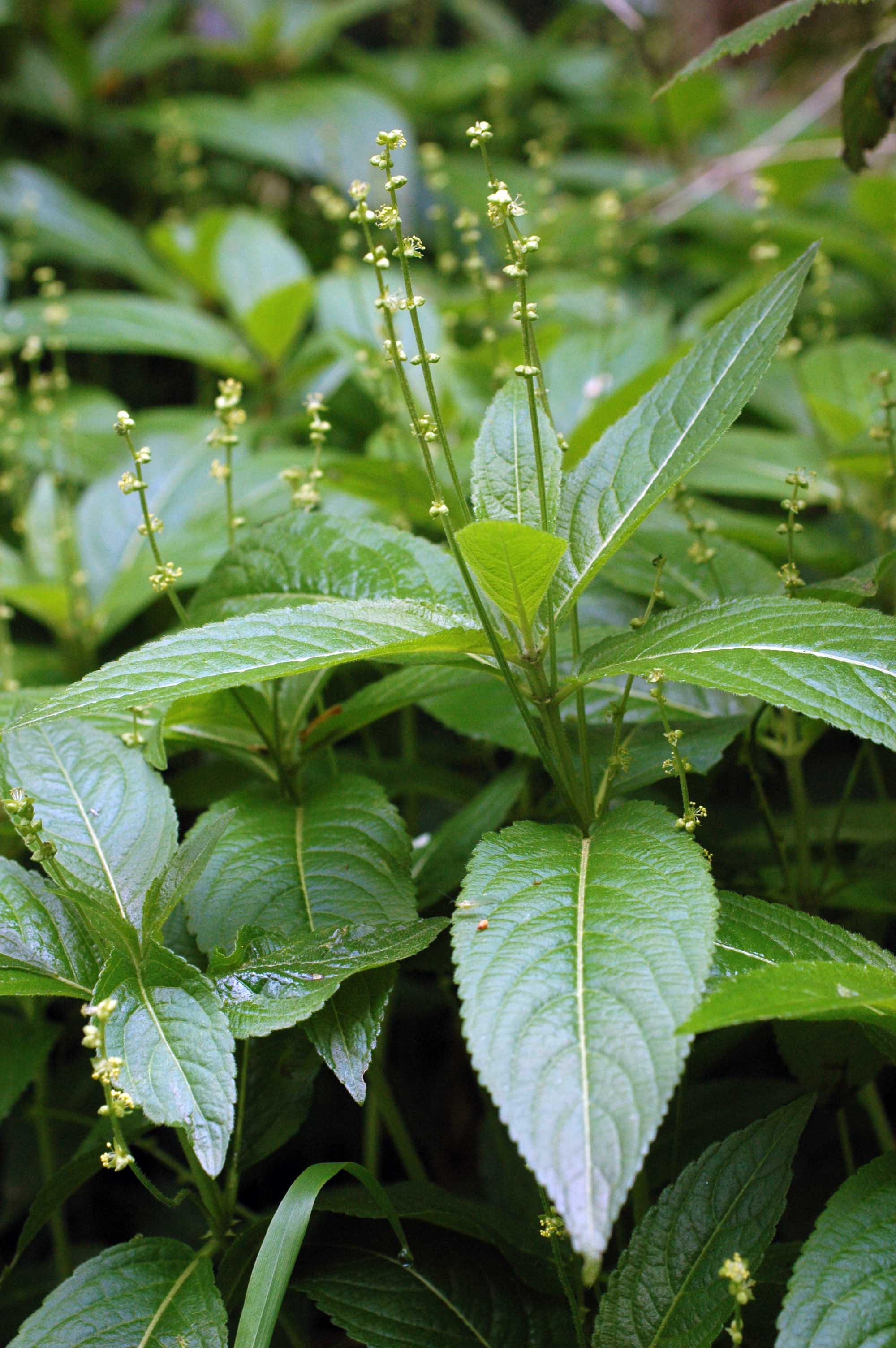
dog's mercury

dog’s mercury

130517tgflwr4-garlic mustard flowers & buds

garlic mustard

Here and there the palette of greens is highlighted with delicate touches of pink and blue.

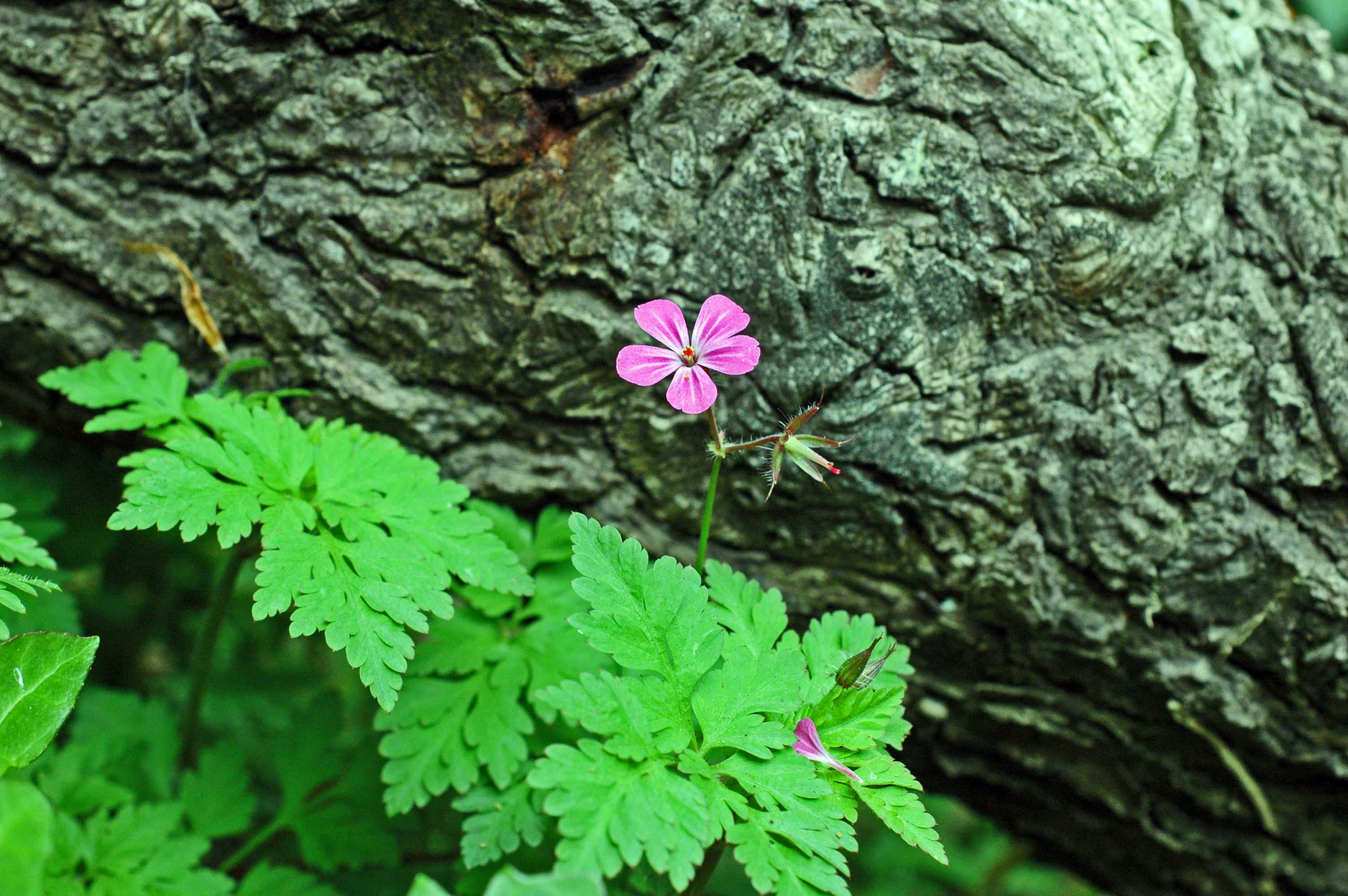
130517tgflw4-herb robert against tree bark

herb robert

speedwell

I could be happy living in a permanent state of Spring.

Spring has finally arrived in Fairy Glen

Tags

, , , , , , , , , , , , ,

Last Friday was a day typical of our Spring so far this year, overcast, showery and cool, but as I began driving home at lunchtime the sun came out, so I stopped by the little bridge at Min-y-Don woods as I often do, just to have a quick look at whatever is about. Today that was small birds flying back and forth across the river that I thought may have been Chiffchaff, but turned out to be House Sparrows taking drinks and chasing flies over the water. Then near the bend in the river I caught another flash of bird movement that made me think ‘grey wagtail’. Of course I had to follow it, being ever hopeful of a good photo opportunity. I finally caught up with the bird and saw it was actually a Pied Wagtail that was by now intent enough on catching insects not to be too disturbed by my presence.

A Pied Wagtail adeptly catching flies

A Pied Wagtail adeptly catching flies

Maybe he has a nest nearby and was out hunting for food to feed young ones, or maybe because he was alone, perhaps has a mate still sitting on eggs and he was feeding her, or, maybe he was simply feeding himself. Whatever his aims, he was very entertaining to watch and seemed to be catching plenty of insects.

Pied Wagtail - Motacilla yarellii

Pied Wagtail – Motecilla yarellii

A couple passing by stopped to see what I was photographing and told me they had seen the grey wagtails further upstream, so I had to carry on walking then, just in case.

On the way up to Fairy Glen my eye was caught by a mass of bright green liverwort at the mouth of a drainpipe, giving the impression it was cascading out like water.

Liverwort at the mouth of a drain pipe

Liverwort at the mouth of a drain pipe

Flowers are generally late this year, but they are making up for lost time now. On the stone walls bounding the river and roadside, the pretty, albeit non-native Ivy-leaved Toadflax flourishes.

Ivy-leaved Toadflax- cymbalaria muralis. A native of Mediterranean Europe, but widely naturalised elsewhere

And here and there the darker purple-blue blooms of the Common Dog Violet peeked out.

Common dog-violet

Common dog-violet – Viola riviana with its pretty  heart-shaped leaves

Garlic mustard is beginning to show its modest white flowers; I love the shape and texture of its leaves too.

Garlic Mustard

Garlic Mustard – Alliaria petiolata

Just inside the woodland of the Glen a few stands of graceful bluebells arch up through the masses of  almost-done lesser celandines, surrounded by encroaching wild garlic.

Bluebell -

Bluebell – Hyacynthoides non-scripta

Further into the woodland the air was filled with the pungent scent of masses of ramsons, or wild-garlic, just reaching the peak of its flowering. Great swathes of it flow down the sloping riverbank and it carpets much of the ground beneath the trees too, to the apparent delight of a host of nectar-seeking insects.

130510TGNJ4-wild garlic-fairy glen

Ramsons, Wild Garlic – Allium ursinum

Ramsons flowers and buds

Ramsons flowers and buds

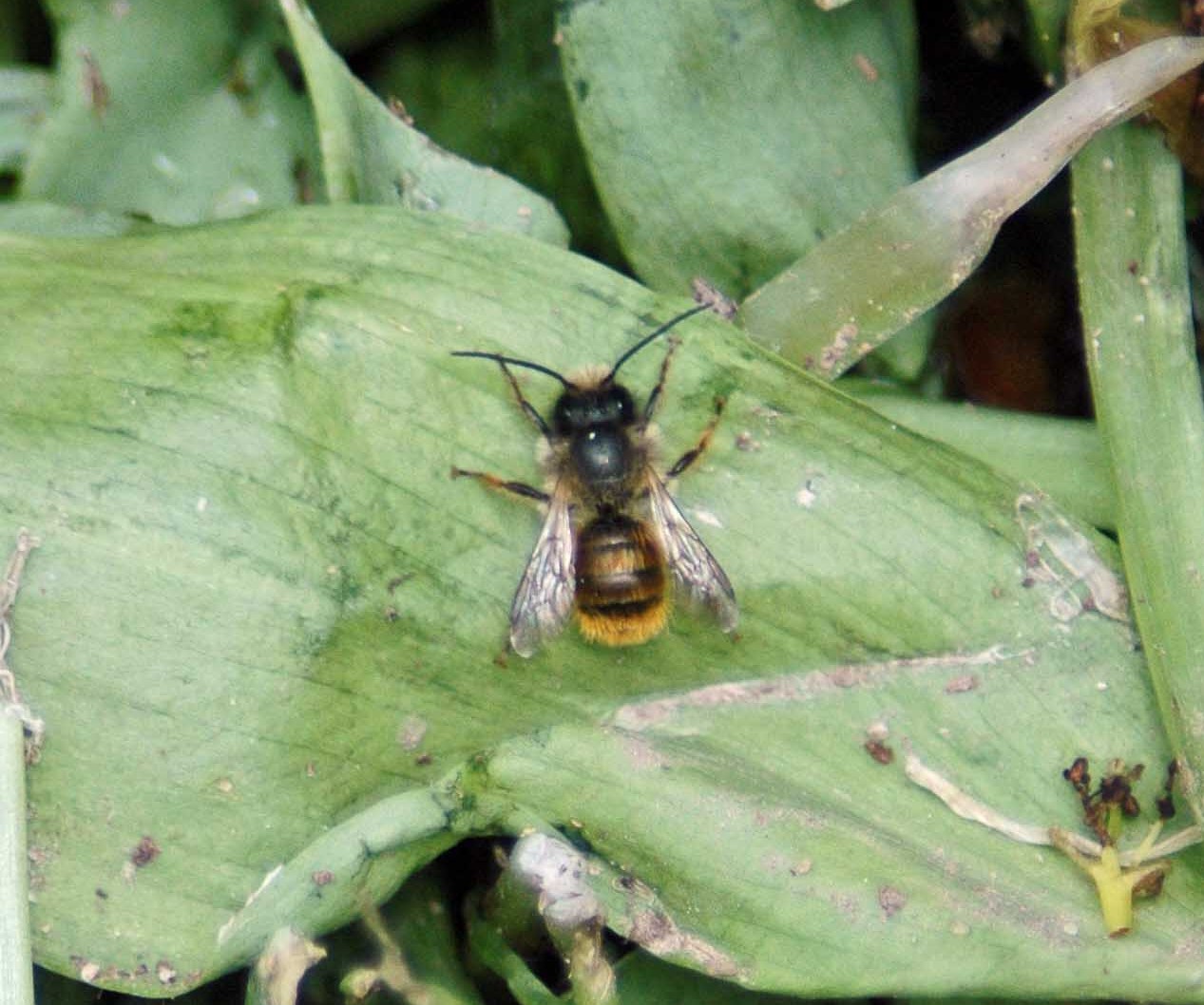
I watched big beautiful bumblebees, several different species of hoverfly and some little bees that I didn’t recognise visiting the starry white flowers. Looking afterwards at the photographs and checking several identification books and websites, I have ended up with mason bees. If anyone knows better, please let me know.

One of a number of tiny mason bees feasting on the nectar of the wild garlic flowers

One of a number of tiny mason bees feasting on the nectar of the wild garlic flowers

Red Mason BeeOsmia rufa

One of the little bees (male), pausing briefly to soak up some warmth

One of the little bees (male), pausing briefly to soak up some warmth

 Description

The male bees

are smaller than the females at

just 6 -11 mm long. Both

sexes

are covered in dense gingery hairs, the male with white tufts on the head while the female’s head is black.

Habitat: 

Around suitable nesting sites. 

The Red Mason Bee is active from early spring, the male being the first to appear when the weather becomes mild in March, the female emerging later. Like all bees it feeds on pollen.

 Life History: This is a solitary bee, each nest being the work of a single female working alone. They nest in pre-existing cavities such as hollow plant stems, old garden canes, air bricks, and even old nail holes in fence posts, lining the inside of the cavity with mud.

There were birds singing, I heard chiffchaff, blackbird, robin and wren, but most of those I saw, including blue tits, great tits and a coal tit seemed more intent on hunting for insects, so I imagine there are gaping little beaks to fill.

fern frond unfurling

fern frond unfurling amongst the wild garlic

An hour had passed by without me even noticing and I could have stayed even longer, but there began to be quite a few people about keeping the wildlife more discreet in their activities, so I started to make tracks back; I would have missed the sight of a lovely song thrush if I’d kept going.

Song Thrush with what I think is a worm

Walking back towards Min-y-Don I took a detour up and around one of the other paths and found yet more interesting plants to distract me.

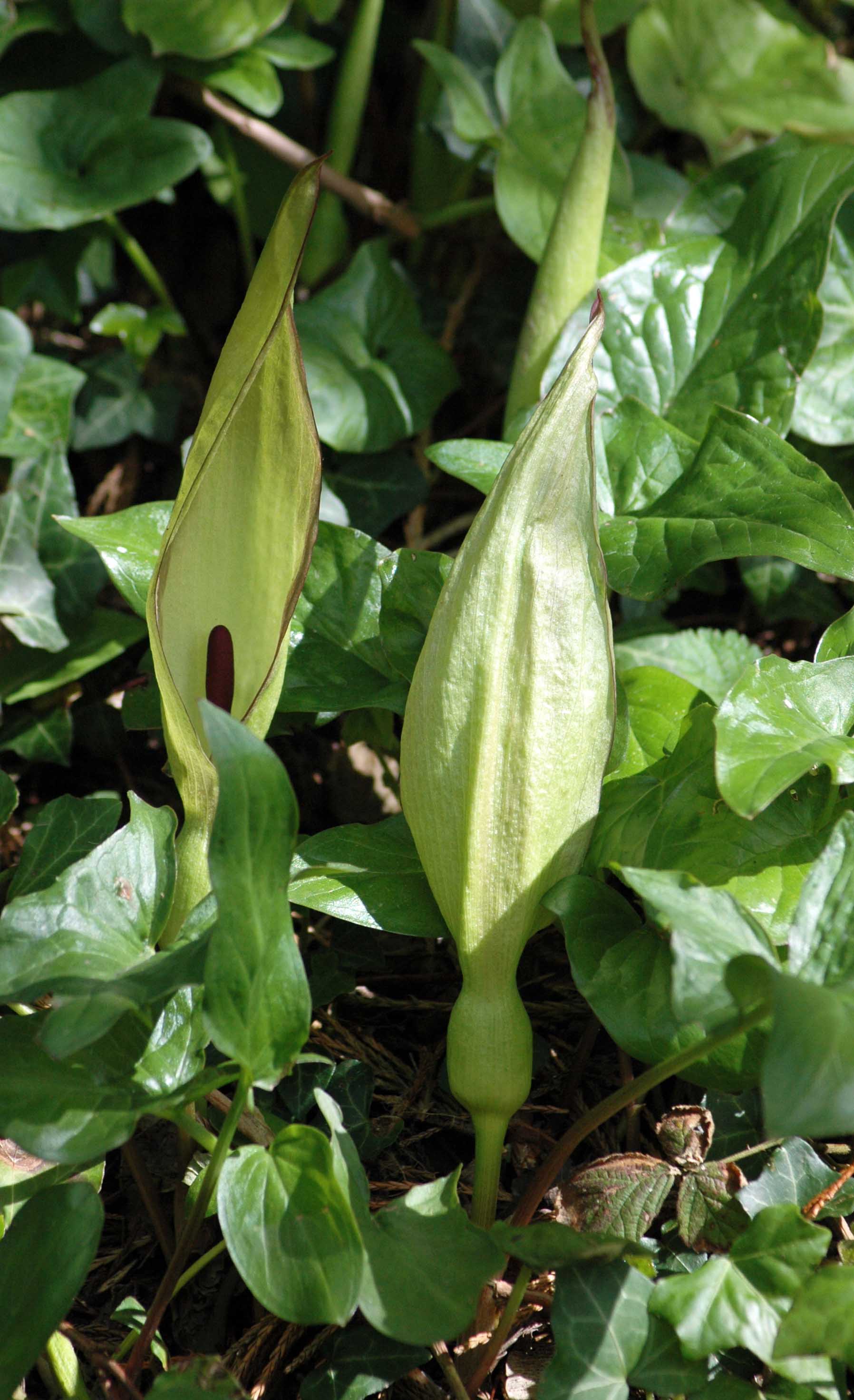
Arum -

A strange plant with many names-Lords & Ladies, Jack-in-the-Pulpit,Cuckoo Pint or Wild Arum – Arum maculatum

Horsetail

Horsetail- Equisetum

An almost-orange Welsh Poppy

Sunlight catching the  almost-orange petals of a Welsh Poppy-Mecanopsis cambrica

Kingcups, or marsh maraigolds reflected in a pool of water

Golden kingcups, or Marsh Marigolds-Calthea palustris reflected in a pool of water

And finally an impressive clump of dock that has found purchase in mud on the shallow edge of the river. I know it’s not a desirable plant, but it looked quite well there with its big shapely leaves.

Curled dock

Dock

A crow strutting along the river-wall, feathers gleaming with shades of purple and green

a crow strutting along the river-wall, feathers gleaming with shades of purple and green

Two hours after setting off for one photograph I was on the way back home, but couldn’t resist the sight of rabbits amongst the mass of primroses on the embankment, which is where the current page header came from.

bunnies amongst the primroses

bunnies amongst the primroses

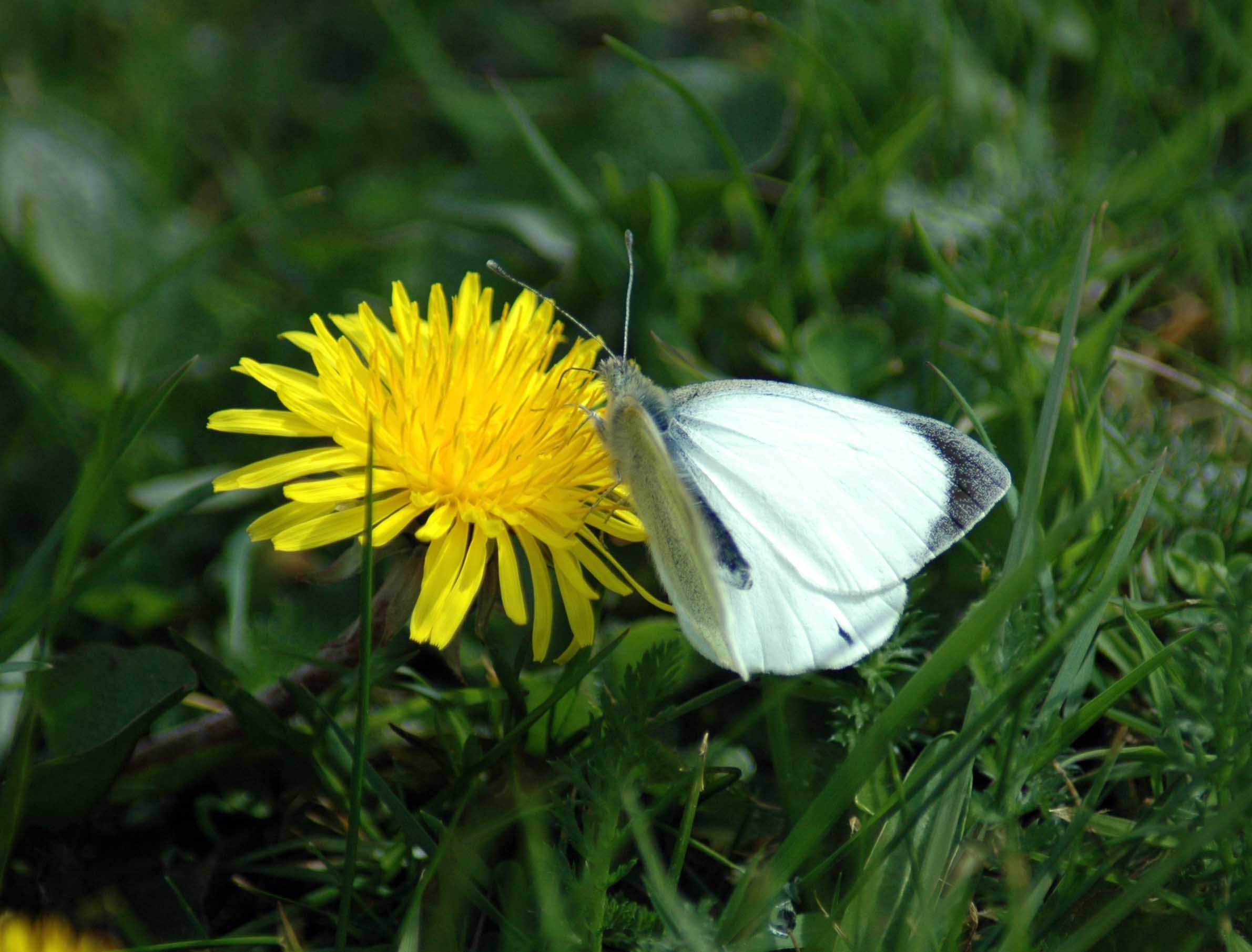
Back at home a large white butterfly was nectaring on a dandelion, the first I’ve seen so far this year. Large white that is, not dandelion, whose population seems to have boomed this year. I have never seen so many.

large white taking nectar from a dandelion

large white taking nectar from a dandelion

The craft and artistry of nest building

Tags

, , , , , , ,

Every spring I watch various species of bird select oddments of dried grass, leaves, feathers and a variety of other bits and bobs and am awed that they are going to put them all together and fashion them into a perfect home for their future family. How on earth do they know how, when and where to begin? I mean, I am pretty dexterous with my hands and can put together items by sewing, knitting, crocheting etc., but I wasn’t born knowing how to do that; I’ve had to learn how to do things and then practice to perfect the techniques over years. And I have two hands, eight fingers and two opposable thumbs to work with. A bird has one beak. Furthermore the whole process is often completed within the space of a few days, and each and every nest perfectly conforms to the design that is unique to the species of its builder, with no instruction needed. Amazing.

I still recall the thrill of finding birds’ nests when I was young and exploring the hedgerows and woods around our home, but didn’t really think much about how the nest had been put together then, being more curious about which bird had built it and how many beautiful eggs were in it. Now I take a much keener interest in the nest-building process and in the structures themselves and love to take advantage of opportunities to have a closer look at the structures of those I have found.

The first two photographs below were taken in Spain and are of a nest blown out of position during the winter following its successful use. It was built by Blackbirds in the fork of a yucca tree just a couple of metres from the kitchen window and in which three young ones were successfully raised.

A blackbird's nest blown from a tree branch

A blackbird’s nest blown from a tree branch

Blackbirds build classic archetypal cup-shaped nests utilising the natural materials available to them. Partially concealed from my view I couldn’t see exactly how the work was done on this one, but I did watch both the male and the female of the pair carry in materials, long strips of dry palm leaves, twigs and leaves to begin with, which made up a substantial base. Once that was in place the bird would have built up layers of finer materials, working each strand into place, working around herself, turning and weaving each one into place to build up the sides of the cup. The turning action keeps the inside of the cup smooth and well compacted, then when it is completed she will strengthen it further with mud.

You can see that the layers of grass become progressively finer from the outside inwards. The bottom of the nest looks rough and messy, but the bulk of material provided a substantial base, filling out the space in the fork of the tree. It is also thought that birds may deliberately leave the outsides of their nests untidy as a method of camouflage, hoping a prospective predator may mistake it for a pile of debris.

The bottom of the nest

The bottom of the nest

Chaffinches also build a cup-shaped nest and once again I had excellent views of a beautiful nest built on a branch of a cork oak tree that overhung the garden wall and was on a level with and very close to a first floor bathroom window. Honeysuckle had climbed up into the tree providing extra  cover, but the most impressive camouflage was in the use of the blue-green lichen on the outside of the nest. Taking pictures was quite challenging, I was in the bath beneath the window, trying to get a view first through the vertical window bars, then through the branches and foliage.

The beautifully crafted nest of a pair of chaffinch. This was the last of 3 chicks to fledge and was reluctant to leave.

The beautifully crafted nest of a pair of chaffinch. The occupant was the last of 3 chicks to fledge and was reluctant to leave its cosy home.

We found the goldfinch nest on the ground beneath pine trees around a picnic area of the Sierra de Nieves Natural Park, near Ronda, Andalucia, whilst out walking there. We knew it belonged to a goldfinch as, sadly, we also found a couple of partially-feathered dead nestlings close by too. Maybe it had been blown out of the tree, but it is also possible a jay may have raided it, there are plenty of them thereabouts. It was such a delicate but cosy little nest too.

A goldfinch nest, cosily lined but dislodged from  a tree

A goldfinch nest, cosily lined but dislodged from a tree

I love wrens and had the privilege of their close company during much of the time I lived in Spain, they seem much more ‘confiding’ there for some reason and are often happy to use the facilities people provide for their own use as nest sites. In our case a terracotta light fitting, fixed in a covered area between the kitchen and garage doors was used for two successive years with the male using it as a roosting place when vacated by his family.

An adult wren at the entrance to the nest in the light fitting

An adult wren at the entrance to the nest in the light fitting

Male wrens are the nest builders and will construct a number of basic nests in several locations which he then shows off to prospective mates. ‘Our’ little chap began work on the light fitting nest early in a February, carrying in leaves and dried grass, then used it as a night-time roost for himself until April. I thought he’d left then , but one morning he reappeared and set about making some improvements, working hard over a period of days carrying in leaves and dried grass, until the space looked stuffed to capacity. Shortly afterwards he performed quite a spectacular and noisy display on a roof beam close by, clearly to impress a female. She subsequently appeared, inspected the nest, approved it and set about making the place more comfortable by lining it with moss she pulled out from our lawn. I helped her out a bit by pulling out more moss and putting it on the leaves of a large house plant below the site. My contributions were accepted happily and carried up to the nest, much to my delight. Some days later, a sneaky peek with the telescopic lens of a pocket camera revealed 4 eggs nestled amongst moss and feathers plucked from her own body.

Interior of the wren's nest inside our light fitting

the inside of the nest lined with moss and feathers

In more natural situations the wren’s nest is quite an elaborate, dome shaped construction, often placed against a wall or as in the one below, against a rock face and amongst vegetation (photographed in Gibraltar).

The elaborate domed nest of a tiny Wren

The elaborate domed nest of a tiny Wren built amongst vegetation on a rocky cliff in woodland

Another wren’s nest I found on the ground when out walking around the area local to our home in Spain had been constructed using a lot of leaves and moss, dried grasses and lengths of paper material. I would have loved to see the little bird carrying that and working it in. The photograph is of the back of the nest which is flat from having been built against a wall.

A wren's nest using lengths of paper material on the outside

A wren’s nest using lengths of paper material on the outside

Blue Tits are naturally cavity-nesting birds, but they liked our light fittings too and several years we had a family in a particular one, again very close to the house, but this time under the covered front terrace. Their nest was a much lighter affair than the wren’s, perhaps partly because its position got a lot more sun, but it was still cosy inside, lined with fine grass, moss, feathers and quite amusingly, some of the long dark hairs from our Yorkshire Terrier (we used to brush him and clip his hair outside). I couldn’t see into the nest without the aid of my little camera’s telescopic lens, so couldn’t believe my lucky timing for this shot, taken as soon as I spotted the female exit for a few minutes. The three hatchlings were very recent and you can see fine cracks in two of the remaining eggs.

Inside the blue tit's nest in a light fitting-Sotogrande, Spain

Inside the blue tit’s nest in a light fitting-Sotogrande, Spain

The next nest was built by a pair of Serin, tiny finches that are common in Spain. They built it high up in a very tall cypress fir tree and they too successfully raised a family in it. I found it on the ground beneath the tree long after they had left it and was amazed at how light and flimsy-looking it was, constructed mainly from fine grass and spent flower tassels dropped from  neighbouring cork oak trees. At first I wasn’t sure who had built the nest as they and a pair of  Short-toed Treecreepers were nesting at the same time in trees next to each other, but then I spotted the white feather in the lining and remembered spotting and photographing the female Serin with it in her beak, months before.

The nest of a pair of tiny Serin blown down from a tree, Sotogrande, Spain

The nest of a pair of tiny Serin blown down from a tree, Sotogrande, Spain

I’ve put in a couple of pictures of Serin here, to show what I’m talking about and because I like them a lot (the birds that is).

These young Serin in a cork oak tree may well be from 'my nest' family

These young Serin in a cork oak tree may well be from ‘my nest’ family

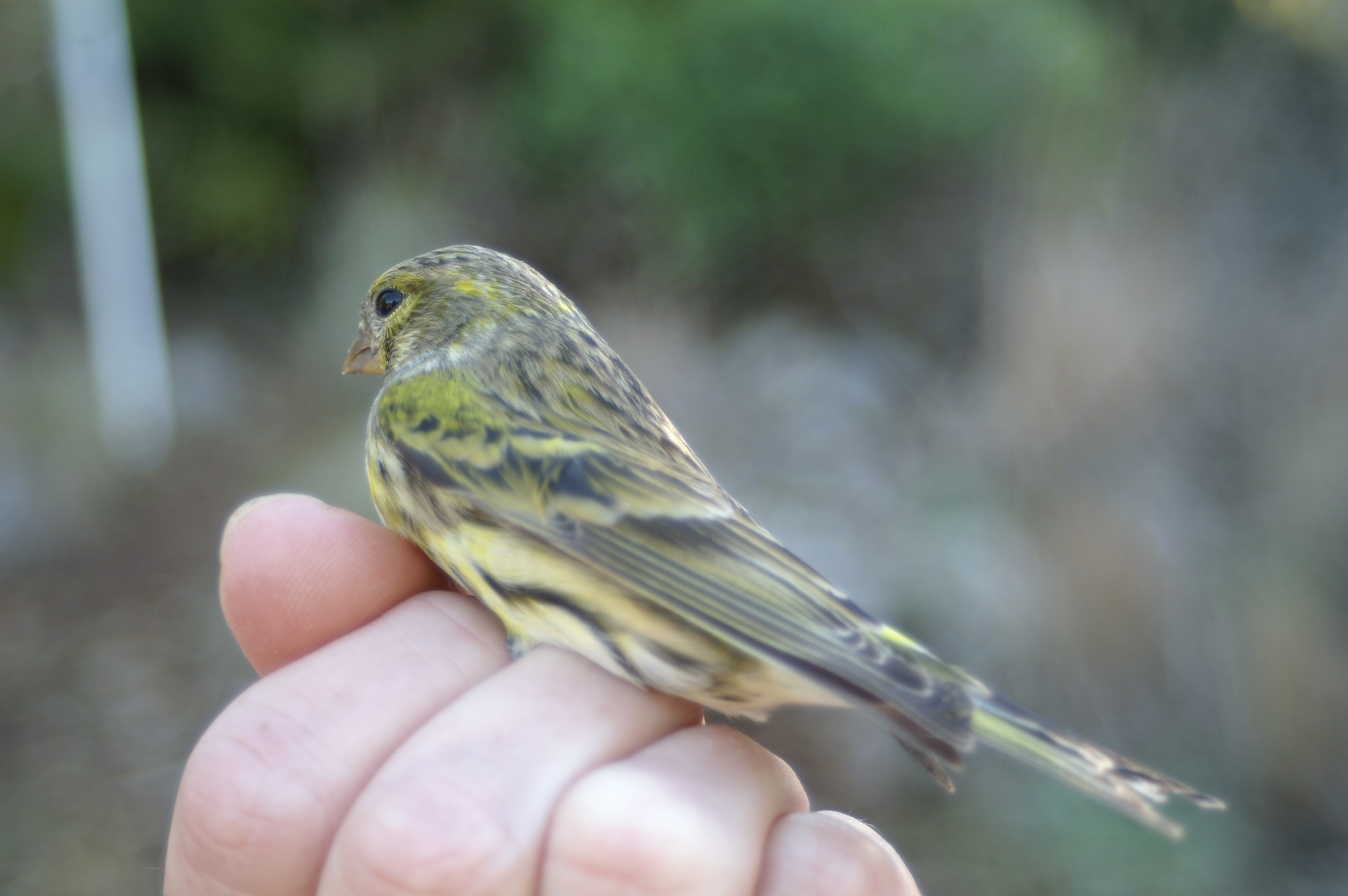
A male Serin held in a ringer’s hand shows how tiny they are

The final picture for this post is a British Robin’s nest, built in the wood pile of my friend’s house in Nevern, Pembrokeshire. It was not very far off the ground as you can see, but was so well camouflaged we walked past it for a couple of days before noticing it.

A mossy Robin's nest built in the wood pile, Nevern, Pembrokeshire

A mossy Robin’s nest built in the wood pile, Nevern, Pembrokeshire

This is definitely a Chiffchaff

Tags

, , , , ,

Since writing the last post this morning I’ve been wondering and reading about chiffchaffs and willow warblers and thought it might be worth nipping back down to Min-y-Don to see if there might be any of those I saw on Friday still hanging around. To my surprise and delight there were little warblers everywhere, almost every tree had at least one amongst its twigs and leaf buds and there were birds darting out after flies all over the place. They are so mobile and active that counting them was not really an option, but there are a good many. That doesn’t make identifying them any easier, but what I will say is that there is definitely a mix of the two species, indisputably so after hearing songs from both this afternoon and the fact that they are still here must indicate that they are all finding plenty to eat.

When I came to look more closely at my photographs I spotted that the one below has a leg ring – anyone recognise it? The tag I mean, not the bird!

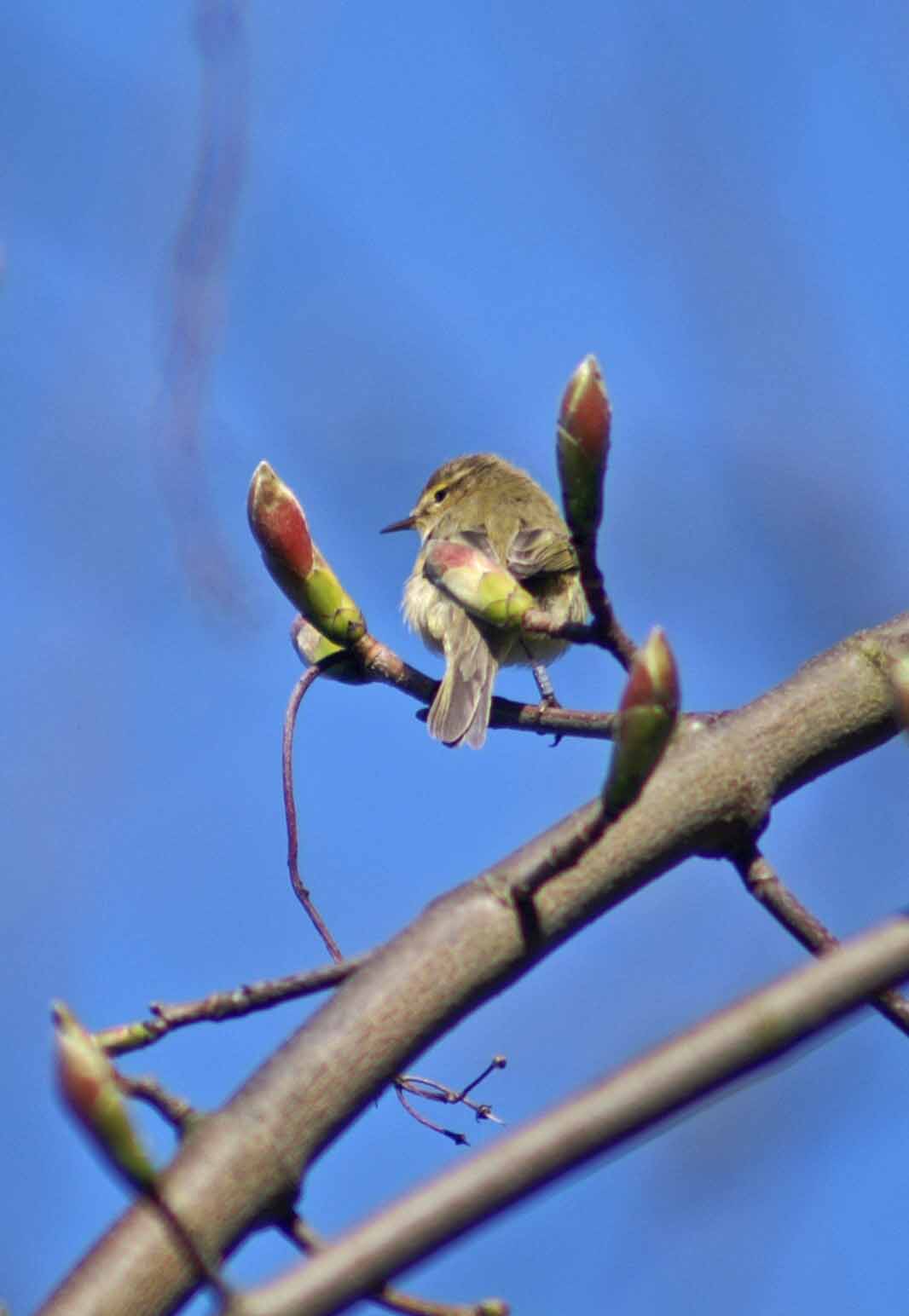
Chiffchaff or willow warbler between buds of a sycamore.

Willow warbler between buds of a sycamore. This bird is ringed, anyone recognise it?

Getting views of the birds is not a problem at all, as I said they are all over the place, but getting sight of an individual for more than a second or two is something else. They are not too bothered about people being around, one surprised me by popping up over the wall alongside the river right in front of me: it was chasing after a fly which I saw escaped, more’s the pity as it looked like a mosquito. 

I followed the path alongside the river and just the other side of the bend heard a chiffchaff singing very close by. I located it quite easily, on the branch of a tree quite surprisingly low down, but it moved away when it saw me. He didn’t go far though and reappeared on a branch overhanging the path with a good view over the water. He sang a few phrases, then suddenly dashed down to the water and swooped straight back up again with a sizeable fly in his beak.

The chiffchaff with his prize - a good-sized fly

The chiffchaff with his prize – a good-sized fly

He ate it and sat for a while longer before flying off over the river and the road to trees on the other side.

The chiffchaff after polishing off his meal. He certainly looks well-fed and healthy

The chiffchaff after polishing off his meal. He certainly looks well-fed and healthy

I don’t suppose they will be around in these numbers for much longer, but what a joy it has been to see them and I hope they all thrive throughout the rest of the spring and summer wherever they go.

An enchanting encounter with chiffchaffs (and/or willow warblers!)

Tags

, , , , , , , ,

Friday was a beautiful day and during my lunch hour I thought I’d take some photographs of dandelions, daisies and primroses which I wanted for the next blog I intended to write. There is a lovely grassy bank alongside the road I take back to work, which is currently smothered with gold and white wildflowers and just what I wanted, so I stopped alongside and got out of the car. But, as I opened the car door, I heard a chiffchaff calling from somewhere high up in a tree, a sound I have been waiting to hear this spring, so flowers were quickly forgotten and instead I walked down the hill towards the river and the trees of Min-y-Don listening and trying to work out where he was.

(This spot is just a stone’s throw away from the sea and the point at which the little River Colwyn runs into it and the area known as Min-y-Don is a remnant of the old woodland that used once to cover the whole area, so an oasis for resident and birds on migration with water and potential food.)

As I approached the footbridge over the river I spotted two small birds on the water’s edge that were perching briefly on overhanging plant stems then darting out and flitting over the water, clearly chasing after small flying insects. I have watched Chiffchaffs do this many times in Spain, both over water and from the tall palms in our garden there when they were fruiting and attracting insects there. The tiny birds are amazingly agile in the air and watching numbers of them performing their aerobatics was always magical and enormously entertaining. I know they were doing it to feed themselves, but I could never help feeling they were enjoying the chases and taking the opportunity to show off their skills to their companions; surely the amount of energy they put into the pursuits must have burnt off any calorific value they gained from the flies they actually managed to catch?

I digress, I know, but still being able to hear one as well, you can see why Chiffchaffs came to the front of my mind as soon as I saw them.

Taking a second to spot potential prey

Chiffchaff, or is it a willow warbler.

I attempted a few photographs of the birds in the very brief intervals they paused from their pursuits, one or two of which came out OK, but the more I looked at them through the long lens, the more I began to question my identification and to think they might actually be Willow Warblers. I think the problem arose from the fact that although I am very familiar with chiffchaffs, I am not so au fait with willow warblers, something I clearly need to sort out.

KONICA MINOLTA DIGITAL CAMERA

On the point of take off

I enjoyed watching these two birds for several minutes before they were joined there by the footbridge by another, then another, then another two. I realised then that I must have happened upon a little flock of migrants that were taking the opportunity to ‘fuel up’ before continuing their journeys to their breeding places. I was already more than happy with this encounter with the birds, so when I walked further along the footpath to where it bends around to follow the river’s edge and saw even more, I was delighted. It’s at times like this when you wish you had someone with you to share the experience, so you could stand or walk along in a public place clutching a camera with a long lens and smiling without feeling self-conscious. And so you have someone to confirm or offer alternative suggestions to your identification of tricky warblers. I guess that is why we blog- I would definitely appreciate opinions on this one, especially the first photograph.

A sunlit Willow Warbler

A sunlit Willow Warbler. This bird’s front is much paler and ‘cleaner’ and it has pink legs.

Willow warbler perched on stems overhanging the river

Willow warbler perched on stems overhanging the river

This stretch of the river was lit by the sunshine and benefits from having trees closer to its edge as well as plenty of other perching points for the fly-catching warblers. I’m not sure if it was the better light here or just something about the general appearance of the birds, but I was more or less certain straight away that these were not chiffchaffs, so willow warblers then. These two species can be easily confused when based on appearance only, in fact the one diagnostic I remember is to look at the legs, the willow warbler’s are usually, but not always flesh-coloured, while the chiffchaff’s are darker.If only one of them had stopped to sing it would have made things easier, but no. I know mixed flocks of birds do migrate together, but do these two species join up and travel together?

KONICA MINOLTA DIGITAL CAMERA

Willow Warbler-Phylloscopus trochilus

Points of difference:

Chiffchaff – Phylloscopus collybita

Less tinged green and yellow than willow warbler; legs & feet always dark. Bill is also dark. The supercillium is drab and there is a distinct crescent under eye. Wings are also shorter than willow warbler’s.

Willow Warbler – Phylloscopus trochilus

The commonest warbler over much of northern Europe. Underparts are tinged yellow, especially in juveniles. Legs may be dark brown to flesh-coloured. Supercillium is fairly prominent and longer and there is a bright lower eye crescent. Wing feathers are longer than those of chiffchaff.

KONICA MINOLTA DIGITAL CAMERA

I deliberately haven’s zoomed in on this bird to give more of a sense of scale; these birds are tiny

I posted a blog about Chiffchaffs around this time last year, which contains a lot more information, see it at  https://theresagreen.wordpress.com/2012/04/26/bird-study-a-chiffchaffs-year/ or just click on April 2012 in the ‘older posts’ to find it from here.

From blustery beach to sheltered woods

Tags

, , , , , , , ,

I had driven along to Colwyn Bay to have a closer look at the beach-building, not because I am lazy, more to do with there being a bitterly cold wind blowing with too few  compensating warm sunny intervals to make it a pleasant place to be. I did stop for few minutes though and bought a mug of tea from one of the snack shacks to warm me up a bit while I stood perusing the beach, which I’m glad I did. Over the last few days I have spotted a few small flocks of small birds flying in across the sea and there were more as I watched then; finches by their up and down bouncy flight and I’m pretty sure goldfinch by the contact calls they were making. I never have binoculars when I need them, which was a shame today as I also had sights of incoming house martins; fortunately very close ones, so no doubts there. There’s nothing like the first sight of these amazing little migrants, it is always uplifting and hopeful.

As I drank my tea I was entertained by a courting couple of herring gull, both looking bright eyed and beautiful in immaculate plumage and freshly coloured beaks.

Herring gull pair bonding

Herring gull pair bonding

Female begging for food

Female begging for food

She was quite insistent but he was not sharing

She was quite insistent but he was not sharing

A nice pose from the pair showing the difference in sizes

A nice pose from the pair showing the difference in their size

One of the best aspects of living here is that within a very short time and distance you can move into a completely different environment, so as I was close by I headed up to Fairy Glen to seek out some wildlife in the shelter of its trees. As I’ve said before this small local nature reserve within the bounds of Old Colwyn village can be a bit scruffy when viewed through human eyes, but the presence of the fast-flowing stream of water and a well-established variety of trees, shrubs and woodland plants combine to make this the perfect oasis for an impressive number of woodland bird species as well as those that have learned to live amongst people.

First to attract my attention was a Collared Dove that was pottering around on the ground by the side of the river before fluttering down onto a rock to take a drink. There are usually a pair of these pretty doves here, but as there was just the one today I hope the other was sitting on a nest.

A collared dove on a rock in the river

A collared dove on a rock in the river

Next to come into view was a pair of magpie, which I had never seen actually within the woodland before. This is another opportunistic bird species that gets bad press and is not much liked by a lot of people, but they are elegant birds, strikingly handsome in appearance and in common with most members of the crow family, clever and characterful.

One of a pair of magpie on the handrail of the walkway

One of a pair of magpie on the handrail of the walkway

KONICA MINOLTA DIGITAL CAMERA

A wary wood pigeon taking a drink

There were numerous blue tits out hunting for food, minutely examining twigs and leaf buds for insects as they do. Blue tits have the inexplicable knack of timing their egg-laying to coincide the hatching of their young with the emergence of caterpillars. This cold but rather dry spring may well have set them back by a few weeks this year; I have only seen one butterfly so far this spring. There were great tits too, in lesser numbers as always, and I was pleased to see a coal tit, always one of my ‘target’ birds here and generally to be spotted in the same spot, close by to where there are a number of large conifer trees, some type of cypress, maybe overgrown leylandii.

A dunnock drying itself off after taking a dip

A dunnock drying itself off after taking a dip

I heard several birds singing, blackbird, robin and wren most frequently and one short and sweet tune of a dunnock. I spotted a dunnock bathing in shallow water at the edge of the ditch that runs along the side of the footpath and collects run-off water from the high bank above it. It flew into some brambly scrub to dry off and sat for some minutes shaking water from its feathers and preening them back into shape.

There were some wildflowers to be seen, lesser celandines, one or two wood violets, a single stem of kingcups on the boggy part of the riverbank and on a sheltered bank under the trees, the first primroses.

I had been looking out for grey wagtails; I know they have returned as I’ve seen them around the houses in the vicinity of the lower end of the river, so on my way back to the car I walked along the lower end of the river down to where it flows into the sea. Although I was watching for them, the grey wagtails saw me first and took off from the water up and away. At least I saw them, if only briefly. To compensate though I heard a bird ‘singing’ that I didn’t immediately recognise and traced it to a large evergreen tree; I could see several small birds, I think four, that I first took to be blue tits feeding in the top of the adjacent tree, but they and the singer were coal tits.

A coal tit feeding at the top of a tree

A coal tit feeding at the top of a tree

I think perhaps my favourite sight of the day though was of crow attempting to pick twigs from a small tree. It was having big problems trying to balance on the slender branches and despite valiant efforts the twigs were too well attached to snap off easily, but fair play to the bird it kept on trying.

The precariously balance crow trying its best to break off a twig

The precariously balance crow trying its best to break off a twig

How to build a beach

Tags

, , , ,

The beautiful but rugged coastline of North Wales is subject to some serious battering by  winds and waves throughout the year and although we love to live and holiday here, of course we prefer it to be on our terms and so demand protection from the elements too. We also need to make a living and as this whole area is designated as an outstanding area of natural beauty, capitalising on those natural assets by way of tourism is the way things are set to go forward. Great lengths of piled up rocks are already in place reinforcing the defences of the sea wall from Rhos on Sea to Penrhyn Bay, but now work has begun to improve the defences of Colwyn Bay.

misc 2013-sony camera 035

A section of the Colwyn Bay promenade being battered by the sea, March 2013

Colwyn Bay was one of the North Wales holiday resorts popularised by the Victorians. It was accessible to them by way of the railway line between the ferry port of Holyhead on the Isle of Anglesey, and London, that was built to facilitate the transport of mail between the two places and onwards to Ireland by sea. It remained popular as a holiday destination for several decades following, my own parents spent their honeymoon here in 1946, but began to go into decline during the late ’80s, in common with many other British seaside resorts.

In 2010 a ‘masterplan’ was revealed to regenerate the area which includes plans for a new sandy beach to be constructed  to improve sea defences and to allow people access to the shore throughout all tidal states: currently you can only walk on the shore at low tides.

As reported at the time by The Weekly Post, this build-a-beach project is not going to come cheap.

“Conwy County Council’s cabinet voted to pledge £667,000 to secure a grant of £2m from the Welsh Government to improve the town’s sea defences. The authority had already secured an additional £1m of funding from the Welsh Government for the Colwyn Bay Waterfront coastal defence scheme by offering up £333,000 of supported borrowing from this year’s capital programme. By agreeing to pay the £667,000 from next year’s (2013) budget the council…will see beach sand material imported onto Colwyn Bay seashore which is now mostly pebbled. This will result in 50m of sand to help protect the promenade.”

Work began on building the new beach on 21st March and the major project of engineering is proving to be quite fascinating. To begin with two lengths of steel pipeline were constructed on an unobstructed stretch of Pensarn beach, one a kilometre long, the other about 400m long. The two sections were then floated out at high tide, lined up and welded together. The pipeline was then connected to the steel dry-line which is pumping the sand onto the beach. A rubber floater line was also connected to the sea end of the steel pipeline, and this section of pipe will connect to the dredging vessel.

Picture copied from Daily Post

Sand begins to pour from the pipeline against the existing sea wall. Picture from Daily Post.

The dredging ship, the Barent Zanen, sailed here from Rotterdam and prepared to dredge sand from the seabed of a site 20 nautical miles north of Colwyn Bay, located within  Liverpool Bay. The ship is taking the sand from the sea bed approximately 20 miles north of Colwyn Bay, and then sailing in and anchoring about a kilometre offshore. Around 10,000 tons of material is brought in each trip and it is estimated that the beach will be topped up at a rate of 25-30,000 tons a day.

KONICA MINOLTA DIGITAL CAMERA

The Barent Zanen off Rhos Point, connected to a smaller tug that connects the two ends of piping together

The sand and sea-water mix is blasted onto the beach during periods of low tide and attracts a huge amount of interest from a large number of gulls that arrive to take advantage of seafood, freshly delivered from the seabed. As far as I am aware, no mention has been made of any potential damage the dredging may be doing to the flora and fauna of the seabed in the dredging site, but I can’t help wondering.

13-4-1-TGROS-Building a beach 1

The dredged sand and seawater mix arriving on the shore brings about a frenzy of gull activity

Following each delivery of sand, which is deposited in one large pile, it is distributed by mechanical diggers and bulldozers. The work often attracts groups of interested onlookers, and no doubt at least some of the big boys watching would love to be having a go.

KONICA MINOLTA DIGITAL CAMERA

A closer view of some of the machinery involved in the beach construction; here moving the steel pipeline into a new position

6th April, the new beach so far

6th April, the new beach so far

The operation will take place 24 hours a day, seven days a week and should last for a period of up to four weeks, depending on the weather, which thus far has been pretty wild. Many local people are wondering how long the beach sand will stay put and how much it’s going to cost them…..?

The not-so-common House Sparrow

Tags

, ,

Our local ‘gang’ of House Sparrows are currently livening up the neighbourhood with their cheerful chirpings and chatterings as they go about industriously sprucing up their nests. A few pairs have located theirs very close to the house but tucked safely within the depths of the fiercely prickly pyracantha hedge, then at least one or two others are sited in the loftier location of the eaves of the front of the house from where they must have wonderful views to the Little Orme and right across Colwyn Bay and the Irish Sea.

KONICA MINOLTA DIGITAL CAMERA

A pair of House Sparrows surveying their territory from the elder tree

I have always loved House Sparrows and in these days of generally lesser numbers of them, I consider myself very fortunate to have had their company everywhere I have ever lived and truly hope it continues that way. My affection for these charismatic little birds grew from sharing a home with them, quite literally, during the ’60s when our family lived in a thatched cottage on a country estate in Northamptonshire. Back then house sparrow numbers were much greater and along with jays, crows, wood pigeons and foxes were considered as pests and used as target practice by the estate’s gamekeeper, or indeed anyone of any age with access to even a simple air rifle. Admittedly the birds did have a tendency to make a bit of a mess of the thatch by extracting reeds to construct their nests, but how were they supposed to know our roof was not just a convenient pile of grass stalks? Besides which, their similar activities throughout the estate probably helped keep the local thatcher in steady employment.

In gardens, sparrows have an unexplained habit of tearing the petals off flowers, particularly yellow or orange ones such as crocuses. In my old garden in South Wales they would decimate first my yellow crocuses, then the berberis blossom and then later the red-hot pokers….
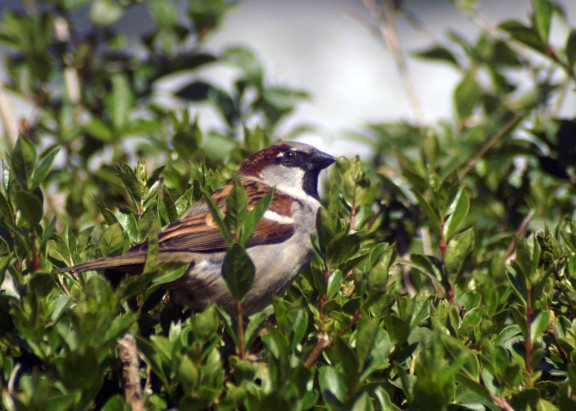
A male House Sparrow atop the pyracantha hedge

A male House Sparrow atop the pyracantha hedge

The first reference to a sparrow in Britain is by the Venerable Bede (?673-735) in his History of the EnglishChurch and People: “O King, the present life of men on earth is like the flight of a single sparrow through the hall where, in winter, you sit with your captains and ministers.”

Female House Sparrow with feather

Female House Sparrow with feather

on the menu

Sparrows have often been eaten and in some places still are. Sparrow pie was a common rural dish in Britain up to the time of the First World War, and even later: a sparrow pie containing 100 sparrows was served on 16 January 1967 at the Rose Inn at Peldon, near Colchester, perhaps for the remaining members of one of the “sparrow clubs” that were once common for trapping the birds.

On the Continent, where small songbirds are still a prized delicacy, sparrows are sometimes illegally imported in great numbers from China: a consignment of 1,263,000 plucked and frozen sparrows was confiscated by customs in Antwerp on 28 January 1997, and a consignment of nearly 2 million frozen tree sparrows was seized by customs in Rotterdam in November 1993, in transit for Italy.

endangered

In 2002 in the UK, the house sparrow was added to the red list for endangered species. In 2004 it was added to the Worldwide International Union for Conservation of Nature Red List. According to the RSPB we have lost 50 HOUSE SPARROWS EVERY HOUR FOR 46 YEARS!

The State of the UK’s Birds 2012 report charts the ups and downs of our bird populations over the last few decades. Although still abundant, the house sparrow has seen one of the greatest losses of any bird in the UK. From an estimated 30 million individual birds in 1966, the UK house sparrow population plummeted to 10 million in 2009, a loss of 20 million sparrows in 43 years.

Dr Mark Eaton is an RSPB scientist who worked on the report. Commenting on the figures, he said: “It is shocking to think that we’ve lost one in five of the individual birds that we had in the 1960s. That loss is equivalent to the whole human population of England and Wales.”

A number of reasons for the decline have been found, including predation by domestic cats, but first and foremost is the changes in farming practices, where more farms are using pesticides and herbicides and sowing seeds at different times of the year: adult birds eat grains and seeds, but they gather thousands of insects to feed their young.

cockney sparrows

The sparrow population in London has plummeted by 68 per cent in the past 15 years, mirroring severe declines in numbers of the bird across the UK’s cities. Research has indicated that changes to urban areas including increases in traffic, paving over gardens, removing trees and developing green spaces have led to a lack of seeds and insects which has left sparrows struggling to survive.
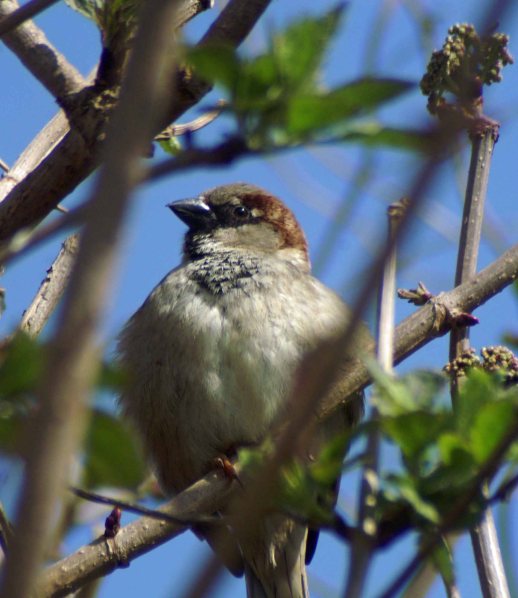
Territorial male, feathers puffed out to make himself look intimidating

Territorial male, feathers puffed out to make himself look intimidating

In the past the house sparrow’s likeness for crops resulted in farmers attempting to control their numbers. In the 18th century, sparrow clubs existed to destroy as many sparrows as possible and money was paid to do so until the late 19th century.

world citizen

The house sparrow’s problems have by no means been restricted to the UK. The Sparrow has followed man to most parts of the globe where they have adapted to a whole range of differing environments and habitats. Wherever they have found themselves they have quickly settled in acclimatised, found food and nesting sites. They are true world citizens, but have not always found acceptance or integration easy; they have often been the subjects of much prejudice and discrimination.

A certain traveler who knew many continents was asked what he found most remarkable of all.
He replied: the ubiquity of sparrows.
Adam Zagajewski, Another Beauty, 2002

In Europe, in the 1700s, local governments called for the extermination of house sparrows and other animals associated with agriculture. In parts of Russia, your taxes would be lowered in proportion to the number of sparrow heads you turned in.

In China, the Great Leader Mao Tse-Tung decided in 1958 to get rid of sparrows, calculating that each bird (the tree sparrow) consumed 4.5kg of grain each year and that for every million sparrows killed, there would be food for 60,000 people.

He mobilised the population to kill the birds, to great effect: at least 2.8 million sparrows were killed in Shantung province alone. But what Mao had not taken into account was the number of noxious insects the sparrows consumed when rearing their young. When the sparrows were killed, crop production increased, at least initially. But with time, something else happened. Pests of rice and other staple foods erupted in densities never seen before. The crops were mowed down and, partly as a consequence of starvation due to crop failure, 35 million Chinese people died. That is when a few scientists in China began to notice a paper published by a Chinese ornithologist before the sparrows were killed. The ornithologist had found that while adult tree sparrows mostly eat grains, their babies, like those of house sparrows, tend to be fed insects. In killing the sparrows, Mao and the Chinese had saved the crops from the sparrows, but appear to have left them to the insects. And so Mao, in 1960, ordered sparrows to be conserved (replacing them on the list of four pests with bedbugs).

It is sometimes only when a species is removed that we see clearly its value. When sparrows are rare, we often see their benefits; when they are common, we see their curse.

  •  Rob Dunn; Smithsonian.com, March 02, 2012,
Who's a pretty girl then

Who’s a pretty girl then

good news 

Conservationists have launched a scheme to turn parts of London’s parks into meadows in an attempt to reverse the decline of the once-common house sparrow. The £170,000 scheme is being funded by the SITA Trust which manages funding raised through taxes on rubbish sent to landfill.The conservation charity has teamed up with a number of partners across Greater London to run a three-year project to try and provide food-rich habitats for the birds. Tim Webb, spokesman for the RSPB, said the plan was to sow areas of more than 20 parks in the capital with wild grasses and flowers to provide seeds and attract insects.

Many chicks are dying in the nest of dehydration or starvation because there are not enough moisture-rich insects for them to eat.

In India, where the birds have also suffered a serious decline in numbers in recent years, there are campaigns to raise public awareness of the birds and their plight, and in 2010, the date of March 20th was nominated as “World Sparrow Day”, henceforth to be celebrated annually.

world sparrow day image

World Sparrow Day is a day designated to raise awareness of the House Sparrow and other common birds to urban environments, and of threats to their populations, observed on 20 March. It is an international initiative by the Nature Forever Society of India in collaboration with the Eco-Sys Action Foundation (France) and numerous other national and international organisations across the world.

The Nature Forever Society was started by Mohammed Dilawar, an Indian conservationist who started his work helping the House Sparrow in Nashik, and who was named one of the “Heroes of the Environment” for 2008 by Time for his efforts. The idea of marking a World Sparrow Day came up during an informal discussion at the Nature Forever Society’s office. The idea was to earmark a day for the House Sparrow to convey the message of conservation of the House Sparrow and other common birds and also mark a day of celebration to appreciate the beauty of the common biodiversity which is taken so much for granted. The first World Sparrow Day was celebrated in 2010 in different parts of the world. The day was celebrated by carrying out different various kinds of activities and events like art competitions, awareness campaigns, and sparrow processions as well as interactions with media.

World Sparrow Day also has a broader vision to provide a platform where people who are working on the conservation of the House Sparrow and other common birds can network, collaborate and exchange conservation ideas which will lead to better science and improved results. It aims to provide a meeting ground for people from different parts of the world to come together and form a force that can play an important role in advocacy and in spreading the awareness on the need of conserving common biodiversity or species of lower conservation status.

NEW DELHI, October 6, 2012

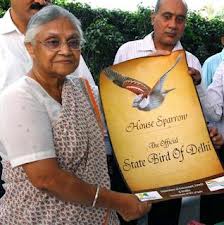
House Sparrow made state bird of Delhi

House Sparrow made state bird of Delhi

The humble house sparrow has become the State bird of Delhi with the issue of a notification to this effect, Chief Minister Sheila Dikshit announced o Friday.

Addressing school children at her residence during a function organised to celebrate Wildlife Week, Ms. Dikshit said the idea behind making the house sparrow the State bird was to protect it.

She said the number of house sparrows in the city had declined sharply due to rapid urbanisation.

“I can tell you that when sparrows are rare, we tend to like them, and when they are common, we tend to hate them. Our fondness is fickle and predictable and says far more about us than them. They are just sparrows. They are neither lovely nor terrible, but instead just birds  searching for sustenance and finding it again and again where we live.”

                                                            Rob Dunn
Snowdrops at Chirk Castle

Tags

, , , ,

I know it has been an age since I published my last post, but too many other things have needed my attention and something had to give. I have been keeping an eye on things though and taking comfort from the fact that while we fill our lives with complications, nature is much more straightforward and the seasons’ events have unfolded as they should, without fuss. It would be fair to say that any posts I might have made would have been very similar to those from last winter, so I’ve been thinking how I can make this year’s a bit different.

I’ve done a fair amount of travelling this winter, making the train journey from Colwyn Bay down to Leicester and back again several times. It is a long journey, taking about 4 hours each way to complete, but the route is interesting, and takes you through some wonderful scenery. I have become intrigued by some of the places the train stops at or passes through, so I thought I might try to visit some of them this coming year and find out a bit more about them and their surrounding area. I joined the National Trust last autumn too and would like to get as much as possible from my membership, so as there is a rich variety of Trust properties around this England/Wales border country, that should not be too difficult, providing I can find the time to make the trips. 

One of the station halts is at Chirk, which I knew to be famous for its castle, but there my knowledge ended. It has a nice little station that is dwarfed by and juxtaposed with an enormous wood-processing plant whose chimneys belch out great streams of  thick white steam, or is it smoke? Now to go off at a bit of a tangent, I was researching places where I might find a good display of Snowdrops and by a happy sort-of coincidence, it happens that there is such a thing in the gardens surrounding Chirk Castle, that is owned by the National Trust and is within reasonable driving distance of here so a visit there would tick off at least three of my boxes in a single day. The Snowdrops would be at their best in February, so that gave impetus to making the effort, which is what is needed sometimes, especially in the winter.

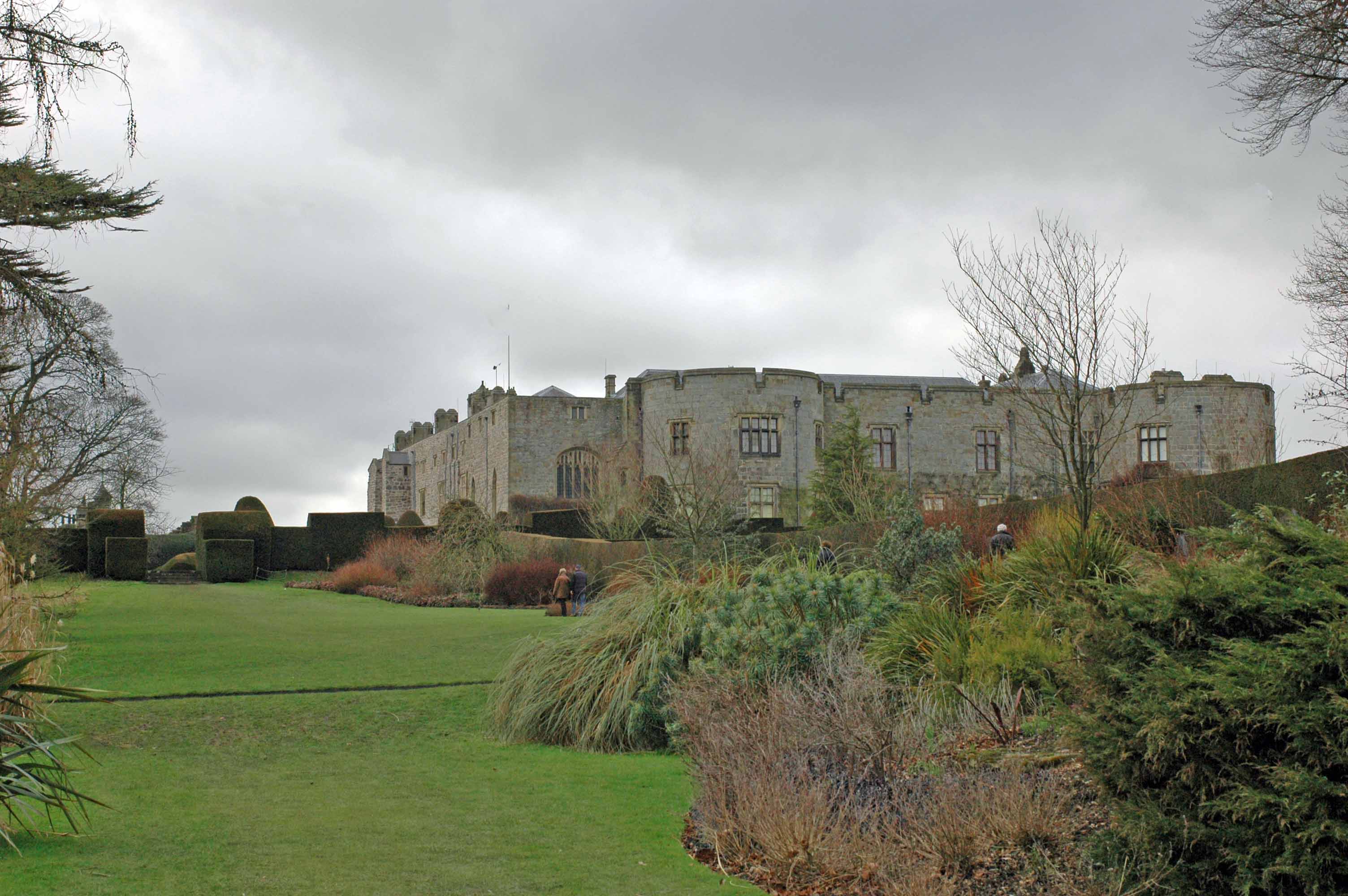
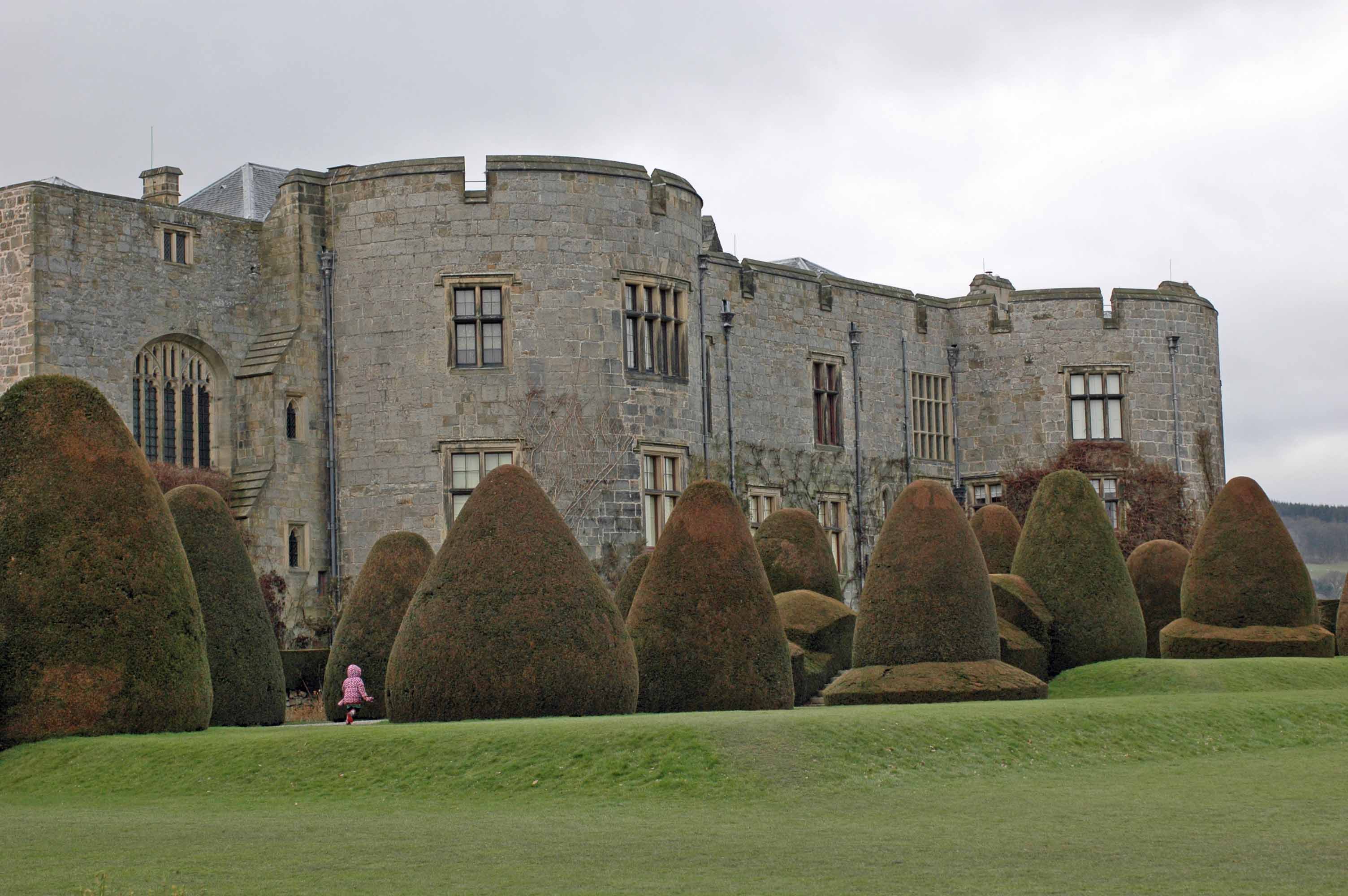
Chirk Castle from the gardens

Chirk Castle from the gardens

Completed in 1310, Chirk is the last Welsh castle from the reign of Edward I that’s still lived in today. Features from its 700 years include the medieval tower and dungeon, 17th-century Long Gallery, grand 18th-century state apartments, servants’ hall and historic laundry.

The gardens feature beautifully clipped yews

The gardens feature beautifully clipped yews

The award-winning gardens contain clipped yews, herbaceous borders, shrub and rock gardens. A terrace with stunning views looks out over the Cheshire and Salop plains.

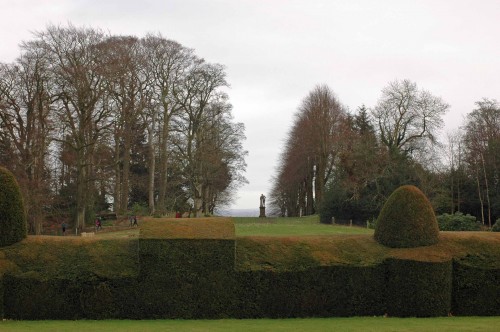
Part of the extensive clipped yew hedge with woodland beyond framing the breathtaking views

Part of the extensive clipped yew hedge with woodland beyond framing the breathtaking views

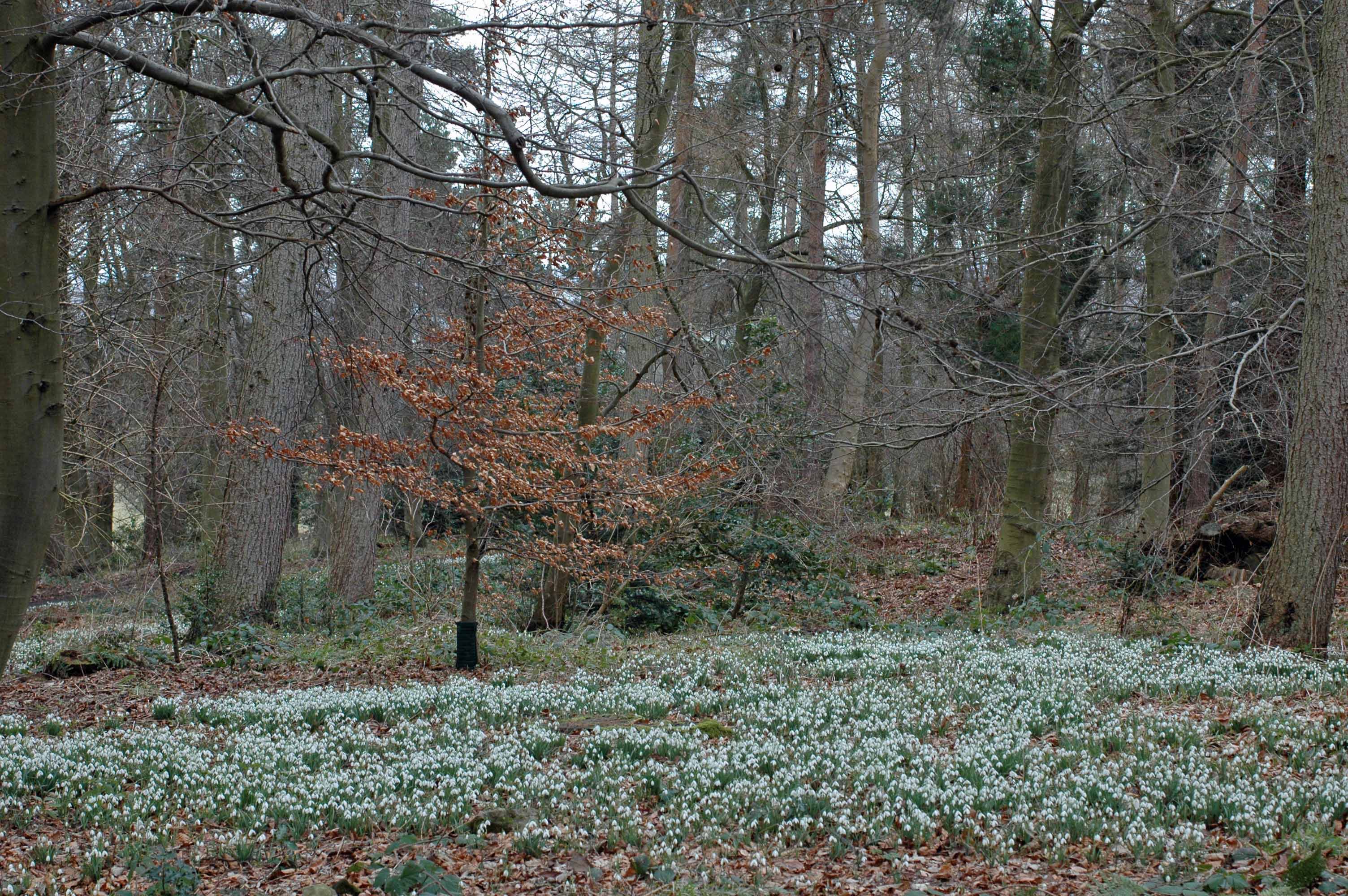
We had a look around the parts of the castle that were open today, had a pleasant lunch, de rigeur when visiting a National Trust property with one’s other half who would prefer to be at home watching the football on a Saturday afternoon, then headed for the gardens. The Snowdrops were beautiful, well worth the effort to go to see.

A carpet of Snowdrops beneath the trees

A carpet of Snowdrops beneath the trees

A beautiful sight

A  closer view of a beautiful sight

Reflections

Snowdrop reflections

Sheltering amongst tree roots

Sheltering amongst tree roots

Snowdrop 

Snowdrops are iconic flowers that traditionally herald the ending of winter and are surely too well known to need a description.

Scientific name: Galanthus nivalis L.

Conservation status: Rated as Near Threatened (NT) according to IUCN Red List criteria.

Origin of botanical name: From Greek, gala, milk and anthos, a flower; nivalis, snowy

Other common names: Candlemas bells, Mary’s taper, Snow-piercer, February fairmaids, Dingle-dangle

Snowdrop-Galanthus nivalis

Snowdrop-Galanthus nivalis

Flowering : February to March

Habitat: On the European continent Snowdrops grow in wild habitats, in damp woods and meadows up to 1,600 metres; the leaf tips are specially hardened for breaking through frozen ground. In Britain, Snowdrops are possibly both native and naturalised and were not recorded as growing wild here until the 1770s. It is very likely that many of our colonies of wild Snowdrops originated with ecclesiastical plantings. The pure white blooms of the Snowdrop have long been accepted by the Catholic Church as a symbol of Candlemas, celebrated on February 2nd, the Feast of the Purification of the Virgin Mary, and their association with monastic sites is apparent right across Britain.

Folklore

Although the flowers are sanctified for Candlemas, the snowdrop is one of the many white blossoms that are still regarded as being unlucky if brought into the house. In parts of Northumberland, Westmorland and Hampshire, single flowers particularly are still viewed as ‘death-tokens’. This may be as one Victorian explanation was that the flower “looked for all the world like a corpse in its shroud”. According to the ‘language of the flowers’, the snowdrop was an emblem for virginity, and a few blooms enclosed in an envelope were often used to warn off over-ardent wooers. In a similar vein, in Yorkshire there was an old custom, again celebrated on Candlemas, for village maidens to gather bunches of snowdrops and wear them as symbols of purity. (extracts from Flora Britannica, Richard Mabey)

Key uses

Ornamental. Medicinal. Insecticide.

The alkaloid Galantamine, which was initially isolated from snowdrops, has been used in treatments for Alzheimer’s disease, neuritis and neuralgia. In parts of eastern Europe, rubbing snowdrops on the forehead was a folk remedy used for pain relief.

Known hazards: Snowdrops and their bulbs are poisonous to humans and can cause nausea, diarrhoea and vomiting if eaten in large quantities.


Willsbridge Mill, Bristol

Tags

, , , , , , , , ,

I am currently staying in Bristol with my son and family, and as they always do when I am here, they make great efforts to take me out to places they know that both I and the children will enjoy.

Avon Wildlife Trust takes responsibility for 35 reserves within the Avon area, with a good few clustered closely around the city.

On Sunday we drove out to Willsbridge Mill, a Local Nature Reserve, which the website describes as  ” Set in a peaceful valley on the edge of Bristol, Willsbridge Mill is an impressively restored 19th Century Corn Mill and Long Barn, located within a stunning 22 acre nature reserve.” It continues ” This green oasis, which was once a bustling industrial site, now supports an amazing array of wildlife habitats – woodland, ponds, meadows, scrub, quarries and a demonstration wildlife garden, running along the fast – flowing Siston Brook. The reserve is home to kingfishers, dippers, owls, foxes, badgers, and bats.”

Dragonfly plaque

After several days of rain and general dampness, the ground in the wildlife garden was soggy and its plants bedraggled, there were a few pond skaters skimming over the surfaces of the ponds and a robin piping a few phrases of song, but apart from that there was little movement.

One of the trails around the reserve is the Sculpture Trail, which features ” striking environmental sculptures made from local materials”. There is also a sequence of attractive brass leaf-shaped plaques bearing different designs, which today were the only indicators of the wildlife that frequents the reserve in spring and summer.

Leaves are beginning to change colour and fall

The Ash tree – Fraxinus excelsior, bears its large single-winged seeds – also commonly known as keys, in large bunches

We followed the pathway to Hawthorns are laden with good crops of haws, but there were no signs of these particular ones being eaten yet.

Haws – the fruits of the Hawthorn

On the wooded side of the pathway, on a bramble leaf in a patch of sunshine a Dark Bush Cricket sat having a meal.

Dark Bush Cricket – Pholidoptera griseoaptera

The Dark Bush cricket is a common animal across the southern half of England, occurring in gardens, hedgerows and on woodland edges, where they can often be seen in quite large numbers sunbathing on bramble patches. Males are very aggressive, fiercely defending their territories against intruders. Females lay their eggs in late summer in rotting wood or bark crevices; the young crickets emerge 18 months later, so odd-year and even-year dark bush-crickets never meet.

Bramble festooned with gauzy spiders’ webs – a classic feature of damp autumn days

The pathway through Catscliffe Woods

Common Feather- moss-Kindbergia praelonga growing on a tree trunk

The stream that flows through the woodland is Siston Brook; it flows fast here and its energy once powered Willsbridge Mill’s water wheel. The stream rises five miles away at St. Anne’s Well, just south of the village of Siston and is a tributary of the River Avon, joining it at Londonderry Wharf, near Keynsham.

A fallen tree spanning the brook

A tree has fallen on one side of the stream bank arcing gracefully over the water to form a natural bridge. It has continued to grow, pushing out branches that now grow vertically from the original trunk; those that touch the ground have probably put down roots and appear to be growing as independent trees.

Steps lead temptingly to a higher woodland trail