Alien invaders in the Ally Pally Park

Tags

, , , , , , ,

I’ve recently spent two weeks in London with my youngest daughter, awaiting the arrival of her first baby. She was a little bit late, as babies often are, so to alleviate everyone’s tension a little, my son took over ‘ entertaining mother duties’ for a couple of days. He lives in North London near to the lovely  Alexandra Palace, and he took me there for some much-appreciated exercise and a glimpse of some natural scenery of the surrounding Alexandra Park.

On the way there we walked by a children’s playground and I could not pass it by without acknowledging the large recumbent and clearly friendly dragon that forms an imaginative raised play area.

Play area built on the back of a dragon
Play area built on the back of a dragon

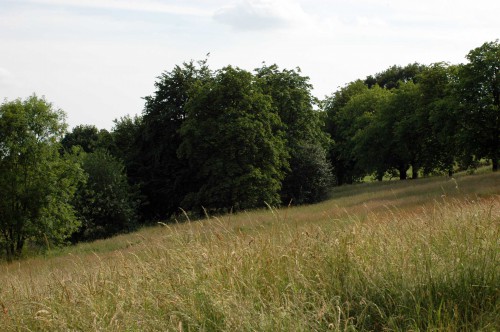
Long grass on the hillside of Alexandra Palace Park

Long grass on the hillside of Alexandra Park

I was pleasantly surprised by the amount of space left in a natural state.
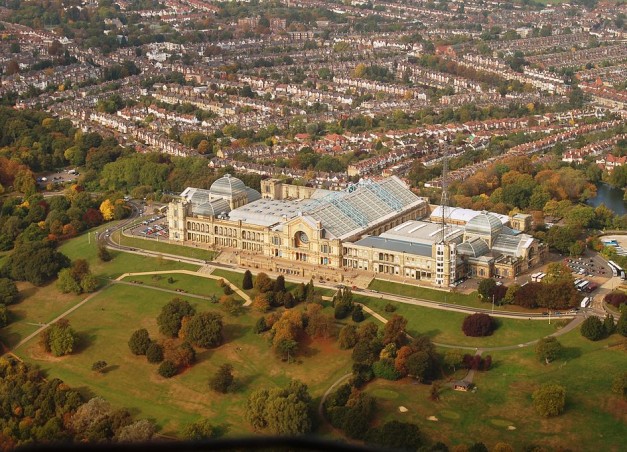
Aleandra Palace & surrounding parkland

Alexandra Palace & some of its surrounding parkland (photo from official website)

Alexandra Palace is set atop a steep hill located between Muswell Hill and Wood Green, in the north of the city. Alexandra Park was opened by the renowned landscape architect Alexander McKenzie as a pioneering Victorian leisure Park and centre for education and entertainment.Originally opened in 1873 but rebuilt in 1875 following a destructive fire, it was designed to serve as a public centre of recreation, education and entertainment and as north London’s counterpart to The Crystal Palace in south London. It was always intended as “The People’s Palace” and later nicknamed “Ally Pally” (supposedly by Gracie Fields)

 Managed by the Alexandra Park and Palace Charitable Trust, the Park’s 196 acres of Grade II listed English Heritage parkland is maintained by a specialist team dedicated to ensuring the beautiful landscape is well preserved and remains very much at the heart of the local community.

Dog Rose-

Dog Rose- Rosa canina

I stopped to photograph elderflower blossom and spotted the first of several ladybird larvae I was to see on and around the elder tree.
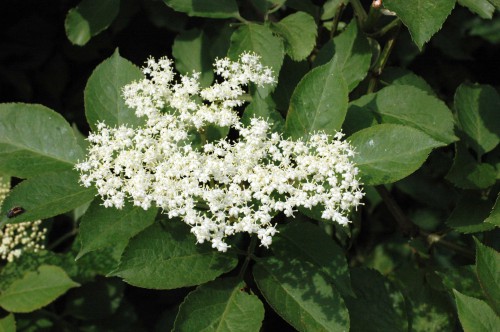
Elderflower blossom

Elderflower blossom & first glimpse of a ladybird larva

The larvae were quite sizeable, so would be classed as ‘juvenile’, in a late instar form. I didn’t recognise which species of ladybird they belonged to, although I did think it unusual to see so many and that they were out in the open.

Ladybird larva on an elder leaf

A ladybird larva has four instars, i.e. it sheds its skin four times as it grows. Early instar larvae are very small and difficult to identify, but third and fourth instar larvae, particularly of the larger ladybird species are more recognisable.

The larva

The larva close-up

Then I saw a ladybird actually in the process of emerging into its adult form and it clicked that these were a new generation of the invading alien Harlequin ladybird – Harmonia axyridis. 

An emerging Harlequin ladybird

An emerging Harlequin ladybird

Harlequin ladybirdHarmonia axyridis

Common namesAsian lady beetle: Halloween lady beetle; Multicolored Asian lady beetle

Harlequin ladybirds, native to Asia,  were introduced to north America and mainland Europe as a biological control for aphids, but their voracious apetites and the subsequent decline of native ladybird species has focused attention on them as a subject for control. Large numbers hibernate indoors and in wall cavities during cool winter weather, which doesn’t help their cause.

A recent article in the Guardian newspaper names the species as the world’s most invasive ladybird and states that “Harlequin ladybirds have been declared the UK’s fastest invading species after reaching almost every corner of the country in just a decade. The cannibalistic ladybirds were first realised to have reached the UK in 2004 when they were seen in Essex and have since spread as far afield as the tip of Cornwall and the Shetland Islands, making it the fastest alien invasion of the UK on record.

Dr Helen Roy, of the Centre for Ecology and Hydrology, said a decade of sightings recorded by the public as part of the UK Ladybird Survey since 2005 have revealed just how far and fast the harlequin has spread… adding that it is now consolidating its presence in the UK.
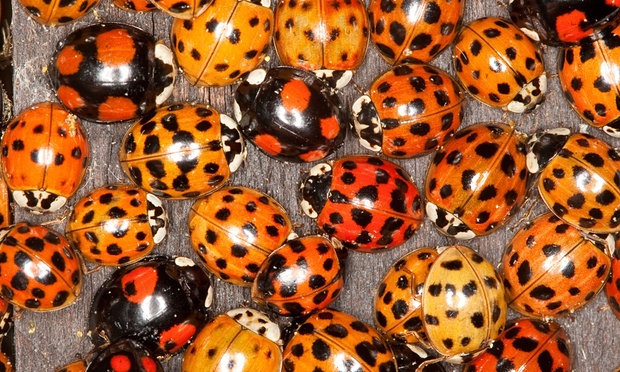
Harlequin ladybirds (image from the Guardian)

Harlequin ladybirds are variable in their appearance (image from the Guardian)

The species is believed to be responsible for the decline of at least seven native ladybirds, including the popular two-spot, which when last assessed in 2012 had slumped 44%. Dr Roy said that there has been no sign of a recovery among two-spots.

On a brighter note, it may be that Harlequins have some benefits as they prey on a variety of smaller insects, especially aphids which can damage crops and garden flowers, but the extent to which they protect plants is undetermined. There is also evidence to suggest that native insects may now have adapted to prey on the Harlequins, helping to keep numbers in check.

The invasion of the Harlequin ladybird (Harmonia axyridis) threatens our native populations. If you want to know more about this species in particular, or want to record sightings, please have a look at the Harlequin Ladybird Survey website.

Moving on I found more beetles on a hogweed flowerhead, the large one is a Longhorn beetle.
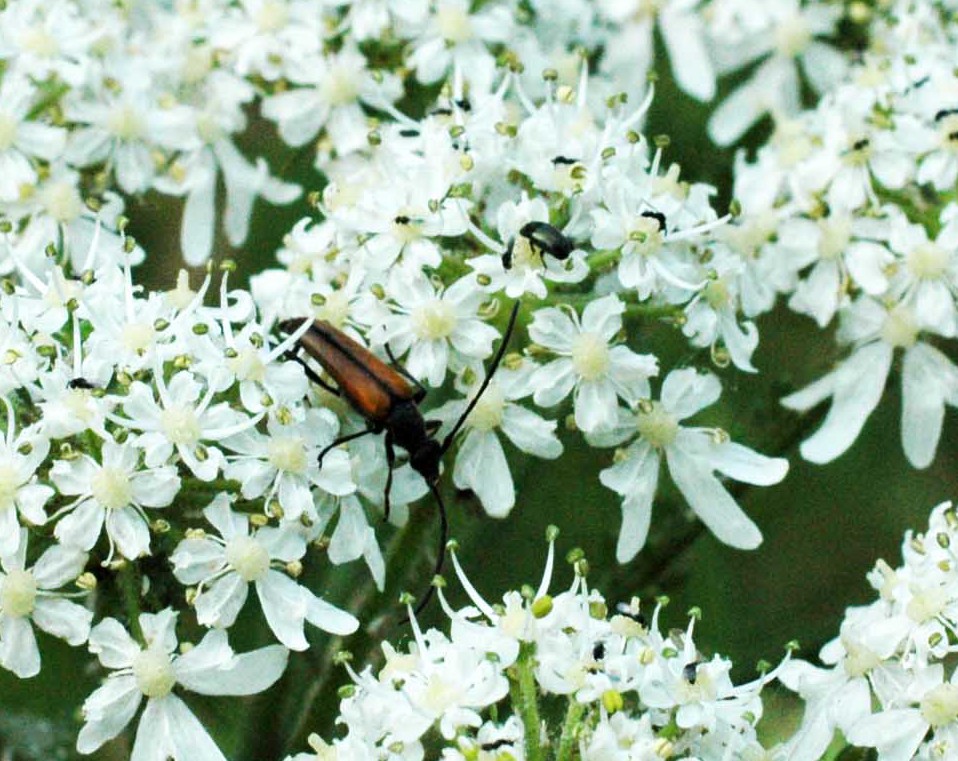
Longhorn beetle-Stenurella melanura - Stenurella melanura

Longhorn beetle-Stenurella melanura – Stenurella melanura

We walked along an avenue lined with enormous London Plane trees and stopped to look at some of  the Fallow Deer in the enclosure. Alexander Mackenzie included a small deer enclosure when he designed the original layout of the park. Fallow deer were reintroduced to Alexandra Park by the GLC and the small herd here today are their direct descendents.
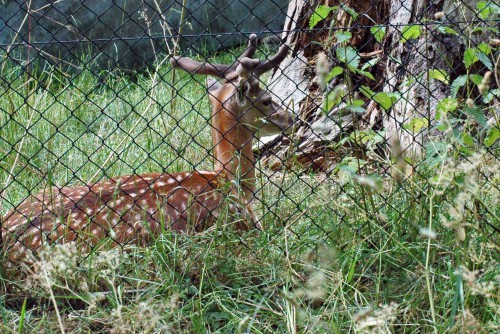
Roe deer male with new antlers still covered with velvet

Fallow deer male with new antlers still covered with velvet

We strolled around the boating lake, eating ice cream and watching mallards, several of which were females with varying-sized ducklings, coots, tufted ducks and canada geese swimming around. At the far end of the lake a flock of opportunistic pigeons and a couple of grey squirrels were feasting on food probably put out for the ducks.

We hadn’t gone to see the Palace itself, but I couldn’t not mention that of course this is where the world’s first television broadcast was transmitted from.
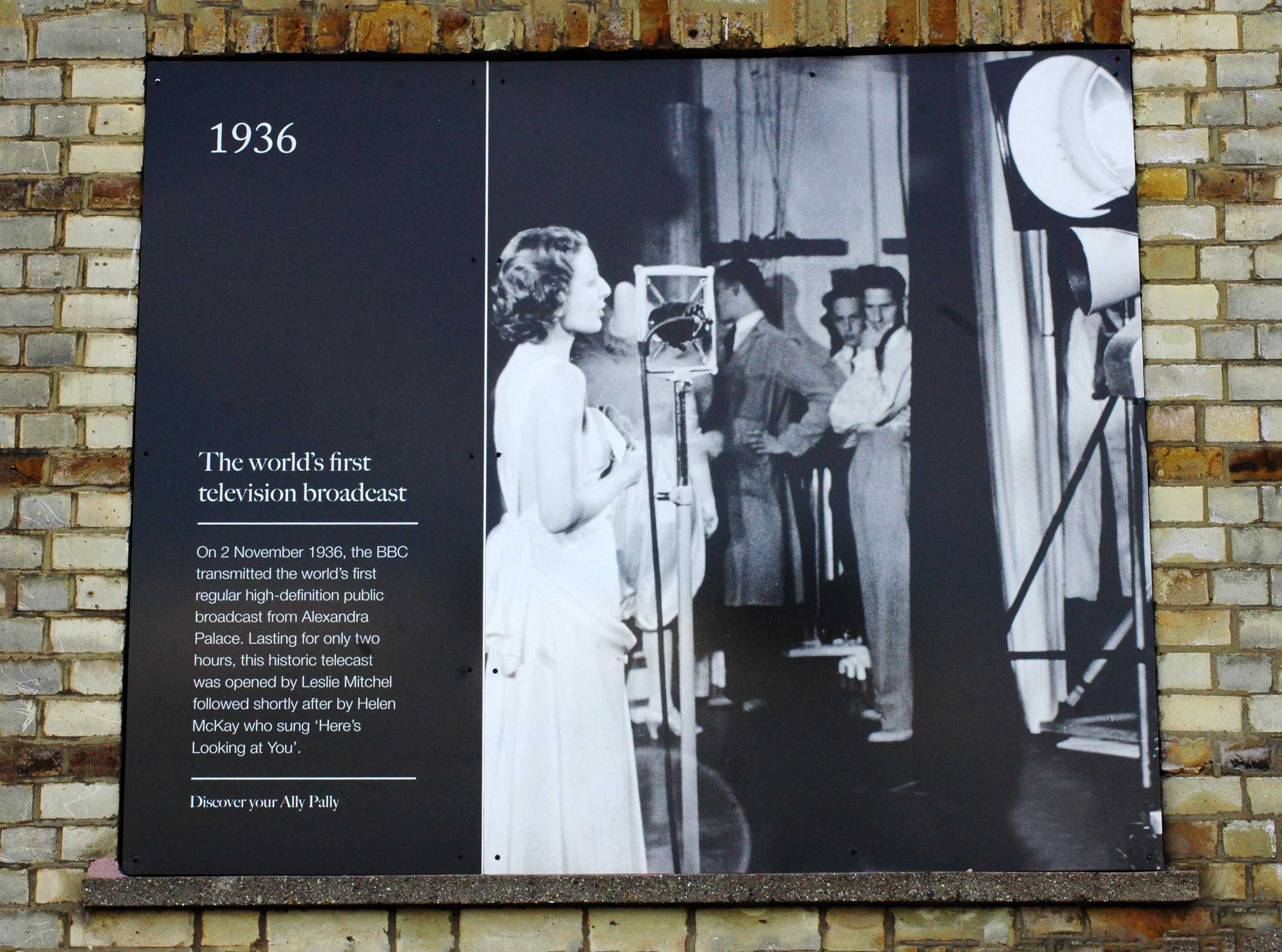
Alexandra Palace is where the first BBC broadcast was made

The world’s first television broadcast was famously made from Alexandra Palace 

I loved this round stained glass window too, it must be even more special viewed from inside the building with the light shining through it.

The jewel-like stained glass window

The jewel-like stained glass window

We had come to the top of the hill for the views – from the terraces of the Palace there are spectacular panoramic views of London’s skyline.

View to the London skyline - click to enlarge

View to the London skyline

The breathtaking views stretch from Canary Wharf to St Paul’s Cathedral and the Shard. The view extends as far as Crystal Palace, with its transmitter being visible on the horizon. (Click on images to enlarge them)

View to London city skyline - click to enlarge

View to London city skyline – I think the large red brick building just left of centre is HM Prison Holloway (sometimes known as Holloway Castle)

The Friends of Alexandra Park organise various nature-based activities that have included a Fungus Foray, Bat Walk, Bird Walk, Tree Walks, Insect Hunt and a Moth Evening.

PS – Mother and baby granddaughter doing well!
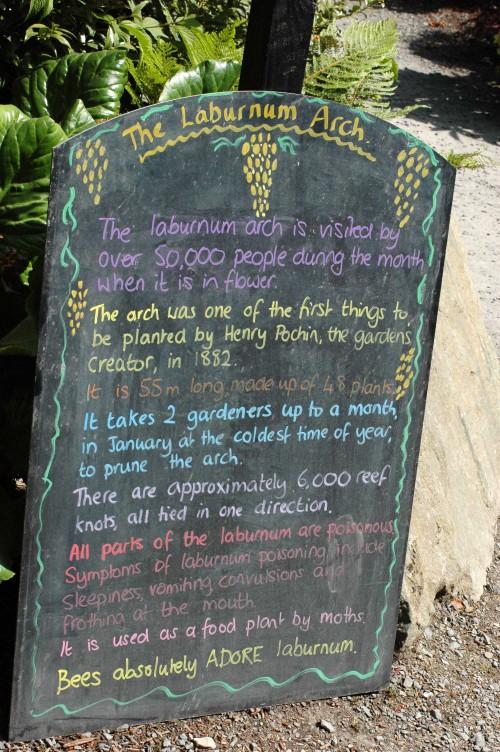
 

Through the Laburnum Arch

Tags

, , , , , ,

Bodnant Gardens is rightly famed for its laburnum arch which during its peak flowering time is a truly glorious sight. Earlier in the year a friend and I visited whilst it was being pruned back, a mammoth task conscientiously performed each year, so we were very keen to see it again when it came into bloom.

information about the laburnam aarch

information about the laburnum arch

How it looked back in mid-January this year:

Pruning the laburnam arch

Pruning the laburnum arch

I had been a little concerned that we may have missed the arch at its best, but fortunately the cooler than usual Spring weather had delayed the event and it turned out our timing was perfect. The arch was breathtaking; honestly, words and even photographs cannot come close to doing it rightful justice.

Walking through sunshine

Walking through sunshine

A rare moment with no people in view

A rare moment with no people in view

There was hardly a space between the glorious panicles of blossoms

There was hardly a space between the glorious racemes of blossoms

Laburnum, or Common Laburnum –  Laburnum anagyroides  is a species of small tree in the subfamily Faboideae of the pea family Fabaceae. The trees are native to the mountains of southern Europe from France to the Balkan Peninsula. The trees are deciduous. The leaves are trifoliate, somewhat like a clover; the showy flowers are yellow, fragrant and held in pendulous racemes 10–30 cm (4–12 in) long in spring, which makes them very popular garden trees. InL. anagyroides, the racemes are 10–20 cm (4–8 in) long, with densely packed flowers. All parts of the plant are poisonous, and can be lethal if consumed in excess.

Flowers & leaves

Flowers & leaves

Having fulfilled the wish to see the magnificent, but artfully manipulated arch, I was keen to explore the wilder side of the rest of the grounds.

The walkway from the arch

The walkway leading down from the arch

150610-Bodnant 4

Alliums

To the wilder side of the garden

Pathway to the wilder side of the garden

The wildflower meadow

The wildflower meadow

Then along a pathway that is ‘semi-wildly’ planted with long grass and flowering plants that I think are species of Asphodel.

Pathway planted  with asphodels

Pathway planted with asphodels

From their appearance I think these are a species of Asphodel

From their appearance I think these are a species of Asphodel

Along a newly-opened woodland path alongside water

Along a newly-opened woodland path alongside a stream

Being a warm, sunny day our walk was much about light, dappled shade, water both running and still that held deep reflections of the lush foliage above it.

Beneath white blossomed rhododendron

Beneath a canopy of white blossomed rhododendron

Cool green

Reflected cool greens

Red

Red-flowered rhododendrons glow amongst the cool greenery

oo

The Skating Pond and its environs, appropriately named ‘Far End’ are a newly restored area of the Gardens and only recently opened to the public.  The area was originally named the ‘Wild Garden’ and is believed to have been designed to give a naturalistic feel, recreating what was seen and experienced in nature. Sightings of kingfishers, herons, otters and woodpeckers are all possible here.

Dozens of brilliant blue damselflies flitted around the edge of the pond, pausing to rest on the foliage that lines its edges.

Damsel fly

Common Blue Damselfly on a hosta leaf

And I have never seen as many tadpoles as there were swimming in ‘schools’ around the lily pads.

150610-Bodnant 48

A small number of the hundreds of tadpoles in the pond

across the Skating Pond

across the Skating Pond

Yellow Flag Iris

Yellow Flag Iris

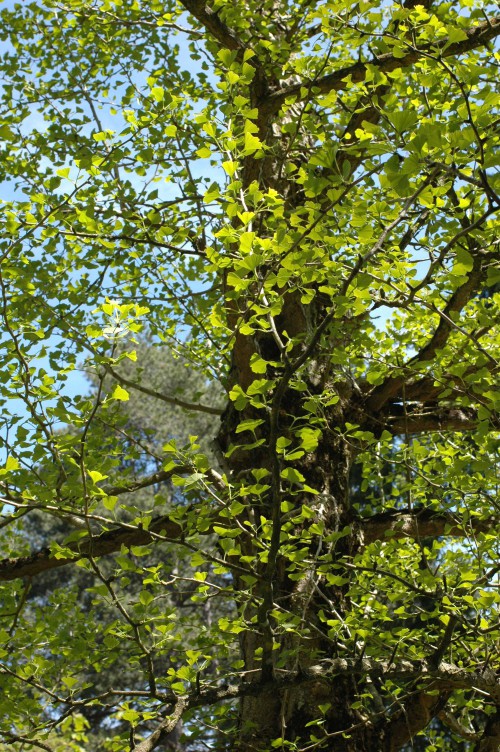
There is a lovely gingko biloba, one of the most ancient of tree species, growing in this part of the garden

A Ginko Biloba tree

A Gingko Biloba tree- also known as Maidenhair tree

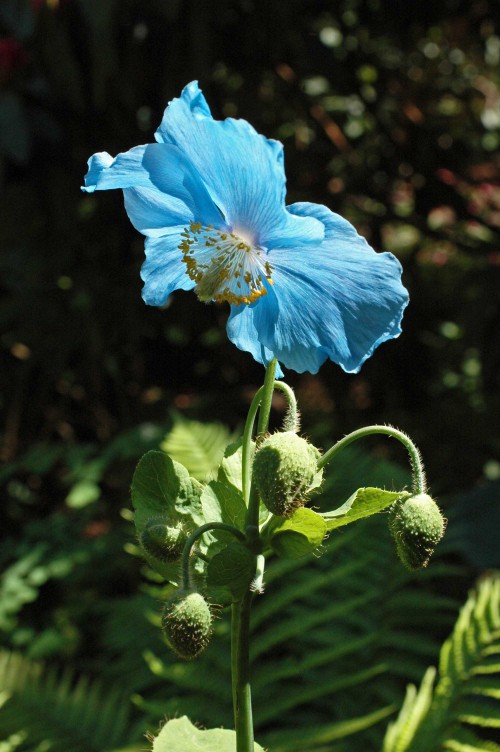
and beneath the tree beautiful blue Meconopsis, or Himalayan Poppy

Meconopsis-Himalayan Poppy

Meconopsis sp – Himalayan Poppy

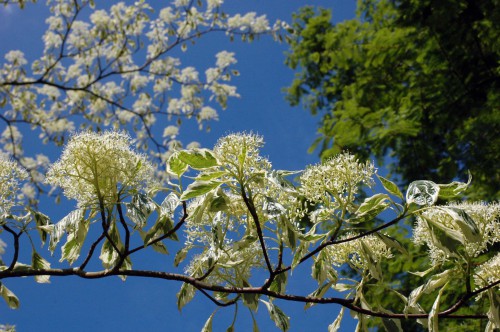
Blossom of a gorgeous   Wedding Cake Tree-Cornus controversa 'Variegata'

Blossom of a gorgeous Wedding Cake Tree-Cornus controversa ‘Variegata’

A buttecup meadow

A buttecup meadow

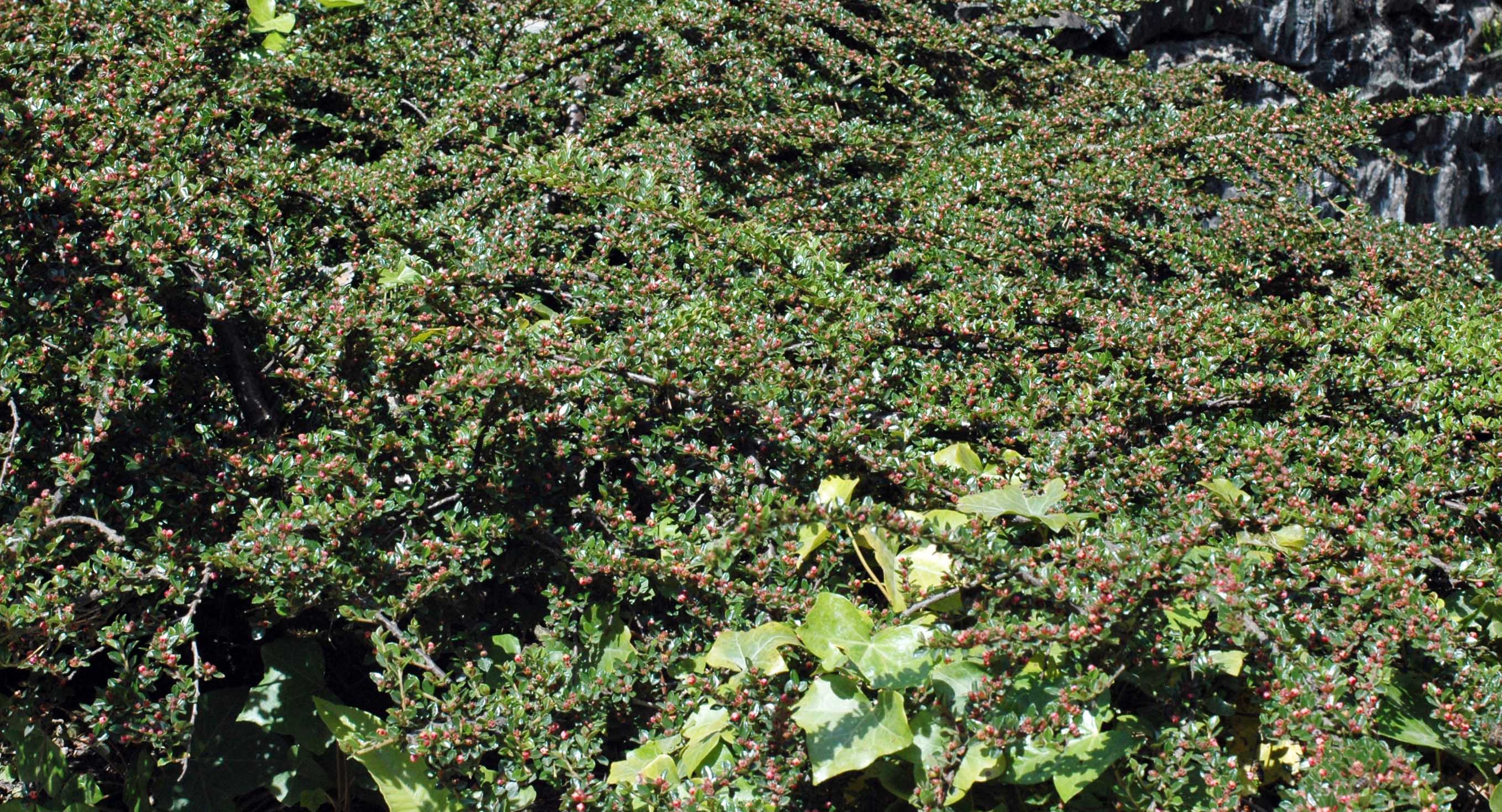
We stopped for refreshment at the café in the Dell, sitting in front of this unremarkable cotoneaster bush which we soon noticed was alive with dozens of nectaring honey bees.

The place to bee

The place to bee

Beneath tall trees

Beneath tall trees

Pink-tinges white rhododendron

Pink-tinged white rhododendron

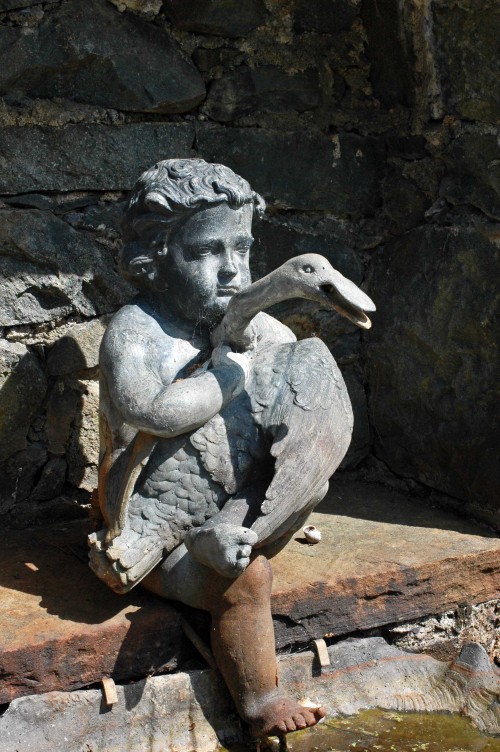
A determined boy holding onto an objecting swan

A determined small boy holding onto an objecting swan

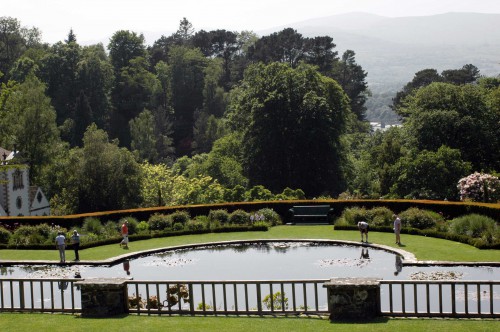
View from an upper terrace garden onto a lily pond

View from an upper terrace garden onto a lily pond

water lilies in the formal pools of the terrace gardens

water lilies in the formal pools of the terrace gardens

On the lily pads that adorn the formal pools of the Terrace gardends were more damsel flies, the males gripping onto their captive females preparing to take off for the task of the depositing of eggs. The females of this species occur in two colour forms; some are blue like the males, others, as here are green.

Coupled damselflies preparing for take-off

Coupled damselflies preparing for take-off

Between the lily pads we  were lucky to spot two newts swimming near the surface. I didn’t have my long lens with me so this is the closest I could get leaning over the edge of the pool, but I think it’s a Common or Smooth Newt.

Newt in a lily pond

Newt in a lily pond

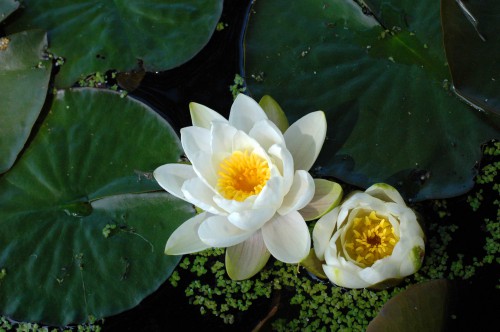
Water Lilies

Water Lilies

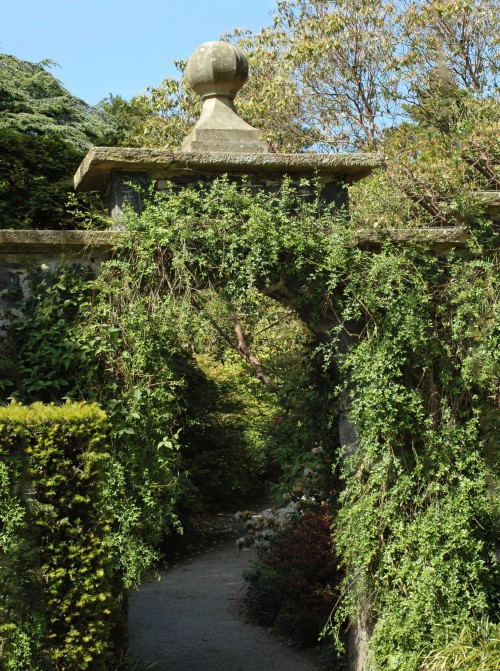
An intriguing archway in a  stone wall

An intriguing archway in a stone wall tempting further exploration

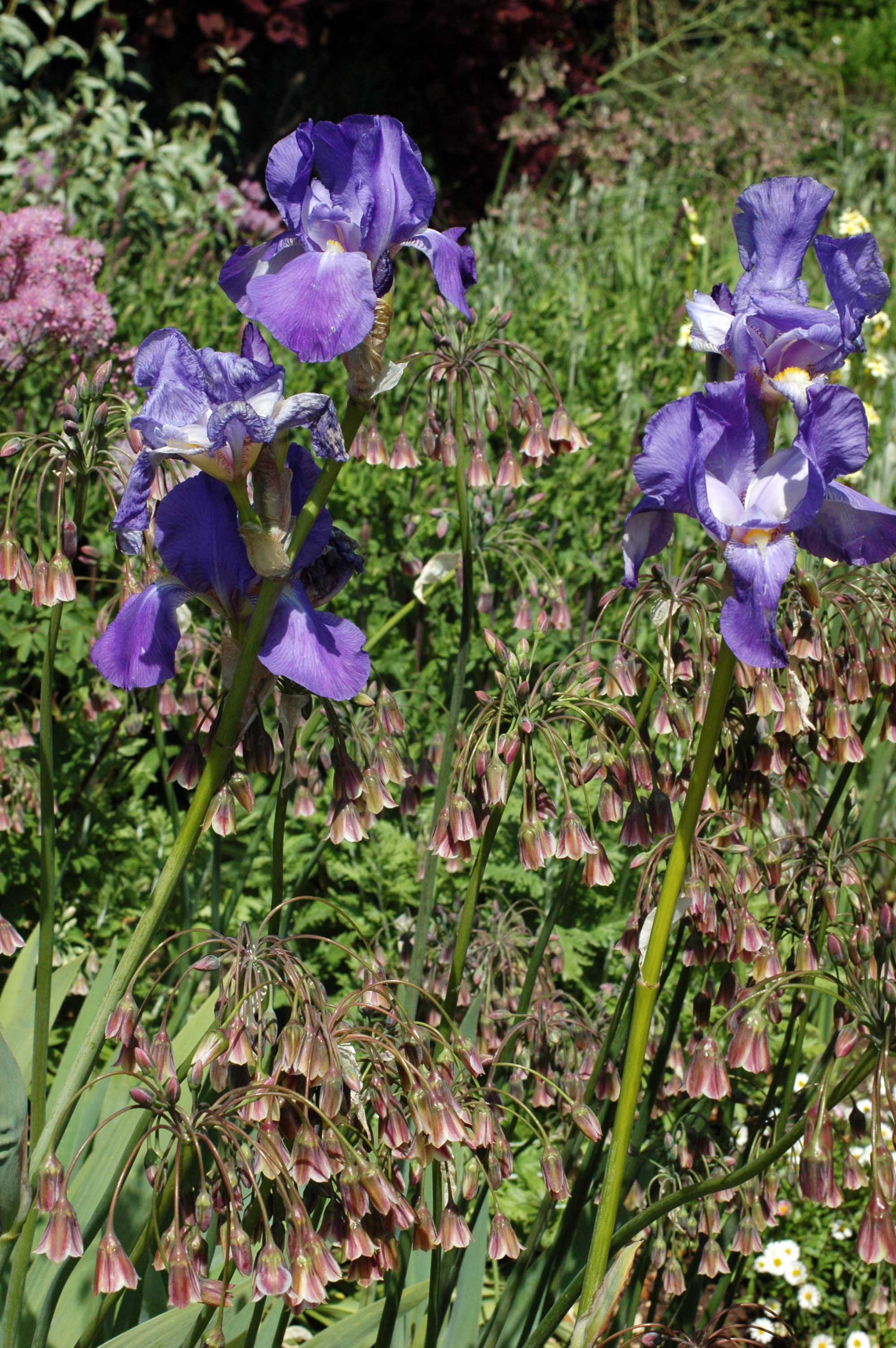
Blue flag irises

Blue flag irises amid the curious flowers of Nectaroscordum siculum

I loved the colour and form combination of the blue flag irises and unusual ornamental onion plants that had umbrellas of hanging, bell-shaped flowers. A nearby plant label named them as Nectaroscordum siculum  and I think they may commonly known as Sicilian honey garlic.

We concluded this tour of my favourite garden savouring the aromas of some of the newly-opening blooms in the rose garden which will be glorious in a few weeks time….. there’s always something here to tempt you back.

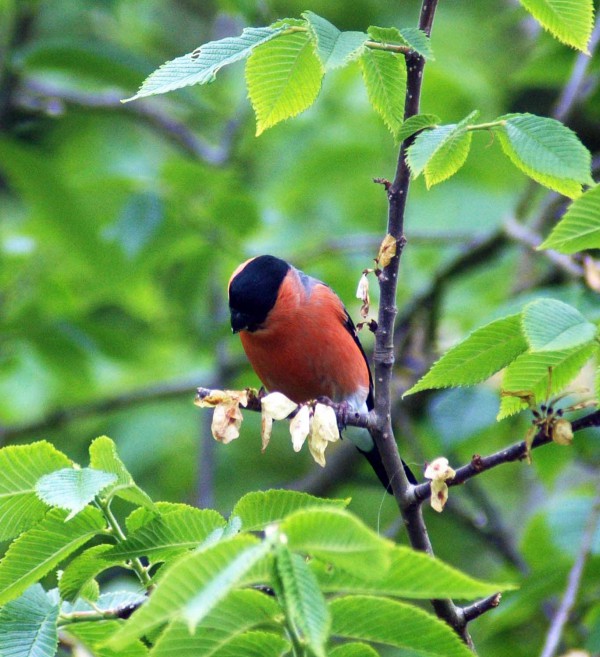
Beauty and the Bullfinch

Tags

, , , ,

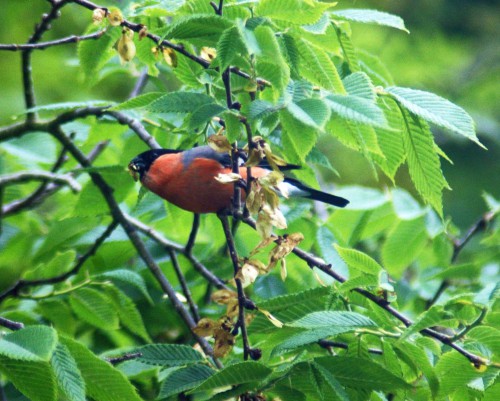
The Bullfinch, Common Bullfinch or Eurasian Bullfinch (Pyrrhula pyrrhula) is a small passerine bird in the finch family Fringillidae that breeds across Europe and temperate Asia and is classified as a Woodland Bird. Pyrrhula pyrrhula Eurasian Bullfinch -48 -1 ↓ -16 -2 ↓ sd

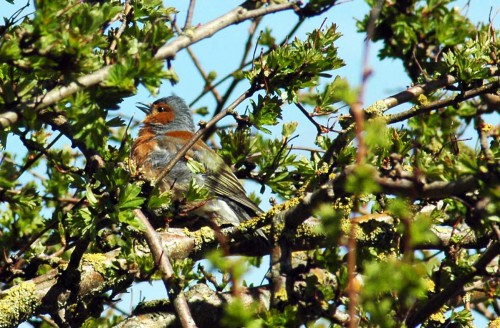
The male Bullfinch is surely one of our most strikingly beautiful and exotic-looking birds and a good sighting of one is always a treat, even if that does involve a certain amount of sacrifice of buds borne by your favourite fruit-tree. In the wild they tend to be more elusive, as despite their showy appearance the Bullfinch is a quiet, secretive character that usually spends its time among the branches and dense undergrowth of woodlands; often the only sight of one will have been a flash of a white rump retreating back into cover. Bullfinches are mainly sedentary or short-distance migratory birds and are relatively non-territorial, more likely to be seen in pairs or small family groups; they rarely flock as do other finches such as  Goldfinches and Chaffinches.

I’ve had some wonderful sightings of Bullfinches this year and I haven’t had to work for them at all as they have been from my kitchen window and courtesy the tree directly in front of that window. A female appeared first, back in February and I included her in a blog at the time. I had a couple of glimpses of her subsequently and hoped she had a mate somewhere close by.

3/2/15-Bullfinch female

3/2/15-Bullfinch female

My first proper sighting of a male was much later on in May when he visited to dine on the seeds of the tree directly in front of the window.

13/5/15-Male Bullfinch

13/5/15-Male Bullfinch

Based on that sighting and the species habit of not travelling far to find food,  I hoped that he was paired with the earlier female and that they were nesting  somewhere nearby. A couple of weeks later I saw him again and was able to watch him gorging on the tree seeds for a good few minutes; maybe the seeds were riper and more palatable.

Bullfinch male

25/5/15-Bullfinch male back for more seeds

DESCRIPTION

The Bullfinch most likely takes its common name from its shape, as they are plump-to-heavily-built and somewhat ‘bull-necked’. Both sexes have a stout grey-black bill, black wings, nape, crown and chin, and a white rump, under-tail coverts and wing-bar which are striking in flight. The tail is slightly forked and the legs are brown.

The Bullfinch was here to eat

The Bullfinch has a beak perfectly adapted to remove and eat seeds

The adult male has a slate blue-grey back and a glorious deep rose-pink breast, belly and cheeks. The female has a brown back and  pink-tinged grey-buff underparts. The juveniles are similar to the adult female, but do not have black caps.

The female Bullfinch has a pink-buff coloured breast

The female Bullfinch has pink tinged grey-buff coloured breast and underparts


VOICE

The song of this unobtrusive bird contains fluted whistles that is often described as sad or mournful. In Victorian times Bullfinches were a desired captive bird because of their beautiful plumage and call. It was believed that the caged bird could be trained to mimic music and it became a popular pastime to play a special flute to the bird.

HABITAT & BREEDING

Bullfinches usually nest in shrubs or bushes, such as blackthorn and hawthorn, in woodland, orchards, agricultural farmland or large gardens. The nest is a flimsy, loose structure of twigs and moss lined with fine roots and hair, which is built by the female. She lays and incubates eggs that are smooth, glossy and light blue with purplish markings at one end. The eggs are about 20 mm by 15 mm. Both parents feed the young after they have hatched.

DIET

In the late autumn Bullfinches range a little more freely foraging for food and feed largely on the seeds of herbaceous plants, but as winter sets in their attention turns to tree seeds, particularly those of the ash. In the spring tree buds, including hawthorn, blackthorn and sallow, as well as the buds of fruit trees, become the birds’ staple diet and it is this aspect of their lifestyle that in the past brought them into serious conflict with fruit farmers: a single bullfinch can easily remove 30 or more buds in a minute.

Not noted for its agility, the Bullfinch managed to reach and eat rather a lot

Not noted for its agility, the Bullfinch managed to reach and eat rather a lot

STATUS & CONSERVATION

In the UK the Bullfinch is mainly a year-round resident, but many northern (Scandinavian) birds migrate further south in the winter when our British population numbers may be temporarily swelled.

Bullfinch numbers increased enormously in the 1950s which brought about a serious problem for Brtain’s fruit-growing industry. The birds’ dietary preference put them into conflict with commercial growers and thousands were killed each year. Although trapping and culling reduced the damage the fact that catches continued year after year showed that it had no sustained effect on bullfinch numbers. But then gradually, from the mid 1970s, bullfinches became scarcer again and catches on most farms steadily declined.

A good view of the birds black cap and bill

A good view of the male’s black cap and bill

Subsequently, the Bullfinch was a Red List species for many years as their breeding population had declined by more than half. This was attributed to a reduction in quantity and quality of woodland margins and hedgerows and increased grazing by deer. However, their numbers have recovered once more (and continue to do so) and they are currently classified in the UK as an Amber List species under the Birds of Conservation Concern review.

ETYMOLOGY

There are several theories as to why the Bullfinch is so called. Most favour the bird’s shape as the key, but there is also the possibility it may once have been a ‘bud-finch’ referring to its Spring feeding habits and to the time of year when the birds are their most visible.

According to Mark Cocker & Richard Mabey 2005 (Birds Britannica):

“W. B. Lockwood feels that the explanation for the name (Bullfinch), which in medieval times was simply shortened to “bull”, ‘remains elusive’. Yet one cannot help thinking that the bird’s globular bill and neckless rotundity are the key. As in ‘bulldog’ or ‘bullfrog’, the name was intended to convey the creature’s front-heavy – literally bull-headed – construction.”

Francesca Greenoak 1997 (British Birds – their Folklore, Names & Literature) concurs: “from its large head and stocky form”.

But Greenoak also gives as other British names:

  • from its large head & stocky form: Bull Flinch (Yorks), Bull Head, Bulldog, Bull Spink, Bully (Yorks), Thick Bill (Lancs)
  • from ‘Alpe’ the old name for the bird: Alpe, Hoop, Hope (SW), Tope, Hoof, Cock Hoop (Hereford), Olf (E Suffolk), Nope (Staffs/Salop), Mwope (Dorset), Mawp (Lancs), Pope (Dorset)
  • colour names: Red Hoop (m, Dorset), Blood Olp (m, Surrey/Norfolk), Tawny (f, Somerset), Tony Hoop, Tonnihood (f, Somerset), Black Cap (Lincs), Billy Black Cap, Black Nob (Salop), Monk
  • from its partiality to fruit buds: Bud Bird, Bud Finch, Bud Picker (Devon), Budding Bird (Hereford), Plum Bird, Lum Budder (Salop)


A flowery meadow on a limestone hillside

theresagreen's avatarwhere the wildflowers are

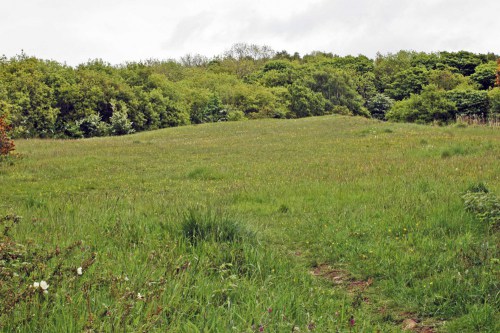
The meadow, known by older locals as the Adders’ Field is located on a limestone hillside in North Wales. It is not much of a field really, maybe more of a clearing in the woodland and I have yet to spot an Adder there, but despite the through-traffic of folks and dogs it is home to an array of lovely wildflowers.

At the entrance to the Adders' Field At the entrance to the Adders’ Field (click on image to enlarge)

Although the area is relatively small, it has dry open grassland as you can see, a small rocky outcrop that is the other side of the rise, top right of the image, that dips down to a damper area sheltered by trees. On the left is a woodland edge with gorse and hawthorn shrubbery and at the top end a lovely mix of trees including oak, ash and silver birch. May is the perfect month in which…

View original post 379 more words

Wales Coast Path – Little Orme

Tags

, , , , , , ,

The Little Orme is a highlight of both the northern Wales Coast Path and the North Wales Path; it is a Nature Reserve with diverse habitats and wildlife and is popular with visitors and locals. I walk here often throughout the year but thought I would photograph this walk, taken at the end of April, as though I was following the Path, while meandering around as I usually do admiring the views and the special wildlife.

The Coast Path follows the promenade from Rhos-on-Sea around the Point and up to Penrhyn Bay. To reach the Little Orme turn off the main road and walk along Beach Road, which ends in a cul-de-sac where there are steps up to the site. Turn right at the top of the path from the steps to continue on the route.

In late winter to early spring Fulmars return to their nest sites here. They are noisy birds and vocalise loudly in the first weeks of their return as they sort out who is nesting where. Now, in late April they have quietened down and are settled into their nest sites on the more sheltered sides of the cliffs. There are currently five pairs on the more inland cliff and three or four more pairs on the lee sides of the cliff faces nearest to the sea. Their numbers are few but seem to be reasonably consistent year on year.

Fulmar nest on cliff nearer the sea

Fulmar nest on cliff nearer the sea

Fulmar pair sitting on cliff edge

Fulmar pair sitting on cliff edge

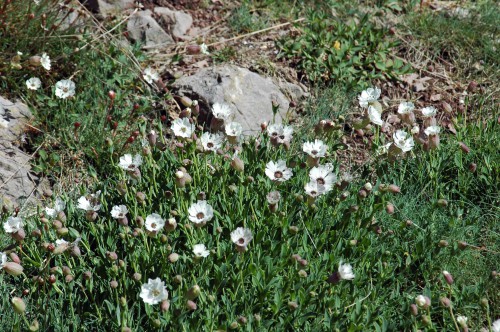
At the base of the cliff forming one side of Angel Bay, Sea Campion is flowering.

Sea Campion

Sea Campion-Silene maritima

I usually head for the cliff edge overlooking Angel Bay to see if there are any Grey Seals about. Today there were just two young ones swimming close to the rocks. The path to the summit involves an initial steep climb up an incline locally known as ‘Rabbit Hill’. It looks a gentle slope in the photograph, but it really isn’t, especially when you are as unfit as I was after my marathon-long virus! I had to stop twice today, but who cares when there are stunning views to look back at.

The Coast Path continues up steeply sloping 'Rabbit Hill'

The Coast Path continues up steeply sloping ‘Rabbit Hill’

Jackdaws are numerous residents and pairs of the characterful birds are nesting in nooks and crannies all over the cliffs. It’s always good to see them nesting communally in their ‘proper’ habitat rather than in the chimneys of houses in towns and villages. There are a particularly large number of them nesting up on the cliff at the back of the flat quarried-out grassy area at the top of Rabbit Hill and as I reached there I watched them as they used their numbers to chase off two Herring Gulls that were probably speculating for unguarded eggs.

Cliff face of the old quarry  that is now inhabitated by Jackdaws

Cliff face of the old quarry that is now inhabitated by Jackdaws

Jackdaw foraging at the base of the cliff

Jackdaw foraging at the base of the cliff

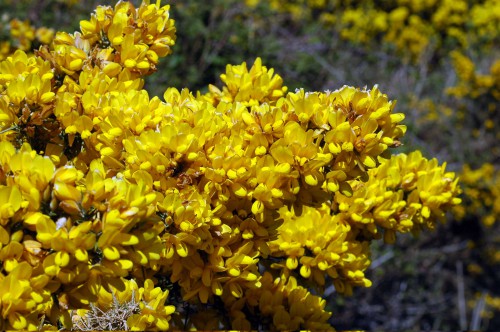
Onwards and upwards from the rock-strewn quarry field the track is bordered by gorse bushes and the air was perfumed with its wonderful coconut scent. Every bush was smothered with thousands of tightly packed golden flowers, a truly glorious treat for both eyes and nose. The grass is kept closely cropped by both rabbits and wandering sheep and a variety of birds including blackbirds, robins, chaffinches, goldfinches and dunnocks all forage here on the ground or amongst the scrubby shrubbery.

A baby bunny dozing in a sunny spot at the side of the track

A baby bunny dozing in a sunny spot at the side of the track

The track upwards bends to the right now and passes by an enclosed rough pasture grazed by  sheep and is frequented by Jackdaws. It’s always worth checking to see if any of the black birds are actually Chough.

A sheep pauses from grazing in the enclosed field to admire the view

A sheep pauses from grazing in the enclosed field to admire the view

At the top of the field the track turns sharply left and continues bordered by more gorse, blackthorn and hawthorn. Today walking through the fragrant gorse and blackthorn blossom was blissful.

The  trail winds through a thicket of gorse and blackthorn

The trail winds through a thicket of gorse and blackthorn

Every gorse bush was packed tight with blossoms

Every gorse bush was packed tight with fragrant blossoms

Eristalis Hoverfly nectaring on gorse flower

Eristalis Hoverfly nectaring on gorse flower

If you had been walking the Coast Path, there is a perfect view from the top of this section of the track of where you have walked if coming from the direction of Abergele, or of where you will be walking if going the other way.

View from the cliff edge showing the route of the Coast Path from Abergele, past Lladdulas and around Colwyn Bay and Rhos Point

View from the cliff edge showing the route of the Coast Path from Abergele, past Lladdulas and around Colwyn Bay and Rhos Point

I could hear a Chaffinch singing so diverted from the main track here along one made by sheep to try to find him. It wasn’t long before I spotted him in a hawthorn tree preening himself and intermittently responding to the song of another male somewhere nearby.

Male Chaffinch singing and preening

Male Chaffinch singing and preening

Ground Ivy

Ground Ivy

The track continues upwards towards the top

The track continues upwards towards the top waymarked Wales Coast Path and North Wales Path

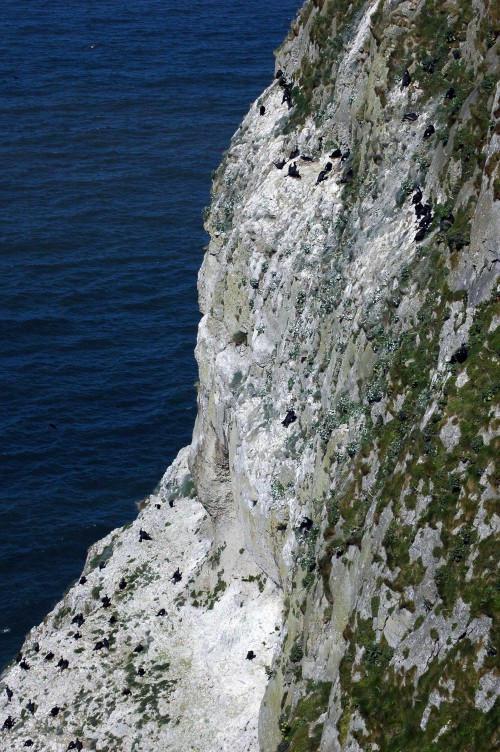
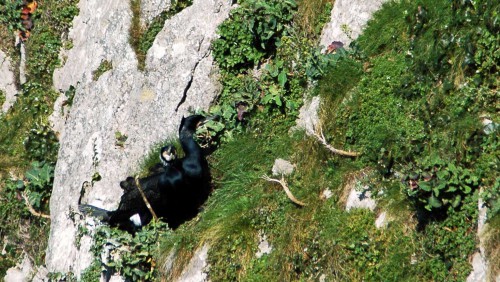
One of the reasons for taking this walk today was to check up on the Cormorants that nest on the sea cliffs of the headland. I wouldn’t recommend making this diversion to the cliff edge if you have children or a dog not on a lead with you, or if you are of a nervous disposition as to get a good view of the birds you do have to go carefully down a slope which has no barrier between its edge and the drop down. It was windy today too, as you can see by the ruffled sea.

A ewe with her lamb on the slope of the cliff edge

A ewe with her lamb on the slope of the cliff edge

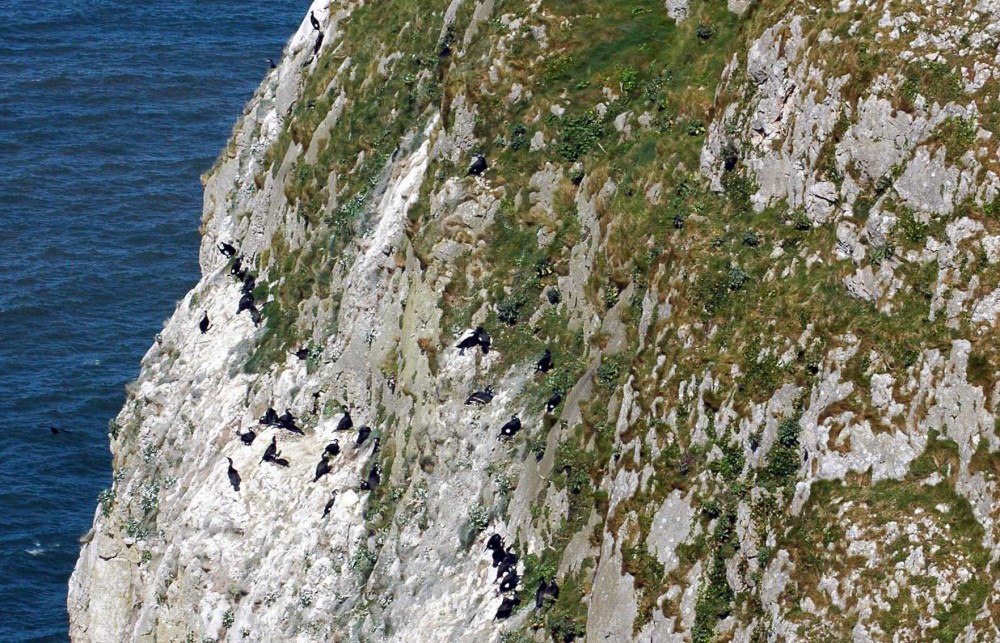
There are large numbers of Cormorants here all year round and in Welsh the bird is known as ‘llanc llandudno’. I’m sure they have nest sites all around the headland, but this is the only one I know of that is reasonably visible from the cliffs. The limestone rock is smooth and sheer so it is amazing that the Cormorants, quite large birds, find safe places to site their nests here.

A view of the nest site on the almost-sheer cliff face

An overview of the nest site on the almost-sheer cliff face

There are three areas the birds are gathered in, an area at the top, a middle section and a few on a shelf quite near the bottom.

A closer view of the area most of the birds were gathered in

A closer view of the top-level area some of the birds were gathered in

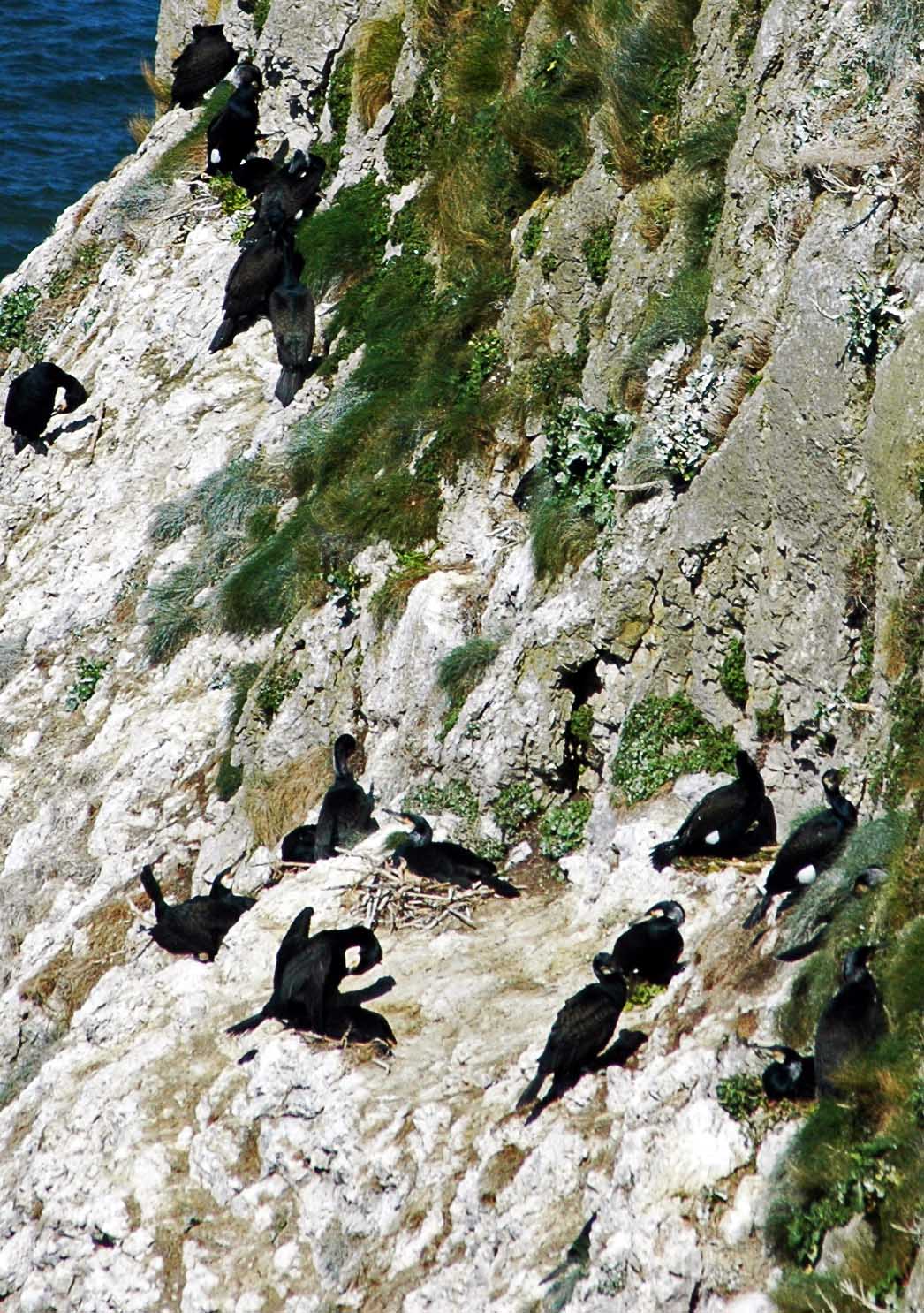
A few birds wwere sitting on nests while others, probably males, sat with their backs to the sea

A few birds were sitting on nests while others sat with their backs to the sea

Cormorants sitting against the cliff with backs to the sea

Cormorants sitting against the cliff with backs to the sea

A pair of birds nesting amongst wild cabbage plants

A pair of birds nesting amongst wild cabbage plants

Another pair on a sloping rocky ledge

Another pair on a sloping rocky ledge

Cormorant flying past cliff

Cormorant flying past cliff

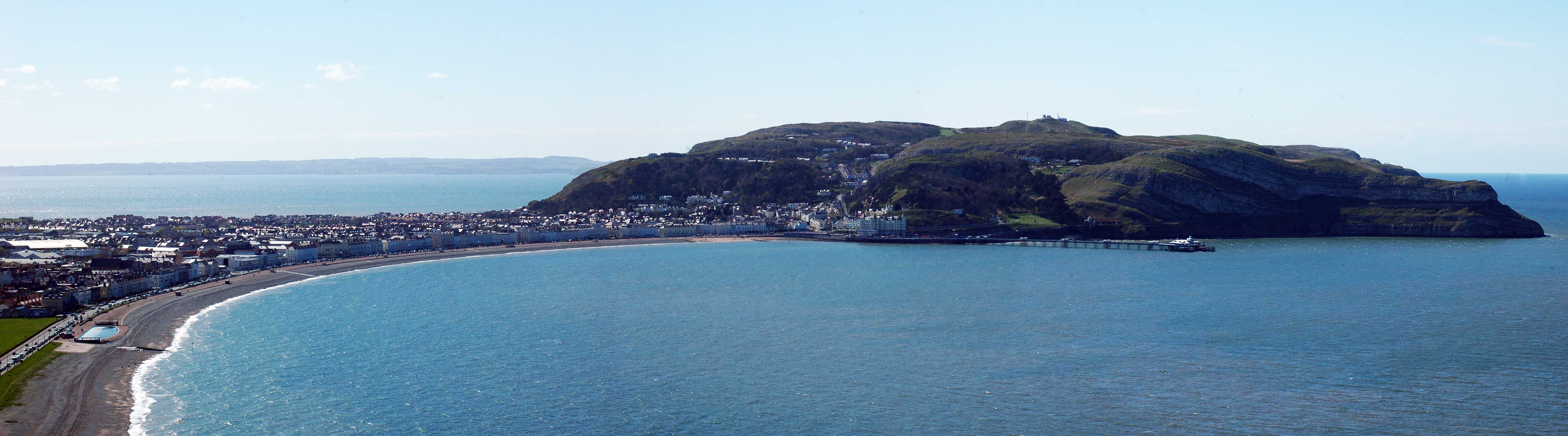
Fascinating as the Cormorants were, it was chilly here on the windy cliff, so I went back up and along the cliff edge to the part below the summit which was sheltered from the wind and from where there are stunning views across the bay to Llandudno’s Victoria Pier and Little Orme’s big brother, the Great Orme. In the background is the Isle of Anglesey.This view shows the route of the ongoing Coast Path around Llandudno Bay.

Panoramic view of Llandudno, the pier and Great Orme with Anglesey in the background (click to enlarge)

Panoramic view of Llandudno, the pier and Great Orme with Anglesey in the background (click to enlarge)

Cormorants race past and Herring Gulls are always to be seen flying or gliding around this part of the cliff, and there is occasionally a Kestrel, but today I was surprised to see two Buzzards flying out over the sea and a Sparrowhawk flying in and heading towards the Great Orme.

The ongoing Coast Path

The ongoing Coast Path passes around Llandudno and on to Deganwy and Conwy

It is possible to go up a little further to reach the trig point on the summit but the views are no better from there so I don’t often get that far and turn around to go back the way I came. If you were following the Coast Path though you would follow the track that takes you down to rejoin the main road at Craigside and continue towards Llandudno.

Spring on the Bryn-part II

Tags

, , , , , , , , , , , ,

Walking further up through the field the local buzzard pair circled overhead, then just a few minutes later a sparrowhawk appeared from somewhere close by and startled me as it flew just a few feet over my head, then continued towards the direction from which I had come.

Gorse fully in flower

Gorse fully in flower

A bit further on I stopped for a while and sat on one of my favourite rocks savouring the warm sun and the peace and quiet; that rarely lasts long just here as its at a sort of junction of trails so there are passing dogs, usually well ahead of their owners that invariably come over to see what I’m up to. I watched two peacock butterflies vying for the best spot on a sun-warmed rock. The winner opened its slightly faded, but still beautiful wings and basked for a few short minutes undisturbed.

Peacock butterfly

Peacock butterfly

Moving off my rock to photograph the butterflies I noticed a patch of Wild Strawberry in flower. Tucked back against the rock it is sheltered and in a sunny spot, perfect for ripening berries.

Wild Strawberry plant in flower

Wild Strawberry-Fragaria vesca in flower

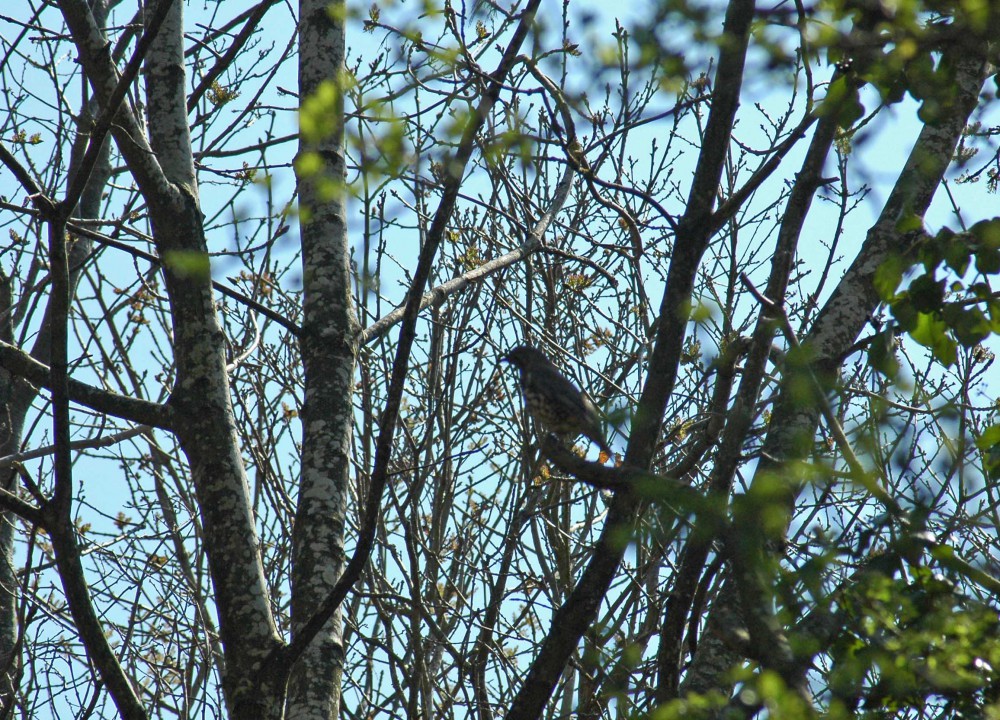
Back in the woods to walk up towards the summit I disturbed a large foraging bird. It flew up to a tree branch where it blended well into the dappled shade. It had to be a Mistle Thrush but I wasn’t entirely sure until it flew back down to the ground giving a better view.

A Mistle Thrush blending into the dappled shade of the wood

A Mistle Thrush blending into the dappled shade of the wood

Unmistakably a Mistle Thrush

Unmistakably a Mistle Thrush

At the top of the track there was a single Speckled Wood butterfly, a lovely ‘fresh’ one. It was intent on finding somewhere to bask in the sun and flitting and zig-zagging about low over the track. You have to keep an eye on them because once they settle they can be difficult to spot. I had to make do with this view as it still wasn’t happy and shot off quickly.

Speckled Wood butterfly

Speckled Wood butterfly

Back out in the open and continuing upwards I almost stepped on a Small Tortoiseshell butterfly also sunning itself on the bare earth of the track.

Small tortoiseshell- Aglais urticae

Small tortoiseshell- Aglais urticae

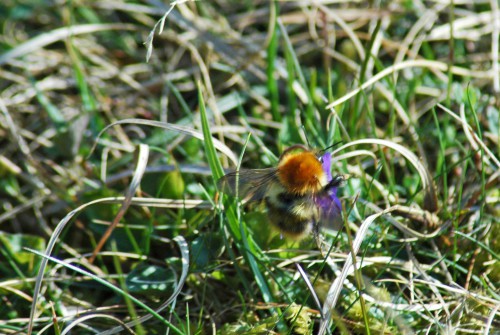
A little clump of Dog Violets growing in the grass at the side of the track caught my eye; the bee-fly zoomed in just as I pressed the shutter and was gone again before I could refocus on it.

Common Dog Violet- Viola riviniana

Common Dog Violet- Viola riviniana

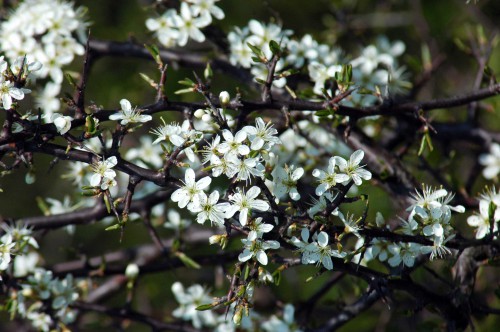
Blackthorn, of which there is a generous amount up here, has been flowering for a short while now but is at its beautiful peak now. Last year was a sparse one in respect of the amount of sloes on the shrubs here, but if the masses of blossom on them now are anything to go by, this could be a bumper year.

Blackthorn with a view

Blackthorn with a view

The flowers of blackthorn appear before the leaves and these are just beginning to break from their buds.

Blackthorn-Prunus spinosa

Blackthorn-Prunus spinosa

Blackthorn blossom against a clear blue sky

Blackthorn blossom against a clear blue sky

Another male Orange Tip butterfly was racing along the boundary of the blackthorn scrub. He didn’t stop, but as my first sighting of this species this year was a few days earlier of one nectaring on blackthorn, I’m using one of the photographs I took then.

Orange Tip- Anthocharis cardamines

Orange Tip- Anthocharis cardamines

Following the path around to go up to the summit I noticed two Small Tortoiseshell butterflies on the ground. I thought at first they were mating, or about to do so and they did change their positions a few times, but nothing happened during the time I watched them. One was more fresh-looking than the other, but they were both perfectly intact and gorgeous.

150424TG-BE336-Two tortoiseshells150424TG-BE337-Two tortoiseshells150424TG-BE335-Two tortoiseshells

The grass up around the summit of the hill is kept short, constantly cropped by grazing rabbits. I think it’s highly likely that this particular part of the hill covers a maze of warrens and tunnels. You don’t often get to see them , especially during the daytime, but there are baby ones around now and not yet wise they can be seen out in the open.

Young bunnies

Young bunnies

Ground Ivy-Glechoma hederacea

Ground Ivy-Glechoma hederacea

I cut back into the woods here from the track the bunnies were on, hearing a chiffchaff a short way in. I spotted Great Tits foraging in the trees close to the track that flew over to the scrubby wild clematis-covered scrub on the other side.

Great Tit

Great Tit

Where I stopped to take the picture there were a large number of smallish hoverflies darting about, resting briefly on leaves or many on the ground, all shiny and fresh looking as the ones I saw lower down earlier in the afternoon.

There were Blue Tits out foraging too and I think its likely that a pair have a nest site quite high in a tree with ivy growing up through it.

Foraging Blue Tits

Foraging Blue Tits

At the bottom of the track I stopped for a few minutes to listen to a Mistle Thrush singing. This was a déjà vu moment as I recall doing this exact same thing last year, more or less in the exact same spot, scanning the trees for the singer. I found him then, but couldn’t spot him today, so here’s last year’s picture to be going on with. What a lovely bird and how lovely to see him again. (More about the Mistle Thrush here)

A well-marked, singing mistle thrush

A well-marked, singing Mistle Thrush


Bumbles, Masons and Miners

Tags

, , , , , , , ,

Early spring is a good time to look out for some of the different species of bees found locally, catching them before they settle in to producing the next generation. On recent outings Bryn Euryn was particularly well blessed with bumblebees and some other interesting species and the Little Orme brought an unexpected treat so I thought I’d put them all together.

The Buff-tailed bumblebee- Bombus terrestris is the largest of our native bumblebees. Queens, workers and males have a dirty golden yellow collar near the head and one on the abdomen.

Buff-tailed bumblebee

Bryn Euryn – Buff-tailed bumblebee queen

The queen’s tail is an off white/buff colour which can sometimes appear orange. The queens are busy establishing new colonies and may be seen collecting pollen to stock it and crawling around on the ground where they nest in burrows underground.

Buff-tailed bumblebee queen on the ground

Bryn Euryn-Buff-tailed bumblebee queen on the ground

I didn’t spot any workers or males on the days I was out and about, if I had these would both be smaller than the queens and look slightly different as workers have a white tail and that of the males is white ringed with a buff line.

Red-tailed Bumblebee- Bombus lapidarius queens are also establishing new colonies and can be seen feeding and collecting pollen from flowers and also crawling around on the ground as they too nest underground.

Red-tailed bumblebee queen with full pollen baskets

Red-tailed bumblebee queen with full pollen baskets

Queens are distinctive with their black bodies and red tails and are large, between 20 -22mm long which is a similar length to that of the Buff-tailed bumblebee queens, but the red-tailed is less bulky.

Red-tailed Bumblebee queen emerging from a patch of ivy-leaved speedwell

Bryn-Euryn -Red-tailed Bumblebee queen emerging from a patch of ivy-leaved speedwell

There are Red-tailed bumblebee workers about too. They have the same colouring as the queens but are smaller, varying in size from 1-16mm in length, with some early workers being no bigger than a house fly.

They have comparatively short tongues and favour flowers that provide them with a landing platform such as dandelions and daisies and later on, thistles and ragwort. In gardens they like chive flowers and lavender.

24/4/15-Red-tailed worker bee on dandelion

24/4/15-Bryn Euryn-Red-tailed worker bee on dandelion

To make things confusing there is a cuckoo-bee that closely resembles the Red-tailed bumblebee. The main differences are that the cuckoo bee has black wings and the back legs are hairy and without the shiny hairless patch, the pollen basket, of the true bee.

There were a very few Common Carder bees Bombus pascuorum about and I only managed one quick shot of one visiting a dog violet flower. There will be many more later on.

Carder Bee

Bryn Euryn – Common Carder Bee

An exciting new recording for me here was of the Tree Bumblebee Bombus hypnorum, that’s is not to say they weren’t here before, just that I had never seen one. I was lucky to spot two that were taking nectar from the Green Alkanet flowers which grow in a big patch next to the car-park gate.

21/4/15 -Tree bumblebee-Bombus hypnorum

21/4/15 – Bryn Euryn-Tree bumblebee-Bombus hypnorum

Tree bumblebees are fairly new arrivals to the UK, first found in 2001 in Wiltshire. Since then they have spread across most of England and Wales and made it to Southern Scotland in 2013. Queens, workers and males all have a similar colour pattern; the thorax is tawny to reddish-brown, the abdomen is black and the tail is white.

Tree bumblebee burdened with mites

Tree bumblebee burdened with mites

Queens vary significantly in size and can reach up to 18mm in length. Males are quite chunky and can be as much as 16mm in length; fresh males have a patch of yellowish facial hair which eventually wears off. Workers, which is what I believe I photographed range from 11-16mm in length; they move around rapidly and are effective pollinators.

Basking on the leaves of the butterbur plant that also grows near the gate at the bottom end of of the car park was another little bee. I’m not positive about its identification but based on the colour of the hairs on its thorax I think it may be an Early Mining Bee – Andrena haemorrhoa.

150421TGNW-BE68c-Early Mining Bee

Bryn Euryn-Early Mining Bee-Andrena haemorrhoa

A couple of days later I was walking on the Little Orme and came across another species of mining bee that cannot be mistaken for anything else, the Tawny Mining Bee-Andrena fulva.

There were two individuals attempting to nectar on Alexander’s while a particularly strong wind was bending and tossing the flower around. It was tricky trying to get focussed images.

28/4/15- Tawny Mining Bee on Alexanders -Little Orme

28/4/15- Little Orme-Tawny Mining Bee on Alexanders

Males are 10 to 12 mm and the females 8 to 10 mm long. The females are covered with fox red hair on their backs and black on the underside, whilst the males are more slender and yellower in appearance.

Tawny Mining Bee

Little Orme-Tawny Mining Bee

One of the two managed to hold on and kept searching over the florets, but the other gave up and dropped to the ground.

Tawny Mining Bee on the ground

Tawny Mining Bee on the ground

The bees mate in spring, after which the male dies and the female starts to build a nest. Sometimes more than a hundred females build nests in a few square metres but the Tawny Mining Bee normally does not create a colony: each female has her own nest.

Finally I’d like to mention another little bee found locally, the Red Mason Bee Osmia rufa, also most likely to be spotted around this time of year.

Fairy Glen-Red Mason Bee

Fairy Glen-Red Mason Bee

The males are smaller than the females at 6 -11 mm. Both sexes are covered in dense gingery hairs, the male with white tufts on the head while the female’s head is black.

Red Mason Bee

Red Mason Bee (m)

It is a solitary bee, each nest being the work of a single female bee working alone. They nest in pre-existing cavities such as hollow plant stems, old garden canes, air bricks, and even old nail holes in fence posts, lining the inside of the cavity with mud.


Spring on the Bryn

Tags

, , , , , , , , , , , ,

Recent outings have been ambles rather than rambles as I’m getting back to fit after being laid low for a few weeks by some kind of virus, which also accounts for the recent absence from blogging. I’ve found it most frustrating, especially at this time of year too when there’s so much going on. But I’m keen to catch up and already have a lot to share, so here’s a mostly-pictorial view of Bryn Euryn as I saw it on two beautiful sunny-day ambles in the last week of April.

There are a lot of Ash trees on the Bryn, thankfully all of which appear to be healthy at the present time and they seem to have had an exceptional amount of flowers this year. The flowers start off a dark pinkish-purple but now most of them are over now and the clusters are mostly green.

Ash tree flowers are almost over

Ash tree flowers are almost over

Some trees have produced so many flowers that now the clusters are green, from a distance it gives the illusion that they are in leaf.

Spent flower clusters give ash trees the illusion of being in leaf

Spent flower clusters give ash trees the illusion of being in leaf

Looking more closely at the tree in the photo above, there are a few  leaves already appearing.

New ash leaves opening

New ash leaves opening

Naturally, once I had seen the ash leaves I had then to check out the oaks to guage if we are in for a ‘splash or  a soak’ this summer. On the day I took the photo of the ash the oaks were all in tight bud.

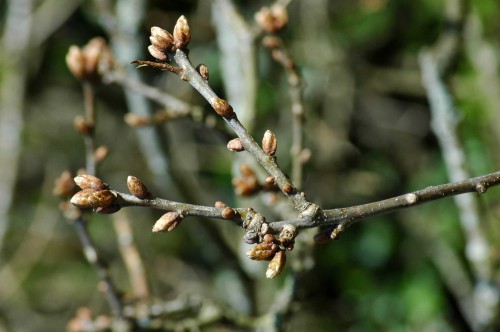
21/4/15- Oak leaves in tight bud

21/4/15- Oak leaves in tight bud

But three sunny days later I was amazed to see that leaves had begun to open and not only that, insects had already moved in.

24/4/15-New oak leaves with insects

24/4/15-New oak leaves with insects

For anyone that has no idea what that last bit was about, a traditional English way of predicting whether the summer will be wet or dry was based on whether the oak or the ash trees opened their leaves first.

“When the oak is before the ash, then you will only get a splash; when the ash is before the oak, then you may expect a soak “

So things appear to be fairly even in the rainfall prediction stakes so far.

Robin singing from high in an ash tree

Robin singing from high in an ash tree

It was a perfect spring day, the sun was shining the sky was blue and a host of birds were singing. Along the quarry field edge the vegetation is growing up quickly although there’s not much flowering yet. Celandines are beginning to fade and some dandelions have already set seed.

Vegetation on woodland edge-celandines, nettles & arum

Vegetation on woodland edge-Lesser Celandines, nettles & arum

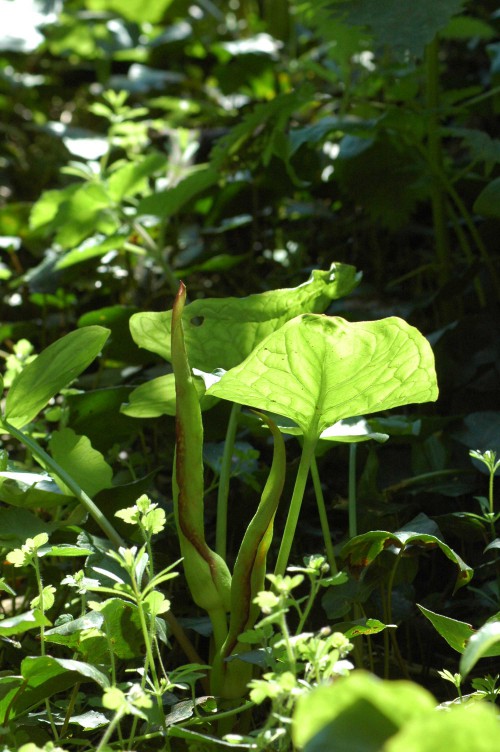
Cuckoo Pint or Lords and Ladies-Arum maculatum

Cuckoo Pint or Lords and Ladies-Arum maculatum

There was a single male Orange Tip butterfly racing along at their normal break-neck speed and one female Small White that obligingly settled on a bramble.

Small White (f) on bramble leaf

Small White (f) on bramble leaf

150421TGNW-BE1-Chequered Hoverfly(m) -Melanstoma scalare

Tiny male Chequered Hoverfly-Melanstoma scalare (enlarged)

I was quite surprised to see a good number of hoverflies about, all looking shiny and fresh, so I assume they were newly-emerged.

Hoverfly-Eupeodes latifasciatus

I think this is Eupeodes latifasciatus

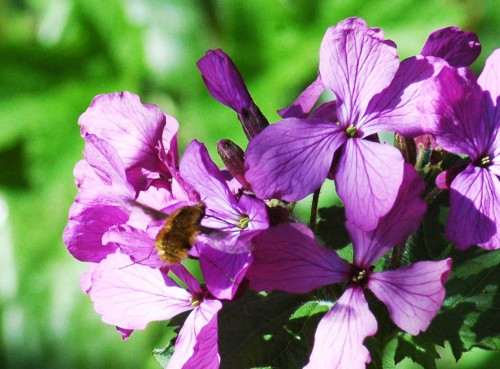
As I was checking out a splash of colour that turned out to be from this escaped garden plant, I was happy to see this little bee-fly arrive to take its nectar. One of my favourite insects, they look cute and furry but are classified under the general heading of ‘robber-flies’ and their larvae live as parasitoids in the nests of mining bees.

An escaped garden plant attracting a bee-fly

An escaped garden plant attracting a bee-fly

There are two species of pretty blue speedwell flowering here, one is the familiar Common Field Speedwell

Common Field Speedwell- Veronica persica

Common Field Speedwell- Veronica persica

and the other is the even tinier-flowered Ivy-leaved Speedwell.

Ivy-leaved speedwell-Veronica hederifolia

Ivy-leaved speedwell-Veronica hederifolia

You could easily overlook this rather sprawling untidy plant, and you’d probably pull it out of your garden as a ‘weed’, but as with all speedwells, on closer inspection its tiny flowers are really pretty.

Close-up of flower of ivy-leaved speedwell

Close-up of flower and leaves of Ivy-leaved Speedwell

In the woods the tree canopy is still open but there are small new leaves on some trees.

24/4/15-Tree canopy still open

24/4/15-Tree canopy still open – new beech leaves in foreground

Wood anemones are still flowering

Wood anemone-Anemone nemorosa

Wood anemone-Anemone nemorosa

and there was one patch of Wood Sorrel.

Wood Sorrel-Oxalis acetosella

Wood Sorrel-Oxalis acetosella

Harts Tongue fern fronds unfurling

Harts Tongue fern fronds unfurling

Garlic Mustard is beginning to flower- if you never have, try crushing a leaf they really do smell of garlic…

Garlic Mustard - Alliaria petiolata

Garlic Mustard – Alliaria petiolata

and another plant that doesn’t smell too pleasant, Dog Mercury, is also displaying its spikes of rather insignificant small pale green, petalless flowers.

Dog Mercury - Mercurialis perennis

Dog Mercury – Mercurialis perennis

There are still ivy berries on some plants, although those left are probably still there because they are difficult for their chief consumers, blackbirds and bulky old wood pigeons to reach.

Ivy berries

Ivy berries

In the open wildflower meadow cowslips are blooming. I love their graceful fragrant flowers and the sight of them always takes me back to childhood when it was still OK to pick bunches of them and we used them as part of the floral decorations for the school May Day celebrations.

Cowslip-Primula veris

Cowslip-Primula veris

Hawthorn is now green with fresh leaves.

Fresh hawthorn leaves

Fresh hawthorn leaves

Part 2 to follow ….


Wales Coast Path-Colwyn Bay to Pensarn

Tags

, , , , , , , , ,

One of my ambitions for this year is to walk more of the North Wales section of the  Wales Coast Path, which begins, or ends depending on which way you’re walking at Chester and continues around to Caernarfon. Some of the walks I do fairly regularly are part of the Coast Path, and there are other bits within reasonable striking distance that I could do fairly easily and I am keen to see more of the wildlife found along this amazing and varied coastline. On a sunny day back in the middle of March I set off in the opposite direction to that of my usual routes planning to walk the section from Colwyn Bay to Pensarn, the seaside part of Abergele. I cheated a bit as I have done the Colwyn Bay part so many times before, and drove to the pier to take some updated photos of the route along the promenade.

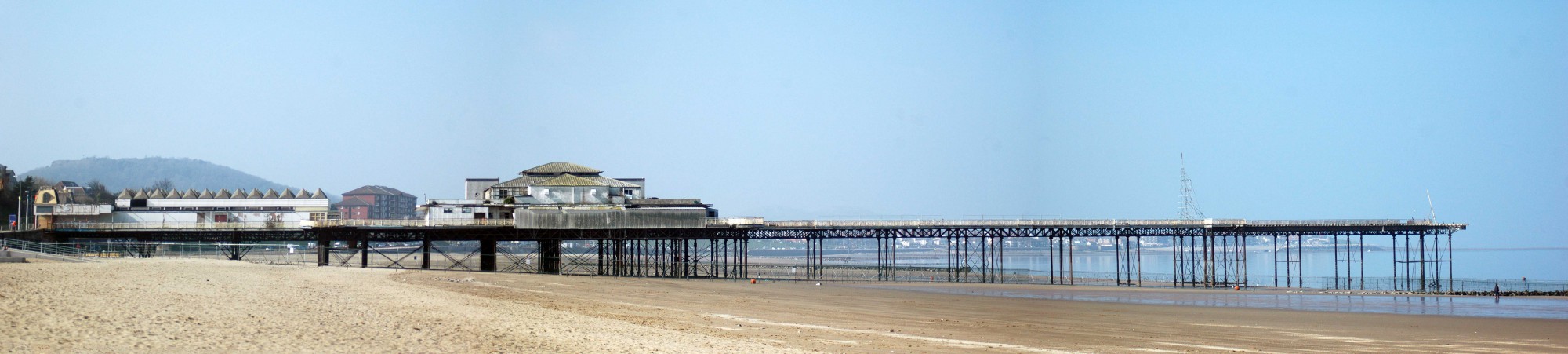
Colwyn Bay Pier, in a sad and dilapidated state

Colwyn Bay’s Victoria Pier, in a sad and dilapidated state

As a result of a long drawn-out dispute over its ownership, the pier is in a sad state of disrepair and dilapidation but there is much ongoing effort locally to save and restore it. It must be a bit of an embarrassment to the local council, particularly as a lot of money has been invested in providing a new sandy beach and in the building of the new water sports centre, known as Porth Eirias, just a stone’s throw away.

The water sports centre at Porth Eirias is finished but not yet occupied..

The water sports centre at Porth Eirias is finished but not yet occupied..it’s meant to look like a ship

From Porth Eirias the path continues as a promenade and cycle path and is my favourite stretch, particularly in the winter when stormy seas send waves crashing into and over the sea wall and flood the road, which may be closed off on exceptionally wild days. On the opposite side of the road the railway track runs parallel atop a high embankment, which provides habitat for an interesting array of wildflowers. There are great views from the trains too.

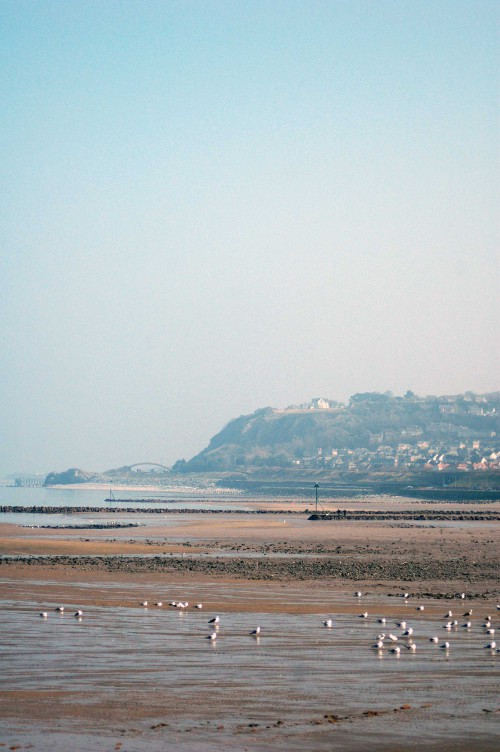
The view from Porth Eirias that shows the route of the Coast Path  towards Llandulas

The view from Porth Eirias that shows the route of the Coast Path towards Llanddulas

At the end of the promenade is a small parking area from where the path and cycle track continue towards Llanddulas. I had intended to park here and walk, but it was full of works vehicles as yet more work was being carried out on reinforcing the sea defences. Instead I crossed over the road and turned in towards Old Colwyn and stopped by the river at Min-y-Don.

Celandines

Celandines

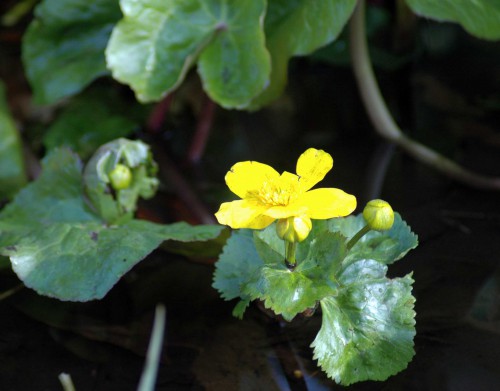
Celandines smothered the grassy bank on the sunny side of the road and King Cups lit up the shadier side of the path along the river.

The river was running fast and at a fairly decent level, although nowhere near full.

150318TG-Old Colwyn- King cup

Golden yellow King Cups

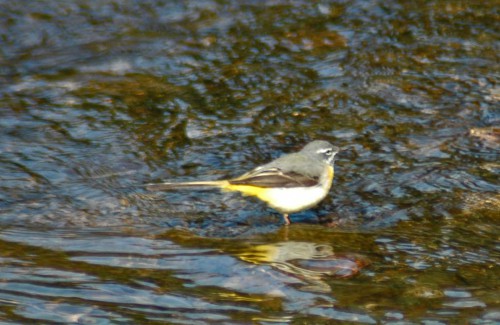
This is a favourite spot for Grey Wagtails and I had timed my visit perfectly as a pair of them flew down from upstream to land almost right in front of me. I watched them for a good while, darting after flies from stones in the water and running along the stone wall.

Grey Wagtail - the female of a pair

Grey Wagtail on the river Colwyn- the female of a pair

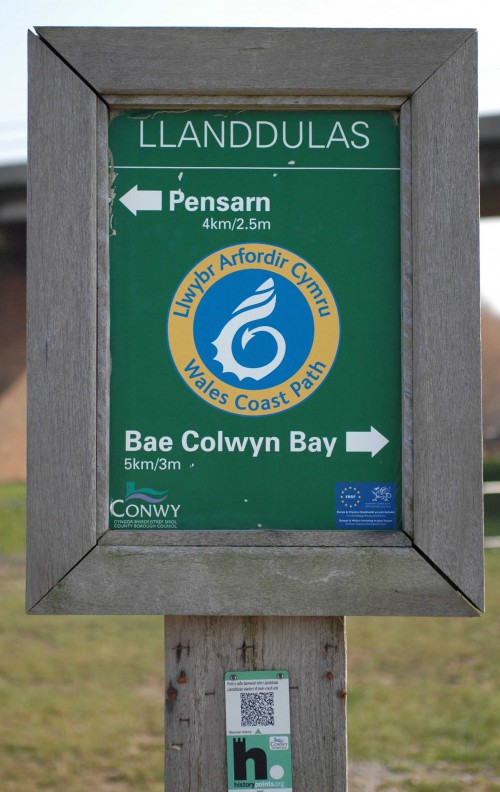
150318TG-Wales Coastal Path-Llanddulas- Sign board

I drove on to Llanddulas Point and parked facing out across the flat rocky shore to the sea. The views from here are expansive to say the least, and if you were walking the Coast Path seriously I can imagine it may be rather daunting to be able to see where you are heading and will arrive at in a few hours time.On a sunny and warmish day like today it is pleasant enough and as the land is almost pancake flat, easy walking. I’m not sure if I’d fancy it on a wet day when the wind was blasting you in the face.

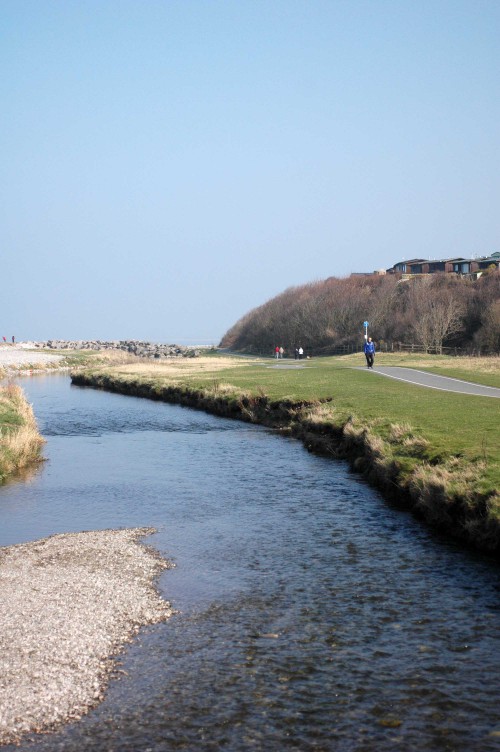
Leaving the car park and crossing a small bridge, the path follows the lower stretch of the River Dulas for a short distance until it reaches its end and flows towards the sea.

Path alongside the river

Path alongside the River Dulas

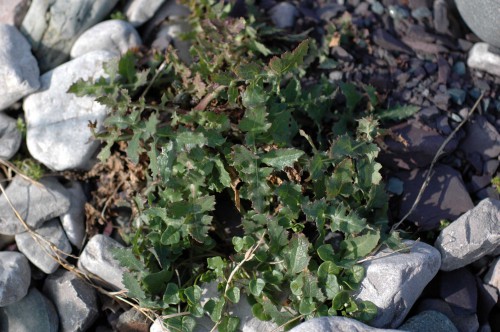
The coast here may appear to stark and empty, but it provides important habitat for a good range of marine plants and the eastern end of Llanddulas beach is designated as a SSI as locally rare plants such as sea kale and yellow horned poppy grow there. It was too early in the season for plants to be flowering, but there are new leaves pushing up through the shale.

New leaves of Sea Holly

New leaves of Sea Holly

New leaves of Yellow Horned Poppy

New leaves of Yellow Horned Poppy

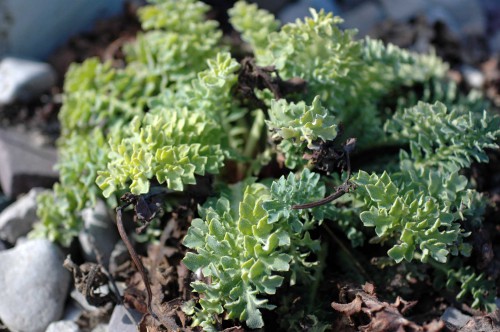
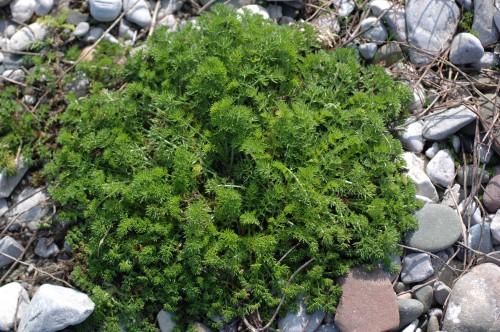
New leaves of Sea Mayweed

New leaves of Sea Mayweed

As I neared the last stretch of the river I heard, then spotted more Grey Wagtails, another pair I’m sure, that were hunting flies from stones near the banks, flitting low across the water from one side to the other. As you round the bend in the path where the river ends the narrow ribbon of trees that follow the line of the cliff reaches the path edge. As I got close to this point a wren flew from the tree cover across to a rock and belted out his song.

Red-brown lichen

Red-brown lichen

I attempted to get a bit closer to him and he moved off, but I was soon distracted by a rock face smothered in a red-brown coloured lichen, I have no idea what it is, and another rock with some sort of quartz trapped in it.

Quartz in limestone

Quartz in limestone

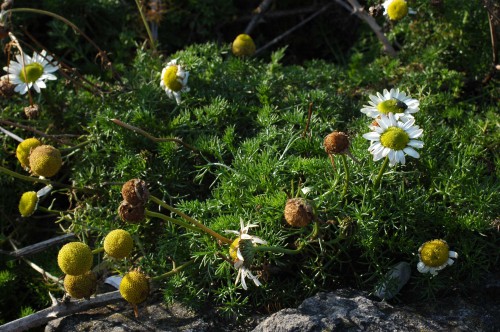
Sheltered on this side of the rocks there was a clump of sea mayweed that appeared to have been blooming for some time as many of the flowers were already beginning to go to seed.

Clump of flowering Sea Mayweed

Clump of flowering Sea Mayweed

A green-bottle fly on Sea Mayweed flower

A green-bottle fly on Sea Mayweed flower

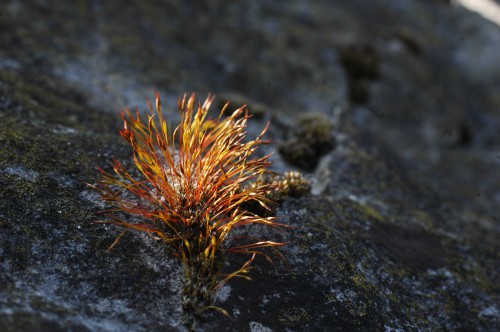
Highlighted by the sun there was a pretty little clump of moss or with seed-heads on a nearby rock too.

Moss or lichen with seedheads

Moss with seedheads

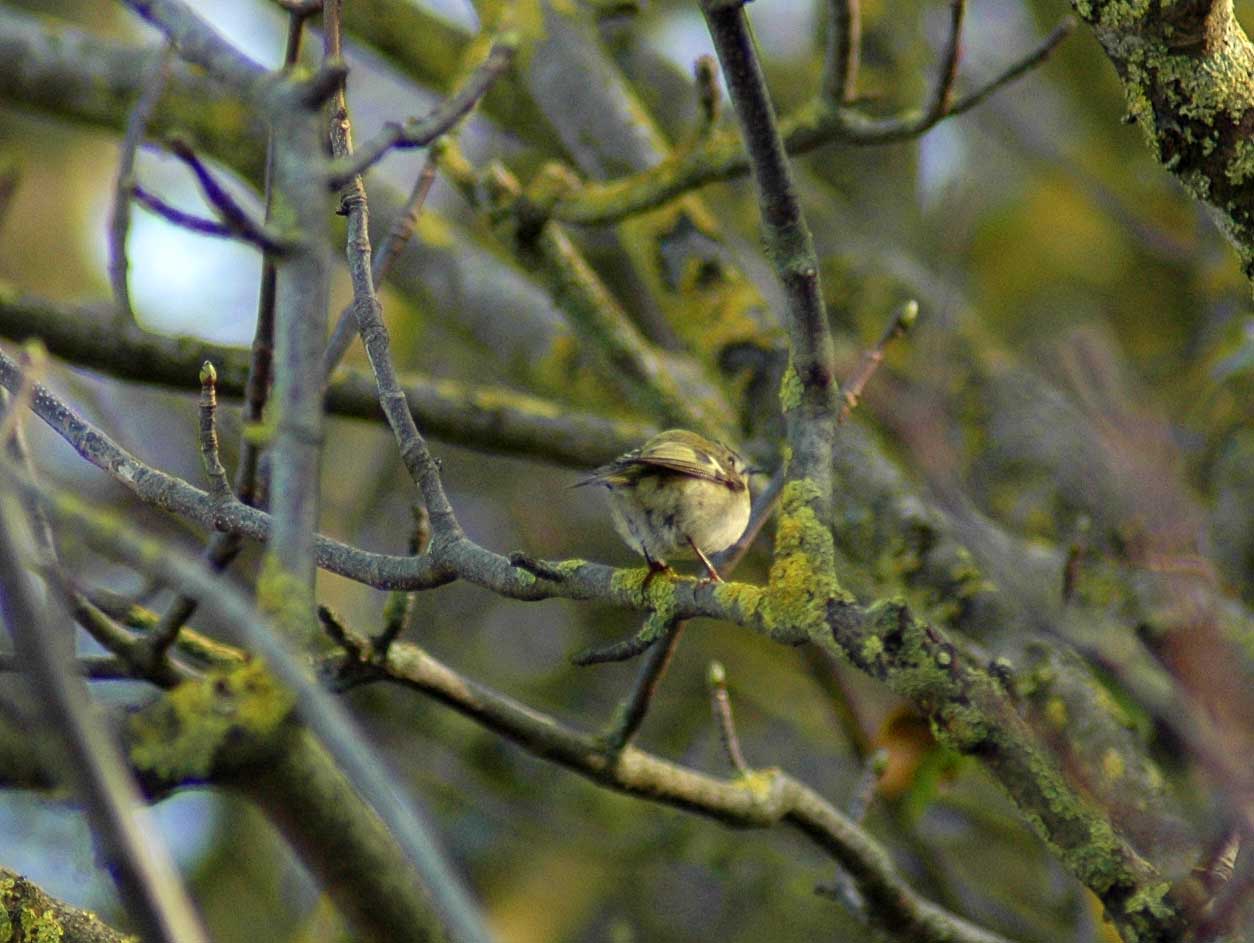
Moving back to the path I spotted two tiny birds flitting about amongst the twiggy tree branches. I thought at first they were wrens, but then excitedly realised they were too small and were actually goldcrests, a definite pair. I watched them for a good while as they continued to forage amongst the lichen-covered twigs, but didn’t have much luck getting a clear enough view for long enough to get a good photograph. The one below is the best I could do but it does confirm the sighting!
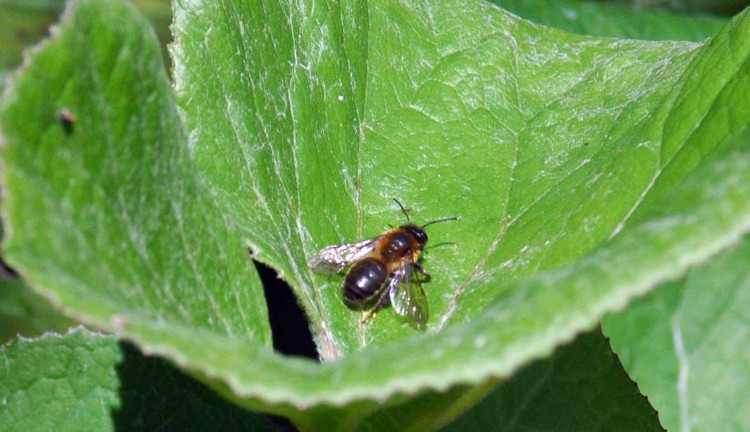
A rear view of one of a pair of goldcrest

A rear view of one of a pair of goldcrest

I would never have imagined seeing these delightful little birds here within a metre or two of a busy walkway, but there they were and no-one else seemed to notice them at all. These trees are mostly ash that have been regularly pollarded to prevent them growing high enough to block the view from the wooden chalets that line the clifftop above them and appear to be a popular spot with a variety of other species of birds too. In the short while I was there I saw blackbirds, dunnocks, robin, the wren I already mentioned and blue tits and great tits.

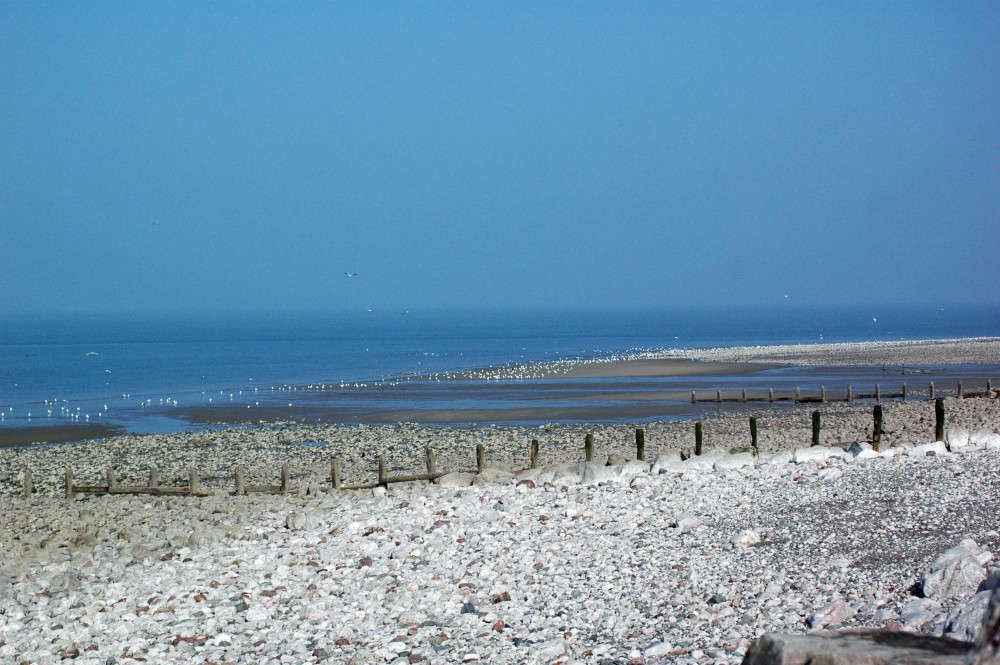
A view of the shore lined with herring gulls

A view of the shore in the direction of Abergele then on to Prestatyn and Rhyl

A few metres away the shoreline was lined with huge numbers of herring gulls. During the winter months, there are oystercatcher, curlew, redshank and turnstone feeding here and some years there are snow buntings.

The shoreline stretches on to Pensarn then on to Prestatyn and Rhyl

The shoreline stretches on to Pensarn then on to Prestatyn and Rhyl

I was surprised to find some little yellow coltsfoot flowers pushing up through the stony ground next to the path here.

Coltsfoot

Coltsfoot

Wooden chalets line the path for a good distance along this section of the path and there were a growing number of people out walking dogs, so I turned round and walked back the way I had come.

Limestone quarry

Limestone quarry

Mist obscured much of the distant views today, but it was still possible to make out the outline of the old limestone quarry which rises up behind the shore, separated from it by the A55 Expressway. For 300 years quarrying was a major occupation in this area, second only to farming and lime kilns dominated the skyline from 1890 to 1940. There is a working quarry operational today and between Llanddulas and Colwyn Bay the path passes a jetty that serves it. There used to be another jetty, closer to Llanddulas where during stormy weather in April 2012 a cargo ship that was loading there was forced on to the rocks and had to be dismantled.This event made the national news and I recall it causing chaos on the A55 as people stopped their cars and got out to have a look or to take photographs.

Linnets on the raised stony sea bank

Linnets on the raised stony sea bank

Final treats were the sight of a small flock of linnets that flew on to the raised stony sea bank to feed on seeds and a lovely pair of mallard by the footbridge.

Mallard pair

Mallard pair


A Graveyard for Ships

Tags

, ,

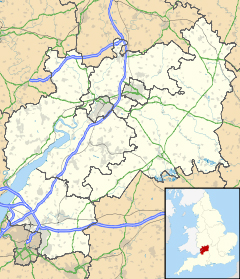
Gloucestershire

Gloucestershire, showing the River Severn – the wide strip of blue bottom left of map

The lower reaches of the River Severn are a few short miles away from the city of Bristol, but out there by the river and its Estuary, under wide open skies and exposed to the wind blowing in from the Atlantic you could be in a completely different world. It is a landscape of contrasts: historical and modern. Spanned by the two beautiful Severn Bridges linking England and Wales, it is also the location of four Nuclear Power Stations, but still along its banks are secret salt marshes, historic inns and isolated farms.

A walk here is good at any time of the year, but it is perhaps at its most atmospheric and exhilarating in winter, when low sunlight gives the water a silvery sheen and at low tide flocks of wild birds feed in the rich ground of the estuary.

The River Severn at Purton at low tide

The River Severn at Purton at low tide

At high tide the river is full to the brim, and is often choppy with waves breaking on the shore. We arrived at low tide when vast stretches of sand and mud are revealed.

150218TGBR79-Reeds

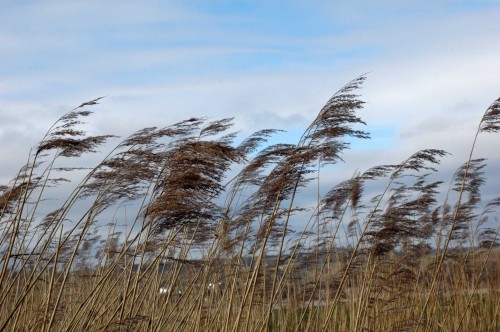
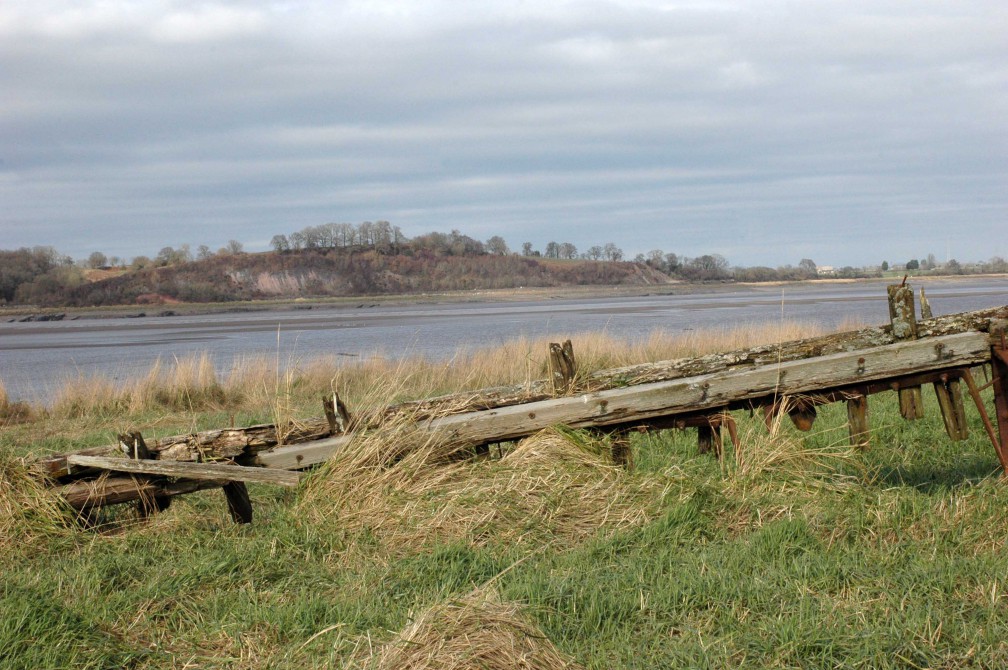
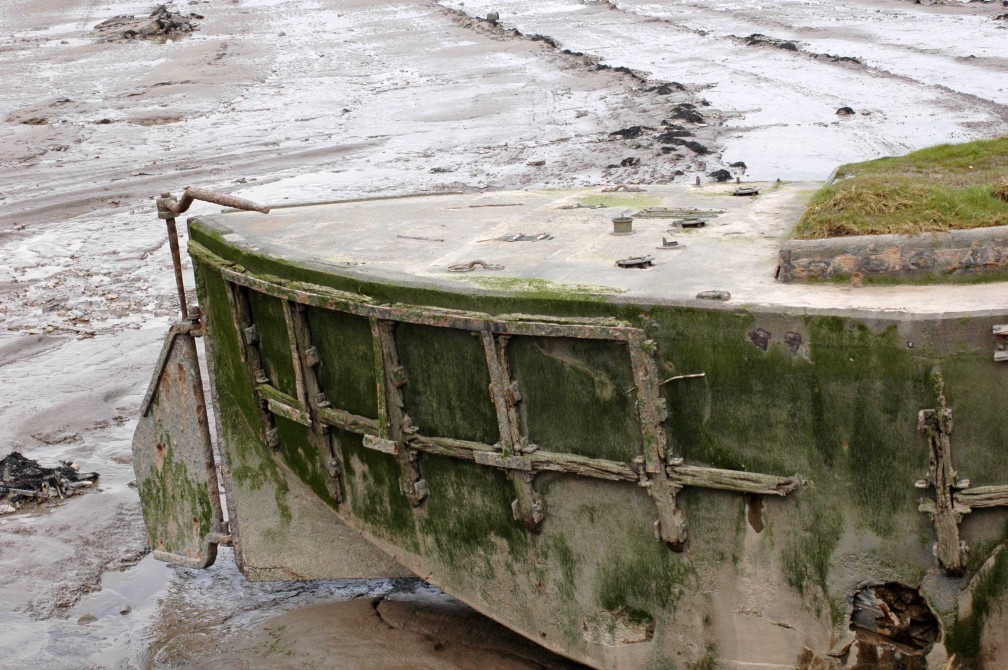
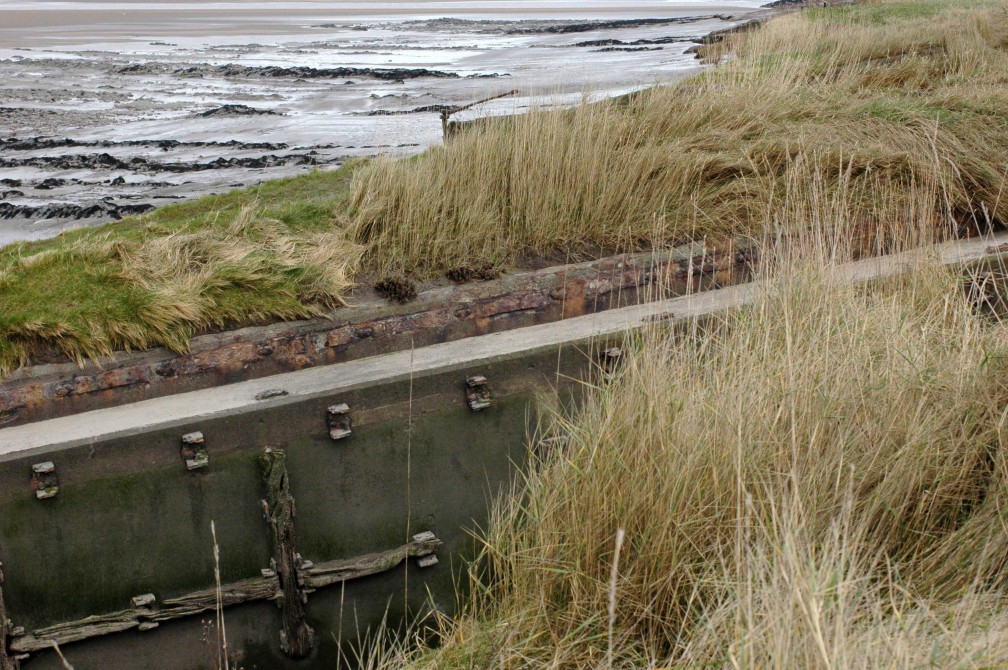
We continued our walk along muddy paths through the reedbed and it wasn’t long before we began to see evidence of the presence of vessels and had to take care not to trip over projecting pieces of wood and metal.

150218TGBR145-Sheerness

The old narrative board explains that the banks of the River Severn have historically suffered from erosion by the tide. Redundant and otherwise unwanted vessels were beached on the foreshore and allowed to fill with silt where they formed a barrier and helped prevent the river eroding in to the nearby canal embankment. The various working boats now form one of the  largest collections of historic inland waterway craft in Britain.

Some of the craft are almost completely buried

Some of the craft are almost completely buried

The first barges were dumped on the bank in 1909 when it was realised that a new channel was developing near to the shore, and further craft were added at intervals up to the early 1970s. Each vessel was taken out of Sharpness Dock on a high spring tide, towed by a tug towards the shore and released so that it charged up the bank as far as possible. Then holes were knocked in the hull to allow subsequent tides to deposit silt inside.

150218TGBR91-Sheerness-Old wrecks

150218TGBR93-Sheerness-

150218TGBR95-Sharpness

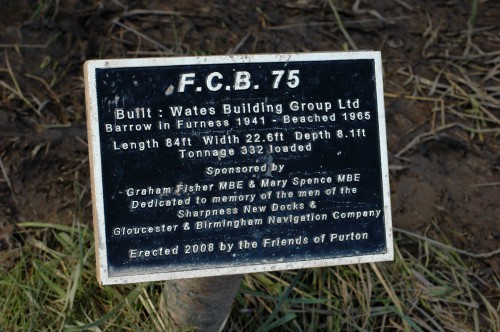
One of many plaques that now commemorate the sacrificed vessels

One of many plaques that now commemorate the sacrificed vessels

As a result of the barges being dumped, the ground level has built up over the years, and some of the later arrivals are lying on the top of earlier ones. Careful research was carried out by Paul Barnett who identified the remains of over 30 wooden vessels protruding above the present surface. It is largely thanks to his efforts that the vessels have been properly commemorated and their historical importance secured.

150218TGBR98-Sheerness

150218TGBR99-Sheerness

150218TGBR107-Sheerness

As well as the wooden barges, 6 concrete barges are on the bank nearby, and 18 steel barges and lighters may be seen protecting the sea wall between the Severn Railway Bridge and the Old Entrance at Sharpness.

150218TGBR112-Sheerness

150218TGBR110-Sheerness

150218TGBR109-Sheerness

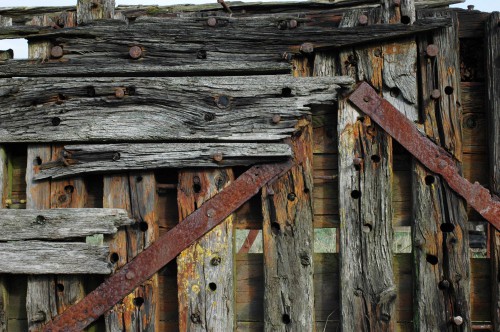
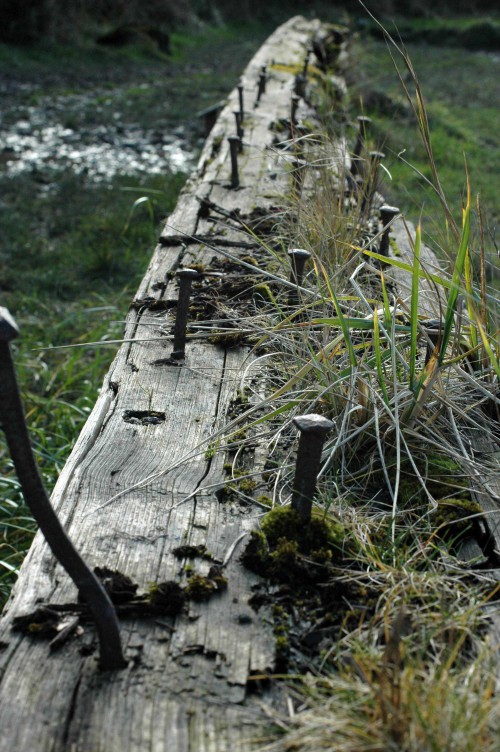
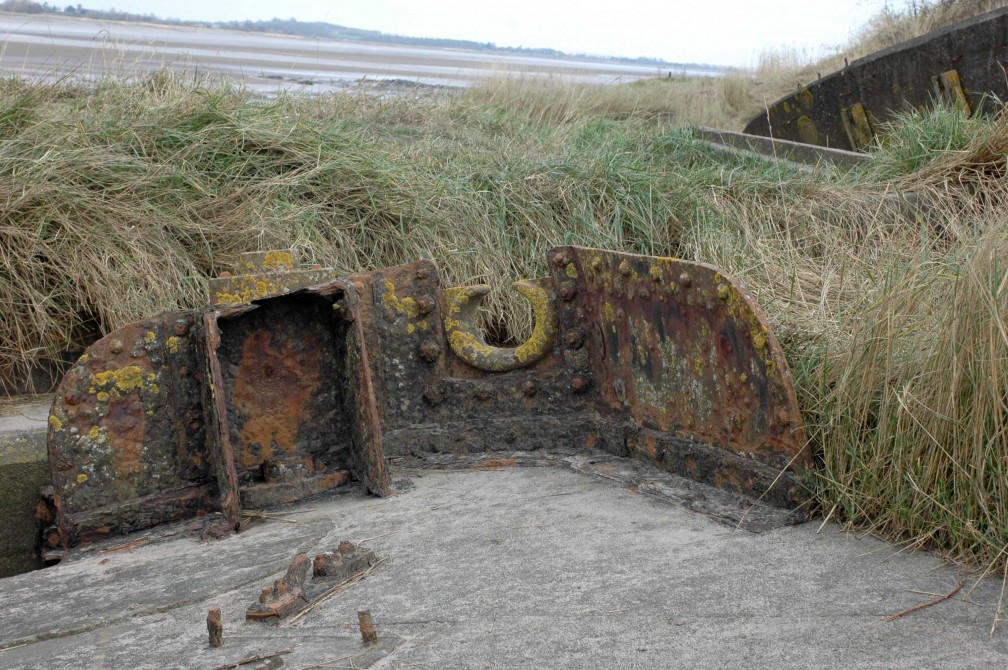
The photographic opportunities here are endless and would vary tremendously depending on the season and the weather. As ever my eye was drawn to the details, the rusting mechanisms, hand-made nails and bolts, weathered  lichen-encrusted wood.

150218TGBR114-Sheerness150218TGBR119-Sheerness150218TGBR115-Sheerness- Twisted nail150218TGBR117-Sheerness-Lichen on old barge150218TGBR85-Sharpness-Rusting nut and bolt

Today this is a peaceful and atmospheric spot befitting of a final resting place, and it was a privilege to have had the opportunity to see it before the boats and the part they played in the river’s history are absorbed back into its wild watery landscape.

150218TGBR133-Sheerness150218TGBR135-Sheerness150218TGBR136-Sheerness

150218TGBR126Sheerness-River Severn

A tall engraved memorial has been erected to name and commemorate the vessels located here.

Names of the vessels 'buried' here

Names of the vessels ‘buried’ here

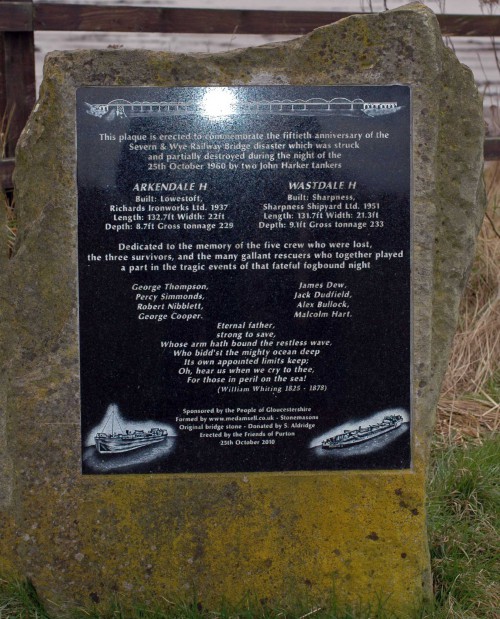
And another in memory of the two vessels lost in the Severn Railway Bridge disaster.

Memorial to the two vessels lost in the Severn Railway Bridge disaster

Memorial to the two vessels lost in the Severn Railway Bridge disaster