• Home
  • about
  • about the photographs
  • Local Nature Reserves
    • Bryn Euryn Local Nature Reserve
    • Mynydd Marian
  • Wales Coast Path
    • Grey Seals in North Wales
    • St.Trillo’s Chapel
    • Wildflowers of North Wales Coastal Paths, Cliffs and Dunes

everyday nature trails

everyday nature trails

Category Archives: North Wales

Getting to know my new neighbours

07 Saturday Feb 2015

Posted by theresagreen in Bryn Euryn Nature Reserve, Nature, Nature of Wales, nature photography, Rhos-on-Sea, woodland birds

≈ 4 Comments

Tags

blackbird, Blackcap, Blue tit, Bullfinch, coal tit, dunnock, Great Tit, grey squirrel, redwing, Robin, wood pigeon

The beginning of this year has been a busy one and I’ve been distracted and often frustrated by the myriad of mostly mundane issues involved in moving home, but it’s all done and dusted now and at last I can get back to more enjoyable activities. I haven’t moved far and I know my new location is going to be the perfect base from which to carry on discovering more about the rich and varied habitats and wildlife of this part of North Wales.

A good few of my posts have related to the nature reserve of Bryn Euryn, the big bulky hill around whose base much of Rhos on Sea is built and my new home, on its eastern slope couldn’t have put me into closer contact with it. The beginning of a public footpath leading up onto the Bryn’s Woodland Trail is within a few metres of the entrance to the apartment block I live in now.

Early morning view

Early morning view to the east across Colwyn Bay

The views from the living room of my top-floor flat, although partially screened by trees, are ones I have photographed many times, albeit from higher up on the hilltop and then from the kitchen window the steeply rising wooded hillside is just a few metres away. Thanks to residents on the ground floor who put food out for the birds, I have a wonderful eye-level view of an array of woodland birds making the most of the food on offer.

There are almost always wood pigeons somewhere close by, most often perched up high surveying the busy little birds flitting about below. Pigeons nest pretty much all year round and on several occasions in the past weeks I have seen birds carrying sticks, probably for running repairs.

Wood Pigeons keep an eye on an approaching Grey Squirrel

Wood Pigeons keep an eye on an approaching Grey Squirrel

Sometimes they descend from their lofty perches allowing a closer look at their lovely softly-shaded plumage.

A handsome Wood Pigeon

A handsome Wood Pigeon

Other larger birds I see on a regular basis are a pair of crows and a pair of magpies, who also strut around on the lawn and there have been a few glimpses of jays.

Where there is food on offer then there are bound to be opportunistic grey squirrels, there are several that scamper about amongst the trees here on the woodland edge. They generally get a bad press, but I love watching them, they are entertaining and clever and you have to admire their incredible agility. They are rather photogenic too.
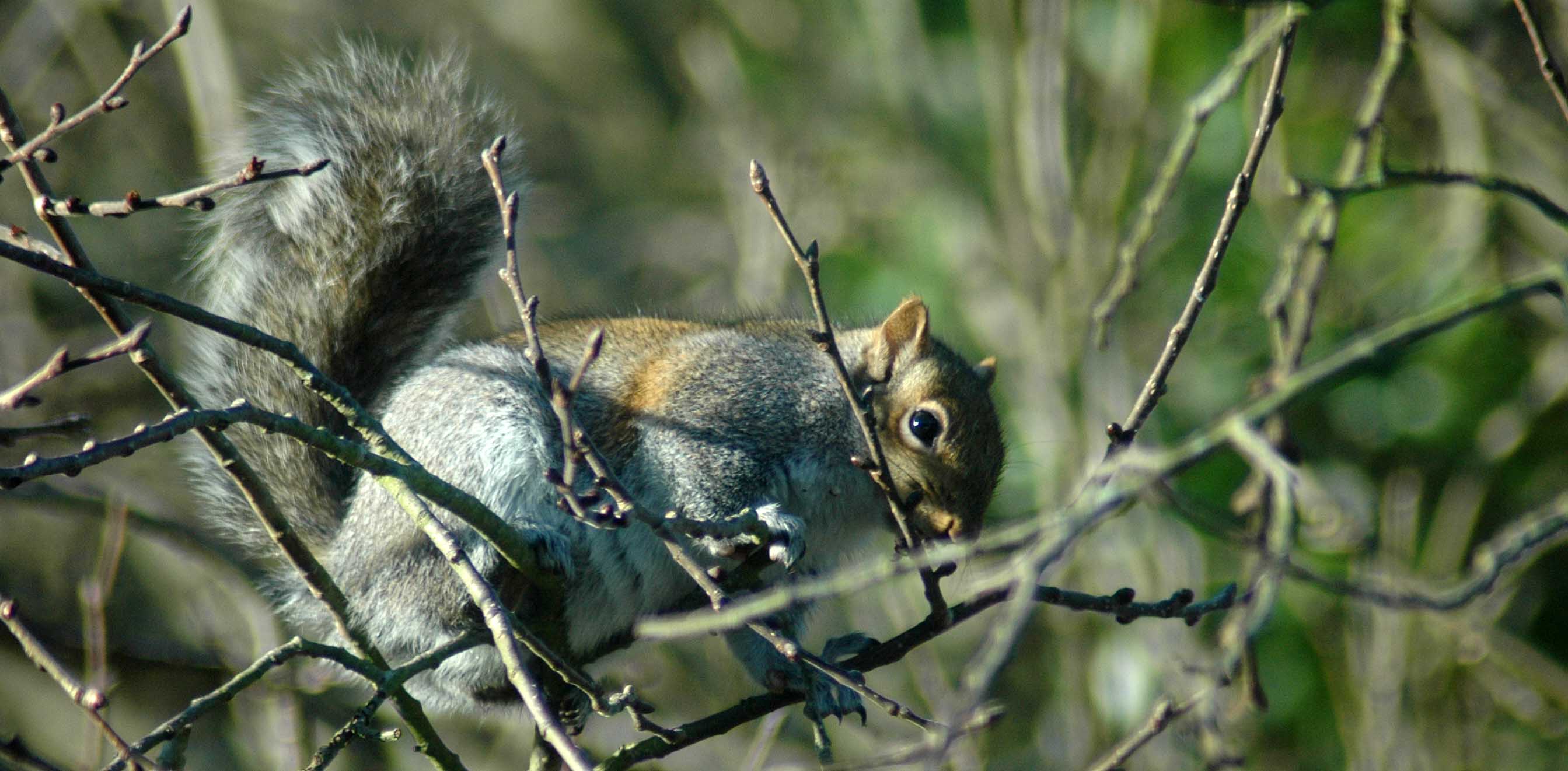
One of the squirrels nibbling on a twig

One of the squirrels nibbling on a twig

A photogenic Grey squirrel

A photogenic Grey squirrel

There are always blackbirds of course and recently both males and females have become more territorial. Males are singing and there are many chases amongst those that arrive for food;  first arrivals see off those that may follow. I have no idea which, if any, are regular visitors, particularly since I watched the piece on TV about the Holt Blackbird Project, where the blackbirds are fitted with different combinations of coloured leg tags and residents monitor their comings and goings. To quote from the published results:  One of the really incredible outcomes of the project is an understanding of the sheer number of birds that use the garden during the breeding season. The greatest number of individuals recorded on one day was 74, and even then there were some unringed birds still present. So, next time you see ‘your’ pair of Blackbirds in the garden, remember that they may not be exactly who you think they are!  Who knew? I always knew there were a good few of them around, but as you only really see them singly or in twos or threes when they’re establishing territory, those numbers seem incredible. I have given a link to the article about the project, which makes fascinating reading.
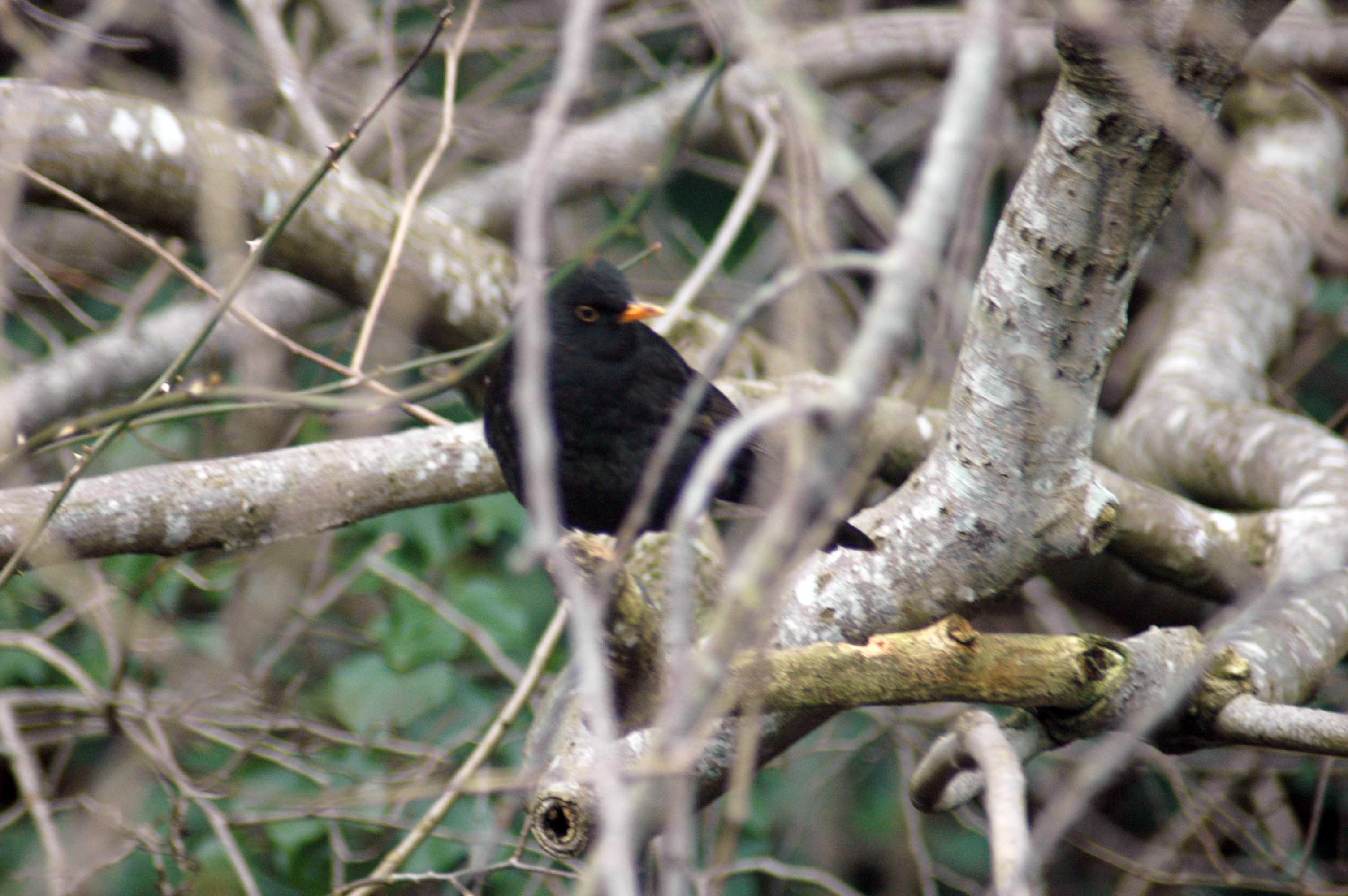
Male blackbird

Male blackbird

Female blackbird

A dark and well-marked female blackbird
A lighter female blending perfectly in amongst the sunlit twiggy tree branches

A lighter female blending perfectly in amongst the sunlit twiggy tree branches

There are thrushes about too, or at least one anyway. Back in early January I heard one singing early one morning from a tree in the front grounds, when it was barely light. I thought it was most likely to be a mistle thrush as they are early nesters, but I am not at all sure and was even less sure when I heard more singing at 7.25am in the morning a week later, this time at the back of the building and looked out of the bedroom window to see him singing away illuminated by a nearby security light.

150109TG-Thrush singing (1) -Bryn Euryn (DC)

9th January – A thrush singing from high in a tree

Robins have been singing for a few weeks now too and as with the blackbirds, there is no peace for those that venture in for food; as soon as one perches another is almost sure to swoop in and there are frequent chases through the vegetation.
A robin enjoying a rare moment of peace in the sun

A robin enjoying a rare moment of peace in the sun

So far, the finches I have seen here have been goldfinches and chaffinches, but on Tuesday a lovely female bullfinch was here for a while. I was expecting to see a male with her, but alas no sign of one, so perhaps it was a young one that hasn’t got a mate yet.

3/2/15-Bullfinch female

3/2/15-Bullfinch female

There are no house sparrows and I miss their noisy chirping and cheeping, and no starlings either, but I still have contact with both when I go back down the hill to visit my daughter. There are dunnocks though. Male dunnocks are singing now too.

Of the frequent visitors, Blue tits are the most numerous and there can be several here at any one time. They seem to have an orderly queuing system, each one taking food then taking leave or sometimes carrying it back to a nearby branch to eat it. There are more feeders in the garden next door and there is much commuting back and forth.

150203TG-Kitchen window-Blue Tit

Blue tit

There are only ever two Great tits present at any one time, a male and a female. They have a  more business-like approach to their feeding and although they make regular visits, they do not hang around once they have what they came for.

Female great tit

Female great tit

There are one, or perhaps two delightful little Coal tits too. Their approach in to the feeding site is more discreet than that of the Blue tits, made via the lower twiggy branches of the shrubby trees. They are also quick to leave once they have taken food.

Coal tit

Coal tit

A small flock of glorious Long-tailed tits flutter in intermittently as they make their rounds, but I haven’t managed to photograph them here yet.

One morning I looked  out of the window and saw a bird that I didn’t immediately recognise, although it did look a bit thrush-like. I ran to get my camera and got just one image, through the glass, that I hoped would help with my identification. I had a feeling it was a redwing, but I hadn’t seen one for some years and couldn’t quite make the image I had fit with those in my books. I thought then maybe it was a sparrowhawk- right place, similar stance on the branch…? Anyway, I have been put right by fellow blogger Tony, who despite the not-so-brilliant quality of the image, immediately spotted it was indeed a redwing! I’m delighted – it’s another species to add to my list and to look out for again and I’m sure a sparrowhawk will be along any time soon.

150104TGBRD-Kitchen view 12- Sparrowhawk

Redwing-Turdus iliacus

Tuesday this week (the day I saw the bullfinch) was a glorious sunny day and a few of the birds took advantage of the warmth to take brief respite from their hectic feeding schedules to sit in the sunshine. I looked across to the laurel hedge and spotted a bird nestled into a small space framed by leaves. My eye was drawn by its pale-coloured breast, but it wasn’t until I looked through the camera lens that it occurred to me it was a blackcap, a female.

4/2/15-First glimpse of the female blackcap

4/2/15-First glimpse of the female blackcap

She ventured out onto a twig in the sunshine

She ventured out onto a twig in the sunshine

150204TGDC-Blackcap female first sighting this year (4)

She sat in the sunshine for a short while before flying off

She stayed around for a good few minutes, then moved across to an evergreen shrub in the neighbouring garden for a while before flying off. I expected to see a male somewhere near her, but as with the bullfinch there was no sign of one. More about blackcaps here.

Thursday morning was again gloriously sunny and a much warmer day too and a few minutes spent watching the usual comings and goings brought forth two more additions to my list. Firstly a glimpse of a greater spotted woodpecker high up in a tree, half-hiding behind a branch, then even more excitingly a tiny goldcrest. I was fairly sure I’d seen one here flitting about in the vegetation on a couple of occasions previously, and I stopped to watch one on my walk on Tuesday, but this was a really good, though brief sighting that confirmed my previous sightings weren’t just wishful thinking. We have a good number of conifer trees close by, which they like to use as nest sites, so I’m hoping to see more.

Share this:

  • Share on Facebook (Opens in new window) Facebook
  • Share on Pinterest (Opens in new window) Pinterest
  • Share on X (Opens in new window) X
Like Loading...

A summer evening’s walk on the Bryn

20 Sunday Jul 2014

Posted by theresagreen in Bryn Euryn Nature Reserve, Nature, Nature of Wales, nature photography, North Wales, Wildflowers of Wales

≈ 8 Comments

Tags

carline thistle, common soldier beetle, forest bug, harebell, hemp agrimony, hogweed, mating red beetles, Meadow Brown, rowan berries, tapered drone fly

There’s no such thing as a bad time to enjoy a walk on Bryn Euryn, but during the longer daylight hours of the summer, an early evening during the week can be the perfect time to find it quiet and peaceful.

The woodland is almost silent now, with just the occasional rustle from the undergrowth or the flash of a skulking bird to remind you that you are not alone here. It reminds me of such walks in the woods around the cottage I grew up in, at an age when my imagination frequently ran riot and I was convinced I was being watched from every tree and shrub. By what or whom I’m still not sure, but I can clearly remember that feeling  on summer evenings such as this, when the silence is almost tangible.

Out in the open insects are making the most of the late sunshine to stoke up on nectar fuel for the night.  Hogweed is in flower and almost every umbel has at least one pair of mating soldier beetles.

Soldier beetles mating on a hogweed flower

Soldier beetles mating on a hogweed flower

The slightly cooler temperature of an early evening can make it easier to photograph some insects as they are intent on feeding and move a little slower.

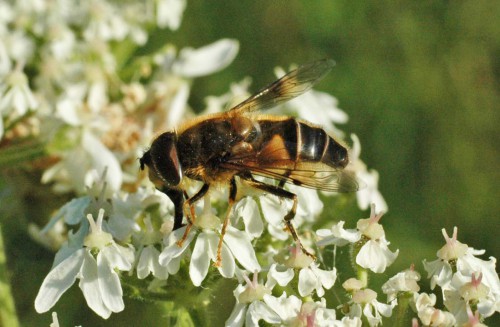
A Tapered Drone Fly- Eristalis pertinax on hogweed

A Tapered Drone Fly- Eristalis pertinax  (male) on hogweed

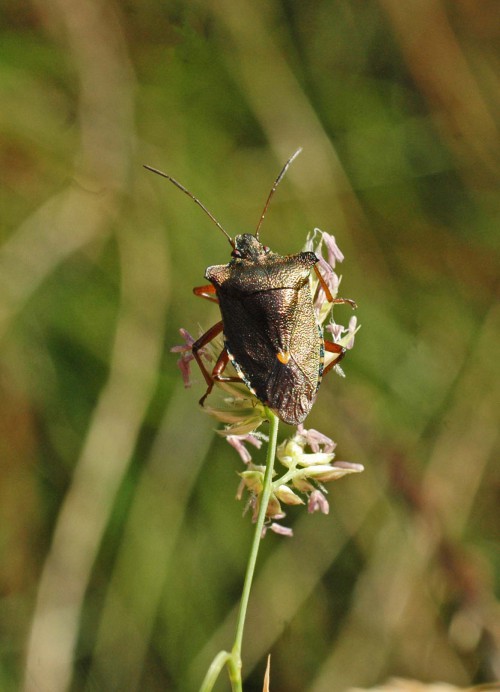
A movement at the top of a long grass stem caught my eye and I found this lovely Forest bug balancing there. It has a lovely bronzy sheen to its wing-cases.

Forest bug- Pentatoma rufipes

Forest bug- Pentatoma rufipes

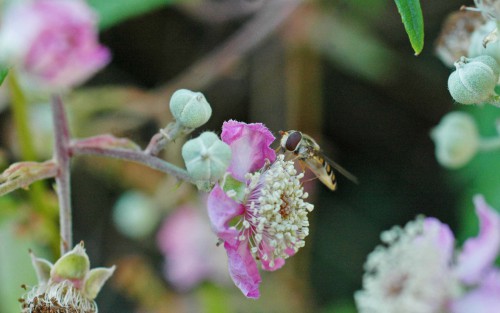
Brambles are beginning to develop berries, but there are still flowers on some bushes attracting bees and hoverflies.

Marmalade fly on a bramble flower

Marmalade fly on a bramble flower

One of my favourite wildflowers, the Harebell is in fresh full bloom now. Sometimes they find themselves growing in goups, caught up amongst long grass stems where they grow longer stems to reach the open air.

Harebells in long grass

Harebells in long grass

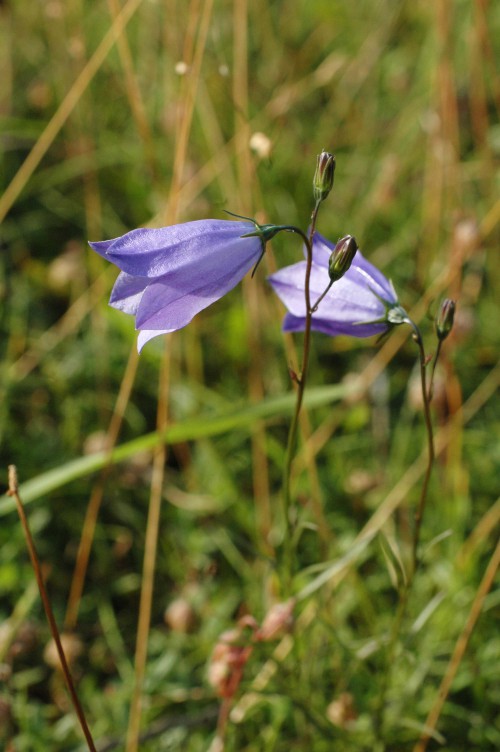
I love to see them best growing from shorter turf, their beautiful blue bells held aloft on sturdy wiry stems where they can turn towards the sun and nod and wave freely in the breeze.

Harebell- Campanula rotundifolia

Harebell- Campanula rotundifolia

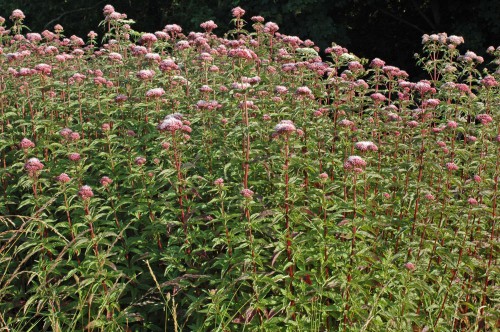
An important summer nectar flower, Hemp Agrimony, whose dusky pink flowers are relished by some species of butterflies is also blooming now. The impressive stand of it in my photograph was in shade this evening, so no visitors; I’ll have to come back earlier on a sunny day.

An impressive stand of Hemp Agrimony

An impressive stand of Hemp Agrimony

While some plants are at the peak of their flowering, others are already beginning to produce their fruits. I mentioned blackberries earlier, which are just beginning to form, but there are wild-growing raspberries here that are perfectly ripe. I couldn’t resist picking and eating a few; sorry birds.

Wild raspberries

Wild raspberries

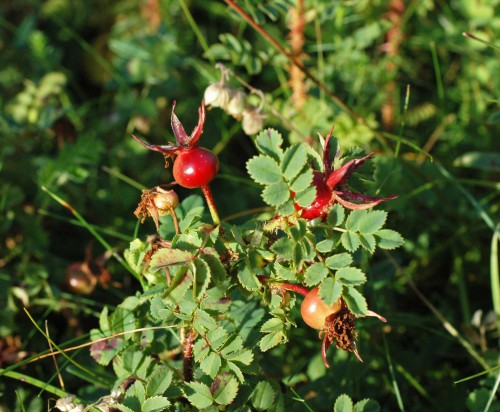
The hips on the Burnet Roses are formingly nicely, already a good size and red in colour, they will get bigger yet and turn black.

Burnet Rose hips forming

Burnet Rose hips forming

There are tiny acorns on the oak trees too.

Tiny acorns forming on the oak trees

Tiny acorns forming on the oak trees

And the Rowan trees have ripening berries.

Ripening Rowan berries

Ripening Rowan berries

Back into the woods for a short while and its very quiet, although I have heard a Chiffchaff as I’ve been walking around and disturbed a young Robin where it was pecking around on the damp earth of the track. Emerging back into the sunshine onto the grassy hillside I also disturbed a rabbit that raced off up the steep hill in front of me. I watched its white cotton tail bobbing away and envying the effortless way it bounded up there. There are a lot of rabbits here that do a great job of grass-keeping in certain areas, but you don’t see them often.

Run, rabbit

Run, rabbit

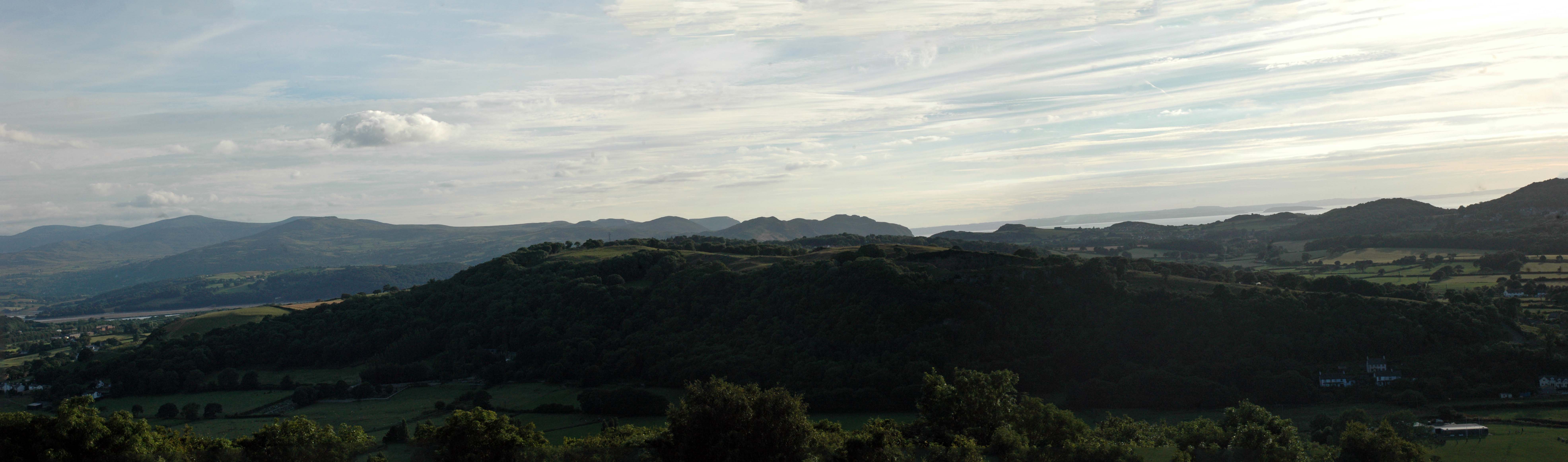
Almost at the top of the hill I stopped to gaze at the view as I always do. That’s not just to catch my breath, although it helps, but it’s a stunning view whatever time of day or year you’re admiring it. I love it when as now the sun is lower in the sky and shadows sculpt the hills. The sky was particularly interesting this evening too.

Evening panorama from Bryn Euryn. (click on image for a better view)

Evening panorama from Bryn Euryn. (click on image for a better view)

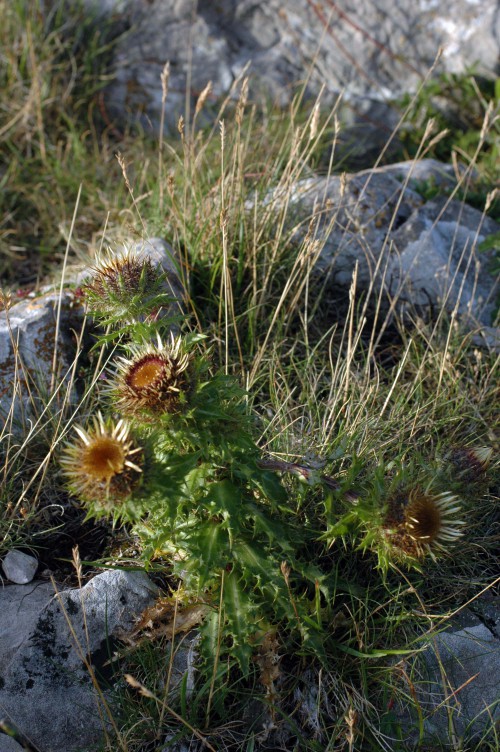
On the rockier summit of the hill, where the soil is thinner and more calcareous, the fascinating Carline thistle thrives. For much of the year you can see the dried out remains of the leaves and flowers, but now is the time to catch it coming into full curious flower. I will go into more detail about this plant in a later post.

Carline thistles growing amongst rocks

Carline thistle growing amongst rocks

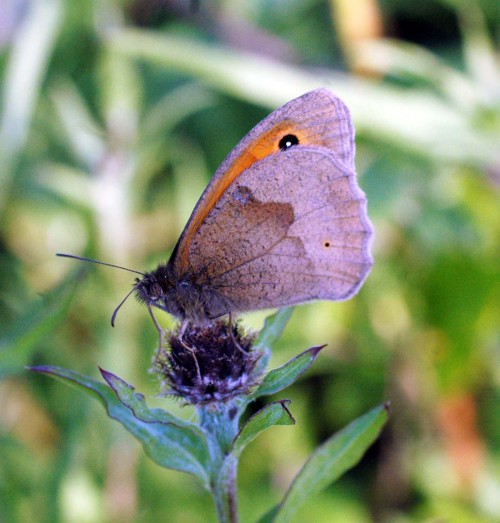
I had seen a few butterflies during the course of my walk, all fluttering around in the long grass. There were a few Small Heaths, but most were Meadow Browns. Just as I was heading back towards a woodland path to head back to the car, this one fluttered into view and landed on the tight bud of a knapweed flower. I was really pleased, as although this is an abundant species here, they are rarely this obliging and views such as this are not often offered.

Meadow Brown butterfly on the bud of a knapweed

Meadow Brown butterfly on the bud of a knapweed


Share this:

  • Share on Facebook (Opens in new window) Facebook
  • Share on Pinterest (Opens in new window) Pinterest
  • Share on X (Opens in new window) X
Like Loading...

More on Llanddwyn Island

24 Monday Feb 2014

Posted by theresagreen in Anglesey, Nature, Nature of Wales, North Wales

≈ 8 Comments

Tags

lighthouse, mélange rock formations, Menai Suspension Bridge, Newborough Warren and Llandwyn Island, pillow larva, St Dwynwen's chapel

Writing the recent post about St Dwynwen made me want to get back over to Anglesey and pay another visit to Llanddwyn to see how the restored chapel was looking, so as last Sunday was a brilliantly sunny day and not too windy, that’s what I did.

Walking along the beach the effects of recent stormy weather on the dunes was very evident. The sand has been eroded quite dramatically, causing trees to lose their footing and slip down onto the beach below.

Significant erosion of the sand dunes

Significant erosion of the sand dunes

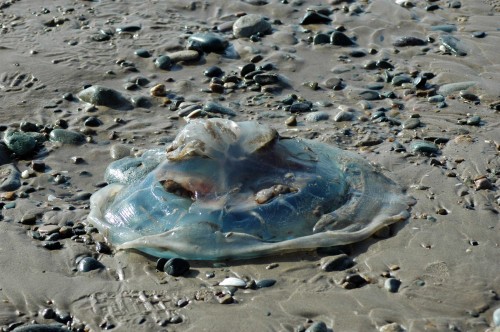
The retreating tide had left a few big jellyfish stranded on the sand, some looking very battered and torn; I don’t know how you tell if a jellyfish is dead or alive.

A rather battered large jellyfish

A rather battered large jellyfish

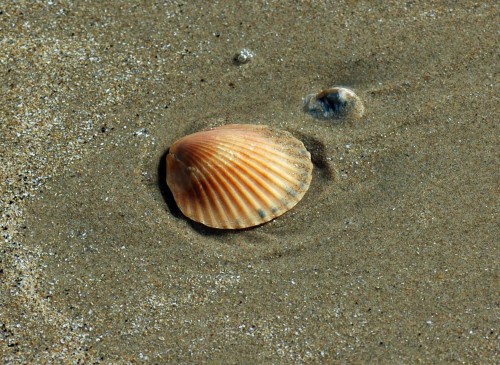
Scallop shell

Scallop shell

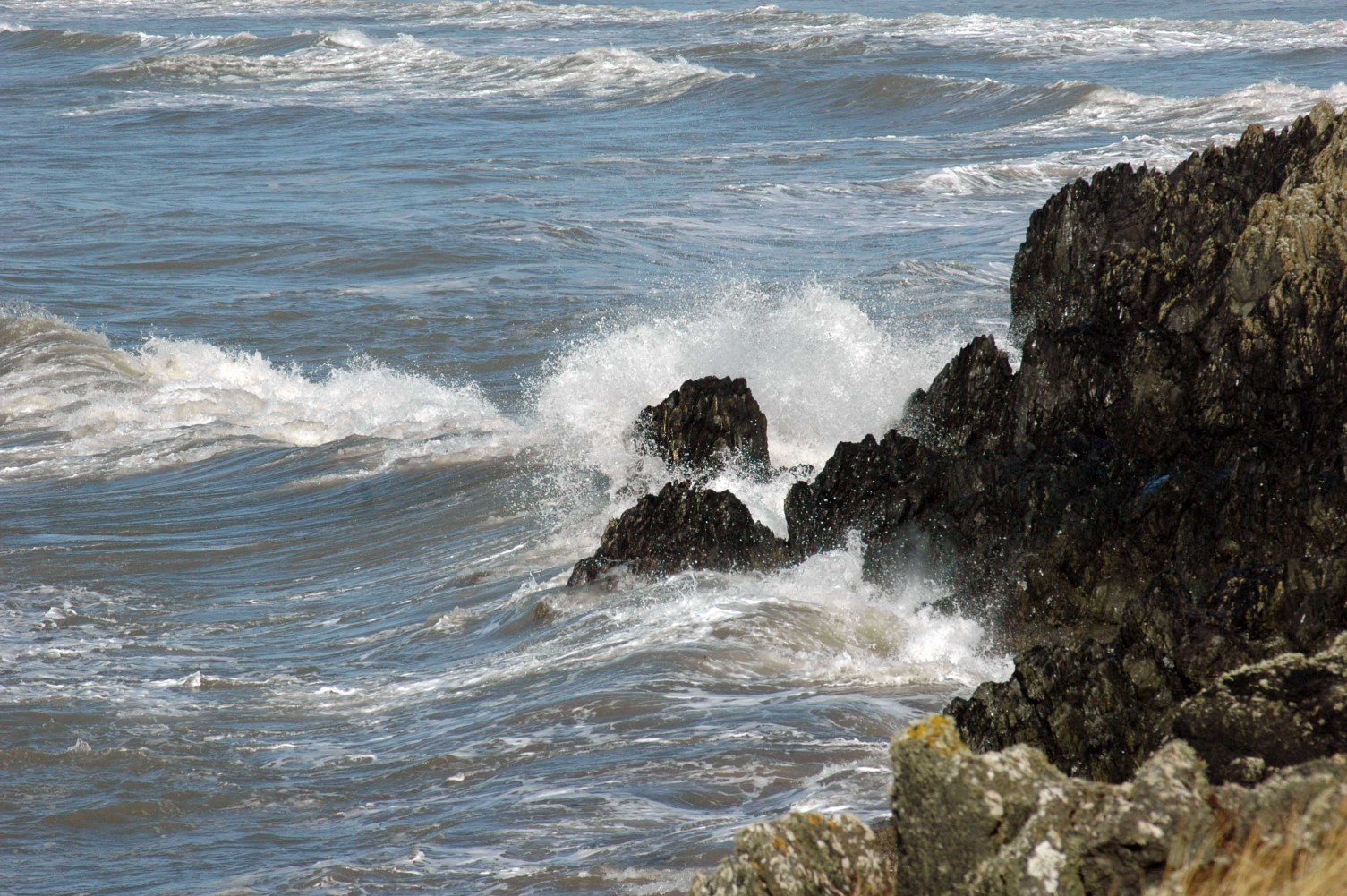
One of the things that fascinated us as children was that arriving on Newborough beach, the sea in front of us would usually be fairly calm and flat but as you get nearer to Llanddwyn Island you mysteriously hear roaring sea and when you arrive, through the gaps in the rocks that tentatively connect the tip of the island to the mainland, you glimpse white-crested waves crashing in.

Through the rocks to the far side of the Island

Through the rocks to the far side of the Island

Waves splashing onto rocks

Waves splashing onto rocks

Following the boarded pathway around the outside of the island I was surprised by the numbers of Herring gulls that had gathered here. There were dozens of them dotted closely over one of the small rocky islets just offshore and many more floating around in ‘rafts’ on the sea.

Rocky Island dotted with Herring Gulls

Rocky Island dotted with Herring Gulls

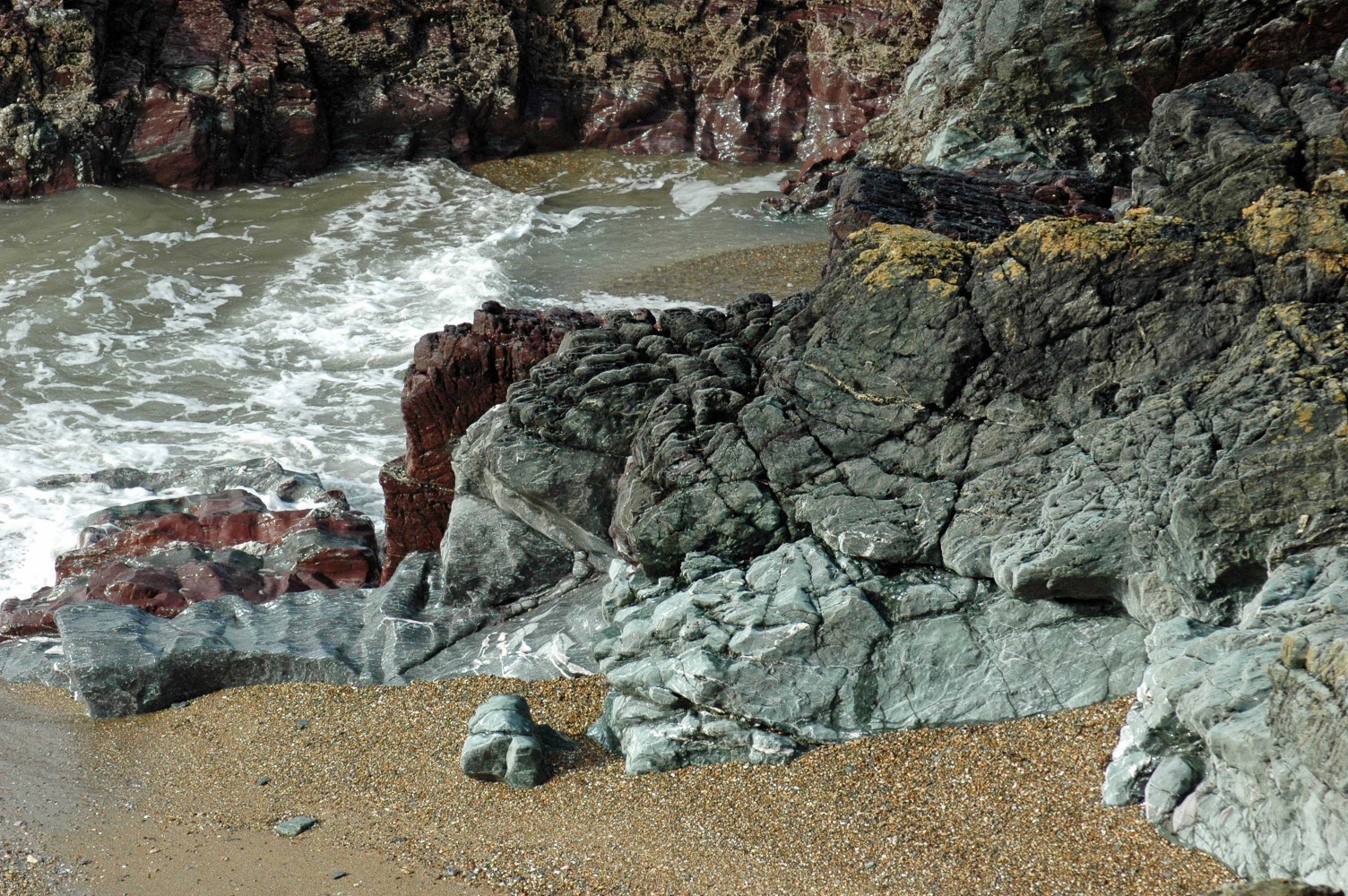
The island is famous for spectacular rock formations called pillow lavas and mélange. The mélanges contain colourful mixtures of different rock types including quartzite, schist and limestone.

An outcrop of multi-coloured rock

An outcrop of multi-coloured rock (click for better effect)

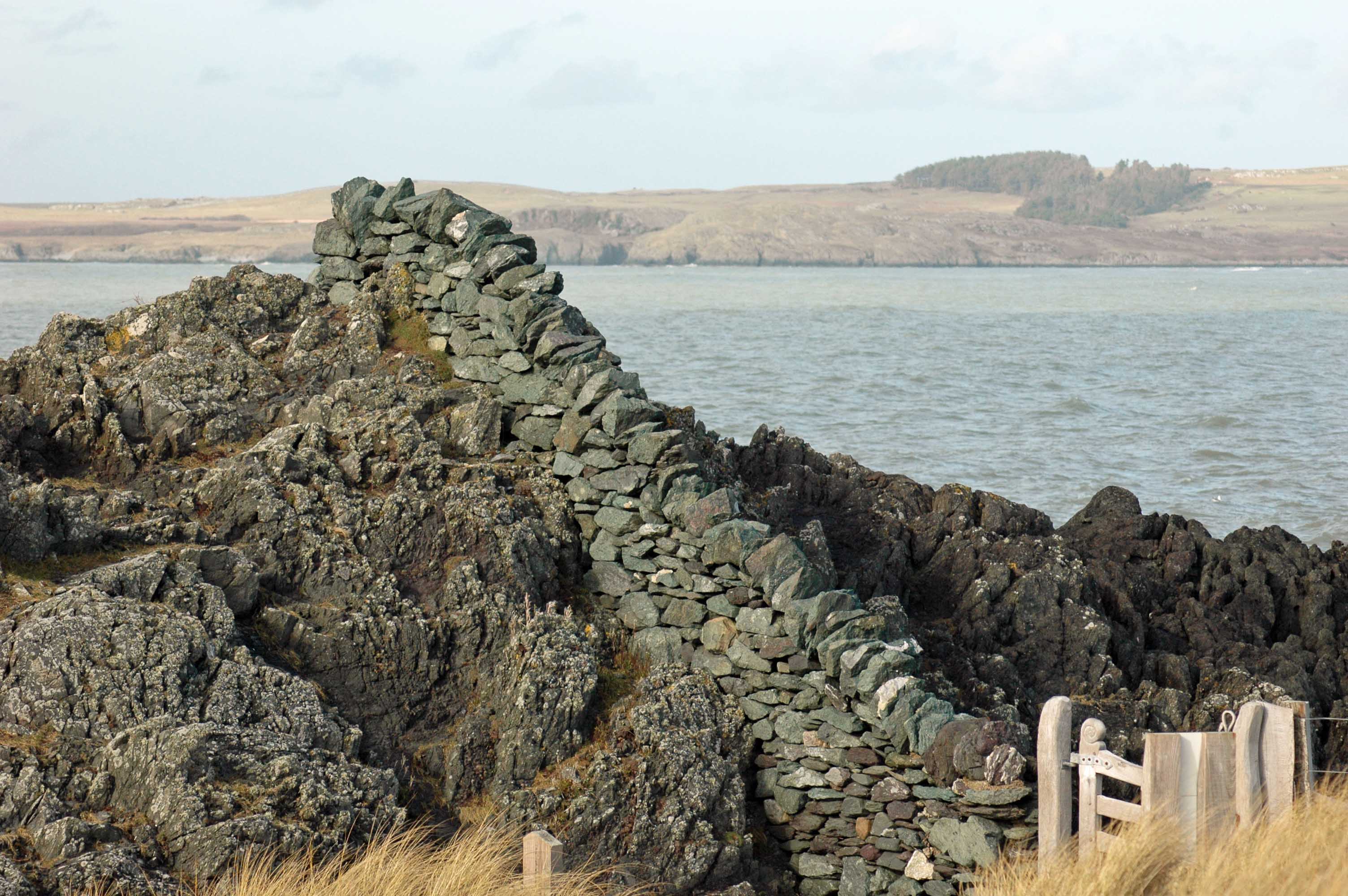
The sight of a dry-stone wall built down a rocky outcrop seems rather random, but I assume it’s to stop the island’s resident Soay sheep and horses from getting onto the beach below, although they have all been taken somewhere more sheltered for the winter.

Green stone wall built onto the rocks

Green stone wall built onto the rocks built to prevent sheep and horses from getting onto the beach?

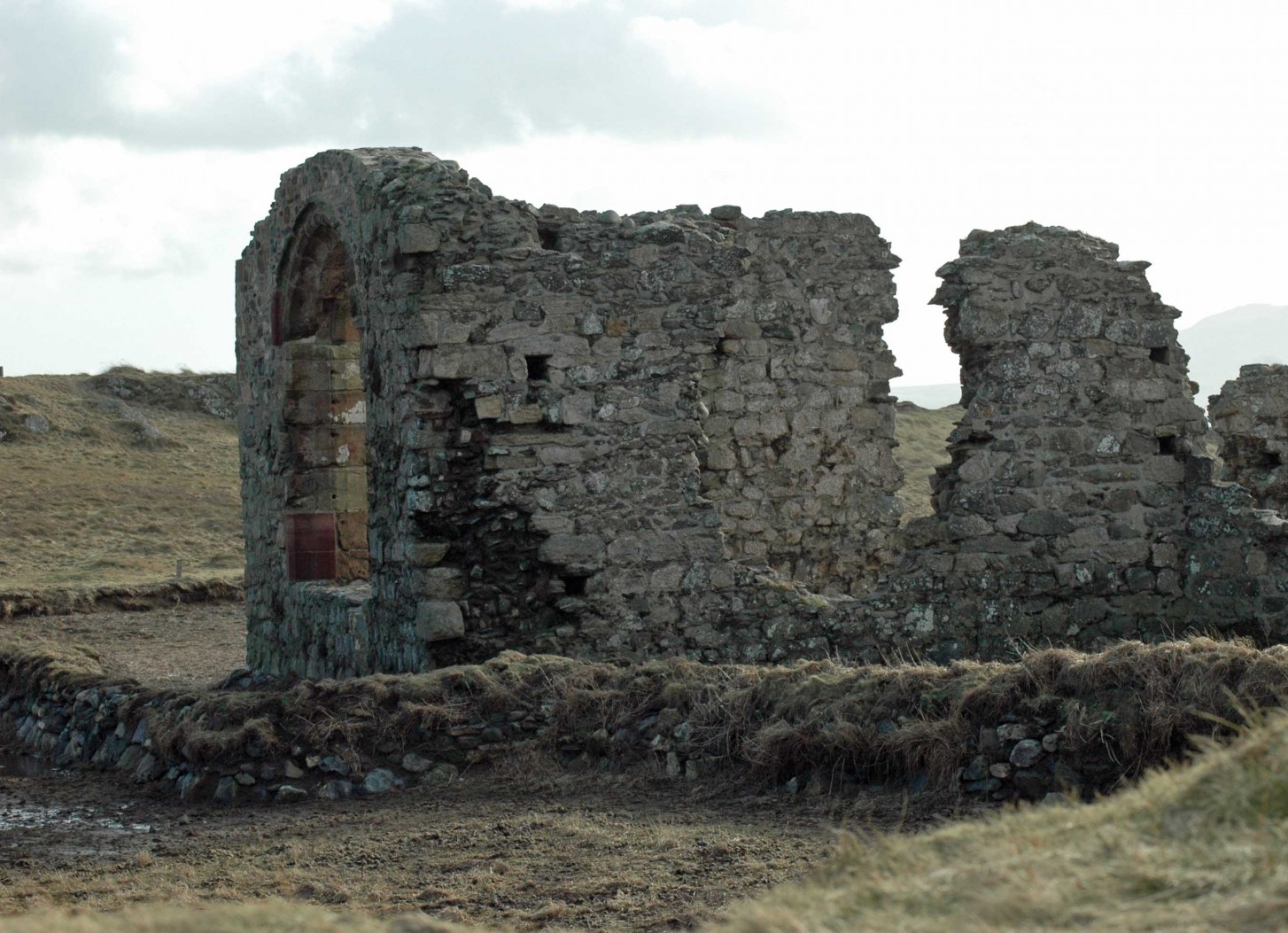
The decision to only partially restore the chapel was a good one I think. Aesthetically, ruins in locations such as this lend more of an atmosphere, but I fear the reasons for it are more prosaic. If a building here was made weatherproof and accessible it would probably either be vandalised or unofficially lived in. Or both.

The recently restored chapel of St Dwynwen

The recently restored chapel of St Dwynwen

Lighthouse, Twyr Mawr, sparkling sea and a background of the Llyn Peninsular

Lighthouse, Twyr Mawr, sparkling sea and a background of the Llyn Peninsular

A raft of herring gulls riding the waves

A raft of herring gulls riding the waves

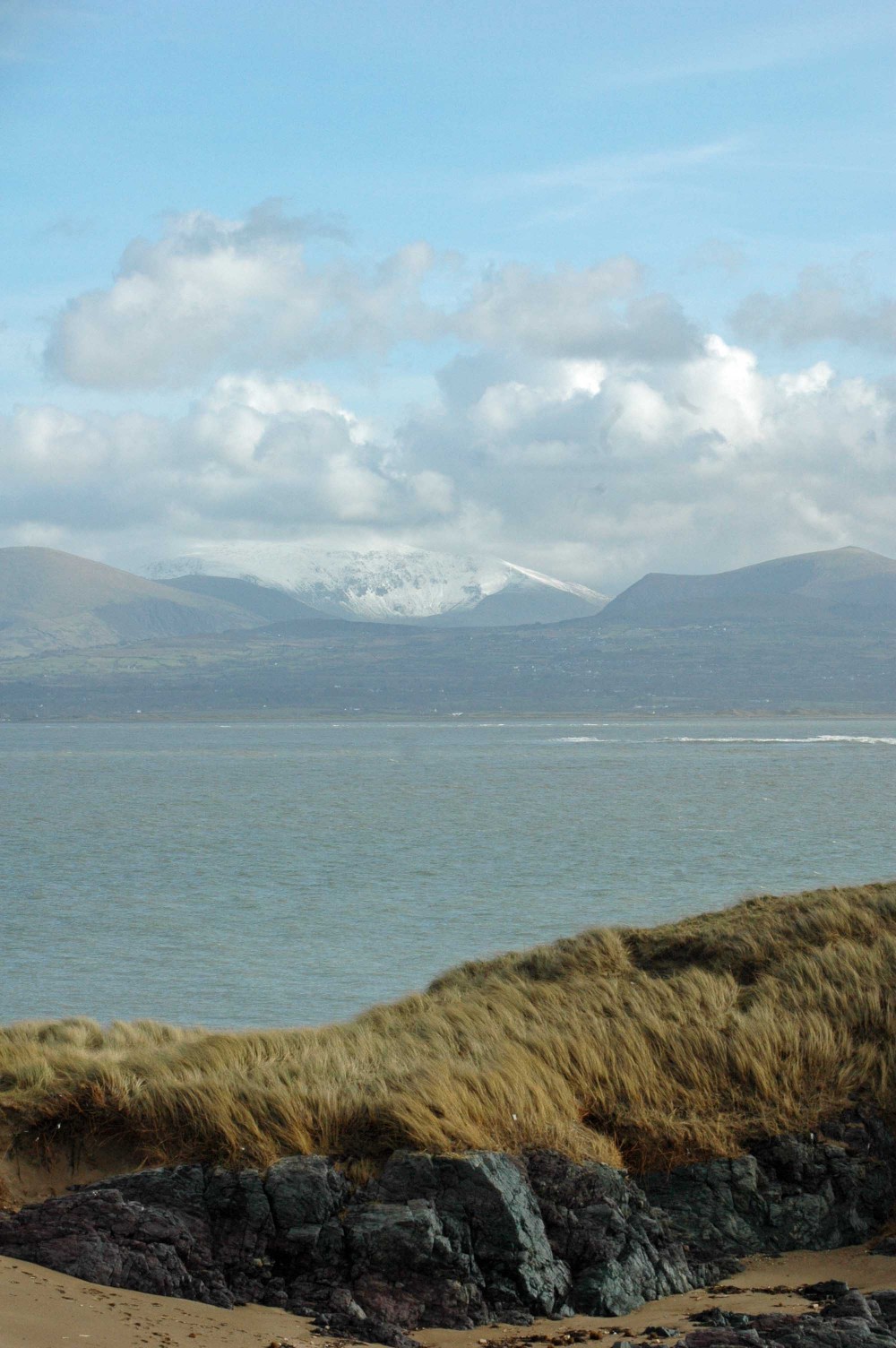
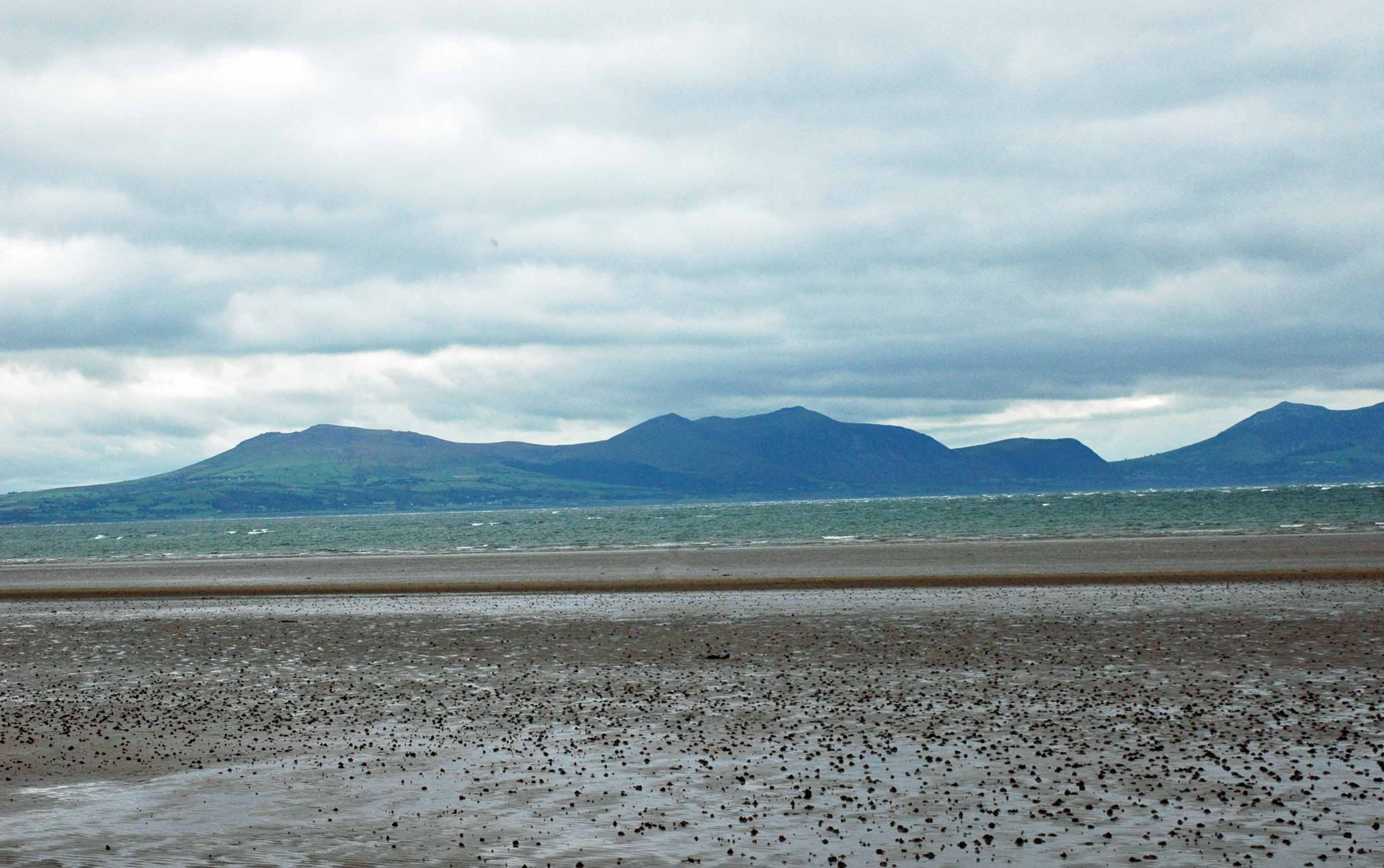
Snow-capped mountains across the bay

Snow-capped mountains across the bay partially obscured by cloud

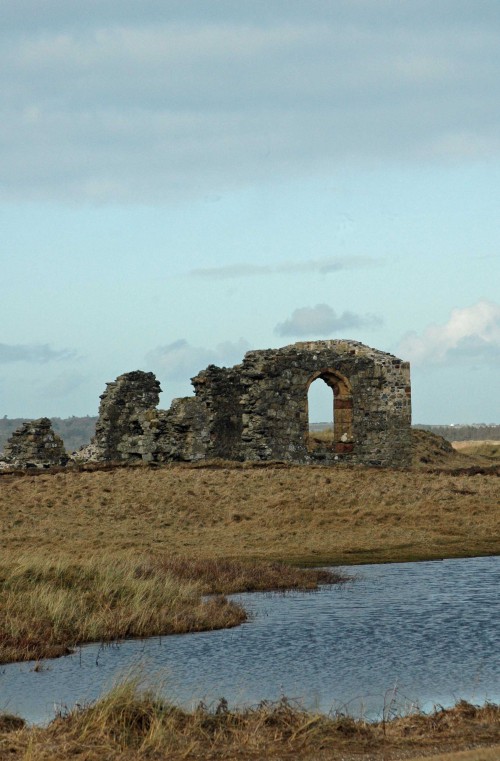
St Dwynwen's chapel across a pool of standing water

St Dwynwen’s chapel across a pool of standing water

The restored chapel

The restored chapel

St Dwywen's Cross & mountain view through the chapel arch

St Dwywen’s Cross & mountain view through the chapel arch

Far side of Newborough beach & forest

Far end of Newborough beach & forest

Newborough sands-people walking, kite-surfing & snowy mountains

Newborough sands-people walking, kite-surfing & snowy mountains

Pillow larvas were formed 580 million years ago. Molten larva from the earth’s mantle bubbled up through cracks in the seabed. When the larva blobs hit the cold seawater they quickly cooled and hardened, creating the intriguing rock ‘pillow’ shapes.

Pillow larva formation on beach

Pillow larva formation on beach

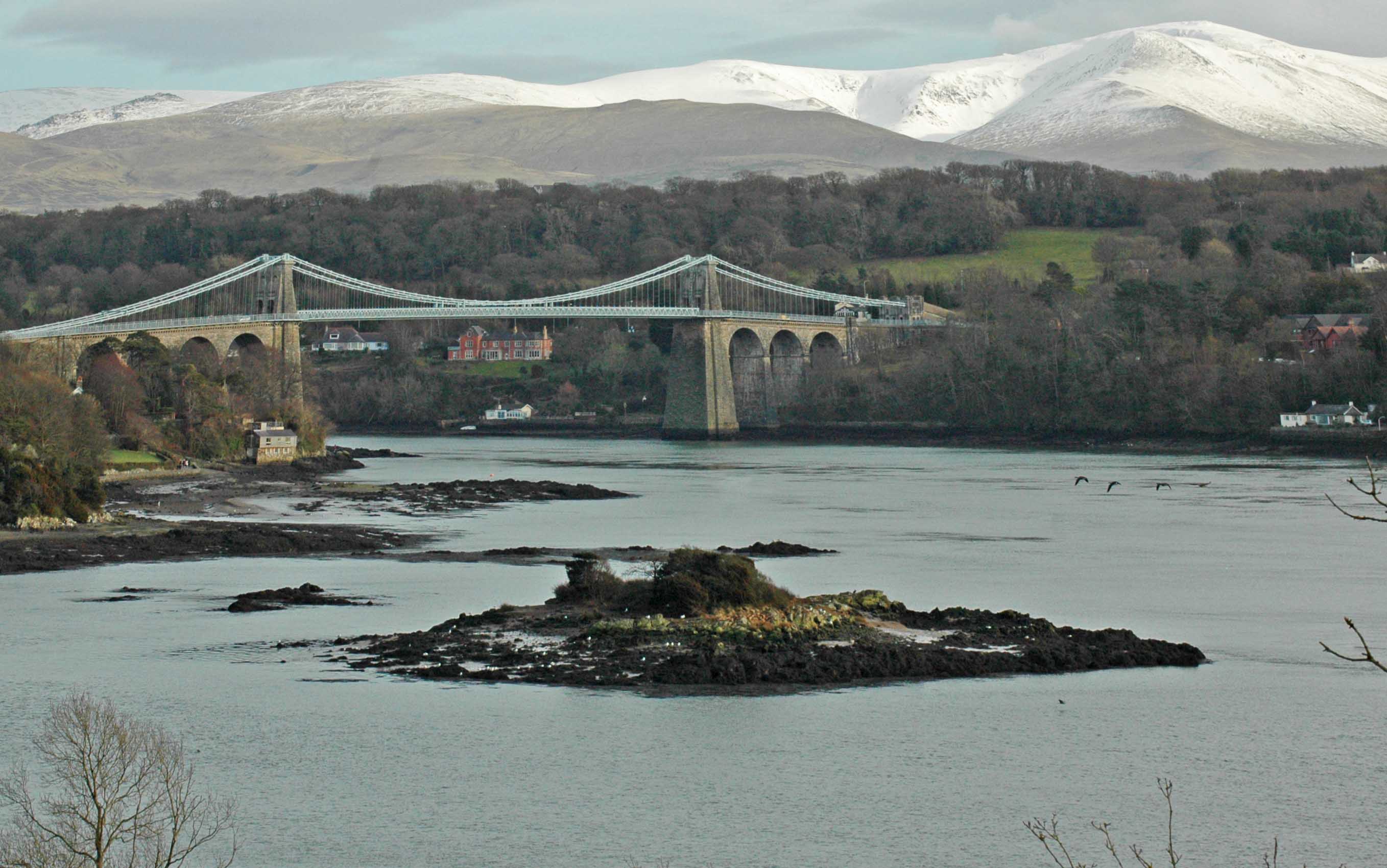
On the way home I couldn’t resist taking a picture of the beautiful Menai Suspension Bridge with emphasis on its backdrop of sunlit snow-capped Snowdonian mountains.

Menai Suspension Bridge

Menai Suspension Bridge

The Menai Suspension Bridge (Welsh: Pont Grog y Borth) is a suspension bridge between the island of Anglesey and the mainland of Wales. Designed by Thomas Telford and completed in 1826, it was the first modern suspension bridge in the world.

Share this:

  • Share on Facebook (Opens in new window) Facebook
  • Share on Pinterest (Opens in new window) Pinterest
  • Share on X (Opens in new window) X
Like Loading...

Happy St. Dwynwen’s Day

13 Thursday Feb 2014

Posted by theresagreen in Anglesey, National Nature Reserves, Nature of Wales, Saints of Wales, Welsh culture and mythology

≈ 6 Comments

Tags

celtic cross, Llanddwyn Island, Newborough Warren and Llandwyn Island, St Dwynwen, Welsh patron saint of lovers

The National Nature Reserve of Newborough Warren and Llanddwyn Island are located on the south-western corner of the Isle of Anglesey, North Wales and will always be one of my favourite places on earth. I have written about the island before, but for St Valentine’s Day this is an extract from an existing page about its connection with Wales’ own patron saint of lovers, St. Dwynwen. (St. Dwynwen’s actual feast day is January 25th).

The name Llanddwyn means “The church of St. Dwynwen”. Dwynwen is the Welsh patron saint of lovers, the Welsh equivalent of St. Valentine, and the island is alternatively named ‘Lover’s Island’.

The view across Newborough beach to Snowdonia

The view across Newborough beach to Snowdonia

The mythology surrounding St. Dwynwen has several slightly varying versions, but the essence of the stories is similar.

Dwynwen lived during the 5th century AD and was one of 24 daughters of St. Brychan, a Welsh prince of Brycheiniog (Brecon). She fell in love with a young man named Maelon, but rejected his advances. This, depending on which story you read, was either because she wished to remain chaste and become a nun or because her father wished her to marry another. She prayed to be released from the unhappy love and dreamed that she was given a potion to do this. However, the potion turned Maelon to ice. She then prayed that she be granted three wishes: firstly that Maelon be revived, secondly that all true lovers find happiness, and last that she should never again wish to be married. She then retreated to the solitude of Llanddwyn Island to follow the life of a hermit.

The plaque in the island’s museum:

St Dwynwen's story

St Dwynwen’s story

Dwynwen became known as the patron saint of lovers and pilgrimages were made to her holy well on the island. It was said that the faithfulness of a lover could be divined through the movements of some eels that lived in the well. This was done by the woman first scattering breadcrumbs on the surface, then laying her handkerchief on the surface. If the eel disturbed it then her lover would be faithful.
Image of St Dwynwen
Visitors would leave offerings at her shrine, and so popular was this place of pilgrimage that it became the richest in the area during Tudor times. This funded a substantial chapel that was built in the 16th century on the site of Dwynwen’s original chapel.
The ruins of St Dwynwen's chapel

The ruins of St Dwynwen’s chapel

Last year (Jan 2013), a project to restore the chapel was begun and below is a link to a short video giving a progress report and some views of the island:

Update: BBC Wales have just showed a news item on the latest status at St. Dwynwen’s – see our lads at work via this link here

Llandwyn Island

The island is beautiful, wild and feels far more remote than it is nowadays. It can be a bleak, windswept place at any time if the year, but especially so in the winter. Here are a few of my views featuring some of the landmarks of the place

The lighthouse with the Snowdonia mountains behind

The lighthouse with the Snowdonia mountains behind

The memorial cross

The Memorial cross is also known as St Dwynwen’s cross

Celtic cross, Llandwyn Island

Celtic cross dedicated to St Dwynwen

The Pilot's cottages and cannon

The Pilot’s cottages now house a museum

Some of the jagged rocks that surround the island

Some of the jagged rocks that surround the island

Share this:

  • Share on Facebook (Opens in new window) Facebook
  • Share on Pinterest (Opens in new window) Pinterest
  • Share on X (Opens in new window) X
Like Loading...

Waiting for the tide to turn

19 Sunday Jan 2014

Posted by theresagreen in Birds, Birdwatching on North Wales coast, Nature of Wales, nature photography, North Wales

≈ 14 Comments

Tags

birds on the seashore, Curlew, dunlin, Oystercatcher, purple sandpiper, rhos on sea, ringed plover, Turnstone, wading birds

Several months and a whole season have come and gone since I posted anything on this blog. It’s been a sad time for me and all of my family as my beloved Dad reached the end of a very long life last September. He was the one that noticed and encouraged my early interests in the nature around us and taught me the names of common wildflowers, butterflies and most particularly birds. He didn’t claim to know everything, but more importantly he gave me the gift of noticing what was there and the encouragement to find information I wanted for myself. He never really got the concept of blogs, or indeed anything to do with computers, but was always interested to hear what I had seen and where I’d been, particularly about the places here in North Wales that he took my sisters and me to spend time in when we were young. Some of those places have remained very special to me and I’m sure that when I visit them, that’s where I’ll always find him.

______________________________________________________________________________

Thank you all for your patience and sticking with me and thank you to new readers that have signed up who must be wondering where I’d disappeared to. While Dad was ill I was spending a lot of time down in my old haunts in Northamptonshire, where my sisters still live, and it was reassuringly familiar and not too greatly changed in the decades I’ve been away. I may do a post or two about our walks there if I am unable to come up with anything more current, but for the time being the so-far mild winter is giving me plenty of opportunity to get out and ideas for posts, starting with this one about the  wading birds that are about now on our local rocky seashore.

2nd January 2104 

A brilliantly sunny day winkled me out of my cosy shell this morning and I set off, camera to hand to see what I could see from the promenade. I realised I had lost track of the ebb and flow of the tides and had no idea of its current state, so was initially quite disappointed to see that it was fully in and very high. That meant there would be no waders to be seen picking their ways through the rocks that strew the shoreline of Rhos Point pecking and probing the muddy sand in search of food. But I’d made the effort to get myself out and I wasn’t about to go home with nothing, so I thought I’d at least walk for a way for some much-needed exercise and if nothing else there may be a Rock Pipit or two on the rocks or the sea wall. The sea was as blue as the sky and ruffled by what I was feeling as a bitingly cold breeze. I hadn’t walked far when I noticed a largish bird swimming around on the water, meandering randomly and frequently diving and disappearing under the surface for minutes at a time.

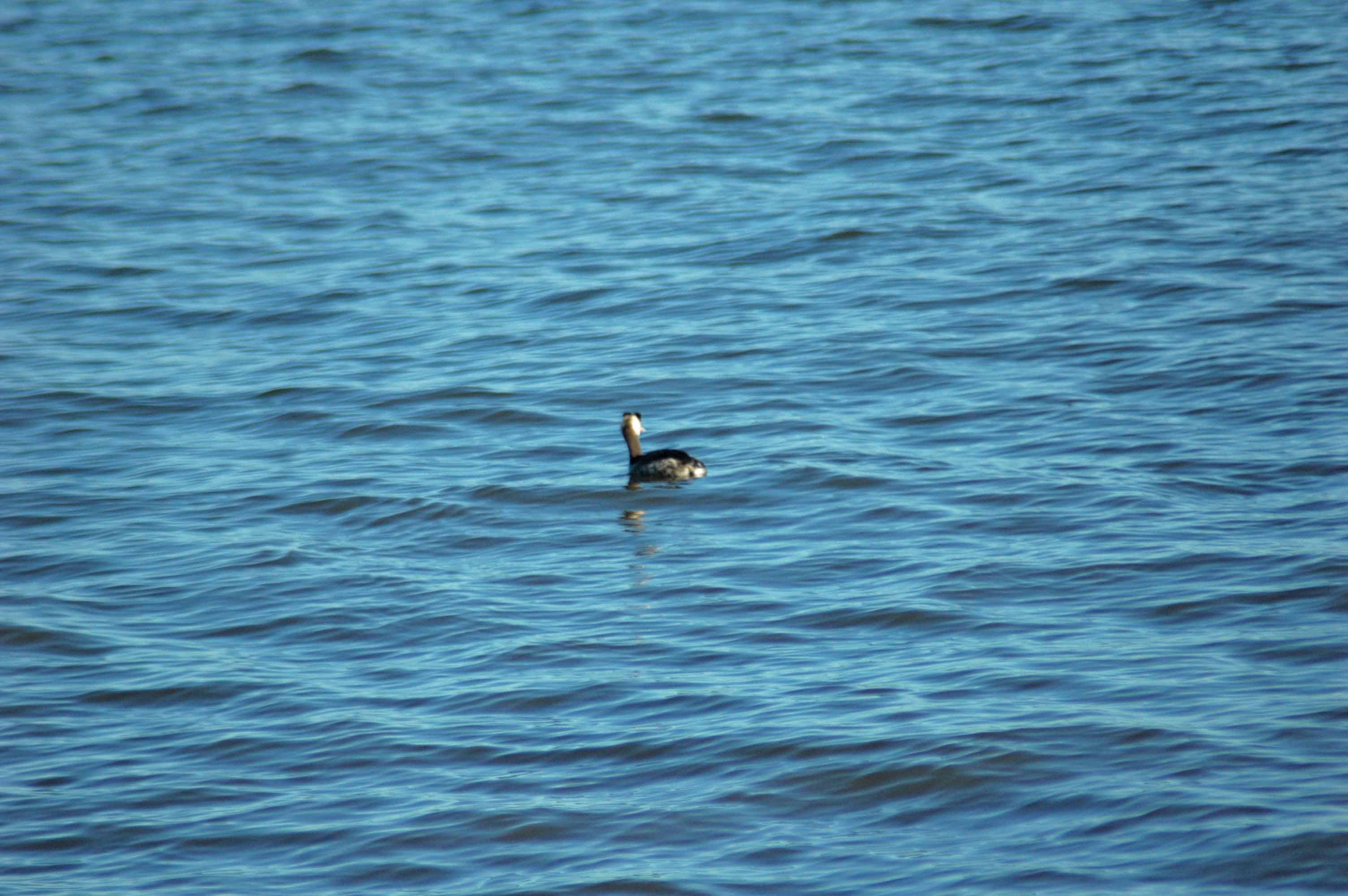
Great Crested Grebe

Podiceps Cristatus-Great Crested Grebe

Needless to say, I hadn’t picked up my binoculars and couldn’t properly see what I was looking at, even with the assistance of the camera lens, but from its general ‘giz’, and the fact I’ve seen them here in previous years, I decided it was most likely a Great Crested Grebe. It wasn’t alone either, although individuals were spread quite widely apart, at one time I counted ten of them. I could not get a decent image of any one of them though, so this one is a token effort to verify the sighting! 

” In winter, Great Crested Grebes show a marked shift from inland waters to the sea, although on the continent large numbers remain on inland lakes, e.g. in Switzerland (Cramp 1977). In normal winters, Britain and Ireland receive birds from continental western Europe. During severe winter weather, birds move through Britain in search of milder conditions either to the west in Ireland, or southwards to France (Lack 1986).” http://jncc.defra.gov.uk/pdf/UKSPA/UKSPA-A6-4B.pdf

High tide- sea flooding steps

High tide- sea flooding steps

I walked quite a distance towards Penrhyn Bay, stopping now and then to try to get a better image of a Grebe. I spotted one a little further in and got a slightly better view from the top of a set of steps that lead down to the beach. You get an idea of how far the water reaches regularly as the bottom treads are worn smooth by the repetitive scouring of salty waves climbing them and retreating with some force.

I wasn’t enjoying walking into the cold wind so I turned around and walked back, but carrying on towards the village. Just past the tiny St. Trillo’s Chapel I caught a glimpse of a bird flying down on to the big rocks below the promenade; a Turnstone. It landed out of eyesight, hidden amongst the huge boulders, but as I searched for it, up it popped onto a rock very close by.

Turnstone-Arenaria interpres

Turnstone-Arenaria interpres

Turnstones are common winter visitors to all our British coasts and gather in the greatest numbers on rocky and stony beaches, as here in Rhos-on-Sea. I was very happy to see it, as they are perhaps my favourite small wading bird, and because they are rarely alone I was confident there would be more to see.

Why stand when you can sit

Why stand when you can sit

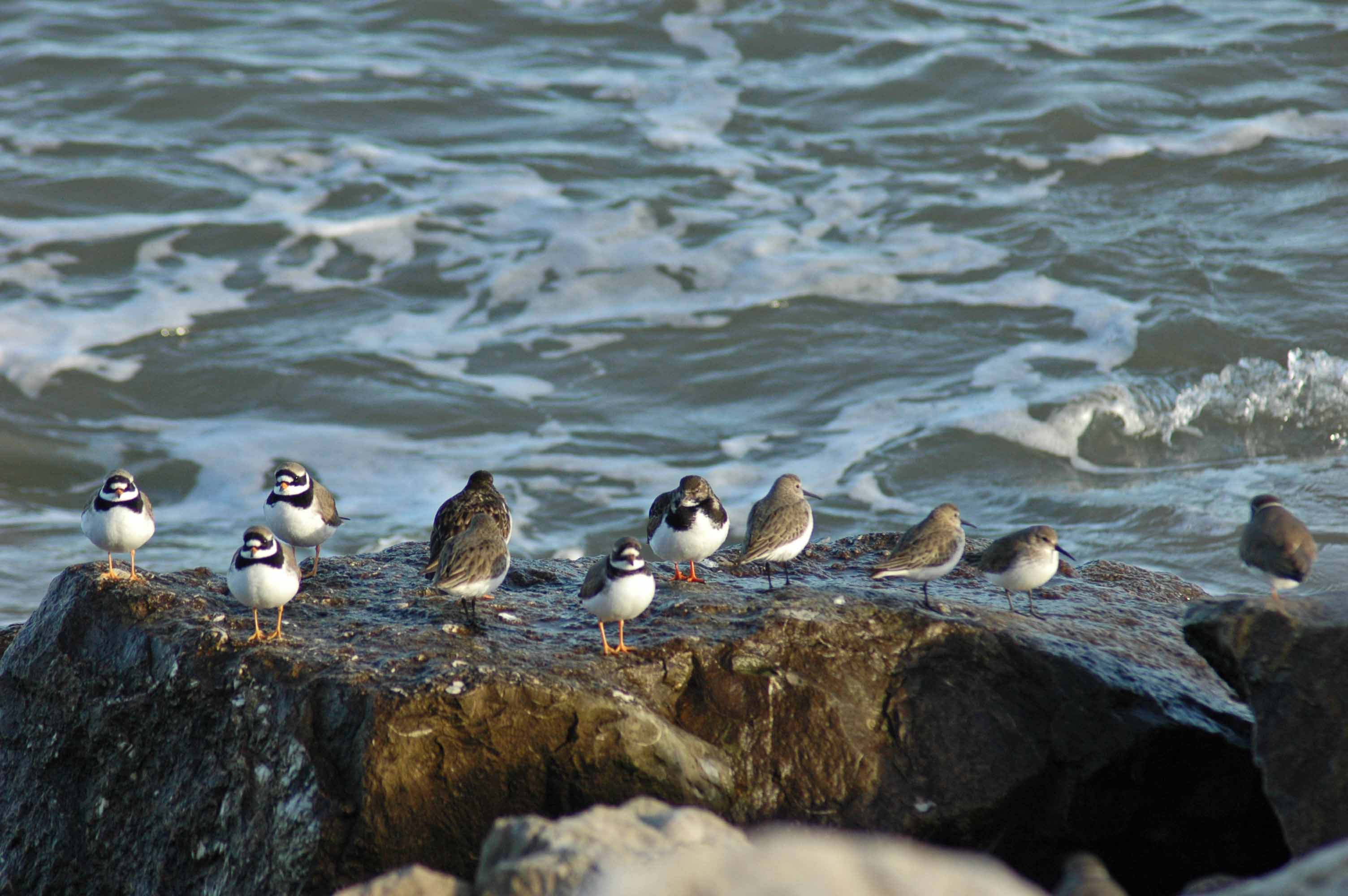
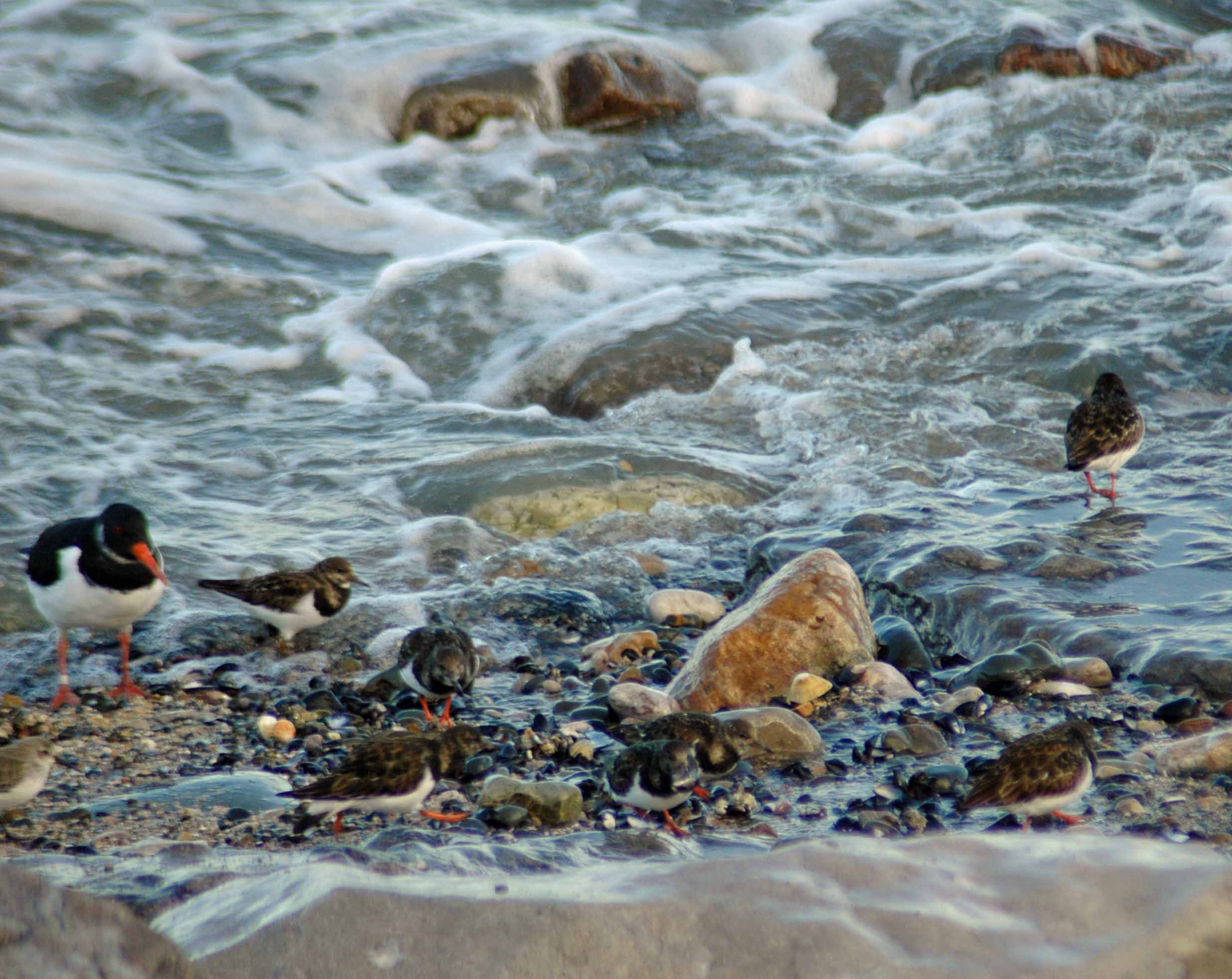
In previous years I have seen small groups of mixed species of  waders on the rocks here, so I was hopeful there would be more to see. I didn’t have to go far before spotting another little group waiting for the tide to turn and leave their lunch, this time Ringed Plover and Dunlin.

Ringed Plovers and Dunlin watching the water

Ringed Plovers and Dunlin watching the water

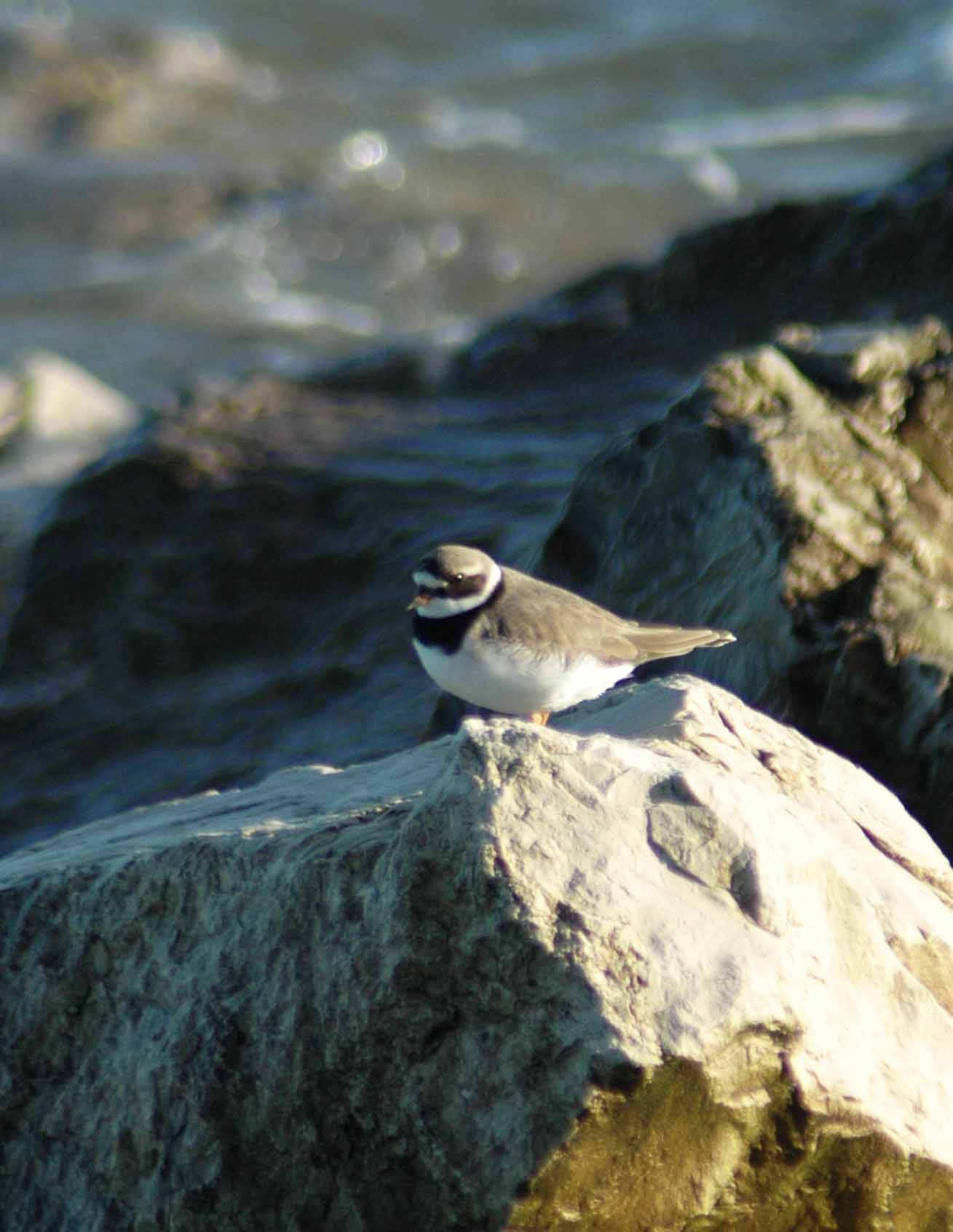
Ringed Plover- Charadrius  hiaticula

Ringed Plover- Charadrius hiaticula

Ringed Plovers are amongst the most common of our shore birds, although the increase in building in seaside localities and our intrusion onto beaches that were once remote, where they traditionally used to breed, have taken their toll on populations.

Ringed Plovers

Ringed Plovers 

A Dunlin & a Turnstone together shows the size difference between them

A Dunlin & a Turnstone together shows the size difference between them

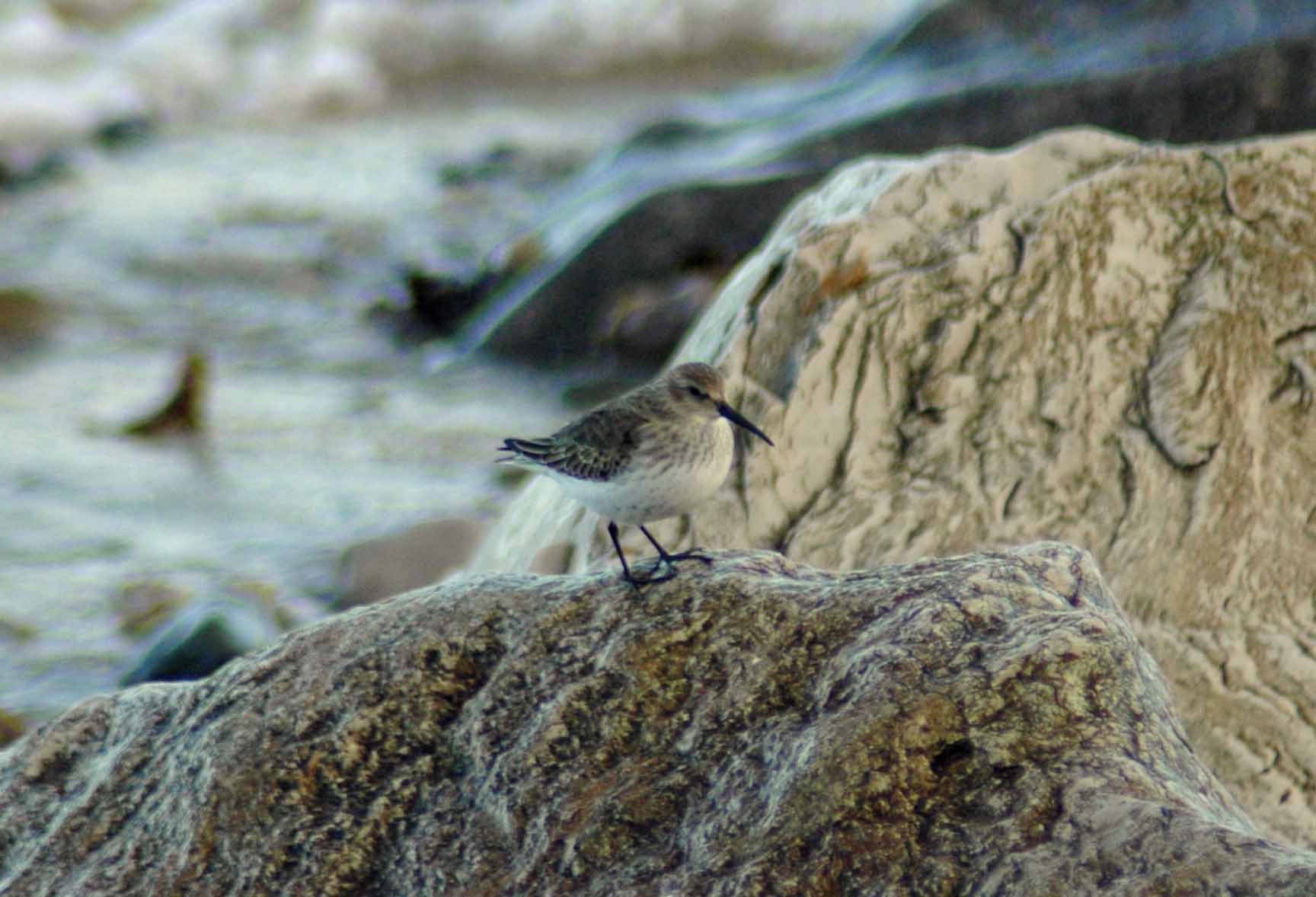
Dunlin are amongst the smallest of our shore birds. Some are present in Britain all year round, and as with Curlews, they winter on coasts and breed mainly on upland moors. Numbers are swelled when sizeable flocks come for the winter.

Dunlin-Calidris alpina

Dunlin-Calidris alpina

Dunlin were known to wildfowlers of old by a diverse variety of names, including ox-bird, ploverspage, sea snipe and stint.

Dunlin flying in to land

Dunlin flying in to land

Dunlin, Ringed Plovers & Turnstones

Dunlin, Ringed Plovers & Turnstones

As I watched them I had to wonder how these birds know when the tide is about to turn? It’s definitely not just a lucky guess! When I first began to watch them they were all quite still and quiet, but then in a heartbeat something changed and they became suddenly more animated. Up till that moment they had ignored the close proximity of people walking and me pointing a camera at them, but now people passing by with a dog or cyclists triggered off the Dunlin and Plovers and theytook off as one in a tight little flock out over the sea towards the harbour breakwater, then looped back, showering down to land a few feet further along the rocks. The Turnstones woke up too and were the first to venture nearer to the water, ready to get down onto the first uncovered patches of sand.

As the tide’s turning became more imminent, Oystercatchers began to arrive. They too had been waiting, but a bit further away on top of the harbour breakwater alongside the herring gulls.

Oystercatchers lined up along the harbour breakwater

Oystercatchers lined up along the harbour breakwater

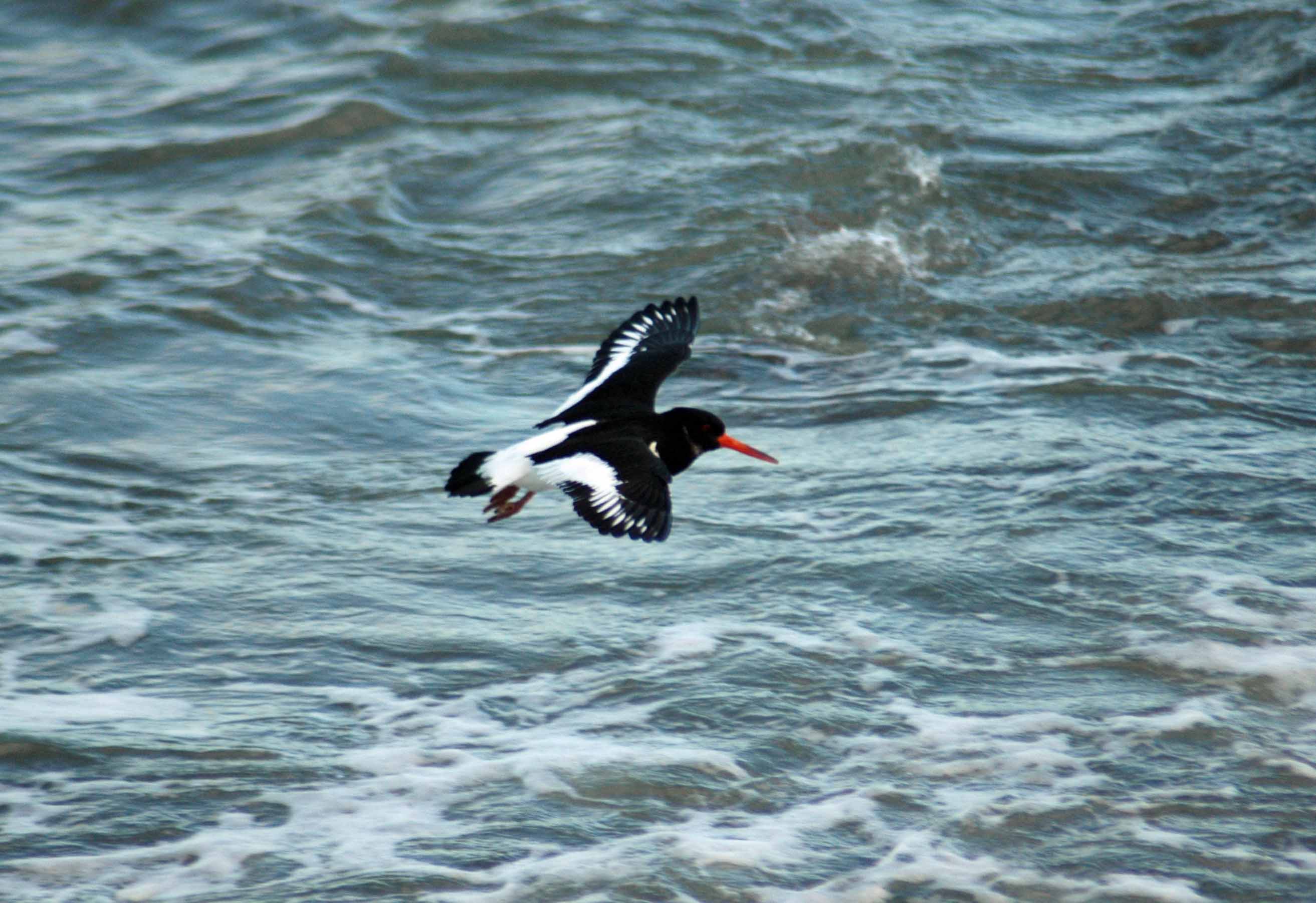
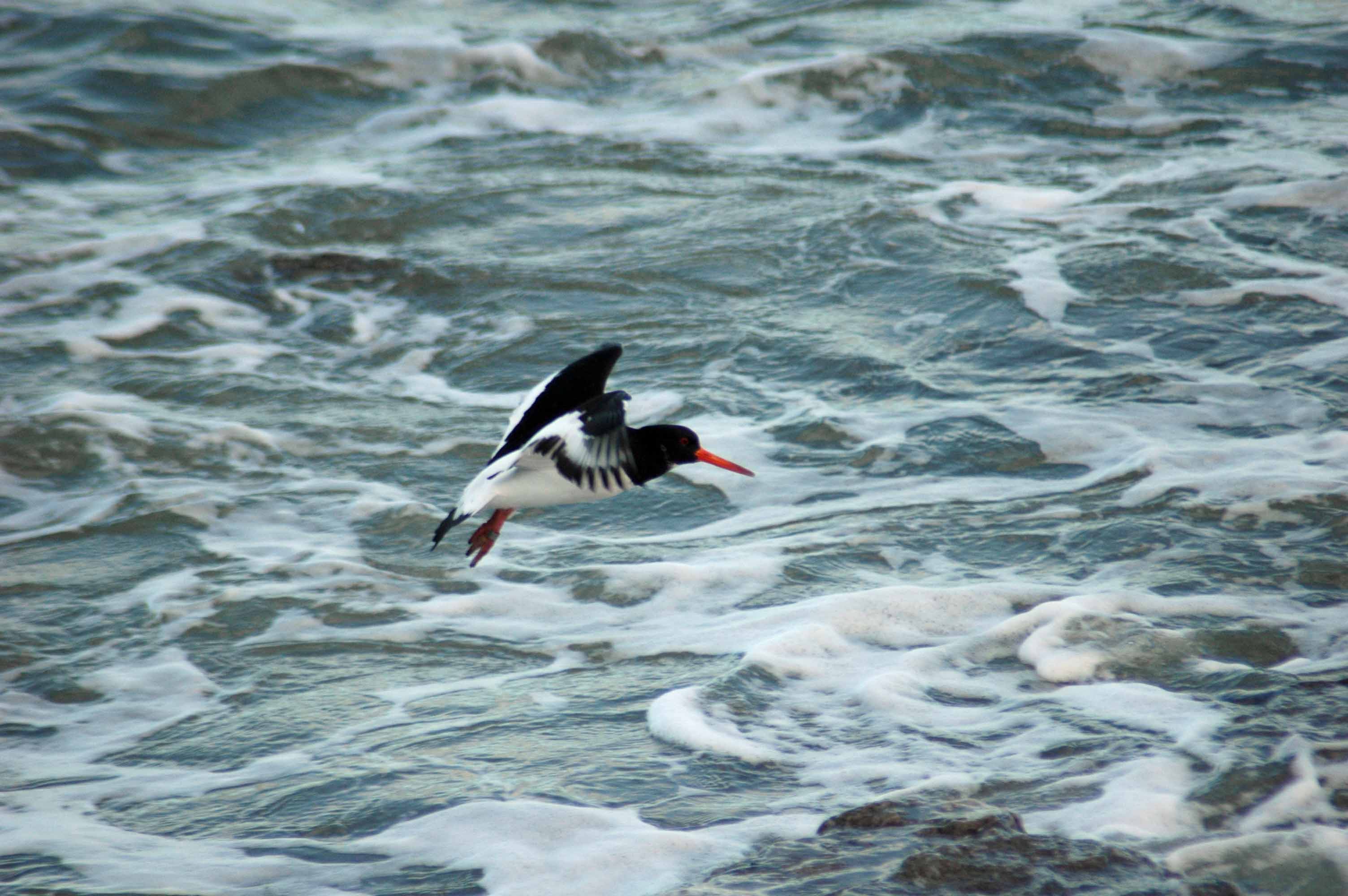
Most of the Oystercatchers headed straight out to the far end of the Point, but a few chose to join the Turnstones, Dunlins and Plovers. Oystercatchers are the most numerous and conspicuous of the waders here and are a familiar sight on the mussel beds, on the rocky shorelines and in small groups flying low across the sea. They are noisy and gregarious and wonderful, but usually some distance away, so it was lovely to get this opportunity to see them more closely for a while.

Oystercatcher flying in to land

Oystercatcher flying in to land

Oystercatcher about to land

Oystercatcher about to land

Landed and waiting for the perfect moment to begin the hunt for food

Landed and waiting for the perfect moment to begin the hunt for food

Joined by another

Joined by another

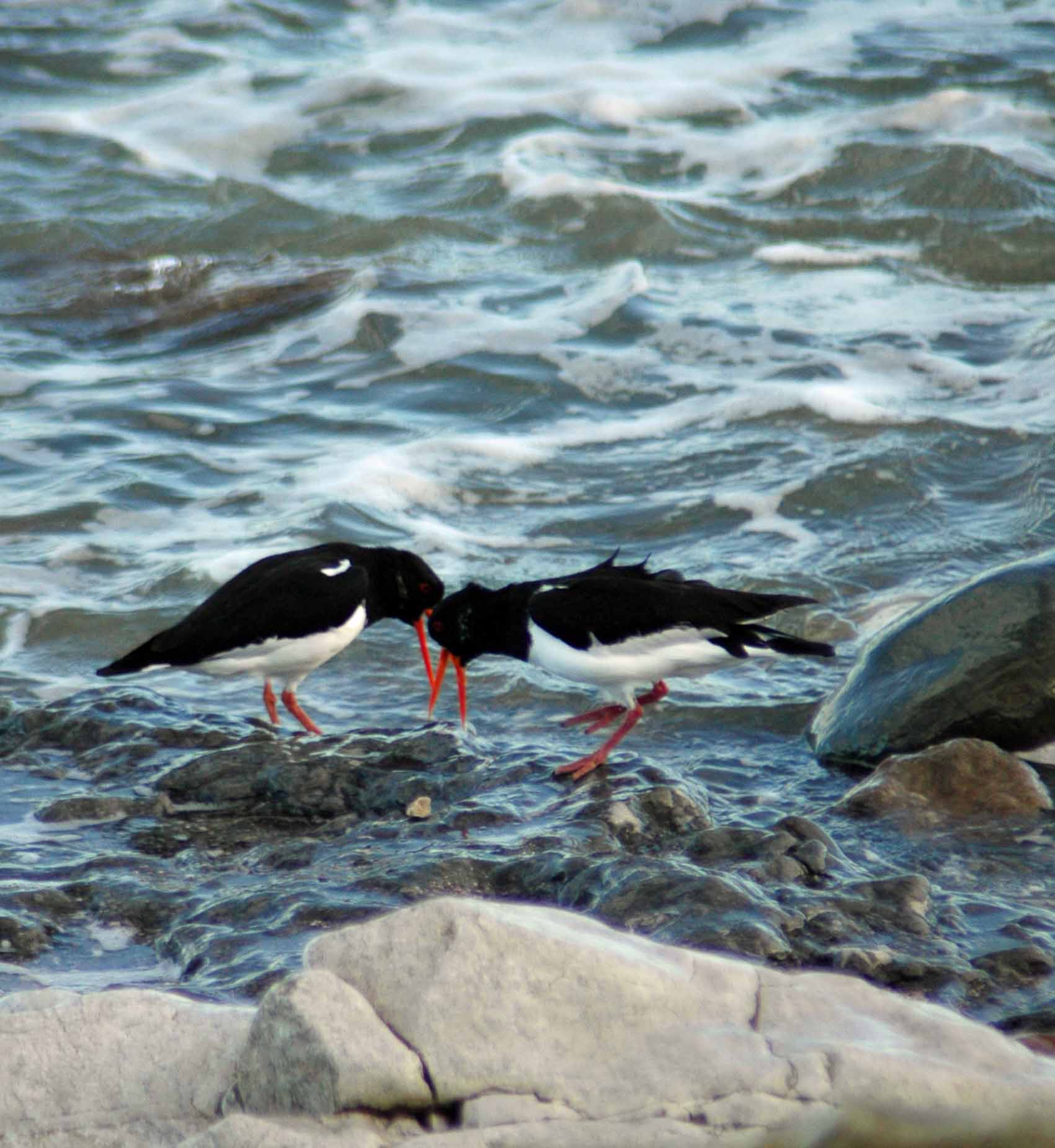
The shrill calls of the Oystercatchers often ring out from where they spend most of their time feeding or as they fly, but I hadn’t realised they also use it to greet other birds. I watched and listened, fascinated, as a pair performed a little greeting ritual in front of me.

A noisy and demonstrative reunion

A noisy and demonstrative reunion

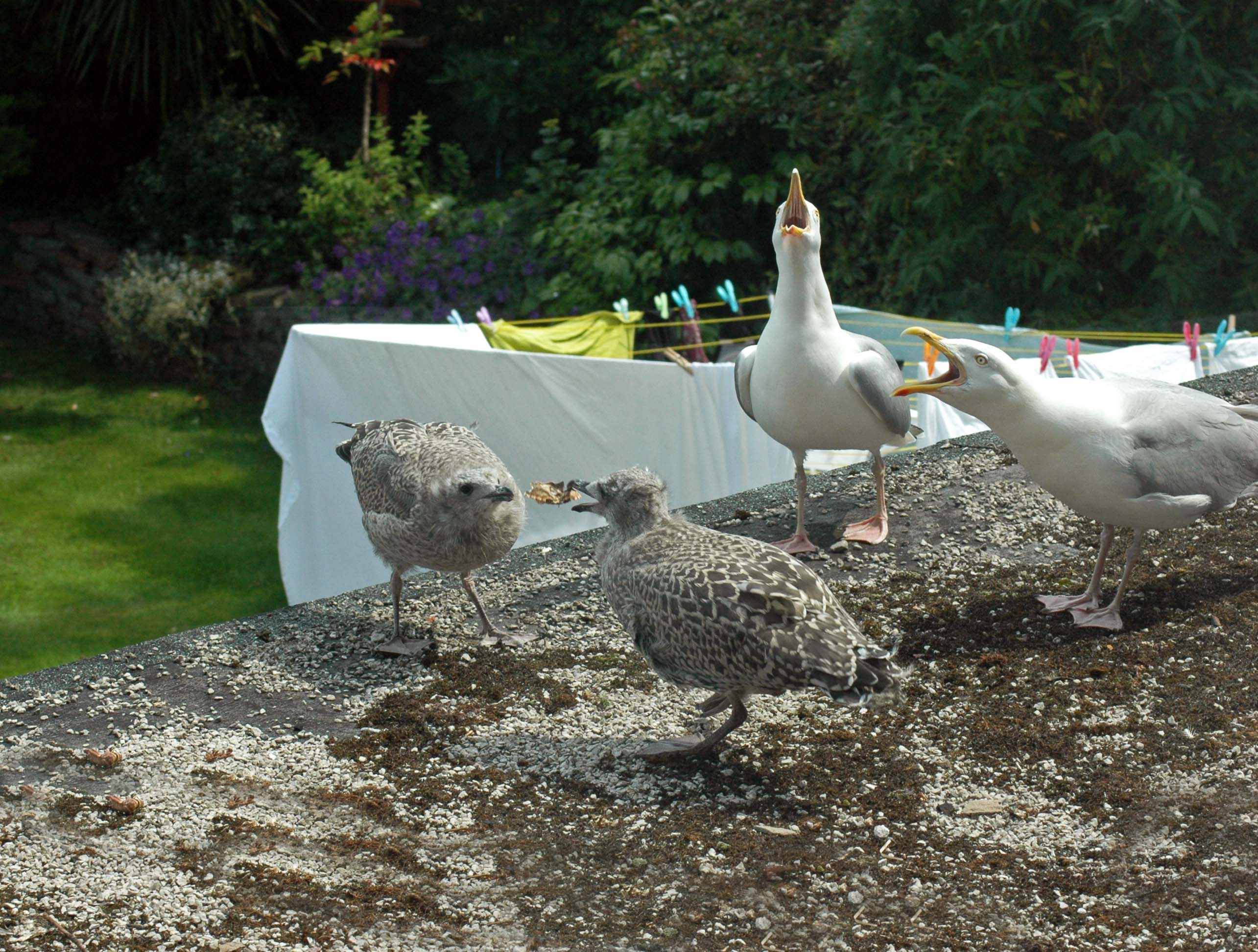
Their performance reminded me of the Herring Gull pair that raised their family on our roof last year and involved ‘bowing’ to one another, beaks open and pointed towards the ground whilst emitting their shrill call, rather ear-piercing at this distance. I am assuming they were a mating pair, and that is something else that is mind boggling; how on earth do they recognise one another in a crowd?

Turnstones are the first of the small waders onto the shore

Turnstones are the first of the small waders onto the shore

The magical moment arrived when the sea had retreated just enough to expose small patches of the seabed. The larger Oystercatchers were first in, followed closely by the Turnstones, then the smaller Dunlin and Ringed Plovers, once they were confident they wouldn’t be caught out by a rogue returning wave with nowhere to run to.

The tide comes in and goes out quickly and by the time I turned to walk back much of the rocky shore of the Point was revealed and already heavily sprinkled with Oystercatchers.

Oystercatchers as I most often see them, spread out at the far end of the seashore

Oystercatchers as I most often see them, spread out at the far end of the seashore

I hadn’t noticed any Curlew fly in, but hearing one I looked more closely and caught sight of one that had just picked up something to eat, very closely observed by a couple of Oystercatchers, who are certainly not averse to stealing should another take its eye off its prize.

A supremely well-camouglaged Curlew with food

A supremely well-camouglaged Curlew with food-Oystercatchers homing in

A curlew with food watched by Oystercatchers

The Curlew watched closely by Oystercatchers

*Missing from today’s tally of waders were Redshank, and Purple Sandpipers that I have seen previously together with Turnstones, Dunlin & Plovers. Click on link to post with more photographs.

Purple Sandpiper-Calidris maritima

Purple Sandpiper-Calidris maritima (January 2012)

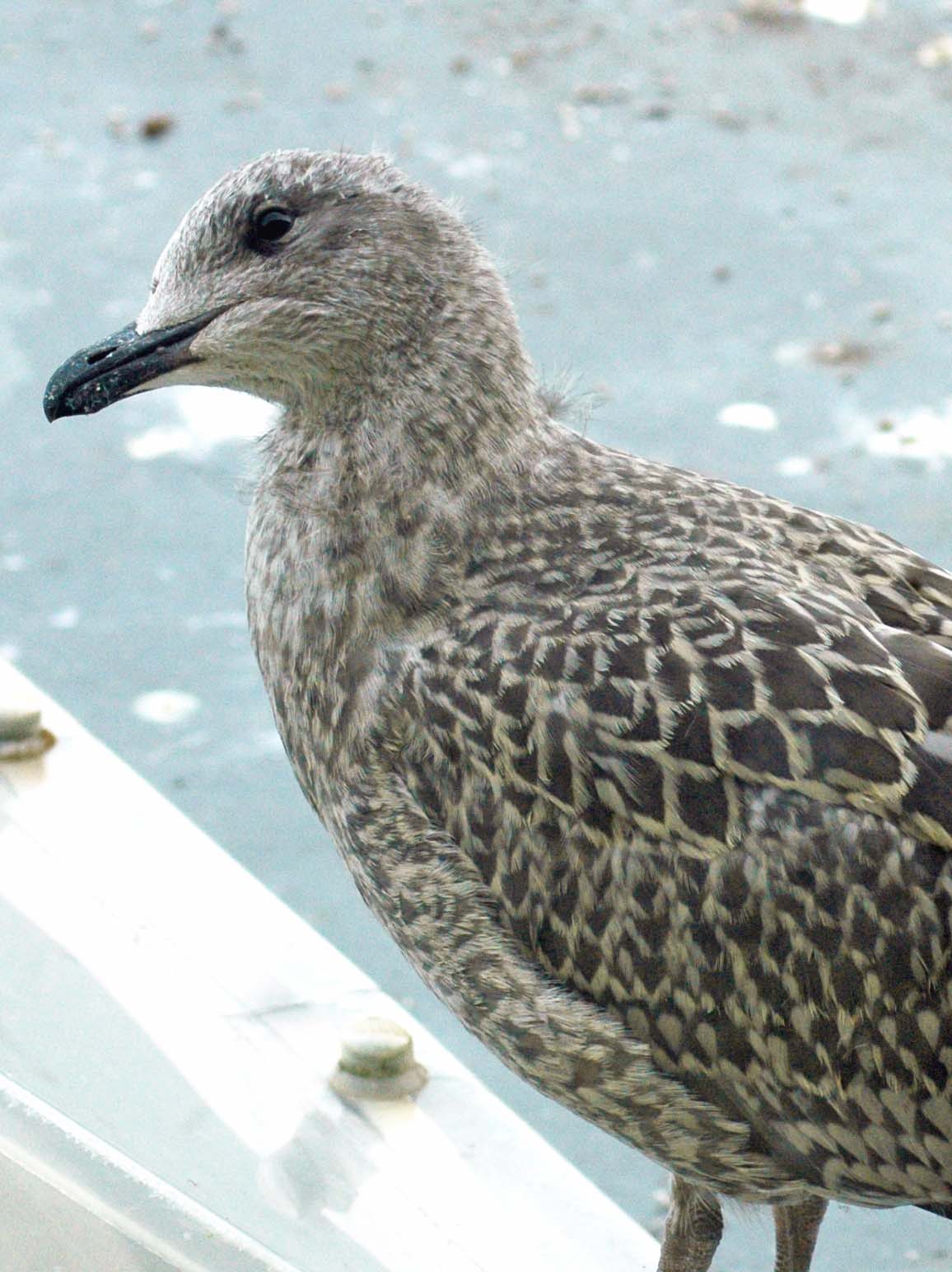
And to finish, a young herring gull, to show they are often where they are supposed to be!

Juvenile herring gull

Juvenile herring gull

Share this:

  • Share on Facebook (Opens in new window) Facebook
  • Share on Pinterest (Opens in new window) Pinterest
  • Share on X (Opens in new window) X
Like Loading...

Young gull on the roof – the final chapters

26 Friday Jul 2013

Posted by theresagreen in bird behaviour, Nature, Nature of Wales, nature photography, Rhos-on-Sea

≈ 6 Comments

Tags

herring gull, herring gull family behaviour, herring gull juvenile, herring gulls as parents, herring gulls nesting on roofs

July 6th

The young herring gull that fell from the chimney pot nest to land, incredibly unscathed onto our flat roof  some 6 or 7 metres (20ft) below, continued to thrive thanks in part to sheer good fortune but mainly to his attentive parents. With very little in the way of shade he struggled a bit on the hottest of days and I took pity on him, tipping water from the bedroom window onto the roof to create a puddle he could drink from and cool his feet in. Other than that he was very much left to his own devices.

Young gull trying to squeeze into the shade

Young gull trying to squeeze into the shade and opening his wings to release heat from his body

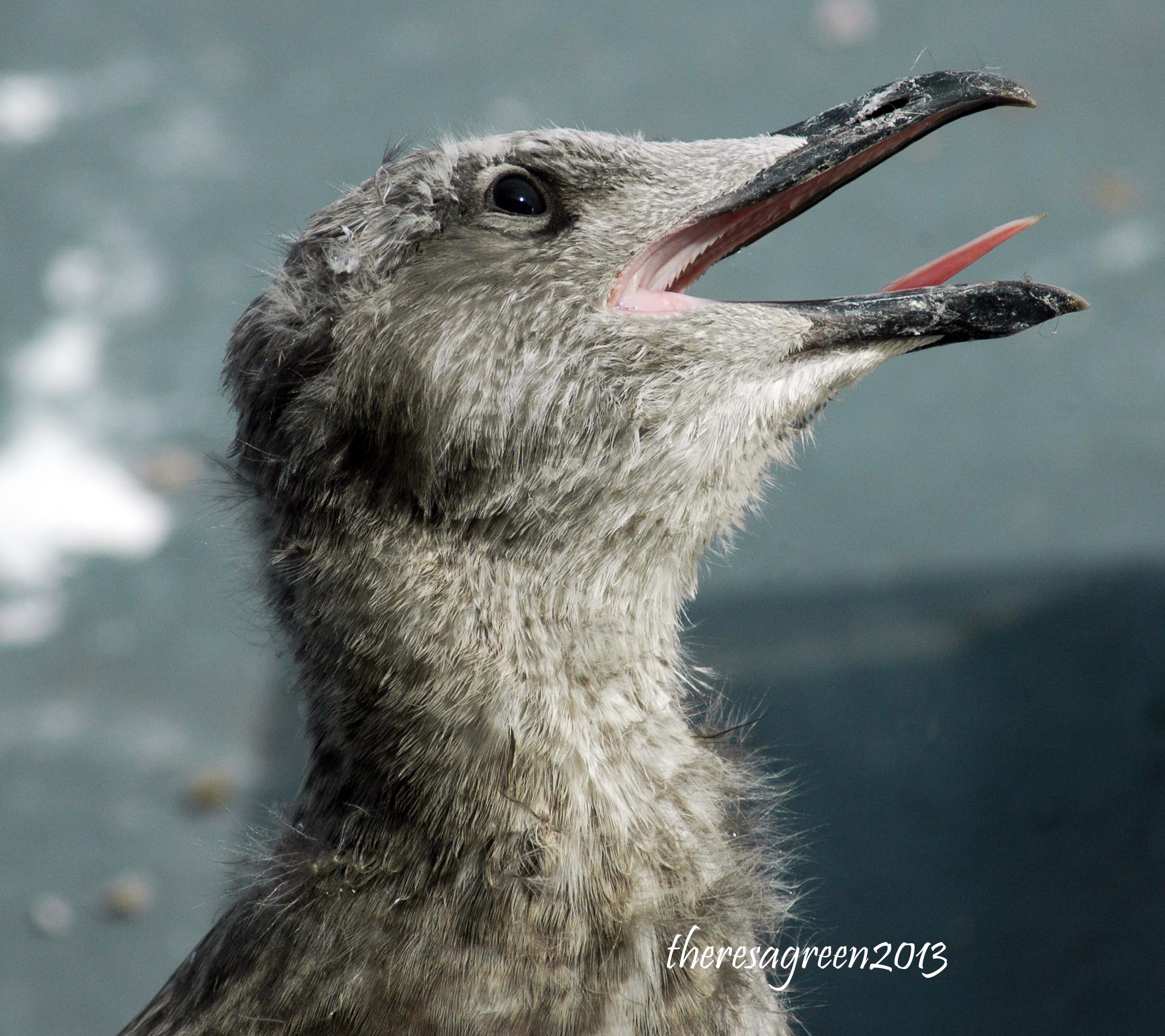
Opening the bill wide is another strategy to release body heat

Opening the bill wide is another strategy to release body heat

He took to standing on the ledge of the lantern, which was perhaps cooler on his feet.

Standing on the ledge of the lantern

Standing on the ledge of the lantern

Our view from beneath him

Our view from beneath him

July 8th

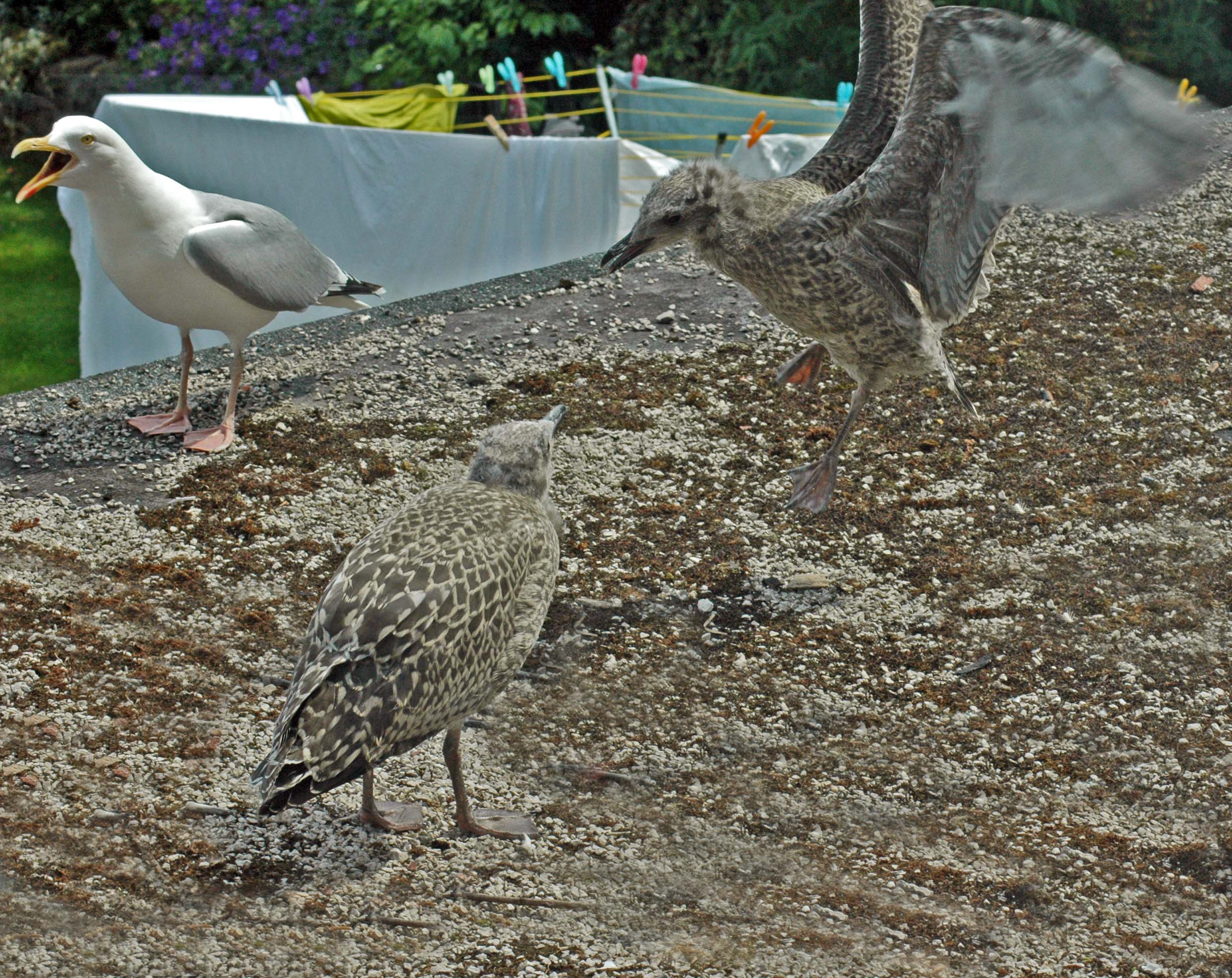
The young gull’s life changed dramatically today when, with all the drama and excitement I have come to expect from our gull residents and announced with a great cacophony of noise from both his parents, his sibling parachuted down to join him from above. Her arrival really was a magical sight to behold and although we are discouraged from anthropomorphising other fauna species, the gulls certainly displayed several ’emotions’. Both adults stood on the edge of next-door’s roof, as I said before making a particularly great deal of noise, which is what prompted me to run upstairs to see what was occurring and I was just in time to capture the moment she dropped in, rather gracefully for a first landing.

Young gull's sister arrives from above

Young gull’s sister arrives from above, squealing excitedly

The new arrival was clearly very excited while ‘our’ little chap looked a bit bemused and maybe a little intimidated. He inched towards her for a closer look while she made several little bouncy leaps, clearly excited and loving the new-found use for her wings although the tail feathers aren’t quite long enough to use for perfect co-ordination yet. The parents remained standing close by, keeping up the aggressive-defensive-protective squawking racket.

He approached for a closer look while she jumped up and down trying out her wings

He approached for a closer look while she jumped up and down trying out her wings

The new arrival settled on the ground and picked up an object from the rooftop, a piece of stick or something similar and offered it to her brother, which he accepted.

First formal introduction

First formal introduction, she offers him a gift encouraged by parents

After a few minutes things began to calm down, the new arrival was clearly enjoying her new-found flying ability and was keen to show it off. Our youngster watched with great interest as she lifted herself into the air and although he had shown little sign of trying his wings before now, suddenly seemed to realise that perhaps he could do that to. So he did.

Continuing to practice her flying

We have lift off

She eventually settled down a little and ventured across onto our roof, looking a little less sure now the excitement had worn off. Having a better look at the newby I’m sure I’m right about referring to it as ‘she’. This bird is slightly smaller than the other and could be a fraction younger as she still has more downy feathers around her face, neck and breast.

The new arrival ventured onto our roof

The new arrival ventured over onto our roof

July 10th

The young gull accepted his sibling immediately and there was no apparent rivalry or squabbling behaviour between them, so is it possible that although separated as young nestlings, they knew they were related? Perhaps they had been able to keep up communication from their separate locations and recognised one another’s voices, or maybe it was the parents’ behaviour towards them both that united them. It was a bit clearer now why ‘our’ young one had apparently spent so much time alone; the parents had two nest locations to cope with and to defend as well as having to share food between the two chicks. They deserve a lot of credit for their dedication and not abandoning either of them.

Practicing a running take-off

Practicing a running take-off

The family reunion brought about a noticeable change in our gull’s behaviour, he seemed to suddenly go up a gear and following his sister’s example began testing his own ability to fly.

Nearly there, just one toe left on the ground

Nearly there, just one toe left on the ground

The parent gulls changed their feeding behaviour today too; rather than the young ones begging and tapping a parent’s beak to bring forth food, the parents now arrived with food which they deposited some distance away from the young ones who then had to ‘find’ it for themselves.

Here's your lunch kids

Here’s your lunch kids

Young gull not too sure about this method of delivery

Young gull not too sure about this method of delivery

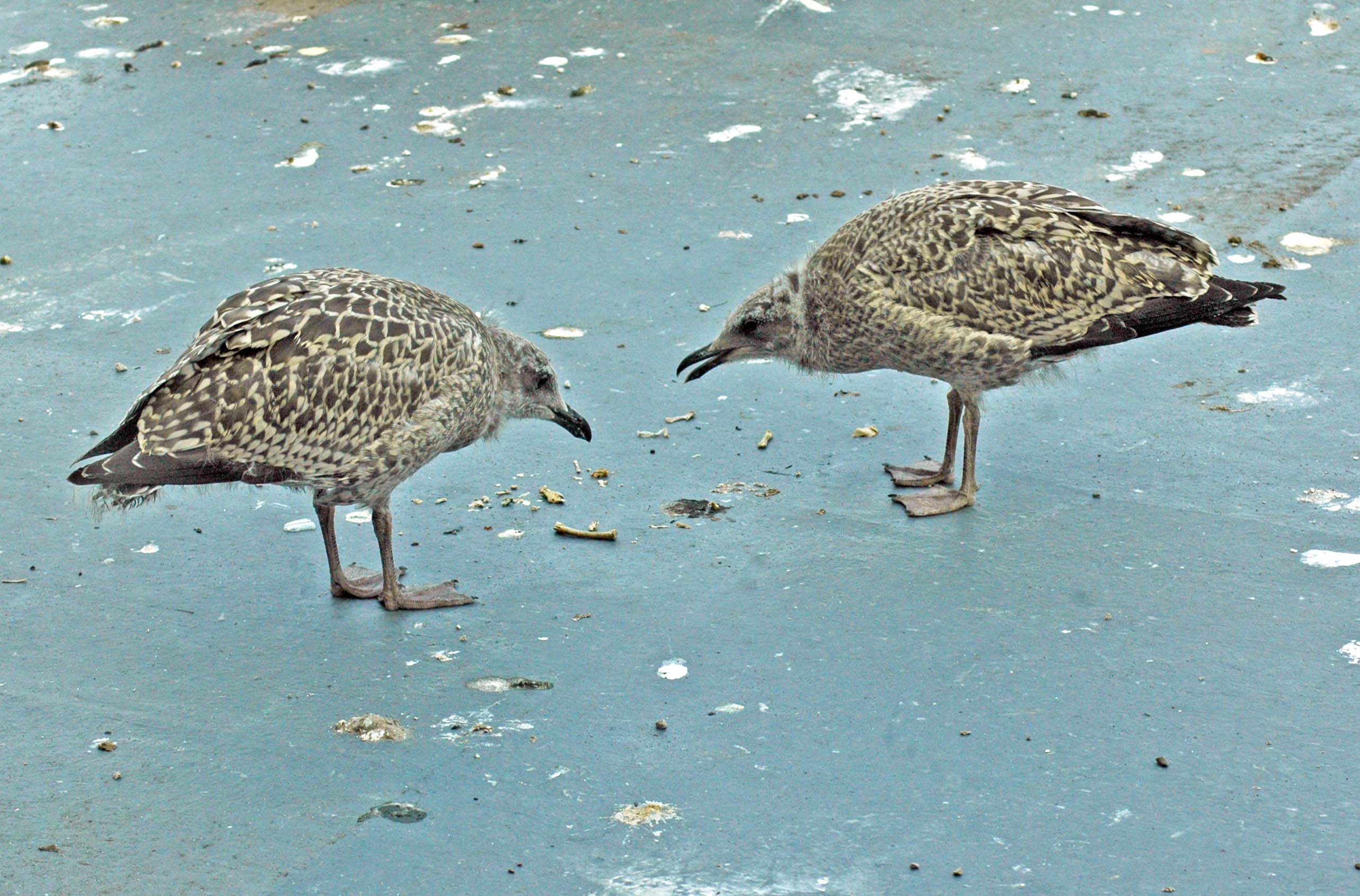
The parents were still around but less obviously so, when they were not away searching for food they were keeping look-out from the roof above. The two young ones were rarely more than a metre or so apart now, if one found something interesting to peck at the other was there immediately and they seemed to play with random pieces of stick and stones that they found, picking them up and dropping them, practicing for dealing with future potential food.

The young gulls 'playing' with a stick

The young gulls ‘playing’ with a stick

July 12th

A hot day saw both young gulls uncomfortable and trying to squeeze into small areas of shade. I poured some water from the window onto the roof and ‘our’ gull, used to me doing that came straight over and began to drink. The other one followed more cautiously, but seemed to have no idea what to do with the water or how to go about drinking it. He tried to show her, but this was a new experience for her having been up in a nest on a chimney for most of her short life.

What do you do with this then?

What do you do with this then?

Watch me

Just watch me

Things got a bit hectic for a few days when the gulls from the neighbouring chimney brought their two young ones down too and both sets of parents had some very noisy encounters on occasions, but the sets of young ones didn’t mix much. They continued to strengthen their wings, preen out the remaining down from their feathers, and rest a lot while waiting for those tail feathers to grow.

Just about all grown up

Just about all grown up

July 18th

Every event of the gull family’s time with us had been accompanied with noise and announced with drama, so the young ones’ anticipated departure came as a bit of an anti-climax. We were sitting outside enjoying the late afternoon sunshine when suddenly, first one, then the other took off from the roof, glided over our heads and landed on next door’s lawn. So that’s more or less it with this family of gulls for this year. It’s been interesting, but I shall be glad not to be woken by them at dawn. I’m not looking forward to having to clean off the roof.

Share this:

  • Share on Facebook (Opens in new window) Facebook
  • Share on Pinterest (Opens in new window) Pinterest
  • Share on X (Opens in new window) X
Like Loading...

Little gull on a wet flat roof

08 Monday Jul 2013

Posted by theresagreen in Nature, Nature of Wales, nature photography, Rhos-on-Sea

≈ 5 Comments

Tags

herring gull, herring gull chick

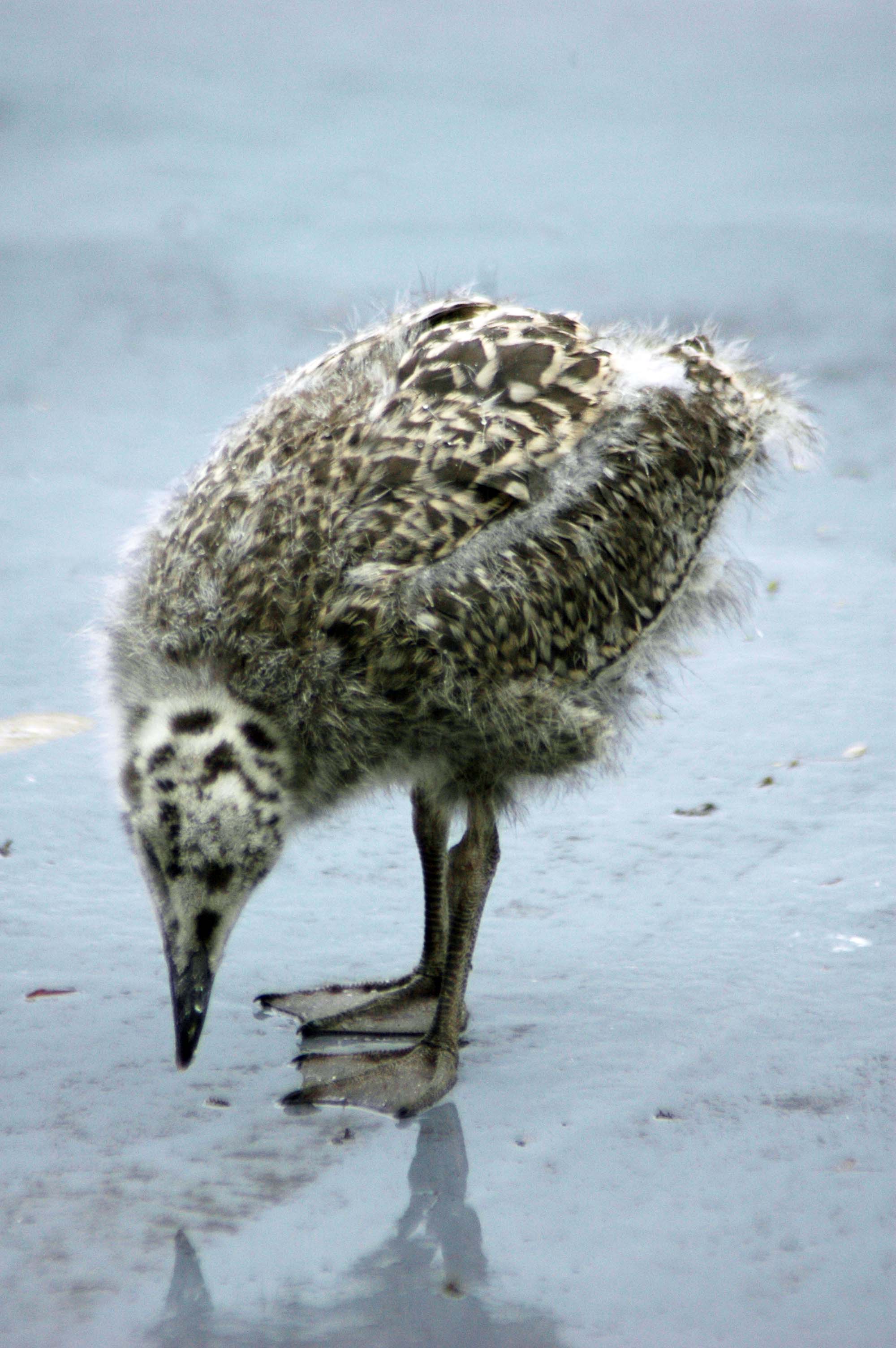
The young gull is growing up fast and despite being home alone for long stretches, being left outside in all weathers and staying up far later than any youngster surely should, he seems to be doing alright. Here he is a couple of weeks ago, on a rainy day, eleven days older than when I first photographed him the day he arrived on the roof.

Working out how to take a drink

19/6/13 Who’s that in there?

There must be an easier way

Is this the only way to get a drink?

Mum doesn't make it look any easier

Mum doesn’t make it look any easier

Perhaps it'll be easier sitting down

Perhaps it’ll be easier sitting down

That's a bit better

That’s a bit better

I wonder if I can float

I wonder if I can float

Dealing with an itch

Dealing with an itch

Nice and clean and cute

Nice and clean and cute

Tucked up taking a nap

Tucked up and taking a nap

Share this:

  • Share on Facebook (Opens in new window) Facebook
  • Share on Pinterest (Opens in new window) Pinterest
  • Share on X (Opens in new window) X
Like Loading...

There’s a new gull on the roof

20 Thursday Jun 2013

Posted by theresagreen in bird behaviour, Nature of Wales, nature photography, Rhos-on-Sea

≈ 2 Comments

Tags

herring gull, herring gull chick, herring gulls in towns, rhos on sea

Herring Gulls have featured in a good few of my posts: they are a characterful part of everyday life here in Rhos-on-Sea and although they make noisy neighbours, are somewhat bossy and seem to delight in covering our cars with their guano, life would be the poorer without them.

A couple of weeks ago, on June 8th to be exact, I was woken at some ridiculously early hour by a great cacophony of gull cries and shrieks being made right outside the bedroom window, which is just a metre above the large flat roof of the kitchen below. I am fairly used to their late spring-early summer, very early- morning territorial proclaiming racket now, but this was not the usual wake-up alarm, which I have learned to almost ignore, so I had to get up to have a look.

The fuss was all about a single, fluffy brown-grey speckled chick. How it arrived on our roof I have no idea, I know there are nesting birds somewhere up on the main roof around next-door’s chimneys, but as far as I am aware there were no nests on any part of the lower flat roofs this year. So, had it fallen from a nest higher up, or even been carried down? If the former, was it OK? I had no way of knowing, just one more thing to worry about! (We have had young gulls here before, but bigger older ones that had left nests deliberately).

New parent, very protective

8 June 2013-Warning – New parent, very protective

Although early in the morning it was already very sunny and the parent birds ‘parked’ the chick in the shade of one of the ‘lanterns’ set into the roof. That possibly explained why they were on our bit, neither neighbour has any shaded areas, although still no clue as to how the chick got there.

Parent watching the sky for trouble

Parent watching the sky for trouble

The fussing, flapping and general hullabaloo continued for some while, but gradually the ruffled feathers smoothed and the excitement mellowed into an uneasy peace.

Once their offspring was settled, one parent stayed on close guard, the female I think, whilst the other either went off to look for food or maybe to sit higher up on the main roof to keep look out. The one that stayed remained wary, keeping a watchful eye on the sky above and patrolling around her chick. She did settle next to it eventually, but was very restless.

The mother settled eventually, but remained alert

The mother settled eventually, but remained alert

Then of course, once she settled down, the chick woke up and stood to stretch its legs. That came as a relief, at least it wasn’t injured and about to expire.

Chick awake and stretching its legs, mother still watching the sky

Chick awake and stretching its legs, mother still watching the sky

The chick was soon keen to investigate the world around him and went for a little wander. Fortunately it chose to wander onto the adjoining next-door roof which is covered with mossy lichen and he was pretty well camouflaged there.

On the adjoining next-door roof, the chick was almost perfectly camouflaged

8/6/13 On the adjoining next-door roof, the chick was almost perfectly camouflaged

After a surprisingly short length of time the parent flew off and left the chick to its own devices, although as I said before it’s possible the other one was watching from above. And food has to be searched for.

Mum back with breakfast

Mum back with breakfast

The adult gulls were very aware of my interest in them and stood immediately in front of the window squawking and giving me distinctly threatening looks.

The female gull watching me, giving me the evil eye

The female gull watching me, giving me the evil eye.

Female Herring Gulls are slightly smaller than the males and have a ‘softer’ look to the eyes (usually), but I’m glad I had glass between us, I would not like to make her angry and be within striking distance of that beak. (All of my photographs are taken through the glass of the window!)

I would not like to be on the receiving end of that beak

I would not like to be on the receiving end of that beak

13th June 

Gull life settled into a bit of a routine over the following few days. The family doesn’t spend the nights on our roof and I can’t see where they go, but they arrive back noisily in the mornings. The chick gets left alone a lot, initially resting in the shade and relative safety of one or other of the lanterns, but now it is bigger it wanders more, investigating anything and everything that looks vaguely edible. The parents are diligent in their feeding, arriving back with regular meals, their arrival always announced with a great deal of vocal noise and exaggerated wing flapping. The young one is already beginning to practice the territorial, concerted squawking, joining in with its parents when they perform to whatever is above them. Herring Gulls are proper drama queens.

13/6/13-One week on and the chick is getting bolder.   Checking out a cable to see if it's edible

13/6/13-One week on and the chick is getting bolder. Checking out a cable to see if it’s edible

13/6/13-Herring Gull chick one week later

13/6/13-Herring Gull chick one week later.

Share this:

  • Share on Facebook (Opens in new window) Facebook
  • Share on Pinterest (Opens in new window) Pinterest
  • Share on X (Opens in new window) X
Like Loading...

Glorious Bodnant Garden

15 Saturday Jun 2013

Posted by theresagreen in Nature, Nature of Wales, nature photography, North Wales

≈ 5 Comments

Tags

Bodnant Garden laburnum arch, National Trust

As dedicated as I am to ‘real’ nature, even I can’t resist the temptation to stray occasionally into the more contrived, cultivated and  colourful world of a beautiful garden. A couple of weeks ago, on a glorious sunny and warm day, I persuaded my daughter to accompany me on a stately visit to nearby Bodnant Garden. She agreed as soon as I mentioned that I’d treat her to lunch.

I  ‘belong’ to the National Trust and do visit this particularly lovely woodland garden occasionally, each time wondering why I don’t go more often. I was particularly keen to go now to see the laburnum arch which is one of Bodnant’s claims to fame, but although beginning to show colour it perhaps needed another week or so to reach its peak. But by way of compensation, the azaleas and rhododendrons and other planted beds were absolutely stunning. Words are unnecessary, the photographs speak for themselves, so here is some of what we saw.

The view walking down from the car park

The view walking down from the car park

We could see that despite it being a Monday, the car park was very full and there were coaches too. We decided to have lunch before going into the gardens so we could look around in a leisurely fashion without worrying there’d be nothing left. I had the ploughman’s, daughter the quiche. Very nice too.

Daughter letting everyone know we'd arrived safely and that she wants a tree like this one

Daughter letting everyone know we’d arrived safely and that she wants a tree like this one

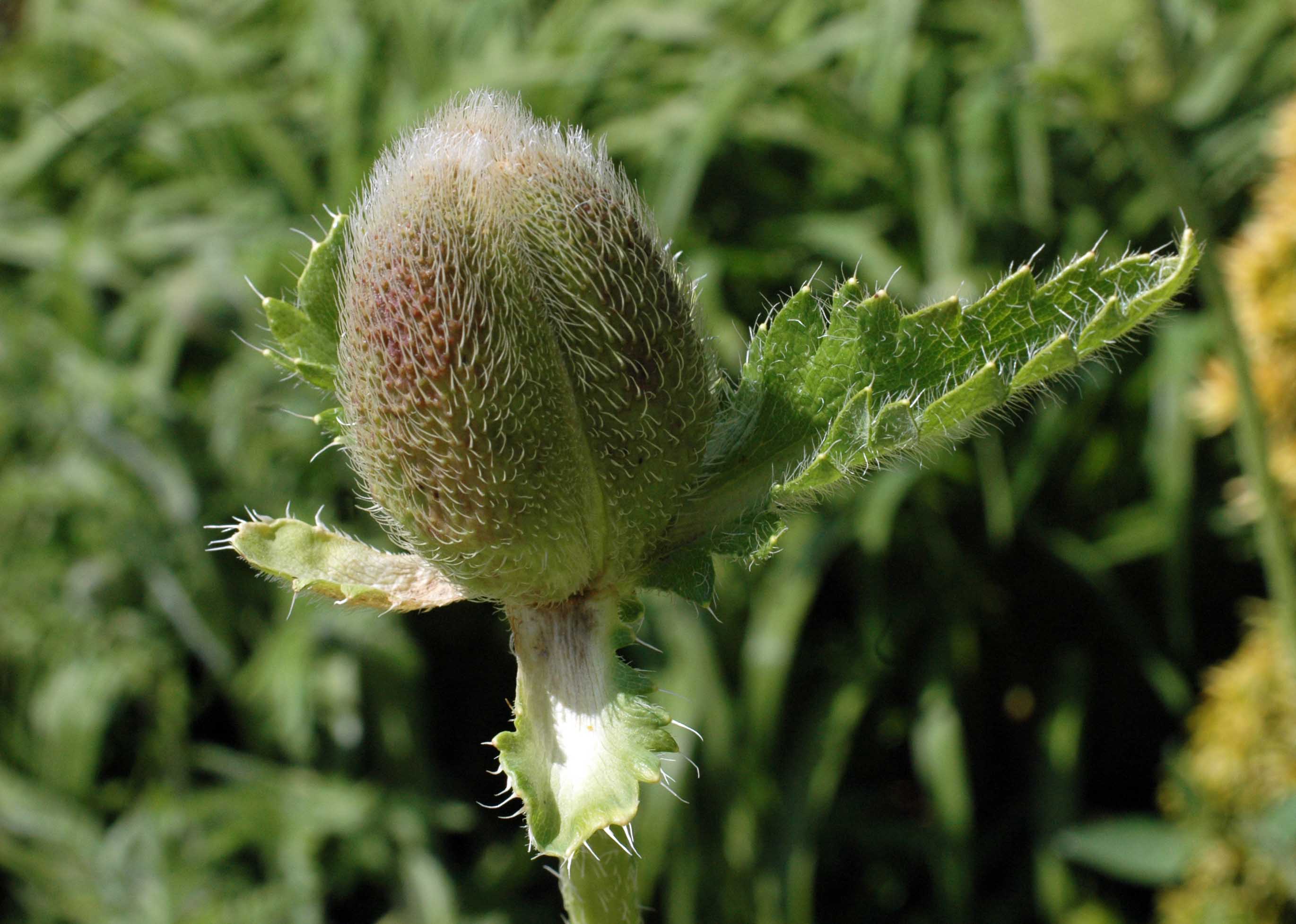
Big fat poppy bud

Big fat poppy bud

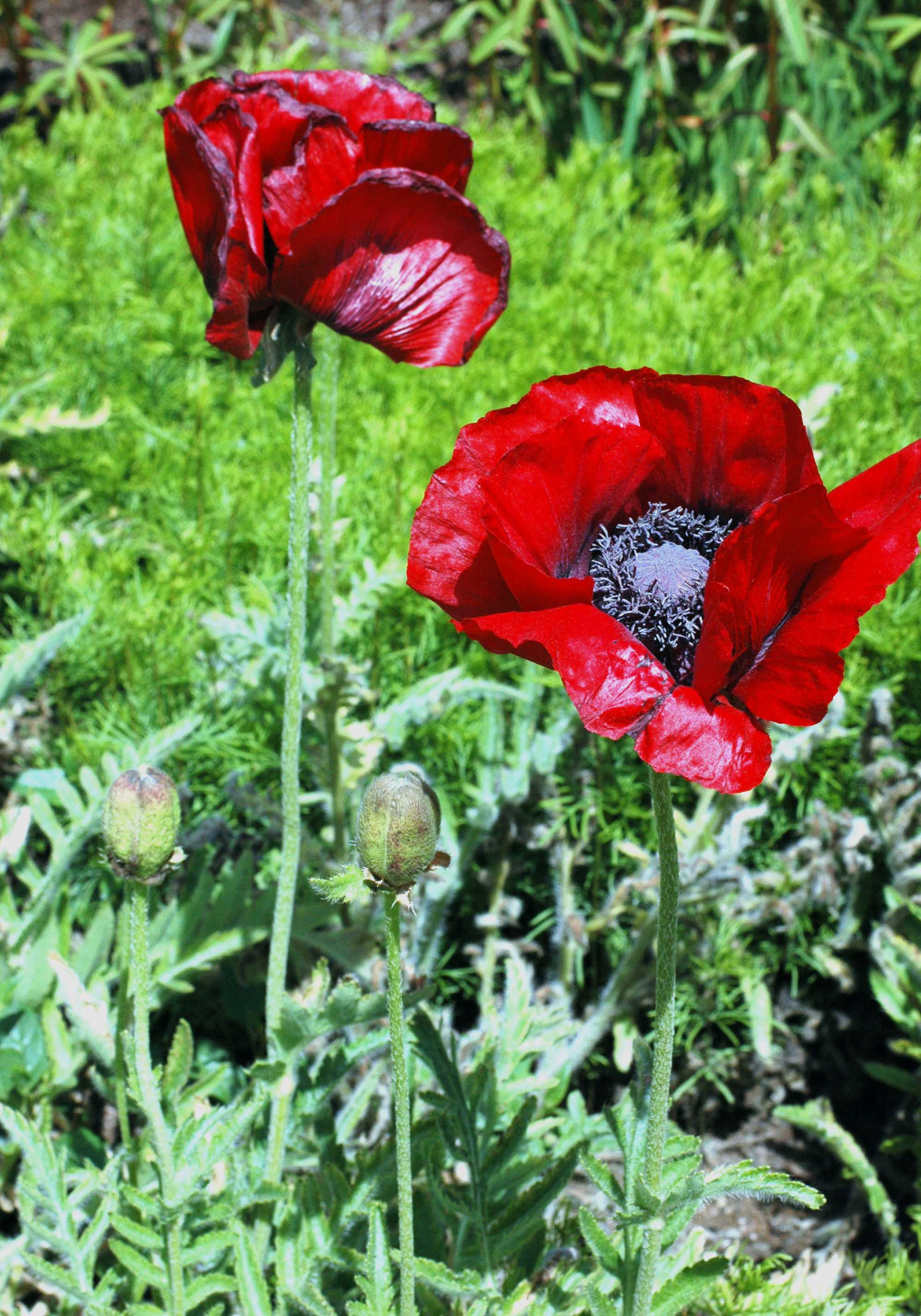
Poppies that don't look real

Poppies that don’t look real

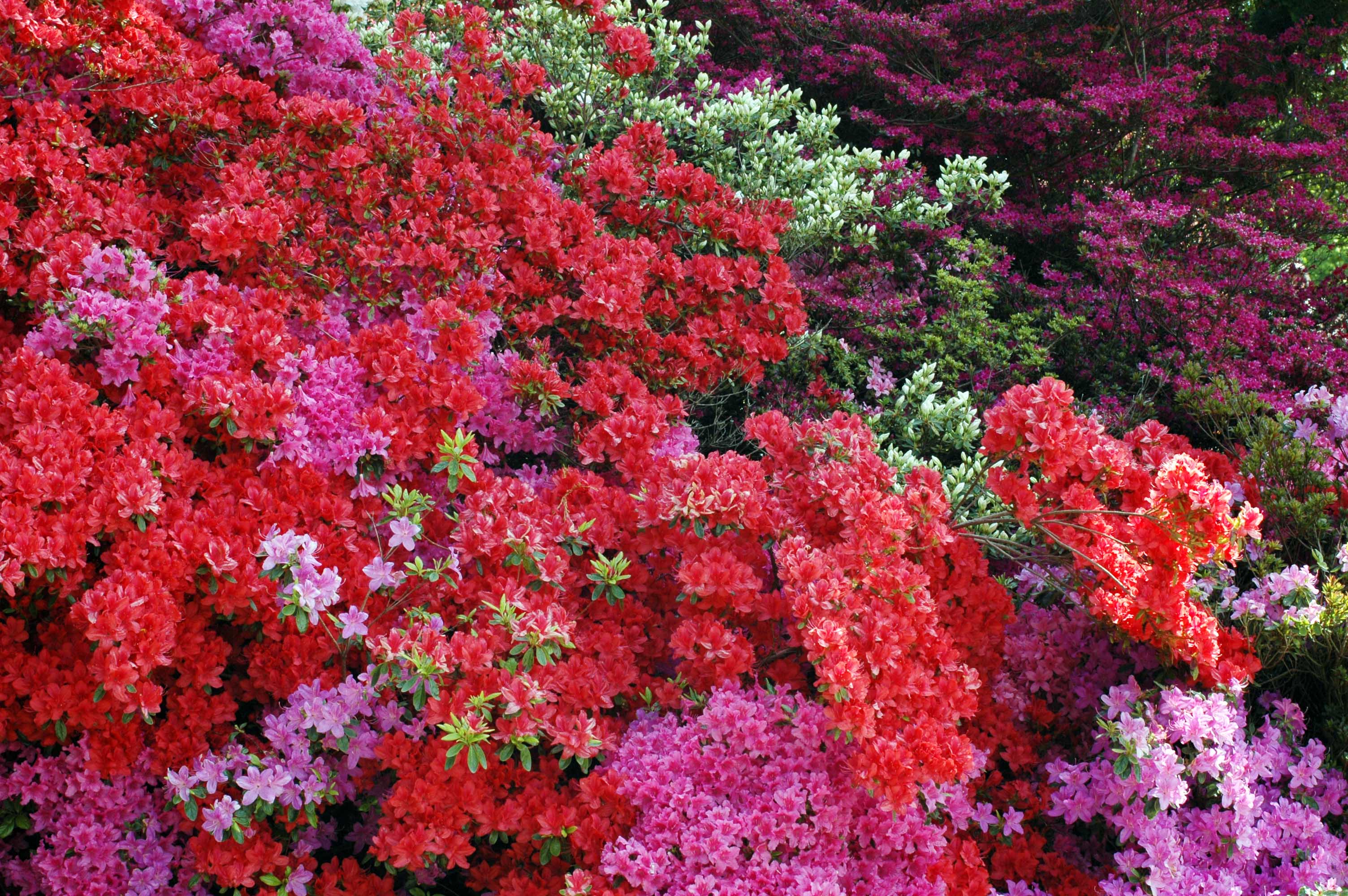
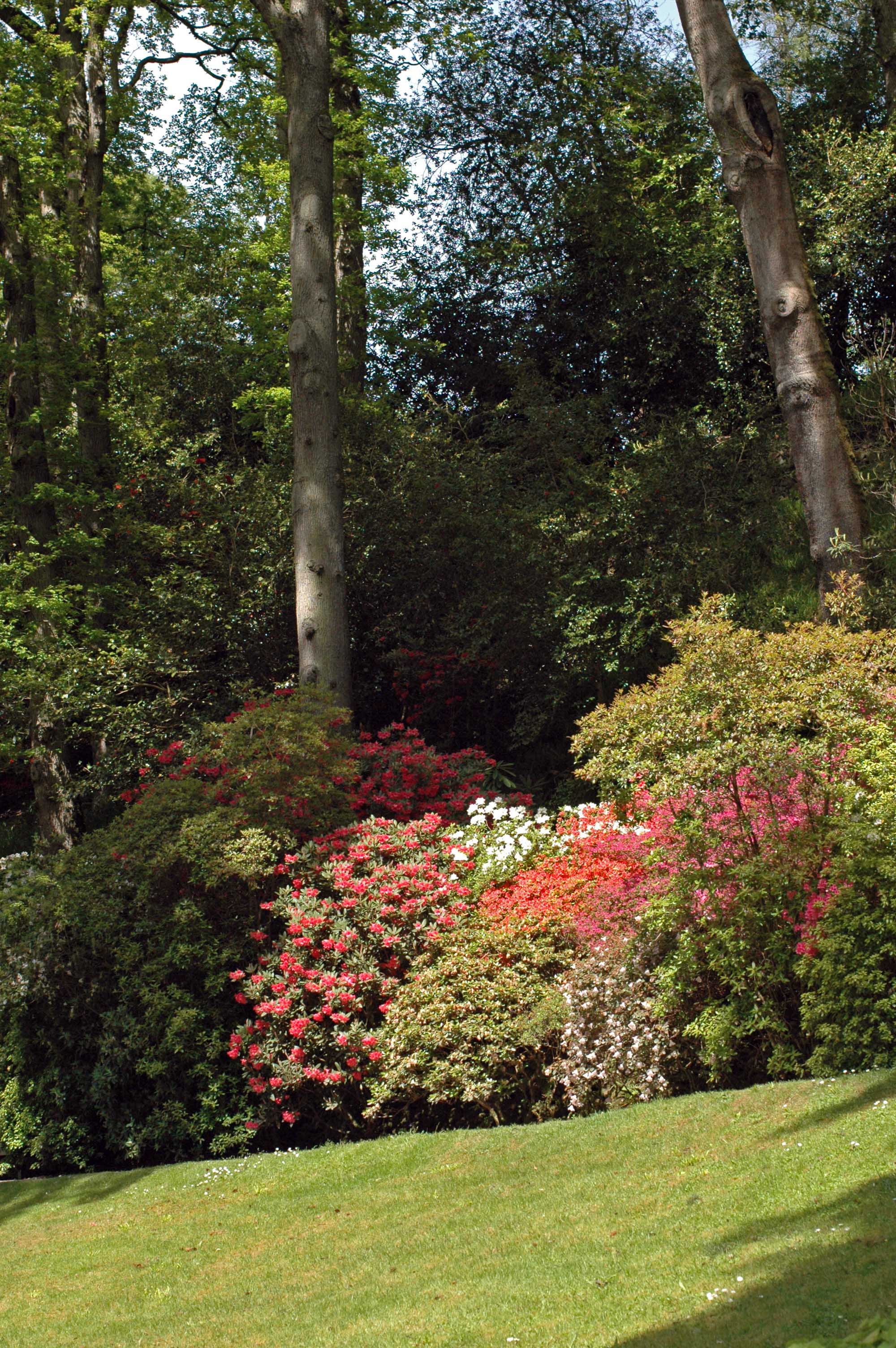
Azaleas

Azaleas

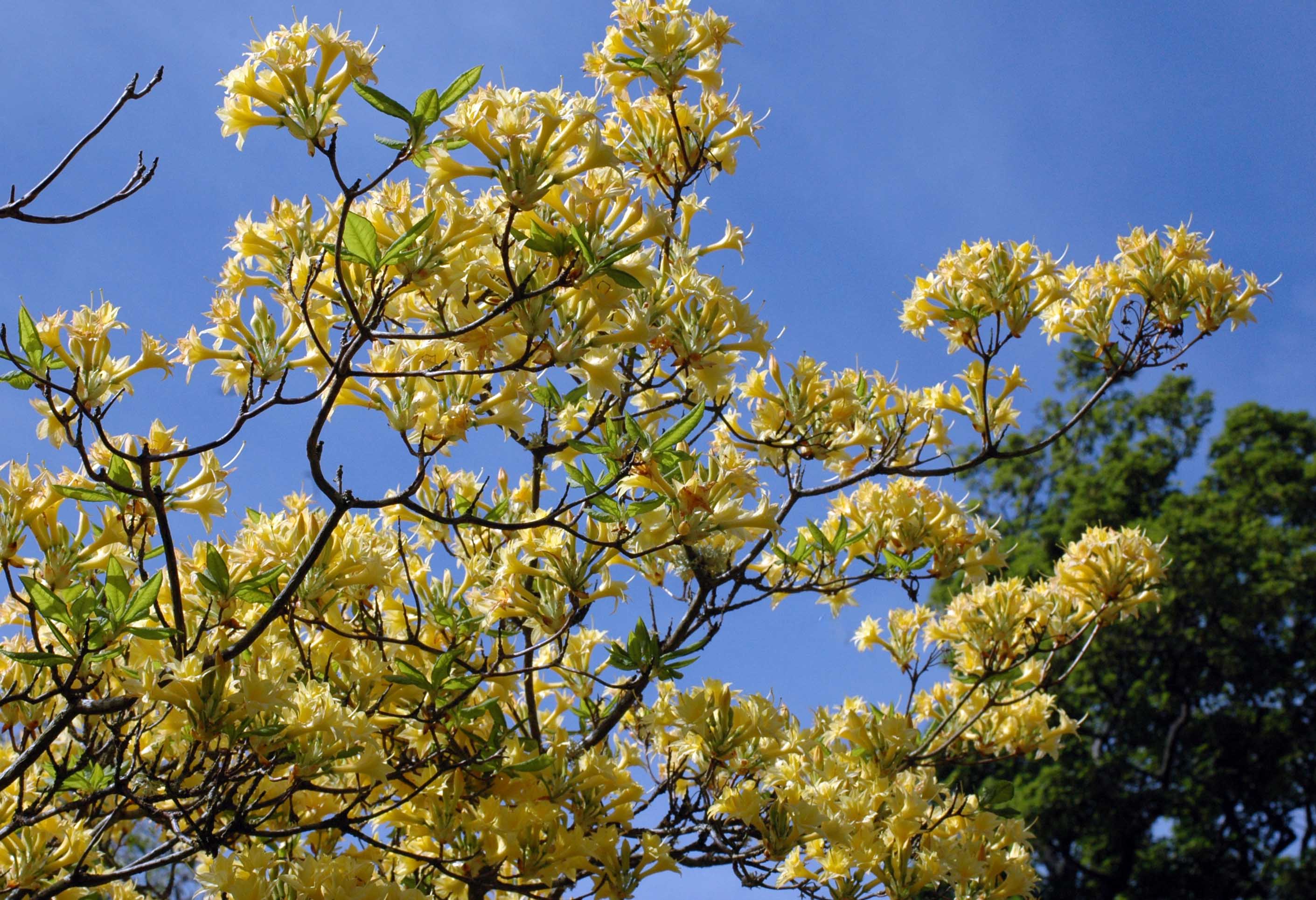
There's something about yellow flowers against a blue sky

There’s something about yellow flowers against a blue sky

This is the wildflower meadow

This is the wildflower meadow with an Oak tree

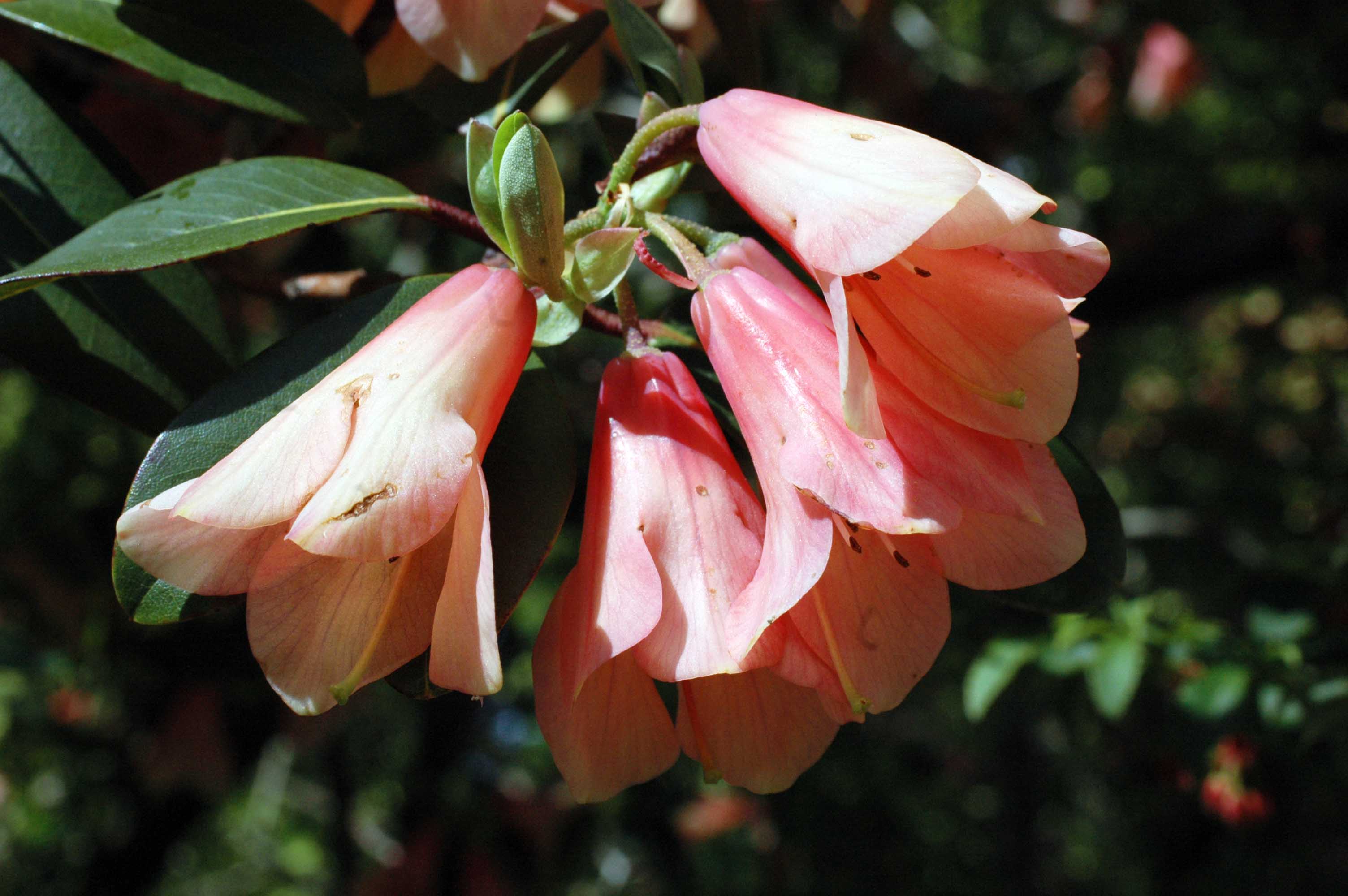
130603TGNT-Bodnant Gardens 08-Beautiful bells

Beautiful peachy-pink bells

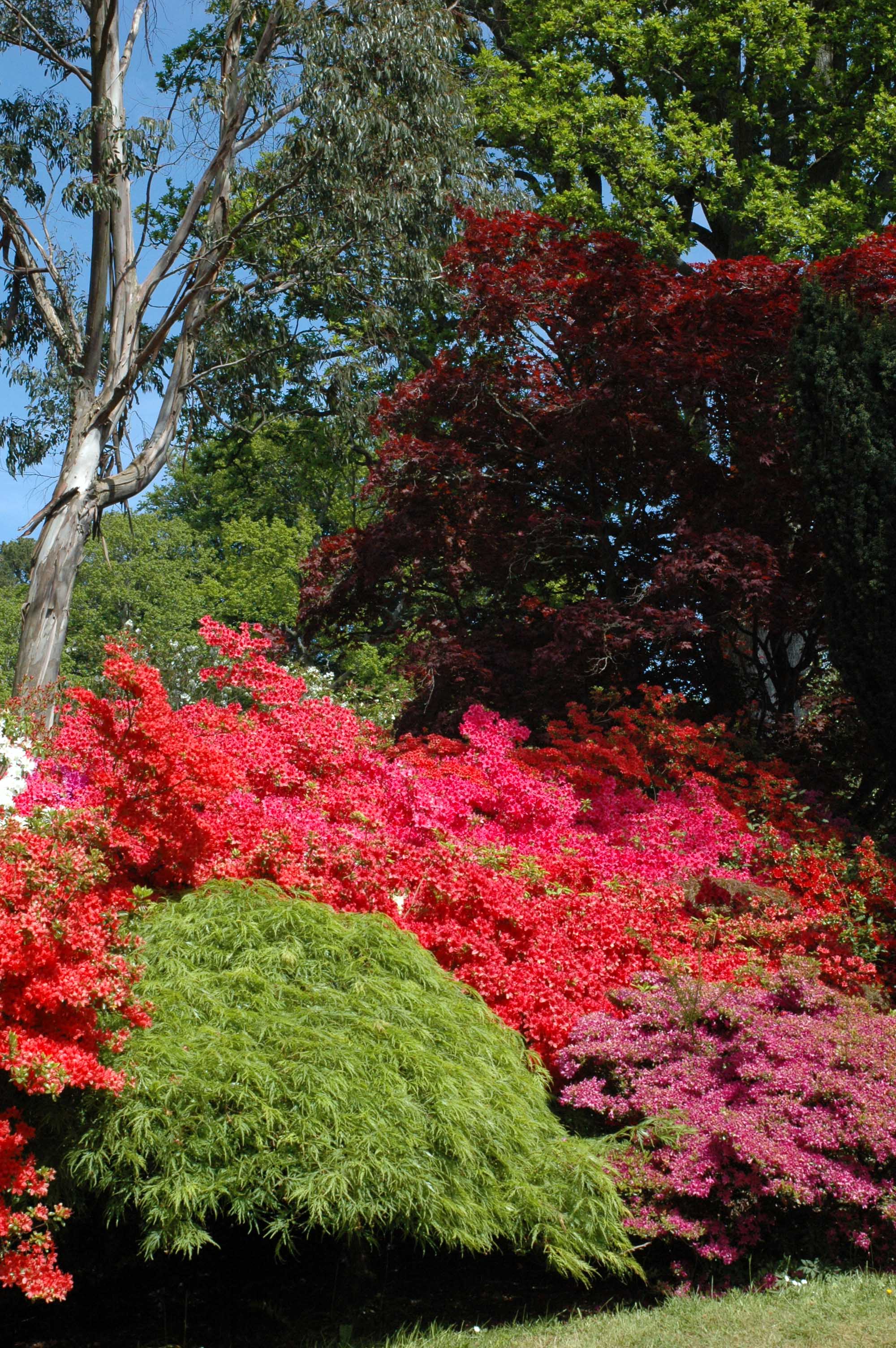
130603TGNT-Bodnant Gardens 11-Azaleas, bright green maple, eucalyptus & purple tree

A lovely composition of azaleas, vivid green maple, eucalyptus and a purple-leaved tree

More vibrant colours contrasted with white

More vibrant colours contrasted with white

A bee seeking nectar

An bee look-alike seeking nectar

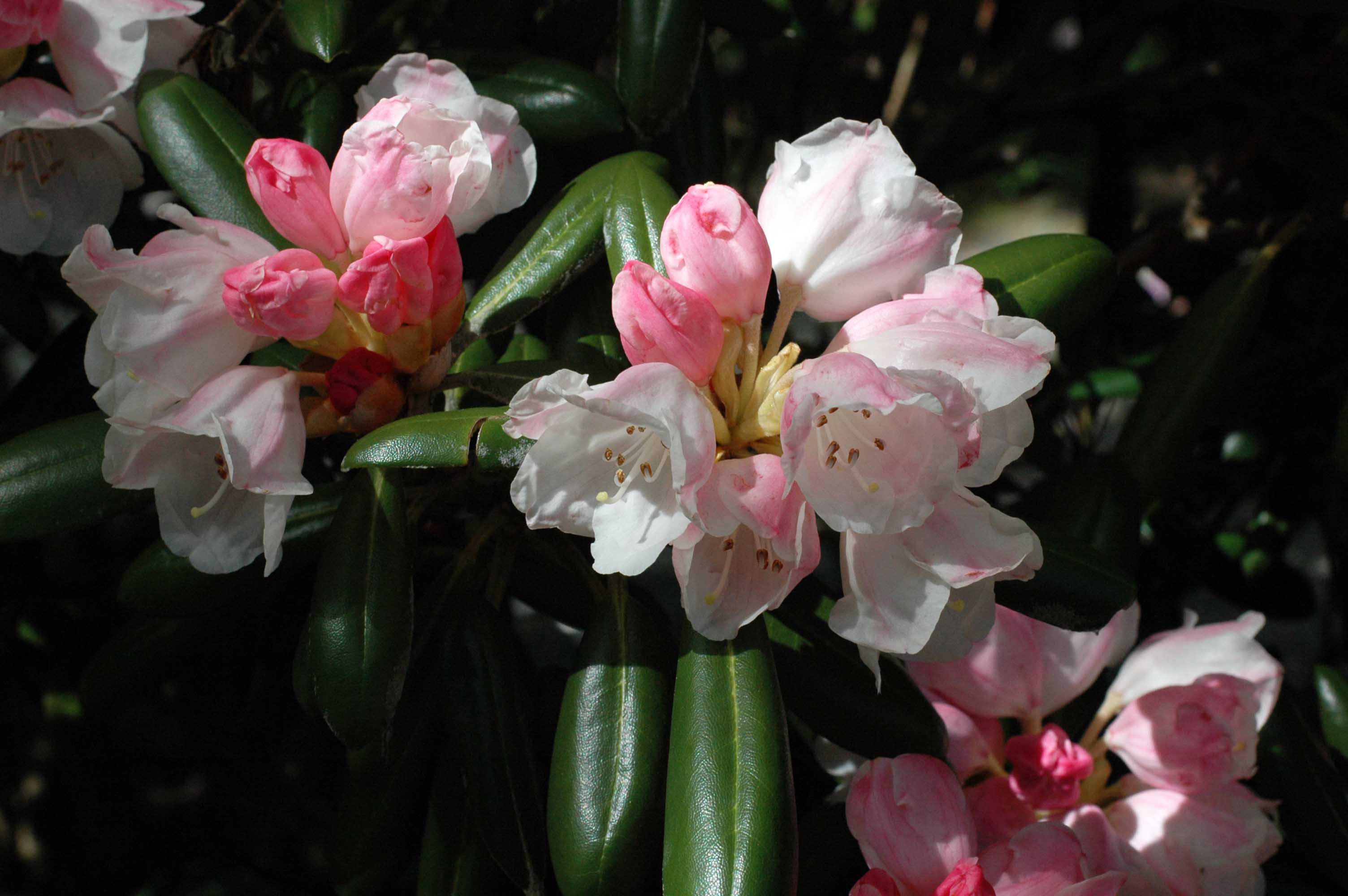
So many shades of pink in one flower

So many shades of pink in one flower

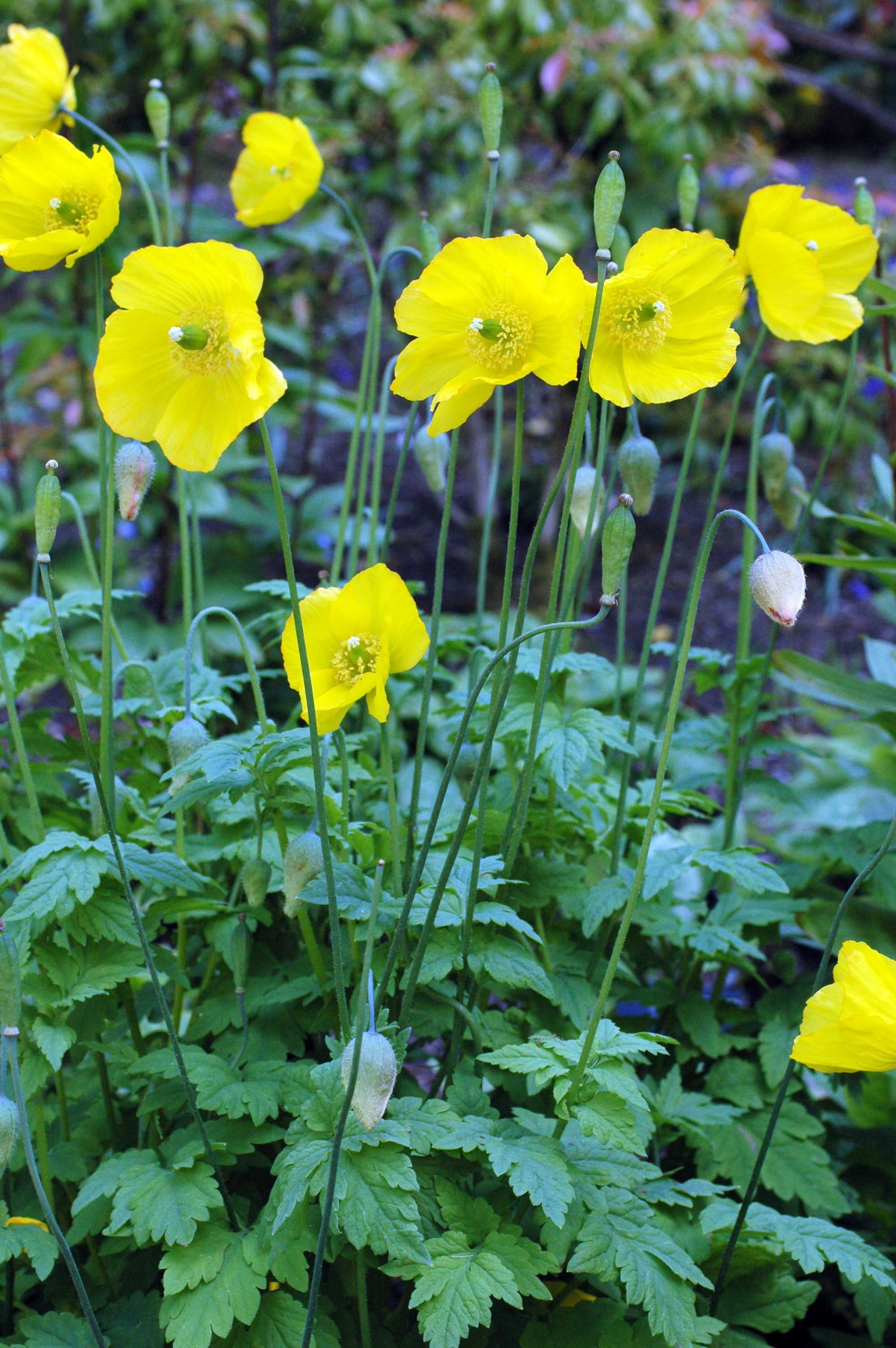
As you walk down towards the woodland dell there is a flower bed that has species of flowers resembling wild ones but exaggerated. Even the Welsh poppies were larger and perfectly formed.

130603TGNT-Bodnant Gardens 016-More Welsh Poppies

Welsh poppies

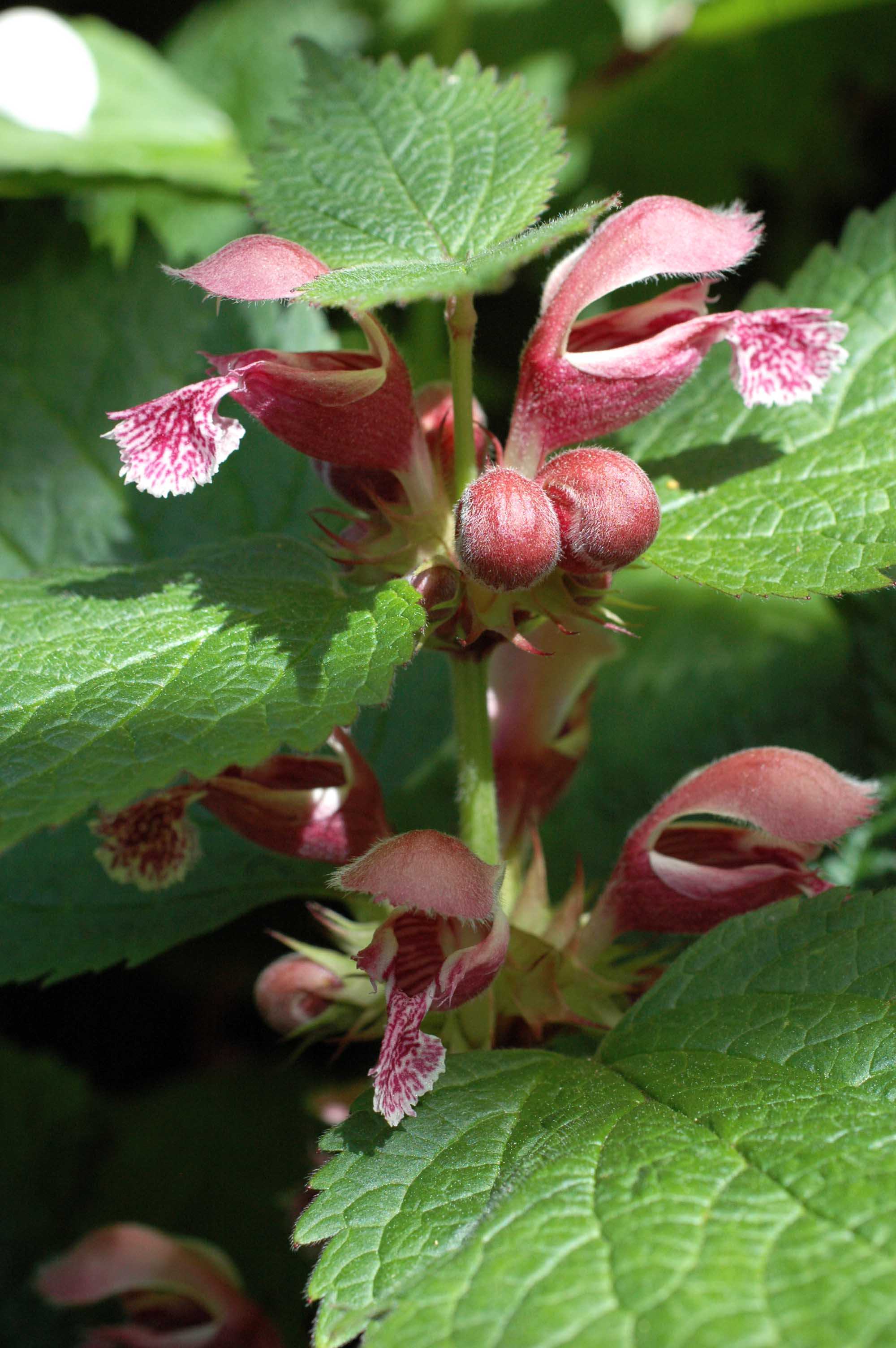
This looks a bit like a dead-nettle, but it's bigger

This looks a bit like a dead-nettle, but it’s bigger

The 'dead-nettle' look-alike has a fascinating flower

The ‘dead-nettle’ look-alike has a fascinating flower

This plant resembled Cow-Parsley, but with a purple rinse

This plant resembled Cow-Parsley, but with a purple rinse

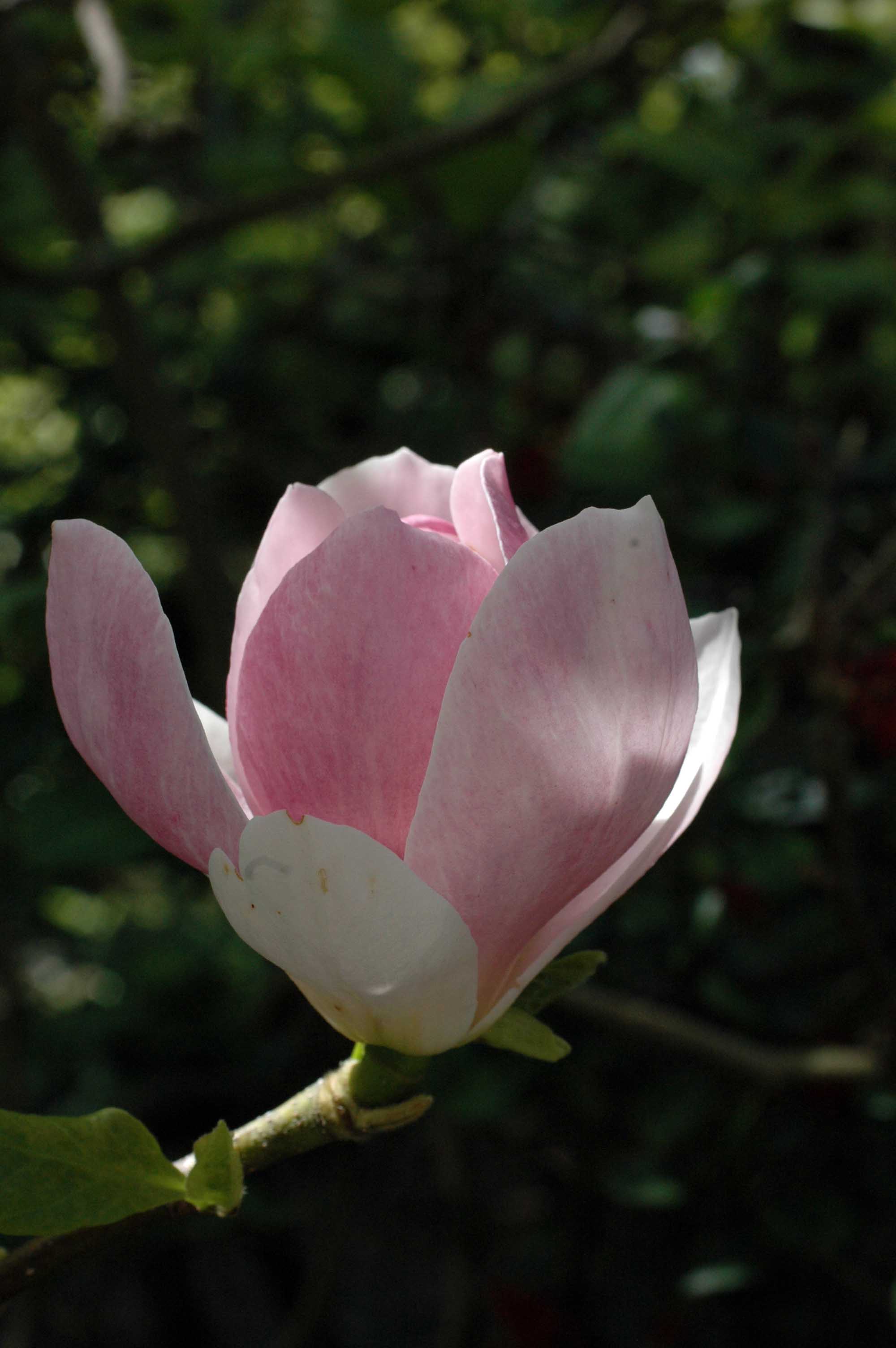
130603TGNT-Bodnant Gardens 17-A last magnolia flower

A last magnolia

130603TGNT-Bodnant Gardens 21-A woodland path in dappled shade

A tempting wood path in dappled shade

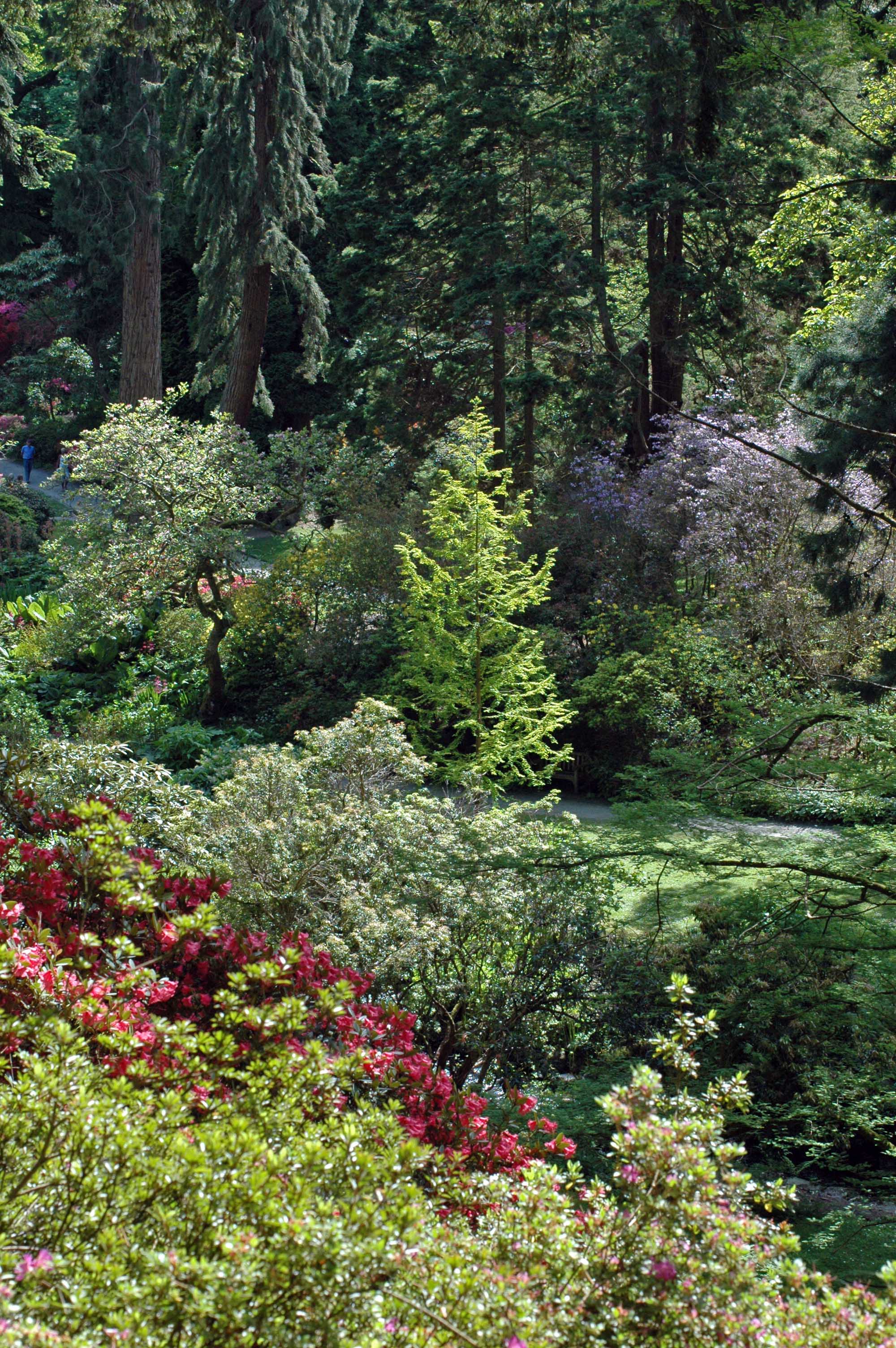
Looking down into the dell; a patchwork of greens with accents of colour

Looking down into the dell; a patchwork of greens with accents of colour

A simple, graceful Solomon's Seal

A simple, graceful Solomon’s Seal

Pretty white bells

Pretty white bells

We sat on a bench at the side of the stream for a while to have a chat (on the phone) and wish penblwydd hapus (happy birthday) to number 2 son who lives and works in London and used to speak Welsh.

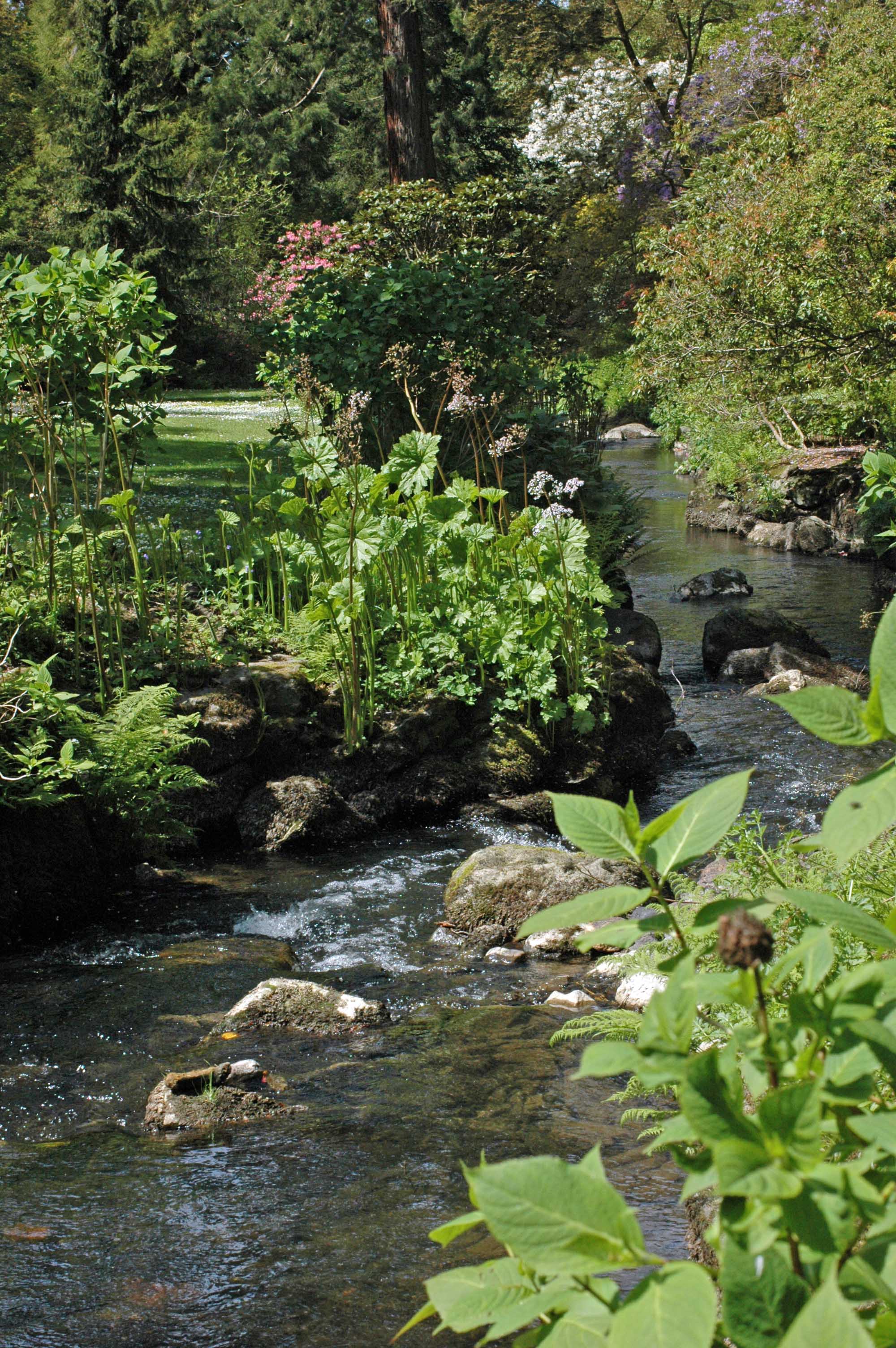
A tranquil view of the stream runnning through the dell

A tranquil view of the stream runnning through the dell

I was fascinated by some crazy flies zooming back and forth over the water. They all seemed to be racing to a particular point, moving so fast they left a blurry trail, then they turned round and zoomed back again, repeated that a few times then broke up into a cloud for a few seconds before doing it again. They were quite large insects, I thought perhaps mayflies, but can they move that fast? I always thought they were a bit airy-fairy, float through the air-ish. They kept me entertained for ages whatever they were.

I was fascinated by crazy flies over the water

I was fascinated by crazy flies over the water. Lush Hostas, why don’t the slugs eat them?

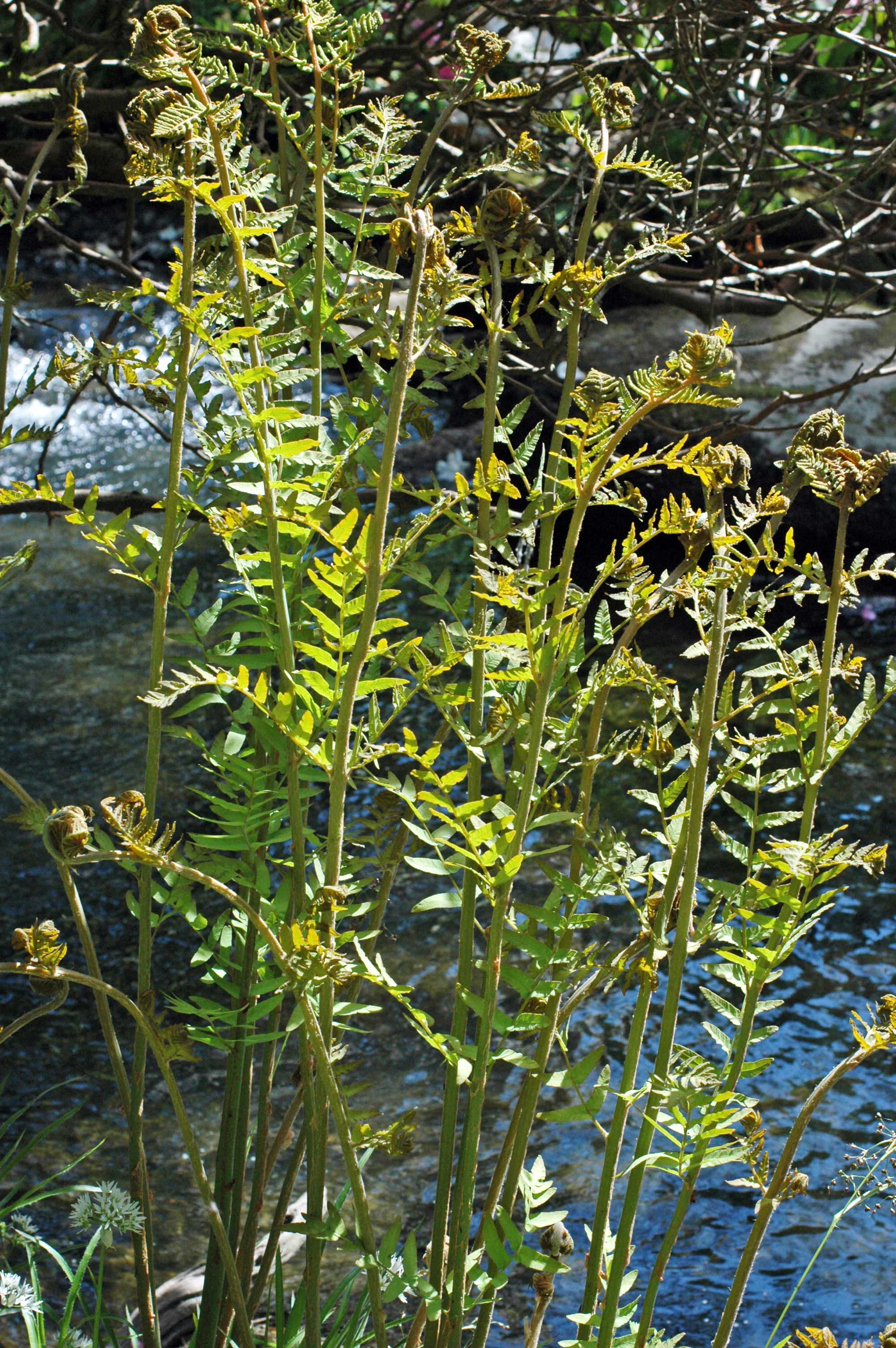
Impressive fern

Impressive fern

Just the kind of hilly bank we’d have rolled down as kids. Tempting though…

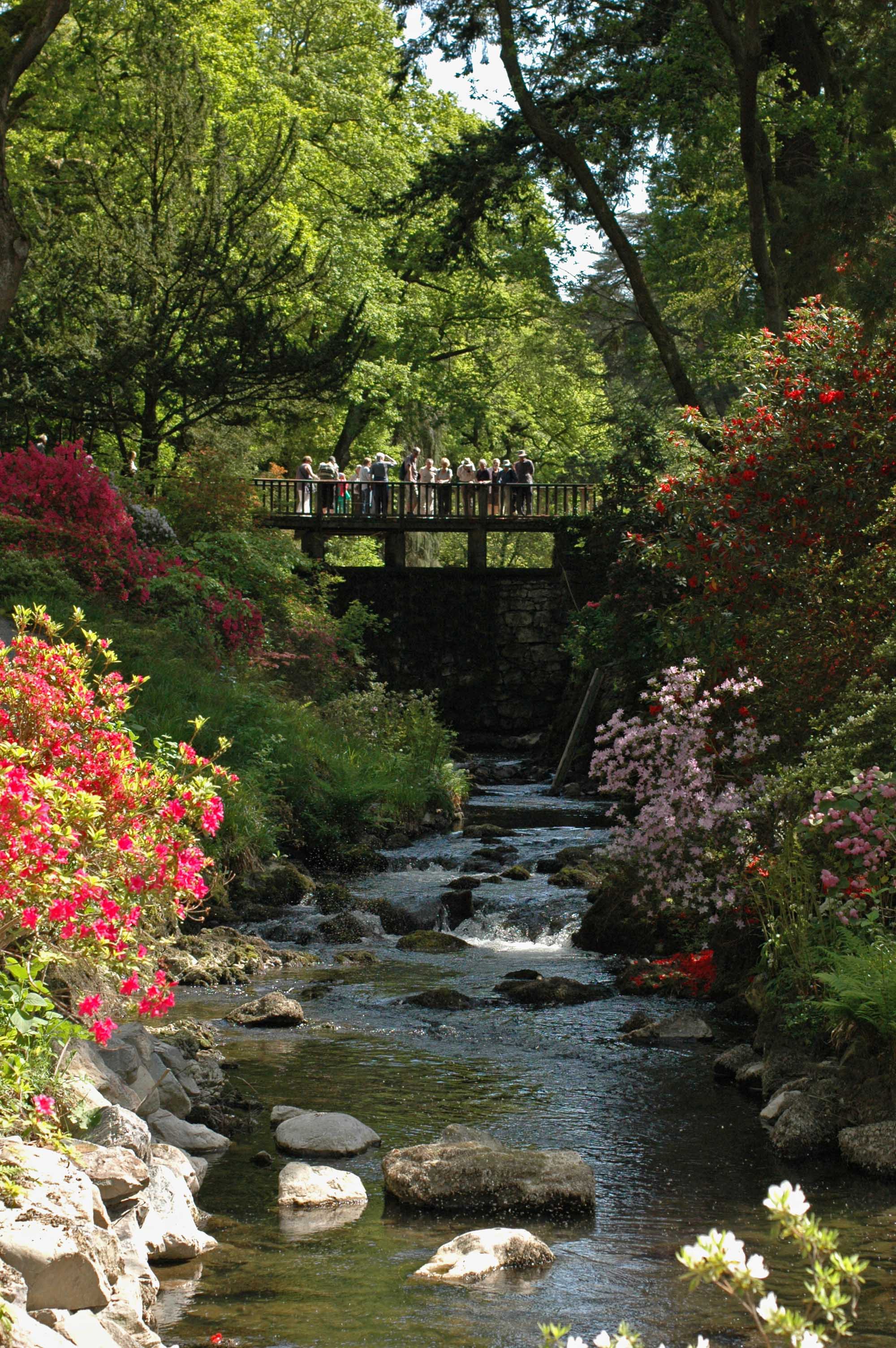
I think this picture of people on the bridge is my favourite of the day.They look so small

I think this picture of people on the bridge is my favourite of the day. They look so small

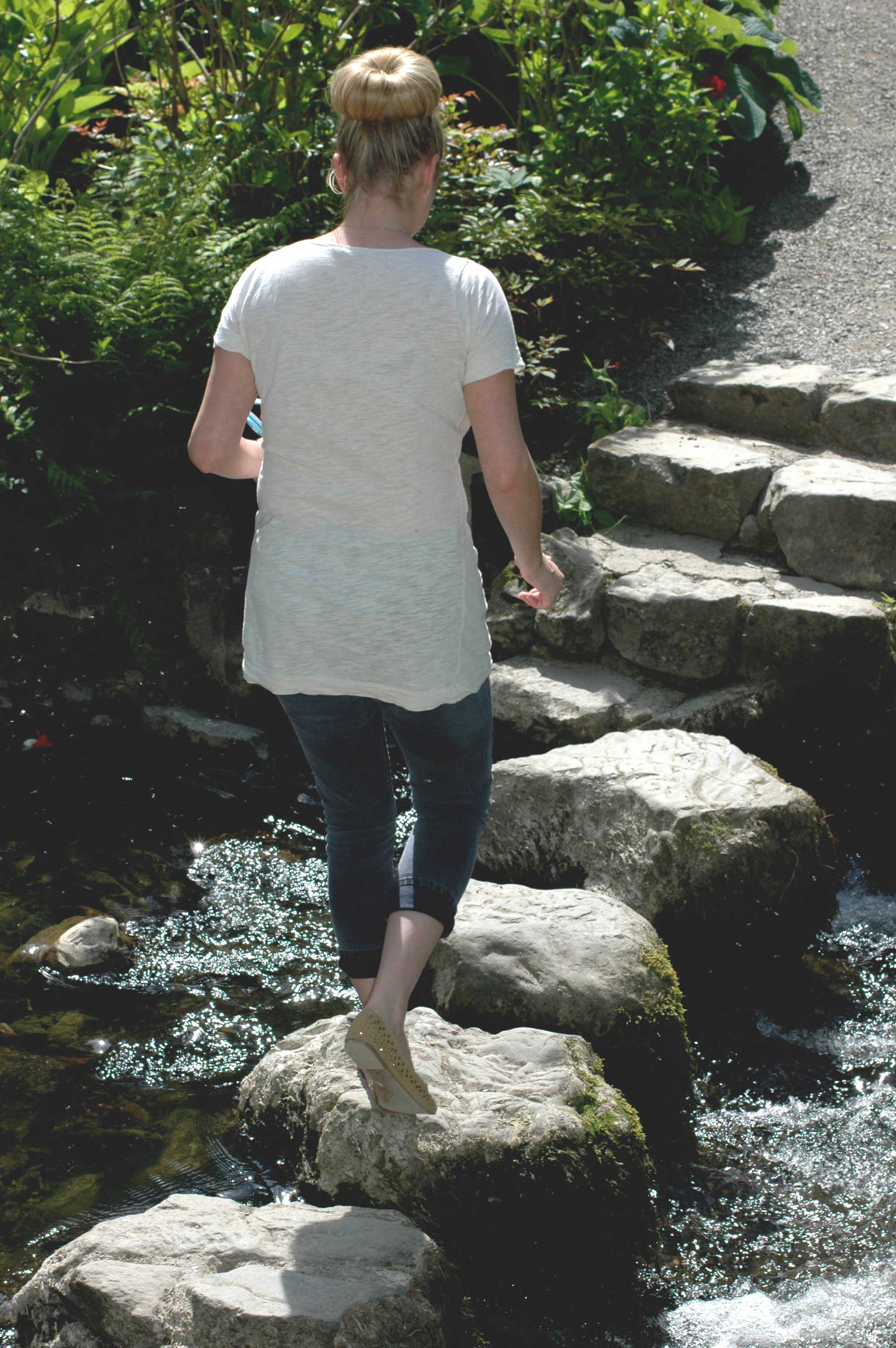
Daughter ran over the stepping stones to video me crossing. She was hoping for a 'you've been framed' opportunity

Daughter ran over the stepping stones to video me crossing behind her. She was hoping for a ‘you’ve been framed’ opportunity. Ha! No chance.

The rhododendrons are almost over and petals cover the ground beneath them

The rhododendrons are almost over and their petals were thick on the ground

Aah

Aah

A carpet of red

A red carpet 

There were even petals in the stream

There were even petals in the stream

I loved this starry deep blue periwinkle

I loved this starry deep blue periwinkle

130603TGNT-Bodnant Gardens

Flowers on a carousel

Even the best people have a daisy lawn these days

Even the best people have a daisy lawn these days

Bluebells are almost at the end of their flowering

Bluebells are almost at the end of their flowering

And a last view upstream before heading off to find the laburnum arch.

The laburnum arch, not quite at its best but you can see the potential

The laburnum arch, not quite at its best, but still pretty impressive

I’ve just checked the website for Bodnant and it says the arch is in full bloom now. Apparently it is so famous that people from all over the world go to see it. I thought it was busy there today.

Share this:

  • Share on Facebook (Opens in new window) Facebook
  • Share on Pinterest (Opens in new window) Pinterest
  • Share on X (Opens in new window) X
Like Loading...

How to build a beach

14 Sunday Apr 2013

Posted by theresagreen in coastal habitat, Colwyn Bay, nature photography, North Wales

≈ 6 Comments

Tags

colwyn bay beach, dredging sand, herring gull, herring gull feeding behaviour, sea defences

The beautiful but rugged coastline of North Wales is subject to some serious battering by  winds and waves throughout the year and although we love to live and holiday here, of course we prefer it to be on our terms and so demand protection from the elements too. We also need to make a living and as this whole area is designated as an outstanding area of natural beauty, capitalising on those natural assets by way of tourism is the way things are set to go forward. Great lengths of piled up rocks are already in place reinforcing the defences of the sea wall from Rhos on Sea to Penrhyn Bay, but now work has begun to improve the defences of Colwyn Bay.

misc 2013-sony camera 035

A section of the Colwyn Bay promenade being battered by the sea, March 2013

Colwyn Bay was one of the North Wales holiday resorts popularised by the Victorians. It was accessible to them by way of the railway line between the ferry port of Holyhead on the Isle of Anglesey, and London, that was built to facilitate the transport of mail between the two places and onwards to Ireland by sea. It remained popular as a holiday destination for several decades following, my own parents spent their honeymoon here in 1946, but began to go into decline during the late ’80s, in common with many other British seaside resorts.

In 2010 a ‘masterplan’ was revealed to regenerate the area which includes plans for a new sandy beach to be constructed  to improve sea defences and to allow people access to the shore throughout all tidal states: currently you can only walk on the shore at low tides.

As reported at the time by The Weekly Post, this build-a-beach project is not going to come cheap.

“Conwy County Council’s cabinet voted to pledge £667,000 to secure a grant of £2m from the Welsh Government to improve the town’s sea defences. The authority had already secured an additional £1m of funding from the Welsh Government for the Colwyn Bay Waterfront coastal defence scheme by offering up £333,000 of supported borrowing from this year’s capital programme. By agreeing to pay the £667,000 from next year’s (2013) budget the council…will see beach sand material imported onto Colwyn Bay seashore which is now mostly pebbled. This will result in 50m of sand to help protect the promenade.”

Work began on building the new beach on 21st March and the major project of engineering is proving to be quite fascinating. To begin with two lengths of steel pipeline were constructed on an unobstructed stretch of Pensarn beach, one a kilometre long, the other about 400m long. The two sections were then floated out at high tide, lined up and welded together. The pipeline was then connected to the steel dry-line which is pumping the sand onto the beach. A rubber floater line was also connected to the sea end of the steel pipeline, and this section of pipe will connect to the dredging vessel.

Picture copied from Daily Post

Sand begins to pour from the pipeline against the existing sea wall. Picture from Daily Post.

The dredging ship, the Barent Zanen, sailed here from Rotterdam and prepared to dredge sand from the seabed of a site 20 nautical miles north of Colwyn Bay, located within  Liverpool Bay. The ship is taking the sand from the sea bed approximately 20 miles north of Colwyn Bay, and then sailing in and anchoring about a kilometre offshore. Around 10,000 tons of material is brought in each trip and it is estimated that the beach will be topped up at a rate of 25-30,000 tons a day.

KONICA MINOLTA DIGITAL CAMERA

The Barent Zanen off Rhos Point, connected to a smaller tug that connects the two ends of piping together

The sand and sea-water mix is blasted onto the beach during periods of low tide and attracts a huge amount of interest from a large number of gulls that arrive to take advantage of seafood, freshly delivered from the seabed. As far as I am aware, no mention has been made of any potential damage the dredging may be doing to the flora and fauna of the seabed in the dredging site, but I can’t help wondering.

13-4-1-TGROS-Building a beach 1

The dredged sand and seawater mix arriving on the shore brings about a frenzy of gull activity

Following each delivery of sand, which is deposited in one large pile, it is distributed by mechanical diggers and bulldozers. The work often attracts groups of interested onlookers, and no doubt at least some of the big boys watching would love to be having a go.

KONICA MINOLTA DIGITAL CAMERA

A closer view of some of the machinery involved in the beach construction; here moving the steel pipeline into a new position

6th April, the new beach so far

6th April, the new beach so far

The operation will take place 24 hours a day, seven days a week and should last for a period of up to four weeks, depending on the weather, which thus far has been pretty wild. Many local people are wondering how long the beach sand will stay put and how much it’s going to cost them…..?

Share this:

  • Share on Facebook (Opens in new window) Facebook
  • Share on Pinterest (Opens in new window) Pinterest
  • Share on X (Opens in new window) X
Like Loading...
← Older posts
Newer posts →
Follow everyday nature trails on WordPress.com

Enter your email address to follow this blog and receive notifications of new posts by email.

‘But it is the common species that keep the living world ticking over and provide most of our experiences of wildlife, and I would argue that maintaining the abundance of these is as important a conservation priority as maintaining the existence of rarities’. Richard Mabey

MOST RECENT POSTS

  • A Glimpse of Spring to Come January 22, 2025
  • Hunting the Wren December 28, 2024
  • Oh, Christmas Tree December 18, 2024
  • In and Out of the Ivy February 15, 2024
  • Nature’s Fireworks November 30, 2023
  • Wild Autumn along the Coast Path November 3, 2023

OLDER POSTS

LOOKING FOR SOMETHING IN PARTICULAR?

  • Sights and Sounds from the Little Orme 1
    Sights and Sounds from the Little Orme 1
  • Things Bright and Beautiful
    Things Bright and Beautiful
  • Following a river to a Fairy Glen
    Following a river to a Fairy Glen
  • Catchers, a Duck and Divers
    Catchers, a Duck and Divers
  • May Bee Appearing on Ivy near You
    May Bee Appearing on Ivy near You
  • Shades, Sounds and Scents of the Woods
    Shades, Sounds and Scents of the Woods
  • Fine Dining for Crows
    Fine Dining for Crows
  • Butterflies and more rare treats
    Butterflies and more rare treats
  • The Windhover
    The Windhover
  • A Windy Wildflower Trail
    A Windy Wildflower Trail

nightingale trails

The Walk of the Monarch Butterfly-Sendero de la Mariposa Monarca

The Walk of the Monarch Butterfly-Sendero de la Mariposa Monarca

MY WILDFLOWER BLOG: where the wildflowers are

Snowdrop

Snowdrop

most recent posts

Follow everyday nature trails on WordPress.com

Social

  • View teresamaygreen’s profile on Twitter

Enter your email address to follow this blog and receive notifications of new posts by email.

Website Built with WordPress.com.

  • Subscribe Subscribed
    • everyday nature trails
    • Join 359 other subscribers
    • Already have a WordPress.com account? Log in now.
    • everyday nature trails
    • Subscribe Subscribed
    • Sign up
    • Log in
    • Report this content
    • View site in Reader
    • Manage subscriptions
    • Collapse this bar
 

Loading Comments...
 

    %d