• Home
  • about
  • about the photographs
  • Local Nature Reserves
    • Bryn Euryn Local Nature Reserve
    • Mynydd Marian
  • Wales Coast Path
    • Grey Seals in North Wales
    • St.Trillo’s Chapel
    • Wildflowers of North Wales Coastal Paths, Cliffs and Dunes

everyday nature trails

everyday nature trails

Category Archives: Insects

Enchanting evening on the Little Orme

03 Sunday Aug 2014

Posted by theresagreen in Butterflies of Wales, Little Orme, moths, Nature of Wales, nature photography, Rhiwledyn Nature Reserve, The Wales Coast Path, Wildflowers of Wales

≈ 2 Comments

Tags

6-spot Burnet Moth, 6-spot Burnet Moth pupa, Antler moth, cinnabar moth larvae, emerging 6-spot Burnet Moths, mating 6-spot Burnet Moths, small skipper, sulphur beetle

Some days the intention of a walk is at the forefront of my mind, then ‘stuff’ crops up and before I know it the day is almost over and the momentum needed to get me out of the door is fading fast. This was almost one of those days, when at six thirty-something I was still preoccupied with getting things done in the house. Luckily I finally acknowledged the little nagging voice in the back of my mind that was insisting I got out for some fresh air. I almost ignored it, then gave in, grabbed my camera, put on walking shoes and headed out with no real idea where I was heading for.

At around seven I arrived at the Little Orme. I knew before I arrived that by this time in the evening most of the area on this most accessible side of the headland would be in the shadow of its bulk, as the late sun slips down and slides around it to set just about behind its tip. There were quite a few people about too; dog walkers of course, some holidaymakers dressed up for the evening, maybe taking an evening constitutional before dinner & a couple of groups of teenagers, one lot jumping, diving, shouting and laughing from a rocky ledge into the sea.  I quickly judged that this was not a scenario I would normally enter into if hoping to spot any wildlife and on that basis decided this outing would be for the purpose of exercise. So a brisk walk to the cliff edge, an about turn and a concerted effort to get to the top of Rabbit Hill with minimum stops to catch breath, back down again and home ought to do it.

A group of people with two dogs was heading toward me, so to avoid them momentarily I stepped off the main path onto a narrow track that leads around the cliff, skirting what is currently a large patch of long grass. It took less than a minute of being there to spot that a good number of Meadow Brown butterflies were flitting about amongst the grass stems and settling there. It took slightly longer to realise they were there to roost for the night.

Long grass on the clifftop of the Little Orme with view to Rhos-on-Sea & Colwyn Bay behind

Long grass on the clifftop of the Little Orme where the butterflies were roosting. Views to Rhos-on-Sea & Colwyn Bay beyond

I tried to approach several butterflies, treading slowly and carefully through the grass, but I couldn’t get close enough to them to photograph and hadn’t picked up my more powerful zoom lens when I left the house as I didn’t expect to need it. I continued to try until following one individual led me to discover a cluster of Six-spot Burnet Moths on a single grass-head.

Cluster of 6-spot Burnet Moths

Cluster of 6-spot Burnet Moths- Zygaena filipendulae

It was clear that the Moths were in differing conditions, with one n particular looking a bit battered and with most of the colour gone from its wings. I assumed that as with the Meadow Browns the Burnets were also seeking to roost for the night and turned my attention to a passing Small Skipper that settled obligingly on another nearby grass-head.

Small Skipper

Small Skipper- Thymelicus sylvestris

I was happy now, especially as in the cool of the evening the butterflies and moths were not as mobile as they are during the day and were allowing me to get quite close to them with the camera.

Another Small Skipper

Another Small Skipper

As I moved  through the grass and further towards the cliff edge I began seeing more Burnet moths. And more.

6-spot Burnet moths either side of a grasshead

6-spot Burnet moths either side of a grasshead


It slowly dawned upon me that although the butterflies were roosting, the moths were not. They were out intent on mating.

6-spot Burnet moths mating

6-spot Burnet moths mating

I could hardly believe the numbers of moths that were gathered here in this relatively small area of long grass. I have been to visit this reserve many times and felt lucky to see half a dozen individuals on a sunny afternoon, now I was surrounded by them. They were literally everywhere I looked. It still took a further while though to realise that even more amazingly, I had arrived at exactly the time the new moths were almost simultaneously emerging from their cocoons.

6-spot Burnet Moth emerging from its pupa

6-spot Burnet Moth emerging from its pupa

I had begun to spot the yellow cocoons with something black and alien-looking emerging from them, but couldn’t quite imagine it ending up as a moth at all, so at first thought they were something else. I don’t what, just something else.

A closer view of an emerging moth

A closer view of an emerging moth still doesn’t look like one

It was only when I spotted other Burnet moths perched on top of cocoons from which another was emerging that I was convinced that somehow these crumpled black forms would indeed eventually look just like them.

A 6-spot Burnet moth on top of an as-yet unbroken pupa

A 6-spot Burnet moth on top of an as-yet unbroken pupa

I began to wonder then why the moths were sitting on top of the pupae. I’m afraid the only theory I could come up with was that they were male moths staking a claim on emerging females to mate with them as soon as they became viable. Not pretty, but probably not far off the mark. (more about 6-spot Burnet Moth)

Two Burnet moths on top of a pupa from which another is emerging

Two Burnet moths on top of a pupa from which another is emerging

I tried watching an emergence for a while, but it seemed like a lengthy process, so still marvelling at my luck in witnessing this epic event, I left the moths to their nuptials and moved on. I would have been happy to have taken my previously outlined walk now and returned home, but it turned out there were still a few things to see in the gathering dusk.

A sleepy bumblebee curled around a blackberry

A sleepy bumblebee curled around a blackberry

Ragwort is in full vibrant bloom now and I just had to look for black and yellow striped caterpillars of the Cinnabar moth. I was not disappointed, there were plenty in sizes varying from very tiny to very large.

Small Cinnabar moth caterpillar on ragwort flower buds

Small Cinnabar moth caterpillar on ragwort flower buds

A large plump Cinnabar moth caterpillar snaked around a ragwort bud

A large plump Cinnabar moth caterpillar snaked around a ragwort bud while eating it

I was also fortunate to spot a prettily marked moth : this is an Antler moth, so called because of the distinctive antler-shaped markings on its forewings. One of the species that flies in daylight.

An attractive little Antler moth  on ragwort flowers

Antler moth- Cerapteryx graminis

Long grass with cliff wall of the Little Orme behind

Long grass with cliff wall of the Little Orme behind

On the cliff above Angel Bay is another patch of long grass, but here it is mixed with wildflowers such as hogweed, ragwort and a sprinkling of knapweed, all important nectar plants for insects. This evening there were still a few to be found out dining including bumblebees and one little Sulphur beetle.

Sulphur beetle- Cteniopus sulphureus

Sulphur beetle- Cteniopus sulphureus

I left for home happily and exercised – I made it up to the top of Rabbit Hill, admittedly pausing a couple of times, but why wouldn’t you when the view is so spectacular and the sun is setting so beautifully over the sea?

Share this:

  • Share on Facebook (Opens in new window) Facebook
  • Share on Pinterest (Opens in new window) Pinterest
  • Share on X (Opens in new window) X
Like Loading...

Burnet Rose- Rosa pimpinellifolia

28 Wednesday May 2014

Posted by theresagreen in Bryn Euryn Nature Reserve, bumblebees, coastal habitat, Nature, Nature of Wales, nature photography, Wildflowers of Wales

≈ 2 Comments

Tags

burnet rose, low-growing white rose, Phragmidium rosa-pimpinellifoliae, rosa pimpinellifolia

Family: Rosaceae Other English name: Pimpinell Rose Welsh name: Rhosyn Dewi (Rhosyn y Twyni) Irish name: Briúlán

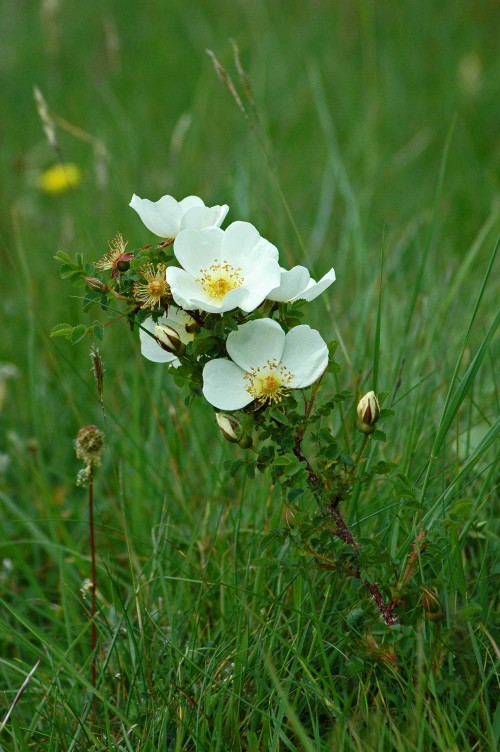
There is a glorious stretch of these lovely and very prickly roses on Bryn Euryn that are fully in flower now.

Beautiful Burnet Roses

Beautiful Burnet Roses

The Burnet Rose is a low-growing species, largely confined to dry sandy places near the sea; it is particularly abundant on dune systems in South Wales. Inland it may be found in calcareous areas, generally chalk downland or limestone pavement.

 Its natural distribution is limited to Europe and Asia except for part of the Atlas Mountain Range in North Africa.

A prickly stem full of blooms

A prickly stem full of blooms


It is a rather low erect deciduous plant usually growing to 20–140 cm high but it can sometimes reach up to 2 metres.

The plant spreads by suckers and can cover large areas. The stems are protected by numerous stiff bristles and many sharp straight prickles. The young stems and prickles and the mature leaves tend to be very red with young growth a bright scarlet and older growth a deep maroon.

 ‘Some people are always grumbling because roses have thorns. I am thankful that thorns have roses’.

  Alphonse Karr (1808-1890)

Burnet Rose

Burnet Rose

The flowers are cream-white although rarely also pale pink and are 2–4 cm in diameter with five petals. prominent golden stamens and they have the sweetest, most delicious scent of any of native roses.

Popular with bumblebees

Visited by bumblebees

Bumblebees seem to love them, perhaps because they do have a hint of honey in their scent.

This small bumblebee was enjoying a really good rummage around

This small bumblebee was enjoying a really good rummage around

Soon the petals fall off the roses but the stamens look pretty too. The leaves are small and oval, very like those of the salad burnet (hence the name).

Without petals

Without petals

And later in the year there will be a crop of  distinctive globular dark purple to black hips.

Rust fungus on Burnet Rose stem

Rust fungus on Burnet Rose stem

A brilliant-orange rust fungus Phragmidium rosa-pimpinellifoliae is also common on the plants.

The plant’s names 

R. spinosissima (pimpinellifolia) has been known by many different local names and it has attracted its own folklore. In some places, people have given it a vernacular name based on the resemblance of the leaves to a Burnet (Sanguisorba ) and therefore, for example, called it the Burnet or Pimpinell Rose in English or Rose Pimprenelle in French. In other places, it was the prickly stems that caused it to be known as Bodicasti Sipek in Slovenia, for example, or Piikkiruusu in Finland. 

Burnet Rose growing alongside the related Salad Burnet

Burnet Rose growing alongside the related Salad Burnet on Bryn Euryn

In Iceland, it has the name pyrinros which literally means ‘Thorny Rose’ but the same Icelandic word means ‘Sleeping Beauty’ and may refer to its early flowering – the beautiful rose waking up after the long dark Icelandic winter! In Norway, this rose is called ‘Trollnype’ – associating it with the trolls of Norwegian folklore. Elsewhere, it is named after the coastal sand-dunes where it grows so, for example, it is Klitrose in Denmark,Duinroos in The Netherlands or Dünen Rose in Germany.

Medicinal uses

The plant  was initially grown in gardens for its herbal properties and it was one of the first roses described and illustrated in 16th  century herbals of Northern Europe. Its hips and leaves have been used to make a tea and, in some places (particularly Denmark) a liqueur is still made from its hips. In recent years, it has been the subject of intense research to investigate its special pharmaceutical properties. The chemical constituents have recently been summarised by Mayland-Quellhorst et al (2012). Its dark purple or black ‘fruits’ (heps) are high in vitamins and antioxidants.

(Extracts from: Rosa spinosissima – aspects of its natural history and associations with people from prehistory to the present day ) by Peter D. A. Boyd


Share this:

  • Share on Facebook (Opens in new window) Facebook
  • Share on Pinterest (Opens in new window) Pinterest
  • Share on X (Opens in new window) X
Like Loading...

A Butterfly bonanza

05 Monday May 2014

Posted by theresagreen in butterflies, Nature, Nature of Wales

≈ 2 Comments

Tags

comma, green-veined white, holly blue, orange tip, peacock butterfly, small tortoiseshell, speckled wood

It’s been a good while since I’ve had the time to visit blog-land, mainly down to starting a new job which has consumed most of my time and energy for the last few weeks. But, as with all significant life changes, things are gradually settling down and I’m able to get back to doing the things I enjoy, albeit less frequently.

Last Sunday was a lovely, almost warm sunny day and I was keen to take advantage of a free afternoon and get out for a wander. Stepping out of the front door I was still undecided where to head for, but the sight of a Peacock butterfly, aroused from hibernation and looking rather faded and a bit battered around the edges decided it for me and I set off for Bryn Euryn hoping to find more.

First Peacock of the year

First Peacock butterfly of the year

Peacock nectaring on a dandelion

Peacock nectaring on a dandelion

A few minutes later and I was standing on the woodland edge of the quarry field which is golden with dandelion flowers lifting their faces to soak up the sunshine.

Dandelions in full bloom

Dandelions in full bloom

I spotted my first butterfly within minutes, another Peacock, slightly less faded than the garden one but even more battered, poor thing.

Peacock- Nymphalis io

The Peacock was resting on a bramble leaf, but not for long – a Small Tortoiseshell fluttered into its territory and it took off in rapid pursuit.

A Small Tortoiseshell competing for territory with the Peacock

Small Tortoiseshell – Nymphalis urticae

The Small Tortoiseshell was in much better shape than the Peacock, its colours were brighter and there were no signs of damage, but the frequent intense aerial battles with the larger Peacock, who was clearly not in need of my earlier sympathy for his condition, may well take their toll.

Although delighted to see these two beautiful butterflies so soon after arriving here, I was even more pleased by the presence of two male Orange Tips that were racing up and down the field edge, pausing for the occasional skirmish with one another before continuing their frantic patrolling. I had a feeling of déja vue and was transported back to this time last year when I spent ages following Orange Tips back and forth along this same field edge, fruitlessly waiting for them to pause for an instant so I might get a photograph. So, imagine my delight when I spotted one hovering around a valerian flower seeming to be about to settle. My problem was that I was a good few metres away and I daren’t move too quickly towards it in case I alarmed it. I could hardly believe that my luck held and it did indeed settle and stayed put for a few precious moments allowing me to get a couple of reasonably good shots of it.

Orange Tip (male)

Orange Tip – Anthocaris cardamines (male)

It would have been good to catch him with his wings open, but I’m not complaining.

Orange Tip male underside

Orange Tip male underside

There was another of the ‘white’ butterfly species nearby too, this one the Green-veined White. In contrast to the Orange Tip, they are much easier to photograph, having a weaker flight and settling more frequently and for longer.

Green-veined White

Green-veined White-Pieris napi

By now I had reached the top of the field and although there were other insect distractions here I could see yet more distant flutterings at the other end, so retraced my steps. What I had seen turned out to be a Comma, also being drawn into skirmishes with the Peacock.

A lovely basking Comma

Comma-Polygonia c-album

The Comma was a lovely fresh one too, but was reluctant to fully open its prettily shaped wings.

A good view of the butterflys underside

A good view of the butterfly’s underside, showing the white mark that gives it its name

Watching the Comma yet another species caught my eye, this time a little Holly Blue that was fluttering around ivy growing up through a tree. It didn’t settle, so I didn’t feel obliged to negotiate brambles and stinging nettles to reach it, but to acknowledge its presence, I thought I’d put in a photograph I took earlier on in the garden.

Holly Blue

Holly Blue-Celestrina argeolis

Last but not least of today’s sightings was of one of my favourite butterfly species, a fresh, feisty little Speckled Wood.

Speckled Wood

Speckled Wood-Parage argeria

I added a Large White to my ‘tick-list’, but didn’t get a photograph. Eight species of butterfly in a matter of a few minutes and all within such a confined area was quite magical and far more than I had expected.

Share this:

  • Share on Facebook (Opens in new window) Facebook
  • Share on Pinterest (Opens in new window) Pinterest
  • Share on X (Opens in new window) X
Like Loading...

Pretty prickly Thistles

05 Monday Aug 2013

Posted by theresagreen in bumblebees, flower folklore, flower mythology, Nature of Wales, nature photography, plants important to wilflife, wasps, Wildflowers of Wales

≈ 14 Comments

Tags

carduelis carduelis, cirsium arvensis, cirsium vulgare, creeping thistle, Goldfinch, scotch thistle, spear thistle, thistle folklore and mythology

Thistle is the common name of a group of flowering plants typically characterised by leaves bordered with sharp prickles, mostly belonging to the family Asteraceae.  Prickles or spines are not always confined to the margins of leaves, often occurring all over the plant on surfaces such as those of the stem and the flat parts of leaves. These are a defensive adaptation that protects the plant from being eaten by most herbivorous animals.

From an agriculturalist’s point of view, the most common thistles are regarded at best as troublesome weeds and at worst as noxious ones. However, ecologically, the leaves of some species provide a valuable food source to the larvae of a number of lepidopterae species and he flowerheads supply pollen and nectar to an array of adult insect species. Thistle seeds are a favoured food of many members of the finch family Fringillidae, whose genus name, Carduelis, is derived from carduus, the Latin name for thistle and includes goldfinch, greenfinch and linnet.

1- SPEAR THISTLE – Cirsium vulgare

Family: Asteraceae; Flowering: July to September; Habitat: Disturbed and cultivated land such as pastures, meadows, roadsides, arable fields, gardens, brownfield sites and waste ground.

A widespread and common thistle, the Spear Thistle has the classic thistle appearance – purple, fluffy-looking flowers sitting atop a spiny ball and may well have given rise to the Scottish national emblem. As with other thistles, it can become a nuisance on agricultural land and is often considered to be a weed. The spear thistle is usually a biennial plant although the leaf rosettes can survive as long as 4 years before finally flowering. This robust thistle can reach between half and over a metre in height under favourable conditions. The plant is often solitary.

Spear Thistle flowerbud,flowerhead and leaf

Spear thistle

The flowers are lilac or magenta and are larger than creeping or marsh thistle flowers, reaching up to 4 cms in diameter. Stems are winged and spiny. The leaves are spear-shaped, pinnately-lobed and spiny and give the plant its common name. The upper surface ranges from dark green to light grey. The under surface is green. The leaves are waxy and end in sharp “spear-like” prickles which are tipped with yellow.

Spear Thistle flower buds surrounded by yellow-tipped spines

Spear Thistle flower buds surrounded by yellow-tipped spines

The average number of seeds per flower head is around 100 but there can be up to 340. Seed production per plant may vary from 1,600 to 8,400 seeds. More seeds are produced when ample soil moisture is available during the growing season. Seeds are mostly dispersed during August and September.

Spear thistle seeds

Spear thistle seeds

Spear thistle spreads only by seed. Unlike creeping thistle (C. arvense), the feathery pappus remains attached firmly to the seed as an aid to wind dispersal. Most seed is dispersed less than 2 m from the parent plant and only 10% travel more that 32 m after reaching higher air currents.

Single spear thistle seed

Single spear thistle seed

Ecology

Thistle flowers are amongst the favourite nectar sources of the Pearl-bordered Fritillary, Small Pearl-bordered Fritillary, High Brown Fritillary, and Dark Green Fritillary butterflies.

The seeds are attractive to ants that may aid their dispersal and also to finches, particularly goldfinches and linnets.

Thistle seeds are a favourite food of the goldfinch

Thistle seeds are a favourite food of the goldfinch

Spear thistle flowerhead providing a safe haven for a tiny spider

Spear thistle flowerhead providing a safe haven for a tiny spider

Scotland’s National Emblem 

This thistle, seen throughout Scotland and the Western Isles has been Scotland’s national emblem for hundreds of years. There are several versions as to how the thistle became Scotland’s symbol, most are set around the reign of Alexander III (1249-1286) and in particular the events surrounding the Battle of Largs in 1263.

At one time, Scotland was part of the Kingdom of Norway although it attracted very little interest until 1263 when King Alexander III proposed to buy back the Western Isles and Kintyre from the Norse King Haakon IV. That provoked King Haakon of Norway and in the late summer of 1263 he set off for the Scottish coast with a large fleet of long ships, intent on conquering the Scots. Gales and fierce storms forced some of the ships onto the beach at Largs in Ayrshire, and a Norwegian force was landed.

Legend has it that at some point during the invasion the Norsemen tried to surprise the sleeping Scottish Clansmen. In order to move more stealthily under the cover of darkness the Norsemen took off their shoes, but as they crept barefoot they came across an area of ground covered in thistles and one of Haakon’s men unfortunately stood on one and shrieked out in pain, thus alerting the Clansmen to the advancing Norsemen. His shout warned the Scots who defeated the Norsemen at the Battle of Largs, thus saving Scotland from invasion. The important role that the thistle had played was recognised and so was chosen as Scotland’s national emblem.

The Order of The Thistle

In 1470 that King James III ordered that the image of this plant’s flower be placed on silver coins and also then a little later In 1540, King James V established the Order of the Thistle, a high chivalric order of Scotland. He and his 12 knights each wore a badge depicting a star, a thistle and the words “no one harms me without punishment.”

Today the thistle is found in many Scottish symbols and is used as part of the name of several Scottish football clubs. The thistle, crowned with the Scottish crown, was the symbol of seven of the eight former Scottish Police Services (from which a new national Police Service was formed in 2013), the sole exception being the former Northern Constabulary. The thistle is also the emblem of Encyclopaedia Britannica, which originated in Edinburgh, Scotland.

The Thistle is also used to symbolise connections with Scotland overseas. In Canada, it is one of the four floral emblems on the flag of Montreal; in the United States, Carnegie Mellon University features the thistle in its crest in honor of the Scottish heritage of its founder, Andrew Carnegie.

________________________________________________________

2 – CREEPING THISTLE – Cirsium arvense 

Family: Asteraceae; Flowering: June to October; Habitat: rough grassy places : pastures, meadows, roadsides, arable fields, gardens, brownfield sites and waste ground.

Creeping Thistle is a native, perennial, rhizomatous herb, which forms extensive spreading patches and grows up to 2m+ in height. It is one of our most widespread and troublesome weeds and is listed as a noxious weed in Britain under the 1959 Weeds Act, although to little effect. It appears resistant to herbicides and readily regenerates from rhizome fragments caused by ploughing. It is also a very valuable source of nectar, pollen and seed food for many insect specicies.

Flowerheads of Creeping Thistle-Cirsium arvensis

Female flowerbuds are oval  in shape

Flowerheads are pale lilac in colour and up to 2cm across. Female flower buds are oval in shape; male flower buds are slightly more spherical. Bracts are purplish with spreading spiny points. Stems are smooth and spineless. Leaves are very spiny, stiff and wavy.

Pollination

The male flowers produce abundant pollen. The fragrant female flowers are insect pollinated but the pollinators may only visit one type of flower.

Bumblebee on male flowerheads

Bumblebee on male flowerheads which are rounder in shape than female ones

The time from flowering to seeds becoming viable is around 8-10 days. Seeds ripen from June to September and are shed from August onwards. There may be 20 to 200 seeds in each flower head and an average of 680 seeds per stem. The seed number per plant ranges from 1,600 to 50,000.

Creeping thistle plant gone to seed

Creeping thistle plant gone to seed

The seeds are 4–5 mm long, with a feathery pappus which assists in wind dispersal

The seeds are 4–5 mm long, with a feathery pappus which assists in wind dispersal

Ecology

Creeping Thistle foliage is used as a food by over 20 species of Lepidoptera, including the Painted Lady butterfly and the Engrailed, a species of moth, and several species of aphids. The flowerheads provide nectar and pollen for a wide variety of insects.

30/6/13 - cuckoo spit on creeping thistle

30/6/13 – cuckoo spit on creeping thistle

12/7/13-Creeping thistle stem covered with aphids- food for the 7-spot ladybird

12/7/13-Creeping thistle stem covered with aphids- potential food for the 7-spot ladybird

21/7/13-Meadow Brown butterfly on creeping thistle flowers

21/7/13-Meadow Brown butterfly on creeping thistle flowers

11/08/28-wall mason wasps on creeping thistle flower

11/08/28-wall mason wasps on creeping thistle flower

6-spot Burnet Moth on creeping thistle

6-spot Burnet Moth on creeping thistle

3- Marsh Thistle – Cirsium palustre

Family: Asteraceae; Flowering: July to September; Habitat:
Wet habitats, woodland clearings, wet ditches and marshes.

A biennial, medium to tall plant reaching to 1.2 metres, stems spiny-winged to the top, sometimes branched above.

Marsh Thistle

Marsh Thistle

Marsh Thistle flowerheads are a darker purple than those of the creeping thistle

Marsh Thistle flowerheads are a darker purple than those of the creeping thistle

Flower buds are oval and bracts are purplish above and green below – sometimes cottony. Flowerheads are usually purple, 10 to 15 mm across and held in clusters of 2 to 8. Florets are reddish purple and anthers are blue-purple. The stem is winged and spiked. Leaves are linear lanceolate, pinnately lobed and very spiny, mostly unstalked, hairy above.

The pappus is slightly feathery.

This species may be confused with the Welted Thistle – Carduus crispus but can be distinguished by its feathery seeds. Welted Thistle has seeds with down that is unbranched.

Share this:

  • Share on Facebook (Opens in new window) Facebook
  • Share on Pinterest (Opens in new window) Pinterest
  • Share on X (Opens in new window) X
Like Loading...

Hogweed days

12 Friday Jul 2013

Posted by theresagreen in Bryn Euryn Nature Reserve, butterflies, Nature, Nature of Wales, nature photography, Rhiwledyn Nature Reserve, Wildflowers of Wales

≈ 14 Comments

Tags

comma, cow parsnip, heracleum sphondylium, hogweed, medicinal uses of hogweed, medicinal uses of plants, Rose Chafer, small tortoiseshell

The most significant nectar provider for a whole host of insects at the moment is Hogweed, or Cow Parsnip if you prefer. In common with many species of wildflowers it seems to be having a bumper season and is flowering profusely in a lot of locations. The photographs here were mostly taken in the last couple of weeks, either in the Rhiwledyn Nature Reserve on the Little Orme or on Bryn Euryn. 

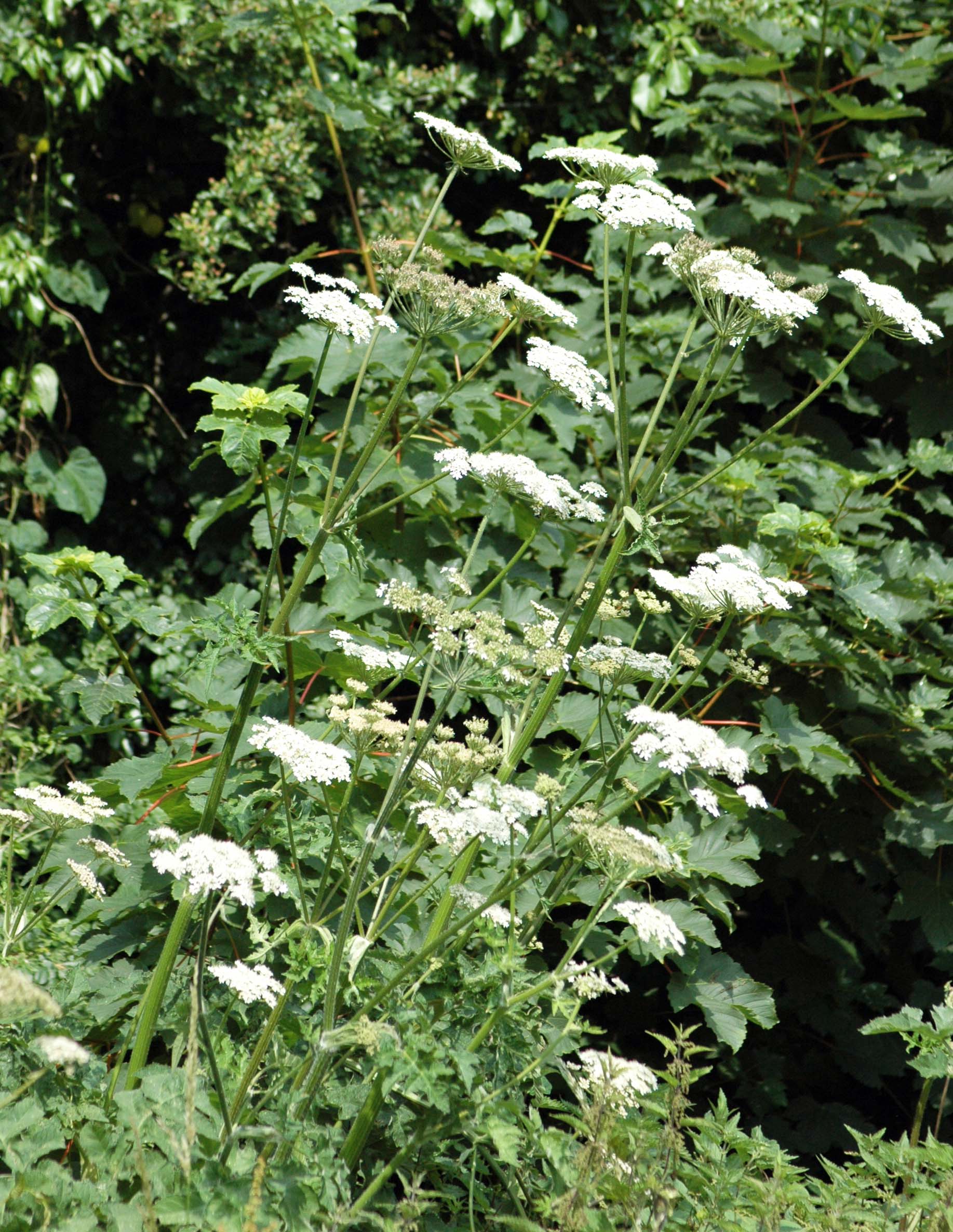
Hogweed, Cow Parsnip – Heracleum sphondylium  

Family: Carrot; Umbelliferae Habitat: Rough grassland verges, light woodland. The most usual late autumn umbellifer in flower.
Flowering:  (May) June – September Seeds: Winged Height: averages 50–120 cms (20–47 in), can reach 2 metres (6 ft 7 in)

Hogweed is an herbaceous perennial or sometimes biennial plant, native to Europe and Asia. It is an umbelliferous plant, in the same group as plants such as fennel, cow parsley and ground elder.

Hogweed-Heracleum spondylium

Hogweed-Heracleum spondylium

etymology

The common name of Hogweed refers to the characteristic pig-like smell of the flowers. The genus name Heracleum derives from the Greek “herákleion” and refers to the mythologic hero Heracles, who is reputed to have used the plant medicinally. The species name sphondylium, meaning “vertebrae”, refers to the shape of the segmented stem.

The leaves are large and can reach 50 cms (20 in) in length. They are pinnate, hairy and serrated, divided into 3-5 lobed segments.

Hogweed leaves

Hogweed leaves

A snail tucked into hogweed stems

A snail tucked into hogweed stems

The roots of the plant are large, rhizomatous and reddish in colour. The stem is hollow and striated with bristly hairs.

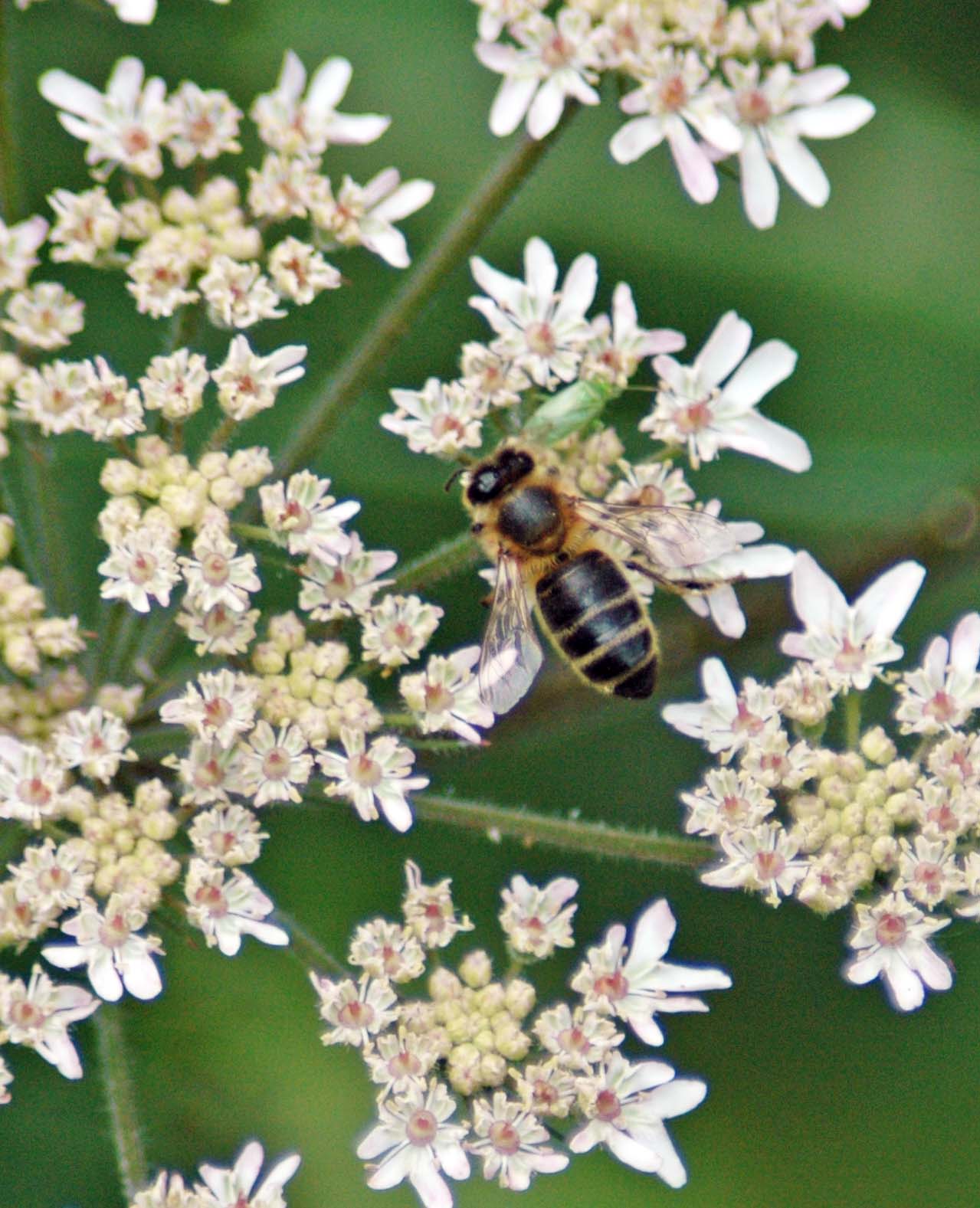
The flowers are  white, sometimes pinkish and each has 5 petals. They are arranged in large umbels of up to 20 cm of diameter with 15 to 30 rays. The peripheral flowers having a radial symmetry.

The inflorescence of a Hogweed plant

The inflorescence of a Hogweed plant

The hogweed is one of a number of plants that have foregone the use of a sweet scent to attract pollinating insects. The plant has adopted the more unusual strategy of mimicking the scent of pigs, not that noticeable to us, but to flies it is like a magnet and flies are the main pollinators of this plant.

A tachinid fly nectaring on hogweed

A tachinid fly nectaring on hogweed

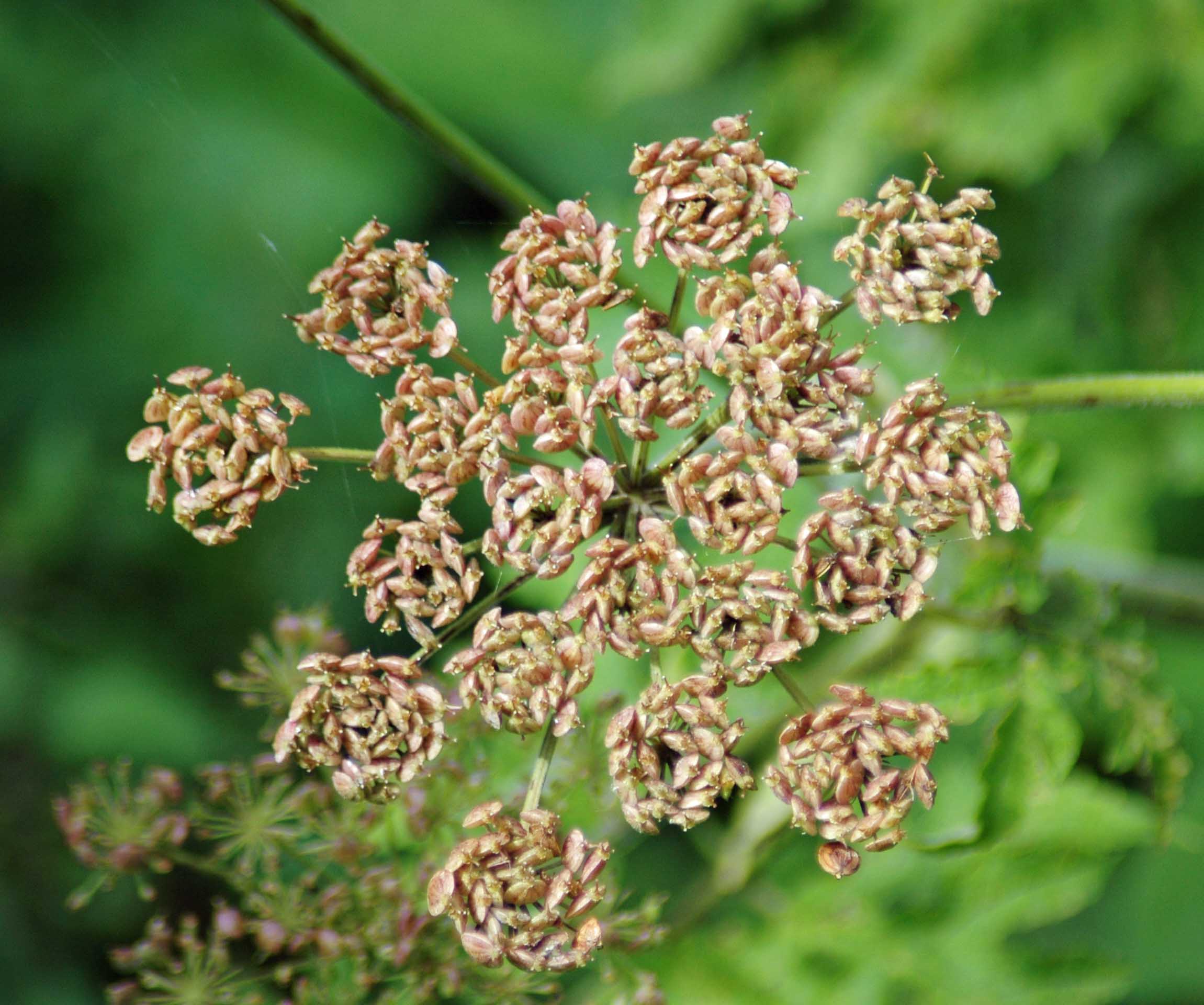
The small fruits are flattened and winged, elliptical to rounded in shape and glabrous (smooth, free from hair or down) up to 1 cm long. The seed dispersal is by wind.

Hogweed seedhead

Hogweed seedhead

1/9/12 - Hogweed seeds

1/9/12 – Hogweed seed cases

traditional medicinal and culinary uses

Common hogweed was once employed in medicine, although its use has been long out of favour. Long ago the seeds were boiled in oil that was then recommended for application to running sores and to treat the rash associated with shingles. Culpeper recommended a decoction of the seeds to be applied to running ears.

Hogweed shoots have  a high vitamin C content and the plant is still eaten in some places. The young shoots are collected early in the season and the  tender young stems, cut into pieces about 15cm long may be boiled in salted water for about 15 minutes, then drained and served with butter. Apparently they make an ideal accompaniment to meat dishes.

(WARNING!  This family of plants contains many poisonous species and correct identification is essential before even thinking about eating them.)

hogweed and insects

Although its main pollinators are flies, many insects of other species can be seen helping them out whilst helping themselves to the nectar. It is not uncommon to see numbers of insects vying for a space on the same hogweed flowerhead.

A pair of soldier beetles mating, a green shield bug, a small black beetle and a fly of some sort all on one small flowerhead, oh and there's a spider's web

A pair of soldier beetles mating, a green shield bug, a small black beetle and a fly of some sort all on one small flowerhead, oh and there’s a spider’s web

30/6/13-Small Tortoiseshell on hogweed-Little Orme

30/6/13-Small Tortoiseshell on hogweed-Little Orme

30/6/13-Bumblebee on Hogweed flowers, Little Orme

30/6/13-Bumblebee-Bombus hortorium on Hogweed flowers, Little Orme

30/6/12-Greenbottle fly on hogweed - Little Orme

30/6/12-Greenbottle fly on hogweed – Little Orme

At Bryn Euryn the first insect I spotted on Hogweed flowers was a Comma butterfly. It was looking a bit worse for wear, faded and with chunks missing from its wings,but is a first tick for a sighting of this species this year.

8/7/13 -Comma butterfly

8/7/13 -Comma butterfly

There were also a number of soldier beetles, greenbottle flies, bumblebees and hoverflies there. I thought I’d taken a picture of a honeybee too, but taking a closer look at the photograph I realised the insect had only two wings. I don’t know for sure what it is, more research  needed, but most probably a hoverfly ; an Eristalis species. Interestingly in respect of honeybees, a loved this observation on Adventure’s in Beeland’s blog  whats flowering now: early july   ” They (honeybees) appear to get very little pollen from these flowers, but instead swish their proboscis enthusiastically about in the nectar like a watercolour artist swirling their brush.” I’ll envisage that now, if I chance upon a honeybee on hogweed…

Probably a hoverfly an Eristalis species

Probably a hoverfly an Eristalis species

A 7-spot ladybird heading up a hogweed stem - there's prey up there - greenfly aphids

A 7-spot ladybird heading up a hogweed stem – there’s prey up there – greenfly aphids

One of my favourite photographs of an insect on hogweed is this one of a Rose Chafer, taken somewhere along the Pembrokeshire Coastal Path.

2/7/08-Rose Chafer on Hogweed - Pembrokeshire Coastal Path

2/7/08-Rose Chafer on Hogweed – Pembrokeshire Coastal Path

Picture from Naturespot: Graham Calow - Sapcote - 26 April 2012

There is an insect that I am aware of but haven’t noticed yet, actually named  for the plant; the Hogweed picture-wing fly. It is a small picture-winged fly Euleia heraclei. Also known as the Celery fly, it is a species of tephritid or fruit fly and is a pest of celery and parsnips, where it damages the vegetables by leaf mining. Males display on the upper surfaces of leaves on sunny days during May and mating takes place when a female arrives.  In Britain, the species is distributed widely across southern and central England; in Wales records are mainly near the coast. (The picture is taken from one of my favourite ID sites http://www.naturespot.org.uk/)

53.308051 -3.749941

Share this:

  • Share on Facebook (Opens in new window) Facebook
  • Share on Pinterest (Opens in new window) Pinterest
  • Share on X (Opens in new window) X
Like Loading...

Cuckoo-spit and the amazing Froghopper

29 Saturday Jun 2013

Posted by theresagreen in Insects, Nature, Nature of Wales, nature photography

≈ 13 Comments

Tags

cuckoo spit, froghopper, insect that makes cuckoo spit, white frothy stuff on plants

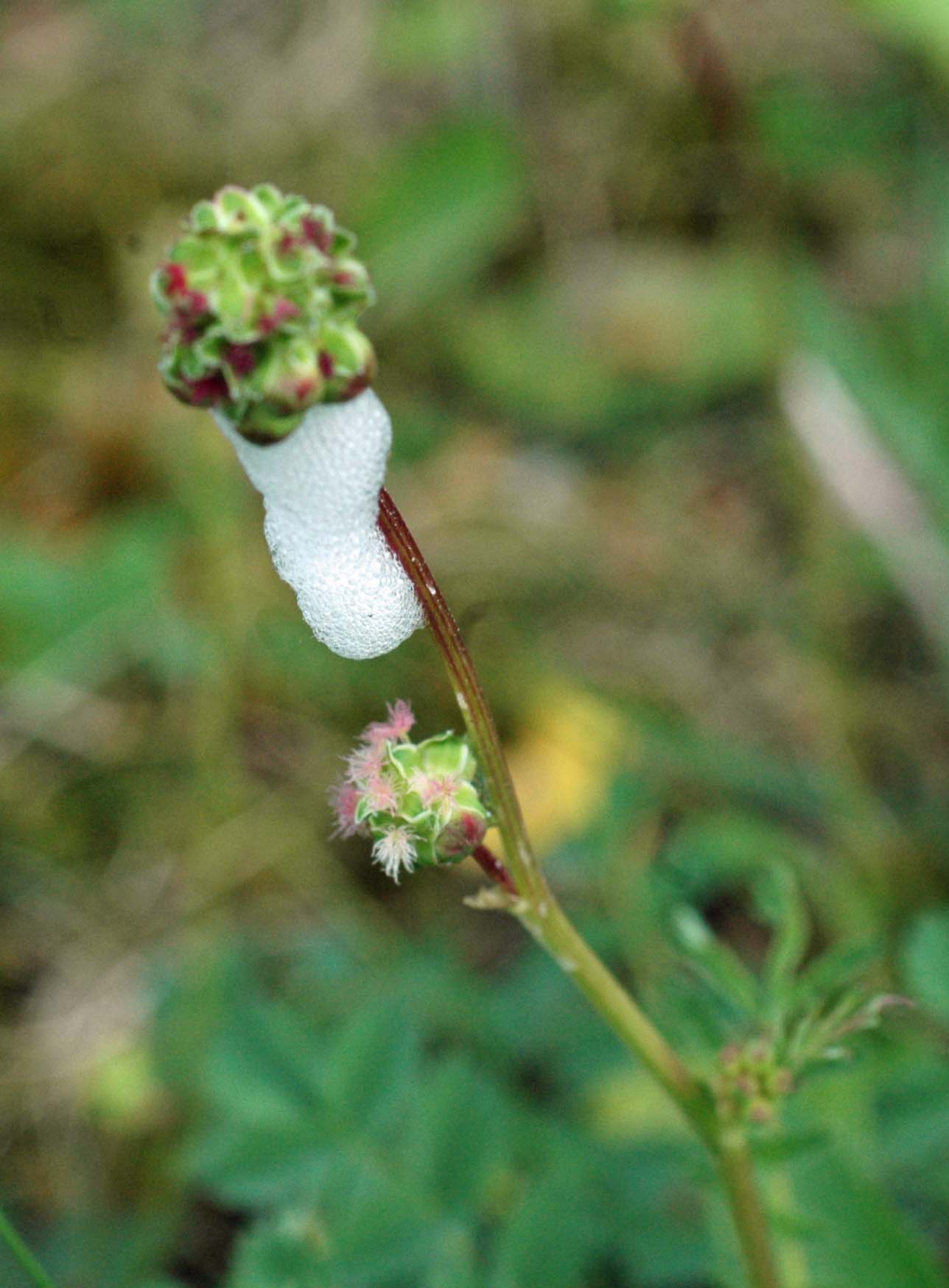
15/6/13-Cuckoo-spit on Salad Burnet

15/6/13-Cuckoo-spit on Salad Burnet

As I’ve been getting up close and personal with wildflowers this spring I have noticed what seems to be an unusual amount of the bubbly frothy white deposits we fondly call “Cuckoo-spit”. Now I have been aware of the stuff since I was a child picking wildflowers, way back in the day when there were still plenty of them, and was aware that my step-father used to wash it off plants he grew in the garden. I knew it housed some kind of bug, but not what exactly, and ignored it in my own garden as I soon realised that no harm seemed to befall the plants it appeared on, so why kill something for the sake of it? Now I know more about the amazing little bugs whose larvae hide away beneath the sticky frothy stuff I am so glad I let them be. (On a commercial scale the insect is regarded as a pest because they carry harmful viruses.)

The name

Cuckoo-spit low down amongst Bird's-foot Trefoil

Cuckoo-spit low down amongst Bird’s-foot Trefoil

It is supposed that the name Cuckoo-spit arose because sightings of the spittle often coincided with hearing the first calls of Cuckoos in the Spring. It may also be linked with a delightful(!) old superstition that required one to spit whenever a Cuckoo was heard, to ward off bad luck.  This is reiterated in Cuckoo-spit being an important ingredient in witches’ brew (as in Macbeth). I have read that in Scandinavian countries the froth is known as ‘witches’ spit’ and in the United States it is frog-spit, toad-spit or snake-spit. I’d appreciate confirmation from fellow-bloggers on those colloquial names being correct and would love to hear of any others.

What it is and the insect that produces it

The substance is produced by the larvae of a froghopper, or ‘cuckoo-spit insect’ which is also sometimes called the ‘spittle-bug’.  In the late summer, adult females lay up to 100 eggs into an incision made into the tissues of a host plant. The eggs are laid on a variety of plants including nettles and grasses as well as the tender young shoots of willow, cherry and apple. The eggs hatch into nymphs the following spring.

Aside: I wonder what happens to most of the eggs? There is rarely more than one blob of spit on an individual plant stem. Perhaps they get eaten by other insects or don’t survive the winter? Or do the young larvae migrate to other plants?

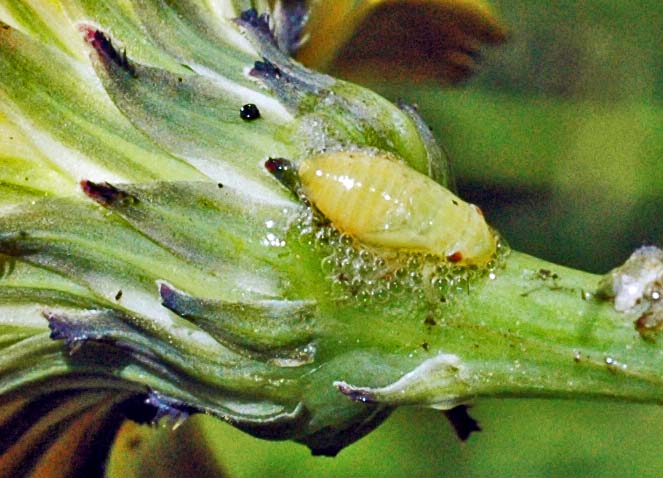
Froghopper larva exposed from beneath its frothy blanket

Froghopper larva exposed from beneath its frothy blanket on a Cat’s-ear flower stem

The nymph is the sexually immature stage. It resembles the adult in shape but has no wings and only rudimentary legs and eyes. At this stage its exoskeleton (outer body layer) is very thin so it needs to protect itself from desiccation; hence the soapy bubbles. The froth also serves to protect the developing nymph from predators by hiding it and by the fact that it tastes horrible. Enclosed within its frothy tent, the nymph moults several times before emerging as an adult in early summer.

How the ‘spit’ is produced

An enlarged (photographically) froghopper larva

An enlarged (photographically) froghopper larva

The nymph feeds head downwards with its syringe-like mouthparts embedded in the tissue of the plant. The froth is created by the insect excreting a fluid, the result of excess undigested plant sap, exuding through the anus. This sap, as it is excreted, mixes with a secretion from the abdominal glands. Air bubbles are introduced through a special valve on the abdomen which acts like a bellows, and contact with the air causes the liquid to ferment, forming the froth (or spittle).

I have to say that seeing it this size and knowing how it feeds put me in mind of ticks, which are one insect species I could happily see become extinct.

The adult froghopper

The froghopper is a member of the order Homoptera; thus related to both cicadas and aphids. The Common Froghopper (Philaenus spumarius) is the most widespread example in the UK, although related species are found worldwide. Typically the adult froghopper is between 4mm and 7mm long. They are called froghoppers because from above they appear frog-like, and they are able to hop significant distances when disturbed.

An adult froghopper. Photograph from BBC archives

An adult froghopper, much enlarged. Photograph from BBC archives

Habitat

In nature, the habitats froghoppers are most often found in are woodland edges and grassland. However, they are also a pest known particularly to fruit-growers. They feed on plant sap which they extract from the leaves and stems of plants. This causes minor damage in itself, but the insects carry viruses which can cause serious harm to crops.  In gardens they are frequently encountered on such plants as chrysanthemum, dahlia, fuchsia, lavender, rosemary and rose – all of which produce strong aromatic oils.

Why the froghopper is amazing

It has been discovered that the froghopper is the champion jumper of the insect world, a title previously attributed to fleas. The froghopper, which is only 6mm long can spring to heights of 70cm and although the flea can match that, the froghopper is some 60 times heavier.

Read more in this fascinating article (from which I copied the photograph of the adult froghopper):

http://news.bbc.co.uk/1/hi/sci/tech/3110719.stm

I would like to add that no froghoppers were deliberately harmed in the taking of my photographs, I did my best to cover him back up with more froth – (yuk!-sticky stuff!) And I will be keeping an eye out for adult froghoppers to try for my own photographs.

Share this:

  • Share on Facebook (Opens in new window) Facebook
  • Share on Pinterest (Opens in new window) Pinterest
  • Share on X (Opens in new window) X
Like Loading...

Comma Butterfly

23 Sunday Sep 2012

Posted by theresagreen in butterflies, nature photography

≈ 5 Comments

Tags

butterfly with jagged edge wings, comma, polygonia c.album

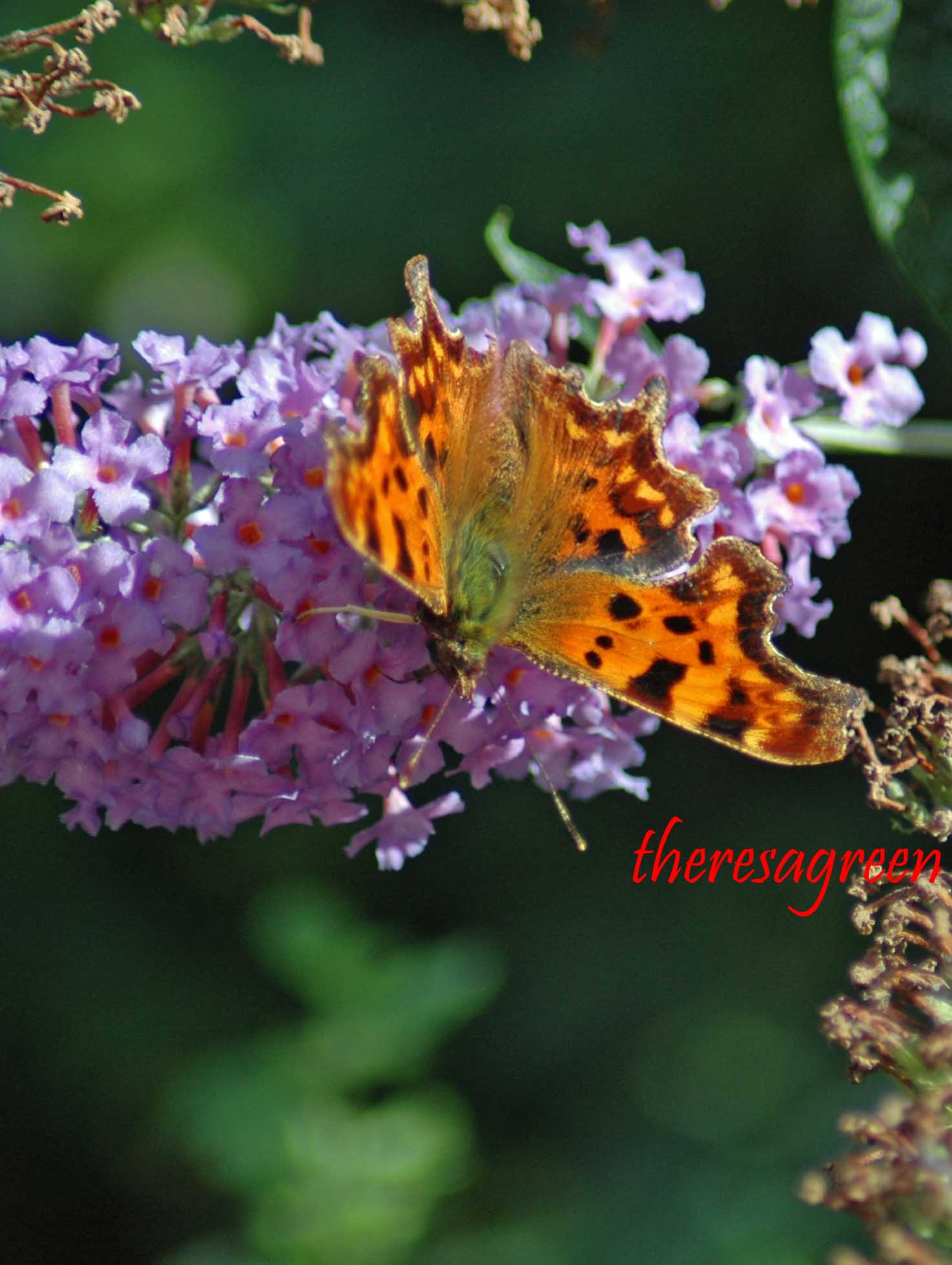
It is a beautiful day here in North Wales and I’ve just been watching a gorgeous Comma butterfly gliding around the garden. We have nothing left in flower to keep it here, but I took some photographs of one, maybe even the same one earlier in the month when there were still some flowers on the buddleia.

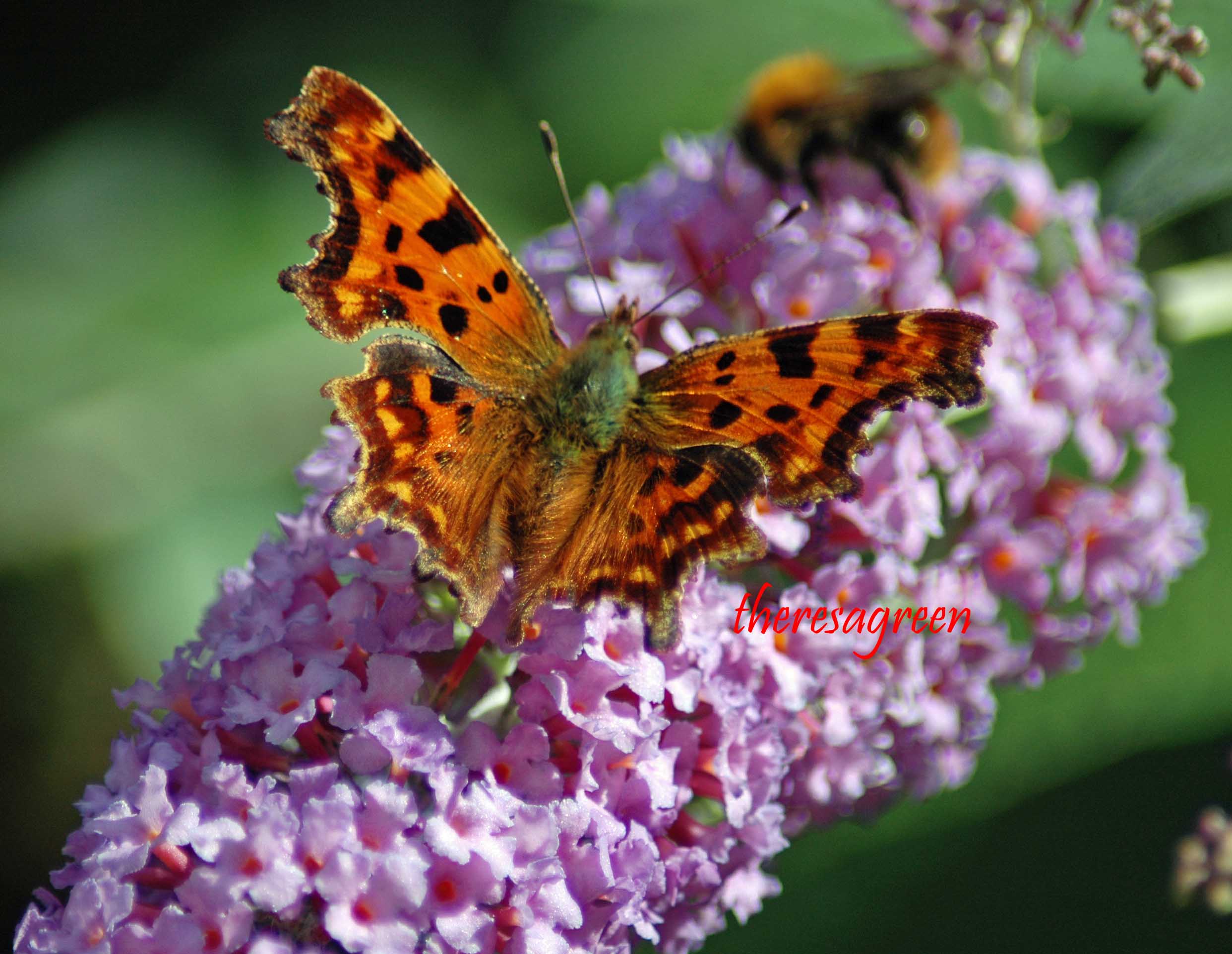
Comma – Polygonia c-album

The colouring of the Comma is similar to that of the Small Tortoiseshell, but the shaped wings are distinctive

Sightings of  Comma butterflies have become a familiar sight throughout most of England and Wales, particularly in the late summer, as this is one of the few species that appears to be thriving and considerably expanding its range. Primarily a woodland butterfly, where it can be seen gliding along woodland rides and country lanes, they are however  frequently seen in gardens during the late summer, seeking nectar sources to build up fat reserves before entering hibernation.

In the garden they are known to be particularly drawn to the pink flowers of Sedum spectabuli (Ice Plant, Showy Stonecrop, Butterfly stonecrop) and on a sunny day will stay on one flowerhead for a considerable length of time. They also spend a good amount of time basking, favouring surfaces such as tree trunks, wood piles and fence posts; I’ve even seen them on bamboo canes.

The butterfly gets its name from the only white marking on its underside, which resembles a comma punctuation mark.

The butterfly gets its name from the only white marking on its underside, which resembles a comma. When resting with wings closed this butterfly has excellent camouflage, when the jagged outline of the wings give it the appearance of a dry withered leaf, making the butterfly inconspicuous when resting on a tree trunk or when hibernating.

Lifecycle & behaviour

The primary larval foodplant is the Common Nettle (Urtica dioica). Other plants used may include Currants (various) (Ribes spp.), Elms (various) (Ulmus spp.), Hop (Humulus lupulus) and Willows (various) (Salix spp.).

Adults feed primarily on Thistles (Cirsium spp. and Carduus spp.). Bramble (Rubus fruticosus agg.), Ivy (Hedera helix), Knapweeds (Centaurea spp.) and Privet (Ligustrum vulgare) are also used.

The butterfly will stay on a single flowerhead for quite long periods of time

After emergence, the male butterfly sets up a territory, often on the sunny side of a woodland margin or at the junction of two woodland rides. Here he will sit on a favourite perch awaiting a passing female and will fly up to investigate any passing insect. The male will also make short flights – always returning to the same perch. Even when disturbed, the male will fly off for several metres or so before predictably returning to exactly the same leaf. When egg-laying the female makes short fluttering flights over the foodplant, stopping every few feet, landing on the foodplant and, if suitable, laying a single green egg.

(Some information taken from the excellent UK Butterflies website  http://www.ukbutterflies.co.uk )

Share this:

  • Share on Facebook (Opens in new window) Facebook
  • Share on Pinterest (Opens in new window) Pinterest
  • Share on X (Opens in new window) X
Like Loading...

A hill not too far – part 2

21 Friday Sep 2012

Posted by theresagreen in Bryn Pydew, butterflies, Limestone Pavement, Nature, nature of woodlands, nature photography

≈ 6 Comments

Tags

common blue, dropwort, filipendula vulgaris, juniper, limestone pavement, Meadow Brown, scabious, scarlet pimpernel, small tortoiseshell, taxus baccata, wildflowers and insects, yew

Limestone Pavement

Limestone pavement is very scarce and only covers 2600ha in Britain, but it is a habitat with a high geological interest. The following is an extract from the Limestone Pavement Conservation website: http://www.limestone-pavements.org.uk/geology.html which explains their formation much better than I could, so I am quoting it here:

“The formation of limestone pavements in the UK and Ireland began with the scouring of the limestone by glaciers during the last ice age. The weight of the ice removed the soil that lay over the limestone, and also fractured the limestone along existing horizontal surfaces of weakness known as bedding planes. Fractured rocks were stripped away leaving level platforms of limestone on which a thick layer of boulder clay (glacial till) was deposited as the glaciers retreated. Wind blown material was then deposited on top of the boulder clay. This external material is particularly important for soil formation, as limestone does not weather down into soil which would mean if there had been no glacial deposits, there would have been no soil development. From the flat limestone surfaces, the characteristic features of limestone pavement have been formed by water in the glacially deposited soil exploiting cracks and fissures in the rock.”

Part of the limestone pavement at Bryn Pydew (my photograph)

On the website linked above there is a lot more information, including a photograph taken here, labelled ‘Sheltered wooded pavement’. under the heading ‘flora’.

I had a potter around the rocky pavement and found a few little plants still flowering, but it is a bit late in the season for most species of the wildflowers that could potentially be found here to be blooming, so I will have to come back in the spring for another look.

Scarlet Pimpernel – Anagallis arvensis

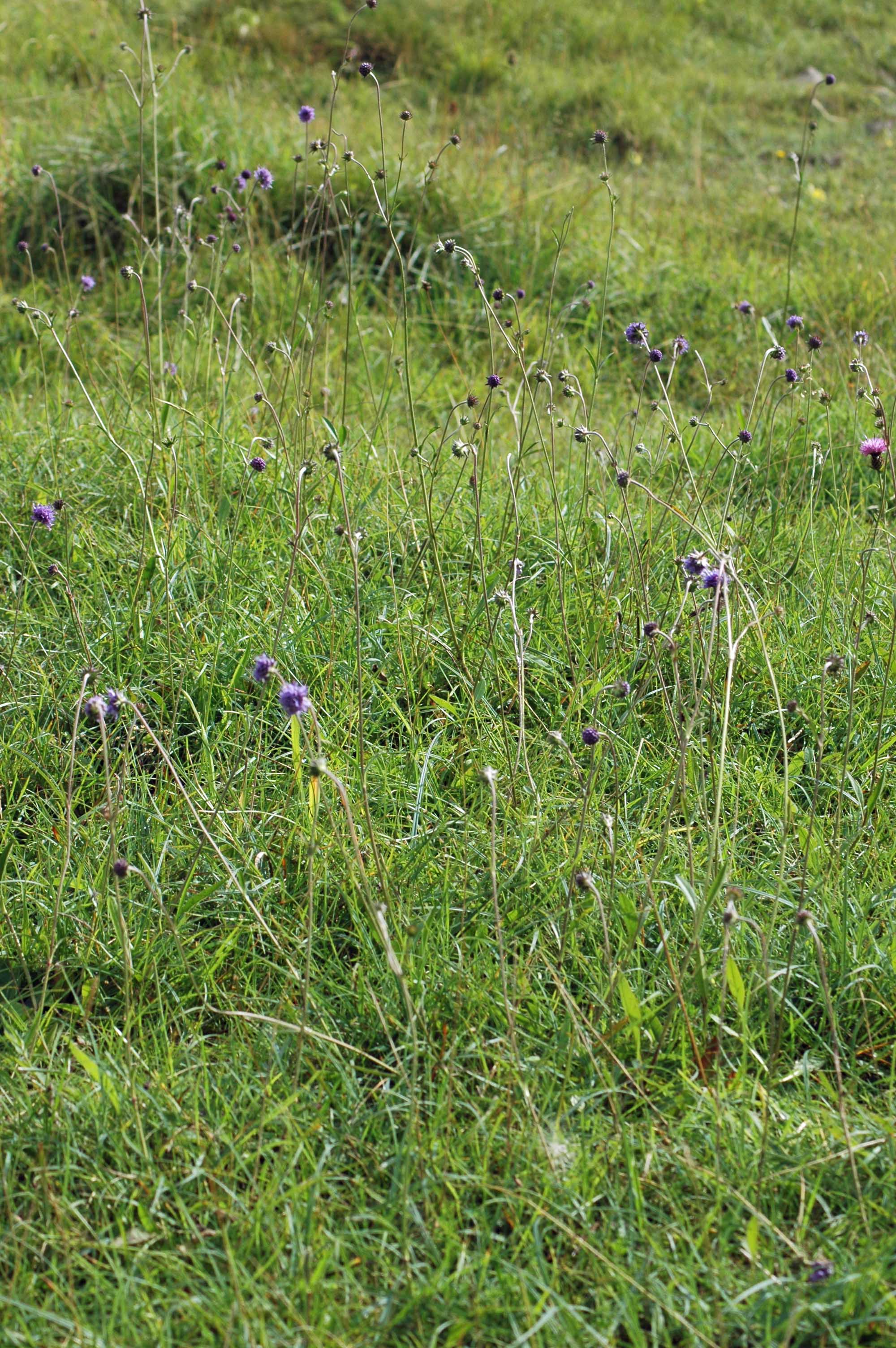
Below the pavement, loose gravelly ground slopes away and merges into a grassy area. Following recent rainfall shallow streams of run-off water were trickling down, making the bare ground muddy and the grassy area quite marshy, so any plants here would be well watered. There were some pretty groups of scabious, (not sure which species) flowering here, that were proving of great interest to a variety of insects including several species of hoverfly and a few butterflies.

Scabious is still flowering strongly

Common Blue (f)-Polyommatus icarus

A Common Drone Fly-Eristalis tenax- on scabious giving a better view of the pretty flower

Meadow Brown

During the time I was here I had the whole place to myself and as I was muddling around I suddenly realised that there were  sizeable chunks of time when there was absolute peace and quiet. Not a single sound from a bird, a car, a plane, an animal or a person. It was so blissful I had to sit down on a rock to better enjoy it together with the wonderful views across to the hills  in front of me and Penrhyn Bay, the sea and the Little Orme beyond.

The view over the treetops to Penrhyn Bay and the Little Orme (click to enlarge)

My peaceful reverie was suddenly broken by intermittent rather muffled but quite loud voices. I thought at first that it must be people that had arrived to picnic somewhere close by as the level of the sound didn’t change as it would had they been walking around. Then the penny dropped; what I was hearing was the disembodied commentary from the ‘fun dog show’ just down the road in the village hall. It was a breezy afternoon too which meant the instructions being delivered, amplified by a PA system being used none too expertly, were probably clearer to me half  a mile away than they were to the dog owners. It amused me to picture the scenes from the little village hall and hoped dogs and owners really were having fun.
There are some interesting trees and shrubs growing around the perimeter of the pavement area, including two of our three British native conifers, juniper and yew. Juniper is now a threatened plant species in Britain. Plantlife have warned that it is  in serious trouble  in Britain and with some southern counties having lost 70 per cent of their populations, the species is facing extinction across lowland England within 50 years. The loss of juniper would represent more than the loss of a single species – it supports more than 40 species of insect and fungus that cannot survive without it.

Juniper shrub

Junipers have been part of Britain’s landscape for thousands of years, and were one of the first trees to colonise Britain after the last Ice Age. Their aromatic berries are used in cooking and medicine, and are the key ingredient of gin.

I have mentioned already that there were yew trees growing in the woodland, but this one out in the open was easier to photograph.

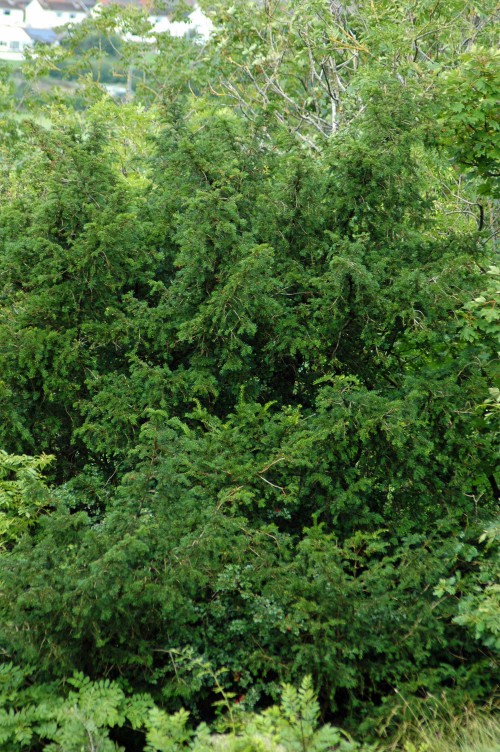
Yew-taxus baccata

Yew–Taxus baccata; Welsh: Ywen

Native to Britain and Ireland, the evergreen coniferous yew tree tolerates a wide range of conditions including the dense shading of woodland. It often grows singularly in woods but in groves elsewhere. It has long been planted in parks, gardens and has a long association with churchyards.

The leaves are highly toxic, as too is the seed inside the red berries owing to the presence of toxicantin and consuming as little as 50 to 100 grams of chopped leaves would be fatal to an adult.

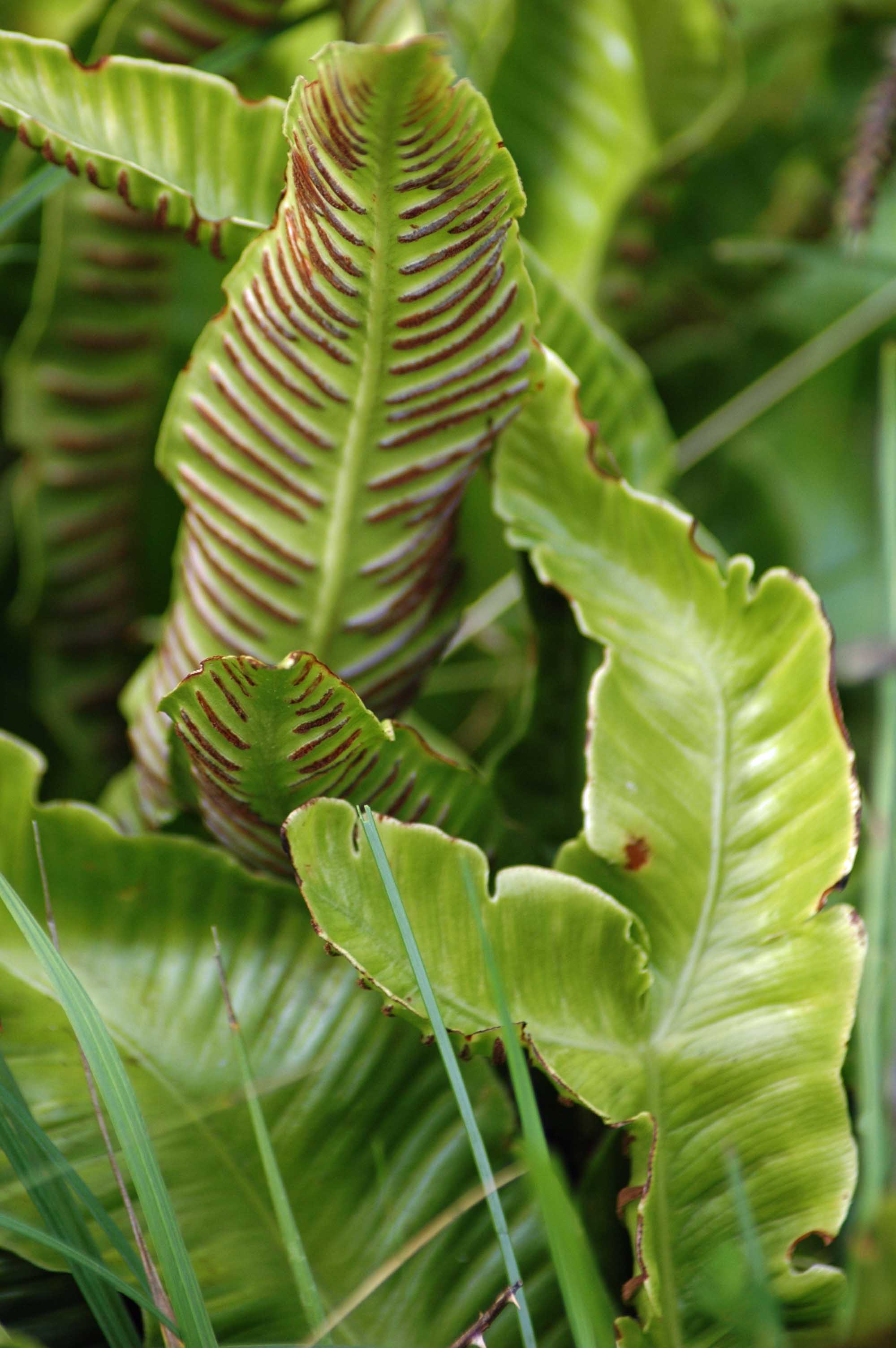
Hart’s Tongue Fern – Asplenium scolopendrium.The sori (spore) pattern is reminiscent of a centipede’s legs, and scolopendrium is Latin for “centipede”.

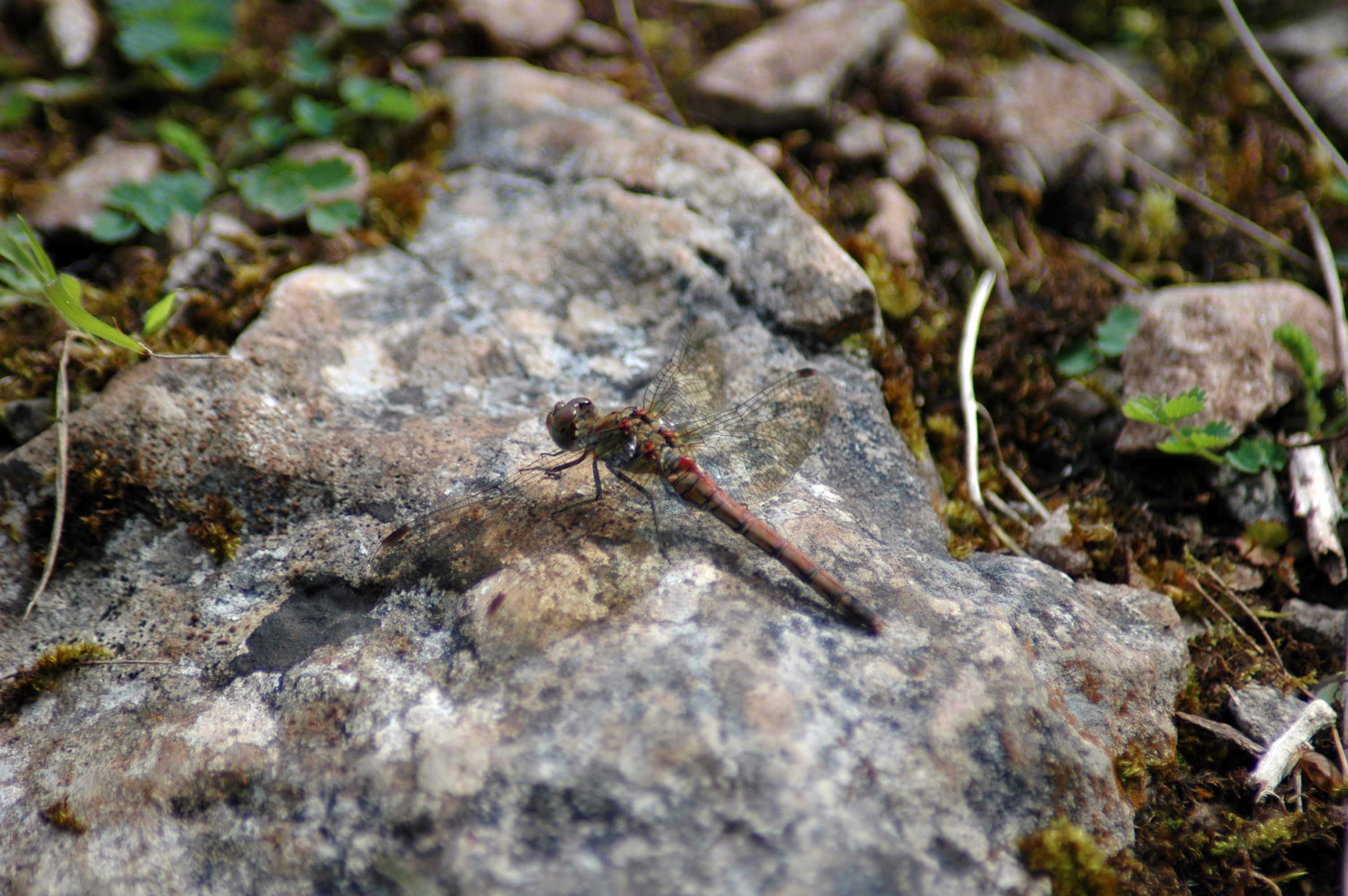
Heading back across the limestone pavement I stopped to photograph a female Common Darter dragonfly that was basking in a sunny spot.

Common Darter (female) on limestone pavement

The information board describes the marked route around the reserve as ‘circular’, so I walked around the woodland edge to see if that meant there was another track to walk back on. As I was looking  I spotted a plant with white flowers tucked in amongst some oak seedlings and long grass stems.

Dropwort flower tucked in between oak seedlings. This is a late-flowering stem, there are others around it that are going to seed.

The plant is Dropwort – Filipendula vulgaris, and is related to Meadowsweet (it is in the same Genus). The flowers are larger than those of Meadowsweet, and the plant is much shorter, typically less than half the size. Dropwort also prefers a chalky or limestone grassland whereas Meadowsweet likes to grow on damp ground or near water. This was a late-flowering stem, its main flowering time being June-August, so I was lucky to find it. There were other stems close by going to seed, but I doubt I would have noticed them it the flowers hadn’t caught my eye.

This Dropwort  is not a relation to Water Dropworts which are mostly extremely poisonous to people, and in this instance the name of the plant does not mean that if it is eaten they will ‘drop down’; it refers to the large pea-sized drop-like tubers on its roots. However, the leaves and roots do contain  Methyl Salicylate, which serves to attract beneficial insects but to kill any that dare try to eat it, as it is toxic. Due to the presence of the chemical, if the leaves or root are crushed they do smell faintly of oil of Wintergreen.

Dropwort – Filipendula vulgaris

I walked back through the woods and back out into the sunshine. There were a number of  little dragonflies flitting about on the woodland edge, again Common Darters. Amongst them a pretty red adult male that obliging ‘perched’ for just long enough for me to photograph him.

Common Darter male

The flowery bit of land I described in the first part of this post was still busy with insects, but now they were joined by butterflies, a Meadow Brown, Large White, a couple of Small Tortoishells and an absolutely gorgeous Peacock.

Peacock and Small Tortoiseshell butterflies on red valerian

Small Tortoishell – Aglais urticae

Peacock-iInachis io

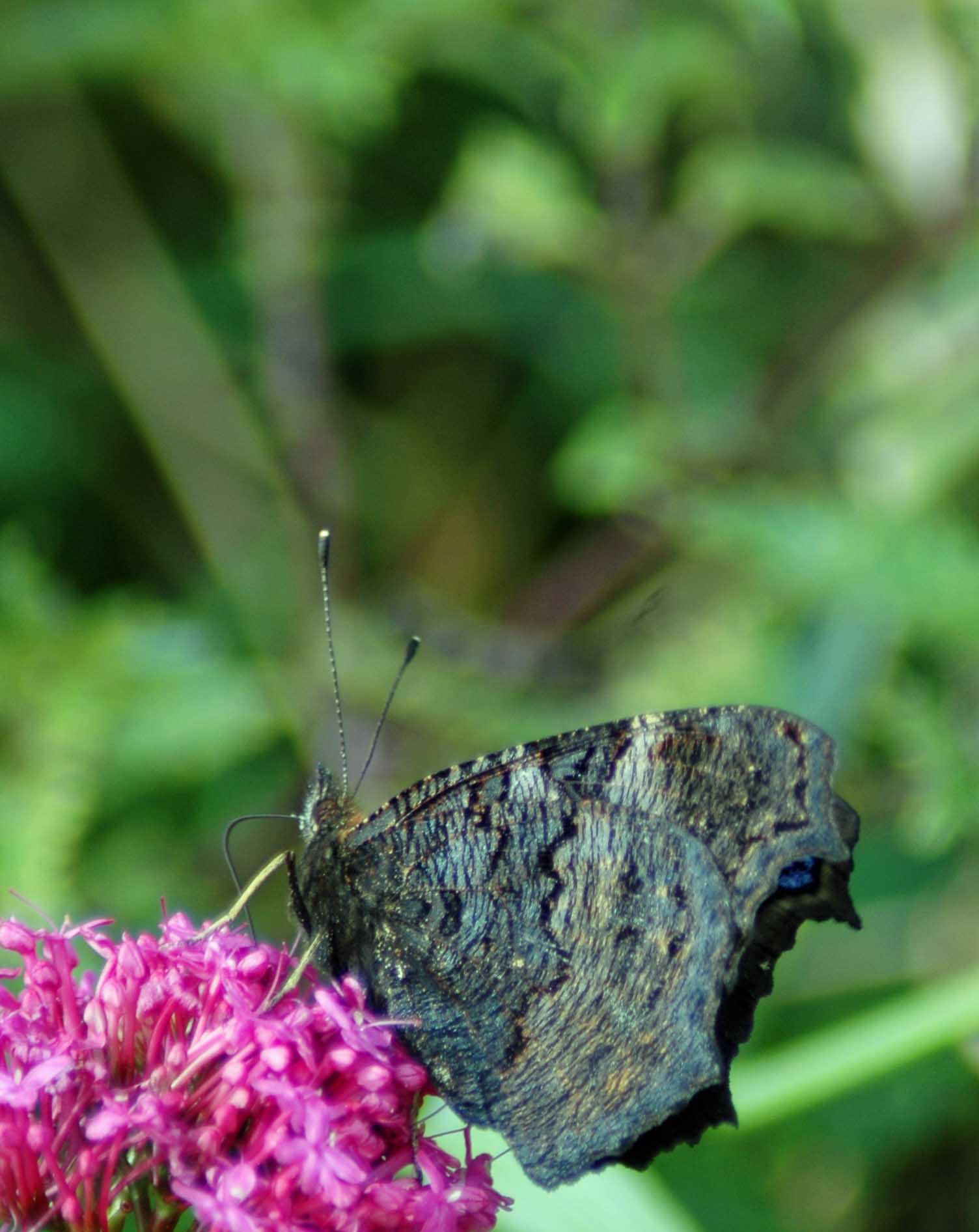
The beautifully textured underside of the Peacock

Share this:

  • Share on Facebook (Opens in new window) Facebook
  • Share on Pinterest (Opens in new window) Pinterest
  • Share on X (Opens in new window) X
Like Loading...

A hill not too far – part 1

15 Saturday Sep 2012

Posted by theresagreen in Bryn Pydew, fungi, hoverflies, Nature, nature of woodlands, nature photography, woodlands

≈ 6 Comments

Tags

buff-tailed bumblebee, common darter, common green grasshopper, eristalis, hoverflies, inula conyza, leucozona lucorum, ploughman's spikenard, tar spot fungus, traveller's joy

The first day of September was gloriously sunny and warm in the way that only our late summer days can be. In preparation for just such a day I had done a bit of research into other nature reserves that may be nearby and was surprised to discover there is indeed such a one, almost on our doorstep on another landmark hill just beyond Bryn Euryn, called Bryn Pydew. The land is leased and managed by the  North Wales Wildlife Trust (NWWT), and just had to be explored not only because of its proximity, but also because it has within in it an area of Limestone Pavement that I have been keen to add to my round of  habitats to visit.

To quote the Bryn Pydw entry on the First Nature website:

Bryn Pydew SSSI; RIGS site : “This reserve lies on carboniferous limestone and has woodland, grassland, limestone pavement and two disused quarries providing a wide variety of habitats.”

I could hardly believe it was so close by and I had never heard of it, but when I set off to find it, following the directions on the website, I did have some problems finding the ‘entrance’ to the reserve. (I must get myself an ordnance survey map and re-learn to use grid references !)  I knew I was on the Bryn, it’s huge, so hard to miss, and drove up, down around and along a few lanes in the indicated direction, then through the village of Bryn Pydew and back again, finally stopping to ask for directions from a lady carrying a basket heading for the village hall. She didn’t really know either, but suggested it might be the “flat bit further on where they have been digging”. It was clear that there was little room for parking on the lane, so I asked if I should park outside the hall and walk, she said “Oh no, please don’t, we have a fun Dog Show here this afternoon, so we need all the parking space we have for that.” Not wishing to upset anyone or their dog, I drove a bit further and duly came to said ‘flat bit’ at the side of the lane, pulled onto it and got out of the car.

Woodland edge

It seemed likely that the reserve was in the general area as I was now looking at woodland to one side on the lower slope of the hill, then across the lane, a grassy slope with some scrubby vegetation leading to the summit of the Bryn.  Next to where I had parked there was a mound of earth and stones, becoming vegetated with grass, with the addition of  clumps of vervain, verbascum and other wild plants, which made me think this may have been a bit of a dumping ground for the village gardeners. Behind this ‘tump’  there was a ‘path’ cobbled with small pieces of limestone between it and the woodland edge, bordered on either side with wildflowers, predominantly ragwort, but also marsh hemp, cat’s ear, traveller’s joy (wild clematis), hogweed etc.

A beautiful fresh ‘Sun Fly’, also known as ‘The Footballer’ – Helophilus pendulus

The sheltered spot was buzzing with hoverflies, bees and bumblebees and even a few butterflies. Most of the hoverflies were of the larger eristalis species, some of which I have already featured photographs of in recent posts, but there were others too.

Eristalis interruptus on ragwort

Eristalis on Hemp Agrimony

The most familiar of hoverflies, the exquisite little Marmalade Fly – Episyrphus balteatus

I was also an attractive hoverfly, Leucozona lucorum, which is a new one for my collection of photographs.

Leucozona lucorum. There is a similar-looking insect – Volucella pellucens which is much shinier and does not have the orange-yellow scutellum (the triangular patch at the base of the thorax)

Buff-tailed Bumblebee- Bombus terrestris on Traveller’s Joy-Clematis vitalba

Welsh Poppy with small flies

I was really pleased to find Ploughman’s Spikenard growing here. It is a plant quite  unprepossessing in its appearance, looking a bit like a giant groundsel or ragwort that is going to seed, so may be easily overlooked, but it is another of my favourite type of plant, one with a history of traditional use as a medicinal herb and that has some great alternative common names; Cinnamon-root, Great Fleabane, Horseheal and Lady’s-gloves.

Ploughman’s Spikenard – Inula Conyza (the seeds on the leaves are from nearby thistles)

Honeybee on Ploughman’s Spikenard

It was really peaceful here, so I sat down on the ground for a while to enjoy the sunshine and properly take notice of what was around me. I love to do that sometimes, to just sit still and lose myself in the moment, and feel connected to the real world. Stillness often brings other rewards too, things I may have missed if I’d been standing and wandering around. A dragonfly came to settle close by on the warm stones, as did a grasshopper and there were birds about too, a Robin came out of the woods to hop around close by and so did a Dunnock.

Common Darter Dragonfly- Sympetrum striolatum (immature male)

Common Green Grasshopper-Omocestus viridulus

A fresh-plumaged Dunnock spied through tall grass

Into the woods

Still not sure of where I was I decided to walk towards the woods to see if there may be a track I could walk on. Lo and behold as I walked towards the trees, set just inside the edge of the woodland was the information board for the reserve. It looks quite faded so has clearly been there for some years, so maybe it was originally more visible from the lane?

Information board about the Bryn Pydew Reserve- click to enlarge

There is a track, way-marked with red marks on some of the tree trunks.

Woodland trail, Bryn Pydew

The trees, mostly silver birch, as, some oak, sycamore and unusually a good many yew grow closely together, so it was quite dark and shady in there with occasional shafts of sunlight breaking through the leaf canopy.   Most of the sycamore leaves I could see were sprinkled wit large black spots, the result of  an infection of Tar Spot fungus.

Tar spot is a fungal disease characterised by raised, black spots on leaves, caused by the fungus Rhytisma acerinum. The tar-like spot is a fruiting structure of the fungus that survives the winter on fallen leaves. In the spring mature spores of the fungus, which have a sticky coating, are released and blown by wind to newly emerging leaves.

The undersides of the leaves appear cupped directly beneath the tar spots. This is a much-enlarged image of a tiny snail and another minute insect.

In a clearing in the woodland where there was a little more light I photographed Hart’s Tongue fern growing amongst ivy on an old stone wall and Lady Fern.

Hart’s Tongue Fern and ivy on an old stone wall

Lady Fern

On the other side of the wall where shrubby plants have colonised the clearing I watched five Speckled Wood butterflies chase one another around in the sun-dapples space. These are very territorial little butterflies that will tackle anything that tries to invade its territory; today each time one settled on a leaf to bask it was dive-bombed by another, so it took a while to get an image. It was good watching them though, this is the most I have seen together in one place for a long while and judging by their fresh appearance, I would say they were newly-emerged.

A pristine Speckled Wood-Pararge aegeria

Share this:

  • Share on Facebook (Opens in new window) Facebook
  • Share on Pinterest (Opens in new window) Pinterest
  • Share on X (Opens in new window) X
Like Loading...

Late summer wildflowers and insects of the Little Orme

11 Tuesday Sep 2012

Posted by theresagreen in butterflies, coastal habitat, coastal walks, Little Orme, Nature, nature photography, Rhiwledyn Nature Reserve, wildflowers

≈ 7 Comments

Tags

6-spot Burnet Moth, black & yellow striped caterpillars, black butterfly or moth with red spots, cinnabar moth larvae, eristalis arbustorum, eristalis pertinax, eyebright, hoverflies, large black slug, meadow grasshopper, sawfly, small skipper, toadflax, vervain

The weather took its toll on the cliff-top flora and fauna of the Little Orme   too, although I think perhaps it’s not so much that the insects were not there, more that they were less able to be  mobile,  so were not as visible as they are in warmer, drier conditions. I took the following pictures on a warmish, sunny but fairly windy day just past the middle of August when everywhere was still damp from rain.

Ragwort is blooming strongly and every plant is supporting a colony of cinnabar moth caterpillars.

The Cinnabar moth larvae are growing fat on ragwort

The flowers of the ragwort are much in demand too, particularly by hungry hoverflies.

Eristalis interruptus (f) on ragwort

2 drone flies, Eristalis pertinax on ragwort

A smaller eristalis species – Eristalis arbustorum

Mating pair of soldier beetles

I was still on the lookout for soldier beetles and did eventually manage to find one pair; there were dozens of them this time last year. I didn’t even manage a very good photograph as the wind was blowing the ragwort stem they were on.

I walked towards the cliff edge above Angel Bay, drawn by a large patch of sunny yellow birds-foot trefoil mixed in amongst long grasses.

Flowery clifftop, most birds-foot trefoil mixed in amongst long grass

Long grass and birds-foot trefoil

As I had hoped, this flowery area turned out to be quite productive in terms of insects. I first spotted a Common Blue butterfly very low down on a grass stem, then followed a Small Skipper until it too came to rest on a flower.

Small Skipper –

That was followed by a first sighting of a Burnet Moth fluttering across the grass and flowers, and once I had ‘got my eye in’, I soon realised there were a good few more.

6-spot Burnet moth –

The Burnet moths were mostly attracted to the thistle flowers growing at the side of the pathway; at one point I found four of them all on the same plant.

3 of 4 Burnet moths that were all nectaring on a single thistle flowerhead

Stopping to photograph the single moth I was distracted by the chirping ‘song’ of a grasshopper, which I found on a grass stem just behind me. I am not great at identifying grasshoppers, but I think this was most likely a Meadow Grasshopper – Chorthippus brunneus.

Little grasshopper chirping from a grass stem

Walking along a narrow track through the long grass I saw an insect I did not immediately recognise on a thistle flower. It took little notice of me taking photographs of it, just carried on working its way around the flowerhead. To identify it I searched my favourite website for insect identification http://www.naturespot.org.uk, which is a Leicestershire site but usually comes up trumps for me. From that I believe my mystery insect may be of the Sawfly species, Tenthredo notha – but as always I am more than happy to be corrected.

Sawfly- Tenthredo notha

At the bottom of the steep grassy track that takes you higher up on the cliff, a decent number of butterflies were dancing around the bramble flowers. There is red valerian growing there too which is also a favourite nectar plant of butterflies and more ragwort attracting hoverflies. Butterflies included Large, Small and Green-veined Whites, Meadow Browns, Gatekeepers and a Tortoishell.

Green-veined White (m) on a valerian flower

I stopped half-way up the incline to draw breath and to take a  photograph of the view.

The view from the Little Orme across Rhos Point, then the headland of Abergele beyond which are Rhyl & Prestatyn and the coastline of the Wirral (click to enlarge)

At the top there is a flat grassy area, popular with Jackdaws that nest on the cliffs and grazed by sheep, where the remains of some sort of winding mechanism still stands as a memorial to the quarrying that is responsible for the shape of the Little Orme.

Sheep grazing and resting in the sun around old winding gear

Back down at the bottom and a quick scout around before heading home produced more flowering plants:

Eyebright – Euphrasia nemorosa

Toadflax- Linaria vulgaris

Vervain-Veronica officinalis

Lesser Burdock-Arctium minus

Another grasshopper, which I think is a Mottled one as it has curved antennae, but if not then its a Field one.

A mottled, or maybe a field grasshopper

Then finally, as testament to all the recent rainfall, a big fat slug…

Although this slug is black, it is a Large Red Slug-Arion ater, which has a range of colour forms.

Share this:

  • Share on Facebook (Opens in new window) Facebook
  • Share on Pinterest (Opens in new window) Pinterest
  • Share on X (Opens in new window) X
Like Loading...
← Older posts
Newer posts →
Follow everyday nature trails on WordPress.com

Enter your email address to follow this blog and receive notifications of new posts by email.

‘But it is the common species that keep the living world ticking over and provide most of our experiences of wildlife, and I would argue that maintaining the abundance of these is as important a conservation priority as maintaining the existence of rarities’. Richard Mabey

MOST RECENT POSTS

  • A Glimpse of Spring to Come January 22, 2025
  • Hunting the Wren December 28, 2024
  • Oh, Christmas Tree December 18, 2024
  • In and Out of the Ivy February 15, 2024
  • Nature’s Fireworks November 30, 2023
  • Wild Autumn along the Coast Path November 3, 2023

OLDER POSTS

LOOKING FOR SOMETHING IN PARTICULAR?

  • Sights and Sounds from the Little Orme 1
    Sights and Sounds from the Little Orme 1
  • Catchers, a Duck and Divers
    Catchers, a Duck and Divers
  • Shades, Sounds and Scents of the Woods
    Shades, Sounds and Scents of the Woods
  • Fine Dining for Crows
    Fine Dining for Crows
  • Things Bright and Beautiful
    Things Bright and Beautiful
  • Following a river to a Fairy Glen
    Following a river to a Fairy Glen
  • The Windhover
    The Windhover
  • A Windy Wildflower Trail
    A Windy Wildflower Trail
  • Everyday Birds - The Blue Tit
    Everyday Birds - The Blue Tit
  • Pines and Primroses
    Pines and Primroses

nightingale trails

The Walk of the Monarch Butterfly-Sendero de la Mariposa Monarca

The Walk of the Monarch Butterfly-Sendero de la Mariposa Monarca

MY WILDFLOWER BLOG: where the wildflowers are

Snowdrop

Snowdrop

most recent posts

Follow everyday nature trails on WordPress.com

Social

  • View teresamaygreen’s profile on Twitter

Enter your email address to follow this blog and receive notifications of new posts by email.

Website Built with WordPress.com.

  • Subscribe Subscribed
    • everyday nature trails
    • Join 358 other subscribers
    • Already have a WordPress.com account? Log in now.
    • everyday nature trails
    • Subscribe Subscribed
    • Sign up
    • Log in
    • Report this content
    • View site in Reader
    • Manage subscriptions
    • Collapse this bar

Loading Comments...

    %d