Wildflowers on a Limestone pavement

Tags

, , , , , , , , , , ,

The North Wales Wildlife Trust reserve at Bryn Pydew is becoming one of my new favourite places to visit, especially to see some of our less-common wildflowers and a variety of insects.

The first thing to attract my attention today was a Small Heath butterfly.  Fluttering along low to the ground it kept disappearing from my sight as it landed amongst the stems of long grass, but I managed to follow it along the woodland edge for a short way until I was distracted by the corpse of a little shrew. It didn’t appear to have been there for long, but there were puncture wounds around its back so had clearly been caught by something with sharp teeth and the fact that it had not been eaten suggests a domestic cat; they don’t like the taste of shrew and often leave their victims lying at the side of paths etc.

A Pygmy Shrew (dead)

Common Shrew  – Sorex araneus  Welsh: Llyg Cyffredin

British shrews are protected by the Wildlife and Countryside Act 1981, and it is an offence to kill them without a special licence.

Description: As with all  shrews, the common shrew has a long, flexible snout, small eyes and tiny ears.  They have dark brown fur on their backs, paler sides and an even paler underside.  Their heads are not as domed in shape as that of the even smaller pygmy shrew and the tail is proportionately shorter than that of the smaller species.

Food: All shrews have voracious appetites; they need to feed every 2-3 hours and consume up to 90% of their body weight in any 24 hour period. They eat most terrestrial insects, but also take worms, slugs and snails; they have a good sense of smell and feeling, but they do not dig for their prey.They lack the fat reserves to see them though the winter so do not hibernate and can be seen all year round.  Apart from those killed by cats, shrew corpses may also be those of animals that have not been able to find enough food.

Behaviour: They are solitary, territorial animals and often fight when they come into contact with their neighbours.  The high pitched squeaking sound that they make can often be heard as you walk along footpaths; they are most active at night and during dawn and dusk and intersperse periods of intense activity with resting.

Reproduction

Shrews build nests below the ground or under dense vegetation. After a gestation period of 22-25 days, females give birth to 4-7 young, which are weaned after 22 days. They breed from April to October, with a peak in the summer.

_______________________________________________________

I lost the butterfly but was soon compensated with a lovely bright metallic green beetle rummaging around in the stamens of a Welsh poppy.

Oedemera nobilis feeding on pollen

Oedemera nobilis feeding on pollen

This was the first, rather hasty photograph I took of the handsome beetle and followed it with a number of what I thought would be much better shots, but when I downloaded the day’s bounty I discovered all of them were unreadable, so goodness knows what happened there. Hopefully I will find more another day.

Dog Rose- Rosa canina

Dog Rose- Rosa canina

The open patch of ground just inside the site boundary is lovely now, lush with a mix of tall meadow grasses swaying gently in the day’s light breeze and catching the sunlight. Dog rose shrubs are in glorious full bloom.

A lush display of tall meadow grasses

A lush display of tall meadow grasses

In a sunny patch of shorter turf where there was Red Clover and Bird’s-foot Trefoil growing I stopped to watch Common Blue and Brown Argus butterflies and bumblebees. Both species of butterfly are territorial despite their tiny size and were chasing off anything and everything that dared enter their airspace.
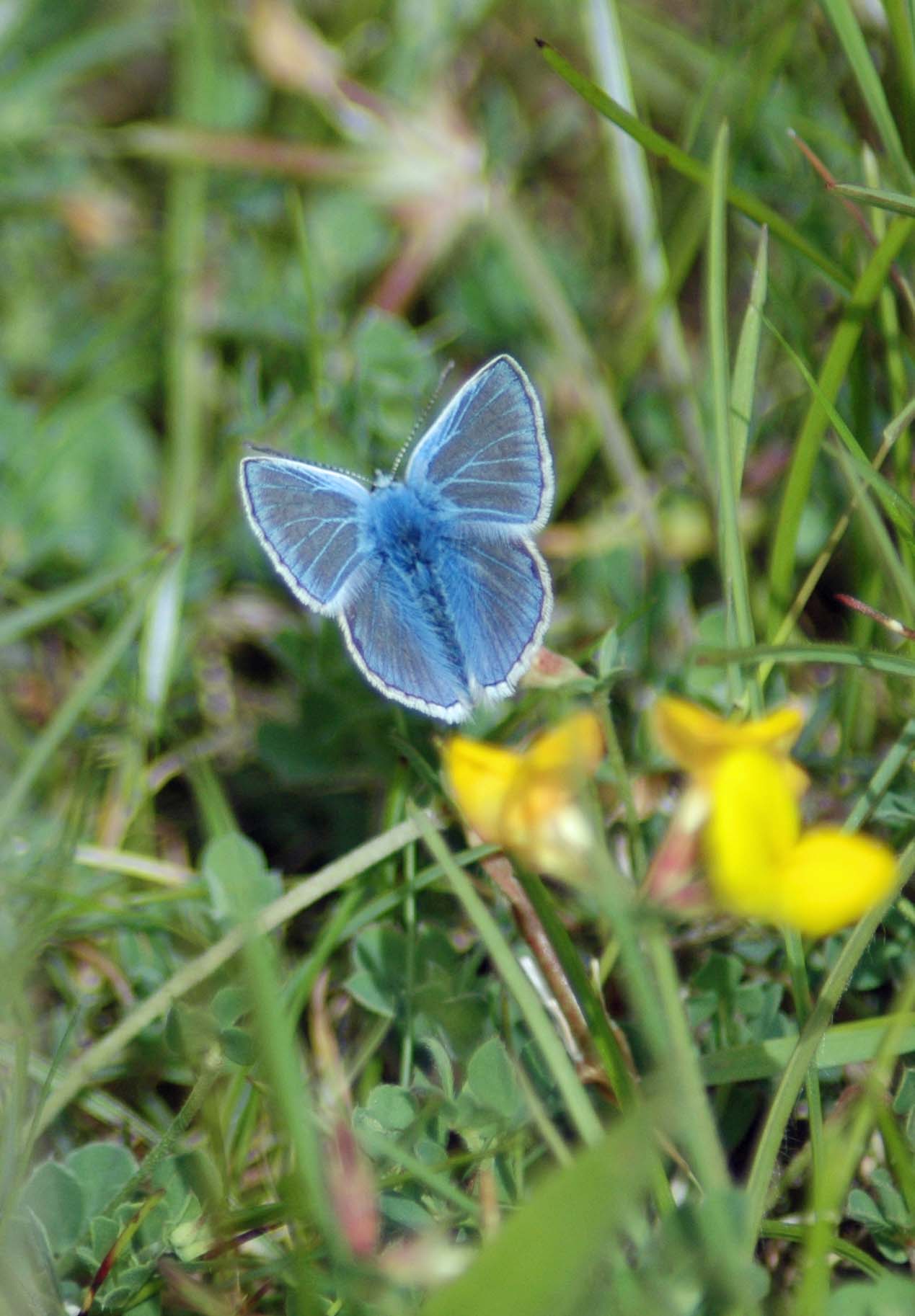
A Common Blue male taking off from Bird's-foot Trefoil

A Common Blue male taking off from Bird’s-foot Trefoil

Brown Argus

Common Carder Bee on red clover

Common Carder Bee on red clover

There’s not much to see in the woodland here, the trees, including a good number of yews grow closely together, shutting out much of the sunlight, so it is very dark and quiet in there. I did spot a young Wren demanding attention from a parent though, calling loudly and flapping its wings wildly to try to maintain its balance on a fence post. It is only a short downhill walk to take before reaching the open area of Limestone Pavement. It’s a little more overgrown now than the last time I saw it, with quite a few tree saplings and brambles getting a foothold. I know little or nothing about how you would go about maintaining a limestone pavement though, so have no idea what would be removed, or when, but there are some lovely wildflowers here currently and it would be a shame if they were smothered by brambles.
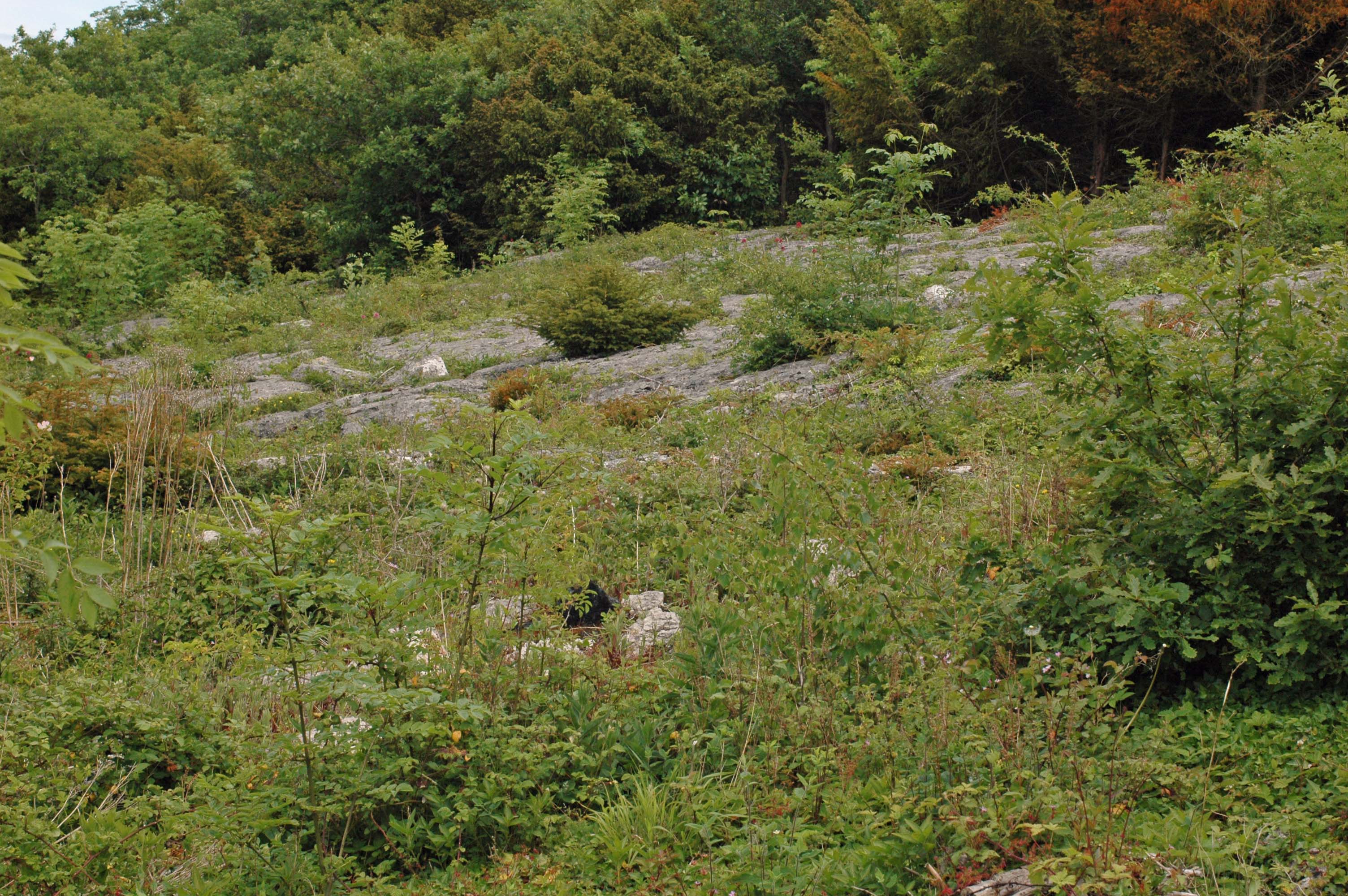
The main expanse of Limestone Pavement

The main expanse of Limestone Pavement

Common Rockrose

Common Rockrose

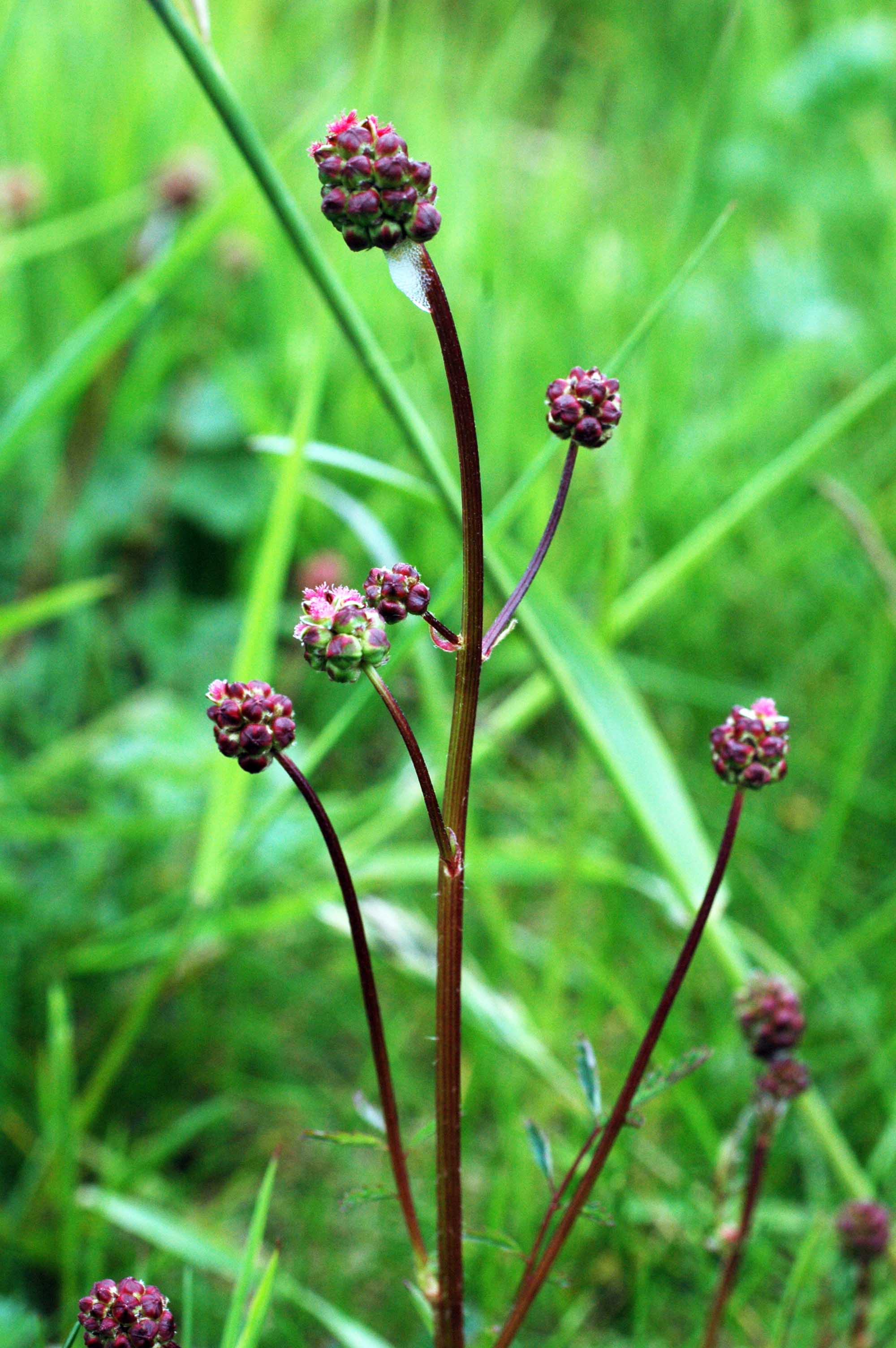
There is quite a bit of rockrose, interspersed with salad burnet with its curious flowerheads.

Salad BurnetSanguisorba minor is a low-growing herb of chalk and limestone grasslands which produces rounded, reddish flower heads from May to September. The leaves of Salad Burnet comprise up to 12 pairs of rounded, toothed leaflets, and form a rosette at the base of the flower stem. The rounded flower heads are reddish and speckled.

Salad Burnet flower

Salad Burnet flower

The leaves are famous for smelling of cucumber if crushed or walked upon, and this plant lives up to its name as a popular addition to salads and summer drinks.

The leaves of Salad Burnet comprise up to 12 pairs of rounded, toothed leaflets, and form a rosette at the base of the flower stem.

The leaves of Salad Burnet comprise up to 12 pairs of rounded, toothed leaflets, and form a rosette at the base of the flower stem.

I try not to plan my outings too much, preferring to take things as they come at the time, but I was hoping to find one of this site’s ‘special’ plants in flower today. Dropwort-filipendula vulgaris is a clumsy (pardon the pun) name for a very elegant and rather ‘frothy’ plant. I found a couple of stems at the end of their flowering late last summer, but hoped to find more today. I was pleased then to find the first ones, which I recognised by the pretty fern-like leaves, but alas the flowers were still tightly budded. Once I had spotted one I found more, but all were tightly closed.
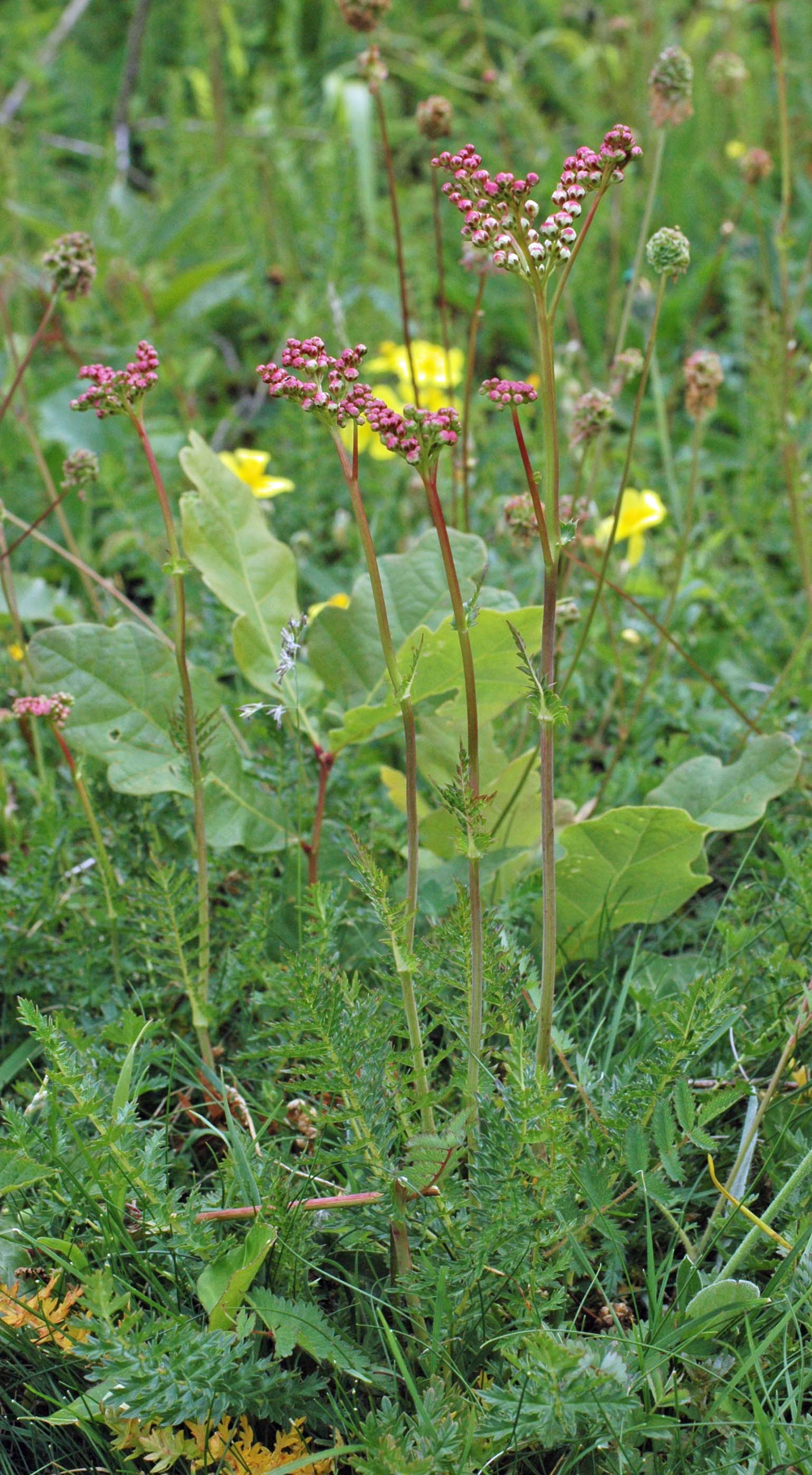
Dropwort in bud

Dropwort in bud

Again there was compensation for not finding what I was hoping for; this time it was Bloody Cranesbill –Geranium Sanguinem, which is not at all a common plant and in Wales restricted to a few limestone-rich coastal areas. It grows also on the Great Orme, a few miles away in Llandudno and I have also seen it on Llanddwyn Island in Anglesey.

Bloody Cranesbill-Geranium sanguinem

Bloody Cranesbill-Geranium sanguinem growing in a ‘gryke’ of the limestone pavement

There are many colour variations of this plant species, but it takes the ‘Bloody’ part of its name from the blood-red sepals that remain after the petals have fallen.
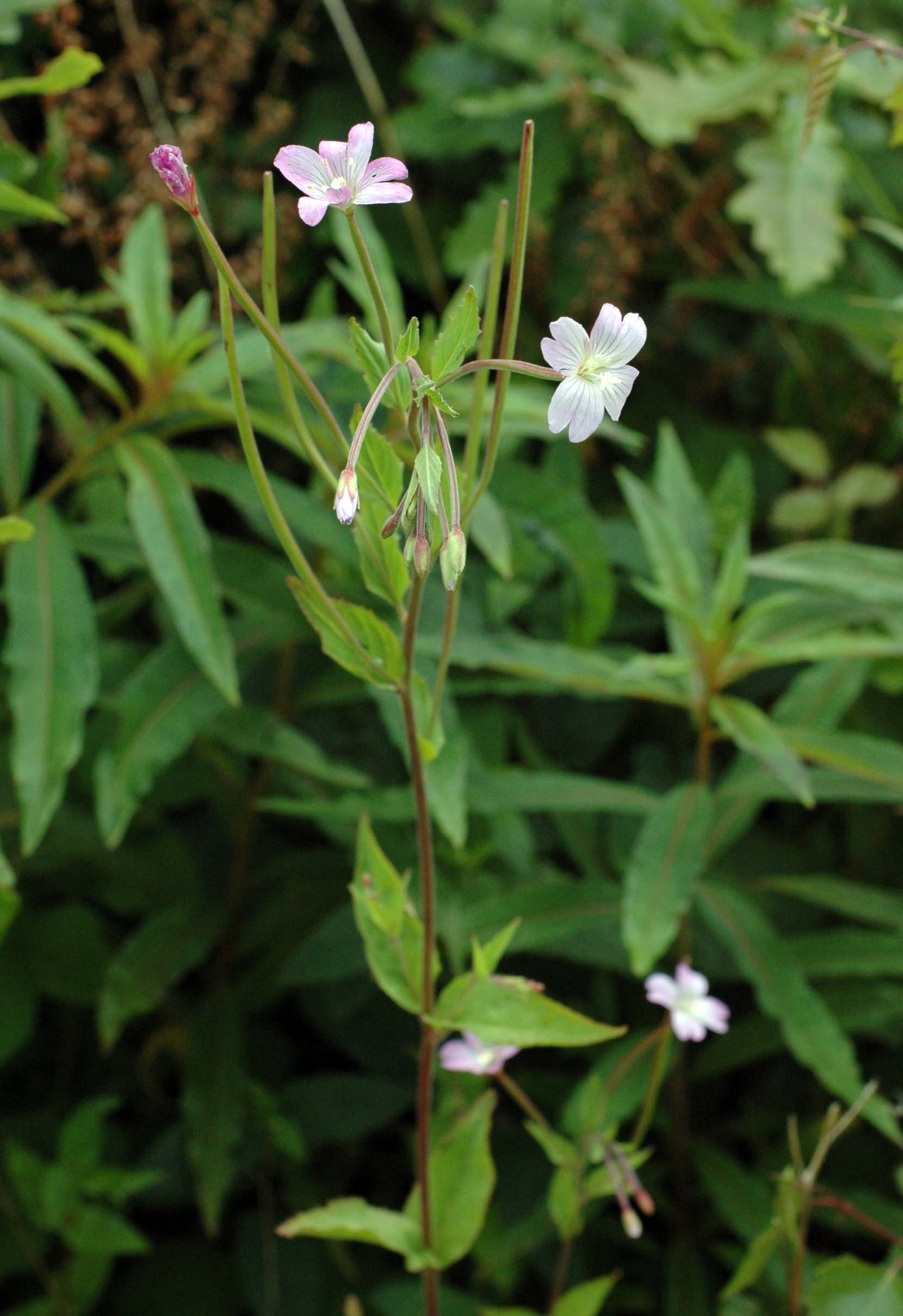
Broad-leaved Willowherb

Broad-leaved Willowherb, one of the more ‘ordinary’ wildflowers to be found here

Wood Avens

Wood Avens

Leaving this main area of the limestone pavement and continuing downhill through a narrow belt of woodland you emerge into an open grassy area that is so pretty I was half-expecting Bambi and friends to pop out. There were a few Purple Spotted Orchids here, very nearly finished, an impressive group of Bloody Cranesbill and more Rockroses.

At the far end of this small woodland glade is another smaller section of pavement, which is where I found the Dropwort last year. There was no sign of the plant in the exact same place, but I did spot a couple of little pale pink orchids. Once again, as I got my eye in, I found more of them, most not quite fully out yet.

Heath-spotted Orchid- Dactylorhiza maculata

Heath-spotted Orchid- Dactylorhiza maculata

I sat in the sunshine on the edge of the rocky pavement for a while, admiring the view across to Penrhyn Bay and watching more Small Heath butterflies fluttering over the stony ground where they settled to bask occasionally. I realised then that the reason I was finding it difficult to spot them earlier was because they settle very low to the ground, almost horizontal to it. As I got up to leave one fluttered along the grass in front of me, settling some metres ahead, so I took a series of photographs as I inched towards it, each one a little closer. It allowed me to get very close before flying off from here.
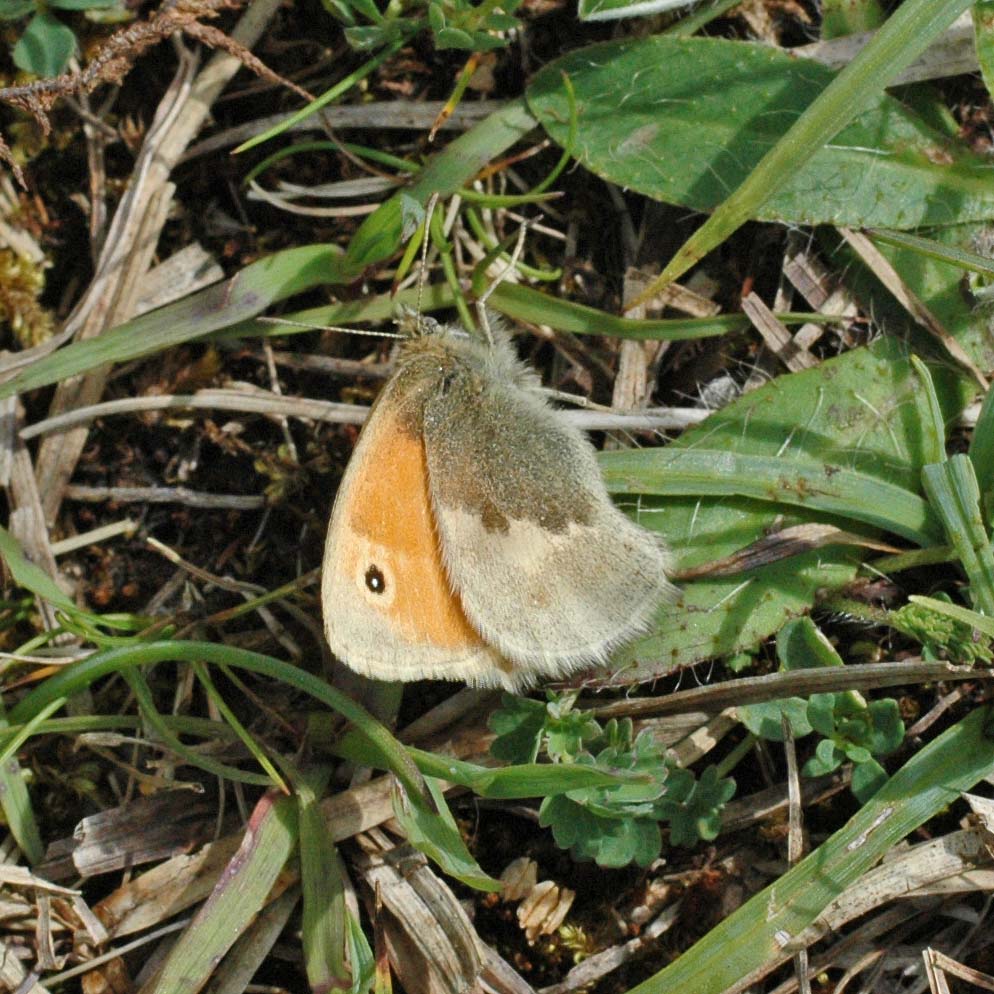
Small Heath - Coenonympha pamphilus

Small Heath – Coenonympha pamphilus

Quite unexpectedly then, just a short distance away from the butterfly I glanced up to see the flower I was hoping for in peachy pink and creamy white frothy glory. A Dropwort in almost full glorious bloom. What a treat.

Dropwort in full peaches and cream frothy glory

Dropwort in full peaches and cream frothy glory

Dropwort (Filipendula vulgaris), also known as Fern-leaf Dropwort, is a perennial herb of the family Rosaceae and closely related to Meadowsweet. It is found in dry pastures across much of Europe and central and northern Asia, preferring full sun to partial shade and is more tolerant of dry conditions than most other members of its genus.

It has finely-cut, radical leaves, fern-like in appearance, and an erect stem 20–50 centimetres (8–20 in) tall. The tiny creamy white flowers appear in dense clusters from late spring to mid summer. The crushed leaves and roots have a scent of oil of wintergreen (Methyl salicylate).

There’s a new gull on the roof

Tags

, , ,

Herring Gulls have featured in a good few of my posts: they are a characterful part of everyday life here in Rhos-on-Sea and although they make noisy neighbours, are somewhat bossy and seem to delight in covering our cars with their guano, life would be the poorer without them.

A couple of weeks ago, on June 8th to be exact, I was woken at some ridiculously early hour by a great cacophony of gull cries and shrieks being made right outside the bedroom window, which is just a metre above the large flat roof of the kitchen below. I am fairly used to their late spring-early summer, very early- morning territorial proclaiming racket now, but this was not the usual wake-up alarm, which I have learned to almost ignore, so I had to get up to have a look.

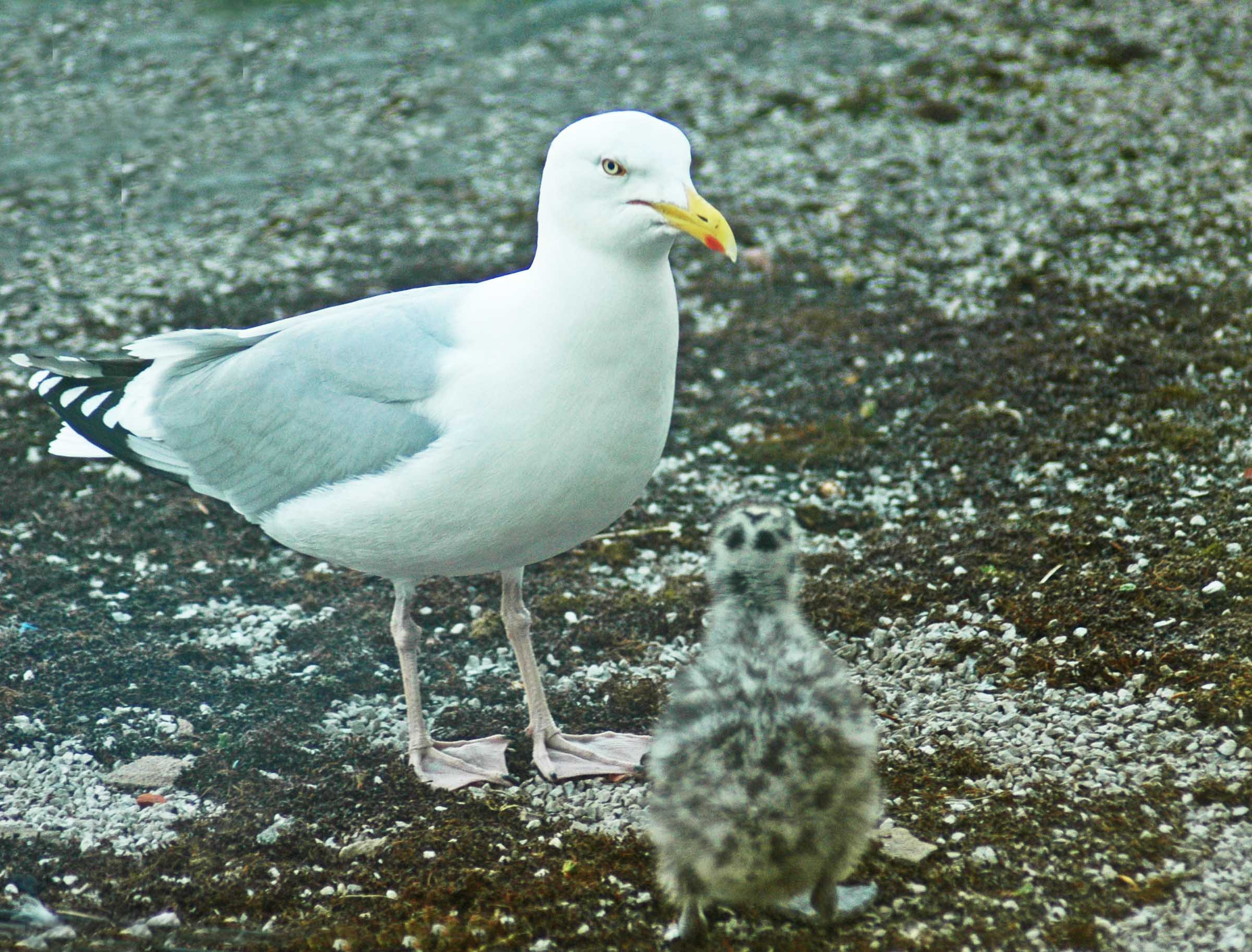
The fuss was all about a single, fluffy brown-grey speckled chick. How it arrived on our roof I have no idea, I know there are nesting birds somewhere up on the main roof around next-door’s chimneys, but as far as I am aware there were no nests on any part of the lower flat roofs this year. So, had it fallen from a nest higher up, or even been carried down? If the former, was it OK? I had no way of knowing, just one more thing to worry about! (We have had young gulls here before, but bigger older ones that had left nests deliberately).

New parent, very protective

8 June 2013-Warning – New parent, very protective

Although early in the morning it was already very sunny and the parent birds ‘parked’ the chick in the shade of one of the ‘lanterns’ set into the roof. That possibly explained why they were on our bit, neither neighbour has any shaded areas, although still no clue as to how the chick got there.

Parent watching the sky for trouble

Parent watching the sky for trouble

The fussing, flapping and general hullabaloo continued for some while, but gradually the ruffled feathers smoothed and the excitement mellowed into an uneasy peace.

Once their offspring was settled, one parent stayed on close guard, the female I think, whilst the other either went off to look for food or maybe to sit higher up on the main roof to keep look out. The one that stayed remained wary, keeping a watchful eye on the sky above and patrolling around her chick. She did settle next to it eventually, but was very restless.

The mother settled eventually, but remained alert

The mother settled eventually, but remained alert

Then of course, once she settled down, the chick woke up and stood to stretch its legs. That came as a relief, at least it wasn’t injured and about to expire.

Chick awake and stretching its legs, mother still watching the sky

Chick awake and stretching its legs, mother still watching the sky

The chick was soon keen to investigate the world around him and went for a little wander. Fortunately it chose to wander onto the adjoining next-door roof which is covered with mossy lichen and he was pretty well camouflaged there.

On the adjoining next-door roof, the chick was almost perfectly camouflaged

8/6/13 On the adjoining next-door roof, the chick was almost perfectly camouflaged

After a surprisingly short length of time the parent flew off and left the chick to its own devices, although as I said before it’s possible the other one was watching from above. And food has to be searched for.

Mum back with breakfast

Mum back with breakfast

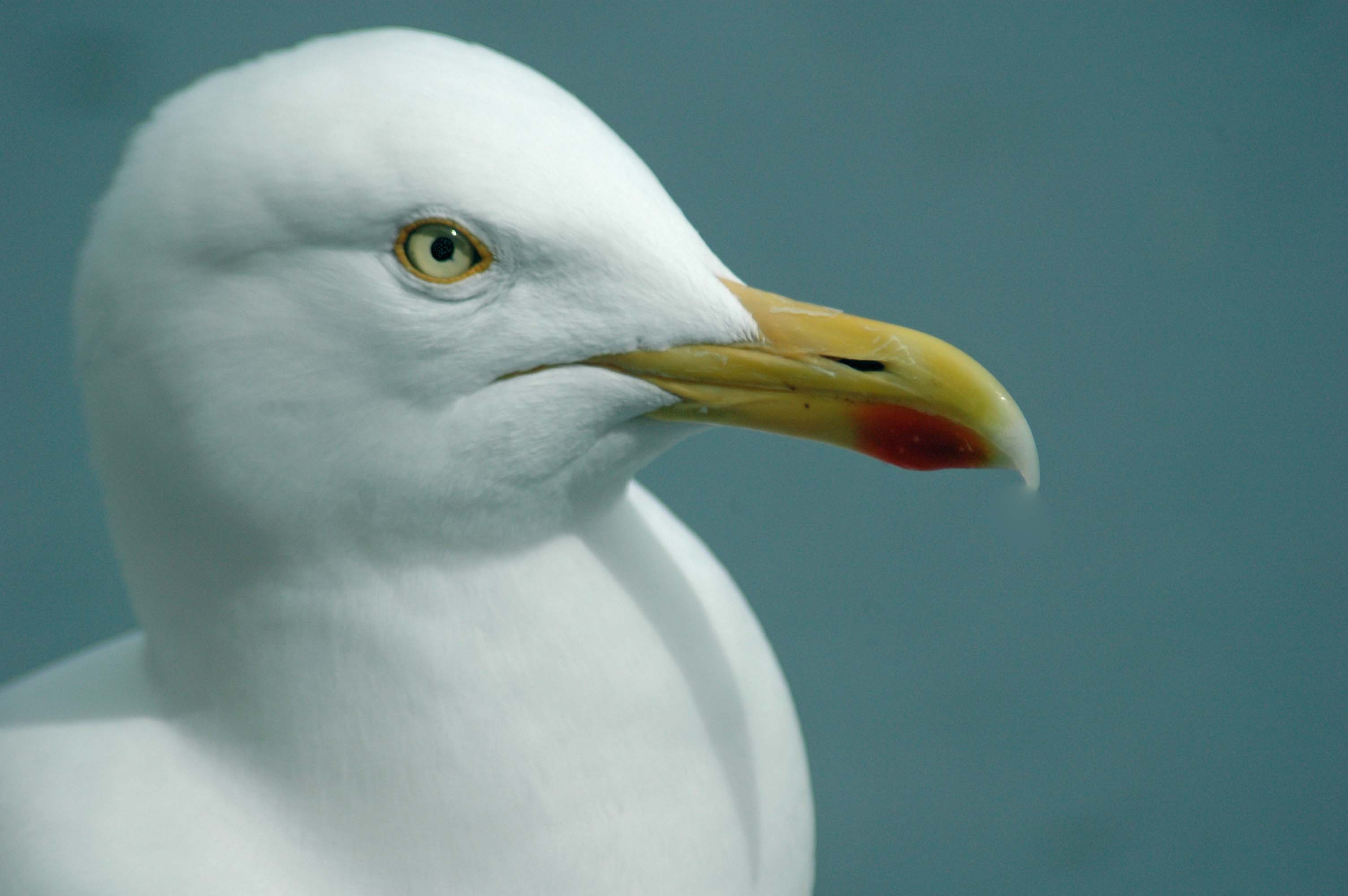
The adult gulls were very aware of my interest in them and stood immediately in front of the window squawking and giving me distinctly threatening looks.

The female gull watching me, giving me the evil eye

The female gull watching me, giving me the evil eye.

Female Herring Gulls are slightly smaller than the males and have a ‘softer’ look to the eyes (usually), but I’m glad I had glass between us, I would not like to make her angry and be within striking distance of that beak. (All of my photographs are taken through the glass of the window!)

I would not like to be on the receiving end of that beak

I would not like to be on the receiving end of that beak

13th June 

Gull life settled into a bit of a routine over the following few days. The family doesn’t spend the nights on our roof and I can’t see where they go, but they arrive back noisily in the mornings. The chick gets left alone a lot, initially resting in the shade and relative safety of one or other of the lanterns, but now it is bigger it wanders more, investigating anything and everything that looks vaguely edible. The parents are diligent in their feeding, arriving back with regular meals, their arrival always announced with a great deal of vocal noise and exaggerated wing flapping. The young one is already beginning to practice the territorial, concerted squawking, joining in with its parents when they perform to whatever is above them. Herring Gulls are proper drama queens.

13/6/13-One week on and the chick is getting bolder.   Checking out a cable to see if it's edible

13/6/13-One week on and the chick is getting bolder. Checking out a cable to see if it’s edible

13/6/13-Herring Gull chick one week later

13/6/13-Herring Gull chick one week later.

Glorious Bodnant Garden

Tags

,

As dedicated as I am to ‘real’ nature, even I can’t resist the temptation to stray occasionally into the more contrived, cultivated and  colourful world of a beautiful garden. A couple of weeks ago, on a glorious sunny and warm day, I persuaded my daughter to accompany me on a stately visit to nearby Bodnant Garden. She agreed as soon as I mentioned that I’d treat her to lunch.

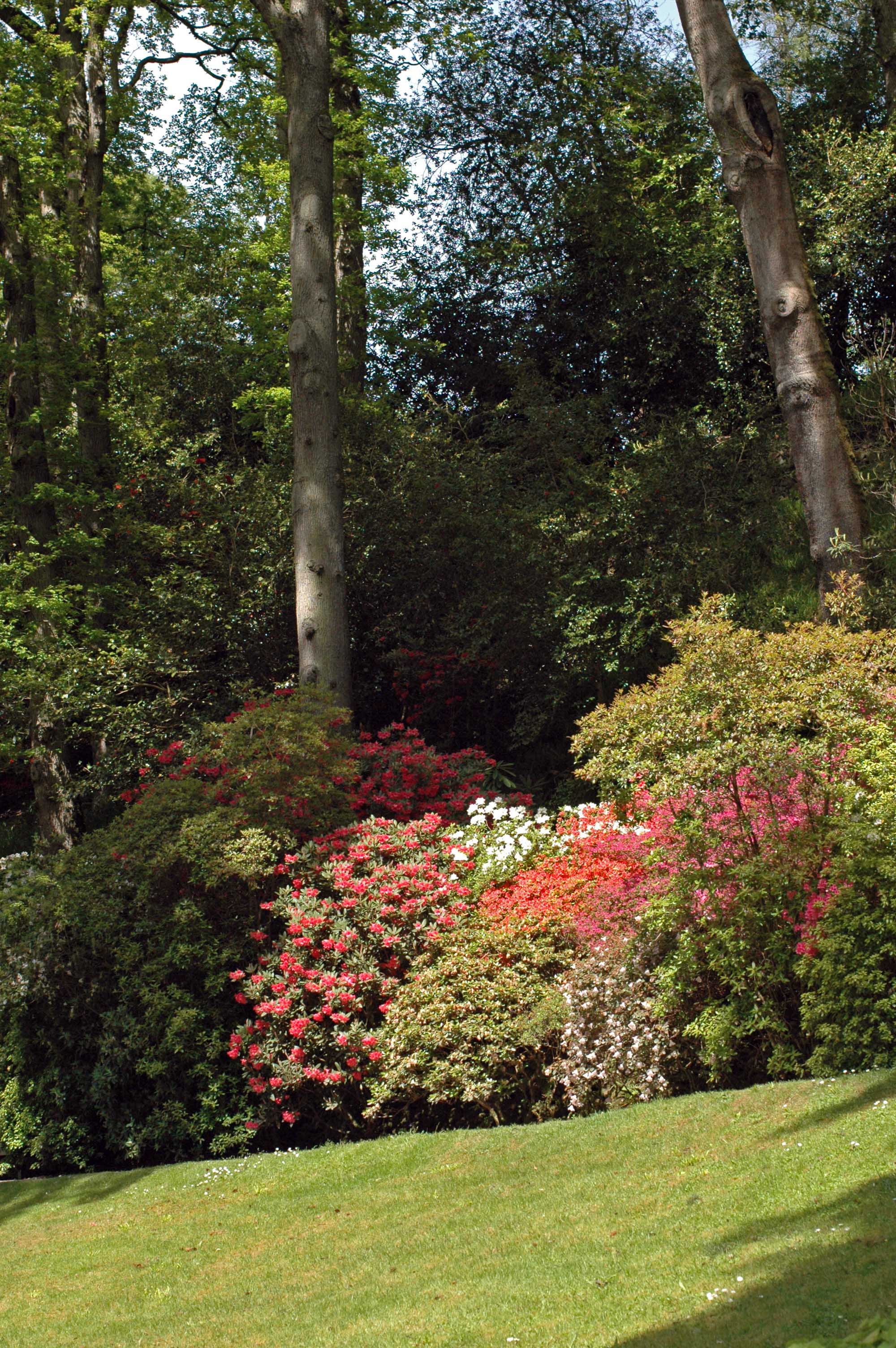
I  ‘belong’ to the National Trust and do visit this particularly lovely woodland garden occasionally, each time wondering why I don’t go more often. I was particularly keen to go now to see the laburnum arch which is one of Bodnant’s claims to fame, but although beginning to show colour it perhaps needed another week or so to reach its peak. But by way of compensation, the azaleas and rhododendrons and other planted beds were absolutely stunning. Words are unnecessary, the photographs speak for themselves, so here is some of what we saw.

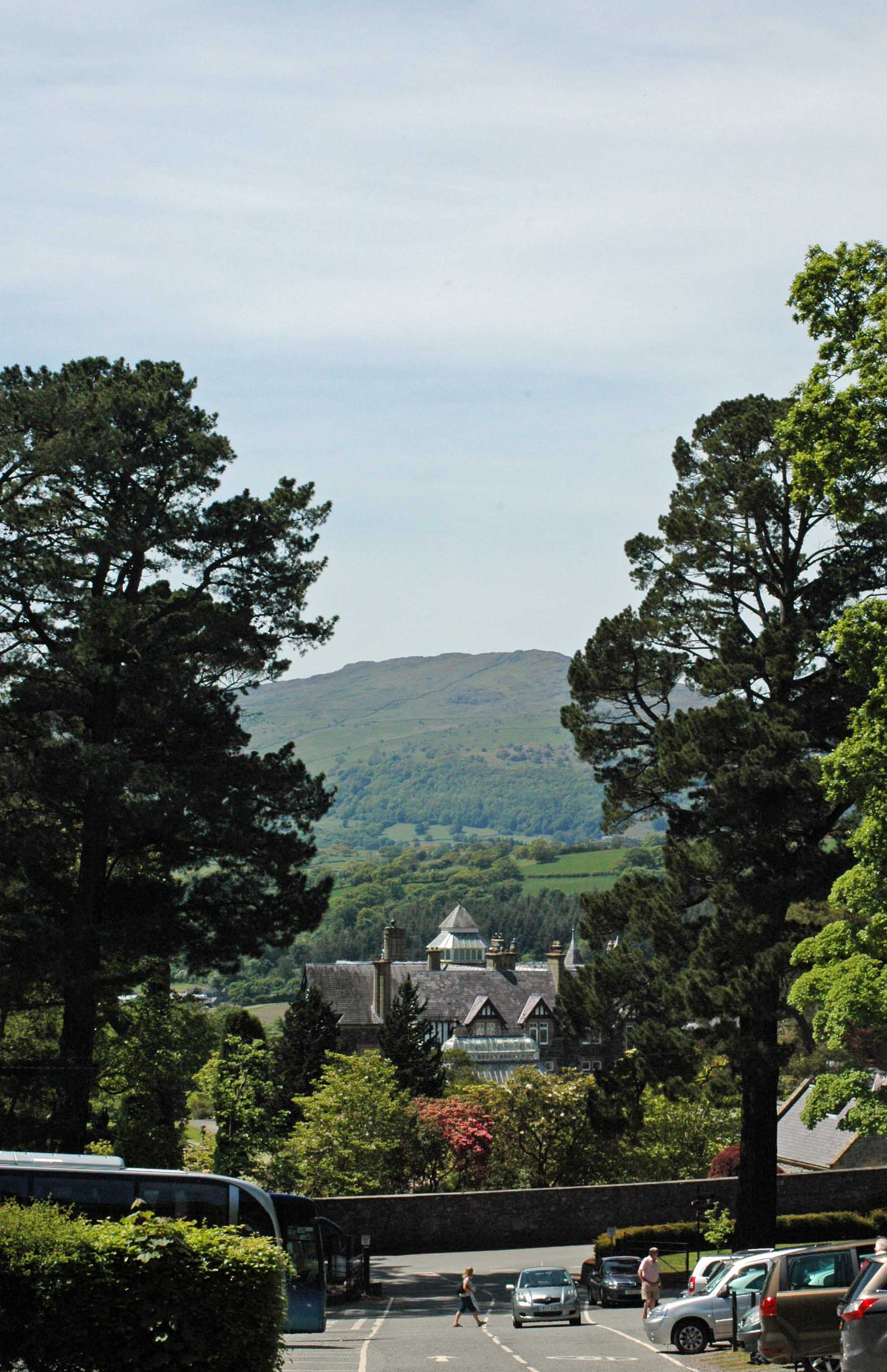
The view walking down from the car park

The view walking down from the car park

We could see that despite it being a Monday, the car park was very full and there were coaches too. We decided to have lunch before going into the gardens so we could look around in a leisurely fashion without worrying there’d be nothing left. I had the ploughman’s, daughter the quiche. Very nice too.

Daughter letting everyone know we'd arrived safely and that she wants a tree like this one

Daughter letting everyone know we’d arrived safely and that she wants a tree like this one

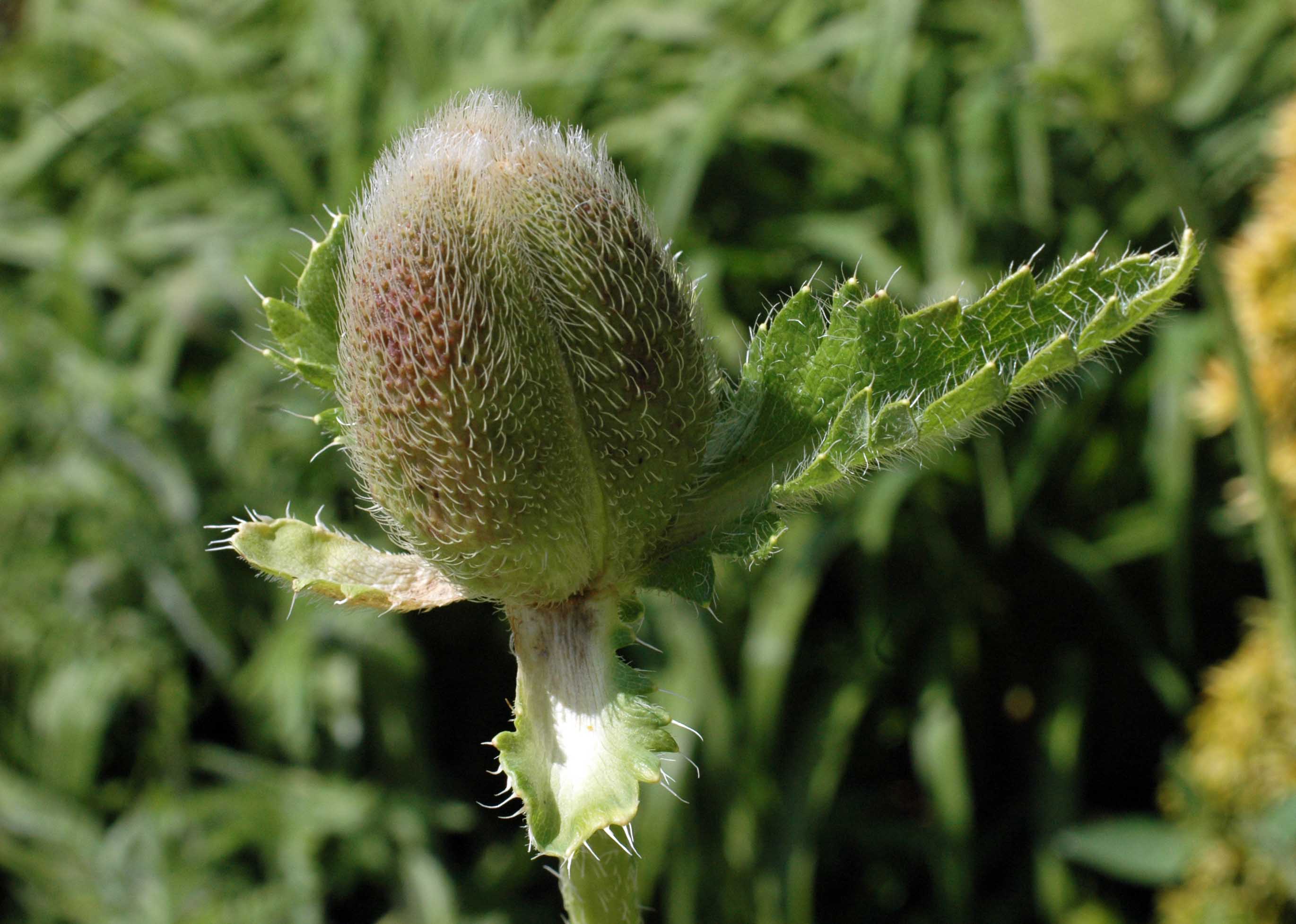
Big fat poppy bud

Big fat poppy bud

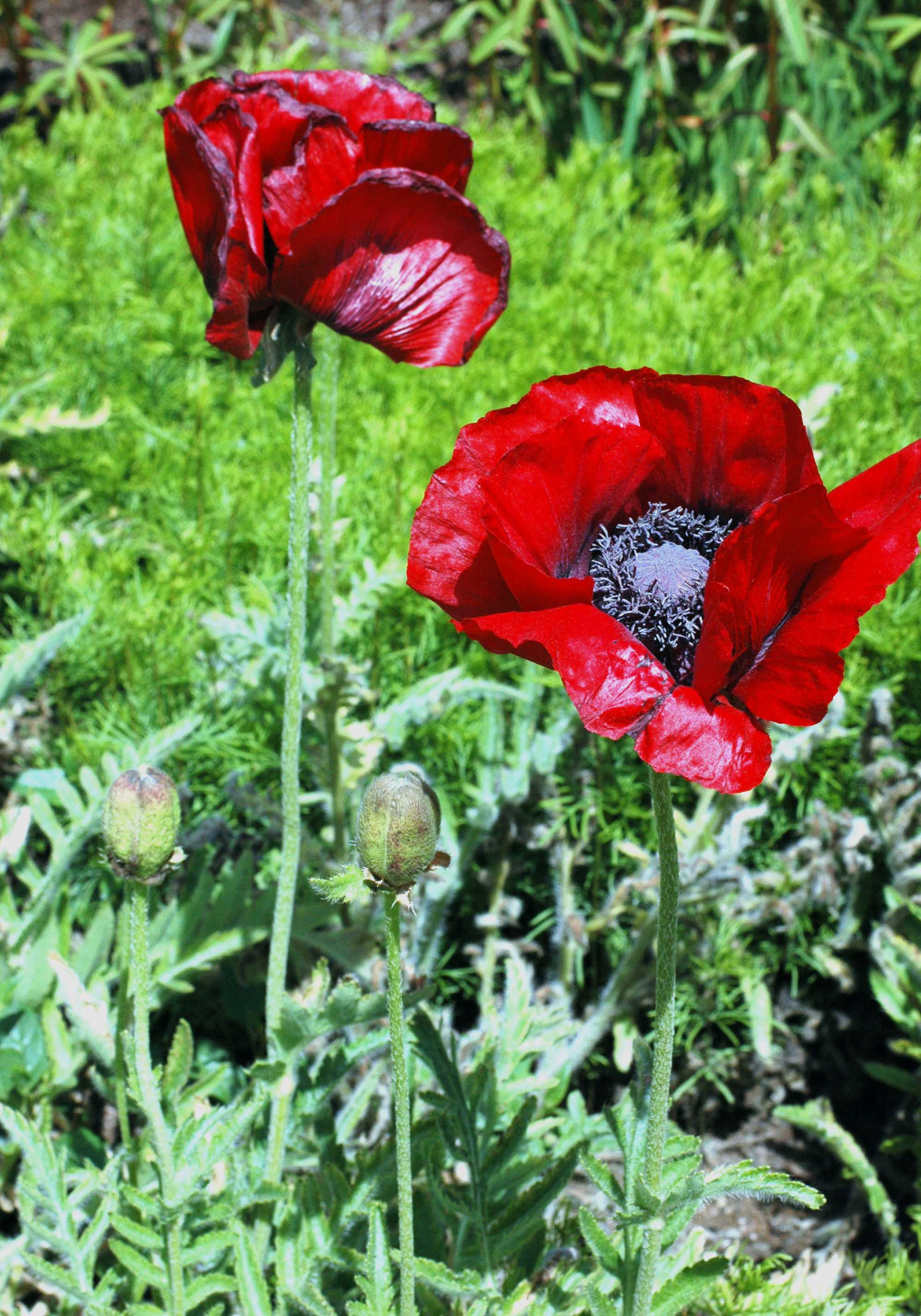
Poppies that don't look real

Poppies that don’t look real

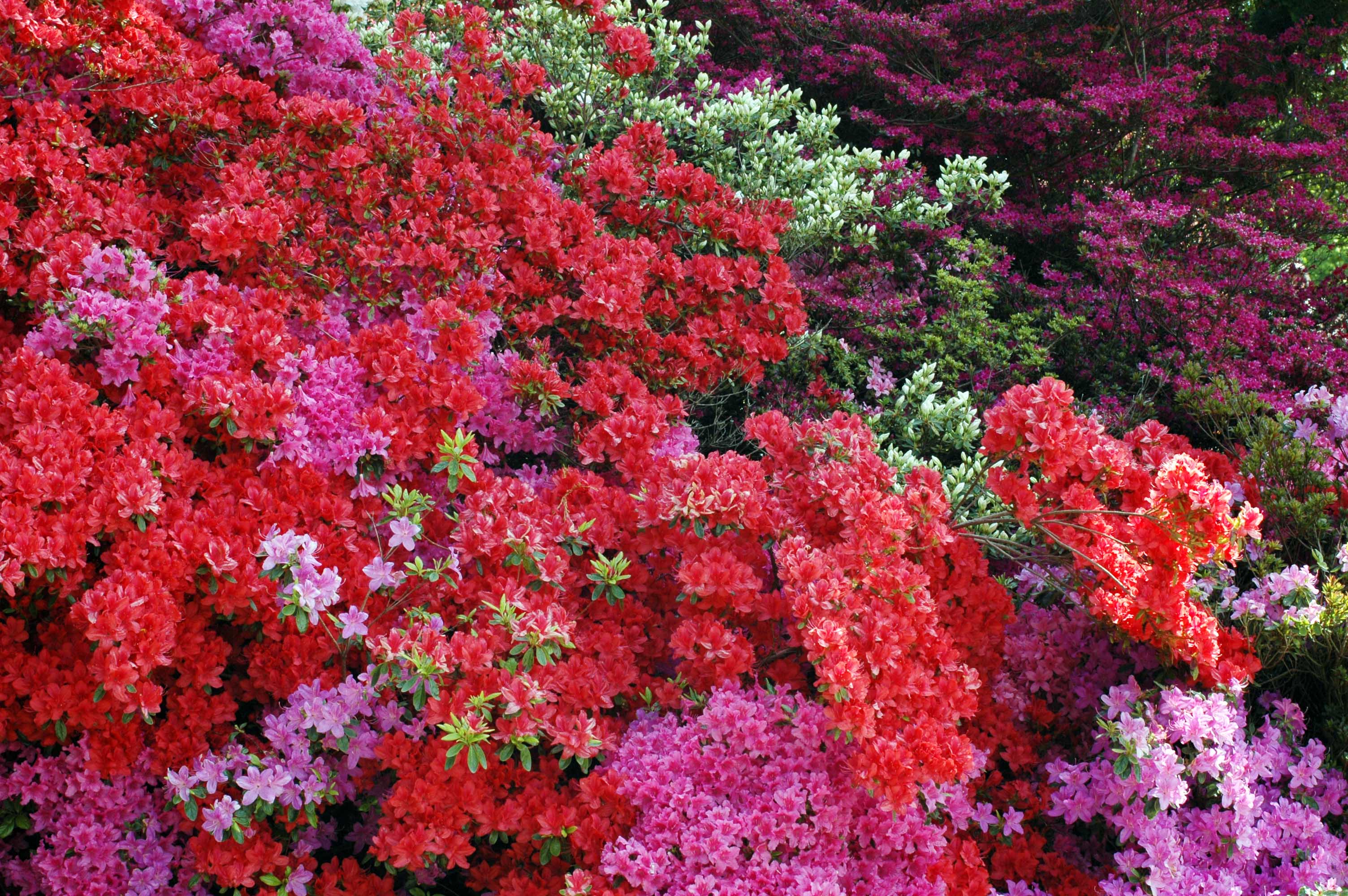
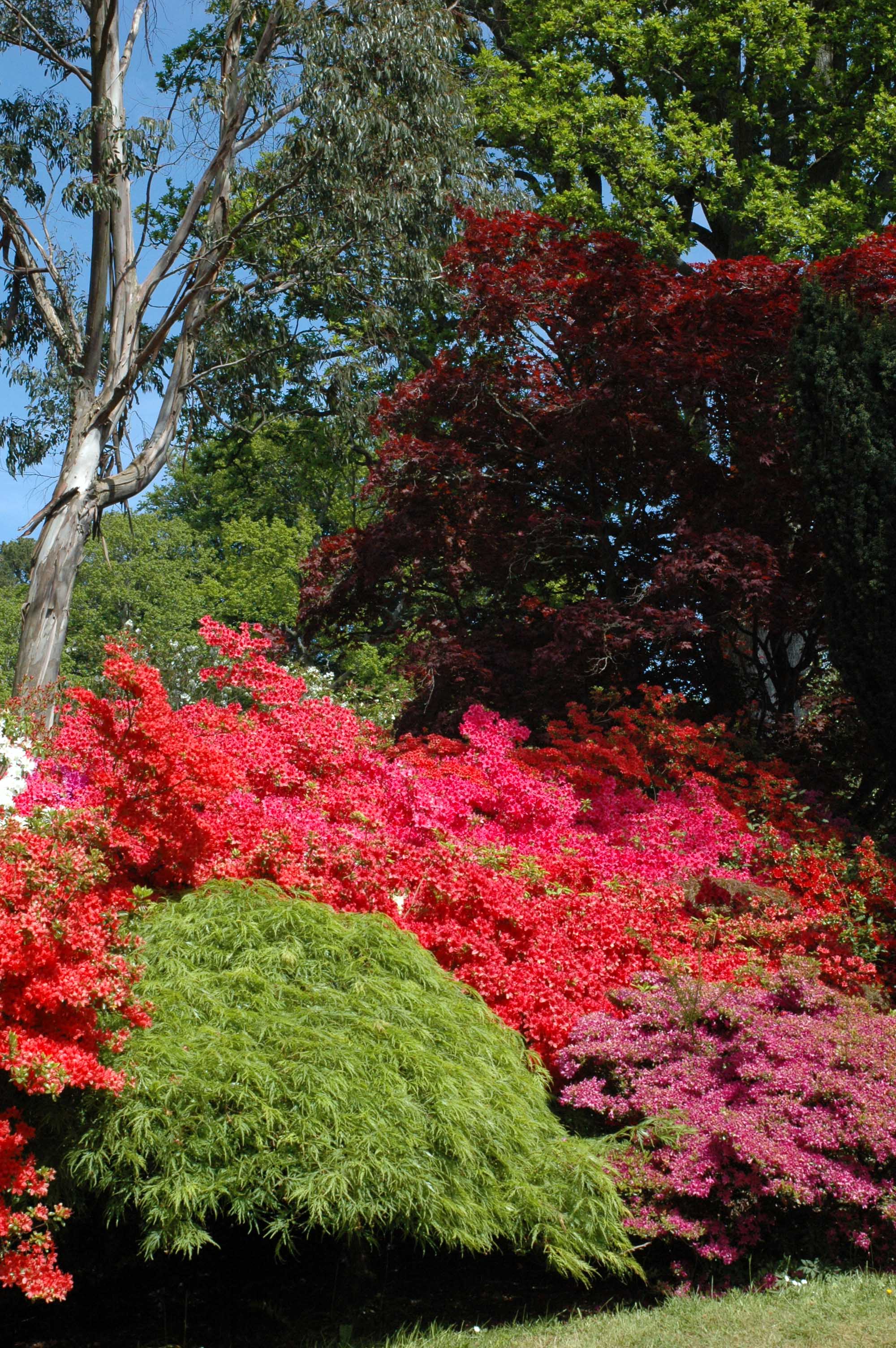
Azaleas

Azaleas

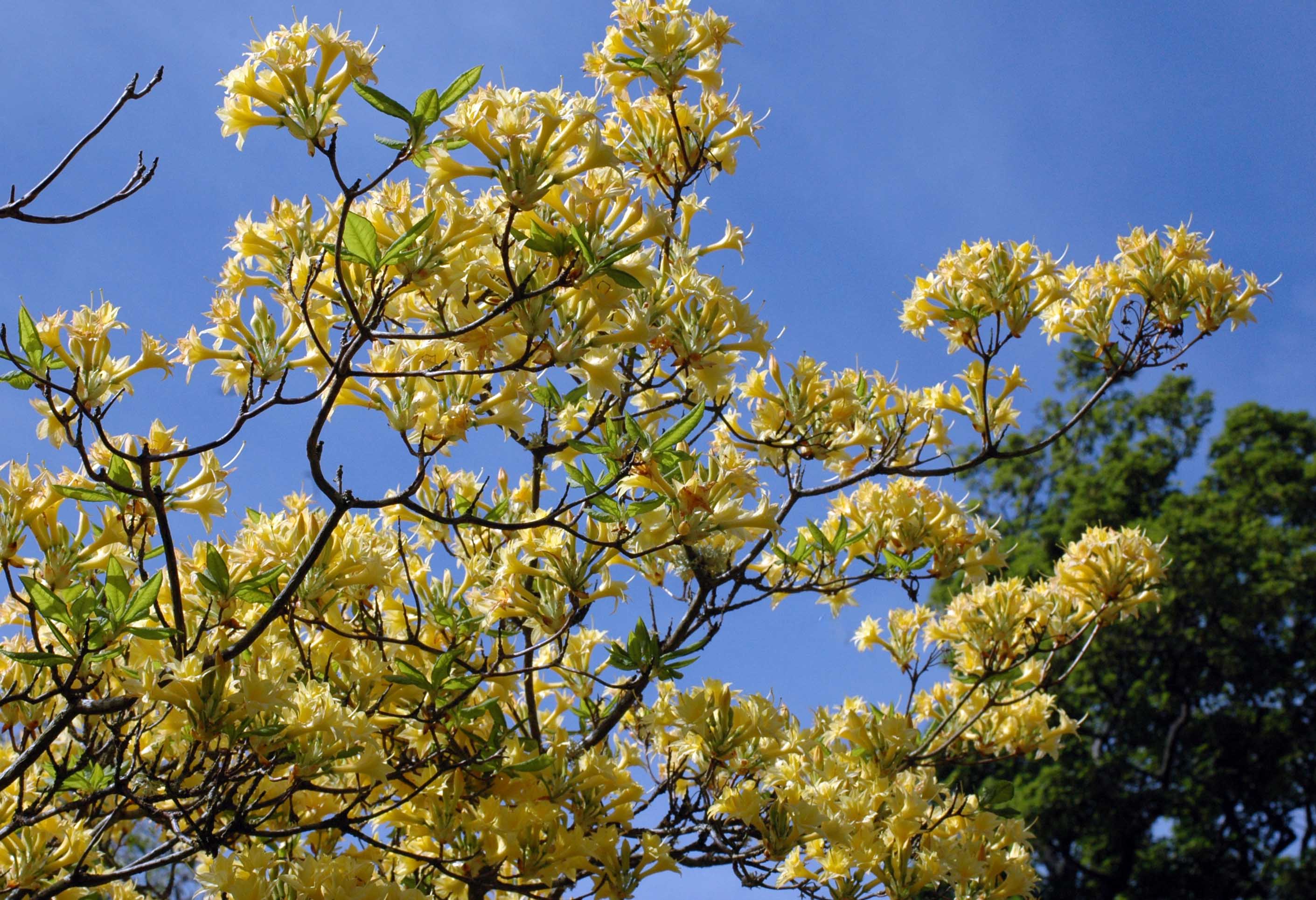
There's something about yellow flowers against a blue sky

There’s something about yellow flowers against a blue sky

This is the wildflower meadow

This is the wildflower meadow with an Oak tree

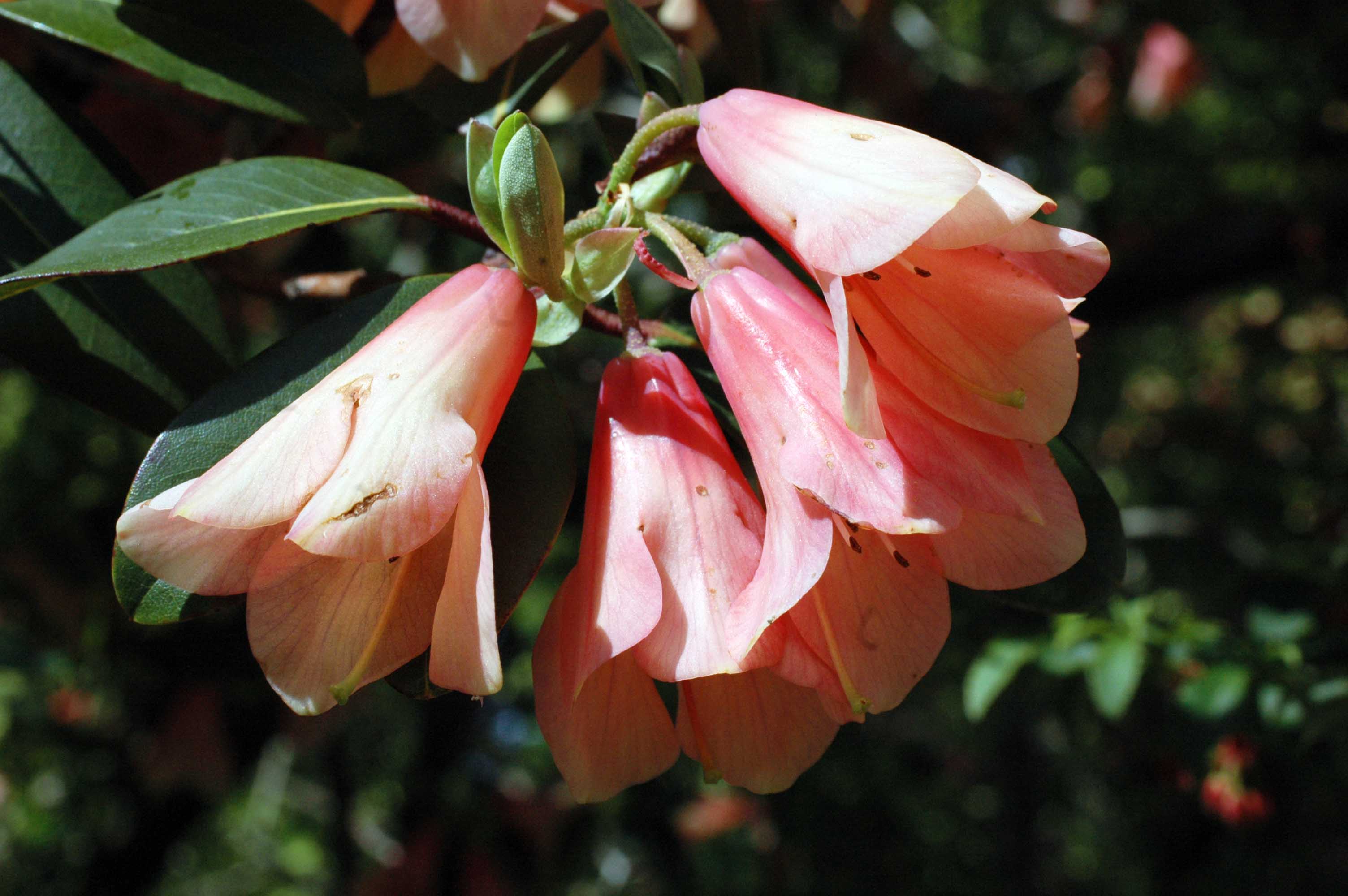
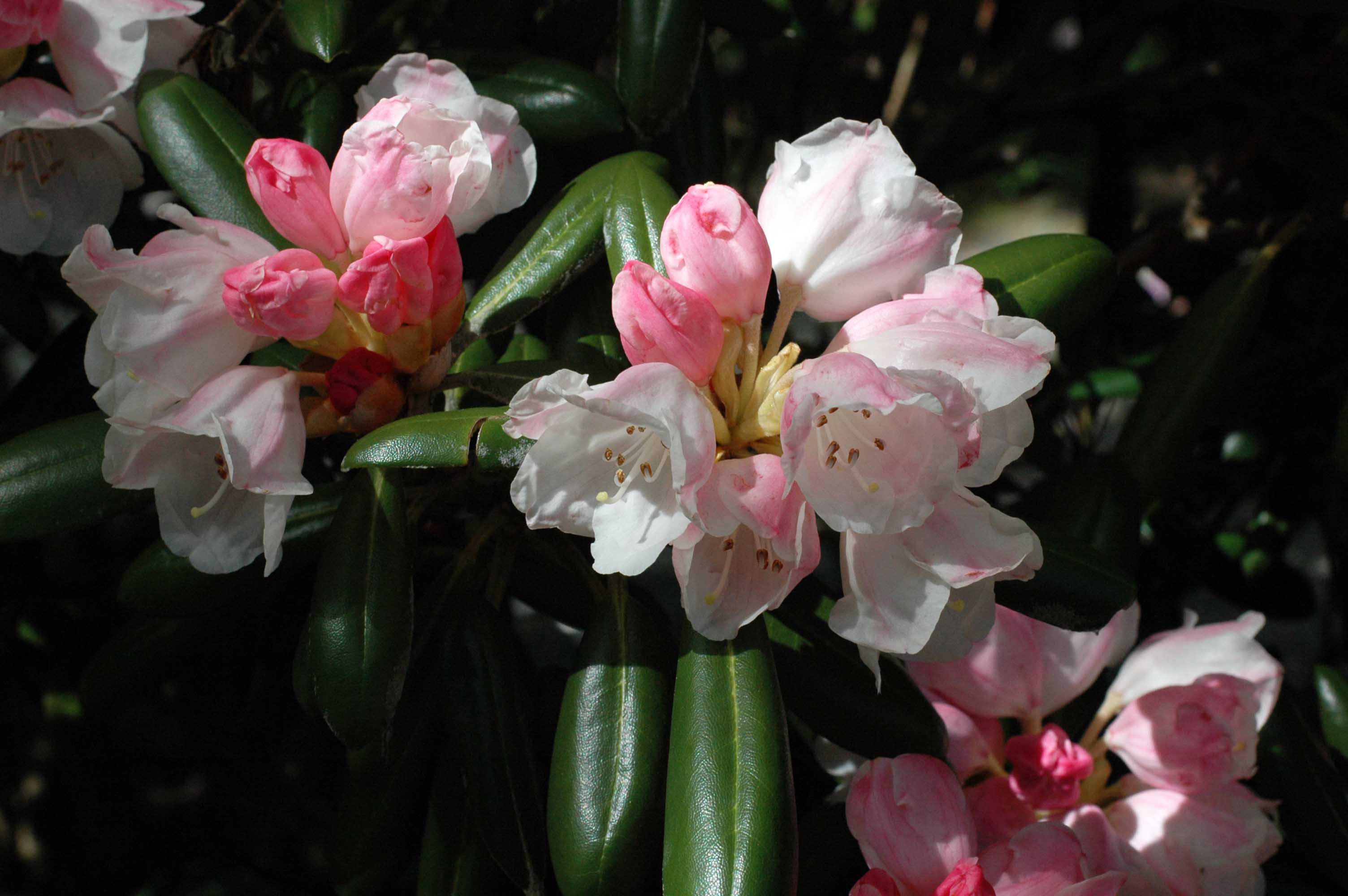
130603TGNT-Bodnant Gardens 08-Beautiful bells

Beautiful peachy-pink bells

130603TGNT-Bodnant Gardens 11-Azaleas, bright green maple, eucalyptus & purple tree

A lovely composition of azaleas, vivid green maple, eucalyptus and a purple-leaved tree

More vibrant colours contrasted with white

More vibrant colours contrasted with white

A bee seeking nectar

An bee look-alike seeking nectar

So many shades of pink in one flower

So many shades of pink in one flower

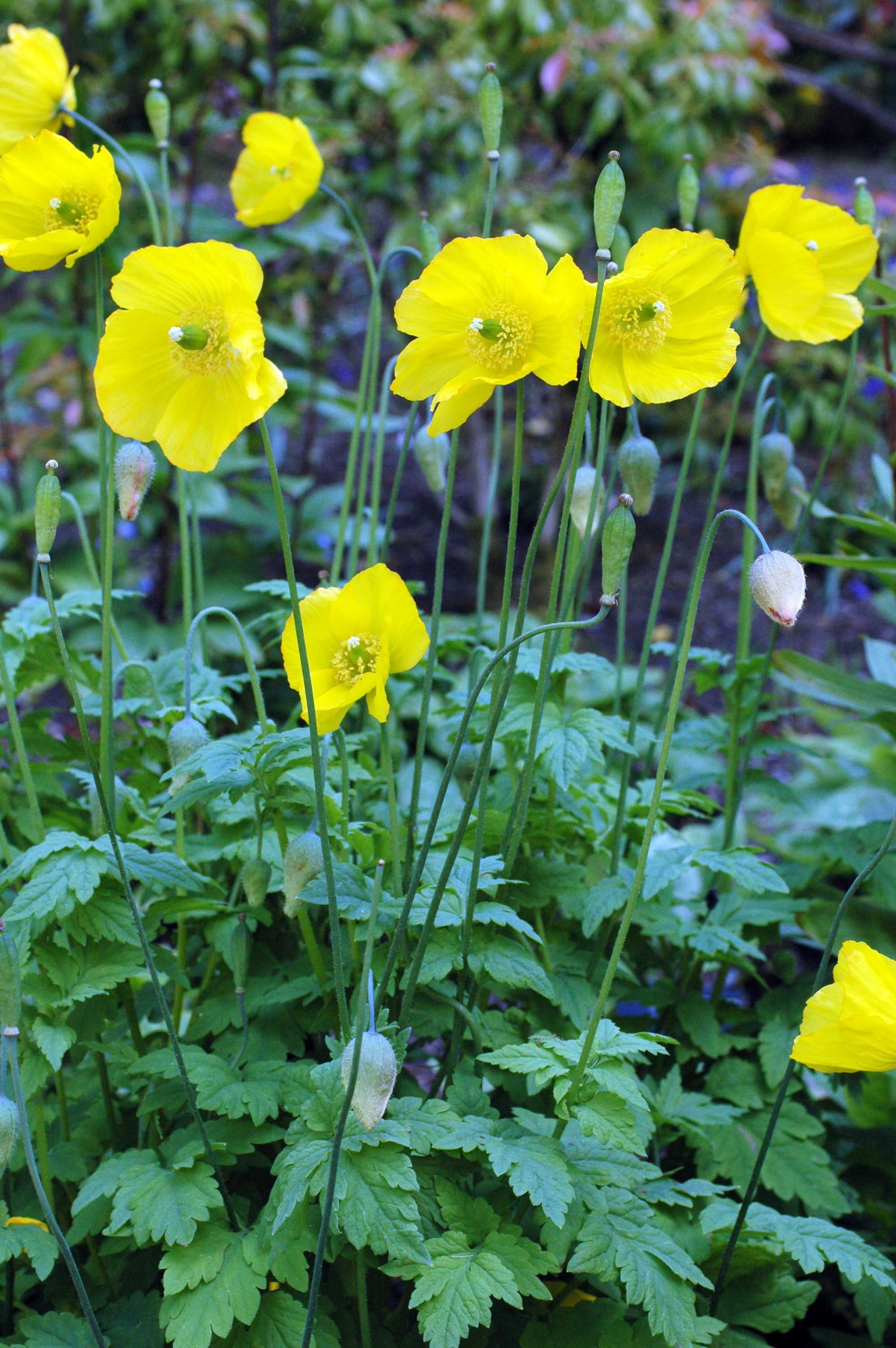
As you walk down towards the woodland dell there is a flower bed that has species of flowers resembling wild ones but exaggerated. Even the Welsh poppies were larger and perfectly formed.

130603TGNT-Bodnant Gardens 016-More Welsh Poppies

Welsh poppies

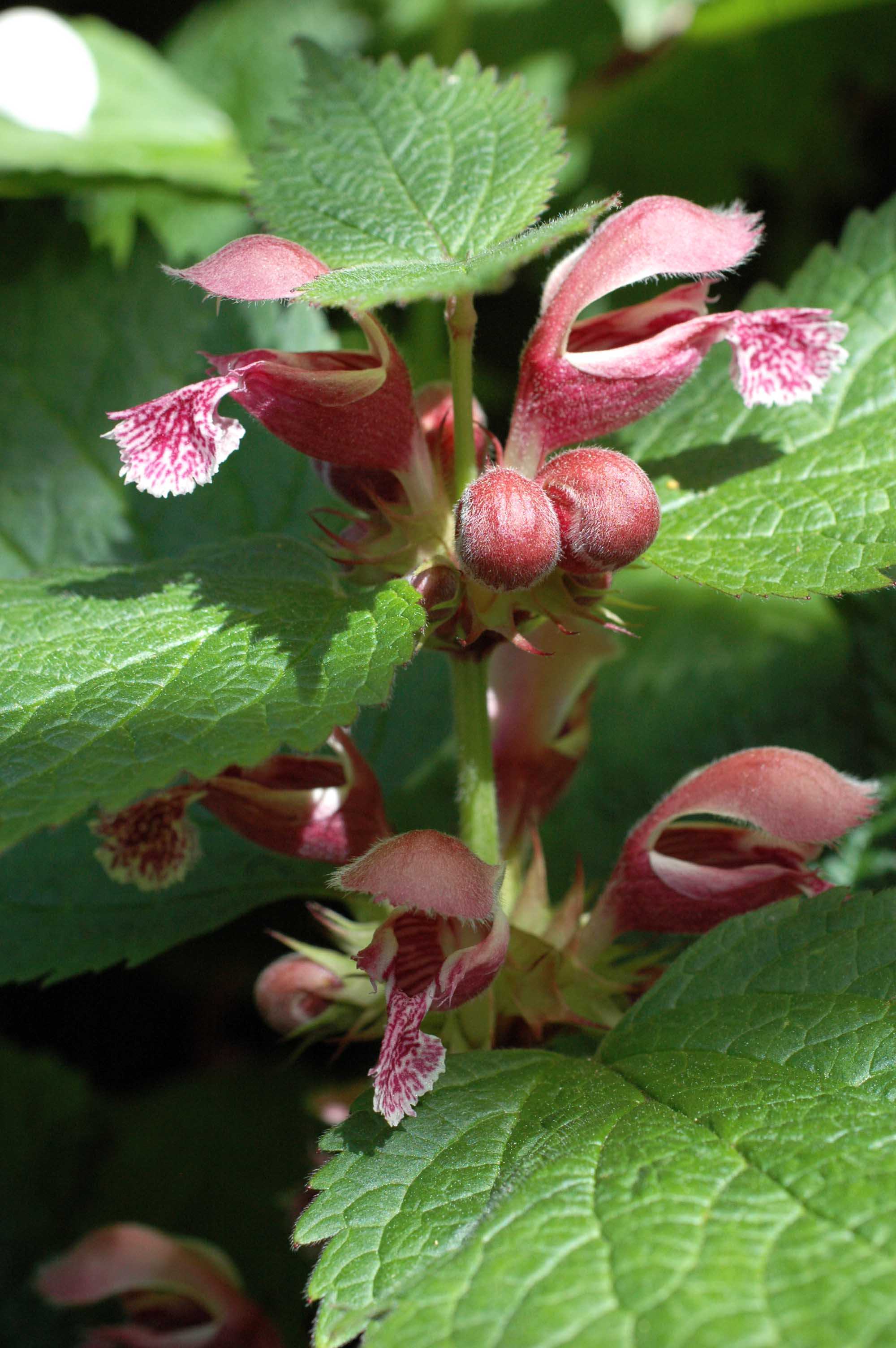
This looks a bit like a dead-nettle, but it's bigger

This looks a bit like a dead-nettle, but it’s bigger

The 'dead-nettle' look-alike has a fascinating flower

The ‘dead-nettle’ look-alike has a fascinating flower

This plant resembled Cow-Parsley, but with a purple rinse

This plant resembled Cow-Parsley, but with a purple rinse

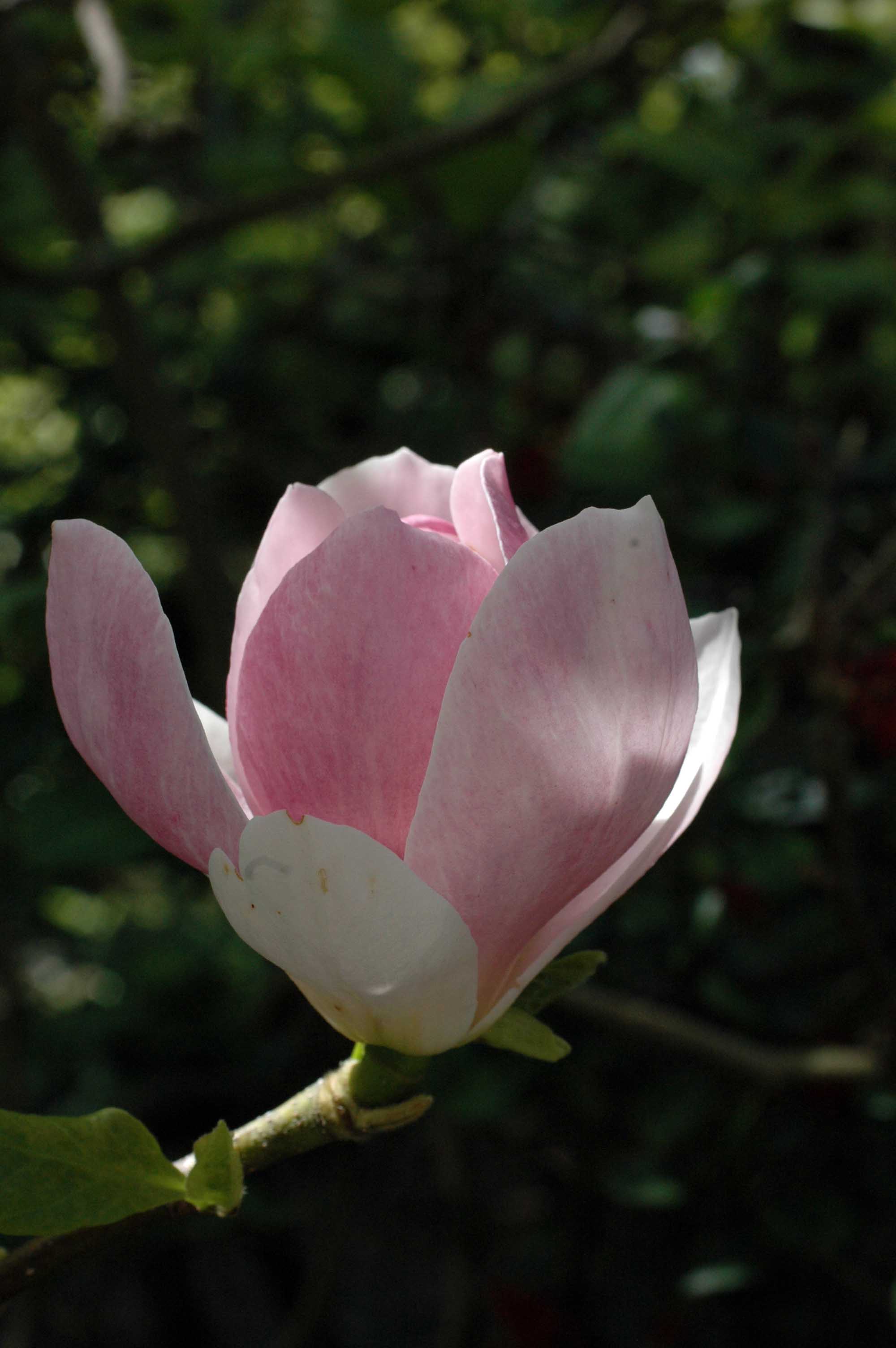
130603TGNT-Bodnant Gardens 17-A last magnolia flower

A last magnolia

130603TGNT-Bodnant Gardens 21-A woodland path in dappled shade

A tempting wood path in dappled shade

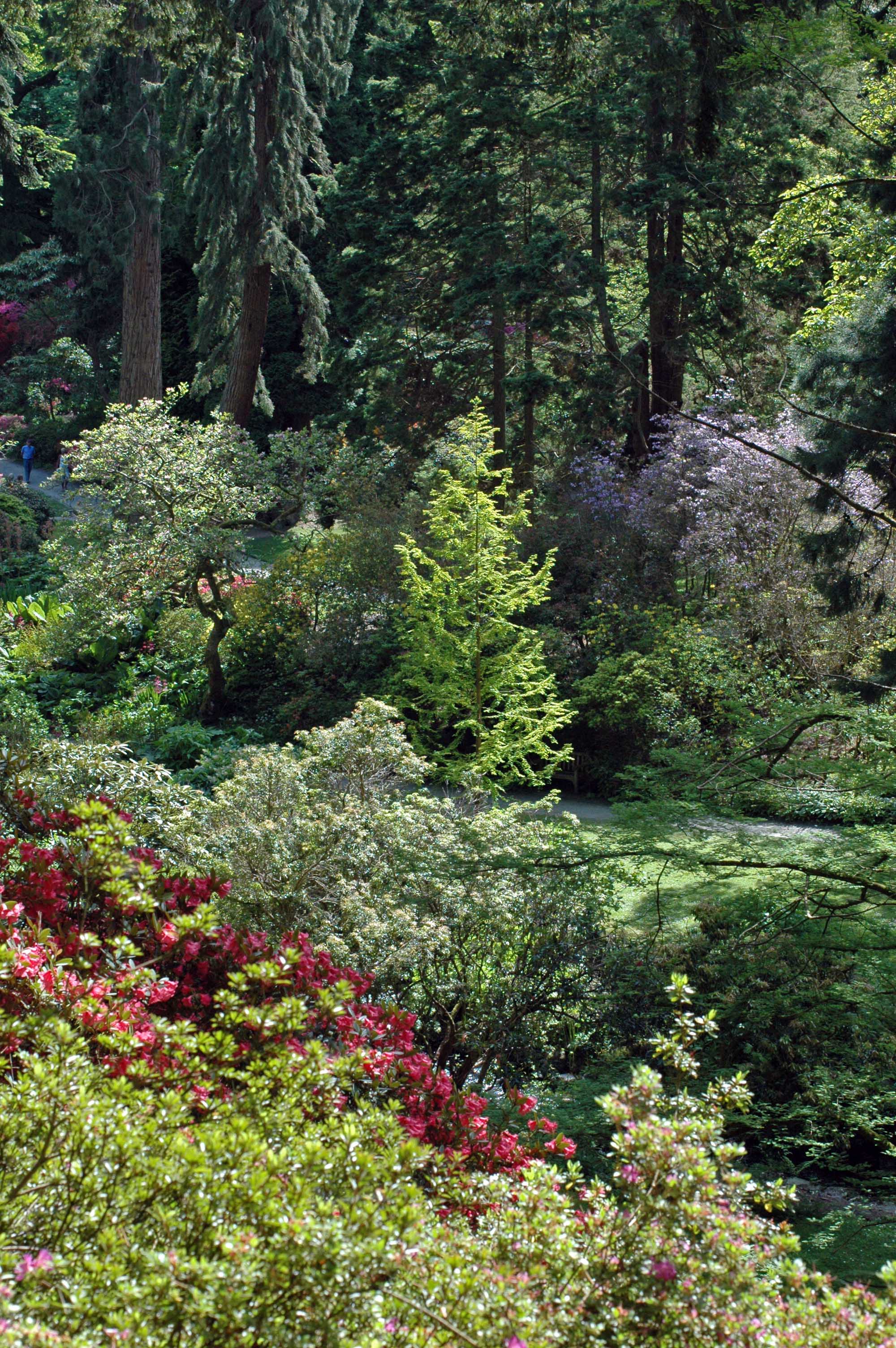
Looking down into the dell; a patchwork of greens with accents of colour

Looking down into the dell; a patchwork of greens with accents of colour

A simple, graceful Solomon's Seal

A simple, graceful Solomon’s Seal

Pretty white bells

Pretty white bells

We sat on a bench at the side of the stream for a while to have a chat (on the phone) and wish penblwydd hapus (happy birthday) to number 2 son who lives and works in London and used to speak Welsh.

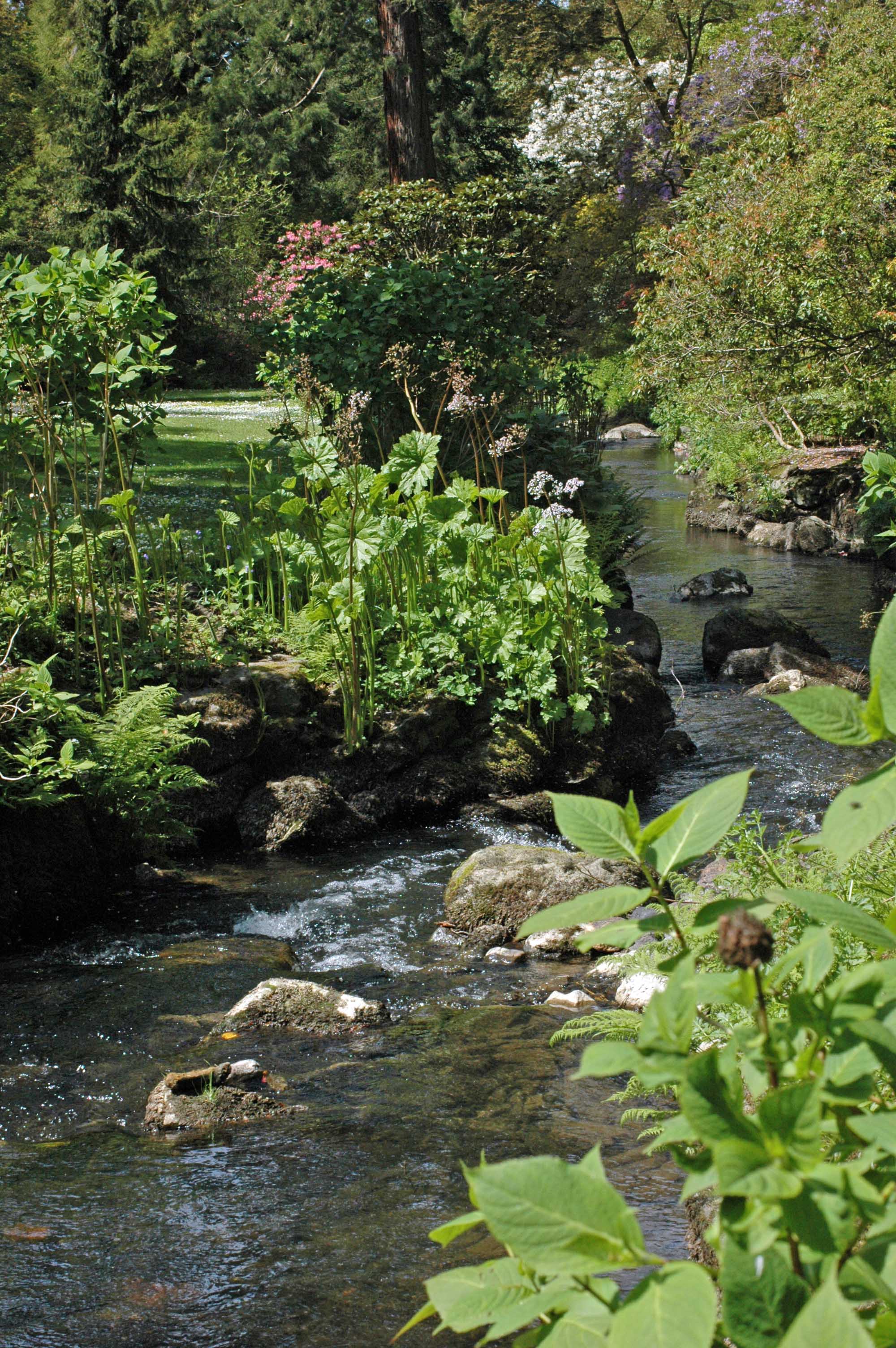
A tranquil view of the stream runnning through the dell

A tranquil view of the stream runnning through the dell

I was fascinated by some crazy flies zooming back and forth over the water. They all seemed to be racing to a particular point, moving so fast they left a blurry trail, then they turned round and zoomed back again, repeated that a few times then broke up into a cloud for a few seconds before doing it again. They were quite large insects, I thought perhaps mayflies, but can they move that fast? I always thought they were a bit airy-fairy, float through the air-ish. They kept me entertained for ages whatever they were.

I was fascinated by crazy flies over the water

I was fascinated by crazy flies over the water. Lush Hostas, why don’t the slugs eat them?

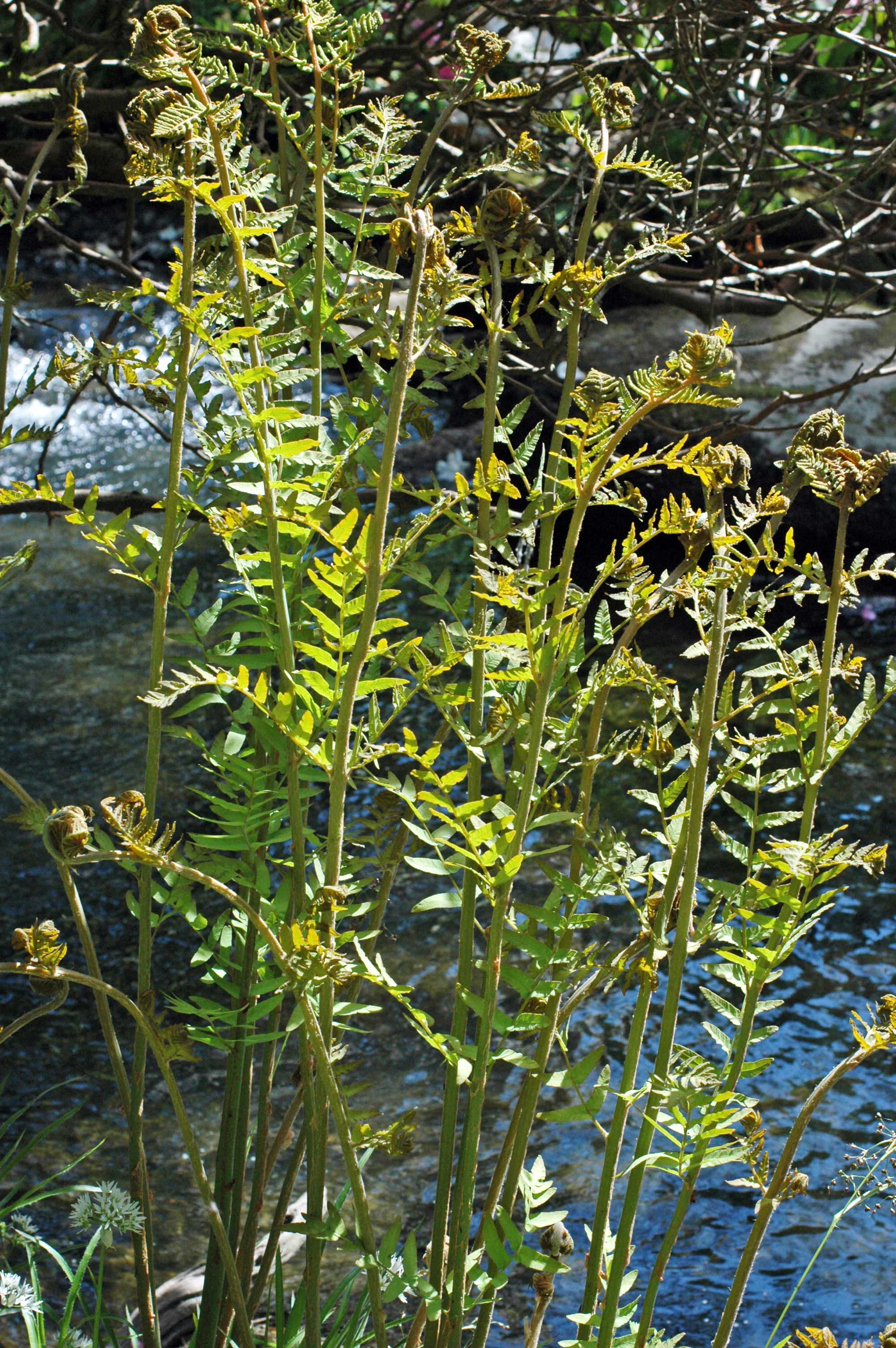
Impressive fern

Impressive fern

Just the kind of hilly bank we’d have rolled down as kids. Tempting though…

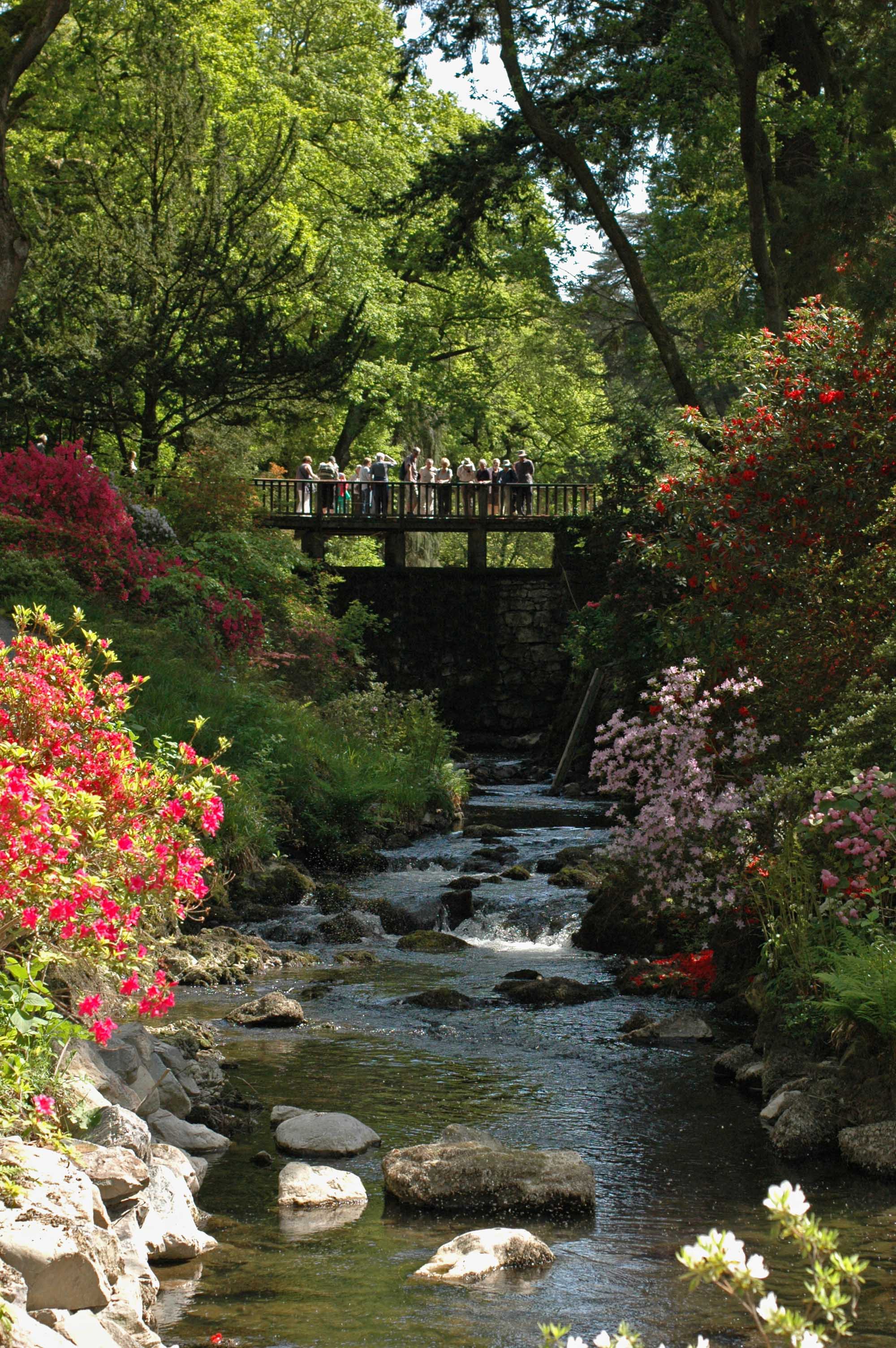
I think this picture of people on the bridge is my favourite of the day.They look so small

I think this picture of people on the bridge is my favourite of the day. They look so small

Daughter ran over the stepping stones to video me crossing. She was hoping for a 'you've been framed' opportunity

Daughter ran over the stepping stones to video me crossing behind her. She was hoping for a ‘you’ve been framed’ opportunity. Ha! No chance.

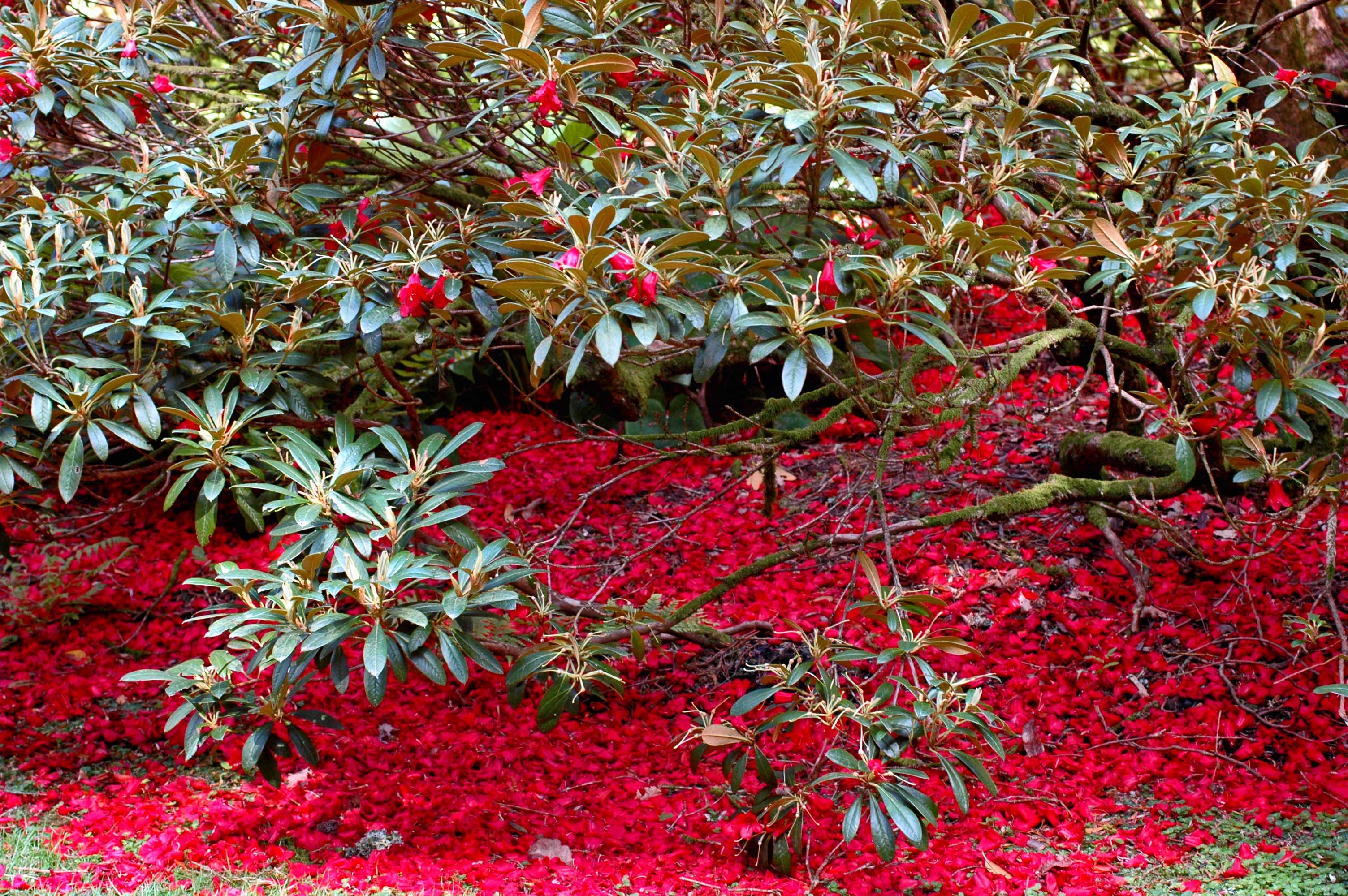
The rhododendrons are almost over and petals cover the ground beneath them

The rhododendrons are almost over and their petals were thick on the ground

Aah

Aah

A carpet of red

A red carpet 

There were even petals in the stream

There were even petals in the stream

I loved this starry deep blue periwinkle

I loved this starry deep blue periwinkle

130603TGNT-Bodnant Gardens

Flowers on a carousel

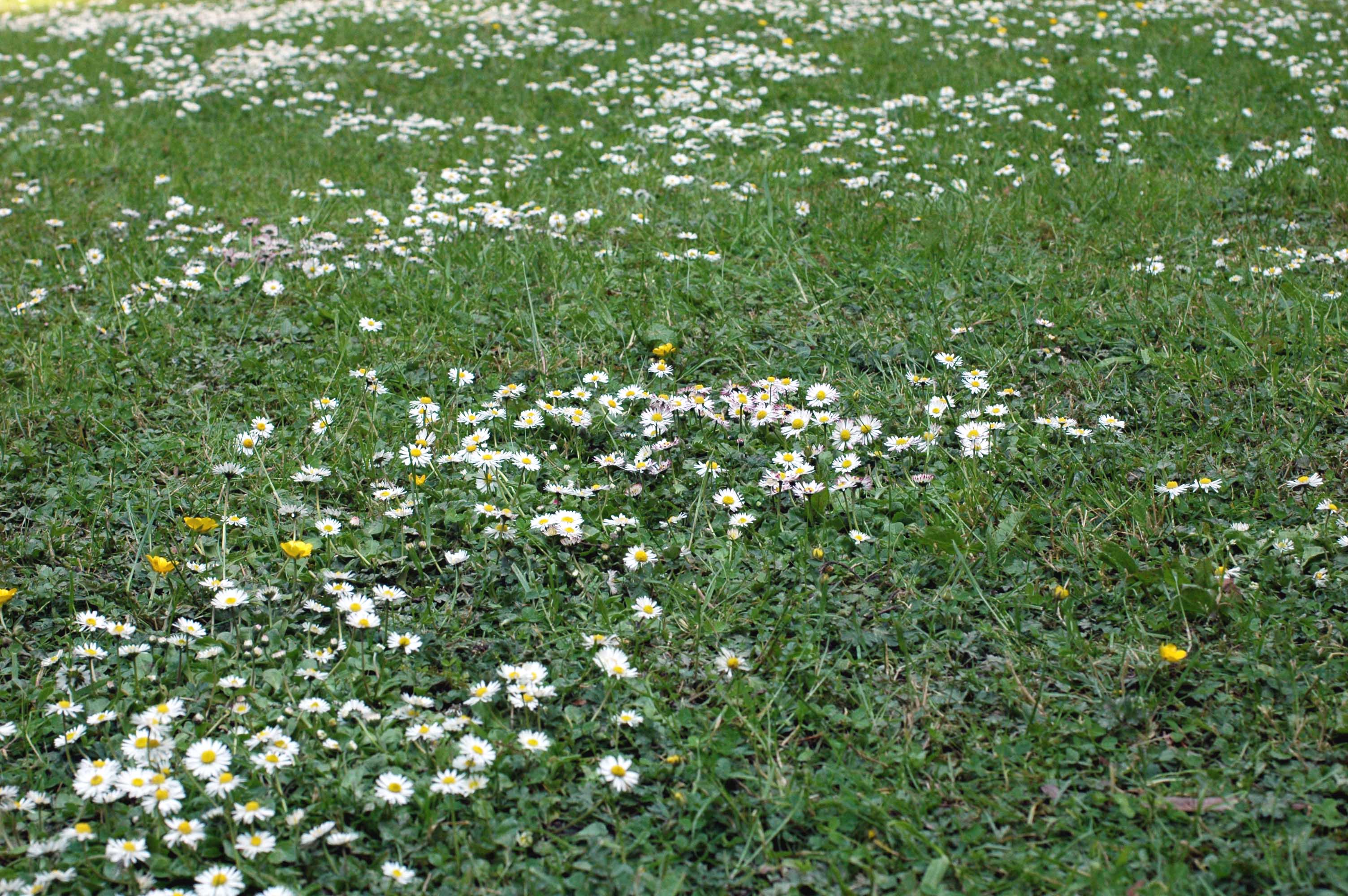
Even the best people have a daisy lawn these days

Even the best people have a daisy lawn these days

Bluebells are almost at the end of their flowering

Bluebells are almost at the end of their flowering

And a last view upstream before heading off to find the laburnum arch.

The laburnum arch, not quite at its best but you can see the potential

The laburnum arch, not quite at its best, but still pretty impressive

I’ve just checked the website for Bodnant and it says the arch is in full bloom now. Apparently it is so famous that people from all over the world go to see it. I thought it was busy there today.

Little Orme in early June

Tags

, , , , , , , ,

I made Wild Cabbages the main floral event of my recent walk on the Little Orme, giving them a post of their own, simply because they are not an everyday plant and because the number of plants there are and the profusion of their flowers this year would have made them difficult to miss. But of course there was much more to see there.

June 4th

As late spring slips into early summer there is a blending of fading and fresh flowers and foliage. My first glimpse of the fresh was a lovely clump, (an inelegant word to use to describe such delicate flowers), of Greater Stitchwort. They were tucked tightly against a tangle of bramble, using it to support their rather weak, brittle stems.

Greater Stitchwort-Stellaria holostea

Greater Stitchwort-Stellaria holostea

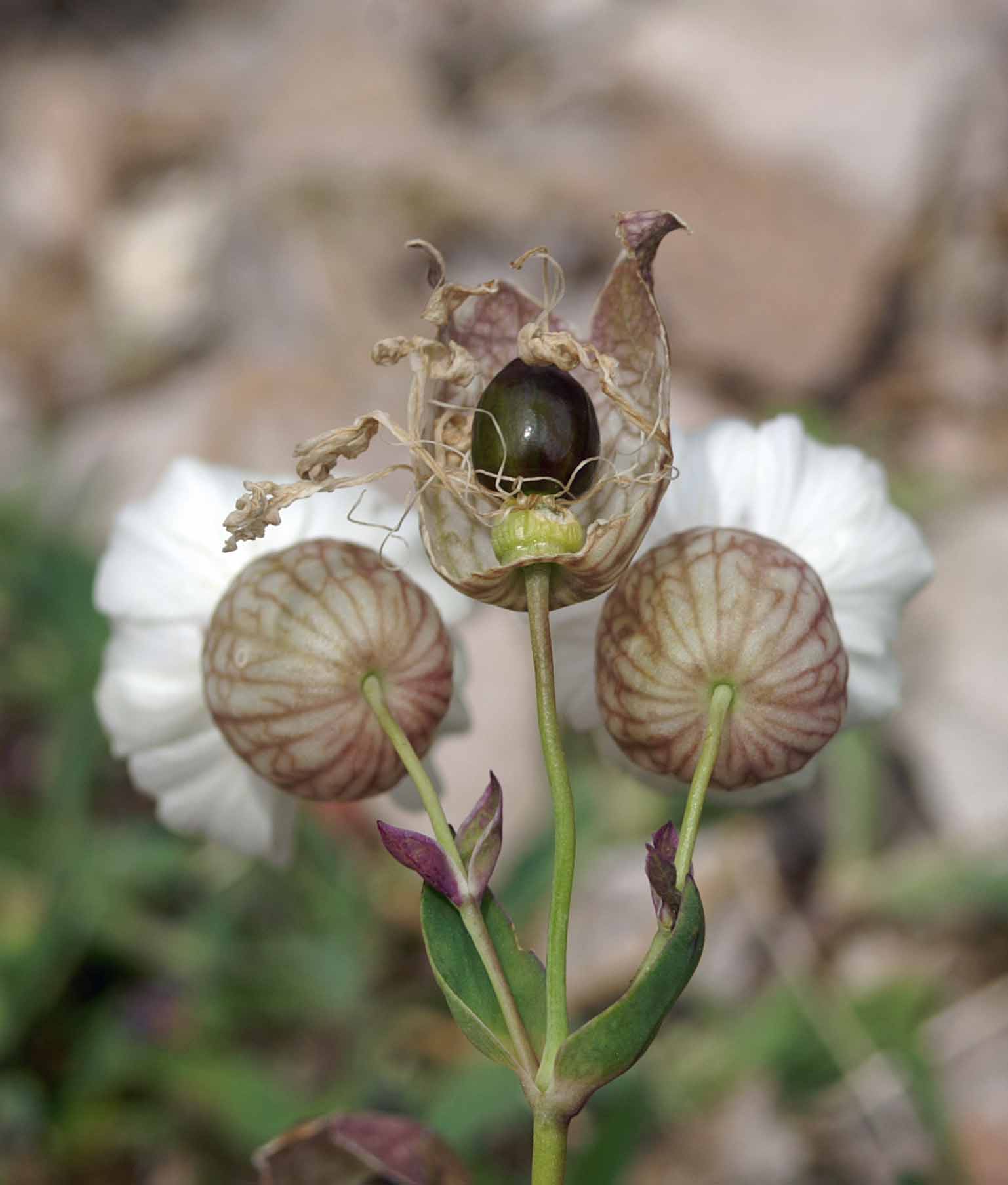
On the edge of the cliff there is a smattering of Thrift and some Sea Campion, both with fading flowers. I searched for a while to find Thrift that still looked fairly fresh, but find being able to see the seeds forming within the ‘bladders’ of the Sea Campion interesting.

Thrift and Sea Campion on a scree slope at the bottom of a cliff wall

Thrift and Sea Campion on a scree slope at the bottom of a cliff wall

Thrift-Armeria maritima

Thrift-Armeria maritima

A fairly fresh flower of Sea Campion-Silene vulgaris ssp. maritima

A fairly fresh flower of Sea Campion-Silene vulgaris ssp. maritima

Sea Campion-Silene vulgaris ssp. maritima-seed developing

Sea Campion-Silene vulgaris ssp. maritima-seed developing

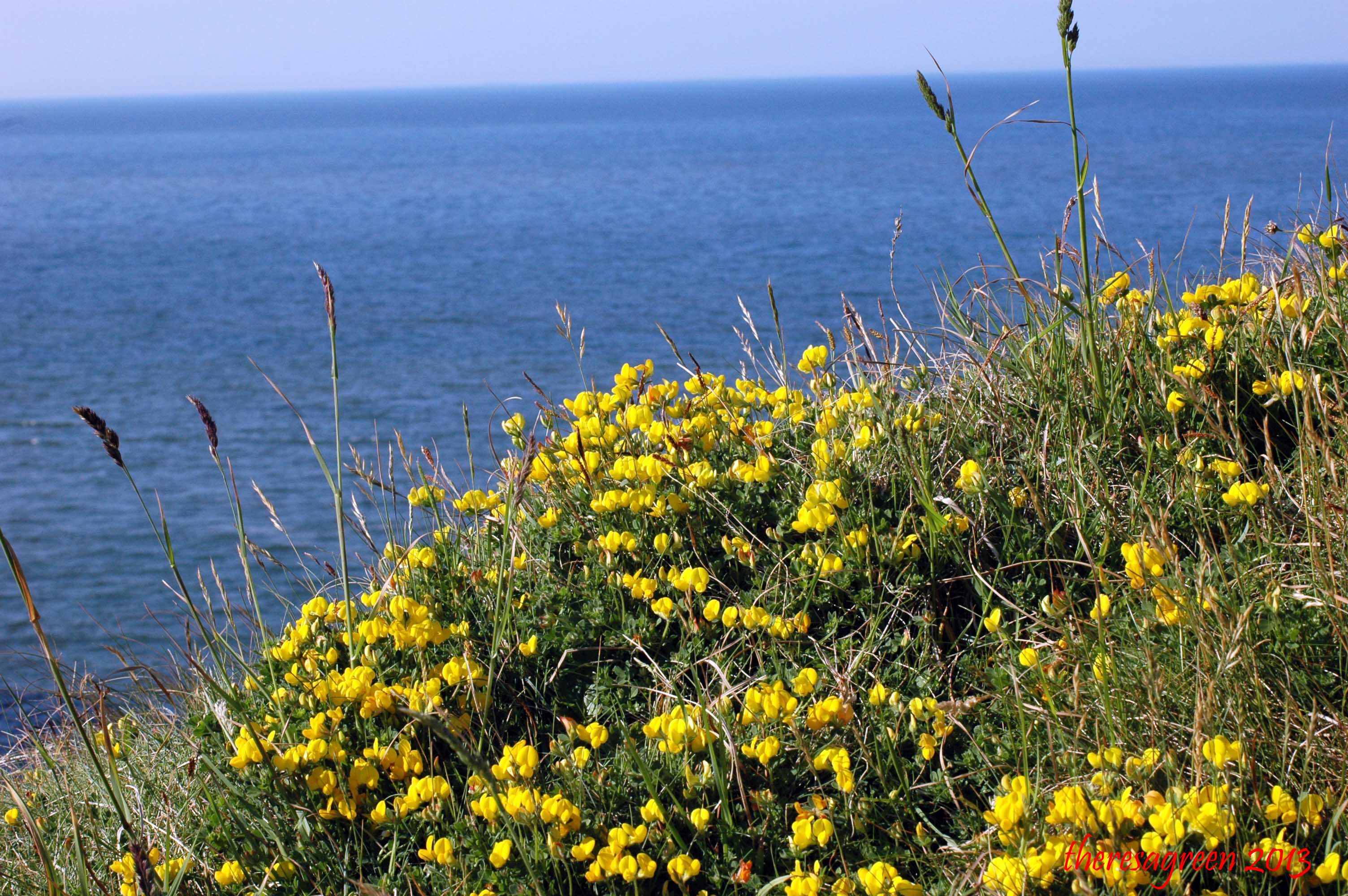
The most prolific wildflower here currently is Bird’s Foot Trefoil, which will carry on throughout the summer, providing nourishment for a whole host of fauna; a veritable live food manufacturing plant that looks beautiful too. I sat on a rock near this spot gazing at the view, contemplating life and enjoying the warmth of the late afternoon sun.

What could be prettier? Golden Bird's-foot Trefoil against a background of blue sea and sky

What could be prettier? Golden Bird’s-foot Trefoil against a background of blue sea and sky

There was a lot of Cormorant traffic travelling to and fro the tip of the headland, some in small groups, others alone. There are a large number of them here and their outlines can often be seen against the sky, the birds perched at regular intervals down the rock descending to the sea.

Turning back from the cliff I thought I might walk up the steep grass incline to the top of the hill, but I got halfway up and decided it might be a bit late in the day for rambling around up there, so stopped to take a photograph and walked down again.

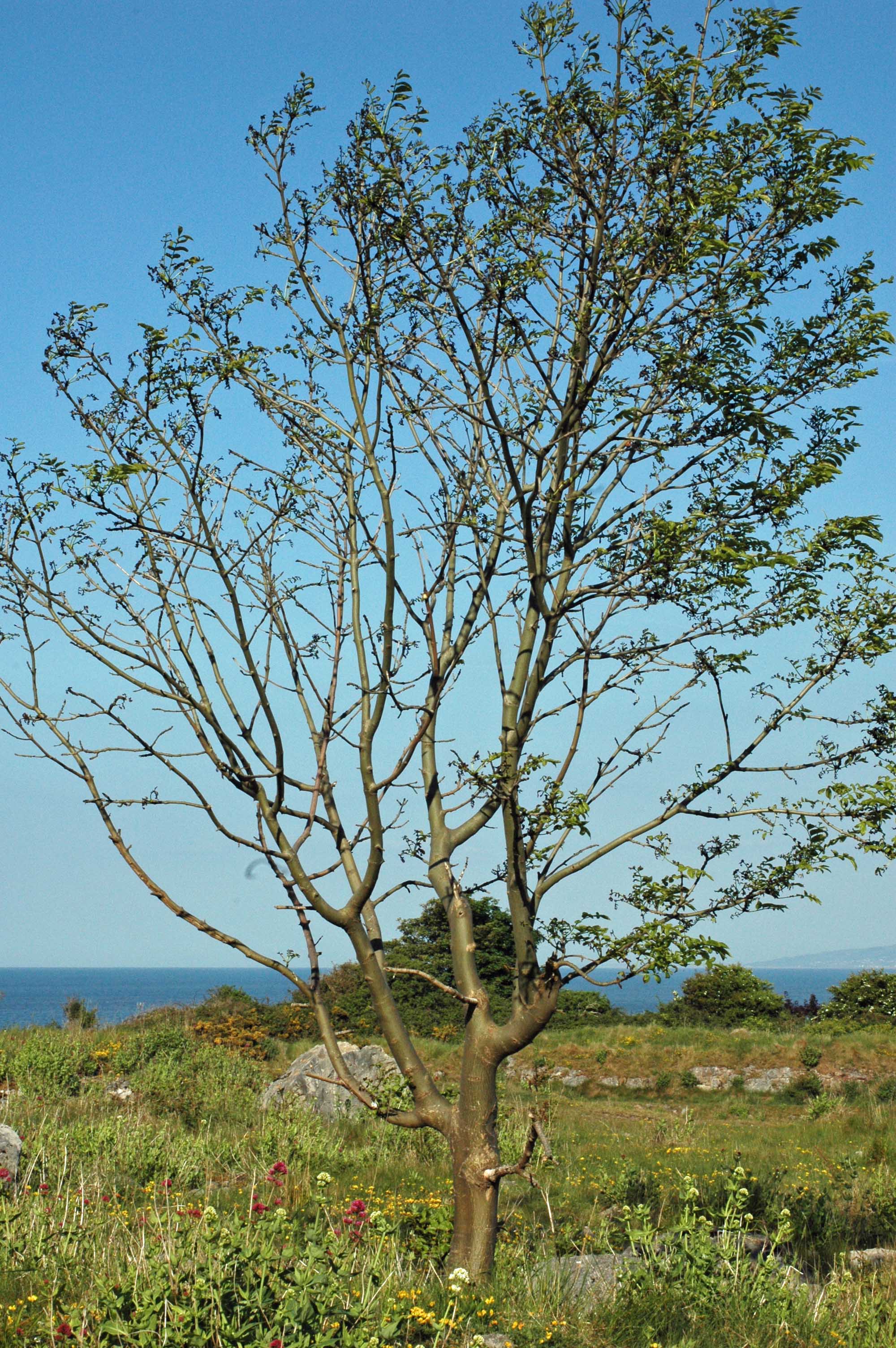
Ash tree with a view of Rhos-on-Sea and beyond

Ash tree with a view across Penrhyn Bay to Rhos-on-Sea and Colwyn bay beyond

Upholding my promise to myself to pay more attention to Ash trees I had already looked at a couple of small ones before taking this photograph. All, including this one, were less fully-leaved than those inland and all had leaves that were brown and shrivelled around their edges. I was alarmed when I first noticed that, but don’t think it’s anything more sinister than the leaves being ‘burned’ by the very cold and salt-laden winds they have been subjected to this whilst young and tender. I hope that’s all it is, there are a lot of Ash trees on the site of the Little Orme and their loss would be significant.

A smaller, younger Ash tree

A smaller, younger Ash tree had sparse foliage and ‘burnt’ leaves

I walked back following the pathway at the base of  the towering rock face, leaving the surfaced track to search the grass at its side for any smaller, less showy wildflowers. There was plenty more Bird’s-foot Trefoil with a few little bumblebees rushing around hunting for nectar and little patches of Wild Thyme, just beginning to open. There were quite a few little flowers, yellow with pink-flushed buds, that looked similar to Cat’s Ear, but not quite, so more research needed there.

A small patch of newly-opened Wild Thyme

A small patch of newly-opened Wild Thyme

I carried on walking, diverting over to the big patch of cabbages to take photographs as seen in previous post, following the edge of the deeper quarried-out bit (all of the section of the Little Orme I have been describing above is flat as a result of quarrying activity). Where the edge of this meets the cliff wall the only way to continue is to scramble down a rocky slope. If you ever find yourself doing this, be careful as hundreds of pairs of feet taking this way down, or up, over the years have worn the exposed rock to a shiny smoothness that can be quite slippery, even when dry.

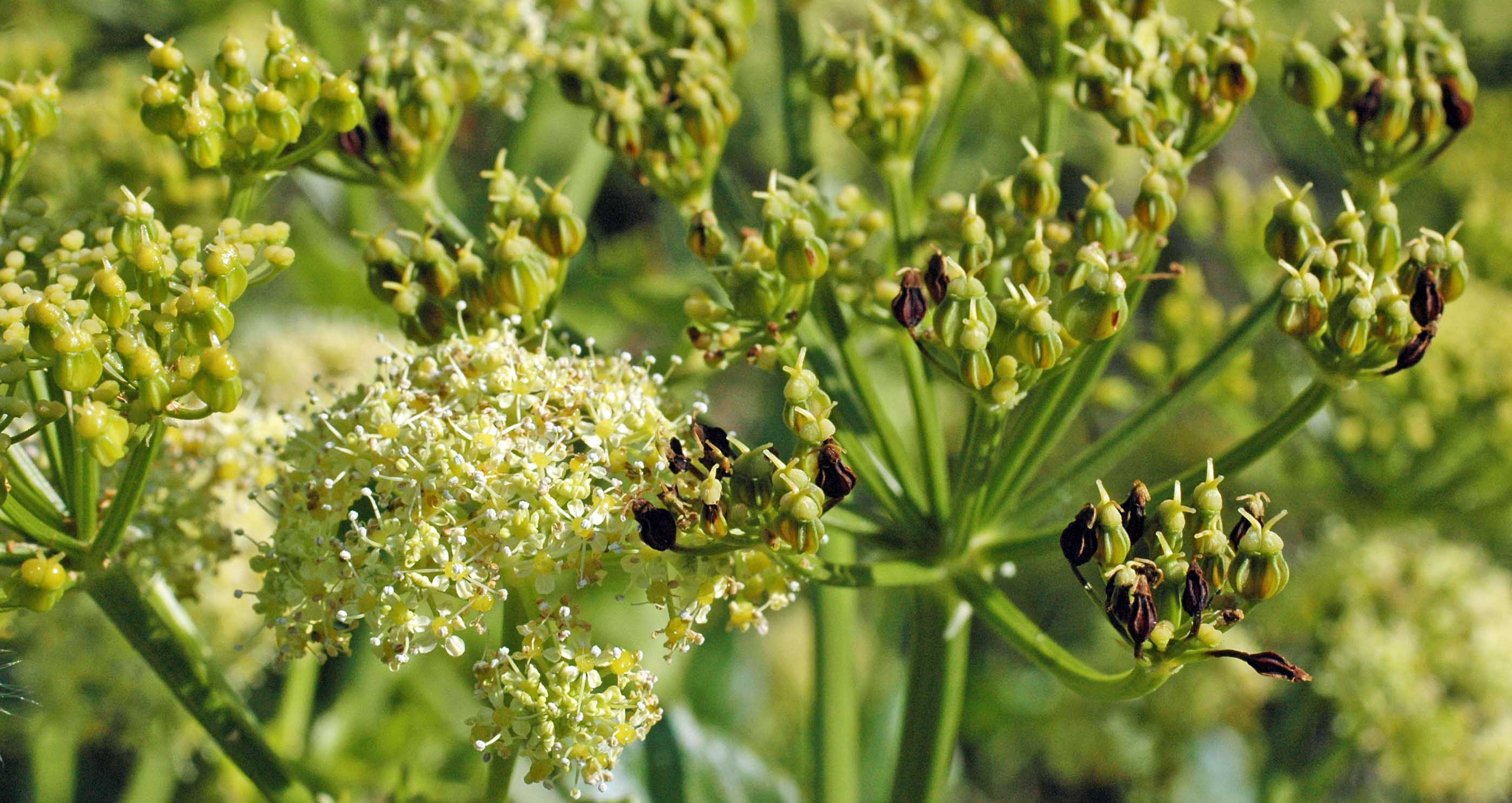
The area at the bottom of the slope has a completely different character, more along the lines of an urban wasteland than a coastal clifftop. It does back onto houses and there is an access path in from the residential area, so the ground was probably disturbed during the building process. It’s not a very large area and can appear a bit scruffy, but there is always something to see here. There’s lots of Valerian flowering now, but the plant that has gone a bit crazy and is threatening to dominate all, is Alexanders. According to Richard Mabey in his brilliant book ‘Weeds’, this Roman introduction to Great Britain has apparently nationally fallen from grace recently, having suddenly altered its demeanor from that of well-behaved and fondly thought-of immigrant edible wildflower, to that of a rampant weed.

Alexanders lines the pathway for several metres

Alexanders – Smyrnium olustrum ,lines the pathway for several metres

Alexanders is one of the earliest plants to put out greenery in the early spring and most of the plants here are past their best. A stately and attractive all-over yellow-green coloured plant, it was introduced here by the Romans for use as a pot-herb, having a mild celery flavour. Its culinary use continued for hundreds of years until it was replaced by cultivated celery. Perhaps this is a plant we should go back to foraging to help keep it under control rather than destroy it.

Alexanders is going to seed now, but there are still flowers

Alexanders is going to seed now, but there are still flowers

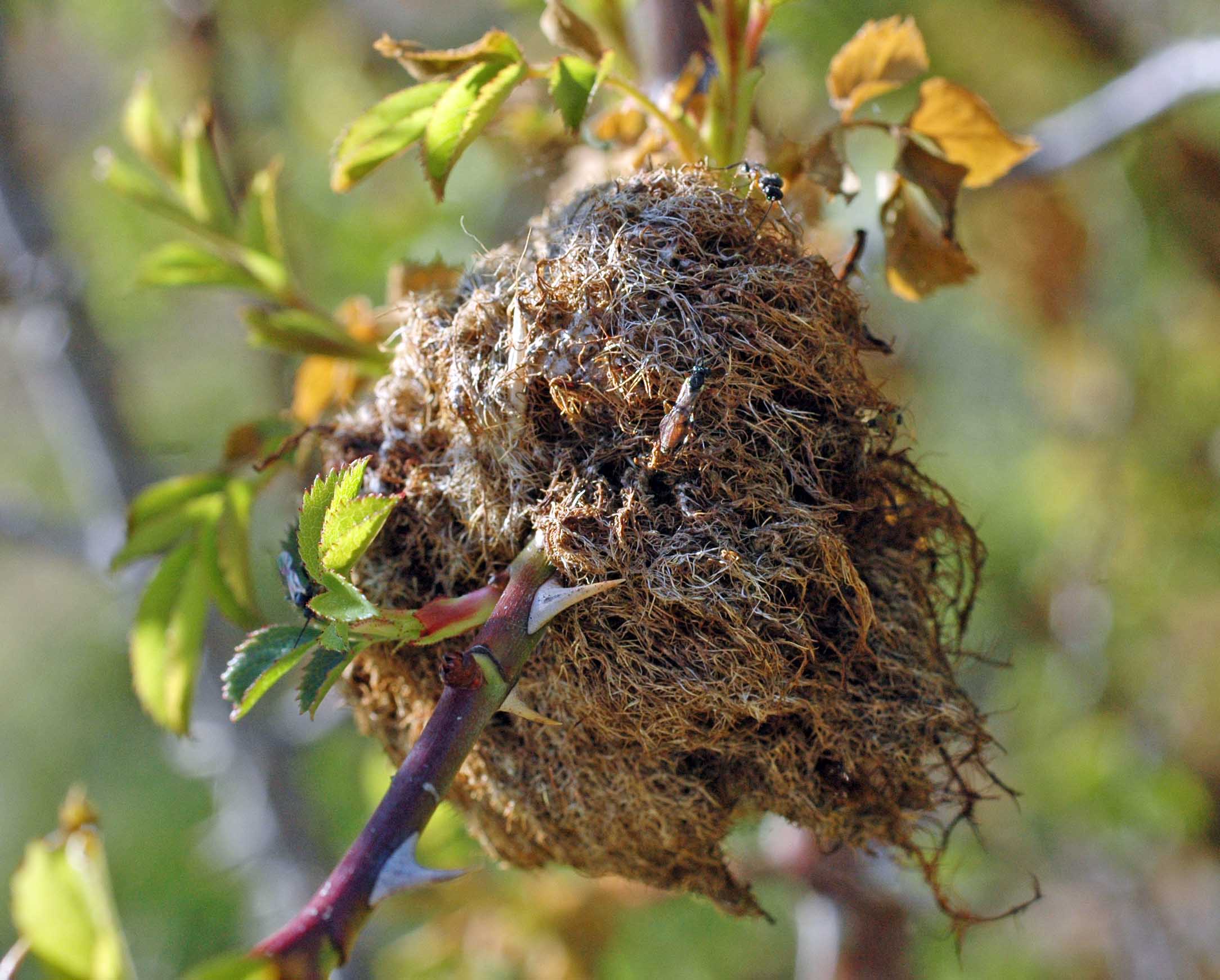
While I was prowling around the Alexanders plants I spotted a wild rose shrub in their midst and suddenly made a mental connection with a blog post from last August, which included a bit about the Robin’s Pincushion galls that appear on these plants. I mentioned in it that while the completed growth begins as bright red in colour, over the months they fade to a dark red-brown before the new adult wasps emerge in the spring and thought I’d try to find one. I remembered where the gall I photographed then was located, but thought I’d have a quick look at this one on the way to it. As luck would have it, there was a nice fat dark gall there too. As I got close with the camera, even more luck – there were a number of tiny little wasps crawling around on the gall and flying on and off, back and forth between it and rose leaves just a few centimetres away.

Dry Robin's Pincushion with little wasps on the surface

Dry Robin’s Pincushion with little wasps on the surface

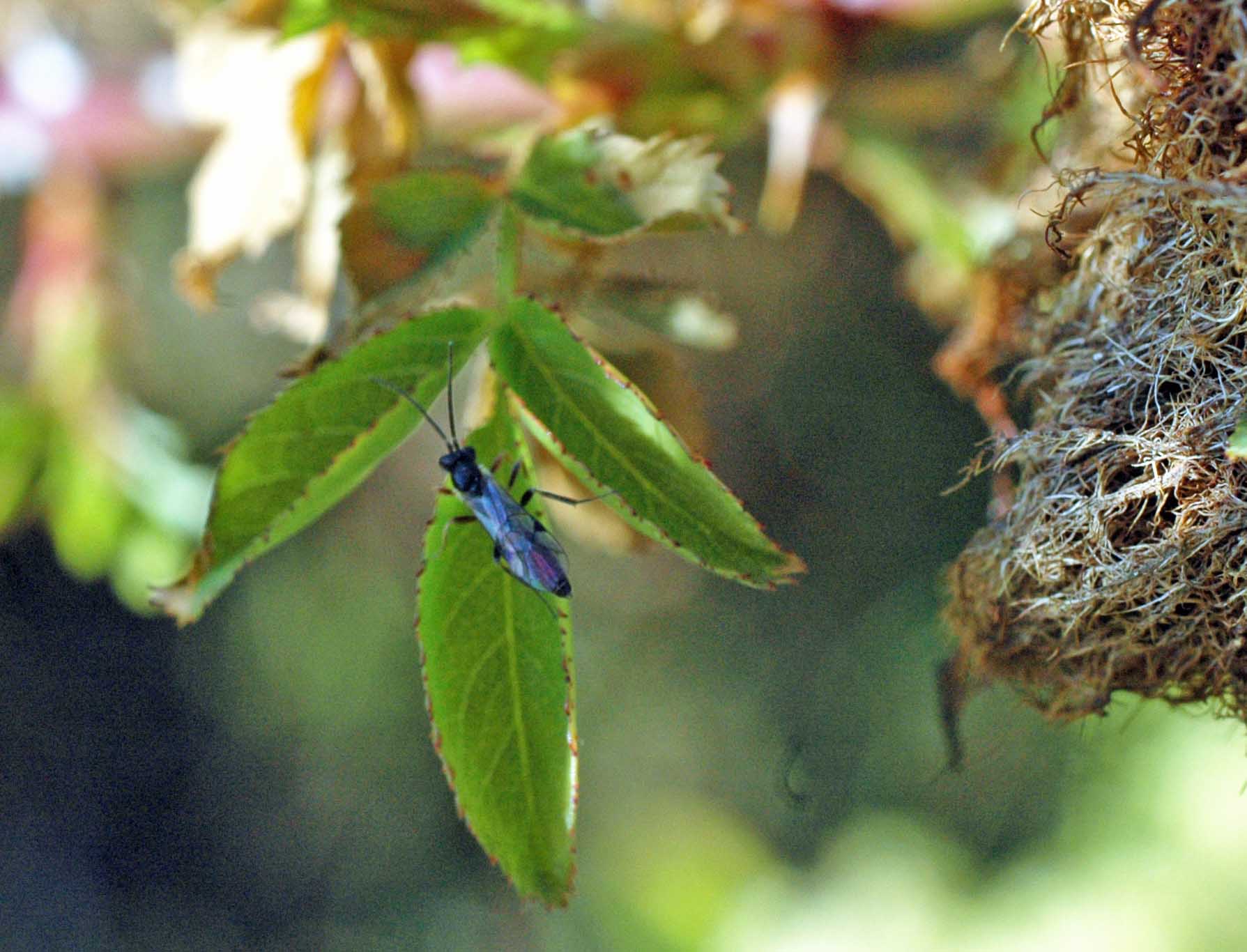
I am not claiming that these are the wasps, scientific name, Diplolepsis rosae, that cause the growth of the gall to house their larvae. Having looked at other people’s images, I rather think that although the colouration is similar, the abdomens of the ones in my pictures are more elongated and tapered than those in  images of the ‘right’ one. I thought perhaps the insects were just emerging from the gall, but that also didn’t help as I learnt that the original larvae are subject to parasitism by other species of wasp and they in turn may be got at by yet another species. They may have just been seeking prey, or maybe somewhere to locate their own eggs, or even just roosting for the night. I am sure they are some species of wasp though. If anyone can help with identification I’d be delighted.

Tiny wasp from gall, resting on a nearby rose leaf

Wasp from gall, resting on a nearby rose leaf. Size increased many times, these insects were really tiny.

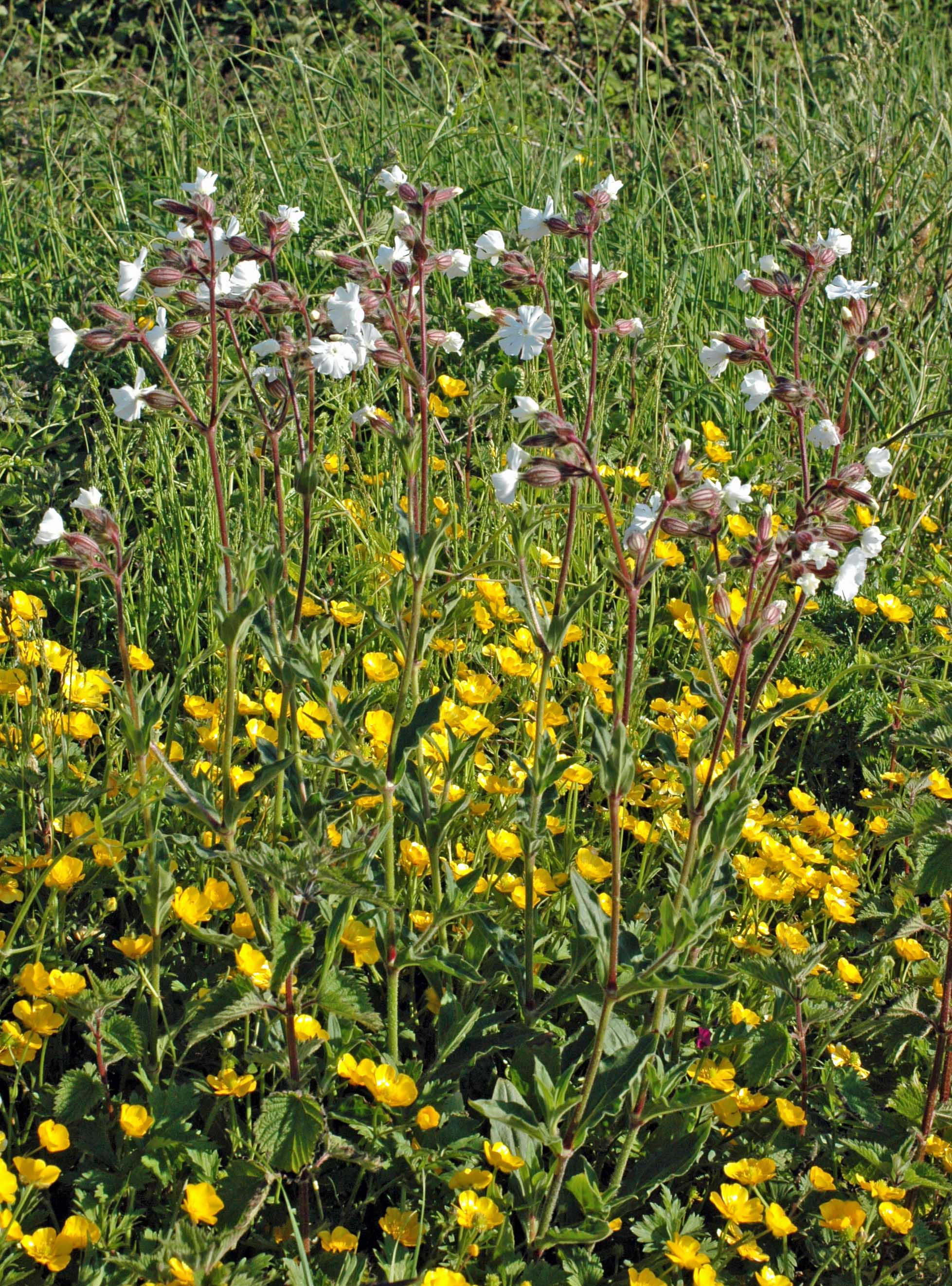
It was almost half-past six by the time I thought I should be getting home and the sun was beginning to sink behind the mass of the headland. It was creating a lovely glowing effect on the landscape and casting an interesting light upon a beautiful patch of buttercups that had pretty White Campion growing up through it.

130604TGNR- White Campion & Buttercups - Little Orme, North Wales

Golden yellow buttercups and white campion

Little Orme in the early evening

Little Orme in the golden early evening

Spot the ‘greens’ on the Little Orme, but please don’t eat them!

Tags

, ,

The Little Orme is close in distance to Bryn Euryn, but quite different in character, so a walk around there can add a host of different flora species within the space of half-an-hour or so; it also has its specialty plants and I set off to find at least one of them on a late afternoon last week.

Right now while the rocks of the Bryn are splashed gold with dainty rockroses, the Little Orme has its yellow-flowered cabbages. This year, rather a lot of them and not just any old cabbage, but the rather rare Wild Cabbage Brassica oleracea.

Wild Cabbage-Brassica olearacea

12/06/04-Wild Cabbage-Brassica olearacea at the base of a cliff, Little Orme

The Wild Cabbage (Brassica oleracea), also sometimes known as Sea Cabbage,  is regarded as scarce by botanists as it is found in only 100 x10km squares in the UK.  Where it does occur, the plant is found on maritime cliffs, usually of limestone or chalk, typically growing on or near to cliff tops or cliff bases, often on ledges containing other mixed herb communities. The Little Orme and Great Orme in North Wales and the Gower Peninsular in South Wales are strongholds of the plant.

A tall red cliff-face on the Little Orme which has wild cabbage plants growing on ledges almost from top to bottom

A tall red cliff-face on the Little Orme which has wild cabbage plants growing on ledges almost from top to bottom

Brassica oleracea is a biennial, sometimes perennial, relatively short-lived (20 years), evergreen plant that can withstand frost. Plants can grow to a height of 1.2m (4ft), but that can vary, as can the size and to an extent, the shape of the leaves. It is in flower from May to August, and the seeds ripen from Jul to September. The flowers are hermaphrodite (have both male and female organs) and are pollinated by a range of insects, including bees and hoverflies; the plant is self-fertile.

Flowers of the wild cabbage

Flowers of the wild cabbage

It is probable that the Wild Cabbage, which occurs widely around the Mediterranean, is not a true native to Britain and that it was yet another introduction made by the Romans and is the forebear to our more robust modern cultivated cabbages.

Leaf of Wild Cabbage

Leaf of Wild Cabbage

I have seen sites advocating foraging wild cabbage as an edible wild plant, which of course it is,  but while the plant itself does not have any specific legal protection under the Wildlife & Countryside Act 1981 (as amended), most of the locations where it’s found along the North Wales Coast are designated as Sites of Special Scientific Interests. Damaging, uprooting or removing the plant either deliberately or recklessly could be regarded as a criminal act, so perhaps not a good idea to chance it.

A wild cabbage plant growing on a more exposed grassy cliff of the Little Orme (Sept 2011)

A wild cabbage plant growing on a more exposed grassy cliff of the Little Orme (Sept 2011). This was one of my first sightings (and photographs) of the species.

I took this photograph last May (2012)

I took this photograph around the middle of last May (2012), before the flowers opened

Dare we cast a clout now May is out?

Tags

, , , , , , , ,

The last day of May was overcast and cool but I wanted to go back to the Bryn to photograph a plant I had spotted there on the rocky cliffs amongst the rockroses but forgot about until I got home. I took a different route up to the top today, passing through the grassy meadow area to see what I could find there.

Cow parsley -Anthriscus sylvestris

Cow parsley -Anthriscus sylvestris

A first bloom of Common Vetch-Vicia sativa

A first bloom of Common Vetch-Vicia sativa

There’s a lot of Ribwort Plantain, whose flowerheads I find fascinating, every one seems slightly different to the other.

Ribwort Plantain flowerhead

Ribwort Plantain flowerhead

The star of the flower show today was definitely the May, the blossom of the Hawthorn. Perhaps we can all ‘cast a clout’, now that May is out, both the blossom and the month.

A beautiful spray of May blossom, or Hawthorn, looks like a bridal bouquet

A beautiful spray of May blossom, or Hawthorn, looks like a bridal bouquet

Close to where I stopped to photograph the May blossom I noticed the more unusual Salad Burnet plant. This is one of those plants that is very easy to overlook as it seems to really blend in to its surroundings, but once you have it in your mind’s eye you then notice them in other places.

Salad Burnet-Sanguisorba minor

Salad Burnet-Sanguisorba minor

The leaves are very pretty, and as the plant’s name suggests, are edible.

Salad Burnet has very pretty, pinnate leaves

Salad Burnet has very pretty, pinnate leaves

The Oak trees are fresh-coloured and in just about full leaf now.

Oak tree

Oak tree

Fresh new oak leaves

Fresh new oak leaves

On a rocky outcrop there were low-growing common rockroses, bird’s foot trefoil, kidney vetch, almost over but attracting the attention of a number of little ginger-headed bumblebees, small patches of wild thyme and taller-growing hawksbit flowers.

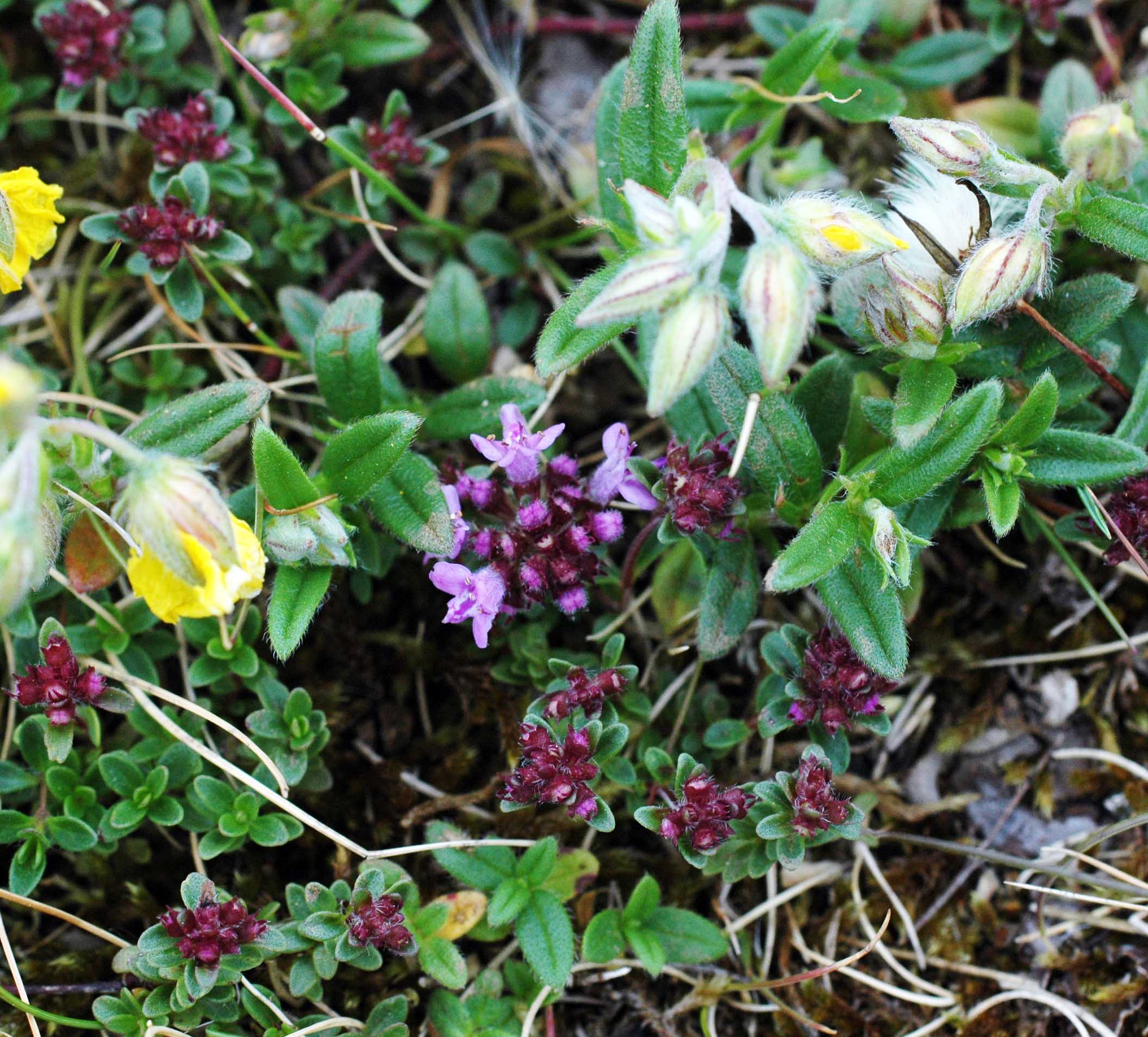
Wild Thyme growing with Common Rockrose

Wild Thyme growing with Common Rockrose

I wasn’t able to get a particularly good photograph of a bee, but I  liked the lichen-covered rock in this one.

A small ginger bumblebee on Kidney Vetch

A small ginger bumblebee on Kidney Vetch

The patch of bird’s-foot trefoil had obligingly placed itself near the edge of a rock, so taking an eye-level picture was a nice option. I didn’t notice the ‘Cuckoo-spit’ until I looked at the photograph. I’d forgotten about Cuckoo-spit. I must remind myself what generates it, some kind of thrip, I think.

Bird's-foot Trefoil with Cuckoo Spit

Bird’s-foot Trefoil with Cuckoo Spit

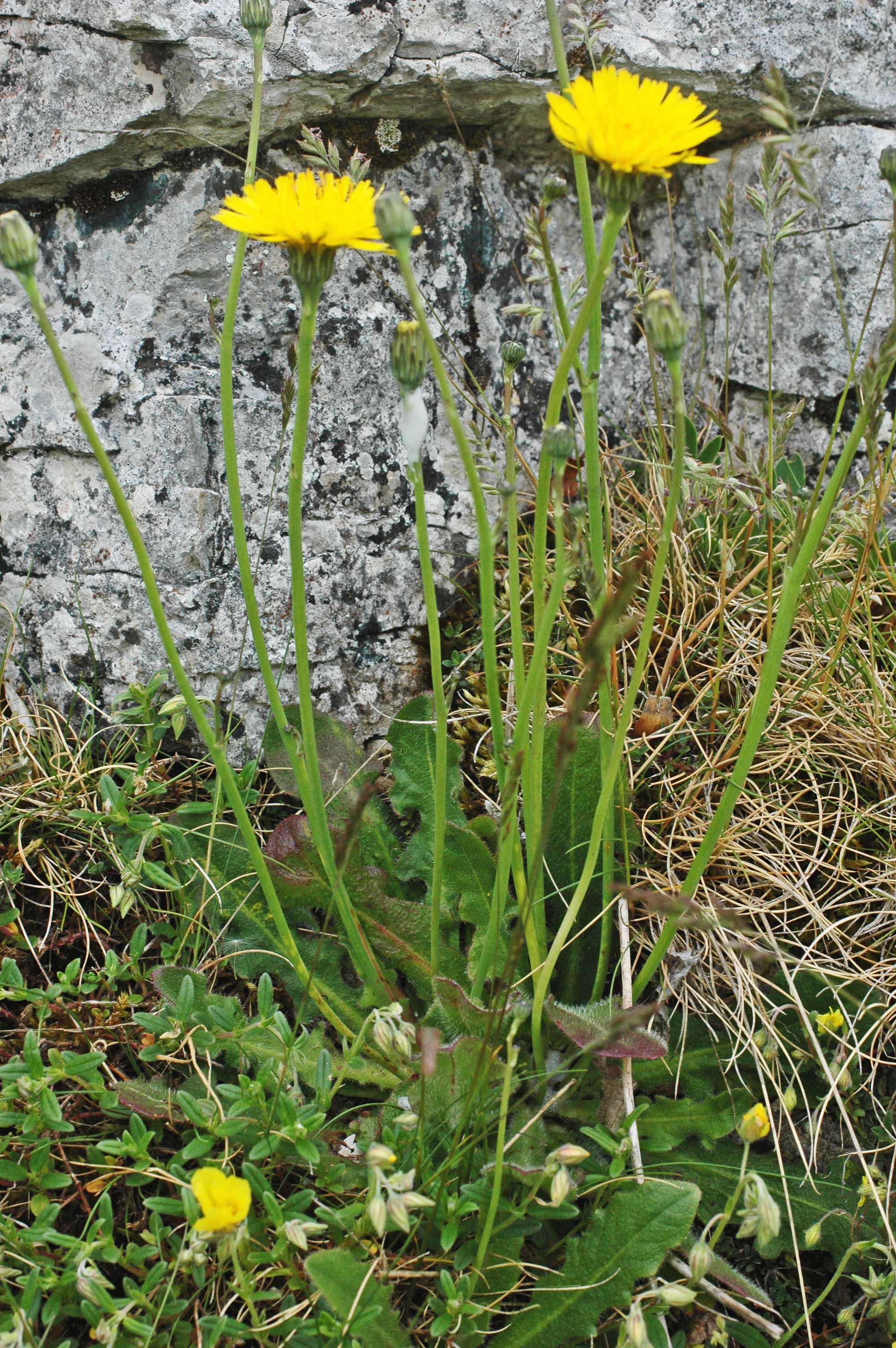
Hawksbit against limestone rock

Hawksbit against limestone rock

There seem to be masses of the beautiful blue Germander Speedwell here this year, I don’t remember it being this prolific before.

Germander Speedwell-Veronica chamaedrys

Germander Speedwell-Veronica chamaedrys

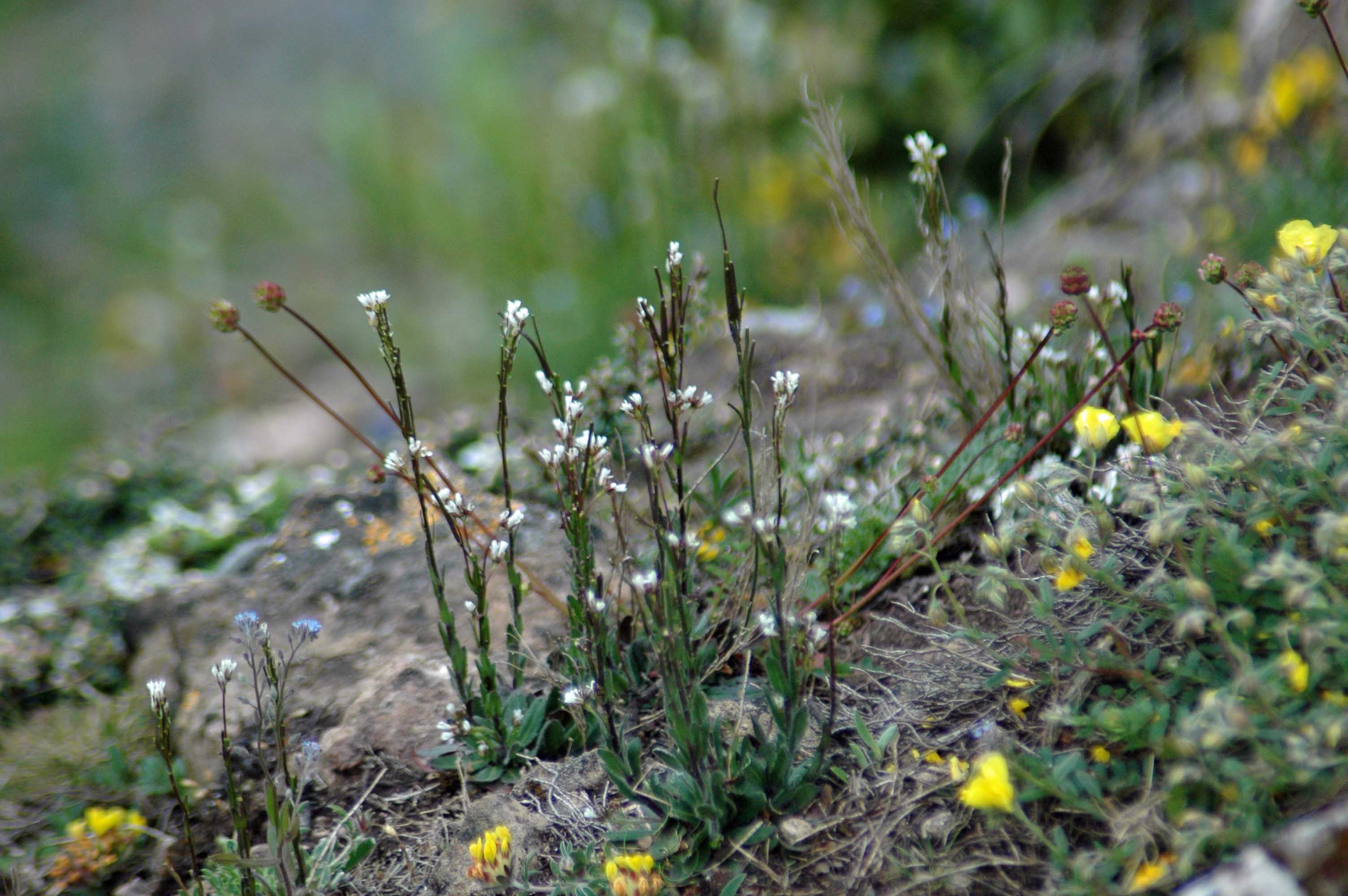
I finally got up and around to where the plant I had come to find was located; probably not as exciting as you’d expected, but I was pleased to find it. The plant is Hairy Rock Cress, an under-stated little plant with tiny white flowers like most members of the cress family, not at all showy like its golden-bloomed neighbours, but none the less interesting. Even though it’s flower’s are almost over and it’s going to seed.

Hairy Rock Cress. Also in picture are kidney vetch, salad burnet & rockrose

Hairy Rock Cress. Also in picture are kidney vetch, salad burnet & rockrose

The scientific name for Rockrose, helianthemum, means sun-flower. They don’t bother to open up on dull or damp days, particularly the little blooms of the Hoary Rockrose.

Flowers of Hoary Rockrose close on dull, sunless days

Flowers of Hoary Rockrose close on dull, sunless days

It was getting quite late on now, but there was one more distraction to waylay me before heading back down the hill. A Mistle Thrush was out hunting on the path around the edge of the rocks, which I had to stay and watch as I’d not seen one here before. When it flew off with its gatherings I took a photograph of the top of a lovely Ash tree which has houses of Rhos-on-Sea below and peeking through its leaves.

Ash tree on Bryn Euryn, Rhos-on-Sea behind

Ash tree on Bryn Euryn, Rhos-on-Sea behind

On the way down through the woods I spotted some very pretty Oak Moss lichen hanging from some twiggy branches; I don’t know why I’ve not noticed it before, there’s quite a lot of it.

Oak Moss lichen- Usnea florida

Oak Moss lichen- Usnea florida

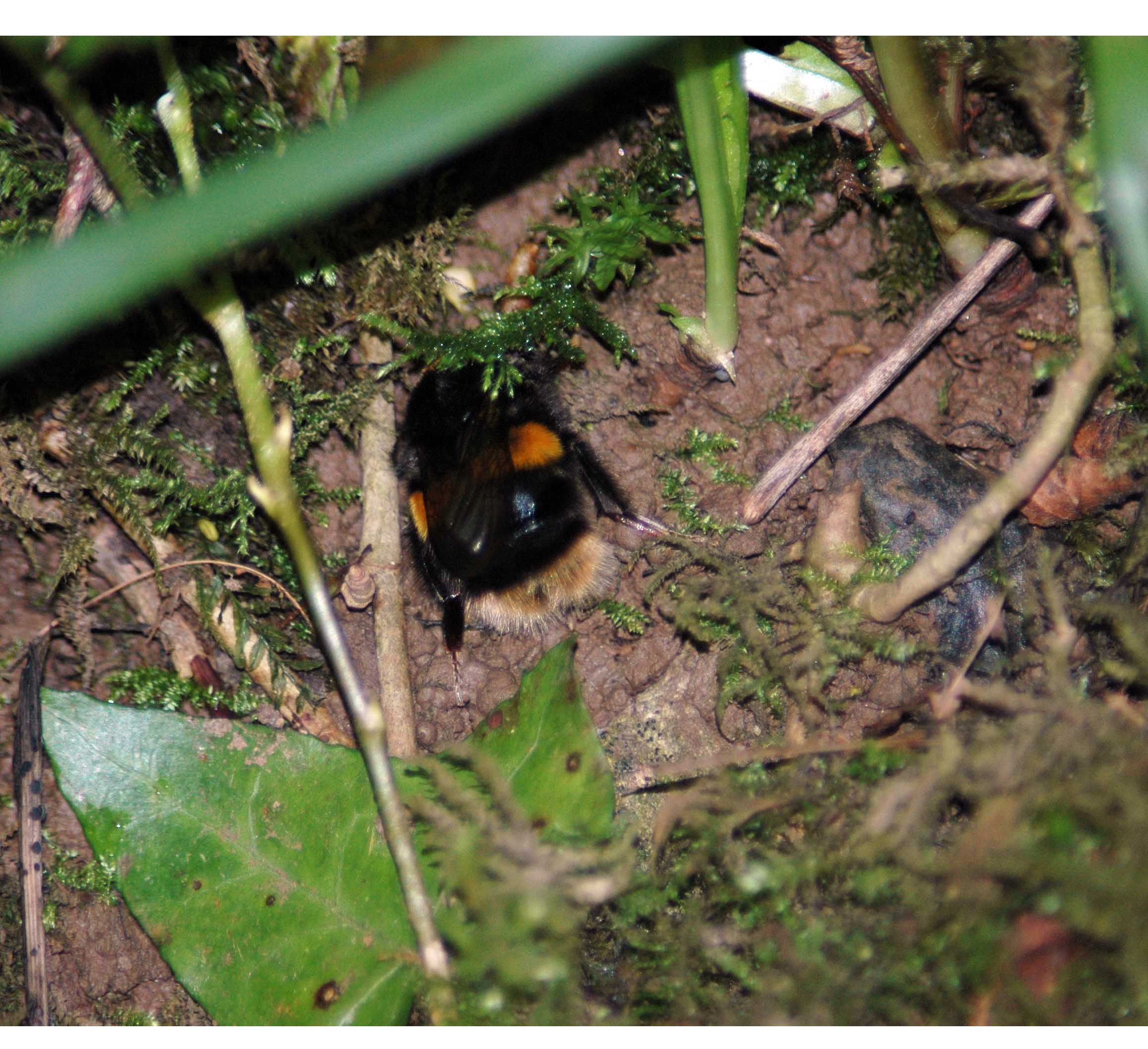
Almost at the bottom of  the hill, I couldn’t resist taking a final picture of a Buff-tailed Bumblebee that was either excavating a hole or looking for an existing one to spend the night in.

Buff-tailed Bumblebee making or seeking a hole

Buff-tailed Bumblebee making or seeking a hole

Bryn Euryn walk continued: Part 3

Tags

, , , , , , ,

The views from the Bryn are always worth the steep climb up to the top and change according to the season, the weather and the time of day. The southerly side overlooks part of Rhos-on-Sea and part of Colwyn Bay town, divided by the duel-carriageway of the A55, whose traffic noise can be loud and rather intrusive, so not the spot to  seek peace and quiet. Beyond is Colwyn Bay and inland a patchwork of woodlands, golden gorse and neat farmed fields set upon rolling hillsides sloping around and down to the Conwy river and estuary.

Panoramic view from the south of the summit of Bryn Euryn

The gorgeous view from the south side of Bryn Euryn (click to enlarge)

I was heading now towards the true summit, where the not-too-beautiful triangulation (trig) point marks the highest point.

The trig point on the summit of Bryn Euryn looking south-south-easterly (ish)

The trig point on the summit of Bryn Euryn looking south to south-easterly (ish)

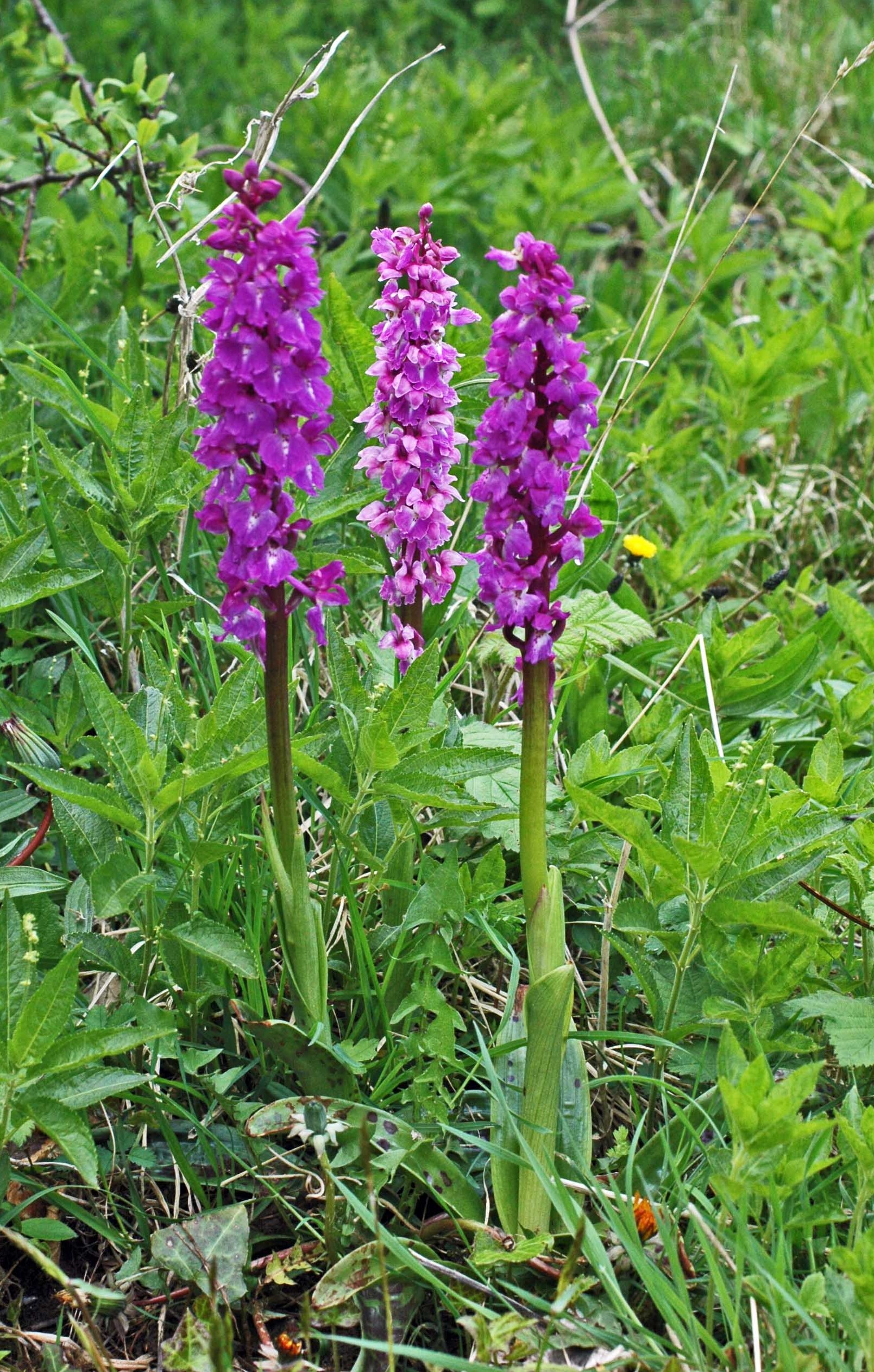
Last year there was an impressive patch of at least a hundred Early Purple Orchids on the approaching grassy slope (behind  the other side of the rocky bit in the photograph), but this year although there are still a good number there are a lot less. Having said that, those I saw are beautiful specimens, of good height and their stems thick with flowers. The success of Orchids is affected by seasonal weather, they are affected by drought, numbers may vary even in areas they otherwise frequent, which is part of their allure of course.Their less than predictable appearance and their wonderfully exotic beauty combine to make each discovery just as exciting as it was last year or the year before.

_______________________________________________________

I can still remember the excitement of discovering my first Early Purple Orchid, growing exactly where it should be, on the floor of the old woodland next to our house. I was probably about aged ten at the time and had no idea what it was, but it looked very special to me and I couldn’t wait to look it up in my ‘Observer’s Book of Wild Flowers’, which I still treasure because I love the descriptions written by the lady author of the book. I would quote it here but it’s currently in a box in a storage unit in Spain, so I’ll have to manage without for now.

Early Purple Orchid –  Orchis mascula

Early Purple Orchids-Orchis mascula

Early Purple Orchids-Orchis mascula

In flower from April to June, the Early Purple Orchid is a species of old broadleaved woodlands, where they are generally widespread, but they also occur in rich grasslands, on road verges, on limestone pavement and on heathy ground in the South and West of the British Isles.

‘Therewith fantastic garlands did she make

Of crow-flowers, nettles, daisies and long purples

That liberal shepherds give a grosser name’

But our cull-cold maids do dead-men’s fingers call them’.

It is claimed that when William Shakespeare wrote those lines in Hamlet, his ‘long purples’ referred to the Early-purple Orchid.  The lines were spoken by Gertrude and referred to the coronet which Ophelia was wearing when she drowned.

A short-medium perennial that can reach 40cm, the stem is also often flushed with purple. There are usually 3-5 unstalked basal leaves, oblong in shape, pointed, parallel-veined and glossy green blotched with purple.

Flower colour can vary in shade from quite a dark purplish-red to pink or even white and are distributed in  dense or loose spikes of between 10-30 flowers. Each flower has a narrow purple bract, purplish-grey ovary, three sepals and three petals.

Flowers of Early Purple Orchid

Flowers of Early Purple Orchid

Side sepals spread backwards, upper one joins to the upper two petals to form a hood; lower petal forms tri-lobed spurred crimson-dotted lip, 8-12mm long. At the back of the flower one unstalked anther holds two pollen masses on stalks that adhere to heads of visiting insects for cross-pollination; below the anther the stigma surface receives pollen brought from other flowers.

_______________________________________________________

A few minutes taking in the view more or less east towards the mountains on the edge of Snowdonia , then onwards and downwards via the grassy slope on the north side of the hill.

The A55 snakes towards  the Conwy Estuary with view of Snowdonia beyond

The A55 snakes towards the Conwy River & Estuary with views of Snowdonia beyond

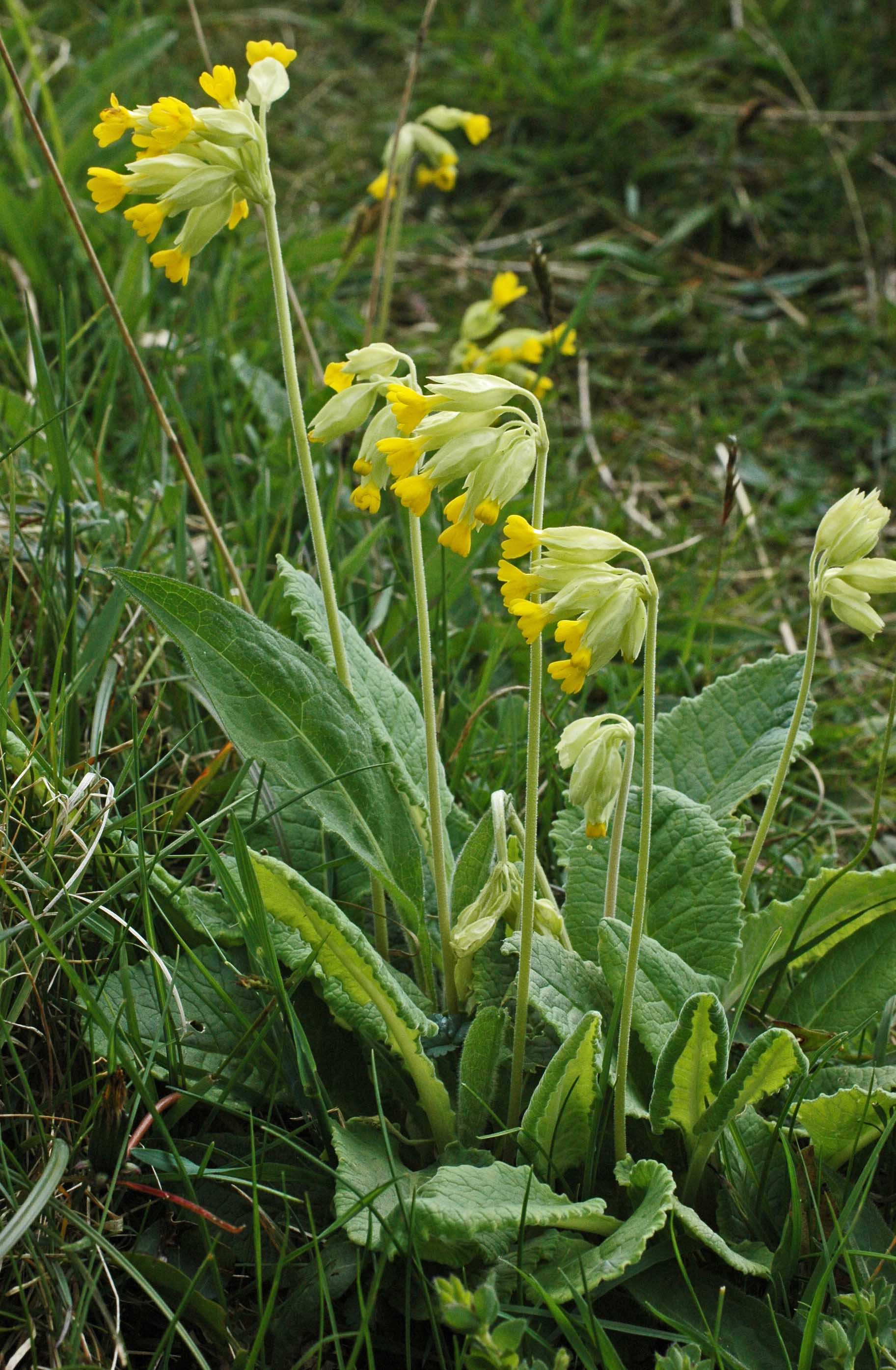
The rough grassy area was, as I’d hoped, generously sprinkled with Cowslips. Not as showy as the Orchids or as bright as the Rockroses, but with a special understated beauty of their own. I was slightly concerned I may have missed them at their best as they are flowers I associate more with late April-early May, but thanks to the late start to Spring this year I caught them just in time before they start to ‘go over’.

A field full of Cowslip

A field full of Cowslips, their heads held aloft on stiff stems were dancing in the wind like little flags

Cowslip -Primula veris

I have a great affection for Cowslips and seeing them growing in numbers in a grassy meadow takes me back to my childhood in an instant. In Northamptonshire, where I grew up in the 50s and 60s, lovely golden-yellow cowslips were numerous, particularly in the damper grass meadows grazed by cows. One of life’s little treats back in the day was to pull a flower from its little green sack and suck the nectar from the base of the tube. And before it became necessary to ban the picking of wild flowers, we used to pick bunches of them for the house  as they have nice long stems and looked lovely in a jam jar on the kitchen windowsill. We picked them to add to garlands and to decorate  the ‘throne’ for the May Queen during our school’s Mayday celebrations. Occasionally we even got to pick lots of them to be made into Cowslip wine.

Cowslip- Primula veris

Cowslip- Primula veris

I assure you though, it wasn’t our picking that caused the Cowslip’s serious decline, we couldn’t possibly have picked even all of those growing in a single field. It had much more to do with the rise of intensive farming and old grassland being ploughed over to create more space for growing other crops.

Thankfully the plant’s numbers are on the rise again, partly due to raised awareness but probably owing  more to the sowing of seed on roadside verges and in wildflower meadows. So once again the Cowslip can raise its  graceful nodding heads above the grass blades and be counted in generous numbers once again. I won’t be picking any though, just taking photographs.

130522TGLNR-flr-Cowslip flowerhead with fly-Bryn Euryn (4)

The leaves of the Cowslip are wrinkly and hairy and form a basal rosette, similar to those of the Primrose. 

The yellow-orange flowers (8-15mm) are held in a one-sided umbel which is borne on a softly hairy, sturdy stem.  The individual flowers are comprised of five joined petals, each flower bearing orange spots in the centre, and are deliciously scented.

Cowslips and plaintains

Cowslips and plaintains

A final gaze at the view from here over the tops of the trees below, across the golf course to Penrhyn Bay and on the horizon the Little Orme skirted on its left side by the road to Llandudno climbing Penrhyn Hill.

View from the north side of Bryn Euryn

View from the north side of Bryn Euryn

It’s World Environment Day (apparently)

Tags

,

I interrupt my walk report to ask did anyone out there know it was World Environment Day? I just read it on a blog written by a group of students who are trying to save an ancient forest, pretty much on their own by the sound of things, who wished me a happy one; World Environment Day that is. This is the same place I learned it was World Sparrow Day a few weeks back, as it happens. Their blog and the cause are well worth hearing about by the way: we think we have problems with developers here, but not on the scale they are dealing with. The blog is titled Save Mangar Bani – Aravalli’s Ancient Forest Grove. Here’s the link http://mangarbani.wordpress.com

Anyway, back to World Environment Day and good old Wikipaedia who do know about it:

World Environment Day (‘WED’) is celebrated every year on 5 June to raise global awareness of the need to take positive environmental action. It is run by the United Nations Environment Programme (UNEP).

It was the day that United Nations Conference on the Human Environment began. The United Nations Conference on the Human Environment was from 5–16 June 1972. It was established by the United Nations General Assembly in 1972. The first World Environment Day was in 1973. World Environment Day is hosted every year by a different city with a different theme and is commemorated with an international exposition in the week of 5 June. World Environment Day is in spring in the Northern Hemisphere and fall in the Southern Hemisphere.

Theme 2013

The 2013 theme for World Environment Day is Think.Eat.Save.

The campaign addresses the huge annual wastage and losses in food, which, if conserved, would release a large quantity of food as well as reduce the overall carbon footprint. The campaign aims to bring about awareness in countries with lifestyles resulting in food wastage. It also aims to empower people to make informed choices about the food they eat so as to reduce the overall ecological impact due to the worldwide production of food items. World Environment Day (WED) is observed on June 5 every year to promote awareness on the importance of preserving our biodiversity, the need to identify problems related to the environment and ways to take corrective action. It was on this day in the year 1972 that the United Nations Conference on the Human Environment was formed. First celebrated in 1973, World Environment Day, also popularly known as Environment Day, is a means to tackle environmental challenges that include climate change, global warming, disasters and conflicts, harmful substances, environmental governance, ecosystem management and resource efficiency.

World Environment Day has received tremendous support from the public, non-profit organizations and governments around the world. Various awareness campaigns – beach clean-ups, concerts, exhibits, film festivals, community events and much more – are organized to spread the message, which is to improve the quality of life of all living beings on this planet without harming nature. All the activities of World Environment Day are carried out to spread eco-awareness and increase green footprint.

Each year, World Environment Day is hosted in a different city with a different theme for one week that kicks off on June 5. A World Environment Day theme is selected along with an Environment Day slogan, which aims to emphasize the importance of protecting our planet and promote an understanding that they each individually can play a significant and effective role in tackling environmental issues.

With blogs becoming an effective means of communication, on World Environment Day, the UNEP has started organizing blogging competitions to encourage people to protect the environment. Thousands of entries were received this year from different parts of the world. After reviewing all entries, budding engineer, Ximena Prugue of Florida, USA, was declared the winner for her blog on the effects of deforestation in rural India.

The UNEP also confers international awards – The ‘Champions of the Earth’, ‘UNEP Sasakawa Prize’, ‘The Seeds Awards’, among others – to individuals or organizations on World Environment Day based on their innovation, vision and performance in protecting or benefiting the environment.

I’m not sure what I would have done if I had known, but wasting food, especially the stuff people throw away based on the ‘use-by date’ rather than using their own common sense and judgement, and the mountains of good food ‘skipped’ by supermarkets is one of those subjects that does baffle and frustrate me. Anyway,  Happy World Environment to us all – clean plates tonight, please ……

Bryn Euryn a walk of several parts. Part 2 – Rare Rockroses

Tags

, , , , , ,

I reluctantly left the Long-tailed Tits to their labours and headed up though the woods towards the summit.

Emerging from the shelter of the trees near the summit of the hill I was confronted by a chilly breeze and on another day would have headed for the more sheltered side, but I wanted to see the Rockroses, which are at their best and most prolific on the exposed limestone cliff on this side. Happily the reward was well worth putting up with a bit of discomfort for; the sunshine yellow flowers on the edge of the cliff and cascading down the rocky hillside were spectacular.

The stiff breeze made focusing on the flowers in the following photographs a bit tricky though. The Latin name Helianthemum translates as sun flower, which refers to the flower’s habit of opening up on sunny days and closing on sunless ones. Being very sunny today there was a profusion of blooms but those out in the open were waving about, so I tried for ones in the shelter of rocks which were then shaded.

Cliff smothered with golden rockroses-Bryn Euryn, North Wales

Large clumps of Rockroses spilling down the exposed limestone

There are two species of Rockrose found here; one is the Common Rockrose –Helianthemum nummularium and the other is a species more common to the Mediterranean than the UK, the Hoary Rockrose Helianthemun canum, which is one of the specialty plants of this reserve.

Common Rockrose-Helianthemum chemaecistus

Common Rockrose-Helianthemum chemaecistus

The Common Rockrose is an evergreen plant, an undershrub, usually prostrate and spreading. The small leaves are a dark grey-green above and grey-white and woolly-hairy beneath. Flowering from April-July, it is common on chalk downs and an occasional plant in other types of grassland, but always on dry and base-rich soil.

Rockrose flower with two tiny and one minuscule beetle

Rockrose flower dotted with two tiny and one minuscule beetle

The flowers of the native Rockrose are usually bright sunshine yellow, but may also be darker gold or even pale orange. Flowers are 12-20mm across, with 5 slightly crinkled petals. Each flower last only a day, but there are many of them. In the flower centre is a tight cluster of stamens.

Common Rockrose is a good provider of nectar for various species of bee and is also the foodplant of several species of moths and butterflies such as the Brown Argus, Green Hairstreak and the rare Silver-studded Blue. Many of the flowers I looked closely at today were playing host to at least one, usually more tiny little beetles.

Hoary Rockrose – Helianthemum canum (L.) Baumg

Status: scarce

Hoary Rockrose flowers

Hoary Rockrose flowers

As I already mentioned, the Hoary Rockrose is one of the specialty plants growing on Bryn Euryn and its major British stronghold is located just a few miles away on the Great Orme in Llandudno. The plant is restricted to Carboniferous limestone. It is found on rocky outcrops and on the face of scars and cliffs, often on the upper parts of outcrops and in sparse vegetation on shallow soil near the edges of cliffs. It can be very abundant on steep, rocky, exposed, often south to west-facing sites, of 0-540m, which are prone to summer drought, which fits the location in which plants are most prolific here on the Bryn.

Hoary Rockrose-Helianthemum canum

Hoary Rockrose-Helianthemum canum

H. canum is a shrubby, mat-forming perennial. Plants flower freely and set abundant seed unless they are subjected to particularly heavy grazing. There is no specialised means of dispersal. Seeds produced in one summer germinate gradually over a long period but the successful establishment of seedlings requires a period of damp weather long enough for young plants to develop a root system which will withstand subsequent drought (Griffiths & Proctor 1956).

Hoary Rockrose flowers

Hoary Rockrose flowers

The flowers are smaller than those of the Common Rockrose, just 8-15mm across, but there are many more of them.

There are five slightly crinkled petals and at the centre of each flower there is a crowded cluster of golden stamens.

Factual extracts are from : The Online Atlas of the British and Irish Flora http://www.brc.ac.uk/plantatlas/index.php?q=plant/helianthemum-oelandicum

Bryn Euryn – a walk of several parts. Part 1

Tags

, , , , , , ,

We had one day of decent weather last week and I grabbed the opportunity to walk up to and around ‘the Bryn‘. I hadn’t been there for ages and I knew if I didn’t get there soon I would miss the Early Purple Orchids and Cowslips that grace this special place at this time of the year. It was sunny but a north wind kept the ambient air temperature cool to outright chilly in the open, but in more sheltered spots it was pleasant and almost felt spring-like. The open grassy meadow area in front of the car park was just such a spot today and there were actually butterflies to watch, all whites, definitely some small and some green-veined whites, but as there was also a solitary male orange-tip making territorial laps at speed, it is possible there were females of that species too, they don’t have the distinctive orange wing tips so are harder to identify in flight.

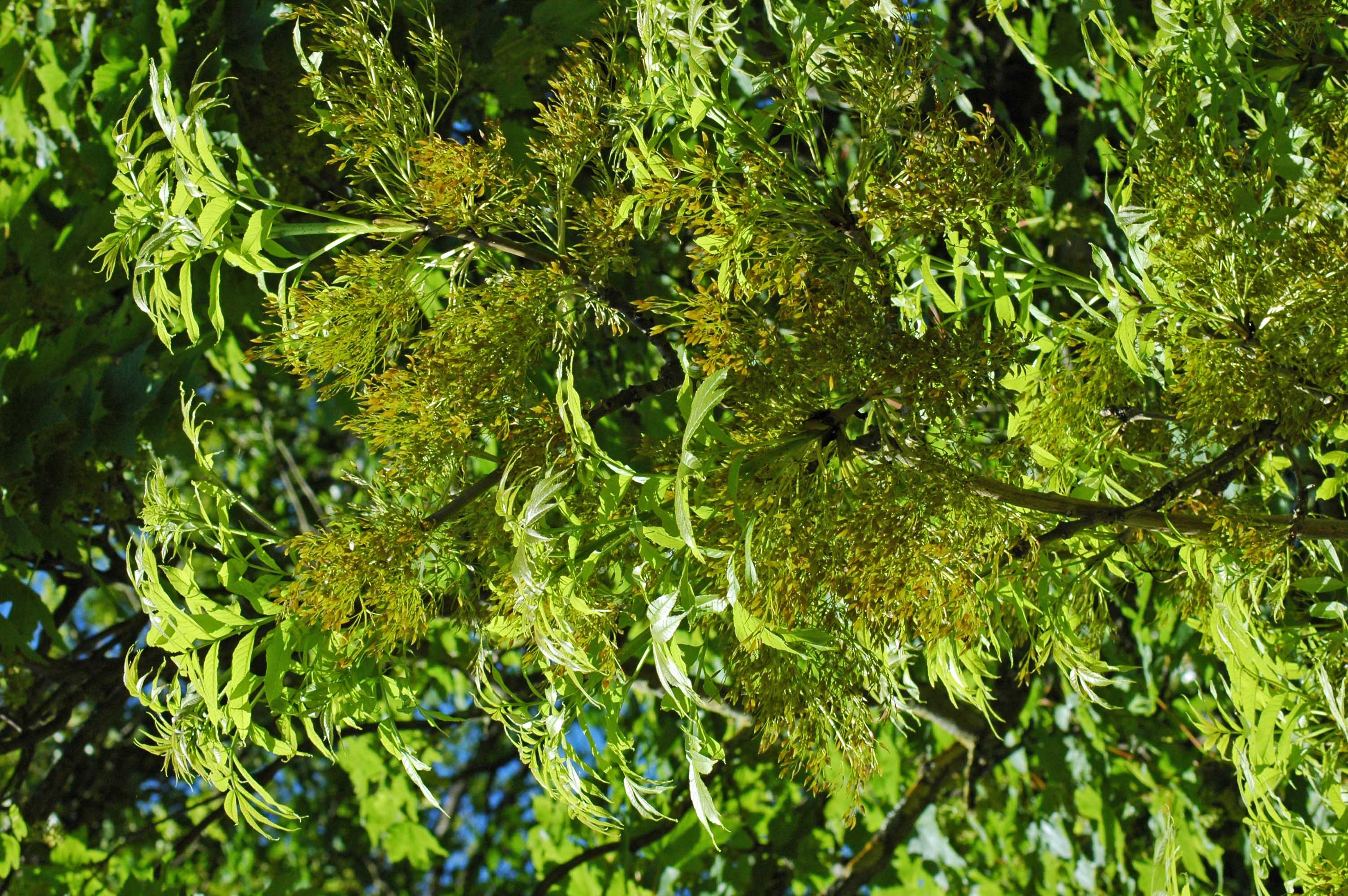
Bunches of Ash Keys already forming

Bunches of ‘keys’ are already forming on this tree and the leaves are well grown

I hoped the Orange Tip would stop long enough to have his picture taken, so whilst waiting for him to come back to this part of his circuit, which he did several times, I wandered along the field edge to see what progress the plants were making. There are many Ash trees in the woodland of this site and it is interesting to note the difference in the rate of growth of new foliage on trees which can vary significantly, even on trees that are quite close together. I am paying more attention to Ash trees now, knowing that they are under threat from the killer fungus chalara fraxinea, appreciating their  beauty while I still have the chance while dreading that they may be stricken with it.

This link shows the signs of the disease to look out for: http://visitwoods.org.uk/en/visit-woods/for-nature/Documents/symptoms-chalara-dieback-ash.pdf

White-flowered Valerian

White-flowered Valerian

The vegetation along the field edge is already tall, with much on the point of flowering, although there was little of interest to waylay the speeding Orange Tip. He was almost tempted by what I think was a white flowered Valerian, settling on it for a few seconds only before spotting a Small White in his airspace and rocketing after it.  I felt sure he’d stop to rest or feed eventually, watching and waiting for quite a while hoping for a photo opportunity, but he was clearly on duty and intent on seeing off all interlopers. I hadn’t realised how territorial and feisty this species was until now. I got tired way before he did, but thought it worth looking for some Lady’s Smock flowers, a foodplant of the species’ larva and one of the few flowers the adults do sometimes pause to take nectar from. I did find some, but only a couple of stems of flowers and no sign of the butterfly anywhere near.

Lady's Smock, Cuckoo Flower-Cardamine pratensis

Lady’s Smock, Cuckoo Flower-Cardamine pratensis

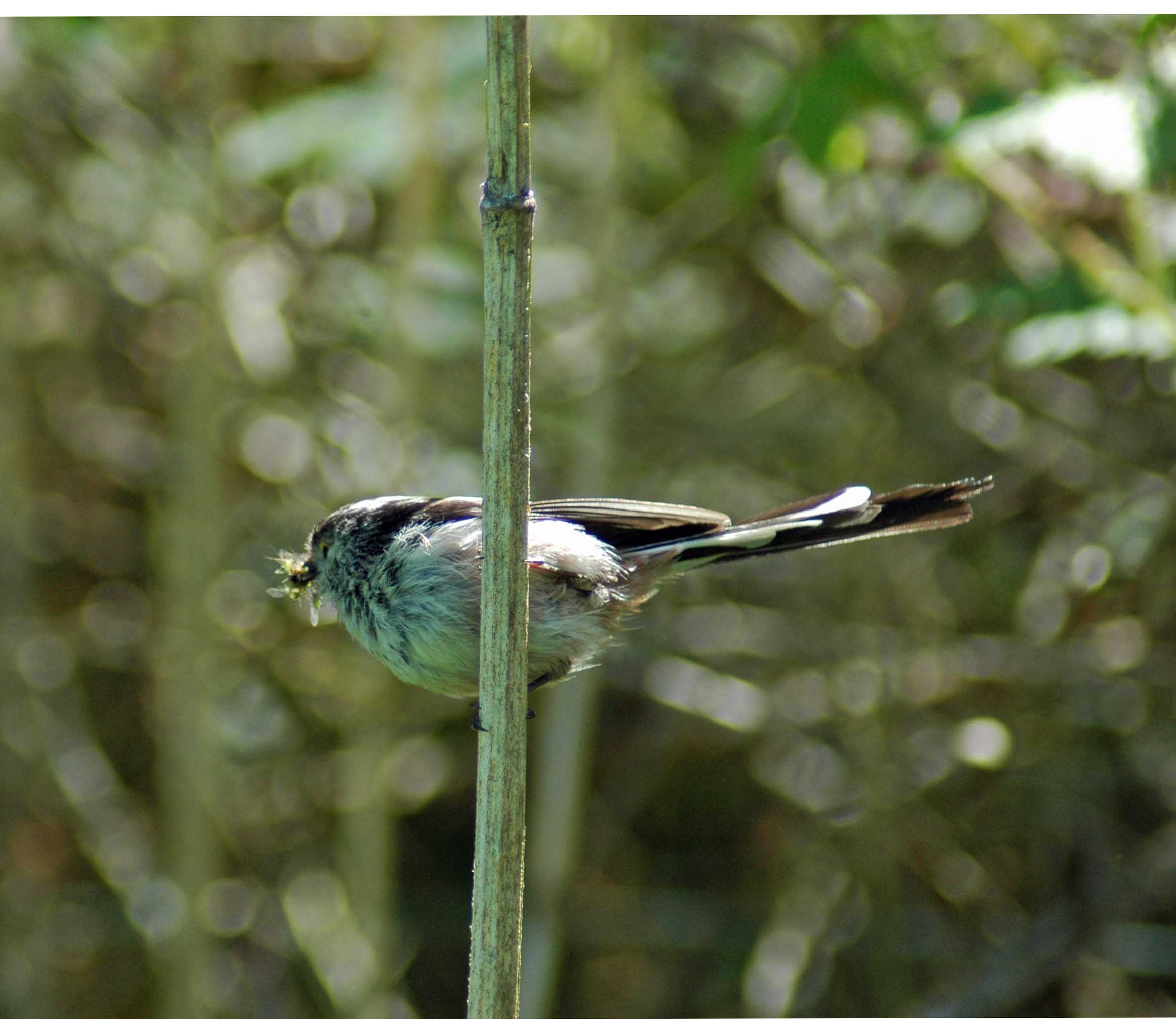
As I bent down to get an image of the flower I caught a glimpse of a bird passing me by very closely and stood up to see a lovely Long-tailed Tit at just about my eye-level (not very high then), perched on a dried stem about 2 metres or less in front of me and with its beak full of small flies.

A Long-tailed Tit with her beak full of small flies

A Long-tailed Tit with her beak full of small flies

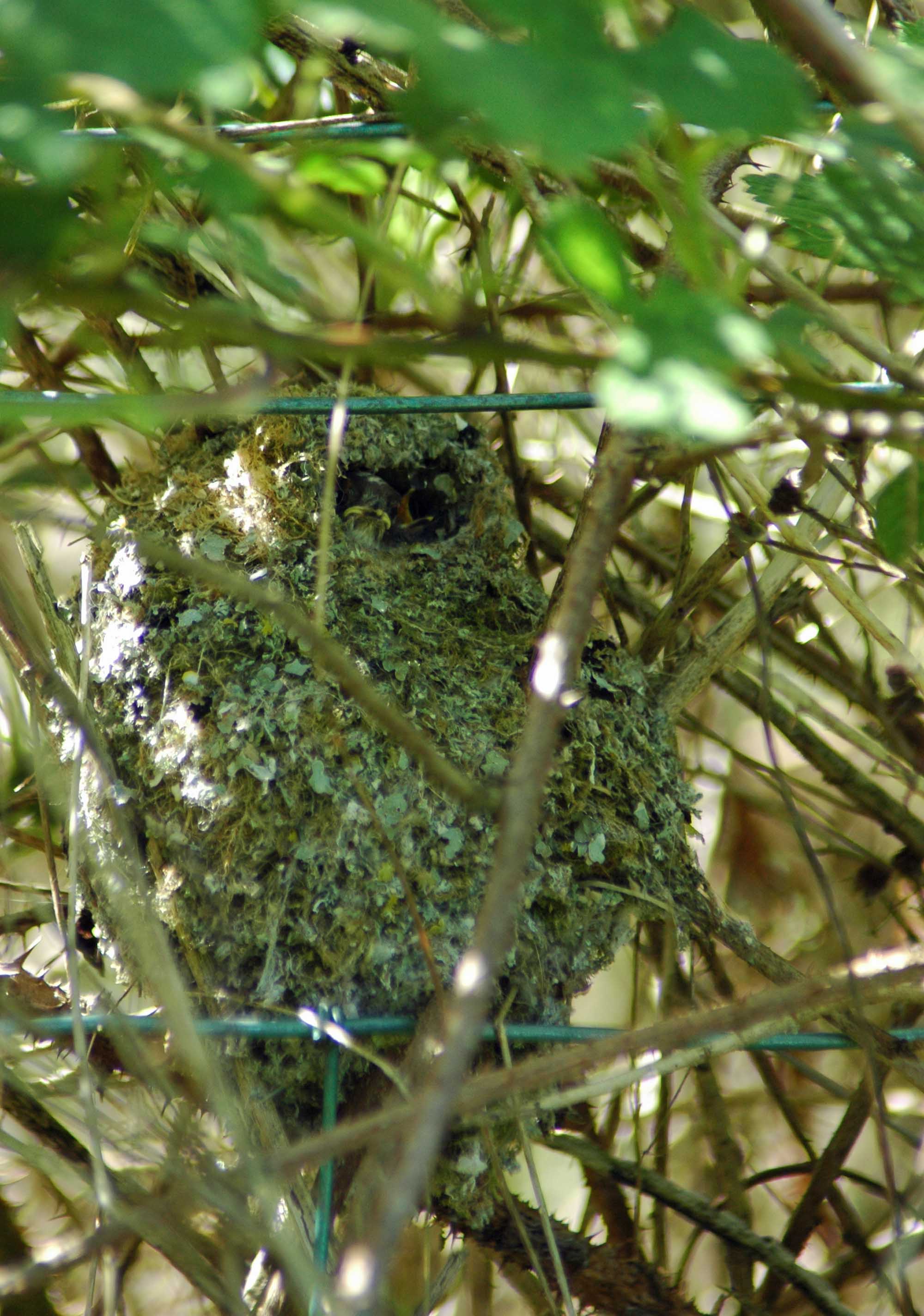
To be honest, the encounter took me so much by surprise that it took a moment for it to register that it was indeed Long-tailed Tit, let alone for it to occur to me that the poor bird was agitated by my presence because the flies were intended to be fed her nestlings. I stood still and she flitted over to the cover of a nearby small tree, then after a moment or two began to make her way to the back of the wire fence, then through a tangle of brambles to the most beautiful nest. I was thrilled to see it as I’d never seen one closely before; they are usually deeper into a tangle of brambles, so at the same time I felt concern at the location of this one; it seemed very vulnerable and if I spotted it fairly easily then so could potential predators. Long-tailed tit nests are known to suffer high rates of predation with only 17% of them being successful.

The Long-tailed Tit at the nest

The Long-tailed Tit at the nest

Long-tailed Tits make magical nests from materials you could almost imagine being called for in a spell; spider egg cocoons and moss, lichen and feathers, some 6,000 tiny pieces required for the average construction. The moss and spider silk provide the structural stability, they are pieced together to form a mesh with the tiny leaves of the moss acting as hooks and the spider silk of the egg cocoons providing the loops, which has been described as working in a similar way to velcro. The outside of the nest is covered with hundreds of flakes of pale green-grey lichens to provide camouflage and the inside lined with around 2,000 downy feathers to insulate the nest.  The end result is a lightweight elastic sac with a small, round entrance placed at the top, which is suspended either low in a gorse or bramble bush, less than 3m off the ground, or occasionally high up in the forks of tree branches.

Despite its apparent fragility the nest is strong due to the spider silk and the elasticity of the structure allows it to expand as the nestlings grow, so is always the perfect size. This nest was fairly bulging, so I imagine the young ones were quite well grown and that there were several of them in there.

A close view of the exquisite nest and young ones peeking out

I stood rooted to the spot watching as both parent birds hunted for food for their young ones. they were not travelling far, one was mainly foraging in the lower branches of a tree within a few metres of one side of the nest and the other in another tree a similar distance away to the other side. That same one, which is the one I photographed also seemed to be flying up from the fence pursuing flies on the wing.

A Long-tailed Tit with a beak full of small flies waiting a short distance from the nest

I would have loves to have stayed and watched for longer, but although the birds carried on about their work despite me, they were clearly wary and I left them in peace to carry on while I continued with my walk.

Hungry Long-tailed Tit nestlings looking quite well-grown

Hungry Long-tailed Tit nestlings looking quite well-grown

This link is to a wonderful video of a Long-tailed Tit nest and narrative from Iolo Williams’  Secret Life of Birds.

http://www.bbc.co.uk/nature/life/Long-tailed_Tit#p00dxvfq