• Home
  • about
  • about the photographs
  • Local Nature Reserves
    • Bryn Euryn Local Nature Reserve
    • Mynydd Marian
  • Wales Coast Path
    • Grey Seals in North Wales
    • St.Trillo’s Chapel
    • Wildflowers of North Wales Coastal Paths, Cliffs and Dunes

everyday nature trails

everyday nature trails

Category Archives: Wales Coast Path

A Windy Wildflower Walk II

27 Sunday Aug 2017

Posted by theresagreen in Butterflies of Wales, calcareous grassland, coastal walks, Nature of Wales, North Wales Wildlife Trust, Rhiwledyn Nature Reserve, Wales Coast Path, Wildflowers of Wales, wildflowers on limestone, Wildlife of the Wales Coast Path

≈ 3 Comments

Tags

black horehound, common rockrose, harebell, hedge woundwort, Lady's bedstraw, Nature in August, Perforate St John's Wort, speckled wood, water mint, yellow dung fly

August 3rd

Part 2 – Rhiwledyn Nature Reserve -The main track

Onwards and upwards; a flight of shallow stone steps make a steep rocky section of the path a little easier to climb (except when it’s wet & they get a bit slippery).
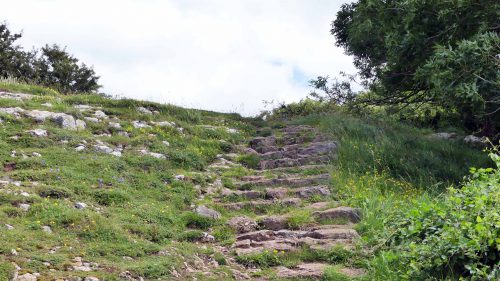
Pause here to admire the views back down onto the road and the many shades of green of the fields and woodland on its opposite side.
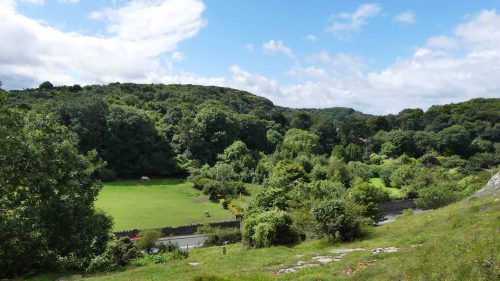
Looking down onto the road into Llandudno

Facing around to the way I’m going, the views to the right of me, seen over a rampant tangle of brambles and wild clematis on the reserve boundary, are extensive and stunning. At once pastoral and contained and wild and open to the elements.

On the other side of the track is the biggest and best patch of harebells that I have seen for years, a truly beautiful sight.

Harebell- Campanula rotundifolia

I can’t resist sitting to watch them being blown and rippled by the wind and am captivated by their charm. For me this little flower has it all. Beautiful in colour and form, they have delicacy and fragility but also great adaptability and resilience to an often hostile environment. Each flower had turned its bell back to the wind to reduce its impact; their slender but tough and wiry stems having the flexibility to bend to the wind, not break. A life lesson in a wildflower!

There were yet more of the little beauties a little higher up on the slope contrasting delightfully in colour and form with frothy lemon-yellow Lady’s bedstraw. I clambered up rather inelegantly to take a closer look. Amongst other plants, these had grown taller and in a more sheltered spot, their bells were turned to the light rather than away from the wind.

Before going back down to the track, I take another look at the glorious view across the bays to the Clwydian Hills and with sheep where they are supposed be.

click to enlarge

Back on track there is a change in ambience and habitat. There are small trees and shrubs on the boundary with the farmland sufficient to cast shade, and the sloping ground on the other side provides a windbreak. The trees are mostly hawthorn, prevalent throughout the headland as its one of the few plants not grazed by sheep or rabbits and again, tough enough to withstand exposure to fierce salty winds.

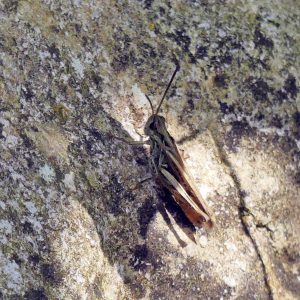
I spot a movement and see a small Grasshopper jump onto a lichen speckled rock catching dappled sunlight; the perfect place to soak up a little warmth whilst staying camouflaged.

I round a bend in the track and see – sheep! Five naughty trespassing sheep! They are strictly banned from the reserve unless invited in as their indiscriminate grazing may damage or even destroy the rarer wildflowers that grow here. Fencing prevents them wandering into the higher part of the reserve from the rest of the Little Orme where they are not restricted, so I think they got in at this field level, no doubt irresistibly tempted by the sight of the lush long grass over here. I tell them they should return to their field, but can’t see where they may have got through and they pay me no heed anyway, just amble away showing me their bottoms.

I let them get ahead, the last thing I want to do is frighten them and send them scattering and concentrate on the patch of golden flowers I see amongst the long grass on the slope. I thought at first it may be Goldenrod as I’d seen some on the roadside earlier, but soon realised it was a Hypericum – St.John’s Wort.
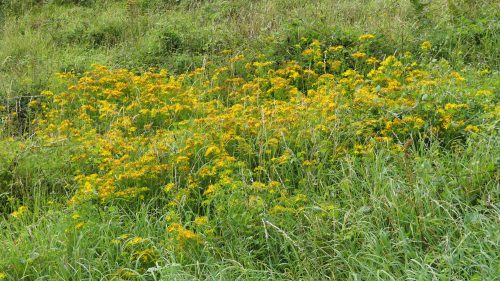
Another plant with several species that share the same common name, but this is the one I am most familiar with and has all the right features to be Perforate St John’s Wort – Hypericum perforatum.

St John’s Wort-Hypericum perforatum
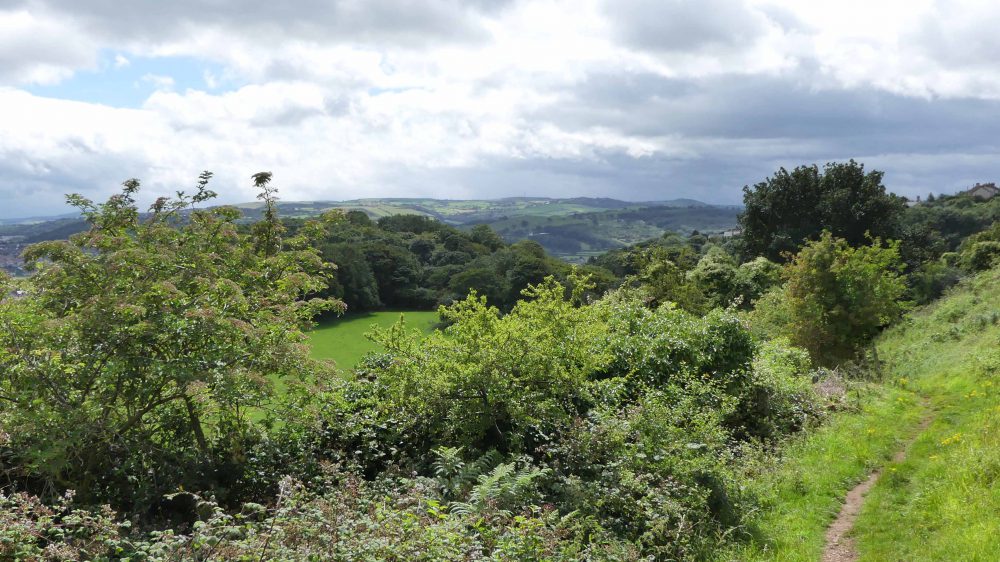
click to enlarge

Black horehound – Ballota nigra

I apologise, but need to digress a little here to explain the significance of my next plant. Earlier on in the summer a group of NWWT members were treated to a walk around this reserve guided by its manager, Rob and a guest expert botanist, Nigel. It was a brilliant walk on many levels and we learnt a lot about our special flora and its history, about its fauna and the trials and tribulations of modern Reserve management. Typically as on any walk, even guided group ones, I lagged behind snapping interesting stuff and in a rough bramble-and- nettle patch (in the pic above), spotted the plant to the right, which is still going strong. Yet another minty-looking one I didn’t recognise. I took hasty photographs and hurried after the rest of the group. No-one else immediately recognised it either, so Nigel suggested I email the pics to him later on so he could have a better look. From them his best guess was that it was Black Horehound, reservations having been that this was a vigorous, tall specimen of a plant that usually is, in his words, ‘much scruffier-looking’ He also mentioned it smells unpleasant, so this time I had a closer look and bruised and smelt a leaf. It definitely did not smell pleasant and as all its other important bits match the botanical specs, I’m taking that as another one to add to my list of wildflowers-I-will-know-how-to-identify in the future. (Unless anyone has a different idea……?)
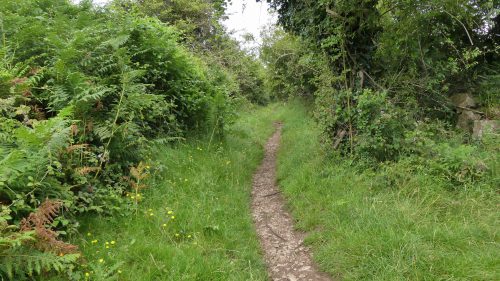
It’s amazing what you can see in five minutes along a short shady stretch of track. I watched a dragonfly patrol up and down at speed, pausing only in his labour several times to ‘buzz’ me and let me know I was in his space. I was hoping he’d stop so I could at least see what he was, but no, much too busy. There was yet more mint here, and one I recognised from the distinctive scent of a crushed leaf – this is Water Mint-Mentha aquatic. A similar-looking plant is Corn Mint, but it grows shorter than this and doesn’t have a ‘terminal’ flowerhead (one that crowns the top of the stalk).
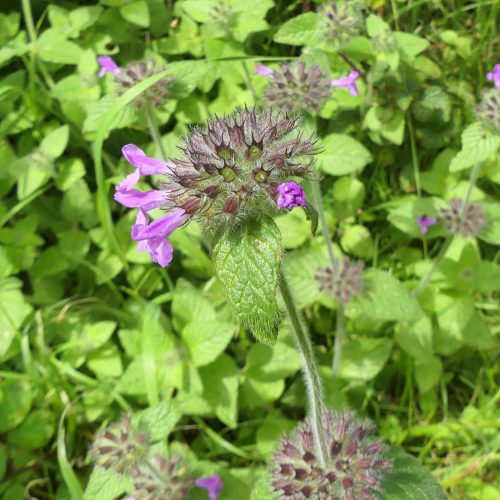
Water mint-Mentha aquatica

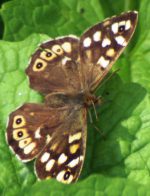
A fresh-looking Speckled Wood rested on a sun-warmed stone on the path

Speckled Wood

and a Red Admiral flew across to seek out the nectar of bramble flowers
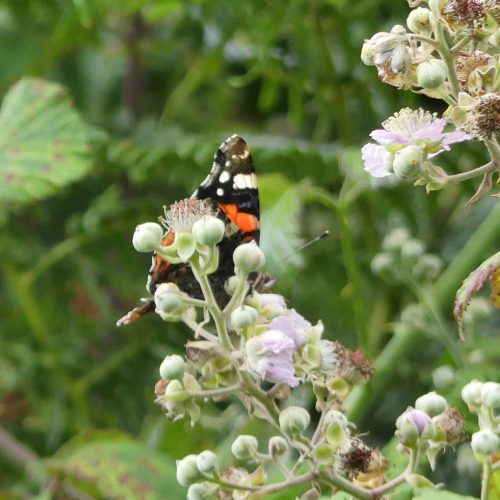
Red Admiral – Vanessa atalanta

There is a farm gate here which I checked for security, but tightly closed there would have been no exit for sheep. Another great Clematis-framed view from here, considerably enhanced by the clouds I think, although they were blocking out the sun at this point.

click to enlarge

At the side of the gate another member of the Lamiceae (mints & dead-nettles) family, this one I know well, the Hedge Woundwort Stachys arvensis.

Yellow Dung Fly – Scathophaga stercoraria

I moved on and round the next bend found evidence I was still on the trail of the errant sheep; a smallish neat and fairly recent deposit of fresh dung. And where there is dung there may be Dung-flies, one of my favourite insects, although I’m not exactly sure why. Perhaps because I’m keen on recycling? As I hoped, a single male Yellow Dung Fly had laid claim to the heap of treasure and was intent on guarding it. A bit of a drama then ensued, but I’m saving that for later.

To the top

I had reached the Reserve boundary, marked by a gate through which the two marked ‘Trails’ continue on to cross the rest of the Little Orme headland. There is no marked official track up to the top reaches of the reserve from here though, so getting up there is a matter of a)wanting to; b) paying attention to where you are putting your feet; c)taking care not to slip on damp grass and d) watching out for rabbit holes.

Rock-roses are still fresh and lovely up here, as is the fragrant Lady’s Bedstraw.

I followed the path chosen by the sheep; they almost always know how to find the best way upwards. They were up there now, all standing facing the view. I may have thought they were admiring it, but one of them who seemed to be in charge, maybe the mother of some of them, was bleating loudly, eliciting a response from the field below. Was she calling to her friends telling them about the feast to be had on this side and inviting them over?
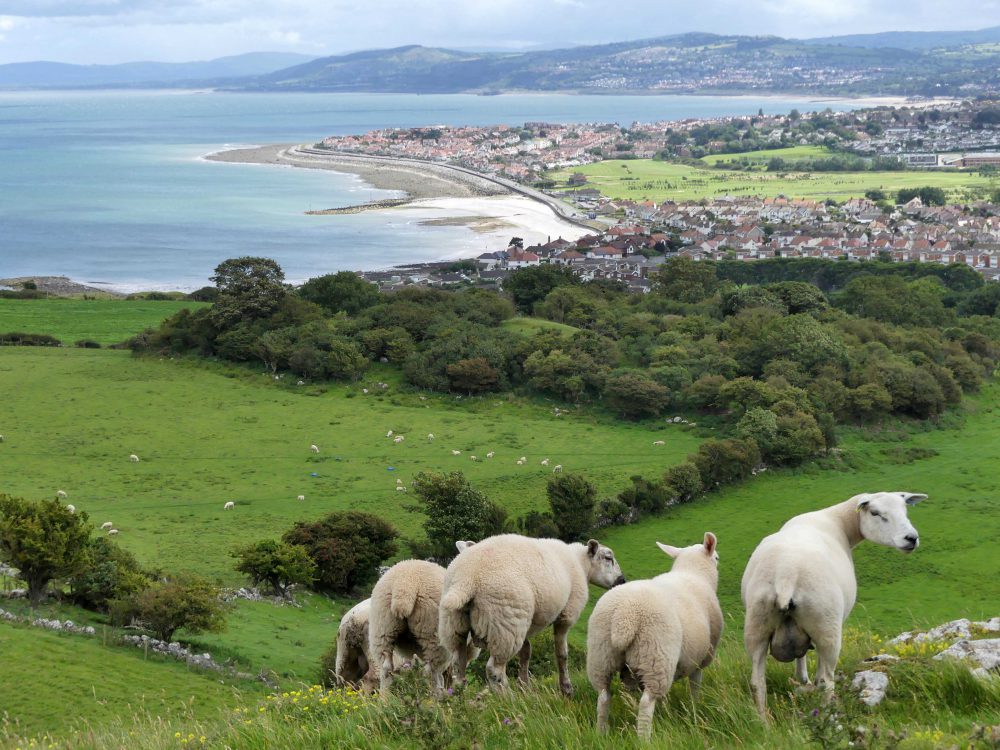
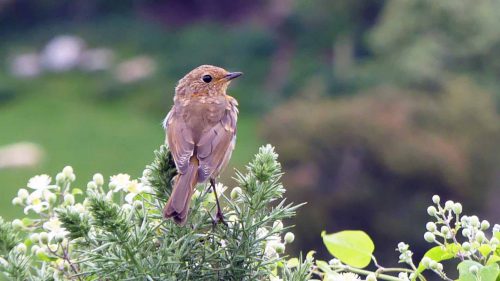
Once more I reminded them they were not welcome here, but Mrs Boss Sheep just gave me ‘the look’ that clearly said “mind your own business and what are you doing up here yourself?” Once past them it became more overgrown and not as clear where to head, but I kept going in the general direction of where I wanted to be and hoped for the best. I heard a bird making some squeaky sounds and spotted him as he perched atop a gorse bush, a speckly young Robin beginning to get his adult feathers. I realised this was the first bird I’d seen and heard so far on this walk apart from gulls and the occasional cormorant flying overhead.
I also realised it was lunchtime, so time to find a sheltered spot, take a break and sit and admire the sheep’s-eye view.


Share this:

  • Share on Facebook (Opens in new window) Facebook
  • Share on Pinterest (Opens in new window) Pinterest
  • Share on X (Opens in new window) X
Like Loading...

The Lonely Purple Sandpiper

14 Tuesday Mar 2017

Posted by theresagreen in bird behaviour, Birdwatching on North Wales coast, Nature of Wales, nature photography, Rhos Point, Wales Coast Path

≈ 8 Comments

Tags

calidris maritima, dunlin, overwintering birds, Pibydd Du, purple sandpiper, purple sandpiper at rhos-on-sea, redshank, Rhos Point, Turnstone

February 17th

Rhos Point will soon become a quieter place as the wading birds that arrived during last late Summer and the Autumn leave us and head back to their more northerly breeding grounds. Each year Turnstones come in a fairly consistently sized flock of about 60 birds and I think it’s likely that a more unusual visitor – one that draws birdwatchers here to search for it – arrives amongst them; the Purple Sandpiper. I’d met people claiming to have seen them here earlier in the winter, but I hadn’t had even a glimpse. Until today. Taking my baby granddaughter out for some very fresh air on the Promenade, as always with one eye scanning the shoreline and one watching where I was steering the pushchair, I’d noted the tide was on the turn. Only a strip of the rocky shore below us was exposed and yet there were two people walking along it, chatting and following behind their loose and randomly wandering dog. I wasn’t thinking kindly about this as a) I don’t understand why anyone would risk their dog injuring itself on the slippery uneven surface and b) why they don’t notice or seem to care about the disturbance to any feeding birds. But in this instance they were quickly forgiven as the dog flushed a single elusive Purple Sandpiper from where it had probably been resting on the lower rocks of the rip-rap sea break.

It didn’t go far, just across to the smaller rocks on the edge ot the water where it stayed.March 1st

Having now seen where the Purple Sandpiper had been lurking during high tides I went back to try to see it again and whether there may be more of them. I’d waited until the tide was at its highest and soon spotted the Turnstone flock quite high up on the rocks

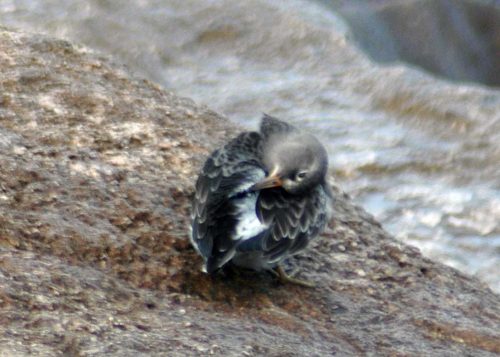
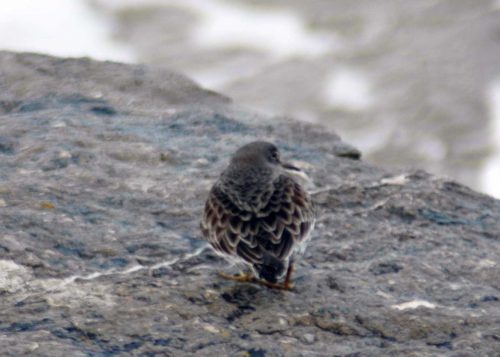
I enjoyed the lovely close sighting of these gorgeous little birds, but really wanted to see Purple Sandpipers. And there he was, on the edge of the group and still apparently alone.

A lonely little Purple Sandpiper. I stayed and watched for a while in case any others popped up, but no. He was the only one. I walked a little further on, still searching, but found only two Redshanks. Again, lovely close up view of great birds, but not the colour I was looking for.

PURPLE SANDPIPER – Calidris maritima; Welsh: Pibydd Du

The Purple Sandpiper is a winter visitor to almost any rocky coast in Britain and Ireland. They are widely distributed around the coast though they are most abundant in the northern isles – Orkney and Shetland and along the east coast of Scotland, north-eastern England and Devon and Cornwall and scarce elsewhere.

The Purple Sandpiper is a medium-sized wading bird, slightly larger, stockier and darker than a Dunlin. It is mainly dark grey above and whitish below. It has a slight down-curved beak and distinctive short bright orange legs. In flight it shows a thin white wing-stripe on otherwise dark wings.

Above photo: January 28th 2012-Purple Sandpiper with Dunlin – Rhos on Sea

World Distribution: BREEDS Arctic & Subarctic Eurasia & North America, WINTERS: south to S Europe and Southern US.

Diet: Invertebrates, also some plant material, often feeds on rocks near tide edge.

March 2nd

Back again for another look. I didn’t even have to search for myself as a serious photographer, in full camouflage kit and sporting a super-long lens had him in his sights, saving me the effort. Today he was completely alone, with not even a Turnstone for company. He was quite lively though, having a good preen then skipping around the rocks, splashed by sea spray and totally in his element. Still sad to see him all alone though.

Closer views of the active bird today better show the purplish tint to the plumage that gives the species its name.

Maybe next year he’ll bring some friends.

Purple Sandpiper is currently AMBER listed in the Birds of Conservation list based on a Non-breeding Population decline by more than 25% but less than 50% and a UK breeding population of less than 300 pairs.


Share this:

  • Share on Facebook (Opens in new window) Facebook
  • Share on Pinterest (Opens in new window) Pinterest
  • Share on X (Opens in new window) X
Like Loading...

Grey Seals on the rocks

07 Wednesday Sep 2016

Posted by theresagreen in coastal walks, Little Orme, Nature, Nature of Wales, nature photography, North Wales, Rhiwledyn Nature Reserve, Seals, Wales Coast Path

≈ 14 Comments

Tags

grey seals, grey seals in Angel Bay, North Wales Wildlife Trust

In UK waters Grey Seals breed during the autumn. Although the entire breeding season spans approximately 8 weeks, individual females will spend 18-20 days ashore, during which time they each bear and suckle one pup. Towards the end of lactation they come into oestrus, as soon as 16 days after giving birth, and are mated.

August 28th

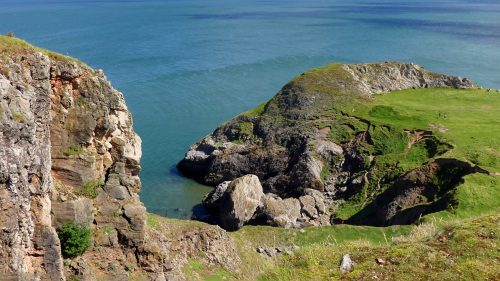
Another windy day on the headland of the Little Orme, but sunny too and the tide was out. Perfect conditions for seeing Grey Seals hauled out on the small pebbly beach of Angel Bay.

160826-LORC57-Looking onto Angel Bay

Angel Bay is an inlet on the Little Orme’s Headland on the North Wales Coast. Known locally as Angel Bay, on Ordnance Survey maps it is named in Welsh as Porth Dyniewaid.

Spotting one a short distance offshore in Penrhyn Bay was encouraging. The seal was suspended in the water with just it head above the surface facing towards the shore. They do this often and I’m sure they are ‘people watching’, as curious about us as we are about them.

160826-LORC32-Grey seal floating head above water

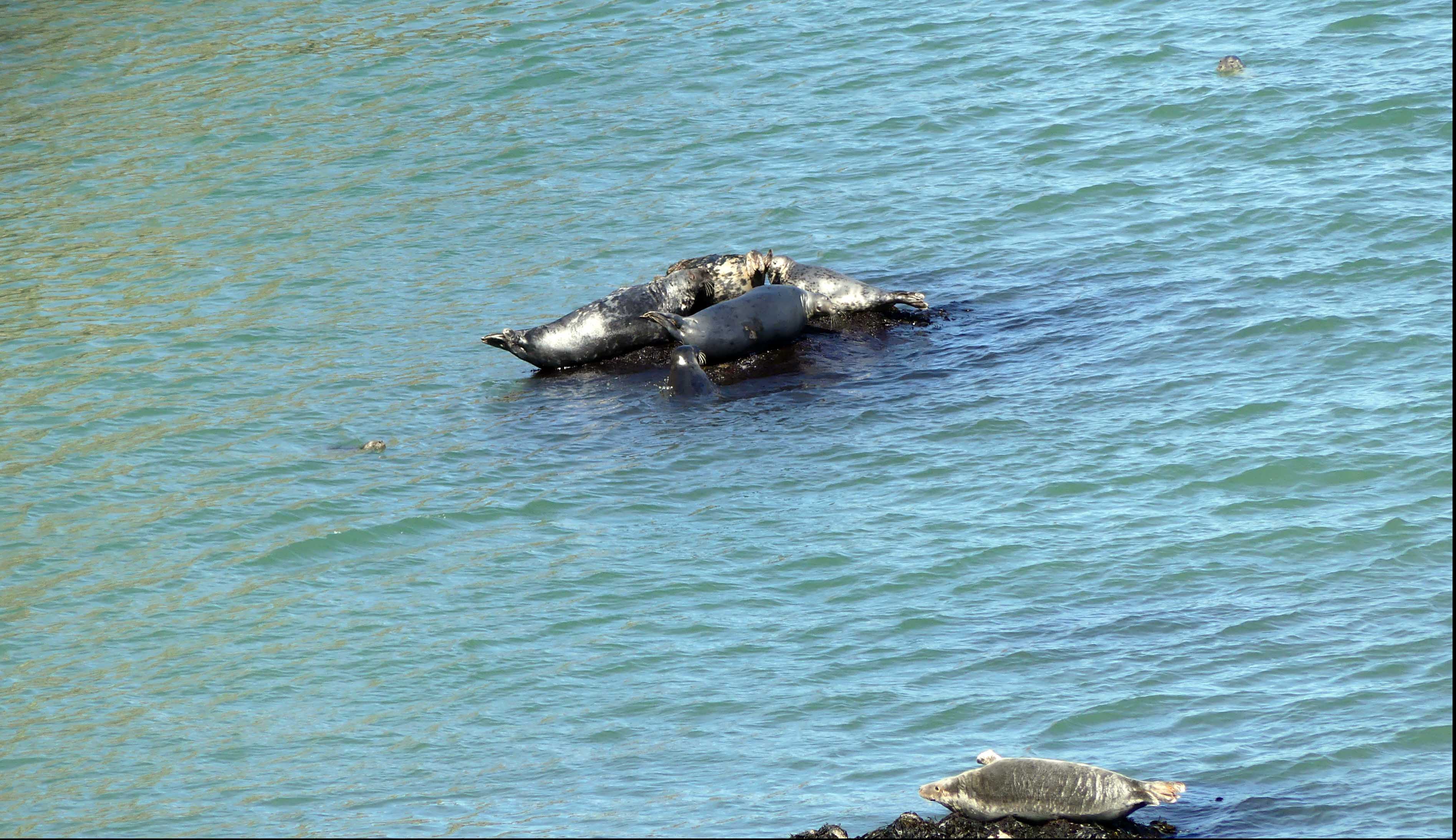
There were boys in the bay, enjoying themselves greatly by jumping off rocks into the calm sea. I’m sure they were unaware of the seals not far away from them, hidden from their view as they were by an outcrop of rock . Unwilling to risk venturing ashore as they would normally have done, some were making the best of small islands of rock uncovered by the low tide, hauling out their bulky bodies to enjoy the warmth of the sun. Unfortunately there wasn’t room for all of them and some were left to drift around keeping a watchful eye out for a space to become available. Grey Seals are the largest breeding seals we have in the UK and those on view were definitely large, quite possibly pregnant females as they do congregate at traditional pupping sites in the autumn.

160826-LORC30-Grey seals basking on small rocks

One had secured a rock of her own. She was rather beautiful, wearing a mantle of silvery grey velvet.

160826-LORC27-Grey seal basking on small rocks

These three were more sociable and had left room for another.

160826-LORC31a-Grey seasl basking on small rocks

After a bit of heaving and hauling the smaller one squeezed in, but there was no room left for more boarders.

160826-LORC38-5 Grey seals

There are nine seals in this picture – 6 on rocks and three swimming around hopefully.

160826-LORC37-7 Grey seals

The driver of one of the jet boats that take out sightseers from Llandudno pier spotted the seals and pulled in so people could have a closer look and take photographs of the seals. He must have passed the info on to other drivers as another boatload arrived a few minutes later. Then another who was a bit more intrusive and that got too close.

160826-LORC41-Boat approaching seals

As the boat was leaving I took a short video as it is unusual to see the seals awake and moving, although they still weren’t doing much. Perhaps because they were rather put out about their lack of space the seals were quite vocal too, although most of the noise here was made by the departing boat & the wind!

An hour or so later the smaller rock had been taken over by a much larger seal; poor thing looks like she’s about to burst!

160826-LORC43-One large (pregnant) seal left

Share this:

  • Share on Facebook (Opens in new window) Facebook
  • Share on Pinterest (Opens in new window) Pinterest
  • Share on X (Opens in new window) X
Like Loading...

Pines and Primroses

27 Saturday Feb 2016

Posted by theresagreen in Colwyn Bay, Nature of Wales, Trees, Wales Coast Path, Wildlife of the Wales Coast Path

≈ 18 Comments

Tags

Colwyn Bay embankment, early spring flowers, King Alfred's Cakes fungus, pine trees by the sea, Porth Eirias, primrose

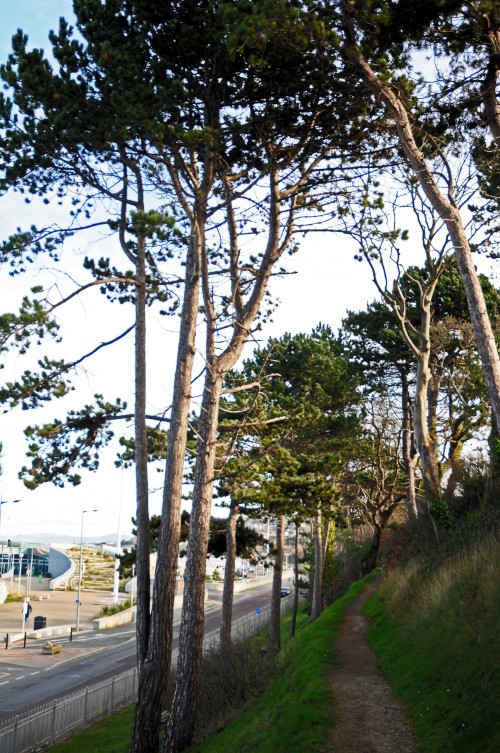
Pine trees are well-used as feature plantings in many parts of Colwyn Bay, but those with the greatest impact are those elegantly lining the road into Rhos-on-Sea set on the steep sea-facing railway embankment.

Pine trees along Colwyn Bay embankment

Pine trees along Colwyn Bay embankment

Where the trees thin out primroses smother the grassy embankment. They began flowering early this year but look as though they will continue for some time to come.

Pine tree and primroses

Pine tree and primroses

A lovely clump of fragrant primroses

A lovely clump of fragrant primroses

The back of Colwyn Bay railway station

The back of Colwyn Bay railway station

The grassy embankment is a favourite spot for Herring gulls to paddle for worms.

Herring gulls paddling for worms

Herring gulls paddling for worms

I walked along the promenade then crossed the road at the point where there’s access to the elevated pathway near the top of the embankment.

View to Rhos-on-Sea

View to Rhos-on-Sea

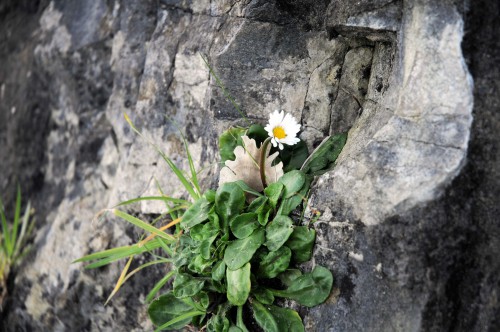
Daisy growing from embankment wall

Daisy growing from embankment wall

Fallen pine cones on embankment wall

Fallen pine cones on embankment wall

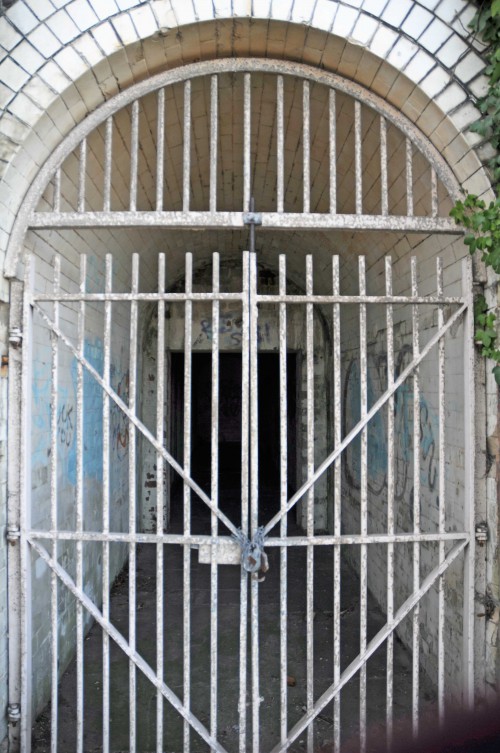
The pathway high up on the embankment leads through the pines and offers some protection on cold windy days such as this one was as well as an elevated view. I’ve always been curious about where this gated tunnel leads, but assume it comes out somewhere close to the railway station. It looks like it would be a good place for bats to roost or hibernate; I wonder if they do?
Iron gate closing off a tunnel under the railway line

Iron gate closing off a tunnel under the railway line

Pathway along the embankment

Pathway along the embankment

Ivy clambering high into a pine tree

Ivy clambering high into a pine tree

This can be a good place to see a number of bird species amongst the trees, but today there was just a solitary crow.

Crow enjoying the view out to sea

Crow enjoying the view out to sea

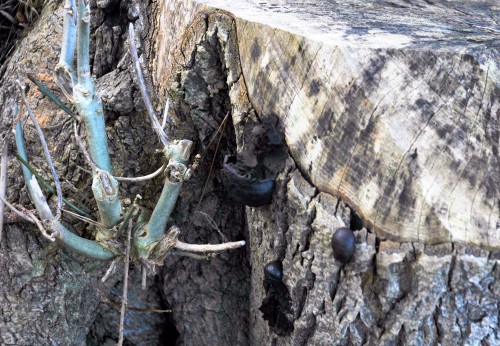
There are other species of tree along the path and I came across the stump of a felled ash tree that is regenerating from its base. It also had a mature patch of the curious brittle black King Alfred’s Cakes Daldinia concentrica  fungus.

Cut ash tree regenerating with King Alfred's Cakes fungus

Cut ash tree regenerating with King Alfred’s Cakes fungus

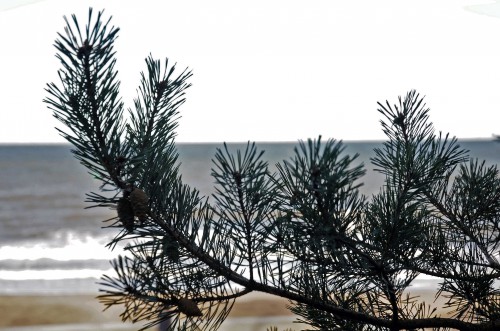
Scots Pine branch with cones

Scots Pine branch with cones

Approaching the end of the path

Approaching the end of the path

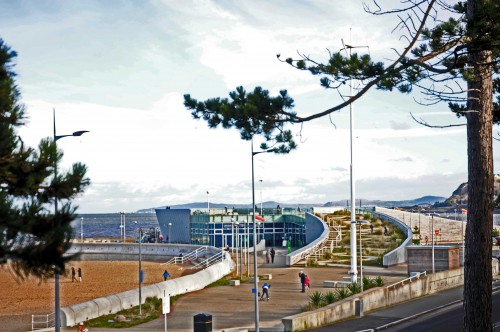
The elevated pathway offers a good view of the Porth Eirias Watersports centre

The elevated pathway offers a good view of the Porth Eirias Watersports centre

The pathway ends by the railway bridge opposite Porth Eirias where these beautiful Hellebores were growing.

Hellebores (Lenten Roses) with green flowers

Hellebores (Lenten Roses) with green flowers

It’s good to see that the traditional planting of pines is being continued. There are several young trees in beds at the front of Porth Eirias.

A newly-planted pine tree at Porth Eirias

A newly-planted pine tree at Porth Eirias

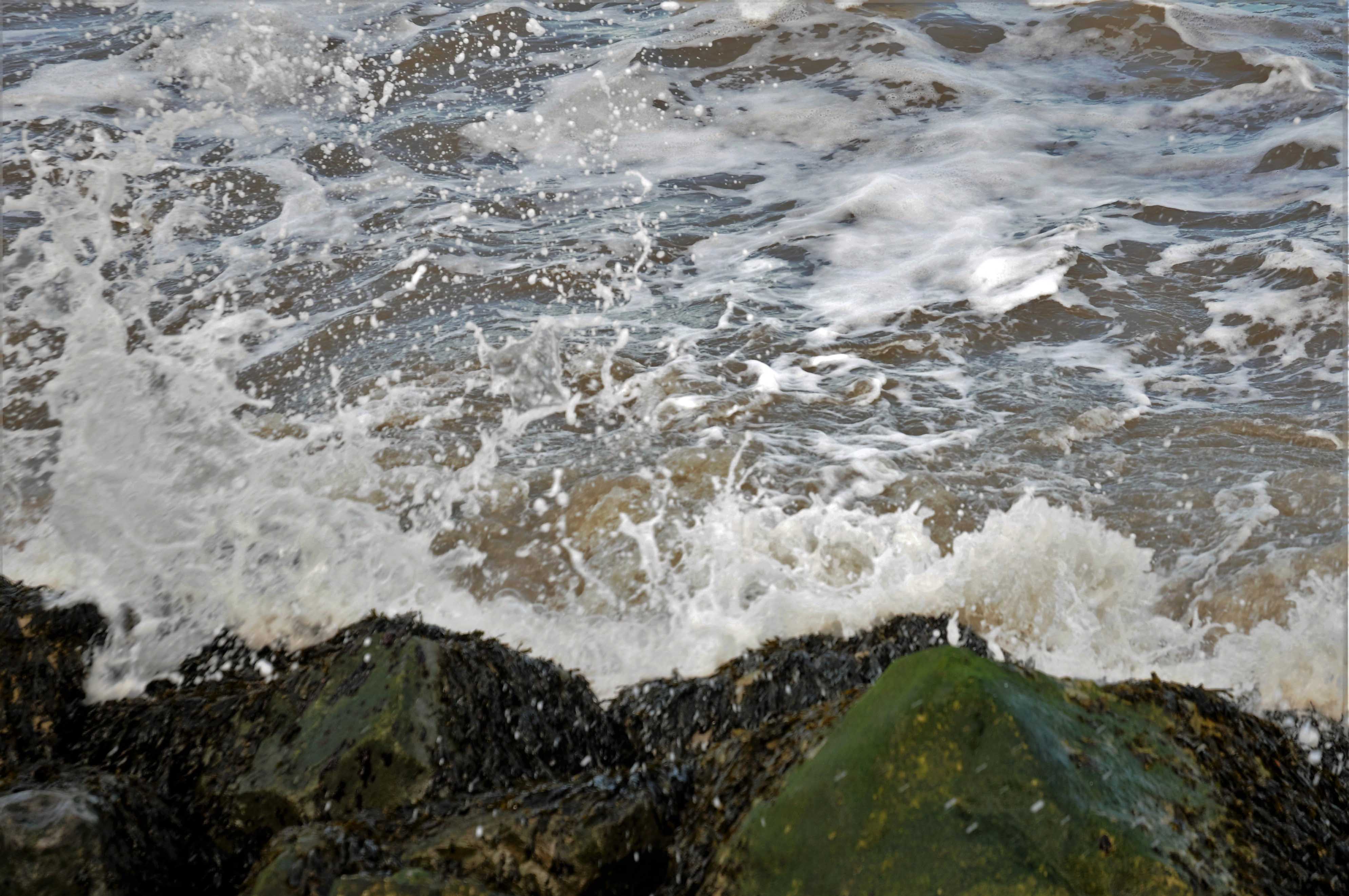
A last look at the sea splashing up onto the rocks at the base of the sea wall before gratefully retreating into the shelter of my car.

160214-Sea splashing on rocks

Share this:

  • Share on Facebook (Opens in new window) Facebook
  • Share on Pinterest (Opens in new window) Pinterest
  • Share on X (Opens in new window) X
Like Loading...

Secret passage behind the sea wall 2

17 Saturday Oct 2015

Posted by theresagreen in Birds, birds of the seashore, birds of Wales, coastal walks, Nature, Nature of Wales, nature photography, Rhos Point, Rhos-on-Sea, Wales Coast Path

≈ 4 Comments

Tags

Crows on seashore, curlew flying, herring gull, meadow pipit, mussel bed, Rhos Point

An hour or so later the walk back to Rhos Point was quite different. The going was easier too as the strong wind was behind me now and not taking my breath away. Almost immediately I caught sight of a bird hopping around on the rocks. I waited hoping it would come into view, which it did, just as a woman with a dog approached and chose that moment to break into a run. The bird flew away. Again it was a pipit, possibly the same one I’d seen back on the beach. The legs are pinkish and plumage brown so maybe a Meadow Pipit?

151007TGNW- Penrhyn Bay-Pipit on rocks 3

151007TGNW- Penrhyn Bay-Pipit on rocks 4

A small sedum plants looks at home in a pocket eroded in a limestone rock.

151007TGNW- Penrhyn Bay-Sedum

Small pools of rainwater are held briefly, lasting longer in the hard granite rocks.

151007TGNW-6d-Rock pool 2

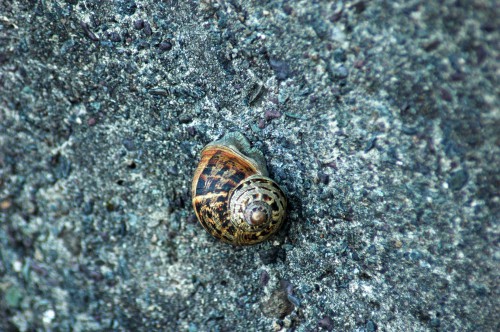
The garden snail must have found it hard going sliding over the rough surface of the sea wall.

151007TGNW-15-Sea wall- Garden snail

151007TGNW-Rock with moss

151007TGNW--Penrhyn Bay-Wasp

151007TGNW- Penrhyn Bay-sign at top of ramp

There is a wide concrete ramp reaching from the road down to the shore which probably gave access to heavy construction vehicles when the huge boulders of the sea defences originally were put in place. The lower section is being absorbed back into the shore, it is strewn with pebbles and small rocks and slippery with seaweed. Limpets are embedded into the wall itself as well as in large rocks on the shore at the bottom of the ramp.

151007TGNW-Limpets embedded in rock

I love the textured ‘lacy’ look of this rock almost covered with barnacles.

151007TGNW-Rock covered with barnacles & limpets

The sea is often at its most beautiful on these sunny windy days, its surface whipped up roughened and flecked with foam-edged ripples and the colour of the water ranging from deepest inky dark blue to pale turquoise-green. Large areas are stained brown by dredged up sand.

151007TGNW- Penrhyn Bay-Back to Rhos-Sea colours 1

Sun, shade and curves make this man-made construction interesting.

151007TGNW- Penrhyn Bay-Back to Rhos

The white marks highlighting the curved sea wall are mineral, maybe lime leached from the concrete?

151007TGNW-5-Wall markings-Rhos-on-Sea promenade

The parapet floor has an interesting pattern and texture and is spotted with patches of white lichen.

151007TGNW- Penrhyn Bay-Back to Rhos-Concrete floor3

As I got nearer to the Point I knew the tide was further in by the increased bird activity; the excitement it generates is almost tangible. Gulls take to the air and fly back and forth along the shoreline. Oystercatchers and other waders scuttle about, heads down, beaks probing for anything edible brought in on the waves.

151007TGNW- Penrhyn Bay-Back to Rhos-Herring gull

151007TGNW- Penrhyn Bay-Back to Rhos-Herring gull young 1

Crows head shorewards too, the one in my picture landed on a lampost towering above me, cawing loudly. They forage amongst the rocks along with the waders and are often seen picking up a shellfish then flying up with and dropping it onto the rocks below to crack it open.

151007TGNW- Penrhyn Bay-Back to Rhos-Crow 1

Even the curlews were excited. Most often seen stalking sedately around rocks and pools, now there were several flying along at speed, skimming low over the rocks on the shore below me. A couple of them may have been in pursuit of the one I managed to capture a shot of; it was travelling so fast I didn’t realise it had food in its beak until I saw the photograph.

151007TGNW- Penrhyn Bay-Back to Rhos-Curlew

On the Point the incoming tide approaches from either side of the mussel bed, where I assume different currents merge. The birds have an infallible instinct for the tidal changes and in the hour before and after high tide their numbers increase dramatically. They are brought closer to the shore then too and absorbed with foraging and eating, are easier to see.

151007TGNW- Penrhyn Bay-Back to Rhos-Sea colours on point

151007TGNW- Penrhyn Bay-Back to Rhos-Oystercatchers active

It was too cold and windy to hang around and wait today though, so I had a quick peek into the chapel, which I can never resist. There are only 6 seats inside, so I wonder if they’ve lined up these memorial benches on the promenade outside to serve as overflow pews?

151007TGNW- Penrhyn Bay-Back to Rhos-benches 2

Many young Herring gulls wander around the village at this time of year, often screeching for the attention of a parent. They have no road sense and sadly quite a few are killed by cars.

151007TGNW- Penrhyn Bay-Back to Rhos-Herring gull young on road edge

Share this:

  • Share on Facebook (Opens in new window) Facebook
  • Share on Pinterest (Opens in new window) Pinterest
  • Share on X (Opens in new window) X
Like Loading...

Secret passage behind the sea wall

15 Thursday Oct 2015

Posted by theresagreen in birds of the seashore, coastal habitat, coastal walks, coastal wildflowers, Nature, Nature of Wales, nature photography, wading birds, Wales Coast Path, Wildflowers of Wales

≈ 4 Comments

Tags

coastal birds, Linnet, migrant birds, Northern Wheatear, penrhyn bay, rhos on sea, Rhos Point, rocky seashores, seashore walks

On a sunny day last week I intended to spend some time checking out the birdlife on Rhos Point to see what treats the autumn migration had already brought to us. I started out on the roadside where there’s a posh new sign on the roadside above the bijou St Trillo’s Chapel, the favoured starting point for many of my seashore posts.

151007TGNW-1-St Trillo Chapel plaque-Rhos-on-Sea

St Trillo's Chapel, Rhos on Sea

St Trillo’s Chapel, Rhos on Sea

It was windy here and decidedly chilly as it can be when the tide is coming in. A quick look and listen from the promenade revealed a good number of cormorants, gulls, oystercatchers, redshanks and curlews, but all still too far out on the tideline on the mussel bed to see easily.

151007TGNW-2-Tide coming in-Rhos-on-Sea

I picked up a few seashells of some of the most commonly occurring species here.

151007TGNW-3a-Some seashells-Rhos-on-Sea 1

Despite the sunshine, this was definitely not a day to hang around on the shore, so I turned to walk along to Penrhyn Bay, hoping I might find a Rock Pipit or two amongst the huge rocks of the seabreak.

Fox -and-cubs on the embankment

Fox -and-cubs flowers on the grassy embankment bending in the wind

151007TGNW-Fox-and-cubs

This view of the Little Orme clearly shows the tiers formed by quarrying.

151007TGNW-4-Promenade towards Little Orme 1

151007TGNW-4bb-Promenade sign 1

I soon knew I wasn’t going to enjoy battling along against the cold headwind, so at the earliest opportunity dropped down onto the parapet of the seawall where a passageway is formed between the wall and the seabreak rocks. It was still windy here but not quite as strongly, besides which this passageway fascinates me as a habitat for an ever-increasing collection of plants and at this time of year it can be a good place to spot rock pipits and pied wagtails. And the rocks themselves are endlessly fascinating.

151007TGNW-6a-Rock 1

151007TGNW-6b-Rock with turquoise stripe

The turquoise green of the vein in the rock above puts me in mind of the verdigris you get on copper. The one below has sparkly white and pink crystal-like parts held within it.

151007TGNW-6e-Rock -pink with crystals

151007TGNW-13-Rocks & spider's web

A spider’s web screens a space between rocks

I spotted a bird on the rocks close to these steps and went down to see if I could find it again.

151007TGNW-8-Sea wall- Steps going down

Steps going down to the seashore

I managed a quick shot before it disappeared. Definitely a pipit.

151007TGNW-7-Pipit-Rhos-on-Sea promenade

In the winter and in rough windy weather the sea reaches the top of these steps; the bottom few are bleached almost white, their edges smoothed, curved and shaped to form channels by seawater covering them and cascading back down.

151007TGNW-9-Sea wall- Steps going up 1Continuing along there’s a stretch that is particularly flowery. There’s a lot of red valerian interspersed with an array of wild plants and garden escapées.

151007TGNW-10-Sea wall path-Towards Penrhyn Bay

Sea mayweedhugs the curve of the sea wall

Sea mayweed hugs the curve of the sea wall

ivy-leaved toadflax

Ivy-leaved toadflax

151007TGNW- Penrhyn Bay-Plant with laarge glossy green leaves

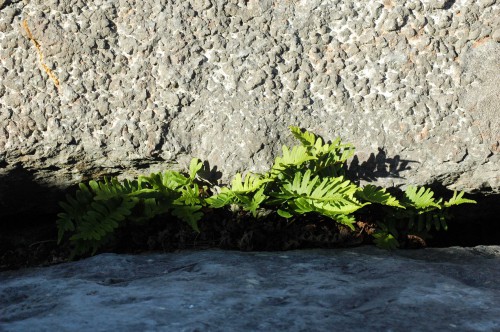
Sunlit fern in a rocky crevice

Sunlit fern in a rocky crevice

marigold escaped from a garden

Marigold escaped from a garden

Tree mallow flower

Tree mallow flower

Penrhyn Bay

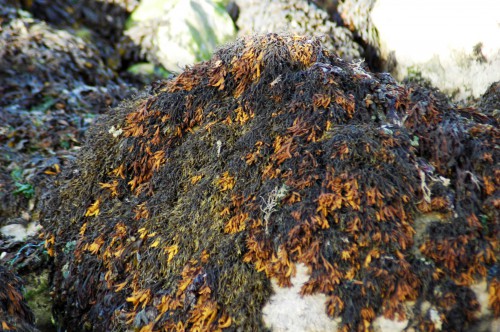
151007TGNW- Rock covered with seaweed

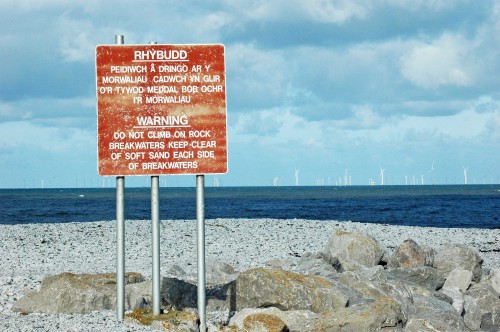
151007TGNW-Penrhyn Bay-Breakwater & sign

Between the breakwater and the rocky shore there is a patch of flowery grass

151007TGNW-Little Orme & Penrhyn Bay-grassy patch

151007TGNW- Penrhyn Bay-grassy patch

and behind the rocks scrubby shore plants grow amongst the sand and stone chippings. This is the best place I know for fairly reliable sightings of linnets that come to forage for seeds. There were linnets there when I arrived, which I realised when they all took off and headed off across the road towards the golf course. From past experience I thought if I sat and waited on the steps beneath the sea wall they may well come back. Sitting quietly I realised there were still birds close by that gradually came back into the open in front of me which turned out to be a Northern wheatear and a pipit. I want to say it was a Rock pipit as this is a likely spot to find them, but it had an olive-green tinge to its plumage and may have been a Meadow pipit.

Northern wheatear with pipit

Northern wheatear with pipit

Lovely wheatear though.

151007TGNW- Penrhyn Bay-Northern Wheatear 1

As hoped the linnets came back too, a small flock of 10 or 12 birds, albeit too far away to photograph well.

151007TGNW- Penrhyn Bay-Linnets feeding 4

151007TGNW- Penrhyn Bay-Linnets feeding 1

151007TGNW- Penrhyn Bay-Linnet 1

151007TGNW- Penrhyn Bay-Linnet on rock 1

Share this:

  • Share on Facebook (Opens in new window) Facebook
  • Share on Pinterest (Opens in new window) Pinterest
  • Share on X (Opens in new window) X
Like Loading...

A sea-shore in waiting

11 Tuesday Aug 2015

Posted by theresagreen in Birdwatching on North Wales coast, coastal habitat, mussel beds, Nature, Nature of Wales, nature photography, North Wales, Rhos Point, Rhos-on-Sea, wading birds, Wales Coast Path

≈ Leave a comment

Tags

acorn barnacles, barnacle, common mussel, great black-backed gull, herring gull, mussel bed, mussel beds, mussel beds of Rhos-on-sea, Nature in August, periwinkle, Rhos Point, seashore in August, winkle

Rhos Point from the Little Orme

Rhos Point from the Little Orme

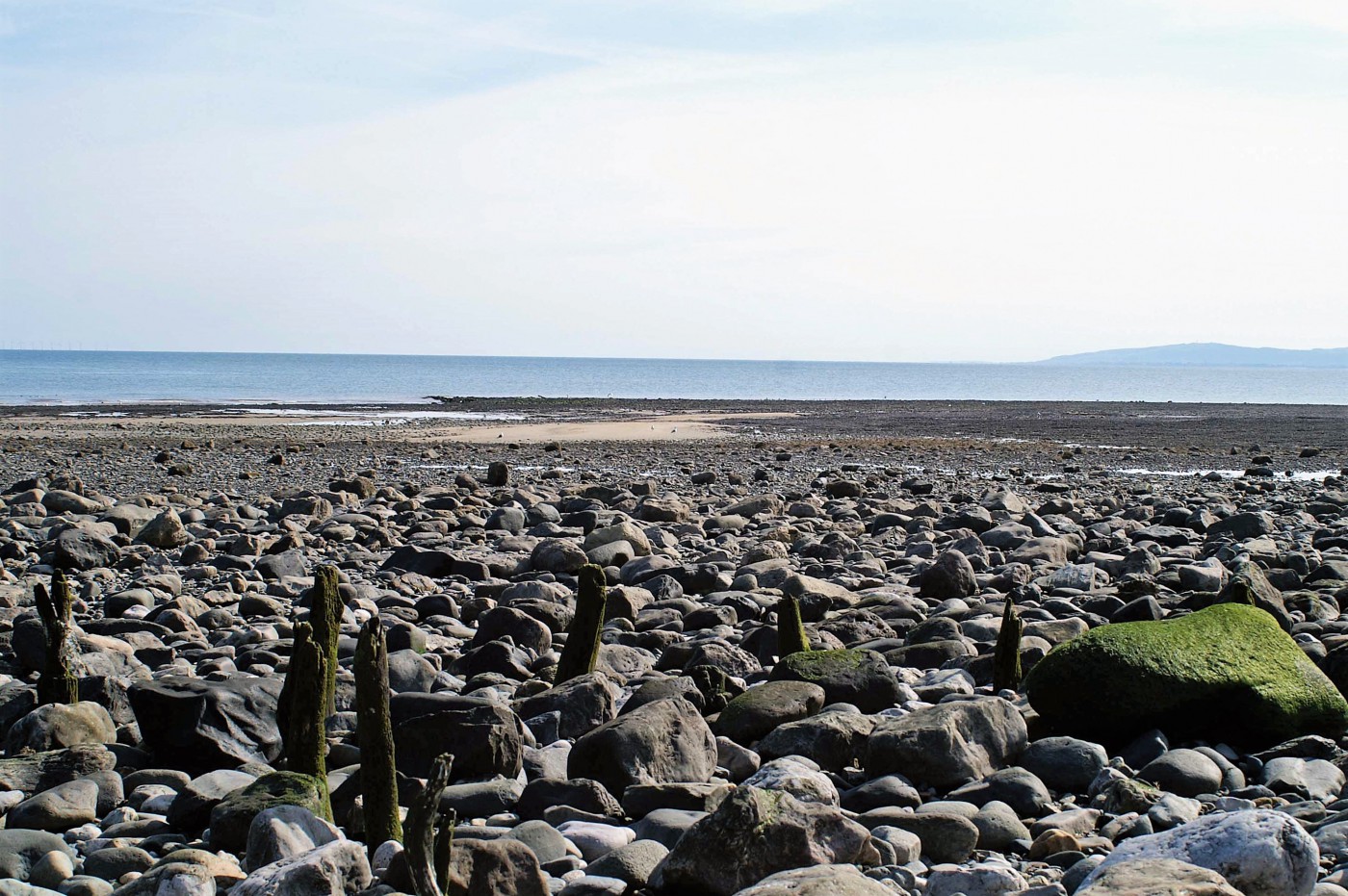
Rhos-on-Sea is a popular seaside venue that is busy with people visiting most of the year round, particularly at weekends and when the sun shines, but they don’t come here for its beach. The seashore, wrapped around the flat fortified headland of Rhos Point, is not the most beautiful in North Wales: a general first impression may well be of an expanse of flat shoreline littered with variously sized brown-coloured rocks and boulders. No easy strolling or picnicking here.

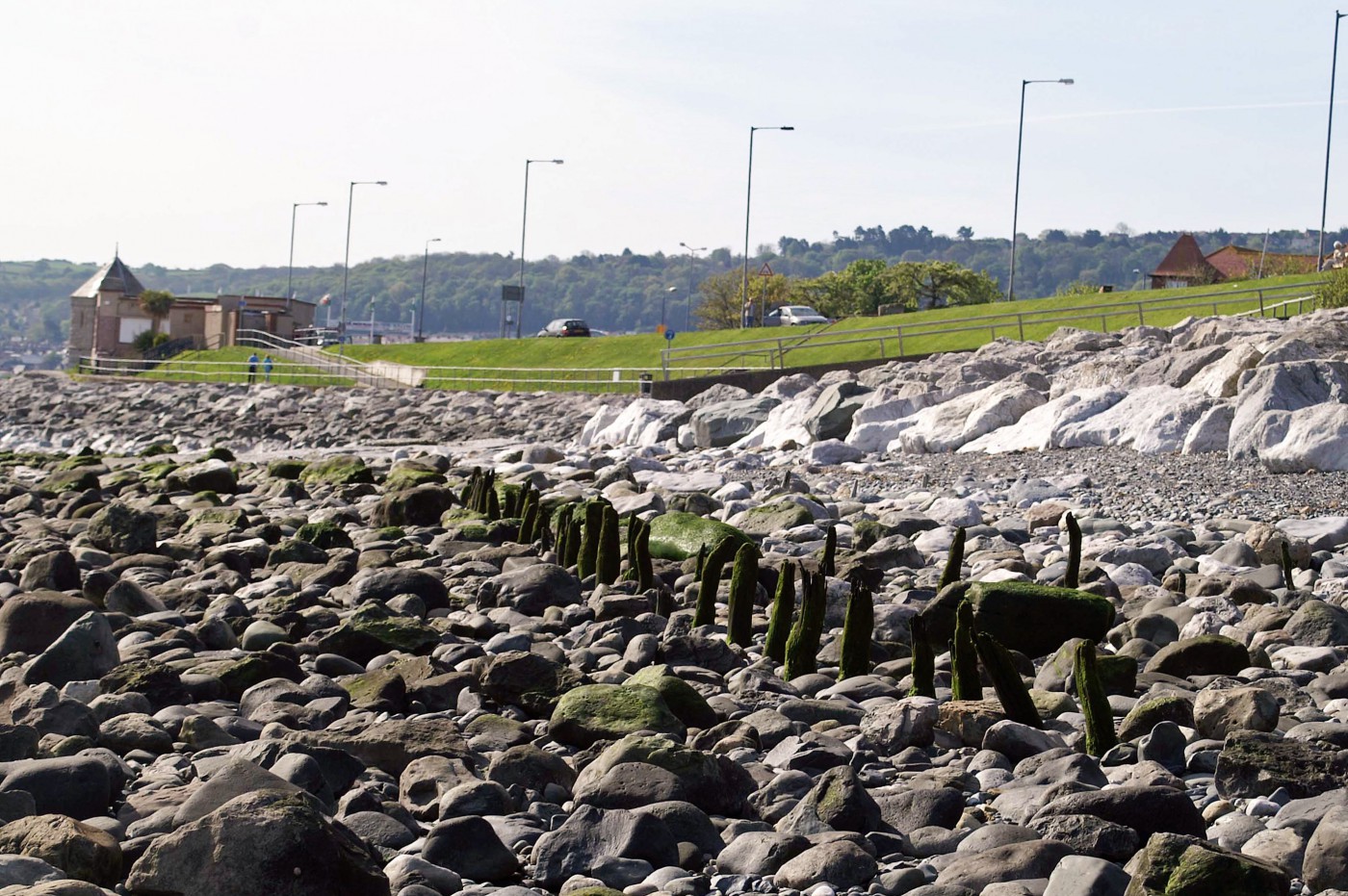
The stumps of posts are the remains of an ancient fishing weir

Rhos Point shore looking towards Colwyn Bay-the stumps of posts are the remains of an ancient fishing weir

The rocky shore of Rhos Point from Penrhyn Bay

The rocky shore of Rhos Point from Penrhyn Bay

However, between the rocky shore and the sea lies an expanse of long-established Mussel beds which is highly attractive to visitors – of the avian variety. Large numbers of a variety of species of sea and shore birds will be returning here this month from their summer breeding grounds to spend the autumn and winter to feast on the gourmet seafood on offer here.

Rhos Point across the rock strewn shore to the mussel beds

Rhos Point across the rock strewn shore to the mussel beds

Part of the expanse of mussel bed beyond the rocks

Part of the expanse of mussel bed beyond the rocks on a sunny day

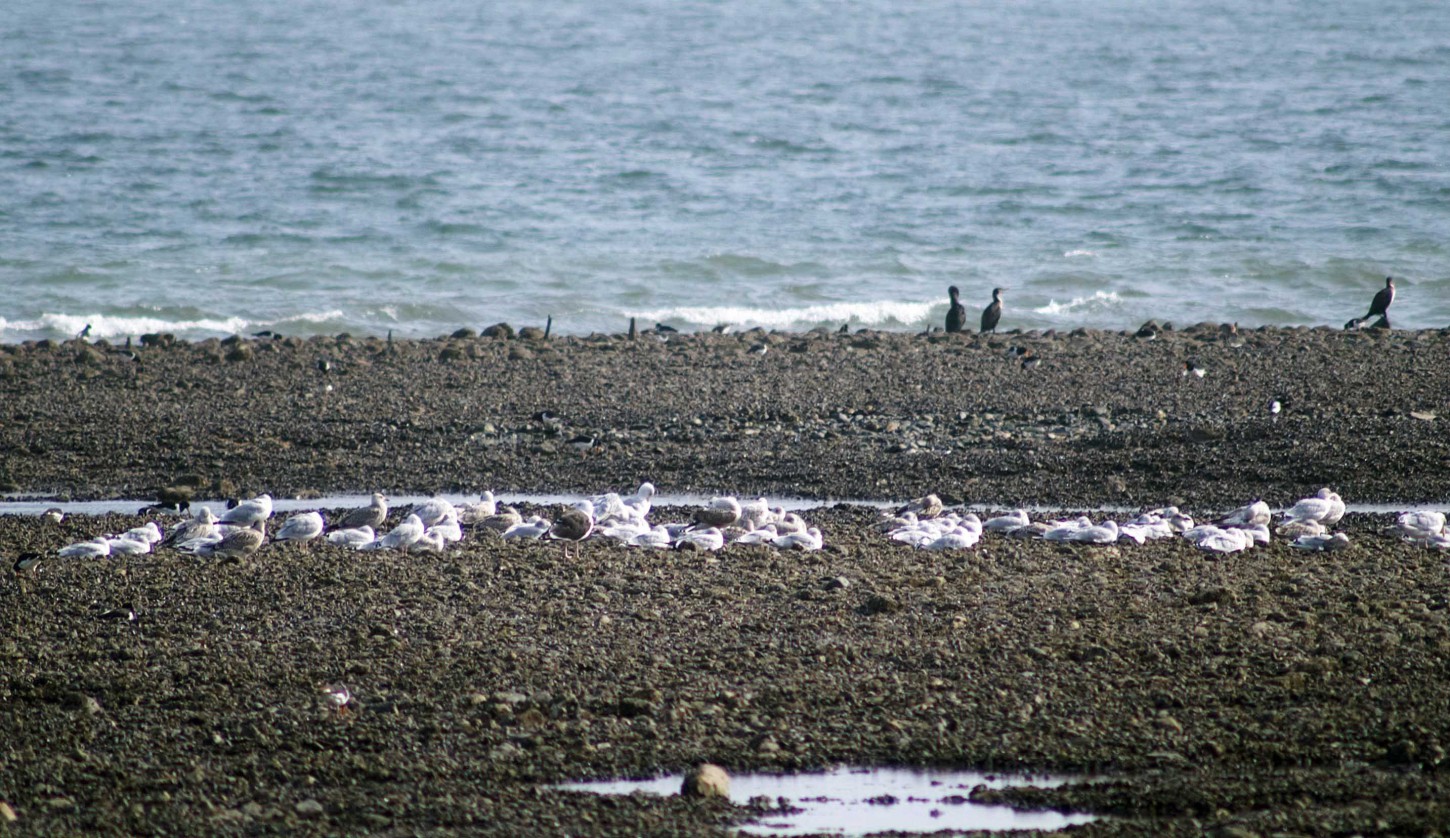
There may be a few early arrivals, maybe a Turnstone or two, but for now, approaching mid-August, the resident breeding birds, the Herring gulls, a smallish number of Lesser Black-backed gulls, Cormorants, plus a few Oystercatchers have the place more or less to themselves.

KONICA MINOLTA DIGITAL CAMERA

Great Black-backed gulls, adults & juveniles, Herring gull & Oystercatchers

Rhos Point shoreline with fishing weir posts cormorants & gulls

Rhos Point mussel bed, juv. cormorants, oystercatchers & gulls

Soon they will be joined by large numbers of Curlews, Redshanks, more Oystercatchers, Turnstones, Dunlins, Ringed Plovers and Sandwich Terns. If we are lucky there may be a few Purple Sandpipers in the mix, and there will doubtless be a few temporary visitors stopping to feed before escaping to warmer climes. There will be Rock Pipits and Pied Wagtails amongst the huge rocks of the sea defences. So much to look  forward to!

Without the movement and cries of the absent birds the landscape appears harsh, a sombrely coloured, barren place devoid of life. But look more closely and you’ll see it is in fact a living landscape, richly populated by hosts of small sea creatures, which is of course why the birds head here for the winter.

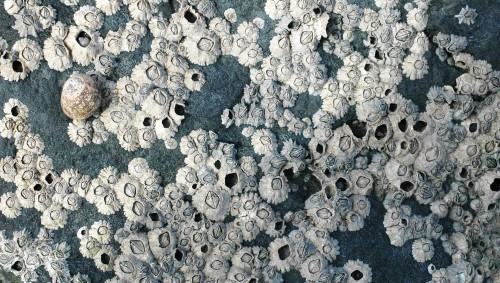
On close inspection, the rocks that appear a uniform brown colour from a distance are actually encrusted with colonies of barnacles, millions of them.

Barnacles and winkles cover the surface of a rock

Barnacles cover the surfaces of rocks

Acorn barnacles

Acorn barnacles

Barnacles and winkles

Barnacles and winkles

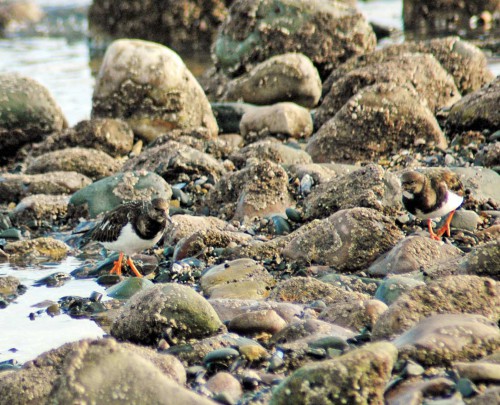
Turnstones camouflaged amongst the barnacle-covered rocks

Turnstones will be perfectly camouflaged amongst the barnacle-covered rocks

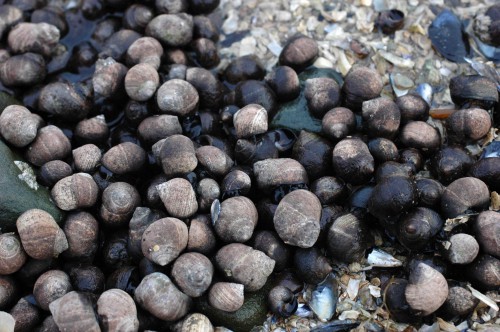
Winkles, or periwinkles are numerous too.

Winkles

Common periwinkle or Winkle-Littorina littorea

At low tide, cross the rocks, skirting the pools of shallow water left behind

Rock pool

Rock pool with more winkles

A flower of the sea -Beadlet anemone - Actinia equina

A flower of the sea -Beadlet anemone – Actinia equina

and soon the crunch of shells accompanies every footstep, as you are literally walking across the surface of a dense mass of living Mussels. It’s a very strange feeling.

Live mussels

The Mussel bed – live mussels amongst empty shells

You realise now why you see mussel shells everywhere.

Mussel shells under water

Mussel shells under water

141017TGNW4-Seashells mixed & crab legs

Live mussels & a live cockle amongst empty shells and crab claws

Mussel shells on the tide line of Rhos Harbour beach

Mussel shells on the tide line of Rhos Harbour beach

All is ready for the avian invasion.


Share this:

  • Share on Facebook (Opens in new window) Facebook
  • Share on Pinterest (Opens in new window) Pinterest
  • Share on X (Opens in new window) X
Like Loading...

Wales Coast Path-Colwyn Bay to Pensarn

05 Tuesday May 2015

Posted by theresagreen in Nature of Wales, North Wales, Wales Coast Path

≈ 8 Comments

Tags

colwyn bay pier, goldcrest, grey wagtail, herring gull, Llanddulas Point, Old Colwyn, sea holly, sea mayweed, seashore walks, yellow horned poppy

One of my ambitions for this year is to walk more of the North Wales section of the  Wales Coast Path, which begins, or ends depending on which way you’re walking at Chester and continues around to Caernarfon. Some of the walks I do fairly regularly are part of the Coast Path, and there are other bits within reasonable striking distance that I could do fairly easily and I am keen to see more of the wildlife found along this amazing and varied coastline. On a sunny day back in the middle of March I set off in the opposite direction to that of my usual routes planning to walk the section from Colwyn Bay to Pensarn, the seaside part of Abergele. I cheated a bit as I have done the Colwyn Bay part so many times before, and drove to the pier to take some updated photos of the route along the promenade.

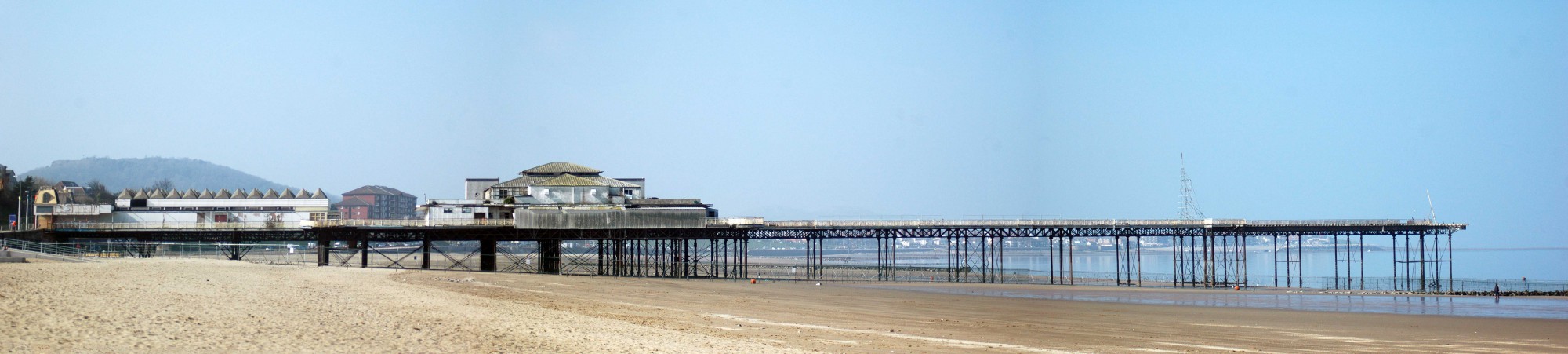
Colwyn Bay Pier, in a sad and dilapidated state

Colwyn Bay’s Victoria Pier, in a sad and dilapidated state

As a result of a long drawn-out dispute over its ownership, the pier is in a sad state of disrepair and dilapidation but there is much ongoing effort locally to save and restore it. It must be a bit of an embarrassment to the local council, particularly as a lot of money has been invested in providing a new sandy beach and in the building of the new water sports centre, known as Porth Eirias, just a stone’s throw away.

The water sports centre at Porth Eirias is finished but not yet occupied..

The water sports centre at Porth Eirias is finished but not yet occupied..it’s meant to look like a ship

From Porth Eirias the path continues as a promenade and cycle path and is my favourite stretch, particularly in the winter when stormy seas send waves crashing into and over the sea wall and flood the road, which may be closed off on exceptionally wild days. On the opposite side of the road the railway track runs parallel atop a high embankment, which provides habitat for an interesting array of wildflowers. There are great views from the trains too.

The view from Porth Eirias that shows the route of the Coast Path  towards Llandulas

The view from Porth Eirias that shows the route of the Coast Path towards Llanddulas

At the end of the promenade is a small parking area from where the path and cycle track continue towards Llanddulas. I had intended to park here and walk, but it was full of works vehicles as yet more work was being carried out on reinforcing the sea defences. Instead I crossed over the road and turned in towards Old Colwyn and stopped by the river at Min-y-Don.

Celandines

Celandines

Celandines smothered the grassy bank on the sunny side of the road and King Cups lit up the shadier side of the path along the river.

The river was running fast and at a fairly decent level, although nowhere near full.

150318TG-Old Colwyn- King cup

Golden yellow King Cups

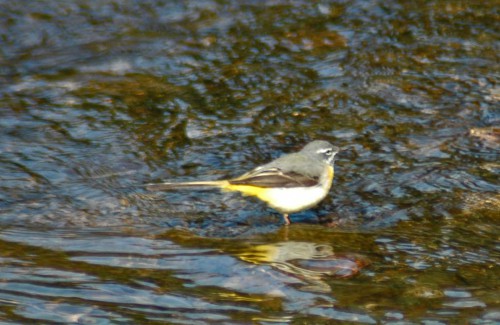
This is a favourite spot for Grey Wagtails and I had timed my visit perfectly as a pair of them flew down from upstream to land almost right in front of me. I watched them for a good while, darting after flies from stones in the water and running along the stone wall.

Grey Wagtail - the female of a pair

Grey Wagtail on the river Colwyn- the female of a pair

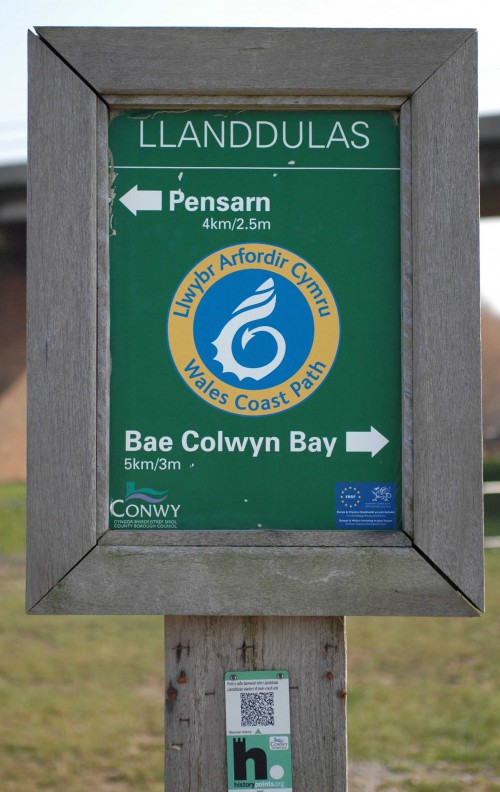
150318TG-Wales Coastal Path-Llanddulas- Sign board

I drove on to Llanddulas Point and parked facing out across the flat rocky shore to the sea. The views from here are expansive to say the least, and if you were walking the Coast Path seriously I can imagine it may be rather daunting to be able to see where you are heading and will arrive at in a few hours time.On a sunny and warmish day like today it is pleasant enough and as the land is almost pancake flat, easy walking. I’m not sure if I’d fancy it on a wet day when the wind was blasting you in the face.

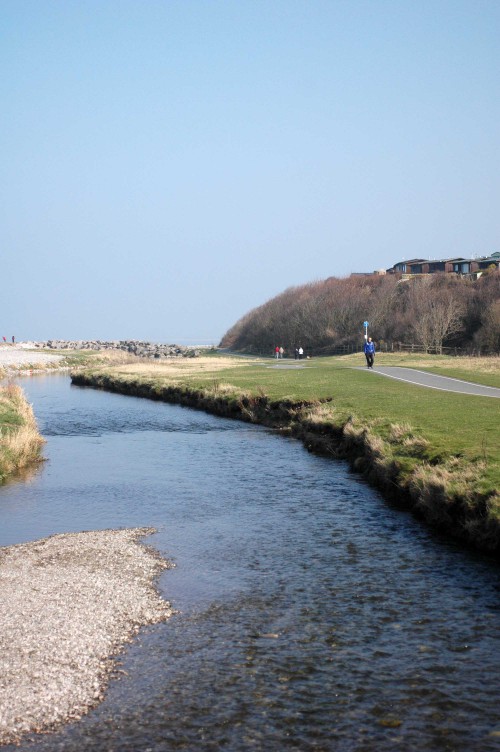
Leaving the car park and crossing a small bridge, the path follows the lower stretch of the River Dulas for a short distance until it reaches its end and flows towards the sea.

Path alongside the river

Path alongside the River Dulas

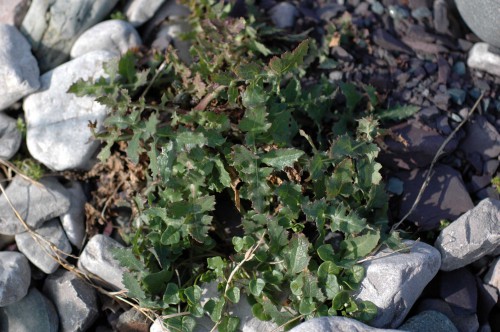
The coast here may appear to stark and empty, but it provides important habitat for a good range of marine plants and the eastern end of Llanddulas beach is designated as a SSI as locally rare plants such as sea kale and yellow horned poppy grow there. It was too early in the season for plants to be flowering, but there are new leaves pushing up through the shale.

New leaves of Sea Holly

New leaves of Sea Holly

New leaves of Yellow Horned Poppy

New leaves of Yellow Horned Poppy

New leaves of Sea Mayweed

New leaves of Sea Mayweed

As I neared the last stretch of the river I heard, then spotted more Grey Wagtails, another pair I’m sure, that were hunting flies from stones near the banks, flitting low across the water from one side to the other. As you round the bend in the path where the river ends the narrow ribbon of trees that follow the line of the cliff reaches the path edge. As I got close to this point a wren flew from the tree cover across to a rock and belted out his song.

Red-brown lichen

Red-brown lichen

I attempted to get a bit closer to him and he moved off, but I was soon distracted by a rock face smothered in a red-brown coloured lichen, I have no idea what it is, and another rock with some sort of quartz trapped in it.

Quartz in limestone

Quartz in limestone

Sheltered on this side of the rocks there was a clump of sea mayweed that appeared to have been blooming for some time as many of the flowers were already beginning to go to seed.

Clump of flowering Sea Mayweed

Clump of flowering Sea Mayweed

A green-bottle fly on Sea Mayweed flower

A green-bottle fly on Sea Mayweed flower

Highlighted by the sun there was a pretty little clump of moss or with seed-heads on a nearby rock too.

Moss or lichen with seedheads

Moss with seedheads

Moving back to the path I spotted two tiny birds flitting about amongst the twiggy tree branches. I thought at first they were wrens, but then excitedly realised they were too small and were actually goldcrests, a definite pair. I watched them for a good while as they continued to forage amongst the lichen-covered twigs, but didn’t have much luck getting a clear enough view for long enough to get a good photograph. The one below is the best I could do but it does confirm the sighting!

A rear view of one of a pair of goldcrest

A rear view of one of a pair of goldcrest

I would never have imagined seeing these delightful little birds here within a metre or two of a busy walkway, but there they were and no-one else seemed to notice them at all. These trees are mostly ash that have been regularly pollarded to prevent them growing high enough to block the view from the wooden chalets that line the clifftop above them and appear to be a popular spot with a variety of other species of birds too. In the short while I was there I saw blackbirds, dunnocks, robin, the wren I already mentioned and blue tits and great tits.

A view of the shore lined with herring gulls

A view of the shore in the direction of Abergele then on to Prestatyn and Rhyl

A few metres away the shoreline was lined with huge numbers of herring gulls. During the winter months, there are oystercatcher, curlew, redshank and turnstone feeding here and some years there are snow buntings.

The shoreline stretches on to Pensarn then on to Prestatyn and Rhyl

The shoreline stretches on to Pensarn then on to Prestatyn and Rhyl

I was surprised to find some little yellow coltsfoot flowers pushing up through the stony ground next to the path here.

Coltsfoot

Coltsfoot

Wooden chalets line the path for a good distance along this section of the path and there were a growing number of people out walking dogs, so I turned round and walked back the way I had come.

Limestone quarry

Limestone quarry

Mist obscured much of the distant views today, but it was still possible to make out the outline of the old limestone quarry which rises up behind the shore, separated from it by the A55 Expressway. For 300 years quarrying was a major occupation in this area, second only to farming and lime kilns dominated the skyline from 1890 to 1940. There is a working quarry operational today and between Llanddulas and Colwyn Bay the path passes a jetty that serves it. There used to be another jetty, closer to Llanddulas where during stormy weather in April 2012 a cargo ship that was loading there was forced on to the rocks and had to be dismantled.This event made the national news and I recall it causing chaos on the A55 as people stopped their cars and got out to have a look or to take photographs.

Linnets on the raised stony sea bank

Linnets on the raised stony sea bank

Final treats were the sight of a small flock of linnets that flew on to the raised stony sea bank to feed on seeds and a lovely pair of mallard by the footbridge.

Mallard pair

Mallard pair


Share this:

  • Share on Facebook (Opens in new window) Facebook
  • Share on Pinterest (Opens in new window) Pinterest
  • Share on X (Opens in new window) X
Like Loading...
Newer posts →
Follow everyday nature trails on WordPress.com

Enter your email address to follow this blog and receive notifications of new posts by email.

‘But it is the common species that keep the living world ticking over and provide most of our experiences of wildlife, and I would argue that maintaining the abundance of these is as important a conservation priority as maintaining the existence of rarities’. Richard Mabey

MOST RECENT POSTS

  • A Glimpse of Spring to Come January 22, 2025
  • Hunting the Wren December 28, 2024
  • Oh, Christmas Tree December 18, 2024
  • In and Out of the Ivy February 15, 2024
  • Nature’s Fireworks November 30, 2023
  • Wild Autumn along the Coast Path November 3, 2023

OLDER POSTS

LOOKING FOR SOMETHING IN PARTICULAR?

  • Sights and Sounds from the Little Orme 1
    Sights and Sounds from the Little Orme 1
  • Things Bright and Beautiful
    Things Bright and Beautiful
  • Following a river to a Fairy Glen
    Following a river to a Fairy Glen
  • A Windy Wildflower Trail
    A Windy Wildflower Trail
  • Fine Dining for Crows
    Fine Dining for Crows
  • Catchers, a Duck and Divers
    Catchers, a Duck and Divers
  • A Window on the Woods-Winter 1
    A Window on the Woods-Winter 1
  • Butterflies and more rare treats
    Butterflies and more rare treats
  • May Bee Appearing on Ivy near You
    May Bee Appearing on Ivy near You
  • Bird study: Blackcap
    Bird study: Blackcap

nightingale trails

The Walk of the Monarch Butterfly-Sendero de la Mariposa Monarca

The Walk of the Monarch Butterfly-Sendero de la Mariposa Monarca

MY WILDFLOWER BLOG: where the wildflowers are

Snowdrop

Snowdrop

most recent posts

Follow everyday nature trails on WordPress.com

Social

  • View teresamaygreen’s profile on Twitter

Enter your email address to follow this blog and receive notifications of new posts by email.

Website Built with WordPress.com.

  • Subscribe Subscribed
    • everyday nature trails
    • Join 359 other subscribers
    • Already have a WordPress.com account? Log in now.
    • everyday nature trails
    • Subscribe Subscribed
    • Sign up
    • Log in
    • Report this content
    • View site in Reader
    • Manage subscriptions
    • Collapse this bar
 

Loading Comments...
 

    %d