• Home
  • about
  • about the photographs
  • Local Nature Reserves
    • Bryn Euryn Local Nature Reserve
    • Mynydd Marian
  • Wales Coast Path
    • Grey Seals in North Wales
    • St.Trillo’s Chapel
    • Wildflowers of North Wales Coastal Paths, Cliffs and Dunes

everyday nature trails

everyday nature trails

Category Archives: Little Orme

Wales Coast Path – Little Orme

24 Sunday May 2015

Posted by theresagreen in birds of Wales, Birdwatching on North Wales coast, coastal walks, coastal wildflowers, Little Orme, Nature of Wales, Rhiwledyn Nature Reserve, The Wales Coast Path, Wildflowers of Wales

≈ 3 Comments

Tags

Cormorant, cormorants nesting, fulmar, fulmar nesting, ground ivy, jackdaw, sea campion, The Wales Coast Path-Little Orme

The Little Orme is a highlight of both the northern Wales Coast Path and the North Wales Path; it is a Nature Reserve with diverse habitats and wildlife and is popular with visitors and locals. I walk here often throughout the year but thought I would photograph this walk, taken at the end of April, as though I was following the Path, while meandering around as I usually do admiring the views and the special wildlife.

The Coast Path follows the promenade from Rhos-on-Sea around the Point and up to Penrhyn Bay. To reach the Little Orme turn off the main road and walk along Beach Road, which ends in a cul-de-sac where there are steps up to the site. Turn right at the top of the path from the steps to continue on the route.

In late winter to early spring Fulmars return to their nest sites here. They are noisy birds and vocalise loudly in the first weeks of their return as they sort out who is nesting where. Now, in late April they have quietened down and are settled into their nest sites on the more sheltered sides of the cliffs. There are currently five pairs on the more inland cliff and three or four more pairs on the lee sides of the cliff faces nearest to the sea. Their numbers are few but seem to be reasonably consistent year on year.

Fulmar nest on cliff nearer the sea

Fulmar nest on cliff nearer the sea

Fulmar pair sitting on cliff edge

Fulmar pair sitting on cliff edge

At the base of the cliff forming one side of Angel Bay, Sea Campion is flowering.
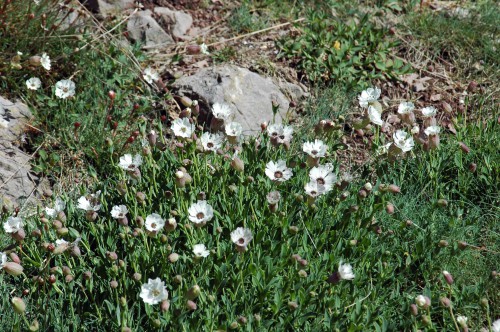
Sea Campion

Sea Campion-Silene maritima

I usually head for the cliff edge overlooking Angel Bay to see if there are any Grey Seals about. Today there were just two young ones swimming close to the rocks. The path to the summit involves an initial steep climb up an incline locally known as ‘Rabbit Hill’. It looks a gentle slope in the photograph, but it really isn’t, especially when you are as unfit as I was after my marathon-long virus! I had to stop twice today, but who cares when there are stunning views to look back at.

The Coast Path continues up steeply sloping 'Rabbit Hill'

The Coast Path continues up steeply sloping ‘Rabbit Hill’

Jackdaws are numerous residents and pairs of the characterful birds are nesting in nooks and crannies all over the cliffs. It’s always good to see them nesting communally in their ‘proper’ habitat rather than in the chimneys of houses in towns and villages. There are a particularly large number of them nesting up on the cliff at the back of the flat quarried-out grassy area at the top of Rabbit Hill and as I reached there I watched them as they used their numbers to chase off two Herring Gulls that were probably speculating for unguarded eggs.

Cliff face of the old quarry  that is now inhabitated by Jackdaws

Cliff face of the old quarry that is now inhabitated by Jackdaws

Jackdaw foraging at the base of the cliff

Jackdaw foraging at the base of the cliff

Onwards and upwards from the rock-strewn quarry field the track is bordered by gorse bushes and the air was perfumed with its wonderful coconut scent. Every bush was smothered with thousands of tightly packed golden flowers, a truly glorious treat for both eyes and nose. The grass is kept closely cropped by both rabbits and wandering sheep and a variety of birds including blackbirds, robins, chaffinches, goldfinches and dunnocks all forage here on the ground or amongst the scrubby shrubbery.

A baby bunny dozing in a sunny spot at the side of the track

A baby bunny dozing in a sunny spot at the side of the track

The track upwards bends to the right now and passes by an enclosed rough pasture grazed by  sheep and is frequented by Jackdaws. It’s always worth checking to see if any of the black birds are actually Chough.

A sheep pauses from grazing in the enclosed field to admire the view

A sheep pauses from grazing in the enclosed field to admire the view

At the top of the field the track turns sharply left and continues bordered by more gorse, blackthorn and hawthorn. Today walking through the fragrant gorse and blackthorn blossom was blissful.

The  trail winds through a thicket of gorse and blackthorn
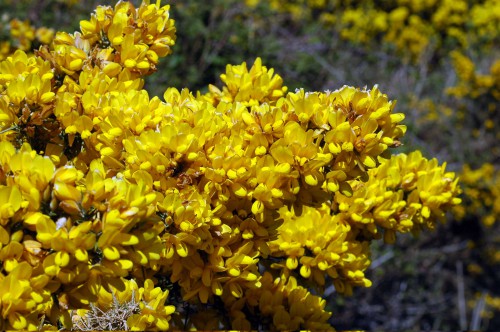
The trail winds through a thicket of gorse and blackthorn

Every gorse bush was packed tight with blossoms

Every gorse bush was packed tight with fragrant blossoms

Eristalis Hoverfly nectaring on gorse flower

Eristalis Hoverfly nectaring on gorse flower

If you had been walking the Coast Path, there is a perfect view from the top of this section of the track of where you have walked if coming from the direction of Abergele, or of where you will be walking if going the other way.

View from the cliff edge showing the route of the Coast Path from Abergele, past Lladdulas and around Colwyn Bay and Rhos Point

View from the cliff edge showing the route of the Coast Path from Abergele, past Lladdulas and around Colwyn Bay and Rhos Point

I could hear a Chaffinch singing so diverted from the main track here along one made by sheep to try to find him. It wasn’t long before I spotted him in a hawthorn tree preening himself and intermittently responding to the song of another male somewhere nearby.
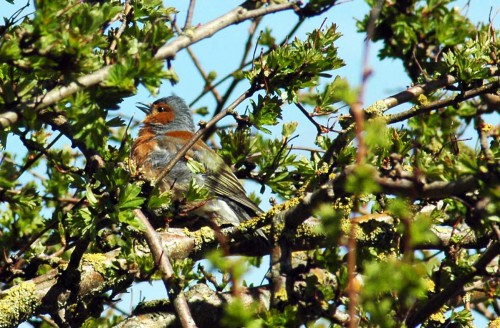
Male Chaffinch singing and preening

Male Chaffinch singing and preening

Ground Ivy

Ground Ivy

The track continues upwards towards the top

The track continues upwards towards the top waymarked Wales Coast Path and North Wales Path

One of the reasons for taking this walk today was to check up on the Cormorants that nest on the sea cliffs of the headland. I wouldn’t recommend making this diversion to the cliff edge if you have children or a dog not on a lead with you, or if you are of a nervous disposition as to get a good view of the birds you do have to go carefully down a slope which has no barrier between its edge and the drop down. It was windy today too, as you can see by the ruffled sea.

A ewe with her lamb on the slope of the cliff edge

A ewe with her lamb on the slope of the cliff edge

There are large numbers of Cormorants here all year round and in Welsh the bird is known as ‘llanc llandudno’. I’m sure they have nest sites all around the headland, but this is the only one I know of that is reasonably visible from the cliffs. The limestone rock is smooth and sheer so it is amazing that the Cormorants, quite large birds, find safe places to site their nests here.
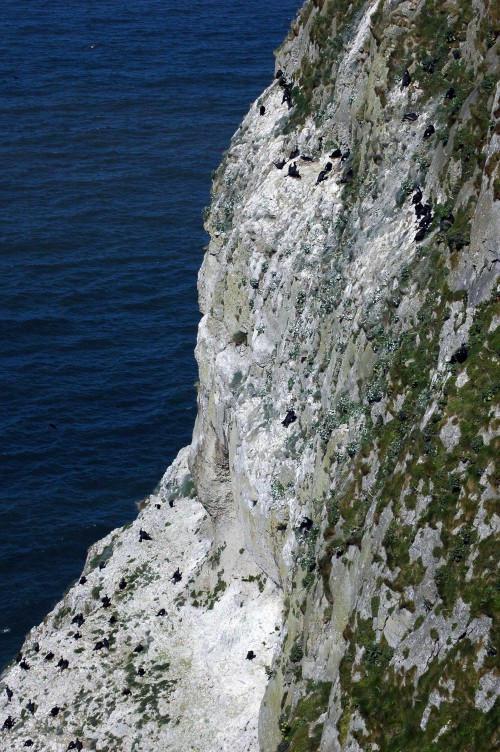
A view of the nest site on the almost-sheer cliff face

An overview of the nest site on the almost-sheer cliff face

There are three areas the birds are gathered in, an area at the top, a middle section and a few on a shelf quite near the bottom.
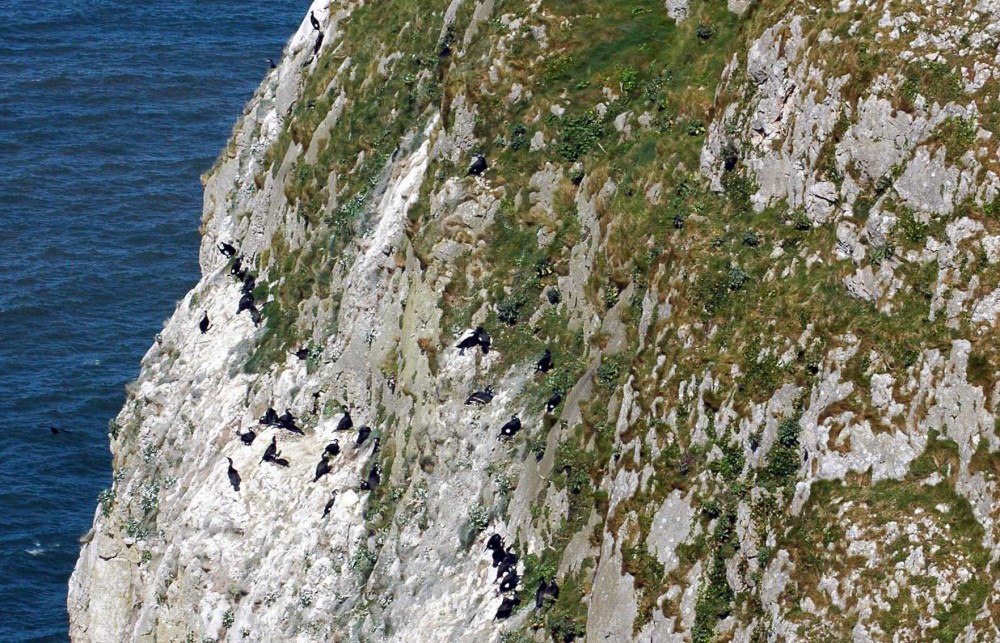
A closer view of the area most of the birds were gathered in

A closer view of the top-level area some of the birds were gathered in
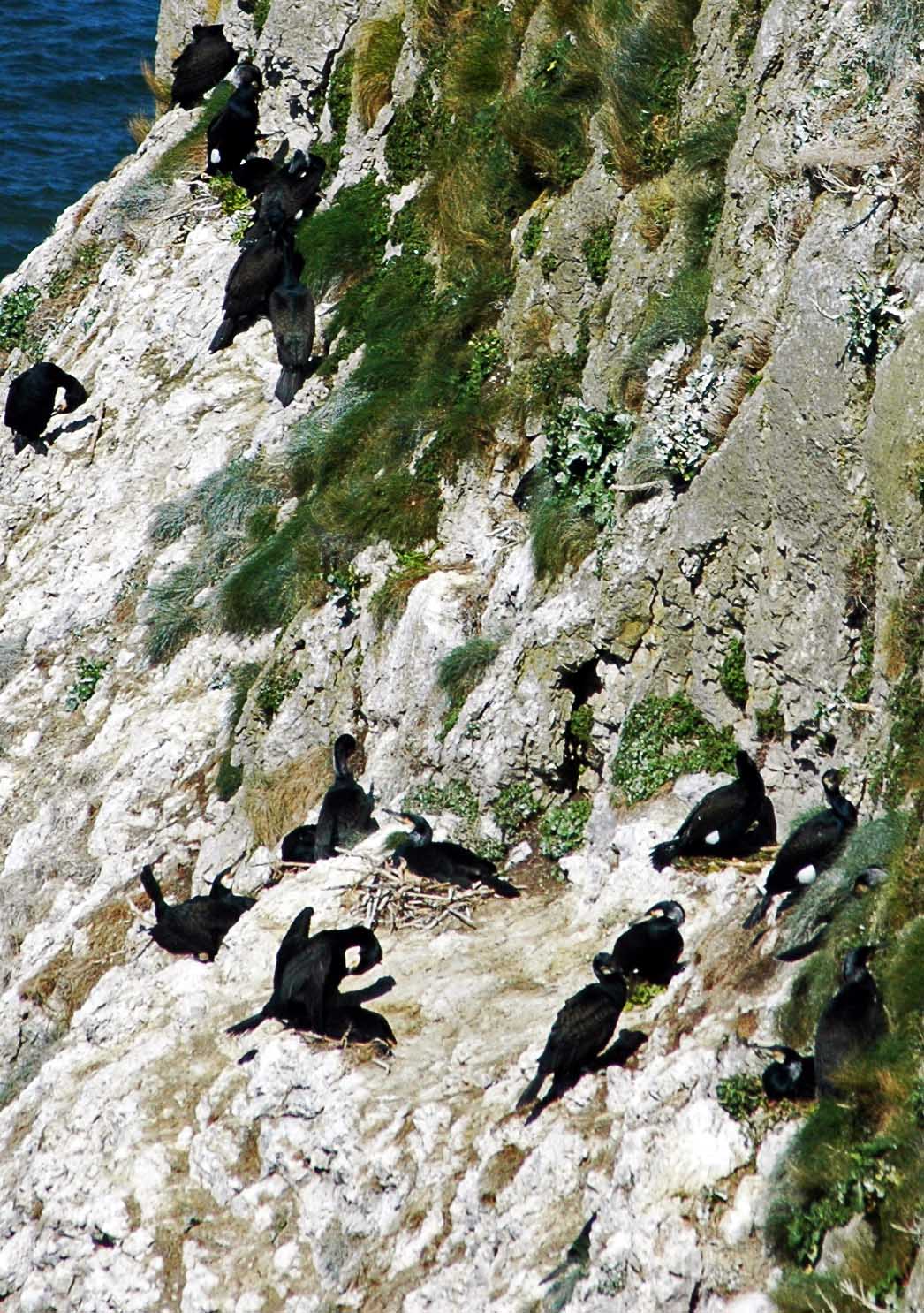
A few birds wwere sitting on nests while others, probably males, sat with their backs to the sea

A few birds were sitting on nests while others sat with their backs to the sea

Cormorants sitting against the cliff with backs to the sea
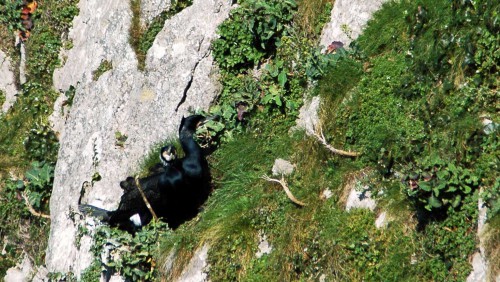
Cormorants sitting against the cliff with backs to the sea

A pair of birds nesting amongst wild cabbage plants

A pair of birds nesting amongst wild cabbage plants

Another pair on a sloping rocky ledge

Another pair on a sloping rocky ledge

Cormorant flying past cliff

Cormorant flying past cliff

Fascinating as the Cormorants were, it was chilly here on the windy cliff, so I went back up and along the cliff edge to the part below the summit which was sheltered from the wind and from where there are stunning views across the bay to Llandudno’s Victoria Pier and Little Orme’s big brother, the Great Orme. In the background is the Isle of Anglesey.This view shows the route of the ongoing Coast Path around Llandudno Bay.
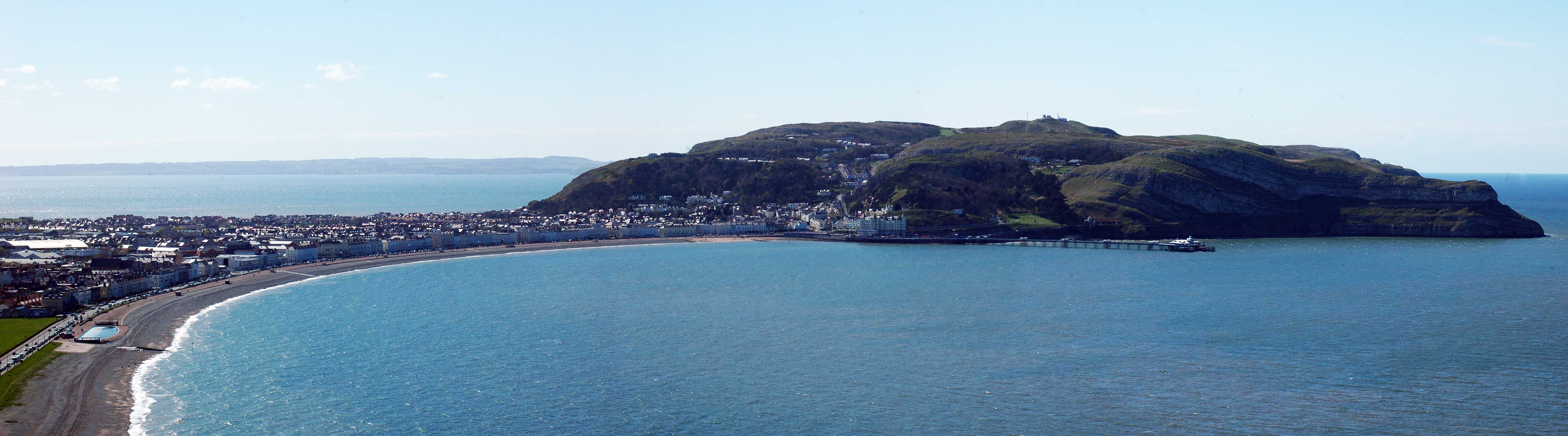
Panoramic view of Llandudno, the pier and Great Orme with Anglesey in the background (click to enlarge)

Panoramic view of Llandudno, the pier and Great Orme with Anglesey in the background (click to enlarge)

Cormorants race past and Herring Gulls are always to be seen flying or gliding around this part of the cliff, and there is occasionally a Kestrel, but today I was surprised to see two Buzzards flying out over the sea and a Sparrowhawk flying in and heading towards the Great Orme.

The ongoing Coast Path

The ongoing Coast Path passes around Llandudno and on to Deganwy and Conwy

It is possible to go up a little further to reach the trig point on the summit but the views are no better from there so I don’t often get that far and turn around to go back the way I came. If you were following the Coast Path though you would follow the track that takes you down to rejoin the main road at Craigside and continue towards Llandudno.

Share this:

  • Share on Facebook (Opens in new window) Facebook
  • Share on Pinterest (Opens in new window) Pinterest
  • Share on X (Opens in new window) X
Like Loading...

Bumbles, Masons and Miners

10 Sunday May 2015

Posted by theresagreen in Bryn Euryn Nature Reserve, bumblebees, Little Orme, Local Nature Reserves, Nature of Wales, Rhiwledyn Nature Reserve

≈ 4 Comments

Tags

buff-tailed bumblebee, common carder bee, early mining bee, mason bees, mining bees, red mason bee, red-tailed bumblebee, tawny mining bee, tree bumblebee

Early spring is a good time to look out for some of the different species of bees found locally, catching them before they settle in to producing the next generation. On recent outings Bryn Euryn was particularly well blessed with bumblebees and some other interesting species and the Little Orme brought an unexpected treat so I thought I’d put them all together.

The Buff-tailed bumblebee- Bombus terrestris is the largest of our native bumblebees. Queens, workers and males have a dirty golden yellow collar near the head and one on the abdomen.

Buff-tailed bumblebee

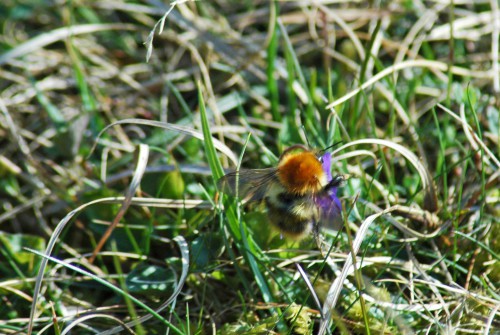
Bryn Euryn – Buff-tailed bumblebee queen

The queen’s tail is an off white/buff colour which can sometimes appear orange. The queens are busy establishing new colonies and may be seen collecting pollen to stock it and crawling around on the ground where they nest in burrows underground.

Buff-tailed bumblebee queen on the ground

Bryn Euryn-Buff-tailed bumblebee queen on the ground

I didn’t spot any workers or males on the days I was out and about, if I had these would both be smaller than the queens and look slightly different as workers have a white tail and that of the males is white ringed with a buff line.

Red-tailed Bumblebee- Bombus lapidarius queens are also establishing new colonies and can be seen feeding and collecting pollen from flowers and also crawling around on the ground as they too nest underground.

Red-tailed bumblebee queen with full pollen baskets

Red-tailed bumblebee queen with full pollen baskets

Queens are distinctive with their black bodies and red tails and are large, between 20 -22mm long which is a similar length to that of the Buff-tailed bumblebee queens, but the red-tailed is less bulky.

Red-tailed Bumblebee queen emerging from a patch of ivy-leaved speedwell

Bryn-Euryn -Red-tailed Bumblebee queen emerging from a patch of ivy-leaved speedwell

There are Red-tailed bumblebee workers about too. They have the same colouring as the queens but are smaller, varying in size from 1-16mm in length, with some early workers being no bigger than a house fly.
They have comparatively short tongues and favour flowers that provide them with a landing platform such as dandelions and daisies and later on, thistles and ragwort. In gardens they like chive flowers and lavender.

24/4/15-Red-tailed worker bee on dandelion

24/4/15-Bryn Euryn-Red-tailed worker bee on dandelion

To make things confusing there is a cuckoo-bee that closely resembles the Red-tailed bumblebee. The main differences are that the cuckoo bee has black wings and the back legs are hairy and without the shiny hairless patch, the pollen basket, of the true bee.

There were a very few Common Carder bees Bombus pascuorum about and I only managed one quick shot of one visiting a dog violet flower. There will be many more later on.

Carder Bee

Bryn Euryn – Common Carder Bee

An exciting new recording for me here was of the Tree Bumblebee Bombus hypnorum, that’s is not to say they weren’t here before, just that I had never seen one. I was lucky to spot two that were taking nectar from the Green Alkanet flowers which grow in a big patch next to the car-park gate.

21/4/15 -Tree bumblebee-Bombus hypnorum

21/4/15 – Bryn Euryn-Tree bumblebee-Bombus hypnorum

Tree bumblebees are fairly new arrivals to the UK, first found in 2001 in Wiltshire. Since then they have spread across most of England and Wales and made it to Southern Scotland in 2013. Queens, workers and males all have a similar colour pattern; the thorax is tawny to reddish-brown, the abdomen is black and the tail is white.

Tree bumblebee burdened with mites

Tree bumblebee burdened with mites

Queens vary significantly in size and can reach up to 18mm in length. Males are quite chunky and can be as much as 16mm in length; fresh males have a patch of yellowish facial hair which eventually wears off. Workers, which is what I believe I photographed range from 11-16mm in length; they move around rapidly and are effective pollinators.

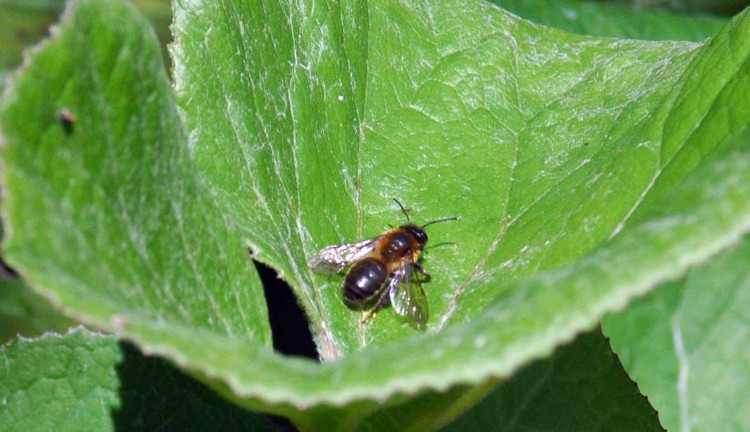
Basking on the leaves of the butterbur plant that also grows near the gate at the bottom end of of the car park was another little bee. I’m not positive about its identification but based on the colour of the hairs on its thorax I think it may be an Early Mining Bee – Andrena haemorrhoa.

150421TGNW-BE68c-Early Mining Bee

Bryn Euryn-Early Mining Bee-Andrena haemorrhoa

A couple of days later I was walking on the Little Orme and came across another species of mining bee that cannot be mistaken for anything else, the Tawny Mining Bee-Andrena fulva.

There were two individuals attempting to nectar on Alexander’s while a particularly strong wind was bending and tossing the flower around. It was tricky trying to get focussed images.

28/4/15- Tawny Mining Bee on Alexanders -Little Orme

28/4/15- Little Orme-Tawny Mining Bee on Alexanders

Males are 10 to 12 mm and the females 8 to 10 mm long. The females are covered with fox red hair on their backs and black on the underside, whilst the males are more slender and yellower in appearance.

Tawny Mining Bee

Little Orme-Tawny Mining Bee

One of the two managed to hold on and kept searching over the florets, but the other gave up and dropped to the ground.

Tawny Mining Bee on the ground

Tawny Mining Bee on the ground

The bees mate in spring, after which the male dies and the female starts to build a nest. Sometimes more than a hundred females build nests in a few square metres but the Tawny Mining Bee normally does not create a colony: each female has her own nest.

Finally I’d like to mention another little bee found locally, the Red Mason Bee Osmia rufa, also most likely to be spotted around this time of year.

Fairy Glen-Red Mason Bee

Fairy Glen-Red Mason Bee

The males are smaller than the females at 6 -11 mm. Both sexes are covered in dense gingery hairs, the male with white tufts on the head while the female’s head is black.

Red Mason Bee

Red Mason Bee (m)

It is a solitary bee, each nest being the work of a single female bee working alone. They nest in pre-existing cavities such as hollow plant stems, old garden canes, air bricks, and even old nail holes in fence posts, lining the inside of the cavity with mud.


Share this:

  • Share on Facebook (Opens in new window) Facebook
  • Share on Pinterest (Opens in new window) Pinterest
  • Share on X (Opens in new window) X
Like Loading...

Enchanting evening on the Little Orme

03 Sunday Aug 2014

Posted by theresagreen in Butterflies of Wales, Little Orme, moths, Nature of Wales, nature photography, Rhiwledyn Nature Reserve, The Wales Coast Path, Wildflowers of Wales

≈ 2 Comments

Tags

6-spot Burnet Moth, 6-spot Burnet Moth pupa, Antler moth, cinnabar moth larvae, emerging 6-spot Burnet Moths, mating 6-spot Burnet Moths, small skipper, sulphur beetle

Some days the intention of a walk is at the forefront of my mind, then ‘stuff’ crops up and before I know it the day is almost over and the momentum needed to get me out of the door is fading fast. This was almost one of those days, when at six thirty-something I was still preoccupied with getting things done in the house. Luckily I finally acknowledged the little nagging voice in the back of my mind that was insisting I got out for some fresh air. I almost ignored it, then gave in, grabbed my camera, put on walking shoes and headed out with no real idea where I was heading for.

At around seven I arrived at the Little Orme. I knew before I arrived that by this time in the evening most of the area on this most accessible side of the headland would be in the shadow of its bulk, as the late sun slips down and slides around it to set just about behind its tip. There were quite a few people about too; dog walkers of course, some holidaymakers dressed up for the evening, maybe taking an evening constitutional before dinner & a couple of groups of teenagers, one lot jumping, diving, shouting and laughing from a rocky ledge into the sea.  I quickly judged that this was not a scenario I would normally enter into if hoping to spot any wildlife and on that basis decided this outing would be for the purpose of exercise. So a brisk walk to the cliff edge, an about turn and a concerted effort to get to the top of Rabbit Hill with minimum stops to catch breath, back down again and home ought to do it.

A group of people with two dogs was heading toward me, so to avoid them momentarily I stepped off the main path onto a narrow track that leads around the cliff, skirting what is currently a large patch of long grass. It took less than a minute of being there to spot that a good number of Meadow Brown butterflies were flitting about amongst the grass stems and settling there. It took slightly longer to realise they were there to roost for the night.

Long grass on the clifftop of the Little Orme with view to Rhos-on-Sea & Colwyn Bay behind

Long grass on the clifftop of the Little Orme where the butterflies were roosting. Views to Rhos-on-Sea & Colwyn Bay beyond

I tried to approach several butterflies, treading slowly and carefully through the grass, but I couldn’t get close enough to them to photograph and hadn’t picked up my more powerful zoom lens when I left the house as I didn’t expect to need it. I continued to try until following one individual led me to discover a cluster of Six-spot Burnet Moths on a single grass-head.

Cluster of 6-spot Burnet Moths

Cluster of 6-spot Burnet Moths- Zygaena filipendulae

It was clear that the Moths were in differing conditions, with one n particular looking a bit battered and with most of the colour gone from its wings. I assumed that as with the Meadow Browns the Burnets were also seeking to roost for the night and turned my attention to a passing Small Skipper that settled obligingly on another nearby grass-head.

Small Skipper

Small Skipper- Thymelicus sylvestris

I was happy now, especially as in the cool of the evening the butterflies and moths were not as mobile as they are during the day and were allowing me to get quite close to them with the camera.

Another Small Skipper

Another Small Skipper

As I moved  through the grass and further towards the cliff edge I began seeing more Burnet moths. And more.

6-spot Burnet moths either side of a grasshead

6-spot Burnet moths either side of a grasshead


It slowly dawned upon me that although the butterflies were roosting, the moths were not. They were out intent on mating.

6-spot Burnet moths mating

6-spot Burnet moths mating

I could hardly believe the numbers of moths that were gathered here in this relatively small area of long grass. I have been to visit this reserve many times and felt lucky to see half a dozen individuals on a sunny afternoon, now I was surrounded by them. They were literally everywhere I looked. It still took a further while though to realise that even more amazingly, I had arrived at exactly the time the new moths were almost simultaneously emerging from their cocoons.

6-spot Burnet Moth emerging from its pupa

6-spot Burnet Moth emerging from its pupa

I had begun to spot the yellow cocoons with something black and alien-looking emerging from them, but couldn’t quite imagine it ending up as a moth at all, so at first thought they were something else. I don’t what, just something else.

A closer view of an emerging moth

A closer view of an emerging moth still doesn’t look like one

It was only when I spotted other Burnet moths perched on top of cocoons from which another was emerging that I was convinced that somehow these crumpled black forms would indeed eventually look just like them.

A 6-spot Burnet moth on top of an as-yet unbroken pupa

A 6-spot Burnet moth on top of an as-yet unbroken pupa

I began to wonder then why the moths were sitting on top of the pupae. I’m afraid the only theory I could come up with was that they were male moths staking a claim on emerging females to mate with them as soon as they became viable. Not pretty, but probably not far off the mark. (more about 6-spot Burnet Moth)

Two Burnet moths on top of a pupa from which another is emerging

Two Burnet moths on top of a pupa from which another is emerging

I tried watching an emergence for a while, but it seemed like a lengthy process, so still marvelling at my luck in witnessing this epic event, I left the moths to their nuptials and moved on. I would have been happy to have taken my previously outlined walk now and returned home, but it turned out there were still a few things to see in the gathering dusk.

A sleepy bumblebee curled around a blackberry

A sleepy bumblebee curled around a blackberry

Ragwort is in full vibrant bloom now and I just had to look for black and yellow striped caterpillars of the Cinnabar moth. I was not disappointed, there were plenty in sizes varying from very tiny to very large.

Small Cinnabar moth caterpillar on ragwort flower buds

Small Cinnabar moth caterpillar on ragwort flower buds

A large plump Cinnabar moth caterpillar snaked around a ragwort bud

A large plump Cinnabar moth caterpillar snaked around a ragwort bud while eating it

I was also fortunate to spot a prettily marked moth : this is an Antler moth, so called because of the distinctive antler-shaped markings on its forewings. One of the species that flies in daylight.

An attractive little Antler moth  on ragwort flowers

Antler moth- Cerapteryx graminis

Long grass with cliff wall of the Little Orme behind

Long grass with cliff wall of the Little Orme behind

On the cliff above Angel Bay is another patch of long grass, but here it is mixed with wildflowers such as hogweed, ragwort and a sprinkling of knapweed, all important nectar plants for insects. This evening there were still a few to be found out dining including bumblebees and one little Sulphur beetle.

Sulphur beetle- Cteniopus sulphureus

Sulphur beetle- Cteniopus sulphureus

I left for home happily and exercised – I made it up to the top of Rabbit Hill, admittedly pausing a couple of times, but why wouldn’t you when the view is so spectacular and the sun is setting so beautifully over the sea?

Share this:

  • Share on Facebook (Opens in new window) Facebook
  • Share on Pinterest (Opens in new window) Pinterest
  • Share on X (Opens in new window) X
Like Loading...

The strangely beautiful Carline Thistle

03 Sunday Aug 2014

Posted by theresagreen in Bryn Euryn Nature Reserve, Little Orme, Nature, Nature of Wales, nature photography, Rhiwledyn Nature Reserve, Wildflowers of Wales

≈ 4 Comments

Tags

carlina vulgaris, carline thistle, dry thistle plant, thistle with large dried out flowers, Welsh wildflowers

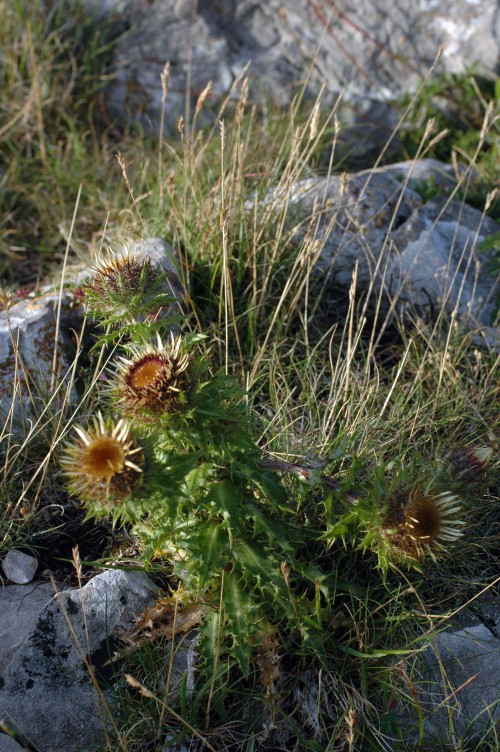
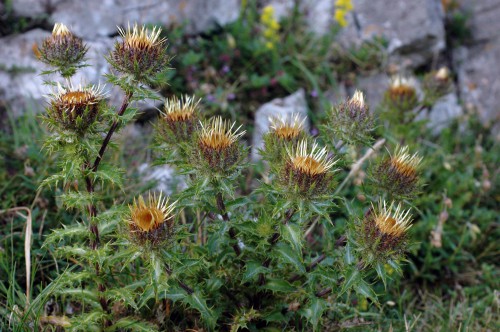
Carline thistle plant growing amongst rocks on Bryn Euryn

Carline thistle plant growing amongst rocks on Bryn Euryn

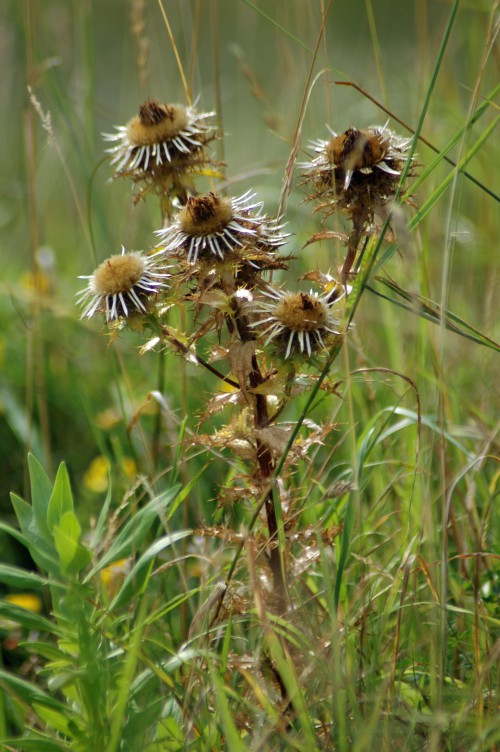
The Carline thistle is one of a handful of more unusual plants occurring in several of our nature reserves that have areas of dry calcareous grassland. It is a biennial plant so its appearance can be rather unpredictable both in exact location and in numbers of individual plants; it is never what you could call abundant. The plant can be seen throughout most of the year as when it’s finished flowering it persists as a very dry skeletal form of itself.

In past years I have found them on both ‘Ormes’, Little and Great but the best specimens, this year at least, are to be found growing on the top, rocky areas of Bryn Euryn.

Carline Thistle

Carlina vulgaris

Family: Daisy & Dandelion Asteraceae; biennial to 80cm; flowering June to September

Carline thistle with a Thick-thighed beetle on a flower

Carline thistle with a Swollen-thighed beetle on a flower

The Common Carline Thistle is a short, stout and prickly little thistle with intriguing  golden-brown-tinged-purple, rayless flowers (15-40mm across) that are surrounded by conspicuous, spiny, sepal-like yellow bracts which spread widely apart beneath. In the bright sunshine, they glisten silver and gold and in wet weather they close up.

The flowerheads are carried on densely prickly, leafy stems. The oblong leaves have toothed or lobed blades with spiny edges.

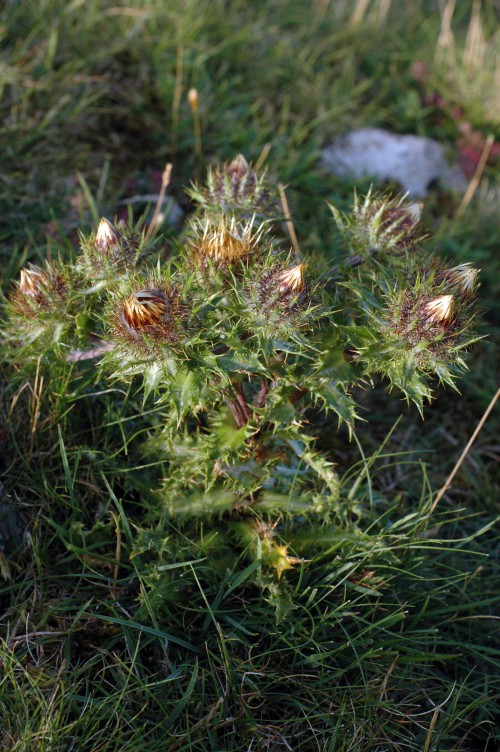
An all-over densely prickly plant , buds just beginning to break

An all-over densely prickly plant, buds just beginning to break

In bud the flower is contained by a tight  mass of dark purplish brown or black spines intertwined with a net of white fibres resembling cotton wool.

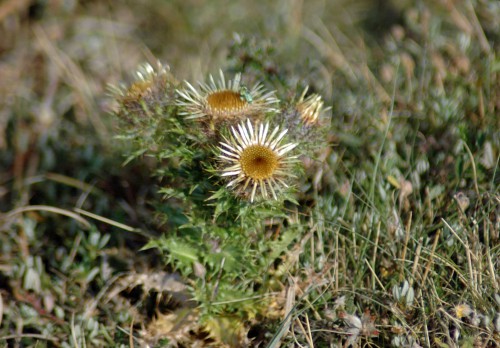
Carline thistle- Carlina vulgaris

Carline thistle-flowers opening

At  first, the opening heads look rather like dead or dying daisies, but this is their normal appearance.

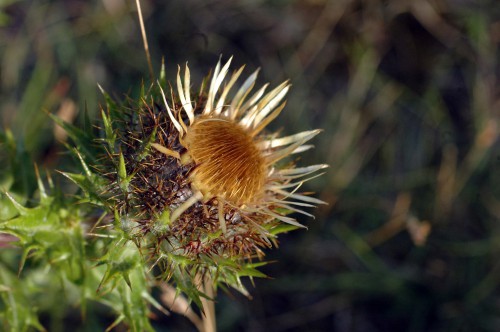
Flowerhead in profile

Flowerhead in profile

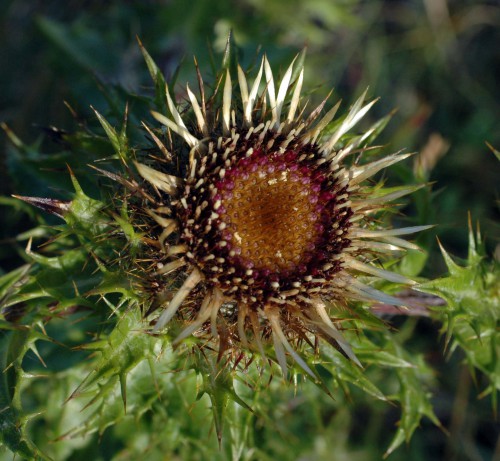
The inner florets are straw yellow at first, but then purple petals start to emerge from the periphery, gradually proceeding towards the centre.

Composite flowerhead of a Carline thistle fully open

Composite flowerhead of a Carline thistle fully open

The seed-heads lend the plant a softer appearance.

Seedheads on a plant already drying out

Seed-heads on a plant already drying out

The dead flower, after the season is over, appears much as it did when it was alive.

September-a much-dried plant still maintaining its form

September-a much-dried plant still maintaining its form (Little Orme)

Traditional uses

The flower head was once used as a humidity gauge because the bracts close in the higher humidity typical of impending rain.

This plant had some uses in folk medicine and legend has it that it got its common name ‘Carline’ because the Emperor Charlemagne used the plant to cure his army of pestilence.

Subsequently it has been discovered that both Stemless Carline Thistle(Carlina aucalis) (where it was first found) and Carline Thistle contain the acetylide Carlina Oxide orCarlinoxide (furylbenzylacetylene), the main compound (85% – 90%) of the essential oil from the plant, which has a long history of medicinal use in Europe due to its anti-microbial properties. It is active against two strains of MRSA and a number of other difficult infections. It is stomachic, carminative, diaphoretic and an antibiotic.


Share this:

  • Share on Facebook (Opens in new window) Facebook
  • Share on Pinterest (Opens in new window) Pinterest
  • Share on X (Opens in new window) X
Like Loading...

Celebrating new lives

26 Saturday Jul 2014

Posted by theresagreen in bird behaviour, birds of Wales, Bryn Euryn Nature Reserve, frogs & toads, Little Orme, Nature, Nature of Wales, Rhiwledyn Nature Reserve

≈ 2 Comments

Tags

common frog, house sparrow, kestrel, rabbit, raven

It seems to have been a good year for our local wildlife so far and the following are some of the photographs I have taken of a few new young lives.

Ravens nest early in the year, so firstly here is an image of this year’s Little Orme young one quite well grown but still in the nest at the end of May.

140531TG-Raven young in nest 2-Little Orme

31st May: Young Raven in nest on Little Orme

I was lucky enough to catch up with him/her on the summit of the Bryn a few weeks later, now looking extremely fit and handsome in glossy black plumage.

June: Young Raven on the summit of Bryn Euryn

June 15th: Young Raven on the summit of Bryn Euryn

June: A fine high place with plenty of open sky to practise flying skills

June 15th: A fine high place with plenty of open sky to practise flying skills

Back to May again. Whilst the Raven was still in the nest, a young Kestrel was already out practising their manoeuvring skills over the rocky cliff at the top of the Little Orme. When I spotted it first I thought I’d been fortunate to spot a bird out hunting, but as I got closer it kept up its position and made no attempt to fly away at my approach. I realised then it was a young bird out honing its skills. It was wonderful to be allowed to watch so closely

May 31st

May 31st: Young Kestrel practising hunting techniques above the Little Orme

May 31st: The length of time the bird held its position was impressive

May 31st: The length of time the bird held its position was impressive

May 31st: Swooping and diving

May 31st: Swooping and diving

The Kestrel disappeared over the headland for a few minutes then reappeared flying out over the sea. As it passed where I stood on the cliff edge it looked in my direction. Perhaps to make sure I was still watching and was suitably impressed.

Flying past the cliff edge where I stood

Flying past the cliff edge where I stood

May 31st: Out over the sea, maybe using the gull to focus on

May 31st: Out over the sea, maybe using the gull to focus on

Still on the Little Orme it was apparent there has been a proliferation of cute baby rabbits this year too:

May 31st: Baby rabbit on the Little Orme

May 31st: Baby rabbit on the Little Orme

On the first of July we discovered a Dunnock’s nest in the garden with tiny new chicks with enormous gapes.

July 1st: Hungry baby Dunnocks

July 1st: Hungry baby Dunnocks

Then there was a miniature frog that I just happened to spot struggling through the damp grass on the lawn, possibly heading for nest door’s lovely pond. I caught it in my hand and transferred it to a glass for a few minutes so I could photograph it.

20th July: A tiny froglet

20th July: A tiny froglet

It had no trouble at all climbing to the top of the glass. The froglet was less than an inch (2.5cm) long, but completely perfect.

July 20th: A rare view of the speckled underside

July 20th: A rare view of the speckled underside

I didn’t keep it for long before releasing it back where I found it.

July 20th: Then I let him go again

July 20th: Then I let him go again

Last weekend I sat outside to drink a cup of tea and was kept entertained by a family of House sparrows that had brought their latest brood out for their first outing. The young birds were wobbly and fluttery while trying to perch on twiggy branches of the recently drastically cut privet hedge and still begging their parents for food.

July 20th: A very young House sparrow out for a first outing

July 20th: A very young House sparrow out for a first outing

Dad seemed to be on feeding duty, popping back and forth with bits and pieces.

Dad seemed to be the one in charge of feeding this morning

Dad seemed to be the one in charge of feeding this morning

I caught him feeding one of the offspring with something that I’m sure mum would definitely have disapproved of.

Not quite on target

Not quite on target

Something lurid pink about to be passed on

Something lurid pink about to be passed on

Down the hatch

Down the hatch

Whatever it was, it was certainly sticky. Cake icing maybe?

Whatever it was, it was certainly sticky. Cake icing maybe?

I wonder if the hard working parents will get a rest now?


Share this:

  • Share on Facebook (Opens in new window) Facebook
  • Share on Pinterest (Opens in new window) Pinterest
  • Share on X (Opens in new window) X
Like Loading...

There’s more to the Orme

15 Saturday Feb 2014

Posted by theresagreen in Little Orme, Nature, Nature of Wales, nature photography, Rhiwledyn Nature Reserve, The Wales Coast Path

≈ 3 Comments

Tags

cliffs of the Little Orme, Great tit singing, Greenfinch, house sparrow, long-tailed tit, red-throated diver, Robin, textures in landscape

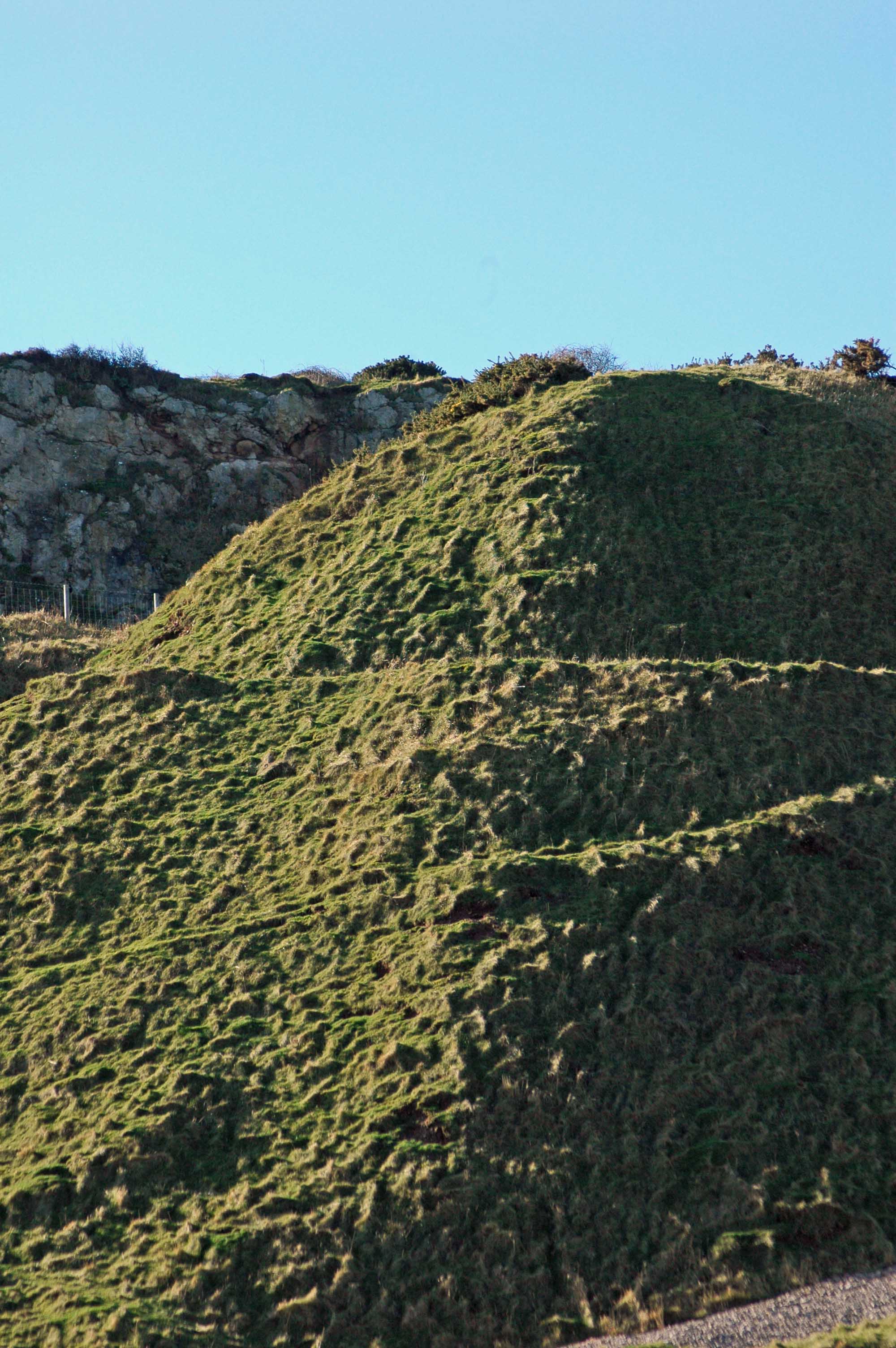
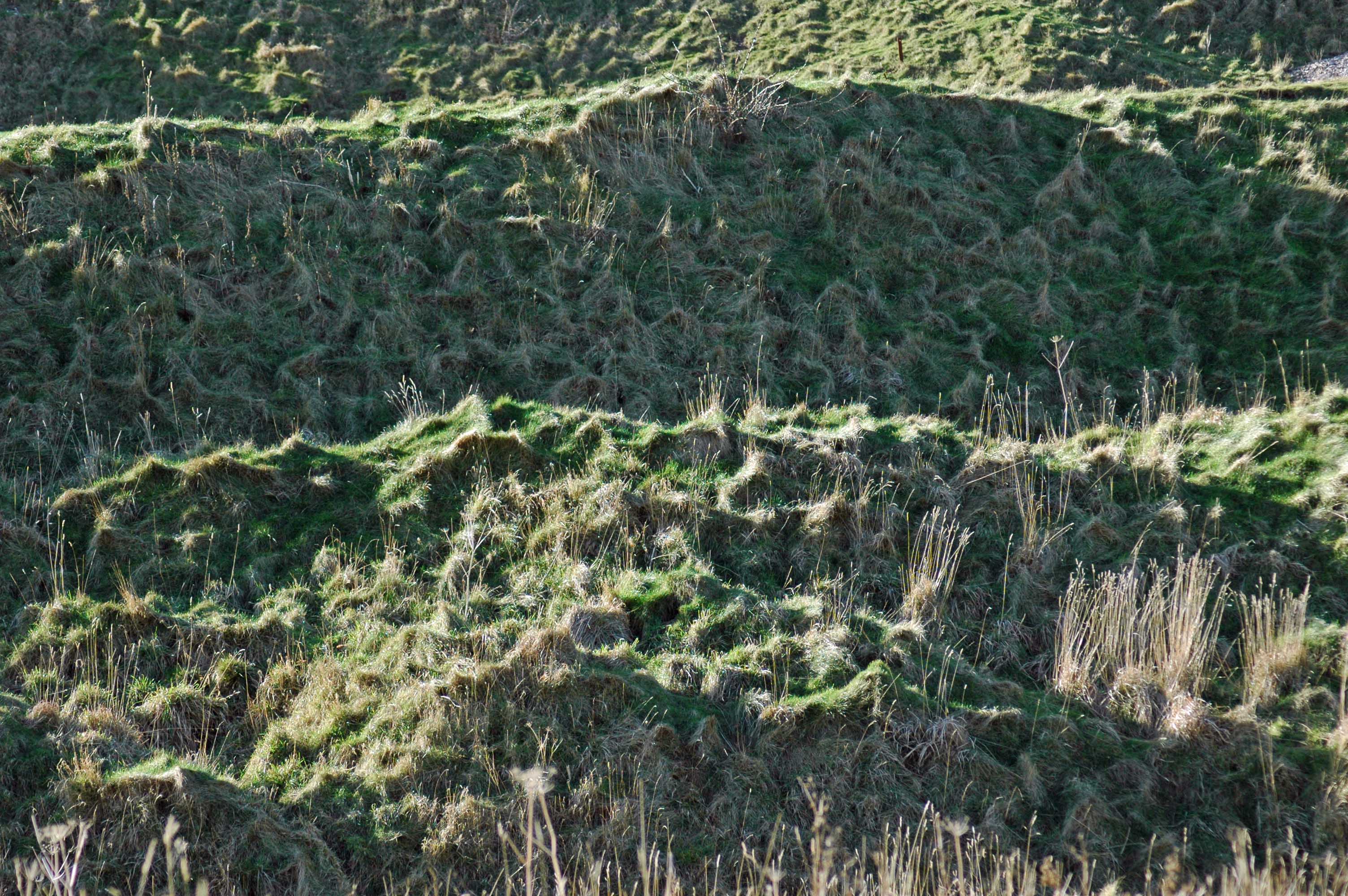
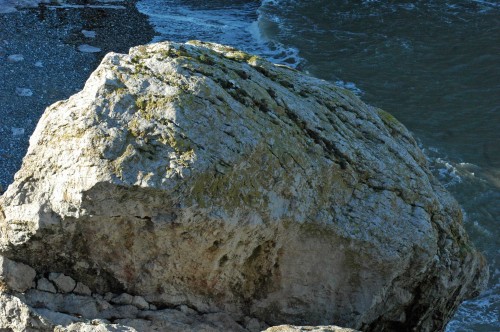
When the wind blows and sunlight slides slowly around the bulk of the Little Orme textures and patterns are revealed on surfaces that may go unnoticed in any other season when the sun is higher in the sky.

CLIFFS

Textures and patterns on a grass-covered cliff

Sunlit cliff face

140206-Little Orme 20-Light and shade on cliff

140206-Little Orme 27-Sunlit cliff

GRASS

Textured grass terraces

Grassy hummocks

ROCKS

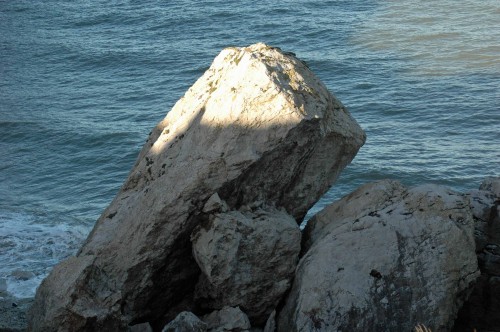
Sunlight catches the edge of a rock

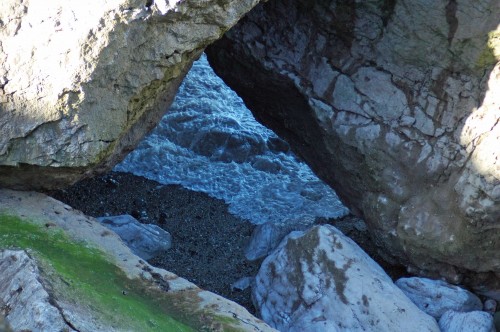
140206-Little Orme 23- Sea coming back under rocks

140111-Sunlit rock, Angel Bay

PRICKLY PLANTS 

140206-Little Orme 14- Burrs

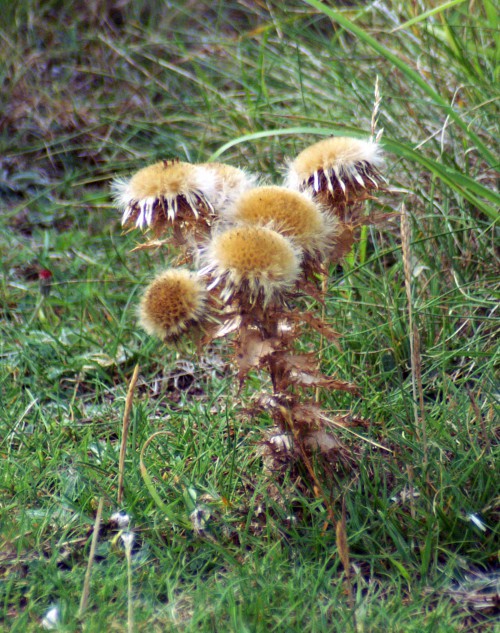
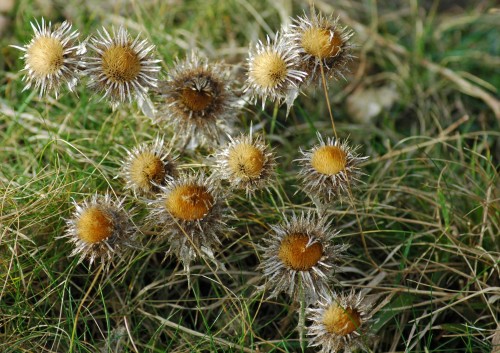
140206-Little Orme 12- Carline Thistle sunlit

140206-Little Orme 11- Carline Thistle

SEA SWELLS

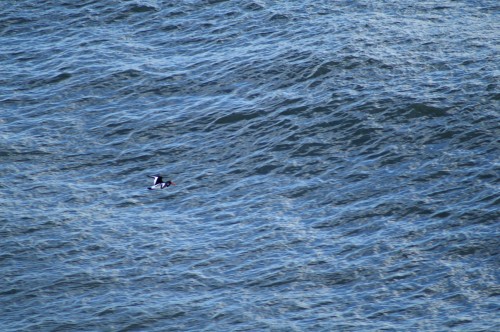
From the cliff and Oyster catcher is a tiny black and white speck against a wind-ruffled sea

140128-Little Orme 2- Grey Seals swimming

Red-throated diver

140207-Red-throated Diver-Little Orme

BIRDS AMONGST TANGLES OF TWIGS

Great Tit singing

140207-Great tit singing-Little Orme

House sparrow eating

140207-House sparrow eating-Little Orme

Robin singing

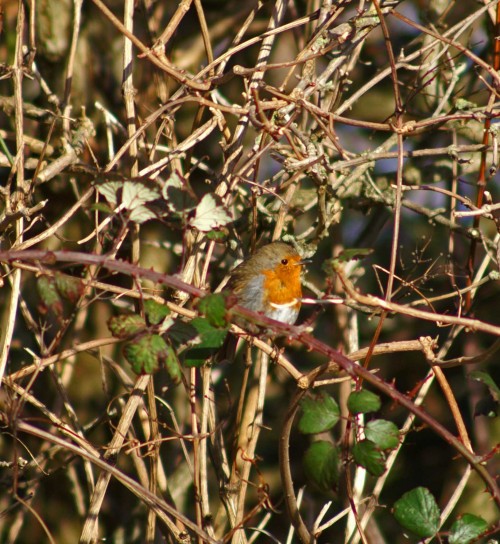
140207-Robin in a bush singing-Little Orme

Greenfinch singing

140207-Greenfinch singing-Little Orme

And a glimpse of a Long-tailed Tit

140207-Long-tailed Tit-Little Orme

Share this:

  • Share on Facebook (Opens in new window) Facebook
  • Share on Pinterest (Opens in new window) Pinterest
  • Share on X (Opens in new window) X
Like Loading...

Grey Seal Spot

24 Friday Jan 2014

Posted by theresagreen in Little Orme, Nature, Nature of Wales, nature photography, Seals

≈ 4 Comments

Tags

Angel Bay, grey seal, grey seal pups, Little Orme, seals in Angel Bay

2014 – January 11th

The Little Orme is a fascinating site to visit at any time of year as it holds a variety of habitats in a relatively small area and there is always something to see, but the winter months are the perfect time to see some of its special visitors, charismatic Grey Seals. There are never many, but the pebbly beach of Angel Bay regularly attracts a number of new mothers and pups that come to haul out to rest on the shore of this sheltered little cove. They are pretty much undisturbed there as the beach is only accessible by a steep narrow track down the cliff. They don’t seem to mind interested people watching them from above too much, even those armed with cameras, although they definitely know you’re there and may keep a wary eye on you to make sure you stay put.

Today I was pleased to discover there were indeed grey seals here; five adults in a group, seemingly dozing, while three tiny young ones were practicing their swimming techniques in the waves.

Grey seals on the shingle shore of Angel Bay, Little Orme

Grey seals on the shingle shore of Angel Bay, Little Orme

The adults appeared not to be too concerned for the safety of the youngsters; grey seal pups have to grow up fast and must be able to start fending for themselves at about a month old, so they grow and put on weight rapidly and quickly shed the pretty white fur coats they are born with. The little ones seemed quite happy in the water, although getting back in, fighting against the incoming waves seemed to present more of a challenge.

Two of the three young seals taking a break from swimming practice on the sea edge

Two of the three young seals taking a break from swimming practice on the sea edge

The adult’s apparent slumber came to an abrupt end when something seemed to alarm them and they travelled surprisingly quickly down to the sea edge.

The seals suddenly decided to move towards the sea edge

The seals suddenly decided to move towards the sea edge

A few metres on they stopped again

A few metres on they stopped again

They were heading towards a young one, making me wonder if they had perhaps been summoned by it, but then as it watched from the surf of the sea edge they simultaneously stopped and flopped down again, seemingly unimpressed.

The adult seals moved down towards a young one on the sea edge

The adult seals moved down towards a young one on the sea edge

From November onwards female grey seals return to their favourite beaches to give birth and mate again. The milk of the grey seal is very rich enabling the pups to put on weight quickly. They have to grow fast as their mothers stay with them for only three weeks before returning to the sea. The mother does not feed herself whilst feeding her pup, so hunger soon drives her back to the sea.  Young seal pups are covered in white fur when they’re born. Within a month or so they shed the pup fur, grow dense waterproof adult fur, and leave for the sea to learn to fish for themselves. The pup soon follows and must teach itself to hunt for food.

I have posted about grey seals several times before, my favourite being a post about the rescue of a very young pup  from beneath the sea-break boulders at Rhos Point by some of the caring keepers from the Welsh Mountain Zoo. The photograph below is from that post.
Alone on the seashore the baby seal looked very small and vulnerable

Alone on the seashore the baby seal looked very small and vulnerable

Share this:

  • Share on Facebook (Opens in new window) Facebook
  • Share on Pinterest (Opens in new window) Pinterest
  • Share on X (Opens in new window) X
Like Loading...

Little Orme in early June

14 Friday Jun 2013

Posted by theresagreen in Little Orme, Nature, Nature of Wales, nature photography, Rhiwledyn Nature Reserve, Wildflowers of Wales

≈ 6 Comments

Tags

alexanders, ash tree, pink wildflowers, robin's pincushion gall wasp, sea campion, walk on the Little Orme, white wildflowers, wild thyme, wildflowers of the Little Orme

I made Wild Cabbages the main floral event of my recent walk on the Little Orme, giving them a post of their own, simply because they are not an everyday plant and because the number of plants there are and the profusion of their flowers this year would have made them difficult to miss. But of course there was much more to see there.

June 4th

As late spring slips into early summer there is a blending of fading and fresh flowers and foliage. My first glimpse of the fresh was a lovely clump, (an inelegant word to use to describe such delicate flowers), of Greater Stitchwort. They were tucked tightly against a tangle of bramble, using it to support their rather weak, brittle stems.

Greater Stitchwort-Stellaria holostea

Greater Stitchwort-Stellaria holostea

On the edge of the cliff there is a smattering of Thrift and some Sea Campion, both with fading flowers. I searched for a while to find Thrift that still looked fairly fresh, but find being able to see the seeds forming within the ‘bladders’ of the Sea Campion interesting.

Thrift and Sea Campion on a scree slope at the bottom of a cliff wall

Thrift and Sea Campion on a scree slope at the bottom of a cliff wall

Thrift-Armeria maritima

Thrift-Armeria maritima

A fairly fresh flower of Sea Campion-Silene vulgaris ssp. maritima

A fairly fresh flower of Sea Campion-Silene vulgaris ssp. maritima

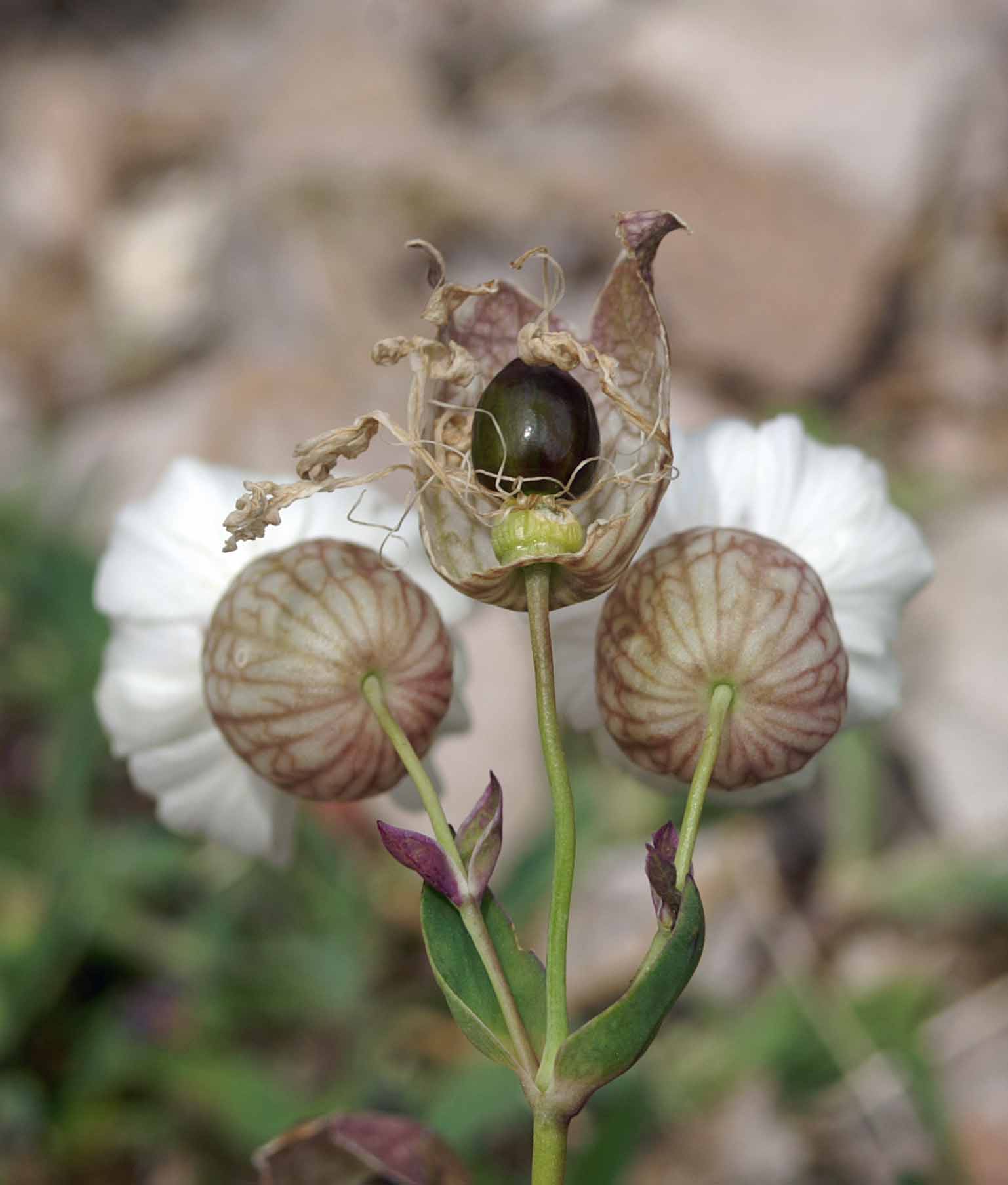
Sea Campion-Silene vulgaris ssp. maritima-seed developing

Sea Campion-Silene vulgaris ssp. maritima-seed developing

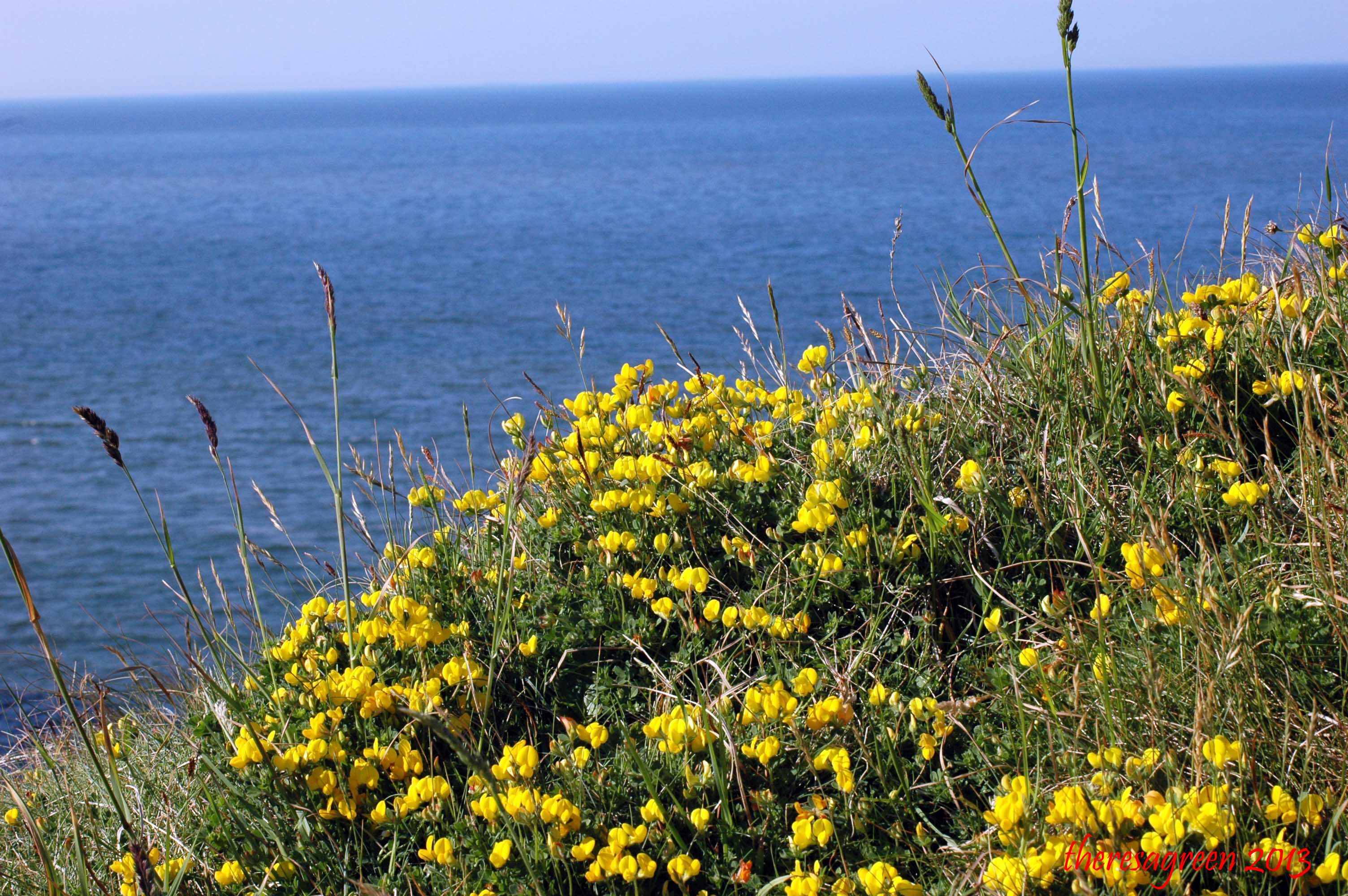
The most prolific wildflower here currently is Bird’s Foot Trefoil, which will carry on throughout the summer, providing nourishment for a whole host of fauna; a veritable live food manufacturing plant that looks beautiful too. I sat on a rock near this spot gazing at the view, contemplating life and enjoying the warmth of the late afternoon sun.

What could be prettier? Golden Bird's-foot Trefoil against a background of blue sea and sky

What could be prettier? Golden Bird’s-foot Trefoil against a background of blue sea and sky

There was a lot of Cormorant traffic travelling to and fro the tip of the headland, some in small groups, others alone. There are a large number of them here and their outlines can often be seen against the sky, the birds perched at regular intervals down the rock descending to the sea.

Turning back from the cliff I thought I might walk up the steep grass incline to the top of the hill, but I got halfway up and decided it might be a bit late in the day for rambling around up there, so stopped to take a photograph and walked down again.

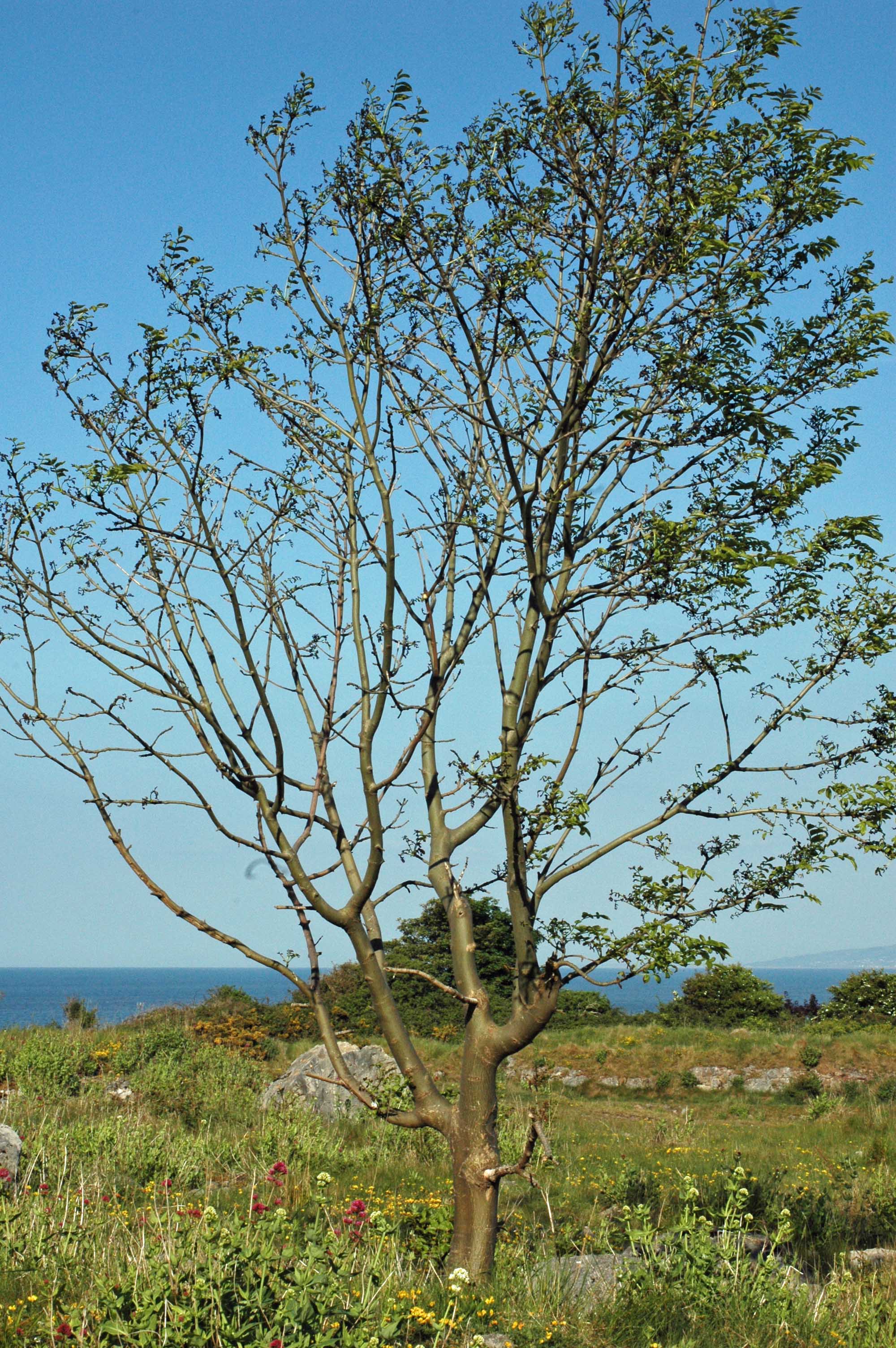
Ash tree with a view of Rhos-on-Sea and beyond

Ash tree with a view across Penrhyn Bay to Rhos-on-Sea and Colwyn bay beyond

Upholding my promise to myself to pay more attention to Ash trees I had already looked at a couple of small ones before taking this photograph. All, including this one, were less fully-leaved than those inland and all had leaves that were brown and shrivelled around their edges. I was alarmed when I first noticed that, but don’t think it’s anything more sinister than the leaves being ‘burned’ by the very cold and salt-laden winds they have been subjected to this whilst young and tender. I hope that’s all it is, there are a lot of Ash trees on the site of the Little Orme and their loss would be significant.

A smaller, younger Ash tree

A smaller, younger Ash tree had sparse foliage and ‘burnt’ leaves

I walked back following the pathway at the base of  the towering rock face, leaving the surfaced track to search the grass at its side for any smaller, less showy wildflowers. There was plenty more Bird’s-foot Trefoil with a few little bumblebees rushing around hunting for nectar and little patches of Wild Thyme, just beginning to open. There were quite a few little flowers, yellow with pink-flushed buds, that looked similar to Cat’s Ear, but not quite, so more research needed there.

A small patch of newly-opened Wild Thyme

A small patch of newly-opened Wild Thyme

I carried on walking, diverting over to the big patch of cabbages to take photographs as seen in previous post, following the edge of the deeper quarried-out bit (all of the section of the Little Orme I have been describing above is flat as a result of quarrying activity). Where the edge of this meets the cliff wall the only way to continue is to scramble down a rocky slope. If you ever find yourself doing this, be careful as hundreds of pairs of feet taking this way down, or up, over the years have worn the exposed rock to a shiny smoothness that can be quite slippery, even when dry.

The area at the bottom of the slope has a completely different character, more along the lines of an urban wasteland than a coastal clifftop. It does back onto houses and there is an access path in from the residential area, so the ground was probably disturbed during the building process. It’s not a very large area and can appear a bit scruffy, but there is always something to see here. There’s lots of Valerian flowering now, but the plant that has gone a bit crazy and is threatening to dominate all, is Alexanders. According to Richard Mabey in his brilliant book ‘Weeds’, this Roman introduction to Great Britain has apparently nationally fallen from grace recently, having suddenly altered its demeanor from that of well-behaved and fondly thought-of immigrant edible wildflower, to that of a rampant weed.

Alexanders lines the pathway for several metres

Alexanders – Smyrnium olustrum ,lines the pathway for several metres

Alexanders is one of the earliest plants to put out greenery in the early spring and most of the plants here are past their best. A stately and attractive all-over yellow-green coloured plant, it was introduced here by the Romans for use as a pot-herb, having a mild celery flavour. Its culinary use continued for hundreds of years until it was replaced by cultivated celery. Perhaps this is a plant we should go back to foraging to help keep it under control rather than destroy it.

Alexanders is going to seed now, but there are still flowers

Alexanders is going to seed now, but there are still flowers

While I was prowling around the Alexanders plants I spotted a wild rose shrub in their midst and suddenly made a mental connection with a blog post from last August, which included a bit about the Robin’s Pincushion galls that appear on these plants. I mentioned in it that while the completed growth begins as bright red in colour, over the months they fade to a dark red-brown before the new adult wasps emerge in the spring and thought I’d try to find one. I remembered where the gall I photographed then was located, but thought I’d have a quick look at this one on the way to it. As luck would have it, there was a nice fat dark gall there too. As I got close with the camera, even more luck – there were a number of tiny little wasps crawling around on the gall and flying on and off, back and forth between it and rose leaves just a few centimetres away.

Dry Robin's Pincushion with little wasps on the surface

Dry Robin’s Pincushion with little wasps on the surface

I am not claiming that these are the wasps, scientific name, Diplolepsis rosae, that cause the growth of the gall to house their larvae. Having looked at other people’s images, I rather think that although the colouration is similar, the abdomens of the ones in my pictures are more elongated and tapered than those in  images of the ‘right’ one. I thought perhaps the insects were just emerging from the gall, but that also didn’t help as I learnt that the original larvae are subject to parasitism by other species of wasp and they in turn may be got at by yet another species. They may have just been seeking prey, or maybe somewhere to locate their own eggs, or even just roosting for the night. I am sure they are some species of wasp though. If anyone can help with identification I’d be delighted.

Tiny wasp from gall, resting on a nearby rose leaf

Wasp from gall, resting on a nearby rose leaf. Size increased many times, these insects were really tiny.

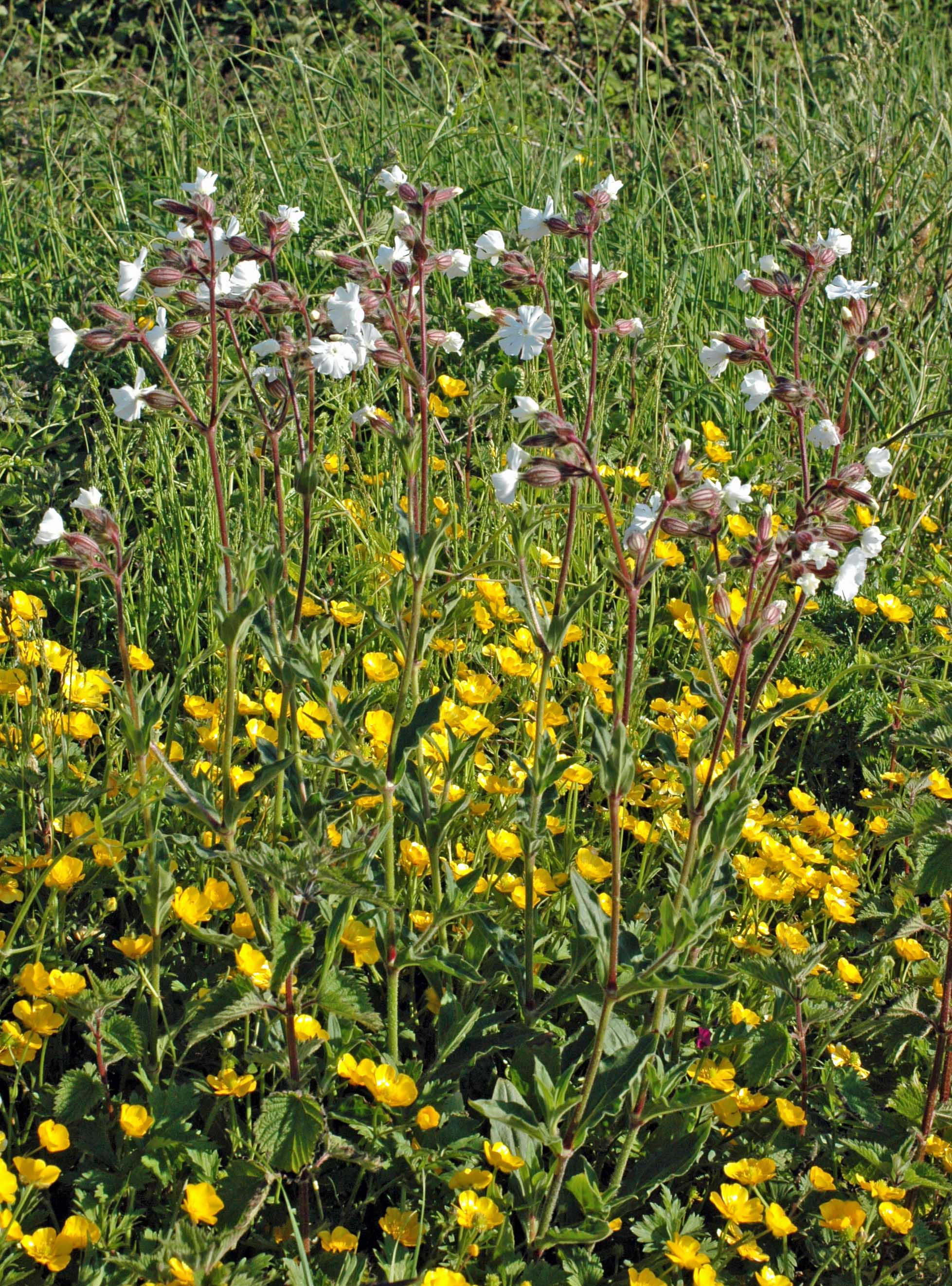
It was almost half-past six by the time I thought I should be getting home and the sun was beginning to sink behind the mass of the headland. It was creating a lovely glowing effect on the landscape and casting an interesting light upon a beautiful patch of buttercups that had pretty White Campion growing up through it.

130604TGNR- White Campion & Buttercups - Little Orme, North Wales

Golden yellow buttercups and white campion

Little Orme in the early evening

Little Orme in the golden early evening

Share this:

  • Share on Facebook (Opens in new window) Facebook
  • Share on Pinterest (Opens in new window) Pinterest
  • Share on X (Opens in new window) X
Like Loading...

Spot the ‘greens’ on the Little Orme, but please don’t eat them!

10 Monday Jun 2013

Posted by theresagreen in Little Orme, Nature of Wales, nature photography, Rhiwledyn Nature Reserve, Wildflowers of Wales

≈ 4 Comments

Tags

brassica olaracea, Little Orme, wild cabbage

The Little Orme is close in distance to Bryn Euryn, but quite different in character, so a walk around there can add a host of different flora species within the space of half-an-hour or so; it also has its specialty plants and I set off to find at least one of them on a late afternoon last week.

Right now while the rocks of the Bryn are splashed gold with dainty rockroses, the Little Orme has its yellow-flowered cabbages. This year, rather a lot of them and not just any old cabbage, but the rather rare Wild Cabbage Brassica oleracea.

Wild Cabbage-Brassica olearacea

12/06/04-Wild Cabbage-Brassica olearacea at the base of a cliff, Little Orme

The Wild Cabbage (Brassica oleracea), also sometimes known as Sea Cabbage,  is regarded as scarce by botanists as it is found in only 100 x10km squares in the UK.  Where it does occur, the plant is found on maritime cliffs, usually of limestone or chalk, typically growing on or near to cliff tops or cliff bases, often on ledges containing other mixed herb communities. The Little Orme and Great Orme in North Wales and the Gower Peninsular in South Wales are strongholds of the plant.

A tall red cliff-face on the Little Orme which has wild cabbage plants growing on ledges almost from top to bottom

A tall red cliff-face on the Little Orme which has wild cabbage plants growing on ledges almost from top to bottom

Brassica oleracea is a biennial, sometimes perennial, relatively short-lived (20 years), evergreen plant that can withstand frost. Plants can grow to a height of 1.2m (4ft), but that can vary, as can the size and to an extent, the shape of the leaves. It is in flower from May to August, and the seeds ripen from Jul to September. The flowers are hermaphrodite (have both male and female organs) and are pollinated by a range of insects, including bees and hoverflies; the plant is self-fertile.

Flowers of the wild cabbage

Flowers of the wild cabbage

It is probable that the Wild Cabbage, which occurs widely around the Mediterranean, is not a true native to Britain and that it was yet another introduction made by the Romans and is the forebear to our more robust modern cultivated cabbages.

Leaf of Wild Cabbage

Leaf of Wild Cabbage

I have seen sites advocating foraging wild cabbage as an edible wild plant, which of course it is,  but while the plant itself does not have any specific legal protection under the Wildlife & Countryside Act 1981 (as amended), most of the locations where it’s found along the North Wales Coast are designated as Sites of Special Scientific Interests. Damaging, uprooting or removing the plant either deliberately or recklessly could be regarded as a criminal act, so perhaps not a good idea to chance it.

A wild cabbage plant growing on a more exposed grassy cliff of the Little Orme (Sept 2011)

A wild cabbage plant growing on a more exposed grassy cliff of the Little Orme (Sept 2011). This was one of my first sightings (and photographs) of the species.

I took this photograph last May (2012)

I took this photograph around the middle of last May (2012), before the flowers opened

Share this:

  • Share on Facebook (Opens in new window) Facebook
  • Share on Pinterest (Opens in new window) Pinterest
  • Share on X (Opens in new window) X
Like Loading...

Late summer wildflowers and insects of the Little Orme

11 Tuesday Sep 2012

Posted by theresagreen in butterflies, coastal habitat, coastal walks, Little Orme, Nature, nature photography, Rhiwledyn Nature Reserve, wildflowers

≈ 7 Comments

Tags

6-spot Burnet Moth, black & yellow striped caterpillars, black butterfly or moth with red spots, cinnabar moth larvae, eristalis arbustorum, eristalis pertinax, eyebright, hoverflies, large black slug, meadow grasshopper, sawfly, small skipper, toadflax, vervain

The weather took its toll on the cliff-top flora and fauna of the Little Orme   too, although I think perhaps it’s not so much that the insects were not there, more that they were less able to be  mobile,  so were not as visible as they are in warmer, drier conditions. I took the following pictures on a warmish, sunny but fairly windy day just past the middle of August when everywhere was still damp from rain.

Ragwort is blooming strongly and every plant is supporting a colony of cinnabar moth caterpillars.

The Cinnabar moth larvae are growing fat on ragwort

The flowers of the ragwort are much in demand too, particularly by hungry hoverflies.

Eristalis interruptus (f) on ragwort

2 drone flies, Eristalis pertinax on ragwort

A smaller eristalis species – Eristalis arbustorum

Mating pair of soldier beetles

I was still on the lookout for soldier beetles and did eventually manage to find one pair; there were dozens of them this time last year. I didn’t even manage a very good photograph as the wind was blowing the ragwort stem they were on.

I walked towards the cliff edge above Angel Bay, drawn by a large patch of sunny yellow birds-foot trefoil mixed in amongst long grasses.

Flowery clifftop, most birds-foot trefoil mixed in amongst long grass

Long grass and birds-foot trefoil

As I had hoped, this flowery area turned out to be quite productive in terms of insects. I first spotted a Common Blue butterfly very low down on a grass stem, then followed a Small Skipper until it too came to rest on a flower.

Small Skipper –

That was followed by a first sighting of a Burnet Moth fluttering across the grass and flowers, and once I had ‘got my eye in’, I soon realised there were a good few more.

6-spot Burnet moth –

The Burnet moths were mostly attracted to the thistle flowers growing at the side of the pathway; at one point I found four of them all on the same plant.

3 of 4 Burnet moths that were all nectaring on a single thistle flowerhead

Stopping to photograph the single moth I was distracted by the chirping ‘song’ of a grasshopper, which I found on a grass stem just behind me. I am not great at identifying grasshoppers, but I think this was most likely a Meadow Grasshopper – Chorthippus brunneus.

Little grasshopper chirping from a grass stem

Walking along a narrow track through the long grass I saw an insect I did not immediately recognise on a thistle flower. It took little notice of me taking photographs of it, just carried on working its way around the flowerhead. To identify it I searched my favourite website for insect identification http://www.naturespot.org.uk, which is a Leicestershire site but usually comes up trumps for me. From that I believe my mystery insect may be of the Sawfly species, Tenthredo notha – but as always I am more than happy to be corrected.

Sawfly- Tenthredo notha

At the bottom of the steep grassy track that takes you higher up on the cliff, a decent number of butterflies were dancing around the bramble flowers. There is red valerian growing there too which is also a favourite nectar plant of butterflies and more ragwort attracting hoverflies. Butterflies included Large, Small and Green-veined Whites, Meadow Browns, Gatekeepers and a Tortoishell.

Green-veined White (m) on a valerian flower

I stopped half-way up the incline to draw breath and to take a  photograph of the view.

The view from the Little Orme across Rhos Point, then the headland of Abergele beyond which are Rhyl & Prestatyn and the coastline of the Wirral (click to enlarge)

At the top there is a flat grassy area, popular with Jackdaws that nest on the cliffs and grazed by sheep, where the remains of some sort of winding mechanism still stands as a memorial to the quarrying that is responsible for the shape of the Little Orme.

Sheep grazing and resting in the sun around old winding gear

Back down at the bottom and a quick scout around before heading home produced more flowering plants:

Eyebright – Euphrasia nemorosa

Toadflax- Linaria vulgaris

Vervain-Veronica officinalis

Lesser Burdock-Arctium minus

Another grasshopper, which I think is a Mottled one as it has curved antennae, but if not then its a Field one.

A mottled, or maybe a field grasshopper

Then finally, as testament to all the recent rainfall, a big fat slug…

Although this slug is black, it is a Large Red Slug-Arion ater, which has a range of colour forms.

Share this:

  • Share on Facebook (Opens in new window) Facebook
  • Share on Pinterest (Opens in new window) Pinterest
  • Share on X (Opens in new window) X
Like Loading...
← Older posts
Newer posts →
Follow everyday nature trails on WordPress.com

Enter your email address to follow this blog and receive notifications of new posts by email.

‘But it is the common species that keep the living world ticking over and provide most of our experiences of wildlife, and I would argue that maintaining the abundance of these is as important a conservation priority as maintaining the existence of rarities’. Richard Mabey

MOST RECENT POSTS

  • A Glimpse of Spring to Come January 22, 2025
  • Hunting the Wren December 28, 2024
  • Oh, Christmas Tree December 18, 2024
  • In and Out of the Ivy February 15, 2024
  • Nature’s Fireworks November 30, 2023
  • Wild Autumn along the Coast Path November 3, 2023

OLDER POSTS

LOOKING FOR SOMETHING IN PARTICULAR?

  • Catchers, a Duck and Divers
    Catchers, a Duck and Divers
  • Following a river to a Fairy Glen
    Following a river to a Fairy Glen
  • Things Bright and Beautiful
    Things Bright and Beautiful
  • Sights and Sounds from the Little Orme 1
    Sights and Sounds from the Little Orme 1
  • A Windy Wildflower Trail
    A Windy Wildflower Trail
  • May Bee Appearing on Ivy near You
    May Bee Appearing on Ivy near You
  • Fine Dining for Crows
    Fine Dining for Crows
  • The life of a Yellow Dung-fly
    The life of a Yellow Dung-fly
  • Butterflies and more rare treats
    Butterflies and more rare treats
  • Sleeping Seals and Stonechats
    Sleeping Seals and Stonechats

nightingale trails

The Walk of the Monarch Butterfly-Sendero de la Mariposa Monarca

The Walk of the Monarch Butterfly-Sendero de la Mariposa Monarca

MY WILDFLOWER BLOG: where the wildflowers are

Snowdrop

Snowdrop

most recent posts

Follow everyday nature trails on WordPress.com

Social

  • View teresamaygreen’s profile on Twitter

Enter your email address to follow this blog and receive notifications of new posts by email.

Website Built with WordPress.com.

  • Subscribe Subscribed
    • everyday nature trails
    • Join 358 other subscribers
    • Already have a WordPress.com account? Log in now.
    • everyday nature trails
    • Subscribe Subscribed
    • Sign up
    • Log in
    • Report this content
    • View site in Reader
    • Manage subscriptions
    • Collapse this bar
 

Loading Comments...
 

    %d