• Home
  • about
  • about the photographs
  • Local Nature Reserves
    • Bryn Euryn Local Nature Reserve
    • Mynydd Marian
  • Wales Coast Path
    • Grey Seals in North Wales
    • St.Trillo’s Chapel
    • Wildflowers of North Wales Coastal Paths, Cliffs and Dunes

everyday nature trails

everyday nature trails

Category Archives: Nature

A hill not too far – part 1

15 Saturday Sep 2012

Posted by theresagreen in Bryn Pydew, fungi, hoverflies, Nature, nature of woodlands, nature photography, woodlands

≈ 6 Comments

Tags

buff-tailed bumblebee, common darter, common green grasshopper, eristalis, hoverflies, inula conyza, leucozona lucorum, ploughman's spikenard, tar spot fungus, traveller's joy

The first day of September was gloriously sunny and warm in the way that only our late summer days can be. In preparation for just such a day I had done a bit of research into other nature reserves that may be nearby and was surprised to discover there is indeed such a one, almost on our doorstep on another landmark hill just beyond Bryn Euryn, called Bryn Pydew. The land is leased and managed by the  North Wales Wildlife Trust (NWWT), and just had to be explored not only because of its proximity, but also because it has within in it an area of Limestone Pavement that I have been keen to add to my round of  habitats to visit.

To quote the Bryn Pydw entry on the First Nature website:

Bryn Pydew SSSI; RIGS site : “This reserve lies on carboniferous limestone and has woodland, grassland, limestone pavement and two disused quarries providing a wide variety of habitats.”

I could hardly believe it was so close by and I had never heard of it, but when I set off to find it, following the directions on the website, I did have some problems finding the ‘entrance’ to the reserve. (I must get myself an ordnance survey map and re-learn to use grid references !)  I knew I was on the Bryn, it’s huge, so hard to miss, and drove up, down around and along a few lanes in the indicated direction, then through the village of Bryn Pydew and back again, finally stopping to ask for directions from a lady carrying a basket heading for the village hall. She didn’t really know either, but suggested it might be the “flat bit further on where they have been digging”. It was clear that there was little room for parking on the lane, so I asked if I should park outside the hall and walk, she said “Oh no, please don’t, we have a fun Dog Show here this afternoon, so we need all the parking space we have for that.” Not wishing to upset anyone or their dog, I drove a bit further and duly came to said ‘flat bit’ at the side of the lane, pulled onto it and got out of the car.

Woodland edge

It seemed likely that the reserve was in the general area as I was now looking at woodland to one side on the lower slope of the hill, then across the lane, a grassy slope with some scrubby vegetation leading to the summit of the Bryn.  Next to where I had parked there was a mound of earth and stones, becoming vegetated with grass, with the addition of  clumps of vervain, verbascum and other wild plants, which made me think this may have been a bit of a dumping ground for the village gardeners. Behind this ‘tump’  there was a ‘path’ cobbled with small pieces of limestone between it and the woodland edge, bordered on either side with wildflowers, predominantly ragwort, but also marsh hemp, cat’s ear, traveller’s joy (wild clematis), hogweed etc.

A beautiful fresh ‘Sun Fly’, also known as ‘The Footballer’ – Helophilus pendulus

The sheltered spot was buzzing with hoverflies, bees and bumblebees and even a few butterflies. Most of the hoverflies were of the larger eristalis species, some of which I have already featured photographs of in recent posts, but there were others too.

Eristalis interruptus on ragwort

Eristalis on Hemp Agrimony

The most familiar of hoverflies, the exquisite little Marmalade Fly – Episyrphus balteatus

I was also an attractive hoverfly, Leucozona lucorum, which is a new one for my collection of photographs.

Leucozona lucorum. There is a similar-looking insect – Volucella pellucens which is much shinier and does not have the orange-yellow scutellum (the triangular patch at the base of the thorax)

Buff-tailed Bumblebee- Bombus terrestris on Traveller’s Joy-Clematis vitalba

Welsh Poppy with small flies

I was really pleased to find Ploughman’s Spikenard growing here. It is a plant quite  unprepossessing in its appearance, looking a bit like a giant groundsel or ragwort that is going to seed, so may be easily overlooked, but it is another of my favourite type of plant, one with a history of traditional use as a medicinal herb and that has some great alternative common names; Cinnamon-root, Great Fleabane, Horseheal and Lady’s-gloves.

Ploughman’s Spikenard – Inula Conyza (the seeds on the leaves are from nearby thistles)

Honeybee on Ploughman’s Spikenard

It was really peaceful here, so I sat down on the ground for a while to enjoy the sunshine and properly take notice of what was around me. I love to do that sometimes, to just sit still and lose myself in the moment, and feel connected to the real world. Stillness often brings other rewards too, things I may have missed if I’d been standing and wandering around. A dragonfly came to settle close by on the warm stones, as did a grasshopper and there were birds about too, a Robin came out of the woods to hop around close by and so did a Dunnock.

Common Darter Dragonfly- Sympetrum striolatum (immature male)

Common Green Grasshopper-Omocestus viridulus

A fresh-plumaged Dunnock spied through tall grass

Into the woods

Still not sure of where I was I decided to walk towards the woods to see if there may be a track I could walk on. Lo and behold as I walked towards the trees, set just inside the edge of the woodland was the information board for the reserve. It looks quite faded so has clearly been there for some years, so maybe it was originally more visible from the lane?

Information board about the Bryn Pydew Reserve- click to enlarge

There is a track, way-marked with red marks on some of the tree trunks.

Woodland trail, Bryn Pydew

The trees, mostly silver birch, as, some oak, sycamore and unusually a good many yew grow closely together, so it was quite dark and shady in there with occasional shafts of sunlight breaking through the leaf canopy.   Most of the sycamore leaves I could see were sprinkled wit large black spots, the result of  an infection of Tar Spot fungus.

Tar spot is a fungal disease characterised by raised, black spots on leaves, caused by the fungus Rhytisma acerinum. The tar-like spot is a fruiting structure of the fungus that survives the winter on fallen leaves. In the spring mature spores of the fungus, which have a sticky coating, are released and blown by wind to newly emerging leaves.

The undersides of the leaves appear cupped directly beneath the tar spots. This is a much-enlarged image of a tiny snail and another minute insect.

In a clearing in the woodland where there was a little more light I photographed Hart’s Tongue fern growing amongst ivy on an old stone wall and Lady Fern.

Hart’s Tongue Fern and ivy on an old stone wall

Lady Fern

On the other side of the wall where shrubby plants have colonised the clearing I watched five Speckled Wood butterflies chase one another around in the sun-dapples space. These are very territorial little butterflies that will tackle anything that tries to invade its territory; today each time one settled on a leaf to bask it was dive-bombed by another, so it took a while to get an image. It was good watching them though, this is the most I have seen together in one place for a long while and judging by their fresh appearance, I would say they were newly-emerged.

A pristine Speckled Wood-Pararge aegeria

Share this:

  • Share on Facebook (Opens in new window) Facebook
  • Share on Pinterest (Opens in new window) Pinterest
  • Share on X (Opens in new window) X
Like Loading...

Late summer wildflowers and insects of the Little Orme

11 Tuesday Sep 2012

Posted by theresagreen in butterflies, coastal habitat, coastal walks, Little Orme, Nature, nature photography, Rhiwledyn Nature Reserve, wildflowers

≈ 7 Comments

Tags

6-spot Burnet Moth, black & yellow striped caterpillars, black butterfly or moth with red spots, cinnabar moth larvae, eristalis arbustorum, eristalis pertinax, eyebright, hoverflies, large black slug, meadow grasshopper, sawfly, small skipper, toadflax, vervain

The weather took its toll on the cliff-top flora and fauna of the Little Orme   too, although I think perhaps it’s not so much that the insects were not there, more that they were less able to be  mobile,  so were not as visible as they are in warmer, drier conditions. I took the following pictures on a warmish, sunny but fairly windy day just past the middle of August when everywhere was still damp from rain.

Ragwort is blooming strongly and every plant is supporting a colony of cinnabar moth caterpillars.

The Cinnabar moth larvae are growing fat on ragwort

The flowers of the ragwort are much in demand too, particularly by hungry hoverflies.

Eristalis interruptus (f) on ragwort

2 drone flies, Eristalis pertinax on ragwort

A smaller eristalis species – Eristalis arbustorum

Mating pair of soldier beetles

I was still on the lookout for soldier beetles and did eventually manage to find one pair; there were dozens of them this time last year. I didn’t even manage a very good photograph as the wind was blowing the ragwort stem they were on.

I walked towards the cliff edge above Angel Bay, drawn by a large patch of sunny yellow birds-foot trefoil mixed in amongst long grasses.

Flowery clifftop, most birds-foot trefoil mixed in amongst long grass

Long grass and birds-foot trefoil

As I had hoped, this flowery area turned out to be quite productive in terms of insects. I first spotted a Common Blue butterfly very low down on a grass stem, then followed a Small Skipper until it too came to rest on a flower.

Small Skipper –

That was followed by a first sighting of a Burnet Moth fluttering across the grass and flowers, and once I had ‘got my eye in’, I soon realised there were a good few more.

6-spot Burnet moth –

The Burnet moths were mostly attracted to the thistle flowers growing at the side of the pathway; at one point I found four of them all on the same plant.

3 of 4 Burnet moths that were all nectaring on a single thistle flowerhead

Stopping to photograph the single moth I was distracted by the chirping ‘song’ of a grasshopper, which I found on a grass stem just behind me. I am not great at identifying grasshoppers, but I think this was most likely a Meadow Grasshopper – Chorthippus brunneus.

Little grasshopper chirping from a grass stem

Walking along a narrow track through the long grass I saw an insect I did not immediately recognise on a thistle flower. It took little notice of me taking photographs of it, just carried on working its way around the flowerhead. To identify it I searched my favourite website for insect identification http://www.naturespot.org.uk, which is a Leicestershire site but usually comes up trumps for me. From that I believe my mystery insect may be of the Sawfly species, Tenthredo notha – but as always I am more than happy to be corrected.

Sawfly- Tenthredo notha

At the bottom of the steep grassy track that takes you higher up on the cliff, a decent number of butterflies were dancing around the bramble flowers. There is red valerian growing there too which is also a favourite nectar plant of butterflies and more ragwort attracting hoverflies. Butterflies included Large, Small and Green-veined Whites, Meadow Browns, Gatekeepers and a Tortoishell.

Green-veined White (m) on a valerian flower

I stopped half-way up the incline to draw breath and to take a  photograph of the view.

The view from the Little Orme across Rhos Point, then the headland of Abergele beyond which are Rhyl & Prestatyn and the coastline of the Wirral (click to enlarge)

At the top there is a flat grassy area, popular with Jackdaws that nest on the cliffs and grazed by sheep, where the remains of some sort of winding mechanism still stands as a memorial to the quarrying that is responsible for the shape of the Little Orme.

Sheep grazing and resting in the sun around old winding gear

Back down at the bottom and a quick scout around before heading home produced more flowering plants:

Eyebright – Euphrasia nemorosa

Toadflax- Linaria vulgaris

Vervain-Veronica officinalis

Lesser Burdock-Arctium minus

Another grasshopper, which I think is a Mottled one as it has curved antennae, but if not then its a Field one.

A mottled, or maybe a field grasshopper

Then finally, as testament to all the recent rainfall, a big fat slug…

Although this slug is black, it is a Large Red Slug-Arion ater, which has a range of colour forms.

Share this:

  • Share on Facebook (Opens in new window) Facebook
  • Share on Pinterest (Opens in new window) Pinterest
  • Share on X (Opens in new window) X
Like Loading...

Late summer on Bryn Euryn

08 Saturday Sep 2012

Posted by theresagreen in Bryn Euryn Nature Reserve, bumblebees, Local Nature Reserves, Nature, nature photography, Wildflowers of Wales

≈ 4 Comments

Tags

agrimony, black knapweed, Bryn Euryn Nature Reserve, carder bumblebee, gatekeeper butterfly, hemp agrimony, hoverflies, Meadow Brown, nodding wild onion, peacock butterfly, ragwort, red-tailed bumblebee, self-heal, wildflowers of Bryn Euryn

The soggy conditions created by the rainfall this year have not been ideal for many late summer wildflowers and, perhaps as a result of that, it seems to me that there has been a drop in some insect populations. I was on the lookout for flower beetles, in particular soldier beetles, which in  previous years have been prolific, and struggled to find many at all.

I spent a couple of hours roaming the pathways of Bryn Euryn on one sunny afternoon in mid-August, ignoring grey clouds rolling in at my peril, getting caught right at the top in a proper downpour. There is  almost always something interesting to photograph here whatever the weather though, and these are my offerings for that day.

There were very few plants still flowering on the lower field edge, but the first one, the Great Willowherb, often mistaken for Rosebay Willowherb, is one I’ve wanted to mention for a while and will do at greater length soon.

Great willowherb is often mistaken for rosebay willowherb

Common Mallow-Malva sylvestris

banded Snail on a bindweed leaf

Greenbottle fly-Lucilia caesar on Hogweed flowers

Most of the hogweed plants are setting seed


Self-heal- Prunella vulgaris

In the clearing at the top of the steps that cut through the lower woodland is a bramble patch that always seems to attract an array of nectar-seeking insects. Today there were a good number of hoverflies, most the one photographed below, but there were a few other Eristalis species too.

This attractive hoverfly is Helophilus pendulus, common names are Sun Fly as it does enjoy basking in sunny patches, and The Footballer referring to its colours and stripy patterning

Eristalis on Wild Carrot- Daucus carota

I headed a bit round to the open grassy area that this time last year was covered in purple flowered knapweed and buzzing with dozens of insects,  but now was looking quite bedraggled and bereft of colourful blooms. There was some knapweed, but hardly enough to go around apparently as most of the flowers had more than one bumblebee or hoverfly competing for its bounty.

Black Knapweed-Centaurea nigra

Red-tailed Bumblebee on knapweed flower

Common Carder bee on knapweed

In amongst the long damp grass was a pink flower that I recognised from last year but didn’t get around to identifying. This (I believe/hope) is an unusual plant of the allium family, common name Nodding Wild Onion or Allium. The pink bell-shaped flowers are  tiny and have protruding stamens; very pretty.

Nodding Wild Onion-Allium Cernuum tangled in amongst the long damp grass

A closer look at the pretty little flowers

There were a few plants of Agrimony – Agrimoniia eupatoria

The other staple of late summer nectar, Ragwort, is also flowering of course. I can’t not include it here, so thought I’d just put in a close-up of an individual flower to show how pretty they really are.

Close up of Ragwort flowers

One flowering plant that is relishing the damp conditions and flowering prolifically here was Hemp Agrimony. Its flat, open flowers are very attractive to insects; great for butterflies.

Hemp Agrimony-Eupatorium cannabinum

A partially-open flower head of hemp agrimony

There were a few butterflies about, but as the clouds came over and the air cooled those that were out and about were not very mobile. Meadow Browns were most numerous but most were fluttering about low down in the long grass. I spotted one on Hemp Agrimony, also a single Gatekeeper and was taken by surprise when a Peacock (butterfly!) flew right in front of my face. I did photograph them all, but by now it was minutes away from the onset of the downpour and quite dark, so the resulting images are a bit grainy, but there for the record.

Meadow Brown on Hemp Agrimony

Gatekeeper – Pyronia tithonus

Peacock – Nymphalis io, looking a bit faded and worn, on hemp agrimony

Tiny acorns are beginning to show on the oak trees

Share this:

  • Share on Facebook (Opens in new window) Facebook
  • Share on Pinterest (Opens in new window) Pinterest
  • Share on X (Opens in new window) X
Like Loading...

Meadowsweet

05 Wednesday Sep 2012

Posted by theresagreen in flower folklore, flower mythology, Nature, nature photography, Wildflowers of Wales

≈ Leave a comment

Tags

filipendula ulmaria, flower folklore, mabinogion, meadowsweet, meadowsweet folklore, medicinal uses of plants

Meadowsweet–Filipendula ulmaria; also known as Queen of the Meadow, Lady of the Meadow, Dollof, Bridewort.; Welsh – Brenhines y Weirglodd  

Meadowsweet growing on the sea side of the railway embankment, Colwyn Bay

Family:Rosaceae. Flowering: Late June to September.Distribution: Throughout the British Isles and Western Europe. Habitat: A wide variety of damp places- fens, marshy meadows, stream and riversides, wet rock ledges in mountain areas, but not in very acid bogs.

Meadowsweet

Meadowsweet is a perennial herb, has stems up to 120cm tall often reddish-tinged and dark green pinnate leaves. It bears delicate, graceful, creamy-white flowers that are tiny at 4-6mm across, but gathered in large numbers in dense irregularly-formed branched frothy ‘cymes’ or ‘corymbs’ at the stem apices. Leaves are dark green, pinnate, with deeply toothed ovate leaflets, pairs of larger ones (up to 8cm long) alternate up the leaf-stalk with pairs of tiny ones (1-4mm long). The terminal leaflet is usually 3-lobed.

Meadowsweet leaves wet with rain

Etymology

The name ulmaria means “elmlike”. There is no visual resemblance to the elm tree (Ulmus) in any way, but in common with the bark of the  slippery elm (Ulmus rubra) meadowsweet contains salicylic acid, which has long been used as a painkiller, and this may be the source of the name. The generic name, Filipendula, derives from filum, meaning “thread” and pendulus, meaning “hanging.” This is thought to describe the root tubers that hang characteristically on the genus, on fibrous roots.

Importance to insects

Meadowsweet  is moderately attractive to bees, including bumblebees. The plants play host to numbers of  aphids, leafhoppers, mites and caterpillars, so in turn is very attractive to predator insects and spiders,  including both crab and jumping spiders; soldier beetles that eat aphids and other insects; plant bugs that prey on leaf beetles; ladybirds and ichneumonid wasps, parasitic wasps that prey on beetles and caterpillars.

Historical and Traditional uses 

Meadowsweet has a long history of use by humans. Traces of it have been found with the cremated remains of three people and at least one animal in a Bronze Age cairn at Fan Foel, located in Carmarthenshire, West Wales. It is thought that this may have been either from a honey-based mead or flavoured ale placed with food as nourishment for the passed ones onward journey, or that the plant had been placed on the grave as a scented flower. The whole plant has a pleasant taste and flavour, and was venerated by the Druids for flavouring mead. It is still used for this purpose in some Scandinavian varieties of mead. It has also been used to flavour wine, beer, and many vinegars. The flowers can be added to stewed fruit and jams, imparting a subtle almond flavour.

When it was customary to strew floors with rushes and herbs, both to give warmth underfoot and to overcome smells and infections, Meadowsweet was a favoured choice as the leaves are aromatic as well as the flowers, and was reputedly the favourite herb of Queen Elizabeth 1 for that purpose.

A natural black dye can be obtained from the roots.

Folklore

There is some fascinating folklore based around this plant. In some parts of the country it was believed that the heavy scent of the flowers had the power to induce a deep sleep from which a person would never wake. Its sweetness, perhaps not unexpectedly, made it unlucky to bring indoors, and redolent with death; possibly linked to its use as ‘grave’ flower.

The old custom of strewing at weddings gave rise to the alternative name of “bridewort”; the flowers were also used in bridal garlands. Cynics maintained that the plant symbolised courtship and matrimony because of the changing scent of the flower before and after bruising!

In Welsh Mythology, according to the Mabinogion, Gwydion and Math created a woman out of oak blossom, broom, and meadowsweet and named her Blodeuwedd (“flower face”).

Another valued attribute of the plant was that if it was laid on water on St.John’s Day, (most probably June 24th, Midsummer’s Day), it would reveal a thief; a woman if the plant floated, a man if it sank.

Medicinal uses

Meadowsweet has many medicinal properties and a long history as a healing herb. This plant contains the chemicals used to make aspirin, a small section of root, when chewed is a good natural remedy for relieving headaches.The whole plant is a traditional remedy for an acidic stomach.

Chemical constituents include salicylic acid, flavone glycosides, essential oils, and tannins.

Importantly, in 1897, Felix Hoffmann created a synthetically altered version of salicin, derived from the species, which caused less digestive upset than pure salicylic acid. The new drug, formally acetylsalicylic acid, was named “aspirin” by Hoffman’s employer Bayer AG after the old botanical name for meadowsweet, Spiraea ulmaria. This gave rise to the class of drugs known as non-steroidal anti-inflammatory drugs (NSAIDs).

Share this:

  • Share on Facebook (Opens in new window) Facebook
  • Share on Pinterest (Opens in new window) Pinterest
  • Share on X (Opens in new window) X
Like Loading...

Playing host to some noisy summer visitors

03 Monday Sep 2012

Posted by theresagreen in bird behaviour, Nature, nature photography, Rhos-on-Sea

≈ 6 Comments

Tags

coastal birds, herring gull, herring gull breeding behaviour, herring gull young, herring gulls calling, herring gulls in towns, herring gulls nesting on roofs

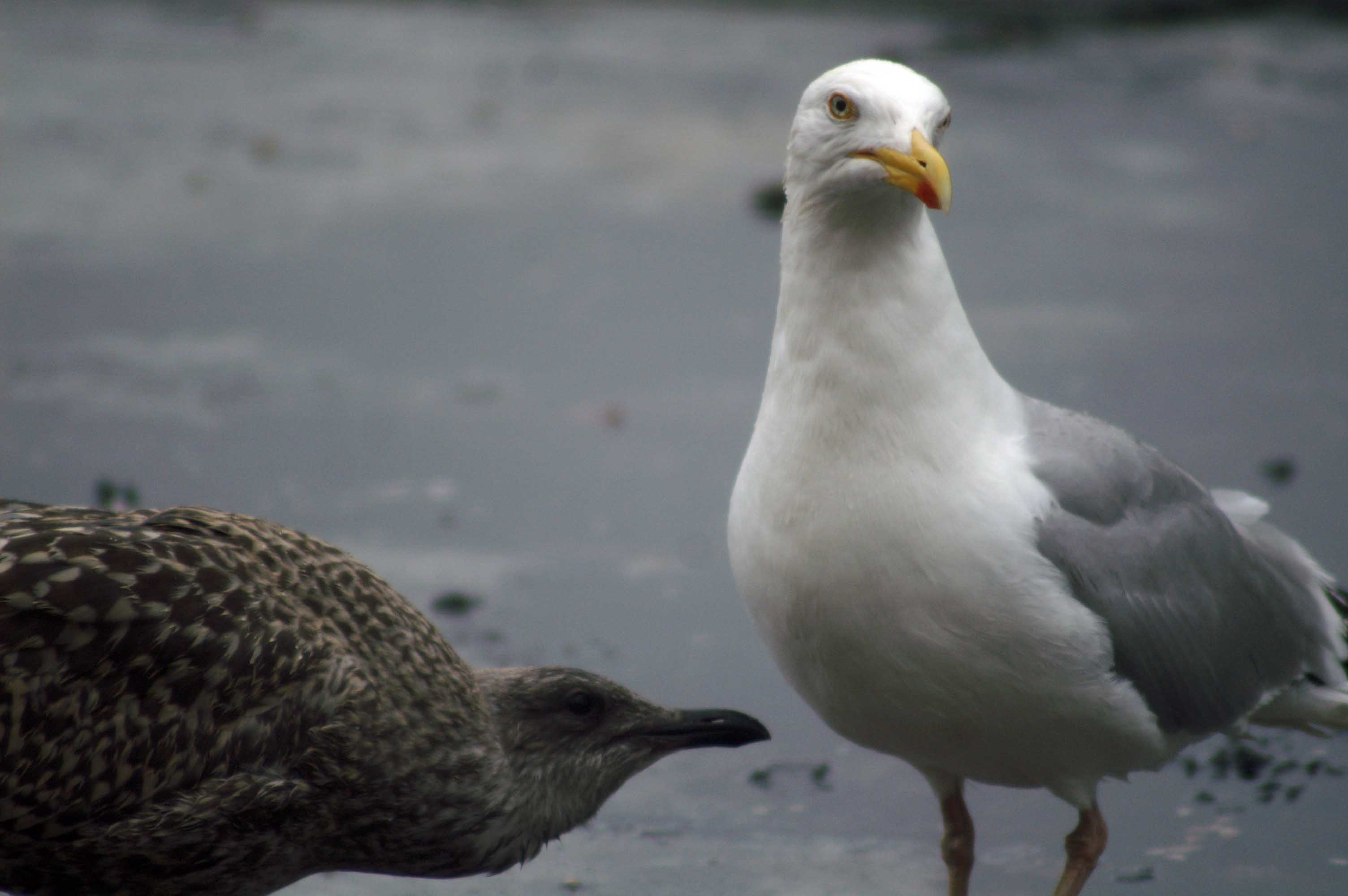
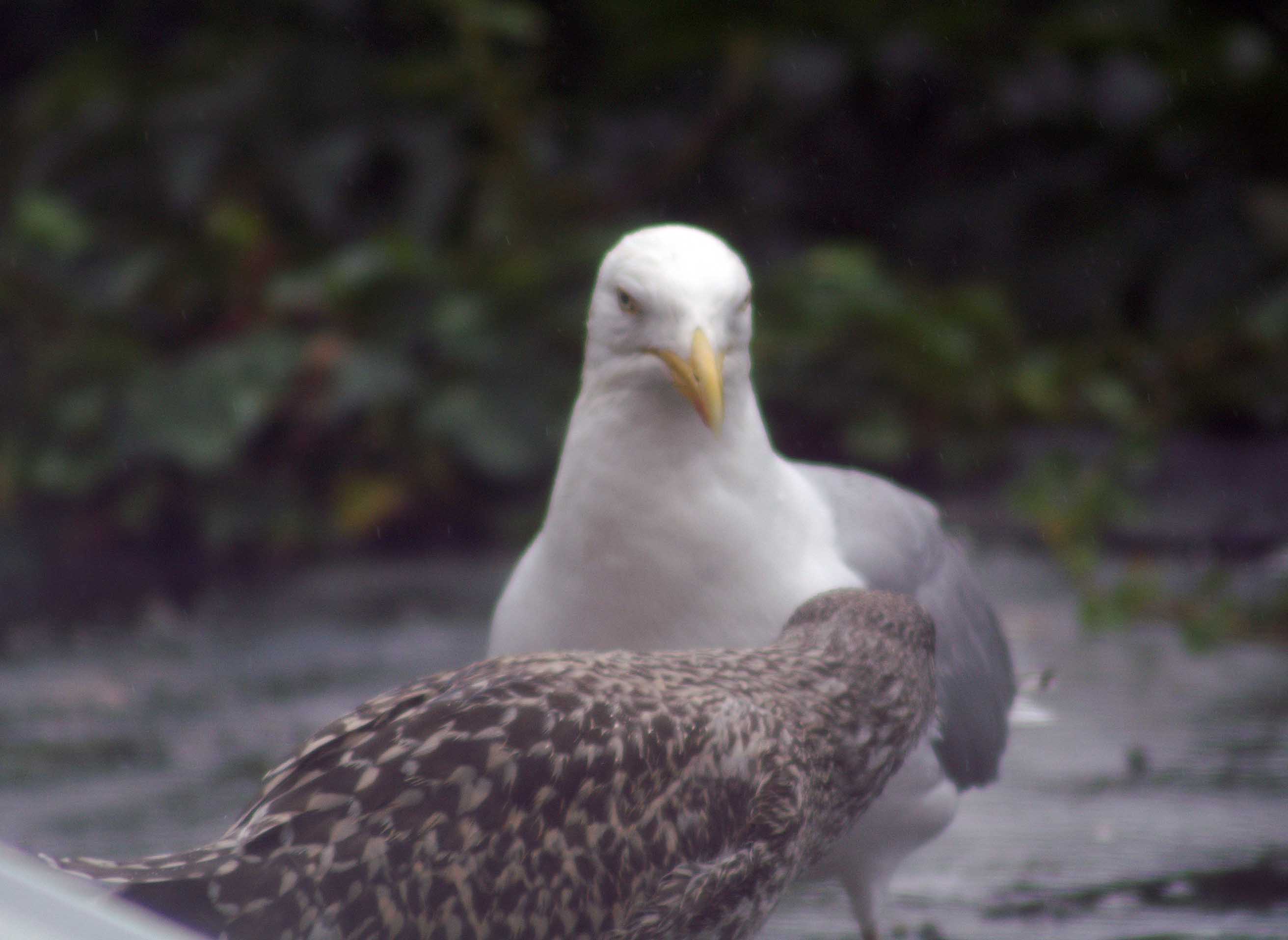
The sight and sound of Herring gulls are an integral part of the local community here and as I wrote last year, you either love them or you loathe them. Personally I rather like them, but having just endured this year’s breeding season and had them as very close boarders, I may have gone off them slightly! The Edwardian building we occupy the centre part of played host to two nesting pairs this year, one pair on either side of us, each settling into the top of a tall terracotta chimney pot. I can see the appeal for them, quiet neighbourhood, excellent panoramic penthouse views, just a minute’s flap from the sea, a wide variety of eating opportunities close by. .. Unfortunately from a landlady’s viewpoint, they were not the ideal ‘guests’ and the noise levels were, frankly, unsociable. Stuck in the middle of the two nests sites we were subjected to frequent sessions of raucous territorial shrieking in stereo. Requests to pipe down a bit fell on deaf ears.

Once the offspring hatched the sessions became even more frequent, then reached their peak once the youngsters fledged. That was when they  moved down onto our flat roof, which is just below my bedroom window, and really made their presence heard.

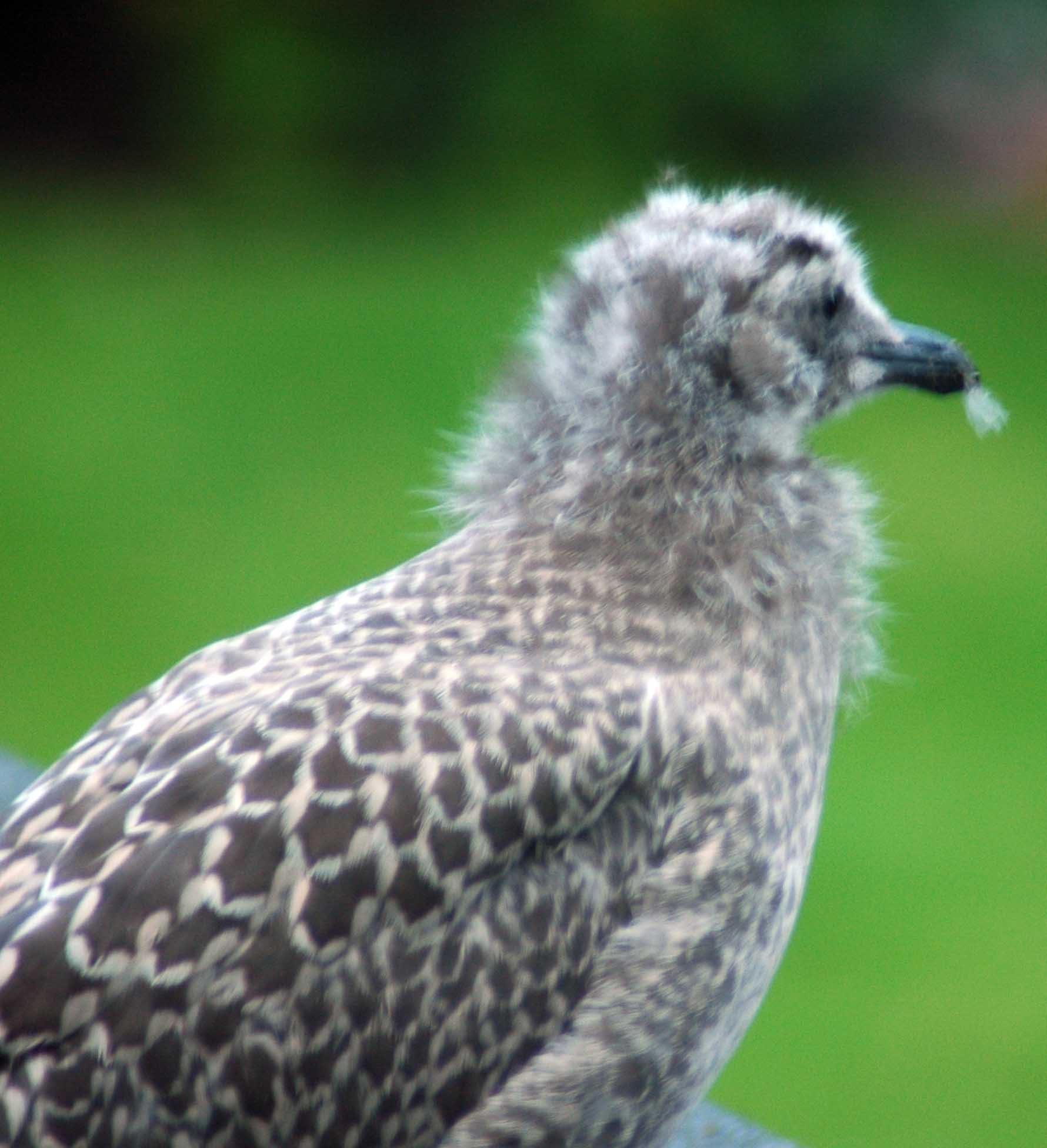
A very newly fledged gull, the offspring of pair number two

Herring gulls herald the crack of dawn very loudly, which at the time was around 4.30am, so that’s when I woke up too. They are much louder than cockerels and even less tuneful.

Even persistent rain does not dampen the desire to squawk

The proximity of the gulls definitely disturbed the usual peace of the neighbourhood, but on the positive side it also literally gave me a window into part of their daily lives. I soon realised that the bouts of loud calling are not a random act, the birds use their powerful voices to call to their partners and offspring as well as to declare their possession of a territory and to warn off intruders. As the youngsters grow in confidence and flying ability improves they leave their ‘home’ area to explore, but parents still return there with food and summon them back to eat it.

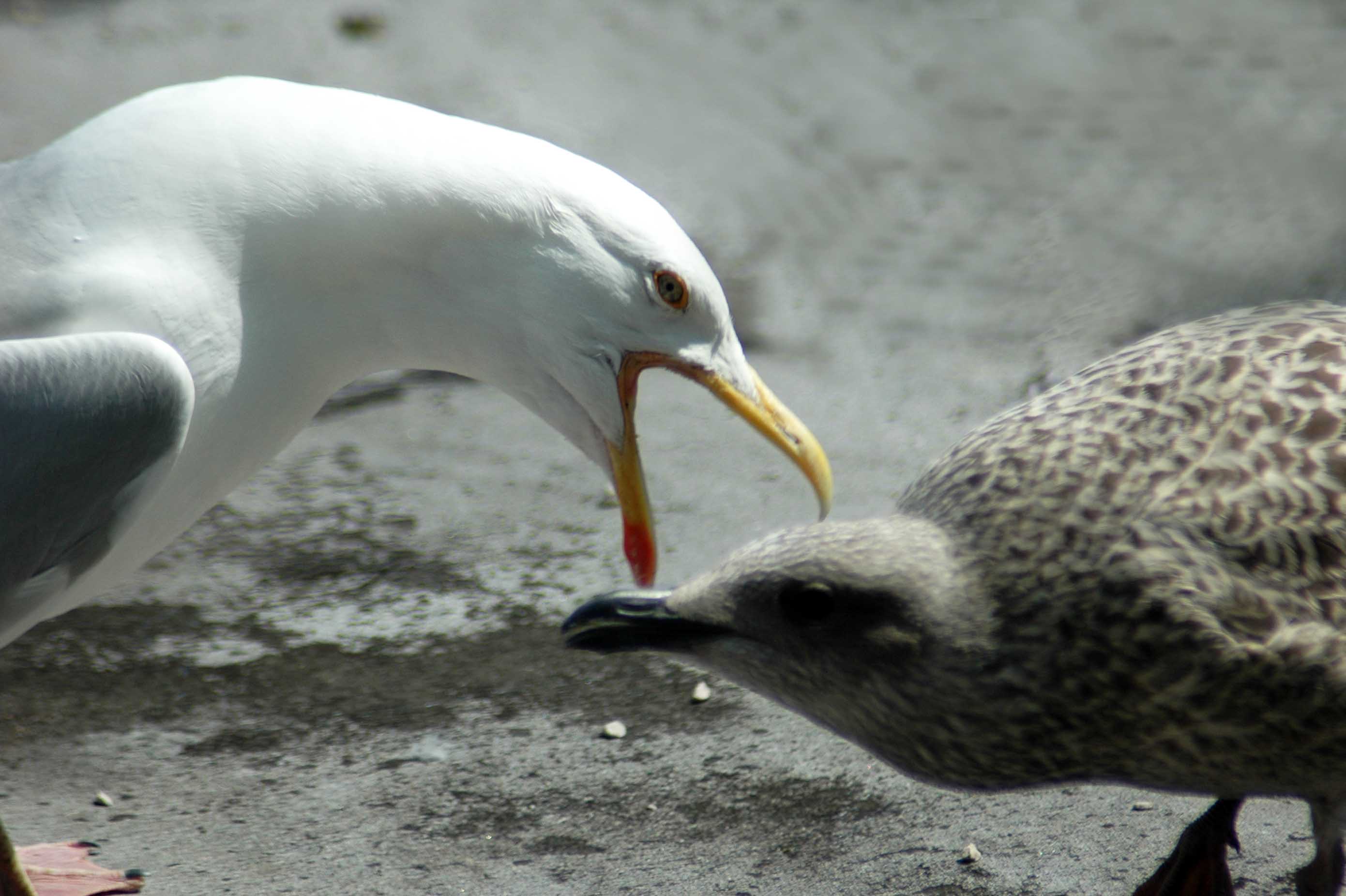
The adults always called loudly before delivering food to their young, perhaps it stimulates regurgitation?

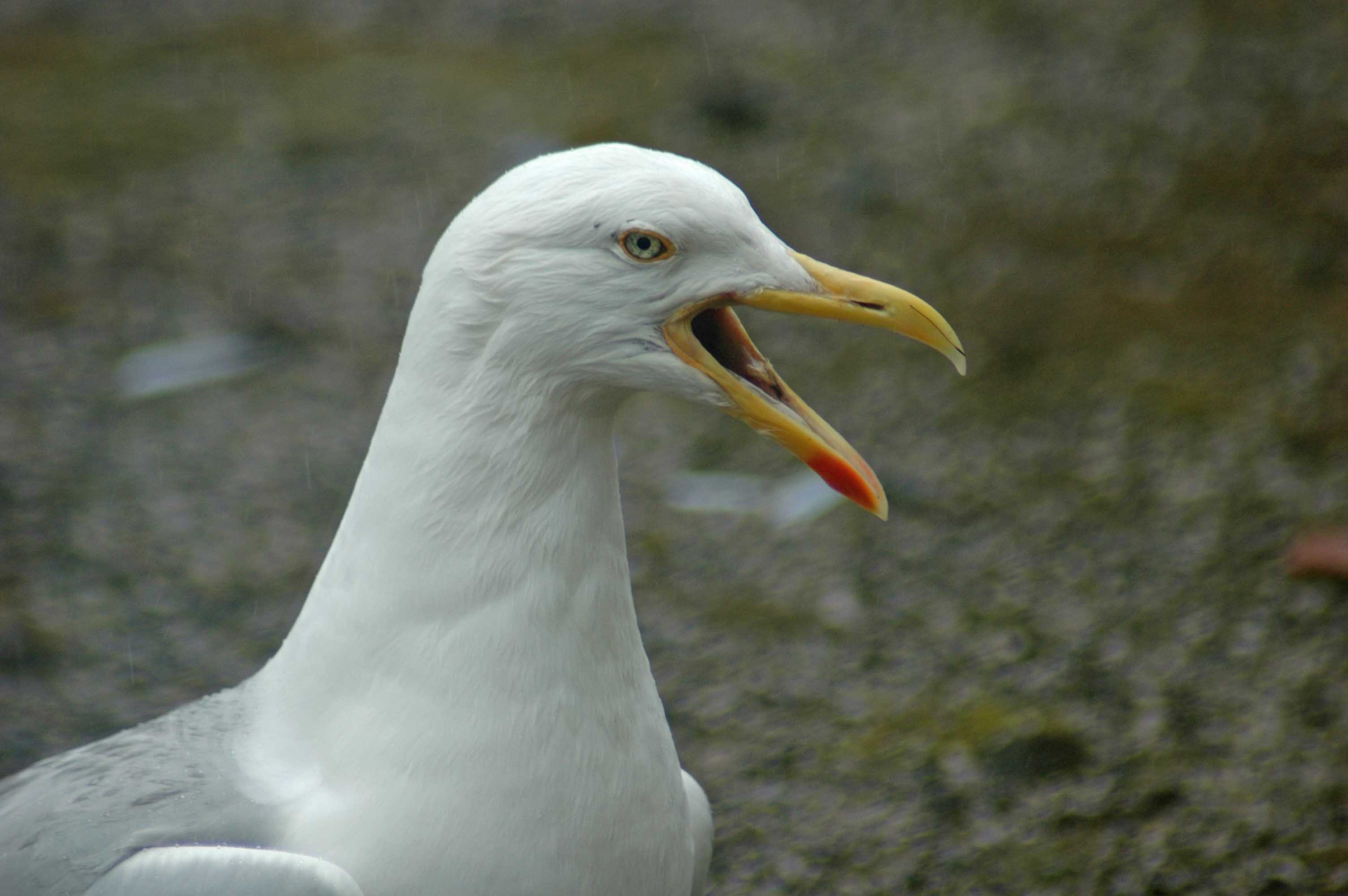
The adults had a ritual; each time they arrived back with food they began calling loudly, starting off with their heads lowered, then raising them, cranking up the volume until they reached a crescendo with head thrown back and beak opened fully.

You would not want to be on the sharp end of that beak

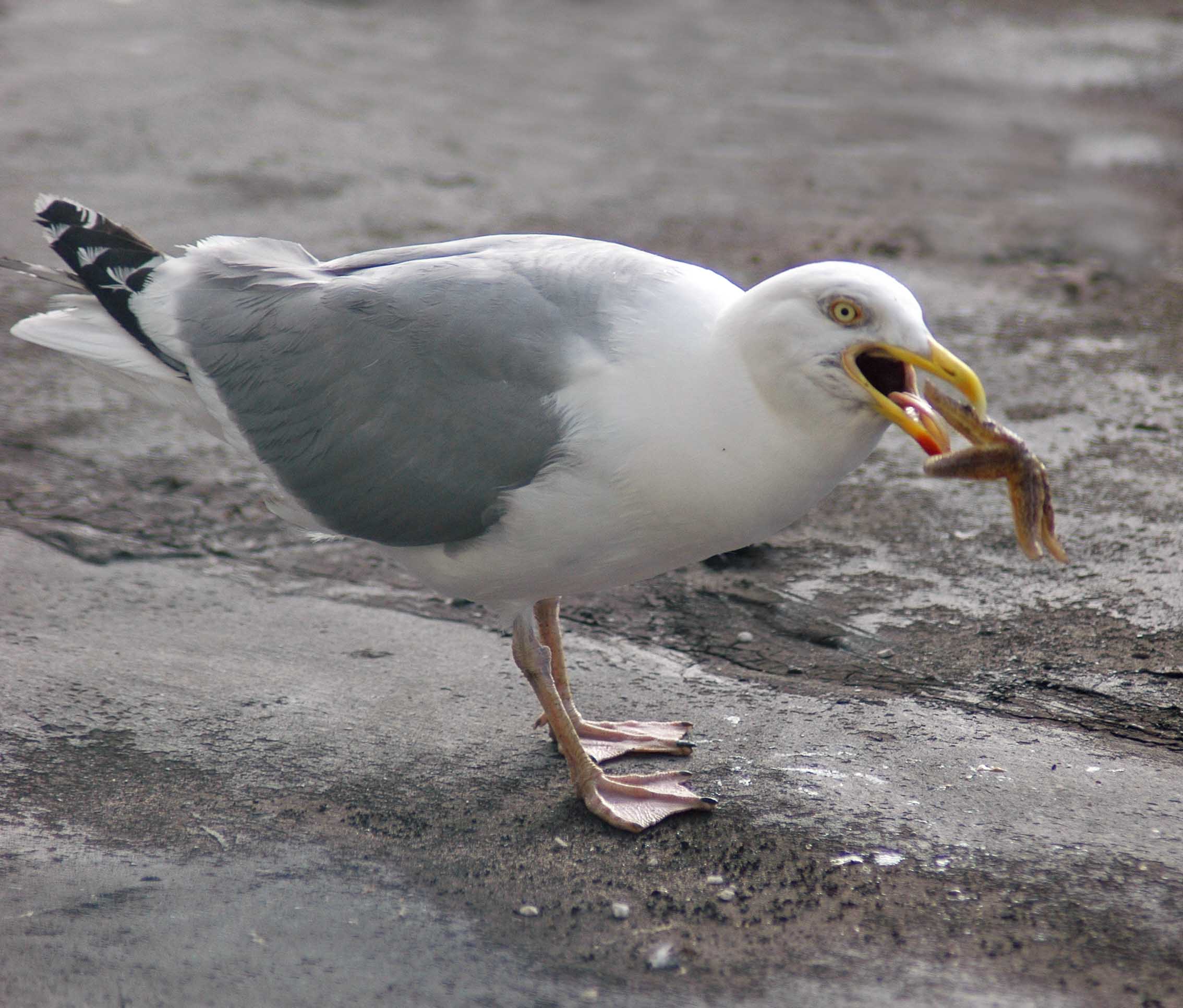
They are vigilant and attentive parents and deal patiently with  harassment by their young ones that persistently beg  for food. I’m not sure they are very well versed in nutrition though; ever the opportunists I saw them bring forth a variety of foodstuffs, including french fries, raw chicken, bits of crab and a still-wriggling starfish.

This starfish was definitely fresh, still wriggling in fact

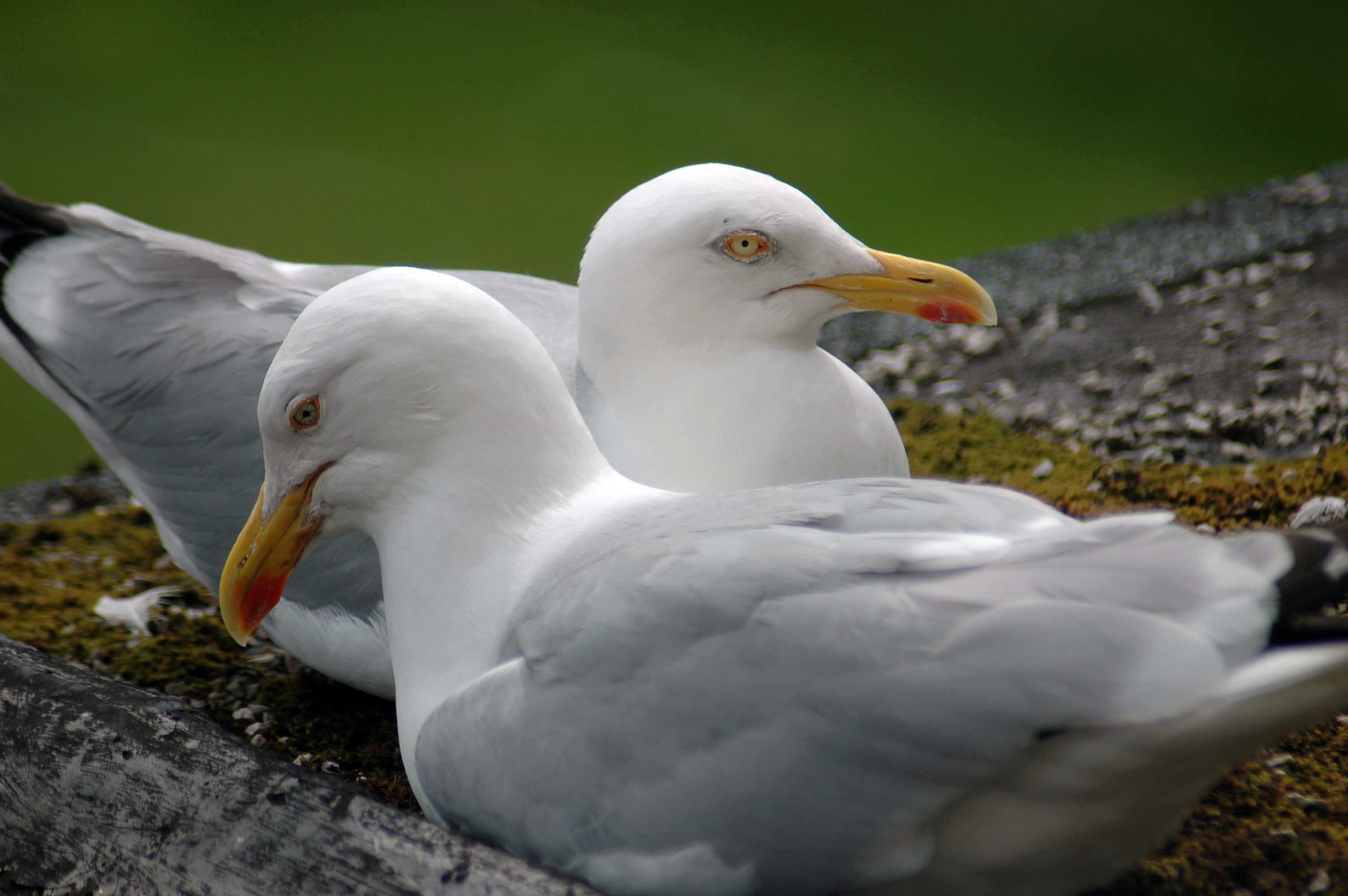
The gulls took time out in the afternoons to rest together, the pair work together to raise their young and appear to be well bonded. Although they would appear to be relaxed, they were ever-vigilant and well aware of the presence of other birds in their airspace, taking it in turns to issue warnings.

The male of the pair starting off vocal proceedings . *note the sunlight show through the thin membrane below his beak

Your turn dear …..

All squawked out

Teaching junior how its done – a family session

A postcard to our summer visitors: “Thank you for an interesting and educational few weeks, but I’m glad you’re no longer here. Perhaps you might enjoy trying a new location next year? I understand the chips are rather good in Llandudno, or how about Rhyl …..?”

Share this:

  • Share on Facebook (Opens in new window) Facebook
  • Share on Pinterest (Opens in new window) Pinterest
  • Share on X (Opens in new window) X
Like Loading...

August on the Little Orme

19 Sunday Aug 2012

Posted by theresagreen in coastal habitat, Little Orme, Nature, nature photography, Rhiwledyn Nature Reserve, Wildflowers of Wales

≈ 4 Comments

Tags

black & yellow striped caterpillars, blackstonia perfoliata, Centaurium erythraea, centaury, common ragwort, robin's pincushion, tortoiseshell butterfly, wildflowers of the Little Orme, yellow-wort

You probably do not need me to tell you that the weather this month has, so far, been rather un-summery, particularly in this part of the country, so I won’t bore you with unnecessary details. However it has impacted on the opportunities I have had to get out and about and record the effects it has had on the local wildlife, if any. That’s not to say I haven’t been keeping my eyes open and looking for opportunities to record what I am seeing, but rainy and windy days are not very conducive to taking photographs of insects or indeed flowers that are being buffeted by the weather.

An expanse of long grass on the clifftop blown by the wind against a background of very blue sea

The first day of August brought a mixed bag of weather conditions, but I  tried to make the most of a sunny spell towards the end of the afternoon by visiting the Little Orme. It was windy up there, but there were a few butterflies out feeding in odd places sheltered from the wind. In the majority were Meadow Browns, staying well down in the long grass, but there were a few Gatekeepers enjoying the abundance of bramble flowers, but not settling for long enough to photograph, one of two whites and one gorgeous Tortoiseshell. There were hardly any bees or hoverflies or indeed any insects flying.

A beautiful Tortoiseshell butterfly on bramble flowers

A large white (f) butterfly settled on a bramble stem very low to the ground. I love the mossy background.

Ragwort is flowering now; this somewhat contentious plant is an invaluable source of nectar for a myriad of insects and the host plant of the unmistakeable black and yellow striped larvae of the Cinnabar Moth, many plants are already supporting numbers of them.

Ragwort flowers with Cinnabar Moth caterpillars

Ragwort flowers with insects

There are some interesting plants flowering here at the moment; one is the pink-flowered Centaury and the other is Yellow-wort-Blackstonia, neither of which were showing open flowers today.

Common Centaury – Centaurium erythraea. Welsh, Bustl yr daear

Centaury flowers tightly closed

A member of the family Gentianaceae, common centaury thrives in dry grassy places and is especially common on stable sand dunes and on dune slacks.

A small plant of the gentian family, with flat-clusters of  star-shaped rose pink flowers, which open only when the sun shines. The stem is four-cornered and grows to a height of 4-20 inches (10-50 cm).

Etymology & traditional medicinal uses

Centaury takes its name from the Greek centaur, Chiron, who was half  man, half horse. Chiron was a teacher of the gods and skilled in the uses of medicinal herbs, and legend has it that when he was shot accidentally by Hercules with a poison arrow, he healed himself using common centaury.

This is a truly versatile herb that apparently may be used for nearly any problem. It is a bitter-tasting herb, which Culpeper noted “Tis very wholesome; but not very toothsome.”  It is used for a variety of digestive problems, including colic, bloating, heartburn, dyspepsia, to stimulate appetite, ease constipation, and to aid the proper assimilation and digestion of food. An extract prepared with vodka (!) is given for high blood pressure, liver and gall bladder problems. Lotions containing centaury have been used on the skin to remove different kinds of blemishes. It is used as a treatment for muscular rheumatism, gout, convulsions, tuberculosis, cramps and snakebites.

Externally, the juice applied to the eyes will clear the vision, and applied to wounds, ulcers, old sores, bruises, will help promote healing.  It kills worms as do most bitters and a decoction externally applied will destroy lice and other parasites in the hair.

Bach Flower remedy

I am familiar with Centaury through my work as an Holistic therapist, having studied and extensively used the Bach Flower remedies. It was one of Dr Edward Bach’s original ’12 Healers’.

The Centaury remedy is for people who find it difficult to say ‘no’ to others, usually  kind, gentle souls who like to help that may find themselves being taken advantage of and becoming resentful. The willing servant ending up the slave of another’s wishes. The remedy doesn’t harden or make us callous,rather it supports the development of courage and self-determination. We are better able to draw a line and make space where we can be ourselves, free of the desires and commands of others.

Yellow-wort – Blackstonia perfoliata. Welsh, Canri felen

Yellow-wort keeps its flowers tightly closed when the sun is not shining

A distinctive plant with grey-green leaves arranged in pairs to form ‘cups’ up the stem and bright yellow flowers that only open in the brightest sunshine. Yellow-wort is lime-loving and in Wales occurs in the greatest numbers dunes along the northern and southern coastal strips, particularly on marshy dune slacks. It generally flowers from June to October in Britain where it is widespread but not common.

In common with the afore-mentioned Centaury, Yellow-wort is a member of the family Gentianaceae, but is distinguished from all other family members, which have flowers with either four or five petals, by having six or even eight flower petals. It is tricky to catch the flowers open as even on the brightest, sunniest days they close very quickly if as much as a cloud passes over them.

Etymology & use

Yellow is self-explanatory as the colour of the flowers of the plant and wort was commonly used in the names of plants and herbs, especially those used formerly as food or medicinally. In this particular case I have been unable to discover any history of the plant being used medicinally, but a yellow dye can be obtained from the plant extract, so that may cover it.

The Latin Blackstonia refers to the 18th Century botanist and apothecary John Blackstone. Perfoliata.. through-leaved .. referring to the leaves which are fused together at the base with the stem threading its way through.

John Blackstone (1712–1753).  Blackstone worked in London and spent his holidays at Harefield, north Middlesex.  His major work was Fasciculus Plantarum circa Harefield sponte nascentium. Cum Appendice, ad Loci Historiam spectante which catalogued plants he found in Harefield and included the precise location of the rarer plants.  He was working on a second work when he died prematurely aged 41.

Robin’s Pincushion

Robin’s Pincushion

The Rose bedeguar gall, Robin’s pincushion gall, or Moss gall develops as ” a chemically induced distortion of an unopened leaf axillary or terminal buds” occurring most commonly on Field Rose (Rosa arvensis) or Dog rose (Rosa canina) shrubs. This fascinating distortion is caused by the parthenogenetic hymenopteran gall wasp (Diplolepis rosae (Linnaeus, 1758))

To find a wasp you would have to look around the new green leaf buds in late May as it prepares to lay its eggs. Then the female diplolepis lay up to sixty eggs within each leaf bud using her ovipositor. The asexual wasps emerge in the spring; less than one percent are males.

The bedeguar gall is surrounded by a dense mass of sticky branched filaments, giving the appearance of a ball of moss. Its filaments start off green, gradually becoming pink that turns crimson and ages to a reddish brown. They are at their most attractive from about now to September, as from then they begin to lose their hairs, although they remain in place until the new gall wasps emerge in the spring.  A large specimen can achieve up to 10 cm in width.

Etymology 

The term ‘Bedeguar, Bedegar or Bedequar’ comes from a French word, bédegar, but that originated from the Persian, bād-āwar, meaning ‘wind-brought.’

The Robin in ‘Robin’s pincushion’ refers to the woodland sprite of English folklore, Robin Goodfellow, otherwise known as Will o’ the wisp and Puck.

Folklore & traditional medicinal uses

Folklore tells us that if a Robin’s Pincushion is placed under one’s pillow it aids sleep and the gall was therefore known as the ‘Sleep Apple’.

The galls have apparently been used in the treatment of whooping cough and carried as an amulet to ward off toothache.

Share this:

  • Share on Facebook (Opens in new window) Facebook
  • Share on Pinterest (Opens in new window) Pinterest
  • Share on X (Opens in new window) X
Like Loading...

Rosebay willowherb

18 Saturday Aug 2012

Posted by theresagreen in Nature, nature photography, wildflowers

≈ 6 Comments

Tags

bombweed, epilobium angustifolium, fireweed, late summer wildflowers, medicinal uses of plants, rosebay willowherb, wildflowers of railway embankments

Stands of this glorious, showy plant may begin flowering as early as June, but are at their best now, gracing the margins of woodland, bogs, railway embankments and roadsides from June to September. A member of the Onagraceae family, Rosebay willowherb is native to the British Isles ; it is a vigorous perennial and can reach a height of almost 2 metres.

Rosebay Willowherb – Epilobium angustifolium  Other common names  include Fireweed, Bombweed and Ranting Widow. In Welsh it is Helyglys hardd.

Rosebay Willowherb was voted the County flower of London in 2002 following a poll by the wild plant conservation charity Plantlife.


Rosebay Willowherb

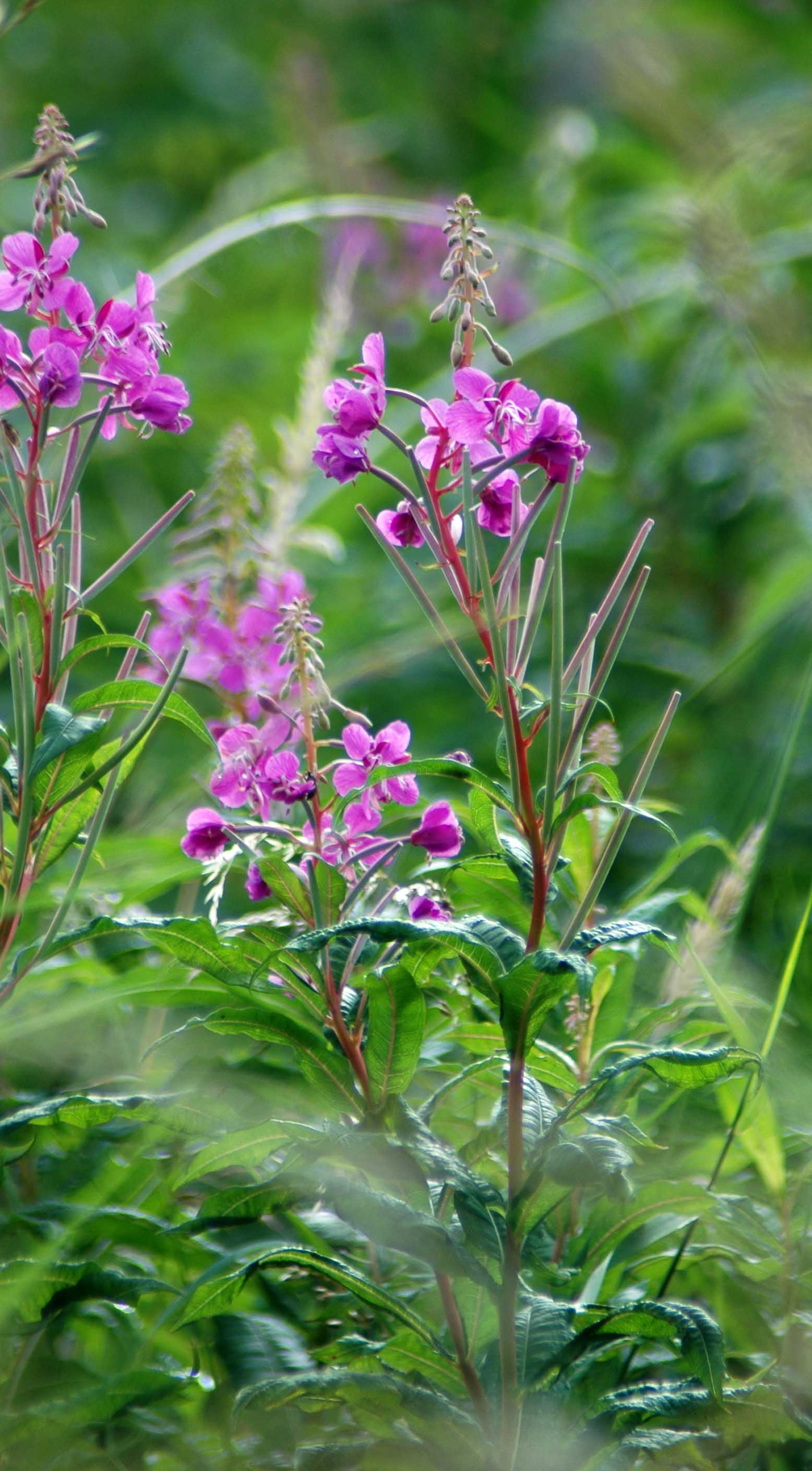
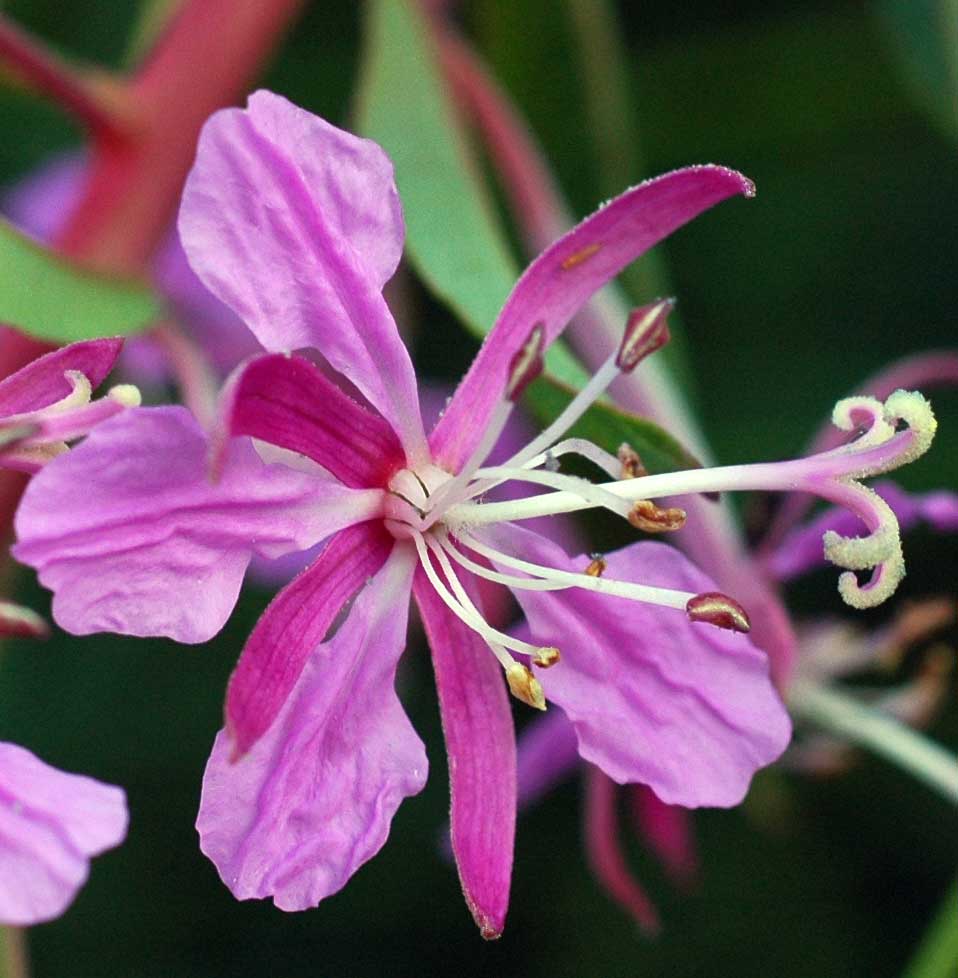
The flowers are slightly unequal, notched and have 4 deep pink/purple petals, 15-25mm across that grow up a long spike

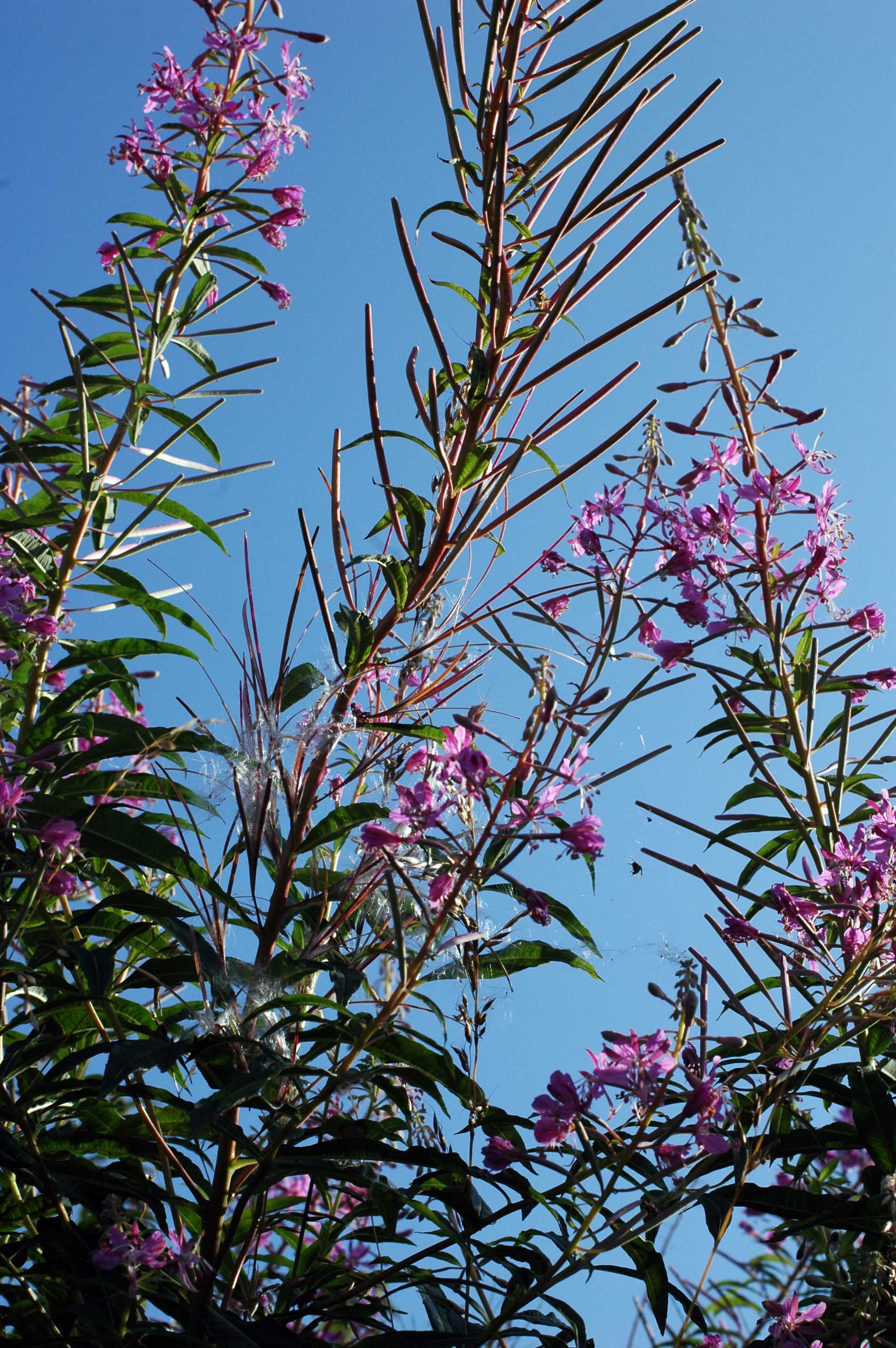
A hairy plant, it has oblong to lanceolate, coarsely toothed leaves. In autumn the downy seedpods split into four and release long plumes of featherweight hairs, which in warm dry conditions open up like parachutes, carrying the attached tiny light seeds great distances; each plant is capable of producing up to 80,000 seeds.

The flowers are a very good source of nectar for bees. Bee keepers sometimes move hives to newly opened forestry land where the plant is quick to colonize.

Etymology

The species name angustifolium is quite straightforward, simply made  up of the Latin words angusti meaning ‘narrow’, and folium meaning ‘leaf’.

Nowadays Rosebay Willowherb is widespread and common across the British Isles, but as little as a century ago Rosebay Willowherb was a relatively scarce woodland plant and up until the mid-eighteenth century most writers seemed to consider it a garden plant which occasionally escaped into the wild. The first authoritative wild records are all from rocky or riverside sites.

The following are extracts from Richard Mabey’s  Flora Britannica:

In Northumberland in 1769, rosebay could be found ‘Among the rocks and bushes under the Roman wall on the west side of Shewing-sheels, and by the Crag Lake. … It is introduced into some of our gardens under the name of French willow; but being a great runner, it makes a better figure in its more confined situation among the rocks, than under culture…. It is reputed a scarce plant. In Hertfordshire, in the 1840s, it was described as ‘rare’ in woods on a moist sandy soil, and in osier beds. Other noted botanists of the time, including the author of  ‘Flowers of the Field (1853), the Revd C A Johns made similar reports.

But by 1867, the Worcester botanist, Edwin Lees, had begun to notice a change in its habits: ‘Quite recently the Rosebay Willow-herb has become numerous in several parts of the Vale of Severn, and promises to spread, incited to take possession of new-made roads and embankments. I have observed it by the side of a diverted road near Shatterford, and in the cutting of the Birmingham and Gloucester Railway, near Croome Perry Wood.’

‘Fireweed’ or ‘Bombweed’

During the First World War (1914-18), populations of rosebay exploded, especially where extensive woodland had been felled (and often burned) to supply timber for the woar effort. In World War 11, there was a second wave of expansion. Rosebay relishes areas where there have been fires, and the summer after the bombing raids of 1940, the ruins of London’s homes and shops were covered with sheets of rosebay stretching, according to some popular reports, as far as the eye could see and generating the popular name ‘bombweed’.

In Gloucestershire there were mixed feelings about the plant. In 1948 the new county flora edited by H.J. Riddelsdell says:

‘This species has  spread with great vigour since about 1914 owing to the clearing of woods…. The seed is easily carried, of course, and the railway has been a great agent in its spread. Beautiful as the plant is in its flowering season, when it is in seed it creates desolation and ugliness over the whole of its area.’

Flowers, seedpods & seedheads

Traditional Medicinal uses

The roots may be peeled, pounded gently and used as a poultice for skin damage such as burns, sores, swellings, boils and other similar afflictions.

An infusion of the leaves, drunk as a tea act as a tonic for the whole system, helping digestion and inflammation, but take moderately as  they are also an effective laxative.

The dried pith may be dried and powdered and applied to the hands and face for protection against the cold.

Practical uses

In autumn the downy seed hairs can be used as fast lighting tinder (similar to thistle down), very effective with flint and striker. Make sure you have a secondary tinder ready as the down burns away quickly.

The down has been used to stuff mattresses and mixed with cotton or fur to produce warm clothing.

The fibre from the outer stem is used as a material for making cords.


Share this:

  • Share on Facebook (Opens in new window) Facebook
  • Share on Pinterest (Opens in new window) Pinterest
  • Share on X (Opens in new window) X
Like Loading...

Conwy Mountain

19 Thursday Jul 2012

Posted by theresagreen in Nature, nature photography, Snowdonia National Park, wildflowers

≈ 8 Comments

Tags

bell heather, bog asphodel, Conwy mountain, erica cinerea, foxglove, heather in bloom, heathland, medicinal uses of plants, plants poisonous to animals

Conwy Mountain is beautiful now, it’s rocky cliffs and crags are coloured and softened with masses of pink/purple heather and the lower slopes are clothed with a mantle of ferny green bracken.

Heather softens the rocky limestone cliffs of the mountain

Heather is mixed with gorse which is just beginning to open its flowers

Bell Heather- Erica cinerea

Erica cinerea – Bell heather, is a species of heather that is native to western and central Europe. It is a low shrub growing to 15–60 centimetres (5.9–24 in) tall, with fine needle-like leaves 4–8 millimetres (0.16–0.31 in) long arranged in whorls of three.

The plant’s common name is taken from its pink/purple bell-shaped flowers that are 4–7 millimetres (0.16–0.28 in) long, and produced during mid to late summer.

This species occurs mainly on dry heaths where the soil is acidic or peaty; it tends not to be found in wetter places, where it is likely to be replaced by the similar-looking Cross-leaved Heath, Erica tetralix. Its growth is not as large or dense as that of common heather or ling.

PRACTICAL USES

Bell heather has been used extensively over centuries in a wide variety of ways, including use as bedding material for both livestock and people. Bundles of the dried stems have been used to make brooms and to thatch roofs; it has been burnt as fuel, wound into ropes and used to repair holes in tracks and roads.

TRADITIONAL MEDICINAL USES

Heather has a long history of  use in traditional or folk medicine. In particular it is a good urinary antiseptic and diuretic, disinfecting the urinary tract and mildly increasing urine production.

Part used : flowers
Uses : Particularly used for urinary infections.
Antiseptic, Cholagogue, Depurative, Diaphoretic, Diuretic, Expectorant, Sedative, Vasoconstrictor

Heather and gorse shrubbery accented by spikes of foxgloves

Foxgloves that have flowered prolifically this year are still bearing flowers at the tips of their elongated stems.

Foxgloves open their flowers starting with those at the lower end of the stem, which continues to lengthen.

The heather-covered rocky slopes give way to bracken at their base. Grasses and other plants surround the pool creating a rich tapestry of lush vegetation

The large mountain pool is currently full to overflowing and the ground for some distance around it is soft and boggy, with large pools of surface water covering the walking tracks. On what would have been the edge of the pool a few weeks ago, I was excited to spot some spikes of Bog Asphodel. I wanted to get a photograph of  them of course, but they were now surrounded by water and very boggy mud. I managed to get fairly close to them, but as there was no way I was going to kneel to put myself on a level with them, the resulting picture is not as clear as I would have liked, but you get the general impression.

Bog Asphodel –

Bog Asphodel – Narthecium ossifragum

A fascinating and unusual plant that grows in short wet grassland on acid soils, Bog Asphodel has bright yellow flowers with six narrow widely-spaced petals and six long stamens that are surrounded by yellow hairs, like a miniature bottle-brush, with a prominent orange anther on top.

There were just a few flowers to be found here, but in other places where the appropriate habitat occurs, during July and August carpets of the deep orange yellow flowers may be seen, to be replaced later in September by a carpet of orange and russet-brown as the flowers fruit.

Despite the plant’s English name, it is not particularly closely related to the true asphodels. The Latin name means “weak bone”, and refers to a traditional belief that eating the plant caused sheep to develop brittle bones.

In Northern climes it was once used a yellow hair dye and as a cheap substitute for saffron.

Bog Asphodel may be poisonous to both sheep and cattle, although not all stands of the plant are toxic, and the toxicity may be the side effect of the plant’s response to a fungal infection. However, affected plants , if ingested, cause serious kidney problems and a photosensitive disorder which is variously called ‘alveld’ (elf-fire), in Norway; ‘saut’ in Cumbria; and ‘plochteach’, ‘yellowses’ and ‘head greet’ in Scotland that are brought about by tri-saccaride saponins, ‘narcethin’ being the major one. 

Waxcaps

A real surprise was to find this little collection of mushrooms, which I’m fairly sure from mushroom forages in Spain, are Chanterelle’s, but not sure enough to risk picking them!

Spear Thistle – Cirsium vulgare

And finally, thistles.

Cotton Thistle – Onopordum acanthium

Share this:

  • Share on Facebook (Opens in new window) Facebook
  • Share on Pinterest (Opens in new window) Pinterest
  • Share on X (Opens in new window) X
Like Loading...

New gulls on the block

17 Tuesday Jul 2012

Posted by theresagreen in bird behaviour, Birdwatching on North Wales coast, Nature, nature photography

≈ 3 Comments

Tags

coastal birds, herring gull, herring gulls in towns, larus argentatus, rhos on sea

I’ve been away quite a bit lately, so there’s quite a bit of catching up to do  here in Rhos-on-Sea. The weather here, as everywhere else has not been conducive to venturing far, but I have been able to do some very productive birdwatching from my bedroom window, which I probably would not have done had I been out and about, so some clouds do have silver linings. In this case the silver has been in the shape of Herring Gulls – (the scientific name larus argentatus translates as silver gull). The activity has been brought about by the recent fledging of the single offspring produced by the pair that nested atop our next-door neighbour’s chimney pot.

At first the young gull spent a lot of time resting on the flat roof, where it is surprisingly well camouflaged.

The newly-fledged gull resting

In between bouts of resting it wandered around the rooftop picking at the odd collection of sticks, shells, bones and other random items brought there by its parents hoping to find something edible it may have missed.

First portrait of the new arrival

I don’t need to sit and watch and wait for the parents to arrive with food as both adult and their young one set off such a cacophony of noise at the sight of one another I can hear them from wherever I am in the house. Once a parent lands the youngster automatically adopts the typical crouched, hunched shoulder begging posture that makes it look a bit like a small vulture.

In begging posture

The loud communication between the two birds continues for a minute or so, then the parent allows the young one to approach and finally to tap the red spot on its beak to stimulate the regurgitation of the food it has brought.

The young gull approaching its parent

Getting into position

The young gull taps the red spot on its parent’s beak  to stimulate regurgitation of its lunch

What follows is not pretty as the parent brings back whatever food it has managed to find and deposits it in front of its youngster. It seems to be thriving on a diet that does not always look particularly healthy; in the following pictures the meal is raw chicken, but on another occasion it was a pile of french fries. There have also been more natural offerings of crab, which is consumed shell and all and small fish.

The adult regurgitating raw meat, maybe chicken

Fortunately the young gull is not a fussy eater

Once the food has been swallowed by the young one the parent leaves immediately, its departure once more accompanied by more loud cries.

Over the course of the last few days the young gull has gained much in confidence and now flies off  to spend much of the day elsewhere, but it is still returning to the high roof in the evenings with its parents and to the flat roof for intervals, maybe to rest where it feels safe.

The young one is gaining in confidence and strength daily

Share this:

  • Share on Facebook (Opens in new window) Facebook
  • Share on Pinterest (Opens in new window) Pinterest
  • Share on X (Opens in new window) X
Like Loading...

Dale beach and the Gann Estuary

29 Friday Jun 2012

Posted by theresagreen in coastal habitat, Nature, nature photography, Pembrokeshire coastal path

≈ 14 Comments

Tags

brackish lagoon, coastal wildflowers, Dale, gann estuary, kidney vetch, medicinal plants, mute swan, pickleridge lagoon, shingle beach, stonecrop

We returned home via the village of Dale which is situated on the south eastern tip of the Pembrokeshire Heritage coast and is also on the route of the Coastal Path. Its beach is located on the Milford Haven estuary between St Ann’s Head and St Ishmael’s in Pembrokeshire, South Wales. There is a lot of history attached to the village and surrounding area, but we had come to have a quick look  at the unique habitat that lies at the back of its shingle beach.

The view across Dale beach; the refinery at Haverfordwest is just out of sight behind the headland on the left of the photograph

The beach is mainly shingle with some sand at low tide.

The shingle beach is a colourful mixture of red sandstone and grey/green silurian stone

The gritty sand is pink and stones on the beach occur in an infinite variety of shades of pink/red, grey and green

The red soils of the area are derived from old red sandstones seen at Lindsway Bay and Sandy Haven that are some 395 million years old. There are also occasional exposures of even older rocks, aged at 420 million years.  The cliff tops are covered with glacial till made of unconsolidated material dumped by melting ice around 20,000 years ago and fields that have been ploughed are visible for miles as the soil is a bright red in colour.

At the back of the shingle beach is a sand ridge and behind that an area of low lying land and the brackish artificial Pickleridge Lagoon, formed by the flooding of gravel pits that operated between the 1950s and 1980s. This has now become established as a saline lagoon and together with the  extensive salt marsh in the Gann river valley, the area has become a haven for wildlife, particularly for wading birds and plants.

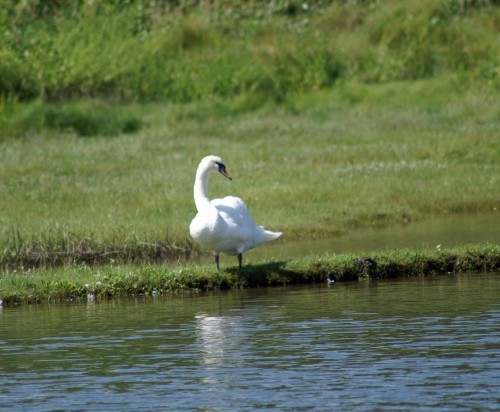
There were very few birds around today, a few Oystercatchers were out on the tide line and a number of Mute Swans on the edges of the lagoons, but other than that we saw only crows, a pair of raven flying overhead and a magpie or two.

A beautiful mute swan on the edge of the lagoon

There are some interesting plants growing here though, including  the largest expanse of yellow flowered Kidney Vetch I have ever seen.

View across the grassy meadow and lagoon

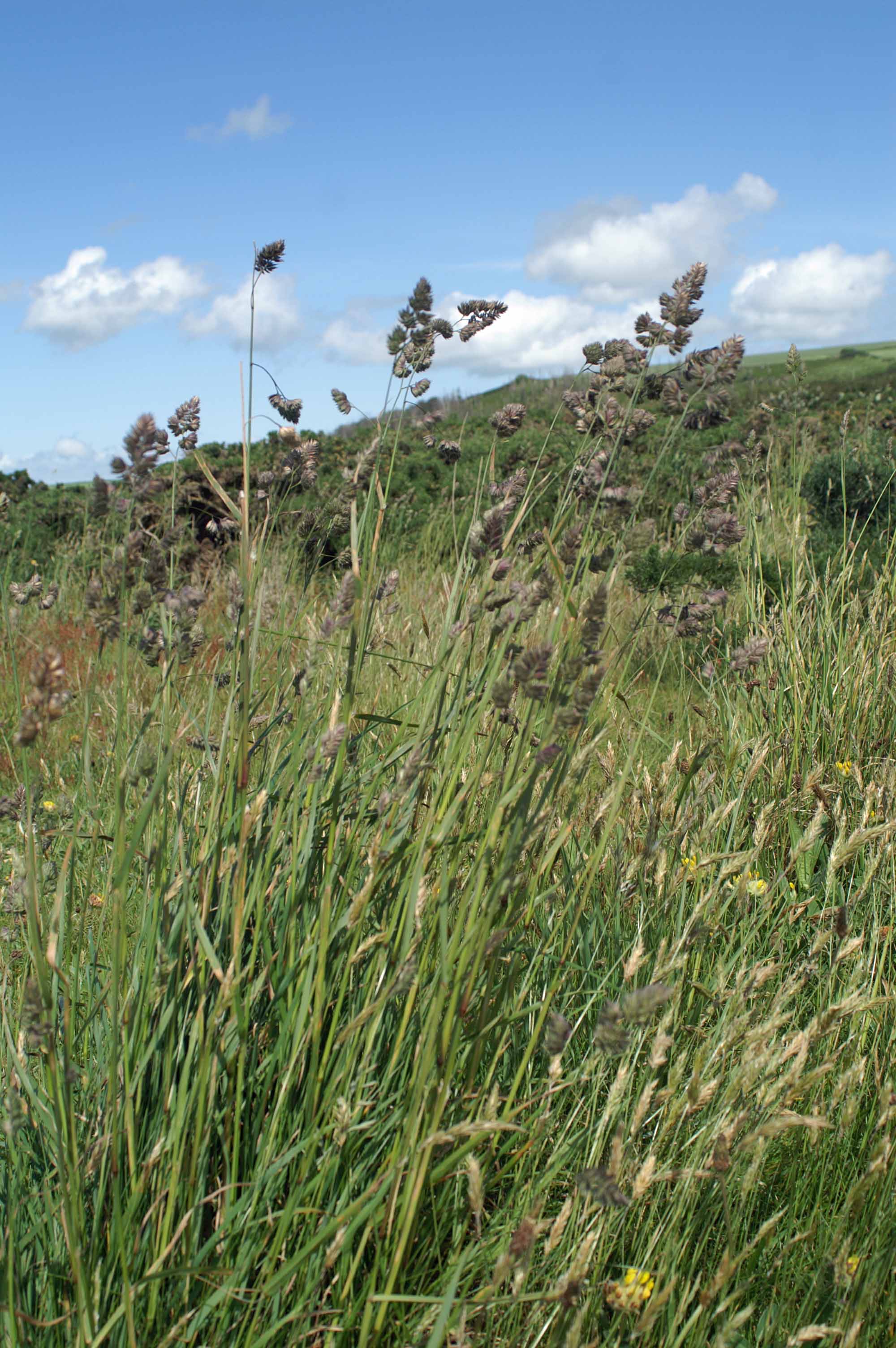
Grasses

The largest expanse of kidney vetch I have seen

Kidney Vetch – Anthyllis vulneraria

Kidney Vetch-Anthyllis vulneraria

The small yellow flowers of  Kidney Vetch are held in a cluster atop little woolly cushions, at first glance resembling a clover. The plant flowers from June to September and is a distinctive feature of sand dunes, chalk grassland and cliffs across the UK where it may spread to cover bare ground if it finds the right conditions.

The flowers are mainly yellow, but can also be found in orange and red forms. Each flower has its own hairy calyx (containing the sepals), giving the flower cluster its woolly appearance. The leaves of Kidney Vetch are divided into narrow leaflets that are silky and white underneath.

Kidney Vetch &  the Small Blue Butterfly

Kidney Vetch is the sole foodplant for the larvae of the Small Blue Butterfly – a seriously declining insect which is classified as a Priority Species in the UK Biodiversity Action Plan. Although Kidney Vetch itself is not threatened, the habitats in which it grows are becoming fragmented and being lost at a rapid rate; for example, it’s estimated that we’ve lost 80% of our chalk grassland over the last 60 years.

Traditional medicine

Kidney Vetch has long been used in herbal medicine as an astringent; the  name ‘vulneraria‘ means wound-healer and applying it to wounds reduces bleeding. As the common name implies it is also used in the treatment of kidney disorders.

A Stonecrop – Sedum caeruleum

Further information:

The habitat formed here and the wildlife it supports have been the subject of several field studies over the years that have included the Feeding Patterns of  Wading Birds on the Gann Flat by the Field Studies Council in 1973 http://www.field-studies-council.org/fieldstudies/documents/vol3.5_91.pdf  that was followed up thirty years afterwards in 1992  http://www.eco-challenge-xtra.org. ; another on invertebrates The Gann Flat, Dale; Studies on the Ecology of a Muddy beach   and another on the flora and ferns http://www.eco-challenge-xtra.org/fieldstudies/documents/vol1.3_18.pdf

Share this:

  • Share on Facebook (Opens in new window) Facebook
  • Share on Pinterest (Opens in new window) Pinterest
  • Share on X (Opens in new window) X
Like Loading...
← Older posts
Newer posts →
Follow everyday nature trails on WordPress.com

Enter your email address to follow this blog and receive notifications of new posts by email.

‘But it is the common species that keep the living world ticking over and provide most of our experiences of wildlife, and I would argue that maintaining the abundance of these is as important a conservation priority as maintaining the existence of rarities’. Richard Mabey

MOST RECENT POSTS

  • A Glimpse of Spring to Come January 22, 2025
  • Hunting the Wren December 28, 2024
  • Oh, Christmas Tree December 18, 2024
  • In and Out of the Ivy February 15, 2024
  • Nature’s Fireworks November 30, 2023
  • Wild Autumn along the Coast Path November 3, 2023

OLDER POSTS

LOOKING FOR SOMETHING IN PARTICULAR?

  • Sights and Sounds from the Little Orme 1
    Sights and Sounds from the Little Orme 1
  • Following a river to a Fairy Glen
    Following a river to a Fairy Glen
  • Shades, Sounds and Scents of the Woods
    Shades, Sounds and Scents of the Woods
  • Catchers, a Duck and Divers
    Catchers, a Duck and Divers
  • Fine Dining for Crows
    Fine Dining for Crows
  • Things Bright and Beautiful
    Things Bright and Beautiful
  • Butterflies and more rare treats
    Butterflies and more rare treats
  • A Windy Wildflower Trail
    A Windy Wildflower Trail
  • May Bee Appearing on Ivy near You
    May Bee Appearing on Ivy near You
  • Pines and Primroses
    Pines and Primroses

nightingale trails

The Walk of the Monarch Butterfly-Sendero de la Mariposa Monarca

The Walk of the Monarch Butterfly-Sendero de la Mariposa Monarca

MY WILDFLOWER BLOG: where the wildflowers are

Snowdrop

Snowdrop

most recent posts

Follow everyday nature trails on WordPress.com

Social

  • View teresamaygreen’s profile on Twitter

Enter your email address to follow this blog and receive notifications of new posts by email.

Website Built with WordPress.com.

  • Subscribe Subscribed
    • everyday nature trails
    • Join 358 other subscribers
    • Already have a WordPress.com account? Log in now.
    • everyday nature trails
    • Subscribe Subscribed
    • Sign up
    • Log in
    • Report this content
    • View site in Reader
    • Manage subscriptions
    • Collapse this bar

Loading Comments...

    %d