• Home
  • about
  • about the photographs
  • Local Nature Reserves
    • Bryn Euryn Local Nature Reserve
    • Mynydd Marian
  • Wales Coast Path
    • Grey Seals in North Wales
    • St.Trillo’s Chapel
    • Wildflowers of North Wales Coastal Paths, Cliffs and Dunes

everyday nature trails

everyday nature trails

Author Archives: theresagreen

Celebrating new lives

26 Saturday Jul 2014

Posted by theresagreen in bird behaviour, birds of Wales, Bryn Euryn Nature Reserve, frogs & toads, Little Orme, Nature, Nature of Wales, Rhiwledyn Nature Reserve

≈ 2 Comments

Tags

common frog, house sparrow, kestrel, rabbit, raven

It seems to have been a good year for our local wildlife so far and the following are some of the photographs I have taken of a few new young lives.

Ravens nest early in the year, so firstly here is an image of this year’s Little Orme young one quite well grown but still in the nest at the end of May.

140531TG-Raven young in nest 2-Little Orme

31st May: Young Raven in nest on Little Orme

I was lucky enough to catch up with him/her on the summit of the Bryn a few weeks later, now looking extremely fit and handsome in glossy black plumage.

June: Young Raven on the summit of Bryn Euryn

June 15th: Young Raven on the summit of Bryn Euryn

June: A fine high place with plenty of open sky to practise flying skills

June 15th: A fine high place with plenty of open sky to practise flying skills

Back to May again. Whilst the Raven was still in the nest, a young Kestrel was already out practising their manoeuvring skills over the rocky cliff at the top of the Little Orme. When I spotted it first I thought I’d been fortunate to spot a bird out hunting, but as I got closer it kept up its position and made no attempt to fly away at my approach. I realised then it was a young bird out honing its skills. It was wonderful to be allowed to watch so closely

May 31st

May 31st: Young Kestrel practising hunting techniques above the Little Orme

May 31st: The length of time the bird held its position was impressive

May 31st: The length of time the bird held its position was impressive

May 31st: Swooping and diving

May 31st: Swooping and diving

The Kestrel disappeared over the headland for a few minutes then reappeared flying out over the sea. As it passed where I stood on the cliff edge it looked in my direction. Perhaps to make sure I was still watching and was suitably impressed.

Flying past the cliff edge where I stood

Flying past the cliff edge where I stood

May 31st: Out over the sea, maybe using the gull to focus on

May 31st: Out over the sea, maybe using the gull to focus on

Still on the Little Orme it was apparent there has been a proliferation of cute baby rabbits this year too:

May 31st: Baby rabbit on the Little Orme

May 31st: Baby rabbit on the Little Orme

On the first of July we discovered a Dunnock’s nest in the garden with tiny new chicks with enormous gapes.

July 1st: Hungry baby Dunnocks

July 1st: Hungry baby Dunnocks

Then there was a miniature frog that I just happened to spot struggling through the damp grass on the lawn, possibly heading for nest door’s lovely pond. I caught it in my hand and transferred it to a glass for a few minutes so I could photograph it.

20th July: A tiny froglet

20th July: A tiny froglet

It had no trouble at all climbing to the top of the glass. The froglet was less than an inch (2.5cm) long, but completely perfect.

July 20th: A rare view of the speckled underside

July 20th: A rare view of the speckled underside

I didn’t keep it for long before releasing it back where I found it.

July 20th: Then I let him go again

July 20th: Then I let him go again

Last weekend I sat outside to drink a cup of tea and was kept entertained by a family of House sparrows that had brought their latest brood out for their first outing. The young birds were wobbly and fluttery while trying to perch on twiggy branches of the recently drastically cut privet hedge and still begging their parents for food.

July 20th: A very young House sparrow out for a first outing

July 20th: A very young House sparrow out for a first outing

Dad seemed to be on feeding duty, popping back and forth with bits and pieces.

Dad seemed to be the one in charge of feeding this morning

Dad seemed to be the one in charge of feeding this morning

I caught him feeding one of the offspring with something that I’m sure mum would definitely have disapproved of.

Not quite on target

Not quite on target

Something lurid pink about to be passed on

Something lurid pink about to be passed on

Down the hatch

Down the hatch

Whatever it was, it was certainly sticky. Cake icing maybe?

Whatever it was, it was certainly sticky. Cake icing maybe?

I wonder if the hard working parents will get a rest now?


Share this:

  • Share on Facebook (Opens in new window) Facebook
  • Share on Pinterest (Opens in new window) Pinterest
  • Share on X (Opens in new window) X
Like Loading...

A summer evening’s walk on the Bryn

20 Sunday Jul 2014

Posted by theresagreen in Bryn Euryn Nature Reserve, Nature, Nature of Wales, nature photography, North Wales, Wildflowers of Wales

≈ 8 Comments

Tags

carline thistle, common soldier beetle, forest bug, harebell, hemp agrimony, hogweed, mating red beetles, Meadow Brown, rowan berries, tapered drone fly

There’s no such thing as a bad time to enjoy a walk on Bryn Euryn, but during the longer daylight hours of the summer, an early evening during the week can be the perfect time to find it quiet and peaceful.

The woodland is almost silent now, with just the occasional rustle from the undergrowth or the flash of a skulking bird to remind you that you are not alone here. It reminds me of such walks in the woods around the cottage I grew up in, at an age when my imagination frequently ran riot and I was convinced I was being watched from every tree and shrub. By what or whom I’m still not sure, but I can clearly remember that feeling  on summer evenings such as this, when the silence is almost tangible.

Out in the open insects are making the most of the late sunshine to stoke up on nectar fuel for the night.  Hogweed is in flower and almost every umbel has at least one pair of mating soldier beetles.

Soldier beetles mating on a hogweed flower

Soldier beetles mating on a hogweed flower

The slightly cooler temperature of an early evening can make it easier to photograph some insects as they are intent on feeding and move a little slower.

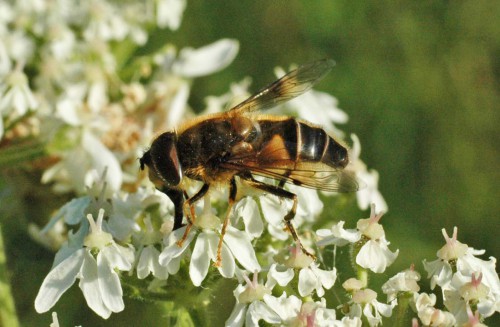
A Tapered Drone Fly- Eristalis pertinax on hogweed

A Tapered Drone Fly- Eristalis pertinax  (male) on hogweed

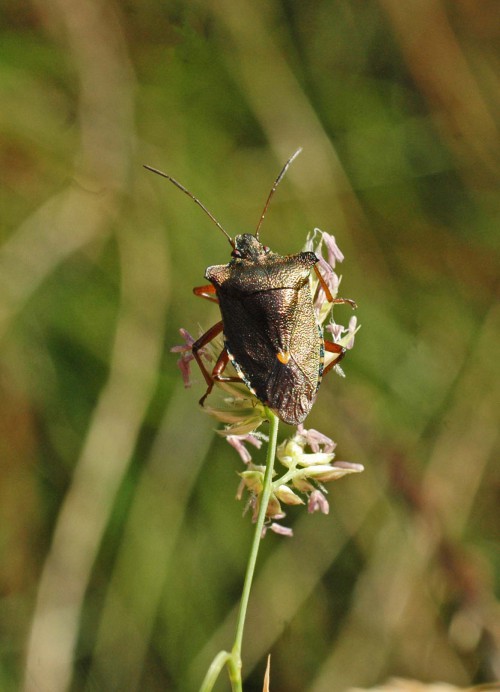
A movement at the top of a long grass stem caught my eye and I found this lovely Forest bug balancing there. It has a lovely bronzy sheen to its wing-cases.

Forest bug- Pentatoma rufipes

Forest bug- Pentatoma rufipes

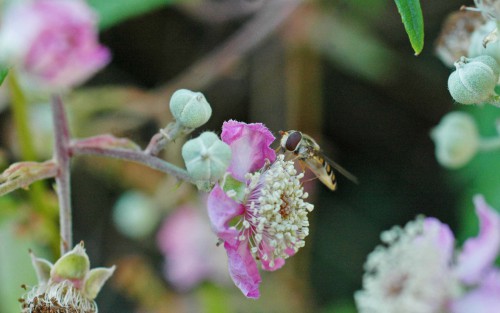
Brambles are beginning to develop berries, but there are still flowers on some bushes attracting bees and hoverflies.

Marmalade fly on a bramble flower

Marmalade fly on a bramble flower

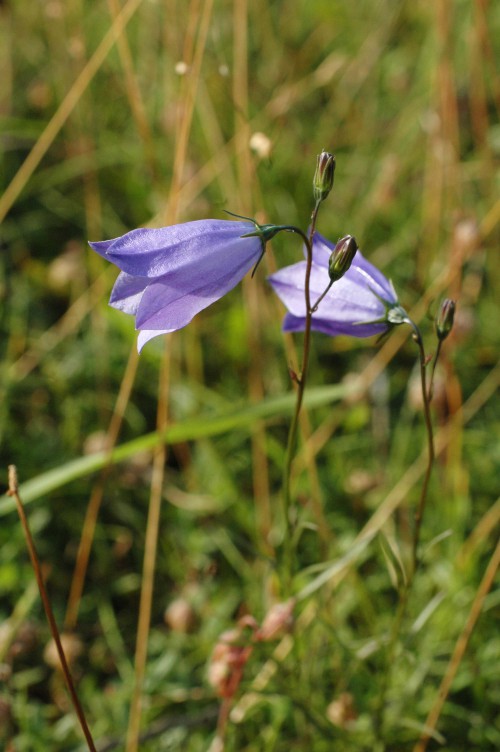
One of my favourite wildflowers, the Harebell is in fresh full bloom now. Sometimes they find themselves growing in goups, caught up amongst long grass stems where they grow longer stems to reach the open air.

Harebells in long grass

Harebells in long grass

I love to see them best growing from shorter turf, their beautiful blue bells held aloft on sturdy wiry stems where they can turn towards the sun and nod and wave freely in the breeze.

Harebell- Campanula rotundifolia

Harebell- Campanula rotundifolia

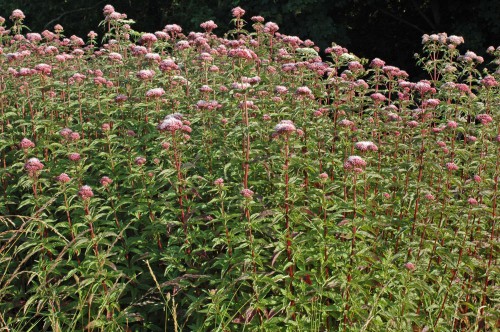
An important summer nectar flower, Hemp Agrimony, whose dusky pink flowers are relished by some species of butterflies is also blooming now. The impressive stand of it in my photograph was in shade this evening, so no visitors; I’ll have to come back earlier on a sunny day.

An impressive stand of Hemp Agrimony

An impressive stand of Hemp Agrimony

While some plants are at the peak of their flowering, others are already beginning to produce their fruits. I mentioned blackberries earlier, which are just beginning to form, but there are wild-growing raspberries here that are perfectly ripe. I couldn’t resist picking and eating a few; sorry birds.

Wild raspberries

Wild raspberries

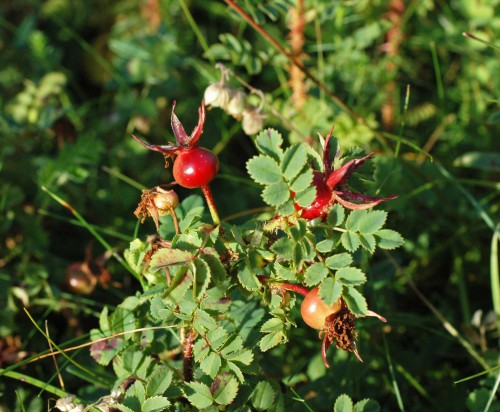
The hips on the Burnet Roses are formingly nicely, already a good size and red in colour, they will get bigger yet and turn black.

Burnet Rose hips forming

Burnet Rose hips forming

There are tiny acorns on the oak trees too.

Tiny acorns forming on the oak trees

Tiny acorns forming on the oak trees

And the Rowan trees have ripening berries.

Ripening Rowan berries

Ripening Rowan berries

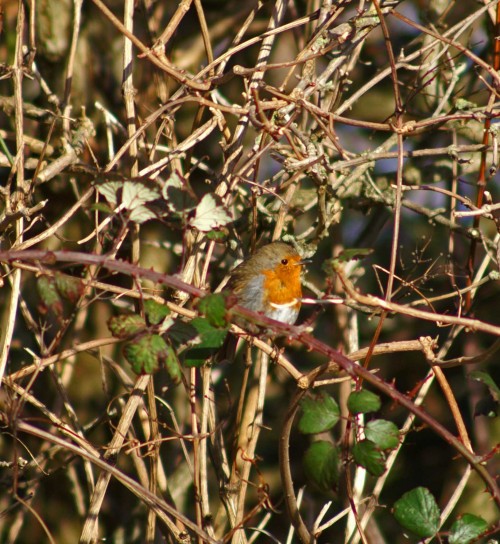
Back into the woods for a short while and its very quiet, although I have heard a Chiffchaff as I’ve been walking around and disturbed a young Robin where it was pecking around on the damp earth of the track. Emerging back into the sunshine onto the grassy hillside I also disturbed a rabbit that raced off up the steep hill in front of me. I watched its white cotton tail bobbing away and envying the effortless way it bounded up there. There are a lot of rabbits here that do a great job of grass-keeping in certain areas, but you don’t see them often.

Run, rabbit

Run, rabbit

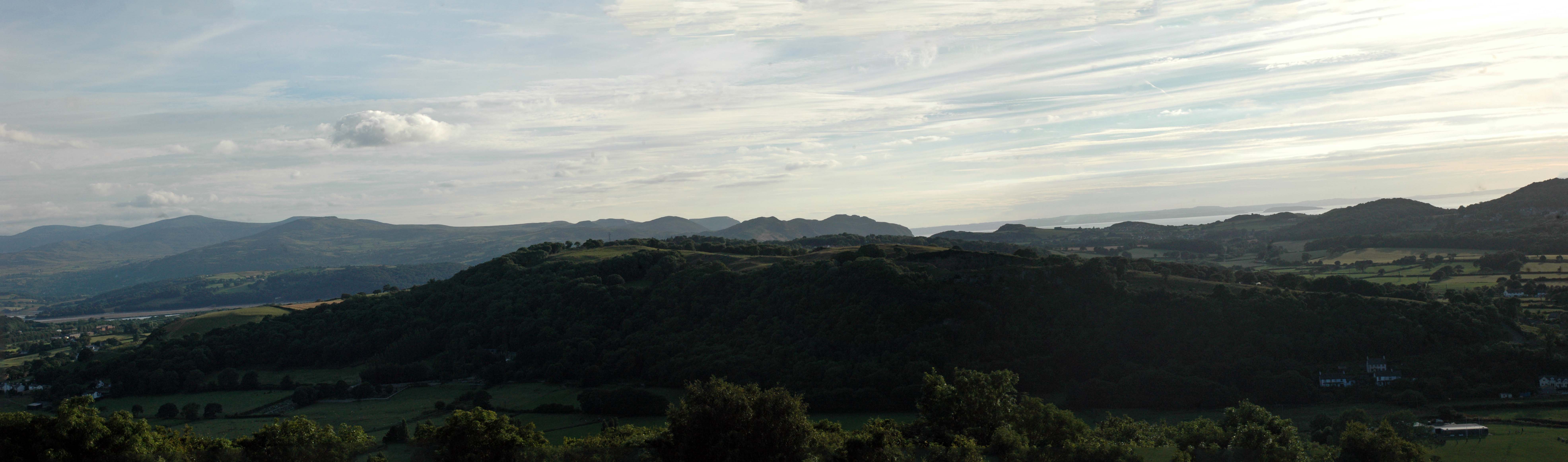
Almost at the top of the hill I stopped to gaze at the view as I always do. That’s not just to catch my breath, although it helps, but it’s a stunning view whatever time of day or year you’re admiring it. I love it when as now the sun is lower in the sky and shadows sculpt the hills. The sky was particularly interesting this evening too.

Evening panorama from Bryn Euryn. (click on image for a better view)

Evening panorama from Bryn Euryn. (click on image for a better view)

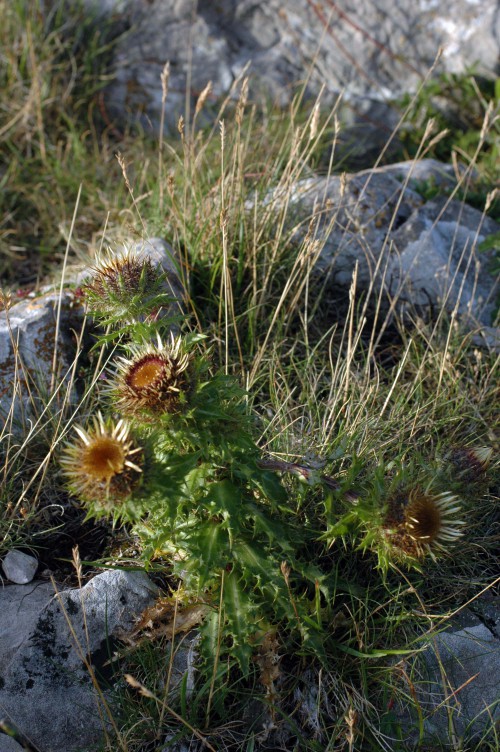
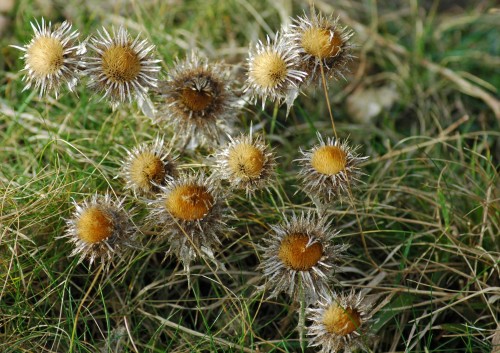
On the rockier summit of the hill, where the soil is thinner and more calcareous, the fascinating Carline thistle thrives. For much of the year you can see the dried out remains of the leaves and flowers, but now is the time to catch it coming into full curious flower. I will go into more detail about this plant in a later post.

Carline thistles growing amongst rocks

Carline thistle growing amongst rocks

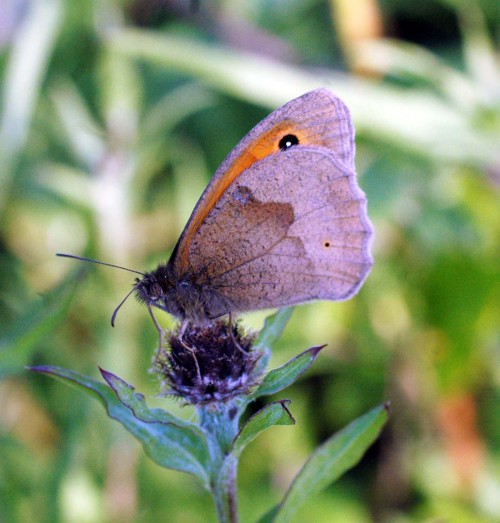
I had seen a few butterflies during the course of my walk, all fluttering around in the long grass. There were a few Small Heaths, but most were Meadow Browns. Just as I was heading back towards a woodland path to head back to the car, this one fluttered into view and landed on the tight bud of a knapweed flower. I was really pleased, as although this is an abundant species here, they are rarely this obliging and views such as this are not often offered.

Meadow Brown butterfly on the bud of a knapweed

Meadow Brown butterfly on the bud of a knapweed


Share this:

  • Share on Facebook (Opens in new window) Facebook
  • Share on Pinterest (Opens in new window) Pinterest
  • Share on X (Opens in new window) X
Like Loading...

Burnet Rose- Rosa pimpinellifolia

28 Wednesday May 2014

Posted by theresagreen in Bryn Euryn Nature Reserve, bumblebees, coastal habitat, Nature, Nature of Wales, nature photography, Wildflowers of Wales

≈ 2 Comments

Tags

burnet rose, low-growing white rose, Phragmidium rosa-pimpinellifoliae, rosa pimpinellifolia

Family: Rosaceae Other English name: Pimpinell Rose Welsh name: Rhosyn Dewi (Rhosyn y Twyni) Irish name: Briúlán

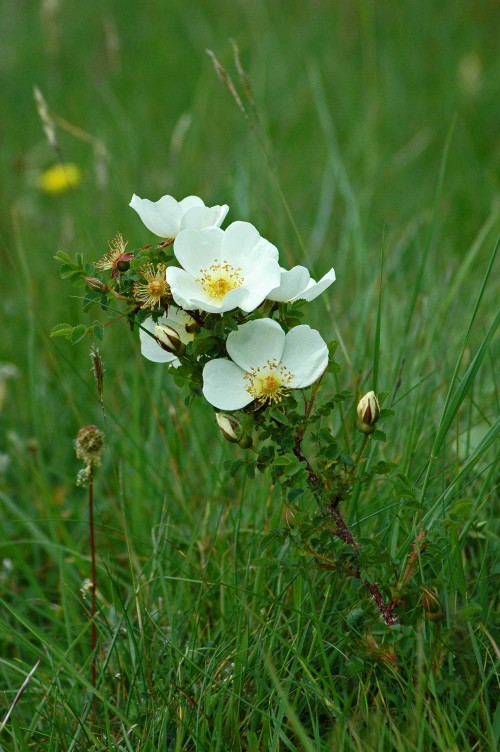
There is a glorious stretch of these lovely and very prickly roses on Bryn Euryn that are fully in flower now.

Beautiful Burnet Roses

Beautiful Burnet Roses

The Burnet Rose is a low-growing species, largely confined to dry sandy places near the sea; it is particularly abundant on dune systems in South Wales. Inland it may be found in calcareous areas, generally chalk downland or limestone pavement.

 Its natural distribution is limited to Europe and Asia except for part of the Atlas Mountain Range in North Africa.

A prickly stem full of blooms

A prickly stem full of blooms


It is a rather low erect deciduous plant usually growing to 20–140 cm high but it can sometimes reach up to 2 metres.

The plant spreads by suckers and can cover large areas. The stems are protected by numerous stiff bristles and many sharp straight prickles. The young stems and prickles and the mature leaves tend to be very red with young growth a bright scarlet and older growth a deep maroon.

 ‘Some people are always grumbling because roses have thorns. I am thankful that thorns have roses’.

  Alphonse Karr (1808-1890)

Burnet Rose

Burnet Rose

The flowers are cream-white although rarely also pale pink and are 2–4 cm in diameter with five petals. prominent golden stamens and they have the sweetest, most delicious scent of any of native roses.

Popular with bumblebees

Visited by bumblebees

Bumblebees seem to love them, perhaps because they do have a hint of honey in their scent.

This small bumblebee was enjoying a really good rummage around

This small bumblebee was enjoying a really good rummage around

Soon the petals fall off the roses but the stamens look pretty too. The leaves are small and oval, very like those of the salad burnet (hence the name).

Without petals

Without petals

And later in the year there will be a crop of  distinctive globular dark purple to black hips.

Rust fungus on Burnet Rose stem

Rust fungus on Burnet Rose stem

A brilliant-orange rust fungus Phragmidium rosa-pimpinellifoliae is also common on the plants.

The plant’s names 

R. spinosissima (pimpinellifolia) has been known by many different local names and it has attracted its own folklore. In some places, people have given it a vernacular name based on the resemblance of the leaves to a Burnet (Sanguisorba ) and therefore, for example, called it the Burnet or Pimpinell Rose in English or Rose Pimprenelle in French. In other places, it was the prickly stems that caused it to be known as Bodicasti Sipek in Slovenia, for example, or Piikkiruusu in Finland. 

Burnet Rose growing alongside the related Salad Burnet

Burnet Rose growing alongside the related Salad Burnet on Bryn Euryn

In Iceland, it has the name pyrinros which literally means ‘Thorny Rose’ but the same Icelandic word means ‘Sleeping Beauty’ and may refer to its early flowering – the beautiful rose waking up after the long dark Icelandic winter! In Norway, this rose is called ‘Trollnype’ – associating it with the trolls of Norwegian folklore. Elsewhere, it is named after the coastal sand-dunes where it grows so, for example, it is Klitrose in Denmark,Duinroos in The Netherlands or Dünen Rose in Germany.

Medicinal uses

The plant  was initially grown in gardens for its herbal properties and it was one of the first roses described and illustrated in 16th  century herbals of Northern Europe. Its hips and leaves have been used to make a tea and, in some places (particularly Denmark) a liqueur is still made from its hips. In recent years, it has been the subject of intense research to investigate its special pharmaceutical properties. The chemical constituents have recently been summarised by Mayland-Quellhorst et al (2012). Its dark purple or black ‘fruits’ (heps) are high in vitamins and antioxidants.

(Extracts from: Rosa spinosissima – aspects of its natural history and associations with people from prehistory to the present day ) by Peter D. A. Boyd


Share this:

  • Share on Facebook (Opens in new window) Facebook
  • Share on Pinterest (Opens in new window) Pinterest
  • Share on X (Opens in new window) X
Like Loading...

Mistle Thrush

25 Sunday May 2014

Posted by theresagreen in birds of Wales, Bryn Euryn Nature Reserve, Nature, Nature of Wales, nature of woodlands

≈ 10 Comments

Tags

mistle thrush, turdus viscivorus

Following on from my butterfly hunt I followed the track through the lower woodland of the Bryn and again had arrived at a perfect moment; the air was filled with birdsong. Blackbirds and robins provided melody that was accented by chiffchaff, wren, blue tit, great tit and chaffinch. But all were relegated to background accompanists by the loud, unmistakable ringing song of a Mistle Thrush. From the sheer volume of the delivery it was clear the singer was close by, but though standing for a good fifteen minutes trying to spot him up amongst the complex tracery of tree branches and leaves, I couldn’t  locate him. When the singing stopped I carried on walking upwards and as I neared the top of the track it began again. The thrush had clearly flown to another spot and once more I stood scanning the vegetation, but still could not see him. I resigned myself to being content with having been treated to the singing performances, which alone were rather special, but then I recalled that one late afternoon last year, wandering around this side of the top of the hill, intent on photographing rockroses, I met a mistle thrush out hunting on a narrow track around the rocky cliff edge.

I  headed off in that direction now, reckoning on this being an established mistle thrush territory and on that basis they could be out and about in any part of it.  I could hardly believe my luck then, when I spotted two largish birds flying towards a tree on the edge of the wooded slope below, near the bottom of the hill. One landed at the very top and from its size and overall grey-brown appearance I was pretty sure this bird at least was indeed a Mistle thrush.

Thrush landed at the top of a tree

Although some distance away I could see that the birds had been drawn to the tree by ivy berries and I was able to watch them for a good few minutes while they stayed to feed on them.

Mistle Thrush with ivy berry

Mistle thrush with ivy berry – showing pale tip to the tail feathers

140421TGNW-Bryn Euryn-Mistle thrush at top of tree 1

The other of the two, better showing the breast

Flying away

Flying away

I sat on a rock, a damp one as I realised when I stood up, and watched the birds for some time until they flew away.

________________________________________________________________________________

Mistle Thrush – Turdus viscivorus 

Other traditional names: Missel Thrush; Storm Cock Welsh: Brych y coed

The mistle thrush was first described by Linnaeus in his Systema naturae  in 1758 under its current scientific name. The bird’s fondness for mistletoe berries is indicated by both its English and scientific names: Turdus  is the Latin for “thrush”, and viscivorus, “mistletoe eater”, comes from viscum “mistletoe” and vorare, “to devour”.

Description

The largest thrush native to Europe, the Mistle thrush is a large greyish thrush, with larger breast spots than the Song thrush, from which it is also distinguishable in flight by the flash of whitish underwing. The long tail has white tips on the outer feathers. There are no plumage differences between the sexes; juveniles are similar to adults, but have paler upperparts with creamy centres to many of the feathers and smaller spots on the yellowish underparts. By their first winter they are very similar to adults, although the underparts are usually more buff-toned.

The mistle thrush is quite terrestrial, hopping with its head held up and body erect; when excited, it will flick its wings and tail. The flight consists of undulating bounds interspersed with glides.

Voice

One of the finest songs of our resident birds, the male mistle thrush has a loud melodious ringing song with fluted whistles that are repeated three to six times, and used to advertise his territory, attract a mate and maintain the pair bond. He doesn’t have much of a song, just a reiteration of a few notes, but those are rich and deep in tone, and delivered with great energy and enthusiasm. Compared to its relatives, the song thrush and the blackbird, the repertoire is less varied, lacking the mellow fluting of the blackbird and the elegantly repeated phrases of the song thrush. The delivery is slower too, however the song is much louder, often audible up to 2 km (2,000 yds) away and can be sustained for up to an hour in a single performance.

The song is given from a treetop or other elevated position and welcomed as it comes early in the year before the other birds are in full song. The song may be heard in any month, although mainly between February and May/June, as being an early nester it is one of the first of the songbirds to fall quiet.

The mistle thrush has another traditional name too, the storm cock, attributed to the bird for the way in which it will sing from a tree top in all weathers, even in the teeth of a fierce winter gale-force wind. Unlike most other birds, who seek shelter from stormy weather, the Mistle Thrush actually seems to be stimulated by approaching storms and will sing or call lustily before and through bad weather.

 The main call, given by both sexes, is a dry chattering krrrr, louder when it is alarmed or excited. It is often likened to the sound of a football rattle. There is also a squeaky tuk contact call.

Ecology

Generally found in cultivated country, farmland, gardens, parks,orchards and where there are scattered trees.

The mistle thrush feeds on a wide variety of invertebrates, seeds and berries. Its preferred fruits including those of the mistletoe, holly and yew.  Mistletoe is favoured where it is available. An interesting behavioural trait  displayed by Mistle Thrushes in winter is resource guarding, when one or sometimes two birds will vigorously defend a food source such as mistletoe clumps, holly, yew or nowadays even a cotoneaster. This is defended against all-comers, the vigilant bird trying to ensure that food resources are maintained for itself throughout the winter. It has been shown that resource guarding birds have bigger and earlier clutches than birds that do not do it. 

Mistle thrushes are found as individuals or pairs for much of the year, although families forage together in late summer, and groups may merge to form flocks of several tens of birds and it is not uncommon for up to 50 thrushes to feed together at that time of year. They roost at night in trees or bushes, again typically as individuals or pairs, but with families roosting together in autumn.

The nest

Breeding typically commences in mid-March in the south and west of Europe and late February in Britain.

The nest is built by the female, although the male may help. The thrush’s nest is a large bulky cup of sticks, dry grass, roots and moss, coated on the inside with a layer of mud and lined with fine grass and leaves and frequently ‘decorated’ with white scraps of paper or rag. It is usually built 10-40 feet up in a tree, often in an exposed position, but not uncommonly lower down and occasionally in a hedge or bush or on a ledge of a cliff or a building.

Typically the breeding season of the mistle thrush is March to early June, but the nest may contain eggs as early as February, long before there are any leaves to offer any protection. Nests built early in the breeding season are sometimes destroyed by bad weather. 3-5 eggs are laid and are incubated by the hen only, hatching within 13-14 days and nestlings then leave after about 15 days. There is often a second brood. 

During this time the mistle thrush may display aggression; it may even attack a person or another bird should they venture too near its nest and has been known to swoop down to threaten a cat.

The common chaffinch often nests close to a mistle thrush, the vigilance of the finch and the aggressive behaviour of the thrush benefiting both species.

__________________________________________________________________________________

I turned and walked back and up towards the hill’s summit to look for orchids and other flora, and once again the song of the thrush rang out from the trees below. I still couldn’t find him though and had resigned myself to being contented with the singing and the sightings I had already enjoyed. Then as I walked slowly back down the track, still keeping half an eye out for a glimpse of the songster, the singing stopped. At the same moment a largish bird flew to an ash tree and there finally I had sight of a  mistle thrush, although I wasn’t convinced it was the one that had been singing.

Finallly, a better view

Finallly, a better view

The sun by now was lower and shining directly behind the bird, so I wasn’t hopeful of getting a good shot, but it turned out to be good enough as a front view. Even better, as I reached the bottom of the track the singing began again and this time from a slightly higher vantage point than on the way into the woods earlier on, I managed to locate the singer high up on a leafy branch. The markings on this bird were much heavier.

A well-marked, singing mistle thrush

A well-marked, singing mistle thrush

I was pleased I’d had these opportunities to hear and see the mistle thrushes, as returning a week later there were none to be heard, although I did catch sight of one out hunting amongst the rockroses in the meadow. It was some distance away from me, but good to see it away from the trees and demonstrating the birds characteristic upright posture.

A mistle thrush out hunting

A mistle thrush out hunting amongst the rockroses


Share this:

  • Share on Facebook (Opens in new window) Facebook
  • Share on Pinterest (Opens in new window) Pinterest
  • Share on X (Opens in new window) X
Like Loading...

A Butterfly bonanza

05 Monday May 2014

Posted by theresagreen in butterflies, Nature, Nature of Wales

≈ 2 Comments

Tags

comma, green-veined white, holly blue, orange tip, peacock butterfly, small tortoiseshell, speckled wood

It’s been a good while since I’ve had the time to visit blog-land, mainly down to starting a new job which has consumed most of my time and energy for the last few weeks. But, as with all significant life changes, things are gradually settling down and I’m able to get back to doing the things I enjoy, albeit less frequently.

Last Sunday was a lovely, almost warm sunny day and I was keen to take advantage of a free afternoon and get out for a wander. Stepping out of the front door I was still undecided where to head for, but the sight of a Peacock butterfly, aroused from hibernation and looking rather faded and a bit battered around the edges decided it for me and I set off for Bryn Euryn hoping to find more.

First Peacock of the year

First Peacock butterfly of the year

Peacock nectaring on a dandelion

Peacock nectaring on a dandelion

A few minutes later and I was standing on the woodland edge of the quarry field which is golden with dandelion flowers lifting their faces to soak up the sunshine.

Dandelions in full bloom

Dandelions in full bloom

I spotted my first butterfly within minutes, another Peacock, slightly less faded than the garden one but even more battered, poor thing.

Peacock- Nymphalis io

The Peacock was resting on a bramble leaf, but not for long – a Small Tortoiseshell fluttered into its territory and it took off in rapid pursuit.

A Small Tortoiseshell competing for territory with the Peacock

Small Tortoiseshell – Nymphalis urticae

The Small Tortoiseshell was in much better shape than the Peacock, its colours were brighter and there were no signs of damage, but the frequent intense aerial battles with the larger Peacock, who was clearly not in need of my earlier sympathy for his condition, may well take their toll.

Although delighted to see these two beautiful butterflies so soon after arriving here, I was even more pleased by the presence of two male Orange Tips that were racing up and down the field edge, pausing for the occasional skirmish with one another before continuing their frantic patrolling. I had a feeling of déja vue and was transported back to this time last year when I spent ages following Orange Tips back and forth along this same field edge, fruitlessly waiting for them to pause for an instant so I might get a photograph. So, imagine my delight when I spotted one hovering around a valerian flower seeming to be about to settle. My problem was that I was a good few metres away and I daren’t move too quickly towards it in case I alarmed it. I could hardly believe that my luck held and it did indeed settle and stayed put for a few precious moments allowing me to get a couple of reasonably good shots of it.

Orange Tip (male)

Orange Tip – Anthocaris cardamines (male)

It would have been good to catch him with his wings open, but I’m not complaining.

Orange Tip male underside

Orange Tip male underside

There was another of the ‘white’ butterfly species nearby too, this one the Green-veined White. In contrast to the Orange Tip, they are much easier to photograph, having a weaker flight and settling more frequently and for longer.

Green-veined White

Green-veined White-Pieris napi

By now I had reached the top of the field and although there were other insect distractions here I could see yet more distant flutterings at the other end, so retraced my steps. What I had seen turned out to be a Comma, also being drawn into skirmishes with the Peacock.

A lovely basking Comma

Comma-Polygonia c-album

The Comma was a lovely fresh one too, but was reluctant to fully open its prettily shaped wings.

A good view of the butterflys underside

A good view of the butterfly’s underside, showing the white mark that gives it its name

Watching the Comma yet another species caught my eye, this time a little Holly Blue that was fluttering around ivy growing up through a tree. It didn’t settle, so I didn’t feel obliged to negotiate brambles and stinging nettles to reach it, but to acknowledge its presence, I thought I’d put in a photograph I took earlier on in the garden.

Holly Blue

Holly Blue-Celestrina argeolis

Last but not least of today’s sightings was of one of my favourite butterfly species, a fresh, feisty little Speckled Wood.

Speckled Wood

Speckled Wood-Parage argeria

I added a Large White to my ‘tick-list’, but didn’t get a photograph. Eight species of butterfly in a matter of a few minutes and all within such a confined area was quite magical and far more than I had expected.

Share this:

  • Share on Facebook (Opens in new window) Facebook
  • Share on Pinterest (Opens in new window) Pinterest
  • Share on X (Opens in new window) X
Like Loading...

More on Llanddwyn Island

24 Monday Feb 2014

Posted by theresagreen in Anglesey, Nature, Nature of Wales, North Wales

≈ 8 Comments

Tags

lighthouse, mélange rock formations, Menai Suspension Bridge, Newborough Warren and Llandwyn Island, pillow larva, St Dwynwen's chapel

Writing the recent post about St Dwynwen made me want to get back over to Anglesey and pay another visit to Llanddwyn to see how the restored chapel was looking, so as last Sunday was a brilliantly sunny day and not too windy, that’s what I did.

Walking along the beach the effects of recent stormy weather on the dunes was very evident. The sand has been eroded quite dramatically, causing trees to lose their footing and slip down onto the beach below.

Significant erosion of the sand dunes

Significant erosion of the sand dunes

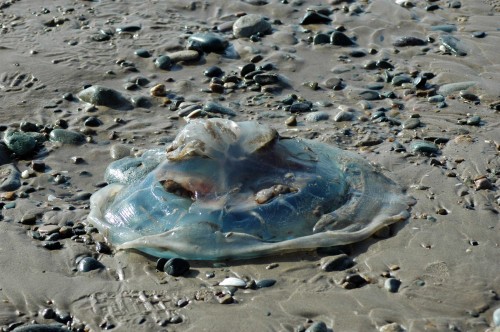
The retreating tide had left a few big jellyfish stranded on the sand, some looking very battered and torn; I don’t know how you tell if a jellyfish is dead or alive.

A rather battered large jellyfish

A rather battered large jellyfish

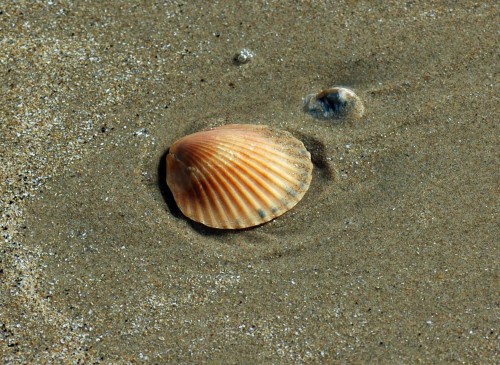
Scallop shell

Scallop shell

One of the things that fascinated us as children was that arriving on Newborough beach, the sea in front of us would usually be fairly calm and flat but as you get nearer to Llanddwyn Island you mysteriously hear roaring sea and when you arrive, through the gaps in the rocks that tentatively connect the tip of the island to the mainland, you glimpse white-crested waves crashing in.

Through the rocks to the far side of the Island

Through the rocks to the far side of the Island

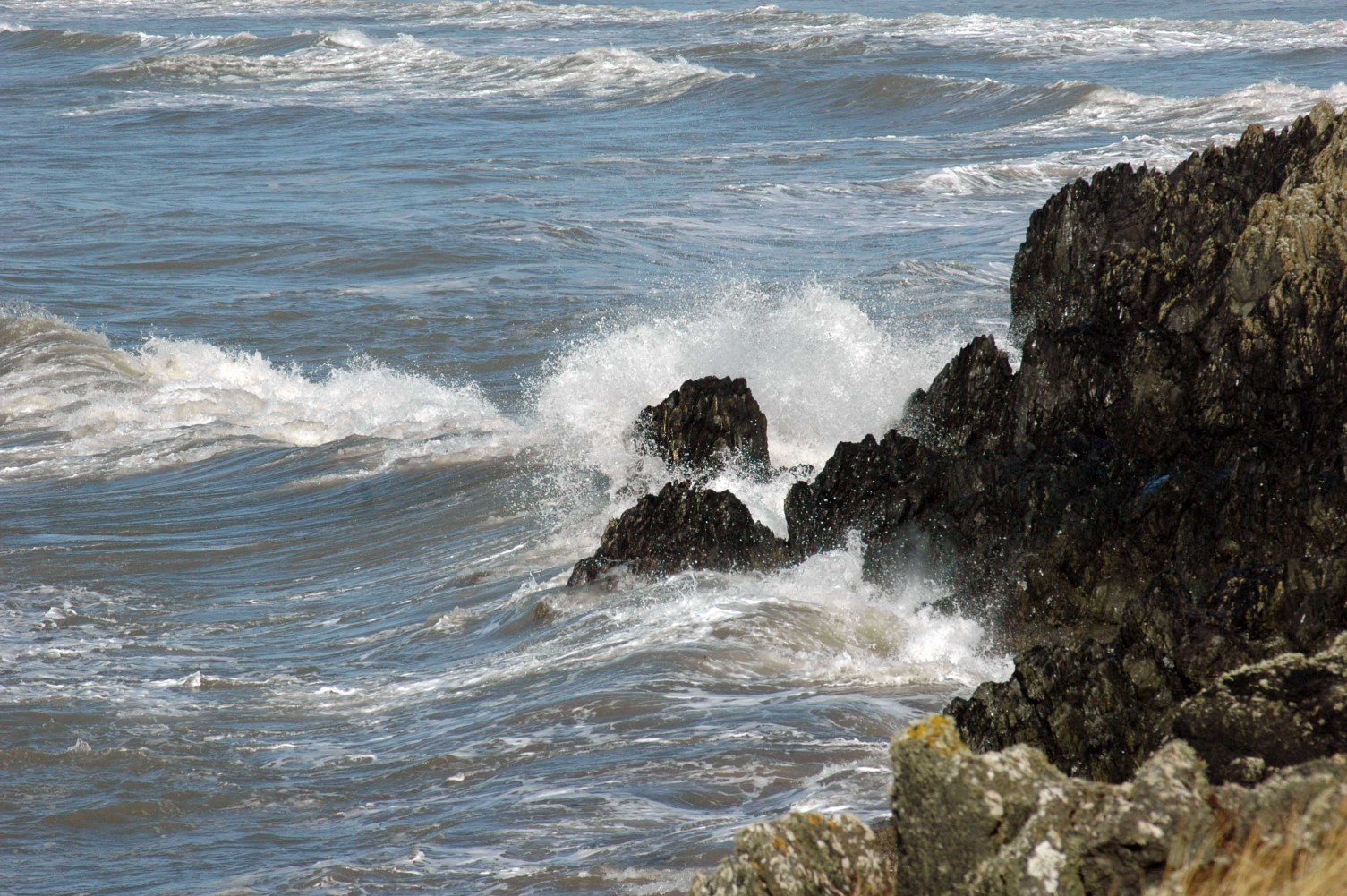
Waves splashing onto rocks

Waves splashing onto rocks

Following the boarded pathway around the outside of the island I was surprised by the numbers of Herring gulls that had gathered here. There were dozens of them dotted closely over one of the small rocky islets just offshore and many more floating around in ‘rafts’ on the sea.

Rocky Island dotted with Herring Gulls

Rocky Island dotted with Herring Gulls

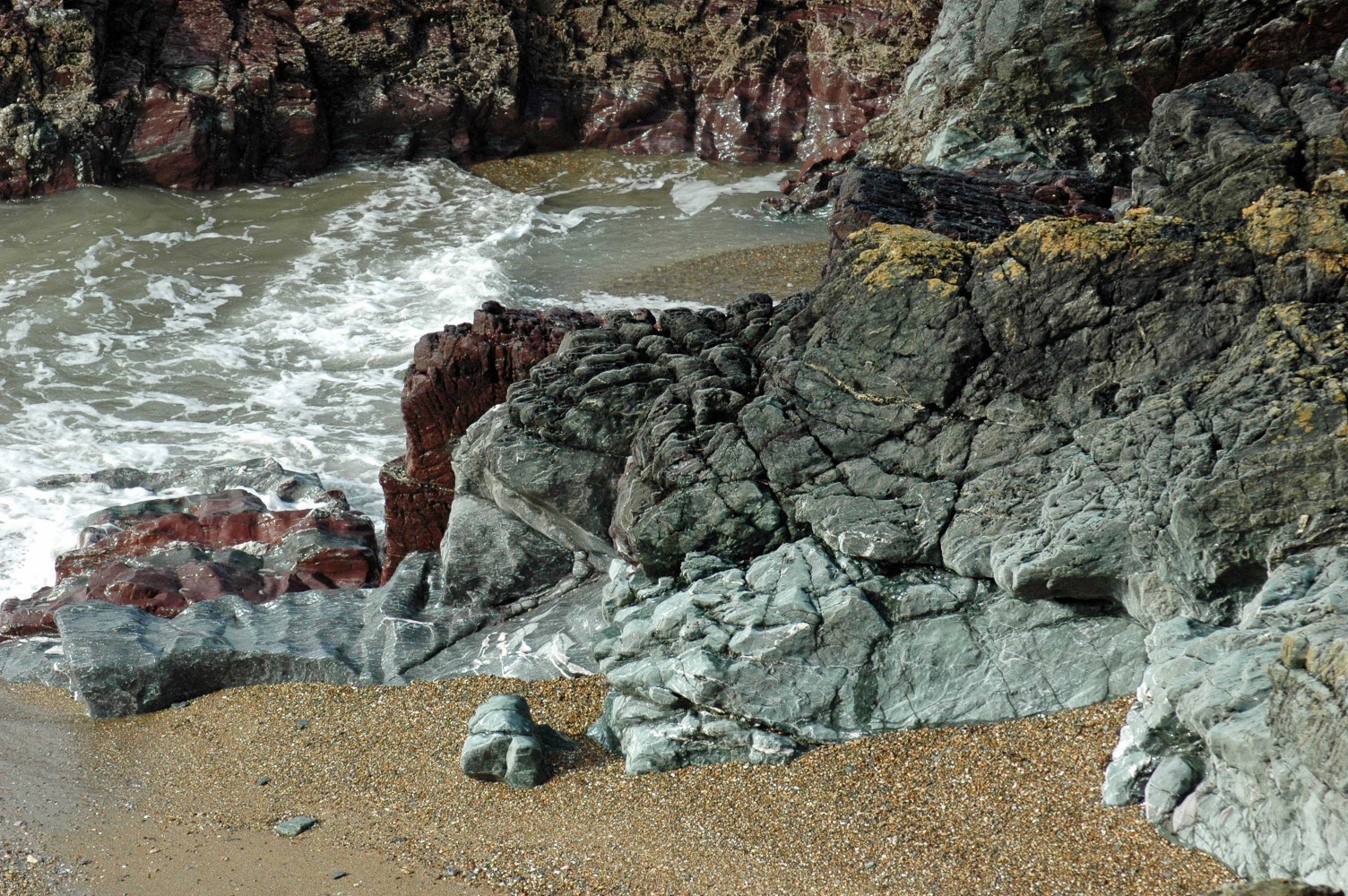
The island is famous for spectacular rock formations called pillow lavas and mélange. The mélanges contain colourful mixtures of different rock types including quartzite, schist and limestone.

An outcrop of multi-coloured rock

An outcrop of multi-coloured rock (click for better effect)

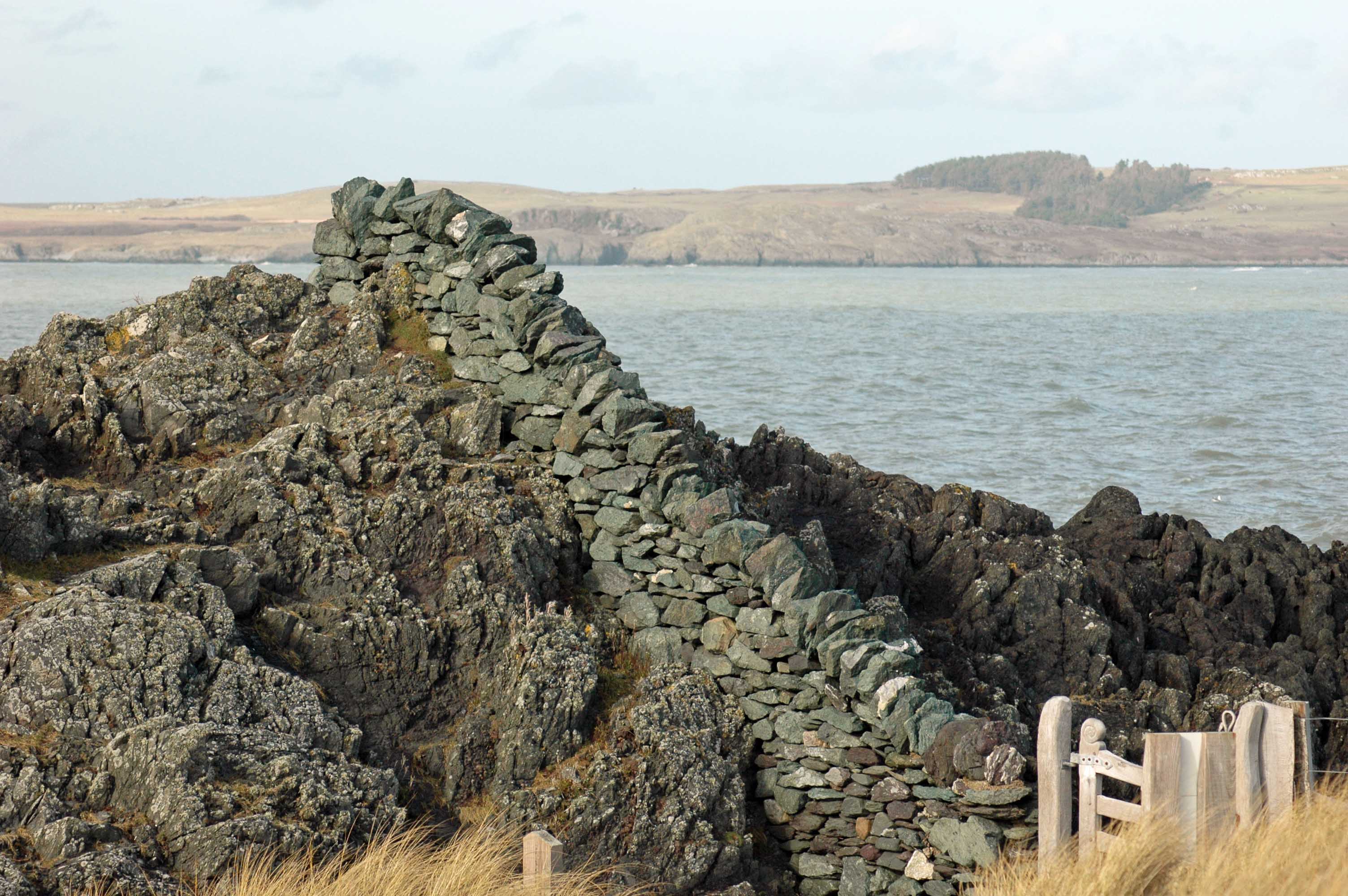
The sight of a dry-stone wall built down a rocky outcrop seems rather random, but I assume it’s to stop the island’s resident Soay sheep and horses from getting onto the beach below, although they have all been taken somewhere more sheltered for the winter.

Green stone wall built onto the rocks

Green stone wall built onto the rocks built to prevent sheep and horses from getting onto the beach?

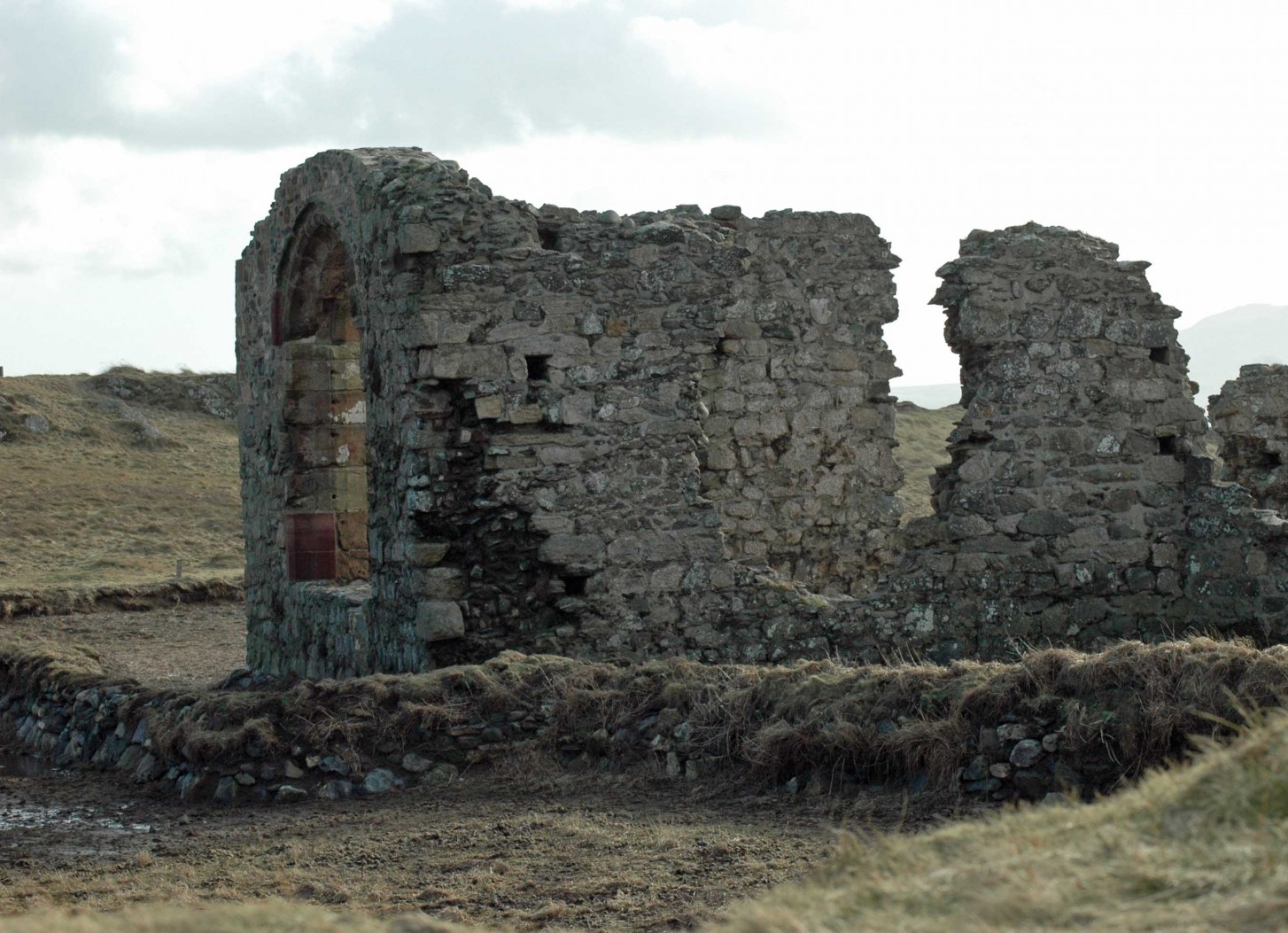
The decision to only partially restore the chapel was a good one I think. Aesthetically, ruins in locations such as this lend more of an atmosphere, but I fear the reasons for it are more prosaic. If a building here was made weatherproof and accessible it would probably either be vandalised or unofficially lived in. Or both.

The recently restored chapel of St Dwynwen

The recently restored chapel of St Dwynwen

Lighthouse, Twyr Mawr, sparkling sea and a background of the Llyn Peninsular

Lighthouse, Twyr Mawr, sparkling sea and a background of the Llyn Peninsular

A raft of herring gulls riding the waves

A raft of herring gulls riding the waves

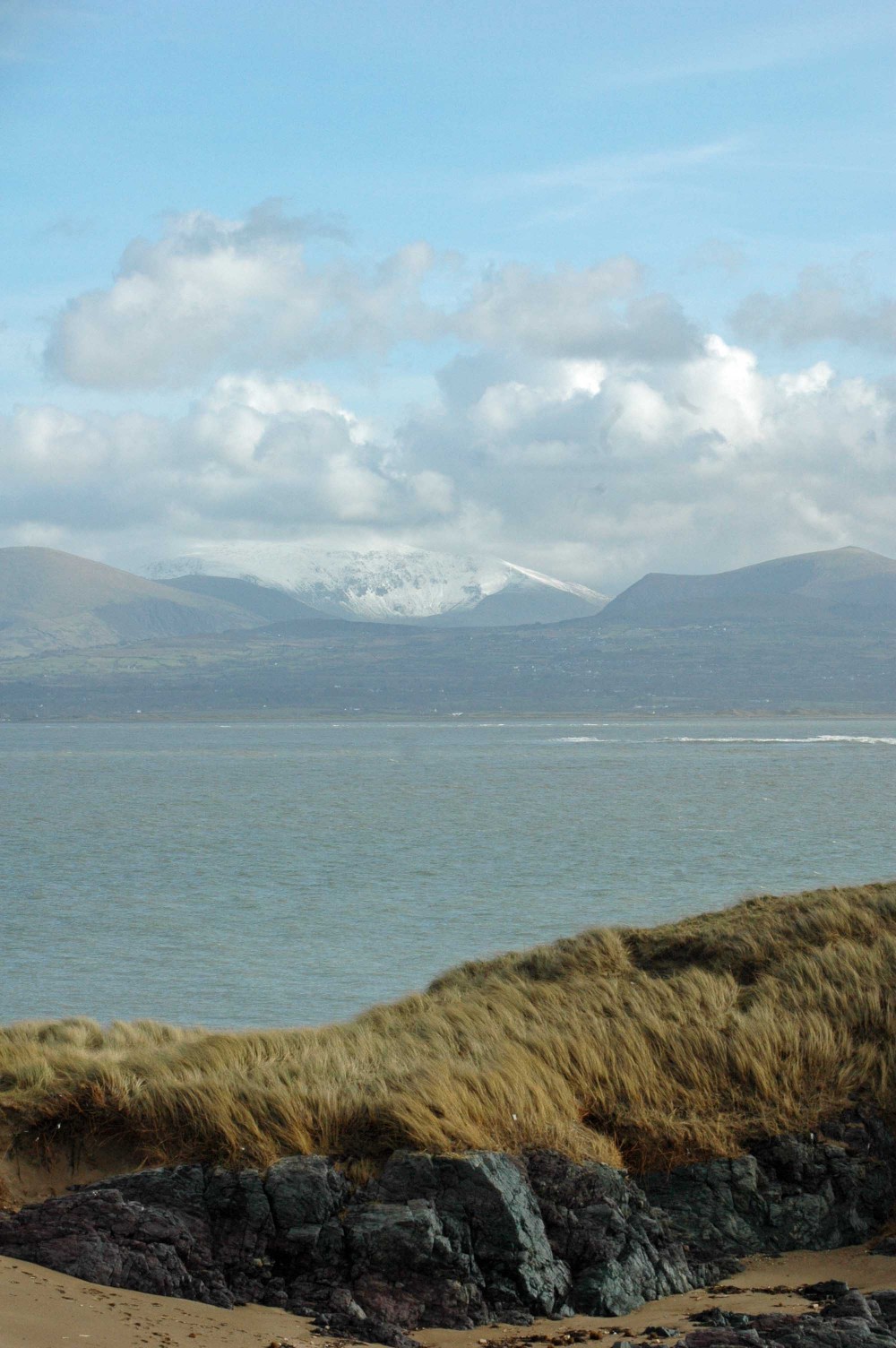
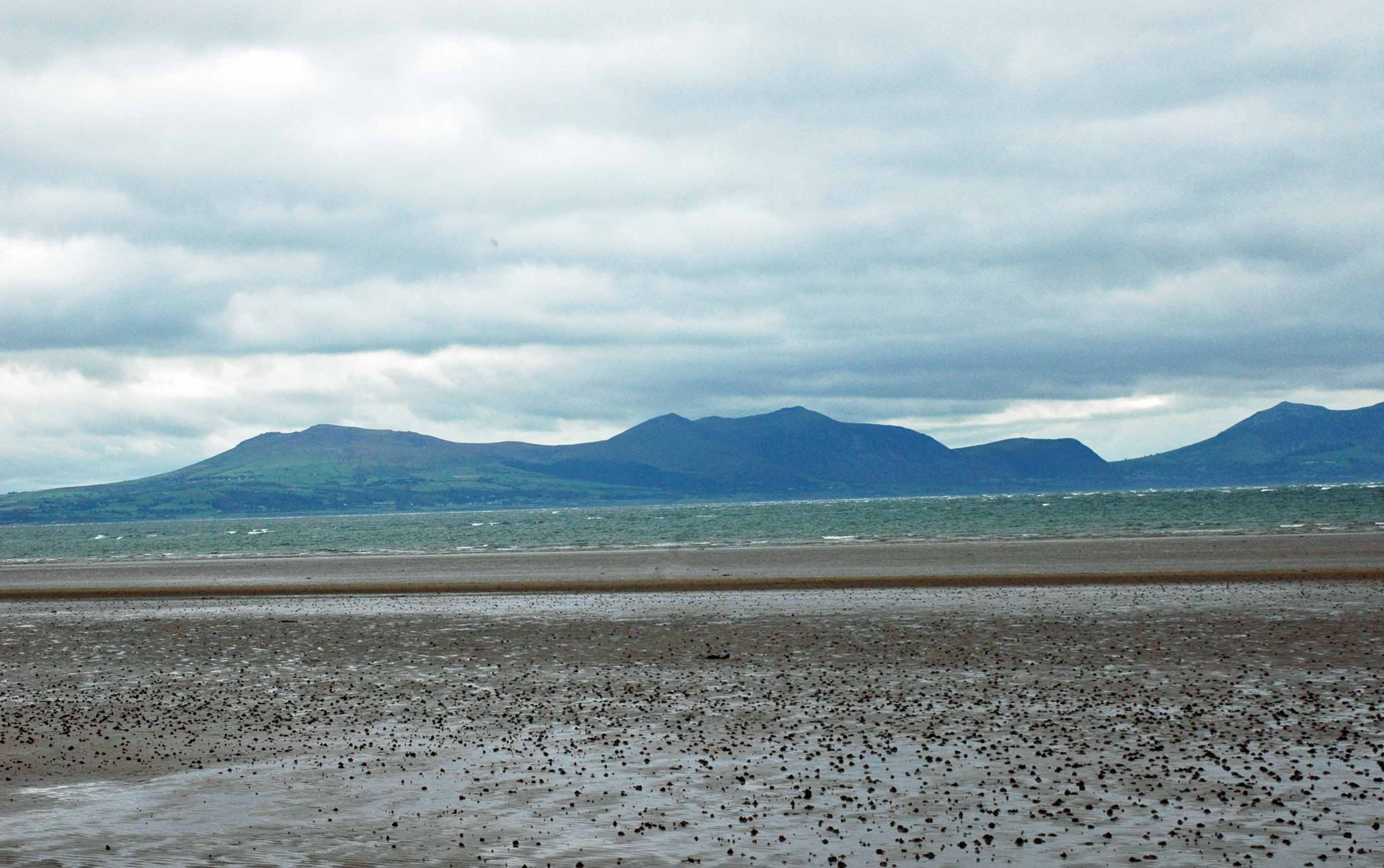
Snow-capped mountains across the bay

Snow-capped mountains across the bay partially obscured by cloud

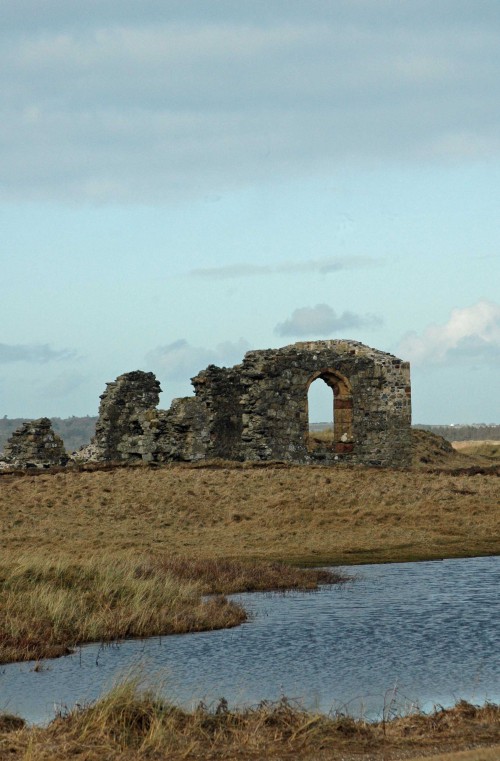
St Dwynwen's chapel across a pool of standing water

St Dwynwen’s chapel across a pool of standing water

The restored chapel

The restored chapel

St Dwywen's Cross & mountain view through the chapel arch

St Dwywen’s Cross & mountain view through the chapel arch

Far side of Newborough beach & forest

Far end of Newborough beach & forest

Newborough sands-people walking, kite-surfing & snowy mountains

Newborough sands-people walking, kite-surfing & snowy mountains

Pillow larvas were formed 580 million years ago. Molten larva from the earth’s mantle bubbled up through cracks in the seabed. When the larva blobs hit the cold seawater they quickly cooled and hardened, creating the intriguing rock ‘pillow’ shapes.

Pillow larva formation on beach

Pillow larva formation on beach

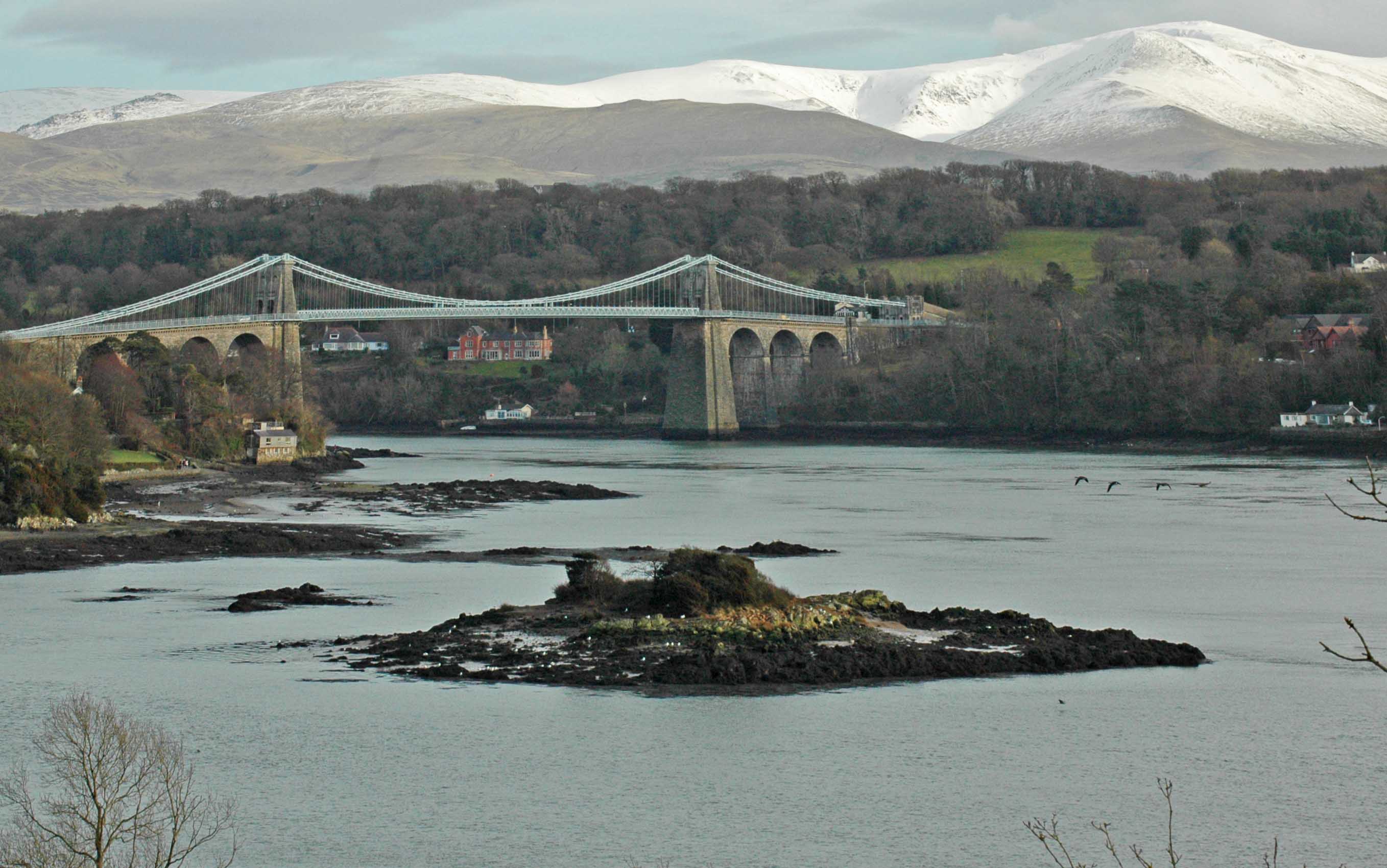
On the way home I couldn’t resist taking a picture of the beautiful Menai Suspension Bridge with emphasis on its backdrop of sunlit snow-capped Snowdonian mountains.

Menai Suspension Bridge

Menai Suspension Bridge

The Menai Suspension Bridge (Welsh: Pont Grog y Borth) is a suspension bridge between the island of Anglesey and the mainland of Wales. Designed by Thomas Telford and completed in 1826, it was the first modern suspension bridge in the world.

Share this:

  • Share on Facebook (Opens in new window) Facebook
  • Share on Pinterest (Opens in new window) Pinterest
  • Share on X (Opens in new window) X
Like Loading...

So why is this tree a star?

23 Sunday Feb 2014

Posted by theresagreen in Nature of Wales

≈ 2 Comments

I’ve just voted for this tree and found its story fascinating, so hope all Welsh readers at least will vote too!

Share this:

  • Share on Facebook (Opens in new window) Facebook
  • Share on Pinterest (Opens in new window) Pinterest
  • Share on X (Opens in new window) X
Like Loading...

There’s more to the Orme

15 Saturday Feb 2014

Posted by theresagreen in Little Orme, Nature, Nature of Wales, nature photography, Rhiwledyn Nature Reserve, The Wales Coast Path

≈ 3 Comments

Tags

cliffs of the Little Orme, Great tit singing, Greenfinch, house sparrow, long-tailed tit, red-throated diver, Robin, textures in landscape

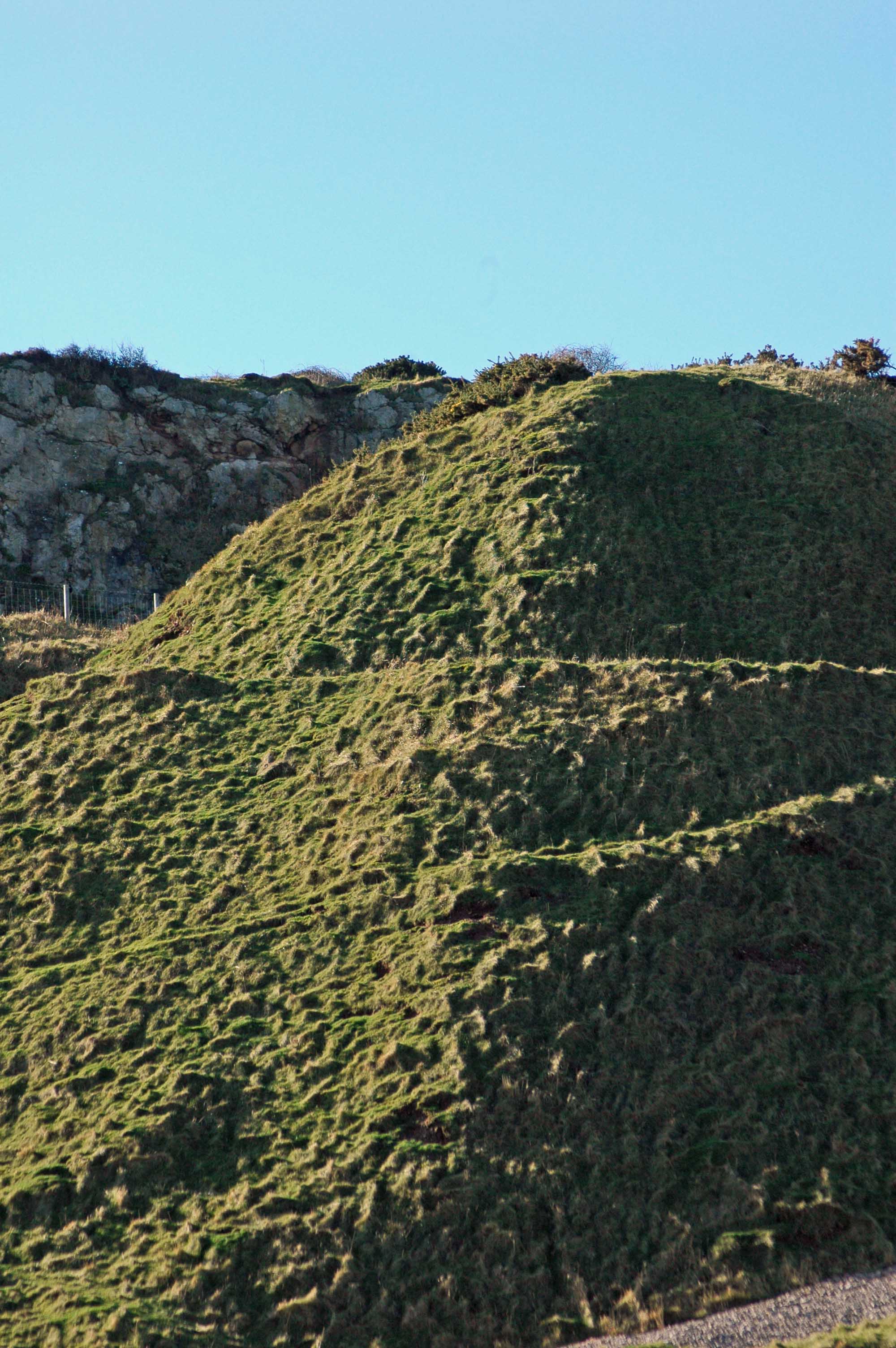
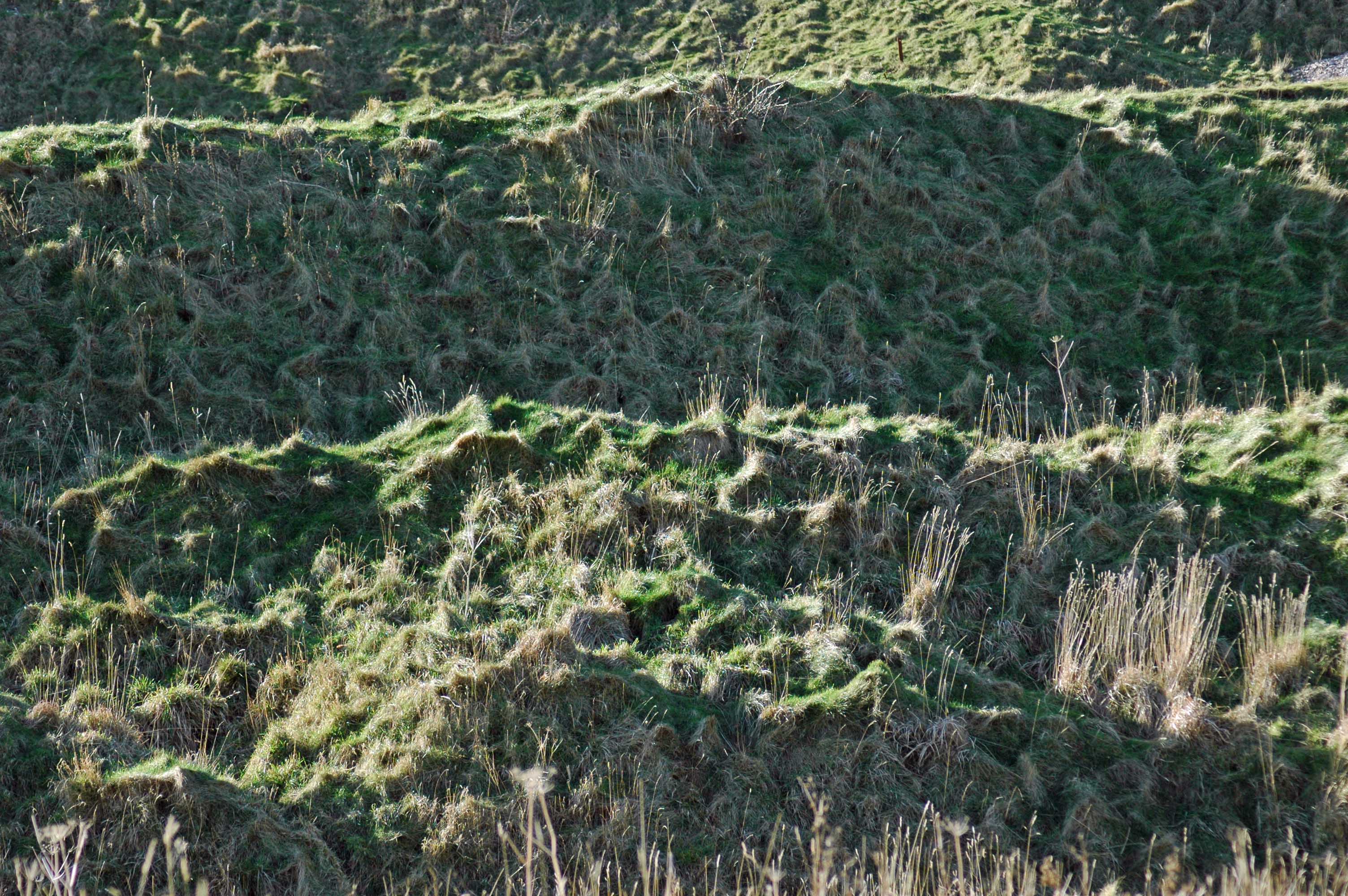
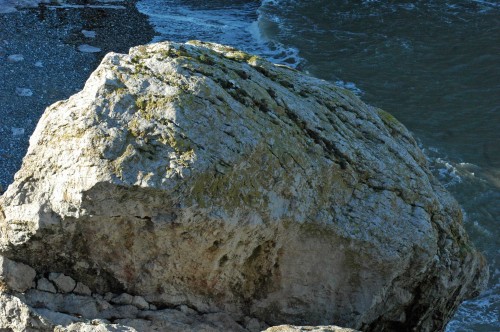
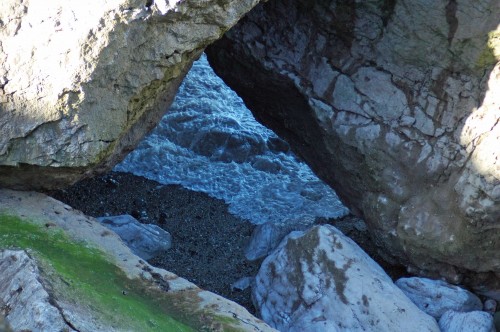
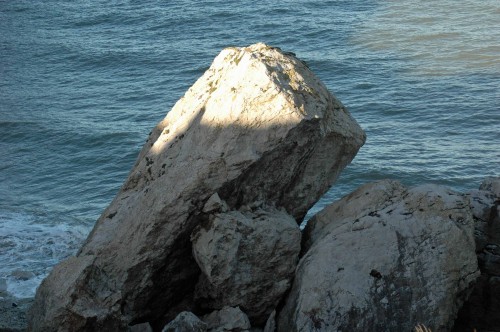
When the wind blows and sunlight slides slowly around the bulk of the Little Orme textures and patterns are revealed on surfaces that may go unnoticed in any other season when the sun is higher in the sky.

CLIFFS

Textures and patterns on a grass-covered cliff

Sunlit cliff face

140206-Little Orme 20-Light and shade on cliff

140206-Little Orme 27-Sunlit cliff

GRASS

Textured grass terraces

Grassy hummocks

ROCKS

Sunlight catches the edge of a rock

140206-Little Orme 23- Sea coming back under rocks

140111-Sunlit rock, Angel Bay

PRICKLY PLANTS 

140206-Little Orme 14- Burrs

140206-Little Orme 12- Carline Thistle sunlit

140206-Little Orme 11- Carline Thistle

SEA SWELLS

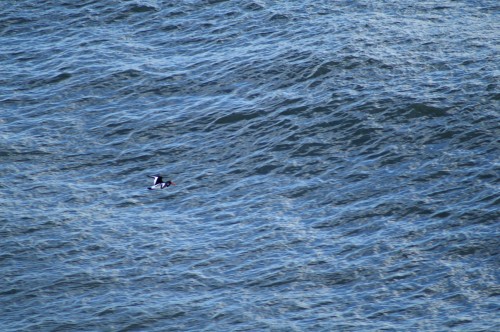
From the cliff and Oyster catcher is a tiny black and white speck against a wind-ruffled sea

140128-Little Orme 2- Grey Seals swimming

Red-throated diver

140207-Red-throated Diver-Little Orme

BIRDS AMONGST TANGLES OF TWIGS

Great Tit singing

140207-Great tit singing-Little Orme

House sparrow eating

140207-House sparrow eating-Little Orme

Robin singing

140207-Robin in a bush singing-Little Orme

Greenfinch singing

140207-Greenfinch singing-Little Orme

And a glimpse of a Long-tailed Tit

140207-Long-tailed Tit-Little Orme

Share this:

  • Share on Facebook (Opens in new window) Facebook
  • Share on Pinterest (Opens in new window) Pinterest
  • Share on X (Opens in new window) X
Like Loading...

Happy St. Dwynwen’s Day

13 Thursday Feb 2014

Posted by theresagreen in Anglesey, National Nature Reserves, Nature of Wales, Saints of Wales, Welsh culture and mythology

≈ 6 Comments

Tags

celtic cross, Llanddwyn Island, Newborough Warren and Llandwyn Island, St Dwynwen, Welsh patron saint of lovers

The National Nature Reserve of Newborough Warren and Llanddwyn Island are located on the south-western corner of the Isle of Anglesey, North Wales and will always be one of my favourite places on earth. I have written about the island before, but for St Valentine’s Day this is an extract from an existing page about its connection with Wales’ own patron saint of lovers, St. Dwynwen. (St. Dwynwen’s actual feast day is January 25th).

The name Llanddwyn means “The church of St. Dwynwen”. Dwynwen is the Welsh patron saint of lovers, the Welsh equivalent of St. Valentine, and the island is alternatively named ‘Lover’s Island’.

The view across Newborough beach to Snowdonia

The view across Newborough beach to Snowdonia

The mythology surrounding St. Dwynwen has several slightly varying versions, but the essence of the stories is similar.

Dwynwen lived during the 5th century AD and was one of 24 daughters of St. Brychan, a Welsh prince of Brycheiniog (Brecon). She fell in love with a young man named Maelon, but rejected his advances. This, depending on which story you read, was either because she wished to remain chaste and become a nun or because her father wished her to marry another. She prayed to be released from the unhappy love and dreamed that she was given a potion to do this. However, the potion turned Maelon to ice. She then prayed that she be granted three wishes: firstly that Maelon be revived, secondly that all true lovers find happiness, and last that she should never again wish to be married. She then retreated to the solitude of Llanddwyn Island to follow the life of a hermit.

The plaque in the island’s museum:

St Dwynwen's story

St Dwynwen’s story

Dwynwen became known as the patron saint of lovers and pilgrimages were made to her holy well on the island. It was said that the faithfulness of a lover could be divined through the movements of some eels that lived in the well. This was done by the woman first scattering breadcrumbs on the surface, then laying her handkerchief on the surface. If the eel disturbed it then her lover would be faithful.
Image of St Dwynwen
Visitors would leave offerings at her shrine, and so popular was this place of pilgrimage that it became the richest in the area during Tudor times. This funded a substantial chapel that was built in the 16th century on the site of Dwynwen’s original chapel.
The ruins of St Dwynwen's chapel

The ruins of St Dwynwen’s chapel

Last year (Jan 2013), a project to restore the chapel was begun and below is a link to a short video giving a progress report and some views of the island:

Update: BBC Wales have just showed a news item on the latest status at St. Dwynwen’s – see our lads at work via this link here

Llandwyn Island

The island is beautiful, wild and feels far more remote than it is nowadays. It can be a bleak, windswept place at any time if the year, but especially so in the winter. Here are a few of my views featuring some of the landmarks of the place

The lighthouse with the Snowdonia mountains behind

The lighthouse with the Snowdonia mountains behind

The memorial cross

The Memorial cross is also known as St Dwynwen’s cross

Celtic cross, Llandwyn Island

Celtic cross dedicated to St Dwynwen

The Pilot's cottages and cannon

The Pilot’s cottages now house a museum

Some of the jagged rocks that surround the island

Some of the jagged rocks that surround the island

Share this:

  • Share on Facebook (Opens in new window) Facebook
  • Share on Pinterest (Opens in new window) Pinterest
  • Share on X (Opens in new window) X
Like Loading...

Noisy birds and sleeping seals

09 Sunday Feb 2014

Posted by theresagreen in bird behaviour, birds of Wales, Nature, Nature of Wales, nature photography

≈ 6 Comments

Tags

Aderyn-Drycin y Graig, coastal birds, fulmar, fulmarus glacialis, grey seals, Little Orme, northern fulmar, Rhiwledyn Nature Reserve, rock pipit, seals in Angel Bay

This post was inspired by a walk taken last weekend with some lovely people I met for the first time then: Gill who is the chairperson of the Bryn Euryn Users’ Association and her partner Tony who is a ‘proper’ birdwatcher. As well as enjoying their company I also learnt a lot from them both; from Gill it was how the Bryn had evolved into a Local Nature Reserve and some of how its habitats are maintained, which I’m hoping to discover more about in the near future.

Little Orme

Tony reminded me how much I’ve been missing here and I rediscovered that when it comes to spotting birds, particularly when they are faraway dots on a wavy sea, three pairs of eyes are better than one and that a telescope widens the horizons in more ways than one!

Two grey seals swimming in Angel Bay

Two grey seals swimming in Angel Bay

Firstly though, we had some good sightings of Fulmar which are back at their nest sites on the cliff face. The Raven was up in his favourite spot just above them and Tony showed me their nest site where we saw and heard them both a little later on. We also spent a few minutes hunting for signs of a Black Redstart that was reported being seen here a few weeks ago, but no luck. From the clifftop overlooking Angel Bay there were two Grey Seals swimming and further out to sea there were some great seabirds including numbers of Great Crested Grebe, Red-throated Diver , Guillemot & Razorbill as well as the more easily seen Shags & Cormorants. Walking around the rocky outcrop to the ledge that overlooks Penrhyn Bay and the wider sea, we encountered a Rock Pipit pecking around the grass and rocks, not at all concerned that we were there and presenting an irresistible photo opportunity. 

Rock Pipit-

Rock Pipit- Anthus spinoletta

This week I waited for a break in the weather to return to the Little Orme for more viewing and Friday’s sunshine was just what I’d been waiting for. I was particularly keen to see more of the Fulmar so headed in their direction first. The Raven pair were once more sitting up in their favourite spot above the Fulmar site. They are both looking gorgeously fit and healthy, their plumage shining brightly in the sunlight.

The Raven pair gleaming in the sunlight

The Raven pair gleaming in the sunlight

I counted three pairs of Fulmar here initially, who were later joined by what I think was a single male on a site just around the rock. Some birds were easier to see than others as they have chosen their nests sites carefully to give them some shelter from the elements, and those I’m assuming to be the females were mostly tucked behind a rock or back into clefts in the rock-face.

Fulmar pair on a rock ledge

Fulmar pair on a rock ledge

The birds were noisy; males are definitely proclaiming their territories and there was quite a bit of aerial activity, taking off, swooping around and then landing again with more vocals. The sound has been described as harsh, throaty and machine-gun like.

There were a lot of Jackdaw on the cliffs too and I suspect that much of the Fulmar’s vocalising was aimed at them and they in turn were giving back as good as they got, so it got very noisy at times.

Jackdaws up on the cliff-Wild Cabbage has established up there

Jackdaws up on the cliff-Wild Cabbage has established up there

There were more of the birds on the cliff-face at the edge of Angel Bay; they were making even more noise, much of it directed at a single bird that was flying around and attempting to land in spots already occupied by pairs of birds. I think there may be 8 pairs in total, which will be easier to establish once they’ve settled down.

 FULMAR

Common name: Fulmar or Northern Fulmar; Scientific name: Fulmarus glacialis Welsh name: Aderyn-Drycin y Graig

BTO Conservation Status: AMBER because Recent Breeding Population Decline (1981-2007), Localised Breeding Population

The common name is derived from the Old Norse word ‘full’ meaning foul and ‘mar’ meaning seabird or gull. The foul part refers to the fact that they can spit out a foul-smelling oily fluid to defend their territories from intruders; it’s not all bad though, the oil is also an energy rich food source for chicks and for the adults during their long flights. The glacialis of the scientific name means icy.

They are long-lived, with a lifespan of 40 years not uncommon.

Fulmar sitting on guard

Fulmar sitting on guard

The Fulmar is a bird of the open sea, a ‘tube-nose’ that is a first cousin of the albatross and belonging to the same group of birds as the shearwaters and petrels. They feed at sea  on crustaceans, squid, fish, offal and carrion mostly from the surface.To deal with excesses of salt they take in with their food they have a gland located above the nasal tube through which all the bird’s blood is pumped and the salt removed. The salt-laden discharge runs from the tube nose along a groove in the beak and drips off away from the body, keeping plumage clean.

Fulmar glide effortlessly with stiff wings

Fulmar glide effortlessly with stiff wings

At first sight Fulmars resemble gulls but seen more closely are distinguished by the shape of their beak which has a tube-shaped proturberance on the top and a thicker neck. They have long, narrow wings and fly low over the sea on stiff wings, with shallow wingbeats, gliding and banking to show its white underparts then grey upperparts.

Head on the Fulmar is sleek and has a blade-like profile

Head on the Fulmar is sleek and has an almost blade-like profile

At its breeding sites it will fly high up the cliff face, riding the updraughts.

Flying in to land

Flying in to land showing underside

Nesting sites are deserted in September and Fulmars are usually absent offshore during October and November. Their absence from the breeding cliffs is short-lived as by late November or early December the birds are back prospecting around the nesting sites.
Both of the pair calling

Both of a pair calling noisily

The nest itself may be nothing more elaborate than a depression in bare rock or a scrape in turf, although they are sometimes lined with a few pebbles. The female lays a single white egg in May, so they’ve a while to go yet.

A quick glance down onto Angel Bay brought a pleasant surprise – a mixed size group of 22 Grey seals. They were very chilled, many of them asleep on their backs; gorgeous.

A mixed group of Grey seals

A mixed group of Grey seals

Many of the seals were asleep on their backs

Many of the seals were asleep on their backs – I love their flippers

I think these were posing for the camera

I think some were posing for the camera

I was a bit worried that one of these appeared to have blood around its head

I was a bit worried that one of these appeared to have blood around its head

This one was scratching an itch

This one was scratching an itch

These pups were wide awake

These pups were wide awake

A view from the end of the bay includes most of the group

A view from the end of the bay includes most of the group

140206-Little Orme 25- Sea crashing onto rocks

Ending with a splash

Share this:

  • Share on Facebook (Opens in new window) Facebook
  • Share on Pinterest (Opens in new window) Pinterest
  • Share on X (Opens in new window) X
Like Loading...
← Older posts
Newer posts →
Follow everyday nature trails on WordPress.com

Enter your email address to follow this blog and receive notifications of new posts by email.

‘But it is the common species that keep the living world ticking over and provide most of our experiences of wildlife, and I would argue that maintaining the abundance of these is as important a conservation priority as maintaining the existence of rarities’. Richard Mabey

MOST RECENT POSTS

  • A Glimpse of Spring to Come January 22, 2025
  • Hunting the Wren December 28, 2024
  • Oh, Christmas Tree December 18, 2024
  • In and Out of the Ivy February 15, 2024
  • Nature’s Fireworks November 30, 2023
  • Wild Autumn along the Coast Path November 3, 2023

OLDER POSTS

LOOKING FOR SOMETHING IN PARTICULAR?

  • Sights and Sounds from the Little Orme 1
    Sights and Sounds from the Little Orme 1
  • Catchers, a Duck and Divers
    Catchers, a Duck and Divers
  • Following a river to a Fairy Glen
    Following a river to a Fairy Glen
  • Shades, Sounds and Scents of the Woods
    Shades, Sounds and Scents of the Woods
  • Fine Dining for Crows
    Fine Dining for Crows
  • Things Bright and Beautiful
    Things Bright and Beautiful
  • A Windy Wildflower Trail
    A Windy Wildflower Trail
  • Butterflies and more rare treats
    Butterflies and more rare treats
  • May Bee Appearing on Ivy near You
    May Bee Appearing on Ivy near You
  • A Window on the Woods-Winter 1
    A Window on the Woods-Winter 1

nightingale trails

The Walk of the Monarch Butterfly-Sendero de la Mariposa Monarca

The Walk of the Monarch Butterfly-Sendero de la Mariposa Monarca

MY WILDFLOWER BLOG: where the wildflowers are

Snowdrop

Snowdrop

most recent posts

Follow everyday nature trails on WordPress.com

Social

  • View teresamaygreen’s profile on Twitter

Enter your email address to follow this blog and receive notifications of new posts by email.

Website Built with WordPress.com.

  • Subscribe Subscribed
    • everyday nature trails
    • Join 359 other subscribers
    • Already have a WordPress.com account? Log in now.
    • everyday nature trails
    • Subscribe Subscribed
    • Sign up
    • Log in
    • Report this content
    • View site in Reader
    • Manage subscriptions
    • Collapse this bar
 

Loading Comments...
 

    %d