• Home
  • about
  • about the photographs
  • Local Nature Reserves
    • Bryn Euryn Local Nature Reserve
    • Mynydd Marian
  • Wales Coast Path
    • Grey Seals in North Wales
    • St.Trillo’s Chapel
    • Wildflowers of North Wales Coastal Paths, Cliffs and Dunes

everyday nature trails

everyday nature trails

Tag Archives: Bryn Euryn Nature Reserve

Bryn Euryn walk continued: Part 3

08 Saturday Jun 2013

Posted by theresagreen in Bryn Euryn Nature Reserve, Local Nature Reserves, Nature of Wales, Wildflowers of Wales

≈ 2 Comments

Tags

Bryn Euryn Nature Reserve, cowslip, early purple orchid, orchis mascula, primula veris, rhos on sea, views from Bryn Euryn, wildflowers of Bryn Euryn

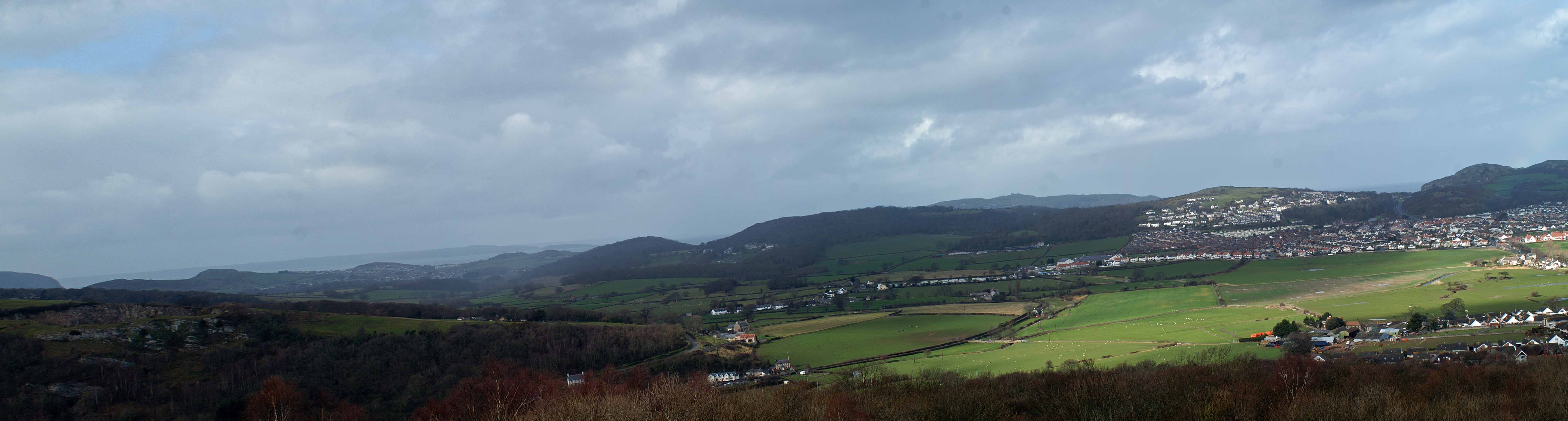
The views from the Bryn are always worth the steep climb up to the top and change according to the season, the weather and the time of day. The southerly side overlooks part of Rhos-on-Sea and part of Colwyn Bay town, divided by the duel-carriageway of the A55, whose traffic noise can be loud and rather intrusive, so not the spot to  seek peace and quiet. Beyond is Colwyn Bay and inland a patchwork of woodlands, golden gorse and neat farmed fields set upon rolling hillsides sloping around and down to the Conwy river and estuary.

Panoramic view from the south of the summit of Bryn Euryn

The gorgeous view from the south side of Bryn Euryn (click to enlarge)

I was heading now towards the true summit, where the not-too-beautiful triangulation (trig) point marks the highest point.

The trig point on the summit of Bryn Euryn looking south-south-easterly (ish)

The trig point on the summit of Bryn Euryn looking south to south-easterly (ish)

Last year there was an impressive patch of at least a hundred Early Purple Orchids on the approaching grassy slope (behind  the other side of the rocky bit in the photograph), but this year although there are still a good number there are a lot less. Having said that, those I saw are beautiful specimens, of good height and their stems thick with flowers. The success of Orchids is affected by seasonal weather, they are affected by drought, numbers may vary even in areas they otherwise frequent, which is part of their allure of course.Their less than predictable appearance and their wonderfully exotic beauty combine to make each discovery just as exciting as it was last year or the year before.

_______________________________________________________

I can still remember the excitement of discovering my first Early Purple Orchid, growing exactly where it should be, on the floor of the old woodland next to our house. I was probably about aged ten at the time and had no idea what it was, but it looked very special to me and I couldn’t wait to look it up in my ‘Observer’s Book of Wild Flowers’, which I still treasure because I love the descriptions written by the lady author of the book. I would quote it here but it’s currently in a box in a storage unit in Spain, so I’ll have to manage without for now.

Early Purple Orchid –  Orchis mascula
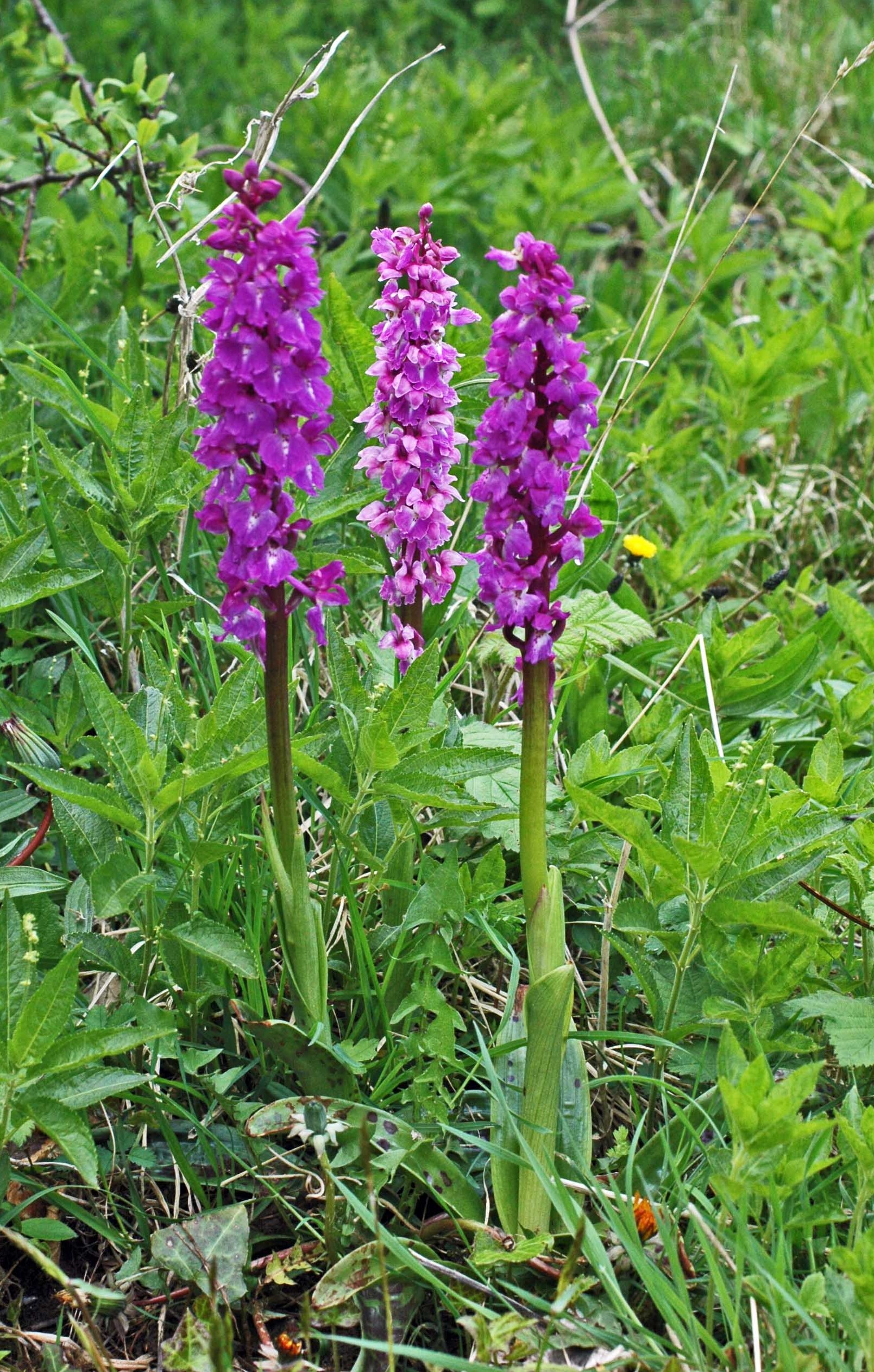
Early Purple Orchids-Orchis mascula

Early Purple Orchids-Orchis mascula

In flower from April to June, the Early Purple Orchid is a species of old broadleaved woodlands, where they are generally widespread, but they also occur in rich grasslands, on road verges, on limestone pavement and on heathy ground in the South and West of the British Isles.

‘Therewith fantastic garlands did she make

Of crow-flowers, nettles, daisies and long purples

That liberal shepherds give a grosser name’

But our cull-cold maids do dead-men’s fingers call them’.

It is claimed that when William Shakespeare wrote those lines in Hamlet, his ‘long purples’ referred to the Early-purple Orchid.  The lines were spoken by Gertrude and referred to the coronet which Ophelia was wearing when she drowned.

A short-medium perennial that can reach 40cm, the stem is also often flushed with purple. There are usually 3-5 unstalked basal leaves, oblong in shape, pointed, parallel-veined and glossy green blotched with purple.

Flower colour can vary in shade from quite a dark purplish-red to pink or even white and are distributed in  dense or loose spikes of between 10-30 flowers. Each flower has a narrow purple bract, purplish-grey ovary, three sepals and three petals.

Flowers of Early Purple Orchid

Flowers of Early Purple Orchid

Side sepals spread backwards, upper one joins to the upper two petals to form a hood; lower petal forms tri-lobed spurred crimson-dotted lip, 8-12mm long. At the back of the flower one unstalked anther holds two pollen masses on stalks that adhere to heads of visiting insects for cross-pollination; below the anther the stigma surface receives pollen brought from other flowers.

_______________________________________________________

A few minutes taking in the view more or less east towards the mountains on the edge of Snowdonia , then onwards and downwards via the grassy slope on the north side of the hill.

The A55 snakes towards  the Conwy Estuary with view of Snowdonia beyond

The A55 snakes towards the Conwy River & Estuary with views of Snowdonia beyond

The rough grassy area was, as I’d hoped, generously sprinkled with Cowslips. Not as showy as the Orchids or as bright as the Rockroses, but with a special understated beauty of their own. I was slightly concerned I may have missed them at their best as they are flowers I associate more with late April-early May, but thanks to the late start to Spring this year I caught them just in time before they start to ‘go over’.

A field full of Cowslip

A field full of Cowslips, their heads held aloft on stiff stems were dancing in the wind like little flags

Cowslip -Primula veris

I have a great affection for Cowslips and seeing them growing in numbers in a grassy meadow takes me back to my childhood in an instant. In Northamptonshire, where I grew up in the 50s and 60s, lovely golden-yellow cowslips were numerous, particularly in the damper grass meadows grazed by cows. One of life’s little treats back in the day was to pull a flower from its little green sack and suck the nectar from the base of the tube. And before it became necessary to ban the picking of wild flowers, we used to pick bunches of them for the house  as they have nice long stems and looked lovely in a jam jar on the kitchen windowsill. We picked them to add to garlands and to decorate  the ‘throne’ for the May Queen during our school’s Mayday celebrations. Occasionally we even got to pick lots of them to be made into Cowslip wine.
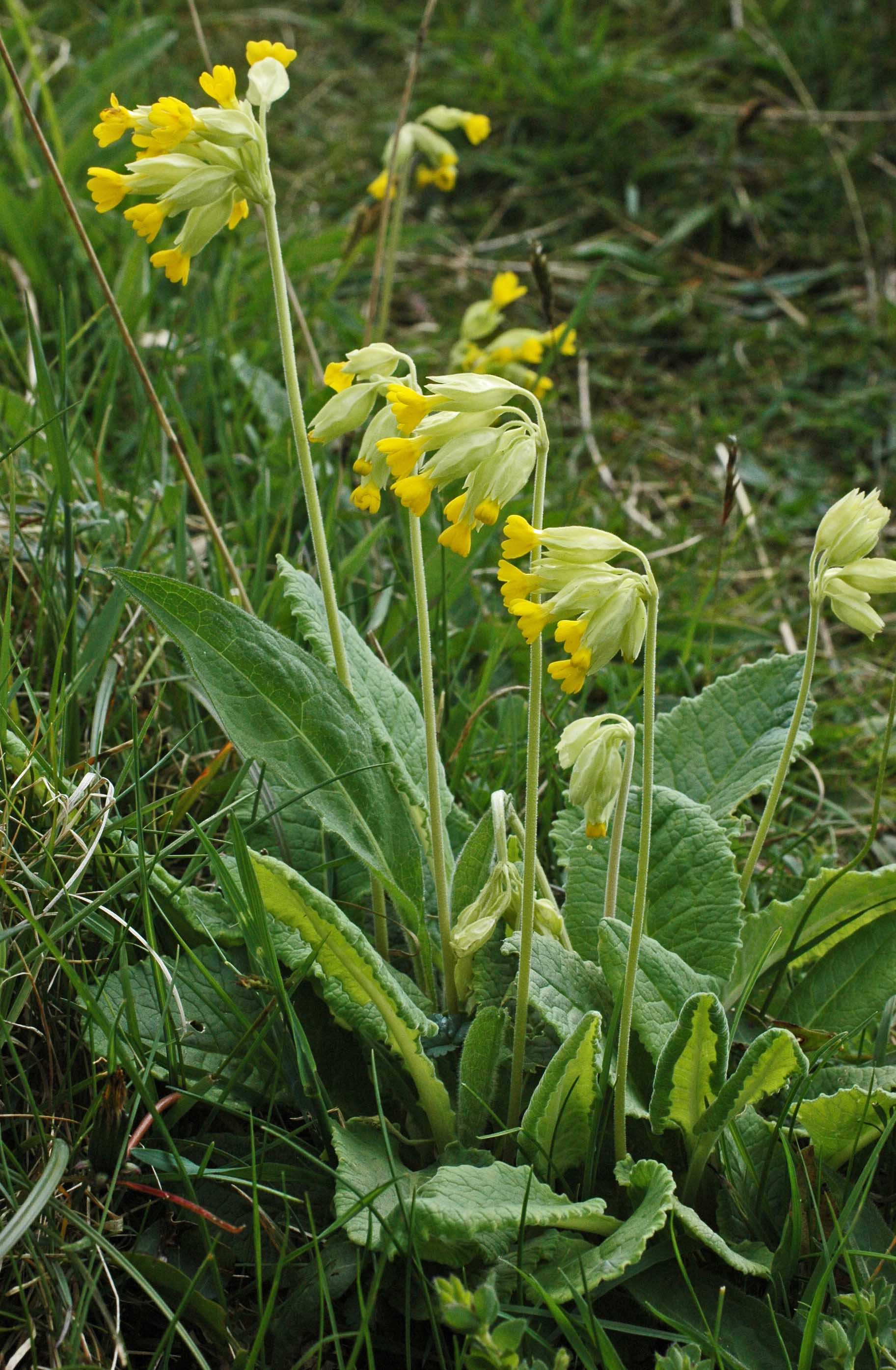
Cowslip- Primula veris

Cowslip- Primula veris

I assure you though, it wasn’t our picking that caused the Cowslip’s serious decline, we couldn’t possibly have picked even all of those growing in a single field. It had much more to do with the rise of intensive farming and old grassland being ploughed over to create more space for growing other crops.

Thankfully the plant’s numbers are on the rise again, partly due to raised awareness but probably owing  more to the sowing of seed on roadside verges and in wildflower meadows. So once again the Cowslip can raise its  graceful nodding heads above the grass blades and be counted in generous numbers once again. I won’t be picking any though, just taking photographs.

130522TGLNR-flr-Cowslip flowerhead with fly-Bryn Euryn (4)

The leaves of the Cowslip are wrinkly and hairy and form a basal rosette, similar to those of the Primrose. 

The yellow-orange flowers (8-15mm) are held in a one-sided umbel which is borne on a softly hairy, sturdy stem.  The individual flowers are comprised of five joined petals, each flower bearing orange spots in the centre, and are deliciously scented.

Cowslips and plaintains

Cowslips and plaintains

A final gaze at the view from here over the tops of the trees below, across the golf course to Penrhyn Bay and on the horizon the Little Orme skirted on its left side by the road to Llandudno climbing Penrhyn Hill.

View from the north side of Bryn Euryn

View from the north side of Bryn Euryn

Share this:

  • Share on Facebook (Opens in new window) Facebook
  • Share on Pinterest (Opens in new window) Pinterest
  • Share on X (Opens in new window) X
Like Loading...

Bryn Euryn a walk of several parts. Part 2 – Rare Rockroses

04 Tuesday Jun 2013

Posted by theresagreen in Bryn Euryn Nature Reserve, Nature, Nature of Wales, nature photography, Wildflowers of Wales

≈ 1 Comment

Tags

Bryn Euryn Nature Reserve, common rockrose, helianthemum canum, helianthemum chemaecistus, hoary rockrose, wildflowers of Bryn Euryn, wildflowers with yellow flowers

I reluctantly left the Long-tailed Tits to their labours and headed up though the woods towards the summit.

Emerging from the shelter of the trees near the summit of the hill I was confronted by a chilly breeze and on another day would have headed for the more sheltered side, but I wanted to see the Rockroses, which are at their best and most prolific on the exposed limestone cliff on this side. Happily the reward was well worth putting up with a bit of discomfort for; the sunshine yellow flowers on the edge of the cliff and cascading down the rocky hillside were spectacular.

The stiff breeze made focusing on the flowers in the following photographs a bit tricky though. The Latin name Helianthemum translates as sun flower, which refers to the flower’s habit of opening up on sunny days and closing on sunless ones. Being very sunny today there was a profusion of blooms but those out in the open were waving about, so I tried for ones in the shelter of rocks which were then shaded.

Cliff smothered with golden rockroses-Bryn Euryn, North Wales

Large clumps of Rockroses spilling down the exposed limestone

There are two species of Rockrose found here; one is the Common Rockrose –Helianthemum nummularium and the other is a species more common to the Mediterranean than the UK, the Hoary Rockrose Helianthemun canum, which is one of the specialty plants of this reserve.

Common Rockrose-Helianthemum chemaecistus

Common Rockrose-Helianthemum chemaecistus

The Common Rockrose is an evergreen plant, an undershrub, usually prostrate and spreading. The small leaves are a dark grey-green above and grey-white and woolly-hairy beneath. Flowering from April-July, it is common on chalk downs and an occasional plant in other types of grassland, but always on dry and base-rich soil.

Rockrose flower with two tiny and one minuscule beetle

Rockrose flower dotted with two tiny and one minuscule beetle

The flowers of the native Rockrose are usually bright sunshine yellow, but may also be darker gold or even pale orange. Flowers are 12-20mm across, with 5 slightly crinkled petals. Each flower last only a day, but there are many of them. In the flower centre is a tight cluster of stamens.

Common Rockrose is a good provider of nectar for various species of bee and is also the foodplant of several species of moths and butterflies such as the Brown Argus, Green Hairstreak and the rare Silver-studded Blue. Many of the flowers I looked closely at today were playing host to at least one, usually more tiny little beetles.

Hoary Rockrose – Helianthemum canum (L.) Baumg

Status: scarce

Hoary Rockrose flowers

Hoary Rockrose flowers

As I already mentioned, the Hoary Rockrose is one of the specialty plants growing on Bryn Euryn and its major British stronghold is located just a few miles away on the Great Orme in Llandudno. The plant is restricted to Carboniferous limestone. It is found on rocky outcrops and on the face of scars and cliffs, often on the upper parts of outcrops and in sparse vegetation on shallow soil near the edges of cliffs. It can be very abundant on steep, rocky, exposed, often south to west-facing sites, of 0-540m, which are prone to summer drought, which fits the location in which plants are most prolific here on the Bryn.

Hoary Rockrose-Helianthemum canum

Hoary Rockrose-Helianthemum canum

H. canum is a shrubby, mat-forming perennial. Plants flower freely and set abundant seed unless they are subjected to particularly heavy grazing. There is no specialised means of dispersal. Seeds produced in one summer germinate gradually over a long period but the successful establishment of seedlings requires a period of damp weather long enough for young plants to develop a root system which will withstand subsequent drought (Griffiths & Proctor 1956).

Hoary Rockrose flowers

Hoary Rockrose flowers

The flowers are smaller than those of the Common Rockrose, just 8-15mm across, but there are many more of them.

There are five slightly crinkled petals and at the centre of each flower there is a crowded cluster of golden stamens.

Factual extracts are from : The Online Atlas of the British and Irish Flora http://www.brc.ac.uk/plantatlas/index.php?q=plant/helianthemum-oelandicum

Share this:

  • Share on Facebook (Opens in new window) Facebook
  • Share on Pinterest (Opens in new window) Pinterest
  • Share on X (Opens in new window) X
Like Loading...

Bryn Euryn – a walk of several parts. Part 1

03 Monday Jun 2013

Posted by theresagreen in bird's nests, Bryn Euryn Nature Reserve, Nature, Nature of Wales, nature photography, woodland birds

≈ 4 Comments

Tags

Aegithalos caudatus, ash tree keys, bird's nests, Bryn Euryn Nature Reserve, cuckoo flower, lady's smock, long-tailed tit, long-tailed tit's nest

We had one day of decent weather last week and I grabbed the opportunity to walk up to and around ‘the Bryn‘. I hadn’t been there for ages and I knew if I didn’t get there soon I would miss the Early Purple Orchids and Cowslips that grace this special place at this time of the year. It was sunny but a north wind kept the ambient air temperature cool to outright chilly in the open, but in more sheltered spots it was pleasant and almost felt spring-like. The open grassy meadow area in front of the car park was just such a spot today and there were actually butterflies to watch, all whites, definitely some small and some green-veined whites, but as there was also a solitary male orange-tip making territorial laps at speed, it is possible there were females of that species too, they don’t have the distinctive orange wing tips so are harder to identify in flight.

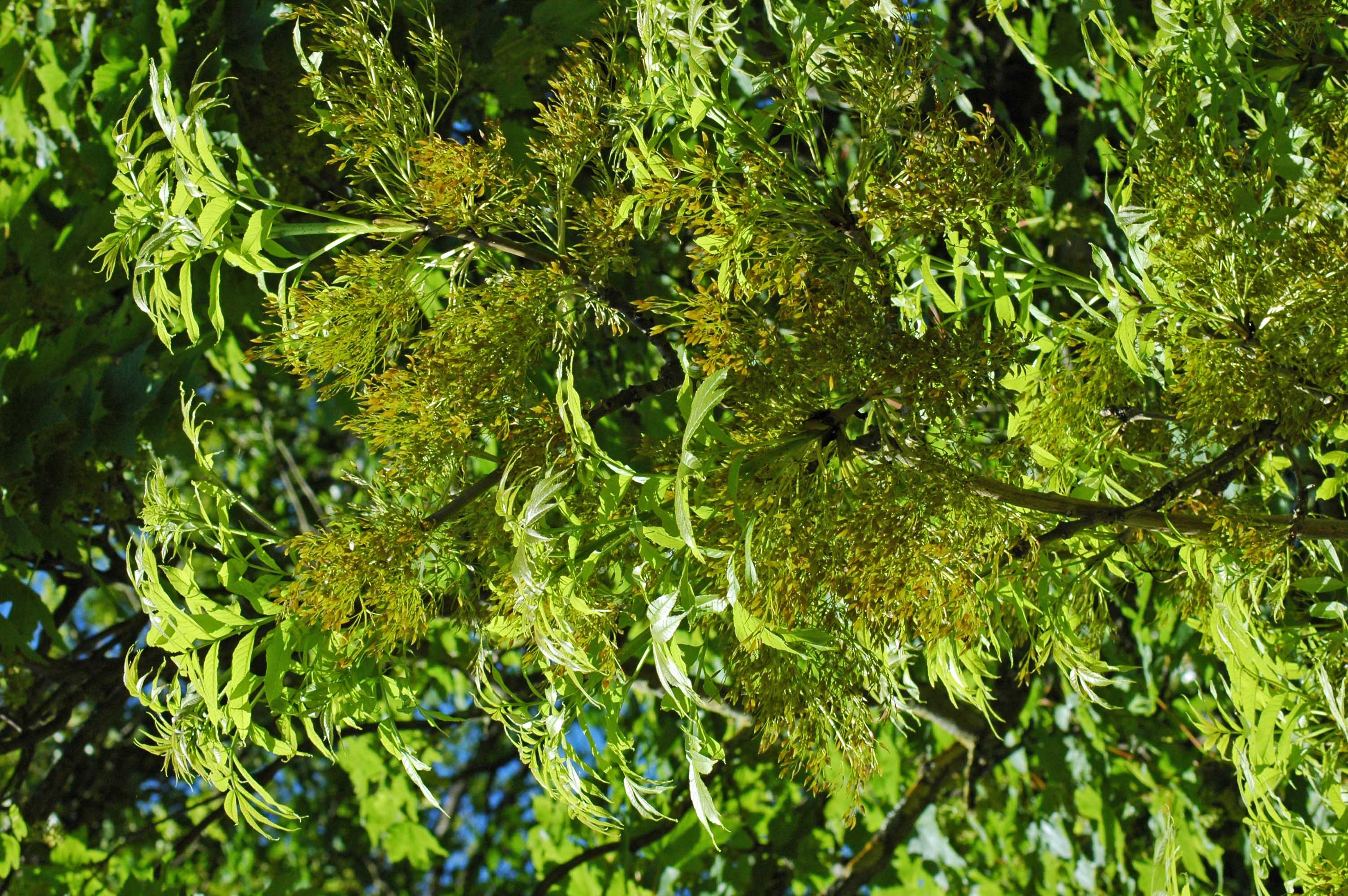
Bunches of Ash Keys already forming

Bunches of ‘keys’ are already forming on this tree and the leaves are well grown

I hoped the Orange Tip would stop long enough to have his picture taken, so whilst waiting for him to come back to this part of his circuit, which he did several times, I wandered along the field edge to see what progress the plants were making. There are many Ash trees in the woodland of this site and it is interesting to note the difference in the rate of growth of new foliage on trees which can vary significantly, even on trees that are quite close together. I am paying more attention to Ash trees now, knowing that they are under threat from the killer fungus chalara fraxinea, appreciating their  beauty while I still have the chance while dreading that they may be stricken with it.

This link shows the signs of the disease to look out for: http://visitwoods.org.uk/en/visit-woods/for-nature/Documents/symptoms-chalara-dieback-ash.pdf

White-flowered Valerian

White-flowered Valerian

The vegetation along the field edge is already tall, with much on the point of flowering, although there was little of interest to waylay the speeding Orange Tip. He was almost tempted by what I think was a white flowered Valerian, settling on it for a few seconds only before spotting a Small White in his airspace and rocketing after it.  I felt sure he’d stop to rest or feed eventually, watching and waiting for quite a while hoping for a photo opportunity, but he was clearly on duty and intent on seeing off all interlopers. I hadn’t realised how territorial and feisty this species was until now. I got tired way before he did, but thought it worth looking for some Lady’s Smock flowers, a foodplant of the species’ larva and one of the few flowers the adults do sometimes pause to take nectar from. I did find some, but only a couple of stems of flowers and no sign of the butterfly anywhere near.

Lady's Smock, Cuckoo Flower-Cardamine pratensis

Lady’s Smock, Cuckoo Flower-Cardamine pratensis

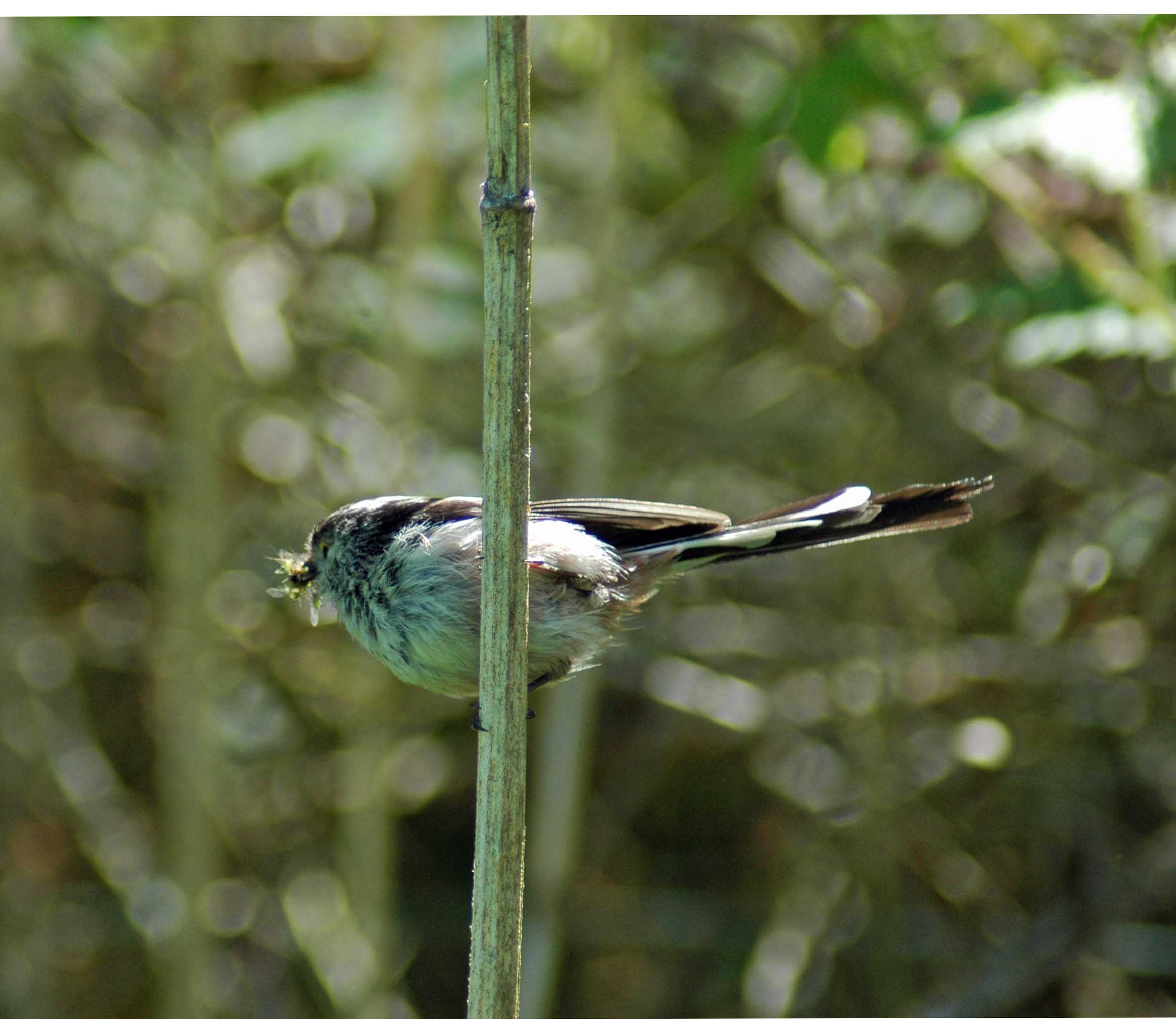
As I bent down to get an image of the flower I caught a glimpse of a bird passing me by very closely and stood up to see a lovely Long-tailed Tit at just about my eye-level (not very high then), perched on a dried stem about 2 metres or less in front of me and with its beak full of small flies.

A Long-tailed Tit with her beak full of small flies

A Long-tailed Tit with her beak full of small flies

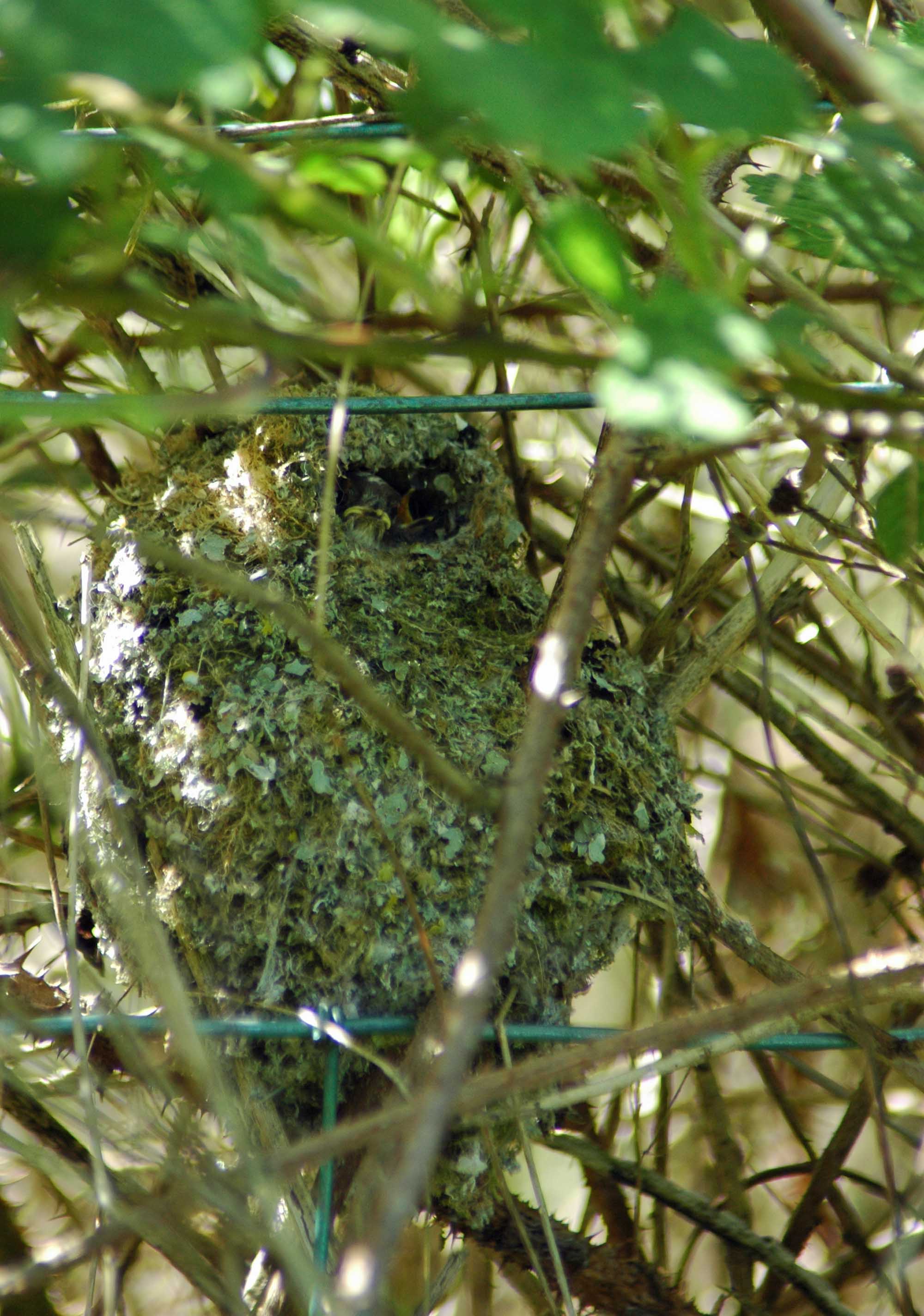
To be honest, the encounter took me so much by surprise that it took a moment for it to register that it was indeed Long-tailed Tit, let alone for it to occur to me that the poor bird was agitated by my presence because the flies were intended to be fed her nestlings. I stood still and she flitted over to the cover of a nearby small tree, then after a moment or two began to make her way to the back of the wire fence, then through a tangle of brambles to the most beautiful nest. I was thrilled to see it as I’d never seen one closely before; they are usually deeper into a tangle of brambles, so at the same time I felt concern at the location of this one; it seemed very vulnerable and if I spotted it fairly easily then so could potential predators. Long-tailed tit nests are known to suffer high rates of predation with only 17% of them being successful.

The Long-tailed Tit at the nest

The Long-tailed Tit at the nest

Long-tailed Tits make magical nests from materials you could almost imagine being called for in a spell; spider egg cocoons and moss, lichen and feathers, some 6,000 tiny pieces required for the average construction. The moss and spider silk provide the structural stability, they are pieced together to form a mesh with the tiny leaves of the moss acting as hooks and the spider silk of the egg cocoons providing the loops, which has been described as working in a similar way to velcro. The outside of the nest is covered with hundreds of flakes of pale green-grey lichens to provide camouflage and the inside lined with around 2,000 downy feathers to insulate the nest.  The end result is a lightweight elastic sac with a small, round entrance placed at the top, which is suspended either low in a gorse or bramble bush, less than 3m off the ground, or occasionally high up in the forks of tree branches.

Despite its apparent fragility the nest is strong due to the spider silk and the elasticity of the structure allows it to expand as the nestlings grow, so is always the perfect size. This nest was fairly bulging, so I imagine the young ones were quite well grown and that there were several of them in there.

A close view of the exquisite nest and young ones peeking out

I stood rooted to the spot watching as both parent birds hunted for food for their young ones. they were not travelling far, one was mainly foraging in the lower branches of a tree within a few metres of one side of the nest and the other in another tree a similar distance away to the other side. That same one, which is the one I photographed also seemed to be flying up from the fence pursuing flies on the wing.

A Long-tailed Tit with a beak full of small flies waiting a short distance from the nest

I would have loves to have stayed and watched for longer, but although the birds carried on about their work despite me, they were clearly wary and I left them in peace to carry on while I continued with my walk.

Hungry Long-tailed Tit nestlings looking quite well-grown

Hungry Long-tailed Tit nestlings looking quite well-grown

This link is to a wonderful video of a Long-tailed Tit nest and narrative from Iolo Williams’  Secret Life of Birds.

http://www.bbc.co.uk/nature/life/Long-tailed_Tit#p00dxvfq

Share this:

  • Share on Facebook (Opens in new window) Facebook
  • Share on Pinterest (Opens in new window) Pinterest
  • Share on X (Opens in new window) X
Like Loading...

Late summer on Bryn Euryn

08 Saturday Sep 2012

Posted by theresagreen in Bryn Euryn Nature Reserve, bumblebees, Local Nature Reserves, Nature, nature photography, Wildflowers of Wales

≈ 4 Comments

Tags

agrimony, black knapweed, Bryn Euryn Nature Reserve, carder bumblebee, gatekeeper butterfly, hemp agrimony, hoverflies, Meadow Brown, nodding wild onion, peacock butterfly, ragwort, red-tailed bumblebee, self-heal, wildflowers of Bryn Euryn

The soggy conditions created by the rainfall this year have not been ideal for many late summer wildflowers and, perhaps as a result of that, it seems to me that there has been a drop in some insect populations. I was on the lookout for flower beetles, in particular soldier beetles, which in  previous years have been prolific, and struggled to find many at all.

I spent a couple of hours roaming the pathways of Bryn Euryn on one sunny afternoon in mid-August, ignoring grey clouds rolling in at my peril, getting caught right at the top in a proper downpour. There is  almost always something interesting to photograph here whatever the weather though, and these are my offerings for that day.

There were very few plants still flowering on the lower field edge, but the first one, the Great Willowherb, often mistaken for Rosebay Willowherb, is one I’ve wanted to mention for a while and will do at greater length soon.

Great willowherb is often mistaken for rosebay willowherb

Common Mallow-Malva sylvestris

banded Snail on a bindweed leaf

Greenbottle fly-Lucilia caesar on Hogweed flowers

Most of the hogweed plants are setting seed


Self-heal- Prunella vulgaris

In the clearing at the top of the steps that cut through the lower woodland is a bramble patch that always seems to attract an array of nectar-seeking insects. Today there were a good number of hoverflies, most the one photographed below, but there were a few other Eristalis species too.

This attractive hoverfly is Helophilus pendulus, common names are Sun Fly as it does enjoy basking in sunny patches, and The Footballer referring to its colours and stripy patterning

Eristalis on Wild Carrot- Daucus carota

I headed a bit round to the open grassy area that this time last year was covered in purple flowered knapweed and buzzing with dozens of insects,  but now was looking quite bedraggled and bereft of colourful blooms. There was some knapweed, but hardly enough to go around apparently as most of the flowers had more than one bumblebee or hoverfly competing for its bounty.

Black Knapweed-Centaurea nigra

Red-tailed Bumblebee on knapweed flower

Common Carder bee on knapweed

In amongst the long damp grass was a pink flower that I recognised from last year but didn’t get around to identifying. This (I believe/hope) is an unusual plant of the allium family, common name Nodding Wild Onion or Allium. The pink bell-shaped flowers are  tiny and have protruding stamens; very pretty.

Nodding Wild Onion-Allium Cernuum tangled in amongst the long damp grass

A closer look at the pretty little flowers

There were a few plants of Agrimony – Agrimoniia eupatoria

The other staple of late summer nectar, Ragwort, is also flowering of course. I can’t not include it here, so thought I’d just put in a close-up of an individual flower to show how pretty they really are.

Close up of Ragwort flowers

One flowering plant that is relishing the damp conditions and flowering prolifically here was Hemp Agrimony. Its flat, open flowers are very attractive to insects; great for butterflies.

Hemp Agrimony-Eupatorium cannabinum

A partially-open flower head of hemp agrimony

There were a few butterflies about, but as the clouds came over and the air cooled those that were out and about were not very mobile. Meadow Browns were most numerous but most were fluttering about low down in the long grass. I spotted one on Hemp Agrimony, also a single Gatekeeper and was taken by surprise when a Peacock (butterfly!) flew right in front of my face. I did photograph them all, but by now it was minutes away from the onset of the downpour and quite dark, so the resulting images are a bit grainy, but there for the record.

Meadow Brown on Hemp Agrimony

Gatekeeper – Pyronia tithonus

Peacock – Nymphalis io, looking a bit faded and worn, on hemp agrimony

Tiny acorns are beginning to show on the oak trees

Share this:

  • Share on Facebook (Opens in new window) Facebook
  • Share on Pinterest (Opens in new window) Pinterest
  • Share on X (Opens in new window) X
Like Loading...

Bryn Euryn in preparation for Spring

12 Monday Mar 2012

Posted by theresagreen in Local Nature Reserves, Nature, nature of woodlands, nature photography, woodland birds

≈ 1 Comment

Tags

Bryn Euryn Nature Reserve, catkins, dunnock, long-tailed tit, pussy willow, Robin, treecreeper

I hadn’t visited the Bryn Euryn Local Nature Reserve for quite some time and thought I would rectify that last weekend. The morning weather had been varying between sunshine and showers, and arriving at the site during a sunny spell I  walked first around the edge of the small quarry field to see what was growing there.

Lush growth of leaves of Arum maculatum -cuckoo pint, or lords & ladies

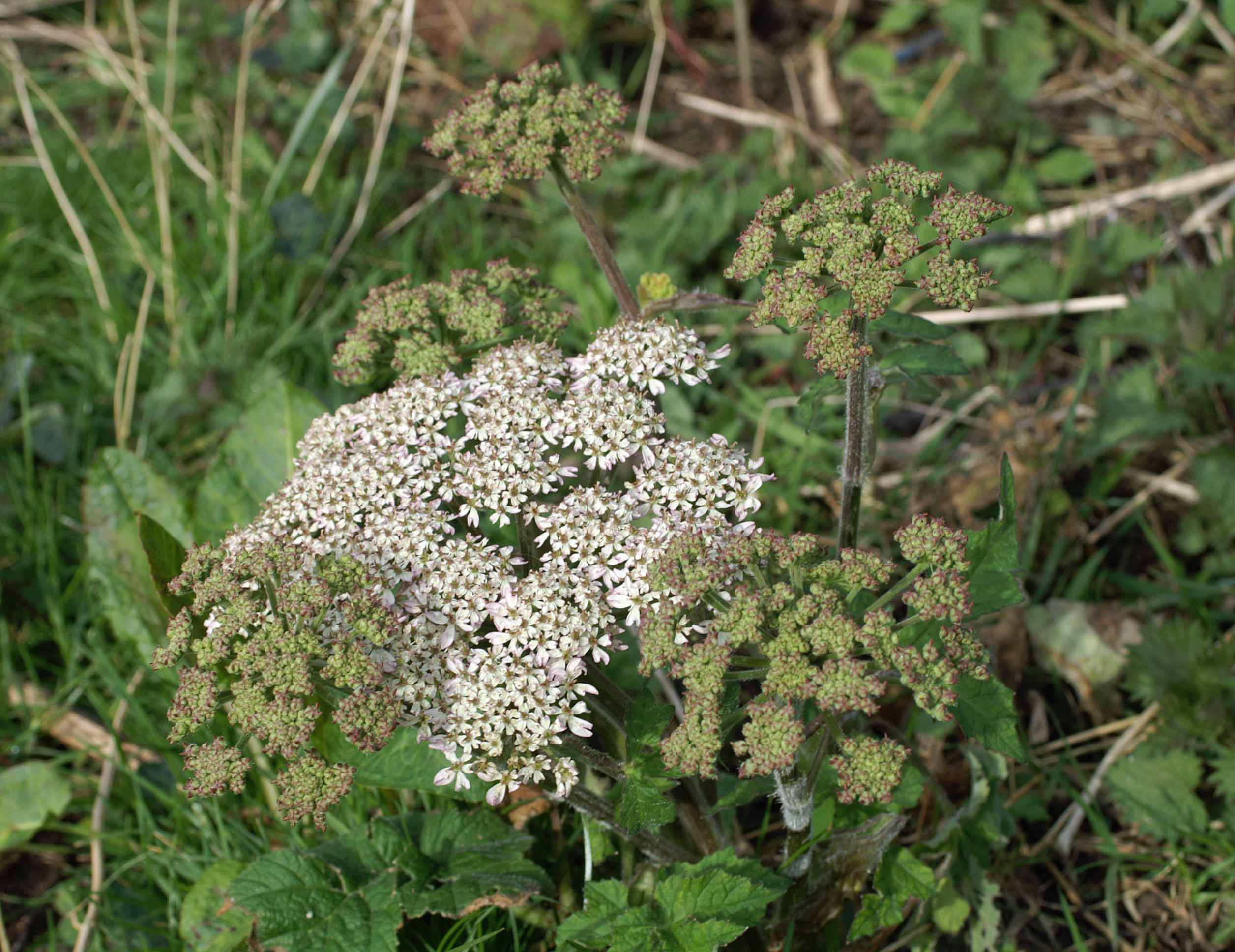
A very early flowering specimen of Heracleum sphondylium - common hogweed or cow parsnip. This is a herbaceous perennial or biennial belonging to the family Apiaceae. It is an umbelliferous plant, in the same group as fennel, cow parsley, ground elder and giant hogweed.

Dry seed heads of burdock

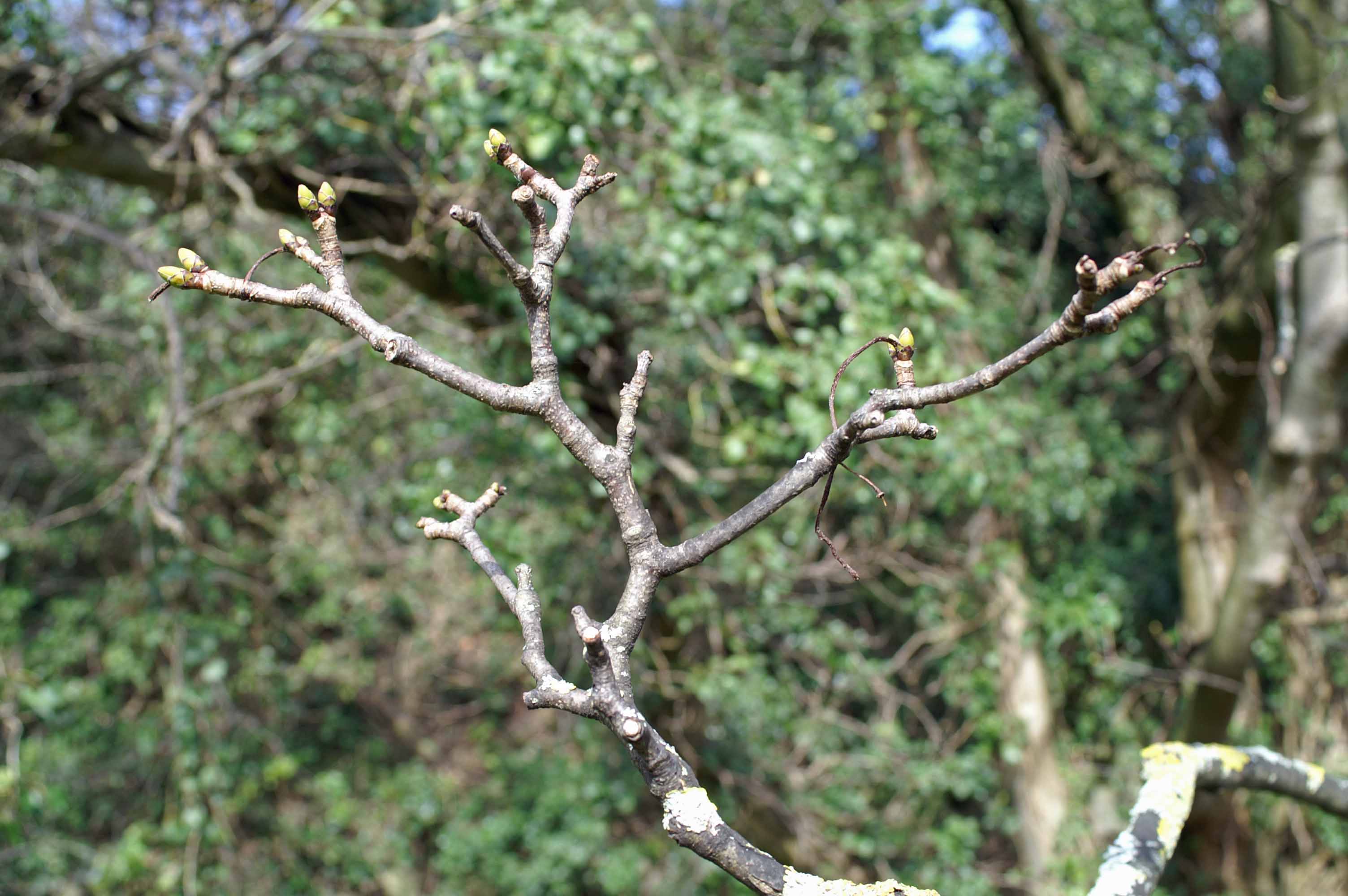
Swelling leaf buds

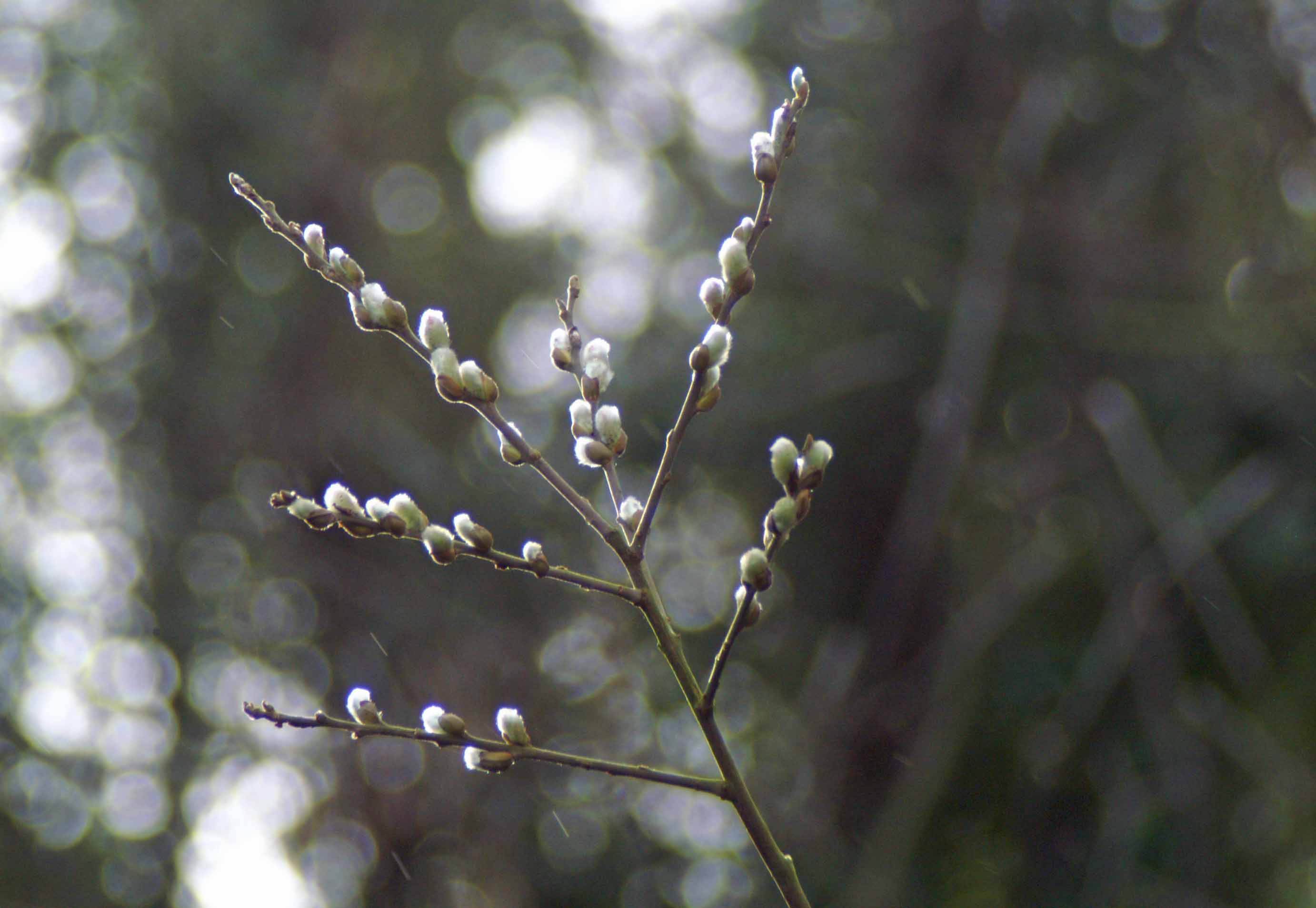
Silvery pussy willow

Pussy willow is a name given to many of the smaller species of the genus Salix (willows and sallows) when their furry catkins are young in early spring. Before the male catkins of these species come into full flower they are covered in fine, greyish fur and hence likened to tiny ‘pussy cats’. The catkins appear quite some time before the leaves, and are one of the earliest signs of spring. It is customary to gather branches of  pussy willow to decorate the house in the springtime, particularly on Palm Sunday, as a substitute for palm branches.

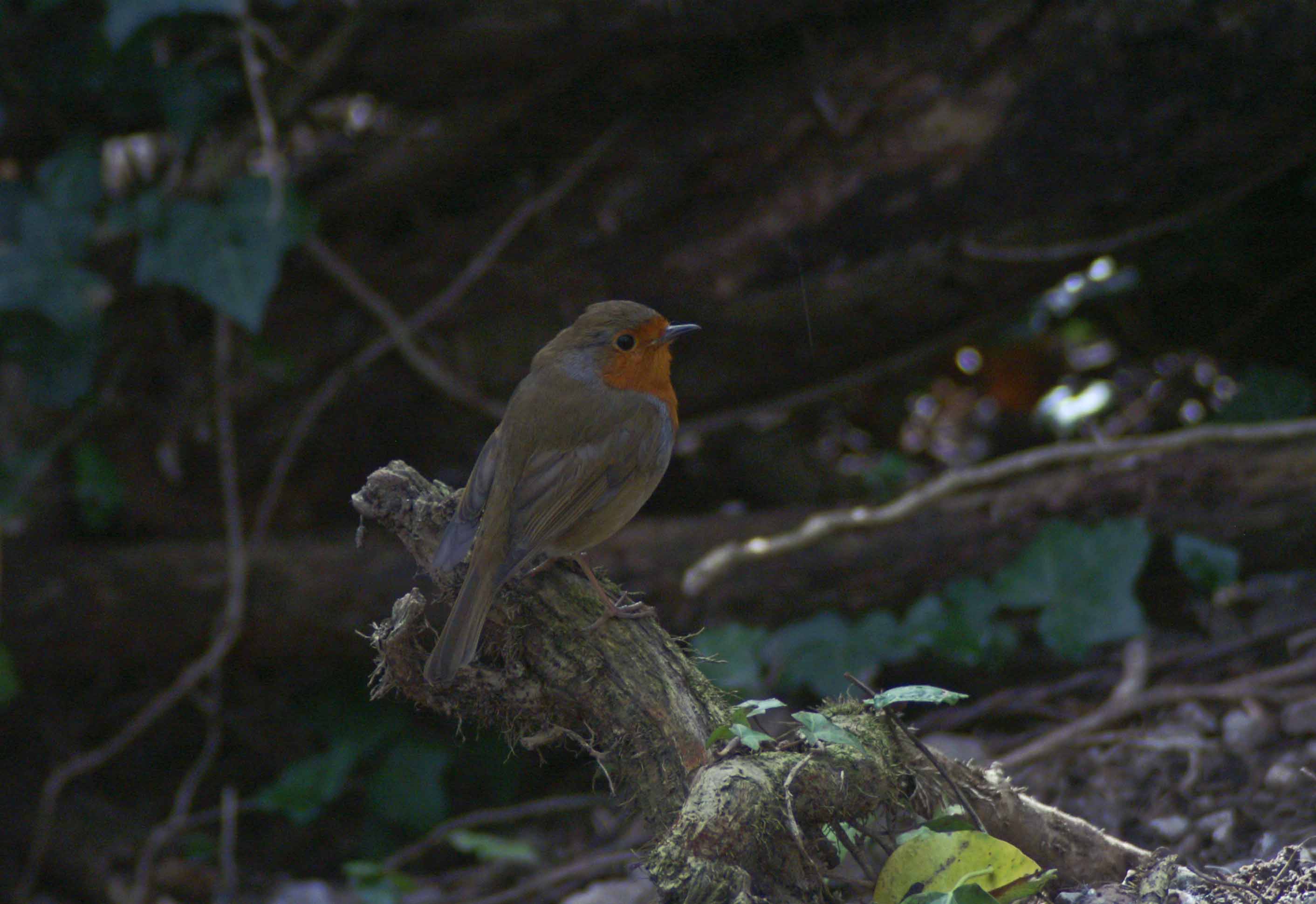
From the field I crossed onto the track on the edge of the woodland which passes by an open area of allotments. There is often  a robin  to be seen here, which today continued with its foraging regardless of me being very close by, even stopping to pose on a nice mossy wooden perch in a patch of  sunlight.


Posing robin

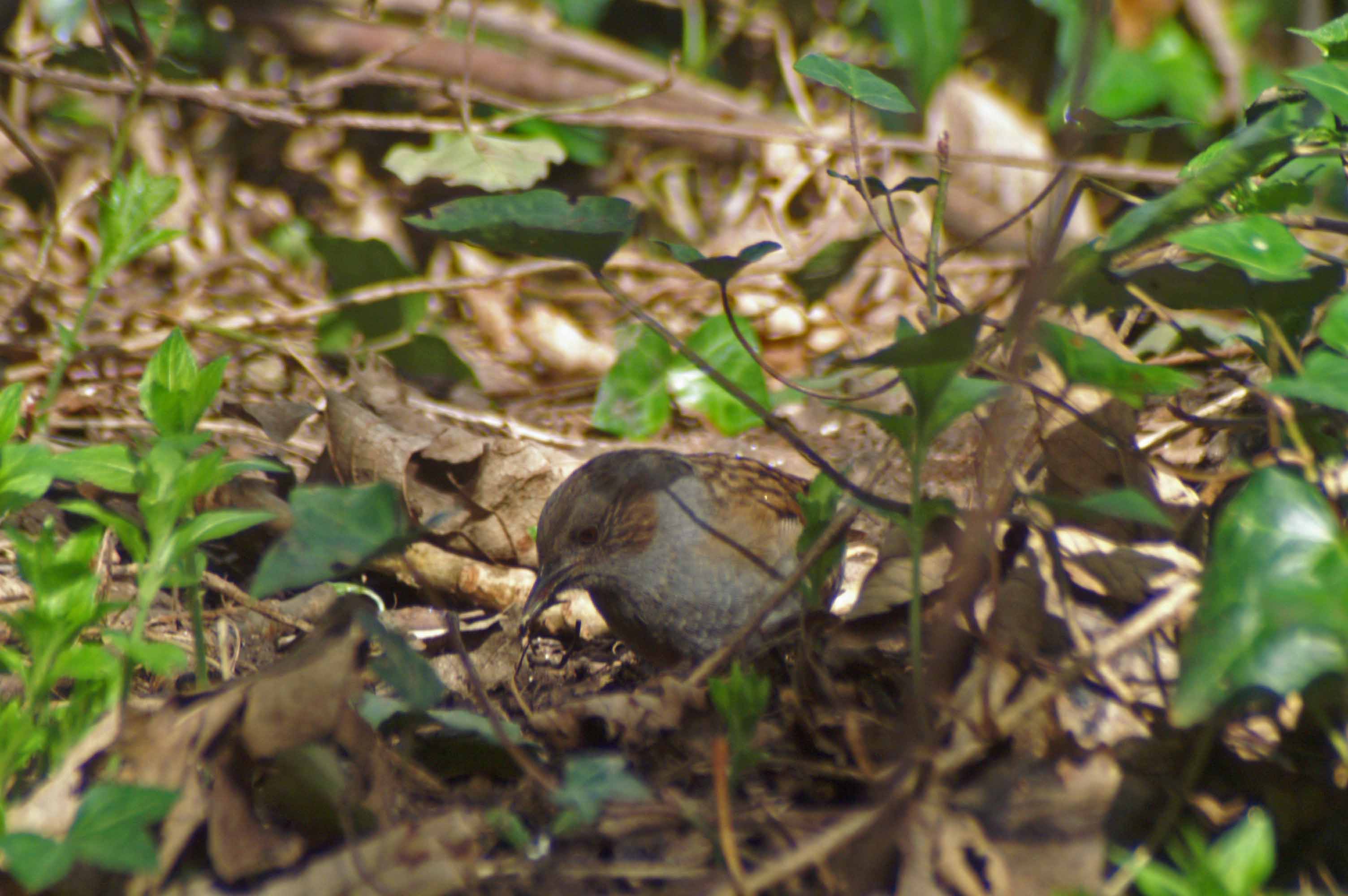
I had some good views of a dunnock there too as it pecked around amongst the dry leaves beneath the trees.

Dunnock -Prunella modular - almost at my eye-level

Dunnock-back view

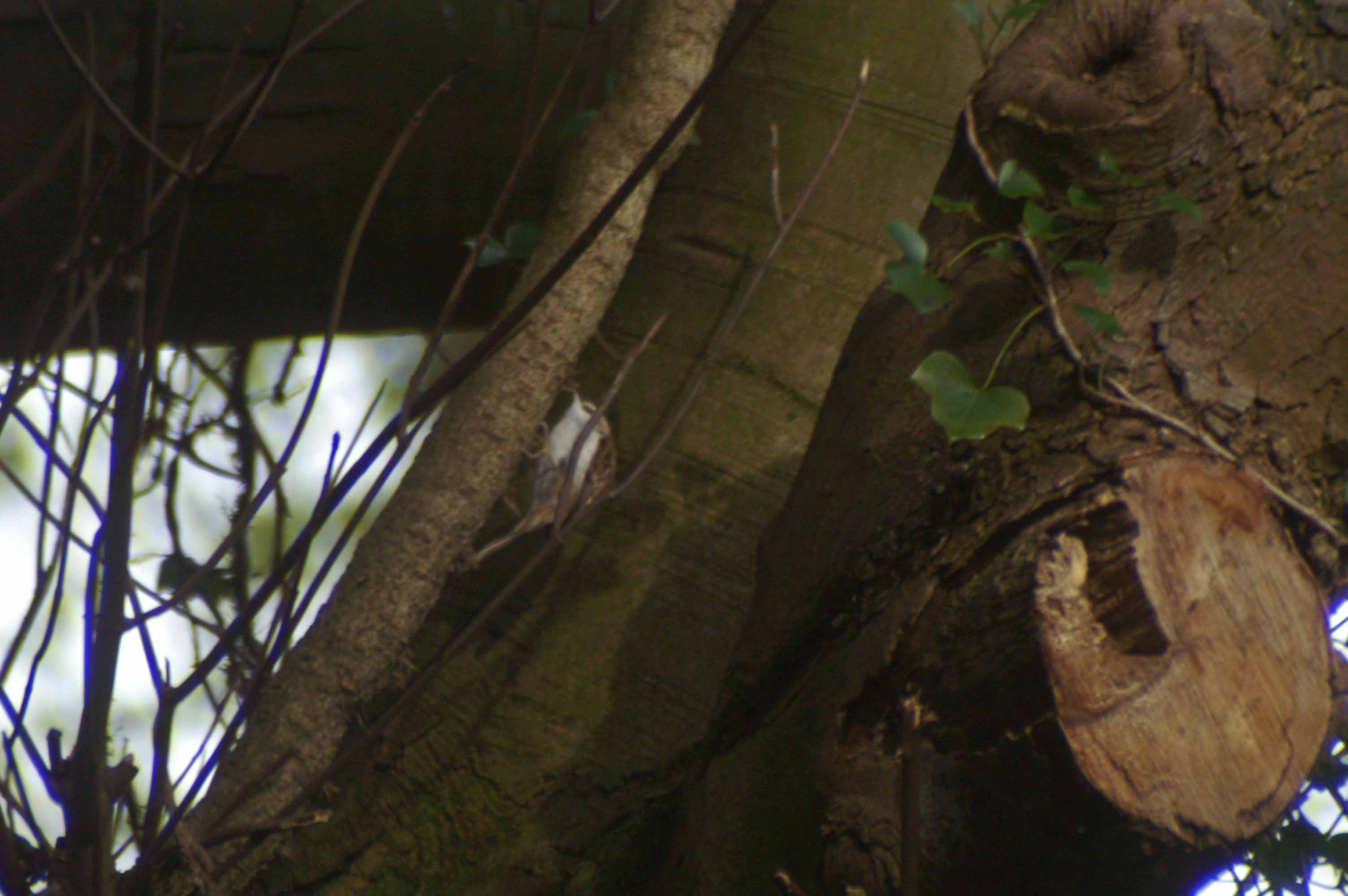
Moving on towards the bottom of the steps, another brown bird flew past me and landed on the trunk of a big sycamore tree; a treecreeper. I was delighted to recognise it as a treecreeper, the first and only one I have seen so far in this location. I watched it or quite some time as it explored the tree trunk and higher branches, probing its beak into nooks and crannies searching or insects and spiders.

Treecreeper - the first I have sen in this location

The Treecreeper– Certhia familiaris is small, very active, bird that lives in trees. It has a long, slender, downcurved bill, patterned brown upperparts, whitish underparts, and long stiff tail feathers which help it creep up tree trunks. It breeds in the UK and is resident here. Birds may leave their breeding territories in autumn but most range no further than 20 km.

In Spain the very similar short-toed treecreeper – Certhia brachydactyla occurs. They are frequent visitors to our garden there, where they are equally as comfortable scuttling up the tall straight trunks of the palm trees as they are exploring the nooks and crannies of the native cork oaks. They are much easier to photograph there too being more in the open and in better light.

e

A short-toed treecreeper on the trunk of a palm tree, Sotogrande, Southern Spain.

According to my bird books, the main points of difference between the two species are location and that the short-toed species has brownish flanks and a different voice: the short-toed’s song is said to be louder and less high-pitched and the call note louder, more piping and sometimes trilling. However, it is a possibility that there is in actuality only one species as presented convincingly in this brilliant blog:  http://10000birds.com/short-toed-treecreepers-do-not-exist.htm 

Catkin - A long, thin, indeterminate inflorescence of tiny, petalless flowers growing on willows, birches, oaks, poplars, and certain other trees. The flowers on a catkin are either all male or all female. The female flowers are usually pollinated by the wind. Also called ament.

The woodland was full of birdsong and following the track up through the trees towards the summit of the hill (bryn) I was accompanied by a chorus of robin, blackbird, chaffinch, blue tit and great tit with stand-out performances from a couple of  wrens and intermittent coo-ing interventions from wood pigeons. As I neared the top it began to rain quite heavily so I stood under an ivy-clad tree branch for a few minutes just listening until it stopped.

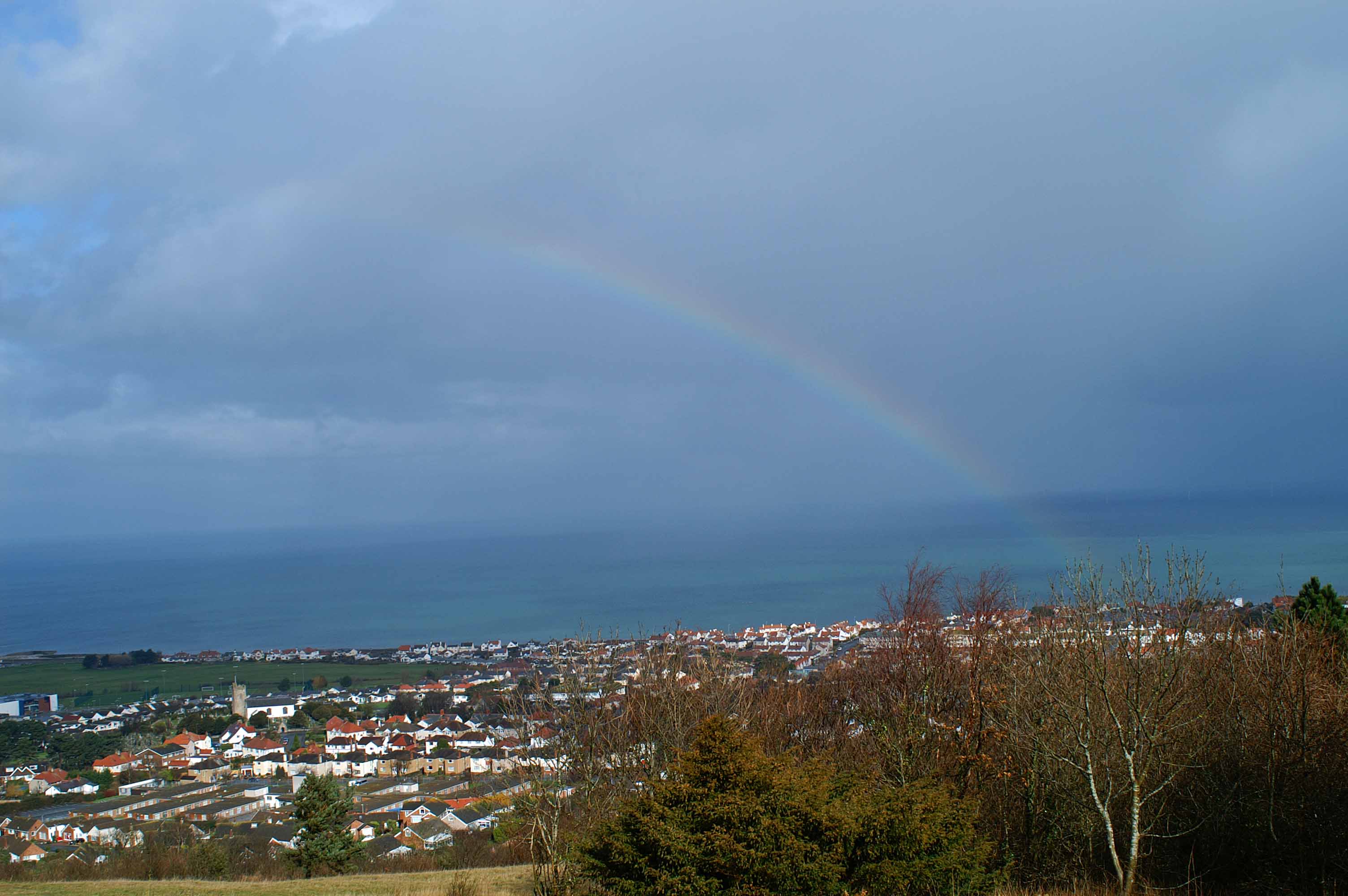
I carried on up to the summit, passing the trig point and over onto the open meadow or downs area that covers one slope of the hill. I was greeted by the sight of a complete arc of a rainbow that  spanned a width far greater than I could fit into my viewfinder.

A rainbow arced across the sky bridging Rhos-on-sea and Penrhyn Bay

Part of the spectacular view from the summit of Bryn Euryn (click on photo to enlarge)

A close up of golden common gorse flowers and spiky leaves

On the path back down to the bottom a female blackbird was taking a bath in a newly filled puddle, disturbed from her ablutions by, yes, you’ve guessed, a bounding unleashed dog. I had been standing watching a small number of goldfinch foraging in the tops of a stand of tall trees, but I know when it’s time to leave and let the dogs have their share of the day.

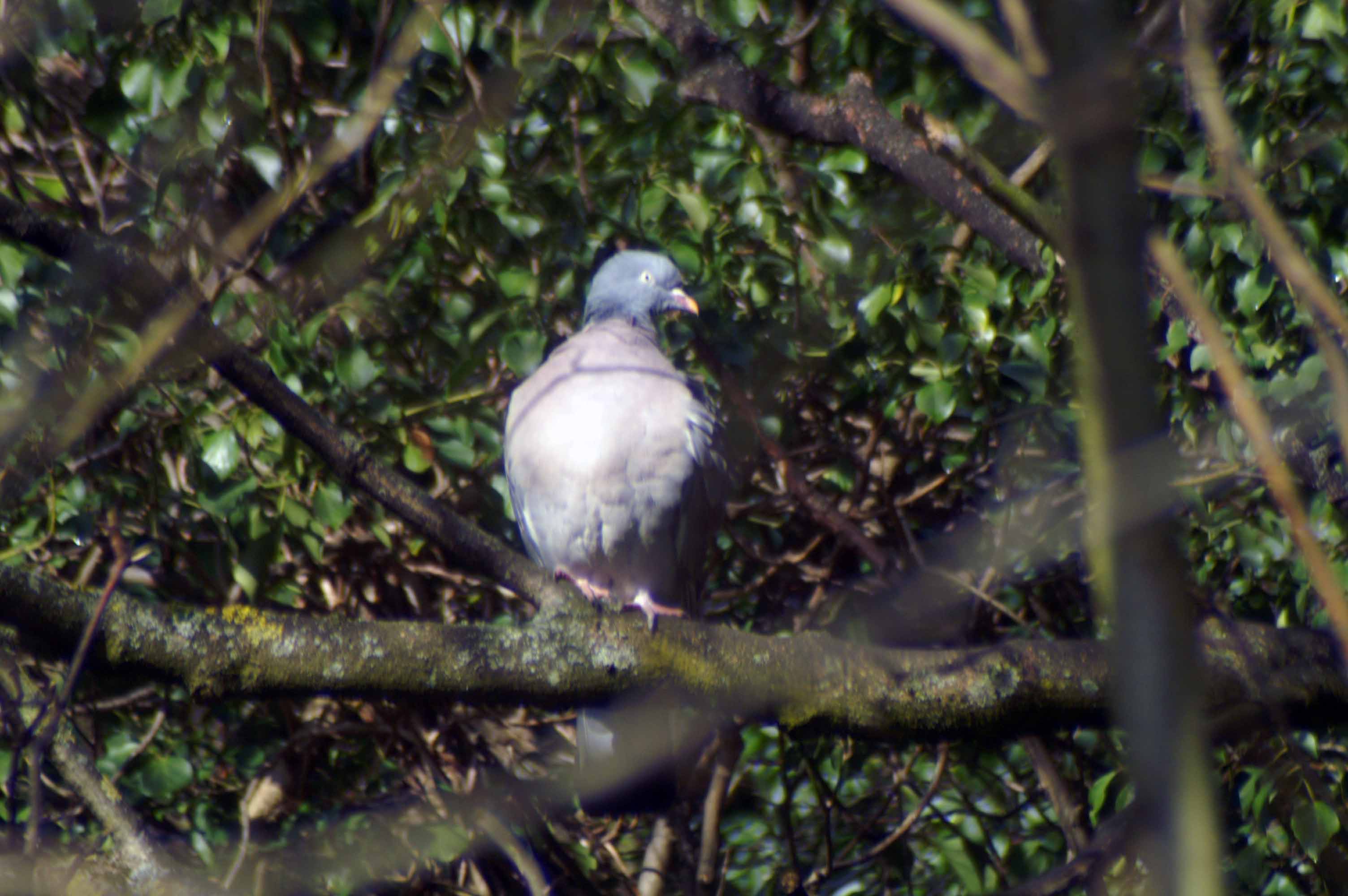
There were a few more treats awaiting me in the car-parking area however. Two wood pigeons, probably a pair, sat preening on a branch in a patch of sunlight and a pair of great tit were foraging around the fenced part of the field.

Wood pigeon - Columba palumbus

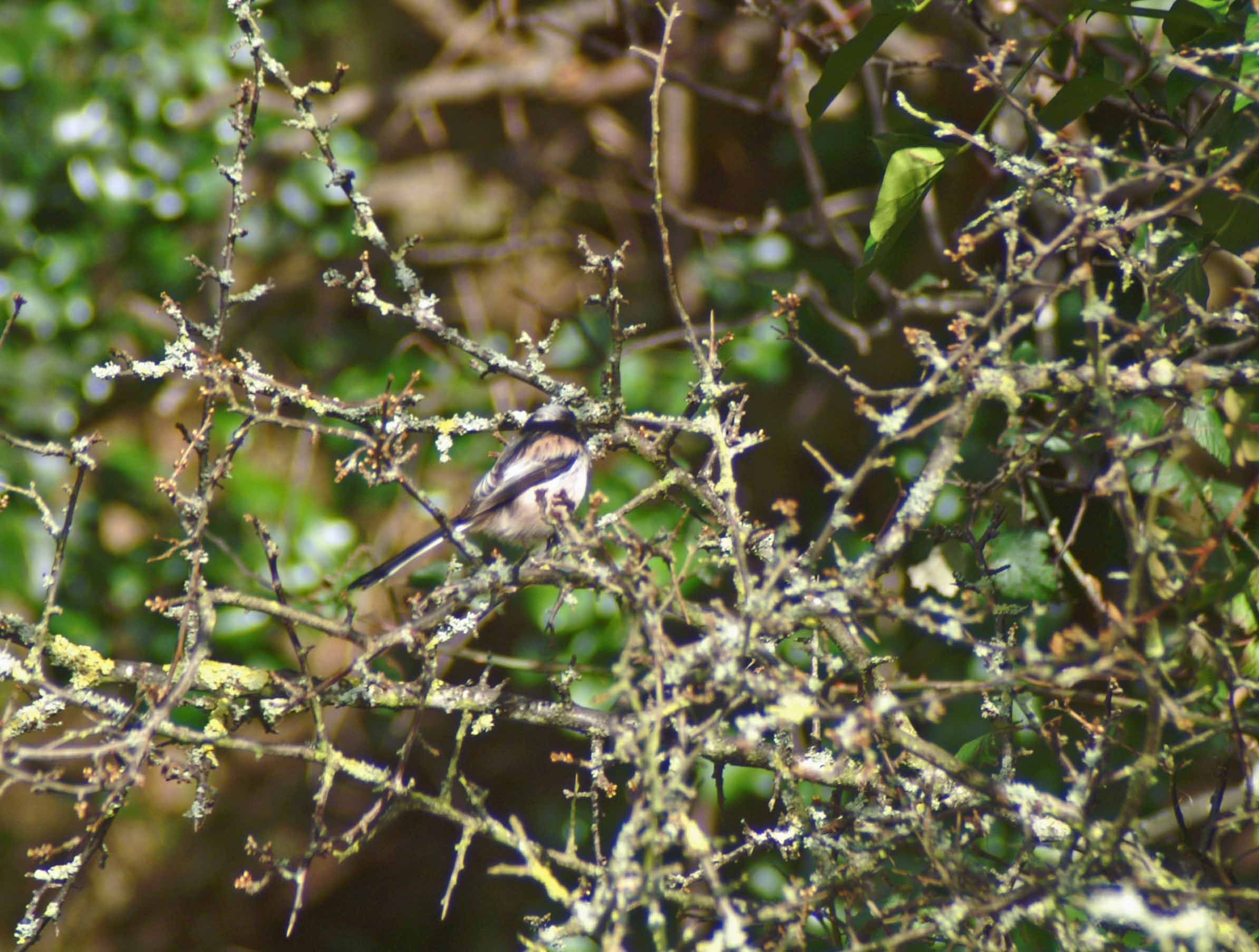
I have always found great tit elude me when it comes to photographing them, so I hung around for a while hoping to capture an image or two. They flew across the car park into the low trees there and attempting to pick up on them I found four long-tailed tits instead. A special favourite of mine, I was more than happy with that, especially as they stayed around acrobatically and thoroughly scouring the intricate twigs of the trees.

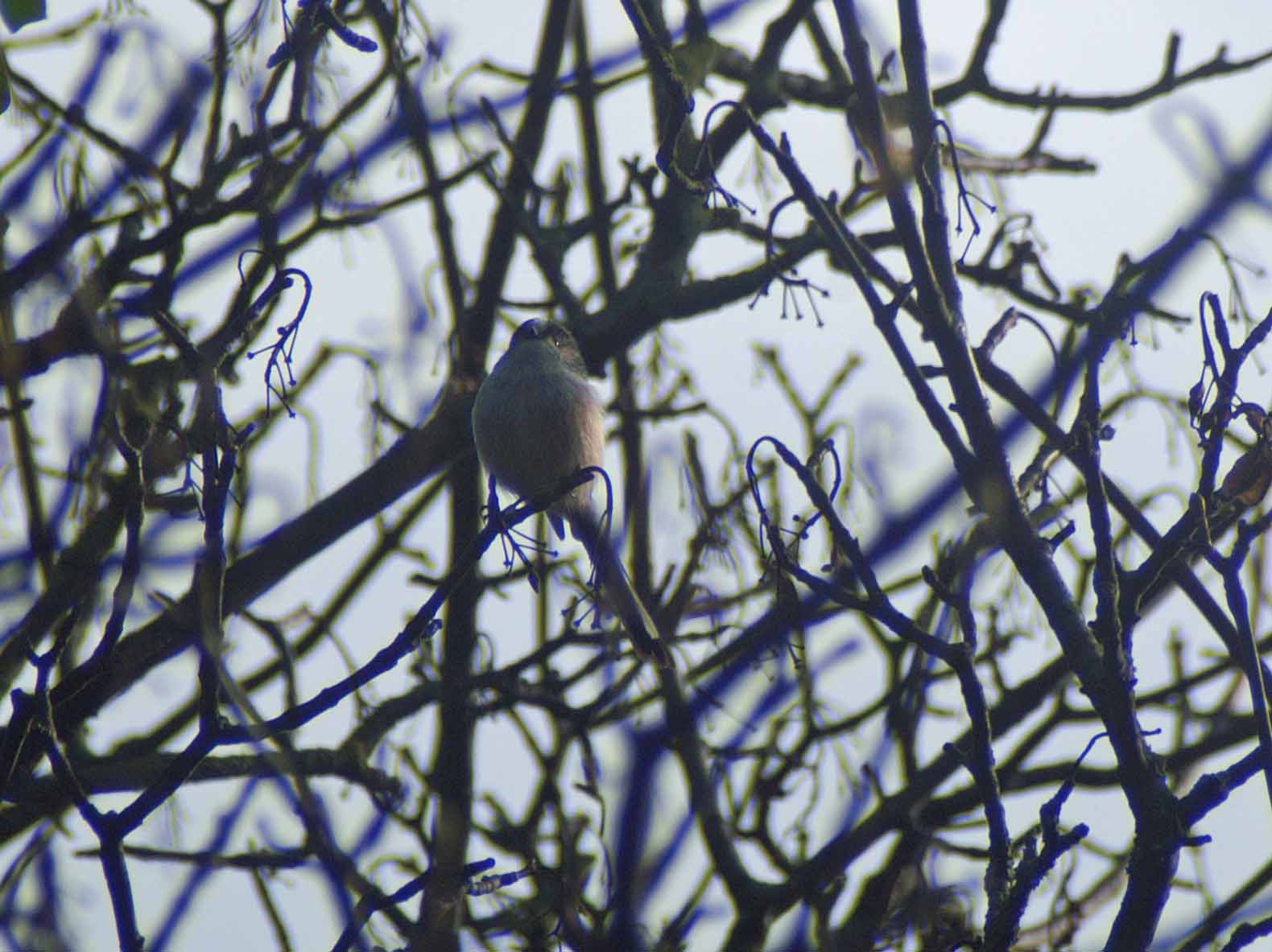
Long-tailed tit - Aegithalos caudatus

Long-tailed Tit, back view

A robin was investigating the ground beneath the shrubbery the long-tailed tit was photographed in, then unexpectedly flew up onto a branch in full sunshine and began to sing.

Another robin singing, but this time in sunshine

Share this:

  • Share on Facebook (Opens in new window) Facebook
  • Share on Pinterest (Opens in new window) Pinterest
  • Share on X (Opens in new window) X
Like Loading...

Last of the summer nectar

23 Friday Sep 2011

Posted by theresagreen in Insects, Nature, nature photography, wildflowers

≈ 1 Comment

Tags

Bryn Euryn Nature Reserve, carder bumblebee, common rockrose, hoverflies, knapweed, late summer wildflowers, red-tailed bumblebee

18/9/11-A hoverfly on wild clematis flower

18/9/11-Carder bumblebee on Knapweed

18/9/11-Red-tailed bumblebee on thistles

18/9/11-A hoverfly on Common Rockrose

Share this:

  • Share on Facebook (Opens in new window) Facebook
  • Share on Pinterest (Opens in new window) Pinterest
  • Share on X (Opens in new window) X
Like Loading...

Bryn Euryn Nature Reserve

19 Friday Aug 2011

Posted by theresagreen in Bryn Euryn Nature Reserve, Butterflies of Wales, Nature, Nature of Wales, nature photography, Wildflowers of Wales

≈ Leave a comment

Tags

ash tree, Bryn Euryn Nature Reserve, common rockrose, early purple orchid, hoary rockrose, wildflowers of Bryn Euryn

27th April

I haven’t seen much of the countryside since I’ve  been here in North Wales, other than through a car window, and I was very keen to see some spring flowers and fresh greenery. I know the wildflowers in Spain will be amazing when I get back there next week, but the native British wildflowers have an altogether gentler and more subtle beauty that I love. I have been planning to make a trip to the local nature reserve on Bryn Euryn, and as I will only be in the locality for a couple more days I decided to head there this morning.

Bryn Euryn is a limestone hill rising to 131metres (365 ft) above sea level and a well-loved local landmark of Rhos-on-Sea that is now a Local Nature Reserve. Its slopes are clothed with a mixture of woodland and grassland, part of which has been declared a Site of Special Scientific Interest. From its summit their are extensive panoramic views over Rhos-on-Sea and Colwyn Bay and across to the mountains of Snowdonia in the west. 

I parked in the small car park that is surrounded by trees, and as soon as I got out of the car I heard a Chiffchaff ‘singing’. I couldn’t see him,but as I tried to locate his whereabouts a Robin flew into a nearby tree and also began to sing. Moving off towards the beginning of the track that leads up to the summit of the hill I stopped to watch a Song Thrush hunting on the woodland edge where it borders a grassed area.

I soon came upon a patch of bluebells growing alongside some wild garlic whose flowers are almost finished. There were a few wood anemones still flowering, but they too are all but over; wild strawberry plants were flowering along a length of the path edge in dry shade, they have a long flowering period beginning in April and continuing until October, with fruits appearing throughout the summer. It was lovely walking in the dappled shade of the woodland, listening to the birds singing and coming across flowers that gave me the opportunity to make a stop on the fairly steep upward climb. A special find was a sunlit Early Spotted Orchid growing beneath the trees. The presence of this delightful bloom, together with that of bluebells and wood anemones is a sign of an ‘old wood’,  indicating that this area has never been anything other than woodland.

Purple Spotted Orchid

Dog Violet

There was a pretty patch of little blue/purple dog violets and the surprise of a Cowslip plant on a steep bank; this one must have strayed from the grassy downland on the other side of the hill; the more usual habitat of Cowslips.

Cowslip

Rock Rose

At the top of the hill you emerge from the woodland onto a surprisingly large expanse of open grassy heathland. There were large patches of yellow flowers growing here, taking a closer look I saw there were of two separate species; I recognised rock rose, but was unfamiliar with the other. Looking it up when I got home I realised it was Hoary Rockrose, one of the plants named on the information board in the car park that is apparently very scarce in the British Isles.

Hoary Rockrose – Helianthemum canum

The views from the top here are truly spectacular, extending from the Little Orme around and across Rhos-on-Sea and Colwyn Bay with the mountains of Snowdonia to the west. The only downside, at least from this side of the hilltop, was the traffic noise arising from the busy A55.

A panoramic view of Rhos-on-Sea and Colwyn Bay

View from Bryn Euryn summit – mountains of Snowdonia on far horizon

View across summit of Bryn Euryn to Conwy Estuary and beyond to Snowdonia

Germander Speedwell

Buff-tailed Bumblebee

Turning around I walked across to the other side of the summit, passing through a shrubby area, the woodland edge, where there are shrubs and small trees growing. Here, Hawthorn is in full bloom and I stopped to watch a furry bumblebee as she burrowed into the leafy debris on the ground beneath.

Hawthorn, or May blossom

I discovered another early purple orchid plant here, this one had an earlier, or perhaps even last year’s, dried flower spike attached.

I reached the true summit of the hill, which has a concrete trig point on it that is part of the nationwide network built by the Ordnance survey to create their maps of the UK in the old days before computers.There is also a board depicting how the ancient hill fort may have looked. I was very surprised to come across an extensive patch of orchids here, I roughly counted them and estimated at least 100 flowers.

Summit of Bryn Euryn with Trig point & mass of purple spotted orchids in the foreground
The Fort

The summit of Bryn Euryn was once occupied by a small but strong fortification. This may have been the ‘Bear’s Den’ mentioned by Gidas the Wise and thought to have been a stronghold of Cynlas the ‘Red Butcher’, king in Rhos around the middle of the sixth century. Only the faint traces of the limestone rampart’s foundations are  visible today, protruding through the turf and ringing the summit of the hill, to remind us of its former importance.

It was much quieter and more peaceful on this side of the hill and I sat for a while enjoying the sunshine and the view out to sea and across to the Little Orme.  Two Red Admiral butterflies were flying around the nearby shrubbery, one kept attempting to sun itself on a bramble leaf, the other kept disturbing it, the basking one chased after its disturber then returned to the same spot etc. etc. It took a lot of patience to get the photograph.

Red Admiral basking on new bramble leaf

Speckled Wood on a leaf on the ground

Even trickier to photograph was this Speckled Wood. Once again there were two of the insects chasing one another – these little butterflies are especially territorial, but I wanted to get a photograph as they were much paler in colour than the ones I had been seeing in the garden. That made getting the photograph even harder, as when they did land it was on dried leaves and they were so well camouflaged I couldn’t find them through the lens.

There are some beautiful trees growing here, including Ash, whose leaves are quite well grown now.

new ash leaves

They brought to mind the old country rhyme about their predicting the forthcoming summer weather:-

“Ash before oak, look for a soak, oak before ash, look for a splash”

I had a quick look at a neighbouring oak and would say they were pretty much on a level, so hopefully that means some rain, but not too much.

Share this:

  • Share on Facebook (Opens in new window) Facebook
  • Share on Pinterest (Opens in new window) Pinterest
  • Share on X (Opens in new window) X
Like Loading...
Newer posts →
Follow everyday nature trails on WordPress.com

Enter your email address to follow this blog and receive notifications of new posts by email.

‘But it is the common species that keep the living world ticking over and provide most of our experiences of wildlife, and I would argue that maintaining the abundance of these is as important a conservation priority as maintaining the existence of rarities’. Richard Mabey

MOST RECENT POSTS

  • A Glimpse of Spring to Come January 22, 2025
  • Hunting the Wren December 28, 2024
  • Oh, Christmas Tree December 18, 2024
  • In and Out of the Ivy February 15, 2024
  • Nature’s Fireworks November 30, 2023
  • Wild Autumn along the Coast Path November 3, 2023

OLDER POSTS

LOOKING FOR SOMETHING IN PARTICULAR?

  • Sights and Sounds from the Little Orme 1
    Sights and Sounds from the Little Orme 1
  • Things Bright and Beautiful
    Things Bright and Beautiful
  • Following a river to a Fairy Glen
    Following a river to a Fairy Glen
  • Catchers, a Duck and Divers
    Catchers, a Duck and Divers
  • A Window on the Woods-Winter 1
    A Window on the Woods-Winter 1
  • A Windy Wildflower Trail
    A Windy Wildflower Trail
  • Fine Dining for Crows
    Fine Dining for Crows
  • May Bee Appearing on Ivy near You
    May Bee Appearing on Ivy near You
  • Shades, Sounds and Scents of the Woods
    Shades, Sounds and Scents of the Woods
  • Butterflies and more rare treats
    Butterflies and more rare treats

nightingale trails

The Walk of the Monarch Butterfly-Sendero de la Mariposa Monarca

The Walk of the Monarch Butterfly-Sendero de la Mariposa Monarca

MY WILDFLOWER BLOG: where the wildflowers are

Snowdrop

Snowdrop

most recent posts

Follow everyday nature trails on WordPress.com

Social

  • View teresamaygreen’s profile on Twitter

Enter your email address to follow this blog and receive notifications of new posts by email.

Website Built with WordPress.com.

  • Subscribe Subscribed
    • everyday nature trails
    • Join 359 other subscribers
    • Already have a WordPress.com account? Log in now.
    • everyday nature trails
    • Subscribe Subscribed
    • Sign up
    • Log in
    • Report this content
    • View site in Reader
    • Manage subscriptions
    • Collapse this bar
 

Loading Comments...
 

    %d