Seaside life, cloudy skies and other views

Tags

, , , , , ,

The weather throughout August has been unsettled and changeable. Rainy and sometimes windy days have curtailed outdoor activities, but when there have been dry spells and even occasional warm sunny ones, beautiful cloud formations have added an extra dimension to the views of sea and land.

A breezy but sunny afternoon:

9/8/11-Clouds over Rhyl

Catching crabs,( or ‘crabbing), is a popular form of entertainment in this part of the world. The only equipment required are a length of line with a hook to hold the bait, which is often a small piece of bacon and a bucket full of water to hold your catch – specially marked buckets are sold locally. When you’ve caught enough crabs to make you happy, you  simply return them all to their rightful home unharmed, where they can continue to grow. I’m sure there are many canny crabs lining up for an easy meal.

9/8/11-Crabbing from the jetty, Rhos-on-Sea

9/8/11-On the village part of the promenade a clever woven wicker sculpture, crafted from live willow, of a person holding a fish

 A warm evening just before sunset:

4/8/11-Rhos harbour at evening low tide

4/8/11-Evening view of seashore to Colwyn pier

4/8/11-White daisies growing at the back of the beach photograph better in the low light of evening

4/8/11-Gulls gathered and resting at evening low tide

4/8/11-A Herring Gull reflected

4/8/11-Rhos mussel beds just before sunset

4/8/11-A bumblebee was out late visiting lavatera flowers outside St Trillo's chapel

4/8/11-The Little Orme at sunset

On the trail of native woodland flora

Tags

, , , , , ,

Bryn Euryn’s woodland is home to a good number of native species of trees, including Ash, Beech, Silver Birch and Sessile Oak. There are also many large Sycamore trees, which although well-recognised and widespread in Britain are the true natives of woodlands of Central Europe.

11/8/11-Steps wind uphill through the trees

Amongst the large trees are sprinklings of native shrubs or smaller trees of Holly and the occasional Yew, with Hawthorns on the woodland edges.

11/8/11-European Holly -Ilex aquifolium

Ivy is another plant that is so widespread and commonly occurring that I was quite surprised to find it is not a native plant in Northern Europe, but hails from western, central and southern Europe.

11/8/11-Ivy-Hedera helix

11/8/11- An impressive Silver Birch -Betula pendula

11/8/11-Moss growing on the trunk of a silver birch tree

The cool shady and damp woodlands provide perfect habitat for various species of ferns, mosses and lichens too.

“Wales only occupies about 10 per cent of the land area of the British Isles but it has an extraordinary diversity of lower plants and fungi including 75 per cent of the mosses and liverworts, 74 per cent of the lichens and 80 per cent of the rust fungi. This diversity is probably thanks to Wales having such a broad range of relatively un-disturbed habitats and a small population”

http://www.plant-talk.org

11/8/11-Common Feather-moss-Kindbergia praelonga

I love coming across little ‘scenes’ such as the one below, where moss partially clothes a craggy rock which also supports a blue-green lichen and is surrounded by dried leaves and twigs. So many textures shades of colours in a very small area of the woodland floor, and doubtless many insects and micro-organisms are there too.

11/8/11-A mossy rock in a bed of dry leaves

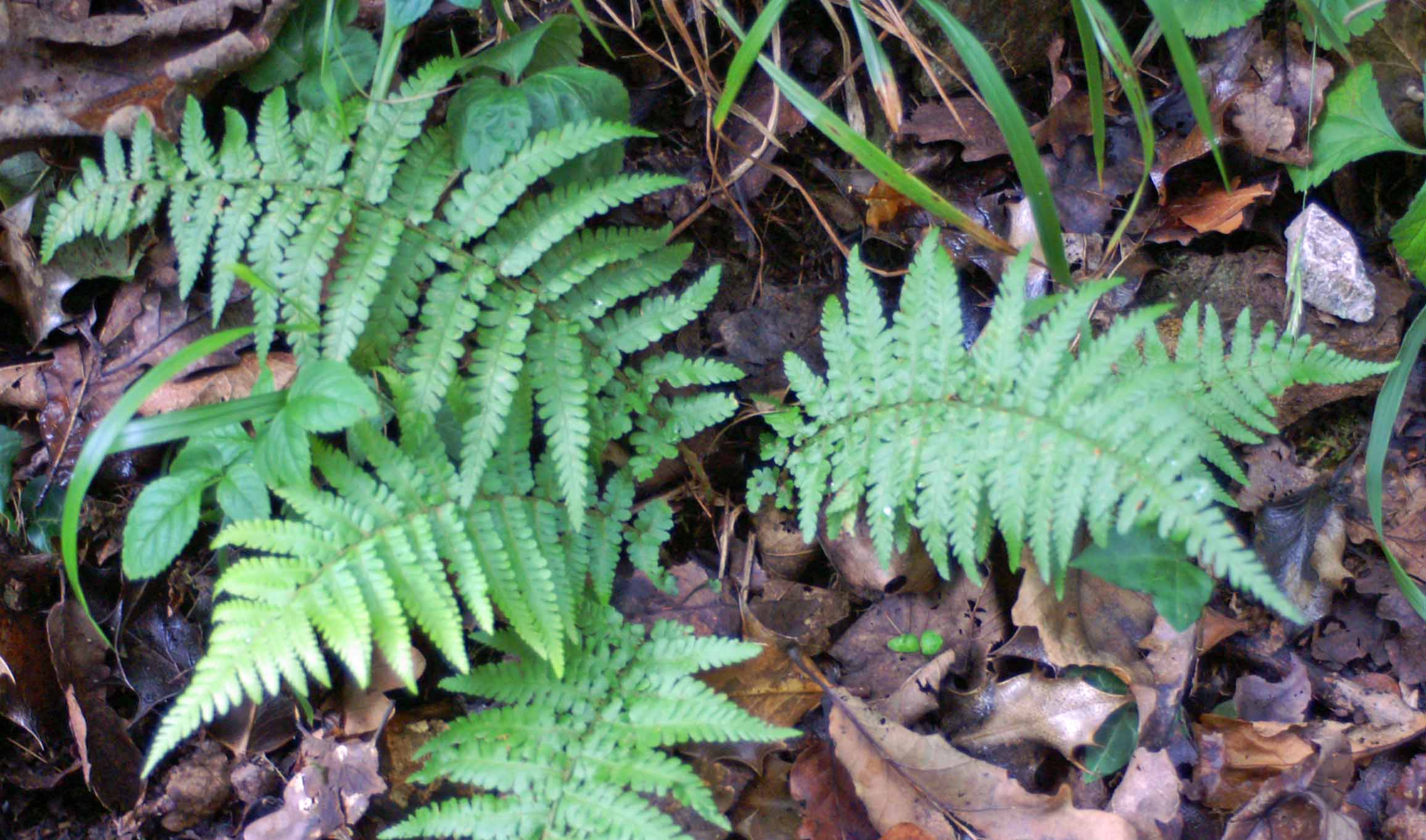
11/8/11- Male Fern-Dryopteris filix-mas

In open spots on the woodland edge there are brambles, flowering at the moment and attracting lots of little hoverflies.

11/8/11-Hoverfly-Melangyna cincta on bramble flower

11/8/11- Mustard Powder Lichen-Chrysothrix candelaris on a sycamore trunk

The bright yellow Mustard Powder lichen or Gold Dust lichen Chrysothrix candelaris  commonly grows on tree bark. It is widespread and common in the United Kingdom, being found on the bark of deciduous trees, especially rugged old specimens, such as sycamore, alder, oak, willow, beech, and Pinus species, normally in dry shaded parts.

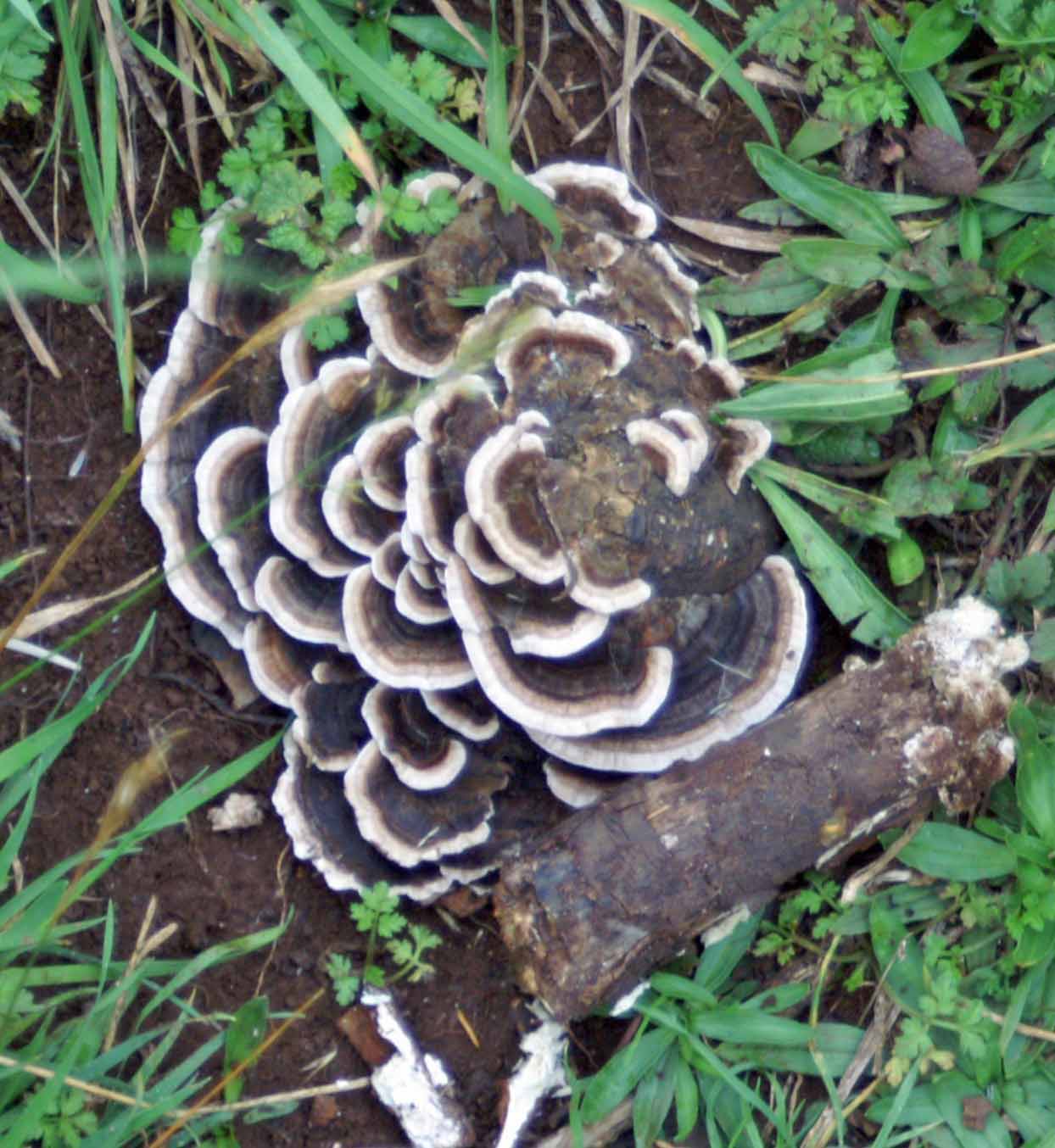
11/8/11-Turkey- tail fungus - Tramates versicolor

I came across the ‘Turkey-tail’ fungus on a path around the summit of the hill and thought it was fascinating. It takes its common name from the way in which the patterning and the cup or spoon shaped fungus resembles, well, the shape and patterning a turkey’s tail. It is a common bracket fungus which grows on the sides of logs or trees and occurs in a variety of colours including brown, tan, orange, white, red or purple, sometimes all together (Versicolor means ‘of several colours’). Turkey Tails are not poisonous to people but they are not eaten either.

Red-berry trail

Tags

, , , , , , ,

11th August

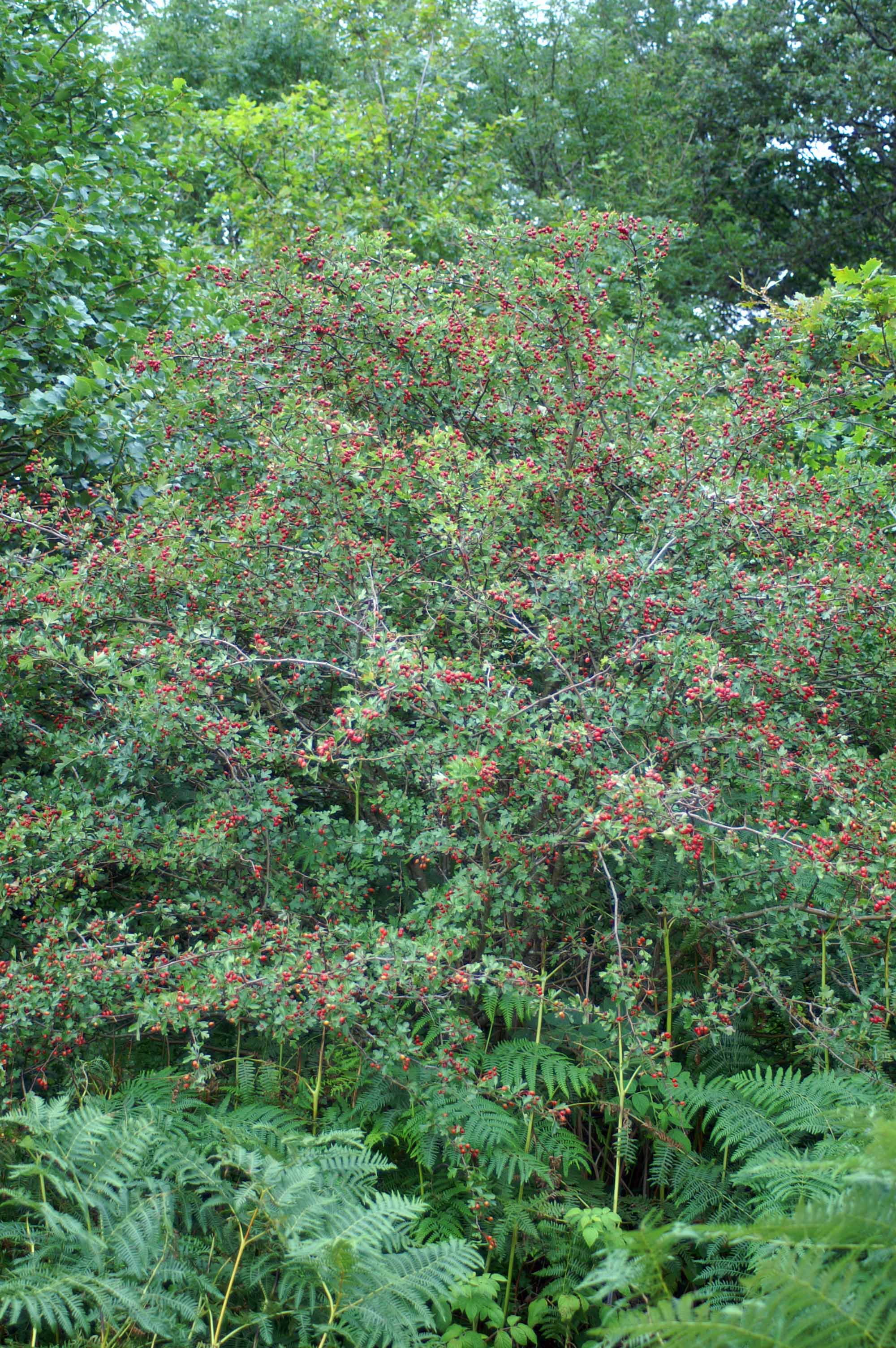
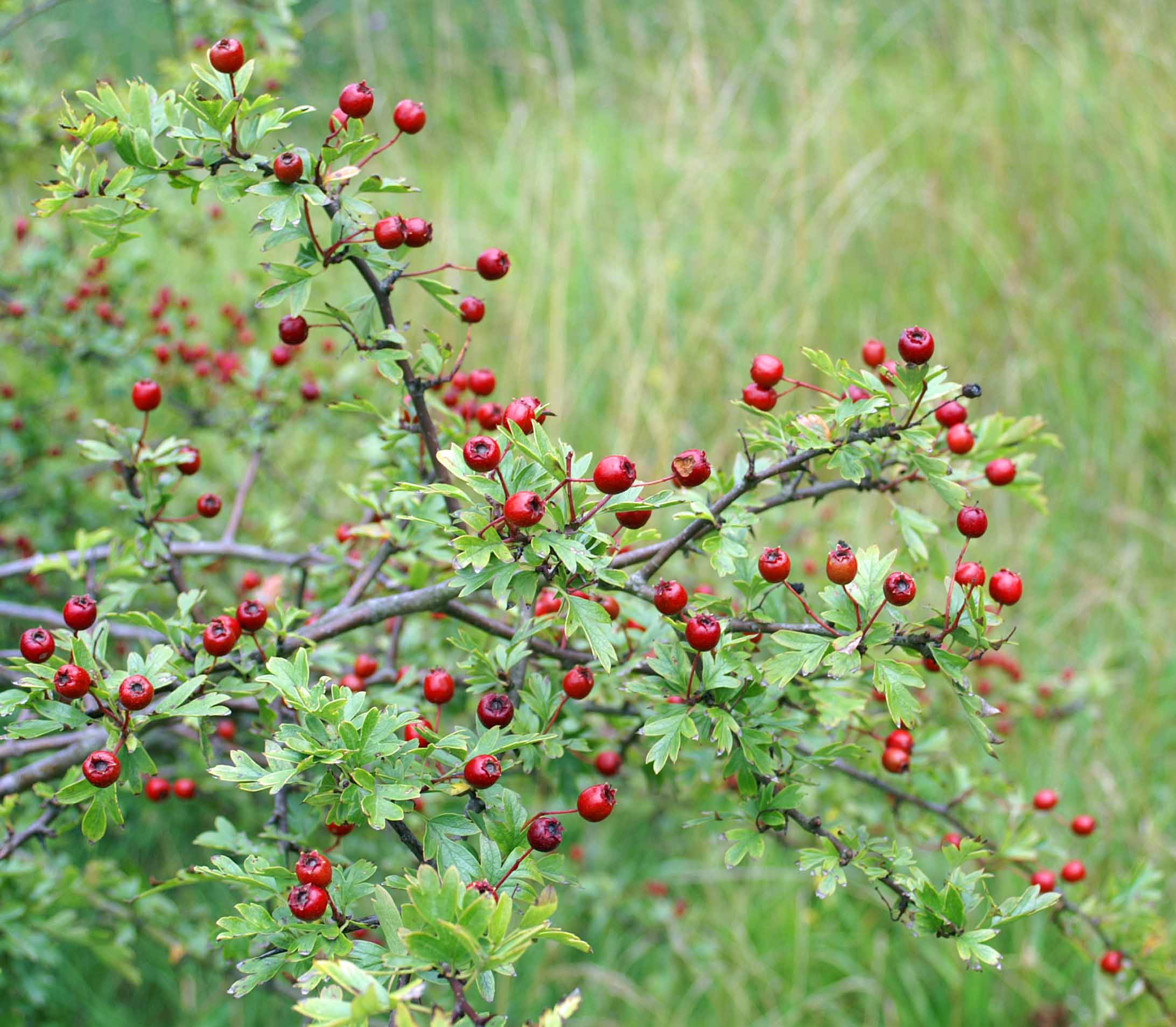
I resumed my woodland walk, passing by a Hawthorn tree laden with red berries.

11/8/11-Common Hawthorn -Crataegus monogyna, fully laden with a crop of berries

Crataegus commonly called hawthorn or thornapple, is a large genus of shrubs and trees in the rose family, Rosaceae, native to temperate regions of the Northern Hemisphere in Europe, Asia and North America.  They are shrubs or small trees, mostly growing to 5–15 m tall, with small pome fruit and (usually) thorny branches. The thorns are small sharp-tipped branches that arise either from other branches or from the trunk, and are typically 1–3 cm long.  The fruit, sometimes known as a “haw”, is berry-like, but structurally a pome containing from 1 to 5 pyrenes that resemble the “stones” of plums, peaches, etc.

11/8/11-Hawthorn berries, or haws

Hawthorns provide food and shelter for many species of birds and mammals, and the flowers are important for many nectar-feeding insects. Hawthorns are also used as food plants by the larvae of a large number of Lepidoptera species and haws are important for wildlife in winter, particularly thrushes and waxwings.

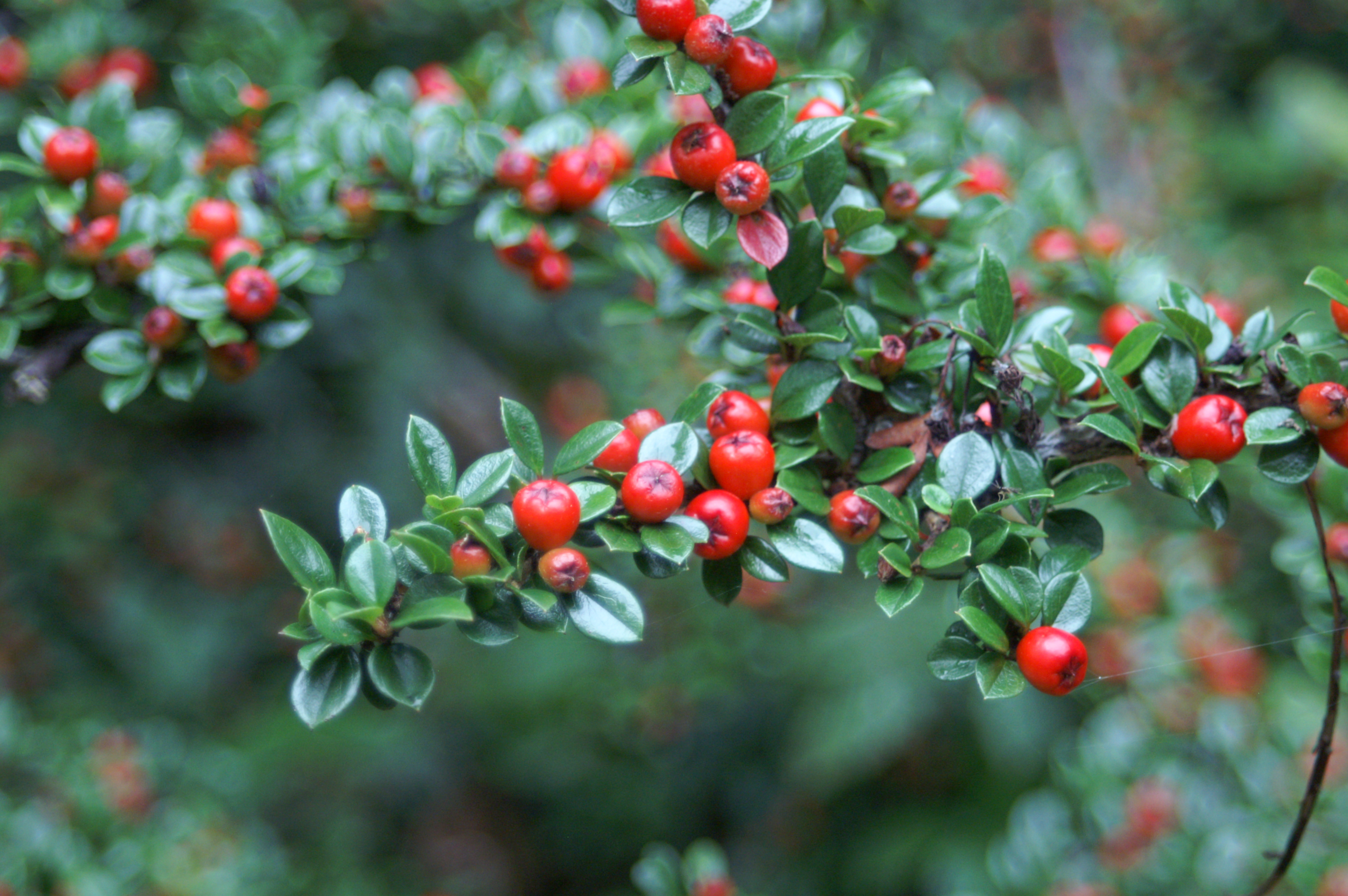
I have noted several cotoneaster shrubs growing throughout this site, which I have assumed to have arrived there via bird droppings as the shrub is not generally a native of Britain, but is widely planted in gardens.

11/8/11-Berries of Cotoneaster horizontalis

* * There is an indiginous native cotoneaster that is found growing only on the Great Orme: Cotoneaster cambricus (Wild Cotoneaster;  Welsh: Creigafal y Gogarth “rock apple of Gogath”) is a species of Cotoneaster endemic to the Great Orme peninsula in north Wales. It is the only species of Cotoneaster native to the British Isles. It has never been found naturally at any other location.

______________________________________________________

I very recently came upon the following on the ‘Plantlife’ website on the very subject of ‘escapee cotoneasters’:

Cotoneaster species

Non-native invasive plants.

Cotoneasters provide an important reminder that even with the best intentions of gardeners, the wind, birds and other animals can help plants to ‘escape over the garden wall’.

Plantlife is particularly concerned about four types of cotoneaster:

  • Hollyberry cotoneaster (C. bullatus)
  • Wall cotoneaster (C. horizontalis)
  • Small-leaved cotoneasters (C. microphyllus agg.)
  • Himalayan cotoneaster (C. simonsii).

What’s the problem?

These popular garden and landscaping shrubs are also popular with birds who enjoy the berries and spread the seed. This can spread cotoneasters in the wild, where they can be difficult to eradicate.

What are we doing about it?

Find out more about Plantlife’s invasive plant programme by clicking here

_____________________________________________________

Another probable garden escape is Hypericum – St. John’s Wort, also growing in various spots throughout the site and also now bearing red berries.

11/8/11-berries of St John's Wort-Hypericum

A native plant, the Arum lily or as I know it, Cuckoo Pint or Lords and Ladies, is also bearing bright scarlet berries now. I found them in a few places, mostly tucked almost out of sight beneath other shrubbery.

11/8/11-The poisonous berries of the Wild arum

Arum maculatum is a common woodland plant species of the Araceae family. It is widespread across temperate northern Europe and is known by an abundance of common names including Wild arumLords and LadiesDevils and Angels,Cows and BullsCuckoo-PintAdam and EveBobbinsNaked BoysStarch-Root and Wake Robin.

Late summer wildflowers and busy bumblebees

Tags

, , , , , ,

11th August

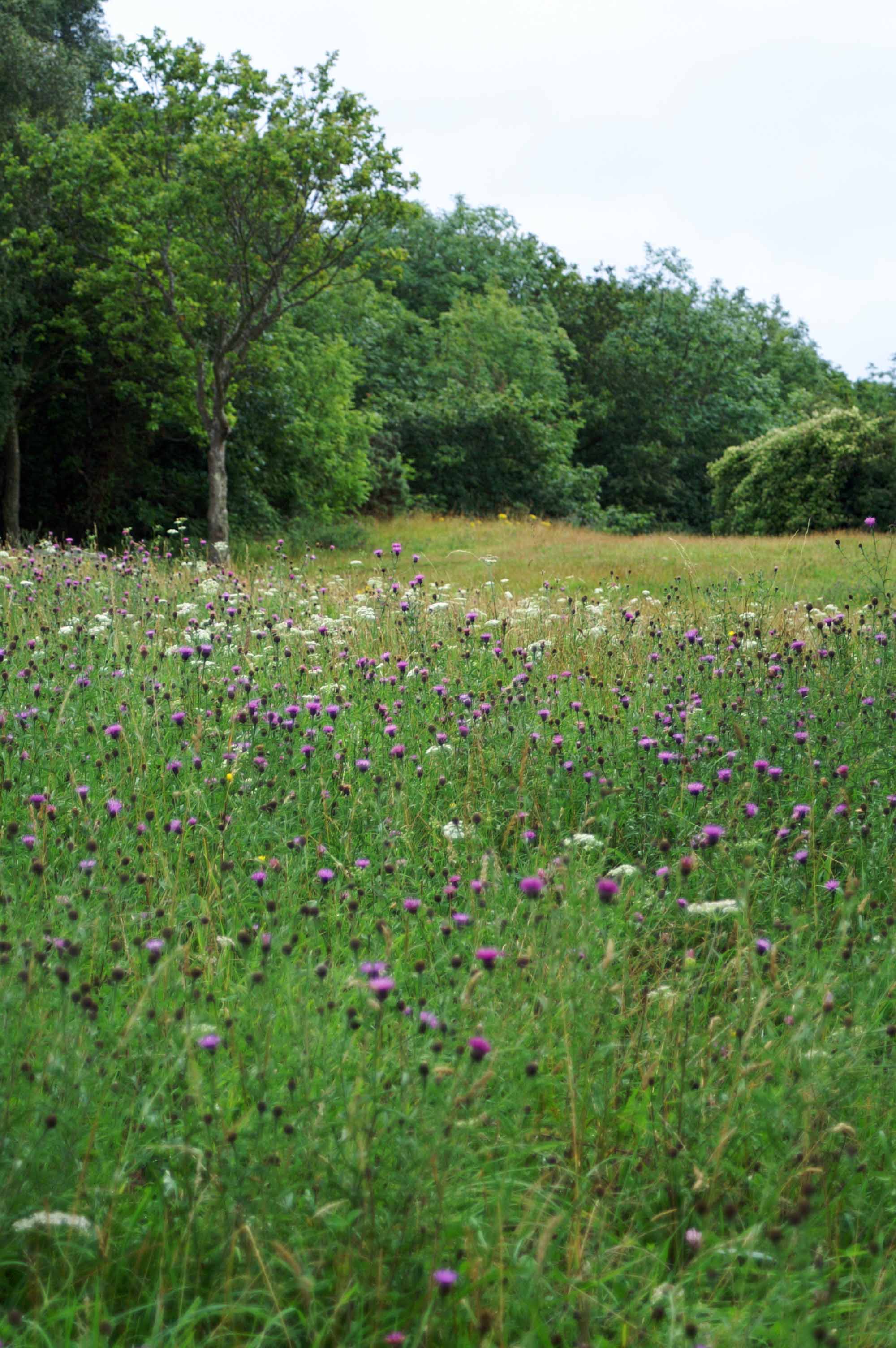
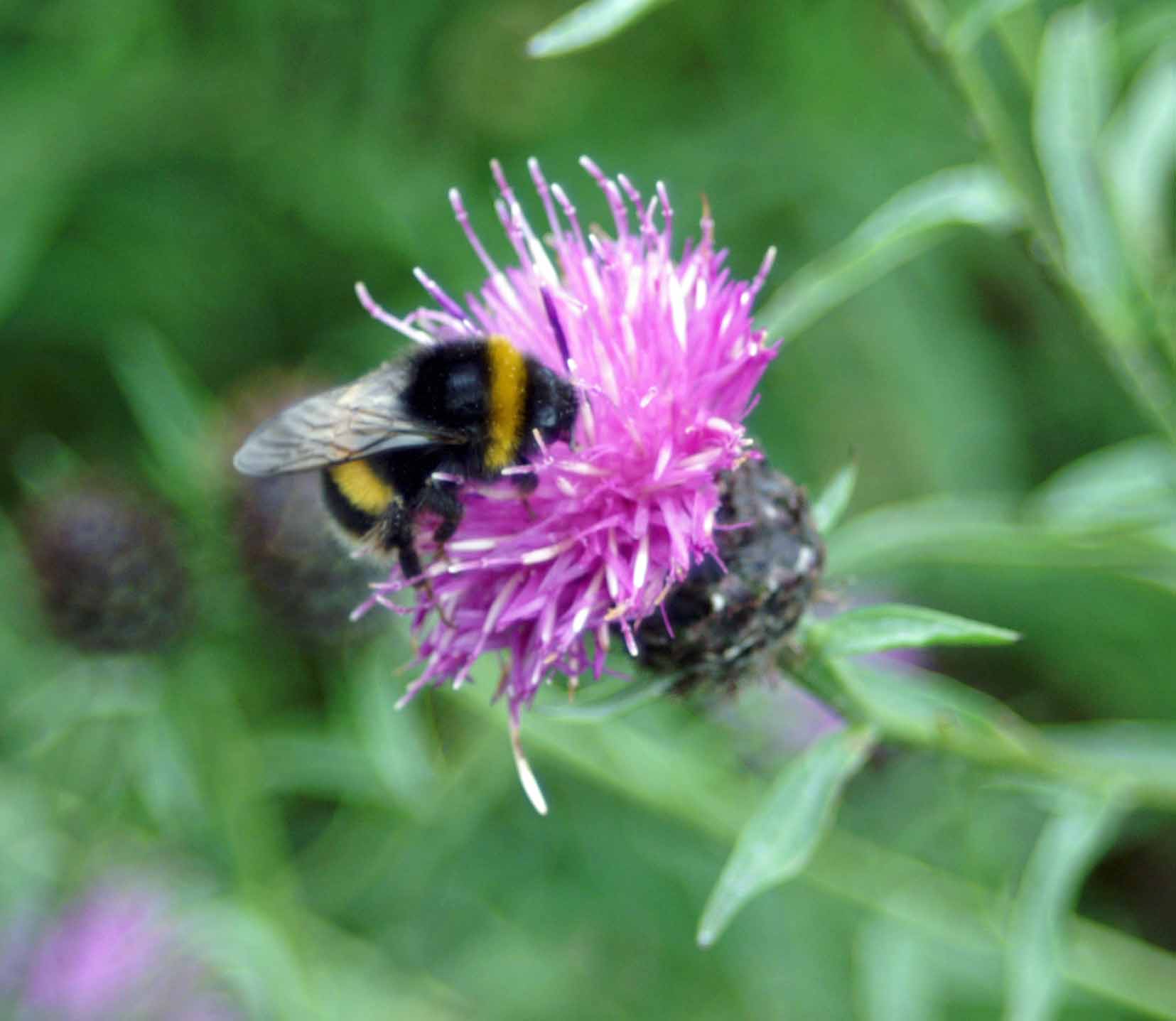
Taking advantage of a pause in the rain I headed up to Bryn Euryn for some fresh air. Planning to stick to the woodland areas in case it began raining again, the track passed by a cleared grassy area that was bright with purple knapweed flowers and noticing insects flying, despite the coolness and dampness of the afternoon, I got waylaid for a while. Looking more closely I realised there were large numbers of bumblebees and hoverflies of several different species flying around the flowers busily taking nectar or collecting pollen, all doubtless also taking advantage of the dry interlude. The opportunity to get a good look at the insects as they were slowed down a little by the coolness of the air kept me there, stooped over with the camera, for a good half and hour or so and also got me some funny looks from passing dog-walkers.

11/8/11- Flowery grassland attracting dozens of insects

11/8/11-Black Knapweed-Centaurea nigra

Centaurea nigra is a species of flowering plant in the daisy family known by the common names Lesser KnapweedCommon Knapweed and Black Knapweed. A local vernacular name is Hardheads. The plant flowers from July until September and is important  for a large number of insects including Gatekeeper, Large skipper, Lime-speck pug moth, Meadow Brown, Painted lady, Peacock, Red admiral, Small copper, Small Skipper, Honeybee and Bumblebees and Hoverflies. Goldfinches later feed on the seeds.

The plant is native to Europe but it is known on other continents as an introduced species where it is often treated as a noxious weed.

11/8/11-Buff-tailed bumblebee-Bombus terrestris

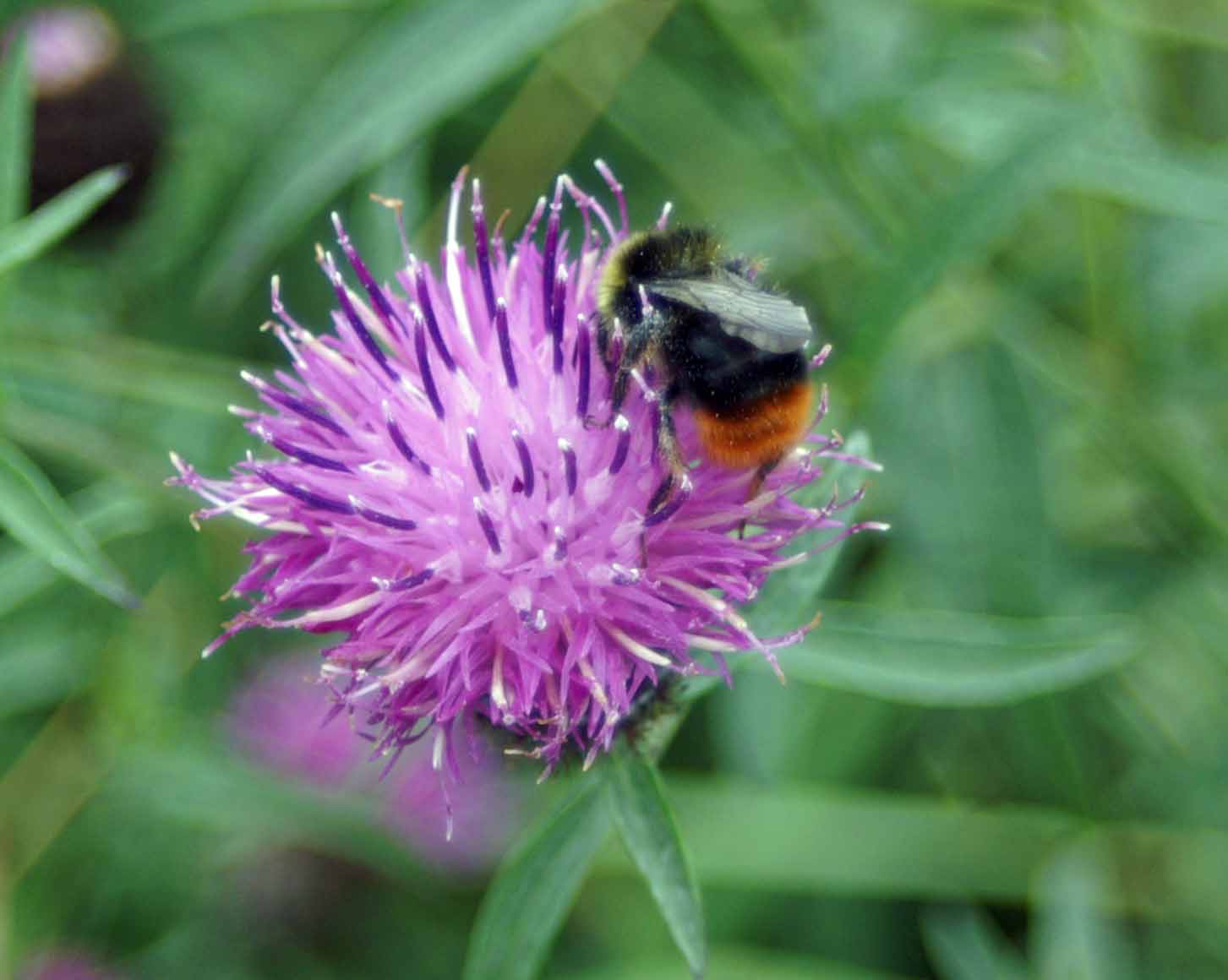
11/8/11-Red-tailed bumblebee (m)-Bombus lapidarius

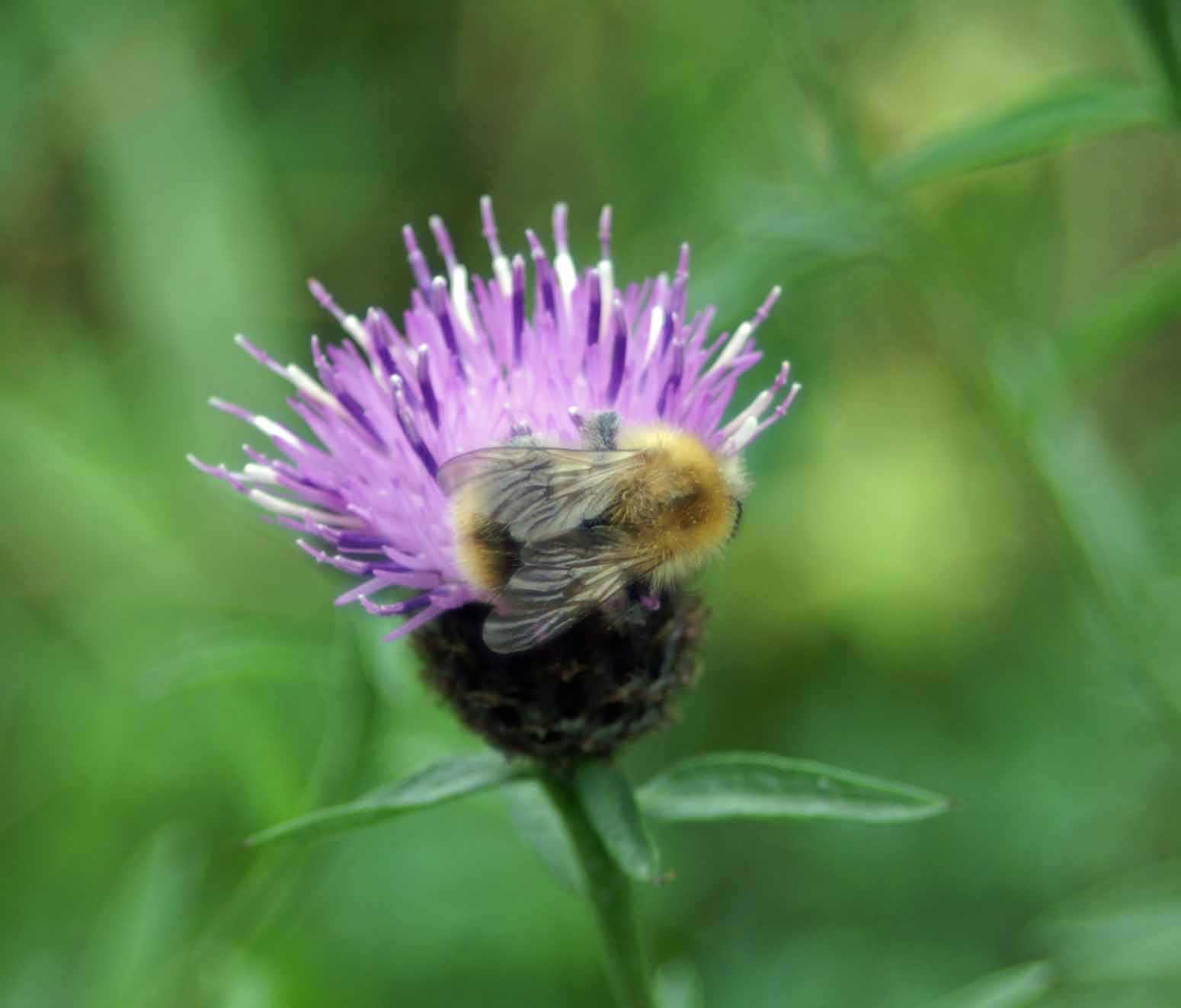
11/8/11-Common Carder Bee-Bombus pascuorum

The common carder bee, Bombus pascuorum, has shaggy hair and can be seen at flowers late in the year, often into November in southern Britain. It is one of our most common bumblebee species, found even in the centres of large cities.

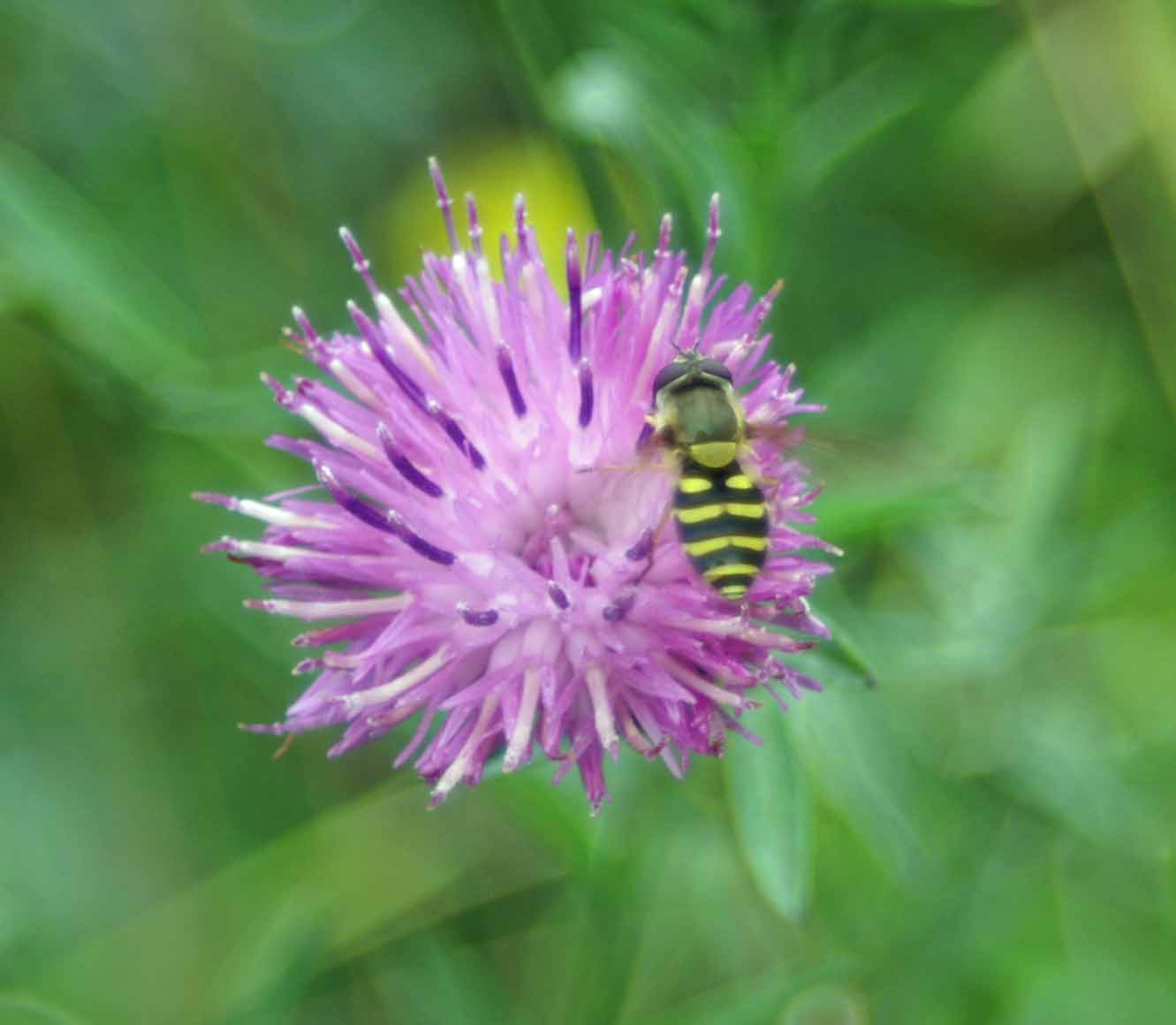
11/8/11-Hoverfly-Syrphus ribesii

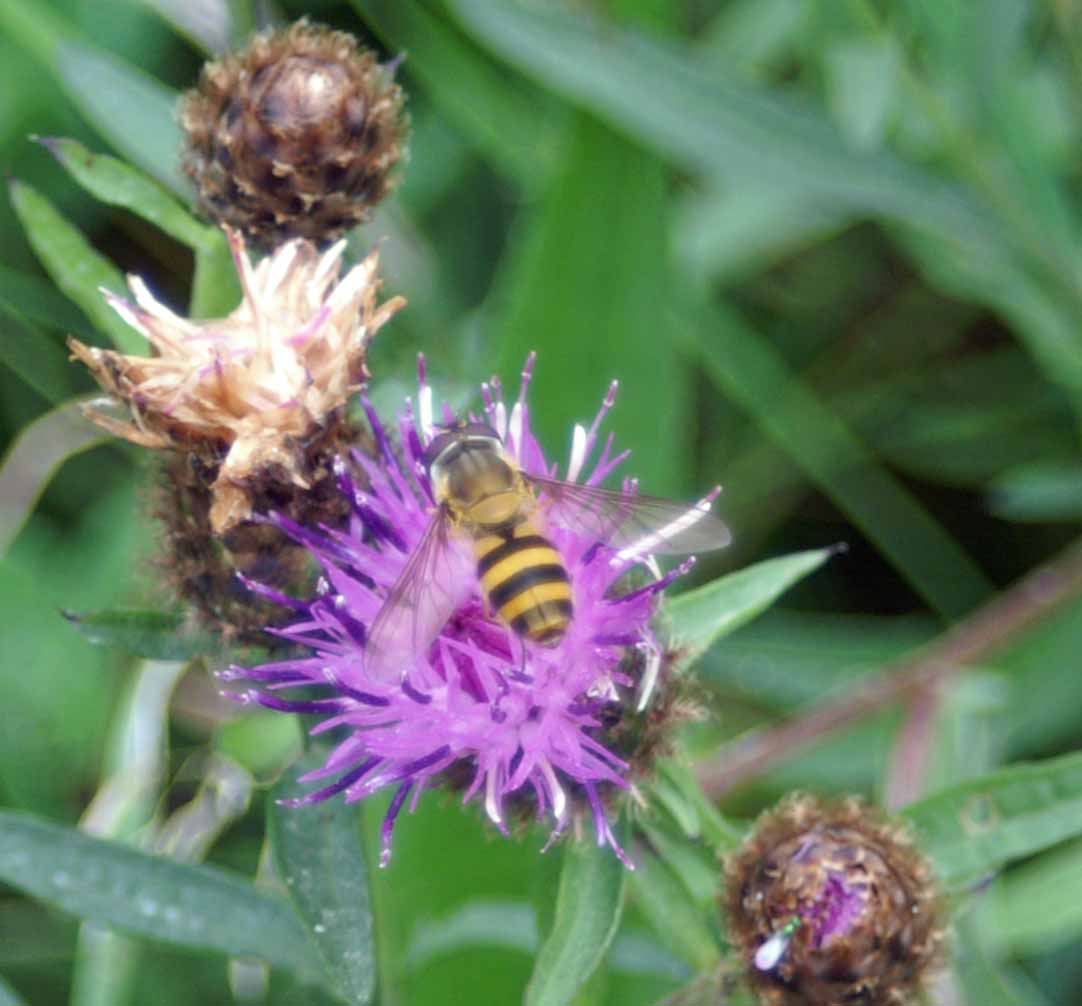
11/8/11-Hoverfly- Melangyna cincta

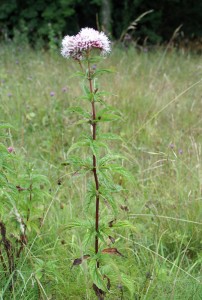
11/8/11-Hemp Agrimony

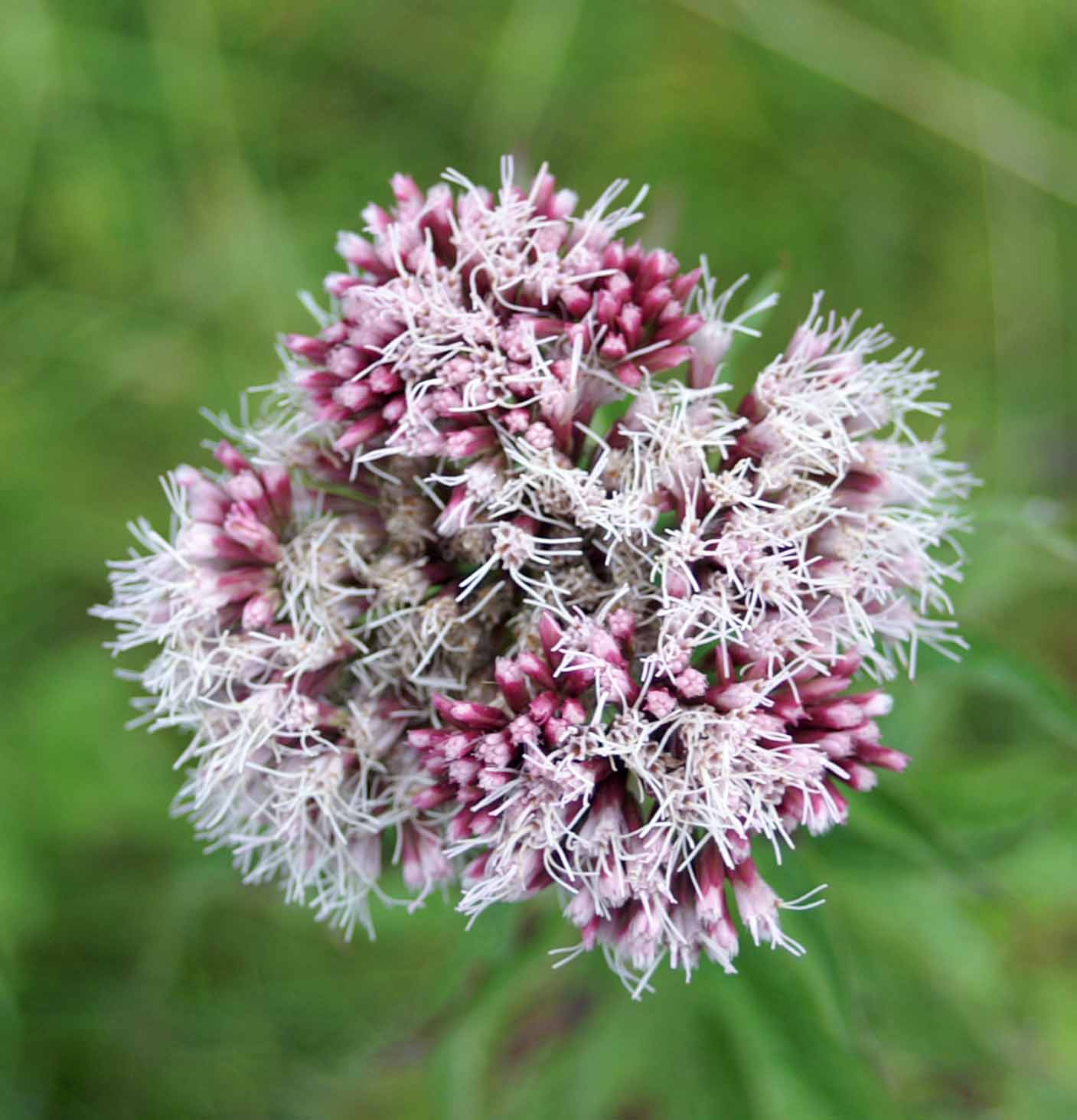
Also attracting the attentions of a few insects were the flowers of Hemp Agrimony –  (Eupatorium cannabinum)

A large plant (1-2m) often found in clumps with big, fluffy heads of tiny pink flowers. Its leaves grow up to 10cm long and are arranged in pairs on a reddish stem.

Can be found throughout the UK growing in open or shady, damp or dry areas; waste ground and near water.

Flowers July-September.

11/8/11- Hemp Agrimony- Eupatorium cannabinum

The ‘hemp’ part of the plant’s common name comes from the similarity between its leaves and that of the cannabis plant. The two species are entirely unrelated, however, and do not share any other properties!

Hemp-agrimony is one of the flowers Plantlife keep track of in their Wildflowers Count survey – click here to find out how you can help out.

11/8/11-Drone fly-Eristalsis arbustorum

11/8/11-A mating pair of Red Soldier beetles

A plant I’m not sure about the identity of has similar flowerheads to the wild carrot/parsley but all parts are smaller and more delicate. This particular one was supporting a mating pair of Red Soldier beetles as well attracting a variety of small flies.

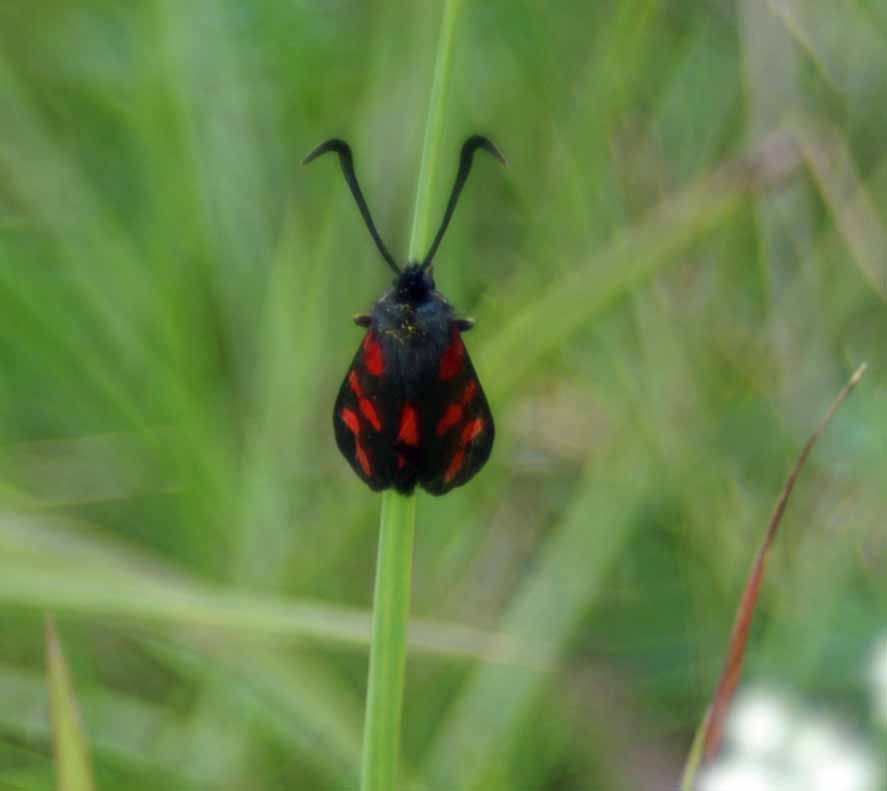
A 6-spot Burnet Moth was sheltering from the showers, clinging to a grass stem.

11/8/11-A 6-spot Burnet Moth resting on a grass stem

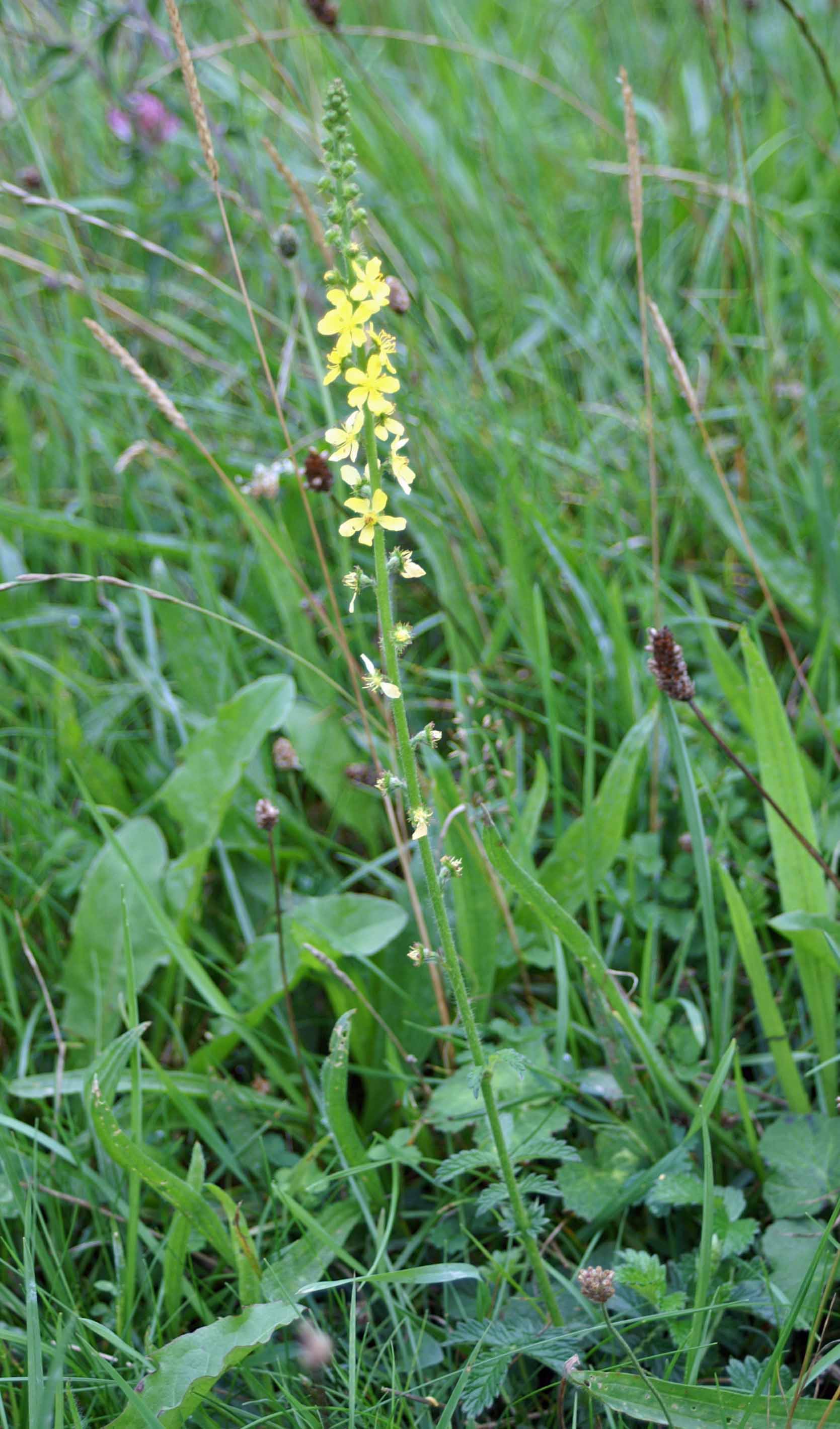
A wildflower I do recognise and can name is Agrimony, also familiar to me as one of the 38 Bach flower remedies. The plant is quite delicate-looking and may be easily overlooked, but it has a long history of use as a healing herb.

11/8/11-Agrimony

Agrimonia eupatoria is a species of agrimony that is often referred to as common agrimonychurch steeples or sticklewort.

The common agrimony grows as a deciduous, perennial herbaceous plant and reached heights of up to 100 centimeters. Its roots are deep rhizomes , from which spring the stems. It is characterized by its typical serrated edged pinnate leaves. The whole plant is dark green with numerous soft hairs that assist in the plant’s seed pods sticking to any animal or person coming in contact with the plant. The flower spikes have a delicately spicy scent, a little like apricots.

A. eupatoria is a foodplant for the caterpillars of the snout moth Endotricha flammealis.

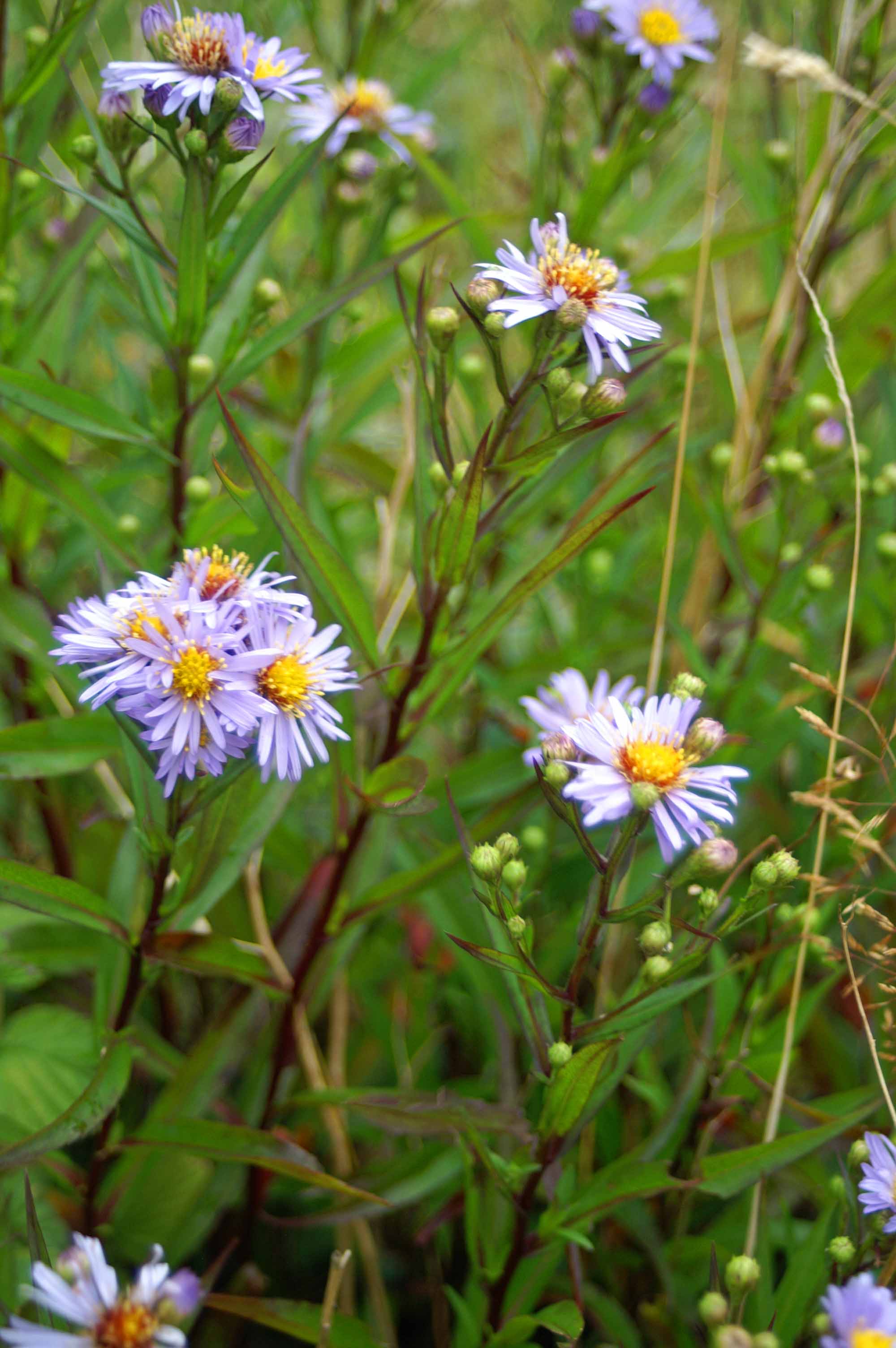
11/8/11-Michaelmas daisy-Aster novi-belgii

Originating in North America, Michaelmas daisies were originally introduced to Britain from North America in the early 1700’s. Although they are not native, they survive extremely well and are grown in gardens for their late summer flowers. The plant has also become naturalised and is found in wild places throughout the UK, often growing on damp ground or close to streams. It flowers from August through to late October providing late-flying butterflies such as peacocks and small tortoiseshells with a good source of nectar.

Michaelmas means Michael’s Mass. The flowers traditionally bloom on September 29th which is ‘The Feast of Saint Michael’.

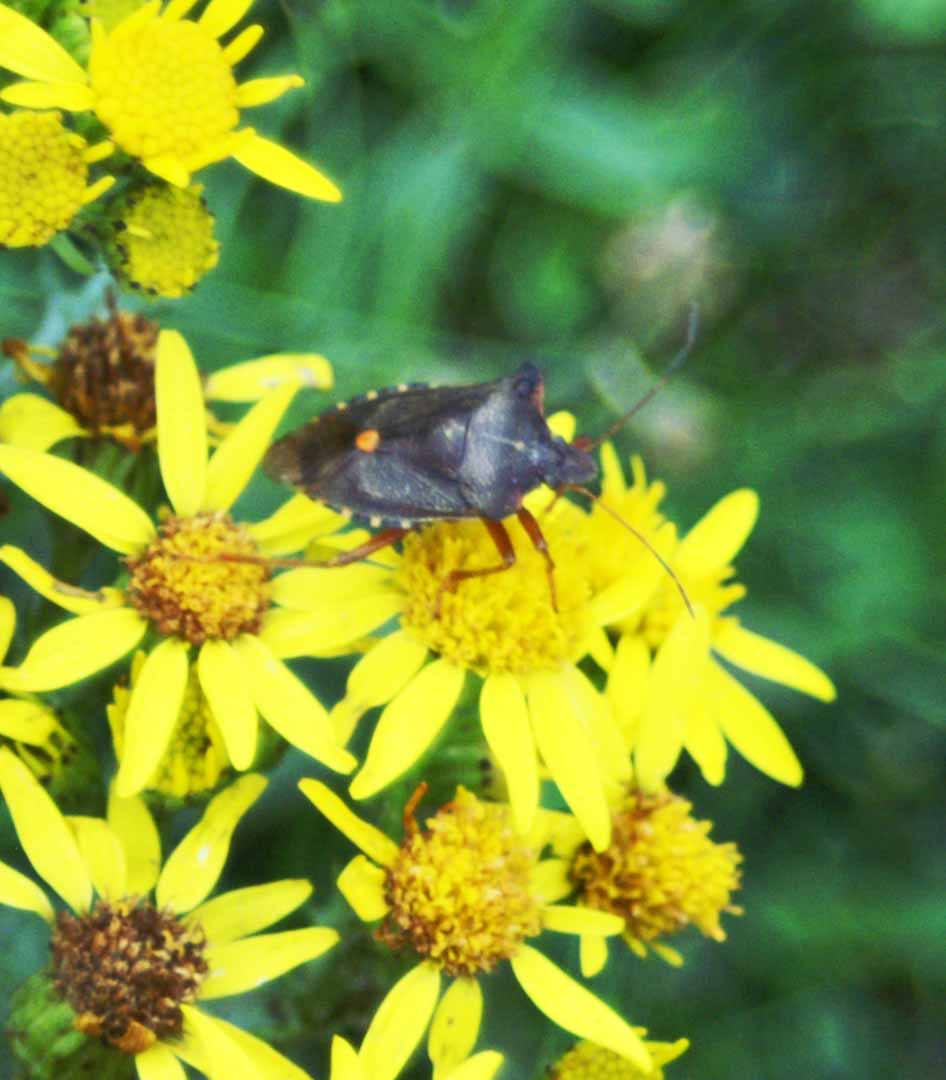
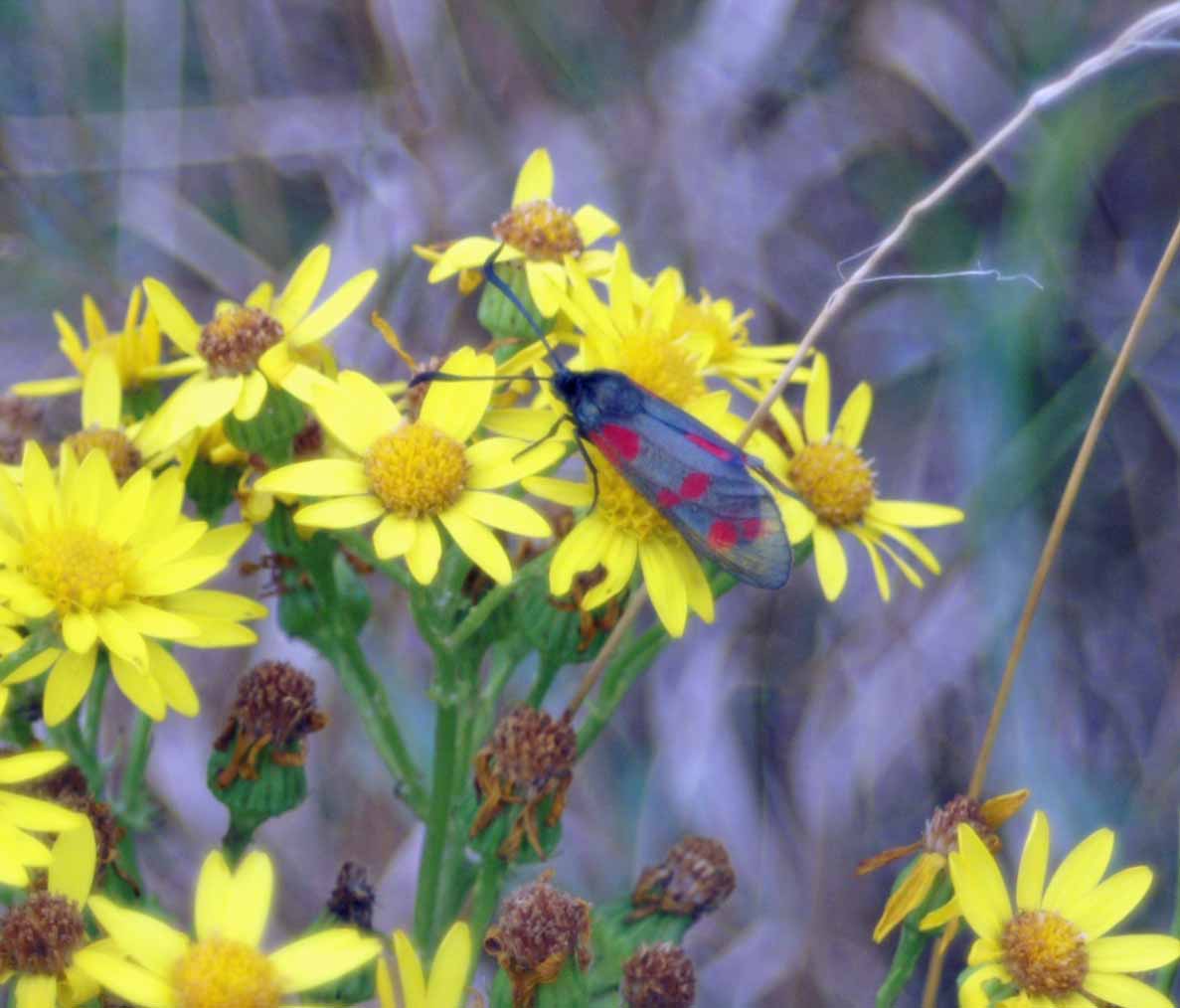
Ragwort is still flowering profusely and I photographed a further two insects on separate plants, a Forest bug and a 6-spot Burnet Moth.

11/8/11- Forest bug - Pentatoma rufipes

The forest bugPentatoma rufipes, is a species of shield bug in the family Pentatomidae. It is a common and widespread species found in forests and woodlands worldwide. It is shiny dark brown with red-orange markings on its body and bright orange legs. It is shaped like an escutcheon-type shield, flat, and about 14 millimetres (0.55 in) long. Its distinguishing characteristic is a pair of plates extending forward from the shoulders at the front of its dorsal thorax.

The forest bug’s main food source is any of several species of oak. It is a sap-feeder and uses piercing mouthparts to withdraw the liquid. It can also be found on other species of deciduous trees. The forest bug may also be regarded an agricultural and garden pest, as it will not hesitate to feed on fruit and nut trees. Occasionally it will consume other insects.

Adults lay eggs during the summer in the cracks of tree bark, and the larvae hatch the following spring.

11/8/11-6-spot Burnet moth on ragwort

Conwy castle, harbour and gulls

Tags

, , , , , , ,

I love the town of Conwy and  have been intending to visit since I arrived here, partly to have a walk around the castle and is walls, but mainly to check up on how the Herring Gulls are behaving down in the harbour. Conwy has a large population of Herring Gulls and they can be seen and heard throughout the town at all times of the day and often much of the night too!

I arrived quite late on a variably grey, showery and sunny day, a good day for taking photographs as I think clouds add an interesting dimension and reflect the true character of Welsh summer weather. I walked around the castle and along a short section of the wall, then to the bridge and from there down to the harbour. I took just a few photographs of the castle and am adding a very brief account of it; there are plenty of really good sites on the internet for anyone interested in learning more about this fascinating place. (This is a very detailed one  http://www.castlewales.com)

Conwy is regarded as one Europe’s finest surviving medieval towns, a status that is attributed to the preservation of both its castle and the intact town walls. It is also beautifully situated on the Conwy estuary.

The history of the castle is very well documented, but words on a page and the best photographs cannot properly do justice to its grandeur and presence. The guidebook published by CADW, the Welsh Historic Trust, simply states: “Conwy is by any standards one of the great fortresses of medieval Europe.”

6/8/11- Two of the eight castle towers, as seen from the harbour

Conwy along with Harlech is probably the most impressive of all the Welsh castles. Both were designed by Edward I’s master castle builder James of St. George, and while Harlech has a more storied past, Conwy’s eight massive towers and high curtain wall are more impressive than those at Harlech.

6/8/11-Conway castle walls-view through a firing position opening

The walls of Conwy are judged the finest in Britain. They are completely intact and still give the impression of enclosing and protecting the town. It is possible to walk around the town along the wall. The circuit of the wall is 3/4 of a mile in length, with 21 towers at regular intervals of about 46m. The wall is 1.68m thick and 9m high, with towers rising to 15m. 

6/8/11-Conwy estuary at high tide, viewed from the bridge
6/8/11-The harbour viewed from the bridge
6/8/11-Conwy castle, bridge and harbour under grey rainclouds
6/8/11-Sculpture ‘Mytilus edulis’ by Graeme Mitcheson; carved in Kilkenny limestone

Conwy is famous for its Mussels and there is a ‘factory’ here in the harbour, not a very attractive one I might add, where the shellfish are processed. I love the sculpture, it looks beautiful and is very tactile.

6/8/11- A Herring Gull keeps lookout over the harbour

There were very few Herring Gulls around and about in the harbour area this afternoon and those there were on the whole very quiet and well-behaved. There were a few brief outbursts amongst them, all of them involving adult birds chasing away young ones.

An adult Herring Gull calming down after a chase
6/8/11- A young Herring Gull watching me over it shoulder

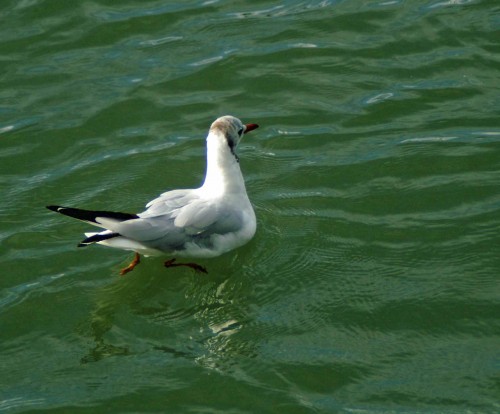
There were quite a number of Black-headed Gulls here, initially all swimming about on the water close to the harbour wall, but then one by one becoming restless and taking off and flying around the moored boats before returning.

6/8/11-Black-headed Gull with traces of dark head plumage remaining

They are attractive little gulls and look almost dainty compared to the big Herring Gulls. Most of them here have taken on or are in the process of losing the dark heads of their summer/breeding plumage and have just the dark spots either side of the head. Their red legs are clearly visible as they paddled around in the water of the harbour.

6/8/11-An individual with traces of dark head still visible
6/8/11-Black-headed Gull with completely white head and dark spots of non-breeding plumage

I could not resist one last photograph of the Smallest House in Great Britain, another of Conwy’s claims to fame. It’s usually almost impossible to see as when it is open it has people around it, as well as a lady dressed in traditional Welsh costume standing outside.

6/8/11- Another Conwy claim to fame; the Smallest House in Great Britain

Come rain, come shine

Tags

, , , , ,

Days of unsettled weather have limited my outdoor activities, but during dry spells and the occasional half-hours of sunshine, the local wildlife has been quick to take advantage of opportunities to venture out of hiding.

Some people have lions or pineapples decorating their gateposts ;we have woodpigeons
When not on sentry duty, the wood pigeons scour the lawn for freshly sprouted dandelion leaves

I tidied up the hedge recently, but was careful to leave the crop of berries along the top untouched. Now, although they still don’t appear to me to be ripe, the House Sparrows arrive several times a day to check for any that are edible.

The House Sparrows come several times a day to check for any berries that may be ripe enough to eat

The House Sparrows are still together in quite a sizable flock and although the young birds seem to stick together as one group and the adults appear in smaller groups, they are all within reach of one another.

Other garden birds have reappeared following their ‘summer breaks’ too. During a sunny spell of a recent early morning I was watching a young Crow pecking at fruit on the neighbouring apple tree; it was joined by three young Blue Tits that arrived to forage around the branches and they were followed by two adults and then a family of Great Tits. A Coal Tit was exploring the woodwork of the garden shed, no doubt looking for spiders or other sheltering insects. A Wren arrived and sang briefly from the garden fence, Dunnocks foraged along the bottom of the hedge and both a male and a female Blackbird put in an appearance.

Insects need warm sunshine to get them going:

A Small White butterfly basking on a privet leaf
A basking Speckled Wood from the front, ready for lift-off
5/8/11-A Marmalade hoverfly warming up in a spot of sunshine

Then there are those creatures that prefer the cooler, damper weather:

A Garden Snail enjoying a cool damp spell
I discovered this unusual Yellow Slug-limacus flavus whilst gardening. 

Limacus flavus, sometimes called the Yellow slug, is a medium to large species of air-breathing land slug, a terrestrial pulmonate gastropod mollusc in the family Limacidae.The yellow slug is common in England, Wales and Ireland as well as most of southern and western Europe. Feeding mostly on fungi, decaying matter or vegetables, this species is strongly associated with human habitation, and is usually found in damp areas such as cellars, kitchens, and gardens. Generally speaking it is only seen at night, because it is nocturnal. Thus it often goes unnoticed and people are unaware of how (relatively) common the species is.

I know it’s a slug, but it is quite an attractive one

I filled four recycling bags with hedge-cuttings and other garden debris and when I began to move them to put them out for collection a few days later, I was removing the hiding place of a rather lovely frog.

Common Frog-Rana temporaria

Common Frog – Rana temporaria

Identification:

  • Tailless amphibian – Smooth skin
  • Tends to jump not walk
  • Horizontal ovoid pupil
  • Dorsal surface and flanks are very variable in colour, typically yellowish brown, but may be olive-green coloured and some individuals have a reddish or yellow appearance. Variably spotted or striped.
  • Ventral surface (underside) of males may be dirty white or pale yellow, speckled with grey or brown; females pale yellow to orange
  • The most consistent markings are the dark patch behind the eye and the strong barring on the hind limbs.
  • Length: 6 – 9 cm
This lovely fat frog was hiding between the garden waste recycling bags

A walk on the Great Orme

Tags

, , , , , , , ,

The Great Orme is a prominent headland, which lies at the north-western tip of the Creuddyn Peninsula near Llandudno. Conwy County Borough Council as a Country Park and Local Nature Reserve manages most of the site, and this comprises a headland of Carboniferous limestone of some 291 hectares (719 acres) which rises from sea level to 207m (679 feet) at the summit.

5/8/11-The Great Orme under a beautiful sky

The weather has been very unpredictable lately, so I took advantage of a mostly sunny afternoon to explore some of the Little Orme’s big brother – the Great Orme. This much larger promontory has a very different character and has a fascinating history. Parts of it are used commercially to provide leisure activities for visitors to Llandudno town, but most of the Great Orme is designated a Special Area of Conservation (SAC) as it contains habitats and species which are considered to be rare or threatened within Europe. It is also a Site of Special Scientific Interest (SSSI) and is included in both the Nature Conservation Review and Geological Conservation Review, indicating its national importance. The site is also designated a Heritage Coast, a definition denoting a landscape quality of national importance.

5/8/11-A welsh rabbit out in the afternoon sun

From the car park at the top where the ‘toboggan run’ is located, I walked across to the path that takes you up onto the open clifftops to admire the views over Llandudno towards the Little Orme and out across the Irish Sea.

5/8/11-A view of Llandudno curving around the bay and the hills beyond
5/8/11-Llandudno Pier and across to the Little Orme
5/8/11-The Little Orme’s best side

Quarrying activity on the Little Orme was restricted to the Rhos-on-Sea side of it so as not to spoil the view from the resort of Llandudno, as I have mentioned before. I have photographed it often from that side, but less so from its natural, unspoilt side, which looks very different.

There wasn’t much to be found on the clifftops today, I saw just one Meadow Brown butterfly, but I did come across a Carline Thistle. It was just a small specimen, but the only one I’ve come across in the area so far.

Carline Thistle

Carline Thistle is interesting as its flower heads expand in dry weather and close in moist weather. The dried flowers will continue to do this for a long time and they thus form a basic hygrometer for use in weather forecasting.

There is a choice of paths to follow, including one to the summit, but I decided to walk in the direction of St. Tudno’s church. It was beautiful walking in the bright late afternoon sunshine on the grassy track through heathland that is presently a living patchwork of green, purple and gold. It was peaceful too – I was the only person there and the only other sign of life I had was a Meadow Pipit that flew up from near the edge of the track and startled me.

Limestone Heath

The heathland on the Great Orme is of international importance and occupies approximately one quarter of the site. Dominant species are the dwarf shrubs; Heather, Bell Heather and Western Gorse.

5/8/11-Great Orme -Heather-Calluna vulgaris& Western Gorse-Ulex gallii

About one third of the heathland is species-rich and amongst the dwarf shrubs many lime-lime-loving (calcicolous) herbs grow, such as Common Rockrose, Dropwort, Wild Thyme and Birds-foot Trefoil. This species-rich heath tends to be short (35cm height or lower). Another third of the heath is less species-rich, supporting herbs such as Tormentil and Harebell.

5/8/11-In places the heather & gorse extends to the edge of the cliffs

It was too late to walk all the way to the church today, but I will definitely be back to complete the route soon.

A close-up on insects of the Little Orme

Tags

, , , ,

A late afternoon walk around the Little Orme did have some purpose today, I was hoping to see a Burnet Moth and to find some insects to photograph in close-up. I was lucky on both counts: Burnet Moths were flying around visiting the wildflowers growing near the edge of the clifftop in some numbers and I found a few models willing to allow me to get close them.

27/7/11-Six-spot Burnet moth


6-Spot Burnet – Zygaena filipendulae

Wingspan: 30-38mm

Flight period-Mid-June to September

The commonest of Britain’s day-flying moths, the 6-Spot Burnet is found throughout Europe in habitats such as unimproved meadows, woodland clearings and sea cliffs.

27/7/11-Close-up of 7-spot Ladybird-Little Orme, N Wales

Seven-spot Ladybird– Coccinella 7-punctata

This is the most familiar of ladybirds and the one generally thought of as the typical ladybird. Common & widespread throughout most of Britain & Europe.

27/7/11-Common Greenbottle Fly

Common Greenbottle Fly (Lucilia sericata)  A common blow-fly found in most areas of the world, and the most well-known of the numerous green bottle fly species. It is 10–14 mm long, slightly larger than a housefly, and has brilliant, metallic, blue-green or golden coloration with black markings. It has black bristle-like hair and three cross-grooves on the thorax. The wings are clear with light brown veins, and the legs and antennae are black. The maggots (larvae) of the fly are used for maggot therapy. (Wikipedia)

27/7/11-Garden Bumblebee-Bombus hortorum on scotch thistle flower
27/7/11-Caterpillar of the Cinnabar Moth

At the bottom of the steep path leading up to the top of the cliffs I spotted a beautiful Common Blue male butterfly pursuing a female. He caught up with her a couple of times but she finally eluded him and he settled midway down a long grass stem.

27/7/11-Common Blue-Polyommats icarus (male)
27/7/11-Underside of the Common Blue male

There were Small Skippers flitting amongst the long grass stems too and I had a lovely front view of one of a face and furry body.

27/7/11-Front view of a Small Skipper on a red clover head

I had a brief sighting of a Small Copper butterfly here too, but it was gone before I could get to it. I walked slowly up the track, partly because it’s very steep and I probably couldn’t have gone any quicker, and partly because I was watching out for gulls that were gathering on the cliffs and flying about noisily and very low over my head. They may well have been gathering together for the night, but making quite a performance of it.

27/7/11-Herring Gull juvenile
27/7/11-Black-headed Gull, looking a bit shabby

I made it to the top of the hill and discovered it to have been well worth the effort for the views you have from up there.

27/7/11-The view from the top of the path of Penrhyn Bay & Rhos-on-Sea 

At the top I watched a white butterfly flying rather awkwardly, which  I realised was hardly surprising, as looking more closely it was actually a pair coupled together.

27/7/11-Small White butterflies mating 

On the way down I caught sight of a Whitethroat flying about the tops of the bracken and stopped hoping for better views of it. It disappeared into the depths of a bramble though and I only had brief glimpses as it worked its way through the tangle of stems. A flash of an orange butterfly caught my eye though as it came to settle on the track in front of me, wings outstretched and flattened against the bare earth – a gorgeous Comma, unfortunately not in the greatest position to photograph well, but at least I’ve recorded it now.

27/7/11-Comma – Polygonia c-album

Back at the bottom of the hill a bramble, in various stages of flowering and fruiting was attracting a lot of attention from what I’m pretty sure were Honeybees – I have seen so few since I’ve been here I was taken by surprise to see so many in one place; maybe someone has a hive locally.

27/7/11-Honeybee-Apis mellifera

Cormorants were flying in for the night too, some individuals, some in twos and threes and more in larger numbers , one behind the other.

27/7/11-Cormorants flying in for the night

Before leaving I wanted to get an image of the view from the Little Orme across to Bryn Euryn as I’ve taken the picture several times the other way round.

27/7/11-View to Bryn Euryn

Close to this spot there was a wild clematis plant covered with pretty greenish-cream flowers.

27/7/11-Wild Clematis flowers

My last interesting spot was of a Grayling butterfly; it was flying low over an area of large stone chippings upon which it came to rest. It soon moved on and I watched it go down amongst the stones, but even though I thought I’d kept my eye on it, it took me several minutes to locate it. It was perfectly camouflaged, squeezed down tightly, its wings firmly shut and it was leaning to one side, pressed against a stone. Very safe and snug, drawing heat from the sun-warmed rock, unless it rained I would guess.

27/7/11-Grayling butterfly pressed amongst stone chippings

Rhos-on-Sea- seashore surprises

Tags

, , , , ,

Walk from Penrhyn Bay to Abbey Road, Rhos-on-Sea

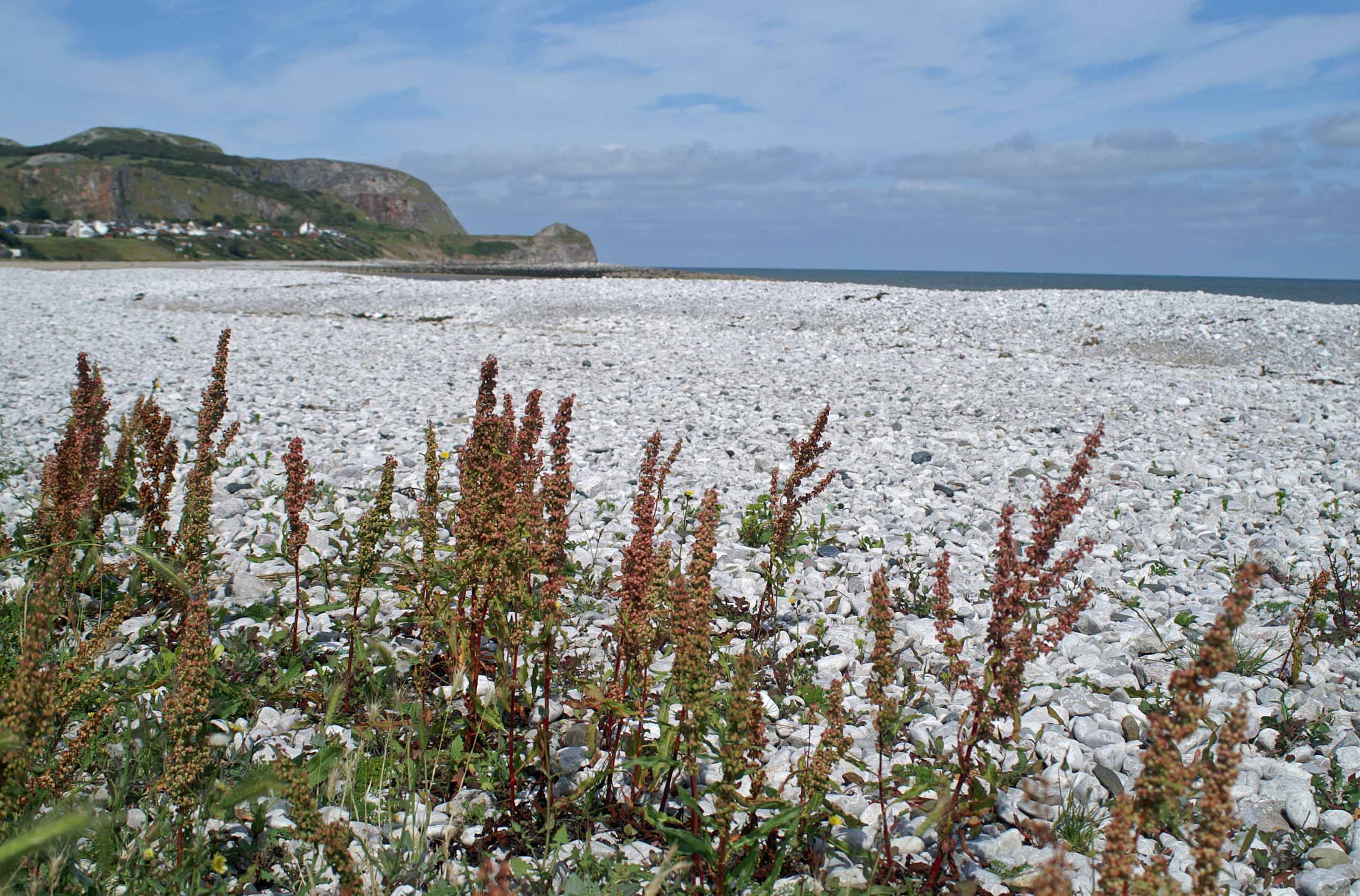
The beach of Penrhyn Bay is mostly made up of shingle, a hostile environment for plants, but some tough species have gained a hold there, spreading forward from the base of the sea wall.

24/7/11-Dock plants growing on the seashore with the Little Orme in the background

Shingle as a habitat

Shingle plants will begin to colonise above the high tide mark. Below this the moving pebbles will prevent any seedlings getting a stable hold. The plants that grow on the shingle usually have long and tough roots able to withstand the friction of the pebbles that will be disturbed by storms. Often referred to as a desert-like environment, plants like dock have water-retaining leaves that enable them to be one of the larger colonisers of this unique habitat, while smaller plants may be able to harness the water that collects on the surface of the pebbles.

24/7/11-Penrhyn Bay beach-Common Mallow growing on the shingle was attracting insects
24/7/11-Penrhyn Bay beach -a Migrant Hoverfly resting on a mallow leaf

I left the beach where the shingle  gives way to the rocky shore of Rhos-on-Sea, keeping an eye on the beach from the promenade. A Black-headed Gull caught my attention and I stopped to have a closer look. The gull was standing on a patch of muddy sand and I was intrigued to see the tops of car tyres protruding above the sand behind it. The way they were placed seemed to be deliberate, so I wondered if they are being used to reinforce the sea-break or stabilise the sand? They must have been there for a good while as some have seaweed growing over them.

24/7/11-Black-headed Gull with tyres bedded in the sand behind it

Focusing my attention on the gull and the tyres, I had half-noticed a brownish coloured bird against the rocks behind them that I thought was a young Herring Gull. When I gave it proper attention I had a pleasant surprise; it was actually a wader, either a Whimbrel or a Curlew, that was foraging around the rocks, probing its long curved beak into the the muddy sand.It was so well camouflaged against the rocks it was difficult to keep track of it, but I got a better view when it spent a couple of minutes in a more open pool of water.

24/7/11-Curlew on the sea shore
27/7/11-The Curlew blended perfectly into its surroundings

The wader disappeared from sight amongst the rocks and I carried on with my walk. I didn’t get far before I stopped again to watch a Crow that was acting strangely, flying up into the air then diving down again. It took a few minutes to realise that what it was doing: it was searching for a shellfish, picking it up in its beak, flying up then dropping it onto the rocks hoping to break it and diving down after it.

24/7/11-The shellfish does not drop straight down, so the crow has to follow it quickly or lose sight of it. 
24/7/11-The crow is surprisingly agile and turns quickly to make a steep dive
24/7/11-Diving Crow keeping its eyes on the landing position of its snack

There was quite a gap between each performance which I thought may have been either because the shellfish needed to be a particular size or species, or perhaps needed to be partially open, or  simply that each mouthful obtained this way required so much effort – it may well take more than one drop to smash a shell. I was fascinated by their behaviour and very impressed with their ingenuity; clever things.

There were quite a few gulls about; Lesser Black-backed gulls, Herring gull adults and juveniles and a few more Black-headed gulls. Herring gulls frequently chase other birds they see flying with food in their bills, hoping to steal it if possible. During an interlude in the Crow entertainment I spotted a mottled brown and white bird that I took to be a juvenile Herring gull being chased by an adult; as it broke away and flew towards me I was surprised again to see that it was another Curlew carrying something quite large in its bill; a crab I think.

24/7/11-Curlew flying with food

The Curlew flew back along the sea edge towards Penrhyn Bay, landing a short distance away from me amongst a cluster of rocks. Watching it closely I could see other Curlews gathered there, difficult to count as they are very hard to see, but at least another three.

It’s amazing what you see sometimes when you don’t set out to look! 

The Ragwort controversy rages

Tags

, , , , , ,

I thought I’d start the week’s posts with a look at the controversial Ragwort plant. It’s in full bloom now and its golden flowers are very noticeable in a wide variety of habitats, on roadsides and railway embankments, on waste ground and clifftops, but it also occurs in fields and pastures, which is where its troubles begin.
Botany

Common Ragwort – Senecio jacobaea;Family: Compositae

Other names: Ragweed, Tansy Ragwort, Staggerweed, Stinking Willie, Stinking Nanny, Dog Standard, Cankerwort, Stammerwort.

The New Atlas of the Flora of Britain and Ireland (2002) shows Ragwort as native and states that ‘the distribution of S. jacobaea is unchanged from the map in the 1962 Atlas’.

Common Ragwort is generally known as a biennial plant that overwinters as seeds or as leaf rosettes, but in certain conditions it may survive as a perennial.

Ragwort leaf with Red Soldier beetle

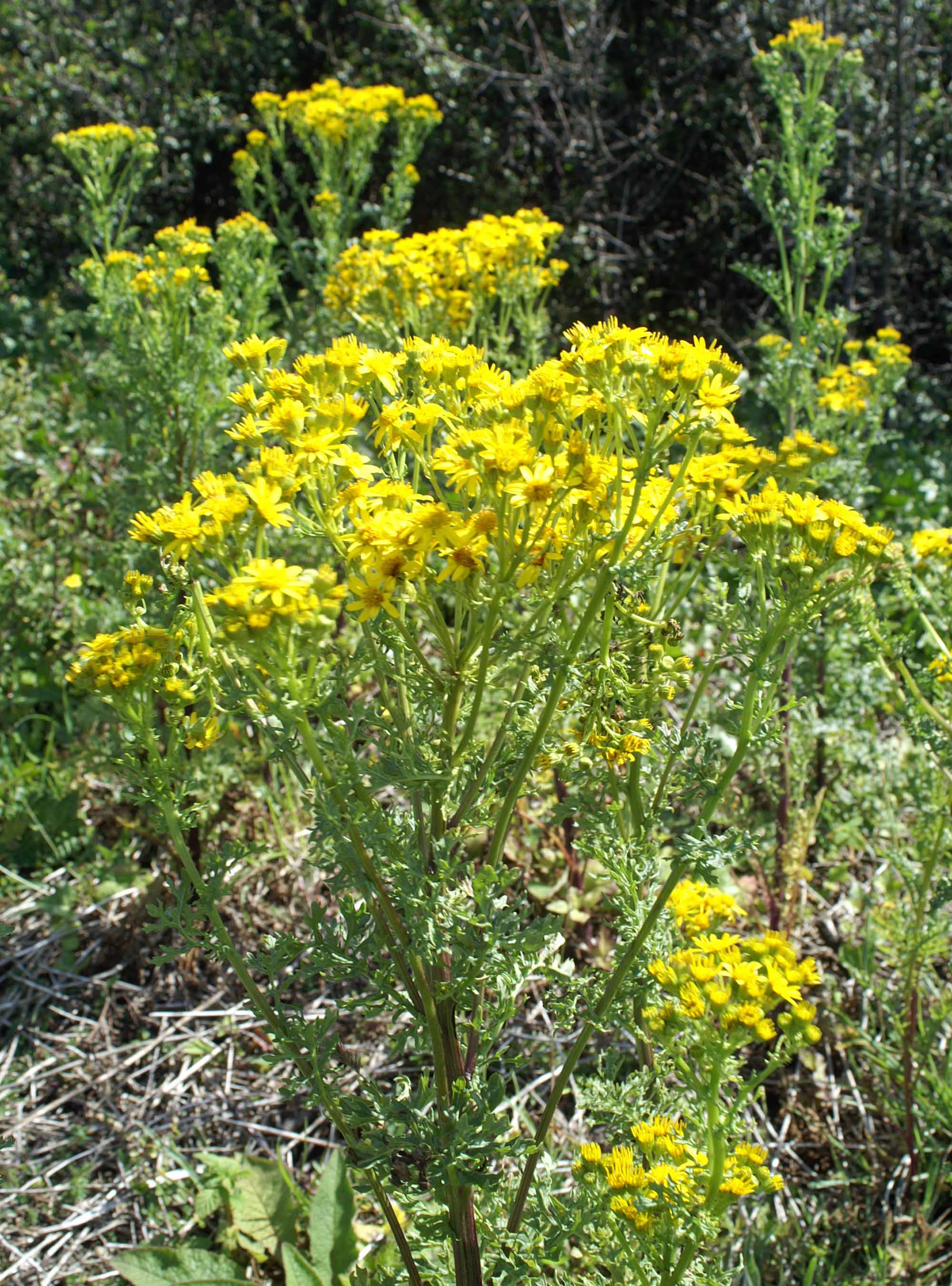
The leaves may be light-dark green and are attractively deeply cut and lobed. The plant grows from 30-100cm in height, with woody stems coloured red at their base. The upper part if the stem is branched, bearing golden yellow flower heads in large, dense terminal clusters that are almost always rayed and daisy-like.

Ragwort flowers and nectaring bumblebee

The issues with ragwort arise from the fact that the plant contains poisons that may be lethal to domesticated grazing animals if sufficient quantities are ingested over a period of time. For this reason ragwort is one of a very few plants listed in the Weeds Act (1959). Opinions concerning the dangers to livestock presented by the presence of the plant have long differed and continue to do so; there is sustained pressure from some quarters that wish to see the plant eradicated, but more recently there is also a strong counter-argument from conservationists for its retention, as its importance has been recognised as a food plant for a number of insect species.

There is a great deal of information and argument concerning the plant to be found on a variety of websites on the internet. The first of the following pieces was written 94 years ago, giving some indication of how long this controversy has raged. I found it interesting and it explains how the plant may be inadvertently fed to animals as a component of hay, and the very unpleasant effects that may have on them.

From the report of the Board of Agriculture’s Chief  Veterinary Officer (1917):

“It is not generally recognized that the common British Ragwort is poisonous to cattle. This probably arises from the fact that poisoning under natural conditions is a slow process, that is to say, an animal does not receive, and could not eat enough of the weed at one meal to cause acute poisoning. On the other hand, the poison is cumulative in its action; with continuous doses the amount of poison which becomes available is sufficient in time to cause very serious symptoms which often end in death….. The following represent broadly the circumstances of the cases which have recently come to the notice of the Board. Pastures containing a considerable proportion of the weed were cropped in the hope that the comparatively early cropping might help to get rid of it. The crop was made into hay, and owing to the prolonged spell of cold weather and the scarcity of other feeding stuffs, this was fed later and in considerable amount to animals at pasture.
…. Some of the animals fed on the Ragwort died in a few days after the first appearance of definite symptoms. In others the symptoms continued for a month or more and deaths occurred at later dates. It would appear also that although animals which had received a toxic amount of Ragwort over a certain period may seem healthy at the time when feeding on the material is discontinued, they nevertheless develop active symptoms of poisoning and die at a later period. Thus in the cases investigated some of the animals did not show definite symptoms until twelve days or more after the feeding with Ragwort had been discontinued. In the early stages the animals have the appearance of being hide-bound. Later, they walk with a staggering gait, some appearing to be partially blind or heedless of where they go. Later they may become very excitable, and will charge at anyone who approaches them.  … There is no cure, and prevention resolves itself into removing the Ragwort from the forage, or eradicating it from the pastures.”

Much more up to date, the following points are extracts from a very detailed and compelling report on the importance of the plant to conservation from Buglife – the Invertebrate Conservation Trust. 

1. At least 30 species of insects and other invertebrates are totally dependent on Ragwort as their food.

2. Many other species of insects which eat Ragwort, or require the nectar and pollen from the flowers, can also use alternative plants. However, Ragwort is often significant in supporting viable populations, especially in districts where such alternative plants may be absent or too scarce.

It must be emphasised that Ragwort is a major nectar source for many insects, especially:-

  • Solitary bees (at least 30 species: 38 cited in one list).*
  • Solitary wasps (at least 18 species; not the sort to harm people).
  • Hoverflies (many species).
  • Conopid flies (parasitic on solitary bees and bumblebees).
  • Butterflies (Small Copper, particularly where other flowers may be scarce)
  • Moths at night (including at least 40 noctuid moths).3. Ragwort is among the select few plants listed in the Weeds Act (1959). The listing was primarily concerned with control where agricultural production may be affected by its presence, especially its toxicity to grazing stock.
  • 4. Since 2003, the Ragwort Control Bill has been going through parliament. A Defra code of practice has been produced that will be backed by enforcement of Ragwort control where toxicity is perceived as sufficient risk. In particular, this covers land grazed by horses and hay fields supplying their fodder (these days largely a recreational rather than agricultural issue).
  • 5. Both insect faunas and horses (and other farm animals) can co-exist provided control measures are targeted where really needed. In many situations Ragwort is doing no harm.
  • 6. If the richness of the fauna is to have a future, the current over-reaction, indeed hysteria in some quarters, needs to be defused. Public and other bodies are seemingly being pressured beyond limits of tangible problems, and the horse fraternity and general public are encouraged to eliminate Ragwort, which in practice often means any plant that looks vaguely similar.It’s amazing:- The future of so many species is now dependent on an understanding of sustainability: how to make use of the countryside and town whilst maintaining biodiversity.Ragwort Control1. In some circumstances Ragwort does need control but more widely the issue can be hyped-up to result in over-reaction. The purpose here is to look at the facts, especially in relation to the high profile concern over toxicity to horses.2. The toxins (pyrrolizidine alkaloids) in Ragwort can cause liver poisoning. It is a cumulative poison, eventually leading to the rather rapid onset of symptoms which precede rapid death. The plant has the alternative name Stagger Weed, referring to one of the more obvious symptoms. The lethal volume of Ragwort is said to be 7% of body weight for horses. Cattle are prone, sheep apparently less so (although it is difficult to find solid evidence of any fatal effects on other livestock). Young plants are less toxic than well grown ones.Biocontrol
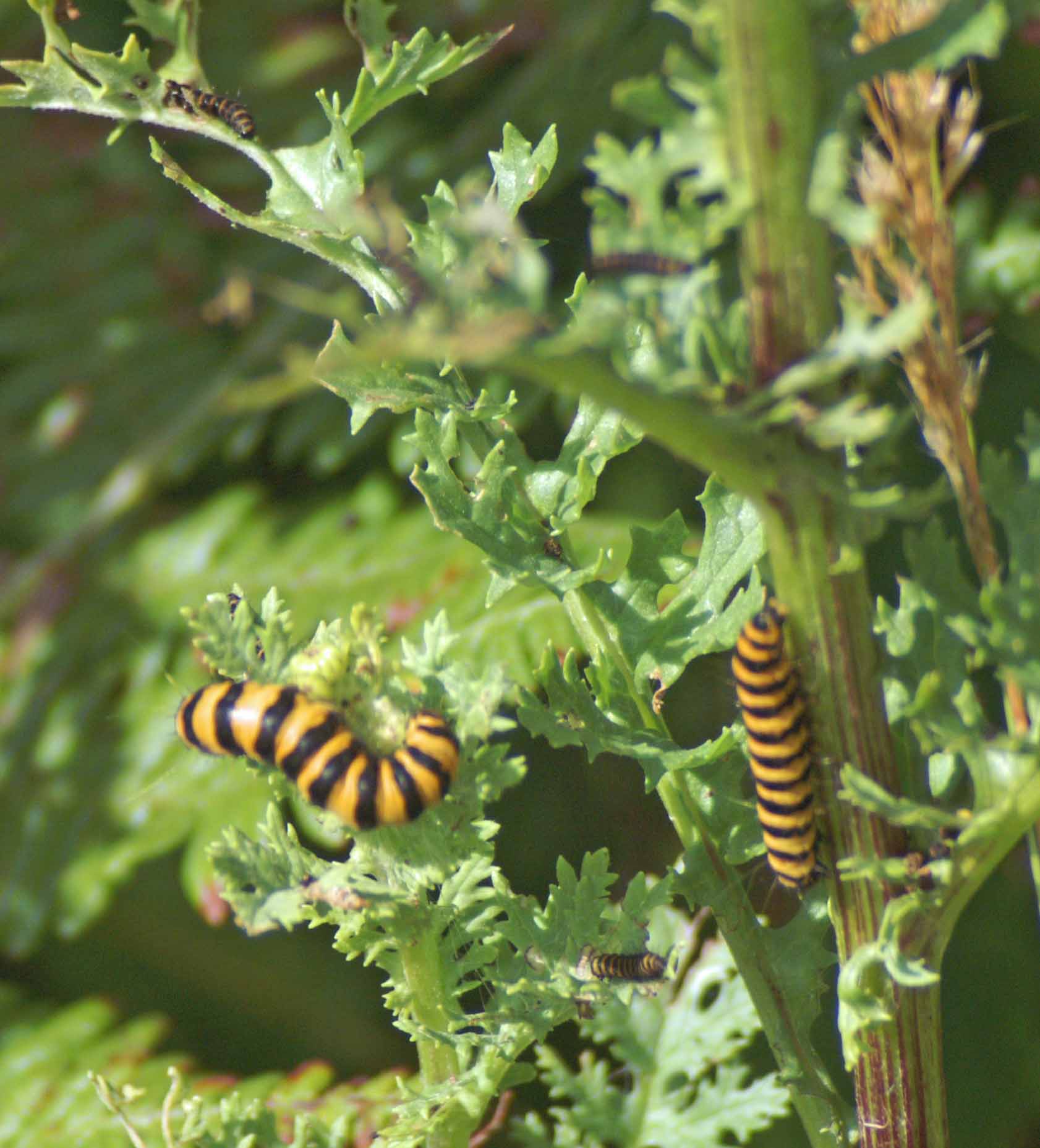
    The main insects that can devastate populations of Ragwort are the Cinnabar moth and the flea beetle Longitarsus jacobaeae. Some of the fly larvae and moth caterpillars have the capacity to cause loss in seed production. The remaining fauna collectively impact upon the health and vigor of Ragwort, though the significance will depend on local circumstances. On the whole, districts where Ragwort is always present should have the most complete insect faunas, thus best balanced to continuously effect control. It is usually where poor land management allows excessive colonisation by Ragwort seed that the man-made problems arise.
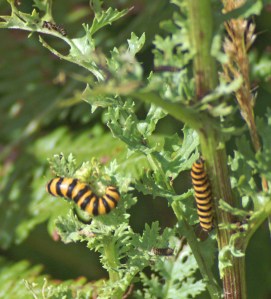
22/7/11-Cinnabar Moth larvae on ragwort leaves-Little Orme, Rhos-on-Sea

Traditional uses of Ragwort in herbal medicine

Ragwort was formerly much employed medicinally for various purposes. The leaves are used in the country for emollient poultices and yield a good green dye, not, however, permanent. The flowers boiled in water give a fair yellow dye to wool previously impregnated with alum. The whole plant is bitter and aromatic, of an acrid sharpness, but the juice is cooling and astringent, and of use as a wash in burns, inflammations of the eye, and also in sores and cancerous ulcers – hence one of its old names, Cankerwort. It is used with success in relieving rheumatism, sciatica and gout, a poultice of the green leaves being applied to painful joints and reducing the inflammation and swelling. It makes a good gargle for ulcerated throat and mouth, and is said to take away the pain caused by the sting of bees. A decoction of the root has been reputed good for inward bruises and wounds. In some parts of the country Ragwort is accredited with the power of preventing infection.
Culpepper says it is ‘under the command of Dame Venus, and cleanses, digests, and discusses. In Sussex we call it Ragweed.’

The poet John Clare also had a positive opinion of the plant, as revealed in this poem of 1831:

Ragwort thou humble flower with tattered leaves

I love to see thee come & litter gold…

Thy waste of shining blossoms richly shields

The sun tanned sward in splendid hues that burn

So bright & glaring that the very light

Of the rich sunshine doth to paleness turn

& seems but very shadows in thy sight.