Baby seal rescue

Tags

, , , , , ,

The insistent barking of his dog alerted its owner to the plight of a young Grey Seal trapped beneath the huge boulders of the extra sea defence in front of the promenade wall at Rhos-on-Sea on Thursday morning. He put in a call that resulted in the arrival of a team from the Welsh Mountain Zoo Seal Rescue Unit to assess the situation; they will only intervene when it is absolutely crucial to the survival or well-being of an animal.

In this instance help was needed as the hapless youngster had worked its way through spaces between the rocks, ultimately becoming trapped. It was clear that the seal was unable to retrace its path back to the shore and was therefore also out of the reach of its mother. Someone said that the mother, spotted swimming offshore earlier, had been frightened away by a jet-skier, but in any case she would not have approached her baby whilst we were anywhere nearby.

The baby seal was still on shore level, but due to the slope of the boulders, from a rescue perspective he was at the bottom of a deep hole and underneath a rock. One of the team, Michelle, was small enough to squeeze down to reach the seal, but getting him out was another matter. A baby Grey Seal is born weighing in at around 14-15kg (30lbs), so no lightweight and the awkwardness of this one’s position further added to the problem. With no lifting equipment available, some creative thinking was called for and someone had the inspiration to try improvising a hoist from dog leads. There were plenty available amongst the small crowd of concerned onlookers that had stayed to offer moral support throughout the rescue and although not ideal, Michelle managed to loop one around the seal’s well-padded body and pass it up to the girls at the top, who carefully hauled him out.

The baby was finally lifted out

It was unharmed and seemed fit and healthy, but the fresh appearance of his still-attached umbilical cord indicated that it was very young – probably no more than a day or so old.

The baby seal was carefully lifted

It was placed carefully on a rock

The fresh umbilical cord shows the baby is no more than a day or so old

The baby was placed at the sea edge in the hope that its mother would return to it

It was hoped that by placing him on the shore close to the rocks that the mother would soon find him.

Alone on the seashore the baby seal looked very small and vulnerable

A LITTLE LATER

Passing the spot a short time later I heard him calling and spotted him in the water where he appeared to be struggling and was being knocked against the rocks by the waves of the incoming tide. There was still no sign of the mother; although she may have been nearby, any sight she had of people would be perceived as dangerous to her baby or herself and she would not approach, so the area needed to be very quiet.

LATE AFTERNOON

Later again I returned to the promenade and heard the loud and plaintive calls of the baby seal as I crossed the road. They seemed to be coming from very close to the spot he had originally been rescued from and as I couldn’t see him from above, I walked along the shore edge to try to find where he was exactly.  I was pleased to see Michelle who had received another call reporting that the seal was still there and sounding distressed. She climbed up onto the rocks and had a look around, but the seal had now stopped calling and could have been anywhere. She told me the RSPCA would return on Friday morning and if the seal was still there that they would take it to the Seal Sanctuary to be cared for.

THE NEXT DAY

I heard from Michelle, who is Head Keeper at the Welsh Mountain Zoo who had carried out the hard part of the first rescue attempt, she said:

” This rescue was one I’ll never forget. My muscles ache, I have bruises in odd places after climbing down the rocks into a small dark place. But it was worth it! I went down again after work (about 8pm), located it and with help from passers by and this time a catch pole that I brought with me, we got the seal out. It was in the wrong place and weaker than in the morning, so I brought it back to the seal unit where it is now much quieter as it’s not hungry anymore”.

Michelle Pywell

Welsh Mountain Zoo – National Zoo of Wales

Colwyn Bay, Conwy LL28 5UY

ABOUT THE NORTH WALES SEA RESCUE CENTRE

Since the zoo opened in 1962 a wide variety of injured and orphaned native species have been brought in for care and rehabilitation. Most of this care, in recent years, has concentrated on young grey and occasionally common seals.

This work is carried out in collaboration with the RSPCA, and in 1997 the North Wales Seal Rescue Centre was opened at the zoo. The centre has two filtered pools and an indoor intensive care unit. This development, funded by zoo friends and supporters, has resulted in an improvement in the care given, and an increase in the number of animals treated, before their release back into the sea.

The RSPCA has advice on what to do if you think you may have spotted a baby seal in trouble: http://www.rspca.org.uk/utilities/faq/-/question/ENQWADStrandedSealPupsOnOwn


Turnstones

Tags

, , , , , , ,

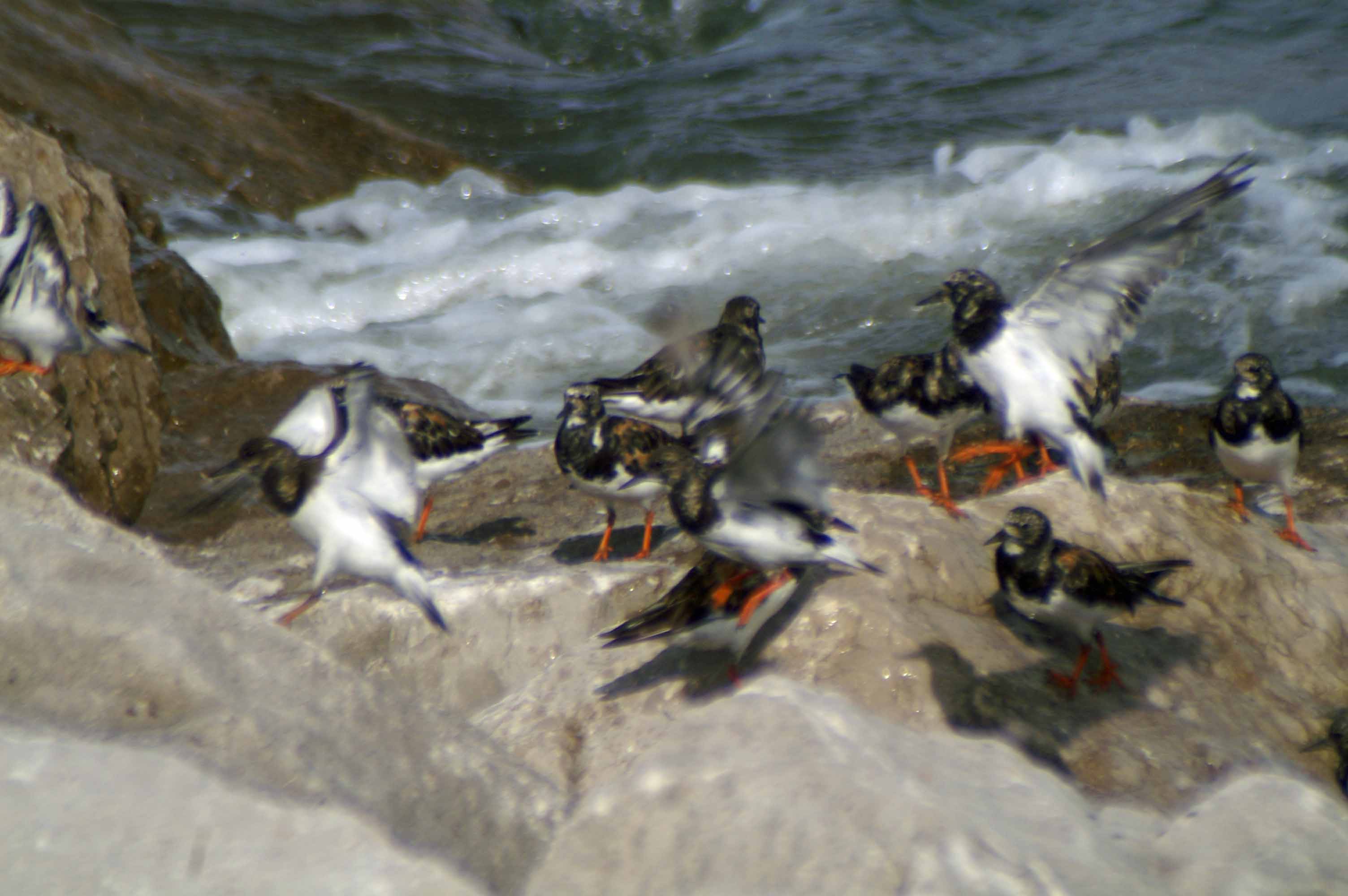
The tide was high this morning when I arrived at the promenade, so I was not expecting to see many birds about foraging on the shore, but I’m happy enough to just watch the sea, so I looked out over the railings anyway . I’m glad I did that, as there beneath me, a whole flock of Turnstones were perched atop the sea-defence boulders immediately below. The birds were either resting quietly or catching up on their preening as they waited for the tide to turn and expose the rock shore once more.

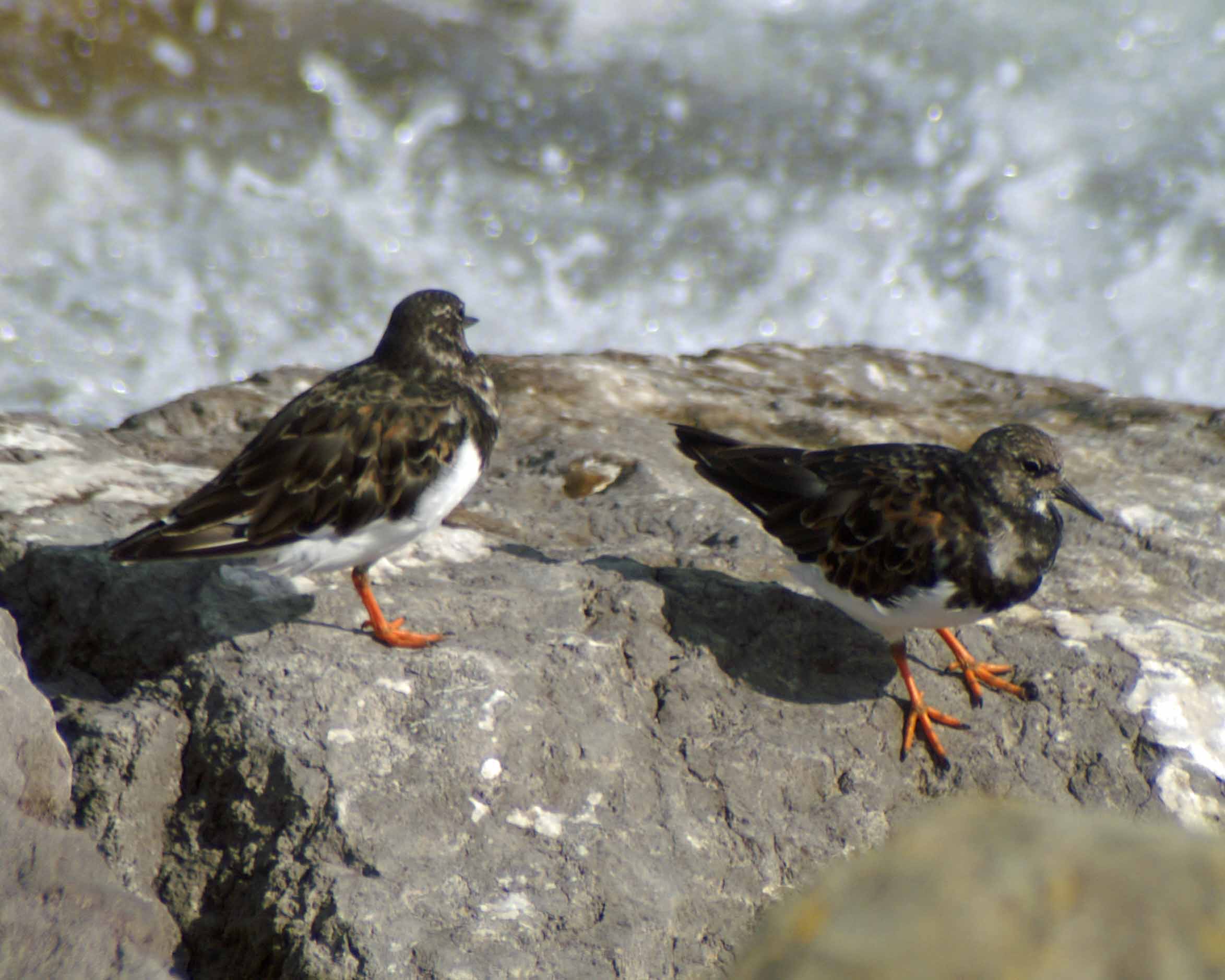
11/9/11- Turnstone dozing

Turnstone-Arenaria interpres

Turnstones are distinctive medium-sized waders. They are high Arctic breeders, and are migratory. They are chunky powerful birds that have strong necks and bills that are well suited to their feeding technique. As the name implies, these species readily turn stones, shells or seaweed looking for hidden invertebrates. They eat insects, crustaceans and molluscs.

11/9/11-Members of the flock were resting or preening their feathers

As the birds were obligingly still, I counted 70 birds in varying sized groups spread along a length of the rocks, but there may have been more below and out of my sight.

11/9/11-The birds' rest was temporarily disturbed by a splashing wave

It would be interesting to know where the birds have come from as these particular birds have not been here for long. Turnstones are present around our coastline for most of the year. Birds from Northern Europe pass through in July and August and again spring, then Canadian and Greenland birds arrive in August and September and remain until April and May. Non-breeding birds may stay through the summer.

11/9/11-Plumage is mottled shades of brown, black, grey and chestnut brown. The head is patterned either brown and white or black and white. Underparts are white. Legs are orange.

Turnstones spend most of their time foraging creeping and fluttering over rocks, picking out food from under stones.

Their appearance is striking in flight, with white patches on the back, wings and tail.

Where to see them

Turnstones are found all around the UK coastline. They are strictly coastal,and are seen on stony, sandy and muddy shores beaches and are often found together with other waders such as Purple Sandpipers. The birds particularly like feeding on rocks covered with seaweed, and will feed along seawalls and jetties.


Northern Wheatears stop-over

Tags

, , , , , ,

Summer is definitely on the wane and signs of encroaching autumn are becoming increasingly apparent on an almost daily basis. The hoped-for Indian Summer has yet to arrive and the weather continues to be as unpredictable as ever. It keeps life interesting though and the new season has already brought forth some amazing sightings of birds that threaten to dominate the blog now if I’m not careful. I thought I might feature one particular species of bird every week or so, beginning with the Northern Wheatear as they are clearly on migration now and sightings will probably be sporadic and for a brief time only.

9th September

Walking along the promenade between Rhos-on-Sea and Penrhyn Bay I stopped to watch some Pied Wagtails that were chasing flies along a length of the wall and over the big boulders of the sea defense. I love their agility and grace and could watch them for ages, but today I was distracted from their antics by the presence of a less common visitor, a handsome Northern Wheatear.

9/9/11-A very strongly-coloured individual

The Northern Wheatear or Wheatear (Oenanthe oenanthe) is a small passerine bird that was formerly classed as a member of the thrush family Turdidae, but is now more generally considered to be an Old World flycatcher, Muscicapidae. It is the most widespread member of the wheatear genus  Oenanthe in Europe and Asia.

9/9/11-Wheatears are larger than a European Robin at 14.5-16cm in length. Both sexes have a white rump with a black inverted 'T' pattern at the end of the tail.

The Northern Wheatear is a migratory insectivorous species breeding in open stony country in Europe and Asia with footholds in northeastern Canada and Greenland as well as in northwestern Canada and Alaska. It nests in rock crevices and rabbitburrows. All birds winter in Africa.

9/9/11-Wheatears have the typical upright stance of Members of the thrush family

I am more used to seeing these birds in their summer breeding plumage; in Spain they breed in the mountains, and in Wales I have seen them in mainland Pembrokeshire and on Skomer Island,when males and females have been easy to separate. The distinctive plumage of the summer male has grey upperparts, buff throat and black wings and face mask. However, in autumn it resembles the female apart from the black wings. The female is pale brown above and buff below with darker brown wings.

I’m not altogether sure what sex the ones I saw belong to – the difference in the strength of colour on the breasts was quite marked, with some individuals being a very warm pink-orange and others a paler buff-pink.

9/9/11- The Wheatears feed on insects and larvae

The male has a whistling, crackly song. Its call is a typical chat chack noise.

Migration 

The birds I am seeing here will be on their return journey to Africa where they will spend the winter, stopping over to take advantage of any available food to fuel the next stage of their journey south.

9/9/11- Glimpsed from this angle, the Wheatear may be confused with a European Robin

The Northern Wheatear makes one of the longest journeys of any small bird, crossing ocean, ice, and desert. It migrates from Sub-Saharan Africa in Spring over a vast area of the northern hemisphere that includes northern and central Asia, Europe, Greenland, Alaska, and parts of Canada. In Autumn all return to Africa, where their ancestors have wintered.

Birds of the large, bright Greenland race, leucorhoa, makes one of the longest transoceanic crossings of any passerine. In spring most migrate along a route (commonly used by waders and waterfowl) from Africa via continental Europe, the British Isles, and Iceland to Greenland. However, autumn sightings from ships suggest that some birds cross the North Atlantic directly from Canada and Greenland to southwest Europe (a distance of up to 2500 km). Birds breeding in eastern Canada are thought to fly from Newfoundland to the Azores (a distance of 1600 km) before flying onwards to Africa. Other populations from western Canada and Alaska migrate by flying over much of Eurasia to Africa.

Conwy castle, bridge and town wall walk

Tags

, , , , , , , ,

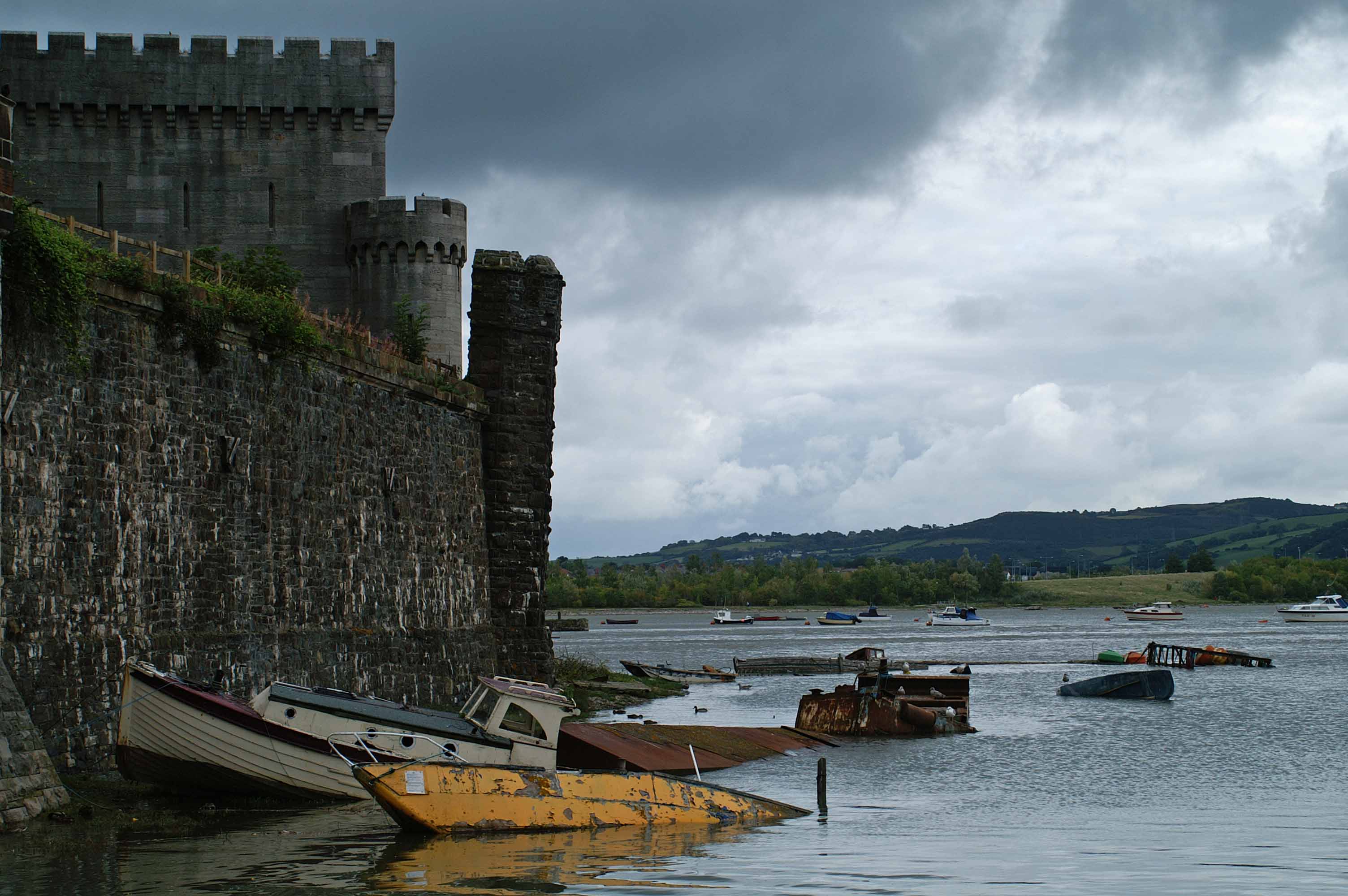
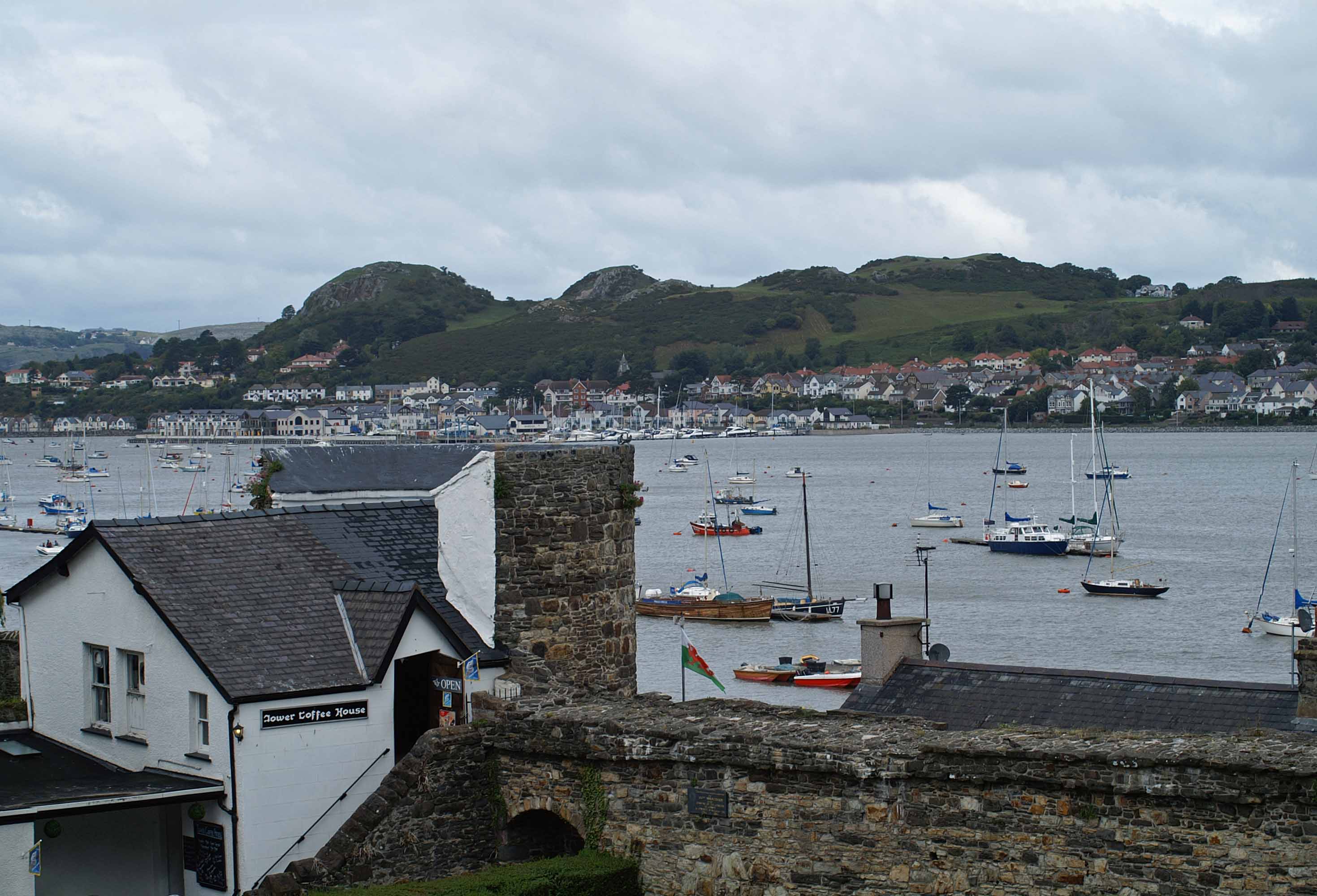
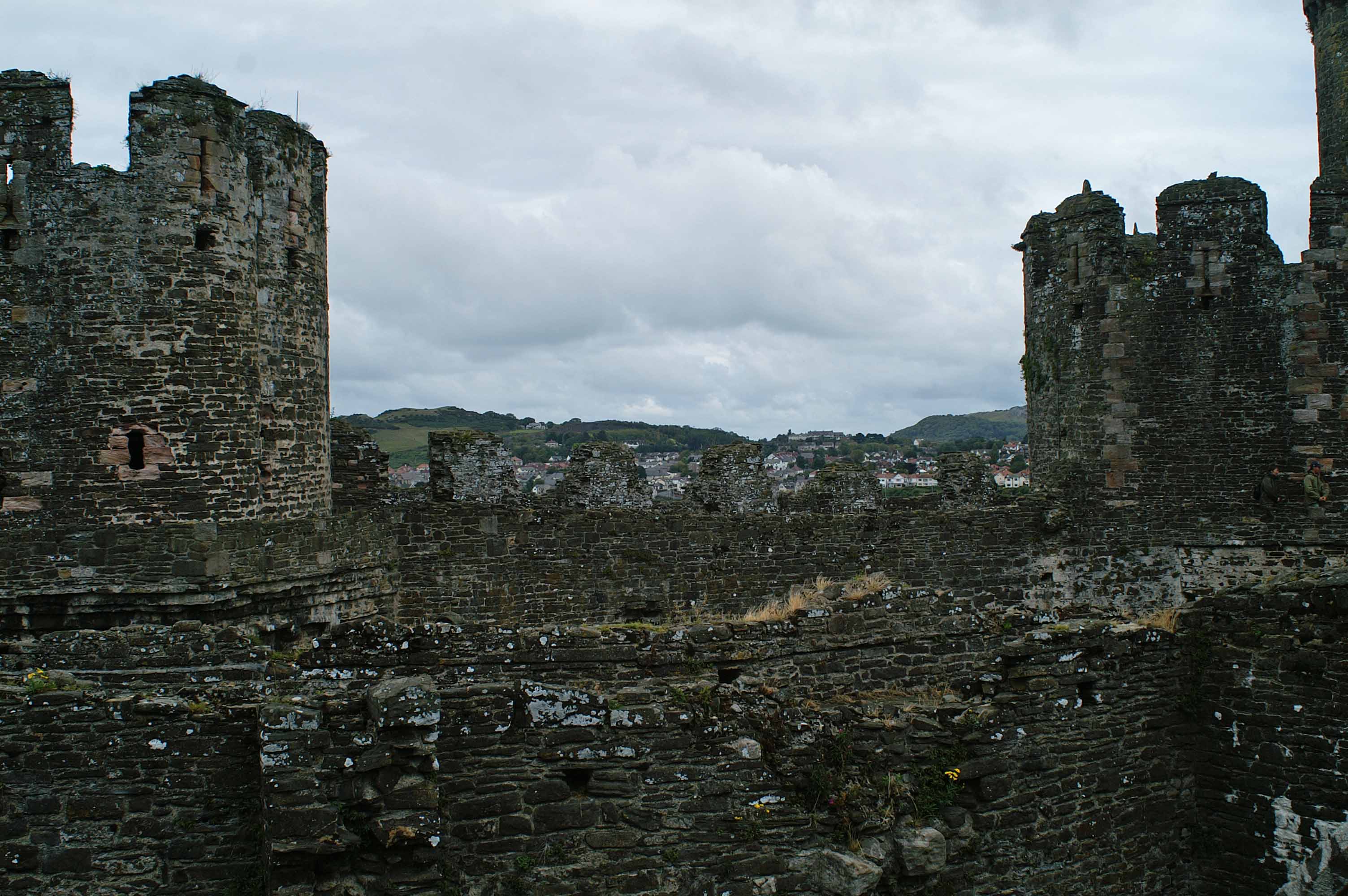
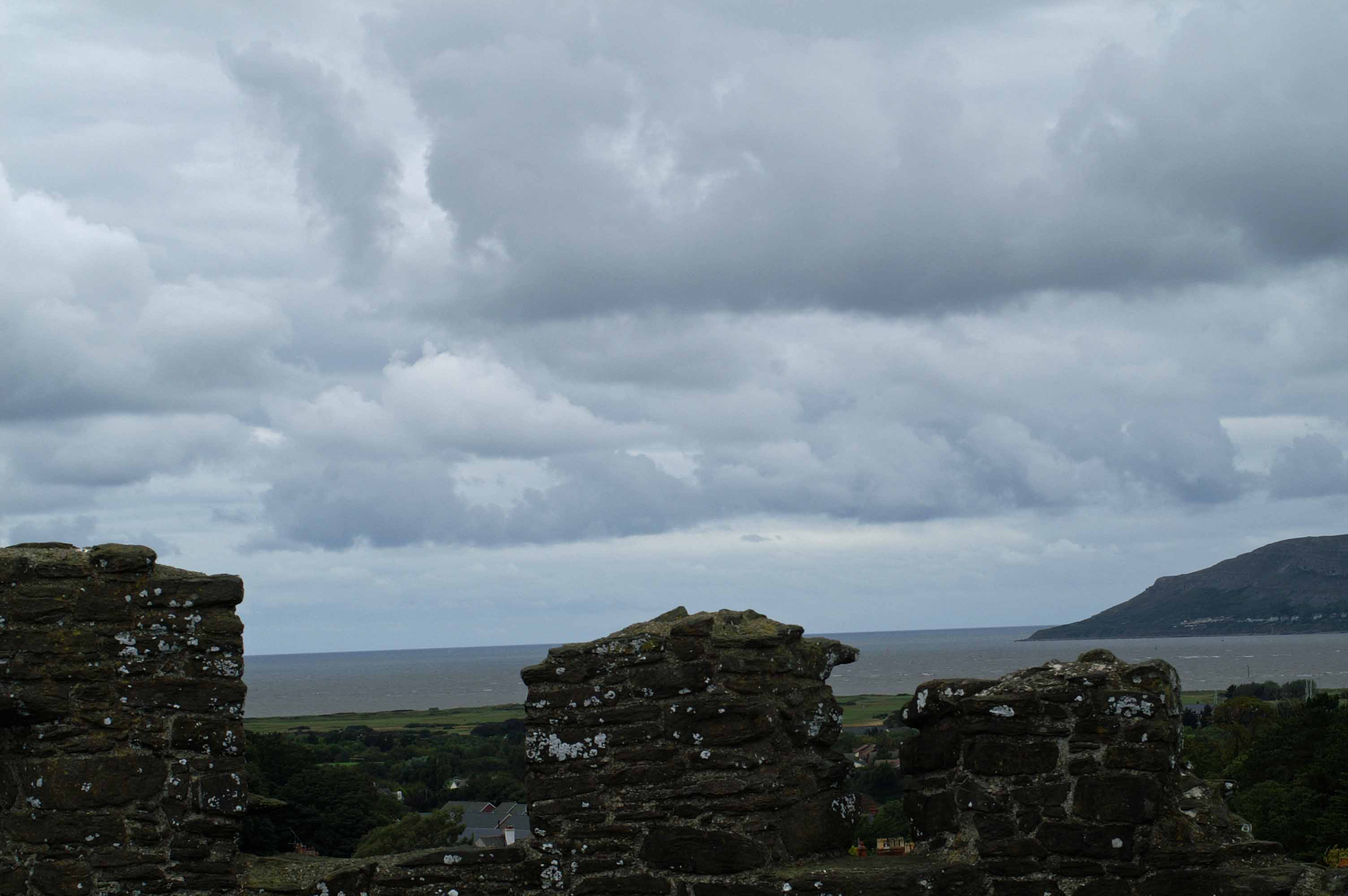
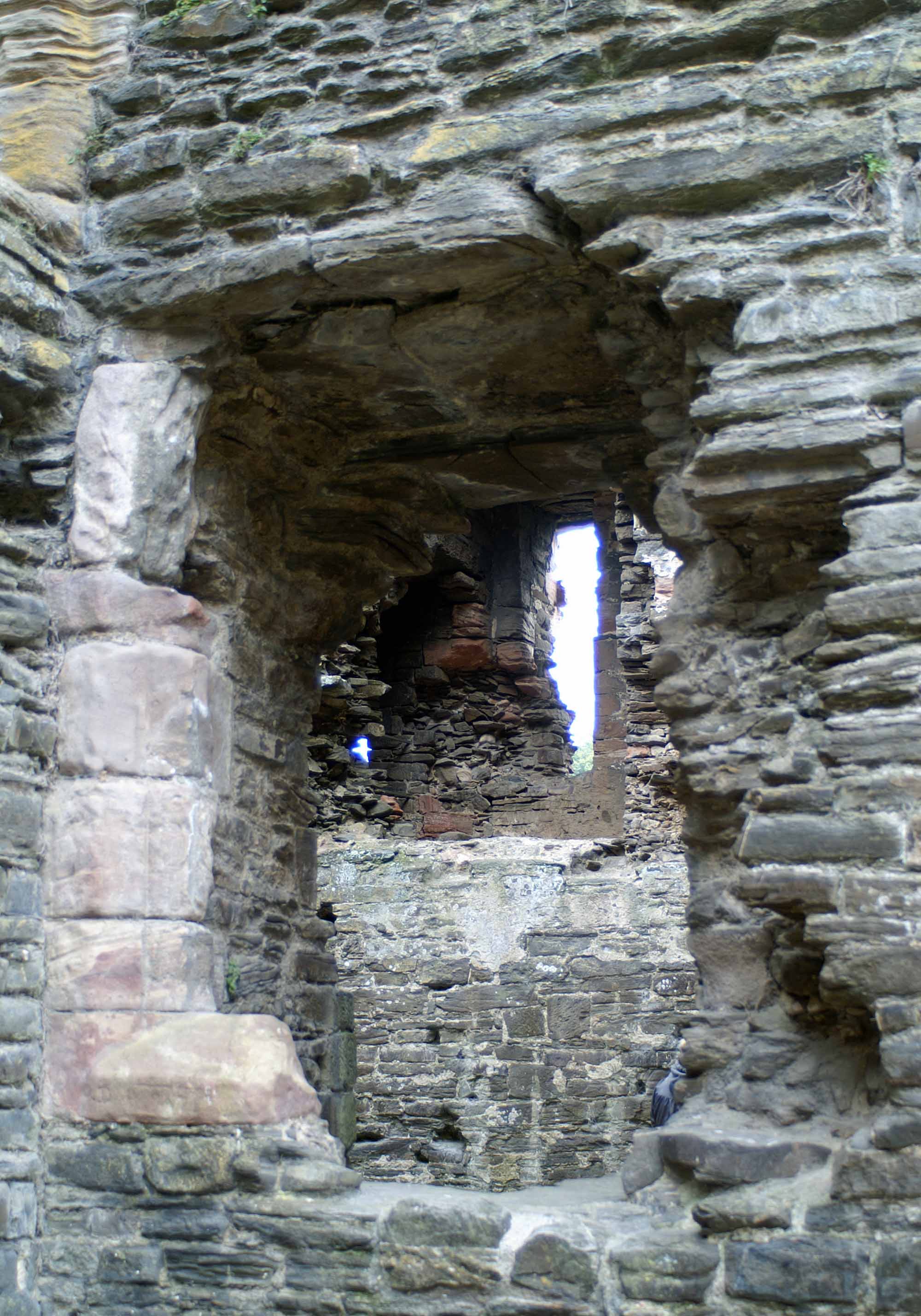
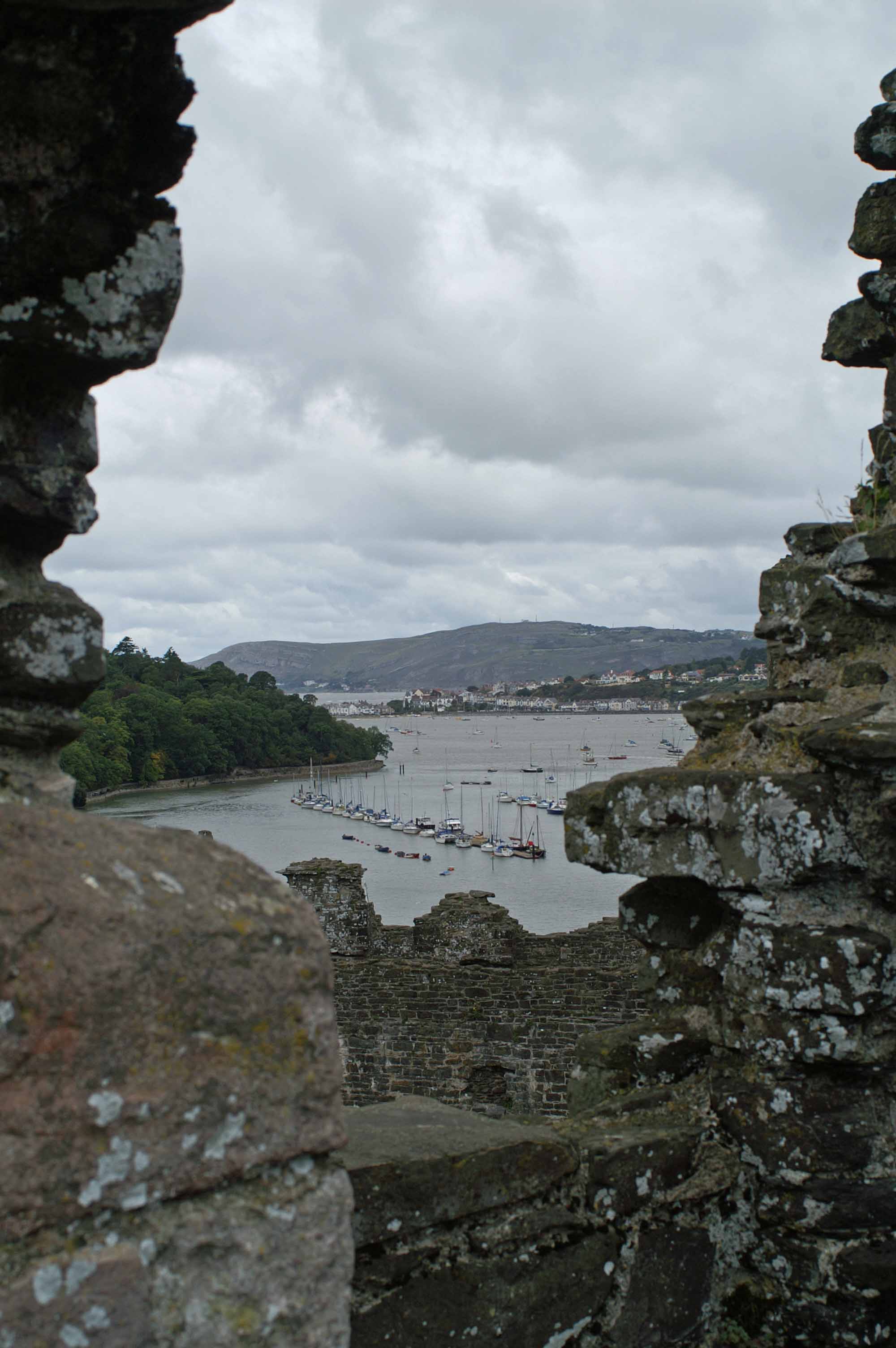
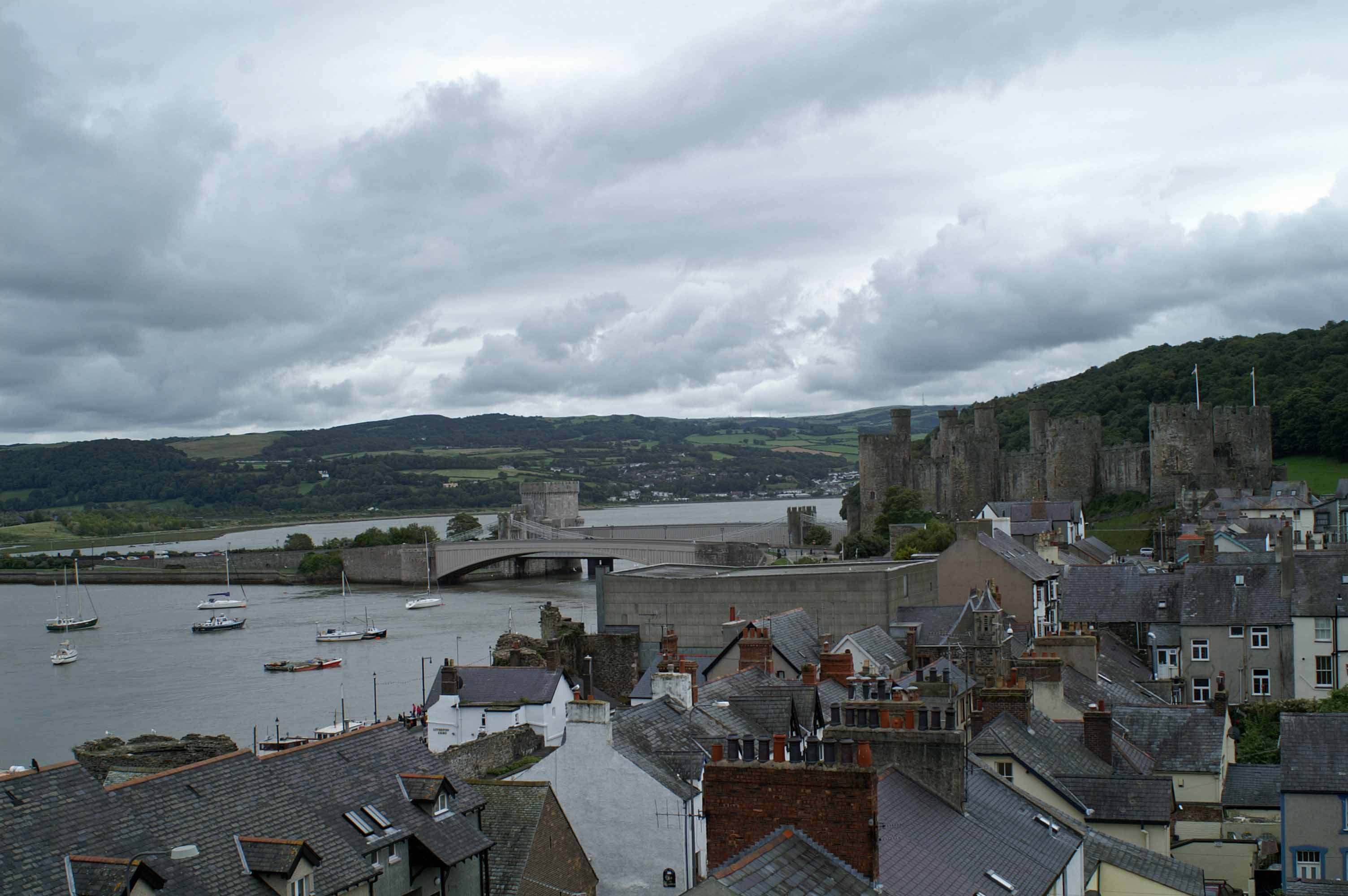
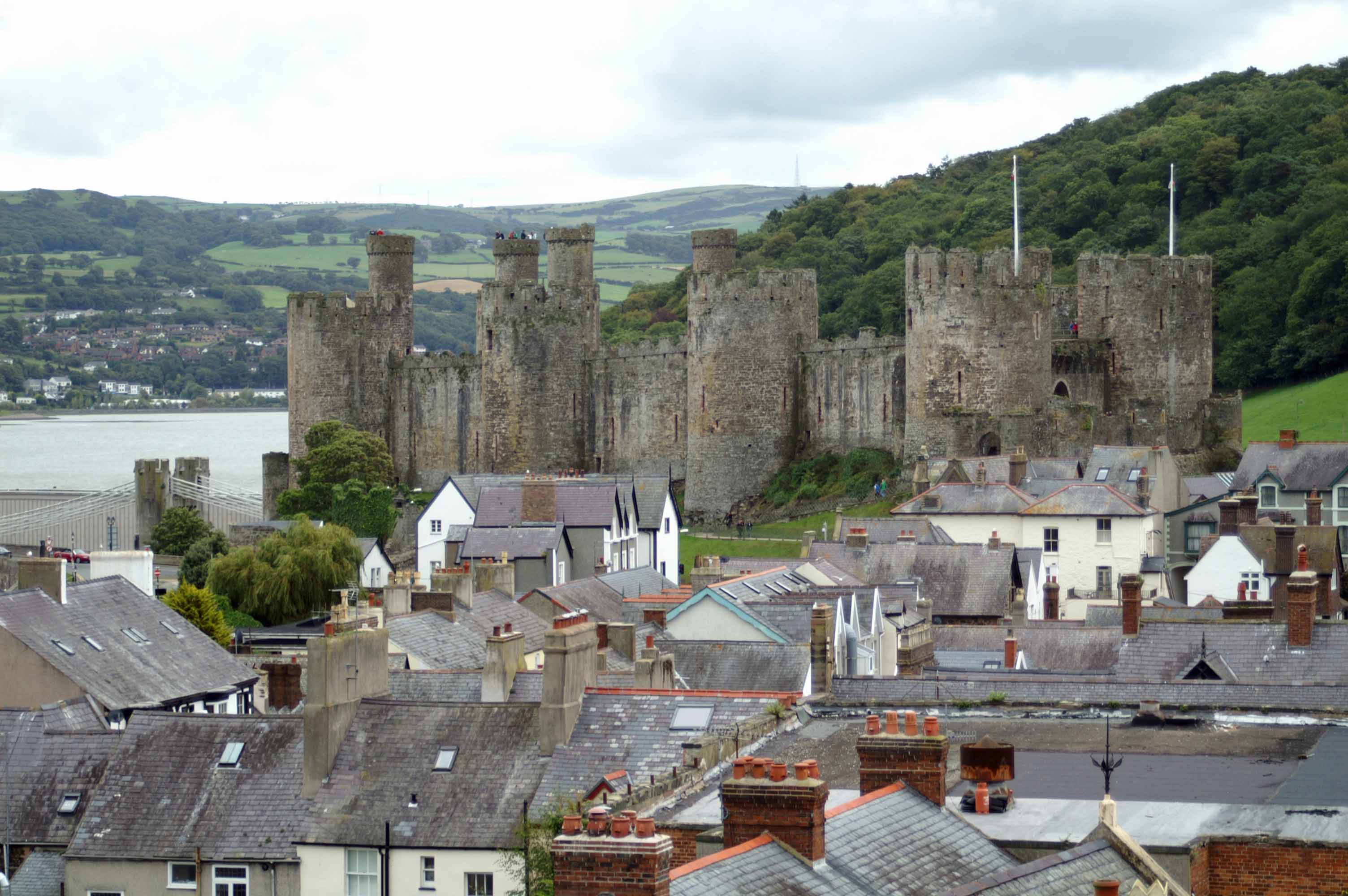
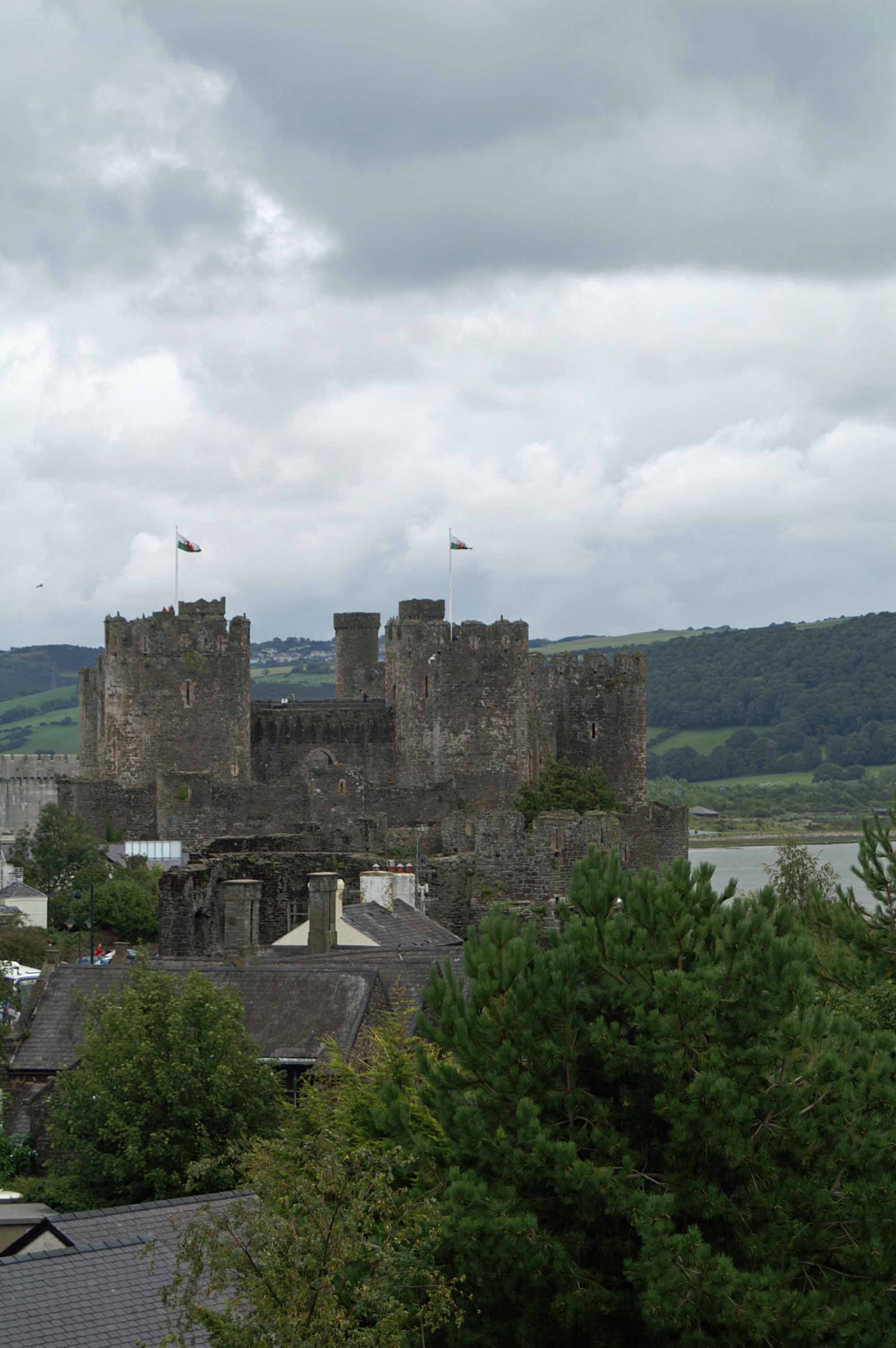
I hadn’t been inside Conwy castle until today and found it fascinating. It is very well preserved, particularly the towers which are well worth the effort of climbing via their spiral stone staircases to see the fantastic panoramic views.

29/8/11-Conwy castle & railway bridge

29/8/11-Castle wall, river and boats

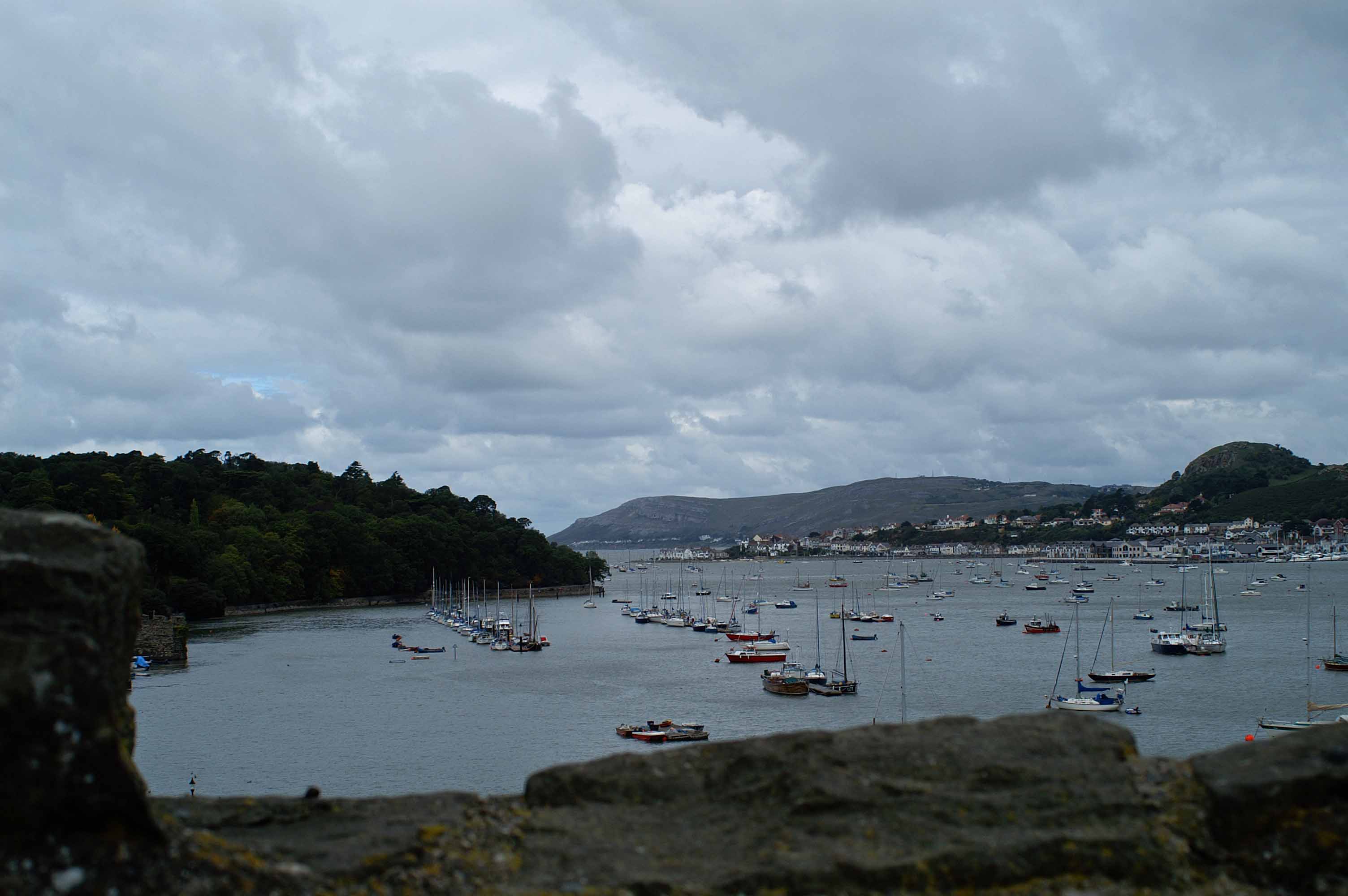
29/8/11-View from castle wall of the harbour and river to estuary

29/8/11-View of harbour from castle wall

29/8/11-Castle walls and towers

29/8/11-Castle tower tops

29/8/11-Sea view

29/8/11-Views through windows

29/8/11-The harbour and downriver to the estuary

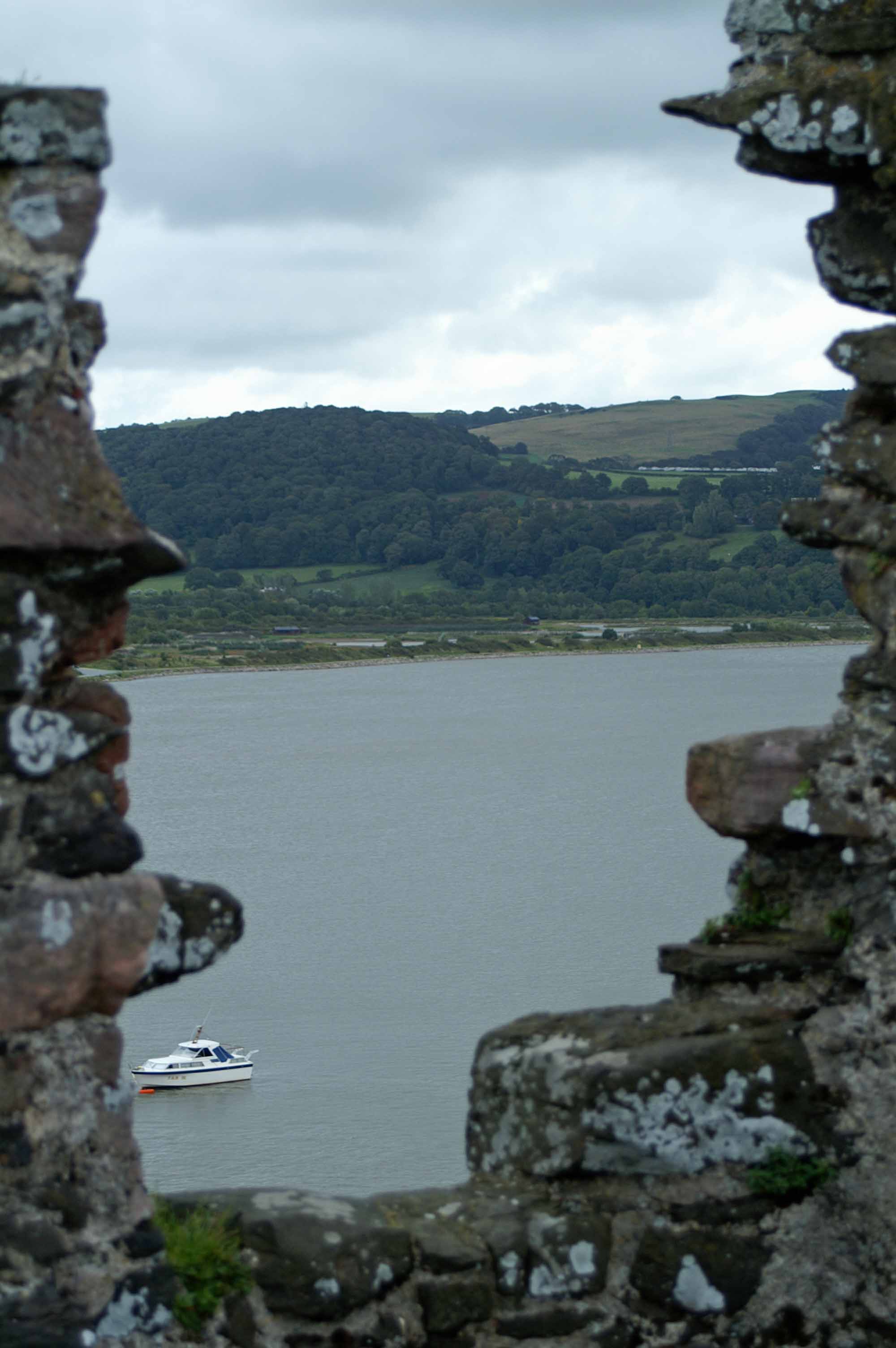
29/8/11-View of river and white boat

The suspension bridge

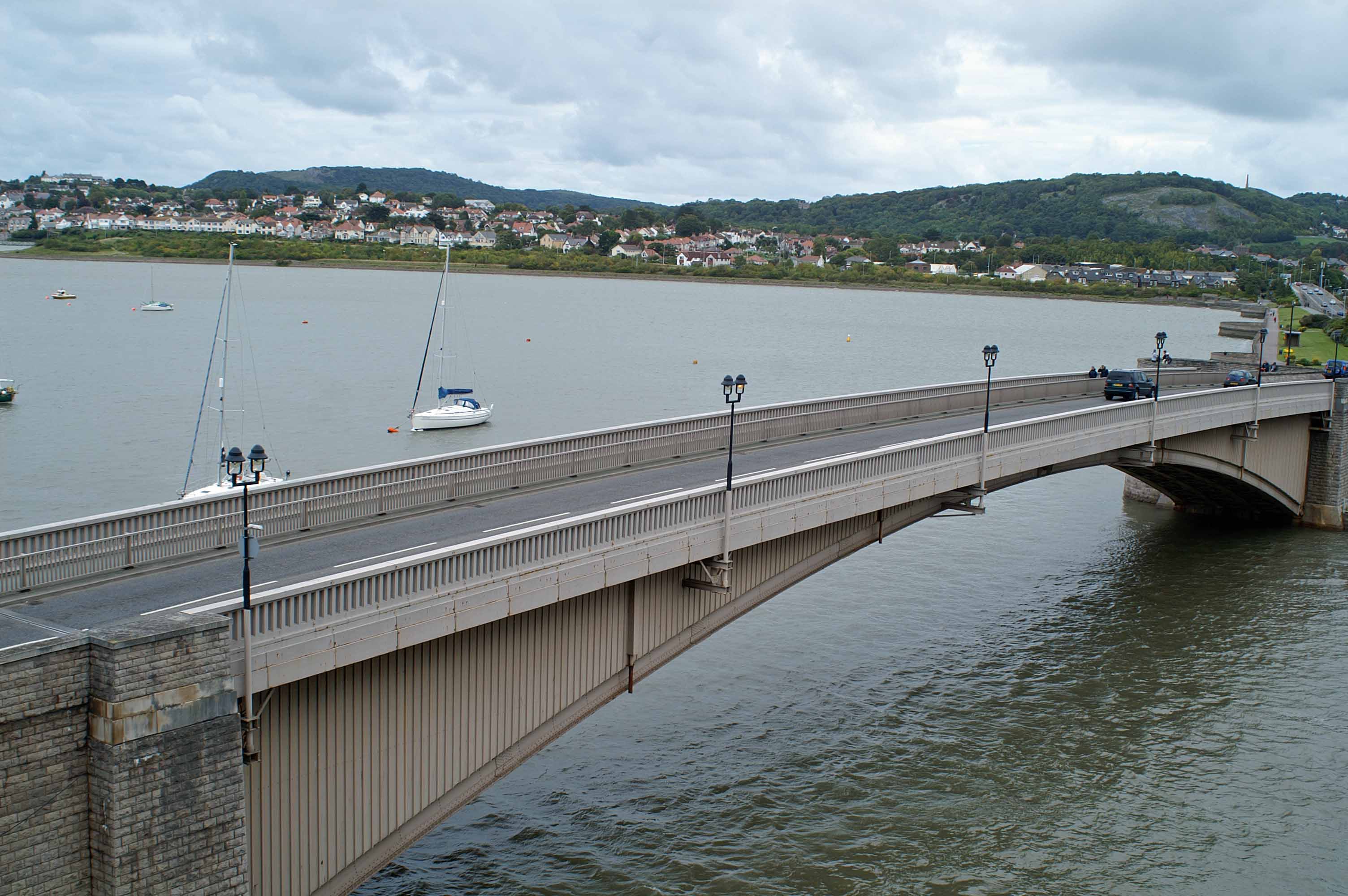
Conwy Suspension Bridge, was one of the first road suspension bridges in the world and is now in the care of the National Trust.

29/8/11-Conwy suspension bridge

Built by Thomas Telford, the bridge is a suspension bridge spanning the River Conwy; it was completed in 1826 and replaced the ferry that once operated from the same point. Telford matched the bridge’s supporting towers with the castle’s turrets. It is constructed in the same style as one of Telford’s other bridges, the Menai Suspension Bridge crossing the Menai Strait. The Conwy bridge runs parallel to the wrought iron tubular railway bridge built by Robert Stephenson.

Built into the rock on which the castle stands, the bridge is very close to the castle and very narrow (only about 2½ metres across). Part of the castle had to be demolished during construction in order for the suspension cables to be anchored into the rock. The new bridge is not the main route across the River Conwy — the crossing of the River Conwy has always been a problem and today the A55 road goes under the river by tunnel — but it is the major way across for local traffic.

The Town Walls

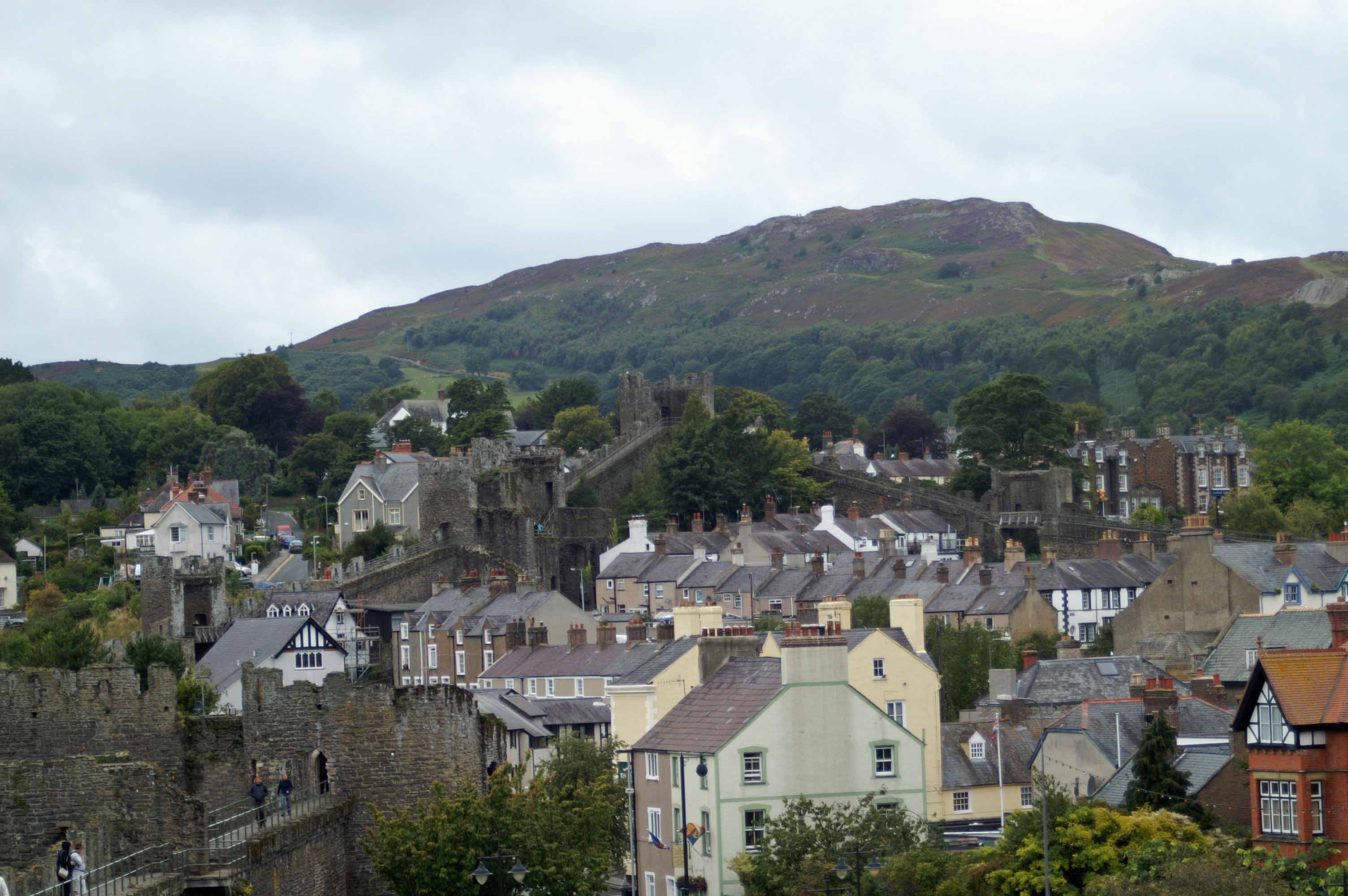
29/8/11-The town within its walls

There are just three access points to the town walls and we began our walk around them at the point near to the harbour, then finished behind the railway station. It is quite a long walk and as the walls follow the contours of the land they were built on, some lengths are steeply sloped, but again, it allows some fascinating views of the town, the castle and the surrounding countryside.

29/8/11-Castle, bridge, river and town from walls

29/8/11-The castle viewed across the town from the walls

29/8/11-The castle from the town walls

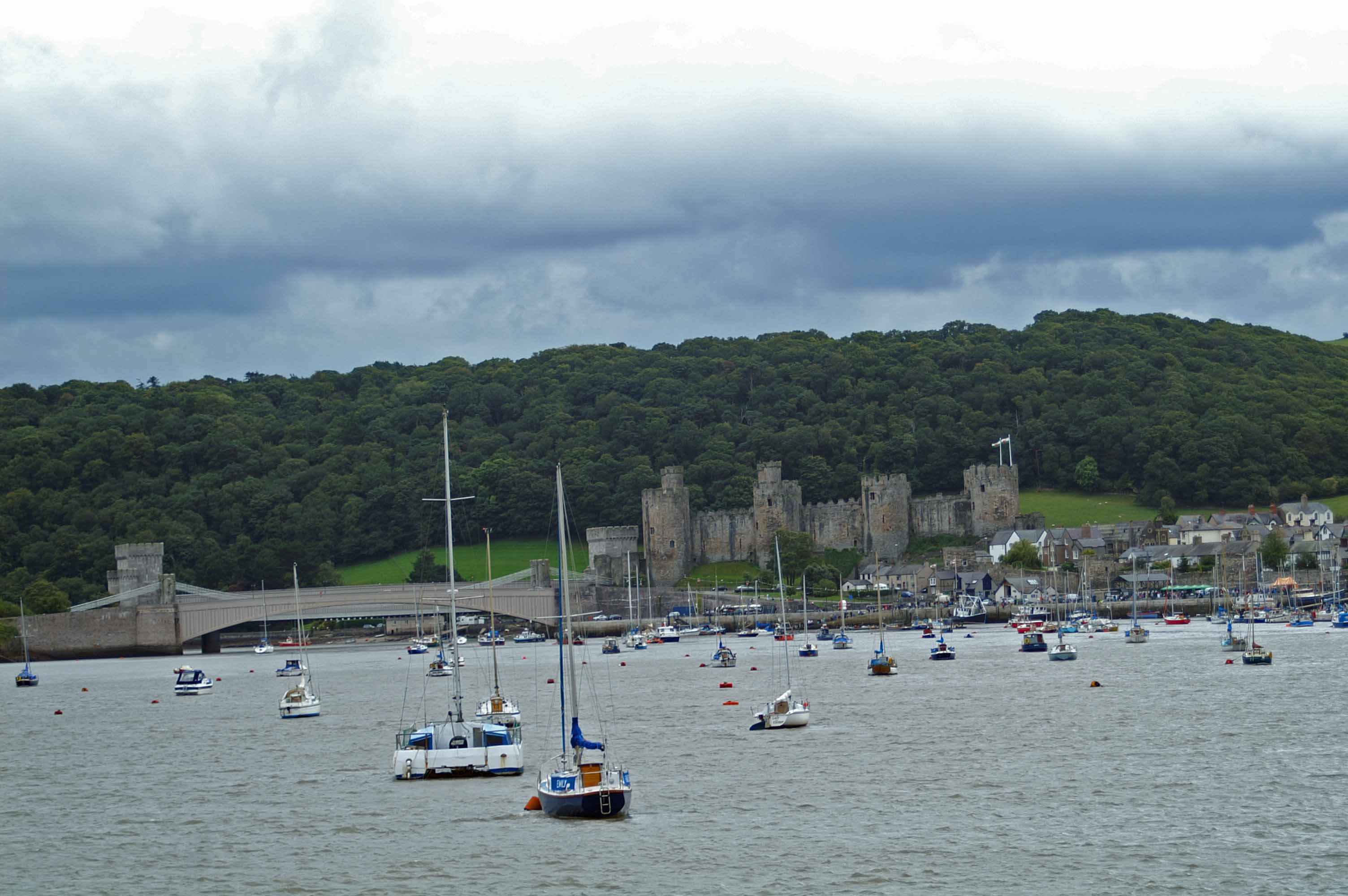
29/8/11-The castle and bridge viewed from Deganwy

Stormy Bank Holiday weather

Tags

, , , , ,

The Met Office raised the alarm over “persistent, heavy and possibly thundery rain” across south-west England and parts of south Wales on Friday, spreading to east and north-east England later in the day. For Saturday and Sunday, the warnings spread to north-east Scotland, the Orkneys and Shetland, which could face spells of torrential rain and winds of up to 50mph. Overall, the UK is anticipating a particularly gloomy weekend weather-wise. The traditional end to the summer season is likely to see temperatures struggling to a lukewarm peak of 18C (64F), even if many places will escape heavy rain.

There was no specific mention of North Wales in the above weather bulletin, but all of the above applied, including the rain. With my two small granddaughters visiting and anticipating some  sea-side fun, the weather certainly provided a challenge. On Monday, dressed warmly and armed with raincoats, we decided to take them to Conwy to explore the castle and weather permitting, to take a walk around the town walls.

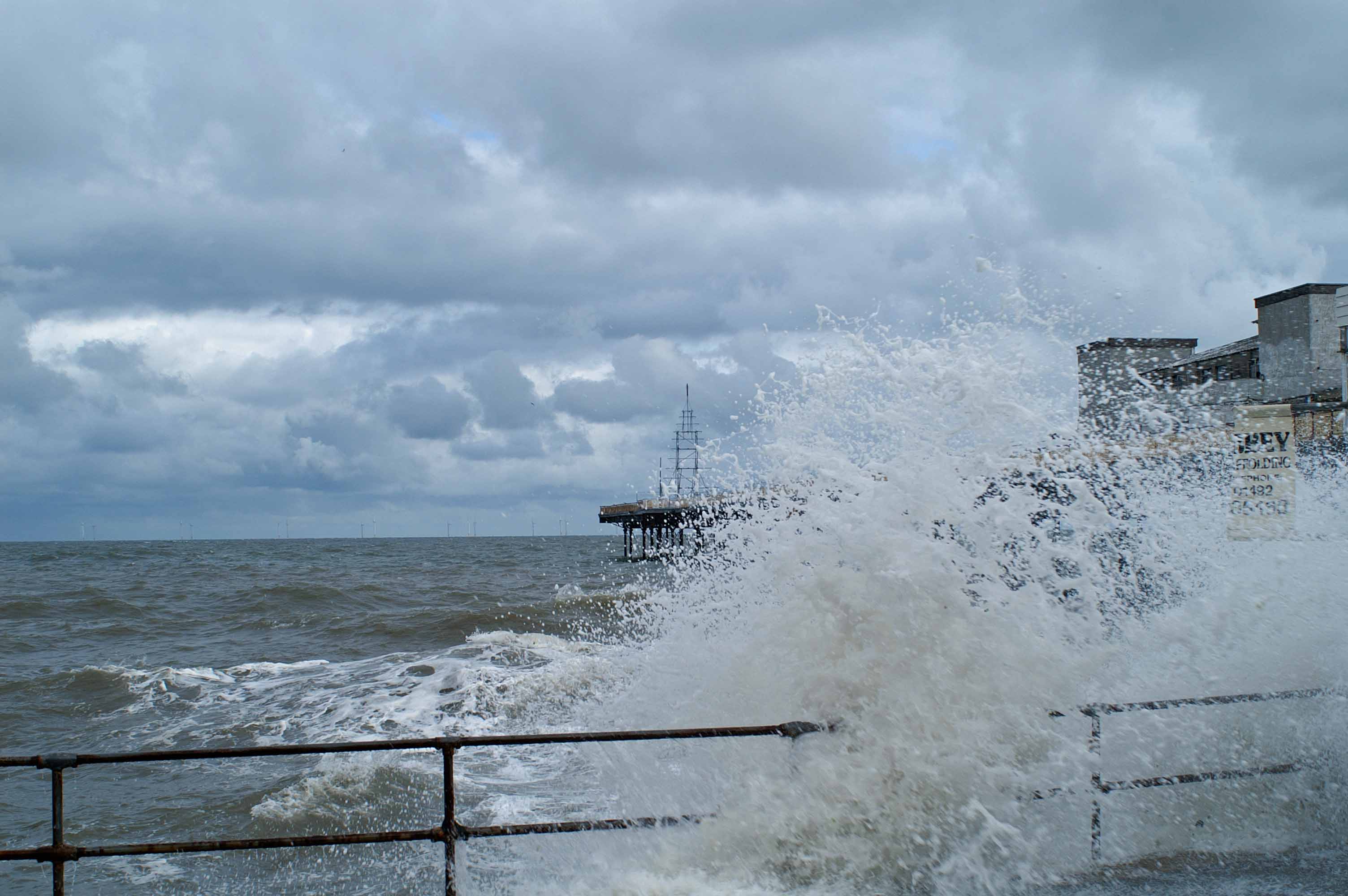
Although it wasn’t raining when we left the house, it was quite breezy and the sea at Rhos was quite rough, but a bit further round the bay in front of the old pier at Colwyn, it was wild, with waves crashing over the lower sea walls. We sat in the car watching for a while, but I had to get out and take some photographs.

(click on images to make them larger)

28/8/11-The view back towards Rhos-on-Sea

28/8/11- A cycle of big waves beginning to build

28/8/11-Waves continuing to build

28/8/11-The force of the waves was quite scary

28/8/11- The full force of the biggest wave in the sequence

Activity and new arrivals on the seashore

Tags

, , , , ,

The summer is rapidly coming to an end and many species of birds are on the move, some returning to their winter feeding grounds in this country, others flying in from the north and others taking off to return to the warmer regions of Southern Europe and Africa. During the past few weeks I have already noted that the numbers of Oystercatchers and Sandwich Terns have increased dramatically here at Rhos-on-Sea on the North Wales coast and that Curlews have become a regular sight foraging on the seashore.

24th August

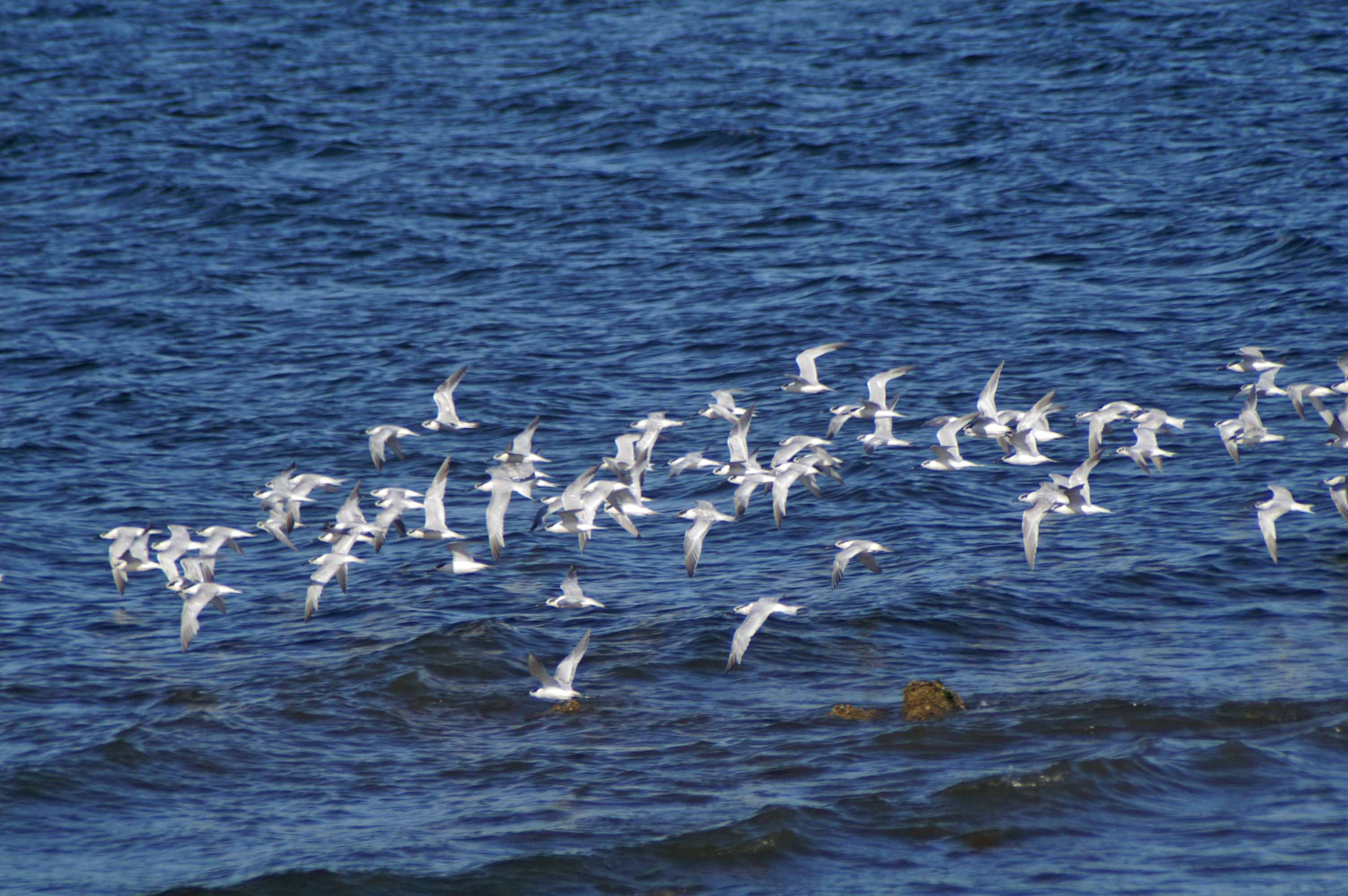
There was a lot of activity on the seashore late in the afternoon as the tide turned. I’m not the best at counting large numbers of birds, especially when they’re mobile, but there are definitely several hundred Sandwich Terns here presently and even more Oystercatchers. Mixed flocks of the birds line up along the sea edge, moving closer inshore as the water encroaches the rocky beach.

24/8/11-Sandwich Terns and Oystercatchers line up expectantly along the sea edge as the tide comes in

The Terns are restless; there are a lot of to-ings and fro-ings between their various groups and occasionally a whole flock takes off in unison, only to return to the same spot seconds later. The Oystercatchers take little notice of their flighty companions and continue to wait or forage patiently.

24/8/11- Sandwich Terns take off in unison

24/8/11-Terns settling back down amongst Oystercatchers

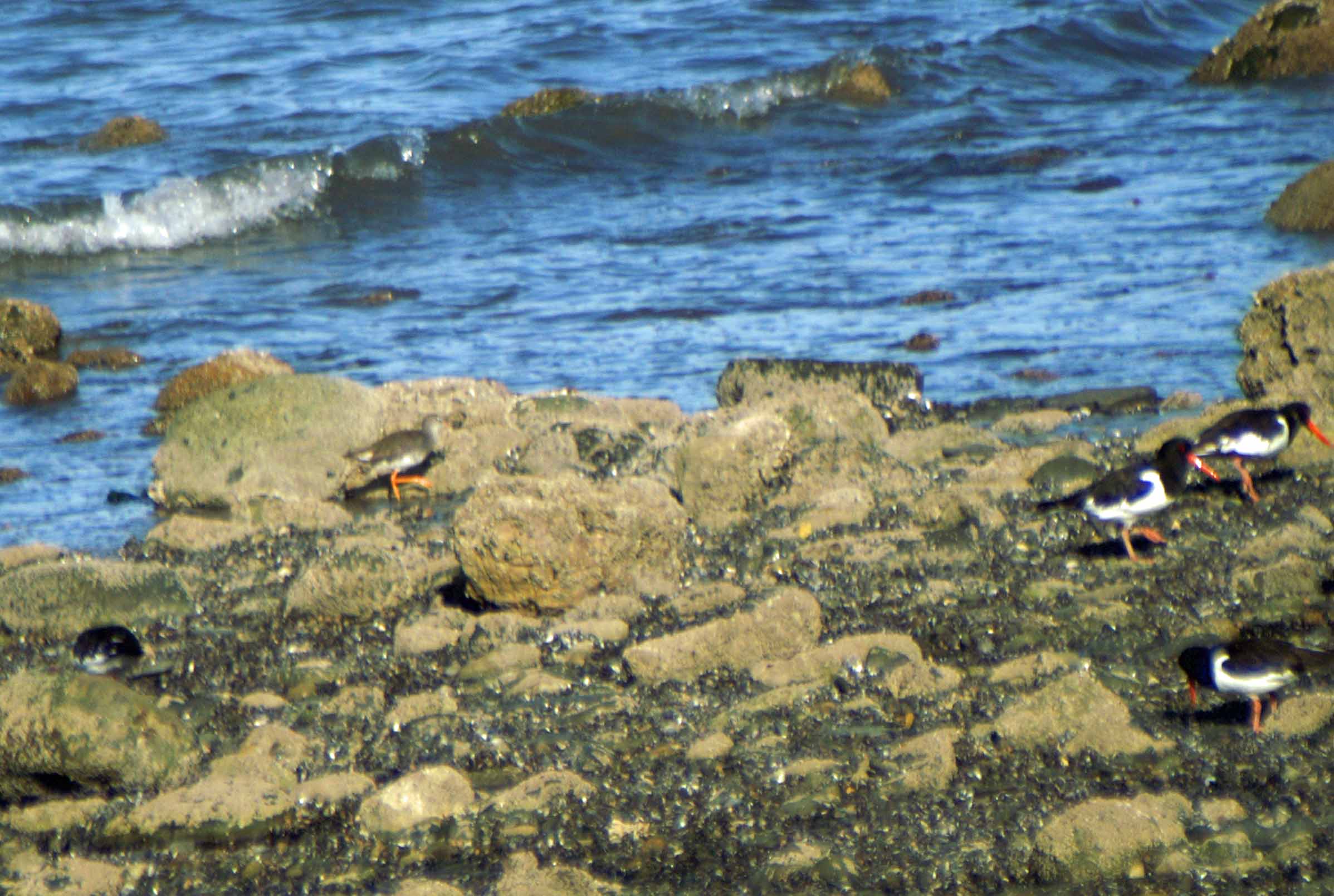
I was content watching the Tern displays, then noticed a couple of other waders well-camouflaged against the greys and browns of the shore; the bright red legs that give the birds their name gave away Redshanks that had infiltrated the ranks of Oystercatchers. The proximity of the two species shows the contrast in size. The Redshanks were quite distant, but now I have seen them I hope for better views another time.

24/8/11-Redshanks amongst Oystercatchers

I was feeling pleased to have Redshank to add to my sightings list, then spotted two separate flocks of smallish birds fly in almost simultaneously and was delighted to witness the arrival of both Turnstones and Ringed Plovers. The individuals of both flocks landed on rocks at the sea edge that were surrounded by water, then stayed put for a few minutes before venturing on to the shore to forage. I estimated that there were around 20 birds in each flock.

24/8/11-Turnstones arrived with Ringed Plovers

24/8/11- Turnstone flock flying away

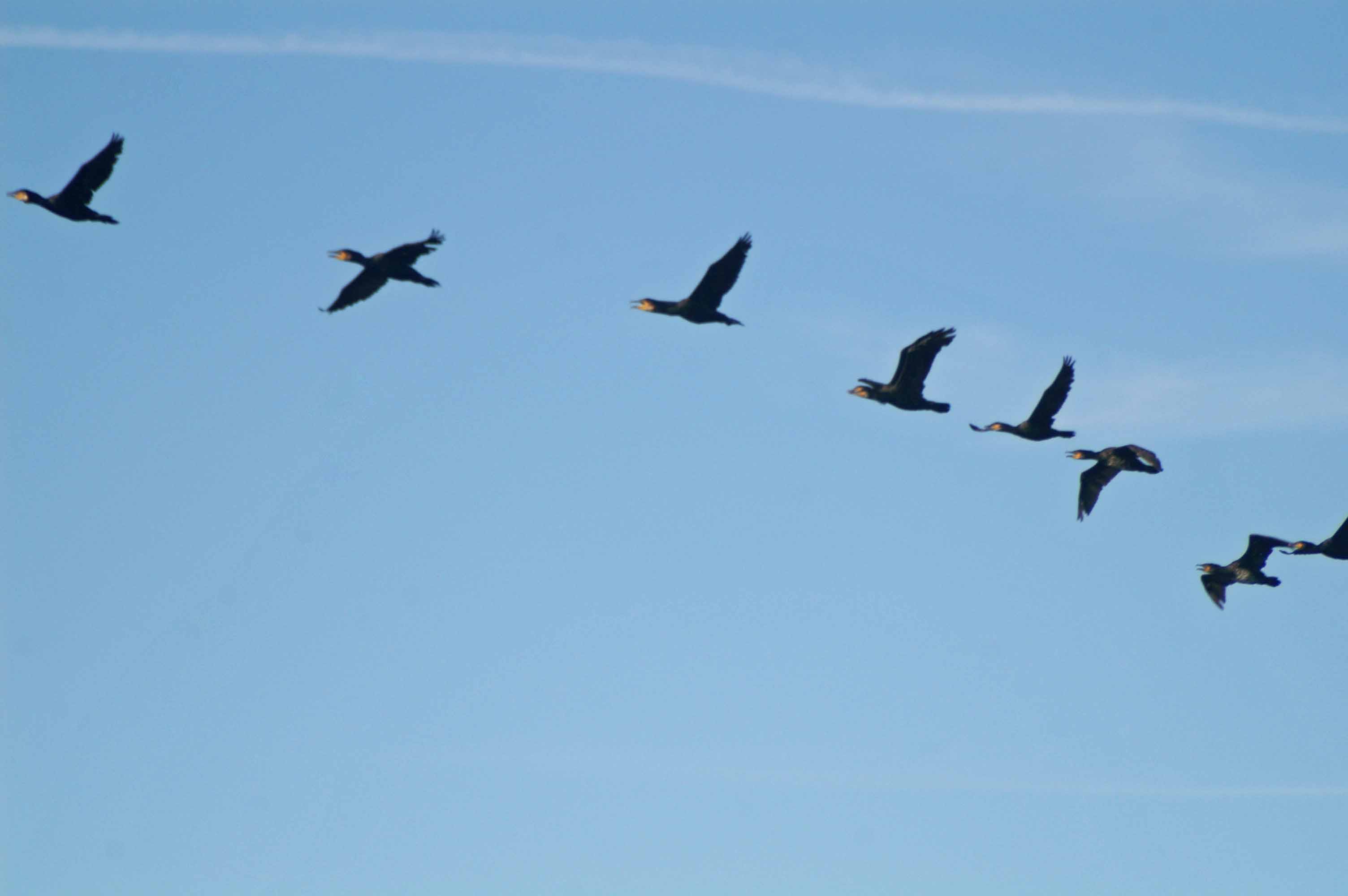
24/8/11-Cormorants flying toward the Little Orme, calling as they flew

24/8/11-Black-headed Gull flying

Birds to be seen currently on the shore at Rhos-on-Sea:

CormorantPhalacrocorax carbo, OystercatcherHaematopus ostralagus,  Ringed PloverCharadrius hiaticula, Turnstone – Arenaria interpres, Redshank –  Tringa totanus, Curlew Numenius arquata,Black-headed Gull Larus ridibundus, Herring Gull – Larus argenatus, Lesser Black-backed Gull – Larus fuscus, Sandwich Tern Sterna sandvicencis, Pied Wagtail Motacilla alba, yarellii

Late summer’s fruitfulness

Tags

, , , , , , , , ,

22nd August

I took a walk around the Rhiwledyn Nature Reserve on the Little Orme this afternoon to seek out some late-summer insects; I was hoping for a Small Copper butterfly and maybe another Comma, but a Small Tortoiseshell was top of the list and to my surprise and delight I spotted one almost straightaway. Beautifully bright coloured it was a pristine specimen that rested on the ground, wings outstretched.

22/8/11-Small Tortoiseshell-Aglais urticae

It was a sunny but windy afternoon, so I headed away from the exposed cliff top to explore the more sheltered area of scrubby ground at the opposite end of the site. I spotted some yellow-green flowers that I think were those of fennel and found a Common Wasp feeding there.

22/8/11-A Common Wasp on fennel flowers

Nearby there were also a number of attractive little Potter Wasps busy on Knapweed flowers. Although being coloured and striped in yellow and black, a closer look soon reveals them to be very different in size and shape to the Common Wasp.

22/8/11- Potter wasps on a Knapweed flower

22/8/11-Potter Wasp-Ansitrocerus parietum

Several Large White butterflies fluttering around a bramble attracted my attention and moving closer I saw that a single female was the draw for several males that were competing to mate with her. I took the opportunity to photograph a male resting with its wings open.

22/8/11-Large White-Pieris brassicae

22/8/11-Common Carder Bumblebee on scotch thistle

On Ragwort flowers I spotted a hoverfly, black with interrupted white stripes which is a new-to-me species to add to my collection later identified as a Pied Hoverfly – Scaeva pyrastri. I only managed to get one photograph which unfortunately is a bit blurred as the wind was blowing the plant around and the insect didn’t stay there for long.

22/8/11-Pied Hoverfly-Scaeva pyrastri

22/8/11-There are still Cinnabar Moth caterpillars feeding on ragwort

Many plants are now bearing seeds or fruits; blackberries are ripening and watching a Bluebottle fly feasting on them I was reminded why it’s probably best not to pick them and eat them without washing or cooking them first!

22/8/11-Bluebottle fly on blackberries

22/8/11-Teasel seed head

22/8/11-Ripe rosehips

22/8/11-Robin's Pincushion on wild rose

22/8/11-Carline thistle seed heads

Late-blooming wildflowers I photographed today included Burdock, Yarrow and Toadflax. Ragwort is still flowering although some plants are going to seed. Knapweed is also still blooming and there are still a few fresh thistle flowers, although most are seeded.

22/8/11-A 6-spot Burnet Moth on a fading Scotch thistle flower

22/8/11-Burdock

22/8/11-Yarrow-Achillea millefolium

22/8/11-Common Toadflax-Linaria vulgaris

Linaria vulgaris (Common ToadflaxYellow Toadflax, or Butter-and-eggs) is a species of toadflax (Linaria), native to most of Europe and northern Asia, from the United Kingdom south to Spain in the west, and east to eastern Siberia and western China.

22/8/11- RAF Rescue helicopter

The noisy presence of a bright yellow RAF Air-Sea Rescue helicopter is not an uncommon sight around the cliffs of the Little Orme as this is one of the practice sites for those based on Anglesey. However,today’s mission was real and assistance was required by a person that had injured themselves and were inaccessible to an ambulance, so the helicopter actually landed. A crowd quickly gathered to watch the proceedings, but from what I gathered from speaking to a few different people, this was not out of concern for the injured person, but rather to try to spot if it may be Prince William flying the helicopter! It wasn’t, but as there are only three craft based in Anglesey, it was a possibility it could have been.

22/8/11-Sheep grazing on the rocky hillside

I have walked up the steep grassy pathway on the hillside several times, but had never ventured further on along the ridge, so I thought I would rectify that today. This area is grazed by sheep and edged by shrubby vegetation and small trees,adding yet another dimension to the reserve as habitat for woodland birds. It was a little too late to venture far, but a good time to catch quite a few birds out and about foraging for their supper, including Blackbirds, Robin and Chaffinch.

A chaffinch amongst elderberries

22/8/11-Banded snail

Catching up on the gardening

Tags

, , , , ,

This month’s weather has been variable and time spent sorting out the garden has been sporadic, but when I have had the opportunity I have been clearing some overgrown borders and have seen or disturbed some interesting things in the process.

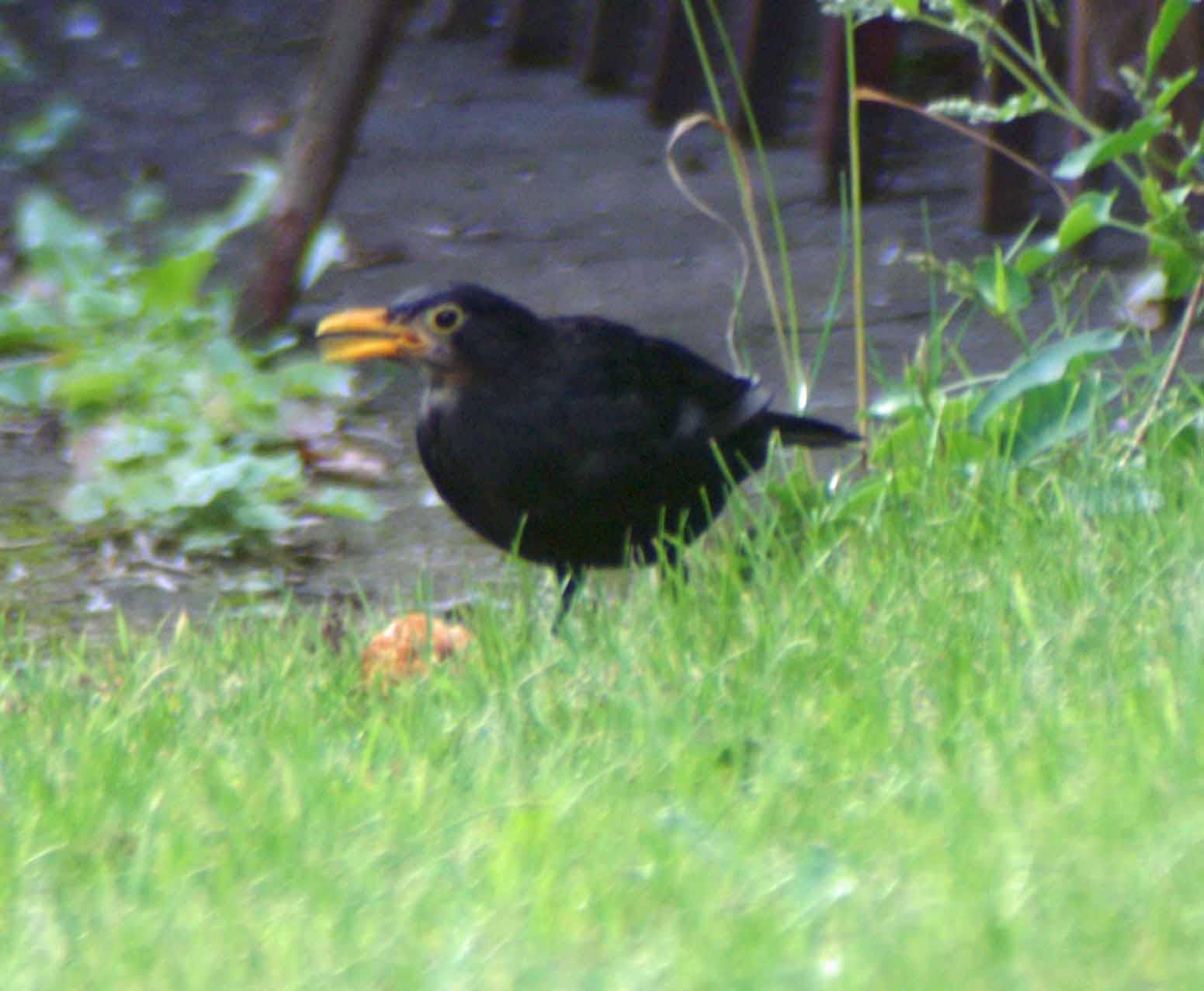
Part of next door’s apple tree overhangs the hedge; the tree is laden with rosy apples and many of the smaller fruit have begun to drop to the ground. The windfalls have been providing a regular treat for the Blackbirds.

22/8/11-Blackbird enjoying a windfall apple

I disturbed the lovely little Brimstone Moth in the following photograph when I was pulling out overgrown ivy.

22/8/11-Brimstone Moth-Opisthograptis luteolata

I found a garden snail close by the spot the moth flew out from. There is nothing it can do much damage to in that particular area, so I replaced it under the hedge, where to my surprise it began producing a mass of foamy bubbles. I’ve been trying to discover why it would have been doing that but haven’t come across an explanation I’m happy with yet.

22/8/11-A garden snail blowing bubbles

The sunshine brought out a few butterflies including Large White, Holly Blue and a couple of Gatekeepers that were beginning to look a little faded.

22/8/11-Gatekeeper butterfly

22/8/11-Buff-tailed bumblebee covered with pollen

There are several species of wildflowers that I leave to grow in the garden, one is the pretty yellow Bird’s foot trefoil, which also currently has seed-pods, the form of which give the plant its name.

22/8/11-Bird's-foot trefoil-Lotus cornicularis

Bird’s-foot Trefoil – Lotus corniculatus is a common flowering perennial plant native to grassland temperate Eurasia and North Africa that flowers from June until September. . The flowers develop into small pea-like pods or legumes; the name ‘bird’s foot’ refers to the appearance of the seed pods on their stalk.

The height of the plant is variable, from 5-20 cm, occasionally more where supported by other plants; the stems can reach up to 50 cm long. It can survive fairly close grazing, trampling and mowing and is a very important plant in the life-cycle of many butterflies and moths. It is most often found growing in light sandy soils.

The plant has had many common English names in Britain, which are now mostly out of use. These names were often connected with the yellow and orange colour of the flowers, e.g. ‘butter and eggs’. One name that I knew it by as a child that is still used is ‘Eggs and Bacon.

22/8/11-Bird'sfoot trefoil seedpods. The form and claw-like arrangement of the pods is from where the common name derives

Another of my favourite wildflowers also largely left alone, is the Blue bugle, Ajuga reptans. It has always seemed strange to me that it is often treated as a ‘weed’ in gardens where it occurs in its natural form but that larger-flowered cultivated versions of similar species are purchased and planted.

22/8/11-Blue bugle -Ajuga reptans

Seashore treats

Tags

, , , , ,

20th August

I had some errands to do in the village this morning and as it was a lovely bright sunny morning I decided to walk there along the promenade. As always I stopped by the tiny St.Trillo’s chapel to scan the rocky seashore; the tide was going out and sightings of Oystercatchers and Sandwich Terns were rather distant, and I was set to move on until I noticed a slight movement around a rock pool and spotted a Curlew, the closest view of one I’ve had since I first realised they were present here.

20/8/11-Curlew on the beach

Returning home from the village  I stopped for a quick look around the area at the end of the dry sandy beach where there are large rocks and also the edge of the harbour. To my surprise there was a small group of Oystercatchers there and I had some close up views of them foraging amongst the rocks.

20/8/11-Oystercatcher-Haematopus ostralegus

20/8/11-Oystercatcher probing a shellfish

20/8/11-Oystercatcher & Herring gull

20/8/11-Herring Gull posing

20/8/11-Oystercatchers flying

A wander through Pwllycrochan Woods

Tags

, , , , , , ,

This prominent woodland stretches across the slopes behind the town of Colwyn Bay. The wood is almost entirely deciduous with a variety of native trees and exotic species such as sweet chestnut and firs. Mature trees impart character to the woodland whilst two streams provide an attractive feature as they forge their way through deep dingles in the ancient part of the wood. Birds to be seen and heard in the wood include Jay, Buzzard, Nuthatch, Great spotted woodpecker, Treecreeper and Tawny owl.

The name “Pwllycrochan” is thought to translate to mean ‘Cauldron Pool’. The pool referred to lies at the bottom of a steep wooded dingle and was created by the stream that runs down into it.  The stream probably used to run much faster than it does now and created a pool of well oxygenated, bubbling water at its base. 


This remnant of ancient woodland covers 21 hectares in total, but it is divided into three ‘islands’ by roads that bound it and cut through it ; i.e King’s Drive and Llanrwst Road. However, despite the proximity of the highways, the woodlands retain much of their tranquility and walking between the wonderful towering trees, some of which must have been growing steadily throughout at least a couple of centuries, instills the feeling of calm and peace that I believe is intrinsic to old woodlands.

Today, in the middle of August, it was exceptionally quiet here, with no birdsong and very few other people around, so the sudden sounds made by a grey squirrel foraging through the branches of a beech tree above my head made me jump. Apart from a couple of glimpses of Robins, a Blackbird, and at the end of my walk a Jay, there is little else to report in terms of sights and sounds of fauna.

This was my first visit to this woodland and although I had it in mind to find the pool that gives it its name, I had no idea where it was to be found, so I just wandered along sections of tracks that wind around through the trees. Most are easy walking, either flat or slightly sloping, while others require a bit more of an uphill effort and I imagine could get quite slippery in wet weather.

I think the photographs I took are descriptive enough to convey the essence of a wander through this lovely woodland, so here are just a few of the many I took:

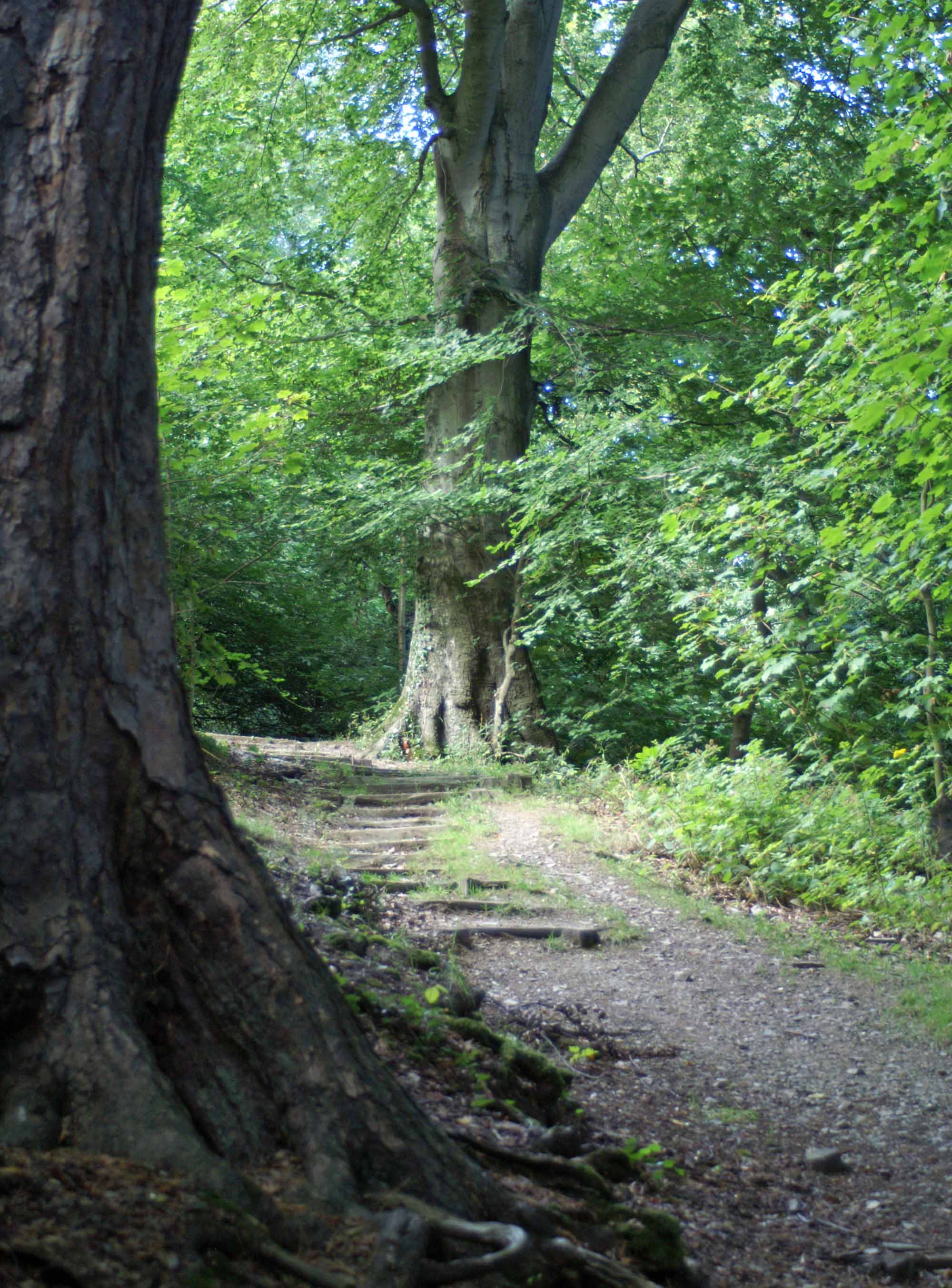
Shaded pathway between the trees passing beneath a huge beech tree with moss-covered roots

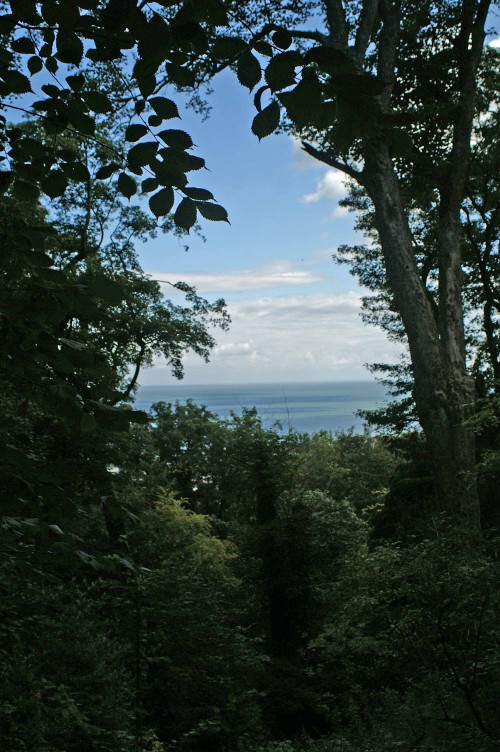
Sea view through the trees

A sun-dappled uphill pathway with steps

Steps leading to the top of a pathway

One of the impressive ‘exotic’ Sweet Chestnut trees

Another chestnut specimen, this one the more familiar Horse Chestnut or conker tree

A true native Ash Tree

A fern-fringed stream trickling down over rocks

A fern covered bank

Speckled Wood butterfly resting on a fern frond

A decaying tree stump surrounded by fresh green moss

Tree stump supporting moss & lichen

Part of the trunk of a towering Scots Pine tree

Pine cones

This impressive beech tree is so tall I had to take the photograph in two parts and merge them together

I finally came upon the famous ‘cauldron pool’, but probably due to the lack of rainfall earlier on this year, its water level was low and despite some recent renovations to its retaining walls, it was looking rather sad, so I decided to protect its reputation and not take a photograph this time.

Finally, on the woodland edge:

A stand of Rose-bay Willow Herb on the woodland edge

A brown-lipped snail tucked beneath a leaf