
Tags
Birds, Boxing Day, Christmas, customs, Ireland, Isle of Man, mythology, nature, St Stephen's Day, traditions, Wales, Wren
For reasons lost in the mists of time, the tiny wren has featured largely in the folklore, mythology and traditions of many European countries. In the UK, perhaps the most extraordinary and in the past, cruel custom, must be the one that traditionally took place each December 26th. To many of us this is Boxing Day or St Stephen’s Day, but in some parts of Great Britain it was also known as Hunt the Wren Day or just Wren Day, depending in which part of Great Britain the ritual was enacted.

There are several variations as to how the ceremony, or ritual was played out, but essentially it involved boys and sometimes young men who joined together, often dressing in curious costumes, such as straw masks, greenery and a motley assortment of colourful clothing, who for the duration of the ritual were known as ‘Wren Boys’. Their mission was to hunt around the hedgerows for a wren, which was sometimes kept alive, sometimes not. Once caught, the bird was then put in a small box or ‘Wren House’, which was decorated with holly, ivy and ribbons, placed on top of a staff or long pole and displayed around the neighbourhood. The boys sang songs and played music in exchange for donations.
Typically Wren Hunts took place in Ireland, The Isle of Man, Wales and France; all areas where Celtic traditions are more firmly entrenched. Times, sensibilities and laws have thankfully changed in modern times, but in a few places Wren Day has survived, or been revived, suitably modified but keeping the tradition alive and raising money for charity.
Ireland

In Ireland the day is known in Irish Lá an Dreolin, or Hunt the Wren Day and takes place on 26th September, St Stephens Day. Here the Wren Boys beat the bushes and hedges with sticks, and when a wren flew out they tried to bring the bird down by throwing sticks, stones and any other objects that came to hand. Whoever killed the wren, or wran as the bird is also known, was believed to have good luck for a year. The dead bird was placed atop of a long pole, then travelling from house to house they sang songs accompanied by drums and pipes, they collected money for food and drink. One version of the song is this:
“The wren the wren the king of all birds,
St Stephen’s Day was caught in the furze
Her clothes were all torn – her shoes were all worn
Up with the kettle and down with the pan
Give us a penny to bury the wran
If you haven’t a penny, a ha’penny will do
If you haven’t a ha’penny, God bless you!”
Today the Wren Hunt no longer takes place, but Wren Day has survived, or been revived in a few towns and villages. Groups of Wren Boys hold small parades and carry around a stuffed or fake wren and usually collect money for charity or to host a dance or ‘Wren Ball’ for the town.
Wales
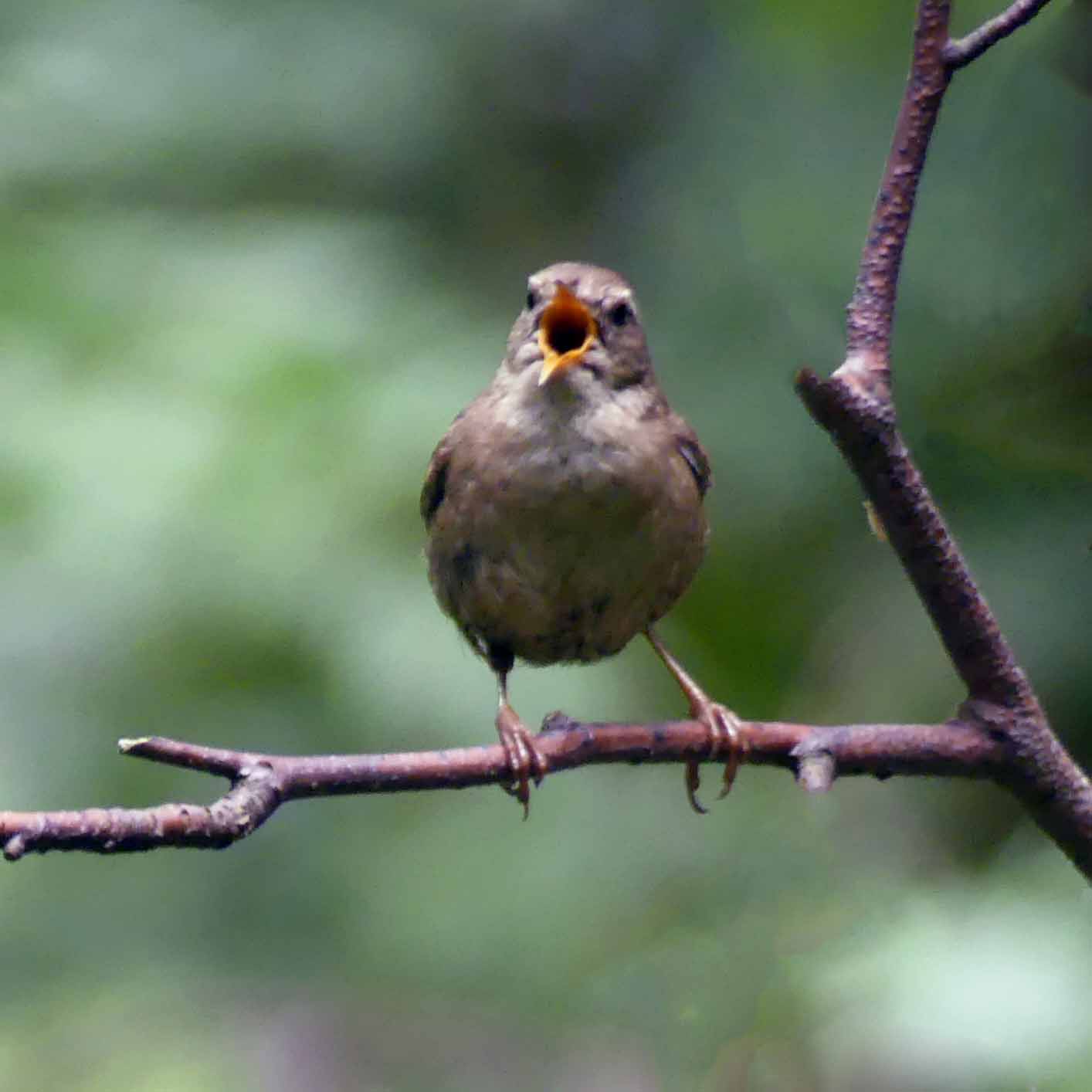
In Wales the tradition of Hunting the Wren, in Welsh, Hela’r Dryw, took place on the Twelfth Day of Christmas, January 5th, and the practice continued in Pembrokeshire until the beginning of the 20th century. Similarly to the traditions of The Isle of Man, a dead wren placed in a ‘Wren House’, a small decorated wooden box with windows, which was carried around the village by ‘Wren Bearers’. Sometimes, the Wren Boys caught a live wren, placed it in the Wren House and called upon folk to make offerings to the ‘Little King’, then set the bird free at the end of the day.
England

The tradition was followed in parts of England, but it gradually died out or was banned by the authorities by the mid 19th century. In the late 20th century the tradition of the Wren Hunt was revived in Suffolk and it has been performed in the town of Middleton on every Boxing Day since 1994.
Isle of Man
Legend

Although the origins of the wren hunting ritual is obscure in most cases, in the Isle of Man it is said to be associated with an enchantress, a fairy queen or a goddess named Tehi Tegi, which translated means something like ‘beautiful gatherer’. The legend says that Tehi Tegi was so beautiful that all the men of the Island followed her around, neglecting their homes and fields, in the hope of being chosen to marry her. But Tehi Tegi led her potential suitors to the river and drowned them and when confronted she escaped by transforming into a wren and flew away. She was banished from the Island, but returns once a year, when she is hunted.
Hunt the Wren was first recorded on the island in the 1720s, though even then was said “to have been practised since time immemorial”, then during what is known as the Manx cultural revival of the 1970s and 80s, *Culture Vannin said Hunt the Wren had become “revitalised with a new focus on the dance”.
December 26th 2024
One of the unique Manx festive traditions took place on St Stephen’s Day as Hunt the Wren was marked with singing and dancing across the island’s communities. Culture Vannin said the practice dates back to pre-Christian times, and was centred around a wren, described as “the king of all birds” in legend. In modern times, an artificial wren is used which is “hunted” and danced through the streets on top of a wren pole.
extract from https://www.bbc.co.uk/news/articles/cx2np73nx1ro
* Culture Vannin is an organisation that promotes and supports the culture, heritage and language of the Isle of Man established in 1982 by the Isle of Man Government as the Manx Heritage Foundation. In 2014, it was rebranded as Culture Vannin to reflect its progressive approach to Manx culture.

 everyday nature trails
👌👍🌟✨💫
LikeLike
PS Sorry, I didn’t know that the comment would be public on the blog. I meant it just for you. Take it down if you wish.
>
LikeLike
Hello Teresa and Happy New Year from Nanton, Alberta, Canada in the lovely foothills of the Canadian Rockies. I love your blog and I was thrilled with this one, as I am of Manx heritage and just wrote an historical novel based on my family emigration story, and I included faery lore, of course! I have never heard of this tradition before. I am sharing your blog with family members of English heritage, as I am sure they will be interested too. My sister-in-law loves your blog as it reminds her of home.
In case you would like to know more about my novel, it’s entitled Time Enough and will publish on January 1st. I’m so excited to share it. Here’s the link to the Kindle edition, just FYI, with the synopsis. https://www.amazon.com/Time-Enough-Lise-Mayne-ebook/
It starts on the Isle of Man, which I had the good fortune to visit in 2017 and find my ancestors home and the church where my great-grandfather was baptized. They then went to Michigan, and I know nothing about what happened there, so I created a fictional tale based on the few details I had. It ends up in Saskatchewan, which I did know about, through my grandfather.
Just thought you might be interested in this connection to your wonderful blog. I will be sharing this information when I do talks for my book. People are fascinated by the Manx faery lore, though that is not the main focus of my book. I felt I had to include and be respectful of the beliefs in the historical context.
All my best for the new year, and keep trekking and writing. Your blog is delightful. I have had to give up on a lot of sub stack and blogs, because it’s just too much reading, leaving no time for writing. But I will continue to read yours!
Sincerely,
>
LikeLike