• Home
  • about
  • about the photographs
  • Local Nature Reserves
    • Bryn Euryn Local Nature Reserve
    • Mynydd Marian
  • Wales Coast Path
    • Grey Seals in North Wales
    • St.Trillo’s Chapel
    • Wildflowers of North Wales Coastal Paths, Cliffs and Dunes

everyday nature trails

everyday nature trails

Tag Archives: National Trust

Through the Laburnum Arch

01 Wednesday Jul 2015

Posted by theresagreen in Nature, Nature of Wales, nature photography

≈ 8 Comments

Tags

blue damselfly, Bodnant Gardens, common blue damselfly, common newt, damselfly, gingko biloba tree, National Trust

Bodnant Gardens is rightly famed for its laburnum arch which during its peak flowering time is a truly glorious sight. Earlier in the year a friend and I visited whilst it was being pruned back, a mammoth task conscientiously performed each year, so we were very keen to see it again when it came into bloom.
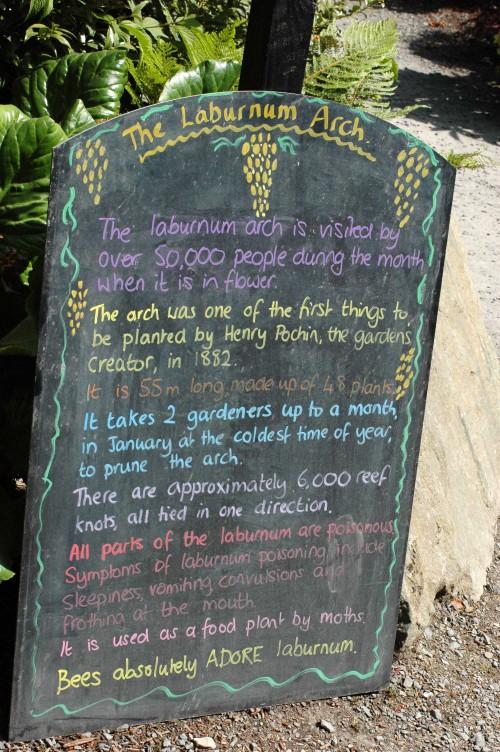
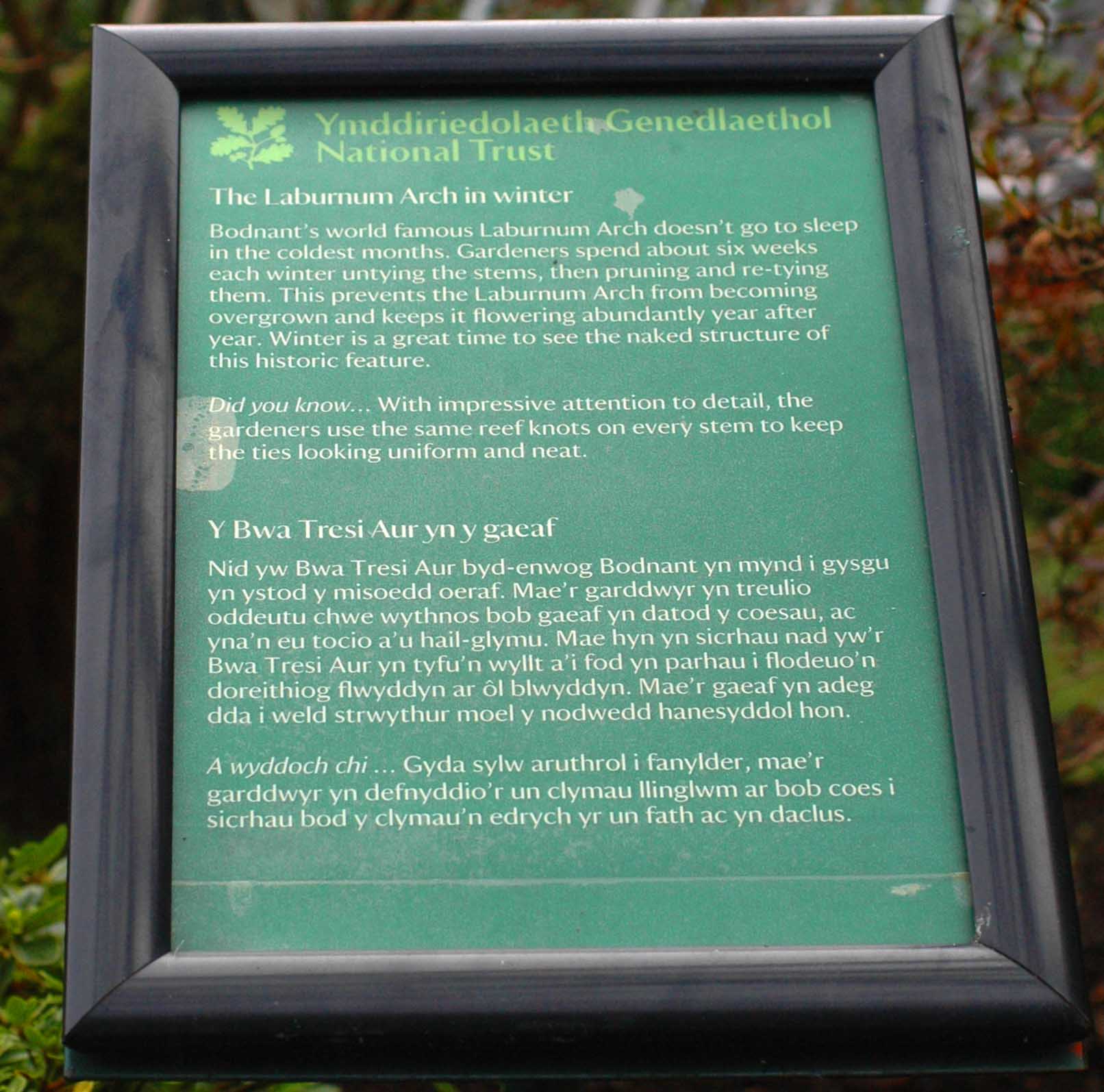
information about the laburnam aarch

information about the laburnum arch

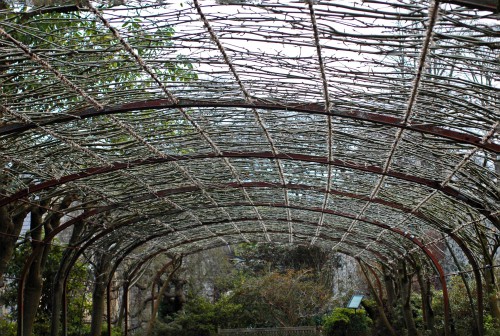
How it looked back in mid-January this year:

Pruning the laburnam arch

Pruning the laburnum arch

I had been a little concerned that we may have missed the arch at its best, but fortunately the cooler than usual Spring weather had delayed the event and it turned out our timing was perfect. The arch was breathtaking; honestly, words and even photographs cannot come close to doing it rightful justice.

Walking through sunshine

Walking through sunshine

A rare moment with no people in view

A rare moment with no people in view

There was hardly a space between the glorious panicles of blossoms

There was hardly a space between the glorious racemes of blossoms

Laburnum, or Common Laburnum –  Laburnum anagyroides  is a species of small tree in the subfamily Faboideae of the pea family Fabaceae. The trees are native to the mountains of southern Europe from France to the Balkan Peninsula. The trees are deciduous. The leaves are trifoliate, somewhat like a clover; the showy flowers are yellow, fragrant and held in pendulous racemes 10–30 cm (4–12 in) long in spring, which makes them very popular garden trees. InL. anagyroides, the racemes are 10–20 cm (4–8 in) long, with densely packed flowers. All parts of the plant are poisonous, and can be lethal if consumed in excess.

Flowers & leaves

Flowers & leaves

Having fulfilled the wish to see the magnificent, but artfully manipulated arch, I was keen to explore the wilder side of the rest of the grounds.

The walkway from the arch

The walkway leading down from the arch

150610-Bodnant 4

Alliums

To the wilder side of the garden

Pathway to the wilder side of the garden

The wildflower meadow

The wildflower meadow

Then along a pathway that is ‘semi-wildly’ planted with long grass and flowering plants that I think are species of Asphodel.

Pathway planted  with asphodels

Pathway planted with asphodels

From their appearance I think these are a species of Asphodel

From their appearance I think these are a species of Asphodel

Along a newly-opened woodland path alongside water

Along a newly-opened woodland path alongside a stream

Being a warm, sunny day our walk was much about light, dappled shade, water both running and still that held deep reflections of the lush foliage above it.

Beneath white blossomed rhododendron

Beneath a canopy of white blossomed rhododendron
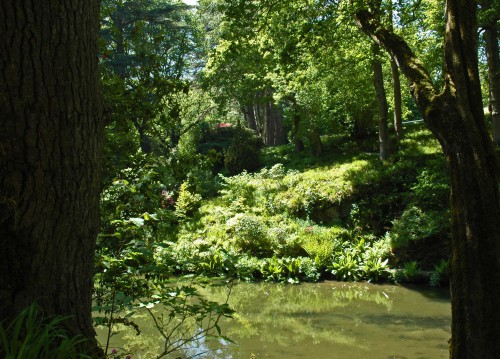
Cool green

Reflected cool greens

Red

Red-flowered rhododendrons glow amongst the cool greenery

oo

The Skating Pond and its environs, appropriately named ‘Far End’ are a newly restored area of the Gardens and only recently opened to the public.  The area was originally named the ‘Wild Garden’ and is believed to have been designed to give a naturalistic feel, recreating what was seen and experienced in nature. Sightings of kingfishers, herons, otters and woodpeckers are all possible here.

Dozens of brilliant blue damselflies flitted around the edge of the pond, pausing to rest on the foliage that lines its edges.

Damsel fly

Common Blue Damselfly on a hosta leaf

And I have never seen as many tadpoles as there were swimming in ‘schools’ around the lily pads.

150610-Bodnant 48

A small number of the hundreds of tadpoles in the pond

across the Skating Pond

across the Skating Pond

Yellow Flag Iris

Yellow Flag Iris

There is a lovely gingko biloba, one of the most ancient of tree species, growing in this part of the garden
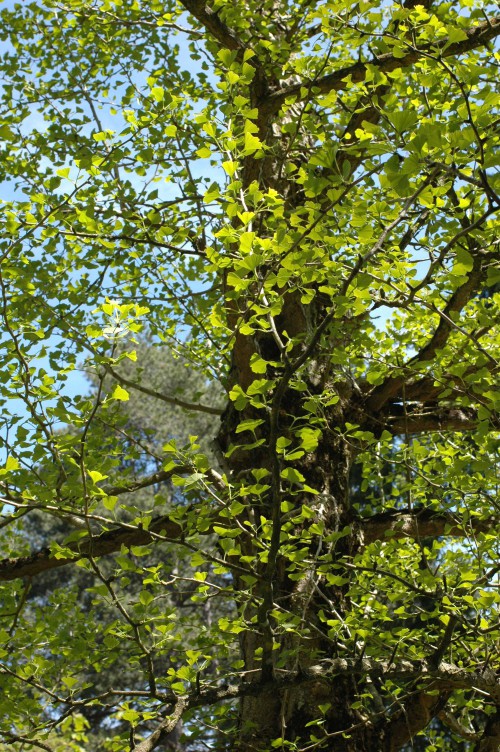
A Ginko Biloba tree

A Gingko Biloba tree- also known as Maidenhair tree

and beneath the tree beautiful blue Meconopsis, or Himalayan Poppy
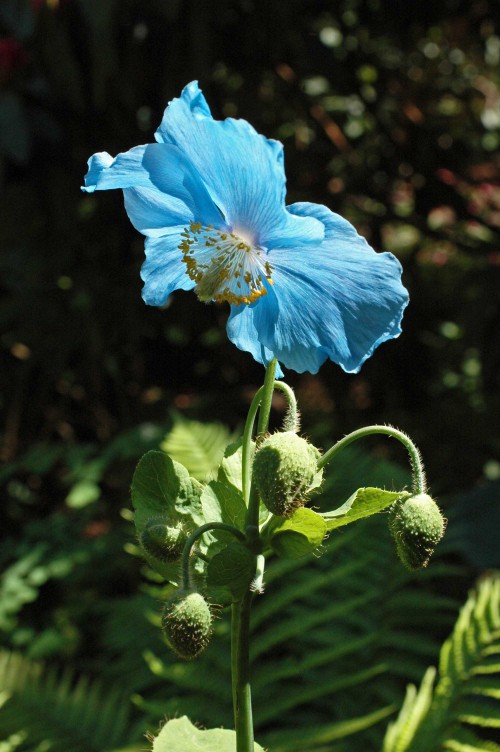
Meconopsis-Himalayan Poppy

Meconopsis sp – Himalayan Poppy
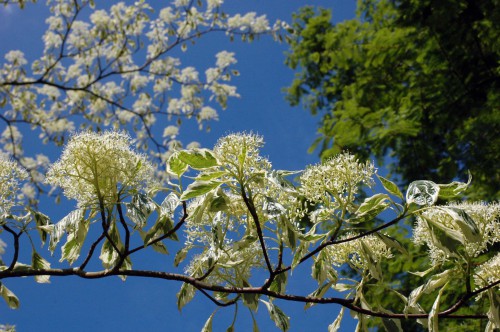
Blossom of a gorgeous   Wedding Cake Tree-Cornus controversa 'Variegata'

Blossom of a gorgeous Wedding Cake Tree-Cornus controversa ‘Variegata’

A buttecup meadow

A buttecup meadow

We stopped for refreshment at the café in the Dell, sitting in front of this unremarkable cotoneaster bush which we soon noticed was alive with dozens of nectaring honey bees.
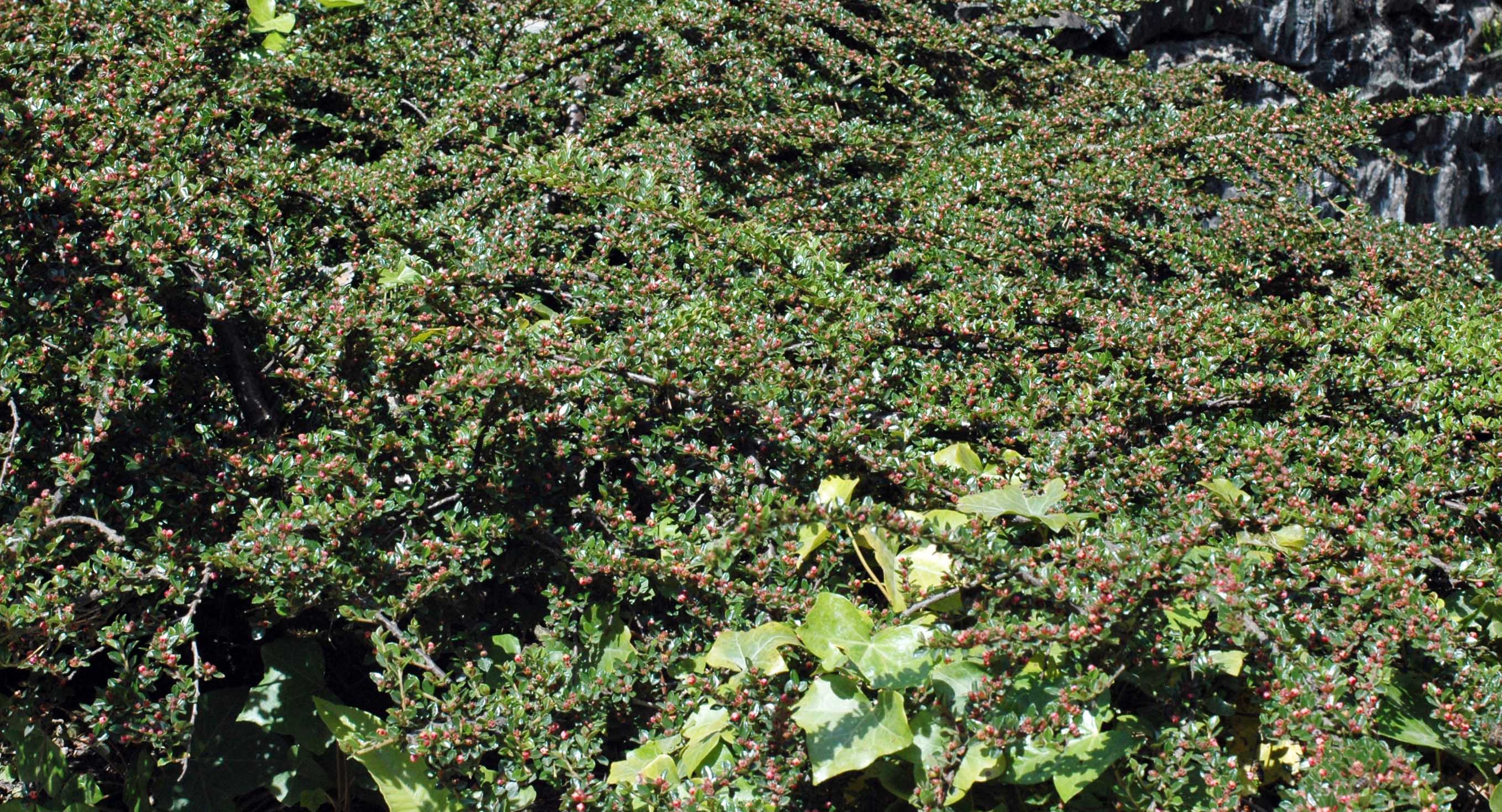
The place to bee

The place to bee

Beneath tall trees

Beneath tall trees

Pink-tinges white rhododendron

Pink-tinged white rhododendron

A determined boy holding onto an objecting swan

A determined small boy holding onto an objecting swan
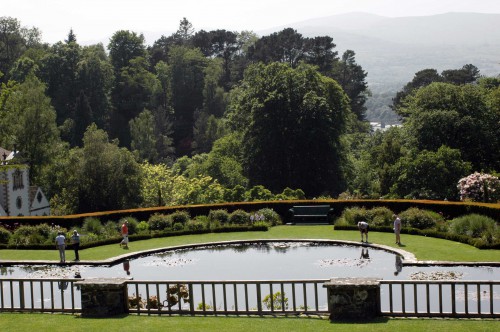
View from an upper terrace garden onto a lily pond

View from an upper terrace garden onto a lily pond

water lilies in the formal pools of the terrace gardens

water lilies in the formal pools of the terrace gardens

On the lily pads that adorn the formal pools of the Terrace gardends were more damsel flies, the males gripping onto their captive females preparing to take off for the task of the depositing of eggs. The females of this species occur in two colour forms; some are blue like the males, others, as here are green.

Coupled damselflies preparing for take-off

Coupled damselflies preparing for take-off

Between the lily pads we  were lucky to spot two newts swimming near the surface. I didn’t have my long lens with me so this is the closest I could get leaning over the edge of the pool, but I think it’s a Common or Smooth Newt.

Newt in a lily pond
Newt in a lily pond

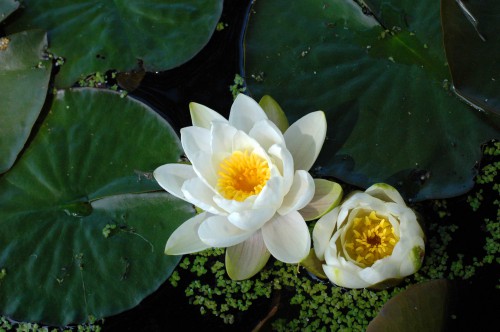
Water Lilies

Water Lilies

An intriguing archway in a  stone wall

An intriguing archway in a stone wall tempting further exploration
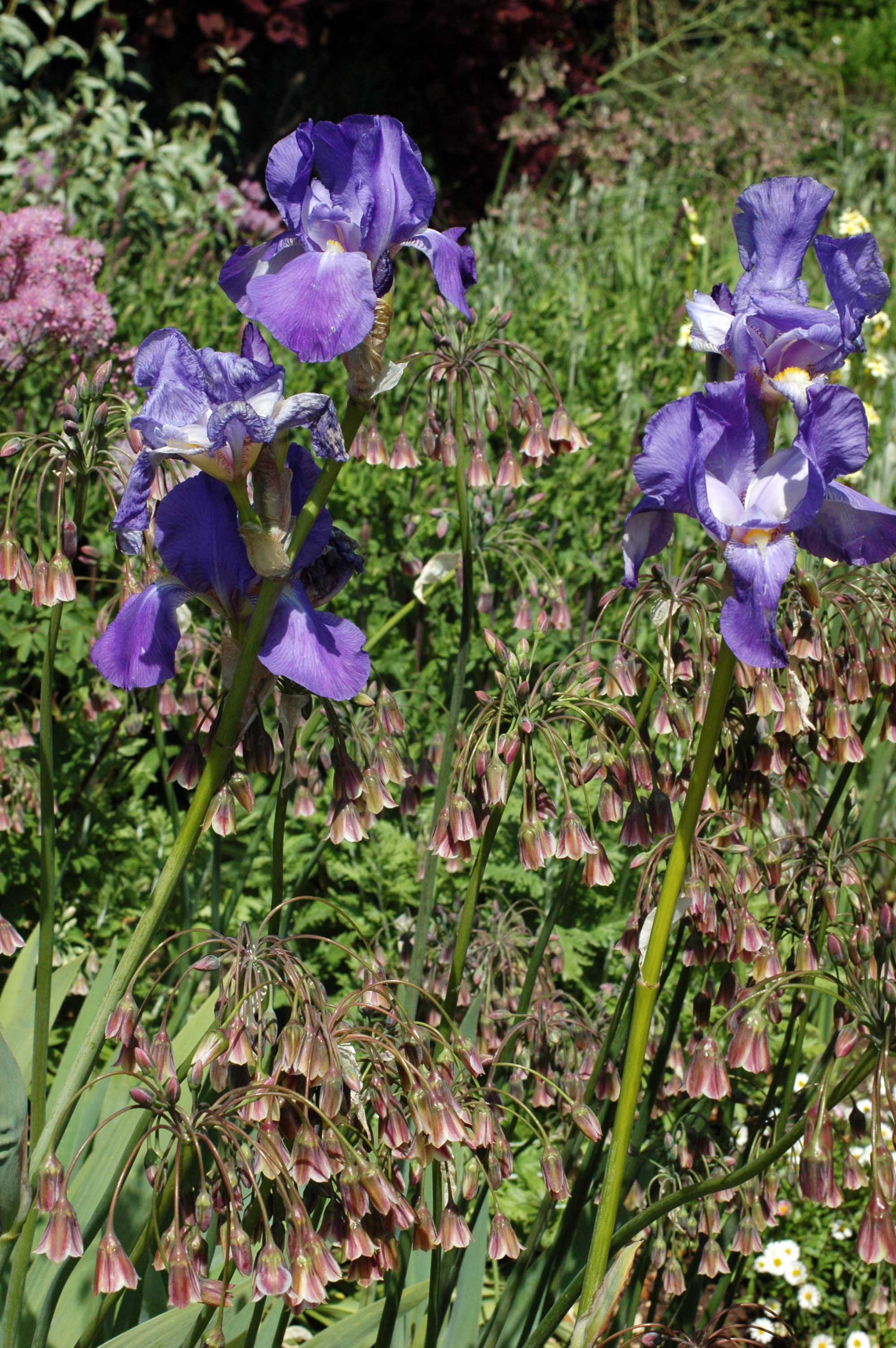
Blue flag irises

Blue flag irises amid the curious flowers of Nectaroscordum siculum

I loved the colour and form combination of the blue flag irises and unusual ornamental onion plants that had umbrellas of hanging, bell-shaped flowers. A nearby plant label named them as Nectaroscordum siculum  and I think they may commonly known as Sicilian honey garlic.

We concluded this tour of my favourite garden savouring the aromas of some of the newly-opening blooms in the rose garden which will be glorious in a few weeks time….. there’s always something here to tempt you back.
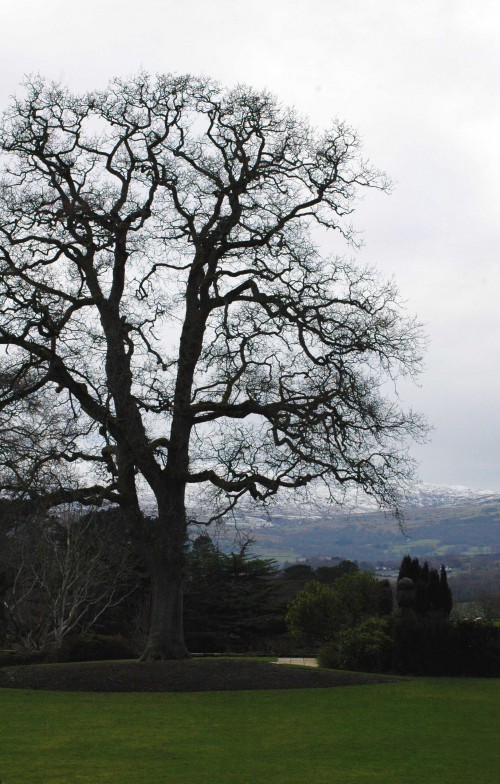
Share this:

  • Click to share on Facebook (Opens in new window) Facebook
  • Click to share on Pinterest (Opens in new window) Pinterest
  • Click to share on X (Opens in new window) X
Like Loading...

Bodnant Gardens

13 Friday Feb 2015

Posted by theresagreen in Nature of Wales, North Wales

≈ 6 Comments

Tags

Bodnant Gardens, Bodnant Gardens in winter, laburnum arch, mossy rocks, National Trust, snowdrops, streams, winter-flowering plants, woodland streams

Bodnant Gardens has all the elements I would choose for my own perfect garden; a steeply wooded valley with beautiful trees, a waterfall and a large pond, streams that cascade down the hillside, ferns and mosses, glorious flowering shrubs, interesting nooks and crannies, a wildflower meadow and of course its famous and glorious laburnum arch.

No matter the time of year you visit, there is always plenty to enjoy and the following photographs are just a few of the things that caught my attention during the first visit of the year towards the end of January.  I often visit here on my own, but this time it was lovely to be accompanied by a friend who was seeing the gardens for the first time.

Background of snowy mountains

Background of snowy mountains

It was a cold, snow-on-the -hills, rather overcast day, not too conducive for lingering and gloves were needed between photographs to thaw out fingers, so I didn’t made notes of the species of plants, just enjoyed them.

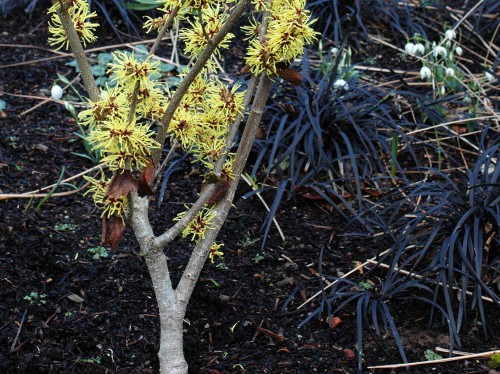
Wych Hazel underplanted with black grass and snowdrops

Wych Hazel under-planted with Black Grass (Ophiopogon) and snowdrops

Snowdrops almost out

Snowdrops almost out

Iris

Iris

Bodnant House is not open to the public

Bodnant House is not open to the public

Anothe Wych Hazel, a golden yellow almost orange

Another Wych Hazel, a golden yellow, almost orange

Rhododendron, also past its best

Rhododendron, alas past its best


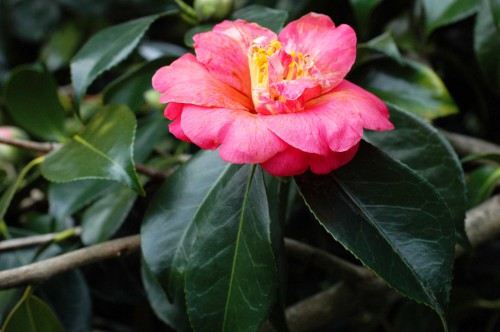
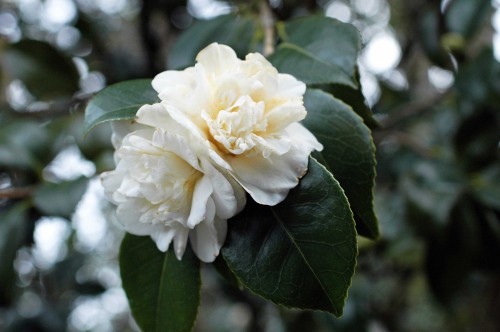
I was surprised by the numbers of rhododendron and camellias in full bloom, but even this early in the year many are already past their best and the ground beneath was strewn with fallen petals.

A pink camellia, past its best but still beautiful

A pink camellia, also past its best but still beautiful

A gorgeous creamy white camellia

A gorgeous creamy white camellia

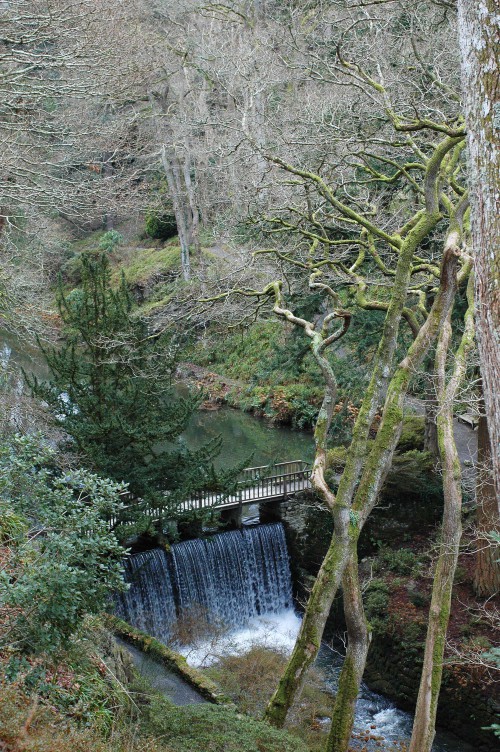
Looking down into the Dell, onto the waterfall

Looking down into the Dell, onto the waterfall

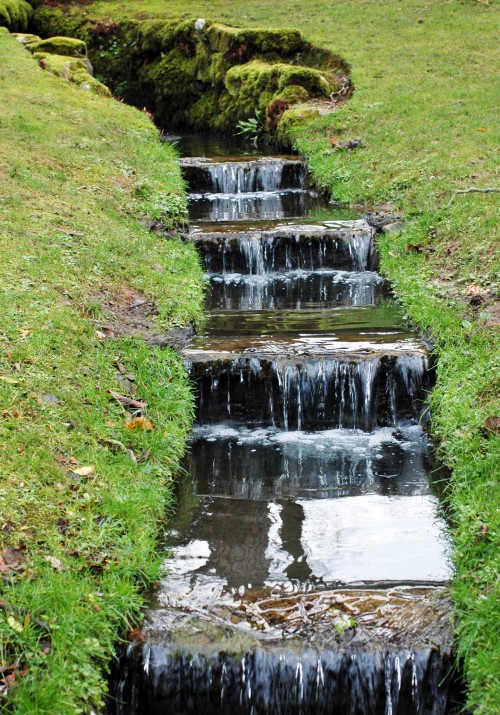
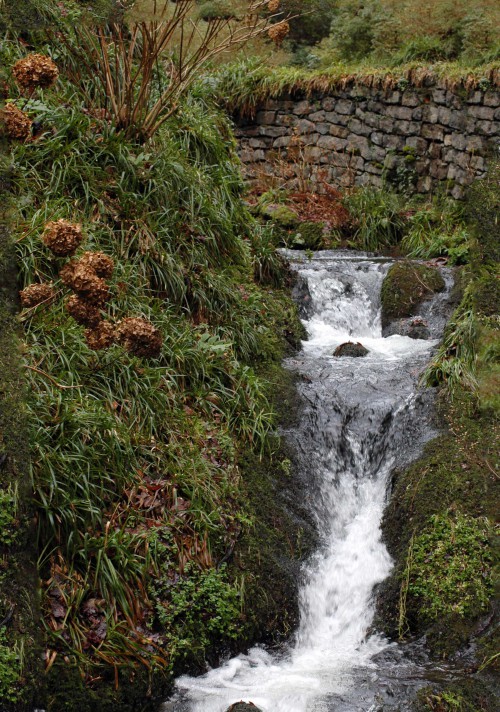
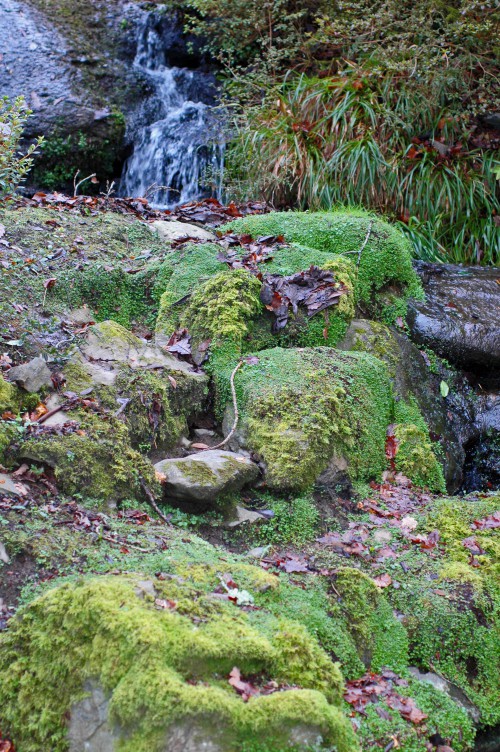
Cascading streams and mossy rocks….

150120TG-Bodnant 10-Water

150120TG-Bodnant 12-Stream & falling water

150120TG-Bodnant 22-Mossy stones by water150120TG-Bodnant 21-Mossy stones by water

A close-up of  a fern-like moss

A close-up of a fern-like moss

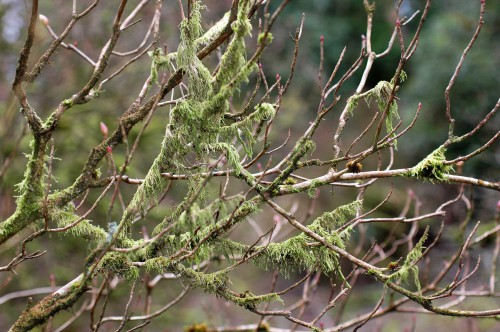
Lichen draped along twiggy branches

Lichen draped along twiggy branches

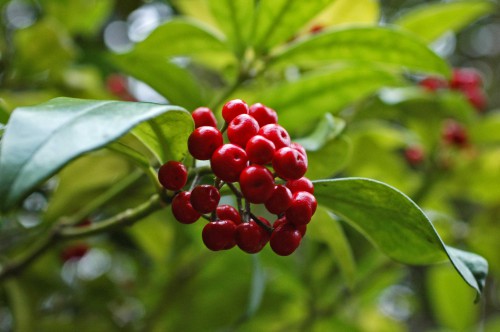
Red berries of

Red berries

As I mentioned earlier, Bodnant is famed for its beautiful and impressive laburnum arch. At this time every year the arch is painstakingly pruned and the branches that will produce this year’s blossoms are individually tied into place. On the day of our visit we spoke to the ladies doing the work, which they assured us is a real labour of love and that its repetitive nature is peaceful and ‘zen-like’. Good to hear as the process takes around six weeks to complete. For visitors the end result is a neat and orderly, beautifully crafted structure that will support thousands of panicles of glorious yellow flowers this coming spring.

Pruning the laburnam arch

Pruning the laburnum arch

The narrative board that explains the pruning process

The narrative board that explains the pruning process

Still a way to go- the un-pruned half

Still a way to go – the un-pruned half

This is a photograph taken of the arch on a visit in mid-June when the blossoms were almost, but not fully out.

The laburnum arch, not quite at its best but you can see the potential

The laburnum arch, not quite at its best but you can see the potential


Share this:

  • Click to share on Facebook (Opens in new window) Facebook
  • Click to share on Pinterest (Opens in new window) Pinterest
  • Click to share on X (Opens in new window) X
Like Loading...

Glorious Bodnant Garden

15 Saturday Jun 2013

Posted by theresagreen in Nature, Nature of Wales, nature photography, North Wales

≈ 5 Comments

Tags

Bodnant Garden laburnum arch, National Trust

As dedicated as I am to ‘real’ nature, even I can’t resist the temptation to stray occasionally into the more contrived, cultivated and  colourful world of a beautiful garden. A couple of weeks ago, on a glorious sunny and warm day, I persuaded my daughter to accompany me on a stately visit to nearby Bodnant Garden. She agreed as soon as I mentioned that I’d treat her to lunch.

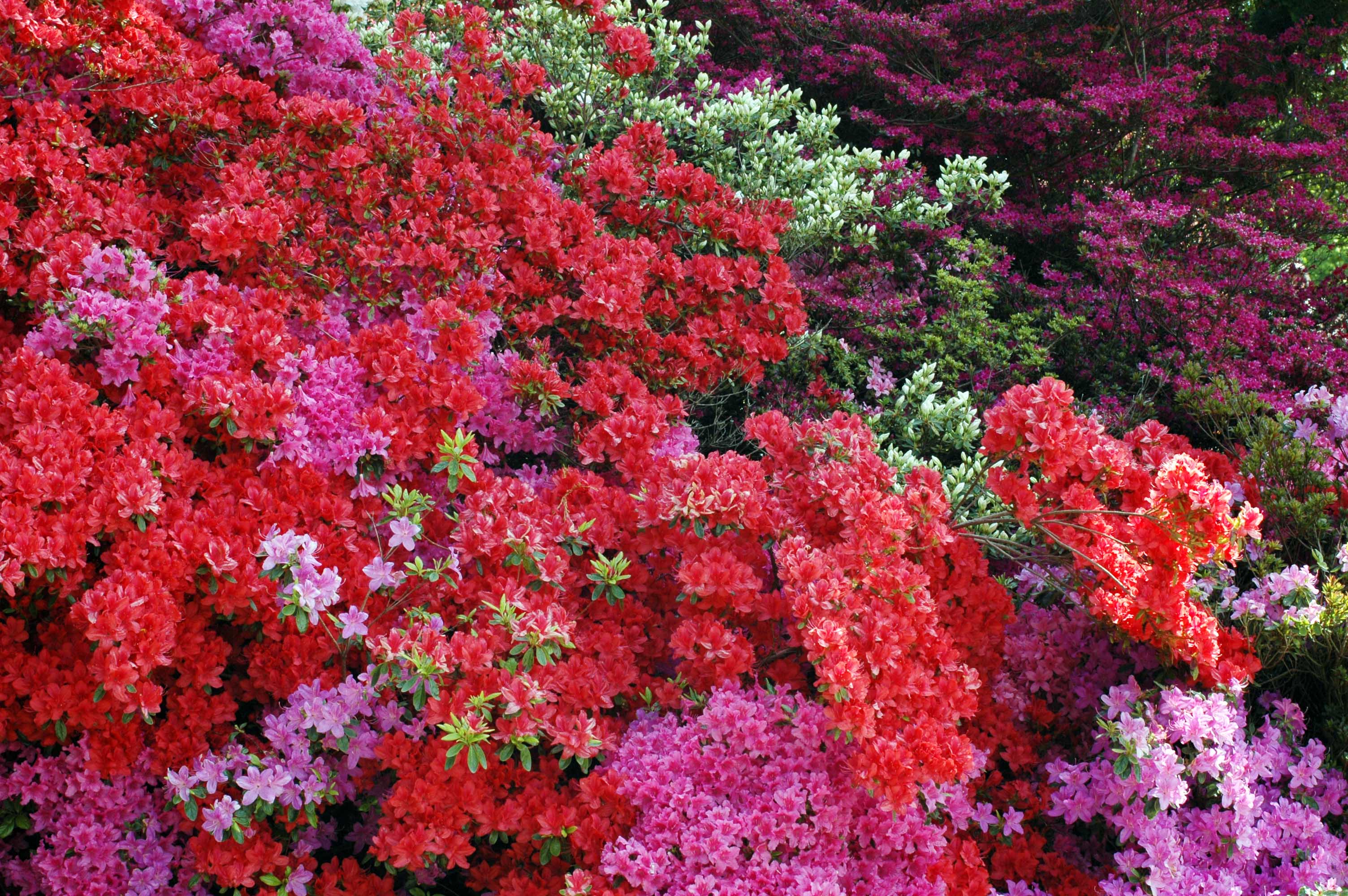
I  ‘belong’ to the National Trust and do visit this particularly lovely woodland garden occasionally, each time wondering why I don’t go more often. I was particularly keen to go now to see the laburnum arch which is one of Bodnant’s claims to fame, but although beginning to show colour it perhaps needed another week or so to reach its peak. But by way of compensation, the azaleas and rhododendrons and other planted beds were absolutely stunning. Words are unnecessary, the photographs speak for themselves, so here is some of what we saw.
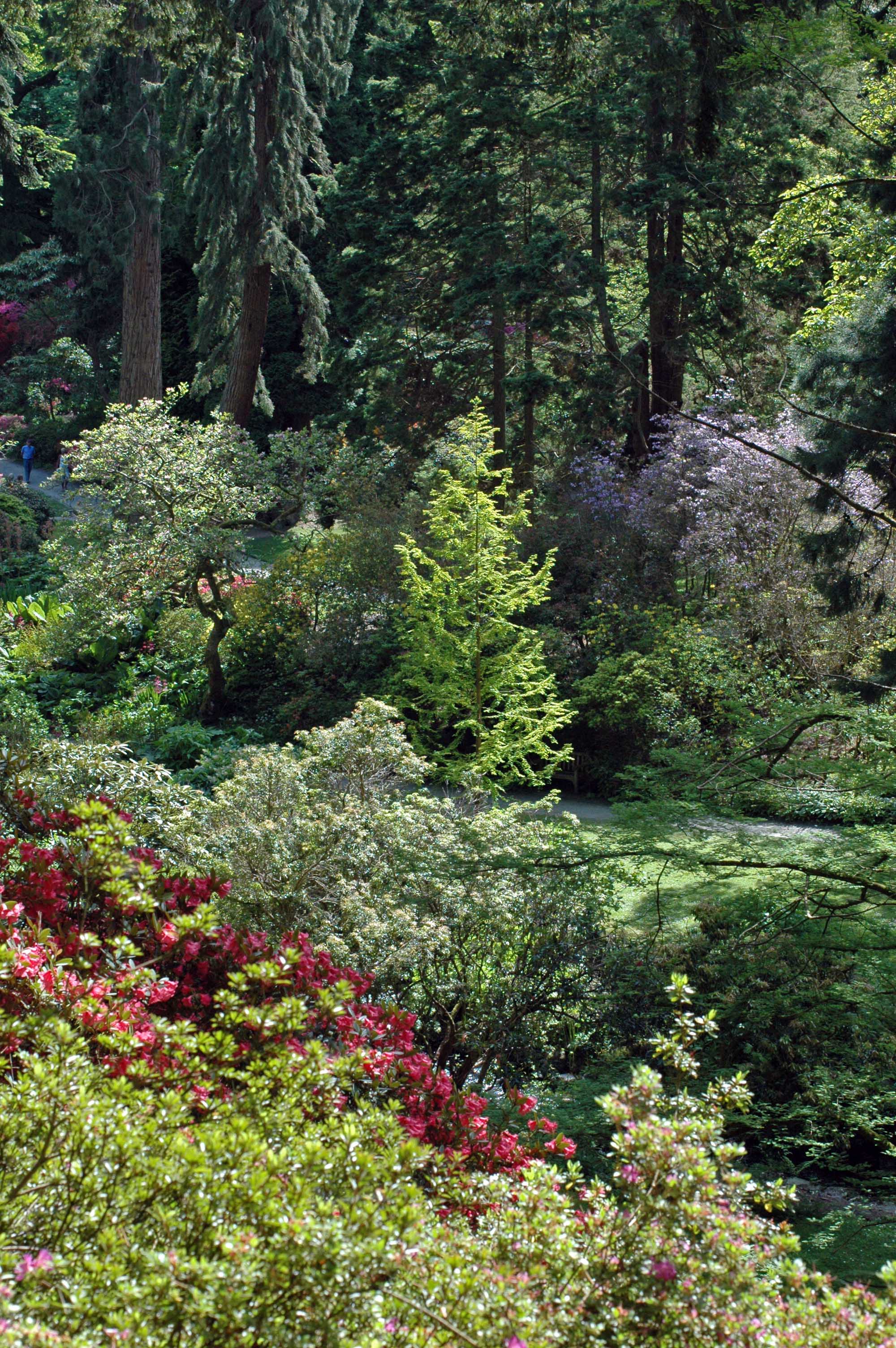
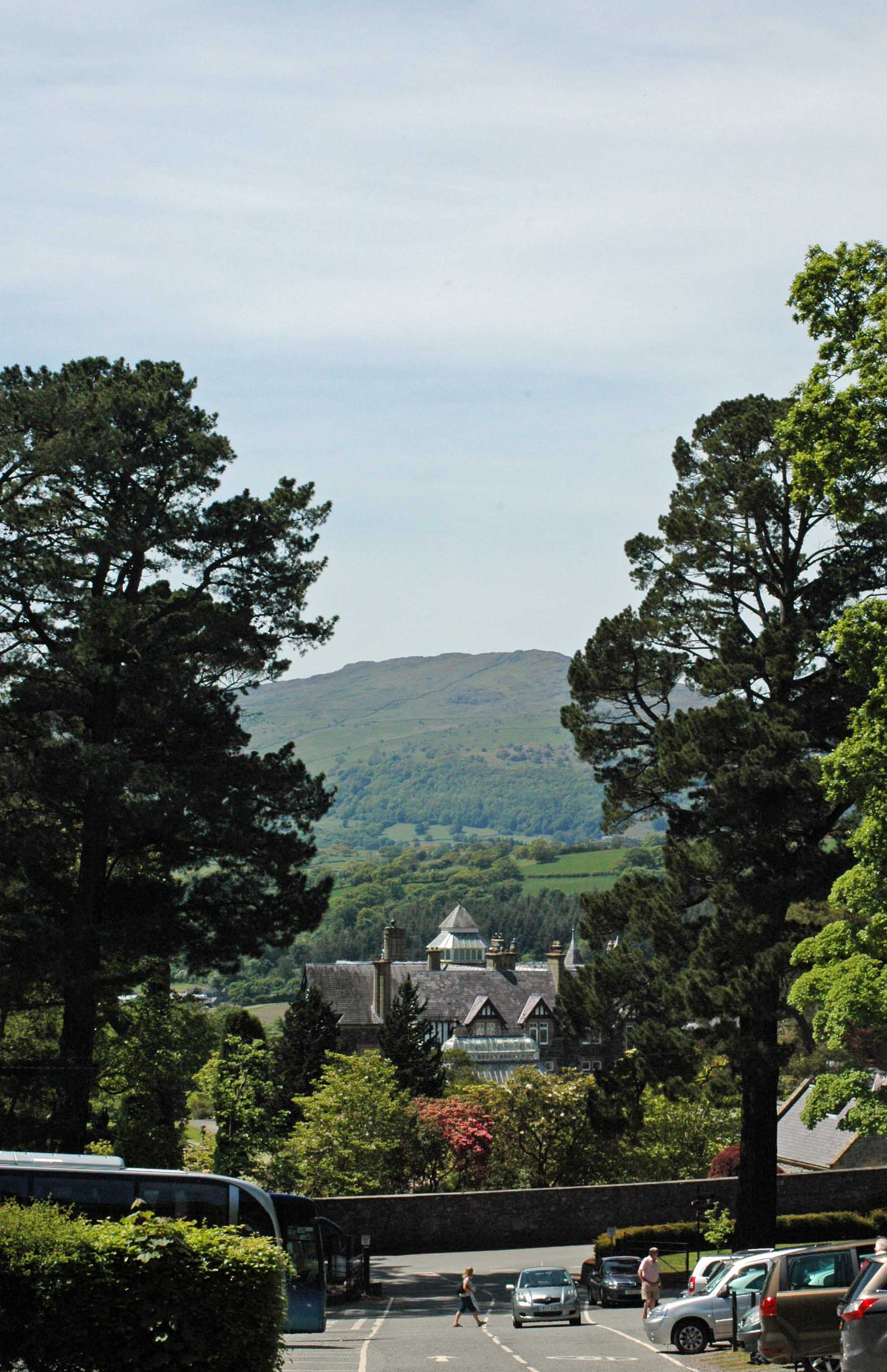
The view walking down from the car park

The view walking down from the car park

We could see that despite it being a Monday, the car park was very full and there were coaches too. We decided to have lunch before going into the gardens so we could look around in a leisurely fashion without worrying there’d be nothing left. I had the ploughman’s, daughter the quiche. Very nice too.

Daughter letting everyone know we'd arrived safely and that she wants a tree like this one

Daughter letting everyone know we’d arrived safely and that she wants a tree like this one

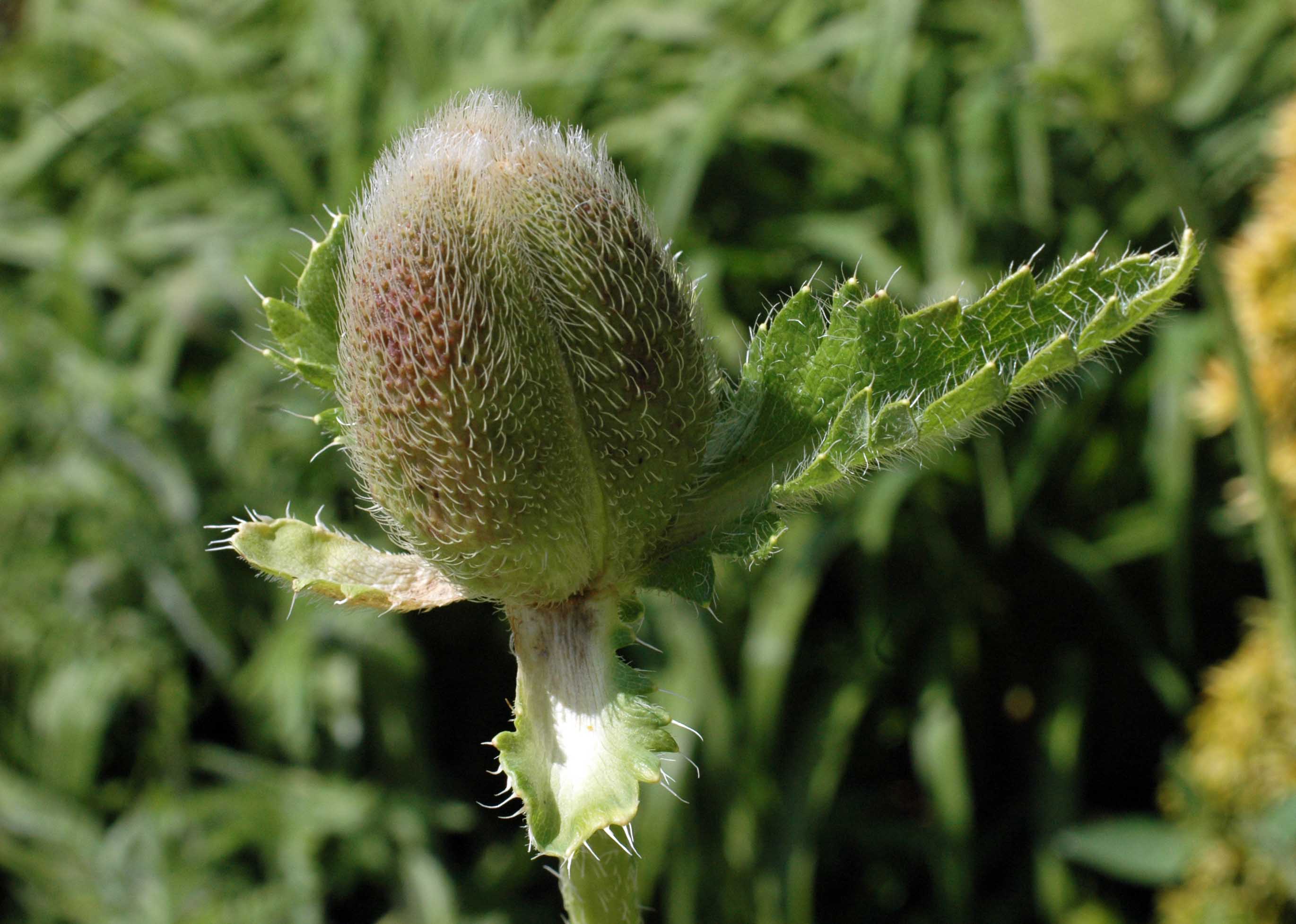
Big fat poppy bud

Big fat poppy bud

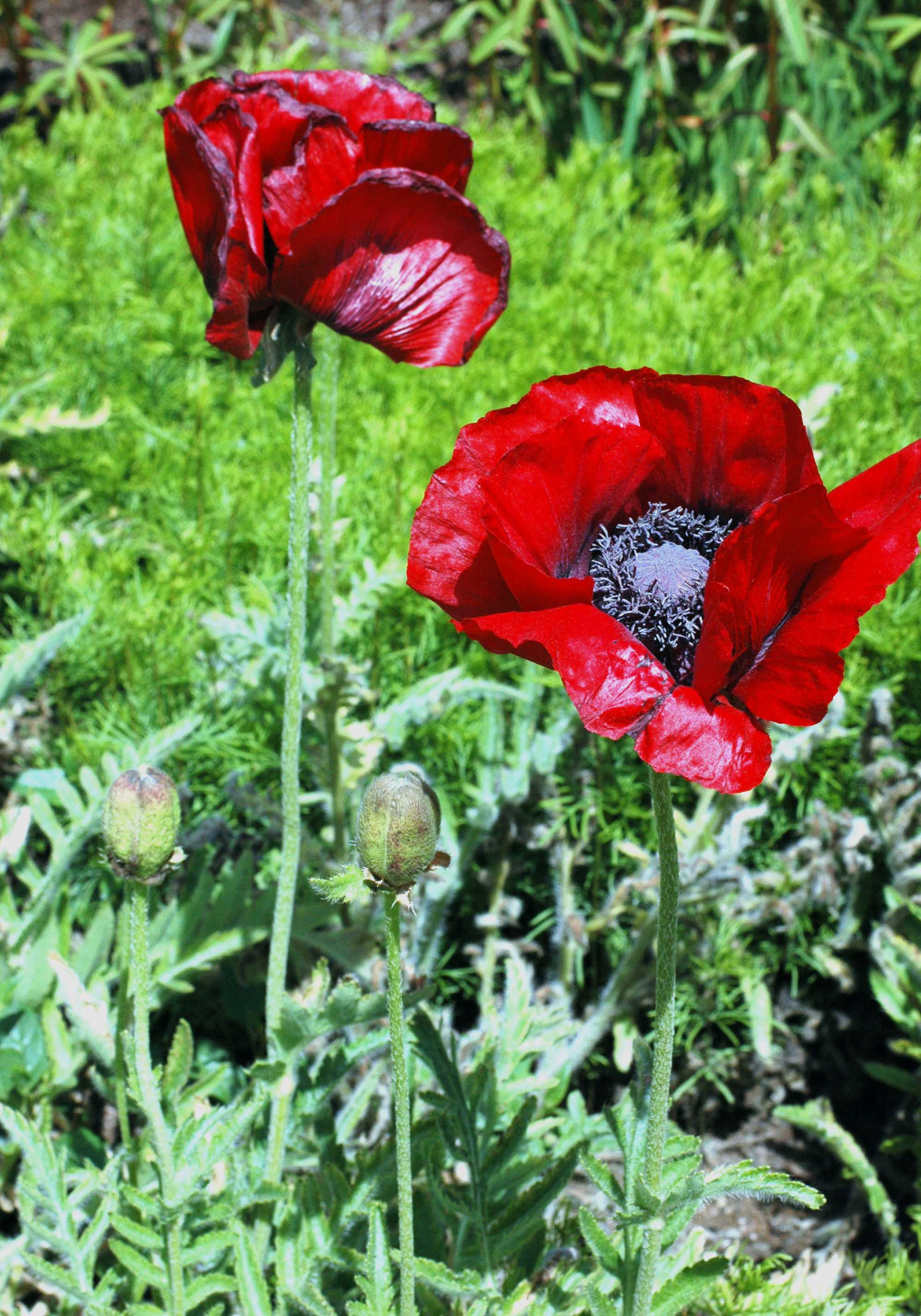
Poppies that don't look real

Poppies that don’t look real

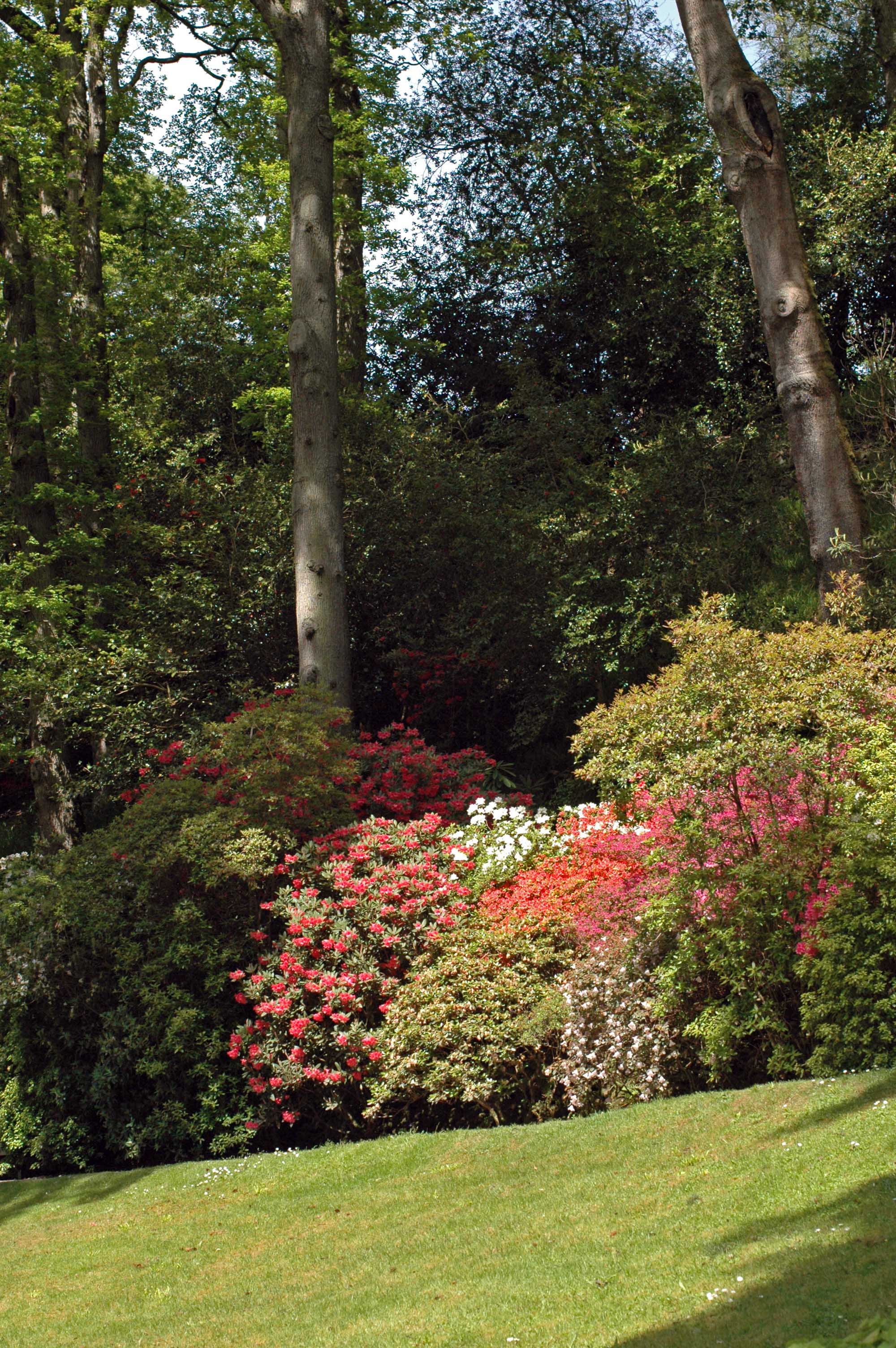
Azaleas

Azaleas

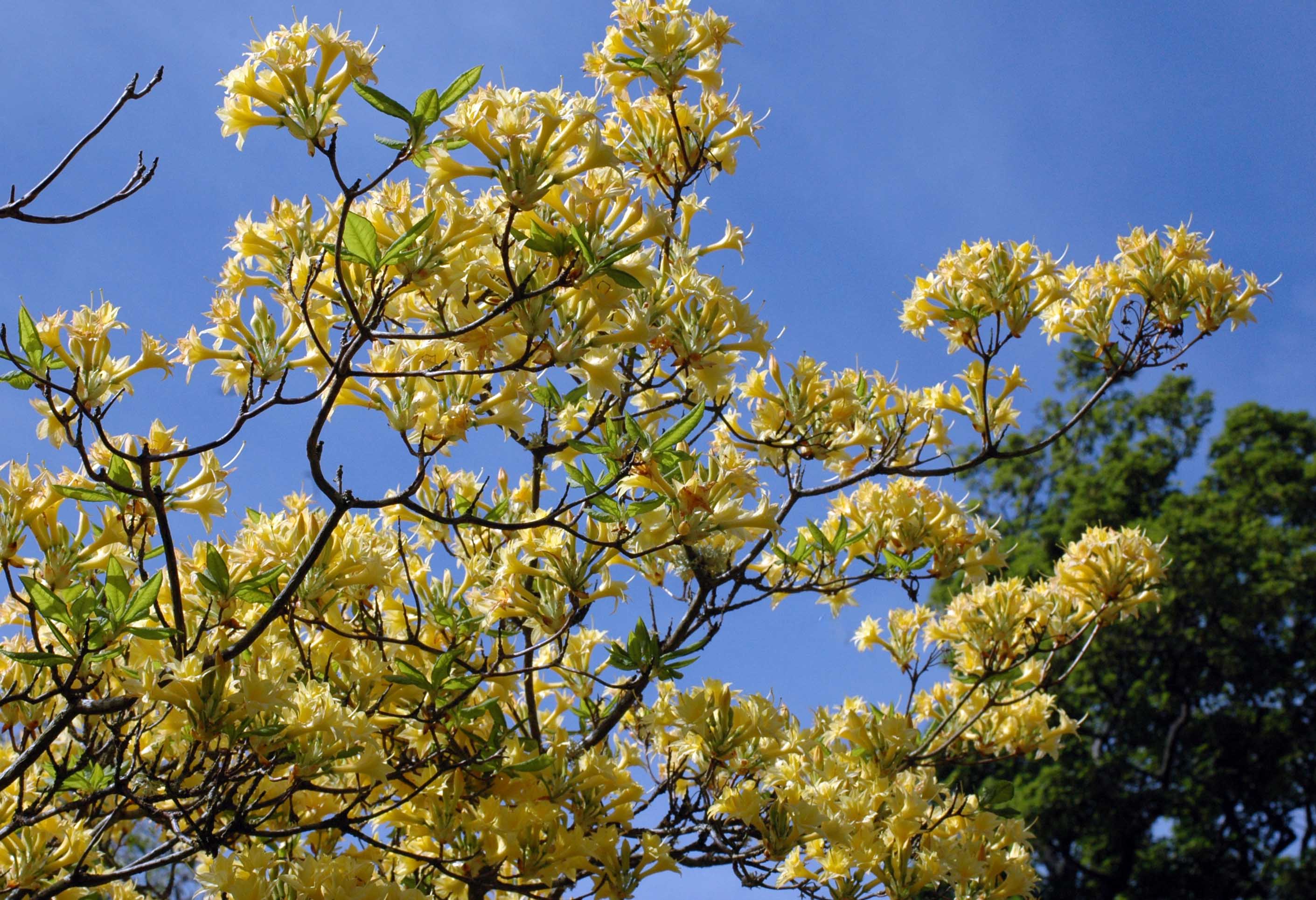
There's something about yellow flowers against a blue sky

There’s something about yellow flowers against a blue sky

This is the wildflower meadow

This is the wildflower meadow with an Oak tree

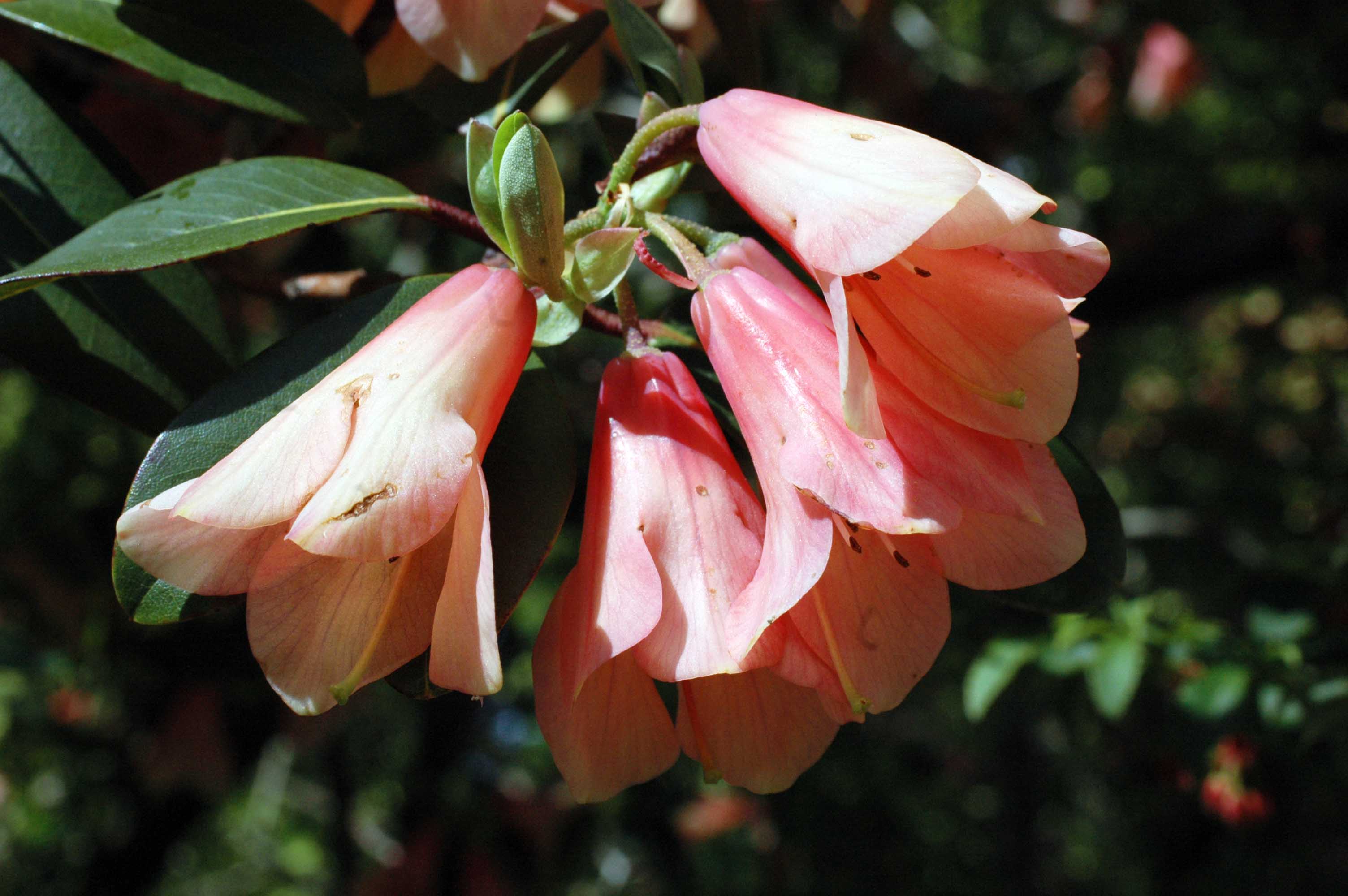
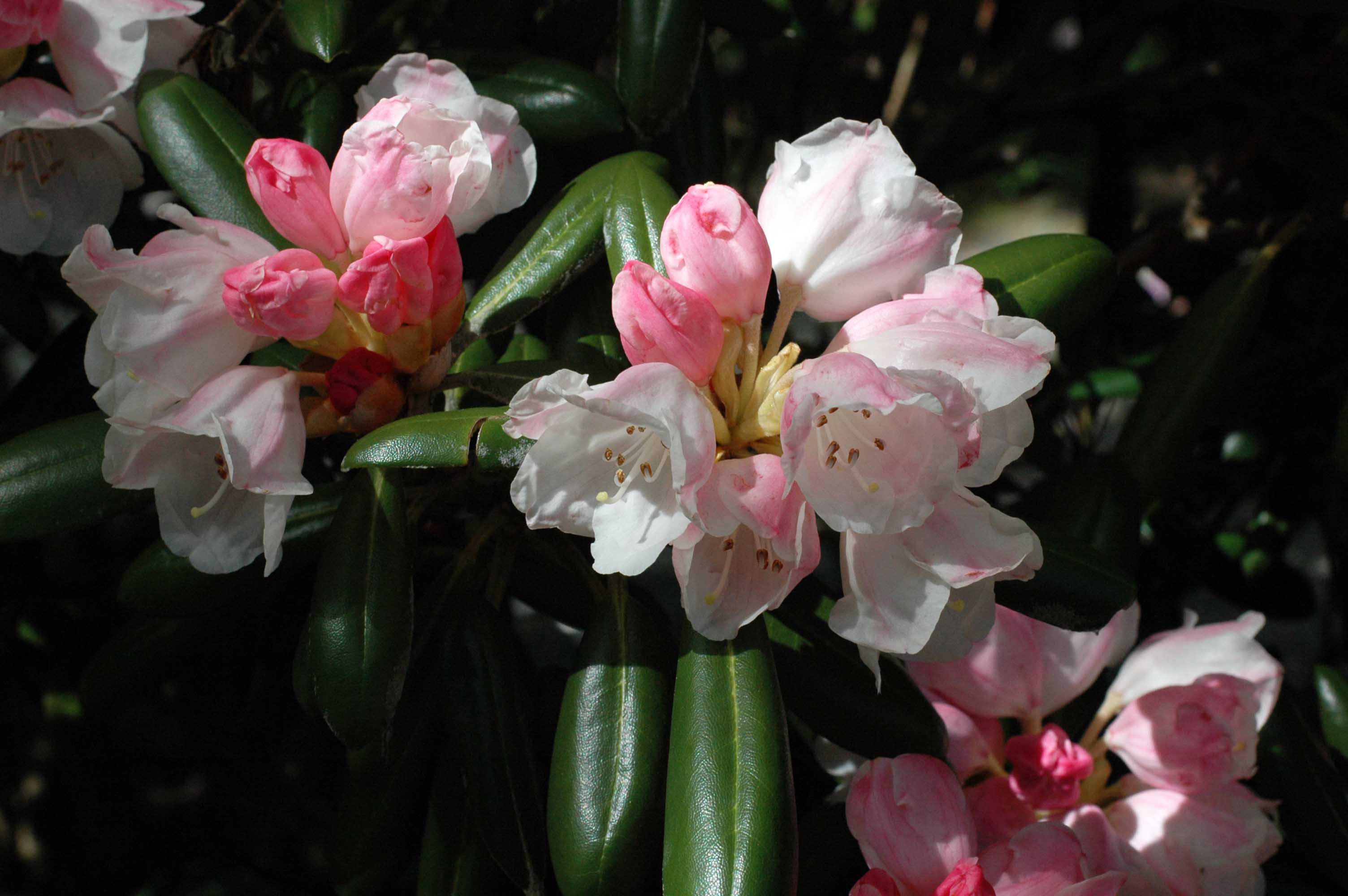
130603TGNT-Bodnant Gardens 08-Beautiful bells

Beautiful peachy-pink bells

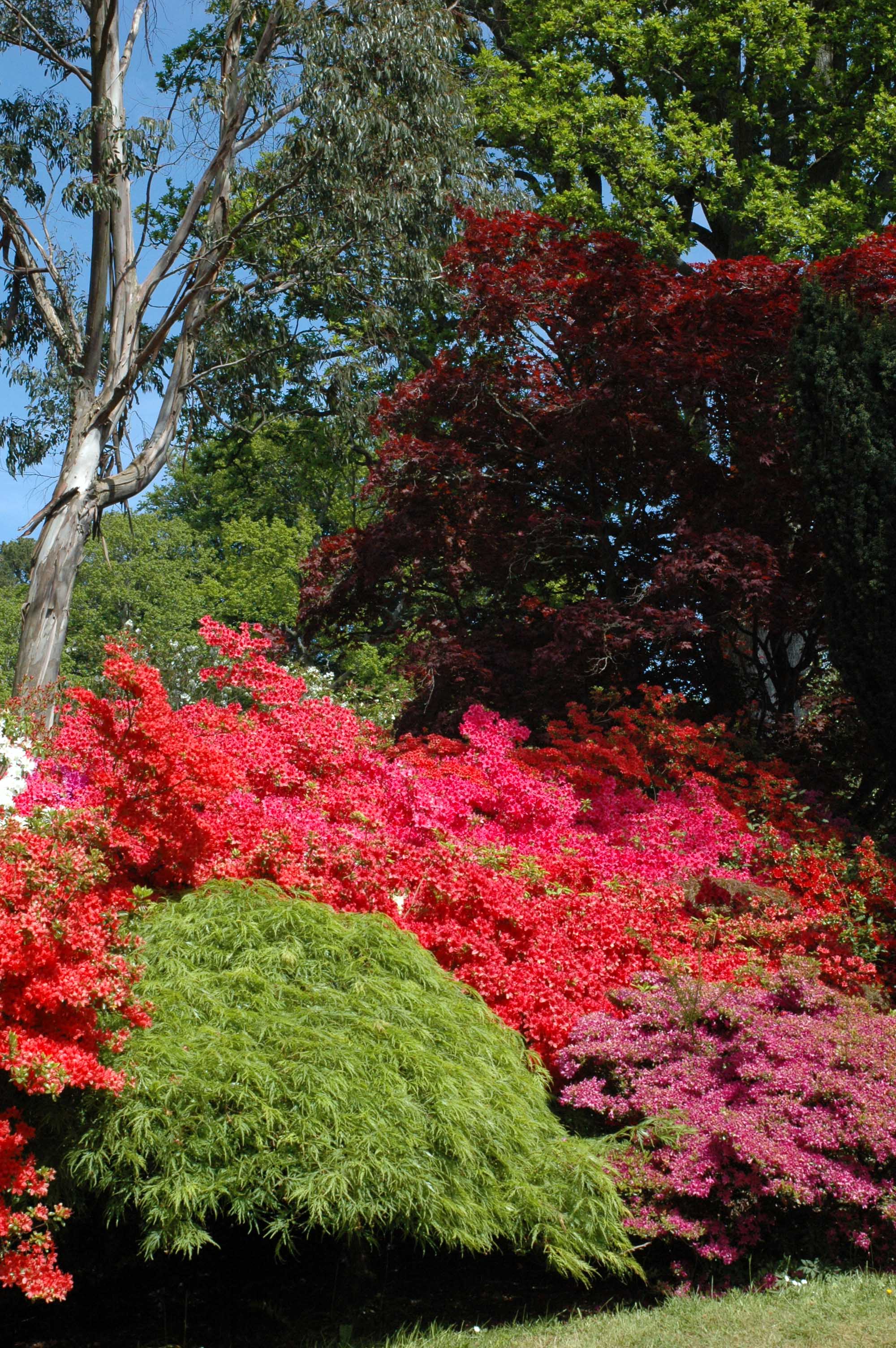
130603TGNT-Bodnant Gardens 11-Azaleas, bright green maple, eucalyptus & purple tree

A lovely composition of azaleas, vivid green maple, eucalyptus and a purple-leaved tree

More vibrant colours contrasted with white

More vibrant colours contrasted with white

A bee seeking nectar

An bee look-alike seeking nectar

So many shades of pink in one flower

So many shades of pink in one flower

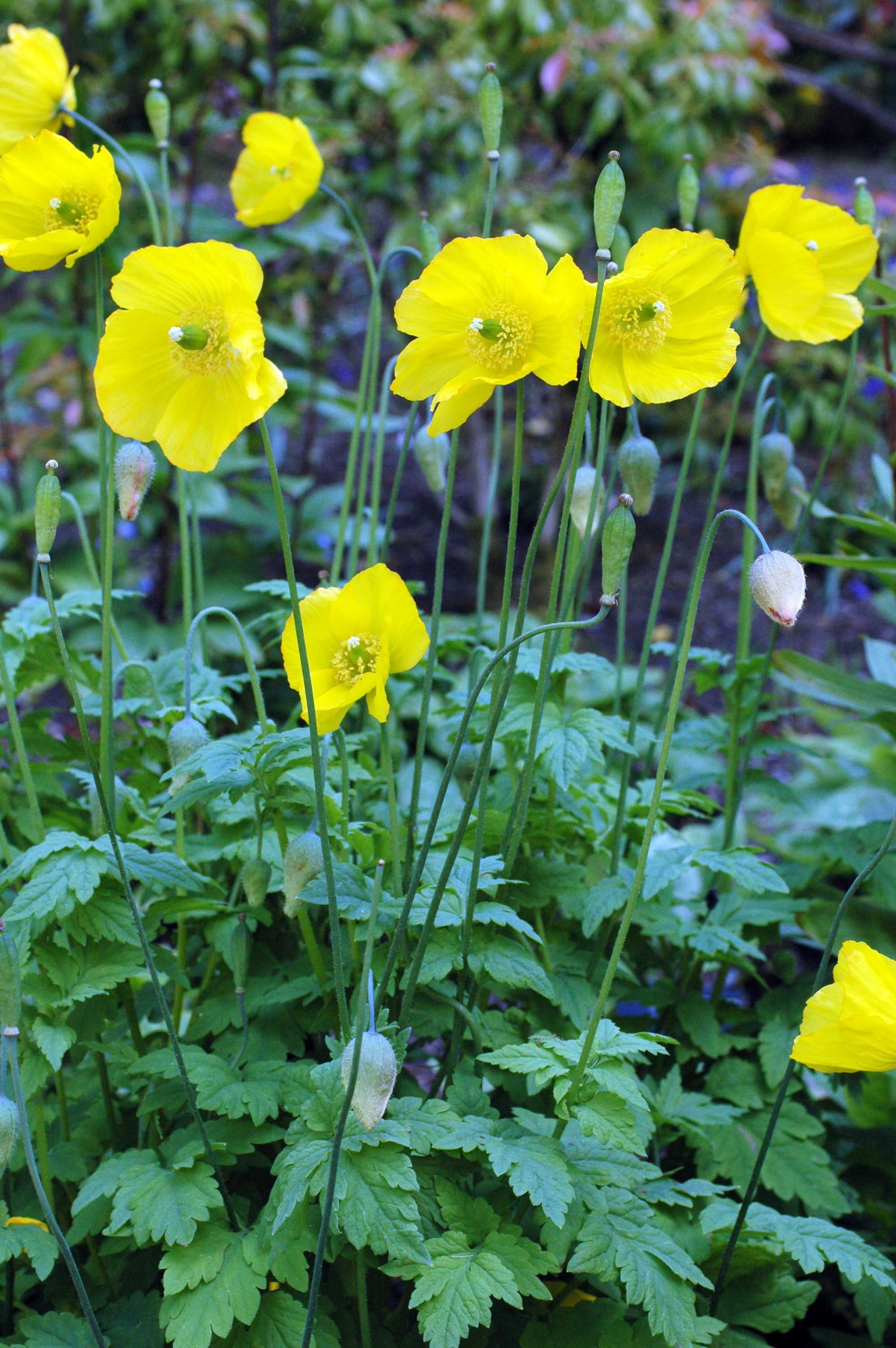
As you walk down towards the woodland dell there is a flower bed that has species of flowers resembling wild ones but exaggerated. Even the Welsh poppies were larger and perfectly formed.

130603TGNT-Bodnant Gardens 016-More Welsh Poppies

Welsh poppies

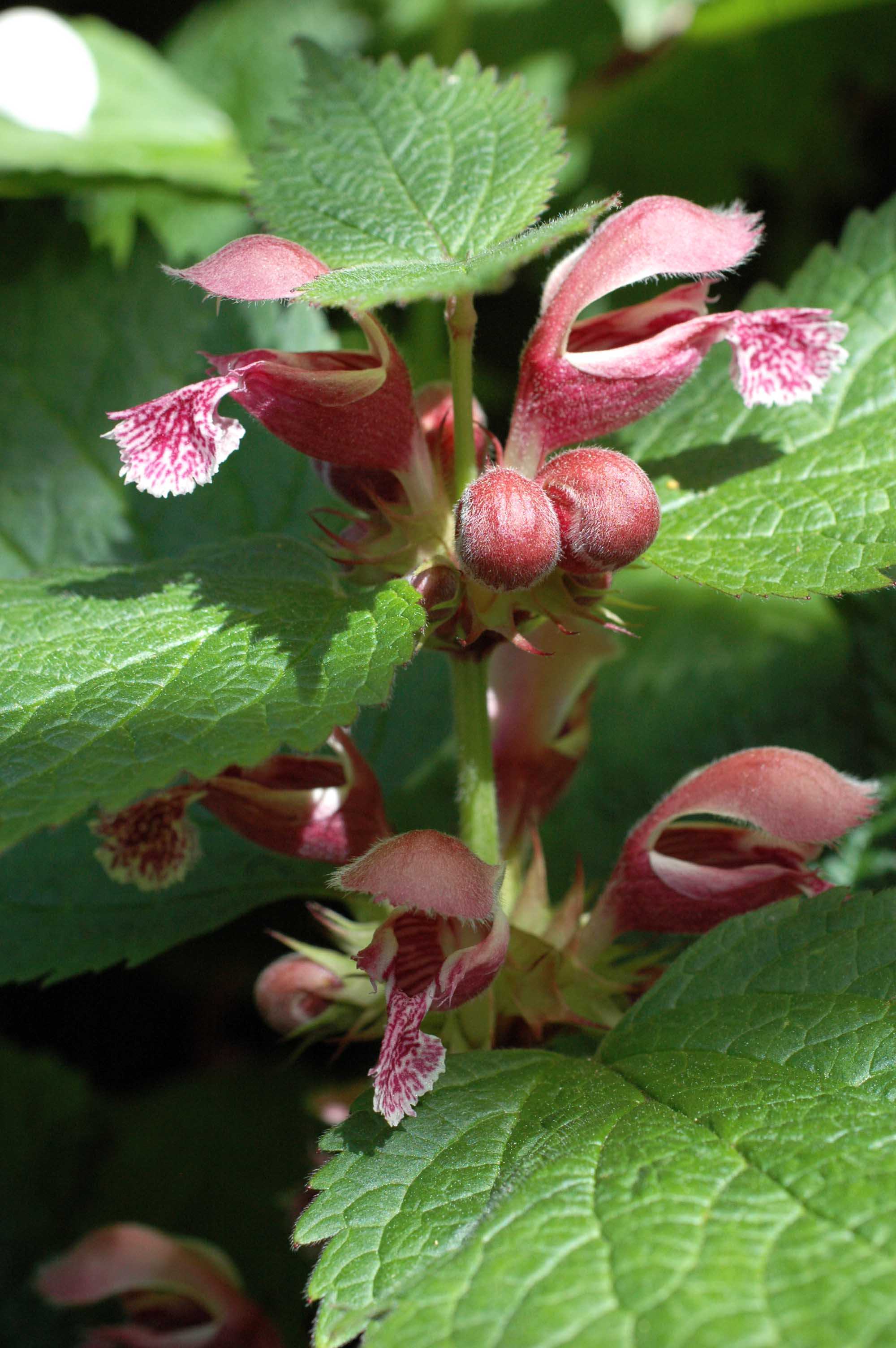
This looks a bit like a dead-nettle, but it's bigger

This looks a bit like a dead-nettle, but it’s bigger

The 'dead-nettle' look-alike has a fascinating flower

The ‘dead-nettle’ look-alike has a fascinating flower

This plant resembled Cow-Parsley, but with a purple rinse

This plant resembled Cow-Parsley, but with a purple rinse

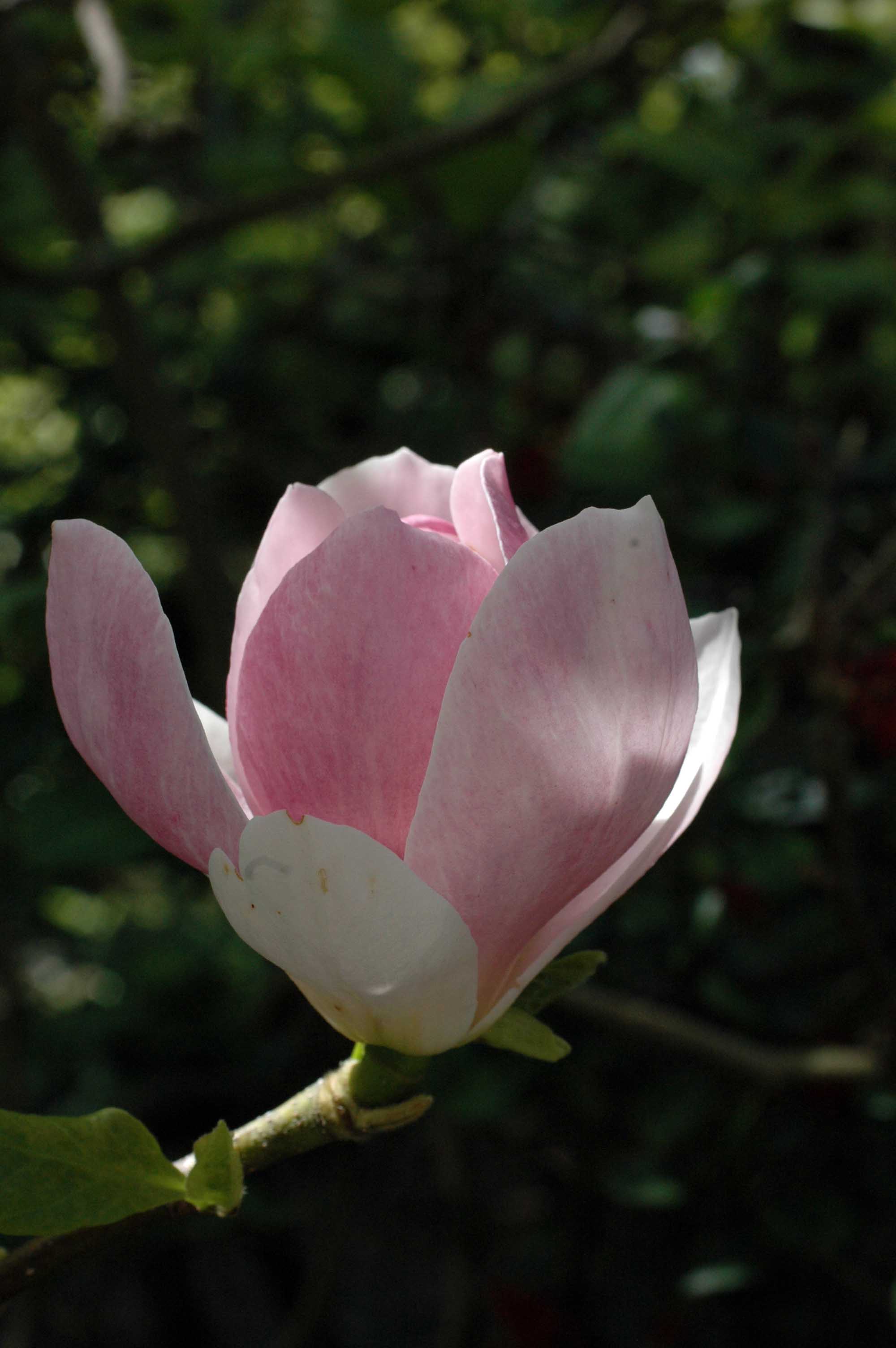
130603TGNT-Bodnant Gardens 17-A last magnolia flower

A last magnolia

130603TGNT-Bodnant Gardens 21-A woodland path in dappled shade

A tempting wood path in dappled shade

Looking down into the dell; a patchwork of greens with accents of colour

Looking down into the dell; a patchwork of greens with accents of colour

A simple, graceful Solomon's Seal

A simple, graceful Solomon’s Seal

Pretty white bells

Pretty white bells

We sat on a bench at the side of the stream for a while to have a chat (on the phone) and wish penblwydd hapus (happy birthday) to number 2 son who lives and works in London and used to speak Welsh.

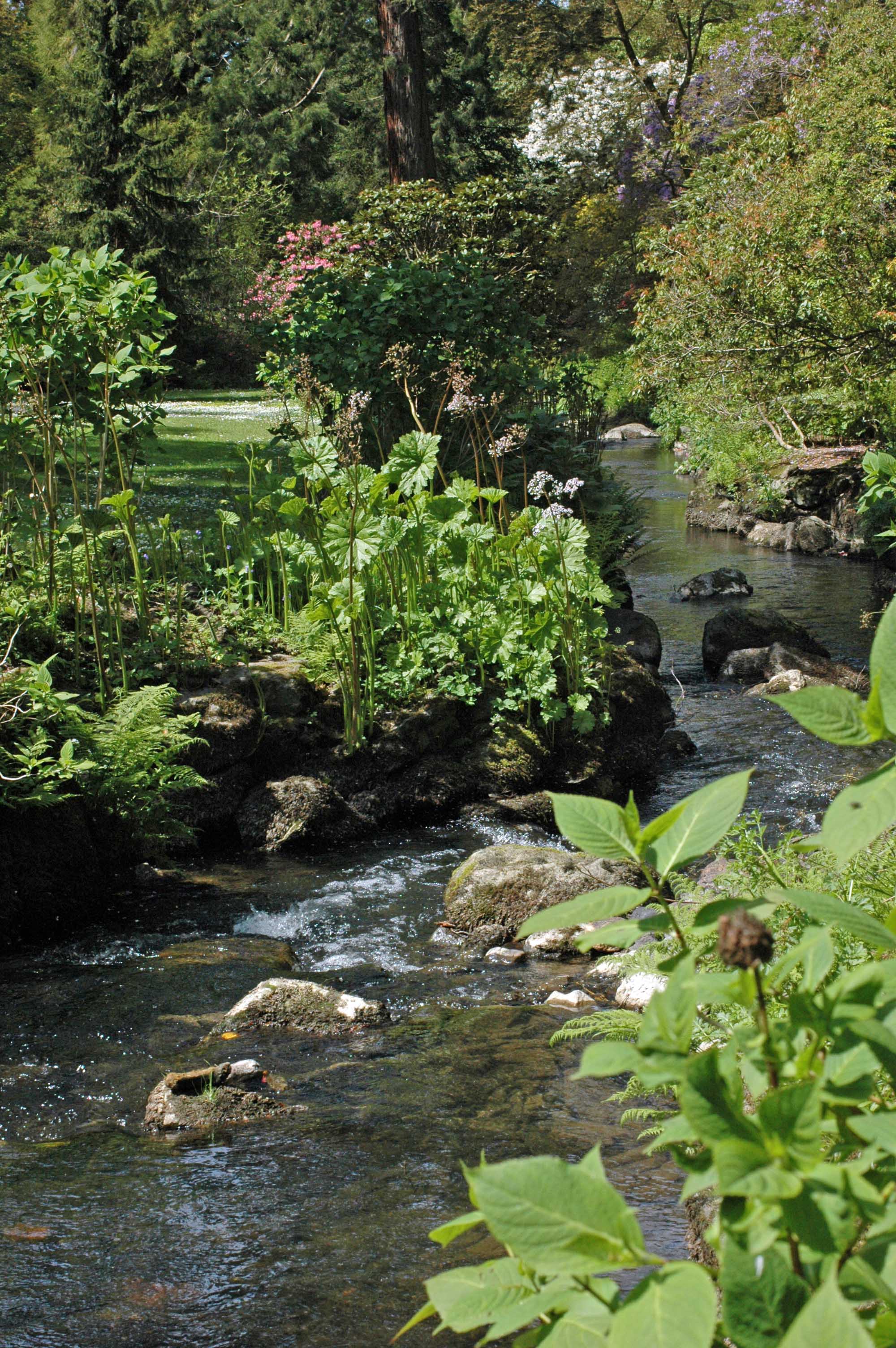
A tranquil view of the stream runnning through the dell

A tranquil view of the stream runnning through the dell

I was fascinated by some crazy flies zooming back and forth over the water. They all seemed to be racing to a particular point, moving so fast they left a blurry trail, then they turned round and zoomed back again, repeated that a few times then broke up into a cloud for a few seconds before doing it again. They were quite large insects, I thought perhaps mayflies, but can they move that fast? I always thought they were a bit airy-fairy, float through the air-ish. They kept me entertained for ages whatever they were.

I was fascinated by crazy flies over the water

I was fascinated by crazy flies over the water. Lush Hostas, why don’t the slugs eat them?

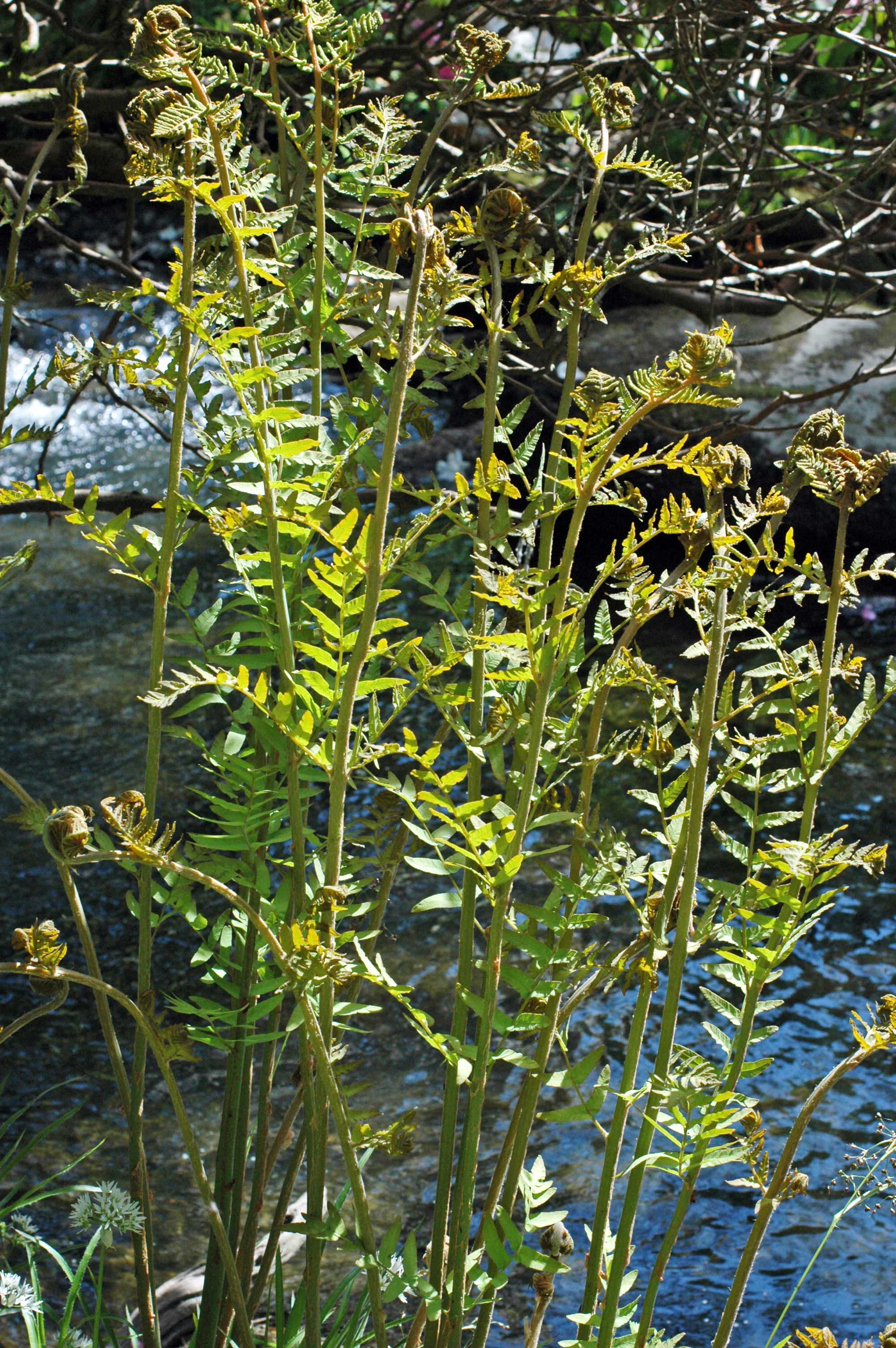
Impressive fern

Impressive fern

Just the kind of hilly bank we’d have rolled down as kids. Tempting though…

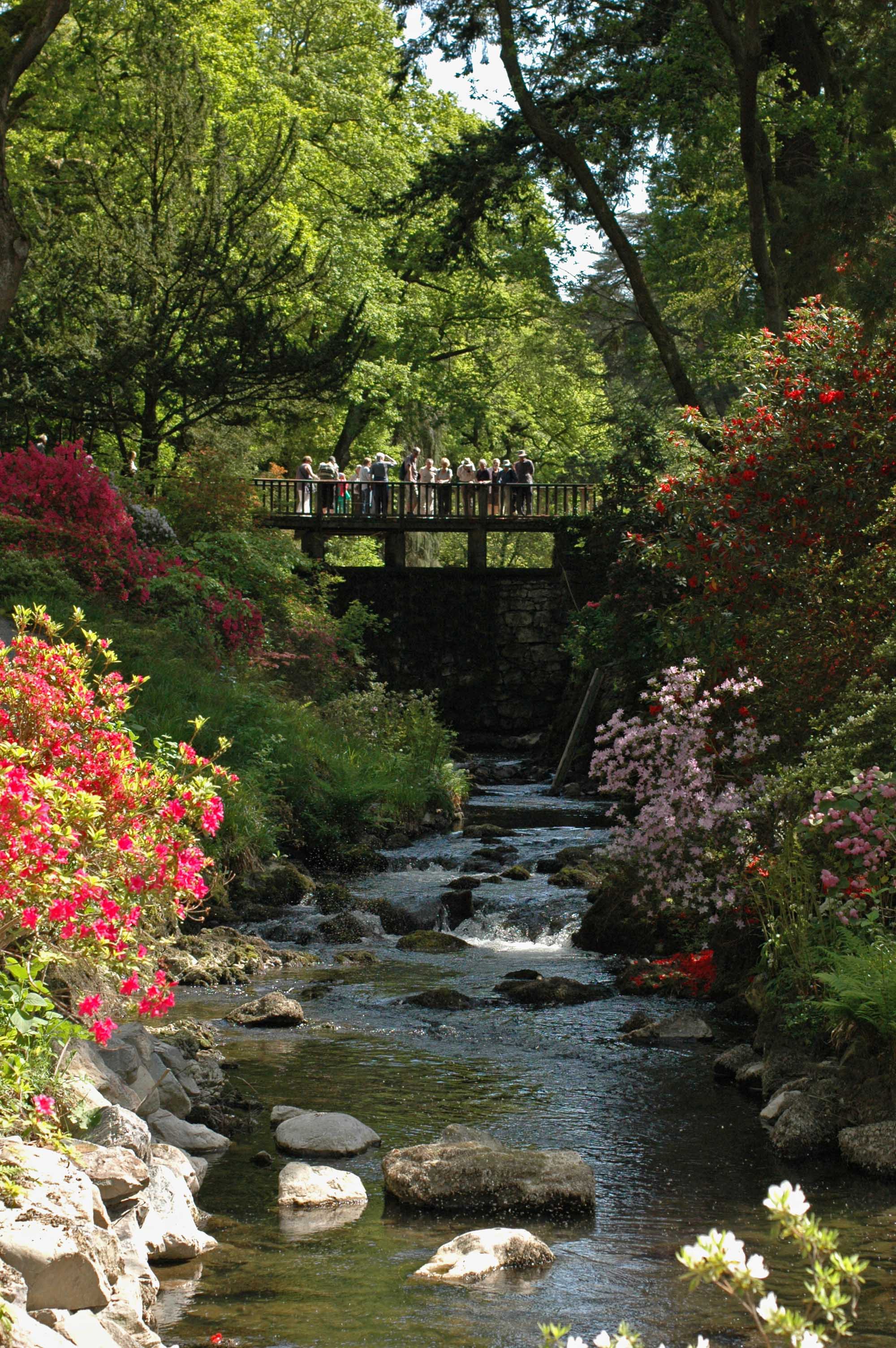
I think this picture of people on the bridge is my favourite of the day.They look so small

I think this picture of people on the bridge is my favourite of the day. They look so small

Daughter ran over the stepping stones to video me crossing. She was hoping for a 'you've been framed' opportunity

Daughter ran over the stepping stones to video me crossing behind her. She was hoping for a ‘you’ve been framed’ opportunity. Ha! No chance.

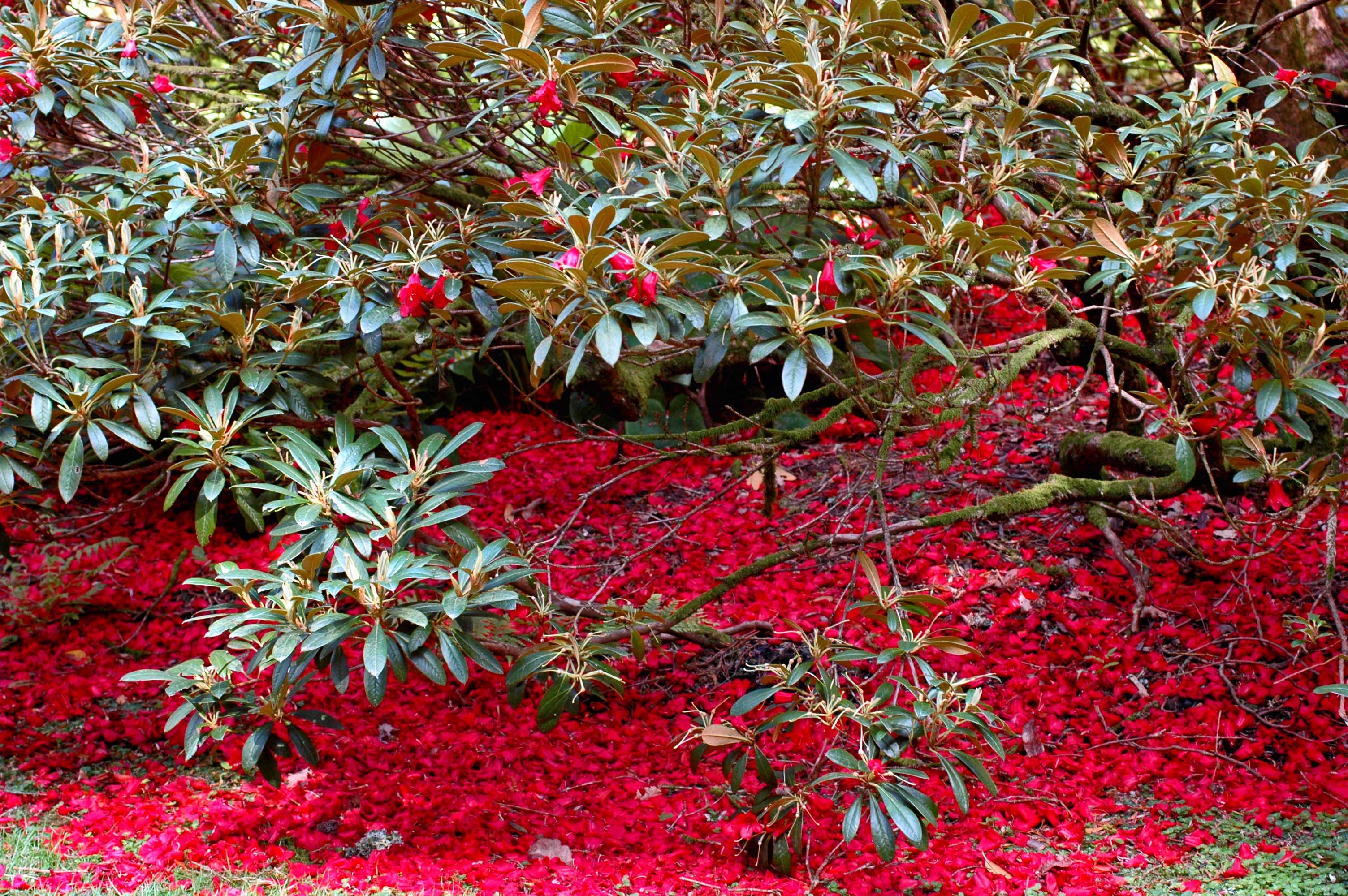
The rhododendrons are almost over and petals cover the ground beneath them

The rhododendrons are almost over and their petals were thick on the ground

Aah

Aah

A carpet of red

A red carpet 

There were even petals in the stream

There were even petals in the stream

I loved this starry deep blue periwinkle

I loved this starry deep blue periwinkle

130603TGNT-Bodnant Gardens

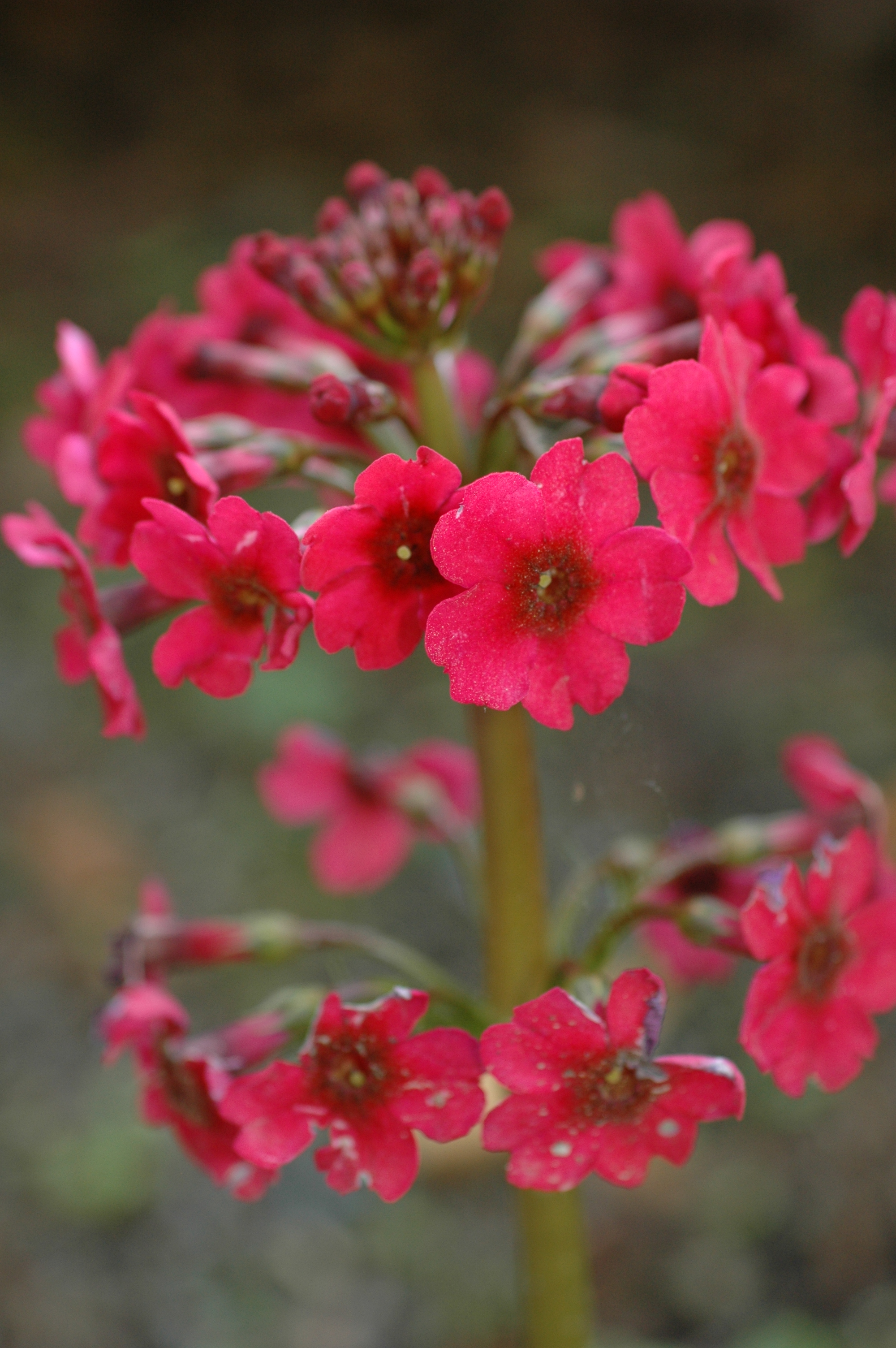
Flowers on a carousel

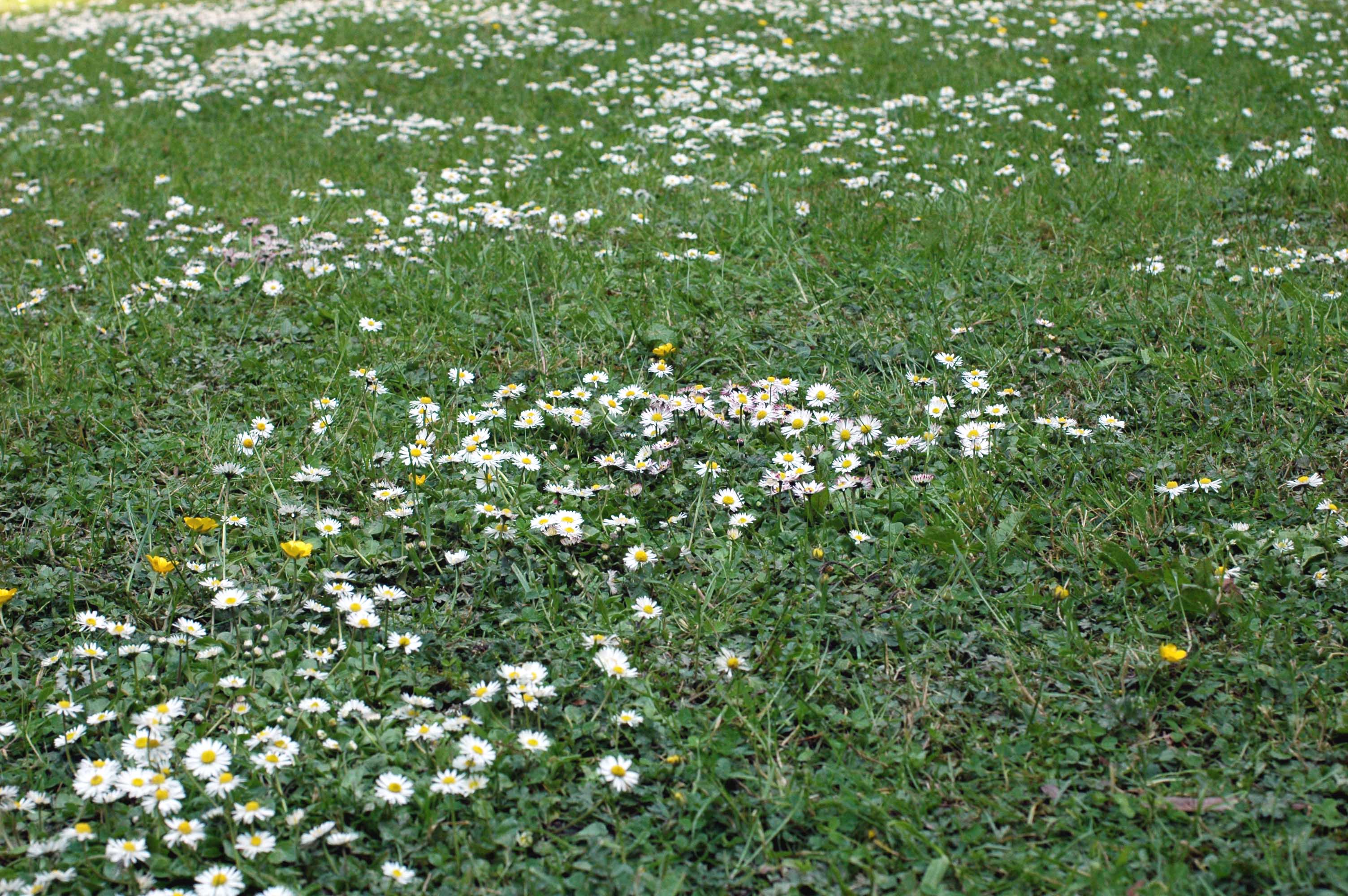
Even the best people have a daisy lawn these days

Even the best people have a daisy lawn these days

Bluebells are almost at the end of their flowering

Bluebells are almost at the end of their flowering

And a last view upstream before heading off to find the laburnum arch.

The laburnum arch, not quite at its best but you can see the potential

The laburnum arch, not quite at its best, but still pretty impressive

I’ve just checked the website for Bodnant and it says the arch is in full bloom now. Apparently it is so famous that people from all over the world go to see it. I thought it was busy there today.

Share this:

  • Click to share on Facebook (Opens in new window) Facebook
  • Click to share on Pinterest (Opens in new window) Pinterest
  • Click to share on X (Opens in new window) X
Like Loading...

Snowdrops at Chirk Castle

13 Wednesday Mar 2013

Posted by theresagreen in flower folklore, Nature, nature of woodlands, wildflowers

≈ 10 Comments

Tags

Chirk Castle, National Trust, snowdrop, snowdrop displays, woodland flowers

I know it has been an age since I published my last post, but too many other things have needed my attention and something had to give. I have been keeping an eye on things though and taking comfort from the fact that while we fill our lives with complications, nature is much more straightforward and the seasons’ events have unfolded as they should, without fuss. It would be fair to say that any posts I might have made would have been very similar to those from last winter, so I’ve been thinking how I can make this year’s a bit different.

I’ve done a fair amount of travelling this winter, making the train journey from Colwyn Bay down to Leicester and back again several times. It is a long journey, taking about 4 hours each way to complete, but the route is interesting, and takes you through some wonderful scenery. I have become intrigued by some of the places the train stops at or passes through, so I thought I might try to visit some of them this coming year and find out a bit more about them and their surrounding area. I joined the National Trust last autumn too and would like to get as much as possible from my membership, so as there is a rich variety of Trust properties around this England/Wales border country, that should not be too difficult, providing I can find the time to make the trips. 

One of the station halts is at Chirk, which I knew to be famous for its castle, but there my knowledge ended. It has a nice little station that is dwarfed by and juxtaposed with an enormous wood-processing plant whose chimneys belch out great streams of  thick white steam, or is it smoke? Now to go off at a bit of a tangent, I was researching places where I might find a good display of Snowdrops and by a happy sort-of coincidence, it happens that there is such a thing in the gardens surrounding Chirk Castle, that is owned by the National Trust and is within reasonable driving distance of here so a visit there would tick off at least three of my boxes in a single day. The Snowdrops would be at their best in February, so that gave impetus to making the effort, which is what is needed sometimes, especially in the winter.

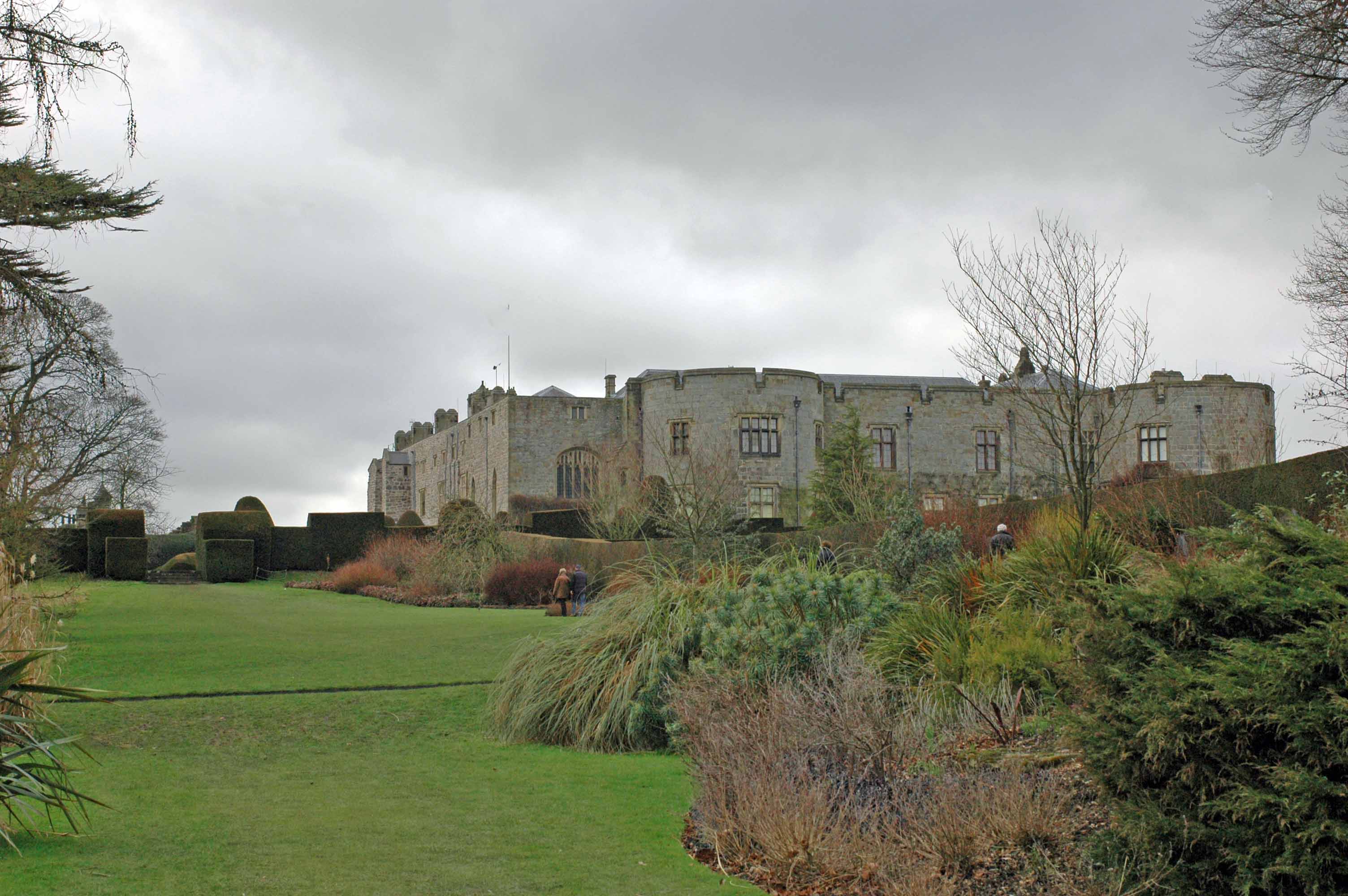
Chirk Castle from the gardens

Chirk Castle from the gardens

Completed in 1310, Chirk is the last Welsh castle from the reign of Edward I that’s still lived in today. Features from its 700 years include the medieval tower and dungeon, 17th-century Long Gallery, grand 18th-century state apartments, servants’ hall and historic laundry.

The gardens feature beautifully clipped yews

The gardens feature beautifully clipped yews

The award-winning gardens contain clipped yews, herbaceous borders, shrub and rock gardens. A terrace with stunning views looks out over the Cheshire and Salop plains.

Part of the extensive clipped yew hedge with woodland beyond framing the breathtaking views

Part of the extensive clipped yew hedge with woodland beyond framing the breathtaking views

We had a look around the parts of the castle that were open today, had a pleasant lunch, de rigeur when visiting a National Trust property with one’s other half who would prefer to be at home watching the football on a Saturday afternoon, then headed for the gardens. The Snowdrops were beautiful, well worth the effort to go to see.

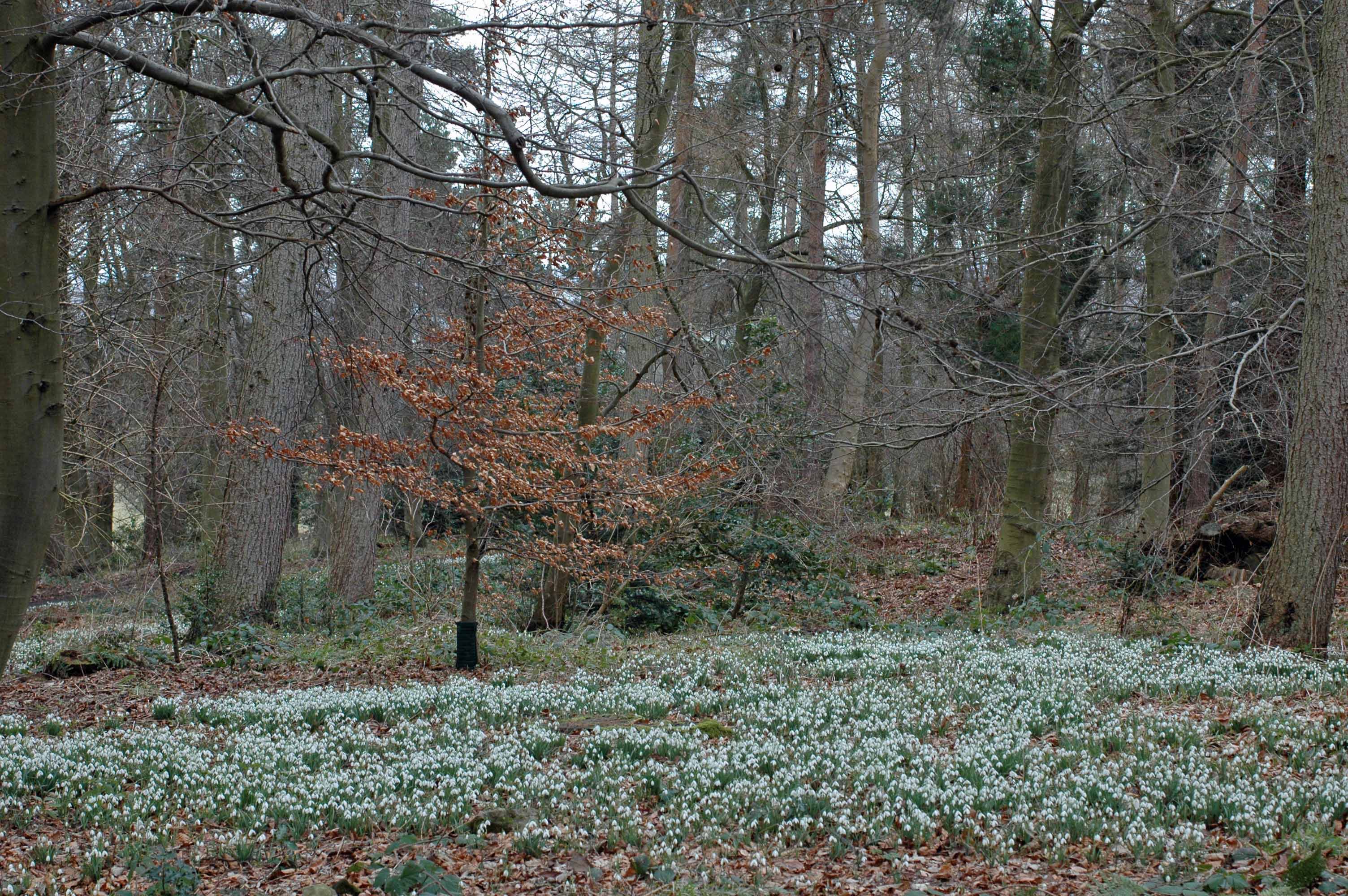
A carpet of Snowdrops beneath the trees

A carpet of Snowdrops beneath the trees

A beautiful sight

A  closer view of a beautiful sight

Reflections

Snowdrop reflections

Sheltering amongst tree roots

Sheltering amongst tree roots

Snowdrop 

Snowdrops are iconic flowers that traditionally herald the ending of winter and are surely too well known to need a description.

Scientific name: Galanthus nivalis L.

Conservation status: Rated as Near Threatened (NT) according to IUCN Red List criteria.

Origin of botanical name: From Greek, gala, milk and anthos, a flower; nivalis, snowy

Other common names: Candlemas bells, Mary’s taper, Snow-piercer, February fairmaids, Dingle-dangle

Snowdrop-Galanthus nivalis

Snowdrop-Galanthus nivalis

Flowering : February to March

Habitat: On the European continent Snowdrops grow in wild habitats, in damp woods and meadows up to 1,600 metres; the leaf tips are specially hardened for breaking through frozen ground. In Britain, Snowdrops are possibly both native and naturalised and were not recorded as growing wild here until the 1770s. It is very likely that many of our colonies of wild Snowdrops originated with ecclesiastical plantings. The pure white blooms of the Snowdrop have long been accepted by the Catholic Church as a symbol of Candlemas, celebrated on February 2nd, the Feast of the Purification of the Virgin Mary, and their association with monastic sites is apparent right across Britain.

Folklore

Although the flowers are sanctified for Candlemas, the snowdrop is one of the many white blossoms that are still regarded as being unlucky if brought into the house. In parts of Northumberland, Westmorland and Hampshire, single flowers particularly are still viewed as ‘death-tokens’. This may be as one Victorian explanation was that the flower “looked for all the world like a corpse in its shroud”. According to the ‘language of the flowers’, the snowdrop was an emblem for virginity, and a few blooms enclosed in an envelope were often used to warn off over-ardent wooers. In a similar vein, in Yorkshire there was an old custom, again celebrated on Candlemas, for village maidens to gather bunches of snowdrops and wear them as symbols of purity. (extracts from Flora Britannica, Richard Mabey)

Key uses

Ornamental. Medicinal. Insecticide.

The alkaloid Galantamine, which was initially isolated from snowdrops, has been used in treatments for Alzheimer’s disease, neuritis and neuralgia. In parts of eastern Europe, rubbing snowdrops on the forehead was a folk remedy used for pain relief.

Known hazards: Snowdrops and their bulbs are poisonous to humans and can cause nausea, diarrhoea and vomiting if eaten in large quantities.


Share this:

  • Click to share on Facebook (Opens in new window) Facebook
  • Click to share on Pinterest (Opens in new window) Pinterest
  • Click to share on X (Opens in new window) X
Like Loading...
Follow everyday nature trails on WordPress.com

Enter your email address to follow this blog and receive notifications of new posts by email.

‘But it is the common species that keep the living world ticking over and provide most of our experiences of wildlife, and I would argue that maintaining the abundance of these is as important a conservation priority as maintaining the existence of rarities’. Richard Mabey

MOST RECENT POSTS

  • A Glimpse of Spring to Come January 22, 2025
  • Hunting the Wren December 28, 2024
  • Oh, Christmas Tree December 18, 2024
  • In and Out of the Ivy February 15, 2024
  • Nature’s Fireworks November 30, 2023
  • Wild Autumn along the Coast Path November 3, 2023

OLDER POSTS

LOOKING FOR SOMETHING IN PARTICULAR?

  • Pretty prickly Thistles
    Pretty prickly Thistles
  • The Foxglove - of Fairytales, Myths & Medicine
    The Foxglove - of Fairytales, Myths & Medicine
  • Fine Dining for Crows
    Fine Dining for Crows
  • Pines and Primroses
    Pines and Primroses
  • Bryn Euryn - a walk of several parts. Part 1
    Bryn Euryn - a walk of several parts. Part 1
  • A Blackthorn Winter
    A Blackthorn Winter
  • Birds and the art of fly catching
    Birds and the art of fly catching
  • Grey Seals on the rocks
    Grey Seals on the rocks
  • What a beautiful day
    What a beautiful day
  • Everyday Birds - The Blue Tit
    Everyday Birds - The Blue Tit

nightingale trails

The Walk of the Monarch Butterfly-Sendero de la Mariposa Monarca

The Walk of the Monarch Butterfly-Sendero de la Mariposa Monarca

MY WILDFLOWER BLOG: where the wildflowers are

Snowdrop

Snowdrop

most recent posts

Follow everyday nature trails on WordPress.com

Social

  • View teresamaygreen’s profile on Twitter

Enter your email address to follow this blog and receive notifications of new posts by email.

Website Built with WordPress.com.

  • Subscribe Subscribed
    • everyday nature trails
    • Join 359 other subscribers
    • Already have a WordPress.com account? Log in now.
    • everyday nature trails
    • Subscribe Subscribed
    • Sign up
    • Log in
    • Report this content
    • View site in Reader
    • Manage subscriptions
    • Collapse this bar
 

Loading Comments...
 

    %d