• Home
  • about
  • about the photographs
  • Local Nature Reserves
    • Bryn Euryn Local Nature Reserve
    • Mynydd Marian
  • Wales Coast Path
    • Grey Seals in North Wales
    • St.Trillo’s Chapel
    • Wildflowers of North Wales Coastal Paths, Cliffs and Dunes

everyday nature trails

everyday nature trails

Tag Archives: herring gull

From blustery beach to sheltered woods

17 Wednesday Apr 2013

Posted by theresagreen in Colwyn Bay, nature of woodlands, woodland birds

≈ Leave a comment

Tags

blackbird, coal tit, coastal birds, Collared Doves, dunnock, Fairy Glen, herring gull, magpie, wood pigeon

I had driven along to Colwyn Bay to have a closer look at the beach-building, not because I am lazy, more to do with there being a bitterly cold wind blowing with too few  compensating warm sunny intervals to make it a pleasant place to be. I did stop for few minutes though and bought a mug of tea from one of the snack shacks to warm me up a bit while I stood perusing the beach, which I’m glad I did. Over the last few days I have spotted a few small flocks of small birds flying in across the sea and there were more as I watched then; finches by their up and down bouncy flight and I’m pretty sure goldfinch by the contact calls they were making. I never have binoculars when I need them, which was a shame today as I also had sights of incoming house martins; fortunately very close ones, so no doubts there. There’s nothing like the first sight of these amazing little migrants, it is always uplifting and hopeful.

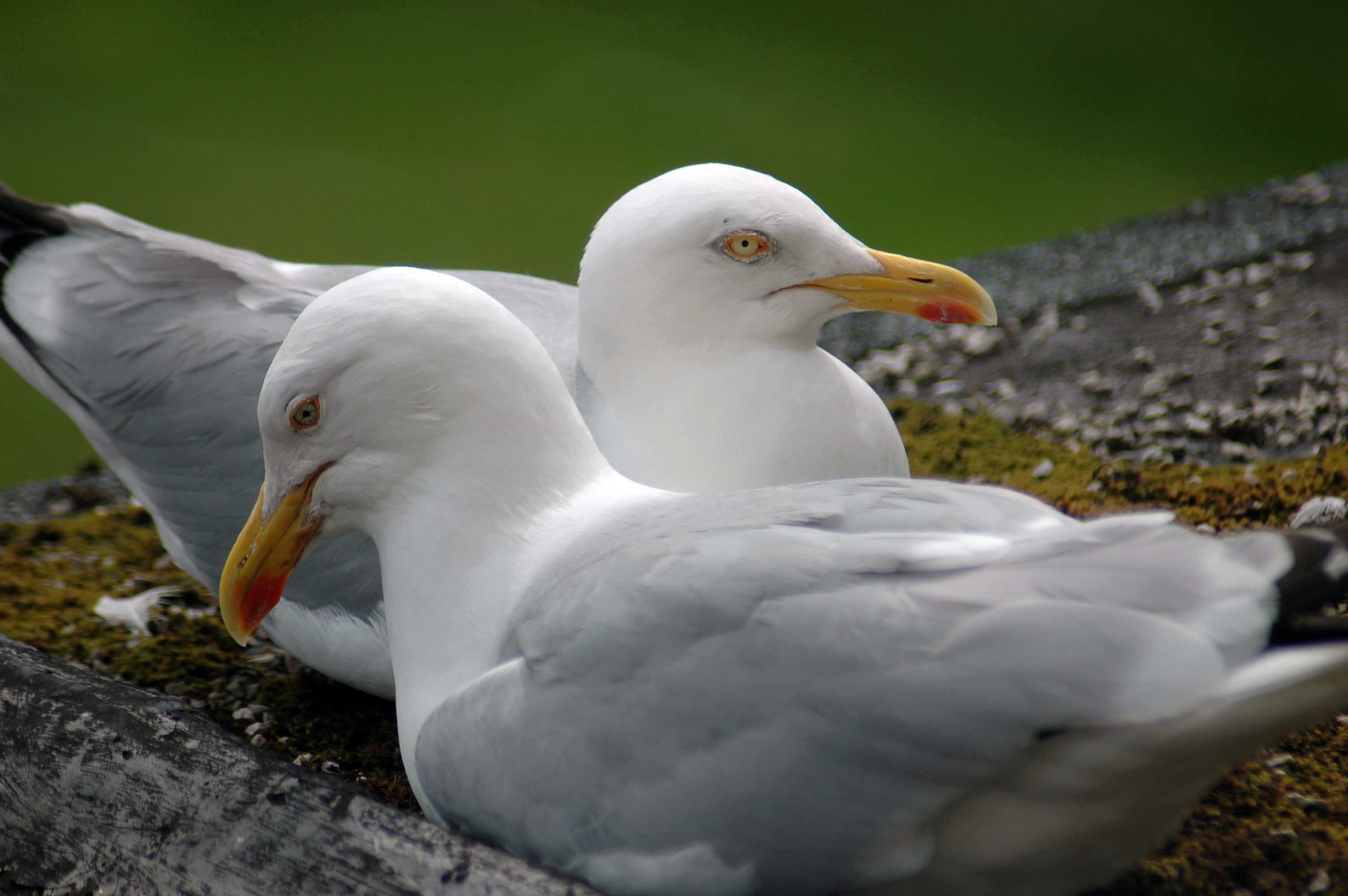
As I drank my tea I was entertained by a courting couple of herring gull, both looking bright eyed and beautiful in immaculate plumage and freshly coloured beaks.

Herring gull pair bonding

Herring gull pair bonding

Female begging for food

Female begging for food

She was quite insistent but he was not sharing

She was quite insistent but he was not sharing

A nice pose from the pair showing the difference in sizes

A nice pose from the pair showing the difference in their size

One of the best aspects of living here is that within a very short time and distance you can move into a completely different environment, so as I was close by I headed up to Fairy Glen to seek out some wildlife in the shelter of its trees. As I’ve said before this small local nature reserve within the bounds of Old Colwyn village can be a bit scruffy when viewed through human eyes, but the presence of the fast-flowing stream of water and a well-established variety of trees, shrubs and woodland plants combine to make this the perfect oasis for an impressive number of woodland bird species as well as those that have learned to live amongst people.

First to attract my attention was a Collared Dove that was pottering around on the ground by the side of the river before fluttering down onto a rock to take a drink. There are usually a pair of these pretty doves here, but as there was just the one today I hope the other was sitting on a nest.

A collared dove on a rock in the river

A collared dove on a rock in the river

Next to come into view was a pair of magpie, which I had never seen actually within the woodland before. This is another opportunistic bird species that gets bad press and is not much liked by a lot of people, but they are elegant birds, strikingly handsome in appearance and in common with most members of the crow family, clever and characterful.

One of a pair of magpie on the handrail of the walkway

One of a pair of magpie on the handrail of the walkway

KONICA MINOLTA DIGITAL CAMERA

A wary wood pigeon taking a drink

There were numerous blue tits out hunting for food, minutely examining twigs and leaf buds for insects as they do. Blue tits have the inexplicable knack of timing their egg-laying to coincide the hatching of their young with the emergence of caterpillars. This cold but rather dry spring may well have set them back by a few weeks this year; I have only seen one butterfly so far this spring. There were great tits too, in lesser numbers as always, and I was pleased to see a coal tit, always one of my ‘target’ birds here and generally to be spotted in the same spot, close by to where there are a number of large conifer trees, some type of cypress, maybe overgrown leylandii.

A dunnock drying itself off after taking a dip

A dunnock drying itself off after taking a dip

I heard several birds singing, blackbird, robin and wren most frequently and one short and sweet tune of a dunnock. I spotted a dunnock bathing in shallow water at the edge of the ditch that runs along the side of the footpath and collects run-off water from the high bank above it. It flew into some brambly scrub to dry off and sat for some minutes shaking water from its feathers and preening them back into shape.

There were some wildflowers to be seen, lesser celandines, one or two wood violets, a single stem of kingcups on the boggy part of the riverbank and on a sheltered bank under the trees, the first primroses.

I had been looking out for grey wagtails; I know they have returned as I’ve seen them around the houses in the vicinity of the lower end of the river, so on my way back to the car I walked along the lower end of the river down to where it flows into the sea. Although I was watching for them, the grey wagtails saw me first and took off from the water up and away. At least I saw them, if only briefly. To compensate though I heard a bird ‘singing’ that I didn’t immediately recognise and traced it to a large evergreen tree; I could see several small birds, I think four, that I first took to be blue tits feeding in the top of the adjacent tree, but they and the singer were coal tits.

A coal tit feeding at the top of a tree

A coal tit feeding at the top of a tree

I think perhaps my favourite sight of the day though was of crow attempting to pick twigs from a small tree. It was having big problems trying to balance on the slender branches and despite valiant efforts the twigs were too well attached to snap off easily, but fair play to the bird it kept on trying.

The precariously balance crow trying its best to break off a twig

The precariously balance crow trying its best to break off a twig

Share this:

  • Click to share on Facebook (Opens in new window) Facebook
  • Click to share on Pinterest (Opens in new window) Pinterest
  • Click to share on X (Opens in new window) X
Like Loading...

How to build a beach

14 Sunday Apr 2013

Posted by theresagreen in coastal habitat, Colwyn Bay, nature photography, North Wales

≈ 6 Comments

Tags

colwyn bay beach, dredging sand, herring gull, herring gull feeding behaviour, sea defences

The beautiful but rugged coastline of North Wales is subject to some serious battering by  winds and waves throughout the year and although we love to live and holiday here, of course we prefer it to be on our terms and so demand protection from the elements too. We also need to make a living and as this whole area is designated as an outstanding area of natural beauty, capitalising on those natural assets by way of tourism is the way things are set to go forward. Great lengths of piled up rocks are already in place reinforcing the defences of the sea wall from Rhos on Sea to Penrhyn Bay, but now work has begun to improve the defences of Colwyn Bay.

misc 2013-sony camera 035

A section of the Colwyn Bay promenade being battered by the sea, March 2013

Colwyn Bay was one of the North Wales holiday resorts popularised by the Victorians. It was accessible to them by way of the railway line between the ferry port of Holyhead on the Isle of Anglesey, and London, that was built to facilitate the transport of mail between the two places and onwards to Ireland by sea. It remained popular as a holiday destination for several decades following, my own parents spent their honeymoon here in 1946, but began to go into decline during the late ’80s, in common with many other British seaside resorts.

In 2010 a ‘masterplan’ was revealed to regenerate the area which includes plans for a new sandy beach to be constructed  to improve sea defences and to allow people access to the shore throughout all tidal states: currently you can only walk on the shore at low tides.

As reported at the time by The Weekly Post, this build-a-beach project is not going to come cheap.

“Conwy County Council’s cabinet voted to pledge £667,000 to secure a grant of £2m from the Welsh Government to improve the town’s sea defences. The authority had already secured an additional £1m of funding from the Welsh Government for the Colwyn Bay Waterfront coastal defence scheme by offering up £333,000 of supported borrowing from this year’s capital programme. By agreeing to pay the £667,000 from next year’s (2013) budget the council…will see beach sand material imported onto Colwyn Bay seashore which is now mostly pebbled. This will result in 50m of sand to help protect the promenade.”

Work began on building the new beach on 21st March and the major project of engineering is proving to be quite fascinating. To begin with two lengths of steel pipeline were constructed on an unobstructed stretch of Pensarn beach, one a kilometre long, the other about 400m long. The two sections were then floated out at high tide, lined up and welded together. The pipeline was then connected to the steel dry-line which is pumping the sand onto the beach. A rubber floater line was also connected to the sea end of the steel pipeline, and this section of pipe will connect to the dredging vessel.

Picture copied from Daily Post

Sand begins to pour from the pipeline against the existing sea wall. Picture from Daily Post.

The dredging ship, the Barent Zanen, sailed here from Rotterdam and prepared to dredge sand from the seabed of a site 20 nautical miles north of Colwyn Bay, located within  Liverpool Bay. The ship is taking the sand from the sea bed approximately 20 miles north of Colwyn Bay, and then sailing in and anchoring about a kilometre offshore. Around 10,000 tons of material is brought in each trip and it is estimated that the beach will be topped up at a rate of 25-30,000 tons a day.

KONICA MINOLTA DIGITAL CAMERA

The Barent Zanen off Rhos Point, connected to a smaller tug that connects the two ends of piping together

The sand and sea-water mix is blasted onto the beach during periods of low tide and attracts a huge amount of interest from a large number of gulls that arrive to take advantage of seafood, freshly delivered from the seabed. As far as I am aware, no mention has been made of any potential damage the dredging may be doing to the flora and fauna of the seabed in the dredging site, but I can’t help wondering.

13-4-1-TGROS-Building a beach 1

The dredged sand and seawater mix arriving on the shore brings about a frenzy of gull activity

Following each delivery of sand, which is deposited in one large pile, it is distributed by mechanical diggers and bulldozers. The work often attracts groups of interested onlookers, and no doubt at least some of the big boys watching would love to be having a go.

KONICA MINOLTA DIGITAL CAMERA

A closer view of some of the machinery involved in the beach construction; here moving the steel pipeline into a new position

6th April, the new beach so far

6th April, the new beach so far

The operation will take place 24 hours a day, seven days a week and should last for a period of up to four weeks, depending on the weather, which thus far has been pretty wild. Many local people are wondering how long the beach sand will stay put and how much it’s going to cost them…..?

Share this:

  • Click to share on Facebook (Opens in new window) Facebook
  • Click to share on Pinterest (Opens in new window) Pinterest
  • Click to share on X (Opens in new window) X
Like Loading...

Playing host to some noisy summer visitors

03 Monday Sep 2012

Posted by theresagreen in bird behaviour, Nature, nature photography, Rhos-on-Sea

≈ 6 Comments

Tags

coastal birds, herring gull, herring gull breeding behaviour, herring gull young, herring gulls calling, herring gulls in towns, herring gulls nesting on roofs

The sight and sound of Herring gulls are an integral part of the local community here and as I wrote last year, you either love them or you loathe them. Personally I rather like them, but having just endured this year’s breeding season and had them as very close boarders, I may have gone off them slightly! The Edwardian building we occupy the centre part of played host to two nesting pairs this year, one pair on either side of us, each settling into the top of a tall terracotta chimney pot. I can see the appeal for them, quiet neighbourhood, excellent panoramic penthouse views, just a minute’s flap from the sea, a wide variety of eating opportunities close by. .. Unfortunately from a landlady’s viewpoint, they were not the ideal ‘guests’ and the noise levels were, frankly, unsociable. Stuck in the middle of the two nests sites we were subjected to frequent sessions of raucous territorial shrieking in stereo. Requests to pipe down a bit fell on deaf ears.

Once the offspring hatched the sessions became even more frequent, then reached their peak once the youngsters fledged. That was when they  moved down onto our flat roof, which is just below my bedroom window, and really made their presence heard.

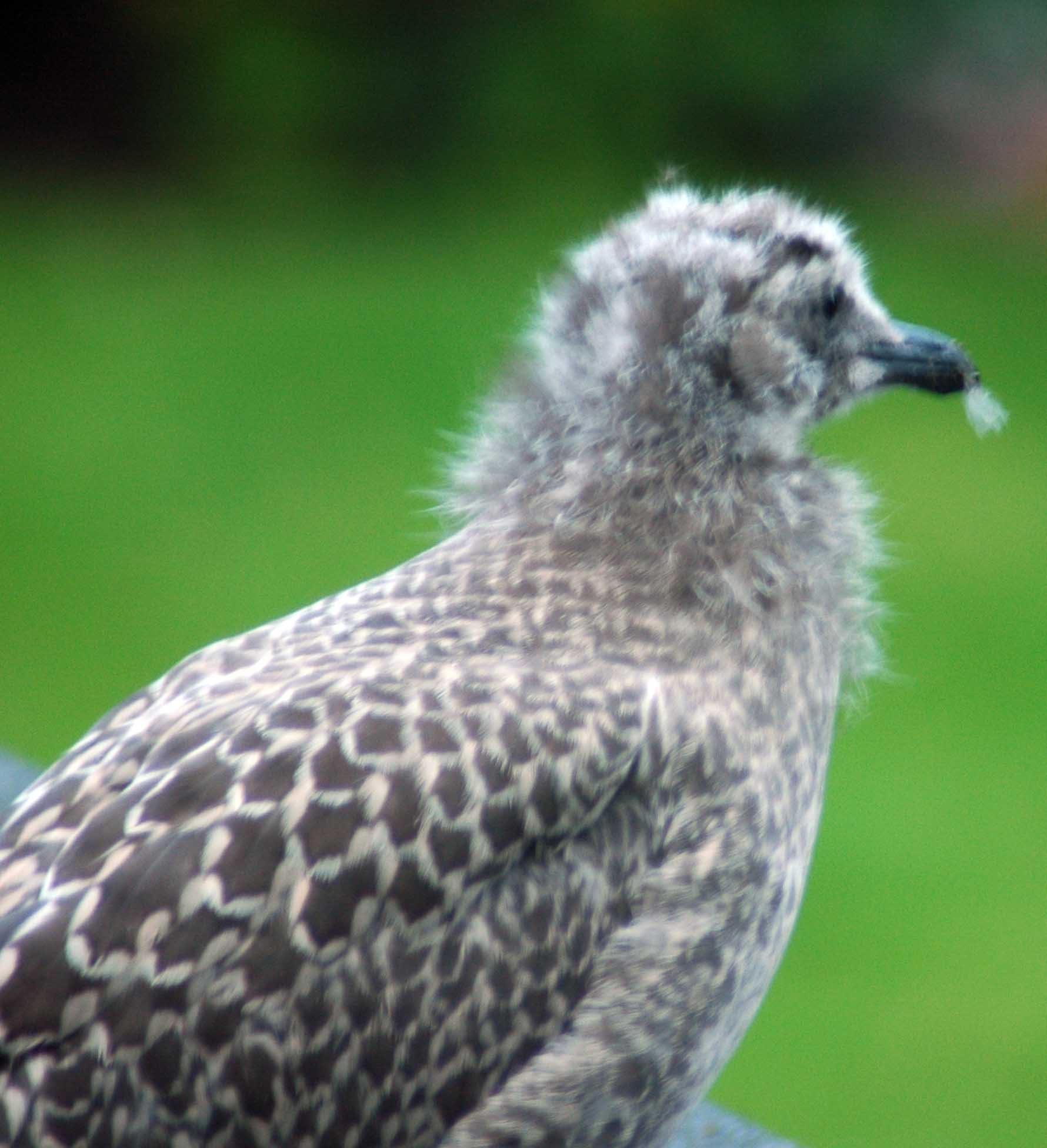
A very newly fledged gull, the offspring of pair number two

Herring gulls herald the crack of dawn very loudly, which at the time was around 4.30am, so that’s when I woke up too. They are much louder than cockerels and even less tuneful.

Even persistent rain does not dampen the desire to squawk

The proximity of the gulls definitely disturbed the usual peace of the neighbourhood, but on the positive side it also literally gave me a window into part of their daily lives. I soon realised that the bouts of loud calling are not a random act, the birds use their powerful voices to call to their partners and offspring as well as to declare their possession of a territory and to warn off intruders. As the youngsters grow in confidence and flying ability improves they leave their ‘home’ area to explore, but parents still return there with food and summon them back to eat it.

The adults always called loudly before delivering food to their young, perhaps it stimulates regurgitation?

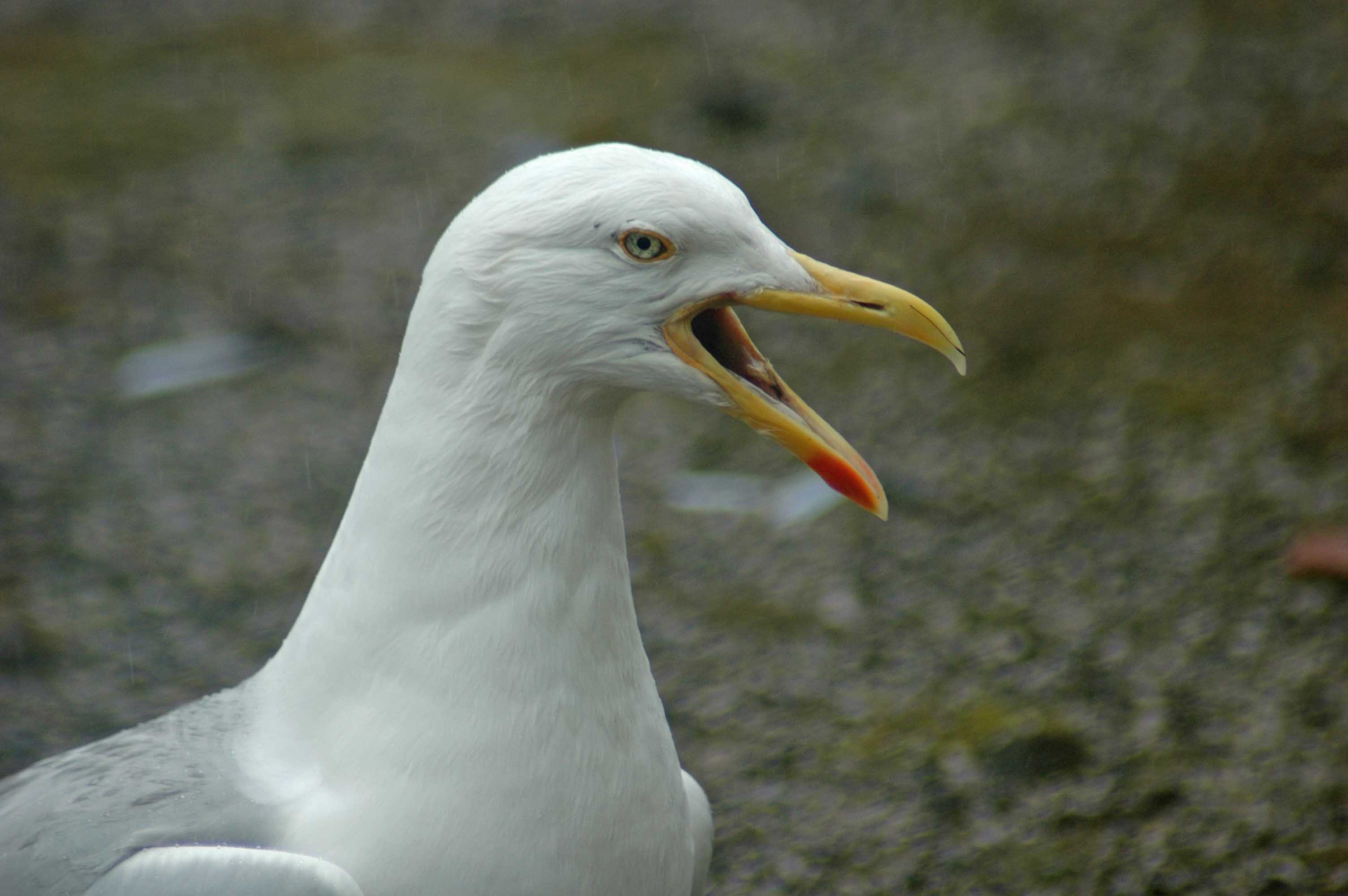
The adults had a ritual; each time they arrived back with food they began calling loudly, starting off with their heads lowered, then raising them, cranking up the volume until they reached a crescendo with head thrown back and beak opened fully.

You would not want to be on the sharp end of that beak

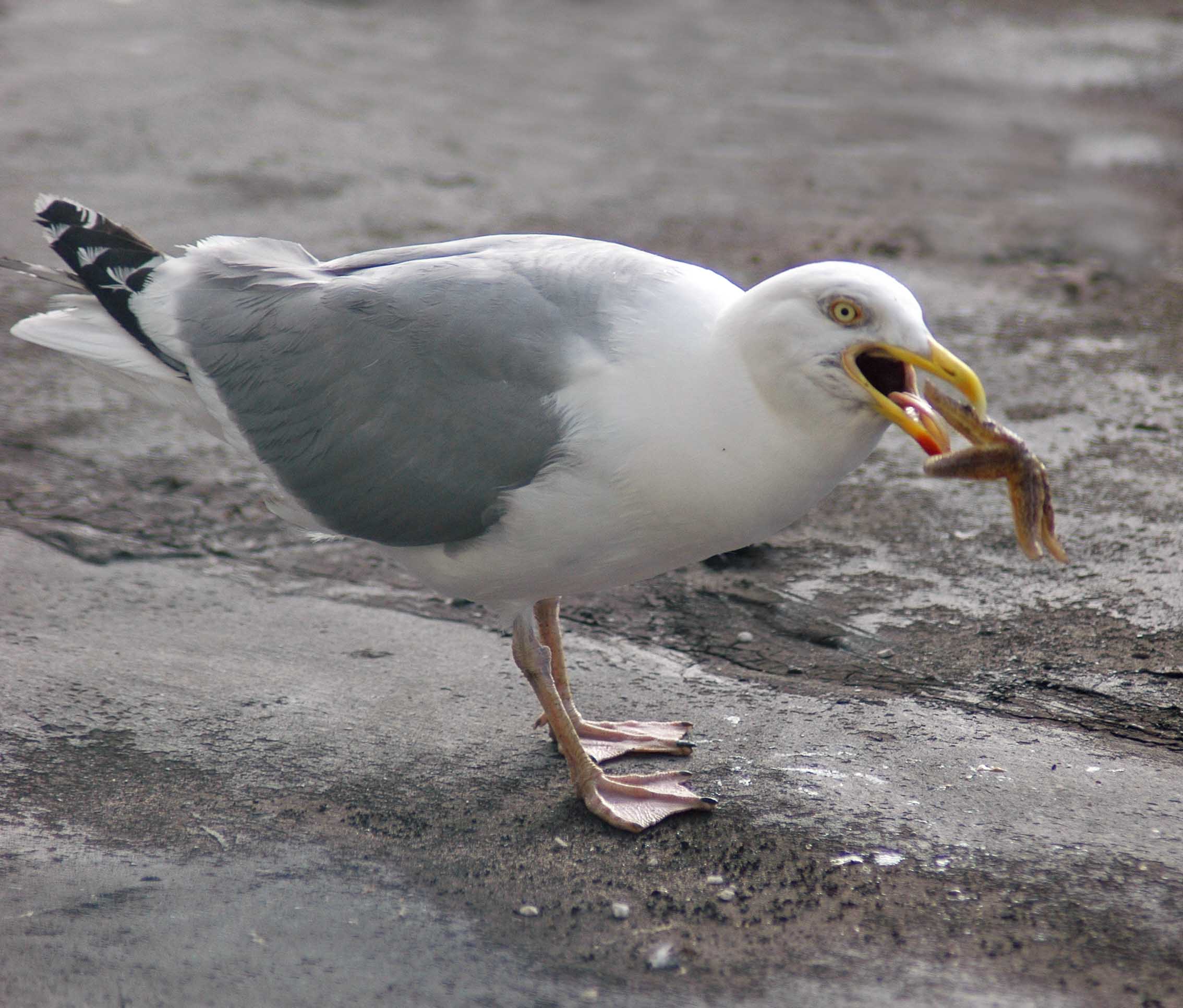
They are vigilant and attentive parents and deal patiently with  harassment by their young ones that persistently beg  for food. I’m not sure they are very well versed in nutrition though; ever the opportunists I saw them bring forth a variety of foodstuffs, including french fries, raw chicken, bits of crab and a still-wriggling starfish.

This starfish was definitely fresh, still wriggling in fact

The gulls took time out in the afternoons to rest together, the pair work together to raise their young and appear to be well bonded. Although they would appear to be relaxed, they were ever-vigilant and well aware of the presence of other birds in their airspace, taking it in turns to issue warnings.

The male of the pair starting off vocal proceedings . *note the sunlight show through the thin membrane below his beak

Your turn dear …..

All squawked out

Teaching junior how its done – a family session

A postcard to our summer visitors: “Thank you for an interesting and educational few weeks, but I’m glad you’re no longer here. Perhaps you might enjoy trying a new location next year? I understand the chips are rather good in Llandudno, or how about Rhyl …..?”

Share this:

  • Click to share on Facebook (Opens in new window) Facebook
  • Click to share on Pinterest (Opens in new window) Pinterest
  • Click to share on X (Opens in new window) X
Like Loading...

New gulls on the block

17 Tuesday Jul 2012

Posted by theresagreen in bird behaviour, Birdwatching on North Wales coast, Nature, nature photography

≈ 3 Comments

Tags

coastal birds, herring gull, herring gulls in towns, larus argentatus, rhos on sea

I’ve been away quite a bit lately, so there’s quite a bit of catching up to do  here in Rhos-on-Sea. The weather here, as everywhere else has not been conducive to venturing far, but I have been able to do some very productive birdwatching from my bedroom window, which I probably would not have done had I been out and about, so some clouds do have silver linings. In this case the silver has been in the shape of Herring Gulls – (the scientific name larus argentatus translates as silver gull). The activity has been brought about by the recent fledging of the single offspring produced by the pair that nested atop our next-door neighbour’s chimney pot.

At first the young gull spent a lot of time resting on the flat roof, where it is surprisingly well camouflaged.

The newly-fledged gull resting

In between bouts of resting it wandered around the rooftop picking at the odd collection of sticks, shells, bones and other random items brought there by its parents hoping to find something edible it may have missed.

First portrait of the new arrival

I don’t need to sit and watch and wait for the parents to arrive with food as both adult and their young one set off such a cacophony of noise at the sight of one another I can hear them from wherever I am in the house. Once a parent lands the youngster automatically adopts the typical crouched, hunched shoulder begging posture that makes it look a bit like a small vulture.

In begging posture

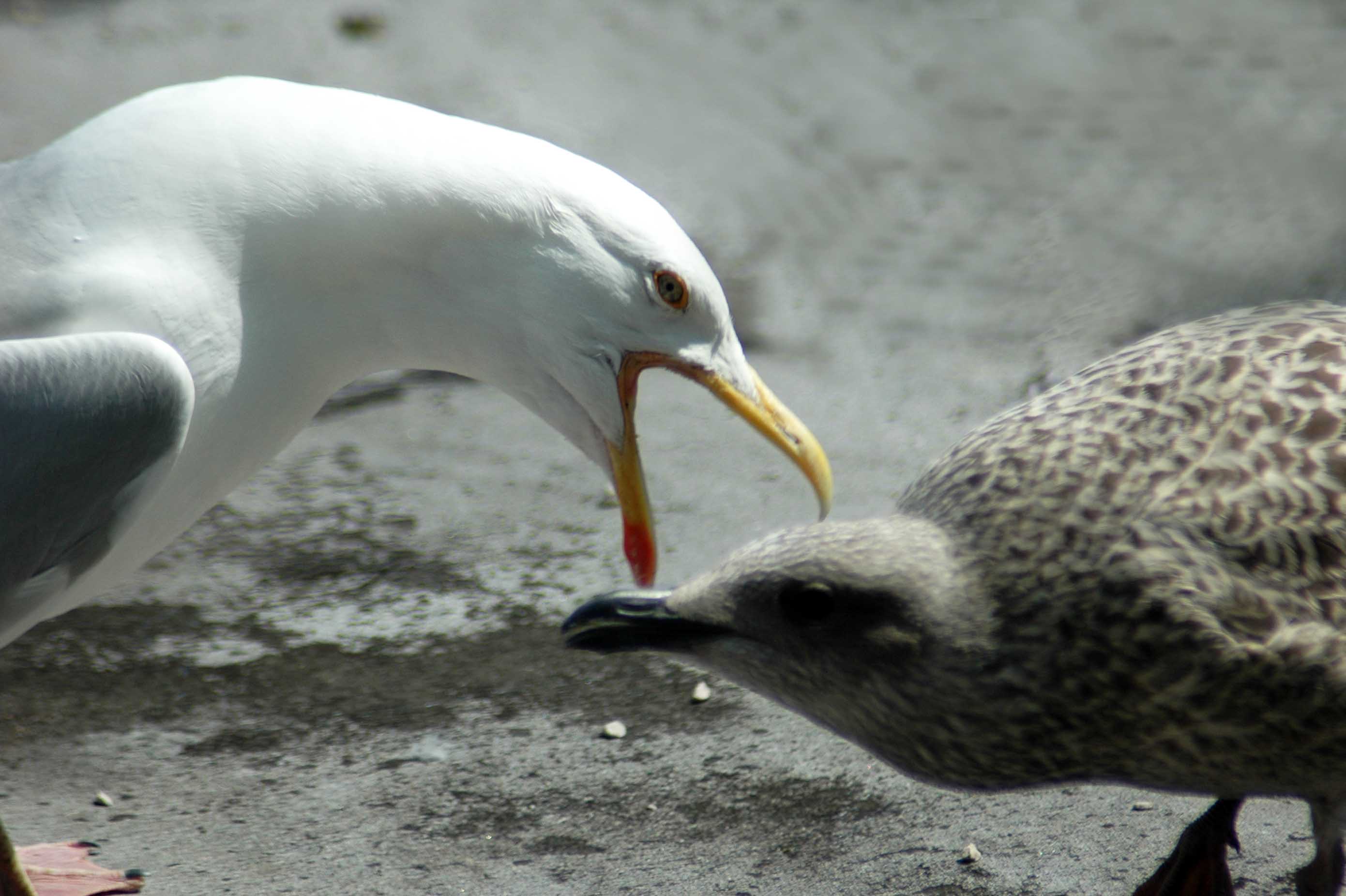
The loud communication between the two birds continues for a minute or so, then the parent allows the young one to approach and finally to tap the red spot on its beak to stimulate the regurgitation of the food it has brought.

The young gull approaching its parent

Getting into position

The young gull taps the red spot on its parent’s beak  to stimulate regurgitation of its lunch

What follows is not pretty as the parent brings back whatever food it has managed to find and deposits it in front of its youngster. It seems to be thriving on a diet that does not always look particularly healthy; in the following pictures the meal is raw chicken, but on another occasion it was a pile of french fries. There have also been more natural offerings of crab, which is consumed shell and all and small fish.

The adult regurgitating raw meat, maybe chicken

Fortunately the young gull is not a fussy eater

Once the food has been swallowed by the young one the parent leaves immediately, its departure once more accompanied by more loud cries.

Over the course of the last few days the young gull has gained much in confidence and now flies off  to spend much of the day elsewhere, but it is still returning to the high roof in the evenings with its parents and to the flat roof for intervals, maybe to rest where it feels safe.

The young one is gaining in confidence and strength daily

Share this:

  • Click to share on Facebook (Opens in new window) Facebook
  • Click to share on Pinterest (Opens in new window) Pinterest
  • Click to share on X (Opens in new window) X
Like Loading...

Not a trip to Skomer but a great day out

21 Thursday Jun 2012

Posted by theresagreen in birds singing, coastal habitat, coastal walks, Nature, Pembrokeshire coastal path

≈ 2 Comments

Tags

barn swallow, birds singing, common dolphin, cormorants flying, gannet, grey seal, herring gull, lesser black-backed gull, Linnet, marloes peninsular, martin's haven, meadow pipit, Northern Wheatear, razorbill, stonechat, wooltack point

The Saturday following the Friday of the terrible weather dawned bright and sunny and apart from a few lurking clouds the sky looked innocently down upon us as though nothing had happened. We were still hoping for a trip over to Skomer Island, so set off to drive the hour or so that it takes to reach Martin’s Haven, from where the boats depart. We were not too hopeful of being able to get to Skomer today; Saturday’s are popular anyway and as no boats would have gone out yesterday, we expected it to be busy. A first sight of the car park, already overflowing onto adjacent land brought that sinking feeling, compounded by the attendant informing us that all 150 of the day’s landing ticket allocation had been sold by 9.30am. We were somewhat taken aback to learn that some people had begun queuing for places at 5.30am; the first boat for the island leaves at 10am. So, no Skomer for us today.

We had made some effort to get here though and determined to make the best of our situation decided to explore the area around the headland instead. The headland is known as the Marloes Peninsular; the land is owned by the National Trust and for some reason we have not managed to establish is named “Deer Park”, although there are no deer here. There are however spectacular rocks, sea views that take in most of the Pembrokeshire Islands, wildflowers and, we were fairly confident, there would be birds.

We set off to walk up to the highest point of the peninsular, Wooltack Point, distinguished by the small white building on the top that is now an active coastwatch point operated by the National Coastwatch Institute.

We were soon distracted by the small birds we began to see around us almost immediately: Stonechats, Linnets and Meadow Pipits, all species that can make homes in this rather bleak windswept habitat, carpeted with grass and heather and furnished only with low-growing tangles of gorse bushes, brambles and generally scrubby vegetation.

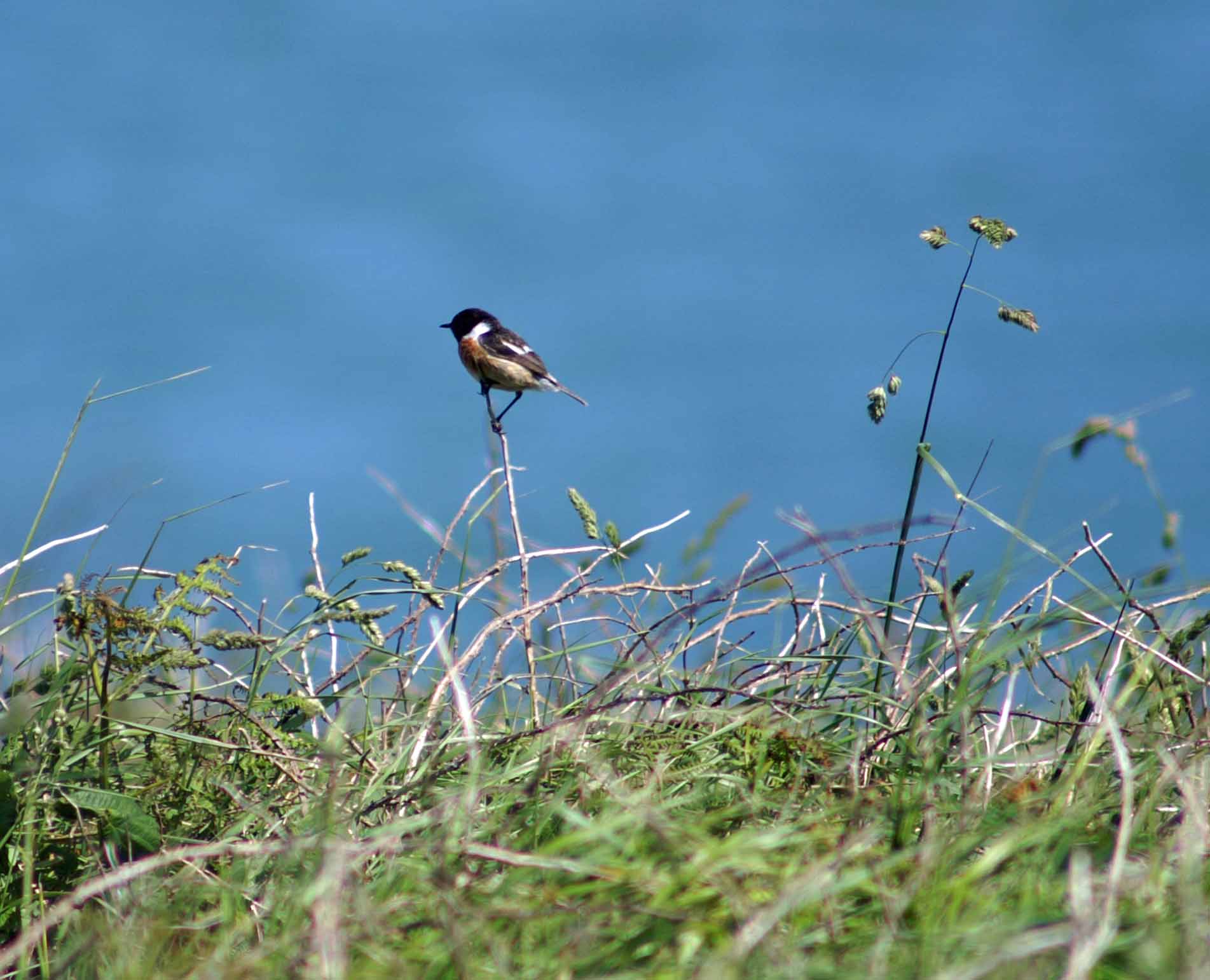
The first bird we had a good view of was this little Stonechat female (Saxicola torquata), who was very shortly joined by a male.

The Stonechat male perched just a short distance away from his mate

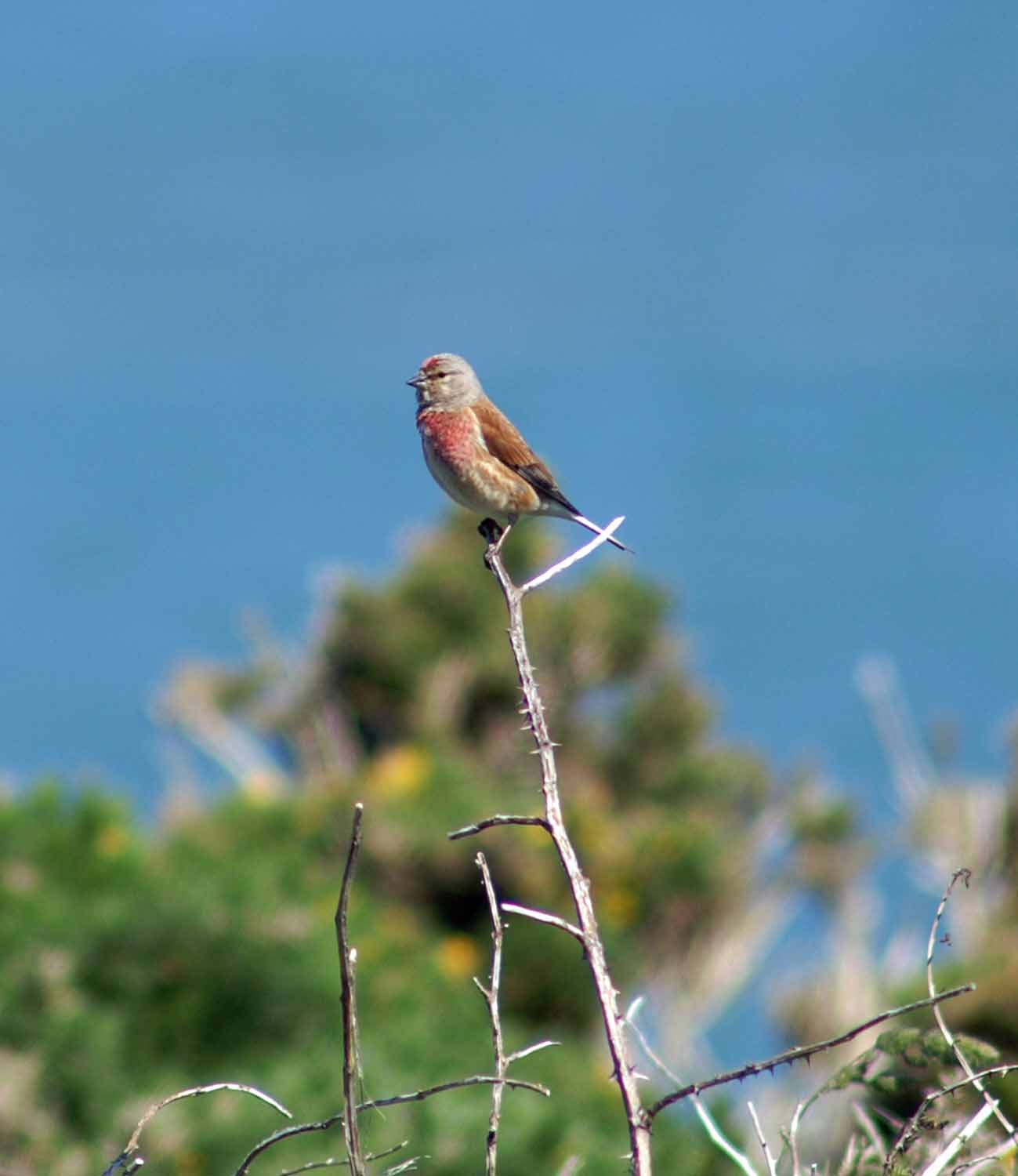
There were several Linnets flying around and one beautiful male landed quite near us on a bramble and began to sing.

This beautiful male Linnet was singing from atop a dead bramble stem

It was sunny here, but windy too, so it was some consolation to think that those on the boats travelling across to Skomer would probably be feeling the combined effects of the cold wind and choppy sea in a not-too-pleasant way. Yes, very immature, especially as we have actually made the journey in even rougher conditions, survived and gone on to have a spectacular day. Anyway, onwards and upwards to Wooltack Point. The views out over St.Bride’s Bay are truly spectacular, but the sea around this point can be treacherous with concealed rocks and strong currents, hence the presence of the Coastwatch.

The incorrectly marked compass (click to enlarge)

We attempted to work out the layout of the islands we could see, picking out Skomer easily as it was close by and Ramsey Island as we recognised the shape of St. David’s Head, but were guessing at the others. I spotted a compass of sorts on a plinth outside the door of the stone hut and as I leaned in to take a picture of it the coastguard popped out to tell us that its directions are useless as all points are wrong. Apparently even the North marking is incorrect. He was quite amused by the fact that “there is nowhere in the world from which that plaque would be correct” and has no idea why it has never been replaced.

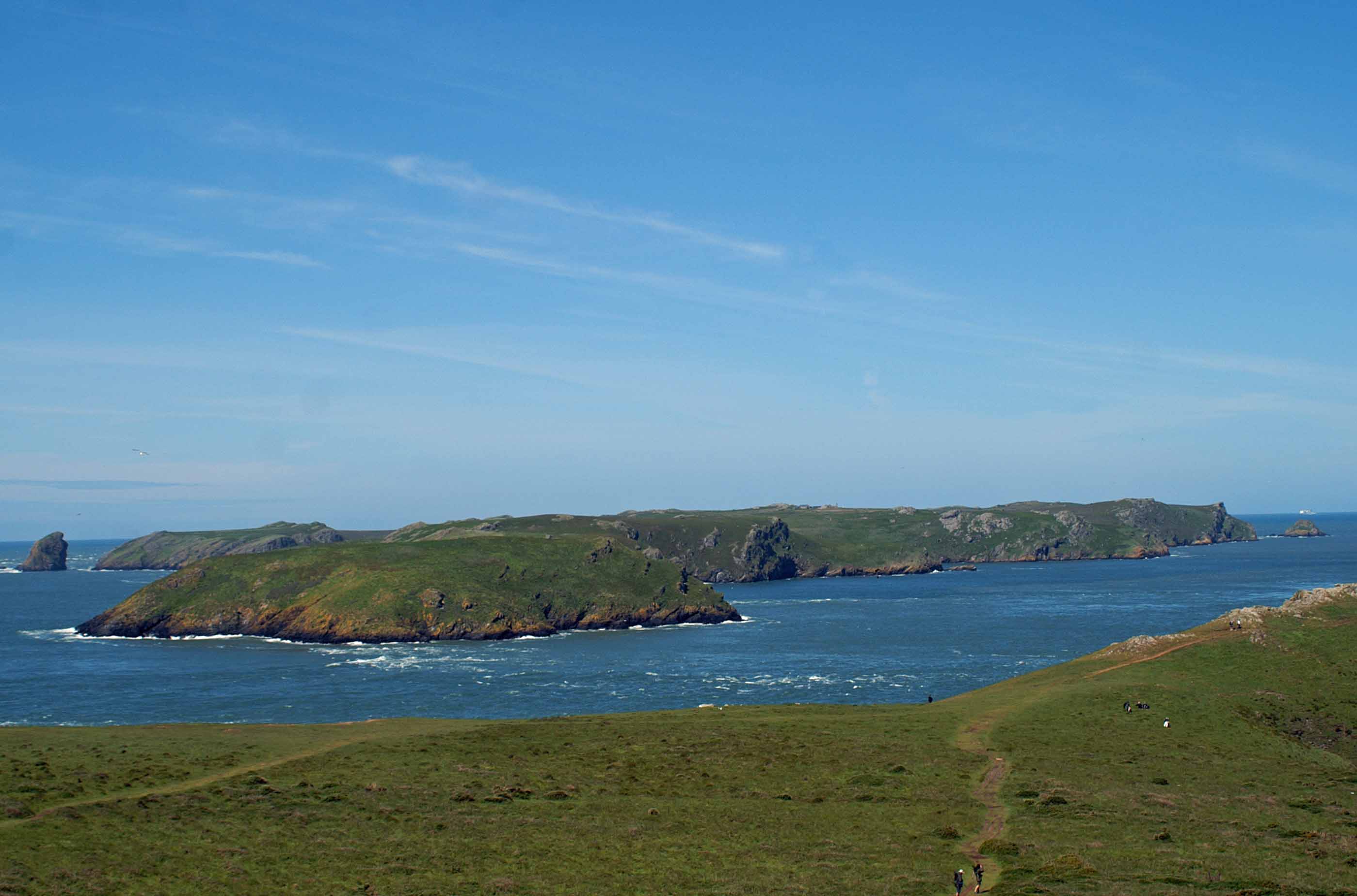
The nearest we got to Skomer Island today, just 2 miles across the Sound

Ramsey Island, 9.5 miles away is located off St David’s Head

Dropping down onto the cliff in front of the hut we discovered it to be sheltered from the wind and much warmer. We sat there for at least an hour watching the array of seabirds flying back and forth or swimming and diving around the rocks below us.

Razorbills were the most numerous birds on the water, but there were a few guillemots and cormorants too.

Razorbills swim on the surface then suddenly make a synchronised dive and disappear underwater for ages, eventually reappearing some distance away

Cormorant flying close to the rocks, low over the water

Herring Gulls passed us by very closely

Lesser Black-backed gulls were another frequent sight

We were delighted by the appearance of Grey Seals in the sea just below us, and even more thrilled when we realised there were dolphins too. The first dolphin we picked up on was following the Skomer boat on its return trip to Martin’s Haven, but soon realised there were at least three in total.

Grey Seal

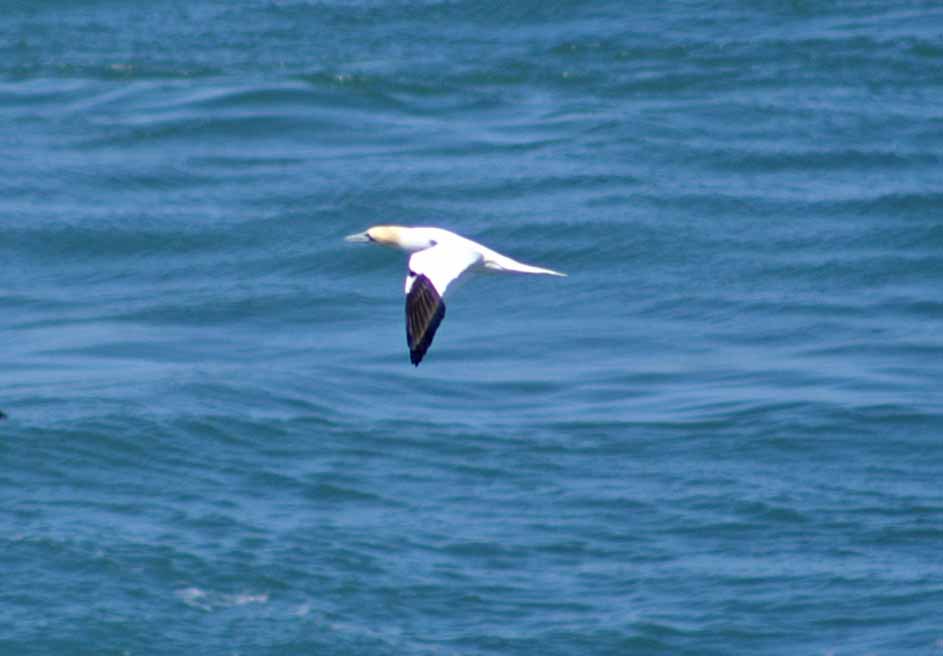
The island of Grassholm is occupied by an enormous colony of breeding Gannets (another highly recommended trip to take) and although it is 10 miles away from where we were today we kept a hopeful look out. We were rewarded with an initially distant sighting of a number of the birds circling and diving, but over the course of twenty minutes or so they gradually worked their way towards us, clearly following the progress of a shoal of fish. This is why the dolphins were there too. It would have been lovely to have had closer views, but both they and the birds were near enough to be seen well through binoculars.

One of a number of Gannets closely following a shoal of fish

The spot we had chosen to settle in seemed to be within the territory of a Pipit. He made several tours of the rocks immediately around us, making some rather disgruntled noises, clearly not happy with us, but otherwise undeterred by our presence.

I think this is a Meadow Pipit, but going on its location, it could be a Rock Pipit

The Pipit demonstrating his ‘parachuting’ display flight whilst singing

This is undoubtedly a tough environment for wildflowers, but there was thrift and sheep’s bit flowering and almost squashed into the short grass several tiny specimens of pretty blue spring squill.

There were bumblebees visiting most of the available flowers

Leaving our sheltered viewpoint we continued our walk around the remainder of the headland then cut back inland towards the car.

Rocky coves with sheltered beaches such as the one below the cliff here on the far side of the peninsular are perfect places to see grey seals and their pups. The land in the top right of the picture is the tip of Skomer.

Next on the agenda was to seek out another sheltered spot in which to eat our lunch. With hindsight we did consider that perhaps if we had not stopped at M & S in Haverfordwest for decent sarnies we may have squeezed onto that boat … ? (Normally we would have made our own, but pinned in by the tree we couldn’t get out to the shops yesterday and had no suitable supplies.) But, on the bright side,  it was more than pleasant here and we had had some very fresh air and some wonderful sights. We located another likely spot to enjoy our food in and settled down. We soon realised we were being watched; a baby bunny was peeking through the grass at the top of a sandy hillock close by that we could now see was above the entrance to a warren.

Baby rabbit on the roof of the family home

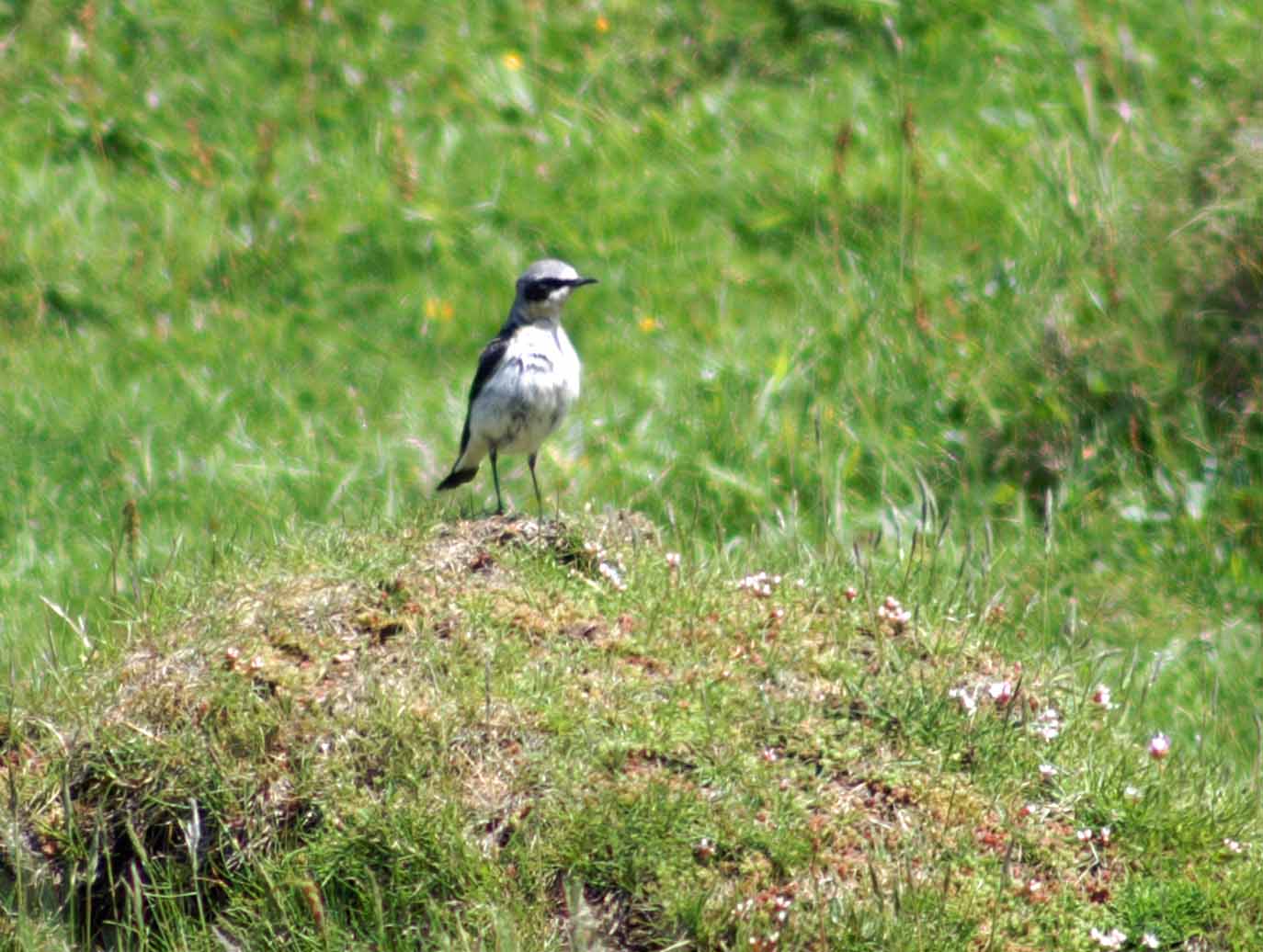
We were thoroughly enjoying our lunch sitting on a grassy bank in a warm and sunny spot, appreciating our beautiful surroundings and reviewing the wealth of sights we had enjoyed, when another bird appeared in front of us. This was a handsome jaunty male Wheatear and once again we seemed to have settled ourselves in the middle of his territory. He seemed to be making a point of travelling around us, settling on rabbit hills, brambles, rocks and the like. We did feel a little guilt but carried on enjoying the sight of him quietly, staying as still as is possible whilst yielding a hefty camera lens.

A female appeared too from the same direction and made a similar circuit, so we surmised that they had a nest located somewhere behind the bank occupied by the rabbits. Beautiful birds.

The very handsome male Wheatear asserting his territory from the top of a rabbit hill

The female Wheatear with her browner plumage is also a very attractive bird

Arriving back at the lane leading to the beach we headed for the loos to find there was an unusual queue to enter the building. A number of Barn Swallows were waiting for people to leave, taking their opportunities to swoop in to their nests built in various places inside.

One of a pair of Barn Swallows waiting to get into the toilet block and back to their nests

Although they are a familiar sight swooping and gliding over the countryside, it’s not often you get such close views of these elegant birds and to appreciate their very glossy plumage.

This bird was taking advantage of the waiting time to thoroughly preen its feathers

I was listening and watching for a sight of a Whitethroat, as we have always seen them here in the past, but not so today. As we made our way up the hill towards the car park we did see another Wheatear and had a quick glimpse of the back of a Dunnock singing from a bramble patch.

A quick glimpse of a Dunnock that was singing from a bramble patch

Not the outing we had planned, but a thoroughly enjoyable few hours spent in a beautiful place and still with a bit more to come….

Share this:

  • Click to share on Facebook (Opens in new window) Facebook
  • Click to share on Pinterest (Opens in new window) Pinterest
  • Click to share on X (Opens in new window) X
Like Loading...

Fair weather gardening

02 Monday Apr 2012

Posted by theresagreen in garden wildlife, Insects, Nature, nature photography

≈ 9 Comments

Tags

Bee-fly, Drone fly, herring gull, house sparrow, starling, wood pigeon

There are times when life takes precedence over blogging and I’m lagging behind a little with my postings as a result, only by a week or so, but at this time of year when nature is pressing on apace, an awful lot can happen in a very short time, so I’m trying to catch up.

The hot weekend of 25-26th March brought the incentive I needed to finally get out and cut the grass for the first time this year before its height exceeded the capabilities of my daughter’s little Flymo. My antics attracted the curiosity of  a few of the neighbours, who peered down from their penthouses to see what the racket was about.

An imperious stare from the beady yellow eye of one of 'our' herring gull pair

A wood Pigeon chose an aerial view of proceedings and seemed quite surprised by them

The starling was more preoccupied with posing

The starling, recognisable as a male by the blue base to his bill, looked so gorgeous I am putting in another shot of him.

He was whistling and singing, hence the fluffed out throat feathers

“I’m only a poor little sparrow, no colourful feathers have I, I can’t even sing when I’m nesting in spring……”

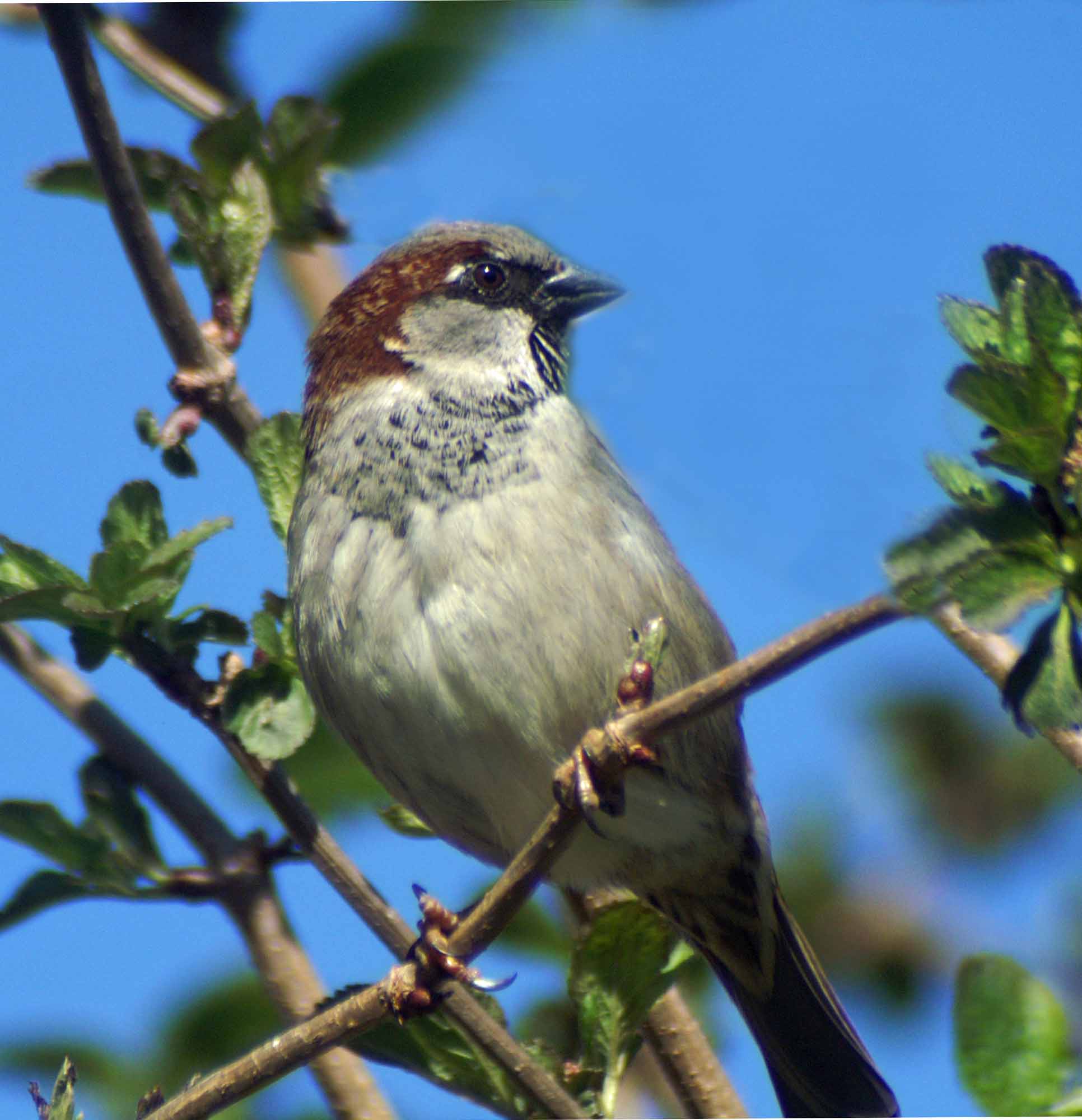
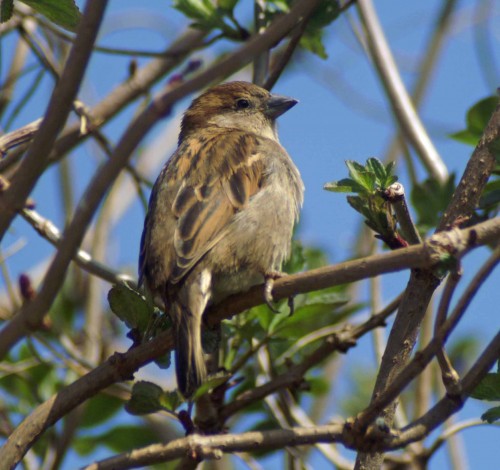
The garden hedges were bursting with House Sparrows, and I can see that at least two pairs are beginning to nest within the spiny pyracantha; more are occupying a space they have found high up in the eaves of the house at the front. Their constant cheerful cheepings and chatterings ensure I am aware of their companionship. They may not be colourful, nor can they sing, but I love them.

The male House Sparrows are all bright eyed and in their mating best plumage now

They may be brown, but how can you not appreciate the subtlety and detailed patterning of a female Sparrow's wing?

A weed is just a flower out of place

I’ve never been a fan of closely mown and weed-free lawns, partly because I never had the time or the inclination to spend hours on nurturing such a sward, but mainly because I could never bring myself to mow down daisies and would always leave little archipelagos of them strung throughout mine. I have a slightly different attitude to dandelions; whilst I do appreciate their golden beauty, they go to seed so rapidly and spread like wildfire so although I will leave a few, the majority do have to go. They are a very important source of nectar for early pollen and nectar foraging insects though, so I’m not too hasty to give them the chop.

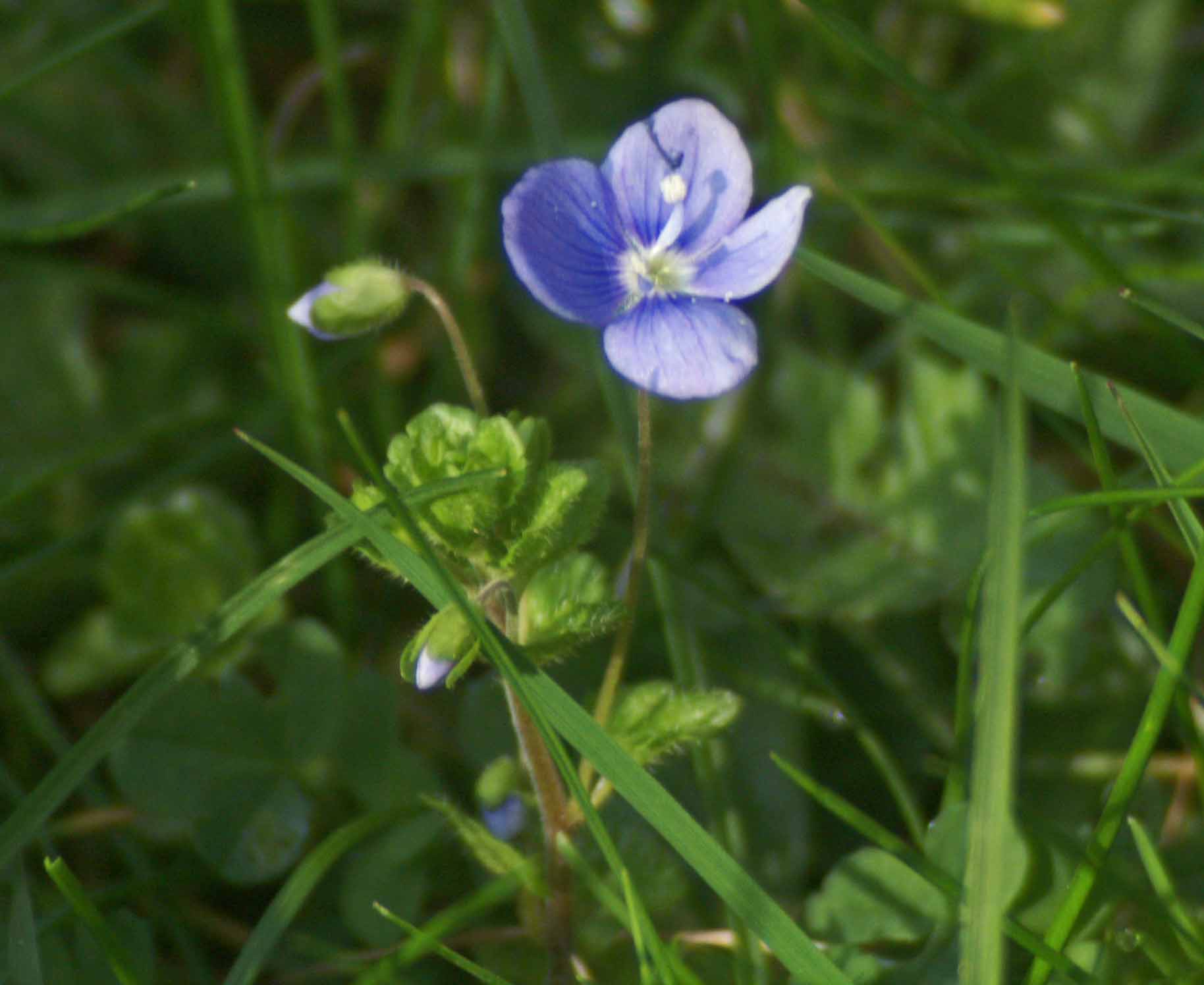
Dainty blue speedwell is another wild flower I hate to cut down. They don't take up much space and are so pretty.

Hoverfly on lesser celandine

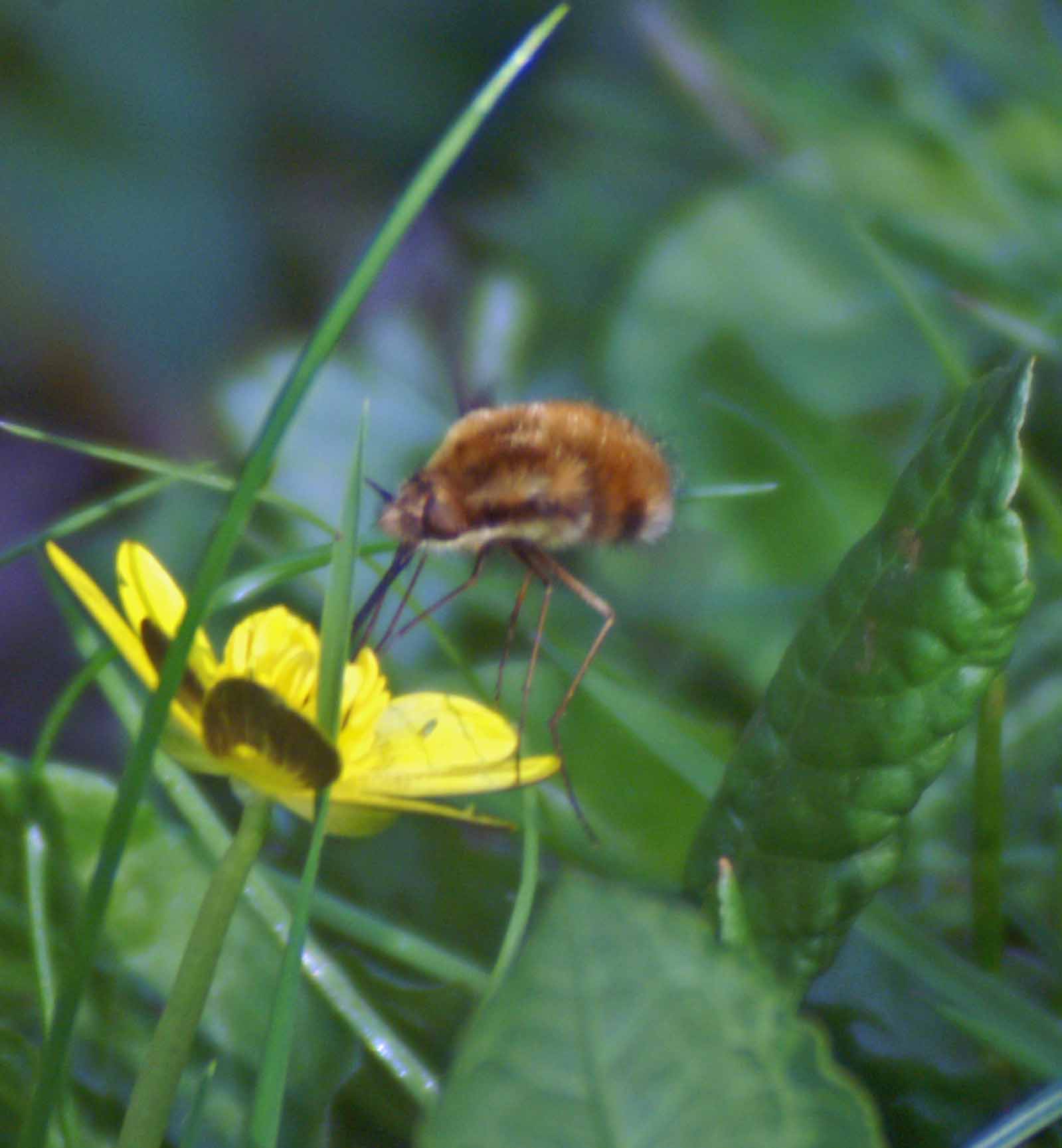
There are a couple of patches of lesser celandine in the lawn in this little garden that I am loathe to cut , even though I know they are just going to continue to grow and spread and probably get out of hand, but whilst I’m care-taking here they’ll stay. I was gratified to see a small hoverfly on a flower and delighted by a visit from one of my all-time favourite insects, a crazily-constructed bee-fly.

A favourite insect of mine, the bee-fly has a permanently projected long proboscis and ridiculously long legs to balance it

Bee-fly – Bombylius major

A very distinctive fly, a bee-mimic, these fascinating insects are most frequently seen in the early spring, from April to June when they may attract attention as they hover for several seconds at a time in the same spot, either over bare ground or over a  flower then dart off and return to the spot facing in a different direction.  Their hovering may be accompanied by a high-pitched buzz.

The body is rounded and furry,  the legs appear disproportionately long and spindly, but are probably required to balance the long rigid proboscis which is permanently fixed on the front of the head. Their boldly patterned wings have a distinct dividing border through the horizontal middle between the dark and clear portions. Their antennae are typically very short and pointed. The bee-fly’s behaviour belies its cute appearance though. The adult female lays her eggs close to the underground nest of a solitary bee 0r wasps, then flicks them towards the entrance. After hatching, the bee-fly larvae find their way into the nests to feed on the nest owner’s larvae.

A bee-fly resting on the ground showing better the patterned wings

There were lots of drone  flies about and a lesser number of smaller species hoverflies. Surprisingly my first butterfly sighting of this year was a little Holly Blue, followed a while later by the species I had expected to see first, a Speckled Wood. Neither obliged by resting for long enough for me to photograph and it feels like cheating to use ‘one I made earlier’, so I’ll have to wait.

Drone-fly-eristalis pertinax

An early marmalade fly

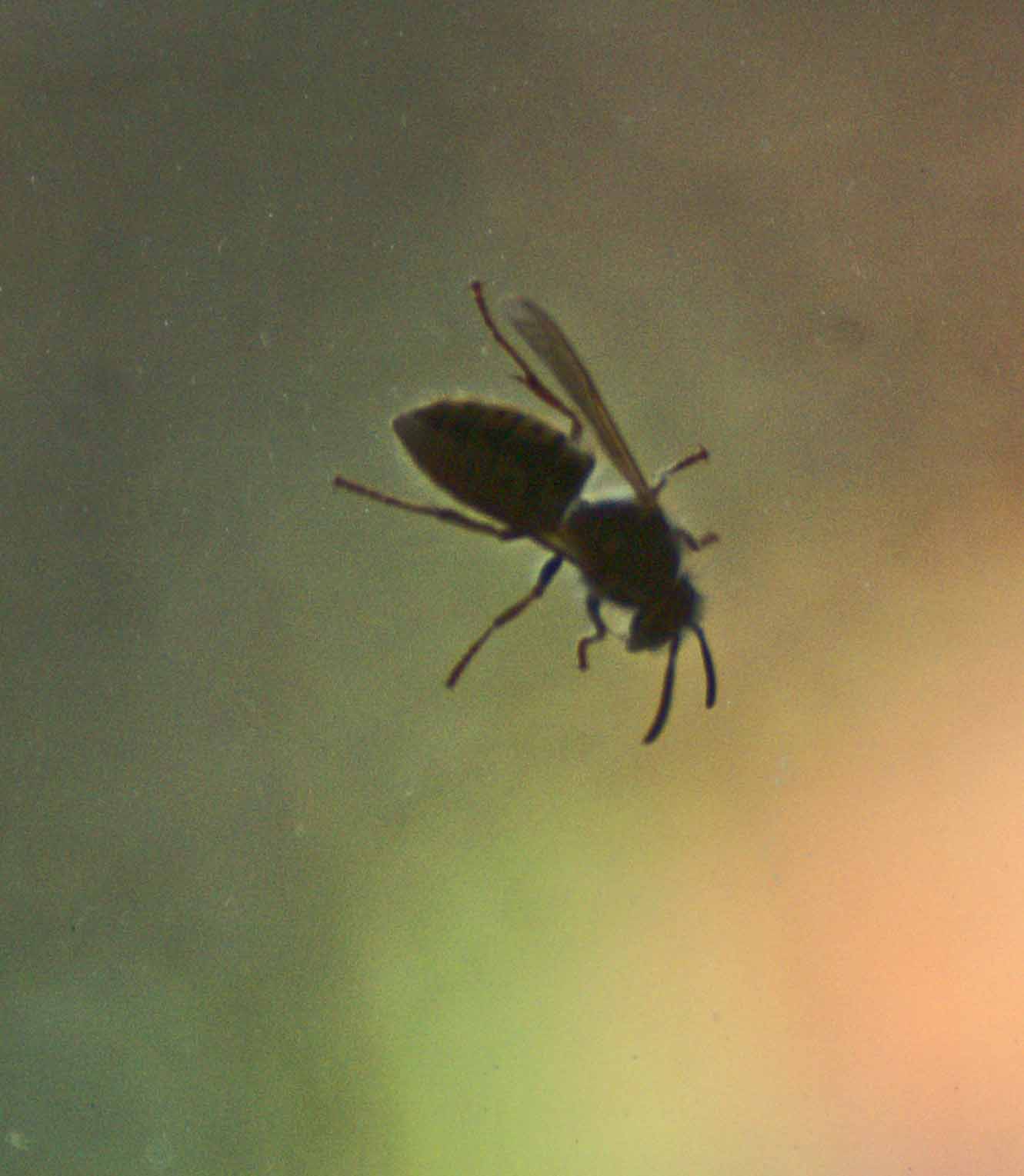
Inside the house, a large queen wasp had become trapped against the kitchen window: I had watched it earlier  flying back and forth along the bottom of the hedge. After taking the photograph I let it out. Must clean that window.

Wasp trapped on the inside of the kitchen window

On the living room window a pair of flies were mating - underside view

The upperside view of the flies on the outside of the window. Difference in size between the sexes is appreciable, the male considerably smaller.

Share this:

  • Click to share on Facebook (Opens in new window) Facebook
  • Click to share on Pinterest (Opens in new window) Pinterest
  • Click to share on X (Opens in new window) X
Like Loading...

Hungry Herring Gulls

21 Wednesday Sep 2011

Posted by theresagreen in birds of the seashore, Birdwatching on North Wales coast, Nature, Nature of Wales, Rhos-on-Sea

≈ 2 Comments

Tags

colwyn bay beach, herring gull, herring gull feeding behaviour, herring gull juveniles begging for food, larus argentus

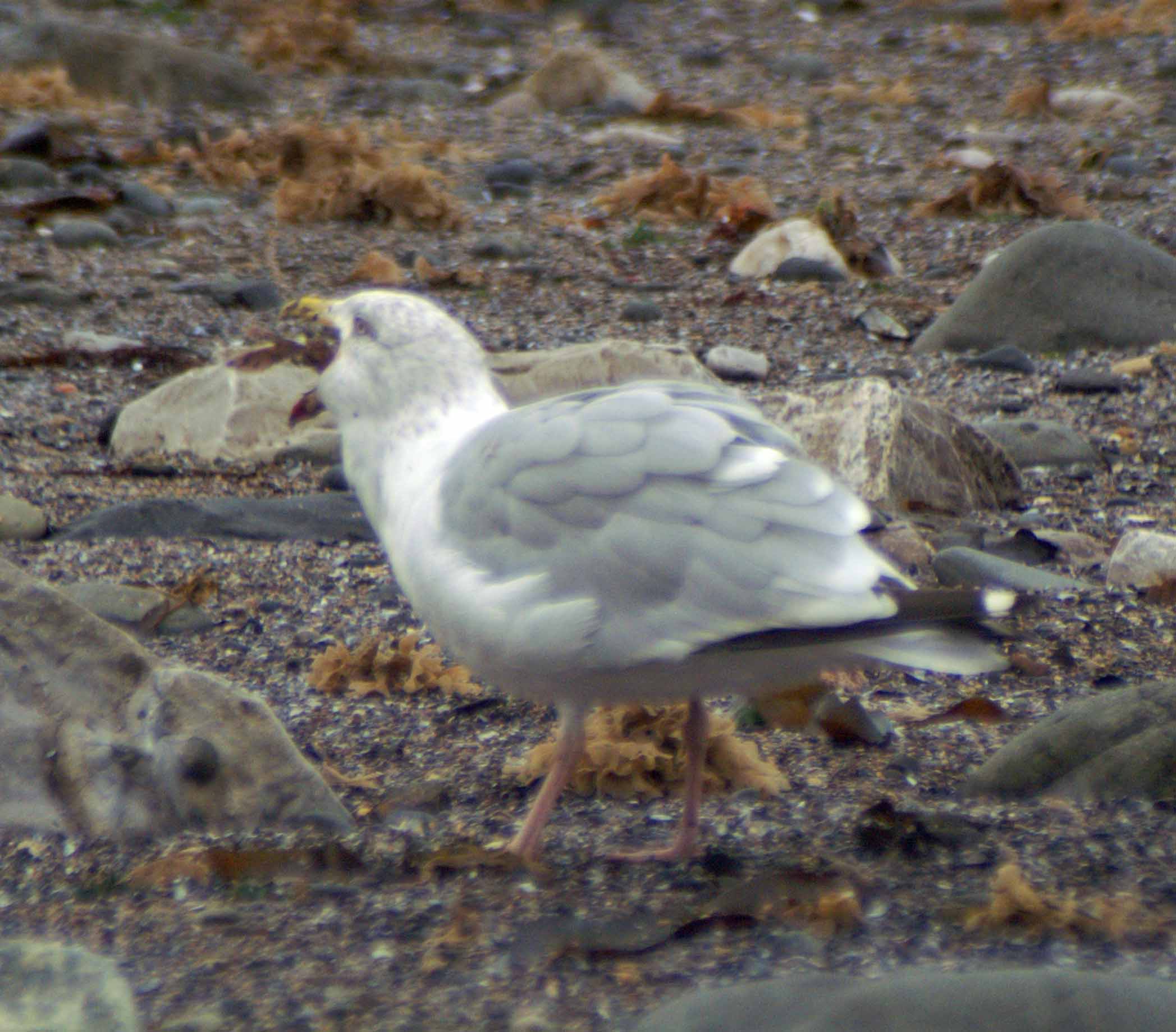
Walking along the sea shore the other day I came across a Herring Gull in the process of eating a fish. I have no idea what species of fish it was, all I can say is that it was a flat fish and either whole or almost-whole, either way, large enough for me to be amazed that a bird could even attempt swallow it.

17/9/11-The gull with most of the fish in its gullet

17/9/11- It was not going down easily, so it had to come back up again

17/9/11-A second attempt -and this time the fish disappeared

17/9/11- All that remained was a lump in the gull's crop - it should keep him going till at least lunchtime

Herring Gulls are  omnivores and opportunists like most Larus gulls, and will scavenge from rubbish dumps, landfill sites, and sewage outflows; food obtained this way may comprise up to half of the bird’s diet. Despite their name, they have no special preference for herrings — in fact, examinations have shown that echinoderms and crustaceans comprised a greater portion of these gulls’ stomach contents than fish.

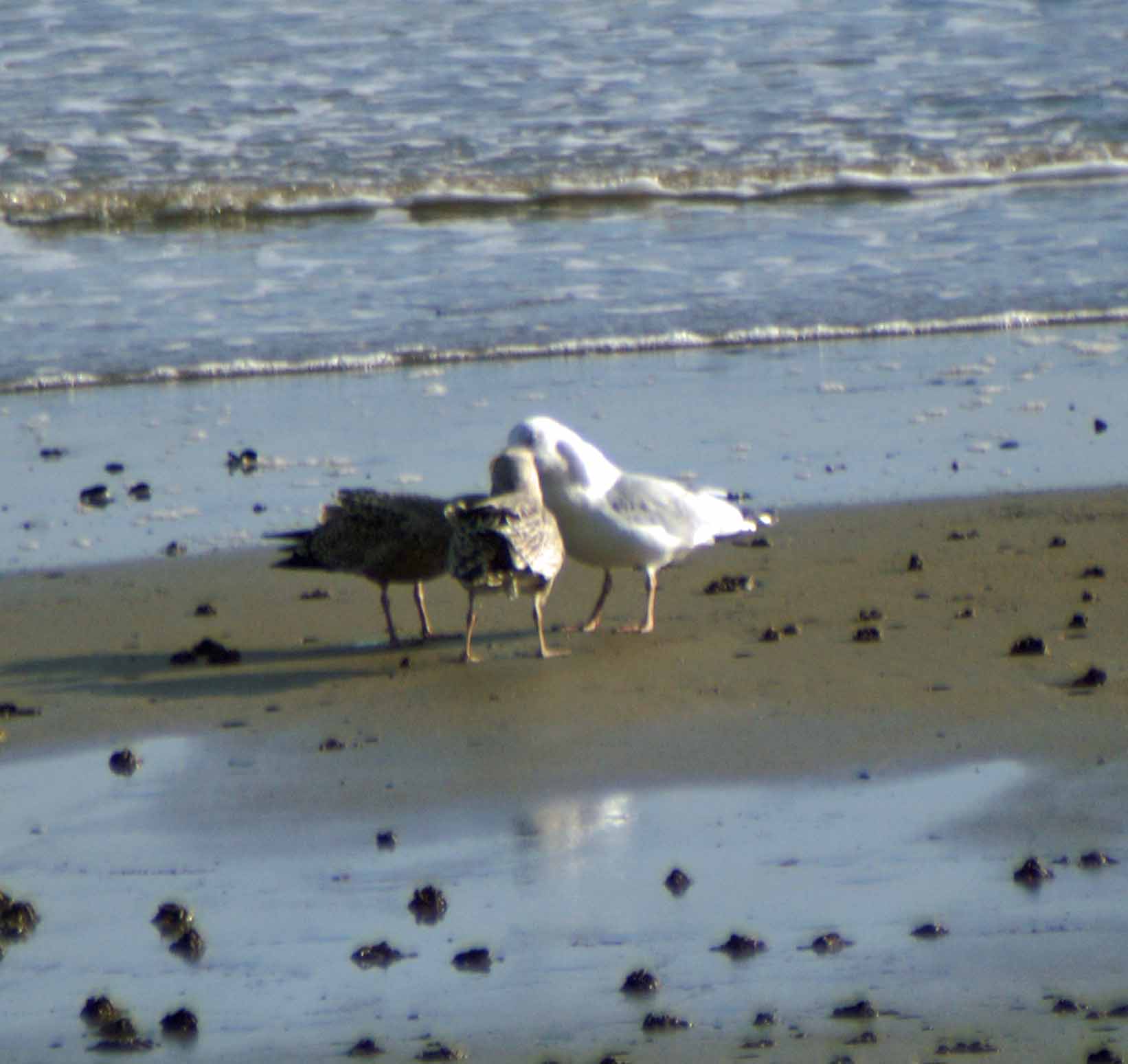
On Colwyn Bay seashore I witnessed more gull feeding behaviour, this time two juveniles were begging an adult, presumably a parent, to feed them.

Young Herring gulls persuading a parent to feed them

Juveniles use their beaks to “knock” on the red spot on the beaks of adults to indicate hunger. Parents typically disgorge food for their offspring when they are “knocked”.

Parent gulls will feed their offspring for up to 6months if they continue to beg

Chicks are generally fed by their parents until they are 11–12 weeks old but the feeding may continue up to six months of age, if the young gull continues to beg. The male feeds the chick more often than the female before fledging, the female more often post-fledging.

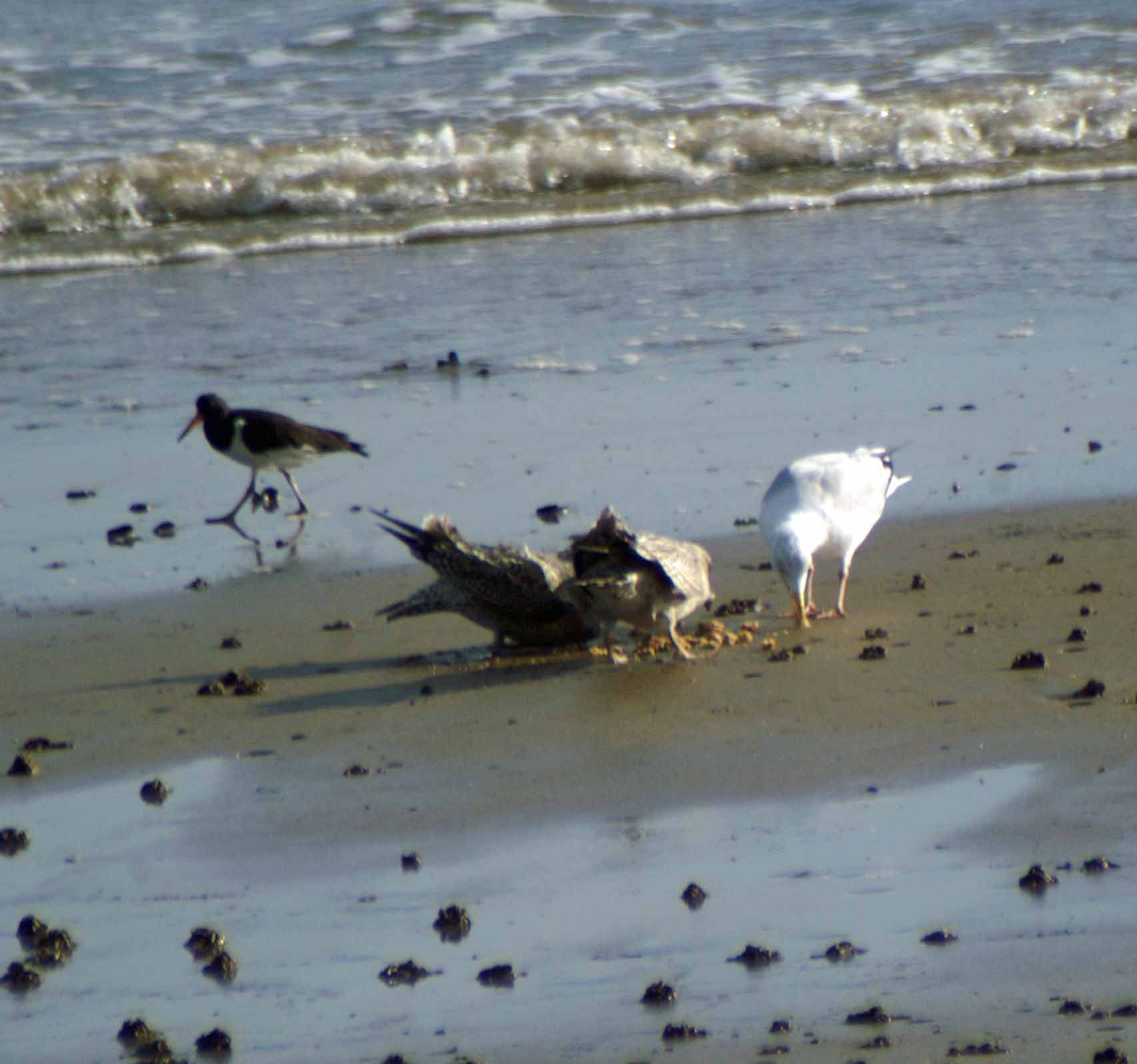
The adult was persuaded to disgorge what it had eaten onto the sand

The young birds begging did the trick and the adult disgorged whatever it had eaten onto the beach, which did not look at all appetising from where I was standing, but the three birds seemed to be happy with it.

Share this:

  • Click to share on Facebook (Opens in new window) Facebook
  • Click to share on Pinterest (Opens in new window) Pinterest
  • Click to share on X (Opens in new window) X
Like Loading...

Seashore treats

13 Tuesday Sep 2011

Posted by theresagreen in birds of the seashore, Nature

≈ Leave a comment

Tags

birds of North Wales, curlew on seashore, herring gull, oystercatchers feeding, oystercatchers flying, wading birds on seashore

20th August

I had some errands to do in the village this morning and as it was a lovely bright sunny morning I decided to walk there along the promenade. As always I stopped by the tiny St.Trillo’s chapel to scan the rocky seashore; the tide was going out and sightings of Oystercatchers and Sandwich Terns were rather distant, and I was set to move on until I noticed a slight movement around a rock pool and spotted a Curlew, the closest view of one I’ve had since I first realised they were present here.

20/8/11-Curlew on the beach

Returning home from the village  I stopped for a quick look around the area at the end of the dry sandy beach where there are large rocks and also the edge of the harbour. To my surprise there was a small group of Oystercatchers there and I had some close up views of them foraging amongst the rocks.

20/8/11-Oystercatcher-Haematopus ostralegus

20/8/11-Oystercatcher probing a shellfish

20/8/11-Oystercatcher & Herring gull

20/8/11-Herring Gull posing

20/8/11-Oystercatchers flying

Share this:

  • Click to share on Facebook (Opens in new window) Facebook
  • Click to share on Pinterest (Opens in new window) Pinterest
  • Click to share on X (Opens in new window) X
Like Loading...

Seaside life, cloudy skies and other views

03 Saturday Sep 2011

Posted by theresagreen in Nature of Wales, Rhos-on-Sea

≈ Leave a comment

Tags

catching crabs, cloudy skies, daisies growing on the beach, herring gull, Little Orme, mussel beds of Rhos-on-sea, red-tailed bumblebee

The weather throughout August has been unsettled and changeable. Rainy and sometimes windy days have curtailed outdoor activities, but when there have been dry spells and even occasional warm sunny ones, beautiful cloud formations have added an extra dimension to the views of sea and land.

A breezy but sunny afternoon:

9/8/11-Clouds over Rhyl

Catching crabs,( or ‘crabbing), is a popular form of entertainment in this part of the world. The only equipment required are a length of line with a hook to hold the bait, which is often a small piece of bacon and a bucket full of water to hold your catch – specially marked buckets are sold locally. When you’ve caught enough crabs to make you happy, you  simply return them all to their rightful home unharmed, where they can continue to grow. I’m sure there are many canny crabs lining up for an easy meal.

9/8/11-Crabbing from the jetty, Rhos-on-Sea

9/8/11-On the village part of the promenade a clever woven wicker sculpture, crafted from live willow, of a person holding a fish

 A warm evening just before sunset:

4/8/11-Rhos harbour at evening low tide

4/8/11-Evening view of seashore to Colwyn pier

4/8/11-White daisies growing at the back of the beach photograph better in the low light of evening

4/8/11-Gulls gathered and resting at evening low tide

4/8/11-A Herring Gull reflected

4/8/11-Rhos mussel beds just before sunset

4/8/11-A bumblebee was out late visiting lavatera flowers outside St Trillo's chapel

4/8/11-The Little Orme at sunset

Share this:

  • Click to share on Facebook (Opens in new window) Facebook
  • Click to share on Pinterest (Opens in new window) Pinterest
  • Click to share on X (Opens in new window) X
Like Loading...

Conwy castle, harbour and gulls

27 Saturday Aug 2011

Posted by theresagreen in Nature of Wales, North Wales

≈ 2 Comments

Tags

Black-headed Gull, Black-headed Gull in winter plumage, Conwy castle, Conwy estuary, herring gull, herring gull juvenile, smallest house in Great Britain, Welsh Castles

I love the town of Conwy and  have been intending to visit since I arrived here, partly to have a walk around the castle and is walls, but mainly to check up on how the Herring Gulls are behaving down in the harbour. Conwy has a large population of Herring Gulls and they can be seen and heard throughout the town at all times of the day and often much of the night too!

I arrived quite late on a variably grey, showery and sunny day, a good day for taking photographs as I think clouds add an interesting dimension and reflect the true character of Welsh summer weather. I walked around the castle and along a short section of the wall, then to the bridge and from there down to the harbour. I took just a few photographs of the castle and am adding a very brief account of it; there are plenty of really good sites on the internet for anyone interested in learning more about this fascinating place. (This is a very detailed one  http://www.castlewales.com)

Conwy is regarded as one Europe’s finest surviving medieval towns, a status that is attributed to the preservation of both its castle and the intact town walls. It is also beautifully situated on the Conwy estuary.

The history of the castle is very well documented, but words on a page and the best photographs cannot properly do justice to its grandeur and presence. The guidebook published by CADW, the Welsh Historic Trust, simply states: “Conwy is by any standards one of the great fortresses of medieval Europe.”

6/8/11- Two of the eight castle towers, as seen from the harbour

Conwy along with Harlech is probably the most impressive of all the Welsh castles. Both were designed by Edward I’s master castle builder James of St. George, and while Harlech has a more storied past, Conwy’s eight massive towers and high curtain wall are more impressive than those at Harlech.

6/8/11-Conway castle walls-view through a firing position opening

The walls of Conwy are judged the finest in Britain. They are completely intact and still give the impression of enclosing and protecting the town. It is possible to walk around the town along the wall. The circuit of the wall is 3/4 of a mile in length, with 21 towers at regular intervals of about 46m. The wall is 1.68m thick and 9m high, with towers rising to 15m. 

6/8/11-Conwy estuary at high tide, viewed from the bridge
6/8/11-The harbour viewed from the bridge
6/8/11-Conwy castle, bridge and harbour under grey rainclouds
6/8/11-Sculpture ‘Mytilus edulis’ by Graeme Mitcheson; carved in Kilkenny limestone

Conwy is famous for its Mussels and there is a ‘factory’ here in the harbour, not a very attractive one I might add, where the shellfish are processed. I love the sculpture, it looks beautiful and is very tactile.

6/8/11- A Herring Gull keeps lookout over the harbour

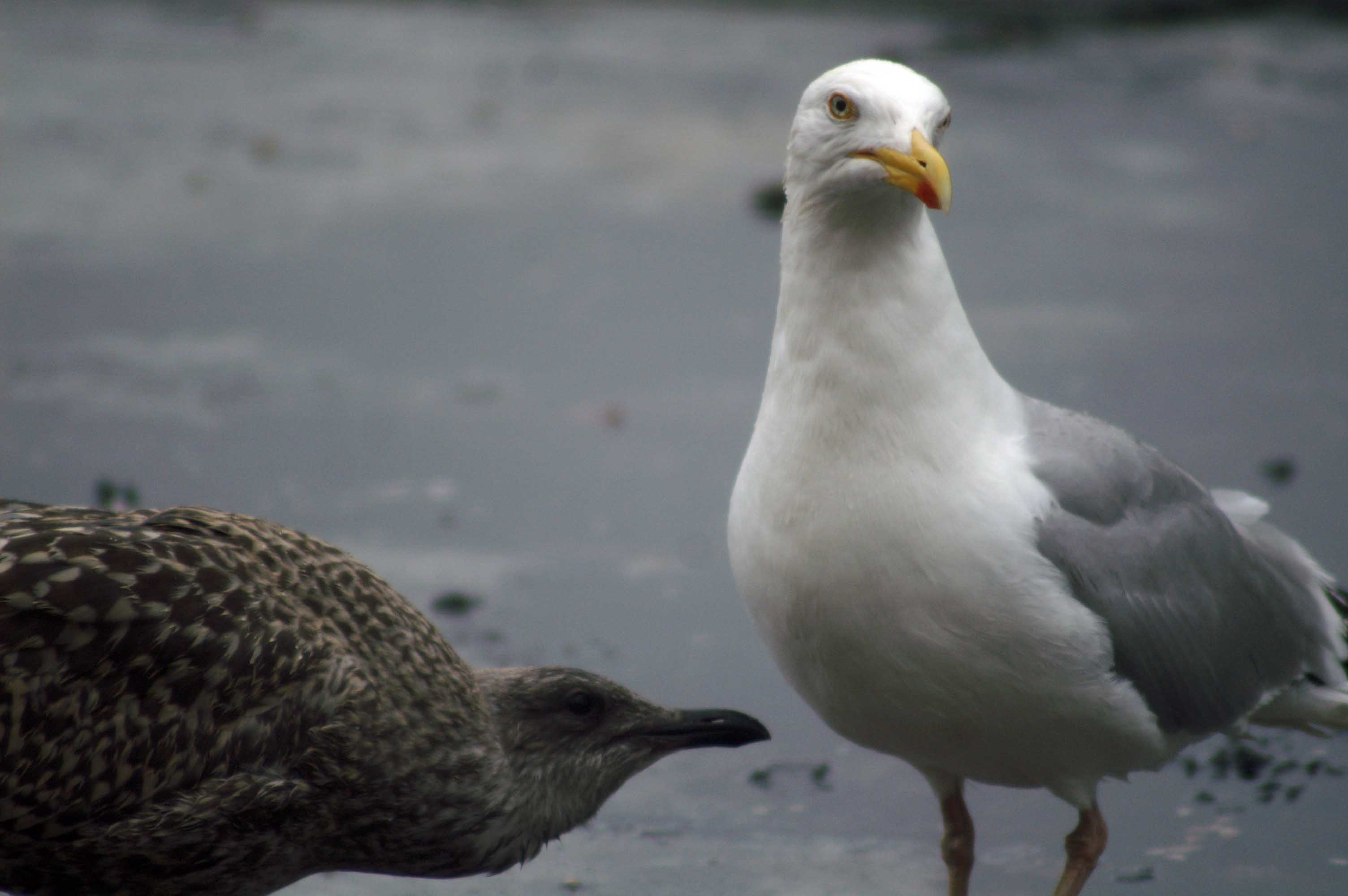
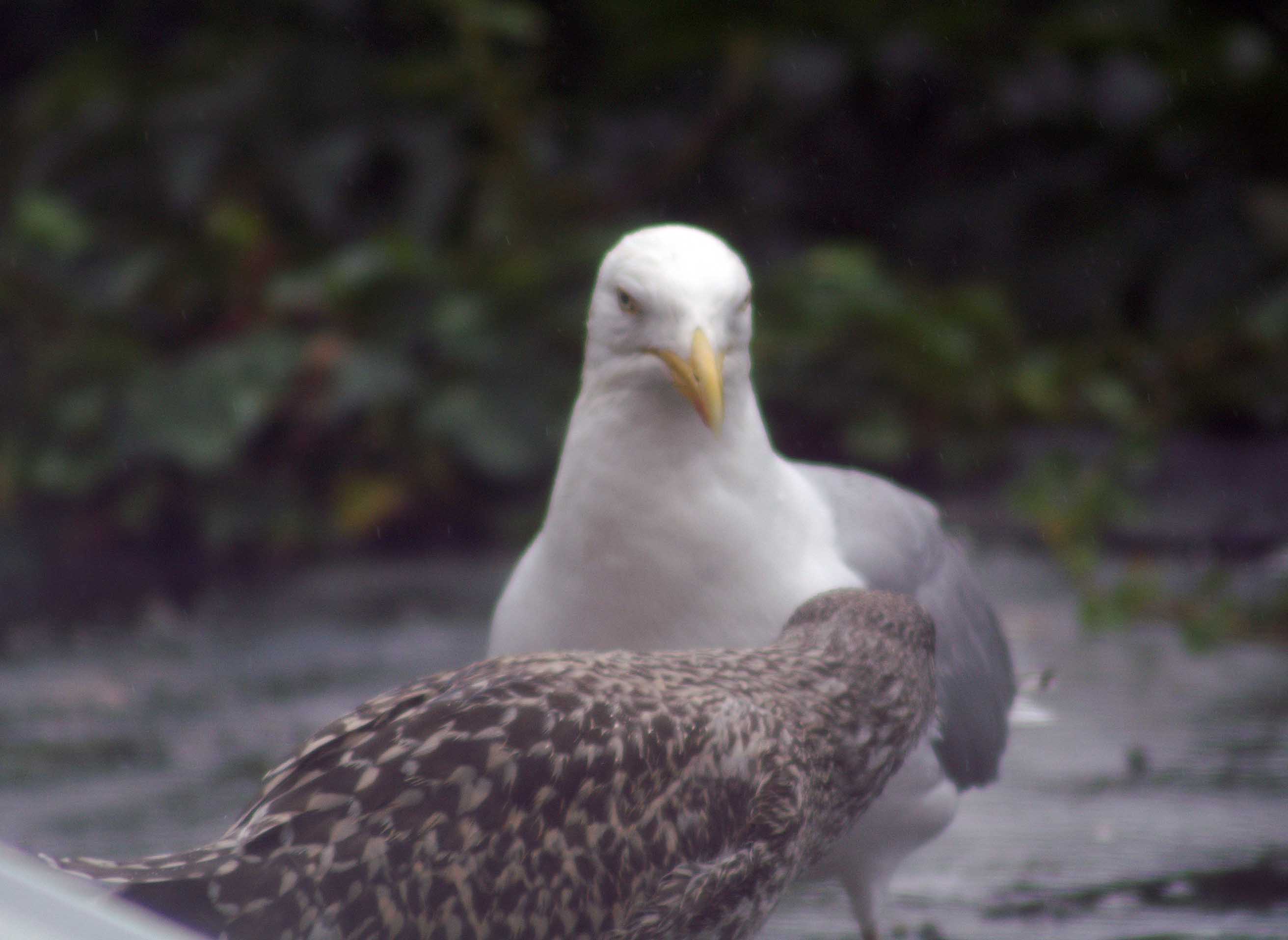
There were very few Herring Gulls around and about in the harbour area this afternoon and those there were on the whole very quiet and well-behaved. There were a few brief outbursts amongst them, all of them involving adult birds chasing away young ones.

An adult Herring Gull calming down after a chase
6/8/11- A young Herring Gull watching me over it shoulder

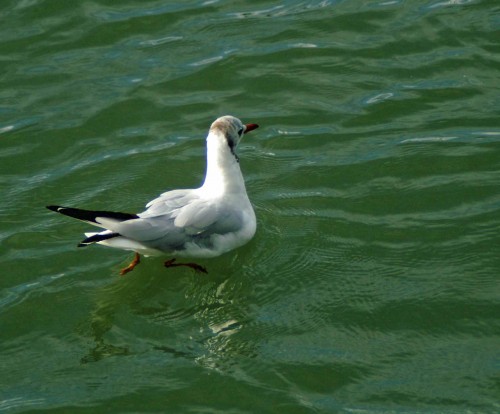
There were quite a number of Black-headed Gulls here, initially all swimming about on the water close to the harbour wall, but then one by one becoming restless and taking off and flying around the moored boats before returning.

6/8/11-Black-headed Gull with traces of dark head plumage remaining

They are attractive little gulls and look almost dainty compared to the big Herring Gulls. Most of them here have taken on or are in the process of losing the dark heads of their summer/breeding plumage and have just the dark spots either side of the head. Their red legs are clearly visible as they paddled around in the water of the harbour.

6/8/11-An individual with traces of dark head still visible
6/8/11-Black-headed Gull with completely white head and dark spots of non-breeding plumage

I could not resist one last photograph of the Smallest House in Great Britain, another of Conwy’s claims to fame. It’s usually almost impossible to see as when it is open it has people around it, as well as a lady dressed in traditional Welsh costume standing outside.

6/8/11- Another Conwy claim to fame; the Smallest House in Great Britain

Share this:

  • Click to share on Facebook (Opens in new window) Facebook
  • Click to share on Pinterest (Opens in new window) Pinterest
  • Click to share on X (Opens in new window) X
Like Loading...
← Older posts
Newer posts →
Follow everyday nature trails on WordPress.com

Enter your email address to follow this blog and receive notifications of new posts by email.

‘But it is the common species that keep the living world ticking over and provide most of our experiences of wildlife, and I would argue that maintaining the abundance of these is as important a conservation priority as maintaining the existence of rarities’. Richard Mabey

MOST RECENT POSTS

  • A Glimpse of Spring to Come January 22, 2025
  • Hunting the Wren December 28, 2024
  • Oh, Christmas Tree December 18, 2024
  • In and Out of the Ivy February 15, 2024
  • Nature’s Fireworks November 30, 2023
  • Wild Autumn along the Coast Path November 3, 2023

OLDER POSTS

LOOKING FOR SOMETHING IN PARTICULAR?

  • Pretty prickly Thistles
    Pretty prickly Thistles
  • The Foxglove - of Fairytales, Myths & Medicine
    The Foxglove - of Fairytales, Myths & Medicine
  • Fine Dining for Crows
    Fine Dining for Crows
  • Pines and Primroses
    Pines and Primroses
  • Grey Seals in North Wales
    Grey Seals in North Wales
  • Bryn Euryn - a walk of several parts. Part 1
    Bryn Euryn - a walk of several parts. Part 1
  • A Blackthorn Winter
    A Blackthorn Winter
  • Birds and the art of fly catching
    Birds and the art of fly catching
  • Grey Seals on the rocks
    Grey Seals on the rocks
  • What a beautiful day
    What a beautiful day

nightingale trails

The Walk of the Monarch Butterfly-Sendero de la Mariposa Monarca

The Walk of the Monarch Butterfly-Sendero de la Mariposa Monarca

MY WILDFLOWER BLOG: where the wildflowers are

Snowdrop

Snowdrop

most recent posts

Follow everyday nature trails on WordPress.com

Social

  • View teresamaygreen’s profile on Twitter

Enter your email address to follow this blog and receive notifications of new posts by email.

Website Built with WordPress.com.

  • Subscribe Subscribed
    • everyday nature trails
    • Join 359 other subscribers
    • Already have a WordPress.com account? Log in now.
    • everyday nature trails
    • Subscribe Subscribed
    • Sign up
    • Log in
    • Report this content
    • View site in Reader
    • Manage subscriptions
    • Collapse this bar
 

Loading Comments...
 

    %d