Tags
colwyn bay beach, herring gull, herring gull feeding behaviour, herring gull juveniles begging for food, larus argentus
Walking along the sea shore the other day I came across a Herring Gull in the process of eating a fish. I have no idea what species of fish it was, all I can say is that it was a flat fish and either whole or almost-whole, either way, large enough for me to be amazed that a bird could even attempt swallow it.

17/9/11-The gull with most of the fish in its gullet

17/9/11- It was not going down easily, so it had to come back up again
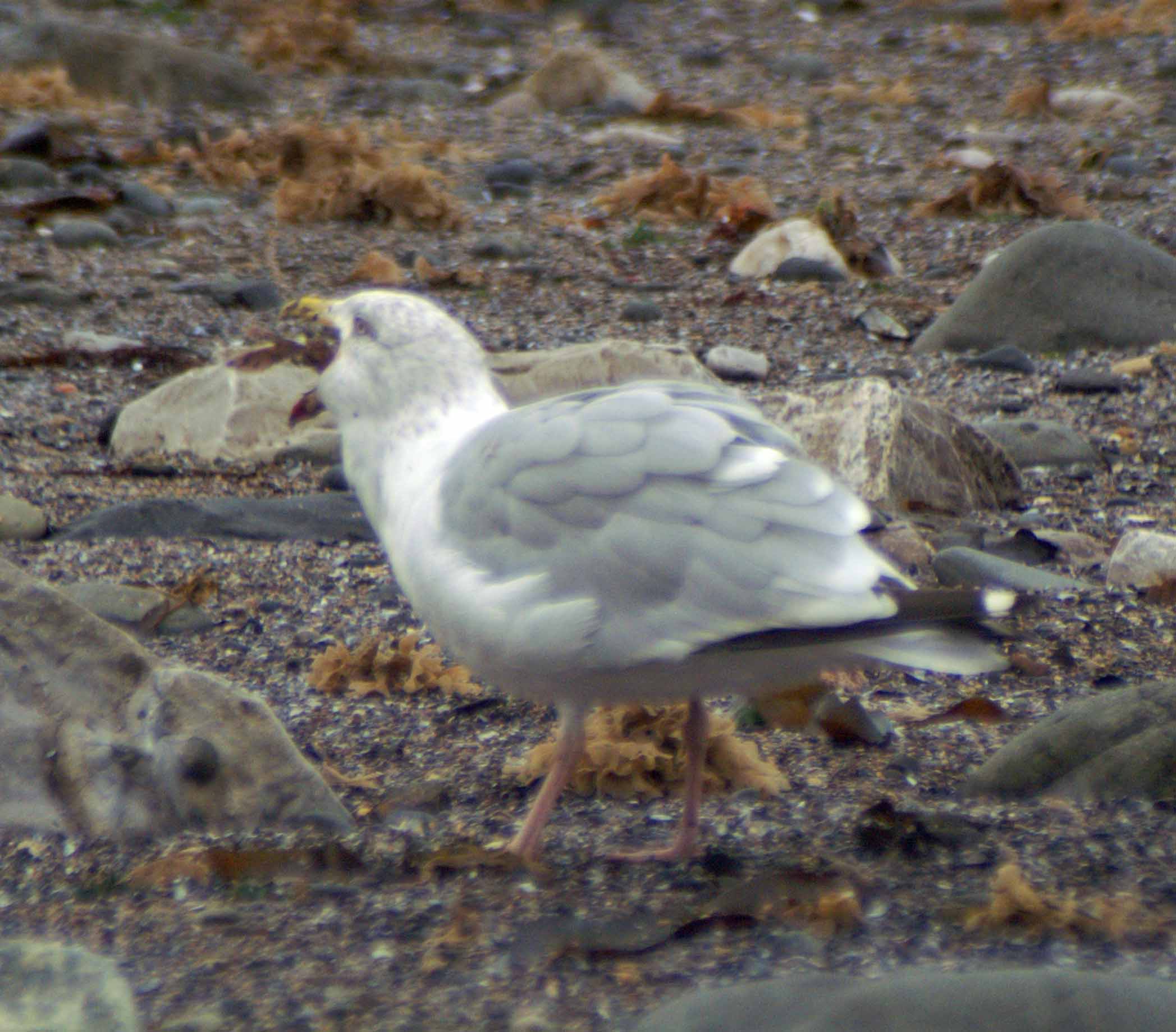
17/9/11-A second attempt -and this time the fish disappeared

17/9/11- All that remained was a lump in the gull's crop - it should keep him going till at least lunchtime
Herring Gulls are omnivores and opportunists like most Larus gulls, and will scavenge from rubbish dumps, landfill sites, and sewage outflows; food obtained this way may comprise up to half of the bird’s diet. Despite their name, they have no special preference for herrings — in fact, examinations have shown that echinoderms and crustaceans comprised a greater portion of these gulls’ stomach contents than fish.
On Colwyn Bay seashore I witnessed more gull feeding behaviour, this time two juveniles were begging an adult, presumably a parent, to feed them.

Young Herring gulls persuading a parent to feed them
Juveniles use their beaks to “knock” on the red spot on the beaks of adults to indicate hunger. Parents typically disgorge food for their offspring when they are “knocked”.
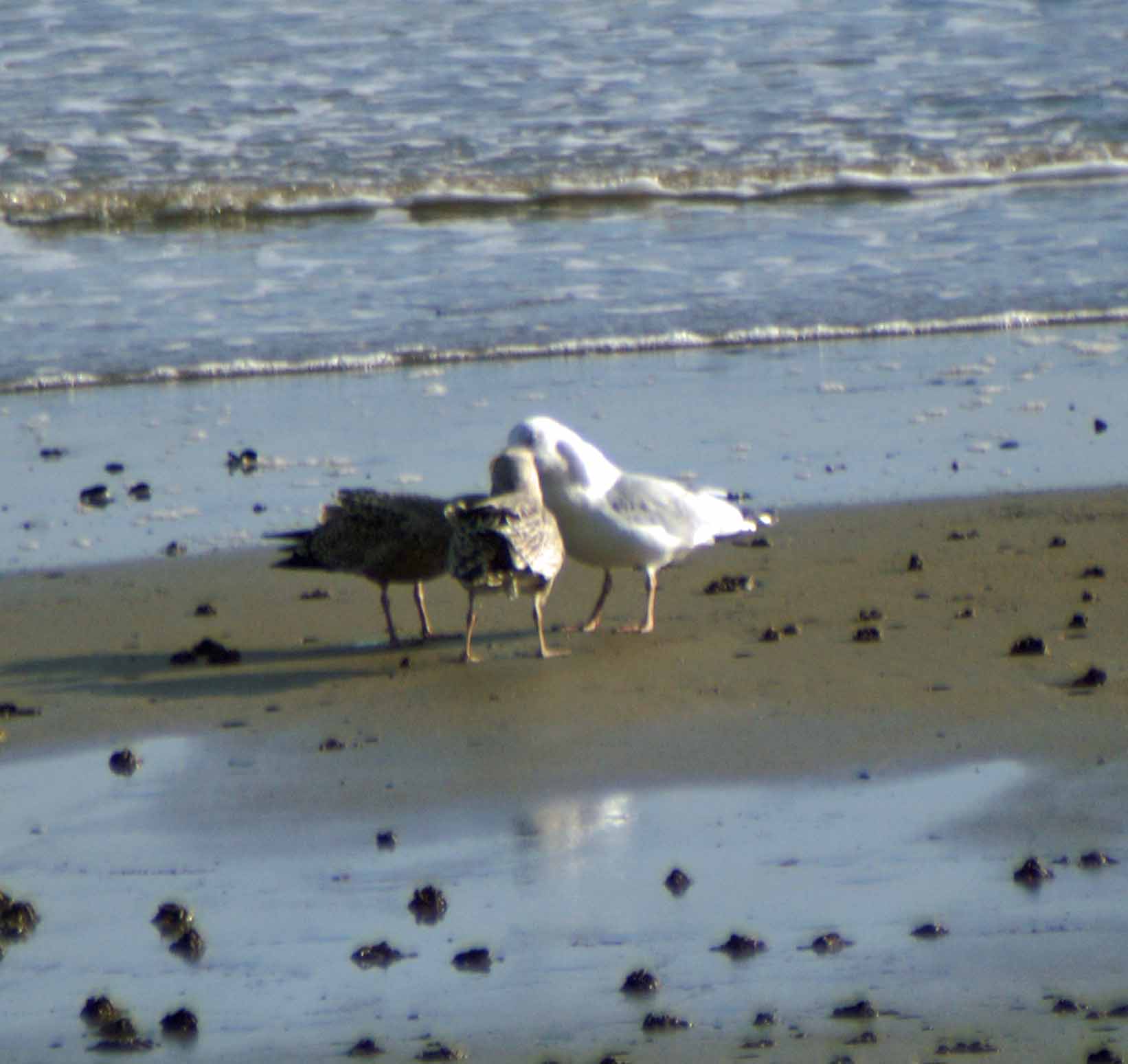
Parent gulls will feed their offspring for up to 6months if they continue to beg
Chicks are generally fed by their parents until they are 11–12 weeks old but the feeding may continue up to six months of age, if the young gull continues to beg. The male feeds the chick more often than the female before fledging, the female more often post-fledging.
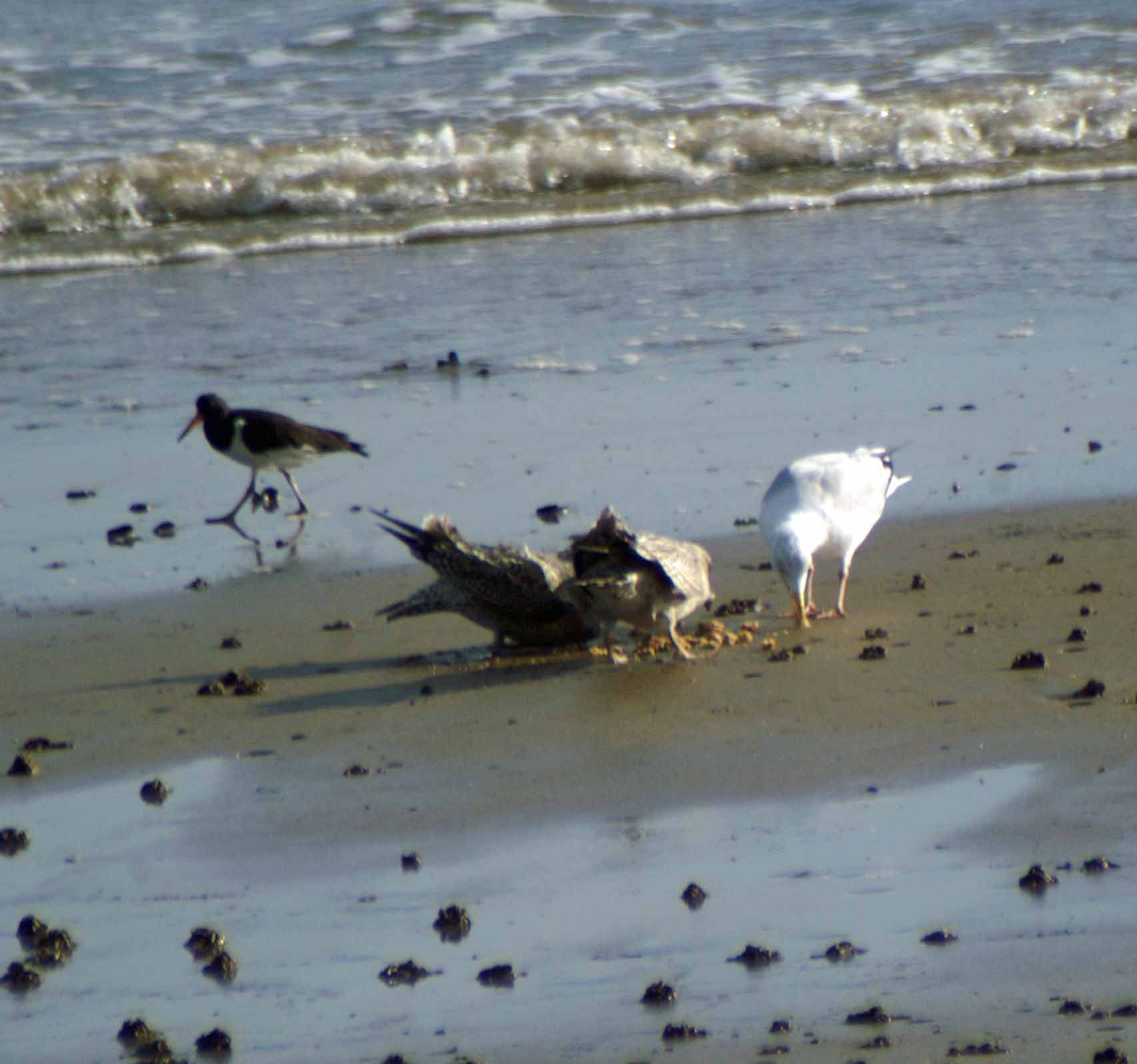
The adult was persuaded to disgorge what it had eaten onto the sand
The young birds begging did the trick and the adult disgorged whatever it had eaten onto the beach, which did not look at all appetising from where I was standing, but the three birds seemed to be happy with it.
 everyday nature trails