New gulls on the block

Tags

, , , ,

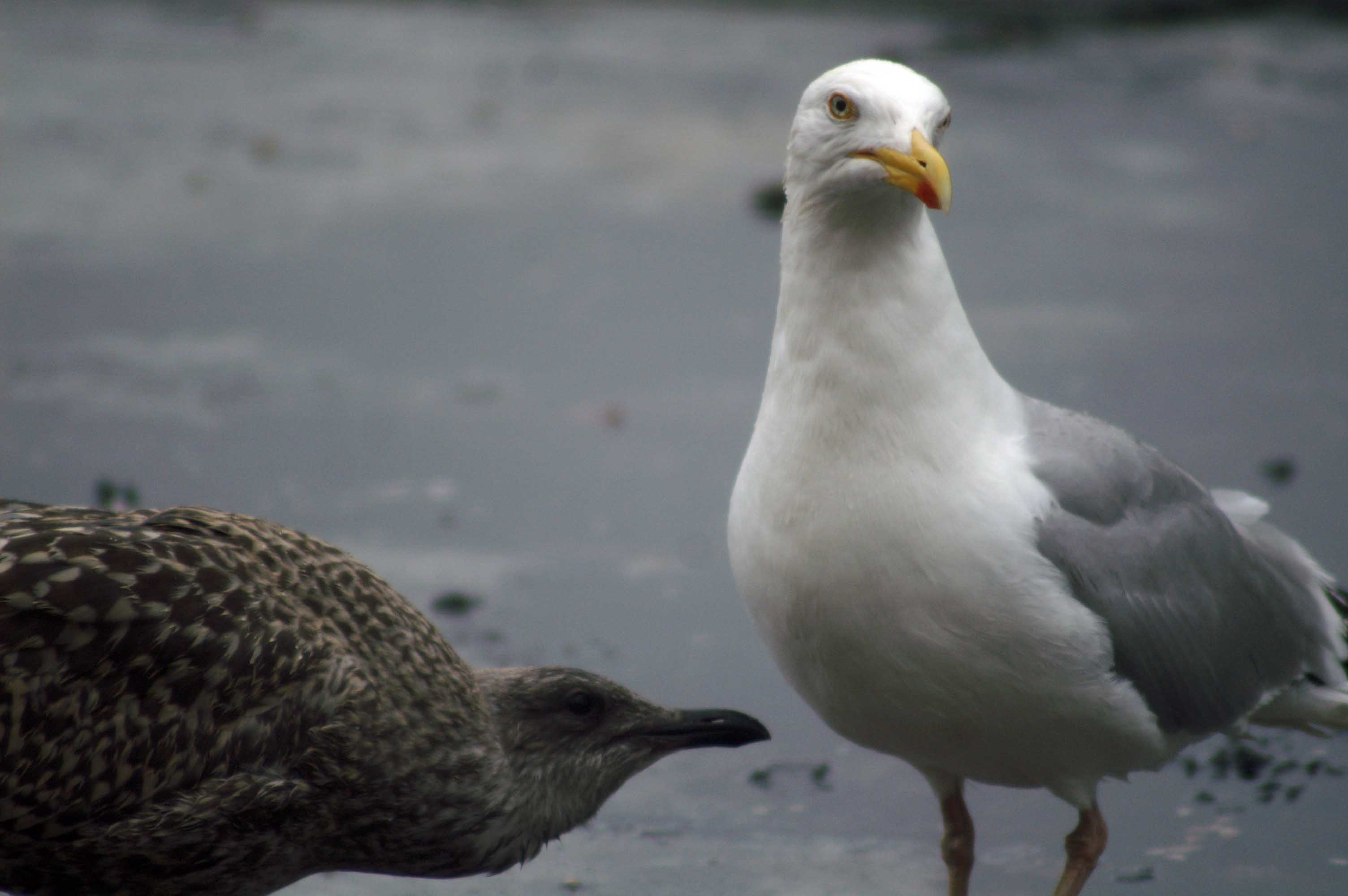
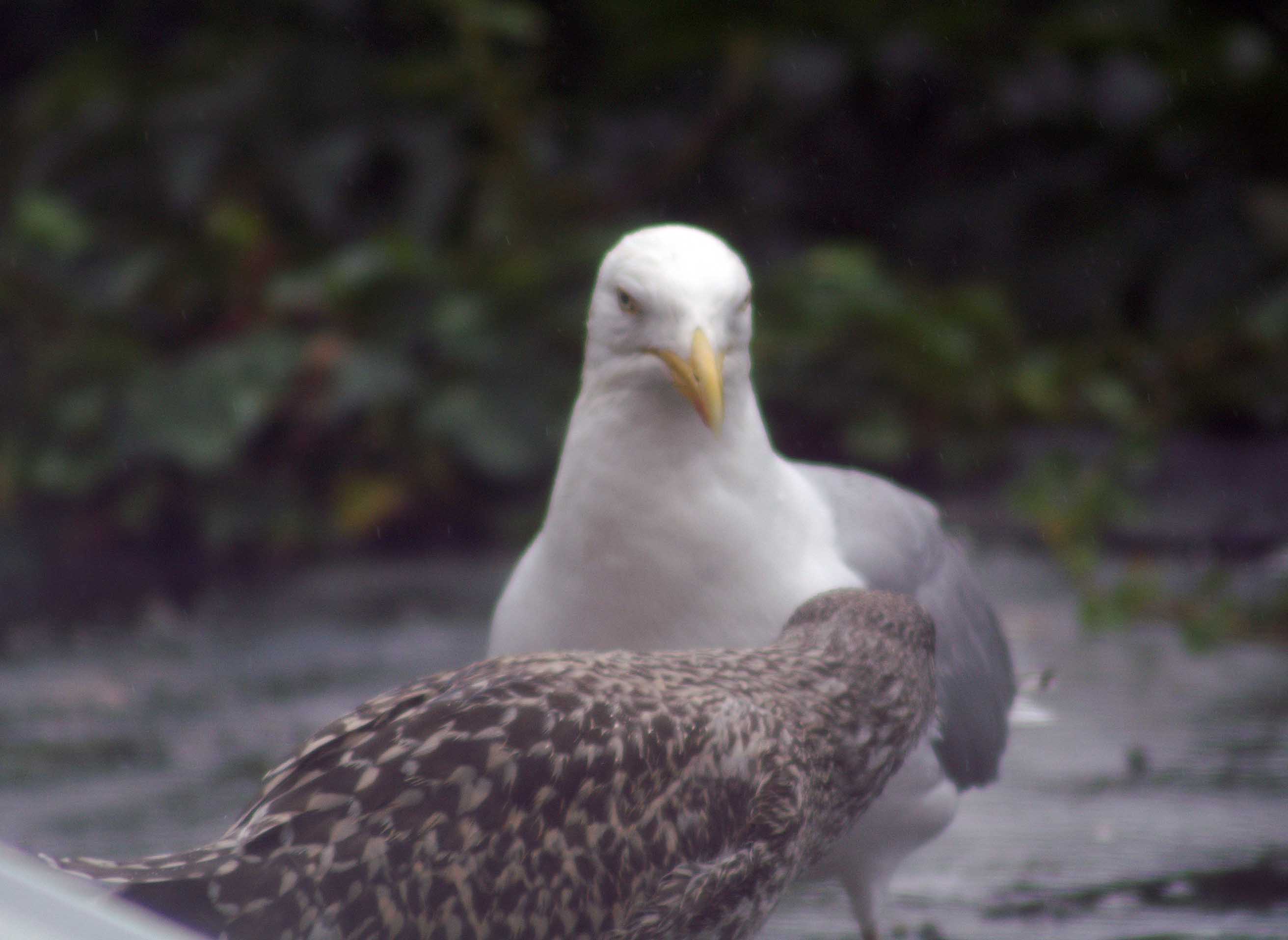
I’ve been away quite a bit lately, so there’s quite a bit of catching up to do  here in Rhos-on-Sea. The weather here, as everywhere else has not been conducive to venturing far, but I have been able to do some very productive birdwatching from my bedroom window, which I probably would not have done had I been out and about, so some clouds do have silver linings. In this case the silver has been in the shape of Herring Gulls – (the scientific name larus argentatus translates as silver gull). The activity has been brought about by the recent fledging of the single offspring produced by the pair that nested atop our next-door neighbour’s chimney pot.

At first the young gull spent a lot of time resting on the flat roof, where it is surprisingly well camouflaged.

The newly-fledged gull resting

In between bouts of resting it wandered around the rooftop picking at the odd collection of sticks, shells, bones and other random items brought there by its parents hoping to find something edible it may have missed.

First portrait of the new arrival

I don’t need to sit and watch and wait for the parents to arrive with food as both adult and their young one set off such a cacophony of noise at the sight of one another I can hear them from wherever I am in the house. Once a parent lands the youngster automatically adopts the typical crouched, hunched shoulder begging posture that makes it look a bit like a small vulture.

In begging posture

The loud communication between the two birds continues for a minute or so, then the parent allows the young one to approach and finally to tap the red spot on its beak to stimulate the regurgitation of the food it has brought.

The young gull approaching its parent

Getting into position

The young gull taps the red spot on its parent’s beak  to stimulate regurgitation of its lunch

What follows is not pretty as the parent brings back whatever food it has managed to find and deposits it in front of its youngster. It seems to be thriving on a diet that does not always look particularly healthy; in the following pictures the meal is raw chicken, but on another occasion it was a pile of french fries. There have also been more natural offerings of crab, which is consumed shell and all and small fish.

The adult regurgitating raw meat, maybe chicken

Fortunately the young gull is not a fussy eater

Once the food has been swallowed by the young one the parent leaves immediately, its departure once more accompanied by more loud cries.

Over the course of the last few days the young gull has gained much in confidence and now flies off  to spend much of the day elsewhere, but it is still returning to the high roof in the evenings with its parents and to the flat roof for intervals, maybe to rest where it feels safe.

The young one is gaining in confidence and strength daily

Dale beach and the Gann Estuary

Tags

, , , , , , , , ,

We returned home via the village of Dale which is situated on the south eastern tip of the Pembrokeshire Heritage coast and is also on the route of the Coastal Path. Its beach is located on the Milford Haven estuary between St Ann’s Head and St Ishmael’s in Pembrokeshire, South Wales. There is a lot of history attached to the village and surrounding area, but we had come to have a quick look  at the unique habitat that lies at the back of its shingle beach.

The view across Dale beach; the refinery at Haverfordwest is just out of sight behind the headland on the left of the photograph

The beach is mainly shingle with some sand at low tide.

The shingle beach is a colourful mixture of red sandstone and grey/green silurian stone

The gritty sand is pink and stones on the beach occur in an infinite variety of shades of pink/red, grey and green

The red soils of the area are derived from old red sandstones seen at Lindsway Bay and Sandy Haven that are some 395 million years old. There are also occasional exposures of even older rocks, aged at 420 million years.  The cliff tops are covered with glacial till made of unconsolidated material dumped by melting ice around 20,000 years ago and fields that have been ploughed are visible for miles as the soil is a bright red in colour.

At the back of the shingle beach is a sand ridge and behind that an area of low lying land and the brackish artificial Pickleridge Lagoon, formed by the flooding of gravel pits that operated between the 1950s and 1980s. This has now become established as a saline lagoon and together with the  extensive salt marsh in the Gann river valley, the area has become a haven for wildlife, particularly for wading birds and plants.

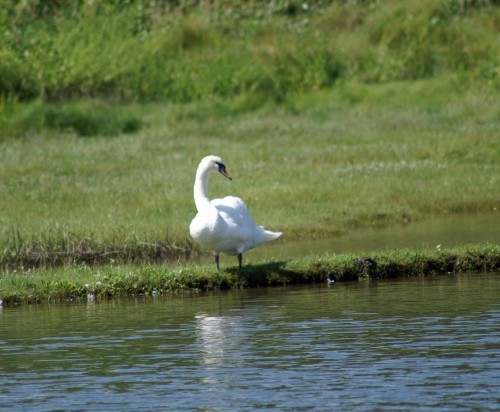
There were very few birds around today, a few Oystercatchers were out on the tide line and a number of Mute Swans on the edges of the lagoons, but other than that we saw only crows, a pair of raven flying overhead and a magpie or two.

A beautiful mute swan on the edge of the lagoon

There are some interesting plants growing here though, including  the largest expanse of yellow flowered Kidney Vetch I have ever seen.

View across the grassy meadow and lagoon

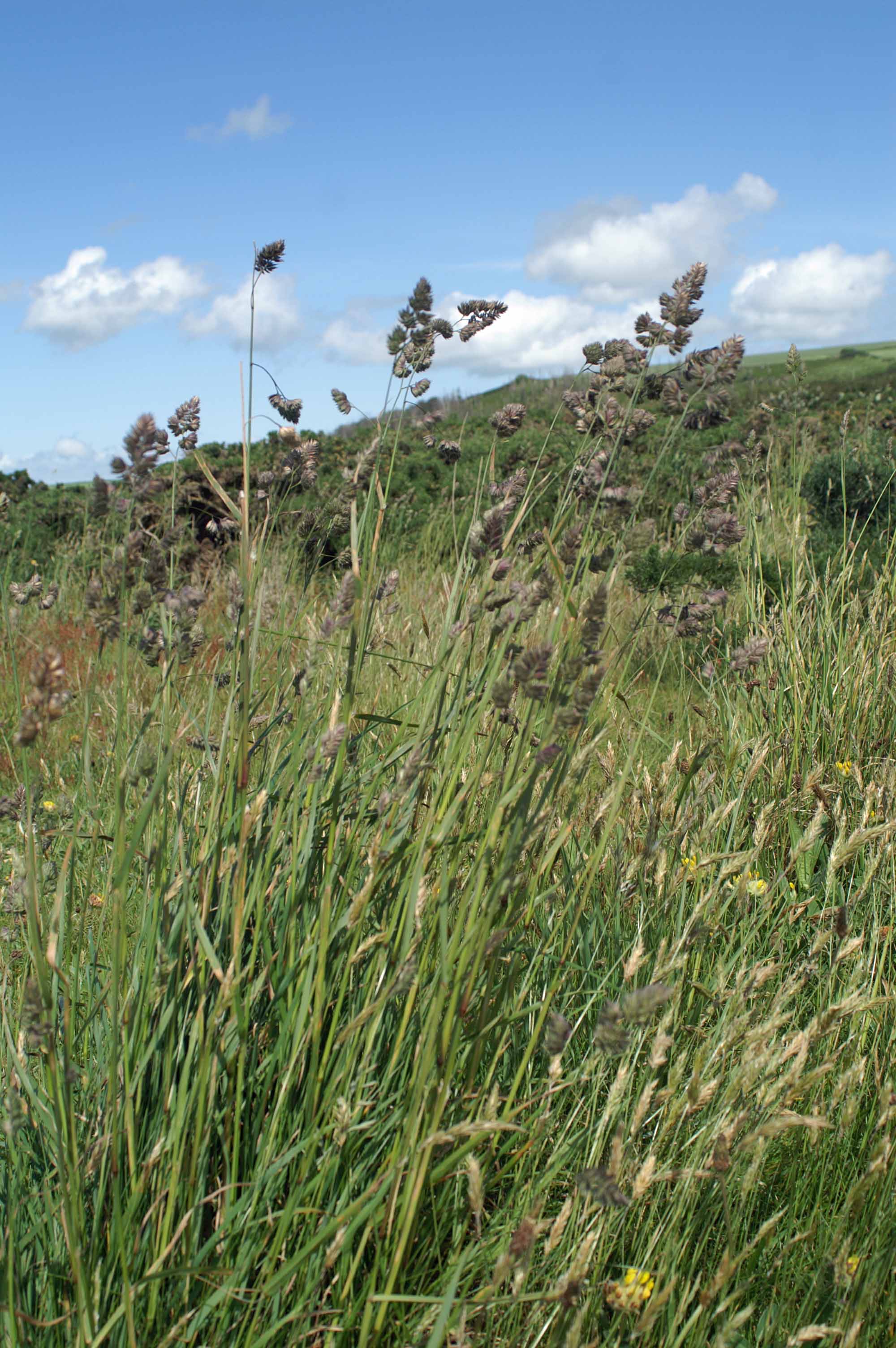
Grasses

The largest expanse of kidney vetch I have seen

Kidney VetchAnthyllis vulneraria

Kidney Vetch-Anthyllis vulneraria

The small yellow flowers of  Kidney Vetch are held in a cluster atop little woolly cushions, at first glance resembling a clover. The plant flowers from June to September and is a distinctive feature of sand dunes, chalk grassland and cliffs across the UK where it may spread to cover bare ground if it finds the right conditions.

The flowers are mainly yellow, but can also be found in orange and red forms. Each flower has its own hairy calyx (containing the sepals), giving the flower cluster its woolly appearance. The leaves of Kidney Vetch are divided into narrow leaflets that are silky and white underneath.

Kidney Vetch &  the Small Blue Butterfly

Kidney Vetch is the sole foodplant for the larvae of the Small Blue Butterfly – a seriously declining insect which is classified as a Priority Species in the UK Biodiversity Action Plan. Although Kidney Vetch itself is not threatened, the habitats in which it grows are becoming fragmented and being lost at a rapid rate; for example, it’s estimated that we’ve lost 80% of our chalk grassland over the last 60 years.

Traditional medicine

Kidney Vetch has long been used in herbal medicine as an astringent; the  name ‘vulneraria‘ means wound-healer and applying it to wounds reduces bleeding. As the common name implies it is also used in the treatment of kidney disorders.

A Stonecrop – Sedum caeruleum

Further information:

The habitat formed here and the wildlife it supports have been the subject of several field studies over the years that have included the Feeding Patterns of  Wading Birds on the Gann Flat by the Field Studies Council in 1973 http://www.field-studies-council.org/fieldstudies/documents/vol3.5_91.pdf  that was followed up thirty years afterwards in 1992  http://www.eco-challenge-xtra.org. ; another on invertebrates The Gann Flat, Dale; Studies on the Ecology of a Muddy beach   and another on the flora and ferns http://www.eco-challenge-xtra.org/fieldstudies/documents/vol1.3_18.pdf

Not a trip to Skomer but a great day out

Tags

, , , , , , , , , , , , , , ,

The Saturday following the Friday of the terrible weather dawned bright and sunny and apart from a few lurking clouds the sky looked innocently down upon us as though nothing had happened. We were still hoping for a trip over to Skomer Island, so set off to drive the hour or so that it takes to reach Martin’s Haven, from where the boats depart. We were not too hopeful of being able to get to Skomer today; Saturday’s are popular anyway and as no boats would have gone out yesterday, we expected it to be busy. A first sight of the car park, already overflowing onto adjacent land brought that sinking feeling, compounded by the attendant informing us that all 150 of the day’s landing ticket allocation had been sold by 9.30am. We were somewhat taken aback to learn that some people had begun queuing for places at 5.30am; the first boat for the island leaves at 10am. So, no Skomer for us today.

We had made some effort to get here though and determined to make the best of our situation decided to explore the area around the headland instead. The headland is known as the Marloes Peninsular; the land is owned by the National Trust and for some reason we have not managed to establish is named “Deer Park”, although there are no deer here. There are however spectacular rocks, sea views that take in most of the Pembrokeshire Islands, wildflowers and, we were fairly confident, there would be birds.

We set off to walk up to the highest point of the peninsular, Wooltack Point, distinguished by the small white building on the top that is now an active coastwatch point operated by the National Coastwatch Institute.

We were soon distracted by the small birds we began to see around us almost immediately: Stonechats, Linnets and Meadow Pipits, all species that can make homes in this rather bleak windswept habitat, carpeted with grass and heather and furnished only with low-growing tangles of gorse bushes, brambles and generally scrubby vegetation.

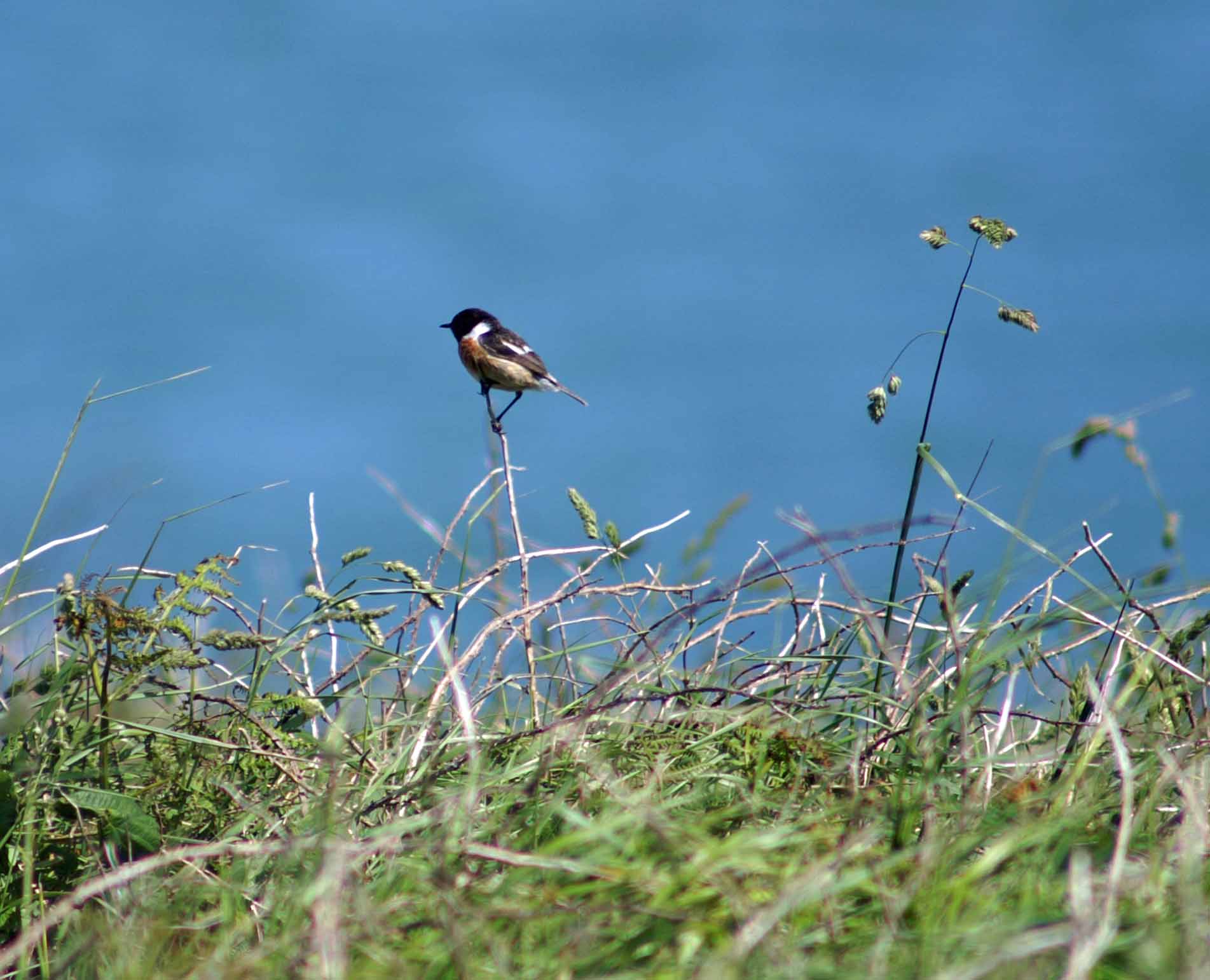
The first bird we had a good view of was this little Stonechat female (Saxicola torquata), who was very shortly joined by a male.

The Stonechat male perched just a short distance away from his mate

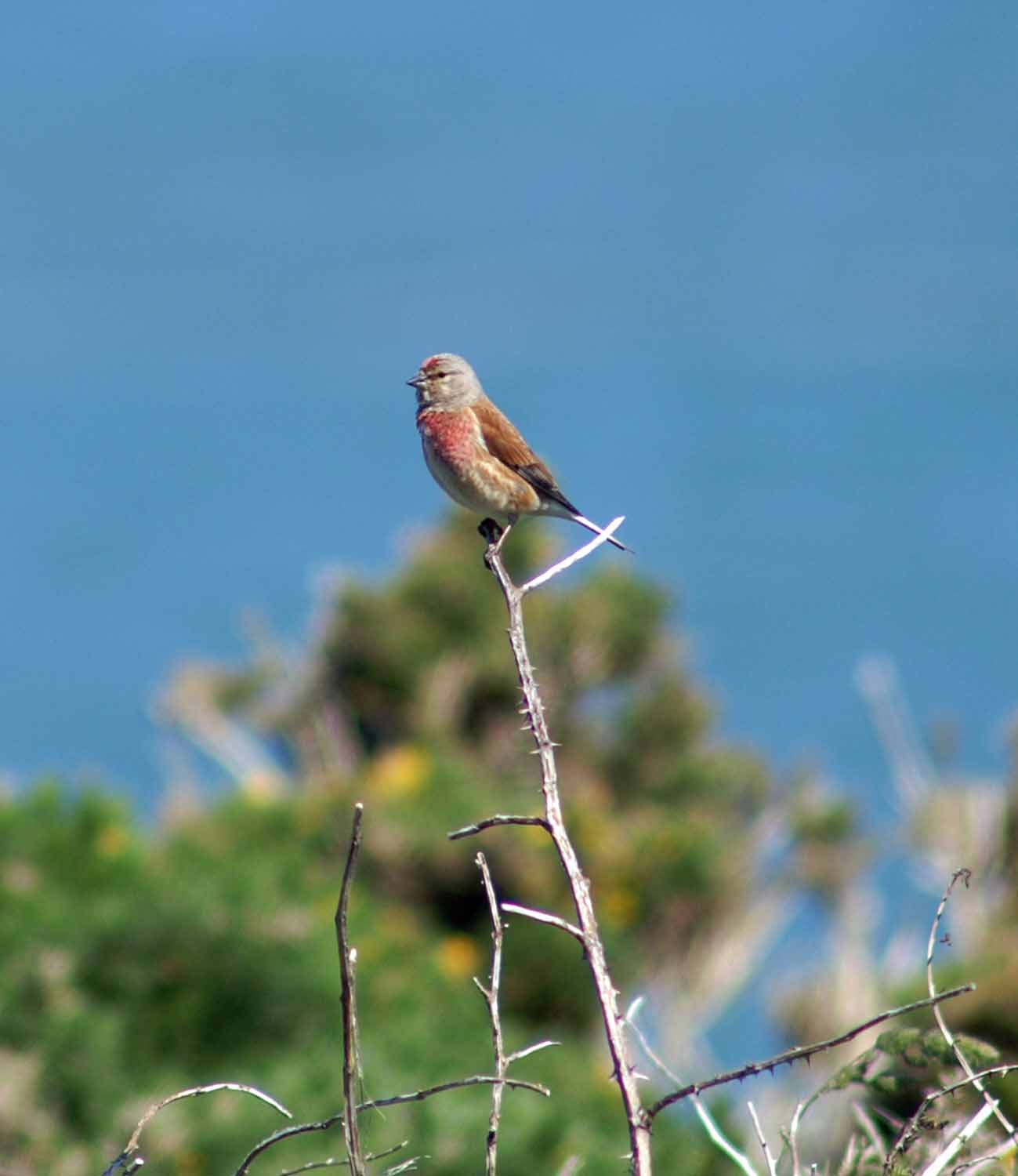
There were several Linnets flying around and one beautiful male landed quite near us on a bramble and began to sing.

This beautiful male Linnet was singing from atop a dead bramble stem

It was sunny here, but windy too, so it was some consolation to think that those on the boats travelling across to Skomer would probably be feeling the combined effects of the cold wind and choppy sea in a not-too-pleasant way. Yes, very immature, especially as we have actually made the journey in even rougher conditions, survived and gone on to have a spectacular day. Anyway, onwards and upwards to Wooltack Point. The views out over St.Bride’s Bay are truly spectacular, but the sea around this point can be treacherous with concealed rocks and strong currents, hence the presence of the Coastwatch.

The incorrectly marked compass (click to enlarge)

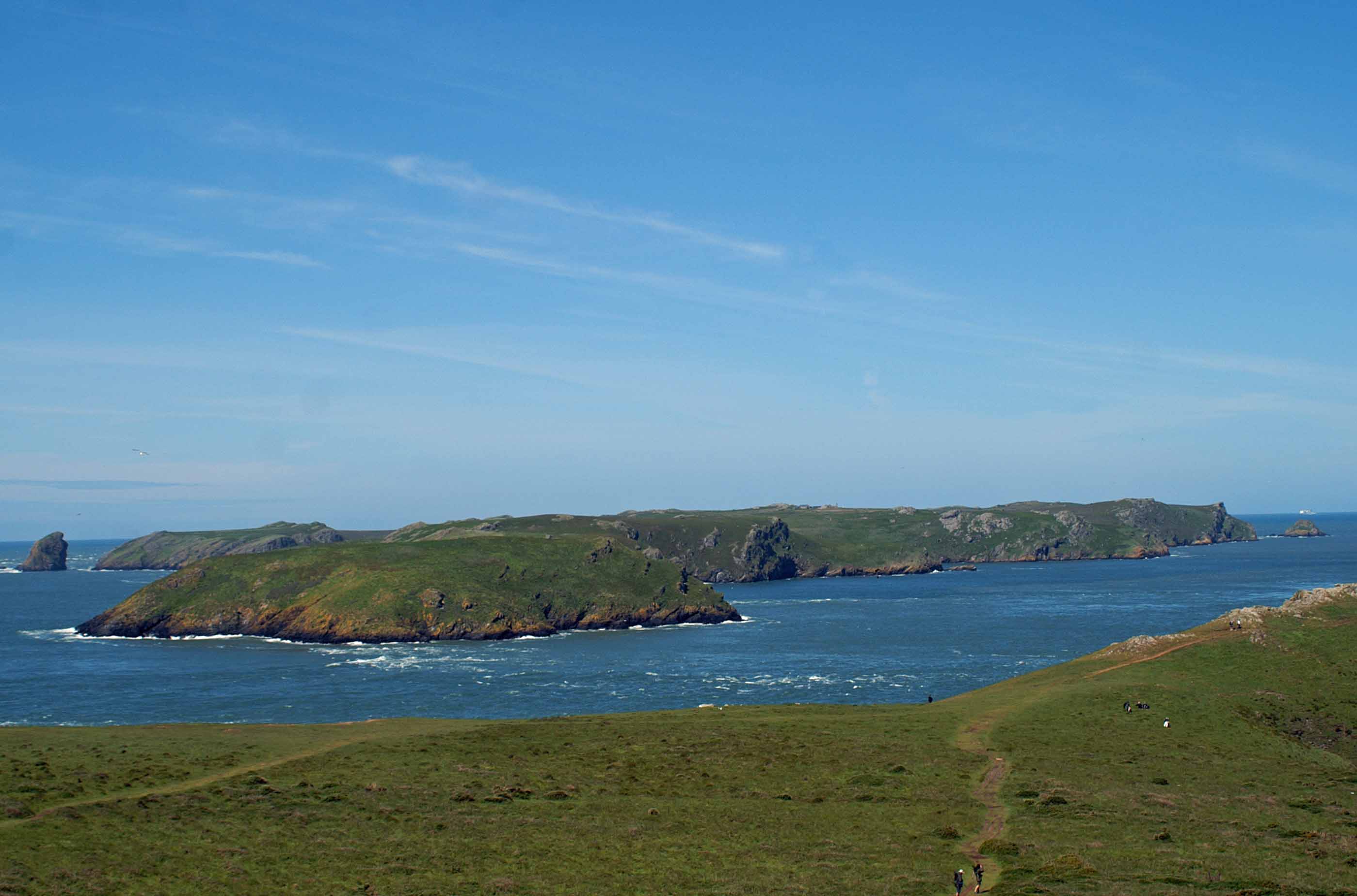
We attempted to work out the layout of the islands we could see, picking out Skomer easily as it was close by and Ramsey Island as we recognised the shape of St. David’s Head, but were guessing at the others. I spotted a compass of sorts on a plinth outside the door of the stone hut and as I leaned in to take a picture of it the coastguard popped out to tell us that its directions are useless as all points are wrong. Apparently even the North marking is incorrect. He was quite amused by the fact that “there is nowhere in the world from which that plaque would be correct” and has no idea why it has never been replaced.

The nearest we got to Skomer Island today, just 2 miles across the Sound

Ramsey Island, 9.5 miles away is located off St David’s Head

Dropping down onto the cliff in front of the hut we discovered it to be sheltered from the wind and much warmer. We sat there for at least an hour watching the array of seabirds flying back and forth or swimming and diving around the rocks below us.

Razorbills were the most numerous birds on the water, but there were a few guillemots and cormorants too.

Razorbills swim on the surface then suddenly make a synchronised dive and disappear underwater for ages, eventually reappearing some distance away

Cormorant flying close to the rocks, low over the water

Herring Gulls passed us by very closely

Lesser Black-backed gulls were another frequent sight

We were delighted by the appearance of Grey Seals in the sea just below us, and even more thrilled when we realised there were dolphins too. The first dolphin we picked up on was following the Skomer boat on its return trip to Martin’s Haven, but soon realised there were at least three in total.

Grey Seal

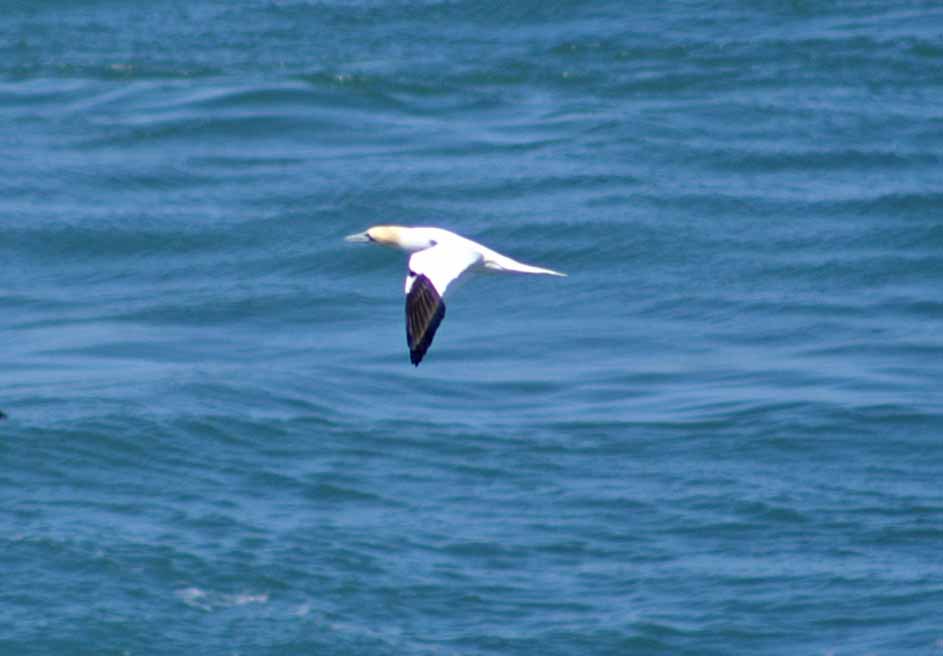
The island of Grassholm is occupied by an enormous colony of breeding Gannets (another highly recommended trip to take) and although it is 10 miles away from where we were today we kept a hopeful look out. We were rewarded with an initially distant sighting of a number of the birds circling and diving, but over the course of twenty minutes or so they gradually worked their way towards us, clearly following the progress of a shoal of fish. This is why the dolphins were there too. It would have been lovely to have had closer views, but both they and the birds were near enough to be seen well through binoculars.

One of a number of Gannets closely following a shoal of fish

The spot we had chosen to settle in seemed to be within the territory of a Pipit. He made several tours of the rocks immediately around us, making some rather disgruntled noises, clearly not happy with us, but otherwise undeterred by our presence.

I think this is a Meadow Pipit, but going on its location, it could be a Rock Pipit

The Pipit demonstrating his ‘parachuting’ display flight whilst singing

This is undoubtedly a tough environment for wildflowers, but there was thrift and sheep’s bit flowering and almost squashed into the short grass several tiny specimens of pretty blue spring squill.

There were bumblebees visiting most of the available flowers

Leaving our sheltered viewpoint we continued our walk around the remainder of the headland then cut back inland towards the car.

Rocky coves with sheltered beaches such as the one below the cliff here on the far side of the peninsular are perfect places to see grey seals and their pups. The land in the top right of the picture is the tip of Skomer.

Next on the agenda was to seek out another sheltered spot in which to eat our lunch. With hindsight we did consider that perhaps if we had not stopped at M & S in Haverfordwest for decent sarnies we may have squeezed onto that boat … ? (Normally we would have made our own, but pinned in by the tree we couldn’t get out to the shops yesterday and had no suitable supplies.) But, on the bright side,  it was more than pleasant here and we had had some very fresh air and some wonderful sights. We located another likely spot to enjoy our food in and settled down. We soon realised we were being watched; a baby bunny was peeking through the grass at the top of a sandy hillock close by that we could now see was above the entrance to a warren.

Baby rabbit on the roof of the family home

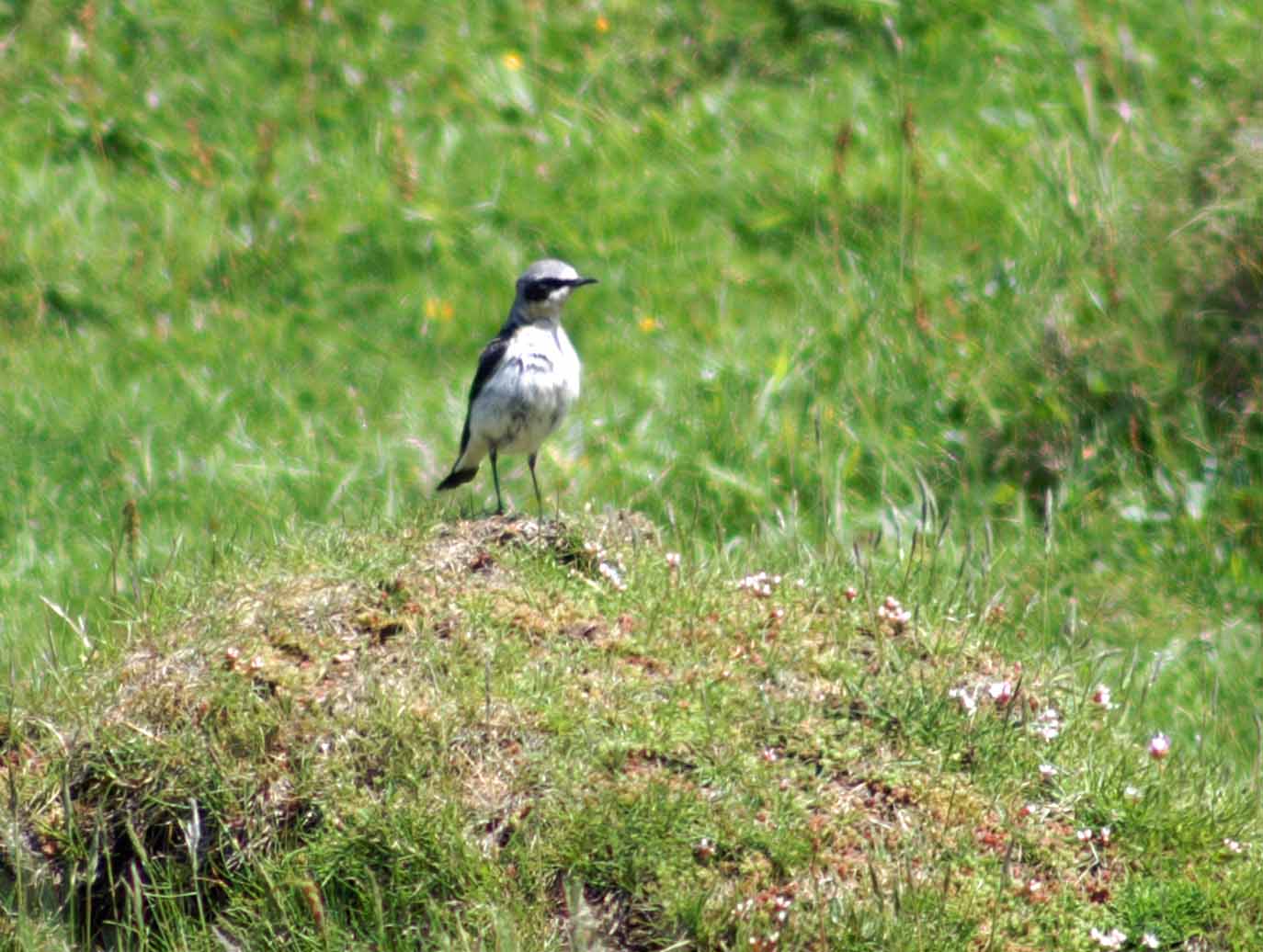
We were thoroughly enjoying our lunch sitting on a grassy bank in a warm and sunny spot, appreciating our beautiful surroundings and reviewing the wealth of sights we had enjoyed, when another bird appeared in front of us. This was a handsome jaunty male Wheatear and once again we seemed to have settled ourselves in the middle of his territory. He seemed to be making a point of travelling around us, settling on rabbit hills, brambles, rocks and the like. We did feel a little guilt but carried on enjoying the sight of him quietly, staying as still as is possible whilst yielding a hefty camera lens.

A female appeared too from the same direction and made a similar circuit, so we surmised that they had a nest located somewhere behind the bank occupied by the rabbits. Beautiful birds.

The very handsome male Wheatear asserting his territory from the top of a rabbit hill

The female Wheatear with her browner plumage is also a very attractive bird

Arriving back at the lane leading to the beach we headed for the loos to find there was an unusual queue to enter the building. A number of Barn Swallows were waiting for people to leave, taking their opportunities to swoop in to their nests built in various places inside.

One of a pair of Barn Swallows waiting to get into the toilet block and back to their nests

Although they are a familiar sight swooping and gliding over the countryside, it’s not often you get such close views of these elegant birds and to appreciate their very glossy plumage.

This bird was taking advantage of the waiting time to thoroughly preen its feathers

I was listening and watching for a sight of a Whitethroat, as we have always seen them here in the past, but not so today. As we made our way up the hill towards the car park we did see another Wheatear and had a quick glimpse of the back of a Dunnock singing from a bramble patch.

A quick glimpse of a Dunnock that was singing from a bramble patch

Not the outing we had planned, but a thoroughly enjoyable few hours spent in a beautiful place and still with a bit more to come….

The Foxglove – of Fairytales, Myths & Medicine

Tags

, , , , ,

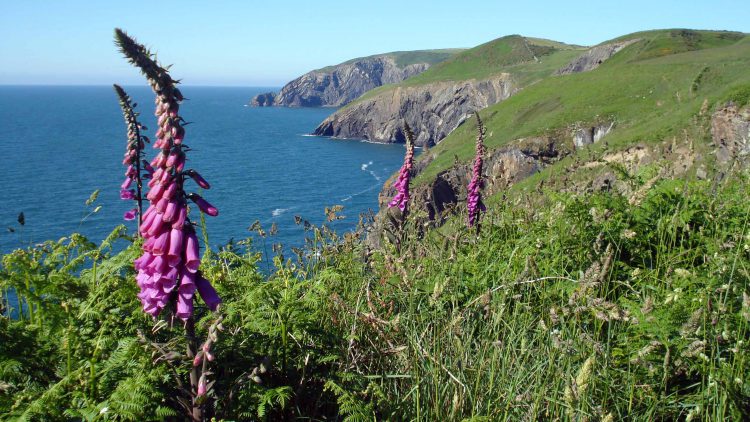
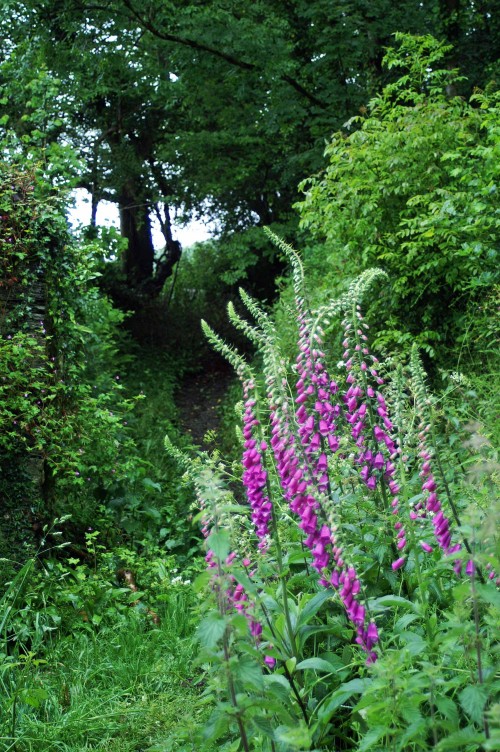
June is the month when elegant Foxgloves are at their best in many parts of Wales. I took most of the photographs in this post in Pembrokeshire where they adorn woodlands, roadsides and cliffs of the mainland and some of the offshore islands. Beautiful to behold, poisonous in the wrong hands yet life-saving when used for good, they have a long-held and fascinating place in our natural history.

Foxglove-Digitalis purpuraea


FoxgloveDigitalis purpurea – Welsh – Ffion or Maneg Ellyllyn — The Good People’s Glove

The graceful Foxglove is a downy biennial herb that thrives in acidic soils in a wide range of habitats. In their first year large downy basal leaves are produced, followed in their second year by impressive flower spikes from 3-6 feet (1-2m) tall. The plants die once they have seeded, but if the flowers are picked before they go to seed, the basal leaves will last another year and they will attempt to seed again.


Flowers open first at the base of the stem and graduates upwards

A stand of Foxgloves in a Pembrokeshire woodland

Three basic colours self-seed – pink, purple & white. They can come true to the parent plant where colour forms are isolated, but they cross-pollinate freely & many stands of foxgloves include all three shades.
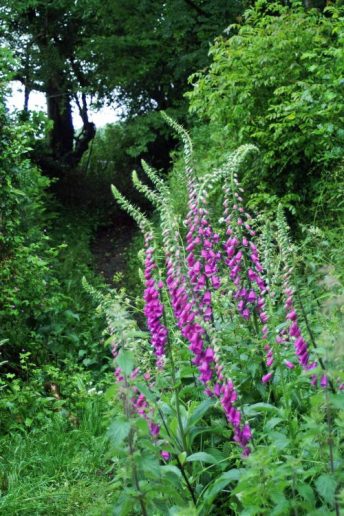
In a Pembrokeshire woodland


In Wales the Foxglove  is a characteristic plant of early summer, thriving on acidic soil in the shady conditions of open woods, woodland clearings and hedge banks. But it also tolerates the open and exposed habitats of moorland and heath margins, sea-cliffs and rocky mountain slopes.

It may also  appear where  ground has been disturbed, such as in newly cleared woodland, or where the old vegetation has been burnt.
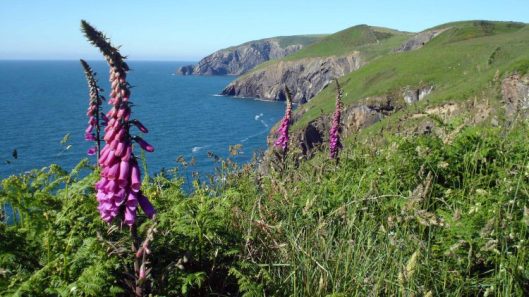
 

Pembrokeshire Coastal Path

ORIGIN OF THE NAME

There have been many suggestions for the derivation of the name “foxglove”. It is an ancient name and exists in a list of plants as old as the time of Edward III (King of England from 1327-1377). The prefix ‘fox‘ has most likely been commuted over time from “folks”, who to our fourteenth century ancestors were the fairies, but so-called as to speak of them  explicitly was believed to get their attention & cause them to do mischief.  ‘Glove‘ may have come from the Anglo-Saxon gliew, which was the name for a musical instrument consisting of many small bells. So, put the two together and you could make it ‘Fairy Bells’. However it came about, Foxglove is the English  common name we all know and love it by.

There appear to be two Welsh names for the Foxglove, one is Ffion, from which the popular Welsh female name is taken and the other Maneg Ellyllyn which translate as  “The Good People’s Glove.” Similar then to Folk’s Glove and its association with fairies.

In Gaelic they were Lus Mor, the Great Herb, for being the most magical of all herbs.

Plants that are widespread & medicinally potent invariably acquire a large number of folk-names, & the foxglove’s many names are a case study in our ancestor’s imaginations.

A whole host of alternative common names reflect the association with fairies Fairy Caps, Fairy Gloves, Fairy Thimbles, Fairy Herb, Fairybells, Fairy-fingers, Goblin Gloves, Fairy Petticoats, Fairyweed.

Another name, Dead Man’s Bells served to warn of the plant’s poisonous disposition.

The names Flopdock, Floppydock, Flop-a-Dock, Flapdock, Popdock, Flop-poppy, Flop-top, Cowflop, Gooseflops, Rabbit’s Flowers or Bunny Rabbits all allude to the foxglove’s large soft downy leaves.

Mythology and legends

One story has it that fairies would hide themselves inside the flowers. Mischievous children, wanting to hear fairy thunder, would hold one of the flower bell then strike the other end on their hand. The poor fairy, rightly upset and probably rather cross, would make a snapping sound, a clap of fairy thunder, while she escaped from her retreat.

Another Welsh legend explains why foxgloves bend and sway so gracefully. It has nothing to do with the wind, but that as the flower is sacred to the fairies, it has the power of recognising them, and indeed all spiritual beings who pass by, and that it bows in deference to them as they waft along.
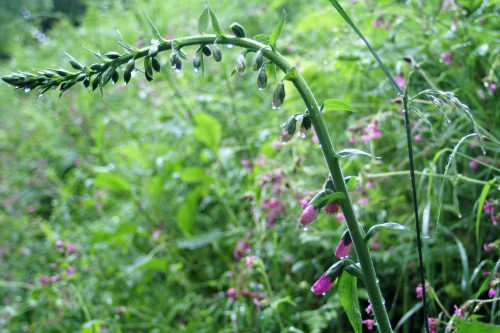
Foxgloves supposedly bowed to Fairies

IN ENGLISH LITERATURE

At least two great poets, Wordsworth and Tennyson were moved to immortalise the foxglove in words; the former clearly aware of  the deadly qualities of the plant. In The Borderers, a tragedy, a woman describes a dream she had:

“My poor Babe
Was crying, as I thought, crying for bread
When I had none to give him; whereupon,
I put a slip of foxglove in his hand,
Which pleased him so, that he was hushed at once:
When, into one of those same spotted bells
A bee came darting, which the Child with joy
Imprisoned there, & held it to his ear,
And suddenly grew black, as he would die.”

Sounds more like a nightmare to me!

Tennyson names the flower in the poem ‘In Memoriam’ –

” …. Bring orchis, bring the foxglove spire…”

and also in ‘The Two Voices’ –

”  ….The foxglove cluster dappled bells …”

MODERN MEDICINAL USES
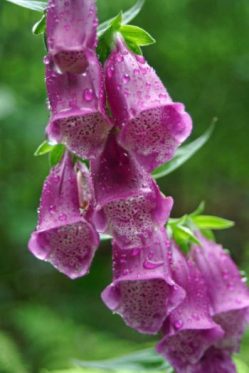
Foxglove-digitalis purpurea. A plant that is beautiful on the outside but toxic at its heart. All parts of the plant are poisonous.

Foxglove is the source of  digitalis, derived from several cardiac glycosides produced by the plant, and widely used as a heart medication. It is used to increase cardiac contractility and as an antiarrhythmic agent to control the heart rate, particularly in individuals affected by irregular (and often fast) atrial fibrillation and especially if they have been diagnosed with congestive heart failure. Which basically translates to it regulates the heartbeat.

The use of Digitalis purpurea extract containing cardiac glycosides for the treatment of heart conditions was first described in English language medical literature by William Withering, in 1785, which is considered the beginning of modern therapeutics.

With careful usage and expert pharmaceutical  guidance, doctors have subsequently used digitalis and saved thousands of lives, but it is at the same time a dangerously toxic plant. Used wrongly it can cause heart palpitations, delirium, hallucinations, vomiting, & possibly death.

TRADITIONAL, FOLK & HERBAL MEDICINE

Modern-day herbalists have largely abandoned the use of digitalis because of its narrow therapeutic index and the difficulty of determining the amount of active drug in herbal preparations. Once the usefulness of digitalis in regulating the human pulse was understood, it was employed for a variety of purposes, including the treatment of epilepsy and other seizure disorders, which are now considered to be inappropriate treatments.

The Doctrine of Signatures

The openings of the bells were thought to resemble an open animal’s mouth

Foxglove flowers were supposed to look like an animal’s open mouth. Within the doctrine of signatures this meant it must have some medicinal value in treatment of injuries of the mouth & throat. The speckles in the mouth of the flower were, according to the Doctrine symbolic of inflammation of the throat. Another array of folk-names reflect foxglove’s association with the mouth: Throatwort, Rabbit’s Mouth, Bunny Mouths, Tiger’s Mouth, Duck’s Mouth, Gap-Mouth, & Dragon’s Mouth.

Another, less charming name of Scabbit Dock came about as in Culpepper’s day Foxglove was used in an ointment or shampoo for treating impetigo or “scabby head”.

Midwifery

An association with midwifery probably gave rise to the names Granny’s Gloves or Granny’s Bonnets, & Witch’s or Witches’ Gloves. Witches & grannies, or at least midwives & other herbal practitioners, had many uses for this plant. Dr William Withering, the aforementioned man credited with discovering digitalis as a heart remedy circa 1775, apparently learned of its potency from an unnamed midwife.

September – The dried seedhead of a Foxglove still stands-Conwy Mountain
 

A Trip to Pembrokeshire:Part 3: Woodland walk

Tags

, , , , , , , , , , , , ,

Our plan had been to head off to Skomer Island on Friday, but clearly we were thwarted in that by the extreme weather conditions and then constrained further by the fallen tree. We returned to the house after our ‘reccie’ of the tree situation, hung our waterproofs up to drip dry and headed indoors to warm up in front of the Aga.

Leaves ripped off the trees littered the ground and guessing that caterpillars and other tree-dwelling fauna may have come down with them, we thought some of the smaller birds may have been struggling to find food. On previous visits here we have always baited the bird table, usually with seeds and nuts, mainly to bring down the Nuthatches, who’s presence is surprisingly easy to buy. All we had to offer today was left-over bread (it was the more wholesome stuff), so we put it out anyway to see what was still around despite the rain. Within minutes a Nuthatch appeared, picked out what it fancied and took it back to a nearby tree. They don’t share well, so Blue Tits had to wait to dive in the cover of shrubbery till it was gone. A lone Chaffinch, I think it was a young one, pecked around beneath the table, as did a Robin. The Nuthatch made repeated visits, then the big boys arrived, crows and a gorgeous jay that grabbed great beakfuls and carried them off. A squirrel was not far behind them.

Grey Squirrel sitting cheekily beneath the bird table

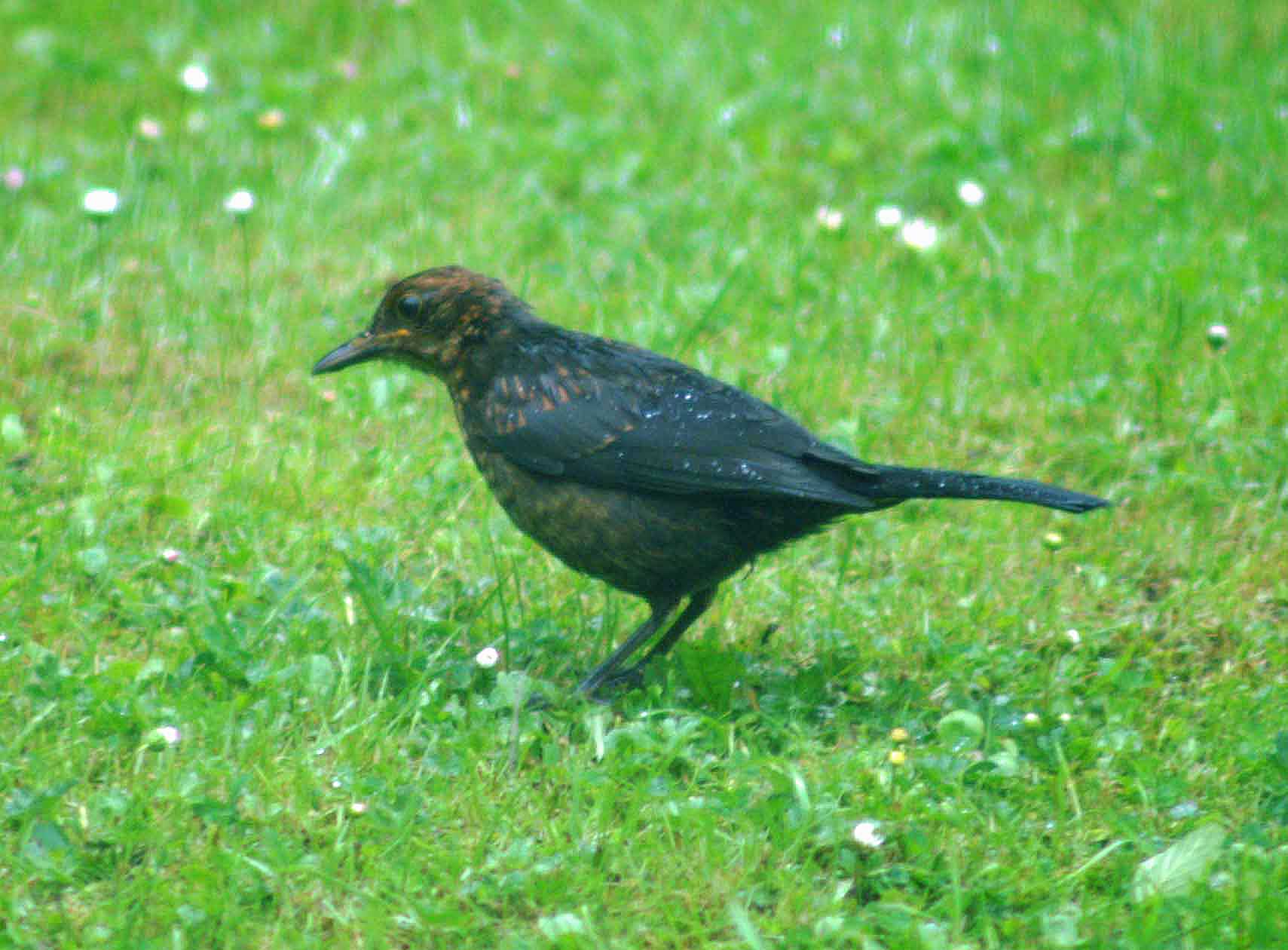
A young blackbird in odd-looking transitional plumage hunting worms on the lawn in the rain

The song thrush was out hunting in some very heavy rain

The Pilgrim’s Way

By mid-afternoon the wind and rain had subsided enough for us to venture outside for a proper walk. We thought that if we stuck pretty much to the woodland that we would be protected from the worst of the rain and sheltered from the wind.

A pathway runs close behind the property, partially cutting through its private woodland but part of a publicly-accessible circular walk beginning and if you like, ending at Nevern Church. The church, dedicated to St. Brynach is at the end of an historic Pilgrim’s Way from St.David’s cathedral, dedicated to Wales’ patron saint and regarded as the holiest place in the country. (More detailed Nevern history to follow in a later post.)

The route of this walk has become familiar over the last few years, but each time I have visited there has been something different to see. This year I have resolved to take more notice of ferns and make a proper effort to identify the ones I see and learn more about them. The damp woodlands of Wales is a great place to find them without having to try very hard at all and I spotted one I was looking out for within a very short time, a Hard fern.

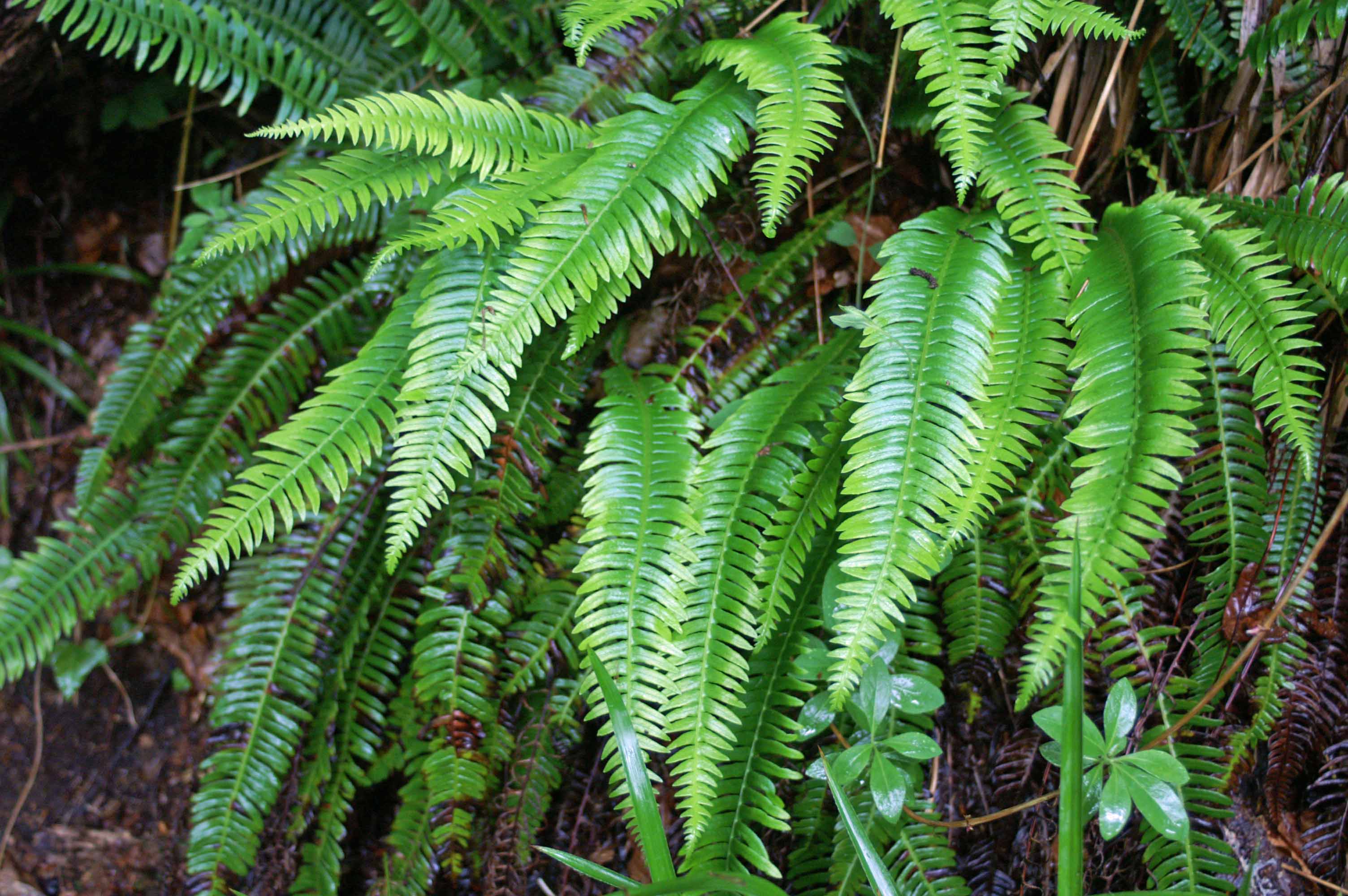
A lovely specimen of Hard fern-blechnum spicant growing from the rocky bank

Most ferns produce their spores on the mature fronds, but the woodland hard fern is one of a few species that does it differently. This plant has developed special fronds, the sole purpose of which is to bear spores, so they resemble a flowering plant in form with a rosette of leaves and some spore-producing structures in the middle.

The most abundant species here is the Lady Fern – Athyrium filix-femina, which forms large graceful clumps with the fronds arising from a central point rather than along a rhizome. The fronds are a light yellow-green and very dissected.

The frond of a lady fern

Ferns lining the steep banks of the woodland path which is cut into the rock and roughly follows the course of the river.

The river runs along the bottom of a valley that is bounded on ‘our’ side by the steep rocky hillside that is thickly wooded with a variety of tree species including beech, ash, sessile oak and sycamore. On the opposite side is a narrow belt of trees with grassy farmland beyond. This combination of  old mature woodland, the river and adjacent farmland has created the perfect habitat for a wonderful variety of flora and fauna.   In April and May, before the tree canopy closes over there are masses of colourful wood anemones, primroses, bluebells and ramsons (wild garlic), but now we were surrounded by lush greenery in a myriad of shades and forms broken surprisingly often by the flower of the moment, the glorious foxglove.

A beautiful display of foxgloves in a clearing

More foxgloves on the side of the path

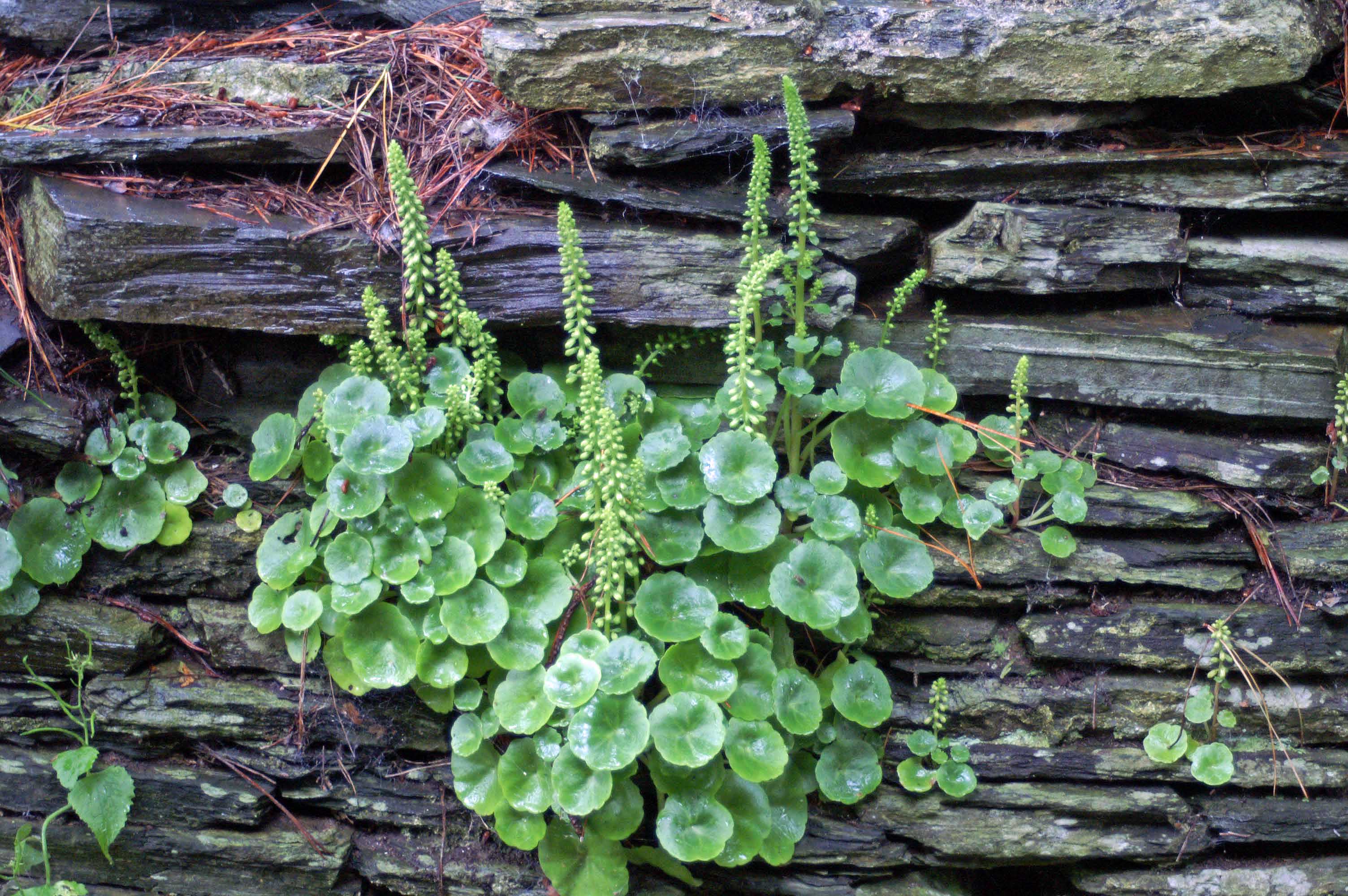
Navelwort and moss growing on a shady length of the stone wall that bounds woodland from the farmland

There were birds singing despite the rain, Song Thrush and Wren mainly, but also Blackbird, Chiffchaff and a very tuneful Garden Warbler. On other occasions we have had lovely sightings of Great Spotted Woodpecker, Treecreeper, an array of Tits – blue, great, coal and long-tailed. Some of my all-time favourite sightings of birds have occurred here; the three following photographs are all from our May 2007 trip.

A Coal Tit with food for chicks taken in Nevern woods in early May 2007

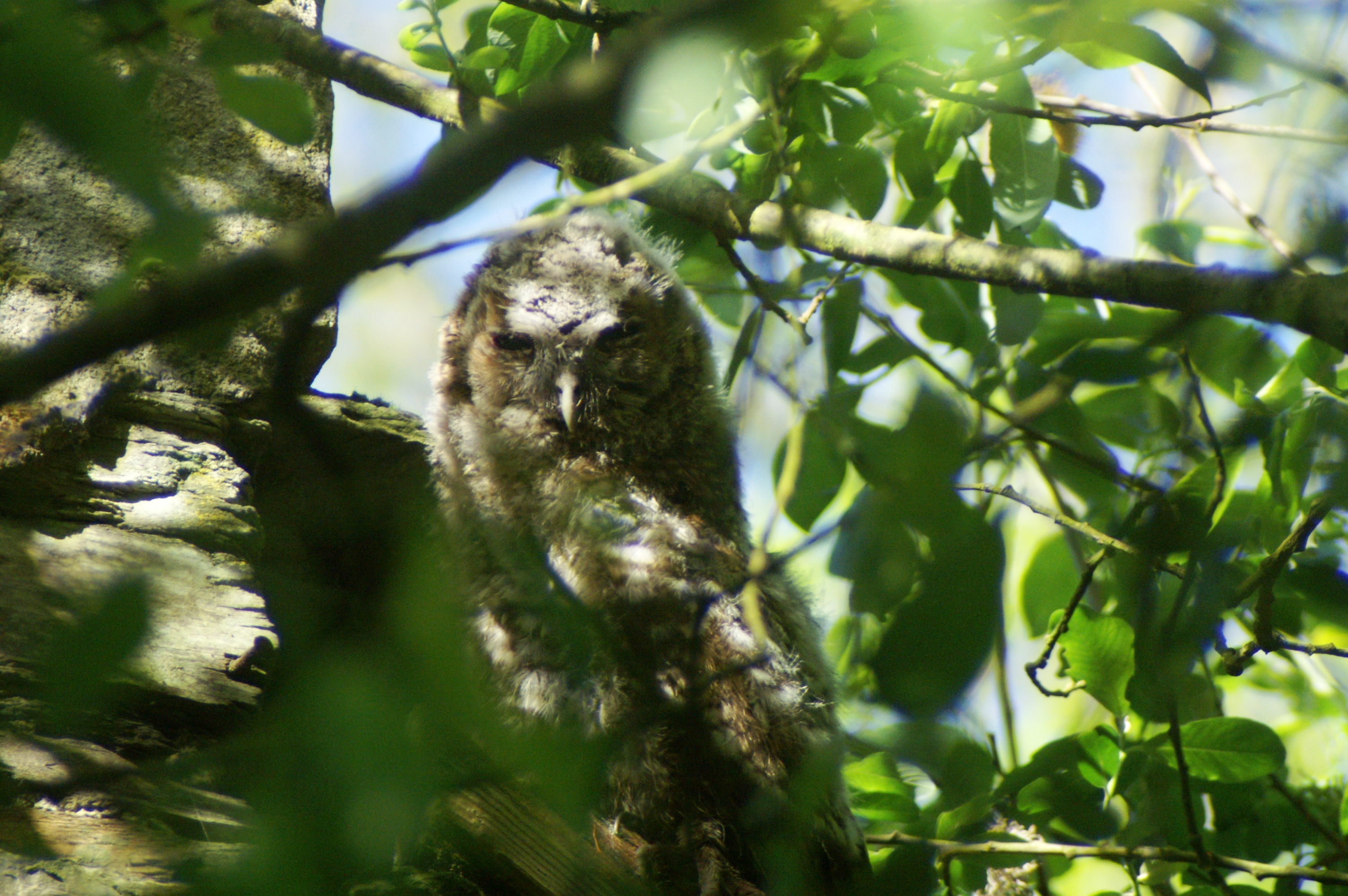
We had gone out quite early one morning and reaching the point along the path where there are two, now tumbledown, old stone buildings, we heard a sound from the roof of one and looked up to see a young Tawny Owl watching us.

11/5/07 A young tawny owl peering down at us from the chimney of an old tumbledown stone cottage

The end of this section of path intersects with a wider access track. Turning left onto it brings you to a bridge that crosses the river that is just wide enough for one vehicle to cross. Today the river was in full flow and deep muddy water rushed through the arches of the bridge, but usually at this time of year the water is shallower, although still quite fast flowing and it splashes over rocks that are now submerged. We have had lovely views of Grey Wagtails here, balancing on the rocks and chasing after flies; beneath the bridge has been a favoured nesting site for them and one year we were treated to views of  newly-fledged young perched on nearby vegetation being fed by their parents.

It has also proved an excellent spot from which to see the charismatic Dipper, a bird that is present along this stretch of the river all year round. Sadly we had not even a glimpse of either bird this time.

9/5/07- Looking down on a Dipper from the bridge

We didn’t linger long on the bridge as it was raining again and crossed the stone stile to take the slightly higher farm track where we had some cover from more trees.

Stone stile

Frothy elder blossom

Further down the track passes between some old stone farm buildings, no longer in use, which we had a little nosy around. We have done this several times before, always hoping we may find evidence of a Barn Owl nesting there, but still no luck with that.

More navelwort, this time in a more open spot, but overhung by pine trees

Maidenhair Spleenwort -Asplenium trichomanes

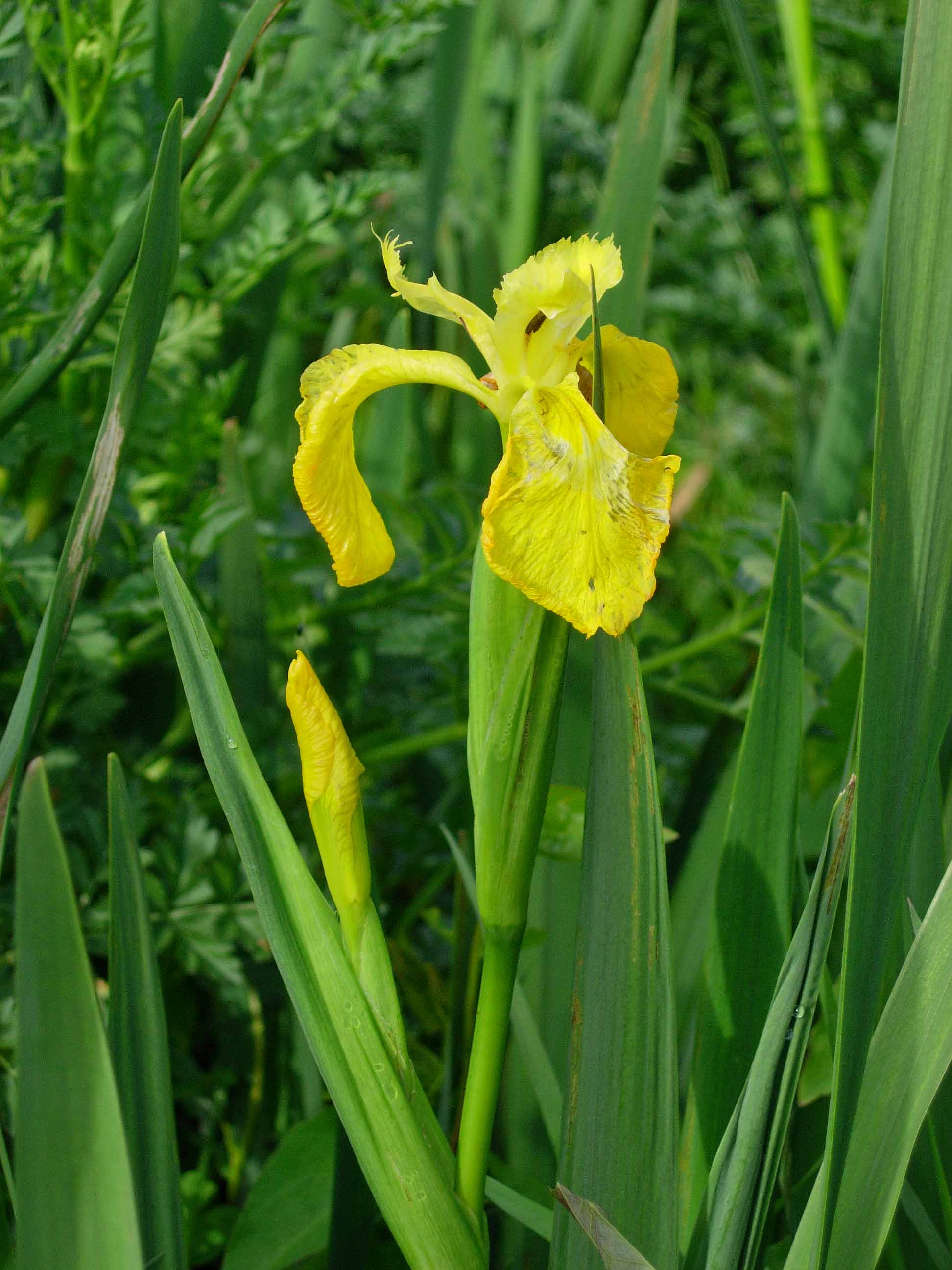
At the end of the surfaced track there is a gate that leads into an open meadow; much of it is marshy and supports a lovely array of flora that thrives in such conditions, including the glamorous Yellow Iris, or Yellow Flag Iris as it is also called and an abundant amount of Water Horsetail.

Yellow Iris-Iris pseudacorus

Passing through the gate at the far end of the field brings you out into Nevern village, almost on the bridge. It is a lovely old stone bridge, dating back to medieval times and is a Grade 2 listed building. The rain had eased by the time we got here and we stood for some time watching a party of young House Martins practising their fly-catching skills over the river. They seemed to be thoroughly enjoying themselves, swooping through the arches of the bridge and skimming low, sometimes perhaps a little too low over the surface of the water. It was hugely entertaining and a real treat to watch them, but a bit risky too – more than once we had excited birds passing at great speed by our ears, close enough to feel a change in the air pressure.

Nevern Bridge has been a Grade 2 British listed building since 1952.

Moving on we continued walking towards the church, another fascinating building that again I will describe in more detail later.

The tower of St.Brynach’s Church, Nevern

Just before reaching the church we turned left to continue our circuit and return home. A short way up the first hill is the Pilgrim’s Cross that it is thought may have been a way marker to reassure Pilgrims of old that they were on the correct route to or from St.David’s.

The Pilgrim’s Cross is set quite high up in the rock face and can be difficult to see.


Quite difficult to spot initially, it is set just above head height on a rocky outcrop ; coins pushed into the cracks in the rocks may help to pick out the outline. There is a legend that behind this rocky outcrop is a hidden cave that contains the remains of Merlin, King Arthurs Wizard and one theory has it that the cross is not carved into the rockface, as such, but into the stone of a bricked-up entrance to a cave….

Even I know of several sites spread throughout Wales that reputedly hold the remains of the fabled King Arthur, but who knows? This is as  likely a spot as any other.

A trip to Pembrokeshire:Part 2: Flowers in the rain

Tags

, , , , , ,

As we surveyed the ash tree the tree surgeon arrived and quickly assessed the work involved in removing the obstruction, estimating that it would take him about two hours to clear. The rain and wind persisted, but had eased at that point, so as we had piled on waterproofs anyway, we wandered back towards the house stopping to see how the saturated wildflowers had fared.

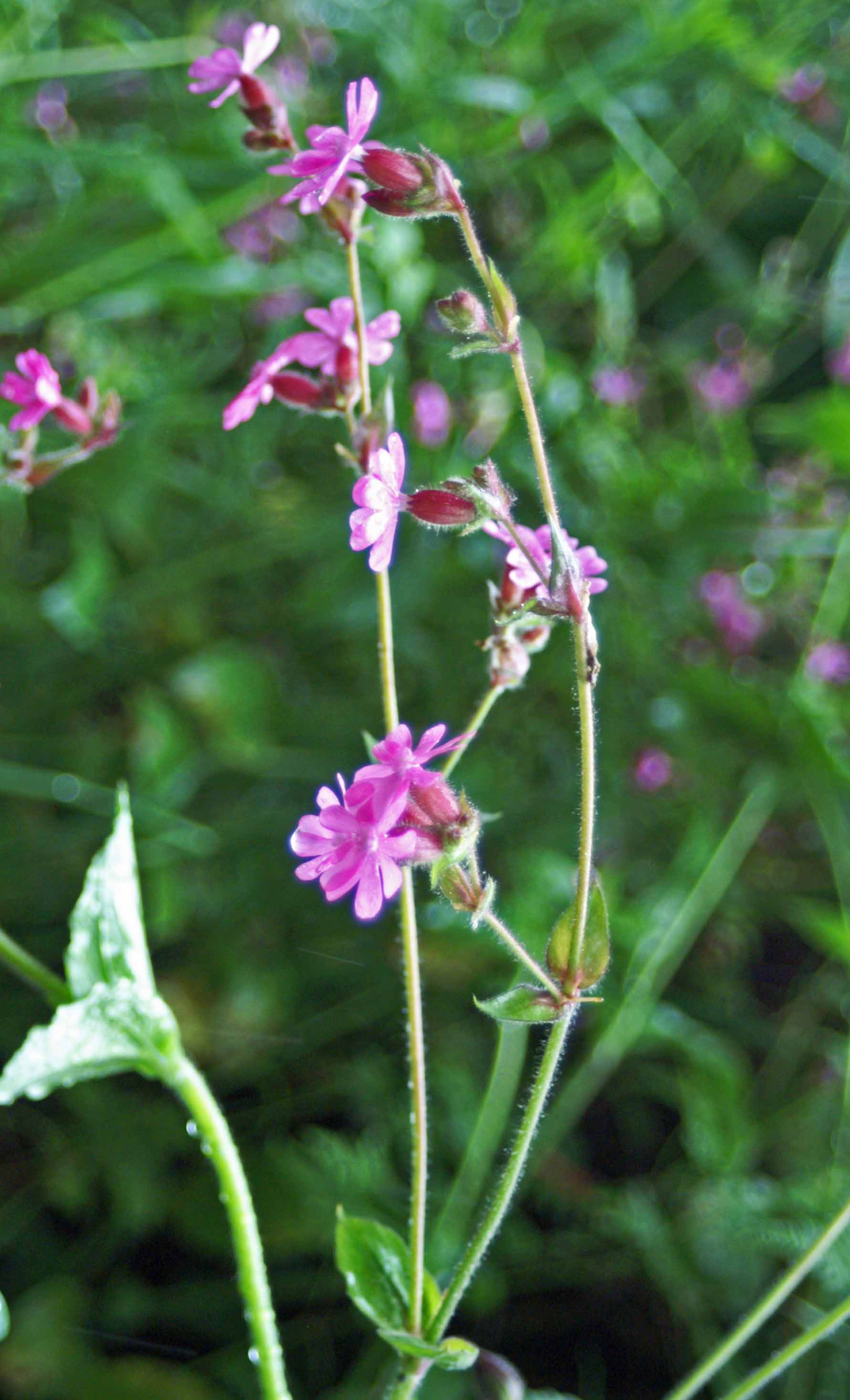
At this time of year Red Campion-Silene dioica is a familiar sight on the banks of Welsh lanes, along the roadsides and on woodland edges. Its flowering season is quite a lengthy one, beginning in May when it accompanies bluebells and continuing on through the summer and into September. Individually, the plants are rather straggly and untidy, but beautiful en masse at the peak of  its blooming when it can colour large swathes of ground.

Red campion – Silene dioica

Foxgloves typify June in most parts of Wales, appearing in a wide variety of habitats from the lanes and woodlands to clifftops and mountains. This morning some of the more exposed blooms were  looking a little the worse for wear in the aftermath of their night’s battering, but even those with bent stems still managed to look graceful and elegant beaded with droplets of rain.

Foxglove bent by the wind & rain

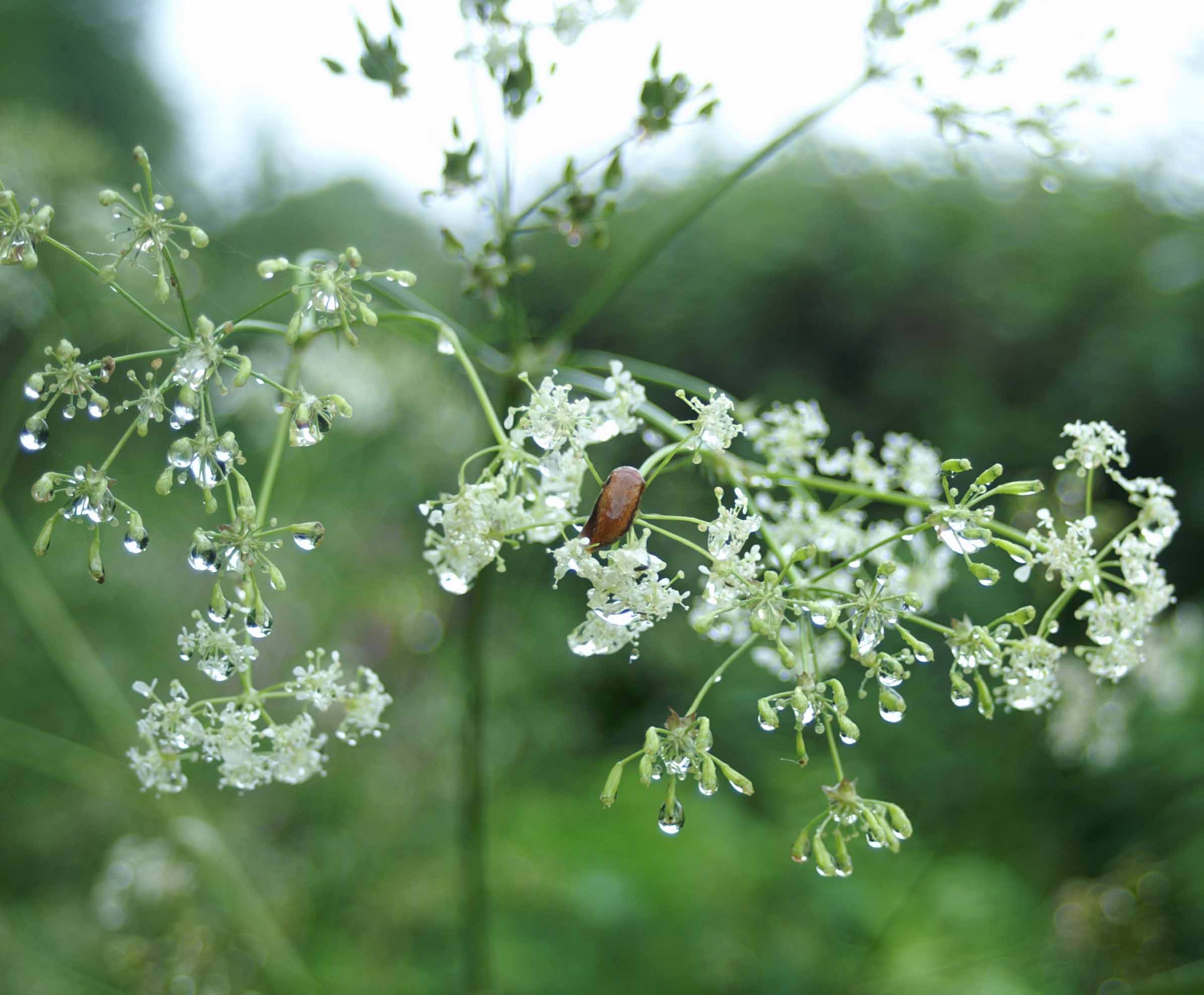
Cow Parsley flowerheads were drenched, but the drooping buds, each adorned with a droplet of water at their tips looked so pretty, like miniature chandeliers adorned with clear crystal beads. The presence of the little slug on the flowerhead in my photograph spoils that metaphor slightly, but it was quite attractive in its own way.

Cow parsley being investigated by a small brown slug

In the hedgerow I came across a few flowering trusses of purple Woody Nightshade, or Bittersweet – Solanum dulcamara. The plant stems grow long, but are not equipped with any climbing aids such as hooks, nor do they twine, they simply leans on other plants for support. A member of the potato family, the plant’s purple flowers with yellow centres are attractive, but I grew up in fear of it, being strongly warned to stay well away from it as it was very poisonous; in fact we knew it as deadly nightshade, although that name really applies to another member of the family, Belladonna.

The attractive, but potentially poisonous flowers of woody nightshade, alternatively named or bittersweet

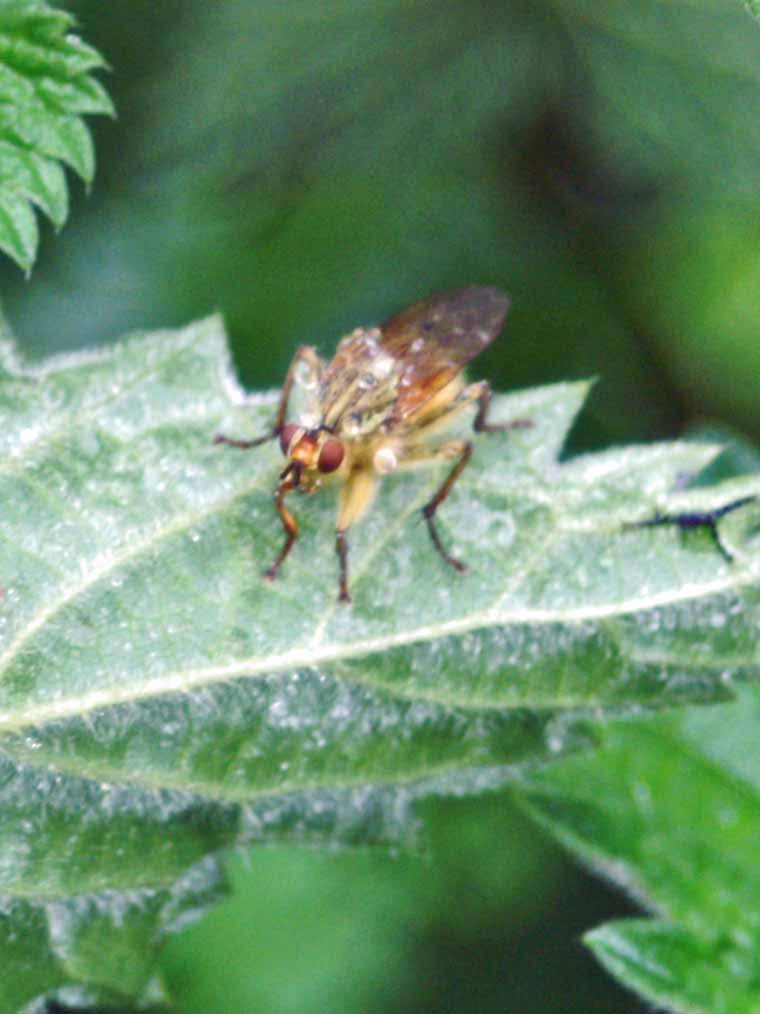
There were a surprising number of insects around, particularly flies of various kinds. I noticed quite a few of the species in the photograph below, most sitting on leaves rather than flying around and wondered if they were sucking up tiny droplets of water from their surfaces. I’m not sure what they are, but think they may be dung flies; if anyone knows I’d love to know for sure.

There were a lot of these flies sitting around on various leaves, this one on the reverse, or stinging side of a nettle leaf. With its proboscis extended down to the leaf’s surface, was it drinking?

The Dog Roses are spectacular this year with shrubs smothered with  pink-flushed blooms; the after-effects of their being subjected to the heavy rain will probably be apparent in a day or two’s time, but at the moment they are gorgeous.

Dog Rose-Rosa canina

A trip to Pembrokeshire: Part 1: The weather drama

Tags

, , , ,

It  had been my intention to make a trip down to Pembrokeshire sometime during May, mainly because it is one of the best months in which to visit Skomer Island, but for various reasons I didn’t get around to it. Mentioning this to my good friend who also alternates living in Wales and Spain, she generously invited me to stay with her last week so we could make the outing together. (I have mentioned this friend before; she is the one with the beautiful house set in 12 acres of woodland beside the River Nevern). Since 2006 it had become a bit of a tradition that she, myself and another good friend from our Gibraltar/Spain ex-pat circle escape there for a few days almost each spring for some girls-only birding, exploring and walking. Sadly our number three was unable to make it this year and was much missed, so I hope the following blogs will remind her of some of the wonderful excursions we have made in past years.

The drive from Rhos-on-Sea in the north-east of Wales to Nevern, Nr. Newport, located on the west coast of the country in north Pembrokeshire is, according to the AA route map some 133.8 miles long and should take just 3hrs and 6 minutes to make. It took me nearer 4½ hours. The roads are ‘A’ class and not bad at all really, apart from the current array of roadworks with traffic lights and extra half-term holiday vehicles. Although it was a straightforward route, I confused the sat nav by taking a wrong turning somewhere around the old slate-mining area of Blaenau Ffestiniog after searching the town fruitlessly for a petrol station (there isn’t one) and it failed to pick up my error until I had driven some 7  miles across misty moorland. I also took a couple of short breaks during torrential downpours of rain in the mountains, had I but known it, early indicators of the dramatic events that were to ensue later on.

At the very end of the journey I spent a good twenty minutes trying to remember the turnings into lanes and farm tracks leading to the house as they all look very similar. It’s two years since I was there last and then I was always a passenger, so didn’t pay the proper attention you do when you drive. I was also again hampered by the sat nav., that kept insisting I turn around at the earliest possible opportunity when I was in fact only a few hundred metres away from my destination. I had no phone signal either, so just had to persevere and try all the permutations until I arrived more by luck than judgement.

Despite the frustrating bits, this must be one of the most scenic journeys you could ever make anywhere in the world. The road cuts right across the middle of the Snowdonia National Park, winding through verdant woodlands, along lush river valleys and steep-sided rocky passes then climbing to reveal panoramic vistas of  mountains with bare rocky peaks and bleak upland moorlands clothing their sides. It  takes you through, or closely by-passes the small market towns of  Betwys-y-Coed, Dolgellau, Llangollen and Machynlleth, (it also passes the entrance to the Ynys Hir reserve where the BBc’s Springwatch is being filmed), before dropping down to the university city of Aberystwyth and the flatter coastal plains of Pembrokeshire laid out beneath the vast open skies of Cardigan Bay.

Friday, 8th June

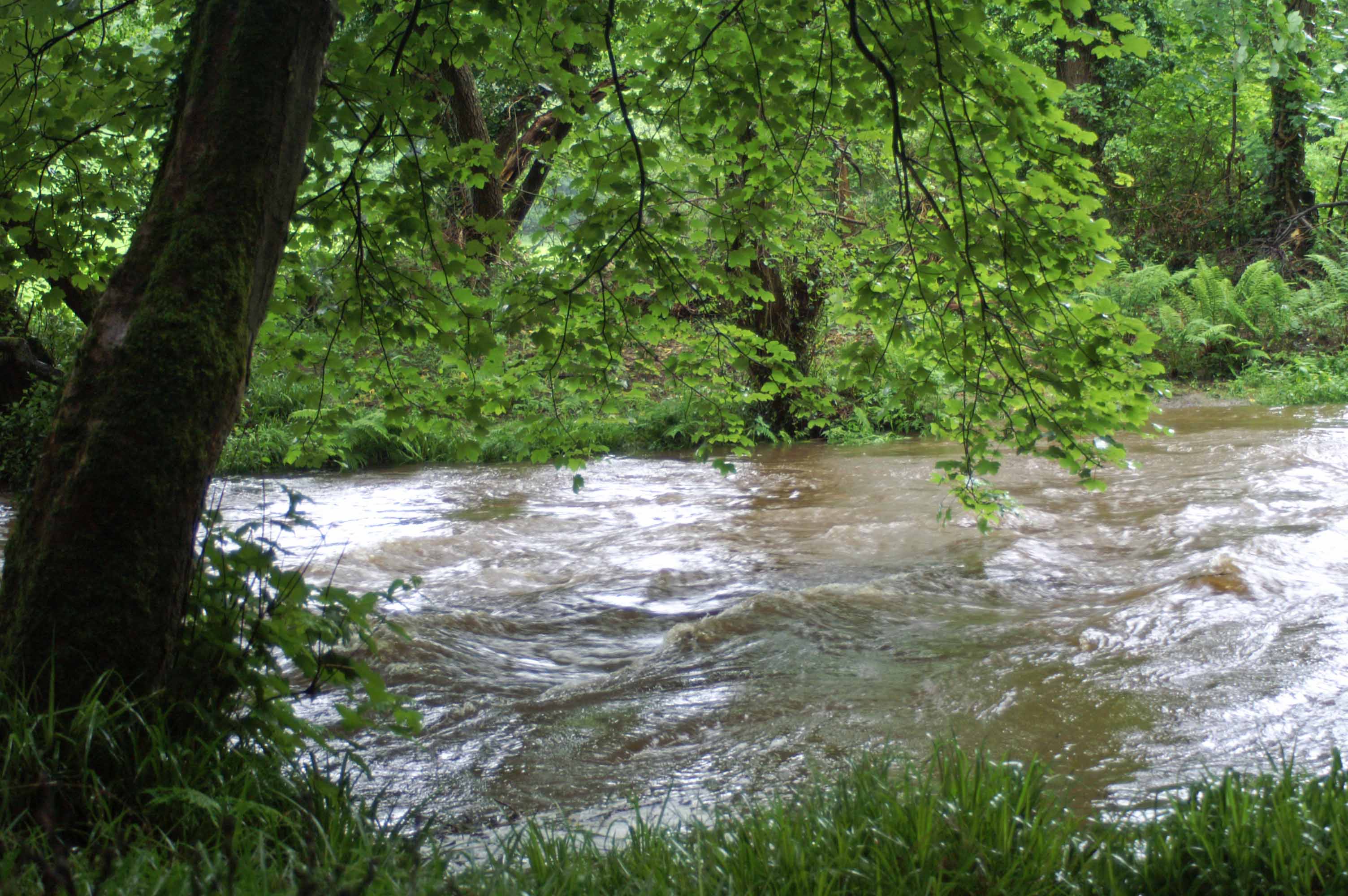
The weather events of last night that continued into much of today have already passed into legend. Gale force winds gusting at as much as 80mph and torrential rain were brought upon us here in West Wales by the Jet Stream passing over here when it should have been somewhere over the north of Scotland. It wreaked havoc in some of the areas I had recently driven through. Strong winds and rain continued throughout much of today and some rivers, already swollen with 185mm of rain that fell over a period of just 48 hours, were then unable to discharge excess water into the sea as their low-lying estuaries were already filled by two high incoming Spring tides. When the two bodies of water met this caused back-flows upriver and having nowhere to go, rivers burst their banks which resulted in extensive flooding, the worst here since 1973.

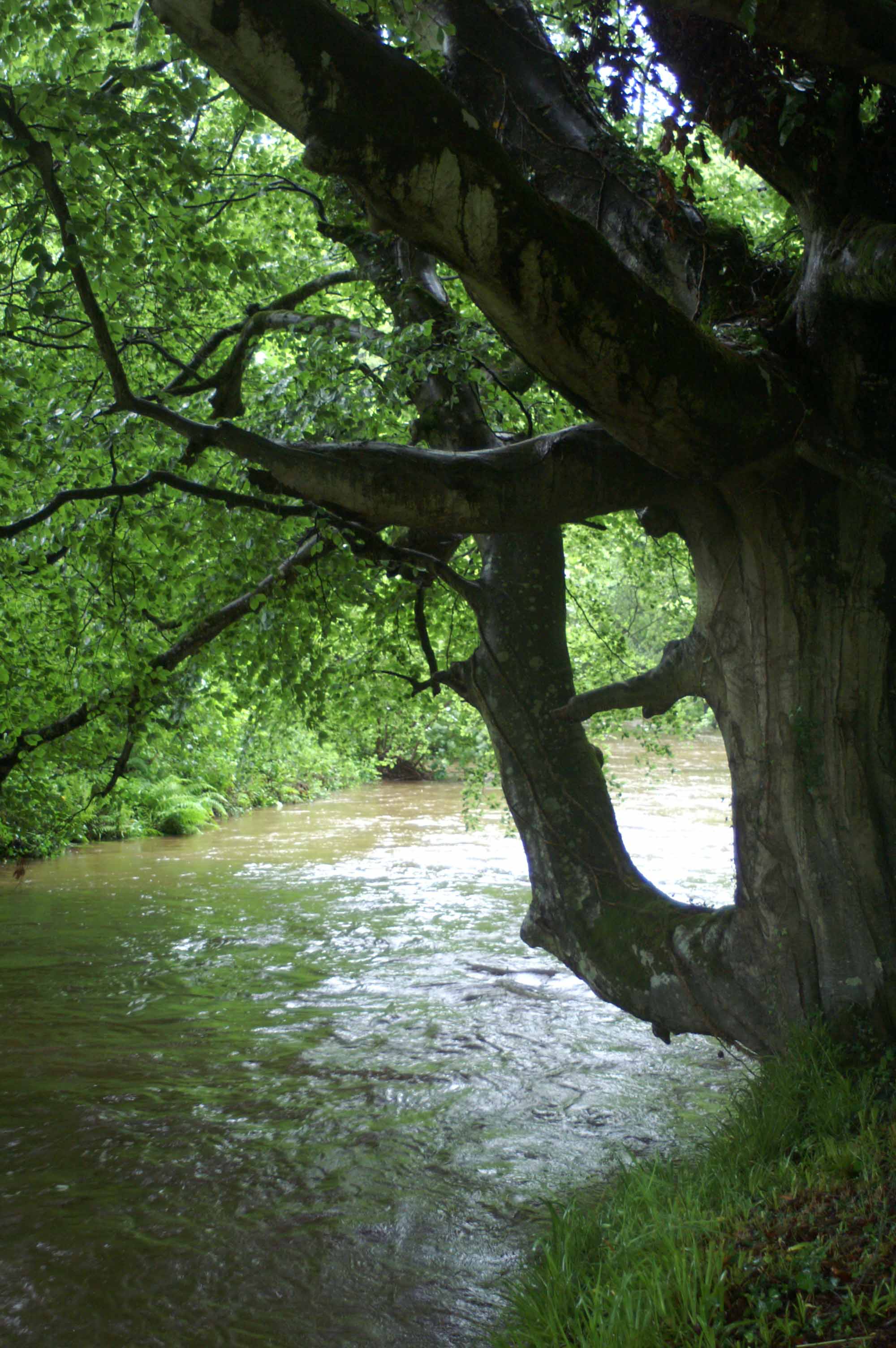
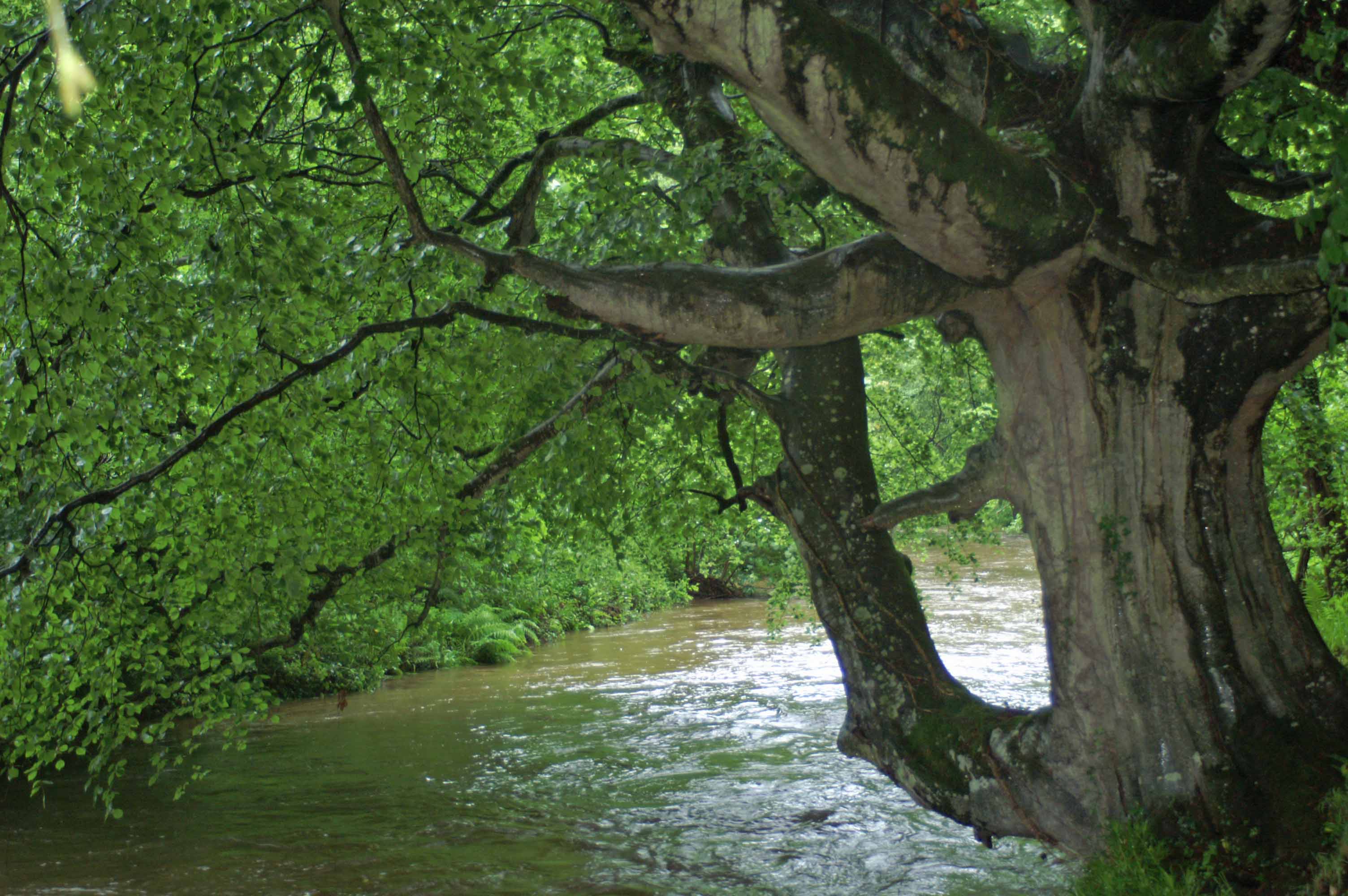
The house is very close to the edge of the river Nevern, but fortunately it had previously been at a fairly low level and although it was now very full and flowing rapidly, it remained contained by its banks and hurtled on past for the last few miles of its journey to the Nevern Estuary at Newport.

Clearly there was to be no chance of a boat-trip out to Skomer today, but we were confined to the grounds anyway as the larger section of  a divided-trunk ash tree had succumbed to the gale and fallen across the access track. An SOS was sent out to the local tree-surgeon and whilst waiting for him we took advantage of  a calmer interlude and ventured out for a look at the damage.

13.35pm; the sizeable section of ash tree that completely blocked the access track

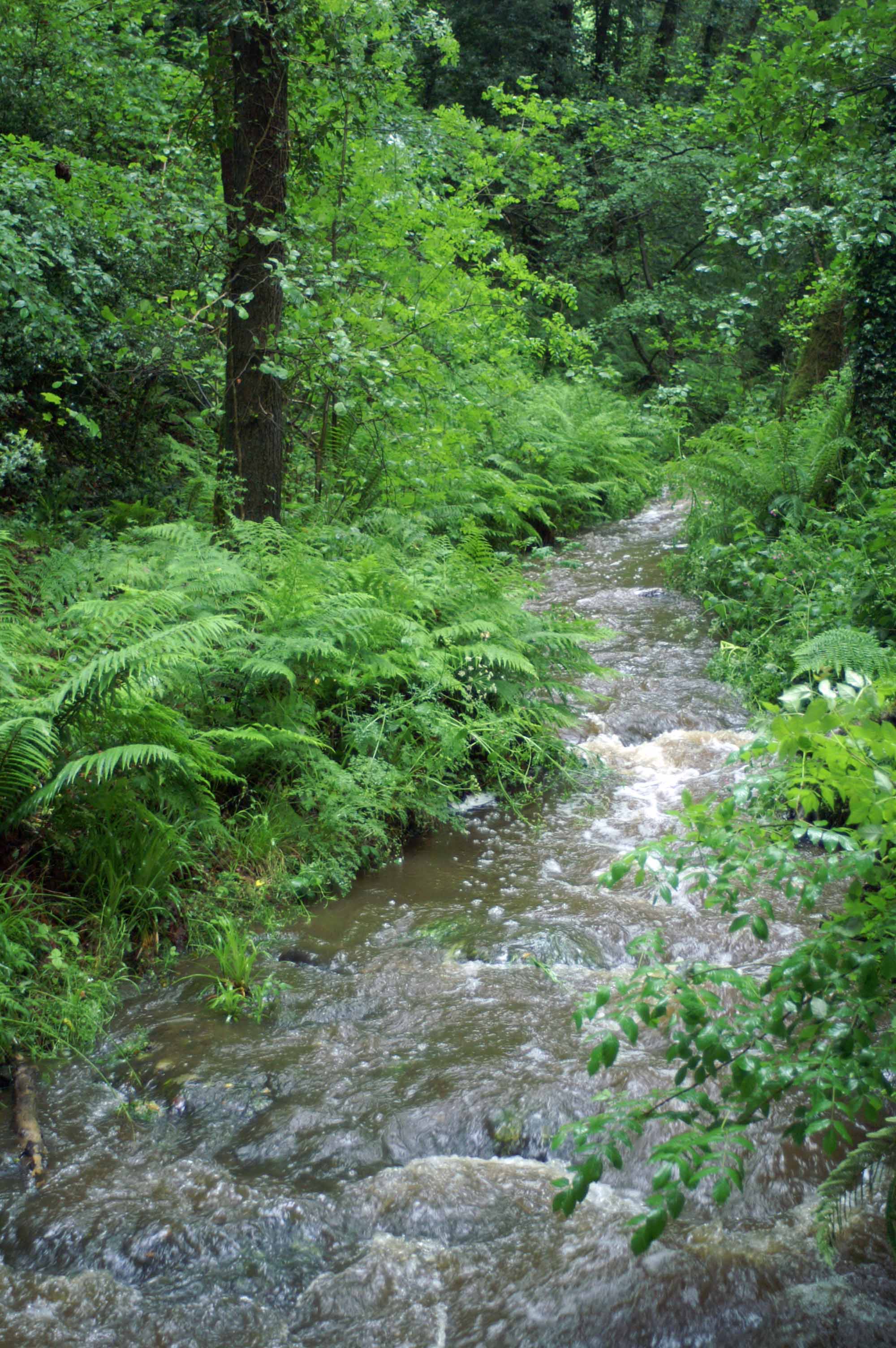
Just before the entrance to the driveway of the house,  a small bridge spans a stream that joins the river here. Usually this is little more than a few inches deep and flows at a steady trickle, but it was quite dramatic today.

The fern-lined stream racing beneath the bridge is usually shallow and flowing at a mere trickle

The swollen river flowing past the house, its muddied water almost reaching the base of a large beech tree on the bank

Another view of the river showing more of the beautiful old beech tree. (Click to enlarge)

A little further down-river the speed of the river’s flow was more apparent as it travelled over large rocks that are usually visible above the surface. (Click to enlarge)

A view of the river from higher ground, looking upstream through the trees

Conwy Mountain

Tags

, , , , , , ,

We ave few opportunities for family outings these days as the ‘kids’ are grown up now and getting on with their lives in Bristol, London and up here in North Wales. As I think I have mentioned before, despite my best efforts throughout all their lives, still none of them get as excited as I do at the prospect of a wildlife spotting expedition, but at least all may be persuaded fairly easily to get out into the fresh air for a walk. During my  recent birthday weekend clan gathering, they all agreed to indulge me in my strangeness and we headed for the nearest mountains before they could change their minds. The addition of a new Labrador puppy to my daughter’s family gave added incentive to the outing as this was to be her first venture into the countryside.

The actual Conwy Mountain –  in Welsh Mynydd y Dref  (“Mountain of the Town”) is the remains of an ancient volcano that erupted about 450 million years ago  and lies within the foothills of the Carneddau range of Mountains; however, the whole of the  hilly area to the west of the town of Conwy, is locally referred to as Conwy Mountain.

View from Conwy Mountain down to Conwy castle and estuary (click on photo for better view)

We drove from Conwy town along Sychnant Pass as far as the pull-in area near the Pensychnant Nature Resere were we parked and left the car to walk, or rather amble, stopping frequently to indulge the curiosity of the puppy. As always when walking with a group of  people, and particularly in a popular walking spot, most birds make themselves scarce, although there were a few Stonechats about, a Kestrel quartered the mountain slope close to were we stood admiring the view,  a pair of Raven flew overhead and a family of Buzzard circled in the thermals high above the valley beneath.

Freely grazing ponies are a frequent sight on the mountainside.

We walked around the lake towards the entrance to the nature reserve

The shallow water at the edge of the lake was full of crowds of large tadpoles

Vegetation in the lake is Water Horsetail – Equisetum fluviatile

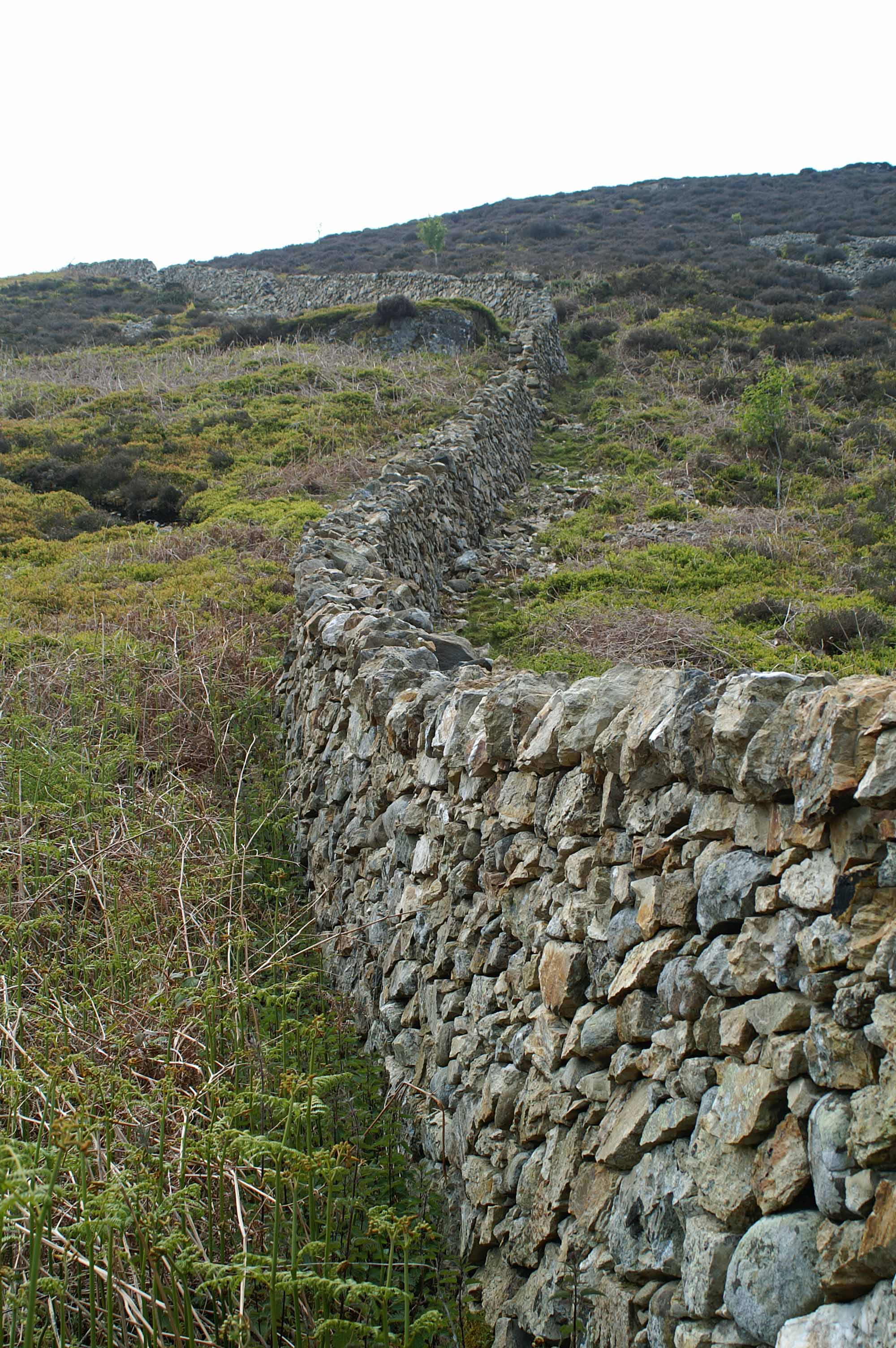
The dry stone wall that bounds the nature reserve

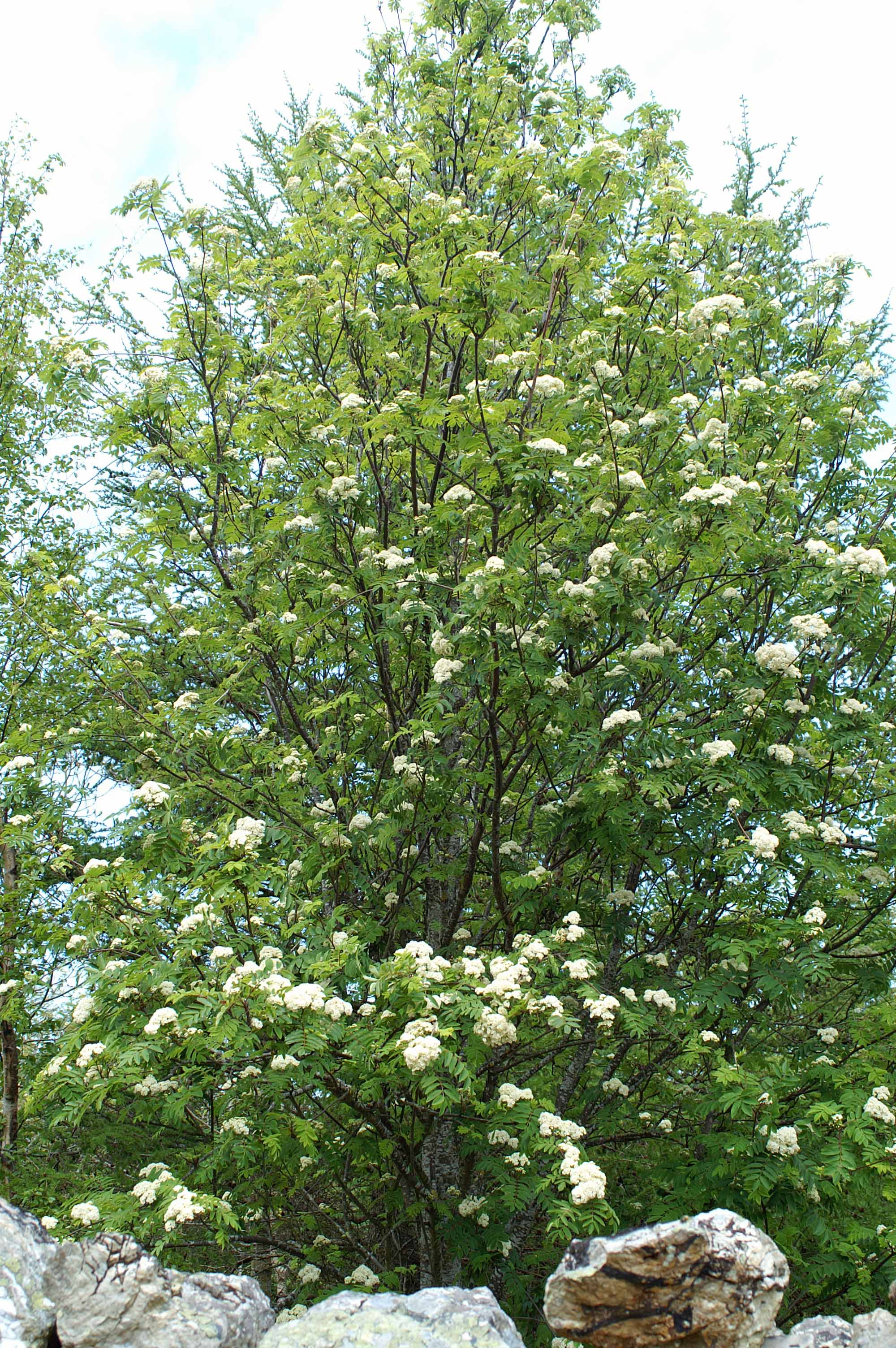
A Rowan tree in full blossom

Bilberry – vaccinium myrtillus

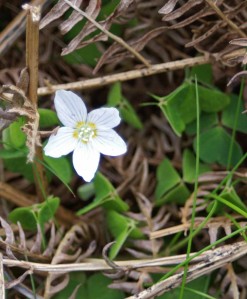
My favourite discovery of the day was definitely this lovely little Wood Sorrel plant growing on a shady mossy bank at the side of the track through the nature reserve.

Wood-sorrel-oxalis-acetosella

The flowers are solitary, each having five narrow sepals; five broad white petals delicately veined with lilac; 10 stamens and five styles.

Wood Sorrel –Oxalis acetosella – A charming and delicate herb, from the genus Oxalis, that is common in most of Europe and parts of Asia. The binomial name is Oxalis acetosella, owing to its sour taste.

The leaves are fresh green, heart-shaped, folded down the middle and held in groups of three drooping down atop a slender reddish-brown stem.

During the night or when it rains both flowers and leaves contract.


Bumblebee in red clover

Tags

, , , , , ,

There is a beautiful patch of red clover growing alongside the road leaving Old Colwyn and I just had to stop and have a closer look on my way home on Friday before it is past its best.

Red Clover- Trifolium pratense

Red Clover –Trifolium pratense  is a species of clover that is native to Europe, Western Asia and northwest Africa, but widely planted and naturalised in many other regions.

Red clover is said to be the national flower of Denmark, although apparently not officially designated . It is however the state flower of Vermont. “No. 159 of the Acts of 1894, effective February 1, 1895, designated the Red Clover as the official State Flower. Both an integral part of many a cultivated hay field and a common sight along numerous Vermont roadsides, the Red Clover is symbolic of Vermont’s scenic countryside generally and of its dairy farms in particular. Oddly enough, however, Trifolium pratense is not a native of Vermont but was “naturalized” from Europe”.  http://www.50states.com

The dark pink/purple flowers are held in dense rounded heads and have two leaves just below the top of the peduncle

An herbaceous, short-lived perennial plant, with hairy erect stems; variable in height, growing to 20–80 cm tall. The leaves are alternate, trifoliate (with three leaflets), each leaflet 15–30 mm long and 8–15 mm broad, green with a characteristic pale crescent in the outer half of the leaf; the petiole is 1–4 cm long, with two basal stipules.

The plant was named Trifolium pratense by Carolus Linnaeus in 1753. Trifolium  simply means ‘three-leaves’ and Pratense is the Latin for “of meadows”.

Agricultural uses

High in vegetable protein, red clover is widely grown as a forage crop and is also valued for its nitrogen fixation, which increases soil fertility and is used as a green manure crop. It has become naturalised in many temperate areas, including the Americas and Australasia as an escape from cultivation.

Medicinal uses

Red clover has been reported to be used for a variety of medicinal purposes, such as the treatment of bronchitis, burns, cancers, ulcers, sedation, asthma, and syphilis. These days its use may be recommended to alleviate symptoms of menopause; red clover contains isoflavones (oestrogen-like compounds) which may relieve the discomfort of ‘hot flushes’.

Folklore

Clover was an ancient protective herb. The Druids considered the trefoils, symbolic of the eternal verities of Earth, Sea and Sky. The Celts saw the clover as a sacred, magical plant. A 4-leafed clover is a sign of good luck and is a charm against snakes, witches, the devil and other dangerous creatures. It is also said to give the gift of second sight, enabling one to see fairies. In the language of flowers clover means “think of me”  or “be mine”.

Pollinator plant

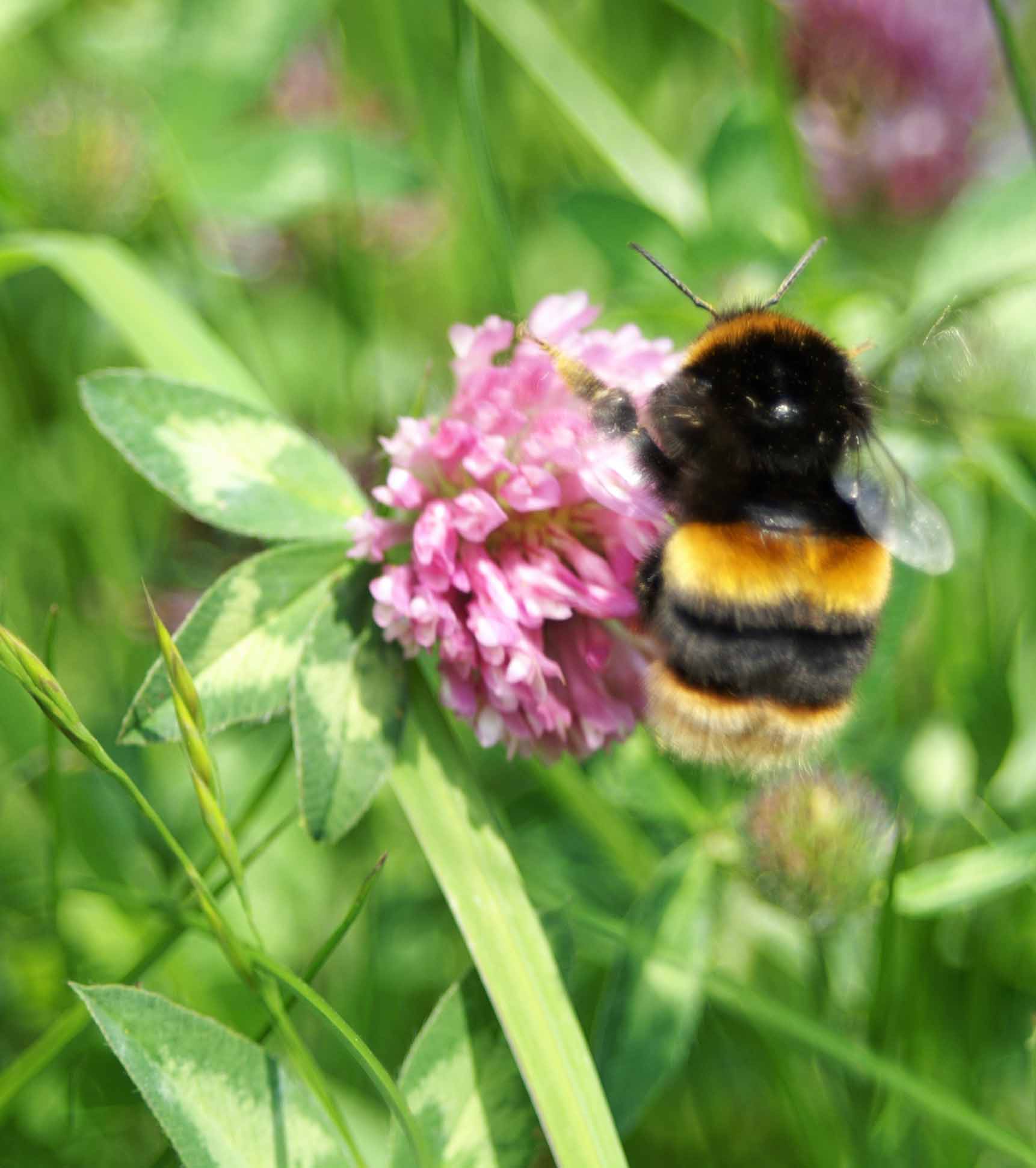
Buff-tailed Bumblebee – Bombus terrestris

Buff-tailed Bumblebee-Bombus terrestris on red clover

The Cockchafer or Maybug

Tags

, , ,

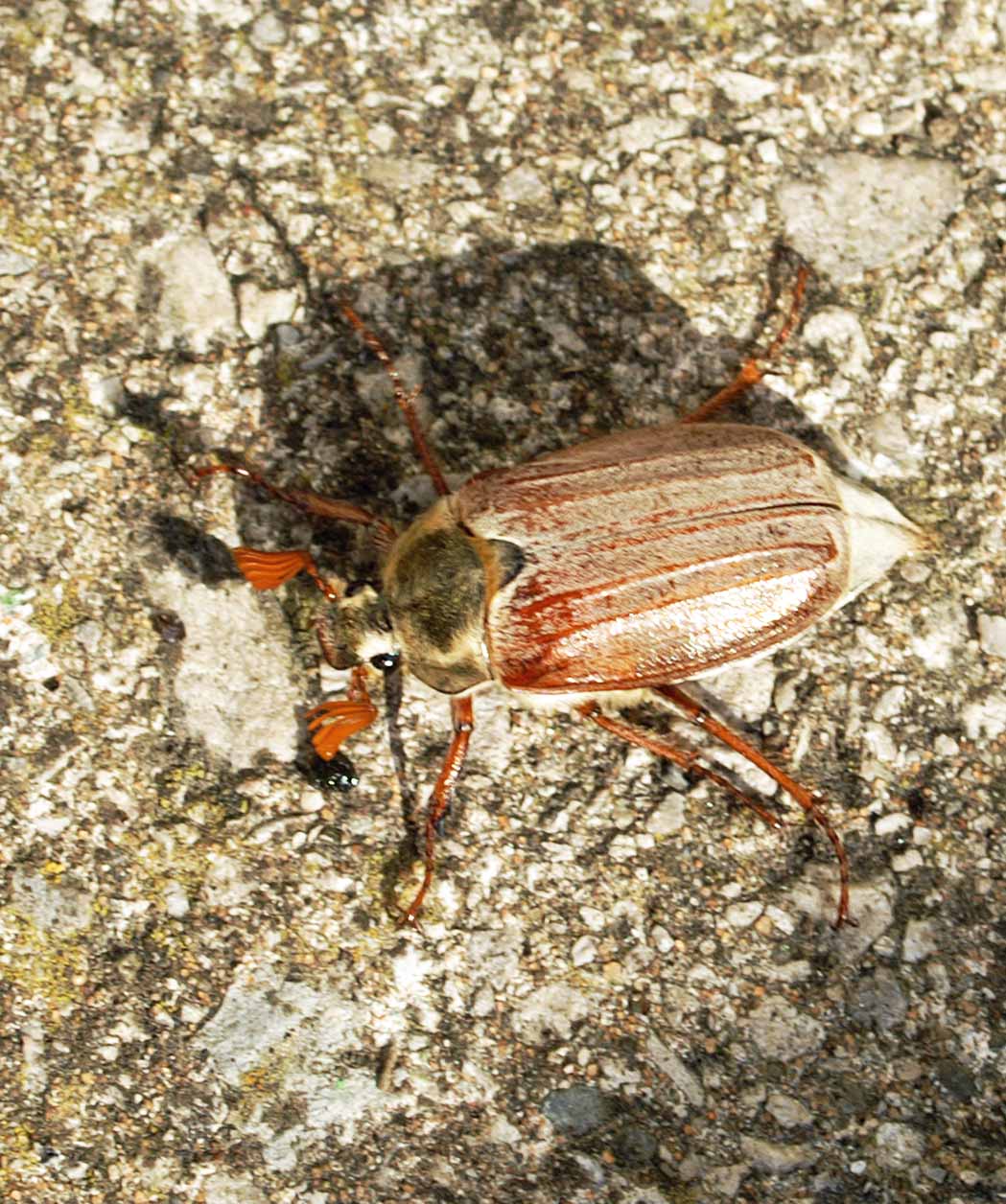
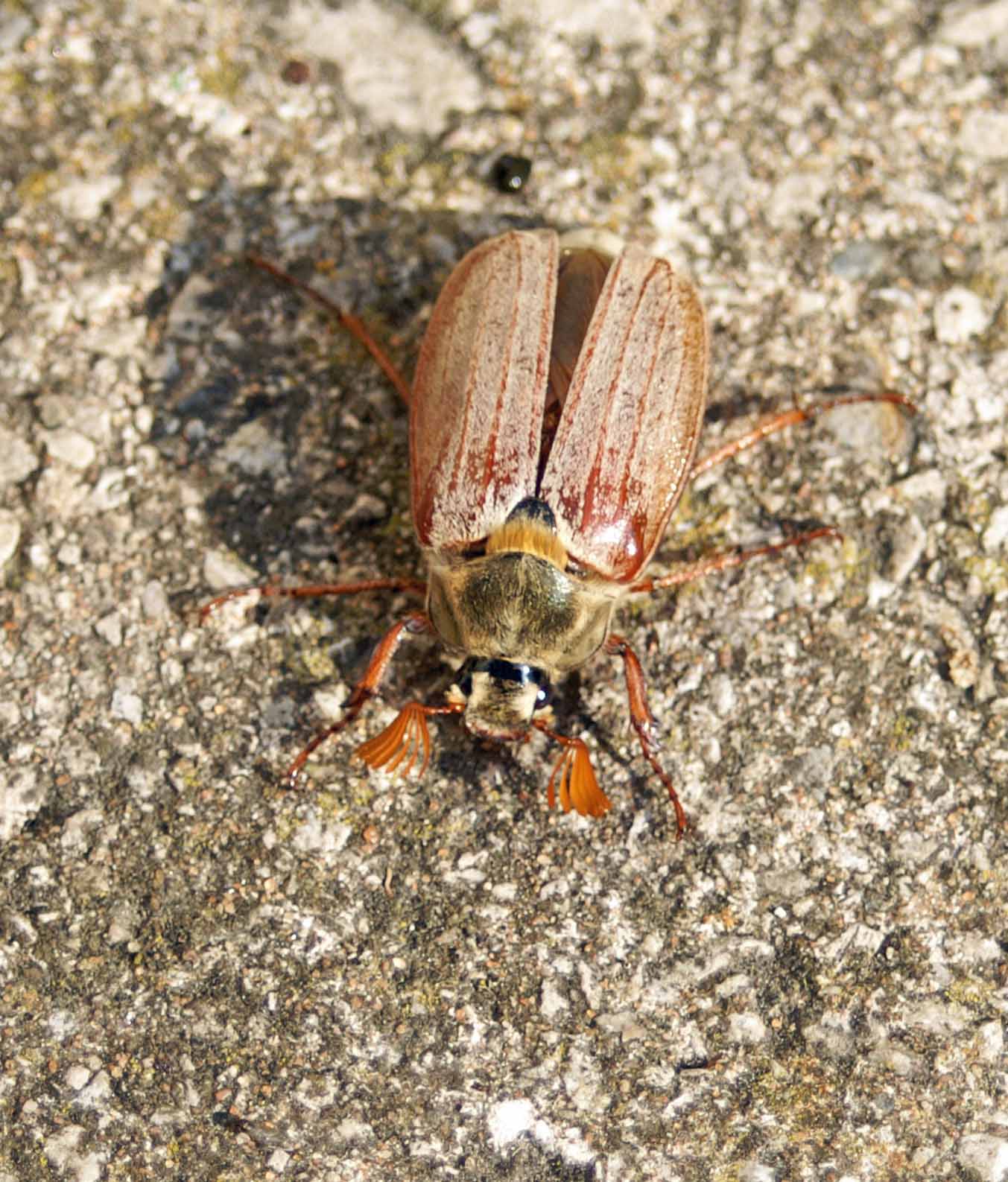
One morning last week I carried my early cup of tea outside to enjoy some early morning sunshine and discovered a big fat Maybug on its back on the chair. No amount of struggling was effecting him righting himself, he just lay there frantically waving his legs in the air, poor thing. Of course I helped him after I had taken advantage of his plight to photograph him, allowing him to hook his feet around my finger and placing him on the ground from where he took off rapidly and headed for the sycamore tree.

Maybug on its back showing the very furry body

Maybug, CockchaferMelolontha melolontha The Cockchafer is one of the more familiar large beetles as it is often encountered flying noisily about on warm evenings of the early summer, when it may crash into windows, attracted there by lights. It is also known as the May Bug as this is the month in which it most commonly appears. It is common and widespread throughout Britain and Europe except in the far north, occurring in grassy and lightly wooded places.

Cockchafers have a black head and thorax and brown sculptured elytra (wing-cases).

The larvae live on the roots of grasses and other plants in areas kept as permanent pasture and once were so abundant they were regarded as a pest species.

The beetle, particularly the male, has large impressive feathery antennae that open like a fan