• Home
  • about
  • about the photographs
  • Local Nature Reserves
    • Bryn Euryn Local Nature Reserve
    • Mynydd Marian
  • Wales Coast Path
    • Grey Seals in North Wales
    • St.Trillo’s Chapel
    • Wildflowers of North Wales Coastal Paths, Cliffs and Dunes

everyday nature trails

everyday nature trails

Category Archives: Nature

Newborough Warren and Ynys Llanddwyn

16 Friday Mar 2012

Posted by theresagreen in Nature, nature photography

≈ 2 Comments

Tags

brent goose, canada goose, mistle thrush, Newborough Warren and Llandwyn Island, oyster catcher

My dad made the journey from Leicester to visit me this weekend and we decided to visit a place that is very special to both of us and evokes many happy memories of holidays spent with him and my sisters on the Isle of Anglesey.

When we first used to spend days at Newborough Warren and Llanddwyn Island, the area was much less visited than it is now and there were many occasions when we hardly saw another person there. To reach the beach  there was just a very rough track through the then forestry commission owned pine woodland and you just parked at the end of it. Now the entrance to the forest has a barrier which costs £3 to pass through in a car, the track is tarmacked and there is a designated carpark with toilets and picnic areas. It is still a magical place, with history, myth and legend as well as wild beauty and if you ever get to visit this area, especially outside the summer months, it is a place to put at the top end of your must-explore list.

Newborough Warren and Llanddwyn Island (Ynys Llanddwyn) are situated near the southern entrance to the Menai Strait. The areas are national nature reserves holding a diversity of habitat including  dunes, mudflats and saltmarshes that support a wide range of plants and invertebrates.

The view across the dunes to Llanddwyn Island. The sand dunes around this area are known as being the largest in Wales and are amongst the finest in Europe.

Our visit this weekend was brief as my dad is no longer able to walk far and it was too cold for sitting around on the beach. Back in the day he would have walked us the length of the beach, which is about a mile long, through the nature reserve on the headland to reach the lighthouse, where we may have had a bit of a picnic before exploring the beach on the other side of the headland and walking back again.

The view across Llanddwyn beach and the Menai Strait to the mountains of Snowdonia

Llanddwyn beach

When you arrive at the beach you are confronted by this wonderful expanse of golden sandy beach and by a stretch of sea that is generally tranquil and often lake-like, but yet you can hear the sound of surf. That was always a big part of the magic for me; as on the other side of the headland you discover the source of the noise as here big foamy waves come roaring in to the beach.
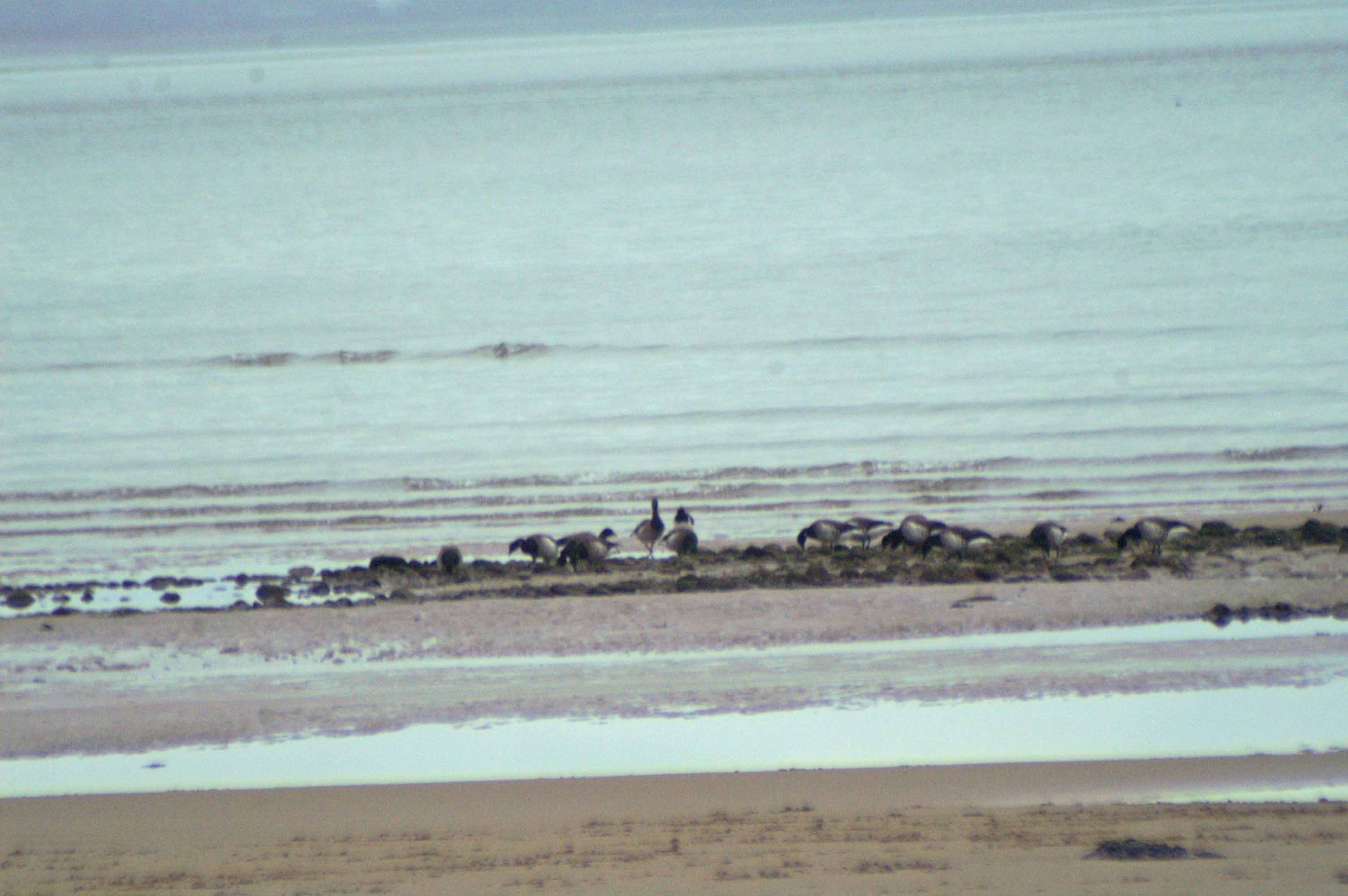
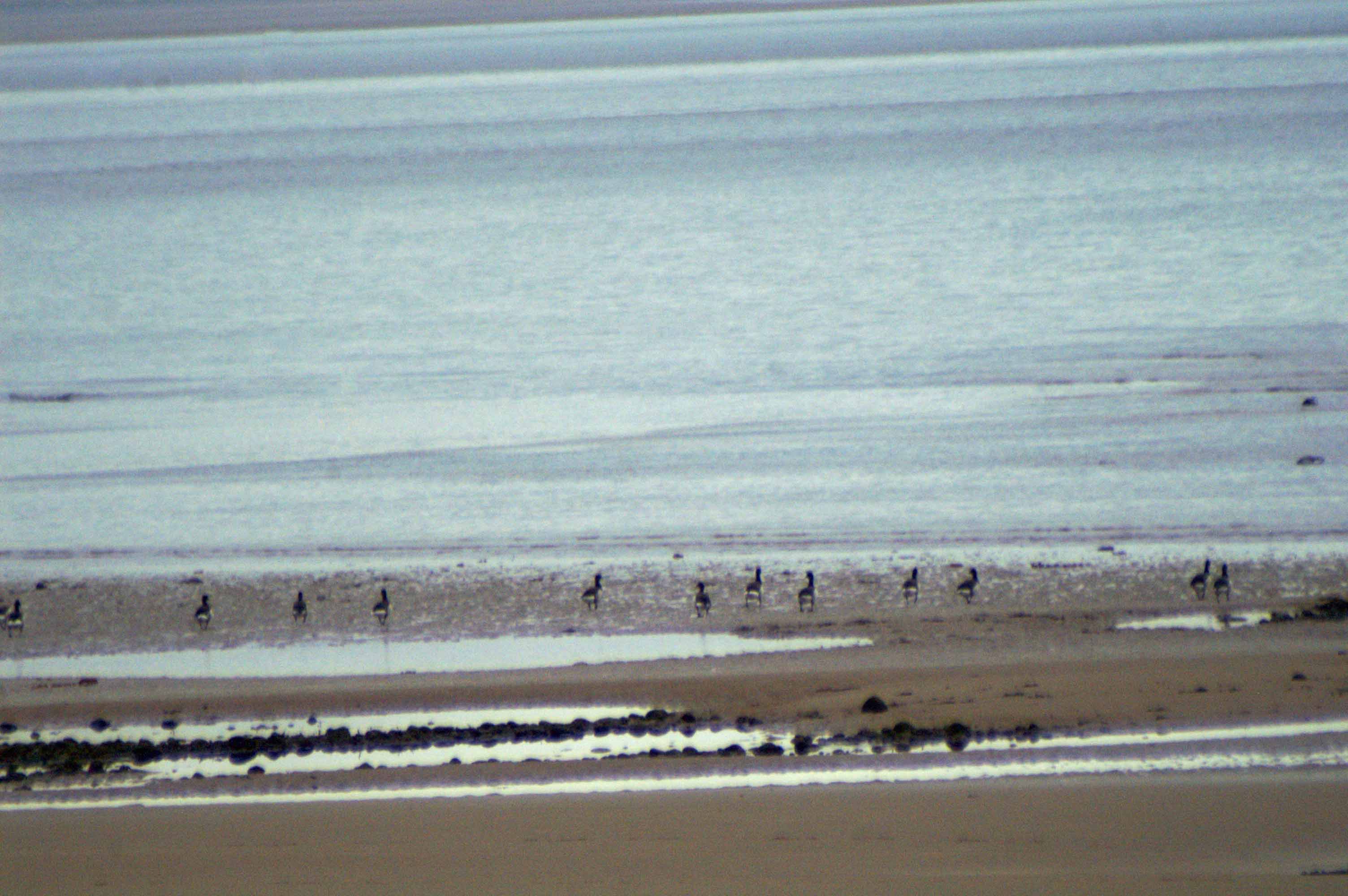
Geese on the sea edge may be Canada geese or possibly pale-breasted Brent geese; both species occur here on Anglesey

The forest area has red squirrels and is locally famed for its roosting ravens. The cliffs around the island support a wide variety of nesting seabirds, including cormorants, shags and oystercatchers. Ynys yr Adar (Bird Rock), a small islet off the tip of Llanddwyn, throngs during the spring with one percent of the total British breeding population of cormorants. Waders such as turnstones and sandpipers are found along the coast and terns can be seen fishing in the bay. Today I had to content myself with those birds I could see easily from the beach in  front of the carpark and at a distance away. There were mainly oystercatchers and gulls with one or two curlew, but there were also a number of large birds that I first thought were shelduck but decided upon geese. I didn’t have binoculars with me and the light was poor, so I was relying heavily on the camera lens to help me out with a good enough shot to identify the species; Canada, Greylag and Brent Geese are all a possibility.
Oystercatchers from behind

Mistle thrush from the front holding something in its bill

Sitting at a picnic table close to the carpark I watched  a largish bird balance quite precariously on a short branch low on a pine tree before venturing down to hunt in the grassy area below.  It was a mistle thrush, which despite its size was very well camouflaged in low light and against a background strewn with dry grass and twigs.

On the forest edge a Mistle Thrush ventured out to hunt

As I said earlier this was just a very brief look at a beautiful and complex area, but now I’ve reacquainted myself with it I intend to return very soon for a proper exploration.

Other claims to fame:

CD album cover shot of Manic Street Preacher's 'This is my truth, tell me yours' was taken here

In 2004, Llanddwyn Island was used as a filming location in Demi Moore’s romantic thriller Half Light. Tŵr Mawr was used as a lighthouse which plays a key role in the film. CGI was used to create the effect of a real light on top of the lighthouse.

Bryn Terfel filmed his video for Cavatina (arranged by Chris Hazell) on Llanddwyn Island “a very beautiful romantic place” (Bryn on BBC Breakfast)

In 2009, a scene for the Hollywood blockbuster Clash of the Titans was filmed at Llanddwyn.

Share this:

  • Share on Facebook (Opens in new window) Facebook
  • Share on Pinterest (Opens in new window) Pinterest
  • Share on X (Opens in new window) X
Like Loading...

Bryn Euryn in preparation for Spring

12 Monday Mar 2012

Posted by theresagreen in Local Nature Reserves, Nature, nature of woodlands, nature photography, woodland birds

≈ 1 Comment

Tags

Bryn Euryn Nature Reserve, catkins, dunnock, long-tailed tit, pussy willow, Robin, treecreeper

I hadn’t visited the Bryn Euryn Local Nature Reserve for quite some time and thought I would rectify that last weekend. The morning weather had been varying between sunshine and showers, and arriving at the site during a sunny spell I  walked first around the edge of the small quarry field to see what was growing there.

Lush growth of leaves of Arum maculatum -cuckoo pint, or lords & ladies

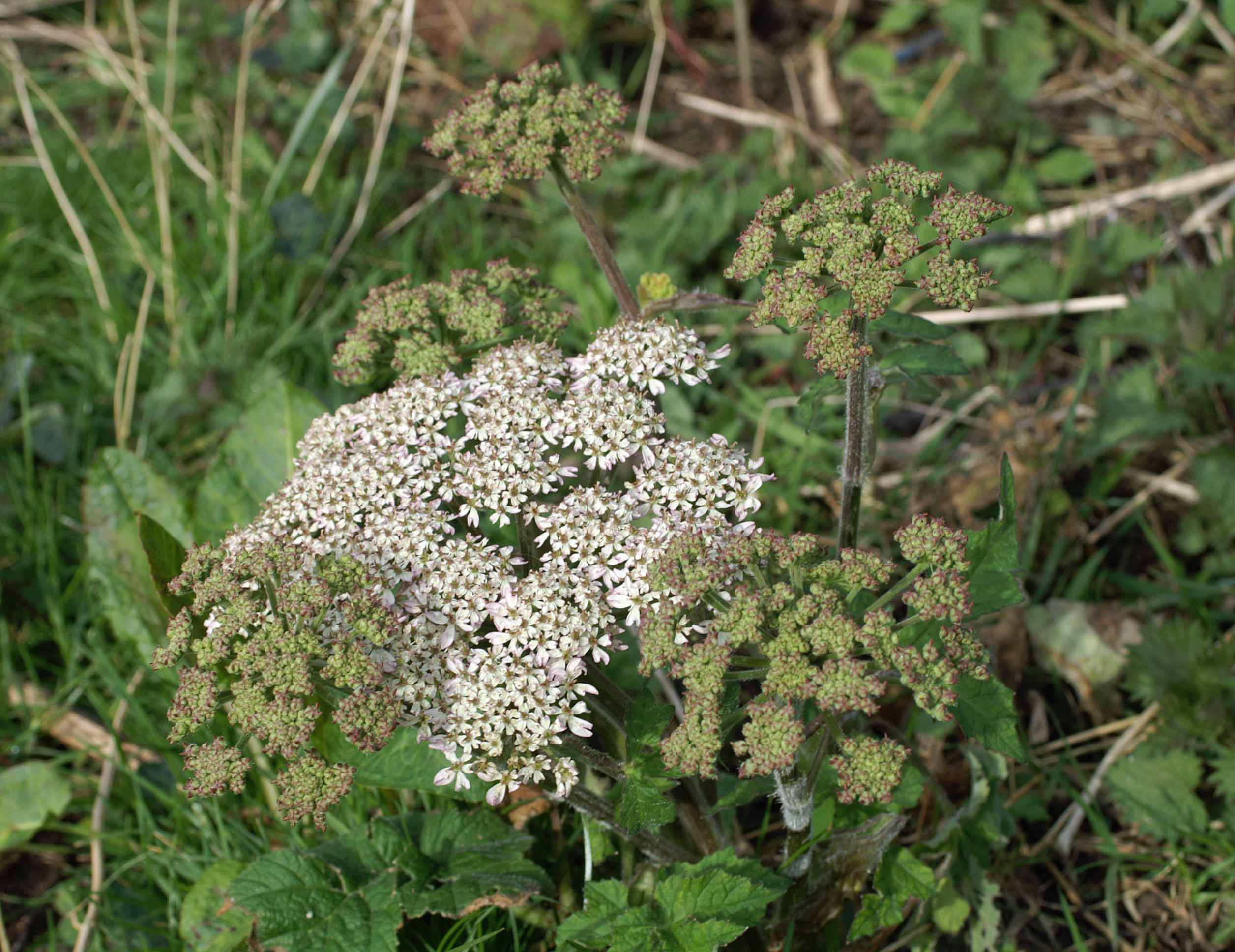
A very early flowering specimen of Heracleum sphondylium - common hogweed or cow parsnip. This is a herbaceous perennial or biennial belonging to the family Apiaceae. It is an umbelliferous plant, in the same group as fennel, cow parsley, ground elder and giant hogweed.

Dry seed heads of burdock

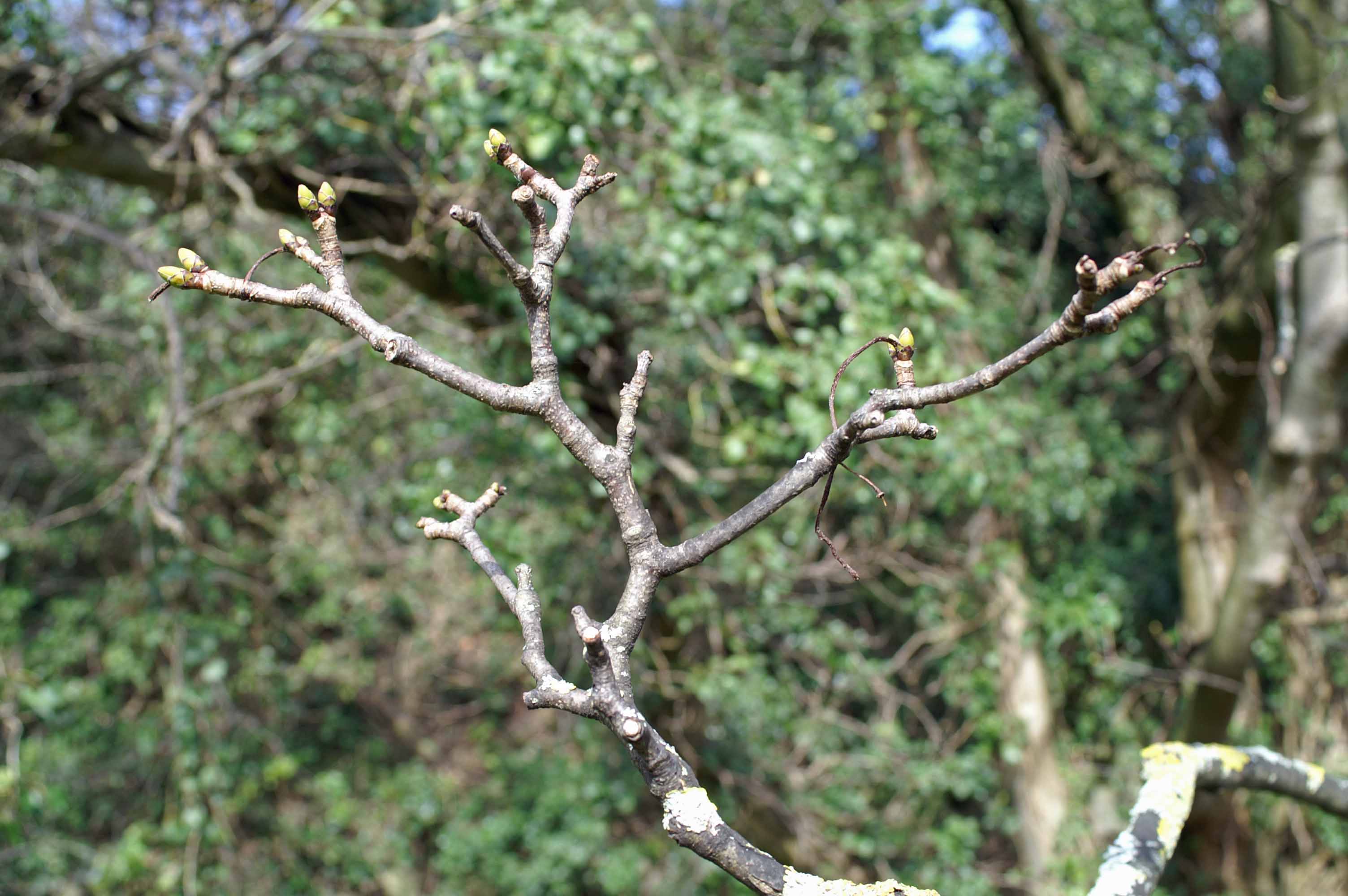
Swelling leaf buds

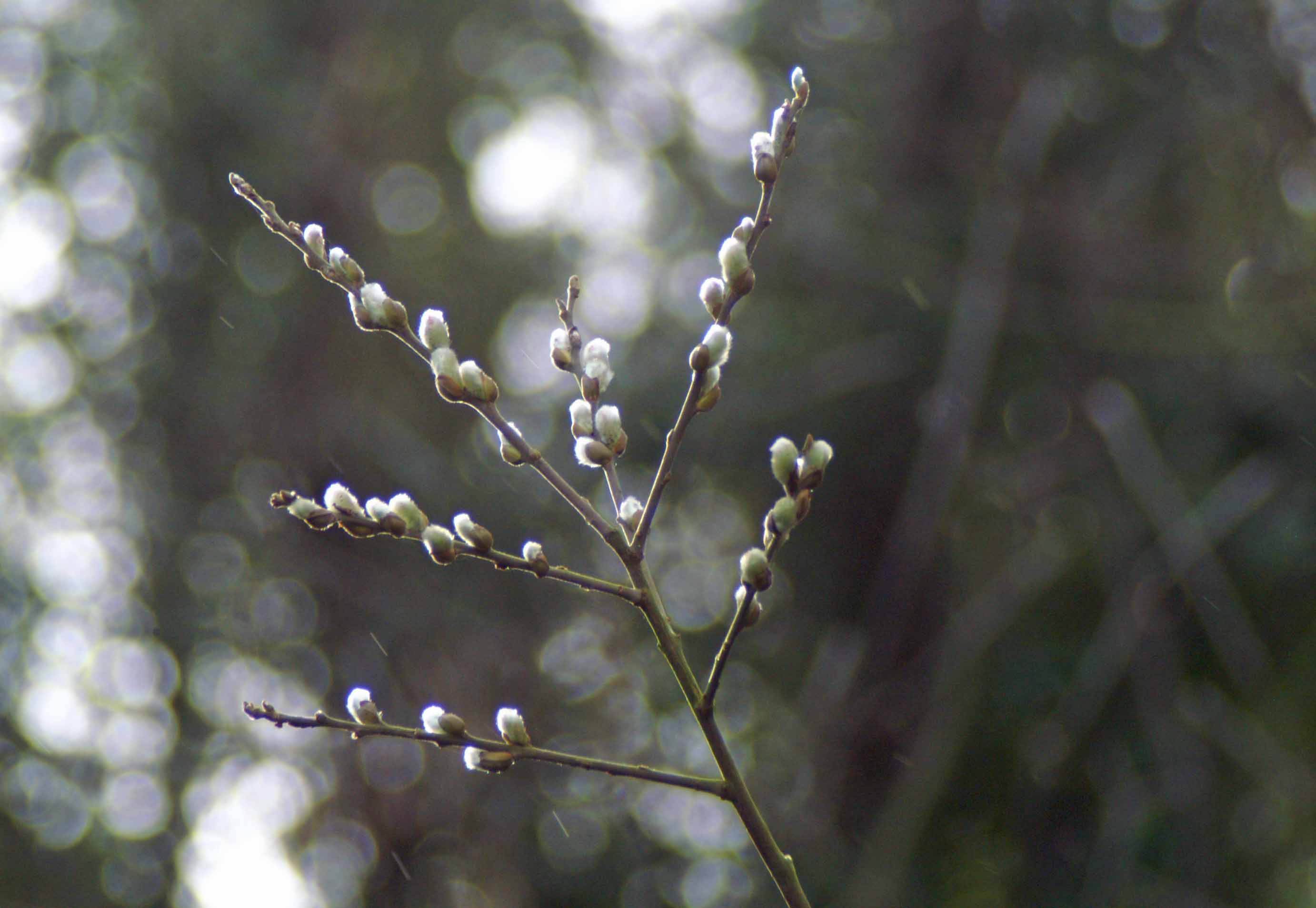
Silvery pussy willow

Pussy willow is a name given to many of the smaller species of the genus Salix (willows and sallows) when their furry catkins are young in early spring. Before the male catkins of these species come into full flower they are covered in fine, greyish fur and hence likened to tiny ‘pussy cats’. The catkins appear quite some time before the leaves, and are one of the earliest signs of spring. It is customary to gather branches of  pussy willow to decorate the house in the springtime, particularly on Palm Sunday, as a substitute for palm branches.

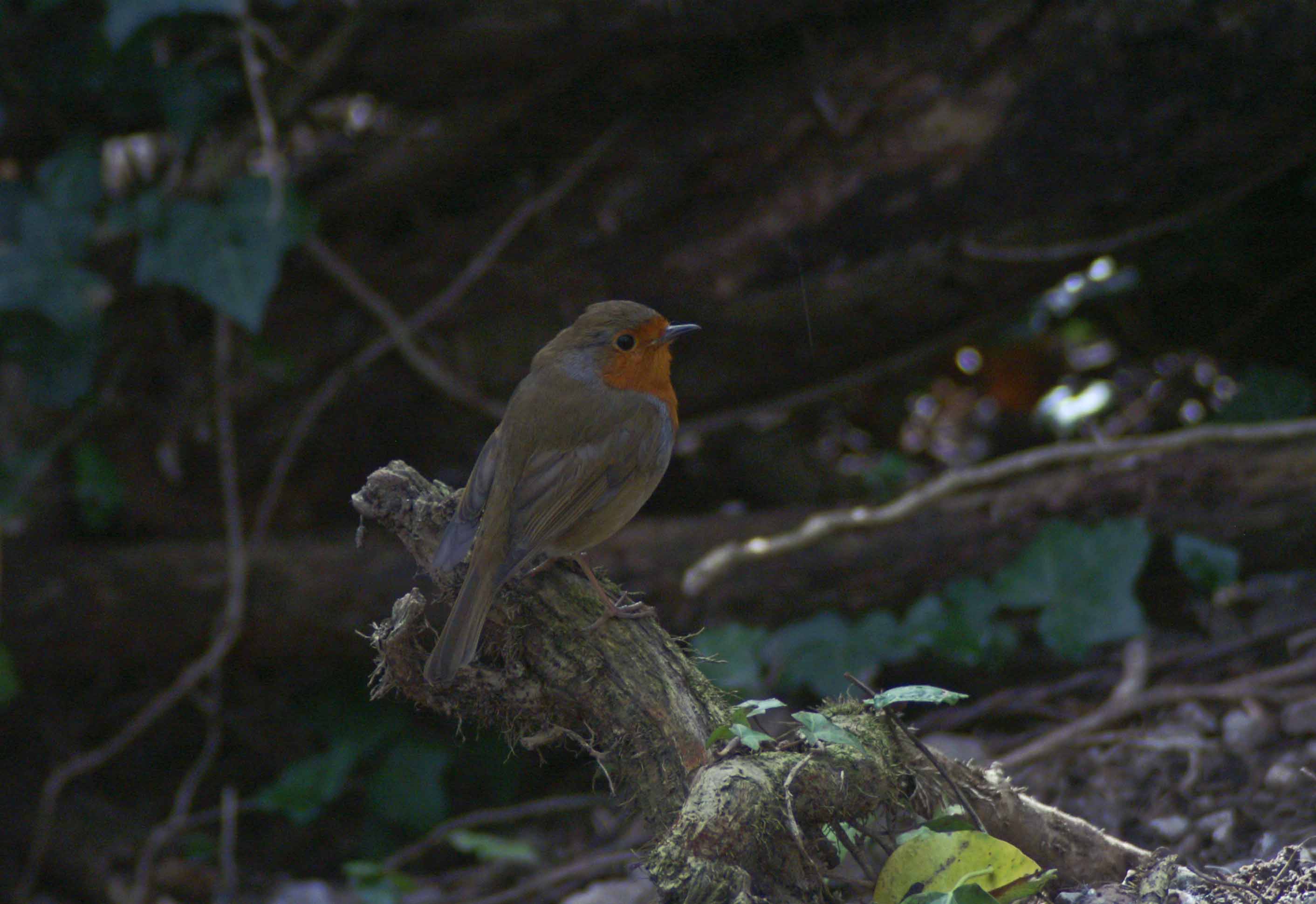
From the field I crossed onto the track on the edge of the woodland which passes by an open area of allotments. There is often  a robin  to be seen here, which today continued with its foraging regardless of me being very close by, even stopping to pose on a nice mossy wooden perch in a patch of  sunlight.


Posing robin

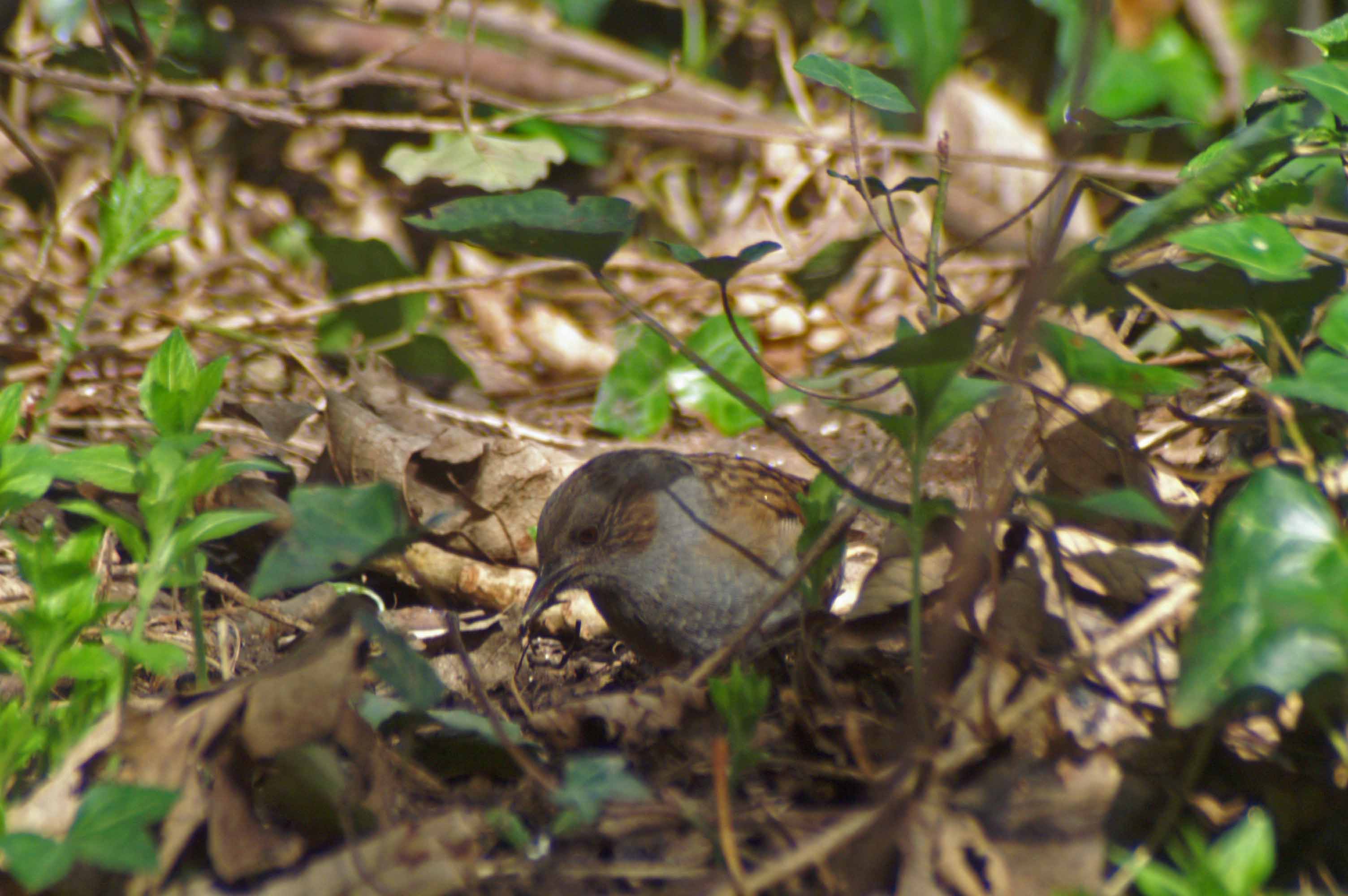
I had some good views of a dunnock there too as it pecked around amongst the dry leaves beneath the trees.

Dunnock -Prunella modular - almost at my eye-level

Dunnock-back view

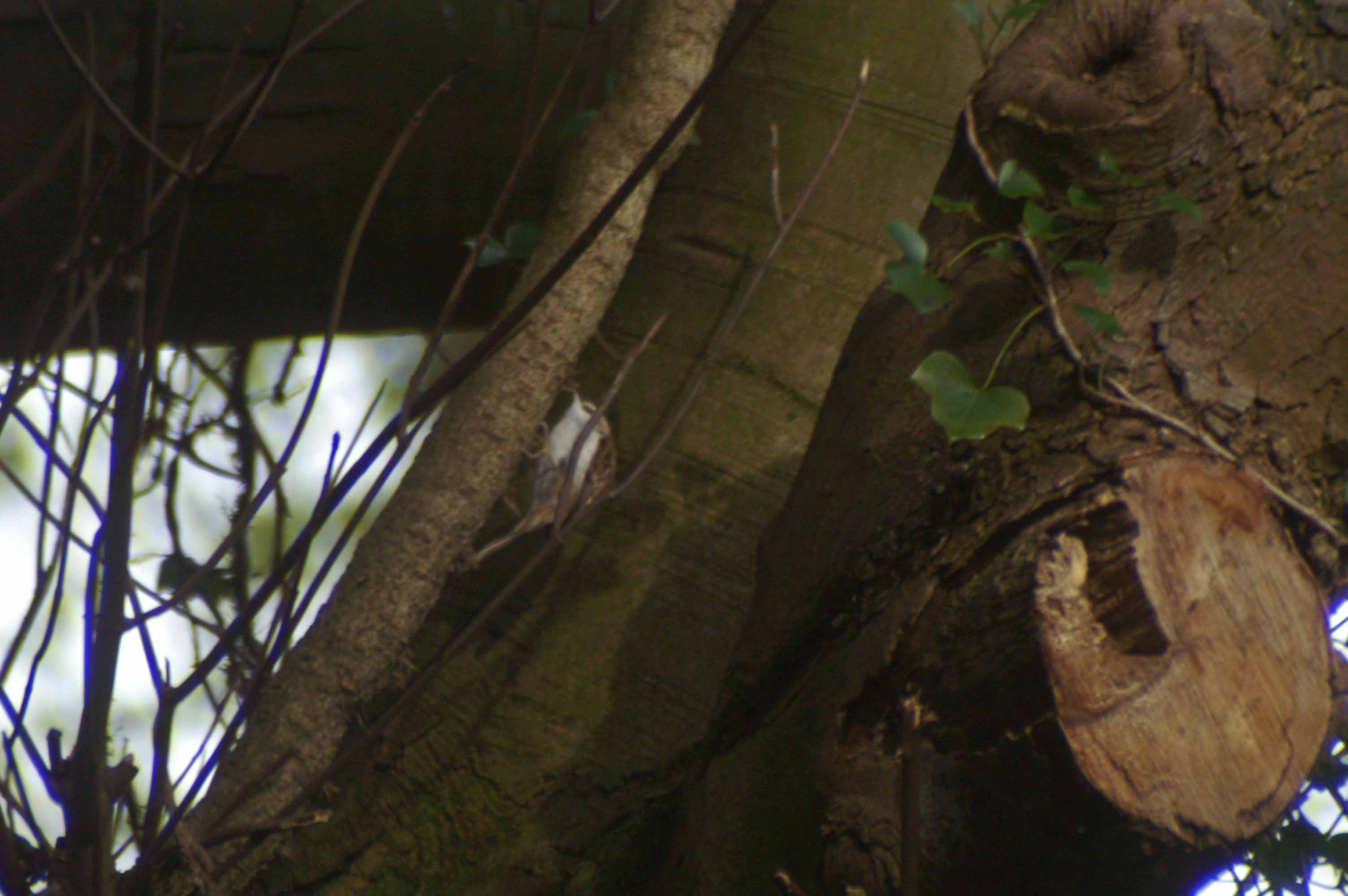
Moving on towards the bottom of the steps, another brown bird flew past me and landed on the trunk of a big sycamore tree; a treecreeper. I was delighted to recognise it as a treecreeper, the first and only one I have seen so far in this location. I watched it or quite some time as it explored the tree trunk and higher branches, probing its beak into nooks and crannies searching or insects and spiders.

Treecreeper - the first I have sen in this location

The Treecreeper– Certhia familiaris is small, very active, bird that lives in trees. It has a long, slender, downcurved bill, patterned brown upperparts, whitish underparts, and long stiff tail feathers which help it creep up tree trunks. It breeds in the UK and is resident here. Birds may leave their breeding territories in autumn but most range no further than 20 km.

In Spain the very similar short-toed treecreeper – Certhia brachydactyla occurs. They are frequent visitors to our garden there, where they are equally as comfortable scuttling up the tall straight trunks of the palm trees as they are exploring the nooks and crannies of the native cork oaks. They are much easier to photograph there too being more in the open and in better light.

e

A short-toed treecreeper on the trunk of a palm tree, Sotogrande, Southern Spain.

According to my bird books, the main points of difference between the two species are location and that the short-toed species has brownish flanks and a different voice: the short-toed’s song is said to be louder and less high-pitched and the call note louder, more piping and sometimes trilling. However, it is a possibility that there is in actuality only one species as presented convincingly in this brilliant blog:  http://10000birds.com/short-toed-treecreepers-do-not-exist.htm 

Catkin - A long, thin, indeterminate inflorescence of tiny, petalless flowers growing on willows, birches, oaks, poplars, and certain other trees. The flowers on a catkin are either all male or all female. The female flowers are usually pollinated by the wind. Also called ament.

The woodland was full of birdsong and following the track up through the trees towards the summit of the hill (bryn) I was accompanied by a chorus of robin, blackbird, chaffinch, blue tit and great tit with stand-out performances from a couple of  wrens and intermittent coo-ing interventions from wood pigeons. As I neared the top it began to rain quite heavily so I stood under an ivy-clad tree branch for a few minutes just listening until it stopped.

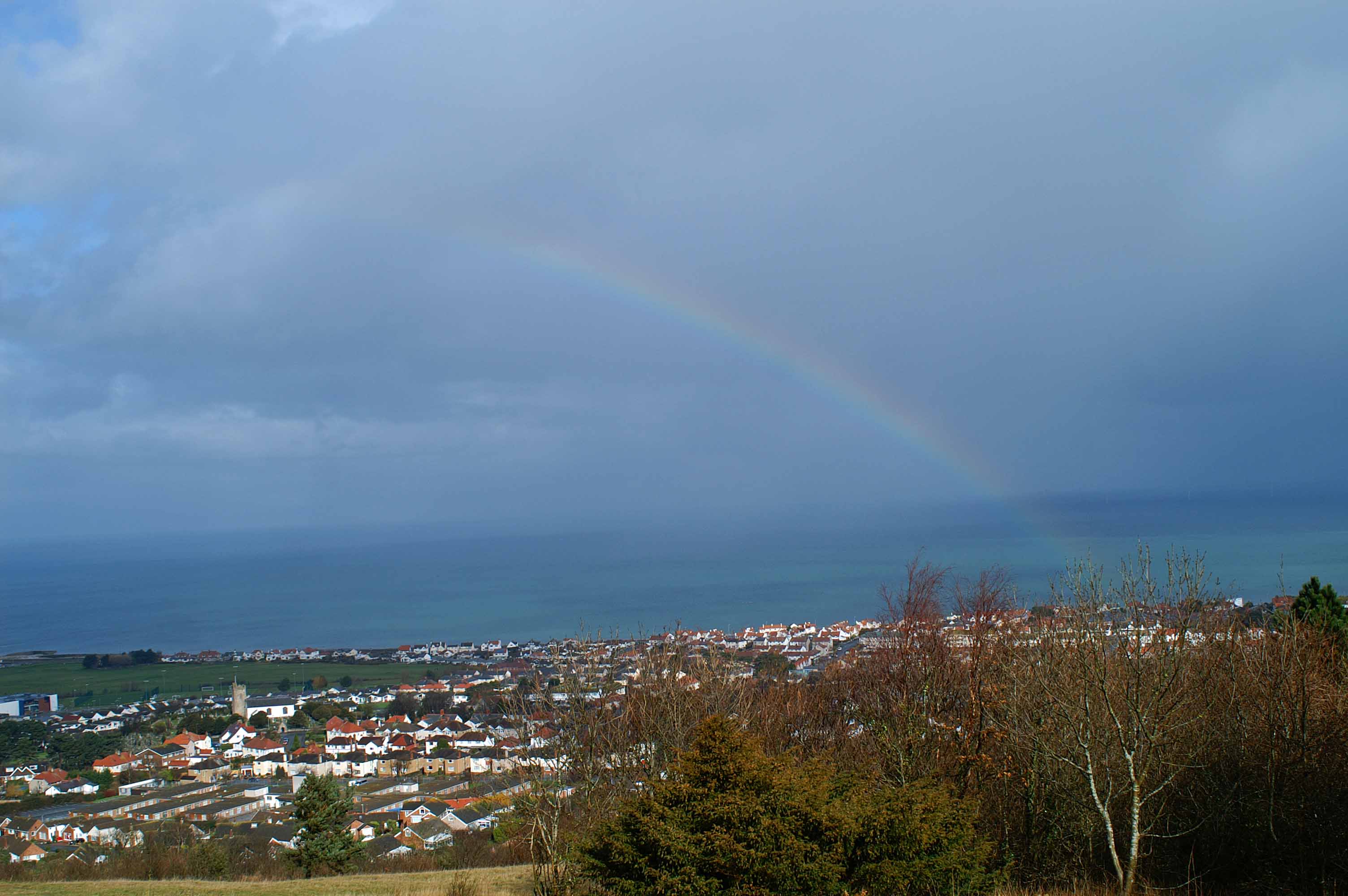
I carried on up to the summit, passing the trig point and over onto the open meadow or downs area that covers one slope of the hill. I was greeted by the sight of a complete arc of a rainbow that  spanned a width far greater than I could fit into my viewfinder.

A rainbow arced across the sky bridging Rhos-on-sea and Penrhyn Bay

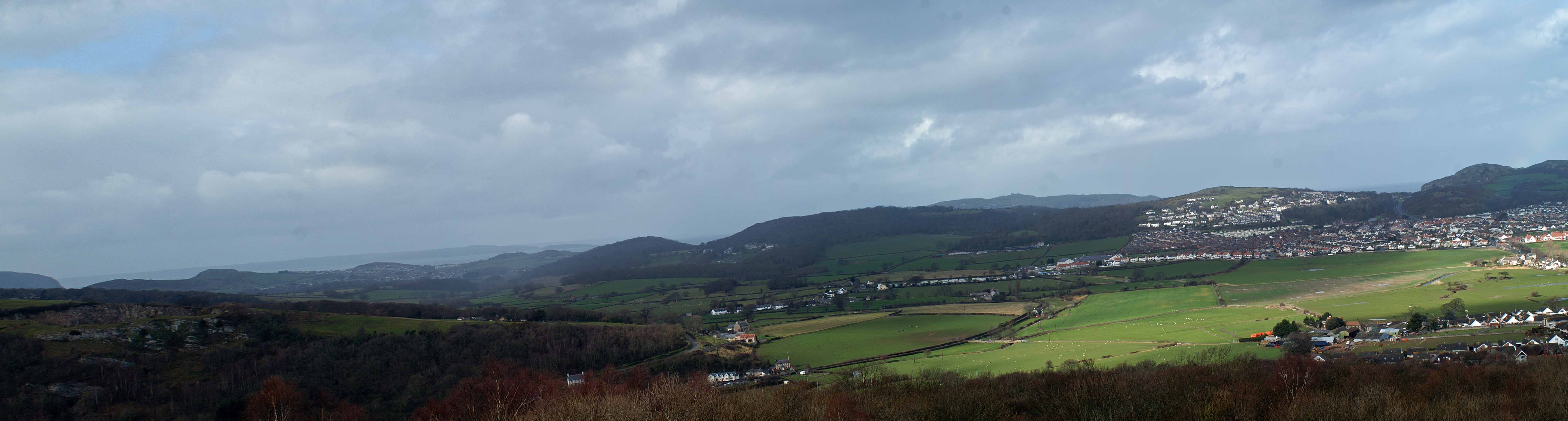
Part of the spectacular view from the summit of Bryn Euryn (click on photo to enlarge)

A close up of golden common gorse flowers and spiky leaves

On the path back down to the bottom a female blackbird was taking a bath in a newly filled puddle, disturbed from her ablutions by, yes, you’ve guessed, a bounding unleashed dog. I had been standing watching a small number of goldfinch foraging in the tops of a stand of tall trees, but I know when it’s time to leave and let the dogs have their share of the day.

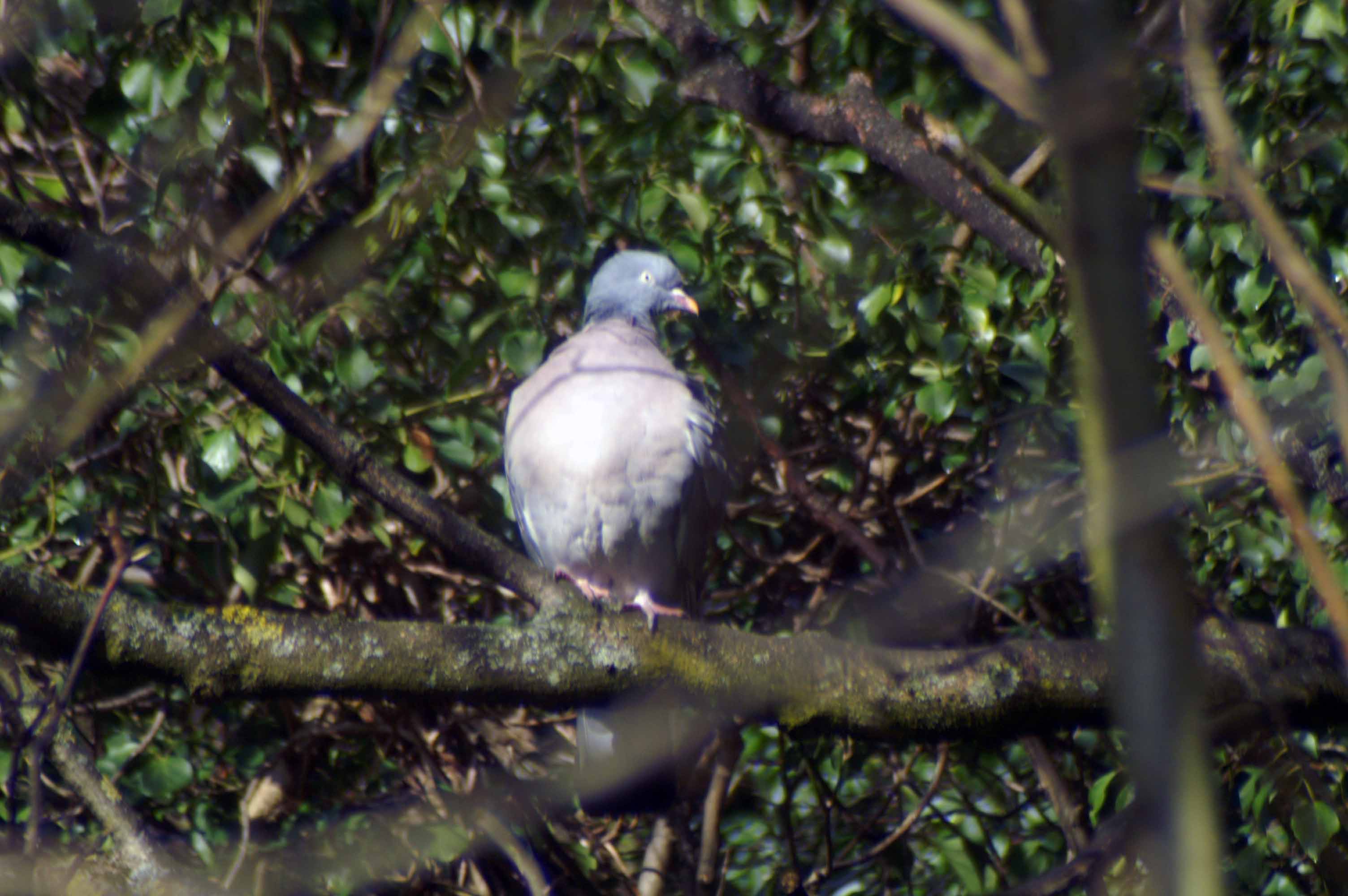
There were a few more treats awaiting me in the car-parking area however. Two wood pigeons, probably a pair, sat preening on a branch in a patch of sunlight and a pair of great tit were foraging around the fenced part of the field.

Wood pigeon - Columba palumbus

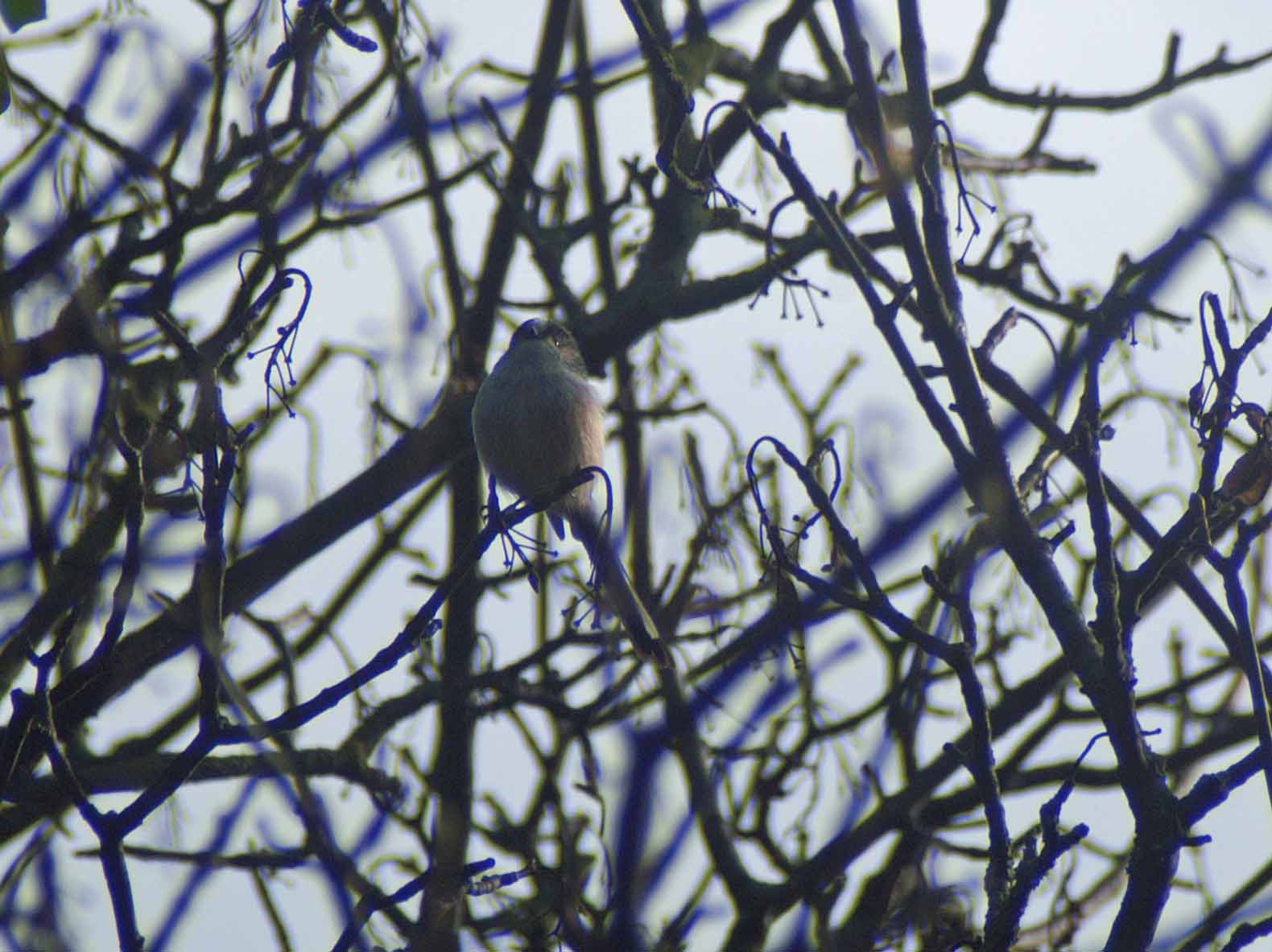
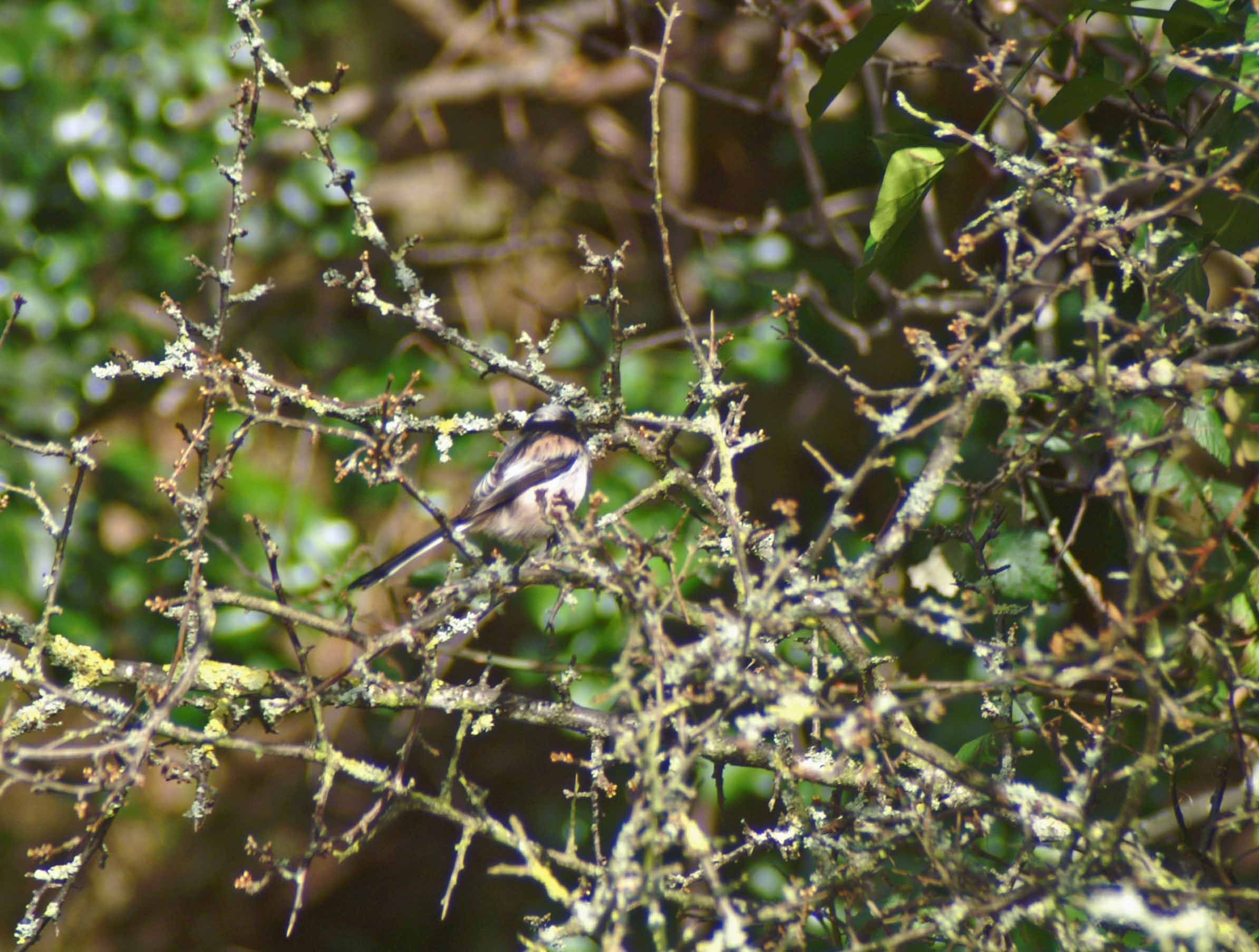
I have always found great tit elude me when it comes to photographing them, so I hung around for a while hoping to capture an image or two. They flew across the car park into the low trees there and attempting to pick up on them I found four long-tailed tits instead. A special favourite of mine, I was more than happy with that, especially as they stayed around acrobatically and thoroughly scouring the intricate twigs of the trees.

Long-tailed tit - Aegithalos caudatus

Long-tailed Tit, back view

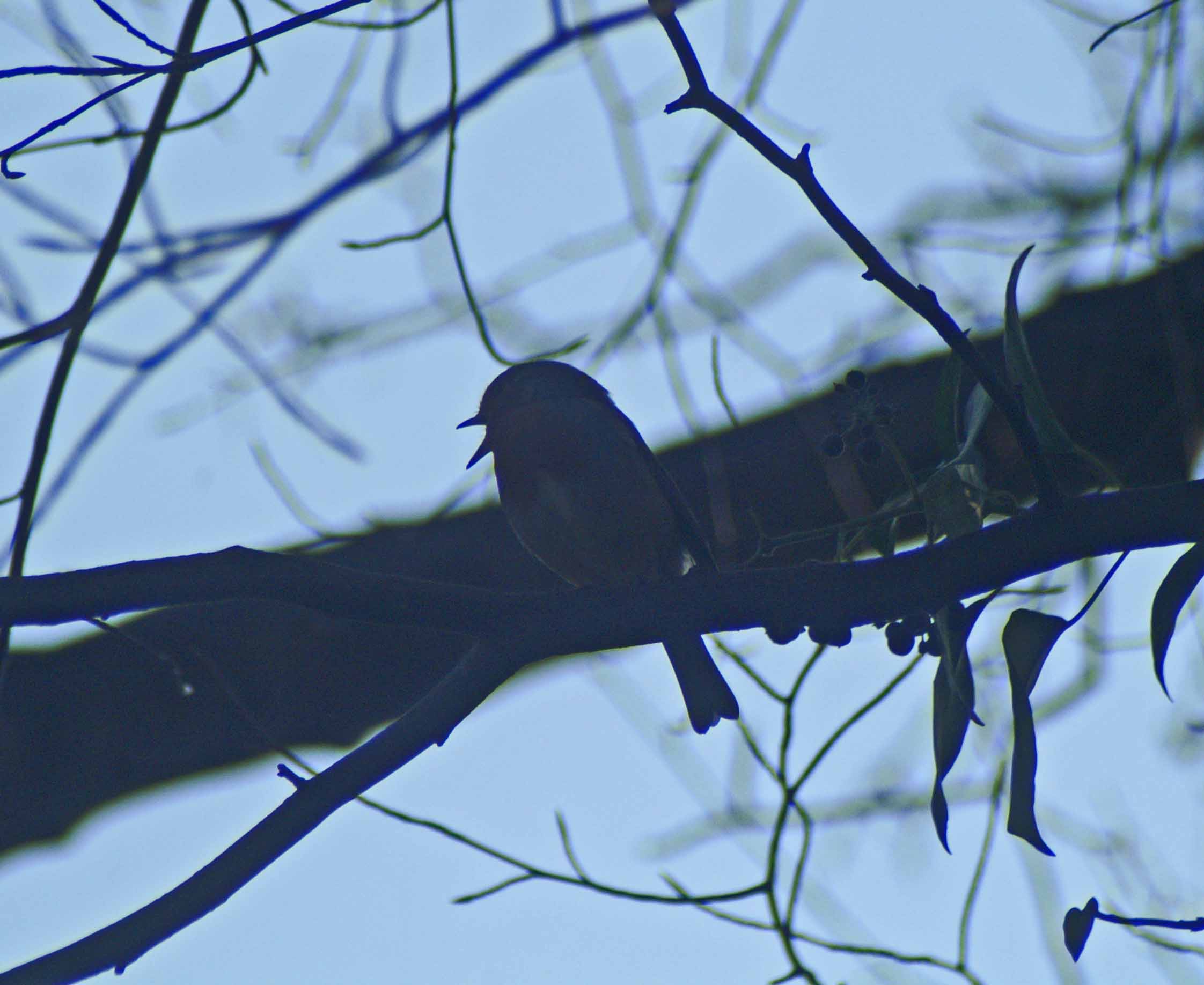
A robin was investigating the ground beneath the shrubbery the long-tailed tit was photographed in, then unexpectedly flew up onto a branch in full sunshine and began to sing.

Another robin singing, but this time in sunshine

Share this:

  • Share on Facebook (Opens in new window) Facebook
  • Share on Pinterest (Opens in new window) Pinterest
  • Share on X (Opens in new window) X
Like Loading...

Fairy Glen

04 Sunday Mar 2012

Posted by theresagreen in Local Nature Reserves, Nature, nature of woodlands, nature photography, woodland birds

≈ 2 Comments

Tags

blackbird eating berries, Blue tit, coal tit, Fairy Glen, Old Colwyn, Wren

I am currently working in Old Colwyn and as it would have been a pity not to take advantage of some of last week’s sunny spring-like weather, so I ventured out during my lunch breaks to explore some  of the locality. In a recent blog – What a beautiful day- I featured photographs that I had taken in the small area of woodland alongside the final stretch of the river Colwyn. This is called Min-y-Don woodland and is a remnant of an ancient woodland that would once have covered the whole valley. From there it is possible to walk along a footpath leading up to the village that follows the course of the river. At the top, if you cross the Abergele Road and follow the signs to ‘Fairy Glen’, you reach a narrow wooded dell that the river runs through, bounded by roads and houses.

In present day Old Colwyn, much of which sadly has seen better days, Fairy Glen seems an incongruous name for a part of it, but it harks back to when this whole area was wealthier and hugely popular with well-to-do Victorian holidaymakers. This area of woodland was said to contain many different spirits including fairies, hence its name, which dates from the Victorian era and is a common name from that period (another local one being the “Fairy Glen” in Penmaenmawr).

The wooden road sign for Fairy Glen

Fairy Glen has recently been designated as a Local Nature Reserve and has undergone  regeneration with funding from the local council and it is now possible to walk through it easily. Presently the Fairy Glen is subject to an ownership dispute between Conwy County Borough Counciland the water company, Dŵr Cymru, each claiming that the maintenance of the area is the responsibility of the other. The trail was funded by Cydcoed Forestry Commission Wales.

“A path broadly follows the Afon Conwy which, with the Fairy Glen (then known as Y Nant), was mentioned by the traveller Edward Llwyd in 1699. He described the area as having seven wells and being completely wooded. There are, in fact, remaining indicators in Fairy Glen which identify it as an ancient woodland.”

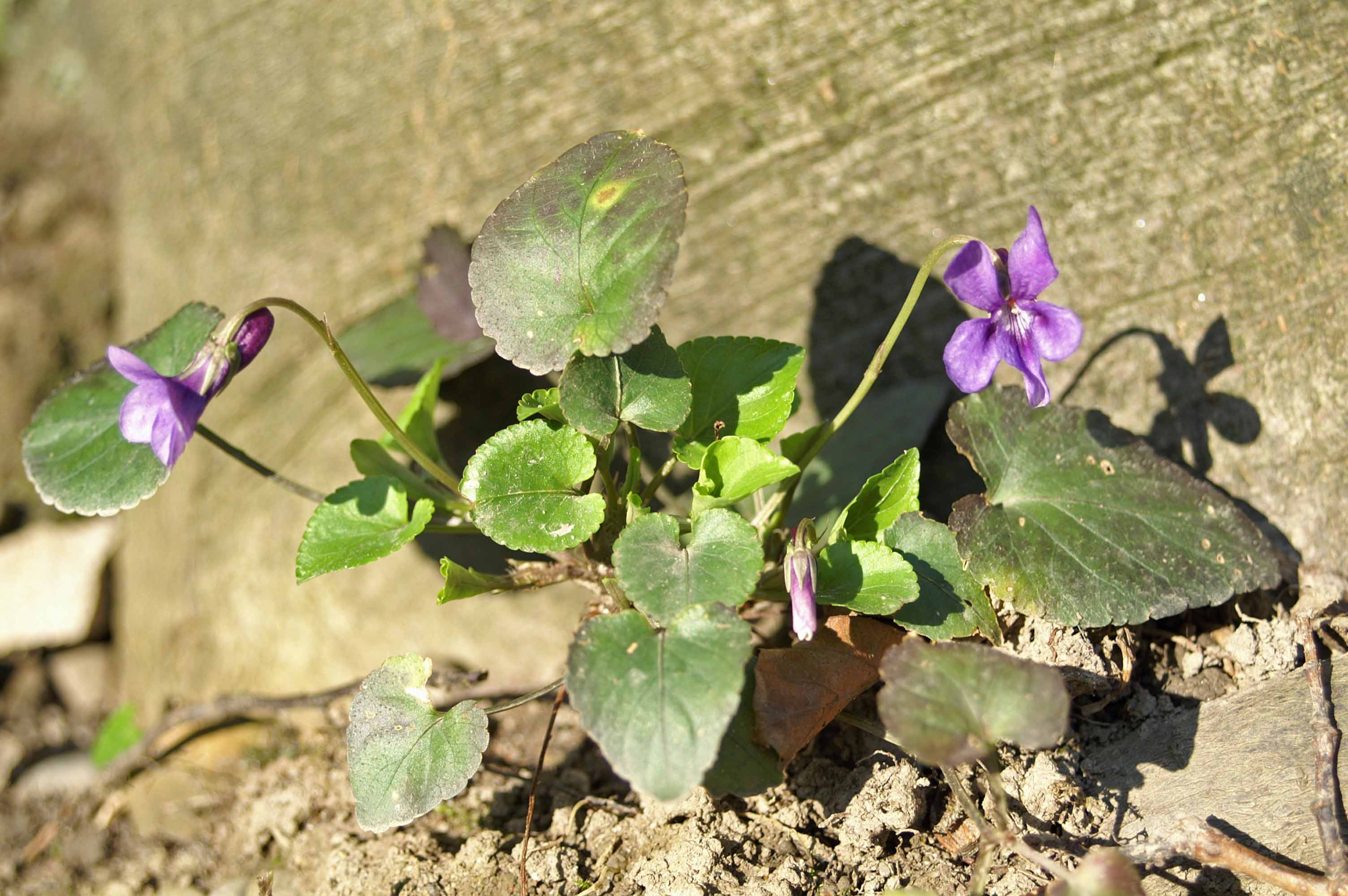
I doubt that today’s Fairy Glen would have suited the Victorian visitors romantic aesthetic, but it is a pleasant enough place to spend half an hour. It is barely a five minute walk from work and I headed there for my first ‘reccie’ last Friday afternoon; I was very pleasantly surprised by the sightings I had there.

My first surprise was finding this violet plant flowering at the base of a large tree

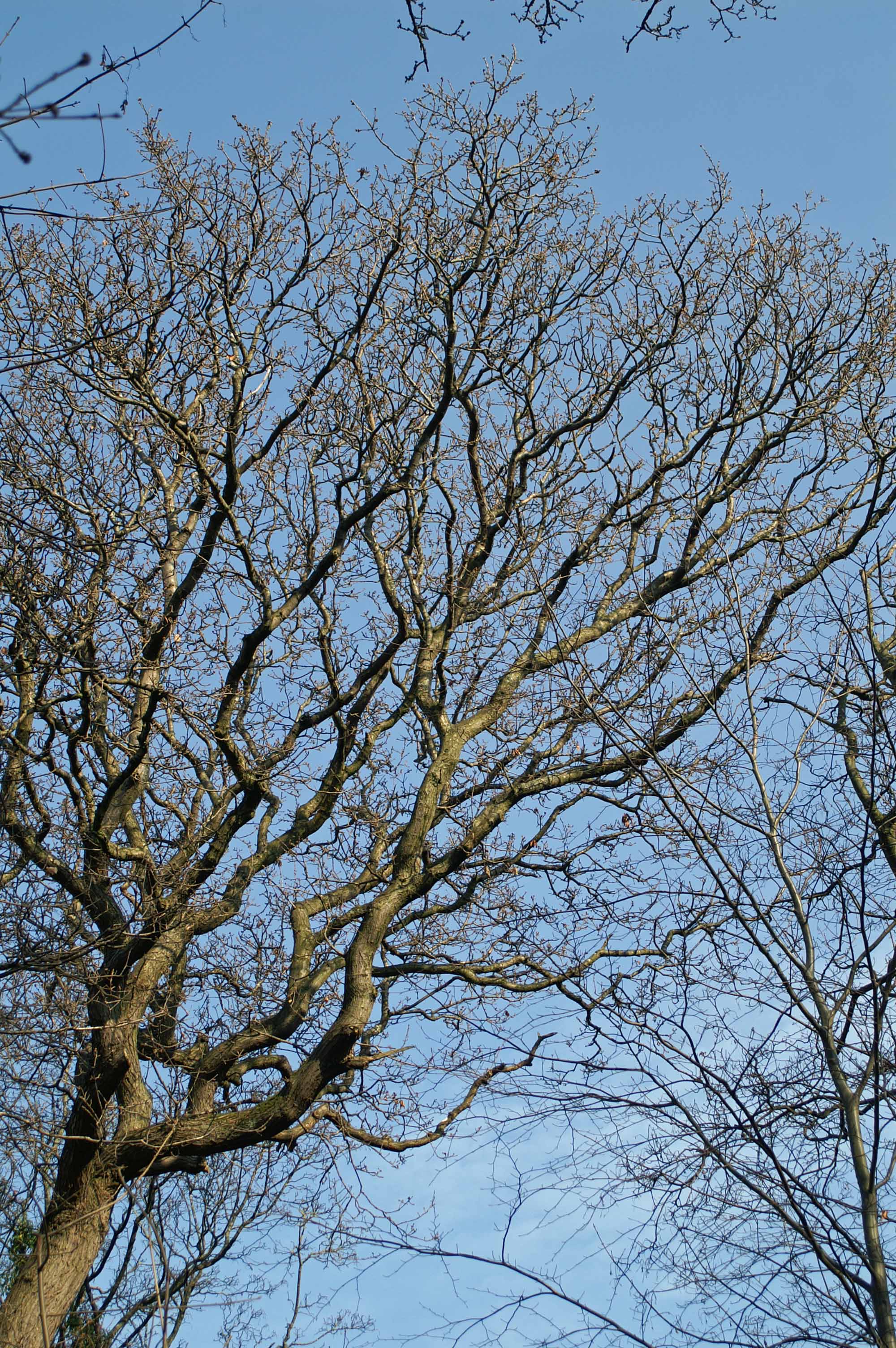
A tracery of bare twigs and branches against a perfectly blue cloudless sky

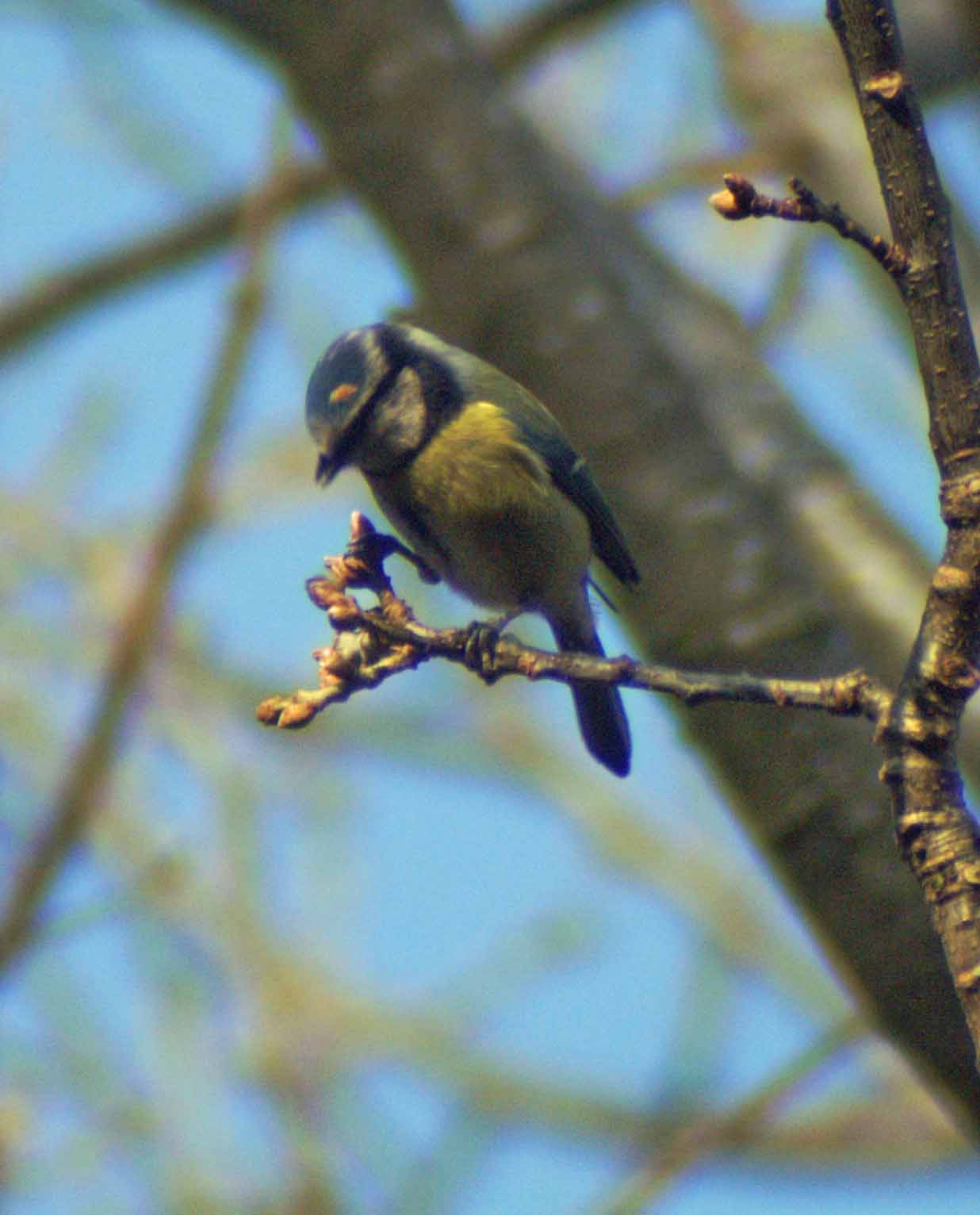
Blue Tits seemed to be everywhere

Blue Tit picking delicately around the sticky leaf buds

Hazel catkins

A grey squirrel sat on a tree branch eating something held in its paws, possibly an acorn it had buried back in the autumn

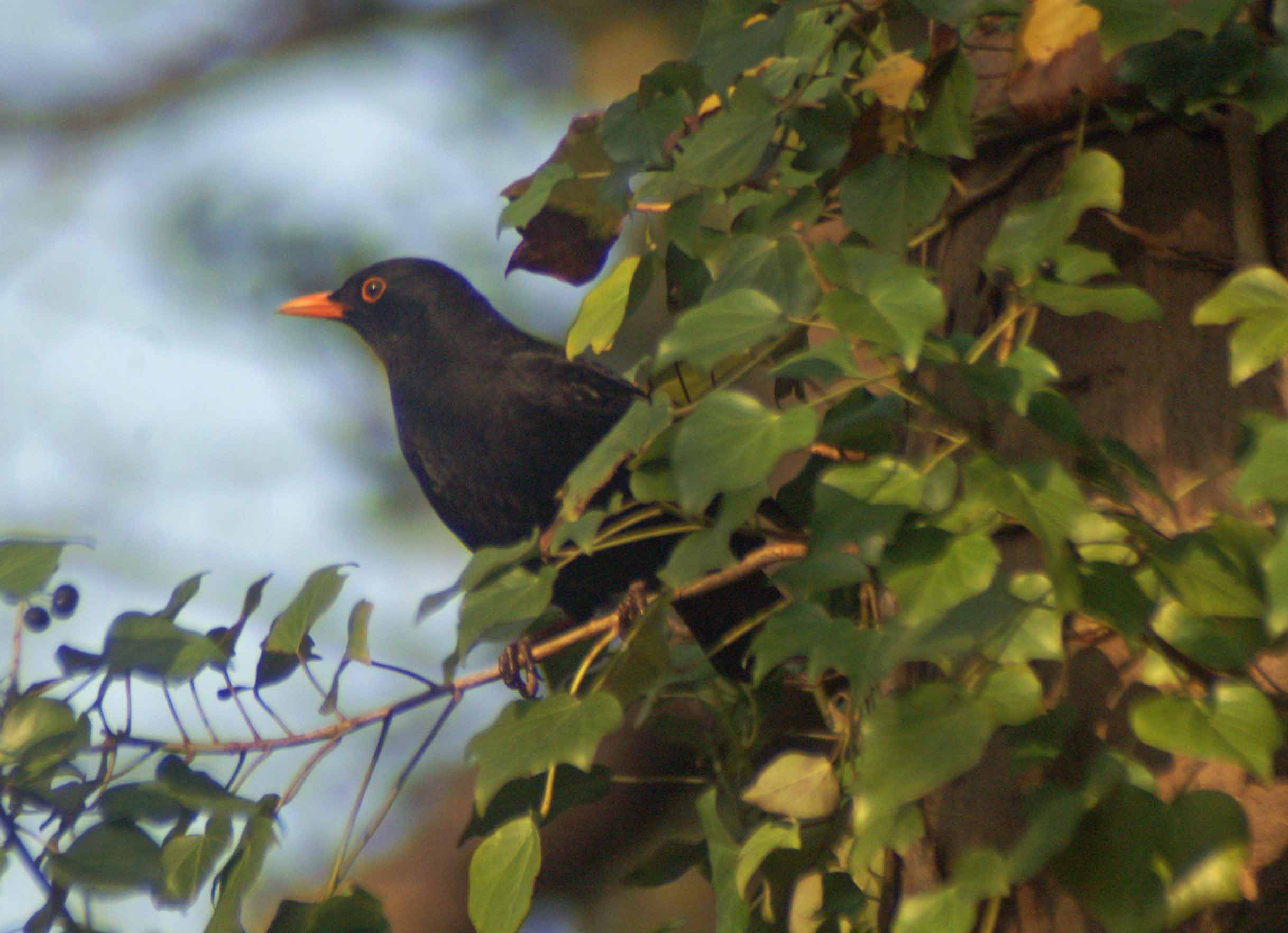
A beautiful male blackbird was picking off ripe ivy berries

The blackbird contorted himself to reach a berry

The blackbird with a berry in his beak

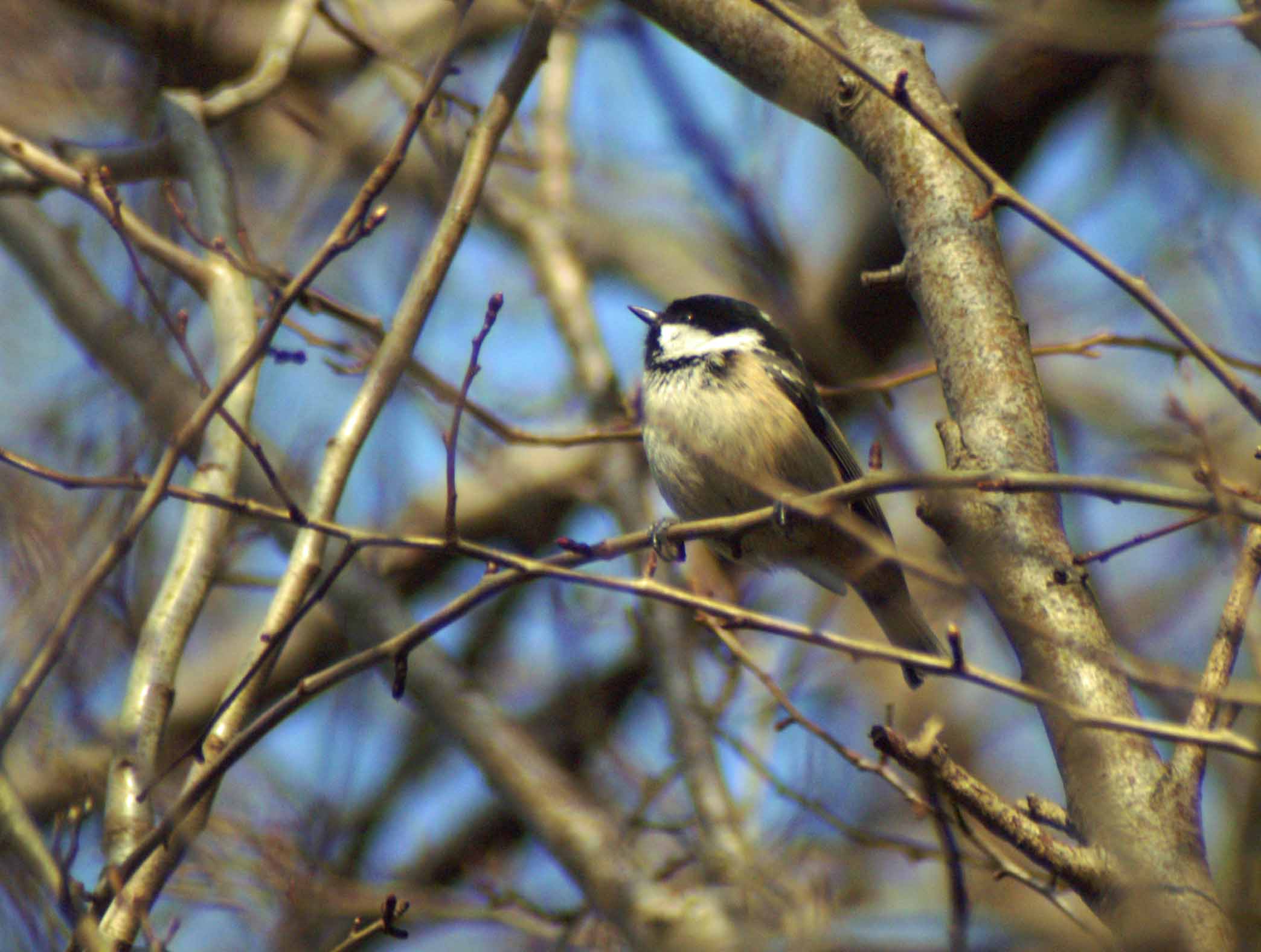
A big surprise was the sighting of this lovely coal tit

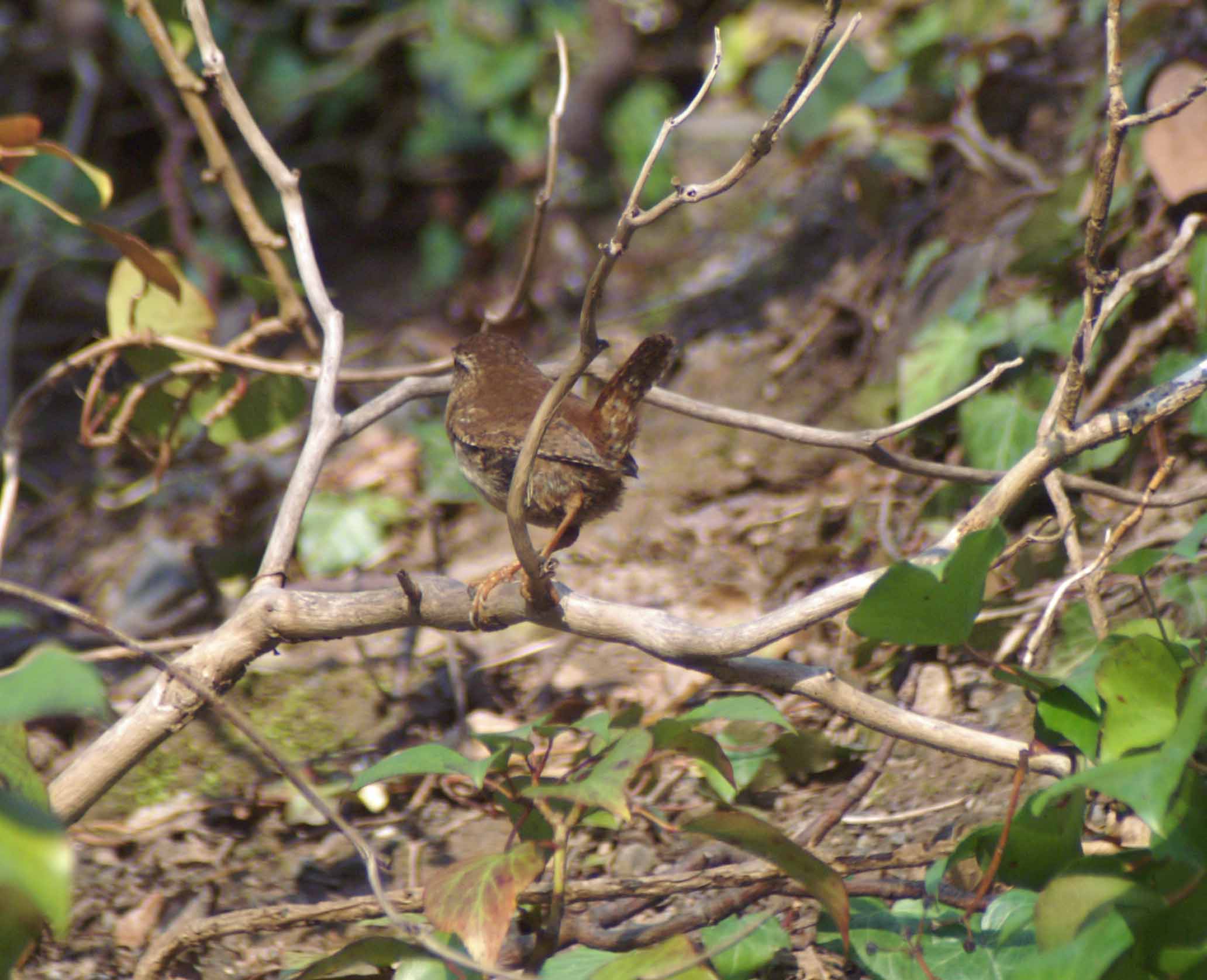
A wren singing from a low branch

Another wren flew across the path and perched on the fence. It looked a little odd, but it took a few seconds to realise it was because he was missing his characteristic upturned tail

The missing tail did not seem to be inhibiting the little bird too much – he was bright eyed and flitting around singing enthusiastically

A robin singing beautifully, but in the shade

A pair of nike trainers thrown up into a tree. A reminder that this is a just an oasis in a small urban jungle

Share this:

  • Share on Facebook (Opens in new window) Facebook
  • Share on Pinterest (Opens in new window) Pinterest
  • Share on X (Opens in new window) X
Like Loading...

Daffodils and leeks

01 Thursday Mar 2012

Posted by theresagreen in Nature, Nature of Wales, nature photography

≈ Leave a comment

Tags

leek, lent lily, narcissus pseudonarcissus, narcissus pseudonarcissus ob vallaris, St David's Day, Tenby daffodil, Welsh daffodil, Welsh leek

Today is Saint David’s Day (Welsh: Dydd Gŵyl Dewi)- the feast day of  the patron saint of Wales, which falls on March 1st each year. This date was chosen in remembrance of the death of Saint David as tradition holds that he died on that day in 589. The date was declared a national day of celebration within Wales in the 18th century.

Many Welsh people wear one or both of the national emblems of Wales on their lapel to celebrate St. David: the daffodil, a generic Welsh symbol which is in season during March or the leek, Saint David’s personal symbol on this day. The association between leeks and daffodils is strengthened by the fact that they have similar names in Welsh, Cenhinen (leek) and Cenhinen Pedr (daffodil, literally “Peter’s leek”).

There are several slightly varying versions of exactly how the leek came to be recognised as the emblem of Wales, but the general theme is that it was worn on the caps of  Welshmen in battle to distinguish them from their foes. Nowadays the leek, in various forms, is often sported by welsh rugby supporters and is featured on the reverse of the pound coin issued between 1985-1990.

 1985 One Pound Coin 1985
1990
Leek and royal diadem representing Wales.Edge Inscription:
PLEIDIOL WYF I’M GWLAD

Designed by:
Leslie Durbin

(The edge inscription roughly translates as ‘I am true to my roots’).

Welsh and Tenby daffodils

The adoption of the daffodil as a national emblem is more recent and may be that  during the Victorian era, a common vegetable such as the leek wasn’t considered glamorous enough to be the Welsh national emblem and the daffodil, whose flowering coincides with the Welsh patron saint’s holiday, seemed like a fitting replacement.

There are two varieties of daffodil unique to Wales – the Tenby and the Welsh or Lent daffodil. Both species have suffered decline over the years as a result of property development on land where they once thrived.

Tenby daffodil-Narcissus pseudonarcissus obvallaris

Tenby daffodils suffered in Victorian times from being too popular as they were regularly dug up and became quite scarce but replanting has helped and nowadays you’ll see plenty in the spring time around Tenby,  South Pembrokeshire, and also in Carmarthenshire and parts of Ceredigion. One of the biggest displays of Welsh daffodils can be seen at Coed y Bwl Wood, at Castle Upon Alun, St.Brides Major in the Vale of Glamorgan, South Wales. The Welsh variety is more widespread, but still scarce.

This little daffodil only grows about 8″ or 30cm high and can be found growing wild around Tenby in Wales, hence the name. It seems no-one is quite sure if the Tenby daffodil was introduced to this country, or whether it could be a natural variation of our only truly native daffodil, Narcissus pseudonarcissus, also known as the Lent Lily as it usually flowers during the period of Lent, through February and March.

Lent lily – Narcissus pseudonarcissus

The Lent Lily is a similar tiny size and shape, but the outer petals are paler than the yellow trumpet, or corona, whereas the Tenby Daffodil has both a yellow trumpet and outer petals. Both have sword-like grey-green leaves and the plants are perennials. The species is native to Western Europe from Spain and Portugal east to Germany and north to England and Wales. It is commonly grown in gardens and populations have become established in many other parts of Europe. Wild plants grow in woods, grassland and on rocky ground. In Britain native populations have decreased substantially since the 19th century due to intensification of agriculture, clearance of woodland and uprooting of the bulbs for use in gardens.

Share this:

  • Share on Facebook (Opens in new window) Facebook
  • Share on Pinterest (Opens in new window) Pinterest
  • Share on X (Opens in new window) X
Like Loading...

Lesser Celandine

27 Monday Feb 2012

Posted by theresagreen in flower folklore, flower mythology, Nature, nature of woodlands, nature photography, wildflowers, Wildflowers of Wales, woodland wildflowers

≈ 2 Comments

Tags

early spring flowers, lesser celandine, ranunculus ficularia, woodland flowers

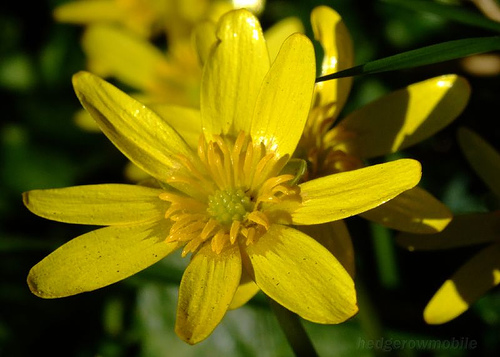
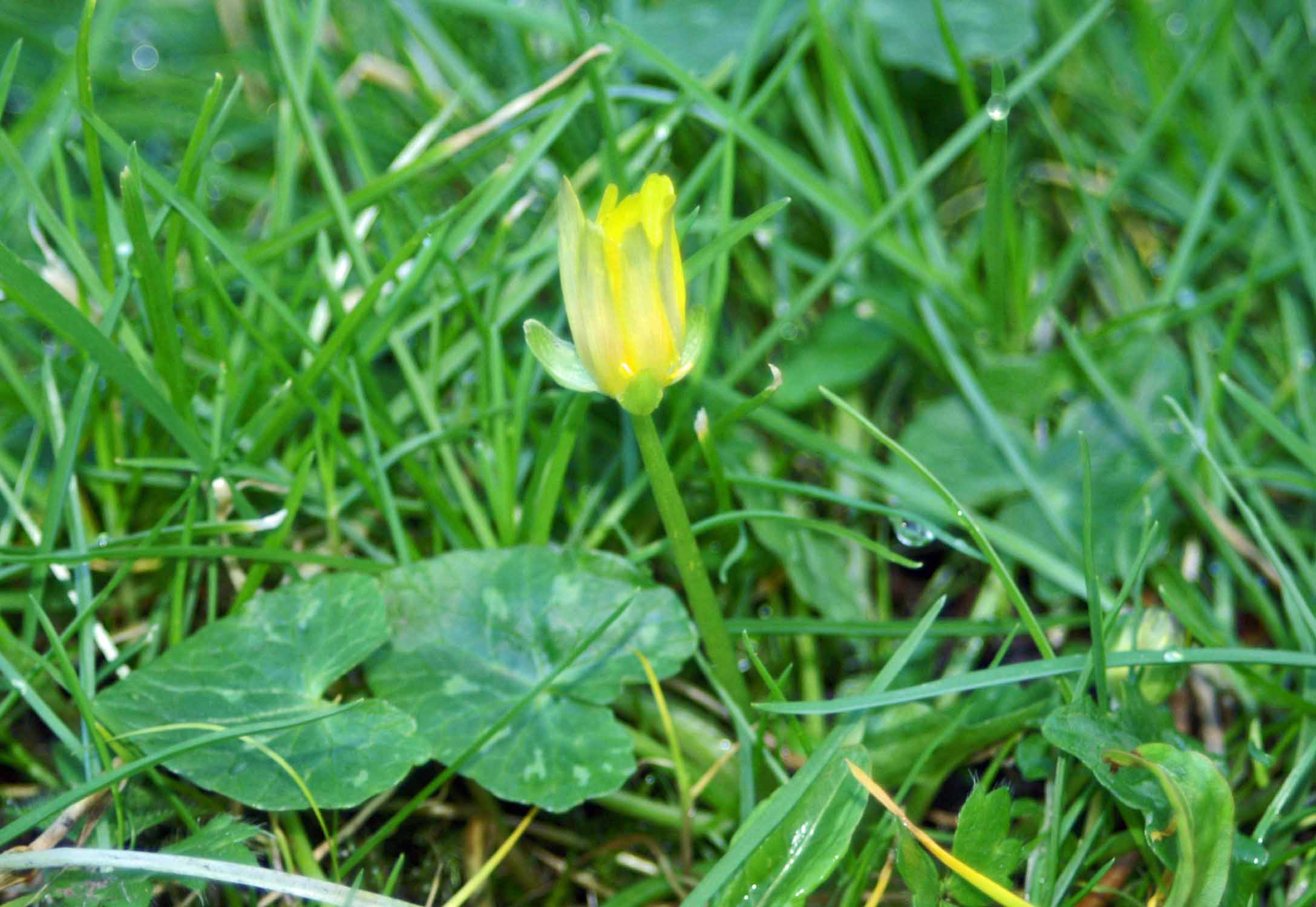
Lesser Celandine- Ranunculus ficularia, also known in English as pilewort, small celandine, smallwort, figwort, brighteye, butter and cheese. In Welsh it is Lygad ebrill. 

Lesser celandine-Ranunculus ficaria

The Lesser celandine has been one of my favourite wildflowers since childhood. As a child growing up in Northamptonshire, a part of my walking route to school included a green lane. This was a narrow pathway with grass verges backed by hawthorn hedgerows and used as a short-cut to the village by anyone walking or riding a horse or bike. Behind the hedge on one side was a small field that was often boggy and there was a drainage ditch on the lane side to prevent it flooding. Needless to say it was damp there and generally shady; the perfect place for celandines to thrive. They were the first of the wildlowers to appear here and I looked forward to their appearance avidly. I used to think their shiny golden yellow faces captured some of the sunshine whilst it shone, then held it within their tightly closed petals to keep them warm on cold dull cloudy days. I learnt that these were not flowers to take home to my mum though, as they closed up when picked, but I remember how the sight of them used to gladden my heart, as it still does, signalling that the spring was on its way.

21/2/12-Lesser Celandines, Colwyn Bay

Lesser celandine

The plant itself is small (5-30cm tall). The dark green, shiny, heart-shaped leaves grow spirally arranged around long weak stalks from the base. The leaves are sometimes mottled with light or dark markings; they lie flat on the ground unless held up by surrounding plants.The flowers are bright, glossy yellow, fading to nearly white at the petal base as they age.

The Lesser celandine is one of the first flowering plants to appear at the end of the winter (February to May). Gilbert White, the famed author of  ‘The Natural History o Selborne’  reported that the plants came out on February 21, but it is more commonly reported to flower from March until May, and is sometimes called the “spring messenger” as a consequence. The flowers close just before it begins to rain, and are pollinated by bees, such as the Buff-tailed bumble bee, Red-tailed bumble bee, flies and beetles, but very few seeds are typically set. They open when few insects are around so not many seeds are produced and spread is mainly vegetative by tiny bulbils which develop in the leaf axils and these drop onto the soil as the plant dies back.

THE MEANING OF THE NAME

The plant’s  common name, lesser celandine, was mistakenly given to it when it was thought to be one and the same plant as the true or greater celandine, to which it bears no resemblance except in the colour of its flowers – both being yellow.

The word celandine comes from the Greek word chelidon, meaning swallow, the greater celandine coming into bloom when these birds arrive, and withering on their departure. The scientific name Ranunculus is Late Latin for “little frog,” from rana “frog” and a diminutive ending. This probably refers to many species being found near water, like frogs. The plant grows from root-tubers, which are said to look like bunches of figs. This explains the second part of the scientific name of the plant, ficaria, which is Latin for fig.

THE CELANDINE IN POETRY

The flower folds its petals on dull and wet days

A number of poems have been written about the celandine. The poet William Wordsworth was very fond of the flower and it inspired him to write three poems including the following, which are the first two verses from his ode to the celandine:

The Lesser Celandine 

There is a Flower, the Lesser Celandine,
That shrinks, like many more, from cold and rain;
And, the first moment that the sun may shine,
Bright as the sun himself, ’tis out again!

When hailstones have been falling, swarm on swarm,
Or blasts the green field and the trees distressed,
Oft have I seen it muffled up from harm,
In close self-shelter, like a Thing at rest.

William Wordsworth

Upon Wordsworth’s death it was proposed that a celandine be carved on his memorial plaque inside the church of Saint Oswald at Grasmere, but unfortunately the Greater Celandine Chelidonium majus,  was mistakenly used.

THE CELANDINE IN TRADITIONAL HERBAL MEDICINE

The plant used to be known as Pilewort because it was used to treat haemorrhoids. Supposedly, the knobbly tubers of the plant resemble piles, and according to the doctrine of signatures, this resemblance suggests that pilewort could be used to cure piles. The German vernacular Scharbockskraut (“Scurvyherb”) derives from the use of the early leaves, which are high in vitamin C, to prevent scurvy. The plant is widely used in Russia and is sold in most pharmacies as a dried herb.

THE CELANDINE IN NON-NATIVE LOCATIONS

In many parts of the northern United States and Canada, lesser celandine is cited as an invasive species.


Share this:

  • Share on Facebook (Opens in new window) Facebook
  • Share on Pinterest (Opens in new window) Pinterest
  • Share on X (Opens in new window) X
Like Loading...

What a beautiful day

24 Friday Feb 2012

Posted by theresagreen in birds singing, Nature, nature photography, woodland birds, woodlands

≈ 4 Comments

Tags

birds singing, blackbird, lesser celandine, miniature daffodils, river Colwyn, song thrush, starlings roosting on Colwyn bay pier

Today was officially the  warmest February day recorded since 1998, with temperatures reaching 18 degrees in some parts of the UK. These are some of my views of this unseasonally beautiful day.

8.15am - Sunlit tulips

The sky was blue, birds were singing, the sun eye-squintingly bright and the sea calm and almost lake-like.

8.35am-View to Rhos-on-Sea showing the headland of the Little Orme & Bryn Euryn

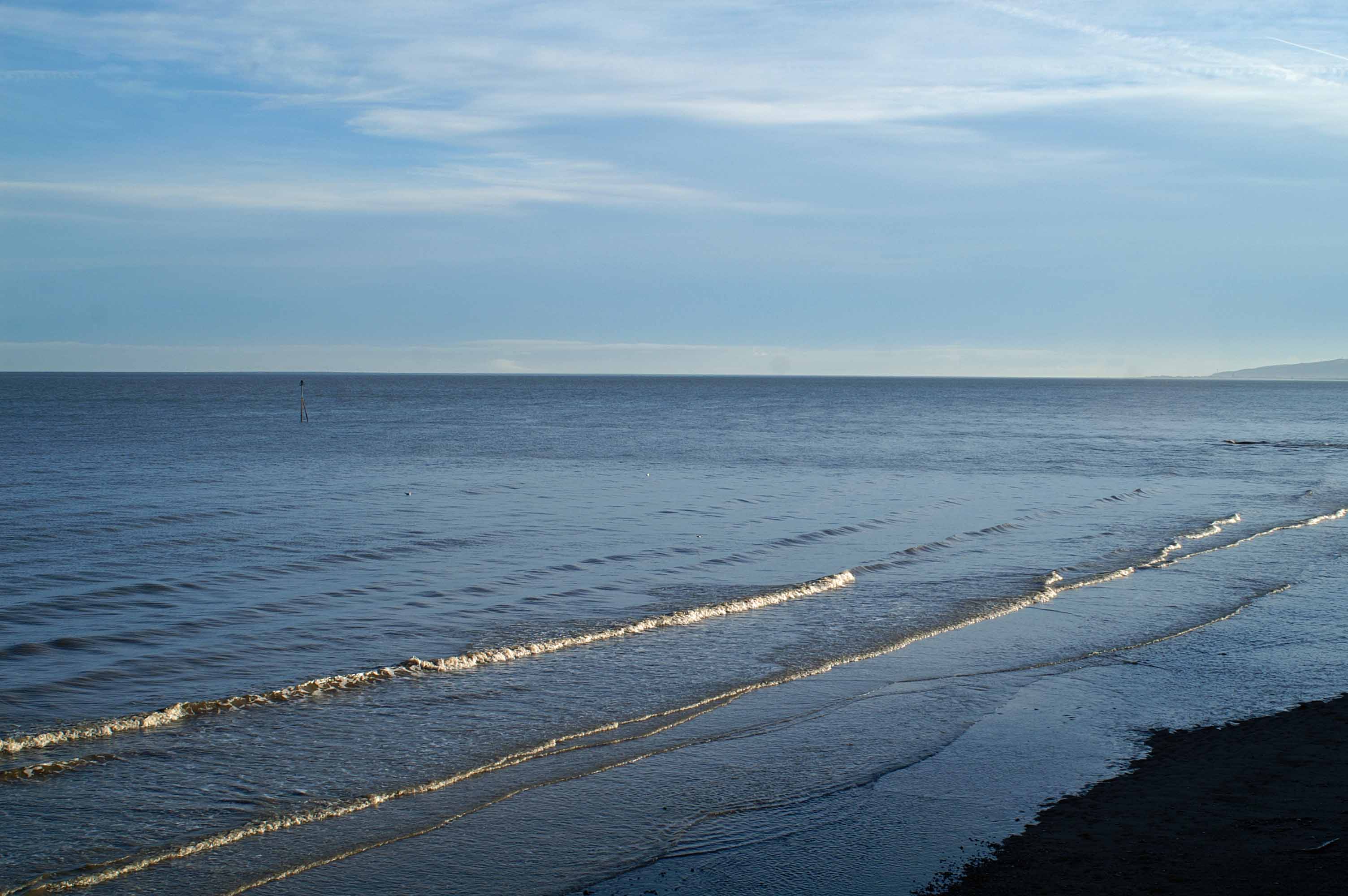
8.37am-Calm, sunlit sea beneath a blue sky

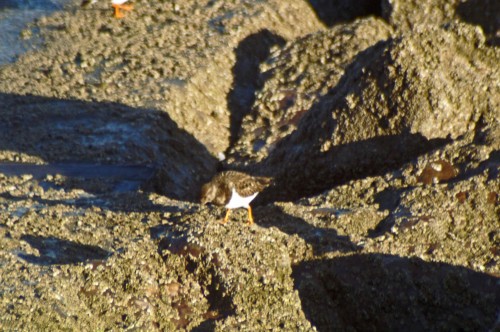
8.38am-Turnstone foraging on barnacle-encrusted rocks

During my lunch break I spent a few minutes in the small wooded area at the bottom of Beach Road.

2pm-River Colwyn at the Beach Road end just before it runs into the sea

The river Colwyn flows through the original township of Colwyn. There are many brooks of the same name in Wales. It means ‘a young animal’ or ‘a pet dog’ and was probably used to describe the playful movement of the water.

Miniature daffodils flowering in the woodland garden

Carved wooden seat alongside the path

Lesser celandines open in the sunlight that filters through the bare tree branches

A wren was singing from a low branch close to the path, a chaffinch from higher up in a neighbouring tree and a robin from somewhere within the shrubbery. I caught sight of two long-tailed tits and a song thrush as it flew down onto the wall alongside the stream.

A blue tit low in a shrub beside the stream

I thought I’d missed the opportunity of a good look at the thrush, but as I was leaving there was another on the bank very close to the path that wasn’t bothered by me being there, even when I pointed the camera at it.

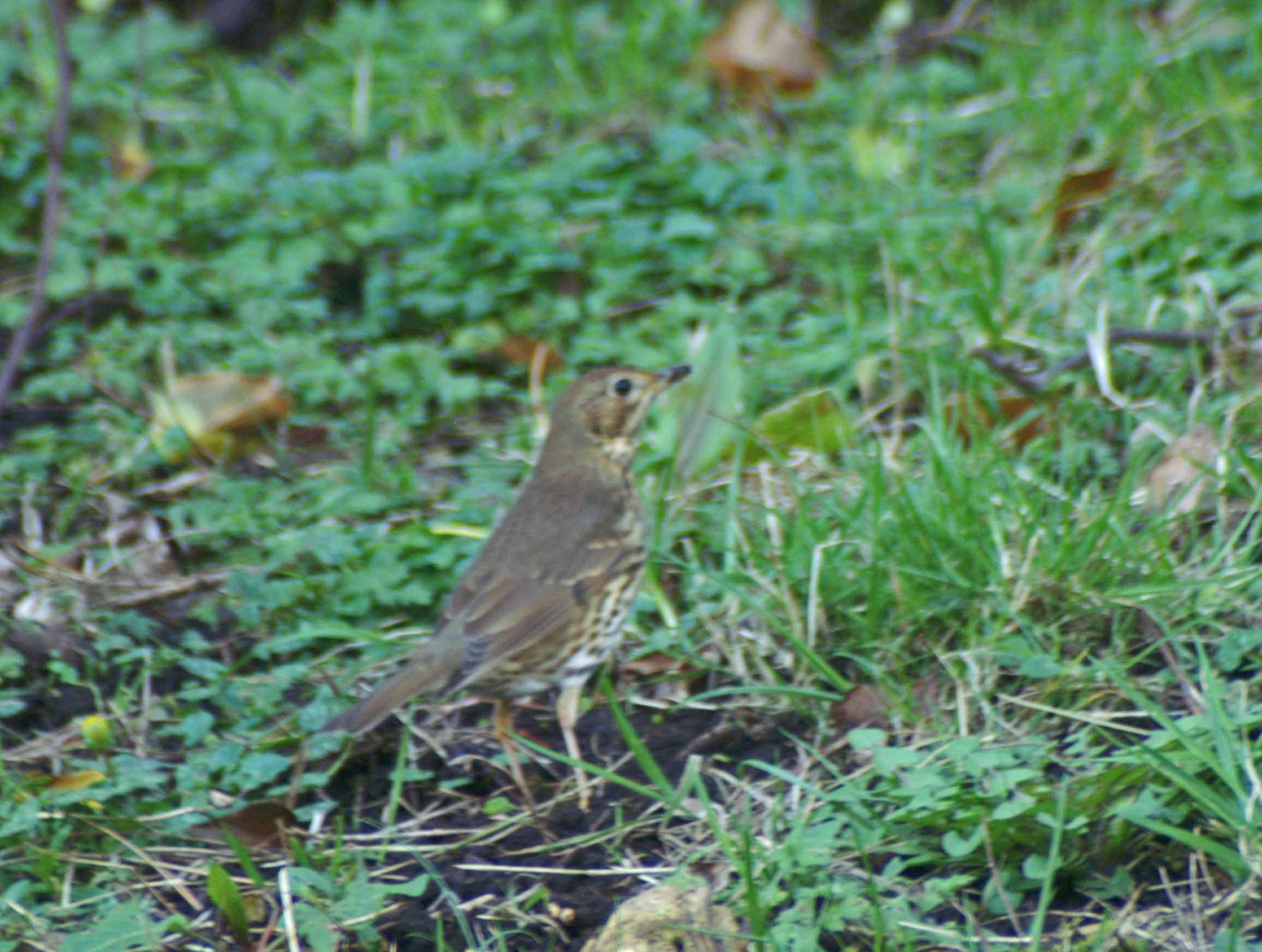
A beautifully marked thrush

Thrush from the front

A successful hunting blackbird

The views on the way home in the evening light were enhanced by the pink glow from the setting sun.

5.50pm - Evening view of Rhos-on-Sea

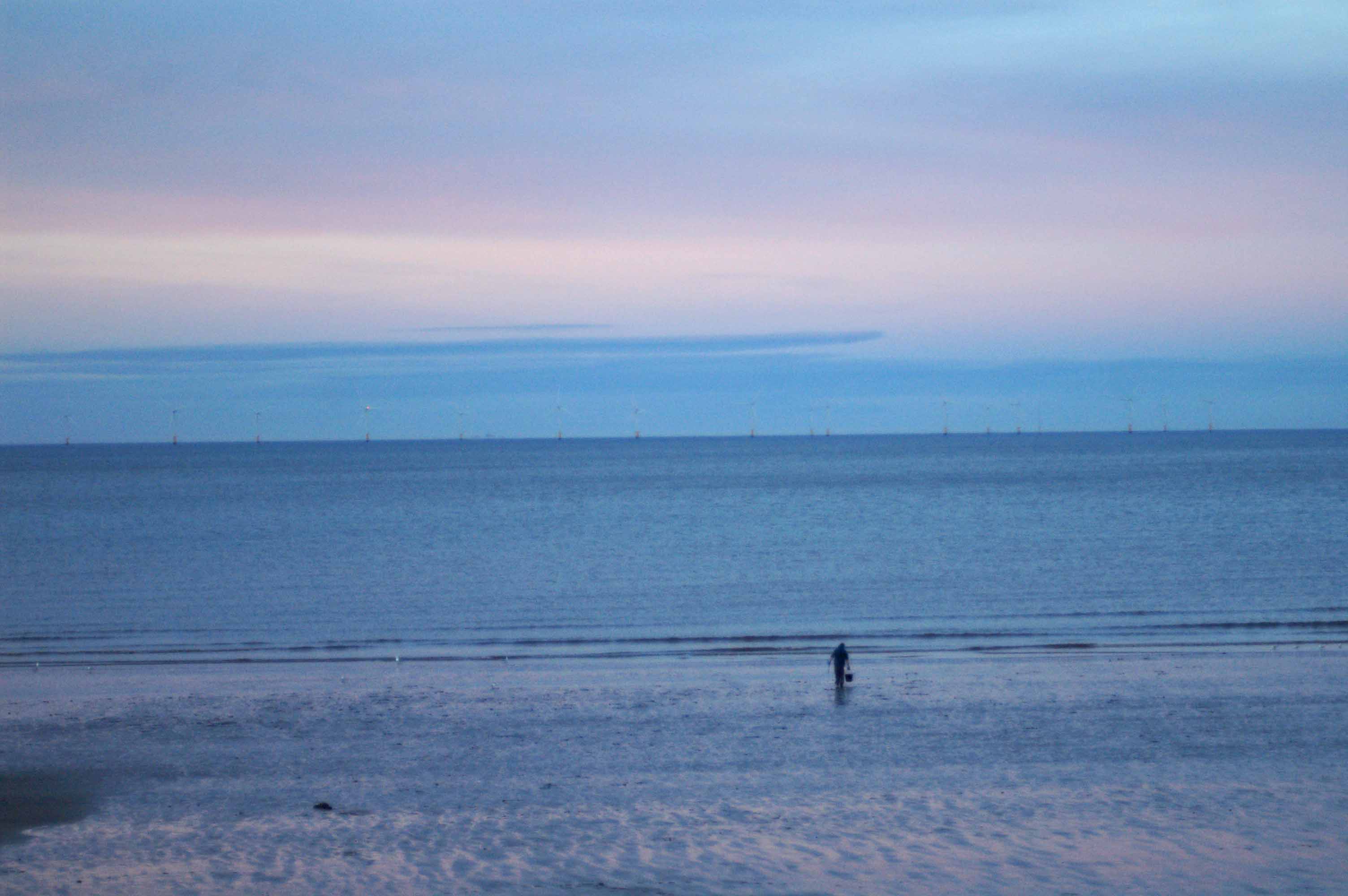
The tide was fully out and although the light was fading there were several people on the beach walking their dogs and a man probing the sand with a stick that I thought may have been searching for razor clams (?); he was too far away to see what he was putting into his bucket.

Man collecting razor clams

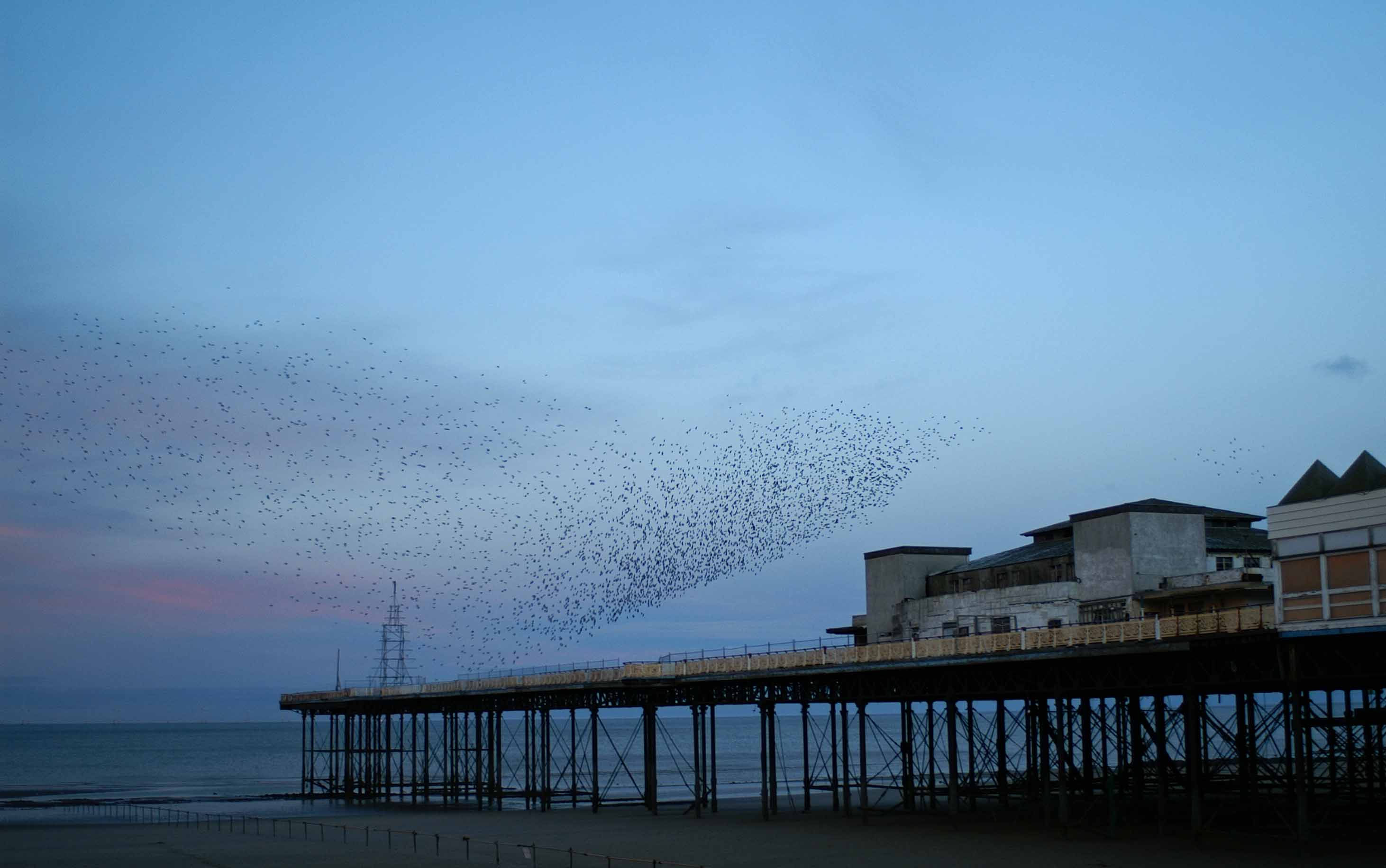
As I hoped, I arrived at the old pier at more or less the same time as the starlings.  The majority had already gathered into a large flock, a smaller flock arrived and blended seamlessly into the outer edges as they wheeled around across the sea then back to the pier. They settled quite quickly this evening, showering down like falling leaves to settle beneath the floor of the pier on either side of the structure.

5.50pm - Starlings arriving at the old pier to roost for the night

Starlings shape-shifting across the pink-tinged sky

Starlings flying out over the water

6pm-A final view of the rosy pink sunset

Tomorrow is predicted to be colder, ‘freshened’ by a NW wind …..


Share this:

  • Share on Facebook (Opens in new window) Facebook
  • Share on Pinterest (Opens in new window) Pinterest
  • Share on X (Opens in new window) X
Like Loading...

Bird study – Shelduck

15 Wednesday Feb 2012

Posted by theresagreen in Birds, Nature, nature photography

≈ 2 Comments

Tags

Conwy estuary, ducks and geese, Nevern Estuary, sea ducks, shelduck, tadorna tadorna

In my previous post I mentioned seeing Shelduck on the Conwy Estuary and thought I’d put in a bit more about this very handsome species that will also give me an excuse to use some photographs from my archives.  I have taken most of the photographs in West Wales at the Nevern Estuary where good numbers of   pairs of Shelduck have been recorded, with several pairs breeding. Other sightings in the area have been made in Ceibwr Bay and on the amazing Skomer Island.

A Shelduck male admiring his reflection

The Shelduck (Tadorna tadorna) is a sea duck that is slightly larger than most other ducks, indeed the species is sometimes thought of as an intermediate between ducks and geese. They were originally known as “sheldrakes”, and this remained the most common name until the late 19th century. The word is still sometimes used to refer to a male shelduck. The genus name Tadorna comes from Celtic roots and means “pied waterfowl”, essentially the same as the English “shelduck”.

The colouring of common shelducks is quite distinctive. They are mainly white, with a dark head and neck, red bill, and other dark or reddy brown patches down their body. Adults also possess an orange or reddy brown band around their chest, which is absent in juveniles.

Shelduck pair, Nevern Estuary May 2007

Their diet comprises mainly small shellfish, water snails and other small invertebrates. The ducks are not natural divers but will do so to avoid predators.

Shelduck, Skomer Island May 2007

Shelducks are migratory birds and arrive at their breeding grounds in late winter or early spring. The Royal Society for the Protection of Birds (RSPB) have given the common shelduck an amber status for conservation purposes based on the historic population of ducks having fallen, although there has been some recovery in recent years. At a global level they are not considered to be at risk as in Europe alone there are perhaps as many as 56,000 breeding pairs. It is estimated that approx. 11,000 pairs of birds breed in the UK. They choose a variety of nest locations including disused rabbit burrows, haystacks and holes in trees.

Shelduck ducklings, Nevern Estuary, 1st July 2008

In 2008, during the last week of June and the first week of July I was staying in  Pembrokeshire  where my friend has a house near to the lovely village of Nevern. Every day we made a stop on the bridge over the estuary which carries the road into, or out of, the village of  Newport. There is almost always something of interest to be seen from here, but we were especially charmed by the Shelducks and four ducklings that we saw most mornings and evenings. Perfectly camouflaged against the brown mud and gravel of the river bottom the youngsters   skittered about all over the place under the watchful eyes of the adults.

A couple of years later, slightly earlier in June (2010) we discovered there were two adult Shelducks in charge of no less than thirteen tiny ducklings. We were well aware of the hard fact that the cute fluffy little things would make a tasty snack for a number of potential predators, so each time we stopped on the bridge we tried to locate them and counted them anxiously.

Swimming ducklings

Luckily for our sentimental selves the little gang remained intact until the day of our departure. We were surprised by the number of  ducklings this year, assuming them to be from one family, but later learned that once breeding is underway the ducklings are left in creches, with large numbers being cared for by one or two female birds, while the rest migrate to their moulting grounds.

The Shelducks sleeping on the muddy estuary bank

Shelducks are found in the UK all year round, mainly in coastal areas, though they can also be found around inland waters such as reservoirs and gravel workings.

Share this:

  • Share on Facebook (Opens in new window) Facebook
  • Share on Pinterest (Opens in new window) Pinterest
  • Share on X (Opens in new window) X
Like Loading...

Evening on the Estuary

12 Sunday Feb 2012

Posted by theresagreen in Nature, nature photography

≈ Leave a comment

Tags

Conwy castle, Conwy estuary, Curlew, estuary at low tide, shelduck

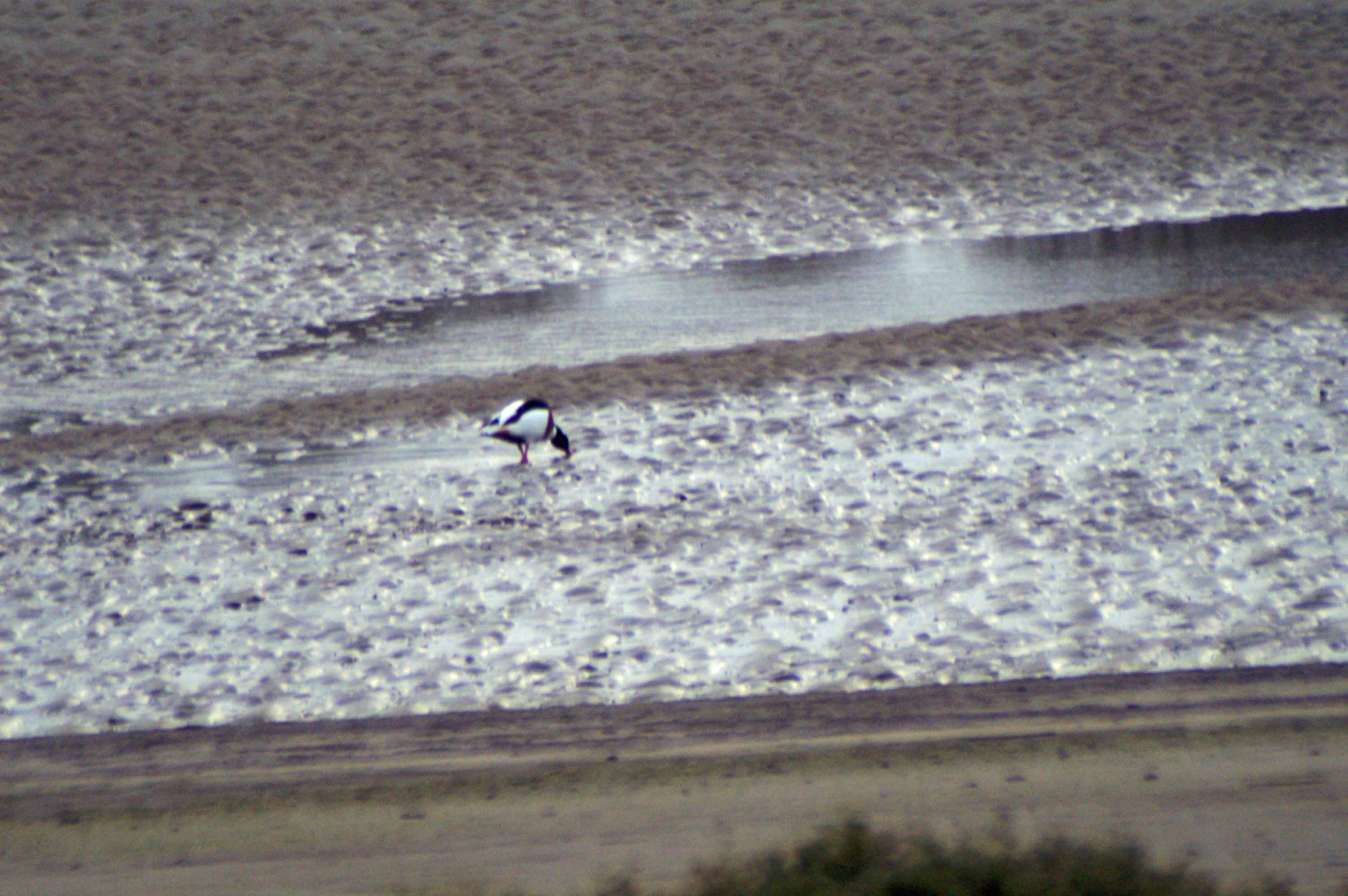
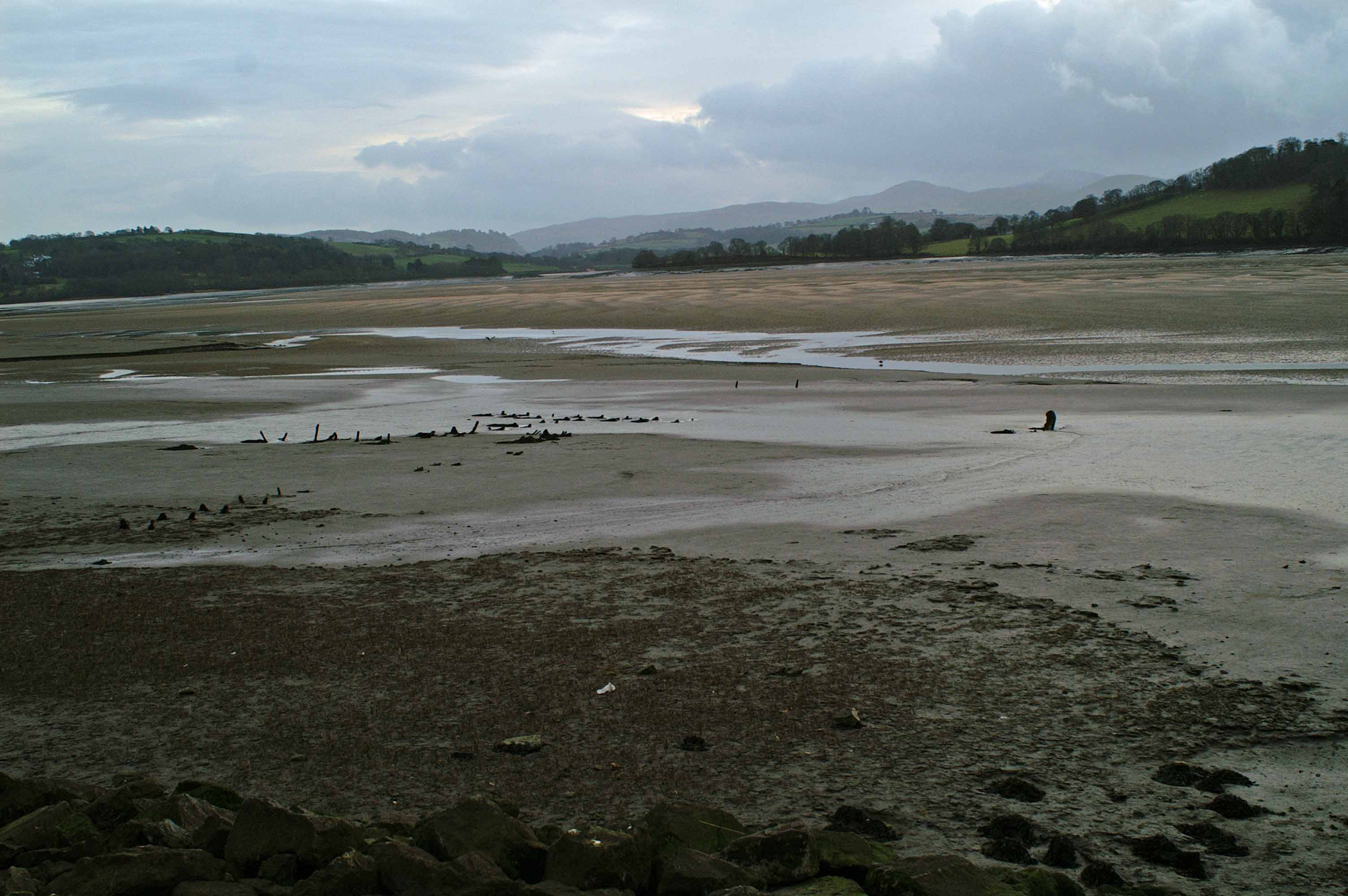
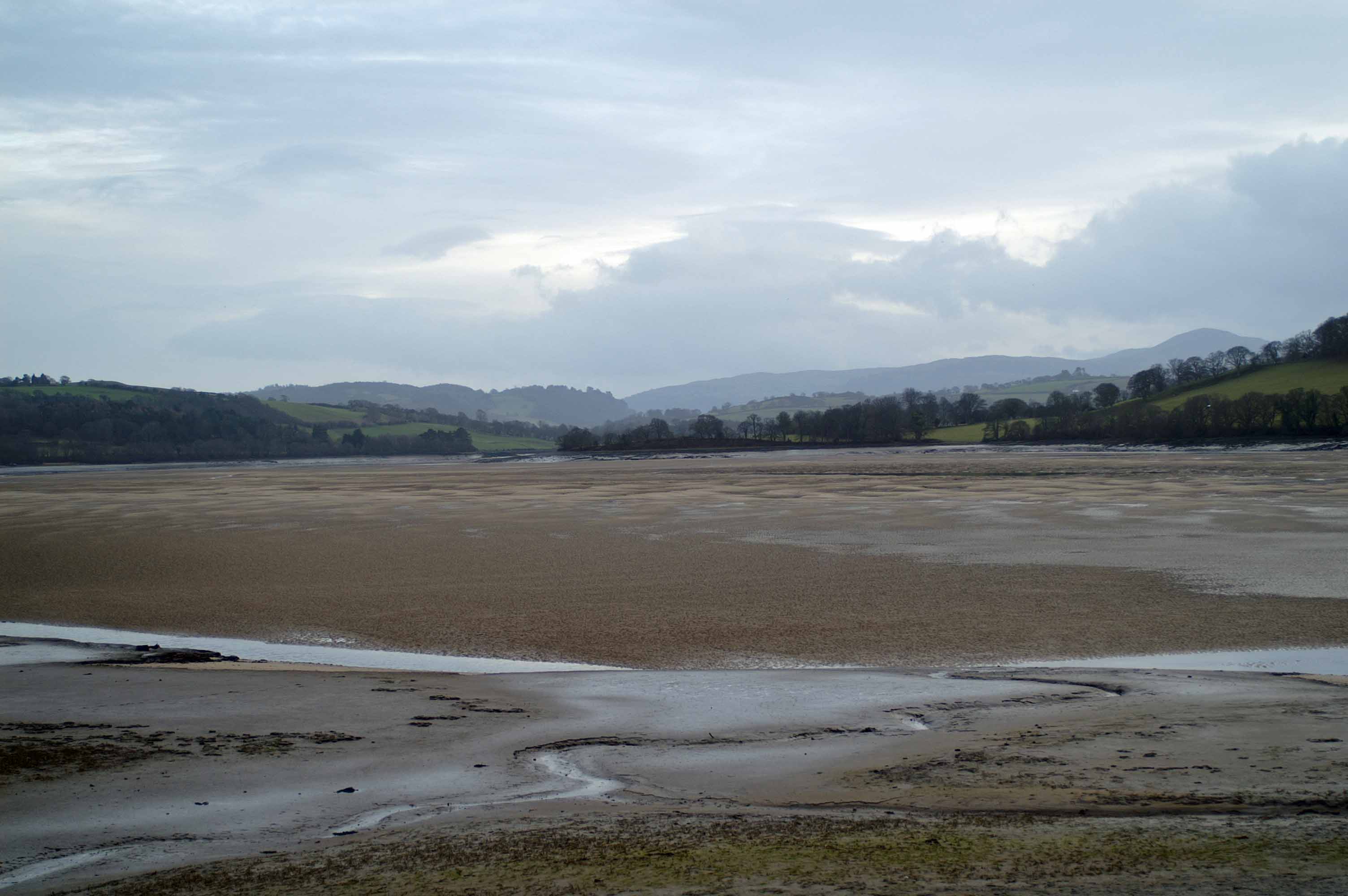
An evening walk alongside the Conwy Estuary. The sun was low in a cloudy sky, it was very cold and the tide was fully out exposing the wonderful contours and textures of the river bottom.  A few pools of shallow water remained and the only birds to be seen were a very few Curlew and a pair of Shelduck.

Shelduck

Contours and textures at low tide

A stalking Curlew blends easily into the estuary landscape

View upriver

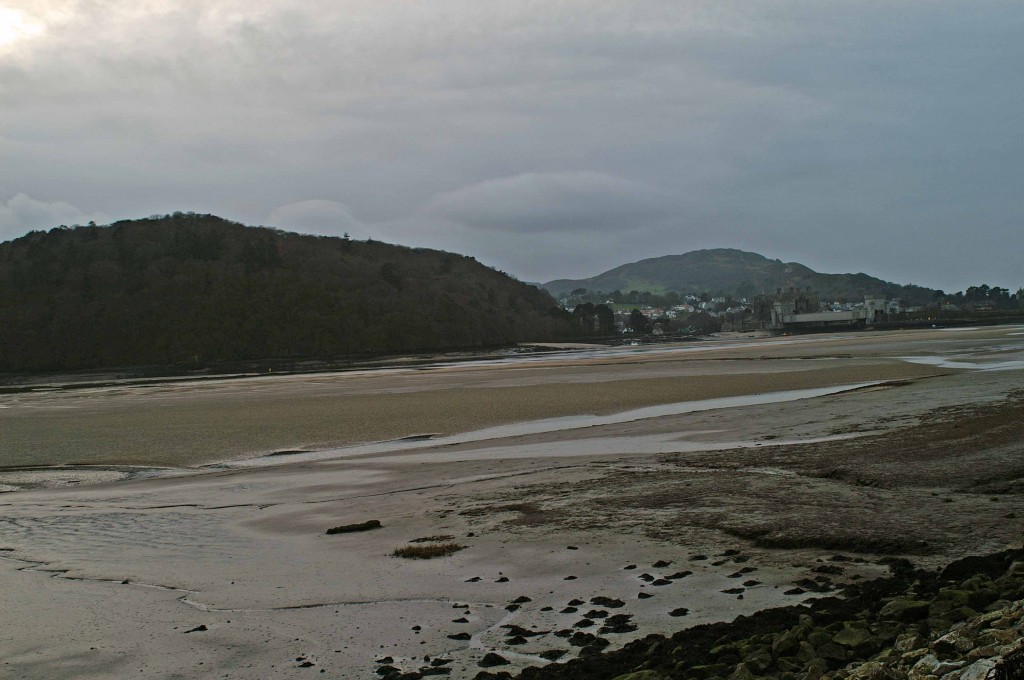
Looking down the estuary towards the castle

Click on any of the images to enlarge them.

Share this:

  • Share on Facebook (Opens in new window) Facebook
  • Share on Pinterest (Opens in new window) Pinterest
  • Share on X (Opens in new window) X
Like Loading...

Cold weather and bird behaviour

07 Tuesday Feb 2012

Posted by theresagreen in bird behaviour, birds of the seashore, Nature, nature photography, Rhos-on-Sea

≈ 2 Comments

Tags

black-headed gull changing plumage, crow perched in the rain, herring gull catching earthworms, herring gull foot-paddling, oystercatcher in the rain

In common with the rest of the country we  had a week of proper winter weather last week, although we have so far missed out on any snow. The compensation  for below- freezing temperatures was that for three days the skies were clear and the sun shone. The mornings are lighter earlier now and when I leave the house the air is full of the sounds of birds. The tides have changed too and by 8.30am the sea has receded and the rocky shore and beach are already busy with foraging birds. The daylight hours are gradually lengthening too and it is now staying light till just past 5pm; it’s amazing how much better that makes you  feel.

My drive back and forth to work follows the coast closely; the road runs alongside the promenade all the way from the far end of Colwyn Bay, through Rhos on Sea and reaching almost as far as the Little Orme at the end of Penrhyn Bay. It is a treat to have such a scenic journey, especially as each day brings a different view depending on the state of the tide and the light. It hasn’t been a great week  for getting out and about, so this week’s observations are a bit limited and have been made from the shelter of the car at points along the route I drive.

Saturday began cold with a light frost and by noon, where others were being snowed upon, we had some very cold rain instead. But whatever the weather, life along the seashore carries on pretty much as usual; birds simply have to eat. On my way home at lunch time I pulled in alongside the promenade at the Old Colwyn end  of the promenade to have a look at how the rain was affecting the birds. A few black-headed gulls are regularly perched on the railings here and as I stopped two birds obligingly flew in, probably hoping or some food to be thrown to them. One of them was well on his way to regaining his characteristic dark head plumage, looking a bit strange at the moment, but it won’t be long before he’s back to his handsome best. He was behaving territorially, squawking loudly at the approach of the other bird both on the ground and from the apparently desirable perch on the railings.

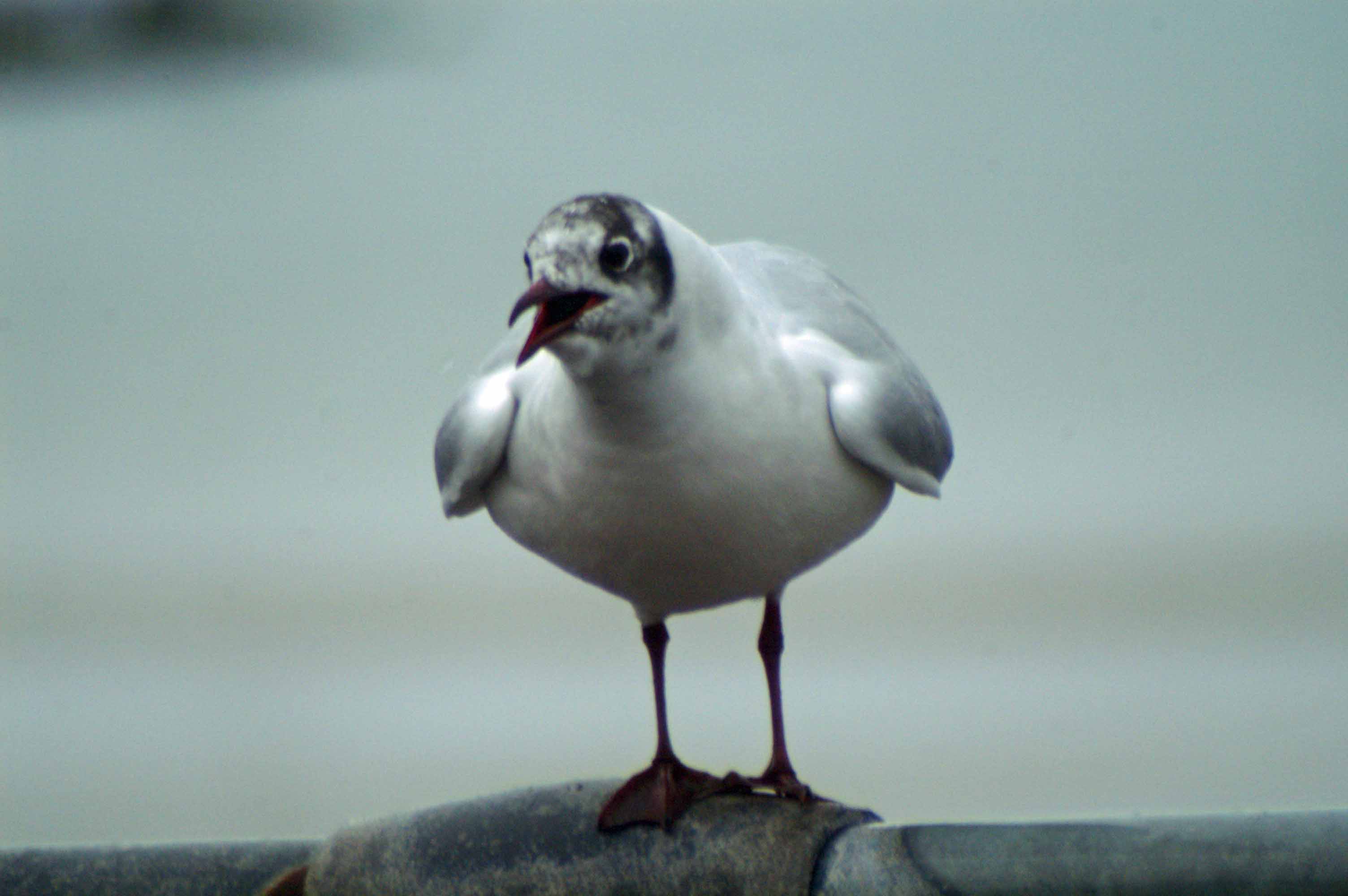
Black-headed gull with his head noticeably turning darker

Black-headed gull squawking from his perch

Down on the rain-lashed beach a lone oyster catcher was  running around foraging, periodically probing the sand with its bill. It  found a mussel and scuttled off at speed. I don’t know what it was running away  from, it had the whole beach practically to itself.

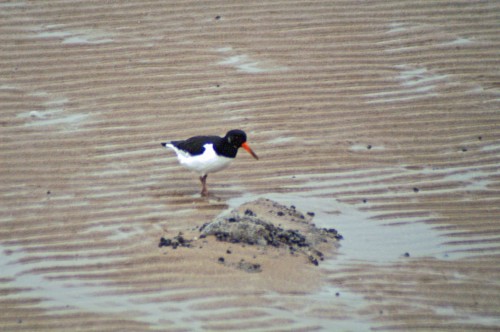
Oystercatcher foraging in the`rain on the sandy shore of Colwyn Bay

The Oystercatcher found himself a mussel and scuttled off along the beach with it in his bill

Crows are regular visitors to the seashore here and can often be seen perched on the railings and on the wall on the opposite side of the road or  foraging on the steep grass bank behind it. They have also learnt that the hard surface of the  promenade is helpful in breaking open mussel shells and they can be watched dropping the shellfish and picking them up repetitively until the soft body inside can be reached and eaten.

Crow sitting on the wall, hunched against the rain

Crow looking down his beak at me

Herring gulls are master opportunists when it comes to  finding  food, and they too are often seen foraging on the steep grassy banks along the coast road.  It is only very recently that I’ve  noticed one or two birds ‘ foot-paddling’ on the ground, a technique gulls and some other waders use to bring marine invertebrates to the surface. It is  fascinating to watch the birds dance on the spot, rhythmically drumming the ground with their big webbed feet; it seems to do the trick too, the one I photographed pulled out and ate several earthworms as I watched.

Herring gull ' foot-paddling' for worms


The Herring gull eating a worm

Share this:

  • Share on Facebook (Opens in new window) Facebook
  • Share on Pinterest (Opens in new window) Pinterest
  • Share on X (Opens in new window) X
Like Loading...

Strangers on and off the shore

30 Monday Jan 2012

Posted by theresagreen in Birdwatching on North Wales coast, Nature, nature photography, wading birds

≈ 2 Comments

Tags

black-throated diver, coastal birds, dunlin, purple sandpiper, purple sandpiper at rhos-on-sea, red-throated diver, ringed plover, shag, Turnstone

Saturday dawned bright, sunny and very cold, but at least it wasn’t windy. The sunshine encouraged me out to walk and I headed for the beach where I had hoped to take advantage of the clear light and take some shots of the mussel beds that are central to the presence of the wading birds. However, when I reached the end of our road I could see the tide was almost fully in, so that put paid to that idea. The sea was remarkably calm, but it was penetratingly cold and I almost turned around to go back for the car and drive somewhere more sheltered. Then I spotted a couple with telescopes peering out to sea and naturally had to find out what they were looking for. As I approached them I spotted a bird on the rocks, a Rock pipit was foraging along the boulders of the sea-break. It was a lovely healthy-looking bird and getting around quite nimbly despite the fact that the poor thing had lost most of one of its legs.

Rock pipit

Rock pipit, back view

It turned out that the couple with the telescopes were hoping to see divers, although apparently without much luck today. I know many birders enjoy sea-watching and spotting some of the less commonly seen species of sea birds, but as the best sightings are during the colder months and a lot of patience  is  required to achieve often very distant sightings, it’s not really my cup of tea. I am interested by the fact that it is possible to sight the birds around this coast though, and did a little research into them in the warmth of the house. The following information is from the RSPB website and from that I think the Red-throated diver is the species most likely to be seen offshore here.

Black-throated Diver- Gavia arctica

Family : Divers – (Gaviidae)

Black-throated Diver (RSPB image)-Found on Scottish Highland lochs in summer and around sheltered coasts in winter, and rarely along Irish Sea coasts. Moray Firth and W coast of Scotland best in winter, as well as the NE and SW coasts of England. Sometimes seen at inland reservoirs.

Streamlined diving birds that sit low in the water and dive with consummate ease. On land they are clumsy, barely able to walk with their legs so far back on their bodies. They are easily disturbed when breeding and their vulnerability to marine pollution make them a vulnerable as well as rare breeding species.

Red-throated Diver- Gavia stellata

Family : Divers – (Gaviidae)

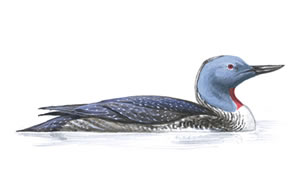
Red-throated Diver- Gavia stellata -Outside the breeding season it is numerous along the UK's east coast, and occurs patchily along the west coast, with concentrations off west Scotland and around north-west Wales.

The smallest of the UK’s divers, its grey-brown plumage and up-tilted bill readily distinguish it from the other species. In summer it has a distinctive red throat. They usually jump up to dive and can stay underwater for a minute and a half. They are very ungainly on land, only coming ashore to breed. A recent moderate population decline make them an Amber List species.

Shetland is the UK stronghold for this species with other key populations on Orkney, the Outer Hebrides and the north Scottish mainland. They are also found along the whole of west Scotland south to the Mull of Kintyre. Outside the breeding season it is numerous along the UK’s east coast, and occurs patchily along the west coast, with concentrations off west Scotland and around north-west Wales.

The sea-watching couple had seen a couple of guillemots out at sea and also mentioned a Purple Sandpiper they had spotted on the breakwater rocks, which piqued my interest and sent me off my own ‘twitch’. I walked along the promenade, scouring the rocks in the hope of catching sight of the little Sandpiper, but with no luck. I also paid more attention to the sea and got out my binoculars for a closer look at a distant bird swimming around on the surface. Cormorant-like, but smaller,  with yellow patches at the base of its bill and around the eyes and with a  distinctive raised crest on its head, it was a Shag – Phalocrocorax aristotelis.

Walking back, another swimming bird, closer to shore this time definitely was neither a cormorant nor a shag.  I had no picture in my head then of what a diver looked like, but this was behaving like one, diving frequently and staying under the water for a good while before popping up again. It occurred to me that it was a Great crested Grebe, although I’d never seen one at sea before. It was a delight to watch, swimming around at some speed then diving elegantly. Once it came up almost directly beneath a floating black-headed gull, that was most put out and then just seconds later it dived again and came up with a sizeable fish.

Great crested Grebe- Podiceps cristatis

The Great crested Grebe caught a sizeable fish

It was too cold to stand around for long and my fingers on the camera controls were numb, so I walked back home via the shelter of the neighbouring streets. It’s been a while since I walked that way and I was very surprised by the amount of flowers in bloom in the front gardens. There are already snowdrops, crocus, grape hyacinth, the occasional daffodil and most surprisingly, wallflowers. The weather forecast for next week is not good – overnight frosts, sleet and below-freezing temperatures are not so good for too-early flowers.

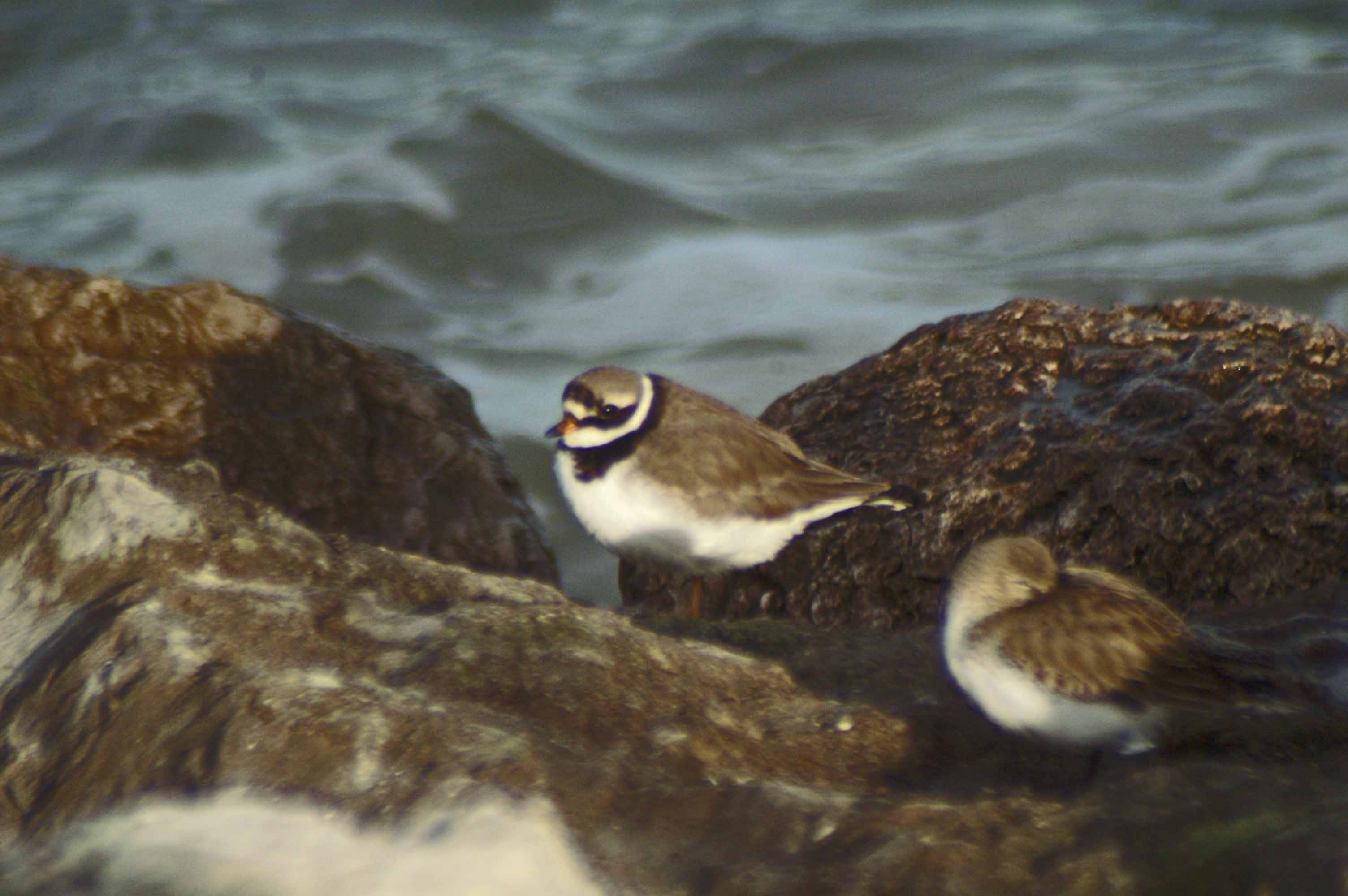
An hour in the house with a cup of tea and a sandwich and I’d warmed up enough to venture out again. This time I took the car as I was intending to drive over to the RSPB reserve on the Conwy estuary. (Point of interest: this morning’s sea-watchers had also told me that a firecrest had been ‘twitched’ there earlier in the day.) That was not why I was going there, but anyhow as I approached Rhos village I thought I’d pull over and have a quick look around the harbour beach  for the Purple Sandpiper. The winter sunshine had drawn a lot of others out to walk too and I parked in the  first available space and took the steps down to the promenade. There, almost right in front of me were a group of small birds peacefully dozing on the rocks waiting for the tide to turn. I recognised the turnstones and ringed plovers immediately, but was not so sure of the identification of the members of the majority of the group. I had to wait for one to stand up and show itself properly to be fairly sure they were dunlin – it was the long bill, slightly decurved at the end that clinched it.

A turnstone, 2 ringed plover and 6 Dunlin on one rock

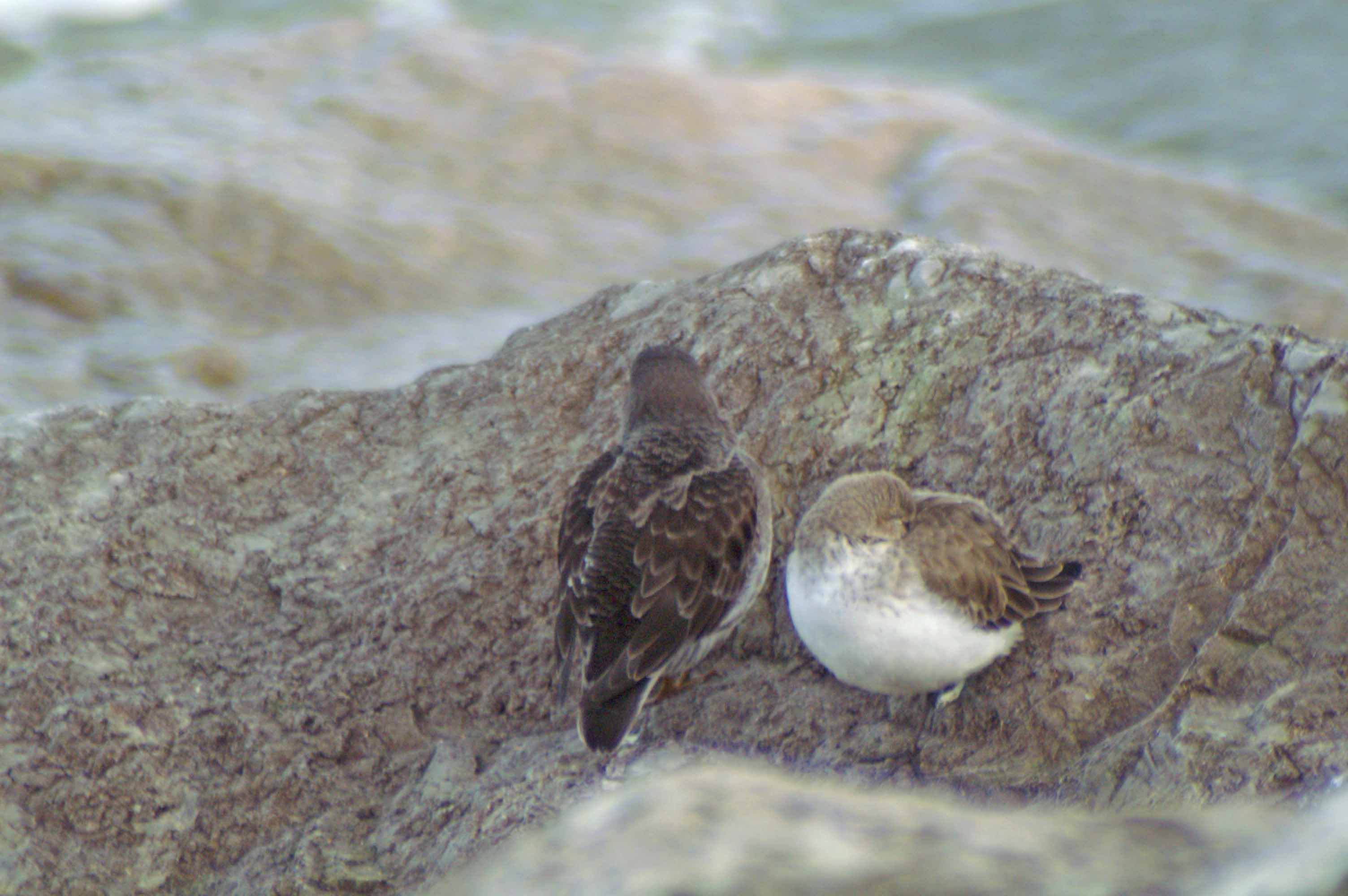
I was more than happy to those three species together, but things got even better when I realised there were a small number of purple sandpipers tucked in there as well ; fortunately they are much more distinctive and I recognised them with no problem. I saw 3 in total, but there could have been more tucked down lower on the rocks.

Purple Sandpiper close to a dunlin compares their size and plumage; the dunlin is slightly smaller and much lighter in colour

The Purple Sandpiper is usually a strictly coastal wader that visits Britain in the non-breeding season and then flies north to breed during the summer. They are seldom found on sandy beaches but prefer rocky coasts, where they can be seen searching for molluscs and crustaceans among the rocks and rock pools. In the North West They can turn up on any rocky coast from the tip of the Llyn peninsular in North Wales to Morecambe bay in the North. They begin to arrive in October, reaching a peak by November and start to leave again in April. By June, at the latest, they are gone.They are about the same size as a turnstone, with whom they are often seen, and a dark bird overall.

Purple Sandpiper-Calidris maritima

The purple sandpiper is the only small dark wader with yellow/orange legs likely to be seen on rocky shores,frequently in association with turnstones. They have a rather round-shouldered appearance, the wings are very dark grey, the head and back a slightly paler shade and the partially streaked breast an even paler shade. They have a longish beak for their size which is dark grey/black with a yellow or orange base. Their legs appear fairly substantial and are bright yellow or pale orange. In flight they appear very dark with just a faint, narrow white wing-bar and bold white edges on a black/dark grey tail.

Purple sandpiper amongst dunlin & a ringed plover

A purple sandpiper joins another group, showing all 4 species together; dunlin, ringed plover & a turnstone

Dunlin - Calidris alpina

Ringed plover-charadrius hiaticula, in sunlight

2 ringed plover side by side; the one at the back is an adult, the other an immature with no black head band and an incomplete, brownish breast band

The birds were so close to the promenade that quite a few people passing by noticed them; some of whom stopped and asked me to identify the species for them. Perhaps not too surprisingly, it was the attractive Ringed Plovers that aroused the most amount of  interest.

Share this:

  • Share on Facebook (Opens in new window) Facebook
  • Share on Pinterest (Opens in new window) Pinterest
  • Share on X (Opens in new window) X
Like Loading...
← Older posts
Newer posts →
Follow everyday nature trails on WordPress.com

Enter your email address to follow this blog and receive notifications of new posts by email.

‘But it is the common species that keep the living world ticking over and provide most of our experiences of wildlife, and I would argue that maintaining the abundance of these is as important a conservation priority as maintaining the existence of rarities’. Richard Mabey

MOST RECENT POSTS

  • A Glimpse of Spring to Come January 22, 2025
  • Hunting the Wren December 28, 2024
  • Oh, Christmas Tree December 18, 2024
  • In and Out of the Ivy February 15, 2024
  • Nature’s Fireworks November 30, 2023
  • Wild Autumn along the Coast Path November 3, 2023

OLDER POSTS

LOOKING FOR SOMETHING IN PARTICULAR?

  • Sights and Sounds from the Little Orme 1
    Sights and Sounds from the Little Orme 1
  • Catchers, a Duck and Divers
    Catchers, a Duck and Divers
  • Things Bright and Beautiful
    Things Bright and Beautiful
  • Fine Dining for Crows
    Fine Dining for Crows
  • Shades, Sounds and Scents of the Woods
    Shades, Sounds and Scents of the Woods
  • Following a river to a Fairy Glen
    Following a river to a Fairy Glen
  • Beautiful blooms and some rare treats (1)
    Beautiful blooms and some rare treats (1)
  • Keeping up with the Herring Gulls
    Keeping up with the Herring Gulls
  • The Windhover
    The Windhover
  • May Bee Appearing on Ivy near You
    May Bee Appearing on Ivy near You

nightingale trails

The Walk of the Monarch Butterfly-Sendero de la Mariposa Monarca

The Walk of the Monarch Butterfly-Sendero de la Mariposa Monarca

MY WILDFLOWER BLOG: where the wildflowers are

Snowdrop

Snowdrop

most recent posts

Follow everyday nature trails on WordPress.com

Social

  • View teresamaygreen’s profile on Twitter

Enter your email address to follow this blog and receive notifications of new posts by email.

Website Built with WordPress.com.

  • Subscribe Subscribed
    • everyday nature trails
    • Join 358 other subscribers
    • Already have a WordPress.com account? Log in now.
    • everyday nature trails
    • Subscribe Subscribed
    • Sign up
    • Log in
    • Report this content
    • View site in Reader
    • Manage subscriptions
    • Collapse this bar

Loading Comments...

    %d