• Home
  • about
  • about the photographs
  • Local Nature Reserves
    • Bryn Euryn Local Nature Reserve
    • Mynydd Marian
  • Wales Coast Path
    • Grey Seals in North Wales
    • St.Trillo’s Chapel
    • Wildflowers of North Wales Coastal Paths, Cliffs and Dunes

everyday nature trails

everyday nature trails

Category Archives: nature of woodlands

A Glimpse of Spring to Come

22 Wednesday Jan 2025

Posted by theresagreen in Nature of Wales, nature of woodlands

≈ 2 Comments

Tags

Birds, Bryn Euryn Nature Reserve, early insects, gorse shieldbug, hoverflies, January, Spurge laurel, Trees, winter, winter wildflowers, yellow dung fly

Last week we were blessed with a few days of beautiful calm bright sunny spring-like days, which came as a welcome break between the post-Christmas freeze and the forecasted return to colder, more seasonal weather to come. Warm enough to get out to enjoy a walk at my preferred ambling pace, with plenty of moments to just stand and look around me without freezing to the spot, and the freedom to take photographs without fumbling with gloves, could not be passed up.

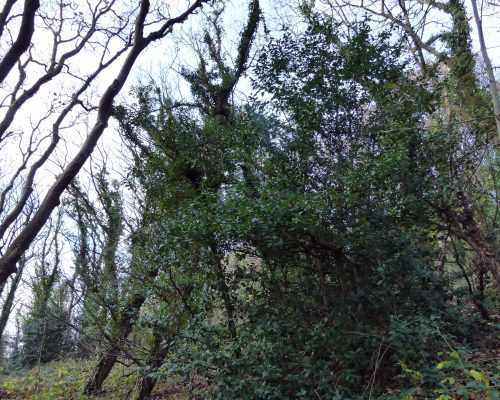
At both ground and eye level my local woods remain surprisingly green throughout the winter; sprawling ivy blankets much of the woodland floor and at every opportunity clambers high up the trunks of many trees. There are plenty of other evergreens too, dark yews, scots pines and the somewhat controversial holm oak all abound.

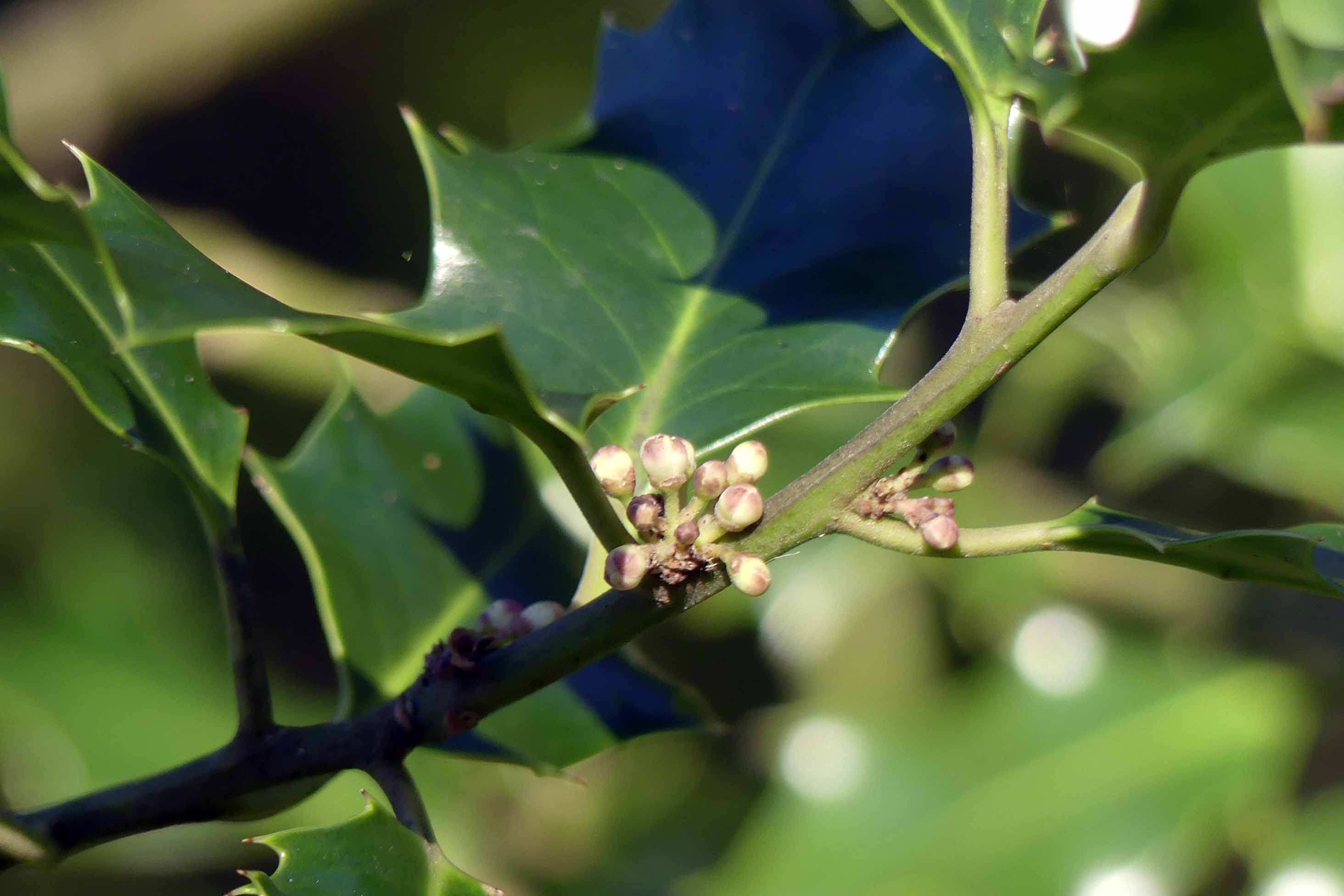
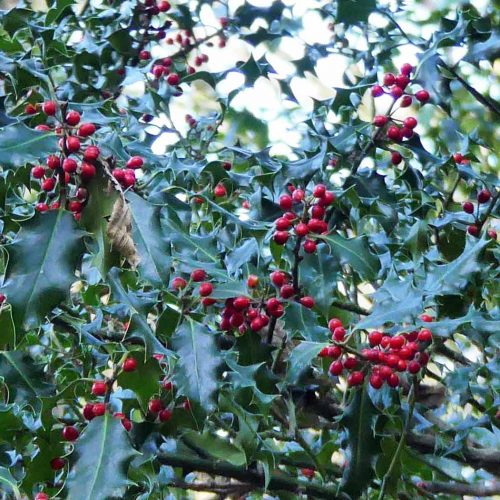
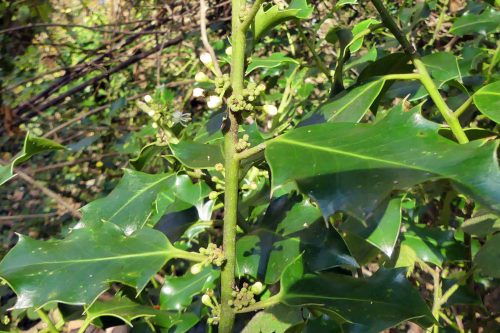
There are copious amounts of shining holly too, taking many forms from small trees to thick spreading bushes, dependent upon where they find themselves and the availability of space and light. One of my ‘targets’ for today was to look for the first signs of flowers on holly; some plants begin flowering early in the year while others wait for the spring or even early summer. I managed to find a few flower buds, but not yet open I couldn’t tell if they were male or female (holly plants may be either male or female, with females being the ones that produces berries), but male flowers most often appear first. Here and there a few berries remain.

Flower buds on holly
A few berries left

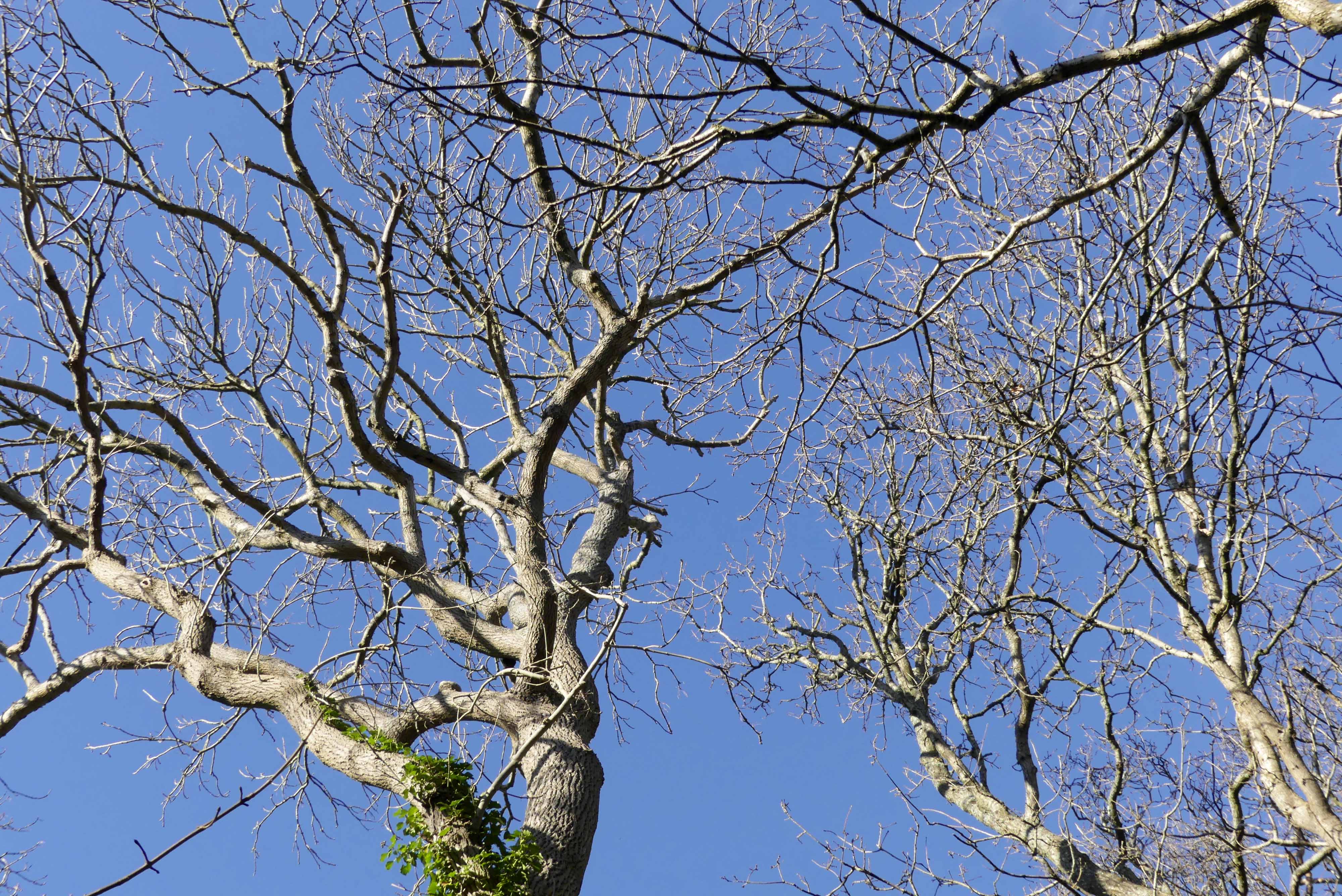
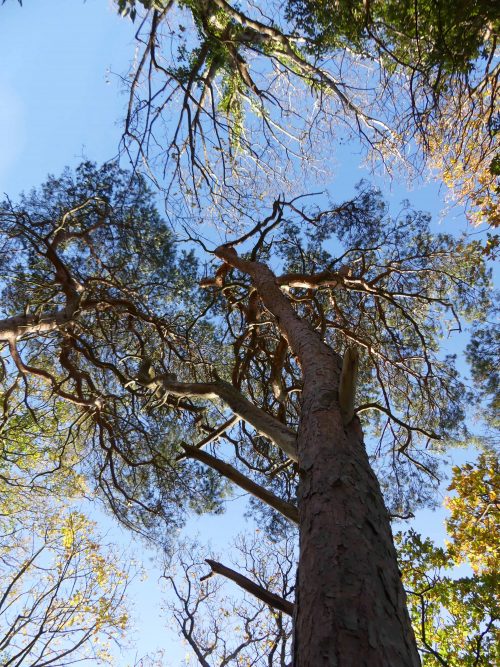
Looking up adds another dimension to the scene; a cloudless deep blue sky provides a perfect background highlighting the fascinating network of branches and twigs of the leafless trees reminding there is more winter to come.

As I meandered along I kept an eye on the surrounding trees; on days like this in the winter when trees are still bare of leaves there’s always a chance of spotting a foraging treecreeper quietly spiralling its way around trunks and branches; not today though.

The distinctive call of a nuthatch helped to locate it as it travelled up and down the branches of an oak tree. It paused every now and then to probe a likely spot for insects, but was way too busy to stop and pose for a photograph.

Female great spotted woodpecker

I had better luck with a pair of spotted woodpeckers that were travelling high up through the treetops. Stopping momentarily to investigate the trunk of a likely tree; the male quickly flew off but I managed a quick snap of the female who lingered a few seconds before she also took off to follow him.

Leaving the narrow earth paths of the woodland and joining the Woodland Trail of the Reserve, which is higher up the hill, I hoped to catch sight of a few more birds as there are good views down through the trees from there. As always, numerous wood pigeons and blackbirds vied for the ripest of the ivy berries. There were glimpses of blue tits, numbers of them travelling around together, keeping up an almost constant chorus of chirpy contact calls as they travelled between the ivy-clad trees. A fewer number of great tits accompanied them, and one sounded out a few notes of his ‘teacher-teacher‘ song, a first ‘hearing’ of that this year.

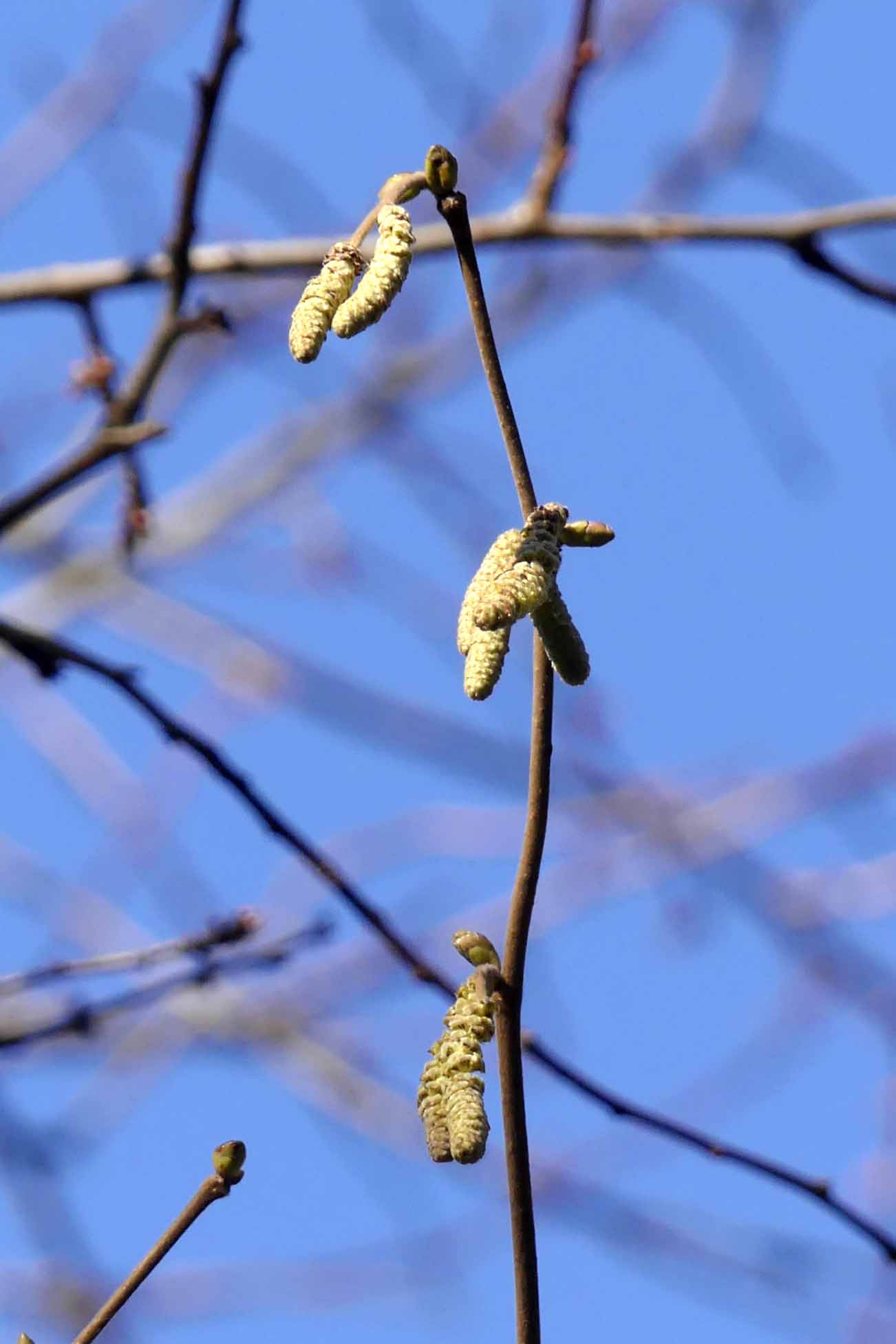
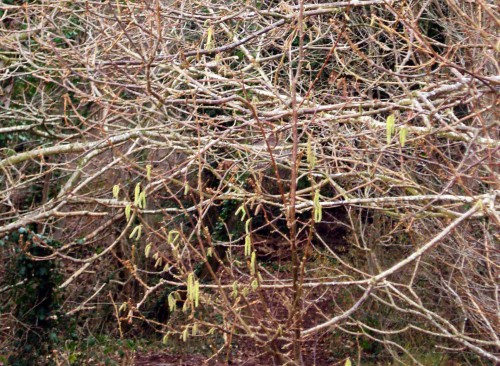
Male hazel catkins are beginning to show

Robins have been singing for a few weeks now, but today they were out in force each one either declaring territory, or perhaps calling out for a mate, at frequent intervals. Most were singing from cover, but one or two were bolder and sang confidently in the open. It’s not possible to tell whether you’re seeing or hearing a male or a female robin as both hold territories and both sing.

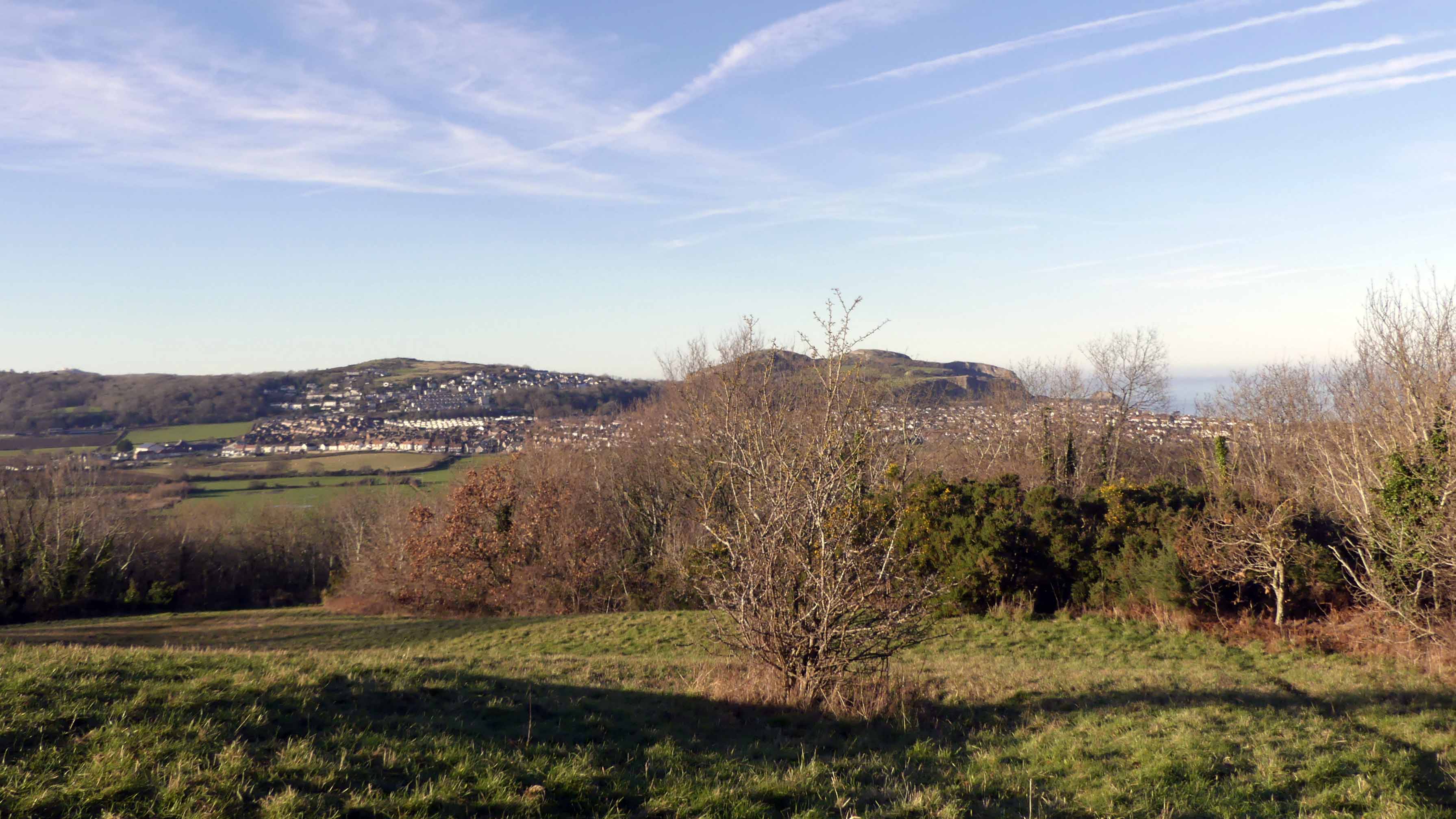
View from the top of the field on the slope of Bryn Euryn across to Penrhyn Bay and the Little Orme:

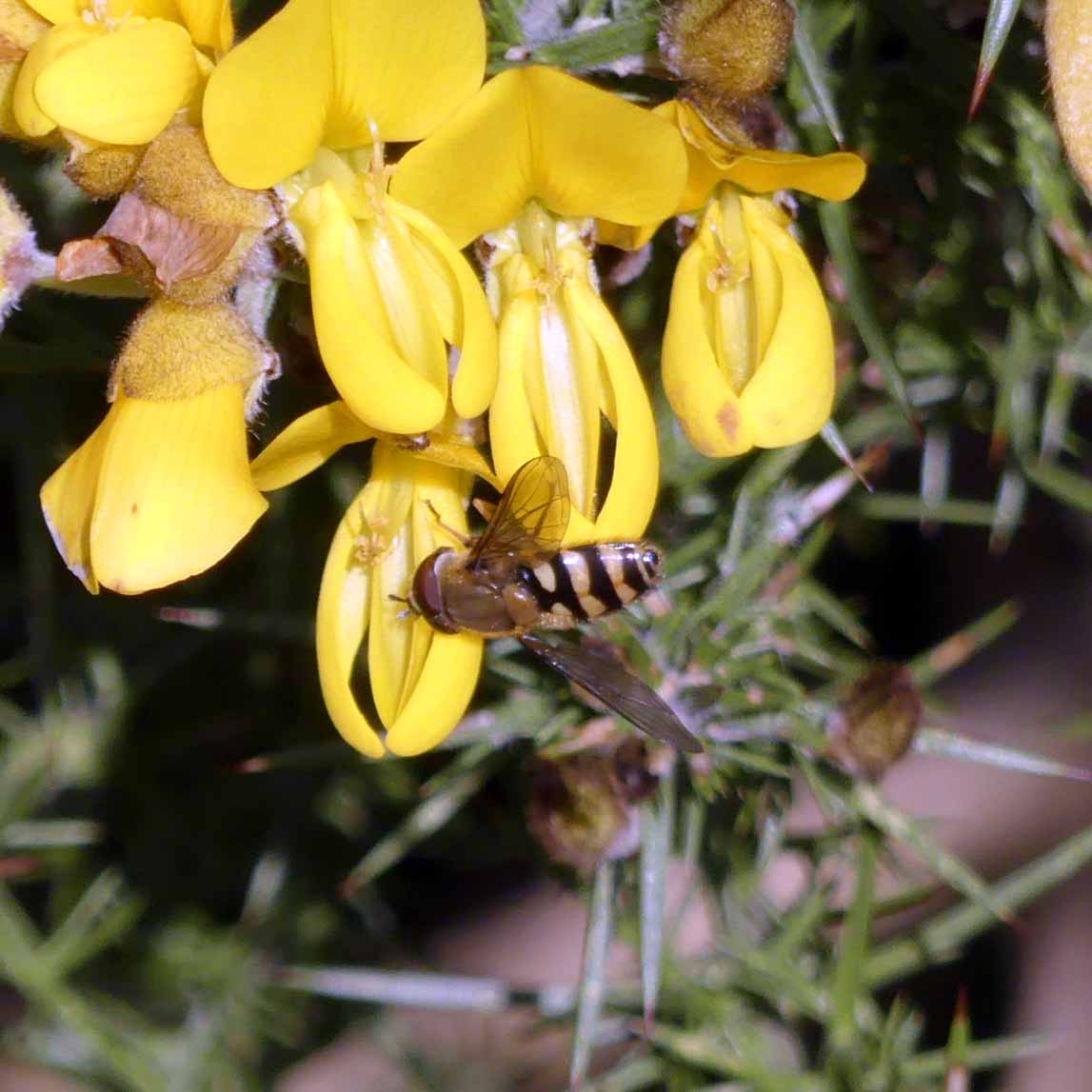
Meliscaeva auricollis (f)

Reaching the open field I started on my usual route around its edges, looking carefully at the vegetation for any insects that might be out on show whilst taking the opportunity to bask in the sunshine and/or seeking a welcome mid-winter top-up of nectar or pollen energy. I was in luck! Some of the gorse bushes are in flower to vary degrees and some of those in the most sheltered and sunniest spots had visitors. Firstly a single hoverfly had a small bush at the bottom end of the field to itself. Not a species I recognised, it was later identified for me as a female Meliscaeva auricollis, a double first sighting – first hoverfly of this year and a first of the species.

“When gorse is not in flower, kissing is out of season“

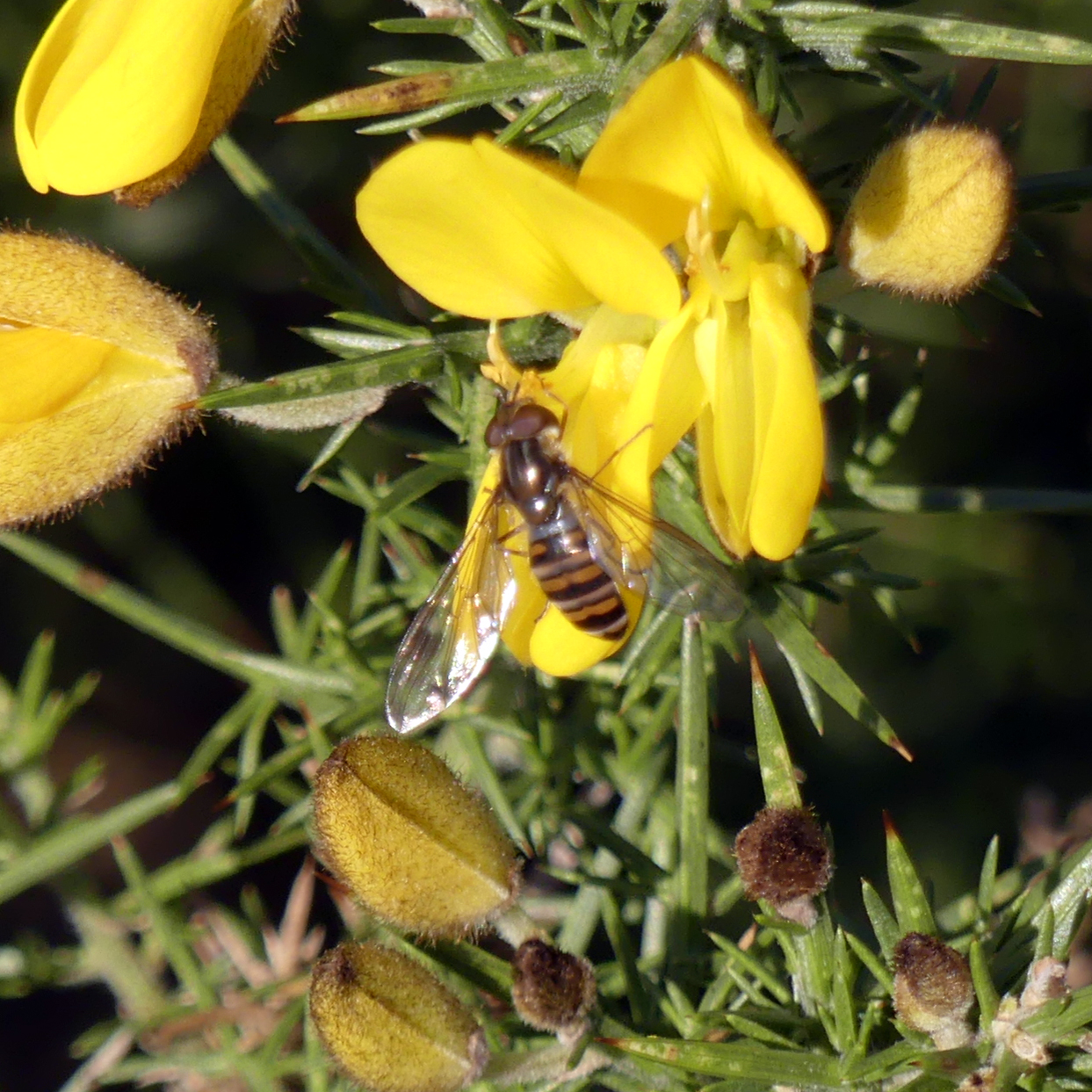
At the top corner of the field there are several big old gorse bushes, one of which is in more or less full bloom and emitting its glorious warm coconut-vanilla perfume. Here there were a surprising number of insects vying for the best blossoms. There were more hoverflies, two black and yellow Syrphus males (not able to specify species) and a single little female Marmalade fly Episyrphus balteatus.

Hoverfly-Syrphus sp (male)
Marmalade fly-Episyrphus balteatus (f)

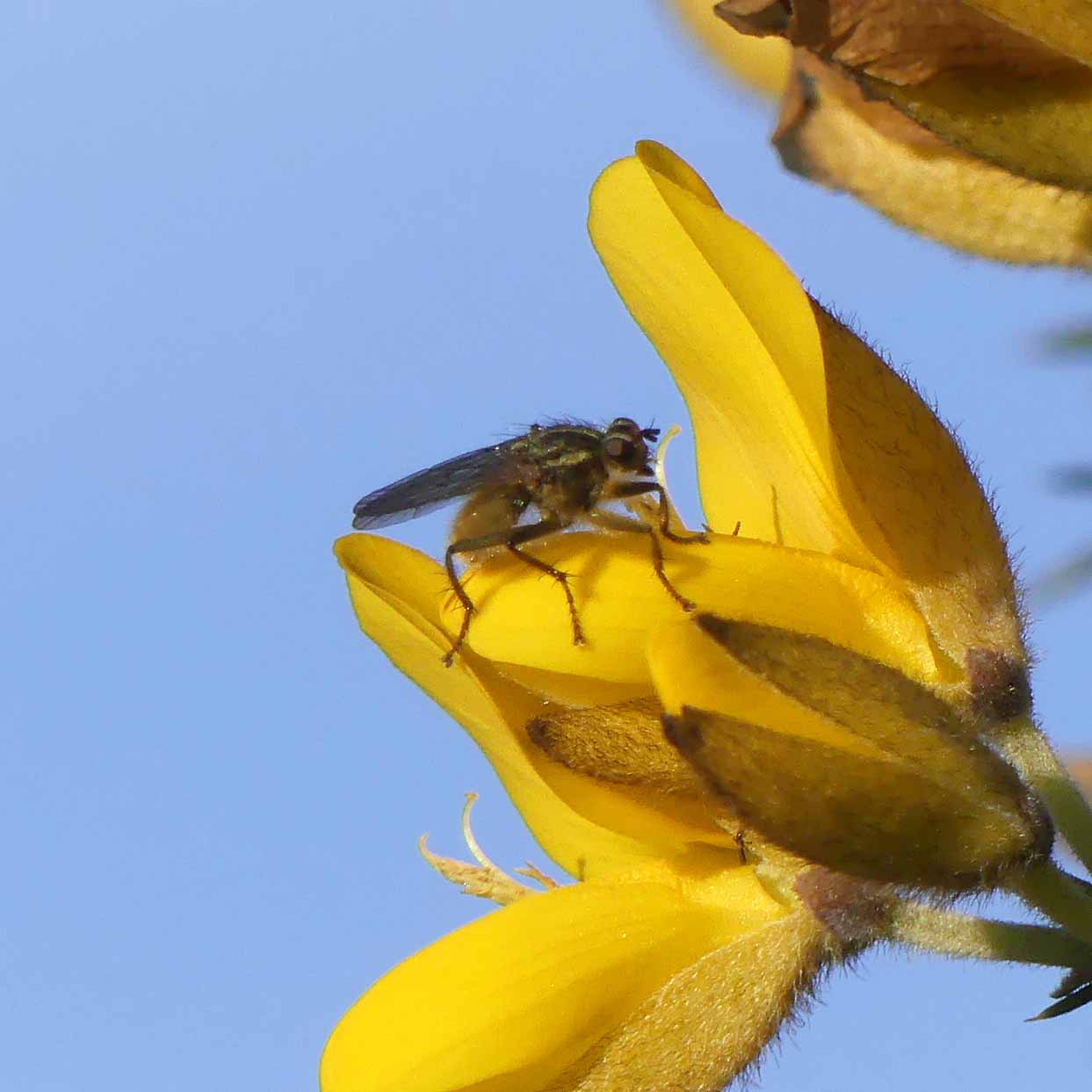
There were also several honeybees and a single individual of one of my favourite species, a female yellow dungfly.

Honeybee
Yellow dungfly (female)

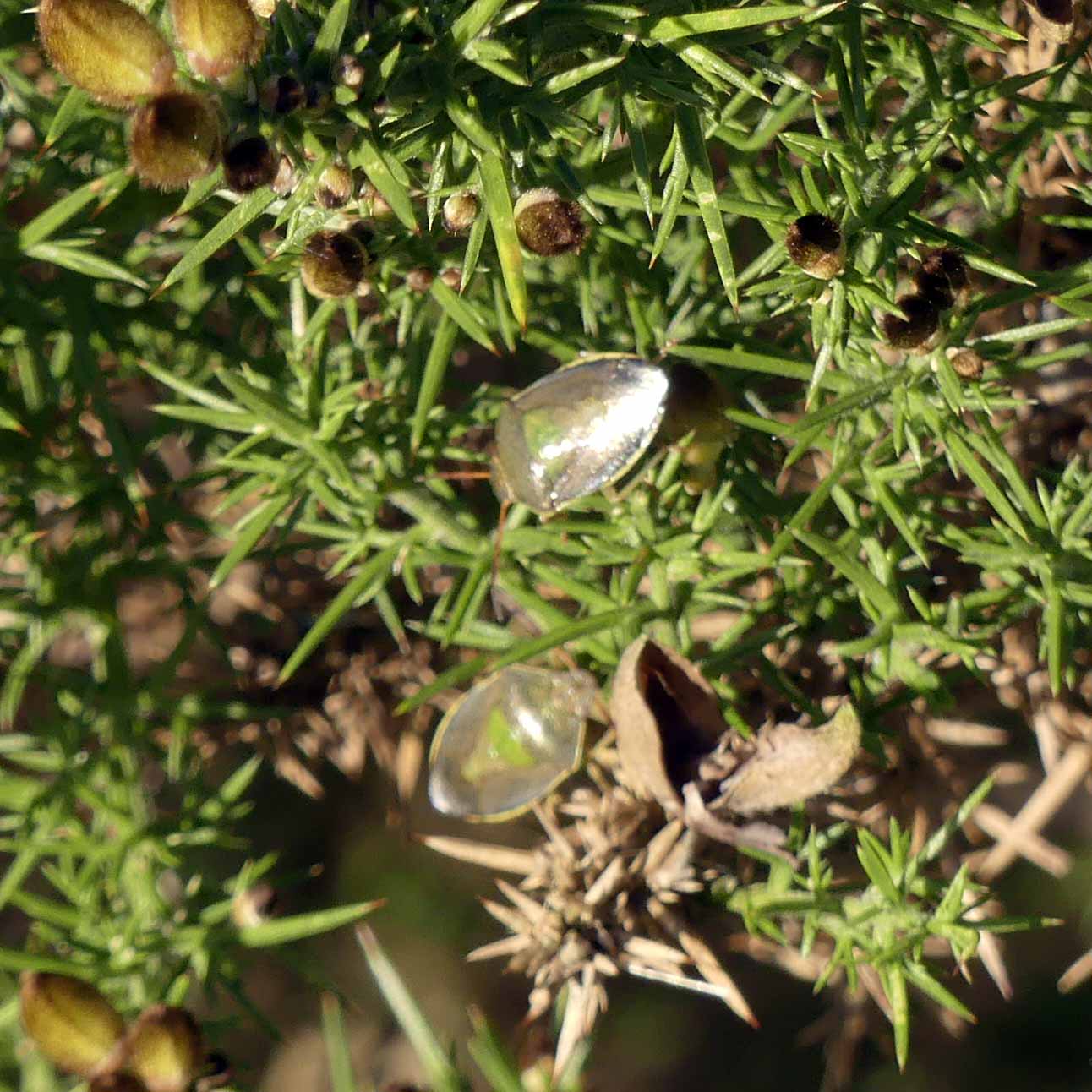
All of the above were wonderful to see, especially so early in the year, but the outstanding treat for me was to see gorse shieldbugs in a greater number than I’ve ever seen in one place at the same time ever. As usual it took a minute or two to get my eye in to spot them, but once I did I discovered them singly and often in twos both basking in the sun and moving around, and stopped trying to count when I reached 20 individuals. A perfect sight to finish on.

Gorse Shieldbug – Piezadorus lituratus

Share this:

  • Click to share on Facebook (Opens in new window) Facebook
  • Click to share on Pinterest (Opens in new window) Pinterest
  • Click to share on X (Opens in new window) X
Like Loading...

Scouting Signs of Spring

16 Thursday Mar 2023

Posted by theresagreen in Nature of Wales, nature of woodlands

≈ 1 Comment

Tags

Bryn Euryn Nature Reserve, cherry plum, early flowering trees, flowering in March, jelly-ear fungus, March, tree buds opening, woodland birds

Snow was forecast to reach us later in the day today and the prediction for the next few days sounded like stay-at home-and-catch-up weather. As there’s always the possibility they’d got it right, I had to take the opportunity to get outside while the going was still fairly good to scout for signs that spring is not too far away. The bright sunshine pouring through my windows had been deceptive. Outside it was very cold, bitterly so when the wind intermittently blew, and I headed for some shelter in the woods, I was soon glad of the extra layers I’d piled on.

There are two choices of path through the first part of the woodland; the ‘official’ signposted public path and one that is a little higher up, accessed by scrambling inelegantly up a rocky bank, which is the one I took today. This is my favourite path, less used and with more of a feel of ‘proper’, older woodland on either side. Even at this time of the year there’s usually something interesting to see; there are some lovely big old trees and there’s always the likelihood of catching sight of a bird or two along here too.

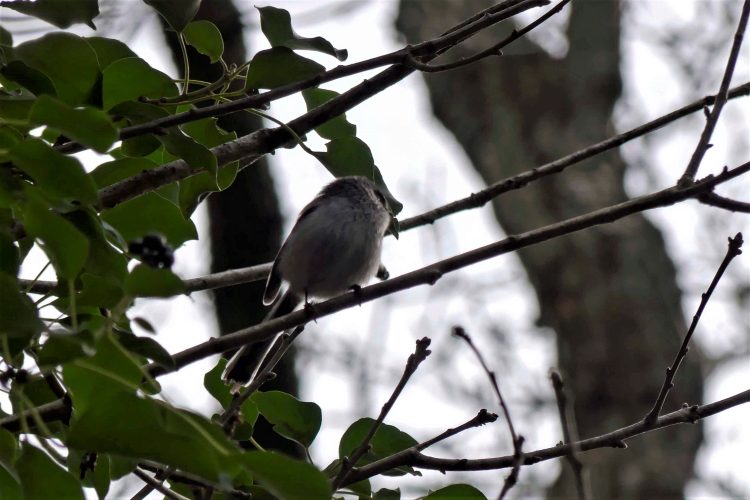
On either side of me I could hear the contact calls of blue tits and close by the scolding calls of a small bird, made whilst flitting animatedly from branch to branch of a small tree. The sun shining behind it meant I had to squint to see it properly, but as I suspected, it was a lovely little long-tailed tit. Fingers crossed it was one of a pair and they’re nesting somewhere close by.

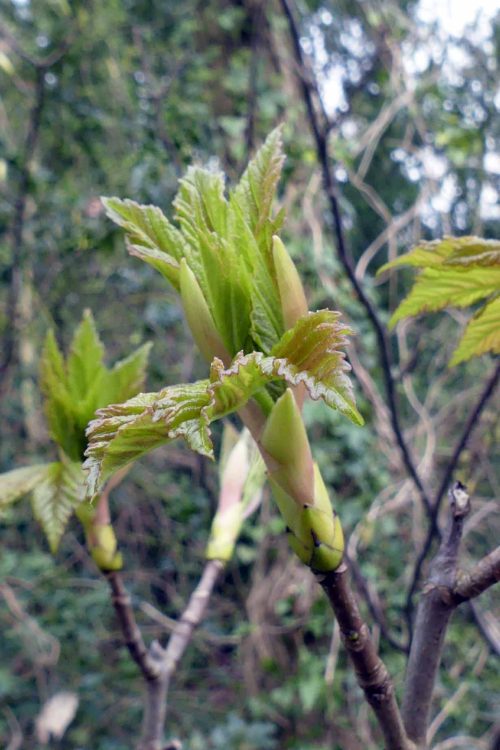
Several trees have been lost from here over the last few years. Any loss is sad, but there’s some compensation in that the space they occupied and the extra light allowed through to reach the lower levels of the woodland, new plants have the opportunity to grow. There’s competition along the path edges, budding twigs of seedling ash cluster close together for now, but eventually some will thrive and others won’t. Other seeds fortuitously landed in more spacious spots and are growing quickly into sturdy saplings. Amongst them, no surprise, are several sycamores and a little less expected, a couple of horse chestnuts. These saplings have already begun to release their new leaves from their tight buds, needing to grab as much light as they can to help fuel their growth before the big trees open up theirs and close off the canopy. Both have the most beautiful buds that are just beginning to open.

an opening ‘sticky bud’ of horse chestnut
an opening sycamore bud

As well as the sapling trees there’s a mixed scramble of shrubbery along the path edges, ground-covering ivy, long whippy canes of dog rose and thorny lengths of bramble snake out seeking spots in which to touch down and take root. Honeysuckle, always one of the first woodland plants to put forth new leaves clambers over whatever it comes into contact with and climbs upwards trees where it can. There’s an abundance of holly in plants of varying sizes; and checking one or two of the bigger shrubs I found one that already has flower buds. Closed tight at the moment, these are buds on a male plant and they will open up into tiny white, scented flowers. It will take there to be a female plant nearby to benefit from the pollen of the male flowers if there are to be berries. There are touches of mahonia, which despite managing to flower each year and increasing in number of plants, doesn’t seem to really thrive here; plants stay small with thin foliage and leggy woody stems. Although it’s an ‘incomer’ to the woods, its early flowers are a useful source of nectar and pollen for early foraging bumblebee queens.

tight male flower buds on holly
Jelly-ear fungus Auricularia auricula-judae

The felled trunk of what I think was a sycamore tree caught my eye as it’s smothered with the fascinatingly formed jelly-ear fungus Auricularia auricula-judae. This fungus is also known by the common name Judas’s ear, translated from the Latin auricula – ear and judae – Judas. Unfortunately, at some point in the past this was mis-translated and was frequently also referred to as the now unacceptable Jew’s ear.

Strongly associated with elder trees, these old common names for the fungus came about in part because of their distinctive shape and because Judas Iscariat, the betrayer of Christ reputedly hanged himself from an elder tree. The accepted English name is now jelly-ear, which aptly describes both the shape and texture of the fungus and is unlikely to cause offence.

Towards the end of the path, the alexanders plants are flowering. A particular favourite of yellow dung flies, I’d already found a couple of them in this spot on an even earlier flower a week or two ago. Not today though -it was way too cold, even with their little furry coats.

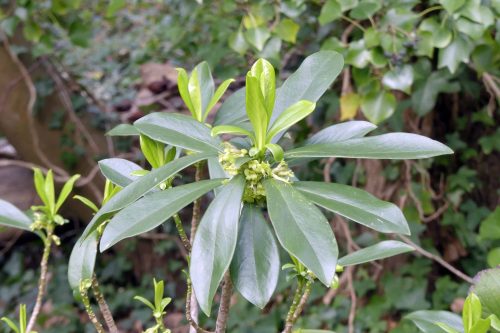
Some spurge laurel plants still have flowers, others flowers and forming fruits and some just fruits.

spurge laurel with flowers and fruits
spurge laurel forming fruits

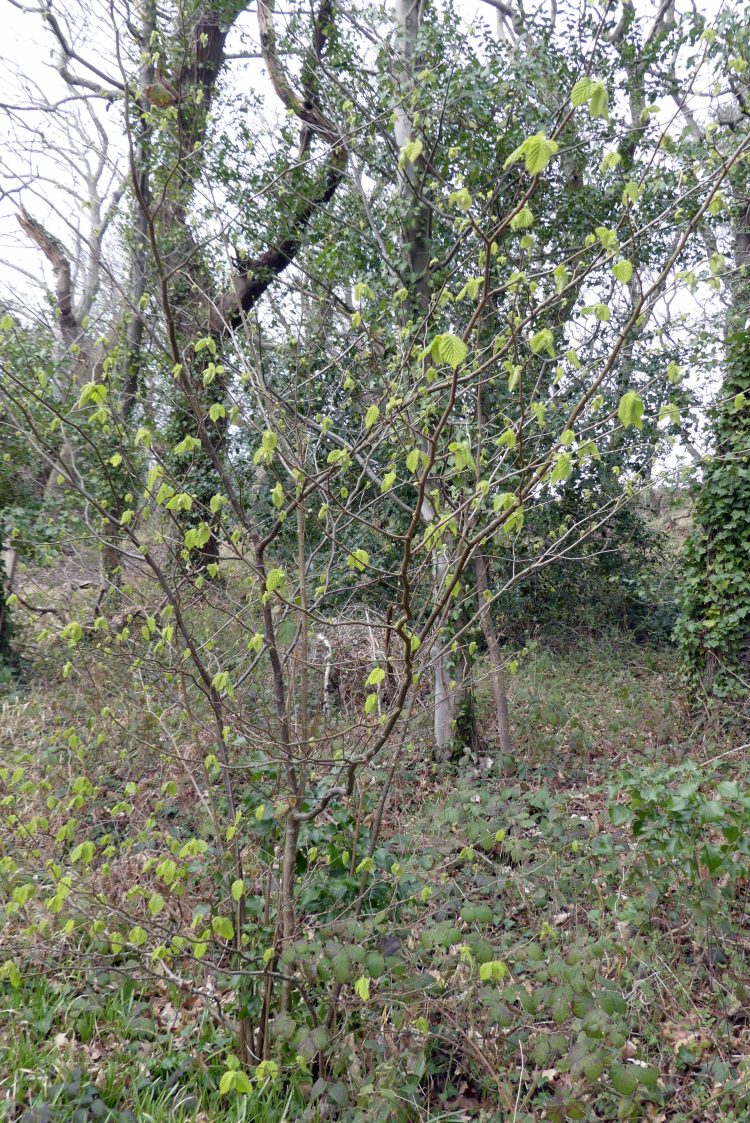
In an open space a young hazel tree is gradually securing its place and is showing a good number of new fresh green leaves.

young hazel
new hazel leaves unfurling

There are still catkins on the mature hazel trees. but they’re starting to look a bit straggly and worn now. These dangling tassels are the obvious showy, pollen-bearing flowers of the hazel and are male. You have to look much closer to find the female flowers, which when fertilised will develop into nuts; they are bright dark pink, but very tiny and remind me of miniature sea anemones.

male hazel catkins
fertilised female hazel flower

A branch fallen from a tree has been left to lie across the path. It’s only slender, but it’s provided a barrier against trampling feet and cold winds and together with leaves trapped against it, it has provided a safe place for opportunistic plants. False brome (grass), lesser celandine, nettle and speedwell have all found a foothold here.

Out on the Woodland Trail, the flowering currant, another sometime garden escape has both its pretty pink blossom and new leaves.

Flowering Currant Ribes Sanguineum 
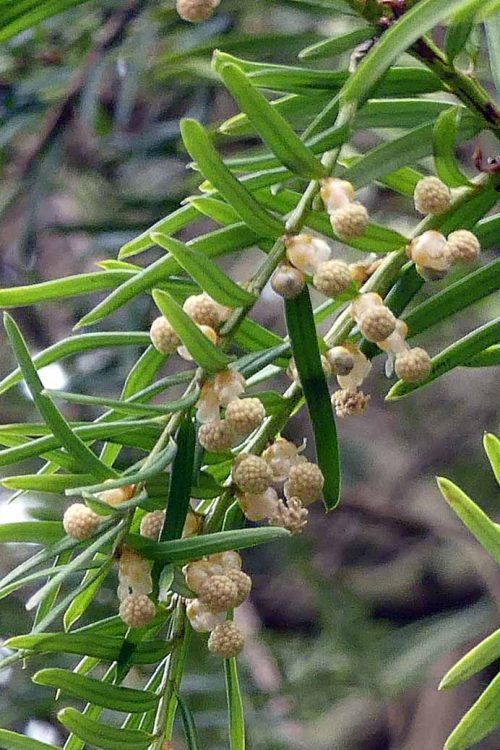
male flowers of yew

Yew has separate male and female trees and they too are flowering now. On some trees the male pollen-bearing flowers are quite prolific and very visible. In close-up they look like miniature heads of cauliflower in close-up.

Female flowers are tiny and green and are much harder to see. I did look, but admittedly not too hard as it was too cold to stay still for long and I couldn’t find any today.

male yew with clusters of tiny flowers

Further along the trail, the tall not-so-wild, cherry plum is still flowering beautifully, but not for much longer. Already many white petals are sprinkled like confetti on the earth of the trail beneath it, and it has already opened most of its new, red-purple tinted leaves.

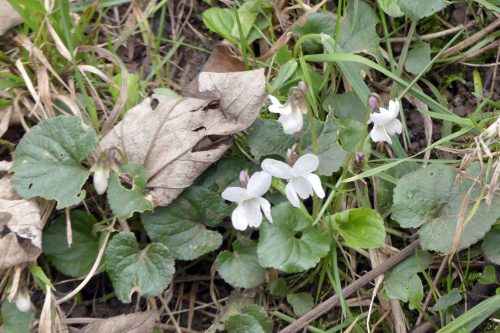
On the muddy bank at the junction of the Woodland Trail with the ‘shortcut’ up to Adder’s Field the white sweet violets are out, although not doing too well this year. It’s not too surprising given the weather of the past year, but at least they’re clinging on. A purple flower amongst them caught my eye – there have only ever been white violets here that I have seen, but a closer look showed it to be an especially early, early dog violet.

sweet violet viola odorata
early dog violet viola reichenbachiana

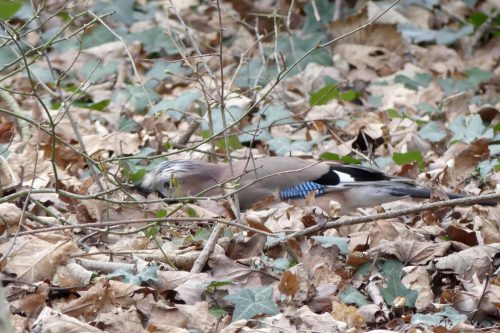
This is often a good spot in which to see birds. There’s almost always a robin here, often the sight or if not, the song of a wren to be heard, blackbirds forage along the trail edges and in past years there have been mistle thrushes. Today a robin did appear for me, and there were glimpses of blackbirds rustled ivy leaves as they lunged for ripe berries. There were more sounds than sightings – a couple of disturbed wood pigeons clattered out of the trees, a great tit chimed his song, crows cawed and herring gulls squawked – a reminder that even though surrounded by woodland the sea is close by. Not a day for too much hanging about, I took the shortcut up to the field and came upon one of the treats of the day. A gorgeous jay was on the ground, rummaging in the deep leaf litter. It may have been searching for one of its autumn stashes of acorns, or perhaps was hoping to find insects. This is a hard time of the year for hungry birds.

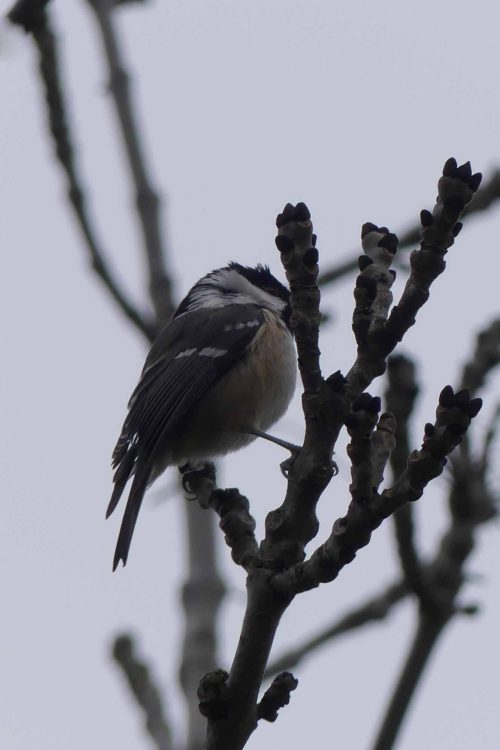
Coming out from the shelter of the trees into the open field I was met by a cold wind and the first tentative flurry of fine snow. As I was about to move quickly on, another little bird caught my eye, a coal tit at the top of a branch of a small ash tree. This was my first sight of one so far this year and I’ve never seen one in this part of the reserve before, so another treat for the day.

coal tit
swelling buds on young ash

The Cherry Plums

As I mentioned in my previous post, each year I look forward to seeing the ‘wild’ cherry plum tree here in its full glorious snowy-white blossom. Visiting it has become almost like an annual pilgrimage, a vision to behold at the end of winter that promises the approaching spring. I’d been a bit worried that I might have missed it at its best as I’d been away for a week or so, but having already seen the not-so-wild one earlier on, I was hopeful. It did not disappoint – despite there being a few petals sprinkled on the ground beneath, it was as beautiful as it could be, loaded to the tips if its branches with perfect starry white flowers.

‘wild’ cherry plum
red-purple leaved cherry plum

The flowers of cherry plums almost always appear before the leaves and there are still only a few new glossy green leaves open yet; enough though to show the difference between this tree and the similar one on the other corner of this bottom end of the field. Quite young yet, this one is more of a tall shrub than a tree. It too has been flowering for a while, and has very similar-looking, although sparser pretty white blossom. It has already opened most of its leaves, which are quite well-grown. Tinted purple-red, the leaves show it has grown from the fruit of a cultivated variety of cherry plum, perhaps the similar big tree on the Woodland Trail that I passed earlier.

wild cherry plum flowers & new leaves
red-purple leaves of not-so-wild cherry plum

Walking up the hill to the top end of the field through thickening falling snow I picked up my pace and covered my camera, thinking I’d done for the day, but then the wind dropped and the snow stopped. As my dad would have said though, the sky was still full of it, so no doubt this would just be a brief lull.

Time though to have a look at the progress of the oak tree leaf buds – still tight as yet. At the end of one twig, what looks like a cluster of leaf buds is a knobbly growth produced by the knopper gall wasp, Andricus quercuscalicis, that causes ridged outgrowths, or ‘galls’, on the acorns of our native pedunculate oak. Forming in August they are sticky and red at first, then later become woody and brown. A second generation of the wasps then develops in the catkins of turkey oak.

A sky full of snow covering Colwyn Bay

Tucked into the shelter of blackthorn, a patch of budding celandines and leaves of lords and ladies, some marked with dark spots, others not.

Almost home – snowy white sweet violets carpet grass.

.. a pretty forget-me-not…

…. and a grey squirrel, watching me pass. Doesn’t it know they’re supposed to give us a break and stay tucked up indoors when it snows?

Share this:

  • Click to share on Facebook (Opens in new window) Facebook
  • Click to share on Pinterest (Opens in new window) Pinterest
  • Click to share on X (Opens in new window) X
Like Loading...

Midsummer Woods

05 Sunday Jul 2020

Posted by theresagreen in birds of Wales, Butterflies of Wales, Insects, Local Nature Reserves, Nature of Wales, nature of woodlands, Walking, Wildflowers of Wales, woodland

≈ 12 Comments

Tags

Bryn Euryn Nature Reserve, buteo buteo, common buzzard, common lizard, Early Bumblebee, Great Pied hoverfly, longhorn beetle, pollinating insects, Red Admiral, rutpela maculata, slow walking, speckled wood, strangalia maculata, tree bumblebee, Viviparous lizard, yellow and black beetle

It had been a good while since I’d spent the best part of a day meandering around the whole rich patchwork of varying habitats that make up my local nature reserve of Bryn Euryn, so a sunny morning that was forecast to stay that way into the afternoon offered the perfect opportunity to spend a day outdoors.

09:59 – Woodland Path
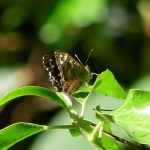
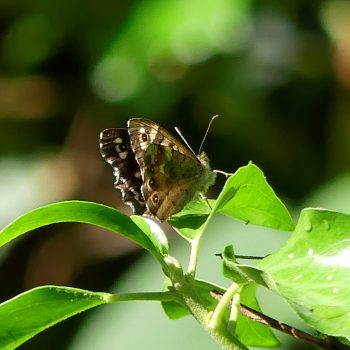
Once outside I realised it wasn’t quite as warm as I’d thought it was going to be, but the air felt fresh, if slightly humid. The copious rainfalls of previous days have done wonders; plants that had looked sad and wilted a few days ago were perked upright and the leaves of the trees washed of dust and good as new. A Speckled Wood butterfly on ivy and the chirpy calls of foraging Blue Tits greeted me at the beginning of the path, which has also benefitted from the dust-settling cleansing rain.
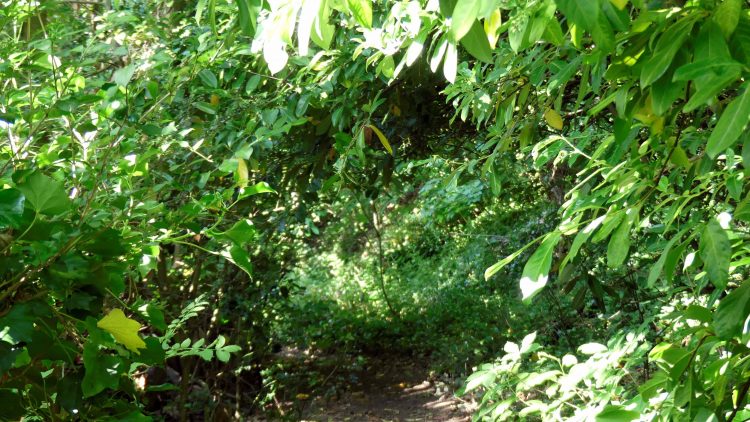
The specialist woodland wildflowers of the early Spring have long-since finished flowering now and are directing their energies into producing seeds. There are a few later-flowering plants that can cope with the reduced sunlight though, including the beautiful Honeysuckle, one of my lifetime favourite plants whose fresh perfume I would happily fill my home with, if only someone could capture it perfectly.

An arch of Honeysuckle
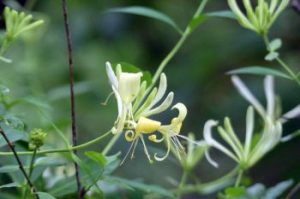
It’s been a good year for this  fragrant twining-climbing plant which has given me cause to make even more frequent stops on my walks; the scent of it in the air, particularly in the cooler mornings and evenings is as much a highlight as anything I might see or hear. It has maybe passed its peak of flowering now, but there’ll be occasional blooms to enjoy for a while to come.

Also happy in partial shade and flowering now are Navelwort, which is usually more easily recognised by its distinctive round fleshy leaves and Wood Sage, which despite its name is not confined to woodland paths; it’s a tough plant that is equally as happy growing out on exposed heaths and coastal cliffs.

Wood Sage-Teucrium scorodonia
Navelwort-Umbilicus rupestris

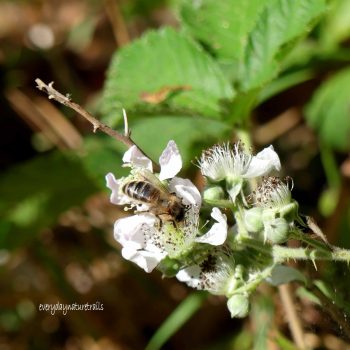
10:12 Covered with white blossoms and well-refreshed the bramble patch at the top of the first rise of the path, was my first stop this morning. Gradually being lit and warmed by sunshine, it was already busy with a variety of insects.

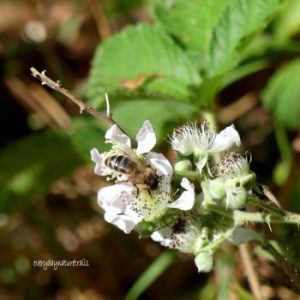
Honeybee on bramble blossom

A Blackbird was singing from a tree somewhere close by, his melodic, relaxed song lending an element of calm to the scene of frenetic insect activity. There were bumblebees: Tree Bumbles  definitely the most numerous, some looking fresh, their heads and thoraxes bright deep tawny brown others faded to a pale blonde, perhaps bleached out by the sun. A few smaller Buff-tailed workers are busy between them and there are a small number of Honeybees, some of the first I’ve seen this year.

Faded Tree Bumblebee
Fresh Tree Bumblebee

Butterflies joined the party, two Speckled Woods, which must have been a male and a female as they behaved amicably together, feeding almost side by side until disappearing together to the privacy of the leaves of an overhanging Sycamore. A Large White scooted over but didn’t stop, but a Red Admiral, missing a piece from a hind wing stayed for the whole length of time I was there, only moving short distances between flowers.

Speckled Wood
Speckled Wood
Red Admiral
Red Admiral

Most interesting of all were the big yellow-and-black beetles, that for some reason don’t seem to have a standardised common name, so are  known to me as Strangalia maculata, (which is apparently no longer correct as they’ve changed it to Rutpela maculata!). In the midst of the tangle of bramble, honeysuckle and ivy stands the remains of a tree, which was snapped in a storm a few winters ago. I wonder if it’s within its damaged fabric that they spent their larval stage and from which they have emerged. For a while now I’ve seen them here each time I’ve passed by, several at a time. Until now all of my past and more recent sightings of these lovely beetles have been of them calmly feeding on flowers, so it was interesting to see them very active this morning, flying rather clumsily from flower to flower, not lingering for long on any.

Yellow and black beetle- Rutpela maculata
Yellow and black beetle-Rutpela maculata

The distant mewling of a Buzzard calling from above diverted my attention and I caught glimpses of it as it circled high above the trees.
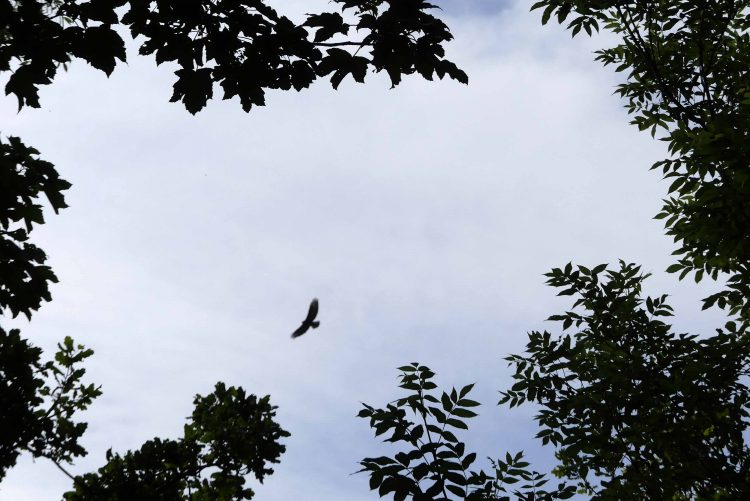
This was the first one I’d seen in a while, so I wondered if it might appear back over the field, perhaps with its family, so moved on in that direction. It was a sun-in-and-out morning, surprisingly cool on the shady path when the breeze picked up.
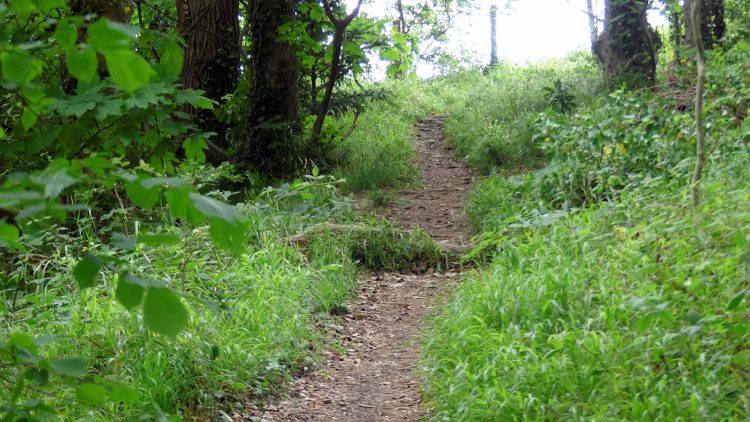
Path edged with False Brome

Paths are edged with grasses, which are flowering now. False Brome predominates, covering large swathes of the woodland floor in places throughout this site, and there are lesser amounts of other species such as the distinctive Cock’s-foot.

Cock's-foot-Dactylis glomerata
Cock’s-foot-Dactylis glomerata
False Brome-Brachypodium sylvaticum


10:40 There was nothing to see at this edge of the woodland except the wind rippling over the long grass of the meadow, and it was too cool to linger.

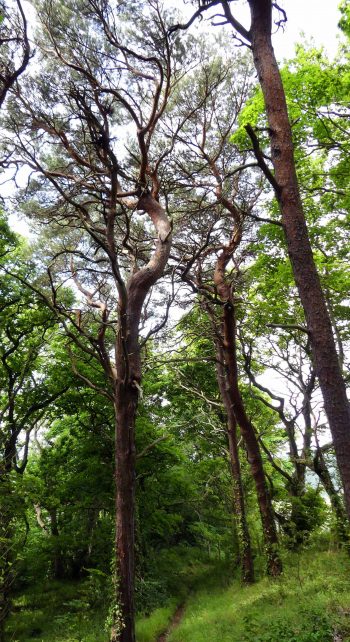
The sun came out again as I walked between the pine trees. This has become one of my favourite parts of the woods. I love the characterful Scots Pine trees with their tall, straight trunks crowned on high with heavy, strangely twisted branches in all seasons; but today with their rust-red bark still slightly damp and darkened by rain and highlighted by filtered sunlight they had a special glow.

There were no birds to be seen and for a while no sound of them either, until their silence was briefly broken once again by the Buzzard and the familiar contact calls of more Blue Tits working their way through the trees.

PATH EDGES
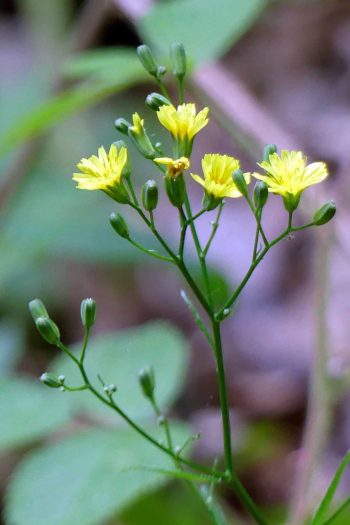
Nipplewort-lapsana-communis

Opportunistic wildflowers crop up randomly along the path edges, mostly of those species that seem to travel alongside the blackberry brambles, accompanying them wherever they go. In flower now are nettles, dock and delicate-looking Nipplewort.

All have value to insects in their way, either as sources of pollen and nectar or via their leaves which are either eaten from the outside or mined and eaten from the inside.

Curled Dock
Curled Dock
Common Nettle
Common Nettle

10:47 – My next stop is at the brambly-scrubby patch at the junction of three woodland paths. In recent weeks this has been buzzing with a variety of bees, in particular Tree Bumblebees that clearly have a nest nearby, or there may even be two. There have been a lot of Early Bumblebees too, but lesser numbers of other common species and so far I’ve only seen one or two Red-tailed bumblebee queens; no workers.
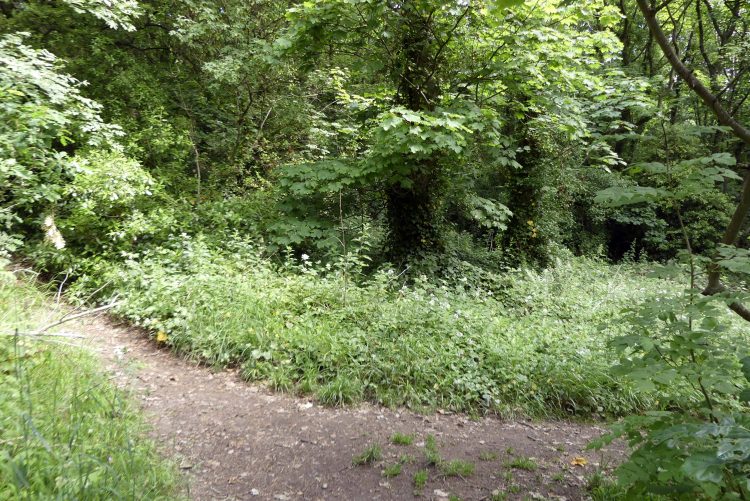
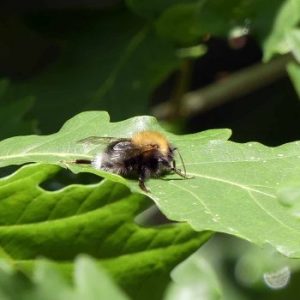
Predominately a raspberry bramble patch, which flowers earlier than blackberry, there is less blossom here now so is less of a draw for foraging insects now. There were a few Tree bumblebees about though, some working, one or two taking short rests on nearby sun-warmed leaves; poor things have probably already been out working for hours. This has been a great spot for hoverflies this Spring too, where I’ve  added a few ‘new’ species to my list. It was starting to get warmer, which doesn’t seem to bother bees, but hoverflies often seek shade under leaves, so I wasn’t too surprised there were few to see. Then I spotted one of the largest of our UK hoverflies, a Great Pied Hoverfly (Volucella pellucens) on some more shaded brambles. Not a new species for me, but I’d not seen one in this spot before. In contrast there were also a few of one of our smallest and commonest hoverflies about, little Marmalade Flies (Episyrphus balteatus).

Gt Pied Hoverfly-Volucella pellucens
Marmalade Fly-Episyrphus bateatus

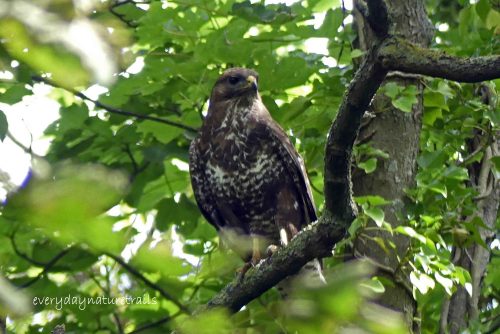
10:46 A bird landed in an Oak tree a few metres behind the Sycamore tree, on first impressions quite big,heavy-ish landing so probably a Wood Pigeon. I almost didn’t take any more notice, but then it came to mind that this is a good spot to see Jays, which I am always keen to try to photograph as they are quite elusive, so I focussed on it and was excited to see it was neither Wood Pigeon nor Jay, but a dark handsome Buzzard. What a beautiful bird, and posing so nicely too.
The Woodland Trail

11:10 As I walked on, I remember thinking that the sighting of the Buzzard and managing to get a half-decent photograph of it was going to be the main highlight of my day. But then you just can’t predict what you may or may not see on any given day in this treasure trove of nature, as I later discovered.
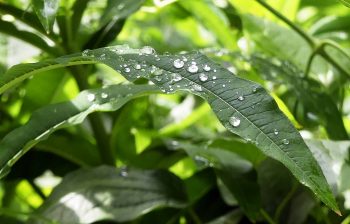
Reaching the Woodland Trail, I crossed it to sit on the bench for a few minutes to enjoy the sunshine and to listen to what was around me whilst I wrote some notes. I’m always fully aware of the soundtrack of my walks, but unless I get lucky and can photograph or record a singing bird can’t always properly recall what I heard. This is what I wrote here ” … for 30 seconds, maybe a little longer there are no extraneous sounds; no noise from the road, no dogs barking, no human voices, only the sounds of twittering birds – most likely Blue Tits reassure me I haven’t gone suddenly deaf! A Robin’s just flown into the tree above me. It sits and looks at me for a few seconds before flying into the woods I’ve just left. I see a Small Heath butterfly; it lands but I didn’t spot it in time and it flew off, surprisingly rapidly for such a tiny butterfly, ditto a Meadow Brown!”

As I got up to carry on I caught sight of a small gingery-furry bee flying over a fallen tree branch, which I thought might have been a Tawny Mining bee. I tried to focus in on it, but it was flying and although I pressed the shutter a couple of times I knew the bee wouldn’t be in focus, but may do as record shots. I can’t even begin to describe my feelings when I looked at those photographs on my computer later that evening. Expecting to see an out of focus bee, there too was also an almost perfectly in-focus lizard lying motionless and perfectly camouflaged along the length of the fallen branch which the bee was flying over. It had probably been watching me and wondering whether it should stay still or risk making a move. I’m grateful it chose the latter option.
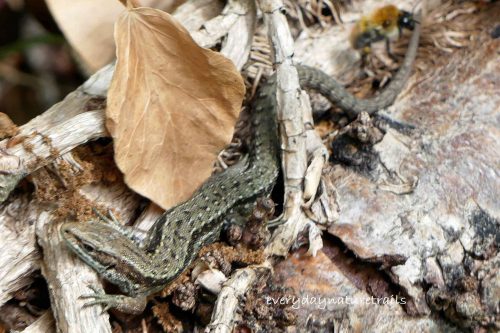
Part of me was glad I hadn’t noticed the lizard, which is a Common or Viviperous Lizard, as I’m sure I’d have been so excited to see one in a position where I might get a photograph that I’d have fumbled with the camera and likely have missed it. But then I think it would have been nice to get a proper look at one rather than just a glimpse of a disappearing one, which is all I’ve managed so far in my years of tramping this hill! Mainly I’m just more than happy to know it was there and I have a photograph, however I managed it!
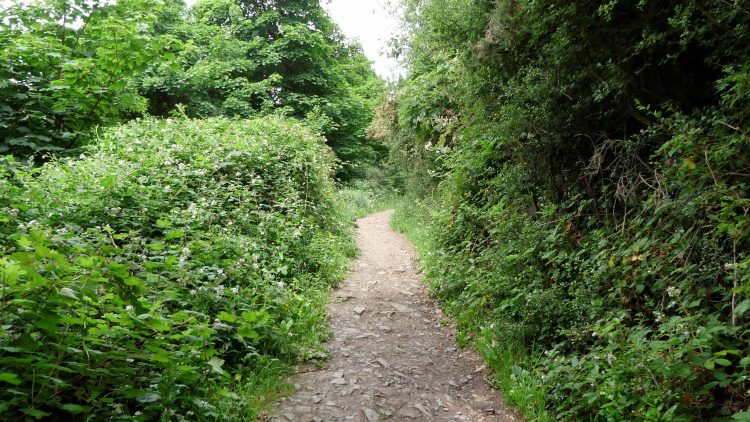
Being oblivious at this point to my lizard ‘capture’, and back in insect-seeking mode, I wandered along to the huge bramble tangle that once in flower has always been a brilliant place to spot a good variety of insects in a relatively short space of time with minimal effort. Years ago, this was the first place on the reserve that I recognised as an insect ‘hotspot’. There was a fair amount of activity here this morning, mostly from bumblebees, but there was also another Gt Pied Hoverfly, a Red Admiral butterfly, a Strangalia maculata beetle that only showed me its antennae and legs and a few different species of flies. Getting photographs was tricky, insects were constantly moving, the sun was shiningly brightly, but probably more to the point the path was getting busy with people and dogs and I got fed up having to keep moving to let them pass at a ‘safe distance’.

Volucella pellucens
Volucella pellucens
200615-1126-BEWT (122b)-Bumblebee no id
Tiny Tree bumblebee
Tiny Tree bumblebee
Early bumblebee
Early bumblebee
200615-1122-BEWT (110a)-Fly
200615-1116-BEWP (102a)-Fly

Tutsan growing alongside the bramble already has ripening berries. Its flowers hadn’t the same degree of appeal to insects as bramble, but I did catch a little Marmalade Fly visiting it.

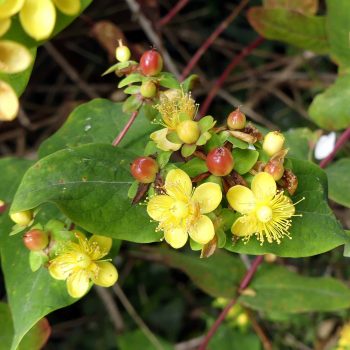
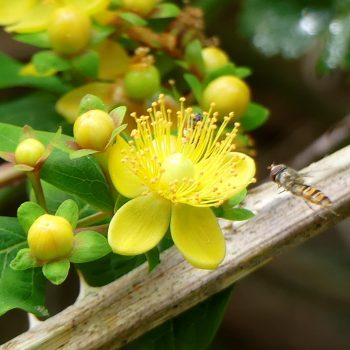
Tutsan with berries
Episyrphus balteatus

The woodland is at the peak of perfection now, leaves are fully grown, in a myriad of shapes and uncountable shades of fresh green; climbers and ramblers are not yet over-reaching themselves to become sprawling and untidy and the plants along the path edges are not yet spilling over it.

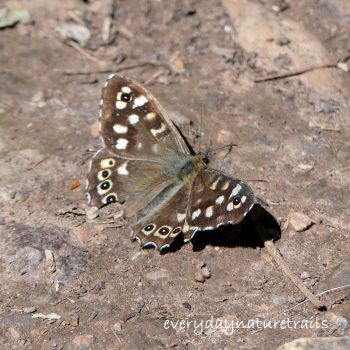
 

Speckled Wood butterflies were stationed every few metres along the path, whether basking on the ground or perched on leaves overhanging the path. Constantly on alert, they readily explode into action to see off any intruders into their territory.


Trees arch across the path creating shady leafy tunnels
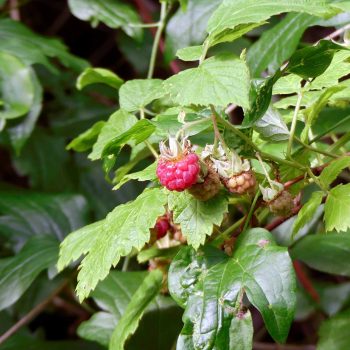
First wild raspberry

Generally birds are much quieter these days, apart from the Blackbird I heard earlier the only ones still singing to any extent are our summer breeders-Chiffchaff and Blackcap.

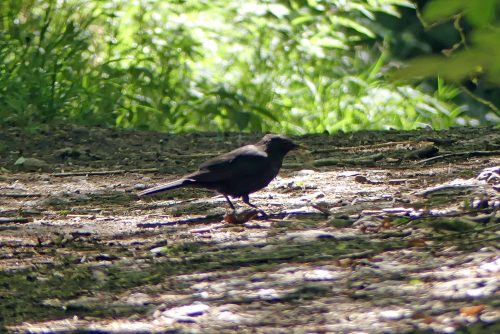
The closed canopy makes it too shady for there to be much in the way of ground-level plants for a while, so there are few distractions, other than Speckled Wood butterflies of course and the occasional sight of a Blackbird foraging in the safety of the dappled shade.
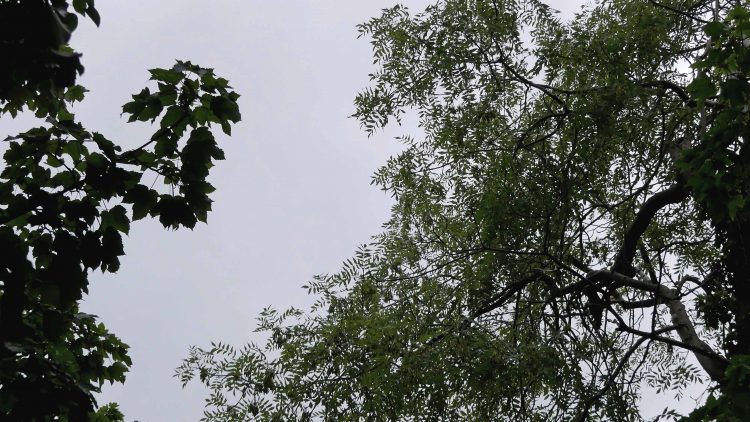
No matter how often I walk along this Trail, several times a week sometimes, each time I see it with fresh eyes. Looking up there are places where trees on opposite sides seem to avoid contact, leaving fascinating space between their contrasting leaves.
The same scenery changes according to the lighting effects; the varying cloud cover and the angle of the sun at different times of the day as the seasons progress all contribute, as do the weather conditions, particularly on days when there’s wind and how strong it is. On the ground, complex shadow patterns may be cast on the uneven canvas of the bare-earth path.

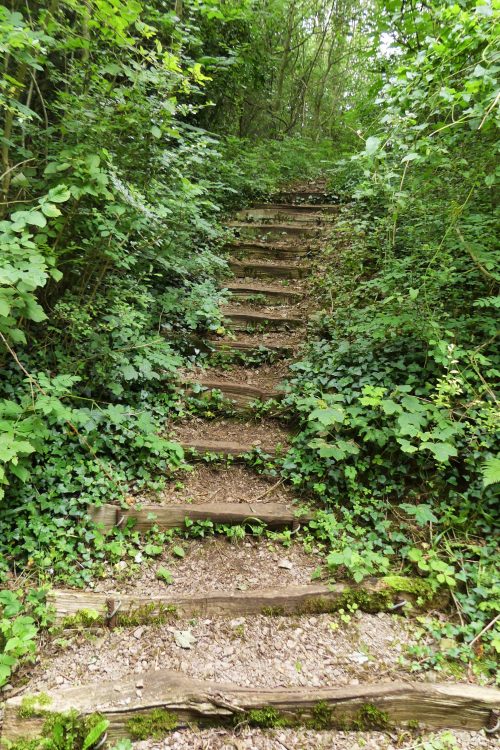
12:05: The steps up from the shady sheltered Woodland Trail lead into what could be an entirely different dimension….
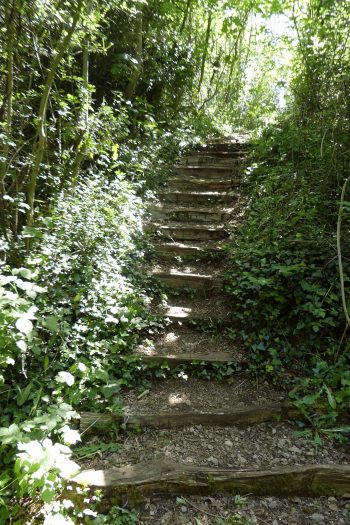
a good place to take a break..
Share this:

  • Click to share on Facebook (Opens in new window) Facebook
  • Click to share on Pinterest (Opens in new window) Pinterest
  • Click to share on X (Opens in new window) X
Like Loading...

Wild in Eastville Park

07 Saturday Apr 2018

Posted by theresagreen in Birds, Nature, Nature of Public Places, nature of woodlands, river walks, Walking Trails, woodland walks, woodland wildflowers

≈ 8 Comments

Tags

April, Bristol parks, Chiffchaff, Eastville Park, Frome Valley Walk, hidden rivers, kingfisher, lost rivers, public parks, River Frome

April 1st 2018

Two days ago I had boarded a train at Colwyn Bay in sunshine to arrive in Bristol four hours later in pouring rain. In these Isles we expect April Showers, but to time with my visit here to the South-West rain had been predicted for no less than 11 days straight! For the past two days the weather had done its best to fulfil that prediction, then lo and behold, this morning it gave us a reprieve and blessed the morning of the first day of this new month with welcome sunshine. Quick to take advantage of the opportunity to escape the confines of the house, my son and daughter-in-law bundled their respective visiting mothers and two daughters into the car and drove us all to Eastville Park for some fresh air and exercise before the rain swept back in.

River Frome looking downstream

We approached the Park along Broom Hill, parking at the side of the road just before the turning signposted to Snuff Mills.  Leaving the car we crossed the road bridge over the River Frome, then after a short way turned right onto the path alongside the river, which is a  section of the Frome Valley Walk. (The entire walk is 18 miles long and follows the river from the River Avon in the centre of Bristol to the Cotswold
Hills in South Gloucestershire.)

WICKHAM GLEN

This initial part of our walk follows the river through Wickham Glen; there is woodland on the far bank and on the path side it passes by Wickham Allotments. Following the recent heavy rain the river was full, and its fast flowing waters muddy brown. The path was wet and stickily muddy in places, but the sun was shining, there was fresh new greenery and birds were singing; the perfect Spring morning. Against the far bank a Mallard Drake dabbled next to a piece of disintegrating black plastic that looked like the remains of planting pots, possibly blown there from the nearby allotments.

An Alder tree stretched branches bearing cones and catkins out over the river.

Alder – Alnus glutinosa

To continue along the Frome Valley Walkway from here you would follow the signpost in the direction of Frenchay and Snuff Mills. We were heading for Eastville Park though, so turned right to cross the historic Wickham Bridge, a lovely medieval stone bridge which is Bristol’s oldest bridge and reputedly used by Oliver Cromwell, It is now Grade 11 listed.

Wickham Bridge, looking downstream

River Frome flowing downstream from Wickham Bridge

The river falls dramatically, more than 50 feet, between Frenchay Bridge and Eastville Park which made it perfect for operating water mills. There were once six mills along this stretch of the Frome Valley, most of them working as corn mills. Now all that remains as evidence of their presence are the weirs.

River Frome looking upstream from Wickham Bridge

eastville park

Eastville Park is a large Public Park that extends over some 70 acres of land, and is located just to the east of the M32. The land was originally agricultural land of the Heath House Estate owned by Sir John Greville Smyth of Ashton Court and was purchased from him by the Council for £30,000 in 1889 in order to provide a ‘People’s Park’ – a green space for those living in St Philips and the eastern suburbs of the city, where social and environmental conditions were poor.

Creating the Park was a huge undertaking begun in 1889 and taking around five years till 1894, to complete. Existing hedges were taken out, boundary walls repaired, paths laid out and a hundred seats installed. Wisely, existing mature trees were retained and walkways were lined with further plantings of limes, horse chestnuts and fast-growing London planes. Interestingly, the grass areas were managed by a mixture of sheep grazing and mowing, a common practise at that time that is still used today in some Nature Reserves.

Twisted Hazel
Twisted Hazel
180401-1055-BSEP (29)

A narrow footbridge crosses over water

then leads past the impressive Colston Weir. There have been recent reports of an Otter being sighted here.

Colston Weir

Not a pleasant thought in such a beautiful place, but this drain cover reminds that the Frome Valley Sewer follows closely alongside the river before finally ending at the Bristol Sewage treatment works at Avonmouth.

A pleasanter sight was a clump of White Deadnettle, although it had clearly taking a bit of a battering as its petals were torn and its leaves mud-spattered. Before the flowers appear the plant looks a little like the Common Nettle, but a closer look shows there are no stinging hairs hence the ‘dead nettle’ in the name. The lack of sting is also thought to have brought the plant’s other common name of White Archangel.

White Deadnettle, White Archangel – Lamium album

We heard a Wren and watched it as it flitted around in vegetation very close to the water. Another Alder tree gave me the opportunity to get a closer look. The tree’s flowers are on catkins which appear between February and April. Alder is monoecious, that is both male and female flowers are found on the same tree. Male catkins are yellow and pendulous, measuring 2–6cm. Female catkins are green and oval-shaped, and grouped in numbers of three to eight on each stalk. Once pollinated by wind, the female catkins gradually become woody and appear as tiny, cone-like fruits in winter. They open up to release seeds, which are dispersed by both wind and water. The small brown cones stay on the tree all year round.

THE LAKE

The lake was added as a feature a few years after the Park was opened. It was dug out in 1908 and 1909 from an existing water meadow with labour provided by ‘unemployed applicants’, under the Distress Committee’s Labour Bureau. It was constructed to a Serpentine plan, a design made popular by the famous landscape gardener, Capability Brown. The intrigue of its shape is such that wherever you stand on its edge, you can’t see the lake completely; there is always some part snaking out of view. Nowadays it is considered to be one of the best public park lakes in the country. 

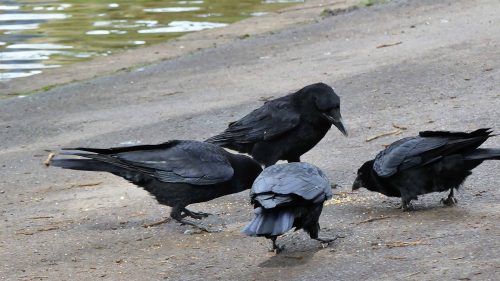
The lake is not just attractive for people to look at, it’s presence also draws in a good variety of species of birds. First to attract attention was a flock of noisy Corvids that flew into the trees to left of the lake.

At first I wondered if they might be Rooks as there were a good number of them, but a closer look made them Carrion Crows, maybe juvenile, non-breeding birds.

There’s a densely planted small island in the centre of the widest part of the lake, and as we passed a little brown bird darting in and out from a tree branch reaching over the water caught my attention. Clearly a warbler, it was either a Chiffchaff or a Willow Warbler, most likely the former, but either way my first sighting so far this year.

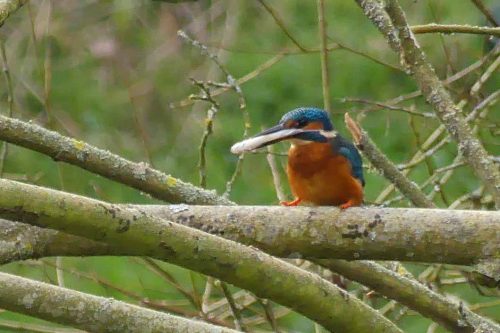
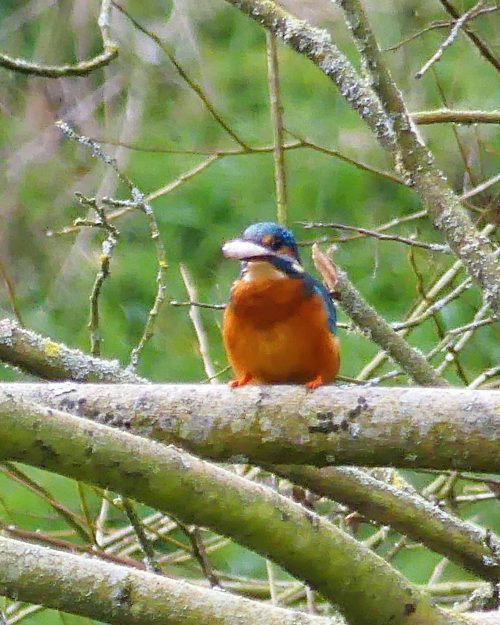
If I hadn’t zoomed in on the warbler I may have missed a rare treat, despite his jewel-bright colours– a Kingfisher! It was quite a distance away and was sitting perfectly still on the branch of a willow tree, intently studying the water below. 

What a beautiful bird!

After a moment or two it changed position, moving towards the end of the branch to scan the water immediately below, his long dagger-like beak pointing down, preparing to dive.

It dived so fast I missed it! I caught the splash as it entered the water, then a split second later it was back up on a branch with a sizeable fish clamped in its beak. It sat for a few seconds more, jiggling the fish a little to secure its grip, but it clearly wasn’t going to eat it there and then: Kingfishers always consume fish head-first. Perhaps it intended to enjoy its meal somewhere less public, or maybe it had a mate that needed feeding; the birds’ first clutch of 6-7 eggs is usually laid late in March or early in April.
Either way it took off carrying its prize in the direction of the river.

KINGFISHER – Alcedo atthis

UK conservation status: Amber – because of their unfavourable conservation status in Europe. They are vulnerable to hard winters and habitat degradation through pollution or unsympathetic management of watercourses.

Widespread throughout central and southern England, but less common further north, Kingfishers are small but spectacular and unmistakable birds mostly found close to slow moving or still water such as lakes, canals and rivers in lowland areas. They fly fast and low over water, hunting fish from riverside perches.

In total contrast, in plain black and white and far more common, my next spot was a Coot.

Coot – Fulica atra

Then a preening Canada Goose spied through tree branches with bursting buds.

Further down the lakeside someone had scattered some grain on the paving, attracting the attention of some hungry birds. Two more Canada Geese raced in

Canada goose-Branta canadensis

A Crow rushed past a female Mallard and a Swan

to join a group of his peers that were already tucking in.

What would a Park be without a flock of Pigeons? A male Mallard paddled in to see what they had.

He turned and joined his mate and they clearly decided there was nothing in it for them so set off to dabble elsewhere, passing a juvenile Mute Swan on its way in.

Mute Swans are, perhaps surprisingly, also Amber listed as birds of conservation concern. According to the RSPB “The population in the UK has increased recently, perhaps due to better protection of this species. The problem of lead poisoning on lowland rivers has also largely been solved by a ban on the sale of lead fishing weights.”

Mute swan – Cygnus olor

A late-coming Moorhen paddles in rapidly creating an impressive wake for such a small bird. Cousins of the Coots, Moorhens are smaller and are a little more colourful with a bright red and yellow beak and long, green legs.

Moorhen – Gallinula chloropus

The list of birds recorded within the Park is impressive:

A beautiful Weeping willow tree cascades down gracefully to touch the surface of the water. Often planted inappropriately, it was nice to see one in the ‘right’ place. I think this one may be a Golden weeping willow, which is so named for its bright yellow twigs.

Weeping willow – Salix alba

We walked around the curve of the bottom of the lake and up along the other side. At the top once more there were more Chiffchaffs darting out after insects, with one obligingly confirming its identity with its distinctive song; a wonderful sound that for me announces that Spring is here.

Chiffchaff – Phylloscopus collybita

Chiffchaff – Phylloscopus collybita

A signpost with a touch of humour that I’d missed on the way to the Park informs that Fishponds is quite nice! No doubt enhanced by the proximity of this lovely green space. 

Celandines were one of the few wildflowers I saw blooming.

A view of Colston Weir from its other end.

Leaves of Arum and Wild garlic are well-grown.

Crossing back over the footbridge I noticed copper pipes running along its side, attractively encrusted with lichen and turquoise blue verdigris.

Back in the Glen, Wild garlic extends beneath the trees. Already releasing its pungent aroma, it won’t be long before it’s in flower.

Cow parsley and more Arum leaves form a prettily contrasting patch of leaves.

Crossing the bridge to get back to the car we stopped to look upstream over its side. There’s an interesting piece of winding gear here that probably operates a sluice. I’m always attracted by such pieces of machinery, probably because I had an engineer for a Father who loved to explain how things worked!

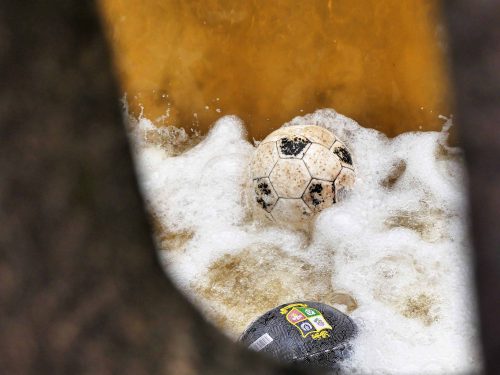
I also have a Son with an eye for the quirky – he spotted this random scene of a football and a rugby ball trapped against the stonework of the bridge and forced to play together in the foamy water.

It seems more fitting to finish this post as I started it though, with a view of the Frome, looking upriver this time.

Footnote: The River Frome is sometimes also called Bristol’s Lost River – certainly much of its final length from the M32 and through the city centre is Hidden. The link below is an account of a walk following the Frome Valley Walk:

www.bristol247.com/news-and-features/features/following-the-frome-bristol/

Share this:

  • Click to share on Facebook (Opens in new window) Facebook
  • Click to share on Pinterest (Opens in new window) Pinterest
  • Click to share on X (Opens in new window) X
Like Loading...

Everlasting Green

10 Sunday Dec 2017

Posted by theresagreen in bird behaviour, Bryn Euryn Nature Reserve, nature of woodlands, North Wales, plants important to wilflife, woodland birds, woodland walks in Wales

≈ 4 Comments

Tags

blackbird behaviour, Certhia familiaris, evergreen ferns, evergreen trees, garrulus glandarius, goldcrest, holly, holly berries, Jay, long-tailed tit, Regulus regulus, sweet chestnut, the importance of ivy, treecreeper, turdus merula

December 3rd-Woodland Path, Bryn Euryn

The deciduous trees of the woodland have for the most part shed their leaves now and they cover the ground in a thick damp carpet, exuding the evocative earthy aroma that characterises this time of the year. Their falling has opened up the overhead canopy, highlighting the evergreen flora that has merged into the background since the Spring.

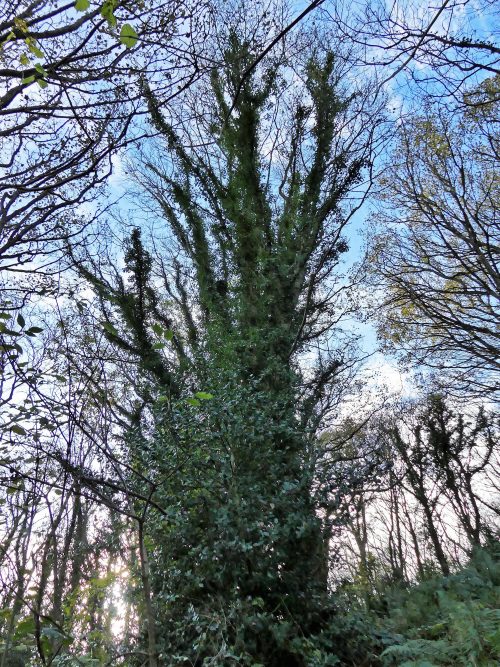
The amount of  permanent greenery always takes me by surprise. Much is in the varying forms of native trees and shrubs; dark dense Yew that fills spaces from the ground upwards, Scot’s Pines with tall trunks and bristly green crowns, glossy spiky Holly, some sprinkled with shiny green berries and of course Ivy, masses of it. There are other non-native residents too, sprawling Laurel being the most evident.

Laurel at the junction of woodland paths

Fallen leaves of sycamore and oak

Ivy is a much-maligned native evergreen that was thought to strangle trees as well as spoil their appearance. In the days when this woodland would have been strictly managed it would probably have been regularly stripped away. Now left to its own devices it is without doubt the most dominant of the native evergreens here; scrambling to the tops of even the tallest of trees in its search for light and covering large areas of the understorey too. The benefits of ivy to wildlife are enormous; both its pollen and berries can be an essential source of food for many insects and birds and it provides shelter for invertebrates, birds, small mammals and bats. At this time of year it also gives cover to foraging parties of small birds such as tits and treecreepers whilst they search amongst its stems and leaves for hibernating insects and spiders.

Ivy clambers up almost every tree

There’s green at ground level too; Polypody and Hart’s Toungue ferns are both evergreen. There are bright green patches of mosses and grey-green lichen is dusted in varying amounts onto most tree trunks and branches.

I love the little ‘scenes’ I find at this time of the year, full of interesting textures,  shapes and forms and coloured in earthy shades of green and brown.  Here the base of an oak tree has bright green moss and grey-green lichen growing on its fissured bark and tendrils of ivy are beginning their climb up. A polypody fern has found a sheltered spot, there’s a tiny new holly plant and the beginnings of a bramble.  

Nearby the fresh green leaves of Alexanders are already showing through the leaf litter.

Without the dressing of leaves the architecture of individual trees is revealed. I must have passed this tree dozens of times as I’ve walked this path but today it caught my attention as the sunlight turned its remaining dried out leaves to coppery gold.

I was unsure of the species of tree; looking upwards I saw it was tall, and also that its trunk and twisted branches appear bleached and much of its covering of bark is missing. Not helpful, but looking properly at the size and shape of the leaves I’m leaning towards Sweet Chestnut, another popularly planted non-native. There’s been no evidence of the prickly chestnuts though, so I’ll have to check to see if it produces flowers next Spring.

Ivy is creeping up the trunk of the tree and it has a backdrop of dense dark green Yew and shiny Holly.

Holly, ivy and yew

Long-tailed tit

I hear the contact calls of Tits and stand still hoping it means a feeding party are heading my way. It did indeed and now I don’t know where to look first as Long-tailed, Blue and Great Tits swoop and dart around the branches of the nearby trees. Some venture lower down giving me eye-level views. There were less birds in the party than those I saw a few weeks ago, so maybe they’ve split into smaller numbers as the availability of food has diminished. They seem to be travelling faster too, not lingering for long in one spot.

Blue tit

I wasn’t too far from where the Scots pines are gathered. Popular trees with the Tits I wondered if that was where they were headed. The trees are tall and positioned on the edge of the woodland; many have been distorted by exposure to winds and the search for light. With no low branches, their foliage is all on their crowns, so sighting anything as small as a tit is tricky, especially in sunshine. The light is beautiful up there though; I love these upward views of the tree canopy, especially on blue sky days. I’m thinking I would like to see a Coal tit though, haven’t seen one for ages.

Scots pine

A gathering of Scot’s Pines

I always stop here and look over the wire fence that marks the boundary of the private woodland and a small field. Trees on its edge although leafless are greened with ivy and gorse, which may well have once been planted as a hedge to contain livestock, has some golden blossom.

The views across the landscape to the Carneddau Mountains on the edge of Snowdonia are ever-changing with the light and the seasons and are always breathtaking.

Woodland Trail

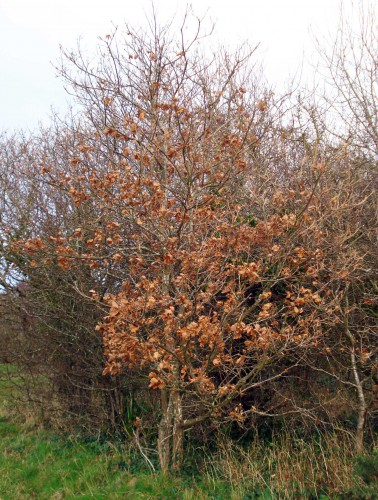
I reach the top of the Woodland Path, and as always take note of the oak tree here at the junction with the Woodland Trail that marks the boundary of the Bryn Euryn Nature Reserve. It still has some leaves clinging on but they are fewer and browner now than a couple of weeks ago.

Oak tree on November 19th
Oak tree on December 3rd

I turn right, then a few metres on turn left onto the narrow unmarked track that leads upwards through the woodland.

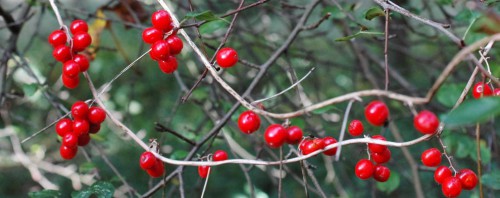
I spot a large holly bush endowed with a generous crop of berries.

Walking towards it I disturb several Blackbirds from their feasting on the berries on its far side. Confident the hungry birds would come back once they thought the coast was clear, I stopped to wait a short way away, lurking behind a nearby tree.

If you’re looking out for birds, staying still in a likely spot is often more rewarding than any amount of walking and the next few moments bore this out. This part of the wood is favoured by Jays and I heard some screeching to to one another close by. At first I couldn’t locate them, but then saw one progress its way down from a tree to some low vegetation then onto the ground where it began searching for its stash of buried acorns. The green plant in the picture is newly-sprung Dog Mercury.

Brilliant to have such great views of two of these gorgeous and notoriously wary birds. I noticed one of them had what appeared to be an injury to its left side where feathers had been lost; maybe it was from the beak of another bird competing for buried treasure. It seemed OK though and was behaving perfectly normally. Then another treat. The little feeding party I’d seen earlier passed overhead and around me, Long-tailed and Blue tits in tree branches above, then flickering movements in the Holly bush alerted me to the presence of a tiny Goldcrest.

The Goldcrest is Britain’s smallest bird

These tiny jewels of birds, (Britain’s smallest), when on the hunt for insects are constantly moving, flitting deftly through dense foliage, hanging upside down effortlessly and even fluttering frantically to hover like a hummingbird, which must use up a lot of energy. They are delightful and fascinating to watch, but tricky to keep in focus and even trickier to photograph.

A Goldcrest can hover like a hummingbird

Holly is dimorphic, which means it has separate male and female plants, and only female trees bear berries. Traditional country wisdom has it that bountiful crops of berries are a sign of a hard winter to come. More scientific modern reckoning is that it is sign of a good summer past; we certainly had plenty of rain to swell berries this year.  I was surprised that the berries were being taken so early in the season though, I hope it doesn’t mean there’s already a shortage of other food available.

Most of the birds I saw appeared to be juveniles and they do seem to have been taking the fully-ripe berries.

Blackbird-Turdus merula

I was also surprised to find flowers on several bushes. They usually come forth around May when they stand a better chance of getting pollinated.

The low sun shines brightly through the trees spotlighting a small spindly tree with golden leaves. Once again I don’t know what species it is but from the size, shape and beautiful colouration of its leaves think it’s fairly safe to say it’s a maple.

“The Holly and the Ivy, Now they are both full grown” …….

Ivy completely covers a tall tree, Holly in front and a still-green Male fern on the ground

Another interesting little ‘scene’ catches my attention…

I’m never sure about the placement of this commemorative bench. It is weathered, covered with lichen and appears to have been there for decades, but the plaque gives a much more recent date. A reminder how nature is quick to move in given the chance.

It’s a shame the bench doesn’t face the other way as there’s a lovely display of ferns behind it; Hart’s Tongue, Polypody and Male Ferns are there and there’s pretty ferny moss too.

Past the bench the path continues through what I think of as ‘the Dark Wood’. Here the hillside rises steeply upwards on one side and almost as steeply downwards on the other. On the north/north-west side of the Bryn not much sunlight reaches here and there’s a density of Yew trees that also make it seem darker.

A spreading Yew

There are a lot of Silver Birches here too, which you would think would lighten the place up, but at their lower level trunks have darkened and on a few the bark has become strangely thickened and fissured.

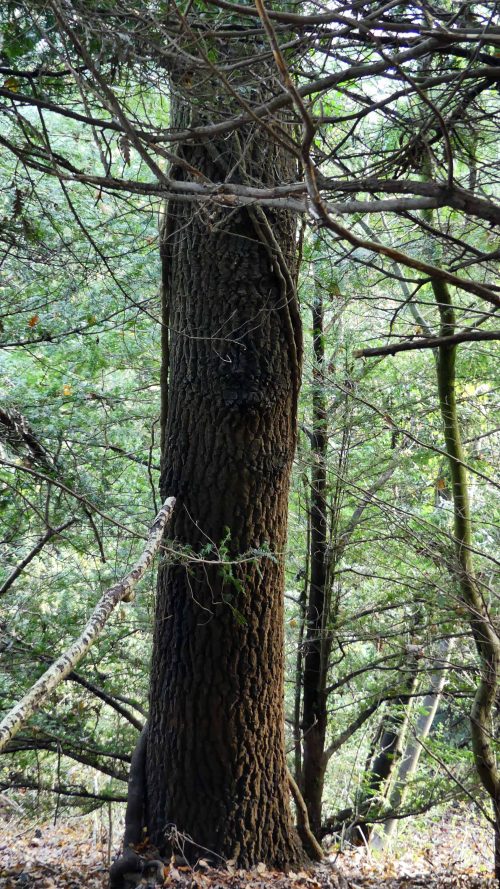
From the lower downward slope a mighty tree trunk rises, by far the biggest tree here and that I’ve always assumed was a mighty pine, a Redwood or Sequoia or such-like.

But today I noticed some large fallen leaves that could only have come from it. It would seem then that it’s another Sweet Chestnut, but here a properly magnificent specimen. What a shame to have only restricted views.

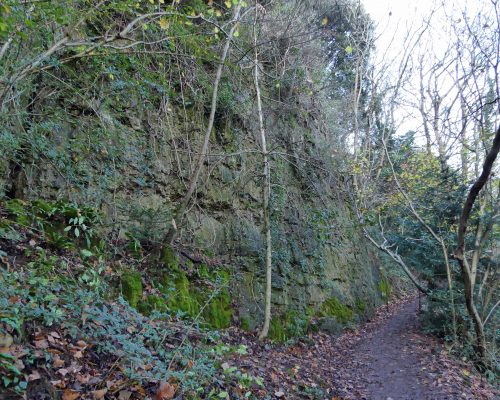
On the opposite side of the path a sheer cliff of exposed limestone towers and adds to the atmosphere. I wonder if it was once part of the defences of the ancient hill-fort that was located on the summit.

Water often leaks from fissures in the porous rock and moss thrives on its shaded damp surface.

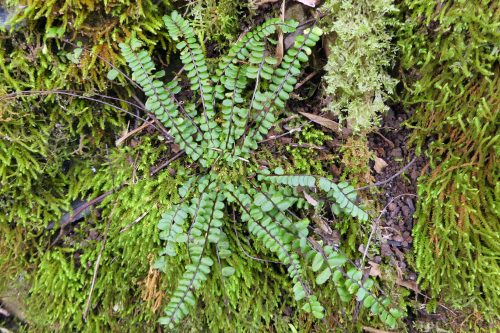
Having a closer look at the moss I found another fern amongst it, a tiny delicate one I’ve not noticed here before; a Maidenhair Spleenwort.

(I’m working on identifying mosses!)


Maidenhair spleenwort-Asplenium trichomanes

Past here there are more darkly-ivied trees. Today a movement caught my eye – another sighting of a foraging Goldcrest!

I watched it for what seemed like ages trying to keep it in sight as it flitted from branch-to-trunk-to-branch, in and out of the ivy, now doing its hummingbird impression – and then demonstrating a behaviour I’d read about but never seen; it climbed up the thick ivy stems like a tiny treecreeper. What brilliant little birds they are. I wish I’d had better light for better photographs.

A short way further on you are back out onto the wider brighter more open Woodland Trail.  Going down the wooden steps takes you to the car park, or as I opted, to loop around onto the lower part of the trail to get back to where I started.

As I stood deciding which way to go, one more treat, a Treecreeper making its way up another ivy-clad tree close to the path.

Treecreeper-Certhia familiaris


Share this:

  • Click to share on Facebook (Opens in new window) Facebook
  • Click to share on Pinterest (Opens in new window) Pinterest
  • Click to share on X (Opens in new window) X
Like Loading...

September Woods

22 Friday Sep 2017

Posted by theresagreen in bird behaviour, ferns, Nature of Wales, nature of woodlands, North Wales, woodland birds, woodland walks in Wales

≈ 11 Comments

Tags

black spots on sycamore leaves, Blue tit, grey-green lichen hanging from tree, hart's tongue fern, male fern, Nuthatch

September 8th – Bryn Euryn

Woodland Path

Yet another windy day with intermittent sunshine, so I’m seeking shelter in the woods. It is almost eerily silent and the damp soft earth of the path absorbs the sound of my footsteps. Something detects my presence at the last minute; loud rustling sounds from the undergrowth startle me and a panicked grey squirrel shoots out in front of me, sprints rapidly along the path and launches itself up the trunk of the nearest large tree. It pauses when it feels safely hidden behind foliage, but I spied it through the leaves, its mouth filled with an acorn, still green and unripe.

There are ripe blackberries, but on the early fruiting brambles some are already mouldering, and a feasting greenbottle fly reminds me why I don’t eat too many unwashed wild berries.

Chains of scarlet berries drape shrubbery. This one twined through holly reminded me of a Christmas garland; I wonder if sights such as this sparked the idea for festive decorations?

The berries are those of Black Bryony-Tamus communis, and will continue to ripen until they are black. A perennial plant described as twining, but often it’s more of a scrambler.

Woodland Trail

There are rose hips here

and a bramble whose leaves look as though they are almost ready to drop.

The gorse bushes have fresh golden blossom and clever spiders have spun webs in the hope of capturing flying insects drawn to their nectar and pollen. Gorse flowers throughout most months of the year prompting the old saying, “When gorse is out of flower, Kissing is out of season!”

Summit Trail – backtracking

The last time I walked here I took a slightly different route to the summit of the hill, taking an unmarked track up through the woodland to join the Summit Trail. I hadn’t planned to that, but at the junction of the paths I usually take I’d stopped to try to locate Jays that I’d heard screeching in nearby trees and a man with a dog stopped to ask me what I was looking at. We had an interesting chat comparing notes about what we both see here and where, but I didn’t catch the Jays. I waited to see which way he would go to continue his walk and seeing it was the same way I was headed, decided to go the opposite way. Not that I’m unsociable of course, rather that I see far more on my own and in my own time; and he had a dog! Anyway, the upshot was that I ended up on a narrow upward track through the trees on another windy day that was sunny but still damp from the previous night’s rain.

Spiders’ webs lit by the sunshine filtering down through the leaf canopy caught my eye and I stopped to admire the artistry of their construction and to try to find their makers. Looking more closely I saw most of the webs were broken and apparently abandoned, although this one had captured a beautiful rainbow.

As so often happens, my slow progress and in this instance, last-minute change of route brought forth a magical few moments. Until now the only sounds had been mainly of the wind rushing through the trees, but I began to hear bird calls that got gradually nearer and suddenly I was surrounded on all sides by excited little birds – a travelling feeding party! I had been standing still and they seemed not to notice me; I’ve described a similar experience in a previous post and this was equally as joyous and uplifting. It was a large party too, impossible to count the numbers of birds within it as they scattered amongst the trees, but Blue tits were probably most numerous with at least a dozen Long-tailed tits; Great-tits were there too. I didn’t see Tree-creepers as before, but was thrilled to see a Nuthatch that chose to explore a tree right in front of me.

Nuthatch-Sitta europaea

Taking photographs in the darkness of woods is rarely successful, but a Nuthatch did pause briefly from its foraging near a patch of sunlight, giving me a reasonable chance to record this bird for the first time here. Watching a tiny Blue-tit searching through ivy high up in another tree I realised it was looking for spiders, which are an important part of their diet. Perhaps the birds’ regular forays are the reason I couldn’t find any.

Blue tit seeking spiders

Back to the present 

Sycamore leaf with spots of fungus

There was no feeding party today, but there were other signs of a summer ending. Sycamore leaves, amongst the first to break their buds in the Spring are amongst the first to change colour and fall. Most of those I see nowadays are marked with dark spots; this is Rhytisma acerinum, the Sycamore Tarspot. It doesn’t look attractive, but although it is suspected that the darkened areas reduce the photosynthetic capacity of affected trees, the fungus doesn’t seem to affect the tree’s health and vigour. One consolation of the fungus’ presence is that is shows the air here is fairly clean as it is apparently particularly sensitive to sulphur dioxide air pollution. Trees growing near to industrial centres with high levels of sulphur emissions do not show any sign of the leaf-blackening fungi.

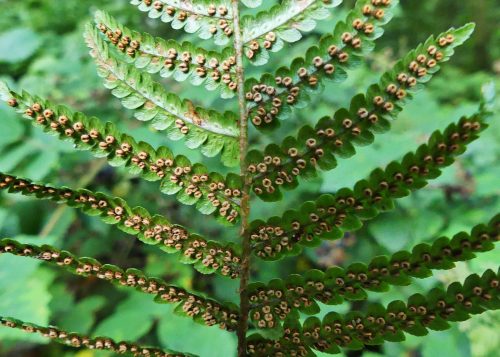
If you look at the undersides of the fronds of most ferns, their seeds, spores or more correctly sori  are now ripe. The Male Fern is the most common fern found growing here; its sori are round and normally run in two parallel rows.

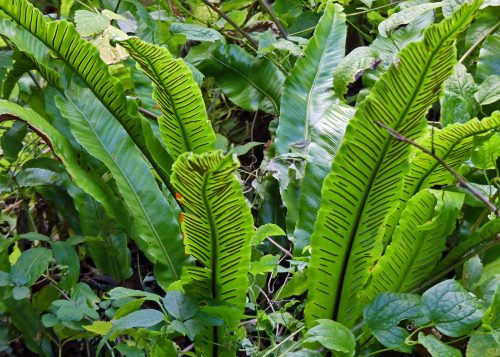
There’s a large patch of Hart’s Tongue Fern growing in damp shade on a steep bank. Its leaves and sori take a different form to those of other fern species. Their ripe sori accentuate the marks on the underside of the leaves and it seemed to the person that named the plant that they resembled the legs of a centipede, so he gave it the scientific name ‘scolopendrium‘, the Latin for centipede.

Hart’s Tongue Fern-Phyllitis scolopendrium

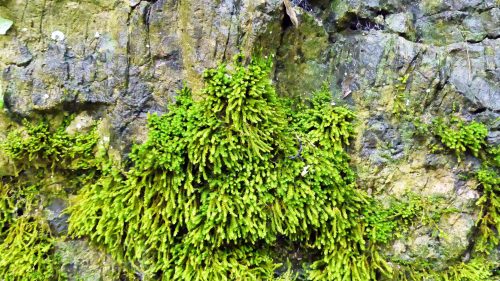
The track passes a sheer cliff of limestone. Its surface is frequently damp, sometimes wet and its base is covered with a lush, bright green shag-pile carpet of moss.

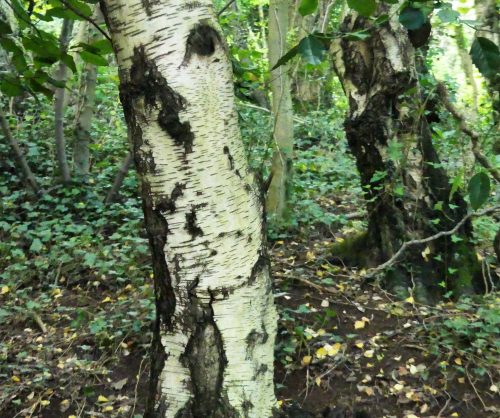
There’s a small grove of Silver Birch trees on this shady, damper side of the Bryn that are also beginning to lose their leaves, which stud the dark mud of the track with specks of bright gold.

Nearing the end of the path the trees thin and give way to scrubbier vegetation, mostly blackthorn and hawthorn. The blackthorn has beautiful purple sloes and its leaves too are beginning to turn colour.

A number of the blackthorn shrubs here also have clumps of pretty grey-green lichens. Some looks like a tangle of moss, which I can’t accurately name.

Other blackthorns have a lichen in a different form, this one, photographed on a nearby shrubby hawthorn tree with dark red fruits (haws), has the appearance of Reindeer moss, but I can’t yet be species-specific.

Emerging from cover onto the exposed summit I braced myself for another confrontation with the wind. The sun had disappeared behind clouds that were shutting out its brightness, leaving the landscape in shadow, dulling its colours. Part of the view across the valley from here takes in buildings and fields that belong to the Welsh Mountain Zoo, located above Colwyn Bay. There are sometimes interesting animals grazing in the fields; today it was some kind of cattle.

With or without sunshine I love this hillside view of small fields bounded with hedges and trees with the mountains in the distance. It reminds me a little of a David Hockney painting.

The mountains are topped with billowing clouds that permitted some sunshine through to lighten slopes here and there and to brighten the water of the river Conwy.

On days like this you can only hope for at least a little sunshine to brighten the rest of a walk…


Share this:

  • Click to share on Facebook (Opens in new window) Facebook
  • Click to share on Pinterest (Opens in new window) Pinterest
  • Click to share on X (Opens in new window) X
Like Loading...

Little Beings of Summer Woods

08 Tuesday Aug 2017

Posted by theresagreen in Bryn Euryn Nature Reserve, Nature of Wales, nature of woodlands, Wildflowers of Wales, woodland walks in Wales

≈ 7 Comments

Tags

black spleenwort, dwarf cream wave, late summer wildflowers, Nature in August, polypody fern, scorpion fly, speckled wood, wild clematis

Sunday July 30th-Bryn Euryn

The Woodland Path

11:00am  It was cooler than I’d anticipated in the woods this morning. The sky was cloudy and gusts of a chilly breeze blustered between the trees of this usually sheltered mid-slope of the Bryn; less than ideal conditions for the insects I was hoping to see. And I wished I’d worn a thicker fleece. But the sun was intermittently winning through the clouds and ever the optimist I assured myself it would get warmer for me and the little creatures. 

There are a few places on my usual trail that I think of as ‘hotspots’ for insects, even on cool days such as this. The first one is an untidy, brambly-nettley spot, where opportunistic plants have filled a gap in the tree line and spread across to the other side of the path too. Dappled sunlight reaches and warms the spot, aphids thrive here, there’s nectar and pollen to be had while the bramble is in flower, followed by its fruits; the perfect ingredients for a hoverfly hangout. If I’m patient and hang around for a few minutes I’m often rewarded with sightings of a few hovering customers and sometimes less expected visitors too.

Hoverfly (syrphus sp) basking on a sunlit hazel leaf

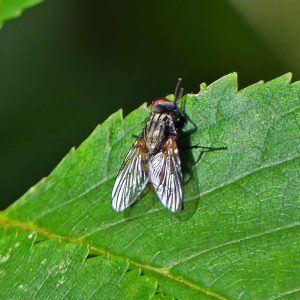
Insects need sunshine to warm up their flight muscles to get them going, so cooler, cloudy days can be surprisingly rewarding for sightings of basking individuals slowed down by the lack of warmth. There were a few hoverflies here today, also other common flies which I’m trying to take notice of and appreciate more; well, at least I’m aiming to put names to some of them. Most of those I saw were common ‘houseflies’, a generic name that covers quite a few different species. I think it’s their habits that most of us dislike; some of them look quite pretty.

House fly
Bluebottle

A long-bodied black insect with pretty iridescent wings scurried erratically over the surfaces of leaves, a wasp I think, definitely a hunting predator, maybe a Digger wasp.

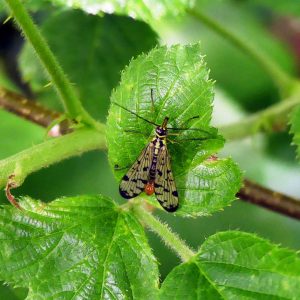
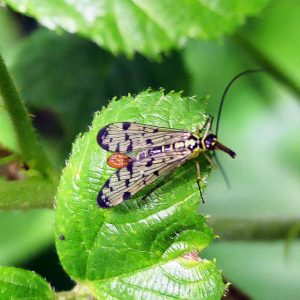
About to move on I spotted a dot of colour in the shade of some leaves. Sitting motionless was another more recognisable predator, a male Scorpion Fly.

Scorpion Fly-There are 3 species of Scorpion Fly in Britain, apparently difficult to separate other by examining genitalia; the most common being Panorpa germanica. They frequent shady places almost everywhere. All are scavenging insects and completely harmless despite the males’s scorpion-like tail. The female’s body lacks the tail, simply tapers to a point. 

Male Scorpion Fly
Male Scorpion Fly

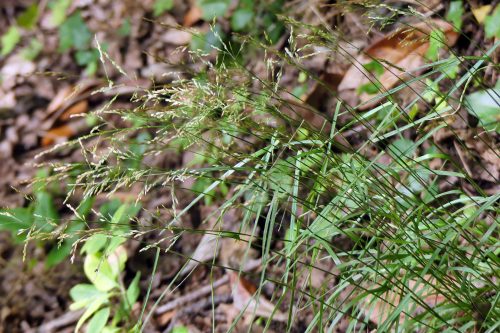
The closed tree canopy excludes most flowers now. An exception is the woodland grass, False Brome, which grows prolifically here and is flowering now.

False Brome-

A splash of colour took me by surprise – a holly tree with red berries!

*************

Perhaps relics of the days when this path was part of the grounds of a Victorian manor house, are large clumps of two attractive ferns. Both species are evergreen, maintaining their green fronds throughout the seasons, but both look particularly fresh and verdant now and the Polypody has new fronds unfurling.

Polypody fern

Black spleenwort


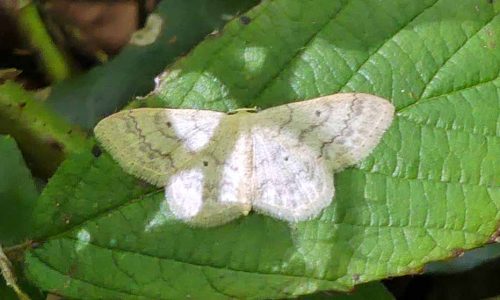
Dwarf Cream Wave-Idaea fuscovenosa

A tiny pale-coloured moth swirled by the breeze spiralled down to land on a bramble leaf low to the ground, settling with wings spread butterfly-like under the shelter of other leaves. It is a Dwarf Cream Wave (photograph probably not far off its actual size)- the lines that show grey-mauve are where its original pale brown scales have been worn, or washed (!) away.


A home in a leaf ….

The pale patch on this holly leaf is probably the result of the work of an insect, the Holly leaf miner Phytomyza ilicis. This is a fly whose larvae burrow into leaves of this specific species of tree and leave characteristic pale trails or mines.

Interestingly, I learnt (from Wikipaedia) that “the holly leaf miner has frequently been used in ecological studies as a system to study food webs. Examination of the leaves can show whether the leaf miner has successfully emerged, been killed by a parasitic wasp, or been predated by blue tits.”

I’m not sure what the perfectly round hole in this one indicates. It could just be the original entry point of the egg-laying adult female’s ovipositor, but maybe too big? It looks too small and neat to be an exit hole and blue tits leave a triangular tear when seizing a miner as prey. Maybe it is the mark of the work of a predatory wasp? 

Speaking of wasps, I spotted another on an ivy leaf – a bit more distinctive than the black one I saw earlier due to its long antennae, so I asked the experts at BWARS and they say it’s a member of the Ichneumonidae family. The whole of this family are parasitoides and most species attack the caterpillars of butterflies and moths. It’s a dangerous life being an insect.

The Woodland Trail, Bryn Euryn Nature Reserve 

A big old oak tree marks the junction of my ‘Woodland Path’ and the Woodland Trail that circuits the Nature Reserve. It’s lost a few of its branches and the big lower branch has a split right through it that provided a safe home to nesting Great tits earlier on in the year.


Happily, the tree seems to be going strong and is currently nurturing some baby acorns. They have stalks, which indicate this is an English, or Pedunculate Oak.


Stepping out from the cover of the trees I realised how windy it had become; windy enough for birds to be able to just hang in the air and ride the air currents with minimum effort. Two buzzards were overhead, mewling and swooping around in the air currents, one being harassed by gulls, poor thing.

The unmistakable bulk of a Buzzard

My second ‘hot-spot’ is almost at the junction of the two tracks. It’s a huge bramble entwined with gorse and over which wild clematis scrambles. That blackberry & wild clematis combination is one of my favourites, even if it is another of the sights that I associate with summer’s approaching end. The clematis is just coming into flower and, the bramble already has ripening fruit, so not much for insects here today.

A lovely Speckled Wood butterfly sat on a smaller bramble nearby which still has flowers. The butterfly let me get very close, hardly moving in the coolness of the day.

There are few flowers along the sides of the Woodland Trail now, due in part I’m sure to their having been strimmed back in June – this part of the path is maintained by the local council who are wont to get these ‘jobs’ done before people complain about paths being overgrown. All kinds of good stuff was cut back, including orchids, and much of the hogweed that would now be giving nectar and pollen to hoverflies et al. I hoped they were finding sustenance nearby.

A few odd plants have survived, or revived, to flower here and others are fruiting. There are a very few hazelnuts that have thus far escaped the jaws of voracious grey squirrels, who usually eat them while they’re still soft and green.

Ragwort
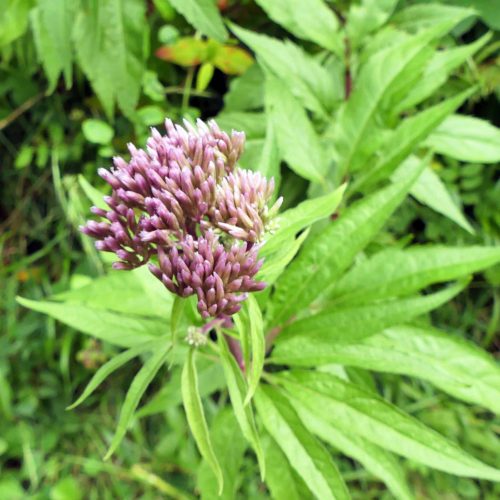
Hemp Agrimony
Honeysuckle

Wild Strawberry flower
Wild strawberry fruit
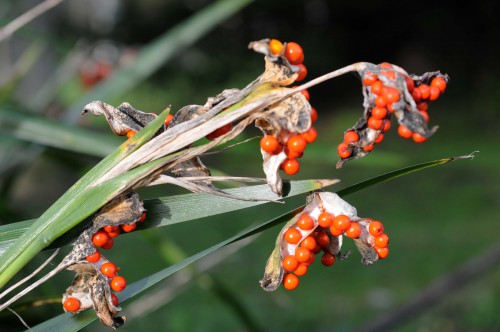
Seedpods of Stinking Iris

Tutsan berries are darkening
Hazel nuts forming
Blackberries are ripening

Cool windy days may seem unpromising if you’ve set off hoping to see insects, but if you keep paying attention there is never ‘nothing to see’ (pardon my grammar). I spotted a tiny movement on the surface of a leaf and caught sight of an even tinier leaf hopper. As I got closer with the camera lens I noticed another movement under the leaf; a tiny spider had spotted the leaf hopper and was vibrating her web to try to get its attention. The leaf hopper disappeared under the leaf….. I wonder if the spider got her lunch? Apologies for the less-than-good photo, but I’m sure you get the drift!

So, I’ve reached the steps leading up to the field now and looking forward to what it has in store….


Share this:

  • Click to share on Facebook (Opens in new window) Facebook
  • Click to share on Pinterest (Opens in new window) Pinterest
  • Click to share on X (Opens in new window) X
Like Loading...

Brambles, Bumbles and Butterflies

10 Sunday Jul 2016

Posted by theresagreen in British hoverflies, Bryn Euryn Nature Reserve, bumblebees, Butterflies of Wales, Insects, Nature of Wales, nature of woodlands, nature photography, plants important to wilflife

≈ 9 Comments

Tags

bombus hypnorum, bombus pratorum, coenonympha pamphilus, Early Bumblebee, grayling, Great Pied hoverfly, hipparchia semele, importance of bramble flowers to insects, Large Skipper, Meadow Brown, myathropa florea, pararge aegeria, Pellucid fly, Red Admiral, small heath, speckled wood, syrphus species of hoverfly, tree bumblebee, Volucella pellucans

June 23rd- Bryn Euryn

Bramble flowers are an important source of nectar and pollen for many species of insects and today, a large tangled patch of blackberry brambles in a sunny spot on the sheltered Woodland Trail was alive with an array of bumblebees and hoverflies.

23/6/16-Bryn Euryn on bramble

23/6/16-Pellucid fly-Volucella pellucens on bramble flower

Hoverflies

Since living here I have begun to recognise the most obvious and more commonly-occurring species of hoverflies, and they don’t come much bigger or more obvious than the handsome Pellucid Fly (Volucella pellucens), aka the Great Pied Hoverfly. This is one of the largest most obvious and recognisable of our British hoverflies.

myathropa florea

Myathropa florea

Yellow-and-black stripes are the well-used livery of many hoverfly species and sorting out the different species accurately, especially the small ones, requires more skill and knowledge than I have at the moment, or at least some crystal clear images of certain parts of them.

Bigger yellow and black species are a little easier, especially if they have good clear markings, such as sported by this new-to-me, or at least newly identified  Myathropa florea (no common name). I was aided and amused in this ID by a tip from the author of my Hoverfly bible¹, who suggests that the lower marking on the thoracic dorsum (part behind the head) resembles the Batman logo. Well, in a nice fresh clearly marked individual it does!

160703-Bryn Euryn-55-Hoverfly in dog rose flower

Syrphus sp hoverfly in a Dog Rose

160623-Bryn Euryn-55-Hoverfly hovering

One of the only small hoverflies that is unique and distinctive in its markings and has earned a common name is the  Marmalade Fly Episyrphus Baltaetus. This one was hovering at just about my head height, darting hither and thither in a patch of sunlight in defence of his territory. The image of him in the photograph is still bigger than he was.

Bumblebees 

There were bumblebees aplenty, mostly Red-tailed, White tailed and Common Carders, but also Tree Bumblebees and a few little Early Bumblebee workers.

Tree bumblebee

Tree bumblebee-Bombus hypnorum

The number of Tree Bumblebees here has increased greatly over the last few years. I used to see them mainly in early Spring in the Quarry field on Green Alkanet flowers, and maybe the odd one or two further afield. Now they are present in all parts of the site and can be spotted on an array of flowers through to the end of the summer.


160623-Bryn Euryn-Early Bumblebee workers

Early Bumblebee- Bombus pratorum (worker)

Butterflies

160623-Bryn Euryn-55-Meadow Brown

Meadow Brown-Maniola jurtina

160623-Bryn Euryn-55-Speckled Wood 1

Speckled Wood-Pararge aegeria 

Large Skipper (male)

Large Skipper-Ochlodes venatus (male)

3/7/16-Bryn Euryn-Large Skipper (f)

Bryn Euryn-Large Skipper (female)

Not bramble related, but a special treat was a very brief encounter with a Grayling. On the track up to the summit it literally landed in front of me, sat on a small rock for a few seconds then took off into the breeze.

Grayling

Grayling-Hipparchia semele

The same strong breeze that carried away the Grayling was keeping the Small Heaths tucked down in the grass, but I finally managed to get an almost-clear view of one feeding on Wild Thyme.

Small Heath-Coenonympha pamphilus

Small Heath-Coenonympha pamphilus

Walking back down through the woods on the way home, a Red Admiral startled me when it flew up from a bramble at the side of the track. It settled back down when I stopped, then flew out again – the feisty thing was deliberately warning me to get out of his space! He sat brazenly on a leaf at about my eye level and reared up defiantly as I approached with the camera, not giving an inch and I’m sure trying to stare me down! Loved his attitude.

Red Admiral-Vanessa atalanta

Red Admiral-Vanessa atalanta

160623-Bryn Euryn-55-Red Admiral 5

____________________________________________________________________________________

References: ¹ Britain’s Hoverflies  – Stuart Ball and Roger Morris


Share this:

  • Click to share on Facebook (Opens in new window) Facebook
  • Click to share on Pinterest (Opens in new window) Pinterest
  • Click to share on X (Opens in new window) X
Like Loading...

Welcome back to the Mistle Thrush

05 Friday Feb 2016

Posted by theresagreen in birds of Wales, Bryn Euryn Nature Reserve, Nature, Nature of Wales, nature of woodlands

≈ 8 Comments

Tags

birds of conservation concern, Conservation issues, mistle thrush, turdus viscivorus

At 7.10 am it was barely light, but from high in a cherry tree, easily piercing the double glazing of my living room window, a Mistle thrush exuberantly proclaimed his return. He sang long and loud for at least the next hour before crossing the building to announce his presence from the woodland edge behind us. I was out for most of the day, but arriving home at 5 pm, again in the fading light, he was back in the same place reinforcing his presence.

Mistle thrush singing from ash tree

Mistle thrush singing from ash tree 

I could barely see him, so much to dark to photograph him, so the photograph is one from last year that I took of a bird in the neighbouring tree that arrived here on a similar date and behaved in a very similar way. I would like to believe it was the same bird returning to reclaim his breeding territory, especially as the Mistle thrush has moved from the amber list to red-listed status as a bird of conservation concern, with 170,000 breeding territories recorded.

Mistle thrushes are early nesters and many nests are built in late February. typically they favour sites in woodland as high as 30ft up on the top of a snapped-off tree. Each pair raises two or occasionally three broods and they may sometimes use the same nest. To my knowledge at least one pair bred successfully here on Bryn Euryn last year and similarly the previous year, so this is clearly a well-established breeding site – fingers crossed for this year too.

Read more about the Mistle thrush here.


Share this:

  • Click to share on Facebook (Opens in new window) Facebook
  • Click to share on Pinterest (Opens in new window) Pinterest
  • Click to share on X (Opens in new window) X
Like Loading...

Wildflowers in Winter

28 Thursday Jan 2016

Posted by theresagreen in Bryn Euryn Nature Reserve, Nature, Nature of Wales, nature of woodlands, nature photography, wildflowers, Wildflowers of Wales

≈ 8 Comments

Tags

daisy, gorse, hart's tongue fern, hazel catkins, lesser celandine, male fern, wildflowers blooming in January, winter heliotrope, winter wildflowers

Daisies look delicate, but they’re tough little plants and flower more-or-less continuously from December to January. I love them so am happy they can decorate grassy areas in peace before the lawn-mowers emerge from hibernation.

160128-TGFLR 1 (8)

Daisy-Bellis perennis

Celandines are one of the first heralds of Spring, but I was taken by surprise to find some this early in the year.

Celandines

Lesser Celandine-Ficaria verna

Herb Robert was also a surprise, its flowering season is more April-November, so this is probably a plant that has not died down and carried on growing.

Herb Robert

Herb Robert

Another survivor is this Nipplewort which is growing in a sheltered corner against a wall on the roadside.

Nipplewort

Nipplewort

There are some wildflowers that are truly winter flowering. The bright green leaves of Winter heliotrope are present here throughout the year and the lilac flowers, which have a fragrant, vanilla-like scent appear from November to March.

Leaves of Winter heliotrope

Leaves of Winter heliotrope

Winter heliotrope

Winter heliotrope – Petasites fragrans

January 26th was a mild sunny day, warm enough to coax out this little Red-tailed bumblebee, but it seemed to be struggling to take off from the flower, so maybe it wasn’t quite warm enough.

A red-tailed bumblebee on a heliotrope flower

A red-tailed bumblebee on a heliotrope flower

Three-cornered Garlic is named for the shape of its flower stems, which are triangular. It is also known as White bluebell and does resemble one, until you smell it. It’s flowering season is February- June but has been in flower here since last December.

Three-cornered Garlic

Three-cornered Garlic-Allium triquetrum

Flowers resemble those of the bluebell

Flowers resemble those of the bluebell

“When gorse is out of bloom, kissing is out of season“. In other words, gorse pretty much flowers all year round to some extent. Now, at the end of this mild January many bushes are well-covered with the lusciously coconut-scented blossom.

Gorse

Gorse

Hazel catkins have also been present on some trees since last month.

Hazel catkins

Hazel catkins

Sycamore buds are greening

Sycamore buds are greening

A few trees have retained their dried leaves for some reason, this is a small oak.

A small oak tree has kept its dried leaves

A small tree has kept its dried leaves

Some plants characteristically hang on to their berries well into the winter, one such is the unfortunately-named Stinking iris that has bright orange berries

Berries of Stinking Iris-Iris foetidissima

Berries of Stinking Iris-Iris foetidissima

and another is Black bryony, whose bright scarlet berries garland shrubs like strings of shiny beads.

Black bryony berries

Black bryony berries

A surprising number of ferns are still green

Polypody fern

Polypody fern

Spores or sori still in place on the back of the fern fronds

Spores or sori still in place on the back of the Polypody fern fronds

Both the Male fern and the Hart’s Tongue fern are semi-evergreen, but this group shows no sign of dying down at all.

Male fern and Harts tongue ferns

Male fern and Harts tongue ferns

Winter is a good time to appreciate mosses. Looking closely at this one it has fern-like leaves.

A cushion of moss tucked against rocks

A cushion of moss tucked against rocks

Close-up of moss

Close-up of moss

On a fallen Scots pine a colony of tiny bright yellow coloured fungi has established itself; it seems to be a bracket fungi, maybe a turkeytail?

Bright yellow bracket fungus-maybe a small turkeytail

Bright yellow bracket fungus-maybe a turkeytail


Share this:

  • Click to share on Facebook (Opens in new window) Facebook
  • Click to share on Pinterest (Opens in new window) Pinterest
  • Click to share on X (Opens in new window) X
Like Loading...
← Older posts
Follow everyday nature trails on WordPress.com

Enter your email address to follow this blog and receive notifications of new posts by email.

‘But it is the common species that keep the living world ticking over and provide most of our experiences of wildlife, and I would argue that maintaining the abundance of these is as important a conservation priority as maintaining the existence of rarities’. Richard Mabey

MOST RECENT POSTS

  • A Glimpse of Spring to Come January 22, 2025
  • Hunting the Wren December 28, 2024
  • Oh, Christmas Tree December 18, 2024
  • In and Out of the Ivy February 15, 2024
  • Nature’s Fireworks November 30, 2023
  • Wild Autumn along the Coast Path November 3, 2023

OLDER POSTS

LOOKING FOR SOMETHING IN PARTICULAR?

  • The Foxglove - of Fairytales, Myths & Medicine
    The Foxglove - of Fairytales, Myths & Medicine
  • Pretty prickly Thistles
    Pretty prickly Thistles
  • Willsbridge Mill, Bristol
    Willsbridge Mill, Bristol
  • Following a river to a Fairy Glen
    Following a river to a Fairy Glen
  • Fine Dining for Crows
    Fine Dining for Crows
  • Pines and Primroses
    Pines and Primroses
  • A Glimpse of Spring to Come
    A Glimpse of Spring to Come
  • Sleeping Seals and Stonechats
    Sleeping Seals and Stonechats
  • Catchers, a Duck and Divers
    Catchers, a Duck and Divers
  • Everyday Birds - The Blue Tit
    Everyday Birds - The Blue Tit

nightingale trails

The Walk of the Monarch Butterfly-Sendero de la Mariposa Monarca

The Walk of the Monarch Butterfly-Sendero de la Mariposa Monarca

MY WILDFLOWER BLOG: where the wildflowers are

Snowdrop

Snowdrop

most recent posts

Follow everyday nature trails on WordPress.com

Social

  • View teresamaygreen’s profile on Twitter

Enter your email address to follow this blog and receive notifications of new posts by email.

Website Built with WordPress.com.

  • Subscribe Subscribed
    • everyday nature trails
    • Join 359 other subscribers
    • Already have a WordPress.com account? Log in now.
    • everyday nature trails
    • Subscribe Subscribed
    • Sign up
    • Log in
    • Report this content
    • View site in Reader
    • Manage subscriptions
    • Collapse this bar
 

Loading Comments...
 

    %d