Last week we were blessed with a few days of beautiful calm bright sunny spring-like days, which came as a welcome break between the post-Christmas freeze and the forecasted return to colder, more seasonal weather to come. Warm enough to get out to enjoy a walk at my preferred ambling pace, with plenty of moments to just stand and look around me without freezing to the spot, and the freedom to take photographs without fumbling with gloves, could not be passed up.
At both ground and eye level my local woods remain surprisingly green throughout the winter; sprawling ivy blankets much of the woodland floor and at every opportunity clambers high up the trunks of many trees. There are plenty of other evergreens too, dark yews, scots pines and the somewhat controversial holm oak all abound.
There are copious amounts of shining holly too, taking many forms from small trees to thick spreading bushes, dependent upon where they find themselves and the availability of space and light. One of my ‘targets’ for today was to look for the first signs of flowers on holly; some plants begin flowering early in the year while others wait for the spring or even early summer. I managed to find a few flower buds, but not yet open I couldn’t tell if they were male or female (holly plants may be either male or female, with females being the ones that produces berries), but male flowers most often appear first. Here and there a few berries remain.
Flower buds on hollyA few berries left
Looking up adds another dimension to the scene; a cloudless deep blue sky provides a perfect background highlighting the fascinating network of branches and twigs of the leafless trees reminding there is more winter to come.
As I meandered along I kept an eye on the surrounding trees; on days like this in the winter when trees are still bare of leaves there’s always a chance of spotting a foraging treecreeper quietly spiralling its way around trunks and branches; not today though.
The distinctive call of a nuthatch helped to locate it as it travelled up and down the branches of an oak tree. It paused every now and then to probe a likely spot for insects, but was way too busy to stop and pose for a photograph.
Female great spotted woodpecker
I had better luck with a pair of spotted woodpeckers that were travelling high up through the treetops. Stopping momentarily to investigate the trunk of a likely tree; the male quickly flew off but I managed a quick snap of the female who lingered a few seconds before she also took off to follow him.
Leaving the narrow earth paths of the woodland and joining the Woodland Trail of the Reserve, which is higher up the hill, I hoped to catch sight of a few more birds as there are good views down through the trees from there. As always, numerous wood pigeons and blackbirds vied for the ripest of the ivy berries. There were glimpses of blue tits, numbers of them travelling around together, keeping up an almost constant chorus of chirpy contact calls as they travelled between the ivy-clad trees. A fewer number of great tits accompanied them, and one sounded out a few notes of his ‘teacher-teacher‘ song, a first ‘hearing’ of that this year.
Male hazel catkins are beginning to show
Robins have been singing for a few weeks now, but today they were out in force each one either declaring territory, or perhaps calling out for a mate, at frequent intervals. Most were singing from cover, but one or two were bolder and sang confidently in the open. It’s not possible to tell whether you’re seeing or hearing a male or a female robin as both hold territories and both sing.
View from the top of the field on the slope of Bryn Euryn across to Penrhyn Bay and the Little Orme:
Meliscaeva auricollis (f)
Reaching the open field I started on my usual route around its edges, looking carefully at the vegetation for any insects that might be out on show whilst taking the opportunity to bask in the sunshine and/or seeking a welcome mid-winter top-up of nectar or pollen energy. I was in luck! Some of the gorse bushes are in flower to vary degrees and some of those in the most sheltered and sunniest spots had visitors. Firstly a single hoverfly had a small bush at the bottom end of the field to itself. Not a species I recognised, it was later identified for me as a female Meliscaeva auricollis, a double first sighting – first hoverfly of this year and a first of the species.
“When gorse is not in flower, kissing is out of season“
At the top corner of the field there are several big old gorse bushes, one of which is in more or less full bloom and emitting its glorious warm coconut-vanilla perfume. Here there were a surprising number of insects vying for the best blossoms. There were more hoverflies, two black and yellow Syrphus males (not able to specify species) and a single little female Marmalade fly Episyrphus balteatus.
There were also several honeybees and a single individual of one of my favourite species, a female yellow dungfly.
HoneybeeYellow dungfly (female)
All of the above were wonderful to see, especially so early in the year, but the outstanding treat for me was to see gorse shieldbugs in a greater number than I’ve ever seen in one place at the same time ever. As usual it took a minute or two to get my eye in to spot them, but once I did I discovered them singly and often in twos both basking in the sun and moving around, and stopped trying to count when I reached 20 individuals. A perfect sight to finish on.
As I was staying in London for the first two weeks of December this year, the iconic traditional Christmas tree in Trafalgar Square was close to the top of my list of sights to see. My reason for wanting to see it wasn’t so much about admiring the tree itself, but was more of an acknowledgement and gesture of appreciation for its historical and cultural significance.
Trafalgar Square on an overcast, damp Sunday afternoon
This year’s tree has come in for some criticism on social media in respect of its – to put it kindly- ‘modest decoration’. If its appearance is being compared to others in iconic London locations, or to the ‘main’ Christmas trees of other cities, it might appear a little sparsely adorned. However, there’s much more to the presence of this tree than its decorative value, and good reason for this minimalist styling, although I think it’s fair to say it could probably have been done better.
The decoration is totally appropriate, as continuing a tradition begun in 1947, the tree is an annual Christmas gift from the people of Oslo, the capital of Norway, to the people of London. The gift represents gratitude for Britain’s support for Norway during the Second World War, but is also a historical symbol of an everlasting friendship and of remembrance.
Hence the decoration of the tree – Norwegian Christmas trees are traditionally decorated with white lights because it’s considered a more elegant and minimalistic approach, with the focus on the natural beauty of the tree itself rather than bright, colourful lights.
A plaque placed beneath the tree reads: ” This tree is given by the City of Oslo as a token of Norwegian gratitude to the people of London for their assistance during the years 1940-1945. A tree has been given annually since 1947.”
This year, 2024, marks the 77th anniversary of the event.
Although the tradition of the annual gifting of the Christmas tree began in 1947, the idea may have arisen from a gesture a few years earlier. The first tree to be sent here was in 1942, at which time the Norwegian king Haakon VII and his family, were in exile here as guests of King George V1, and was a gift to them from his home country. Cut down by a Norwegian resistance fighter called Mons Urangsvåg during a raid on Hisøy, an island off the west coast of Norway between Bergen and Haugesund, the tree was then transported to England and presented to the king. A new tree has since grown from the original stump.
The Tree
The Trafalgar Square Christmas tree is typically a 50- to 60-year-old Norway spruce, generally over 20 metres tall. (Nelson’s Column, discounting its pedestal, is 54 metres tall). The tree is cut in Norway some time in November during a ceremony which this year was attended by the Lord Mayor of Westminster, the British Ambassador to Norway and the Mayor of Oslo.
After the tree is cut, it is shipped across the North Sea to the UK by boat. At one time it was shipped to Felixstowe in Suffolk free of charge by a cargo ship of the Fred Olsen Line. As of at least 2007, the tree was shipped across the North Sea to Immingham, which is at the mouth of the Humber Estuary in Lincolnshire by DFDS Tor Line. Since 2018, it has been the responsibility of Radius Group, to transport, guard and erect the tree in Trafalgar Square.
Lighting ceremony and carolling
The tree lighting ceremony in Trafalgar Square is a free event that traditionally takes place on the first Thursday in December, this year on December 5th at 5:30 PM. The ceremony, led by the Lord Mayor of Westminster, includes a band and choir singing Christmas carols, followed by the switching on of the Christmas lights. Since 2009, the Poetry Society has commissioned new poems annually for display on banners around the base of the tree and this year a new children’s poem by the writer and performance poet Valerie Bloom was unveiled.
Surviving the Storm
One reason for the tree looking a little dishevelled may be as a result of a battering by Storm Darragh. It’s a wonder it survived at all, but apparently it was able to as tree surgeons reattached branches that were removed for transportation. This process is called a “branch transplant” and involves branches being hammered back into the tree to give it its typical Christmas tree shape. Ouch.
A couple more Christmas trees in iconic London locations:
Covent GardenSt Paul’s Cathedral
Merry Christmas to you all and many thanks to my loyal followers that have stuck with me despite a drought of posts for much of this year. I hope to do better in 2025!
The view I have from my kitchen window, looking out over an unkempt, ivy-covered, frankly scruffy patch of scrubby woodland edge may not be to everyone’s taste, but it’s great habitat for a variety of wildlife and watching it has taught me a lot about the everyday local wildlife. Without having to set foot outside, I have privileged, often close-up sightings of a variety of birds, insects, the occasional fox and the ubiquitous grey squirrels on a daily basis. It’s like having a personalised all-seasons luxury hide, heated and with tea and snacks always to hand.
First weeks of February – Part 1
The focal point central to my view, and the stage for much of the wildlife activity I am privileged to see every day is a wych elm tree. Situated a few metres up on a very steep slope, its branches seem to almost weep to the ground and its trunk is now covered with ivy. Perhaps because of its accessibility, the poor tree has been subjected to much battering by grey squirrels who nibble its leaf and flower buds, gnaw at its bark and devastate its seed cases. Despite all of that, it somehow continues to survive, although possibly not thrive, and this month, with Spring definitely underway, there’s a lot going on in and around its tangled branches. Here’s my view on some of its visitors so far this year that have been enticed to linger by ripened ivy berries.
On a sunny day, mid-morning the building casts a shadow
Surrounded by woodland, it’s not surprisingly that one of the most numerous birds in our locality is the wood pigeon. A species that divides feelings towards them, I’m on the fond side, maybe because here they’re in an appropriate habitat and not damaging my garden or crops. But I also love their looks, their plumage, gently shaded grey with hints of mauve the perfect foil to that warm pink breast. In addition they are characterful and obligingly easy and calming to watch. Most mornings they are the first birds I see. Often it will be a single one, surveying his territory from a lofty perch high up in an ash tree, but from this time of year onwards there will be pairs of them sitting together, and many others are drawn here by a bountiful crop of ripe ivy berries.
On alert and guarding ivy berries
Notoriously voracious eaters, there’s always competition for these nutritious berries and a particularly good, easily accessed spot will often be jealously guarded. Interlopers might be threatened with surprisingly aggressive-sounding cooing and pecking, or chased away with much noisy flapping of wings.
Big and with plump bodies, wood pigeons don’t appear to be built for acrobatics, but a good patch of ripe berries is irresistible, and they will often go after seemingly unreachable ones, after all, those who dare, win.
Wings and tails are fully deployed to assist balance to surprisingly good effect
and those scrawny necks have great powers of extension
The breeding season for wood pigeons is exceptionally long, and although the main season is between April and October, the species has been recorded breeding in every month of the year. Certainly, my local pair made an early start and have already re-committed to their monogamous relationship.
For as long as it takes to raise their latest brood, they will be closely bonded and spend much of their time in close proximity to one another, sometimes enforcing their bond with some neck-nuzzling and touching together of bills (the origin of ‘billing and cooing as a term of affection).
The picture below is set to become one of my all-time wood-pigeon favourites; a pair together on a branch of an ash tree. One sleeps, head tucked into that beautiful dusky pink cushiony breast, while the one behind sits quietly preening its feathers.
For the last few years there has been a pigeon’s nest in the depths of the laurel hedge, located to the side of the wych elm and a couple of metres away from our building. The female of the pair it belongs to, known to me as Priscilla, has begun the process of what I assume to be renovations, and has been out and about gathering materials. Now, if you’ve ever seen a wood pigeon’s nest you’ll know it’s not much more than a flimsy-looking platform of twiggy sticks, so you might be surprised by how carefully each of those sticks is selected. She spends long minutes walking deliberately around the branches of the wych elms, and probably other trees close by too, stopping now and then to peer closely and tweak a likely-looking twig to see if it will break off. Eventually she will be successful and carry off the chosen prize to add in to her pile. On her way she’ll often stop briefly, perching on the fire escape to check the coast is clear before going in to her nest site.
Another firm favourite bird of mine is the blackcap, a species that also includes ivy berries in its winter diet. Over the past years I’ve seen them often enough to be sure that some at least have remained here over the winters, and on occasions over the past weeks I’ve seen a male and less frequently a less-confident female, both around the ivy and the laurel hedge.
male blackcap lining up ivy berries in his sight
Blackcaps can be tricky to catch out in the open, preferring to stay within easy reach of cover, so I was lucky to catch sight of this one tucked in on a low (dead) branch of the tree, where he sat working out which ivy berries he could reach. Firstly he launched himself upwards and grabbed a berry in his beak, which he quickly ate, then launched again, this time landing on a very bendy tip of an ivy stem, stretching out to take a few more.
blackcap with a berry in his beak
From here he flew off, but I caught sight of him later exploring the laurel hedge. In no particular hurry, although fully alert, he seemed to be enjoying a sunny morning, travelling along the length of the hedge, searching for insects on its branches and beneath its leaves and occasionally darting out after one he’d disturbed.
The laurel hedge in sunshine with young wych elm trees grown up from suckers
He tootled along till he’d almost reached the end of the hedge, then found a cosy spot to settle in. Behind branches of one of the young wych elms, sheltered by laurel leaves but open to the sun, he was well-protected and comfortable enough to perch there for almost twenty minutes.
I do hope he’ll stay around and nest somewhere close by….
Autumn is well underway now and it’s one of my favourite times of the year to amble around the roads and streets close to home in Rhos on Sea, which thanks to gardeners over many decades, are graced with a rich and varied collection of species of trees and shrubs worthy of any arboretum. Ignited into fiery autumnal colours, many, although not all of the most colourful specimens hail from far-distant corners of the world; but whatever their origins, all are united in presenting a spectacular natural firework display.
Road lined with goldfallen leaves of mostly beech and sycamore
Stars of ivy berries burst forth from the depths of dark evergreen leaves. As yet the berries of most plants are small and green, it will be a while before they’ll be ripe enough to feed hungry birds. Surprisingly wasps are still active. Constant streams of them were zooming in and out of this nest in a wall, hidden behind the thick vines of an old ivy plant.
There are several big old copper beech trees on my trail, this one, close to the edge of a garden, overhanging its boundary and the pavement is a lovely shape, has dense foliage and is beautiful all year round.
fallen leaves from copper beech
A pathway, dark and shady for much of the year is temporarily illuminated by the bright golden leaves of Japanese maples planted along either side.
bright golden leaves and red stems of a glorious Japanese maple
Further along, a Cappadocian maple rebels against the tight constraints of a neatly kept front garden, strewing its leaves with abandon onto the tightly-clipped hedge that confines it and the pavement below.
leaves of the Cappadocian maple turn butter-yellow in the autumn
The woodland of Bryn Euryn, which is largely made up of native trees, provides a dark background against which the more ‘exotic’ ones in the gardens along this road are shown off to great advantage.
In the foreground a curtain of golden leaves cascades from a line of silver birch trees
Between the larger trees are hedges and shrubs full of jewel-bright berries, it seems to be a particularly good year for holly, but no doubt most of them will have been eaten by Christmas.
Silver holly with a heavy crop of berriesplump rose hips
A variant of the Cappadocian maple, this tree has leaves that show shades of pink in autumn
and nearby, this Norway maple displays shades varying from dark red-purple to shades of orange and gold.
A week or so ago, before being blasted by high winds, this huge red oak tree was covered with leaves. The red oak has beautiful big leaves which do turn dark red in its native habitats of eastern North America, but here in the UK they more often go a warm bronze-brown.
leaves of the Red Oak – Quercus rubra can reach 20cm in length
In the gutter below the oak, some of its fallen leaves have gathered with others of copper beech, silver birch and a solitary still-shiny chestnut. The conker is from a red horse chestnut close by which only ever seems to produce a few flowerheads each year, few of which manage to develop into fruits. Hunting along the gutter I found a fallen leaf from it and the husk for the conker. The leaves are similar to those of the horse chestnut, but have a more crumpled appearance and are slightly glossy. The husks are more oval in shape and have few, if any, spines.
leaf, chestnut and husk fallen from a Red Horse Chestut – Aesculus x carnea
From a distance a nearby horse chestnut, which was quite severely pruned last winter, looks to have turned nicely golden. However, a closer look at the leaves shows that as with all other horse chestnuts in our area, it is afflicted with an infestation of ‘leaf blotch’, caused by the horse chestnut leaf miner, (part of the life cycle of the moth Cameraria ohridella), which causes patches on the leaves to go brown in July and early August. Bad infestations cause the leaves to become dry, brittle and brown and eventually they will curl and drop off early. Whilst not looking pretty, it doesn’t kill the trees, although it is thought that over time it may weaken trees and make them more vulnerable to other diseases.
Horse Chestnut leaves afflicted with leaf blotch
A small flock of Jackdaws had been flying around restlessly, calling noisily to one another, for much of the time I was out, then settled for a while in the tops of some silver birches.
In a narrow roadside garden there are two rowan trees. One is a the common species, which has red berries, while the other has a more unusual crop of yellow berries. I find it fascinating that every single last red berry was long ago eaten by birds, but the heavy crop of yellow ones has not been touched.
Rowan with a heavy crop of yellow berries
In the same garden the lovely scarlet red flowers of the Japanese quince Chaenomeles japonica have developed into fruits. Although mainly grown as an ornamental, it seems a shame that these fruits are never picked and used. Although not in the same league as the much larger edible quince, Cydonia oblonga, they can be cooked and eaten and if used for nothing else, they are deliciously fragrant when placed in a bowl in a warm room.
fruits of Japanese Quince Japonica chaenomeles
Bearing a profusion of dark pink blossoms in the spring, this Japanese cherry tree is now vibrant with all shades of yellows, oranges and reds. Although its double flowers are not good for our pollinators, there’s no disputing it’s a beautiful tree.
Leaves of Japanese cherry
There are still flowers blooming and some, such as hydrangeas and the ice plant will stay colourful for some time after their flowers have finished.
Ever-graceful, silver birches are lovely all year, but clothed in their softly golden autumnal yellow they glowed against today’s blue sky and here lent perfect contrast to the dark red of the cherry plums beside them.
To finish, I have to mention two shrubs, both once valued and sought-after as prized ornamentals, but both great escapers and now so commonly found in the wild they are included in many wildflower ID guides. Along my route there are a good few self-sown plants of both of these species, both bearing very different fruits. The first is the Snowberry Symphoricarpos albus, with its unmistakable white berries
and the other is the Himalayan honeysuckle Leycesteria formosa, which I think has some of the most lucious-looking fruits of all garden plants.
Slow to get going, this early Spring has been a bit of a roller-coaster weather-wise, with temperatures yo-yoing up and down almost on a daily basis. On occasional days the sun has been hot enough to burn, but most have been cloudy cool and at best damp from frequent rain showers. But the progress of Spring carries on apace and I don’t want to miss it, so I remind myself that cool, damp, cloudy days can be just as rewarding as warm sunny ones, especially if you’re out between showers or soon after rain has stopped. On such a day I headed for one of my favourite places to meander – alongside the little River Colwyn where it runs through Old Colwyn and completes its journey to the sea.
On damp grassy banks the flowers of celandines and daisies are closed against the damp and lack of sunshine.
lesser celandinescommon daisies
The river is rarely deep, but today it was full enough to cover most of its rocky bed, shallow enough to create falls and white water where levels drop down, and running fast enough to make itself heard as it raced towards the sea.
The limestone wall that keeps it within bounds, damp from recent rain is decorated on the road side with opportunistic little plants; prettiest now were ivy-leaved toadflax with its little lilac-mauve flowers and the succulent grey-green leaves of a stonecrop.
ivy-leaved toadflaxstonecrop
Coed Myn y Don Woodland
The board illustrating some of the variety of trees that grow in this remnant of woodland is slowly being integrated into its surroundings, but is just about legible. Part natural woodland and part garden, there’s an interesting mix of flora here, trees, native wildflowers and cultivated ones blend well, and together with the river they help make this a valuable haven for some of our local wildlife. In places though, wildflowers are in danger of becoming overwhelmed by rapidly-spreading winter heliotrope, as I’m finding increasingly in other local spots I visit.
Winter heliotrope spreading beneath the info board
The golden flowers of a plant I hadn’t noticed here before caught my eye. Growing through grass and other plants, a small patch of the rather inelegantly named opposite-leaved golden saxifrage, which favours growing in damp, even boggy shady woodland places.
opposite-leaved golden saxifrage flowersopposite-leaved golden saxifrage flowers & leaves
On the sloping bank that follows the curve of the river are primroses, which smelt delicious, common dog violets, wood anemone, whose flowers were closed and dog’s mercury.
common dog violetsprimroses
Over the years, this has consistently been one of the very best places I know for hearing and seeing birds, and I wasn’t to be disappointed today. A chorus of birdsong accompanied the sound of the water; I stop to listen and although the songsters are hidden from sight, I heard a melodious blackbird, a robin, a few notes from a wren as it broke from cover and a taunting chiffchaff, one of my ‘targets’ for today, which frustratingly I couldn’t locate.
Tan y Bryn Gardens
On the bank just inside the entrance to the gardens the strange other-worldly shoots of one of our most ancient wild plants, horsetail, are already grown quite tall. A notoriously stubborn garden invader, I wonder if some of the plants are deliberately left, or whether they just refuse to be banished. A little further on, where water pools at the bottom of the slope, another alien-looking bud, this one enormous and belonging to the giant gunnera (aka giant rhubarb) with its correspondingly enormous leaves.
horsetail budsflower bud of giant gunnera
I stopped to listen to a song thrush. Perched in the shade on a branch of a tree close to the path he was singing enthusiastically, as song-thrushes do, then every so often pausing. In those intervals I could hear another song thrush singing from some distance away, in the woodland that continues on the other side of the road. They were clearly communicating, perhaps confirming their territorial claims, or maybe just having a conversation, discussing the sorry mess their human neighbours are making of things.
song thrush singing
As I stood listening to the thrushes, a robin, rapidly followed by another flew right in front of me, so close I’m amazed they missed me. They headed straight into a shrub, routing out a third robin, which flew out at speed and dived into a tree. The other two, most likely a pair, were right on its tail and the three of them chased across the road, where the ‘invader’ departed, leaving the others to regain their composure on a garden wall.
They weren’t the only ones chasing about; just seconds later two dunnocks raced past me. One disappeared from sight while another landed quite prettily in the middle of a flowering shrub.
dunnock
Moving on, I was keeping an eye on the river and also scanning the rooftops of houses opposite, hoping to catch sight of a grey wagtail, always one of the special birds I hope to see here.
The damp short turf alongside this stretch of path is a favourite spot for foraging blackbirds and I’ve also seen both song and mistle thrushes here on occasions. Today it was left to a single pair of blackbirds out hunting together, which probably means they have young, hungry offspring to feed.
female blackbirdmale blackbird
Nearing the top end of the gardens, one of my favourite local trees overhangs the path. A Japanese cherry, this beautiful tree is one of the highlights of a walk here at this time of year and is a total treat for the senses. Its snowy white blossom, which usually appears before the leaves, looks beautiful and has the most delicious rich honey-almond-y fragrance, which on a warmer, sunnier day might have been visited by bees. I’m not entirely certain, but I think it’s a Mount Fuji Cherry, named for the holy Japanese mountain covered with eternal snow
Following on from the sublime beauty of the tree, the next part of the path, which together with the river, passes under buildings and the main road through the village, has less appeal. Sadly, this lovely little river is prone to having rubbish thrown into it, most frequently glass and plastic bottles and drinks’ cans etc., but also random bigger items. Today’s photograph contains the frame of a pushchair.
Nearing the underpasses, I was distracted from thoughts of littering and fly-tipping by a flash of yellow and the flickering movements of a bird amongst the thicket of old ivy that covers the wall to the right of where the river flows through. There, inspecting the dried materials amongst the twining stems, a female grey wagtail was taking her time searching for pleasing pieces, which I think it’s safe to assume, would contribute to the construction of a nest.
grey wagtail pair
She was joined by a slightly brighter, more colourful male, who made several attempts to get closer to her, but definitely wasn’t interested in helping to collect nesting material. I watched them for quite a few minutes – she picking out bits and dropping them when she found something better; he flying off and coming back several times until they finally flew off together, up and over the wall and away over the houses on the far side of the road. Not the direction I’d expected, but maybe they were making a distracting detour to their nest site.
female grey wagtail
Some of the lack of beauty of the pedestrian underpass has been made up for by some colourful, well-painted graffiti on the outside entrance and along the inside walls of its length. At the moment it’s further enhanced by one of the biggest patches of ivy-leaved toadflax I think I’ve ever seen.
Inside, my favourite piece of graffiti art cleverly depicts the part of Abergele Road, which is immediately above, but as it may have looked when the tram ran through it, and also the viaduct which spans the bottom of the road where I began my walk.
Llawr Pentre
The underpass leads through to the part of the village known as Llawr Pentre. Down below the level of today’s village, this was where Old Colwyn originated and was where the ford across the river was located. Here too were a flour mill, dating back to pre-1750, a farm, a slaughter house, a wheelwright, a saddlery, and a butcher’s shop. Now it is purely residential and the access road lined with parked cars. Maybe not the most attractive part of the river’s journey, but it runs through regardless, and perhaps surprisingly, it is often a part visited by grey wagtails, so always worth a look. And lo and behold, as I was lingering noting wildflowers on the river edge, in flew this beautiful male who landed first on an overhead cable, then flew down onto a ‘for sale’ board. First thoughts were this was the male I’d seen on the other side of the underpass, but he had the black throat and bib of his breeding plumage, while this one didn’t.
The path loses the river for a while as you have to divert around private grounds. Steep steps lead up to a lane which you then follow towards the woodland dell of Fairy Glen. At the top of the steps a female house sparrow was feeding on seeds of a sowthistle. She is doubtless one of the members of the flock that inhabit the thick mixed hedge that borders one side of the lane. Hearing the lively cheeps chirps & squabbles of the house sparrow couples hidden from view inside there always make me smile when I pass by here.
female house sparrowsparrow hedge
The row of cottages along the lane are a draw for a variety of bigger birds and most of the roofs, chimney pots and aerials have been claimed as perches, roosts or nest sites. Todays there were pairs of herring gull, wood pigeon, collared dove & jackdaw, all looking a bit ruffled and fed up with the weather.
herring gull paircollared doveswood pigeons
Fairy Glen
The river is visible once more, and down below at the bottom of the dell its sound is amplified by the steep banks that bound it. Birdsong adds to the music of the water, I pick out blackbirds, robins and great tit, then chiffchaff and blue tit. More raucously there’s the cooing of wood pigeons and the cawing of crows which remind of the closeness of houses.
The trees are still mostly leafless, but the steep sides of the dell and lack of bright sunlight keep it shady. At ground level there’s plenty of greenery from abundant ivy, lush ferns and patches of celandines. In places the well-trodden path is wet and muddy.
Great swathes of wild garlic cover much of the woodland floor and their pungent aroma fills the cool, damp air. It’s not flowering fully yet, but there are plenty of budding stems, so it won’t be long.
Someone’s been busy digging out a new pond
Here and there are little patches of early dog violets
and bright fresh green leaves of hazel
Although there are plenty of birds to be heard, I only had glimpses of foraging blue tits and robins that fly up from where they were singing as I got too close. I heard a nuthatch calling but couldn’t see him. Chiffchaffs continued to elude me. The only photograph I managed was of a wood pigeon keeping a beady eye on me from where it was tucked into a tall holly tree
Perhaps the birds sensed it was about to begin raining before I felt it. Time to turn around and head back.
Retracing my steps, still enjoying the sound of the river and birds singing despite the rain, I realised that I hadn’t met a single other person whilst I’d been here and had had all of this to myself.
Back out onto the lane, I met a man that lives in one of the cottages as he was putting out seed for the birds. He told me he does that twice a day and has his ‘morning birds’ and his ‘afternoon birds’. That probably accounts for the line of feral pigeons on his roof.
Re-joining the river in Llawr Pentre, I took this picture to show where it passes under the road and buildings, cropping out the cars that are always parked in a line close to the river’s edge.
Above the entrance to the underpass, watch out for the herring gull! This is one of several 2-dimensional images of our iconic irrepressible gulls that can be found located around Colwyn Bay.
Heading back through the gardens gives another chance to enjoy the glorious cherry blossom
The indignant blackbird in a the tree below had just chased off another male.
Curving back through the gardens this is perhaps the best view of the river.
The final view of it is as it disappears into the culvert taking it beneath the road, the Expressway bridge and the viaduct where it has quite a sad end, emptying into Colwyn Bay as what is called an outfall.
This is one of the best times of year to look for street flowers here in Rhos on Sea. Seeds will have had the chance to germinate and those plants with speedy life-cycles should be able to complete them before Easter, whose imminent arrival usually prompts the big clean-up of streets and other public spaces in time for the holiday, to welcome and impress an influx of visitors. With that in mind, on a sunny but cool day, I walked the route from my home to the sea-front, taking the roads and streets I’ve always found best for flowers and if I’m lucky, other wildlife too. My walk begins on Tan y Bryn Road, which at this end has something of a country lane feel to it. On one side, mature trees and gardens half-hide several big Victorian houses, now converted to Residential Homes, that are backed by the woodland of Bryn Euryn. On the other side, there’s a variety of houses of differing sizes and ages, with gardens also of varying sizes and maturity. In front of one, a strip of mown grass was providing happy hunting for a blackbird.
In the shade at the base of a fence an Italian lords-and-ladies brings a touch of the exotic to the roadside. This is plant is included in most wildflower books, where it may also be named as rare lords-and-ladies, described as Nationally Scarce and listed as near-threatened. This is because in the wild in Great Britain it is only found very locally near the south coast, elsewhere it is much more widespread as a garden escape, as it is here.
Italian lords-and-ladies Arum italicum
Close by, on an otherwise dull street corner behind a wooden bench, is a patch of three-cornered garlic, or as I know it, three-cornered leek. This is another plant with its origins in the Mediterranean region, but introduced here close to 300 years it is now perfectly at home here. Both common names refer to the stems, which are triangular in shape. Another common name is white bluebell, and it’s east to see why. If you look more closely you’ll see the flowers are similarly bell-shaped and pretty, but unlike a true white bluebell, each petal has a fine green line on the outside. The whole plant smells quite strongly garlicky and is edible. This patch, has been thriving for several years and unless it’s ‘tidied up’, it will continue to flower for months to come.
three-cornered garlic-Allium triquetrumthree-cornered leek or garlic
A house sparrow sitting chirping on top a hedge took me by surprise; this is the first one I’ve seen this far up and away from the main part of the village, so I hope that’s a sign that their numbers are increasing here and are moving out to find and establish new territories.
Limestone walls, built from locally-quarried stone form the boundaries of gardens and grounds along many of the roads and streets of the village. Cracks in them give refuge to a variety of wandering plants, and their bases trap leaves and accumulate layers of dust and dirt blown by the wind and washed in from roads and pavements. In their shelter, you never know what seeds might have been deposited and found the perfect haven, or become trapped there while seeking a more hospitable home. Many will start to grow but won’t come to much, succumbing early to drought, being sprayed with chemicals to kill them off to ‘tidy up’ the streets, or just from having landed in the wrong place at the wrong time. Those that survive and thrive are most likely to be annual plants with a speedy life cycle; bittercress, common chicory, groundsel, dandelions and sow-thistles always do well.
One of our prettiest wildflowers both in flower and in leaf is common fumitory. This flowering patch currently adorns the base of a wall opposite the entrance to Bryn Euryn Nature Reserve.
Here I crossed over into Rhos Road, one side of which is one of the best roads I know for spotting opportunistic plants, both wildflowers and garden ones bent on making an escape. This little group has common cornsalad, groundsel, herb robert, St John’s wort and other seedlings as yet too small to see properly.
Further along aubretia, or rock cress, a popular garden rockery plant rubs leaves with hairy bittercress and yet more groundsel.
On the corner of a driveway, purple-leaf shamrock, dandelion, purple toadflax, sow thistle, bittercress and more groundsel vie for space.
Perhaps the most surprising plant of the day was this Danish scurvygrass. It is a sea-side plant, so it’s in the right location, but I’ve not found it growing around the village beach or seafront, so I’d love to know how it got here.
Danish Scurvygrass Cochlearia pyrenaica
Although sunny, it was quite a cool day, so I was surprised to spot this little bee moving around amongst the leaves of a dandelion. I don’t know what species it is, but I think most likely a mining bee.
The opposite side of the road is shaded and in part lined with lime trees. I imagine that once these lovely trees formed an unbroken line, but now just 17 of them remain, with gaps of varying lengths between them. It’s such a shame the empty spaces have never been filled. The trees are broad-leaved limes, which now have new red twigs with leaf buds that are characteristically shaped like a boxing glove. Aphids love these trees and are already to be found on twigs, just waiting for the leaf buds to open.
Twig and leaf buds of a broad-leaved lime – with aphid
Nearing the village centre the busier main streets are not as hospitable to stray plants and I hurried on to the next spot I know that offers sanctuary, appropriately the base of the wall around the church. Here I found common mouse-ear, a bit straggly and not quite fully flowering yet, but there just the same.
Around the corner, as I’d hoped, I had more joy. I’ve found a few little treasures here in the past and today there were a few more There was more bittercress and common mouse-ear, both growing through a lovely patch of common whitlow grass which had reached a size and height that I could get a reasonable photograph of.
tiny flowers of common whitlow grass
Next to that, a touch more groundsel and the leaves of a shining cranesbill made a pretty picture to finish with; I hope it survives long enough to flower.
Snow was forecast to reach us later in the day today and the prediction for the next few days sounded like stay-at home-and-catch-up weather. As there’s always the possibility they’d got it right, I had to take the opportunity to get outside while the going was still fairly good to scout for signs that spring is not too far away. The bright sunshine pouring through my windows had been deceptive. Outside it was very cold, bitterly so when the wind intermittently blew, and I headed for some shelter in the woods, I was soon glad of the extra layers I’d piled on.
There are two choices of path through the first part of the woodland; the ‘official’ signposted public path and one that is a little higher up, accessed by scrambling inelegantly up a rocky bank, which is the one I took today. This is my favourite path, less used and with more of a feel of ‘proper’, older woodland on either side. Even at this time of the year there’s usually something interesting to see; there are some lovely big old trees and there’s always the likelihood of catching sight of a bird or two along here too.
On either side of me I could hear the contact calls of blue tits and close by the scolding calls of a small bird, made whilst flitting animatedly from branch to branch of a small tree. The sun shining behind it meant I had to squint to see it properly, but as I suspected, it was a lovely little long-tailed tit. Fingers crossed it was one of a pair and they’re nesting somewhere close by.
Several trees have been lost from here over the last few years. Any loss is sad, but there’s some compensation in that the space they occupied and the extra light allowed through to reach the lower levels of the woodland, new plants have the opportunity to grow. There’s competition along the path edges, budding twigs of seedling ash cluster close together for now, but eventually some will thrive and others won’t. Other seeds fortuitously landed in more spacious spots and are growing quickly into sturdy saplings. Amongst them, no surprise, are several sycamores and a little less expected, a couple of horse chestnuts. These saplings have already begun to release their new leaves from their tight buds, needing to grab as much light as they can to help fuel their growth before the big trees open up theirs and close off the canopy. Both have the most beautiful buds that are just beginning to open.
an opening ‘sticky bud’ of horse chestnutan opening sycamore bud
As well as the sapling trees there’s a mixed scramble of shrubbery along the path edges, ground-covering ivy, long whippy canes of dog rose and thorny lengths of bramble snake out seeking spots in which to touch down and take root. Honeysuckle, always one of the first woodland plants to put forth new leaves clambers over whatever it comes into contact with and climbs upwards trees where it can. There’s an abundance of holly in plants of varying sizes; and checking one or two of the bigger shrubs I found one that already has flower buds. Closed tight at the moment, these are buds on a male plant and they will open up into tiny white, scented flowers. It will take there to be a female plant nearby to benefit from the pollen of the male flowers if there are to be berries. There are touches of mahonia, which despite managing to flower each year and increasing in number of plants, doesn’t seem to really thrive here; plants stay small with thin foliage and leggy woody stems. Although it’s an ‘incomer’ to the woods, its early flowers are a useful source of nectar and pollen for early foraging bumblebee queens.
tight male flower buds on holly
Jelly-ear fungus Auricularia auricula-judae
The felled trunk of what I think was a sycamore tree caught my eye as it’s smothered with the fascinatingly formed jelly-ear fungus Auricularia auricula-judae. This fungus is also known by the common name Judas’s ear, translated from the Latin auricula – ear and judae – Judas. Unfortunately, at some point in the past this was mis-translated and was frequently also referred to as the now unacceptable Jew’s ear.
Strongly associated with elder trees, these old common names for the fungus came about in part because of their distinctive shape and because Judas Iscariat, the betrayer of Christ reputedly hanged himself from an elder tree. The accepted English name is now jelly-ear, which aptly describes both the shape and texture of the fungus and is unlikely to cause offence.
Towards the end of the path, the alexanders plants are flowering. A particular favourite of yellow dung flies, I’d already found a couple of them in this spot on an even earlier flower a week or two ago. Not today though -it was way too cold, even with their little furry coats.
Some spurge laurel plants still have flowers, others flowers and forming fruits and some just fruits.
spurge laurel with flowers and fruitsspurge laurel forming fruits
In an open space a young hazel tree is gradually securing its place and is showing a good number of new fresh green leaves.
young hazel new hazel leaves unfurling
There are still catkins on the mature hazel trees. but they’re starting to look a bit straggly and worn now. These dangling tassels are the obvious showy, pollen-bearing flowers of the hazel and are male. You have to look much closer to find the female flowers, which when fertilised will develop into nuts; they are bright dark pink, but very tiny and remind me of miniature sea anemones.
male hazel catkinsfertilised female hazel flower
A branch fallen from a tree has been left to lie across the path. It’s only slender, but it’s provided a barrier against trampling feet and cold winds and together with leaves trapped against it, it has provided a safe place for opportunistic plants. False brome (grass), lesser celandine, nettle and speedwell have all found a foothold here.
Out on the Woodland Trail, the flowering currant, another sometime garden escape has both its pretty pink blossom and new leaves.
Flowering Currant Ribes Sanguineum
male flowers of yew
Yew has separate male and female trees and they too are flowering now. On some trees the male pollen-bearing flowers are quite prolific and very visible. In close-up they look like miniature heads of cauliflower in close-up.
Female flowers are tiny and green and are much harder to see. I did look, but admittedly not too hard as it was too cold to stay still for long and I couldn’t find any today.
male yew with clusters of tiny flowers
Further along the trail, the tall not-so-wild, cherry plum is still flowering beautifully, but not for much longer. Already many white petals are sprinkled like confetti on the earth of the trail beneath it, and it has already opened most of its new, red-purple tinted leaves.
On the muddy bank at the junction of the Woodland Trail with the ‘shortcut’ up to Adder’s Field the white sweet violets are out, although not doing too well this year. It’s not too surprising given the weather of the past year, but at least they’re clinging on. A purple flower amongst them caught my eye – there have only ever been white violets here that I have seen, but a closer look showed it to be an especially early, early dog violet.
sweet violet viola odorataearly dog violet viola reichenbachiana
This is often a good spot in which to see birds. There’s almost always a robin here, often the sight or if not, the song of a wren to be heard, blackbirds forage along the trail edges and in past years there have been mistle thrushes. Today a robin did appear for me, and there were glimpses of blackbirds rustled ivy leaves as they lunged for ripe berries. There were more sounds than sightings – a couple of disturbed wood pigeons clattered out of the trees, a great tit chimed his song, crows cawed and herring gulls squawked – a reminder that even though surrounded by woodland the sea is close by. Not a day for too much hanging about, I took the shortcut up to the field and came upon one of the treats of the day. A gorgeous jay was on the ground, rummaging in the deep leaf litter. It may have been searching for one of its autumn stashes of acorns, or perhaps was hoping to find insects. This is a hard time of the year for hungry birds.
Coming out from the shelter of the trees into the open field I was met by a cold wind and the first tentative flurry of fine snow. As I was about to move quickly on, another little bird caught my eye, a coal tit at the top of a branch of a small ash tree. This was my first sight of one so far this year and I’ve never seen one in this part of the reserve before, so another treat for the day.
coal titswelling buds on young ash
The Cherry Plums
As I mentioned in my previous post, each year I look forward to seeing the ‘wild’ cherry plum tree here in its full glorious snowy-white blossom. Visiting it has become almost like an annual pilgrimage, a vision to behold at the end of winter that promises the approaching spring. I’d been a bit worried that I might have missed it at its best as I’d been away for a week or so, but having already seen the not-so-wild one earlier on, I was hopeful. It did not disappoint – despite there being a few petals sprinkled on the ground beneath, it was as beautiful as it could be, loaded to the tips if its branches with perfect starry white flowers.
‘wild’ cherry plumred-purple leaved cherry plum
The flowers of cherry plums almost always appear before the leaves and there are still only a few new glossy green leaves open yet; enough though to show the difference between this tree and the similar one on the other corner of this bottom end of the field. Quite young yet, this one is more of a tall shrub than a tree. It too has been flowering for a while, and has very similar-looking, although sparser pretty white blossom. It has already opened most of its leaves, which are quite well-grown. Tinted purple-red, the leaves show it has grown from the fruit of a cultivated variety of cherry plum, perhaps the similar big tree on the Woodland Trail that I passed earlier.
wild cherry plum flowers & new leavesred-purple leaves of not-so-wild cherry plum
Walking up the hill to the top end of the field through thickening falling snow I picked up my pace and covered my camera, thinking I’d done for the day, but then the wind dropped and the snow stopped. As my dad would have said though, the sky was still full of it, so no doubt this would just be a brief lull.
Time though to have a look at the progress of the oak tree leaf buds – still tight as yet. At the end of one twig, what looks like a cluster of leaf buds is a knobbly growth produced by the knopper gall wasp, Andricus quercuscalicis, that causes ridged outgrowths, or ‘galls’, on the acorns of our native pedunculate oak. Forming in August they are sticky and red at first, then later become woody and brown. A second generation of the wasps then develops in the catkins of turkey oak.
A sky full of snow covering Colwyn Bay
Tucked into the shelter of blackthorn, a patch of budding celandines and leaves of lords and ladies, some marked with dark spots, others not.
Almost home – snowy white sweet violets carpet grass.
.. a pretty forget-me-not…
…. and a grey squirrel, watching me pass. Doesn’t it know they’re supposed to give us a break and stay tucked up indoors when it snows?
As last year was drawing to a close I began thinking about how to go forward with this blog and how I might keep it fresh, interesting and not too repetitive. But the more I thought about it, the more I realised that visiting and reporting on what’s happening in the same places year on year still interests me as much as it ever did. Finding things have stayed pretty much the same over a period of time is reassuring, and no matter how often you visit a particular place, there is almost always something new to discover and learn about. Also, in the rapidly-changing times we are experiencing, it’s increasingly important that we notice the ifs, the wheres and the whens of our local everyday wildlife, how it is faring and to note any changes. With that in mind, I set off for my first walk of the year to see what I could find around my local patch on Bryn Euryn.
WOODLAND PATHS
The walk began with a bit of a shock – a sign declaring that the woodland I’ve come to know and enjoy over the past eight years and was about to walk through, is for sale!
It’s not the whole of Bryn Euryn’s woodland that is on offer, but this privately-owned area, which covers a sizeable 10 acres or so, and fronts the Local Nature Reserve, is some of the oldest. There are some lovely big old trees here and it provides nesting and foraging habitat for a good number of species of birds. It’s also the only part of the woodland that has bluebells and wood anemones, both indicators of an old, maybe even ancient wood. In an ideal world, our local council, who own and manage the adjacent nature reserve would take it over, but I suspect the asking price might be too high for them. In this particular area, where there is great demand for property, my fear is that it could potentially be built on.
WOODLAND PATHS
A good clump of polypody fern
Despite the lack of its green canopy, the woodland is always green to some extent, in every season. There are serious dark evergreen yews and plenty of holly that catches and reflects back beautifully any available light. Tree trunks are clad with the borrowed greenery of ivy, which rapidly races high up almost every available vertical surface, and more that scrambles to cover the ground beneath them.
Several fern species stay green throughout the winter too. Male ferns are fairly frequent, and there’s one spot alongside the path I took today, which has a lovely fresh spread of polypody fern. It suffered badly in last year’s summer heat and drought, but has recovered fully and come back better than I’ve ever seen it. The backs of the fronds are covered with neat clumps of spores, or sori as they are properly known.
There are several species of polypody fern which superficially all look similar, so it’s difficult to be sure which one you’re looking at, unless you’re an expert, which I’m not. Based on a few key points I think this one could be western polypody, Polypody gallii, but I can’t say for sure.
polypody fern frondspolypody fern sori
Some ivy berries are ripe, others are not.
unripe ivy berriesripe ivy berries
At the top of this first rise of the path it meets with two others. At this junction there is a big spreading holly bush and next to it, another less usual evergreen, spurge laurel. This particular plant is getting to a good size now and is just beginning to open its pale lime-green flowers, which are pretty and smell lovely too, should you feel able to get down to their level!
Spurge laurel spurge laurel beginning to flower
Through the bare branches of the trees, although still sunny here on our side of the valley, low cloud sat over the distant hills and a misty haze hung over the land below.
One of my favourite parts of this path passes between a stand of Scots pines, (known to me on my own mental map as the Pine Grove). Most of the tall, straight trunks of these characterful trees lean to some degree, at a variety of angles, while way overhead, their long limbs bend and twist in the strangest of ways, as though they’ve been frozen mid some strange, swaying waving wind-dance. Sadly, in recent years, several of their fellows have been lost, some brought down in storms and one or two felled as they were in danger of falling.
WOODLAND TRAIL
The path carries on upwards, soon joining up with the Woodland Trail that circuits, and in parts, forms the boundary of the Nature Reserve. About to step onto the trail I stopped as first I heard, then spotted, a small party of blue and long-tailed tits that were foraging in the scrubby vegetation behind the wooden bench. This part of the Trail is one of the best places to see and hear a good variety of the bird species that are resident or migrate here, and several reliably stake territories and nest close by. One of my favourite trees grows here too – a big, rather battered old sessile oak that has lost a few branches, but battles on. Silvery grey in the bright sunlight against a dark blue sky, its limbs lifted skywards, it must surely be enjoying soaking up the warmth? I wonder if the great tits will nest in the cavity of its thick bottom branch again this year?
At this point I almost always hesitate and debate with myself which way to go. Reminding myself that part of my original plan for this walk was to see what, if anything, there was in flower, my best chance of that was to go the most-trodden route and turn left. There’s a small amount of gorse along here that was just beginning to open up a few golden petals, which I’m always happy to see (and smell!), but thus far not a single other stray wildflower, nor even a catkin.
The lack of leaves, flowers, insects and other such distractions leaves space for noticing other things. The sculptural shapes of the trees, the textures of bark and lichen on twigs and branches. The sounds and glimpses of birds; a robin singing or perching, head cocked watching for movement in the leaf-litter below then pouncing down on it. A brief sight of a tree-creeper spiralling up a tree trunk. Tits calling to one another as they scrutinise trees for hidden prey, the gronk of a raven passing overhead. Woodpigeons flying on creaking wings then crashing in to land on the lookout for ripe ivy berries. Then, nearer to where there are houses below, argumentative magpies screeching and crows cawing harshly.
On bright sunny days the leafless trees let through the light and show slices of the views beyond them. The shadows of their trunks and branches create intricate criss-crossed patterns on the ground. The track surface, eroded by the elements and by the traffic of walkers is bumpy, and in places you have to keep your eyes down to avoid tripping up, so although I meant to, I didn’t notice if the line of hazels had catkins; although, to be fair, they would have been above my head height anyway.
The bank between the main trail and the ‘shortcut’ to the field is damp, sometimes even wet, and muddy in all but the driest of weather. Perhaps because of its dampness, it’s a good spot for wildflowers; it’s the only spot I know of in the woods where sweet violets grow. The flowers are white and very often get spattered with mud, but the patch is spreading year on year and odd plants are cropping up nearby too. In a good spring there can be a nice lot of lesser celandines, and later in the year a couple of plants of hedge woundwort. There were new violet leaves amongst the leaf-litter today and on the very wettest part a patch of bright green liverwort.
new leaves of sweet violetliverwort
Taking the shortcut up to the field, I hoped to see or hear a mistle thrush, but no such luck. Near the top of the track I noticed a patch of leaves of Alexanders – it’s range within the site is spreading year on year, perhaps because of seeds being eaten and spread by birds, or perhaps more likely by seeds picked up by, then falling from the soles of walkers’ shoes.
Fresh green leaves of Alexanders
ADDER’S FIELD
The views from this side of the field are always good, but perhaps better now while the trees are bare of leaves. Even after years of living close to coasts, I am always amazed by the depth and intensity of the blues of winter skies and the sea on sunny days.
cherry plum tree – flowers early in the year
A short way from the bottom end of the field grows a cherry plum tree. Once again, as far as I know, this is the only one on the site of the reserve, and I would love to know how it came to be here. Cherry plums are the first of the trees to produce blossom, which comes out during February or early March before the leaves appear. I like to start checking this one early, so I don’t miss it in its glory. It’s a bit early yet, but the flower buds are already beginning to swell, so it won’t be too long.
The field edges are bordered with an interesting mix of plants – mostly prickly ones, including gorse, brambles and a lovely stretch of burnet rose. Later in the year this will be one of the best spots in which to see butterflies and a range of other insects.
I thought I might find one or two unseasonally early- blooming wildflowers here, but I think it’s been too cold lately for even the hardiest of them.
Adder’s Field, Bryn Euryn
There are fresh leaves though; salad burnet pushing through a layer of leaves and rockrose cushioned against bright green moss.
leaves of salad burnetleaves of rockrose with bright green moss
I loved the contrast of the fluffy seed heads of a sunlit wild clematis – aka the aptly-named old man’s beard or traveller’s joy, with the thorny dog-rose, which still has a few over-ripe hips clinging to it.
Flitting around the oaks at the top of the field, a small party of blue and long-tailed tits, maybe the same ones I saw earlier, maybe not.
long-tailed tit
As I said earlier, the majority of the deciduous trees have lost all of their leaves, but every year there are one or two small oaks that hang on to theirs throughout the winter.
Trails meet at the top end of the field and as I wanted to continue to go up, I turned right to join the Summit Trail. Here too gorse is beginning to flower and the spiky bushes are studded with golden buds.
On the opposite side of the track bronzed bracken and the dried stems and seedheads of hemp agrimony still stand.
SUMMIT TRAIL
The track rises quite steeply through shady woodland for some way, then leads out into the light and open space at the top of a limestone cliff revealing this amazing view, which surely no-one could ever tire of. Here you can see the A55 Expressway snaking along the valley towards the mountains, with a glimpse of the river Conwy in front of them. The village of Mochdre is to the left, and the the not-so-lovely, but necessary recycling centre, which with some irony is located adjacent to the crematorium.
The grass and scrubby vegetation that provided great habitat for butterflies, bees and other insects back in the summer has been cut down, but should soon begin to grow up again.
lichen-covered blackthorntraveller’s joy seedhead
On an exposed limestone rockface I found lichens and cushiony moss and growing from cracks, the pretty fern called wall rue Asplenium ruta muraria.
on limestone: lichens, moss & wall rue
At the summit there were people practising flying a drone accompanied by their big dog, which bounded over and stood barking at me. People that know me well will know my thoughts on this (!) I’m not afraid of dogs, but it did make me nervous- you never can tell why they’re actually barking at you – and it took a few minutes before they called it back and put it on a lead. I had wanted to get some photographs from here, but took this one of a very blue Colwyn Bay and quickly moved on.
The long grass and scrubby shrubs at the edge of the hillside going down from the summit has also been cut down. In the summer this is where, hopefully, pretty common spotted orchids will grow and it will become once again the domain of the glorious dark green fritillaries. New trees are growing here, oaks and silver birches, which will eventually extend the woodland, but for now a single Scots pine has the hillside and the views over Rhos on Sea all to itself.
Scots pine
At the bottom of the hill, finally, hazel catkins! This particular tree is usually one of the most reliable I know for producing a consistently good amount of catkins, but as with other hazels on the site it seems to struggle to produce many nuts.
An acrobatic blue tit foraging in a nearby oak tree finished off my walk nicely.
Here in our corner of North Wales we are enjoying a gloriously colourful and particularly bountiful autumn. This year is another ‘mast year’; a natural phenomenon, still not completely understood, where some tree species produce very large crops of seeds in some years, compared to very few seeds in others. In the UK the last mast year was as recent as 2020, when oak trees across the whole country produced thousands of acorns. This year it’s an unusually big one; you might have noticed exceptional amounts of hawthorn, holly, rowan berries and sloes too, I certainly have, but more about that in my next post.
Over a few recent days, from my front windows, I’ve noticed a lot of grey squirrel activity taking place on the lawn in the grounds of the flats where I live. Now to put it politely, I’m not generally known to be a fan of grey squirrels, for many reasons and in our locality, it often seems we have more than our fair share. Having said that, at this time of year it would take someone with a much harder heart than mine to not enjoy watching the annual ritual of them scurrying around, nose to the ground, teeth clenched around precious treasure, searching for a spot in which to bury it. Here, where sessile oak trees abound, it’s most often an acorn, but unusually at the moment, I’ve spotted them with much meatier horse chestnuts. This is interesting as there are very few horse chestnut trees nearby, and those I know of rarely produce more than a few fruits each year. The nearest one I can just see the top of from my window is probably about 30 metres away behind other trees. Perhaps this year it too has produced more chestnuts than usual.
A moment of indecision – where to go to bury this acorn?
Grey squirrels are well-renowned for their intelligence and resourcefulness and are notorious as opportunistic and resourceful garden bird-feeder raiders, so perhaps it’s not surprising to learn that when it comes to finding and then burying nuts, an apparently simple process, there is much more to it than first meets the eye. When it comes to selecting food for their larders, squirrels are picky; each and every nut making it to their larder will have undergone rigorous quality control. When a potentially good one is found, it is picked up and held in a paw to be scrupulously examined and assessed on its potential for long-term storage. Before burying the appearance is scrutinised carefully – there must be no visible signs of damage or infection. The weight is also crucial, a well-chosen nut will feel firm and heavy, a lighter one may be under-developed or occupied and partially eaten by a boring insect. Only those nuts passing all tests will be buried to keep fresh for future consumption.
A grey squirrel giving a horse chestnut the once-over before placing it in the ground
Once a burial spot has been chosen, the squirrel uses its front paws to dig a hole 2.5-5cm deep, then drops in the nut, ramming it in with its mouth.
A hole is dug and the nut dropped in
When it’s satisfied the nut is firmly in place it replaces the soil, patting it down to firm it. A final check to make sure no-one is spying is made, then leaves are placed on top to disguise signs of recent digging.
The nut is covered with soil and firmed in
A nut buried is by no means guaranteed to stay there. In the wake of an interment, all kinds of subterfuge and blatant piracy is likely to ensue.
An interloper about to dig up a recently buried chestnut
If an individual suspects it has been watched by another squirrel, it may wait until it feels safer, retrieve its own treasure and re-inter it in another spot. And there are always those that have no scruples (or perhaps less experience) that will enter a territory to steal from one more conscientious and industrious. Sometimes they will make off with their stolen booty and re-bury it as their own, and sometimes they have even less scruples and will simply sit and eat it right out in the open.
Stolen chestnut about to be eatenPeeledAnd eaten all up
One piece at a time the squirrels build up a supply of food when times are good to save them from hunger when there is less available during the winter months, bearing in mind that grey squirrels in particular only hibernate during extremely cold weather. They work extremely hard to conceal a huge number of items in a scattered pattern (called scatter-caching) as a degree of insurance against discovery by other squirrels, mice or birds. But using this apparently random method of hoarding, how do they remember where they have buried their treasure?
A lucky grey squirrel can expect to enjoy a long life and it seems their brains get bigger the older they get. Not only that, but researchers have also discovered each autumn their brains get bigger again, and it’s this added capacity that enables them to create a huge mental map of where their treasure is buried. So, when they get hungry, it’s thought that memory guides the squirrel to the general area and then scent guides it to the specific location of a cache over the final few centimetres.
No matter our personal feelings towards these often-contentious little animals, one redeeming feature may be that many of their caches will remain untouched. Here in the UK, it has to be acknowledged that this behaviour practised by both red and grey squirrels contributes to tree dispersal, and therefore plays a part in regenerating our native woodlands; (and equally important, in the case of reds in particular, they also aid fungi dispersal). It’s such a shame they are so destructive; they are fascinating to learn about and entertaining to watch.
It was a view from Conwy’s town walls while on my earlier jackdaw trail that prompted this walk, reminding me that though I’ve often walked the Coast Path in both directions almost to and from the town and beyond, there were parts in the middle I had missed, including this stretch from the end of the quay around to the marina. It’s not a long walk and I imagine that at times it could get busy, but on this out-of-season winter weekday I met very few people and those I did all exchanged ‘hellos’ or at least a smile.
To my surprise the town was quiet when I arrived here today, with less traffic and people than I think I’ve ever seen; at not far off noon on a sunny winter’s day I’d thought it would be busier.
Castle Street, Conwy
The quayside was almost deserted, emphasised by the scarcity of herring gulls calling or hanging about on the alert for an opportunistic snack.
Conwy Quay looking towards the castle and bridge
The tide was out, which always changes the dynamic of a place too; many birds rest, conserving their energy for when the tide turns, hopefully bringing fresh food in with it. Numbers of herring gulls were gathered together sitting peacefully on distant sandbanks in the shallow water, while two nearby were alternately preening with just standing in the sunshine.
View from the quayside across to the hillside of Marl Woods
Other birds, like this oystercatcher and a redshank, continue to forage, stalking the exposed mud and sand on the hunt for buried shellfish.
Redshank – Pibydd CoesgochOystercatcher – Pioden y Môr
The quayside is itself on the route of the Coast Path and accessible to walkers. Cyclists have either to dismount or take a detour around the town, but they do have the option to rejoin it at the point I was heading for a short way beyond the harbour wall.
Menai Strait & Conwy Bay special Area of Conservation
On the far side of the wall, a board informs that “The water you see in front of you is a Marine Protected Area. It is special because of the way the sea is channelled down the narrow strait, creating whirlpools and areas of fast currents, and then opens out into Traeth Lafan and Conwy Bay, where slow currents lead to sediments being deposited in large sand and mud flats. It is a wonderfully diverse area which supports a rich array of marine wildlife such as corals, sponges and brittlestars, and birdlife like common scoter, wigeon and oystercatcher.”
Beginning at the top of a gentle downhill slope, the first view from the path takes your eye across to the far side of the estuary to the distinctive hill known as the Vardre, rising behind the small town of Deganwy. The path looks intriguing. Curving around between the shoreline and woodland, I imagine each bend will reveal a different perspective on the panoramic views. I can’t decide whether the palm tree adds or detracts from the view, but it looked quite at home against the blue sky on this sunny day.
The path levels out and the wall lowers, opening up the view onto the exposed shore and the hills across the river.
Rounding the bend you get a great view of Deganwy fronted by its promenade with the centrally-placed shelter and backed by the iconic double-summited Vardre.
View to Deganwy and the two summits of the Vardre
Bodlondeb Woods
The woodland which shades the path and is contained behind the stone wall is Bodlondeb Woods. Located in what were once the grounds of a Victorian mansion, they are now managed as a Local Nature Reserve. Presently the woods are home to a variety of trees, including a number of non-native species such as this enormous holm, or holly oak which leans dramatically over the wall, extending almost all of its branches and heavy evergreen canopy of leaves across the path. It seems plans for future management of the woods include the removal of some of the introduced trees to encourage native species and improve conditions for wildflowers. I’d like to think this one will be safe for as long as it stays healthy.
Holm oak – Quercus ilex – also known as holly oak or evergreen oak
Rounding another curve the view opens up to the headland of the Great Orme and the point at which the river meets the Irish Sea and the end of the Menai Strait.
As I stopped to photograph this view, a little party of wigeon swam into view , they were travelling slowly along the water’s edge, their eyes on the water, foraging for food. There’s a lot of seaweed along this part which in places covers piled rocks that slope from the path boundary down into the water. Exposed now by the receding tide, partly coated with mud and drying out in the sun, it wasn’t smelling particularly pleasant.
Wigeon – Chwiwell
A little further along, some distance away I could make out a group of birds on the edge of a stream of water coursing along between high banks of mud. They were difficult to see in the bright sunlight, but having seen the three wigeon a short while before, and from their ‘gis’, I’m sure these were more of the same.
Half-hidden beneath the rise of a mudbank a little egret was focussing on something in the shallow water, intently following its movements, turning its head and shifting position, ready to strike. No luck this time though. The redshank behind the egret demonstrated a different hunting technique – it had its head almost completely immersed in the water.
Little egret and redshank
Rounding another bend, the path passes by a school and ends quite abruptly, emerging out onto a path running alongside the A547. The view in front of you now is filled by the rugged bulk of the headland of Penmaenbach, a part of the Carneddau Mountain range which marks the northern end of the Snowdonia National Park.
If you were trekking the length of the Coast Path, you’d now have a decision to make. You can continue to follow the Coast Path towards Llanfairfechan, which after a bit of detour through a housing development you can rejoin, or you can take the considerably longer, but spectacularly scenic route up and over Conwy Mountain and across the hills. A map here shows your options, although it’s a bit high up on the fence and the ‘you are here’ right at the top of it, which is not too helpful to less-tall people like me.
As I’m not trekking the whole length of the Coast Path, I had already planned to make the Marina today’s destination as it’s still more or less on the Path and is the site of some interesting local history and humanly-altered geography. To reach it I turned right here to follow the road, which soon crosses over the A55 Expressway, then cut through the housing development to reach the walkway that runs the length of the frontage of the Marina.
Conwy Marina
Despite how it now blends into the river scenery, the Marina is not a natural harbour, but came about as a result of the construction of the Conwy Tunnel, which takes the A55 Expressway beneath the estuary and was officially opened by Queen Elizabeth II on the 25th October 1991. The site the marina now occupies was once a part of Morfa Conwy, but one of the first processes undertaken when the tunnel work began was to excavate a huge basin, within which six sections of the tunnel tube were cast. When they were completed, an opening to the estuary was created, filling the basin with water. The tunnel sections were kept afloat with buoyancy devices, towed to their final positions in the estuary and lowered into a trench dug across the bed. The water-filled casting basin was developed to provide 500 pontoon berths, making it the largest marina in Wales, and opened in 1992.
Conwy Marina seating shelter with commemorative plaque
Mulberry Harbour
The plaque on the seating shelter overlooking the harbour commemorates both the 50th anniversary of the Normandy D-day landings of WWII, and also the construction here at Conwy Morfa of the Mulberry Harbour which was used in the landings.
‘Mulberry’ was the codename for a World War II project to build parts for two harbours which would be floated to northern France to aid the re-occupation in 1944. The original prototypes for them were designed by Hugh Iorys Hughes, a civil engineer originally from Bangor who foresaw that the Allied troops would need to build harbours on distant beaches because the main French ports were too heavily guarded. From 1942 to 1944, almost 1,000 men worked here to construct three giant caissons, known as Hippos. A major training exercise in July 1943 demonstrated the difficulties of landing troops and supplies on beaches, and in its wake thousands more men around Britain were diverted to the project, constructing more than 200 caissons in various parts of the country. The structures were towed to France and linked to form two harbour walls, enabling large numbers of vehicles, personnel, communications equipment and other supplies vital to sustaining the frontline forces as they pushed deeper into enemy territory, to be taken ashore.
A further memorial can be found beyond the marina on Conwy Morfa, reached either from here by following the path around the left of the marina, or if the memorial is your destination, from the nearby car park.
Memorial to Mulberry Harbour
Marina to Conwy Quay
A547 to Conwy town-Cast Path entrance is opposite the pine tree.
Leaving the memorial I retraced my steps, followed the walkway that runs the length of the marina, turned right past the The Mulberry restaurant and bar and cut across its carpark to get back to the A547 and the path back to the quay.
The little egret had worked its way further upstream along the muddy channel and was much closer to the path now, almost at the point where the stream runs beneath the road. They are such a joy to watch, stirring up the surface of the sand or mud they are standing on then watching intently for a movement, keeping focussed, waiting for the right time to strike with its long dagger of a bill.
Little Egret-Crëyr Bach
A blue-painted footbridge crosses the stream; it’s closed off at the moment, otherwise I’d have been tempted to walk over it to see where it goes.
On the muddy but grassy bank below the wall I spotted a bird moving around, surprisingly well camouflaged it took a minute of trying to focus in to realise it was lovely plump meadow pipit.
Meadow pipit-Corhedydd y Waun
The mud is so soft and oozy that even this lightweight redshank (they weigh only about 120g) was leaving quite deep footprints behind it.
Redshank – Pibydd Coesgoch
The resting flock of ducks was still there in the sheltered valley between the sloping mud banks. With a better view of them from this angle I was happy they were indeed wigeon, with one or two redshanks in amongst them too.
wigeon
Another huge tree leaning over the wall may be a sessile oak (or may not); I’ll have to come back and check in a few weeks time when it has leaves.
The woodland is on a hill and as the sun lowers behind them, the trees cast a wide shadow over the shore.
Another tall tree with a interestingly contorted branches frames a view of the castle and bridges half-concealed in a shadowy haze.
There were foraging birds on the shore now, jackdaws were probing the pebbles, and a redshank and an oystercatcher were inspecting the muddy sand. A herring gull was watching the oystercatcher intently, whilst stalking towards it.
Oystercatcher-Pioden y MôrHerring Gull – Gwylan y Penwaig
The oystercatcher stopped, probed its bill deeply into the mud and pulled out a large shellfish, a mussel I think.
An oystercatcher put in his bill and pulled out a mussel
I must have looked away for a split second and missed the action, but next thing, the herring gull has the prize! It either snatched the mussel directly from the bill of the oystercatcher, or the oystercatcher dropped it momentarily and the gull grabbed it. The poor oystercatcher left the scene, probably in a huff, while the herring gull carried its ill-gotten gains away; now it just had to work out how to open it.
At the end of the path the robin was singing as it had been when I began my walk, but this time I could see him perfectly and allowed me to take his photograph. I thanked him of course.
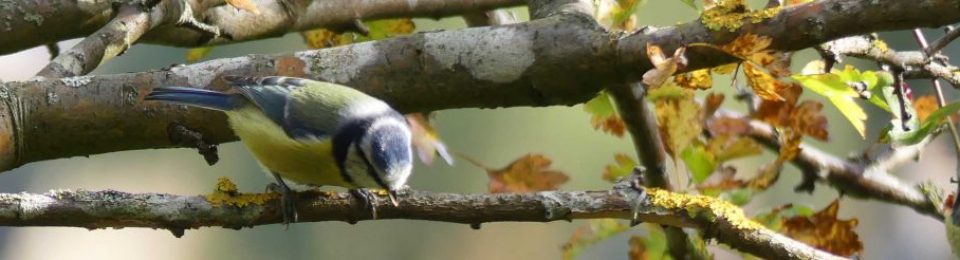
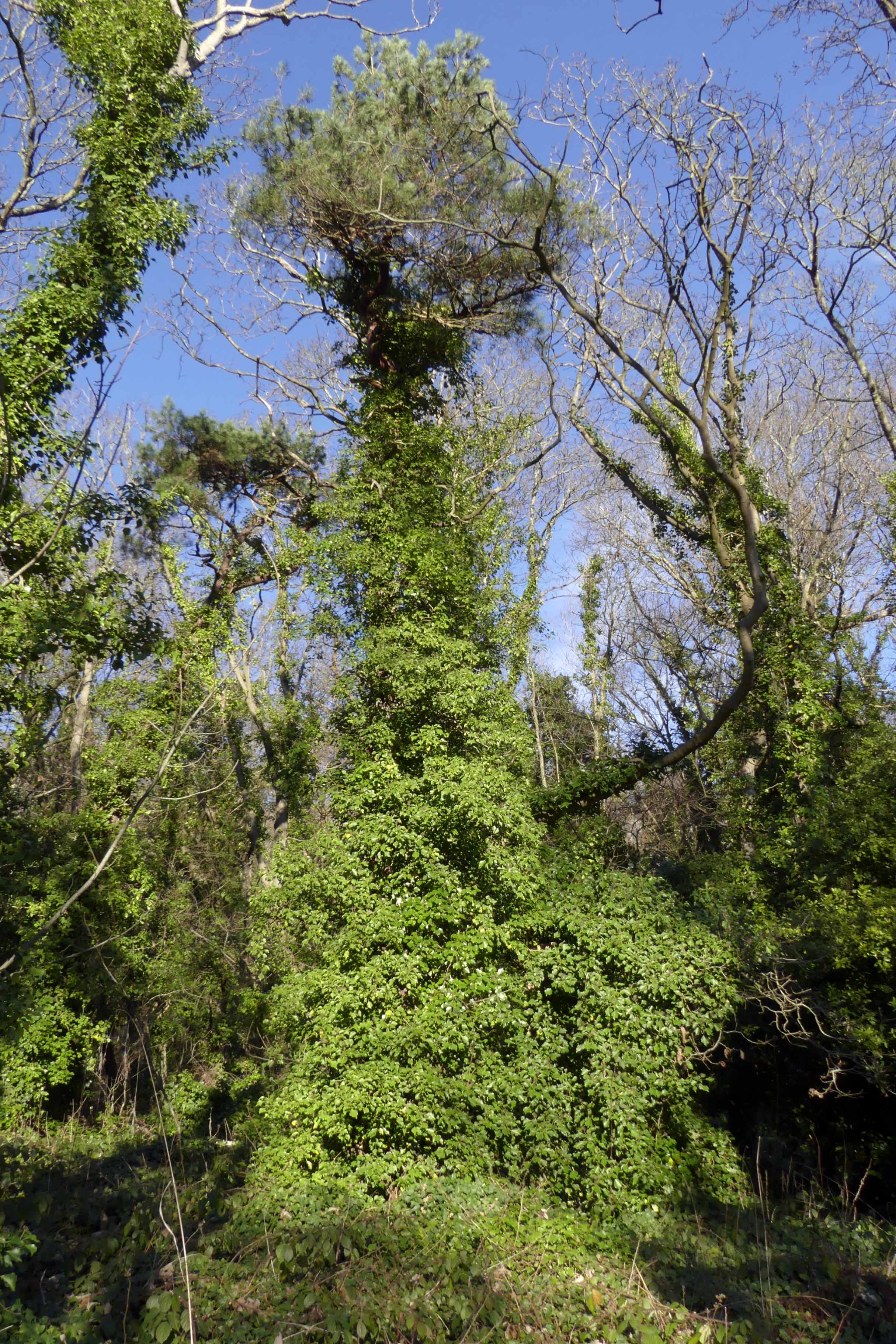

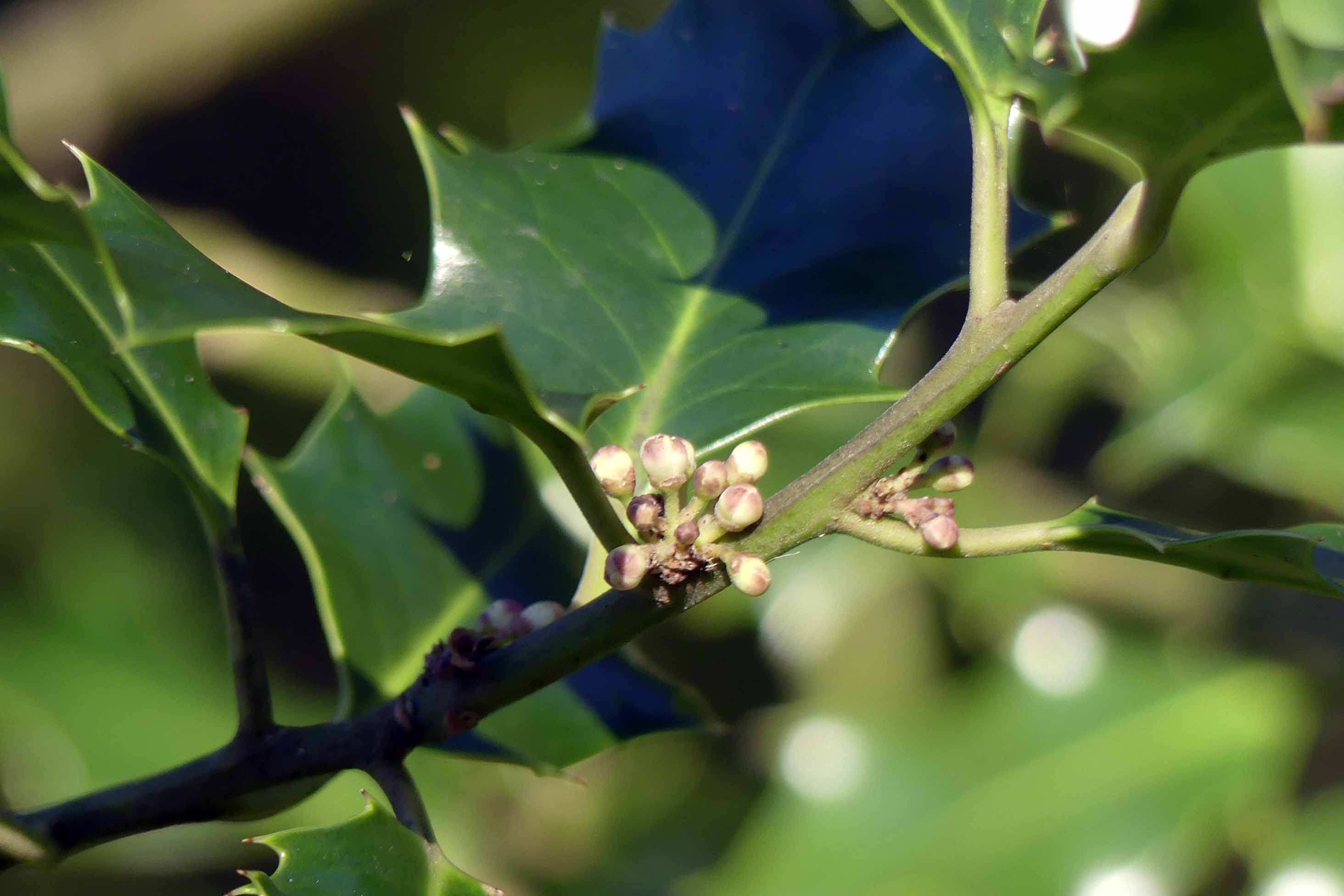

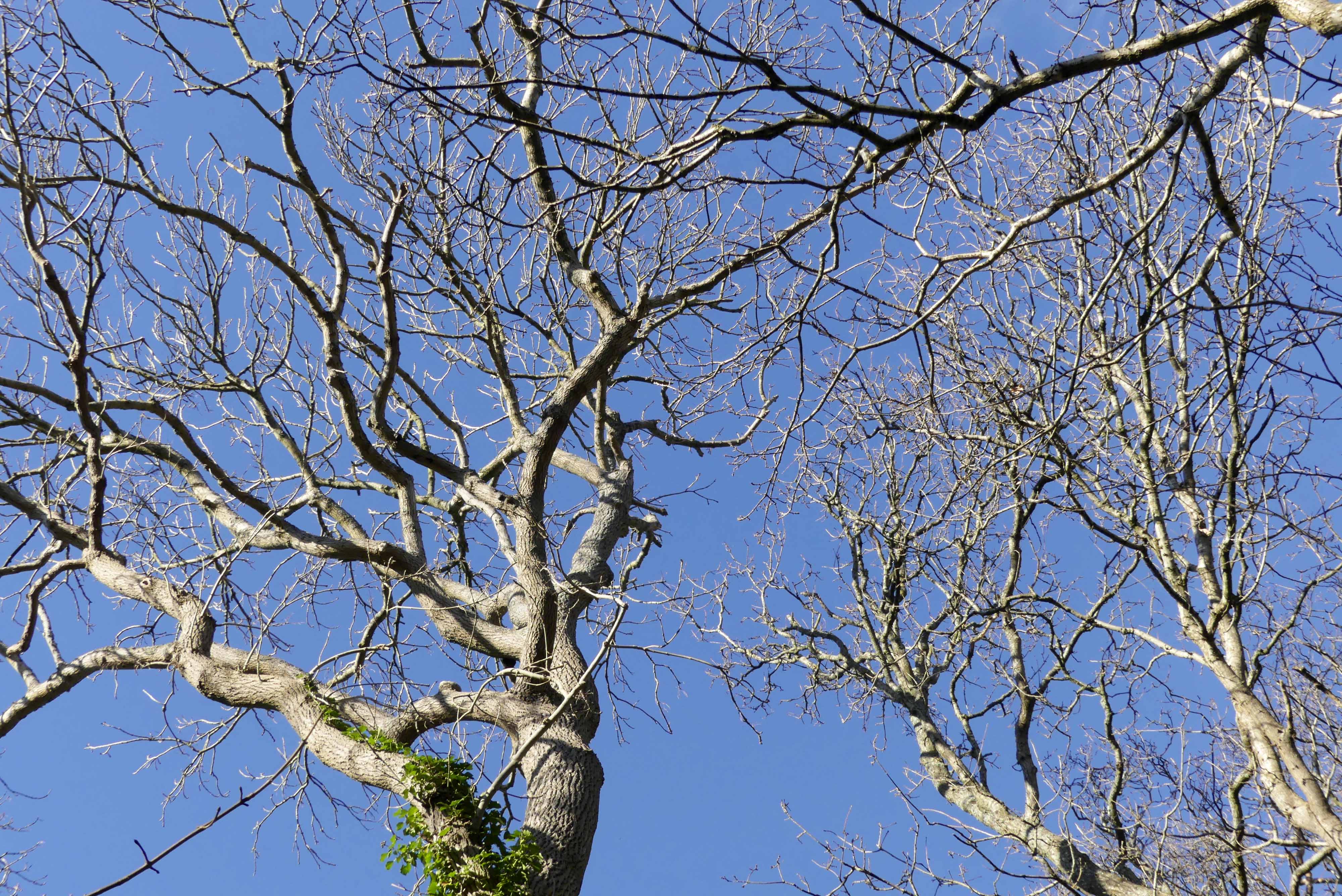


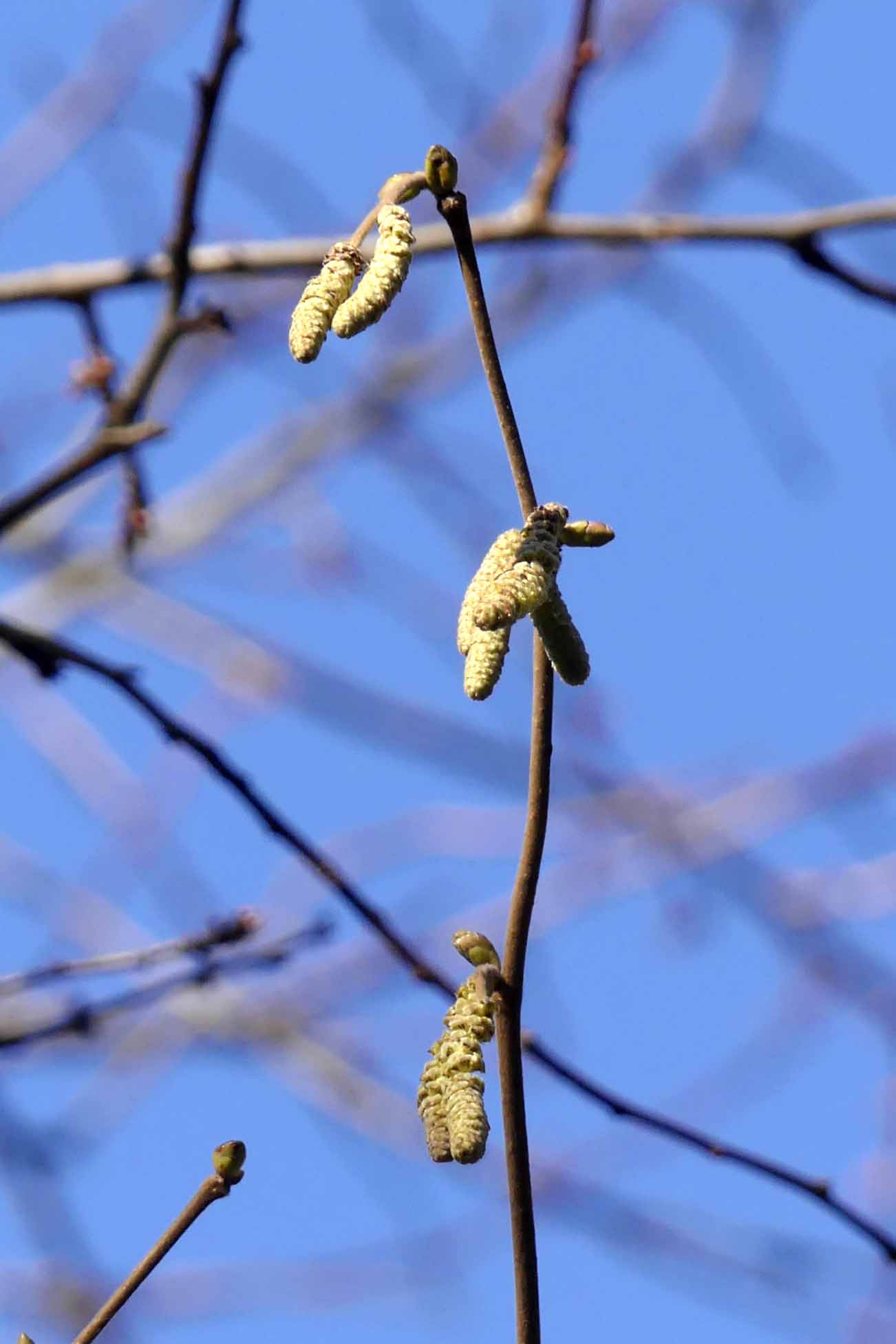

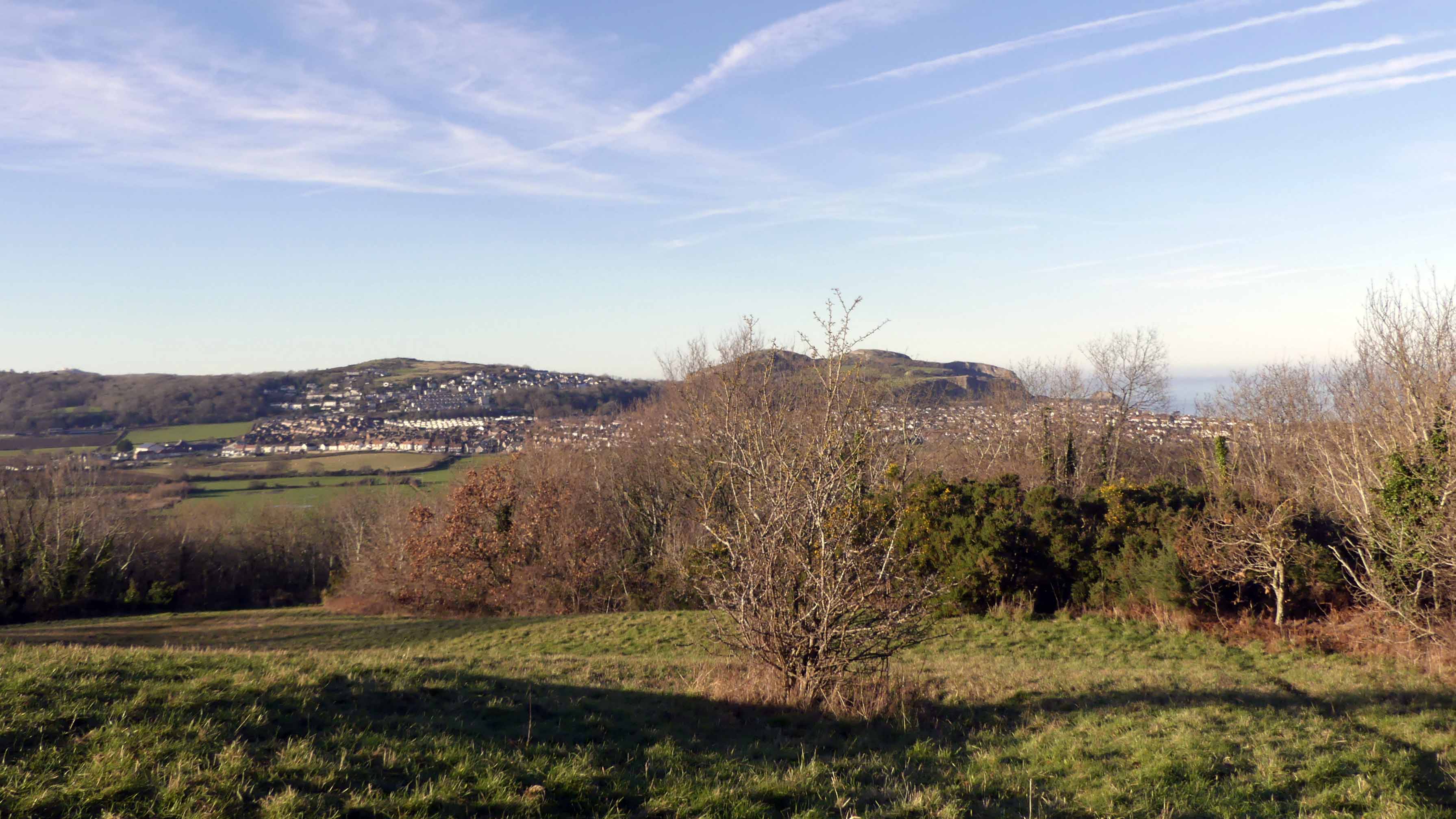


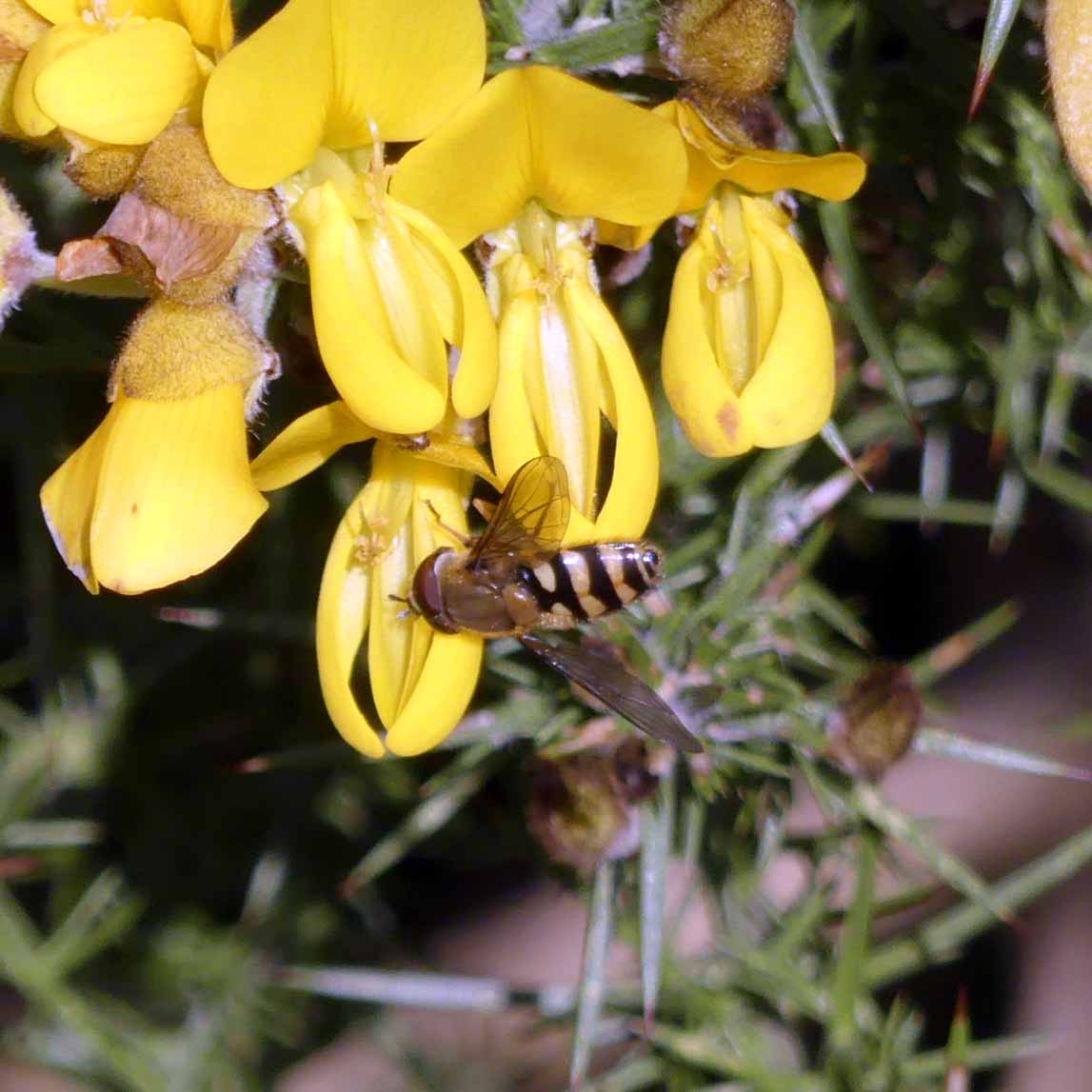
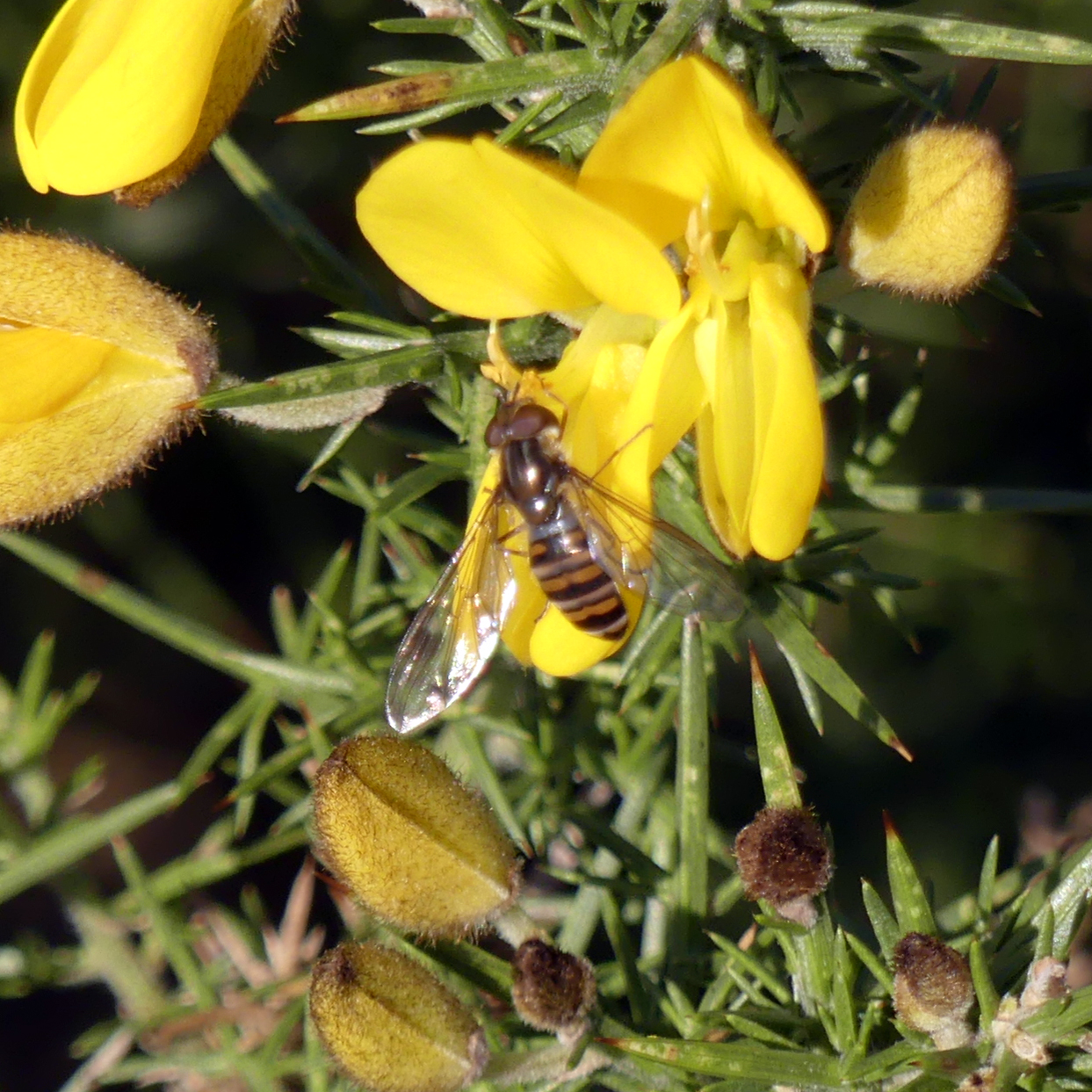

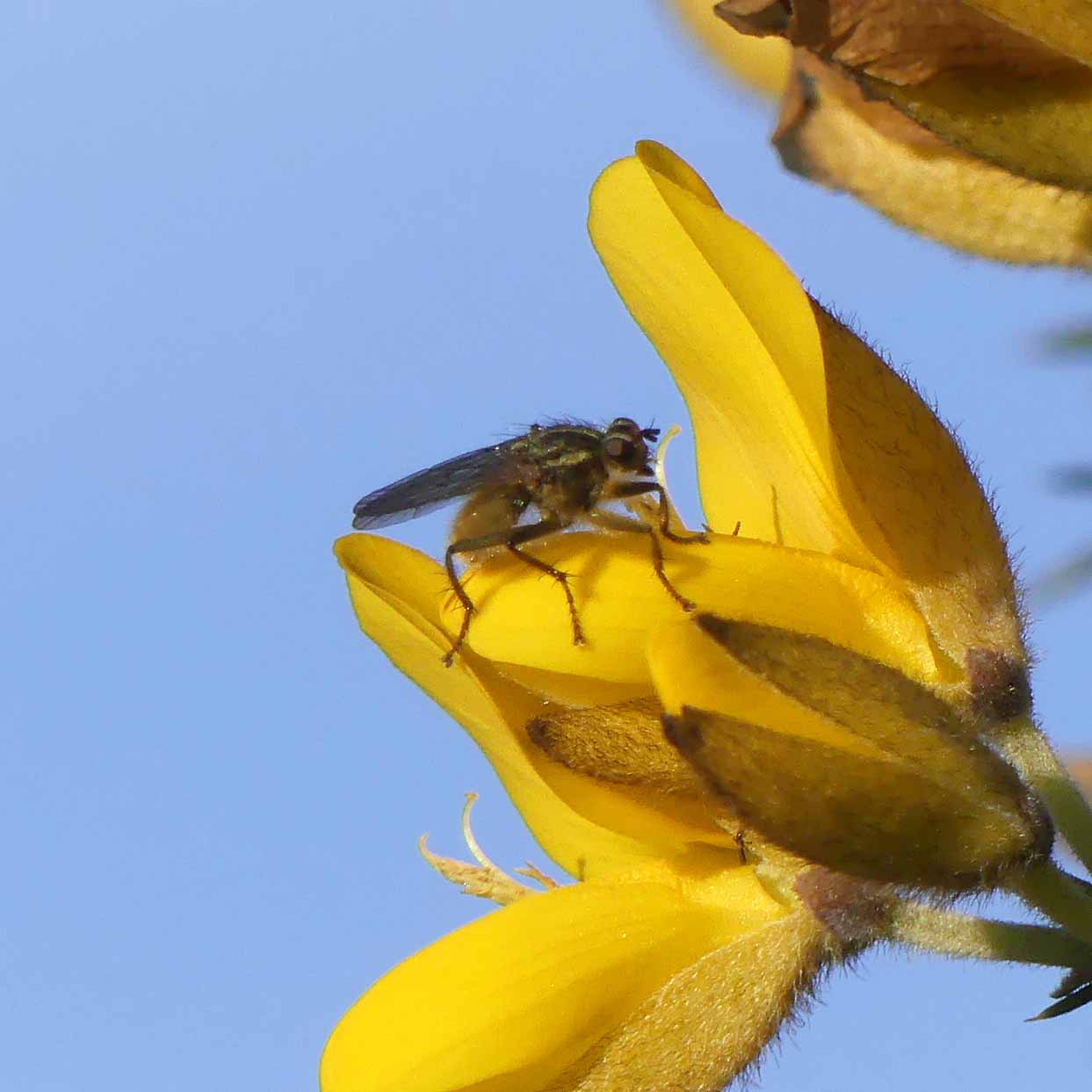

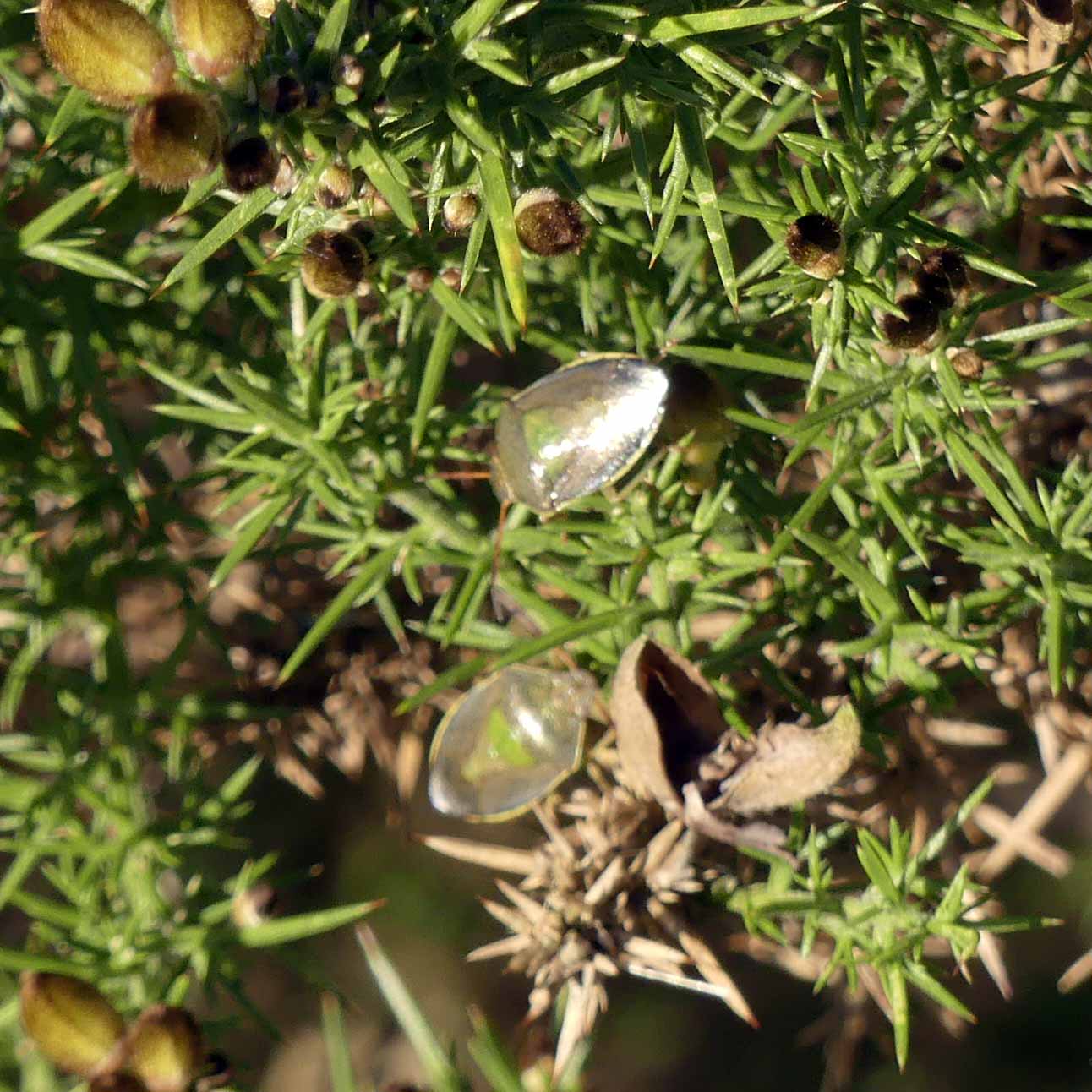


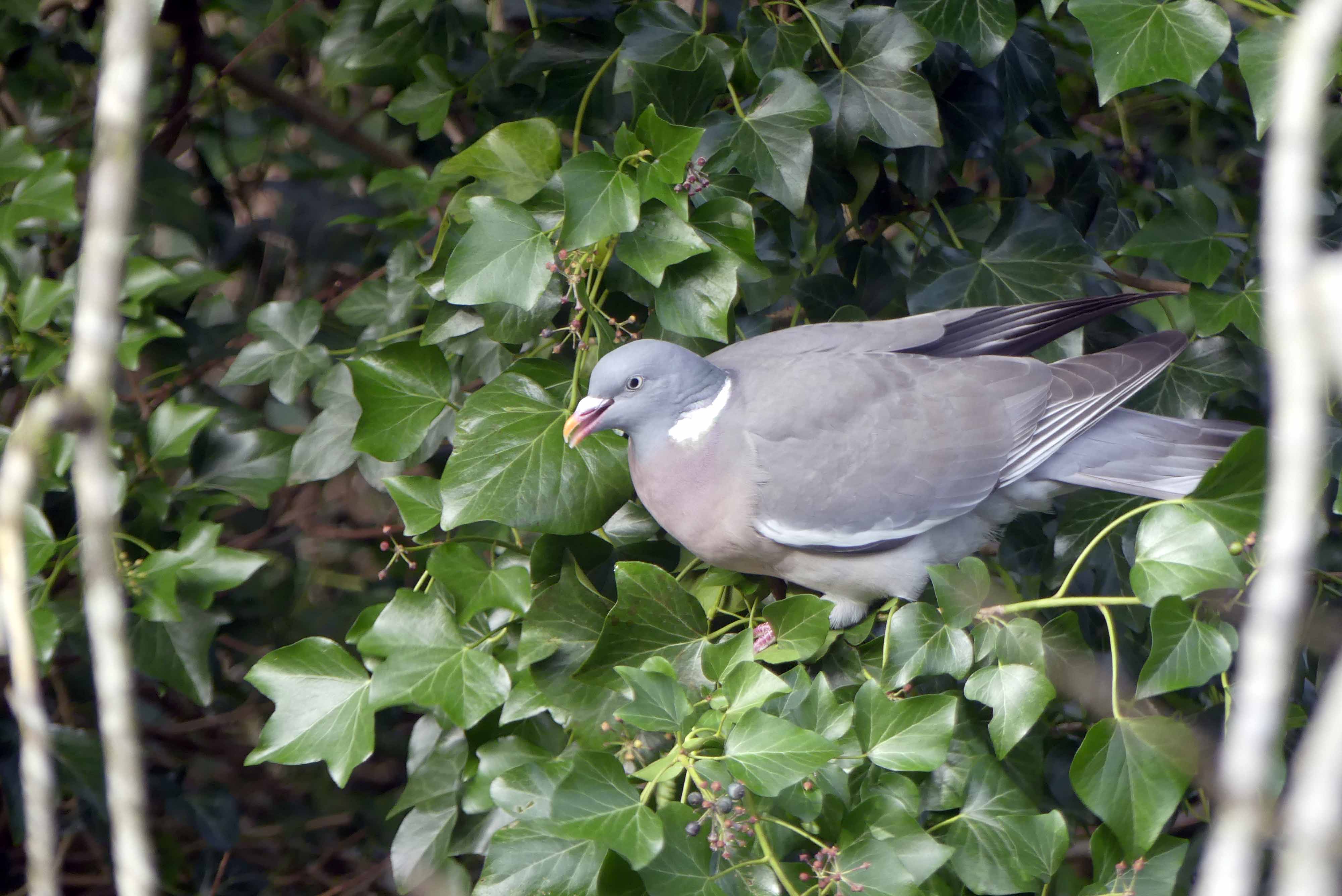


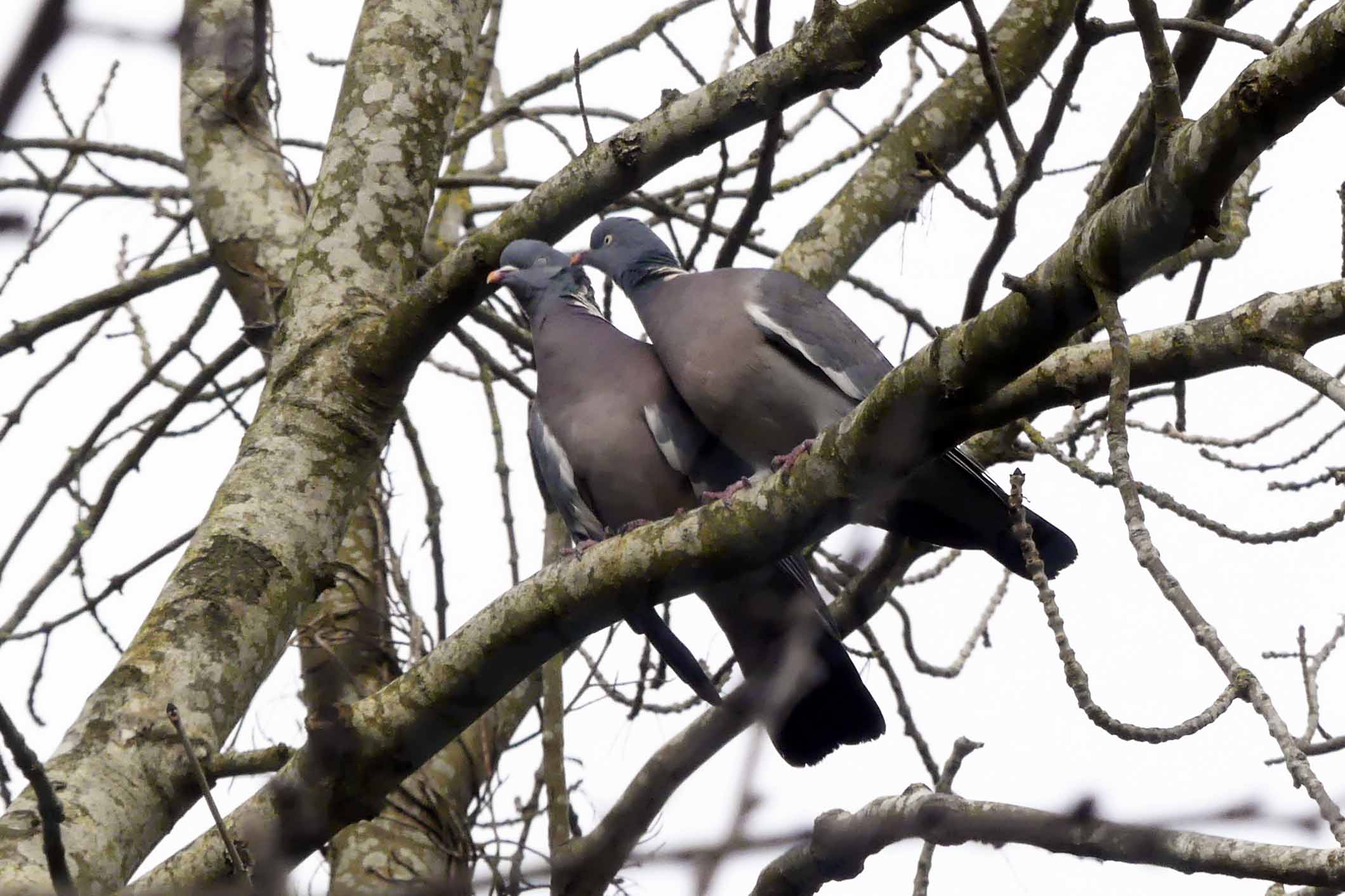


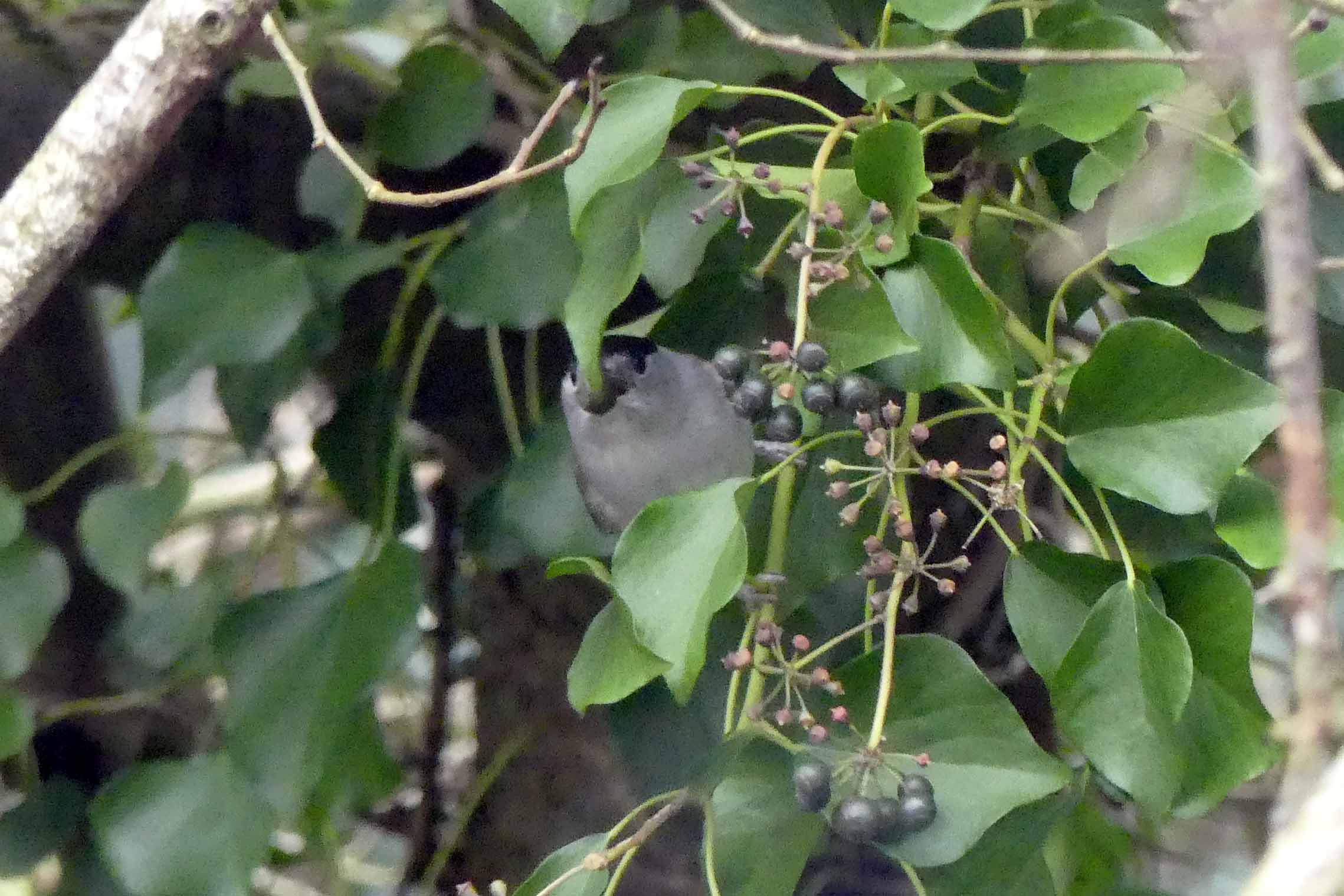
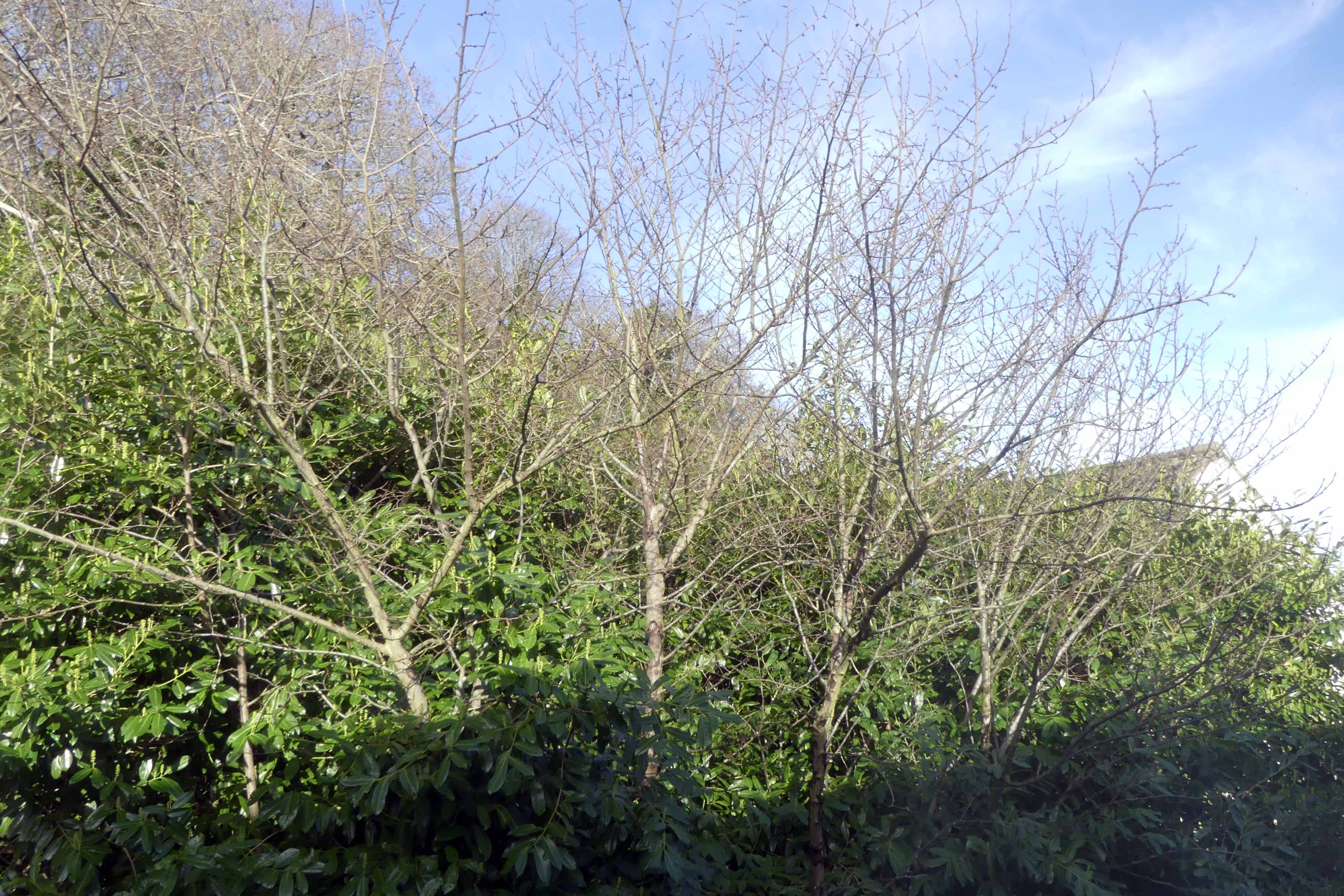


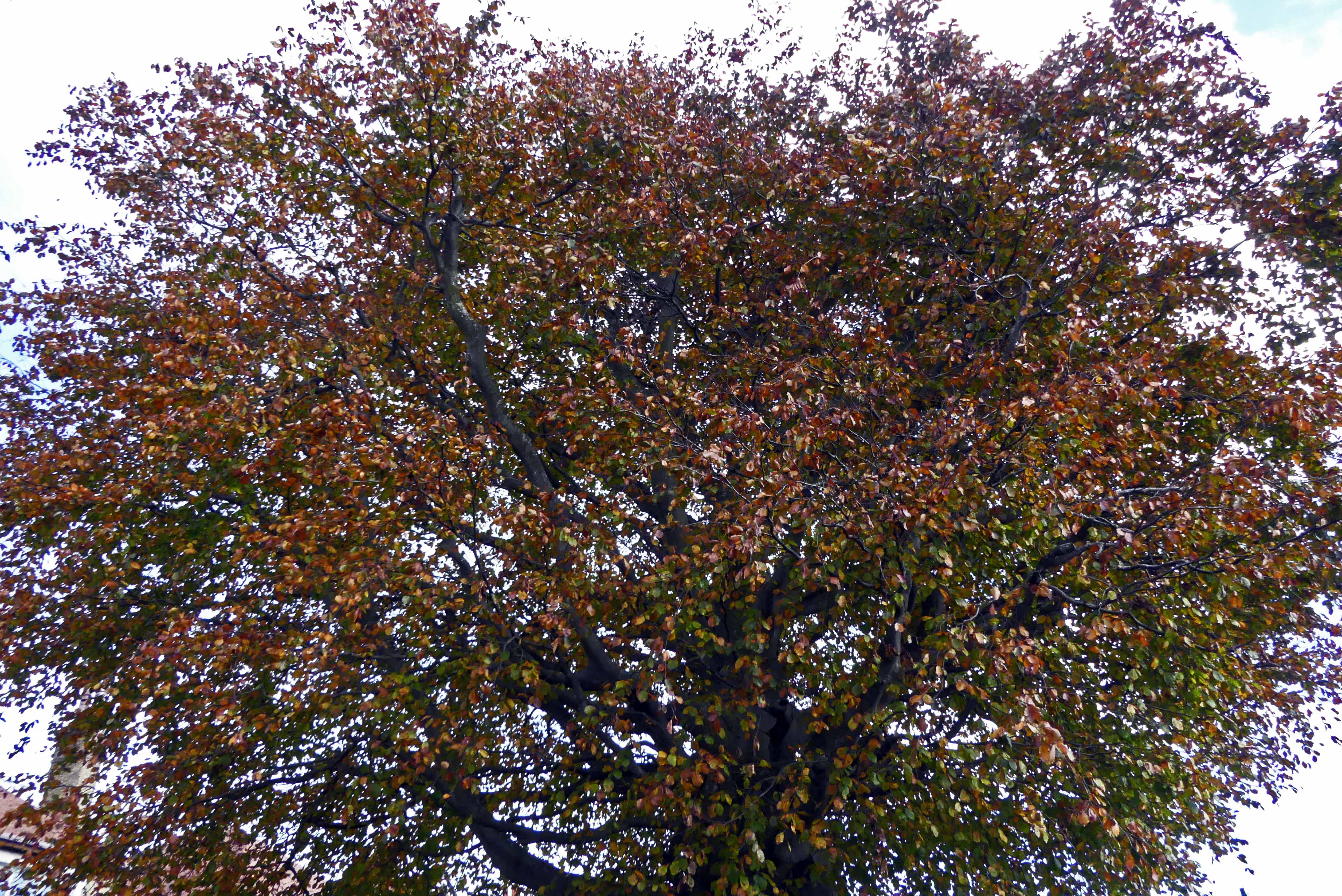


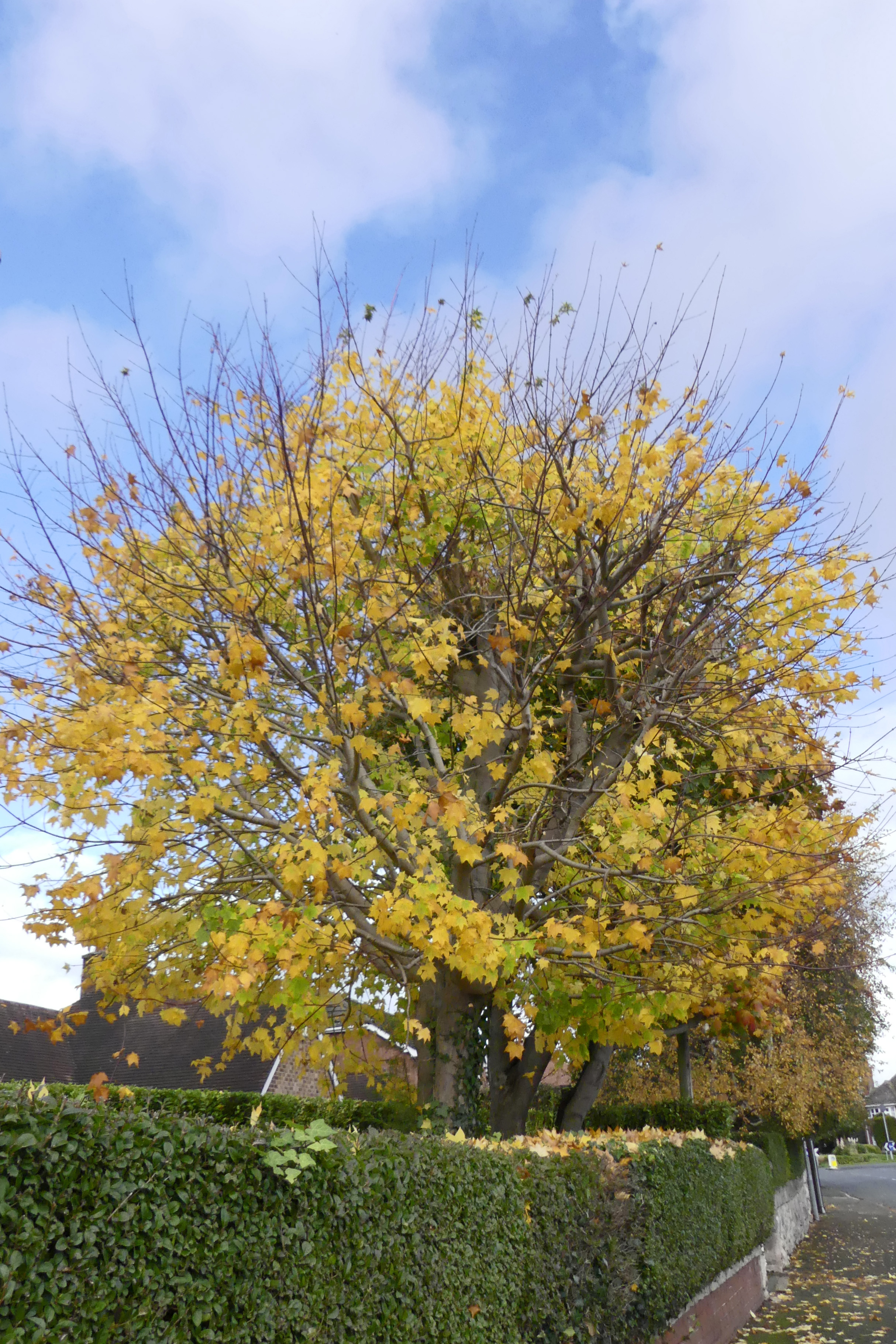


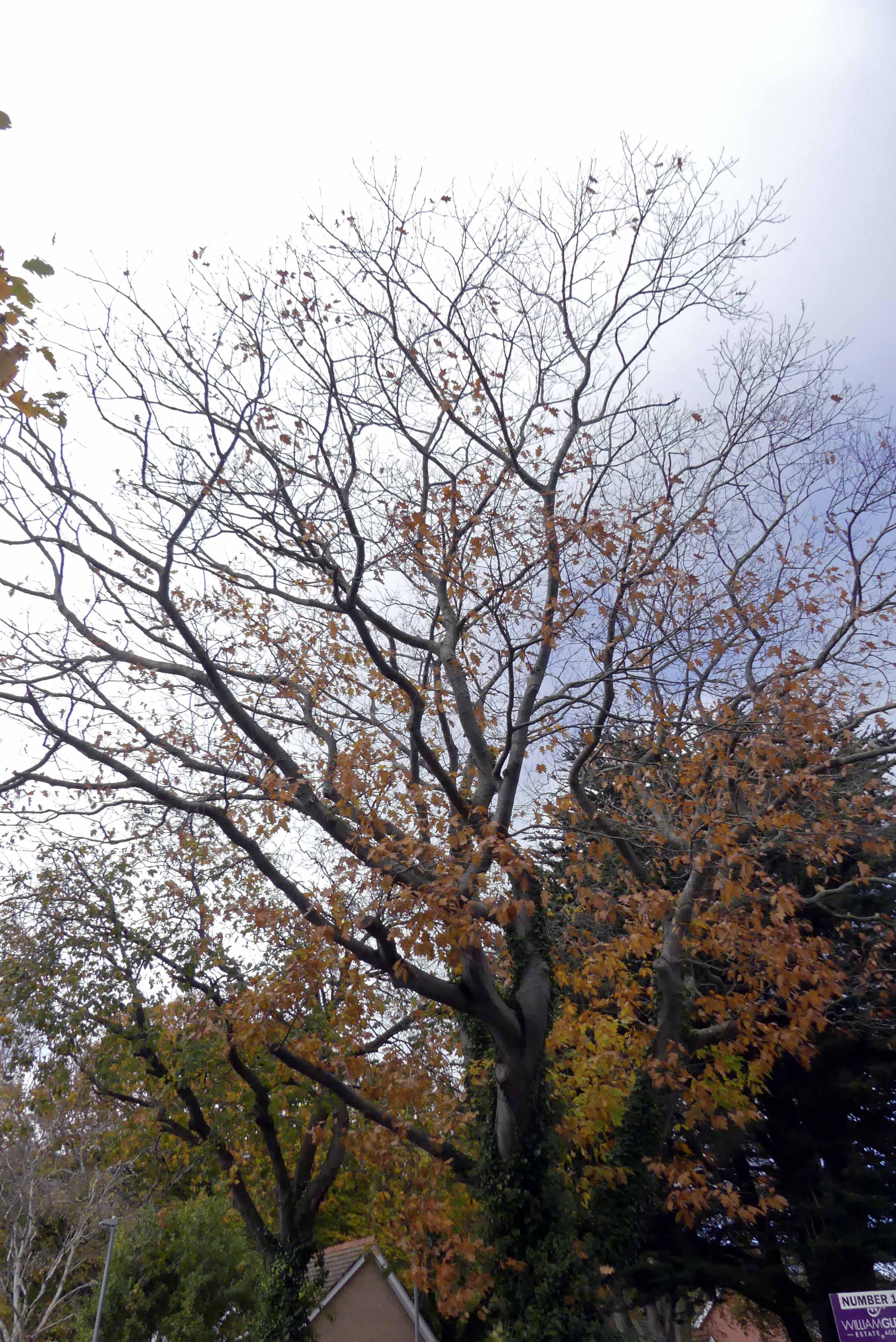


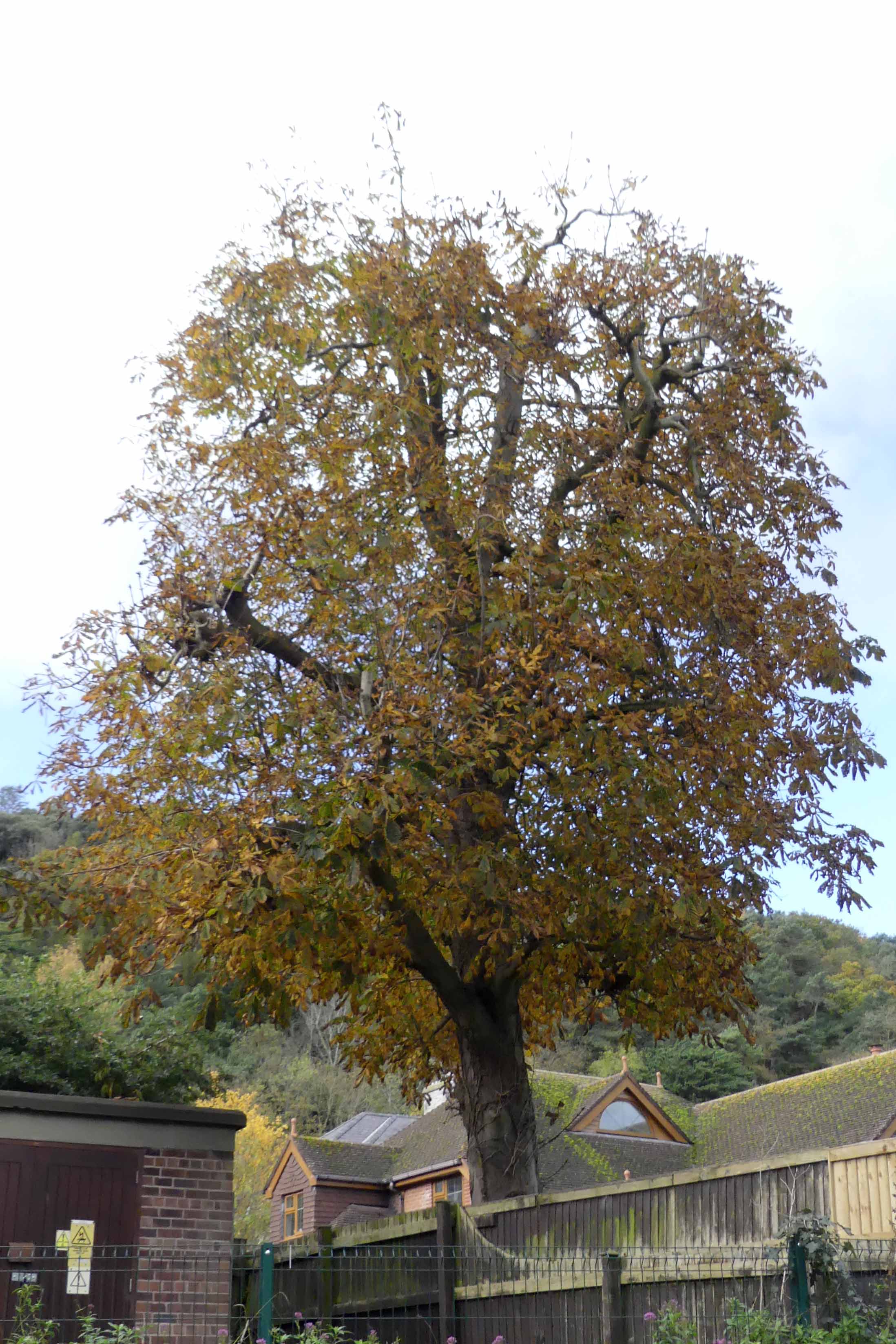
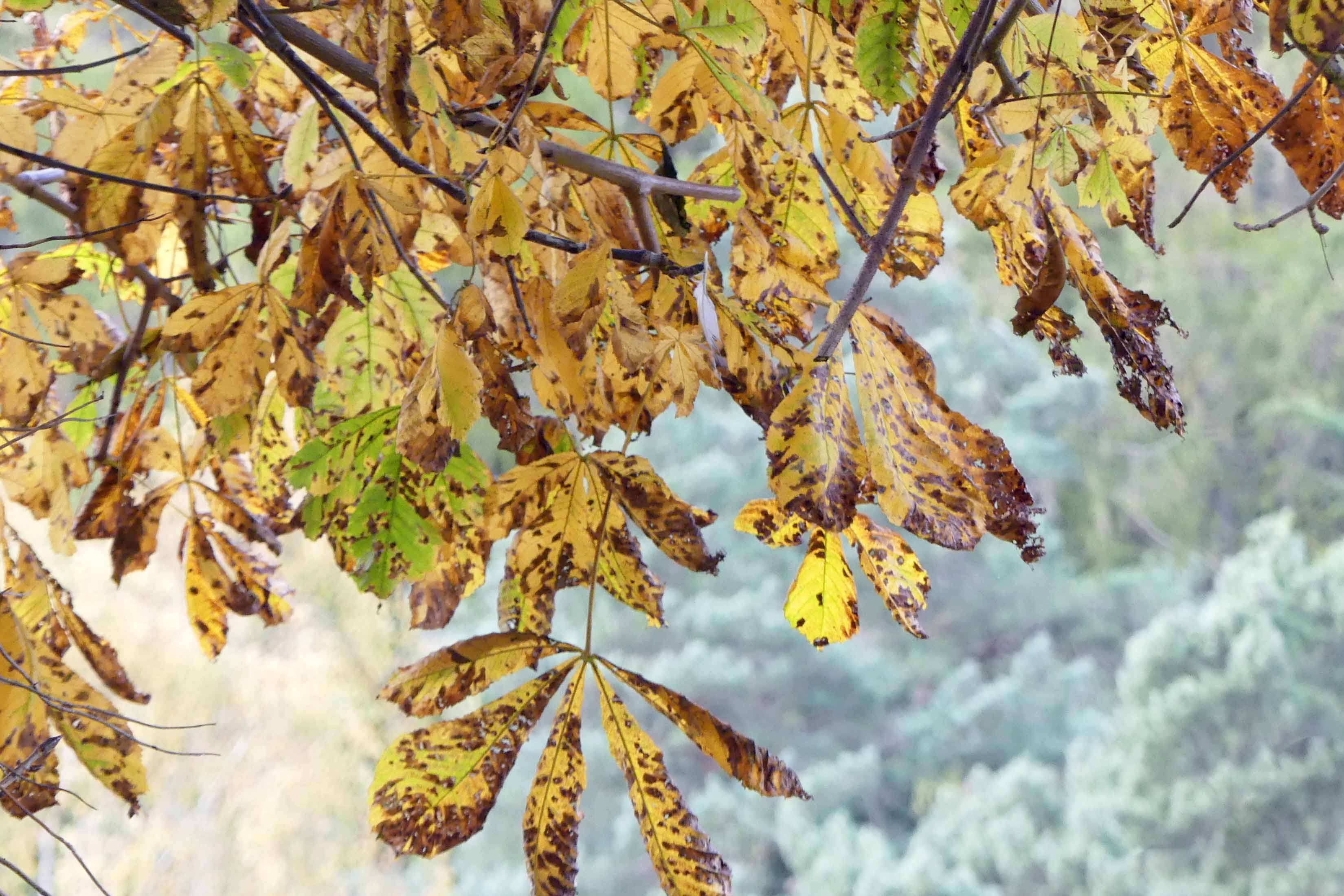


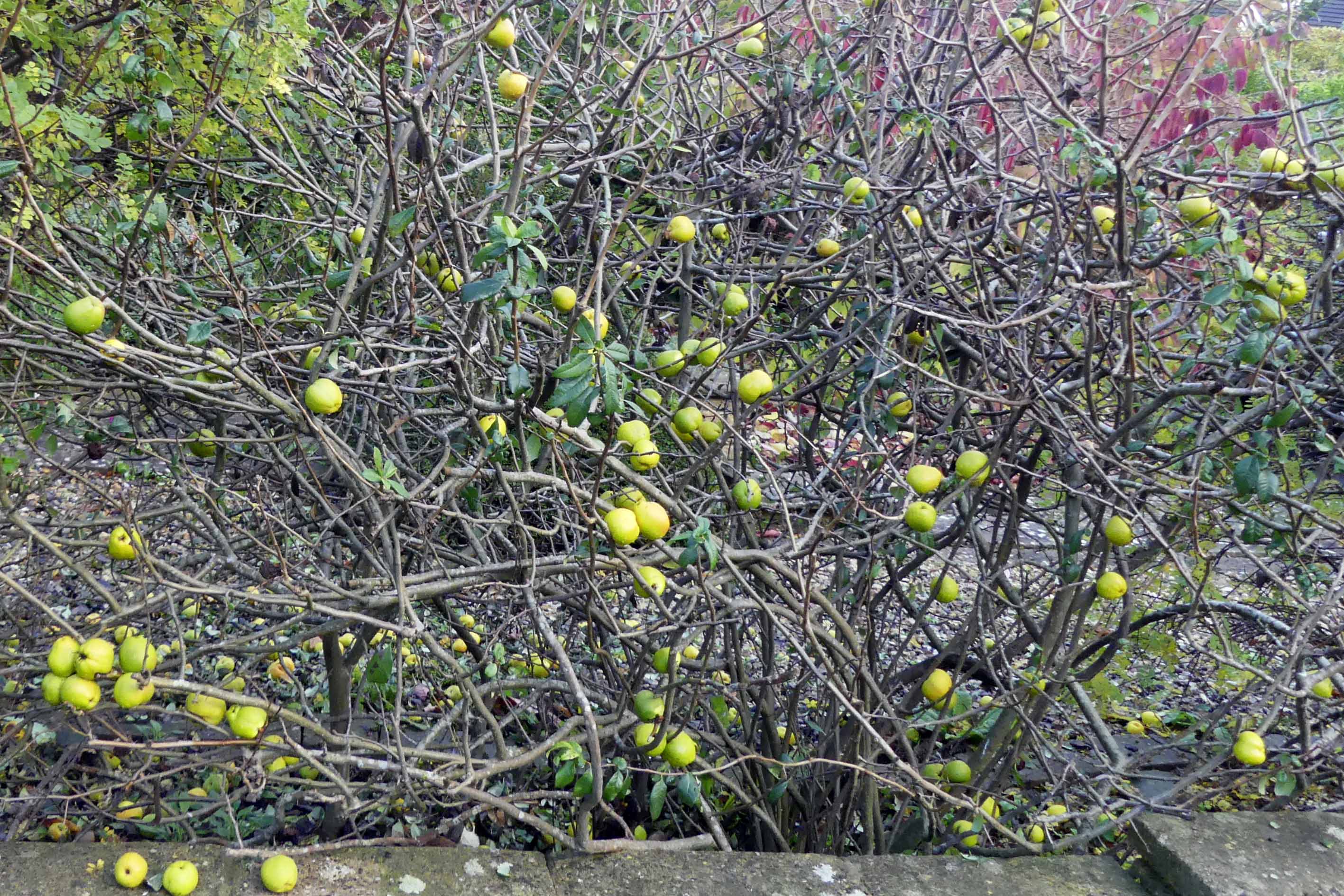
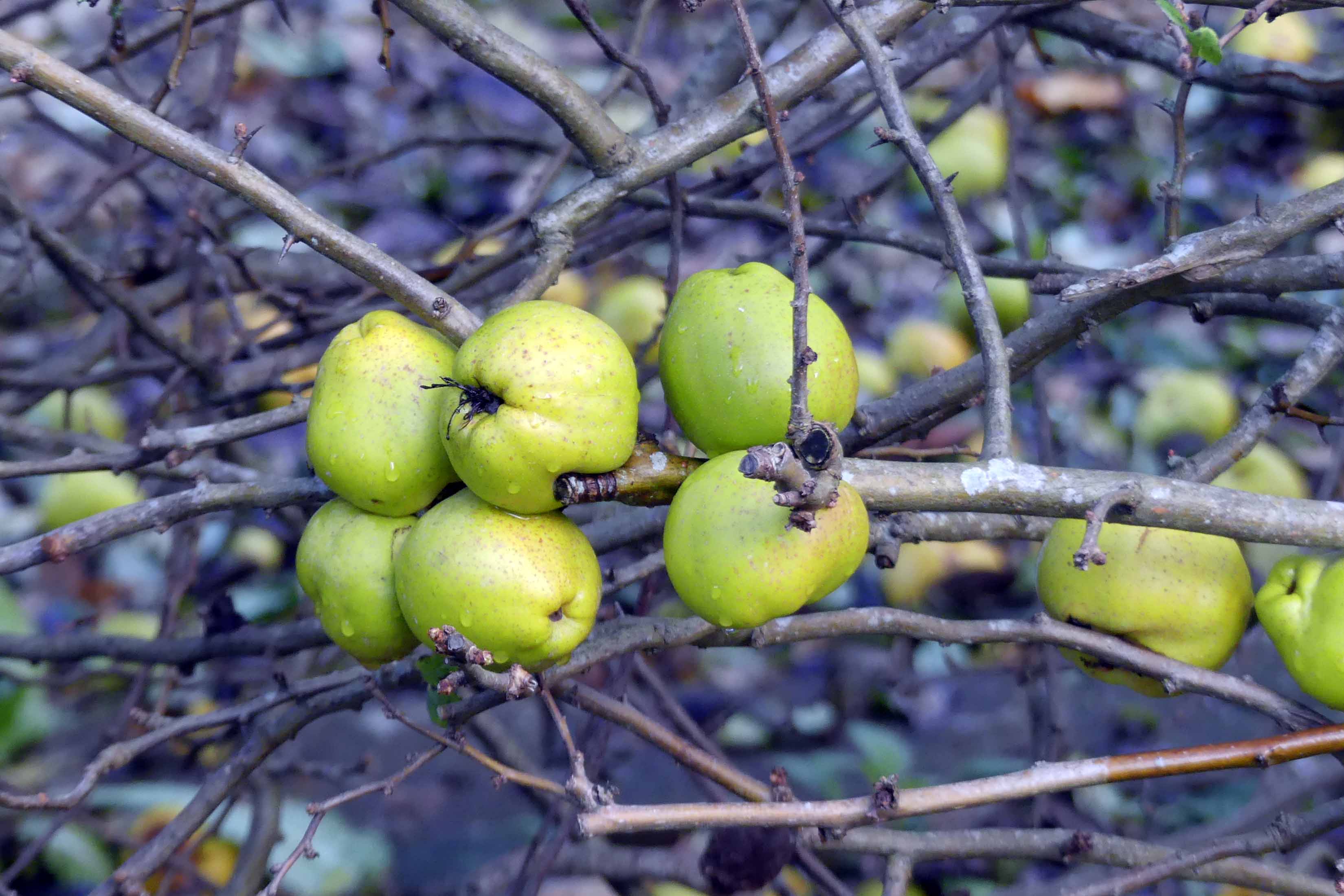


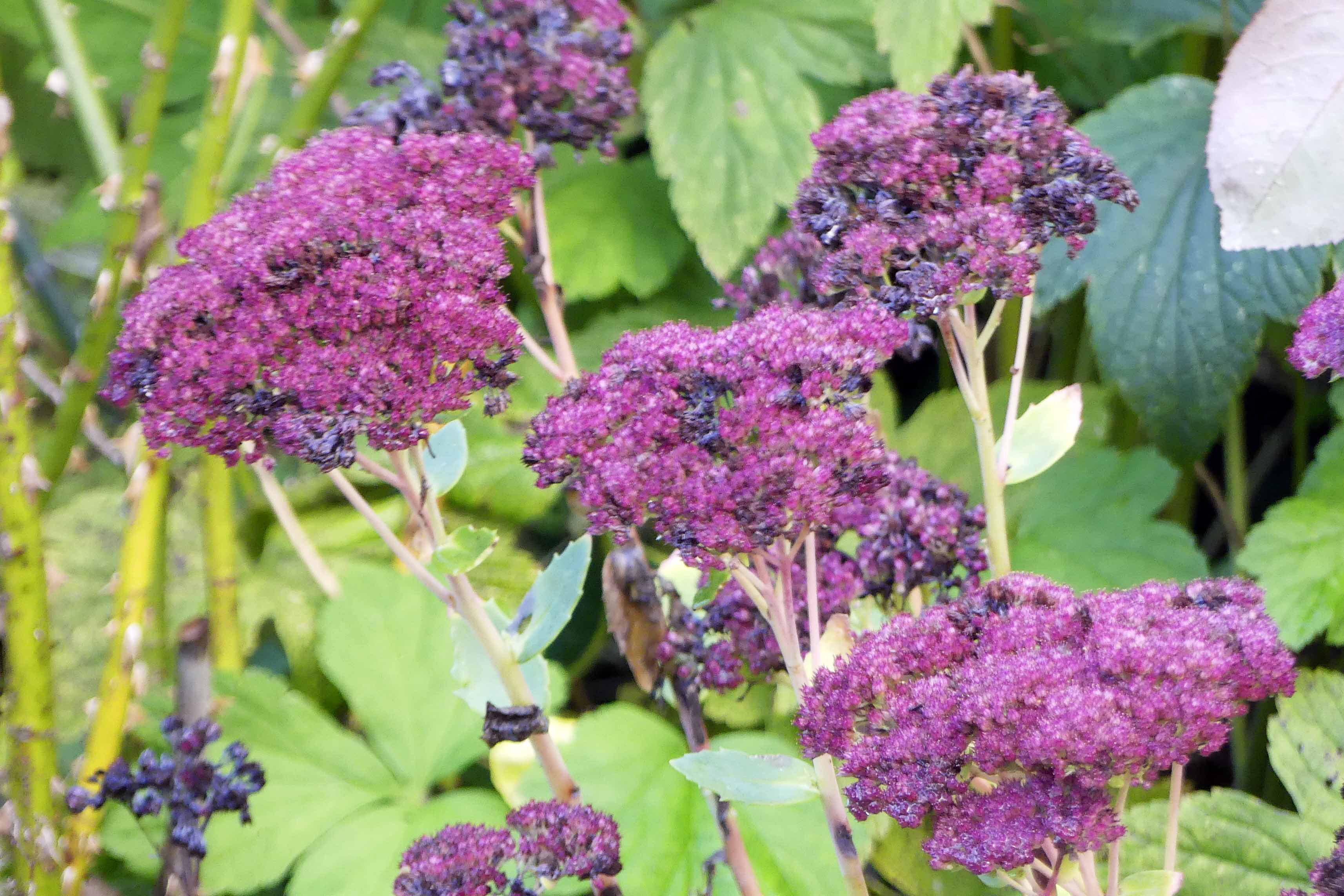


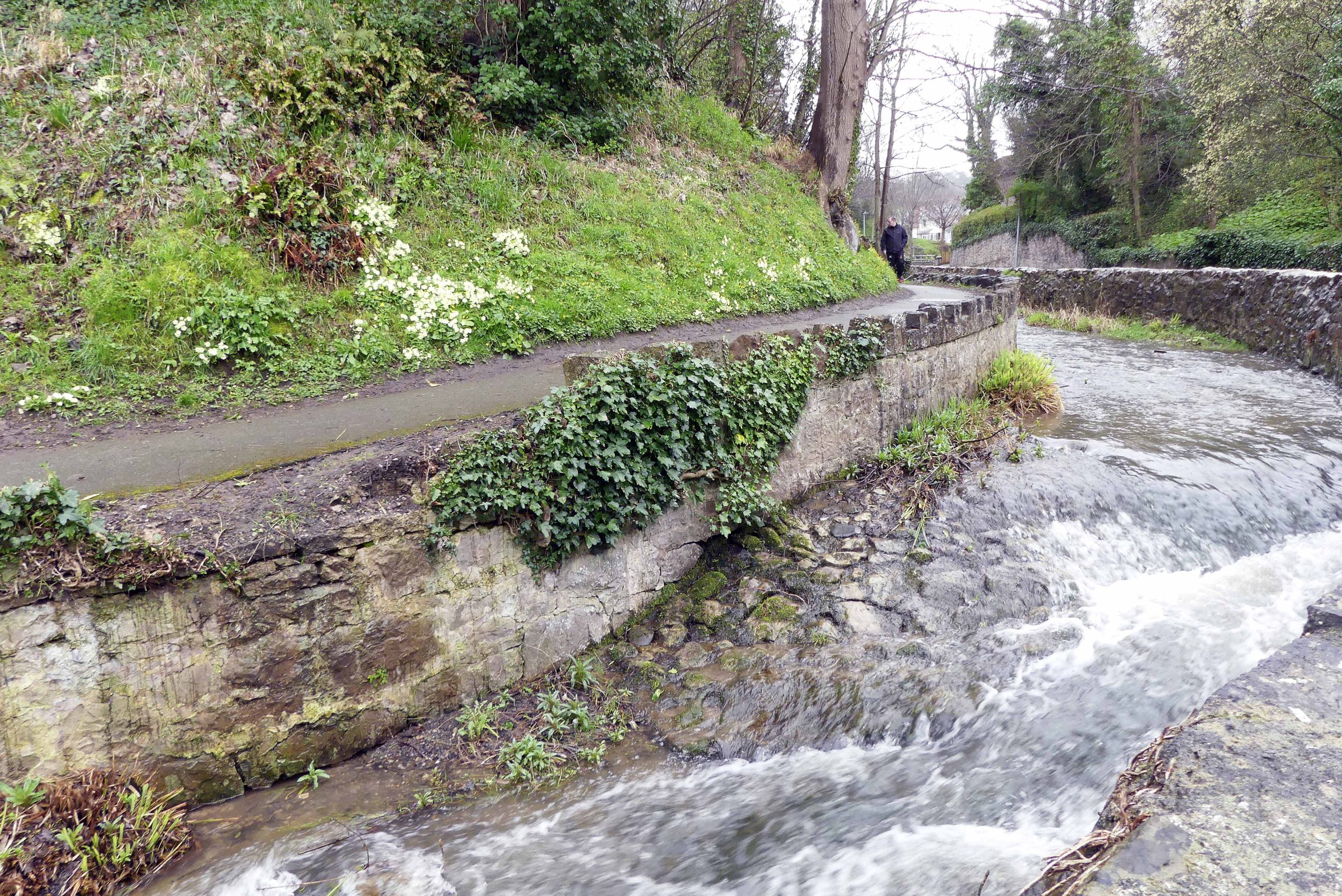
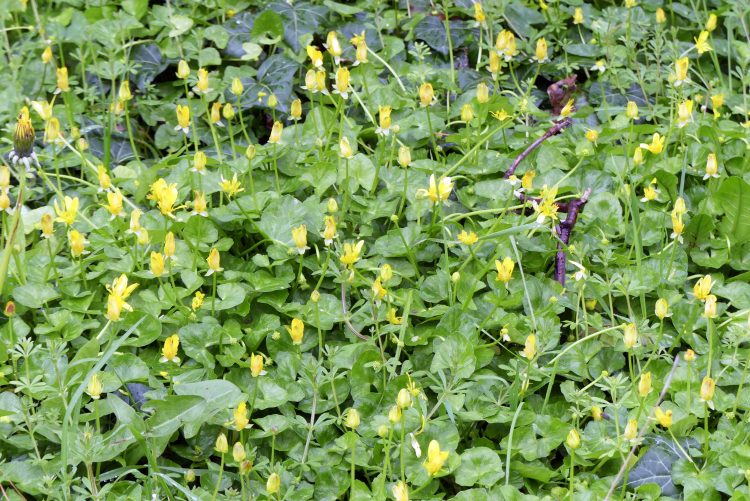
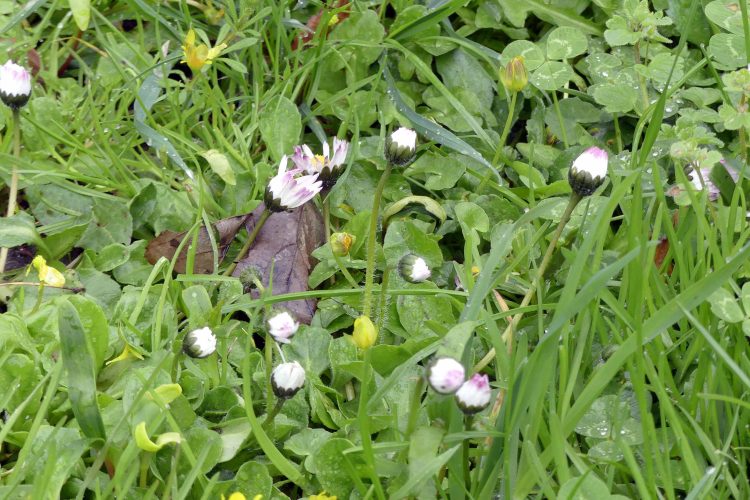

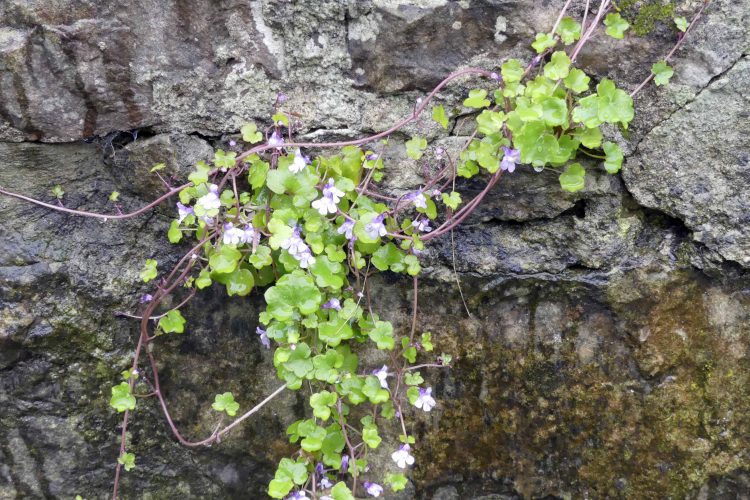

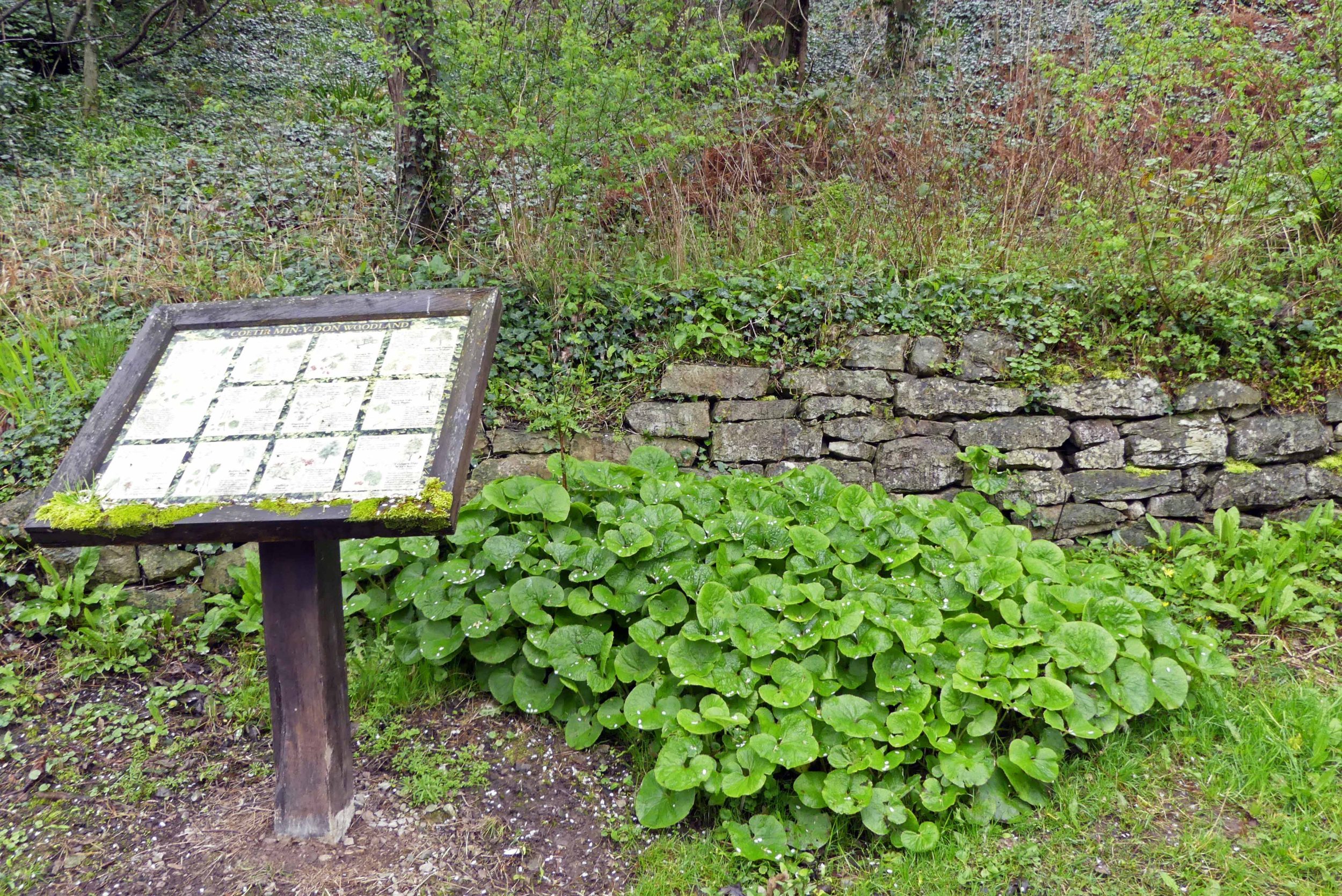


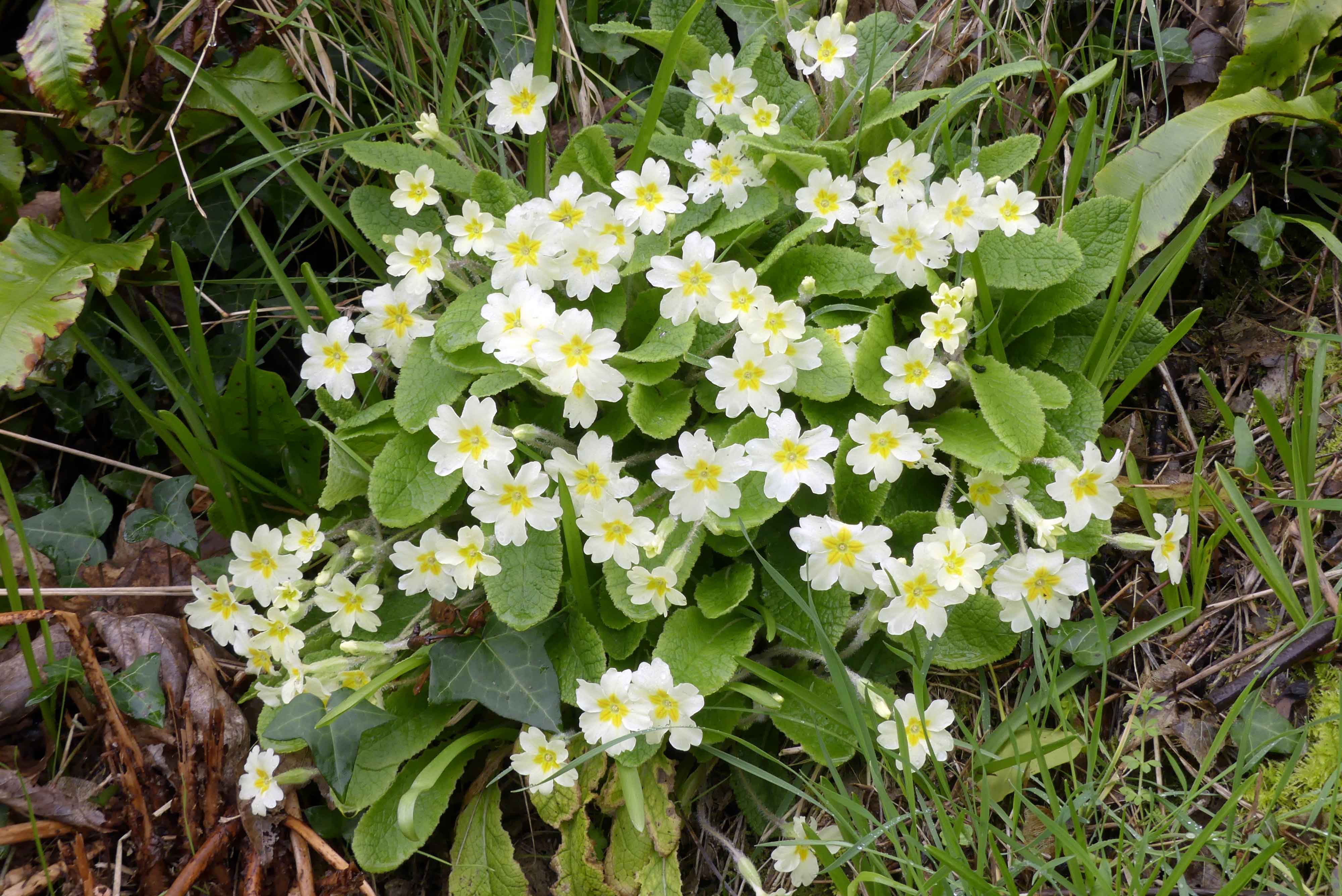
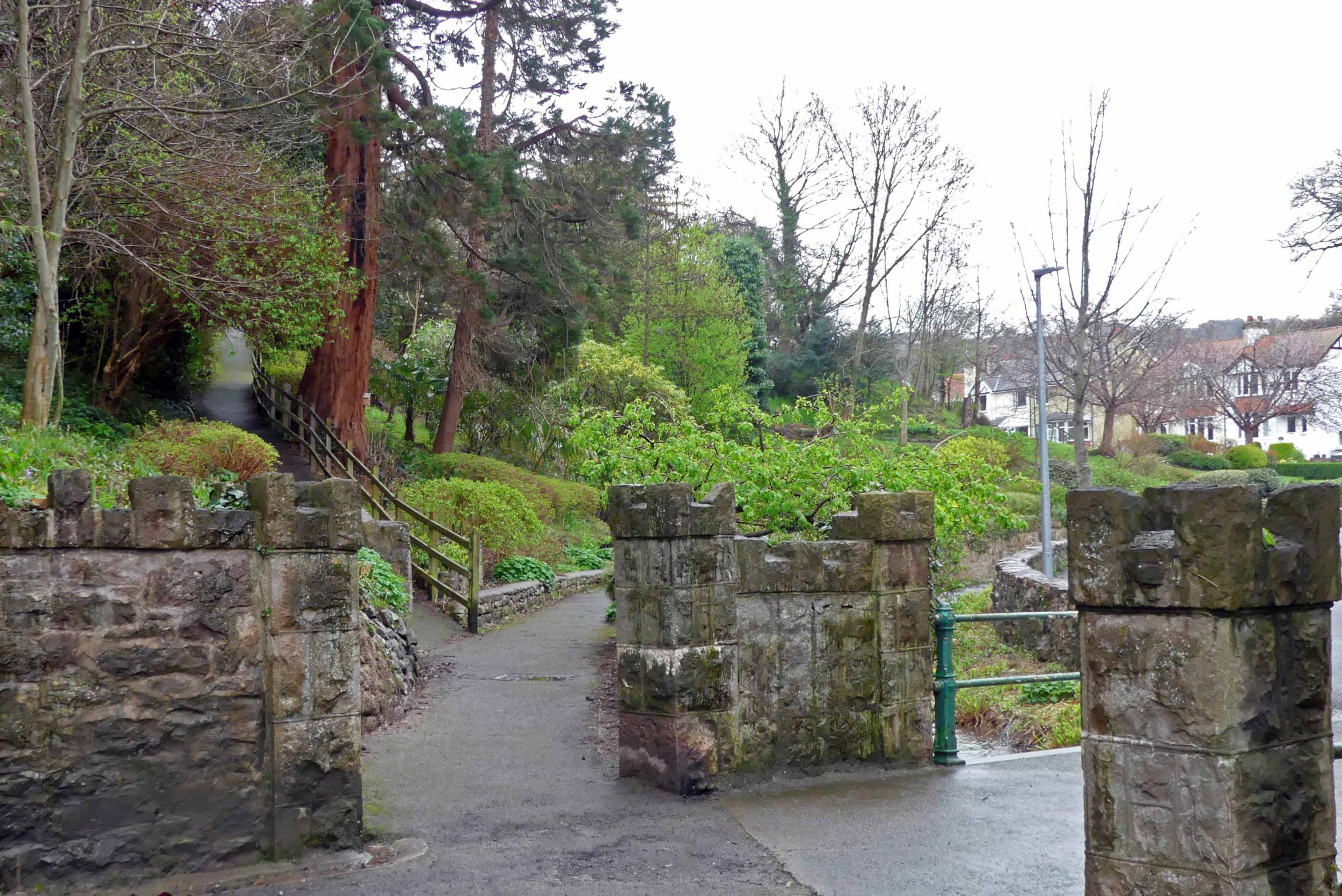
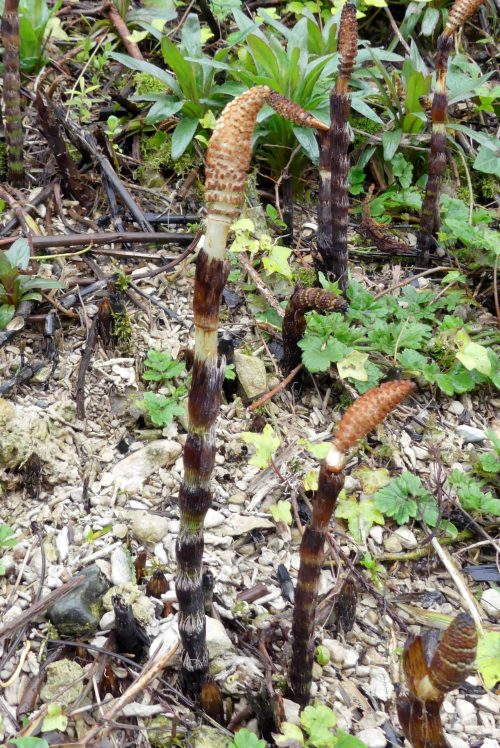

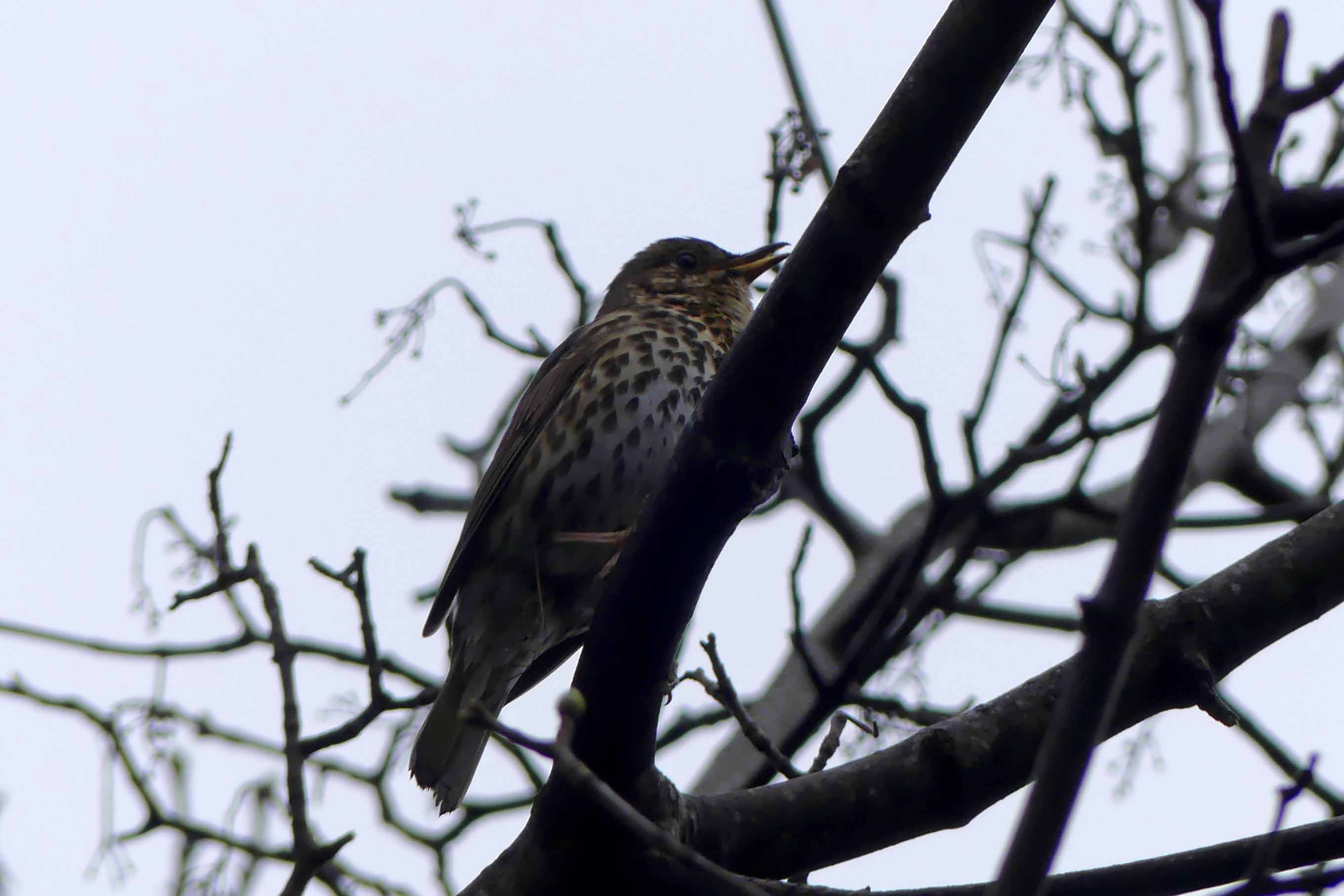


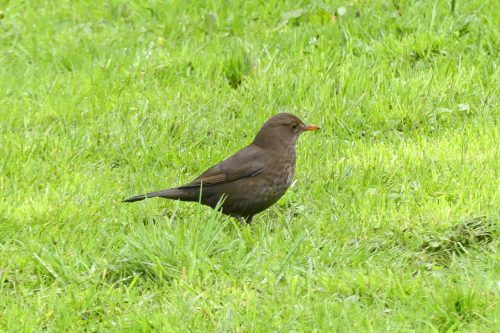


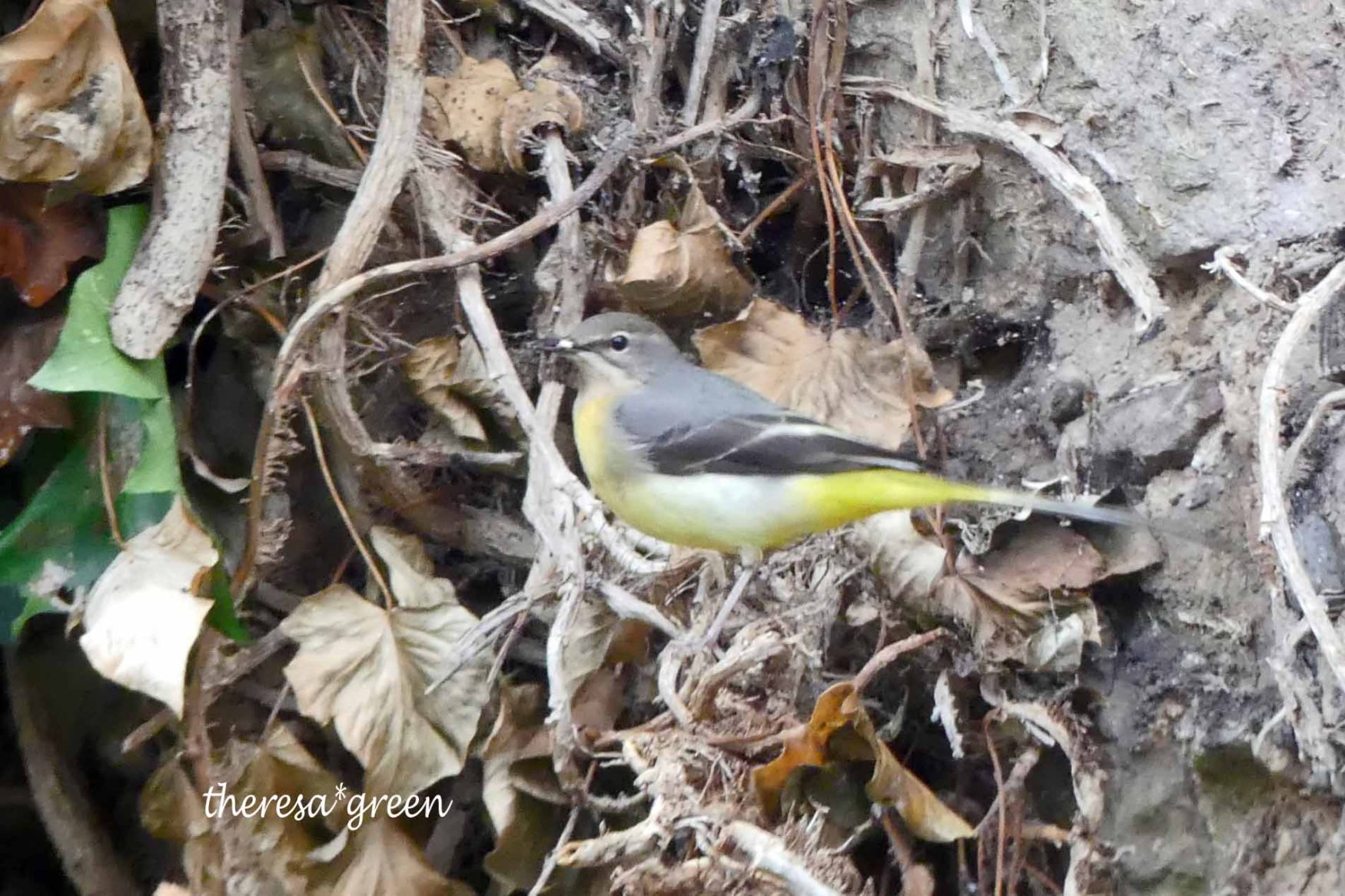

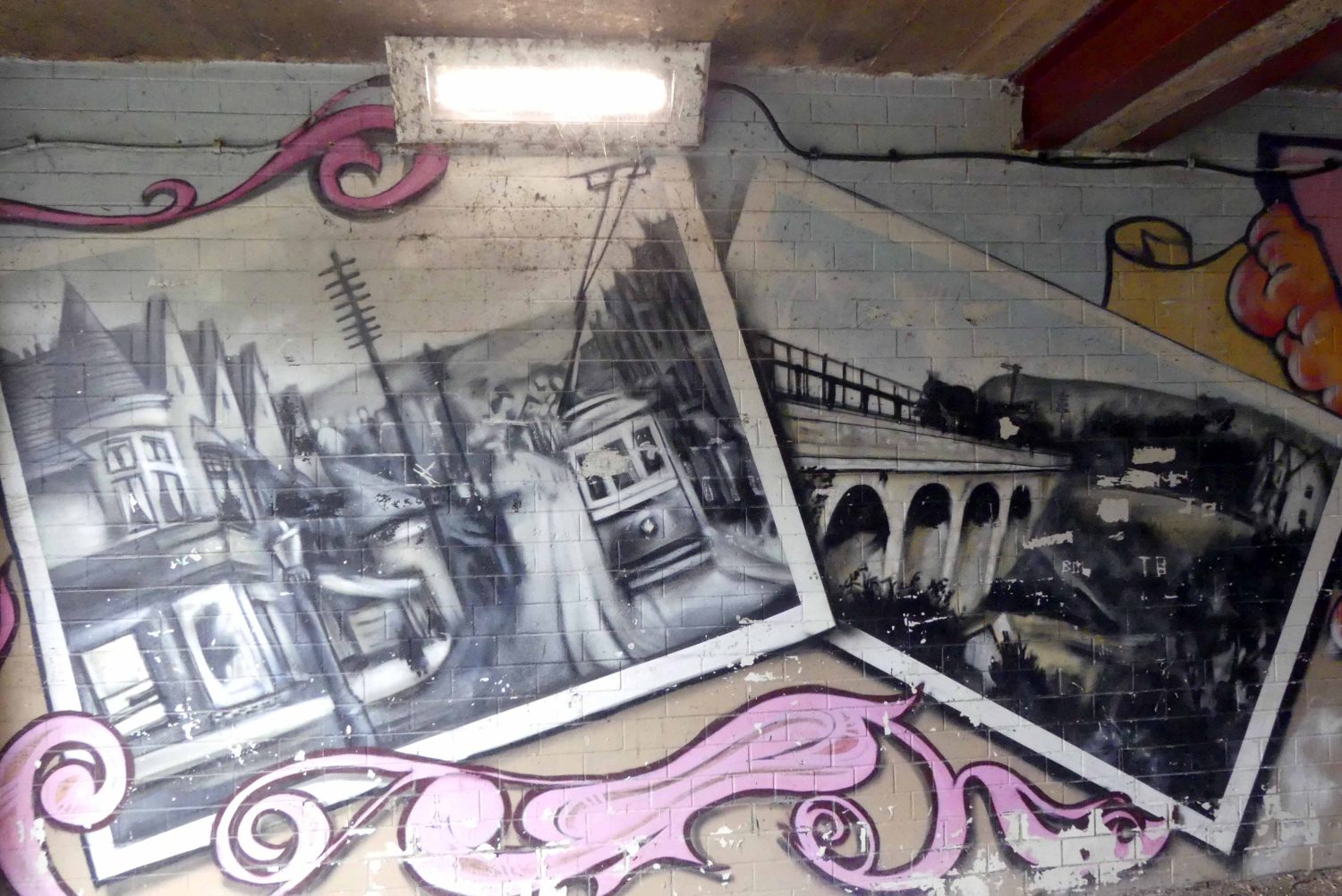

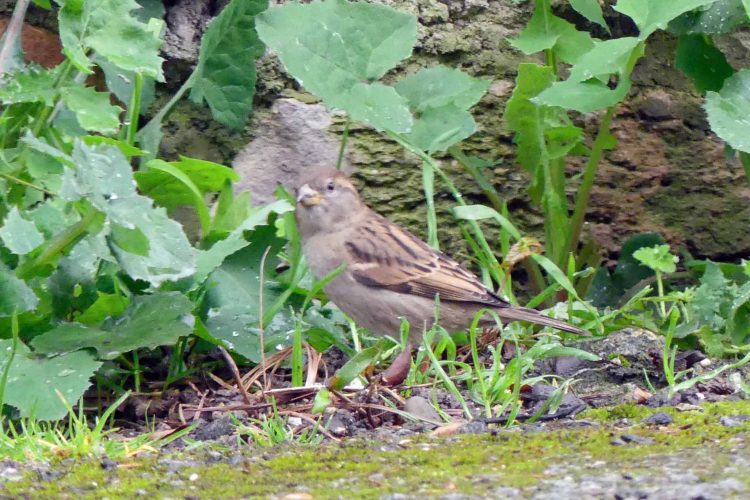

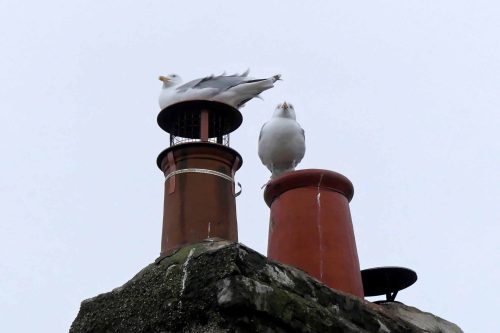


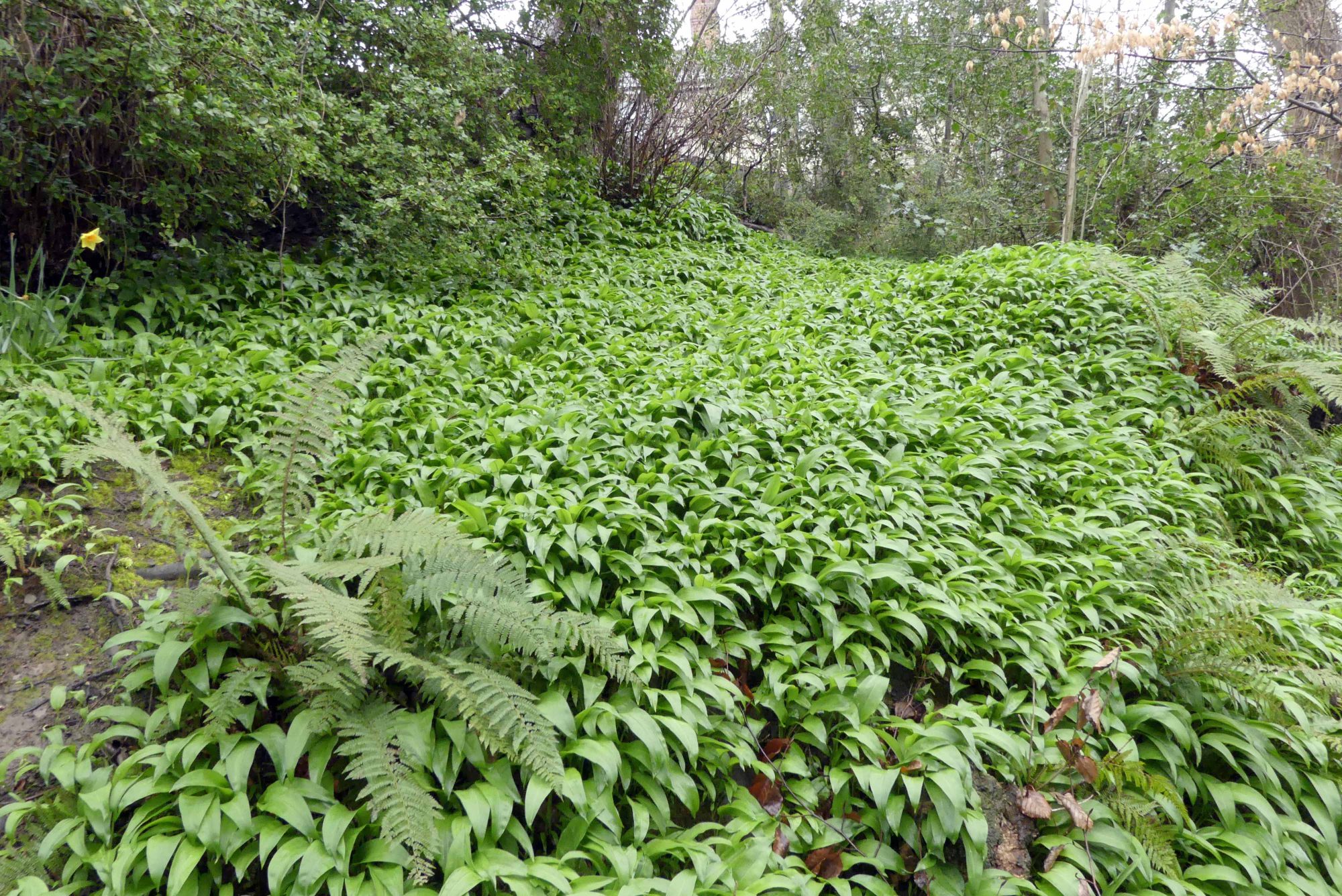

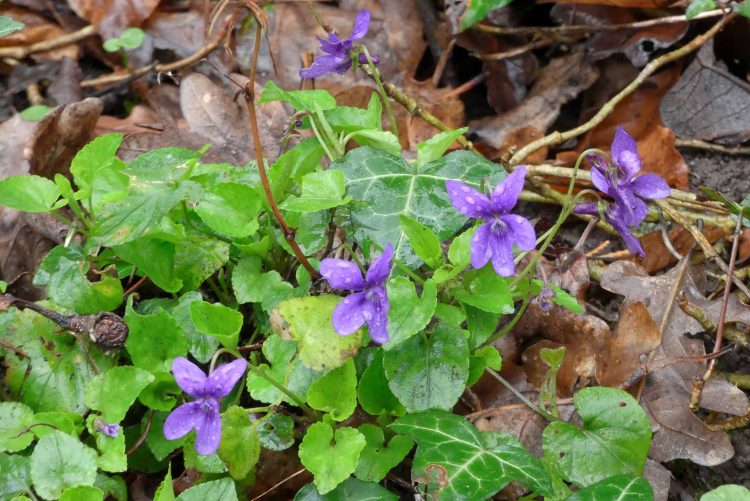
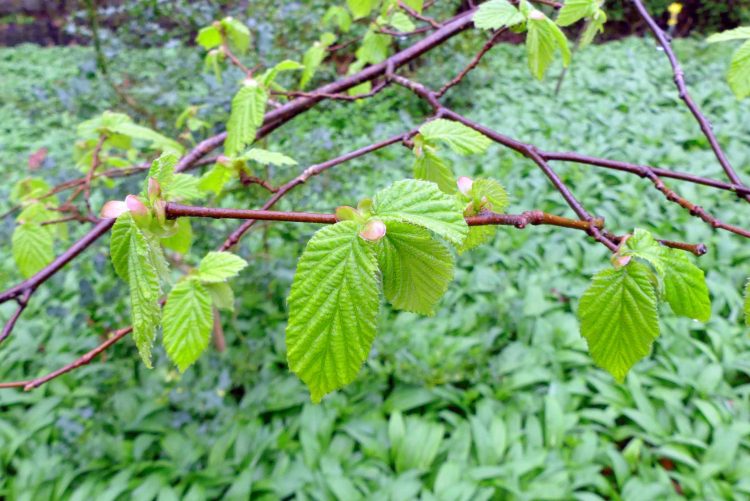
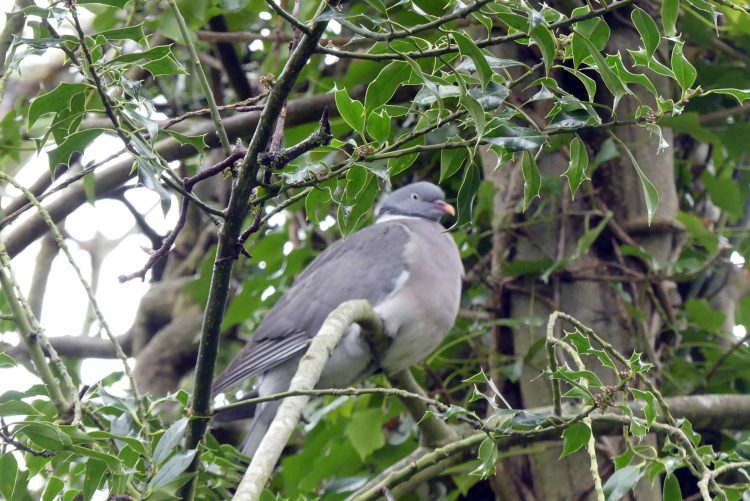

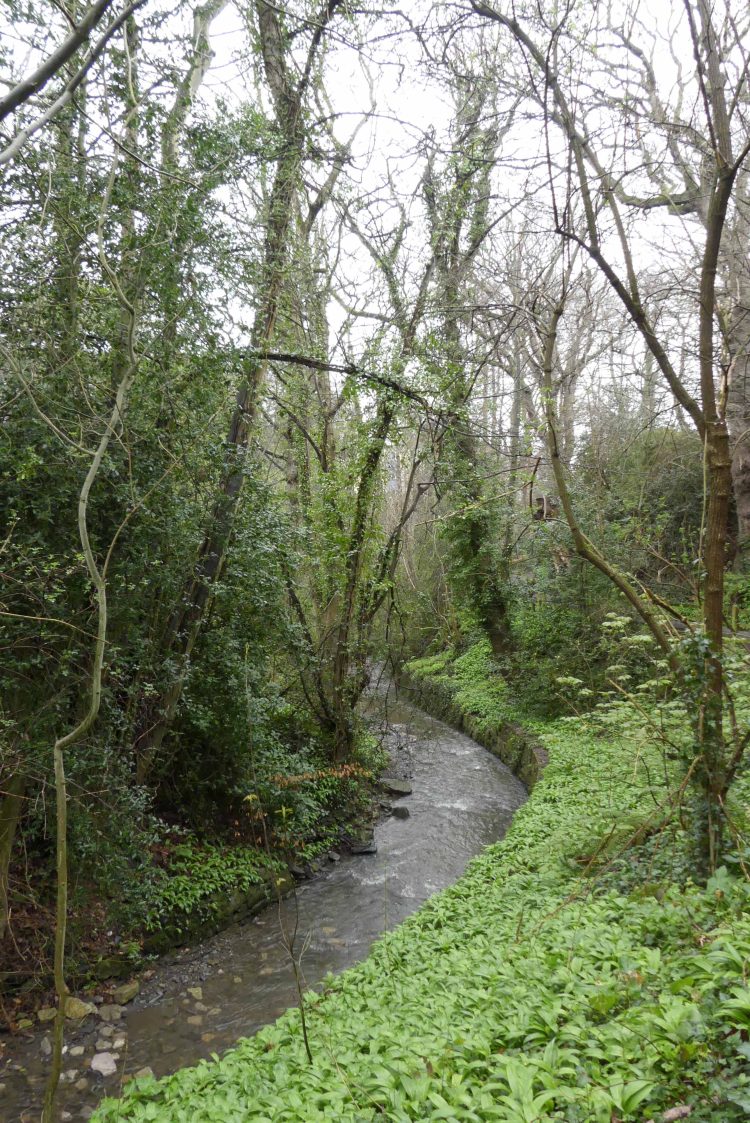
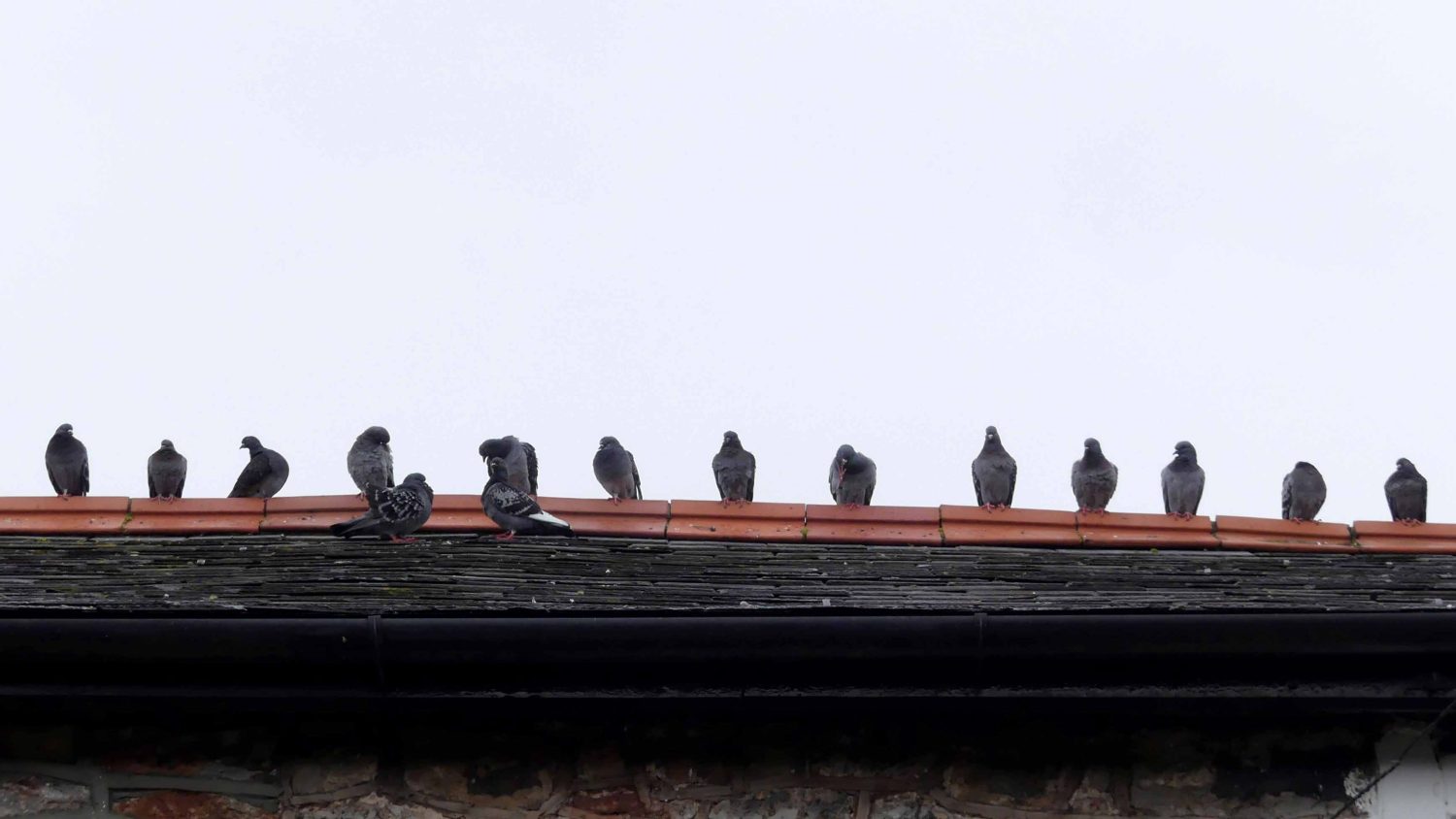
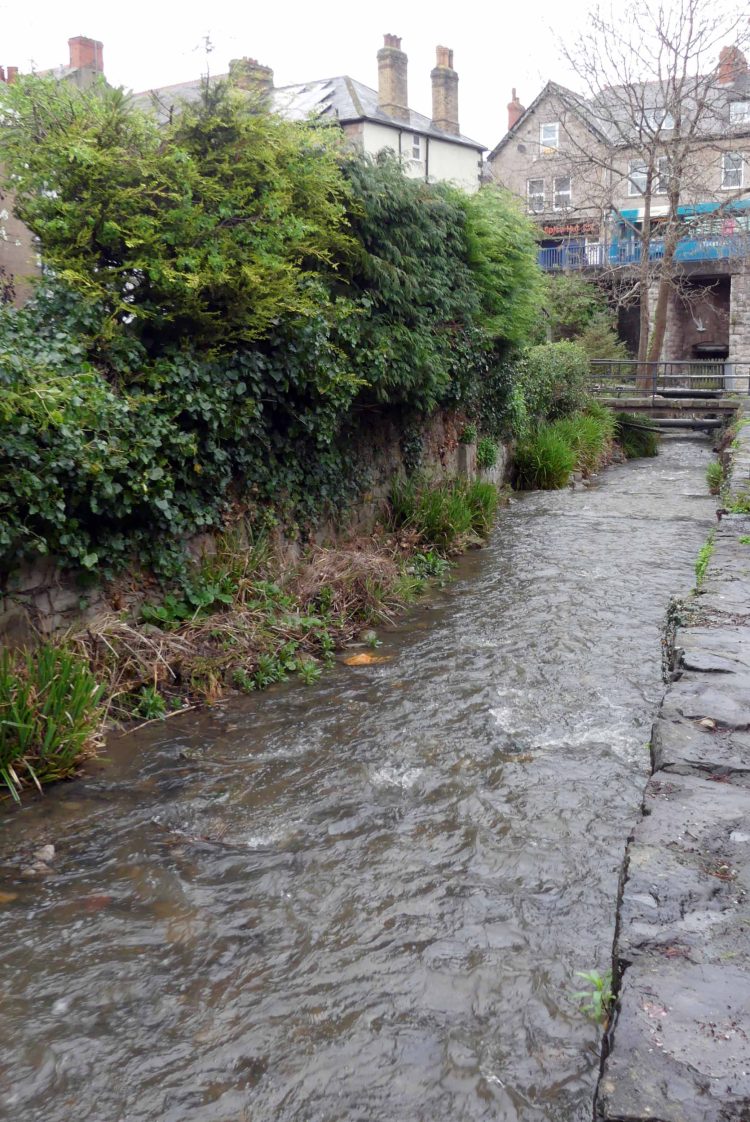
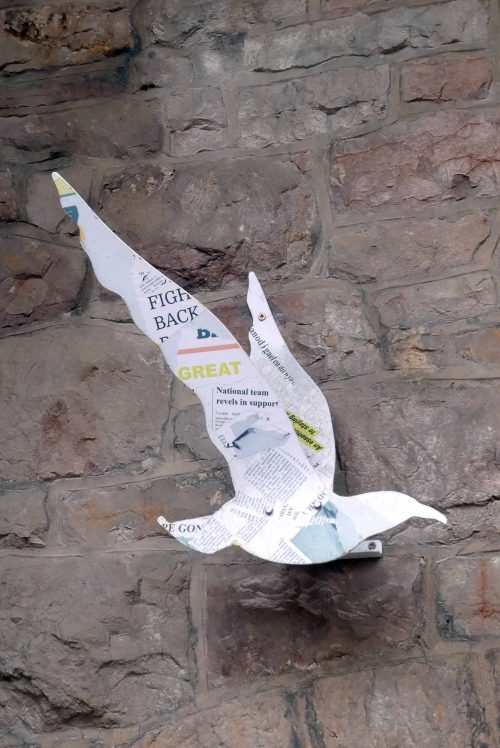

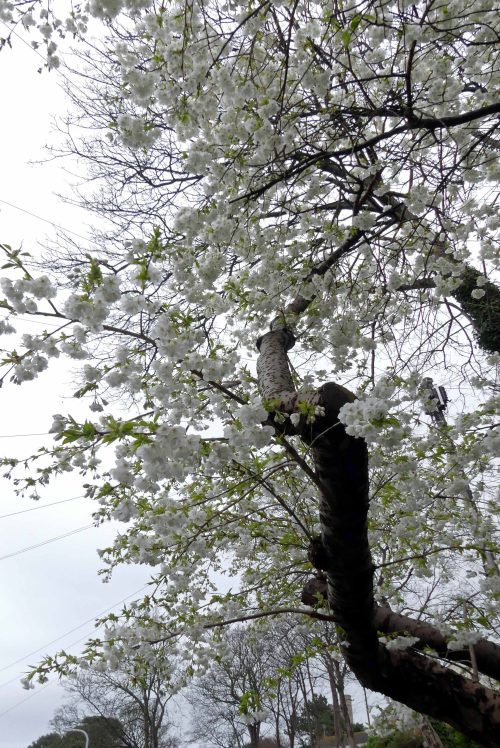

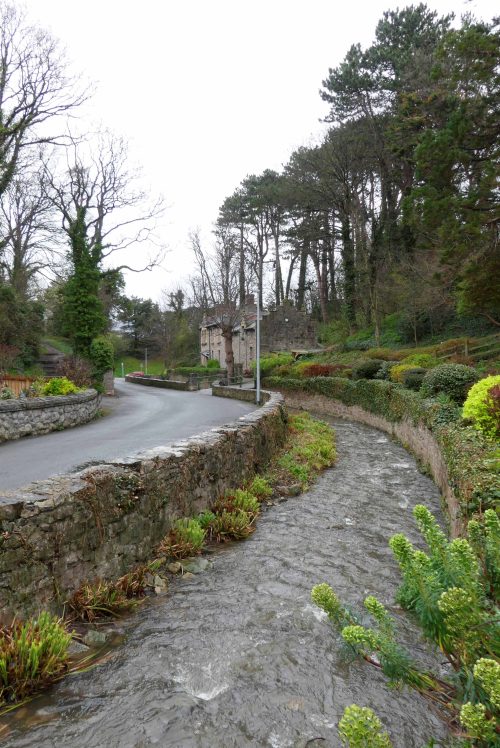
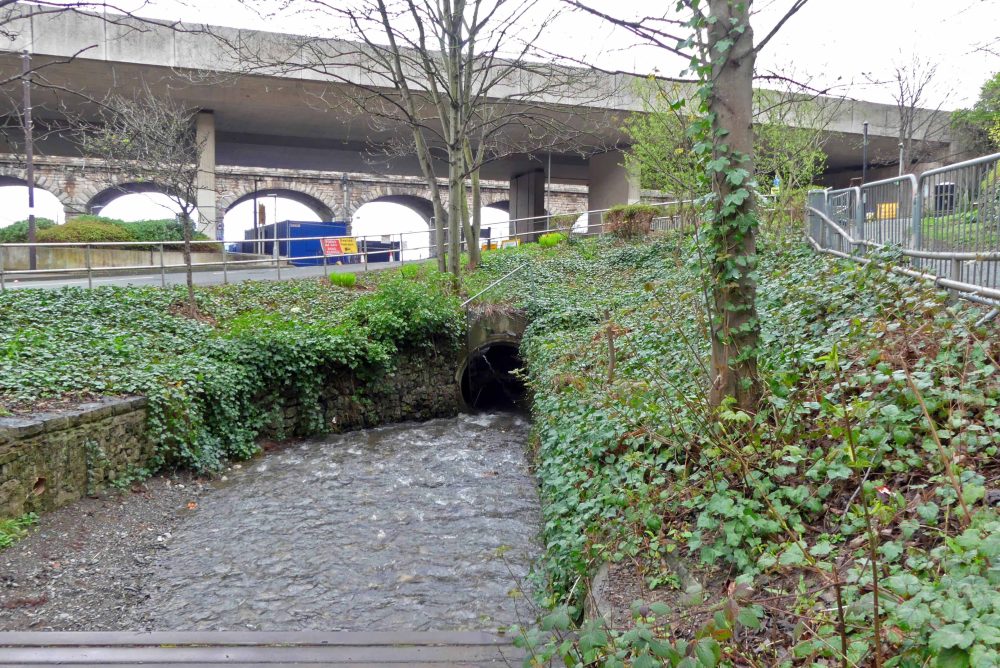

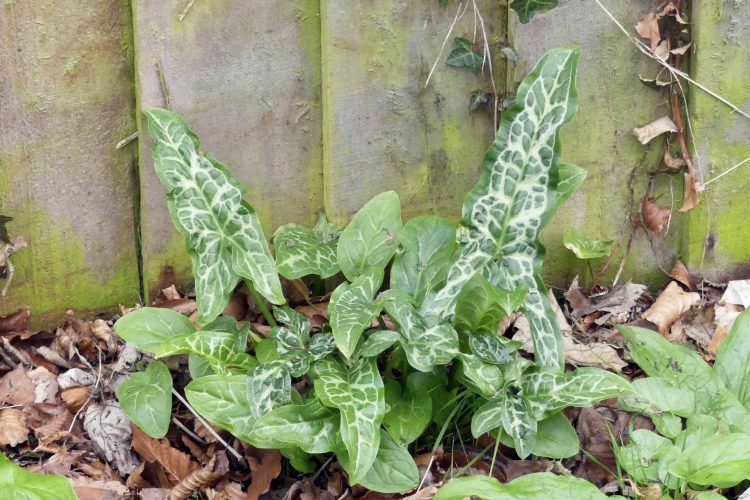


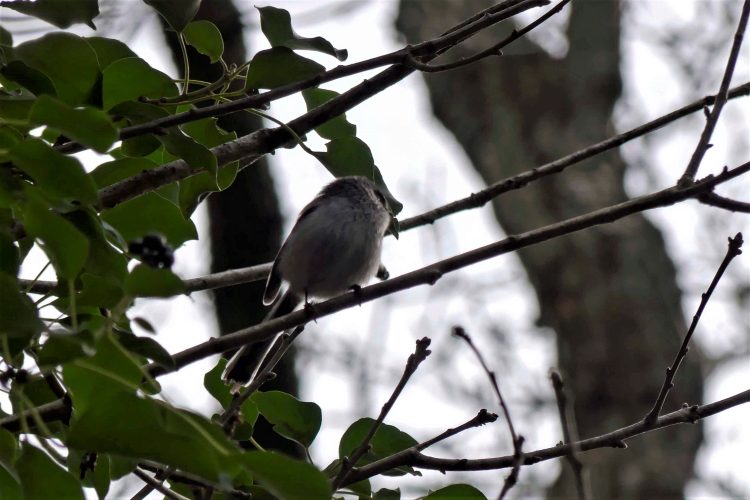

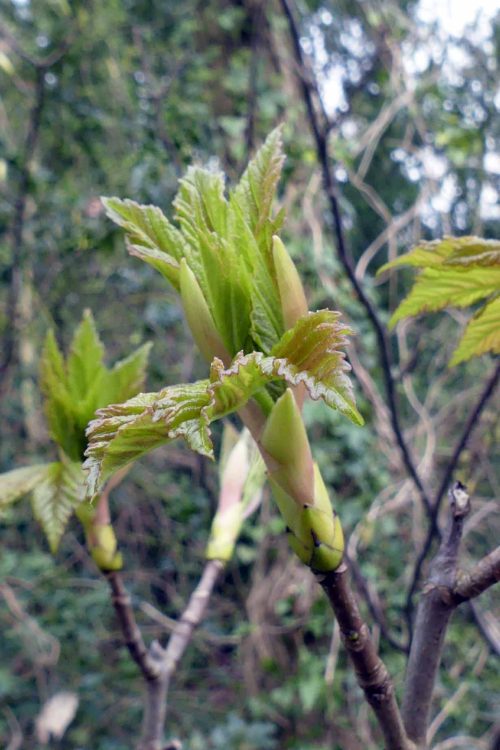


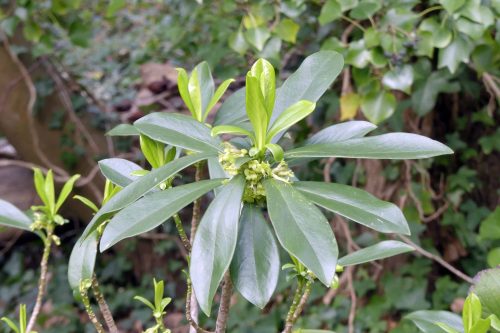

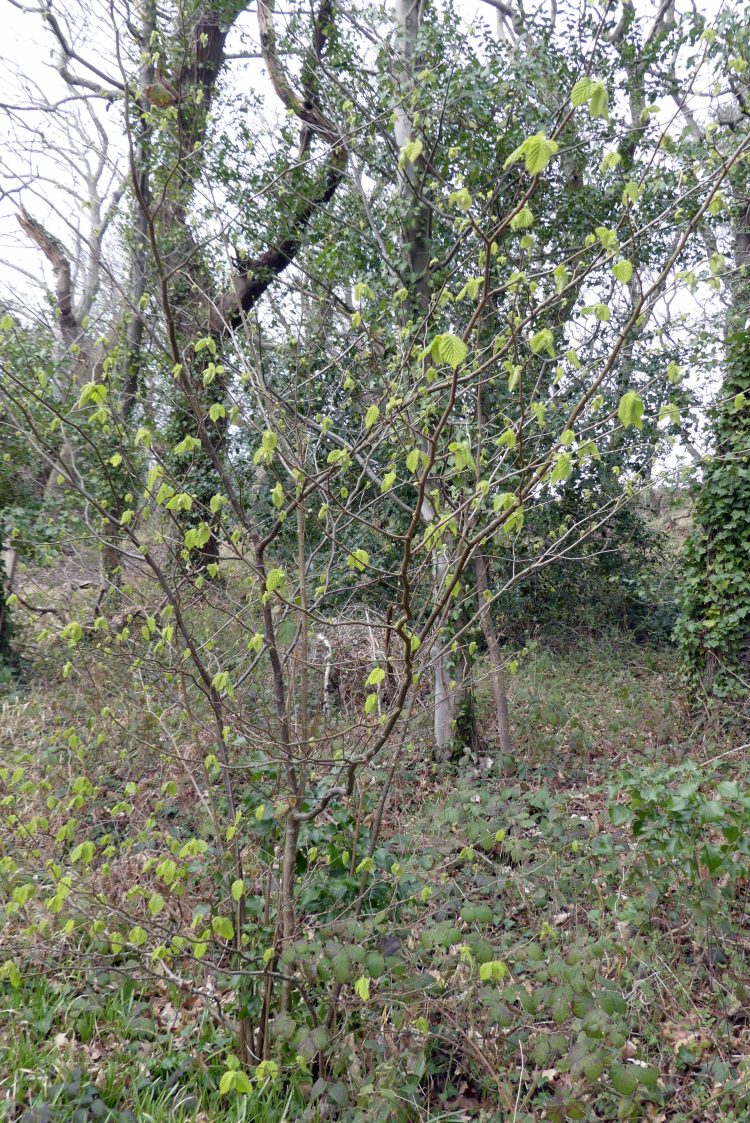


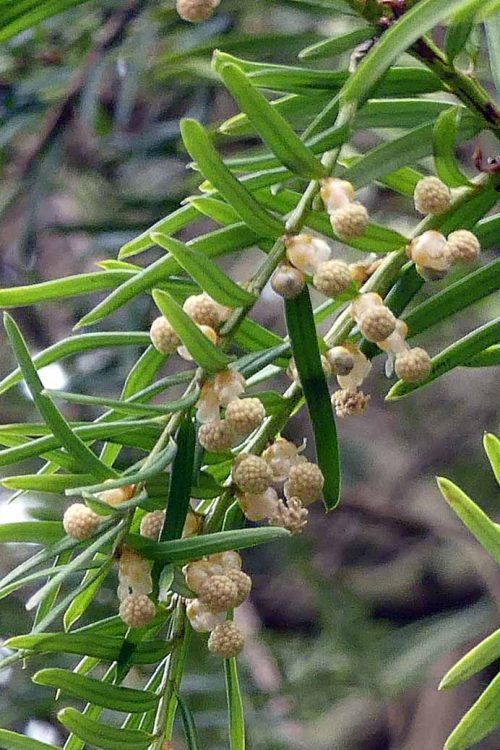


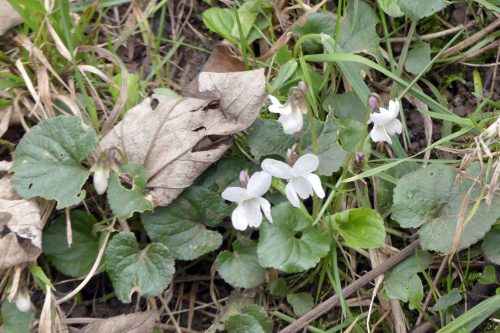

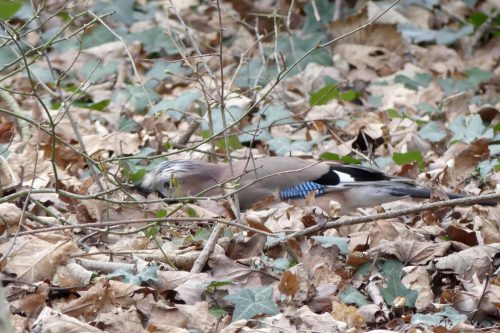

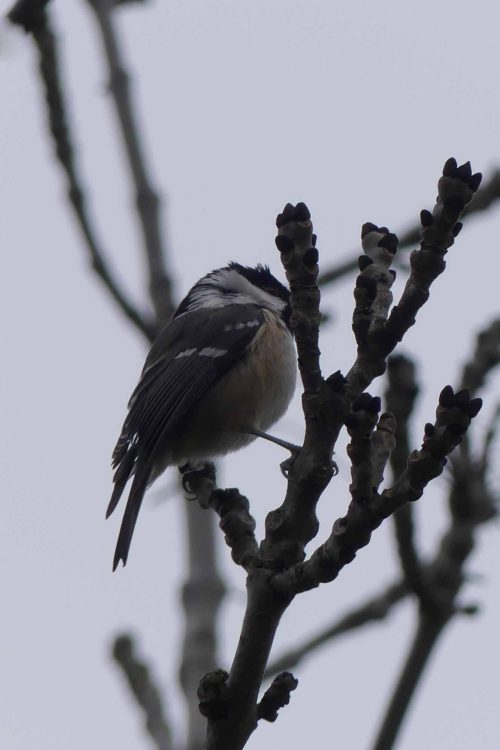


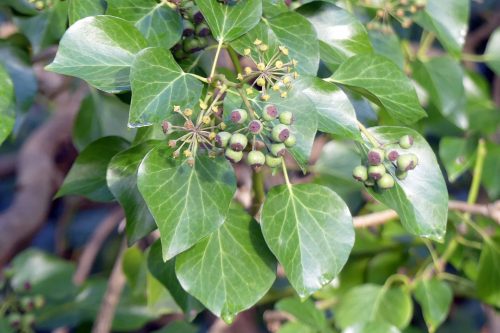
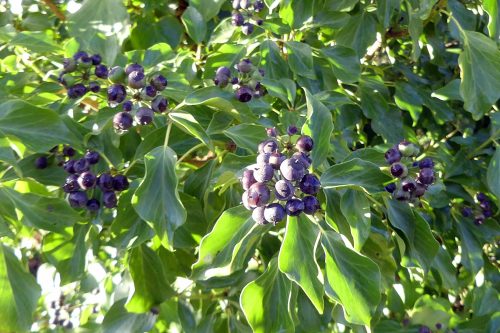
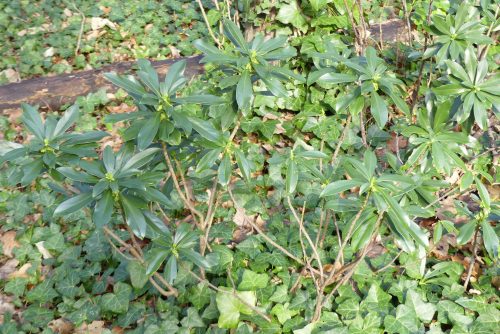
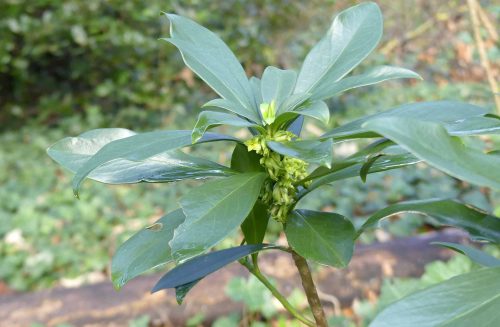


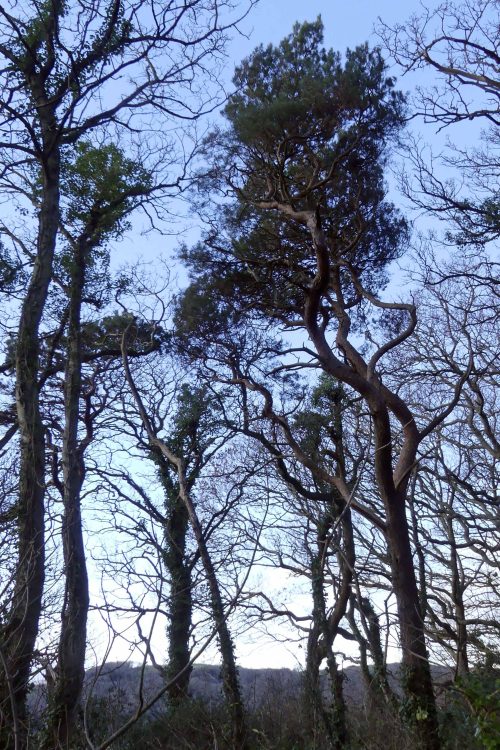
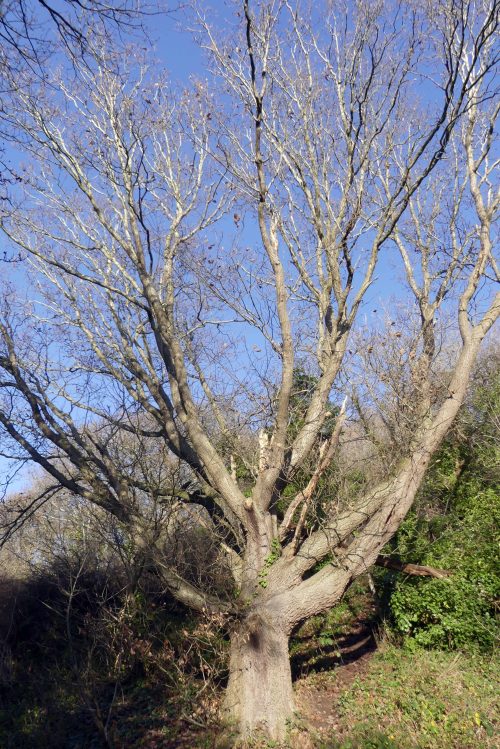
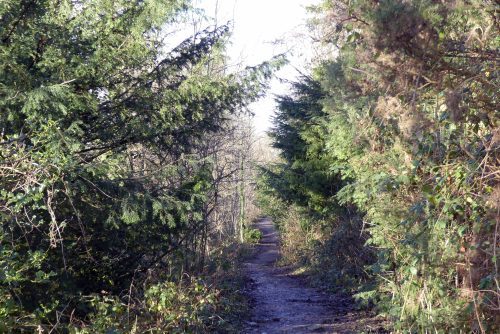
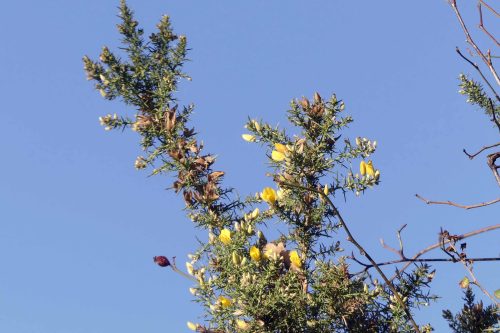

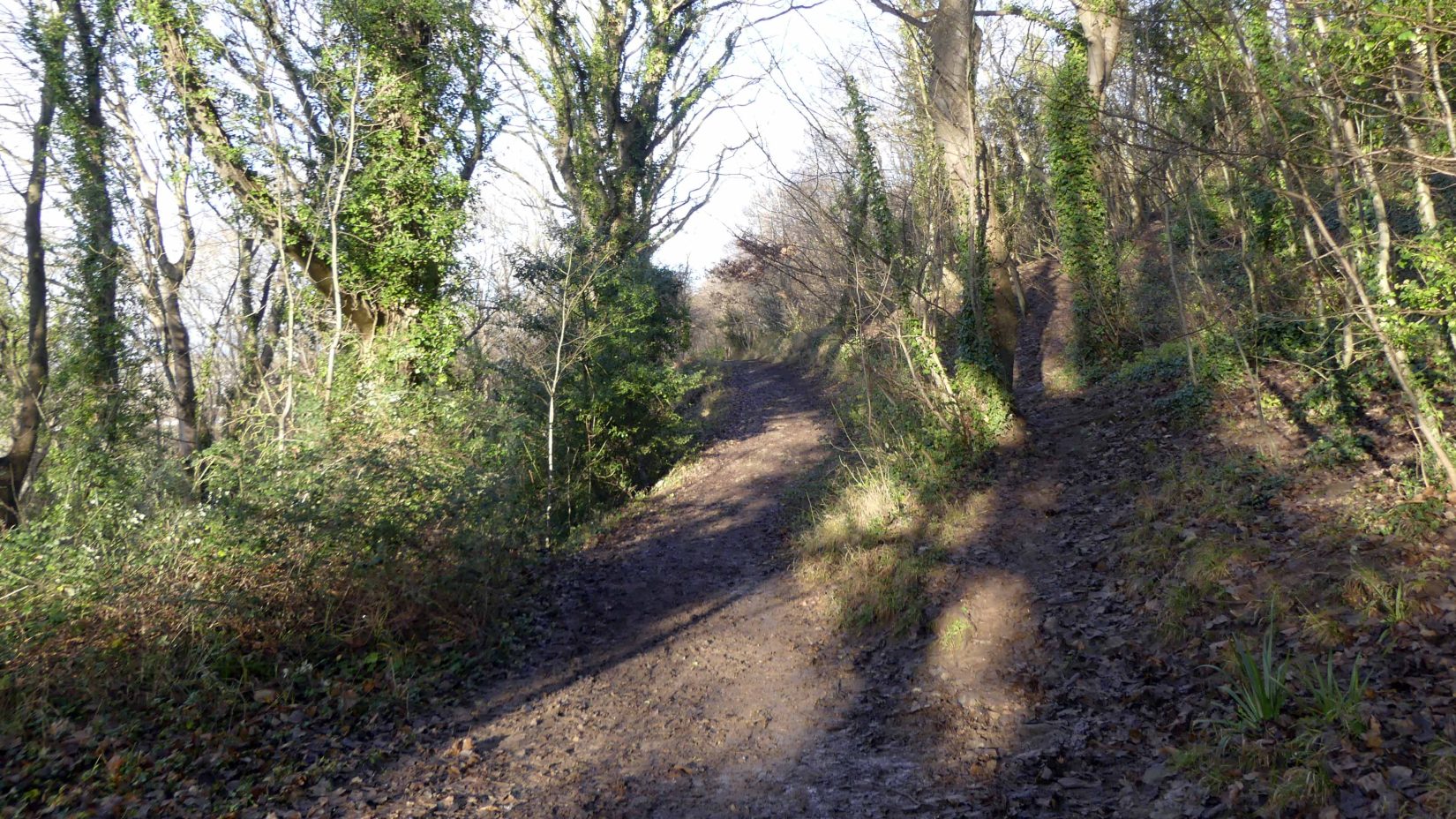
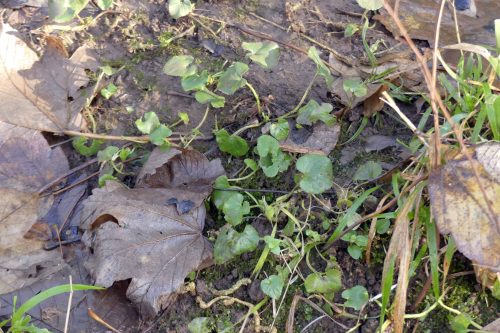

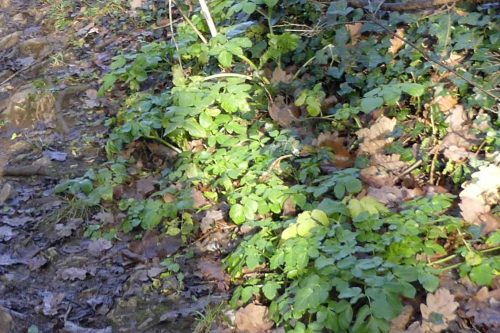
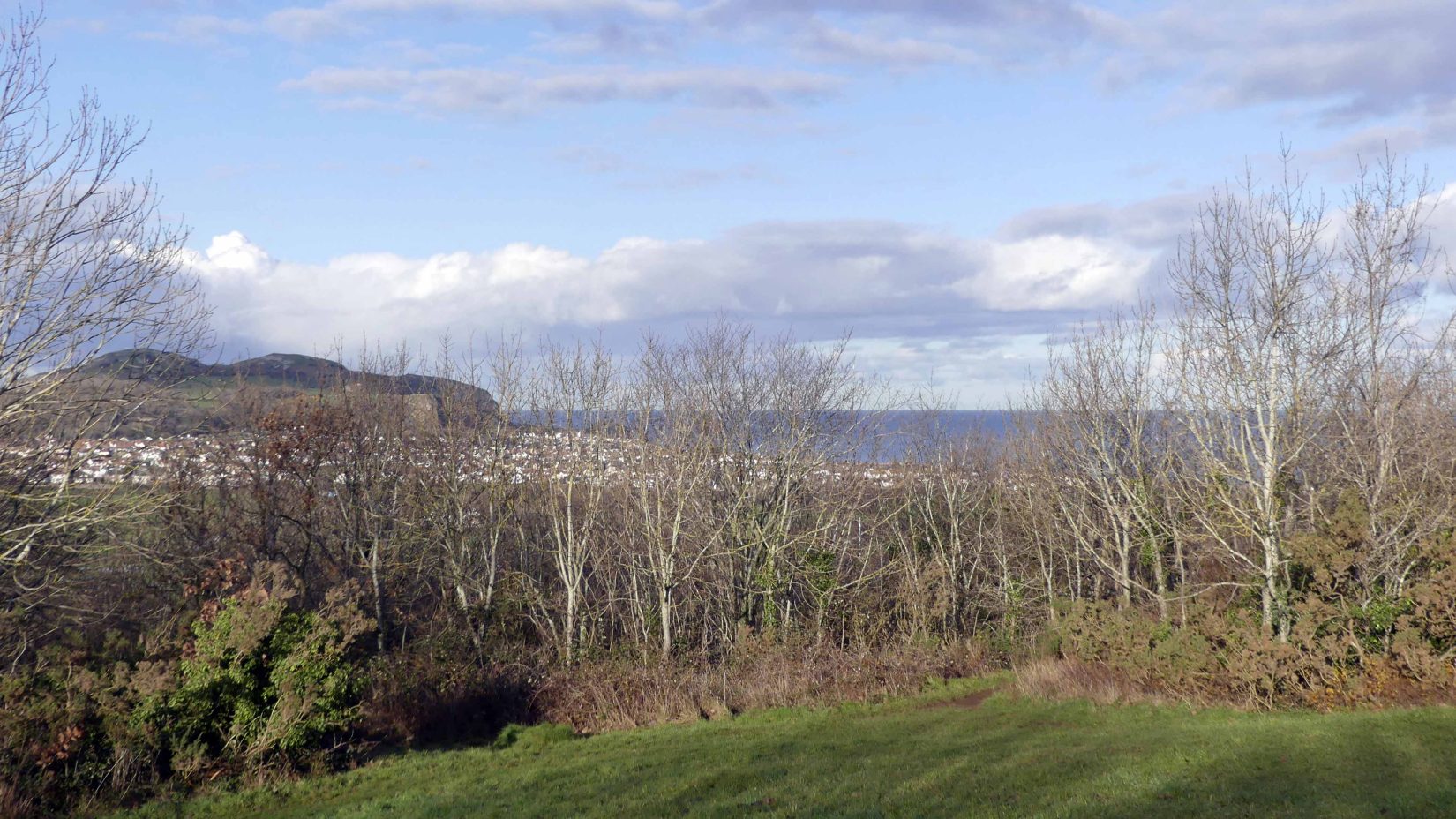
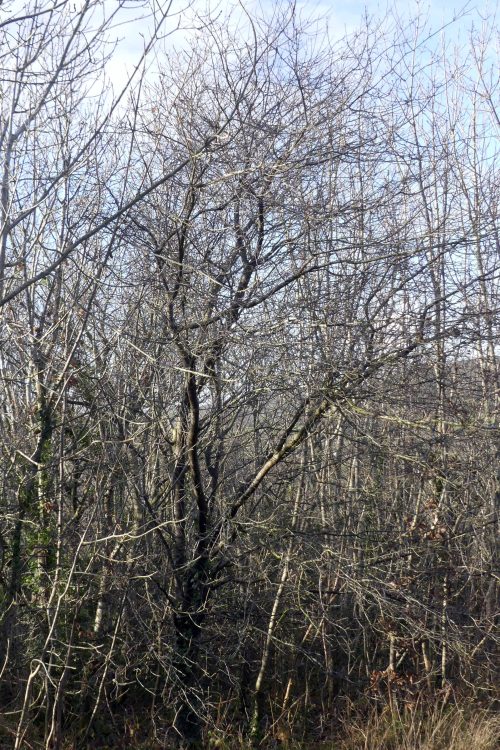
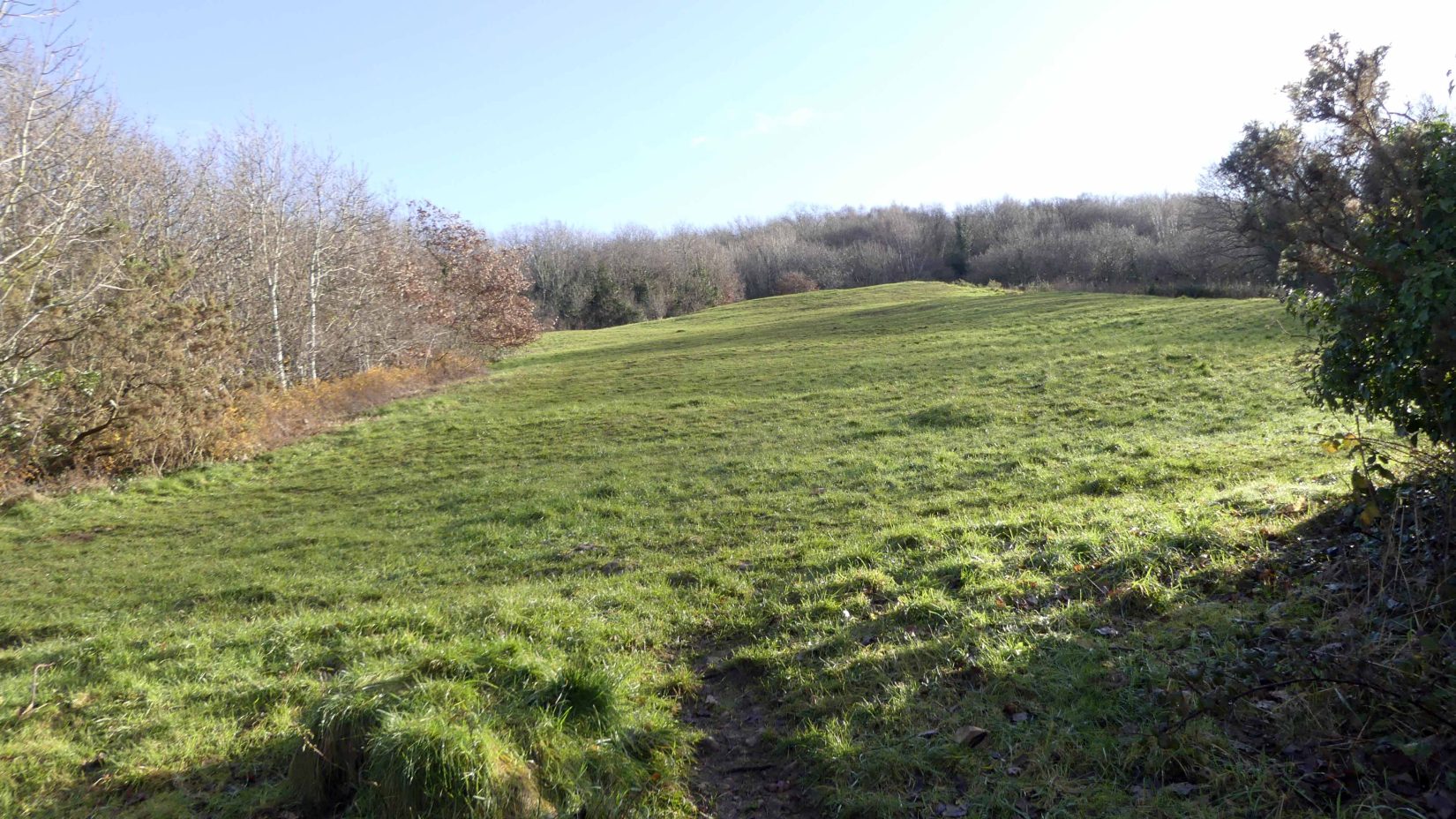
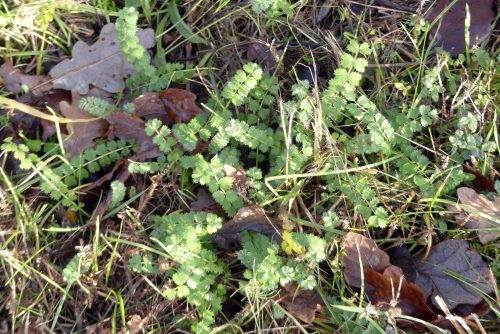
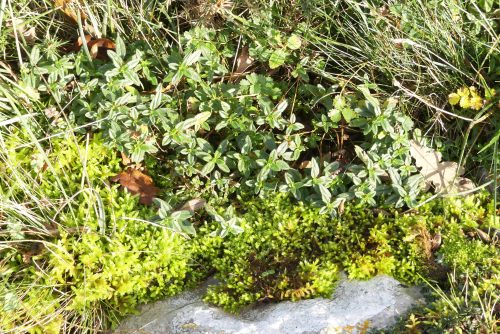


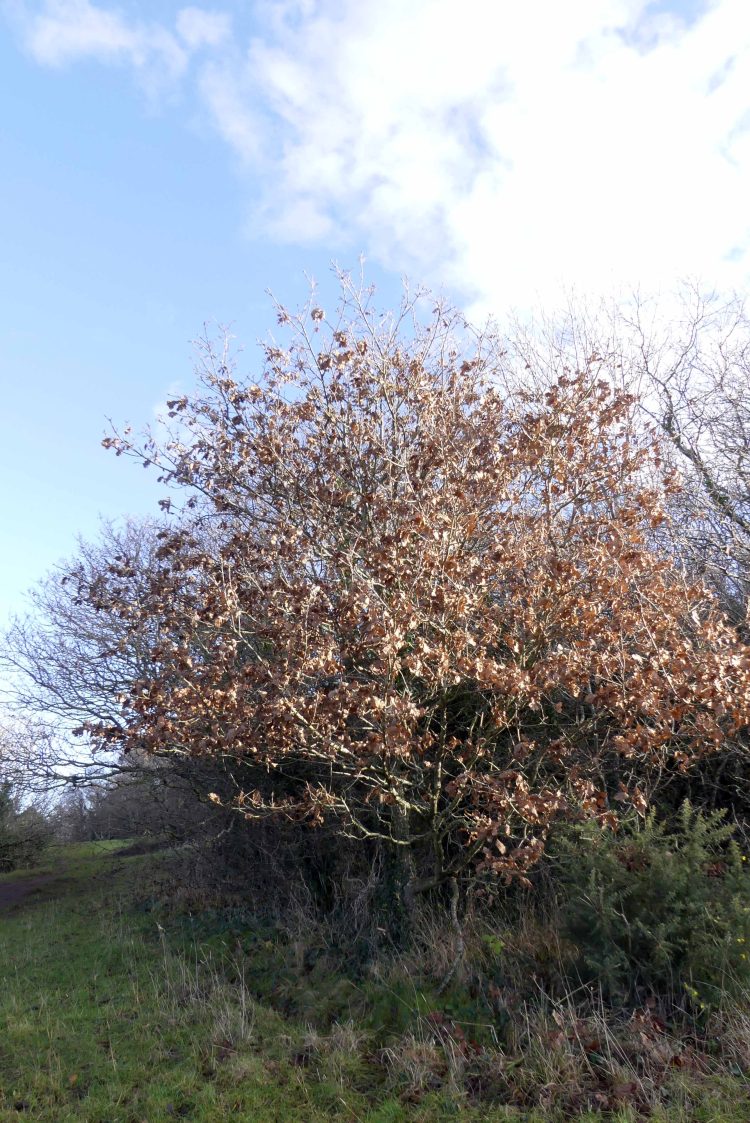


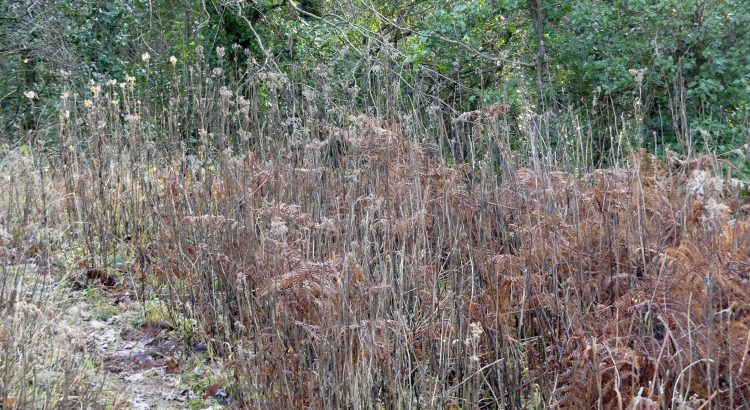

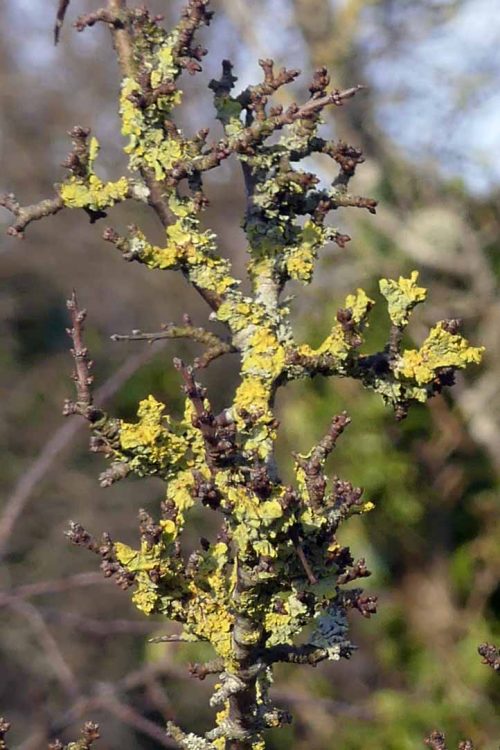

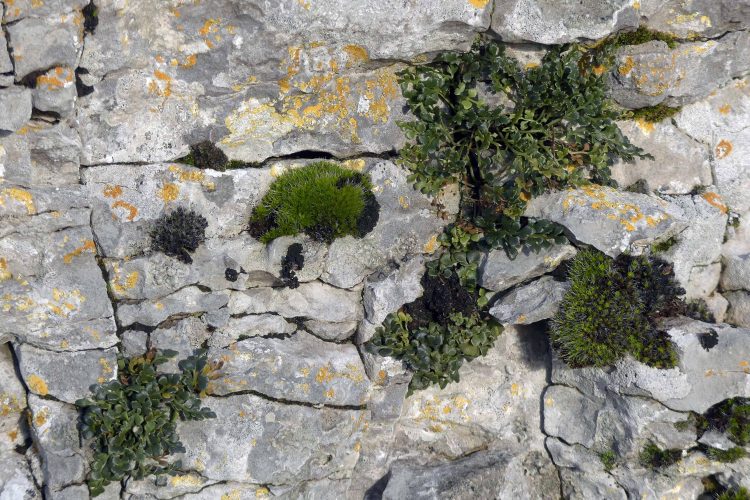
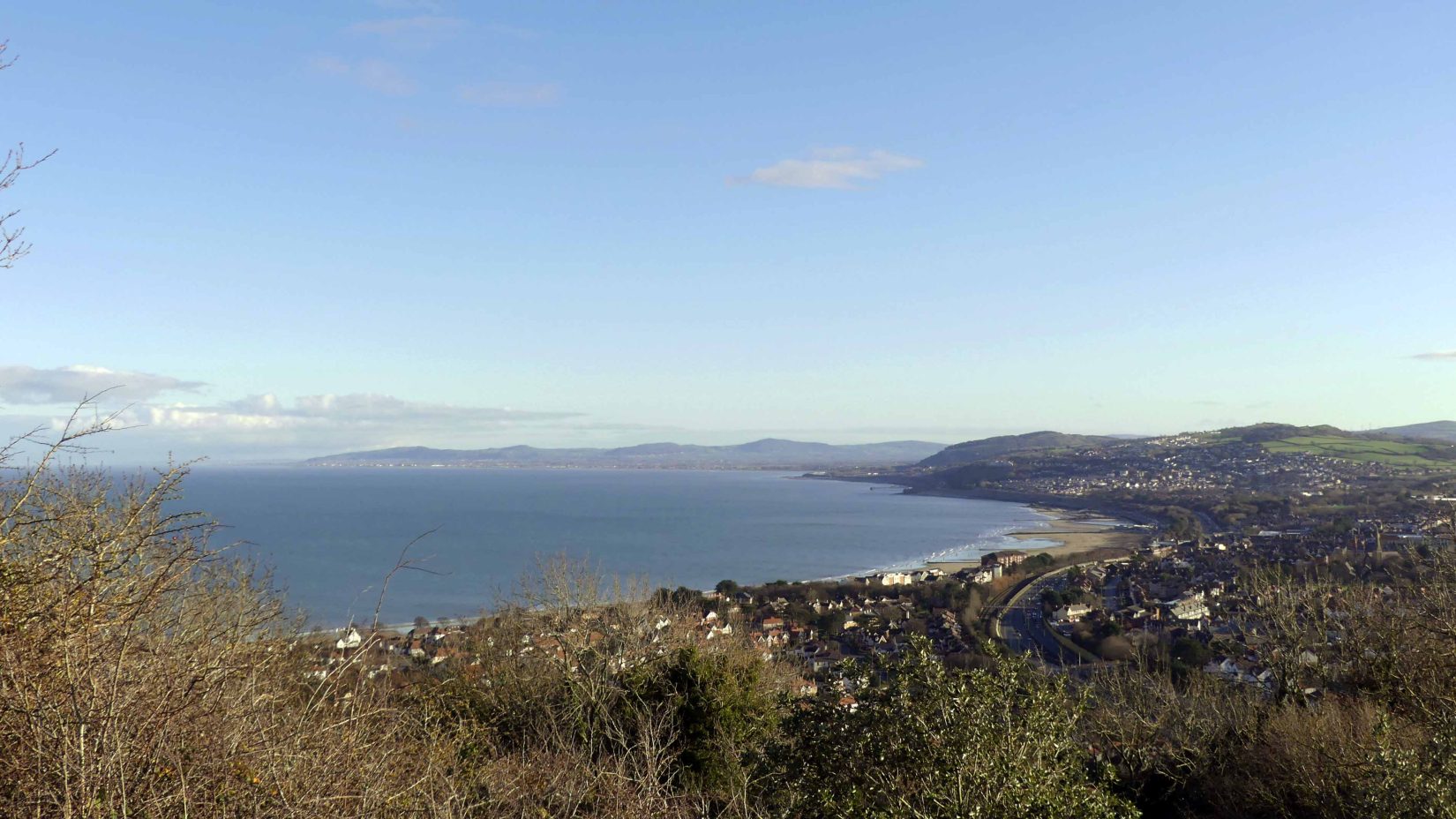

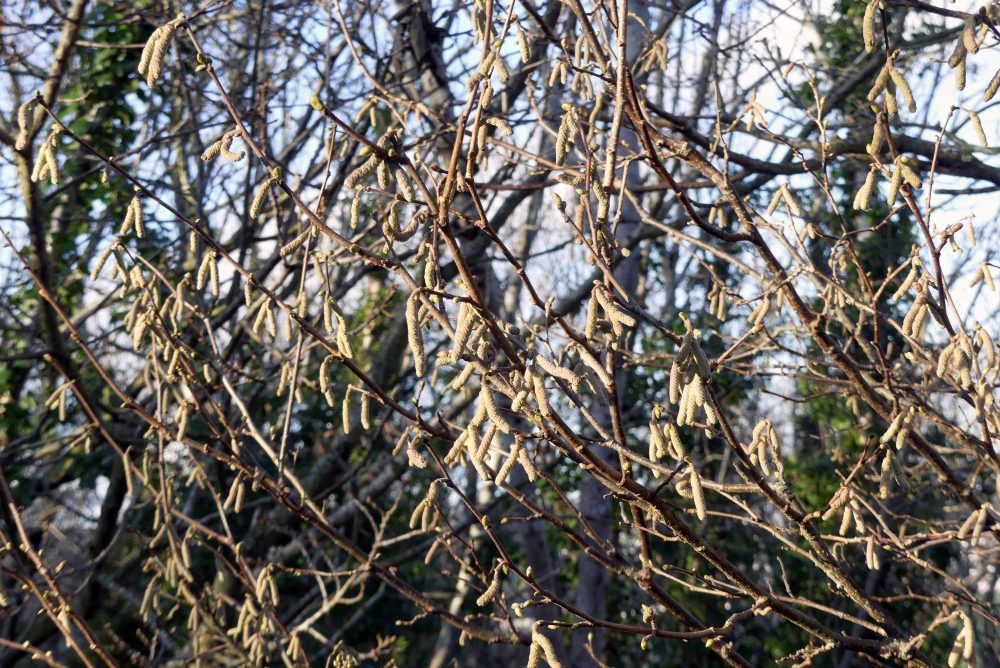
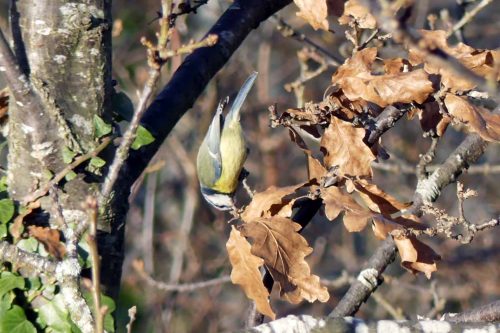
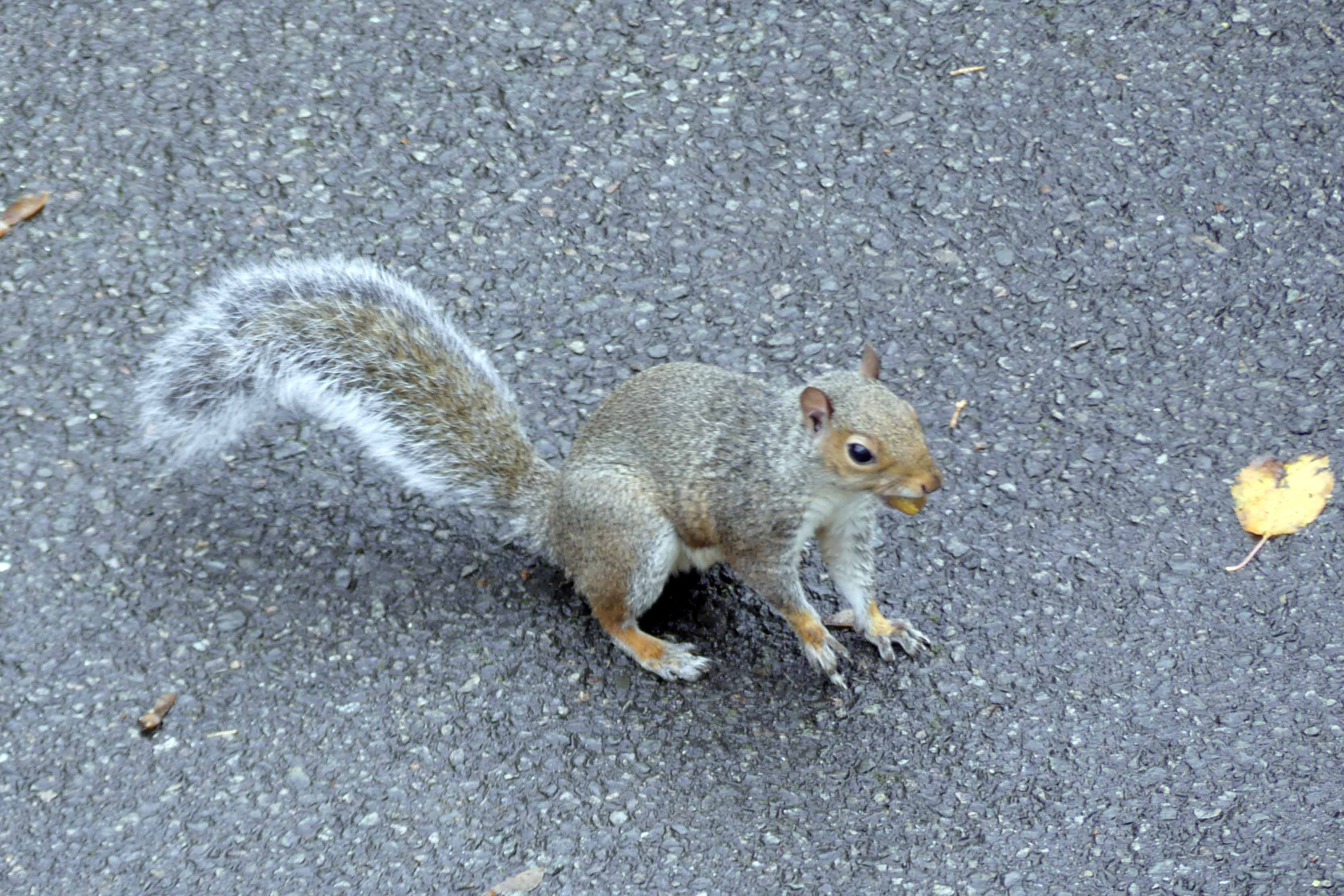


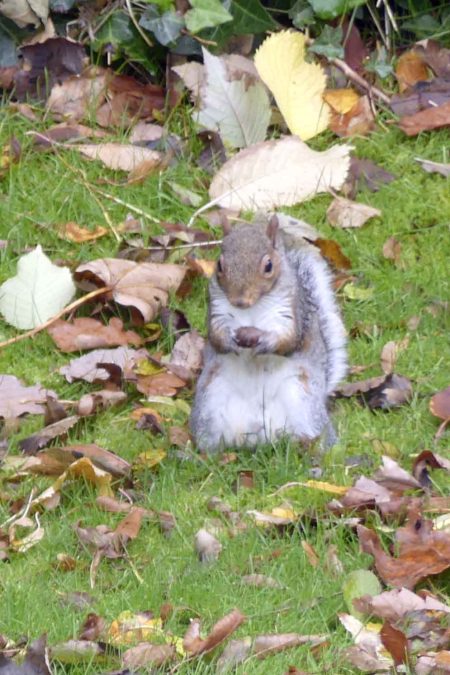


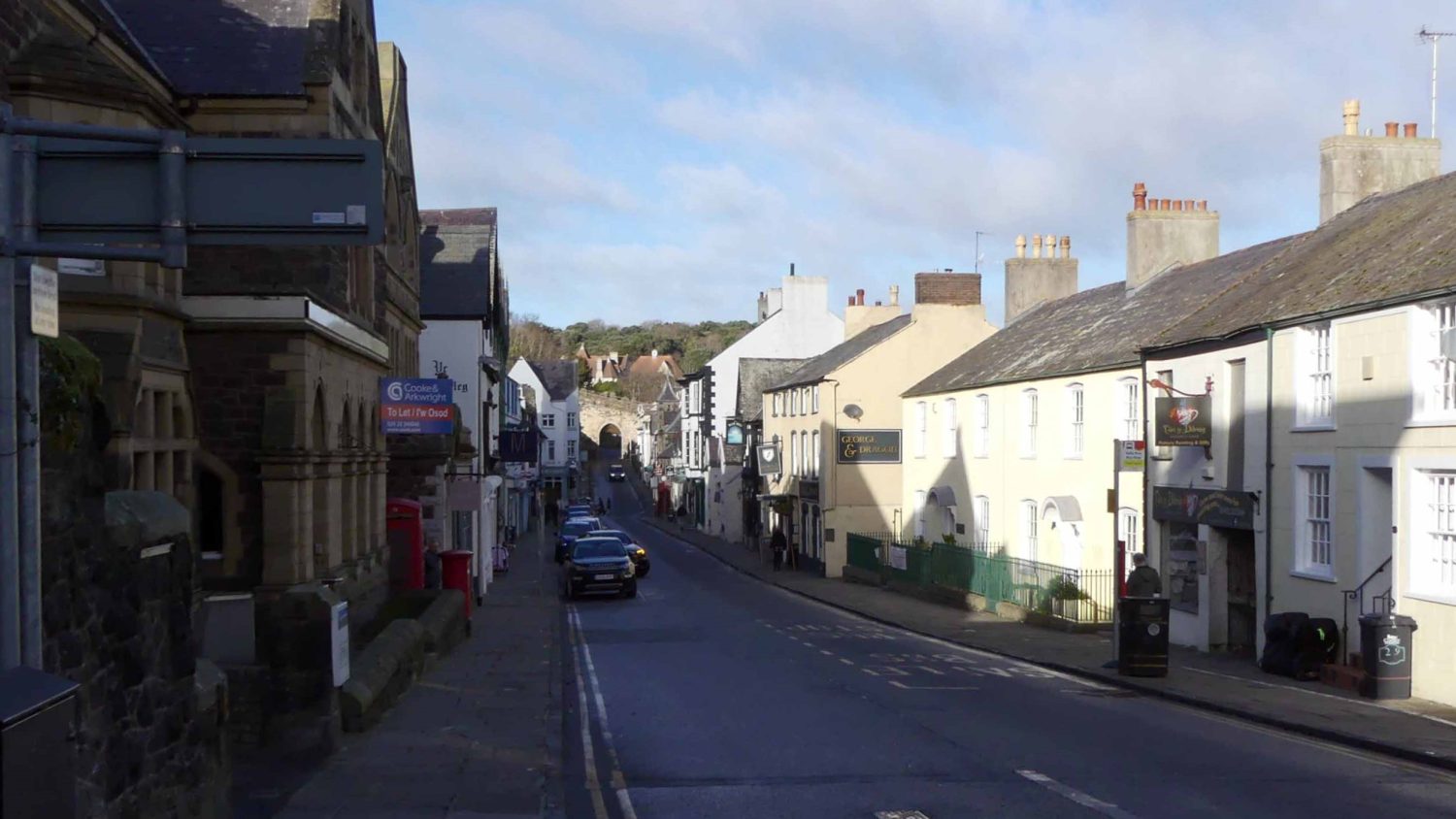

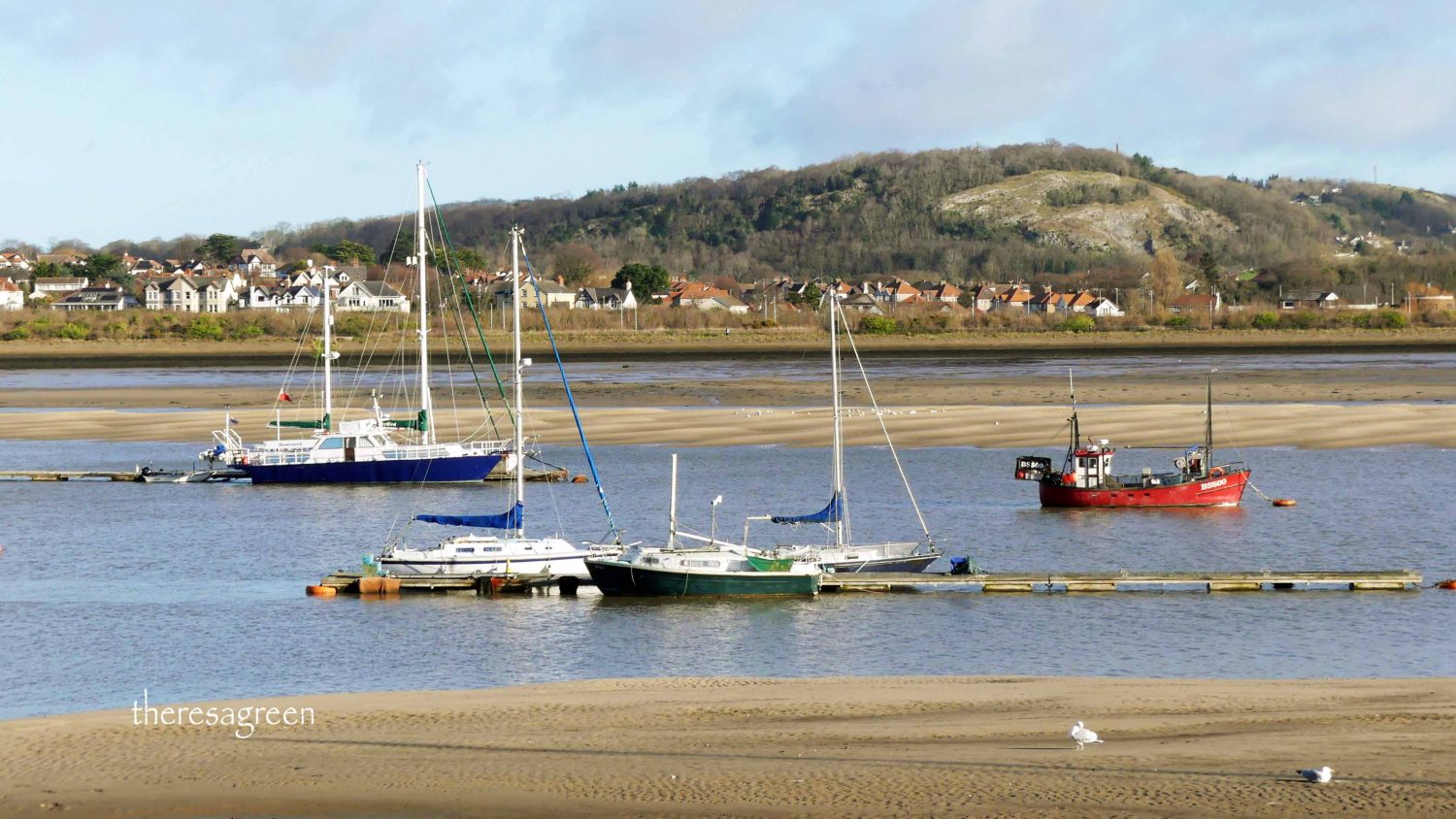

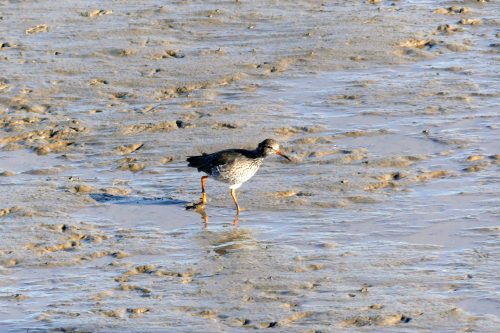
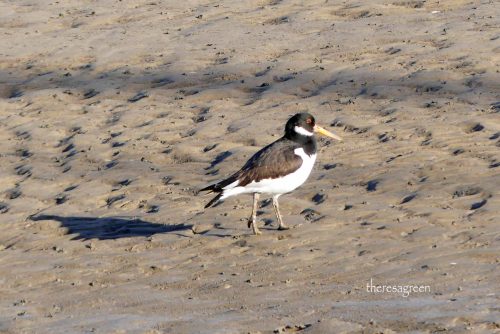

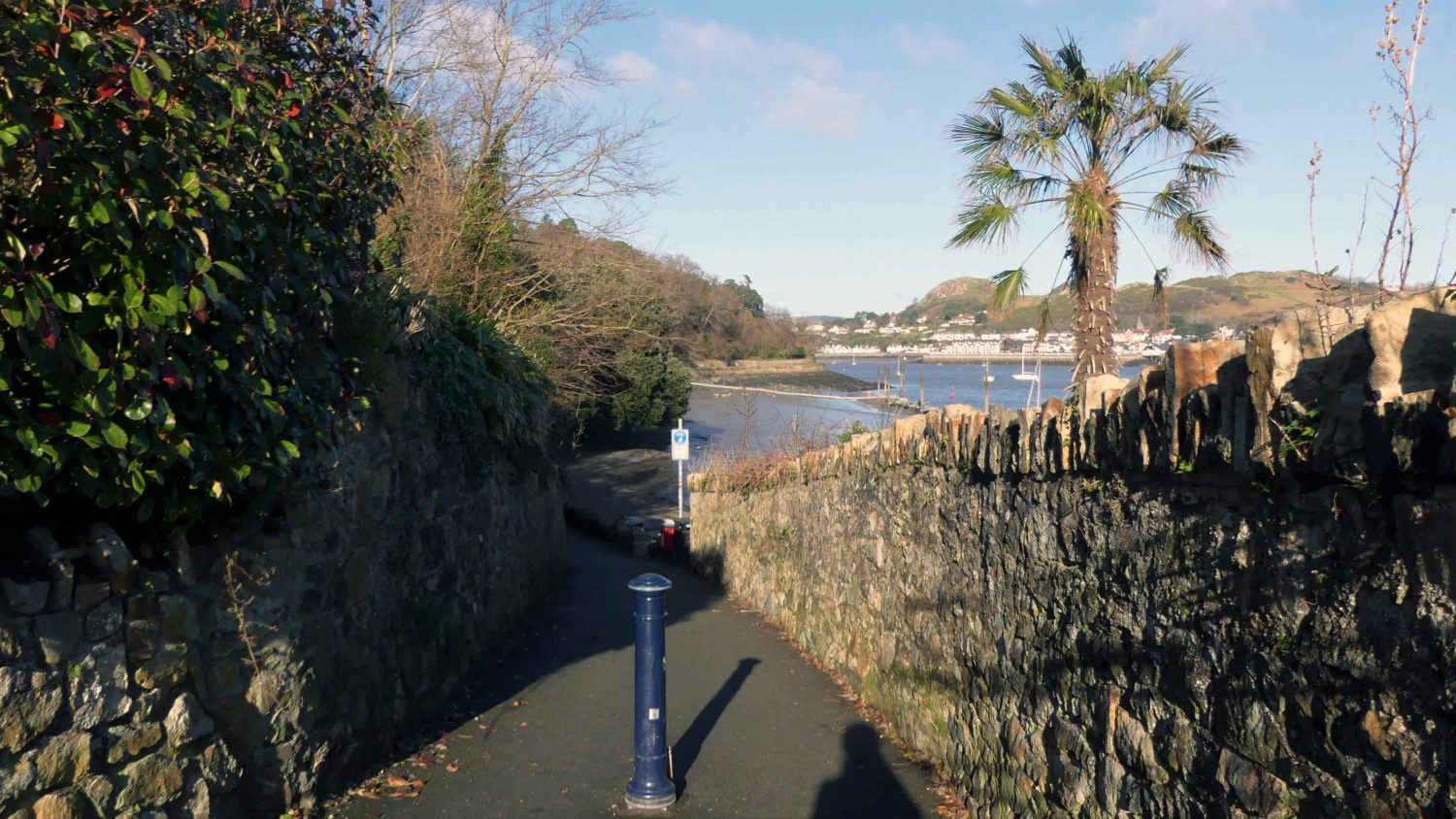
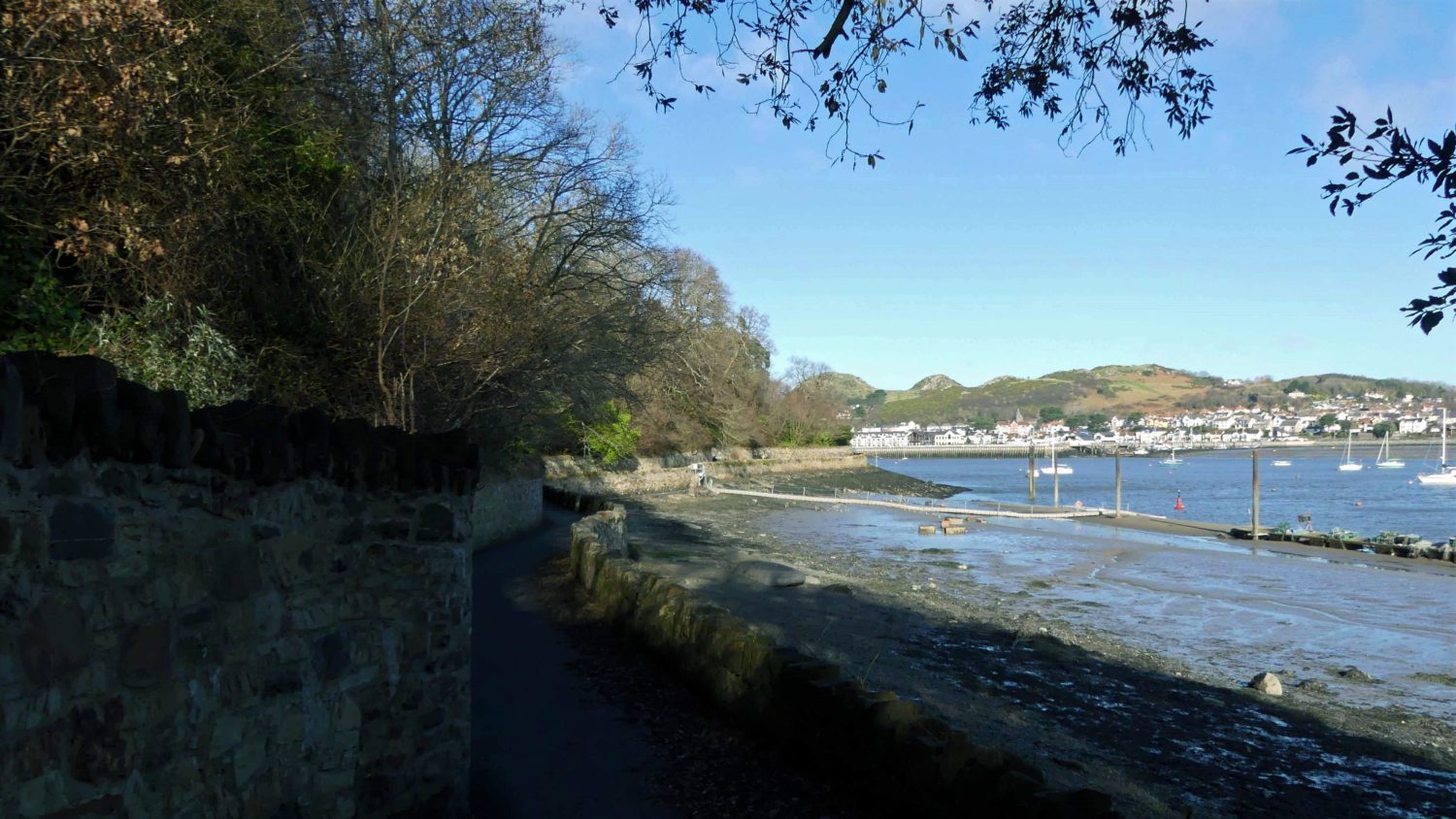
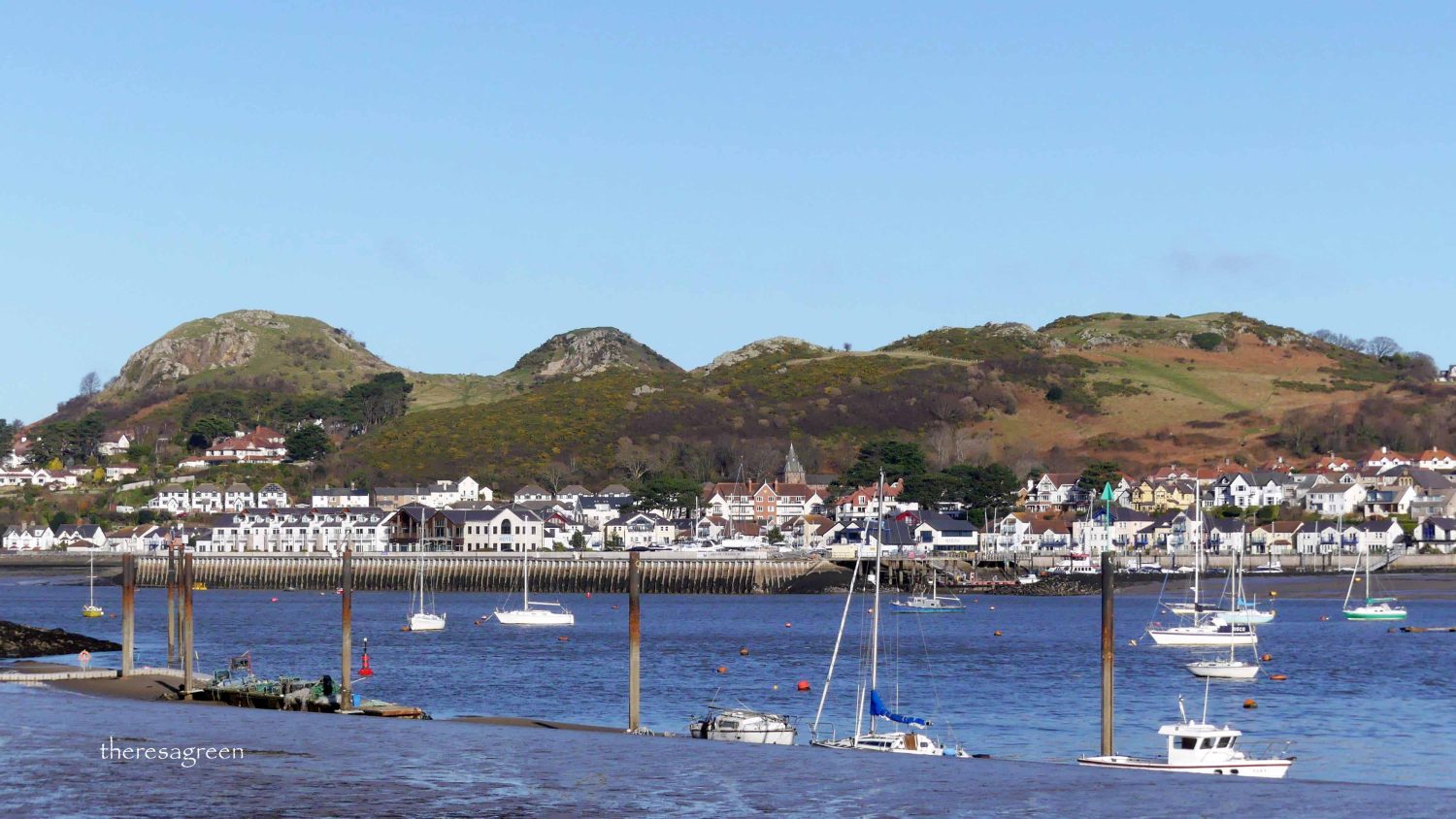
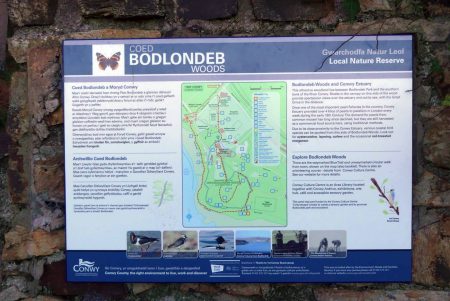
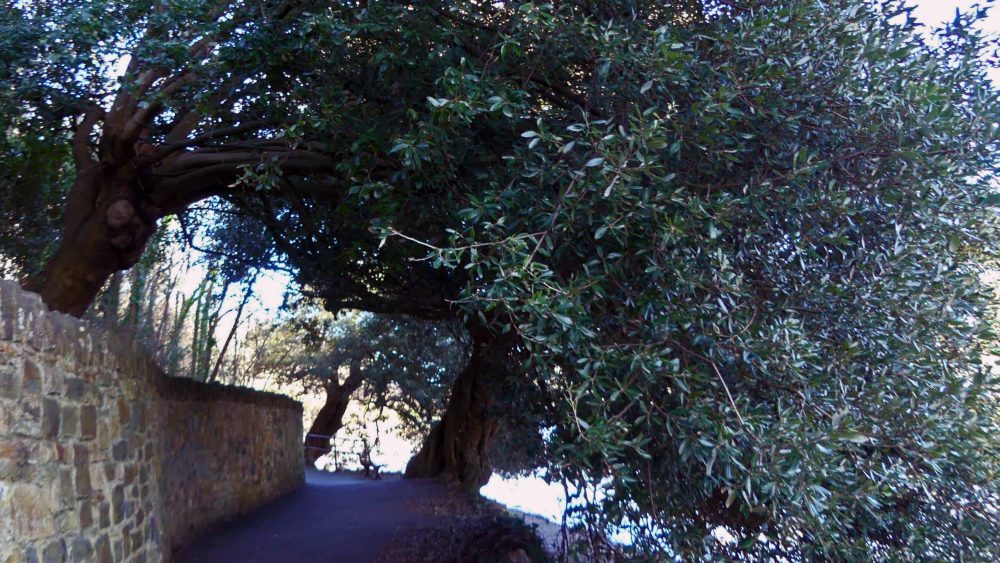
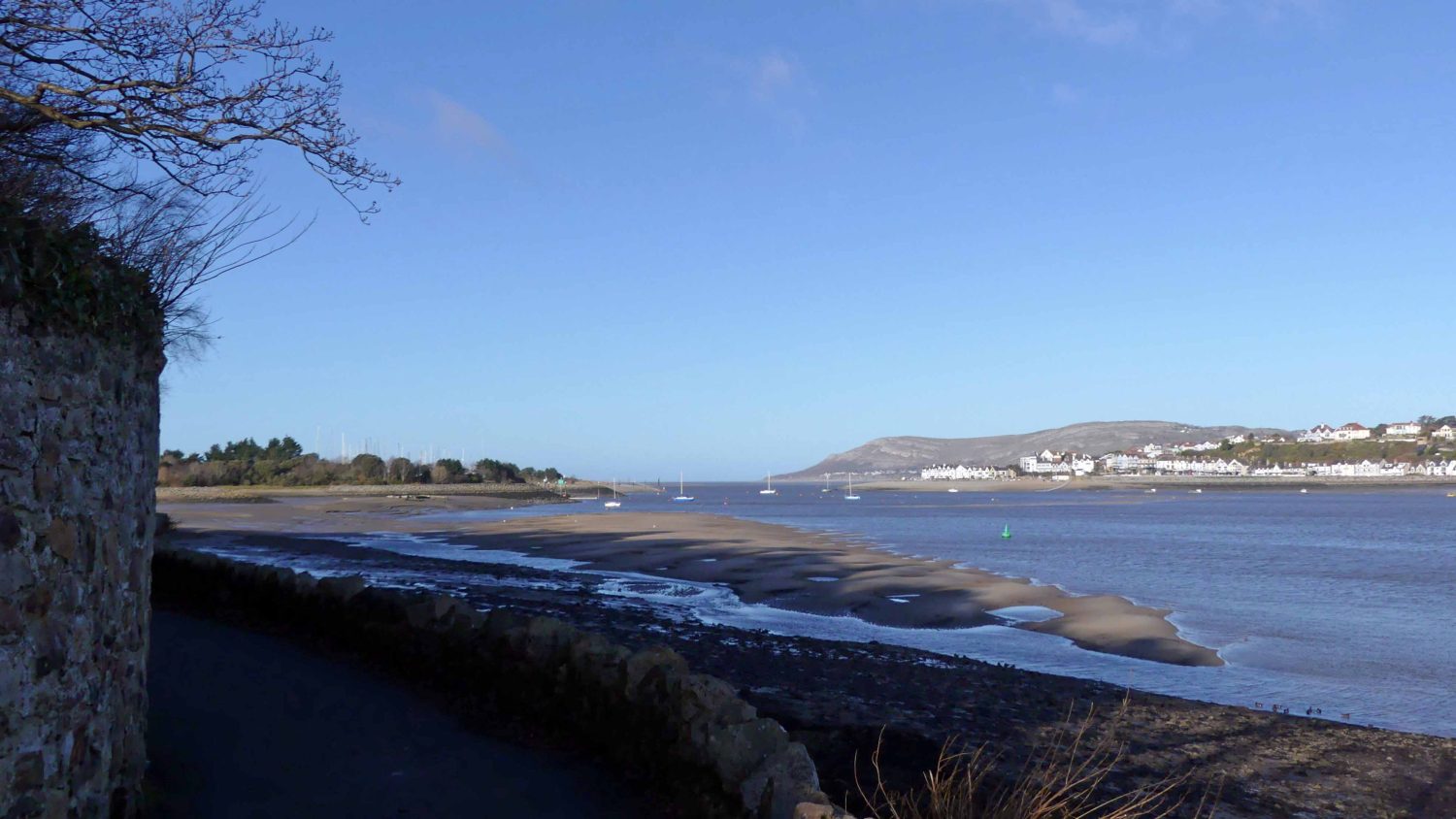
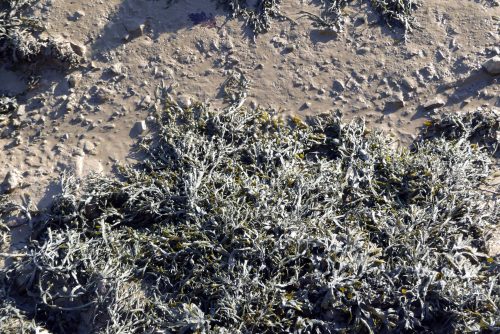
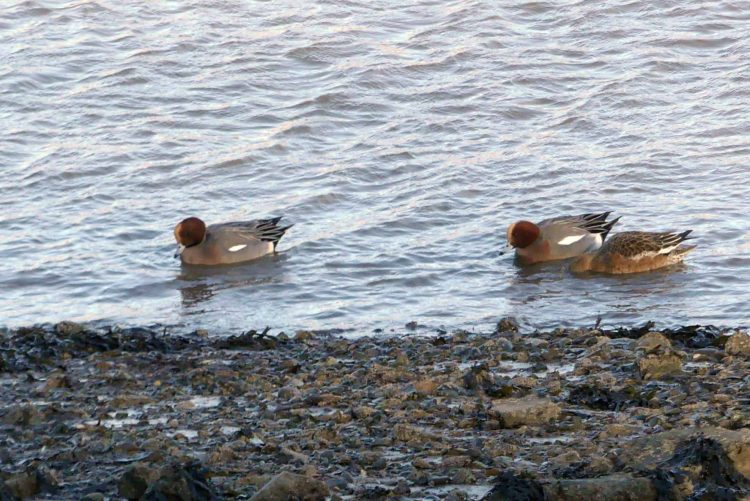
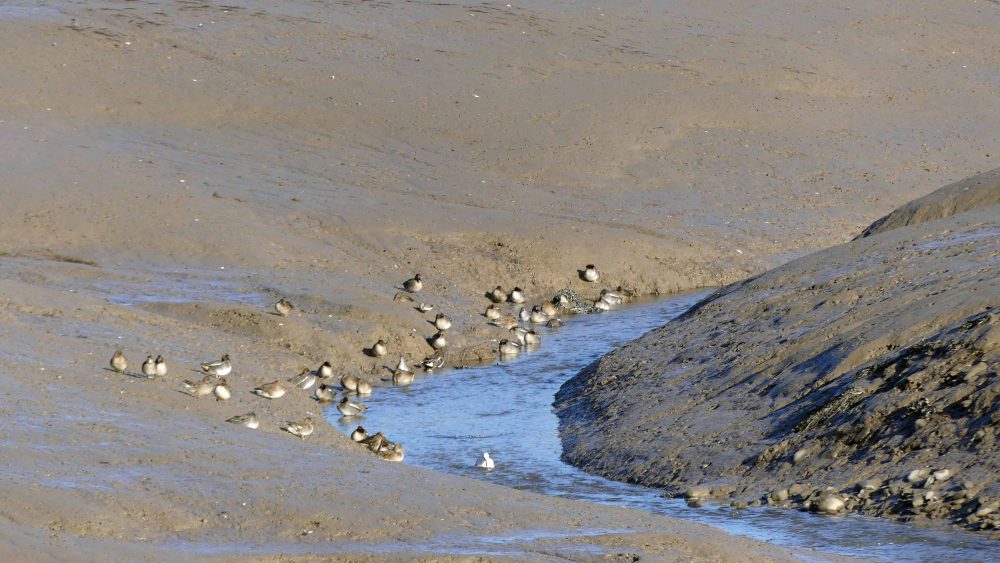
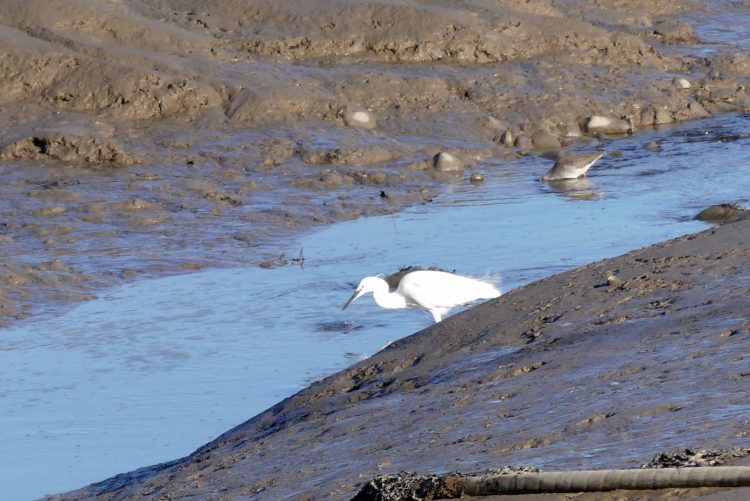
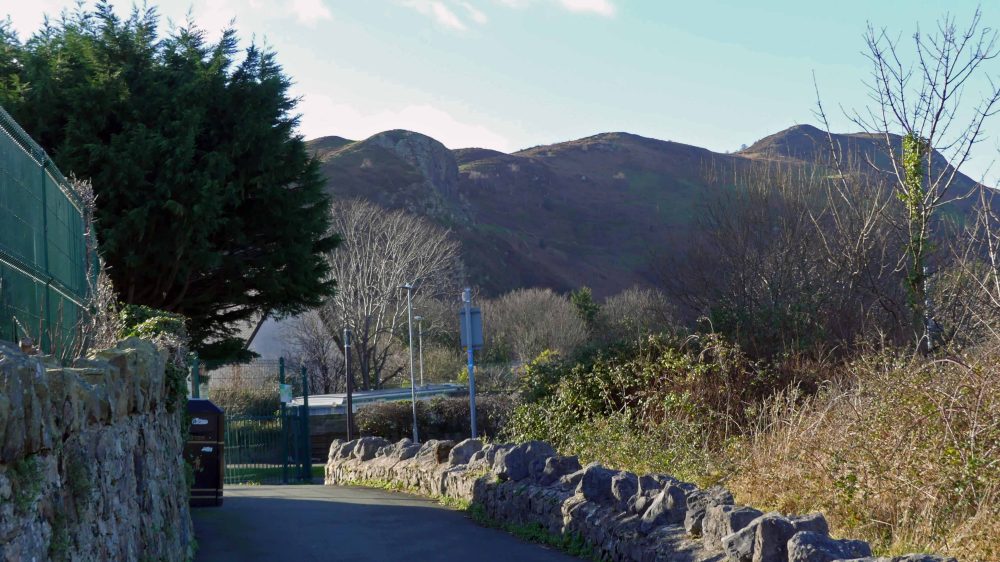
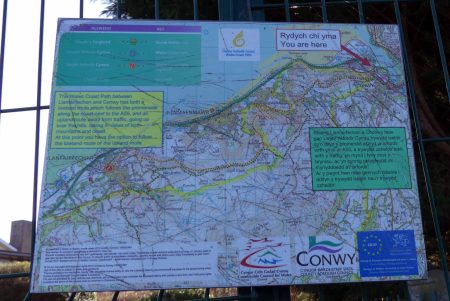


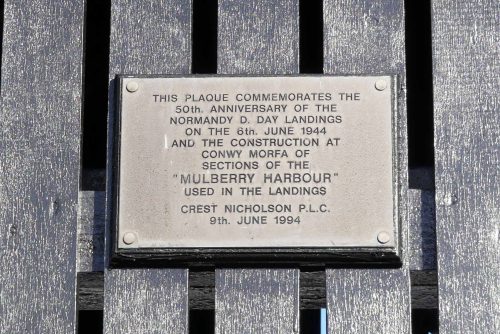
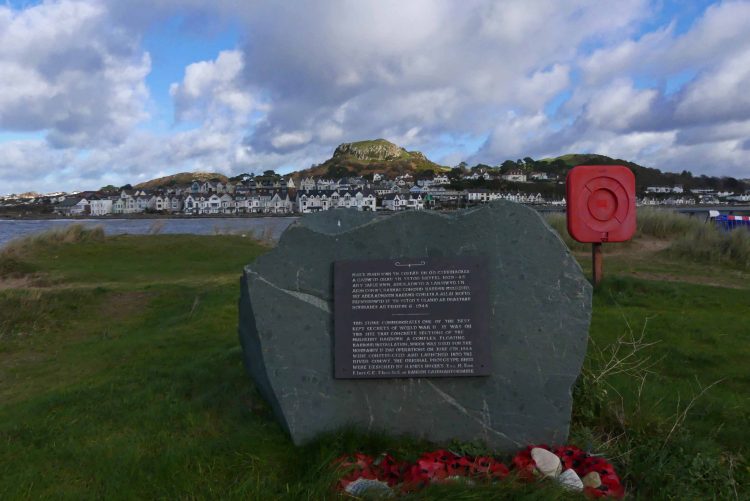
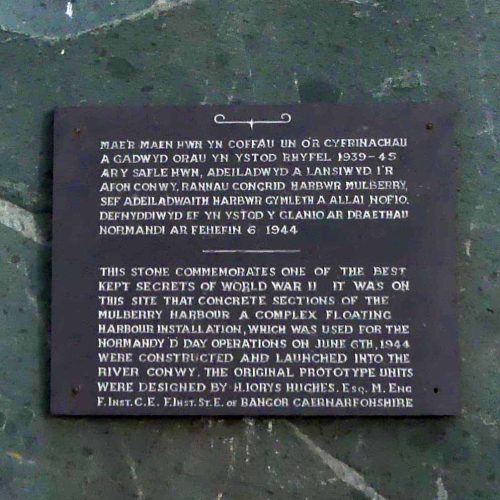

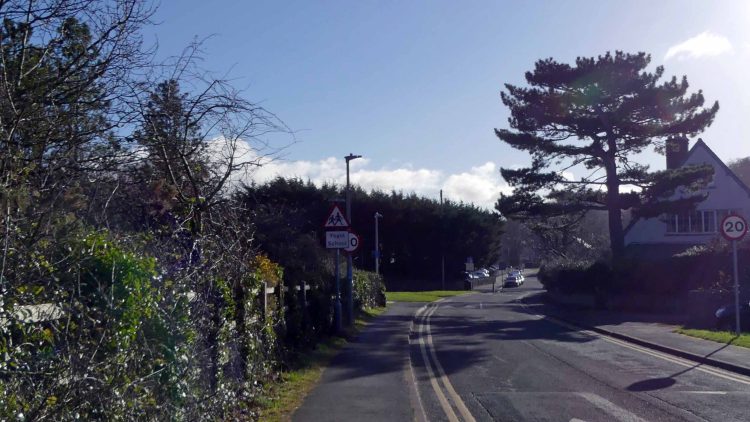
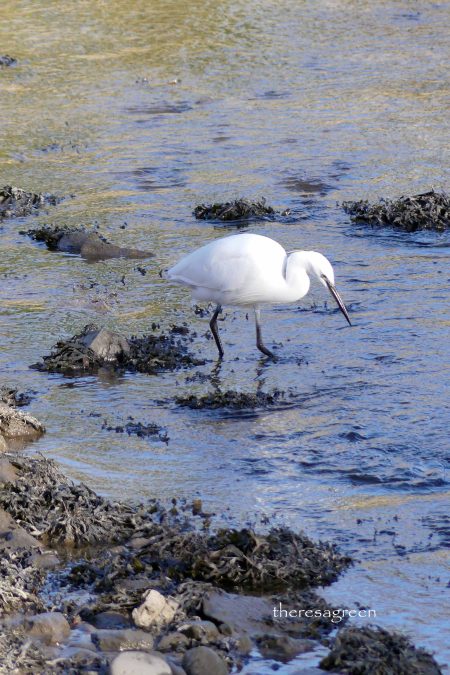
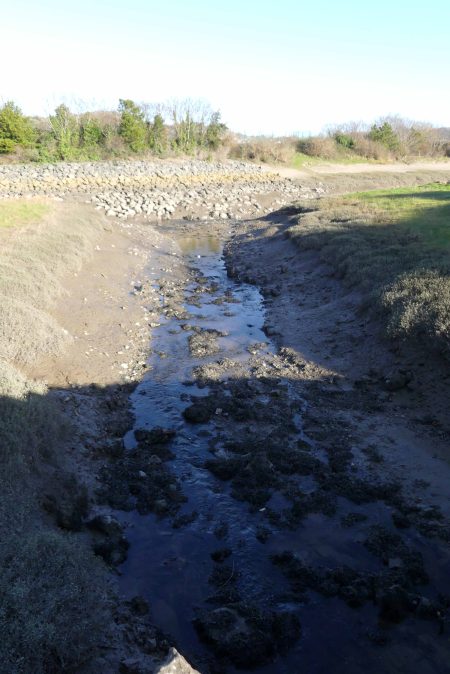
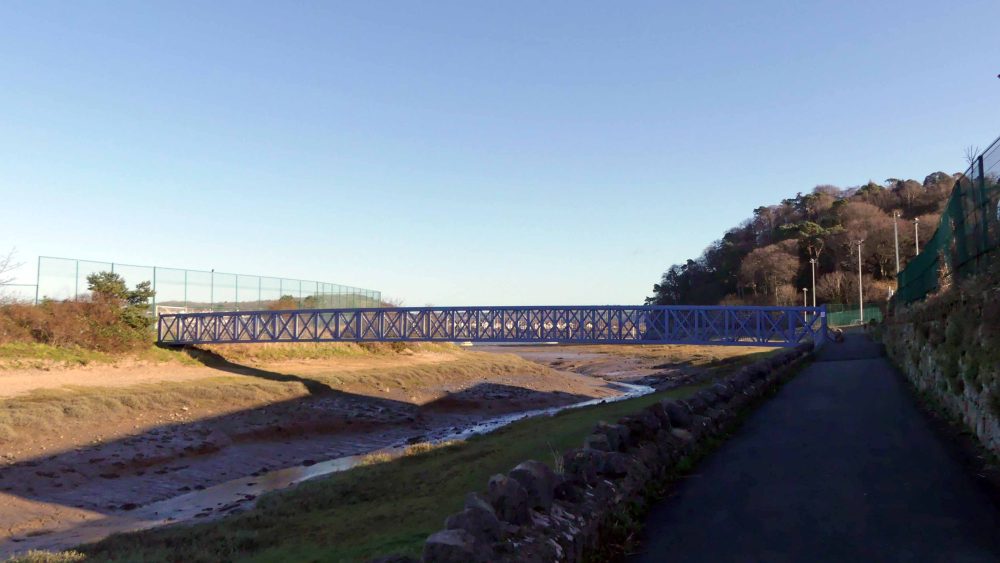

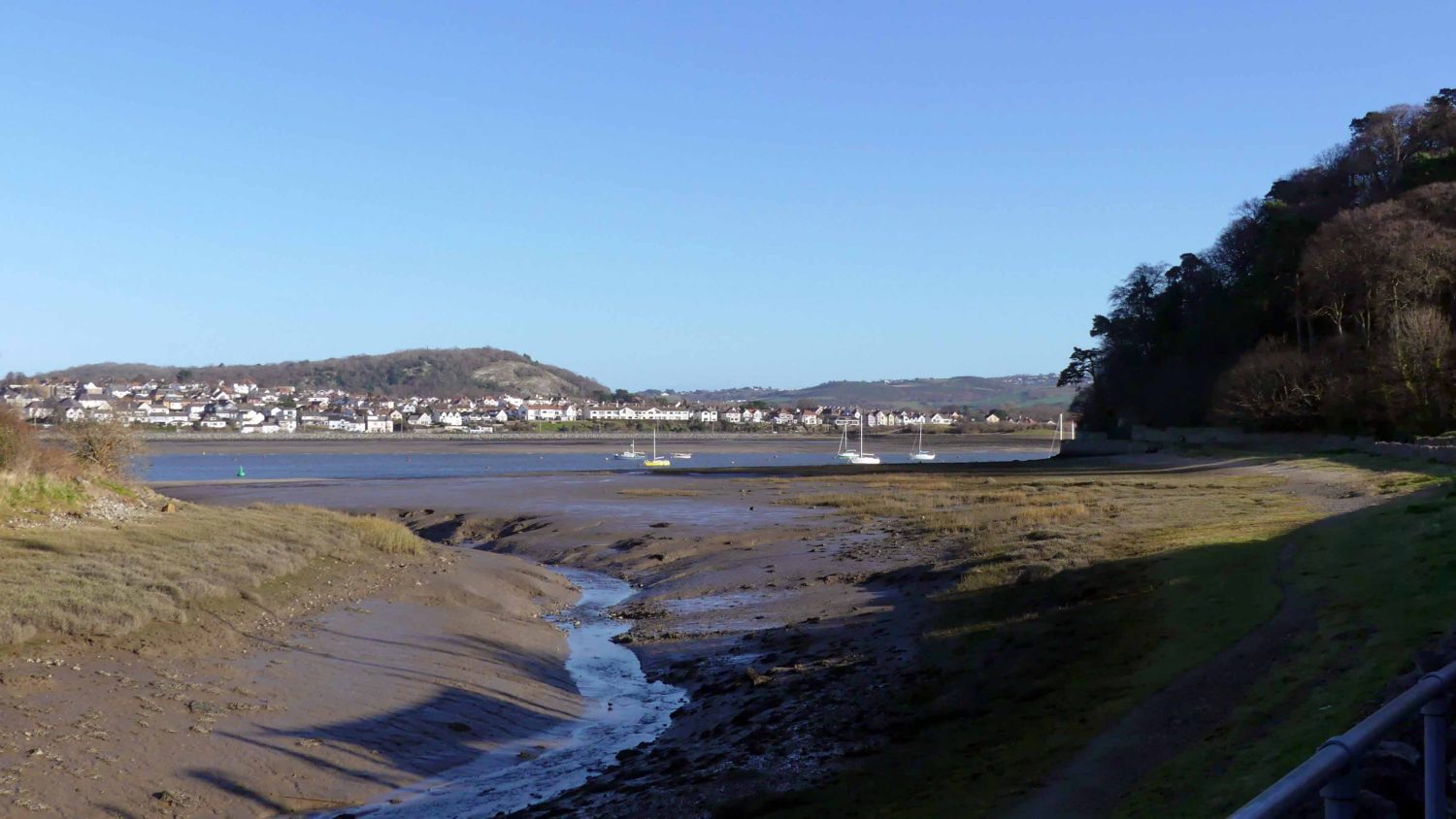

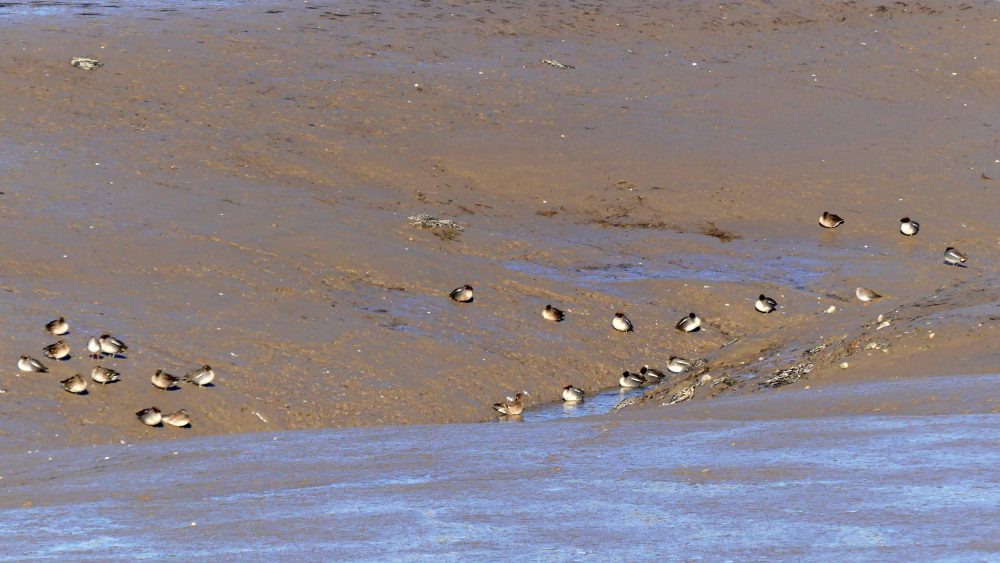
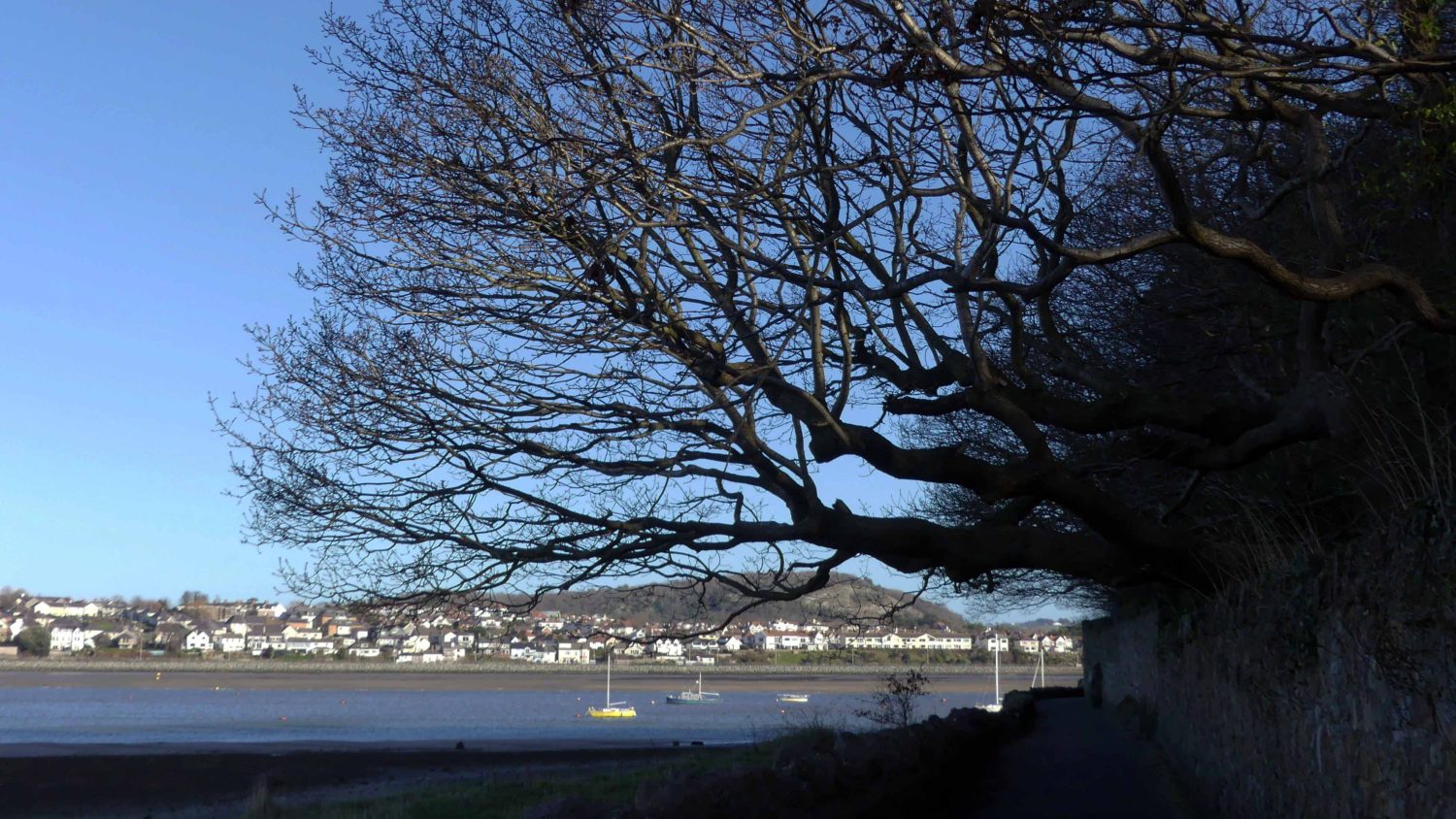
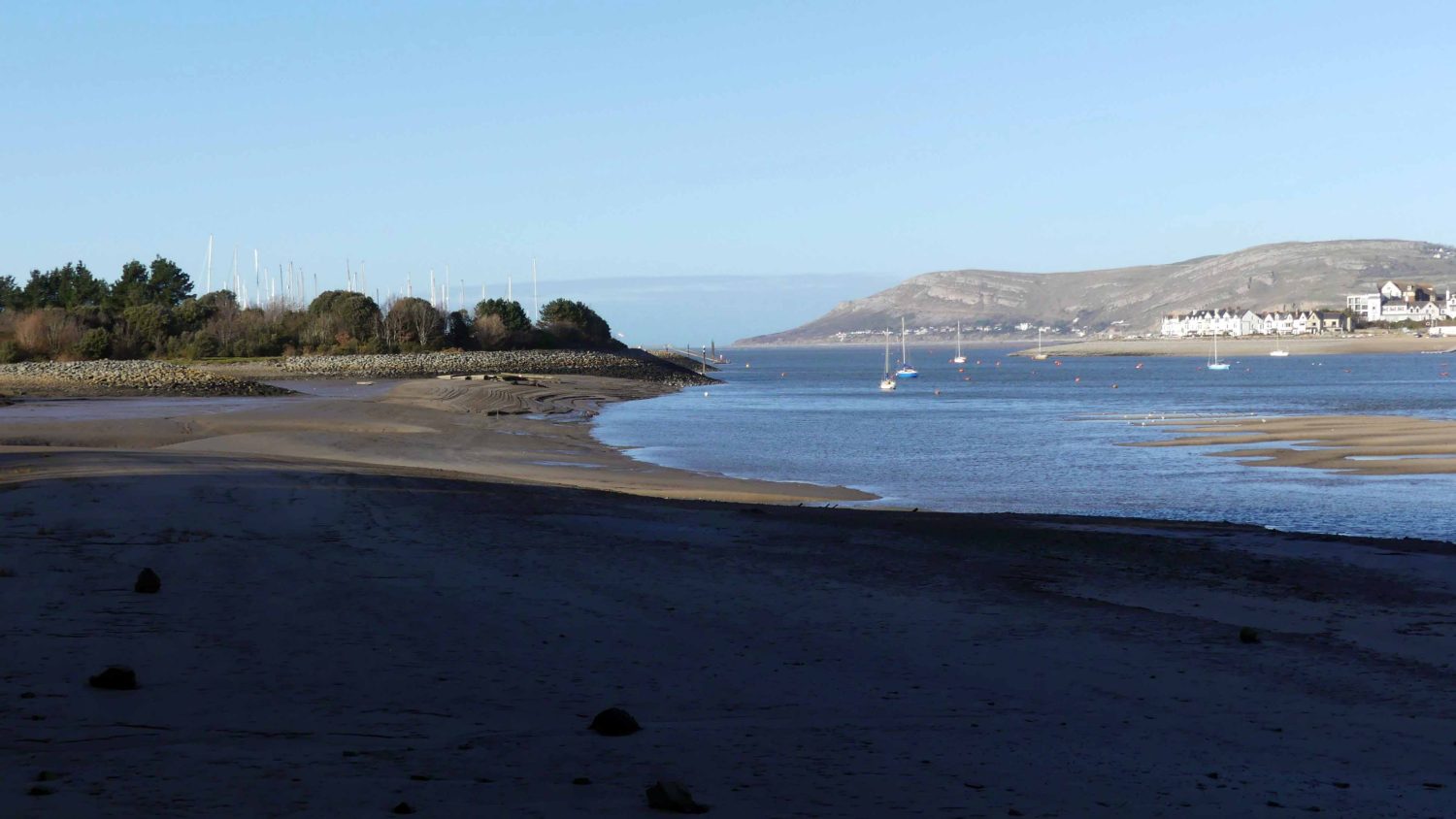


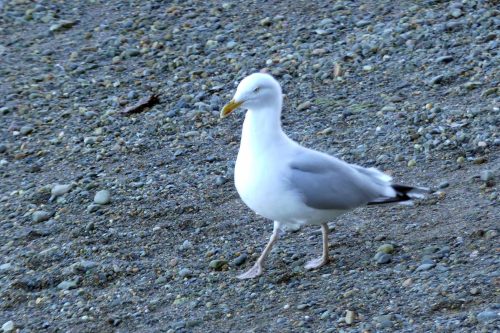

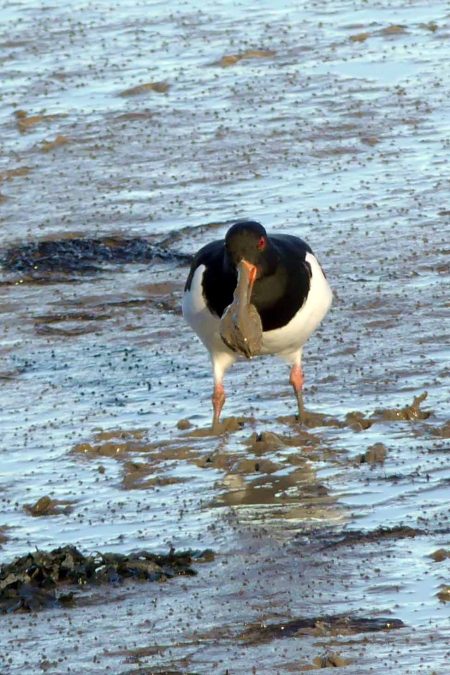


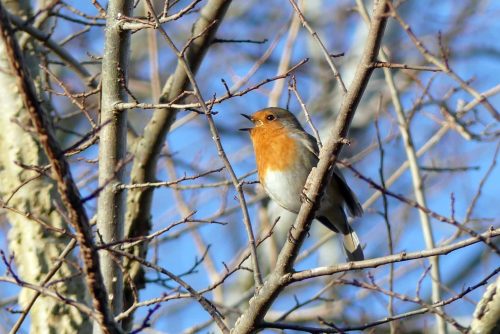
 everyday nature trails