• Home
  • about
  • about the photographs
  • Local Nature Reserves
    • Bryn Euryn Local Nature Reserve
    • Mynydd Marian
  • Wales Coast Path
    • Grey Seals in North Wales
    • St.Trillo’s Chapel
    • Wildflowers of North Wales Coastal Paths, Cliffs and Dunes

everyday nature trails

everyday nature trails

Category Archives: Birds

Berry bounty for birds

26 Monday Sep 2011

Posted by theresagreen in Birds, Nature

≈ Leave a comment

Tags

berries eaten by birds, birds that eat berries, blackberries, blackbird, holly berries, house sparrow, red berries, rowan berries, sloes

This year seems to be an exceptionally bountiful one for berries, which is very good news for birds, insects and other animals that can stock up before winter’s chill descends. Dormice, squirrels, foxes and badgers are very fond of autumn fruit and nuts, as are migratory birds fattening up for winter, and insects such as the hawthorn picture wing fly and micro-moths which feed on spindle berries.

Way back in July I photographed Rowan trees laden with berries that were being eaten by Bullfinches, and the first of  the blackberries were already ripe. The rowan berries are all gone now, but other trees and hedgerows are bursting with hawthorn berries (haws), holly berries, wild rose hips, blackberries, elderberries, spindle berries and more.

13/7/11-Rowan berries

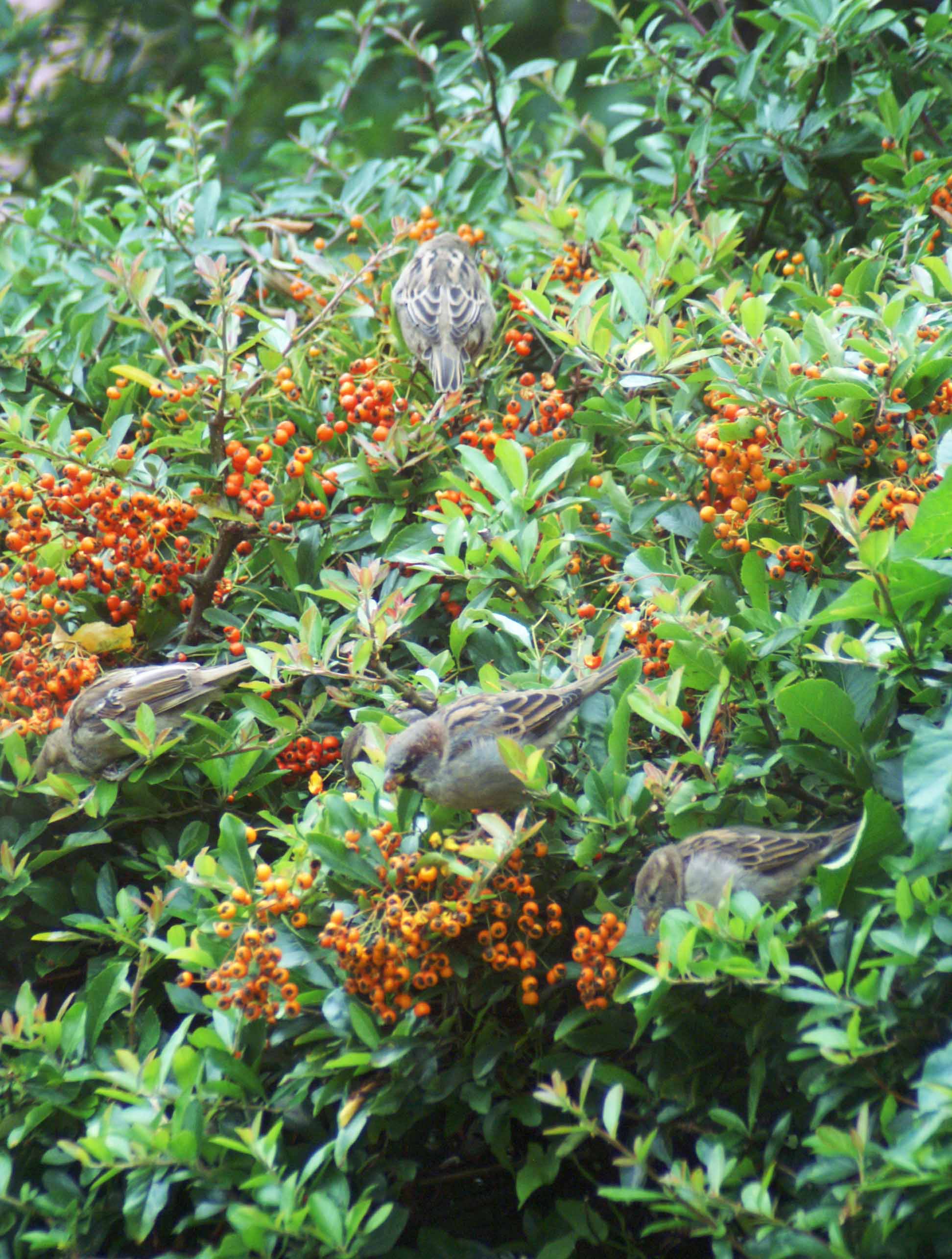
Gardens are contributing to the berry bounty too, the pyracantha hedge in our garden has been attractively garlanded with orange berries for a few weeks now and although birds have been picking at them, this past week they have been positively feasting. The House Sparrows in particular have flocked in, quite literally, arriving all together and tucking in to feed while chirping and chattering noisily to one another. Their mass visits have given me the opportunity to asses the Sparrow numbers; the most birds I’ve counted at one visit so far has been 22, but there may have been even more on the other side of the hedge where there are more berries.

House Sparrows tucking into pyracantha berries

Blackbirds have also sampled a few of the berries; they have a great liking for most berries and seem to have inbuilt radar that unerringly detects the exact moment they are ready to eat.

Blackbirds are very partial to berries

The RSPB website has an interesting page on the subject of birds and berries, from which I’ve picked out the following bits of information:

Birds and berries

The intricate relationship between birds and berries has developed into a mutual dependence for survival.Some plants use berries as a clever way to entice birds and other animals to distribute their seeds. A plant that produces berries surrounds its seed in juicy, fleshy pith, rewarding the birds that eat them with vitamins and energy.

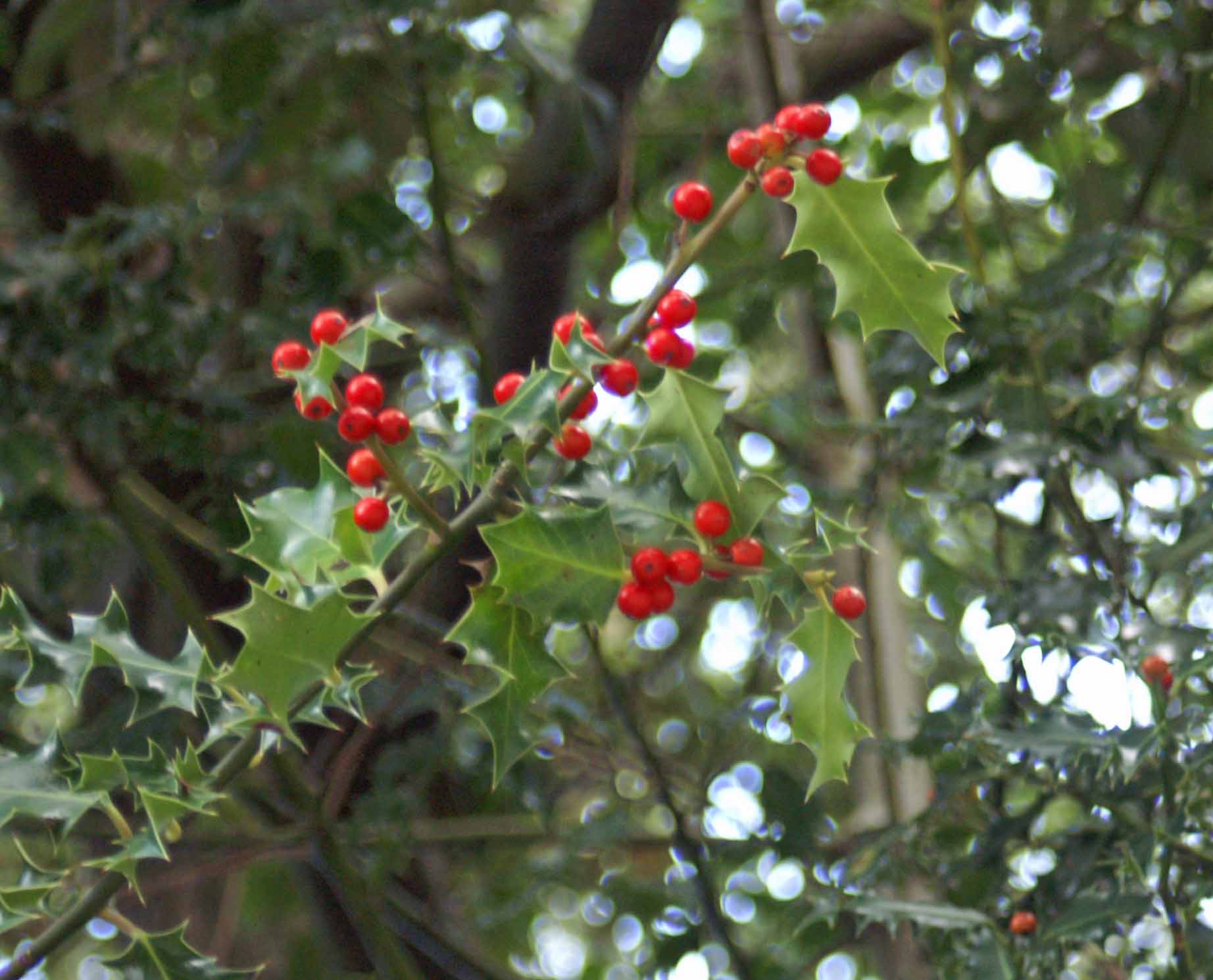
24/9/11-Holly berries

Berries are an important food source for many birds during the winter, especially when the ground is too frozen to hunt worms or snails, and there are few insects about.

Some birds, like song and mistle thrushes, blackbirds, redwings and fieldfares, find most of their winter food from berries.

Most berries are either red or black. This makes the berries easier for birds to find them. Evergreens, and plants that produce berries when their leaves are still green generally produce red berries, which show up well against a green background. Black coloured berries are thought to show up better against leaves that have turned yellow or brown.

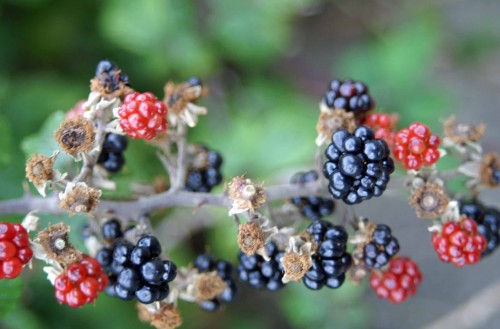
Blackberries

Blackberries are not true berries. They are aggregate fruits, which are fruits grouped together that contain seeds from different ovaries of a single flower.

Birds in a bush

Thrushes and waxwings prefer berries with smaller seeds, like rowan, as they are really only interested in the flesh, whereas other birds, like hawfinches, can make use of the seed itself, and so are attracted to berries with large seeds, such as hawthorn, blackthorn, cherries, and bullace (wild plum).

18/9/11-Blackthorn fruit, or sloes

Prunus spinosa (blackthorn or sloe) is a species of Prunus native to Europe, western Asia, and locally in northwest Africa. It is also locally naturalised in New Zealand and eastern North America.

The fruits, or sloes are blue-black n colour, small and sour. They are traditionally used to make sloe gin, jam and jelly, and are usually picked after the first frosts in late October/early November.

Fruits such as sloes that have a single stone are also not true berries, botanically they are known as ‘drupes‘. Drupes are fleshy fruits produced from a (usually) single-seeded ovary with a hard stony layer (called the endocarp) surrounding the seed. Other drupes are plums, peaches,apricots and cherries.

Share this:

  • Share on Facebook (Opens in new window) Facebook
  • Share on Pinterest (Opens in new window) Pinterest
  • Share on X (Opens in new window) X
Like Loading...

Hungry Herring Gulls

21 Wednesday Sep 2011

Posted by theresagreen in birds of the seashore, Birdwatching on North Wales coast, Nature, Nature of Wales, Rhos-on-Sea

≈ 2 Comments

Tags

colwyn bay beach, herring gull, herring gull feeding behaviour, herring gull juveniles begging for food, larus argentus

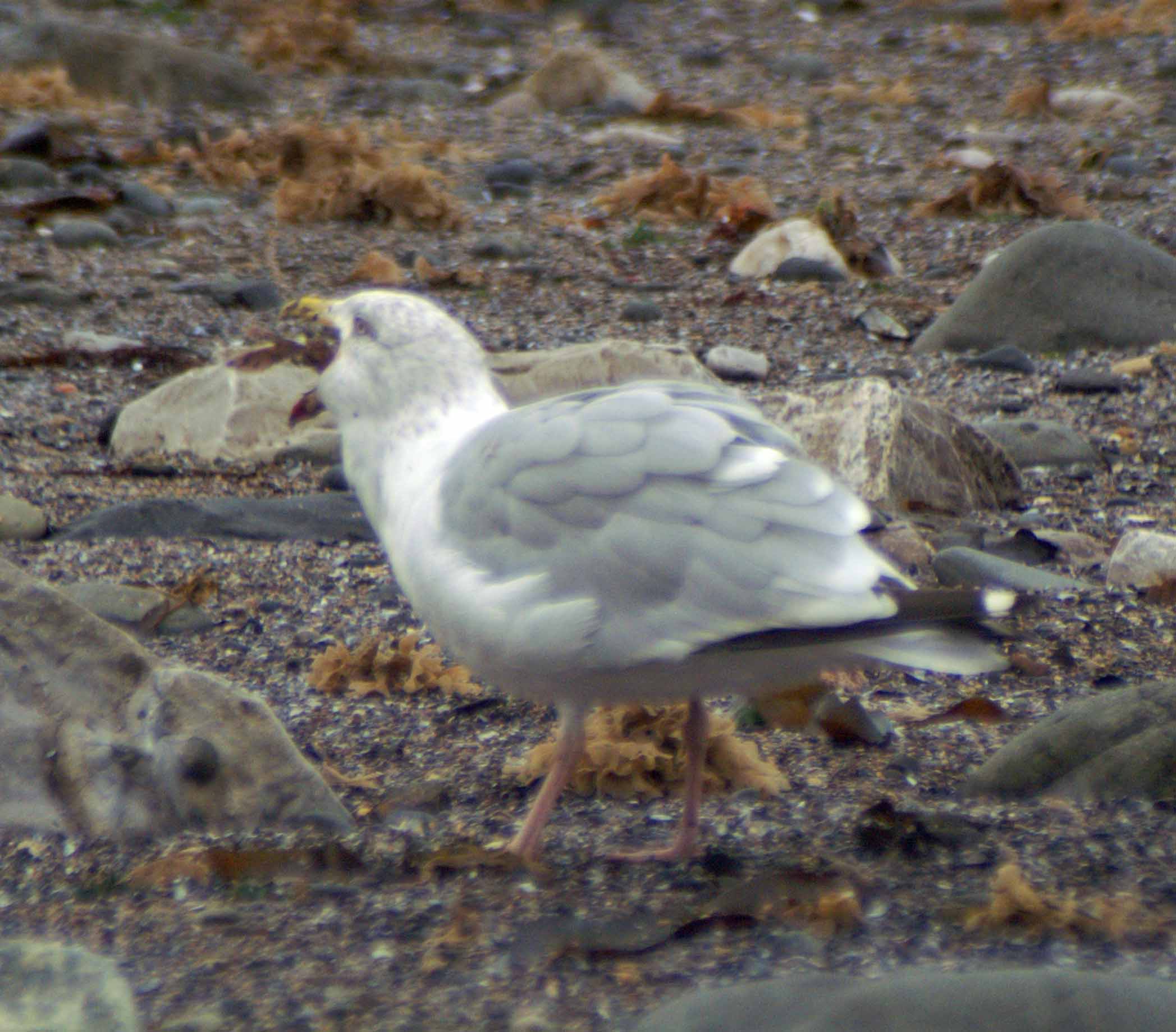
Walking along the sea shore the other day I came across a Herring Gull in the process of eating a fish. I have no idea what species of fish it was, all I can say is that it was a flat fish and either whole or almost-whole, either way, large enough for me to be amazed that a bird could even attempt swallow it.

17/9/11-The gull with most of the fish in its gullet

17/9/11- It was not going down easily, so it had to come back up again

17/9/11-A second attempt -and this time the fish disappeared

17/9/11- All that remained was a lump in the gull's crop - it should keep him going till at least lunchtime

Herring Gulls are  omnivores and opportunists like most Larus gulls, and will scavenge from rubbish dumps, landfill sites, and sewage outflows; food obtained this way may comprise up to half of the bird’s diet. Despite their name, they have no special preference for herrings — in fact, examinations have shown that echinoderms and crustaceans comprised a greater portion of these gulls’ stomach contents than fish.

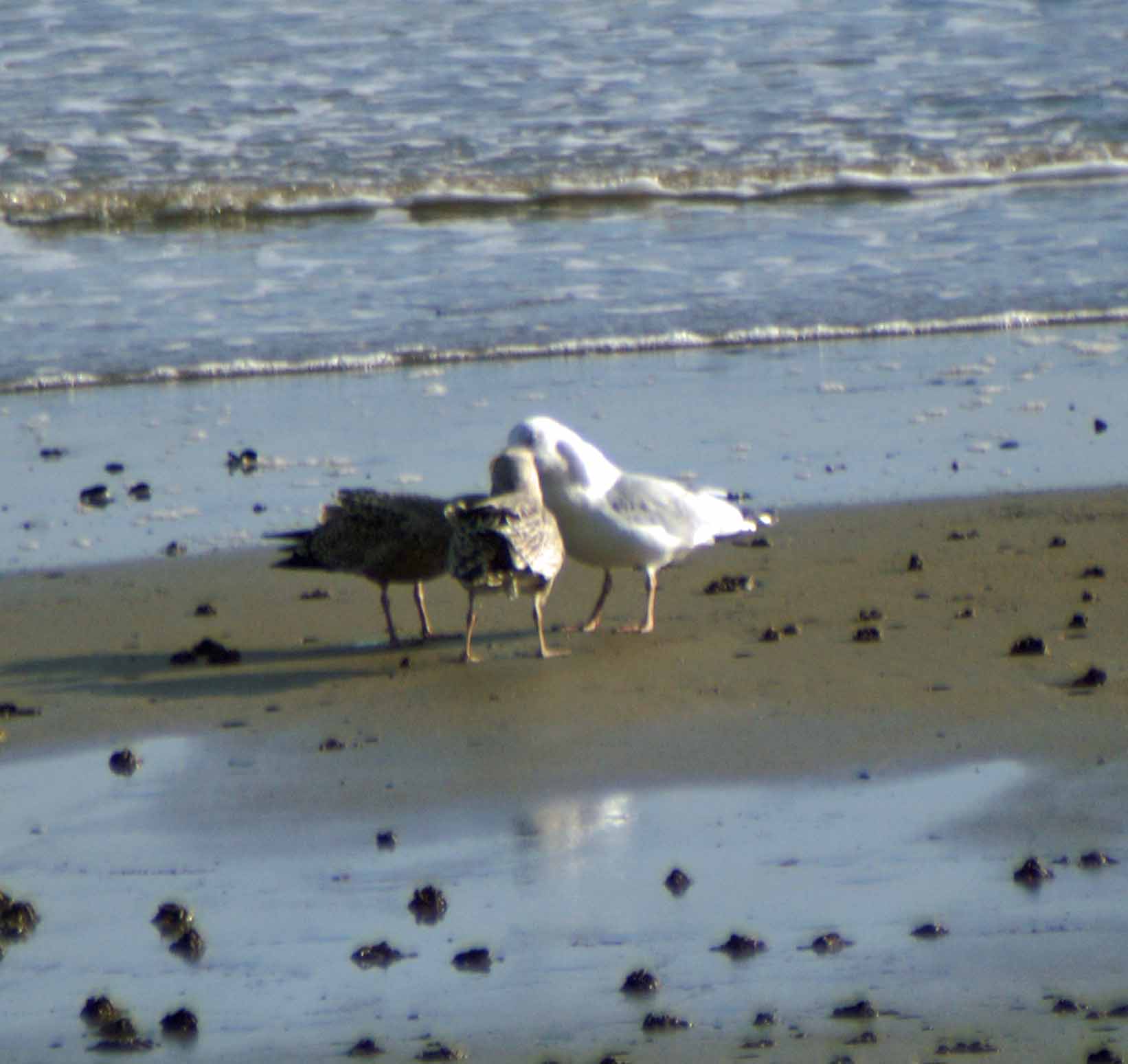
On Colwyn Bay seashore I witnessed more gull feeding behaviour, this time two juveniles were begging an adult, presumably a parent, to feed them.

Young Herring gulls persuading a parent to feed them

Juveniles use their beaks to “knock” on the red spot on the beaks of adults to indicate hunger. Parents typically disgorge food for their offspring when they are “knocked”.

Parent gulls will feed their offspring for up to 6months if they continue to beg

Chicks are generally fed by their parents until they are 11–12 weeks old but the feeding may continue up to six months of age, if the young gull continues to beg. The male feeds the chick more often than the female before fledging, the female more often post-fledging.

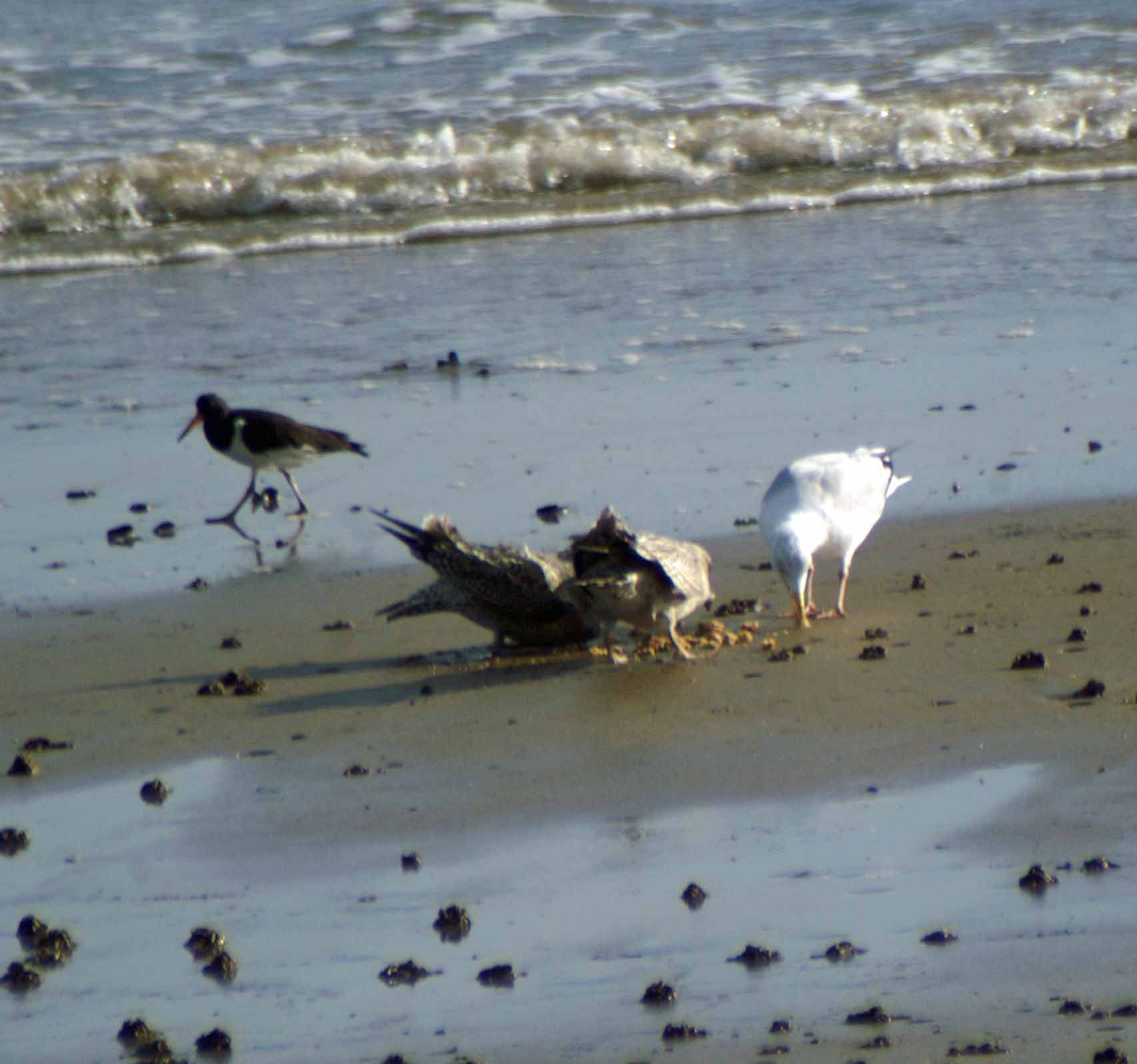
The adult was persuaded to disgorge what it had eaten onto the sand

The young birds begging did the trick and the adult disgorged whatever it had eaten onto the beach, which did not look at all appetising from where I was standing, but the three birds seemed to be happy with it.

Share this:

  • Share on Facebook (Opens in new window) Facebook
  • Share on Pinterest (Opens in new window) Pinterest
  • Share on X (Opens in new window) X
Like Loading...

Turnstones

19 Monday Sep 2011

Posted by theresagreen in wading birds

≈ 4 Comments

Tags

bird migration, birds on the seashore, brown black and white bird with orange legs, migrant birds, rhos-on-sea, small wading birds, Turnstone, turnstone flock

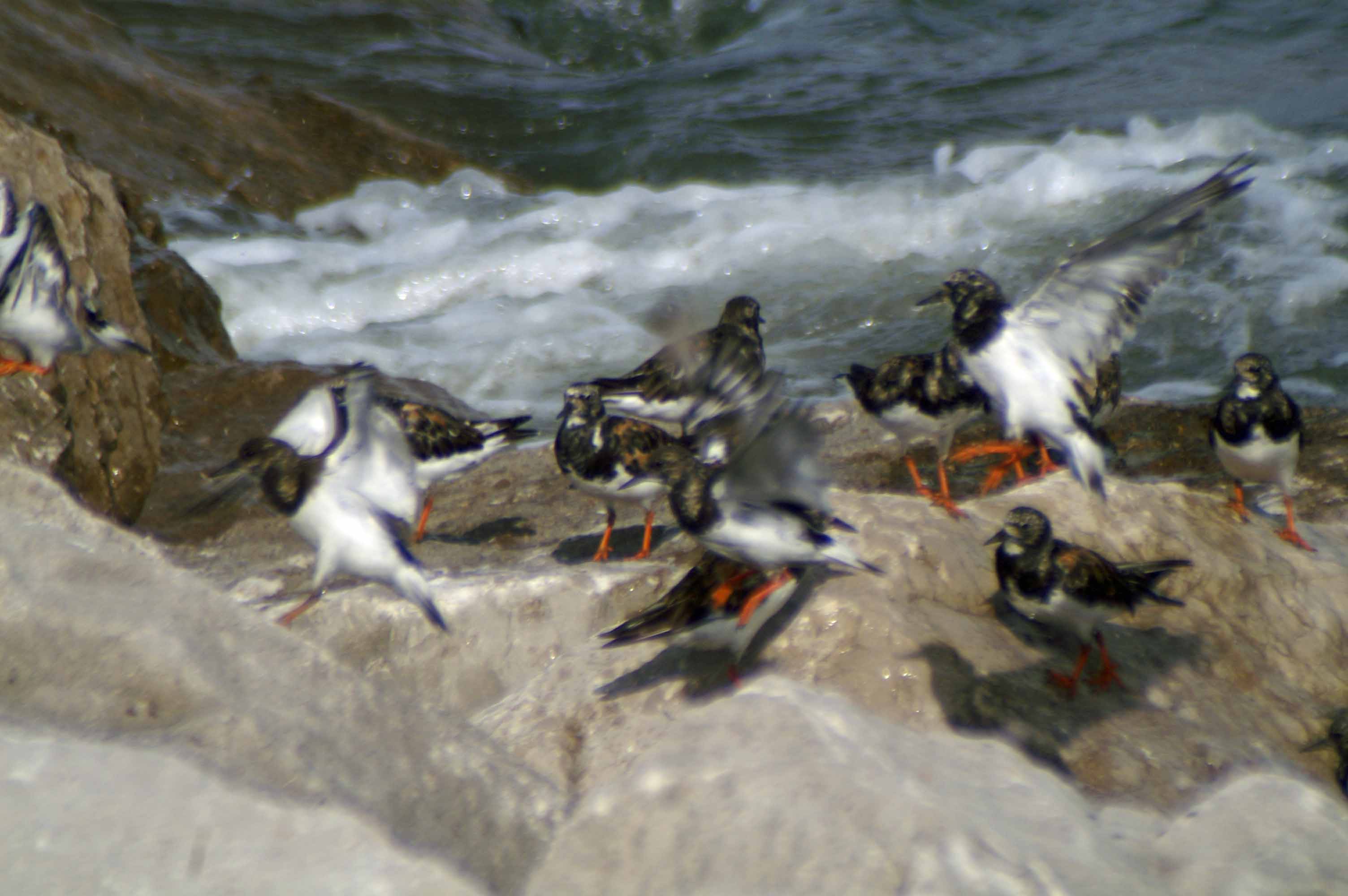
The tide was high this morning when I arrived at the promenade, so I was not expecting to see many birds about foraging on the shore, but I’m happy enough to just watch the sea, so I looked out over the railings anyway . I’m glad I did that, as there beneath me, a whole flock of Turnstones were perched atop the sea-defence boulders immediately below. The birds were either resting quietly or catching up on their preening as they waited for the tide to turn and expose the rock shore once more.

11/9/11- Turnstone dozing

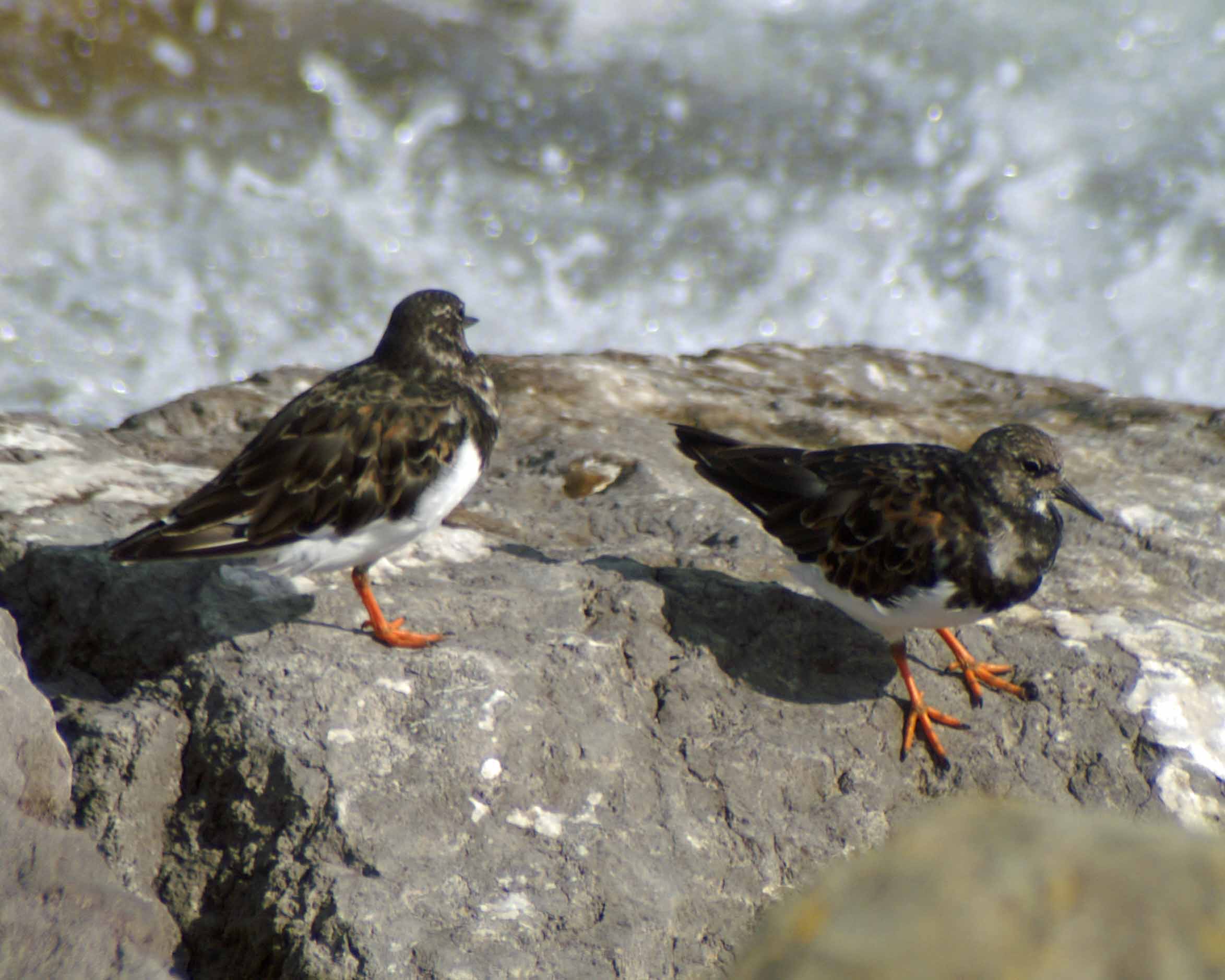
Turnstone-Arenaria interpres

Turnstones are distinctive medium-sized waders. They are high Arctic breeders, and are migratory. They are chunky powerful birds that have strong necks and bills that are well suited to their feeding technique. As the name implies, these species readily turn stones, shells or seaweed looking for hidden invertebrates. They eat insects, crustaceans and molluscs.

11/9/11-Members of the flock were resting or preening their feathers

As the birds were obligingly still, I counted 70 birds in varying sized groups spread along a length of the rocks, but there may have been more below and out of my sight.

11/9/11-The birds' rest was temporarily disturbed by a splashing wave

It would be interesting to know where the birds have come from as these particular birds have not been here for long. Turnstones are present around our coastline for most of the year. Birds from Northern Europe pass through in July and August and again spring, then Canadian and Greenland birds arrive in August and September and remain until April and May. Non-breeding birds may stay through the summer.

11/9/11-Plumage is mottled shades of brown, black, grey and chestnut brown. The head is patterned either brown and white or black and white. Underparts are white. Legs are orange.

Turnstones spend most of their time foraging creeping and fluttering over rocks, picking out food from under stones.

Their appearance is striking in flight, with white patches on the back, wings and tail.

Where to see them

Turnstones are found all around the UK coastline. They are strictly coastal,and are seen on stony, sandy and muddy shores beaches and are often found together with other waders such as Purple Sandpipers. The birds particularly like feeding on rocks covered with seaweed, and will feed along seawalls and jetties.


Share this:

  • Share on Facebook (Opens in new window) Facebook
  • Share on Pinterest (Opens in new window) Pinterest
  • Share on X (Opens in new window) X
Like Loading...

Activity and new arrivals on the seashore

16 Friday Sep 2011

Posted by theresagreen in birds of the seashore, Birdwatching on North Wales coast, Nature, Rhos-on-Sea

≈ Leave a comment

Tags

cormorants flying, Oystercatcher, redshank, ringed plover, sandwich, Turnstone

The summer is rapidly coming to an end and many species of birds are on the move, some returning to their winter feeding grounds in this country, others flying in from the north and others taking off to return to the warmer regions of Southern Europe and Africa. During the past few weeks I have already noted that the numbers of Oystercatchers and Sandwich Terns have increased dramatically here at Rhos-on-Sea on the North Wales coast and that Curlews have become a regular sight foraging on the seashore.

24th August

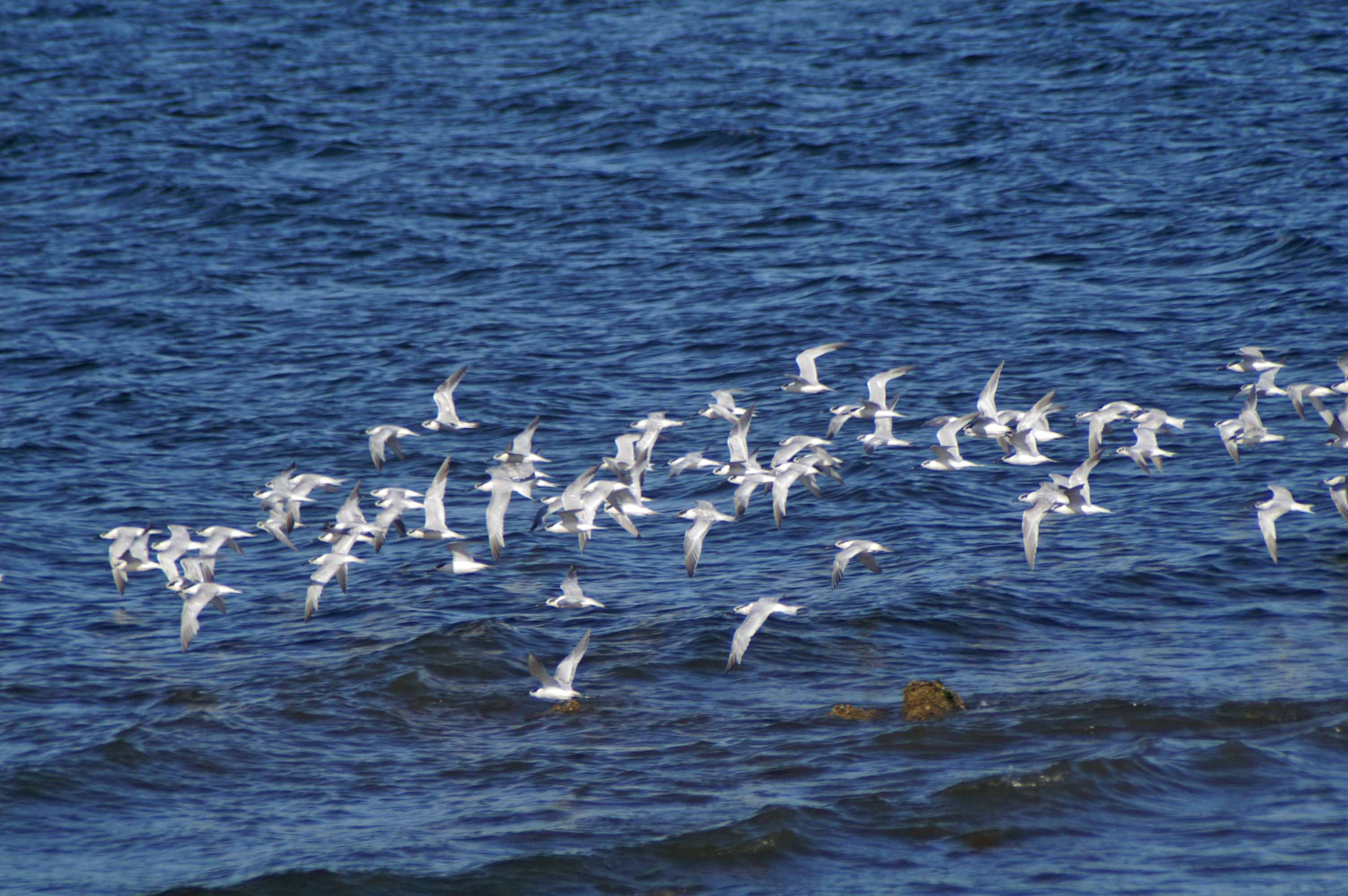
There was a lot of activity on the seashore late in the afternoon as the tide turned. I’m not the best at counting large numbers of birds, especially when they’re mobile, but there are definitely several hundred Sandwich Terns here presently and even more Oystercatchers. Mixed flocks of the birds line up along the sea edge, moving closer inshore as the water encroaches the rocky beach.

24/8/11-Sandwich Terns and Oystercatchers line up expectantly along the sea edge as the tide comes in

The Terns are restless; there are a lot of to-ings and fro-ings between their various groups and occasionally a whole flock takes off in unison, only to return to the same spot seconds later. The Oystercatchers take little notice of their flighty companions and continue to wait or forage patiently.

24/8/11- Sandwich Terns take off in unison

24/8/11-Terns settling back down amongst Oystercatchers

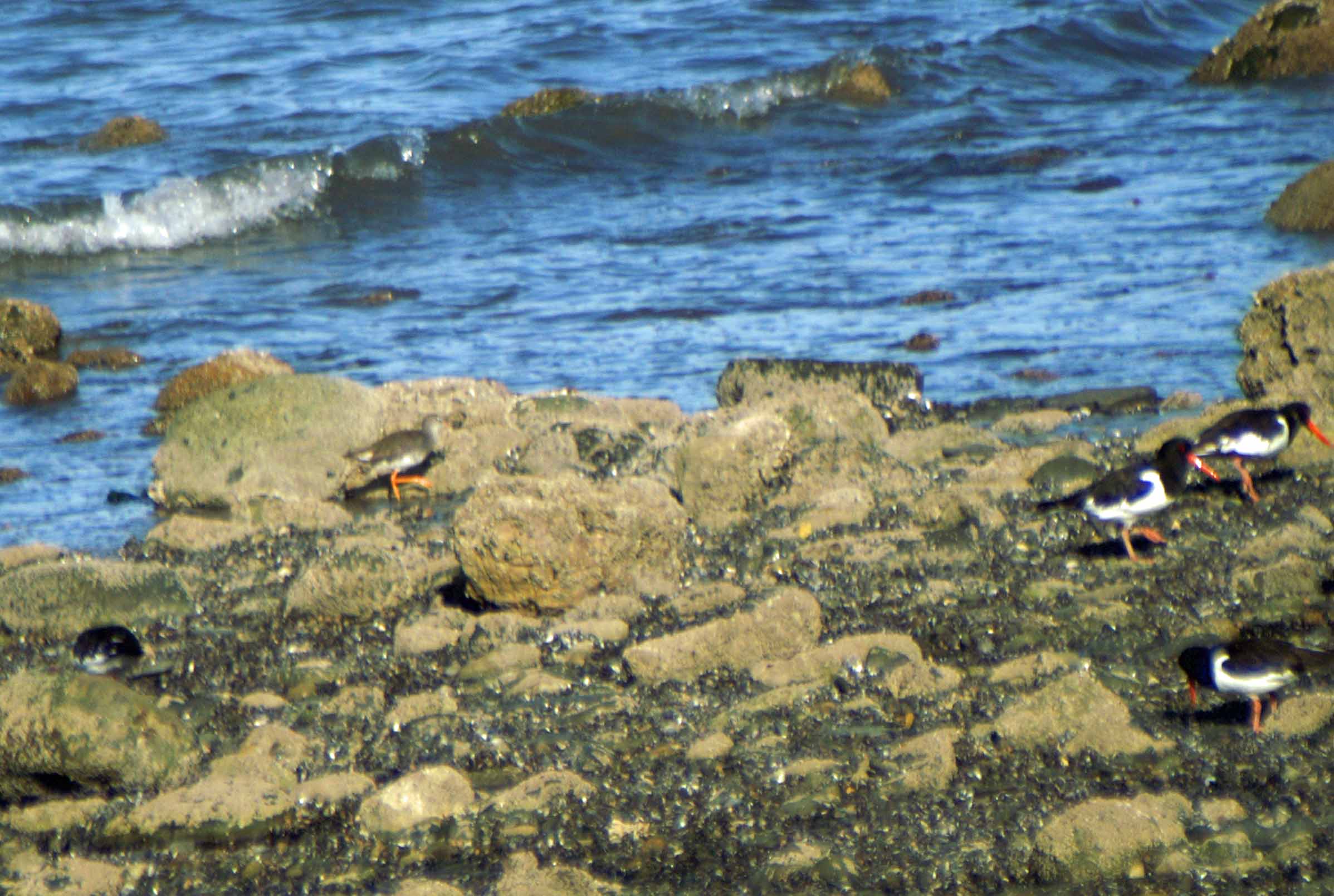
I was content watching the Tern displays, then noticed a couple of other waders well-camouflaged against the greys and browns of the shore; the bright red legs that give the birds their name gave away Redshanks that had infiltrated the ranks of Oystercatchers. The proximity of the two species shows the contrast in size. The Redshanks were quite distant, but now I have seen them I hope for better views another time.

24/8/11-Redshanks amongst Oystercatchers

I was feeling pleased to have Redshank to add to my sightings list, then spotted two separate flocks of smallish birds fly in almost simultaneously and was delighted to witness the arrival of both Turnstones and Ringed Plovers. The individuals of both flocks landed on rocks at the sea edge that were surrounded by water, then stayed put for a few minutes before venturing on to the shore to forage. I estimated that there were around 20 birds in each flock.

24/8/11-Turnstones arrived with Ringed Plovers

24/8/11- Turnstone flock flying away

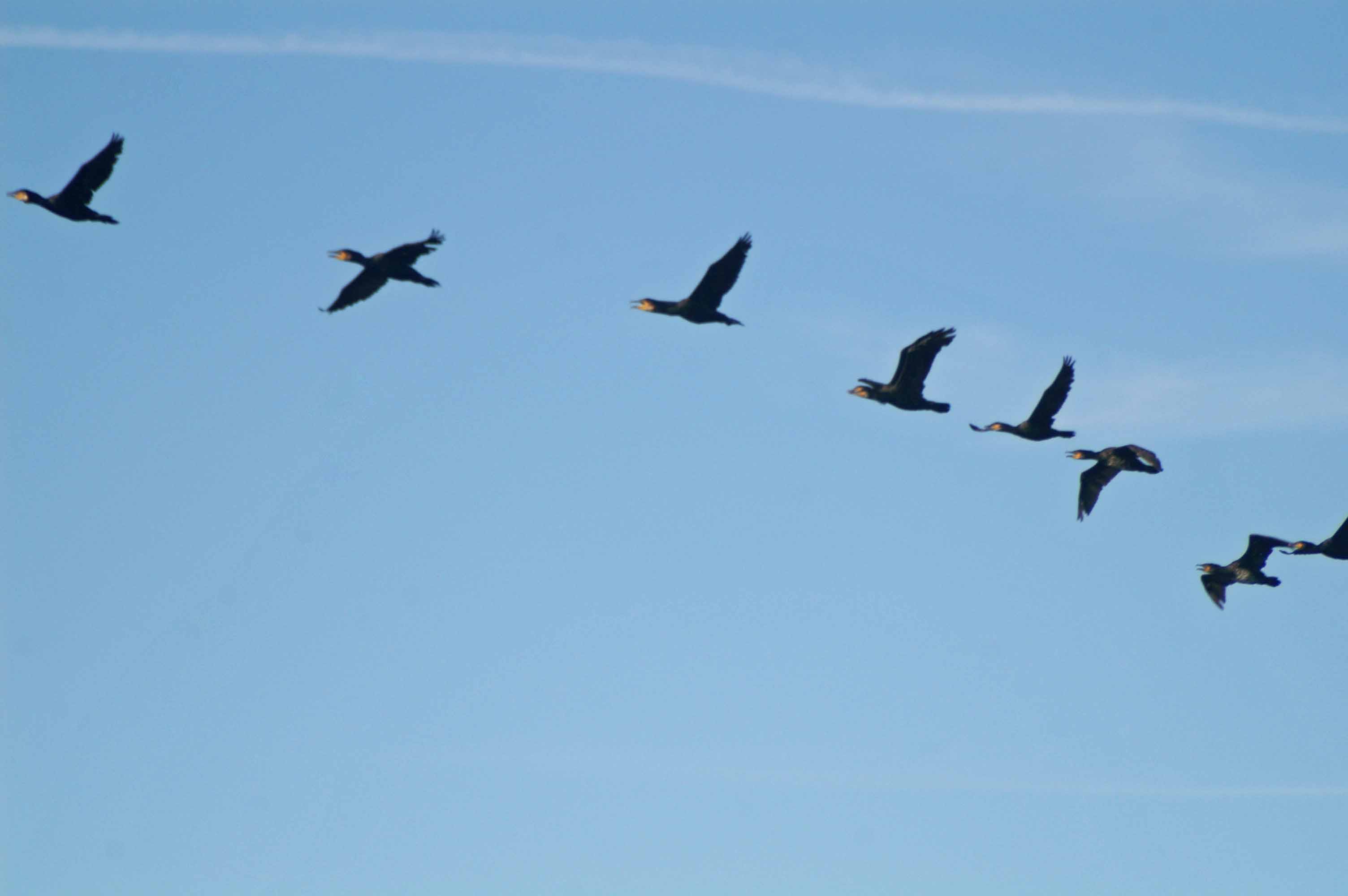
24/8/11-Cormorants flying toward the Little Orme, calling as they flew

24/8/11-Black-headed Gull flying

Birds to be seen currently on the shore at Rhos-on-Sea:

Cormorant – Phalacrocorax carbo, Oystercatcher – Haematopus ostralagus,  Ringed Plover – Charadrius hiaticula, Turnstone – Arenaria interpres, Redshank –  Tringa totanus, Curlew – Numenius arquata,Black-headed Gull – Larus ridibundus, Herring Gull – Larus argenatus, Lesser Black-backed Gull – Larus fuscus, Sandwich Tern – Sterna sandvicencis, Pied Wagtail – Motacilla alba, yarellii

Share this:

  • Share on Facebook (Opens in new window) Facebook
  • Share on Pinterest (Opens in new window) Pinterest
  • Share on X (Opens in new window) X
Like Loading...

Seashore treats

13 Tuesday Sep 2011

Posted by theresagreen in birds of the seashore, Nature

≈ Leave a comment

Tags

birds of North Wales, curlew on seashore, herring gull, oystercatchers feeding, oystercatchers flying, wading birds on seashore

20th August

I had some errands to do in the village this morning and as it was a lovely bright sunny morning I decided to walk there along the promenade. As always I stopped by the tiny St.Trillo’s chapel to scan the rocky seashore; the tide was going out and sightings of Oystercatchers and Sandwich Terns were rather distant, and I was set to move on until I noticed a slight movement around a rock pool and spotted a Curlew, the closest view of one I’ve had since I first realised they were present here.

20/8/11-Curlew on the beach

Returning home from the village  I stopped for a quick look around the area at the end of the dry sandy beach where there are large rocks and also the edge of the harbour. To my surprise there was a small group of Oystercatchers there and I had some close up views of them foraging amongst the rocks.

20/8/11-Oystercatcher-Haematopus ostralegus

20/8/11-Oystercatcher probing a shellfish

20/8/11-Oystercatcher & Herring gull

20/8/11-Herring Gull posing

20/8/11-Oystercatchers flying

Share this:

  • Share on Facebook (Opens in new window) Facebook
  • Share on Pinterest (Opens in new window) Pinterest
  • Share on X (Opens in new window) X
Like Loading...

Rhos-on-Sea- seashore surprises

24 Wednesday Aug 2011

Posted by theresagreen in birds of the seashore, Nature, Nature of Wales

≈ Leave a comment

Tags

Crow dropping shellfish onto rocks, Curlew, curlew on seashore, intelligent behaviour of crow, migrant hoverfly, rhos-on-sea

Walk from Penrhyn Bay to Abbey Road, Rhos-on-Sea

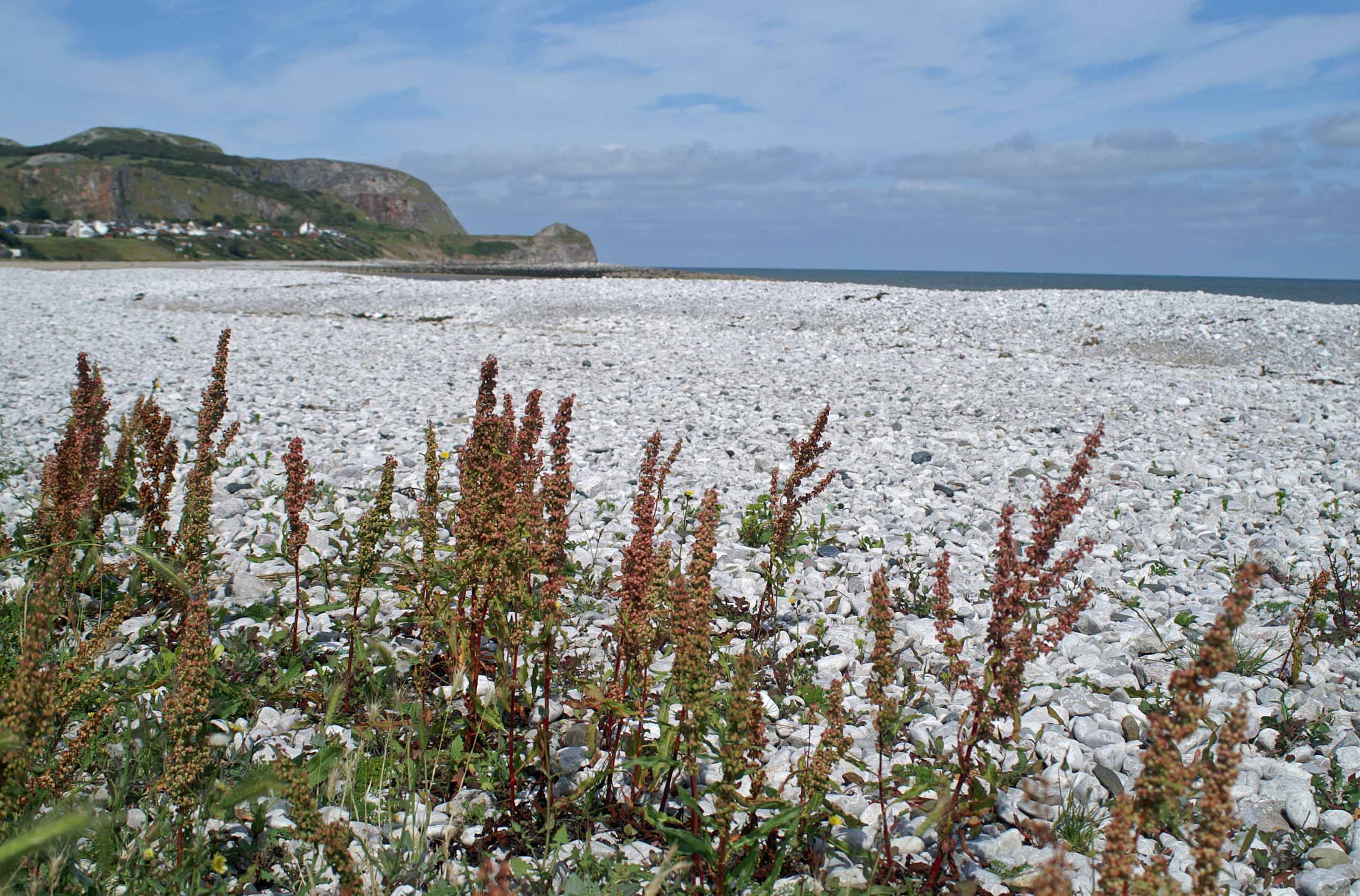
The beach of Penrhyn Bay is mostly made up of shingle, a hostile environment for plants, but some tough species have gained a hold there, spreading forward from the base of the sea wall.

24/7/11-Dock plants growing on the seashore with the Little Orme in the background

Shingle as a habitat

Shingle plants will begin to colonise above the high tide mark. Below this the moving pebbles will prevent any seedlings getting a stable hold. The plants that grow on the shingle usually have long and tough roots able to withstand the friction of the pebbles that will be disturbed by storms. Often referred to as a desert-like environment, plants like dock have water-retaining leaves that enable them to be one of the larger colonisers of this unique habitat, while smaller plants may be able to harness the water that collects on the surface of the pebbles.

24/7/11-Penrhyn Bay beach-Common Mallow growing on the shingle was attracting insects
24/7/11-Penrhyn Bay beach -a Migrant Hoverfly resting on a mallow leaf

I left the beach where the shingle  gives way to the rocky shore of Rhos-on-Sea, keeping an eye on the beach from the promenade. A Black-headed Gull caught my attention and I stopped to have a closer look. The gull was standing on a patch of muddy sand and I was intrigued to see the tops of car tyres protruding above the sand behind it. The way they were placed seemed to be deliberate, so I wondered if they are being used to reinforce the sea-break or stabilise the sand? They must have been there for a good while as some have seaweed growing over them.

24/7/11-Black-headed Gull with tyres bedded in the sand behind it

Focusing my attention on the gull and the tyres, I had half-noticed a brownish coloured bird against the rocks behind them that I thought was a young Herring Gull. When I gave it proper attention I had a pleasant surprise; it was actually a wader, either a Whimbrel or a Curlew, that was foraging around the rocks, probing its long curved beak into the the muddy sand.It was so well camouflaged against the rocks it was difficult to keep track of it, but I got a better view when it spent a couple of minutes in a more open pool of water.

24/7/11-Curlew on the sea shore
27/7/11-The Curlew blended perfectly into its surroundings

The wader disappeared from sight amongst the rocks and I carried on with my walk. I didn’t get far before I stopped again to watch a Crow that was acting strangely, flying up into the air then diving down again. It took a few minutes to realise that what it was doing: it was searching for a shellfish, picking it up in its beak, flying up then dropping it onto the rocks hoping to break it and diving down after it.

24/7/11-The shellfish does not drop straight down, so the crow has to follow it quickly or lose sight of it. 
24/7/11-The crow is surprisingly agile and turns quickly to make a steep dive
24/7/11-Diving Crow keeping its eyes on the landing position of its snack

There was quite a gap between each performance which I thought may have been either because the shellfish needed to be a particular size or species, or perhaps needed to be partially open, or  simply that each mouthful obtained this way required so much effort – it may well take more than one drop to smash a shell. I was fascinated by their behaviour and very impressed with their ingenuity; clever things.

There were quite a few gulls about; Lesser Black-backed gulls, Herring gull adults and juveniles and a few more Black-headed gulls. Herring gulls frequently chase other birds they see flying with food in their bills, hoping to steal it if possible. During an interlude in the Crow entertainment I spotted a mottled brown and white bird that I took to be a juvenile Herring gull being chased by an adult; as it broke away and flew towards me I was surprised again to see that it was another Curlew carrying something quite large in its bill; a crab I think.

24/7/11-Curlew flying with food

The Curlew flew back along the sea edge towards Penrhyn Bay, landing a short distance away from me amongst a cluster of rocks. Watching it closely I could see other Curlews gathered there, difficult to count as they are very hard to see, but at least another three.

It’s amazing what you see sometimes when you don’t set out to look! 

Share this:

  • Share on Facebook (Opens in new window) Facebook
  • Share on Pinterest (Opens in new window) Pinterest
  • Share on X (Opens in new window) X
Like Loading...

Herring Gulls-love them or loathe them

19 Friday Aug 2011

Posted by theresagreen in birds of the seashore, birds of Wales, garden wildlife, Nature, Nature of Wales

≈ 2 Comments

Tags

herring gull, herring gull nuisance, herring gull status, herring gulls in towns, herring gulls nesting on roofs, larus argentus

April 2011

A pair of Herring Gulls are regularly visiting the flat roof immediately below the window of the bedroom I am staying in. At the moment they are not roosting here overnight, but they arrive back early each morning, announcing their arrival with much raucous calling and strutting around. I have been very aware of Herring gulls locally, flying around, perching on rooftops and up amongst the chimney pots, but put it down to being so close to the seashore where there appears to be plenty of natural food. However it would seem that a number of pairs have claimed several of the chimney-rich sites as nest locations. Their strongly territorial and aggressive-defensive behaviour makes them difficult and, sadly, dreaded birds to have as close neighbours, which is a  pity as when viewed closely and unemotionally, they are very clean-looking and handsome birds, if a touch arrogant in demeanour.

European Herring Gull – Larus argentatus

Length 55-67cm; Wingspan 130-158cm

The Herring Gull is one of the commonest gulls of Northern European coasts, bigger than a Common Gull it has rather fierce-looking pale eyes with a yellow iris and pink legs and feet.

A visit to the seaside wouldn’t be the same without the sound of gulls, but when they are intent on sharing your house, you rather wish they’d turn the volume down.  A very noisy bird it makes a variety of squealing notes, sometimes sounding like it may be chuckling and also producing some quite dog-like yelping and ‘barking’ sounds.

A Herring Gull peacefully resting in the sun

The male gull brought in some strange ‘tokens’ for his chosen mate, a turkey-leg bone and a fairly large piece of stone amongst them, and they began to display bonding behaviour, the female ‘begging’ for food, and greeting one another vocally and with body contact.

I am very interested in the ways in which wildlife interacts  (and learns to exploit) people and although I had no previous experience of living this closely to them, I was aware that herring gulls had a reputation for some anti-social behavioural traits. We had a chat with the next-door neighbour, who related her previous experiences with locally nesting gulls  that could have come from the Hitchcock horror story. She alleged attacks made against herself, her visitors and particularly her dog, whilst minding their own business in their own garden! She had rung the RSPCA who had told her there was nothing she could do as the birds were protected, and that the nuisance would only last for seven weeks while the birds were nesting!

A herring gull nest built on a flat roof

A herring gull nest built on a flat roof

I was keen to learn more, so  began to research the subject, beginning by checking out the status of the gulls. Surprisingly perhaps, the herring gull has been accorded red status by the RSPB,  the highest conservation priority, as its numbers have declined dramatically in its former haunts, disappearing completely from some areas. (There are 40% less herring gulls now than in 1970) To quote from a page on their website , this means that:

” Gulls, like all UK wild bird species, are protected under the Wildlife and Countryside Act 1981. This makes it a criminal offence to kill, injure or take a gull; or to take, damage or destroy its nest whilst the nest is in use or being built. It is also a criminal offence to take or destroy their eggs.”

The best general information I found concerning the bird-human interaction was on Wikipedia and thought it worth reading in full:

” The European Herring Gull is an increasingly common roof-nesting bird in urban areas of the UK. The Clean Air Act of 1956 forbade the burning of refuse at landfill sites, providing the European Herring Gull with a regular and plentiful source of food. As a direct result of this, European Herring Gull populations in Britain sky-rocketed. Faced with a lack of space at their traditional colonies, the gulls ventured inland in search of new breeding grounds. Dwindling fish stocks in the seas around Britain may also have been a significant factor in the gulls’ move inland.

The gulls are found all year round in the streets and gardens of Britain, due to the presence of street lighting, (which allows the gulls to forage at night), discarded food in streets, food waste contained in easy-to-tear plastic bin bags, food intentionally left out for other birds (or the gulls themselves), the relative lack of predators and readily available, convenient, warm and undisturbed rooftop nesting space in towns and cities. Particularly large urban gull colonies (composed primarily of European Herring Gulls and Lesser Black-backed gulls are now present in the cities of Cardiff, Bristol, Gloucester and Aberdeen to name but a few.

The survival rate for urban gulls is much higher than their counterparts in coastal areas, with an annual adult mortality rate of less than 5%. It is also common for each European Herring Gull pair to successfully rear three chicks per year. This, when combined with the long-lived nature of European Herring Gulls, has resulted in a massive increase in numbers over a relatively short period of time and has brought the species into conflict with humans.

Once familiar with humans, urban European Herring Gulls show little hesitation in swooping down to steal food from the hands of humans. During the breeding season, the gulls will also aggressively ‘dive bomb’ and attempt to strike with claws and wings (sometimes spraying faeces or vomit at the same time) at humans that they perceive to be a threat to their eggs and chicks — often innocent passers-by or residents of the buildings on which they have constructed their nests. Large amounts of gull excrement deposited on property and the noise from courting pairs and begging chicks in the summer months is also considered to be a nuisance by humans living alongside the European Herring Gull. Non-lethal attempts to deter the gulls from nesting in urban areas have been largely unsuccessful. The European Herring Gull is intelligent and will completely ignore most ‘bird-scaring’ technology after determining that it poses no threat. Rooftop spikes, tensioned wires, netting and similar are also generally ineffective against this species, as it has large, wide feet with thick, leathery skin which affords the seagull excellent weight distribution and protection from sharp objects (the bird may simply balance itself on top of these obstacles with little apparent concern). If nests are removed and eggs are taken, broken, or oiled, the gulls will simply rebuild and/or re-lay, or choose another nest site in the same area and start again.

Attempts to scare the gulls away using raptors are similarly ineffective. Although they are intimidated by birds of prey, European Herring Gulls, in addition to being social birds with strength in numbers, are large, powerful and aggressive as individuals and are more than capable of fighting back against the potential predator, particularly if they consider their chicks to be at risk. European Herring Gulls are also naturally accustomed to predators (such as Skuas and Great Black-backed Gulls) living in the vicinity of their nest sites in the ‘wild’ and are not particularly discouraged from breeding by their presence.

Despite the increasing number of urban European Herring Gulls in the UK, the species, when taken as a whole is declining significantly across the country, its population having decreased by 50% in 25 years. In 2009, the RSPB placed the European Herring Gull on its ‘Red List’ of threatened bird species, affording it the highest possible conservation status. In response, Natural England in January 2010, following a public consultation, removed the European Herring Gull from the list of species covered by its general licenses, which had previously permitted authorized persons (e.g. landowners or occupiers) to kill the birds under certain circumstances (e.g. to prevent serious damage to crops or livestock, to prevent disease, or to preserve public health or safety) without requiring additional permission. ”

It would seem that there is no easy quick-fix solution to the problem and currently not a lot you can do if the birds take a fancy to nesting on your roof, there doesn’t seem to be a great deal of advice or help available to householders either, a bit worrying bearing in mind that many of them won’t be aware of the law.

Related newspaper article:  http://www.telegraph.co.uk/earth/outdoors/7818115/Seabirds-Quick-fix-isonly-for-the-gull-ible.html

A LOCALLY-RELATED SNIPPET FROM THE ABOVE ARTICLE:

  • During the late 1800s a man in Llandudno constructed wings from gull feathers and string and tried to fly. He failed.
Share this:

  • Share on Facebook (Opens in new window) Facebook
  • Share on Pinterest (Opens in new window) Pinterest
  • Share on X (Opens in new window) X
Like Loading...
Newer posts →
Follow everyday nature trails on WordPress.com

Enter your email address to follow this blog and receive notifications of new posts by email.

‘But it is the common species that keep the living world ticking over and provide most of our experiences of wildlife, and I would argue that maintaining the abundance of these is as important a conservation priority as maintaining the existence of rarities’. Richard Mabey

MOST RECENT POSTS

  • A Glimpse of Spring to Come January 22, 2025
  • Hunting the Wren December 28, 2024
  • Oh, Christmas Tree December 18, 2024
  • In and Out of the Ivy February 15, 2024
  • Nature’s Fireworks November 30, 2023
  • Wild Autumn along the Coast Path November 3, 2023

OLDER POSTS

LOOKING FOR SOMETHING IN PARTICULAR?

  • Sights and Sounds from the Little Orme 1
    Sights and Sounds from the Little Orme 1
  • Catchers, a Duck and Divers
    Catchers, a Duck and Divers
  • Things Bright and Beautiful
    Things Bright and Beautiful
  • Fine Dining for Crows
    Fine Dining for Crows
  • A Window on the Woods-Winter 1
    A Window on the Woods-Winter 1
  • Shades, Sounds and Scents of the Woods
    Shades, Sounds and Scents of the Woods
  • A Windy Wildflower Trail
    A Windy Wildflower Trail
  • Following a river to a Fairy Glen
    Following a river to a Fairy Glen
  • Sleeping Seals and Stonechats
    Sleeping Seals and Stonechats
  • Bird study: Blackcap
    Bird study: Blackcap

nightingale trails

The Walk of the Monarch Butterfly-Sendero de la Mariposa Monarca

The Walk of the Monarch Butterfly-Sendero de la Mariposa Monarca

MY WILDFLOWER BLOG: where the wildflowers are

Snowdrop

Snowdrop

most recent posts

Follow everyday nature trails on WordPress.com

Social

  • View teresamaygreen’s profile on Twitter

Enter your email address to follow this blog and receive notifications of new posts by email.

Website Built with WordPress.com.

  • Subscribe Subscribed
    • everyday nature trails
    • Join 359 other subscribers
    • Already have a WordPress.com account? Log in now.
    • everyday nature trails
    • Subscribe Subscribed
    • Sign up
    • Log in
    • Report this content
    • View site in Reader
    • Manage subscriptions
    • Collapse this bar
 

Loading Comments...
 

    %d