Tags
bird behaviour, birds that eat ivy berries, Blackcap, Bryn Euryn, ivy berries, the importance of ivy, wood pigeon, wood pigeon bonding, Wych Elm
The view I have from my kitchen window, looking out over an unkempt, ivy-covered, frankly scruffy patch of scrubby woodland edge may not be to everyone’s taste, but it’s great habitat for a variety of wildlife and watching it has taught me a lot about the everyday local wildlife. Without having to set foot outside, I have privileged, often close-up sightings of a variety of birds, insects, the occasional fox and the ubiquitous grey squirrels on a daily basis. It’s like having a personalised all-seasons luxury hide, heated and with tea and snacks always to hand.
First weeks of February – Part 1
The focal point central to my view, and the stage for much of the wildlife activity I am privileged to see every day is a wych elm tree. Situated a few metres up on a very steep slope, its branches seem to almost weep to the ground and its trunk is now covered with ivy. Perhaps because of its accessibility, the poor tree has been subjected to much battering by grey squirrels who nibble its leaf and flower buds, gnaw at its bark and devastate its seed cases. Despite all of that, it somehow continues to survive, although possibly not thrive, and this month, with Spring definitely underway, there’s a lot going on in and around its tangled branches. Here’s my view on some of its visitors so far this year that have been enticed to linger by ripened ivy berries.

Surrounded by woodland, it’s not surprisingly that one of the most numerous birds in our locality is the wood pigeon. A species that divides feelings towards them, I’m on the fond side, maybe because here they’re in an appropriate habitat and not damaging my garden or crops. But I also love their looks, their plumage, gently shaded grey with hints of mauve the perfect foil to that warm pink breast. In addition they are characterful and obligingly easy and calming to watch. Most mornings they are the first birds I see. Often it will be a single one, surveying his territory from a lofty perch high up in an ash tree, but from this time of year onwards there will be pairs of them sitting together, and many others are drawn here by a bountiful crop of ripe ivy berries.

Notoriously voracious eaters, there’s always competition for these nutritious berries and a particularly good, easily accessed spot will often be jealously guarded. Interlopers might be threatened with surprisingly aggressive-sounding cooing and pecking, or chased away with much noisy flapping of wings.

Big and with plump bodies, wood pigeons don’t appear to be built for acrobatics, but a good patch of ripe berries is irresistible, and they will often go after seemingly unreachable ones, after all, those who dare, win.
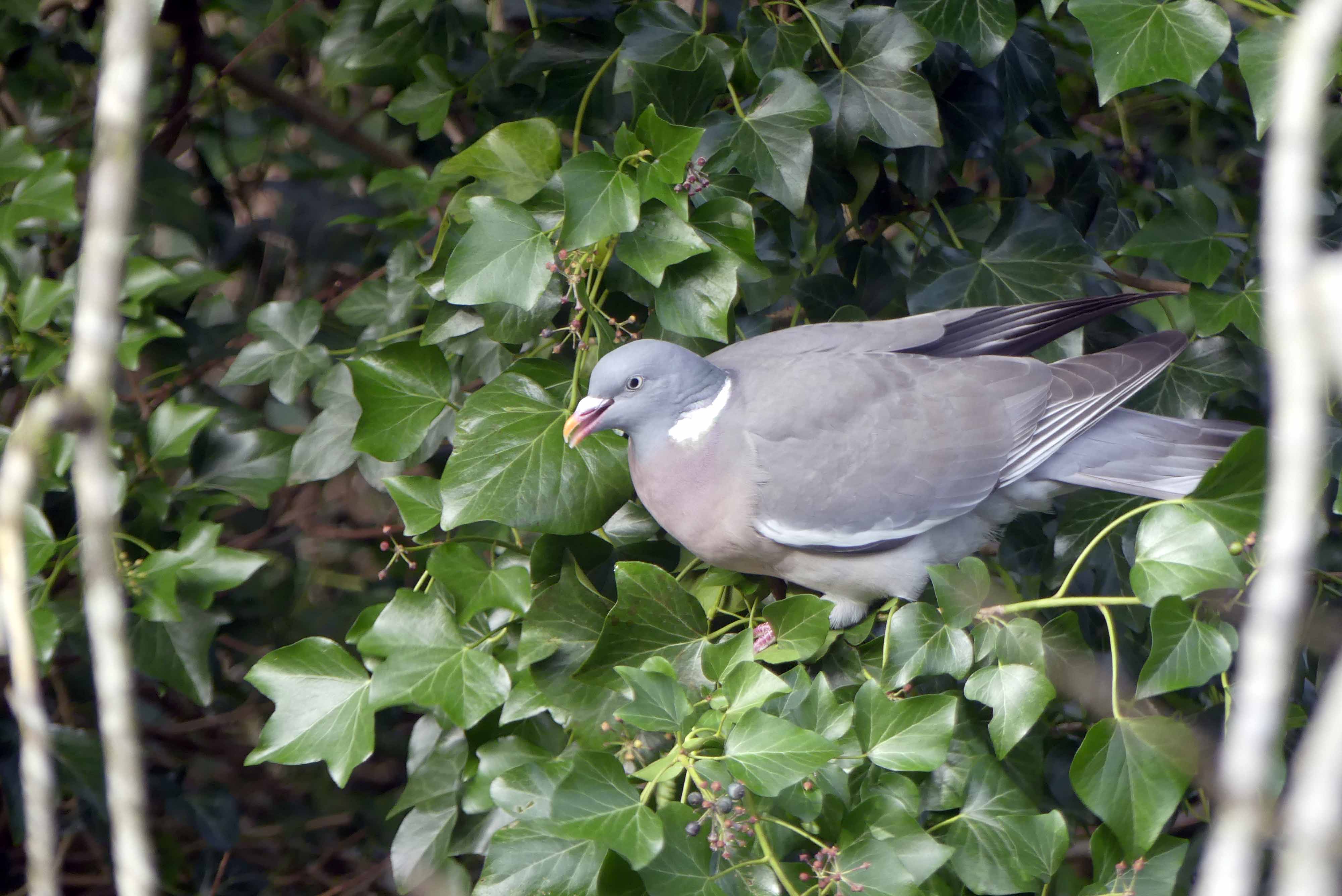
Wings and tails are fully deployed to assist balance to surprisingly good effect

and those scrawny necks have great powers of extension

The breeding season for wood pigeons is exceptionally long, and although the main season is between April and October, the species has been recorded breeding in every month of the year. Certainly, my local pair made an early start and have already re-committed to their monogamous relationship.
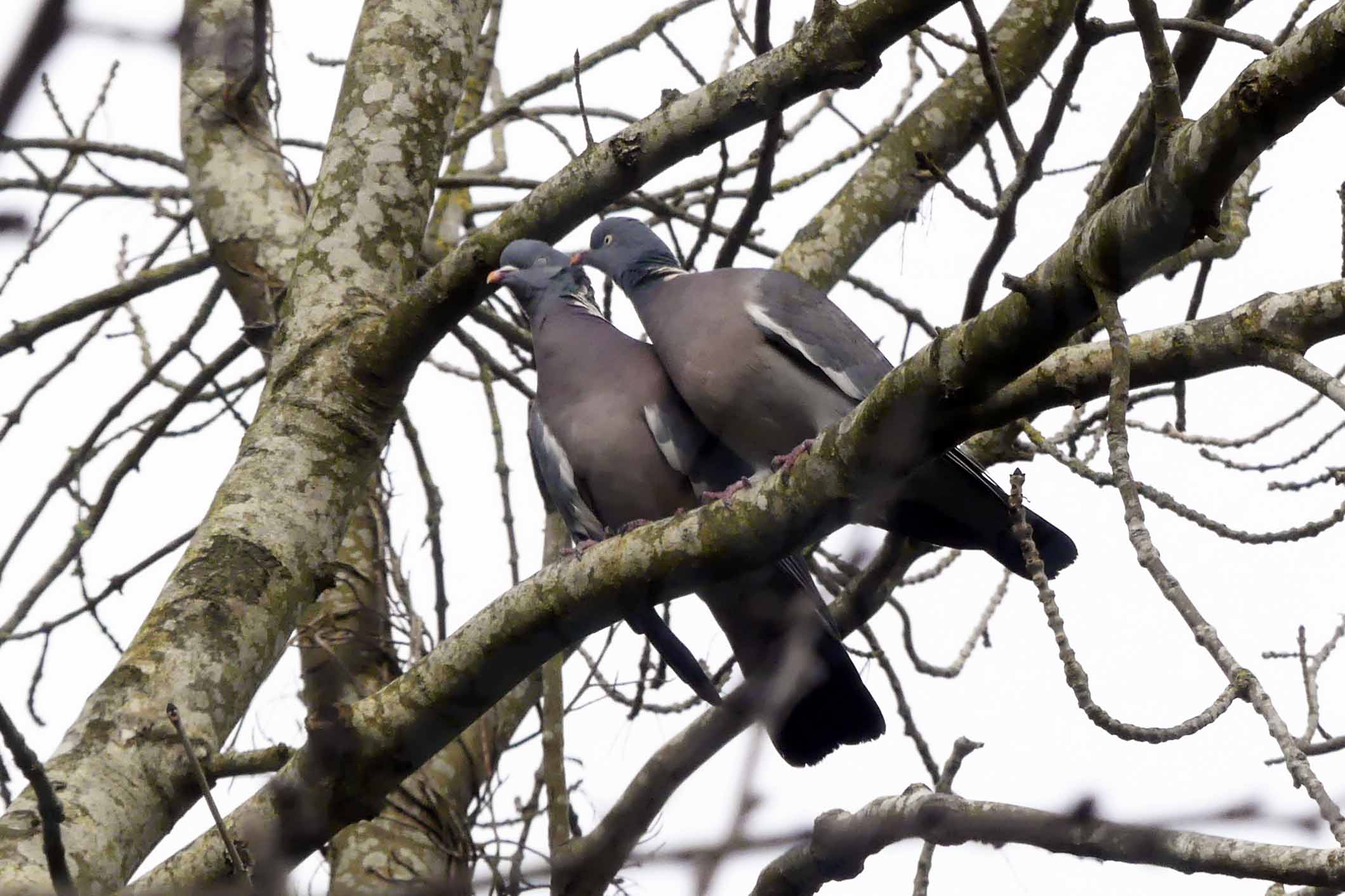
For as long as it takes to raise their latest brood, they will be closely bonded and spend much of their time in close proximity to one another, sometimes enforcing their bond with some neck-nuzzling and touching together of bills (the origin of ‘billing and cooing as a term of affection).

The picture below is set to become one of my all-time wood-pigeon favourites; a pair together on a branch of an ash tree. One sleeps, head tucked into that beautiful dusky pink cushiony breast, while the one behind sits quietly preening its feathers.

For the last few years there has been a pigeon’s nest in the depths of the laurel hedge, located to the side of the wych elm and a couple of metres away from our building. The female of the pair it belongs to, known to me as Priscilla, has begun the process of what I assume to be renovations, and has been out and about gathering materials. Now, if you’ve ever seen a wood pigeon’s nest you’ll know it’s not much more than a flimsy-looking platform of twiggy sticks, so you might be surprised by how carefully each of those sticks is selected. She spends long minutes walking deliberately around the branches of the wych elms, and probably other trees close by too, stopping now and then to peer closely and tweak a likely-looking twig to see if it will break off. Eventually she will be successful and carry off the chosen prize to add in to her pile. On her way she’ll often stop briefly, perching on the fire escape to check the coast is clear before going in to her nest site.

Another firm favourite bird of mine is the blackcap, a species that also includes ivy berries in its winter diet. Over the past years I’ve seen them often enough to be sure that some at least have remained here over the winters, and on occasions over the past weeks I’ve seen a male and less frequently a less-confident female, both around the ivy and the laurel hedge.

Blackcaps can be tricky to catch out in the open, preferring to stay within easy reach of cover, so I was lucky to catch sight of this one tucked in on a low (dead) branch of the tree, where he sat working out which ivy berries he could reach. Firstly he launched himself upwards and grabbed a berry in his beak, which he quickly ate, then launched again, this time landing on a very bendy tip of an ivy stem, stretching out to take a few more.
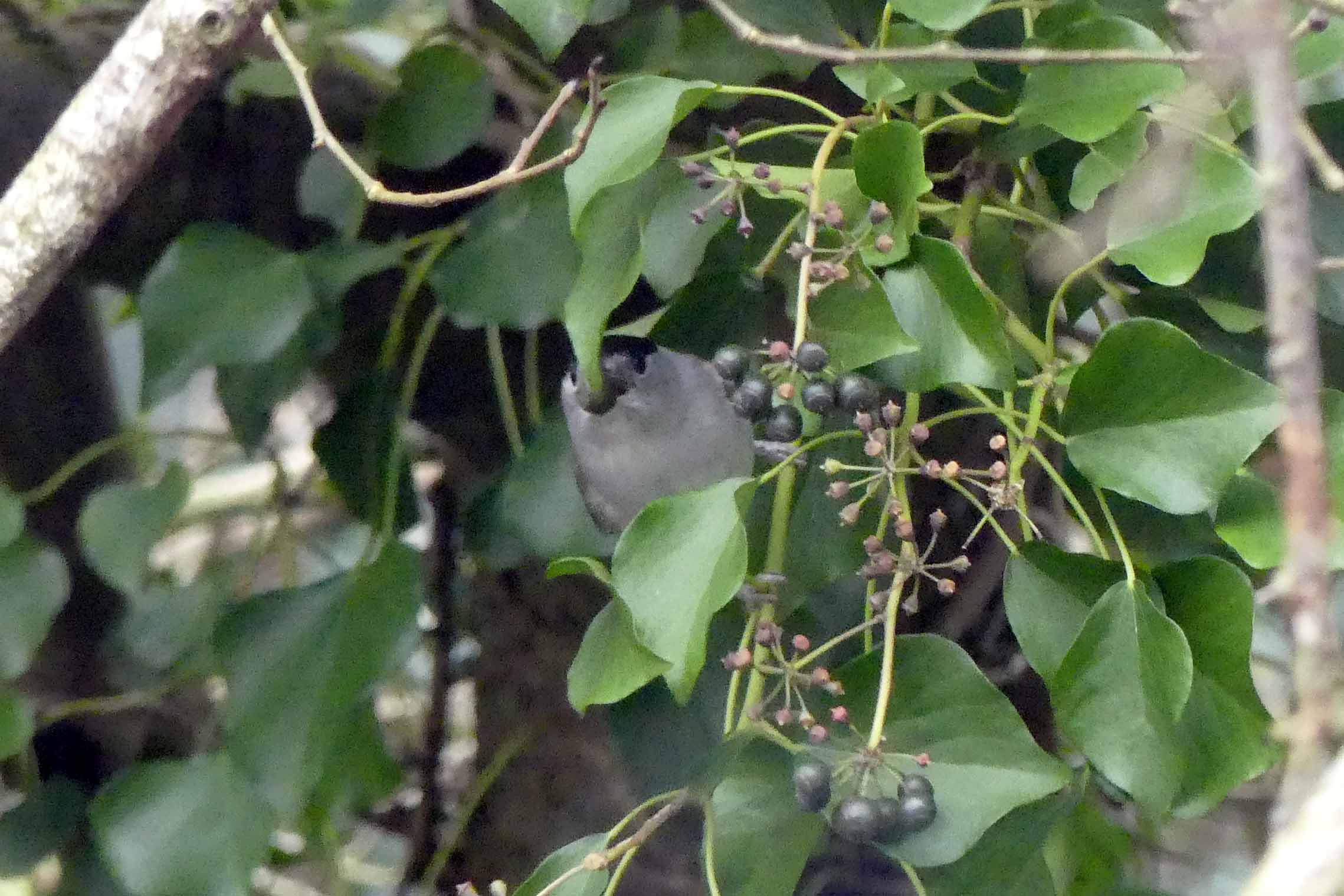
From here he flew off, but I caught sight of him later exploring the laurel hedge. In no particular hurry, although fully alert, he seemed to be enjoying a sunny morning, travelling along the length of the hedge, searching for insects on its branches and beneath its leaves and occasionally darting out after one he’d disturbed.
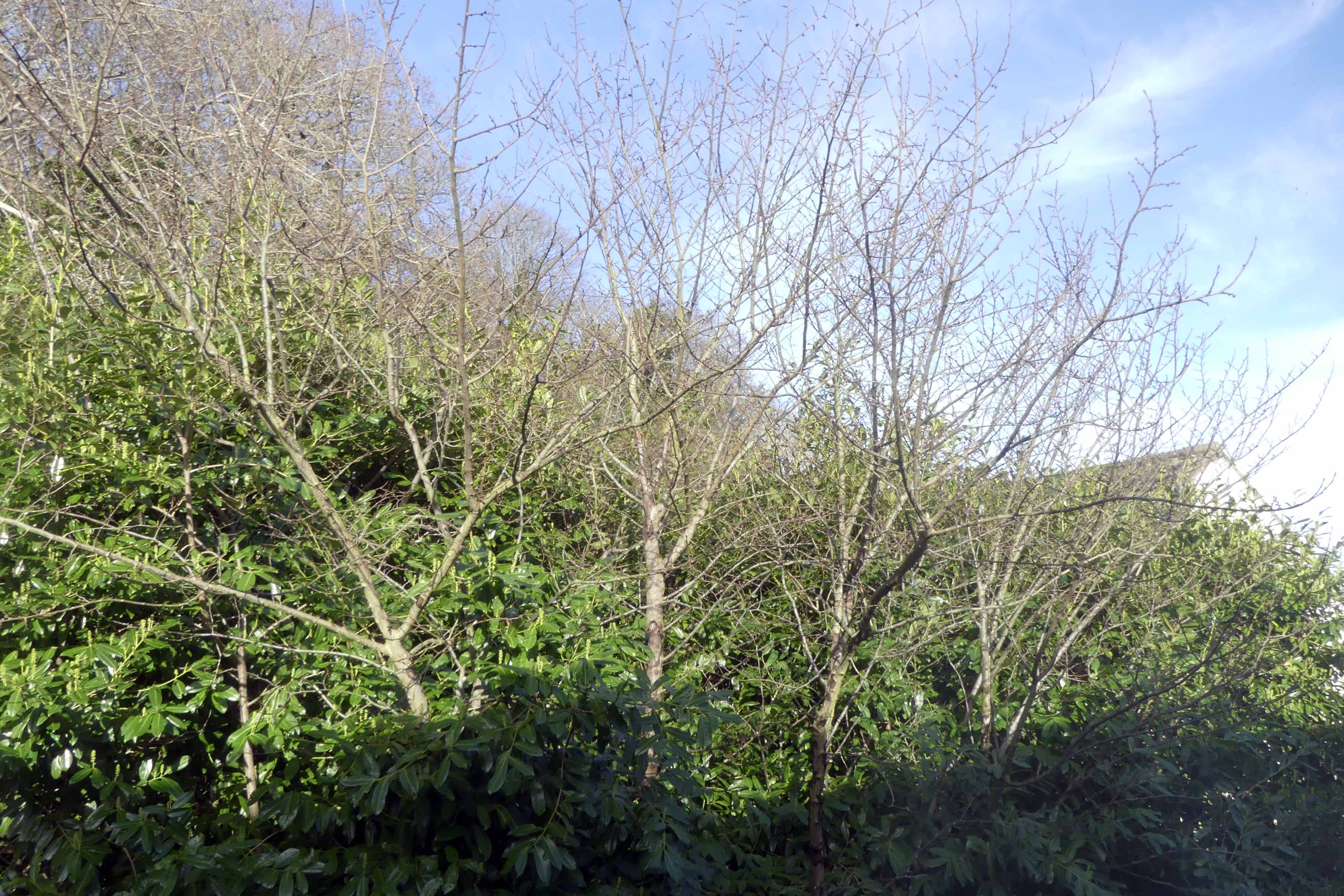
He tootled along till he’d almost reached the end of the hedge, then found a cosy spot to settle in. Behind branches of one of the young wych elms, sheltered by laurel leaves but open to the sun, he was well-protected and comfortable enough to perch there for almost twenty minutes.


I do hope he’ll stay around and nest somewhere close by….
 everyday nature trails