Tags
berries eaten by birds, birds that eat berries, blackberries, blackbird, holly berries, house sparrow, red berries, rowan berries, sloes
This year seems to be an exceptionally bountiful one for berries, which is very good news for birds, insects and other animals that can stock up before winter’s chill descends. Dormice, squirrels, foxes and badgers are very fond of autumn fruit and nuts, as are migratory birds fattening up for winter, and insects such as the hawthorn picture wing fly and micro-moths which feed on spindle berries.
Way back in July I photographed Rowan trees laden with berries that were being eaten by Bullfinches, and the first of the blackberries were already ripe. The rowan berries are all gone now, but other trees and hedgerows are bursting with hawthorn berries (haws), holly berries, wild rose hips, blackberries, elderberries, spindle berries and more.

13/7/11-Rowan berries
Gardens are contributing to the berry bounty too, the pyracantha hedge in our garden has been attractively garlanded with orange berries for a few weeks now and although birds have been picking at them, this past week they have been positively feasting. The House Sparrows in particular have flocked in, quite literally, arriving all together and tucking in to feed while chirping and chattering noisily to one another. Their mass visits have given me the opportunity to asses the Sparrow numbers; the most birds I’ve counted at one visit so far has been 22, but there may have been even more on the other side of the hedge where there are more berries.
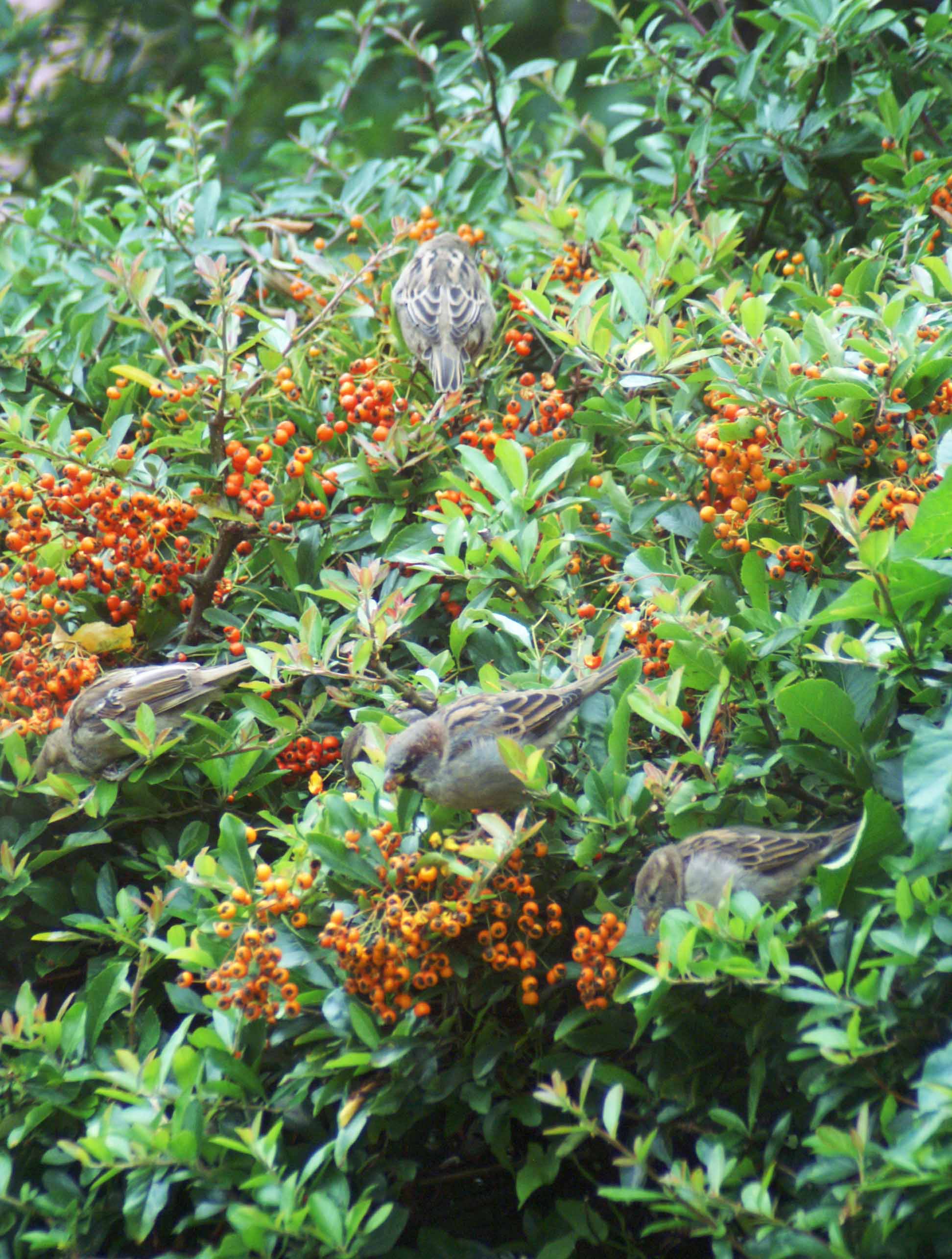
House Sparrows tucking into pyracantha berries
Blackbirds have also sampled a few of the berries; they have a great liking for most berries and seem to have inbuilt radar that unerringly detects the exact moment they are ready to eat.

Blackbirds are very partial to berries
The RSPB website has an interesting page on the subject of birds and berries, from which I’ve picked out the following bits of information:
Birds and berries
The intricate relationship between birds and berries has developed into a mutual dependence for survival.Some plants use berries as a clever way to entice birds and other animals to distribute their seeds. A plant that produces berries surrounds its seed in juicy, fleshy pith, rewarding the birds that eat them with vitamins and energy.
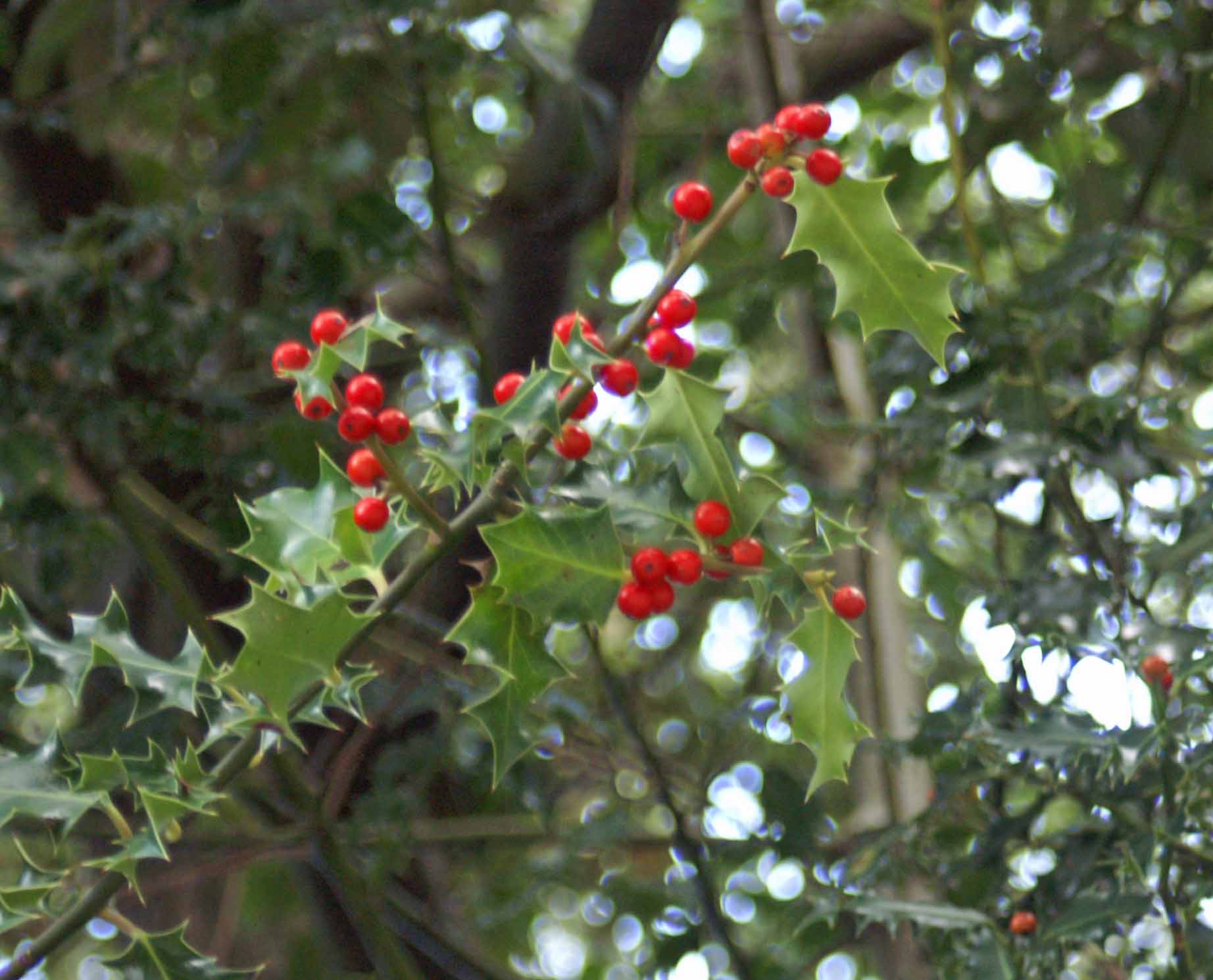
24/9/11-Holly berries
Berries are an important food source for many birds during the winter, especially when the ground is too frozen to hunt worms or snails, and there are few insects about.
Some birds, like song and mistle thrushes, blackbirds, redwings and fieldfares, find most of their winter food from berries.
Most berries are either red or black. This makes the berries easier for birds to find them. Evergreens, and plants that produce berries when their leaves are still green generally produce red berries, which show up well against a green background. Black coloured berries are thought to show up better against leaves that have turned yellow or brown.
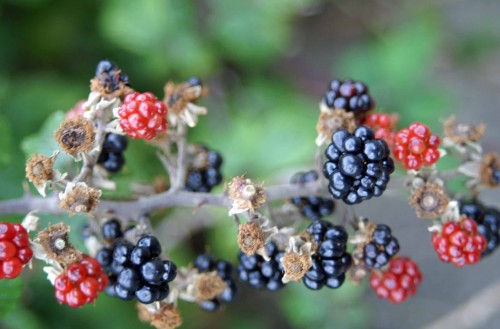
Blackberries
Blackberries are not true berries. They are aggregate fruits, which are fruits grouped together that contain seeds from different ovaries of a single flower.
Birds in a bush
Thrushes and waxwings prefer berries with smaller seeds, like rowan, as they are really only interested in the flesh, whereas other birds, like hawfinches, can make use of the seed itself, and so are attracted to berries with large seeds, such as hawthorn, blackthorn, cherries, and bullace (wild plum).

18/9/11-Blackthorn fruit, or sloes
Prunus spinosa (blackthorn or sloe) is a species of Prunus native to Europe, western Asia, and locally in northwest Africa. It is also locally naturalised in New Zealand and eastern North America.
The fruits, or sloes are blue-black n colour, small and sour. They are traditionally used to make sloe gin, jam and jelly, and are usually picked after the first frosts in late October/early November.
Fruits such as sloes that have a single stone are also not true berries, botanically they are known as ‘drupes‘. Drupes are fleshy fruits produced from a (usually) single-seeded ovary with a hard stony layer (called the endocarp) surrounding the seed. Other drupes are plums, peaches,apricots and cherries.
 everyday nature trails