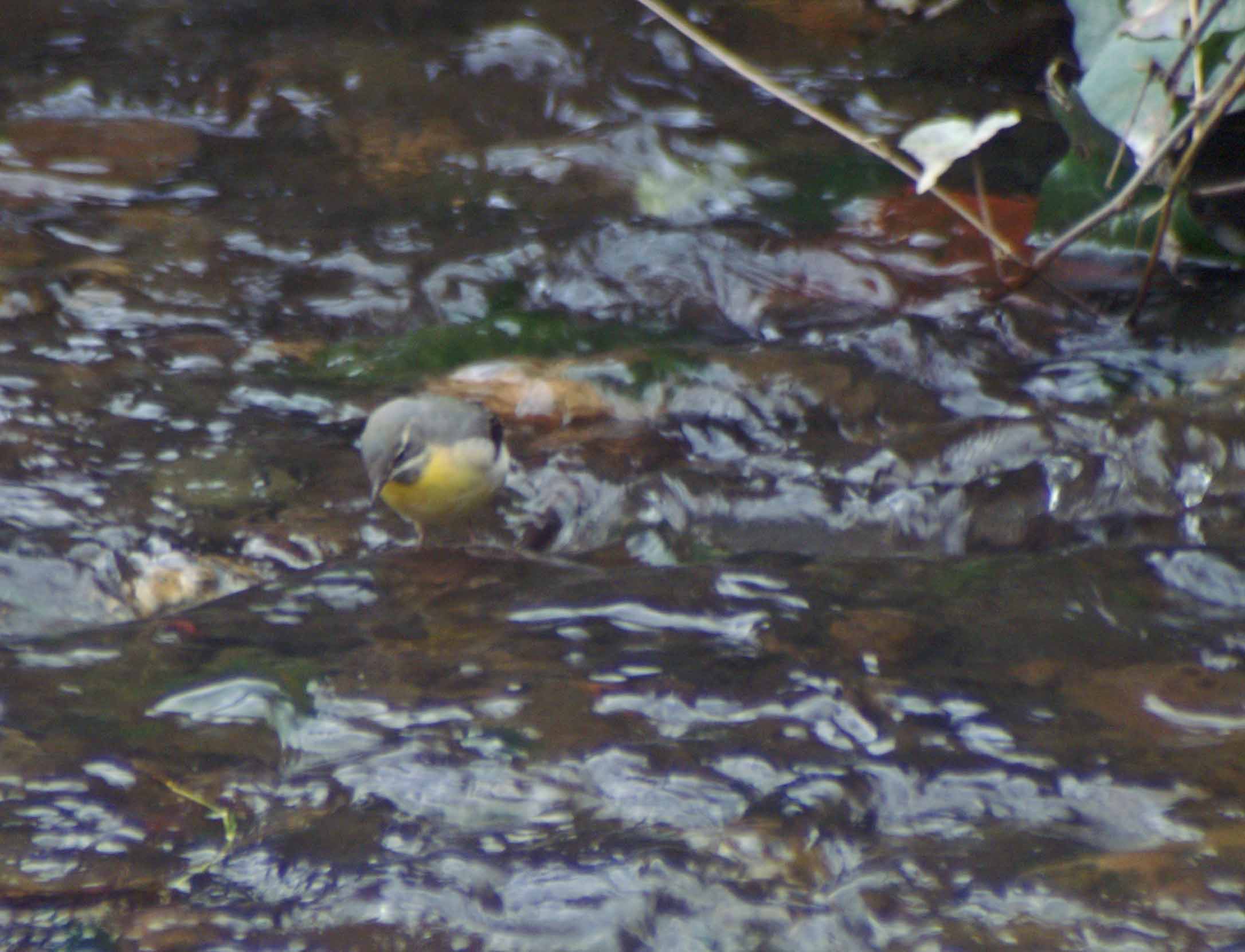
I first spotted two Grey Wagtail one morning last week when they flew across the road in front of me as I was driving to work. They landed somewhere close to the water of the river close to the footbridge that crosses into the little woodland area called Min-y-Don, near the promenade at Old Colwyn. I looked out for them each time I passed since then, but with no luck until this Thursday when I walked there to look for spring flowers. Both birds must have been down close to the water as they flew up to a nearby shrub as I approached, taking me by surprise. I was pleased to see them but thought I had missed an opportunity to photograph them, but then luckily one returned to resume their hunt for food.
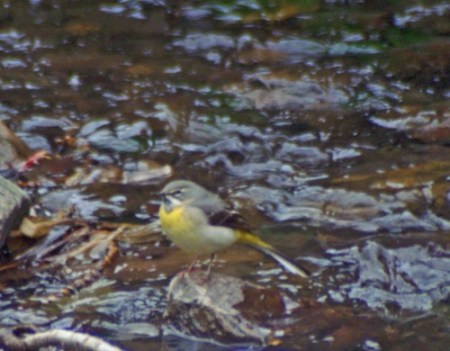
Grey Wagtail-Motacilla cinerea
The grey wagtail is similar in size, shape and to some extent, behaviour, to the pied, or white wagtail, but has an appreciably longer tail. They are very attractive little birds with upperparts that are always blue-grey and a greenish-yellow rump contrasting with whitish underparts makes it distinctive. The breeding male is a brighter yellow than the female and has a black throat that is edged by whitish moustachial stripes. I had assumed the birds were a pair and thought the one I was watching was a female, but looking at my photographs there are definite moustachial stripes and the throat area looks quite dark: not black though.

Watching the water closely for prey; the birds feed on a variety of aquatic invertebrates including adult flies, mayflies, beetles, crustacea and molluscs.
The grey wagtail’s breeding season is April to July and the nest is placed near fast running streams or rivers, naturally on an embankment between stones and roots or opportunistically on convenient man-made structures such as walls or bridges.
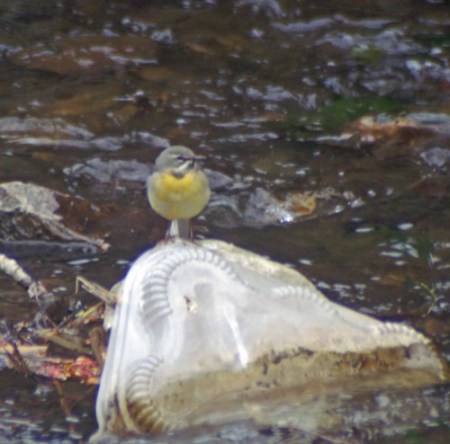
A front view of the bird perched atop an indeterminate piece of plastic

Woodpecker carved into the side of a dead tree trunk
The woodland is at the bottom end of the Old Colwyn Nature and Historical Trail and forms part of the North Wales Coastal Path. It continues up into Tan y Coed Gardens, described as ‘ a very pleasant public open space on a sloping site, consisting of deciduous and coniferous trees, lawns and a network of paths. The park extends for most of the eastern side of the valley from behind the property on Abergele Road to near the promenade’. Tan y Coed garden is regarded as a valuable part of the conservation area which it is vital to sustain. The gardens themselves have been recognized as an important habitat that holds a great deal of wildlife and are recognized for their biodiversity.’ Much of the garden space has been left in a natural state and I found the wildflowers I was hoping for growing on the banks beneath the trees.

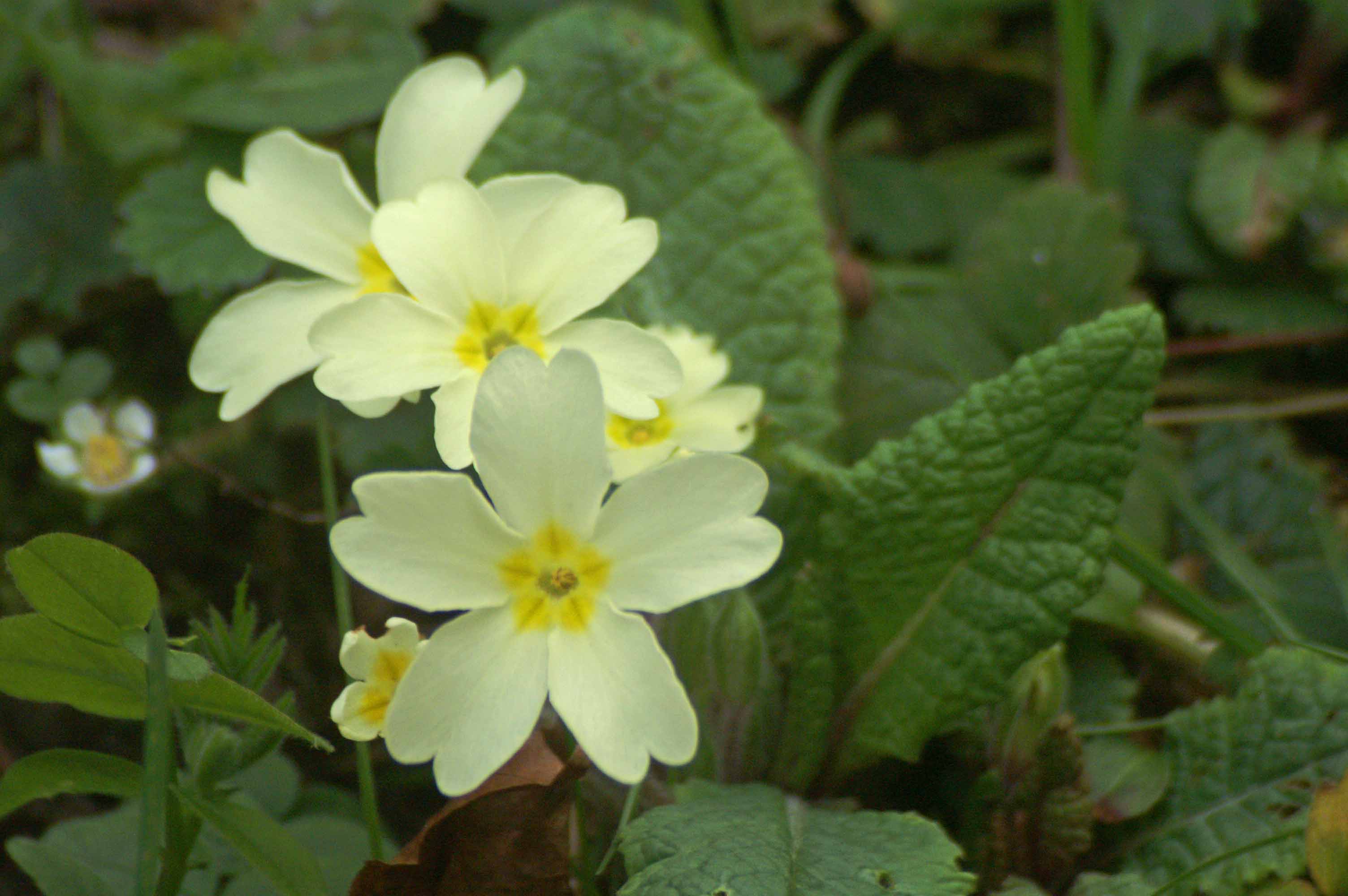
Primrose-primula vulgaris
The harbinger of spring, creamy yellow primroses are amongst the earliest and best-loved wildflowers, flowering well before the trees come into leaf. The name “Primrose” is originally from Old French primerose or Latin prima rosa, meaning “first rose”.

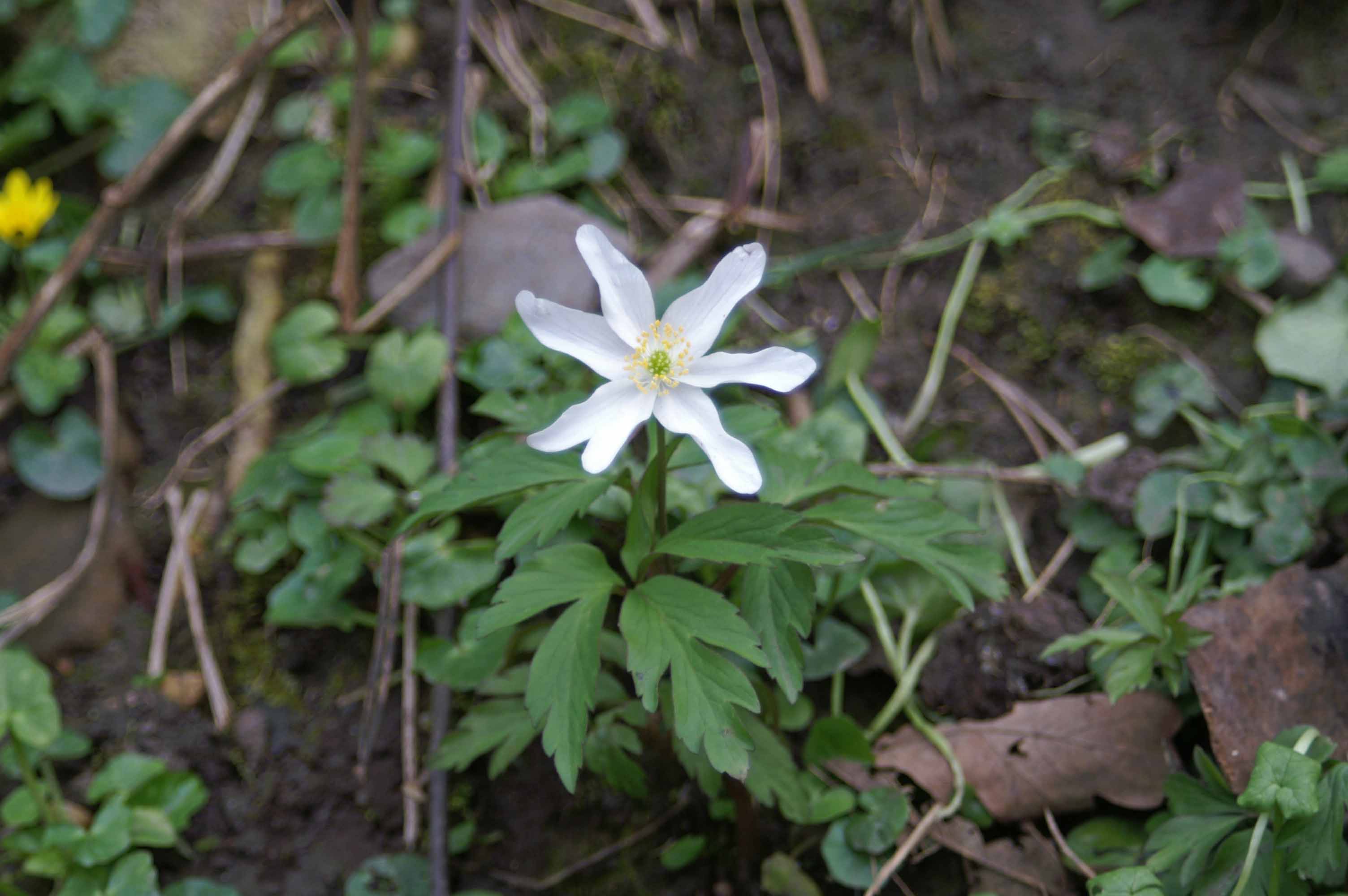
Wood anemone-Anemone nemorosa. The presence of these beautiful wildflowers is often an indicator of an old woodland
Usually appearing slightly after the primrose, the sight of the bright starry flowers of the wood anemone on a sunny spring day leaves you in no doubt that spring is truly here. However, on a dull or wet day they seem to disappear as the flowers remain closed and hang their heads, protecting their delicate and precious pollen from rain. When the sun shines again, stems straighten and the flowers are held aloft, fully open, their faces following the sun’s course across the sky.
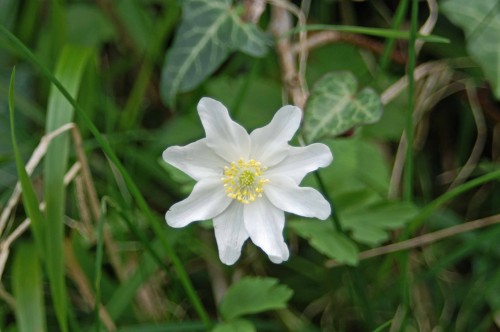
Wood anemone's are also evocatively known as 'windflowers'.

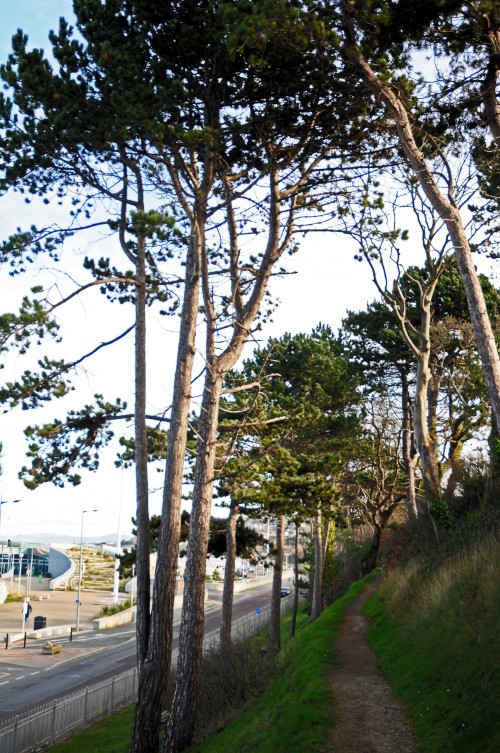
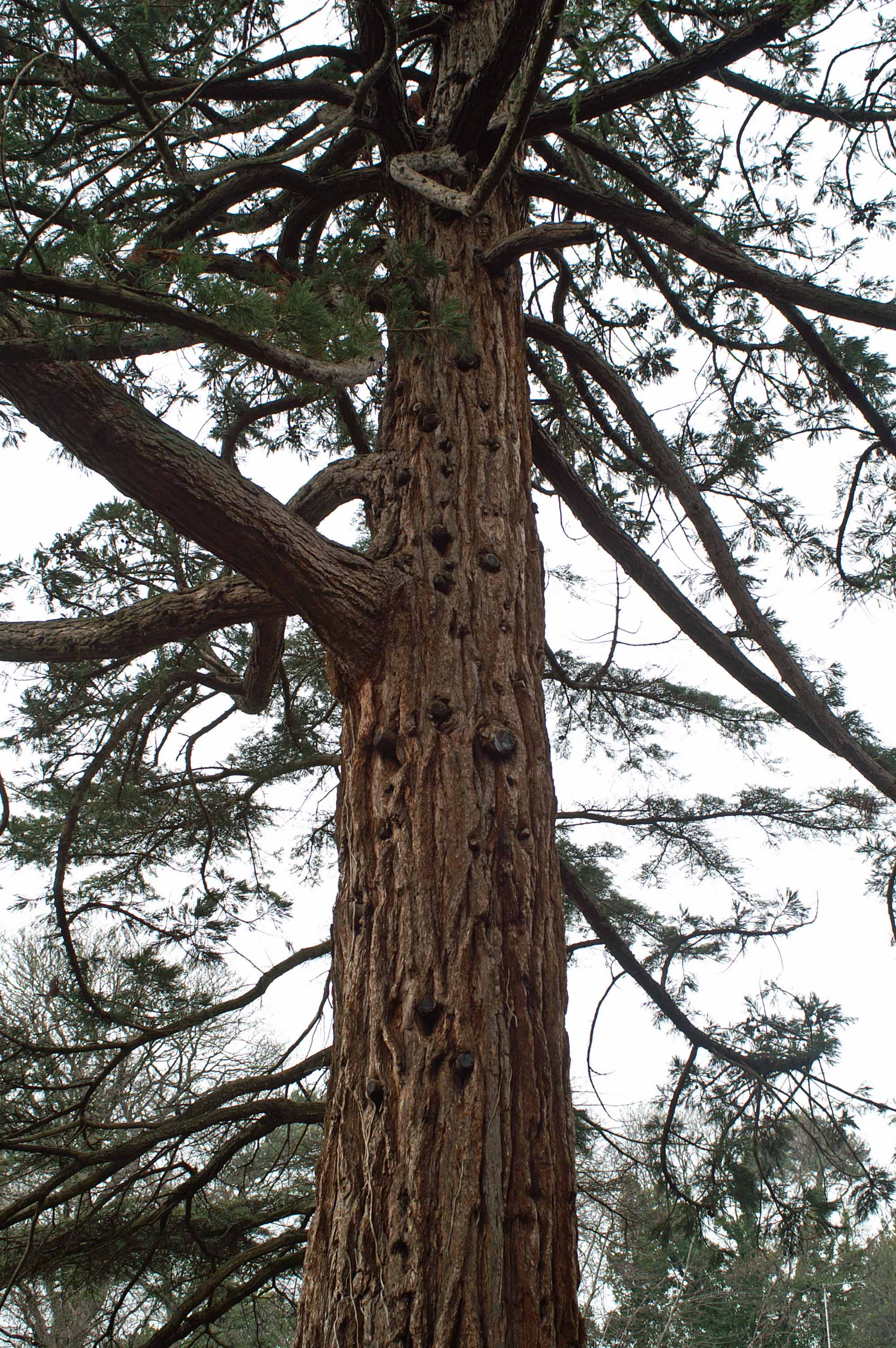
This old pine tree is magnificent, very straight and tall and has the most amazing bark

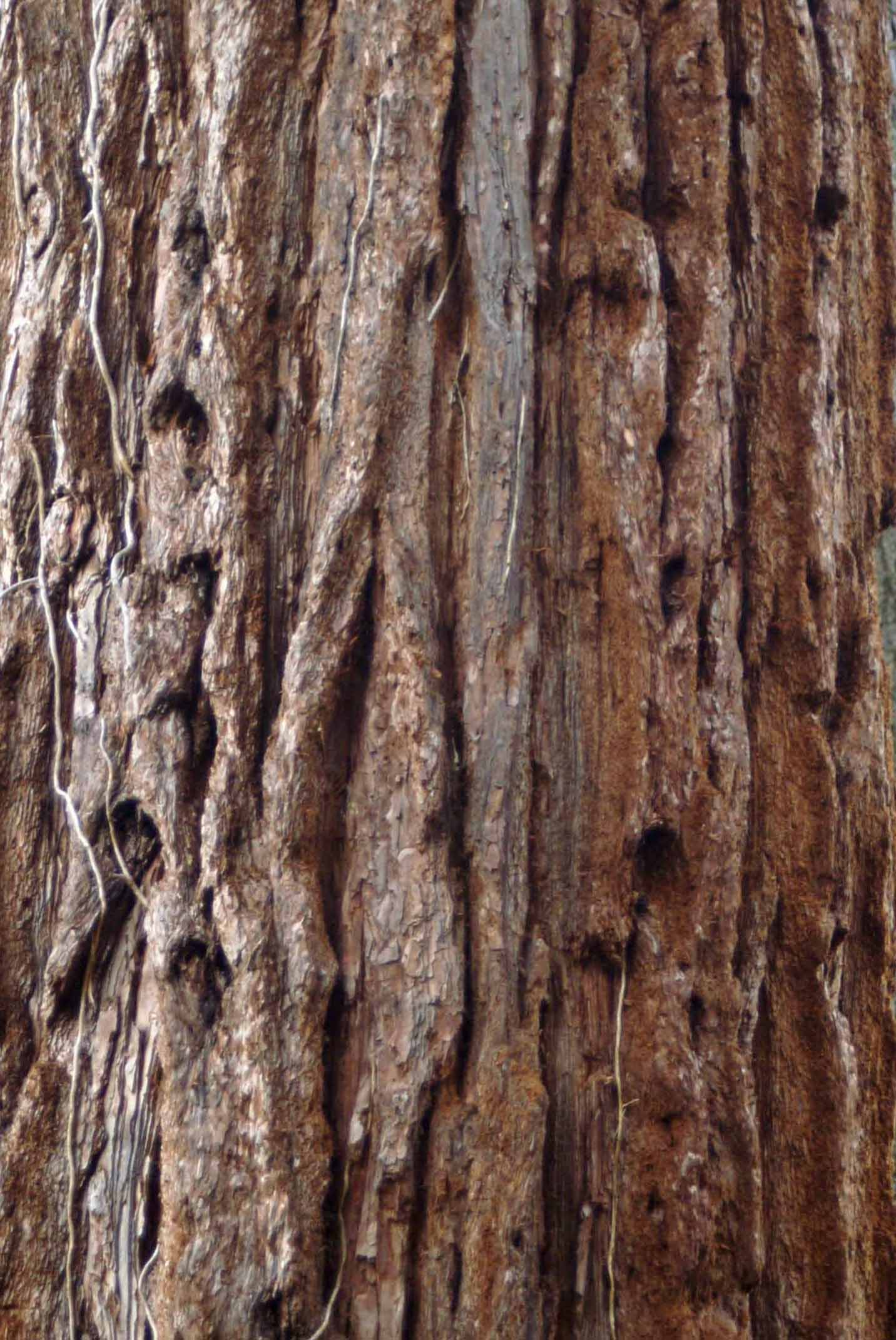
The amazingly deeply textured bark of the pine tree
A snippet of local history

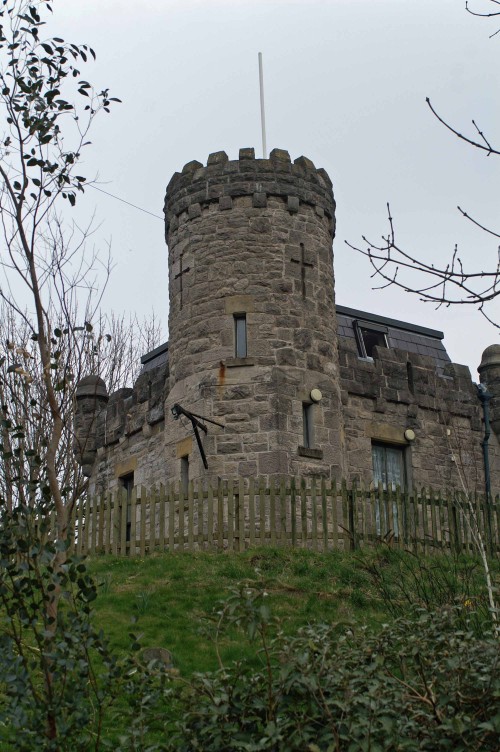
The Folly
At the top of the hill, at the Cliff Road access to the gardens, is an intriguing small castle-like building known locally as ‘The Folly”. It was built by Sir Charles Woodall, a Manchester shipping magnate who lived in the now demolished Tan-y-Coed mansion. It appears that Sir Charles had it built as a retreat so he could indulge his pipe-smoking habit which his wife wouldn’t allow him to do at home. The tower has been restored in recent years, but remains unoccupied.
On Friday, after a morning spent catching glimpses of the sunshine through the window, I just had to escape for a while at lunchtime and headed for the nearby Fairy Glen.
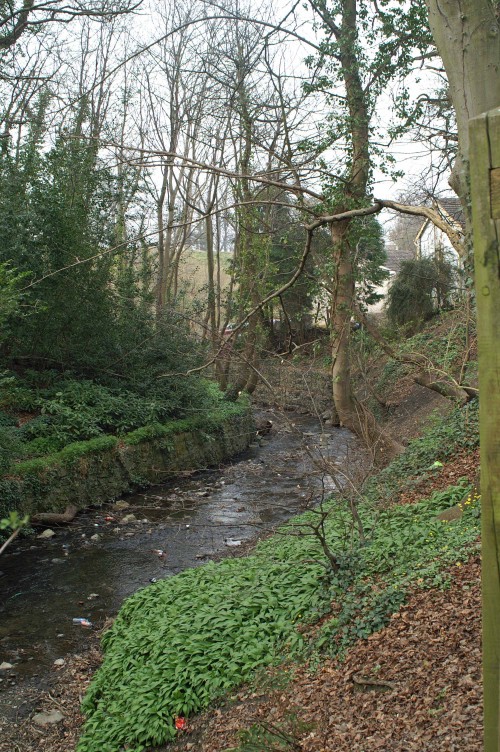
The River Colwyn flowing through Fairy Glen, Old Colwyn
The sound of the river and the birds singing were an instant tonic, and the sight of masses of golden yellow celandines interspersed here and there with blue violets was a delight to the eyes.

Masses of celandines beneath the trees
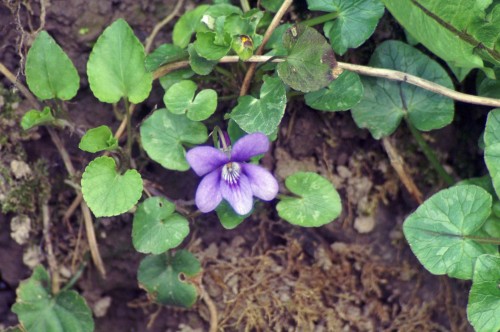
Common Dog Violet - viola riviniana
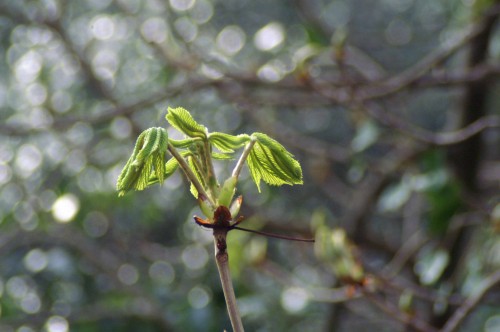
Sycamore leaves unfolding
There were birds singing all around me, but none that I could really see properly until I just caught a glimpse of movement and a flash of black and white from a tangle of shrubbery. It was not till a bird emerged and flew up into a tree that I realised it had been the tail end of a long-tailed tit that I had seen. There were at least two flitting about, but this was the best view I had; a very brief one, and the photograph was almost good – it really shows the length of the tail shame it was looking away from me.
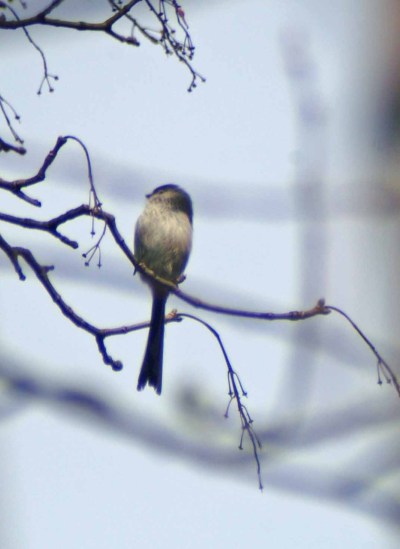
Long-tailed Tit- Aegithalos caudatus
As always I was thrilled to catch sight of the delightful little birds and to add another species to my list of birds seen in this small local nature reserve. Whilst watching the long-tailed tits I was half aware of another bird calling; it was a call I recognised but could not place until I traced it back to a bird quite high in a tree almost next to me – a nuthatch.
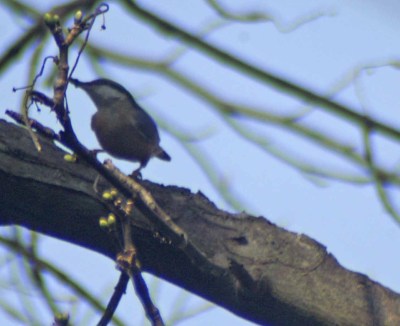
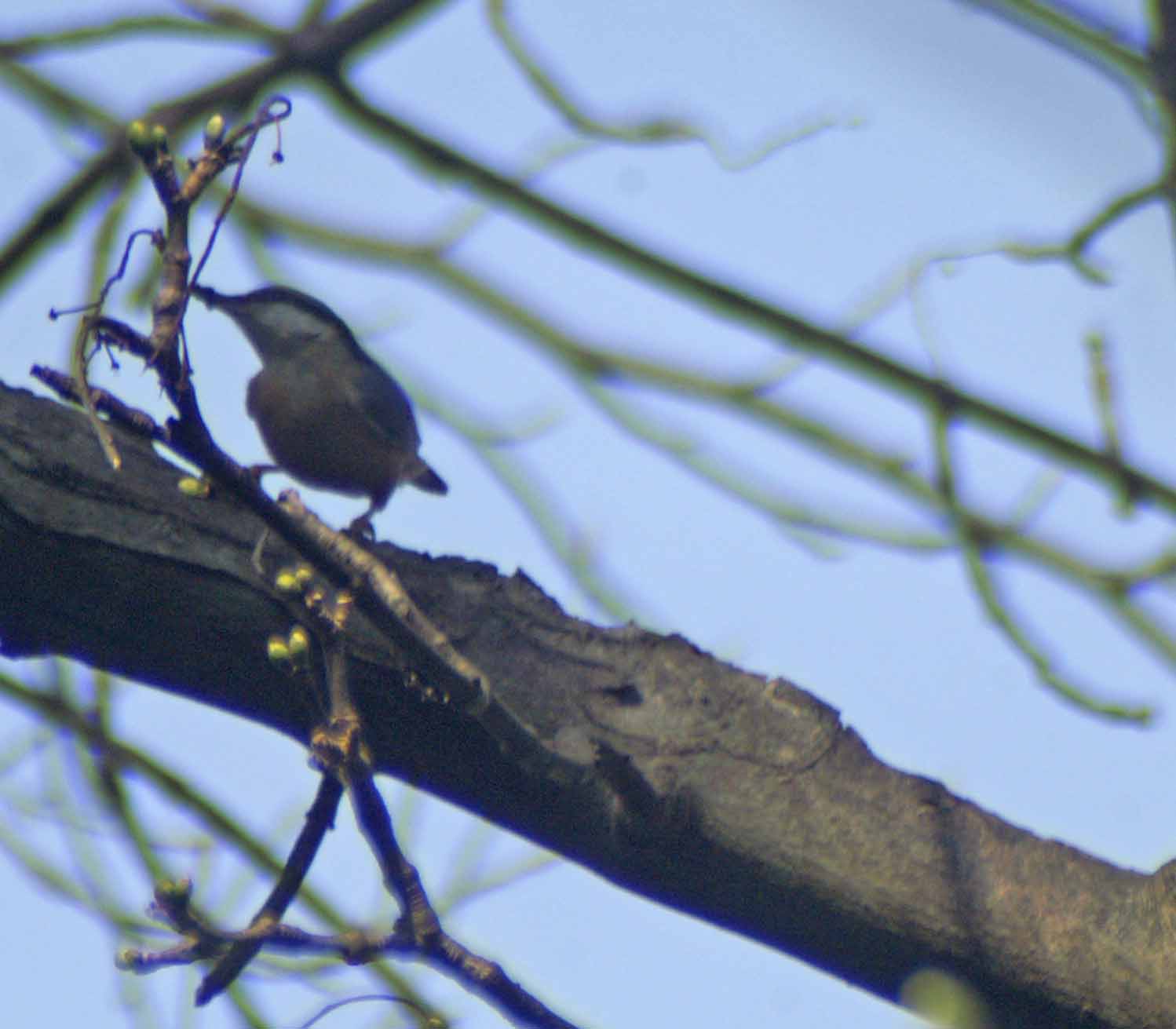
Nuthatch - Sitta europaea, with something in its beak, possibly mud
I was even happier now, with two new species for my list and things just got better; there were two nuthatch there and it quickly became apparent that they were in the process of working on a nest hole. This was located on a kind of ‘elbow’ of a branch high up on a very tall tree, a sycamore I think, and well covered with ivy. Both birds were working away in turn and occasionally small pellets of material fell to the path beneath them.

One of the nuthatch pair at the nest hole
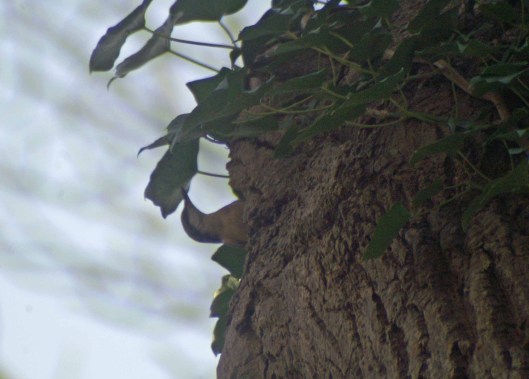
Very acrobatic birds, this one is working upside down
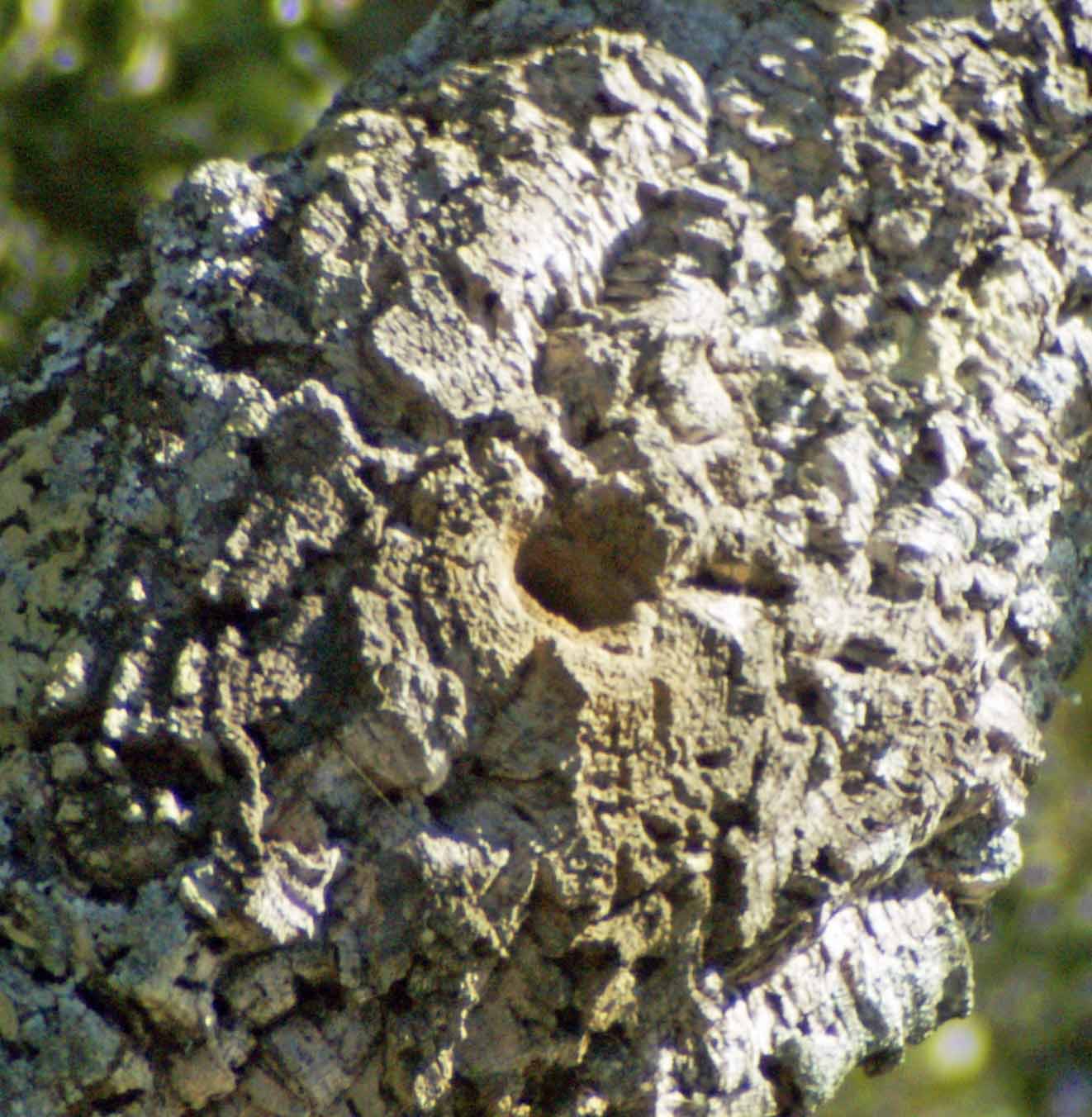
The nest hole of a nuthatch is beautifully crafted. Firstly they select a suitable hole in a tree, usually near to a source of water. The hole is then excavated and cleaned out and lined with dry grass, leaves etc. When the interior work is finished the birds then fetch mud which they mould around the entrance hole until it is the perfect size and shape for them to pass through. The best views of this process I have had were in Southern Spain on a gonhs* member’s outing to a part of the Alcornocales Natural Park known as el Picacho (March 2007).

A newly-completed nuthatch nest hole in a cork oak tree, with mud in the process of drying
We watched a pair of nuthatch finishing off their construction with mud from the nearby lagoon, went off on our walk then stopped for another look on our return a few hours later. The job was clearly completed to the satisfaction of the female as now she allowed the male to mate with her.
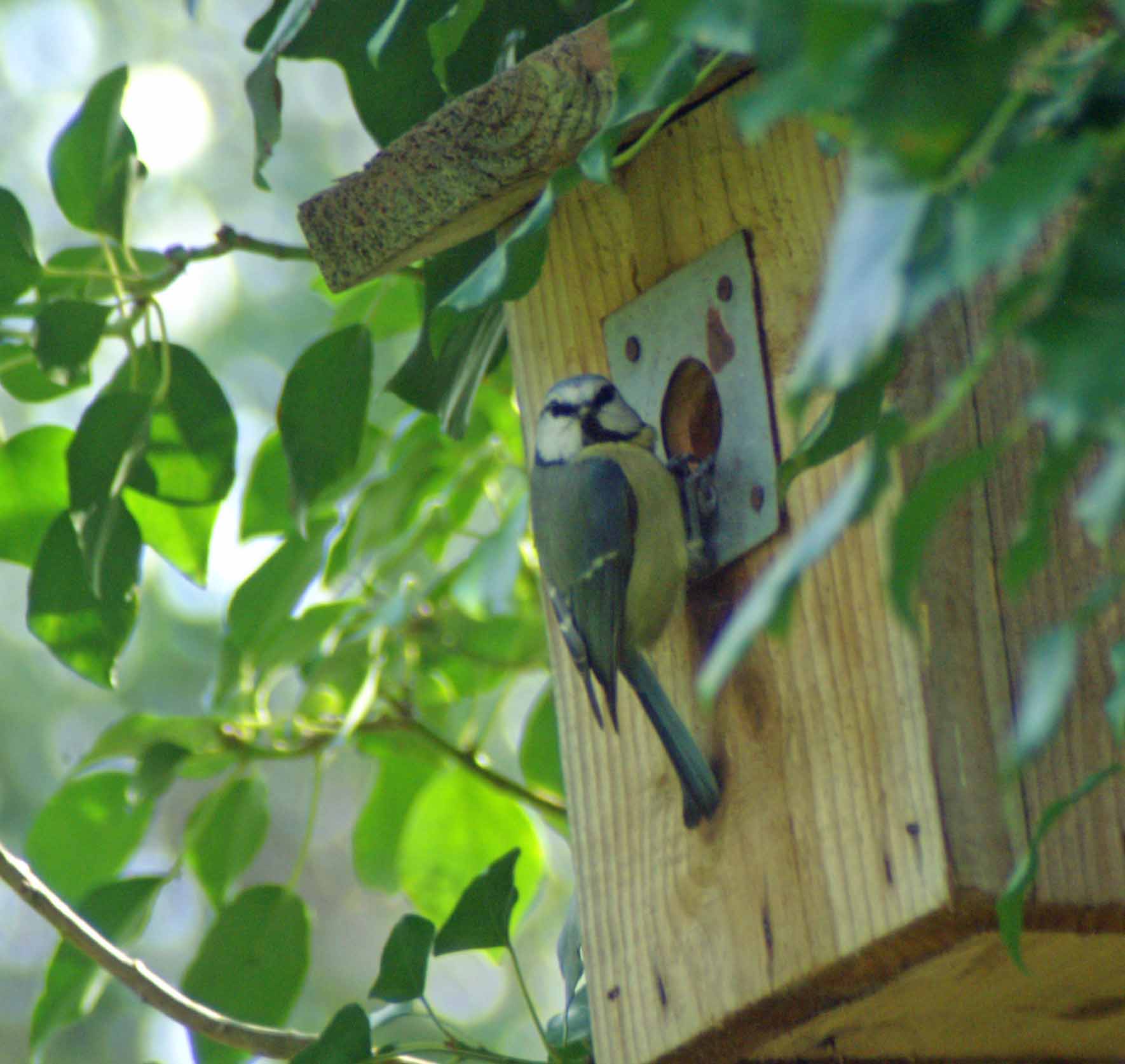
I moved from one side of the tree to the other to try to get a better view of the nuthatch, and as I did so a blue tit flew down to the nest box fastened to the same tree much lower down. Deciding I was just a nuisance rather than a threat, it went in, rummaged around a bit, threw out some rubbish then left to be replaced by its partner. So now I know the location of two nests to keep an eye on.
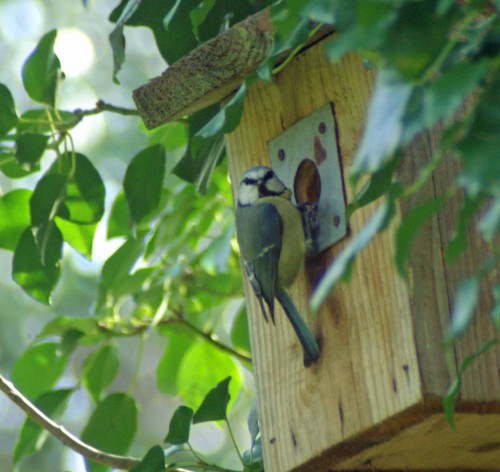
The blue tit was not happy that I was so close to the nest box

One of the blue tits throwing out the rubbish from their new home
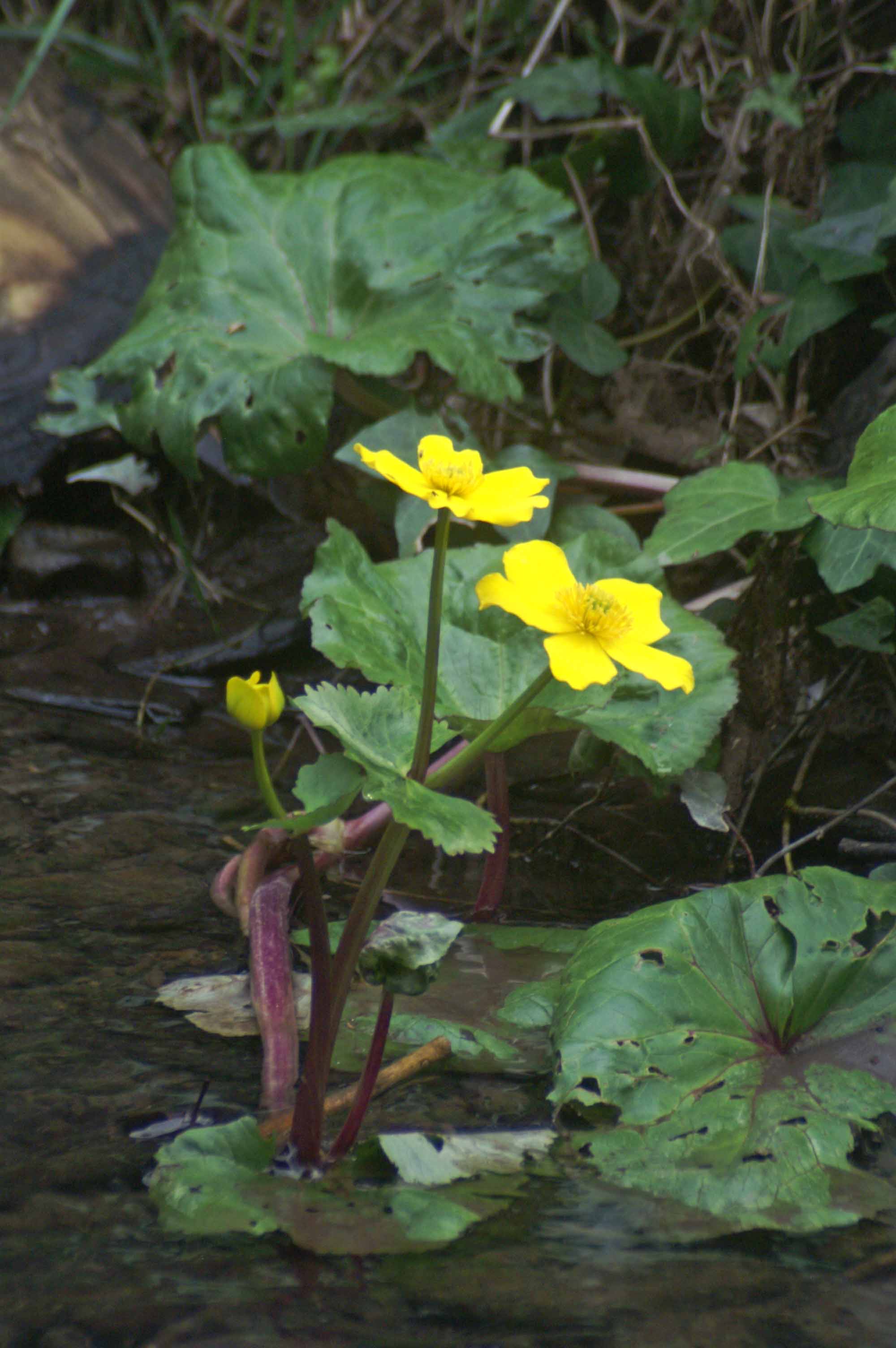
On the way back to work I made a stop to photograph these glorious golden marsh marigolds, or to me King Cups.

Marsh Marigolds- Caltha palustris, or to me King Cups, growing on the muddy river bank

In the UK, Caltha palustris is known by a variety of common names. These include Marsh Marigold and Kingcup, Mayflower, May Blobs, Mollyblobs, Pollyblobs, Horse Blob, Water Blobs, Water Bubbles, Gollins. Balfae (in Caithness) and the Publican. The common name of marigold refers to its use in churches in medieval times at Easter time as a tribute to the Virgin Mary, as in Mary gold.
I couldn’t ignore the beautifully singing Robin either
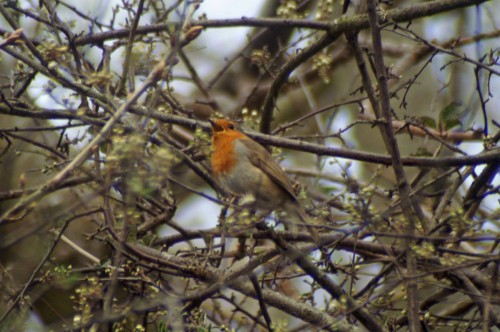
The robin was singing a few phrases then stopping to listen with his head on one side as another responded.

I heard a Wren singing and located it; it was my 'tail-less' one from the last time I was here. Looks like the tail may be growing back.
* gonhs – Gibraltar Ornithological & Natural History Society



















 everyday nature trails