• Home
  • about
  • about the photographs
  • Local Nature Reserves
    • Bryn Euryn Local Nature Reserve
    • Mynydd Marian
  • Wales Coast Path
    • Grey Seals in North Wales
    • St.Trillo’s Chapel
    • Wildflowers of North Wales Coastal Paths, Cliffs and Dunes

everyday nature trails

everyday nature trails

Tag Archives: British Orchids

Summer Orchids

16 Saturday Jul 2016

Posted by theresagreen in Bryn Euryn Nature Reserve, calcareous grassland, Nature, Nature of Wales, nature photography, wildflowers, Wildflowers of Wales, wildflowers on limestone

≈ 4 Comments

Tags

anacamptis pyramidalis, British Orchids, common spotted orchid, dactylorhiza fuchsii, Pyramidal Orchid, summer orchids, Teigeiren Brych, Teigeirian bera

June 23rd-Bryn Euryn

160605-BEFL-First Pyramidal Orchid 1

5/6/16 – Pyramidal Orchid – first sighting of 2016

I photographed my first sighting of a Pyramidal Orchid on June 5th, where it was growing through a complimentary patch of Common Rockroses. Since then they have come on apace and there are many more showing their beautiful heads amongst the long grass that fringes the summit of the Bryn.

July 3rd

Ten days later the rush of blooms had slowed and whilst there were still a good number to be found, they are more scattered and most significantly smaller than the earlier ones were.

160623-Bryn Euryn-Orchids in long grass

23/6/16-Bryn Euryn-Pyramidal Orchids in long grass
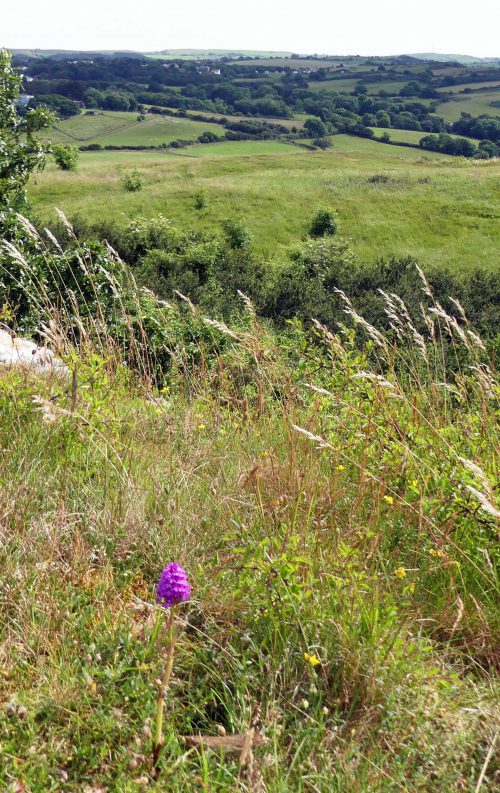
160623-Bryn Euryn-46-Pyramidal Orchid in landscape

23/6/16-Bryn Euryn-Pyramidal Orchid in the wider landscape

Pyramidal Orchid– Anacampsis pyramidalis; Welsh – Teigeirian bera

This orchid may be found flowering from early June through to early August, but here it is definitely at its peak now and flowering abundantly.

In general, the Pyramidal Orchid is found on grassland, usually on lime or chalk, but also on dunes. It is locally common in most of Britain, but rare in Scotland.
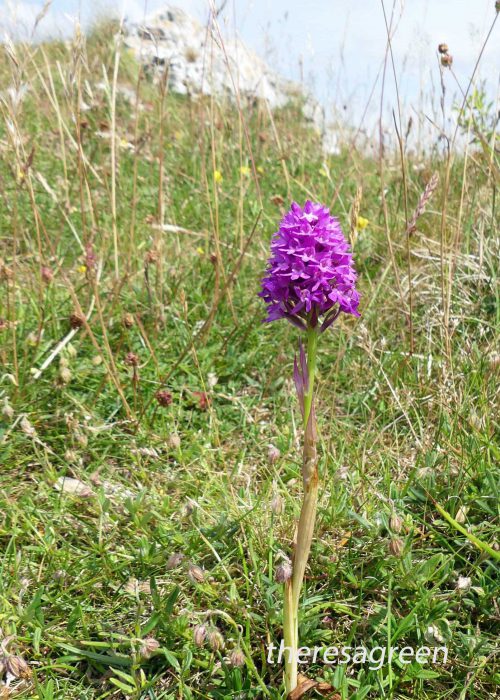
 

23/6/16-Pyramidal Orchid-Bryn Euryn

23/6/16-Pyramidal Orchid-Bryn Euryn

160623-Bryn Euryn-55-Pyramidal Orchid

Pyramidal Orchid

The plant is so-named for the shape of the flowerhead: a workaday name for such an exotic-looking bloom I think, although it does help to distinguish it from the Fragrant Orchid, with which it may be confused.

The plant’s success and abundance may be due to its relationship with insects. Each flower has a long thread-like spur that holds a generous supply of nectar that attracts day and night flying butterflies and moths. When the nectar is accessed, modified stamens stick to the tongue of the insect that straighten during the insect’s flight and are then pushed directly onto the stigma of the next flower visited. This results in viable seeds being produced in 95% of the flowers.

Crossing the hill’s summit and walking through the ‘downland’ area, more Orchids are blooming prolifically, these being Common Spotted Orchids.

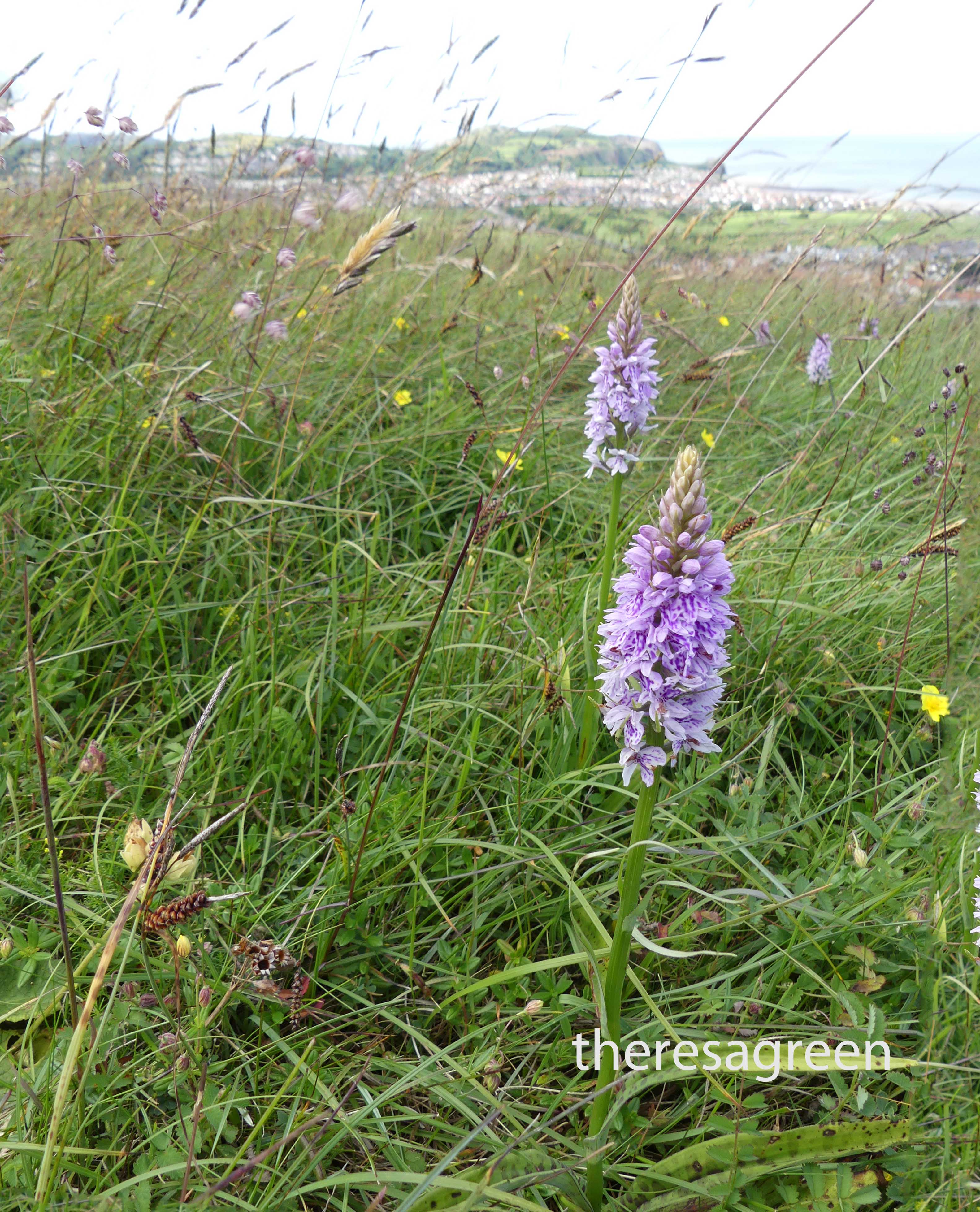
160623-46-Orchids in long grass among young trees

Common Spotted Orchids -Bryn Euryn-Little Orme in background
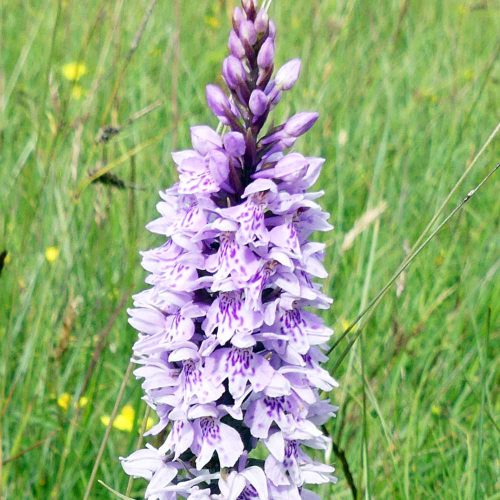
Common Spotted Orchids -Bryn Euryn-Little Orme in background

160623-55-Common Spotted Orchid 1

Flower spikes of plants on Bryn Euryn vary in colour. Most are this lilac-purple colour, others are white with a few in shades between.

Common Spotted Orchid Dactylorhiza fuchsii; Welsh Teigeiren Brych

The flowers vary from white to pale or dark purple and are patterned with dots or small blotches of a darker purple.

The leaves are narrow and usually dark-spotted.


160703-Bryn Euryn-Common Spotted Orchid

3/7/16-Bryn Euryn-Common Spotted Orchid in long grass amidst Common Rockrose


Share this:

  • Click to share on Facebook (Opens in new window) Facebook
  • Click to share on Pinterest (Opens in new window) Pinterest
  • Click to share on X (Opens in new window) X
Like Loading...
Follow everyday nature trails on WordPress.com

Enter your email address to follow this blog and receive notifications of new posts by email.

‘But it is the common species that keep the living world ticking over and provide most of our experiences of wildlife, and I would argue that maintaining the abundance of these is as important a conservation priority as maintaining the existence of rarities’. Richard Mabey

MOST RECENT POSTS

  • A Glimpse of Spring to Come January 22, 2025
  • Hunting the Wren December 28, 2024
  • Oh, Christmas Tree December 18, 2024
  • In and Out of the Ivy February 15, 2024
  • Nature’s Fireworks November 30, 2023
  • Wild Autumn along the Coast Path November 3, 2023

OLDER POSTS

LOOKING FOR SOMETHING IN PARTICULAR?

  • The Foxglove - of Fairytales, Myths & Medicine
    The Foxglove - of Fairytales, Myths & Medicine
  • Pretty prickly Thistles
    Pretty prickly Thistles
  • Willsbridge Mill, Bristol
    Willsbridge Mill, Bristol
  • Everyday Birds - The Blue Tit
    Everyday Birds - The Blue Tit
  • Following a river to a Fairy Glen
    Following a river to a Fairy Glen
  • Fine Dining for Crows
    Fine Dining for Crows
  • Catchers, a Duck and Divers
    Catchers, a Duck and Divers
  • Wild and Windy on West Shore
    Wild and Windy on West Shore
  • Of Gorse, Furze or Whin
    Of Gorse, Furze or Whin
  • Wildflowers of North Wales Coastal Paths, Cliffs and Dunes
    Wildflowers of North Wales Coastal Paths, Cliffs and Dunes

nightingale trails

The Walk of the Monarch Butterfly-Sendero de la Mariposa Monarca

The Walk of the Monarch Butterfly-Sendero de la Mariposa Monarca

MY WILDFLOWER BLOG: where the wildflowers are

Snowdrop

Snowdrop

most recent posts

Follow everyday nature trails on WordPress.com

Social

  • View teresamaygreen’s profile on Twitter

Enter your email address to follow this blog and receive notifications of new posts by email.

Website Built with WordPress.com.

  • Subscribe Subscribed
    • everyday nature trails
    • Join 359 other subscribers
    • Already have a WordPress.com account? Log in now.
    • everyday nature trails
    • Subscribe Subscribed
    • Sign up
    • Log in
    • Report this content
    • View site in Reader
    • Manage subscriptions
    • Collapse this bar
 

Loading Comments...
 

    %d