• Home
  • about
  • about the photographs
  • Local Nature Reserves
    • Bryn Euryn Local Nature Reserve
    • Mynydd Marian
  • Wales Coast Path
    • Grey Seals in North Wales
    • St.Trillo’s Chapel
    • Wildflowers of North Wales Coastal Paths, Cliffs and Dunes

everyday nature trails

everyday nature trails

Tag Archives: berries

Nature’s Fireworks

30 Thursday Nov 2023

Posted by theresagreen in Autumn Walks, Nature of Wales, Trees

≈ 1 Comment

Tags

autumn colour, berries, colourful leaves, November, rhos-on-sea, Trees

Autumn is well underway now and it’s one of my favourite times of the year to amble around the roads and streets close to home in Rhos on Sea, which thanks to gardeners over many decades, are graced with a rich and varied collection of species of trees and shrubs worthy of any arboretum. Ignited into fiery autumnal colours, many, although not all of the most colourful specimens hail from far-distant corners of the world; but whatever their origins, all are united in presenting a spectacular natural firework display.

Road lined with gold
fallen leaves of mostly beech and sycamore

Stars of ivy berries burst forth from the depths of dark evergreen leaves. As yet the berries of most plants are small and green, it will be a while before they’ll be ripe enough to feed hungry birds. Surprisingly wasps are still active. Constant streams of them were zooming in and out of this nest in a wall, hidden behind the thick vines of an old ivy plant.

There are several big old copper beech trees on my trail, this one, close to the edge of a garden, overhanging its boundary and the pavement is a lovely shape, has dense foliage and is beautiful all year round.
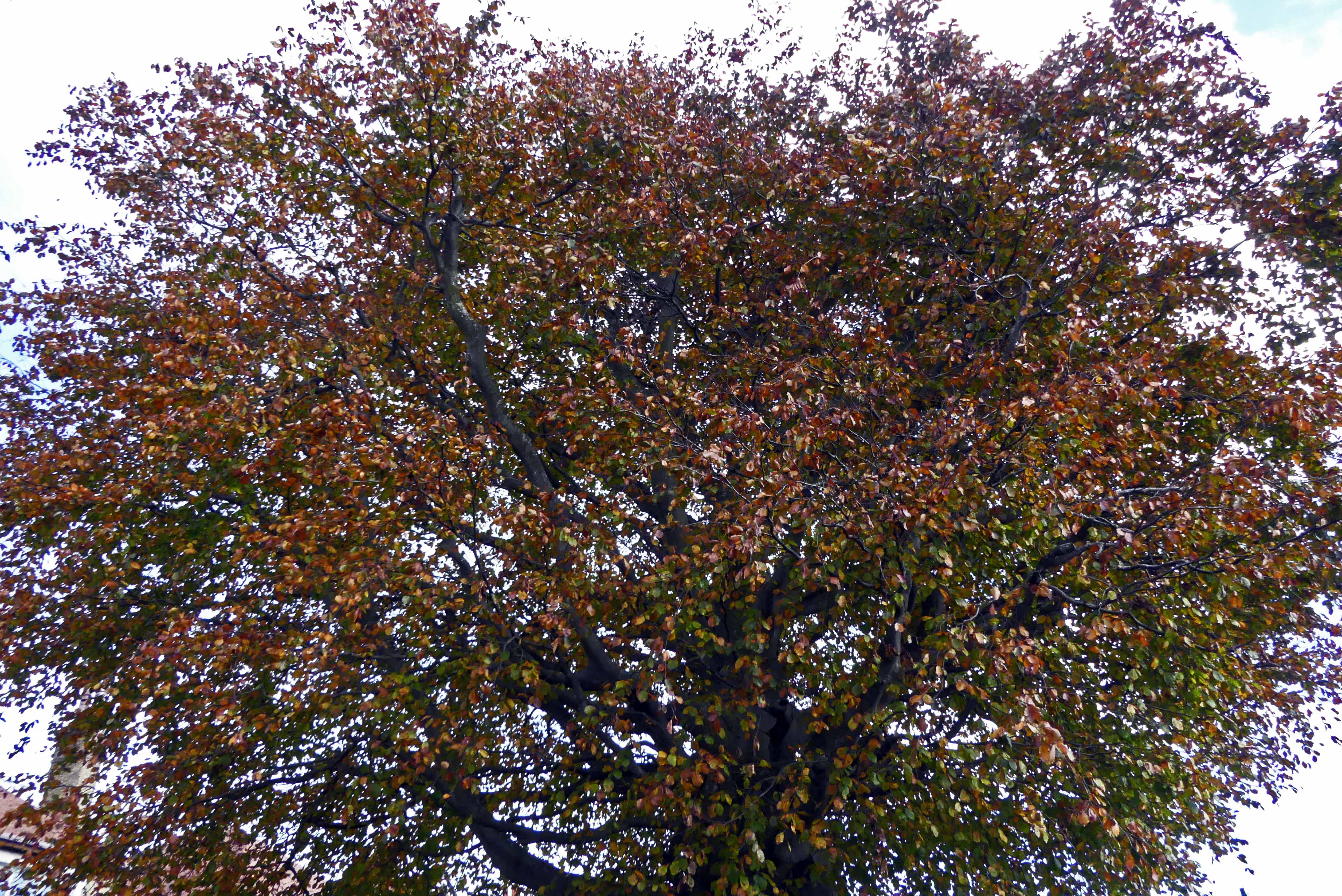
fallen leaves from copper beech

A pathway, dark and shady for much of the year is temporarily illuminated by the bright golden leaves of Japanese maples planted along either side.

bright golden leaves and red stems of a glorious Japanese maple

Further along, a Cappadocian maple rebels against the tight constraints of a neatly kept front garden, strewing its leaves with abandon onto the tightly-clipped hedge that confines it and the pavement below.
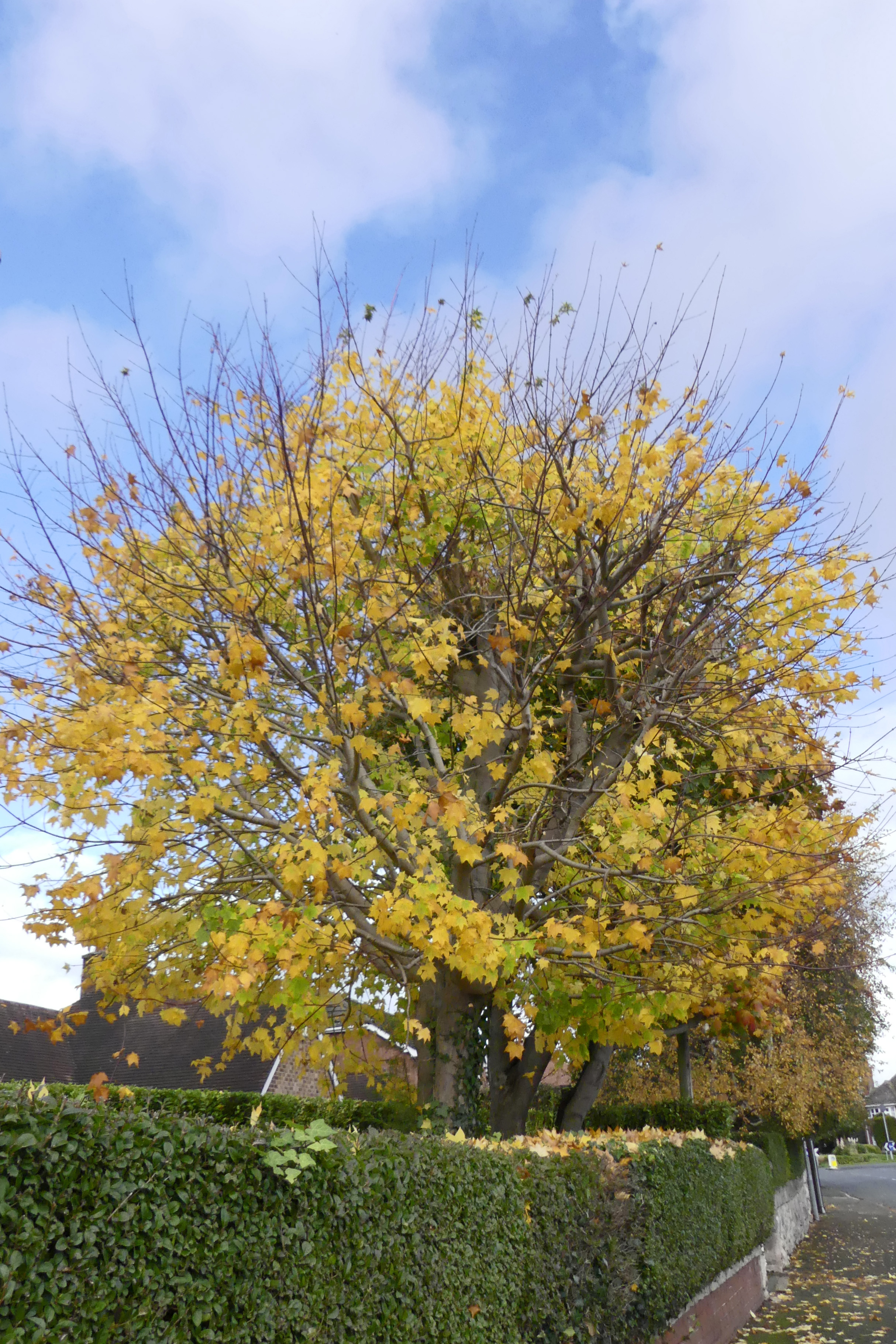
leaves of the Cappadocian maple turn butter-yellow in the autumn

The woodland of Bryn Euryn, which is largely made up of native trees, provides a dark background against which the more ‘exotic’ ones in the gardens along this road are shown off to great advantage.

In the foreground a curtain of golden leaves cascades from a line of silver birch trees

Between the larger trees are hedges and shrubs full of jewel-bright berries, it seems to be a particularly good year for holly, but no doubt most of them will have been eaten by Christmas.

Silver holly with a heavy crop of berries
plump rose hips

A variant of the Cappadocian maple, this tree has leaves that show shades of pink in autumn

and nearby, this Norway maple displays shades varying from dark red-purple to shades of orange and gold.

A week or so ago, before being blasted by high winds, this huge red oak tree was covered with leaves. The red oak has beautiful big leaves which do turn dark red in its native habitats of eastern North America, but here in the UK they more often go a warm bronze-brown.
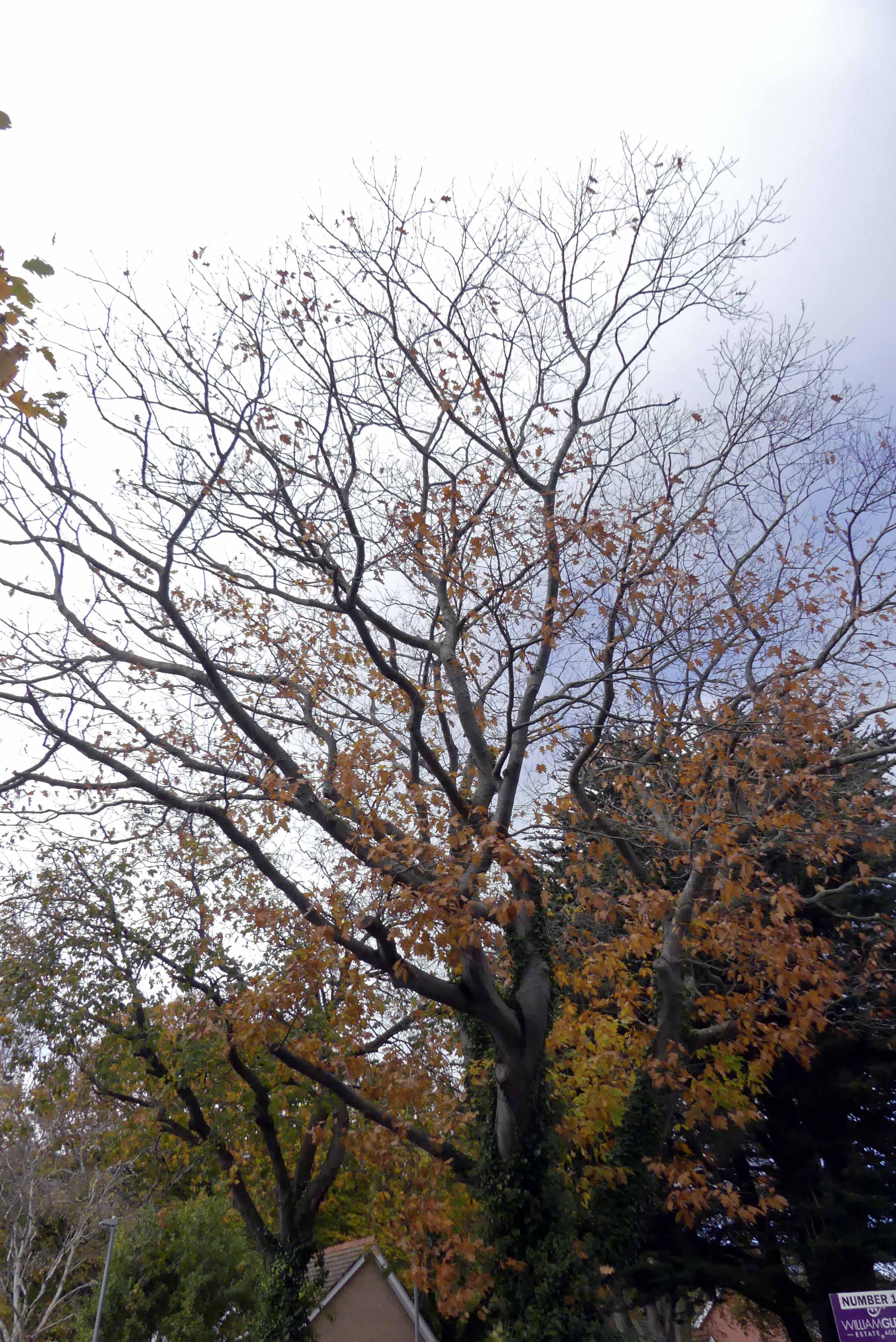
leaves of the Red Oak – Quercus rubra can reach 20cm in length

In the gutter below the oak, some of its fallen leaves have gathered with others of copper beech, silver birch and a solitary still-shiny chestnut. The conker is from a red horse chestnut close by which only ever seems to produce a few flowerheads each year, few of which manage to develop into fruits. Hunting along the gutter I found a fallen leaf from it and the husk for the conker. The leaves are similar to those of the horse chestnut, but have a more crumpled appearance and are slightly glossy. The husks are more oval in shape and have few, if any, spines.

leaf, chestnut and husk fallen from a Red Horse Chestut – Aesculus x carnea

From a distance a nearby horse chestnut, which was quite severely pruned last winter, looks to have turned nicely golden. However, a closer look at the leaves shows that as with all other horse chestnuts in our area, it is afflicted with an infestation of ‘leaf blotch’, caused by the horse chestnut leaf miner, (part of the life cycle of the moth Cameraria ohridella), which causes patches on the leaves to go brown in July and early August. Bad infestations cause the leaves to become dry, brittle and brown and eventually they will curl and drop off early. Whilst not looking pretty, it doesn’t kill the trees, although it is thought that over time it may weaken trees and make them more vulnerable to other diseases.
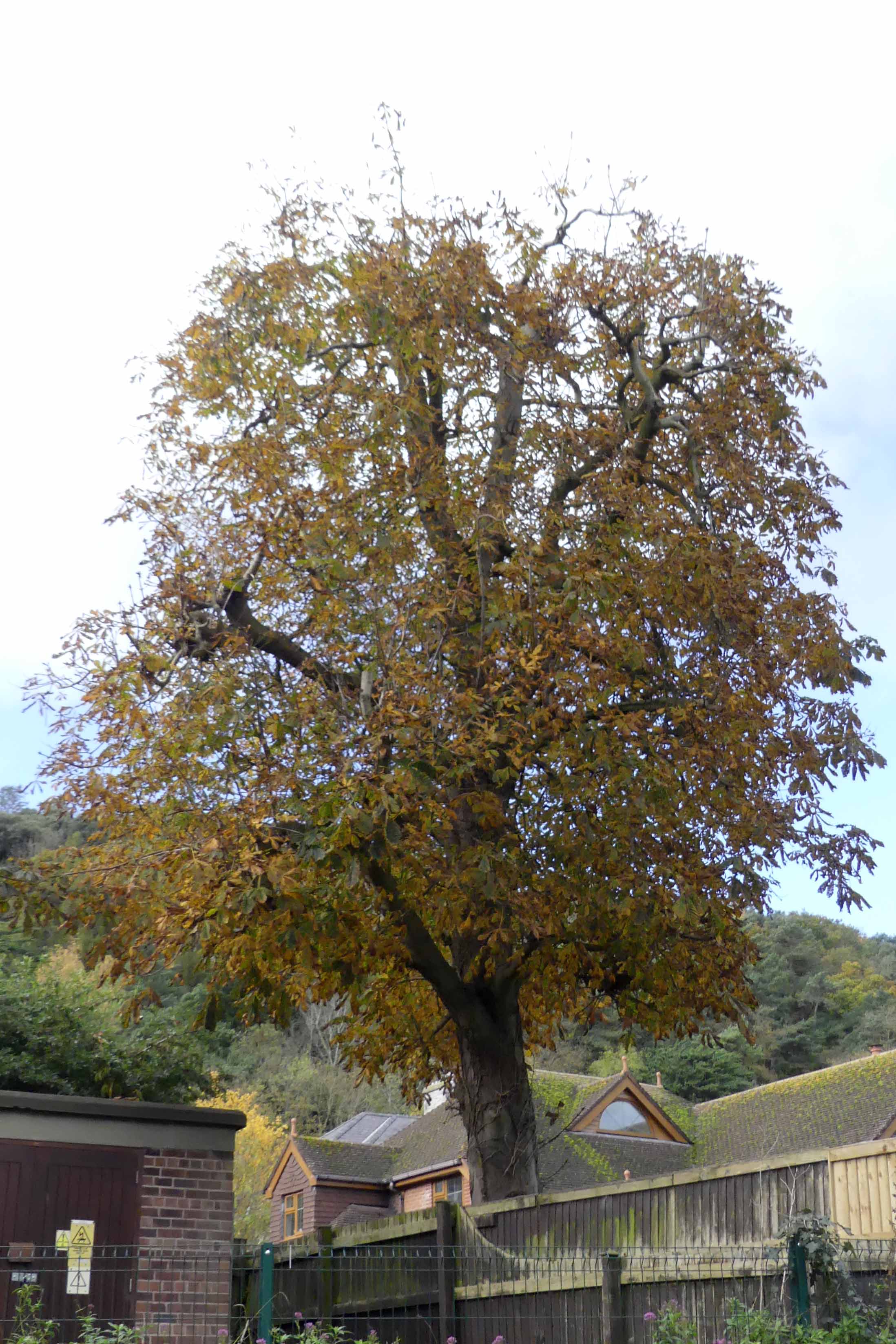
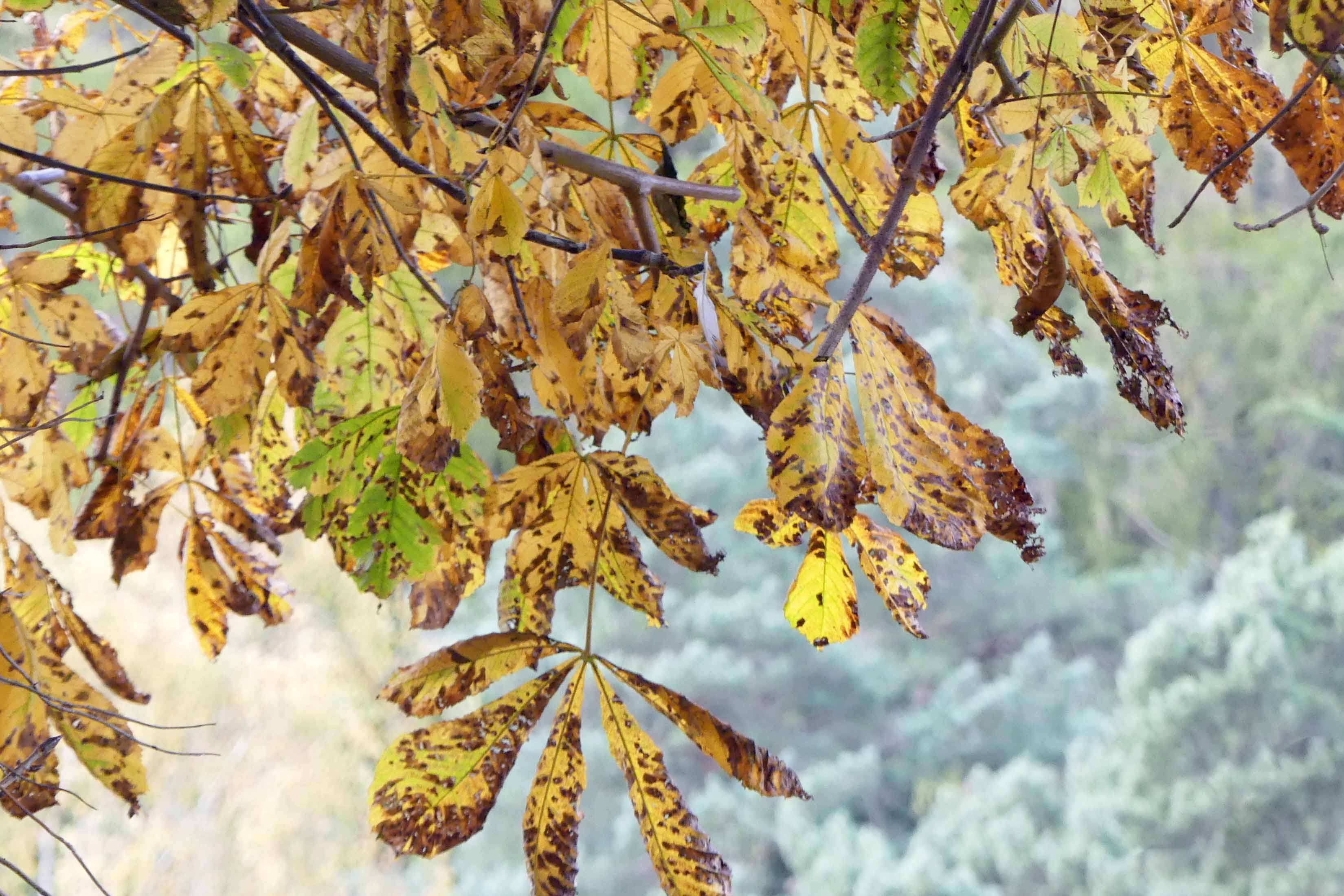
Horse Chestnut leaves afflicted with leaf blotch

A small flock of Jackdaws had been flying around restlessly, calling noisily to one another, for much of the time I was out, then settled for a while in the tops of some silver birches.

In a narrow roadside garden there are two rowan trees. One is a the common species, which has red berries, while the other has a more unusual crop of yellow berries. I find it fascinating that every single last red berry was long ago eaten by birds, but the heavy crop of yellow ones has not been touched.

Rowan with a heavy crop of yellow berries

In the same garden the lovely scarlet red flowers of the Japanese quince Chaenomeles japonica have developed into fruits. Although mainly grown as an ornamental, it seems a shame that these fruits are never picked and used. Although not in the same league as the much larger edible quince, Cydonia oblonga, they can be cooked and eaten and if used for nothing else, they are deliciously fragrant when placed in a bowl in a warm room.
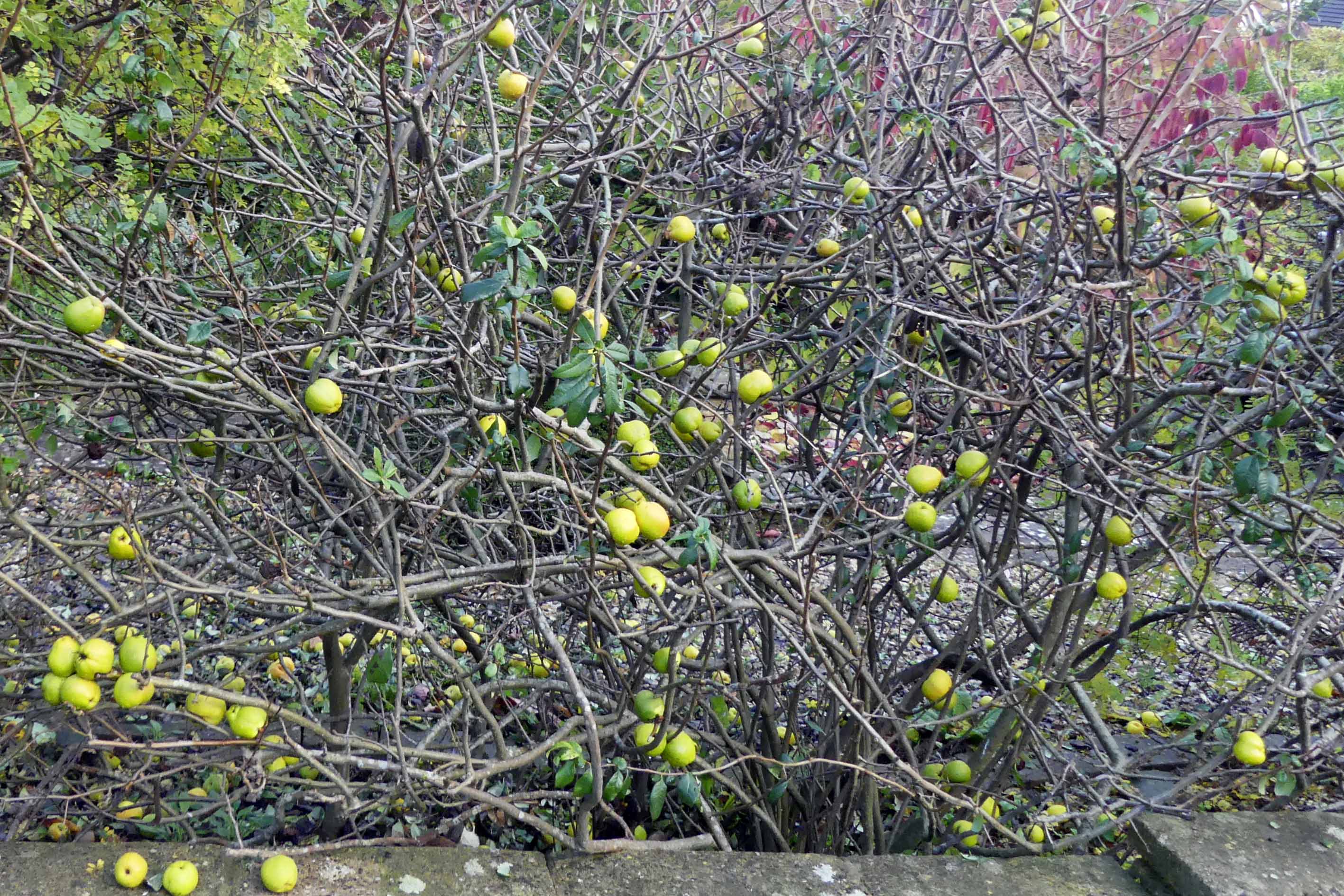
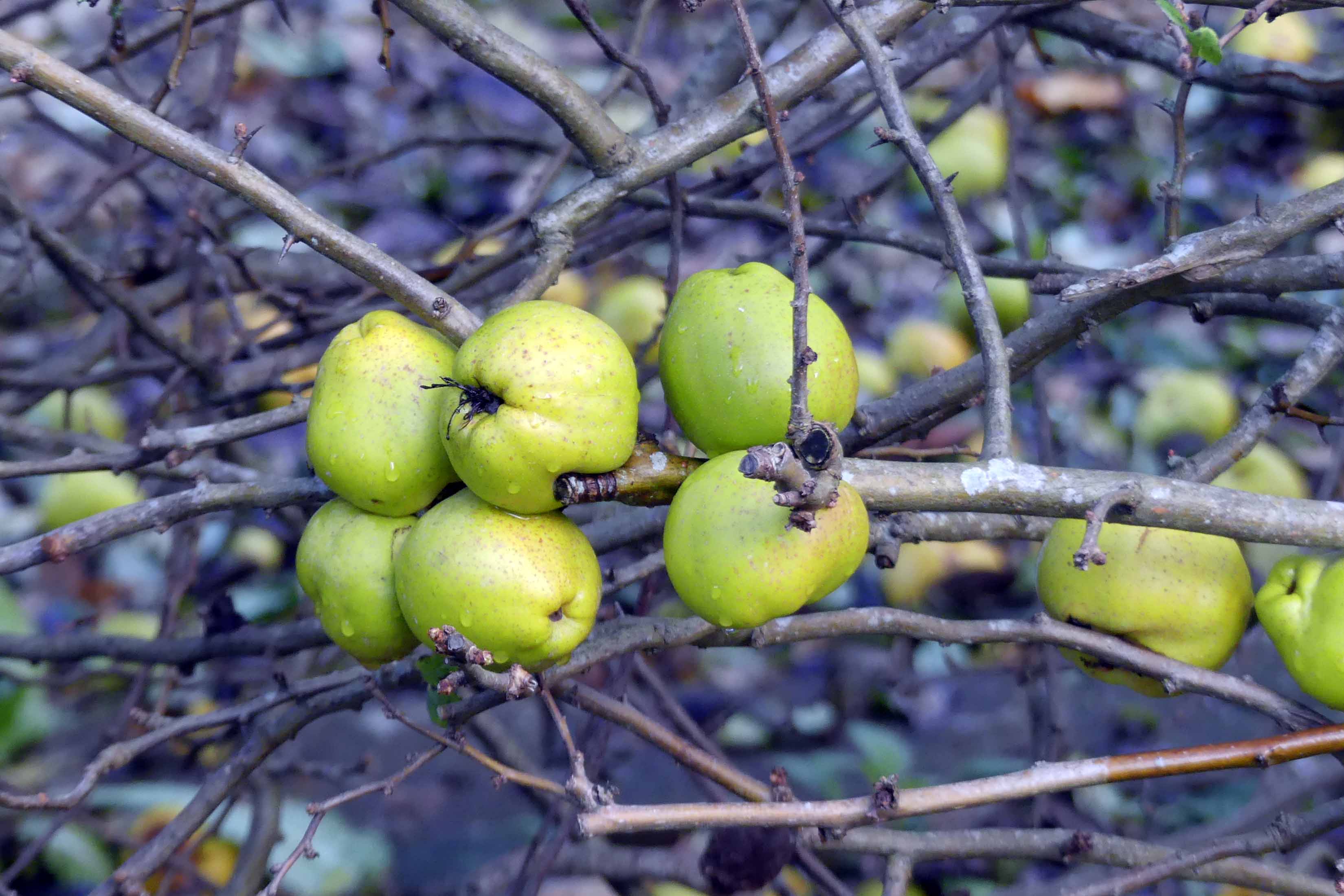
fruits of Japanese Quince Japonica chaenomeles

Bearing a profusion of dark pink blossoms in the spring, this Japanese cherry tree is now vibrant with all shades of yellows, oranges and reds. Although its double flowers are not good for our pollinators, there’s no disputing it’s a beautiful tree.

Leaves of Japanese cherry

There are still flowers blooming and some, such as hydrangeas and the ice plant will stay colourful for some time after their flowers have finished.

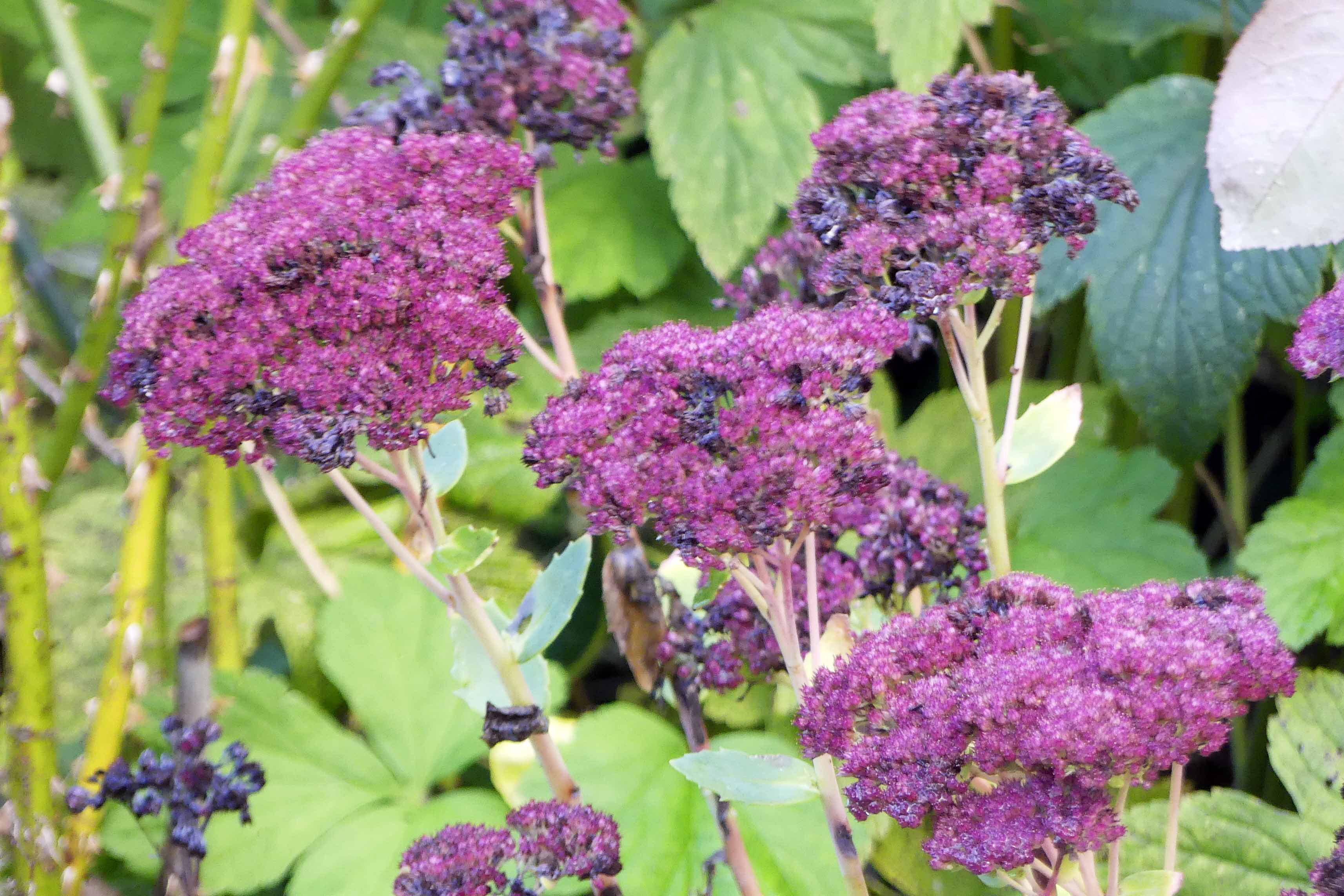
Ever-graceful, silver birches are lovely all year, but clothed in their softly golden autumnal yellow they glowed against today’s blue sky and here lent perfect contrast to the dark red of the cherry plums beside them.

To finish, I have to mention two shrubs, both once valued and sought-after as prized ornamentals, but both great escapers and now so commonly found in the wild they are included in many wildflower ID guides. Along my route there are a good few self-sown plants of both of these species, both bearing very different fruits. The first is the Snowberry Symphoricarpos albus, with its unmistakable white berries

and the other is the Himalayan honeysuckle Leycesteria formosa, which I think has some of the most lucious-looking fruits of all garden plants.

Share this:

  • Click to share on Facebook (Opens in new window) Facebook
  • Click to share on Pinterest (Opens in new window) Pinterest
  • Click to share on X (Opens in new window) X
Like Loading...

Squirrelling Away……

23 Sunday Oct 2022

Posted by theresagreen in Nature of Wales

≈ Leave a comment

Tags

acorns, autumn, berries, caching, grey squirrel, horse chestnuts, mast year, October

Here in our corner of North Wales we are enjoying a gloriously colourful and particularly bountiful autumn. This year is another ‘mast year’; a natural phenomenon, still not completely understood, where some tree species produce very large crops of seeds in some years, compared to very few seeds in others. In the UK the last mast year was as recent as 2020, when oak trees across the whole country produced thousands of acorns. This year it’s an unusually big one; you might have noticed exceptional amounts of hawthorn, holly, rowan berries and sloes too, I certainly have, but more about that in my next post.

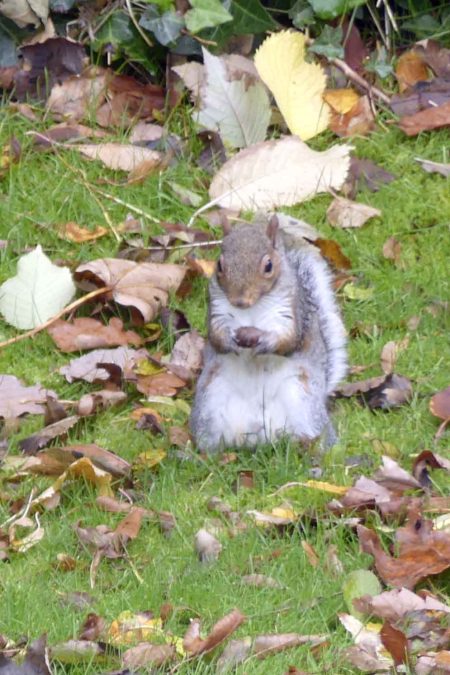
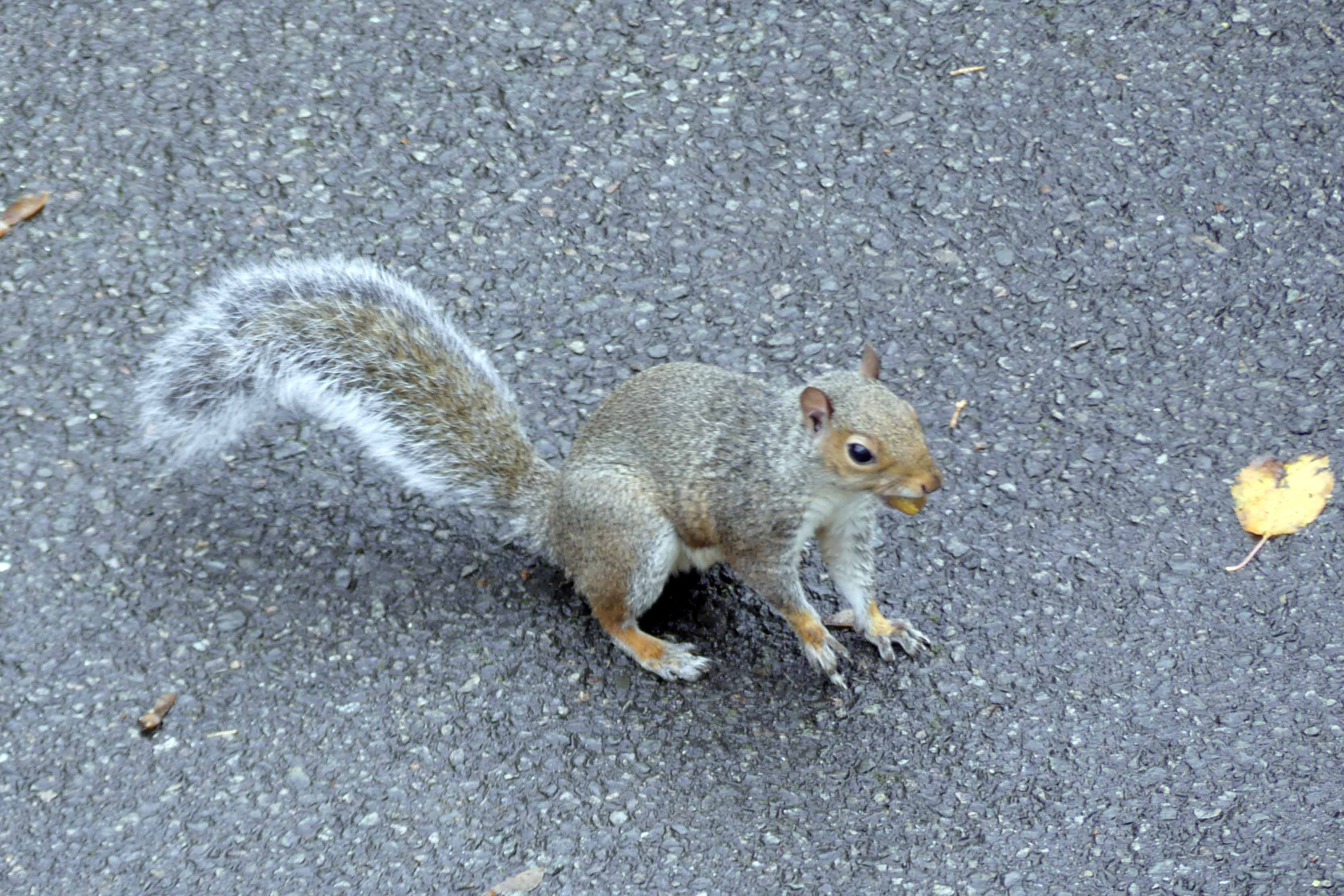
Over a few recent days, from my front windows, I’ve noticed a lot of grey squirrel activity taking place on the lawn in the grounds of the flats where I live. Now to put it politely, I’m not generally known to be a fan of grey squirrels, for many reasons and in our locality, it often seems we have more than our fair share. Having said that, at this time of year it would take someone with a much harder heart than mine to not enjoy watching the annual ritual of them scurrying around, nose to the ground, teeth clenched around precious treasure, searching for a spot in which to bury it. Here, where sessile oak trees abound, it’s most often an acorn, but unusually at the moment, I’ve spotted them with much meatier horse chestnuts. This is interesting as there are very few horse chestnut trees nearby, and those I know of rarely produce more than a few fruits each year. The nearest one I can just see the top of from my window is probably about 30 metres away behind other trees. Perhaps this year it too has produced more chestnuts than usual. 

A moment of indecision – where to go to bury this acorn?

Grey squirrels are well-renowned for their intelligence and resourcefulness and are notorious as opportunistic and resourceful garden bird-feeder raiders, so perhaps it’s not surprising to learn that when it comes to finding and then burying nuts, an apparently simple process, there is much more to it than first meets the eye. When it comes to selecting food for their larders, squirrels are picky; each and every nut making it to their larder will have undergone rigorous quality control. When a potentially good one is found, it is picked up and held in a paw to be scrupulously examined and assessed on its potential for long-term storage. Before burying the appearance is scrutinised carefully – there must be no visible signs of damage or infection. The weight is also crucial, a well-chosen nut will feel firm and heavy, a lighter one may be under-developed or occupied and partially eaten by a boring insect. Only those nuts passing all tests will be buried to keep fresh for future consumption.

A grey squirrel giving a horse chestnut the once-over before placing it in the ground

Once a burial spot has been chosen, the squirrel uses its front paws to dig a hole 2.5-5cm deep, then drops in the nut, ramming it in with its mouth.

A hole is dug and the nut dropped in

When it’s satisfied the nut is firmly in place it replaces the soil, patting it down to firm it. A final check to make sure no-one is spying is made, then leaves are placed on top to disguise signs of recent digging.

The nut is covered with soil and firmed in

A nut buried is by no means guaranteed to stay there. In the wake of an interment, all kinds of subterfuge and blatant piracy is likely to ensue.

An interloper about to dig up a recently buried chestnut

If an individual suspects it has been watched by another squirrel, it may wait until it feels safer, retrieve its own treasure and re-inter it in another spot. And there are always those that have no scruples (or perhaps less experience) that will enter a territory to steal from one more conscientious and industrious. Sometimes they will make off with their stolen booty and re-bury it as their own, and sometimes they have even less scruples and will simply sit and eat it right out in the open.

Stolen chestnut about to be eaten
Peeled
And eaten all up

One piece at a time the squirrels build up a supply of food when times are good to save them from hunger when there is less available during the winter months, bearing in mind that grey squirrels in particular only hibernate during extremely cold weather. They work extremely hard to conceal a huge number of items in a scattered pattern (called scatter-caching) as a degree of insurance against discovery by other squirrels, mice or birds. But using this apparently random method of hoarding, how do they remember where they have buried their treasure?

A lucky grey squirrel can expect to enjoy a long life and it seems their brains get bigger the older they get. Not only that, but researchers have also discovered each autumn their brains get bigger again, and it’s this added capacity that enables them to create a huge mental map of where their treasure is buried. So, when they get hungry, it’s thought that memory guides the squirrel to the general area and then scent guides it to the specific location of a cache over the final few centimetres.

No matter our personal feelings towards these often-contentious little animals, one redeeming feature may be that many of their caches will remain untouched. Here in the UK, it has to be acknowledged that this behaviour practised by both red and grey squirrels contributes to tree dispersal, and therefore plays a part in regenerating our native woodlands; (and equally important, in the case of reds in particular, they also aid fungi dispersal). It’s such a shame they are so destructive; they are fascinating to learn about and entertaining to watch.

Share this:

  • Click to share on Facebook (Opens in new window) Facebook
  • Click to share on Pinterest (Opens in new window) Pinterest
  • Click to share on X (Opens in new window) X
Like Loading...
Follow everyday nature trails on WordPress.com

Enter your email address to follow this blog and receive notifications of new posts by email.

‘But it is the common species that keep the living world ticking over and provide most of our experiences of wildlife, and I would argue that maintaining the abundance of these is as important a conservation priority as maintaining the existence of rarities’. Richard Mabey

MOST RECENT POSTS

  • A Glimpse of Spring to Come January 22, 2025
  • Hunting the Wren December 28, 2024
  • Oh, Christmas Tree December 18, 2024
  • In and Out of the Ivy February 15, 2024
  • Nature’s Fireworks November 30, 2023
  • Wild Autumn along the Coast Path November 3, 2023

OLDER POSTS

LOOKING FOR SOMETHING IN PARTICULAR?

  • The Foxglove - of Fairytales, Myths & Medicine
    The Foxglove - of Fairytales, Myths & Medicine
  • Pretty prickly Thistles
    Pretty prickly Thistles
  • Willsbridge Mill, Bristol
    Willsbridge Mill, Bristol
  • Everyday Birds - The Blue Tit
    Everyday Birds - The Blue Tit
  • Following a river to a Fairy Glen
    Following a river to a Fairy Glen
  • Fine Dining for Crows
    Fine Dining for Crows
  • Catchers, a Duck and Divers
    Catchers, a Duck and Divers
  • Wild and Windy on West Shore
    Wild and Windy on West Shore
  • Of Gorse, Furze or Whin
    Of Gorse, Furze or Whin
  • Wildflowers of North Wales Coastal Paths, Cliffs and Dunes
    Wildflowers of North Wales Coastal Paths, Cliffs and Dunes

nightingale trails

The Walk of the Monarch Butterfly-Sendero de la Mariposa Monarca

The Walk of the Monarch Butterfly-Sendero de la Mariposa Monarca

MY WILDFLOWER BLOG: where the wildflowers are

Snowdrop

Snowdrop

most recent posts

Follow everyday nature trails on WordPress.com

Social

  • View teresamaygreen’s profile on Twitter

Enter your email address to follow this blog and receive notifications of new posts by email.

Website Built with WordPress.com.

  • Subscribe Subscribed
    • everyday nature trails
    • Join 359 other subscribers
    • Already have a WordPress.com account? Log in now.
    • everyday nature trails
    • Subscribe Subscribed
    • Sign up
    • Log in
    • Report this content
    • View site in Reader
    • Manage subscriptions
    • Collapse this bar
 

Loading Comments...
 

    %d