• Home
  • about
  • about the photographs
  • Local Nature Reserves
    • Bryn Euryn Local Nature Reserve
    • Mynydd Marian
  • Wales Coast Path
    • Grey Seals in North Wales
    • St.Trillo’s Chapel
    • Wildflowers of North Wales Coastal Paths, Cliffs and Dunes

everyday nature trails

everyday nature trails

Tag Archives: autumn

Wild Autumn along the Coast Path

03 Friday Nov 2023

Posted by theresagreen in Birdwatching on North Wales coast, Wildlife of the Wales Coast Path

≈ 5 Comments

Tags

autumn, beachcombing, common gull, Curlew, herring gull, little egret, Llanddulas, October, rip-rap, sea defences, strandline

October 25th

As the effects of recent storms were subsiding, albeit it temporarily as it’s turned out, a sunny warmish day finally presented an opportunity to get out beyond my local patch for fresh air, some not-too strenuous exercise and above all, the sight of some wildlife. I was also keen to see how the weather might have affected the coastline, so settled for one of my favourite stretches of the Coast Path between Llanddulas and Pensarn, one of the best walks I know for amazing views, wildflowers, birds and so much more.

The car parking area at Llanddulas, located immediately behind a defensive wall of rip-rap, or rock armour (piled up giant-sized boulders that serve to protect against erosion and to diffuse the power and velocity of high seas), is still frequently scoured by over-topping waves and spray, which carve out numerous deep pot-holes and craters. Following the most recent storms, it was worse than I’ve ever known it. The Coast Path running past it seems to have survived unscathed though, as far as I could see.

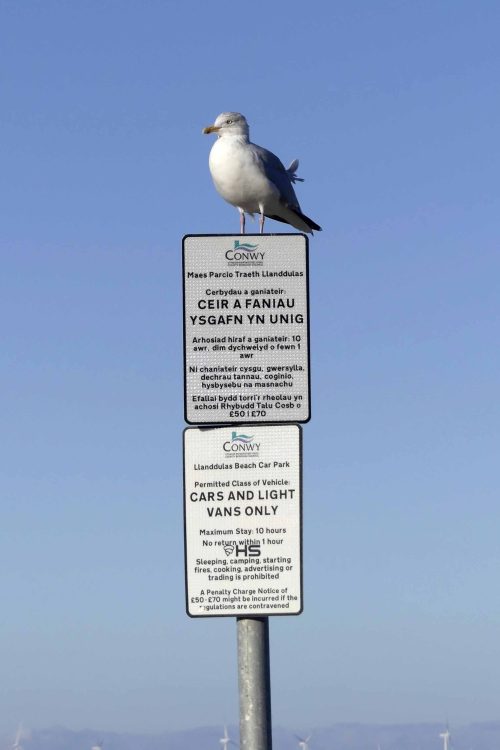
Herring gulls will claim any perch that has some height, and are often on duty here drawing attention to signs stating the rules for parking. Taking on their winter plumage now, they are looking particularly handsome.

The tide was going out, so it would be unlikely that I’d find gulls and cormorants occupying the posts of the lines of groynes further along the shore as they do at high tide, but I was pleased to see at least a few cormorants were out on posts at this end of the shore, before the outgoing tide fully exposed them.

Afon Llanddulas

Running beneath the viaduct that carries the main train line, the river is full and flowing fast towards its end. Where it bends to follow the line of the path the mud and flattened vegetation show that it has flooded recently well beyond its usual boundaries, but again, no serious damage seems to have been done.

Beyond the footbridge, while the water was still travelling fast, it is fairly shallow.

A little further on, guided and contained by a high wall of more rip-rap it reaches its final destination and escapes into the sea.

The far side of the rip-rap wall is more sheltered and has been colonised by a variety of plants. Sunning itself on the leaf of alexanders, which in recent years has become the dominant wild plant throughout this whole site, was a hairy shieldbug.

Lichens pattern some of the rocks, and in some spots, cushiony moss, revived by rainfalls, helps to soften their harshness.

Perched on top of a high rock, a jackdaw gleaming brightly in the sunlight sat sentry-like surveying his kingdom, his steely blue-grey eyes matching the colour of the sky behind him.

Beyond, the flat stony seashore stretches for miles in front, curving gracefully around to the headland on which sits the town of Rhyl. It may not have the aesthetic appeal of miles of unbroken sandy beach, but there’s no denying that it has great dramatic impact, emphasised by huge skies.

Several curving strandlines mark the reaches of various recent high tides.

A high fence of sturdy wire enclosing heavy machinery indicated that some storm-damage has occurred here. It’s not at ground level though, they seem to be reinforcing the cliff where it looks as though there has been a landslip, perhaps caused by water running down from above, where mobile homes are lined close to the edge.

Beachcombing

Strandlines are always interesting to explore, but there wasn’t much to find today other than dried seaweeds, leaves and twigs and a few whelk and razor shells. Pieces of dried hornwrack are often found blowing around on this and most other beaches. Easily mistaken for a seaweed, it is actually a detached part of colony of individual animals known as zooids. Today there were a few clumps of what I’m fairly sure is ‘fresh’ hornwrack as it looks when alive and growing, sadly torn from their anchor points in the shallow foreshore.

Hornwrack Flustra foliacea (fresh)
Hornwrack Flustra foliacea (dried & fresh)

Herring gulls gather along the shoreline here, often in huge numbers. A line of them, quietly resting and preening was strung out along the worm reef on the lower shoreline, waiting for the tide to turn.

From some distance away I spotted a single gull perched on a post of a line of groynes. It seemed too small to be a herring gull, and in this same spot I’ve occasionally seen a common gull or two, so I was pleased on checking my photographs later, to see it had green legs, which common gulls have. (Herring gulls have pink ones.)

Coastal Wildflowers

Beyond the strandline, the back of the beach is a great habitat for wild plants, and several interesting and uncommon species, including the lovely yellow-horned poppy can be found here. Although flowering and fruiting are long finished now, fresh leaves often appear after autumn rains and can last throughout the winter.

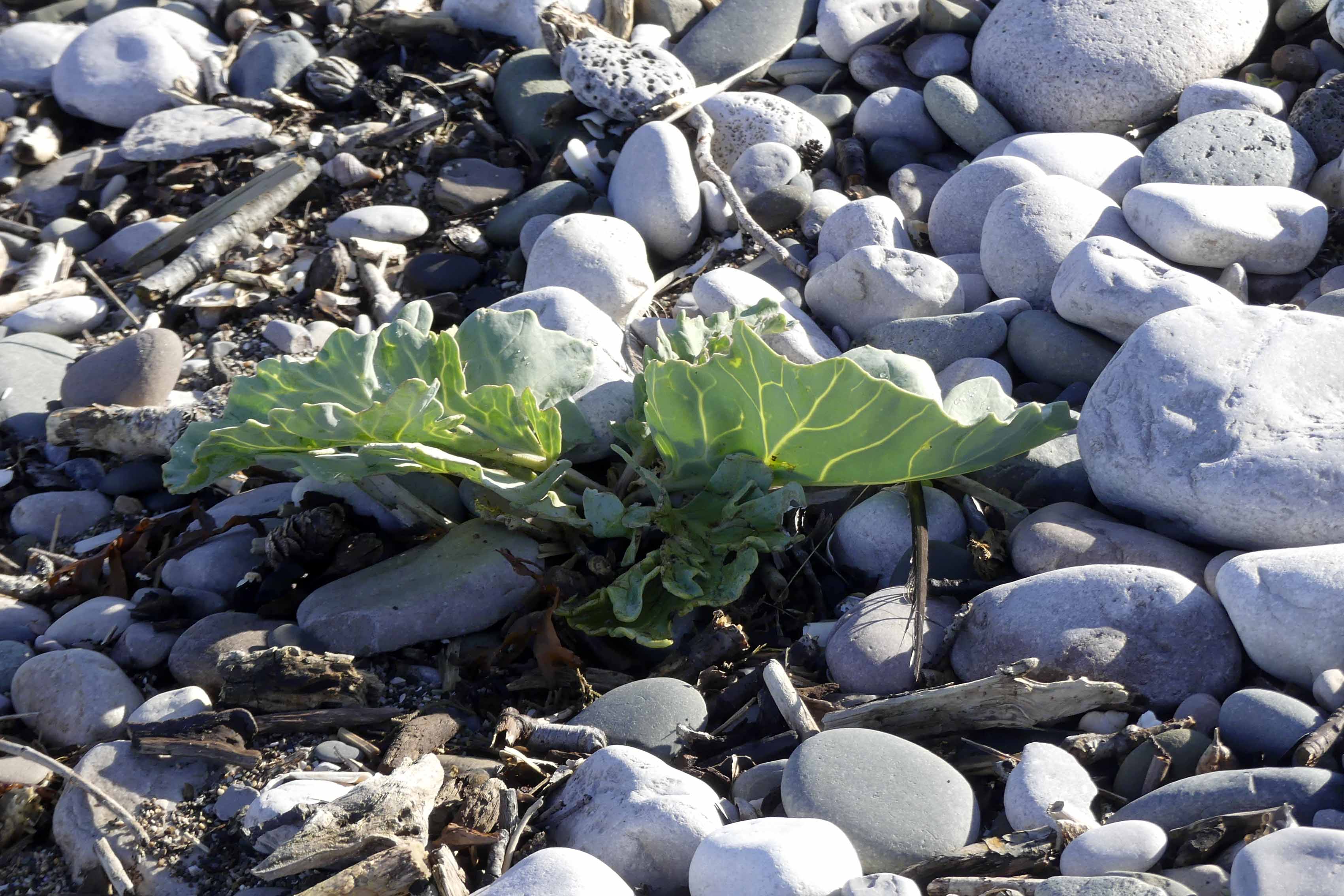
leaves of yellow horned poppy
leaves of sea kale

Leaving the beach I got back onto the Path, depositing the collection of fishing twine, plastic bottle tops & other miscellaneous bits of rubbish I had stuffed in my pockets, plus 2 plastic &1 glass bottle I was carrying in my hand in the only bin for miles. This section of Path, being long and straight often tempts cyclists to speed up and race along it, and not all warn you they are behind you, so I have to remember to check behind me before meandering from one side to the other.

In years past this has been one of the most interesting lengths of the Coast Path, having a lovely diversity of wildflowers along its edges. Now, alexanders has spread exponentially along both edges, smothering out less robust plants and forcing tougher ones to break through where they can. The other locally prolific invader, winter heliotrope, also has a firm grip here.

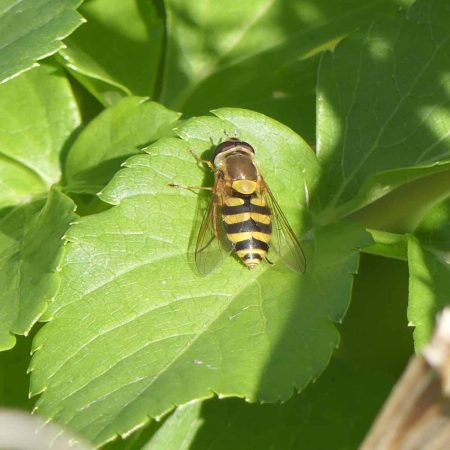
on alexanders – eristalis sp hoverfly
on alexanders-syrphus sp hoverfly

There’s not a lot still flowering, but there are a few fresh plants in flower of fennel, wild carrot and ragwort. There were quite a few insects about too, mostly various flies and a few different species of hoverflies, but also a few of my favourite little yellow dung flies.
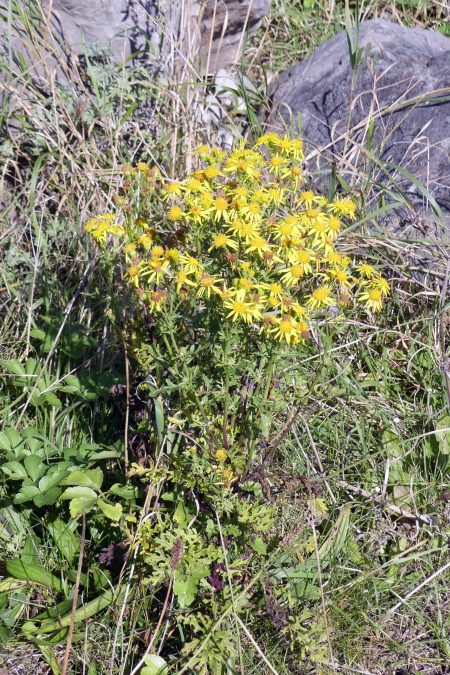
fresh ragwort
fresh fennel

Some plants look good even when their flowers are done, bleached stems of hogweed against a backdrop of rocky shore, blue sea and sky are particularly striking.

A dunnock explored the dried stems and down on the shore beneath a few oystercatchers foraged around rockpools, this one casting its shadow and a reflection.

Oystercatcher

There may not be cormorants to see perched on groyne posts, but on the sea edge there were distant views of several groups of them on the sea edge. Some were active, taking off onto the sea, others were more sedentary, opening up their wings to dry or preening their glossy feathers.
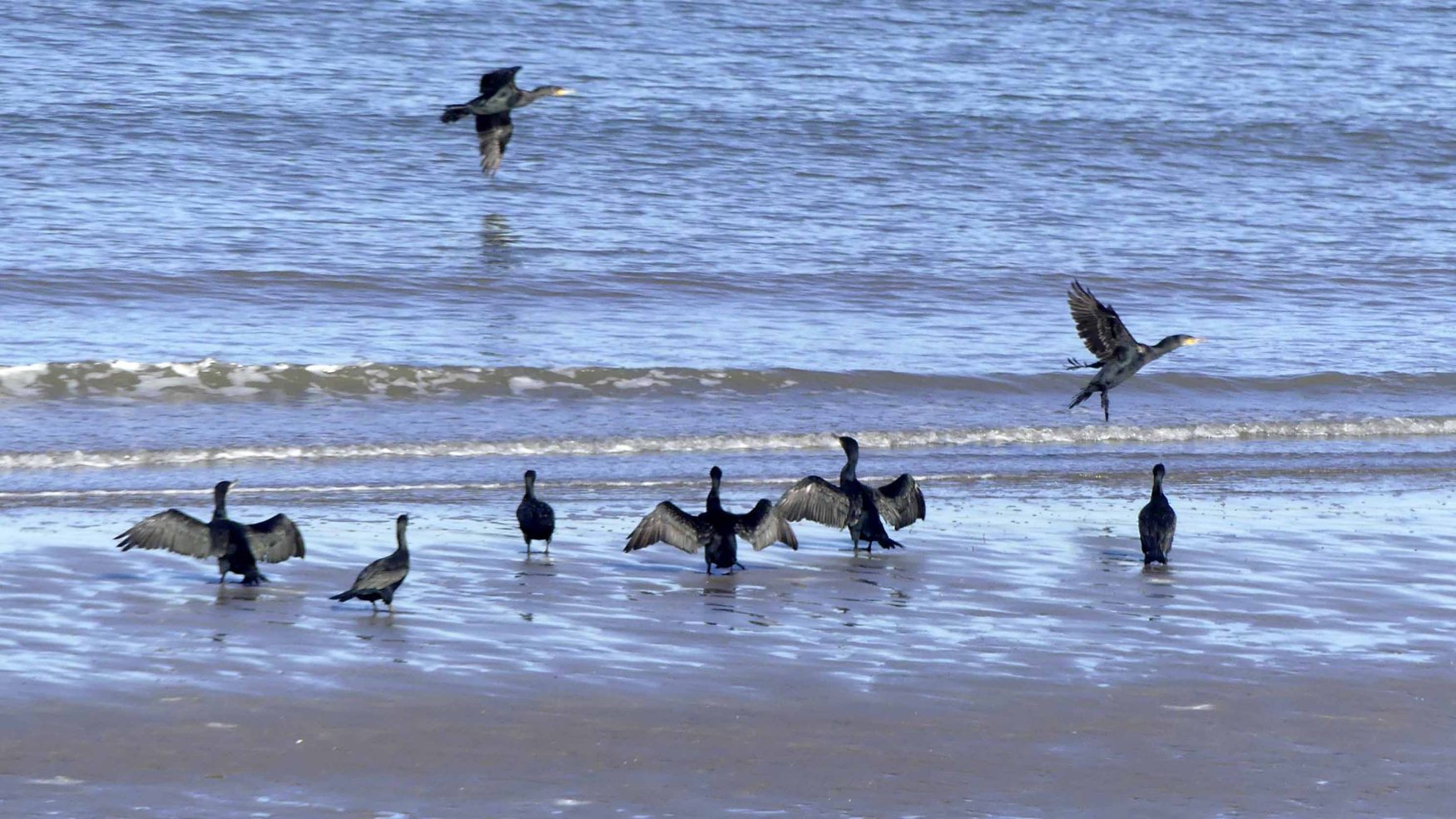
Cormorants hanging about to dry

I had heard the calls of curlew, but they were so far away and well-camouflaged I hadn’t expected to see them. It was a treat then to see three out in the open walking in line across the sand.

The Last of the Wildflowers

When there are only a few wildflowers left, you can really appreciate their individual charm and more importantly, so do lingering insects.
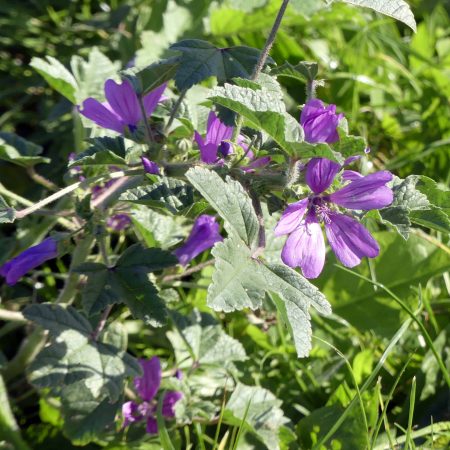
common mallow
bristly oxtongue
knapweed
chicory
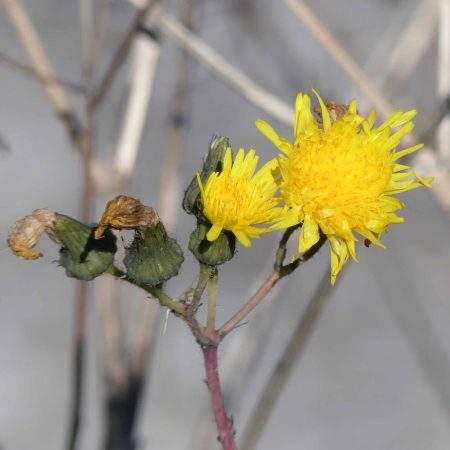
prickly sow thistle
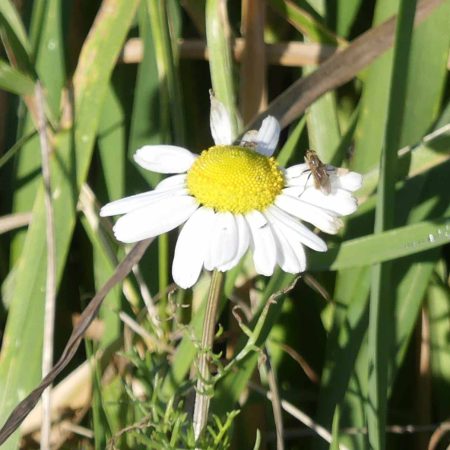
sea mayweed with yellow dung fly

On a clear, sunny, calm day you can follow with your eyes the spectacular sweep and curve of the shoreline past Pensarn, Kinmel Bay and right around to Rhyl, with the Clwydian Hills in the background.
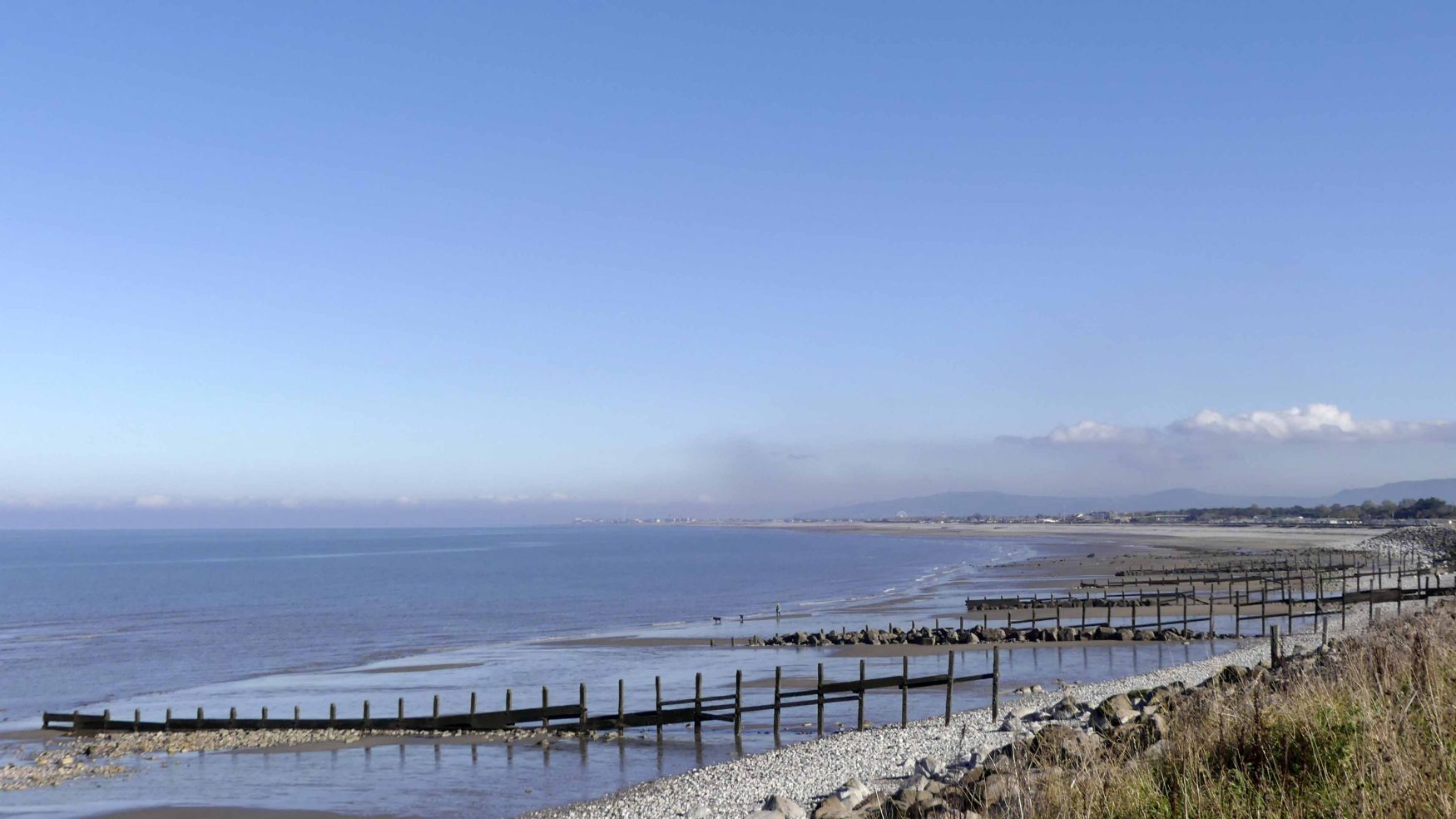
Although brightly sunny, there was a chill to the air and where the Path became shadowed, a short way from the beginning of Pensarn beach, I stopped, admired the view ahead for a few moments and turned to walk back.

Soft fluffy old man’s beard scrambles over hard rocks

old man’s beard

The Way Back

Looking towards Penmaen Head and the Little Orme beyond
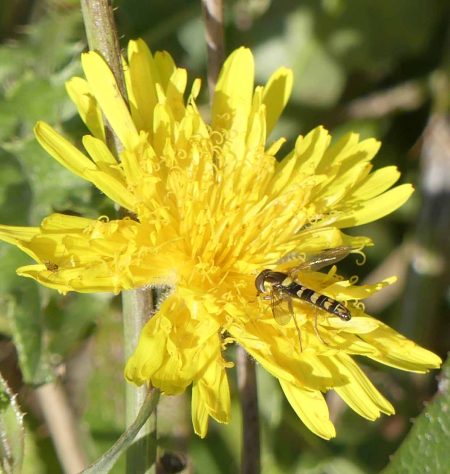
hoverfly on sea mayweed
yellow dung fly on yarrow

Although not the greatest fan of linear walks, it’s sometimes surprising how much more there can be to see along a stretch of path only passed along few minutes previously, when travelling in the other direction. Less than five minutes after turning to walk back, I’d spotted more wildflowers and this lovely little female stonechat that flew across the path and paused briefly on the wire fence that bounds the area of scrubby wasteland between the Path and the railway.

Stonechat female

Then down on the shore, there was one of the birds I always hope to see here, a little egret, stalking through shallow water on the hunt for a temporarily-stranded meal.

little egret
little egret about to strike

It was interesting to watch as it followed behind a paddling herring gull, cleverly waiting to see if the gull’s big flat feet stirred up anything edible from the sand. It’s also interesting to compare the size and shape of the two birds, the egret looks so graceful and elegant next to the chunky gull.

little egret following a herring gull

Nearer to the edge of the sea a small group of gulls attracted my eye. Mostly sitting and with their heads turned towards the water, so not giving the best of views, zooming in on the only one standing confirmed them to be common gulls.

Common gulls

Groynes are looking battered and the worse for wear

dried seedheads of knapweed
lesser burdock

An unexpected sight was of this slug crossing the path. Hope it made it.

A few more flowers, including a wild carrot flowerhead giving shelter to a tiny spider

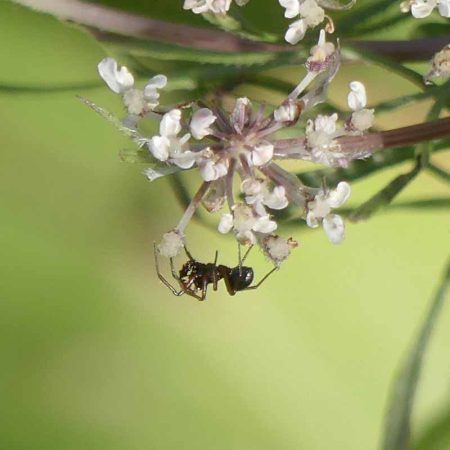
wild carrot flowerhead
a tiny spider on wild carrot flowers
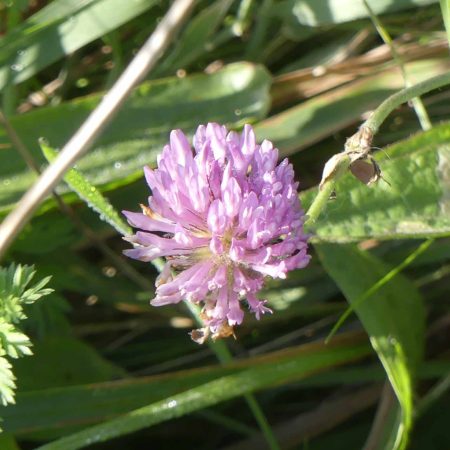
red clover
long hoverfly

and I know it’s a pain in the garden, but the pure white trumpet blossoms and heart-shaped leaves of hedge bindweed are really quite lovely.

Down on the sand a great black-backed gull stood looking out to sea

Great Black-backed Gull

Back on the beach

Sea Mayweed
Rock Samphire

From where the river runs into the sea and back along towards the carparks, a high defending bank of stone and earth hides the view of the sea.

High bank between the river and the sea

The loose sandy earth and small rocks of the bank can be a good place to see linnets foraging on the seeds of plants that grow there, but today there was only a perky pied wagtail running around chasing flies.
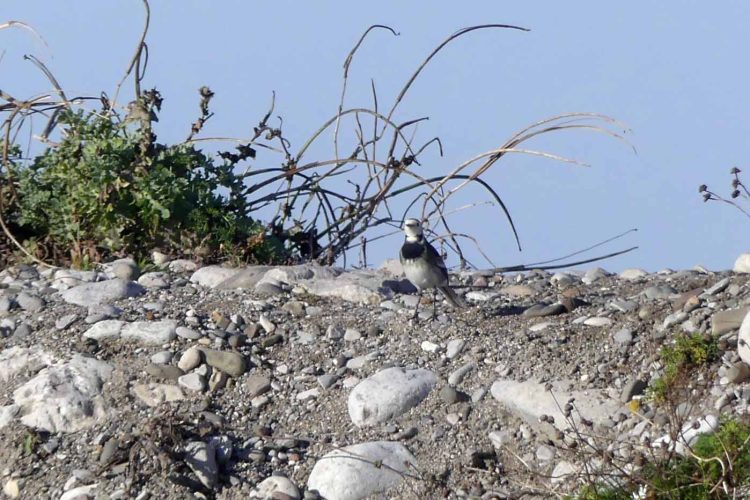
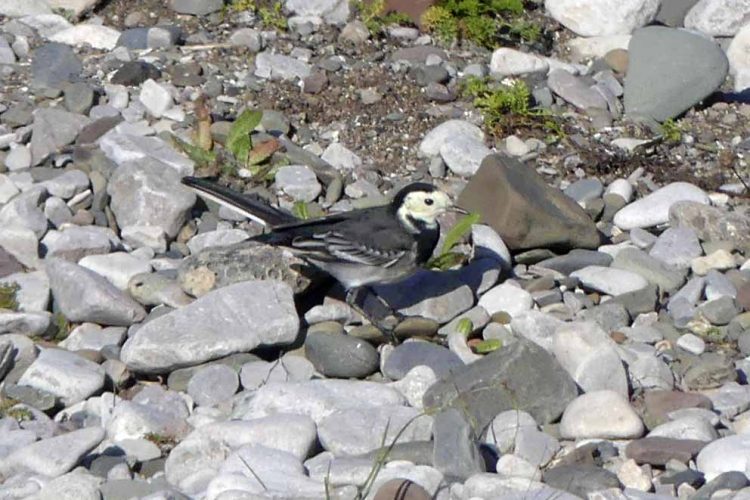
Pied Wagtail

Last view of the river

and back to the carpark, where a herring gull is still keeping an eye on the comings and goings.
Today’s birds: herring gull; black-headed gull; common gull; great black-backed gull; cormorant; oystercatcher; curlew; little egret; robin; dunnock; stonechat; pied wagtail; house sparrow

Wildflowers still in flower: ragwort; common mallow; sea mayweed; common daisy; red clover; fennel; wild carrot; knapweed; chicory; bristly ox-tongue; hedge bindweed; yarrow; sow-thistle
Share this:

  • Click to share on Facebook (Opens in new window) Facebook
  • Click to share on Pinterest (Opens in new window) Pinterest
  • Click to share on X (Opens in new window) X
Like Loading...

Squirrelling Away……

23 Sunday Oct 2022

Posted by theresagreen in Nature of Wales

≈ Leave a comment

Tags

acorns, autumn, berries, caching, grey squirrel, horse chestnuts, mast year, October

Here in our corner of North Wales we are enjoying a gloriously colourful and particularly bountiful autumn. This year is another ‘mast year’; a natural phenomenon, still not completely understood, where some tree species produce very large crops of seeds in some years, compared to very few seeds in others. In the UK the last mast year was as recent as 2020, when oak trees across the whole country produced thousands of acorns. This year it’s an unusually big one; you might have noticed exceptional amounts of hawthorn, holly, rowan berries and sloes too, I certainly have, but more about that in my next post.

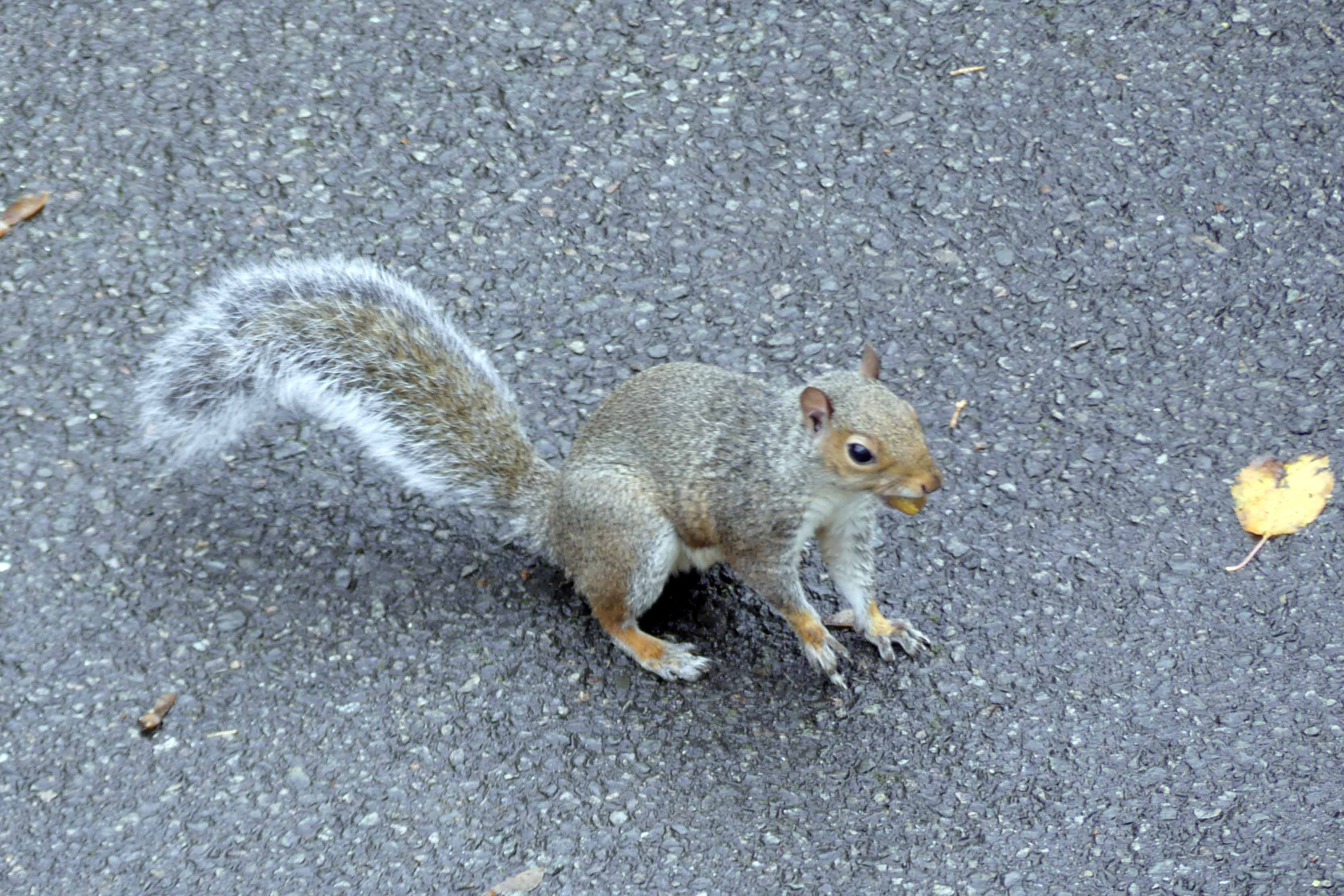
Over a few recent days, from my front windows, I’ve noticed a lot of grey squirrel activity taking place on the lawn in the grounds of the flats where I live. Now to put it politely, I’m not generally known to be a fan of grey squirrels, for many reasons and in our locality, it often seems we have more than our fair share. Having said that, at this time of year it would take someone with a much harder heart than mine to not enjoy watching the annual ritual of them scurrying around, nose to the ground, teeth clenched around precious treasure, searching for a spot in which to bury it. Here, where sessile oak trees abound, it’s most often an acorn, but unusually at the moment, I’ve spotted them with much meatier horse chestnuts. This is interesting as there are very few horse chestnut trees nearby, and those I know of rarely produce more than a few fruits each year. The nearest one I can just see the top of from my window is probably about 30 metres away behind other trees. Perhaps this year it too has produced more chestnuts than usual. 

A moment of indecision – where to go to bury this acorn?

Grey squirrels are well-renowned for their intelligence and resourcefulness and are notorious as opportunistic and resourceful garden bird-feeder raiders, so perhaps it’s not surprising to learn that when it comes to finding and then burying nuts, an apparently simple process, there is much more to it than first meets the eye. When it comes to selecting food for their larders, squirrels are picky; each and every nut making it to their larder will have undergone rigorous quality control. When a potentially good one is found, it is picked up and held in a paw to be scrupulously examined and assessed on its potential for long-term storage. Before burying the appearance is scrutinised carefully – there must be no visible signs of damage or infection. The weight is also crucial, a well-chosen nut will feel firm and heavy, a lighter one may be under-developed or occupied and partially eaten by a boring insect. Only those nuts passing all tests will be buried to keep fresh for future consumption.

A grey squirrel giving a horse chestnut the once-over before placing it in the ground

Once a burial spot has been chosen, the squirrel uses its front paws to dig a hole 2.5-5cm deep, then drops in the nut, ramming it in with its mouth.

A hole is dug and the nut dropped in

When it’s satisfied the nut is firmly in place it replaces the soil, patting it down to firm it. A final check to make sure no-one is spying is made, then leaves are placed on top to disguise signs of recent digging.

The nut is covered with soil and firmed in

A nut buried is by no means guaranteed to stay there. In the wake of an interment, all kinds of subterfuge and blatant piracy is likely to ensue.

An interloper about to dig up a recently buried chestnut

If an individual suspects it has been watched by another squirrel, it may wait until it feels safer, retrieve its own treasure and re-inter it in another spot. And there are always those that have no scruples (or perhaps less experience) that will enter a territory to steal from one more conscientious and industrious. Sometimes they will make off with their stolen booty and re-bury it as their own, and sometimes they have even less scruples and will simply sit and eat it right out in the open.

Stolen chestnut about to be eaten
Peeled
And eaten all up

One piece at a time the squirrels build up a supply of food when times are good to save them from hunger when there is less available during the winter months, bearing in mind that grey squirrels in particular only hibernate during extremely cold weather. They work extremely hard to conceal a huge number of items in a scattered pattern (called scatter-caching) as a degree of insurance against discovery by other squirrels, mice or birds. But using this apparently random method of hoarding, how do they remember where they have buried their treasure?

A lucky grey squirrel can expect to enjoy a long life and it seems their brains get bigger the older they get. Not only that, but researchers have also discovered each autumn their brains get bigger again, and it’s this added capacity that enables them to create a huge mental map of where their treasure is buried. So, when they get hungry, it’s thought that memory guides the squirrel to the general area and then scent guides it to the specific location of a cache over the final few centimetres.

No matter our personal feelings towards these often-contentious little animals, one redeeming feature may be that many of their caches will remain untouched. Here in the UK, it has to be acknowledged that this behaviour practised by both red and grey squirrels contributes to tree dispersal, and therefore plays a part in regenerating our native woodlands; (and equally important, in the case of reds in particular, they also aid fungi dispersal). It’s such a shame they are so destructive; they are fascinating to learn about and entertaining to watch.
Share this:

  • Click to share on Facebook (Opens in new window) Facebook
  • Click to share on Pinterest (Opens in new window) Pinterest
  • Click to share on X (Opens in new window) X
Like Loading...

An Appreciation of Trees

17 Sunday Nov 2019

Posted by theresagreen in Colwyn Bay, Nature of Wales, North Wales, woodland walks

≈ 9 Comments

Tags

ancient woodland, autumn, fungi, native trees of Wales, pwllycrochan woods, wanders, woodland

The woodland of Pwllycrochan makes up much of the treescape that forms the beautiful and seasonally changing backdrop to the town of Colwyn Bay. Deceptively small in area, this woodland is long and narrow, surrounded and divided by roads into three islands that together occupy just 21 hectares of land. But what this remnant of ancient woodland lacks in ground area is made up for by the height and grandeur of the beautiful old trees that occupy it. Aged Oaks, Ash and Beech trees soar majestically into the sky, some so tall it’s almost impossible to see their crowns without craning back your neck as far as you can.

This has become one of my favourite places for a wander at any time of the year, but I think Autumn is the perfect time to appreciate the true owners of this woodland: the amazing trees that grow there.

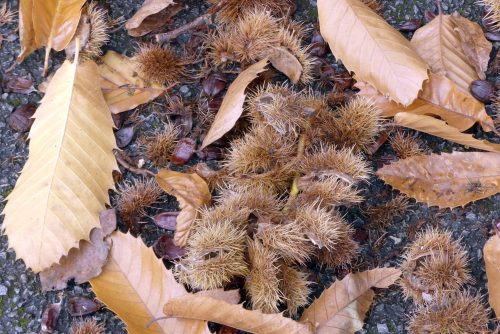
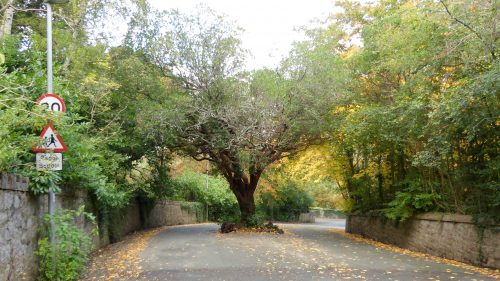
Much of the original woodland that was once the formal parkland of the Pwllycrochan Estate is gone, but a good number of its beautiful old trees still stand, lending grandeur to the roadsides of this west end of Colwyn Bay. A formally clipped yew hedge marks the boundary between the school playing field and Pwllycrochan Avenue and just behind stands a glorious spreading Sweet Chestnut tree. The leaves remaining on the tree are slowly turning colour. Many have already fallen, no doubt  assisted by recent high winds and heavy rain and the pavement beneath is covered with russet-coloured leaves, prickly seed-cases and scattered nuts.Rounding the bend a little further up the sloping road, a sight that I remember took me by surprise the first time I saw it: a tree has been left to grow on a small island in the middle of the road. This is an old Strawberry tree, an exotic survivor from the past glory days of the aforementioned Estate.

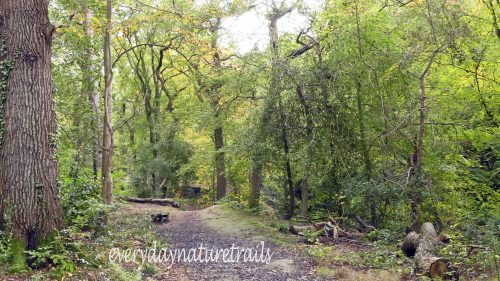
Inside the woods it was peaceful and still. For a brief moment nothing moved. Not a breath of air stirred the leaves. There were no road sounds, no trampling chatting people or dogs, no bird sounds, not even a scurrying squirrel. Perfect peace.

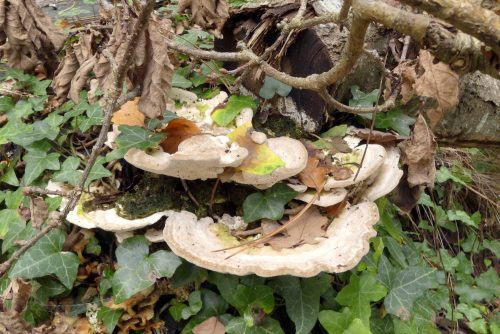
The moment was fleeting, soon broken by a lady walking with her dog, but much appreciated. I wandered a bit further along the path, looking out for fungi. I wondered whether it was a bit late in the season for finding anything, but this has been a good place for them in the past and inspired by our recent foray I was hopeful. Checking a woodpile at the side of the path I found some bracket fungi, some pieces had grown quite large and gone woody. It was faded too, but the largest piece was a pretty scallop shape and there was some darker banding still visible, so it may be Turkey tail, but does it grow that big?

Oak

The ancient trees stand  tall and straight like sentinels on guard. Each stands alone,  reaching the high canopy without need to bend or twist to avoid touching another. Most have lost, or at some time in the past, had their lower branches removed.

As a managed wood historically, that may be for  one of several reasons. Timber was, and is a valuable commodity. As building material for houses or ships and boats, long lengths of straight wood are desirable, so lower branches may be deliberately removed, particularly from Oak trees, for that reason. The woodland would have been managed for game too, birds such as pheasants would have been introduced and shrubs planted between the trees to give them cover, again requiring the removal of low branches to allow sunlight to reach them.

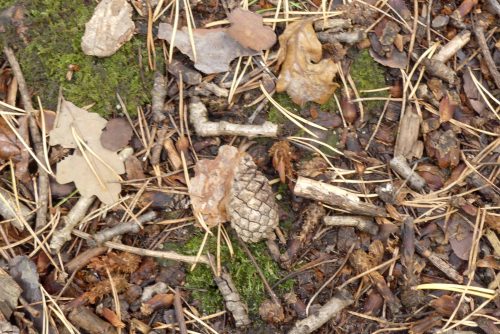
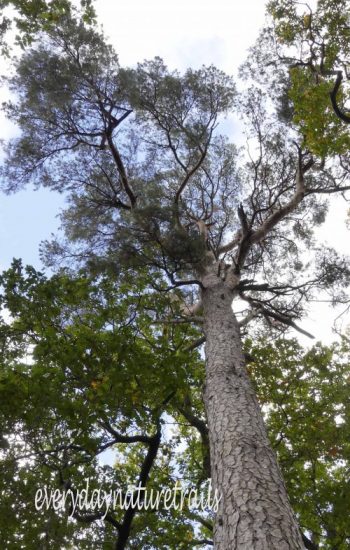
If I hadn’t seen a scattering of small cones on the ground I may have missed the Scots Pine tree they had fallen from, despite the fact that its trunk was almost in front of my eyes. It towered so high into the sky I had to crank my neck back almost painfully to see its few remaining branches way up in the canopy. I find it incredible to think this giant had grown from a tiny seed once encased within a tiny cone such as this.

Scots Pine

There’s something quite magical about a woodland stream and this wood has two that flow down through deep dingles. The sound of this one was clearly audible some distance away; its sound would have been amplified by the rocky walls either side of it, but recent heavy rains have given it power and volume and it tumbled and fell rapidly down the rocky cliff quite dramatically.

Heading towards the pool that gives the woodland its name, the track passes by this tall elegant Oak tree, elevated further by the raised bank it grows from. It is holding firm despite the soil around its roots having been much eroded. It’s mostly Sessile Oaks that grow here, but the only ways I know to tell them apart from the English Oak is that the Sessile’s acorns are stalkless and the leaves have longer stalks. The leafy parts of this tree were way too high to tell and I think by now squirrels and Jays would have made off with any acorns there may have been.

On the shaded path below the tree, at the bottom of the bank, a layer of coppery dry leaves merges with bright green moss.

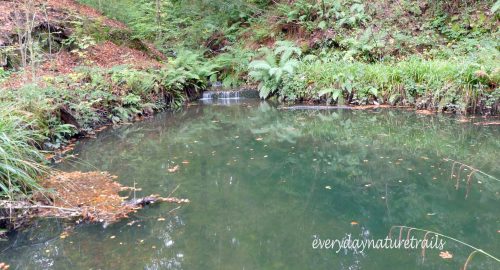
I stood on the bridge crossing the narrow exit end of the pool as I always do, trying to imagine how it may once have been. Pwll is the Welsh word for pool and crochan translates as cauldron. It is said that once the stream flowing into the pool was once much more powerful, causing the water in it to bubble and froth as it would in a boiling pot. I’m ever hopeful that one day the water might at least look a little more animated, especially after a period of heavy rain. But we’ve had that lately and the pool is well-filled, so I imagine changes or diversions of the stream along its course are the reason for the reduction in its force, so it’s unlikely it will.


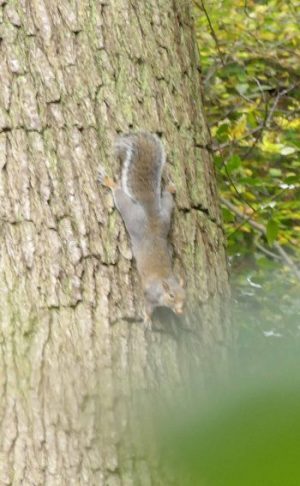
Retracing my steps I spotted movement on a tree trunk some distance ahead. Although half-hidden by the vegetation in front of me, the squirrel that was running vertically down from a great height must have spotted me in the same moment and had frozen still, an acorn wedged firmly between its teeth.

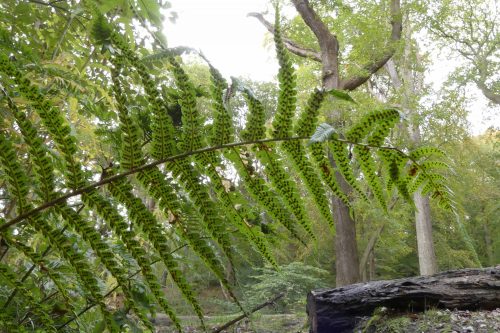
There are some beautiful ferns here, whose fronds gracefully arch out over the paths. This one has ripening sori (seeds) on the back of its fronds and from their shape I believe this is a Scaly Male Fern.

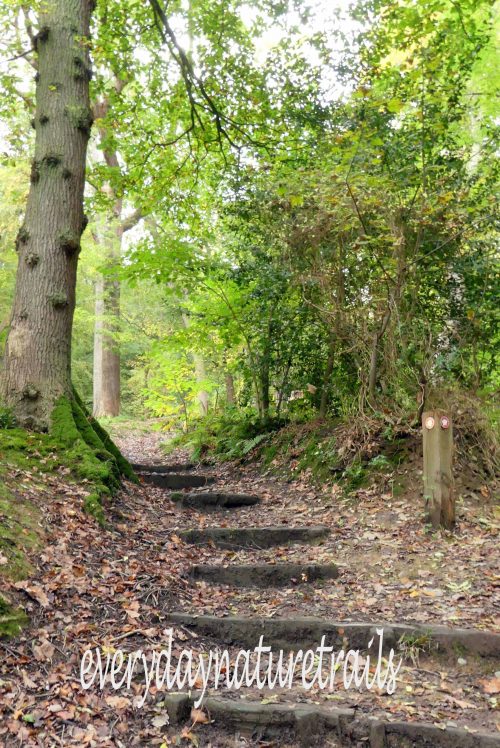
Shallow steps wind their way up to a path on higher ground.

From that higher path there is a view looking down onto the pool showing where the water flows on under the bridge. Some of the water exits naturally as a stream, but some is diverted via pipes from which water pours rather inelegantly.

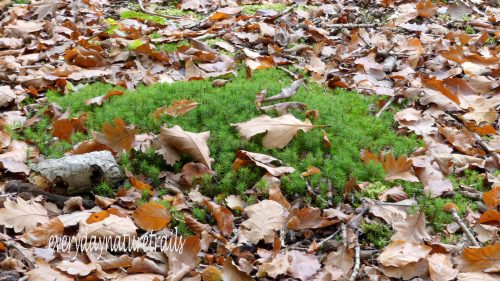
From a coppery sea of dry leaves rose a small bright green island of moss. Close up this particular moss always makes me think of miniature pine trees. Moss identification is not a strong point of mine, but I think this is a Haircap species.

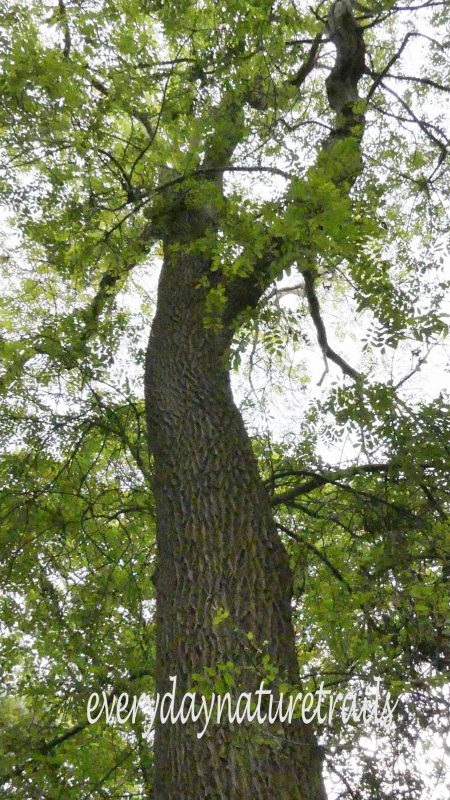
This trail continues upwards till it meets the road. A magnificent Ash tree stands at the edge of the path here. Each time I see an Ash, especially one such as this, I can’t help but think what a tragedy it would be if it were to be targeted by the dreaded Ash die-back disease. Fingers crossed, but at this time it looks strong and healthy

and as ash are often amongst the last to put out their leaves in the Spring, its leaves are still mostly green.

Not wanting to leave the wood here I turned around to walk back downhill. A fly basked in sunlight on a fern frond. Just a Housefly, but I was oddly pleased to see it, especially on a chilly day. Is it just me, or does anyone else think there have been less of them around this year?Bluebottles and Greenbottles have been quite numerous, and I’ve seen the smaller Lesser Houseflies, but not the bigger ones that usually annoyingly invade the house.

Almost hidden behind a larger tree, I would have missed this Rowan if its yellow leaves and scarlet berries hadn’t caught my eye. I wondered if it was deliberately planted or was a gift from a passing bird.

There are a few small Christmas-tree shaped pines in odd places throughout the wood too. This one, very close to the base of another tree surely wasn’t planted there intentionally. I wonder if it’s sprung from a Scots Pine cone buried by a squirrel.

By the side of the path a number of wasps were flying in and out of a space in a pile of Birch logs. Focussing on the wasps I didn’t notice the colony of rounded charred-looking fungi they were flying past until I looked at my photographs. This is one I recognise as King Alfred’s Cakes, memorably named for the incident which is surely one piece of history many of us, including the person that named the fungus, remember from school history lessons. In case not, legend has it that King Alfred the Great (849-899), whilst King of Wessex, sought refuge from Vikings (886) in the cottage of a peasant woman. In return for her hospitality, she charged him with looking after her cakes (small loaves of bread) that were baking on the stove. He supposedly fell asleep, or maybe became distracted worrying about his Kingdom, and let them burn. Unaware of who he was, she apparently gave him a good telling-off. The fungus then is named after those burnt cakes. Tenuous, but memorable.

191027-CWBPWLL- (53)-Wasps heading for nest
191027-CWBPWLL- (54)-King Arthur's Cakes

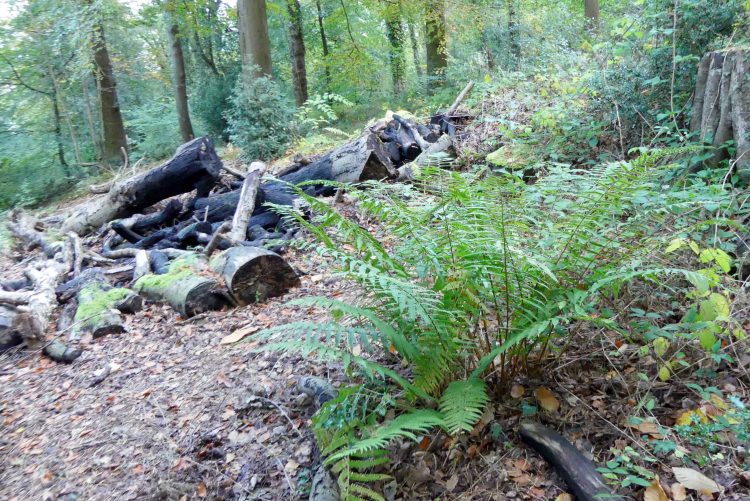
On the theme of burning, further on is another woodpile, fortunately in a clearing, which someone had clearly set fire to at some point, leaving many of the logs charred black.

Despite the damage to some of the logs I found some interesting fungi here including a nice fresh collection of Turkey tail, or Many-Zoned Polypore as it is also known

Strangely beautiful, I found Candlesnuff fungus growing through feathery green moss.

Venturing beyond the log pile along a track that comes to a sudden end – a rather sinister scene came into view: a tree that has been decapitated, its trunk left standing tall. Clearly rotting and bark peeling away, the trunk is blackened by a sooty ooze and is pierced with thousands of tiny holes. Large brackets of woody fungi project from the trunk; they too are blackened.

191027-CWBPWLL- (82)-blackened bracket fungus
191027-CWBPWLL- (81)-blackened bracket fungus

On a fallen log, looking like a bunch of small deflated balloons, I found a group of spent Stump Puffballs and nearby I found a few more, slightly fresher. Lycoperdon pyriforme to give it its scientific name is the only puffball species we have in Europe that regularly grows on wood.

Stump Puffball - Lycoperdon pyriforme
Stump Puffball – Lycoperdon pyriforme
191027-CWBPWLL- (86)-round fungus with stem

Next to the fallen log a mushroom that looked and smelt like a Field Mushroom. Perhaps that’s what is was, but there’s no way I was going to take it home to try it.

191027-CWBPWLL- (183)
191027-CWBPWLL- (182)

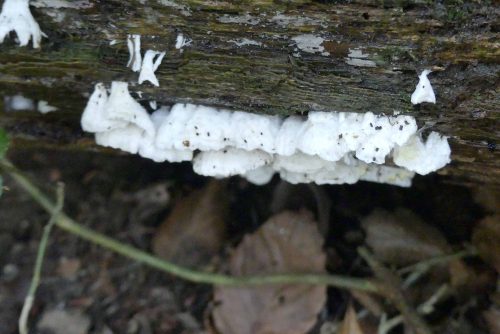
Growing vertically from a split in a log I spotted this odd group of white fungi that to me look a lot like teeth, which I found both interesting and quite amusing: it doesn’t take much. I don’t know what it is, maybe a Coral or a Stagshorn species?

Nearby is one of the few large Horse Chestnut trees found here. I was fascinated by the patterning of its bark.

From the clearing the leaf-strewn trail is sloping and for a while the woodland has a different feel to it. It’s more open, there are noticeably less large trees and more undergrowth and ivy.


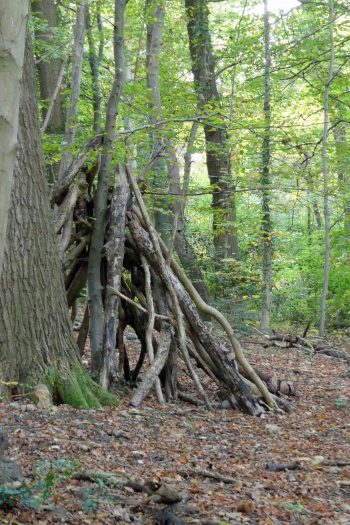
An tent-like arrangement of thin branches propped against a tree brought back memories of ‘camps’ we used to make in the woods around our home when we kids. We built similar tent frameworks, but then covered them with hessian sacks and camouflaged them with dry leaves and twigs, leaving an entrance space so we could get in and out. I can almost recall the earthy smell of damp wood and sacks as I think about it.

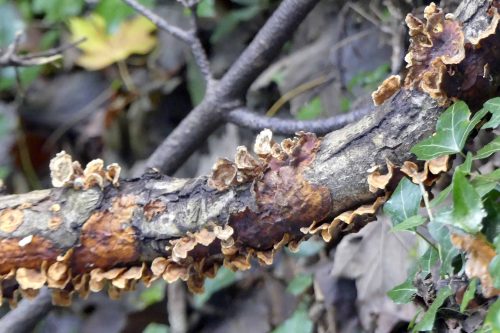
Hairy Curtain Crust – Stereum hirsutum


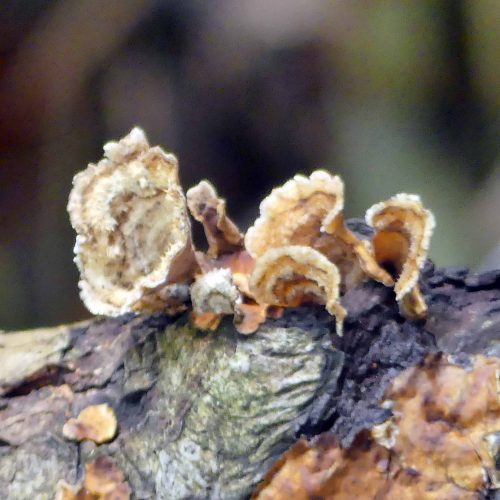
Growing on a branch near the edge of the path was more pretty bracket fungus. It looked similar to Turkey tail, but was more yellow-ochre-brown in colour and its upper surfaces were definitely hairy. Looking it up I’m fairly sure it is Hairy Curtain Crust, aka False Turkey-tail.


Sweet Chestnut

A tall Sweet Chestnut tree, its leaves turning yellow


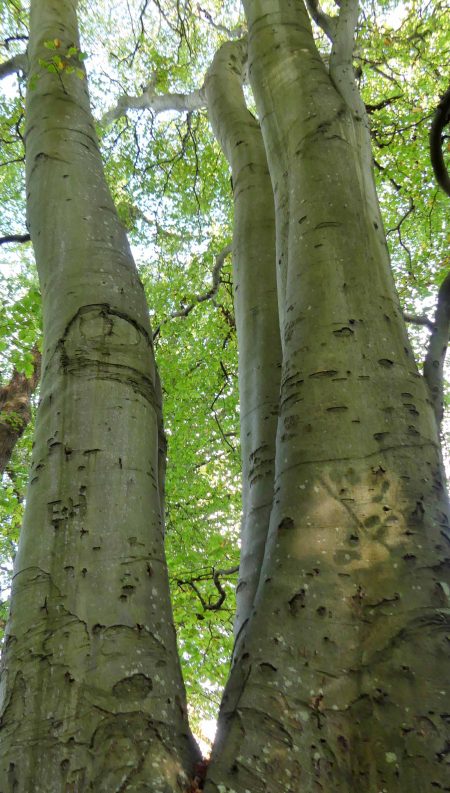
I wandered off the path towards a grove of huge Beech trees. At least one of the trees was multi-trunked and all were mightily  tall.

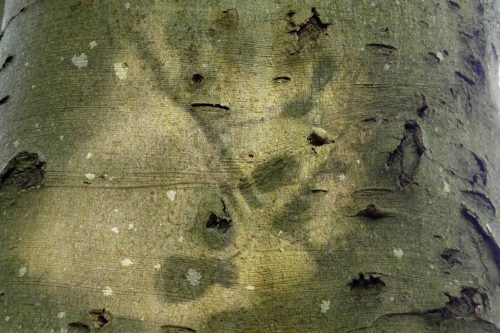
A shafts of sunlight had cast the shadow of the leafy tip of a branch onto one of the almost-smooth trunks


Leaf shadows on Beech bark

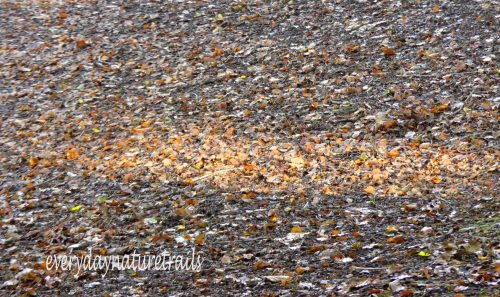
and highlighted patches of the carpet of leaves beneath the trees turning them to burnished copper.

You are on high ground here and through the trees there is a view over the edge of Colwyn Bay town and out over the Bay itself to the wind turbines.

The path begins to slope down; the ground falls steeply away on one side and is lined by a ferny bank on the other. I stopped here for a few minutes to watch a foraging party of Blue Tits, Great Tits and Long-tailed Tits, a few of the latter had come down into the Holly tree in the photograph and stayed within in it for a good few minutes. Other than Wood Pigeons, these were the only birds I saw while I was here.

The Holly had a good crop of berries, which you may interpret to be a warning of a harsh winter to come, or an indication of a good Spring past with rain and sunshine that brought forth plenty of flowers. Maybe both, we’ll soon see.

Enormous ferns arching of the path lend a lush, almost jungly feel to this last part of the path.

This Trail through the woodland comes to an abrupt end and brings you out onto the Old Highway, a short distance down from the entrance to the woods. Another path, raised above road level and parallel to the road takes you back there along the woodland edge, so you don’t have to walk on the road itself. The vegetation along the path is quite varied and I found an eclectic collection of plants still in bloom or bearing fruit. Flowers surprisingly included those at the tip of a very late Foxglove, Herb Robert and a Hogweed. I spotted Wild Raspberries still ripening, a few Blackberries and more Holly berries.

191027-CWBPWLL- (143)
191027-CWBPWLL- (136)
191027-CWBPWLL- (144)
191027-CWBPWLL- (145s)-holly with berries

I’d collected a fair few items of rubbish along my walk and reaching in beneath a bramble to pick up a drinks can I was rewarded with my best fungus specimen of the day; although I don’t yet know its identity.

191027-CWBPWLL- (191)
191027-CWBPWLL- (190)

Then I caught sight of this old sign, now high up above eye level, nailed to the trunk of a large Sycamore tree. The Districts of Colwyn and Aberconwy merged to form Conwy Borough Council in 1996, so it’s at least that old, I would guess at quite a bit older again.

Ending as I began, a length of this path too is strewn with leaves and seed cases from a Sweet Chestnut tree.

191027-CWBPWLL- (154)
191027-CWBPWLL- (153)

More details about Pwllycrochan, including location here.


Share this:

  • Click to share on Facebook (Opens in new window) Facebook
  • Click to share on Pinterest (Opens in new window) Pinterest
  • Click to share on X (Opens in new window) X
Like Loading...
Follow everyday nature trails on WordPress.com

Enter your email address to follow this blog and receive notifications of new posts by email.

‘But it is the common species that keep the living world ticking over and provide most of our experiences of wildlife, and I would argue that maintaining the abundance of these is as important a conservation priority as maintaining the existence of rarities’. Richard Mabey

MOST RECENT POSTS

  • A Glimpse of Spring to Come January 22, 2025
  • Hunting the Wren December 28, 2024
  • Oh, Christmas Tree December 18, 2024
  • In and Out of the Ivy February 15, 2024
  • Nature’s Fireworks November 30, 2023
  • Wild Autumn along the Coast Path November 3, 2023

OLDER POSTS

LOOKING FOR SOMETHING IN PARTICULAR?

  • The Foxglove - of Fairytales, Myths & Medicine
    The Foxglove - of Fairytales, Myths & Medicine
  • Pretty prickly Thistles
    Pretty prickly Thistles
  • Fine Dining for Crows
    Fine Dining for Crows
  • Pines and Primroses
    Pines and Primroses
  • Birds and the art of fly catching
    Birds and the art of fly catching
  • Grey Seals on the rocks
    Grey Seals on the rocks
  • What a beautiful day
    What a beautiful day
  • Everyday Birds - The Blue Tit
    Everyday Birds - The Blue Tit
  • A trip to Pembrokeshire:Part 2: Flowers in the rain
    A trip to Pembrokeshire:Part 2: Flowers in the rain
  • Parakeets in the Ash Tree
    Parakeets in the Ash Tree

nightingale trails

The Walk of the Monarch Butterfly-Sendero de la Mariposa Monarca

The Walk of the Monarch Butterfly-Sendero de la Mariposa Monarca

MY WILDFLOWER BLOG: where the wildflowers are

Snowdrop

Snowdrop

most recent posts

Follow everyday nature trails on WordPress.com

Social

  • View teresamaygreen’s profile on Twitter

Enter your email address to follow this blog and receive notifications of new posts by email.

Website Built with WordPress.com.

  • Subscribe Subscribed
    • everyday nature trails
    • Join 359 other subscribers
    • Already have a WordPress.com account? Log in now.
    • everyday nature trails
    • Subscribe Subscribed
    • Sign up
    • Log in
    • Report this content
    • View site in Reader
    • Manage subscriptions
    • Collapse this bar
 

Loading Comments...
 

    %d