• Home
  • about
  • about the photographs
  • Local Nature Reserves
    • Bryn Euryn Local Nature Reserve
    • Mynydd Marian
  • Wales Coast Path
    • Grey Seals in North Wales
    • St.Trillo’s Chapel
    • Wildflowers of North Wales Coastal Paths, Cliffs and Dunes

everyday nature trails

everyday nature trails

Category Archives: birds of the seashore

Strangers on and off the shore

30 Monday Jan 2012

Posted by theresagreen in Birdwatching on North Wales coast, Nature, nature photography, wading birds

≈ 2 Comments

Tags

black-throated diver, coastal birds, dunlin, purple sandpiper, purple sandpiper at rhos-on-sea, red-throated diver, ringed plover, shag, Turnstone

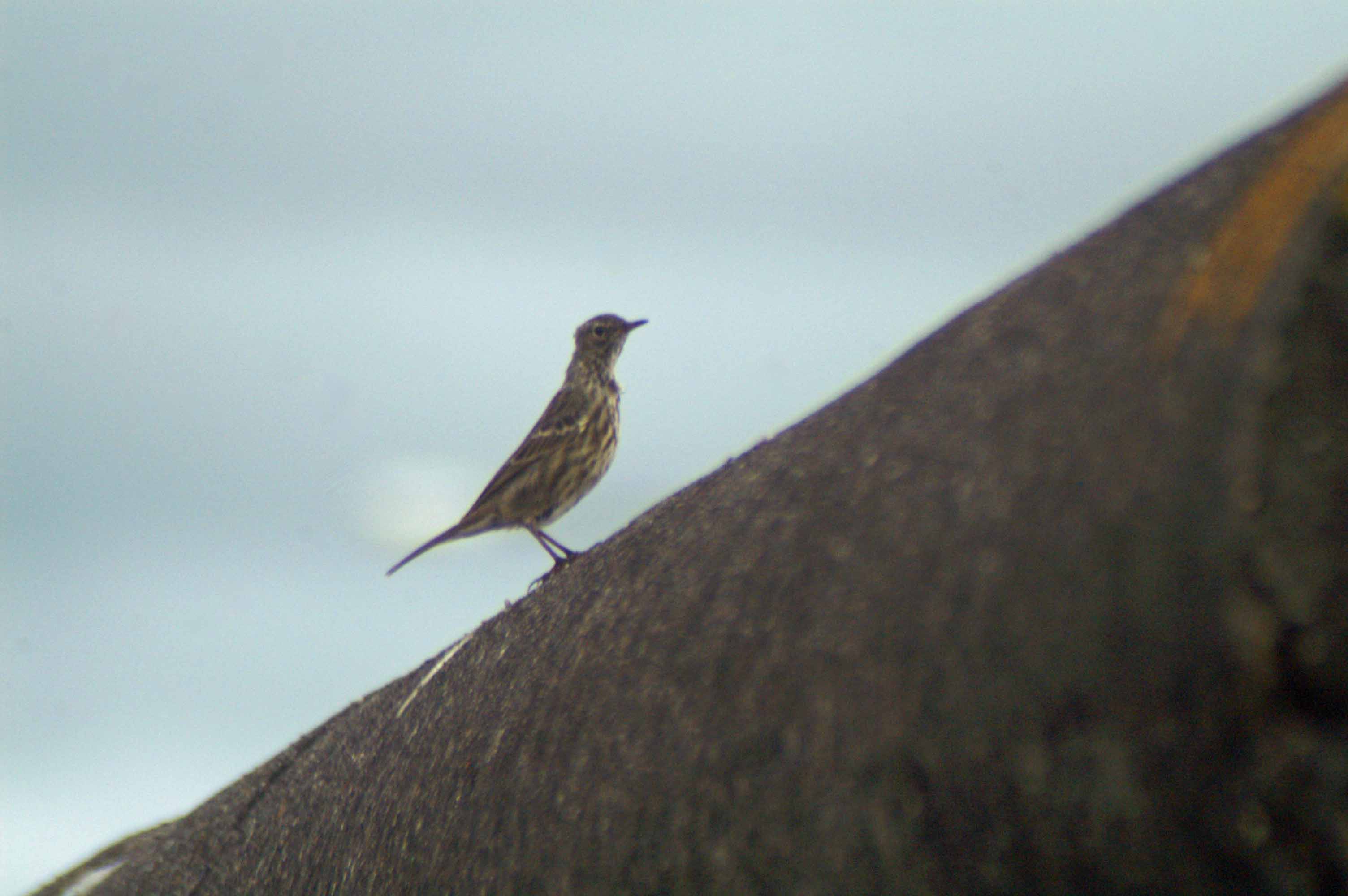
Saturday dawned bright, sunny and very cold, but at least it wasn’t windy. The sunshine encouraged me out to walk and I headed for the beach where I had hoped to take advantage of the clear light and take some shots of the mussel beds that are central to the presence of the wading birds. However, when I reached the end of our road I could see the tide was almost fully in, so that put paid to that idea. The sea was remarkably calm, but it was penetratingly cold and I almost turned around to go back for the car and drive somewhere more sheltered. Then I spotted a couple with telescopes peering out to sea and naturally had to find out what they were looking for. As I approached them I spotted a bird on the rocks, a Rock pipit was foraging along the boulders of the sea-break. It was a lovely healthy-looking bird and getting around quite nimbly despite the fact that the poor thing had lost most of one of its legs.

Rock pipit

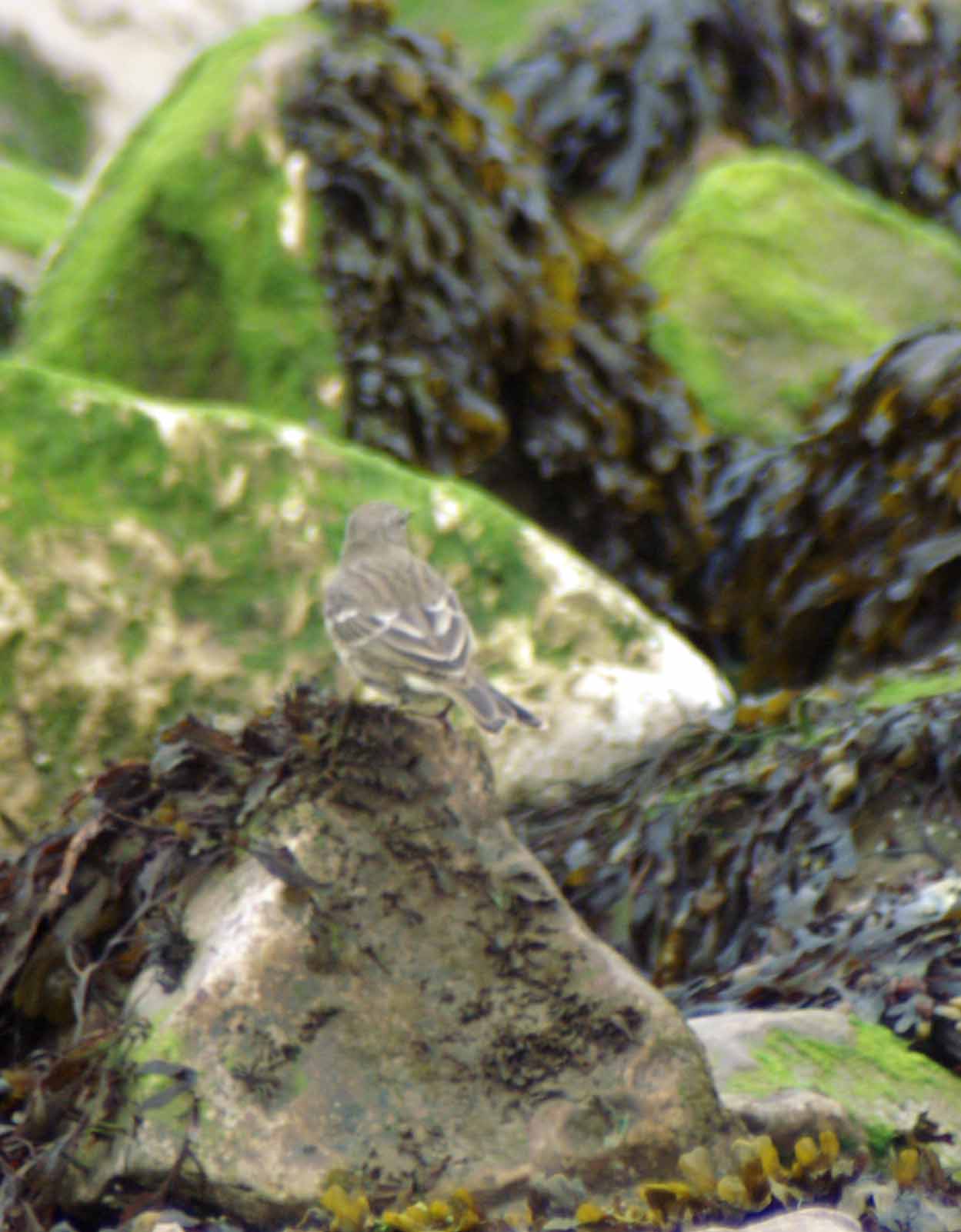
Rock pipit, back view

It turned out that the couple with the telescopes were hoping to see divers, although apparently without much luck today. I know many birders enjoy sea-watching and spotting some of the less commonly seen species of sea birds, but as the best sightings are during the colder months and a lot of patience  is  required to achieve often very distant sightings, it’s not really my cup of tea. I am interested by the fact that it is possible to sight the birds around this coast though, and did a little research into them in the warmth of the house. The following information is from the RSPB website and from that I think the Red-throated diver is the species most likely to be seen offshore here.

Black-throated Diver- Gavia arctica

Family : Divers – (Gaviidae)

Black-throated Diver (RSPB image)-Found on Scottish Highland lochs in summer and around sheltered coasts in winter, and rarely along Irish Sea coasts. Moray Firth and W coast of Scotland best in winter, as well as the NE and SW coasts of England. Sometimes seen at inland reservoirs.

Streamlined diving birds that sit low in the water and dive with consummate ease. On land they are clumsy, barely able to walk with their legs so far back on their bodies. They are easily disturbed when breeding and their vulnerability to marine pollution make them a vulnerable as well as rare breeding species.

Red-throated Diver- Gavia stellata

Family : Divers – (Gaviidae)
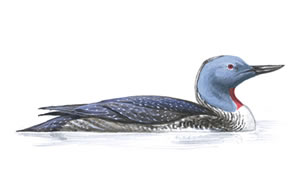
Red-throated Diver- Gavia stellata -Outside the breeding season it is numerous along the UK's east coast, and occurs patchily along the west coast, with concentrations off west Scotland and around north-west Wales.

The smallest of the UK’s divers, its grey-brown plumage and up-tilted bill readily distinguish it from the other species. In summer it has a distinctive red throat. They usually jump up to dive and can stay underwater for a minute and a half. They are very ungainly on land, only coming ashore to breed. A recent moderate population decline make them an Amber List species.

Shetland is the UK stronghold for this species with other key populations on Orkney, the Outer Hebrides and the north Scottish mainland. They are also found along the whole of west Scotland south to the Mull of Kintyre. Outside the breeding season it is numerous along the UK’s east coast, and occurs patchily along the west coast, with concentrations off west Scotland and around north-west Wales.

The sea-watching couple had seen a couple of guillemots out at sea and also mentioned a Purple Sandpiper they had spotted on the breakwater rocks, which piqued my interest and sent me off my own ‘twitch’. I walked along the promenade, scouring the rocks in the hope of catching sight of the little Sandpiper, but with no luck. I also paid more attention to the sea and got out my binoculars for a closer look at a distant bird swimming around on the surface. Cormorant-like, but smaller,  with yellow patches at the base of its bill and around the eyes and with a  distinctive raised crest on its head, it was a Shag – Phalocrocorax aristotelis.

Walking back, another swimming bird, closer to shore this time definitely was neither a cormorant nor a shag.  I had no picture in my head then of what a diver looked like, but this was behaving like one, diving frequently and staying under the water for a good while before popping up again. It occurred to me that it was a Great crested Grebe, although I’d never seen one at sea before. It was a delight to watch, swimming around at some speed then diving elegantly. Once it came up almost directly beneath a floating black-headed gull, that was most put out and then just seconds later it dived again and came up with a sizeable fish.

Great crested Grebe- Podiceps cristatis

The Great crested Grebe caught a sizeable fish

It was too cold to stand around for long and my fingers on the camera controls were numb, so I walked back home via the shelter of the neighbouring streets. It’s been a while since I walked that way and I was very surprised by the amount of flowers in bloom in the front gardens. There are already snowdrops, crocus, grape hyacinth, the occasional daffodil and most surprisingly, wallflowers. The weather forecast for next week is not good – overnight frosts, sleet and below-freezing temperatures are not so good for too-early flowers.

An hour in the house with a cup of tea and a sandwich and I’d warmed up enough to venture out again. This time I took the car as I was intending to drive over to the RSPB reserve on the Conwy estuary. (Point of interest: this morning’s sea-watchers had also told me that a firecrest had been ‘twitched’ there earlier in the day.) That was not why I was going there, but anyhow as I approached Rhos village I thought I’d pull over and have a quick look around the harbour beach  for the Purple Sandpiper. The winter sunshine had drawn a lot of others out to walk too and I parked in the  first available space and took the steps down to the promenade. There, almost right in front of me were a group of small birds peacefully dozing on the rocks waiting for the tide to turn. I recognised the turnstones and ringed plovers immediately, but was not so sure of the identification of the members of the majority of the group. I had to wait for one to stand up and show itself properly to be fairly sure they were dunlin – it was the long bill, slightly decurved at the end that clinched it.

A turnstone, 2 ringed plover and 6 Dunlin on one rock

I was more than happy to those three species together, but things got even better when I realised there were a small number of purple sandpipers tucked in there as well ; fortunately they are much more distinctive and I recognised them with no problem. I saw 3 in total, but there could have been more tucked down lower on the rocks.
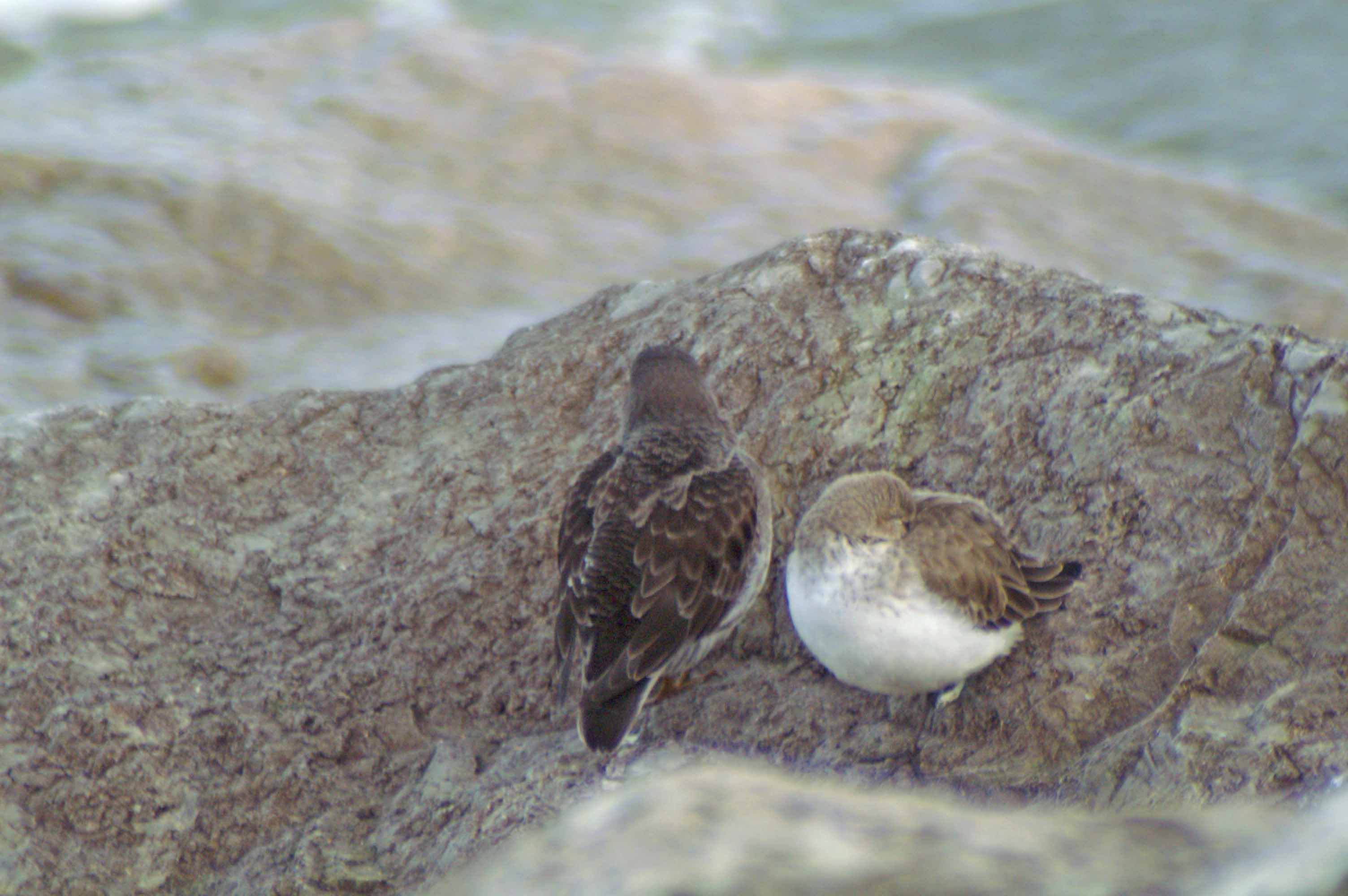
Purple Sandpiper close to a dunlin compares their size and plumage; the dunlin is slightly smaller and much lighter in colour

The Purple Sandpiper is usually a strictly coastal wader that visits Britain in the non-breeding season and then flies north to breed during the summer. They are seldom found on sandy beaches but prefer rocky coasts, where they can be seen searching for molluscs and crustaceans among the rocks and rock pools. In the North West They can turn up on any rocky coast from the tip of the Llyn peninsular in North Wales to Morecambe bay in the North. They begin to arrive in October, reaching a peak by November and start to leave again in April. By June, at the latest, they are gone.They are about the same size as a turnstone, with whom they are often seen, and a dark bird overall.

Purple Sandpiper-Calidris maritima

The purple sandpiper is the only small dark wader with yellow/orange legs likely to be seen on rocky shores,frequently in association with turnstones. They have a rather round-shouldered appearance, the wings are very dark grey, the head and back a slightly paler shade and the partially streaked breast an even paler shade. They have a longish beak for their size which is dark grey/black with a yellow or orange base. Their legs appear fairly substantial and are bright yellow or pale orange. In flight they appear very dark with just a faint, narrow white wing-bar and bold white edges on a black/dark grey tail.

Purple sandpiper amongst dunlin & a ringed plover

A purple sandpiper joins another group, showing all 4 species together; dunlin, ringed plover & a turnstone

Dunlin - Calidris alpina
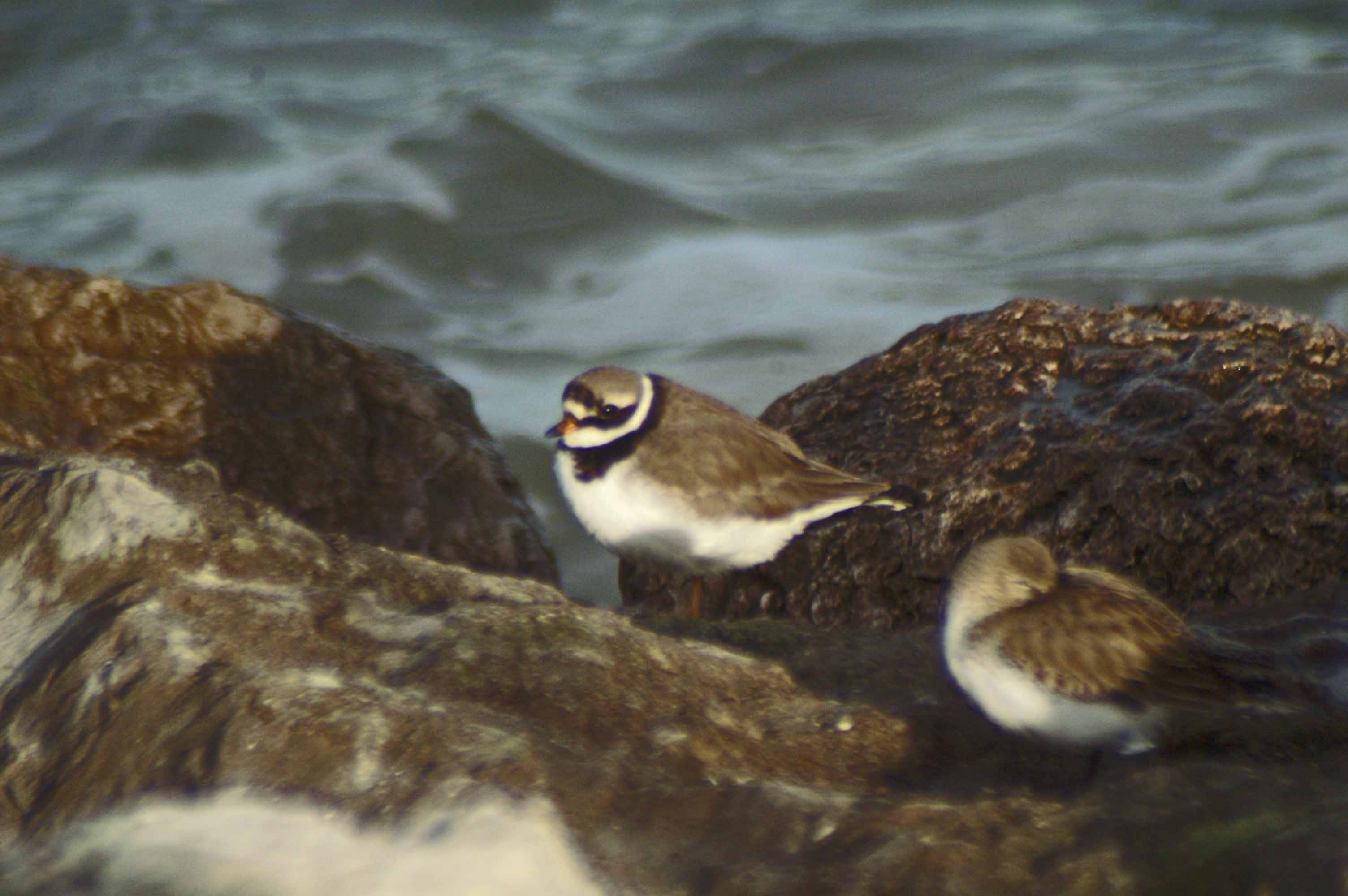
Ringed plover-charadrius hiaticula, in sunlight

2 ringed plover side by side; the one at the back is an adult, the other an immature with no black head band and an incomplete, brownish breast band

The birds were so close to the promenade that quite a few people passing by noticed them; some of whom stopped and asked me to identify the species for them. Perhaps not too surprisingly, it was the attractive Ringed Plovers that aroused the most amount of  interest.

Share this:

  • Share on Facebook (Opens in new window) Facebook
  • Share on Pinterest (Opens in new window) Pinterest
  • Share on X (Opens in new window) X
Like Loading...

New Year catch up part 11

22 Sunday Jan 2012

Posted by theresagreen in bird behaviour, birds of the seashore, Nature, nature photography, Rhos-on-Sea, wading birds

≈ 3 Comments

Tags

curlew camouflage, oyster catcher, redshank, Turnstone

The variety of  wading bird species regularly foraging on the seashores of Rhos-on-Sea and Colwyn Bay remains pretty much the same as reported in the late summer/autumn of last year; i.e in the main, curlew, oystercatcher, redshank and turnstone. The numbers of  individuals of some species has decreased, but there are still plenty to be seen and in respect of studying the birds more closely, I find that less is more. With fewer numbers to distract my attention I concentrate more on watching individual birds and pick up on aspects of their behaviour, the way they move, how they feed  and such like.  I seem to find this the most effective way to assimilate information about a species and how I learn to identify them more quickly in different settings by means of what practised birdwatchers call the bird´s ´giss´ (general impression size and shape).

Oystercatchers are resident here and there are always plentiful numbers to be seen and heard in a variety of places along the seashore. They are very distinctive in their appearance and its long orange bill make it unlikely to be confused with any other large pied wader .

Oystercatcher- Haematopus ostralegus

Two oystercatchers (one ringed) and a redshank also with a leg-ring

Oystercatchers flying along the sea edge with wind turbines in the background

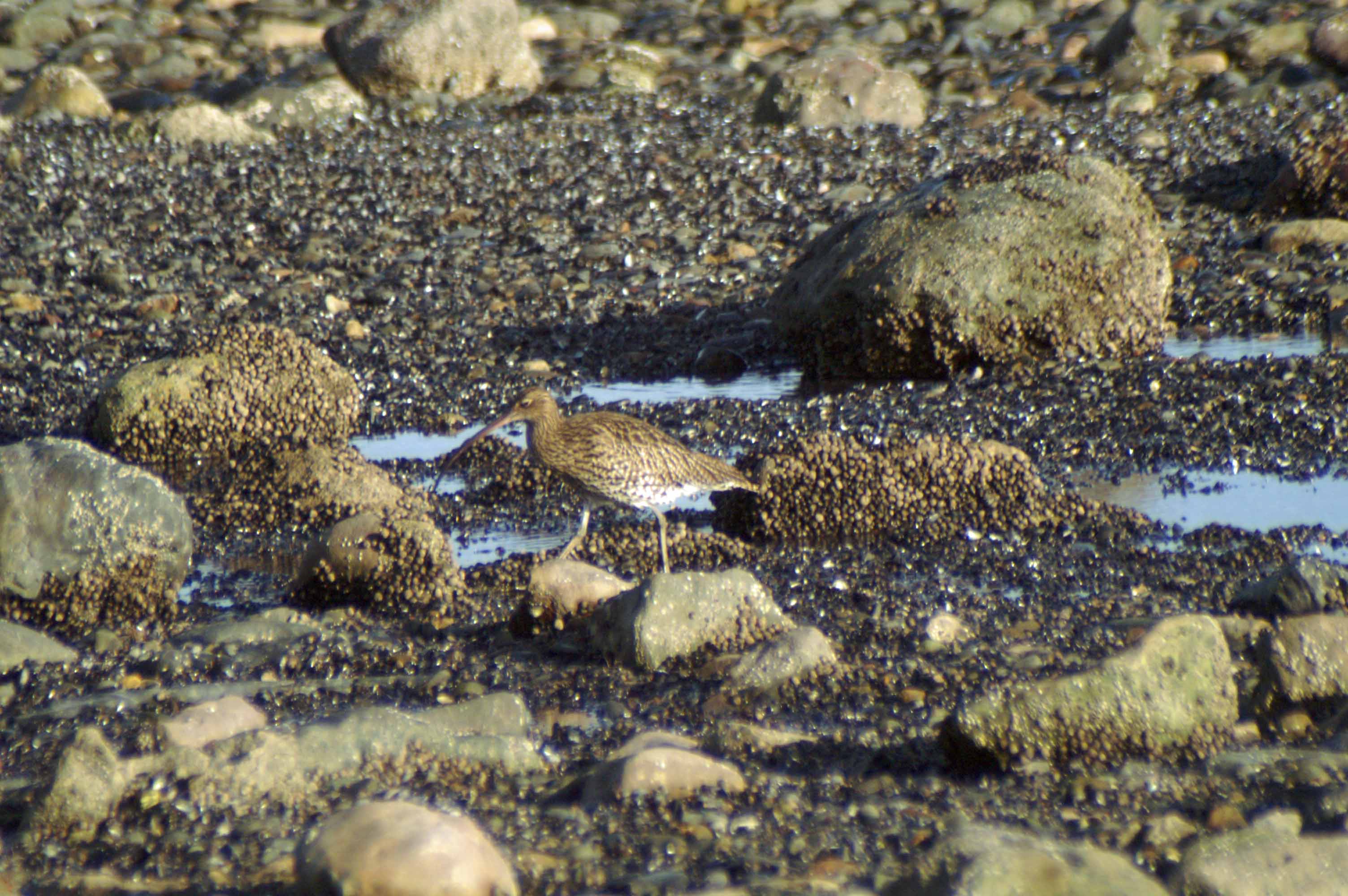
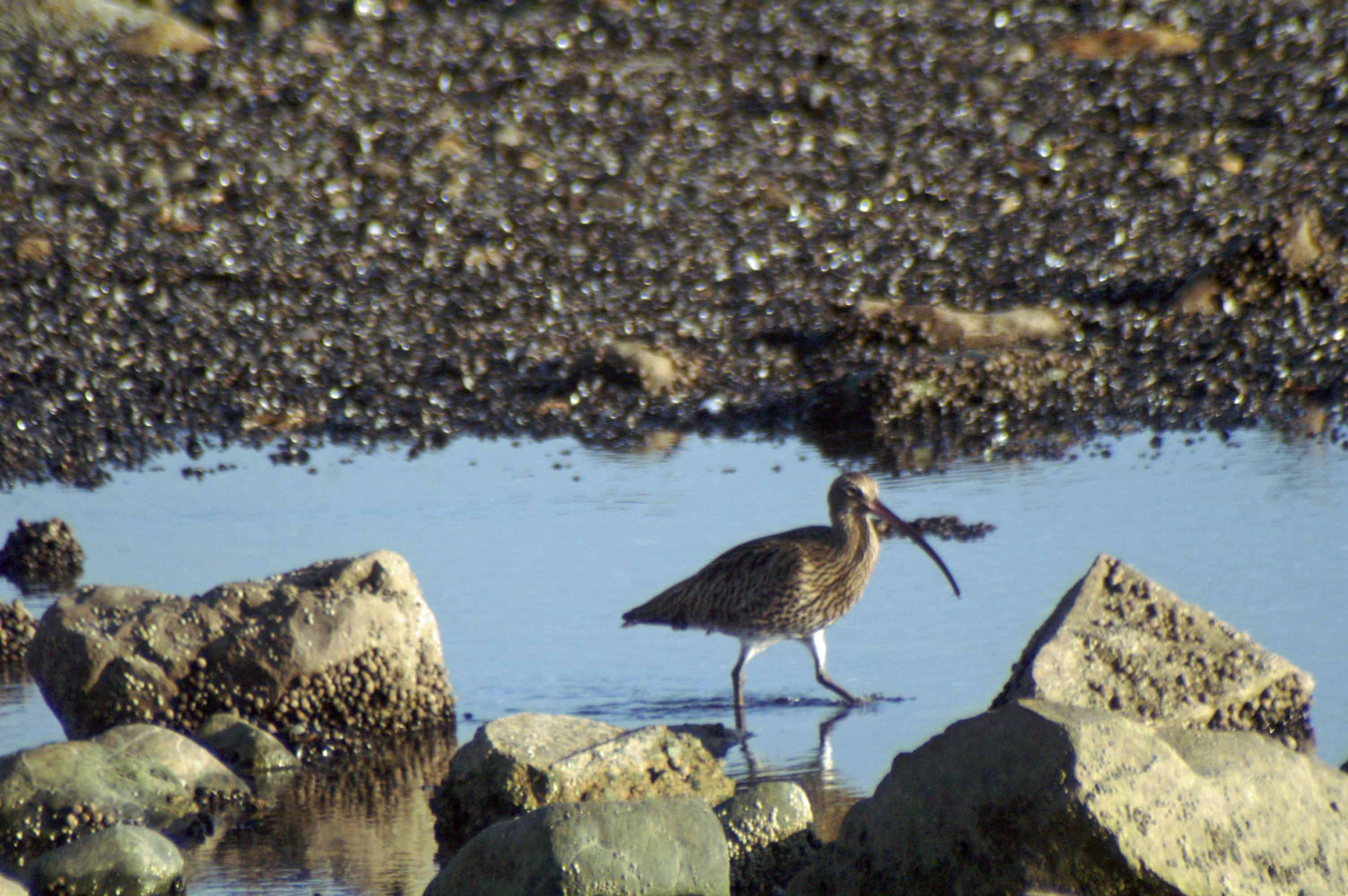
Curlews are best seen once the tide is quite well out as they arrive to forage around the exposed rocks and shallow pools. Despite their size and bulk, their cryptic camouflage is so effective that they can be difficult to pick out against the background of rocks, particularly those that host colonies of periwinkles. Once you have spotted one, more seem to magically appear, rather like those 3D pictures that were fashionable a few years ago that required your eyes to go slightly out of of focus before the image was revealed.

At low tide curlews are perfectly camouflaged against the rocks studded with periwinkles

Curlew-Numenius arquata

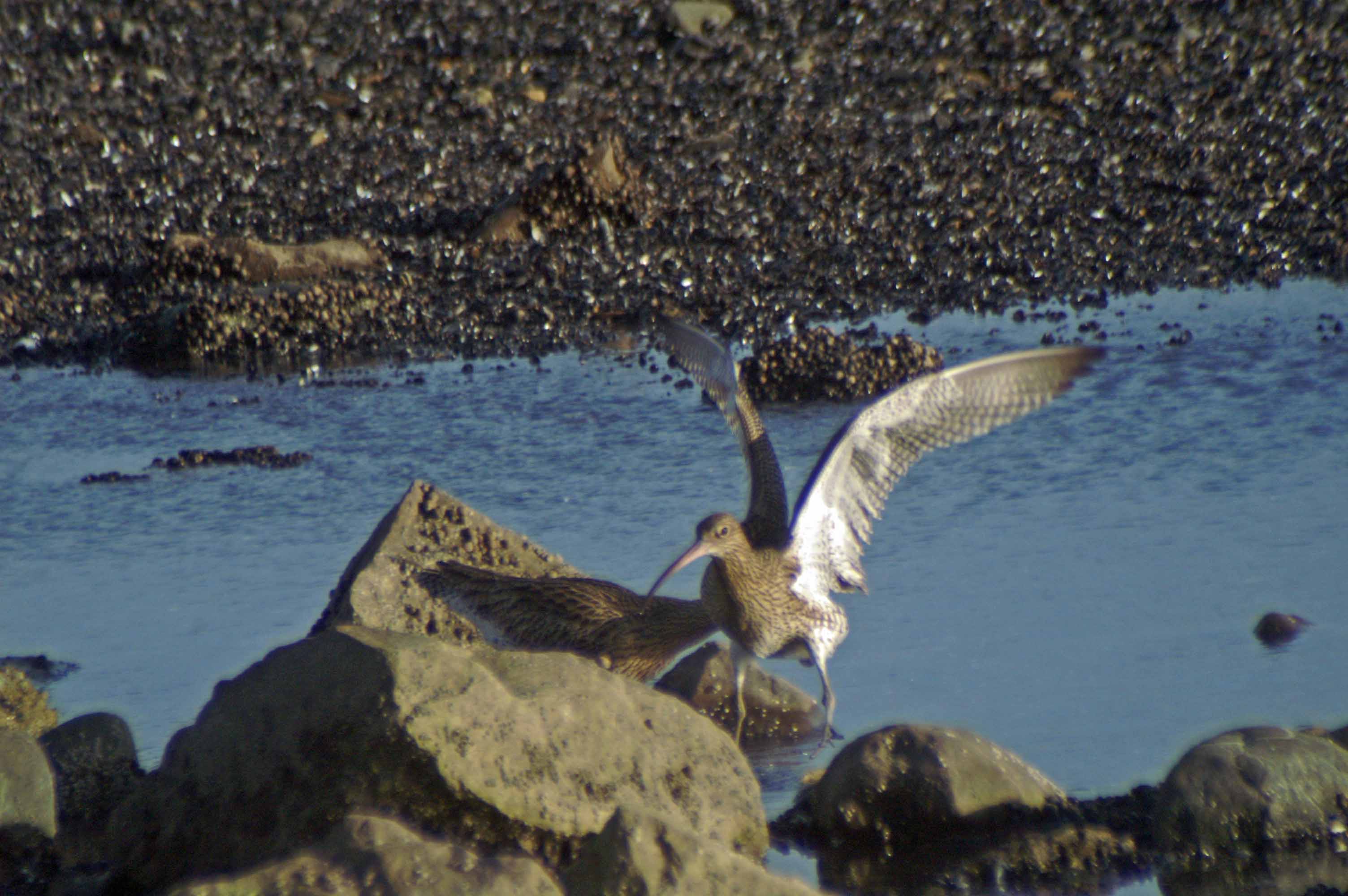
There is plenty of space here and the birds range widely across it. Often they may be spotted foraging independently and sometimes in small groups of two or three. I have only once witnessed an altercation between two individuals when one decided to oust the other from what was clearly a prime pool.

A skirmish between two curlew resulted in a great view of the bird's outstretched wings

Turnstones waiting for the tide to turn take the opportunity to rest quietly on the big rocks of the breakwater, springing into action as soon as the first strip of the shoreline is revealed by the retreating water.

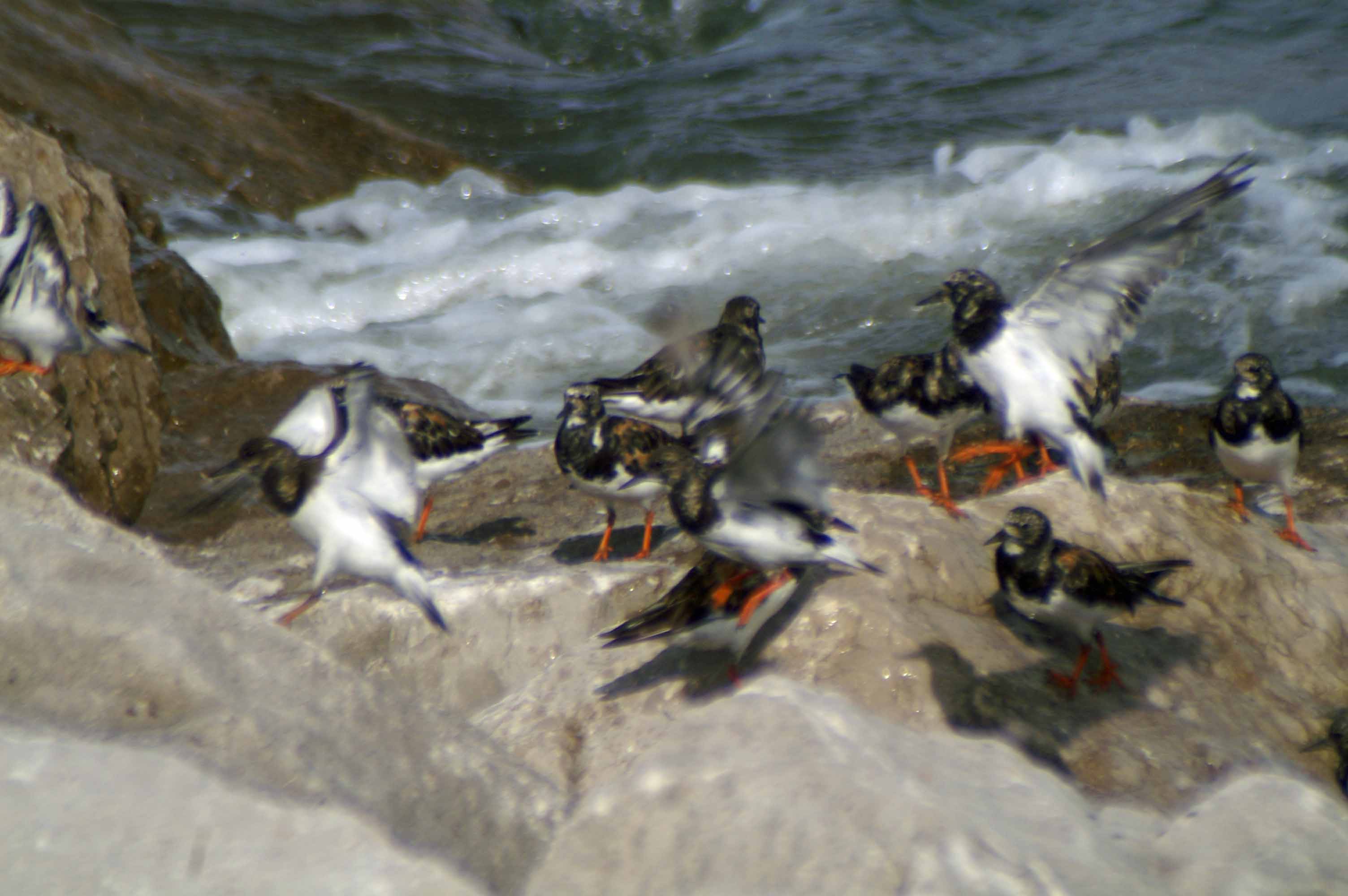
Turnstones resting and preening in the winter sunshine waiting for the tide to turn

The particular spot I photographed the birds in is a favourite roosting spot quite close to the edge of the promenade, but they are not in the least perturbed by passing people or dogs. They know exactly when the water will begin to retreat and some of the birds move nearer to the sea edge to wait despite being splashed by waves.

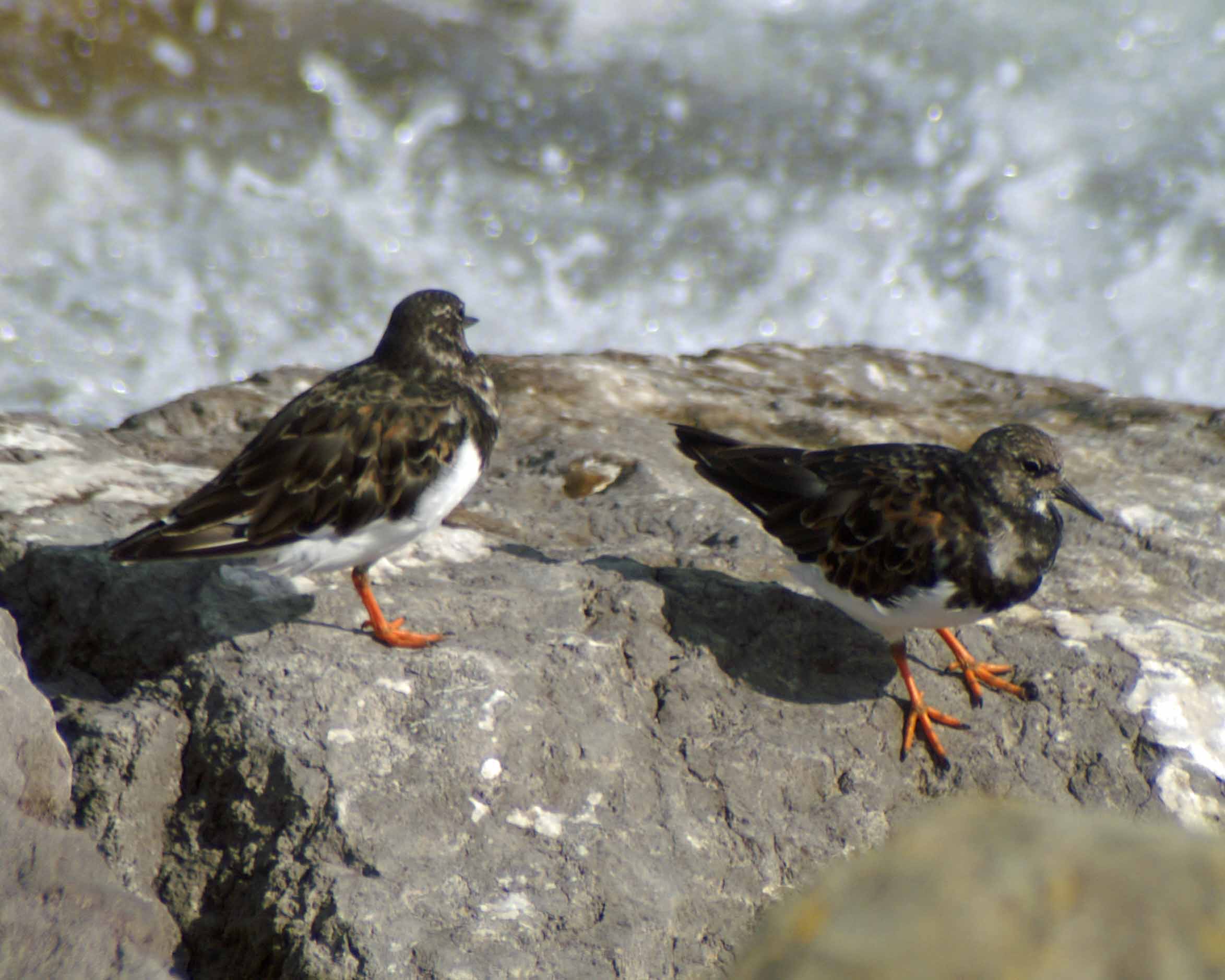
Turnstone on a sea-splashed rock

Occasionally the cold shower pays dividends and a stray shellfish may be thrown up nearby.

A Turnstone seizes a mussel thrown up by a wave

Those on the alert quickly move further down the shore to be the first to explore the first areas to be exposed by the retreating water.

A closer look at the undersides of a Turnstone as it flies away

Share this:

  • Share on Facebook (Opens in new window) Facebook
  • Share on Pinterest (Opens in new window) Pinterest
  • Share on X (Opens in new window) X
Like Loading...

Clifftop to seashore

24 Monday Oct 2011

Posted by theresagreen in birds of the seashore, Nature

≈ 4 Comments

Tags

brown seaweed, Linnet, Little Orme, redshank, Rhiwledyn Nature Reserve, rhos-on-sea, rocky seashores, seashore walks

I will be following the migrating birds soon, leaving the cooling shores of North Wales for the warmer ones of southern Spain, but I have a few things left that I want to include in the blog before I leave, including this last walk up to the Little Orme and back along the seashore to Rhos-on-Sea.

This was a very sunny day following a week or so of cooler rainy days. Arriving at the headland there was a strong breeze blowing in from the sea, so although it felt very warm in sheltered spots,it was considerably cooler out in the open.

Kestrel hovering over the cliff slope

As I walked towards the bay I was surprised by the sight of a Kestrel hovering low down over the cliff edge. Views of Kestrels have been scarce during the time I’ve been here, so although the photograph I took is not good I’ve used it as testament to having seen one at all. I love these little raptors and never cease to be amazed at their ability to hang almost motionless in the air for minutes at a time. This one was utilising the wind and air currents and remained suspended in this position for quite some time, perhaps having spotted potential prey, before being disturbed by people walking along the path close by.

There were very few insects about ; this Common Blue butterfly sheltered from the wind down in the long grass

I reached the cliff edge above the bay and sat for a while looking out over the sea. I had half-hoped I might see a seal or two here as they do breed in the locality, but all I saw was a lone Guillemot swimming and diving in the choppy water. The sighting was another first for me here, so I was pleased to see it, if only briefly. By far the commonest and most numerous birds here currently are cormorants, with a great number of them being dotted around the lower slope of the cliff and more flying back and forth. They are such a feature of the area that I think they merit a post of their own, so they will probably be the subject of my next one.

There is a published list of the ‘special’ plants found growing within the Rhiwledyn Nature Reserve on the Little Orme. Many had finished flowering by the time I arrived here in July, but I have discovered a few of them during the course of my walks. I was pleased to add one more today, the Wild Cabbage. It doesn’t sound too glamorous I know, but it is not a common plant, so its continued presence here is quite important.

Brassica oleracea, or wild cabbage, is a species of Brassica that is mainly native to coastal southern and western Europe. Its tolerance of salt and lime and its intolerance of competition from other plants typically restrict its natural occurrence to limestone sea cliffs.

Wild Cabbage-Brassica oleracea

Wild B. oleracea is a tall biennial plant. In the first year of growth the plant forms a stout rosette of large leaves. The leaves are fleshier and thicker than those of other species of Brassica, which are adaptations made by the plant to store water and nutrients in its difficult growing environment. In its second year, the stored nutrients are used to produce a flower spike 1 to 2 metres (3–7 ft) tall bearing numerous yellow flowers.

The dry, spent flower spikes of a wild cabbage plant. I like the effect of the tracery of bone dry silvery stems against the clear blue sky.

These cliffs are the haunt of corvids; I heard the characteristic deep ‘bark’ calls of Ravens and looked up to see a pair circling the rocky peak. There were one or two Carrion Crows about and quite a few Jackdaws foraging around on the ground.

A glossy black Jackdaw, beak agape

There wasn’t a great deal else to see here today that I have not already mentioned in previous posts, which perversely I was quite glad about: I would hate to think I might be leaving having missed something.

I had walked along the promenade and around the residential streets to get here, so I decided to walk back along the seashore as far as I could, accessing the beach via the steps at the end of a walkway between the houses. This far end of the beach of Penrhyn Bay, sheltered by the cliffs of the Little Orme has a different character to the open stretches leading to Rhos-on-Sea. Some vegetation has become established, nothing wildly exciting, but clumps of flowering Sea Mayweed were attracting quite a few insects.

Drone fly on a flower of Sea Mayweed

The seashore of Rhos-on-Sea consists of rocks in various sizes and first impressions may be of a harsh, barren environment predominantly coloured in shades of brown. It is not the traditional people-friendly playground that most holidaymakers seek; even walking across the uneven rocky surface is a feat of endurance requiring concentration and a good sense of balance lest you stumble and twist an ankle or worse. But the rocks form an essential part of the protective barrier between land and sea, dissipating some of the force of wild winter seas and creating a rich and reasonably undisturbed environment for wildlife.

A view to the Little Orme and Penrhyn Bay across the rocky seashore

The view in the opposite directions to Rhos-on-Sea and beyond

Some of the birds I photographed on my walk today:

A Redshank wading on the sea edge

Curlew investigating his reflection in a rockpool

Turnstone

A Herring Gull preparing to take off from a rock

Lift off. The gull has beautiful wings and they need strength too to be able to lift up that bulky body from a standing start. I think this one may have something wrong with its foot.

I spotted some small birds fly over the sea wall and land on the rocks of the breakwater that I imagine defines the boundary between Penrhyn Bay and Rhos-on-Sea. It was a little party of Linnets that were here to feast on the seeds of the wild plants that manage to grow here.

A little flock of Linnets gathered at the base of the sea wall to feed on flower seeds

Linnet-Carduelis cannabina, in winter plumage with a beak full of seeds

The tide was on its way out, leaving behind freshly exposed rocks covered with gleaming seaweed and a myriad of shallow rock pools. This is such an important habitat for wading birds I felt it would be remiss of me not to include a very brief look at some of the predominant features of this part of the seashore.

Bladder Wrack-Fucus vesiculosus

Brown seaweeds are the most common type of seaweed found on rocky beaches. They normally have a method to strongly attach themselves to rock surfaces.The brown colour of the seaweed is due to the brown pigment fucoxanthin overriding the green pigment chlorophyll. Both pigments are used in the photosynthesis of light, fucoxanthin improving the process when the algae is covered by water.

Toothed Wrack-Fucus serratus, underwater

Small dry clumps of seaweed are a common sight blowing around on many beaches. Also in this pool is some bright green Sea Lettuce-Ulva lactulva

The Limpet's conical shape means there is a large surface area in contact with the rockface. This allows for a large foot, providing limpets with a phenomenal grip, to such an extent that they cannot easily be prised off by hand.Limpets have an important affect on their environment, they keep it clear of algae. If you look in rock pools, often the only algae seen growing is on the ungrazed backs of limpets.

Periwinkles abound here, I think they are the edible variety. Brown leathery straps of seaweed are Oarweed-Laminaria digitata.

Of course, being me, once I started paying proper attention I kept noticing more and more, but I have to leave my self more to discover next time I am here, so that’s it from this seashore for now.


Share this:

  • Share on Facebook (Opens in new window) Facebook
  • Share on Pinterest (Opens in new window) Pinterest
  • Share on X (Opens in new window) X
Like Loading...

Birds and the art of fly catching

20 Thursday Oct 2011

Posted by theresagreen in Birds, birds of the seashore, Nature, nature photography

≈ 2 Comments

Tags

anthus petrosus, motacilla alba yarellii, Pied Wagtail, rhos-on-sea, rock pipit

As I continued my walk behind the rocky sea-break, it occurred to me that if I was finding it hard going walking against the strong wind,then the small birds I was hoping to see may be finding it even harder and may not be there today. Fortunately I was underestimating the powerful draw that an abundant supply of food is to hungry intelligent and opportunistic birds.The reason the Rock Pipits and the Pied Wagtails, (both species members of the motacillidae family) gather in this small area, more-or-less at the spot where Rhos-on-Sea becomes Penrhyn Bay is not pretty. A sewer outlet, that I was informed serves the village of Mochdre, runs beneath the sea wall and out into the sea here, and for some reason I do not really want to ponder too much, large numbers of flies swarm around the sea wall here. The flies are quite sizeable and it was quite unpleasant walking through the midst of a crowd of them, but the opportunity they presented to watch some beautiful birds in action was well worth a bit discomfort.

Rock Pipit-Anthus petrosus

I sat down close to where the main fly-catching action was taking place hoping the birds would not feel too threatened by the presence of me and my long camera lens. At first both Pipits, of which there were 2,  and the more numerous Wagtails did fly off, but only to a very short distance away and they returned to resume their feasting very quickly, elegantly pursuing their prey along the top of the sea wall then darting across to the rocks and back again. Their speed and acrobatic turns were impressive and highly entertaining, mostly too quick for my manually-focused lens, but wonderful to observe.

Rock pipit – Anthus petrosus

Family: Motacillidae

Scientific name from: Gr.: anthos=a small grassland bird described by Aristotle and Gr.: petros=a rock

Rock Pipit-Anthus petrosus

A coastal bird with a preference for rugged coastlines, Rock Pipits are easy to miss as their inconspicuous plumage shaded in greys, olives and buffs blends readily with the seaweed as they search for food amongst the boulders. It is larger and darker than its close relative, the meadow pipits and has a more heavily-streaked breast and dark olive-brown upper parts. In flight the dark-coloured legs and orange soles of the feet may be seen.

The Rock Pipit can be identified by grey outer tail feathers (white in Meadow Pipit) and by its alarm call - a thin 'phist'

The Rock Pipit is very strongly linked to rocky shores and usually nests in rather inaccessible sites on cliffs and among boulders of sheltered coves and gullies. During the winter months however, it sometimes deserts the high cliffs and may be seen on flat sandy coastlines and inland at sewage farms, floodlands and the borders of reservoirs.

Rock Pipit chasing flies across seaweed covered rocks

Their food includes a large proportion of marine animals, such as sandhoppers, small worms and marine molluscs.

Rock Pipits live partly on insects living in rotting seaweed, such as kelp flies. It also eats seashore plant food. This one was on the beach around Rhos harbour.

 Pied Wagtail – Motacilla alba yarrellii

Scientific name from:  Greek: muttex a bird described by Hesychius and Latin: albus=white

Family: Motacillidae

Once regarded as a species in its own right, the pied wagtail is now regarded by ornithologists as a race of the white wagtail of mainland Europe and Asia. The white wagtail may be seen on migration; it has paler grey upper parts and there is no join between the black cap and bib.

Increased numbers of Pied Wagtails have been a regular sight across the area for some weeks now. Small parties of them, which as they are mixed adults and juveniles could be families, can often be spotted foraging on the seashore amongst the vegetation and dry seaweed.

Pied Wagtail on the beach - black cap and bib merge together

Pied Wagtails really live up to their name, with black upper parts, throat and breast contrasts sharply with a white forehead, face and chest and long black tails that are in constant motion. Females show a lesser degree of contrast and have less black on their heads and a slate-grey back.

Juveniles are brownish-grey above, dusty below, with black crescent-shaped breast-band

Probably a more-developed juvenile, this bird still lacks the black throat of the adult

Overhead the Pied Wagtail’s call is as distinctive as their undulating, looping flight – a few flaps followed by a descending glide that is accompanied constantly by the ‘tschizzuck’ flight call.

In the early evenings I have seen them gathering on the lawns lining the streets that back onto the Little Orme. Pied Wagtails roost communally during the winter, often in great numbers, meeting up in the same place every evening before taking off together to roost for the night. Roosts may be in a reedbed, a copse or even in a built-up area.

Share this:

  • Share on Facebook (Opens in new window) Facebook
  • Share on Pinterest (Opens in new window) Pinterest
  • Share on X (Opens in new window) X
Like Loading...

Bird study – Curlew

10 Monday Oct 2011

Posted by theresagreen in Nature, nature photography, wading birds

≈ 2 Comments

Tags

bird camouflage, bird migration, Curlew, curlew folklore, curlew on seashore, Oystercatcher, rhos on sea

An aura of wildness surrounds the curlew perhaps more than any other wading bird. Its onomatopeoic, haunting cries ringing out across the lonely marshes and the tideways it inhabits embody the atmosphere of these often lonely and desolate places.

The curlew is the largest European wading bird, instantly recognisable on winter estuaries or summer moors by its long, downcurved bill, brown upperparts, long legs and evocative call.

Increasing numbers of Curlews have been present on the seashore at Rhos-on-Sea for a few weeks now, but I’ve been waiting to get some reasonable photographs before I wrote about them in more detail. There were several obstacles along the path to obtaining some clear images, not least of which was the fact that they are almost perfectly camouflaged within this rocky landscape, where brown is the predominant colour.

Despite their size, curlews blend perfectly into this landscape

BTO BIRDFACTS:

Curlew Numenius arquata   [Linnaeus, 1758]

Order: Charadriiformes Family: Scolopacidae
 Number in Britain: 105 thousand pairs (Summer)
 Conservation Status:
UK: AMBER
European: 2 Concern, most in Europe; Declining
Global: Near Threatened ( Details )

Curlews fly fast and low along the sea edge-in flight the white rump is very noticeable

Curlews glide smoothly and quietly through pools of water hunting for small invertebrates

The long curved beak enables the curlew to probe well under rocks

A curlew foraging peacefully alongside an oystercatcher

Breeding

In Great Britain the greatest numbers of breeding curlews are found here in North Wales, but a glance at a field guide will indicate the vast area occupied by the birds. Their range extends from this country east to the Urals and from Scandinavia and Russia in the north. This wide extent of habitats includes upland moors, grassy or boggy open areas in forests and damp grasslands and traditionally managed hayfields particularly in river valleys.

Autumn and winter

Directly after the nesting season the birds shift to marine coastal areas especially favouring mudflats and sands extensively exposed at low tide. Like most waders, at high water curlew form large roosts on either the highest saltings or on fields and marshes behind the sea walls. In some localities the birds move to nocturnal roosting spots at dusk, leaving again at dawn.

The curlew flock numbers several hundred. They roost in this field at the foot of Bryn Euryn, close to houses and a main road. They return at high tide too when they may be seen foraging in the field or standing quietly with their bills tucked under their wings.

When they are not foraging along the seashore here in Rhos-on-Sea the curlew flock surprisingly shares a field with cows, sheep and a couple of horses. Their choice of roost took me by surprise as the field is very close to a busy road, in total contrast to the deserted open spaces they are usually identified with.

When roosting the more dominant curlew tend to occupy the better sheltered areas within the assembly; birds at the front of flocks form closely packed ‘walls’ in high winds.

Coastal numbers build up from July and reach a peak in January and February. The resident UK population is boosted by incoming migrants to some 99,500–125-000 pairs. 

Curlew from Scotland spend autumn and winter on the British west coast and in Ireland. Populations from Scandinavia, the former Baltic States and north-west Russia head south-westwards towards this country: each of international importance for wintering curlew, the four localities holding largest numbers are Morecombe Bay, the Solway, the Wash and the Dee. Others, remarkably, winter in Iceland and the Faroes. And yet others penetrate to the West African coast. Curlew are capable of migrating at remarkable altitudes, even crossing the Himalayas at a height of 20,000 feet.

Curlews foraging at sea edge

The Curlew in folklore

The curlew features strongly in folklore, often not too favourably.

To hear a curlew call is not good. If you hear it at night, it means that bad luck is coming, but if heard during the day it signifies the arrival of bad weather.

The curlew has always been a bird of bad omen to sailors who have seen them flying overhead and if you hearing their call means that a storm is brewing and its inadvisable to set sail for the open sea.

St Beuno and the Curlew

It is hard to find the nest of the curlew; this story from the folklore of North Wales, attributed to St Beuno offers an explanation for that.

When he lived at Clynnog St Beuno used to go regularly on Sundays to preach at Llanddwyn, off the coast of Anglesey, walking on the sea with the book of sermons, which he used to carry about with him. One Sunday, as he was coming back from Llanddwyn to Clynnog, treading the surface of the sea as if it had been dry land, he dropped his precious writings into the water, and failed to recover them. The saint was much worried, because even for saints the task of writing sermons is a troublesome one.

When he reached dry land he was much relieved to find his book on a stone out of the reach of the tide,with a curlew mounting guard over it. The pious bird had picked it up, and brought it to safety. Thereupon the holy man knelt down and prayed for the protection and favour of the Creator for the curlew. His
prayer was heard, and ever since it has been extremely difficult to discover where the long-beaked bird lays its eggs.


Share this:

  • Share on Facebook (Opens in new window) Facebook
  • Share on Pinterest (Opens in new window) Pinterest
  • Share on X (Opens in new window) X
Like Loading...

Hungry Herring Gulls

21 Wednesday Sep 2011

Posted by theresagreen in birds of the seashore, Birdwatching on North Wales coast, Nature, Nature of Wales, Rhos-on-Sea

≈ 2 Comments

Tags

colwyn bay beach, herring gull, herring gull feeding behaviour, herring gull juveniles begging for food, larus argentus

Walking along the sea shore the other day I came across a Herring Gull in the process of eating a fish. I have no idea what species of fish it was, all I can say is that it was a flat fish and either whole or almost-whole, either way, large enough for me to be amazed that a bird could even attempt swallow it.

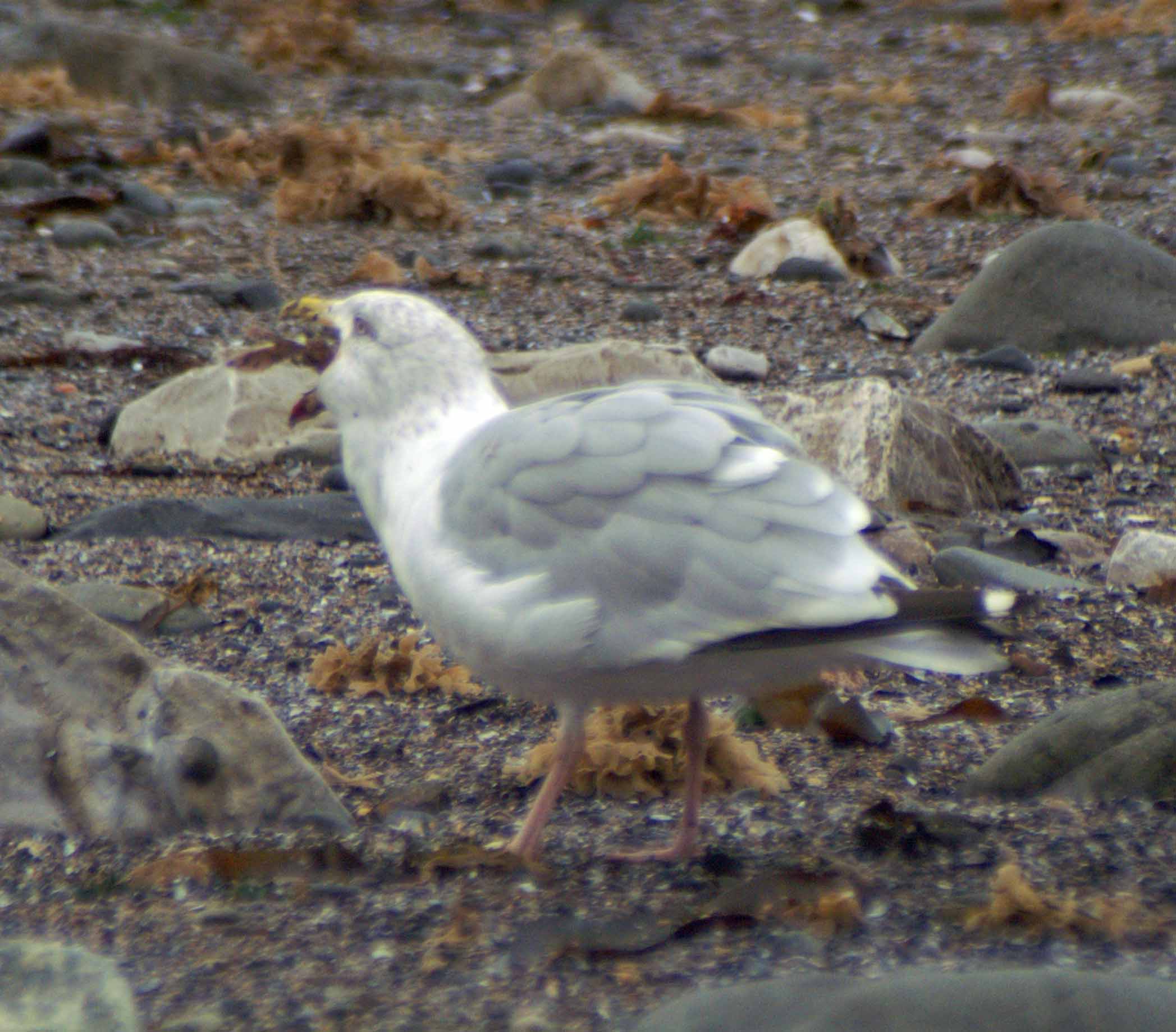
17/9/11-The gull with most of the fish in its gullet

17/9/11- It was not going down easily, so it had to come back up again

17/9/11-A second attempt -and this time the fish disappeared

17/9/11- All that remained was a lump in the gull's crop - it should keep him going till at least lunchtime

Herring Gulls are  omnivores and opportunists like most Larus gulls, and will scavenge from rubbish dumps, landfill sites, and sewage outflows; food obtained this way may comprise up to half of the bird’s diet. Despite their name, they have no special preference for herrings — in fact, examinations have shown that echinoderms and crustaceans comprised a greater portion of these gulls’ stomach contents than fish.

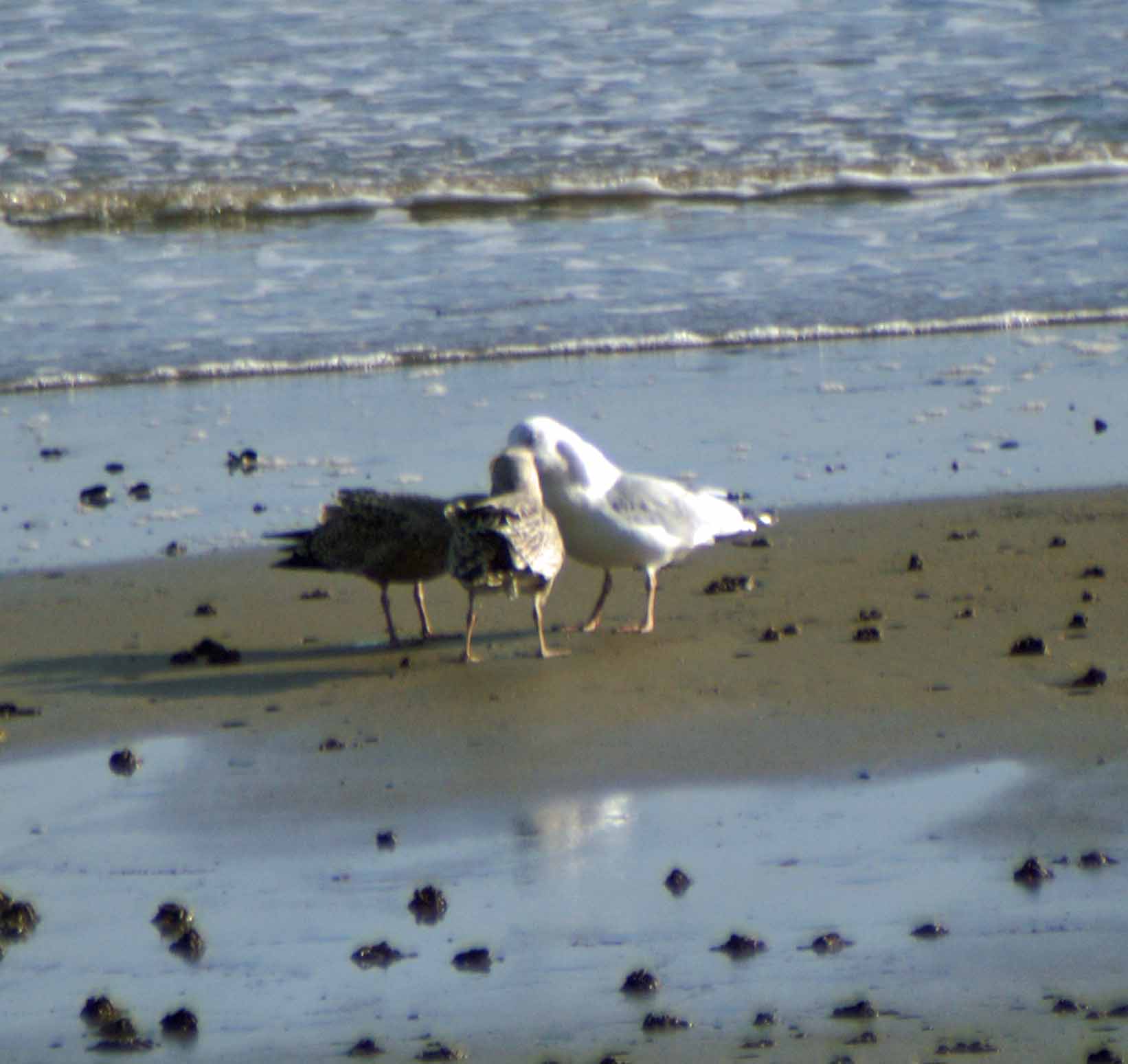
On Colwyn Bay seashore I witnessed more gull feeding behaviour, this time two juveniles were begging an adult, presumably a parent, to feed them.

Young Herring gulls persuading a parent to feed them

Juveniles use their beaks to “knock” on the red spot on the beaks of adults to indicate hunger. Parents typically disgorge food for their offspring when they are “knocked”.

Parent gulls will feed their offspring for up to 6months if they continue to beg

Chicks are generally fed by their parents until they are 11–12 weeks old but the feeding may continue up to six months of age, if the young gull continues to beg. The male feeds the chick more often than the female before fledging, the female more often post-fledging.

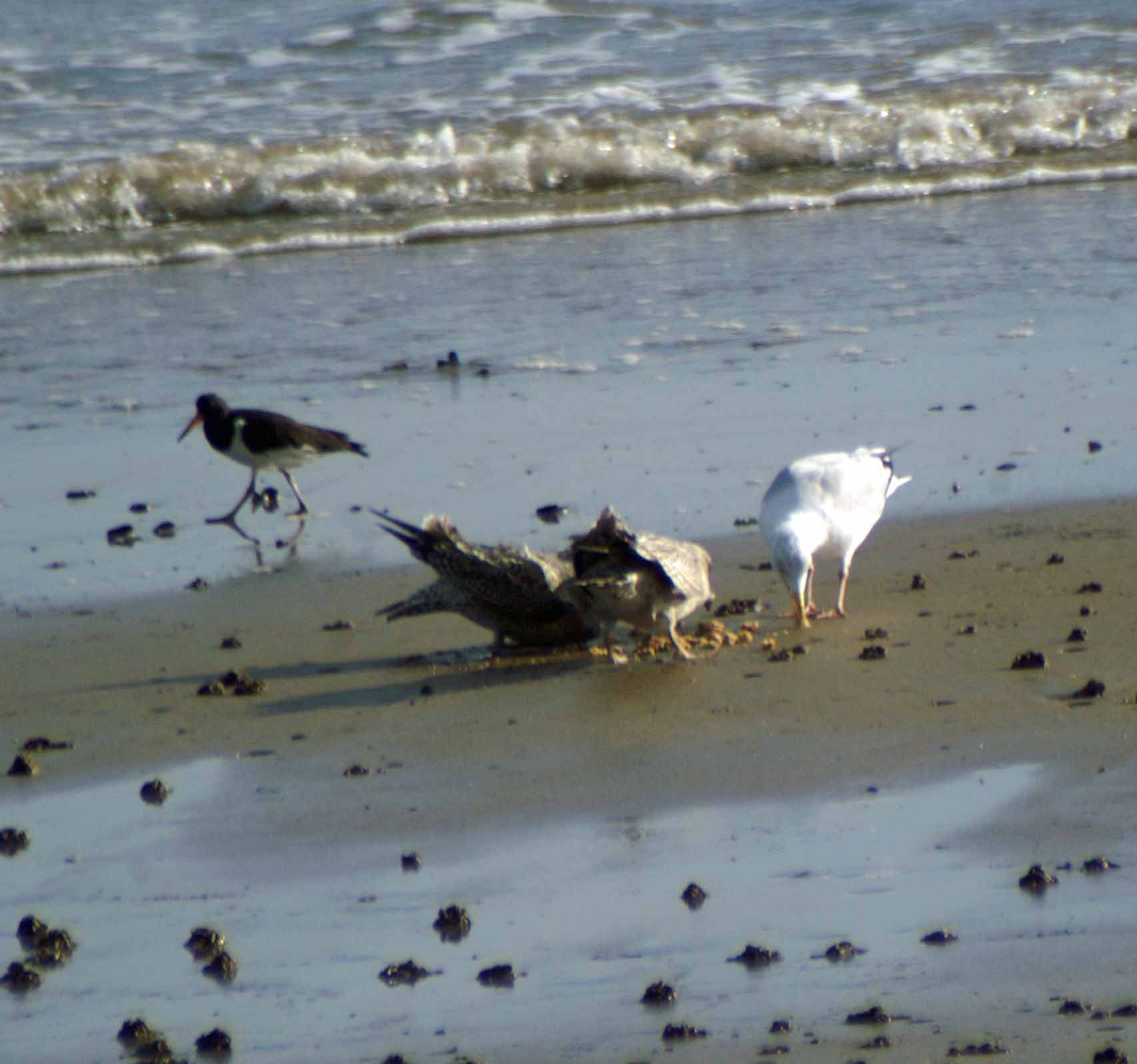
The adult was persuaded to disgorge what it had eaten onto the sand

The young birds begging did the trick and the adult disgorged whatever it had eaten onto the beach, which did not look at all appetising from where I was standing, but the three birds seemed to be happy with it.

Share this:

  • Share on Facebook (Opens in new window) Facebook
  • Share on Pinterest (Opens in new window) Pinterest
  • Share on X (Opens in new window) X
Like Loading...

Turnstones

19 Monday Sep 2011

Posted by theresagreen in wading birds

≈ 4 Comments

Tags

bird migration, birds on the seashore, brown black and white bird with orange legs, migrant birds, rhos-on-sea, small wading birds, Turnstone, turnstone flock

The tide was high this morning when I arrived at the promenade, so I was not expecting to see many birds about foraging on the shore, but I’m happy enough to just watch the sea, so I looked out over the railings anyway . I’m glad I did that, as there beneath me, a whole flock of Turnstones were perched atop the sea-defence boulders immediately below. The birds were either resting quietly or catching up on their preening as they waited for the tide to turn and expose the rock shore once more.

11/9/11- Turnstone dozing

Turnstone-Arenaria interpres

Turnstones are distinctive medium-sized waders. They are high Arctic breeders, and are migratory. They are chunky powerful birds that have strong necks and bills that are well suited to their feeding technique. As the name implies, these species readily turn stones, shells or seaweed looking for hidden invertebrates. They eat insects, crustaceans and molluscs.

11/9/11-Members of the flock were resting or preening their feathers

As the birds were obligingly still, I counted 70 birds in varying sized groups spread along a length of the rocks, but there may have been more below and out of my sight.

11/9/11-The birds' rest was temporarily disturbed by a splashing wave

It would be interesting to know where the birds have come from as these particular birds have not been here for long. Turnstones are present around our coastline for most of the year. Birds from Northern Europe pass through in July and August and again spring, then Canadian and Greenland birds arrive in August and September and remain until April and May. Non-breeding birds may stay through the summer.

11/9/11-Plumage is mottled shades of brown, black, grey and chestnut brown. The head is patterned either brown and white or black and white. Underparts are white. Legs are orange.

Turnstones spend most of their time foraging creeping and fluttering over rocks, picking out food from under stones.

Their appearance is striking in flight, with white patches on the back, wings and tail.

Where to see them

Turnstones are found all around the UK coastline. They are strictly coastal,and are seen on stony, sandy and muddy shores beaches and are often found together with other waders such as Purple Sandpipers. The birds particularly like feeding on rocks covered with seaweed, and will feed along seawalls and jetties.


Share this:

  • Share on Facebook (Opens in new window) Facebook
  • Share on Pinterest (Opens in new window) Pinterest
  • Share on X (Opens in new window) X
Like Loading...

Activity and new arrivals on the seashore

16 Friday Sep 2011

Posted by theresagreen in birds of the seashore, Birdwatching on North Wales coast, Nature, Rhos-on-Sea

≈ Leave a comment

Tags

cormorants flying, Oystercatcher, redshank, ringed plover, sandwich, Turnstone

The summer is rapidly coming to an end and many species of birds are on the move, some returning to their winter feeding grounds in this country, others flying in from the north and others taking off to return to the warmer regions of Southern Europe and Africa. During the past few weeks I have already noted that the numbers of Oystercatchers and Sandwich Terns have increased dramatically here at Rhos-on-Sea on the North Wales coast and that Curlews have become a regular sight foraging on the seashore.

24th August

There was a lot of activity on the seashore late in the afternoon as the tide turned. I’m not the best at counting large numbers of birds, especially when they’re mobile, but there are definitely several hundred Sandwich Terns here presently and even more Oystercatchers. Mixed flocks of the birds line up along the sea edge, moving closer inshore as the water encroaches the rocky beach.

24/8/11-Sandwich Terns and Oystercatchers line up expectantly along the sea edge as the tide comes in

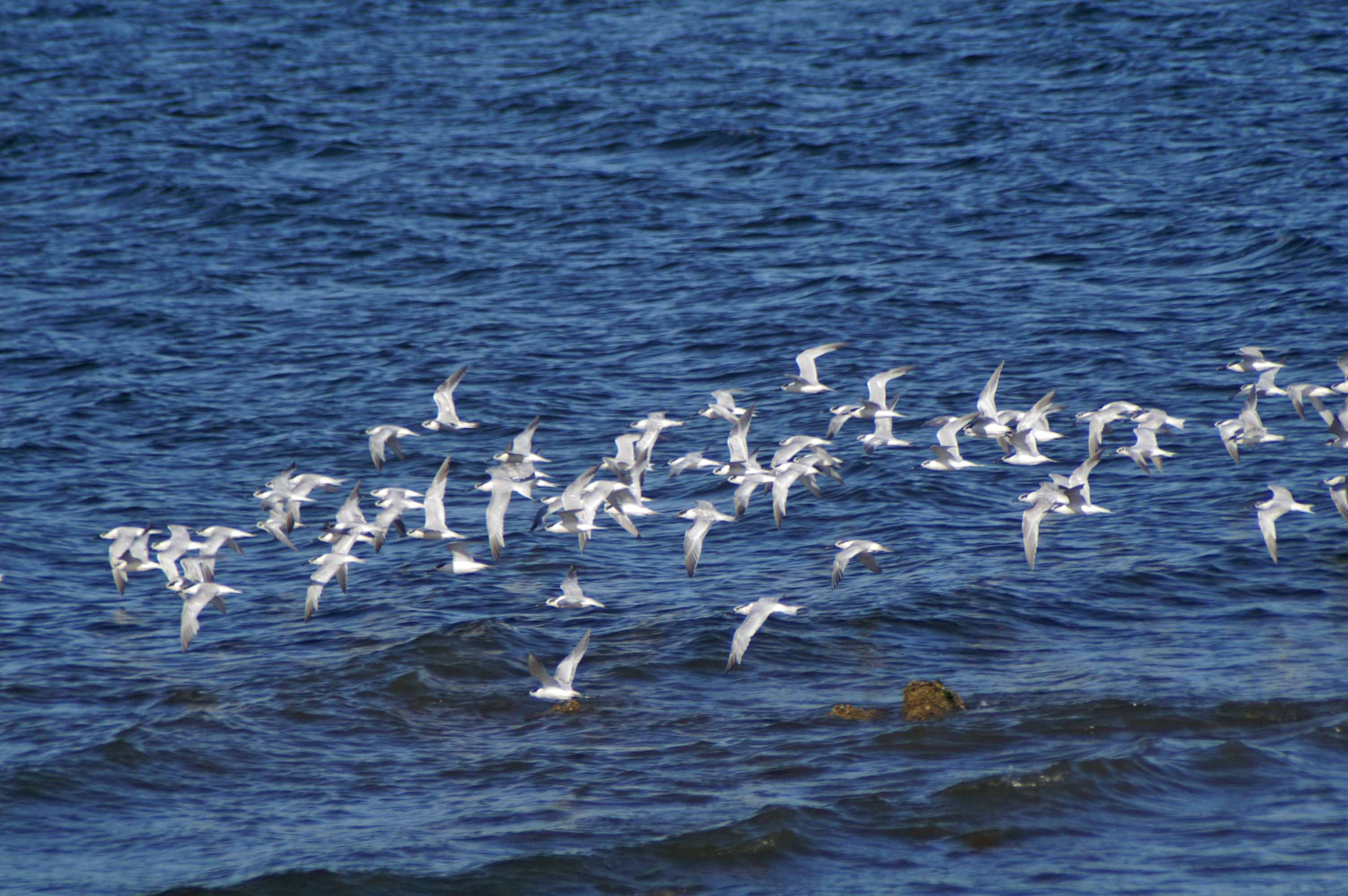
The Terns are restless; there are a lot of to-ings and fro-ings between their various groups and occasionally a whole flock takes off in unison, only to return to the same spot seconds later. The Oystercatchers take little notice of their flighty companions and continue to wait or forage patiently.

24/8/11- Sandwich Terns take off in unison

24/8/11-Terns settling back down amongst Oystercatchers

I was content watching the Tern displays, then noticed a couple of other waders well-camouflaged against the greys and browns of the shore; the bright red legs that give the birds their name gave away Redshanks that had infiltrated the ranks of Oystercatchers. The proximity of the two species shows the contrast in size. The Redshanks were quite distant, but now I have seen them I hope for better views another time.

24/8/11-Redshanks amongst Oystercatchers

I was feeling pleased to have Redshank to add to my sightings list, then spotted two separate flocks of smallish birds fly in almost simultaneously and was delighted to witness the arrival of both Turnstones and Ringed Plovers. The individuals of both flocks landed on rocks at the sea edge that were surrounded by water, then stayed put for a few minutes before venturing on to the shore to forage. I estimated that there were around 20 birds in each flock.

24/8/11-Turnstones arrived with Ringed Plovers

24/8/11- Turnstone flock flying away

24/8/11-Cormorants flying toward the Little Orme, calling as they flew

24/8/11-Black-headed Gull flying

Birds to be seen currently on the shore at Rhos-on-Sea:

Cormorant – Phalacrocorax carbo, Oystercatcher – Haematopus ostralagus,  Ringed Plover – Charadrius hiaticula, Turnstone – Arenaria interpres, Redshank –  Tringa totanus, Curlew – Numenius arquata,Black-headed Gull – Larus ridibundus, Herring Gull – Larus argenatus, Lesser Black-backed Gull – Larus fuscus, Sandwich Tern – Sterna sandvicencis, Pied Wagtail – Motacilla alba, yarellii

Share this:

  • Share on Facebook (Opens in new window) Facebook
  • Share on Pinterest (Opens in new window) Pinterest
  • Share on X (Opens in new window) X
Like Loading...

Seashore treats

13 Tuesday Sep 2011

Posted by theresagreen in birds of the seashore, Nature

≈ Leave a comment

Tags

birds of North Wales, curlew on seashore, herring gull, oystercatchers feeding, oystercatchers flying, wading birds on seashore

20th August

I had some errands to do in the village this morning and as it was a lovely bright sunny morning I decided to walk there along the promenade. As always I stopped by the tiny St.Trillo’s chapel to scan the rocky seashore; the tide was going out and sightings of Oystercatchers and Sandwich Terns were rather distant, and I was set to move on until I noticed a slight movement around a rock pool and spotted a Curlew, the closest view of one I’ve had since I first realised they were present here.

20/8/11-Curlew on the beach

Returning home from the village  I stopped for a quick look around the area at the end of the dry sandy beach where there are large rocks and also the edge of the harbour. To my surprise there was a small group of Oystercatchers there and I had some close up views of them foraging amongst the rocks.

20/8/11-Oystercatcher-Haematopus ostralegus

20/8/11-Oystercatcher probing a shellfish

20/8/11-Oystercatcher & Herring gull

20/8/11-Herring Gull posing

20/8/11-Oystercatchers flying

Share this:

  • Share on Facebook (Opens in new window) Facebook
  • Share on Pinterest (Opens in new window) Pinterest
  • Share on X (Opens in new window) X
Like Loading...

Rhos-on-Sea- seashore surprises

24 Wednesday Aug 2011

Posted by theresagreen in birds of the seashore, Nature, Nature of Wales

≈ Leave a comment

Tags

Crow dropping shellfish onto rocks, Curlew, curlew on seashore, intelligent behaviour of crow, migrant hoverfly, rhos-on-sea

Walk from Penrhyn Bay to Abbey Road, Rhos-on-Sea

The beach of Penrhyn Bay is mostly made up of shingle, a hostile environment for plants, but some tough species have gained a hold there, spreading forward from the base of the sea wall.

24/7/11-Dock plants growing on the seashore with the Little Orme in the background

Shingle as a habitat

Shingle plants will begin to colonise above the high tide mark. Below this the moving pebbles will prevent any seedlings getting a stable hold. The plants that grow on the shingle usually have long and tough roots able to withstand the friction of the pebbles that will be disturbed by storms. Often referred to as a desert-like environment, plants like dock have water-retaining leaves that enable them to be one of the larger colonisers of this unique habitat, while smaller plants may be able to harness the water that collects on the surface of the pebbles.

24/7/11-Penrhyn Bay beach-Common Mallow growing on the shingle was attracting insects
24/7/11-Penrhyn Bay beach -a Migrant Hoverfly resting on a mallow leaf

I left the beach where the shingle  gives way to the rocky shore of Rhos-on-Sea, keeping an eye on the beach from the promenade. A Black-headed Gull caught my attention and I stopped to have a closer look. The gull was standing on a patch of muddy sand and I was intrigued to see the tops of car tyres protruding above the sand behind it. The way they were placed seemed to be deliberate, so I wondered if they are being used to reinforce the sea-break or stabilise the sand? They must have been there for a good while as some have seaweed growing over them.

24/7/11-Black-headed Gull with tyres bedded in the sand behind it

Focusing my attention on the gull and the tyres, I had half-noticed a brownish coloured bird against the rocks behind them that I thought was a young Herring Gull. When I gave it proper attention I had a pleasant surprise; it was actually a wader, either a Whimbrel or a Curlew, that was foraging around the rocks, probing its long curved beak into the the muddy sand.It was so well camouflaged against the rocks it was difficult to keep track of it, but I got a better view when it spent a couple of minutes in a more open pool of water.

24/7/11-Curlew on the sea shore
27/7/11-The Curlew blended perfectly into its surroundings

The wader disappeared from sight amongst the rocks and I carried on with my walk. I didn’t get far before I stopped again to watch a Crow that was acting strangely, flying up into the air then diving down again. It took a few minutes to realise that what it was doing: it was searching for a shellfish, picking it up in its beak, flying up then dropping it onto the rocks hoping to break it and diving down after it.

24/7/11-The shellfish does not drop straight down, so the crow has to follow it quickly or lose sight of it. 
24/7/11-The crow is surprisingly agile and turns quickly to make a steep dive
24/7/11-Diving Crow keeping its eyes on the landing position of its snack

There was quite a gap between each performance which I thought may have been either because the shellfish needed to be a particular size or species, or perhaps needed to be partially open, or  simply that each mouthful obtained this way required so much effort – it may well take more than one drop to smash a shell. I was fascinated by their behaviour and very impressed with their ingenuity; clever things.

There were quite a few gulls about; Lesser Black-backed gulls, Herring gull adults and juveniles and a few more Black-headed gulls. Herring gulls frequently chase other birds they see flying with food in their bills, hoping to steal it if possible. During an interlude in the Crow entertainment I spotted a mottled brown and white bird that I took to be a juvenile Herring gull being chased by an adult; as it broke away and flew towards me I was surprised again to see that it was another Curlew carrying something quite large in its bill; a crab I think.

24/7/11-Curlew flying with food

The Curlew flew back along the sea edge towards Penrhyn Bay, landing a short distance away from me amongst a cluster of rocks. Watching it closely I could see other Curlews gathered there, difficult to count as they are very hard to see, but at least another three.

It’s amazing what you see sometimes when you don’t set out to look! 

Share this:

  • Share on Facebook (Opens in new window) Facebook
  • Share on Pinterest (Opens in new window) Pinterest
  • Share on X (Opens in new window) X
Like Loading...
← Older posts
Newer posts →
Follow everyday nature trails on WordPress.com

Enter your email address to follow this blog and receive notifications of new posts by email.

‘But it is the common species that keep the living world ticking over and provide most of our experiences of wildlife, and I would argue that maintaining the abundance of these is as important a conservation priority as maintaining the existence of rarities’. Richard Mabey

MOST RECENT POSTS

  • A Glimpse of Spring to Come January 22, 2025
  • Hunting the Wren December 28, 2024
  • Oh, Christmas Tree December 18, 2024
  • In and Out of the Ivy February 15, 2024
  • Nature’s Fireworks November 30, 2023
  • Wild Autumn along the Coast Path November 3, 2023

OLDER POSTS

LOOKING FOR SOMETHING IN PARTICULAR?

  • Sights and Sounds from the Little Orme 1
    Sights and Sounds from the Little Orme 1
  • Things Bright and Beautiful
    Things Bright and Beautiful
  • Catchers, a Duck and Divers
    Catchers, a Duck and Divers
  • Following a river to a Fairy Glen
    Following a river to a Fairy Glen
  • Fine Dining for Crows
    Fine Dining for Crows
  • A Windy Wildflower Trail
    A Windy Wildflower Trail
  • A Window on the Woods-Winter 1
    A Window on the Woods-Winter 1
  • Butterflies and more rare treats
    Butterflies and more rare treats
  • Shades, Sounds and Scents of the Woods
    Shades, Sounds and Scents of the Woods
  • Bird study: Blackcap
    Bird study: Blackcap

nightingale trails

The Walk of the Monarch Butterfly-Sendero de la Mariposa Monarca

The Walk of the Monarch Butterfly-Sendero de la Mariposa Monarca

MY WILDFLOWER BLOG: where the wildflowers are

Snowdrop

Snowdrop

most recent posts

Follow everyday nature trails on WordPress.com

Social

  • View teresamaygreen’s profile on Twitter

Enter your email address to follow this blog and receive notifications of new posts by email.

Website Built with WordPress.com.

  • Subscribe Subscribed
    • everyday nature trails
    • Join 359 other subscribers
    • Already have a WordPress.com account? Log in now.
    • everyday nature trails
    • Subscribe Subscribed
    • Sign up
    • Log in
    • Report this content
    • View site in Reader
    • Manage subscriptions
    • Collapse this bar
 

Loading Comments...
 

    %d