Tags
Black-headed Gull, Cormorant, Curlew, Grey Heron, herring gull, little egret, Oystercatcher, redshank, Rhos Point, ringed plover, seashore, tide turn, Turnstone, wading birds
November 8th – Rhos Point
Over the past few weeks the number of birds visiting Rhos Point to feed and/or to roost has been building and is now probably at its peak. Each and every day, when the incoming or outing tide reaches a certain distance from the rocky shoreline, birds begin to fly in, as though summoned by magic. They don’t all arrive at once, and the behaviour of individuals on landing varies; some begin to forage straight away, browsing for fresh supplies either being brought in by an incoming tide or left stranded as the water recedes, while others wait, settling to preen or rest. With no internal clock or instinct of a bird, and despite the help of a tide table, my hopes of catching the best of the action at close quarters are frequently thwarted; but this day, quite by chance, my timing was perfect and there were some quite special ‘warm-up’ appearances before the main event got underway too.
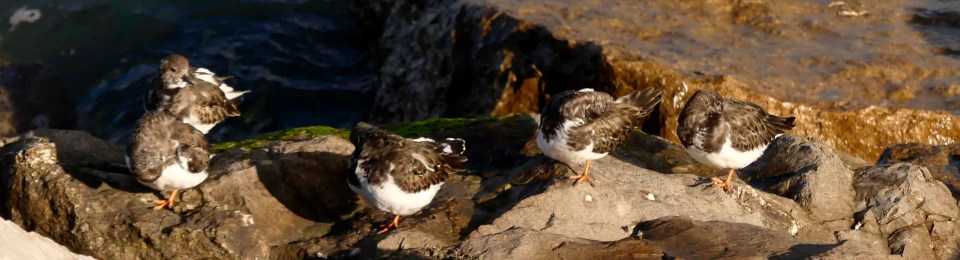
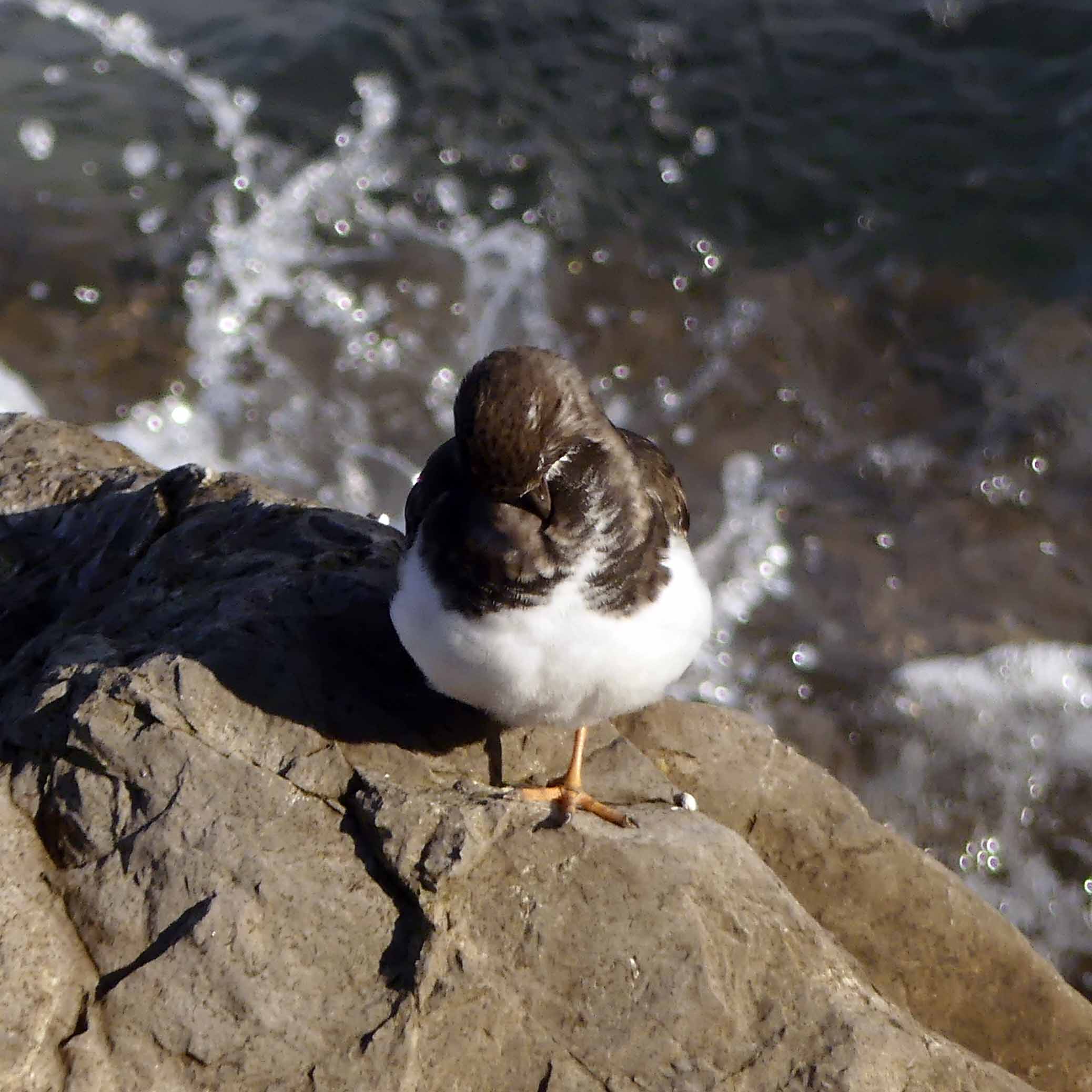
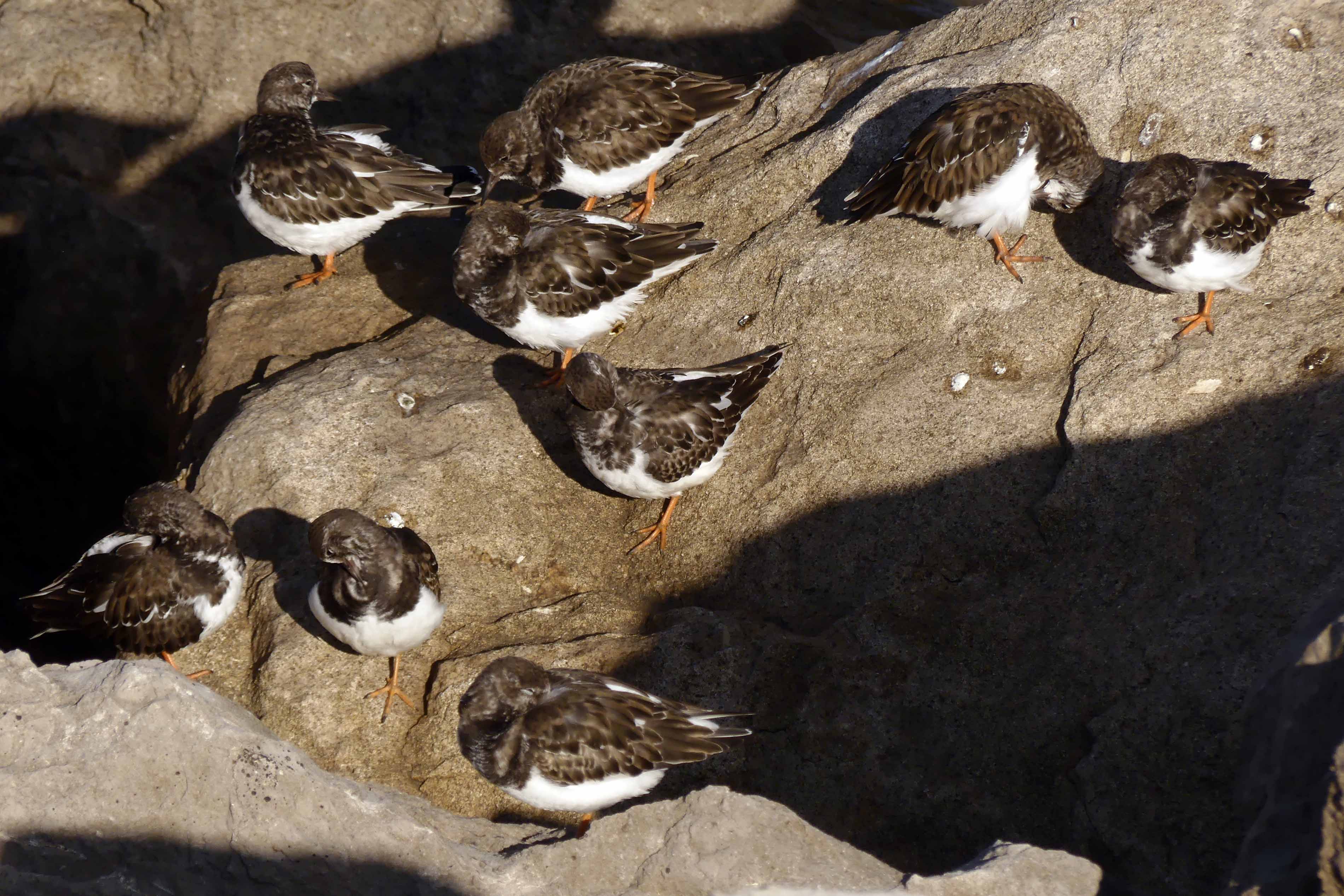
11:50 The tide was just beginning to go out, and peering over the railings down onto the huge rocks of the sea defences I was happy to find the seasonally resident flock of turnstones were still at roost. The flock of around 30 or 40 of these charismatic little waders, gathers at more or less the same spot between tides and having the chance to see them gathered here so close to where people pass, albeit unnoticed by most, is quite special.
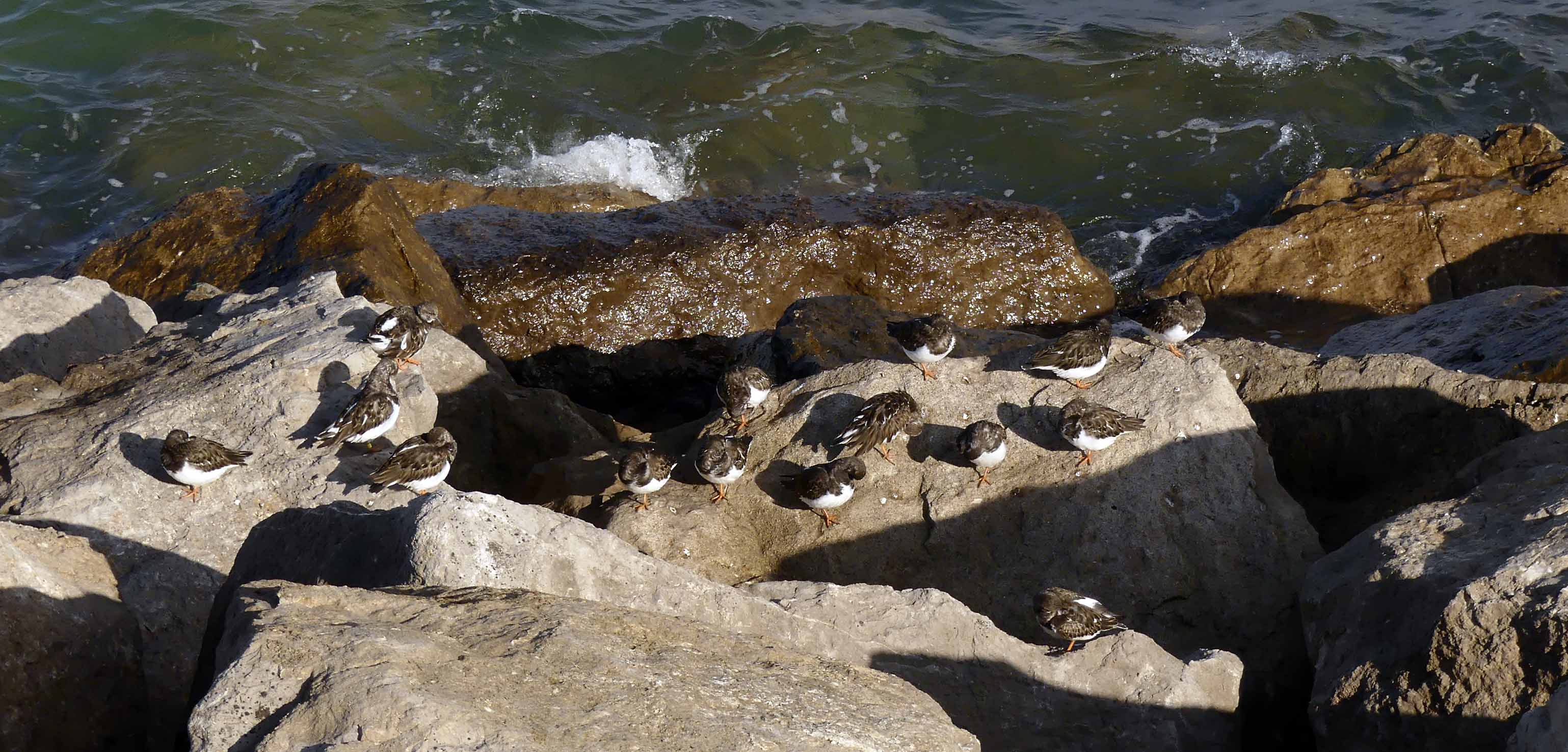
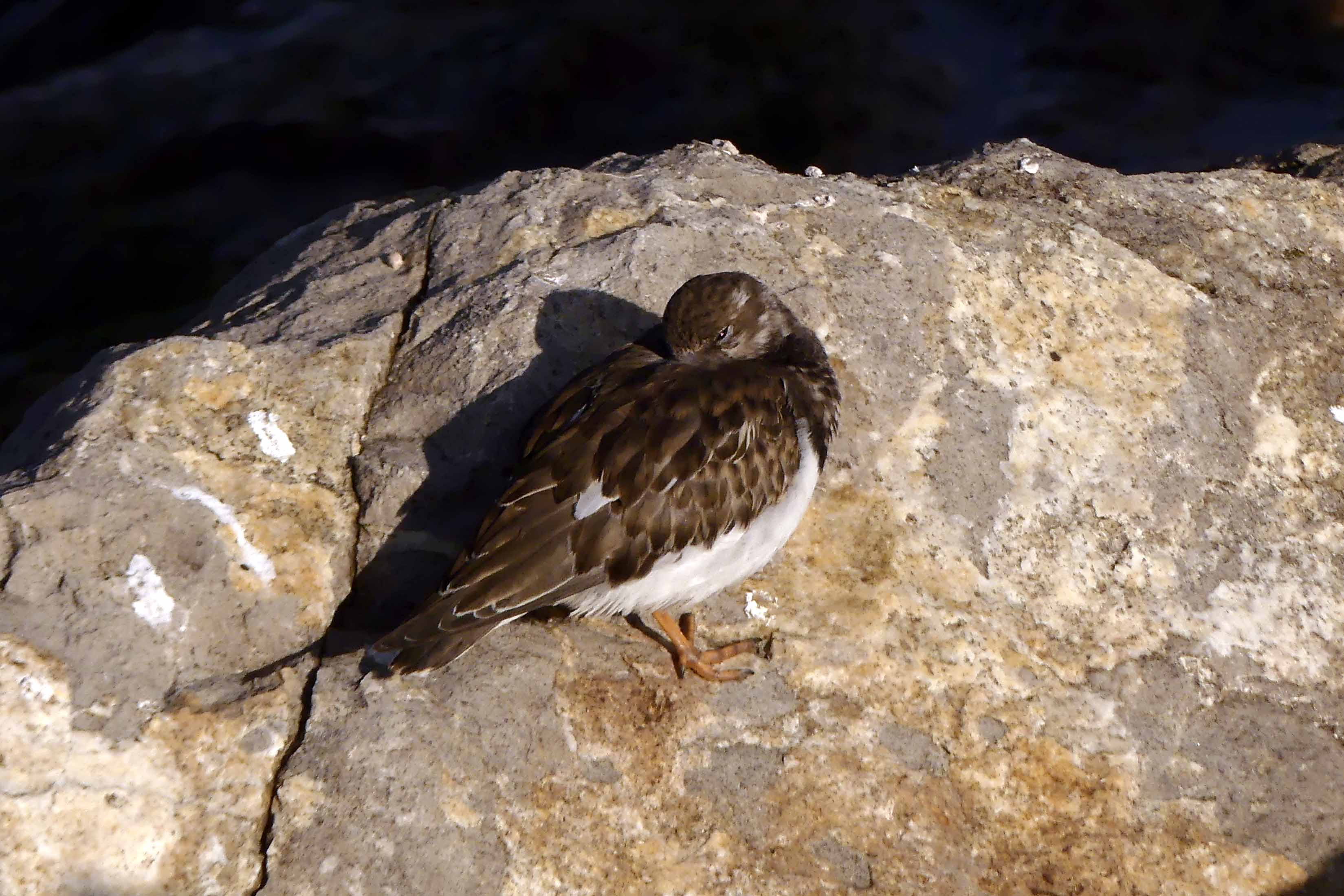
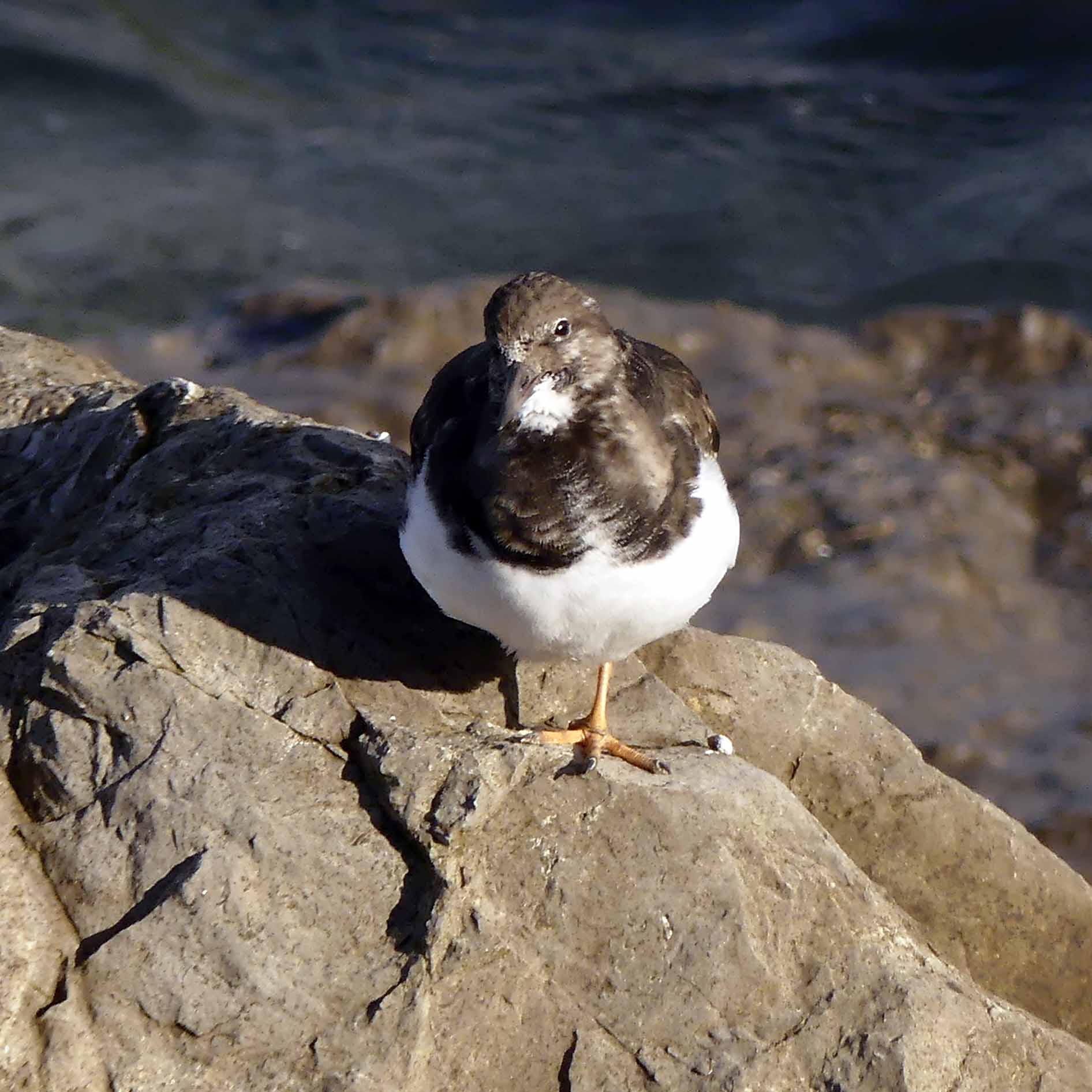
11:54 Some of the birds seem still be resting, heads tucked in, more were preening, others beginning to move around.They will stay here until a stretch of the shore is revealed, then scatter to forage where they’ll blend in perfectly and be tricky to spot.
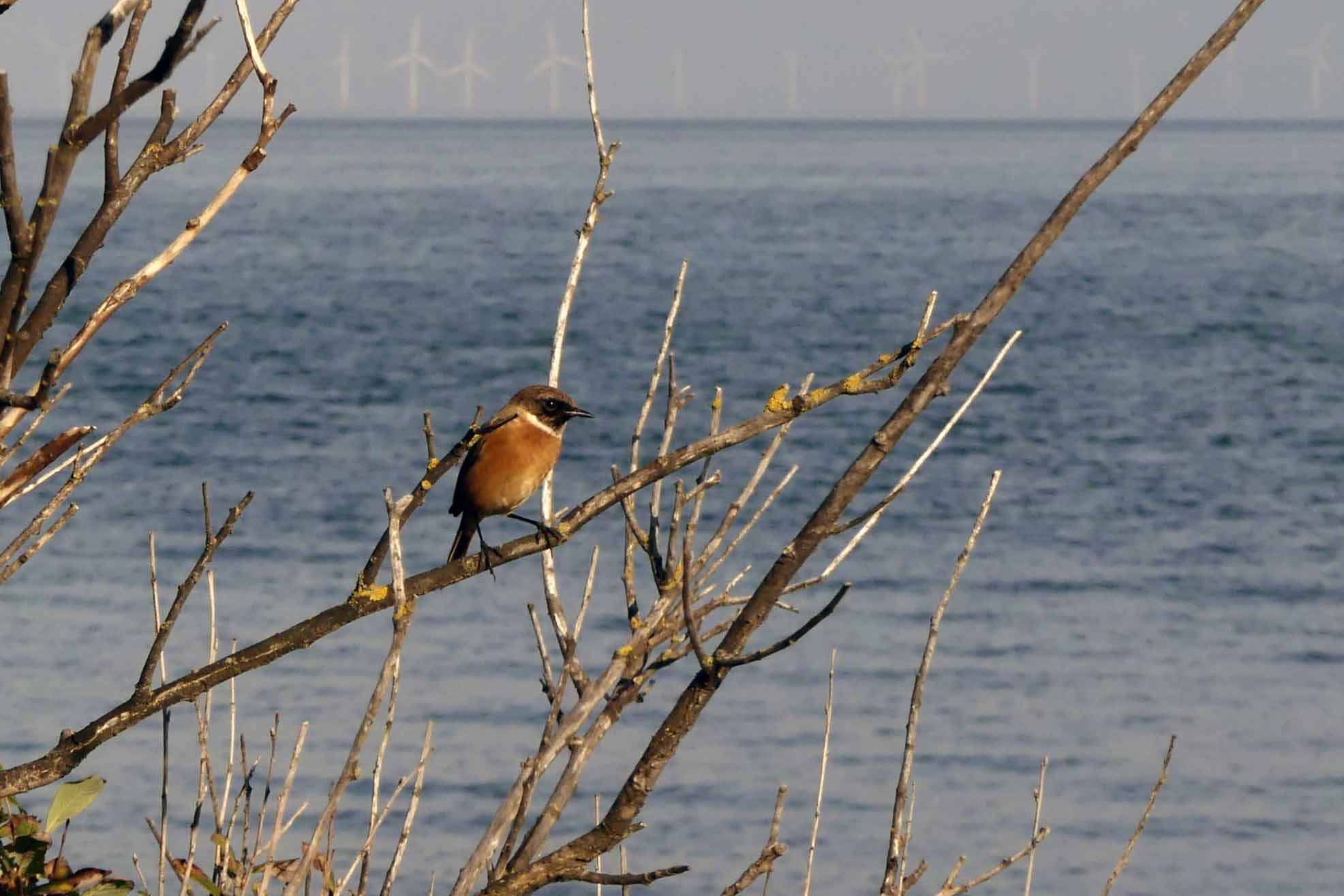
12:05 Moving on, I caught a flash of red on a bird that passed in front of me, headed for the shrubbery around the little chapel. Robin was my first thought, but saw no sign of one when I had a closer look. Then, a surprise – perched on a branch of the shrubby tree often used by the house sparrows, wasn’t a robin, but a beautiful little male stonechat. Fairly often seen on the Little Orme and in other more vegetated parts of the coast path, I’d never seen one here before.
12:12 Water returns and departs in interesting ways here at Rhos Point, and this morning a rocky-pebbly bank quite close in was the first ground to slowly reveal and soon attracted in the first of the birds, three oystercatchers which set to foraging straightaway.
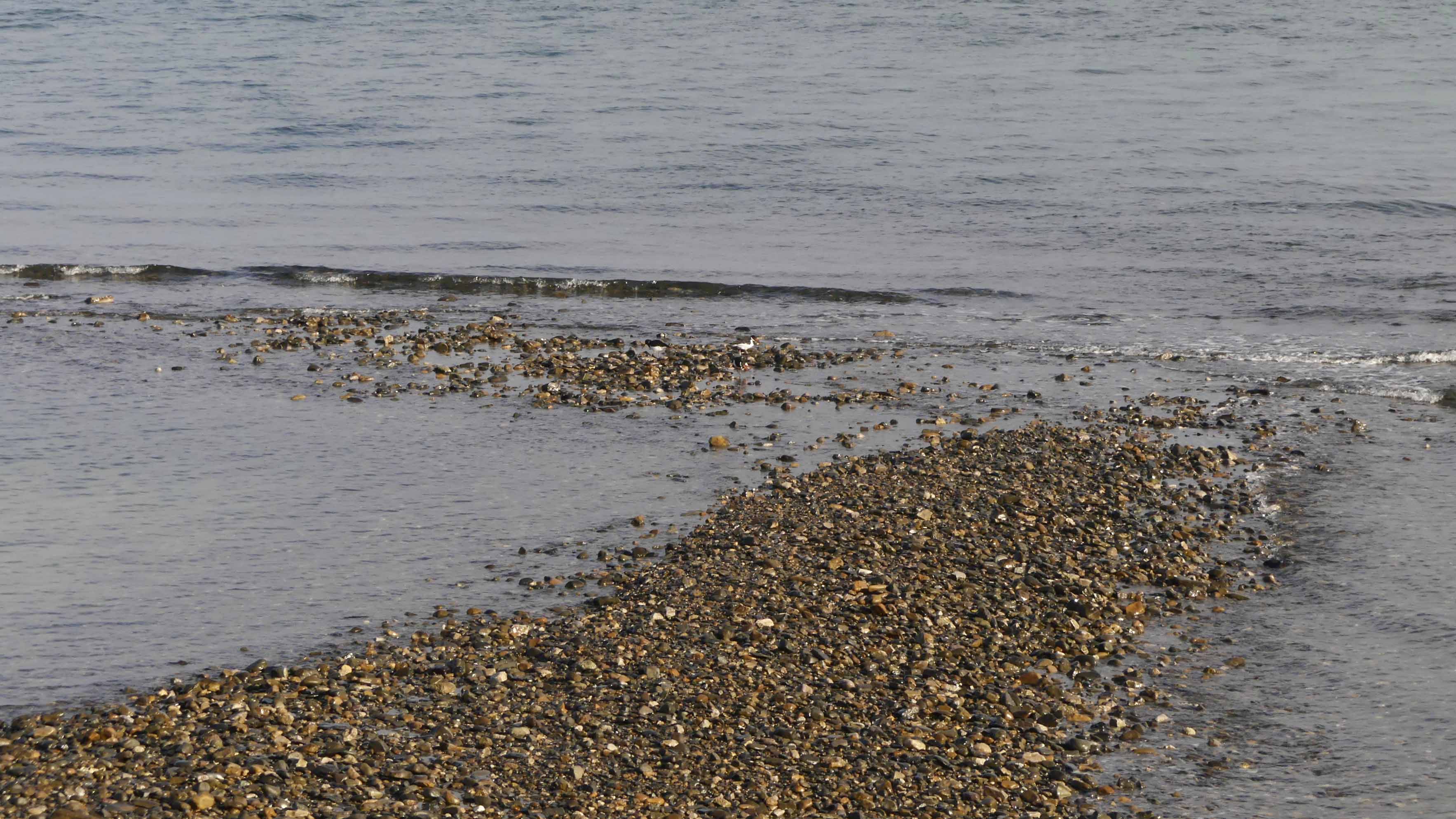
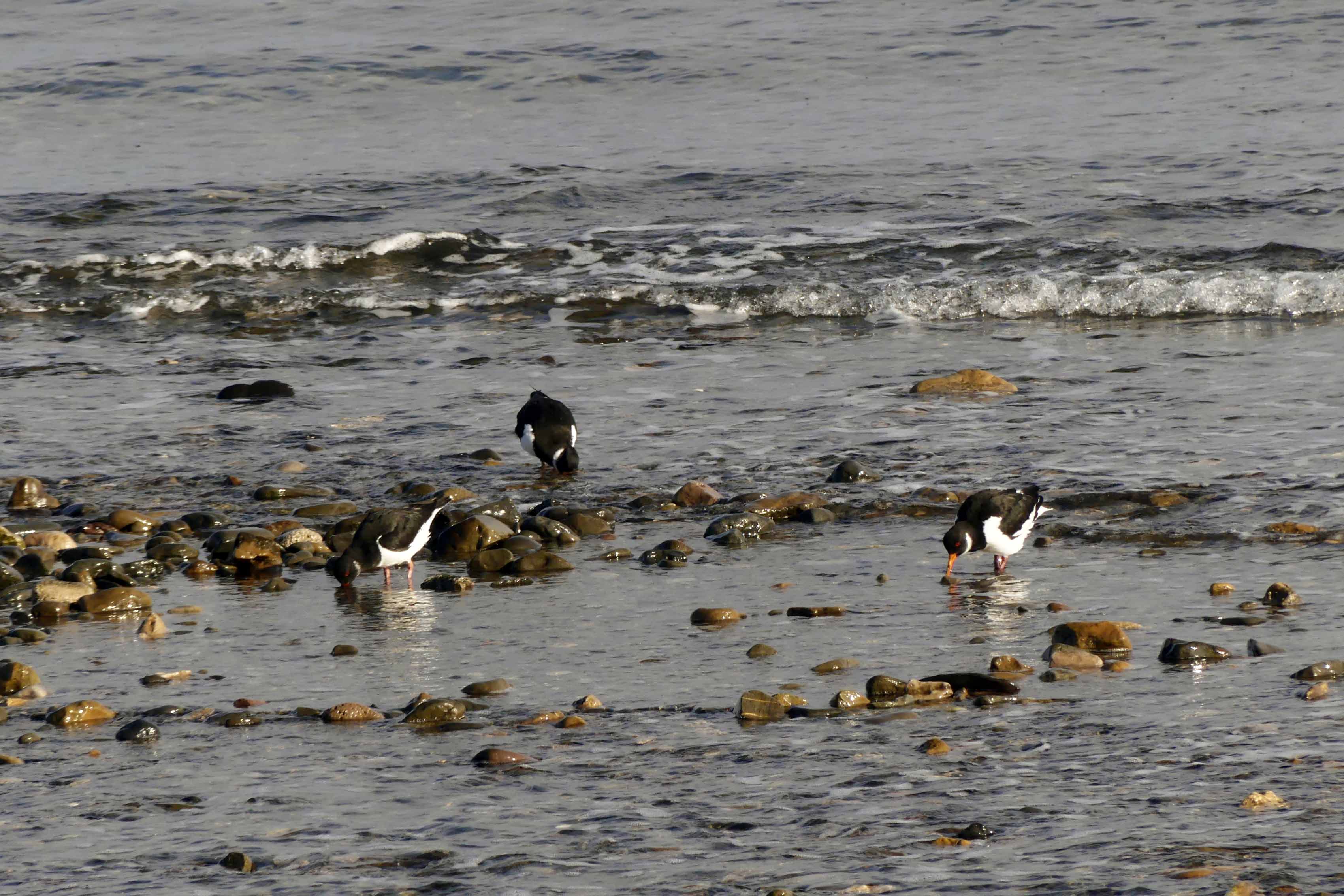
One of the oystercatchers had clearly probed deep into the sand and has come up with what looks like worms?
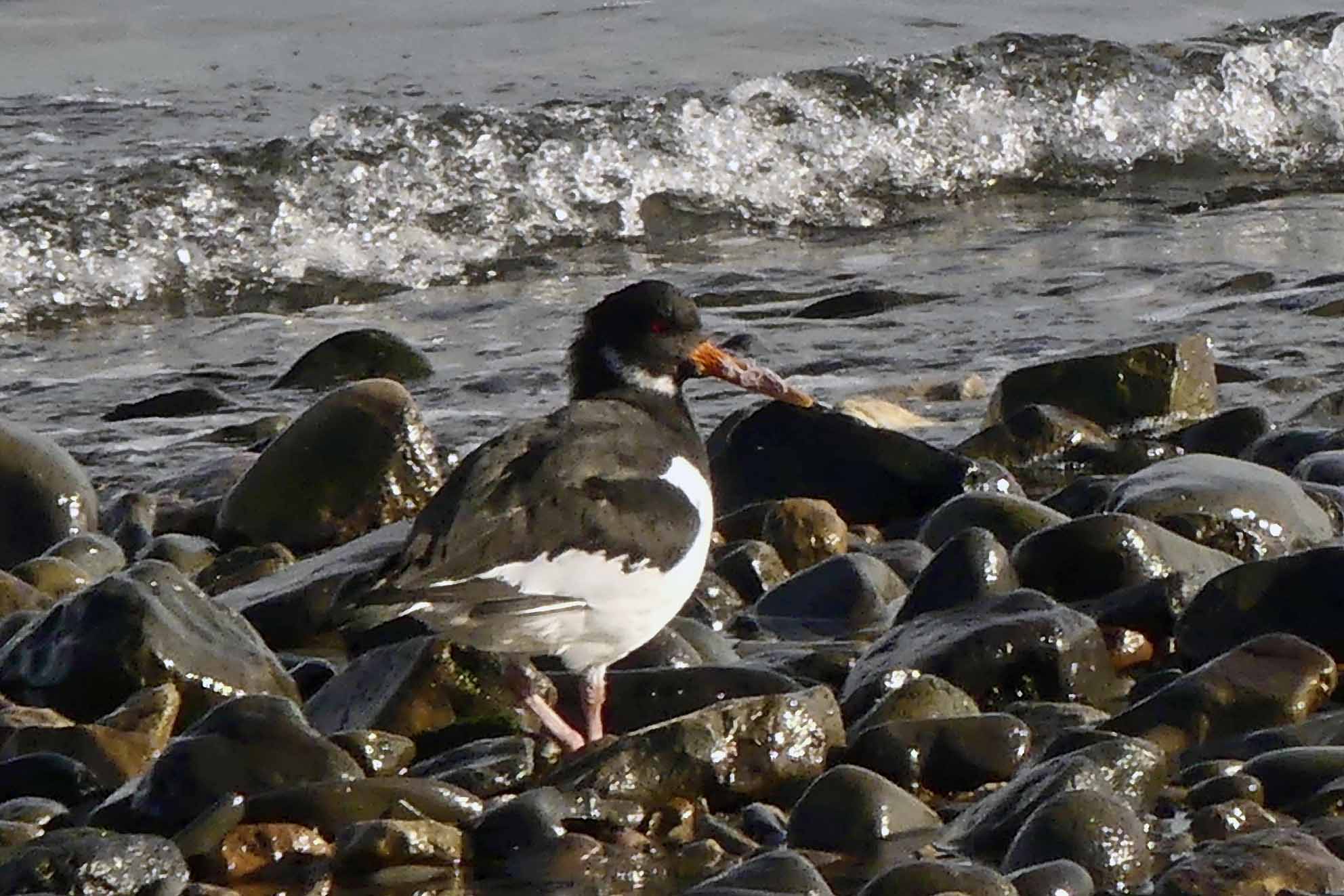
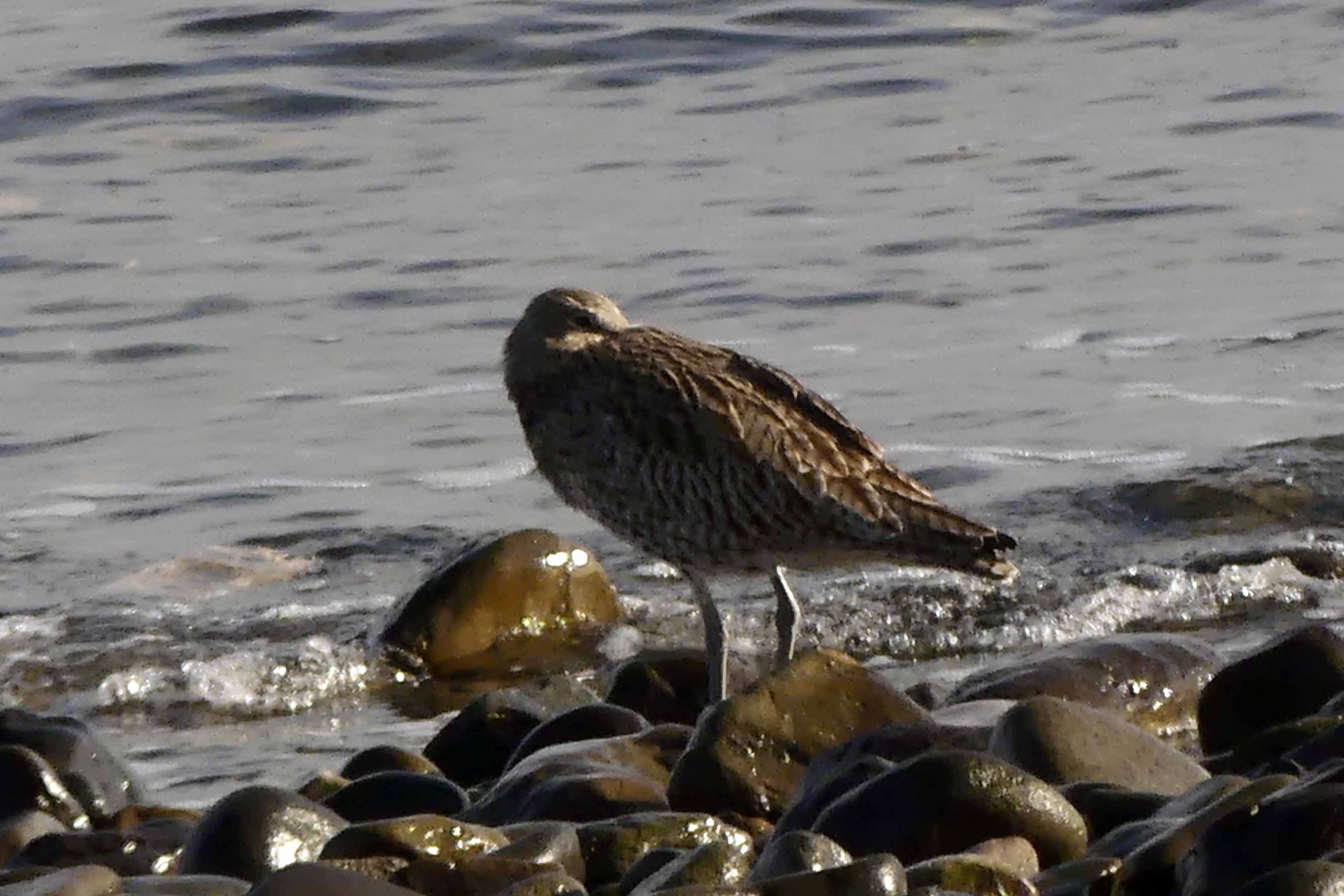
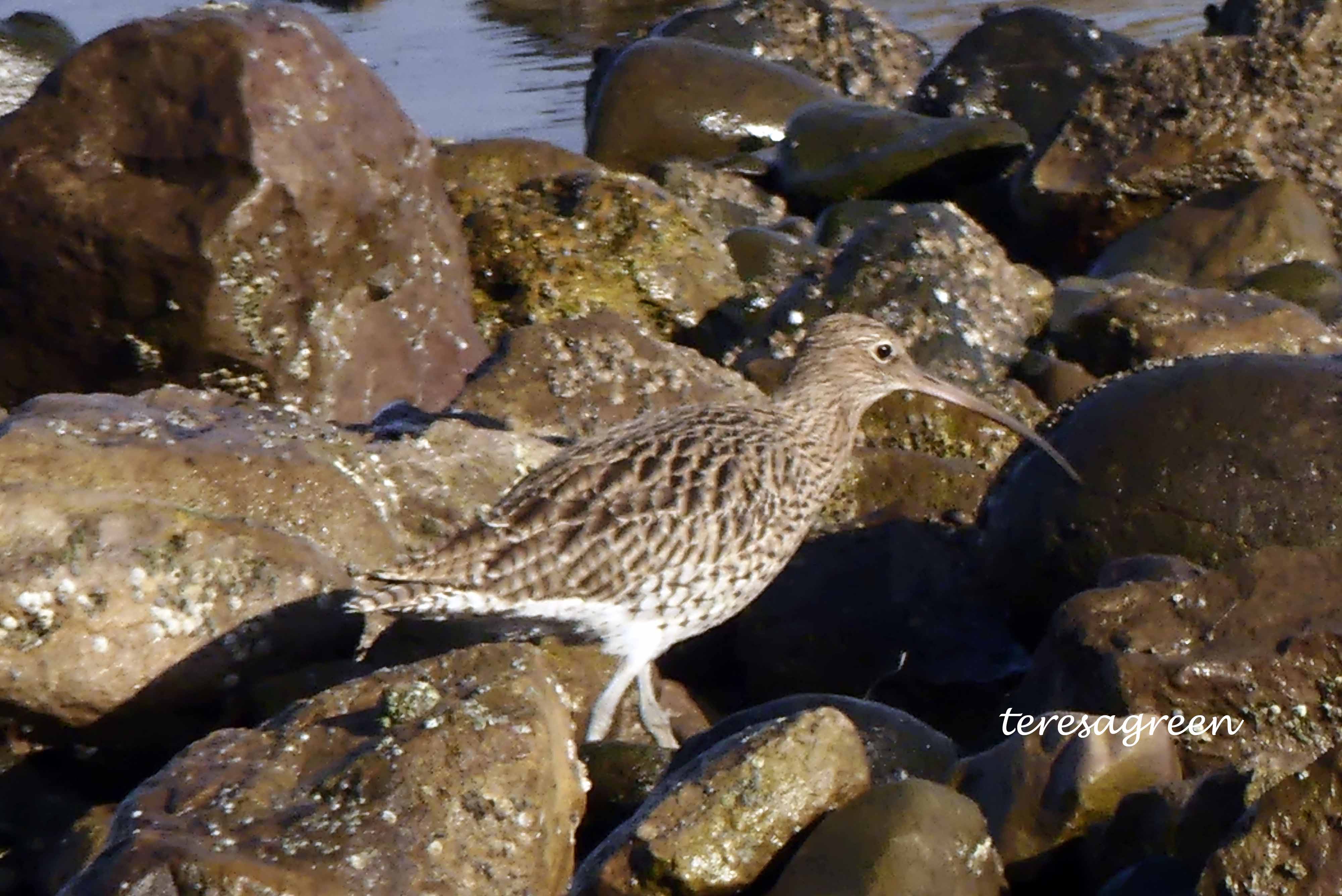
12:27 – some minutes later they were joined by three curlews arriving together, giving me the best views I’ve had of these iconic birds so far this autumn.
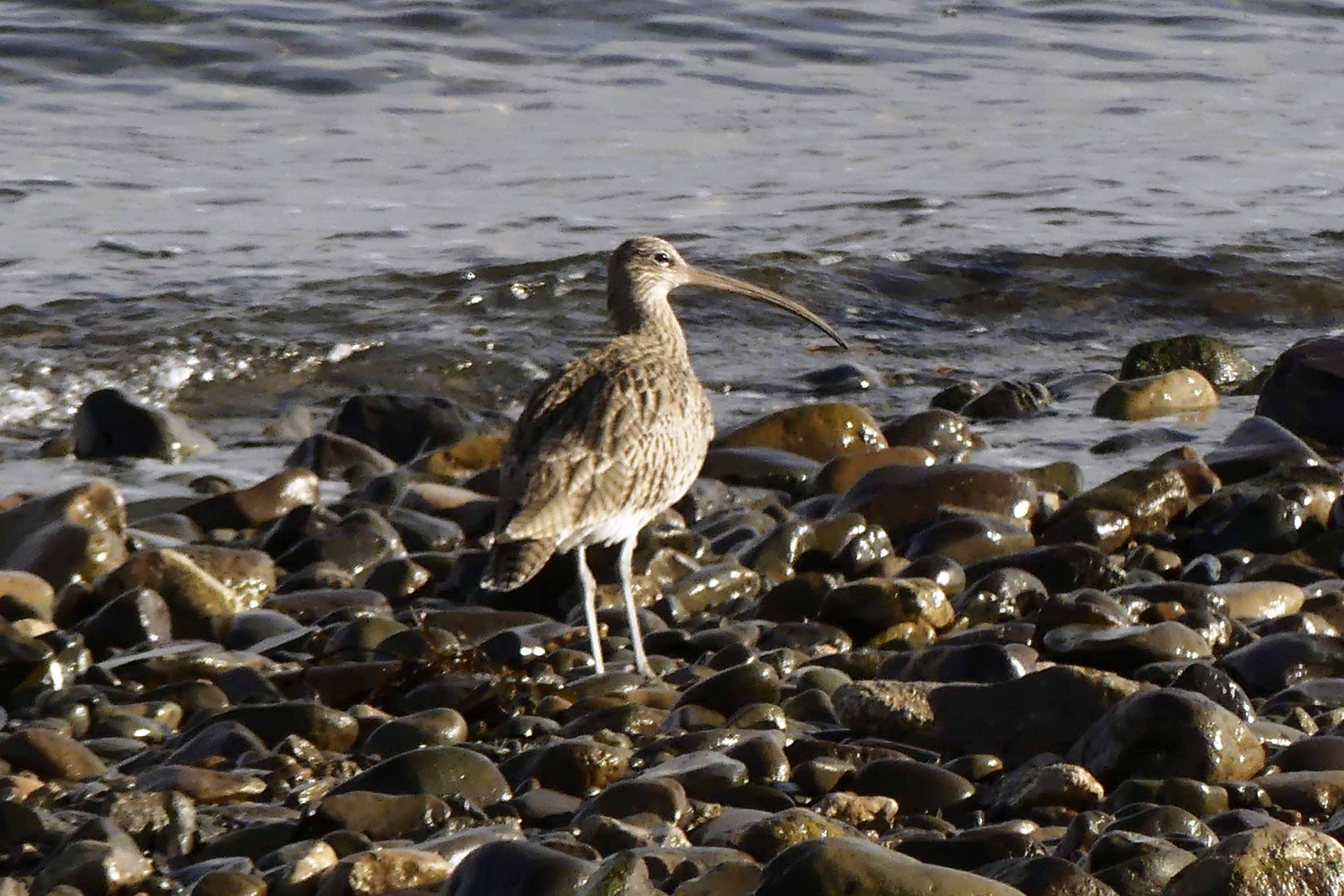
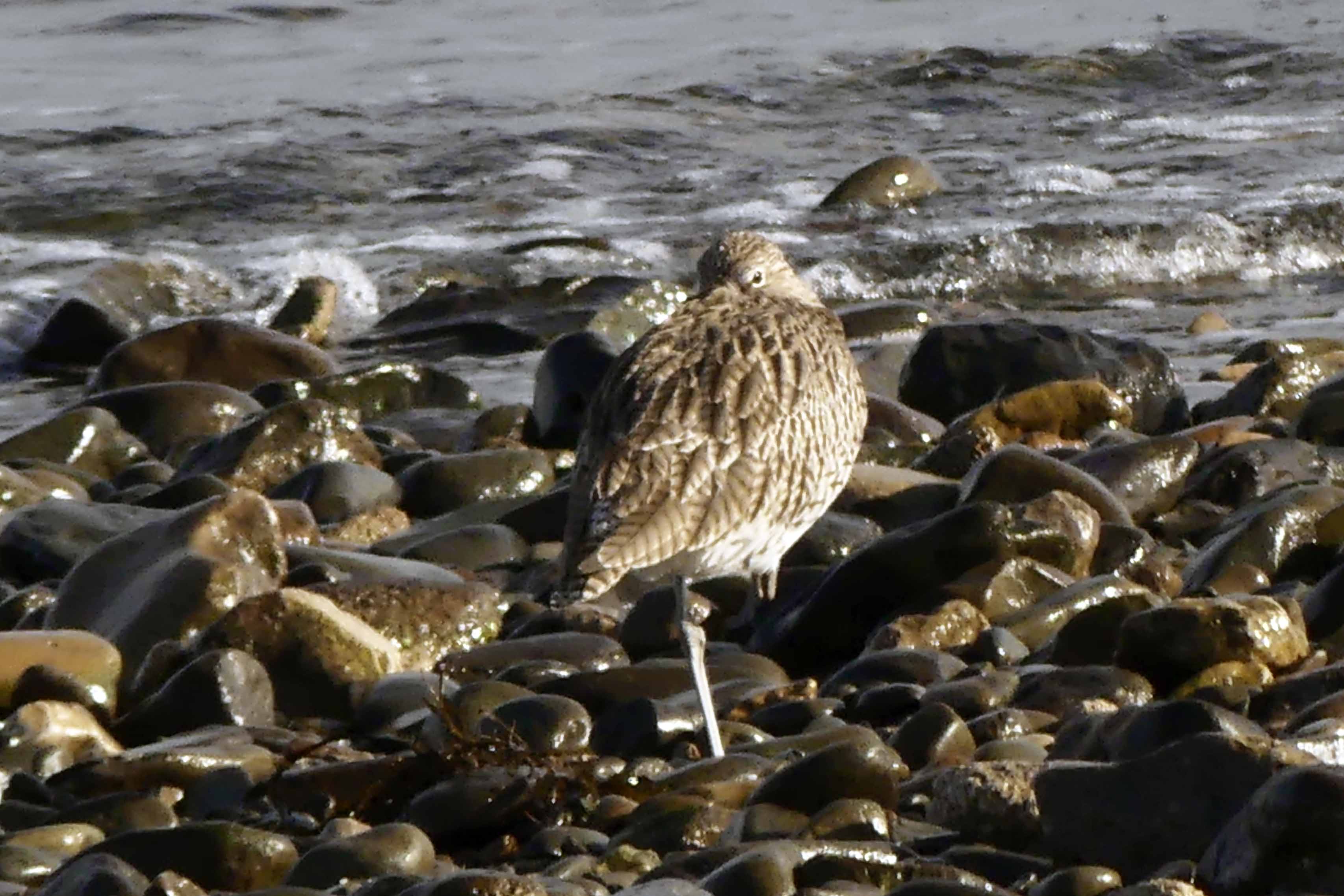
Only one of the curlews began probing around on landing, the other two chose to take a nap.
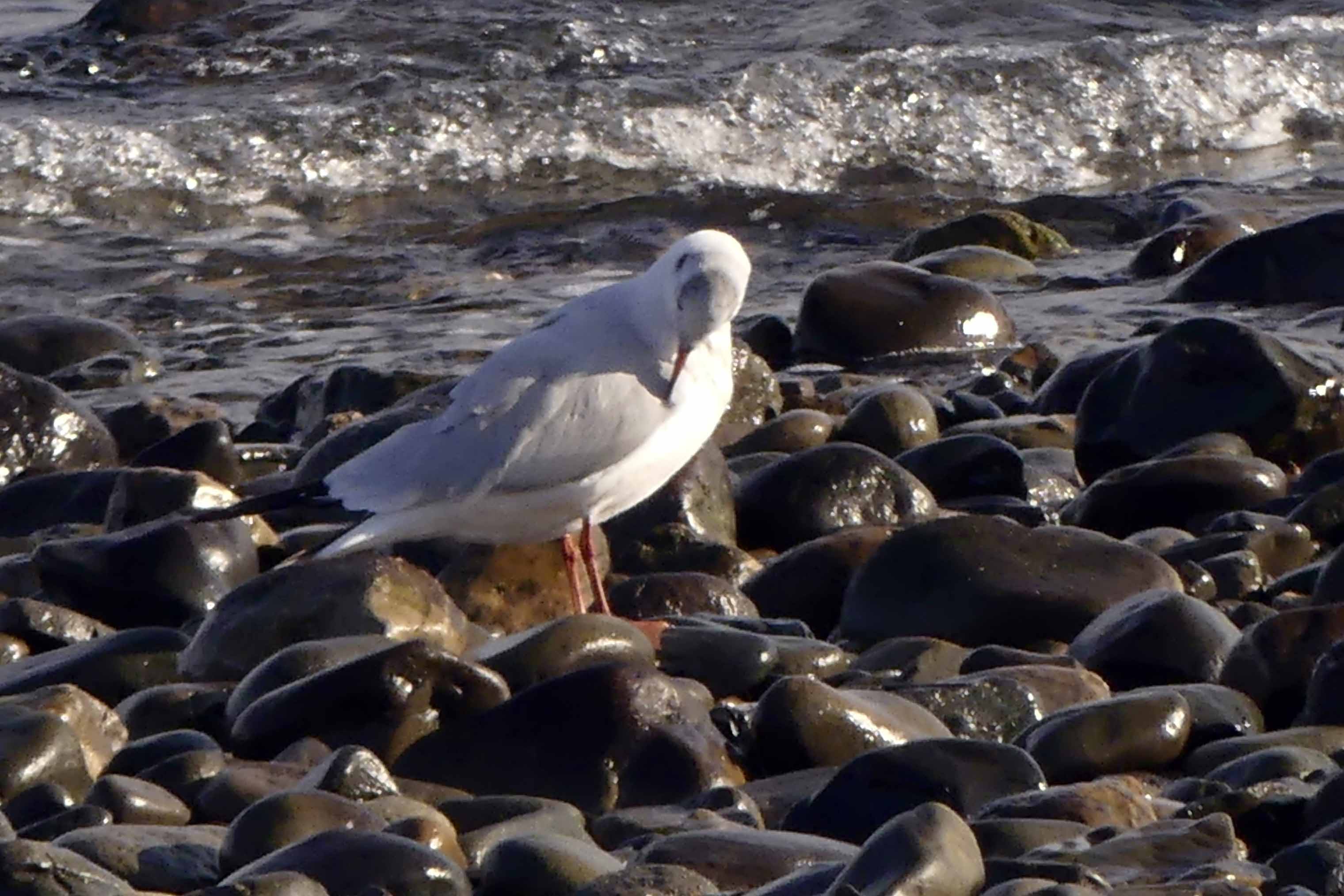
12:29 Next to arrive a black-headed gull, who set about preening
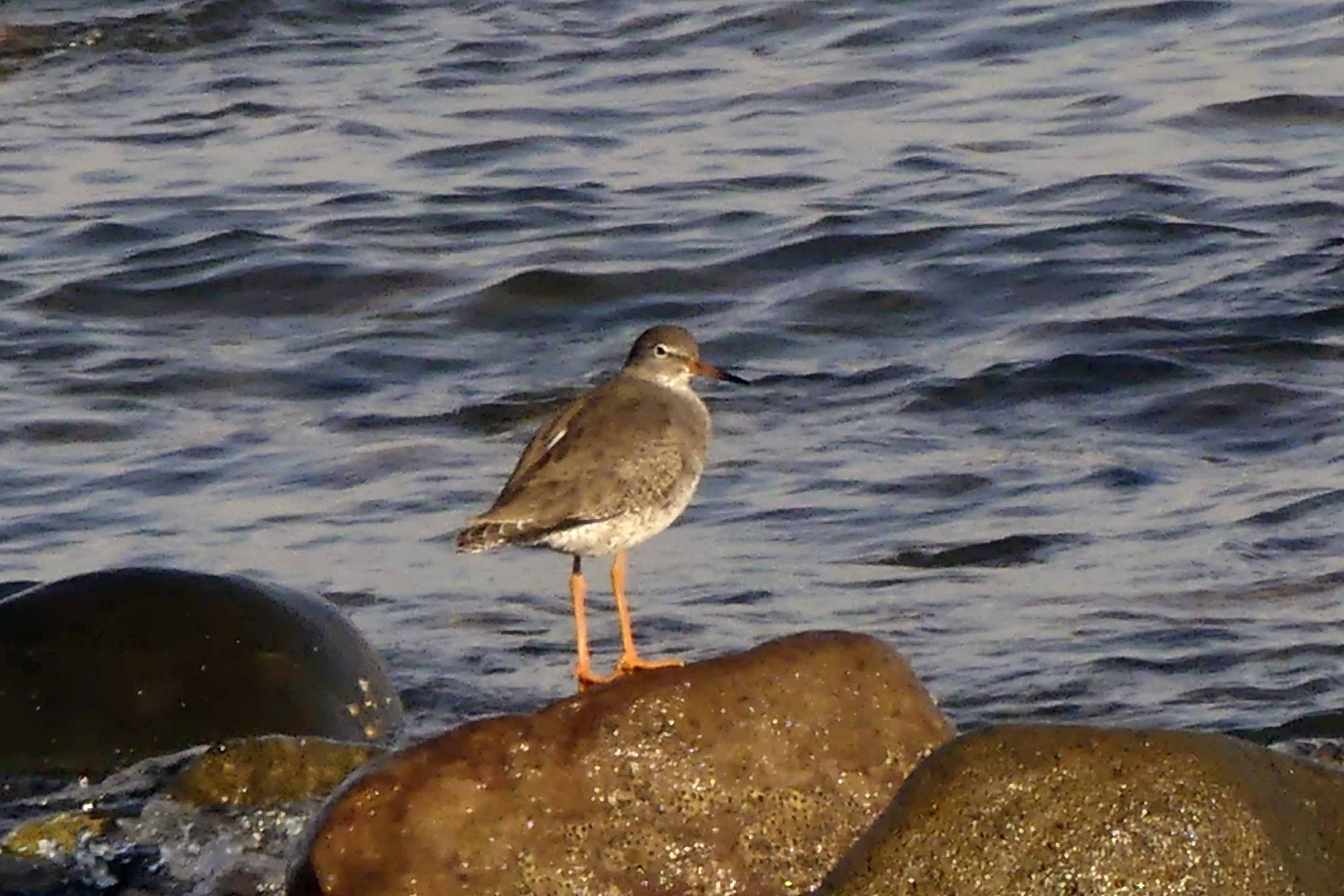
Focussing on this one spot, I hadn’t noticed the arrival of a redshank on the edge of the water a little further along the shore.
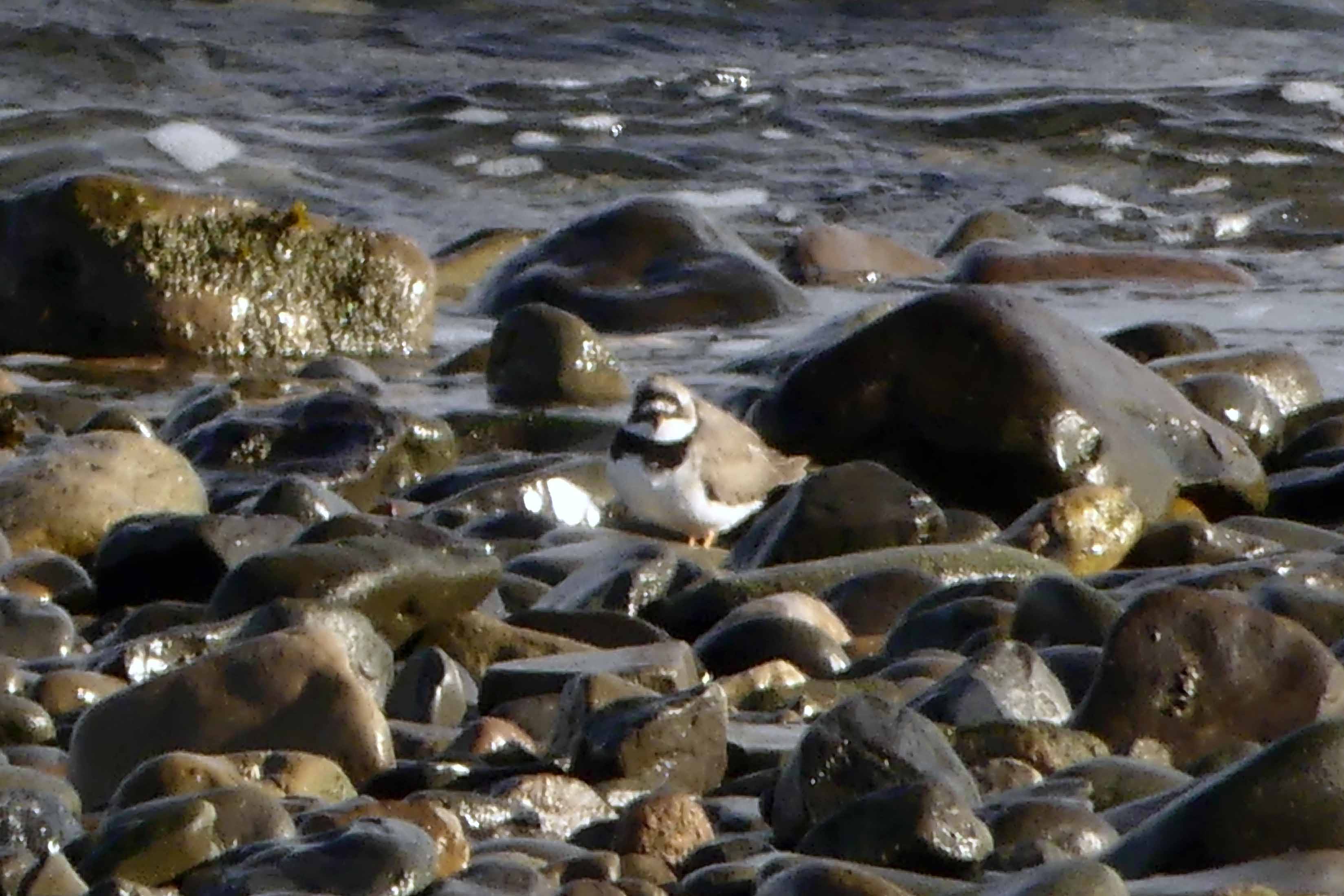
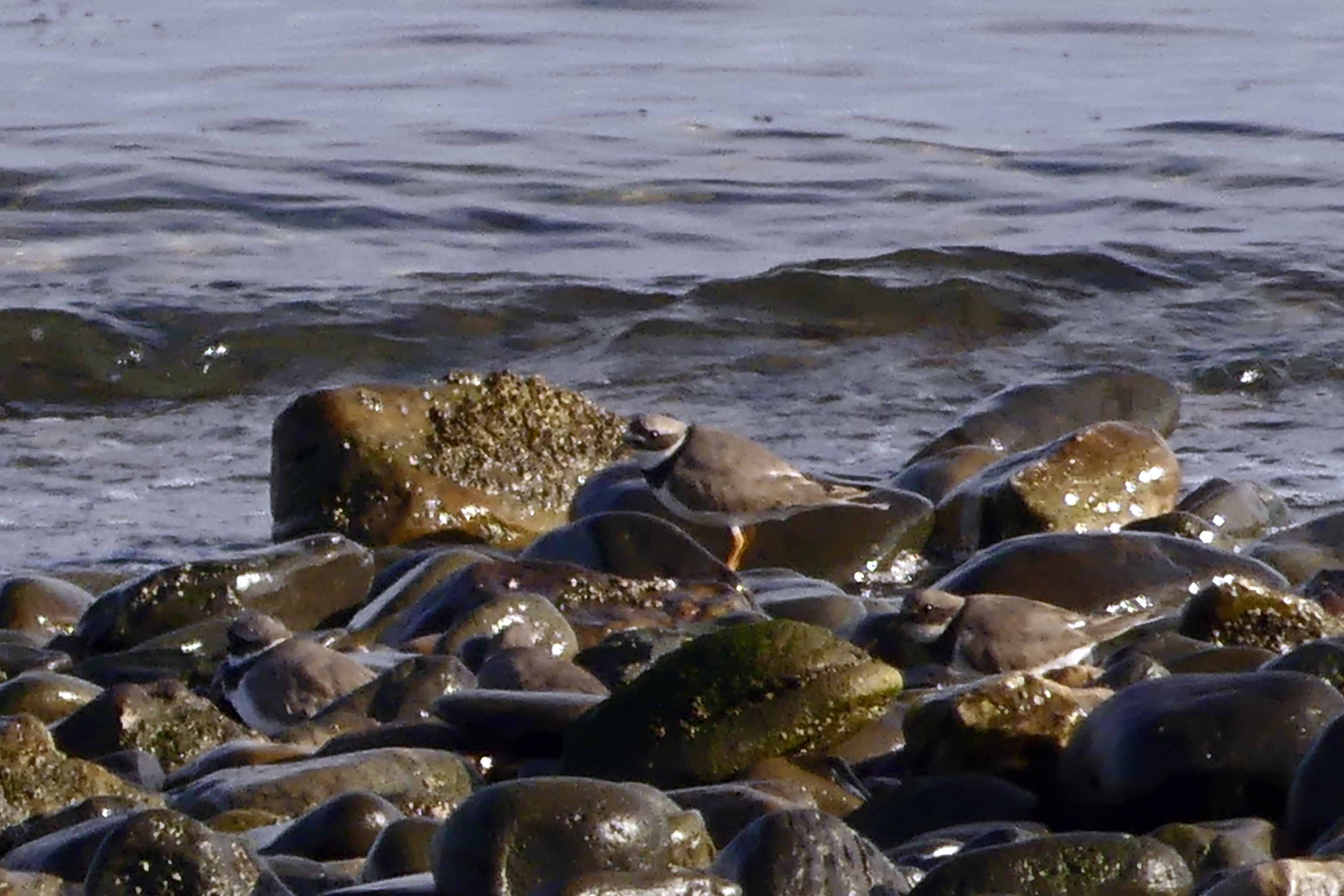
12:37 In a flurry of excitement a flock of ringed plovers arrive travelling at speed. As they turn to land in unison, they show off their pale undersides, then drop down into individual spots so perfectly blending in amongst the rounded pebbles they disappear from view. They were followed by another black-headed gull that landed next to the one already there.
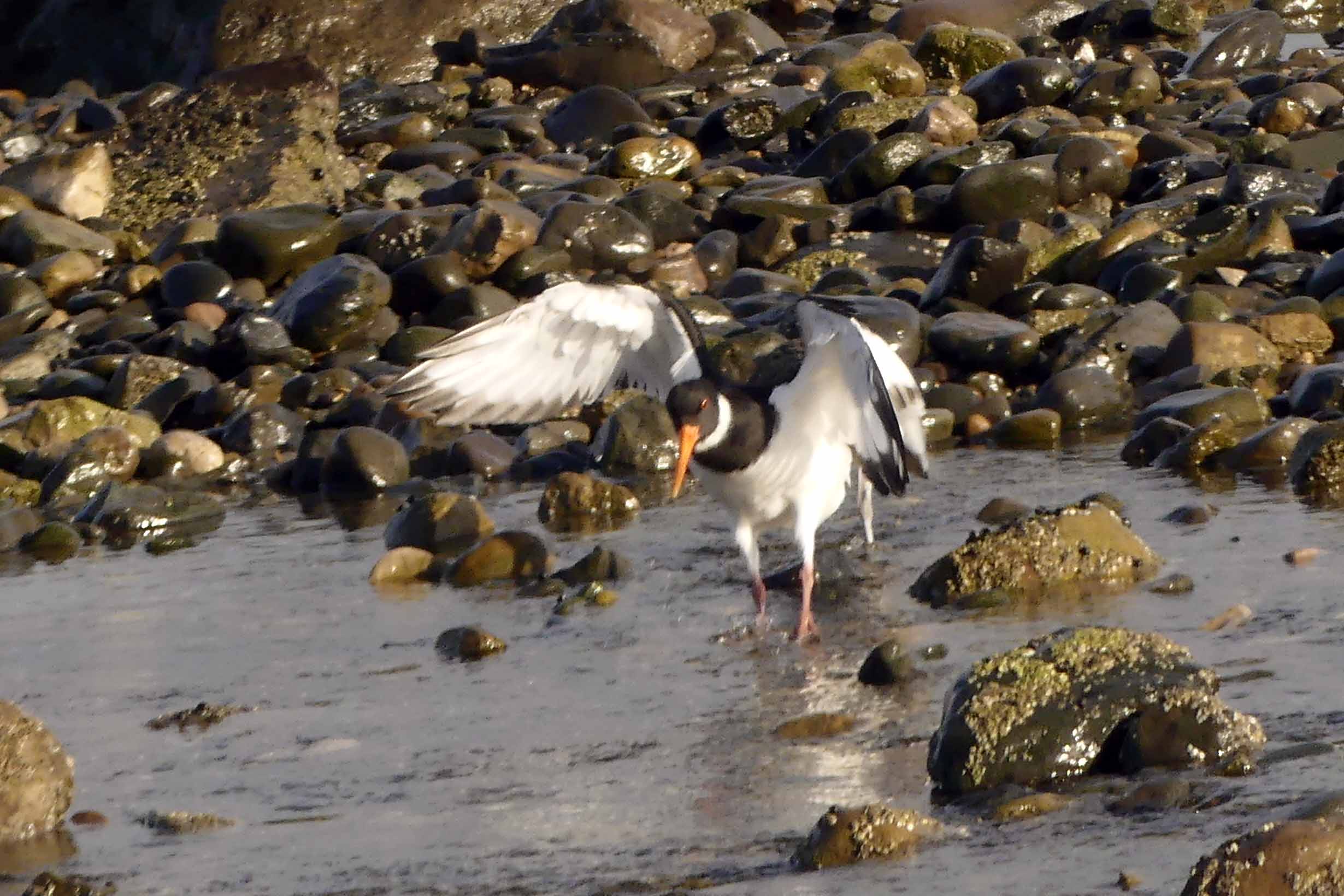
12:41 As the water continues to recede more curlews arrive, all from the same direction (from Penrhyn Bay) and all settle to foraging. One stalks into a pool already occupied by a oystercatcher, moving in behind it, causing the oystercatcher to move forward with an indignant cry and flap of wings. It didn’t go far and both birds settled quickly to forage peacefully.
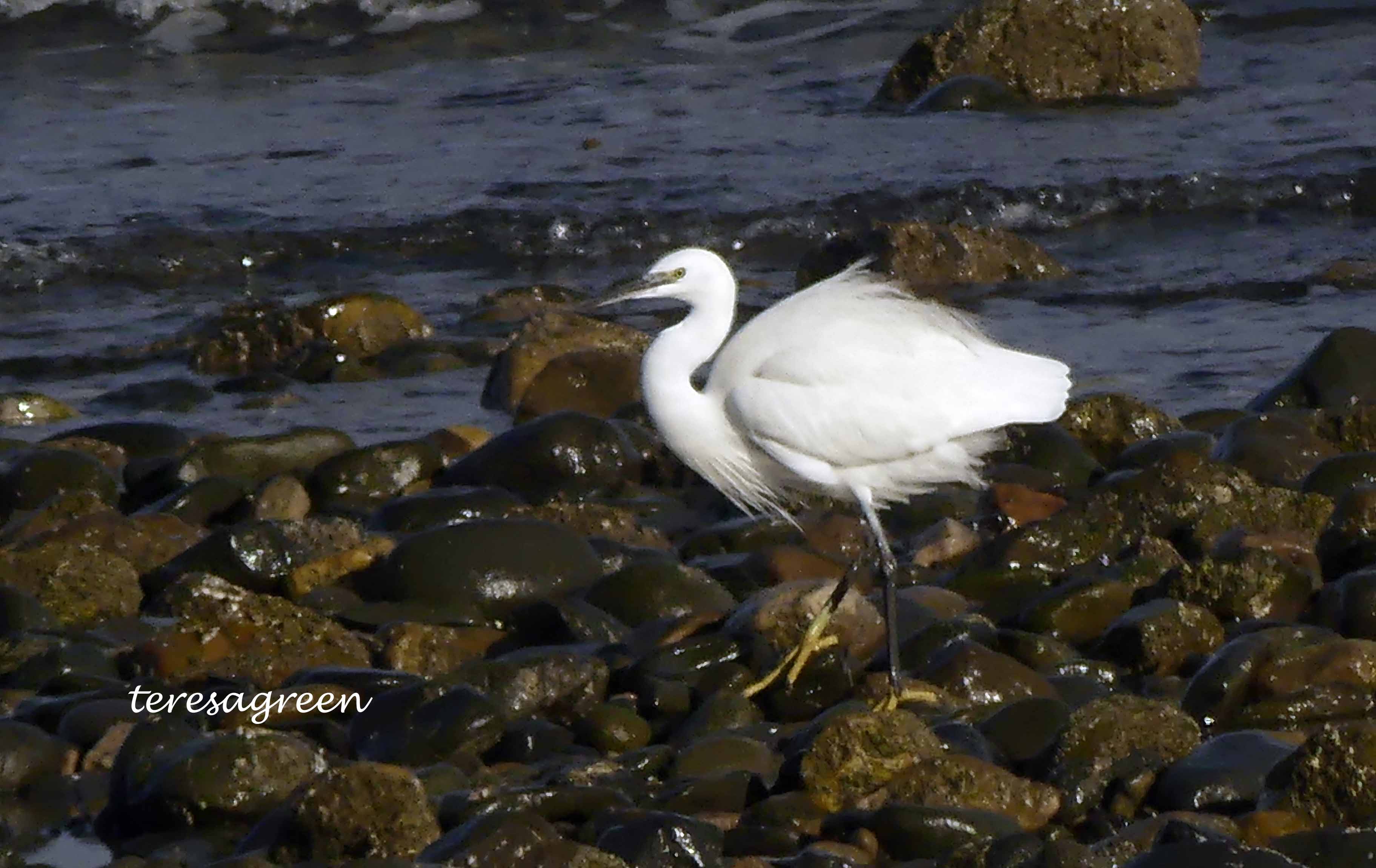
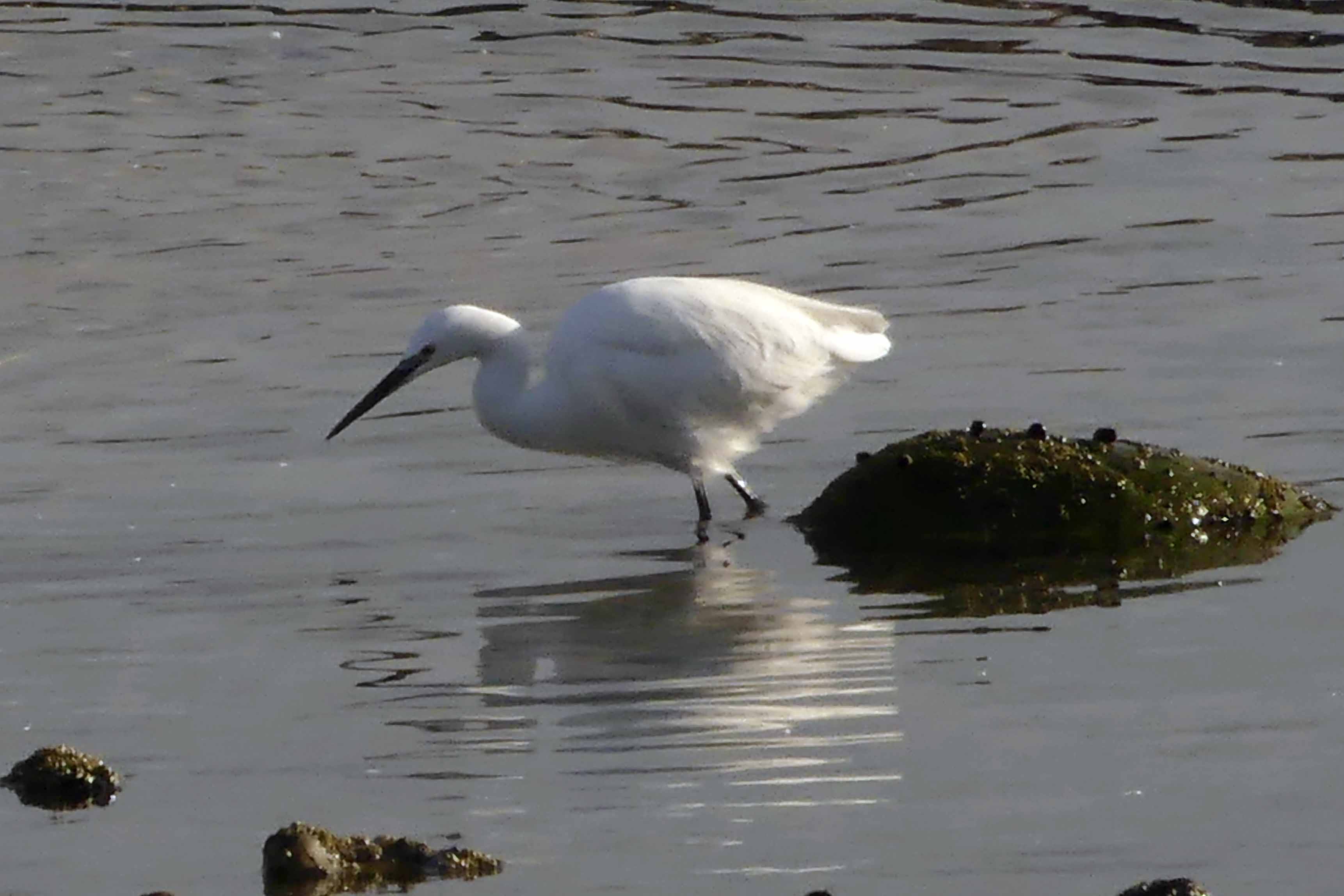
12:44 Oystercatchers continue to arrive one by one from both directions, then come the ever-graceful brilliant white little egrets. At first I thought two, but a little further along from them I see another two. One of the later arrivals takes exception to the presence of one the earlier ones, there’s a bit of an altercation and one leaves.
Oystercatchers continue to fly in, they spread out and quickly begin probing around in search of food. More curlews too – a flock of eight boost the numbers I’ve seen so far to around twenty, but once they’re amongst the rocks they are tricky to spot.
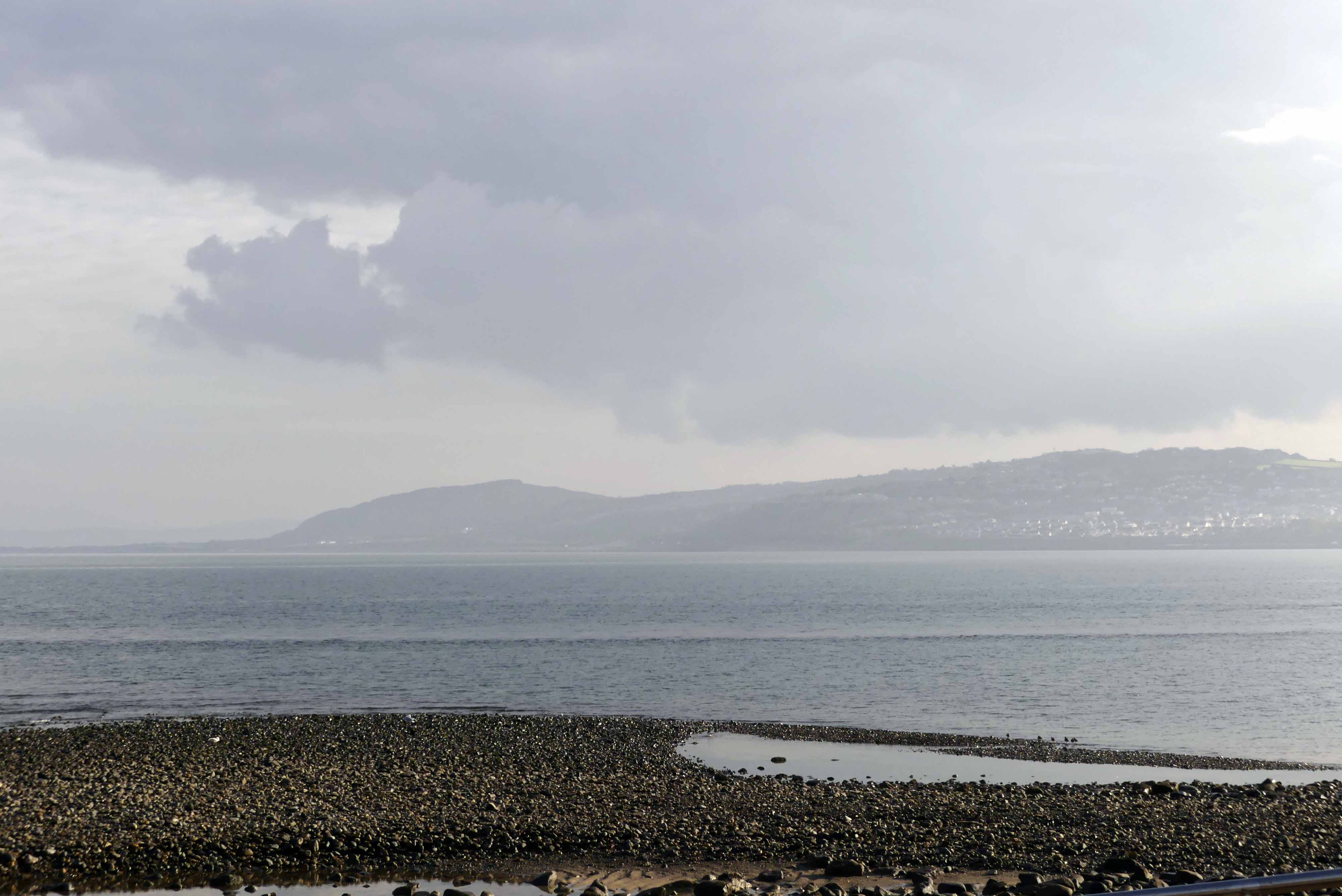
13:00 It’s a lovely day. With only a light breeze ruffling the surface of the sea, mist and low cloud persist, softening the outline of the land of the far side of Colwyn Bay. Occasional sun breaking through creates ever-changing patterns of shades of blues, greens and greys which are soothing and mesmerising to watch.
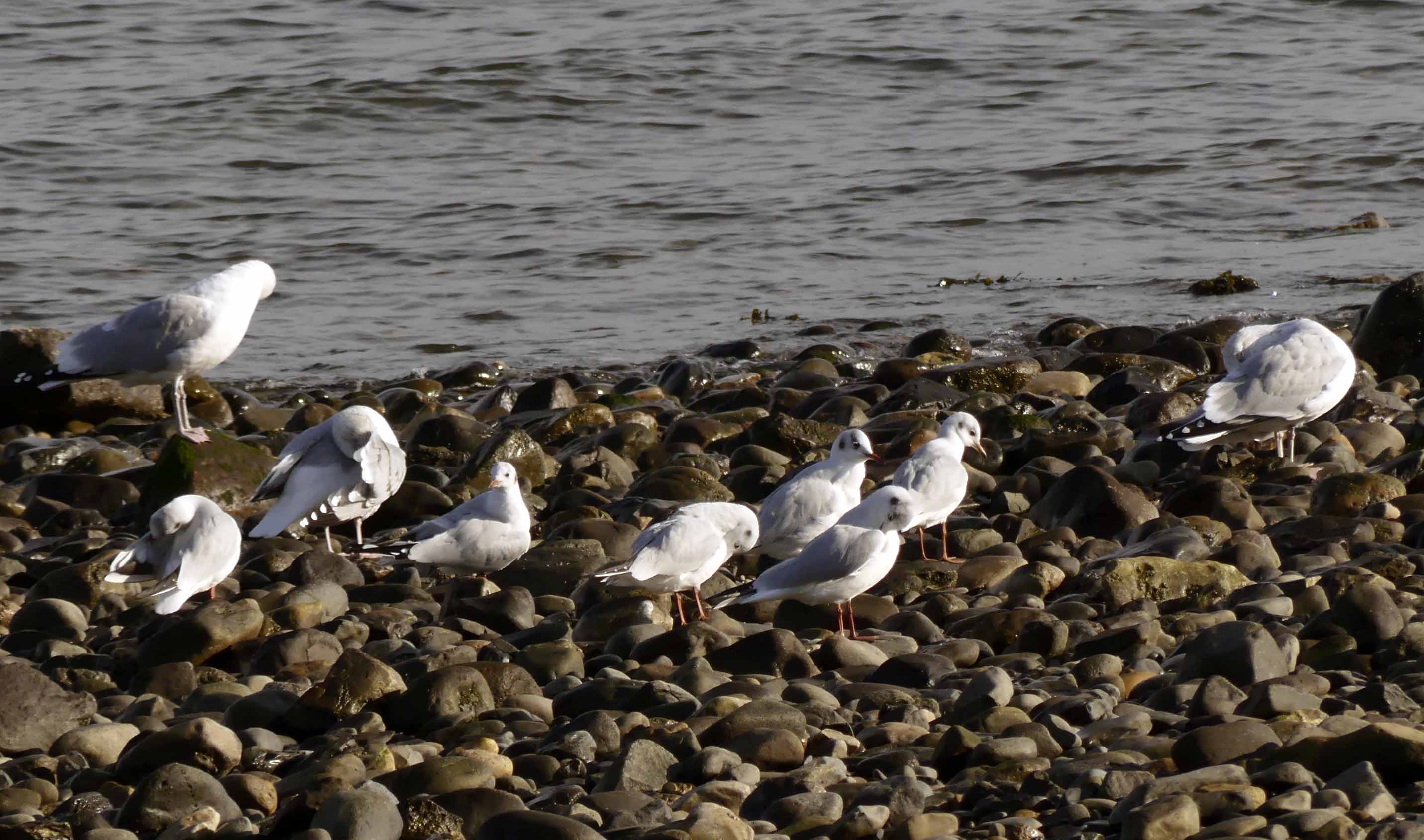
13:15 There are fifteen gulls here now, mostly black-headed but they’ve been joined by five herring gulls. The gulls aren’t here to feed, most set about to preening, a few settle to rest.
13:07 On the far edge of a large pool that seems to remain between tides a group of redshanks give their presence away with their loud piping calls. In the pool several oystercatchers and a curlew are bathing,
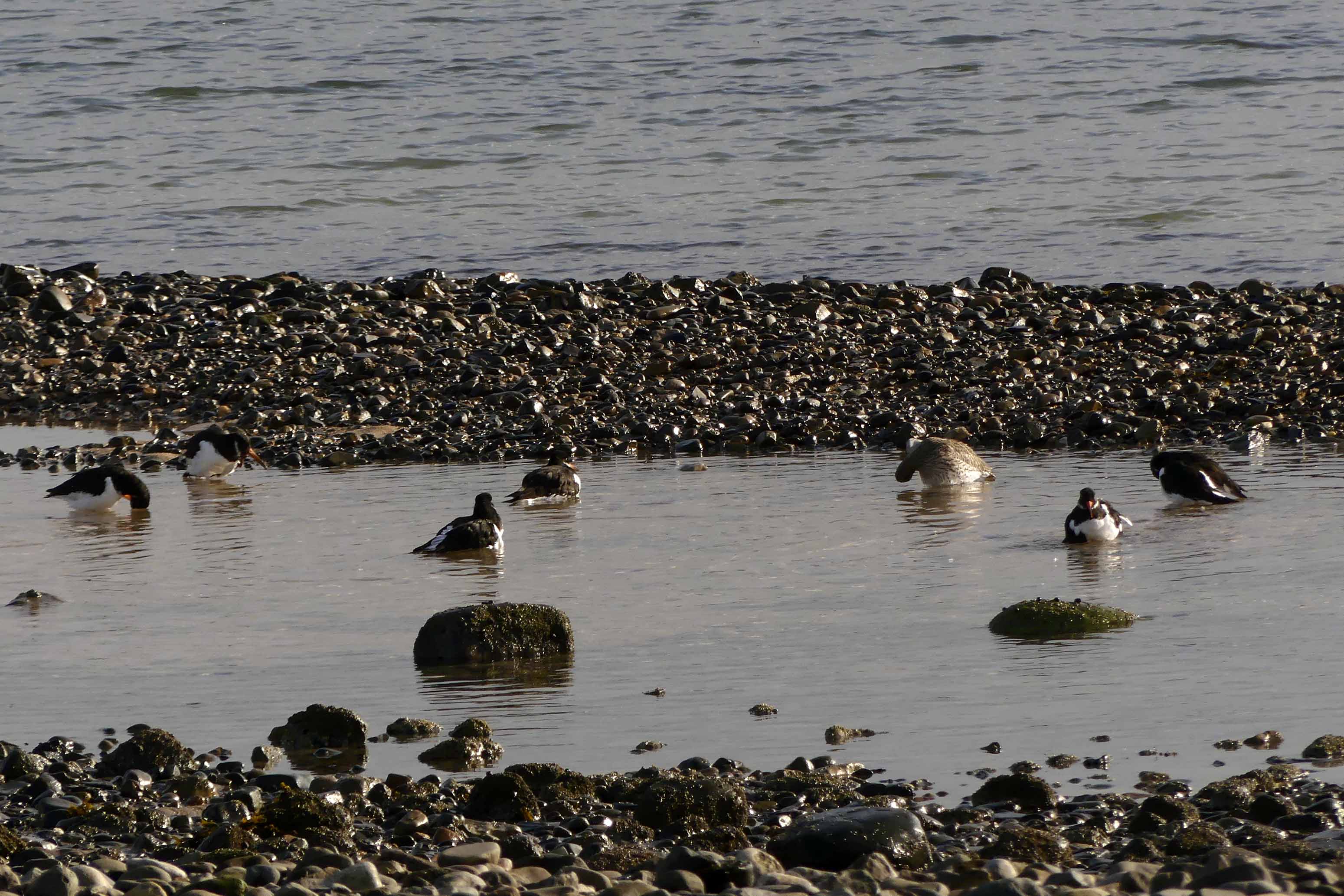
Oystercatchers are a joy to watch as they splash exuberantly creating showers of water droplets.
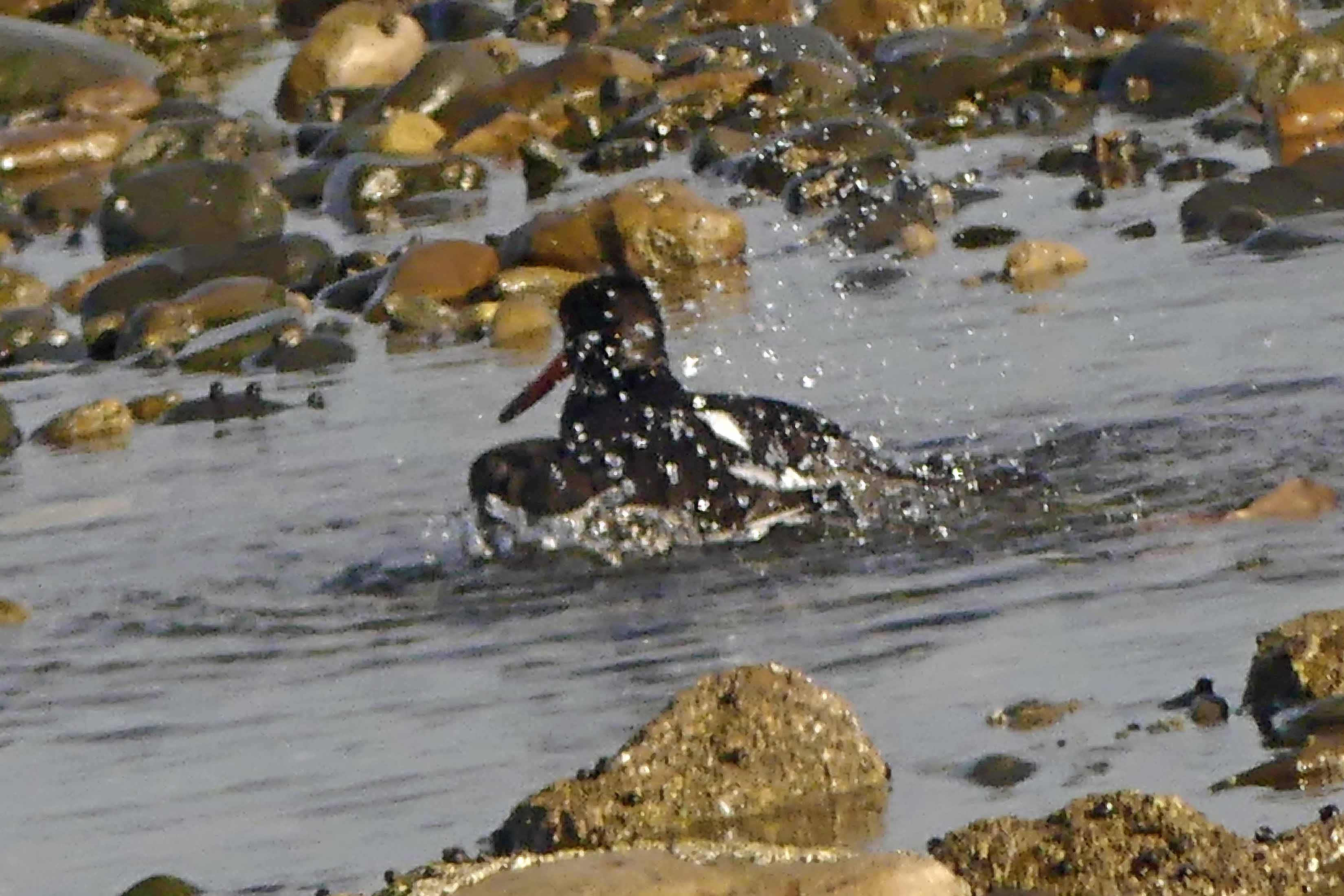
13:30 As the tide continues to ebb away oystercatchers and herring gulls, the species that are regularly here in the greatest numbers continue to arrive. The ringed plovers are here somewhere, but remain tucked out of view and two egrets still grace with their presence. The one ‘regular’ I hadn’t seen so far was the grey heron, but I eventually spotted him/her some distance away towards the harbour wall.
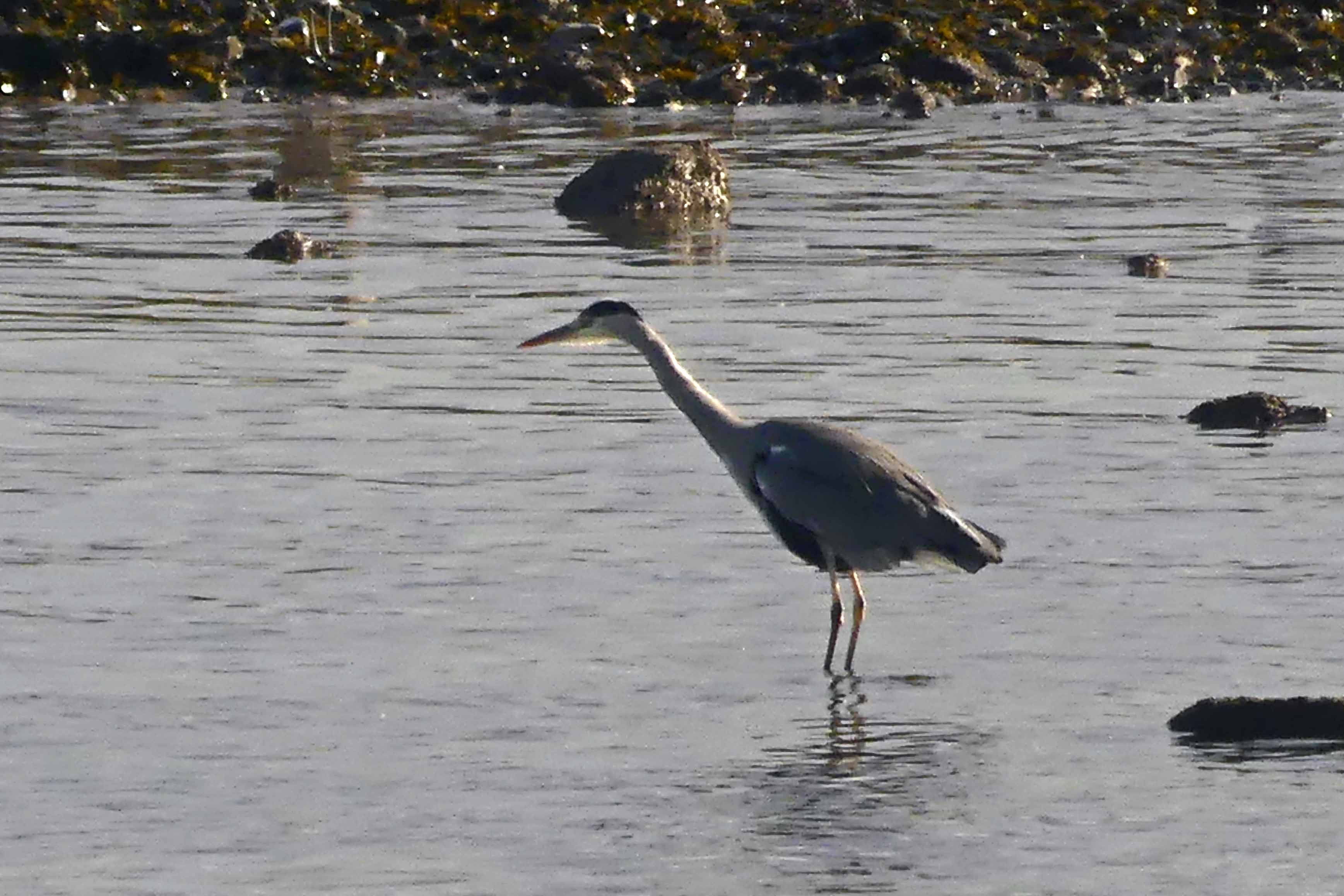
More curlews fly in, but land on a narrow exposed spit of rocky ground too far away to see clearly. I tried to photograph what I thought were also two curlews flying towards there, but when I saw the image I realised they weren’t and think they may have been bar-tailed godwits. There were six godwits here for sure a few weeks ago, so it is possible at least some may still be around.
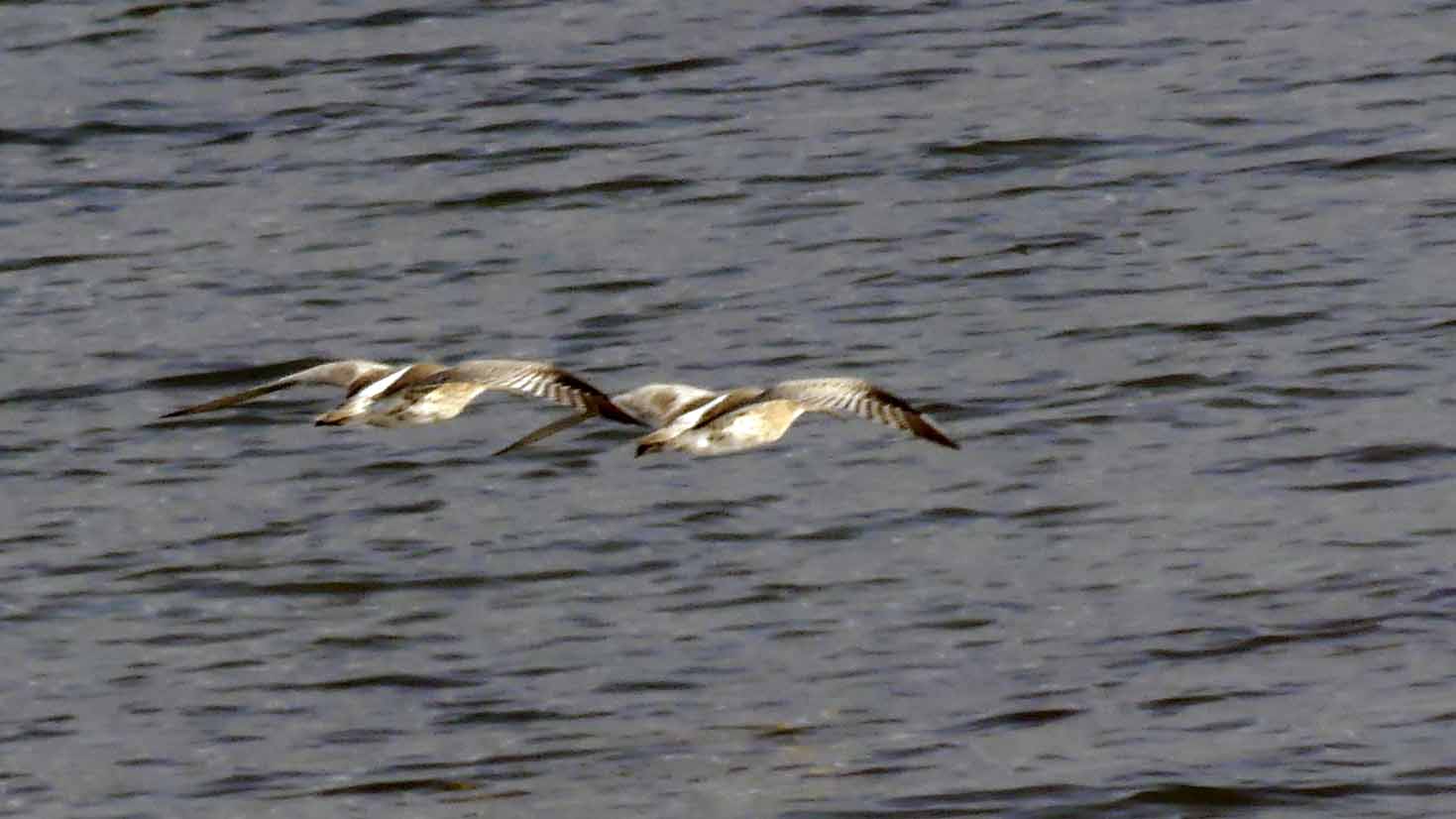
14:05 As the sea recedes further out, so too do the birds making them more difficult to see, but I was more than happy with what I’d seen in the past couple of hours. Before going home to get a warming cup of tea though I walked the short distance along to the harbour to see whether there might be any birds there that prefer probing in the soft silty (and often smelly) exposed mud. It was a good decision – the first bird I saw was a heron leaving the wall with a cry, disturbed by people walking close by.
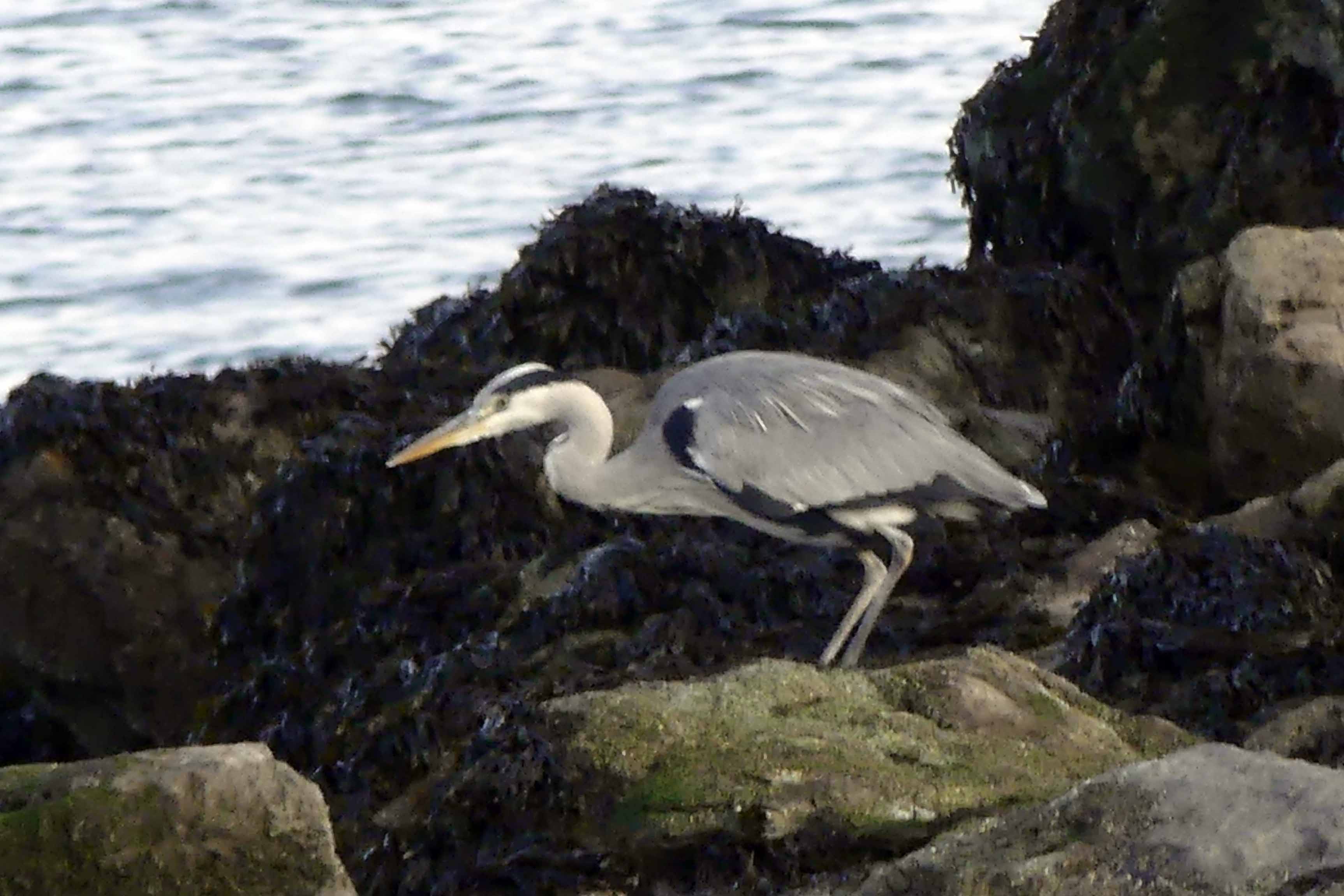
Two egrets were in the water yet to drain away, together with a second heron. It was sunnier and warmer now and the stalking birds reflections followed beside them.
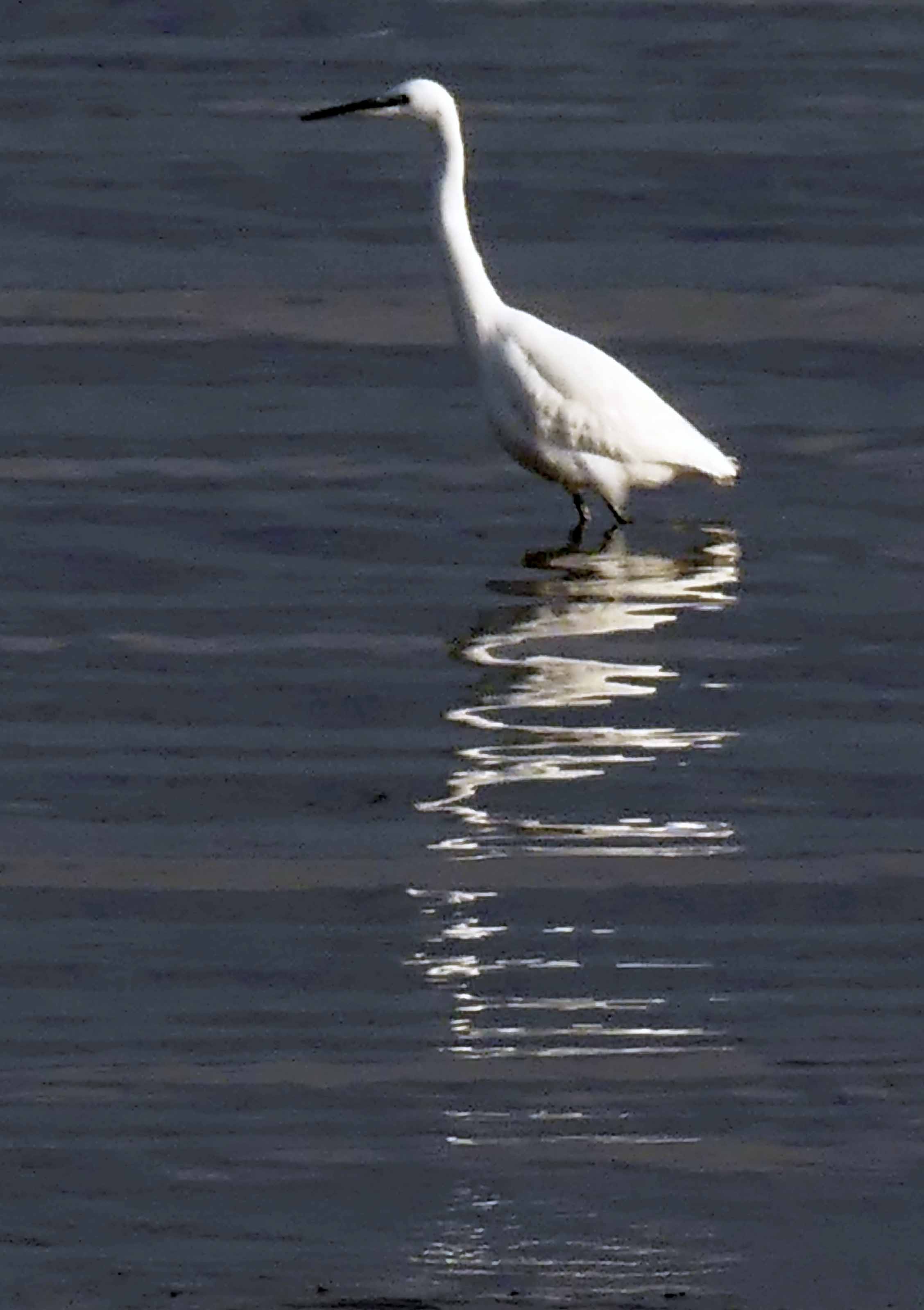
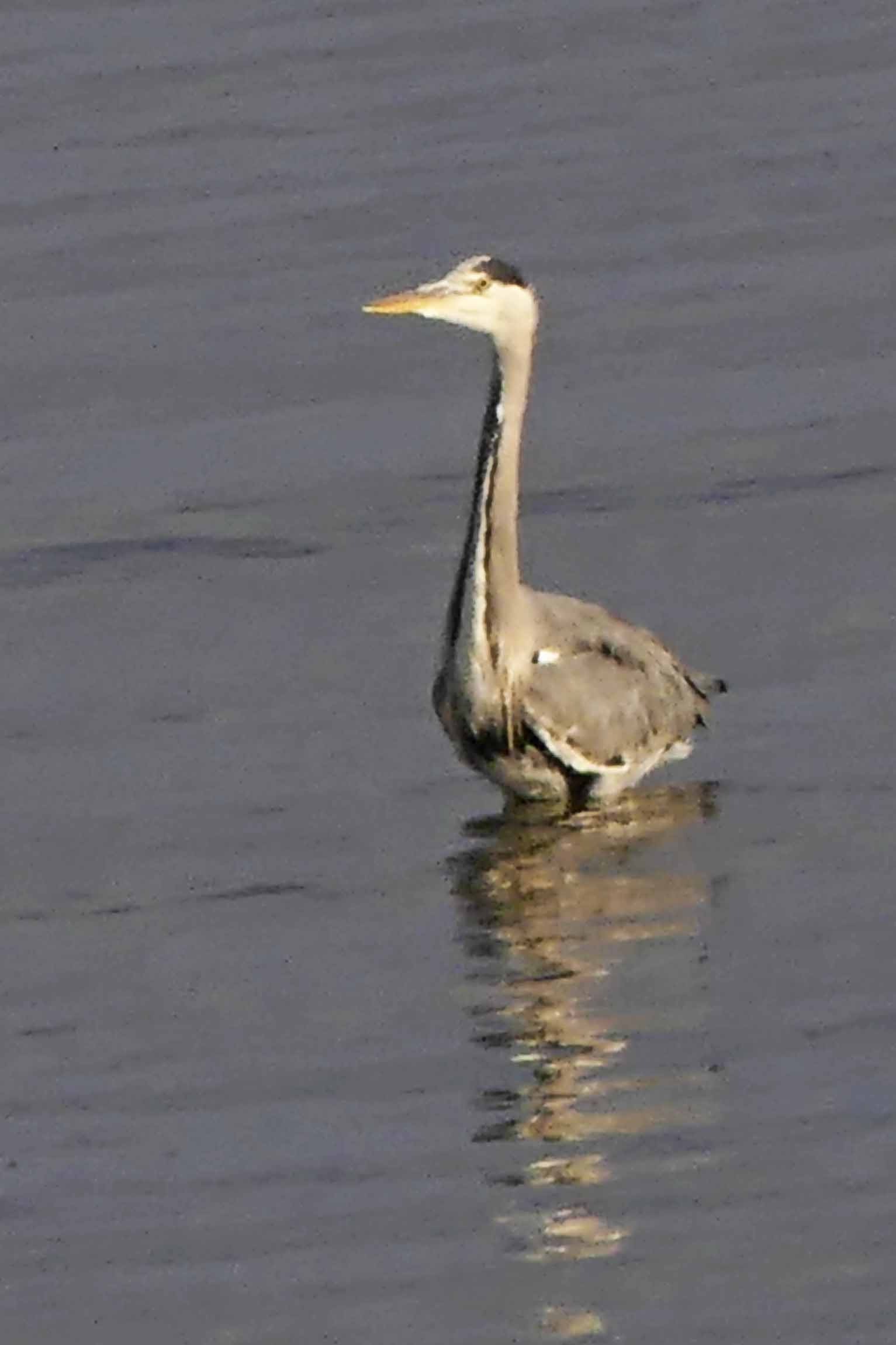
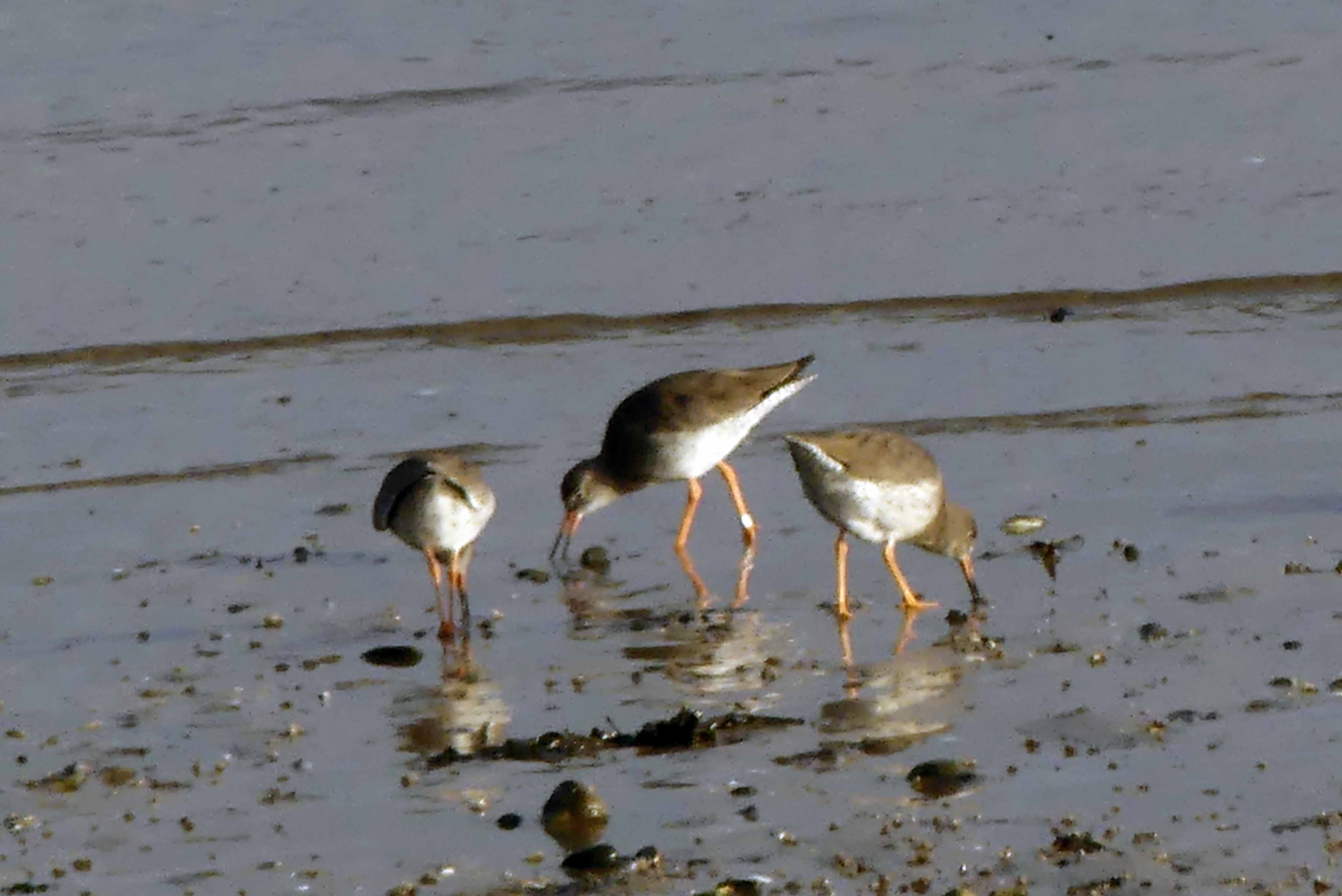
A number of redshanks, at least one of them with a silver leg band, and two curlews were exploring the exposed mud. There were oystercatchers here too, their bills, feet and legs getting covered in sticky mud, which may well account for the need for thorough bathing.
Passing back the way I had walked, the scene along the shore was a peaceful one.
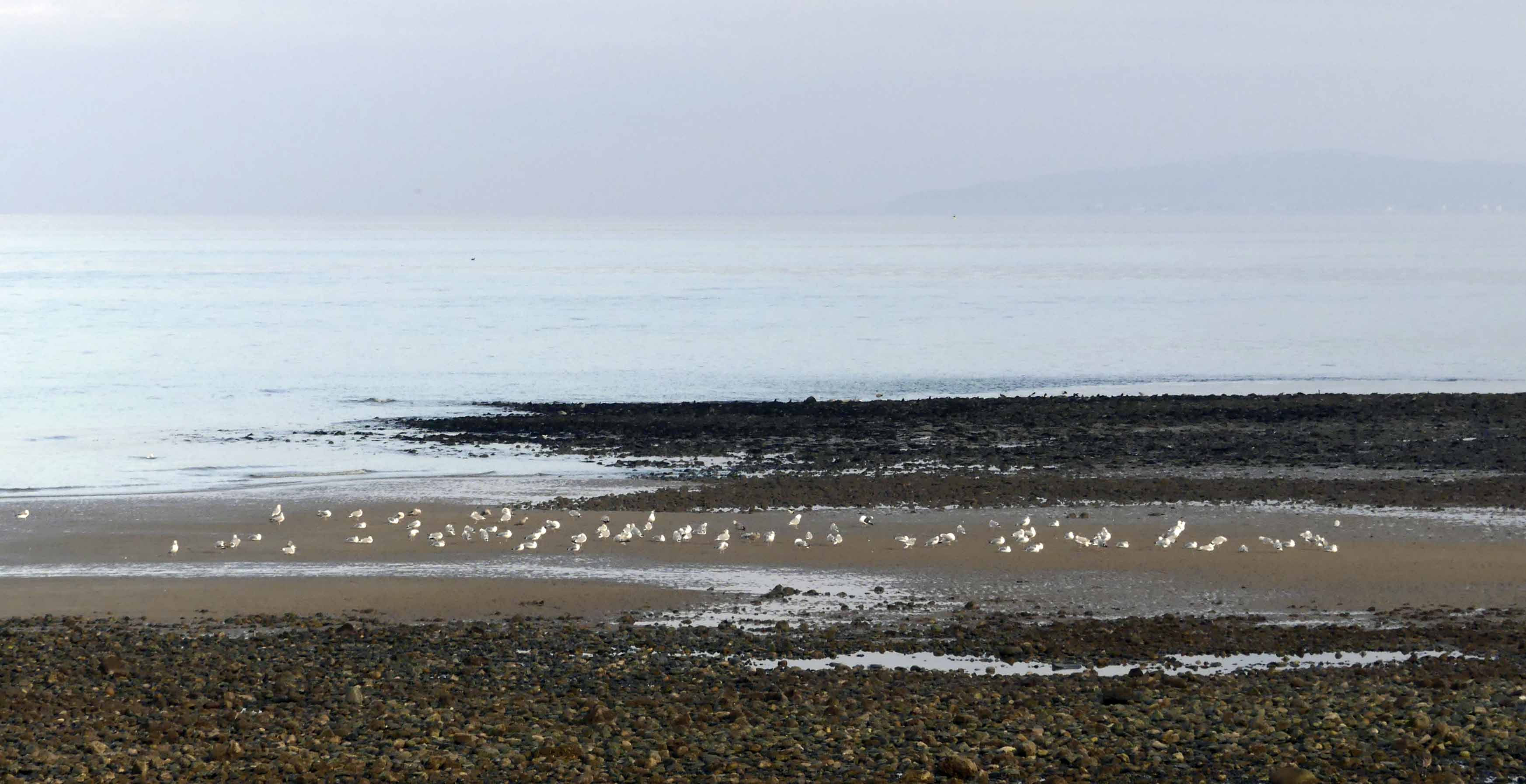
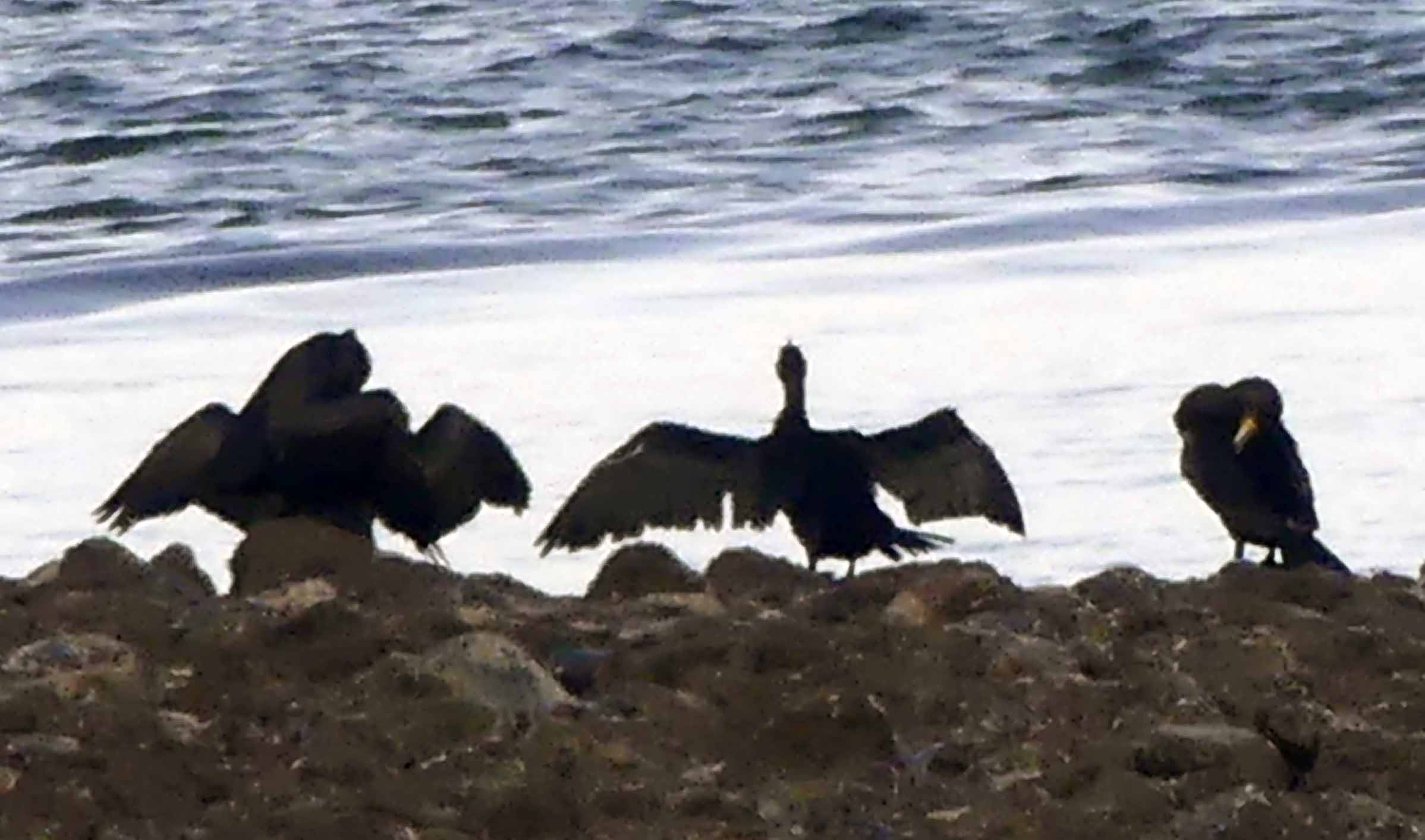
14:42 More gulls had gathered, and noticed that the herring and black-headed gulls were now in separate resting flocks. As I looked, I was taken by surprise when from amongst the herring gulls, the whole flock of ringed plovers burst out and flew rapidly away across the water. A final sighting was of the raggedy silhouettes of cormorants standing at the water’s edge.


Hello Theresa
It is lovely to see your latest Everyday Nature Trails about the birds you have seen at Rhos Point. It is a great place to see birds, especially waders this time of year isn’t it. I wondered if you had seen any Purple sandpipers on the huge rocks at high tide? I remember this as being one of the best places to see them.
Best wishes
Suzanne
LikeLike