• Home
  • about
  • about the photographs
  • Local Nature Reserves
    • Bryn Euryn Local Nature Reserve
    • Mynydd Marian
  • Wales Coast Path
    • Grey Seals in North Wales
    • St.Trillo’s Chapel
    • Wildflowers of North Wales Coastal Paths, Cliffs and Dunes

everyday nature trails

everyday nature trails

Monthly Archives: January 2022

Blowing Away the Cobwebs

26 Wednesday Jan 2022

Posted by theresagreen in coastal walks, Conwy, North Wales, Wales Coast Path, Wildlife of the Wales Coast Path

≈ 4 Comments

Tags

beachcombing, Carrion Crow, common gull, Llanddulas, mallard, Oystercatcher, seashells, strandline, winter

Wednesday last week started out enticingly clear and sunny, perfect weather for a walk on the coast path to blow away the cobwebs. But, despite knowing full well how changeable the weather can be here on the North Wales coast, I dilly-dallied, doing stuff that could easily have waited till later. By the time I was ready to go it had started to cloud over and there was a strong breeze blowing. But it wasn’t raining and from my window I could see sun shining over the far side of Colwyn Bay, so that’s where I decided to head for.  

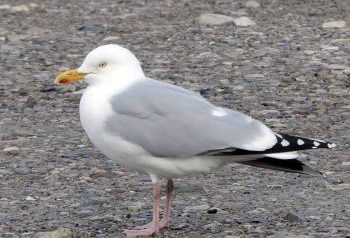
Llanddulas, with an interesting landscape and mix of habitats, is the perfect place to combine meandering-with-intent and if required, a brisk walk along the coast path, despite its bleakness on days like today. As I pulled in to park my car behind the defensive wall of rip-rap, two hopeful gulls landed on the ground close by, one a black-head gull, the other a herring gull. Even here the local gulls have come to associate cars with people with food, especially since lock-down brought more visitors and subsequently more people in camper-vans. 
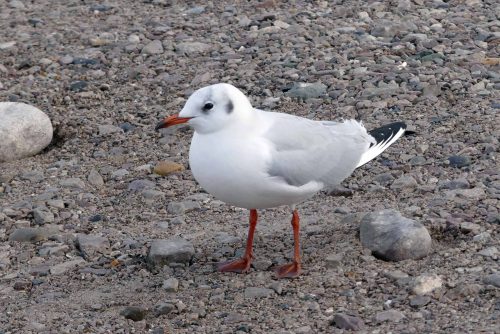
Black-headed gull
Herring gull
The Black-headed gull is beginning to get its breeding plumage, with dark feathers showing on the head above the eye


The river (Afon Dulas)

The river’s water level is low at the moment, giving the opportunity for repairs to made to parts of its banks that have been quite badly eroded. The worst affected spots are those where people regularly leave the path to get down to the water; these spots, already weakened have been further damaged at times when the river level has been higher after storms and heavy rainfall.        
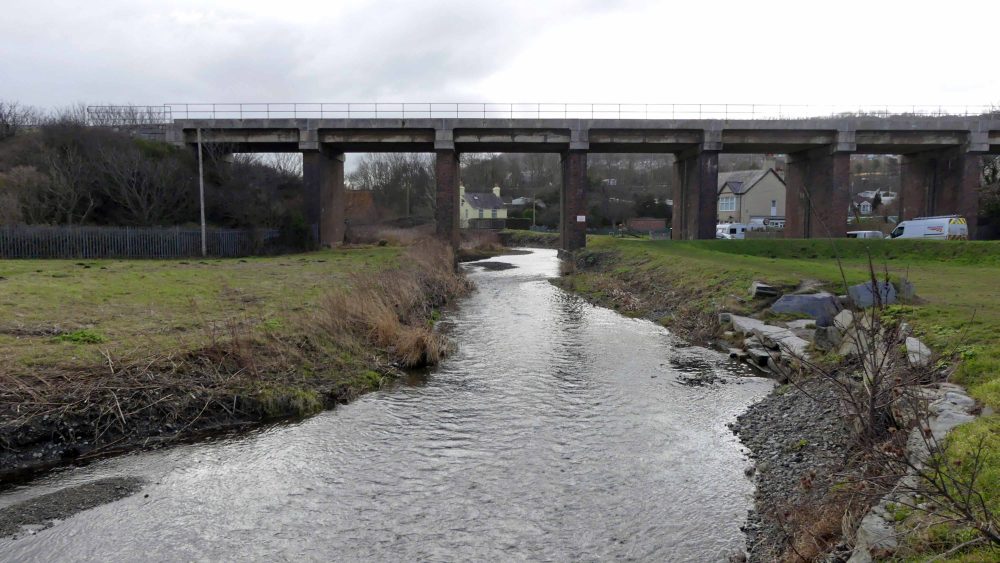
Looking downriver towards where the river soon meets the sea there are more eroded areas, one spot on the bend reaches very close to the edge of the coast path.
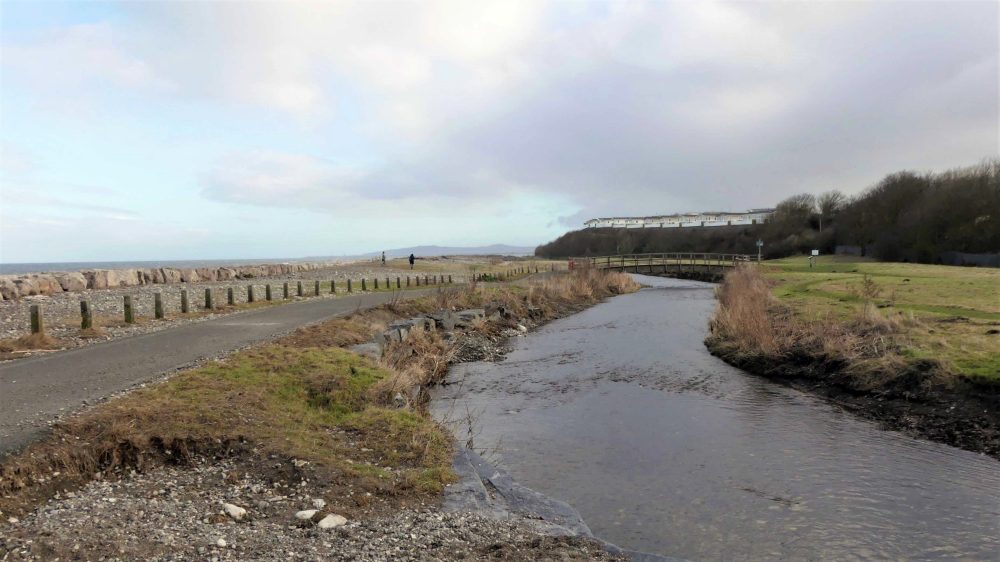
Crossing the bridge, I stopped to watch three mallards that were heading upstream towards me; a female  flanked on either side by two males. They seemed to be in no particular hurry, cruising steadily along paddling against the flow of the river, dabbling as they travelled. The water was surprisingly clear, and though it was rippled and textured by the wind, I could see the ducks’ heads as they searched the riverbed. All are looking very handsome in their bright breeding colours and I wondered about there being two males and one female; mallards start to pair up around October or November, so was one male hoping to entice the female away from the other, or was she torn between the two?


The wind was getting stronger and as it was blowing from the north-west, I could feel it pushing me along as I carried on following the course of the river to where it meets the sea. It was invigorating and all cobwebs were quickly dispatched, and I tried not to think about the walk back against a head-on wind.

The Strandline

At its end, the river is guided to its meeting point with the sea by a great man-made wall of piled rocks and it’s behind that the shoreline becomes accessible. 

The tide was just on the point of turning, and the wind was pushing some big waves towards the shore where they crashed and left foamy trails as they receded. There is no shelter from the elements anywhere along this exposed section of the coast and today, even the hardy herring gulls, often here in great numbers, were conspicuous by their absence.  
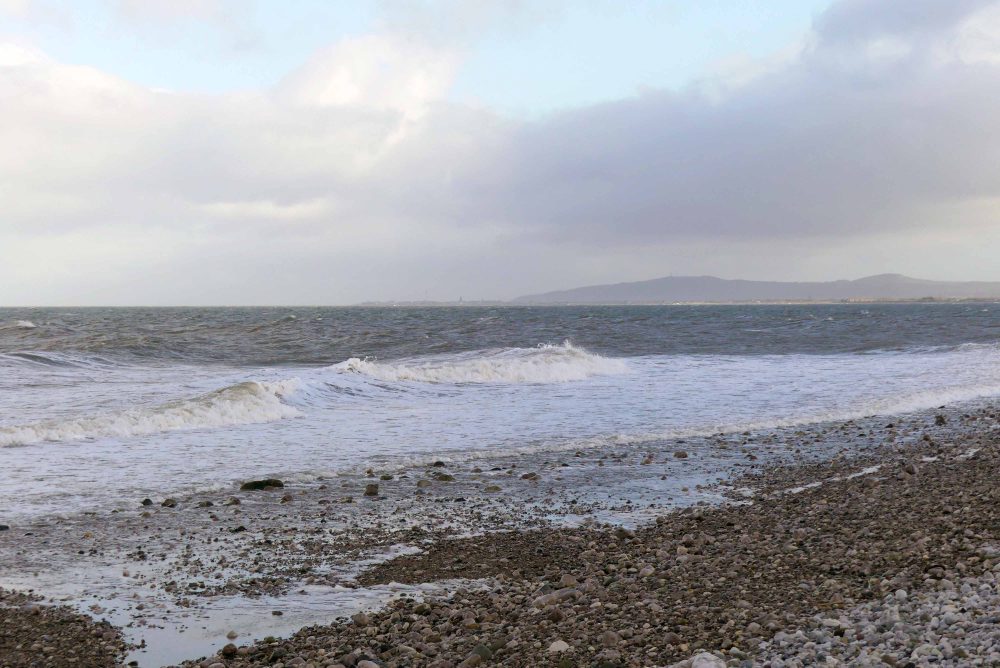
When the tide is in there is no visible sand, so it’s not greatly attractive to people, but this rough stony area of the shoreline is always interesting, both in terms of what plants grow here and what the waves may have carried in and left behind them on the strandline.  

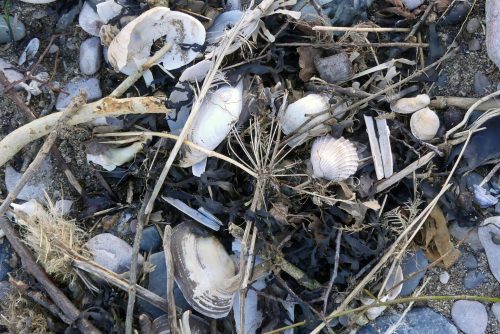
The strandline here at Llanddulas is almost always interesting and is a good place to find some of the bigger and tougher shells, although many get damaged by the rocks and stones on the lower shore. A lot of twiggy and small pieces of wood get mixed in with the drifts of seaweed too; some is probably  driftwood, but as there are trees on the other edge of the path it’s likely that much of it is from there. Sadly, there’s also usually a lot of plastic waste amongst the treasures, endless metres of fine fishing line that gets tangled into seaweed, discarded wipes, plastic bottle tops and spent shotgun cartridges are some of the most frequently found items. I always pick up what I see and today ended up with at least half a bag full of stuff to put into the rubbish bin, but it’s frustrating knowing there’s a lot more out there that really doesn’t need to be.
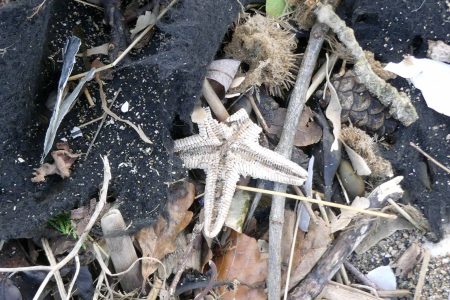
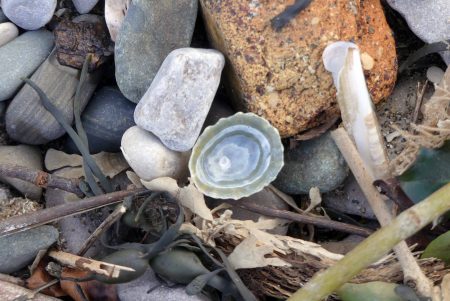
remains of a starfish
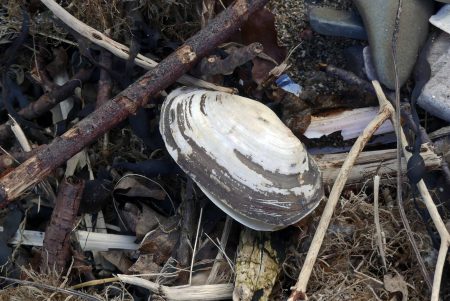
common limpet interior
common otter shell
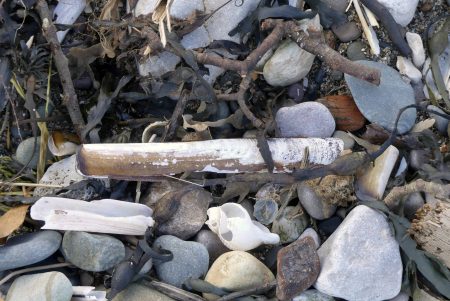
pod razor shell
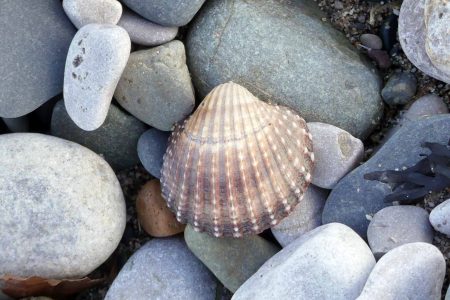
spiny cockle

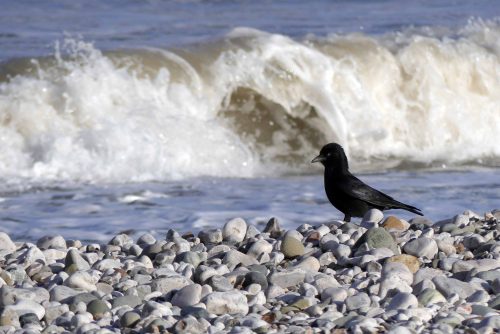
The gulls may have been spending their day elsewhere, but there were several carrion crows about. One flew in and landed close to me on the rise of pebbles on the sea edge, perhaps interested to see if I’d found anything edible as I probed in the piles of seaweed. 
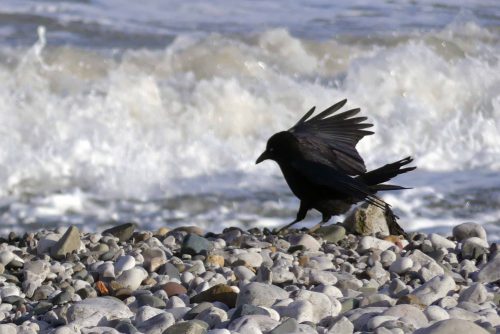
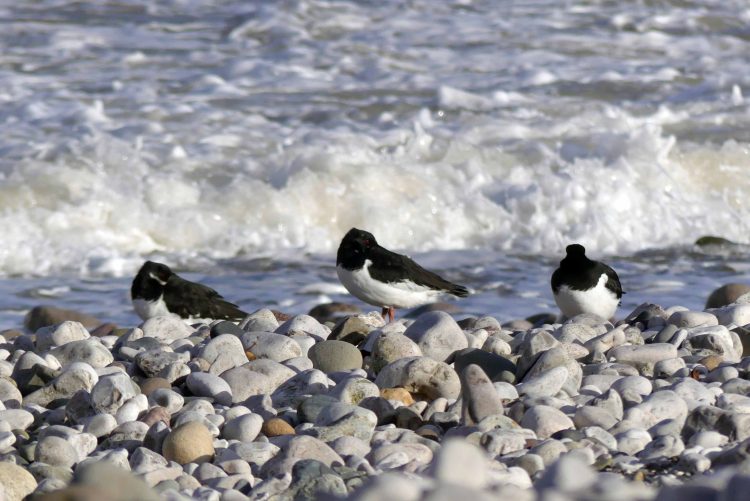
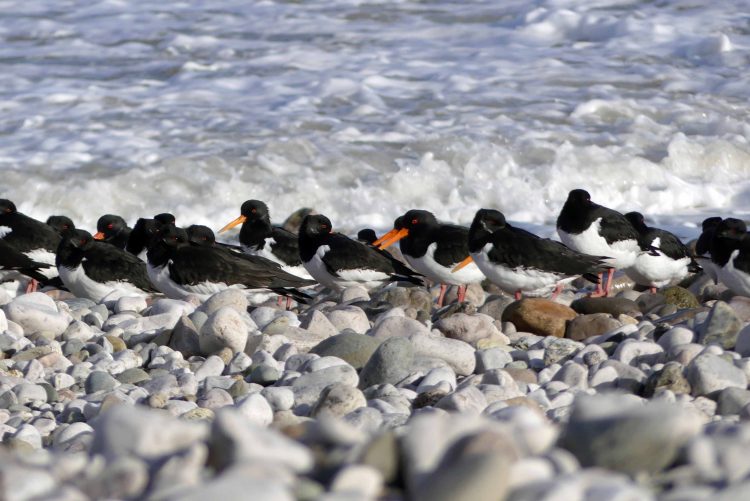
My activity also caught the interest of a free-running dog that came racing over towards me from the path, taking no notice of its owner’s attempts to call it back. It was a cute dog, but I didn’t want its excited company, and more importantly, I’d spotted a line of resting birds along the sea-edge just ahead of me and didn’t want the the dog to catch sight of them too and race over and disturb them, something that happens all too often here. This time I managed to divert it back towards its owners and the birds were left in peace. 

Oystercatcher – welsh Pioden y Môr
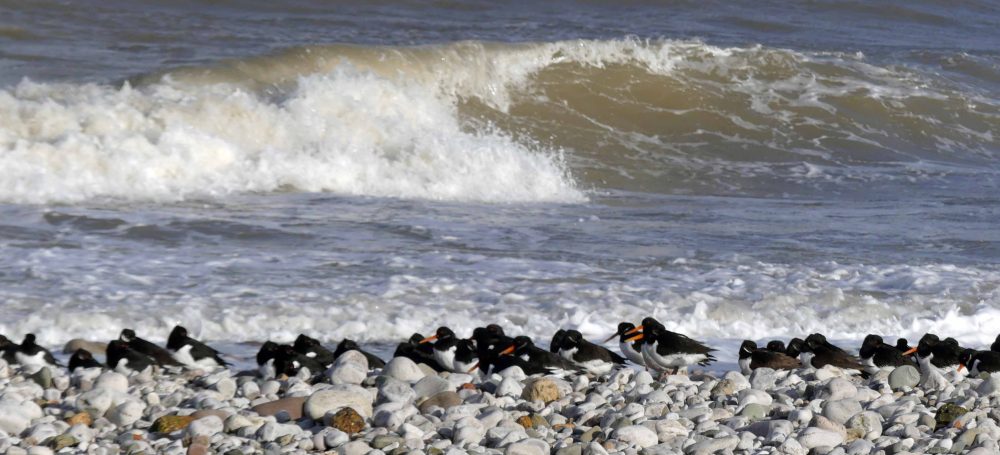
Oystercatchers seem, happily, to be maintaining good-sized populations along this coast and Welsh estuaries, but that is not the case generally, as highlighted in this recent post by Graham Appleton:

Over recent decades, numbers of Eurasian Oystercatchers have declined. In 2015 the species was reclassified as “Near Threatened” on the IUCN’s Red List (Birdlife International) and “Vulnerable” within Europe. It is also Amber listed on the UK’s Birds of Conservation Concern list, due to its European status, the concentration of its wintering population in protected sites and the international importance of UK breeding and wintering populations.

When Oystercatchers can’t find food
JANUARY 13, 2022 / GRAHAM APPLETON

Not shells

Moving on, a bit higher up on the beach there was more to see, including pieces of ‘stuff’ that are found blowing around on beaches practically everywhere and some that I’ve only recently become aware of.
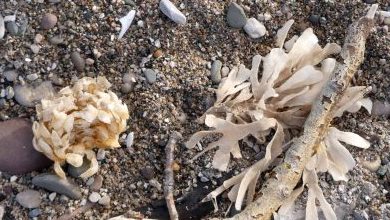
whelk egg cases & horn wrack

On the left of the photograph, a bundle of the dried empty egg-cases of the common whelk.

On the right is a piece of dried almost fabric-like hornwrack. It looks like a dried piece of seaweed, but is actually a colony of animals, meshed tightly together, each animal contained in a little box. When it’s alive, hornwrack grows only during spring and summer, forming bushy clumps attached to shells, stones, cobbles or rocky seabeds and is a pale beige colour.
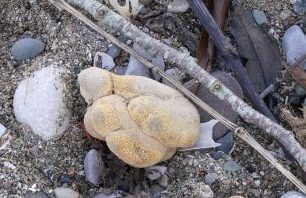
dead-man’s fingers

I first came across a piece of the stuff in this photograph on New Year’s Day whilst out collecting shells with my little granddaughters on Rhos on Sea beach. There was a lot of there and I was intrigued by it, although they both said it was ‘disgusting’! It does look a bit odd, I admit and it feels strange, very light and a bit corky or spongy. It turns out that it is commonly known as dead man’s fingers, which in its life is a soft coral whose scientific name is Alcyonium digitatum, which also references fingers, an indication of how it grows.

It was interesting to find it here too and others have found it on beaches further along the coast, so I wonder if it all originated in the same place, brought in by a recent storm and carried on currents to be washed up in various places?
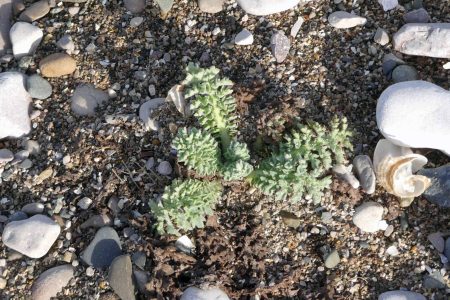
fresh leaves of yellow horned-poppy

On a calmer day I might have lingered here longer, but my hands were getting cold and I can’t operate a camera with gloves on. I took them off again to photograph this surprising sight ; the new green leaves of a yellow horned-poppy plant, then headed back over to join the coast path.

Back on the path I deposited my rubbish collection in a bin in front of the café/bar next to the caravan site and carried on, still blown from behind by the wind. This stretch of path towards Pensarn is edged on the sea side by a narrow strip of ground which in the spring and summer  months becomes a colourful border full of wildflowers. 
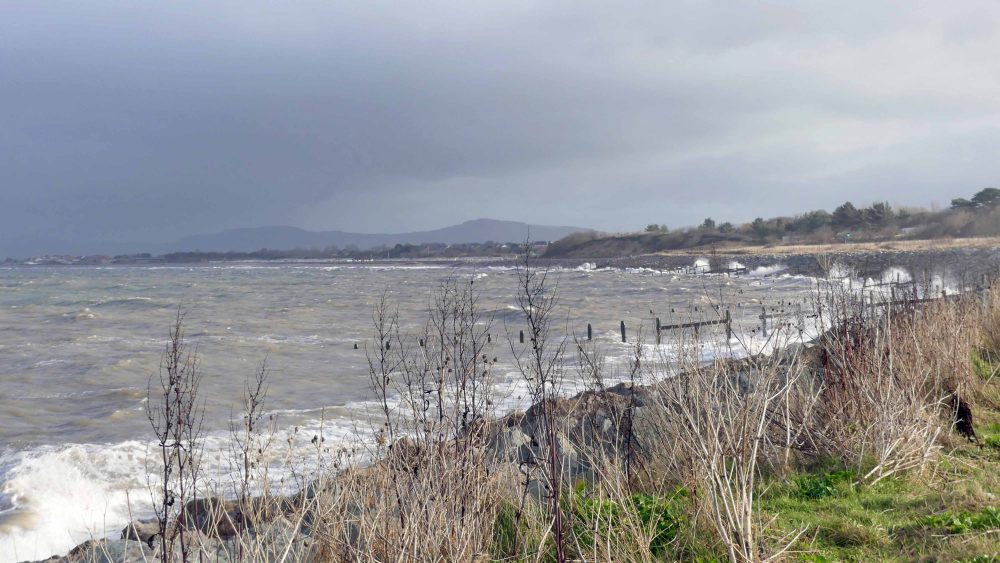
Presently, it is largely covered by grass and spiked with tall dried stalks, the remains of last year’s flower stems, but already the bright green leaves of Alexanders are growing strongly.   

Watching the sea crashing in against the fortified shore brings home just how powerful it is and how vulnerable to its effects the land is.
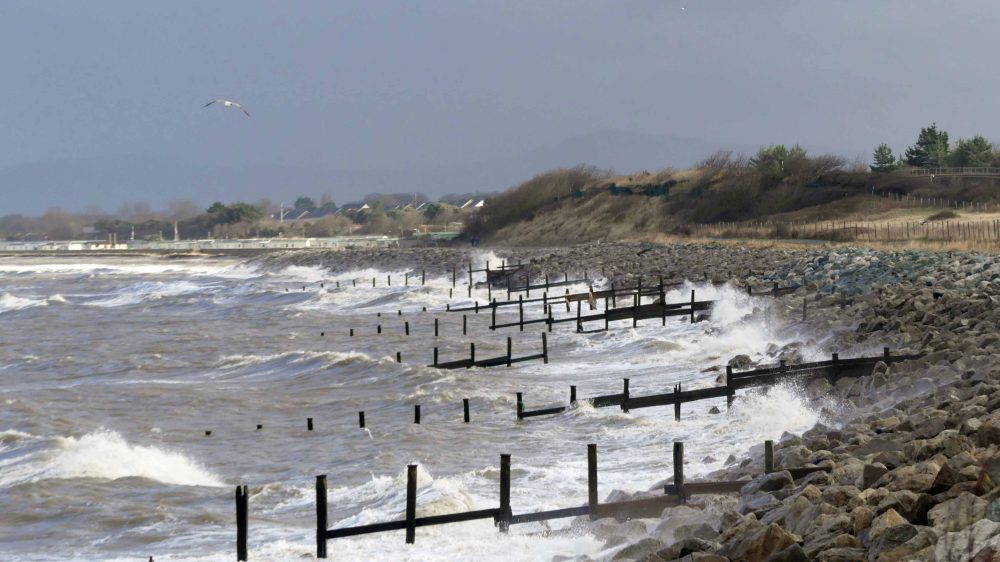
In the near distance I could see a few gulls flying around the posts of one of the groynes and although tempted to turn around here, I wondered why they were here when all others were elsewhere. As I got nearer I was more mystified; the gulls were perching on the tops of posts and flying up just as each big wave broke behind them, momentarily covering the post. It was entertaining to watch, almost as though they were playing a game of ‘chicken’ – seeing who could stay the longest before being hit by the rising water. 
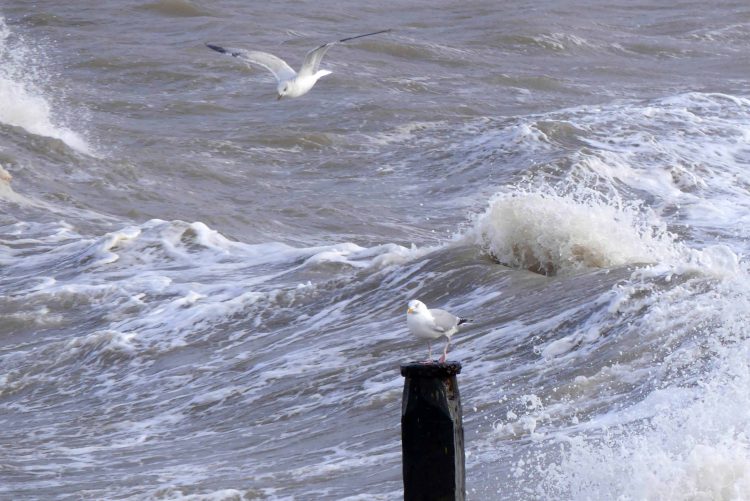
Common gulls – the perched bird has its first-winter plumage

I couldn’t get close enough to the birds for a really good look, even with a zoom lens, but at least two  were definitely common gulls, which we don’t get to see many of; in fact here is the only place I have seen them for myself. These gulls are slightly bigger than a black-headed gull but much smaller than a herring gull. The common gull also has greeny-yellow legs rather than the red of the black-headed gull and the pink ones of a herring gull. The best photograph I managed was of one flying, which shows its bill, finer and more pointed than that of a herring gull and the larger ‘mirrors’ on its wingtips.  
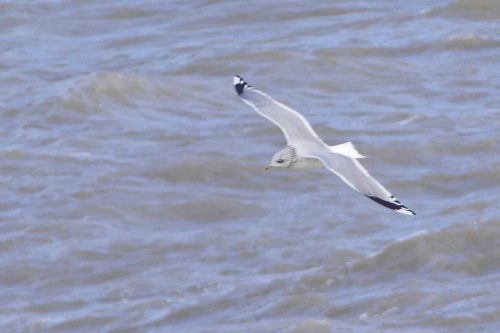
Common gull – Larus canus

My original plan had been to carry on walking to Pensarn beach, but the thought of walking back against the cold and increasingly strong wind from even further away took away my enthusiasm for that and I headed back. As suspected, it was indeed a bracing walk back and I stopped only once for long enough to take a photograph of the view in the direction I was now walking in. I think I’d be a bit concerned if I had one of those mobile homes close to the shore edge. 
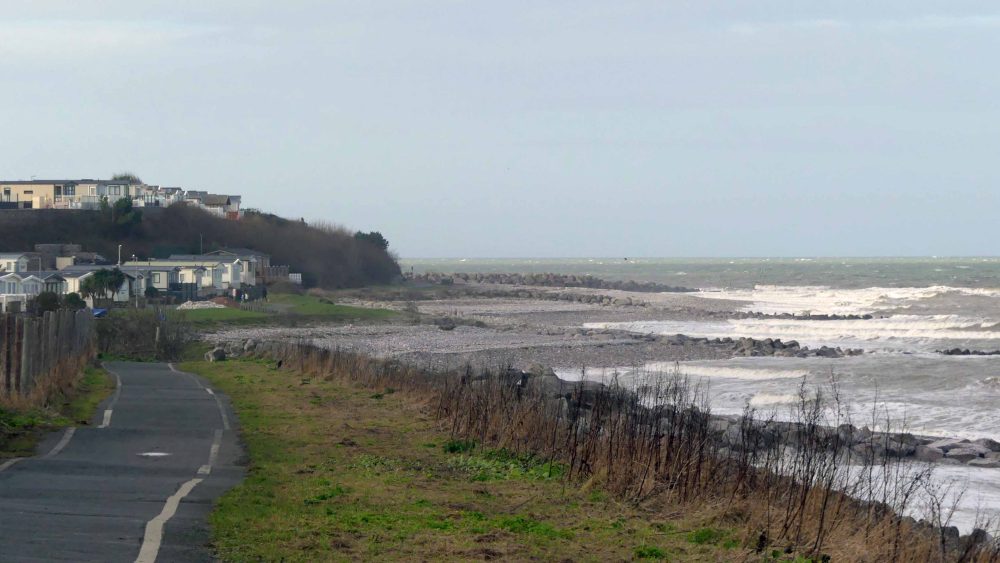
Note to self: don’t park your car this close to the sea wall on windy days- salt spray is not good for it!
Share this:

  • Share on Facebook (Opens in new window) Facebook
  • Share on Pinterest (Opens in new window) Pinterest
  • Share on X (Opens in new window) X
Like Loading...

On the Trail of the Jackdaws of Conwy Town

17 Monday Jan 2022

Posted by theresagreen in Birds, North Wales, Town Trails

≈ 16 Comments

Tags

bird folklore, Conwy castle, conwy town walls, jackdaw, welsh mythology

The walk around Conwy town and its wonderfully preserved town walls is one of my all-time favourite trails, particularly on a clear sunny day; the views over the town, the estuary and the surrounding countryside are spectacular, whatever the season. There are many ways to enjoy this iconic town, but on this Trail I’m hoping to give a different perspective through the lifestyle of one of our most familiar everyday birds, the jackdaw, which have a special status here.

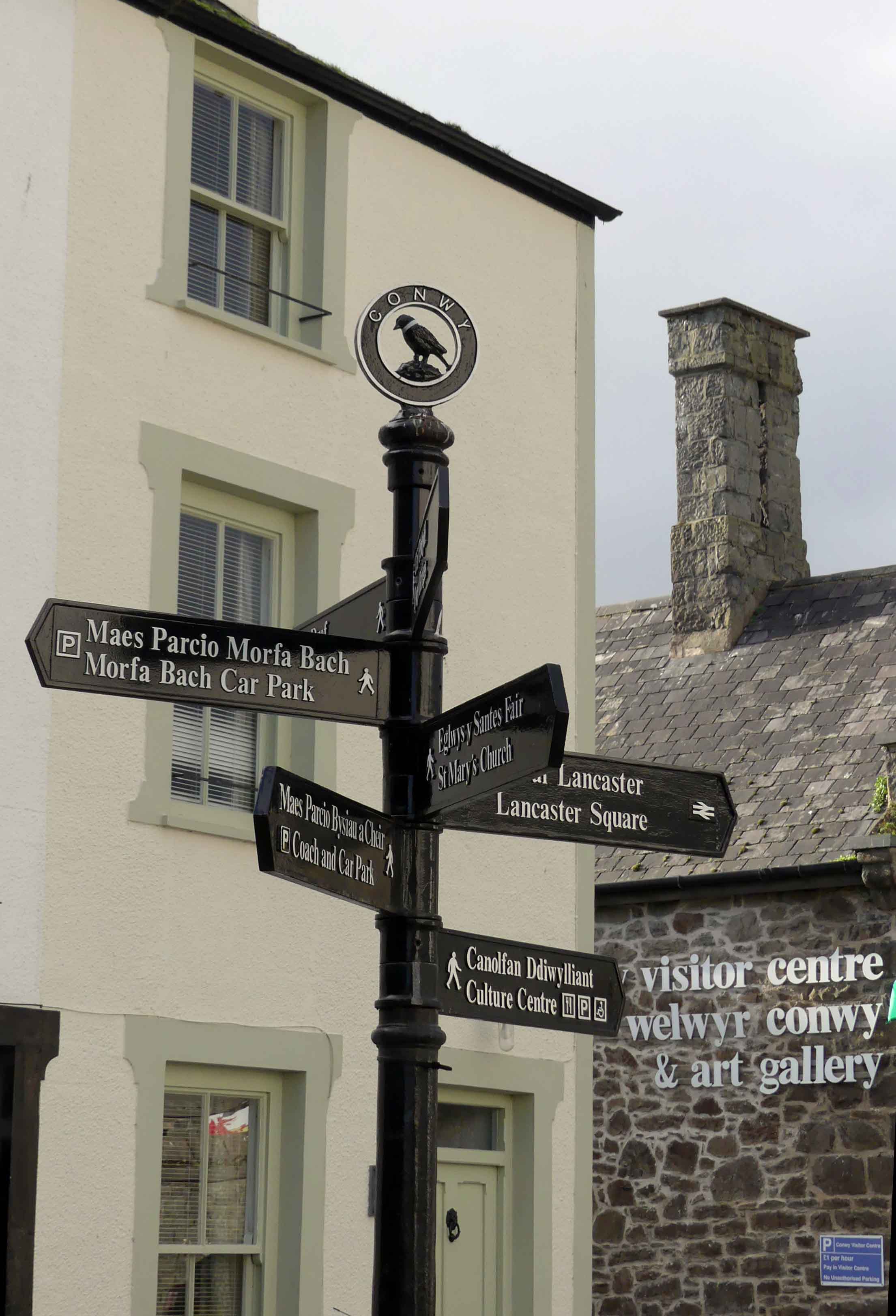
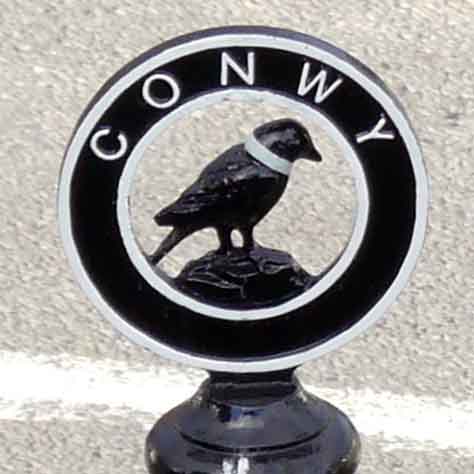
A jackdaw is the town’s unofficial mascot and appears as an icon crowning its signposts. 

The ramparts of Conwy’s iconic medieval castle and the walls that enclose the town have been home to countless generations of jackdaws since its construction during the 14th century, and the birds are an integral part of the town’s everyday nature and it’s culture. People born within the town walls can claim to be a Jackdaw, although their numbers are declining today as most of those that qualify for the title have reached their 80s and 90s, and the majority of babies are now born in hospitals outside the town.

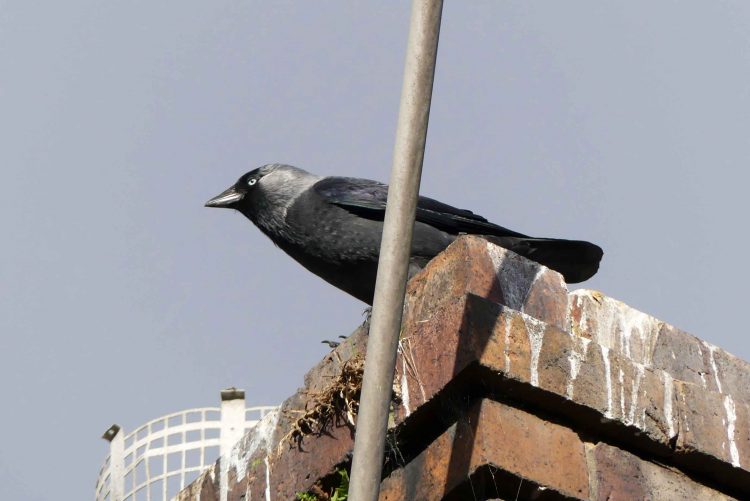
Jackdaws are the smallest members of the crow family and familiar residents of most parts of Britain, with their presence and numbers being largely influenced by the availability of  locally suitable nest sites. They  nest naturally in places such as cavities in trees and on cliffs, but the greatest number choose to live alongside us, taking advantage of habitats we have created, including the exposed rocky walls of quarries, ruined and occupied buildings and, since the advent of central heating, in chimneypots. Historically, they are also well-known for nesting in church steeples, as noted in the first verse of ‘The Jackdaw’, by the 18th century English poet William Cowper (1731-1800):

The Jackdaw
There is a bird who, by his coat
And by the hoarseness of his note,
Might be supposed a crow;
A great frequenter of the church,
Where, bishop-like, he finds a perch,
And dormitory too.   

In Welsh folklore, this particular nesting trait led to the bird being considered sacred and evidently being shunned by the Devil as he ‘hates the church and everything belonging to it’. 

The Trail

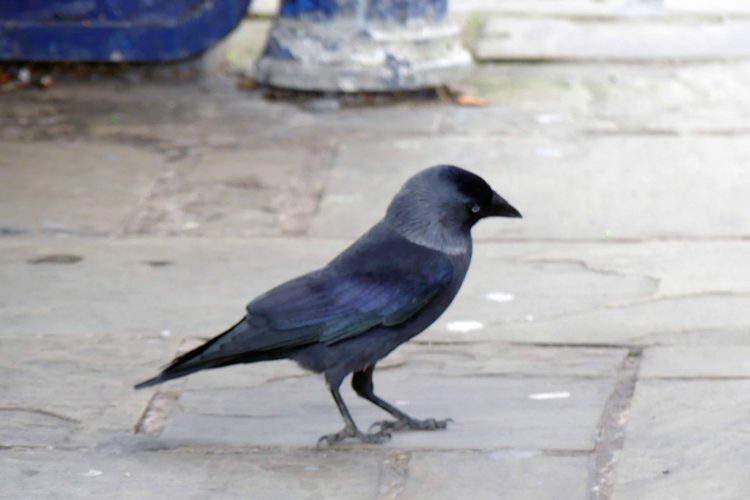
There are several options for parking in and around the town, but having driven here and because of the route I had in mind for my trail, I began this one from the Gyffin Road carpark, which is ‘Pay & Display’ and located a short way beyond the town walls off Mill Hill (LL32 8NN). A first encounter with jackdaws is very likely to here, as ever-opportunistic there are often a few strutting around the carpark on the look out for treats. 

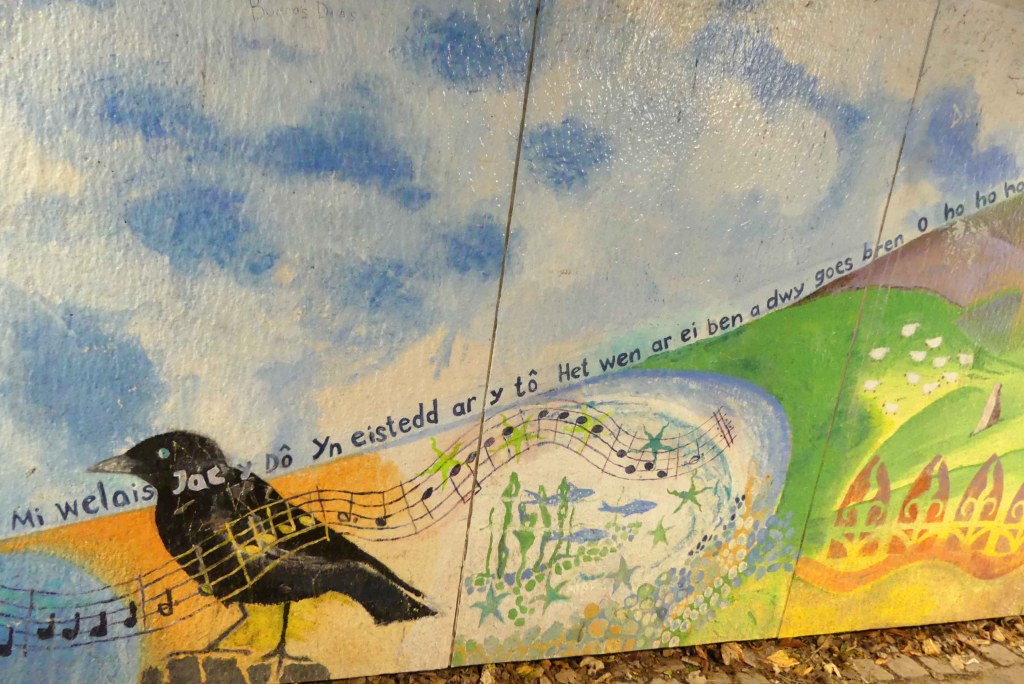
A brightly-painted subway leads from the carpark to the town and amongst other depictions of aspects of the town and its surrounds is a Jackdaw, Jac y Dô in Welsh, and above it the first verse of a ‘nonsense’ rhyme, still traditionally sung by children, including mine many years ago.

This image has an empty alt attribute; its file name is 211119-town-walls-walk-1-subway-mi-welais-jac-y-do.jpg

It so happens that it’s one of the few that I remember the words and tune to, so every time I pass this I have it stuck in my head for the rest of the day! In Welsh it scans nicely and goes:

Jac y Do
Mai welais Jac y Do
yn eistedd ar ben to;
het wen ar ei ben y dwy goes bren
ho ho ho ho ho

In case you were wondering, it doesn’t translate well into English. The words don’t rhyme and don’t fit the tune at all!

The Jackdaw
I saw a Jackdaw
sitting on the roof;
a white hat on his head and two wooden legs
ho ho ho ho ho

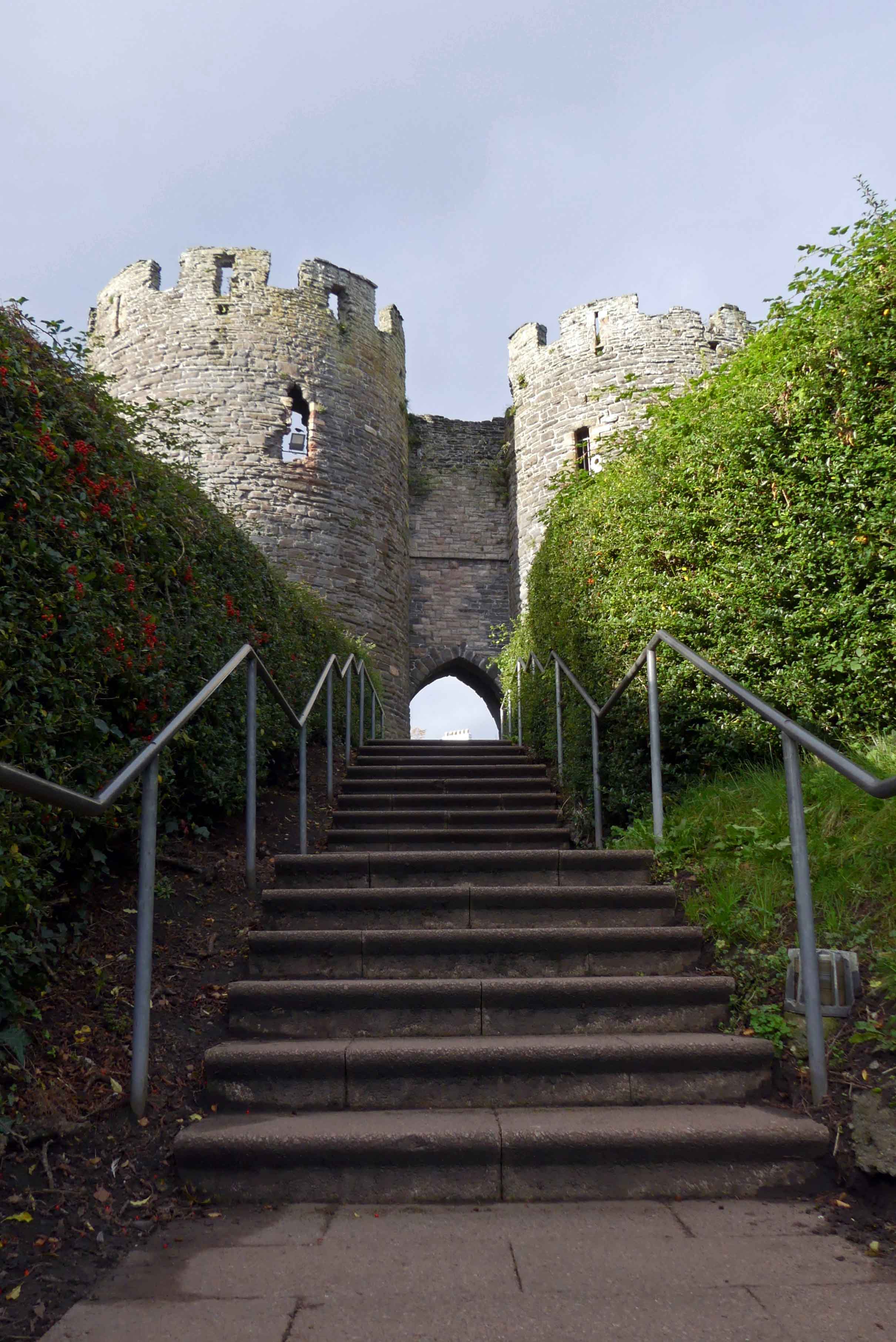
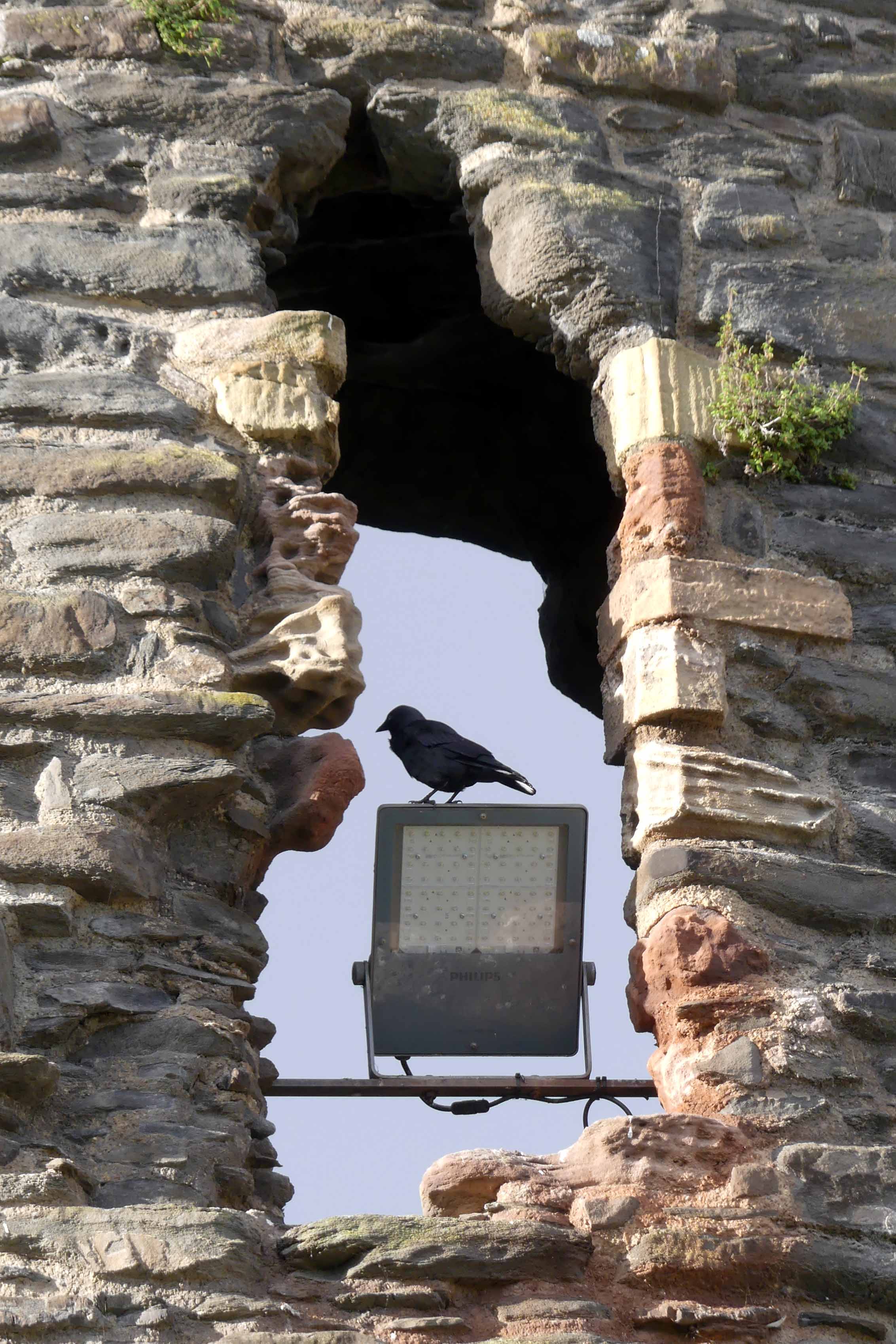
Leaving the subway there are two options to get up to town level, either via two flights of fairly shallow stone steps or a zig-zagged slope. At the top is a stone archway between two towers of the town walls and in my picture you can just make out a tiny bird perched on the spotlight in the ‘window’ of the left-hand tower, which close to is an actual jackdaw.

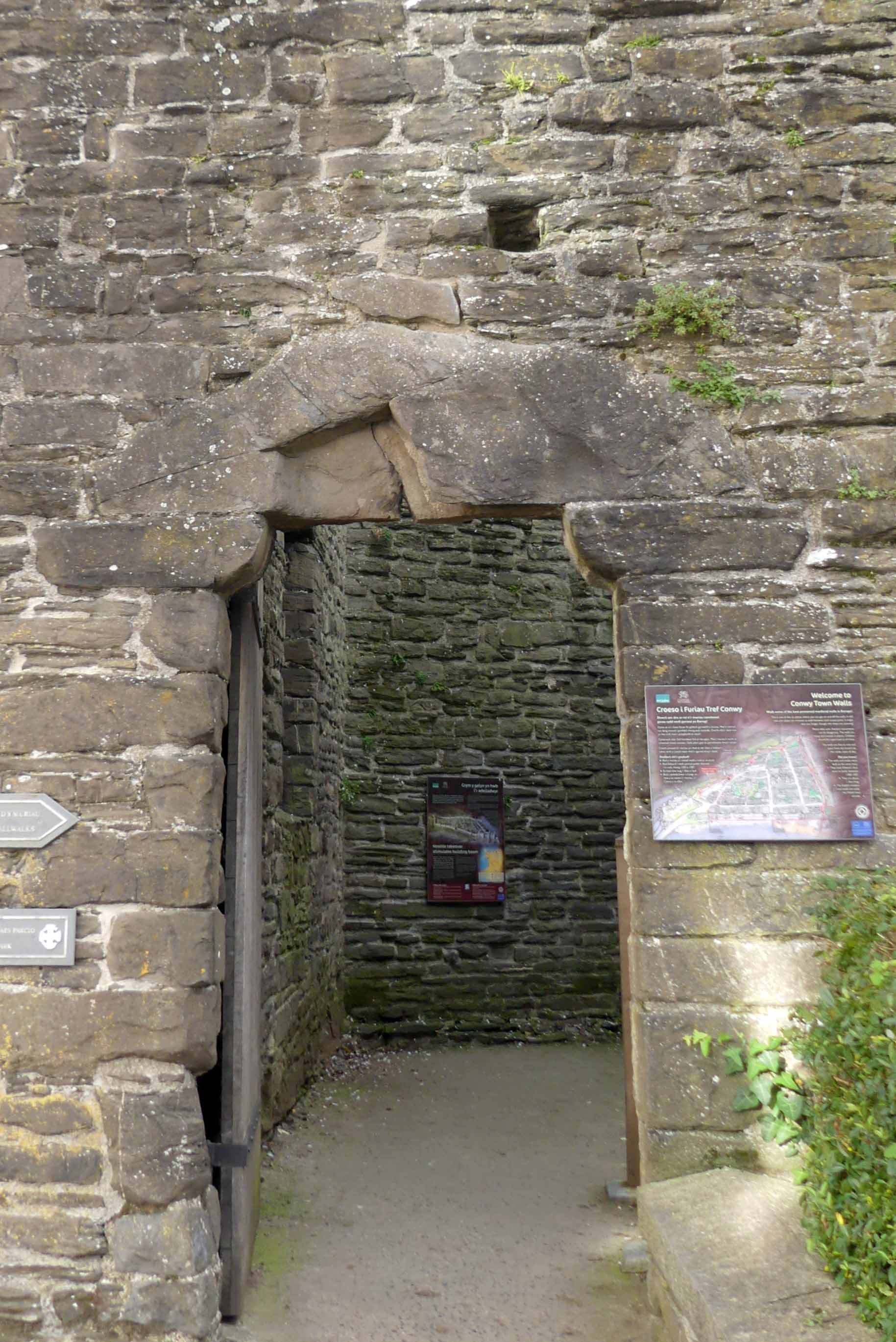
The other side of the archway one of the access points to the town walls is found. Above the archway you can see a square hole in the stonework, one of many peppering the castle and town walls. These recesses, thought likely to have supported scaffolding as the castle was being built, account largely for the jackdaws’ presence here. They make perfect nesting places, snugly recessed within high sheer walls and safe from predators. 

In front of you is one of the afore-mentioned town signposts topped with a jackdaw icon, the town’s unofficial mascot. Close by is the visitor centre & art gallery and across the road St Mary’s Church. 

Jackdaws about town

At the bus stop

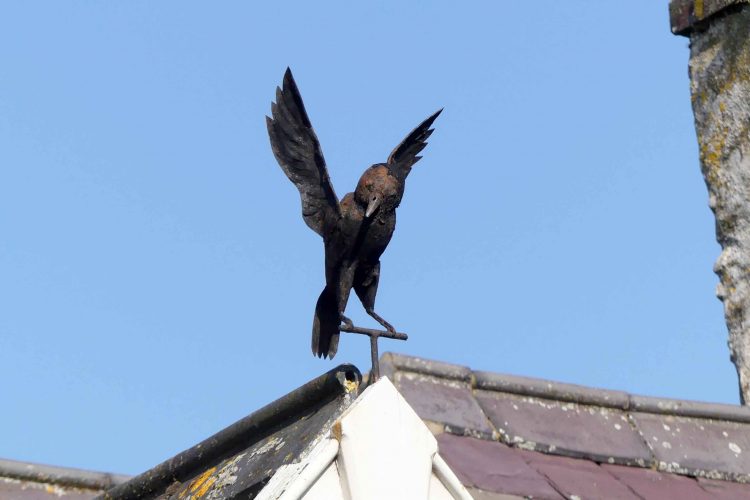
On Castle Street, on top of the gables of number 11 you are sure to see jackdaws, as forged from iron they can’t move far! The building bears the date 1539, but has origins in the mid-15th Century. It has undergone many changes of use since then: in the 18th century it became an inn, called the Black Lion, and is now a private house. The jackdaws are a 20th addition by a previous owner of the house; perhaps they commissioned them as they had been born within the walls and this was their way of stating their birthright? They are very convincing.

Iron Jackdaw on top of the gables of 11 Castle Street
conwy_jackdaw_chair

In the town’s Guildhall on Rose Hill Street, there is a Jackdaw chair on display, a large wooden chair that bears the town crest and a jackdaw. Apparently the chair was once housed in the Castle Hotel and legend has it that whoever sat in it had to buy a round of drinks. It’s not clear how or why, but the chair left the premises and came to light when put up for sale in an auction in the south of England. It was bought by the Jackdaw Society who gifted it back to the town. (The Guildhall was closed on this visit, due to Covid restrictions, so the photograph is from the History Points website.)

A few real birds were hanging out around the rooftops and archway leading to the harbour. They may have been foraging for insects hiding in the stone crevices as well as keeping an opportunistic eye out for any dropped food scraps. At this time of year there are less visitors and less gulls, so less competition for the smaller jackdaws.

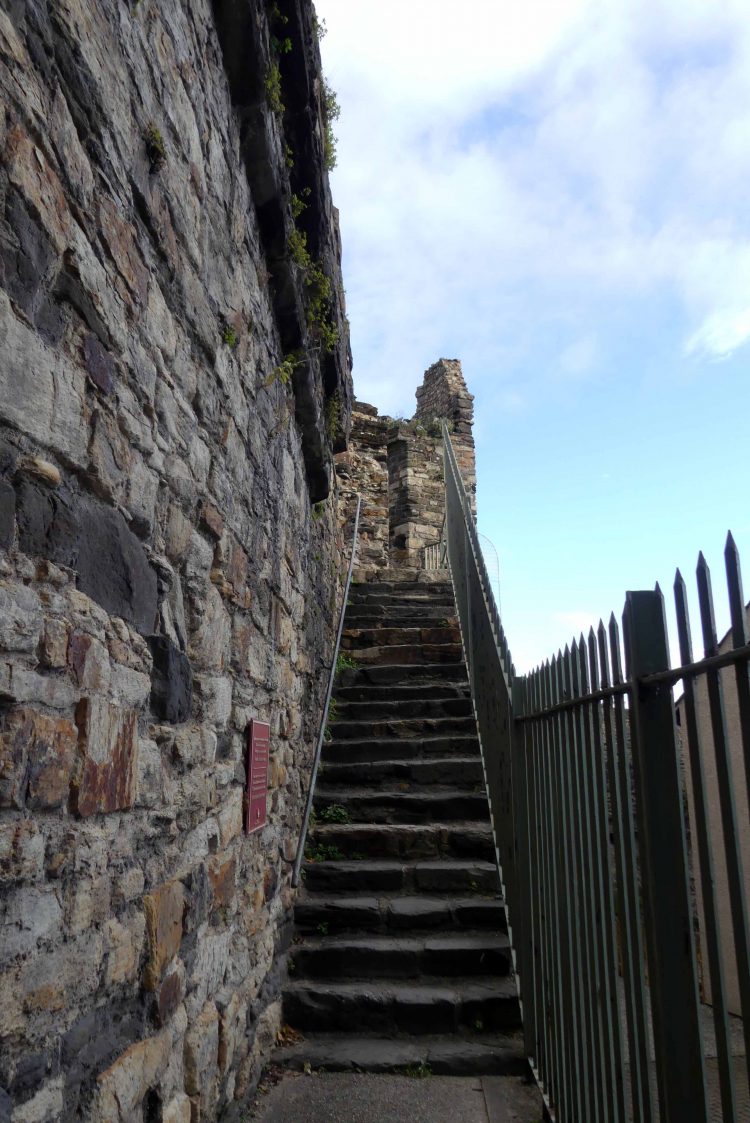
To access the town walls from here, I went through the archway to the harbour, a slightly convoluted way to get to the wall access I was heading for, but much more scenic. At the far left-hand end of the harbour I walked through the arch and then left up the hill to where a Postern Gate is located. The gate is double-arched, one over the road, where Town Ditch Road curves into Berry Street, which leads into Castle Street and the smaller one for pedestrians, behind which are steps giving access to the walls. 

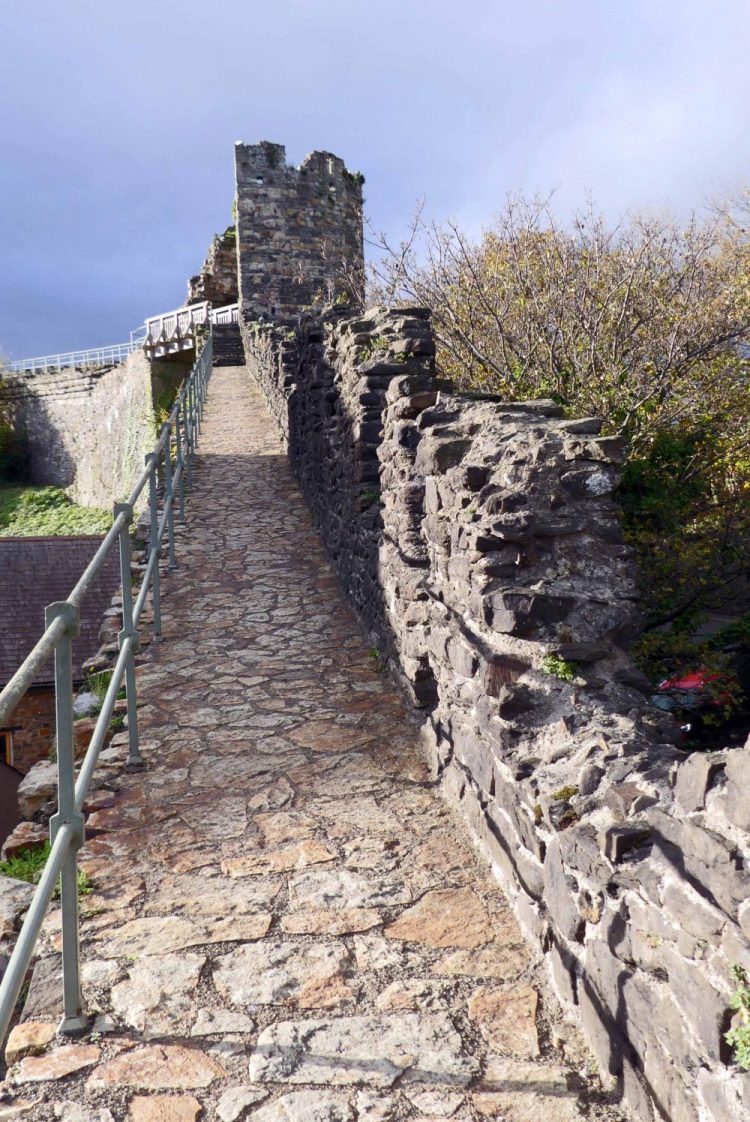
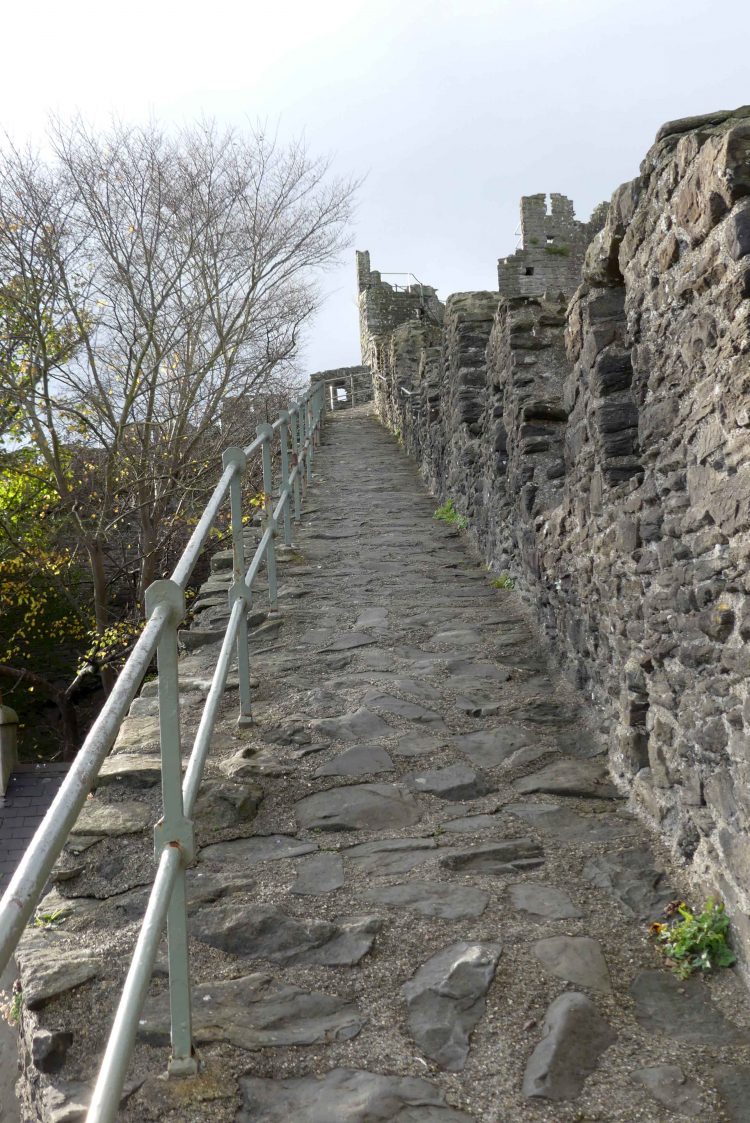
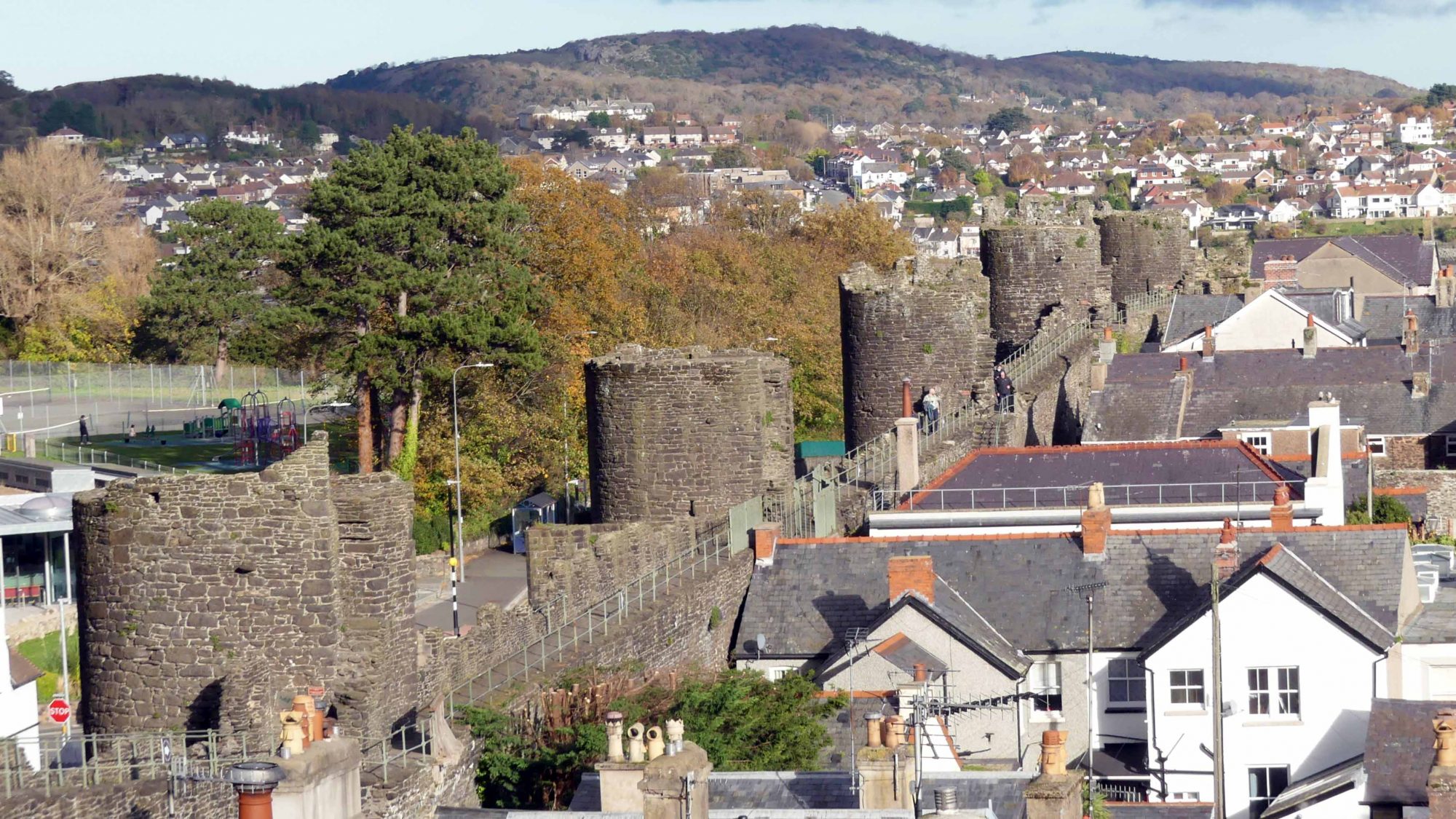
This is the longest continuous length of the wall and is on a fairly steep slope in sections marked by towers leading up to the Watchtower.

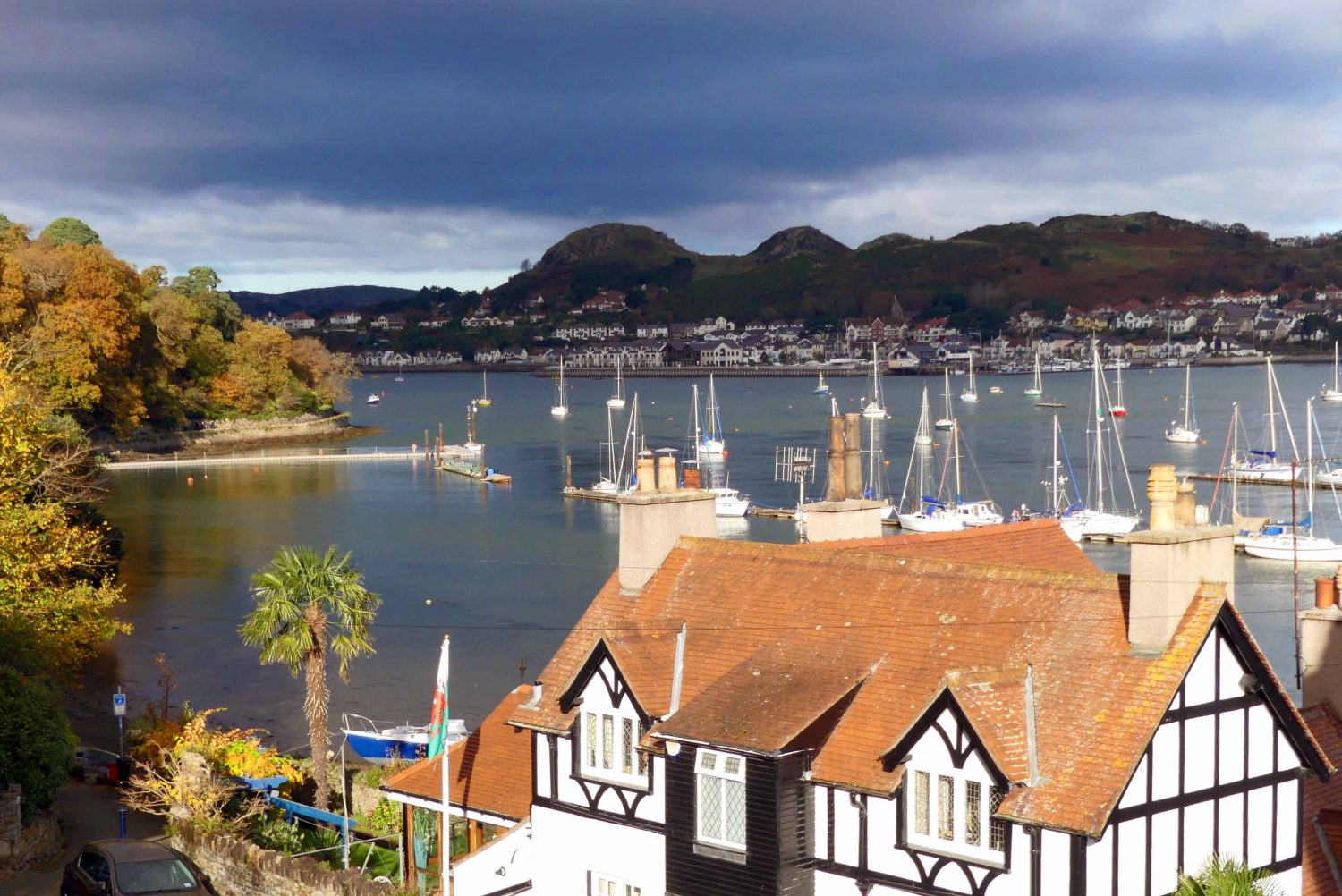
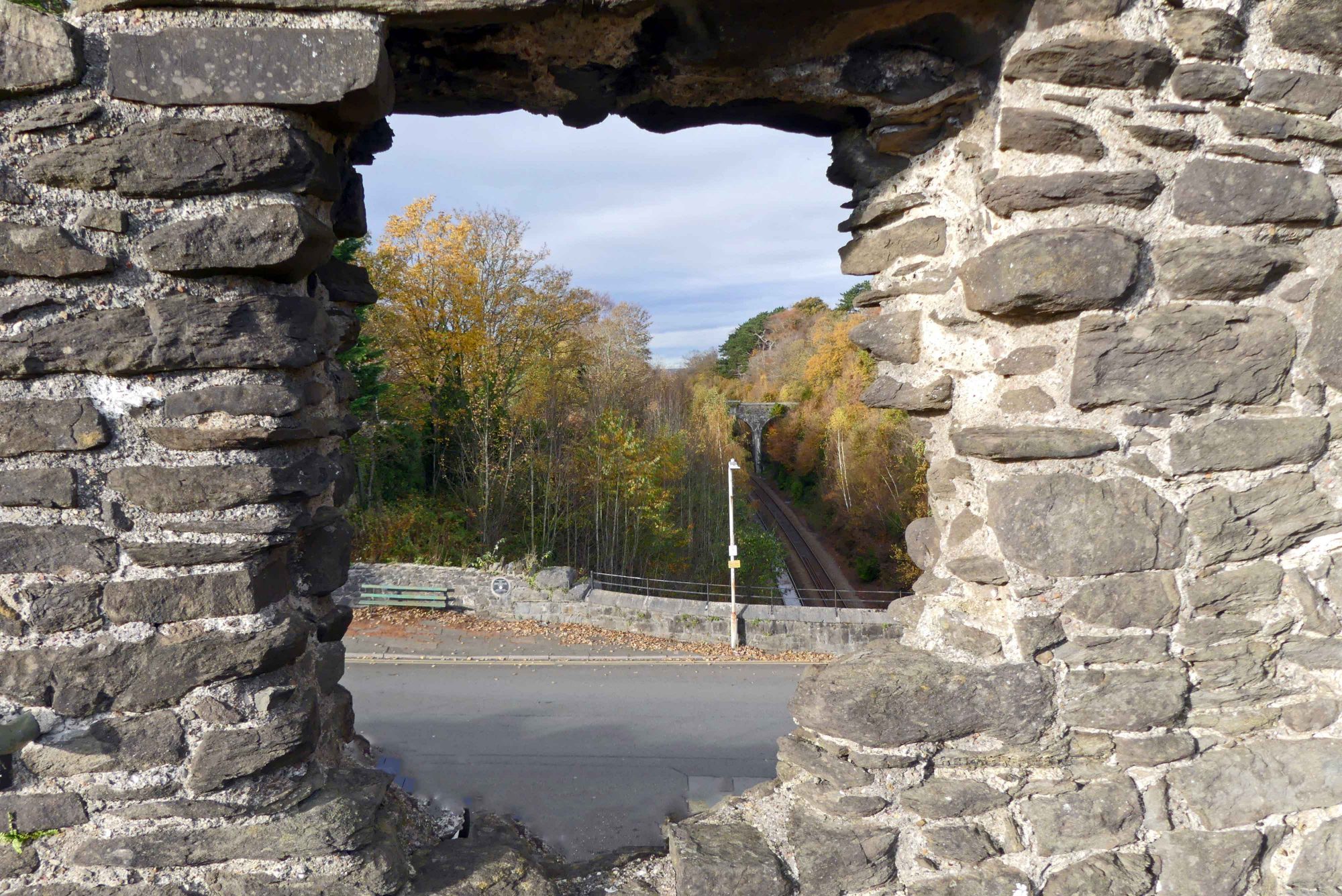
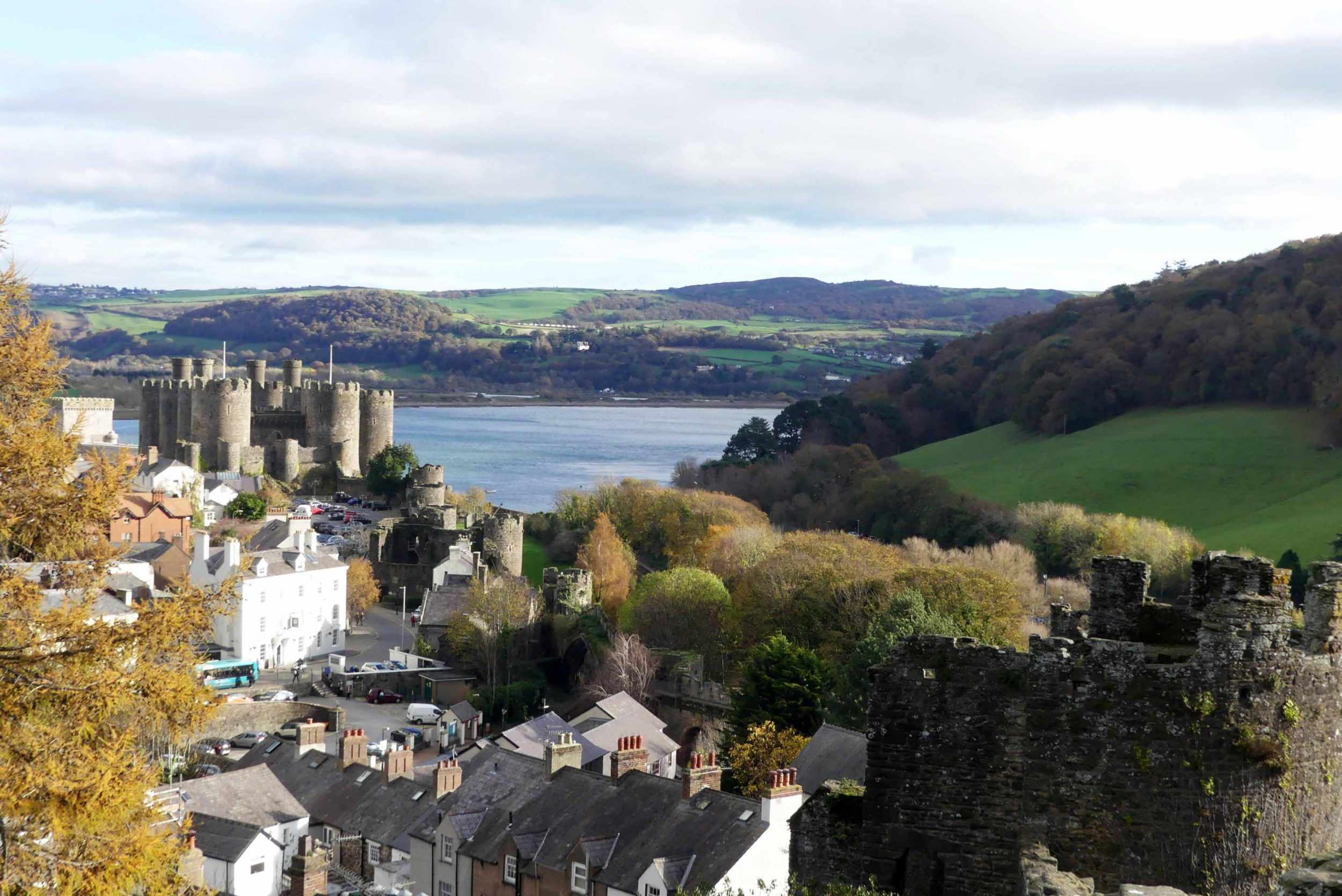
From here on the views are pretty spectacular. The photograph below shows on the left-hand side the harbour and beyond it the volcano-shaped hill called the Vardre. On the nearside is part of the Bodlondeb woodland, in glorious autumn colour, around which curves the Wales Coast Path leading towards Bangor via Penmaenmawr and Llanfairfechan.  

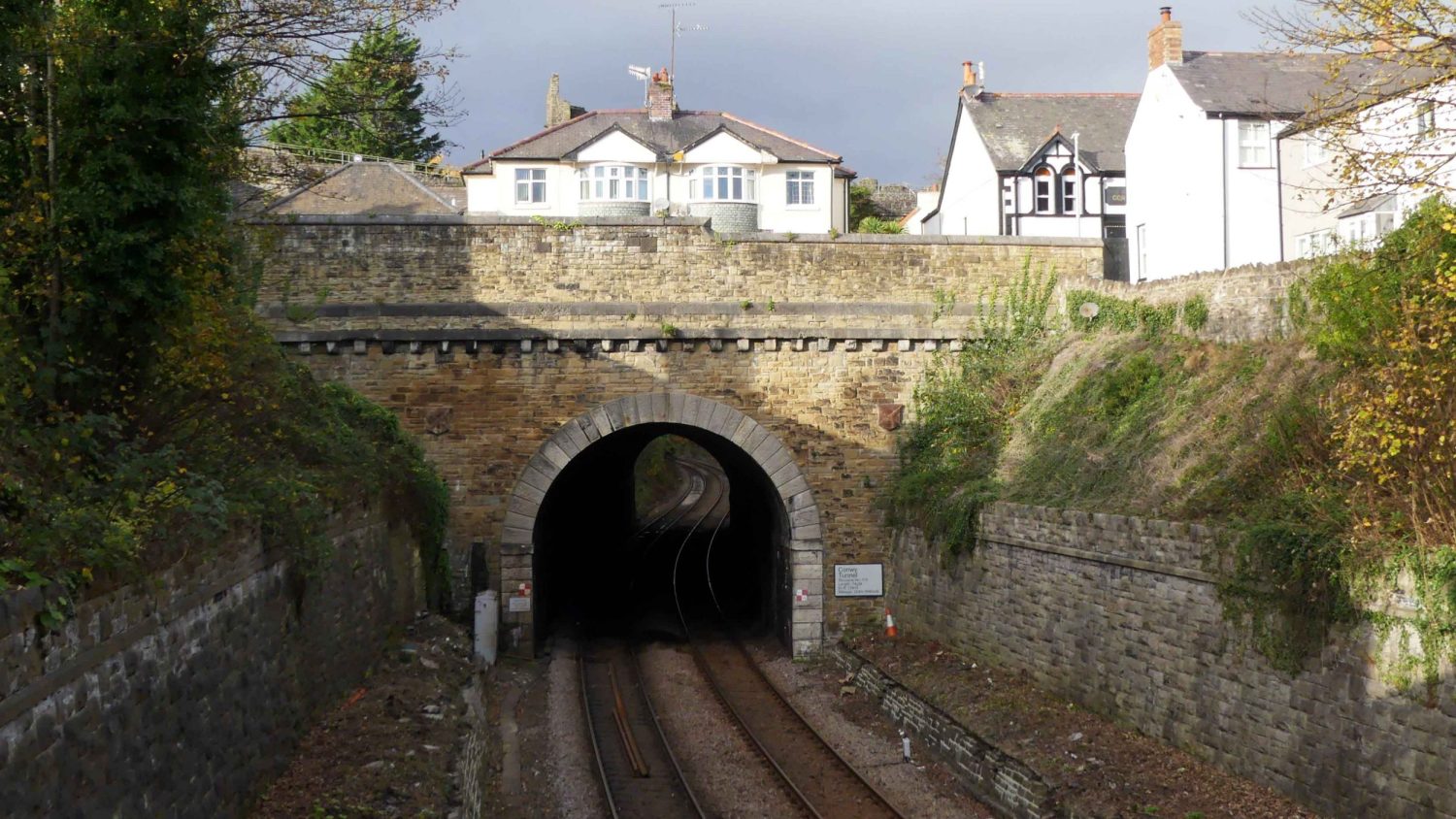
On the right-hand side you can look down on Lower Ditch Road and across it to Bodlondeb Park and the railway line where it emerges from Conwy tunnel heading to Holyhead.

This image has an empty alt attribute; its file name is 211119-town-walls-walk-32-plaque-commemorating-opening-of-conwy-tunnel-e1638199420655.jpg

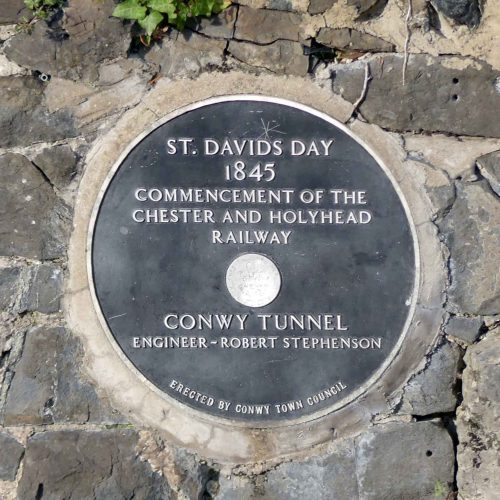
On the wall of the road-bridge is a plaque which commemorates the commencement of the railway in 1845 and Robert Stephenson the famous engineer largely responsible for its construction.

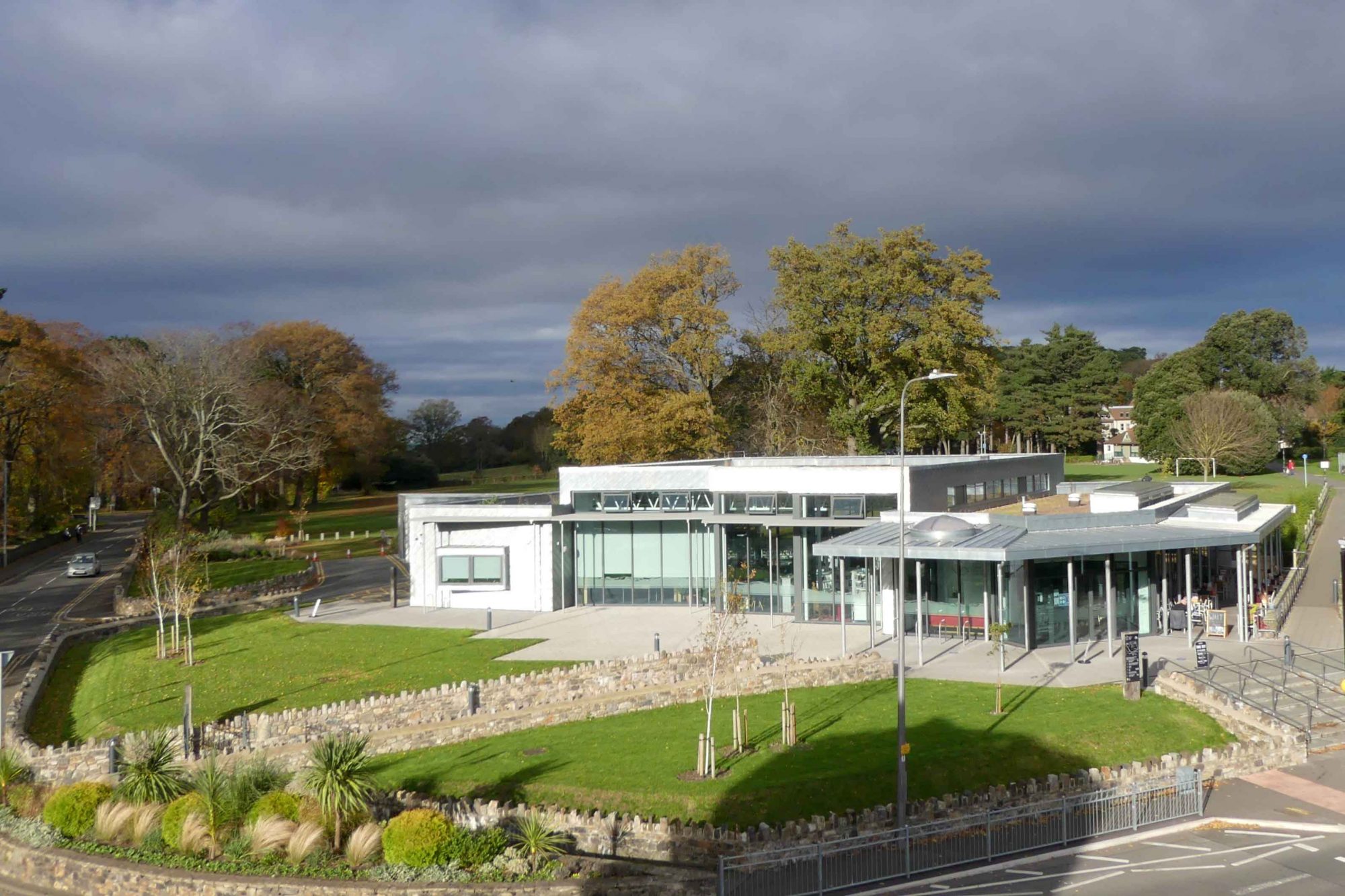
A little further along is the much more recently constructed Culture Centre with more lovely trees surroundingit.

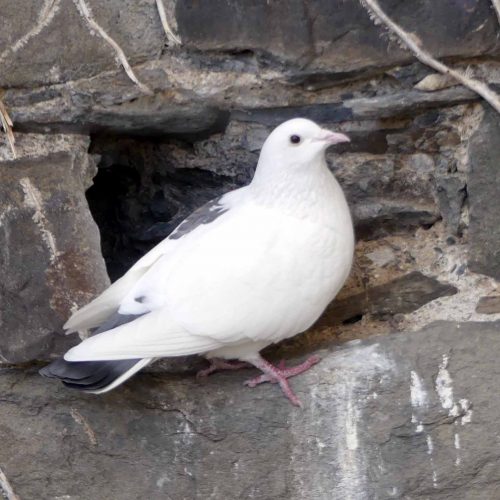
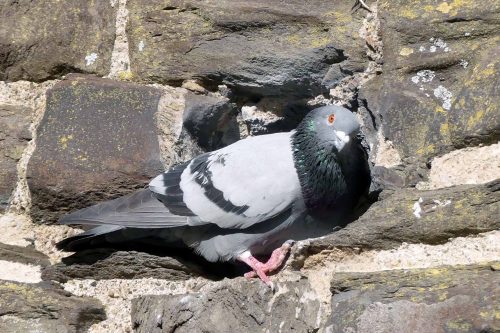
Jackdaws don’t have sole tenancy of the walls, especially outside their breeding season. The shadow reaching towards the building is cast from one of the towers that punctuate the wall and this particular one has been taken over by pigeons, two almost completely white ones and at least three pairs of the more conventionally coloured ones. They were clearly in the throws of nesting (pigeons breed throughout most of the year), noisily asserting their places in the recesses, or ‘pigeon holes’, in the stone walls with their breasts and neck feathers puffed out. The holes must reach a good way into the walls as you can’t see the birds once they are inside, but you can certainly hear them – the stone acts as an amplifier and increases the volume of their ‘cooing’ to almost car-engine level! If I hadn’t seen the birds and only heard the sound I wonder if I’d have known what was making it.

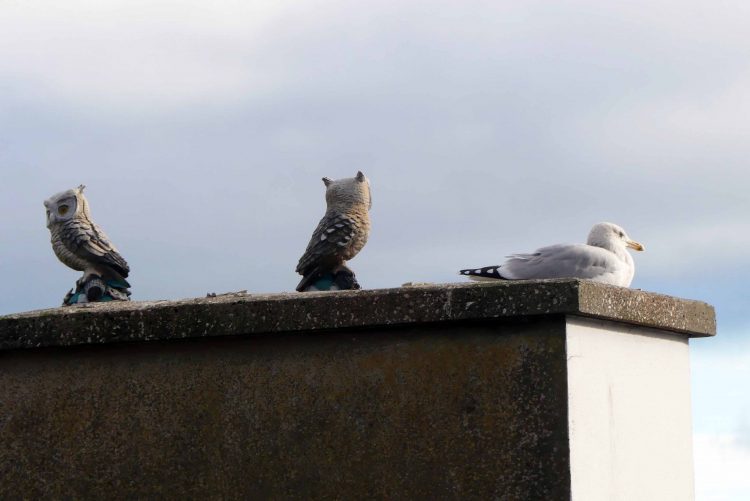
As I mentioned before there are not as many Herring gulls around town at the moment, but despite people’s best efforts to deter them there are always some. They’re way too canny to be taken in by a couple of stone owls.

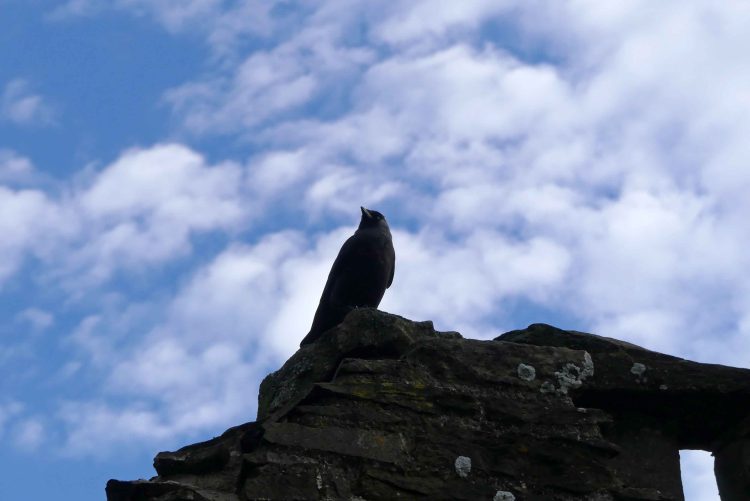
As I got close to the Watchtower I spotted the first Jackdaw I’d seen for a while, but it didn’t stay long.

This is the highest point of the wall and the logical place for a watchtower; the views, as near to bird’s-eye as you can get, are far and wide, especially on a clear sunny day such as this, and just breathtaking. 

This is also the junction of the walls from where you can look back along the way you have come and change direction to walk downhill towards the town and to meet up with the castle itself.  

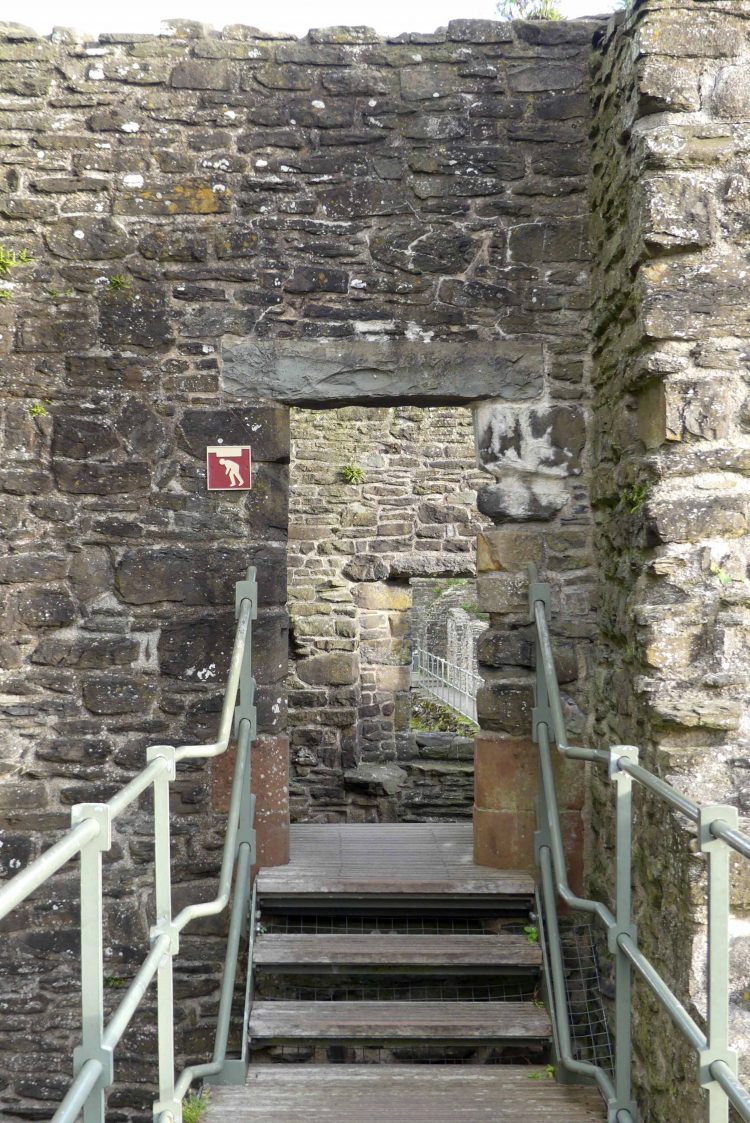
The walkway slopes down to the next tower, which is Upper Gate -I like the little sign warning you that the entrance to it is low.

Beyond that I carried on walking to the Mill Gate and took the steps down to leave the wall, which bring you down near to the railway station. To get back into town, walk along the station platform, take the steps up to Rosemary Lane and turn right to cross the bridge. At the end of the road you are at the junctions of Lancaster Square, Rose Hill Street and High Street.

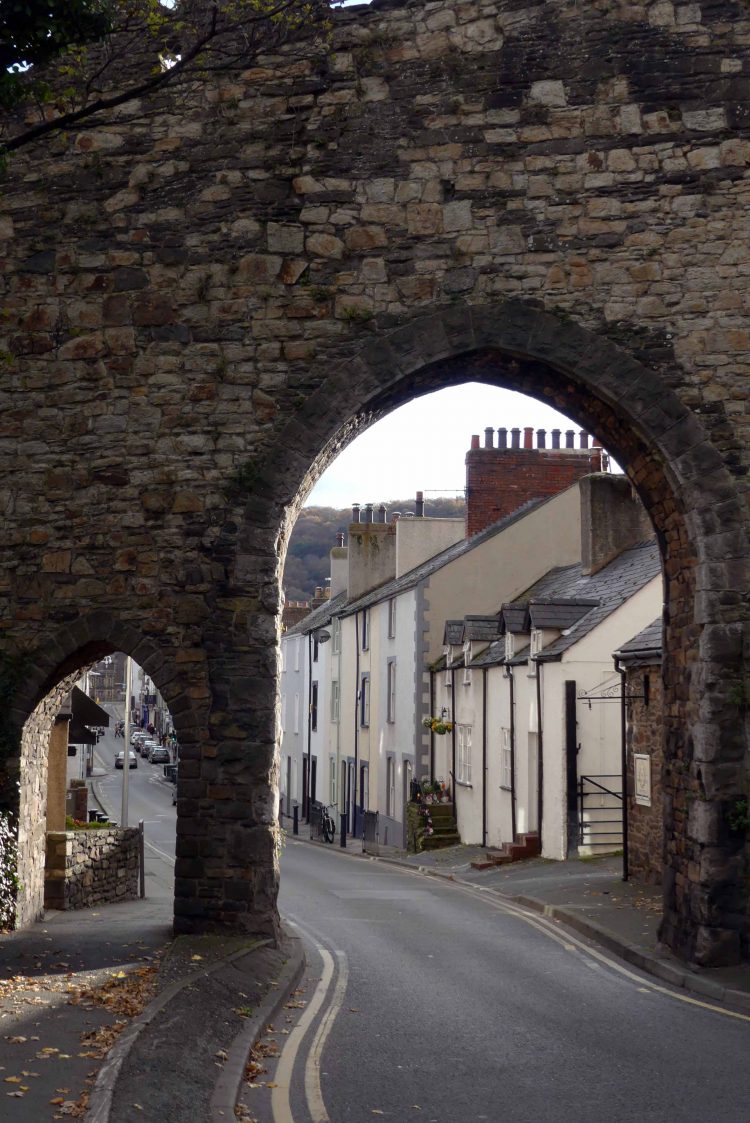
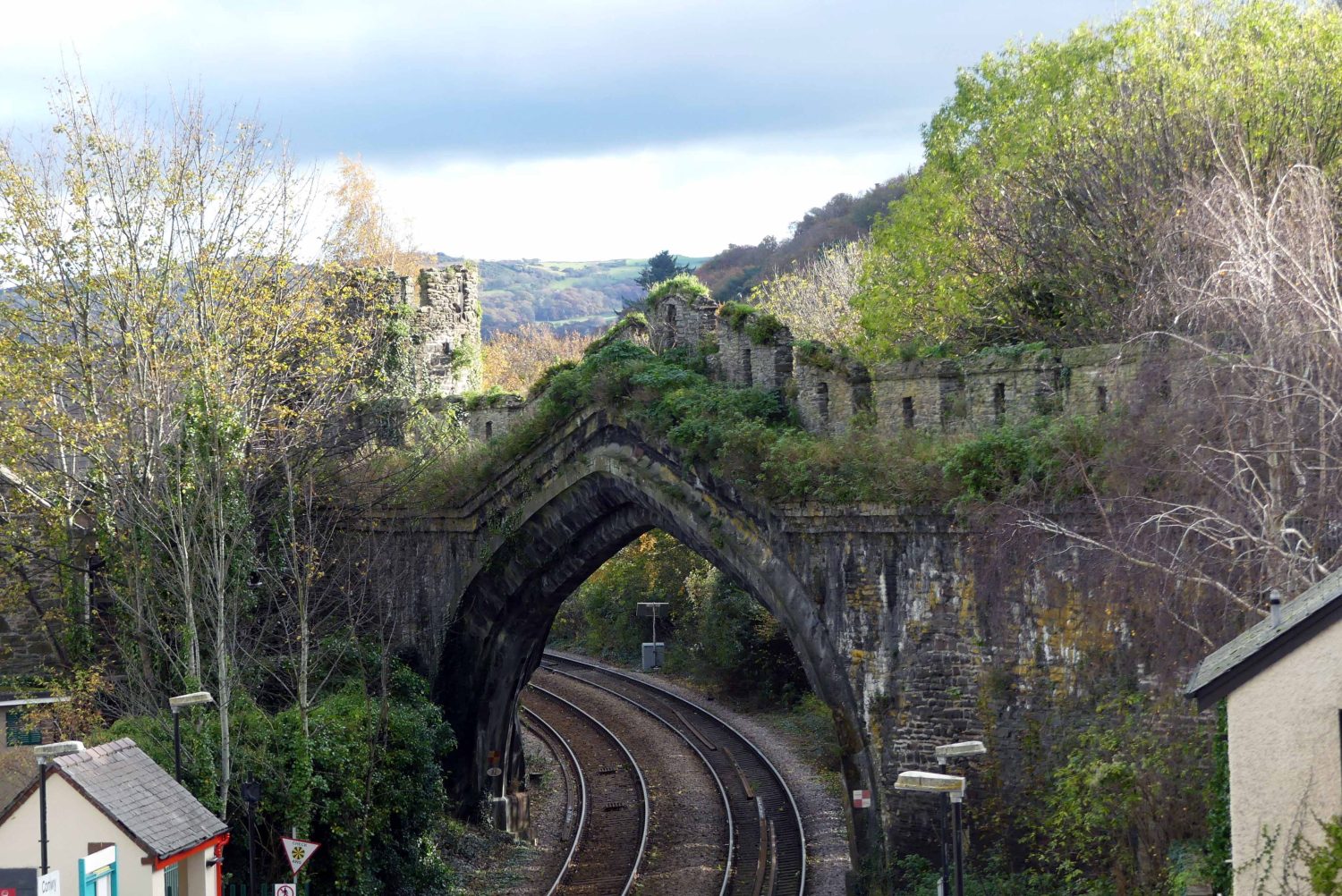
From the bridge you get a view of the archway in the old walls that the railway line passes beneath. It’s a much-photographed sight and despite the proximity of the station and the town, it has an ethereal feel to it and wouldn’t be out of place in a Tolkein story.

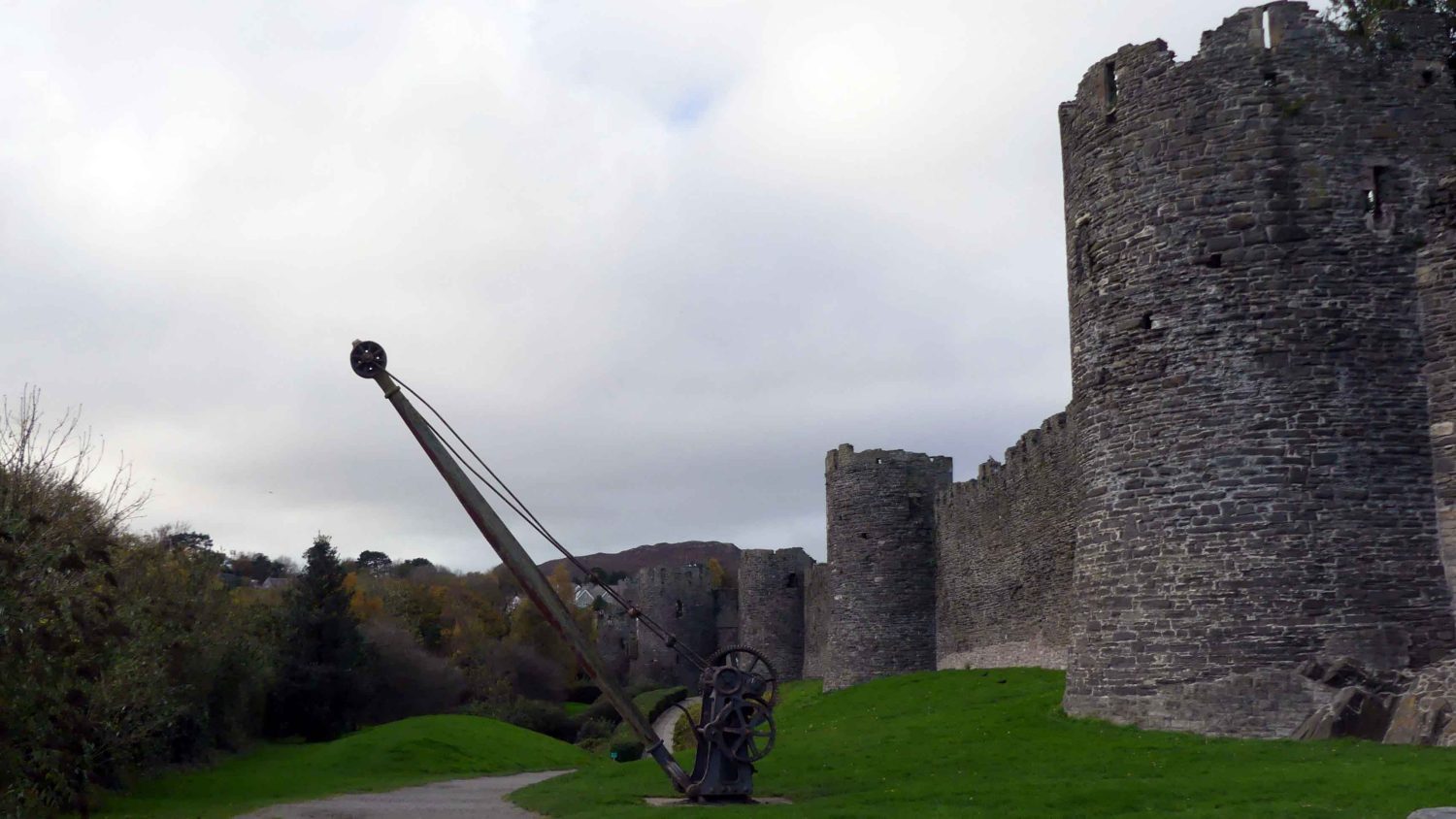
From here I retraced my steps back towards the castle, and in the hope of spotting a few more jackdaws, I followed the path through the archway to the back of the castle. From here the scale of the castle and the height and sheerness of the curtain walls is most apparent and awe-inspiring. How could you fail to be impressed by the symmetry and roundness of the towers? It really is an incredible achievement of design and engineering.  

At the side of the path is an intriguing piece of machinery: I don’t know what it is although I have a few theories: I will keep trying to find out, but am hoping someone reading this will know and help me out.

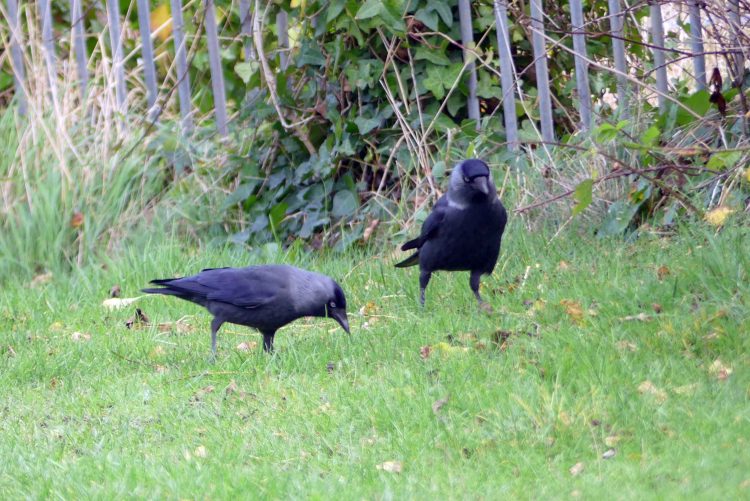
Jackdaws foraging on the grass at the back of the castle

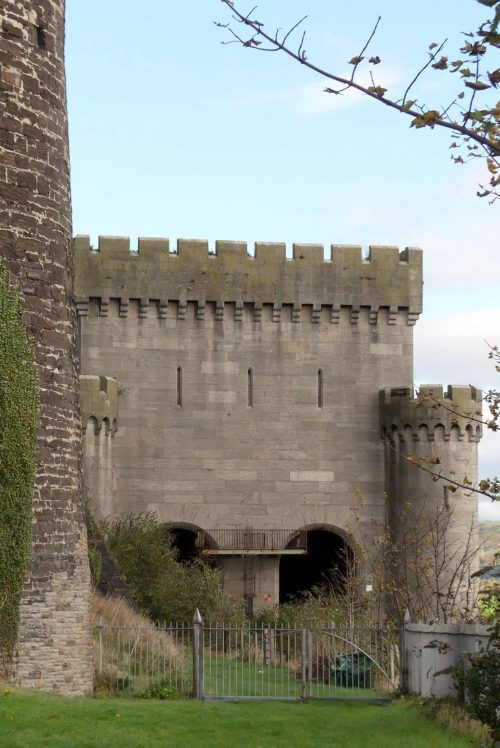
If you continue to follow the path towards the estuary you see the entrances to the tubular railway bridge. This was a pioneering design credited to the renowned engineer Robert Stephenson, although he is said to have enlisted the help of others including Isambard Kingdom Brunel and William Fairbairn. The ingenious engineering takes the route around the south of the castle on a purpose-built ledge, disappearing into two iron “tunnels” which are also a bridge over the estuary.

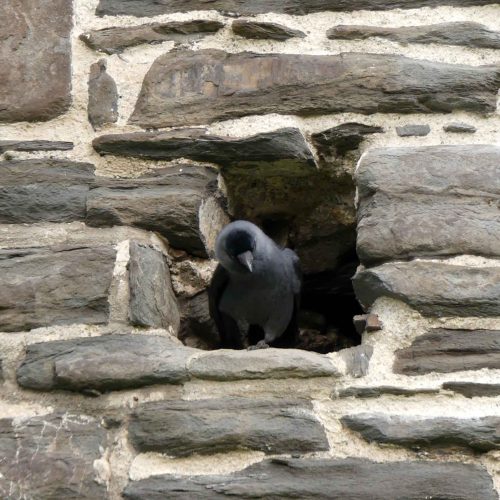
And it was here that I finally saw Jackdaws as I’d hoped – peering down at me from a niche in the rounded wall of a tower. The perfect way to end a wonderful walk.

Share this:

  • Share on Facebook (Opens in new window) Facebook
  • Share on Pinterest (Opens in new window) Pinterest
  • Share on X (Opens in new window) X
Like Loading...
Follow everyday nature trails on WordPress.com

Enter your email address to follow this blog and receive notifications of new posts by email.

‘But it is the common species that keep the living world ticking over and provide most of our experiences of wildlife, and I would argue that maintaining the abundance of these is as important a conservation priority as maintaining the existence of rarities’. Richard Mabey

MOST RECENT POSTS

  • A Glimpse of Spring to Come January 22, 2025
  • Hunting the Wren December 28, 2024
  • Oh, Christmas Tree December 18, 2024
  • In and Out of the Ivy February 15, 2024
  • Nature’s Fireworks November 30, 2023
  • Wild Autumn along the Coast Path November 3, 2023

OLDER POSTS

LOOKING FOR SOMETHING IN PARTICULAR?

  • Catchers, a Duck and Divers
    Catchers, a Duck and Divers
  • Sights and Sounds from the Little Orme 1
    Sights and Sounds from the Little Orme 1
  • Butterflies and more rare treats
    Butterflies and more rare treats
  • A Windy Wildflower Trail
    A Windy Wildflower Trail
  • Following a river to a Fairy Glen
    Following a river to a Fairy Glen
  • Shades, Sounds and Scents of the Woods
    Shades, Sounds and Scents of the Woods
  • Things Bright and Beautiful
    Things Bright and Beautiful
  • A Window on the Woods-Winter 1
    A Window on the Woods-Winter 1
  • The Foxglove - of Fairytales, Myths & Medicine
    The Foxglove - of Fairytales, Myths & Medicine
  • Beautiful blooms and some rare treats (1)
    Beautiful blooms and some rare treats (1)

nightingale trails

The Walk of the Monarch Butterfly-Sendero de la Mariposa Monarca

The Walk of the Monarch Butterfly-Sendero de la Mariposa Monarca

MY WILDFLOWER BLOG: where the wildflowers are

Snowdrop

Snowdrop

most recent posts

Follow everyday nature trails on WordPress.com

Social

  • View teresamaygreen’s profile on Twitter

Enter your email address to follow this blog and receive notifications of new posts by email.

Website Built with WordPress.com.

  • Subscribe Subscribed
    • everyday nature trails
    • Join 358 other subscribers
    • Already have a WordPress.com account? Log in now.
    • everyday nature trails
    • Subscribe Subscribed
    • Sign up
    • Log in
    • Report this content
    • View site in Reader
    • Manage subscriptions
    • Collapse this bar
 

Loading Comments...
 

    %d