• Home
  • about
  • about the photographs
  • Local Nature Reserves
    • Bryn Euryn Local Nature Reserve
    • Mynydd Marian
  • Wales Coast Path
    • Grey Seals in North Wales
    • St.Trillo’s Chapel
    • Wildflowers of North Wales Coastal Paths, Cliffs and Dunes

everyday nature trails

everyday nature trails

Monthly Archives: February 2017

Keeping up with the Herring Gulls

10 Friday Feb 2017

Posted by theresagreen in bird behaviour, Birdwatching on North Wales coast, Nature of Wales, Rhos-on-Sea

≈ 9 Comments

Tags

birds of conservation concern, European Herring Gull, Gwylan y Penwaig, herring gull, herring gull breeding behaviour, herring gull foot-paddling, herring gulls nesting on roofs, larus argentatus

January 9th – Chimney Pots, Rhos-on-Sea

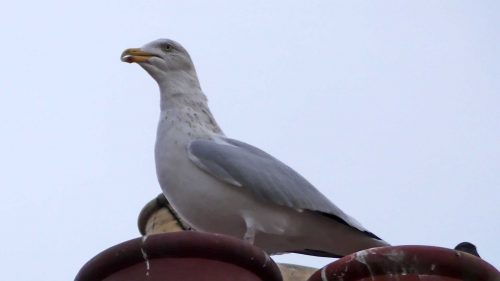
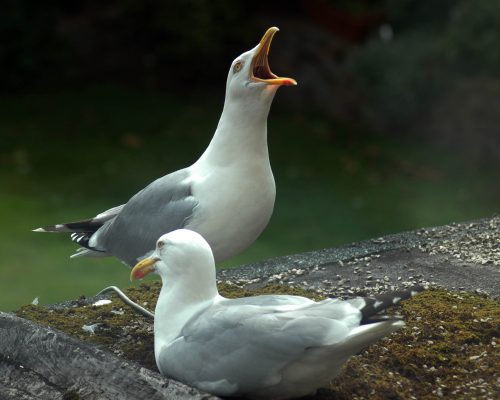
After a few months of being relatively quiet and peaceful, our Herring gull neighbours are back and making their presence heard and seen throughout the village. Pairs stake out their territories early in the year and will defend them vigorously and vociferously from now until nesting begins, continuing to do so until this year’s offspring have grown and are mature enough to leave the site. It all looks and sounds like a lot of effort and hard work, but that is the price this pair are prepared to pay for a prime high-rise site.

170109-rosrc05-herring-gull-pair-defending-nest-site

These particular chimney pots are atop my daughter’s 3 storey house, offering well-elevated accommodation and boasting unrivalled 360° views extending over rooftops and the surrounding landscape, which includes the sea. It is a mere two-minute, maybe less, flight to the seashore. Both the male and female of the pair take responsibility for defending the site, sometimes together and sometimes on their own. They must need to take frequent breaks to restore their energy levels after a bout of meaningful squawking at the sky.

10: 29 – Female flies to roof edge, has a quick look around then takes off,

170109-rosrc03-herring-gull-on-roof-edge

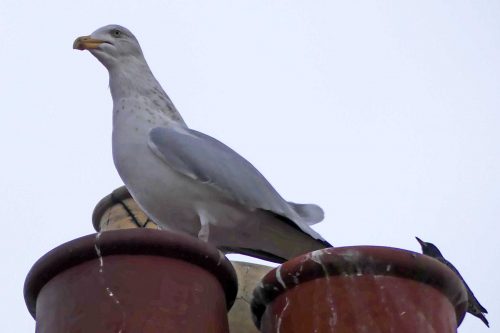
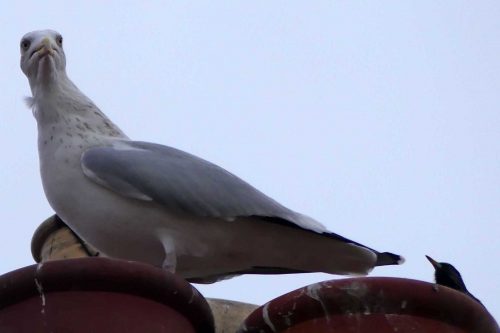
leaving the male in charge. I didn’t notice while I was taking these photographs, but he was not left entirely alone. To my amusement, a male Starling had his back. He has located his family home in the eaves of the adjoining property.

170109-rosrc09-herring-gull-male-starling

He seemed to have his work cut out, although from where I was standing in the garden I couldn’t see what or who he was directing his attention towards.

170109-rosrc06a-herring-gull-male

I couldn’t quite catch him in full squawk this morning, but he was making plenty of noise. He is still sporting his winter plumage and appears to be in pretty good shape, but he’s not a young bird. When I looked at my images I recognised him by his eyes, or rather by the lack of feathers around his eyes as the male of a pair I spent a lot of time watching back in the spring and summer of 2012.

170109-rosrc06c-herring-gull-male

As you can tell from the next couple of images he is looking a bit scrawny around the neck area, not as plump and well-filled out as he was back in the day.

170109-rosrc07-herring-gull-male-starling

Herring gulls breed for the first time at age 4 and a typical lifespan is 12 years. The oldest recorded Herring gull (from ringing records) was  32 years 9 months and 25 days old. This record was set in 2013. 

170109-rosrc08-herring-gull-male-starling

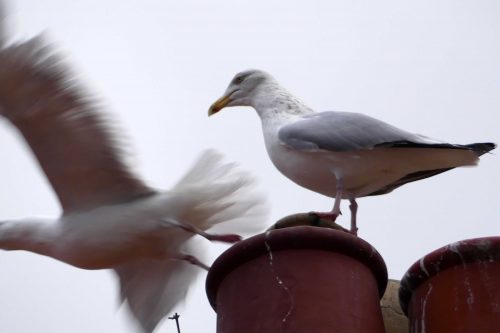
10.39am – the female arrives back with a flourish and lends her voice to the warning-off aria.

170109-rosrc12-herring-gull-pair

he may be older, but clearly still has got what it takes to attract a mate and this one appears younger. It must be something to do with the status of his domain.

170109-rosrc13-herring-gull-pair

170109-rosrc14-herring-gull-pair

10.40 – She’s a bit on edge though and leaves again a minute later, I think she was chasing off another gull from their airspace, perhaps a rival female. It started to rain quite heavily then and he left shortly afterwards too.

170109-rosrc15-herring-gull-pair

Then and now

This is a head shot of the male showing his ‘scabby’ eyes taken this January

170109-rosrc06c-herring-gull-male-scabby-eye

and below is one I took on July 24th 2012. He’s in his brighter summer/breeding plumage here, but had the ‘scabby’ eyes even then. It’s too much of a coincidence for it not to be the same bird isn’t it? He was considerably better-padded then too. If 2012 was his first year of breeding he would have been 4 plus the 5 years from then till now would make him 9, but I think he could be older.

7-1912tgnw-adult-gull-front-view

This was him and his mate in full squawk back then, after they had successfully reared a chick that had fallen out of the chimneypot nest and landed on the flat roof below. More about that here:   https://theresagreen.me/2013/06/20/theres-a-new-gull-on-the-roof

7-1912tgnw-adult-pair-one-squawking-one-sitting

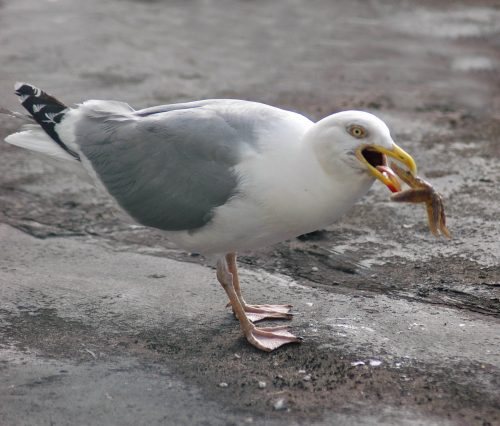
He was and I’m sure, still is a brilliant and attentive parent, bringing regular and diverse meals back to his hungry youngster. Including a starfish and regurgitated chips.

7-2412tgnw-adult-gull-with-starfish-2

January 24th 2017

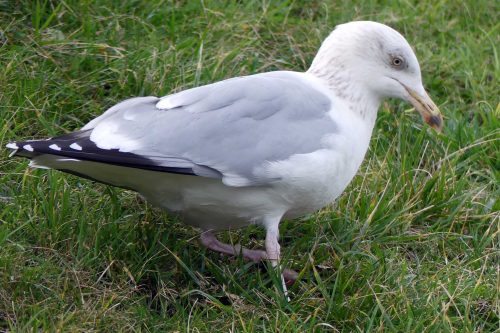
Back to the present. I was out taking my baby granddaughter for a walk along the prom and spotted this chap paddling for worms on the grass embankment. Old scabby eyes himself.

170124-rosprm-herring-gull-paddling-for-worms-scabby-eye-2

The Herring gull remains on the RED list of European threatened birds and it is illegal to harm them or damage or remove their eggs from nests.


Share this:

  • Share on Facebook (Opens in new window) Facebook
  • Share on Pinterest (Opens in new window) Pinterest
  • Share on X (Opens in new window) X
Like Loading...

Sights & Sounds of the Little Orme (2)

08 Wednesday Feb 2017

Posted by theresagreen in birds of Wales, Birdwatching on North Wales coast, Little Orme, Llandudno, Nature, nature photography, North Wales, North Wales Wildlife Trust, Rhiwledyn Nature Reserve, The Wales Coast Path

≈ 7 Comments

Tags

common buzzard, disease in wild rabbits, hawthorn, jackdaws on cliff, kestrel, mobbing of buzzards, Myxomatosis, rabbit, raven

January 20th – Little Orme – Upper reaches

I‘d spent longer watching the seals than I had intended, so almost talked myself out of doing some proper walking and heading up to the summit. It was cold, the sun was already sinking lower in the sky and I knew the upward tracks were going to be muddy. But one of my aims for this outing had been to check to see whether or not the cormorants had begun nesting yet, so onwards and upwards it was.

At the bottom of the steep upward slope, Rabbit Hill to locals, a bird sat perfectly still at the top of a smallish ash tree. The sun in my eyes was so bright I could only see it as a black shape, so made another assumption that as this is about the highest point on this windswept clifftop and a favoured perch for crows, magpies and jackdaws, that it was a corvid. Only when I lightened up the photograph I took did I realise it had been a Kestrel.

170120-lo-75-1533-kestrel-1a

The bracken and brambles that covered the slope to the landward side of the track have been cut back hard; this vegetation provides cover for a variety of small birds, including resident Stonechats and Whitethroats that come here for the breeding season. I’m sure it will have grown up again by the time they arrive.

170120-lo-130-bracken-scrub-cut-back

I was right about the mud! It was almost take one step forward and slide back two. I pictured my walking pole lying uselessly in the boot of my car. I should use it more often, but it gets in the way when I want to stop and take a photograph. I took a breather to turn and photograph the view; no matter the number of times I have done it, it’s just so amazing I can’t resist. The spit of land projecting finger-like into the sea is Rhos Point and despite the hefty sea defences I know it has in place, it looks so vulnerable from here, perhaps more so to me because it’s where my daughter and her family lives and I can pick their house out from here!

170120-lo-76-rhos-point-from-the-orme-1a

At the top of the slippery slope is a levelled area where much of the stone was quarried out. The cliff wall at the back of this now grassy area is Jackdaw city, with many pairs of birds nesting in its nooks and crannies. You realise how many of them there are when the Buzzards glide into the airspace above and numbers of them suddenly zoom up and surround them, determinedly driving it away while making a heck of a racket.

170120-lo-74-gulls-jackdaws-upped-1a

(click on image to enlarge)

Herring gulls often join in the mobbing party too; it may seem that they prefer roofs and chimneys to nest on, but some do prefer the more traditional option of a bit of cliff. It’s interesting that although they may rob other birds of their eggs and chicks, they’ll join forces to drive off  any potential predators of theirs. It’s not too clear from my photograph who’s who, but one Buzzard is very slightly left of centre  and the other approaching the far left, with defending birds approaching mainly from the right. Poor old Buzzards, every other bird picks on them, even much smaller Starlings!
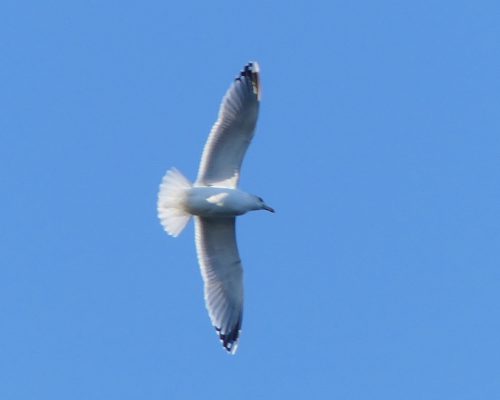
170120-lo-72-gull

The edge of the cliff is crumbly and eroding but is a favourite spot for Jackdaws to sit and look down on the lower levels of the headland. There were several pairs sitting doing just that this afternoon, probably ones with nest sites nearby on the cliffs of the lower level.
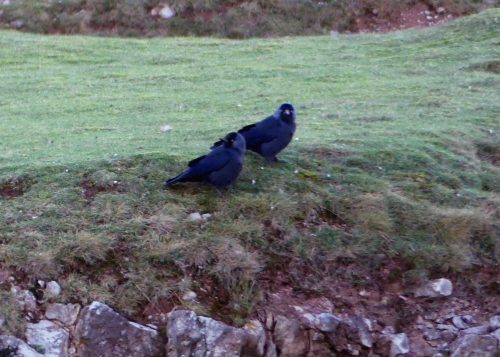
170120-lo-80-jackdaw-pair-on-cliff-edge-1a

I took a photograph looking down into Angel Bay from up here; it looked as though quite a number had moved off.

170120-lo-73-a-higher-view-into-the-bayOne of my favourite sights is golden gorse flowering against the background of a blue sea.
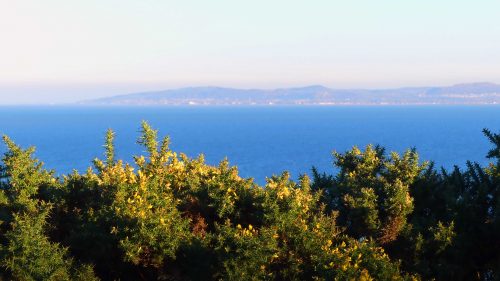
170120-lo-82-1544-gorse-view-1a

It’s always sad when a tree dies, but the skeleton of this Elder is now beautifully adorned with lichens and a fungus, which I’m sure is now past its peak. I’m not great on fungi, but I do know the one most closely associated with the Elder is Jew’s ear or jelly ear Auricularia auricular-judae; is it that Annie? I wish I’d seen it earlier.

170120-lo-83-fungus-and-lichen-on-old-elder-tree-1a

The grass up here is grazed by sheep and further nibbled by rabbits, so is always neat and well-groomed. The path curves into this small clearing that looks almost like a cleverly landscaped wild garden designed to lead you to the stunning vista.

170120-lo-87-clifftop-path-view-1a

click on image to enlarge

The nearest rounded hill is Bryn Euryn which I’ve walked you around many times and shown views from there to here, but you can see they would be a fairly short flight away from one another for Buzzards, which nest on Bryn Euryn, and Ravens which regularly overfly both.

170120-lo-92-1557-bryn-euryn-from-little-orme-1a

Some of the hawthorns here still have good crops of berries.

170120-lo-88-hawthorn-berries-and-sea-1a

And there is lots of glorious golden fragrant gorse.
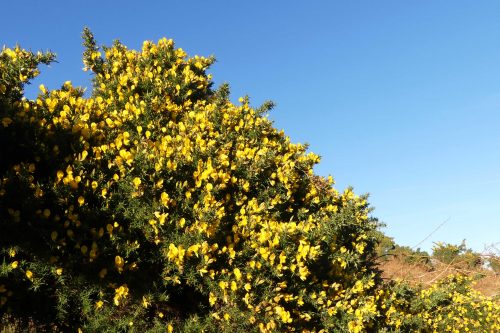
170120-lo-93-glorious-gorse-1a

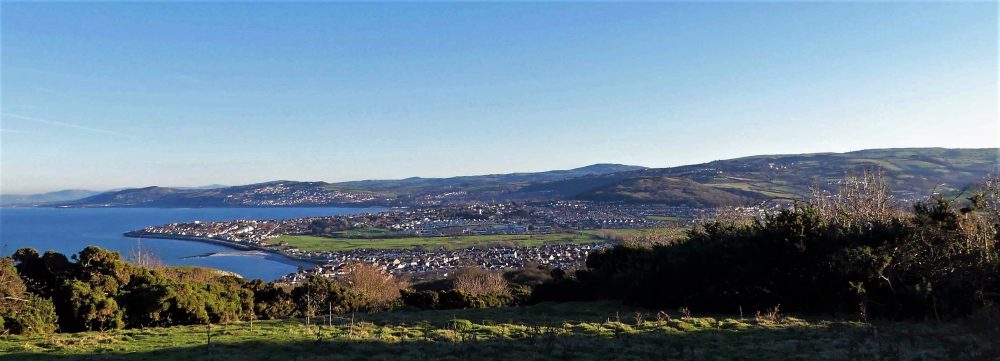
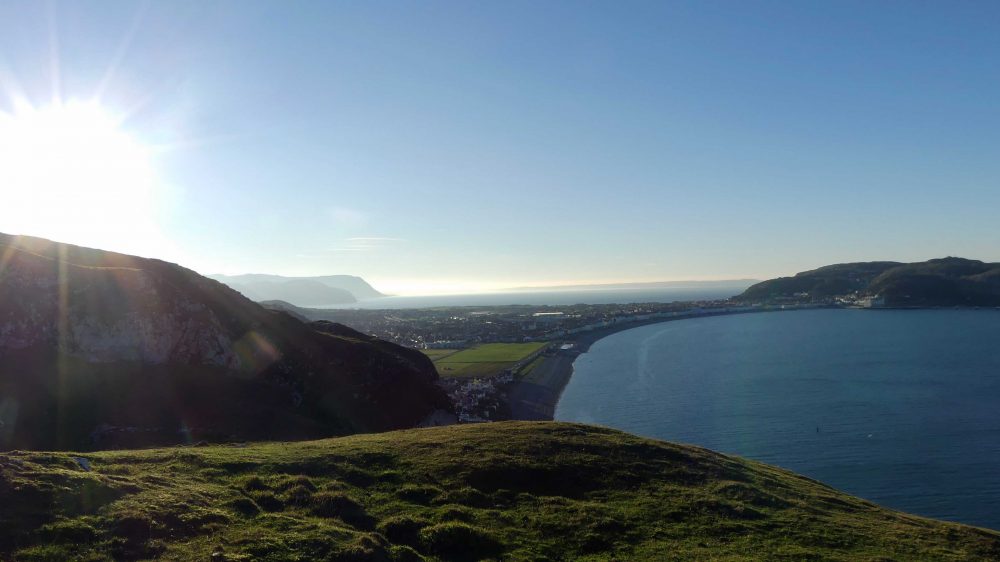
Another wider view from higher up over Colwyn Bay and towards the Clwydian Range of mountains where Offa’s Dyke begins.

170120-lo-95-view-from-little-orme-over-rhos-and-surrounding-area-1a

click to enlarge

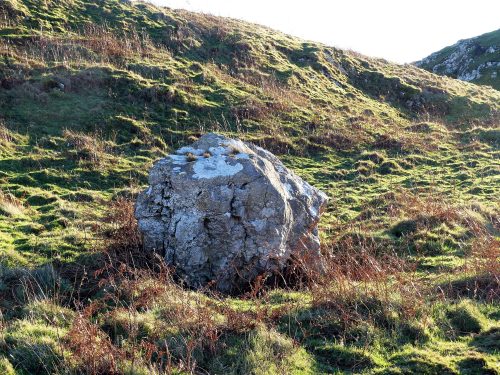
The low sun gives a wonderful texture to the rough grass and rocks. I always wonder how rocks such as this one arrived where they are, but this one I use this one to recognise the point where I leave the path and approach the cliff edge, extremely cautiously, to get a better view of the site of the cormorants’ colonial nesting site.

170120-lo-96-rock-on-cliff-path-1a

They don’t appear to be doing much yet, in fact there were just two there when I first looked, although a few more did fly in to join them as I watched.
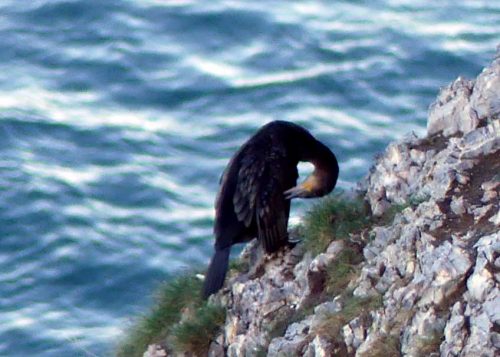
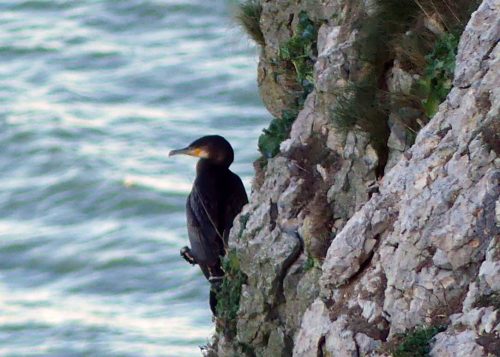
170120-lo-98-1605-cormorant-on-cliff-1a

170120-lo-100-cormorant-on-cliff-face-1a

170120-lo-107-great-orme-pier

The Great Orme – click to enlarge

I climbed up a bit higher to admire the view across Llandudno Bay to the Great Orme. The pier looks toy-like against its great bulk.

The sun had dropped further and was almost hidden by the highest part of this headland to my left. The view from here is across Llandudno town to Anglesey and the bulky headland of Penmaenmawr. If you were looking at this as a walker of the Wales Coast Path travelling in this westerly direction, you could roughly trace your onward path and see where you would be in a day or so’s time.

170120-lo-108-great-orme-penmaenmawr

Llandudno Bay, town and beyond – click to enlarge

Low light lends a different atmosphere to this place, especially when you’re alone and have an imagination such as mine. Rocks cast shadows and a solidity not as apparent in bright sunlight. I wonder how it looked before its bulk was reduced by quarrying? Are these squared off rocks remnants from that time or were they deliberately placed before then for some other purpose.
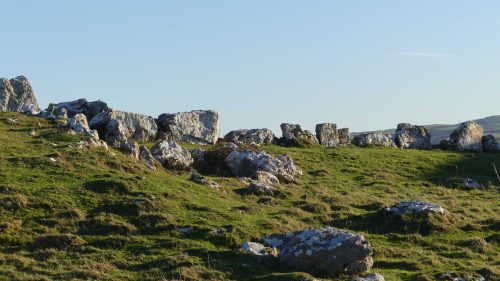
170120-lo-111-stone-blocks-near-summit

170120-lo-112-stone-blocks-at-top-of-orme

The remnants of  a dry stone wall lead the eye to the wonderful view.

170120-lo-113-stone-wall-view-from-top-of-orme-1

click to enlarge

Then  there are Hawthorn trees, contorted into wonderful shapes by the strong prevailing winds and features long associated with tales of witches and magic……

170120-lo-114-hawthorn-tree

Even in broad daylight I wonder about the spot in the image below. I can easily imagine as some kind of mystical meeting place guarded by the trees and I know that as a child I’d have found a way around the fencing and sat on the top of that little hummock letting my imagination run riot, most probably giving myself nightmares.

170120-lo-126-hawthorn-stand

I fancy other mystical markers – a  hawthorn branch heavily covered with lichen that reaches out over the track and frames the view.

170120-lo-127-lichen-covered-hawthorn-twig

and a little tree well covered with lichens and further embellished with sheep’s wool.

170120-lo-122-hawthorn-wwith-lichens-sheeps-wool

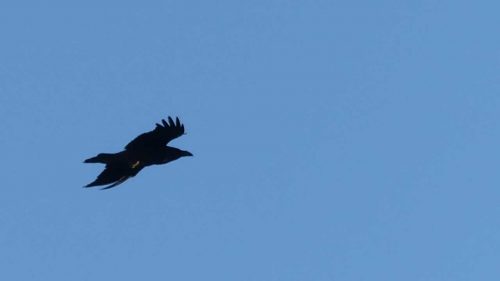
The atmosphere is further enhanced by a pair of Ravens, companions of witches and wizards,  ‘gronking’ as they passed overhead.
170120-lo-117-raven-flying

And a rabbit, moving strangely slowly around behind the wire fence. It didn’t bounce away from me like rabbits usually do and I wasn’t sure if it was just old or not well; its eyes looked strange and it may not have been seeing properly, if at all. It put me in mind of rabbits we used to see years ago with Mixomatosis, but is that still around? (see footnote)

170120-lo-115-poorly-bunny

A chaffinch foraging around in the gorse and blackthorn scrub led my eye to this sunlit spider’s web and distracted me from further over-imaginative thoughts!

170120-lo-119-spiders-web-on-gorse-1

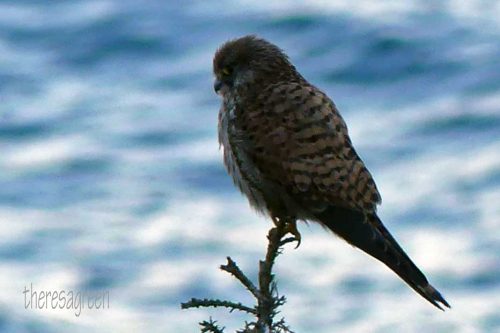
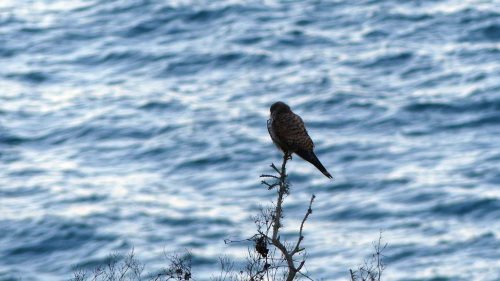
Had a bit of a slithery walk down Rabbit Hill then headed back to leave the site. I took the path closest to the cliff edge to avoid oncoming late afternoon dog-walkers and spotted this bird sitting on the top of a gorse bush seemingly looking out to sea. Once again the sun was obscuring it from proper view but there was no mistaking this was a Kestrel, a young one I think. It was very cold now but the bird was sitting perfectly still with its feathers fluffed out.
170120-lo-131-kestrel-looking-out-to-sea

I risked walking back around to get some better lighting, expecting it to fly off, but although I think it was aware of me it stayed put. I did get to a point with a better view – and the camera battery died! Time to go.

170120-lo-138-kestrel-looking-out-to-sea-2

More about Myxomatosis

When I wrote this post and mentioned the ‘poorly’ rabbit I had seen, I hadn’t realised that the horrible disease,  Myxomatosis, was still present and affecting rabbit populations in the UK. As a country-bred child back in the ’60s, I remember seeing many affected rabbits which I found distressing, and as the poor rabbits were sick they were easily caught by our cats, who didn’t kill them, but did bring them home. I also didn’t know then that it could be passed on to pet rabbits; now they must be vaccinated against the disease.

The disease called Myxomatosis reached the UK in 1953, where the first outbreak to be officially confirmed was in Bough Beech, Kent in September 1953. It was encouraged in the UK as an effective rabbit bio-control measure; this was done by placing sick rabbits in burrows, though this is now illegal. As a result, it is understood that more than 99% of rabbits in the UK were killed by the outbreak. However, by 2005 – fifty years later – a survey of 16,000 ha (40,000 acres) reported that the rabbit populations had increased three-fold every two years, likely as a result of increasing genetic resistance, or acquired immunity to the Myxomatosis virus. Despite this, it still appears regularly at rabbit warrens.

If you’ve never seen an affected rabbit, I can’t stress how awful it is. Initially the disease may be is visible as lumps (myxomata) and puffiness around the head and genitals, which progresses to acute conjunctivitis and possibly blindness; this also may be the first visible symptom of the disease. The rabbits become listless, lose appetite, and develop a fever. Secondary bacterial infections occur in most cases, which cause pneumonia and purulent inflammation of the lungs. In cases where the rabbit has little or no resistance, death may take place rapidly, often in as little as 48 hours; most cases result in death within 14 days. Not a good way to die.

Wild rabbits tend to recover quickly once the disease has passed; a certain density of rabbits is needed to keep the disease going and once the number of rabbits drops below that level the disease will disappear until the rabbit numbers increase again.
Share this:

  • Share on Facebook (Opens in new window) Facebook
  • Share on Pinterest (Opens in new window) Pinterest
  • Share on X (Opens in new window) X
Like Loading...

Sights and Sounds from the Little Orme 1

03 Friday Feb 2017

Posted by theresagreen in Birdwatching on North Wales coast, coastal walks, Nature, Nature of Wales, nature photography, North Wales, North Wales Wildlife Trust, Rhiwledyn Nature Reserve, The Wales Coast Path

≈ 26 Comments

Tags

blackbird, chough, Great tit singing, grey seals, grey seals from the Little Orme, grey seals in Angel Bay, grey seals mating behaviour, phalocrocorax aristotelis, raven, Robin, shag

January 20th – Little Orme, lower level

When the first sound I hear on my approach to the Little Orme is that of a Raven gronking, I take it as an omen that this is going to be a good walk! And so it was today – the old Raven perched high on the edge of the cliff, proclaiming his territorial rights, his distinctive call echoing off the surrounding rock. As yet there were no signs of Fulmars having returned to begin claiming nesting spots on the cliff below him. Notoriously noisy, they too would have been heard before being seen for sure.

170120-lo-11-great-tit-singing-2

Ears being more effective than eyes on this bright winter afternoon, I heard birdsong emanating from a small nearby tree. I didn’t recognise the song at first and with sun shining directly into my eyes, it took a couple of minutes for me to recognise that the singer was a Great tit. I edged slowly towards him, circling to try to reach a point where the sun was less blinding, expecting him to spot me and take off any second, but he was confident and intent on his purpose and chose  to ignore me. I was delighted, I don’t recall ever being this close to a singing Great tit before and was impressed by his tuneful renderings.

He was indeed handsome and as the test of a male Great tit’s virility is displayed in the strength of the black markings that run from his throat to his nether regions, this one looks like he’d be quite a catch.

170120-lo-12-blackbird-1

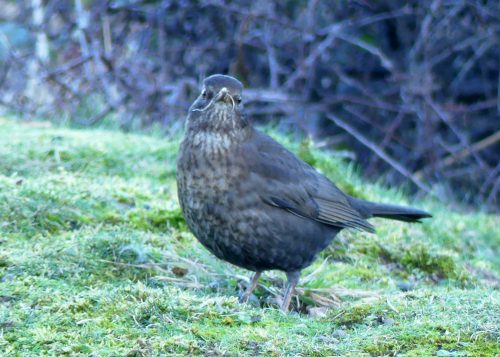
The ground here was frosted and in shaded places the grass was crunchy underfoot, but a pair of blackbirds, feathers fluffed out against the cold had found a more insulated mossy spot and were out hunting worms. I wasn’t sure if the female was deliberately collecting nesting material or if I’d disturbed her whilst probing and the grass had stuck to her bill.

170120-lo-19-blackbird-f-with-grass-in-beak-1

Close by a Robin was singing quietly, almost to itself as it perched low and spied, head cocked, for insect movements on the ground below.

170120-lo-16-robin-singing-quietly-1

170120-lo-17-robin-on-the-ground-1

Reaching the cliff edge which overlooks Penrhyn Bay, all I spied was a distant single cormorant. (Well, I assumed it was a cormorant, but a sharp-eyed friend pointed out it was actually a Shag – so really happy about that as I see far fewer of them.)

170120-lo-2-cormorant-1a

A closer look shows the Shag has a narrow bill and a steeper forehead than a Cormorant and also lacks the white cheeks patches of the latter. A lesson learned, I will look closer in the future and not make assumptions!

170120-lo-2-shag-on-rock

Sitting atop the rocky mound that forms one edge of Angel Bay were a pair of large black birds. One had his back to me, looking out to sea – Ravens, surely? As I approached they flew down almost to the base of the rock.

170120-lo-24-crow-2-shadow-1

Feathers gleaming with shades of purple and green they are magnificent birds, but you wouldn’t want to be on the receiving end of that enormous dagger-like bill.

170120-lo-26-crow-2-1

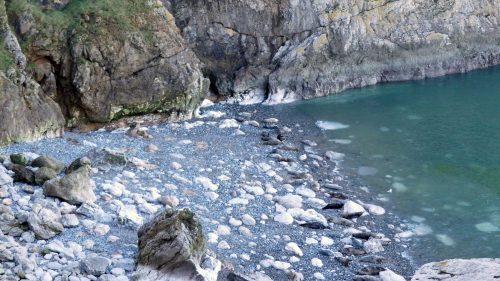
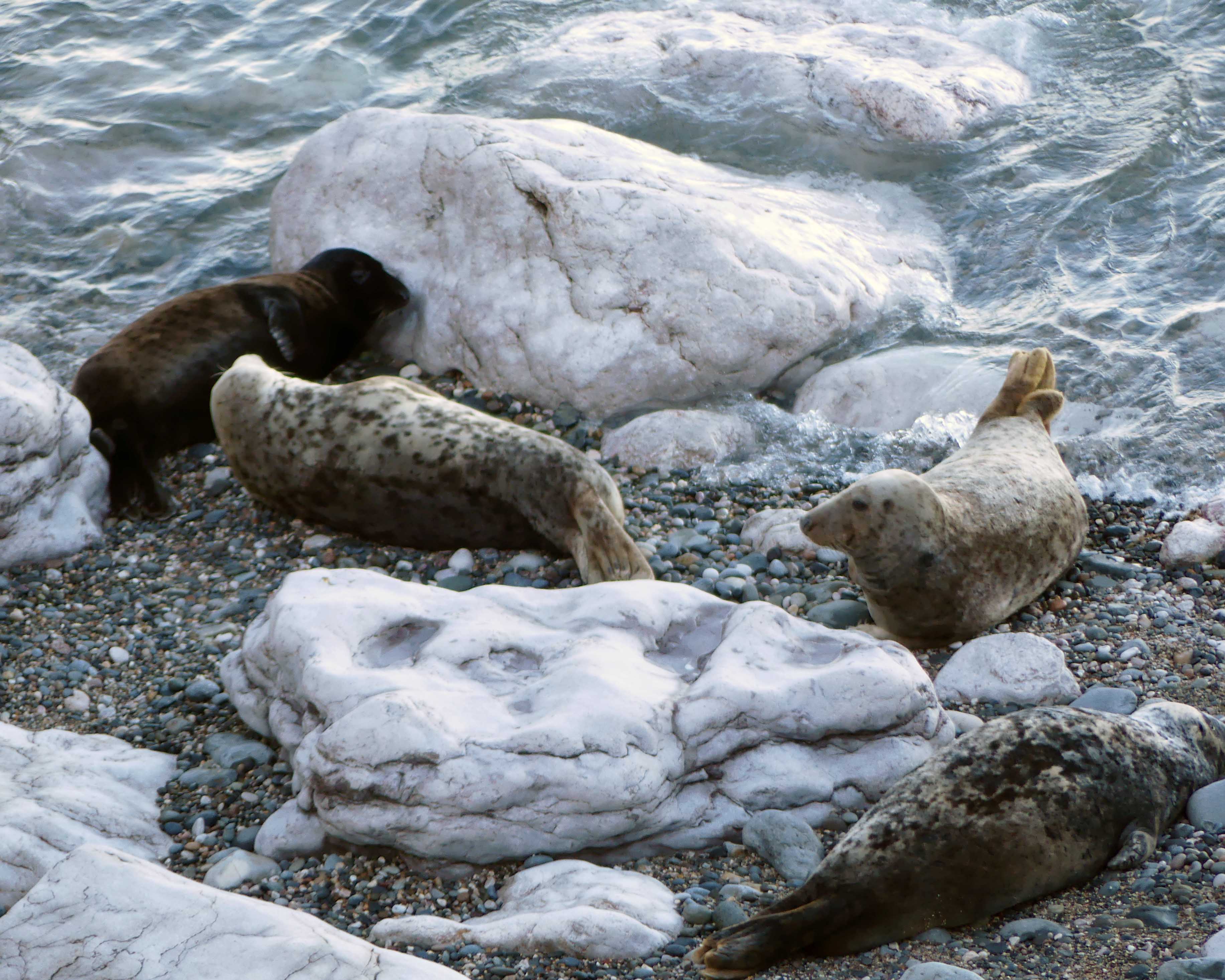
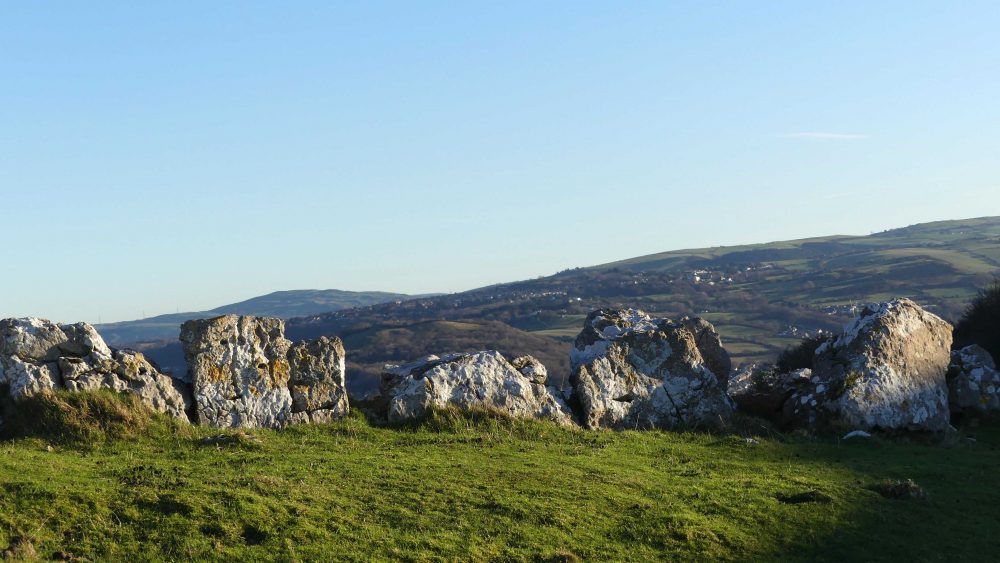
As well as local folk, people come here from miles around in the hope of a sighting of the Grey Seals that have claimed Angel Bay as their own. Today I was one of a small crowd of spectators that were given a real treat; there must have been at least 40 of them ranged along the tide-line the whole length of the little cove.
170120-lo-54-looking-down-into-cove-1a

Perfectly camouflaged to blend with the rocks and  pebbles here, it takes a few minutes to get your eye in and work out which shapes are animal and which mineral. I make a total of 20 in the image below.

170120-lo-28-1504-grey-seals-in-angel-bay-30-1a

At first glance there didn’t seem to be much activity other than sleeping going on, but sounds arising and a closer look reveals that here and there things were not entirely tranquil.

170120-lo-36-some-were-vocal-and-maybe-a-little-aggressive-1

170120-lo-60-1519-small-group-with-very-dark-baby-1a

Some see rocks as a sun-warmed resting place

170120-lo-33-grey-seal-poses-1

while to others they are just obstacles to be overcome; going over the top must be easier than getting someone to move.

170120-lo-35-wriggling-over-rocks-1

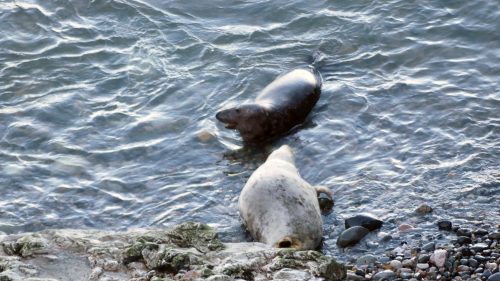
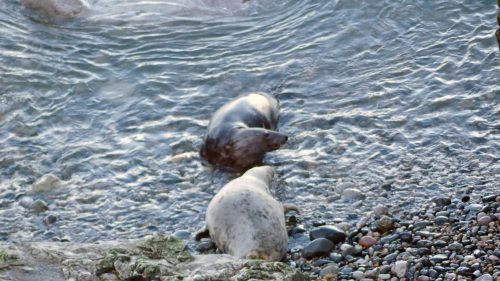
These two took to the water, they could be a male and a female as one appears smaller than the other.

170120-lo-38-grey-seal-interaction-1a

They started off peacefully enough,

170120-lo-40-grey-seal-interaction-3a

but things soon started to get a bit rough

170120-lo-39-grey-seal-interaction-2a

and developed into what appeared to be a serious display of aggression or power assertion of some kind. ( I wasn’t entirely off-track here, but it has been pointed out that this was quite likely mating behaviour. I thought that mating happened sooner after the birth of the pups.)

170120-lo-47-grey-seal-interaction-8a

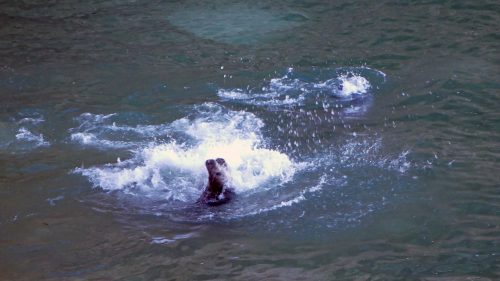
Their interaction was quickly dissipated though when several more seals lumbered from the shore, showing  a surprising turn of speed, and entered the water with much deliberate splashing.

170120-lo-46-grey-seal-interaction-7a

Then sped off with purpose, keeping their heads above the water

170120-lo-48-swimming-out-to-kayakers-1

to check out two kayakers that had paddled into the bay. The guys in the boats must have been thrilled to have had a close encounter with at least eight curious seals.

170120-lo-51-checking-out-the-kayakers-1

Back on the shore another pair having a bit of argy-bargy

170120-lo-59-more-interaction-2a

this time more vocal than physical.

170120-lo-58-more-interaction-1a

170120-lo-57-more-interaction-1a

And that is where I left them to get on with their day while I got moving to warm up, with one quick last look over the edge of the cliff from the other side of the bay.

170120-lo-61-last-look-from-higher-up-1a

On the far side of the bay I scanned the cliff for any signs that the Ravens may be re-using the nest site that has been occupied for years. There was nothing I could see, but there were plenty of pairs of Jackdaws that seem to have already claimed or reclaimed holes and ledges on the cliff wall. Jackdaws are so numerous here that a black bird of a certain size usually registers subconsciously as such, but again it was hearing different sounds called by a small group of four black birds flying up that alerted me to the presence of the far less common Chough.

170120-lo-63-1524-chough-at-cliff-base-1a

More wary than the resident Jackdaws, the presence of Chough, probably visiting from the Great Orme that forms the other side of Llandudno Bay, always takes me by surprise and that is my excuse for failing to get a decent photograph! That and the fact they soon spotted me standing out in the open pointing a long lens at them, so they took off and disappeared over the cliff edge. I have seen and photographed the pair below feeding here before, quite distinctive with all their leg bling, but the one above has none yet. Is that because it’s a young one I wonder? Please tell me if you know.

170120-lo-70-jackdaw-at-base-of-cliff

I couldn’t leave this lower level of the reserve without a nod to a Jackdaw, whose home this really is, so snatched this just before a dog followed by its owner sent him off too.


Share this:

  • Share on Facebook (Opens in new window) Facebook
  • Share on Pinterest (Opens in new window) Pinterest
  • Share on X (Opens in new window) X
Like Loading...
Follow everyday nature trails on WordPress.com

Enter your email address to follow this blog and receive notifications of new posts by email.

‘But it is the common species that keep the living world ticking over and provide most of our experiences of wildlife, and I would argue that maintaining the abundance of these is as important a conservation priority as maintaining the existence of rarities’. Richard Mabey

MOST RECENT POSTS

  • A Glimpse of Spring to Come January 22, 2025
  • Hunting the Wren December 28, 2024
  • Oh, Christmas Tree December 18, 2024
  • In and Out of the Ivy February 15, 2024
  • Nature’s Fireworks November 30, 2023
  • Wild Autumn along the Coast Path November 3, 2023

OLDER POSTS

LOOKING FOR SOMETHING IN PARTICULAR?

  • Fine Dining for Crows
    Fine Dining for Crows
  • Shades, Sounds and Scents of the Woods
    Shades, Sounds and Scents of the Woods
  • Catchers, a Duck and Divers
    Catchers, a Duck and Divers
  • Sights and Sounds from the Little Orme 1
    Sights and Sounds from the Little Orme 1
  • May Bee Appearing on Ivy near You
    May Bee Appearing on Ivy near You
  • Following a river to a Fairy Glen
    Following a river to a Fairy Glen
  • Beautiful blooms and some rare treats (1)
    Beautiful blooms and some rare treats (1)
  • The Windhover
    The Windhover
  • Curlews are Back in the Field
    Curlews are Back in the Field
  • A Windy Wildflower Trail - completion
    A Windy Wildflower Trail - completion

nightingale trails

The Walk of the Monarch Butterfly-Sendero de la Mariposa Monarca

The Walk of the Monarch Butterfly-Sendero de la Mariposa Monarca

MY WILDFLOWER BLOG: where the wildflowers are

Snowdrop

Snowdrop

most recent posts

Follow everyday nature trails on WordPress.com

Social

  • View teresamaygreen’s profile on Twitter

Enter your email address to follow this blog and receive notifications of new posts by email.

Website Built with WordPress.com.

  • Subscribe Subscribed
    • everyday nature trails
    • Join 358 other subscribers
    • Already have a WordPress.com account? Log in now.
    • everyday nature trails
    • Subscribe Subscribed
    • Sign up
    • Log in
    • Report this content
    • View site in Reader
    • Manage subscriptions
    • Collapse this bar
 

Loading Comments...
 

    %d