• Home
  • about
  • about the photographs
  • Local Nature Reserves
    • Bryn Euryn Local Nature Reserve
    • Mynydd Marian
  • Wales Coast Path
    • Grey Seals in North Wales
    • St.Trillo’s Chapel
    • Wildflowers of North Wales Coastal Paths, Cliffs and Dunes

everyday nature trails

everyday nature trails

Tag Archives: wood sorrel

Spring on the Bryn

07 Thursday May 2015

Posted by theresagreen in Bryn Euryn Nature Reserve, hoverflies, Insects, Nature, Nature of Wales, nature of woodlands, tree folklore

≈ 4 Comments

Tags

ash tree, Bee-fly, chequered hoverfly, common field speedwell, cowslip, dog mercury, eupeodes latifasciatus, garlic mustard, hart's tongue fern, ivy-leaved speedwell, oak tree, wood anemone, wood sorrel

Recent outings have been ambles rather than rambles as I’m getting back to fit after being laid low for a few weeks by some kind of virus, which also accounts for the recent absence from blogging. I’ve found it most frustrating, especially at this time of year too when there’s so much going on. But I’m keen to catch up and already have a lot to share, so here’s a mostly-pictorial view of Bryn Euryn as I saw it on two beautiful sunny-day ambles in the last week of April.

There are a lot of Ash trees on the Bryn, thankfully all of which appear to be healthy at the present time and they seem to have had an exceptional amount of flowers this year. The flowers start off a dark pinkish-purple but now most of them are over now and the clusters are mostly green.

Ash tree flowers are almost over

Ash tree flowers are almost over

Some trees have produced so many flowers that now the clusters are green, from a distance it gives the illusion that they are in leaf.

Spent flower clusters give ash trees the illusion of being in leaf

Spent flower clusters give ash trees the illusion of being in leaf

Looking more closely at the tree in the photo above, there are a few  leaves already appearing.

New ash leaves opening

New ash leaves opening

Naturally, once I had seen the ash leaves I had then to check out the oaks to guage if we are in for a ‘splash or  a soak’ this summer. On the day I took the photo of the ash the oaks were all in tight bud.
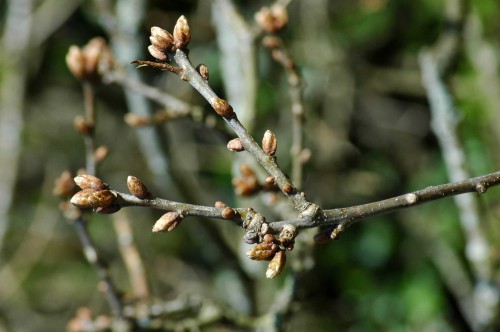
21/4/15- Oak leaves in tight bud

21/4/15- Oak leaves in tight bud

But three sunny days later I was amazed to see that leaves had begun to open and not only that, insects had already moved in.

24/4/15-New oak leaves with insects

24/4/15-New oak leaves with insects

For anyone that has no idea what that last bit was about, a traditional English way of predicting whether the summer will be wet or dry was based on whether the oak or the ash trees opened their leaves first.

“When the oak is before the ash, then you will only get a splash; when the ash is before the oak, then you may expect a soak “

So things appear to be fairly even in the rainfall prediction stakes so far.

Robin singing from high in an ash tree

Robin singing from high in an ash tree

It was a perfect spring day, the sun was shining the sky was blue and a host of birds were singing. Along the quarry field edge the vegetation is growing up quickly although there’s not much flowering yet. Celandines are beginning to fade and some dandelions have already set seed.

Vegetation on woodland edge-celandines, nettles & arum

Vegetation on woodland edge-Lesser Celandines, nettles & arum
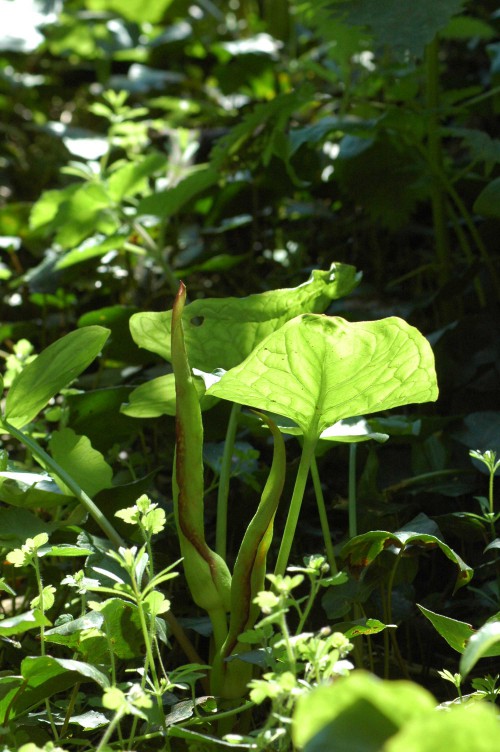
Cuckoo Pint or Lords and Ladies-Arum maculatum

Cuckoo Pint or Lords and Ladies-Arum maculatum

There was a single male Orange Tip butterfly racing along at their normal break-neck speed and one female Small White that obligingly settled on a bramble.

Small White (f) on bramble leaf

Small White (f) on bramble leaf

150421TGNW-BE1-Chequered Hoverfly(m) -Melanstoma scalare

Tiny male Chequered Hoverfly-Melanstoma scalare (enlarged)

I was quite surprised to see a good number of hoverflies about, all looking shiny and fresh, so I assume they were newly-emerged.

Hoverfly-Eupeodes latifasciatus

I think this is Eupeodes latifasciatus

As I was checking out a splash of colour that turned out to be from this escaped garden plant, I was happy to see this little bee-fly arrive to take its nectar. One of my favourite insects, they look cute and furry but are classified under the general heading of ‘robber-flies’ and their larvae live as parasitoids in the nests of mining bees.
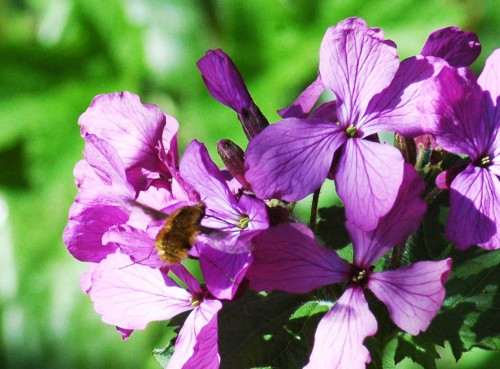
An escaped garden plant attracting a bee-fly

An escaped garden plant attracting a bee-fly

There are two species of pretty blue speedwell flowering here, one is the familiar Common Field Speedwell

Common Field Speedwell- Veronica persica

Common Field Speedwell- Veronica persica

and the other is the even tinier-flowered Ivy-leaved Speedwell.

Ivy-leaved speedwell-Veronica hederifolia

Ivy-leaved speedwell-Veronica hederifolia

You could easily overlook this rather sprawling untidy plant, and you’d probably pull it out of your garden as a ‘weed’, but as with all speedwells, on closer inspection its tiny flowers are really pretty.

Close-up of flower of ivy-leaved speedwell

Close-up of flower and leaves of Ivy-leaved Speedwell

In the woods the tree canopy is still open but there are small new leaves on some trees.

24/4/15-Tree canopy still open

24/4/15-Tree canopy still open – new beech leaves in foreground

Wood anemones are still flowering

Wood anemone-Anemone nemorosa

Wood anemone-Anemone nemorosa

and there was one patch of Wood Sorrel.

Wood Sorrel-Oxalis acetosella

Wood Sorrel-Oxalis acetosella

Harts Tongue fern fronds unfurling

Harts Tongue fern fronds unfurling

Garlic Mustard is beginning to flower- if you never have, try crushing a leaf they really do smell of garlic…

Garlic Mustard - Alliaria petiolata

Garlic Mustard – Alliaria petiolata

and another plant that doesn’t smell too pleasant, Dog Mercury, is also displaying its spikes of rather insignificant small pale green, petalless flowers.

Dog Mercury - Mercurialis perennis

Dog Mercury – Mercurialis perennis

There are still ivy berries on some plants, although those left are probably still there because they are difficult for their chief consumers, blackbirds and bulky old wood pigeons to reach.
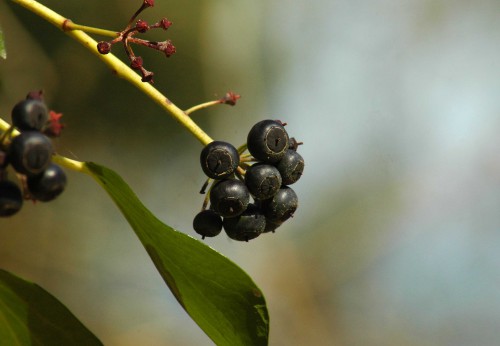
Ivy berries

Ivy berries

In the open wildflower meadow cowslips are blooming. I love their graceful fragrant flowers and the sight of them always takes me back to childhood when it was still OK to pick bunches of them and we used them as part of the floral decorations for the school May Day celebrations.

Cowslip-Primula veris

Cowslip-Primula veris

Hawthorn is now green with fresh leaves.

Fresh hawthorn leaves

Fresh hawthorn leaves

Part 2 to follow ….


Share this:

  • Click to share on Facebook (Opens in new window) Facebook
  • Click to share on Pinterest (Opens in new window) Pinterest
  • Click to share on X (Opens in new window) X
Like Loading...

Conwy Mountain

31 Thursday May 2012

Posted by theresagreen in nature of woodlands, nature photography

≈ 2 Comments

Tags

bilberry, Conwy mountain, mountain lake, Pensychnant Nature Reserve, rowan tree blossom, stonechat, water horsetail, wood sorrel

We ave few opportunities for family outings these days as the ‘kids’ are grown up now and getting on with their lives in Bristol, London and up here in North Wales. As I think I have mentioned before, despite my best efforts throughout all their lives, still none of them get as excited as I do at the prospect of a wildlife spotting expedition, but at least all may be persuaded fairly easily to get out into the fresh air for a walk. During my  recent birthday weekend clan gathering, they all agreed to indulge me in my strangeness and we headed for the nearest mountains before they could change their minds. The addition of a new Labrador puppy to my daughter’s family gave added incentive to the outing as this was to be her first venture into the countryside.

The actual Conwy Mountain –  in Welsh Mynydd y Dref  (“Mountain of the Town”) is the remains of an ancient volcano that erupted about 450 million years ago  and lies within the foothills of the Carneddau range of Mountains; however, the whole of the  hilly area to the west of the town of Conwy, is locally referred to as Conwy Mountain.

View from Conwy Mountain down to Conwy castle and estuary (click on photo for better view)

We drove from Conwy town along Sychnant Pass as far as the pull-in area near the Pensychnant Nature Resere were we parked and left the car to walk, or rather amble, stopping frequently to indulge the curiosity of the puppy. As always when walking with a group of  people, and particularly in a popular walking spot, most birds make themselves scarce, although there were a few Stonechats about, a Kestrel quartered the mountain slope close to were we stood admiring the view,  a pair of Raven flew overhead and a family of Buzzard circled in the thermals high above the valley beneath.

Freely grazing ponies are a frequent sight on the mountainside.

We walked around the lake towards the entrance to the nature reserve

The shallow water at the edge of the lake was full of crowds of large tadpoles

Vegetation in the lake is Water Horsetail – Equisetum fluviatile

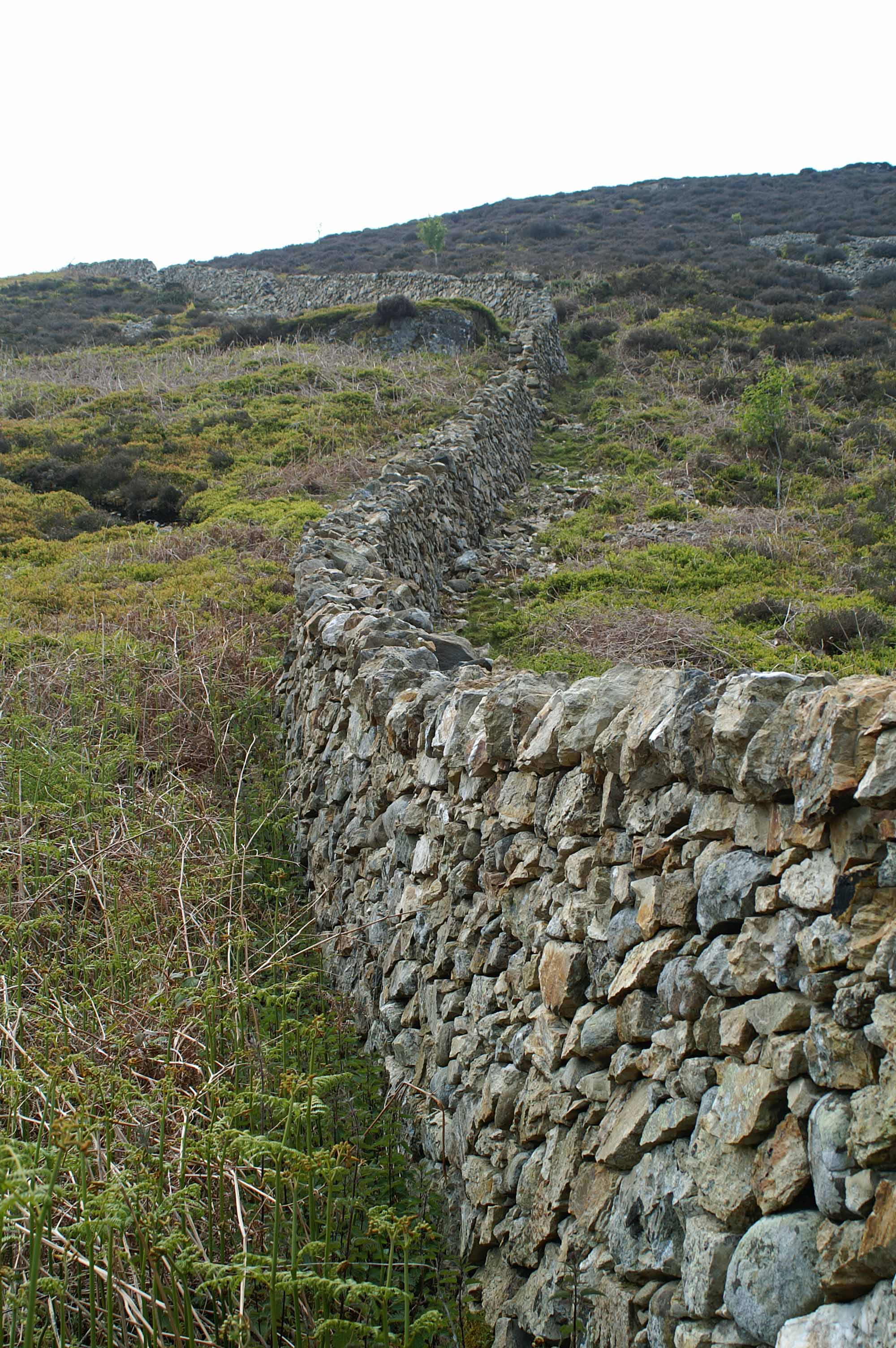
The dry stone wall that bounds the nature reserve

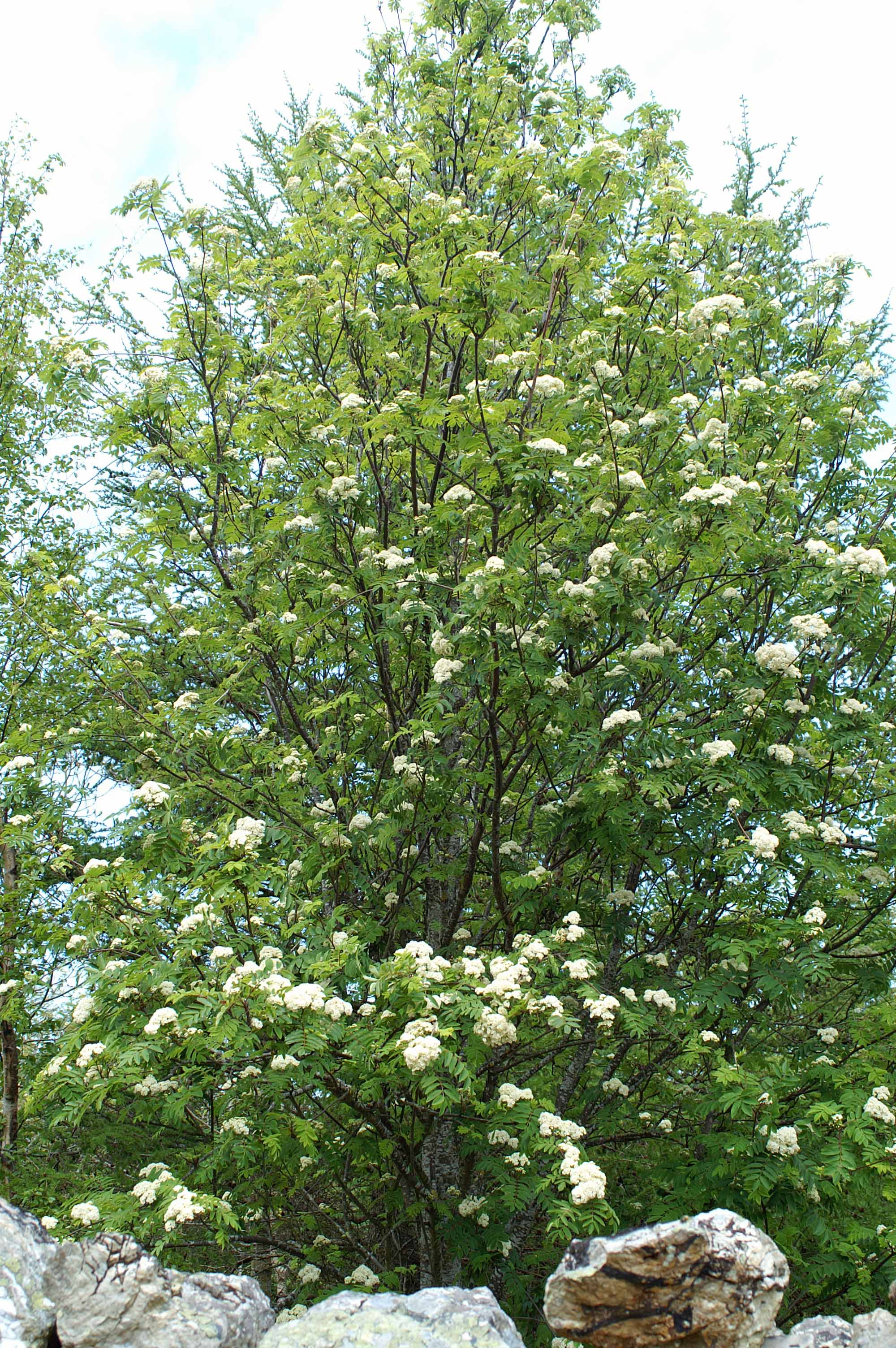
A Rowan tree in full blossom

Bilberry – vaccinium myrtillus

My favourite discovery of the day was definitely this lovely little Wood Sorrel plant growing on a shady mossy bank at the side of the track through the nature reserve.

Wood-sorrel-oxalis-acetosella

The flowers are solitary, each having five narrow sepals; five broad white petals delicately veined with lilac; 10 stamens and five styles.

Wood Sorrel –Oxalis acetosella – A charming and delicate herb, from the genus Oxalis, that is common in most of Europe and parts of Asia. The binomial name is Oxalis acetosella, owing to its sour taste.

The leaves are fresh green, heart-shaped, folded down the middle and held in groups of three drooping down atop a slender reddish-brown stem.

During the night or when it rains both flowers and leaves contract.


Share this:

  • Click to share on Facebook (Opens in new window) Facebook
  • Click to share on Pinterest (Opens in new window) Pinterest
  • Click to share on X (Opens in new window) X
Like Loading...
Follow everyday nature trails on WordPress.com

Enter your email address to follow this blog and receive notifications of new posts by email.

‘But it is the common species that keep the living world ticking over and provide most of our experiences of wildlife, and I would argue that maintaining the abundance of these is as important a conservation priority as maintaining the existence of rarities’. Richard Mabey

MOST RECENT POSTS

  • A Glimpse of Spring to Come January 22, 2025
  • Hunting the Wren December 28, 2024
  • Oh, Christmas Tree December 18, 2024
  • In and Out of the Ivy February 15, 2024
  • Nature’s Fireworks November 30, 2023
  • Wild Autumn along the Coast Path November 3, 2023

OLDER POSTS

LOOKING FOR SOMETHING IN PARTICULAR?

  • Pretty prickly Thistles
    Pretty prickly Thistles
  • The Foxglove - of Fairytales, Myths & Medicine
    The Foxglove - of Fairytales, Myths & Medicine
  • Fine Dining for Crows
    Fine Dining for Crows
  • Pines and Primroses
    Pines and Primroses
  • Following a river to a Fairy Glen
    Following a river to a Fairy Glen
  • Rosebay willowherb
    Rosebay willowherb
  • Wigeon in Winter
    Wigeon in Winter
  • Bryn Euryn - a walk of several parts. Part 1
    Bryn Euryn - a walk of several parts. Part 1
  • A Blackthorn Winter
    A Blackthorn Winter
  • Birds and the art of fly catching
    Birds and the art of fly catching

nightingale trails

The Walk of the Monarch Butterfly-Sendero de la Mariposa Monarca

The Walk of the Monarch Butterfly-Sendero de la Mariposa Monarca

MY WILDFLOWER BLOG: where the wildflowers are

Snowdrop

Snowdrop

most recent posts

Follow everyday nature trails on WordPress.com

Social

  • View teresamaygreen’s profile on Twitter

Enter your email address to follow this blog and receive notifications of new posts by email.

Website Built with WordPress.com.

  • Subscribe Subscribed
    • everyday nature trails
    • Join 359 other subscribers
    • Already have a WordPress.com account? Log in now.
    • everyday nature trails
    • Subscribe Subscribed
    • Sign up
    • Log in
    • Report this content
    • View site in Reader
    • Manage subscriptions
    • Collapse this bar
 

Loading Comments...
 

    %d