• Home
  • about
  • about the photographs
  • Local Nature Reserves
    • Bryn Euryn Local Nature Reserve
    • Mynydd Marian
  • Wales Coast Path
    • Grey Seals in North Wales
    • St.Trillo’s Chapel
    • Wildflowers of North Wales Coastal Paths, Cliffs and Dunes

everyday nature trails

everyday nature trails

Tag Archives: traditions

Hunting the Wren

28 Saturday Dec 2024

Posted by theresagreen in Birds, CUSTOMS & TRADITIONS

≈ 3 Comments

Tags

Birds, Boxing Day, Christmas, customs, Ireland, Isle of Man, mythology, nature, St Stephen's Day, traditions, Wales, Wren

For reasons lost in the mists of time, the tiny wren has featured largely in the folklore, mythology and traditions of many European countries. In the UK, perhaps the most extraordinary and in the past, cruel custom, must be the one that traditionally took place each December 26th. To many of us this is Boxing Day or St Stephen’s Day, but in some parts of Great Britain it was also known as Hunt the Wren Day or just Wren Day, depending in which part of Great Britain the ritual was enacted.

There are several variations as to how the ceremony, or ritual was played out, but essentially it involved boys and sometimes young men who joined together, often dressing in curious costumes, such as straw masks, greenery and a motley assortment of colourful clothing, who for the duration of the ritual were known as ‘Wren Boys’. Their mission was to hunt around the hedgerows for a wren, which was sometimes kept alive, sometimes not. Once caught, the bird was then put in a small box or ‘Wren House’, which was decorated with holly, ivy and ribbons, placed on top of a staff or long pole and displayed around the neighbourhood. The boys sang songs and played music in exchange for donations.

Typically Wren Hunts took place in Ireland, The Isle of Man, Wales and France; all areas where Celtic traditions are more firmly entrenched. Times, sensibilities and laws have thankfully changed in modern times, but in a few places Wren Day has survived, or been revived, suitably modified but keeping the tradition alive and raising money for charity.

Ireland

In Ireland the day is known in Irish Lá an Dreolin, or Hunt the Wren Day and takes place on 26th September, St Stephens Day. Here the Wren Boys beat the bushes and hedges with sticks, and when a wren flew out they tried to bring the bird down by throwing sticks, stones and any other objects that came to hand. Whoever killed the wren, or wran as the bird is also known, was believed to have good luck for a year. The dead bird was placed atop of a long pole, then travelling from house to house they sang songs accompanied by drums and pipes, they collected money for food and drink. One version of the song is this:

“The wren the wren the king of all birds,

St Stephen’s Day was caught in the furze

Her clothes were all torn – her shoes were all worn

Up with the kettle and down with the pan

Give us a penny to bury the wran

If you haven’t a penny, a ha’penny will do

If you haven’t a ha’penny, God bless you!”

Today the Wren Hunt no longer takes place, but Wren Day has survived, or been revived in a few towns and villages. Groups of Wren Boys hold small parades and carry around a stuffed or fake wren and usually collect money for charity or to host a dance or ‘Wren Ball’ for the town.

Wales
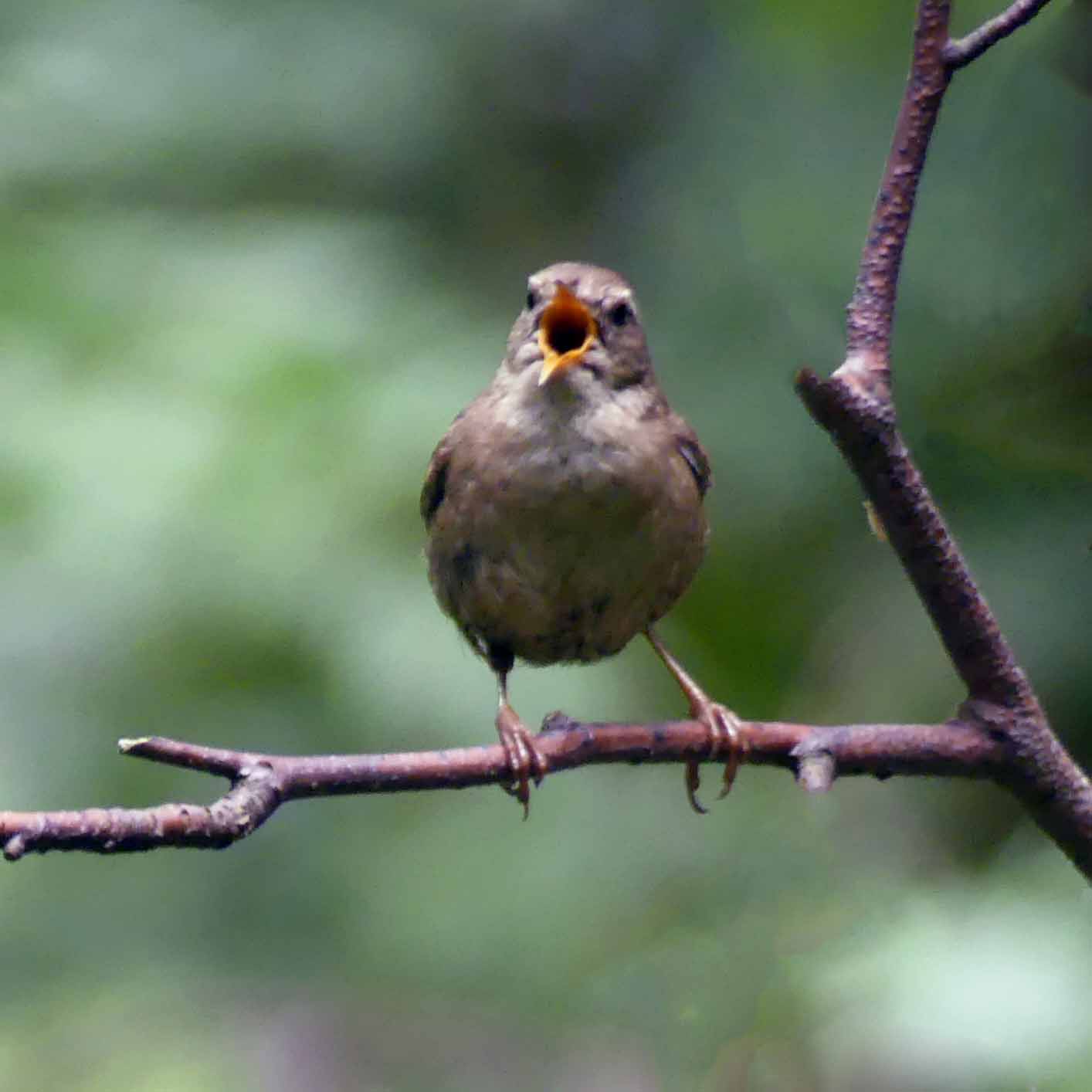
In Wales the tradition of Hunting the Wren, in Welsh, Hela’r Dryw, took place on the Twelfth Day of Christmas, January 5th, and the practice continued in Pembrokeshire until the beginning of the 20th century. Similarly to the traditions of The Isle of Man, a dead wren placed in a ‘Wren House’, a small decorated wooden box with windows, which was carried around the village by ‘Wren Bearers’. Sometimes, the Wren Boys caught a live wren, placed it in the Wren House and called upon folk to make offerings to the ‘Little King’, then set the bird free at the end of the day.

England

The tradition was followed in parts of England, but it gradually died out or was banned by the authorities by the mid 19th century. In the late 20th century the tradition of the Wren Hunt was revived in Suffolk and it has been performed in the town of Middleton on every Boxing Day since 1994.

Isle of Man

Legend

Although the origins of the wren hunting ritual is obscure in most cases, in the Isle of Man it is said to be associated with an enchantress, a fairy queen or a goddess named Tehi Tegi, which translated means something like ‘beautiful gatherer’. The legend says that Tehi Tegi was so beautiful that all the men of the Island followed her around, neglecting their homes and fields, in the hope of being chosen to marry her. But Tehi Tegi led her potential suitors to the river and drowned them and when confronted she escaped by transforming into a wren and flew away. She was banished from the Island, but returns once a year, when she is hunted.

Hunt the Wren was first recorded on the island in the 1720s, though even then was said “to have been practised since time immemorial”, then during what is known as the Manx cultural revival of the 1970s and 80s, *Culture Vannin said Hunt the Wren had become “revitalised with a new focus on the dance”.

December 26th 2024

One of the unique Manx festive traditions took place on St Stephen’s Day as Hunt the Wren was marked with singing and dancing across the island’s communities. Culture Vannin said the practice dates back to pre-Christian times, and was centred around a wren, described as “the king of all birds” in legend. In modern times, an artificial wren is used which is “hunted” and danced through the streets on top of a wren pole.

extract from https://www.bbc.co.uk/news/articles/cx2np73nx1ro

* Culture Vannin is an organisation that promotes and supports the culture, heritage and language of the Isle of Man established in 1982 by the Isle of Man Government as the Manx Heritage Foundation. In 2014, it was rebranded as Culture Vannin to reflect its progressive approach to Manx culture. 

Share this:

  • Click to share on Facebook (Opens in new window) Facebook
  • Click to share on Pinterest (Opens in new window) Pinterest
  • Click to share on X (Opens in new window) X
Like Loading...

Oh, Christmas Tree

18 Wednesday Dec 2024

Posted by theresagreen in London Trees, Nature of Wales, Trees

≈ 2 Comments

Tags

Christmas, Christmas trees, historic trees, London, Norway spruce, significant trees, traditions

As I was staying in London for the first two weeks of December this year, the iconic traditional Christmas tree in Trafalgar Square was close to the top of my list of sights to see. My reason for wanting to see it wasn’t so much about admiring the tree itself, but was more of an acknowledgement and gesture of appreciation for its historical and cultural significance.

Trafalgar Square on an overcast, damp Sunday afternoon

This year’s tree has come in for some criticism on social media in respect of its – to put it kindly- ‘modest decoration’. If its appearance is being compared to others in iconic London locations, or to the ‘main’ Christmas trees of other cities, it might appear a little sparsely adorned. However, there’s much more to the presence of this tree than its decorative value, and good reason for this minimalist styling, although I think it’s fair to say it could probably have been done better.

The decoration is totally appropriate, as continuing a tradition begun in 1947, the tree is an annual Christmas gift from the people of Oslo, the capital of Norway, to the people of London. The gift represents gratitude for Britain’s support for Norway during the Second World War, but is also a historical symbol of an everlasting friendship and of remembrance.

Hence the decoration of the tree – Norwegian Christmas trees are traditionally decorated with white lights because it’s considered a more elegant and minimalistic approach, with the focus on the natural beauty of the tree itself rather than bright, colourful lights. 

A plaque placed beneath the tree reads: ” This tree is given by the City of Oslo as a token of Norwegian gratitude to the people of London for their assistance during the years 1940-1945. A tree has been given annually since 1947.”

This year, 2024, marks the 77th anniversary of the event.

Although the tradition of the annual gifting of the Christmas tree began in 1947, the idea may have arisen from a gesture a few years earlier. The first tree to be sent here was in 1942, at which time the Norwegian king Haakon VII and his family, were in exile here as guests of King George V1, and was a gift to them from his home country. Cut down by a Norwegian resistance fighter called Mons Urangsvåg during a raid on Hisøy, an island off the west coast of Norway between Bergen and Haugesund, the tree was then transported to England and presented to the king. A new tree has since grown from the original stump.

The Tree

The Trafalgar Square Christmas tree is typically a 50- to 60-year-old Norway spruce, generally over 20 metres tall. (Nelson’s Column, discounting its pedestal, is 54 metres tall). The tree is cut in Norway some time in November during a ceremony which this year was attended by the Lord Mayor of Westminster, the British Ambassador to Norway and the Mayor of Oslo.

After the tree is cut, it is shipped across the North Sea to the UK by boat. At one time it was shipped to Felixstowe in Suffolk free of charge by a cargo ship of the Fred Olsen Line. As of at least 2007, the tree was shipped across the North Sea to Immingham, which is at the mouth of the Humber Estuary in Lincolnshire by DFDS Tor Line. Since 2018, it has been the responsibility of Radius Group, to transport, guard and erect the tree in Trafalgar Square.

Lighting ceremony and carolling

The tree lighting ceremony in Trafalgar Square is a free event that traditionally takes place on the first Thursday in December, this year on December 5th at 5:30 PM. The ceremony, led by the Lord Mayor of Westminster, includes a band and choir singing Christmas carols, followed by the switching on of the Christmas lights. Since 2009, the Poetry Society has commissioned new poems annually for display on banners around the base of the tree and this year a new children’s poem by the writer and performance poet Valerie Bloom was unveiled.

Surviving the Storm

One reason for the tree looking a little dishevelled may be as a result of a battering by Storm Darragh. It’s a wonder it survived at all, but apparently it was able to as tree surgeons reattached branches that were removed for transportation. This process is called a “branch transplant” and involves branches being hammered back into the tree to give it its typical Christmas tree shape. Ouch.

A couple more Christmas trees in iconic London locations:

Covent Garden
St Paul’s Cathedral

Merry Christmas to you all and many thanks to my loyal followers that have stuck with me despite a drought of posts for much of this year. I hope to do better in 2025!

Share this:

  • Click to share on Facebook (Opens in new window) Facebook
  • Click to share on Pinterest (Opens in new window) Pinterest
  • Click to share on X (Opens in new window) X
Like Loading...
Follow everyday nature trails on WordPress.com

Enter your email address to follow this blog and receive notifications of new posts by email.

‘But it is the common species that keep the living world ticking over and provide most of our experiences of wildlife, and I would argue that maintaining the abundance of these is as important a conservation priority as maintaining the existence of rarities’. Richard Mabey

MOST RECENT POSTS

  • A Glimpse of Spring to Come January 22, 2025
  • Hunting the Wren December 28, 2024
  • Oh, Christmas Tree December 18, 2024
  • In and Out of the Ivy February 15, 2024
  • Nature’s Fireworks November 30, 2023
  • Wild Autumn along the Coast Path November 3, 2023

OLDER POSTS

LOOKING FOR SOMETHING IN PARTICULAR?

  • The Foxglove - of Fairytales, Myths & Medicine
    The Foxglove - of Fairytales, Myths & Medicine
  • Pretty prickly Thistles
    Pretty prickly Thistles
  • Willsbridge Mill, Bristol
    Willsbridge Mill, Bristol
  • Following a river to a Fairy Glen
    Following a river to a Fairy Glen
  • Fine Dining for Crows
    Fine Dining for Crows
  • Catchers, a Duck and Divers
    Catchers, a Duck and Divers
  • Everyday Birds - The Blue Tit
    Everyday Birds - The Blue Tit
  • Wild and Windy on West Shore
    Wild and Windy on West Shore
  • Of Gorse, Furze or Whin
    Of Gorse, Furze or Whin
  • Wildflowers of North Wales Coastal Paths, Cliffs and Dunes
    Wildflowers of North Wales Coastal Paths, Cliffs and Dunes

nightingale trails

The Walk of the Monarch Butterfly-Sendero de la Mariposa Monarca

The Walk of the Monarch Butterfly-Sendero de la Mariposa Monarca

MY WILDFLOWER BLOG: where the wildflowers are

Snowdrop

Snowdrop

most recent posts

Follow everyday nature trails on WordPress.com

Social

  • View teresamaygreen’s profile on Twitter

Enter your email address to follow this blog and receive notifications of new posts by email.

Website Built with WordPress.com.

  • Subscribe Subscribed
    • everyday nature trails
    • Join 359 other subscribers
    • Already have a WordPress.com account? Log in now.
    • everyday nature trails
    • Subscribe Subscribed
    • Sign up
    • Log in
    • Report this content
    • View site in Reader
    • Manage subscriptions
    • Collapse this bar
 

Loading Comments...
 

    %d