Tags
autumn, beachcombing, common gull, Curlew, herring gull, little egret, Llanddulas, October, rip-rap, sea defences, strandline
October 25th
As the effects of recent storms were subsiding, albeit it temporarily as it’s turned out, a sunny warmish day finally presented an opportunity to get out beyond my local patch for fresh air, some not-too strenuous exercise and above all, the sight of some wildlife. I was also keen to see how the weather might have affected the coastline, so settled for one of my favourite stretches of the Coast Path between Llanddulas and Pensarn, one of the best walks I know for amazing views, wildflowers, birds and so much more.

The car parking area at Llanddulas, located immediately behind a defensive wall of rip-rap, or rock armour (piled up giant-sized boulders that serve to protect against erosion and to diffuse the power and velocity of high seas), is still frequently scoured by over-topping waves and spray, which carve out numerous deep pot-holes and craters. Following the most recent storms, it was worse than I’ve ever known it. The Coast Path running past it seems to have survived unscathed though, as far as I could see.
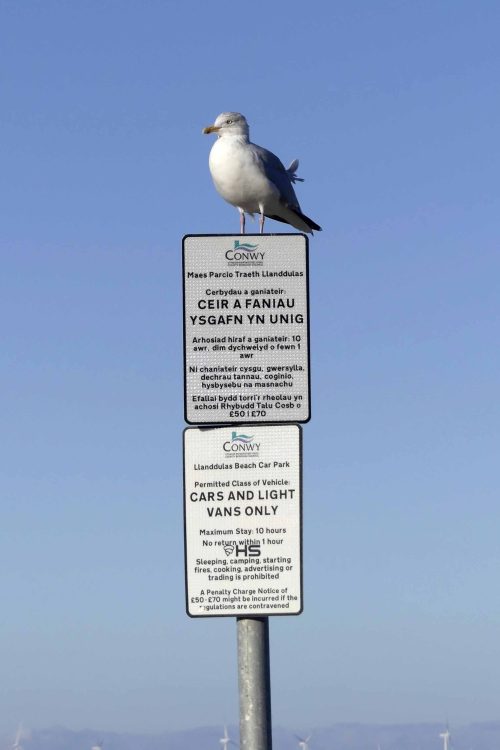
Herring gulls will claim any perch that has some height, and are often on duty here drawing attention to signs stating the rules for parking. Taking on their winter plumage now, they are looking particularly handsome.
The tide was going out, so it would be unlikely that I’d find gulls and cormorants occupying the posts of the lines of groynes further along the shore as they do at high tide, but I was pleased to see at least a few cormorants were out on posts at this end of the shore, before the outgoing tide fully exposed them.

Afon Llanddulas
Running beneath the viaduct that carries the main train line, the river is full and flowing fast towards its end. Where it bends to follow the line of the path the mud and flattened vegetation show that it has flooded recently well beyond its usual boundaries, but again, no serious damage seems to have been done.

Beyond the footbridge, while the water was still travelling fast, it is fairly shallow.

A little further on, guided and contained by a high wall of more rip-rap it reaches its final destination and escapes into the sea.


The far side of the rip-rap wall is more sheltered and has been colonised by a variety of plants. Sunning itself on the leaf of alexanders, which in recent years has become the dominant wild plant throughout this whole site, was a hairy shieldbug.
Lichens pattern some of the rocks, and in some spots, cushiony moss, revived by rainfalls, helps to soften their harshness.


Perched on top of a high rock, a jackdaw gleaming brightly in the sunlight sat sentry-like surveying his kingdom, his steely blue-grey eyes matching the colour of the sky behind him.
Beyond, the flat stony seashore stretches for miles in front, curving gracefully around to the headland on which sits the town of Rhyl. It may not have the aesthetic appeal of miles of unbroken sandy beach, but there’s no denying that it has great dramatic impact, emphasised by huge skies.
Several curving strandlines mark the reaches of various recent high tides.

A high fence of sturdy wire enclosing heavy machinery indicated that some storm-damage has occurred here. It’s not at ground level though, they seem to be reinforcing the cliff where it looks as though there has been a landslip, perhaps caused by water running down from above, where mobile homes are lined close to the edge.

Beachcombing
Strandlines are always interesting to explore, but there wasn’t much to find today other than dried seaweeds, leaves and twigs and a few whelk and razor shells. Pieces of dried hornwrack are often found blowing around on this and most other beaches. Easily mistaken for a seaweed, it is actually a detached part of colony of individual animals known as zooids. Today there were a few clumps of what I’m fairly sure is ‘fresh’ hornwrack as it looks when alive and growing, sadly torn from their anchor points in the shallow foreshore.


Herring gulls gather along the shoreline here, often in huge numbers. A line of them, quietly resting and preening was strung out along the worm reef on the lower shoreline, waiting for the tide to turn.
From some distance away I spotted a single gull perched on a post of a line of groynes. It seemed too small to be a herring gull, and in this same spot I’ve occasionally seen a common gull or two, so I was pleased on checking my photographs later, to see it had green legs, which common gulls have. (Herring gulls have pink ones.)

Coastal Wildflowers
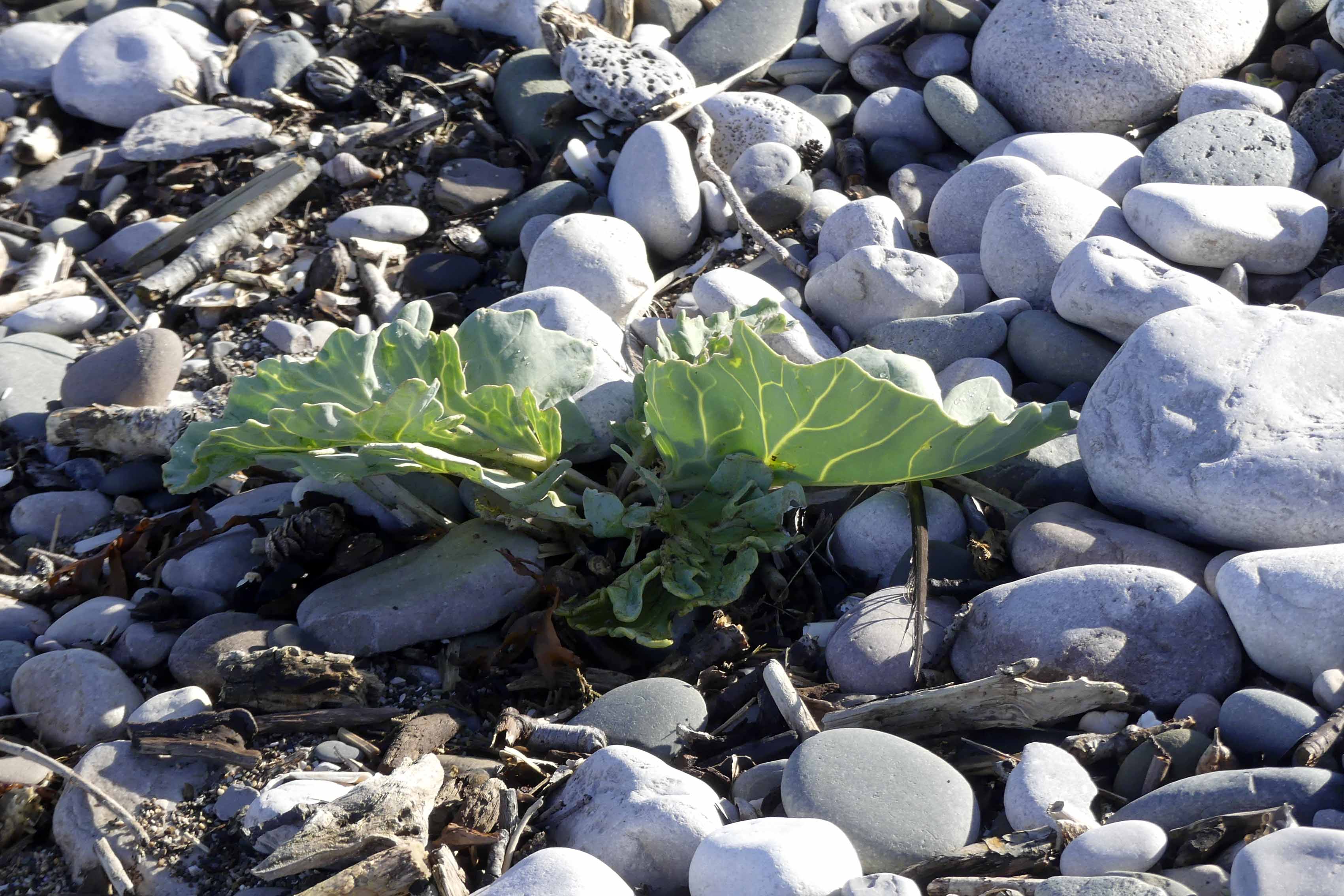
Beyond the strandline, the back of the beach is a great habitat for wild plants, and several interesting and uncommon species, including the lovely yellow-horned poppy can be found here. Although flowering and fruiting are long finished now, fresh leaves often appear after autumn rains and can last throughout the winter.

Leaving the beach I got back onto the Path, depositing the collection of fishing twine, plastic bottle tops & other miscellaneous bits of rubbish I had stuffed in my pockets, plus 2 plastic &1 glass bottle I was carrying in my hand in the only bin for miles. This section of Path, being long and straight often tempts cyclists to speed up and race along it, and not all warn you they are behind you, so I have to remember to check behind me before meandering from one side to the other.

In years past this has been one of the most interesting lengths of the Coast Path, having a lovely diversity of wildflowers along its edges. Now, alexanders has spread exponentially along both edges, smothering out less robust plants and forcing tougher ones to break through where they can. The other locally prolific invader, winter heliotrope, also has a firm grip here.

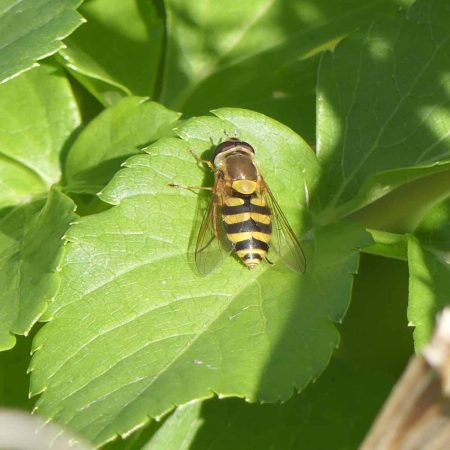
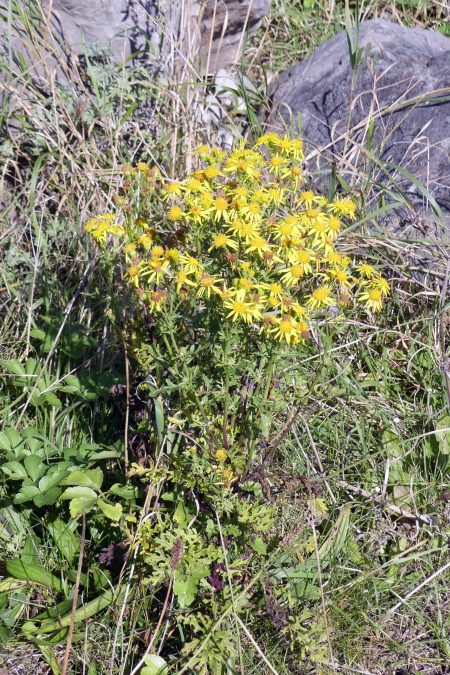
There’s not a lot still flowering, but there are a few fresh plants in flower of fennel, wild carrot and ragwort. There were quite a few insects about too, mostly various flies and a few different species of hoverflies, but also a few of my favourite little yellow dung flies.

Some plants look good even when their flowers are done, bleached stems of hogweed against a backdrop of rocky shore, blue sea and sky are particularly striking.

A dunnock explored the dried stems and down on the shore beneath a few oystercatchers foraged around rockpools, this one casting its shadow and a reflection.

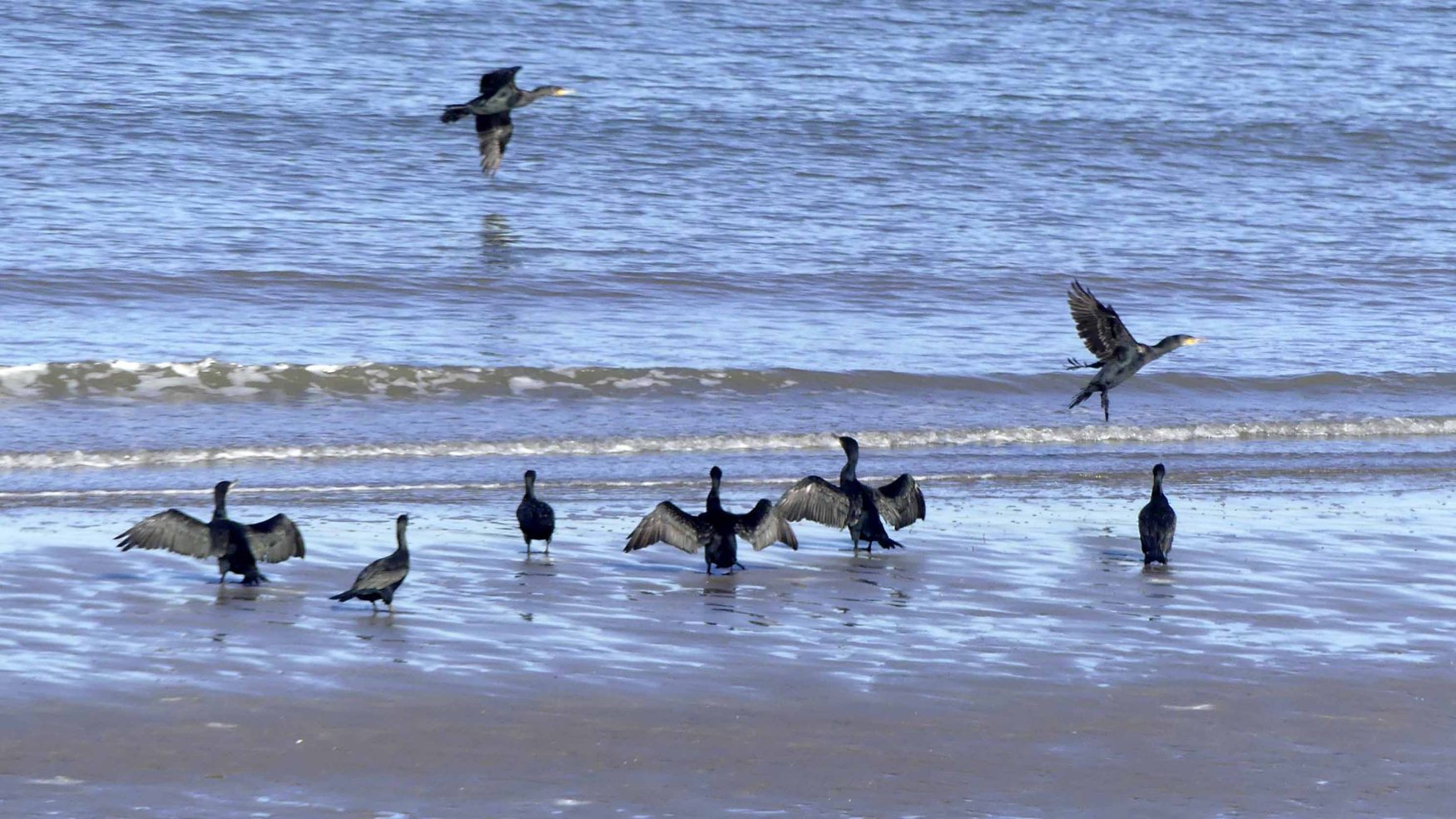
There may not be cormorants to see perched on groyne posts, but on the sea edge there were distant views of several groups of them on the sea edge. Some were active, taking off onto the sea, others were more sedentary, opening up their wings to dry or preening their glossy feathers.
I had heard the calls of curlew, but they were so far away and well-camouflaged I hadn’t expected to see them. It was a treat then to see three out in the open walking in line across the sand.

The Last of the Wildflowers

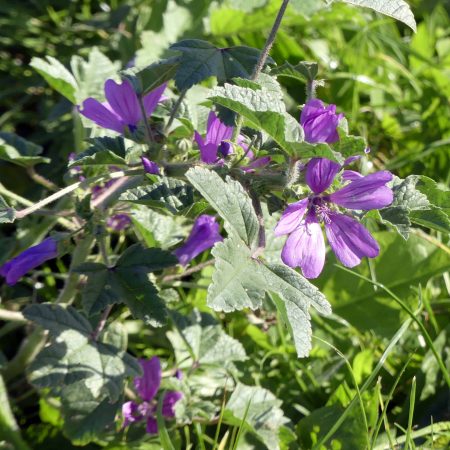
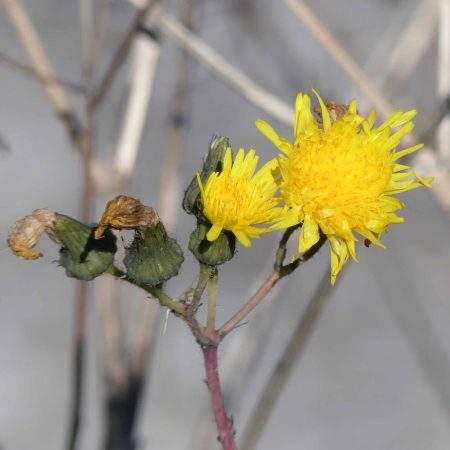
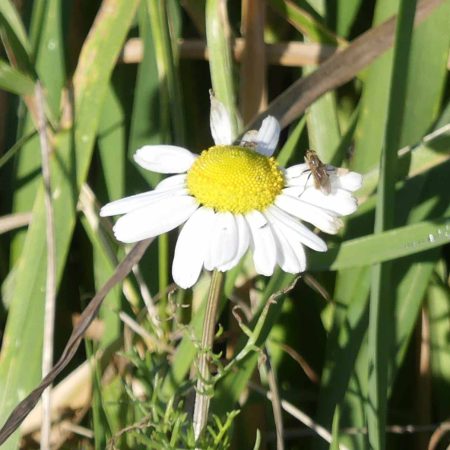
When there are only a few wildflowers left, you can really appreciate their individual charm and more importantly, so do lingering insects.


On a clear, sunny, calm day you can follow with your eyes the spectacular sweep and curve of the shoreline past Pensarn, Kinmel Bay and right around to Rhyl, with the Clwydian Hills in the background.
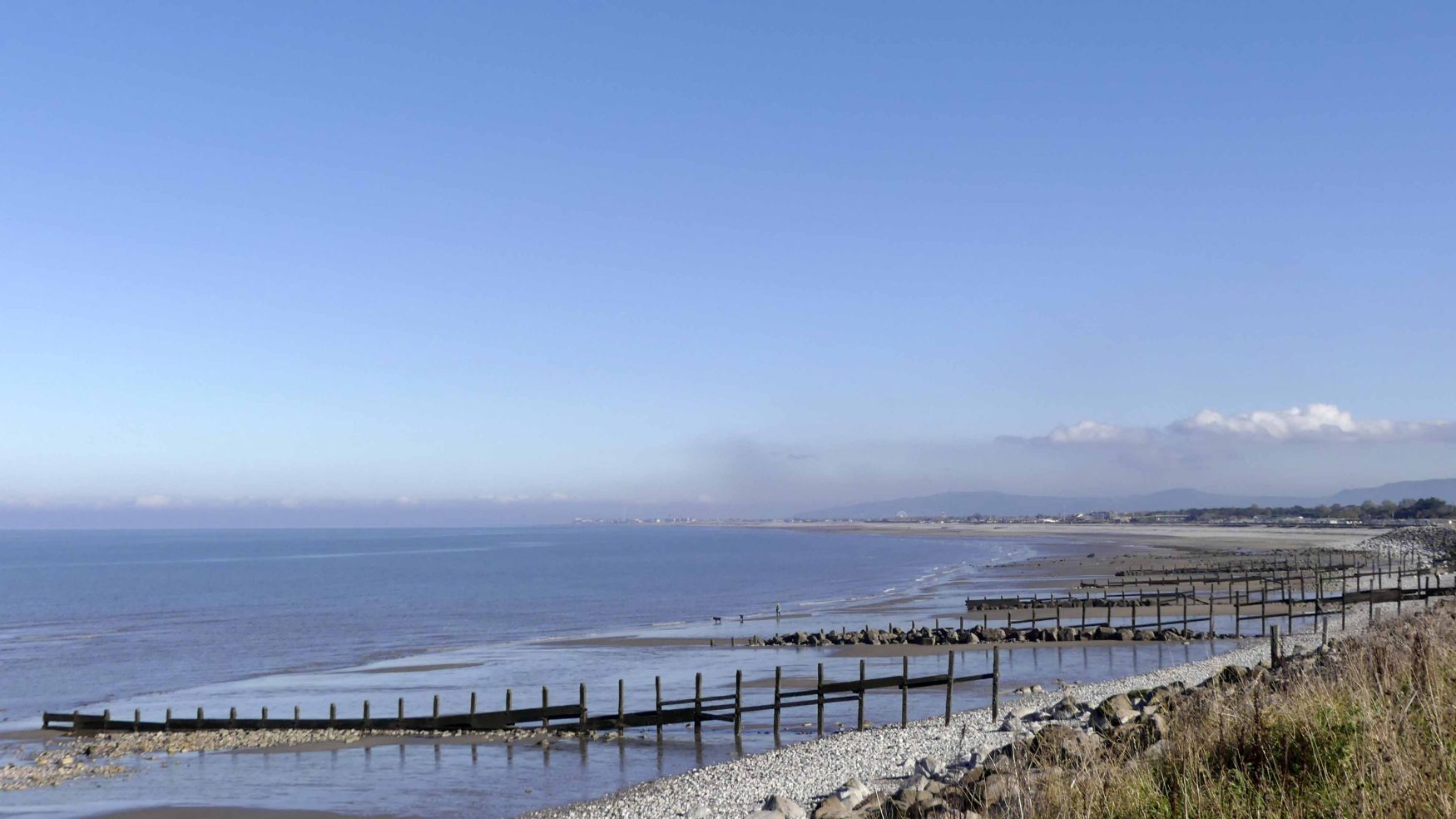

Although brightly sunny, there was a chill to the air and where the Path became shadowed, a short way from the beginning of Pensarn beach, I stopped, admired the view ahead for a few moments and turned to walk back.

Soft fluffy old man’s beard scrambles over hard rocks

The Way Back


Although not the greatest fan of linear walks, it’s sometimes surprising how much more there can be to see along a stretch of path only passed along few minutes previously, when travelling in the other direction. Less than five minutes after turning to walk back, I’d spotted more wildflowers and this lovely little female stonechat that flew across the path and paused briefly on the wire fence that bounds the area of scrubby wasteland between the Path and the railway.

Then down on the shore, there was one of the birds I always hope to see here, a little egret, stalking through shallow water on the hunt for a temporarily-stranded meal.


It was interesting to watch as it followed behind a paddling herring gull, cleverly waiting to see if the gull’s big flat feet stirred up anything edible from the sand. It’s also interesting to compare the size and shape of the two birds, the egret looks so graceful and elegant next to the chunky gull.

Nearer to the edge of the sea a small group of gulls attracted my eye. Mostly sitting and with their heads turned towards the water, so not giving the best of views, zooming in on the only one standing confirmed them to be common gulls.

Groynes are looking battered and the worse for wear


An unexpected sight was of this slug crossing the path. Hope it made it.

A few more flowers, including a wild carrot flowerhead giving shelter to a tiny spider

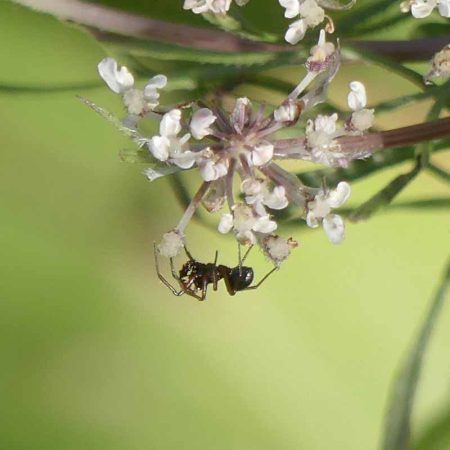
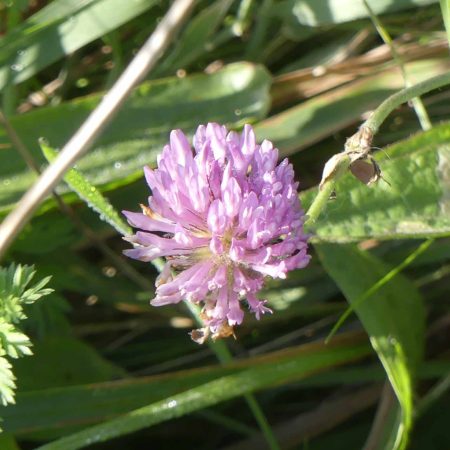
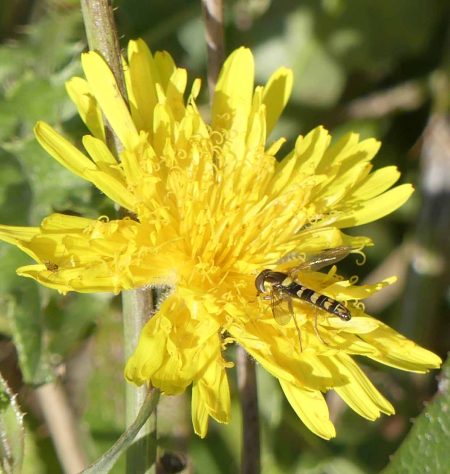
and I know it’s a pain in the garden, but the pure white trumpet blossoms and heart-shaped leaves of hedge bindweed are really quite lovely.

Down on the sand a great black-backed gull stood looking out to sea

Back on the beach
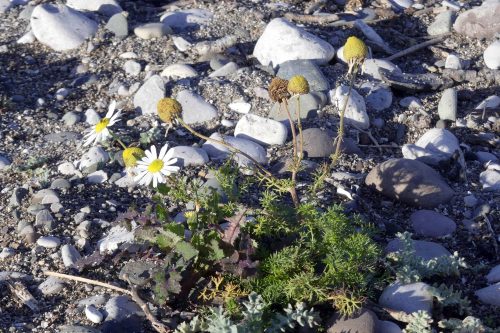
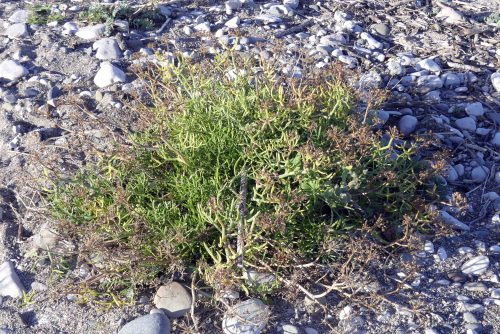
From where the river runs into the sea and back along towards the carparks, a high defending bank of stone and earth hides the view of the sea.

The loose sandy earth and small rocks of the bank can be a good place to see linnets foraging on the seeds of plants that grow there, but today there was only a perky pied wagtail running around chasing flies.
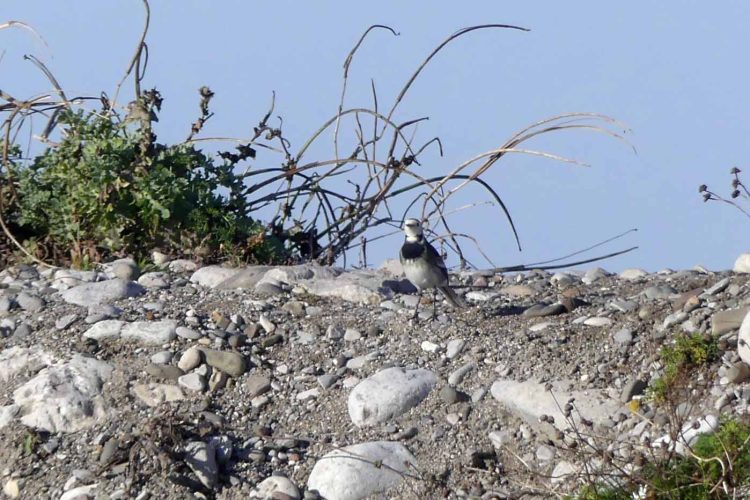
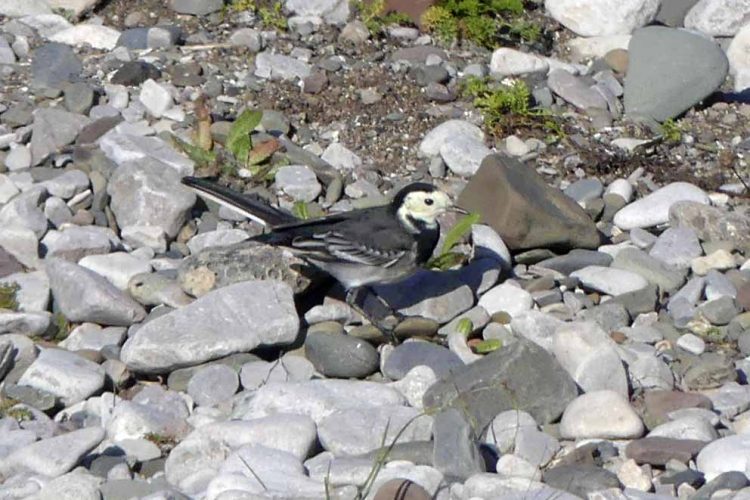
Last view of the river

and back to the carpark, where a herring gull is still keeping an eye on the comings and goings.
Today’s birds: herring gull; black-headed gull; common gull; great black-backed gull; cormorant; oystercatcher; curlew; little egret; robin; dunnock; stonechat; pied wagtail; house sparrow
Wildflowers still in flower: ragwort; common mallow; sea mayweed; common daisy; red clover; fennel; wild carrot; knapweed; chicory; bristly ox-tongue; hedge bindweed; yarrow; sow-thistle


 everyday nature trails