• Home
  • about
  • about the photographs
  • Local Nature Reserves
    • Bryn Euryn Local Nature Reserve
    • Mynydd Marian
  • Wales Coast Path
    • Grey Seals in North Wales
    • St.Trillo’s Chapel
    • Wildflowers of North Wales Coastal Paths, Cliffs and Dunes

everyday nature trails

everyday nature trails

Tag Archives: Oystercatcher

Bird study – Curlew

10 Monday Oct 2011

Posted by theresagreen in Nature, nature photography, wading birds

≈ 2 Comments

Tags

bird camouflage, bird migration, Curlew, curlew folklore, curlew on seashore, Oystercatcher, rhos on sea

An aura of wildness surrounds the curlew perhaps more than any other wading bird. Its onomatopeoic, haunting cries ringing out across the lonely marshes and the tideways it inhabits embody the atmosphere of these often lonely and desolate places.

The curlew is the largest European wading bird, instantly recognisable on winter estuaries or summer moors by its long, downcurved bill, brown upperparts, long legs and evocative call.

Increasing numbers of Curlews have been present on the seashore at Rhos-on-Sea for a few weeks now, but I’ve been waiting to get some reasonable photographs before I wrote about them in more detail. There were several obstacles along the path to obtaining some clear images, not least of which was the fact that they are almost perfectly camouflaged within this rocky landscape, where brown is the predominant colour.

Despite their size, curlews blend perfectly into this landscape

BTO BIRDFACTS:

Curlew Numenius arquata   [Linnaeus, 1758]

Order: Charadriiformes Family: Scolopacidae
 Number in Britain: 105 thousand pairs (Summer)
 Conservation Status:
UK: AMBER
European: 2 Concern, most in Europe; Declining
Global: Near Threatened ( Details )

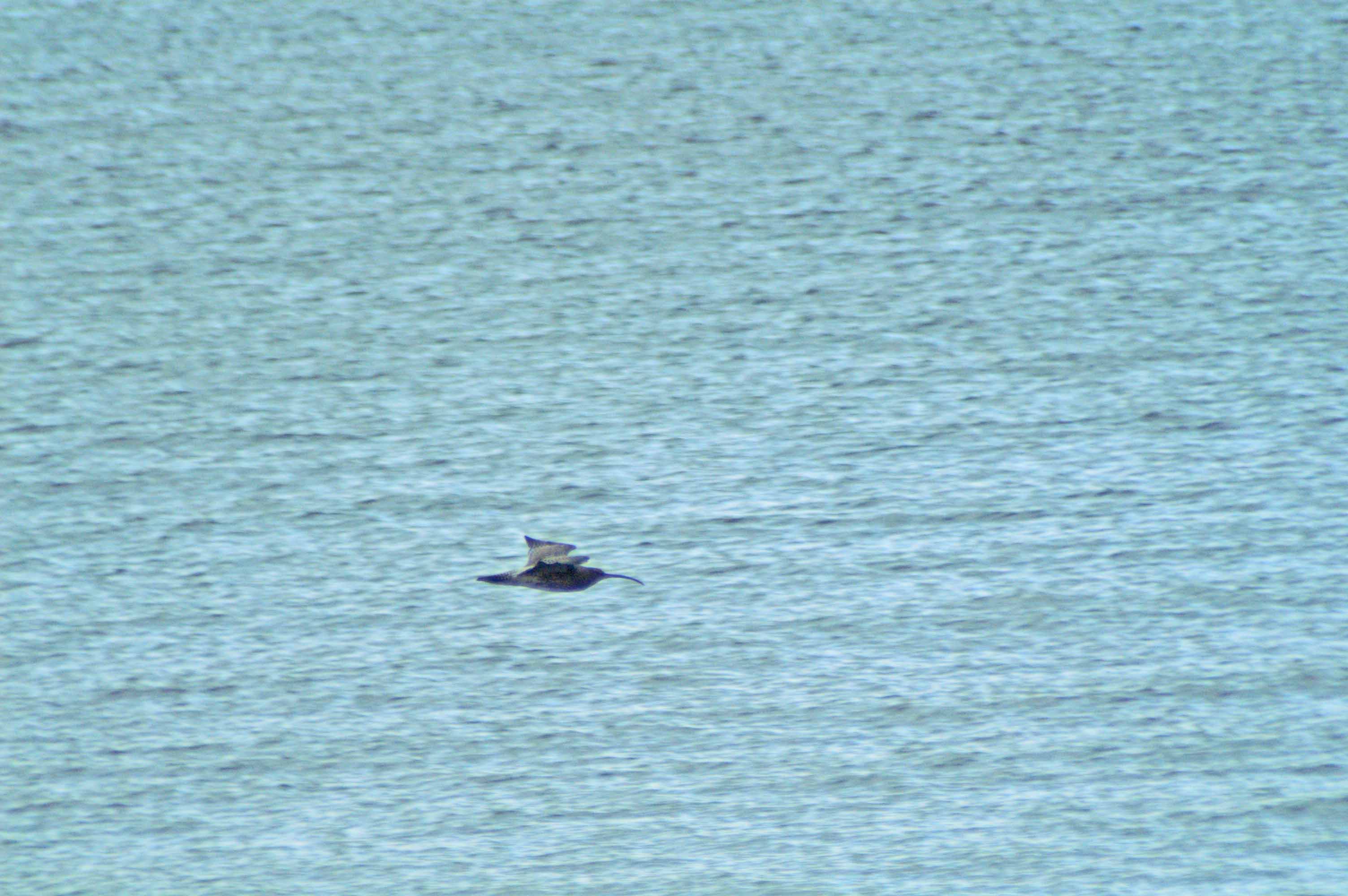
Curlews fly fast and low along the sea edge-in flight the white rump is very noticeable

Curlews glide smoothly and quietly through pools of water hunting for small invertebrates

The long curved beak enables the curlew to probe well under rocks

A curlew foraging peacefully alongside an oystercatcher

Breeding

In Great Britain the greatest numbers of breeding curlews are found here in North Wales, but a glance at a field guide will indicate the vast area occupied by the birds. Their range extends from this country east to the Urals and from Scandinavia and Russia in the north. This wide extent of habitats includes upland moors, grassy or boggy open areas in forests and damp grasslands and traditionally managed hayfields particularly in river valleys.

Autumn and winter

Directly after the nesting season the birds shift to marine coastal areas especially favouring mudflats and sands extensively exposed at low tide. Like most waders, at high water curlew form large roosts on either the highest saltings or on fields and marshes behind the sea walls. In some localities the birds move to nocturnal roosting spots at dusk, leaving again at dawn.

The curlew flock numbers several hundred. They roost in this field at the foot of Bryn Euryn, close to houses and a main road. They return at high tide too when they may be seen foraging in the field or standing quietly with their bills tucked under their wings.

When they are not foraging along the seashore here in Rhos-on-Sea the curlew flock surprisingly shares a field with cows, sheep and a couple of horses. Their choice of roost took me by surprise as the field is very close to a busy road, in total contrast to the deserted open spaces they are usually identified with.

When roosting the more dominant curlew tend to occupy the better sheltered areas within the assembly; birds at the front of flocks form closely packed ‘walls’ in high winds.

Coastal numbers build up from July and reach a peak in January and February. The resident UK population is boosted by incoming migrants to some 99,500–125-000 pairs. 

Curlew from Scotland spend autumn and winter on the British west coast and in Ireland. Populations from Scandinavia, the former Baltic States and north-west Russia head south-westwards towards this country: each of international importance for wintering curlew, the four localities holding largest numbers are Morecombe Bay, the Solway, the Wash and the Dee. Others, remarkably, winter in Iceland and the Faroes. And yet others penetrate to the West African coast. Curlew are capable of migrating at remarkable altitudes, even crossing the Himalayas at a height of 20,000 feet.

Curlews foraging at sea edge

The Curlew in folklore

The curlew features strongly in folklore, often not too favourably.

To hear a curlew call is not good. If you hear it at night, it means that bad luck is coming, but if heard during the day it signifies the arrival of bad weather.

The curlew has always been a bird of bad omen to sailors who have seen them flying overhead and if you hearing their call means that a storm is brewing and its inadvisable to set sail for the open sea.

St Beuno and the Curlew

It is hard to find the nest of the curlew; this story from the folklore of North Wales, attributed to St Beuno offers an explanation for that.

When he lived at Clynnog St Beuno used to go regularly on Sundays to preach at Llanddwyn, off the coast of Anglesey, walking on the sea with the book of sermons, which he used to carry about with him. One Sunday, as he was coming back from Llanddwyn to Clynnog, treading the surface of the sea as if it had been dry land, he dropped his precious writings into the water, and failed to recover them. The saint was much worried, because even for saints the task of writing sermons is a troublesome one.

When he reached dry land he was much relieved to find his book on a stone out of the reach of the tide,with a curlew mounting guard over it. The pious bird had picked it up, and brought it to safety. Thereupon the holy man knelt down and prayed for the protection and favour of the Creator for the curlew. His
prayer was heard, and ever since it has been extremely difficult to discover where the long-beaked bird lays its eggs.


Share this:

  • Share on Facebook (Opens in new window) Facebook
  • Share on Pinterest (Opens in new window) Pinterest
  • Share on X (Opens in new window) X
Like Loading...

Activity and new arrivals on the seashore

16 Friday Sep 2011

Posted by theresagreen in birds of the seashore, Birdwatching on North Wales coast, Nature, Rhos-on-Sea

≈ Leave a comment

Tags

cormorants flying, Oystercatcher, redshank, ringed plover, sandwich, Turnstone

The summer is rapidly coming to an end and many species of birds are on the move, some returning to their winter feeding grounds in this country, others flying in from the north and others taking off to return to the warmer regions of Southern Europe and Africa. During the past few weeks I have already noted that the numbers of Oystercatchers and Sandwich Terns have increased dramatically here at Rhos-on-Sea on the North Wales coast and that Curlews have become a regular sight foraging on the seashore.

24th August

There was a lot of activity on the seashore late in the afternoon as the tide turned. I’m not the best at counting large numbers of birds, especially when they’re mobile, but there are definitely several hundred Sandwich Terns here presently and even more Oystercatchers. Mixed flocks of the birds line up along the sea edge, moving closer inshore as the water encroaches the rocky beach.

24/8/11-Sandwich Terns and Oystercatchers line up expectantly along the sea edge as the tide comes in

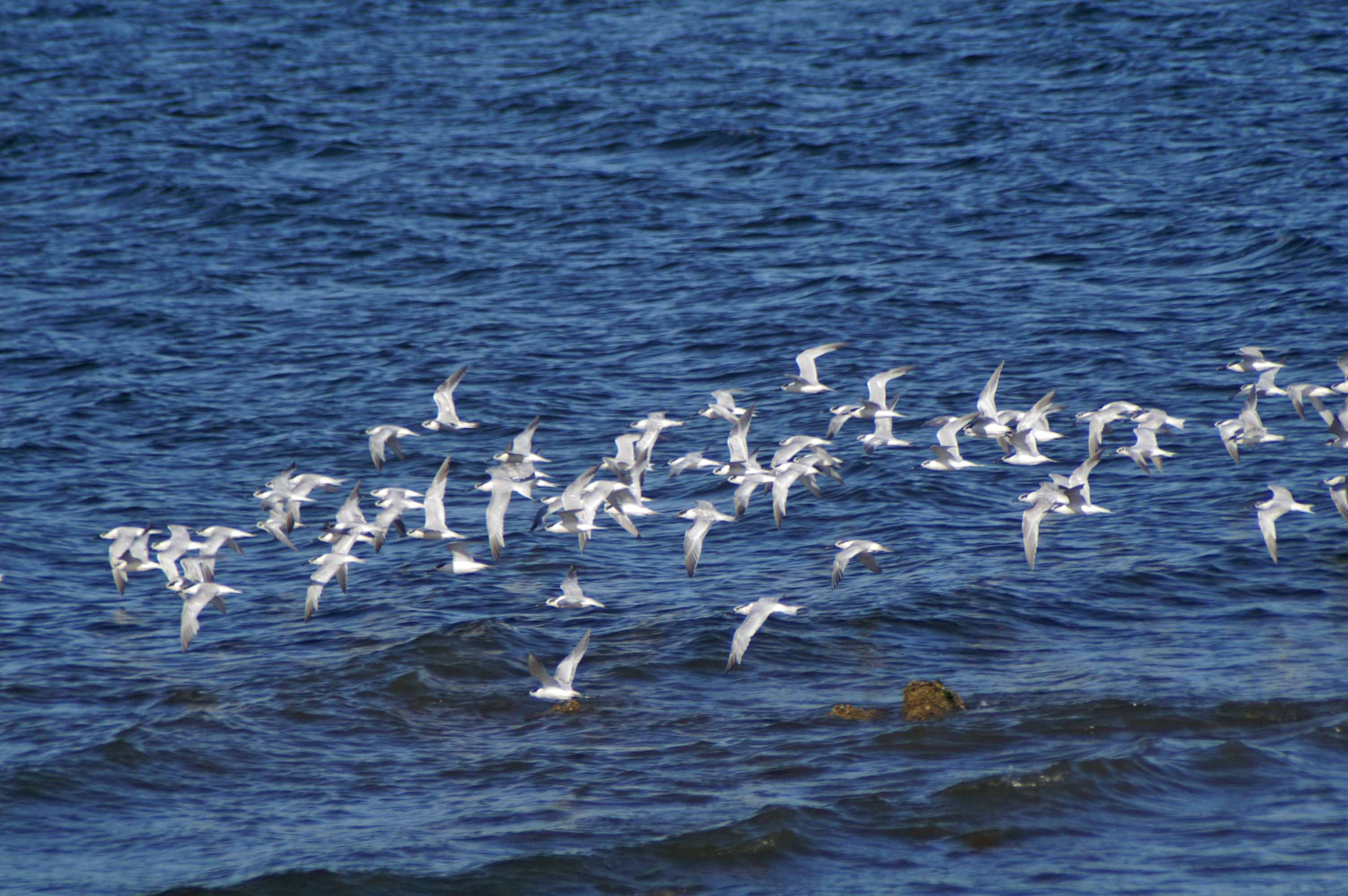
The Terns are restless; there are a lot of to-ings and fro-ings between their various groups and occasionally a whole flock takes off in unison, only to return to the same spot seconds later. The Oystercatchers take little notice of their flighty companions and continue to wait or forage patiently.

24/8/11- Sandwich Terns take off in unison

24/8/11-Terns settling back down amongst Oystercatchers

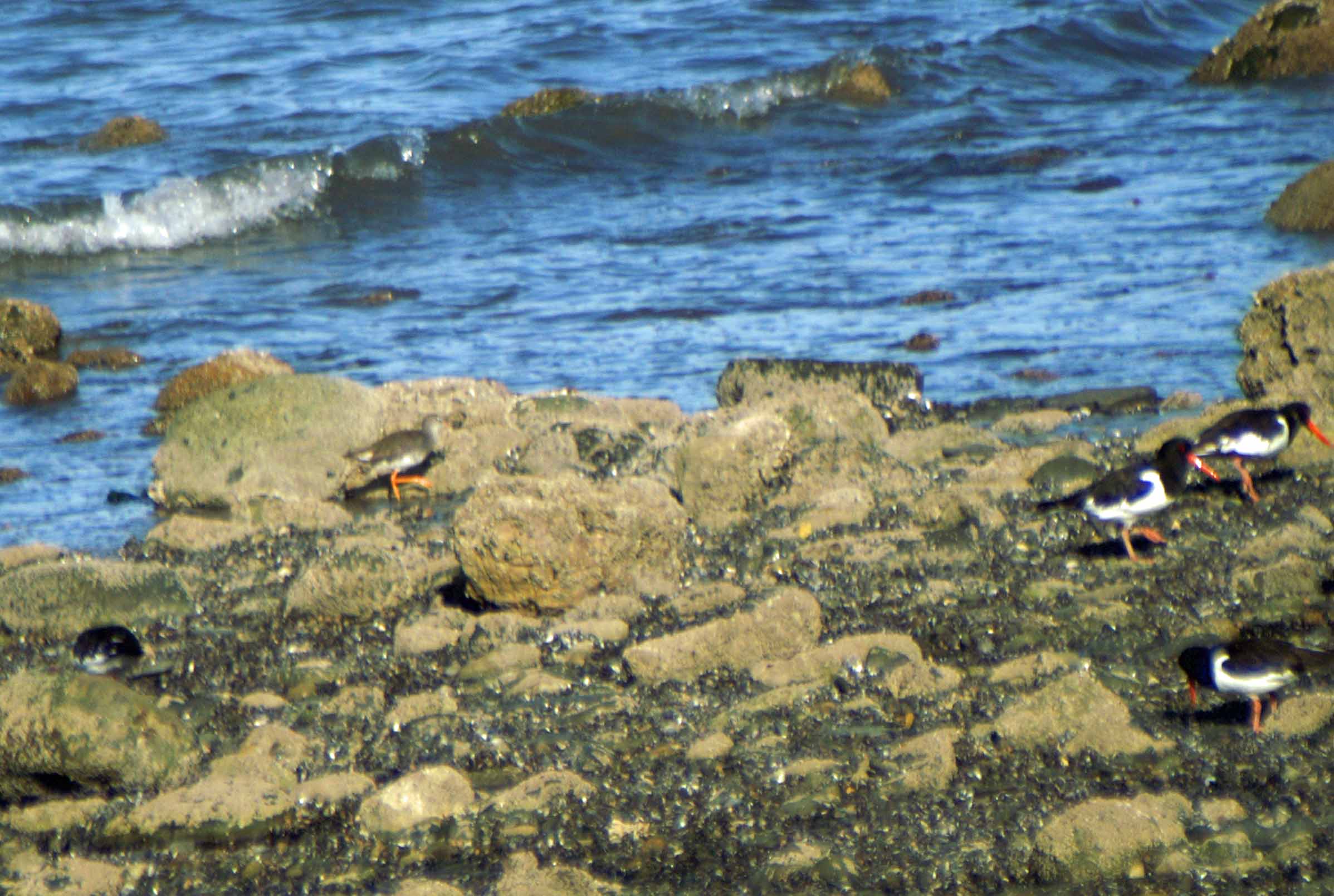
I was content watching the Tern displays, then noticed a couple of other waders well-camouflaged against the greys and browns of the shore; the bright red legs that give the birds their name gave away Redshanks that had infiltrated the ranks of Oystercatchers. The proximity of the two species shows the contrast in size. The Redshanks were quite distant, but now I have seen them I hope for better views another time.

24/8/11-Redshanks amongst Oystercatchers

I was feeling pleased to have Redshank to add to my sightings list, then spotted two separate flocks of smallish birds fly in almost simultaneously and was delighted to witness the arrival of both Turnstones and Ringed Plovers. The individuals of both flocks landed on rocks at the sea edge that were surrounded by water, then stayed put for a few minutes before venturing on to the shore to forage. I estimated that there were around 20 birds in each flock.

24/8/11-Turnstones arrived with Ringed Plovers

24/8/11- Turnstone flock flying away

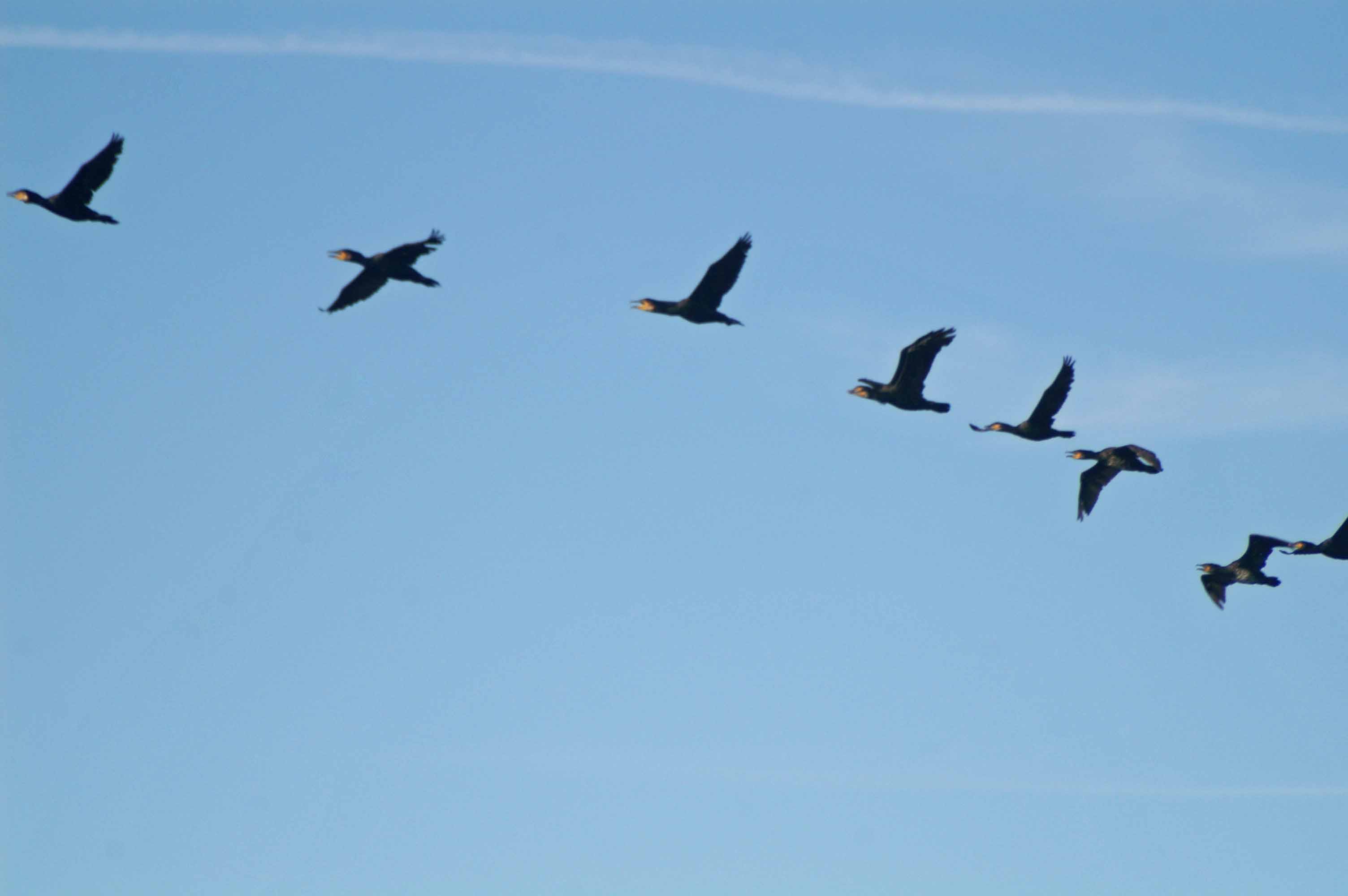
24/8/11-Cormorants flying toward the Little Orme, calling as they flew

24/8/11-Black-headed Gull flying

Birds to be seen currently on the shore at Rhos-on-Sea:

Cormorant – Phalacrocorax carbo, Oystercatcher – Haematopus ostralagus,  Ringed Plover – Charadrius hiaticula, Turnstone – Arenaria interpres, Redshank –  Tringa totanus, Curlew – Numenius arquata,Black-headed Gull – Larus ridibundus, Herring Gull – Larus argenatus, Lesser Black-backed Gull – Larus fuscus, Sandwich Tern – Sterna sandvicencis, Pied Wagtail – Motacilla alba, yarellii

Share this:

  • Share on Facebook (Opens in new window) Facebook
  • Share on Pinterest (Opens in new window) Pinterest
  • Share on X (Opens in new window) X
Like Loading...

Oystercatchers, and more on the seashore

21 Sunday Aug 2011

Posted by theresagreen in Nature, Nature of Wales

≈ Leave a comment

Tags

3-pronged Bristletail, birds of North Wales, birds on the seashore, large jellyfish, motacilla yarellii, Oystercatcher, oystercatchers flying, petrobius maritimus, Pied Wagtail, rhos-on-sea

28 April

I was leaving sunny Rhos-on-Sea to start heading back to rainy Spain this evening (with a few days in London first), so a last walk along the promenade and seashore was a must this morning. It was a good day to leave on, the morning was bright sunny and warmish, cooled by a bit of a breeze that made for a pleasant temperature for walking.

My first stop was at the rocky breakwater, where I was hoping there may be some birds foraging, but there were only Herring Gulls. As I was about to move on though I heard the familiar ‘tschissick’ call of a Pied Wagtail and one duly arrived, landing just a couple of metres away from me. I’d had a couple of previous sightings of the birds, around the golf course area and a male ‘singing’ from a rooftop, but this was a perfect view of a female. The male bird is all black above and has sooty-grey flanks; female is dark grey on mantle/back but has black crown, rump and uppertail-coverts. Slightly different in appearance to the race of Motacilla alba we see in Spain and the rest of Europe, this is Motacilla alba yarrellii that occurs in Britain and Ireland and locally on adjacent Continental coasts.

Pied Wagtail – Motacilla alba yarrellii (female)
A Carrion Crow flew down to forage on the newly exposed seashore

The tide was on its way out exposing a narrow strip of pebble beach, so I walked down to it via a concrete ramp to see if anything interesting may have been left by the receding sea. On the walls of the ramp, nicely warmed by the sun I noticed several little insect-things scuttling about, which on closer inspection turned out to be Bristletails – of the 3-Pronged variety.

3-pronged Bristletail – Petrobius maritimus

The insects belong to a primitive group of wingless insects (Apterygota) that are dependent on humid conditions. The 3-Pronged Bristletails belong to a small order ( Thysanura), all the members of which have 3 ‘tails’, comprising 2 cerci and a central projection known as the epiproct. The most familiar member of the group is the Silverfish. I am open to correction on this, but from my research and based on their location I am assuming the ones I saw to bePetrobius maritimus:

Description: A slender brown insect, up to 15mm long, with antennae that are almost as long as the body. Central ‘tail’ distinctly longer than the 2 side tails. Habitat: Close to high watermark on rocky coasts and short distance inland in crevices. Status and distribution: Common and locally common throughout in suitable habitats.

I’ve seen very similar-looking  insects to this on our covered terrace walls in Spain, but we are a  kilometre or so  inland from the sea, so perhaps we were closer once upon a time and they got marooned and have adapted. I must try to find one and compare them.

Reaching the beach I disturbed a group of Herring Gulls that had been foraging on the sea edge. They flew up and began circling around, voicing their objection loudly and their proximity gave me a moment of anxiety as I visualised a scene from Alfred Hitchcock’s ‘The Birds’. Then it occurred to me that they may have been alarmed by my long camera lens, so if they thought it may be a gun I was quite safe from attack. Phew.

I was soon distracted by birds I had been hoping to see, a number of Oystercatchers, very handsome in their immaculate black and white plumage, were standing on rocks at the sea edge looking down at the receding water and anything edible it may be leaving behind.

Oystercatcher – Haematopus ostralegus

Oystercatchers waiting for the tide to go out
The birds’ comings and goings gave the opportunity to see their outstretched wings
The birds grouped together to await a feeding opportunity
A few minutes later the birds began to venture into the shallow receding water
A bird probing the sea bed
The back of an Oystercatcher flying away, showing white rump and black tail-band

I became absorbed by the sight and was enjoying my close-up views of the birds, so the arrival of  a man with his dog startled me. He  stopped to chat to me and I told him I was watching the Oystercatchers – the camera with a big lens may have given him a clue I was taking photographs too, but he carried on walking straight towards them anyway. Needless to say they all took off to look for somewhere more peaceful.

Oystercatchers flying away

The expansive mussel beds located here attract large numbers of Oystercatchers, although they also feed on cockles, limpets, small crabs, shrimps and worms. Breeding takes place after the wintering flocks have broken up, in mid-April in the south and May or June further north.

I turned to retrace my steps up to the promenade, almost stepping on this huge stranded lump of a jellyfish.

A stranded jellyfish – the only big one I know is a Portugese Man o’ War, but I’m not sure what this is . I don’t imagine the hot sun would do it much good.
Common limpets- Patella vulgata and an edible periwinkle- Littorina littorea
Pebble beach

Share this:

  • Share on Facebook (Opens in new window) Facebook
  • Share on Pinterest (Opens in new window) Pinterest
  • Share on X (Opens in new window) X
Like Loading...
Newer posts →
Follow everyday nature trails on WordPress.com

Enter your email address to follow this blog and receive notifications of new posts by email.

‘But it is the common species that keep the living world ticking over and provide most of our experiences of wildlife, and I would argue that maintaining the abundance of these is as important a conservation priority as maintaining the existence of rarities’. Richard Mabey

MOST RECENT POSTS

  • A Glimpse of Spring to Come January 22, 2025
  • Hunting the Wren December 28, 2024
  • Oh, Christmas Tree December 18, 2024
  • In and Out of the Ivy February 15, 2024
  • Nature’s Fireworks November 30, 2023
  • Wild Autumn along the Coast Path November 3, 2023

OLDER POSTS

LOOKING FOR SOMETHING IN PARTICULAR?

  • Sights and Sounds from the Little Orme 1
    Sights and Sounds from the Little Orme 1
  • Things Bright and Beautiful
    Things Bright and Beautiful
  • Catchers, a Duck and Divers
    Catchers, a Duck and Divers
  • Following a river to a Fairy Glen
    Following a river to a Fairy Glen
  • Fine Dining for Crows
    Fine Dining for Crows
  • A Windy Wildflower Trail
    A Windy Wildflower Trail
  • A Window on the Woods-Winter 1
    A Window on the Woods-Winter 1
  • Butterflies and more rare treats
    Butterflies and more rare treats
  • Shades, Sounds and Scents of the Woods
    Shades, Sounds and Scents of the Woods
  • Bird study: Blackcap
    Bird study: Blackcap

nightingale trails

The Walk of the Monarch Butterfly-Sendero de la Mariposa Monarca

The Walk of the Monarch Butterfly-Sendero de la Mariposa Monarca

MY WILDFLOWER BLOG: where the wildflowers are

Snowdrop

Snowdrop

most recent posts

Follow everyday nature trails on WordPress.com

Social

  • View teresamaygreen’s profile on Twitter

Enter your email address to follow this blog and receive notifications of new posts by email.

Website Built with WordPress.com.

  • Subscribe Subscribed
    • everyday nature trails
    • Join 359 other subscribers
    • Already have a WordPress.com account? Log in now.
    • everyday nature trails
    • Subscribe Subscribed
    • Sign up
    • Log in
    • Report this content
    • View site in Reader
    • Manage subscriptions
    • Collapse this bar
 

Loading Comments...
 

    %d