Tags
crystals in limestone rock, lichens on rock, limestone rock, moss on rock, rhos-on-sea, riprap breakwater, sea wall
On days when the wind blows in strongly from the north-east, blustering across the Irish Sea and whipping up the waves into foamy ‘sea-horses’, strolling along the promenade can be challenging and I have to admit, not that pleasant. On such a day I was heading towards Penrhyn Bay hoping to catch sight of Rock Pipits and to photograph Pied Wagtails, both of which I had seen recently on and around the sea wall there. The strength of the wind took me by surprise and if I had gone out with the sole purpose of taking an enjoyable walk I may well have reviewed my plans and set off elsewhere, but as I’d never seen Rock Pipits elsewhere, I was keen to see some.
Fortunately there is an alternative walk-way that was created when the original sea wall was constructed: a ledge, about 3′ (1m) wide was created on the wall’s seaward side placed about half-way up its height. In the 1980’s further protection from the wild winter seas was required and the breakwater, consisting of an immense pile of enormous rocks was piled in front of the wall. The rock pile rises higher than the walkway ledge, thus creating a sheltered passageway between the two structures. There is no view from there, the dark seawall encloses one side and the length of the summit of the rock pile the other, so other than for shelter from the wind I would not normally choose to walk this way.
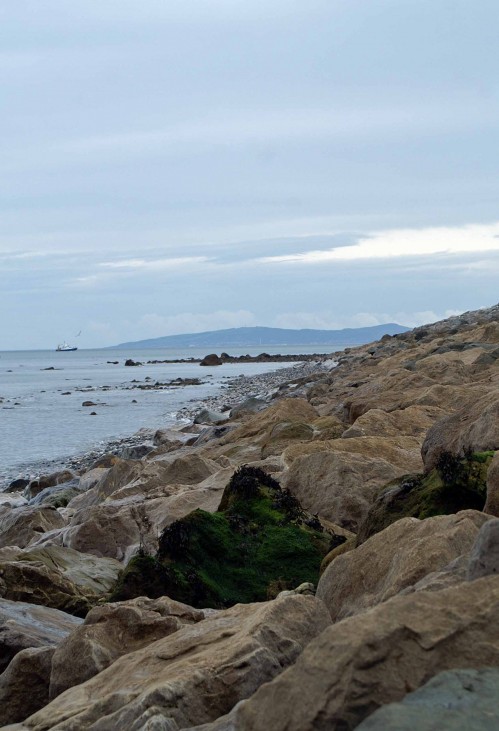
A length of the rock breakwater running from Rhos-on-Sea to Penrhyn Bay in front of the sea wall
The piling of large rocks, also known as riprap, at the base of vertical Edwardian and Victorian sea walls is frequently used as a secondary defence mechanism to prevent them being undermined. Riprap works by absorbing and deflecting the impact of waves before they reach the defended structure. The size and mass of the riprap material absorbs the impact energy of waves, while the gaps between the rocks trap and slow the flow of water, lessening its ability to erode soil or structures on the coast.
As I walked along, wondering where the vast amount of rock had been taken from, I began to see this confined, shaded and slightly claustrophobic space in a different way. I was drawn to individual rocks that had interesting surface patterns, crystals or layers of other types of rock or minerals and wished I knew what they were. I recognised too that a micro-climate exists here that is helping to create a habitat for an interesting number of plant species from vascular plants to mosses and lichens.

Limestone rock with a tracery of worm-like squiggles and touches of pink colouration. The pink stuff may be a lichen.
The rocks themselves are predominantly locally-occurring limestone and it is humbling to reflect on the fact that eons ago they would have been forming the sea-bed and now carry evidence to ancient life forms.
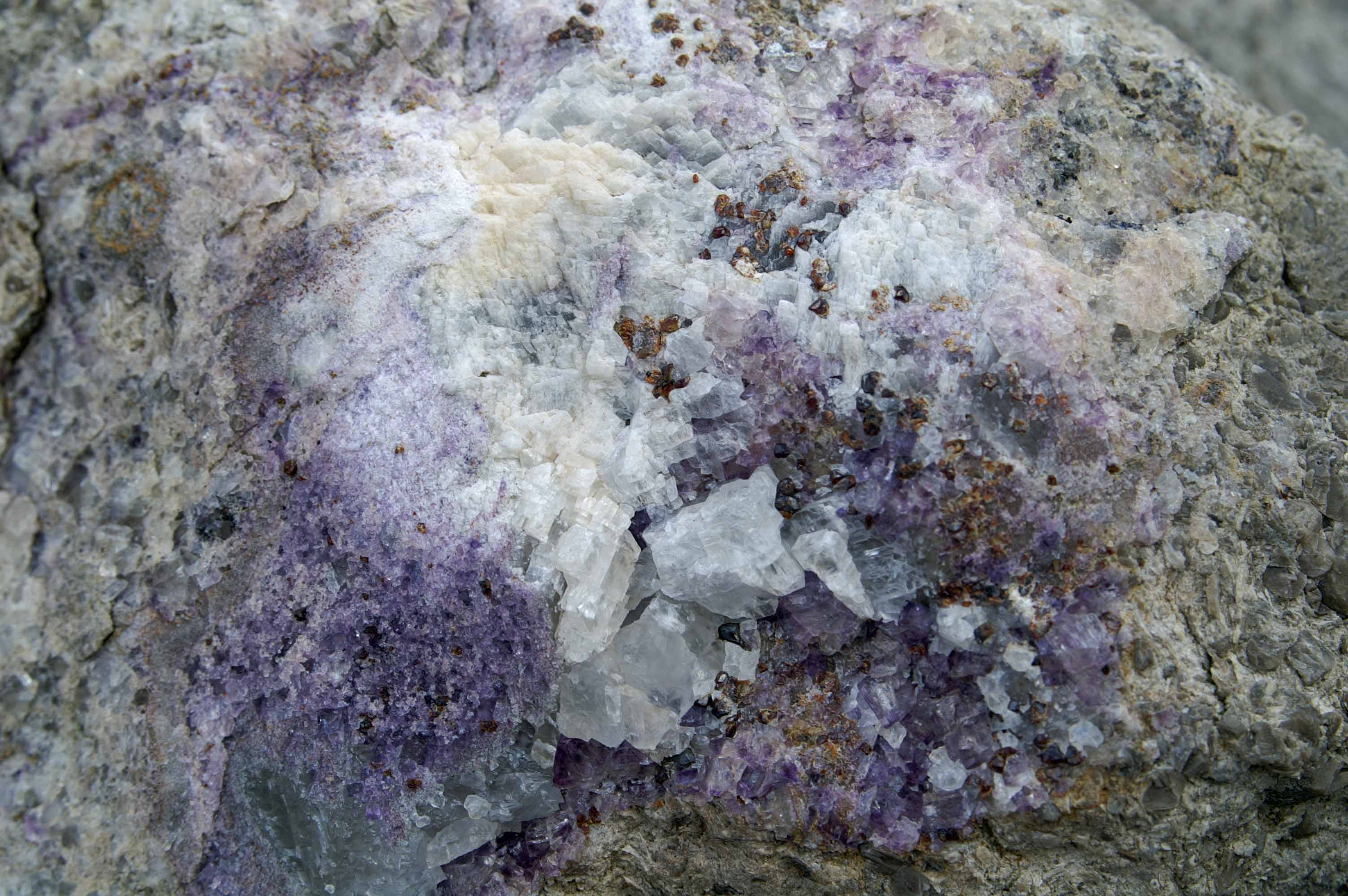
The beautiful crystals in this picture may be dolomite or perhaps quartz and the purple may be fluorite.

An interesting crystal-like deposit

A ribbon of mineral(s) marks this rock

A macro view of a patch of a Xanthoria sp of algae
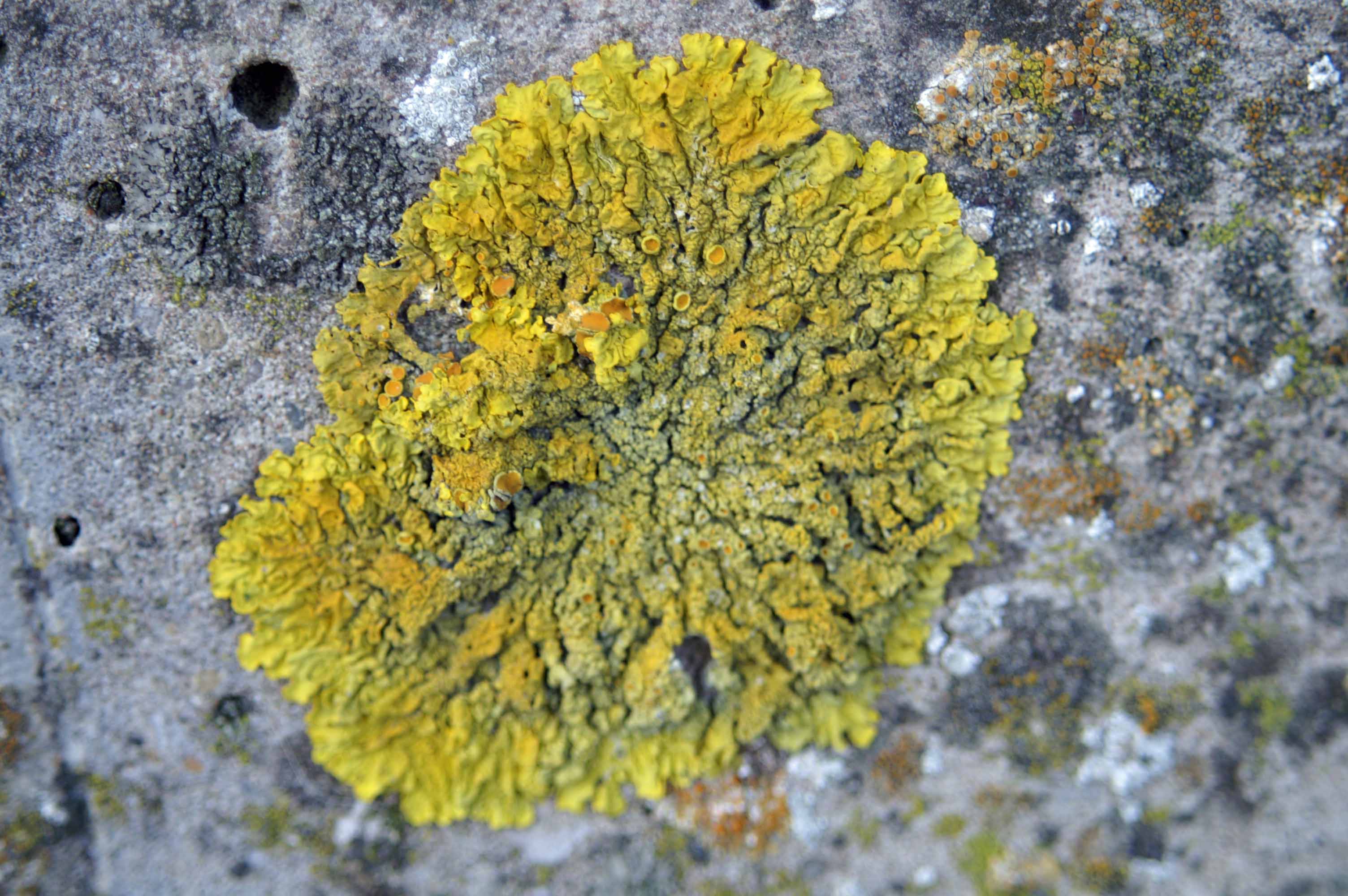
A yellow-coloured species of algae
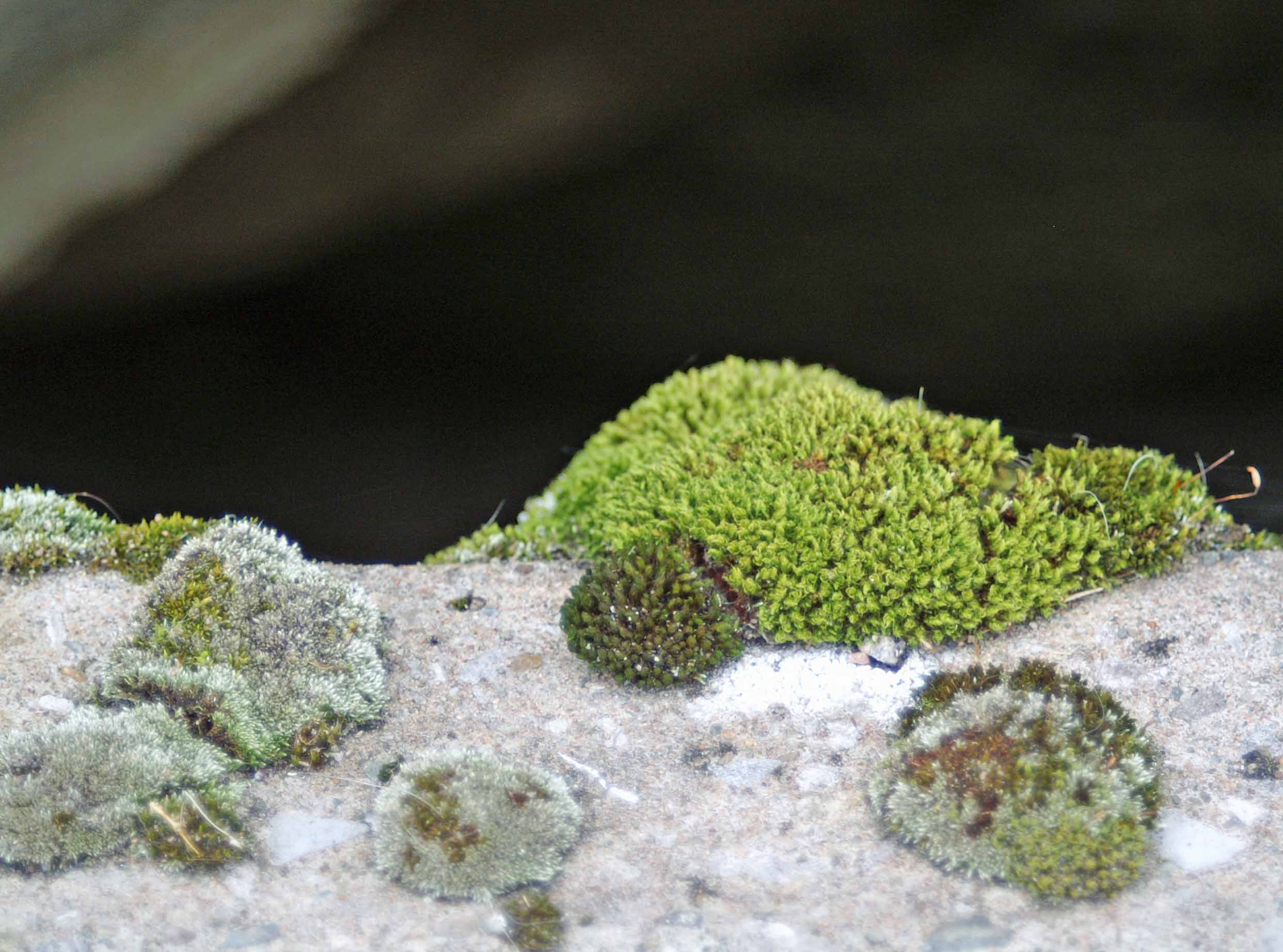
Cushions of moss
Plants have begun to colonise some of the spaces between the rocks and somehow manage to grow at the base of the rocks where they make contact with the sea wall.

A fern squeezing out from between two rocks
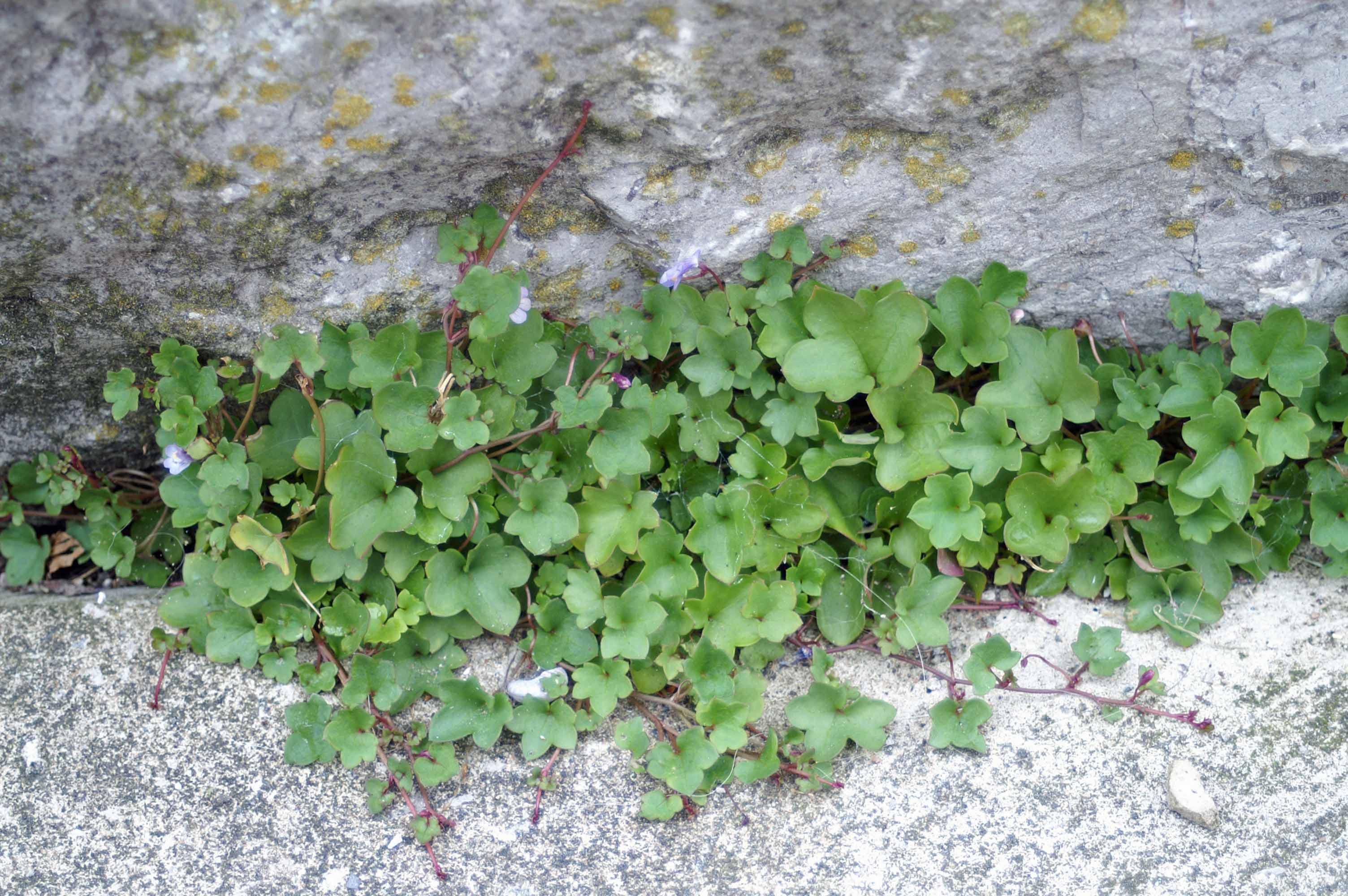
Ivy-leaved Toadflax - Cymbalaria muralis
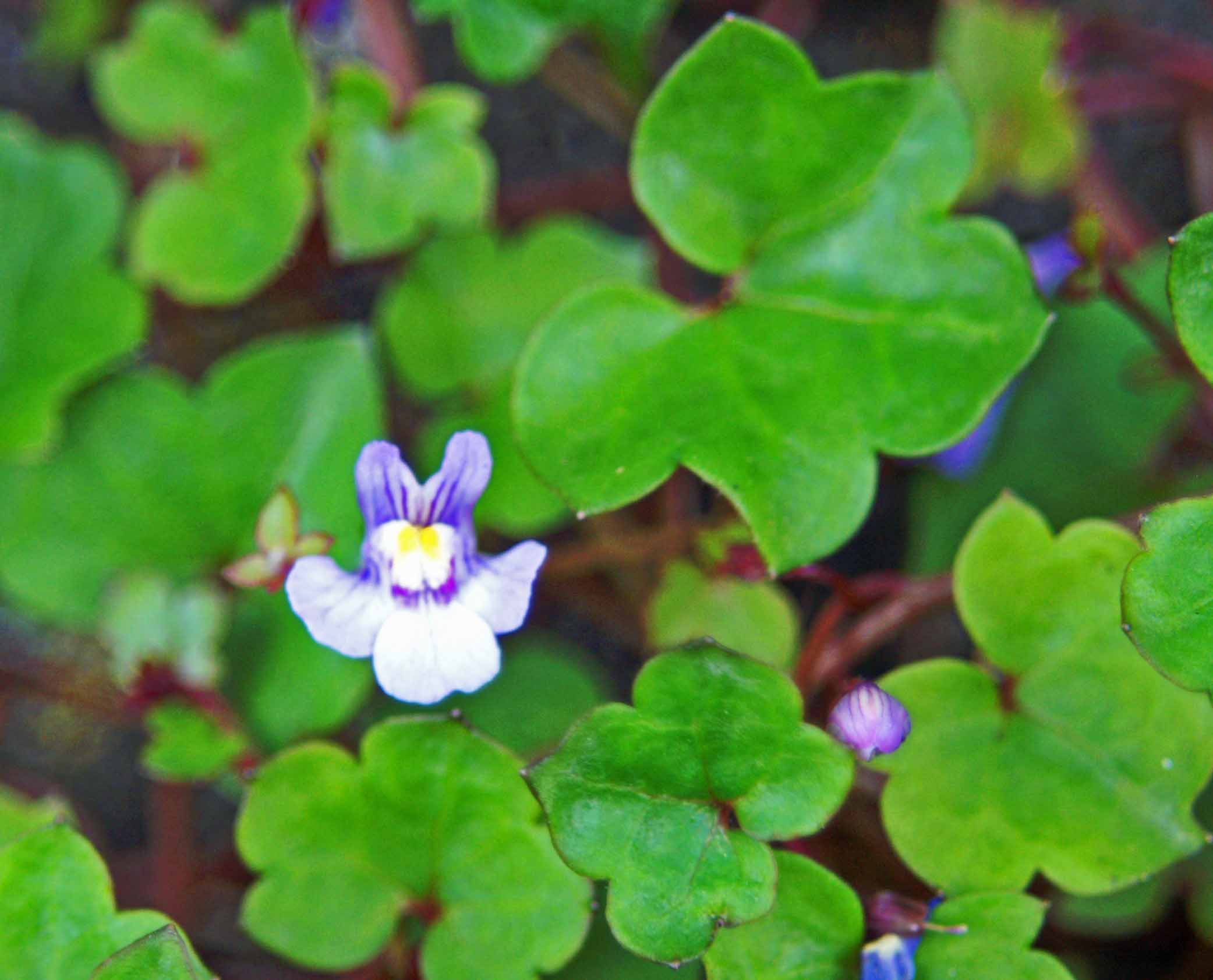
An enlarged view of the delightful little flower and leaves of the Ivy-leaved toadflax

A tiny flower, enlarged, that I think may be English stonecrop-Sedum anglicum. The spiky leaves in the background are of a separate plant, quite possibly Thrift.

Red Valerian is an intrepid and highly successful uninvited coloniser that originates from the Mediterranean region

Red valerian has very pretty flowers that here were attracting several small moth-like insects that I think may have been Owl Midges.

Growing up between the rocks and the sea wall, I have yet to identify this plant
As they frequently do, my walk turned out to be unexpectedly interesting and I did get to see my Rock Pipits, which will be featured in my next post that will be following very shortly.
 everyday nature trails