Tags
brackish lagoon, coastal wildflowers, Dale, gann estuary, kidney vetch, medicinal plants, mute swan, pickleridge lagoon, shingle beach, stonecrop
We returned home via the village of Dale which is situated on the south eastern tip of the Pembrokeshire Heritage coast and is also on the route of the Coastal Path. Its beach is located on the Milford Haven estuary between St Ann’s Head and St Ishmael’s in Pembrokeshire, South Wales. There is a lot of history attached to the village and surrounding area, but we had come to have a quick look at the unique habitat that lies at the back of its shingle beach.

The view across Dale beach; the refinery at Haverfordwest is just out of sight behind the headland on the left of the photograph
The beach is mainly shingle with some sand at low tide.

The shingle beach is a colourful mixture of red sandstone and grey/green silurian stone

The gritty sand is pink and stones on the beach occur in an infinite variety of shades of pink/red, grey and green
The red soils of the area are derived from old red sandstones seen at Lindsway Bay and Sandy Haven that are some 395 million years old. There are also occasional exposures of even older rocks, aged at 420 million years. The cliff tops are covered with glacial till made of unconsolidated material dumped by melting ice around 20,000 years ago and fields that have been ploughed are visible for miles as the soil is a bright red in colour.
At the back of the shingle beach is a sand ridge and behind that an area of low lying land and the brackish artificial Pickleridge Lagoon, formed by the flooding of gravel pits that operated between the 1950s and 1980s. This has now become established as a saline lagoon and together with the extensive salt marsh in the Gann river valley, the area has become a haven for wildlife, particularly for wading birds and plants.
There were very few birds around today, a few Oystercatchers were out on the tide line and a number of Mute Swans on the edges of the lagoons, but other than that we saw only crows, a pair of raven flying overhead and a magpie or two.
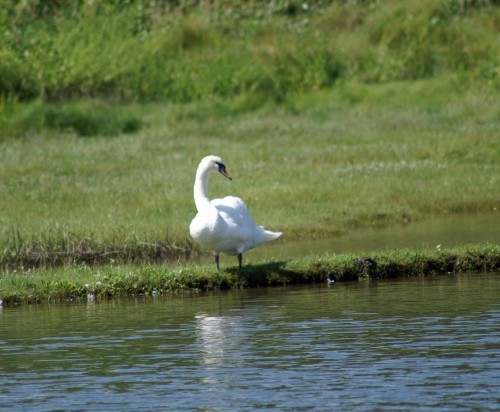
A beautiful mute swan on the edge of the lagoon
There are some interesting plants growing here though, including the largest expanse of yellow flowered Kidney Vetch I have ever seen.

View across the grassy meadow and lagoon
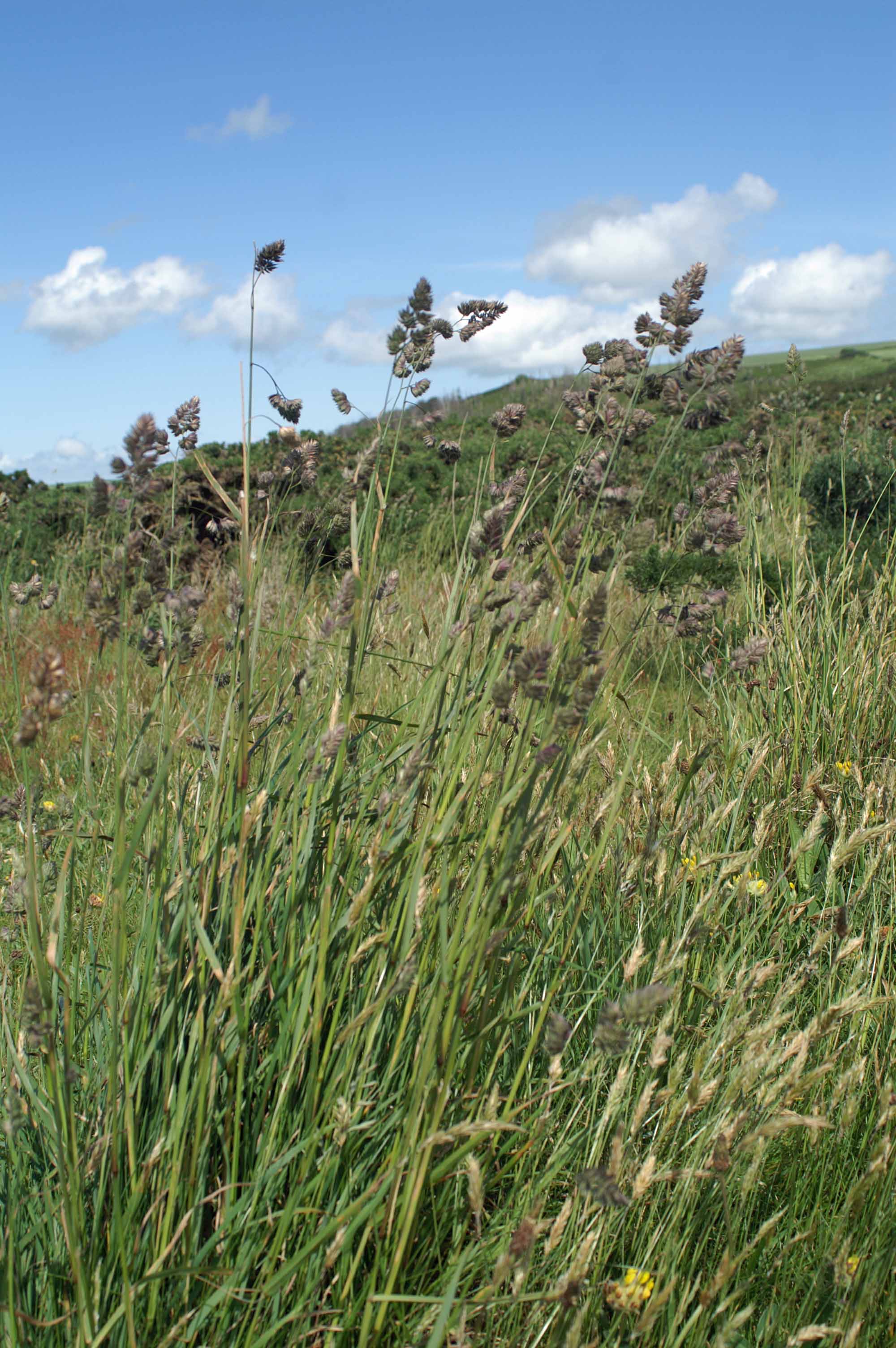
Grasses

The largest expanse of kidney vetch I have seen
Kidney Vetch – Anthyllis vulneraria

Kidney Vetch-Anthyllis vulneraria
The small yellow flowers of Kidney Vetch are held in a cluster atop little woolly cushions, at first glance resembling a clover. The plant flowers from June to September and is a distinctive feature of sand dunes, chalk grassland and cliffs across the UK where it may spread to cover bare ground if it finds the right conditions.
The flowers are mainly yellow, but can also be found in orange and red forms. Each flower has its own hairy calyx (containing the sepals), giving the flower cluster its woolly appearance. The leaves of Kidney Vetch are divided into narrow leaflets that are silky and white underneath.
Kidney Vetch & the Small Blue Butterfly
Kidney Vetch is the sole foodplant for the larvae of the Small Blue Butterfly – a seriously declining insect which is classified as a Priority Species in the UK Biodiversity Action Plan. Although Kidney Vetch itself is not threatened, the habitats in which it grows are becoming fragmented and being lost at a rapid rate; for example, it’s estimated that we’ve lost 80% of our chalk grassland over the last 60 years.
Traditional medicine
Kidney Vetch has long been used in herbal medicine as an astringent; the name ‘vulneraria‘ means wound-healer and applying it to wounds reduces bleeding. As the common name implies it is also used in the treatment of kidney disorders.

A Stonecrop – Sedum caeruleum
Further information:
The habitat formed here and the wildlife it supports have been the subject of several field studies over the years that have included the Feeding Patterns of Wading Birds on the Gann Flat by the Field Studies Council in 1973 http://www.field-studies-council.org/fieldstudies/documents/vol3.5_91.pdf that was followed up thirty years afterwards in 1992 http://www.eco-challenge-xtra.org. ; another on invertebrates The Gann Flat, Dale; Studies on the Ecology of a Muddy beach and another on the flora and ferns http://www.eco-challenge-xtra.org/fieldstudies/documents/vol1.3_18.pdf
 everyday nature trails