Tags
Birds, Bryn Euryn Nature Reserve, early insects, gorse shieldbug, hoverflies, January, Spurge laurel, Trees, winter, winter wildflowers, yellow dung fly
Last week we were blessed with a few days of beautiful calm bright sunny spring-like days, which came as a welcome break between the post-Christmas freeze and the forecasted return to colder, more seasonal weather to come. Warm enough to get out to enjoy a walk at my preferred ambling pace, with plenty of moments to just stand and look around me without freezing to the spot, and the freedom to take photographs without fumbling with gloves, could not be passed up.
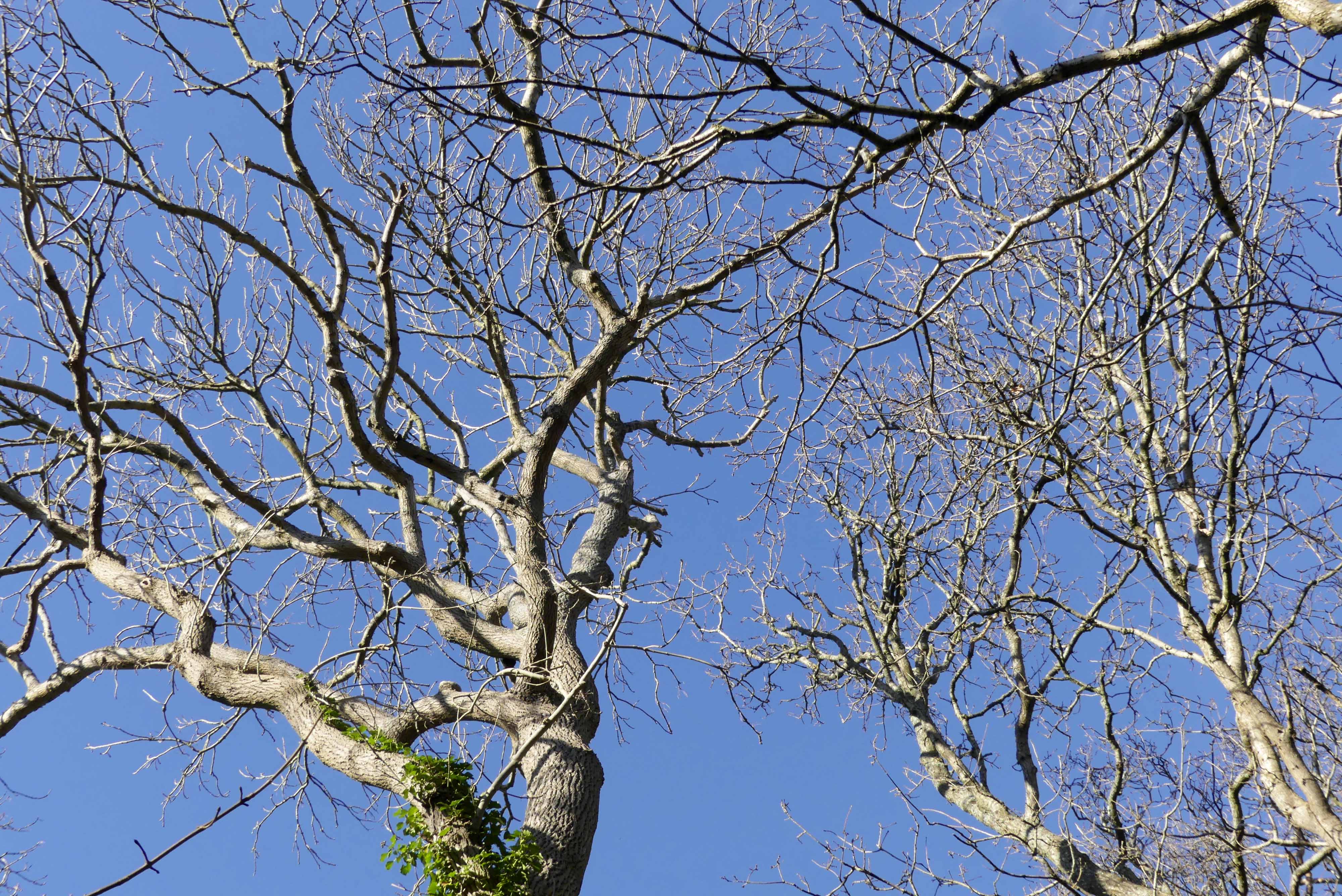
At both ground and eye level my local woods remain surprisingly green throughout the winter; sprawling ivy blankets much of the woodland floor and at every opportunity clambers high up the trunks of many trees. There are plenty of other evergreens too, dark yews, scots pines and the somewhat controversial holm oak all abound.
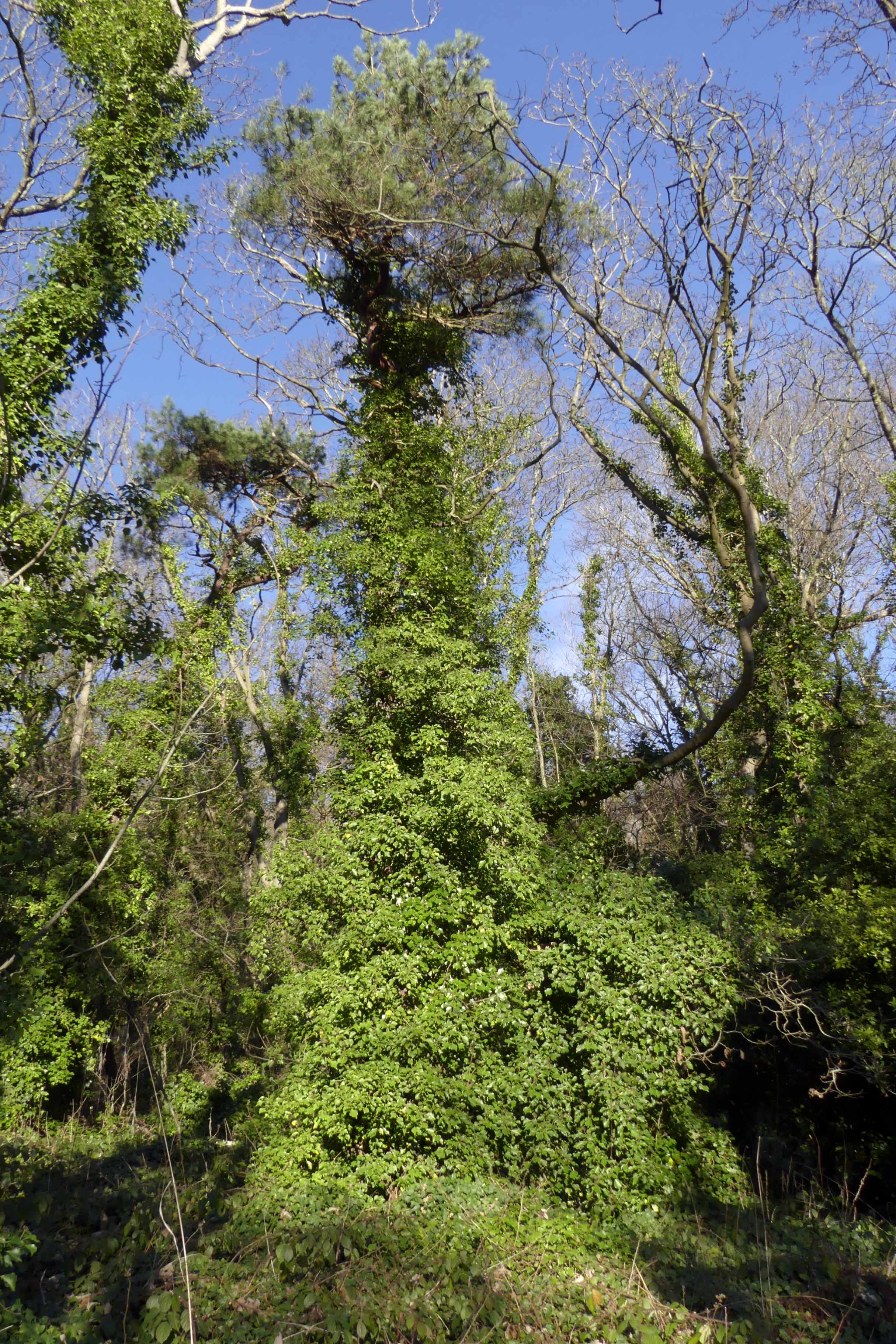

There are copious amounts of shining holly too, taking many forms from small trees to thick spreading bushes, dependent upon where they find themselves and the availability of space and light. One of my ‘targets’ for today was to look for the first signs of flowers on holly; some plants begin flowering early in the year while others wait for the spring or even early summer. I managed to find a few flower buds, but not yet open I couldn’t tell if they were male or female (holly plants may be either male or female, with females being the ones that produces berries), but male flowers most often appear first. Here and there a few berries remain.
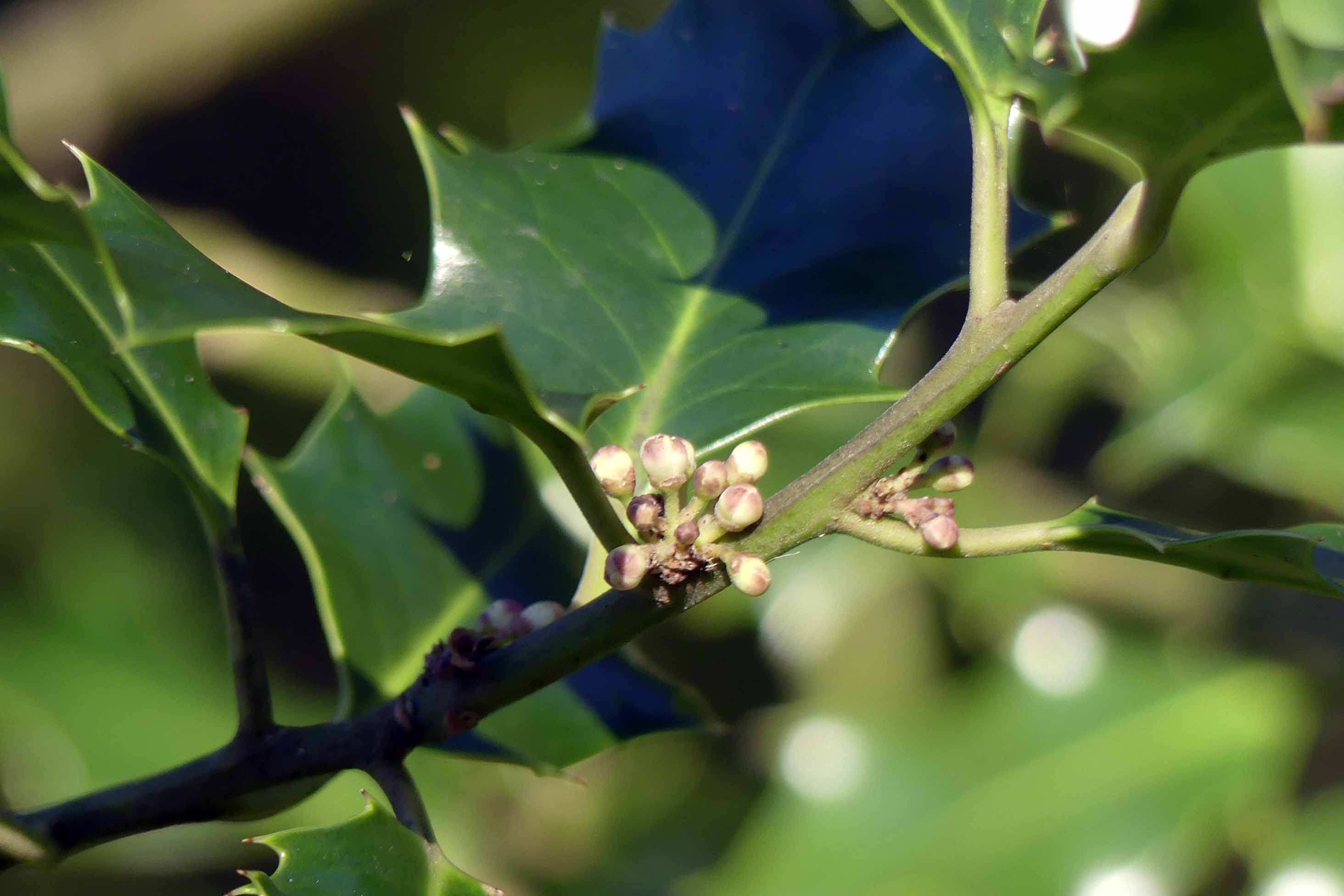

Looking up adds another dimension to the scene; a cloudless deep blue sky provides a perfect background highlighting the fascinating network of branches and twigs of the leafless trees reminding there is more winter to come.
As I meandered along I kept an eye on the surrounding trees; on days like this in the winter when trees are still bare of leaves there’s always a chance of spotting a foraging treecreeper quietly spiralling its way around trunks and branches; not today though.
The distinctive call of a nuthatch helped to locate it as it travelled up and down the branches of an oak tree. It paused every now and then to probe a likely spot for insects, but was way too busy to stop and pose for a photograph.

I had better luck with a pair of spotted woodpeckers that were travelling high up through the treetops. Stopping momentarily to investigate the trunk of a likely tree; the male quickly flew off but I managed a quick snap of the female who lingered a few seconds before she also took off to follow him.

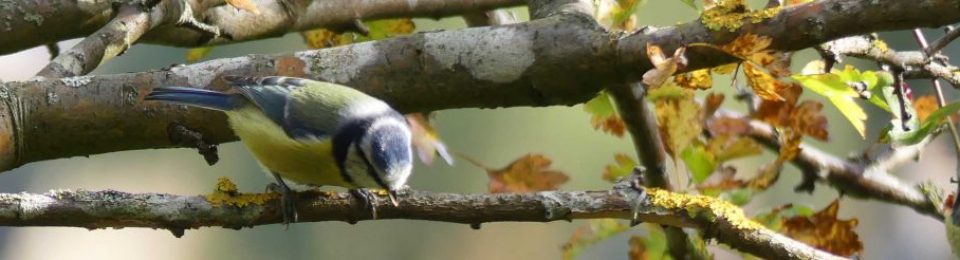
Leaving the narrow earth paths of the woodland and joining the Woodland Trail of the Reserve, which is higher up the hill, I hoped to catch sight of a few more birds as there are good views down through the trees from there. As always, numerous wood pigeons and blackbirds vied for the ripest of the ivy berries. There were glimpses of blue tits, numbers of them travelling around together, keeping up an almost constant chorus of chirpy contact calls as they travelled between the ivy-clad trees. A fewer number of great tits accompanied them, and one sounded out a few notes of his ‘teacher-teacher‘ song, a first ‘hearing’ of that this year.
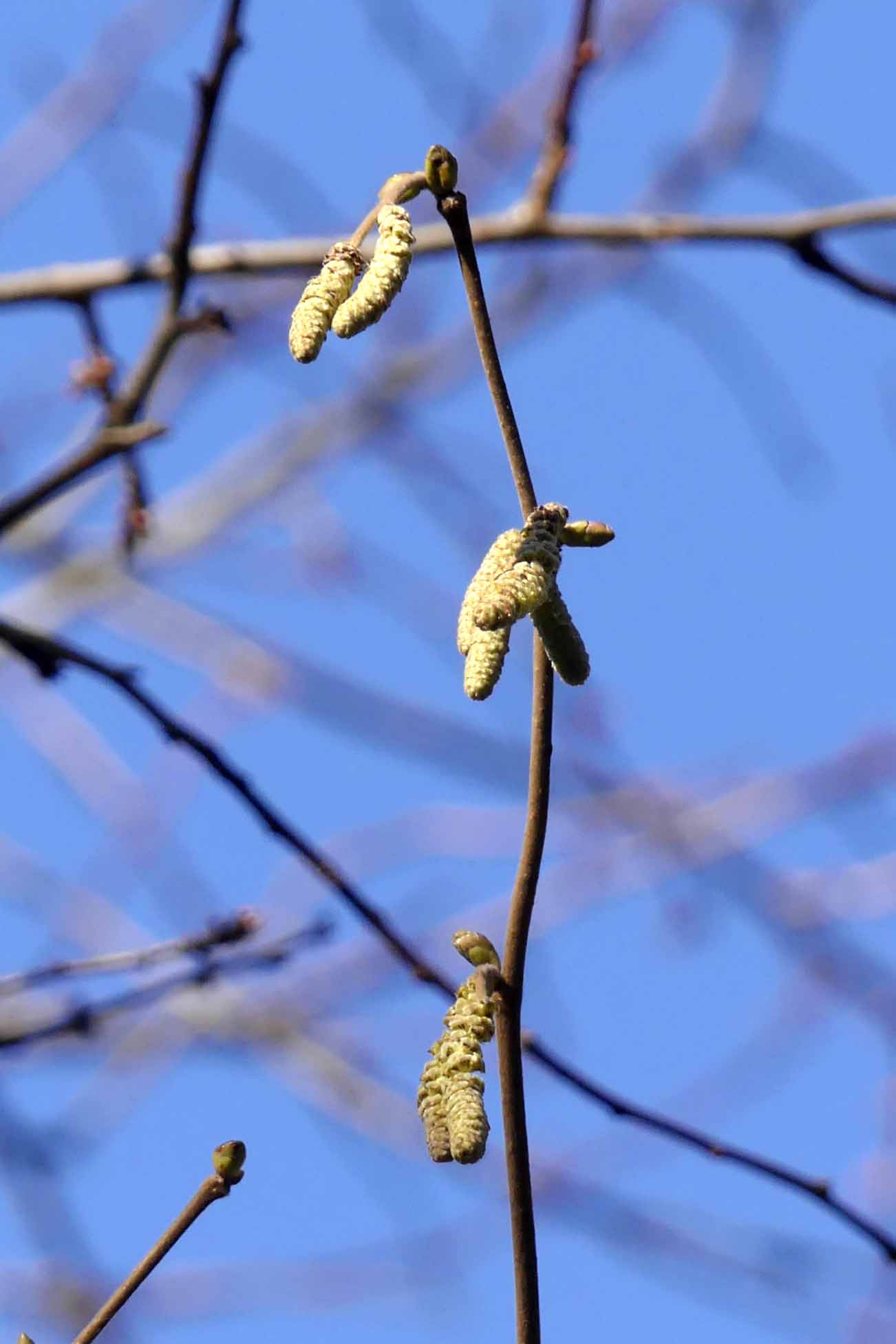
Robins have been singing for a few weeks now, but today they were out in force each one either declaring territory, or perhaps calling out for a mate, at frequent intervals. Most were singing from cover, but one or two were bolder and sang confidently in the open. It’s not possible to tell whether you’re seeing or hearing a male or a female robin as both hold territories and both sing.

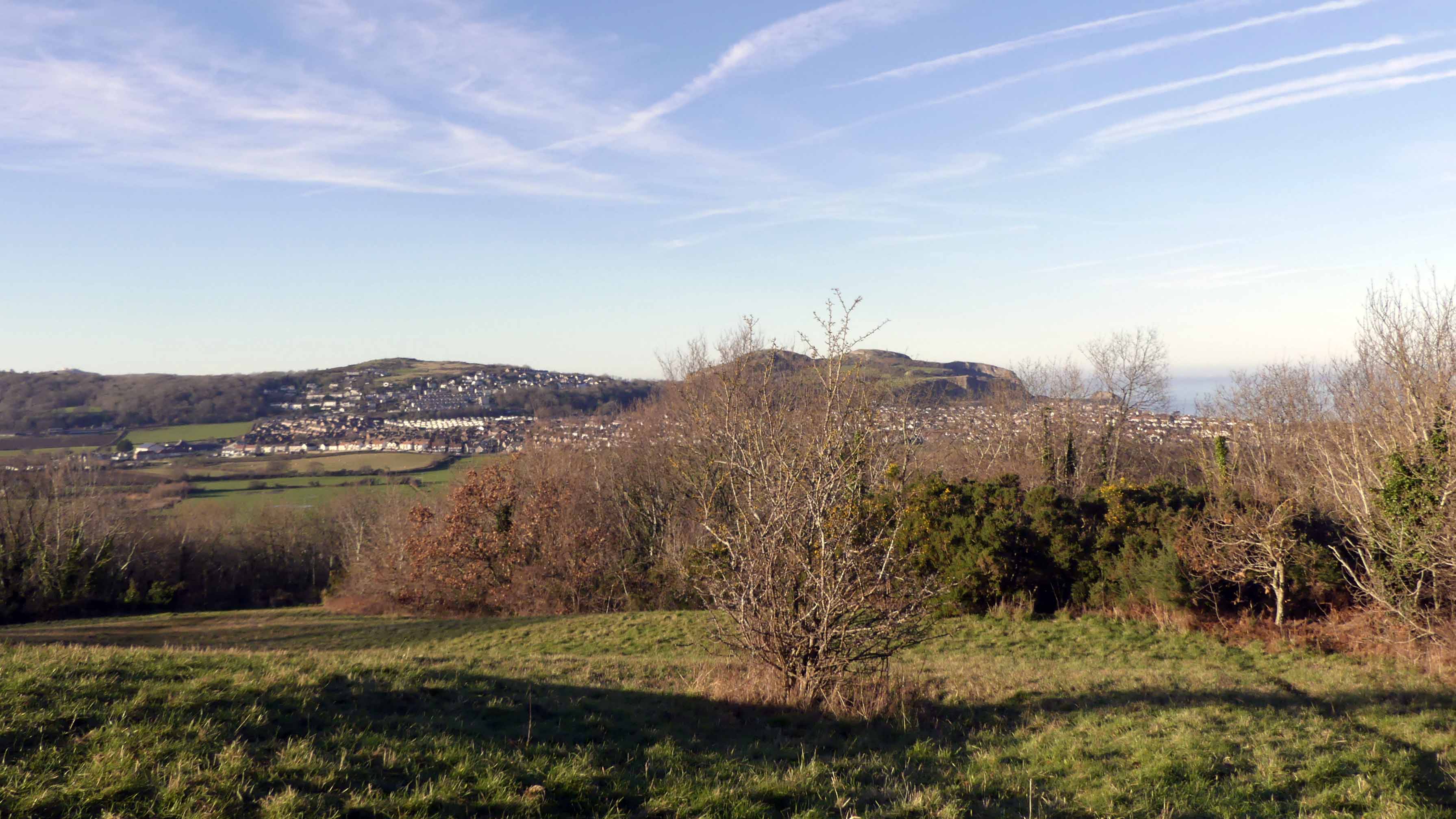
View from the top of the field on the slope of Bryn Euryn across to Penrhyn Bay and the Little Orme:

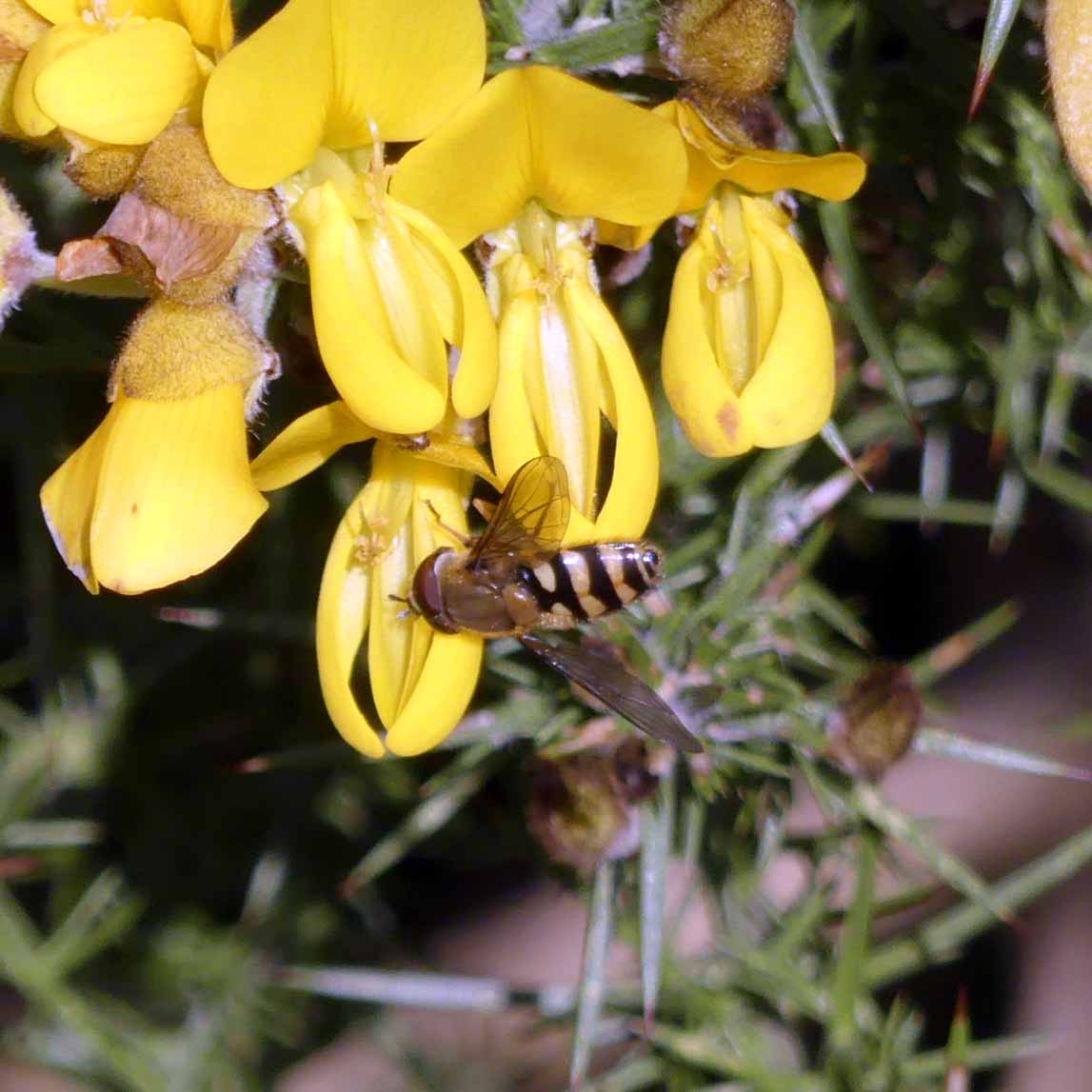
Reaching the open field I started on my usual route around its edges, looking carefully at the vegetation for any insects that might be out on show whilst taking the opportunity to bask in the sunshine and/or seeking a welcome mid-winter top-up of nectar or pollen energy. I was in luck! Some of the gorse bushes are in flower to vary degrees and some of those in the most sheltered and sunniest spots had visitors. Firstly a single hoverfly had a small bush at the bottom end of the field to itself. Not a species I recognised, it was later identified for me as a female Meliscaeva auricollis, a double first sighting – first hoverfly of this year and a first of the species.
“When gorse is not in flower, kissing is out of season“

At the top corner of the field there are several big old gorse bushes, one of which is in more or less full bloom and emitting its glorious warm coconut-vanilla perfume. Here there were a surprising number of insects vying for the best blossoms. There were more hoverflies, two black and yellow Syrphus males (not able to specify species) and a single little female Marmalade fly Episyrphus balteatus.
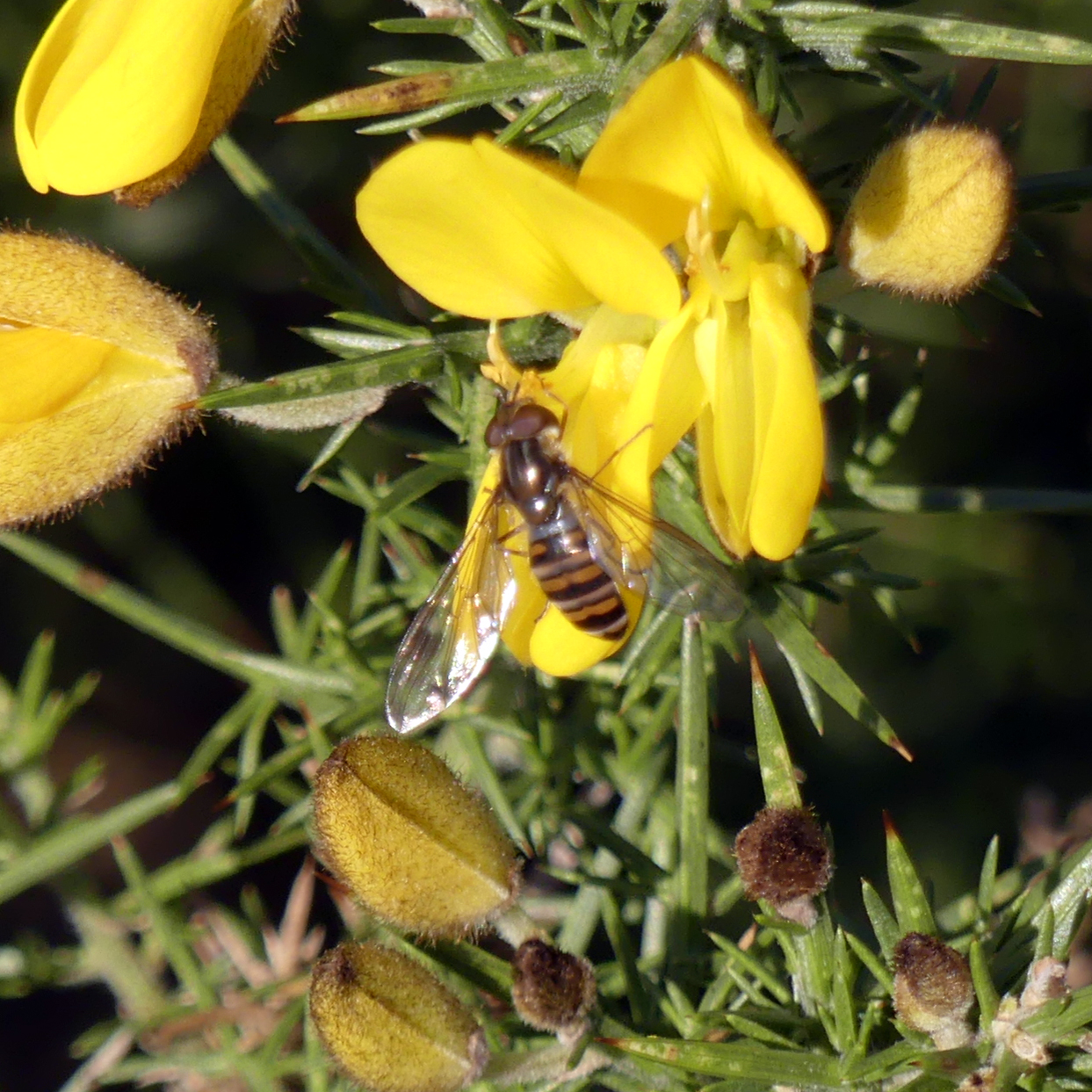
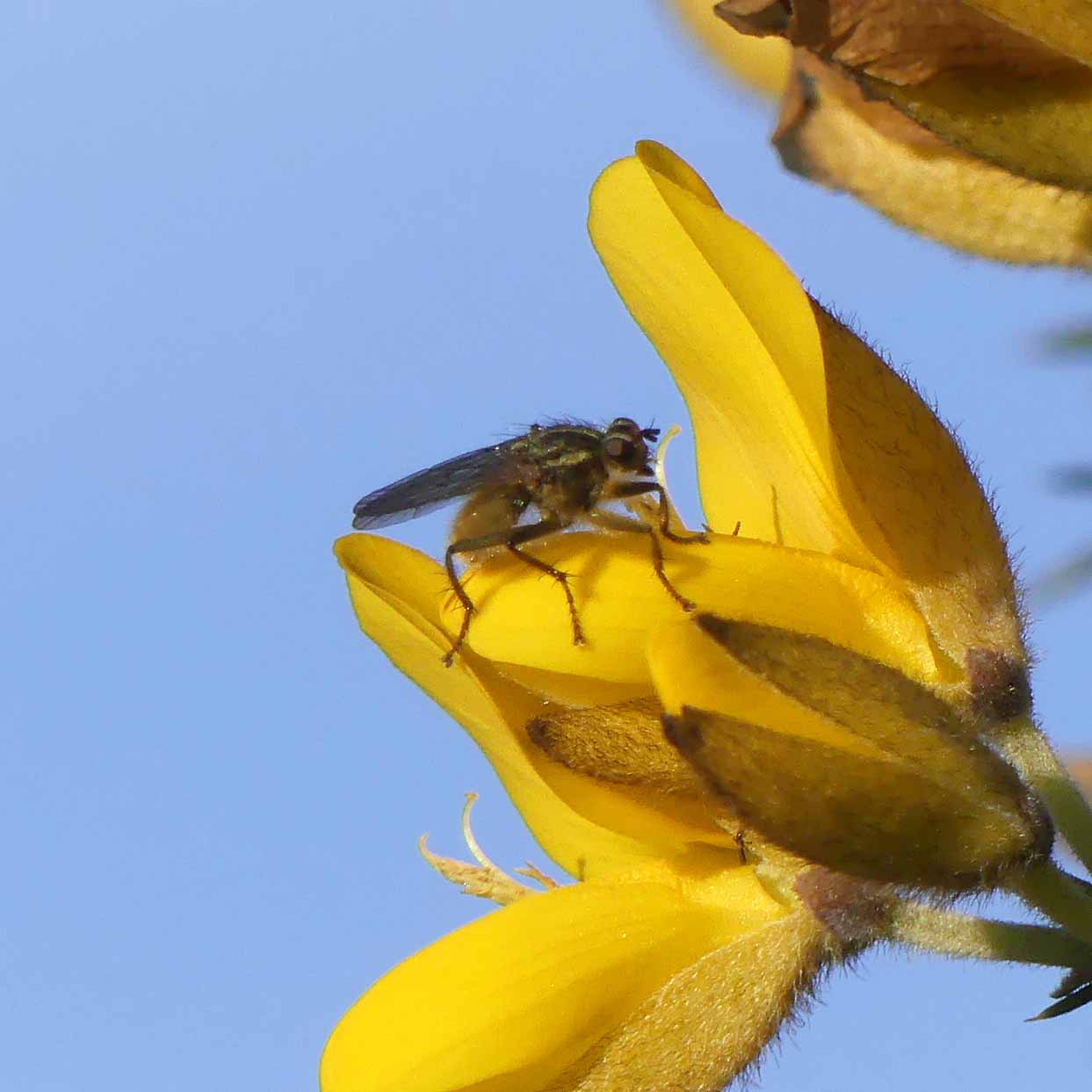
There were also several honeybees and a single individual of one of my favourite species, a female yellow dungfly.

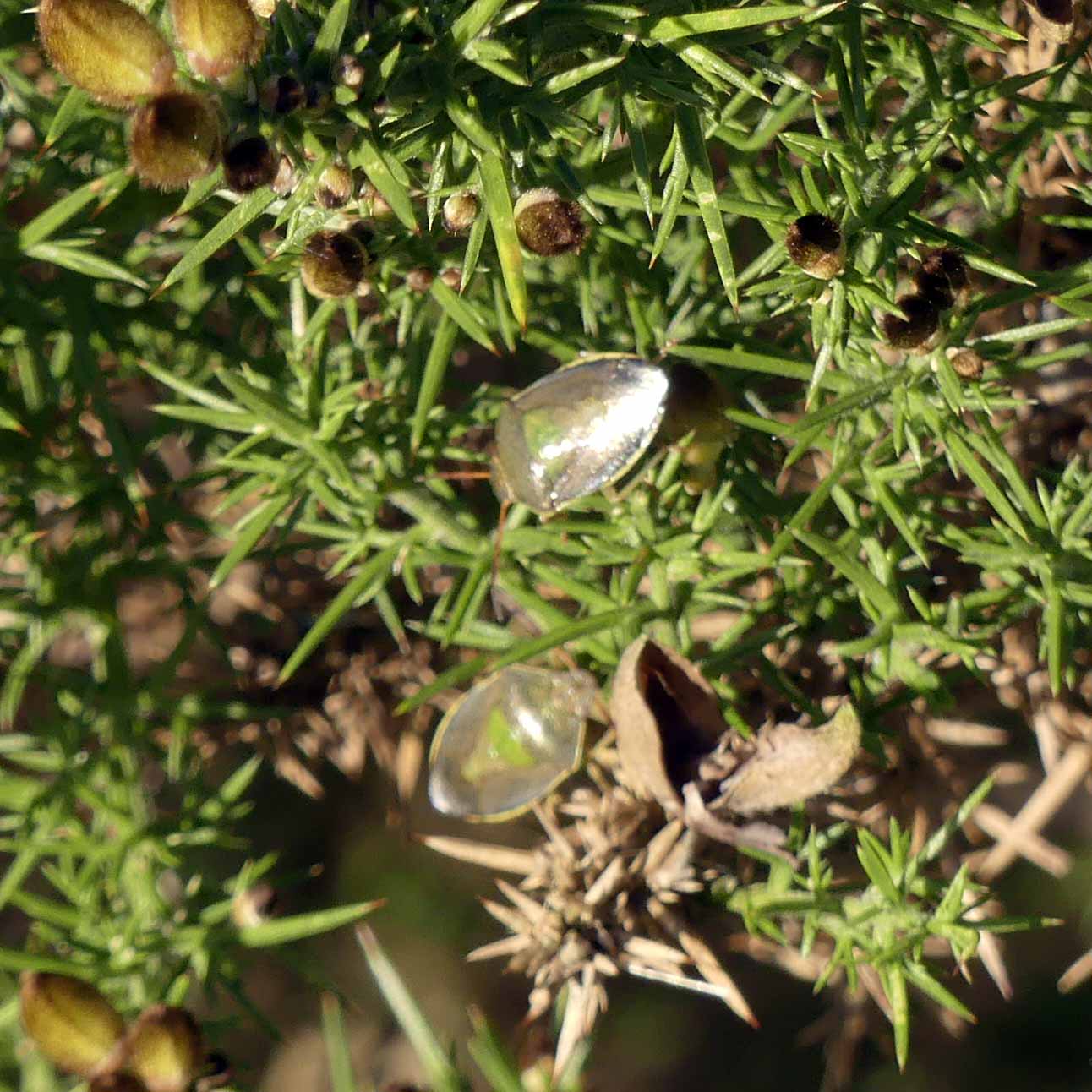
All of the above were wonderful to see, especially so early in the year, but the outstanding treat for me was to see gorse shieldbugs in a greater number than I’ve ever seen in one place at the same time ever. As usual it took a minute or two to get my eye in to spot them, but once I did I discovered them singly and often in twos both basking in the sun and moving around, and stopped trying to count when I reached 20 individuals. A perfect sight to finish on.

 everyday nature trails