• Home
  • about
  • about the photographs
  • Local Nature Reserves
    • Bryn Euryn Local Nature Reserve
    • Mynydd Marian
  • Wales Coast Path
    • Grey Seals in North Wales
    • St.Trillo’s Chapel
    • Wildflowers of North Wales Coastal Paths, Cliffs and Dunes

everyday nature trails

everyday nature trails

Tag Archives: Curlew

Waiting for the tide to turn

19 Sunday Jan 2014

Posted by theresagreen in Birds, Birdwatching on North Wales coast, Nature of Wales, nature photography, North Wales

≈ 14 Comments

Tags

birds on the seashore, Curlew, dunlin, Oystercatcher, purple sandpiper, rhos on sea, ringed plover, Turnstone, wading birds

Several months and a whole season have come and gone since I posted anything on this blog. It’s been a sad time for me and all of my family as my beloved Dad reached the end of a very long life last September. He was the one that noticed and encouraged my early interests in the nature around us and taught me the names of common wildflowers, butterflies and most particularly birds. He didn’t claim to know everything, but more importantly he gave me the gift of noticing what was there and the encouragement to find information I wanted for myself. He never really got the concept of blogs, or indeed anything to do with computers, but was always interested to hear what I had seen and where I’d been, particularly about the places here in North Wales that he took my sisters and me to spend time in when we were young. Some of those places have remained very special to me and I’m sure that when I visit them, that’s where I’ll always find him.

______________________________________________________________________________

Thank you all for your patience and sticking with me and thank you to new readers that have signed up who must be wondering where I’d disappeared to. While Dad was ill I was spending a lot of time down in my old haunts in Northamptonshire, where my sisters still live, and it was reassuringly familiar and not too greatly changed in the decades I’ve been away. I may do a post or two about our walks there if I am unable to come up with anything more current, but for the time being the so-far mild winter is giving me plenty of opportunity to get out and ideas for posts, starting with this one about the  wading birds that are about now on our local rocky seashore.

2nd January 2104 

A brilliantly sunny day winkled me out of my cosy shell this morning and I set off, camera to hand to see what I could see from the promenade. I realised I had lost track of the ebb and flow of the tides and had no idea of its current state, so was initially quite disappointed to see that it was fully in and very high. That meant there would be no waders to be seen picking their ways through the rocks that strew the shoreline of Rhos Point pecking and probing the muddy sand in search of food. But I’d made the effort to get myself out and I wasn’t about to go home with nothing, so I thought I’d at least walk for a way for some much-needed exercise and if nothing else there may be a Rock Pipit or two on the rocks or the sea wall. The sea was as blue as the sky and ruffled by what I was feeling as a bitingly cold breeze. I hadn’t walked far when I noticed a largish bird swimming around on the water, meandering randomly and frequently diving and disappearing under the surface for minutes at a time.
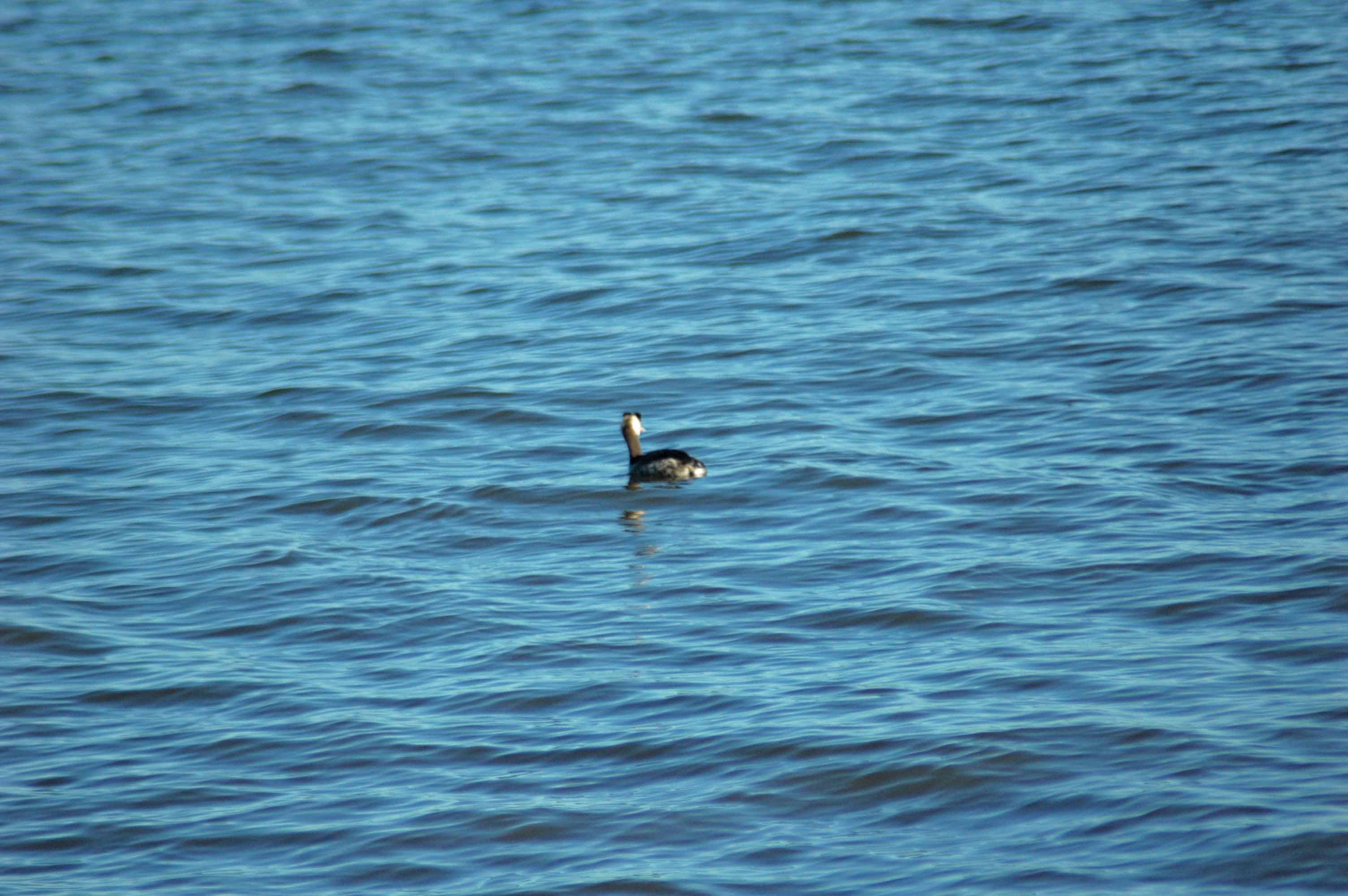
Great Crested Grebe

Podiceps Cristatus-Great Crested Grebe

Needless to say, I hadn’t picked up my binoculars and couldn’t properly see what I was looking at, even with the assistance of the camera lens, but from its general ‘giz’, and the fact I’ve seen them here in previous years, I decided it was most likely a Great Crested Grebe. It wasn’t alone either, although individuals were spread quite widely apart, at one time I counted ten of them. I could not get a decent image of any one of them though, so this one is a token effort to verify the sighting! 

” In winter, Great Crested Grebes show a marked shift from inland waters to the sea, although on the continent large numbers remain on inland lakes, e.g. in Switzerland (Cramp 1977). In normal winters, Britain and Ireland receive birds from continental western Europe. During severe winter weather, birds move through Britain in search of milder conditions either to the west in Ireland, or southwards to France (Lack 1986).” http://jncc.defra.gov.uk/pdf/UKSPA/UKSPA-A6-4B.pdf

High tide- sea flooding steps

High tide- sea flooding steps

I walked quite a distance towards Penrhyn Bay, stopping now and then to try to get a better image of a Grebe. I spotted one a little further in and got a slightly better view from the top of a set of steps that lead down to the beach. You get an idea of how far the water reaches regularly as the bottom treads are worn smooth by the repetitive scouring of salty waves climbing them and retreating with some force.

I wasn’t enjoying walking into the cold wind so I turned around and walked back, but carrying on towards the village. Just past the tiny St. Trillo’s Chapel I caught a glimpse of a bird flying down on to the big rocks below the promenade; a Turnstone. It landed out of eyesight, hidden amongst the huge boulders, but as I searched for it, up it popped onto a rock very close by.

Turnstone-Arenaria interpres

Turnstone-Arenaria interpres

Turnstones are common winter visitors to all our British coasts and gather in the greatest numbers on rocky and stony beaches, as here in Rhos-on-Sea. I was very happy to see it, as they are perhaps my favourite small wading bird, and because they are rarely alone I was confident there would be more to see.

Why stand when you can sit

Why stand when you can sit

In previous years I have seen small groups of mixed species of  waders on the rocks here, so I was hopeful there would be more to see. I didn’t have to go far before spotting another little group waiting for the tide to turn and leave their lunch, this time Ringed Plover and Dunlin.

Ringed Plovers and Dunlin watching the water
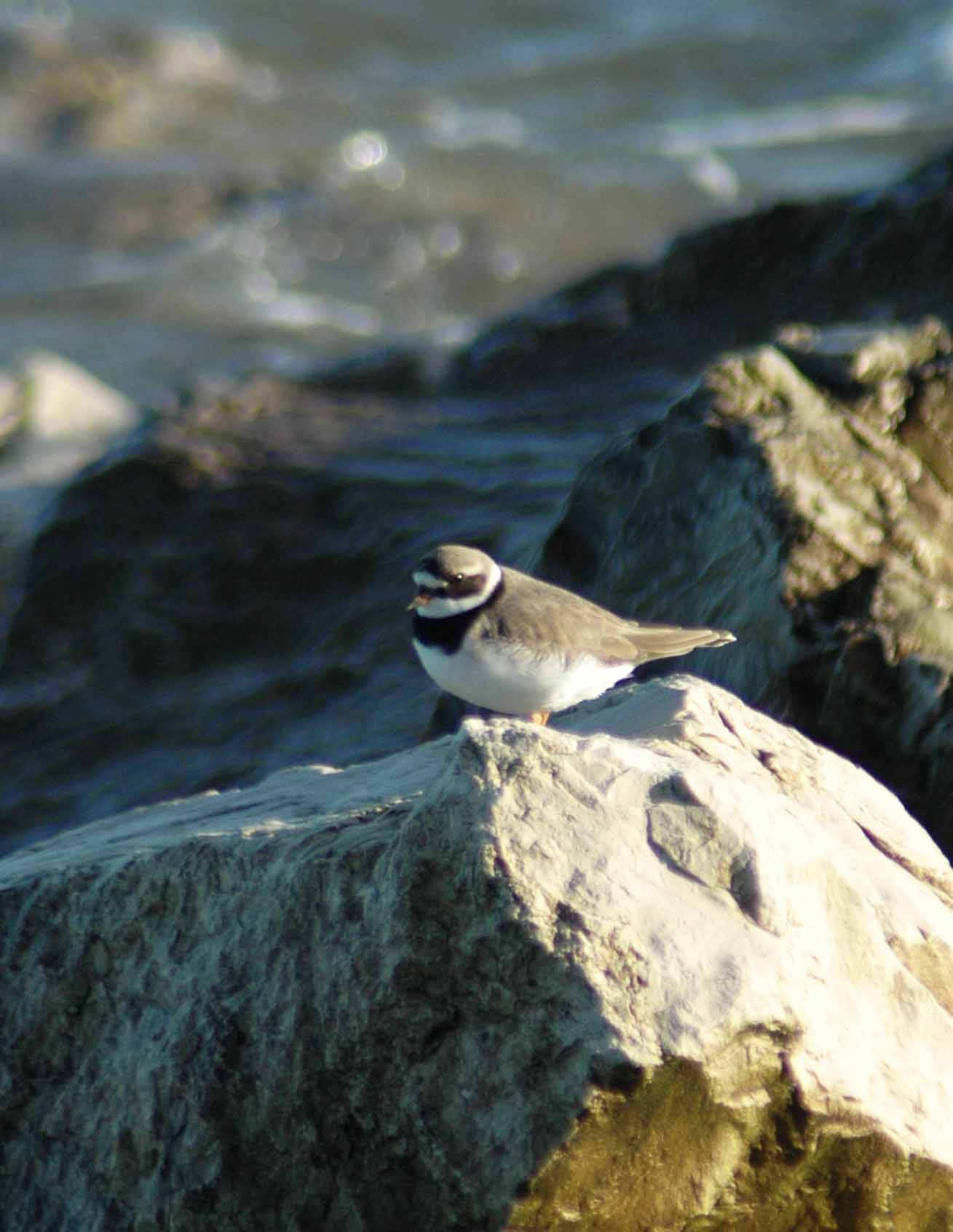
Ringed Plovers and Dunlin watching the water

Ringed Plover- Charadrius  hiaticula

Ringed Plover- Charadrius hiaticula

Ringed Plovers are amongst the most common of our shore birds, although the increase in building in seaside localities and our intrusion onto beaches that were once remote, where they traditionally used to breed, have taken their toll on populations.

Ringed Plovers

Ringed Plovers 

A Dunlin & a Turnstone together shows the size difference between them

A Dunlin & a Turnstone together shows the size difference between them

Dunlin are amongst the smallest of our shore birds. Some are present in Britain all year round, and as with Curlews, they winter on coasts and breed mainly on upland moors. Numbers are swelled when sizeable flocks come for the winter.
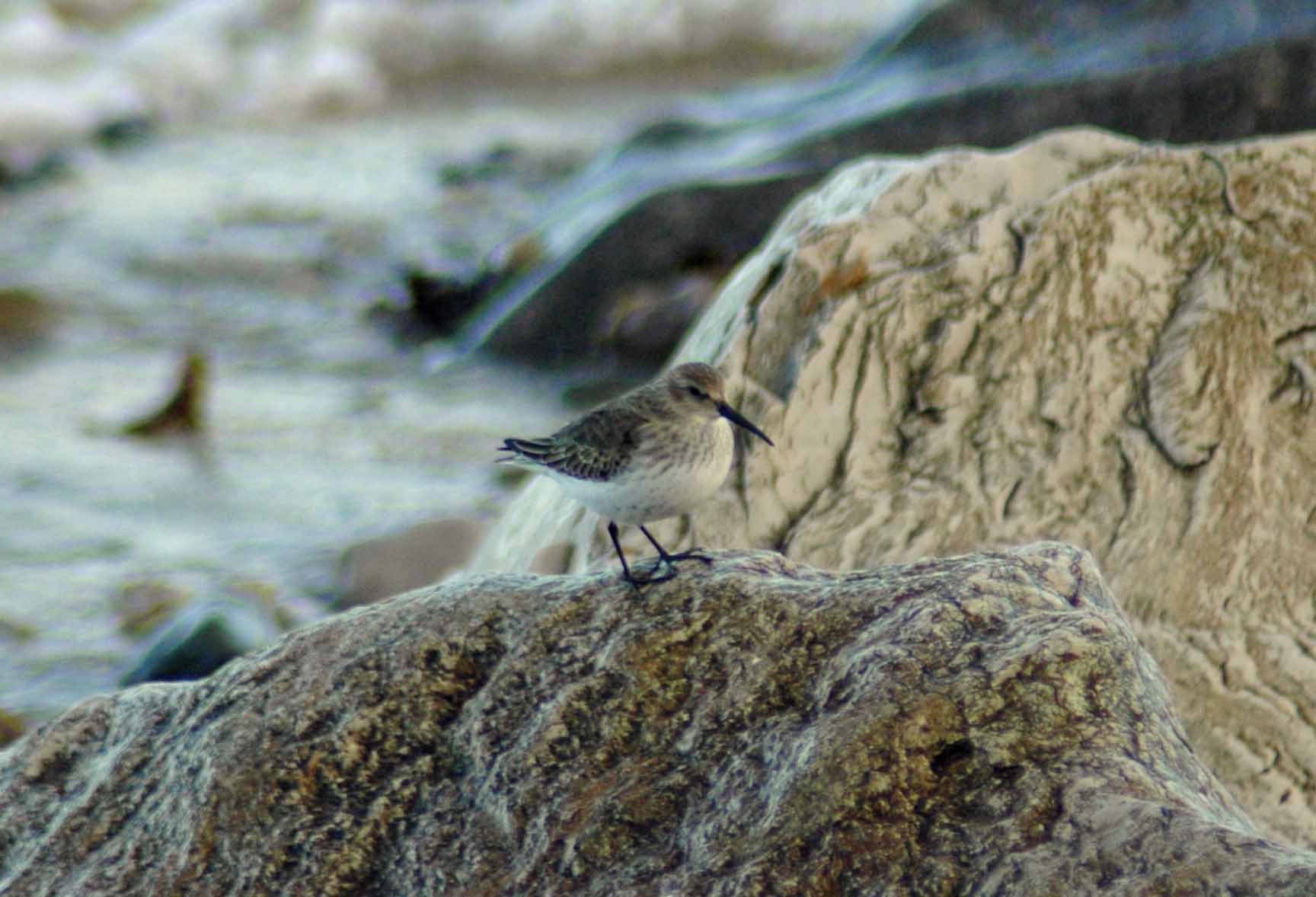
Dunlin-Calidris alpina

Dunlin-Calidris alpina

Dunlin were known to wildfowlers of old by a diverse variety of names, including ox-bird, ploverspage, sea snipe and stint.

Dunlin flying in to land
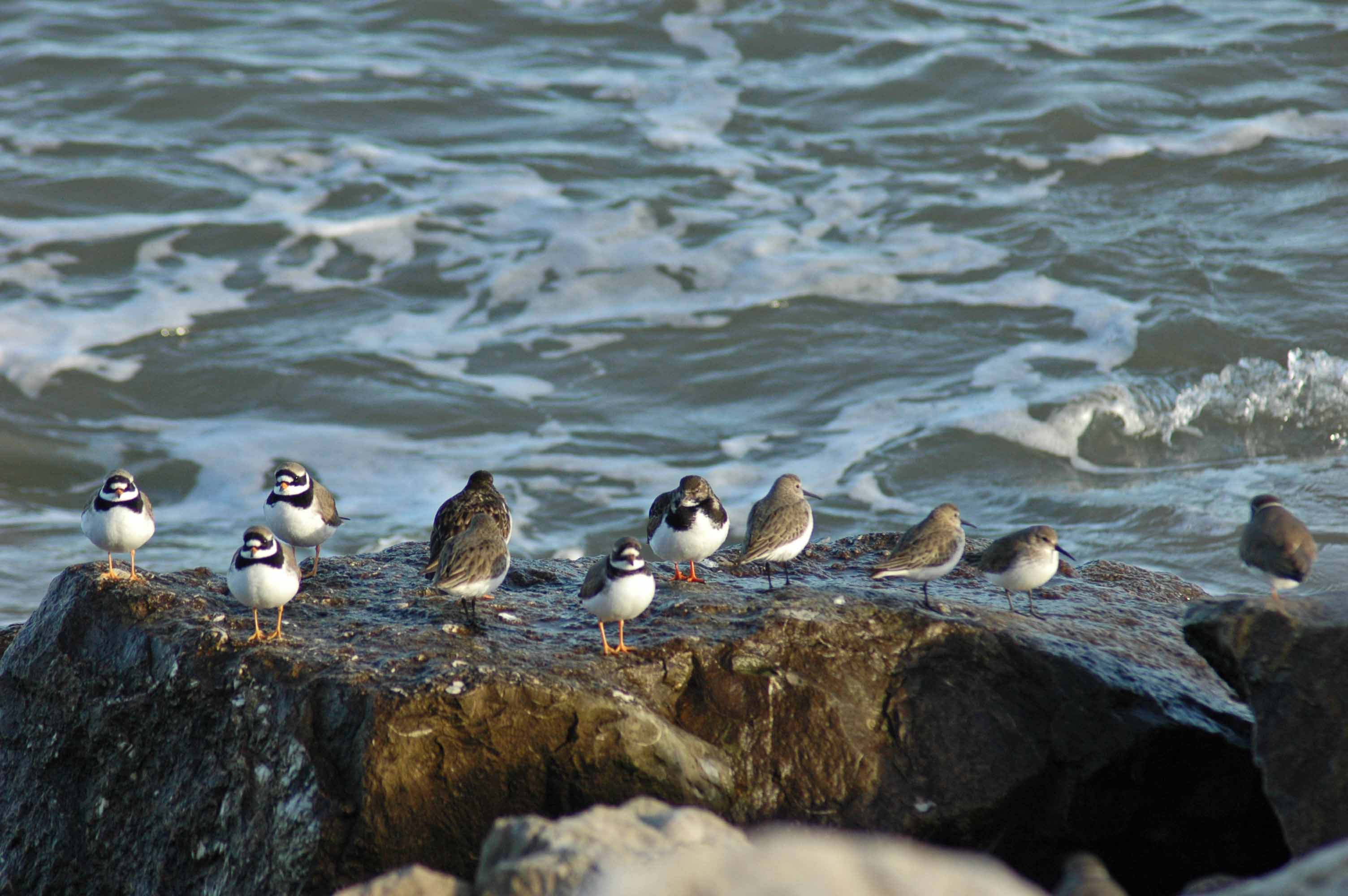
Dunlin flying in to land

Dunlin, Ringed Plovers & Turnstones

Dunlin, Ringed Plovers & Turnstones

As I watched them I had to wonder how these birds know when the tide is about to turn? It’s definitely not just a lucky guess! When I first began to watch them they were all quite still and quiet, but then in a heartbeat something changed and they became suddenly more animated. Up till that moment they had ignored the close proximity of people walking and me pointing a camera at them, but now people passing by with a dog or cyclists triggered off the Dunlin and Plovers and theytook off as one in a tight little flock out over the sea towards the harbour breakwater, then looped back, showering down to land a few feet further along the rocks. The Turnstones woke up too and were the first to venture nearer to the water, ready to get down onto the first uncovered patches of sand.

As the tide’s turning became more imminent, Oystercatchers began to arrive. They too had been waiting, but a bit further away on top of the harbour breakwater alongside the herring gulls.

Oystercatchers lined up along the harbour breakwater

Oystercatchers lined up along the harbour breakwater

Most of the Oystercatchers headed straight out to the far end of the Point, but a few chose to join the Turnstones, Dunlins and Plovers. Oystercatchers are the most numerous and conspicuous of the waders here and are a familiar sight on the mussel beds, on the rocky shorelines and in small groups flying low across the sea. They are noisy and gregarious and wonderful, but usually some distance away, so it was lovely to get this opportunity to see them more closely for a while.
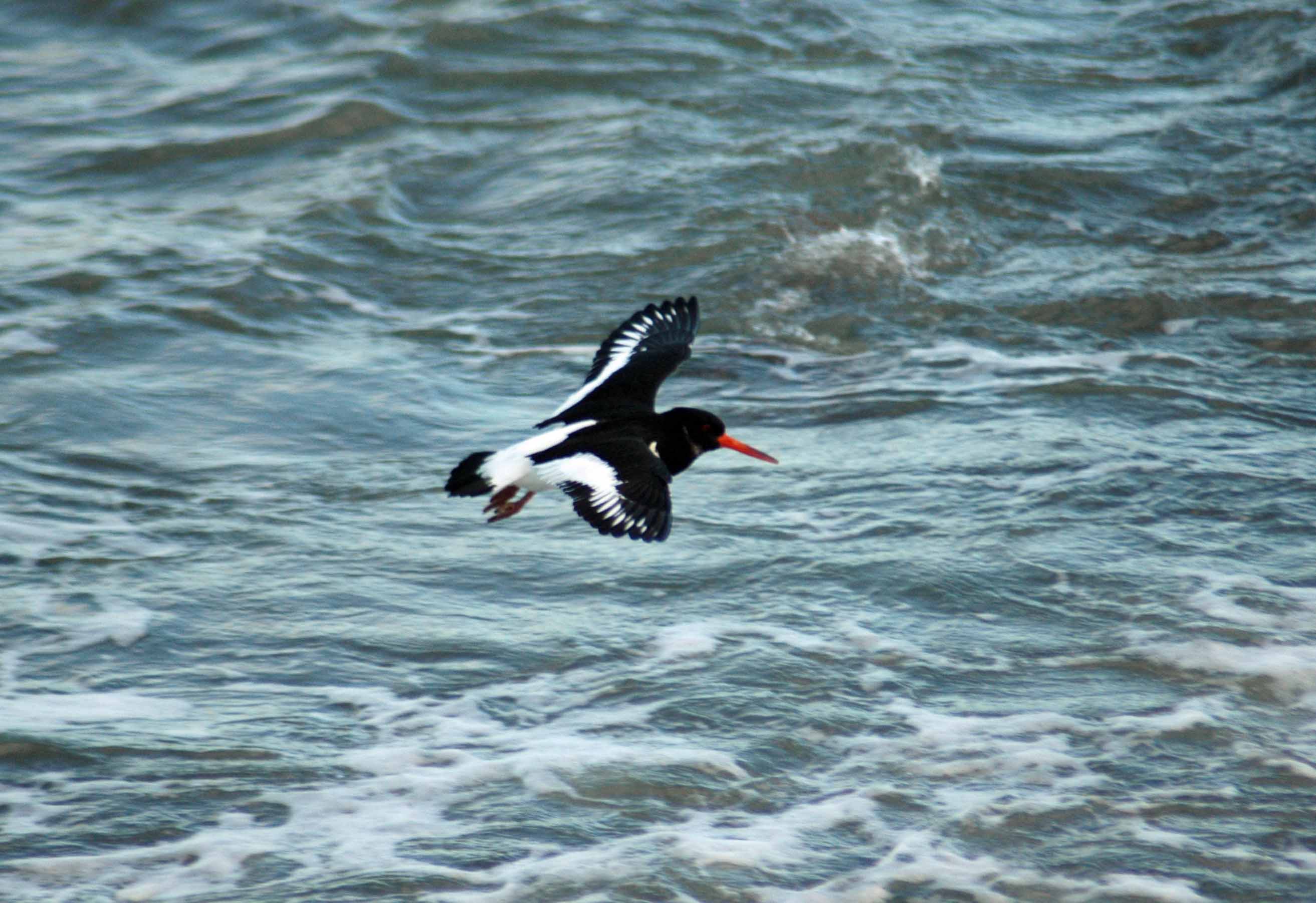
Oystercatcher flying in to land

Oystercatcher flying in to land

Oystercatcher about to land

Oystercatcher about to land

Landed and waiting for the perfect moment to begin the hunt for food
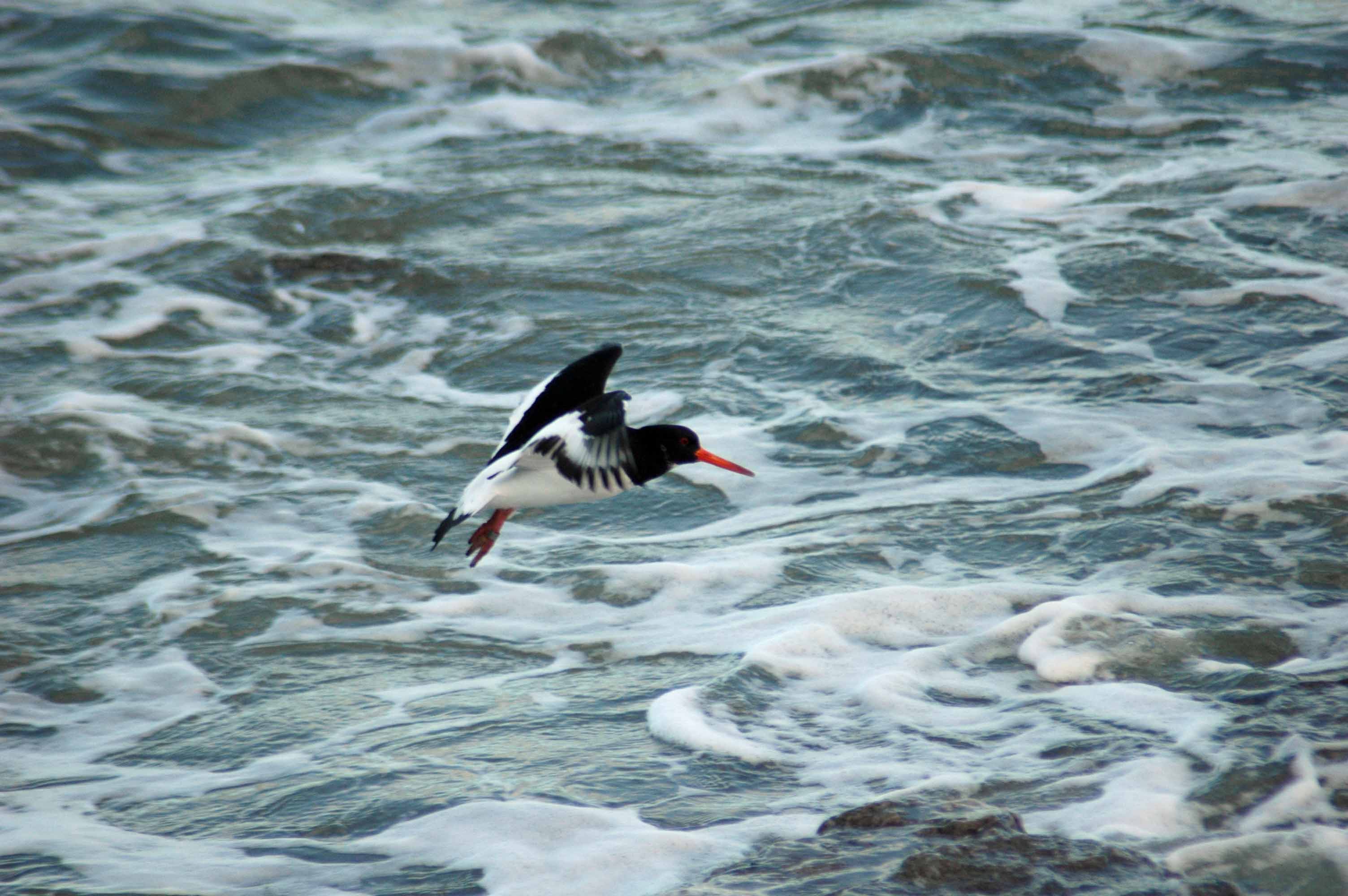
Landed and waiting for the perfect moment to begin the hunt for food

Joined by another

Joined by another

The shrill calls of the Oystercatchers often ring out from where they spend most of their time feeding or as they fly, but I hadn’t realised they also use it to greet other birds. I watched and listened, fascinated, as a pair performed a little greeting ritual in front of me.
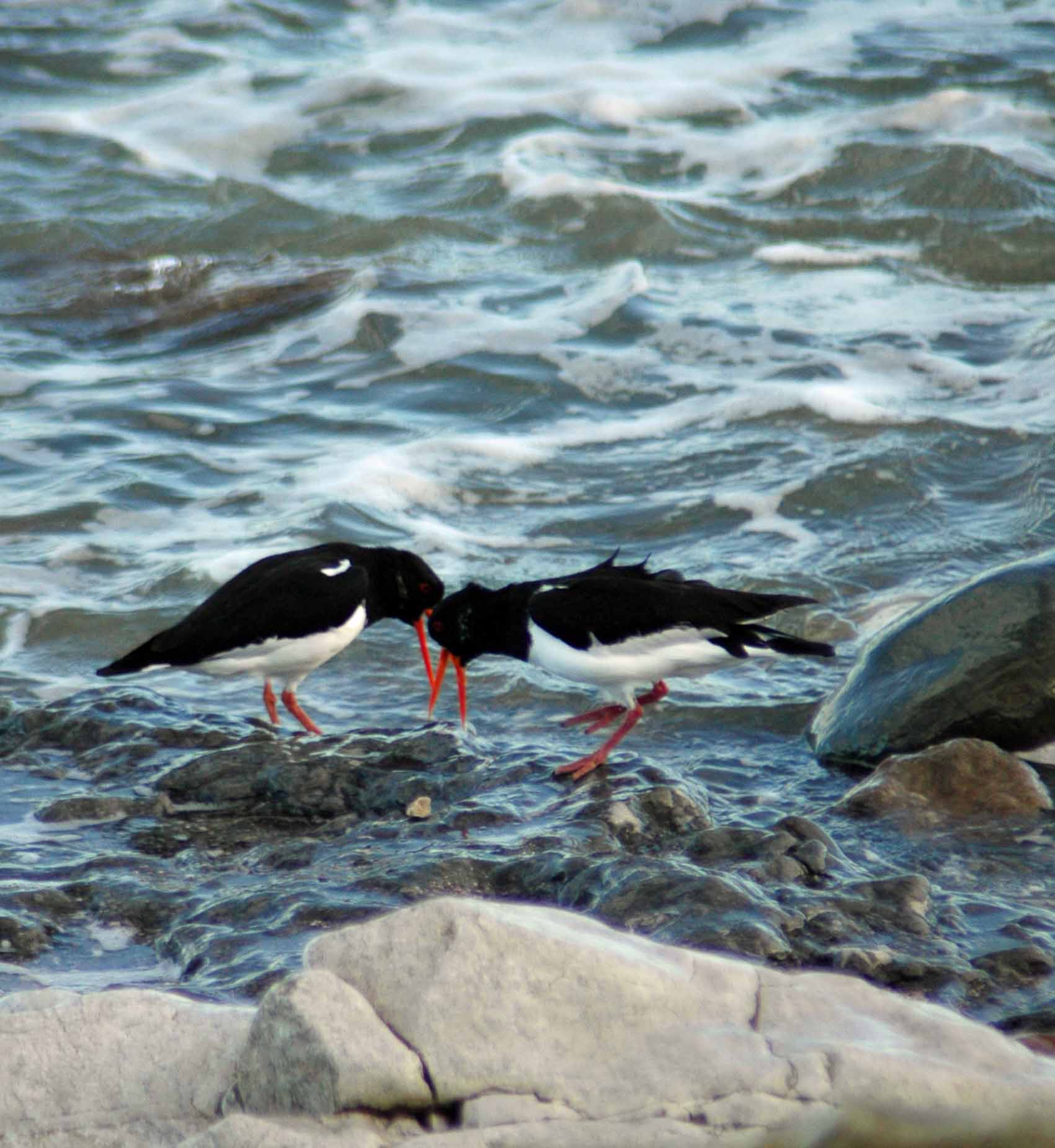
A noisy and demonstrative reunion

A noisy and demonstrative reunion

Their performance reminded me of the Herring Gull pair that raised their family on our roof last year and involved ‘bowing’ to one another, beaks open and pointed towards the ground whilst emitting their shrill call, rather ear-piercing at this distance. I am assuming they were a mating pair, and that is something else that is mind boggling; how on earth do they recognise one another in a crowd?
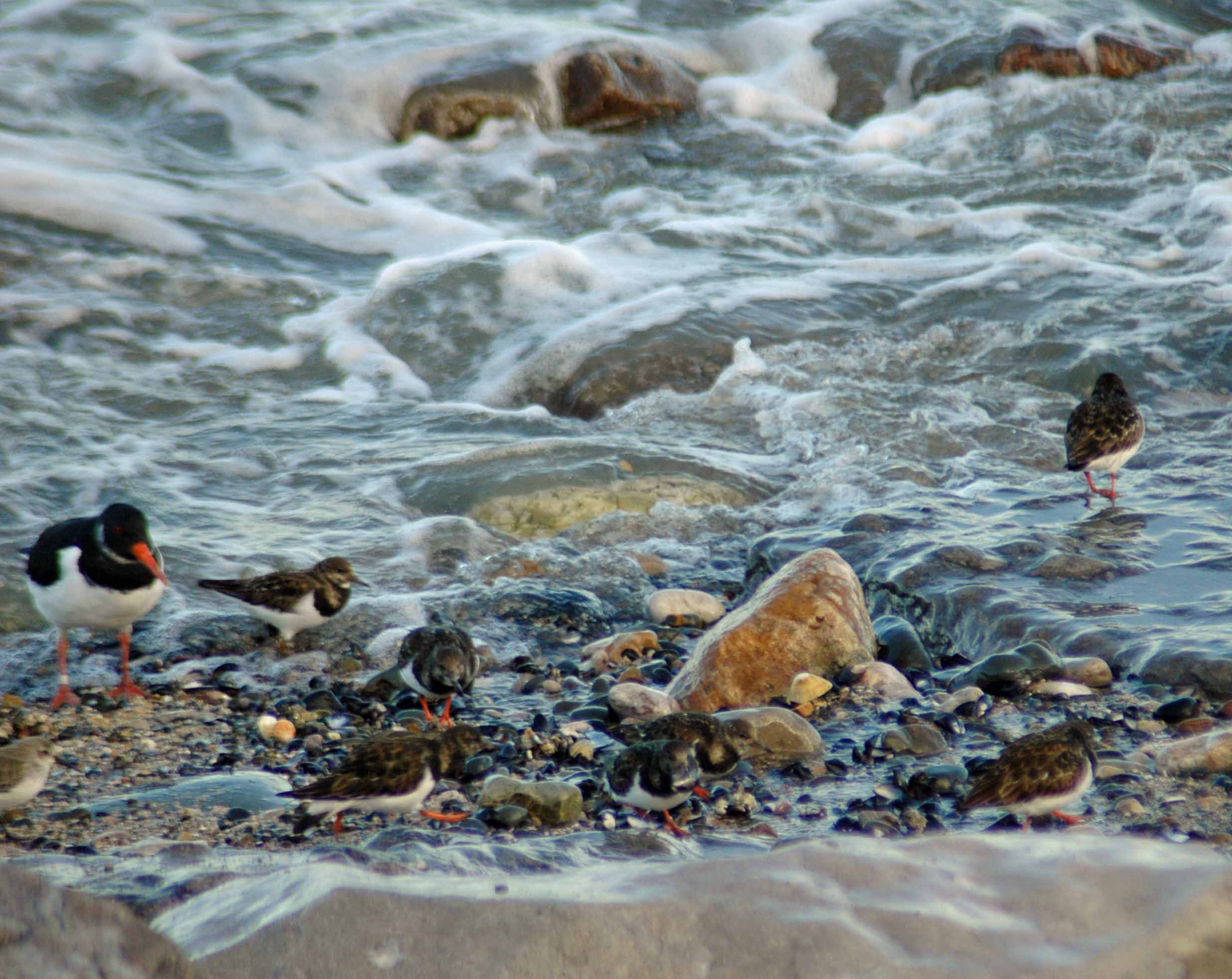
Turnstones are the first of the small waders onto the shore

Turnstones are the first of the small waders onto the shore

The magical moment arrived when the sea had retreated just enough to expose small patches of the seabed. The larger Oystercatchers were first in, followed closely by the Turnstones, then the smaller Dunlin and Ringed Plovers, once they were confident they wouldn’t be caught out by a rogue returning wave with nowhere to run to.

The tide comes in and goes out quickly and by the time I turned to walk back much of the rocky shore of the Point was revealed and already heavily sprinkled with Oystercatchers.

Oystercatchers as I most often see them, spread out at the far end of the seashore

Oystercatchers as I most often see them, spread out at the far end of the seashore

I hadn’t noticed any Curlew fly in, but hearing one I looked more closely and caught sight of one that had just picked up something to eat, very closely observed by a couple of Oystercatchers, who are certainly not averse to stealing should another take its eye off its prize.

A supremely well-camouglaged Curlew with food

A supremely well-camouglaged Curlew with food-Oystercatchers homing in

A curlew with food watched by Oystercatchers

The Curlew watched closely by Oystercatchers

*Missing from today’s tally of waders were Redshank, and Purple Sandpipers that I have seen previously together with Turnstones, Dunlin & Plovers. Click on link to post with more photographs.

Purple Sandpiper-Calidris maritima

Purple Sandpiper-Calidris maritima (January 2012)

And to finish, a young herring gull, to show they are often where they are supposed to be!

Juvenile herring gull
Juvenile herring gull

Share this:

  • Click to share on Facebook (Opens in new window) Facebook
  • Click to share on Pinterest (Opens in new window) Pinterest
  • Click to share on X (Opens in new window) X
Like Loading...

Evening on the Estuary

12 Sunday Feb 2012

Posted by theresagreen in Nature, nature photography

≈ Leave a comment

Tags

Conwy castle, Conwy estuary, Curlew, estuary at low tide, shelduck

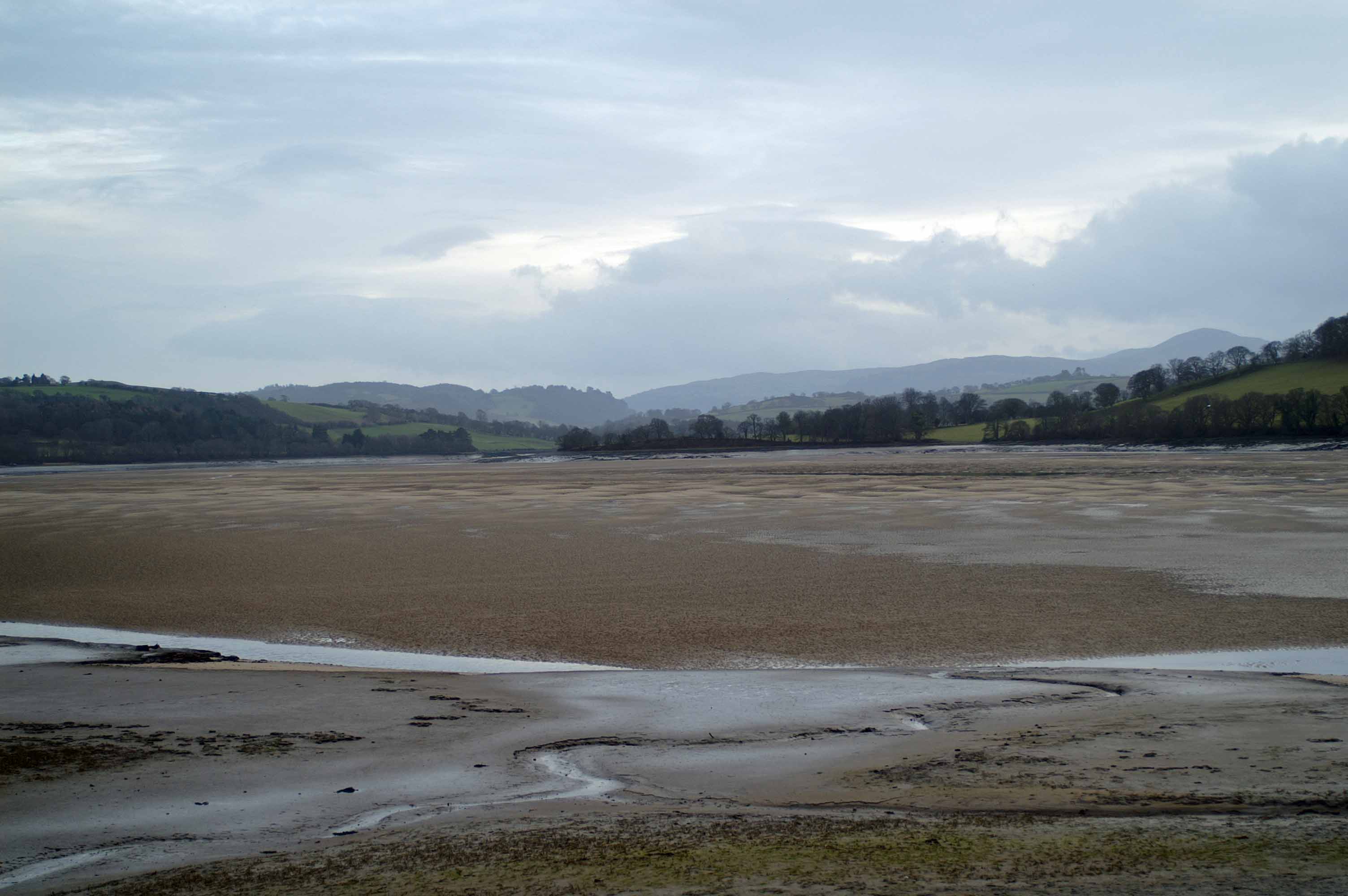
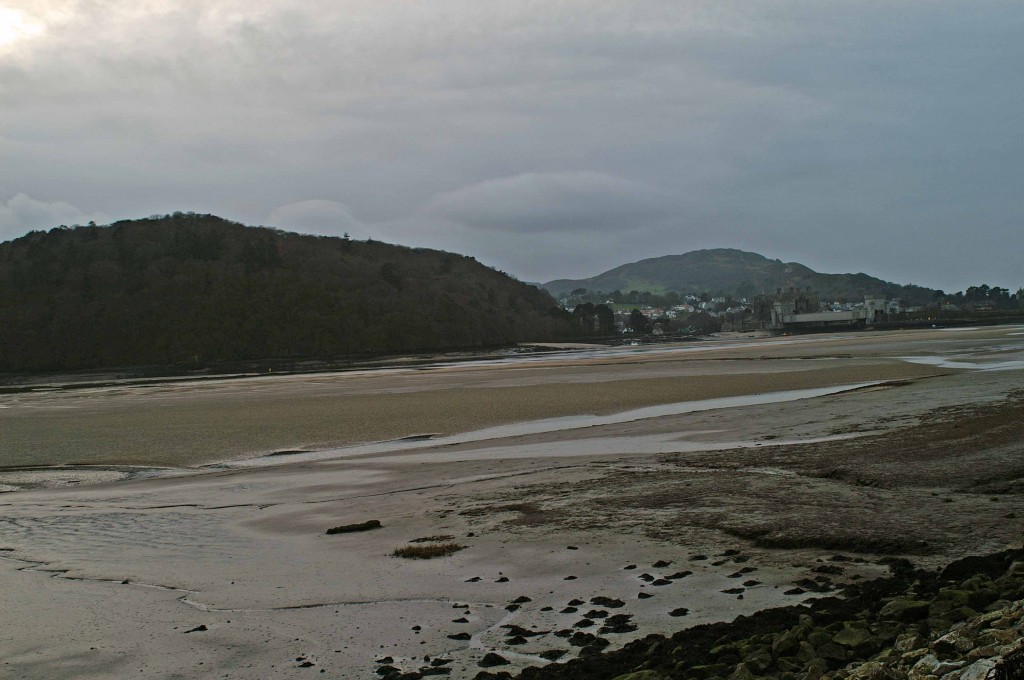
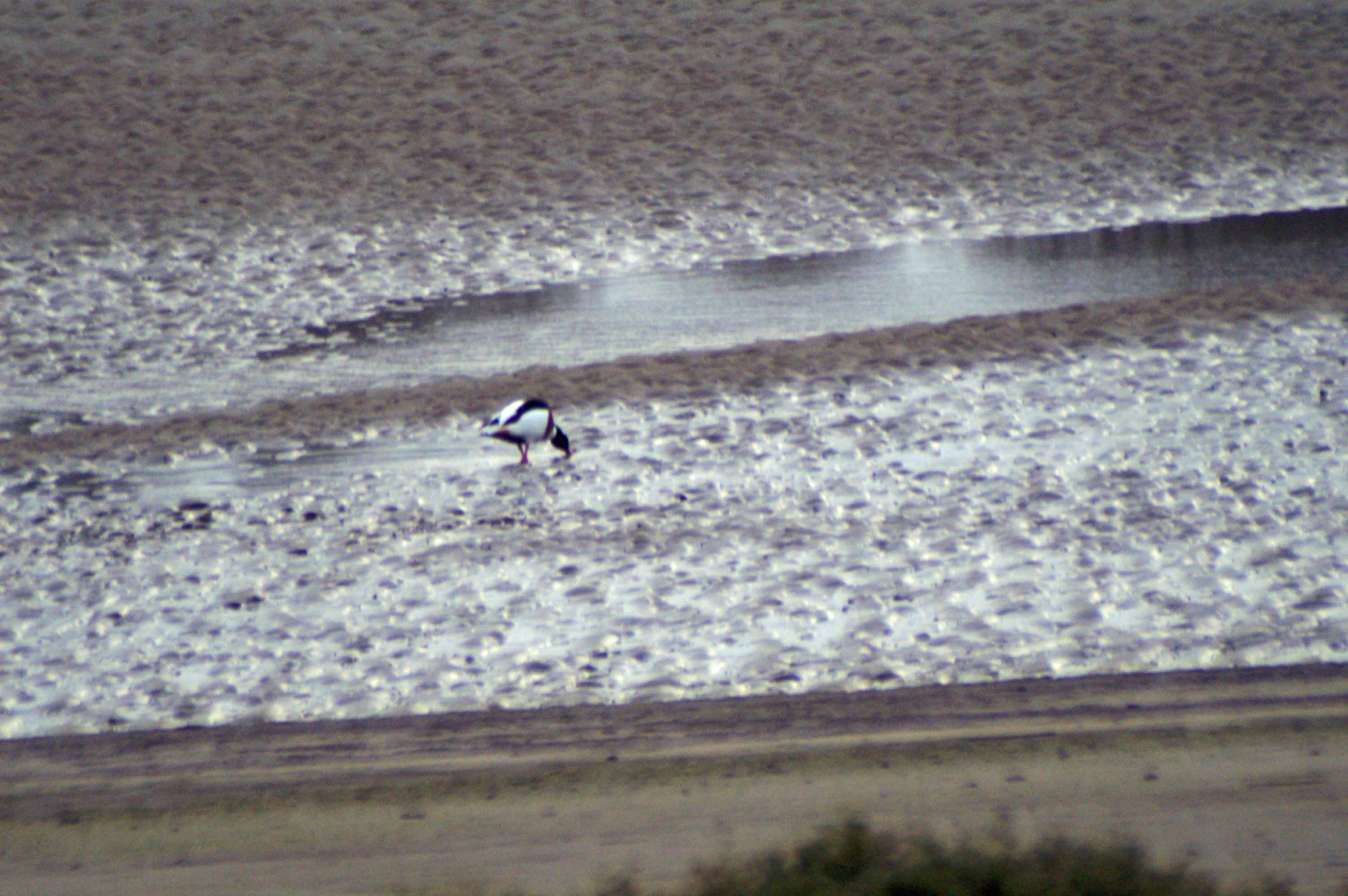
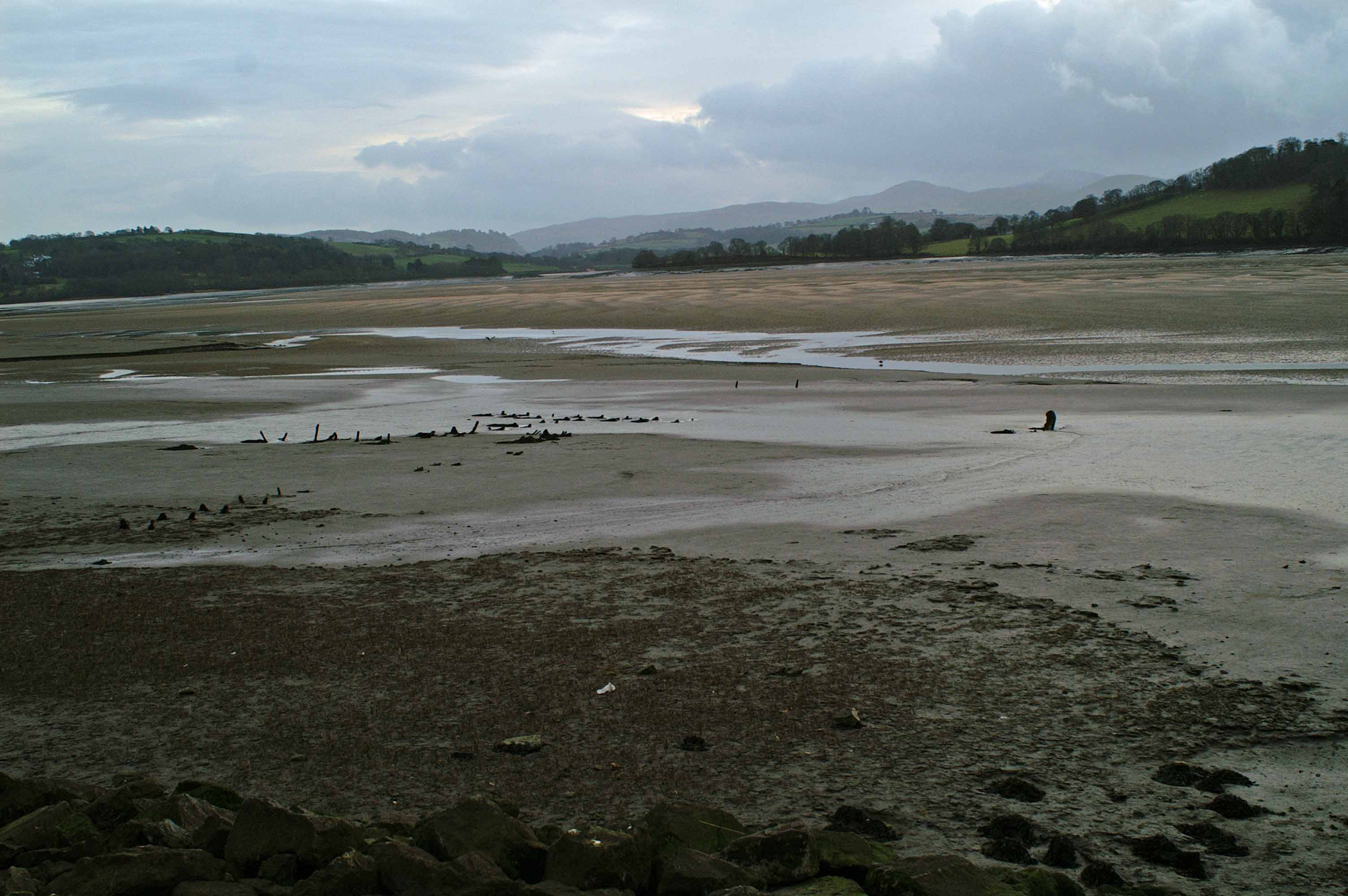
An evening walk alongside the Conwy Estuary. The sun was low in a cloudy sky, it was very cold and the tide was fully out exposing the wonderful contours and textures of the river bottom.  A few pools of shallow water remained and the only birds to be seen were a very few Curlew and a pair of Shelduck.

Shelduck

Contours and textures at low tide

A stalking Curlew blends easily into the estuary landscape

View upriver

Looking down the estuary towards the castle

Click on any of the images to enlarge them.

Share this:

  • Click to share on Facebook (Opens in new window) Facebook
  • Click to share on Pinterest (Opens in new window) Pinterest
  • Click to share on X (Opens in new window) X
Like Loading...

Bird study – Curlew

10 Monday Oct 2011

Posted by theresagreen in Nature, nature photography, wading birds

≈ 2 Comments

Tags

bird camouflage, bird migration, Curlew, curlew folklore, curlew on seashore, Oystercatcher, rhos on sea

An aura of wildness surrounds the curlew perhaps more than any other wading bird. Its onomatopeoic, haunting cries ringing out across the lonely marshes and the tideways it inhabits embody the atmosphere of these often lonely and desolate places.

The curlew is the largest European wading bird, instantly recognisable on winter estuaries or summer moors by its long, downcurved bill, brown upperparts, long legs and evocative call.

Increasing numbers of Curlews have been present on the seashore at Rhos-on-Sea for a few weeks now, but I’ve been waiting to get some reasonable photographs before I wrote about them in more detail. There were several obstacles along the path to obtaining some clear images, not least of which was the fact that they are almost perfectly camouflaged within this rocky landscape, where brown is the predominant colour.

Despite their size, curlews blend perfectly into this landscape

BTO BIRDFACTS:

Curlew Numenius arquata   [Linnaeus, 1758]

Order: Charadriiformes Family: Scolopacidae
 Number in Britain: 105 thousand pairs (Summer)
 Conservation Status:
UK: AMBER
European: 2 Concern, most in Europe; Declining
Global: Near Threatened ( Details )

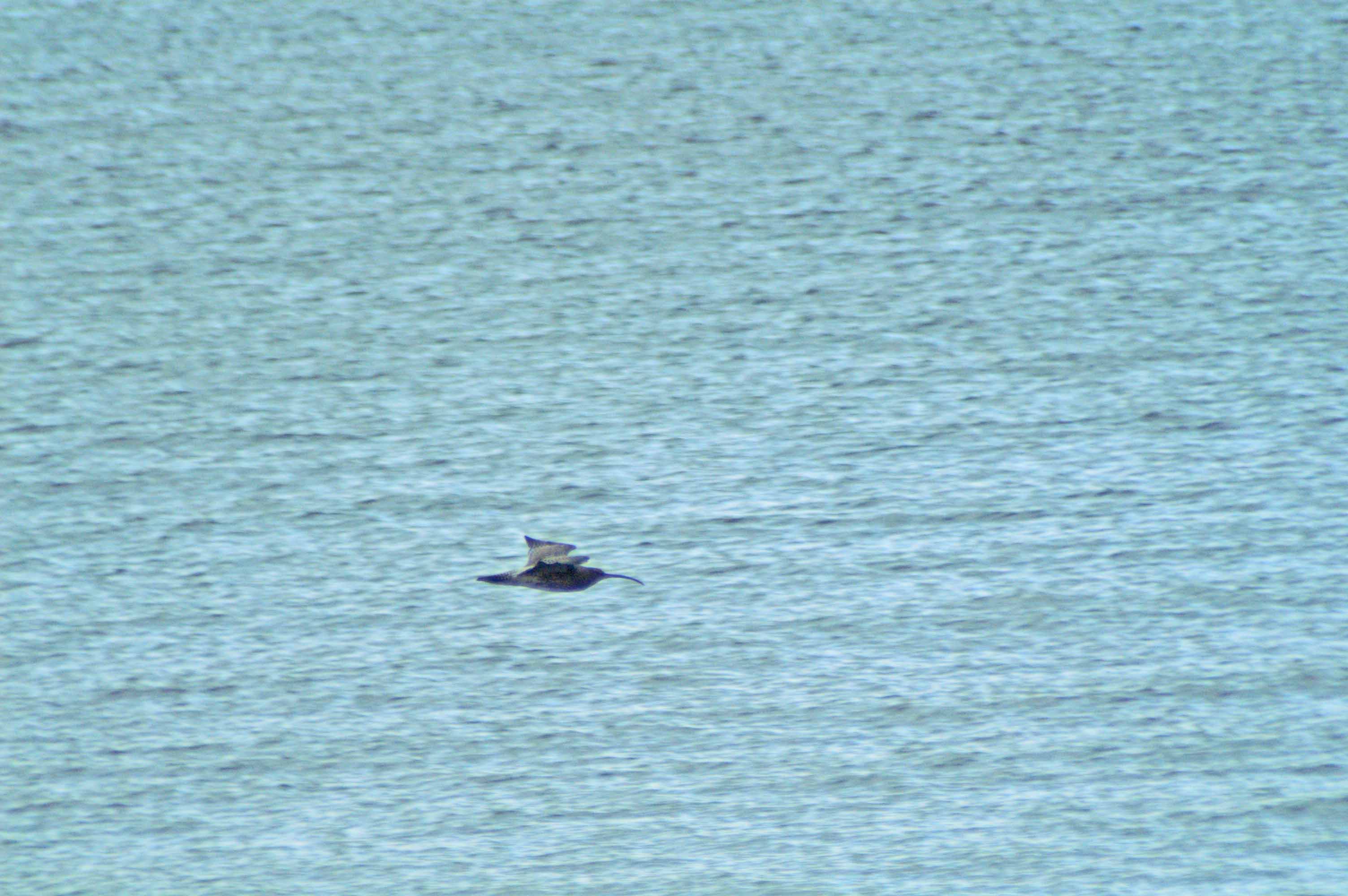
Curlews fly fast and low along the sea edge-in flight the white rump is very noticeable

Curlews glide smoothly and quietly through pools of water hunting for small invertebrates

The long curved beak enables the curlew to probe well under rocks

A curlew foraging peacefully alongside an oystercatcher

Breeding

In Great Britain the greatest numbers of breeding curlews are found here in North Wales, but a glance at a field guide will indicate the vast area occupied by the birds. Their range extends from this country east to the Urals and from Scandinavia and Russia in the north. This wide extent of habitats includes upland moors, grassy or boggy open areas in forests and damp grasslands and traditionally managed hayfields particularly in river valleys.

Autumn and winter

Directly after the nesting season the birds shift to marine coastal areas especially favouring mudflats and sands extensively exposed at low tide. Like most waders, at high water curlew form large roosts on either the highest saltings or on fields and marshes behind the sea walls. In some localities the birds move to nocturnal roosting spots at dusk, leaving again at dawn.

The curlew flock numbers several hundred. They roost in this field at the foot of Bryn Euryn, close to houses and a main road. They return at high tide too when they may be seen foraging in the field or standing quietly with their bills tucked under their wings.

When they are not foraging along the seashore here in Rhos-on-Sea the curlew flock surprisingly shares a field with cows, sheep and a couple of horses. Their choice of roost took me by surprise as the field is very close to a busy road, in total contrast to the deserted open spaces they are usually identified with.

When roosting the more dominant curlew tend to occupy the better sheltered areas within the assembly; birds at the front of flocks form closely packed ‘walls’ in high winds.

Coastal numbers build up from July and reach a peak in January and February. The resident UK population is boosted by incoming migrants to some 99,500–125-000 pairs. 

Curlew from Scotland spend autumn and winter on the British west coast and in Ireland. Populations from Scandinavia, the former Baltic States and north-west Russia head south-westwards towards this country: each of international importance for wintering curlew, the four localities holding largest numbers are Morecombe Bay, the Solway, the Wash and the Dee. Others, remarkably, winter in Iceland and the Faroes. And yet others penetrate to the West African coast. Curlew are capable of migrating at remarkable altitudes, even crossing the Himalayas at a height of 20,000 feet.

Curlews foraging at sea edge

The Curlew in folklore

The curlew features strongly in folklore, often not too favourably.

To hear a curlew call is not good. If you hear it at night, it means that bad luck is coming, but if heard during the day it signifies the arrival of bad weather.

The curlew has always been a bird of bad omen to sailors who have seen them flying overhead and if you hearing their call means that a storm is brewing and its inadvisable to set sail for the open sea.

St Beuno and the Curlew

It is hard to find the nest of the curlew; this story from the folklore of North Wales, attributed to St Beuno offers an explanation for that.

When he lived at Clynnog St Beuno used to go regularly on Sundays to preach at Llanddwyn, off the coast of Anglesey, walking on the sea with the book of sermons, which he used to carry about with him. One Sunday, as he was coming back from Llanddwyn to Clynnog, treading the surface of the sea as if it had been dry land, he dropped his precious writings into the water, and failed to recover them. The saint was much worried, because even for saints the task of writing sermons is a troublesome one.

When he reached dry land he was much relieved to find his book on a stone out of the reach of the tide,with a curlew mounting guard over it. The pious bird had picked it up, and brought it to safety. Thereupon the holy man knelt down and prayed for the protection and favour of the Creator for the curlew. His
prayer was heard, and ever since it has been extremely difficult to discover where the long-beaked bird lays its eggs.


Share this:

  • Click to share on Facebook (Opens in new window) Facebook
  • Click to share on Pinterest (Opens in new window) Pinterest
  • Click to share on X (Opens in new window) X
Like Loading...

Rhos-on-Sea- seashore surprises

24 Wednesday Aug 2011

Posted by theresagreen in birds of the seashore, Nature, Nature of Wales

≈ Leave a comment

Tags

Crow dropping shellfish onto rocks, Curlew, curlew on seashore, intelligent behaviour of crow, migrant hoverfly, rhos-on-sea

Walk from Penrhyn Bay to Abbey Road, Rhos-on-Sea

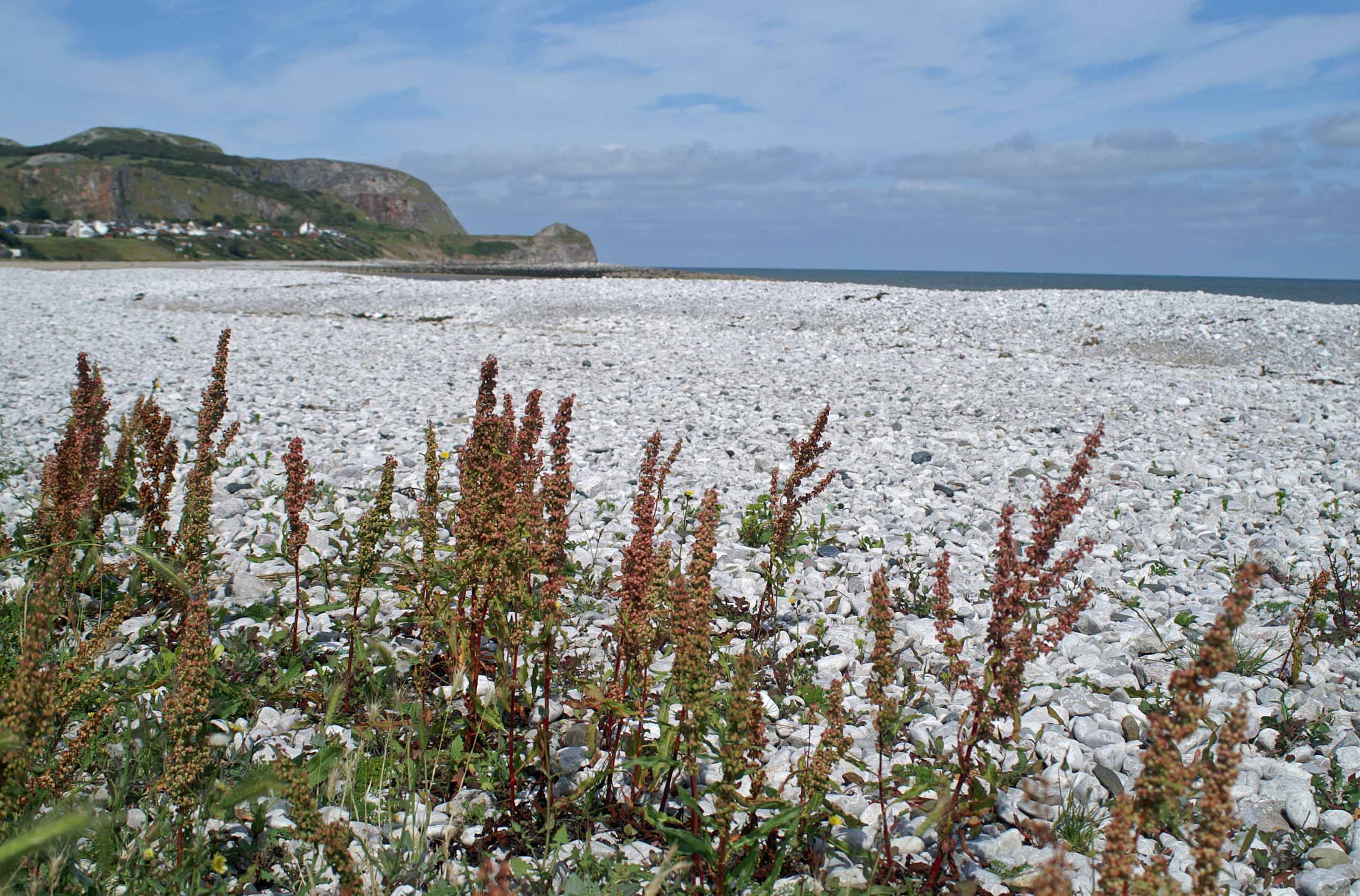
The beach of Penrhyn Bay is mostly made up of shingle, a hostile environment for plants, but some tough species have gained a hold there, spreading forward from the base of the sea wall.

24/7/11-Dock plants growing on the seashore with the Little Orme in the background

Shingle as a habitat

Shingle plants will begin to colonise above the high tide mark. Below this the moving pebbles will prevent any seedlings getting a stable hold. The plants that grow on the shingle usually have long and tough roots able to withstand the friction of the pebbles that will be disturbed by storms. Often referred to as a desert-like environment, plants like dock have water-retaining leaves that enable them to be one of the larger colonisers of this unique habitat, while smaller plants may be able to harness the water that collects on the surface of the pebbles.

24/7/11-Penrhyn Bay beach-Common Mallow growing on the shingle was attracting insects
24/7/11-Penrhyn Bay beach -a Migrant Hoverfly resting on a mallow leaf

I left the beach where the shingle  gives way to the rocky shore of Rhos-on-Sea, keeping an eye on the beach from the promenade. A Black-headed Gull caught my attention and I stopped to have a closer look. The gull was standing on a patch of muddy sand and I was intrigued to see the tops of car tyres protruding above the sand behind it. The way they were placed seemed to be deliberate, so I wondered if they are being used to reinforce the sea-break or stabilise the sand? They must have been there for a good while as some have seaweed growing over them.

24/7/11-Black-headed Gull with tyres bedded in the sand behind it

Focusing my attention on the gull and the tyres, I had half-noticed a brownish coloured bird against the rocks behind them that I thought was a young Herring Gull. When I gave it proper attention I had a pleasant surprise; it was actually a wader, either a Whimbrel or a Curlew, that was foraging around the rocks, probing its long curved beak into the the muddy sand.It was so well camouflaged against the rocks it was difficult to keep track of it, but I got a better view when it spent a couple of minutes in a more open pool of water.

24/7/11-Curlew on the sea shore
27/7/11-The Curlew blended perfectly into its surroundings

The wader disappeared from sight amongst the rocks and I carried on with my walk. I didn’t get far before I stopped again to watch a Crow that was acting strangely, flying up into the air then diving down again. It took a few minutes to realise that what it was doing: it was searching for a shellfish, picking it up in its beak, flying up then dropping it onto the rocks hoping to break it and diving down after it.

24/7/11-The shellfish does not drop straight down, so the crow has to follow it quickly or lose sight of it. 
24/7/11-The crow is surprisingly agile and turns quickly to make a steep dive
24/7/11-Diving Crow keeping its eyes on the landing position of its snack

There was quite a gap between each performance which I thought may have been either because the shellfish needed to be a particular size or species, or perhaps needed to be partially open, or  simply that each mouthful obtained this way required so much effort – it may well take more than one drop to smash a shell. I was fascinated by their behaviour and very impressed with their ingenuity; clever things.

There were quite a few gulls about; Lesser Black-backed gulls, Herring gull adults and juveniles and a few more Black-headed gulls. Herring gulls frequently chase other birds they see flying with food in their bills, hoping to steal it if possible. During an interlude in the Crow entertainment I spotted a mottled brown and white bird that I took to be a juvenile Herring gull being chased by an adult; as it broke away and flew towards me I was surprised again to see that it was another Curlew carrying something quite large in its bill; a crab I think.

24/7/11-Curlew flying with food

The Curlew flew back along the sea edge towards Penrhyn Bay, landing a short distance away from me amongst a cluster of rocks. Watching it closely I could see other Curlews gathered there, difficult to count as they are very hard to see, but at least another three.

It’s amazing what you see sometimes when you don’t set out to look! 

Share this:

  • Click to share on Facebook (Opens in new window) Facebook
  • Click to share on Pinterest (Opens in new window) Pinterest
  • Click to share on X (Opens in new window) X
Like Loading...
Newer posts →
Follow everyday nature trails on WordPress.com

Enter your email address to follow this blog and receive notifications of new posts by email.

‘But it is the common species that keep the living world ticking over and provide most of our experiences of wildlife, and I would argue that maintaining the abundance of these is as important a conservation priority as maintaining the existence of rarities’. Richard Mabey

MOST RECENT POSTS

  • A Glimpse of Spring to Come January 22, 2025
  • Hunting the Wren December 28, 2024
  • Oh, Christmas Tree December 18, 2024
  • In and Out of the Ivy February 15, 2024
  • Nature’s Fireworks November 30, 2023
  • Wild Autumn along the Coast Path November 3, 2023

OLDER POSTS

LOOKING FOR SOMETHING IN PARTICULAR?

  • Pretty prickly Thistles
    Pretty prickly Thistles
  • The Foxglove - of Fairytales, Myths & Medicine
    The Foxglove - of Fairytales, Myths & Medicine
  • Fine Dining for Crows
    Fine Dining for Crows
  • Pines and Primroses
    Pines and Primroses
  • Following a river to a Fairy Glen
    Following a river to a Fairy Glen
  • Rosebay willowherb
    Rosebay willowherb
  • Wigeon in Winter
    Wigeon in Winter
  • Bryn Euryn - a walk of several parts. Part 1
    Bryn Euryn - a walk of several parts. Part 1
  • A Blackthorn Winter
    A Blackthorn Winter
  • Birds and the art of fly catching
    Birds and the art of fly catching

nightingale trails

The Walk of the Monarch Butterfly-Sendero de la Mariposa Monarca

The Walk of the Monarch Butterfly-Sendero de la Mariposa Monarca

MY WILDFLOWER BLOG: where the wildflowers are

Snowdrop

Snowdrop

most recent posts

Follow everyday nature trails on WordPress.com

Social

  • View teresamaygreen’s profile on Twitter

Enter your email address to follow this blog and receive notifications of new posts by email.

Website Built with WordPress.com.

  • Subscribe Subscribed
    • everyday nature trails
    • Join 359 other subscribers
    • Already have a WordPress.com account? Log in now.
    • everyday nature trails
    • Subscribe Subscribed
    • Sign up
    • Log in
    • Report this content
    • View site in Reader
    • Manage subscriptions
    • Collapse this bar
 

Loading Comments...
 

    %d