• Home
  • about
  • about the photographs
  • Local Nature Reserves
    • Bryn Euryn Local Nature Reserve
    • Mynydd Marian
  • Wales Coast Path
    • Grey Seals in North Wales
    • St.Trillo’s Chapel
    • Wildflowers of North Wales Coastal Paths, Cliffs and Dunes

everyday nature trails

everyday nature trails

Category Archives: tree folklore

Spring on the Bryn

07 Thursday May 2015

Posted by theresagreen in Bryn Euryn Nature Reserve, hoverflies, Insects, Nature, Nature of Wales, nature of woodlands, tree folklore

≈ 4 Comments

Tags

ash tree, Bee-fly, chequered hoverfly, common field speedwell, cowslip, dog mercury, eupeodes latifasciatus, garlic mustard, hart's tongue fern, ivy-leaved speedwell, oak tree, wood anemone, wood sorrel

Recent outings have been ambles rather than rambles as I’m getting back to fit after being laid low for a few weeks by some kind of virus, which also accounts for the recent absence from blogging. I’ve found it most frustrating, especially at this time of year too when there’s so much going on. But I’m keen to catch up and already have a lot to share, so here’s a mostly-pictorial view of Bryn Euryn as I saw it on two beautiful sunny-day ambles in the last week of April.

There are a lot of Ash trees on the Bryn, thankfully all of which appear to be healthy at the present time and they seem to have had an exceptional amount of flowers this year. The flowers start off a dark pinkish-purple but now most of them are over now and the clusters are mostly green.

Ash tree flowers are almost over

Ash tree flowers are almost over

Some trees have produced so many flowers that now the clusters are green, from a distance it gives the illusion that they are in leaf.

Spent flower clusters give ash trees the illusion of being in leaf

Spent flower clusters give ash trees the illusion of being in leaf

Looking more closely at the tree in the photo above, there are a few  leaves already appearing.

New ash leaves opening

New ash leaves opening

Naturally, once I had seen the ash leaves I had then to check out the oaks to guage if we are in for a ‘splash or  a soak’ this summer. On the day I took the photo of the ash the oaks were all in tight bud.
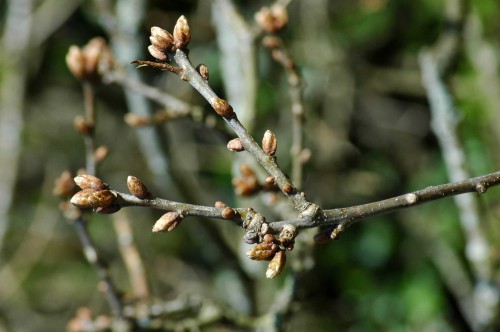
21/4/15- Oak leaves in tight bud

21/4/15- Oak leaves in tight bud

But three sunny days later I was amazed to see that leaves had begun to open and not only that, insects had already moved in.

24/4/15-New oak leaves with insects

24/4/15-New oak leaves with insects

For anyone that has no idea what that last bit was about, a traditional English way of predicting whether the summer will be wet or dry was based on whether the oak or the ash trees opened their leaves first.

“When the oak is before the ash, then you will only get a splash; when the ash is before the oak, then you may expect a soak “

So things appear to be fairly even in the rainfall prediction stakes so far.

Robin singing from high in an ash tree

Robin singing from high in an ash tree

It was a perfect spring day, the sun was shining the sky was blue and a host of birds were singing. Along the quarry field edge the vegetation is growing up quickly although there’s not much flowering yet. Celandines are beginning to fade and some dandelions have already set seed.

Vegetation on woodland edge-celandines, nettles & arum

Vegetation on woodland edge-Lesser Celandines, nettles & arum
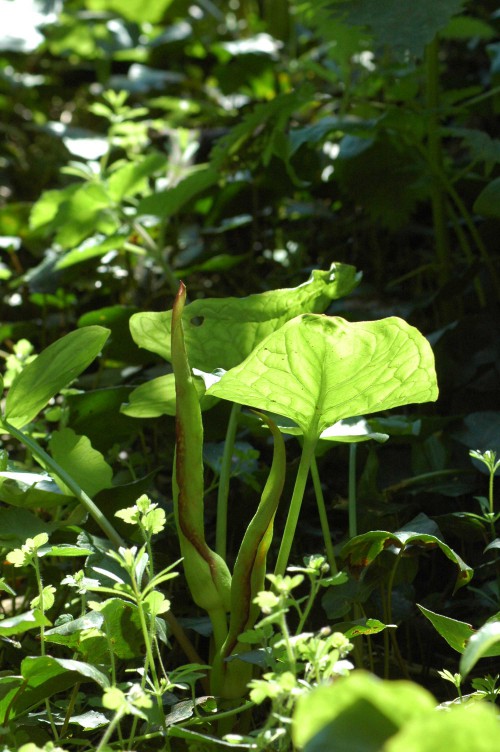
Cuckoo Pint or Lords and Ladies-Arum maculatum

Cuckoo Pint or Lords and Ladies-Arum maculatum

There was a single male Orange Tip butterfly racing along at their normal break-neck speed and one female Small White that obligingly settled on a bramble.

Small White (f) on bramble leaf

Small White (f) on bramble leaf

150421TGNW-BE1-Chequered Hoverfly(m) -Melanstoma scalare

Tiny male Chequered Hoverfly-Melanstoma scalare (enlarged)

I was quite surprised to see a good number of hoverflies about, all looking shiny and fresh, so I assume they were newly-emerged.

Hoverfly-Eupeodes latifasciatus

I think this is Eupeodes latifasciatus

As I was checking out a splash of colour that turned out to be from this escaped garden plant, I was happy to see this little bee-fly arrive to take its nectar. One of my favourite insects, they look cute and furry but are classified under the general heading of ‘robber-flies’ and their larvae live as parasitoids in the nests of mining bees.
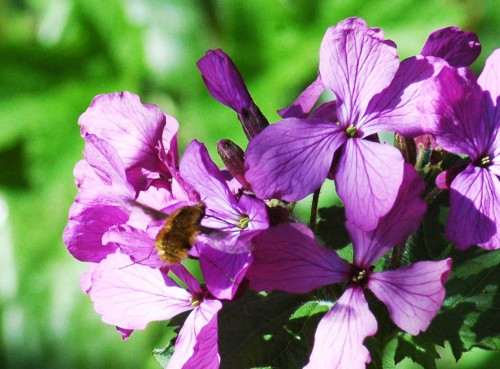
An escaped garden plant attracting a bee-fly

An escaped garden plant attracting a bee-fly

There are two species of pretty blue speedwell flowering here, one is the familiar Common Field Speedwell

Common Field Speedwell- Veronica persica

Common Field Speedwell- Veronica persica

and the other is the even tinier-flowered Ivy-leaved Speedwell.

Ivy-leaved speedwell-Veronica hederifolia

Ivy-leaved speedwell-Veronica hederifolia

You could easily overlook this rather sprawling untidy plant, and you’d probably pull it out of your garden as a ‘weed’, but as with all speedwells, on closer inspection its tiny flowers are really pretty.

Close-up of flower of ivy-leaved speedwell

Close-up of flower and leaves of Ivy-leaved Speedwell

In the woods the tree canopy is still open but there are small new leaves on some trees.

24/4/15-Tree canopy still open

24/4/15-Tree canopy still open – new beech leaves in foreground

Wood anemones are still flowering

Wood anemone-Anemone nemorosa

Wood anemone-Anemone nemorosa

and there was one patch of Wood Sorrel.

Wood Sorrel-Oxalis acetosella

Wood Sorrel-Oxalis acetosella

Harts Tongue fern fronds unfurling

Harts Tongue fern fronds unfurling

Garlic Mustard is beginning to flower- if you never have, try crushing a leaf they really do smell of garlic…

Garlic Mustard - Alliaria petiolata

Garlic Mustard – Alliaria petiolata

and another plant that doesn’t smell too pleasant, Dog Mercury, is also displaying its spikes of rather insignificant small pale green, petalless flowers.

Dog Mercury - Mercurialis perennis

Dog Mercury – Mercurialis perennis

There are still ivy berries on some plants, although those left are probably still there because they are difficult for their chief consumers, blackbirds and bulky old wood pigeons to reach.
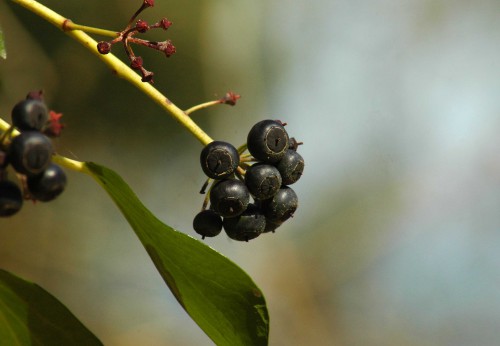
Ivy berries

Ivy berries

In the open wildflower meadow cowslips are blooming. I love their graceful fragrant flowers and the sight of them always takes me back to childhood when it was still OK to pick bunches of them and we used them as part of the floral decorations for the school May Day celebrations.

Cowslip-Primula veris

Cowslip-Primula veris

Hawthorn is now green with fresh leaves.

Fresh hawthorn leaves

Fresh hawthorn leaves

Part 2 to follow ….


Share this:

  • Click to share on Facebook (Opens in new window) Facebook
  • Click to share on Pinterest (Opens in new window) Pinterest
  • Click to share on X (Opens in new window) X
Like Loading...

The Elder Tree

04 Thursday Jul 2013

Posted by theresagreen in Nature, Nature of Wales, nature photography, tree folklore, tree mythology

≈ 4 Comments

Tags

elder flowers, elder tree, elder tree mythology and folklore, elderberries, medicinal uses of plants, sambucus niger

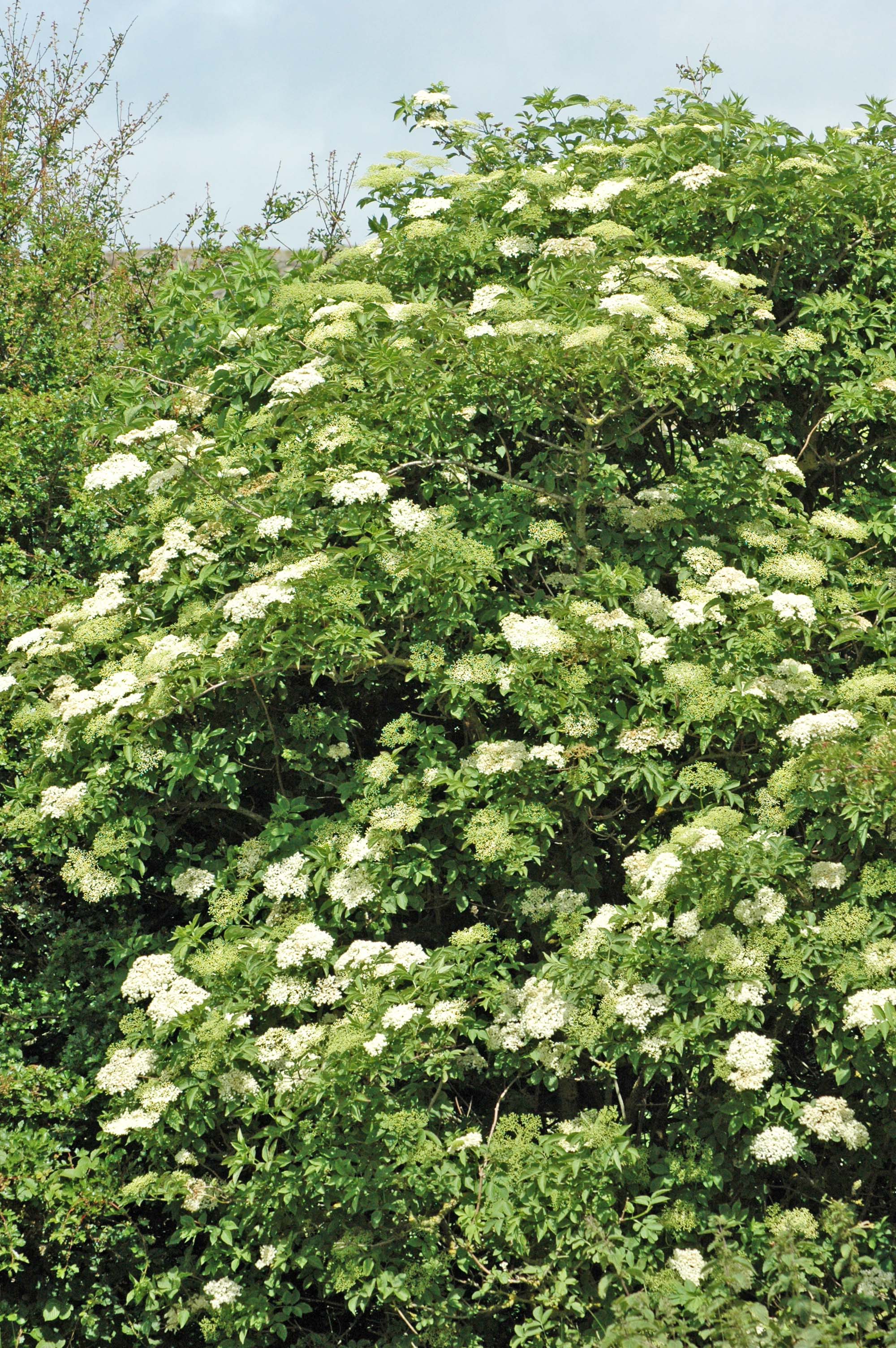
Elder blossom is prolific this year, summoning attention to the small shrubby trees that for most of the year just blend quietly into their surroundings. But no matter its appearance, the Elder is not at all what it seems to be and this common inhabitant of our woods, hedgerows and waysides is steeped to the tips of its twigs in ancient magic, rich and mysterious mythology and legend. Throughout history its character has been portrayed with ambivalence : kindly and beneficent one the one hand, spiteful and malevolent on the other.

The Elder tree

Scientific name: Sambucus niger Family: Adoxaceae (reclassified from Caprifoliaceae (Honeysuckle) Height: to 10m; deciduous Flowering: Early Summer: Native to Great Britain & Ireland

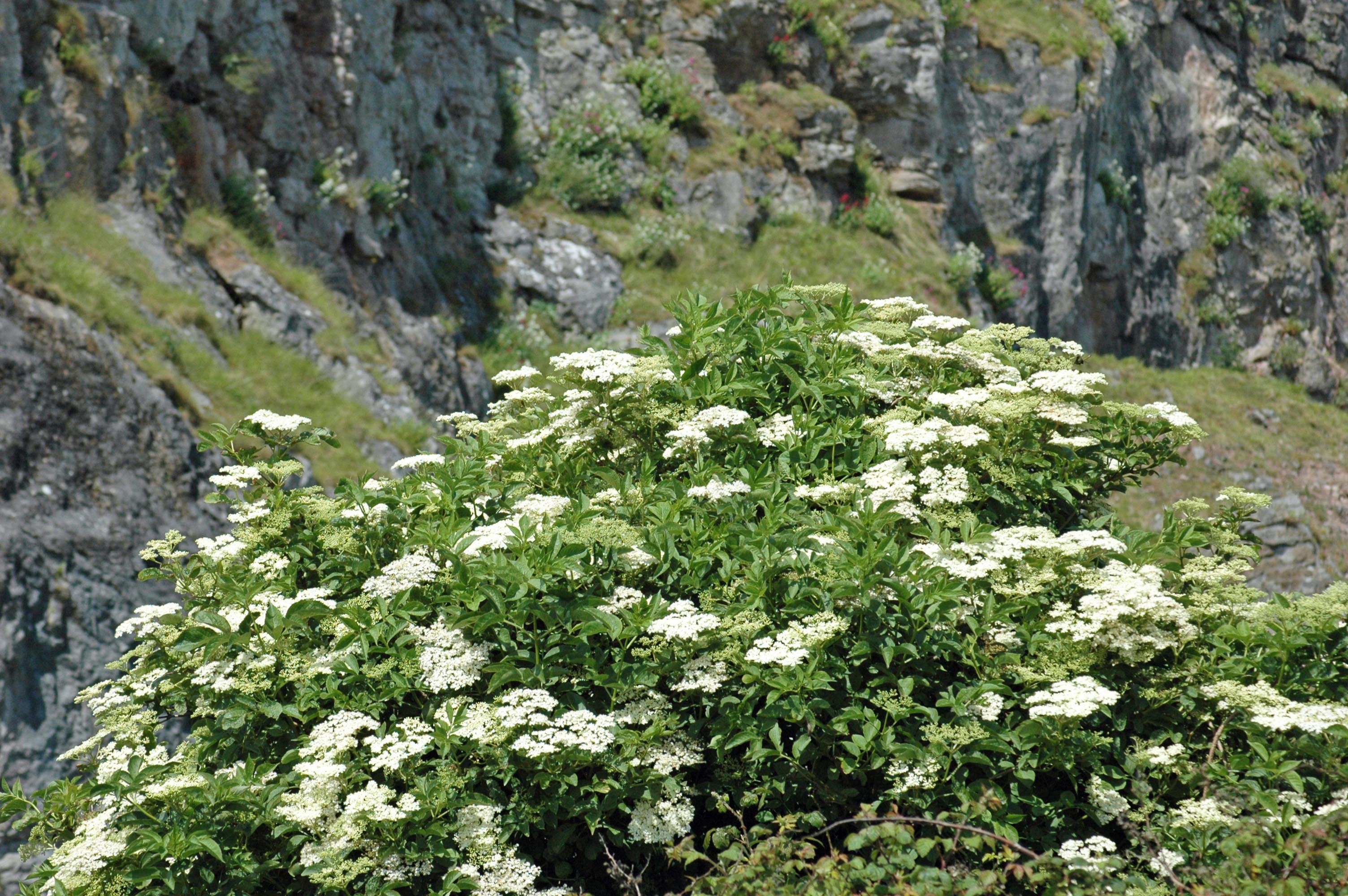
Elder tree in full blossom - Little Orme

Elder tree in full blossom – Little Orme

Leaves are a dull green, compound in shape, usually 5-7 leaflets are unstalked and arranged in opposite pairs with a single leaf at the end. The leaf edges are serrated or toothed.  The leaves are poisonous too. The purplish leaf buds have spiky scales which likens them to a pineapple in shape. The berries are poisonous eaten raw.

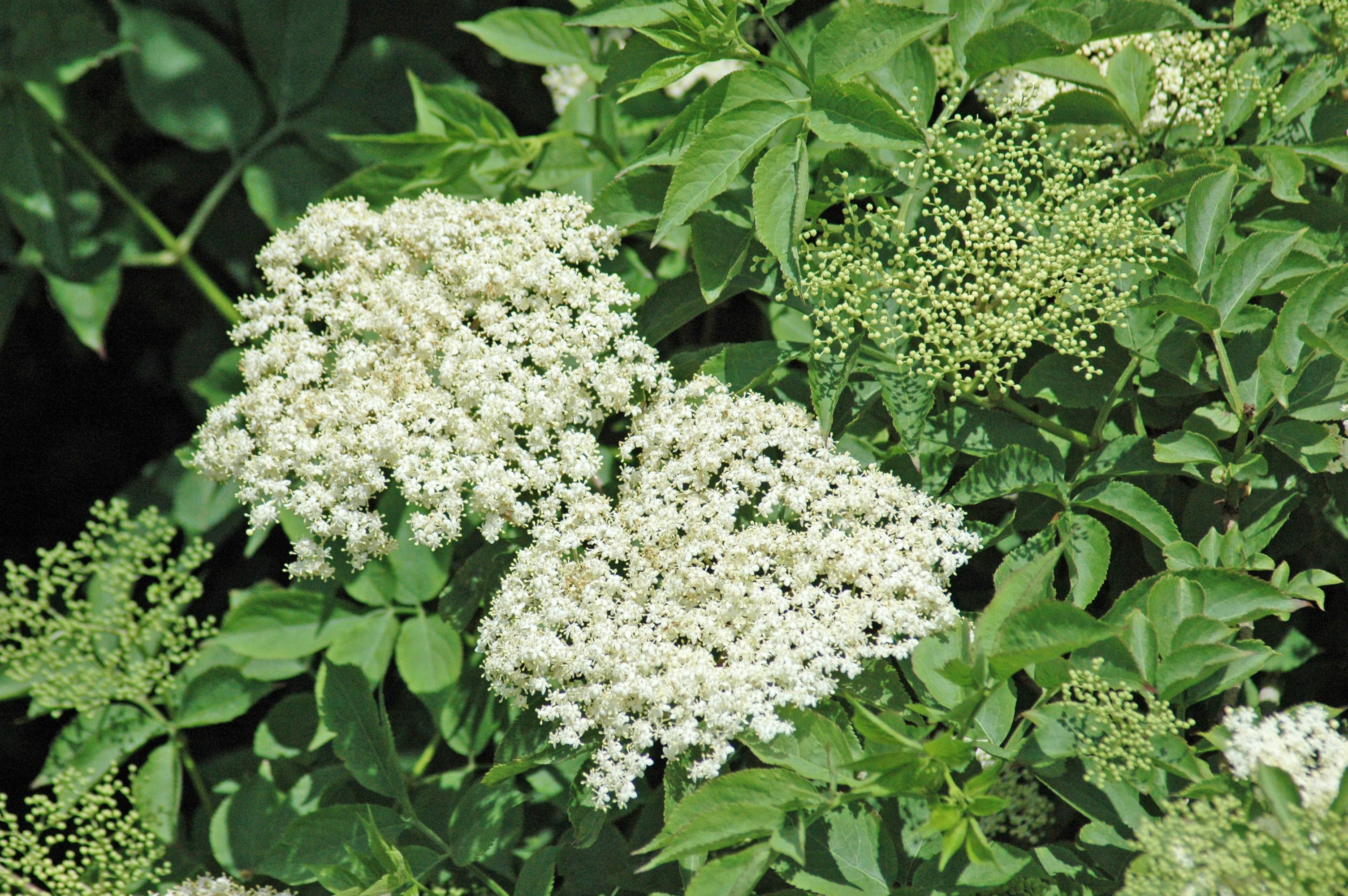
Elder blossom and leaves

Elder blossom and leaves

Folklore & Mythology

” English summer begins with elder flowers  and ends with elder berries”

In the Celtic lunar calendar, or Ogham calender, which ascribes a tree and a letter to each month, Elder is the tree of the thirteenth month and is known as Ruis and signifies the letter R. Standing at Samhain which is the end of the cycle of the agricultural year and a new beginning, Elder brings a message of transformation, change and spiritual renewal.

Elder acquired ill repute from its traditional use, and subsequent cursing, as the wood of the Cross upon which Christ was crucified and then as the tree from which Judas Iscariot hanged himself.  It became an emblem of death, trouble and sorrow. But Elder’s sinister reputation  is far older than Christianity and is thought to have sprung from ancient and now forgotten animistic beliefs.

In German and Scandinavian lore, the tree was inhabited by the Elder Mother (Hyldemöer)  or Lady Elder, whose permission must be sought before the tree was even touched, let alone cut. In order to make use of the magical power of the tree, the correct prayers and offerings would have to be made otherwise Hyldemöer would take her revenge.

Elder is not for burning

To burn elder wood brought death and disaster and ‘raised the devil’. It was never used as firewood or burned by hedgers after it had been cut. In the Fens the tree was never touched after dark. If elder twigs were added to a fire, it showed its displeasure by going out. In North Staffordshire to burn elder ” brings the Old Lad (the devil) on top of the chimney”. Food cooked over an elder-wood fire, should you be foolish enough to light one, would not be fit to eat.

Elder tree with cliff of the Little Orme in the background

Elder tree with cliff of the Little Orme in the background

The Witch’s Tree

It is said that a witch can turn herself into an elder tree and its wood is used for the making of magic wands. (The most powerful wand in the realms of the  Harry Potter novels is a wand made of sambucus known as the “Elder Wand”.) In Ireland witches rode elder sticks, not broomsticks. A story was told in the village of Syresham in Northamptonshire, (which as a matter of interest to me, is very near where I was born and lived as a child), about a man who cut a stick for his son from an elder tree: he was horrified to see that the tree bled. On their way home they met a neighbour, a woman reputed to be a witch. Around her arm was a freshly blood-stained bandage…  Witches conjured rough weather by stirring a bucket of water with an elder twig.

Frothy elderflowers

Frothy elderflowers

The scent of the white elder flowers was said to poison anyone foolish enough to fall asleep beneath the tree. Sitting under, or more riskily sleeping under, an elder at midsummer was said to enable one to see the faeries,  or even see them going to their midsummer feast. The danger then was of being transported into the Underworld and not being able to escape. Elder is certainly associated with a spirit being, or Queen who is a guardian of the Underworld, where faeries and spirits of the dead reside.

Counter-charms

Elder trees were planted by houses to protect them from lightning and evil spirits and promoted fertility. A lucky self-sown elder should be given a place to grow.  Welsh housewives made stencilled patterns around elder leaves on newly washed and whitened kitchen floors to keep witches away. Elder was often planted in graveyards and crosses of elder used to be placed on new graves: a flourishing elder showed that the dead were happy and, more importantly, would not walk.

Elder berries collected on St.John’s Eve, which is just before Midsummer, saved their possessor from witchcraft and awarded magic powers.

Traditional medicine

Elder has traditionally played a part in a myriad of  cures. According to Coles in Adam and Eden (1656):

“There is hardly a Disease from the Head to the Foot but it cures. It is profitable for the Headache, for Ravings and Wakings, Hypocondriack and Melancholly, the Falling-sickness, Catarrhes, Deafnesse, Faintnesse and Feacours.”

In Shropshire, a necklace of elder would be hung around the neck of a patient afflicted with Whooping Cough. In Somerset warts were treated by cutting a leaf with a number of slits corresponding to the number of the patient’s warts; the leaf was rubbed over the afflictions and buried. As the leaf decayed, the warts vanished. In Cambridgeshire an elder twig was chewed for toothache and then stuck into a wall with the message “Depart the evil spirit”. In Gloucestershire it was carried to ward off rheumatism.

Elder has been used medicinally for hundreds of years and it continues to play a part in modern herbal medicine. The berries and flowers are  the safest parts of the tree to use (the bark can be highly purgative and the leaves toxic in the wrong dosage). Modern research in recent years has corroborated Elder’s reputation as a flu remedy, revealing that a constituent in Elder berries surrounds the flu virus and stops it invading our cells, while boosting the immune-system. The berries are also a good source of Vitamin C.

Culinary Uses 

Elder berries are poisonous if eaten raw

Elder berries are poisonous if eaten raw

Elder has a great deal of human uses over history, mostly for food and drink. Elderflower cordial and ‘champagne’ is made from the flowers which can also be dipped in batter and fried as ‘fritters’. The berries are used to make rich wine.

Other Uses

Washing her face in dew gathered from elderflowers was believed to enhance and preserve a woman’s youthful beauty, and derivatives of elder continue to be used in skin cleansers and eye lotions.

It is thought that the name elder comes the Anglo-saxon ‘aeld’ meaning fire because the hollow stems could be used to blow air into the centre of a fire like bellows. When I was a child we picked straight pieces of elder twig, removed the pith from the centre and used the hollowed tubes as pea shooters. By the same principle, wood from the elder tree lends itself well to the making of whistles, pipes, chanters and other musical instruments, as the soft pithy core is easily removed to create hollow pipes of a pale, hard, easily-polished wood.  Hollowed elderberry twigs have traditionally been used as spiles to tap maple trees for syrup.

Wood from the elder tree lends itself well to the making of whistles, pipes, chanters and other musical instruments, as the branches contain a soft pithy core which is easily removed to create hollow pipes of a pale, hard, easily-polished wood.

The pith of elder has been used by watchmakers for cleaning tools before intricate work.

The elder is not a common tree across the Scottish Highlands, but despite its relative scarcity, the parts of the tree used for dying were important to the Harris tweed industry, with blue and purple dyes being derived from the berries, yellow and green from the leaves and grey and black from the bark.

Uses for wildlife

The berries are a very valuable food resource for many birds.  Elders are used as food plants by the larvae of some Lepidoptera species including Brown-tail, Buff Ermine, Dot Moth, Emperor Moth, the Engrailed, Swallow-tailed Moth and the V-pug.

Dead elder wood is the preferred habitat of the mushroom Auricularia auricula-judae, also known as “Judas’ ear fungus”.

Share this:

  • Click to share on Facebook (Opens in new window) Facebook
  • Click to share on Pinterest (Opens in new window) Pinterest
  • Click to share on X (Opens in new window) X
Like Loading...
Follow everyday nature trails on WordPress.com

Enter your email address to follow this blog and receive notifications of new posts by email.

‘But it is the common species that keep the living world ticking over and provide most of our experiences of wildlife, and I would argue that maintaining the abundance of these is as important a conservation priority as maintaining the existence of rarities’. Richard Mabey

MOST RECENT POSTS

  • A Glimpse of Spring to Come January 22, 2025
  • Hunting the Wren December 28, 2024
  • Oh, Christmas Tree December 18, 2024
  • In and Out of the Ivy February 15, 2024
  • Nature’s Fireworks November 30, 2023
  • Wild Autumn along the Coast Path November 3, 2023

OLDER POSTS

LOOKING FOR SOMETHING IN PARTICULAR?

  • Of Gorse, Furze or Whin
    Of Gorse, Furze or Whin
  • The Foxglove - of Fairytales, Myths & Medicine
    The Foxglove - of Fairytales, Myths & Medicine
  • Spot the 'greens' on the Little Orme, but please don't eat them!
    Spot the 'greens' on the Little Orme, but please don't eat them!
  • Hunting the Wren
    Hunting the Wren
  • The craft and artistry of nest building
    The craft and artistry of nest building
  • Red-berry trail
    Red-berry trail
  • Little Orme in early June
    Little Orme in early June
  • Enchanting evening on the Little Orme
    Enchanting evening on the Little Orme
  • Discoveries on the Little Orme's snail trails
    Discoveries on the Little Orme's snail trails
  • Seashore treats
    Seashore treats

nightingale trails

The Walk of the Monarch Butterfly-Sendero de la Mariposa Monarca

The Walk of the Monarch Butterfly-Sendero de la Mariposa Monarca

MY WILDFLOWER BLOG: where the wildflowers are

Snowdrop

Snowdrop

most recent posts

Follow everyday nature trails on WordPress.com

Social

  • View teresamaygreen’s profile on Twitter

Enter your email address to follow this blog and receive notifications of new posts by email.

Website Built with WordPress.com.

  • Subscribe Subscribed
    • everyday nature trails
    • Join 359 other subscribers
    • Already have a WordPress.com account? Log in now.
    • everyday nature trails
    • Subscribe Subscribed
    • Sign up
    • Log in
    • Report this content
    • View site in Reader
    • Manage subscriptions
    • Collapse this bar
 

Loading Comments...
 

    %d