• Home
  • about
  • about the photographs
  • Local Nature Reserves
    • Bryn Euryn Local Nature Reserve
    • Mynydd Marian
  • Wales Coast Path
    • Grey Seals in North Wales
    • St.Trillo’s Chapel
    • Wildflowers of North Wales Coastal Paths, Cliffs and Dunes

everyday nature trails

everyday nature trails

Category Archives: Butterflies of Wales

Mellow autumn

23 Thursday Oct 2014

Posted by theresagreen in Butterflies of Wales, calcareous grassland, coastal habitat, coastal walks, Nature, Nature of Wales, nature of woodlands, nature photography, Wildflowers of Wales

≈ 5 Comments

Tags

autumn woodland, Bryn Euryn Nature Reserve, common buzzard, eyebright, galls on back of oak leaves, hawthorn berries, silver birch, spangle gall, speckled wood, St John's Wort, wildflowers of Bryn Euryn

Me it delights in mellow autumn tide,                                                                       To mark the pleasaunce that my eye surrounds,                                                 The forest trees like coloured posies pied,                                                            The uplands mealy grey and russet grounds;                                                Seeking for joy where joyaunce most abounds…….                                                                                from Autumn by John Clare

Autumn certainly has been joyous this year and even the blustery tail-end effects of hurricane Gonzalo have failed to provoke most of our habitual complaints about the weather. Temperature-wise, a  walk I took on Bryn Euryn just a couple of weeks ago felt more like early summer than approaching winter and although many of the signs of autumn were in place, there were a surprising number of wildflowers in bloom and butterflies, bees and various flies on the wing.

Quarry-field cliff crowned with autumn colours

Quarry-field cliff crowned with autumn colours

Teasel  seed-heads amongst thistles

A prickly selection – teasel seed-heads amongst thistles

The woodland tracks are covered with layers of dried fallen leaves that rustle when stepped upon and the soft musky scent of their decaying matter fills the air.

Sun-dappled woodland track covered with dry fallen leaves

Sun-dappled woodland track covered with dry fallen leaves

Wild clematis is prolific throughout the reserve and curtains of the fluffy dried seed-heads is draped over vegetation of varying heights and is living up to its common name of Old Man’s Beard.
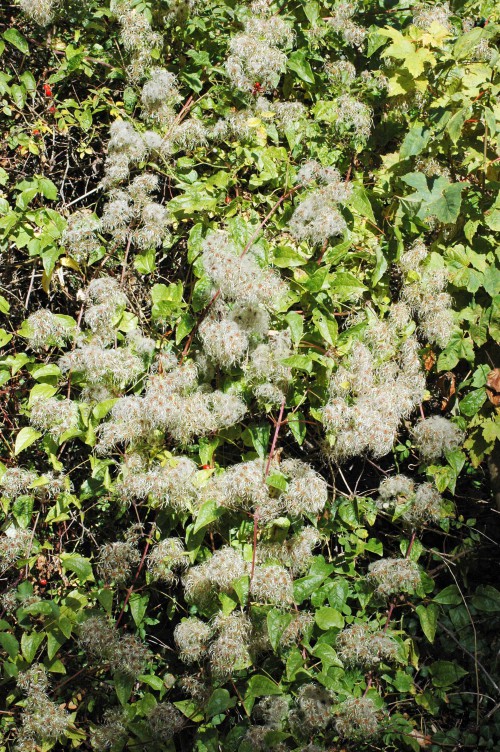
Fluffy seed heads of wild clematis or 'old man's beard'

Fluffy seed heads of wild clematis or ‘old man’s beard’

The individual seed-heads are prettily composed and shine silver in the sunlight.
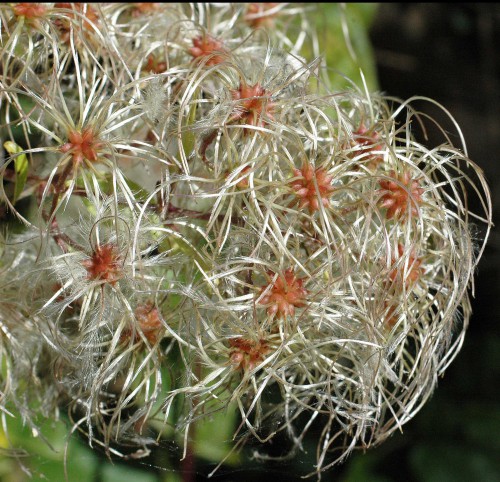
141002(6)TGNW-Bryn Euryn-Old man's beard close-up

Clusters of silvery filaments make up a seed-head of wild clematis

The bountiful crops of haws on the hawthorn trees are still untouched by birds and have turned a rich ruby red.

Rich pickings still to come for hungry birds

Rich pickings still to come for hungry birds

Hawthorn leaves also turning red

Hawthorn leaves also turning red

Although there are bountiful berry crops, the oak trees do not seem to have produced many acorns this season.
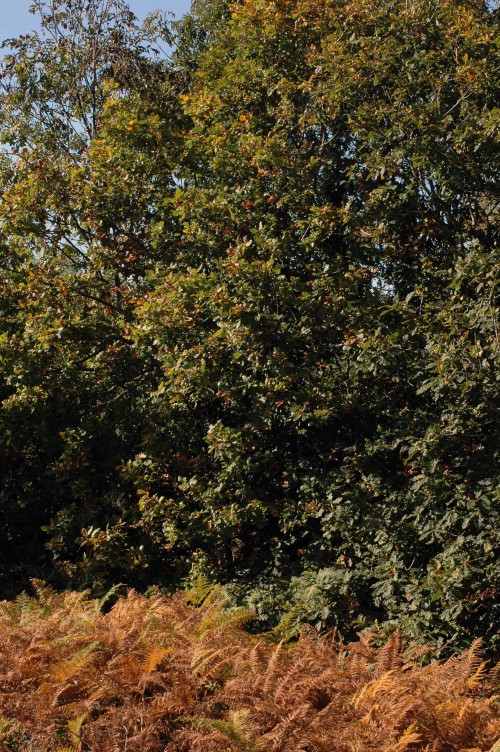
Oak tree with bracken in the foreground

Oak tree with bracken in the foreground

Oak leaves turning colour

Oak leaves turning colour

There are ‘crops’ of spangle galls though.
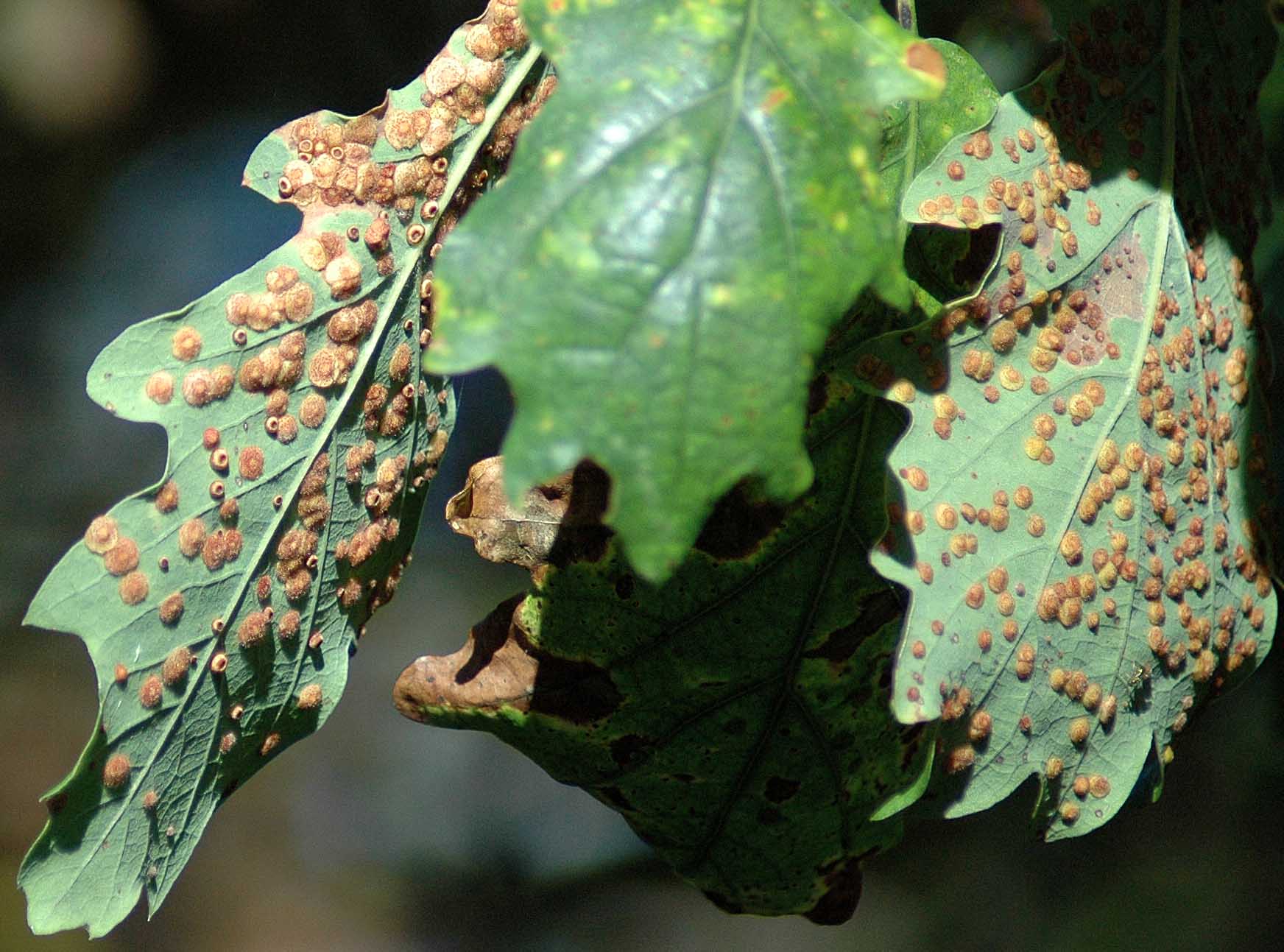
141002(17)TGNW-Bryn Euryn- Spangle galls on oak leaves

Spangle galls on oak leaves

Before climbing up the steep track through the woods on the way to the summit I sat for a few minutes on a rock to note down what I’d seen so far and was scrutinised for a few seconds by a buzzard that flew in over the treetops. This is a favoured spot of the locally resident buzzard, known to local visitors to the site as Lucifer and if you are here for any length of time you have to be quite unlucky not to get at least a glimpse of him here. He was accompanied by his mate today and didn’t linger, moving away in a leisurely circling kind of way towards Penrhyn Hill and the Little Orme.

Buzzards circling Penrhyn Hill

Buzzards circling Penrhyn Hill

I noted: ” I’m sitting on one of my favourite rocks. It’s around noon, the sun is high in a blue sky with just the faintest wash of wispy white cloud and is so hot I can feel it burning my legs through my jeans. The grassy areas have all been cut but a few wildflowers in bloom including rockrose, harebell & a bit of hogweed. There are butterflies, mostly speckled woods, but also a red admiral. Drone flies come to bask on the sun-warmed rocks and several wasps are seeking available food sources. Birds are still fairly quiet, I’ve heard the occasional song of a Robin and Blue and Great Tits calling to one another as they flit around foraging for food, but apart from the ever-present Crows everything else is keeping a low profile.”

Moving onwards and upwards along the track that leads out onto the ‘downland’ side of the hill I could hear drying leaves crackling in the heat of the sun. On the woodland edge there were several speckled woods flitting about, pausing often to settle on oak leaves. All appeared to be dark in colour and were not fully basking, but holding their wings partially closed.
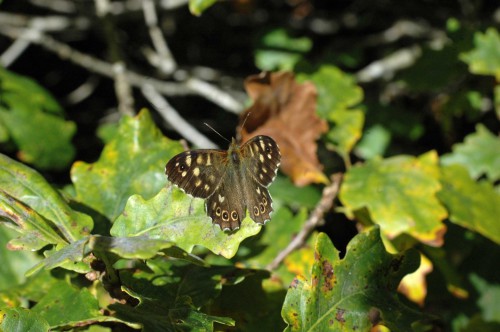
Speckled Wood basking on an oak leaf

Speckled Wood basking on an oak leaf

I photographed another insect here too: it looked like a small bee but was behaving more like a hoverfly.

Cute insect looking like a small bee and behaving like a hoverfly

Cute insect looking like a small bee and behaving like a hoverfly

There is a beautiful silver birch tree on the woodland edge. Its leaves are beginning to turn colour and it has attractive fruiting catkins that look like a bit like a small slender fir cone from which, during the winter and aided by birds, tiny winged nutlets will be released.

141002(26)TGNW-Bryn Euryn- Silver birch fruits

Silver birch leaves and fruiting bodies

141002(27)TGNW-Bryn Euryn- Silver birch fruit

Close up of fruiting body

The grass has been cut on the hillside too and the ground is criss-crossed with a lattice of bramble stems. There are a few plants of the wild Goldenrod still in flower, while others have gone to seed.

Goldenrod-Solidago virgaurea

The dry flower head with seeds attached looks as pretty as the fresh flower.

Goldenrod gone to seed

Goldenrod gone to seed

There was a fair amount of scabious still in flower and was attracting a busy little Carder Bee.
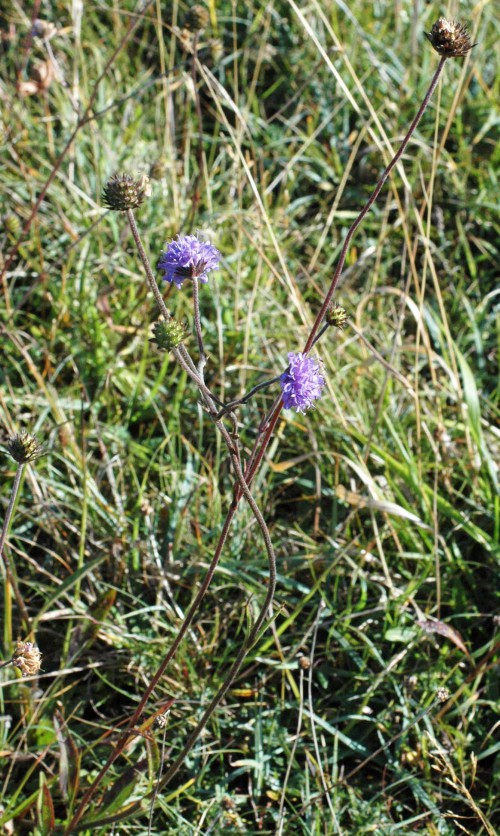
Scabious still flowering

Scabious still flowering

There were a few eyebright plants still with their usual white flowers, and one that I came upon had pretty pink-purple edged petals with a yellow patch in the centre.

Eyebright with purple-pink edged petals

Eyebright with purple-pink edged petals

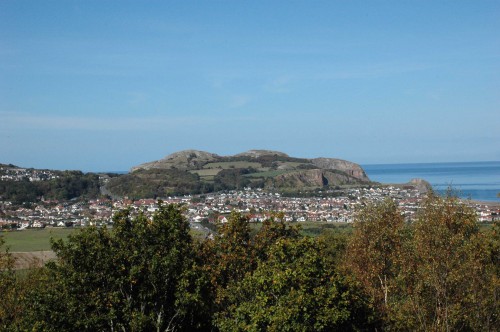
The views from the hillside were outstanding today as it was perfectly clear and bright which rarely happens in the summer months.
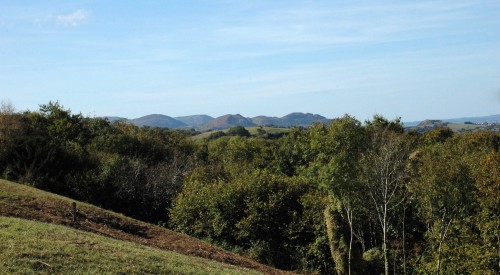
Looking down onto woodland across the hillside. Carneddau Mountains in the background
Looking down onto woodland across the hillside. Carneddau Mountains in the background

Little Orme & Penrhyn Bay village

Little Orme & Penrhyn Bay village

The sea was almost flat calm and in as many shades of blue as I have ever seen it.

The sea in many shades of blue

The sea in many shades of blue

Looking down the coast to Abergele & Rhyl

Looking down the coast to Colwyn Bay, Abergele & Rhyl


Share this:

  • Share on Facebook (Opens in new window) Facebook
  • Share on Pinterest (Opens in new window) Pinterest
  • Share on X (Opens in new window) X
Like Loading...

Life in the long grass

10 Sunday Aug 2014

Posted by theresagreen in Bryn Euryn Nature Reserve, bumblebees, Butterflies of Wales, day-flying moths, hoverflies, Nature, Nature of Wales, nature photography, spiders, wildflowers, Wildflowers of Wales

≈ 2 Comments

Tags

Aricia agestis, Brown Argus, butterflies in long grass, common blue, common knapweed, insects in long grass, keeled garlic, moths in the grass, Nursery Web spider, pisaura mirabilis, Polyammatus icarus, small hoverfly with snout, spider that makes web tents in grass

First week

The weather up here in our part of North Wales has been variable this week. We have had a good bit of rain which has freshened everywhere up and just  about enough warm sunshine to allow us to keep the faith that this is indeed high summer. It may not be the perfect weather for people here on holiday, but the local wildflowers and insects seem to be appreciating it.

Habitat: Long meadow grass

There is a whole other world existing in areas where grass is allowed to grow long and during the past couple of weeks I’ve begun to appreciate its importance as a home and a refuge for wildlife, particularly insects and spiders.

All journeys need a starting point and the following journey of discovery into the dimension of long grass began when I went to Bryn Euryn to see if a particular plant was in flower.

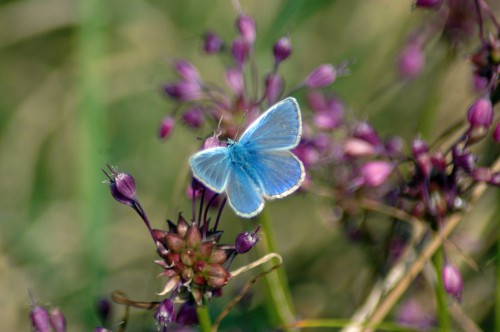
I’ve mentioned before that we have a few less-usual species of wildflowers growing in our locality and on Bryn Euryn this is the time to find one of them; the pink/purple flowered Keeled Garlic. I headed for the spot I had seen it in previous years and there it was, buzzing with bumblebees and more surprisingly attracting several beautiful little Common Blue butterflies.

Keeled Garlic

Keeled Garlic

I wondered at the attraction of this particular flower to the butterflies and thought perhaps they were just resting on the tiny flowers to sunbathe. A little later though I came upon another patch of the flowers with more Common Blues fluttering over and settling upon it, so maybe they were taking nectar from them. I was more than happy to see this many of the butterflies in the same place at the same time; I haven’t seen that for a long time.

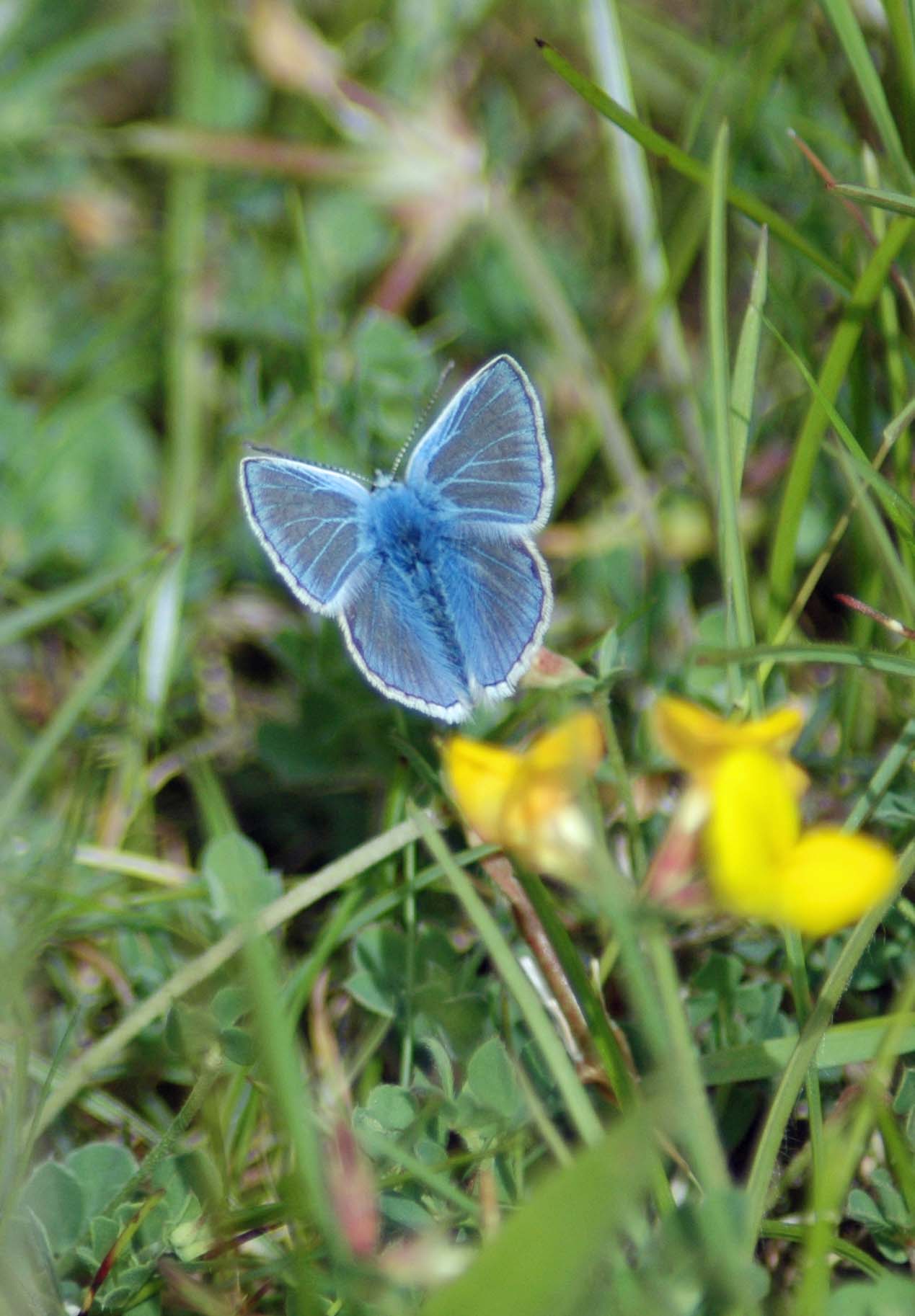
Male Common Blue butterfly on Keeled Garlic flower

Male Common Blue butterfly on Keeled Garlic flower

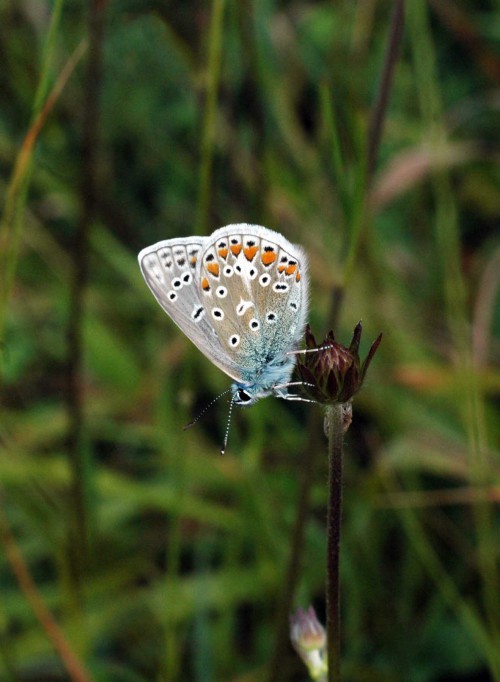
Female Common Blue butterfly, looking a bit more worn

Female Common Blue butterfly, looking a bit more worn

I was not the only one to recognise the attraction of insects to the garlic flowers. Lurking on top of her tent-like web, built to protect her eggs and then babies, sat a long-legged Nursery Web spider.

Nursery-web spider-

Nursery Web spider-

Nursery Web spiders are the spinners of the many web ‘tents’ seen in grassy places at this time of year. They take their common name from the way in which they care for their offspring. The female carries her large egg sac beneath her body, held in her jaws. Before the eggs hatch she spins the silken tent around the egg sac and stands guard over them. She remains on duty until the spiderlings are big enough to live independently. The spiders are active hunters and search for prey amongst grasses and low vegetation.

A neighbouring Nursery-web Spider

A neighbour

Walking carefully through the long grass, every step seems to disturb a dry-grass coloured moth. They are so well camouflaged that should you manage to keep track of where they land, it’s not easy to find them again; then if you manage a picture of sorts identifying them afterwards is even harder. The one below, which landed on the pupa of a 6-Spot Burnet moth which I would otherwise not have spotted, maybe Crambus pascuella (?) As always, I’m more than happy to be corrected.

This one landed on the pupa of a 6-spot Burnet Moth

This one landed on the pupa of a 6-spot Burnet Moth

In places amongst the grass knapweed is beginning to open up it tight dark knots of buds to allow the purple brush-head of petals to escape. Knapweed is a hugely important source of nectar for a wide variety of insects, but more about the plant and its visitors later.

Knapweed

Knapweed in long grass

Long grass on dry slope of ‘downland’

The area of long grass at the bottom of the summit slope on the drier, chalkier downland side of the Bryn has a different character to the flatter, damper meadow area. Some species of butterfly you may see here, although found in other parts of the Reserve, show a definite preference for the conditions it offers and may be more numerous. It is especially good for seeing the smaller species that gain protection from predators amongst the grass stems and include Small Heath, Small Skipper, Common Blue and the less-common Brown Argus.

The larval host plant of the Brown Argus is Rock Rose, which has been prolific in its flowering here this year and the leaves of the plants are still evident in the ‘under-story’ of this grassy forest. I was once again lucky with the timing of my visit this week; after a few minutes of pursuing little butterflies through the tangle of dry grass laced across with long outreaching bramble runners, I spotted a newly emerged Brown Argus balanced on top of a dry stem.

Brown Argus-

5/8/14 – Brown Argus- Aricia agestis

It stayed perfectly still, wings outstretched for quite a long time and made no attempt to fly off although I was very close and holding the camera lens just a few inches from it. I was almost certain this was in fact a Brown Argus and not a female Common Blue, but was compelled to wait and hope it would close its wings for me to see its underside. It eventually obliged and although the angle it presented wasn’t the best, thankfully it did confirm its identity with its diagnostic pattern of spots.

Brown Argus underside with 'figure of 8' spots on forewing

My Brown Argus underside with ‘figure of 8’ spots on hind wing

Common Blue male underside

4/8/14-Common Blue male underside

Spot the difference:

Text & diagram from the UK Butterflies web site demonstrates the differences:

Of the two sexes, it is the female Common Blue that causes most confusion with the Brown Argus. The blue present in a female Common Blue is highly variable, with individuals ranging from almost completely blue through to completely brown. It is this latter colouring that causes the most confusion. Even so, the Brown Argus has no blue scales, but may give off a blue sheen from the wings and the hairs found on the thorax and abdomen. Another diagnostic is that the Brown Argus normally has a prominent dark spot in the centre of the forewings.

Brown Argus - Common Blue undersides

Brown Argus on left & Common Blue on right of image


Share this:

  • Share on Facebook (Opens in new window) Facebook
  • Share on Pinterest (Opens in new window) Pinterest
  • Share on X (Opens in new window) X
Like Loading...

Enchanting evening on the Little Orme

03 Sunday Aug 2014

Posted by theresagreen in Butterflies of Wales, Little Orme, moths, Nature of Wales, nature photography, Rhiwledyn Nature Reserve, The Wales Coast Path, Wildflowers of Wales

≈ 2 Comments

Tags

6-spot Burnet Moth, 6-spot Burnet Moth pupa, Antler moth, cinnabar moth larvae, emerging 6-spot Burnet Moths, mating 6-spot Burnet Moths, small skipper, sulphur beetle

Some days the intention of a walk is at the forefront of my mind, then ‘stuff’ crops up and before I know it the day is almost over and the momentum needed to get me out of the door is fading fast. This was almost one of those days, when at six thirty-something I was still preoccupied with getting things done in the house. Luckily I finally acknowledged the little nagging voice in the back of my mind that was insisting I got out for some fresh air. I almost ignored it, then gave in, grabbed my camera, put on walking shoes and headed out with no real idea where I was heading for.

At around seven I arrived at the Little Orme. I knew before I arrived that by this time in the evening most of the area on this most accessible side of the headland would be in the shadow of its bulk, as the late sun slips down and slides around it to set just about behind its tip. There were quite a few people about too; dog walkers of course, some holidaymakers dressed up for the evening, maybe taking an evening constitutional before dinner & a couple of groups of teenagers, one lot jumping, diving, shouting and laughing from a rocky ledge into the sea.  I quickly judged that this was not a scenario I would normally enter into if hoping to spot any wildlife and on that basis decided this outing would be for the purpose of exercise. So a brisk walk to the cliff edge, an about turn and a concerted effort to get to the top of Rabbit Hill with minimum stops to catch breath, back down again and home ought to do it.

A group of people with two dogs was heading toward me, so to avoid them momentarily I stepped off the main path onto a narrow track that leads around the cliff, skirting what is currently a large patch of long grass. It took less than a minute of being there to spot that a good number of Meadow Brown butterflies were flitting about amongst the grass stems and settling there. It took slightly longer to realise they were there to roost for the night.

Long grass on the clifftop of the Little Orme with view to Rhos-on-Sea & Colwyn Bay behind

Long grass on the clifftop of the Little Orme where the butterflies were roosting. Views to Rhos-on-Sea & Colwyn Bay beyond

I tried to approach several butterflies, treading slowly and carefully through the grass, but I couldn’t get close enough to them to photograph and hadn’t picked up my more powerful zoom lens when I left the house as I didn’t expect to need it. I continued to try until following one individual led me to discover a cluster of Six-spot Burnet Moths on a single grass-head.

Cluster of 6-spot Burnet Moths

Cluster of 6-spot Burnet Moths- Zygaena filipendulae

It was clear that the Moths were in differing conditions, with one n particular looking a bit battered and with most of the colour gone from its wings. I assumed that as with the Meadow Browns the Burnets were also seeking to roost for the night and turned my attention to a passing Small Skipper that settled obligingly on another nearby grass-head.

Small Skipper

Small Skipper- Thymelicus sylvestris

I was happy now, especially as in the cool of the evening the butterflies and moths were not as mobile as they are during the day and were allowing me to get quite close to them with the camera.

Another Small Skipper

Another Small Skipper

As I moved  through the grass and further towards the cliff edge I began seeing more Burnet moths. And more.

6-spot Burnet moths either side of a grasshead

6-spot Burnet moths either side of a grasshead


It slowly dawned upon me that although the butterflies were roosting, the moths were not. They were out intent on mating.

6-spot Burnet moths mating

6-spot Burnet moths mating

I could hardly believe the numbers of moths that were gathered here in this relatively small area of long grass. I have been to visit this reserve many times and felt lucky to see half a dozen individuals on a sunny afternoon, now I was surrounded by them. They were literally everywhere I looked. It still took a further while though to realise that even more amazingly, I had arrived at exactly the time the new moths were almost simultaneously emerging from their cocoons.

6-spot Burnet Moth emerging from its pupa

6-spot Burnet Moth emerging from its pupa

I had begun to spot the yellow cocoons with something black and alien-looking emerging from them, but couldn’t quite imagine it ending up as a moth at all, so at first thought they were something else. I don’t what, just something else.

A closer view of an emerging moth

A closer view of an emerging moth still doesn’t look like one

It was only when I spotted other Burnet moths perched on top of cocoons from which another was emerging that I was convinced that somehow these crumpled black forms would indeed eventually look just like them.

A 6-spot Burnet moth on top of an as-yet unbroken pupa

A 6-spot Burnet moth on top of an as-yet unbroken pupa

I began to wonder then why the moths were sitting on top of the pupae. I’m afraid the only theory I could come up with was that they were male moths staking a claim on emerging females to mate with them as soon as they became viable. Not pretty, but probably not far off the mark. (more about 6-spot Burnet Moth)

Two Burnet moths on top of a pupa from which another is emerging

Two Burnet moths on top of a pupa from which another is emerging

I tried watching an emergence for a while, but it seemed like a lengthy process, so still marvelling at my luck in witnessing this epic event, I left the moths to their nuptials and moved on. I would have been happy to have taken my previously outlined walk now and returned home, but it turned out there were still a few things to see in the gathering dusk.

A sleepy bumblebee curled around a blackberry

A sleepy bumblebee curled around a blackberry

Ragwort is in full vibrant bloom now and I just had to look for black and yellow striped caterpillars of the Cinnabar moth. I was not disappointed, there were plenty in sizes varying from very tiny to very large.

Small Cinnabar moth caterpillar on ragwort flower buds

Small Cinnabar moth caterpillar on ragwort flower buds

A large plump Cinnabar moth caterpillar snaked around a ragwort bud

A large plump Cinnabar moth caterpillar snaked around a ragwort bud while eating it

I was also fortunate to spot a prettily marked moth : this is an Antler moth, so called because of the distinctive antler-shaped markings on its forewings. One of the species that flies in daylight.

An attractive little Antler moth  on ragwort flowers

Antler moth- Cerapteryx graminis

Long grass with cliff wall of the Little Orme behind

Long grass with cliff wall of the Little Orme behind

On the cliff above Angel Bay is another patch of long grass, but here it is mixed with wildflowers such as hogweed, ragwort and a sprinkling of knapweed, all important nectar plants for insects. This evening there were still a few to be found out dining including bumblebees and one little Sulphur beetle.

Sulphur beetle- Cteniopus sulphureus

Sulphur beetle- Cteniopus sulphureus

I left for home happily and exercised – I made it up to the top of Rabbit Hill, admittedly pausing a couple of times, but why wouldn’t you when the view is so spectacular and the sun is setting so beautifully over the sea?

Share this:

  • Share on Facebook (Opens in new window) Facebook
  • Share on Pinterest (Opens in new window) Pinterest
  • Share on X (Opens in new window) X
Like Loading...

The Gatekeeper

10 Saturday Aug 2013

Posted by theresagreen in Bryn Euryn Nature Reserve, Butterflies of Wales, Nature of Wales, nature photography

≈ 8 Comments

Tags

gatekeeper butterfly, pyronia tythonus

Scientific name: Pyronia tithonus  (LINNAEUS, 1771) 

Family – NYMPHALIDAE; subfamily – SATYRINAE ;Wingspan range (male to female) – 40-47mm

Flight period: There is only one generation of this butterfly each year; adults begin to emerge in July, and populations peak in early August with only a few adults remaining by the end of the month.

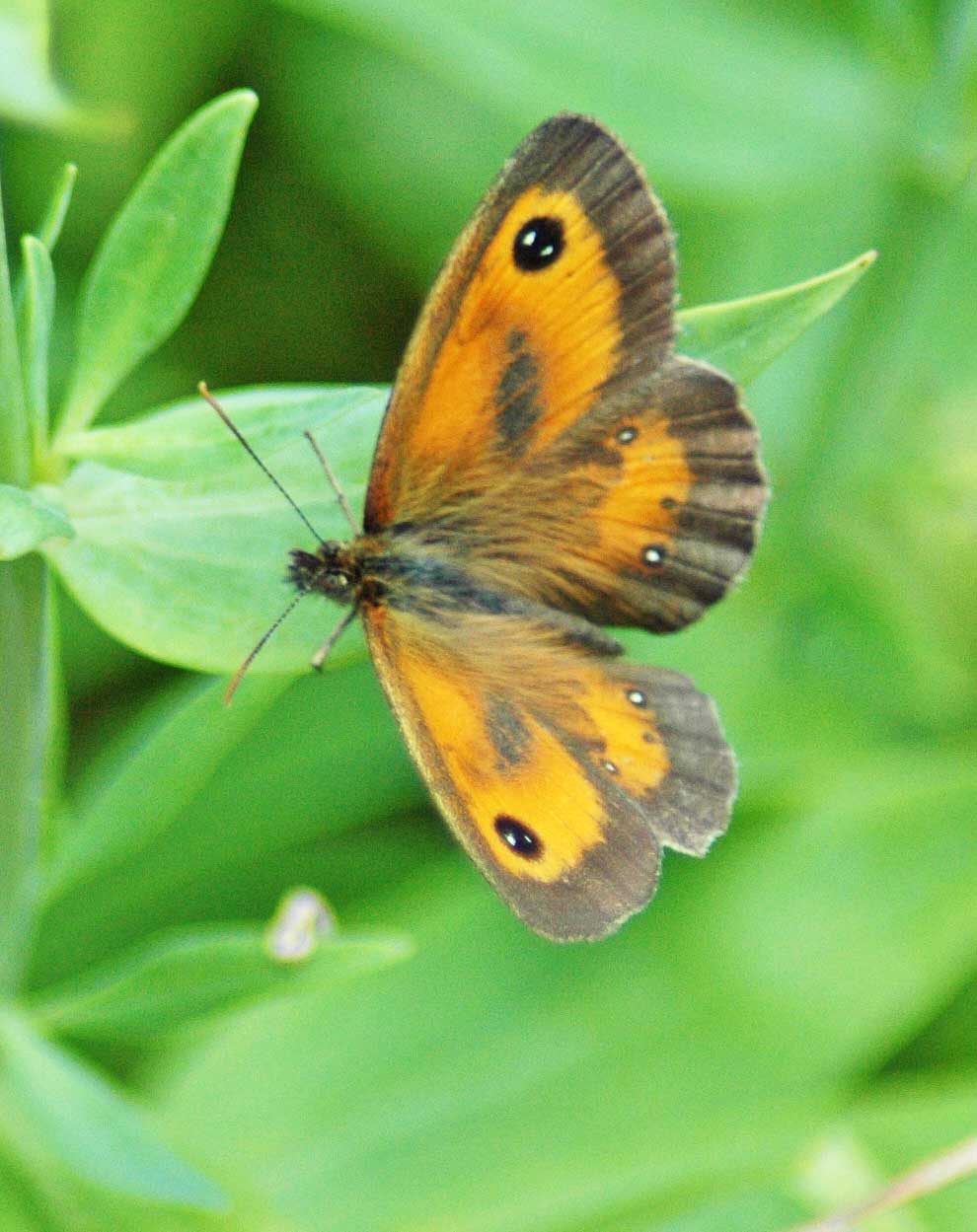
21/7/12-Gatekeeper - Pyronia tithonus

21/7/12-Gatekeeper – Pyronia tithonus (male)

Habitat 

Found where tall grasses grow close to hedges, trees or scrub. Typical habitats are along hedgerows and in woodland rides but the butterfly also occurs in habitats such as undercliffs and on heathland and downland where there are patches of scrub.

The name

The Gatekeeper is also known by the name Hedge Brown, and at various stages in history has also been called the Small Meadow Brown and Hedge Eye.  As suggested by its alternate name, Hedge Brown, the Gatekeeper butterfly favours the habitat of meadow margins and hedges. The butterflies frequently occurred near the open spaces around gates placed in hedges to give access to fields, and as they have the habit of flying up when disturbed it would appear that they were ‘gate-keeping’, such as men were employed to do at toll gates and at the entrances to country estates in the eighteenth and nineteenth centuries.

Description

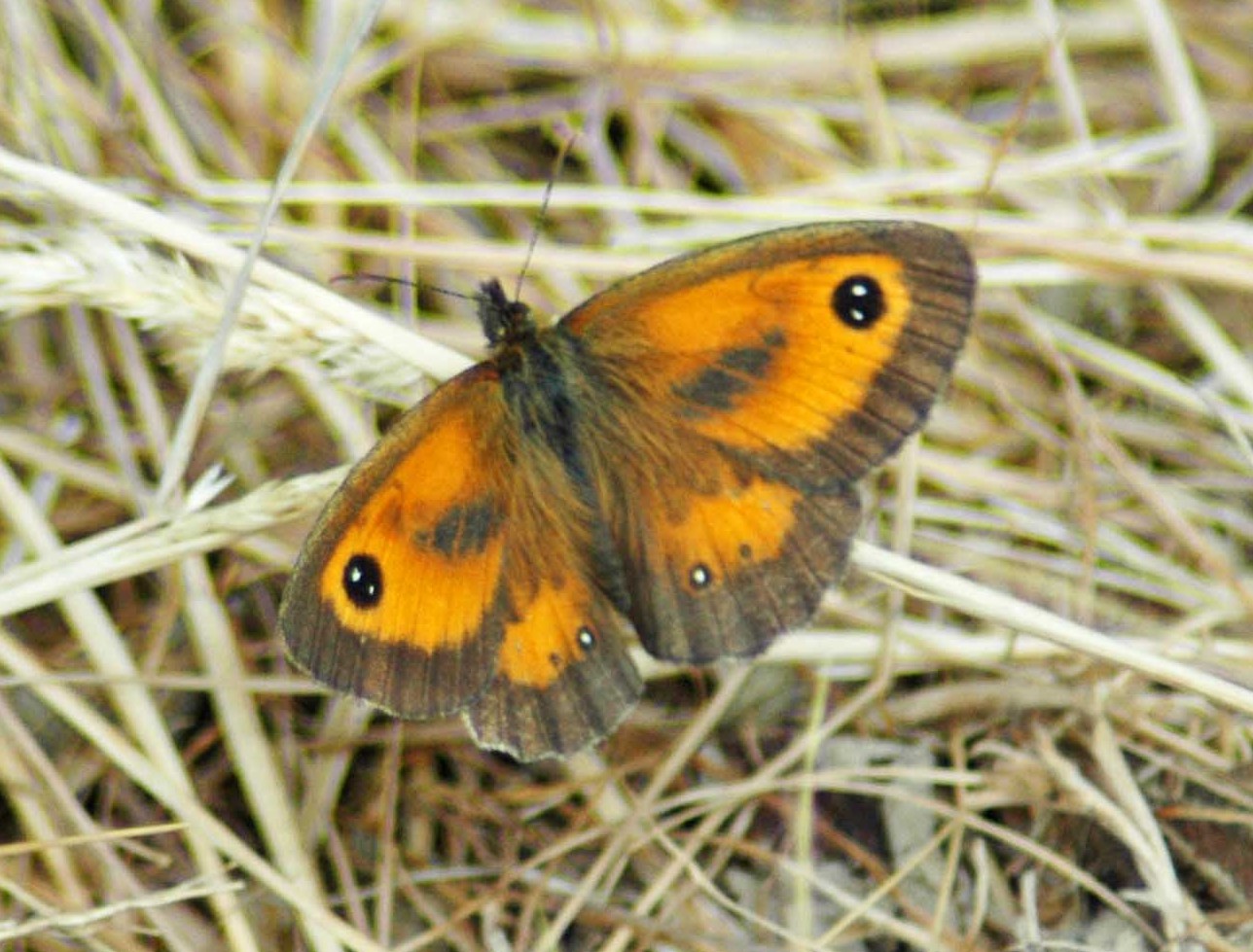
21/7/13-First sighting of a Gatekeeper this year-Little Orme

21/7/13-First sighting of a Gatekeeper this year-Little Orme

Orange  and brown, with black eyespot on forewing tip, eyespots have two white pupils. Males are noticeably smaller than females and have a dark brown patch of scent-producing (androconal) scales on the forewing, used to attract females during courtship. The colour and patterning of the wings are variable.

110722tgbfly-gatekeeper underside

22/7/11 – Gatekeeper underside (female)

Lifecycle

The first adults emerge in July and lay their eggs singly on grasses beneath bramble, hawthorn and blackthorn bushes where the grass stems grow tall and are not grazed by animals. They hatch after about 14 days and the larvae feed at night on various species of grass, with a preference for fine grasses such as bents, fescues, and meadow-grasses. Common Couch is also used. The full range of other species used is not known. They hibernate during September while they are quite small and re-awaken in March and April feeding slowly and reach maturity by late May – early June.

17/8/11 - Gatekeeper (female)- Rhos--on-Sea garden

17/8/11 – Gatekeeper (female)- Rhos–on-Sea garden

Adult behaviour

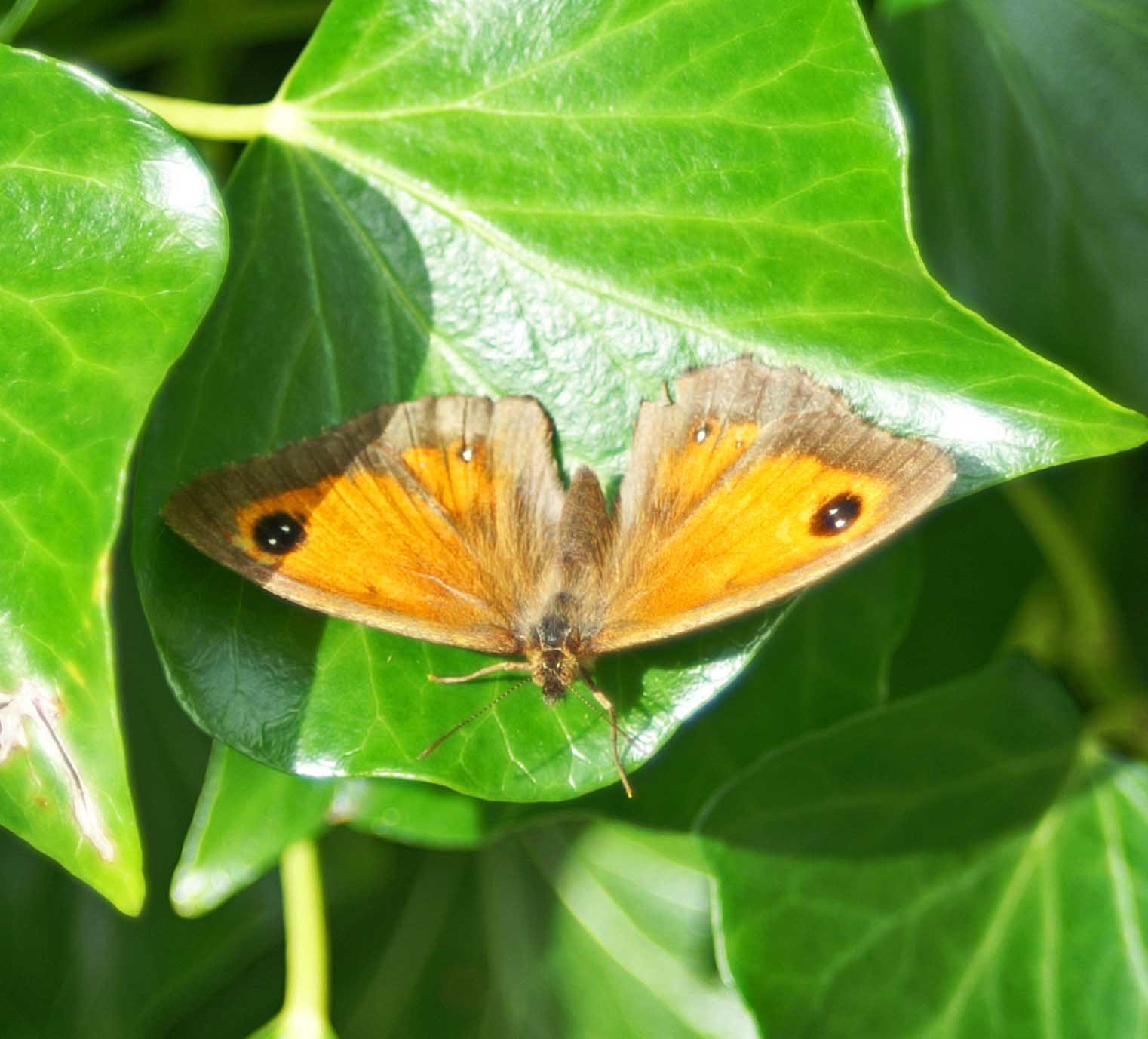
This butterfly spends much of its time basking with wings open, when the sexes are easy to tell apart – only the male has the distinctive sex brands on the forewings. Males set up small territories, often based on a particular shrub or bush, and readily fly up from their perch to investigate passing butterflies regardless of their species, in the hope of finding a mate.

17/8/11-Gatekeeper basking on ivy leaf-Rhos-on-Sea garden

17/8/11-Gatekeeper basking on ivy leaf-Rhos-on-Sea garden

Nectar sources

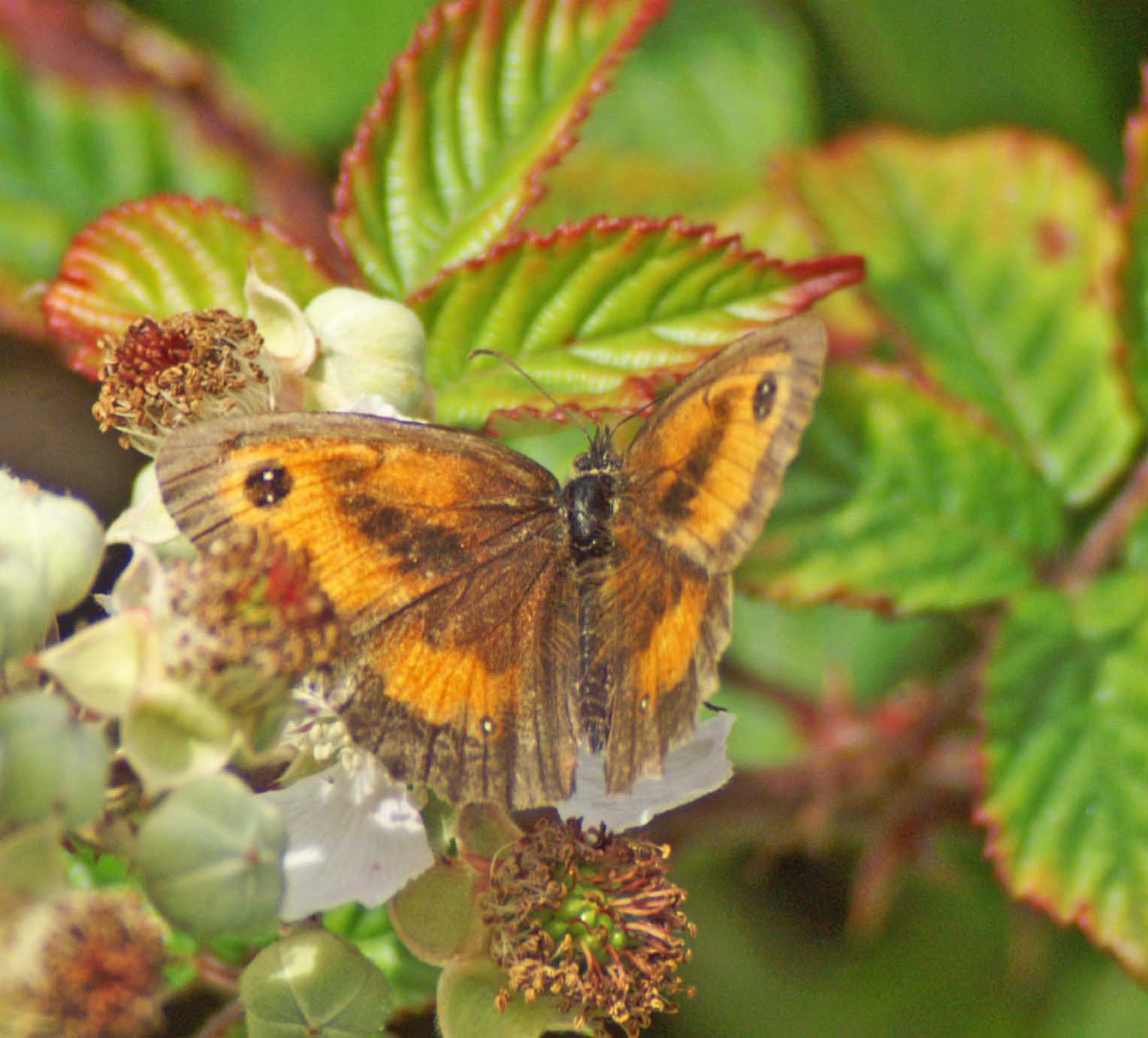
22/7/11 - Gatekeeper (m) nectaring on bramble flowers

22/7/11 – Gatekeeper (m) nectaring on bramble flowers

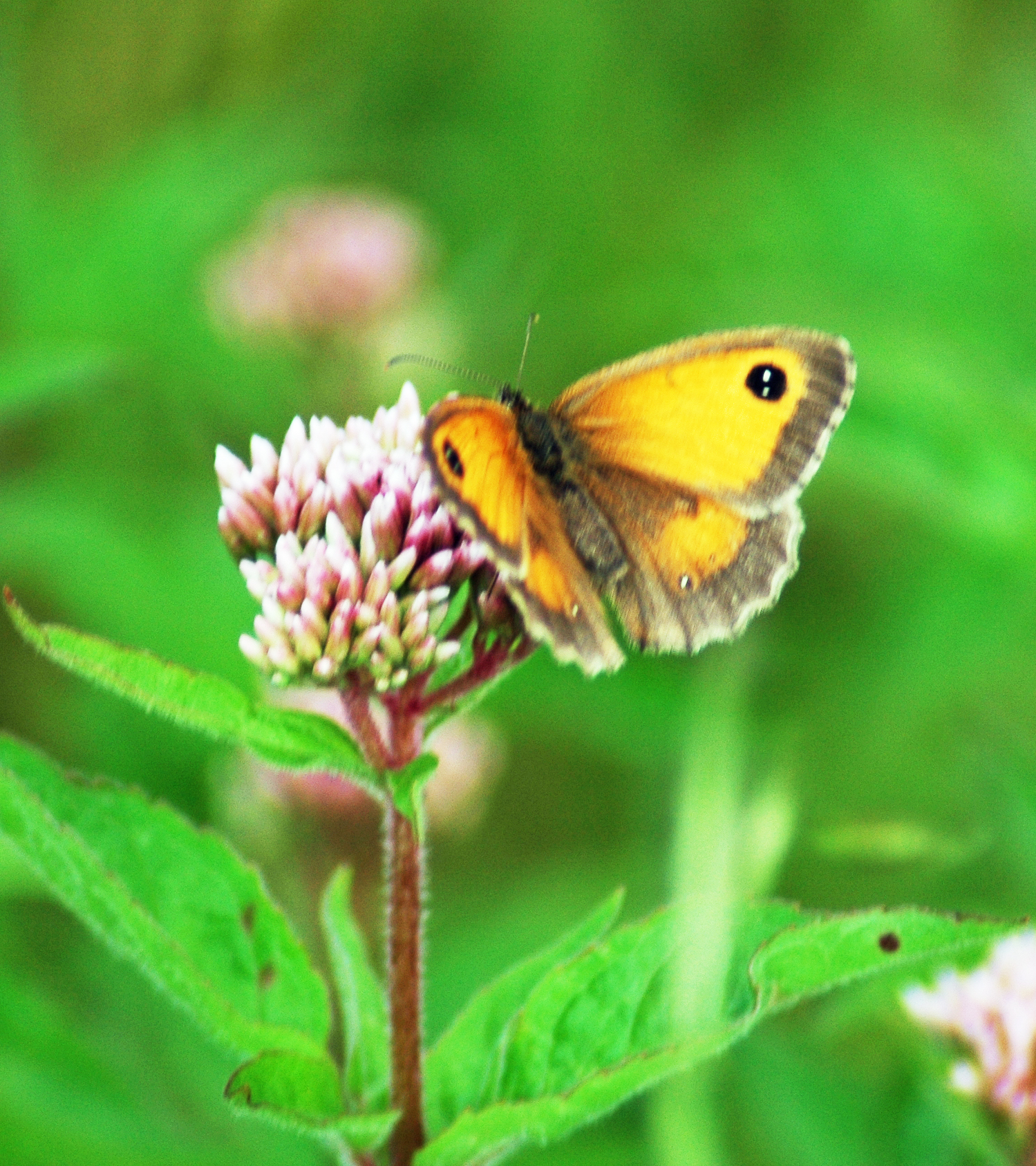
Adults favour Bramble, Ragwort, Scabious, Fleabane , Hemp Agrimony, Privet, Red Clover, Thistles and Thyme.

13/8/12 - Gatekeeper on Hemp Agrimony - Bryn Euryn

13/8/12 – Gatekeeper on Hemp Agrimony – Bryn Euryn

Distribution: The Gatekeeper is a common and widespread butterfly in England and Wales; found south of a line between Westmorland and South-east Yorkshire in the east. In Ireland it is confined to coastal areas of the south and south-east counties. The butterfly is also found in the Channel Islands, but is absent from Scotland and the Isle of Man.

Similar species

Meadow Brown on bramble flowers-Little Orme

Meadow Brown on bramble flowers-Little Orme

Meadow Brown; the two species may be difficult to distinguish with closed wings as the underwing markings are  similar. However, the Gatekeeper tends to rest with its wings open, whereas the Meadow Brown usually rests with its wings closed. The Gatekeeper is also smaller and more orange than the Meadow Brown and has double pupils on its eyespots.


Share this:

  • Share on Facebook (Opens in new window) Facebook
  • Share on Pinterest (Opens in new window) Pinterest
  • Share on X (Opens in new window) X
Like Loading...

All is bright and beautiful at the top of the Bryn

20 Saturday Jul 2013

Posted by theresagreen in Bryn Euryn Nature Reserve, Butterflies of Wales, Nature, Nature of Wales, nature photography, Wildflowers of Wales

≈ 8 Comments

Tags

carline thistle, dark green fritillary, fox, grayling, myathropa florea, sulphur beetle

I had thought about venturing a bit further afield today, maybe over to Anglesey, but weekends are never good for travelling any distances in this popular holiday location, and the North Wales Expressway (the A55) is the route to and from the ferry port of Holyhead too, so unless you leave early you can end up spending an uncomfortably long time in your car. So I decided on Bryn Euryn instead, where I was hoping to get a glimpse of a particularly lovely butterfly.

There were people picnicking in the field, so I headed straight for the top of the hill today, half expecting to find more people up there too, but there was no one at all. Most people head for the beach when its this hot. The view from here is always amazing as I’ve said so many times before and today’s gives an overview of the progress of summer. So, queen of the castle for a short while, I surveyed the land below and around me. There was a bit of a haze over the horizon, hay has been cut, dried out and rolled into big shredded-wheats ( for those who are wondering, that’s a British breakfast cereal), grass meadows are turning brown in the dry heat, wheat is ripening and trees and hedges add shape and texture to the landscape in a myriad shades of green. You also get a good view of the express-way from up here: I was so glad I wasn’t on it, it was very busy.     

Summer view from the top of Bryn Euryn

Summer view from the top of Bryn Euryn (click to enlarge)

A patchwork of treetops viewed from above

A patchwork of treetops viewed from above (click to enlarge)

There are not many wildflowers that can survive the dry rocky summer conditions on this edge of the hill, where the rockroses bloomed so prolifically a few weeks ago, but one that can is the strangely attractive Carline Thistle, which looks as though it’s going to seed, but in fact its flowers are brown. This species of thistle is found in several locations locally, but is a biennial and a bit unpredictable in its appearances.

Carline Thistle

Carline Thistle-Carlina vulgaris

There were Small Tortoishell butterflies flitting about up here, basking briefly on rocks before disappearing over the cliff edge. Looking down I could see a number of them, maybe a dozen or so, very restless and taunting and chasing each other; at one point a group of seven of them flew up in a flurry, whirling around like mad things.

Scabious is beginning to put forward much-needed flowers; their nectar and pollen is always gratefully received by butterflies and bees.

First flowers of scabious with a bumblebee

First flowers of scabious with a bumblebee

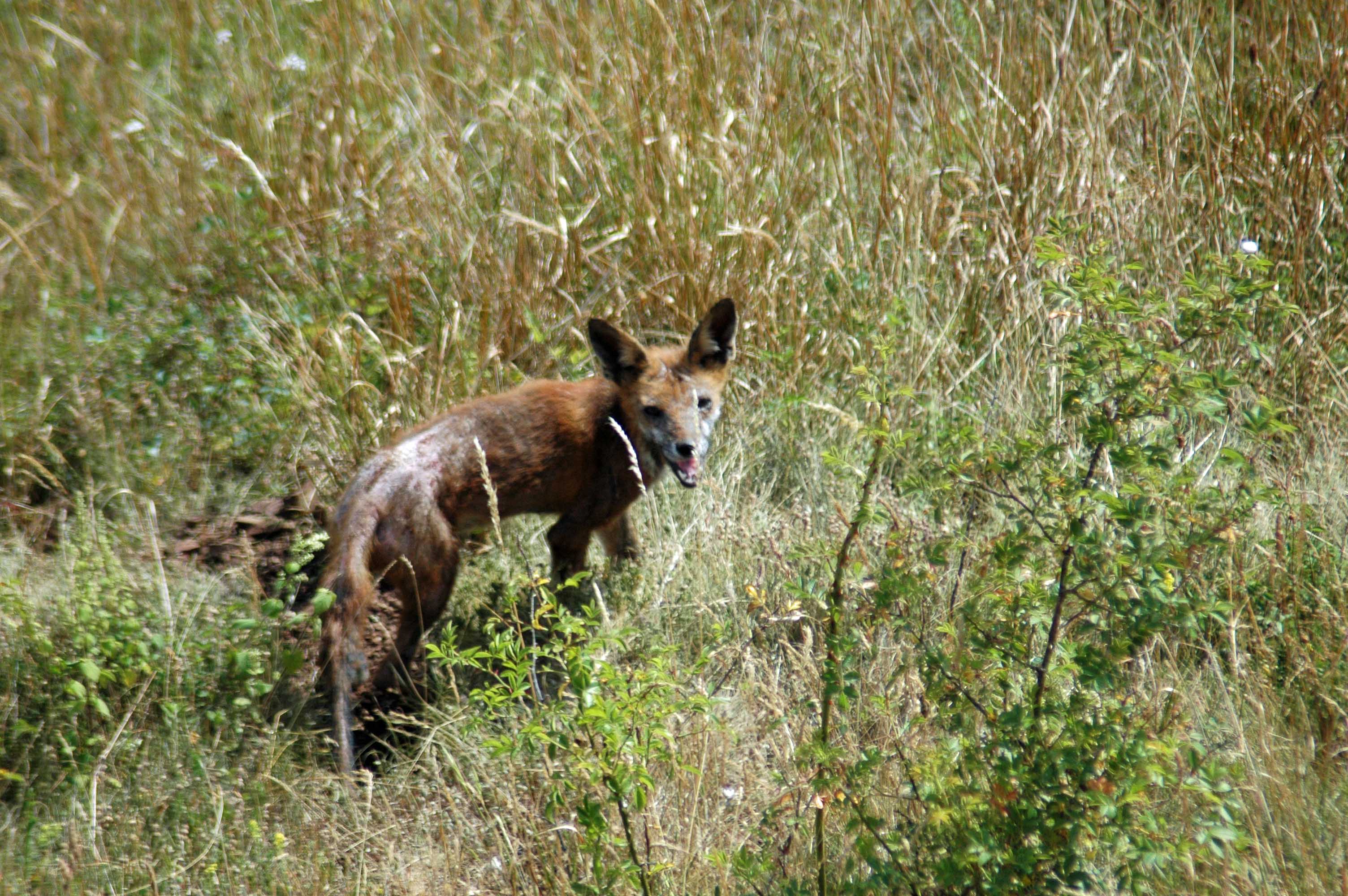
As I was peering over the edge of the cliff to watch the butterflies, I sudddenly realised someone was looking up at me; a fox, panting in the heat couldn’t decide if I was a threat or not so dived back into its den just to be sure.

130714TGNR-Fox looking up at me-Bryn Euryn

Little fox looking up at me

Fox disappearing into its earth

Fox disappearing into its earth

I couldn’t decide if it was a young animal or an adult, but either way it was not looking good. Apart from dealing with the heat it looked thin and its rear end and tail were devoid of fur, poor thing. Does it have some horrible condition like mange?

130714TGNR-Fox not looking too good-Bryn Euryn

the fox’s back and normally bushy tail were bare of fur

I moved on a little further back from the edge to where the grass is long and some ‘scrubby’ wild plants have been left to grow, perfect habitat for insects.

A flowery patch amongst long grass with hogweed, ragwort, wood sage,  lady's bedstraw & more

A flowery patch amongst long grass with hogweed, ragwort, wood sage, lady’s bedstraw & more

And  lo and behold, the first butterfly to catch my eye was the one I had been hoping to see, a gorgeous Dark Green Fritillary, drawn by nothing more exotic than red valerian flowers.

Perfect Dark Green Fritillary nectaring on valerian

Perfect Dark Green Fritillary nectaring on valerian

There were two of the beautiful insects flying around; these are fast, powerful fliers that can cover a large area in a short time. They don’t tend to leave their breeding areas, so once you know where to find them, providing conditions are good, you will more than likely see them there again. I didn’t see any last year, so was delighted to see some today and it was a bonus that they were ‘new’ and perfect.

A glimpse of an underside

A glimpse of an underside

The butterflies were very mobile,  and with no need to bask, not staying anywhere for long. I had no time for considered portraits,  these were very much opportunities grabbed, but I was more than happy just to watch them.

Wood Sage- Teucrium scorodonia

Wood Sage- Teucrium scorodonia. Aromatic and attractive to bumblebees

Hogweed is continuing to show me new visitors to its flowers:

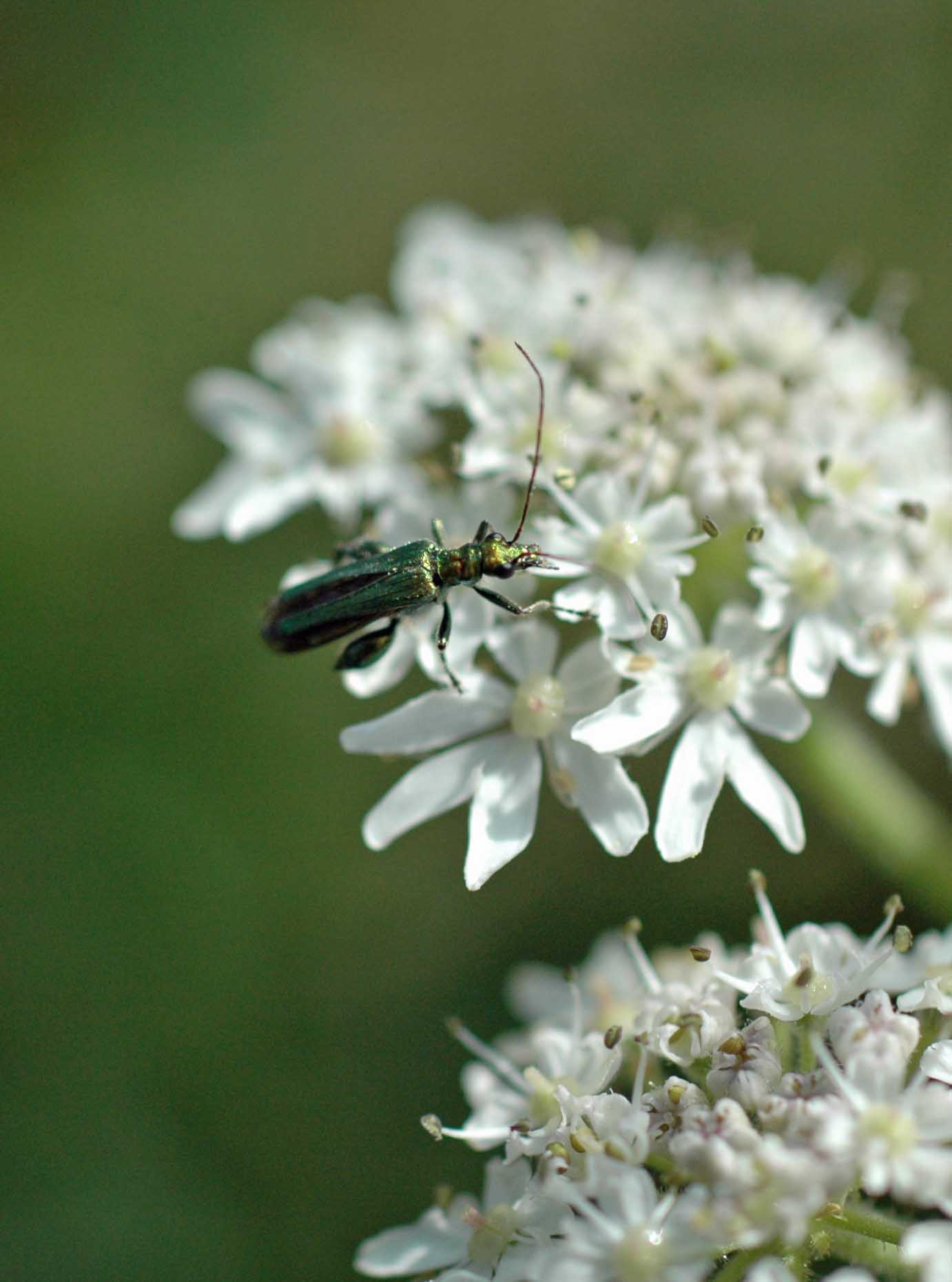
A glamorous beetle with a clumsy common name  of  'Swollen-thighed Beetle' - Oedemera nobilis

A glamorous beetle with a clumsy common name of ‘Swollen-thighed Beetle’ – Oedemera nobilis

A ‘new’ hoverfly for my collection, which I hope I have identified correctly

Hoverfly-Myathropa florea

Hoverfly-Myathropa florea (I think)

and two little sulphur beetles, Britain’s only yellow beetle and another new one for me.

Sulphur beetle-Cteniopus sulphureus

Sulphur beetle-Cteniopus sulphureus

There were a lot of Meadow Brown butterflies in this area, and also Small Heath’s flitting along the pathways and low amongst the grass stems.

Small Heath

Small Heath

Lovely blue harebells

Harebells grow in long grass as well as on short turf

Harebells grow in long grass as well as on short turf

Meadow Brown basking on a path through the grass

Meadow Brown basking on a path through the grass

I headed towards the proper summit of the hill and as luck would have it, was followed by a cute little dog and its owner, so took a diversion on a very narrow path around the rocks that I wouldn’t normally have done. My reward was another lovely butterfly; this one not so colourful but a master, or mistress of camouflage, a Grayling.

Grayling perched on a rock

Grayling-Hipparchia semele perched on a rock

Part two to follow….


53.308051 -3.749941

Share this:

  • Share on Facebook (Opens in new window) Facebook
  • Share on Pinterest (Opens in new window) Pinterest
  • Share on X (Opens in new window) X
Like Loading...

Wildflowers on a Limestone pavement

27 Thursday Jun 2013

Posted by theresagreen in Bryn Pydew, Butterflies of Wales, Limestone Pavement, Nature, Nature of Wales, nature photography, North Wales Wildlife Trust, Wildflowers of Wales

≈ 11 Comments

Tags

bloody cranesbill, Brown Argus, common blue, common rockrose, common shrew, dropwort, heath-spotted orchid, limestone pavement, North Wales Wildlife Trust, salad burnet, small heath, wildflowers of Bryn Pydew

The North Wales Wildlife Trust reserve at Bryn Pydew is becoming one of my new favourite places to visit, especially to see some of our less-common wildflowers and a variety of insects.

The first thing to attract my attention today was a Small Heath butterfly.  Fluttering along low to the ground it kept disappearing from my sight as it landed amongst the stems of long grass, but I managed to follow it along the woodland edge for a short way until I was distracted by the corpse of a little shrew. It didn’t appear to have been there for long, but there were puncture wounds around its back so had clearly been caught by something with sharp teeth and the fact that it had not been eaten suggests a domestic cat; they don’t like the taste of shrew and often leave their victims lying at the side of paths etc.

A Pygmy Shrew (dead)

Common Shrew  – Sorex araneus  Welsh: Llyg Cyffredin

British shrews are protected by the Wildlife and Countryside Act 1981, and it is an offence to kill them without a special licence.

Description: As with all  shrews, the common shrew has a long, flexible snout, small eyes and tiny ears.  They have dark brown fur on their backs, paler sides and an even paler underside.  Their heads are not as domed in shape as that of the even smaller pygmy shrew and the tail is proportionately shorter than that of the smaller species.

Food: All shrews have voracious appetites; they need to feed every 2-3 hours and consume up to 90% of their body weight in any 24 hour period. They eat most terrestrial insects, but also take worms, slugs and snails; they have a good sense of smell and feeling, but they do not dig for their prey.They lack the fat reserves to see them though the winter so do not hibernate and can be seen all year round.  Apart from those killed by cats, shrew corpses may also be those of animals that have not been able to find enough food.

Behaviour: They are solitary, territorial animals and often fight when they come into contact with their neighbours.  The high pitched squeaking sound that they make can often be heard as you walk along footpaths; they are most active at night and during dawn and dusk and intersperse periods of intense activity with resting.

Reproduction

Shrews build nests below the ground or under dense vegetation. After a gestation period of 22-25 days, females give birth to 4-7 young, which are weaned after 22 days. They breed from April to October, with a peak in the summer.

_______________________________________________________

I lost the butterfly but was soon compensated with a lovely bright metallic green beetle rummaging around in the stamens of a Welsh poppy.

Oedemera nobilis feeding on pollen

Oedemera nobilis feeding on pollen

This was the first, rather hasty photograph I took of the handsome beetle and followed it with a number of what I thought would be much better shots, but when I downloaded the day’s bounty I discovered all of them were unreadable, so goodness knows what happened there. Hopefully I will find more another day.

Dog Rose- Rosa canina

Dog Rose- Rosa canina

The open patch of ground just inside the site boundary is lovely now, lush with a mix of tall meadow grasses swaying gently in the day’s light breeze and catching the sunlight. Dog rose shrubs are in glorious full bloom.

A lush display of tall meadow grasses

A lush display of tall meadow grasses

In a sunny patch of shorter turf where there was Red Clover and Bird’s-foot Trefoil growing I stopped to watch Common Blue and Brown Argus butterflies and bumblebees. Both species of butterfly are territorial despite their tiny size and were chasing off anything and everything that dared enter their airspace.

A Common Blue male taking off from Bird's-foot Trefoil

A Common Blue male taking off from Bird’s-foot Trefoil

Brown Argus

Common Carder Bee on red clover

Common Carder Bee on red clover

There’s not much to see in the woodland here, the trees, including a good number of yews grow closely together, shutting out much of the sunlight, so it is very dark and quiet in there. I did spot a young Wren demanding attention from a parent though, calling loudly and flapping its wings wildly to try to maintain its balance on a fence post. It is only a short downhill walk to take before reaching the open area of Limestone Pavement. It’s a little more overgrown now than the last time I saw it, with quite a few tree saplings and brambles getting a foothold. I know little or nothing about how you would go about maintaining a limestone pavement though, so have no idea what would be removed, or when, but there are some lovely wildflowers here currently and it would be a shame if they were smothered by brambles.

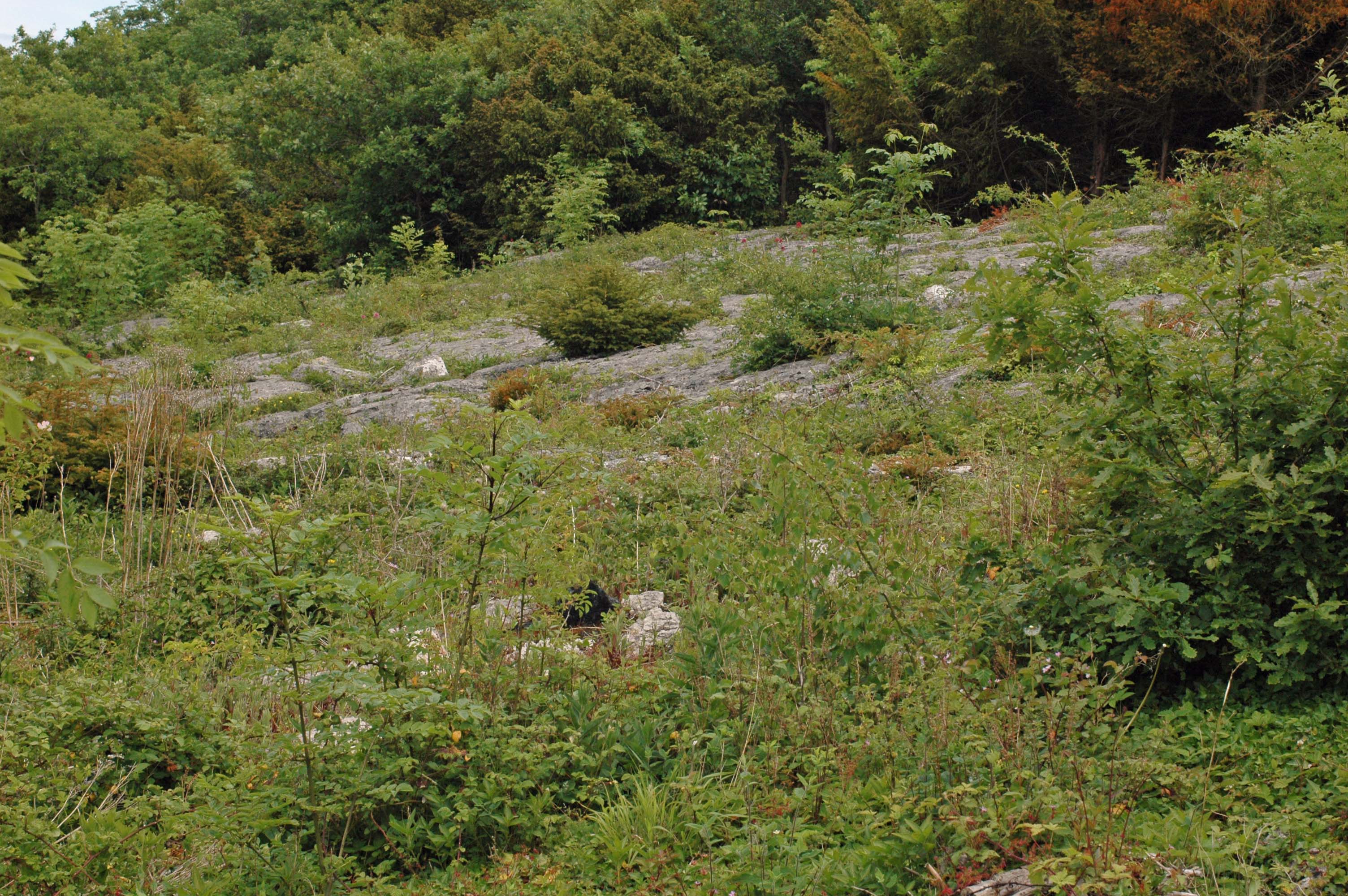
The main expanse of Limestone Pavement

The main expanse of Limestone Pavement

Common Rockrose

Common Rockrose

There is quite a bit of rockrose, interspersed with salad burnet with its curious flowerheads.

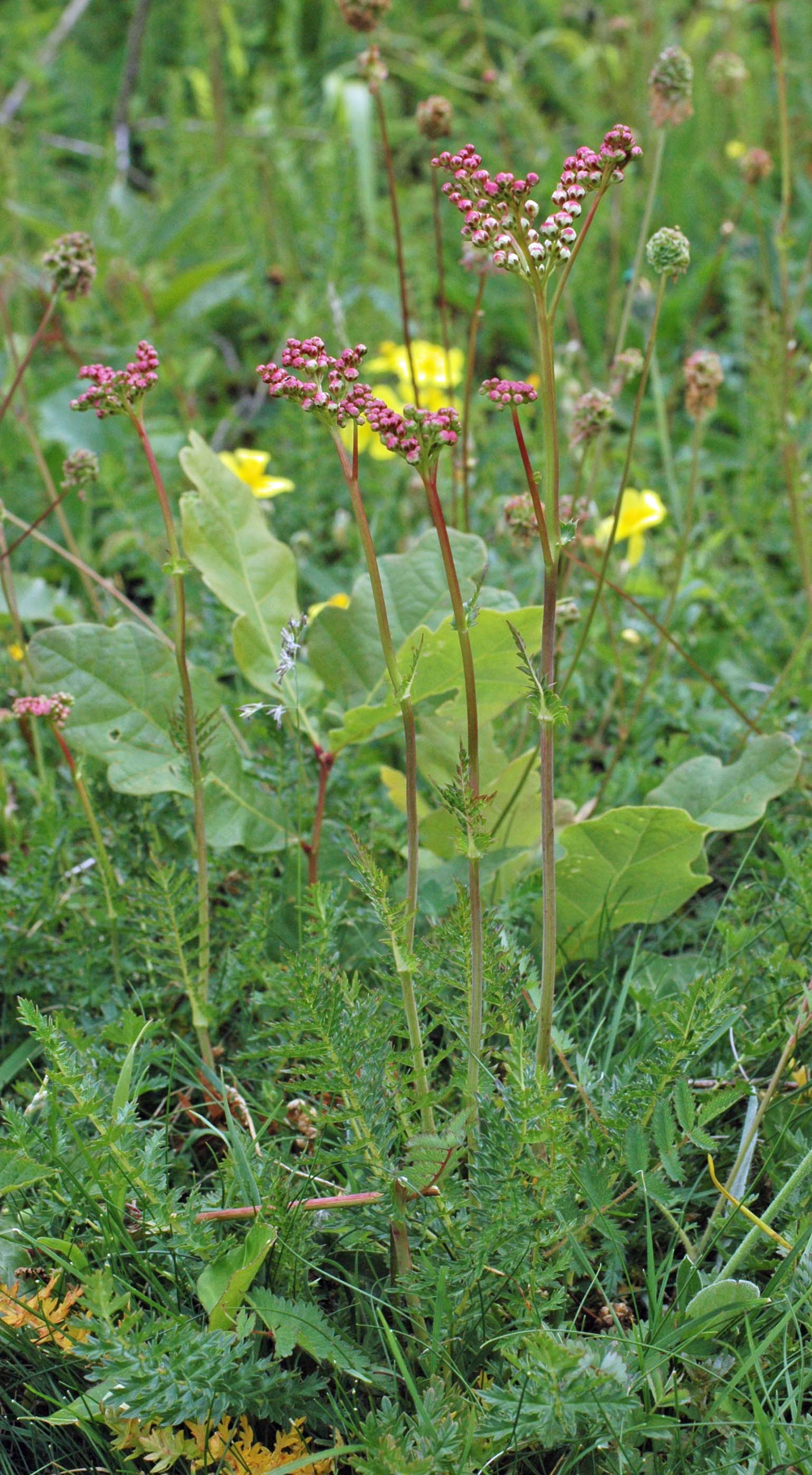
Salad Burnet– Sanguisorba minor is a low-growing herb of chalk and limestone grasslands which produces rounded, reddish flower heads from May to September. The leaves of Salad Burnet comprise up to 12 pairs of rounded, toothed leaflets, and form a rosette at the base of the flower stem. The rounded flower heads are reddish and speckled.

Salad Burnet flower

Salad Burnet flower

The leaves are famous for smelling of cucumber if crushed or walked upon, and this plant lives up to its name as a popular addition to salads and summer drinks.

The leaves of Salad Burnet comprise up to 12 pairs of rounded, toothed leaflets, and form a rosette at the base of the flower stem.

The leaves of Salad Burnet comprise up to 12 pairs of rounded, toothed leaflets, and form a rosette at the base of the flower stem.

I try not to plan my outings too much, preferring to take things as they come at the time, but I was hoping to find one of this site’s ‘special’ plants in flower today. Dropwort-filipendula vulgaris is a clumsy (pardon the pun) name for a very elegant and rather ‘frothy’ plant. I found a couple of stems at the end of their flowering late last summer, but hoped to find more today. I was pleased then to find the first ones, which I recognised by the pretty fern-like leaves, but alas the flowers were still tightly budded. Once I had spotted one I found more, but all were tightly closed.

Dropwort in bud

Dropwort in bud

Again there was compensation for not finding what I was hoping for; this time it was Bloody Cranesbill –Geranium Sanguinem, which is not at all a common plant and in Wales restricted to a few limestone-rich coastal areas. It grows also on the Great Orme, a few miles away in Llandudno and I have also seen it on Llanddwyn Island in Anglesey.

Bloody Cranesbill-Geranium sanguinem

Bloody Cranesbill-Geranium sanguinem growing in a ‘gryke’ of the limestone pavement

There are many colour variations of this plant species, but it takes the ‘Bloody’ part of its name from the blood-red sepals that remain after the petals have fallen.

Broad-leaved Willowherb

Broad-leaved Willowherb, one of the more ‘ordinary’ wildflowers to be found here

Wood Avens

Wood Avens

Leaving this main area of the limestone pavement and continuing downhill through a narrow belt of woodland you emerge into an open grassy area that is so pretty I was half-expecting Bambi and friends to pop out. There were a few Purple Spotted Orchids here, very nearly finished, an impressive group of Bloody Cranesbill and more Rockroses.

At the far end of this small woodland glade is another smaller section of pavement, which is where I found the Dropwort last year. There was no sign of the plant in the exact same place, but I did spot a couple of little pale pink orchids. Once again, as I got my eye in, I found more of them, most not quite fully out yet.

Heath-spotted Orchid- Dactylorhiza maculata

Heath-spotted Orchid- Dactylorhiza maculata

I sat in the sunshine on the edge of the rocky pavement for a while, admiring the view across to Penrhyn Bay and watching more Small Heath butterflies fluttering over the stony ground where they settled to bask occasionally. I realised then that the reason I was finding it difficult to spot them earlier was because they settle very low to the ground, almost horizontal to it. As I got up to leave one fluttered along the grass in front of me, settling some metres ahead, so I took a series of photographs as I inched towards it, each one a little closer. It allowed me to get very close before flying off from here.

Small Heath - Coenonympha pamphilus

Small Heath – Coenonympha pamphilus

Quite unexpectedly then, just a short distance away from the butterfly I glanced up to see the flower I was hoping for in peachy pink and creamy white frothy glory. A Dropwort in almost full glorious bloom. What a treat.

Dropwort in full peaches and cream frothy glory

Dropwort in full peaches and cream frothy glory

Dropwort (Filipendula vulgaris), also known as Fern-leaf Dropwort, is a perennial herb of the family Rosaceae and closely related to Meadowsweet. It is found in dry pastures across much of Europe and central and northern Asia, preferring full sun to partial shade and is more tolerant of dry conditions than most other members of its genus.

It has finely-cut, radical leaves, fern-like in appearance, and an erect stem 20–50 centimetres (8–20 in) tall. The tiny creamy white flowers appear in dense clusters from late spring to mid summer. The crushed leaves and roots have a scent of oil of wintergreen (Methyl salicylate).

Share this:

  • Share on Facebook (Opens in new window) Facebook
  • Share on Pinterest (Opens in new window) Pinterest
  • Share on X (Opens in new window) X
Like Loading...

Butterfly study: Holly Blue

15 Sunday Apr 2012

Posted by theresagreen in butterflies, Butterflies of Wales, Nature, nature photography

≈ 2 Comments

Tags

celastrina argiolus, holly, holly blue, pale blue butterfly

I have mentioned that my first butterfly sighting this year was of a beautiful little Holly Blue skipping along the sunny side of the privet hedge, but at the time I couldn’t catch it being still long enough to photograph. Last weekend though there were more, and from their pristine condition and the fact that they stayed basking in one sunny spot for quite a while I think it is safe to assume that they were very newly emerged.

Holly Blue on an ivy leaf

Holly Blue on an ivy leaf

  • Common name: Holly Blue
  • Latin name : Celastrina argiolus
  • Family group: Blues

The Holly Blue is the earliest of the blue butterflies to emerge in the spring, so for that reason alone is easy to identify. It also tends to fly high    around trees and bushes while other blues are more likely to be found at grass level.

Distribution and status

In Great Britain the Holly Blue is largely confined to England and Wales, although there are very sporadic records from Scotland and Ireland, but its population numbers fluctuate greatly from year to year. Worldwide it is widespread throughout Europe, reaches Japan and is also found in North Africa and North America.

The conservation status of the holly blue is presently of no concern in Britain; population levels are secure and the species’ range is increasing, although it is protected in Ireland. Similarly in Europe the range is rated as stable, with recent expansions in some countries.

Habitat

The Holly Blue occurs in a wide range of habitats, including hedgerows, field margins, woodland rides, gardens, and parks, including those in urban and suburban areas. In England, it often breeds in churchyards, many of which have Holly and Ivy. In Ireland, it is limited mainly to deciduous woods with Holly and, occasionally, country gardens.

Wings are bright blue. Females have black wing edges. Undersides pale blue with small black spots which distinguish them from Common Blue. Antennae & legs are striped with black.

Life-cycle

The lovely little holly blue has a strange but interesting life-cycle. The first generation of the year emerges quite early in spring and the females of this generation will lay their eggs singly, mainly on holly, but also on dogwood, gorse or buckthorn. The green slug-like caterpillars feed nocturnally on the flower buds, developing seeds and berries of the various foodplants, and rarely on the young tender leaves. They habitually sit on the skin of a berry, with their head buried inside it. The caterpillar is easy to find, either by searching directly, or by looking for half eaten berries in which the caterpillar has left a distinctive circular hole. As well as the plain green form of the caterpillar, there are also forms with prominent whitish and purplish markings.

The adults emerge in August and these second-generation females lay their eggs mainly on ivy, which flowers and fruits in the autumn and winter, but also on privet, gorse, heather, rowan and  snowberry. The adults of this generation are the ones we are seeing now. The eggs are almost also laid on bushes growing in sunny and sheltered locations and hatch after about a week.

Adult behaviour

Adult Holly Blues commonly feed on the aphid secretions ( honey dew ) which coats the upper surface of ash and oak leaves, but also sometimes settle on the ground to feed at bird droppings or take moisture from damp paths. Additionally, in spring they nectar at hawthorn, daisies and wood spurge. The second brood nectars on a wider range of plants including bramble, hemp agrimony, fleabane, bell heather, cross-leaved heath, hogweed and burdock.

When feeding they always keep their wings closed, but in the low sunshine of early evening they may settle on bushes to bask, holding their wings partly open.

Relationships with other insects 

In common with most Lycaenids, the larvae are attended by various species of ants, which obtain sugary secretions from a gland on the caterpillar.

The larvae may be parasitised by a host-specific  ichneumon wasp, listrodomus nycthemerus, which is thought to be an important factor in the population fluctuations of the species. In certain years, when climatic conditions favour the wasp, the butterflies can be extremely scarce. However when mild winters are followed by hot summers the wasps emerge out of synchrony with the caterpillars, and consequently in such years the butterflies are far more common.


Share this:

  • Share on Facebook (Opens in new window) Facebook
  • Share on Pinterest (Opens in new window) Pinterest
  • Share on X (Opens in new window) X
Like Loading...

Bryn Euryn Nature Reserve

19 Friday Aug 2011

Posted by theresagreen in Bryn Euryn Nature Reserve, Butterflies of Wales, Nature, Nature of Wales, nature photography, Wildflowers of Wales

≈ Leave a comment

Tags

ash tree, Bryn Euryn Nature Reserve, common rockrose, early purple orchid, hoary rockrose, wildflowers of Bryn Euryn

27th April

I haven’t seen much of the countryside since I’ve  been here in North Wales, other than through a car window, and I was very keen to see some spring flowers and fresh greenery. I know the wildflowers in Spain will be amazing when I get back there next week, but the native British wildflowers have an altogether gentler and more subtle beauty that I love. I have been planning to make a trip to the local nature reserve on Bryn Euryn, and as I will only be in the locality for a couple more days I decided to head there this morning.

Bryn Euryn is a limestone hill rising to 131metres (365 ft) above sea level and a well-loved local landmark of Rhos-on-Sea that is now a Local Nature Reserve. Its slopes are clothed with a mixture of woodland and grassland, part of which has been declared a Site of Special Scientific Interest. From its summit their are extensive panoramic views over Rhos-on-Sea and Colwyn Bay and across to the mountains of Snowdonia in the west. 

I parked in the small car park that is surrounded by trees, and as soon as I got out of the car I heard a Chiffchaff ‘singing’. I couldn’t see him,but as I tried to locate his whereabouts a Robin flew into a nearby tree and also began to sing. Moving off towards the beginning of the track that leads up to the summit of the hill I stopped to watch a Song Thrush hunting on the woodland edge where it borders a grassed area.

I soon came upon a patch of bluebells growing alongside some wild garlic whose flowers are almost finished. There were a few wood anemones still flowering, but they too are all but over; wild strawberry plants were flowering along a length of the path edge in dry shade, they have a long flowering period beginning in April and continuing until October, with fruits appearing throughout the summer. It was lovely walking in the dappled shade of the woodland, listening to the birds singing and coming across flowers that gave me the opportunity to make a stop on the fairly steep upward climb. A special find was a sunlit Early Spotted Orchid growing beneath the trees. The presence of this delightful bloom, together with that of bluebells and wood anemones is a sign of an ‘old wood’,  indicating that this area has never been anything other than woodland.

Purple Spotted Orchid

Dog Violet

There was a pretty patch of little blue/purple dog violets and the surprise of a Cowslip plant on a steep bank; this one must have strayed from the grassy downland on the other side of the hill; the more usual habitat of Cowslips.

Cowslip

Rock Rose

At the top of the hill you emerge from the woodland onto a surprisingly large expanse of open grassy heathland. There were large patches of yellow flowers growing here, taking a closer look I saw there were of two separate species; I recognised rock rose, but was unfamiliar with the other. Looking it up when I got home I realised it was Hoary Rockrose, one of the plants named on the information board in the car park that is apparently very scarce in the British Isles.

Hoary Rockrose – Helianthemum canum

The views from the top here are truly spectacular, extending from the Little Orme around and across Rhos-on-Sea and Colwyn Bay with the mountains of Snowdonia to the west. The only downside, at least from this side of the hilltop, was the traffic noise arising from the busy A55.

A panoramic view of Rhos-on-Sea and Colwyn Bay

View from Bryn Euryn summit – mountains of Snowdonia on far horizon

View across summit of Bryn Euryn to Conwy Estuary and beyond to Snowdonia

Germander Speedwell

Buff-tailed Bumblebee

Turning around I walked across to the other side of the summit, passing through a shrubby area, the woodland edge, where there are shrubs and small trees growing. Here, Hawthorn is in full bloom and I stopped to watch a furry bumblebee as she burrowed into the leafy debris on the ground beneath.

Hawthorn, or May blossom

I discovered another early purple orchid plant here, this one had an earlier, or perhaps even last year’s, dried flower spike attached.

I reached the true summit of the hill, which has a concrete trig point on it that is part of the nationwide network built by the Ordnance survey to create their maps of the UK in the old days before computers.There is also a board depicting how the ancient hill fort may have looked. I was very surprised to come across an extensive patch of orchids here, I roughly counted them and estimated at least 100 flowers.

Summit of Bryn Euryn with Trig point & mass of purple spotted orchids in the foreground

The Fort

The summit of Bryn Euryn was once occupied by a small but strong fortification. This may have been the ‘Bear’s Den’ mentioned by Gidas the Wise and thought to have been a stronghold of Cynlas the ‘Red Butcher’, king in Rhos around the middle of the sixth century. Only the faint traces of the limestone rampart’s foundations are  visible today, protruding through the turf and ringing the summit of the hill, to remind us of its former importance.

It was much quieter and more peaceful on this side of the hill and I sat for a while enjoying the sunshine and the view out to sea and across to the Little Orme.  Two Red Admiral butterflies were flying around the nearby shrubbery, one kept attempting to sun itself on a bramble leaf, the other kept disturbing it, the basking one chased after its disturber then returned to the same spot etc. etc. It took a lot of patience to get the photograph.

Red Admiral basking on new bramble leaf

Speckled Wood on a leaf on the ground

Even trickier to photograph was this Speckled Wood. Once again there were two of the insects chasing one another – these little butterflies are especially territorial, but I wanted to get a photograph as they were much paler in colour than the ones I had been seeing in the garden. That made getting the photograph even harder, as when they did land it was on dried leaves and they were so well camouflaged I couldn’t find them through the lens.

There are some beautiful trees growing here, including Ash, whose leaves are quite well grown now.

new ash leaves

They brought to mind the old country rhyme about their predicting the forthcoming summer weather:-

“Ash before oak, look for a soak, oak before ash, look for a splash”

I had a quick look at a neighbouring oak and would say they were pretty much on a level, so hopefully that means some rain, but not too much.

Share this:

  • Share on Facebook (Opens in new window) Facebook
  • Share on Pinterest (Opens in new window) Pinterest
  • Share on X (Opens in new window) X
Like Loading...
Newer posts →
Follow everyday nature trails on WordPress.com

Enter your email address to follow this blog and receive notifications of new posts by email.

‘But it is the common species that keep the living world ticking over and provide most of our experiences of wildlife, and I would argue that maintaining the abundance of these is as important a conservation priority as maintaining the existence of rarities’. Richard Mabey

MOST RECENT POSTS

  • A Glimpse of Spring to Come January 22, 2025
  • Hunting the Wren December 28, 2024
  • Oh, Christmas Tree December 18, 2024
  • In and Out of the Ivy February 15, 2024
  • Nature’s Fireworks November 30, 2023
  • Wild Autumn along the Coast Path November 3, 2023

OLDER POSTS

LOOKING FOR SOMETHING IN PARTICULAR?

  • Sights and Sounds from the Little Orme 1
    Sights and Sounds from the Little Orme 1
  • Things Bright and Beautiful
    Things Bright and Beautiful
  • Catchers, a Duck and Divers
    Catchers, a Duck and Divers
  • Following a river to a Fairy Glen
    Following a river to a Fairy Glen
  • Fine Dining for Crows
    Fine Dining for Crows
  • A Windy Wildflower Trail
    A Windy Wildflower Trail
  • A Window on the Woods-Winter 1
    A Window on the Woods-Winter 1
  • Butterflies and more rare treats
    Butterflies and more rare treats
  • Shades, Sounds and Scents of the Woods
    Shades, Sounds and Scents of the Woods
  • Bird study: Blackcap
    Bird study: Blackcap

nightingale trails

The Walk of the Monarch Butterfly-Sendero de la Mariposa Monarca

The Walk of the Monarch Butterfly-Sendero de la Mariposa Monarca

MY WILDFLOWER BLOG: where the wildflowers are

Snowdrop

Snowdrop

most recent posts

Follow everyday nature trails on WordPress.com

Social

  • View teresamaygreen’s profile on Twitter

Enter your email address to follow this blog and receive notifications of new posts by email.

Website Built with WordPress.com.

  • Subscribe Subscribed
    • everyday nature trails
    • Join 359 other subscribers
    • Already have a WordPress.com account? Log in now.
    • everyday nature trails
    • Subscribe Subscribed
    • Sign up
    • Log in
    • Report this content
    • View site in Reader
    • Manage subscriptions
    • Collapse this bar
 

Loading Comments...
 

    %d