• Home
  • about
  • about the photographs
  • Local Nature Reserves
    • Bryn Euryn Local Nature Reserve
    • Mynydd Marian
  • Wales Coast Path
    • Grey Seals in North Wales
    • St.Trillo’s Chapel
    • Wildflowers of North Wales Coastal Paths, Cliffs and Dunes

everyday nature trails

everyday nature trails

Monthly Archives: April 2018

Little Orme

21 Saturday Apr 2018

Posted by theresagreen in birds of Wales, Birdwatching on North Wales coast, coastal walks, Industrial sites reclaimed by Nature, Little Orme, Nature of Wales, North Wales, North Wales Path, Wales Coast Path, Walking Trails, Wildflowers of Wales

≈ 12 Comments

Tags

Cormorant, Cormorant breeding plumage, cormorant with white head, fulmar, Great cormorant, grey seals, Northern Wheatear, phalocrocorax carbo, shag

April 5th

I’m home for a few days and feel the need to catch up on what’s happening here before setting off again at the weekend. I decided to head for the Little Orme, the best place I know locally to see a great variety of wildlife in a short space of time. Spring is generally late arriving this year and usually comes even later here than to other more sheltered sites, so I hoped I wouldn’t have missed too much.

The blend of habits on this limestone headland make it special, if not unique as it provides for the needs of diverse species of birds from House sparrows to Chough and Fulmars and it supports some lovely lime-loving wildflowers. The human influence on the site is most evident in its dramatic reshaping by quarrying, there is also a farm with some enclosed fields and sheep that are allowed to range freely. Houses butt closely up against its Penrhyn Bay boundary and it is rare to come here and not see people out walking. Today I noticed that someone has hung a bird-feeder up in a small tree just inside the site. There was a Great tit and several House sparrows taking the seed on offer, but not surprisingly they were seen off by Jackdaws.

Great tit at feeder
Great tit at feeder
Jackdaw at feeder
Jackdaw at feeder

It’s the Easter holidays, so as I’d expected there were a good few people here, families enjoying the fresh air and sunshine, the usual dog-walkers and a few dog-less ones too. 

There were people clambering on the rock beside Angel Bay. Below them a trio of Herring gulls set up a raucous racket. I couldn’t be sure what had set them off, but maybe they were objecting to people invading their space.

On a rock jutting out into Angel Bay another pair sat calmly, heads turned towards the group of grey seals down below them, some of which were also making a bit of noise.

They were a lovely little group of adults with their young ones. Some were trying their best to relax while others were restlessly in and out of the water. At least two more were swimming around out in the bay.

Grey seals

Grey seals slumbering

A single Guillemot was also cruising around on the water but didn’t stay visible for long, soon diving and swimming away underwater hunting fish.

Guillemot

When I first entered the site I was surprised not to see or hear Fulmars on the high cliff that usually has several pairs nesting, or preparing to nest on its ledges by this time. There were one or two flying around the cliffs nearer to the sea though, so I set off up the steep path to the old quarry field to see if there were signs of nesting there.

Fulmars are distinctive in flight holding wings stiff and straight out

I’m sure this upward slope gets steeper each time I climb it! I have to remind myself it wasn’t built for walking up. Back in the days when quarrying was in full swing there were rails from its bottom end up to what was a quarry face; trucks were loaded with stone then lowered down and returned empty using heavy-duty winding gear – the remains of which still stands as a monument to past industry at the top of the track. Care is needed when using this track, it’s slippery when wet and dry, especially going down.

Steep slope of old quarry truck-run

Remains of old quarry truck winding gear

I was pleased to have a few excuses to stop for breath to photograph celandines and primroses nestled down amongst the dead stems of grass and fronds of bracken. There were daisies on the grassy slopes nearer the top, one with a fly sunbathing in its centre.

Lesser celandine-
Lesser celandine-
Primrose-
Primrose-
Daisy with fly
Daisy with fly
Common daisy-bellis perennis

One of the limestone specialist plants, the Carline thistle still holds it shape perfectly, seedheads still intact, although it is completely dry and colourless.

Phew! Finally at the top. I walked around the cliff edge, not too close as I could see that the winter weather has further eroded away the softer layers of soil and loose stone that covers the bedrock.

Signs of recent erosion

Two Fulmars sat quietly in a sheltered recess in the cliff-face. I’m fairly sure they were a pair as they were sitting close together and occasionally touching one another, I’m loathe to say affectionately, but it did look that way!

Fulmars

Fulmars are noisy birds though and it wasn’t long before something set them off. I imagine their spot is a good one and probably coveted by others, so will take a fair amount of defending.

They have a visitor who clings onto the rock nearby and stays for a while despite being squawked at. Perhaps the noise was by way of a greeting.

I was surprised it managed to cling on with those flat webbed feet. It was a lovely view for me though, they are such pretty gulls to look at. Shame about the raucous voice and the habit of snorting out salt water and other debris down their tubular noses!

Another bird made several close aerial passes but didn’t stop. I left them to it; seems like they’ve got enough to contend with.

I take the ‘short-cut’ scramble up the rocks to reach the higher level of the cliffs: not the recommended route, especially for grandmothers encumbered with cameras in hand that should know better! I got there unscathed though and enjoyed a good view back down onto the quarry from the top.

View down into the former quarry

I was heading for the outcrops of the headland used as nest sites by the Cormorant and Guillemot colonies, although I suspected I may be a bit early. I like the view over to the Great Orme from here; it looks like an island.

TREASURE IN THE GRASS

Although grazed by sheep and rabbits and exposed to the worst of the elements here, wildflowers can be found tucked down in the turf particularly around exposed rock. I spotted this little patch of white flowers, which on closer inspection turned out to be two different species. I couldn’t name either, but very kindly Suzanne posted a comment and suggested the  tiny one with red-tinged fleshy leaves may be Rue-leaved saxifrage and the bigger more droopy one with fine stems as Common Whitlow grass. I will go back and get some better photographs of the little treasures.

180405-LO (76a)

Common Whitlow grass-Erophila verna

I disturbed a flock of Jackdays that had been foraging in the clifftop grass. In my picture the buildings on the top of the hill in the background are on the Great Orme Summit.

Looking over the edge of the cliff for signs of my target birds I saw what I thought were Cormorants until I saw the raised crest of one and realised they were Shags.They were far below me, so the quality of the image is not great, but you can see what they are from it.

There were no signs of either Cormorants or Guillemots on this side of the cliff so I carried on walking towards its other more easily visible side. I hadn’t gone far when I spotted a bird flitting about between rocks near the edge; a handsome male Northern Wheatear. It was slightly below me behind a bit of a ridge, so partly hidden from its view I managed to watch it for some time with out disturbing it.

Northern Wheatear
Northern Wheatear
Northern Wheatear
Northern Wheatear

CORMORANT COLONY

As I’d thought it was a bit early for the Cormorants to have begun nesting, but there were a a few birds hanging around on the cliff.

Two birds higher up on a ledge definitely have their breeding plumage – the white patches on their thighs is clearly visible. They also have white heads which is more unusual amongst the Cormorants we usually see here. They were adopting some strange poses too, but may just have been making the most of a warm spot.

Cormorant or Great Cormorant- Phalocrocorax carbo

I went back down the hill following the paths to complete the circuit of this side of the headland. I realised I hadn’t met a single sheep out on the cliffs when I saw the first ones with lambs still in the field.

The gorse is coming into full golden bloom now and as always I couldn’t resist stopping several times to inhale its gorgeous uplifting scent.

 I heard a Robin singing and did spied him framed by prickly branches.

Picking my way carefully down the rocky slope past the sheep field I heard a Greenfinch singing from within the tangle of shrubby vegetation. Tauntingly close by, I stood and searched for a while but couldn’t pinpoint him. It was good to hear him though; as I said in the most recent post about the Great Orme, Greenfinches are not that common nowadays.

The hawthorn tree that marks the junction of paths going up, down or on towards the Rhiwleddyn Reserve, is still without leaves but green with lichen. It’s a lovely tree, having a perfect full rounded shape and spreading evenly in all directions; unusual here where the hawthorns are mostly forced into some weird and wonderful shapes by exposure to the strong winds.

The slope going down safely negotiated, I walked towards the way out, stopping only to debate whether to walk through the man-made ‘gorge’ that leads through to another way in/out at its far end. It can be a good place to spot Stonechats, which I hadn’t seen today, but there were quite a few big puddles of water and it looked muddy, so I gave it a miss.

Looking down into the ‘gorge’ from the path above, I stopped to listen to a Blackbird singing from a small ash tree growing down there. They have such a wonderful laid-back, tuneful and fluent song that is so easy on the ear.

Several Jackdaws were more intent on foraging for their supper.

A rotund little Dunnock singing his pretty little song from amongst the tangle of bramble stems at the side of the steps finished off my walk perfectly.

Dunnock

Weather: Sunny but cool

Birds: Herring gull; Fulmar; Guillemot; Cormorant; Shag; Carrion crow; Magpie; Wood pigeon; Jackdaw; Blackbird; Robin; Greenfinch (singing); House sparrow; Dunnock; Great tit; Wren; Northern Wheatear

Insects: Very few; too cold for butterflies

Wildflowers: Alexanders; Gorse; Primrose; Common Daisy; Lesser celandine; Carline thistle (dried); Common Whitlow grass

Share this:

  • Share on Facebook (Opens in new window) Facebook
  • Share on Pinterest (Opens in new window) Pinterest
  • Share on X (Opens in new window) X
Like Loading...

Wild in Eastville Park

07 Saturday Apr 2018

Posted by theresagreen in Birds, Nature, Nature of Public Places, nature of woodlands, river walks, Walking Trails, woodland walks, woodland wildflowers

≈ 8 Comments

Tags

April, Bristol parks, Chiffchaff, Eastville Park, Frome Valley Walk, hidden rivers, kingfisher, lost rivers, public parks, River Frome

April 1st 2018

Two days ago I had boarded a train at Colwyn Bay in sunshine to arrive in Bristol four hours later in pouring rain. In these Isles we expect April Showers, but to time with my visit here to the South-West rain had been predicted for no less than 11 days straight! For the past two days the weather had done its best to fulfil that prediction, then lo and behold, this morning it gave us a reprieve and blessed the morning of the first day of this new month with welcome sunshine. Quick to take advantage of the opportunity to escape the confines of the house, my son and daughter-in-law bundled their respective visiting mothers and two daughters into the car and drove us all to Eastville Park for some fresh air and exercise before the rain swept back in.

River Frome looking downstream

We approached the Park along Broom Hill, parking at the side of the road just before the turning signposted to Snuff Mills.  Leaving the car we crossed the road bridge over the River Frome, then after a short way turned right onto the path alongside the river, which is a  section of the Frome Valley Walk. (The entire walk is 18 miles long and follows the river from the River Avon in the centre of Bristol to the Cotswold
Hills in South Gloucestershire.)

WICKHAM GLEN

This initial part of our walk follows the river through Wickham Glen; there is woodland on the far bank and on the path side it passes by Wickham Allotments. Following the recent heavy rain the river was full, and its fast flowing waters muddy brown. The path was wet and stickily muddy in places, but the sun was shining, there was fresh new greenery and birds were singing; the perfect Spring morning. Against the far bank a Mallard Drake dabbled next to a piece of disintegrating black plastic that looked like the remains of planting pots, possibly blown there from the nearby allotments.

An Alder tree stretched branches bearing cones and catkins out over the river.

Alder – Alnus glutinosa

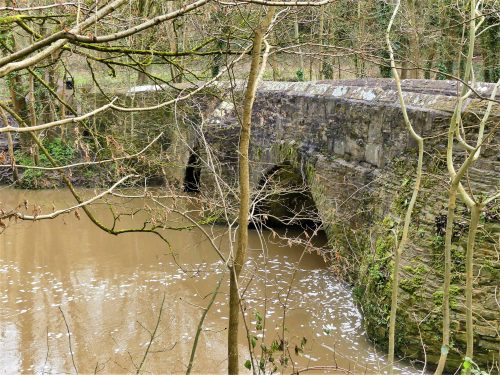
To continue along the Frome Valley Walkway from here you would follow the signpost in the direction of Frenchay and Snuff Mills. We were heading for Eastville Park though, so turned right to cross the historic Wickham Bridge, a lovely medieval stone bridge which is Bristol’s oldest bridge and reputedly used by Oliver Cromwell, It is now Grade 11 listed.

Wickham Bridge, looking downstream

River Frome flowing downstream from Wickham Bridge

The river falls dramatically, more than 50 feet, between Frenchay Bridge and Eastville Park which made it perfect for operating water mills. There were once six mills along this stretch of the Frome Valley, most of them working as corn mills. Now all that remains as evidence of their presence are the weirs.

River Frome looking upstream from Wickham Bridge

eastville park

Eastville Park is a large Public Park that extends over some 70 acres of land, and is located just to the east of the M32. The land was originally agricultural land of the Heath House Estate owned by Sir John Greville Smyth of Ashton Court and was purchased from him by the Council for £30,000 in 1889 in order to provide a ‘People’s Park’ – a green space for those living in St Philips and the eastern suburbs of the city, where social and environmental conditions were poor.

Creating the Park was a huge undertaking begun in 1889 and taking around five years till 1894, to complete. Existing hedges were taken out, boundary walls repaired, paths laid out and a hundred seats installed. Wisely, existing mature trees were retained and walkways were lined with further plantings of limes, horse chestnuts and fast-growing London planes. Interestingly, the grass areas were managed by a mixture of sheep grazing and mowing, a common practise at that time that is still used today in some Nature Reserves.
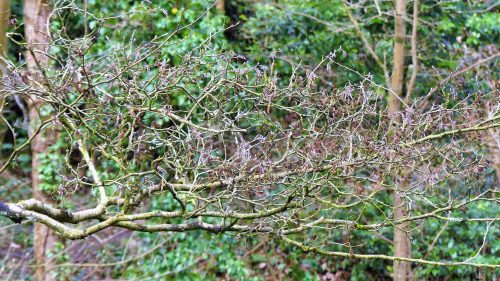
Twisted Hazel
Twisted Hazel
180401-1055-BSEP (29)

A narrow footbridge crosses over water

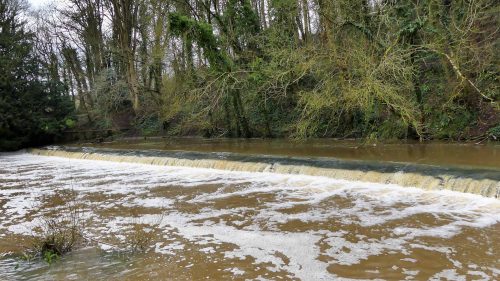
then leads past the impressive Colston Weir. There have been recent reports of an Otter being sighted here.

Colston Weir

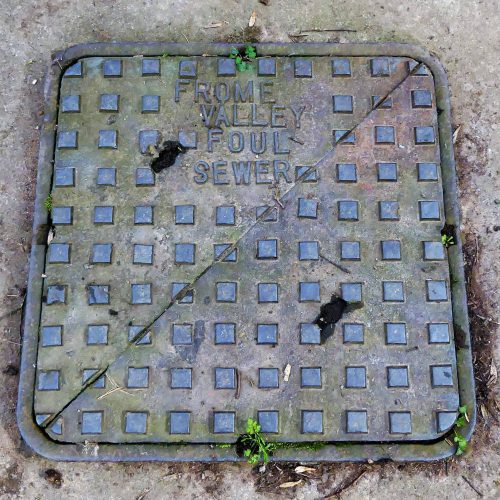
Not a pleasant thought in such a beautiful place, but this drain cover reminds that the Frome Valley Sewer follows closely alongside the river before finally ending at the Bristol Sewage treatment works at Avonmouth.

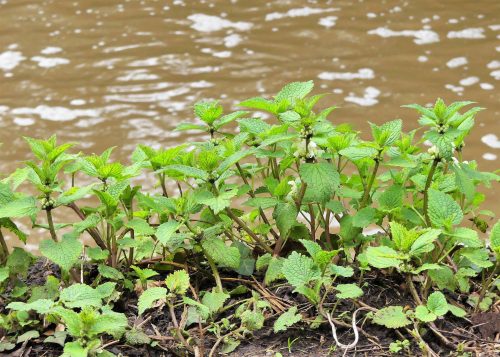
A pleasanter sight was a clump of White Deadnettle, although it had clearly taking a bit of a battering as its petals were torn and its leaves mud-spattered. Before the flowers appear the plant looks a little like the Common Nettle, but a closer look shows there are no stinging hairs hence the ‘dead nettle’ in the name. The lack of sting is also thought to have brought the plant’s other common name of White Archangel.

White Deadnettle, White Archangel – Lamium album

We heard a Wren and watched it as it flitted around in vegetation very close to the water. Another Alder tree gave me the opportunity to get a closer look. The tree’s flowers are on catkins which appear between February and April. Alder is monoecious, that is both male and female flowers are found on the same tree. Male catkins are yellow and pendulous, measuring 2–6cm. Female catkins are green and oval-shaped, and grouped in numbers of three to eight on each stalk. Once pollinated by wind, the female catkins gradually become woody and appear as tiny, cone-like fruits in winter. They open up to release seeds, which are dispersed by both wind and water. The small brown cones stay on the tree all year round.

THE LAKE

The lake was added as a feature a few years after the Park was opened. It was dug out in 1908 and 1909 from an existing water meadow with labour provided by ‘unemployed applicants’, under the Distress Committee’s Labour Bureau. It was constructed to a Serpentine plan, a design made popular by the famous landscape gardener, Capability Brown. The intrigue of its shape is such that wherever you stand on its edge, you can’t see the lake completely; there is always some part snaking out of view. Nowadays it is considered to be one of the best public park lakes in the country. 

The lake is not just attractive for people to look at, it’s presence also draws in a good variety of species of birds. First to attract attention was a flock of noisy Corvids that flew into the trees to left of the lake.

At first I wondered if they might be Rooks as there were a good number of them, but a closer look made them Carrion Crows, maybe juvenile, non-breeding birds.

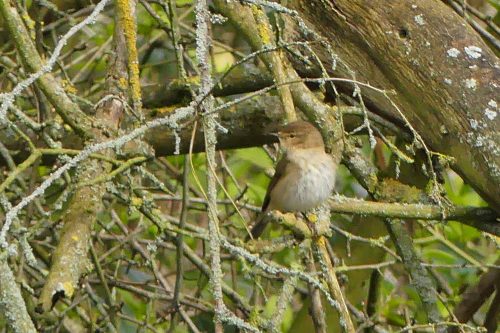
There’s a densely planted small island in the centre of the widest part of the lake, and as we passed a little brown bird darting in and out from a tree branch reaching over the water caught my attention. Clearly a warbler, it was either a Chiffchaff or a Willow Warbler, most likely the former, but either way my first sighting so far this year.

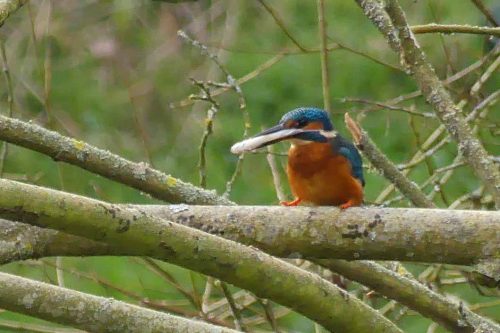
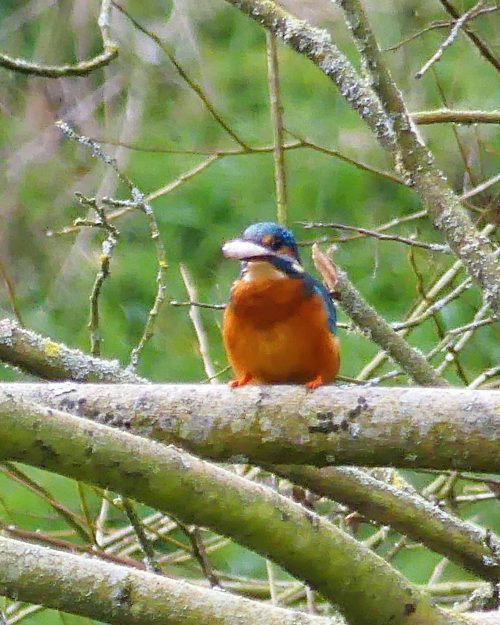
If I hadn’t zoomed in on the warbler I may have missed a rare treat, despite his jewel-bright colours– a Kingfisher! It was quite a distance away and was sitting perfectly still on the branch of a willow tree, intently studying the water below. 

What a beautiful bird!

After a moment or two it changed position, moving towards the end of the branch to scan the water immediately below, his long dagger-like beak pointing down, preparing to dive.

It dived so fast I missed it! I caught the splash as it entered the water, then a split second later it was back up on a branch with a sizeable fish clamped in its beak. It sat for a few seconds more, jiggling the fish a little to secure its grip, but it clearly wasn’t going to eat it there and then: Kingfishers always consume fish head-first. Perhaps it intended to enjoy its meal somewhere less public, or maybe it had a mate that needed feeding; the birds’ first clutch of 6-7 eggs is usually laid late in March or early in April.
Either way it took off carrying its prize in the direction of the river.

KINGFISHER – Alcedo atthis

UK conservation status: Amber – because of their unfavourable conservation status in Europe. They are vulnerable to hard winters and habitat degradation through pollution or unsympathetic management of watercourses.

Widespread throughout central and southern England, but less common further north, Kingfishers are small but spectacular and unmistakable birds mostly found close to slow moving or still water such as lakes, canals and rivers in lowland areas. They fly fast and low over water, hunting fish from riverside perches.

In total contrast, in plain black and white and far more common, my next spot was a Coot.

Coot – Fulica atra

Then a preening Canada Goose spied through tree branches with bursting buds.

Further down the lakeside someone had scattered some grain on the paving, attracting the attention of some hungry birds. Two more Canada Geese raced in

Canada goose-Branta canadensis

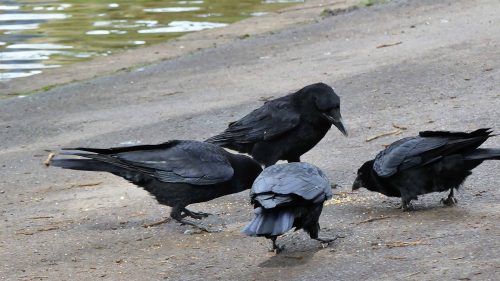
A Crow rushed past a female Mallard and a Swan

to join a group of his peers that were already tucking in.

What would a Park be without a flock of Pigeons? A male Mallard paddled in to see what they had.

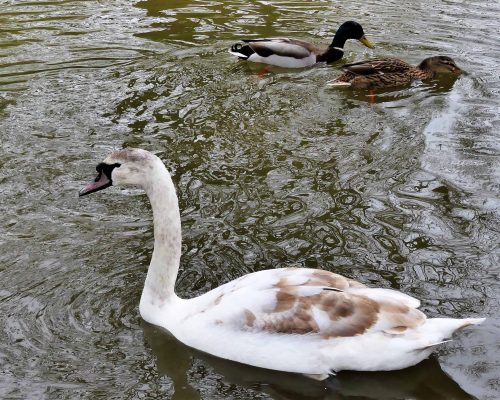
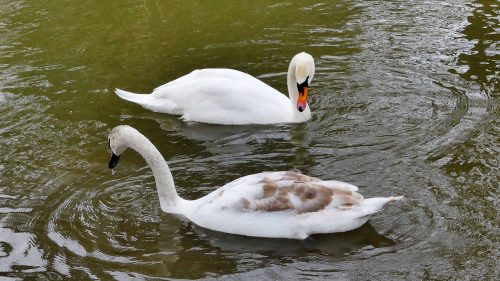
He turned and joined his mate and they clearly decided there was nothing in it for them so set off to dabble elsewhere, passing a juvenile Mute Swan on its way in.

Mute Swans are, perhaps surprisingly, also Amber listed as birds of conservation concern. According to the RSPB “The population in the UK has increased recently, perhaps due to better protection of this species. The problem of lead poisoning on lowland rivers has also largely been solved by a ban on the sale of lead fishing weights.”

Mute swan – Cygnus olor

A late-coming Moorhen paddles in rapidly creating an impressive wake for such a small bird. Cousins of the Coots, Moorhens are smaller and are a little more colourful with a bright red and yellow beak and long, green legs.

Moorhen – Gallinula chloropus

The list of birds recorded within the Park is impressive:

A beautiful Weeping willow tree cascades down gracefully to touch the surface of the water. Often planted inappropriately, it was nice to see one in the ‘right’ place. I think this one may be a Golden weeping willow, which is so named for its bright yellow twigs.

Weeping willow – Salix alba

We walked around the curve of the bottom of the lake and up along the other side. At the top once more there were more Chiffchaffs darting out after insects, with one obligingly confirming its identity with its distinctive song; a wonderful sound that for me announces that Spring is here.

Chiffchaff – Phylloscopus collybita

Chiffchaff – Phylloscopus collybita

A signpost with a touch of humour that I’d missed on the way to the Park informs that Fishponds is quite nice! No doubt enhanced by the proximity of this lovely green space. 

Celandines were one of the few wildflowers I saw blooming.

A view of Colston Weir from its other end.

Leaves of Arum and Wild garlic are well-grown.

Crossing back over the footbridge I noticed copper pipes running along its side, attractively encrusted with lichen and turquoise blue verdigris.

Back in the Glen, Wild garlic extends beneath the trees. Already releasing its pungent aroma, it won’t be long before it’s in flower.

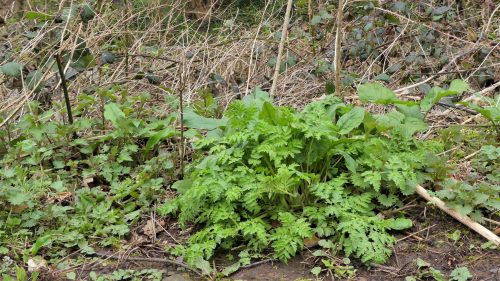
Cow parsley and more Arum leaves form a prettily contrasting patch of leaves.

Crossing the bridge to get back to the car we stopped to look upstream over its side. There’s an interesting piece of winding gear here that probably operates a sluice. I’m always attracted by such pieces of machinery, probably because I had an engineer for a Father who loved to explain how things worked!

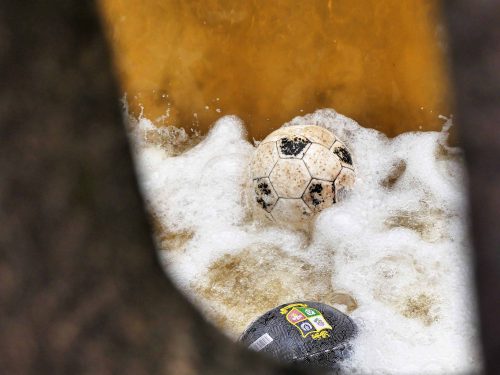
I also have a Son with an eye for the quirky – he spotted this random scene of a football and a rugby ball trapped against the stonework of the bridge and forced to play together in the foamy water.

It seems more fitting to finish this post as I started it though, with a view of the Frome, looking upriver this time.

Footnote: The River Frome is sometimes also called Bristol’s Lost River – certainly much of its final length from the M32 and through the city centre is Hidden. The link below is an account of a walk following the Frome Valley Walk:

www.bristol247.com/news-and-features/features/following-the-frome-bristol/

Share this:

  • Share on Facebook (Opens in new window) Facebook
  • Share on Pinterest (Opens in new window) Pinterest
  • Share on X (Opens in new window) X
Like Loading...

Spring is Coming to the Great Orme – part 2

05 Thursday Apr 2018

Posted by theresagreen in birds of Wales, birds singing, Great Orme, Nature of Wales, North Wales, Wales Coast Path

≈ 8 Comments

Tags

Greenfinch, kestrel, kestrel hovering, scenic drives, wildlife of Wales Coast Path

March 28th 2018

16:50 The shop is closed and the day’s last tram has departed, taking most of the late-afternoon visitors to the Summit back down to the town. Outside the wind is still blowing fiercely and although sunny, it felt even colder than it was when I got here. In the wildflower garden I stopped to watch a Pied wagtail scuttling around on the short turf between the flower borders and the path. These skittish little birds are fascinating to watch. Almost perpetually in motion they walk jerkily, craning their necks forward as they scan the ground in front for prey, wagging their long tails constantly. In pursuit of prey they can move at speed, half-running half-flying.

Pied wagtail-Moticilla alba

Pied Wagtails have adopted a wide range of habitats and landscapes as hunting grounds, from urban streets, wastes and car parks to seashores, wilder stream sides and reed beds. Most often seen singly, in the late afternoon the birds gather together, sometimes in their hundreds and fly off as a flock to roost communally. They often choose roosting sites on roofs such as factories, sewage works, hospitals and supermarkets. 

There is often a Pied wagtail up here around the car park area. This tarmacked area is bounded by stone walls with a strip of rough grass left in front of them and I’ve watched them make a circuit here, making a thorough search of the area. I guess that the combination of the nooks and crannies of the wall and the vegetation make it a good hunting ground.
Pied wagtail checking out the car park

16:52 The tide is out and the cloud has lifted above the Snowdonia mountains although a great bank of it still hovers heavily above the peaks.

Puffin Island and Anglesey behind it are visible but obscured by mist. The light and shade on the sea and the cloud make a beautiful sight but it’s too cold and windy to stand and admire it for long.

16:56 Driving up or down here I always have my car window open, partly to enjoy the super-fresh air but also to listen out for bird sounds. That paid off this afternoon as I drove past a hawthorn tree and heard the unmistakable song of a Greenfinch. I was delighted to hear it, particularly as my sightings of these finches have been very sparse in recent years. In fact, the last time I saw one was last year and not too far from here, singing then from the highest point of St Tudno’s Church roof.

Greenfinch-Carduelis chloris – singing

I stopped just past him and took photographs from the car so as not to frighten him away. Then I thought I’d stop further along at the pull-in I stopped at earlier and walk back to attempt to record his performance. Not to be, a Crow had usurped him and now squatted there, feathers blown akimbo by the wind.

The Hawthorn tree the Greenfinch was singing from was the perfect choice for him. Almost completely covered with lichens, it had caught my eye a couple of weeks ago when I’d stopped to check whether it had leaves!

Of course it didn’t, but that’s how green it appeared to be. A closer look revealed the lichen, an almost-perfect match for the green-yellow of a Greenfinch.

In the few minutes I’d been gone my car had been staked and claimed as a look-out by the Herring gull I’d photographed here earlier. OK by me as he hadn’t left any guano behind!

17:05 Further down, opposite the church, another favourite gull perching post was occupied.

I’d past the point where I thought I may have spotted a Meadow pipit or Stonechat, but there was still hope for Chough. Back down on Marine Drive now I slowed to check every black bird I saw, but all were Jackdaws or Carrion crows until suddenly I caught sight of two birds flying towards the sea; definitely Chough. I stopped and got out of the car and was instantly distracted by another bird that flew into view then hovered, braced into the wind high above the turf-covered clifftop. A male Kestrel.

The Kestrel, once known as the Windhover has perfected the art of hovering to the highest degree. They fly into the wind at the same speed as it is blowing them back, thus remaining stationary in relation to the ground, which saves them a great deal of energy.

I had stopped by a feature of the Great Orme I hadn’t noticed until now, probably because I’m usually looking in front of me or out over the clifftops as I’m driving. A sign informs that here is Ffynnon Gaseg, or Mare’s Well in English.

There are many natural springs feeding wells located around the headland, and there is no factual information about this one or why it was so named, but it’s thought likely that it was created when Marine Drive was constructed as a drinking place for the horses that pulled the carriages of Victorian sightseers for whom the road was originally built. The blackness  of the rock where the water emerges is staining from the peaty ground it runs through.

As I turned back towards my car I spotted the black birds again so crossed the road to try to get a better view just in time to see them fly down and along over the sea. Definitely Chough and though not the sighting I’d hoped for, a sighting none-the-less.

I made a stop to photograph the former Lighthouse as it was nicely lit by the sun. It’s surprising how the light affects the ‘mood’ of a building; this one can look rather intimidating on a gloomy day.

17:25 The clouds had lifted or perhaps drifted a little further over the mountains now revealing the snow that covered the highest peaks. Hardly surprising it felt so cold.

I’m looking forward to watching the seasons develop here Wednesday by Wednesday.

Share this:

  • Share on Facebook (Opens in new window) Facebook
  • Share on Pinterest (Opens in new window) Pinterest
  • Share on X (Opens in new window) X
Like Loading...
Follow everyday nature trails on WordPress.com

Enter your email address to follow this blog and receive notifications of new posts by email.

‘But it is the common species that keep the living world ticking over and provide most of our experiences of wildlife, and I would argue that maintaining the abundance of these is as important a conservation priority as maintaining the existence of rarities’. Richard Mabey

MOST RECENT POSTS

  • A Glimpse of Spring to Come January 22, 2025
  • Hunting the Wren December 28, 2024
  • Oh, Christmas Tree December 18, 2024
  • In and Out of the Ivy February 15, 2024
  • Nature’s Fireworks November 30, 2023
  • Wild Autumn along the Coast Path November 3, 2023

OLDER POSTS

LOOKING FOR SOMETHING IN PARTICULAR?

  • Catchers, a Duck and Divers
    Catchers, a Duck and Divers
  • Sights and Sounds from the Little Orme 1
    Sights and Sounds from the Little Orme 1
  • Butterflies and more rare treats
    Butterflies and more rare treats
  • Following a river to a Fairy Glen
    Following a river to a Fairy Glen
  • Things Bright and Beautiful
    Things Bright and Beautiful
  • Shades, Sounds and Scents of the Woods
    Shades, Sounds and Scents of the Woods
  • A Windy Wildflower Trail
    A Windy Wildflower Trail
  • The Foxglove - of Fairytales, Myths & Medicine
    The Foxglove - of Fairytales, Myths & Medicine
  • Fine Dining for Crows
    Fine Dining for Crows
  • A Window on the Woods-Winter 1
    A Window on the Woods-Winter 1

nightingale trails

The Walk of the Monarch Butterfly-Sendero de la Mariposa Monarca

The Walk of the Monarch Butterfly-Sendero de la Mariposa Monarca

MY WILDFLOWER BLOG: where the wildflowers are

Snowdrop

Snowdrop

most recent posts

Follow everyday nature trails on WordPress.com

Social

  • View teresamaygreen’s profile on Twitter

Enter your email address to follow this blog and receive notifications of new posts by email.

Website Built with WordPress.com.

  • Subscribe Subscribed
    • everyday nature trails
    • Join 358 other subscribers
    • Already have a WordPress.com account? Log in now.
    • everyday nature trails
    • Subscribe Subscribed
    • Sign up
    • Log in
    • Report this content
    • View site in Reader
    • Manage subscriptions
    • Collapse this bar
 

Loading Comments...
 

    %d