• Home
  • about
  • about the photographs
  • Local Nature Reserves
    • Bryn Euryn Local Nature Reserve
    • Mynydd Marian
  • Wales Coast Path
    • Grey Seals in North Wales
    • St.Trillo’s Chapel
    • Wildflowers of North Wales Coastal Paths, Cliffs and Dunes

everyday nature trails

everyday nature trails

Monthly Archives: July 2012

Conwy Mountain

19 Thursday Jul 2012

Posted by theresagreen in Nature, nature photography, Snowdonia National Park, wildflowers

≈ 8 Comments

Tags

bell heather, bog asphodel, Conwy mountain, erica cinerea, foxglove, heather in bloom, heathland, medicinal uses of plants, plants poisonous to animals

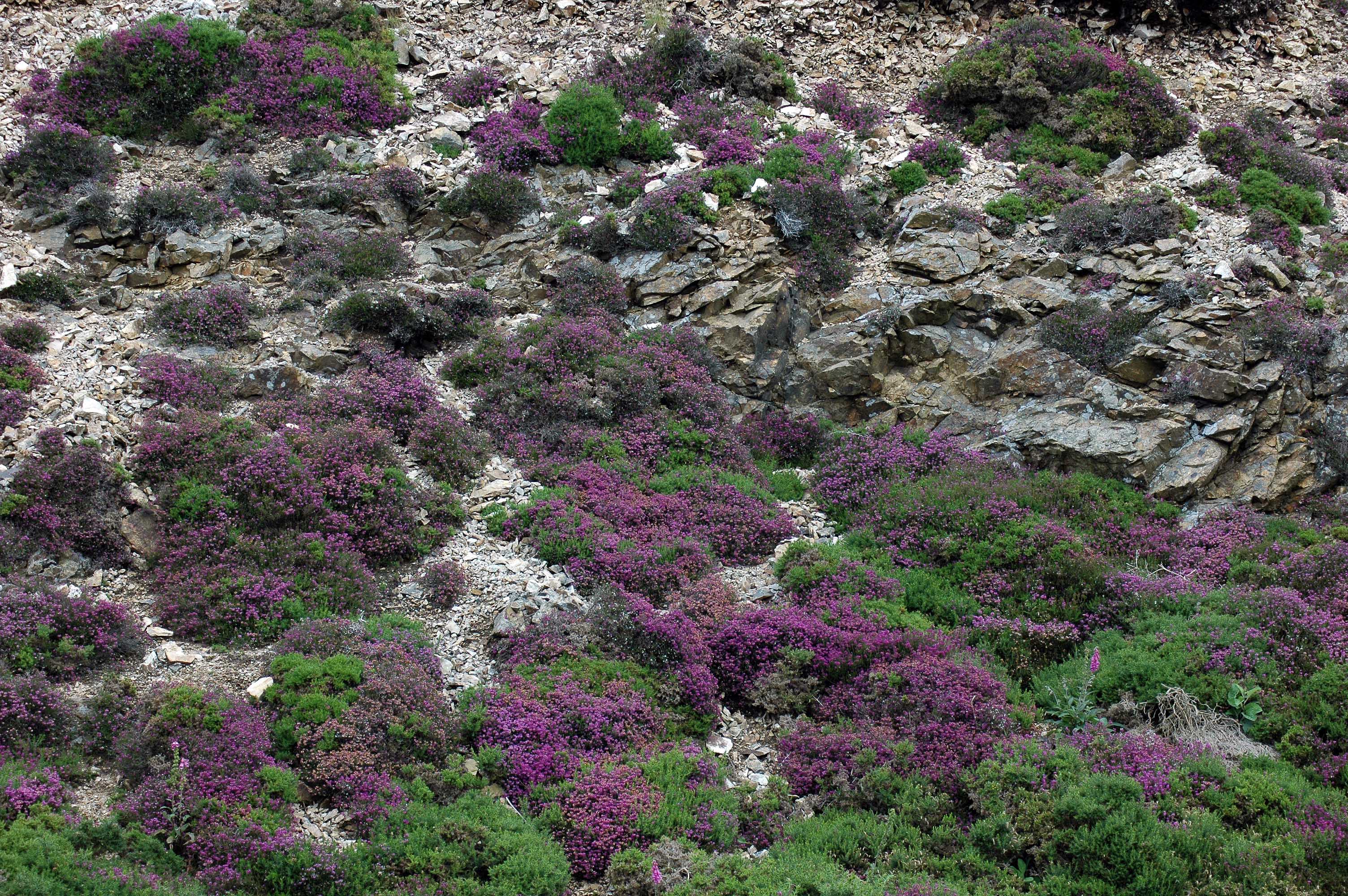
Conwy Mountain is beautiful now, it’s rocky cliffs and crags are coloured and softened with masses of pink/purple heather and the lower slopes are clothed with a mantle of ferny green bracken.

Heather softens the rocky limestone cliffs of the mountain
Heather is mixed with gorse which is just beginning to open its flowers

Bell Heather- Erica cinerea

Erica cinerea – Bell heather, is a species of heather that is native to western and central Europe. It is a low shrub growing to 15–60 centimetres (5.9–24 in) tall, with fine needle-like leaves 4–8 millimetres (0.16–0.31 in) long arranged in whorls of three.

The plant’s common name is taken from its pink/purple bell-shaped flowers that are 4–7 millimetres (0.16–0.28 in) long, and produced during mid to late summer.

This species occurs mainly on dry heaths where the soil is acidic or peaty; it tends not to be found in wetter places, where it is likely to be replaced by the similar-looking Cross-leaved Heath, Erica tetralix. Its growth is not as large or dense as that of common heather or ling.

PRACTICAL USES

Bell heather has been used extensively over centuries in a wide variety of ways, including use as bedding material for both livestock and people. Bundles of the dried stems have been used to make brooms and to thatch roofs; it has been burnt as fuel, wound into ropes and used to repair holes in tracks and roads.

TRADITIONAL MEDICINAL USES

Heather has a long history of  use in traditional or folk medicine. In particular it is a good urinary antiseptic and diuretic, disinfecting the urinary tract and mildly increasing urine production.

Part used : flowers
Uses : Particularly used for urinary infections.
Antiseptic, Cholagogue, Depurative, Diaphoretic, Diuretic, Expectorant, Sedative, Vasoconstrictor
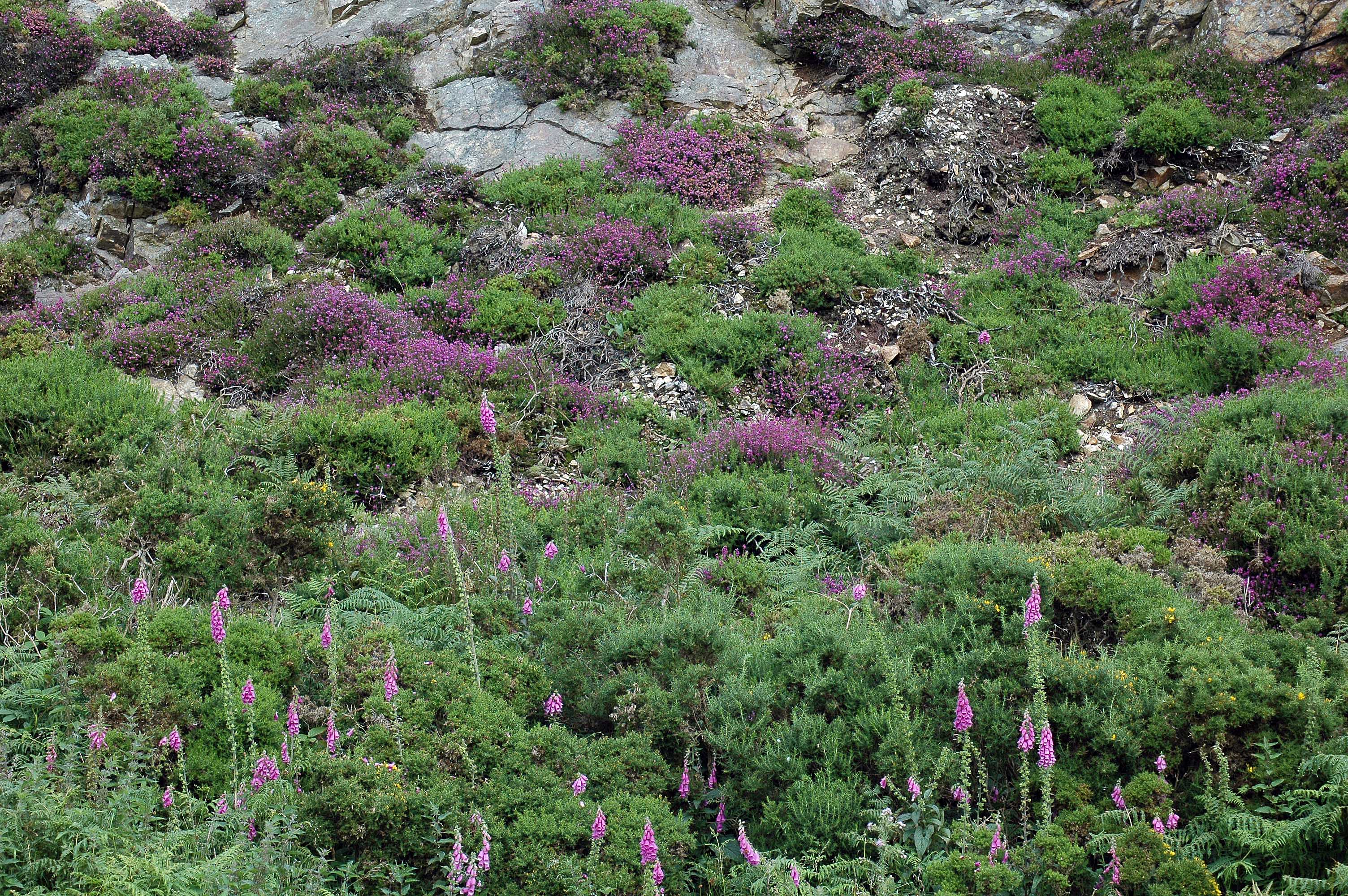
Heather and gorse shrubbery accented by spikes of foxgloves

Foxgloves that have flowered prolifically this year are still bearing flowers at the tips of their elongated stems.

Foxgloves open their flowers starting with those at the lower end of the stem, which continues to lengthen.
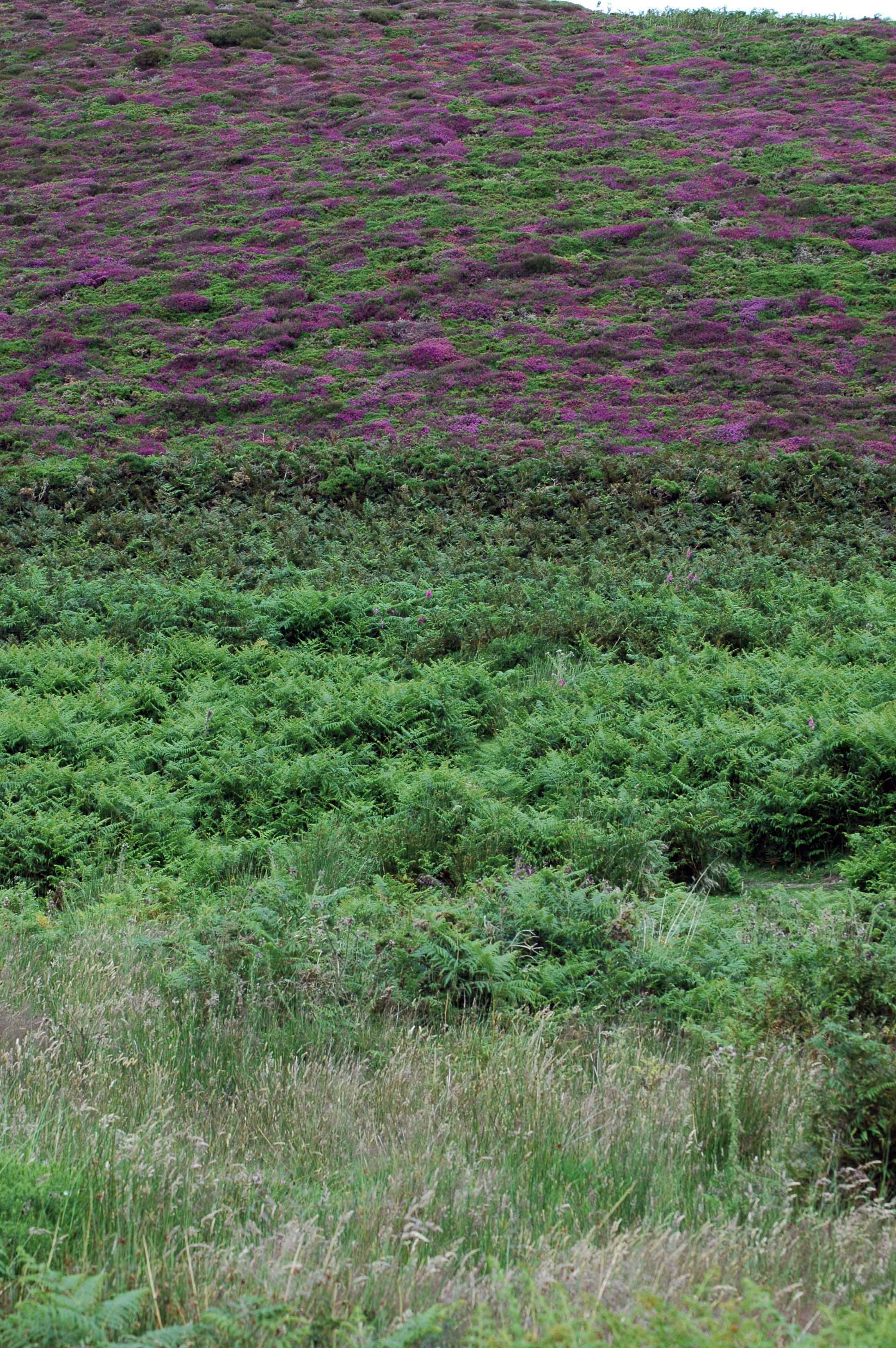
The heather-covered rocky slopes give way to bracken at their base. Grasses and other plants surround the pool creating a rich tapestry of lush vegetation

The large mountain pool is currently full to overflowing and the ground for some distance around it is soft and boggy, with large pools of surface water covering the walking tracks. On what would have been the edge of the pool a few weeks ago, I was excited to spot some spikes of Bog Asphodel. I wanted to get a photograph of  them of course, but they were now surrounded by water and very boggy mud. I managed to get fairly close to them, but as there was no way I was going to kneel to put myself on a level with them, the resulting picture is not as clear as I would have liked, but you get the general impression.
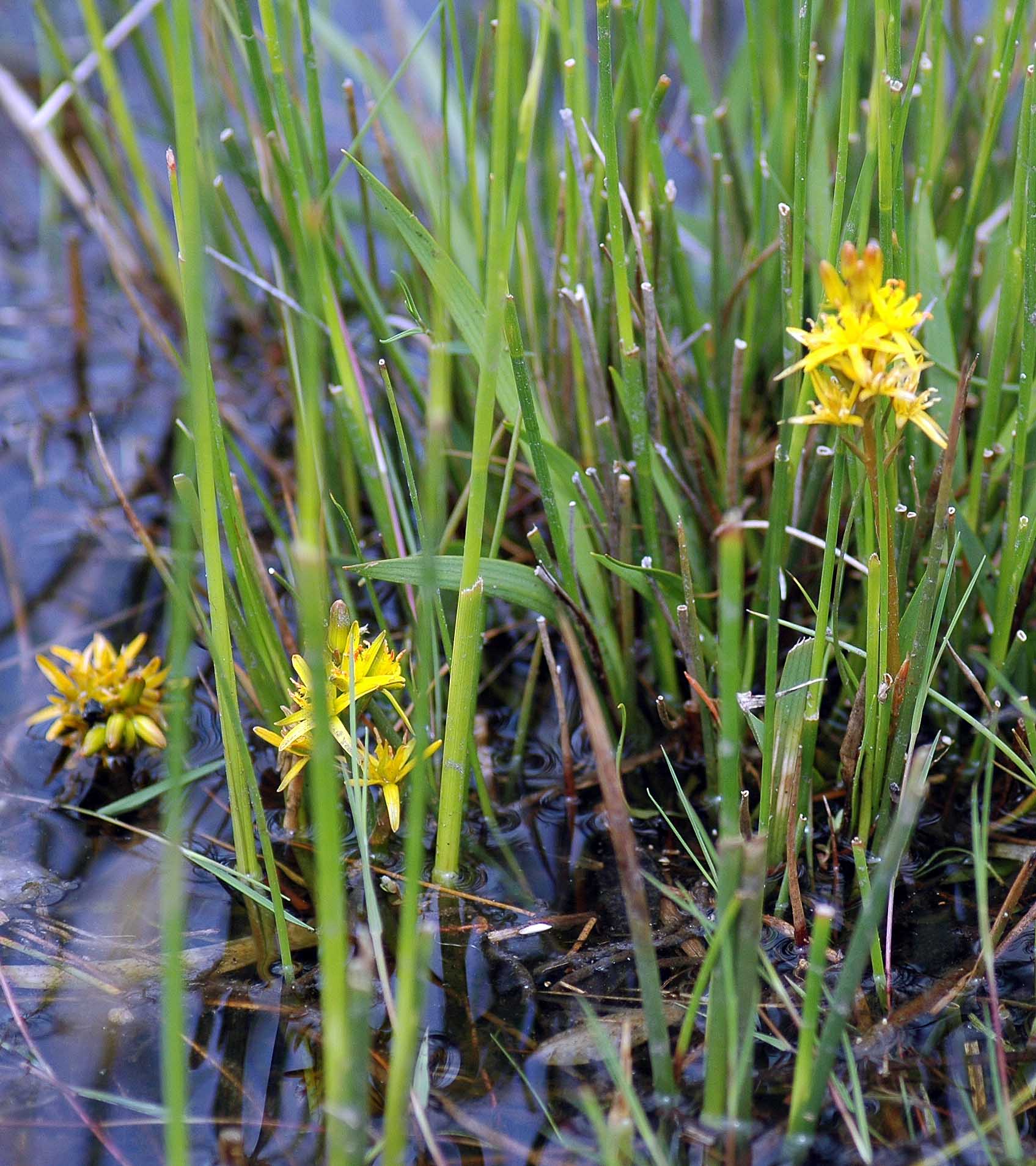
Bog Asphodel –

Bog Asphodel – Narthecium ossifragum

A fascinating and unusual plant that grows in short wet grassland on acid soils, Bog Asphodel has bright yellow flowers with six narrow widely-spaced petals and six long stamens that are surrounded by yellow hairs, like a miniature bottle-brush, with a prominent orange anther on top.

There were just a few flowers to be found here, but in other places where the appropriate habitat occurs, during July and August carpets of the deep orange yellow flowers may be seen, to be replaced later in September by a carpet of orange and russet-brown as the flowers fruit.

Despite the plant’s English name, it is not particularly closely related to the true asphodels. The Latin name means “weak bone”, and refers to a traditional belief that eating the plant caused sheep to develop brittle bones.

In Northern climes it was once used a yellow hair dye and as a cheap substitute for saffron.

Bog Asphodel may be poisonous to both sheep and cattle, although not all stands of the plant are toxic, and the toxicity may be the side effect of the plant’s response to a fungal infection. However, affected plants , if ingested, cause serious kidney problems and a photosensitive disorder which is variously called ‘alveld’ (elf-fire), in Norway; ‘saut’ in Cumbria; and ‘plochteach’, ‘yellowses’ and ‘head greet’ in Scotland that are brought about by tri-saccaride saponins, ‘narcethin’ being the major one. 

Waxcaps

A real surprise was to find this little collection of mushrooms, which I’m fairly sure from mushroom forages in Spain, are Chanterelle’s, but not sure enough to risk picking them!

Spear Thistle – Cirsium vulgare

And finally, thistles.

Cotton Thistle – Onopordum acanthium

Share this:

  • Share on Facebook (Opens in new window) Facebook
  • Share on Pinterest (Opens in new window) Pinterest
  • Share on X (Opens in new window) X
Like Loading...

New gulls on the block

17 Tuesday Jul 2012

Posted by theresagreen in bird behaviour, Birdwatching on North Wales coast, Nature, nature photography

≈ 3 Comments

Tags

coastal birds, herring gull, herring gulls in towns, larus argentatus, rhos on sea

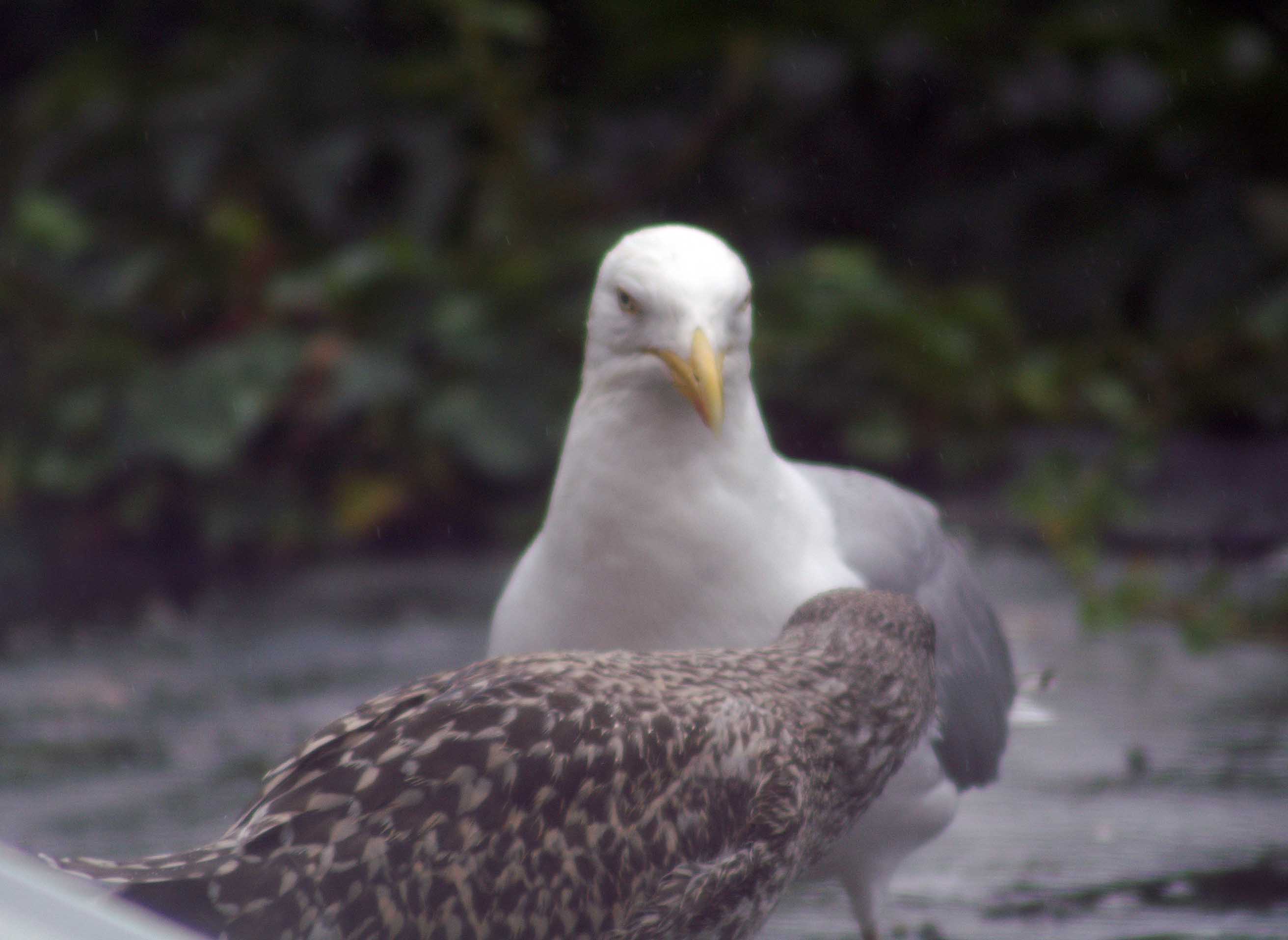
I’ve been away quite a bit lately, so there’s quite a bit of catching up to do  here in Rhos-on-Sea. The weather here, as everywhere else has not been conducive to venturing far, but I have been able to do some very productive birdwatching from my bedroom window, which I probably would not have done had I been out and about, so some clouds do have silver linings. In this case the silver has been in the shape of Herring Gulls – (the scientific name larus argentatus translates as silver gull). The activity has been brought about by the recent fledging of the single offspring produced by the pair that nested atop our next-door neighbour’s chimney pot.

At first the young gull spent a lot of time resting on the flat roof, where it is surprisingly well camouflaged.

The newly-fledged gull resting

In between bouts of resting it wandered around the rooftop picking at the odd collection of sticks, shells, bones and other random items brought there by its parents hoping to find something edible it may have missed.

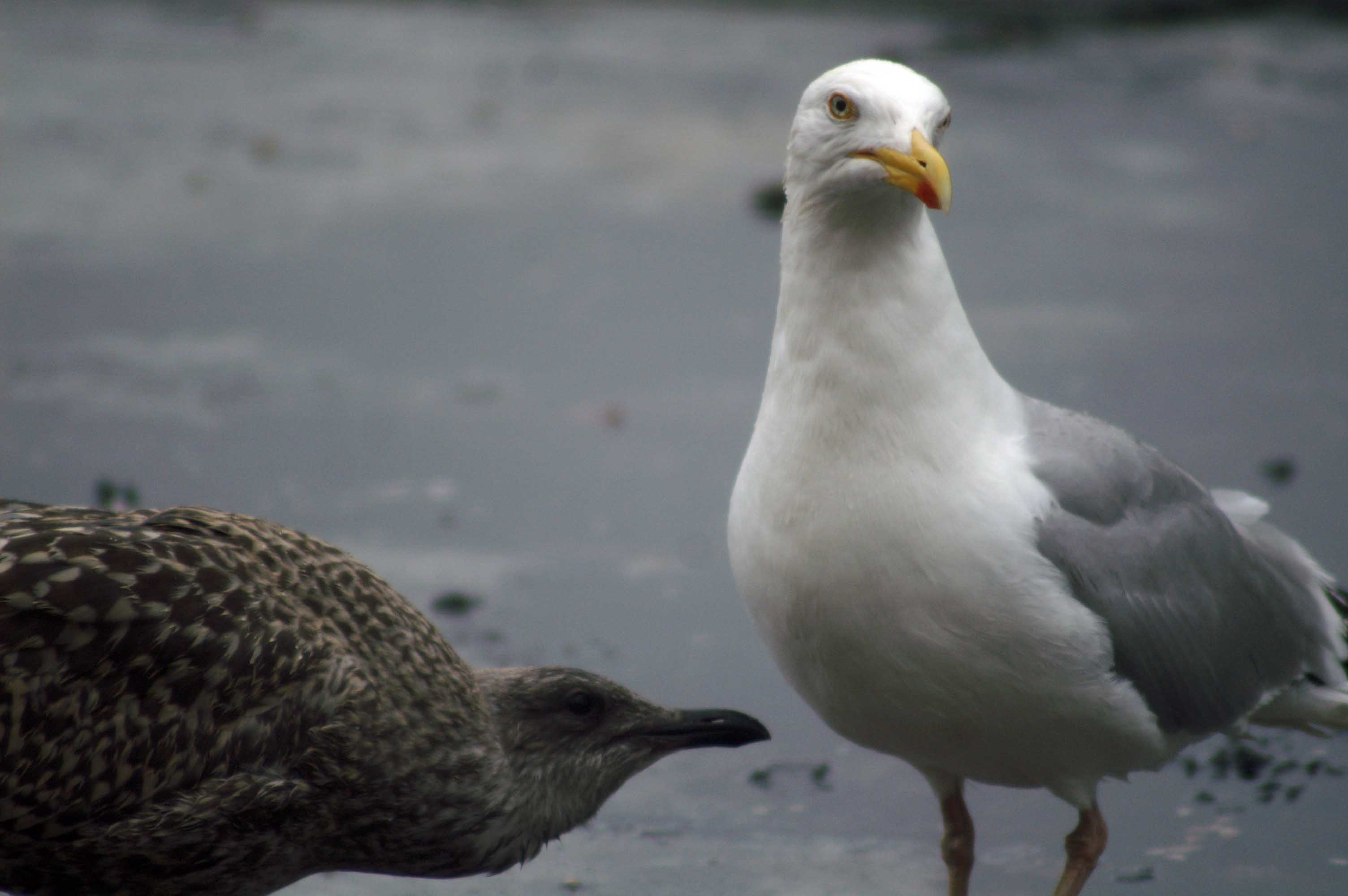
First portrait of the new arrival

I don’t need to sit and watch and wait for the parents to arrive with food as both adult and their young one set off such a cacophony of noise at the sight of one another I can hear them from wherever I am in the house. Once a parent lands the youngster automatically adopts the typical crouched, hunched shoulder begging posture that makes it look a bit like a small vulture.

In begging posture

The loud communication between the two birds continues for a minute or so, then the parent allows the young one to approach and finally to tap the red spot on its beak to stimulate the regurgitation of the food it has brought.

The young gull approaching its parent

Getting into position

The young gull taps the red spot on its parent’s beak  to stimulate regurgitation of its lunch

What follows is not pretty as the parent brings back whatever food it has managed to find and deposits it in front of its youngster. It seems to be thriving on a diet that does not always look particularly healthy; in the following pictures the meal is raw chicken, but on another occasion it was a pile of french fries. There have also been more natural offerings of crab, which is consumed shell and all and small fish.

The adult regurgitating raw meat, maybe chicken

Fortunately the young gull is not a fussy eater

Once the food has been swallowed by the young one the parent leaves immediately, its departure once more accompanied by more loud cries.

Over the course of the last few days the young gull has gained much in confidence and now flies off  to spend much of the day elsewhere, but it is still returning to the high roof in the evenings with its parents and to the flat roof for intervals, maybe to rest where it feels safe.

The young one is gaining in confidence and strength daily

Share this:

  • Share on Facebook (Opens in new window) Facebook
  • Share on Pinterest (Opens in new window) Pinterest
  • Share on X (Opens in new window) X
Like Loading...
Follow everyday nature trails on WordPress.com

Enter your email address to follow this blog and receive notifications of new posts by email.

‘But it is the common species that keep the living world ticking over and provide most of our experiences of wildlife, and I would argue that maintaining the abundance of these is as important a conservation priority as maintaining the existence of rarities’. Richard Mabey

MOST RECENT POSTS

  • A Glimpse of Spring to Come January 22, 2025
  • Hunting the Wren December 28, 2024
  • Oh, Christmas Tree December 18, 2024
  • In and Out of the Ivy February 15, 2024
  • Nature’s Fireworks November 30, 2023
  • Wild Autumn along the Coast Path November 3, 2023

OLDER POSTS

LOOKING FOR SOMETHING IN PARTICULAR?

  • Sights and Sounds from the Little Orme 1
    Sights and Sounds from the Little Orme 1
  • Catchers, a Duck and Divers
    Catchers, a Duck and Divers
  • The Foxglove - of Fairytales, Myths & Medicine
    The Foxglove - of Fairytales, Myths & Medicine
  • Beautiful blooms and some rare treats (1)
    Beautiful blooms and some rare treats (1)
  • Butterflies and more rare treats
    Butterflies and more rare treats
  • Love your weeds - Red Deadnettle
    Love your weeds - Red Deadnettle
  • A Windy Wildflower Trail
    A Windy Wildflower Trail
  • Following a river to a Fairy Glen
    Following a river to a Fairy Glen
  • Things Bright and Beautiful
    Things Bright and Beautiful
  • Shades, Sounds and Scents of the Woods
    Shades, Sounds and Scents of the Woods

nightingale trails

The Walk of the Monarch Butterfly-Sendero de la Mariposa Monarca

The Walk of the Monarch Butterfly-Sendero de la Mariposa Monarca

MY WILDFLOWER BLOG: where the wildflowers are

Snowdrop

Snowdrop

most recent posts

Follow everyday nature trails on WordPress.com

Social

  • View teresamaygreen’s profile on Twitter

Enter your email address to follow this blog and receive notifications of new posts by email.

Website Built with WordPress.com.

  • Subscribe Subscribed
    • everyday nature trails
    • Join 358 other subscribers
    • Already have a WordPress.com account? Log in now.
    • everyday nature trails
    • Subscribe Subscribed
    • Sign up
    • Log in
    • Report this content
    • View site in Reader
    • Manage subscriptions
    • Collapse this bar
 

Loading Comments...
 

    %d